Tag Archives: UK

Rocking the bullshit

There has been a massive issue with Huawei, the accusations by the US is the largest one, one of its sheep (aka Australia) has been on the same post on how Huawei is such a large danger to the safety and security of a nation. It gets ‘worse’ when we see ‘The DNC tells Democrats not to buy Huawei or ZTE devices ever’, (at https://www.theverge.com/2018/8/3/17649920/dnc-democrats-huawei-zte-devices-ban-china-hacking-threat). Here we see the quote “people shouldn’t be using devices from either Chinese company for work or personal use. The words echo what federal officials have already said about Huawei and ZTE posing possible security threats to the US. In February, CIA, NSA, and FBI chiefs testified in front of a Senate committee that the two companies were beholden to the Chinese government and the devices could become tools for undetected espionage“, my issue has always been: ‘show me the evidence!’ Basically EVERY phone can be used as a spying device, that is one clear thing we got out of the Cambridge Analytica part, in addition, the Fitness tracking app Strava was a great way to find CIA black ops bases, so even as Strava merely mapped ‘a regular jogging route’, using Google or Apple maps, you would be able to map out the base, the supply routes and so on, the Apple Fitbit would be there for the Russian government knowing where these specialists were and when the were there. So in all that, and all the security transgressions seen here, not of the were Huawei or ZTE, yet, how much noise have you heard from the CIA, NSA, or FBI on Apple? Even now, they are that one Trillion dollar company, are they too big to mention?

I wonder why?

Yet, Huawei is not out of the hot water yet, they are actually in deeper hot waters now but this time it is allegedly by their own actions. Reuters is giving u mere hours ago: ‘Huawei in British spotlight over use of U.S. firm’s software’, the news (at https://www.reuters.com/article/huawei-security-britain-usa/huawei-in-british-spotlight-over-use-of-us-firms-software-idUSL5N1US343) gives us: “One of those is due to Huawei’s use of the VxWorks operating system, which is made by California-based Wind River Systems, said three people with knowledge of the matter, all of whom spoke on condition of anonymity when discussing details which were not made public in the report“, which now leads me to the setting that the American accusations are set on the premise of American Software used? How dopey is that?

Then we get: “the version of VxWorks being used by Huawei will stop receiving security patches and updates from Wind River in 2020, even though some of the products it is embedded in will still be in service“. In all this, the fact that it is still serviced for another 2 years, how are we now in the stage of: “potentially leaving British telecoms networks vulnerable to attack“? Is that not equally a questioning setting? Do we not have enough issues out there with Microsoft which has been nearly forever a security concerns, at this point, 2 years early we get the security warning on Huawei, yet not on Microsoft or Apple for that matter, in all this Google is equally a place of patches, and in all this, Huawei is the one getting unbalanced and unfairly burned at the stake like a Catholic at an Elisabeth I barbecue gathering.

Yet the good stuff is “All three sources said there was no indication that the VxWorks mismatch was deliberate. There is also no suggestion that the software itself represents a security risk“, this now leads us to two parts. The first is if it is true that ‘no suggestion that the software itself represents a security risk‘, does this mean that Huawei never had a security risk and if that is incorrect, why not present that evidence so that every Huawei Owner can test for this transgressions ending whatever future Huawei had in the first place.

In the second part, if there is no proven security flaw in the Huawei on hardware, is the security flaw a software one, or better stated an American software one, and if so, why are these people only going after Huawei and not after a dozen American firms?

The one part that we see in Channel News Asia is “Consultant Edward Amoroso, a former chief security officer at AT&T, said Huawei’s experience in Britain showed the challenges of securing international supply chains. Although no one should dismiss Huawei as a supplier solely because of its geographical location, reliance on software that is going out of support is a legitimate concern, Amoroso said“, the news (at https://www.channelnewsasia.com/news/business/huawei-in-british-spotlight-over-use-of-us-firm-s-software-10590268) gives the part that does matter, in this Edward Amoroso is right, software at the end of its reign is often the true safety concern, not merely because of the time frame, but in extent the time required to properly update the software on all the devices, which is not always a smooth path and tends to open up additional security gaps. In that part of the equation Huawei does have a legitimate problem to address. The second part to all that is “In addition to the issue with VxWorks, this year’s report also cited technical issues which limited security researchers’ ability to check internal product code“, I believe it to be a minor part and the proper investigators could seek or test for the issues, not merely that, the limitations also remove whatever options there are for zero day breaches, which has a much larger legal frame to address. So even as we agree that the US setting of accusation without evidence (proper presented evidence is merely the stuff that makes the grass grow in Texas). We also get that the US is giving us: “In the United States, the Pentagon is working on a “do not buy” list to block vendors who use software code originating from Russia and China“, there is an actual thing called national security and as such, it is their right to implement that part, I do believe that in the end it might be somewhat counterproductive, but it is still within their rights to be in such a setting nor no other reasons.

In the end there are a few issues in the field and some are out there, but with a lack of technical details, some cannot be proven, yet the fact of what some have done in the past might give the setting of ‘is it more likely than not that some do not really have 5G‘ is a true setting, yet I prefer to have the actual evidence, that some are trying to keep buried, and the media is part of that chase, which is odd to say the least. Huawei is bouncing back and forth and their hold to grow fast via the UK will be there, but from my point of view, they will need to fix the VxWorks part a lot faster than they think they need. From my estimation a new software solution should be well beyond the Beta stage in Q1 2019 if they want to have any chance of keeping their lucrative growth contracts in place. In equal measure we need to look at Canada and Australia, as they are currently set to be nothing more than US tools in all this. In all respects no actual and factual evidence was thrown out in the open. If that was done Huawei would have lost pretty much every non-Chinese contract, the fact that the BS is spread even larger with absence of evidence gives more reliability that there is no real security danger and it is more a tool for some to get the slice of 5G pie, probably at the expense of a monthly data dump, nicely mailed via UPS to: N 11600 W, Saratoga Springs, UT 84045, USA. That alone should give us the goods on who to trust and who to be cautious of. In all this, no evidence has been presented to the public (and their right to know) on how Huawei is a threat to our security. The fact that I believe that this is all bogus in one thing, the issues seems to be blown up as everyone takes a queue from John Bolton, that whilst the setting “Five Eyes is an alliance between Canada, New Zealand, the United States, Australia, and the United Kingdom that facilitates collaboration in intelligence activities” gives us that there are three in the dark, the UK might be around with the knowledge and the rest merely takes a queue form the US, which has seemingly been whispering like they did in the WMD in Iraq phase, you do remember that in the end, they were never found and it was merely bad intel. So in that setting whilst Corporate America, Canada and Australia are all in fear of their gap against leading Huawei, in that setting we are supposed to have faith on the American gospel on what constitutes a danger from Huawei? And now that we are made aware that the software solution used is an American one?

Yup, we have all kinds of problems and some are valid issues of concern as Edward Amoroso phrases it. Yet between a setting of concern and an actual concern is a mile long gap and whilst we acknowledge that Huawei has some fixing to do, until actual evidence is shown that there is a security breach, the only thing that the US can do is to offer a $229 instant price match for the Apple, or an $100 instant price match for the Google Pixel 2, or a $400 instant price match for the Samsung 9, why would anyone in this day and age pay more for the same, actually, with the enhanced batteries of Huawei you will still miss out, but that might be the smallest cross to bear. All this because some players just didn’t get the pricing right, too many fingers on the margin pie, that alone seems to unbalance the entire equation, because all these players will miss out when Huawei is given free reign there. In this the equation is no longer about security, it will be merely about greed and those enabling for it. Is that not equally important an element to consider?

I’ll be honest, I am still happy with my Huawei P7, it was really affordable against anyone offering anything and after 3 years working 24:7, where would you think I would look first? The one who had proven himself, or the one overpricing its brand (OK, with the Pixel at a mere $100 more, that is still an awesome deal).

When we decide on pricing it is one, when unreliable players in the game force us away from the affordable option it becomes a different stage and so far, the US has proven to lose reliability again and again when it comes to their version of security. To emphasize on that, check on all the printing regarding the Landmines in Yemen placed by the Houthi and the amount of articles that we see in the NY Times, the LA Times and the Washington Post. Now consider the impact of mines and why Americans seem to be eager not to inform you. By the way, that setting was almost certain a setting that Iran enabled, if you questions that (which is fair) then answer the simple question, where did the Houthi forces get 1,000,000 mines from?

We are kept in the dark on the wrong topics and it is time to set the limelight on those people keeping us knowingly in the dark.
 

Leave a comment

Filed under Finance, IT, Law, Media, Politics, Science

Space Quest 2.5

It is an interesting setting; the reference comes from one of Sierra-on-Line’s most famous games called Space Quest, in this game we see the hero going up against Vohaul and his evil plan: to eradicate sentient life by launching millions of cloned insurance salesmen at the planet!

That game came to mind the moment I was treated to ‘Grenfell-type cladding on London flats to be replaced at insurer’s cost‘ (at https://www.theguardian.com/society/2018/jul/09/grenfell-type-cladding-on-london-flats-to-be-replaced-at-insurers-cost), in this we all might seem relieved, but the truth is hidden in the subtitle with ‘Decision over New Capital Quay could have repercussions for other apartment blocks’. This is the setting and it was never going to be a win-win situation for the house owners. We see the emotional part with “A second family, which has seen the value of its London flat slashed from £600,000 to just £90,000 because of the Grenfell-style cladding, was thrilled to learn they no longer faced the bill“, I am happy for that family, I truly am, even with the first example the Guardian gave. Yet the hidden trap is not invisible, it does not hold out in camouflage. The simplest question gets you there. How much effort have you gone through to get your insurance money? I have been through it twice in my lifetime and in the end it costed me more than the premiums ever did. When it comes to insurances (beyond third party insurance) you tend to never ever win, or break even.

You see, getting an insurance firm to part with money is a bit of an issue. So when I see that they are footing the bill, all kinds of red flags went up. In Victoria (Australia) we saw in 2015 “Victorian Building Association (VBA) conducted an audit of 170 building permits following an Melbourne apartment fire that climbed 13 floors in November 2014, causing $2 million in damages, due to combustible wall cladding used in construction“, and until you get the headline ‘cladding hazard may nullify claims‘, you might not get the essential one. This is not any different in the UK. In addition there is (from another source) “However, a good number of policies stipulate that if you’ve told your insurer you have fire alarms, they must work. If an insurer finds that a home’s fire detectors weren’t functioning correctly at the time of a fire, they might reduce the claim pay out, or even turn it down altogether“, as well as “Did we have working fire alarms? Did we have a fire blanket in the kitchen and extinguishers in the house? Was there an up-to-date electrical inspection report? Luckily, we complied, but similar issues apply to almost any policy“. Now consider these parts with the Grenfell like issues seen in: “The Guardian has learned that another deficiency notice from the London Fire and Emergency Planning Authority (LFEPA) was issued on 25 January in relation to all 11 blocks in the complex. It identified 16 fire safety issues, including a lack of arrangements to evacuate vulnerable and elderly residents, an ineffective maintenance regime, a broken firefighting lift and a broken fire hydrant outside one of the blocks. It found that “the procedures to be followed in the event of serious and imminent danger to relevant persons are inadequate”, raising residents’ fears about being trapped in the event of a fire“, which is given to us (at https://www.theguardian.com/society/2018/feb/15/further-defects-discovered-at-housing-with-grenfell-style-cladding).

So in these cases, we have an insurance problem, the building is not up to specs, and any fire voids the insurance, in most cases the home insurance is also affected, yet the insurers are covering it all this time. This is not merely the Grenfell setting, all the buildings are covered. Yet what we are likely to see is that this is a quick return on investment from the insurers. You see, there is every chance that the premiums will go up between £120 and £360 a year next year onwards. Now consider that this is not merely handed to those buildings fixed, it will most likely be an overall premium increase of 1%-1.5% for every building in London, which will give the insurance companies an expected £12m-£36m per year for the next 5 years at least. So the quote “Residents, who were facing a share of a bill estimated at between £25m and £40m for cladding and millions more for round-the-clock fire wardens, were elated with the news” gives us that the insurers will take an optional short term hit with the turning point in year 2 and large profits after that. It seems like a nice business deal for them, and in light of the avoided costs most will not blink at being happy, even when the new bills arrive.

Part of that danger is seen in things like “Common buildings insurance exclusions may include: Damage from general wear and tear & wilful neglect of the property“. That part matters, because the failing fire doors, non-working water pipes for firefighting as well as other elements. Now add the quote from the Conversation (at http://theconversation.com/yes-the-grenfell-tower-fire-is-political-its-a-failure-of-many-governments-79599), which was: “Worse, it has been reported that the London Fire Authority actually wrote to all boroughs as recently as April, advising them of their concerns on the use of some kinds of cladding panels. A number of expert reports have argued in favour of revising the building regulations, notably following the inquiry into the 2009 Lakanal House fire in Southwark in which six people died. The fact that the Lakanal House fire was eight years ago and building regulations have still not been updated demonstrates a complete failure to learn the lessons from previous disasters and take speedy corrective action“. We now see a clear path to both ‘Damage from general wear and tear‘, the fire doors and ‘Wilful neglect of the property‘ optionally the fire doors, the writing of the Local Fire Authority and the non-actions on the cladding. In these cases as well as most other buildings the insurance companies can basically walk away, leaving the tenants with a nightmare scenario. They did not and there is decades of evidence that insurance companies are in a black letter law cold environment in the heat of pretty much every fire. So this is about more than merely ‘a helping hand‘. This is about the SWOT where their position was in strength; the building cooperation as well as the local government were in a place of Weakness, the Opportunity is a nice premium rise giving them many millions a year more, with one year as optional collateral loss and the Threat is close to none, optionally the initial builders will get billed to some extend as well, making the optional losses for the insurance companies even lower than initially penciled in.

For this and the previous government it is a quick fix as well as a nice setting where everyone walks away without an invoice, the only thing that this government has to agree to is the coming premium rise and as the amount seems small, they will not oppose it, the one thing that bites is that all home owners will be likely to get that increase, cladding or not. And as we get bad news management through optimistic news, we see messages like “Flood Re confirmed that the announcement comes on the back of its decision not to pass on the annual increase to premium thresholds in April“, yet later this year we will with a decent measure of ‘most likely’ get news like: ‘The added risks as well as the additional costs of upgrading the buildings that have Grenfell like cladding have forced us to add a short term increase to all premiums, so that there will be no dangers to those currently in hazardous setting of coverage against fire’, yet I personally feel certain that all those not in those buildings, where the rule “Common buildings insurance exclusions may include: Wilful neglect of the property“. Those people will still take a hit on their claim if they have one.

I admit that a lot of it is based on personal experience (not fire based though) and in light of thousands of complaints in the past, my vision in what is likely to happen, might be correct and even conservative in the projected changes. Even as I am willing to grant the response that we see with: “Then we arrive and we are the big bad wolf, because the claim is not covered“, I personally see this as the people expect a spirit of the insurance setting whilst insurance firms see only a ‘black letter insurance policy setting‘. It is a view that the legal minds understand, but that might be the only group that does. It is an idiomatic antithesis that tends to settle in the world of laws (especially taxation laws). It is important to understand that I used to see the insurance companies as ‘white collar criminals’, but not anymore. I think that this is a deeper issue that we are all mostly ignorant to. It is almost a given that spirit of law and letter of law should be taught in secondary school. It is an important skill for anyone to have by the time they get their first house and get the insurances they need. It is an important view as this one setting in London giving us the realisation that the insurance companies are embracing the spirit of the insurance, not the letter of it; yet I personally believe that this is done to create a windfall that gives these companies millions down the track for a very long time to come. We can argue that they offer a cheaper solution for those who are faces with many thousands of pounds in cladding costs, yet others will not feel the same. I was not alone in this path, Reuters gave us last October “While they cannot change existing insurance cover, renewals, many of which fall due in Jan or April 2018, will give them a chance to adjust prices or policy wordings to mitigate their risks“, and so they already had something. The question becomes, what is the cost of mitigating risk? The people will find out when they get their news premium invoice in 2019. Then we can see just how conservative my numbers were. I do expect to see the changes being released earlier that year as it will be an option for insurance companies to poach new customers from those giving voice to higher than expected premiums.

So even as we were given “AXA had upgraded its administration so that information on the number of tall buildings it insures or the type of cladding they are using is more easily available, helping to identify risks quickly“, as well as “Zurich Municipal would work with customers “to help them manage these exposures”“, the question is what exposure?

Is that exposure to the expected risk, or to the risk of getting exposed to upgraded premiums?


Leave a comment

Filed under Finance, Law, Media, Politics

Delusional taxation

The Guardian gave us a piece that is just too unequal for words (at https://www.theguardian.com/inequality/2018/jul/07/its-time-for-britains-millionaire-pensioners-to-pay-up). Not only is the stage wrongfully set by Phillip Inman, he hides behind the emotional drive and gives no consideration of the historical facts. So even as he ‘treated’ some people to ‘The Financial Crisis: How Did We Get Here‘, we need to see the right setting on how the inactivity of some got us to this place. He starts right of the bat with ‘The retired are having a great time at the expense of young families thanks to generous pensions and property wealth‘. You see, the property boom is fictive, artificial and pushed because some council’s needed to look good for investment, the prices are driven upwards. The fact that three governments have been totally ignorant of the housing situation and that is shown with an utter lack of social housing is one piece of this evidence. In addition, some of these places have been taxed again and again, in some cases up to four generations. Phillip does not notify the reader on that part. The bigger and even more deafening blow of injustice is given with: “A two-year investigation by the Intergenerational Commission, a group sponsored by the Resolution Foundation think-tank, has found that what it calls the “contract between the generations” is at breaking point. It warns that society risks dumping a disproportionate amount of the costs of an ageing population on their shoulders. It’s been going on for some time and now the situation is acute“, you see I was largely aware of that part in the 90’s, when I was not in the UK. Several people notified their governments of this danger (Netherlands, Germany, UK and Austria), yet those governments were all about sailing in good weather, it was not on their plate, so they ignored it. Several players in these places warned of the dangers and in the end too little was done, until it was too late and now everyone is crying on the hardship that comes. The largest portions of those people now getting a pension worked, they worked every day and more hours than ever compensated for. All the elected politicians who remained asleep, optionally on Viagra or at parties ignoring the long term effects as they would no longer be in office (which is a speculation on how they used their time). Now those in office are set in a stage where they cannot unset the rights that these people acquired. Now it is all about “54-year-olds and above – are making increasing demands on an economic and social system that, after the 2008 financial crash, can barely cope with existing commitments“, yet those are demands that they were entitled to. They were taxed, often taxed too high and whilst some politicians made really poor decisions on how to invest these surpluses, they never considered that the losses would remain to bite everyone and now there is almost quite literally hell to pay for these people, and in this case these people are not the retirees, they are the former elected politicians, the economic advisors and the consultants that were hired at a much too high overpriced setting.

When we see “subsidised deposits: that just sent house prices spiralling upwards“, we should take the home owners that live in their home, all paid off out of the equation, should we not? In that same setting “It’s because they have a generous occupational pension and property wealth beyond anything they might have considered when they bought their first home“, you see, as long as they live in that house, it is their home, not wealth, not something they eat. Those caught in the bubble should not get taxed because they merely want a roof over their heads. Yet, in the eyes of those economists that does not count. Yes, those economists who have been setting the stage in their own advantage for decades, they are all ignored in this, are they not?

I do however like the setting that Phillip gives with: “Baby boomers had no idea that the overly generous pensions, failure to deal with the overspill from dirty industries and nimbyism would build up costs for the young“, yet in all this, he does not mention that since 1996 certain changes were needed, because the greying population issue was already well within the scope of everyone (everyone with any level of intelligence that is).

So when we see: “The commission and IF say working pensioners should at the very least pay national insurance. We should go beyond this policy and force the retired to pay income tax under a separate regime. This would set the 40p rate at £20,000 (compared with £43,000 for workers) and the 45p rate at £40,000 (against £150,000 for workers). A new regime for property tax is also needed that taxes more wealth at a lower rate, spreading the load and making it less avoidable, capturing the rich and middle-income earners alike

We need to change the setting. We need to make it very clear that this is not just wrong; we should demand that these people come out in front of it all. Not hide behind the word ‘commission’, but we are entitled to know the people and they need to be held accountable for their actions in this.

So,

  1. David Willetts, Executive Chair of the Resolution Foundation (chair)
  2. Ben Page, Chief Executive of Ipsos MORI
  3. Carolyn Fairbairn, Director General of the CBI
  4. Frances O’Grady, General Secretary of the TUC
  5. Geoffrey Filkin, Chairman of the Centre for Ageing Better
  6. John Hills, Professor of Social Policy at the LSE
  7. Kate Barker, economist and former MPC member
  8. Nigel Wilson, Group Chief Executive of Legal & General
  9. Paul Johnson, Director of the IFS
  10. Sarah O’Connor, Employment Correspondent at the Financial Times
  11. Torsten Bell, Director of the Resolution Foundation
  12. Vidhya Alakeson, Chief Executive of Power to Change

All commissioners of the Intergenerational Commission (at https://www.intergencommission.org/), in addition to this, all the economic advisors where bad advice can be identified, those economists, need to get taxed for the losses that their advice caused out of their own pocket. You cannot tax one population twice over, whilst these people get richly rewarded for not doing their job correctly in the first place. The UK was far behind, when the BBC gave us in 2007: ‘The UK is going through the biggest pension shake-up in 50 years’, they were already a decade too late, this is not news, this issue has been slowly growing for over a decade and now we get highly priced think tanks giving out reports on how to solve stupidity and inaction. So when we see “In an attempt to improve the state pension prospects of women – who often take time out of work to look after children – the number of years of National Insurance Contributions (NICS) it takes to earn a full state pension will be cut from 44 to 30. This will mean millions more people, mainly women, will be entitled to a full state pension. The government has also tried to tackle the issue of vanishing workplace pension provision, as firms move to cut staff pensions” (at http://news.bbc.co.uk/2/hi/europe/6937301.stm), we see a level of inactions from a failing setting. Instead of giving a clear change of more payments into the pension system, we see a feigned ‘the number of years of National Insurance Contributions (NICS) it takes to earn a full state pension will be cut from 44 to 30‘, so not only is there an issue of shortage, the setting that a full pension could be earned was set to 68%, so 30% is close to gone, because all the late starters now suddenly get a full pension. When you realise those levels of close to insane stupidity, will the hearings show that economic advisors told them that it would work? So who were these consultants? We want full disclosure of these people. Should we not be allowed those facts? And when we confront these people will their reply be: ‘it was slightly more complex than I comprehended‘. So can we foreclose on these highly paid consultants and auction off their belongings to make up for the losses?

If that sounds unfair, consider the unfairness of taxing a group after a lifetime of service (or at least 68% of the time) again? Most these people had to bend over backwards to keep their place, keep their job and when it is finally retirement time, we hit them again. I think that this is beyond acceptable.

So when we see the end “The millionaire no longer just lives in the squire’s house. Times have changed. The retired teachers of Beverly in Yorkshire, and former BT engineers in Tunbridge Wells, are having a great time at the expense of young families” then my response is: ‘It is a fucking lie!‘ They are living of funds that they were taxed for their entire lives, the fact that they live in places that they made liveable is because they worked on it most of their live and suddenly that value is because no one was willing to contain the housing bubbles as it call in the foreign investors. That is the truth of the matter and whilst we all consider that truth, also consider the article (at https://www.theguardian.com/society/2018/feb/04/anger-over-glut-of-posh-ghost-towers-london), where we see “London councils have granted property developers planning permission to build more than 26,000 luxury flats priced at more than £1m each, despite fears that there are already too many half-empty “posh ghost towers” in the capital“, the Battersea Powerhouse, where social housing was cut after agreements were ‘adjusted’, and as we see in addition: “Politicians and housing campaigners said the figures show councils are prioritising the needs of the super-rich over those of hardworking young Londoners“, we start to see how the entire setting from Phillip Inman is just a load of bollocks, the flawed London setting is showing that the infrastructure will collapse sooner rather than later, it is a simple setting because empty places do not fuel the needs of groceries, butchers and supermarkets. They are merely empty plots that have only value for the investor and only for as long as profit can be made. Not only is the pension setting a travesty, when seen against the backdrop that David Lammy,  the Labour MP for Tottenham gives “Just 6,423 affordable homes were built in London during the 2016-2017 financial year (the latest figures available), a 5% decline on the previous year and a big drop from the 19,622 built in 2014-15“, labour is not innocent here either, the previous labour governments were no help in any way and whilst we see how 26,000 luxury flats are added to the London region driving prices even further up, the setting of: ‘to generous pensions and property wealth‘, is merely a facade on inflated egos and the need to find taxation for those houses to be vacated so that they get upgraded too. Some people should be ashamed of themselves and until those names are out in front in the open and those who failed get prosecuted, until that day is fact, there is not acceptable setting where the pensioners are to be taxed in any way.

It just ain’t cricket!

Oh and whilst we are at it, can someone please sack the entire Wandsworth council? When we need to set to the forefront “Only 9% of the homes will be affordable, far below London mayor Sadiq Khan’s 35% affordability target for all new large developments” again (I already did that last year), we need to make sure that those who allowed that drop will never be allowed to work anywhere in government ever again, let’s face it, they could still become barber or Uber driver.

In addition, in a flair of social justice when we see “The Coutts figures, compiled by housing data service LonRes, show that developers are pushing ahead with the vast number of expensive new flats despite failing to sell more than half of the 1,900 luxury homes they built in London last year“, these developers should not be allowed to continue, unless the unsold apartments are leased for social rentals to the council at £1 per year, whilst 80% of the rent goes to the pension funds fuelling it and 20% is for the developer (for their cooperative trouble). So, I solved the entire issue for the next 5 years without having to tax the pensioners and getting almost 1,000 additional social homes. There was not need to get 12 commissioners involved, we merely need Mayor Sadiq Khan to set the London legislation to that solution. I do believe that the lord mayor owes me a large cappuccino with two sugars and a warm blueberry muffin. That’s not too outrageous a fee, is it?


Leave a comment

Filed under Finance, Law, Media, Politics

IQ versus PI

I could not believe my eyes this morning. OK, I admit I had a weird night. It was suddenly too warm (for winter) and I ended up cleaning my kitchen at 03:00, that’s how I roll at times. So when I got my morning routine together which was delayed by 30 minutes, I ended up having to wake up to ‘Moscow using UK as dumping ground for poison, says Sajid Javid’ (at https://www.theguardian.com/politics/2018/jul/05/sajid-javid-uk-to-consult-allies-over-novichok-response-russia-poisoning), whilst having my first (and second) coffee. Now as a conservative, I am worried. For the most, I do not consider politicians to be overly intelligent. Now that is not really a big deal, my IQ test was around 12 point lower than Alan Turing, so I don’t have the biscuit on Intelligence, I know that much. Yet as a former boss of the Deutsche Bank, I would have thought that Sajid Javid had a decent handle on things (like common sense). So when I get confronted with “using the UK as a “dumping ground” for poison and urged Russia to explain “exactly what has gone on””, I do wonder whether Sajid is smitten with IQ or with Plenty Ignorance (PI). So as the article is giving us things like “Sources close to the investigation dropped a hint that they may now know the identity of the would-be killers who targeted the Skripals”, that whilst the transmission method was never determined, for either case, the fact that the goods cannot be traced as the individual parts were never found, we are confronted with ‘dropped a hint’ that comes across as an almost desperate attempt to shake the tree and wonder if anyone will be running away. The additional part where we are all still confronted with what the fans of the Hammers might regard as a ‘load of bollocks’, so when you see “the novichok that harmed them may have been in a sealed container left following the attack”, we need to realise that the operative part in all the unknown parts is ‘may have been’.

Now, this is nothing against the metropolitan police or the counter terrorism units, as this is not ANYONE’S cup of tea and we can add the CIA to that list as they are learning the issues that the Salisbury detectives are confronted with and with Salisbury with an utter lack of CCTV’s, the detectives get to work with a lot less than their peers in Sussex and Brighton currently have access to.

Now, the article also gives us “The incident in Amesbury is being viewed by the authorities as an after-effect of the March attack rather than a major new development. This would suggest the police do not regard the agent as being from a fresh batch” and that is important as I mentioned towards that yesterday (it was speculative at the time), and the fact that it might have been thrown out (if that is true) then it was a dump, but I feel certain that it was not done as a state driven action. People in that setting do not leave evidence behind. In addition, we need more factual data before we can draw on any speculative conclusions, yet it seems that Sajid does not have them either. The ‘may have been’ and ‘dropped a hint’ give us that much.

I do get it, they are all about smothering optional panic, but being stupid about it does not tend to be a solution, it pretty much never is. So when we see: “Our strong working assumption is that they came into contact with the nerve agent in a different location to the sites that were part of the initial clean-up operation”, we see to a decent regard a factual part, yet most common sense brains would have gotten us there, in addition, there were only two affected in both initial cases, so the investigators do not have anything and the additional police officer hit, would have been most likely from a transfer from one of the initial victims, which makes sense. In addition to that, the fact that the second pair was hit so much later, knowing that all the Novichok versions are highly unstable. Now in all regards, we cannot give Sputnik news the sentiment of being unbiased yet they gave us in April parts that were already known. “the Novichok is a very unstable substance, which depends on [exposure to] water, on alkalis, on everything”, So when we consider the rain and humidity in the Salisbury region, how likely are some of the presented facts? They also gave a part that I did not know (having no degree in Biomedicine or Ways of Mass Discomfort). The quote: “Mirzayanov said that the toxin did not kill Skripals since the substance is vulnerable to humidity, and there was fog in the United Kingdom on March 4, the day of the poisoning attack on Skripals”. I surmised part due to its instability, yet the given ‘the substance is vulnerable to humidity, and there was fog in the United Kingdom on March 4, the day of the poisoning attack on Skripals’ gives us that humidity is a much stronger factor in negating the efficiency of the substance, making it a lot less terminal. Something a state ordered visiting person would have been made aware of. So as we are confronted with more and more media outbursts, we are watching a show where the cast is unflatteringly (and undeserving) caught with their pants around the ankles doing the penguin.

The final part that is questionable is the quote: “scientists had said novichok degraded in the natural environment over time, adding to the notion that the substance Sturgess and Rowley came into contact with was in a container.” Yet when we accept that all the Novichoks are unstable and that humidity impacts it in a larger degree implies that there was no ‘degradation’ not after such a long time, not to remain this potent. So if it was a sealed container, there might be some reflection on that, but that requires a lucid person to answers a lot of questions and the victims are still “critically ill and doctors at Salisbury district hospital are trying to stabilise them”, so there is that part gone. In addition, they either have the container, or they do not. It might make most sense, but in the end it seems that some people of authority are setting a stage of implied emotion through speculation and half truth, so whilst they are all members of the Ignoranus clan and basically blaming the Russian government on this (this one time they might actually be innocent, so go figure), we see ‘The eyes of the world are currently on Russia, not least because of the World Cup’. It is a dangerous setting, not because of the fact that it is done, but merely because the people are not looking and perhaps realising that there was something that they missed which might have actually helped the detectives working on this.

And in the end Sajid Javid made it worse with: “We will stand up to the actions that threaten our security and the security of our partners. It is unacceptable for our people to be either deliberate or accidental targets, or for our streets, our parks, our towns to be dumping grounds for poison” the mere fact that there is close to no evidence linking the Russian government to this event because they basically invented the stuff, is almost like blaming Alfred Nobel for all the blown up buildings in Syria in the last 5 years when dynamite was used. The fact that the man has been dead for almost 122 years is the smallest of issues that the media will find a loophole for. Adding: ‘Sources close to the investigation’ or ‘may have been’ usually does that trick.

Yet no one denies that there is an issue, there is one that needs a resolution and we need to realise that one of several Novichok nerve agents are out in the open. There is even the consideration that someone with an utter lack of common sense is playing with one (or more) of them. The fact that there are no terminal cases might imply this, yet the wielder and the reason are unknown. We can also agree that in the Skripal case there might have been Russian government employee involvement, yet no evidence was ever brought to light. In the second case it is so much less likely, yet there we do not know how the nerve agent was set upon the couple, the timeline clearly indicates that she was the initial infected and the setting of a third unharmed person implies with a level of certainty that it happened outside of their premises and that is about all we have been exposed to. There might be more, but the police will not and optionally should not reveal that for the longer of times, which is fair enough, they have a hard task ahead and they can do without the Monday morning quarterbacks called bloggers (including me) and journalists (pretty much every paper on the planet). I do hope that they can solve and close the case, yet until that point comes, I do hope that Sajid Javid gets clue and gets it fast, because the PI he is showing is getting to be exponentially larger than his IQ ever was.


Leave a comment

Filed under Uncategorized

The Face of a book

So when we thought that the entire Cambridge Analytica was the tip of the iceberg, we were not kidding. The Washington Post (at https://www.washingtonpost.com/technology/2018/07/02/federal-investigators-broaden-focus-facebooks-role-sharing-data-with-cambridge-analytica-examining-statements-tech-giant) is giving us right now: “Representatives for the FBI, the SEC and the Federal Trade Commission have joined the Department of Justice in its inquiries about the two companies and the sharing of personal information of 71 million Americans“, that writing was always on the wall and it seems that it is pushing forward now, so even as Mark Zuckerberg thought that his day in court was done with a mere senate hearing, it seems that there is a much larger issue under the waterline and it is not merely data of a personal nature. The next parts that matters were: “Facebook discovered in 2015 that Cambridge Analytica, which later worked for the Trump campaign and other Republican candidates, had obtained Facebook data to create voter profiles. Yet Facebook didn’t disclose that information to the public until March, on the eve of the publication of news reports about the matter“, now this is nothing new but for some it is only now sinking in that the issue was known for two years. So when exactly did Facebook give us those goods? Two years of inaction, there are plenty of political players in the Democratic party who gotten results faster than that (which is saying a lot). So now we get to the first part, which is the SEC. The Securities and Exchange Commission will focus on “The questioning from federal investigators centres on what Facebook knew three years ago and why the company didn’t reveal it at the time to its users or investors”. You see, when a companies is valued on data, the setting that 20% of the details of the American people makes it into the public domain, that will impact a multi-billion value and that is now part of what could become a criminal investigation.

It is very likely that the SEC will focus primarily on TOPIC 8 – Non-GAAP Measures of Financial Performance, Liquidity, and Net Worth. Here we see:

8120.3 Measures of operating performance or statistical measures that fall outside the scope of the definition set forth above are not “non-GAAP financial measures”. Additionally, “non-GAAP financial measure” excludes financial information that does not have the effect of providing numerical measures that are different from the comparable GAAP measure.  Examples of measures that are not non-GAAP financial measures include:

  1. Operating and statistical measures (such as unit sales, number of employees, number of subscribers)
  2. Measures of profit or loss and total assets for each segment that are consistent with disclosures made in accordance with ASC Topic 280. (Non-GAAP C&DI Questions 104.01 through 104.06)

So, whilst we think it is merely data, the multi-billion dollar value of Facebook is data and they lost 20% of the Americans (and a chunk of Brits and Australians), so that reporting was not there for 3 years, and the SEC is slightly miffed on the subject.

And even as we see: “The Department of Justice and the other federal agencies declined to comment. The FTC in March disclosed that it was investigating Facebook over possible privacy violations” the setting that Justice is mulling over the impact and how to act (which is perfectly understandable), every person with their share of issues that can hide outstanding debts through ‘identity theft’ has optional paths to consider and the Justice department is not ready for the worst case scenario where 20% of all Americans filling for economic loss through identity theft, and the part where the financial systems on a flawed usage (authentication versus non-repudiation) now opens the optional flood gates, so the Justice department is taking everything very cautiously (whilst pussyfooting on a (path of commitment).

The next comment we see is: ““The fact that the Justice Department, the FBI, the SEC and the FTC are sitting down together does raise serious concerns,” said David Vladeck, former director of the FTC’s Bureau of Consumer Protection and now a Georgetown Law professor. He said he had no direct knowledge of the investigation but said the combination of agencies involved “does raise all sorts of red flags.”“. It goes a little further than the settings we considered. Vox gives part of that setting (at https://www.vox.com/policy-and-politics/2017/10/16/15657512/cambridge-analytica-facebook-alexander-nix-christopher-wylie) last year, yet the one part I missed here is that such systems require profiles to be made so that there is interaction. It can be done without is, but having the profiles makes it easier and better. The second source is Wired (at https://www.wired.com/story/cambridge-analytica-execs-caught-discussing-extortion-and-fake-news/) gives us “Britain’s Channel 4 News caught executives at Cambridge Analytica appear to say they could extort politicians, send women to entrap them, and help proliferate propaganda to help their clients“, as well as “They probed them on all manner of underhanded tactics, from deliberately spreading fake news to making up false identities. According to the video, the Cambridge executives took the bait” and there we have the reason why Justice is playing it slow. It is not merely about what was done, planned or enacted. Such profiles are complete enough to give rise or other uses as well, and if they have been used to acquire goods or services, we have ongoing settings towards corporate fraud. It will not matter whether they did, if anyone previously had access to those profiles, it could still fall on the lap of Cambridge Analytica. So, apart from finding those profiles (and there will be more likely than not way beyond a dozen), which profiles are they and how much interaction was used or given? With the honey trap we have an optional case of solicitation; we get identity fraud, optional Synthetic Identity Theft, all requiring investigation. The Justice Department will require time for that, not merely on whether things were done, but the likelihood of a conviction.

The final setting I gave is given weight with the quote: “Facebook also made Cambridge sign a legally binding agreement that it had deleted the data that year, but over the weekend, sources close to the company told WIRED that data was still visible to employees within Cambridge in early 2017“, which gives us that people had access and there is absolutely no evidence that no criminal acts were committed.

So we have two additional considerations. The first is can we work on the premise of guilty until proven innocent? In these cases of identity theft that is often the only path to take to shown innocence. The second is that there have been clear indications that the data was available to Russians, which now opens a path to organised crime as well. One source gives “A 2013 survey from Javelin Strategy and Research estimates that the annual total loss to Americans due to identity theft was roughly $20 billion“, now this is not merely criminal gains, also the cost that the crimes brought onto others is part of this, yet in that if there is even one link that gives us that Cambridge Analytica data was used, the bucket of consideration will become a lot messier for the Justice department and even more intense on scrutiny; that is one step as organised crime and compromised national security seem to be two sides of the same coin, there is a decade of evidence on that, so yes, this mess will become a whole lot less nice soon enough.

From the mere setting of organised crime as well as national security settings where people from all walks of life use Facebook and the setting that even those in denial had ‘blackmail’ in their operational minds, the cards that gone wide and available to a whole range of non-intentional people will be a growing farm of identities and connections.
This now gets us to last week’s issue of the Washington Examiner. The issue shown (at https://www.washingtonexaminer.com/news/facebook-dhs-fbi-help-russian-interference-future-elections-report) is not the one we need to focus on. You see with “Though Facebook has yet to find any serious interference in the current election cycle from the agencies guilty of social media meddling in 2016, the giant company was burnt just enough that year to warrant what amounted to a cry for help from the private tech sector to the government“, we aren’t actually supposed to look, the setting of ‘Facebook has yet to find any serious interference in the current election cycle‘ is the wrong one. The evidence that other sources had shown is that Facebook had not acted for well over two years on the Cambridge Analytica setting, in addition, the fact that more sources confirmed that staff members had access to the data to well into 2017 and most of that was kept quiet to all parties and shareholders, is a larger issue for the simple reason that there is optional evidence that Facebook wiped whatever data was against them from the data carriers. When Facebook was willing to keep people in the dark for three years and the setting that we get in addition to the Senate hearings implies that it is in the best interest of Facebook to get rid of bulk data settings on any election tampering. The mention of ‘bulk’ is actually intentional. You see, editing evidence is hard and in the end in a system as complex as the one Facebook has, people get found out. Wiping entire index settings and wiping complete profiles with all the connected usage is more efficient. A data dump that is lost can be regained with old backups (like a 2015 backup), editing the evidence will never ever work, not on a system as wide as the one Facebook has. So there is clearly the consideration that this has been happening, the two year silence, as well as the Bloomberg quote we can use in this content. With: “Christopher Ailman, chief investment officer of the California State Teachers’ Retirement System, said Wednesday that he deactivated his personal account due to the “offensive” lack of oversight and poor management at Facebook. CalSTRS has owned shares of the company since its initial public offering in 2012.” Now consider that all reference to ‘Christopher Ailman‘ seems to be gone, now consider the 100 profiles (speculated number) that was used to spike the Russian way of life to Americans. The moments that these profiles are gone, so is the rest, so as it is all wiped, the images the meme’s all go the way of the Dodo. Consider that some sources give 9% of profiles deleted in America (another source gave us 14% as a number), when it includes the fake ones, what are the chances that anything will be found? I am adding the dangers of intent here, because when a company like Facebook keeps quiet for well over 2 years that setting becomes very realistic.

So what other evidence has now been wiped? If the justice department wants a full log of all deletions together with interaction, engagement and images, how much could be retrieved? That becomes the question and even as we all signed up for it, we definitely did not agree to the slightest that it was to be used to turn us into tools.

so when we see ‘Facebook turns to Homeland Security, FBI for help‘ in the Washington Examiner, was that to actually seek help, or merely to see if the data was cleaned out (accidentally overwritten) as complete as possible?

Is it a given? No, it is not, yet the different sources from the US and UK newspapers should leave you with this thought, if not for the CNBC quote ‘Executives at Cambridge Analytica were caught on camera suggesting that the firm could use sex workers, bribes, ex-spies and fake news to help candidates win votes around the world‘, than for the mere realisation that Facebook cannot afford getting included in the setting that they were the tools for blackmail, fake mail and solicitation as empowering sides to any election, so the given side of ‘if it moves shoot it, if it doesn’t move shoot it to be certain‘ is a setting that also applies to data centres, although there we use the term ‘overwriting‘ which is a lot more efficient than merely deleting stuff.

I reckon that by the end of this year there will be a lot of limelight that includes executives of Facebook and a court of law, I have no idea if they can avoid it, but there you merely need to wonder if they should be allowed to avoid it, two years of silence nullifies and voids most of the goodwill they thought they created in the Senate hearing.


Leave a comment

Filed under Finance, IT, Law, Media, Politics, Science

How to design a death trap

The Grenfell inquiry is still going on and the last testimony from Dr Barbara Lane is not just an eye opener, it shows two elemental parts. The first is that the ‘stay put’ scenario could never have worked, the second one is that the cladding itself had the additional issue of getting set against combustible materials. That does not make the person who decided on the cladding innocent, it merely proves that the people behind it all failed in spectacular ways. The first part given is “Styrofoam core panels were installed between the new windows and around kitchen vents; ethylene propylene diene terpolymer was used around the new window frames; and polyurethane expanding foam was used to fill joints in the insulation and in gaps between new windows and walls – all combustible materials. She also found combustible polymeric foam above some windows, even though there was no evidence of it being specified, and polyisocyanurate foam that was not in the design” This states that not only was there more combustible materials, there was additional combustible materials that were not even part of the design. So someone acted, someone approved those additional costs. Then we get the first killer. With “horizontal cavity barriers designed to stop fire spreading through the facade had wrongly been installed vertically. They feature an intumescent strip that is meant to expand and close the gap during a fire, but some of these barriers were installed facing into the existing concrete, rendering them useless. She said some of the required cavity barriers had simply not been installed around windows“, we see not merely a construction error, a direct flaw on parts that would stop fires, or at least largely decrease the speed was done wrong and now we see that the building had ‘vent columns‘ to allow the fire to reach maximum speed. At this point, we have issues with procurement, with the installation and construction inspection. Optionally, the architectural setting was wrong, which gives us a failing on nearly every level from the council to the person telling the man with the drill what to do and where to do it. I think that this is a first for me, to see failing to this degree. The stay put was basically a death sentence in 30 minutes. It is the additional “more than 100 fire doors inside Grenfell did not meet fire regulations” that gives the light that the corridors would have been as deadly as the apartment to stay put in, in close to 30 minutes. She gives a few more points, but at this stage, what she gives out is that the killing blow would have been close to a given when those remained inside beyond the first 15 minutes. The article ends with “The same compartmentalisation strategy was essential for firefighting internally, which relied on a working firefighting lift, protected lobbies, ways of getting water up the buildings, a protected space between the firefighting stair and the flats. All of these failed to one degree or another“, now we see that Grenfell was a death-trap for tenants and firefighters alike, the fact that no firefighter died that day is a small miracle to say the least.

So in all this, when we consider the Telegraph article a day earlier (a clear reason for a second Leveson), we see a different side. The article job is a hatchet job by Hayley Dixon, a person who should not be allowed in journalism (a personal belief on mine due to this one article). So when we get back to the title ‘Grenfell survivors question why it took 15 minutes for firefighters to tackle initial blaze‘, and as Hayley Dixon published this at 21:30 local time the previous day. Was this the result of writers block? Was this a mere emotional writing of 104 words to meet a deadline requirement? If so, how irresponsible is the editor? When we put the Telegraph article next to the Independent, the Guardian and the testimony of Dr Barbara Lane, we are confronted with the emotional push of some kind? You see, the setting we see now, the videos that are online and the pictures clearly show that there was nothing normal about the fire and that Grenfell was a constructed death-trap in the shape of a Roman candle. Additional views (from the Independent) gave us “One survivor reported that building’s dry risers – vertical pipes used by firefighters to distribute water to multiple levels of a building – were not working“, so in all this, how was the Telegraph article not merely a waste of space and existence?

This entire fish gets another flavour when we consider an earlier BBC article (at https://www.bbc.com/news/uk-40330789). In this we see “Four ministers – all from the Department for Communities and Local Government – received letters but did not strengthen the regulations. Ronnie King, a former chief fire officer who sits on the group, says the government has ignored repeated warnings about tower block safety. “We have spent four years saying ‘Listen, we have got the evidence, we’ve provided you with the evidence, there is clear public opinion towards this, you ought to move on this’,” said Mr King.”” we would expect that at least some move would be made and even as the cladding and other issues now showing would not have stopped anything, better regulations might have at least delayed enough for people to reconsider getting out. So who gets to be on the front page? Yes it is Liberal Democrat MP Stephen Williams – who was then a minister in the department – replied: “I have neither seen nor heard anything that would suggest that consideration of these specific potential changes is urgent and I am not willing to disrupt the work of this department by asking that these matters are brought forward“. This can be countered by the BBC (at https://www.bbc.com/news/uk-40422922, where we see “London Fire Brigade warned all 33 councils about the potential risks of external cladding on tower blocks in May this year, the BBC has learned. It followed tests on panels from a high rise that suffered a fire last August. The insulation panels were made up of polystyrene and plywood, and tests concluded they were the likely cause of the fire spreading up the outside“, so there was clear evidence from May 2017 (after his ‘reign’), yet the issues had been clear put forward in 2014 when he was there. He remains in our sights when we realise that this had been going on since 2009, as it was highlighted at the coroner’s inquest into a fire at Lakanal House in Camberwell in 2009, which led to the deaths of six people, including three children. So at that point, the words of Liberal Democrat MP Stephen Williams become a statement of falsehood the moment he spoke them in 2014. When we hear ‘I am not willing to disrupt the work of this department by asking that these matters are brought forward‘, whilst there is a clear coroner’s inquest regarding 6 people, including 3 children, when did ‘disrupt the work of this department‘ become an accepted answer?

I am not sure if we could blame the London Fire Brigade from walking away in the future and let 100% of London burn down, you know, they would not want to ‘disrupt any department‘ by caring, now would they?

The fact is just slightly too dark when we consider that there was ample evidence up to 9 years before the Grenfell blaze. If there is one positive, we might see a change where councils need the office of Dany Cotton, or the office of her previous post where she was the Director of Safety and Assurance at the London Fire Brigade, to sign off on any refurbishment before allowing it to happen. It would optionally stop every council from seeking a ‘short cut’ to adhere to the wishes of rich investors. I am mentioning this, because it will have to be said again and again that the refurbishment and cladding was added “a low-cost way of improving the front of the building – was chosen in part so that the tower would look better when seen from the conservation areas and luxury flats that surround North Kensington, according to planning documents, as well as to insulate it” (source: The Independent). So as luxury flat owners nearby thought Grenfell was too yucky, it ended up being upgraded from apartment building to Roman candle.

I believe that the testimony of Dr Barbara Lane is one of the most damaging to the council, the constructors and decision makers in the refurbishment of Grenfell we have ever seen, the question will turn soon enough into: ‘how many death-traps are there in London?’ It is merely my personal view that there is a level of complacency to set the economic values of London in a way that might be way too dangerous for the people living there. If we see these issues in North Kensington and Chelsea, what would we find if there was an actual serious look at a council like Islington? The fact that Islington is overcrowded, it is growing in the sparkling area for socialites and professionals, so the visibility is high. Even as the London Metropolitan Police is working hard to lower the rising crime number, the impact of a Grenfell like event in Islington will do more than merely burn a building and the people in there. now, let’s also realise that Islington is nowhere near the worst, Also, the high rise situation seems a lot better, yet the overcrowded part seems to give ‘rise’ to other considerations and whilst we all focus on high rises, there are other ways for fires to propagate. Another reason to raise Islington is that so far its housing strategy (2014-2019) looks nice (as all brochures are), we also see that house prices are close to 50% higher than the London average, so the damage is a lot bigger if things do go pear shaped. I also raised it as I know it decently well, yet the brochure on page 29, who gives us all the acts and strategies and legislation gives no voice to the fire dangers. The Housing Act 2004 does give two mentions, ‘Consultation with fire and rescue authorities in certain cases‘ as well as ‘miscellaneous repeals etc. in relation to fire hazards‘, yet there is more. You see even as the brochure might look less sexy by mentioning an issue like: “Depending on the type of property and how it is occupied some or all of the following will apply:

  • the Building Regulations 2010 Part B
  • Housing Health & Safety Rating System
  • The Smoke and Carbon Monoxide Alarm (England) Regulations 2015
  • The Regulatory Reform (Fire Safety) Order 2005

The issue we see with Grenfell is the lack of fire prevention focus, the Housing Strategy for Islington 2014-2019 shows that there is a mere reference to the Housing Act 2004, yet housing strategy is a lot larger towards tenancy and Asset management, and in a place as overcrowded as Islington it could become a problem. Now we understand that Grenfell is only a year old, yet there is additional evidence on several levels that this is an issue that had been going on since 2009, so even as we ‘brand’ Liberal Democrat MP Stephen Williams by his extremely poorly chosen words. He is not alone in not having a much larger fire safety focus. The question becomes if the councils were much stronger on fire prevention, would Grenfell have been prevented? My personal believe is that this would be an absolute certain. The failings that Dr Barbara Lane gave testimony on reflects the failing on nearly every level, so as more levels need to mandatory look at certain hazards, issues would have been brought to light (a personal belief), in this London (not just Kensington and Chelsea) have a much larger workload to content with and these changes would require a reflection on a multitude of levels in the coming year. Even as we accept that voices from Islington stated “Fire safety in Islington. We are the landlord/freeholder for over 35,000 households, and we take our responsibility for your safety very seriously“, we accept that this is a response to Grenfell, yet the housing strategy also shown that there was not enough focus in the past. One additional page in that brochure on certain (read: specific) hazards could have given light that the Islington council had that focus, we now merely see (read: expect) that this is not entirely the case.

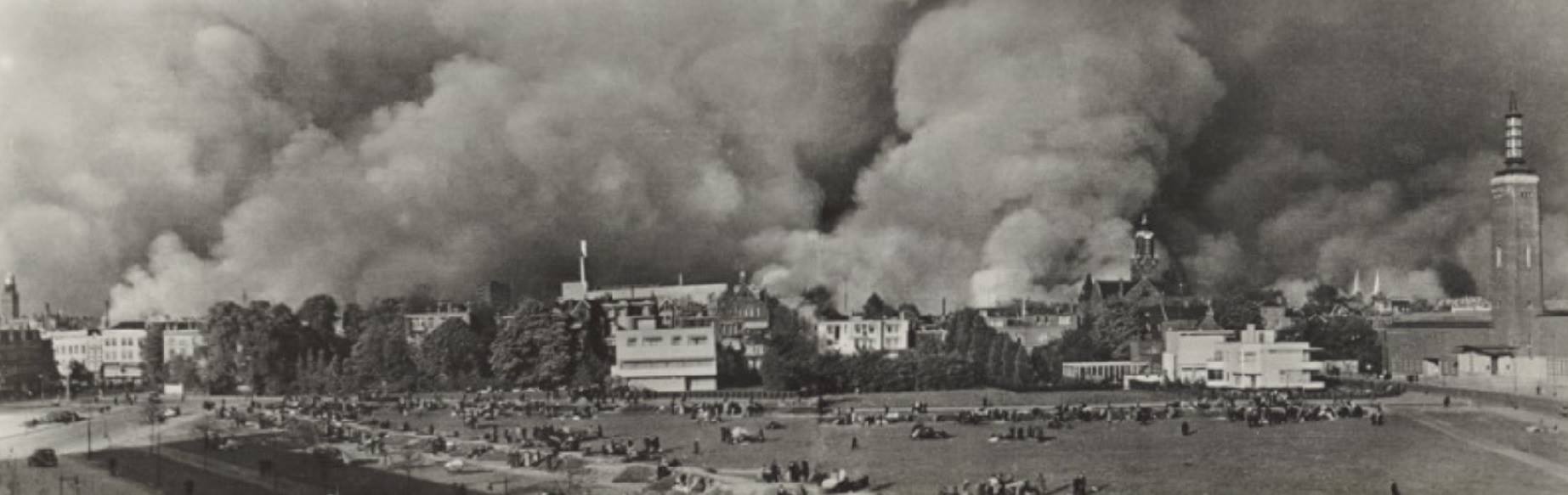
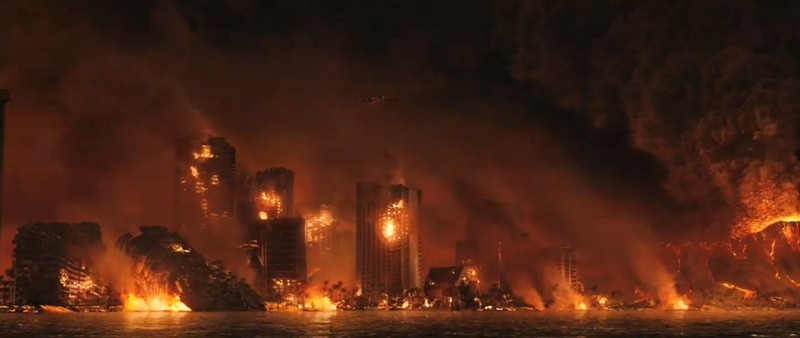
London and a lot more metropolitan areas like London mind you will have to adjust their current course on actions and considerations when it comes to fire hazard, because we do not want the London population to wake up looking at the speculative sights shown below from a distance.

Rotterdam 1940


OR

Hawaii 2012

Leave a comment

Filed under Law, Media, Politics

This bull and a red flag

We all have issues that tend to work like a red flag on a bull. We all have them; there is not one exception to that rule. Whether this is good or bad is not a given, it differs for everyone. In my case it seems to be Grenfell. The level of unacceptability, the sheer levels of incompetence that were clearly visible a mere 10 minutes into reading the facts, the evidence and the presented documentations makes this entire situation beyond belief. So when I see ‘Fire brigade faces police inquiry over Grenfell ‘stay put‘ order‘, my nostrils start fuming steam, no kidding! Now, I get that the detectives have to investigate; it is not with them that I have the issue. I understand what needs to be done, yet my anger towards Det Supt Matt Bonner, who is leading the police investigation, will not subside soon. You see, I have seen apartment block fires, well one exactly. Across the street, early morning, I heard screaming, I saw smoke and then the windows frame and all exploded outwards. We stayed put (except those in the burning apartment and their neighbours), the fire was stopped soon thereafter. The issue is that all the tenants in the building were not underfoot for the fire brigade. It makes perfect sense, there was no immediate danger, so running outside when you are not in danger makes no sense. A nice old fashioned building from just past WW2. The damage was limited to the apartment and the charcoaling of the stones and window frames of the people one floor up. That was the damage. So when I see “whether the order could have breached health and safety law“, I am wondering whether Det Supt Matt Bonner is off his bloody rocker! OK, I get it, he has to do this, but when we see that certain parties signed off on the combustible cladding, and according to some sources in the inquiry with additional wrongful installation. I think that focussing on the combustible side is a lot more important than wasting time on the Fire Brigade who might not have been up to scrap on the information that combustible cladding was installed meant for buildings up to 12 meters high according to the Reynobond PE brochure, it states it in there clearly, it also states two parts that should have set the fire hazard warning lights in the heads of EVERY person directly involved in the decision making process of what to install in the Grenfell tower, so that the buildings around it had a better view (I likely will never get over that part of the equation). These levels of failure seen within the first hour, and the London Fire Brigade is treated to ‘the order could have breached health and safety law‘, there is something utterly unacceptable to that. In all this, the council people involved, are any of them in Jail, or getting their nuts roasted in a training fire? We will just tell them to stay put, the fire brigade will be there to save THEM after lunch!

I reckon that this has not happened yet!

I understand the job that Det Supt Matt Bonner has, so when he gives us “The LFB would, as any other organisation involved, have an obligation to conduct their activity in a manner that doesn’t place people at risk. It doesn’t mean that at the moment they have or they haven’t, but that’s where the legislation is most likely to arise if that was an eventuality“, I get that he is doing his job and it is not a nice job to have in this particular part of the entire track, but we all have those moments. Yet, the setting that this is now set into the shackles of the legislation on health and safety law, whilst we see that the construction, unknown to the LFB at that moment was pretty much an actual Roman Candle is not something they were aware of or signed up for. I cannot find the legislation that sets a proper scope for members of the Fire Brigade (I am not saying it does not exist, merely that I could not find it). Yet when I look at the Fire and Rescue Service Operational guidance [attached], we see a few parts (at https://assets.publishing.service.gov.uk/government/uploads/system/uploads/attachment_data/file/5914/2124406.pdf). Yet that document gave me the Fire and Rescue Services Act 2004. So that is now out of the way, we see (not in the act): “Fire and Rescue Authorities must make arrangements for obtaining necessary information for the purposes of: extinguishing fire and protecting lives and property from fires in its area (Section 7); rescuing and protecting people from harm from road traffic accidents in its area (Section 8)“, this is important, because when we go back to the timeline, we see: ‘Emergency services received the first report of the fire at 00:54‘, it started on the fourth floor and the first Fire brigade teams arrived 6 minutes later (source: the Guardian). The first thing we learn is that firefighters had put out the fire in the flat within minutes. When the crew were leaving the building, they spotted flames rising up the exterior of the building. (source: the Independent), so (at https://www.independent.co.uk/news/uk/home-news/grenfell-tower-how-fire-spread-graphic-a7792661.html) we also see that the setting of stay put was sound, the initial fire was stopped, yet the flames had now gone from inside to outside (between the walls and the combustible cladding), at this point we get to ‘others were told by emergency services over the phone to put towels around doors and stay put until help arrived‘, who were still informed on the one apartment, not the Roman candle scenario. So academically there is clear logic to the setting. The next part is actually important, more important then you realise. The setting is in my personal opinion that the fire brigade was in the dark on what they faced and the scope they faced at the scene. With “A man on the 17th floor, who left his flat at 1.15am, said the fire had reached his window by the time he got out of the building“, this implies that it took 20 minutes for the fire to get from the 4th to the 17th floor. A utterly preposterous setting in any apartment building under normal condition, even under less than optimal condition this would never happen. We know that a room in any apartment can be ablaze in 3-5 minutes, considering that, the apartment itself it not yet ‘all’ in danger. I personally saw the training video for my firefighting accreditation (It’s a Marine Rescue thing). We also know that fire moves upwards, so even as the fire increases in speed and intensity, under normal conditions, it would have taken 5 minutes for any fire to move from the fourth floor to the fifth floor, yet within 6 minutes the initial fire was under attack and stopped. So now you need to realise that it was merely 00:01-00:03, when you realise that it took 12 minutes for the fire to grow from floor 4 to floor 17 that is the unnatural setting, it is pretty much unheard of. We can go with the fact that the fire was never stopped, but the initial stopping would have subsided heat and flammable material becomes a factor too. the fact that this fire was now out of control and in the end there were 200 firefighters and 40 fire engines on the scene. A setting so large, I have never seen any force actively that large on any one building in my life; these are merely a few elements in the setting that we should (respectfully mind you) hit Det Supt Matt Bonner over the head with. It is my personal belief that whoever signed of for the cladding, I do not care for what reason needs to be arrested and should be kept in jail until the entire investigation is completed. You see, I covered it in my article ‘Under cover questions‘ (at https://lawlordtobe.com/2017/06/23/under-cover-questions/), where I also added the Reynobond PE brochure. Yet Arconic, the original source has now removed that brochure from their site, is that not interesting [attached]. Yet I kept a safe backup of the brochure, so we will have that. This gets me back to the page 5 information on the brochure “It’s perfect for new and retrofit projects less than 40 feet (three stories) high“. Now it is important to realise that I am not attacking Arconic, the brochure gives clear light and it is probably a very nice and affordable upgrade solution for small office buildings and modern houses, 40 feet, 12 metres, 3 floors. It makes sense that those that do not have the funds and basically are willing to run the smallest of risks are all fine. Grenfell was 800% larger, higher and in that regard it becomes a much larger risk and in equal regard that product should never have been selected for Grenfell. So who signed off on that part of the equation, because someone approved it. It is my belief that this person needs to get the 4th degree from Det Supt Matt Bonner, not the members from the London Fire Brigade (yes, he is only doing his job, I know!). That setting is still completely (read: largely) uncovered by the media at large. It is not about all the other parts, all the complications that the people behind the screens need to feel that they can get away from it, the simple clear one part that is shown. Who signed off on the use of Reynobond PE for THIS building, it is in my personal view that simple.

So when we see the one time when those exaggerated headlines from places like the Daily Mail are valid, we see ABC giving us (at http://www.abc.net.au/news/2017-06-20/firefighters-hold-back-tears-at-grenfell-tower-fire-memorial/8633348), the setting ‘Video reveals disbelief of firefighters heading into ‘Towering Inferno’‘. So when you watch that video, also consider that these firefighters did not stop, they did not turn back, they all headed straight towards, and some into a roman candle. It might be a small miracle that none of the firefighters lost their lives. The video also showed that whilst the 39 fire engines were on route one filmed the setting where the entire building was already engulfed in flames. So whilst we are hearing the focus on the ‘stay put’, a proven logical, rational and acceptable order for high rise buildings, we need to consider how this could have gone out of control in less than 20 minutes, a setting (as far as I know) never seen before. So as you can see that the setting on the cladding is clearly given with mere common sense. we need to accept that Det Supt Matt Bonner is doing his job, yet from my point of view, the entire setting on looking at optional breaching of health and safety law, the London Fire Brigade is a lot lower on my list regarding the priority in looking on who did what wrong, there are several much higher on the list and perhaps I would not ever have chosen to question them at all. It might be the wrong call for several reasons and I accept that, yet the clear given setting that videos, photos and eye witness accounts give us, I would merely call the LFB in to buy them a beer and congratulate them for not getting themselves killed for working right next to a 67 meter Roman candle for up to 60 hours. Even as the fire was under control after 24 hours, it took another day and a half to fully stop the fires, that is never ever a normal fire, a fact that should be made open and public to a lot of people in the hope that they get angry enough to ask a few elementary questions and make sure that those who signed of on it answer them in front of dozen cameras and microphones.

So now we get back to the Fire and Rescue Services Act 2004, where we see in section 7, the part that I mentioned earlier, with one difference. You see the Fire and Rescue Service Operational guidance is missing one small part. We can agree that it is not an issue for the guidance, but when we see in section 7 part one ‘A fire and rescue authority must make provision for the purpose of extinguishing fires in its area, and protecting life and property in the event of fires in its area‘ we also need to see part 2 in all this. It is there where we see the smallest issue. We see: ‘In making provision under subsection (1) a fire and rescue authority must in particular secure the provision of the personnel, services and equipment necessary efficiently to meet all normal requirements‘, there is more, but this already covers it with the setting of ‘normal requirements‘. I hope we can all agree that there was nothing normal about the Grenfell tower fire. Should we bother to look at part d where we see ‘make arrangements for obtaining information needed for the purpose mentioned in subsection (1)’ as well as part e where we also see ‘make arrangements for ensuring that reasonable steps are taken to prevent or limit damage to property resulting from action taken for the purpose mentioned in subsection (1)‘ we are shown that neither point would have been possible to adhere to, 39 fire engines and 250 London firefighters. None of them would have been alerted by anyone that they were dealing with combustible cladding, they would have realised when they got there, but by then it was far too late to get anyone out alive. An abnormal setting in a place where normality seemingly was thrown out of any window when refurbishment choices were made, a view we get from the Guardian with “But fire-resistant cladding would have raised the cost for the whole building by an estimated £5,000“, a mere £70 per life lost. So when you follow the enquiry (at https://www.grenfelltowerinquiry.org.uk/evidence), I will be most curious to see what Arconic will have to say, you see, even as they (as far as I can tell) had done nothing wrong, the question remains whether the Arconic sales team knew all the facts on the sale of Reynobond PE, you see a building the size of Grenfell needs a lot of panels and when we consider the brochure, ref flags should have appeared in the mind of the salesperson (optionally). When we do look at the opening statement document from Arconic, we get :

  1. The material supplied by the Company for use at Grenfell Tower comprised the following:

(a) Reynobond 55 PE 4mm Smoke Silver Mem) lie E9107S DO 5000 Washcoat — the Arconic order acknowledgements and associated CEP purchase orders confirm the total area of this product purchased for Grenfell Tower as 6586 m2(note that this product was supplied in five different lengths and three different widths); and

(b) Reynobond 55 PE 4mm Pure White A91 10S DG 5000 Washcoat — the Arconic order acknowledgement and associate CEP purchase order confirms the total area of this product purchased for Grenfell Tower was 1 80m2.

  1. In 2015 the translucent ACM PE core was substituted with a carbon black core. This was achieved by adding a small amount of carbon black material to the existing core, which provided greater UV protection for the core at exposed panel edges. The change was not related to fire performance.

So, would carbon be an issue? Now, I am not a firefighter, so I am a little out of my depth here, yet when we look at the thermal conductivity of materials and we see:

MATERIAL CONDUCTIVITY DENSITY
Aluminium 210 2.71
Graphite (pyrolytic, some planes) 300-1500 1.3-1.95
Graphene (theoretical) 5020 n/a
Carbon Nanotube (theoretical) 3500 N/A
Carbon Fiber 21-180 1.78
High Modulus MP Mesophase Pitch Carbon Fiber in fiber direction 500 1.7

So for the most, heat conductivity goes up by a lot when carbon is introduced. I am not accusing of Arconic of doing anything wrong, merely that as UV protection went up, so did the heat conductivity as my personal consideration speculates (a clear assumption from my side at this point). The fact that this happened in 2015 long before the refurbishment, we see an additional danger factor. Even as Reynobond PE was never an acceptable solution according to their own brochure, the fact that over 6500 square meters of the stuff was ordered, did no one question the maximum 12 metres part?

So again we get to the part, who approved the installation of well over 6500 square meters of combustible material turning a high rise building into a 67 meter Roman candle?

I might be the bull and Grenfell is the red flag enraging me to the core, I accept that, I merely wonder why not more people apart from the family of victims are not equally enraged. Part of that makes no sense to me at all, because the next building might have you, your children, your grandchildren or other family members in them.

How would you feel then?


Leave a comment

Filed under Law, Media, Politics, Science

Cheese Pizza with Oregano

I love Pizza, I hardly ever get it, merely because the people here tend to rely on Domino’s and Pizza Hut and neither tends to be a true pizza (as I personally see it). As I walked through Sydney over the last week, it dawned on me just the massive lack of actual decent Pizza places in Sydney. It is almost like they are no longer in a sustainable environment. People got used to the cheap solutions two chains bring and they call it Pizza. All the people in the neighbourhood accepted it as the real deal and now, we forgot what true awesome Pizza is like. Now, I am a little off the wall here. I love my Cheese Pizza, with the 5 cheeses and loads of Oregano on top. So when I think Pizza, I always think of the Bravo Trattoria Pizza’s at Crow’s Nest, they are my favourite! Yet, is it about pizza, or the place, or what Pizza actually is? You see, it does matter when we consider the Financial Review (at https://www.afr.com/personal-finance/italys-debt-barely-sustainable-ubs-chief-economist-20180601-h10uun), we see here what I said weeks ago and last week to some degree. When we see “Italy’s debt-to-GDP ratio of 130 per cent is “borderline sustainable”, the UBS top economist says. There is a level of the primary budget surplus which keeps debt stable, and above which you can begin to pay down your obligations, Kapteyn explains. For Italy this figure is a surplus of 1.3 per cent of GDP, versus the actual surplus of 2 per cent. It’s a skinny buffer of around 0.8 percentage points which at current debt levels “doesn’t inspire confidence”, Kapteyn says“. That is merely the tip of the iceberg. The issue is not that it is Italy, it matters more that it is one of the big four. UK, France, Germany and Italy are the large economic suppliers of a 27 nation bloc where they basically represent well over 50% of the EU economy, the fact that they all are in deep debt does not help and the fact that the UK is getting out, or is that ‘was trying to get out‘? So when we see add the issues of the UK and now we see how the Italian issues are growing and France is not far behind. A 27 nation failure due to the inability to set proper budgets, deal with debt levels and add to that a failed economy jump start that is now close to 3 trillion Euro printed with no real prospects to pay for any of it. That revelation is why Italy seems to be vacating the union. The action by President Sergio Mattarella by rejecting the Eurosceptic finance minister and put in his place Giovanni Tria a pro-EU professor. This is perhaps the first setting where we see that voting is no longer an issue for any government, the holier than thou setting of protecting the Euro and the EU against all odds, whilst those in the EU commissions are massively overpaid is setting the foundation of a dangerous mindset. The issue that the AFR is bringing to light is “markets are not pricing in the risk of an Italian exit, they are repricing the risk of a Italian default“. I always rated the Iexit (aka iLeave) setting very low, the two populist parties in charge was not that realistic in 2016 and when Marine Le Pen was ‘surpassed’ by a former investment funds manager we were all wondering what would come next and I thought it would lower the chances of the populists in Italy. And the news is not getting any better. We see that with “The European economy hit a wall over the final months of last year, with growth dropping from a quarterly growth rate of 0.7 per cent to more like 0.4 per cent. Economists are unclear of the reasons for the slowdown, but broadly believed the European economy would quickly rebound“, the issue I personally see is ‘broadly believed the European economy would quickly rebound‘, not the slowdown. You see there is no evidence that there is an actual quick rebound. There is every chance that there will be a rebound, but it will not be quick. The fact that these so called experts are all thumbs when it comes to their forecasting and with 0.3% unaccounted for, we can see that they are in the dark or playing the bad news cycle. I personally believe it to be the second one. And the Italian issues are increasing. Not merely the debt settings, it is a changed political landscape. Even as Paolo Savona was replaced by Giovanni Tria, there is still “Mr Di Maio will be vice-premier and minister for labour and economic development, including trade policy. Matteo Salvini, head of the League, will also be vice-premier and interior minister in charge of immigration“. This we got from the Financial Times (at https://www.ft.com/content/79cf905c-64a8-11e8-90c2-9563a0613e56). This duo is going to be a lot more important than even I initially thought. They now have a handle on labour economic development and immigration will see larger changes. There is no way to predict whether that is good or bad. If we listen to people like George Soros we are instantly rejecting liberalism, because it is easy to be a liberalist when you are a multi billionaire, yet he had no issues to short sell US$10 billion worth of Pound sterling, earning a billion in the process during the 1992 Black Wednesday UK currency crisis. He did nothing wrong, he played the system when he could and make a billion. Things like that never go away and he must regard the EU zone as a very profitable short sell opportunity, which makes whatever he is trying to do dangerous, so in that light all his settings for “Best for Britain pushes for second referendum on Theresa May’s deal with EU“, a cause he is backing is very dangerous. In this by pushing the UK away from Brexit, the pressure on Italy decreases. The dangers become that irresponsible spending in the big four can go on for several more years and there is no way to control the ECB and their puppet masters. Unelected people deciding on the descent of financial futures in 27 nations that is how I personally see it. You can agree or disagree, yet ask yourself when was the last time that any European got a decent explanation on who of how the 3 trillion euro spend was going to be dealt with? You see over a decade in an economic setting that is close to the late 90’s, whilst keeping strict austerity in play all over Europe. There is quite literally no way that this will happen, because politicians will adjust their policy towards any speculative proclaimer of ‘the European economy would quickly rebound‘ economists, whilst not prosecuting them when they get it wrong (merely because making any claim of expectation is not a crime, is it?). A setting that the people have no chance of winning, hell, they won’t ever be able to break even on this. This shows that Brexit will be a hard, but the better way to go. When billionaires start proclaiming how bad it is and how ‘we all’ can get a better deal that is when you become afraid for your life and that is what is at stake. And we see this in the Australian Financial Review with ““creeping into the market”, Kapteyn says – “a potentially dangerous one”. After the glory days of 2017 in which investors basked in a globally synchronised upswing, markets are now faced with the potential return of the two-speed world economy: the US vs the rest“, so when we get “America’s economy is growing around 3.5 per cent; some independent analysts estimate growth as fast as 4 per cent. Europe is “at best” growing by 2 per cent“, that shows the dangers, because as George Soros is getting the winnings, the other players do not, from my point of view it is a form of leeching, leeching Europe dry for the term of a generation or better. You see again it is a personal view, it is why Best for Britain is getting the support, it is about delaying Brexit at the very least for as long as possible, merely because it stops the game people like George Soros are likely to be playing and when that stops Europe can start bringing things about, hopefully for the better, especially as the ECB will be forced to print money for all kinds of dubious reasons, dubious because kick-starting the economy after you printed 3 trillion to try it twice is just ridiculous, that money has to be paid back at some point and everyone is in denial about the latter part.

Yet this is still about Italy, not the UK. You see, Italians want what is best for Italy and I am fine with that, I believe in a healthy sense of national pride. Yet with “Italy’s debt-to-GDP ratio of 130 per cent is ‘borderline sustainable’” they are facing an ugly truth, Italy needs to face 5-15 years of Austerity, yet with the ECB trying to economically equalise Europe, at the cost of the big four, so it amounts to Italy trying on top of an economy for 60 million Italians, whilst they are weighted with invoices for close to 250 million Europeans who can’t be bothered to get their house in order. it amounts to giving an addicted gambler $500 whilst they are only allowed to use $10 for gambling, you tell me how long it takes for things to go really wrong, and that is pretty much a given on this situation. It was seen in the Netherlands 2012 and 2013, and now we see, when we look at the Dutch government statements with in September 2017 we see “The economy will grow by 3.3% in 2017 and a projected 2.5% in 2018“, we see the EU commission giving the Netherlands a ‘mere’ 3.2% last month for that same timespan. Now the 0.1% is actually pretty good, but it is still dangerous when it is a 0.1% in Italy, the issue is seen when we see that the Netherlands has a 65% debt level against Italy at 130% of GDP, and the Dutch are actually in a much better position, so the 0.1% is no actual pain level. Portugal, Spain, Greece, Belgium and Italy all have debt levels well over 100% of GDP, several other nations are somewhere between 60% and 80% of GDP, whilst France is at 99.8%. It is the debt levels that are excellent for banks and not so good for the people. You see, when the big four are required to pay €254 billion in interest each year and that is just the large 4, how do you think that this gets paid for? A decade of inability to set a proper budget and all this is before we consider the €3,000 billion that the ECB printed for what they call Quantative Easing. That is what Italy needs to get away from and at 135% they have the hardest job of all. So when you see that all that money goes all to the banks, short sold loans that they never had the money for to pay for can you see just how dangerous the George Soros setting is in all this? It all impacts Italy to some degree. These are not merely the facts; there is also presentation, representation and misrepresentation. The issue is in the Australian Review, it is the view of Arend Kapteyn. Yet where is he at when he gives us “We are only now at the beginning to find out how responsible or irresponsible [the new coalition government] are going to be on the fiscal side“, you see, the setting then becomes what is irresponsible? Being not pro Eurozone, being forced to default whilst the alternatives are just too unacceptable for the Italian people? So is he the pro greed setting, or the pro solution setting, because with such debt levels we can almost unanimously accept that these two choices are mutually exclusive. The most interesting political part is that Enzo Moavero Milanesi is now Minister of Foreign Affairs. I would have thought that the populists wanted that part for themselves, the fact that this post is now with an Italian independent is an interesting choice, if the populists can work with this setting and use it to maximise their economy by setting new option and opportunities, Italy gets an optional path where minimised immigration and maximised economy could have a setting where the Italian unemployment rates could fall to a number below 10% over the next 24 months (highly speculative on my side). If they pull that off, the entire euro sceptic setting could grow a lot faster than would have been possible with Paolo Savona in the mix.

No matter how you slice the Pizza, the factual and actual quality Italian dish is under massive amounts of pressure on several sides and any Italian thinking that their life will get better in the short run is just gobbling down a [Unnamed Franchise] Pizza, bland food that look like a UFO and tastes not as great. The fact is that like Germany did earlier this decade, Italy will know 5-10 years of hardship, yet when persevered Italy could have an actual growing economy for a much longer time, something to look forward to (if you are Italian). Can this government pull it off? That is hard to say because it has been shown that the actions of the ECB are close to non-stoppable and that will still impacts the bottom line. It is good for America and George Soros in the short term, yet after that they will not care and Europe will not be going anywhere ever soon. That danger is just ignored all over the place. Just 2 days ago the Financial Times also gave us “There are still two weeks to go before Riga, but naming an end date for QE right now would be like the ECB shooting itself in the Italian boot,” said Carsten Brzeski, economist at ING-DiBa. “The Italian situation has tilted the balance towards the doves [and] clearly calls for the ECB to keep its options open and even to make clear that they will extend QE at least until December” (at https://www.ft.com/content/dd6b5d70-6413-11e8-90c2-9563a0613e56), which is already an extension of well over a year. so when we see “The ECB has pledged to reinvest an average of €15bn a month over the first four months of next year, using the proceeds of government bonds bought under QE that have now matured” in that same article, we need to consider ‘bonds that have now matured‘, so that danger is seen in the Spanish setting where we see from some sources: “Spain will have refinancing requirements that exceed €300 billion per annum before 2022. In 2018, 41.2 billion euro, in 2019, 82.4, in 2020 83.9 and in 2021 58.5 billion euro, with 60.4 billion maturing in 2022“, so this fiscal year Spain will be required to find €41 billion, or increase taxes or cut services, and it will be twice that amount next year around, so how exactly is Spain in a setting to get the economy back whilst the debts are rising beyond normal control? Italy faces “84 billion euro maturities in 2018, 161 billion in 2019, 164 billion in 2020 and 172.5 billion euro in 2021” do the Italian people know that they are in such deep and hot waters? I wonder, and when they get confronted with that part of the bad news cycle, what will the previous and opposition then proclaim? I wonder if we will see true honest coverage on that blame game. I will order a decent Pizza to watch that unfold, because there are merely the two larger players in the EU-debt zone bloc confronted with the hardships that will hit them hard. Pushing these debts forward is just not a workable solution, not when the debt exceeded 130% of GDP, if you doubt my words, just talk to the average Greek in Athens and ask him how his quality of life is nowadays.

So as you wanted that your slice of life included a slice of pizza, consider the 99% in Italy who soon face the reality that they are no longer able to afford that for a long time to come.


1 Comment

Filed under Finance, Media, Politics

Data illusions

Yesterday was an interesting day for a few reasons; one of the primary reasons was an opinion piece in the Guardian by Jay Watts (@Shrink_at_Large). Like many article I considered to be in opposition, yet when I reread it, this piece has all kinds of hidden gems and I had to ponder a few items for an hour or so. I love that! Any piece, article or opinion that makes me rethink my position is a piece well worth reading. So this piece called ‘Supermarkets spy on them now‘ (at https://www.theguardian.com/commentisfree/2018/may/31/benefits-claimants-fear-supermarkets-spy-poor-disabled) has several sides that require us to think and rethink issues. As we see a quote like “some are happy to brush this off as no big deal” we identify with too many parts; to me and to many it is just that, no big deal, but behind the issues are secondary issues that are ignored by the masses (en mass as we might giggle), yet the truth is far from nice.

So what do we see in the first as primary and what is behind it as secondary? In the first we see the premise “if a patient with a diagnosis of paranoid schizophrenia told you that they were being watched by the Department for Work and Pensions (DWP), most mental health practitioners would presume this to be a sign of illness. This is not the case today.” It is not whether this is true or not, it is not a case of watching, being a watcher or even watching the watcher. It is what happens behind it all. So, when we recollect that dead dropped donkey called Cambridge Analytics, which was all based on interacting and engaging on fear. Consider what IBM and Google are able to do now through machine learning. This we see in an addition to a book from O’Reilly called ‘The Evolution of Analytics‘ by Patrick Hall, Wen Phan, and Katie Whitson. Here we see the direct impact of programs like SAS (Statistical Analysis System) in the application of machine learning, we see this on page 3 of Machine Learning in the Analytic Landscape (not a page 3 of the Sun by the way). Here we see for the government “Pattern recognition in images and videos enhance security and threat detection while the examination of transactions can spot healthcare fraud“, you might think it is no big deal. Yet you are forgetting that it is more than the so called implied ‘healthcare fraud‘. It is the abused setting of fraud in general and the eagerly awaited setting for ‘miscommunication’ whilst the people en mass are now set in a wrongly categorised world, a world where assumption takes control and scores of people are now pushed into the defence of their actions, an optional change towards ‘guilty until proven innocent’ whilst those making assumptions are clueless on many occasions, now are in an additional setting where they believe that they know exactly what they are doing. We have seen these kinds of bungles that impacted thousands of people in the UK and Australia. It seems that Canada has a better system where every letter with the content: ‘I am sorry to inform you, but it seems that your system made an error‘ tends to overthrow such assumptions (Yay for Canada today). So when we are confronted with: “The level of scrutiny all benefits claimants feel under is so brutal that it is no surprise that supermarket giant Sainsbury’s has a policy to share CCTV “where we are asked to do so by a public or regulatory authority such as the police or the Department for Work and Pensions”“, it is not merely the policy of Sainsbury, it is what places like the Department for Work and Pensions are going to do with machine learning and their version of classifications, whilst the foundation of true fraud is often not clear to them, so you want to set a system without clarity and hope that the machine will constitute learning through machine learning? It can never work, that evidence is seen as the initial classification of any person in a fluidic setting is altering on the best of conditions. Such systems are not able to deal with the chaotic life of any person not in a clear lifestyle cycle and people on pensions (trying to merely get by) as well as those who are physically or mentally unhealthy. These are merely three categories where all kind of cycles of chaos tend to intervene with their daily life. Those are now shown to be optionally targeted with not just a flawed system, but with a system where the transient workforce using those methods are unclear on what needs to be done as the need changes with every political administration. A system under such levels of basic change is too dangerous to get linked to any kind of machine learning. I believe that Jay Watts is not misinforming us; I feel that even the writer here has not yet touched on many unspoken dangers. There is no fault here by the one who gave us the opinion piece, I personally believe that the quote “they become imprisoned in their homes or in a mental state wherein they feel they are constantly being accused of being fraudulent or worthless” is incomplete, yet the setting I refer to is mentioned at the very end. You see, I believe that such systems will push suicide rates to an all-time high. I do not agree with “be too kind a phrase to describe what the Tories have done and are doing to claimants. It is worse than that: it is the post-apocalyptic bleakness of poverty combined with the persecution and terror of constantly feeling watched and accused“. I believe it to be wrong because this is a flaw on both sides of the political aisle. Their state of inaction for decades forced the issue out and as the NHS is out of money and is not getting any money the current administration is trying to find cash in any way that they can, because the coffers are empty, which now gets us to a BBC article from last year.

At http://www.bbc.com/news/election-2017-39980793, we saw “A survey in 2013 by Ipsos Mori suggested people believed that £24 out of every £100 spent on benefits was fraudulently claimed. What do you think – too high, too low?
Want to know the real answer? It is £1.10 for every £100
“. That is the dangerous political setting as we should see it; the assumption and believe that 24% is set to fraud when it is more realistic that 1% might be the actual figure. Let’s not be coy about it, because out of £172.3bn a 1% amount still remains a serious amount of cash, yet when you set it against the percentage of the UK population the amount becomes a mere £25 per person, it merely takes one prescription to get to that amount, one missed on the government side and one wrongly entered on the patients side and we are there. Yet in all that, how many prescriptions did you the reader require in the last year alone? When we get to that nitty gritty level we are confronted with the task where machine learning will not offer anything but additional resources to double check every claimant and offense. Now, we should all agree that machine learning and analyses will help in many ways, yet when it comes to ‘Claimants often feel unable to go out, attempt voluntary work or enjoy time with family for fear this will be used against them‘ we are confronted with a new level of data and when we merely look at the fear of voluntary work or being with family we need to consider what we have become. So in all this we see a rightful investment into a system that in the long run will help automate all kinds of things and help us to see where governments failed their social systems, we see a system that costs hundreds of millions, to look into an optional 1% loss, which at 10% of the losses might make perfect sense. Yet these systems are flawed from the very moment they are implemented because the setting is not rational, not realistic and in the end will bring more costs than any have considered from day one. So in the setting of finding ways to justify a 2015 ‘The Tories’ £12bn of welfare cuts could come back to haunt them‘, will not merely fail, it will add a £1 billion in costs of hardware, software and resources, whilst not getting the £12 billion in workable cutbacks, where exactly was the logic in that?

So when we are looking at the George Orwell edition of edition of ‘Twenty Eighteen‘, we all laugh and think it is no great deal, but the danger is actually two fold. The first I used and taught to students which gets us the loss of choice.

The setting is that a supermarket needs to satisfy the need of the customers and the survey they have they will keep items in a category (lollies for example) that are rated ‘fantastic value for money‘ and ‘great value for money‘, or the top 25th percentile of the products, whatever is the largest. So in the setting with 5,000 responses, the issue was that the 25th percentile now also included ‘decent value for money‘. So we get a setting where an additional 35 articles were kept in stock for the lollies category. This was the setting where I showed the value of what is known as User Missing Values. There were 423 people who had no opinion on lollies, who for whatever reason never bought those articles, This led to removing them from consideration, a choice merely based on actual responses; now the same situation gave us the 4,577 people gave us that the top 25th percentile only had ‘fantastic value for money‘ and ‘great value for money‘ and within that setting 35 articles were removed from that supermarket. Here we see the danger! What about those people who really loved one of those 35 articles, yet were not interviewed? The average supermarket does not have 5,000 visitors, it has depending on the location up to a thousand a day, more important, when we add a few elements and it is no longer about supermarkets, but government institutions and in addition it is not about lollies but Fraud classification? When we are set in a category of ‘Most likely to commit Fraud‘ and ‘Very likely to commit Fraud‘, whilst those people with a job and bankers are not included into the equation? So we get a diminished setting of Fraud from the very beginning.

Hold Stop!

What did I just say? Well, there is method to my madness. Two sources, the first called Slashdot.org (no idea who they were), gave us a reference to a 2009 book called ‘Insidious: How Trusted Employees Steal Millions and Why It’s So Hard for Banks to Stop Them‘ by B. C. Krishna and Shirley Inscoe (ISBN-13: 978-0982527207). Here we see “The financial crisis appears to be exacerbating fraud by bank employees: a new survey found that 72 percent of financial institutions say that in the last 12 months they have experienced a case of data theft by one of their workers“. Now, it is important to realise that I have no idea how reliable these numbers are, yet the book was published, so there will be a political player using this at some stage. This already tumbles to academic reliability of Fraud in general, now for an actual reliable source we see KPMG, who gave us last year “KPMG survey reveals surge in fraud in Australia“, with “For the period April 2016 to September 2016, the total value of frauds rose by 16 percent to a total of $442m, from $381m in the previous six month period” we see number, yet it is based on a survey and how reliable were those giving their view? How much was assumption, unrecognised numbers and based on ‘forecasted increases‘ that were not met? That issue was clearly brought to light by the Sydney Morning Herald in 2011 (at https://www.smh.com.au/technology/piracy-are-we-being-conned-20110322-1c4cs.html), where we see: “the Australian Content Industry Group (ACIG), released new statistics to The Age, which claimed piracy was costing Australian content industries $900 million a year and 8000 jobs“, yet the issue is not merely the numbers given, the larger issue is “the report, which is just 12 pages long, is fundamentally flawed. It takes a model provided by an earlier European piracy study (which itself has been thoroughly debunked) and attempts to shoe-horn in extrapolated Australian figures that are at best highly questionable and at worst just made up“, so the claim “4.7 million Australian internet users engaged in illegal downloading and this was set to increase to 8 million by 2016. By that time, the claimed losses to piracy would jump to $5.2 billion a year and 40,000 jobs” was a joke to say the least. There we see the issue of Fraud in another light, based on a different setting, the same model was used, and that is whilst I am more and more convinced that the European model was likely to be flawed as well (a small reference to the Dutch Buma/Stemra setting of 2007-2010). So not only are the models wrong, the entire exercise gives us something that was never going to be reliable in any way shape or form (personal speculation), so in this we now have the entire Machine learning, the political setting of Fraud as well as the speculated numbers involved, and what is ‘disregarded’ as Fraud. We will end up with a scenario where we get 70% false positives (a pure rough assumption on my side) in a collective where checking those numbers will never be realistic, and the moment the parameters are ‘leaked’ the actual fraudulent people will change their settings making detection of Fraud less and less likely.

How will this fix anything other than the revenue need of those selling machine learning? So when we look back at the chapter of Modern Applications of Machine Learning we see “Deploying machine learning models in real-time opens up opportunities to tackle safety issues, security threats, and financial risk immediately. Making these decisions usually involves embedding trained machine learning models into a streaming engine“, that is actually true, yet when we also consider “review some of the key organizational, data, infrastructure, modelling, and operational and production challenges that organizations must address to successfully incorporate machine learning into their analytic strategy“, the element of data and data quality is overlooked on several levels, making the entire setting, especially in light of the piece by Jay Watts a very dangerous one. So the full title, which is intentionally did not use in the beginning ‘No wonder people on benefits live in fear. Supermarkets spy on them now‘, is set wholly on the known and almost guaranteed premise that data quality and knowing that the players in this field are slightly too happy to generalise and trivialise the issue of data quality. The moment that comes to light and the implementers are held accountable for data quality is when all those now hyping machine learning, will change their tune instantly and give us all kinds of ‘party line‘ issues that they are not responsible for. Issues that I personally expect they did not really highlight when they were all about selling that system.

Until data cleaning and data vetting gets a much higher position in the analyses ladder, we are confronted with aggregated, weighted and ‘expected likelihood‘ generalisations and those who are ‘flagged’ via such systems will live in constant fear that their shallow way of life stops because a too high paid analyst stuffed up a weighting factor, condemning a few thousand people set to be tagged for all kind of reasons, not merely because they could be optionally part of a 1% that the government is trying to clamp down on, or was that 24%? We can believe the BBC, but can we believe their sources?

And if there is even a partial doubt on the BBC data, how unreliable are the aggregated government numbers?

Did I oversimplify the issue a little?


Leave a comment

Filed under Finance, IT, Media, Politics, Science

Humble Pie

Merely a few hours ago, Bloomberg gave us ‘Iran Is Ready to Discuss Yemen Conflict with European Nations‘ (at https://www.bloomberg.com/news/articles/2018-05-28/iran-says-ready-to-discuss-yemen-conflict-with-european-nations). You might think that this is a good thing, but it is not. Iran is caught in a two side war, just like I predicted in the previous 3 weeks. Just like that, they are willing to talk. They have suddenly realised that time was up and now they are grasping at any side that will be willing to facilitate for them at a price. It is linked to a few escalations on more than one side. Even as we read here: “Iran will be holding a new round of talks with Europe on the Yemen conflict, negotiations that have taken on greater significance as the sides try to salvage a nuclear agreement“, the start gives the goods, Iran wants to protect the nuclear agreement at all cost. Their high farting like sounds of political boasting is coming to an end, there was never any option and now they must concede on several sides. Even as one side is taken from them, they are willing to concede on the Yemen side as it was never going to be a realistic option and as Hezbollah has failed again and again in their pursuit of successful strikes on Saudi Arabia, none happened and now they need to find the one war they might actually have a chance of winning, it is the Nuclear agreement and even that will backfire soon enough. So when we read: ““Iran, like the EU, is unlikely to want to mix fate of the nuclear deal with that of talks on other issues,” said Aniseh Bassiri Tabrizi, a research fellow at the Royal United Services Institute in London. “At the same time, it is important for them to keep a channel of communication open with the EU, whatever happens on the nuclear deal, and the best dossier to do so is Yemen for them.”“, I tend not to be in agreement. You might think that it is all the same, but it is not. It is not about ‘whatever happens on the nuclear deal‘, it is about making sure that this agreement is salvaged, Iran overplayed its hand and now that there will be hell to pay, they need to find a way out, if only they can find the right greed and ego driven Europeans to make a quick deal, at that point the media can reflect on some victory, whilst there is no actual victory. You see, there is a second side that is part of this. Iran has figured out that the only interests that Russia has in Syria are Russian ones and in that picture there is no space for Iran, Israel has made that abundantly clear and as such Iran stands alone and with the hits that Israel has been making in Syria on Iranian troops and the strike last Thursday as well as the silence (or better stated lack of loud boasting) by the Syrian governments indicates that the absence of Iran is well liked, even though they are not willing to state it out loud. Syria wants to get the most out of the Russians and Iranians as it can get, which is perfectly fine, yet Iran is too much of an issue for Israel, after years of boasting and threatening, Israel decided to act; the political field was ripe for that. With both America and Saudi Arabia opposing Iran and Russia not really caring about Iran, Iran is in an unwinnable situation, the Iranian coffers drained by enabling Hezbollah as well as the actions in Syria have drained a large chunk of their reserves, Iran need to cut its losses and it is doing so with the gesture we see in the Bloomberg article, one of many to follow I reckon. That truth becomes a lot harsher when we see: “Chagai Tzuriel, director general of the Israeli ministry of intelligence, said he believed that Moscow realised that fighting between Iran and Israel could undermine gains made by Russia during the Syrian civil war“, we know that there is no hiding for Iran, they played the game as far as they could, now that option after option falls away, they are determined to hold on to the Nuclear agreement. This also opens the second stage for Israel; they can now more effectively take care of Hezbollah, now that there is an open season on Iran, Hezbollah can (hopefully permanently) be dealt with. In that regard there is no lack of either Israel or Saudi Arabia to hunt them down and without Iran that might well happen. For Russia it is not over, you see, the Jerusalem Post gives us “Lavrov’s comments are part of an understanding reached between Israel and Russia to keep Iranian and Hezbollah forces away from Syria’s border with Israel on the Golan Heights“, that sounds nice in theory, yet over the years Hezbollah has shown never to keep any agreement (when they were not out of ammunition), so there is a setting where it is very realistic that Hezbollah will do whatever it wants and puts Russia in a pickle, as such both sides agreeing to get rid of Hezbollah makes perfect sense as such Iran is really not willing to stay there as a piggy in the middle. In addition Russia stands to make a lot of plus points in the Saudi Arabia side of things, not just by pushing Iran away from where they are, but to push Hezbollah away from Syrian and Jordanian borders which gets them nice points at the Jordanian royal court as well. In all this there is actually not one part of Hezbollah that has any redeeming value at all, and the worst part is that Hezbollah knows this too (yet they do not care).

There is one additional side that Iran needs to worry about. As Saudi Arabia has given to Germany to be the aggrieved party in Germany’s support in favour of the nuclear deal for Iran is already costing Germany a lot, the German giants who were tenders on several projects for the Saudi government are seeing them being cut from consideration, with Neom and Vision 2030, both projects totaling in value at well over 800 billion, the German economy will take larger hits, other EU nations might find themselves in a setting where they have to choose to go for a really bad nuclear deal, whilst there is no evidence that it will result in a better position and good economic settings in the longer run (more then 3-5 years) whilst Saudi Arabia is growing a setting that is getting closer to a trillion dollars over 12 years, there is no way that Iran can rely on any level of serious support, not after all the stunts they played. Their actions made it impossible and their boasting made it close to intolerable. In addition with Iran cut in every way, Turkey will now need to realise that they played the game wrong in other ways as well. Even as some might cry over the Russians not getting the F-35 due to getting culled from the program, Russia sees a second option to not just sell Turkey missiles, they could optionally sell them the SU-57 as well, which will get Turkey a new loan agreement for a few billions and let’s face it America needs to test the F-35 anyway, whether they test their F-35 against a Sukhoi, does it matter whether a Russian or a Turk is flying it? (Howls of deriving laughter in the background)

You see, they are doing this whilst their currency is at an all-time low, some might think that it is a great time to buy, yet with their economy in shambles and there should be no chance of them ascending into the EU in the next few years, the setting of spending billions on a new Sukhoi squadron (perhaps even two) seems to be folly to me. Even as there is some good news (read: numbers) coming from Turkey, its unemployment rate is still a little over 10.5% and seems to be rising over the next quarter, surpassing Italy in unemployment statistics. It is there where we see another issue. This matters as there has been a link between Iran and Turkey, so as the pressure on several sides is on Turkey, the economic pressures might force Turkey to make any deal they can, even if they have to break connections to Iran, which would for the most isolate Iran at that point, an option that both Israel and Saudi Arabia would enjoy. Israel especially as Turkey was threatening Israel with all kinds of sanctions (source: Haaretz).

So as Turkey is imposing sanctions on those deciding to recognise the Armenian Holocaust, we see the active economic impact that Turkey faces by being in denial, not the worst day in many lives.

In this there is a reflection that must be noticed, In Al Arabiya, there was an article (at http://english.alarabiya.net/en/views/news/middle-east/2018/05/25/Bitterness-confusion-among-Saudi-Arabia-s-foes.html), an opinion piece that matters. You see, the writer Abdullah bin Bijad Al-Otaibi (Twitter: @abdullahbjad) gives us “Enemies are upset and confused and the world is recalibrating its power equations so that each knows its place and capabilities. Also, so that each country can reflect on its policies and alliances through the power of politics, diplomacy, boycott and sanctions, as well as with the power of armies and weapons“, he is correct, President Donald Trump might have kicked it off with “America First“, it is a truth we have been forced to face for well over 5 years. It does not matter whether you are in the US, UK, Saudi Arabia, Sweden, Australia, Canada or New Zealand. As citizens and politicians we have a duty to protect our national interests and set that as a first essential need. When we look from that angle we get to reflect on how bad Iran is, we cannot fault Turkey for taking its national interests first, yet they did it by not honouring the allies they had for decades and that sets the sliding acceptance (towards rejection) of Turkey in all this when you consider the events from 2001 onwards.

In this his view: “Big European companies are fleeing Iran at a fast pace and everyone who has dealt with Iran, whether banks or companies, are looking for a safe way out of any ties they have with Iran, its parties, militias and ideology. Everyone now accepts the facts about Iran’s crimes such as its sponsoring of terrorism, drug dealing and money laundering in the region and the world” is not incorrect, yet the issue is that this sets the stage on greed influencing the national interest in the stage of big business versus government, a setting that Europe, the US and the Commonwealth have had for the longest time. In addition there is now a small opposition from my side. I agree with part of his statement “They have done so through the Palestinian cause which they have, from Iran, Turkey, Qatar and the Muslim Brotherhood, managed to exploit to serve their interests and fulfil their ambitions“, there is a side I cannot completely agree with (actually there is more than one side here). Not because I think he is wrong, but because there is data missing, data I never had access to, or was given by a reputable media source to the degree that there is enough shown to see it as an actual issue.

This is seen in the parties Iran and Qatar. Now, we accept the puppet game that Iran has played, we do not deny that in any way, but in the end Iran was merely playing the hand it had to show Iranian interest. We can agree that it was done badly, yet they did do this for mere national interest (or so they say). In the second part there is Qatar. I agree that there are questions, yet overall, I have not seen the evidence, the allegations going back to 2014 have been loud, yet the media and others have not given a clear path of evidence that gives light to the wrongful opposition by the Emir of Qatar, Sheikh Tamim bin Hamad Al-Thani, we can agree that there are some terrorist financiers, that was never in question, yet Qatar seems to have tried all legal ways and did not get anywhere, in addition the US state document (at https://www.state.gov/documents/organization/258249.pdf) does not give the goods either, we are confronted with “Qatar is a partner in the Global Coalition to Counter the Islamic State of Iraq and the Levant (ISIL) and has provided significant support in facilitating critical U.S. military operations in the region. Terrorist activity historically has been low in Qatar“, this does not make Qatar innocent; it merely shows that without better and more data, they remain ‘not guilty‘, which is not the same. The document is 3 years old, yet there is no new information that truly sets Qatar in a bad light (for now). In addition we see that Qatar State Security is aggressive when it comes to monitoring internal extremist or terrorism-related activities. Interestingly enough, the players from ‘team’ Qatar State Security seem to have a much better handle on internal extremism and terrorism-related activities than most European countries, so there is that to consider as well. The second issue I had with the statement by Abdullah bin Bijad al-Otaibi is the reference to ‘the Palestinian cause‘, which is not wrong to make, yet for many of us, especially those outside of Saudi Arabia, Palestine or the Middle East, we no longer know what ‘the Palestinian cause‘ actually is. You see in its origin it is directly linked to the 1948 Palestinian exodus, yet the entire Palestinian cause seemed to have been presented, projected and covered by the media in almost any setting that covered news in Lebanon, Israel, the West Bank and the Gaza strip. The entire definition has shown to have shifted over the decades and I still believe that it is shifting, even today. In addition the fact that western media over the years seemed to have made ‘the Palestinian cause‘ and ‘hatred of Jews and the State of Israel‘ close to interchangeable does not help matters either.

All these issues matter as they are connected. that connection is also part of the problem and reason why I am partially in opposition, now, I am fully aware that my opposition is wrong, or better stated incorrect, yet I am like most sensible people, I rely on data, and data is either reliable or not and I tend to regard shifted data as not that reliable, which is why I had the cause for opposition.

So as we see that Iran is facing humble pie on several fronts, we need to realise that our views and more important the views we get from information we accept as reliable is also filtering the view we have, it might be correct, or wrong. In the end we do not know and restoring our filters by attending our national interests first is not the worst place to start, as a citizen we need to do that, because when we look to our nation, our national needs and attend to that, we ground ourselves and perhaps as the economic settings have shifted, so will the national need and that is OK, as long as we do not tend towards corporate greed and consider the needs of our neighbours, we might get through the bad times in a much better way than we thought. In the end it is not about serving Iran Humble Pie, which would be the right thing to do, we need to consider when we are rightfully served Humble Pie, will we eat it when we realise that we were wrong?

That includes us all and it includes me, I have never shied away from optionally being wrong. I merely reacted to the verifiable data that I was served and I made the best of it and tried to remain true to the data based views offered and I reflected on those insights, it is the best we can do in this modern world.


Leave a comment

Filed under Finance, Law, Media, Military, Politics