Category Archives: Law

The Tesla orator

The issue has been out for a little while, yet up to now it didn’t really interest me. Cars come and go, some cars have flaws, and others have merely a dent in its design. There are consumer laws and there are legal paths for those buying the wrong product, or better stated a flawed article. Like below, the T7 transporter, a space ship costing 17 million, its manoeuvrability is so bad that an opponent flying something at the cost of 5% of this ship can destroy it without too much hassle.

Worst buy ever (at 17,472,252 credits)


So why a game reference?

Does it matter what you bought, what it was for or why you bought it in the first place? Cars are like video games to most people; their marketing is about look, about sensation, about satisfaction and about joy. When was the last time that a car was actually marketed or sold to you with only a focus to get you from point A to point B?

So when I saw the article (at https://www.theguardian.com/technology/2018/jun/21/tesla-whistleblower-sabotage-elon-musk-gigafactory-martin-tripp), with the title ‘Tesla whistleblower claims company is ‘doing everything it can to silence me’‘, I started to wonder what this was actually about. The subtitle gives us “The electric carmaker is suing a former technician for alleged hacking, but he says he’s being scapegoated for leaking concerns“.

So the two parties, is this one side about ‘leaking concerns (whistleblowing)‘ or is this about ‘alleged hacking (industrial espionage)‘. As the Guardian treats us to “By the end of the day, he had been sued by his former employer for alleged hacking and theft, engaged in a hostile email exchange with Elon Musk, come out as a whistleblower, and was being patted down by sheriff’s deputies over allegations that he was threatening to go to his former workplace and “shoot the place up”“, we need to wonder what this is actually about. You see, from my point of view, if there are concerns you take them up with the ‘right’ parties. Those who know me know that I did just that, straight to the CEO and I was not nice about it. I had customers to protect, I had their data to protect and I did just that. The real deal is not now, or was ever the issue to anyone outside the company. That is what a caring employee does. A caring employee does his job to the best ability and to the degree where he sets the proper stage to be able to do this. We see allegations left right and centre and when we see ““I’m a scapegoat because I provided information that is absolutely true,” Tripp told the Guardian on Wednesday evening. “This is obscene … It feels like I have no rights as a whistleblower.”” This is where we get the questions that matters:

  1. I provided information that is absolutely true‘ yet, who was this information provided to?
  2. I have no rights as a whistleblower‘, might be right or wrong depending on who you provided the information to.

At times the equation can be that simple. The Washington Post gives us “But Tripp, who says he became a whistleblower after seeing what he called dangerous conditions in the company’s car batteries, told The Washington Post“, gives less valid light to Martin Tripp, depending on the path he took. Any company has its own path to take. Are their emails that Martin Tripp took to the bosses, to his boss, to the legal department of the firm and to the QA division? Even if it was the subtle “Are you out of your effing mind to put such a battery in a car?” Did Martin do any of that?

In opposition the Washington Post gives “The showdown has exposed deep rancor at a tech giant famous for its head-turning cars, high-pressure workloads — and Musk, its unyielding boss. It also marks a new depth of suspicions from Musk, who recently sent companywide emails urging workers to stay vigilant against shadowy “outside forces,” saying, “Only the paranoid survive.”” (at https://www.washingtonpost.com/news/the-switch/wp/2018/06/21/saboteur-or-whistleblower-battle-between-elon-musk-and-former-tesla-employee-turns-ugly-exposing-internal-rancor), You see, we might be triggered by ‘high-pressure workloads‘, or ‘stay vigilant against shadowy “outside forces,”‘ in this we need to accept to some degree and realise that all the other brands are petrochemical driven, so any Tesla success will hurt them all. The Dow Jones Index is set by 30 companies, they include Chevron and Exxon, as well as a few financial institutions doing business with those two and as such a success on one site, is in the long term implies diminishment on the other side, so being paranoid is not the worst mindset to have, yet in all this, an unreceptive CEO (or should that be: unperceptive) is never a good thing. In all this it becomes a slight issue that neither side is bringing home the bacon on actual safety concerns or documented interaction other than the emotional one in the Washington Post. The other part we see is “He said he and his family have temporarily vacated their home after their address was posted online.” The question becomes, which person thought that doing that was a good idea ever? The Washington Post does give a link to the Business Insider (which had issues for me). It does give something else, which does not bode well for Martin Tripp. When we see: “Tripp said he tampered with no systems and shared information with the media only after seeing things that alarmed him within the company, including what he says were dangerously punctured batteries used in Tesla’s latest Model 3 sedans“. Here my question becomes, why the Media? Why not openly give this to the authorities? You see, a claim like ‘dangerously punctured batteries used in Tesla’s latest Model 3 sedans‘ implies that there is optionally a federal crime at the very least as production is national, in addition to allegedly endangering lives. So why not go to the FBI? Perhaps that was done, but the articles do not seem to give light to that part.

Yet another Business Insider article (at https://www.businessinsider.com.au/tesla-model-3-production-in-2018-so-far-2018-6), gives us:

  • Tesla has completed about 30,000 of its Model 3 sedans in 2018, according to internal documents viewed by Business Insider and two Tesla employees.
  • The company is trying to ramp up its output of the car to 5,000 a week, but that effort has been beset by challenges.
  • Tesla has made about 6,000 Model 3 cars in June, so far, according to a person familiar with the matter.

There are clearly issues with production, yet is it about managing expectations? Keeping the hype up and adjusting delivery times? Is there a resource issue, which we see with “CEO Elon Musk has called it a “production hell” on more than one occasion! The effort has been beset by bottlenecks, and the company has gone as far as flying equipment from Germany to speed up the process“. There was a news article last week on a battery catching fire, yet this is merely one instance, one instance on thousands of cars made. It does not give light to anything serious, not when it is merely one. This whilst in opposition there are more and more articles given claims that do matter, you see the element is not the car, it is about something entirely different. We see that when we consider the following: “cobalt has been a key ingredient in building high-energy-density lithium-ion batteries, like those used in electric vehicles. In some batteries chemistry, cobalt makes up as much as a third of the chemistry in a lithium-ion battery. Around half of the world’s cobalt production goes into rechargeable batteries, and concerns about supply constraints and the environmental and human impacts of cobalt mining have made it a controversial component of electric vehicles“, then we get “But Tesla CEO Elon Musk dropped a bombshell on the industry earlier this spring when he revealed that the battery cells in the Model 3 use less than 3% cobalt, a fraction of the amount that other state-of-the-art battery chemistries are using” (source: thestreet.com). The issue is not merely the battery; it is the Cobalt in the equation. If that is true in any way shape or form than Tesla is sitting on the hottest tech in decades. Well over 30% of our daily need is dependent on batteries. Your smartphone, your iPad, iPod, torches, compact camera, movie camera’s, Car batteries in general, batteries for motor cycles, so when we see that Cobalt is $42 a pound, and there has been reported lack of supplies, the one solving that problem is sitting on hundreds of billions of IP, and now Martin Tripp does not look so holy, he does not seem to be this concerned citizen. It is like someone publishing the recipe of Coca Cola. Once it is out, it is gone to public domain and in that Elon Musk is very correct to go ‘slightly’ overboard. People have been assassinated for a hell of a lot less.

Yet in opposition of this, we do see from Ars Technica: “I then had to provide numbers to a group of engineers/production every morning and asked several times if anything was being done to rectify the issues. [I] even [had] a few meetings with my HR rep and brought the issues up.” At that point, he began leaking to the press, specifically to Business Insider, which wrote a June 4, 2018 story entitled: “Internal documents reveal Tesla is blowing through an insane amount of raw material and cash to make Model 3s, and production is still a nightmare”“. It is clear that errors were made in action and reaction on both sides, yet, for Martin Tripp the issues should have stopped to some degree after he went to HR, and even if it makes for good ‘publicity’ from a media point of view to report ‘production is still a nightmare‘, as well as ‘Tesla is blowing through an insane amount of raw material and cash‘, they are issues that fall well above the pay grade of a technician, especially whilst we see clarity that this entire matter is being evolved to more and larger plants. A company in motion, no one denied that. Even as we see that there are production issues, they are not for us to opt on (unless we want to sell Elon Musk a solution). In all that I see, I see two parts. The first is that Martin Tripp is not and should not receive whistle blower protection. The second is that if the given presentations are true, Elon Musk is not merely sitting on some electrical car, he is sitting on an optional battery solution that might be the biggest desire for every mobile implementer around the globe. You only need to talk to half a dozen camera men working around the globe for news organisations to realise that their lives revolve around a better battery. Elon Musk might be in a stage where he is on top of a new IP. Sony had the same option in the early 90’s and with their battery (which was loads better than anyone else had) they conquered several battery dependent markets overnight. In a little over 25 years that dependency has only grown and it implies that the better battery can own the market share of whatever opposes it.

So as we saw that the confirmation was for the current batteries to have less than 3% (it was tested to contain only 2.8% cobalt), the claim “Musk recently doubled down, saying on Twitter that Tesla’s next-generation battery will use none of the element” would have an astronomical impact. In this the science is twofold. if less cobalt is an option, yet costs size (not an issue for cars) we see the first, now consider the second setting that with cobalt, the battery is even smaller and more powerful, this in equal measure counts, because when you consider the current players (iPhone 7, Samsung Galaxy 9, Google Pixel 2 XL and Huawei P20), when one of them has that solution now offering the same phone with 5200 MAh, which one would you buy? All same sized, yet one has a battery span 40% longer? What would you do?

Consider the last time you needed a power bank or you were low on battery power, now consider some dumb individual makes that IP public knowledge and that was by right your property, what would you do?

I see no evidence that Martin Tripp is on some holy crusade. Him going to the Business Insider and not to the FBI, NY Times, LA Times or Washington Post gives me that conviction.

Feel free to disagree; this is merely my point of view on the matter.

Have a great weekend (to recharge your own internal battery) everyone!


Leave a comment

Filed under Finance, Law, Media, Politics, Science

Telecom providers & swaggering vanity

Any business has issues; the one that states that they do not is lying to you. We understand that there is mostly smooth sailing, that there are bumps in the road and that things are not always on track. We have all seen them; we might have all seen them near our desks. It is a reality, if a lumberjack is working, there will be wood chips, such is life. So when we see the Telstra ‘purpose & values’, we see: “The telecommunications industry is experiencing enormous growth; network traffic is growing faster than any other period of time and digital technology is changing our world. Telstra is at the heart of this change—and we’re helping make it happen by connecting everything to everyone“. That might be true, yet when you price yourself out of a market, there tend to be consequences.

So when the Business Insider gives us merely 2 days ago: “It looked like there were national problems with the Telstra network again today, but the Telco says no” (at https://www.businessinsider.com.au/telstra-is-down-nationally-2018-6), we see a troubling setting. So the quote “The Telstra network appeared to have another national meltdown, with services in most of the major capitals disrupted in the first half of Tuesday, but the company denies there were any problems with its mobile network.“, concessions on social media were made and the services were back up in the afternoon. Yet the damage was done. Not the fault, the disruption or the faulty service. The fact that Telstra was in denial is the issue. So when we also see: “Telstra said there was no issue for Telstra customers and the Telco’s 3G and 4G networks. “There was a vendor platform issue that impacted mobile virtual network operating services for a small number of wholesale customers,” a spokesperson said“, we see the issue that Telstra has moved on through carefully phrased denials. It is a tactic to use, it is however the wrong tactic, because it takes away trust and Telstra did not have that much left to begin with. One source gives another view entirely; it is the view that makes CEO Andy Penn too confused for his own good and the health of the company. In regards to the question that ABC host Leigh Sales asked, which was: “How can shedding 8000 jobs, not make your service worse?“, the response “Mr Penn deflected the question and talked about the complexity of a Telco network and the inevitability of network interruptions when dealing with such sprawling physical technology assets and software. After the host tried once more to ask the question, the Telstra boss steered clear of the jobs losses and moved the conversation back towards his message of increased simplicity for customers“, we merely see the fact that Telstra is playing a dangerous game of stupidity. Deflection is bad and shares will get slammed (and they did). You see, the proper answer (or better stated a proper answer) would be: “As we are moving to a flatter organisation, management is now directly in touch with the workforce, management will get the full scope of issues in their area of responsibility. There is no longer a delay of information trickling on the path of 2-3 managers deciding where what goes, the buck stops with the manager in charge. Basically the lower managers get more responsibility and as they resolve the issues also a much better reward. The direct exposure to issues and answering the questions of staff members and consumers will lead to a much better understanding and also decrees the timeline of issues and questions requiring a resolution“. You see?  I resolved that question, I gave an answer, I exceeded the expectation of the current customer base and I did not deflect. So perhaps I might be the better CEO Andy? Now, we can add that this is a work in progress and as any company needs to adjust settings; with a flat organisation structure it is much more direct and easier to adjust. So yesterday’s interview, published today, I merely required seconds to set the stage in a more positive way. Yet Telstra has more issues. Their mobile plans are still horrendously expensive; in some cases placed like Optus will offer 20 times the data at the same price and that was merely a month ago. So Telstra needs to realise that unless they truly become competitive with some of their competitors. In addition when we look at IT News, we see (at https://www.itnews.com.au/news/telstra-completely-changes-how-it-sells-enterprise-services-494853) the issues that some expect. Issues like ‘Confirms it took ‘too long’ to revamp enterprise core’, yet the revamping is not the issue, actually it is as there was no ‘real’ revamping, merely adjust the tailoring to fit other elements (as I personally see it). You see, the danger offered through: ““It is the ability to provide fixed voice, unified communications and messaging with add-ons for mobile and applications on a per seat pricing basis for our midmarket customers. “It will be all digital.” It will be ordered in minutes, provisioned in minutes to hours, and everything will be billed electronically with the ability for the customer to flex up and down in volume in real time. This is what I call the folly setting. It starts with ‘our midmarket customers‘, which translate to ‘corporations and those with money’, which is fair enough, yet the economy is still in a place where the cost of living is way too high. The rest is merely a statement of ‘buy on our website or through a phone app’; there will be no negotiating, no personal touch, not a warm touch to any of it. Merely a ‘buy this by clicking or go somewhere else’. You can rephrase it again and again, but that is where it is heading and the people have no real high regard for an automated Telstra, so that will hammer the share prices for at least an additional 2%-3% in a negative direction. So as more and more people go towards the ‘Yes’ oriented Optus stores, we see that in some places Telstra is setting up movable selling points (Westfield Burwood), yet in the direct cold light of day, it is not merely a transforming business, it is the setting where Telstra looks less appealing than before. That requires addressing and Andy Penn did not go the right way about it from the beginning, yet in the setting we now see it, it is even less appealing than ever before.

It goes further than all this, a mere 3 hours ago, ABC gives us ‘Is this really the end of Telstra’s ‘confusopoly’?‘ (at http://www.abc.net.au/news/2018-06-21/telstra-what-is-in-it-for-customers/9891076), there we see: “Andy Penn says the job losses will largely come from management so presumably consumer-facing staff will remain”, so why is Andy Capp hiding behind ‘presumably‘?


The AFR takes it in another direction. There we see ‘Telstra’s strategy is all about killing Optus, Vodafone and TPG‘. So (at https://www.afr.com/brand/chanticleer/telstras-strategy-is-all-about-killing-optus-vodafone-and-tpg-20180620-h11mtt), we see ” competitors are clearly going to be most obvious victims of his 2022 strategy, which prioritises mobile above everything else in Telstra’s sprawling portfolio of businesses”, yet with the website as it is and the announced 5G rumours that are nowhere near 5G we wonder how much trouble they are in. so even as we see the boastful “Telstra’s mobile business currently earns about $4 billion a year on revenue of $10 billion“, it will have little effect until the data offered is a hell of a lot higher than they currently offer. It might have been a good moment of timing for me, I ended up with twice the data ant half the price. The largest population really cares about a deal that is 75% better and that is not merely me, it includes well over 60% of all households and pretty much 99.43% of all students. Even if Telstra proclaims that they only care about midmarkets, the shareholders will not understand how they lost out on millions of customers and that change is not reflected in anything we heard. It does not stop there. With the setting of the quote “Telstra said on Wednesday that the number of Australian households with no fixed broadband service is between 10 and 15 per cent. It expects this to rise to 25 to 30 per cent as 5G is rolled out around the country“, we see that Telstra is to lose out on more markets. The shear fact that Vodafone figured out in the EU is an optional gain of momentum for Vodafone, yet the hybrid options that Telstra failed to see could cost them even more in the 2020-2024 period. In addition, when we see “Penn’s decision to adopt an aggressive roll out strategy for 5G plays into the established trend of greater use of mobile networks relative to fixed line, much of which is driven by the widespread frustration caused by the poor performance of the NBN Co”, considering the part I discussed yesterday in ‘Telstra, NATO and the USA’ (at https://lawlordtobe.com/2018/06/20/telstra-nato-and-the-usa/) alerted us to a previous stunt played with 3.7G, yet the setting is reflective here. In part it is expected to be merely temporary. So when we see on the Telstra site “Verizon and Ericsson recently decided to test the 5G network on a moving target — a car being driven around a racetrack — and were able to record a 6.4gb/s connection”, now I get it. It is a test setting yet the speed is still off by almost 40%, which is not good. It is better than what we have now, but getting out in front before the technology is truly ready is very dangerous. In addition CNet had another issue that also reflects in Australia, as well as a league of other nations. With “Cybersecurity for 5G networks had been a top priority for the previous FCC under Tom Wheeler, a Democrat appointed by President Barack Obama. But the current Republican-led agency believes the FCC should not have authority to ensure wireless providers are building secure networks. “This correctly diagnoses a real problem. There is a worldwide race to lead in 5G and other nations are poised to win,” FCC commissioner Jessica Rosenworcel, a Democrat, noted in her statement. “But the remedy proposed here really misses the mark.”

You see, I have been writing for the longest time on the benefits and powers that 5G will give on a whole new range of options, yet the overly non-repudiation ignorance in Telecom town is staggering. Their view is almost on par where the NSA decides to set the admin rights to the guest account and leave the password blank. The dangers that people will face on that level cannot be comprehended. The moment the ball is dropped, the damage to people will be beyond comprehension. It boils down to Cambridge Analytica times 50, with all privacy set to public reading. The business will love the amount the amount of data; the people will be less enthusiastic as their consumer rights and needs are no longer in stock with any shop using the internet for sales. I raised issues on that field in March 2017 (at https://lawlordtobe.com/2017/03/13/the-spotlight-on-exploiters/), yet that was merely the lowest setting. At that point, the Guardian (the writer that is) raised: “The mass connectivity it allows for will also help expand the so-called internet of things (IoT), in which everyday appliances and devices wirelessly connect to the internet and each other“. Yet, this is in equal measure the danger. You see as Telstra gave visibility to ‘Lessons from CES 2018: everything is connected‘ (at https://exchange.telstra.com.au/after-ces-2018-everything-in-tech-is-connected/) and Huawei is giving us ‘Huawei Connect 2018: Activate Intelligence’ (at http://www.huawei.com/en/press-events/events/huaweiconnect2018), they will likely all miss out on giving proper light to non-repudiation. It needs to be the cornerstone, yet for now there seems to be the global ‘understanding’ that someone is working on it, or that ‘block chain solves it’ and a few other hype responses that merely are deflections of a situation not understood and even less properly attended to. To better understand it, I found a promising paper (at https://arxiv.org/pdf/1708.04027.pdf) from Mohamed Amine Ferrag, Leandros Maglaras, Antonios Argyriou, Dimitrios Kosmanos, and Helge Janicke. In the conclusion we see: “Based on the vision for the next generation of connectivity, we proposed six open directions for future research about authentication and privacy-preserving schemes, namely, Fog paradigm-based 5G radio access network, 5G small cell-based smart grids, SDN/NFV-based architecture in 5G scenarios, dataset for intrusion detection in 5G scenarios, UAV systems in 5G environment, and 5G small cell-based vehicular crowd sensing“, which gets us to the real setting that this part is still some time ahead and even as telecoms are rushing to get 5G first to get the better market share, it appears that the players have no clue on the time they will lose by not properly investigating and setting the steps to get non-repudiation on the proper path, it will be seen the moment some CEO decided to listen to marketing and give a first roll out of 5G, whilst not listening to support as they are a cost and not an asset. At that point the situation will unfold where the clever hacker ends up having an optional access to 100% of the available data on several floors and at that point the people attached to any of that will have lost whatever choice they had in the first place regarding their privacy, their accounts and their data. It had all been denied to them.

This was seen in the Economist last year where we saw: “The flaw lies largely with the weakest link: the phone system and the humans who run it. Mr Mckesson and the bitcoin victim, for example, suffered at the hands of attackers who fooled phone-company employees into re-routing the victim’s phone number to a device in the attacker’s possession“. You see this is not about non-repudiation, it is about authentication and that is not the same. There is a whole league of issues and in part because the solution is still not a true given, it is in its initial stage and even as we accept that non-repudiation is sometimes essential, it is not always essential, there is a larger issue on where and when it is needed and it cannot be when the user decides because roughly 92.556% is too ignorant on the subject. The impact on a personal life can be too far stretched and that is where the problem starts. Telstra fails here, in their Cyber security White paper 2017 it comes up once and there we see: “Transaction approval should satisfy certain characteristics – including but not limited to integrity, non-repudiation and separation of duties“, that is it! In a ‘Cyber Security White Paper‘ that give s on the front page ‘Managing risk in a digital world‘, non-repudiation needs to have a much higher priority and in a 52 page paper that gives ‘acknowledgements’ all kinds of high priced firms mentioned in the end, with the ending of “We can assist your organisation to manage risk and meet your security requirements“, so what happens when customers want clear answers on non-repudiation? What is currently in play and available?

The non-acknowledgment that even, if not practised in 2017, or 2016, might be fine, this is about what comes next? That part we see on page 45 with ‘The increased adoption of incident response drives the growth of the after breach market‘ and “In Australia, the highest usage for emerging security solutions is in ‘incident response’, and Cloud Access Security Brokers (CASB) are used the most in Asia. 47 per cent of organisations surveyed in Australia and 55 per cent in Asia have adopted ‘incident response’ toolsets or services“, as well as “announcement of legislation around mandatory data breach notification by the Australian Government“, so how long until non-repudiation makes it to the main focal area? I reckon one incident too late, at that time Telstra becomes a ‘responsive telecom‘ nothing pro-active about it. When the first victim comes and the 99% realises that there is no actual non-repudiation properly in place, how many will remain with Telstra? And it is not merely them, a much larger global Telecom provider pool has that same flaw, the one who did think ahead will be gaining exponential growth the day after someone got hit and we have seen the growth of non-repudiation need for almost 4-5 years, so it is not coming out of the blue.

So, when we see the sales pitch called executive summary in the beginning, the mention of “That organisations are prepared to take such acknowledged risks speaks to the urgency of their move to cloud services“. So is non-repudiation addressed there? and the start of that page with “Organisations and individuals are dealing with new security and business opportunities, many of which are fuelled by mobility,” which of these sides are giving in that you and only you bought the 50,000,000 shares at $29.04 and the loss of 63.223% (roughly) we saw in the 45 seconds after that. At that point, or a boss that you and only you bought them, would that perhaps be good, bad, or perhaps was blaming a hacker the solution?

so in that report, where we saw ‘Mobile malware‘, ‘Advanced Persistent Threats‘ and ‘Web and application vulnerabilities‘; When we realise that the report gives us ‘Number of days compromise went undiscovered (median)‘ with the average value of 520 days (almost 18 months), would the flag that ‘not an employee’ had access helped perhaps in finding it sooner than 18 months?

It all read like a cloud sales paper as security is less complex. It does not solve the non-repudiation issue which would soon be at the footsteps of telecom companies and as they are in denial (for too long that something needs to be done, whomever solves it, that will be the winner of the 5G race and they will gain the 5G business from those claiming to have any non-repudiation and those who did not bother. It is not sexy, it is not limelight, but it will be the cornerstone of personal and corporate safety lot sooner than most people realise.

It all matters because flattening the organisation means that there is either space provision for that branch of security or it falls in the gaps and is forgotten until too late. Andy Penn can deflect all he can at that point (or his successor), but at that point the impact of such an event will be too devastating to respond to or correct for.

The issue remains complex, and if people remember the issues I have with Microsoft, will also accept the part I now give them, because one quote on this from Microsoft is bang on: “Can we say we have non-repudiation by putting a check in a box on a certificate template? Absolutely not, we must first jump through many hoops to be sure that only the owner of a private key associated with the certificate ever has access to it. This involves many controls, policies, procedures and security practices, some of which are listed above“, it is a much harder field, but an essential one and even as financial services are eager to embrace it, data handlers need to start doing this too.

We need to acknowledge that: ‘authentication is easy, non-repudiation is hard‘, and as 5G, automation and cloud systems evolve, the legal need for non-repudiation grows almost exponentially for every day that the three are active in a corporate and personal environment. Those who ignored that essential need end up having no legal foothold on any claim whatsoever. In my mind companies who ignored it will lose their IP and most legal options to get it back the moment it gets downloaded to another place. That IP will soon thereafter be owned by someone else, or it ends up in public domain where anyone can use it free of charge, both are nightmare scenarios for any firm relying on IP.


Leave a comment

Filed under Finance, IT, Law, Science

How to design a death trap

The Grenfell inquiry is still going on and the last testimony from Dr Barbara Lane is not just an eye opener, it shows two elemental parts. The first is that the ‘stay put’ scenario could never have worked, the second one is that the cladding itself had the additional issue of getting set against combustible materials. That does not make the person who decided on the cladding innocent, it merely proves that the people behind it all failed in spectacular ways. The first part given is “Styrofoam core panels were installed between the new windows and around kitchen vents; ethylene propylene diene terpolymer was used around the new window frames; and polyurethane expanding foam was used to fill joints in the insulation and in gaps between new windows and walls – all combustible materials. She also found combustible polymeric foam above some windows, even though there was no evidence of it being specified, and polyisocyanurate foam that was not in the design” This states that not only was there more combustible materials, there was additional combustible materials that were not even part of the design. So someone acted, someone approved those additional costs. Then we get the first killer. With “horizontal cavity barriers designed to stop fire spreading through the facade had wrongly been installed vertically. They feature an intumescent strip that is meant to expand and close the gap during a fire, but some of these barriers were installed facing into the existing concrete, rendering them useless. She said some of the required cavity barriers had simply not been installed around windows“, we see not merely a construction error, a direct flaw on parts that would stop fires, or at least largely decrease the speed was done wrong and now we see that the building had ‘vent columns‘ to allow the fire to reach maximum speed. At this point, we have issues with procurement, with the installation and construction inspection. Optionally, the architectural setting was wrong, which gives us a failing on nearly every level from the council to the person telling the man with the drill what to do and where to do it. I think that this is a first for me, to see failing to this degree. The stay put was basically a death sentence in 30 minutes. It is the additional “more than 100 fire doors inside Grenfell did not meet fire regulations” that gives the light that the corridors would have been as deadly as the apartment to stay put in, in close to 30 minutes. She gives a few more points, but at this stage, what she gives out is that the killing blow would have been close to a given when those remained inside beyond the first 15 minutes. The article ends with “The same compartmentalisation strategy was essential for firefighting internally, which relied on a working firefighting lift, protected lobbies, ways of getting water up the buildings, a protected space between the firefighting stair and the flats. All of these failed to one degree or another“, now we see that Grenfell was a death-trap for tenants and firefighters alike, the fact that no firefighter died that day is a small miracle to say the least.

So in all this, when we consider the Telegraph article a day earlier (a clear reason for a second Leveson), we see a different side. The article job is a hatchet job by Hayley Dixon, a person who should not be allowed in journalism (a personal belief on mine due to this one article). So when we get back to the title ‘Grenfell survivors question why it took 15 minutes for firefighters to tackle initial blaze‘, and as Hayley Dixon published this at 21:30 local time the previous day. Was this the result of writers block? Was this a mere emotional writing of 104 words to meet a deadline requirement? If so, how irresponsible is the editor? When we put the Telegraph article next to the Independent, the Guardian and the testimony of Dr Barbara Lane, we are confronted with the emotional push of some kind? You see, the setting we see now, the videos that are online and the pictures clearly show that there was nothing normal about the fire and that Grenfell was a constructed death-trap in the shape of a Roman candle. Additional views (from the Independent) gave us “One survivor reported that building’s dry risers – vertical pipes used by firefighters to distribute water to multiple levels of a building – were not working“, so in all this, how was the Telegraph article not merely a waste of space and existence?

This entire fish gets another flavour when we consider an earlier BBC article (at https://www.bbc.com/news/uk-40330789). In this we see “Four ministers – all from the Department for Communities and Local Government – received letters but did not strengthen the regulations. Ronnie King, a former chief fire officer who sits on the group, says the government has ignored repeated warnings about tower block safety. “We have spent four years saying ‘Listen, we have got the evidence, we’ve provided you with the evidence, there is clear public opinion towards this, you ought to move on this’,” said Mr King.”” we would expect that at least some move would be made and even as the cladding and other issues now showing would not have stopped anything, better regulations might have at least delayed enough for people to reconsider getting out. So who gets to be on the front page? Yes it is Liberal Democrat MP Stephen Williams – who was then a minister in the department – replied: “I have neither seen nor heard anything that would suggest that consideration of these specific potential changes is urgent and I am not willing to disrupt the work of this department by asking that these matters are brought forward“. This can be countered by the BBC (at https://www.bbc.com/news/uk-40422922, where we see “London Fire Brigade warned all 33 councils about the potential risks of external cladding on tower blocks in May this year, the BBC has learned. It followed tests on panels from a high rise that suffered a fire last August. The insulation panels were made up of polystyrene and plywood, and tests concluded they were the likely cause of the fire spreading up the outside“, so there was clear evidence from May 2017 (after his ‘reign’), yet the issues had been clear put forward in 2014 when he was there. He remains in our sights when we realise that this had been going on since 2009, as it was highlighted at the coroner’s inquest into a fire at Lakanal House in Camberwell in 2009, which led to the deaths of six people, including three children. So at that point, the words of Liberal Democrat MP Stephen Williams become a statement of falsehood the moment he spoke them in 2014. When we hear ‘I am not willing to disrupt the work of this department by asking that these matters are brought forward‘, whilst there is a clear coroner’s inquest regarding 6 people, including 3 children, when did ‘disrupt the work of this department‘ become an accepted answer?

I am not sure if we could blame the London Fire Brigade from walking away in the future and let 100% of London burn down, you know, they would not want to ‘disrupt any department‘ by caring, now would they?

The fact is just slightly too dark when we consider that there was ample evidence up to 9 years before the Grenfell blaze. If there is one positive, we might see a change where councils need the office of Dany Cotton, or the office of her previous post where she was the Director of Safety and Assurance at the London Fire Brigade, to sign off on any refurbishment before allowing it to happen. It would optionally stop every council from seeking a ‘short cut’ to adhere to the wishes of rich investors. I am mentioning this, because it will have to be said again and again that the refurbishment and cladding was added “a low-cost way of improving the front of the building – was chosen in part so that the tower would look better when seen from the conservation areas and luxury flats that surround North Kensington, according to planning documents, as well as to insulate it” (source: The Independent). So as luxury flat owners nearby thought Grenfell was too yucky, it ended up being upgraded from apartment building to Roman candle.

I believe that the testimony of Dr Barbara Lane is one of the most damaging to the council, the constructors and decision makers in the refurbishment of Grenfell we have ever seen, the question will turn soon enough into: ‘how many death-traps are there in London?’ It is merely my personal view that there is a level of complacency to set the economic values of London in a way that might be way too dangerous for the people living there. If we see these issues in North Kensington and Chelsea, what would we find if there was an actual serious look at a council like Islington? The fact that Islington is overcrowded, it is growing in the sparkling area for socialites and professionals, so the visibility is high. Even as the London Metropolitan Police is working hard to lower the rising crime number, the impact of a Grenfell like event in Islington will do more than merely burn a building and the people in there. now, let’s also realise that Islington is nowhere near the worst, Also, the high rise situation seems a lot better, yet the overcrowded part seems to give ‘rise’ to other considerations and whilst we all focus on high rises, there are other ways for fires to propagate. Another reason to raise Islington is that so far its housing strategy (2014-2019) looks nice (as all brochures are), we also see that house prices are close to 50% higher than the London average, so the damage is a lot bigger if things do go pear shaped. I also raised it as I know it decently well, yet the brochure on page 29, who gives us all the acts and strategies and legislation gives no voice to the fire dangers. The Housing Act 2004 does give two mentions, ‘Consultation with fire and rescue authorities in certain cases‘ as well as ‘miscellaneous repeals etc. in relation to fire hazards‘, yet there is more. You see even as the brochure might look less sexy by mentioning an issue like: “Depending on the type of property and how it is occupied some or all of the following will apply:

  • the Building Regulations 2010 Part B
  • Housing Health & Safety Rating System
  • The Smoke and Carbon Monoxide Alarm (England) Regulations 2015
  • The Regulatory Reform (Fire Safety) Order 2005

The issue we see with Grenfell is the lack of fire prevention focus, the Housing Strategy for Islington 2014-2019 shows that there is a mere reference to the Housing Act 2004, yet housing strategy is a lot larger towards tenancy and Asset management, and in a place as overcrowded as Islington it could become a problem. Now we understand that Grenfell is only a year old, yet there is additional evidence on several levels that this is an issue that had been going on since 2009, so even as we ‘brand’ Liberal Democrat MP Stephen Williams by his extremely poorly chosen words. He is not alone in not having a much larger fire safety focus. The question becomes if the councils were much stronger on fire prevention, would Grenfell have been prevented? My personal believe is that this would be an absolute certain. The failings that Dr Barbara Lane gave testimony on reflects the failing on nearly every level, so as more levels need to mandatory look at certain hazards, issues would have been brought to light (a personal belief), in this London (not just Kensington and Chelsea) have a much larger workload to content with and these changes would require a reflection on a multitude of levels in the coming year. Even as we accept that voices from Islington stated “Fire safety in Islington. We are the landlord/freeholder for over 35,000 households, and we take our responsibility for your safety very seriously“, we accept that this is a response to Grenfell, yet the housing strategy also shown that there was not enough focus in the past. One additional page in that brochure on certain (read: specific) hazards could have given light that the Islington council had that focus, we now merely see (read: expect) that this is not entirely the case.

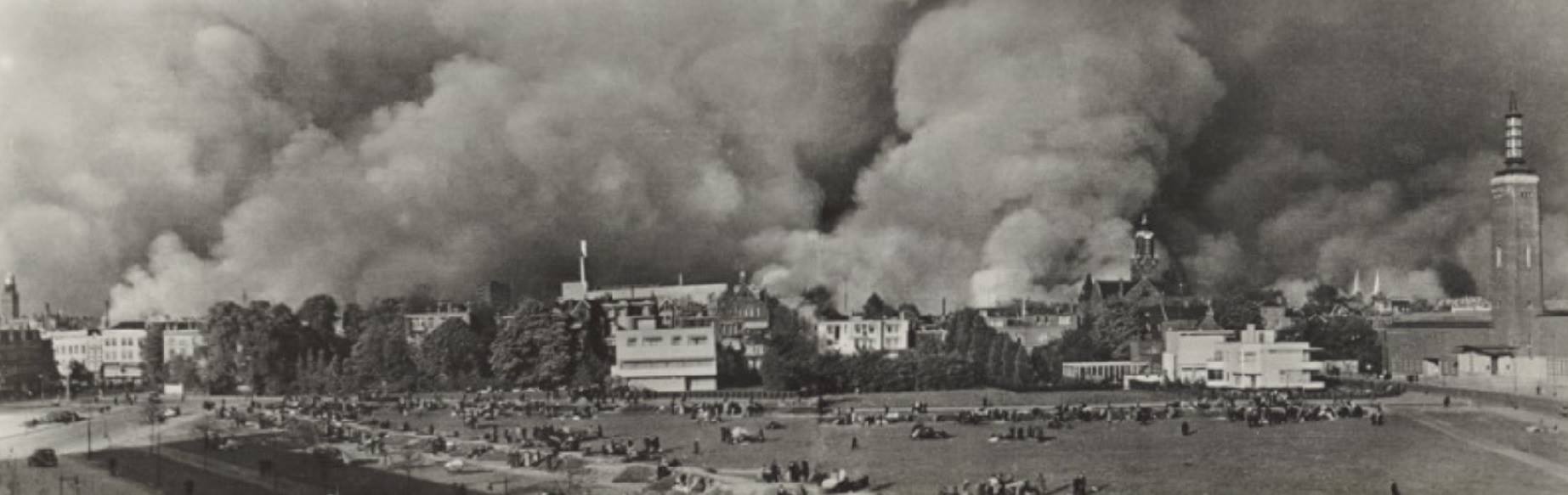
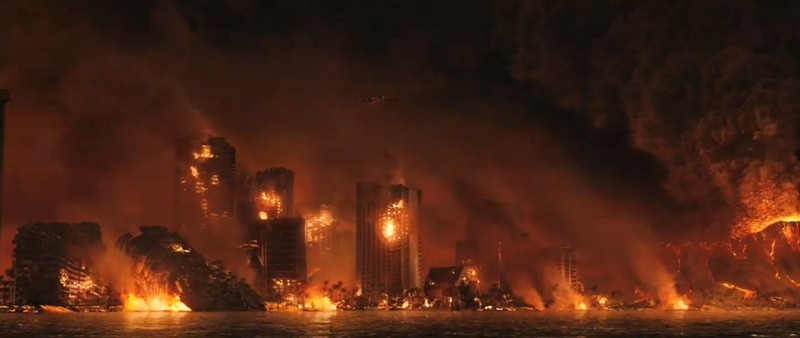
London and a lot more metropolitan areas like London mind you will have to adjust their current course on actions and considerations when it comes to fire hazard, because we do not want the London population to wake up looking at the speculative sights shown below from a distance.

Rotterdam 1940


OR

Hawaii 2012

Leave a comment

Filed under Law, Media, Politics

The play of the Sponsor

I have had my issues with sport and the enormous setting of corruption on several settings; we merely have to look at FIFA to see just how bad it can get in any setting. In equal measure I have had several issues against Iran; the corruption does not even come up to high as we see the interactions with Hezbollah and the shipping of missiles to Yemen.

Yet, when I see the news in the Washington Post (at https://www.washingtonpost.com/news/early-lead/wp/2018/06/09/nike-will-not-outfit-iranian-world-cup-team-due-to-sanctions), it is my personal belief that certain political parties have gone overboard. When I see ‘Nike will not outfit Iranian World Cup team due to sanctions’, it’s gone too far. We have always accepted that sports needs to remain outside of all political scopes. If the spirit of the Olympics was: ‘During the celebration of the games, an Olympic Truce was enacted so that athletes could travel from their cities to the games in safety‘, so that one moment was a time when there was no war, no discord and those players had the freedom to travel uninterrupted. To suddenly get them in a setting without an outfit has all other kinds of interactive issues and touching on that is the beginning of the end. I personally consider it a really bad call on nearly every level to set the stage that the providers of such an event would be prohibited from supplying one of the teams. Politicians have the options to shout out to exclude sports and official events of inhibiting any international support. I personally never gave a hoot about football, but the option to open any level of dialogue at a sporting event could be the beginning of options that are usually not a given. I have always believed in keeping channels of communications open, even if it would be a mere ‘Oops! I apologise for sinking your fleet!‘, or perhaps something less drastic, yet the option to have it is still important and the Washington Post  gives us that Nike, by its own actions or not has closed that door. It becomes a little less nice when we see: “Some teams allow players to select their own cleats, including which brand, for competition. Some players, for example, may have sponsorship with Nike. Those deals, according to CNBC, will not be affected. Other teams are sponsored by a particular brand — the main players in the international soccer scene are Nike, Adidas and Puma — and require players to wear a certain shoe“, so when I see ‘sponsorship with Nike. Those deals, according to CNBC, will not be affected‘, so if people are paid for, they can still be supplied? It feels like an uneven game and makes football and other games merely settings for exploitation, how does that help in keeping any level of corruption out of sport? OK, that is a different topic, but the setting that we see with “We call on the U.S. Government to take immediate steps to address this shameful situation and that Nike actively seeks a resolution. FIFA should also take necessary steps to address this issue and ensure that none of the teams in the World Cup are subject to double standards“. In this I actually side with Jamal Abdi, the vice president for policy of the National Iranian American Council. It is important for politicians to take the politics and these economic settings away from the sporting events like the Olympics, world cups and official international games. If equality is the only way to finding common ground, and should Nike to shy away, I hope that the Germans with Puma and Adidas to pick up the baton, so that sport events like the world cup will keep on having a level playing field, so that it remains about the game and not about the sponsored players and the politics.


Leave a comment

Filed under Finance, Law, Media, Politics

This bull and a red flag

We all have issues that tend to work like a red flag on a bull. We all have them; there is not one exception to that rule. Whether this is good or bad is not a given, it differs for everyone. In my case it seems to be Grenfell. The level of unacceptability, the sheer levels of incompetence that were clearly visible a mere 10 minutes into reading the facts, the evidence and the presented documentations makes this entire situation beyond belief. So when I see ‘Fire brigade faces police inquiry over Grenfell ‘stay put‘ order‘, my nostrils start fuming steam, no kidding! Now, I get that the detectives have to investigate; it is not with them that I have the issue. I understand what needs to be done, yet my anger towards Det Supt Matt Bonner, who is leading the police investigation, will not subside soon. You see, I have seen apartment block fires, well one exactly. Across the street, early morning, I heard screaming, I saw smoke and then the windows frame and all exploded outwards. We stayed put (except those in the burning apartment and their neighbours), the fire was stopped soon thereafter. The issue is that all the tenants in the building were not underfoot for the fire brigade. It makes perfect sense, there was no immediate danger, so running outside when you are not in danger makes no sense. A nice old fashioned building from just past WW2. The damage was limited to the apartment and the charcoaling of the stones and window frames of the people one floor up. That was the damage. So when I see “whether the order could have breached health and safety law“, I am wondering whether Det Supt Matt Bonner is off his bloody rocker! OK, I get it, he has to do this, but when we see that certain parties signed off on the combustible cladding, and according to some sources in the inquiry with additional wrongful installation. I think that focussing on the combustible side is a lot more important than wasting time on the Fire Brigade who might not have been up to scrap on the information that combustible cladding was installed meant for buildings up to 12 meters high according to the Reynobond PE brochure, it states it in there clearly, it also states two parts that should have set the fire hazard warning lights in the heads of EVERY person directly involved in the decision making process of what to install in the Grenfell tower, so that the buildings around it had a better view (I likely will never get over that part of the equation). These levels of failure seen within the first hour, and the London Fire Brigade is treated to ‘the order could have breached health and safety law‘, there is something utterly unacceptable to that. In all this, the council people involved, are any of them in Jail, or getting their nuts roasted in a training fire? We will just tell them to stay put, the fire brigade will be there to save THEM after lunch!

I reckon that this has not happened yet!

I understand the job that Det Supt Matt Bonner has, so when he gives us “The LFB would, as any other organisation involved, have an obligation to conduct their activity in a manner that doesn’t place people at risk. It doesn’t mean that at the moment they have or they haven’t, but that’s where the legislation is most likely to arise if that was an eventuality“, I get that he is doing his job and it is not a nice job to have in this particular part of the entire track, but we all have those moments. Yet, the setting that this is now set into the shackles of the legislation on health and safety law, whilst we see that the construction, unknown to the LFB at that moment was pretty much an actual Roman Candle is not something they were aware of or signed up for. I cannot find the legislation that sets a proper scope for members of the Fire Brigade (I am not saying it does not exist, merely that I could not find it). Yet when I look at the Fire and Rescue Service Operational guidance [attached], we see a few parts (at https://assets.publishing.service.gov.uk/government/uploads/system/uploads/attachment_data/file/5914/2124406.pdf). Yet that document gave me the Fire and Rescue Services Act 2004. So that is now out of the way, we see (not in the act): “Fire and Rescue Authorities must make arrangements for obtaining necessary information for the purposes of: extinguishing fire and protecting lives and property from fires in its area (Section 7); rescuing and protecting people from harm from road traffic accidents in its area (Section 8)“, this is important, because when we go back to the timeline, we see: ‘Emergency services received the first report of the fire at 00:54‘, it started on the fourth floor and the first Fire brigade teams arrived 6 minutes later (source: the Guardian). The first thing we learn is that firefighters had put out the fire in the flat within minutes. When the crew were leaving the building, they spotted flames rising up the exterior of the building. (source: the Independent), so (at https://www.independent.co.uk/news/uk/home-news/grenfell-tower-how-fire-spread-graphic-a7792661.html) we also see that the setting of stay put was sound, the initial fire was stopped, yet the flames had now gone from inside to outside (between the walls and the combustible cladding), at this point we get to ‘others were told by emergency services over the phone to put towels around doors and stay put until help arrived‘, who were still informed on the one apartment, not the Roman candle scenario. So academically there is clear logic to the setting. The next part is actually important, more important then you realise. The setting is in my personal opinion that the fire brigade was in the dark on what they faced and the scope they faced at the scene. With “A man on the 17th floor, who left his flat at 1.15am, said the fire had reached his window by the time he got out of the building“, this implies that it took 20 minutes for the fire to get from the 4th to the 17th floor. A utterly preposterous setting in any apartment building under normal condition, even under less than optimal condition this would never happen. We know that a room in any apartment can be ablaze in 3-5 minutes, considering that, the apartment itself it not yet ‘all’ in danger. I personally saw the training video for my firefighting accreditation (It’s a Marine Rescue thing). We also know that fire moves upwards, so even as the fire increases in speed and intensity, under normal conditions, it would have taken 5 minutes for any fire to move from the fourth floor to the fifth floor, yet within 6 minutes the initial fire was under attack and stopped. So now you need to realise that it was merely 00:01-00:03, when you realise that it took 12 minutes for the fire to grow from floor 4 to floor 17 that is the unnatural setting, it is pretty much unheard of. We can go with the fact that the fire was never stopped, but the initial stopping would have subsided heat and flammable material becomes a factor too. the fact that this fire was now out of control and in the end there were 200 firefighters and 40 fire engines on the scene. A setting so large, I have never seen any force actively that large on any one building in my life; these are merely a few elements in the setting that we should (respectfully mind you) hit Det Supt Matt Bonner over the head with. It is my personal belief that whoever signed of for the cladding, I do not care for what reason needs to be arrested and should be kept in jail until the entire investigation is completed. You see, I covered it in my article ‘Under cover questions‘ (at https://lawlordtobe.com/2017/06/23/under-cover-questions/), where I also added the Reynobond PE brochure. Yet Arconic, the original source has now removed that brochure from their site, is that not interesting [attached]. Yet I kept a safe backup of the brochure, so we will have that. This gets me back to the page 5 information on the brochure “It’s perfect for new and retrofit projects less than 40 feet (three stories) high“. Now it is important to realise that I am not attacking Arconic, the brochure gives clear light and it is probably a very nice and affordable upgrade solution for small office buildings and modern houses, 40 feet, 12 metres, 3 floors. It makes sense that those that do not have the funds and basically are willing to run the smallest of risks are all fine. Grenfell was 800% larger, higher and in that regard it becomes a much larger risk and in equal regard that product should never have been selected for Grenfell. So who signed off on that part of the equation, because someone approved it. It is my belief that this person needs to get the 4th degree from Det Supt Matt Bonner, not the members from the London Fire Brigade (yes, he is only doing his job, I know!). That setting is still completely (read: largely) uncovered by the media at large. It is not about all the other parts, all the complications that the people behind the screens need to feel that they can get away from it, the simple clear one part that is shown. Who signed off on the use of Reynobond PE for THIS building, it is in my personal view that simple.

So when we see the one time when those exaggerated headlines from places like the Daily Mail are valid, we see ABC giving us (at http://www.abc.net.au/news/2017-06-20/firefighters-hold-back-tears-at-grenfell-tower-fire-memorial/8633348), the setting ‘Video reveals disbelief of firefighters heading into ‘Towering Inferno’‘. So when you watch that video, also consider that these firefighters did not stop, they did not turn back, they all headed straight towards, and some into a roman candle. It might be a small miracle that none of the firefighters lost their lives. The video also showed that whilst the 39 fire engines were on route one filmed the setting where the entire building was already engulfed in flames. So whilst we are hearing the focus on the ‘stay put’, a proven logical, rational and acceptable order for high rise buildings, we need to consider how this could have gone out of control in less than 20 minutes, a setting (as far as I know) never seen before. So as you can see that the setting on the cladding is clearly given with mere common sense. we need to accept that Det Supt Matt Bonner is doing his job, yet from my point of view, the entire setting on looking at optional breaching of health and safety law, the London Fire Brigade is a lot lower on my list regarding the priority in looking on who did what wrong, there are several much higher on the list and perhaps I would not ever have chosen to question them at all. It might be the wrong call for several reasons and I accept that, yet the clear given setting that videos, photos and eye witness accounts give us, I would merely call the LFB in to buy them a beer and congratulate them for not getting themselves killed for working right next to a 67 meter Roman candle for up to 60 hours. Even as the fire was under control after 24 hours, it took another day and a half to fully stop the fires, that is never ever a normal fire, a fact that should be made open and public to a lot of people in the hope that they get angry enough to ask a few elementary questions and make sure that those who signed of on it answer them in front of dozen cameras and microphones.

So now we get back to the Fire and Rescue Services Act 2004, where we see in section 7, the part that I mentioned earlier, with one difference. You see the Fire and Rescue Service Operational guidance is missing one small part. We can agree that it is not an issue for the guidance, but when we see in section 7 part one ‘A fire and rescue authority must make provision for the purpose of extinguishing fires in its area, and protecting life and property in the event of fires in its area‘ we also need to see part 2 in all this. It is there where we see the smallest issue. We see: ‘In making provision under subsection (1) a fire and rescue authority must in particular secure the provision of the personnel, services and equipment necessary efficiently to meet all normal requirements‘, there is more, but this already covers it with the setting of ‘normal requirements‘. I hope we can all agree that there was nothing normal about the Grenfell tower fire. Should we bother to look at part d where we see ‘make arrangements for obtaining information needed for the purpose mentioned in subsection (1)’ as well as part e where we also see ‘make arrangements for ensuring that reasonable steps are taken to prevent or limit damage to property resulting from action taken for the purpose mentioned in subsection (1)‘ we are shown that neither point would have been possible to adhere to, 39 fire engines and 250 London firefighters. None of them would have been alerted by anyone that they were dealing with combustible cladding, they would have realised when they got there, but by then it was far too late to get anyone out alive. An abnormal setting in a place where normality seemingly was thrown out of any window when refurbishment choices were made, a view we get from the Guardian with “But fire-resistant cladding would have raised the cost for the whole building by an estimated £5,000“, a mere £70 per life lost. So when you follow the enquiry (at https://www.grenfelltowerinquiry.org.uk/evidence), I will be most curious to see what Arconic will have to say, you see, even as they (as far as I can tell) had done nothing wrong, the question remains whether the Arconic sales team knew all the facts on the sale of Reynobond PE, you see a building the size of Grenfell needs a lot of panels and when we consider the brochure, ref flags should have appeared in the mind of the salesperson (optionally). When we do look at the opening statement document from Arconic, we get :

  1. The material supplied by the Company for use at Grenfell Tower comprised the following:

(a) Reynobond 55 PE 4mm Smoke Silver Mem) lie E9107S DO 5000 Washcoat — the Arconic order acknowledgements and associated CEP purchase orders confirm the total area of this product purchased for Grenfell Tower as 6586 m2(note that this product was supplied in five different lengths and three different widths); and

(b) Reynobond 55 PE 4mm Pure White A91 10S DG 5000 Washcoat — the Arconic order acknowledgement and associate CEP purchase order confirms the total area of this product purchased for Grenfell Tower was 1 80m2.

  1. In 2015 the translucent ACM PE core was substituted with a carbon black core. This was achieved by adding a small amount of carbon black material to the existing core, which provided greater UV protection for the core at exposed panel edges. The change was not related to fire performance.

So, would carbon be an issue? Now, I am not a firefighter, so I am a little out of my depth here, yet when we look at the thermal conductivity of materials and we see:

MATERIAL CONDUCTIVITY DENSITY
Aluminium 210 2.71
Graphite (pyrolytic, some planes) 300-1500 1.3-1.95
Graphene (theoretical) 5020 n/a
Carbon Nanotube (theoretical) 3500 N/A
Carbon Fiber 21-180 1.78
High Modulus MP Mesophase Pitch Carbon Fiber in fiber direction 500 1.7

So for the most, heat conductivity goes up by a lot when carbon is introduced. I am not accusing of Arconic of doing anything wrong, merely that as UV protection went up, so did the heat conductivity as my personal consideration speculates (a clear assumption from my side at this point). The fact that this happened in 2015 long before the refurbishment, we see an additional danger factor. Even as Reynobond PE was never an acceptable solution according to their own brochure, the fact that over 6500 square meters of the stuff was ordered, did no one question the maximum 12 metres part?

So again we get to the part, who approved the installation of well over 6500 square meters of combustible material turning a high rise building into a 67 meter Roman candle?

I might be the bull and Grenfell is the red flag enraging me to the core, I accept that, I merely wonder why not more people apart from the family of victims are not equally enraged. Part of that makes no sense to me at all, because the next building might have you, your children, your grandchildren or other family members in them.

How would you feel then?


Leave a comment

Filed under Law, Media, Politics, Science

The Iranian funds play

Today is all about Iran, the Washington Post and many others are giving the world the information that the previous president misled congress. Yet the Washington Post phrases it as ‘Obama administration misled Congress on possible Iranian access to U.S. financial system‘, they also mention that it is a Republican investigation. There are two issues, right off the bat, even before you read the article, the question becomes, where were the FBI and the CIA in this?

So when we get the first lines with “The Obama administration went out of its way in early 2016 to help Iran recoup previously sanctioned oil revenue stranded in an overseas account after the nuclear deal went into effect and actively misled Congress regarding those efforts, according to the results of a nearly two-year Republican investigation released early Wednesday“, we need to realise that the setting is wrong from the very start.

Before I go there, let’s follow the trail of crumbs that we get offered. next there is “Iran wanted to convert the money into U.S. dollars and then euros, but top U.S. officials had repeatedly promised Congress that Iran would never gain access to America’s financial system“, which is followed by “the Obama administration secretly issued a license to let Iran sidestep U.S. sanctions for the brief moment required to convert the funds through an American bank, an investigation by Senate Republicans released Wednesday showed. The plan failed when two U.S. banks refused to participate” and finally we get: “the revelation is re-igniting the bitter debate over the nuclear deal and whether former President Barack Obama was too eager to grant concessions to Tehran“. The full story (at https://www.washingtonpost.com/politics/federal_government/obama-era-license-aimed-to-let-iran-convert-money-in-dollars/2018/06/06/60be6d36-6971-11e8-a335-c4503d041eaf_story.html) gives us a lot more, but initially, we get ‘The plan failed‘. So this was seemingly (according to a previous Obama official) about the Iranian money held overseas. The issue seems seen with “No one involved seems certain whether Iran has yet received all of its $5.7 billion“, yet as I see it, that does not seem to be the case. When you think this through, $5.7 billion amounts to 11.2 million barrels based on the average oil price, this amounts to funds equal to 26 hours of oil production in Saudi Arabia, 26 hours! Now we are not debating whether Iran is allowed access to the funds, the fact that we see that this much oil (or so little in Saudi Arabia), whilst in Iranian production it amounts to 4 days of oil production is a Joke. Oil still goes to Asia, so all this fanfare for 4 days of oil production? This is about something else entirely, or it is about a very different amount of money. I let you mull that part over, so when we look at the second article (also Washington Post), we see in the article called ‘Secret Obama-era permit let Iran convert funds to dollars’ where we are ‘treated’ to “Iran had been promised access to its long-frozen overseas reserves, including $5.7 billion stuck in an Omani bank“, which we knew to some extent, yet the full economic value is not given, which is also an issue, you see that stuff makes interest, so at that point who gets that money? Is it locked in the Iranian account, or was it the balancing act to the seesaw that is going up and down on €11 trillion in essential European and American debt guarantees? The second article has pretty much what the first one had, but we also see (slightly more clearly) “And when questioned by lawmakers about the possibility of granting Iran any kind of access to the U.S. financial system, Obama-era officials never volunteered that the specific license for Bank Muscat in Oman had been issued two months earlier. According to the report, Iran is believed to have found other ways to access its money, possibly by exchanging it in smaller quantities through another currency“, this now gives us the part (when going back to the first article: “Lew, according to documents reproduced in the report, had been given Treasury talking points explaining the Omani conundrum, he chose not to mention it in a House hearing in late March“, this reference to former Treasury Secretary Jack Lew, where we wonder that if this is about the question, was the question correctly phrased, or perhaps the better setting is, was he breaking any laws not mentioning the ‘Omani Conundrum’?

I cannot state without the full text and even if we agree that there is an issue, we now get back to the very core of the matter. If it involves US Banks and when we reconsider ‘the plan failed when two U.S. banks refused to participate‘, two out of exactly how many banks? That part is also not revealed here. So now we get to the part where it becomes either the US treasury AND the FBI who seemingly did not act here, the Omani Conundrum implies that the CIA turf was trodden on and the communications (in several levels) give us that the NSA ignored it. So what is going on? Did anything actually happen? Because that question is becomes valid when we reconsider ‘the plan failed‘. If that is true, then why is the Washington Post, one of the most revered newspapers in the USA not giving the correct light on this? In addition, the outstanding questions that we get from the mere substance given becomes an issue when we see the words of President Trump “this disastrous deal gave this [Iranian] regime — and it’s a regime of great terror — many billions of dollars, some of it in actual cash — a great embarrassment to me as a citizen and to all citizens of the United States,”. Yet how much money was actually released, through the deal and from 2015 onwards? None of that data is available through the articles. So what exactly is US congress playing with now, because this all looks like a really loud smokescreen, all emotion and no contributable facts on the matter. How many banks were part of it (and their names), which two banks refused (double plus points for them two) and in light of merely one $5.7 billion source we need to see the scope of the money, especially in light of the setting that Iran is even now shipping oil to Asia. Are those not valid questions? In all this, where were the FBI and CIA when this was going down and more importantly why is there no mention of their part in all this, or were they not part of any of it? That is equally an issue, because if there is evidence that they were in different states of activity and actionable requirements regarding Iran during the two presidencies, the people have an equal right to know, do they not? You see, in the larger scope that matters, because the Yemeni issue is covering two presidencies, so if (a very clear if) the CIA was less vigilant during the previous presidency, it might also explain a few things on how missiles are getting shipped from Iran to Yemen, if the manifest states 1013 barrels of oil for humanitarian aid, it might explain a little more than we bargained for. Now the last part was speculative and knowingly incorrect, yet the question remains valid. This was not some article from the enquirer, or the Canton Cherokee Tribune, it is the Washington Post. In many (global) cases that newspaper is seen as gospel right next to the Financial Times, so when two articles give us so many questions in all this, I need to wrap my head around the option that Martin Baron is either on vacation or perhaps down with the flu. The man who inspired Tom McCarthy to make Spotlight should have a better grasp on the entire Iranian fund issue and how it should be made visible in my Hummer opinion.

Because behind all this is not merely the oil, or the Iranian uranium enrichment plans. It in equal measure gives another light that we get from “The draft involved a general license, a blanket go-ahead that allows all transactions of a certain type, rather than a specific license like the one given to Oman’s Bank Muscat, which only covers specific transactions and institutions“, you see, if that is in play and when we remember the G30 bankers group, the one that got some limelight, for ONE DAY. After that all the media dropped the issues when the people were given the sight of Mario Draghi being a member of this insiders only club, a club that he had to give up and no one (except for me that is) followed up on that. All the media left it alone. So when we see that part from April 18th 2018, where Reuters and the Financial Times give us that he would remain a member, the ECB and others never acted on it and silently wait it to go away, now we see the Omani Conundrum issue and I have to wonder, as bankers will do trade with anyone, what licenses are out there that no one knows about, more important, whoever the owner of the funds are that they get to play with ahead of all other banks, with close to €3 trillion in extra printed money for the game of bonds, in all this, what else are we not seeing and as this optionally directly reflects on Iran’s and all the billions we are left unaware of, how is it that the Washington Post seems to not care (or rather stated, believingly unimportant issues that are therefor not investigated) are out there with two pages set to issues in a setting of ‘the plan failed‘ and ‘at the end of the day, nothing worked‘. Which makes me wonder if any transgression was committed and what it was all about. Time will tell whether we see more revelations tomorrow and more important if it leads to anything actionable, because that will be come the heart of the matter soon enough.


1 Comment

Filed under Finance, Law, Media, Military, Politics

Be not stupid

There is an article in the Guardian. Now, we all agree that anyone has their own views, that has been a given for the longest of times, and those reading my blog know that I have a different view at times, yet for the most, I remained neutral and non-attacking to those with a different view, that’s how I roll.

Today is different, the article “‘Easy trap to fall into’: why video-game loot boxes need regulation” by Mattha Busby (@MatthaBusby) got to me. It is time for people to realise that when you are over 18, you are responsible for your actions. So I have, pretty much, no patience with any American, Reddit user or not, who gives us “a Reddit user who claims to have spent $10,000“. If you are that stupid, you should not be allowed to play video games.

The Setting

To comprehend my anger, you need to realise the setting we see here. You see, loot boxes are not new. This goes all the way back to 1991 when Richard Garfield created Magic, the gathering. I was not really on board in the beginning, but I played the game. The issues connect when you realise how the product was sold. There was a starter kit (which we call the basic game) it will have enough cards to start playing the game as well as the essential cards you need to play it. To get ahead in the game you need to get boosters. Here is where it gets interesting. Dozens of games are working on the principle that Richard Garfield founded. A booster would have 9-13 cards (depending on the game), It would have 1 (read: One) rare card (or better), 3 uncommon cards and the rest would be common cards. I had several of these games I played and in the end (after 20 boosters) it was merely about collecting the rare cards if you wanted a complete set. Some would not care about it and they could play the game. So this is not a new thing, so if you truly spend $10,000 you should not complain. If you have the money it is not an issue, if you did not, you are too stupid for words. In games it is not new either. Mass Effect 3, the best multiplayer game ever (my personal view) had loot boxes as well, I am pretty sure that they were the first. Yes, you could buy them, with money, or with Microsoft credit points. The third option was that you could gather points whilst playing (at the cost of $0) and use these gained points to buy loot boxes, the solution most people used. Over time you would end up with sensational goods to truly slice and dice the opponents, all gained through play time, no extra cash required.

So when I see places like Venture beat (and the Guardian of course) state issues like: “some people, policymakers, and regulators — including the gaming authorities in Belgium and Netherlands — that those card packs have are gambling“. I see these statements as moronic and I regard them as statements of false presentation. You see, that is not what it is about! When you see the attached picture, you see that these cards are sold EVERYWHERE. The issue is that the CCG card games are sold in the shops, which means that revenue is TAXED. The online sales are not and now, policymakers are all up in arms because they lost out on a non-taxable ‘$1.25 billion during its last quarter even without releasing a major new game‘, that is the real issue and they are now all acting in falsehood. So, when I see “I am currently $15,800 in debt. My wife no longer trusts me. My kids, who ask me why I am playing Final Fantasy all the time, will never understand how I selfishly spent money I should have been using for their activities“, as well as “he became addicted to buying in-game perks, which he later described as ‘digital garbage’“. I merely see people without discipline, without proper control. So without any regard for diplomacy I will call them junkies, plain and simple. Junkies who have no idea just how stupid they are. And, since when do we adjust policy for junkies? Since when are the 99% who hold themselves all plenty accountable, have the proper discipline to not overspend and some (like me) never considered loot boxes in a game like Shadow of War, now being held to account, to lessened gaming impact by junkies? Can anyone answer me this?

Now, we need to take into consideration one or two things. Are the FIFA18 loot boxes set in a similar light? That is the one place where (seemingly) FIFA is in the wrong. You see I have been searching to get any info on what is in a FIFA loot box, but there is no information given. I believe that this lack is actually an issue, yet that could be resolved in 24 hours if Electronic Arts would dedicate 1 page (considering it brings them $1.25 billion a quarter) on what is to be found in a loot box (Rare, Uncommon, Common). The second part that I cannot answer (because I am not a soccer fan) is whether the game allows loot boxes to be earned through playing and finally. Can the game be played without loot boxes? It seems like such a small alteration to make and especially when we see the fuss that is being made now. Some additional facts can be seen in Rolling Stone Magazine of all places (at https://www.rollingstone.com/glixel/features/loot-boxes-never-ending-games-and-always-paying-players-w511655). So now that we get a fuss from several nations, nations that have been all open and accepting on games like The Decipher CCG games Star Trek and Star Wars, Magic the Gathering, The Lord of the Rings, My Little Pony, Harry Potter, Pokémon, and that list goes on for some time. In that regard, they are all gambling and in my view, I feel certain that these so called politicians and lime light seekers will do absolutely NOTHING to get anything done because the cards are subject to VAT and the online stuff is lost taxable revenue. That is what I personally see as the foundation of a corrupt administration.

You see, the fact is that it is not gambling. You buy something that is in 3 categories, Rare, Uncommon and Common, you ALWAYS get this in a setting of 1 rare, 3 uncommon and 5 common, which card you get is not a given, it is random, but they will always get that setting. Let’s for example state that the loot box is $7, you get one $3 card, three $1 cards and five $0.20 cards, so how is that gambling? For Electronic Arts, until they update the website to give a precise definition might be in waters that are a little warmer, but that can be fixed by the end of the day. Perhaps they do have such a page, but Google did not find it.

In addition, Venture Beat gave us (at https://venturebeat.com/2018/05/08/ea-ceo-were-pushing-forward-with-loot-boxes-in-face-of-regulation/) “EA will have to convince policymakers around the world that it is doing enough and that its mechanics are not the same as the kinds of games you’d find in a casino“, which is easy as these policymakers did absolutely nothing to stop CCG’s like Pokémon and My Little Pony (truly games for minors), so we can stat that this was never about the loot box, it was about missed taxable revenue, a side that all the articles seemed to have left in the dark.

The Guardian has one additional gem. With: “A bill introduced in Minnesota last month would prohibit the sale of video games with loot boxes to under-18s and require a severe warning: “This game contains a gambling-like mechanism that may promote the development of a gaming disorder that increases the risk of harmful mental or physical health effects, and may expose the user to significant financial risk.”” Here I am in the middle. I think that Americans are not that bright at times, a point of view supported with the image of paper cups with the text ‘Caution Hot’ to avoid liability if some idiot burns their mouth; we know that sanity is out of the window. Yet the idea that there should be a loot box warning is perhaps not the worst idea. I think that EA could get ahead of the curve by clearly stating in a readable font size that ‘no loot boxes are needed to play the game‘, which is actually a more apt statement (and a true one) for Shadow of War, with FIFA18, I do not know. You see, this is a changed venue, when you can add a world player to your team the equation changes. Yet, does it make it more or less enjoyable? If I play NHL with my Capitals team and I get to add Mario Lemieux and Wayne Gretsky my chances to get the Stanley cup go up, yet is that a real win or is that cheating? That is of course the other side, the side that the game maker Ubisoft enabled in their Assassins Creed series. you could unlock weapons and gear for a mere $4, they clearly stated that the player would be able to unlock the options during the game, yet some people are not really gamers, mere players with a short attention span and they want the hardware upfront. Enter the Civil war with an Uzi and a Remington, to merely coin a setting. Are they gamers, or are they cheaters? It is a fair question and there is no real answer. Some say that the game allowed them to do this, which is fair and some say, you need to earn the kills you make. We can go to it from any direction, yet when we are confronted with mere junkies going on with spending $15,800, adding to a $69 game, we are confronted with people so stupid, it makes me wonder how he got his wife pregnant in the first place. If the given debt $15,800 is true then there should be a paper trail. In that regard I am all for the fact that there should be a spending limit of perhaps $500 a month, a random number but the fact that there is a limit to spend is not the worst idea. In the end, you have to pay for the stuff, so have a barrier at that point could have imposed a limit on the spending. In addition, we can point at the quote “how I selfishly spent money I should have been using for their activities” and how that is the response of any junk to make, ‘Oh! I am so sorry‘, especially after the junk got his/her fix.

The Guardian gives in addition an actual interesting side: “Hawaiian congressman Chris Lee said “are specifically designed to exploit and manipulate the addictive nature of human psychology”“, it is a fair point to make. Are ‘game completionists’ OCD people? Can the loot box be a vessel of wrongdoing? It might, yet that still does not make it gambling or illegal, which gets us to the Minnesota setting of a warning on the box. It is an interesting option and I think that most game makers would not oppose that, because you basically are not keeping loot boxes a secret and that might be a fair call to make, as long as we are not going overboard with messages like: “This game is a digital product, it requires a working computer to install and operate“, because at that point we have gone overboard again. This as a nice contrast against: “In the Netherlands, meanwhile, lawmakers have said that at least four popular games contravene its gambling laws because items gleaned from loot box can be assigned value when they are traded in marketplaces“, which is another issue. you see when you realise that “you can’t sell any digital content that you aren’t authorized to sell” and as we also saw in Venture Beat ““While we forbid the transfer of items and in-game currency outside of the games, we also actively seek to eliminate that where it’s going on in an illegal environment,”“, we see a first part where we can leave it to the Dutch to cater to criminals on any average working day, making the lawmakers (from my personal point of view slightly short sighted).

So, in the end Mattha had a decent article, yet the foundation (the CCG games) which were the creators of the founding concept were left outside the basket of consideration, which is a large booboo, especially when we realise that they are still for sale in all these complaining countries and that in that very same regard these games are not considered gambling, which sets the stage that this was never about gambling, but several desperate EU nations, as well as the US mind you, that they are all realising that loot boxes are billions of close to non-taxable revenues. That is where the issue holds and even as I do not disagree with the honourable men from both Hawaii and Minnesota, the larger group of policy players are all about the money (and the linked limelight), an issue equally left in the dark. There is one issue against Electronic Arts, yet they can fix that before the virtual ink on the web page has dried, so that issue is non-existent as well soon enough.

It’s all in the game and this discussion will definitely be part of the E3 2018, it has reached too many governments not to do so. I reckon that on E3 Day Zero, EA and Ubisoft need to sit down in a quiet room with cold drinks and talk loot box tactics, in that regard they should invite Richard Garfield into their meeting as an executive consultant. He might give them a few pointers to up the profit whilst remaining totally fair to the gamers, a win-win for all I say! Well, not for the politicians and policy makers, but who cares about them? For those who do care about those people, I have a bridge for sale with a lovely view of Balmain Sydney, going cheap today only!


Leave a comment

Filed under Finance, Gaming, IT, Law, Media, Politics

Humble Pie

Merely a few hours ago, Bloomberg gave us ‘Iran Is Ready to Discuss Yemen Conflict with European Nations‘ (at https://www.bloomberg.com/news/articles/2018-05-28/iran-says-ready-to-discuss-yemen-conflict-with-european-nations). You might think that this is a good thing, but it is not. Iran is caught in a two side war, just like I predicted in the previous 3 weeks. Just like that, they are willing to talk. They have suddenly realised that time was up and now they are grasping at any side that will be willing to facilitate for them at a price. It is linked to a few escalations on more than one side. Even as we read here: “Iran will be holding a new round of talks with Europe on the Yemen conflict, negotiations that have taken on greater significance as the sides try to salvage a nuclear agreement“, the start gives the goods, Iran wants to protect the nuclear agreement at all cost. Their high farting like sounds of political boasting is coming to an end, there was never any option and now they must concede on several sides. Even as one side is taken from them, they are willing to concede on the Yemen side as it was never going to be a realistic option and as Hezbollah has failed again and again in their pursuit of successful strikes on Saudi Arabia, none happened and now they need to find the one war they might actually have a chance of winning, it is the Nuclear agreement and even that will backfire soon enough. So when we read: ““Iran, like the EU, is unlikely to want to mix fate of the nuclear deal with that of talks on other issues,” said Aniseh Bassiri Tabrizi, a research fellow at the Royal United Services Institute in London. “At the same time, it is important for them to keep a channel of communication open with the EU, whatever happens on the nuclear deal, and the best dossier to do so is Yemen for them.”“, I tend not to be in agreement. You might think that it is all the same, but it is not. It is not about ‘whatever happens on the nuclear deal‘, it is about making sure that this agreement is salvaged, Iran overplayed its hand and now that there will be hell to pay, they need to find a way out, if only they can find the right greed and ego driven Europeans to make a quick deal, at that point the media can reflect on some victory, whilst there is no actual victory. You see, there is a second side that is part of this. Iran has figured out that the only interests that Russia has in Syria are Russian ones and in that picture there is no space for Iran, Israel has made that abundantly clear and as such Iran stands alone and with the hits that Israel has been making in Syria on Iranian troops and the strike last Thursday as well as the silence (or better stated lack of loud boasting) by the Syrian governments indicates that the absence of Iran is well liked, even though they are not willing to state it out loud. Syria wants to get the most out of the Russians and Iranians as it can get, which is perfectly fine, yet Iran is too much of an issue for Israel, after years of boasting and threatening, Israel decided to act; the political field was ripe for that. With both America and Saudi Arabia opposing Iran and Russia not really caring about Iran, Iran is in an unwinnable situation, the Iranian coffers drained by enabling Hezbollah as well as the actions in Syria have drained a large chunk of their reserves, Iran need to cut its losses and it is doing so with the gesture we see in the Bloomberg article, one of many to follow I reckon. That truth becomes a lot harsher when we see: “Chagai Tzuriel, director general of the Israeli ministry of intelligence, said he believed that Moscow realised that fighting between Iran and Israel could undermine gains made by Russia during the Syrian civil war“, we know that there is no hiding for Iran, they played the game as far as they could, now that option after option falls away, they are determined to hold on to the Nuclear agreement. This also opens the second stage for Israel; they can now more effectively take care of Hezbollah, now that there is an open season on Iran, Hezbollah can (hopefully permanently) be dealt with. In that regard there is no lack of either Israel or Saudi Arabia to hunt them down and without Iran that might well happen. For Russia it is not over, you see, the Jerusalem Post gives us “Lavrov’s comments are part of an understanding reached between Israel and Russia to keep Iranian and Hezbollah forces away from Syria’s border with Israel on the Golan Heights“, that sounds nice in theory, yet over the years Hezbollah has shown never to keep any agreement (when they were not out of ammunition), so there is a setting where it is very realistic that Hezbollah will do whatever it wants and puts Russia in a pickle, as such both sides agreeing to get rid of Hezbollah makes perfect sense as such Iran is really not willing to stay there as a piggy in the middle. In addition Russia stands to make a lot of plus points in the Saudi Arabia side of things, not just by pushing Iran away from where they are, but to push Hezbollah away from Syrian and Jordanian borders which gets them nice points at the Jordanian royal court as well. In all this there is actually not one part of Hezbollah that has any redeeming value at all, and the worst part is that Hezbollah knows this too (yet they do not care).

There is one additional side that Iran needs to worry about. As Saudi Arabia has given to Germany to be the aggrieved party in Germany’s support in favour of the nuclear deal for Iran is already costing Germany a lot, the German giants who were tenders on several projects for the Saudi government are seeing them being cut from consideration, with Neom and Vision 2030, both projects totaling in value at well over 800 billion, the German economy will take larger hits, other EU nations might find themselves in a setting where they have to choose to go for a really bad nuclear deal, whilst there is no evidence that it will result in a better position and good economic settings in the longer run (more then 3-5 years) whilst Saudi Arabia is growing a setting that is getting closer to a trillion dollars over 12 years, there is no way that Iran can rely on any level of serious support, not after all the stunts they played. Their actions made it impossible and their boasting made it close to intolerable. In addition with Iran cut in every way, Turkey will now need to realise that they played the game wrong in other ways as well. Even as some might cry over the Russians not getting the F-35 due to getting culled from the program, Russia sees a second option to not just sell Turkey missiles, they could optionally sell them the SU-57 as well, which will get Turkey a new loan agreement for a few billions and let’s face it America needs to test the F-35 anyway, whether they test their F-35 against a Sukhoi, does it matter whether a Russian or a Turk is flying it? (Howls of deriving laughter in the background)

You see, they are doing this whilst their currency is at an all-time low, some might think that it is a great time to buy, yet with their economy in shambles and there should be no chance of them ascending into the EU in the next few years, the setting of spending billions on a new Sukhoi squadron (perhaps even two) seems to be folly to me. Even as there is some good news (read: numbers) coming from Turkey, its unemployment rate is still a little over 10.5% and seems to be rising over the next quarter, surpassing Italy in unemployment statistics. It is there where we see another issue. This matters as there has been a link between Iran and Turkey, so as the pressure on several sides is on Turkey, the economic pressures might force Turkey to make any deal they can, even if they have to break connections to Iran, which would for the most isolate Iran at that point, an option that both Israel and Saudi Arabia would enjoy. Israel especially as Turkey was threatening Israel with all kinds of sanctions (source: Haaretz).

So as Turkey is imposing sanctions on those deciding to recognise the Armenian Holocaust, we see the active economic impact that Turkey faces by being in denial, not the worst day in many lives.

In this there is a reflection that must be noticed, In Al Arabiya, there was an article (at http://english.alarabiya.net/en/views/news/middle-east/2018/05/25/Bitterness-confusion-among-Saudi-Arabia-s-foes.html), an opinion piece that matters. You see, the writer Abdullah bin Bijad Al-Otaibi (Twitter: @abdullahbjad) gives us “Enemies are upset and confused and the world is recalibrating its power equations so that each knows its place and capabilities. Also, so that each country can reflect on its policies and alliances through the power of politics, diplomacy, boycott and sanctions, as well as with the power of armies and weapons“, he is correct, President Donald Trump might have kicked it off with “America First“, it is a truth we have been forced to face for well over 5 years. It does not matter whether you are in the US, UK, Saudi Arabia, Sweden, Australia, Canada or New Zealand. As citizens and politicians we have a duty to protect our national interests and set that as a first essential need. When we look from that angle we get to reflect on how bad Iran is, we cannot fault Turkey for taking its national interests first, yet they did it by not honouring the allies they had for decades and that sets the sliding acceptance (towards rejection) of Turkey in all this when you consider the events from 2001 onwards.

In this his view: “Big European companies are fleeing Iran at a fast pace and everyone who has dealt with Iran, whether banks or companies, are looking for a safe way out of any ties they have with Iran, its parties, militias and ideology. Everyone now accepts the facts about Iran’s crimes such as its sponsoring of terrorism, drug dealing and money laundering in the region and the world” is not incorrect, yet the issue is that this sets the stage on greed influencing the national interest in the stage of big business versus government, a setting that Europe, the US and the Commonwealth have had for the longest time. In addition there is now a small opposition from my side. I agree with part of his statement “They have done so through the Palestinian cause which they have, from Iran, Turkey, Qatar and the Muslim Brotherhood, managed to exploit to serve their interests and fulfil their ambitions“, there is a side I cannot completely agree with (actually there is more than one side here). Not because I think he is wrong, but because there is data missing, data I never had access to, or was given by a reputable media source to the degree that there is enough shown to see it as an actual issue.

This is seen in the parties Iran and Qatar. Now, we accept the puppet game that Iran has played, we do not deny that in any way, but in the end Iran was merely playing the hand it had to show Iranian interest. We can agree that it was done badly, yet they did do this for mere national interest (or so they say). In the second part there is Qatar. I agree that there are questions, yet overall, I have not seen the evidence, the allegations going back to 2014 have been loud, yet the media and others have not given a clear path of evidence that gives light to the wrongful opposition by the Emir of Qatar, Sheikh Tamim bin Hamad Al-Thani, we can agree that there are some terrorist financiers, that was never in question, yet Qatar seems to have tried all legal ways and did not get anywhere, in addition the US state document (at https://www.state.gov/documents/organization/258249.pdf) does not give the goods either, we are confronted with “Qatar is a partner in the Global Coalition to Counter the Islamic State of Iraq and the Levant (ISIL) and has provided significant support in facilitating critical U.S. military operations in the region. Terrorist activity historically has been low in Qatar“, this does not make Qatar innocent; it merely shows that without better and more data, they remain ‘not guilty‘, which is not the same. The document is 3 years old, yet there is no new information that truly sets Qatar in a bad light (for now). In addition we see that Qatar State Security is aggressive when it comes to monitoring internal extremist or terrorism-related activities. Interestingly enough, the players from ‘team’ Qatar State Security seem to have a much better handle on internal extremism and terrorism-related activities than most European countries, so there is that to consider as well. The second issue I had with the statement by Abdullah bin Bijad al-Otaibi is the reference to ‘the Palestinian cause‘, which is not wrong to make, yet for many of us, especially those outside of Saudi Arabia, Palestine or the Middle East, we no longer know what ‘the Palestinian cause‘ actually is. You see in its origin it is directly linked to the 1948 Palestinian exodus, yet the entire Palestinian cause seemed to have been presented, projected and covered by the media in almost any setting that covered news in Lebanon, Israel, the West Bank and the Gaza strip. The entire definition has shown to have shifted over the decades and I still believe that it is shifting, even today. In addition the fact that western media over the years seemed to have made ‘the Palestinian cause‘ and ‘hatred of Jews and the State of Israel‘ close to interchangeable does not help matters either.

All these issues matter as they are connected. that connection is also part of the problem and reason why I am partially in opposition, now, I am fully aware that my opposition is wrong, or better stated incorrect, yet I am like most sensible people, I rely on data, and data is either reliable or not and I tend to regard shifted data as not that reliable, which is why I had the cause for opposition.

So as we see that Iran is facing humble pie on several fronts, we need to realise that our views and more important the views we get from information we accept as reliable is also filtering the view we have, it might be correct, or wrong. In the end we do not know and restoring our filters by attending our national interests first is not the worst place to start, as a citizen we need to do that, because when we look to our nation, our national needs and attend to that, we ground ourselves and perhaps as the economic settings have shifted, so will the national need and that is OK, as long as we do not tend towards corporate greed and consider the needs of our neighbours, we might get through the bad times in a much better way than we thought. In the end it is not about serving Iran Humble Pie, which would be the right thing to do, we need to consider when we are rightfully served Humble Pie, will we eat it when we realise that we were wrong?

That includes us all and it includes me, I have never shied away from optionally being wrong. I merely reacted to the verifiable data that I was served and I made the best of it and tried to remain true to the data based views offered and I reflected on those insights, it is the best we can do in this modern world.


Leave a comment

Filed under Finance, Law, Media, Military, Politics

Grand Determination to Public Relation

It was given yesterday, but it started earlier, it has been going on for a little while now and some people are just not happy about it all. We see this (at https://www.theguardian.com/technology/2018/may/25/facebook-google-gdpr-complaints-eu-consumer-rights), with the setting ‘Facebook and Google targeted as first GDPR complaints filed‘, they would be the one of the initial companies. It is a surprise that Microsoft didn’t make the first two in all this, so they will likely get a legal awakening coming Monday. When we see “Users have been forced into agreeing new terms of service, says EU consumer rights body”, under such a setting it is even more surprising that Microsoft did not make the cut (for now). So when we see: “the companies have forced users into agreeing to new terms of service; in breach of the requirement in the law that such consent should be freely given. Max Schrems, the chair of Noyb, said: “Facebook has even blocked accounts of users who have not given consent. In the end users only had the choice to delete the account or hit the agree button – that’s not a free choice, it more reminds of a North Korean election process.”“, which is one way of putting it. The GDPR isd a monster comprised of well over 55,000 words, roughly 90 pages. The New York Times (at https://www.nytimes.com/2018/05/15/opinion/gdpr-europe-data-protection.html) stated it best almost two weeks ago when they gave us “The G.D.P.R. will give Europeans the right to data portability (allowing people, for example, to take their data from one social network to another) and the right not to be subject to decisions based on automated data processing (prohibiting, for example, the use of an algorithm to reject applicants for jobs or loans). Advocates seem to believe that the new law could replace a corporate-controlled internet with a digital democracy. There’s just one problem: No one understands the G.D.P.R.

That is not a good setting, it tends to allow for ambiguity on a much higher level and in light of privacy that has never been a good thing. So when we see “I learned that many scientists and data managers who will be subject to the law find it incomprehensible. They doubted that absolute compliance was even possible” we are introduced to the notion that our goose is truly cooked. The info is at https://www.eugdpr.org/key-changes.html, and when we dig deeper we get small issues like “GDPR makes its applicability very clear – it will apply to the processing of personal data by controllers and processors in the EU, regardless of whether the processing takes place in the EU or not“, and when we see “Consent must be clear and distinguishable from other matters and provided in an intelligible and easily accessible form, using clear and plain language. It must be as easy to withdraw consent as it is to give it” we tend to expect progress and a positive wave, so when we consider Article 21 paragraph 6, where we see: “Where personal data are processed for scientific or historical research purposes or statistical purposes pursuant to Article 89(1), the data subject, on grounds relating to his or her particular situation, shall have the right to object to processing of personal data concerning him or her, unless the processing is necessary for the performance of a task carried out for reasons of public interest“, it reflects on Article 89 paragraph 1, now we have ourselves a ballgame. You see, there is plenty of media that fall in that category, there is plenty of ‘Public Interest‘, yet when we take a look at that article 89, we see: “Processing for archiving purposes in the public interest, scientific or historical research purposes or statistical purposes, shall be subject to appropriate safeguards, in accordance with this Regulation, for the rights and freedoms of the data subject.“, so what exactly are ‘appropriate safeguards‘ and who monitors them, or who decided on what is an appropriate safeguard? We also see “those safeguards shall ensure that technical and organisational measures are in place in particular in order to ensure respect for the principle of data minimisation“, you merely have to look at market research and data manipulation to see that not happening any day soon. Merely setting out demographics and their statistics makes minimisation an issue often enough. We get a partial answer in the final setting “Those measures may include pseudonymisation provided that those purposes can be fulfilled in that manner. Where those purposes can be fulfilled by further processing which does not permit or no longer permits the identification of data subjects, those purposes shall be fulfilled in that manner.” Yet pseudonymisation is not all it is cracked up to be, When we consider the image (at http://theconversation.com/gdpr-ground-zero-for-a-more-trusted-secure-internet-95951), Consider the simple example of the NHS, as a patient is admitted to more than one hospital over a time period, that research is no longer reliable as the same person would end up with multiple Pseudonym numbers, making the process a lot less accurate, OK, I admit ‘a lot less‘ is overstated in this case, yet is that still the case when it is on another subject, like office home travel analyses? What happens when we see royalty cards, membership cards and student card issues? At that point, their anonymity is a lot less guaranteed, more important, we can accept that those firms will bend over backward to do the right thing, yet at what state is anonymisation expected and what is the minimum degree here? Certainly not before the final reports are done, at that point, what happens when the computer gets hacked? What was exactly an adequate safeguard at that point?

Article 22 is even more fun to consider in light of banks. So when we see: “The data subject shall have the right not to be subject to a decision based solely on automated processing, including profiling, which produces legal effects concerning him or her or similarly significantly affects him or her“, when a person applies for a bank loan, a person interacts and enters the data, when that banker gets the results and we no longer see a approved/denied, but a scale and the banker states ‘Under these conditions I do not see a loan to be a viable option for you, I am so sorry to give you this bad news‘, so at what point was it a solely automated decision? Telling the story, or given the story based on a credit score, where is it automated and can that be proven?

But fear not, paragraph 2 gives us “is necessary for entering into, or performance of, a contract between the data subject and a data controller;” like applying for a bank loan for example. So when is it an issue, when you are being profiled for a job? When exactly can that be proven that this is done to yourself? And at what point will we see all companies reverting to the Apple approach? You no longer get a rejection, no! You merely are not the best fit at present time.

Paragraph 2c of that article is even funnier. So when I see the exception “is based on the data subject’s explicit consent“, We cannot offer you the job until you passed certain requirements that forces us to make a few checks, to proceed in the job application, you will have to give your explicit consent. Are you willing to do that at this time? When it is about a job, how many people will say no? I reckon the one extreme case is dopey the dwarf not explicitly consenting to drug testing for all the imaginable reasons.

And in all this, the NY Times is on my side, as we see “the regulation is intentionally ambiguous, representing a series of compromises. It promises to ease restrictions on data flows while allowing citizens to control their personal data, and to spur European economic growth while protecting the right to privacy. It skirts over possible differences between current and future technologies by using broad principles“, I do see a positive point, when this collapses (read: falls over might be a better term), when we see the EU having more and more issues trying to get a global growth the data restrictions could potentially set a level of discrimination for those inside and outside the EU, making it no longer an issue. What do you think happens when EU people get a massive boost of options under LinkedIn and this setting is not allowed on a global scale, how long until we see another channel that remains open and non-ambiguous? I do not know the answer; I am merely posing the question. I don’t think that the GDPR is a bad thing; I merely think that clarity should have been at the core of it all and that is the part that is missing. In the end the NY Times gives us a golden setting, with “we need more research that looks carefully at how personal data is collected and by whom, and how those people make decisions about data protection. Policymakers should use such studies as a basis for developing empirically grounded, practical rules“, that makes perfect sense and in that, we could see the start, there is every chance that we will see a GDPRv2 no later than early 2019, before 5G hits the ground, at that point the GDPR could end up being a charter that is globally accepted, which makes up for all the flaws we see, or the flaws we think we see, at present.

The final part we see in Fortune (at http://fortune.com/2018/05/25/ai-machine-learning-privacy-gdpr/), you see, even as we think we have cornered it with ‘AI Has a Big Privacy Problem and Europe’s New Data Protection Law Is About to Expose It‘, we need to take one step back, it is not about the AI, it is about machine learning, which is not the same thing. With Machine learning it is about big data, see when we realise that “Big data challenges purpose limitation, data minimization and data retention–most people never get rid of it with big data,” said Edwards. “It challenges transparency and the notion of consent, since you can’t consent lawfully without knowing to what purposes you’re consenting… Algorithmic transparency means you can see how the decision is reached, but you can’t with [machine-learning] systems because it’s not rule-based software“, we get the first whiff of “When they collect personal data, companies have to say what it will be used for, and not use it for anything else“, so the criminal will not allow us to keep their personal data, to the system cannot act to create a profile to trap the fraud driven individual as there is no data to learn when fraud is being committed, a real win for organised crime, even if I say so myself. In addition, the statement “If personal data is used to make automated decisions about people, companies must be able to explain the logic behind the decision-making process“, which comes close to a near impossibility. In the age where development of AI and using machine learning to get there, the EU just pushed themselves out of the race as they will not have any data to progress with, how is that for a Monday morning wakeup call?


Leave a comment

Filed under IT, Law, Media, Politics, Science

Go with a smile

OK, I will be honest, this morning, I saw news pass by and it made me giggle. It was the title, I swear, the title was enough, because below the surface it is actually a serious matter, yet the writer/editor of Arab News gives us “‘Spy cell’ in Saudi Arabia sought foreign financing“. In my mind, I saw the image of two freshman at Berkeley University in California, walk into a wealth managing corporation like Rothschild’s and tell the CEO, that they found a way to overthrow the government and if they could please get some funding (at http://www.arabnews.com/node/1306306/saudi-arabia).

I know, you are giggling now too, but that is what they title left me with, yet it is actually a lot more serious. You see, the Kingdom of Saudi Arabia is a monarchy. Like all monarchies there are set rules and regulations on what to do and more important what not to do. Anyone with a primary school education knows this, no rocket science involved.

Yet, below the title, under the image we see a caption that is very much a serious matter. With: “Saudi Arabia’s Presidency of the State Security arrested seven people for suspicious communication with foreign entities and actions against the state“, you see there are two elements in this the first is ‘suspicious communications‘, which is optionally an element, yet ‘actions against the state‘ is actually quite clear. The question is how it all fits together, and make no mistake, there is a clear setting that it applies to a hell of a lot more people than merely those in the KSA, so you better wake up fast.

The elements of worry are seen in the first paragraph. Here we see “sought to “incite strife by communicating with foreign entities hostile to the Kingdom and to establish a false legal organization, according to information received by Asharq Al-Awsat from informed sources“, it could impact a lot more people than you think. In light of the escalations of Vision 2030 as well as the setting in Neom, we are bound to get a few cowboys trying to strike it rich (I am definitely one of them), in a setting of a total amount of close to $800 billion, or $800,000,000,000, I too will happily try to pick up a few coins, I will as the non-greedy person that I am happily settle for 0.001% or $8,000,000. I have a weapon system, an idea to make an Iranian nuclear reactor do the runaway on its own operators (by using the principle of a snow globe), which is my way of telling Steven Walker from DARPA that his behavioural sciences degree is not that useful in a nuclear physicist setting (nyuk, nyuk, nyuk), no negativity on Steven Walker though, he is slightly smarter than most smart cookies, and in addition to the earlier two ‘solutions’, I also considered a solution that I thought up to solve the UK NHS issue, which actually has a lot more applications under 5G.

I am not digressing, you see, these idea’s all need funding, now there are a few players with ideas that are all good and proper and in the 11th hour one of the backers walks away (reason is irrelevant), so now this (young) upstart needs to fix things fast to get its fingers in the Saudi Arabian treasury till of Vision 2030/Neom. In this he reaches out and he finds an interesting backer and meets with an entrepreneur in Qatar, now we have close to the same setting as we just read. Qatar and the Kingdom of Saudi Arabia are not really on good terms. Now add a few emails that skates around the funding and we have a setting that might be seen by Saudi Arabia as a worry, when we consider that Qatar has its own ‘Smart Digital plan‘ for 2030 we get a setting that some people might consider selling their idea twice. It is not far-fetched and it is definitely on the minds of close to a dozen growth driven people in Silicon Valley. Now we have a very different ballgame and that is not even considering those people who have been working as 3rd party developers for places like Palantir; anyone of those developers when they approach both Saudi Arabia and Qatar might be seen as just such a transgressor.

We forget that each nation has its own set of rules and even as some think that they are ‘shielded’ as they are American or perhaps Commonwealth citizen, they better wake up fast and realise that in national interests, it is the nation where you are where you need to adhere to settings. This works in both directions. We see this with “Dr. Ibrahim Al-Nahas, member of Shoura Committee Council on Foreign Affairs, told Asharq Al-Awsat on Saturday that the Kingdom is capable of overcoming many security challenges due to the vigilance of its security apparatus“, I do not for one moment disagree with Dr. Ibrahim Al-Nahas, for the most merely due to a lack of data, yet what he optionally forgets is that this system is going to get tested more and more over the next 5 years from all the parties who are trying to get an option to what we should consider is the largest technological jackpot in the last 25 years. We have not seen the option to such opportunities since the beginning of Windows 95, so there will be a massive flock of cowboys trying to land a deal with numbers optionally up to 9 zeroes behind a number, so you better believe that thousands of ‘innovators’ will come with their idea of a lifetime, which could potentially swamp the security apparatus.

In case of the article, it is about seven people who have been active to facilitate by acts that are considered “hostile to Saudi Arabia, to receive financial support in exchange for continuing to incite trouble”, which seems to be a decently clear setting. Yet it will not always be that clear when we see “It said authorities detected coordinated activities by a group of people, who carried out organized work to violate the religious and national principles of the Kingdom“, in the setting as quoted, there are a number of issues, religious principles being the first one that carries weight, because most cowboys seem to forget that Saudi Arabia is a Muslim state, as such it acts on religious settings. That is also the case in America where they have the pledge of allegiance, which gives us “I pledge allegiance to the Flag of the United States of America, and to the Republic for which it stands, one Nation under God“, this is important, because many nations have something similar. So when someone noticed that McDonalds in Saudi Arabia advertised “We renew our allegiance and obedience for his royal highness, the servant of the two holy mosques, King Salman the son of Abdul Aziz Al Saud, and we support Amir Mohammed bin Salman, his son, to become Minister of Defence and Prime Minister and to be nominated as successor.  God give him wisdom and equip him to rule his kingdom. With peace and prosperity, McDonald’s“, in this the response by someone who appears to be a Canadian, we see “Ads in Saudi Arabia placed by @McDonalds pledging allegiance to the new crown prince….am I the only one that finds this totally bizarre?“, I think that he did nothing wrong, even as he thinks it is weird, but when you are so far removed from a true monarchy setting, you forget small things. I too when I was in my military time had to make the pledge of allegiance, which in my case was to pledge allegiance to the monarch, obedience to the law and subject to martial law  with: “Ik zweer trouw aan de Koningin, gehoorzaamheid aan de wetten en onderwerping aan de krijgstucht. Zo waarlijk helpe mij God Almachtig“. Even as martial law no longer applies to me, I still feel that my oath obliges me to come to the aid and protection of the Dutch royal family until my dying day. It is something we accept, it matters to us, to any monarchist. So it is the same in Saudi Arabia and you better believe that (roughly) 99.99992% of these citizens will comply and enforce that oath on all those (citizens) who think they need not do that.

I feel that global businesses forget about such settings and they are optionally shooting themselves in the foot by not educating their staff members when having to go to such places. It matters because we all make mistakes and there are transgressions which are usually forgiven (unless you make an error under paragraph 322(5) under UK immigration law, then you are truly screwed), yet when you make mistake after mistake, even unintentional, merely because you come from a very different environment, you could end up burning the brand you represent permanently in that nation, which might be a nice little challenge for Apple, Google and IBM to survive. Although IBM is more business strict, but the Apple and Google mindset might find it increasingly hard to adjust and that is where losses are made, really large losses I might add.

So even if you are laughing now on the ridiculous setting I am offering, you better realise that the law in not a funny matter in Saudi Arabia. It is set to be written as “Saudi Arabia is a state built on the foundations of justice and it enshrines the principal of equality for all before the law”, you better realise that within many nations there is a consideration on what defines ‘foundations of justice‘. According to some sources Saudi law in theory allows that the ruling of a death sentence is a real setting, now we can understand that we know not to commit murder, yet in that same setting Espionage and Treason also gets your head separated from your body just like in: ‘off with their heads!‘ (Quoting the Queen of Hearts from Alice in Wonderland), now in the technological setting that is happening at present in the beginning of the article, the involvement of Qatar (fictive example), treason and espionage are actual options now coming to the surface? Now we all know that being well prepared stops such things from happening, yet who knew that Adultery and Waging war on God are equally punishable? So when you think that you have a nice option for Saturday night in your hotel room, did you realise that if you live by ‘it doesn’t count in you are in another country‘, your future might end up a little more grim than when you got out of bed that morning? And that is even before we get to Waging war on God, which is an issue on several levels. You see unless you have a clerical mind, the dangers of waging war on God is an open field, you can be transgressing this unknowingly if you are a Christian and that is something one must be prepared for so that it can be avoided.

If I understood it correctly the ḥirabah is seen as ‘enemy of God‘. The reference is seen in verse 33 of Surah al-Ma’ida of the Qur’an. It sets punishment for “those who wage war against Allah and His Prophet and strive to spread disorder in the land“, yet ‘disorder in the land‘ is a much wider concept nowadays then when what it was in those ancient days. We see that wisdom when we look back to those days as ‘banditry in open country: a uniquely destabilizing threat to civil order in a pre-modern society’. You might think of it as folly, yet in those days when towns relied on commerce and traders, banditry could have far-fetching consequences for the entire town, perhaps even the region. You only have to look at the movie ‘Kingdom of Heaven‘ a Ridley Scott masterpiece to see what a massive destabilising factor the Christian knights and people tended to be in those days. They were basically whoring and pillaging whenever possible (basically every waking hour), and no one considers the impact that left the Muslim Arabic nations?

This all matters because when you are trying to tap into the wealth that Arabia as a whole is offering, you better know what you are in for, you better be prepared and you also better leave some of your values (or lack thereof) at home. The setting of this stage seems all too appealing, yet many nations have a clear legal directive and as I have been hearing some of the conversations around me, it seems to me that some have not considered the impact they are setting their perception, what they think is happening and what is perceived. So when I heard someone say “go there, smile a lot and make a fortune. It works in japan“. Now, I am not certain whether that would work in Japan to that degree, I am decently certain that they will lose a lot more than they bargained for when they are totally unprepared going to Saudi Arabia thinking that they strike gold with a mere presentation and a smile. Because the wrong presentation can easily be perceived and what you thought was a nice idea in the end brought chaos in the land, good luck setting up your defence at that point.

I believe that good business is always available in every nation; the wisdom is to comprehend the rules of that game in that nation and abide by them, not as best as you can, but completely. In the age of compromise I think the current generation is oblivious to that danger, they have been so used to go by ‘let’s compromise’, not everyone is willing to do that. In this considering John Braithwaite’s excellent work ‘Corporate Crime in the Pharmaceutical Industry‘, it is not about the pharmaceutical part, the issue is the setting of corporations. By the time that you have gotten to chapter 4 (fraud in the safety testing of drugs) or chapter 5 (criminal negligence in unsafe manufacturing of drugs), by that setting you will have seen close to a dozen issues that could perceive you as the party responsible for creating ‘disorder in the land‘. This is merely a academic setting, I am not an Saudi Attorney, I have no experience in practicing Muslim Law, but these were the questions that formed in my mind and In all this I see a clear element missing in all the presentations that passed my eyes, seeing them scrutinised in a setting of Islamic Law seems to be important, because the law in Saudi Arabia is not set in the Crimes Act, the Data Protection Act, the Human Rights Act or the Mental Capacity Act. It is set through the Quran and that is a very important distinction.

For the most, when people are going for the jackpot, they tend to be as prepared as possible, yet in all this, more than just a few have forgotten that it is not merely a presentation, they better be aware of the legal lay of the land, as well as the social and personal norms that are required in Saudi Arabia (as with every nation you want to do business), we seem to look at the EU where almost anything is valid and not illegal, as such they forget that there are places where that approach will not work.

Did I get all this from a mere reference to a Spy Cell in the Arab News? Well, not exactly! I had been looking at parts of this for a little while, merely because some settings require investigation on any level, and the more I had to dig into certain messages the more I was confronted with people quoting the Quran, which came to a focal point when I was confronted with ‘French Proposal to Change the Quran’, which was from early may this year in the Atlantic. Apart from the blasphemy that it represents, which passages from the Bible regarding slavery or women as servants of their husbands have been removed in the last 50 years?

Opposition of such views was given by Tareq Oubrou, the prominent French imam who oversees the Grand Mosque of Bordeaux. Here we see “the notion that anti-Semitism is built into Islam is “theologically false,” he added. As monotheistic “People of the Book,” Jews and Christians enjoy a special status in Islamic law. Historically, they were considered protected dhimmi communities, which meant they were allowed to practice their own religions, although they were subject to a tax and various indignities that symbolized their subordination to Muslims”, by the way, this was an act that Christians did to the Saracens in Italy (also seen in ‘Kingdom of Heaven’), so let’s not throw mud when we know that we have done the same thing.

In the end, wherever you go, feel free to go with a smile and be prepared for what you face, knowing the legal and religious lay of the land is a rather important step that most seem to ignore, it might not matter in all places, but not preparing in places where issues like that do matter is merely the greater folly.

Leave a comment

Filed under Finance, Law, Politics, Religion, Science