Category Archives: Military

Iranian decisions

At 00:10 Tel Aviv Time, roughly 07:10 here, the time of waiting was over, Iran has fired its missiles on Israel making the outstanding option of an impending war a lot more realistic. In this the Guardian gives us (at https://www.theguardian.com/world/2018/may/09/iran-fires-20-rockets-syria-golan-heights-israel) “Iranian forces stationed in Syria fired approximately 20 projectiles at Israeli military positions in the Golan Heights just after midnight on Thursday, Israel’s defence forces (IDF) said“, in addition we see “Several but not all rockets were intercepted by Israeli air defences, an IDF spokesman, Lt. Col. Jonathan Conricus, told reporters“, whatever happens, will happen soon, because if sch a barrage cannot completely be stopped, we can deduce that it will not take long for Iran to take a more targeted notion, yes, my version is speculative, yet the warmongering words from the last weeks gives rise to take it all a lot more serious than it has been taken in the past. So when we see ““The IDF views this Iranian attack very severely,” Conricus said. “This event is not over”“, we better believe that more is to come. There is an additional setting, this attack could only have been done with the approval of President Bashar al-Assad, so he is feeling secure enough with Iran and Russia backing him, so the picture changes on a few fronts, this is no longer merely settling whatever Iran thought it was settling, this could have much larger repercussions. Turkey is already voicing support for Iran and siding with Russia (they are playing their hand cautiously, yet Turkey is all in with their anti-Israel views. It gets to be worse, because as the US pulled out of the nuclear Iran accord, we now see ‘EU rushes to arrange crisis meeting with Iran over nuclear deal‘ (at https://www.theguardian.com/world/2018/may/09/eu-moves-to-protect-european-firms-from-us-sanctions-on-iran), so even as we know that there are several things wrong, even as Iran meddled in other business and now is responsible for direct missile attacks on Israel, we see that Europe is still trying to make some level of a deal with Iran. It goes even further when we see “Work on the package being coordinated by the European Union is at an early stage, but the EU is being urged to warn the US it will impose countersanctions if the US attempts unjustifiably to cripple EU firms trading with Iran“, yet the foundation is that there has been more and more overwhelming evidence that Iran has not been dealing in good faith. When we consider the earlier settings that I mentioned 3 days ago in ‘Stopping Slumber, Halting Hesitation‘ (at https://lawlordtobe.com/2018/05/07/stopping-slumber-halting-hesitation/), we can just quickly decide that they were prepping for all this, which would be incorrect, yet the fact that 20 missiles got there so quickly to be fired on the Golan heights also indicates that there was Iranian willingness to go that distance in several political branches and on pretty much all military levels, which is equally unsettling. The issue is that the EU remains a lot quieter when it comes to the involvement of Turkey. It is a personal view of mine, yet I believe that there will be diminished needs soon enough and there is a Turkey EU membership play coming. The beginning of ‘compliance delay messages‘ is merely an indicator, I believe that the fear mongering will get worse and too many parties are playing that game, that whilst the denial of Turkey into the EU should have been clearly made well over a year ago.  So when we are treated to “The European Union is scrambling to arrange a crisis meeting with Iran after Donald Trump pulled out of the nuclear agreement, as the Iranian president Hassan Rouhani said Europe had a “very limited opportunity” to save the deal“, we also need to keep in mind that terms like ‘could’ connected to ‘shut down UK’ on EU laws, this level of fear mongering is just beyond acceptable and we might all be better off in a direct war and whomever survives will suddenly demand near draconian treatment of the media, even as Leveson 2 is (for now) off the rails, the next crises will not go that smooth for whomever is demanding greater accountability of the media. That is not the only part, the entire Turkish economy and the S&P decision to regard Turkey. As it junkified its currency rating from ‘BB/B’ to ‘BB-/B’, we see a larger impact and when we consider that the Turkish lira (TRY) has fallen 7.4% this year and in that setting, including the corporate debt problems that Turkey is facing, the entire blow hard whilst they are not producing any music is more than merely wind in the air, as Turkish economic growth has been fueled by cheap international credit, we still see the need to pay for all that and now as we see (actually it was last month) with “Yildiz Holding—owner of the brands Godiva chocolate and McVitie’s biscuits requires a complete restructure of $6.5bn of its total $8.5bn of debt by the end of this week“, a cookie factory having an eight billion dollar debt? What else is in such disrepair? That shows just how desperate Turkey is at present to get into bed with almost anyone, that is what we are allowing in our midst and there is no level of fear that seems to be reflecting off the sides of EU Brussels and Strasbourg, which is also unsettling, now as they are optional diplomats in a really bad case of reconsideration by merely the EU to get the nuclear deal going, now we see the rise of mentions and soft press tapping on Turkish doors.

That alone should scare us beyond measure!

There is no case against it all and whilst Turkey is at a stage what some call ‘Hostage Diplomacy‘ whilst they are now upgrading their arsenal with the Russian S-400, the game switches and none of this will end up having a happy ending. For now we can leave Russia out of this as its focus is merely the US, or intermittent board hugging to make the US look bad via the EU, yet overall the setting here is not too negative (for now), the issue merely becomes hoe friendly it needs to remain with Iran in the mix, because there is the game on a different level. From my point of view there is a certain level of polarisation, even as Europe should stand next to Israel, it seems intent on standing ‘diplomatically‘ alone so that they need not stand opposing Turkey, that is merely one view, yet in light of its financial hardships and Turkish needs to be seen positive towards becoming an EU nation is not a good combination. So when we see the EU with “As long as Iran continues to implement its nuclear related commitments, as it has been doing so far and has been confirmed by the International Atomic Energy Agency in 10 consecutive reports, the EU will remain committed to the continued full and effective implementation of the nuclear deal“, which all might be very true, yet Iran has shown different colours in Syria and against Israel, so that stance is not merely wrong it promotes polarisation. On the one hand, the EU is not doing anything wrong from that one treaty point of view, yet in light of what we have seen in Syria, there are a lot more issues in play, not all are on Iran, some are allegedly issues for Iran to answer, but I wish to not use that in the examples, merely because they are allegedly part of anything, meaning they are part of nothing until confirmed and when we consider the utter uselessness on the last chemical attack reports, certain Syrian issues cannot be labelled to anyone but Syria itself. So as things in Syria escalates and as Iran is escalating them, or at least actively part of the escalation, the EU will need to take a stance sooner rather than later, they prefer later, yet when they are forced onto a corner and they select Turkey and Iran over Israel, the game will quickly change and not only is Europe feeling that drain, the impact that will happen in the middle East, is one that Europe will suffer for a much longer time than they bargained for and there is no quick solution for the wrong decision. That will be evident pretty soon at this stage.

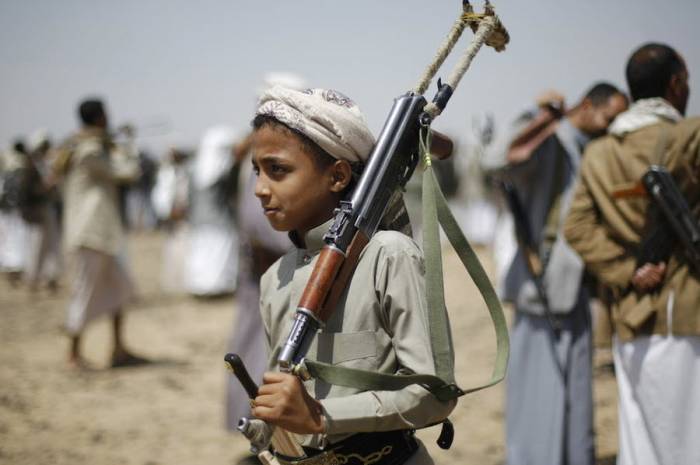
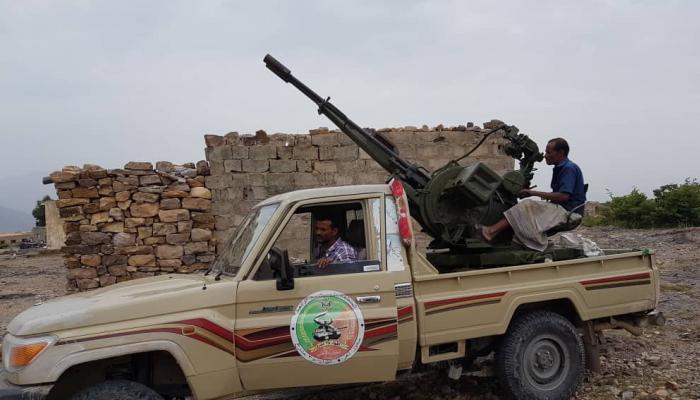
So as we see one side evolve, we see in similar news from the Wall Street Journal (at https://www.wsj.com/articles/missiles-fired-at-saudi-arabia-signal-support-for-iran-by-its-proxies-1525886469) the mention “Iran-backed Houthi rebels in Yemen fired a barrage of missiles into Saudi Arabia on Wednesday, an early indication that Iran’s allies in the Middle East are likely to flex their muscles in a show of support for their patron—risking a wider conflict“, I think that these events which were apart by merely a few hours had some levels of coordination. So when we see “Yemeni army forces, supported by allied fighters from Popular Committees, have fired a salvo of domestically-designed and -developed ballistic missiles at “economic targets” in the Saudi capital city of Riyadh in retaliation to the Al Saud’s devastating military aggression against their impoverished country“, we need to keep a clear mind. The missiles are said to be Yemeni (Borkan H-2 missiles), yet the information on the H2 is that it is said to be a short range ballistic missile with normally a range of about 1,000 kilometres (620 mi) or less. Even as we see it is almost capable of making the 1,036 km to Riyadh, the setting that we see with ‘economic targets‘, whilst at the maximum distance, the chance of actually hitting what is aimed for at the maximum range is a lot less likely or possible, not without and ace rocket and ballistic expert at the missile site; the Houthi’s are a little short on both, so we have, in my personal opinion, either Houthi’s that want to hit any part (mainly civilian parts) of Riyadh and they merely claim to be aiming for a bank, or the optional more likely setting is that Iran has been directly involved in training the Houthi’s or firing the missiles themselves. Now, we can opt for option one, yet the training curve would be a little devastating on all minds involved (even if you use targeting computers and software, yet they have had the time to train the Houthi’s for months, so it is possible, yet I personally see it as less likely (again merely speculation from my side), so when we consider that Iran is waging war on two fronts, so far (as far as I can recall) only Napoleon and Adolf Hitler were that stupid and how did it end for them? There is an optional thought that Iran will be hiding behind European coat tails in the end, but that is still speculation without evidence (at present), perhaps that is why Turkey is in a desperate state to become part of the EU?

I am merely asking, because the Iranian decisions we are seeing over the last 24 hours give rise not to the US, but to other players hoping to wage ‘extreme’ solutions to make things go forward for them, whilst the opposing player has no intention of playing nice, the US can’t start another war and Iran might be hoping that the EU is too unwilling to see its economic setting dissolved through armed conflict. It would be a decent tactic to play, but for now it merely remains a setting of speculation. Yet, in all this, there is more than just saber rattling. When we look at Reuters we see “Turkey will continue its trade with Iran as much as possible and will not be answerable to anyone else, Economy Minister Nihat Zeybekci said on Tuesday, as U.S. President Donald Trump said the United States was withdrawing from the 2015 Iran nuclear deal“, so we see Turkey with an utter lack of accepting accountability for the economic paths that they are trying to get on (aka the EU gravy train). How can anyone expect Turkey to have any level of civility in the setting of economic partnerships? Because in the EU setting, we have seen more than one play where such acts would not have been allowed, yet Turkey is setting the pace to do just that. It is an important setting as it gives Iran a green light they should not have had, it is merely the outspoken voice to set the colour of options, and that colour is the one of explosive red. That is shown by others as the setting that is not to be allowed. Even as we understand that there is a setting that Italy, Germany and France do not want these sanctions to happen, we see that their voice gives “Patrick Pouyanné, the chief executive of the French energy firm Total, has already called for the EU to pass a blocking statute“, which makes perfect sense, and it is likely to happen, yet when we see the Turkish response with “Turkey will continue its trade with Iran as much as possible and will not be answerable to anyone else“, it merely shows that they are nowhere near ready to be allowed into the EU as a member state, because when they do something like this after they are admitted, the game changes by a lot and from that moment onward Turkey becomes merely the liability of the EU, not a member of the EU and there is a large distinct difference, even as we see them in the current setting for now, there is absolutely no guarantee that they will not continue on the undermining path that they are on, we have seen too many instances of Turkey acting that way that way in the last few years.

When we return to Iran we seem to be in deep water, not healthy waters by the way, the Riyadh/Golan actions are debatable at the very least and the fact that they are being mixed gives light to the dangers that are upcoming. Can they be avoided is the larger question, I am unsure of an answer, the fact that Yemen and Syria happened at almost the same time is a larger issue to contemplate and I have no factual useful response. Waiting for now is pretty much all we can do. I don’t think that we have to wait for too long as Israel has already announced retaliatory strikes a mere 15 minutes ago (source: Haaretz). So this cookie will not merely escalate, it is certainly the setting where other cookies get crumbled as well, the mere question is: “What are our options as per tomorrow, or the day after?

I do not know, when it comes to Yemen, we all (mainly the EU, NATO and USA) sat on our hands for far too long and they have made it part of the package deal. So the first act (at present) might just depend on how much Saudi Arabia feels threatened.


Leave a comment

Filed under Finance, Media, Military, Politics

Stopping Slumber, Halting Hesitation

I woke up this morning at 03:30, you see I have messaged that Iran has an impeding missile strike on Israel. Now, in all fairness, ehhh, actually there is none. I got woken up with the prospect that Northern Israel would end up getting hit by missiles. Haaretz gives us some news, yet the validity and value are still in question. Even as we see “Israel has detected unusual involvement by Hezbollah in Iran’s preparations for retaliation, even though the organization has been trying to keep its activity low-profile so as not to affect its position within Lebanon“, as well as “operational planning, however, is being done by members of the Revolutionary Guards’ Quds force” and finally “Iran seeks to settle its open account with Israel, but wants to do so without sparking a war. One possible solution to this dilemma is trying to fire a limited barrage at military targets in northern Israel“. All valid and there is no real arguing on it, but the validity has been hard to confirm. I do understand that the start, which was the attack on April 9th, the airstrike on Syria’s T4 airbase, which killed seven Iranian military advisers and members of the Iranian Revolutionary Guards.

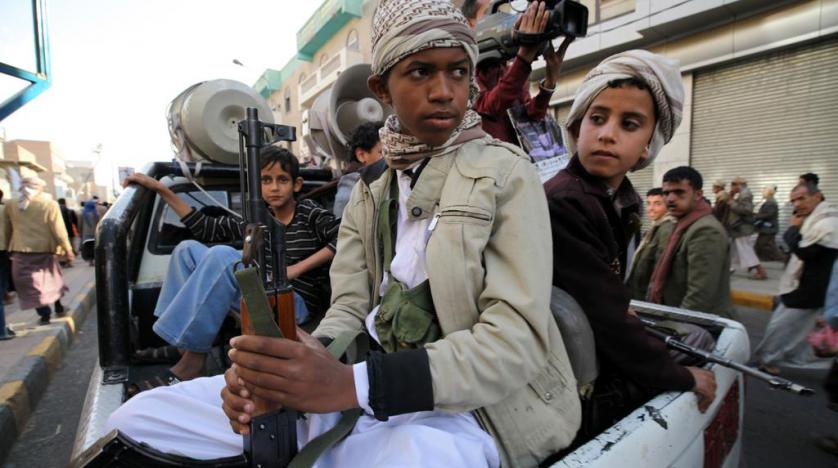
This now opens up the second door. You see, these so called ‘advisors’, shall we call them ‘instructors’? Have been doing a lot more than most realise. I personally belief it to be one of 3-4 places where Hezbollah was being trained, one of them would be to train the Hezbollah and optionally Houthi’s in firing missiles towards Riyadh. Iran can shrug its shoulders at accusations of Iranian missiles being fired, should one of the Saudi bombings hit pay dirt and Iranians are found, then the game changes, Iran has been careful to play its cards, it is a game of plausible deniability which they probably got from an episode of the X-Files.

The Haaretz article (at https://www.haaretz.com/israel-news/.premium-israel-braces-for-iran-missile-attack-from-syria-over-t4-airstrike-1.6060719) gives us a little more than that, especially at the end when we see “Netanyahu will reiterate Israel’s opposition to Iran’s continued military consolidation in Syria and ask Putin to work to prevent it“, that part really works for Russia as they are not happy on the growing influence Iran could get as President Bashar al-Assad needs every friend he can find, yet in Russia’s view they like their ‘friends’ to be singularly focussed on what those ‘friends’ can receive in the form of payable services towards Russia, not handing that cash to Iran. The question is what Russia would want in return. I have no idea. There is little I can offer on that side of Iran, there is no Iranian navy there and my solution was based on sinking their navy (a Saudi issue to be resolved), even as the deployment system is now coming to fruition, I see that there are increasing options to stop Iran in its track. That is the ball game, not on how Israel gets optionally hit (which would be regrettable), but the issue on stopping Iran from playing the game it is.

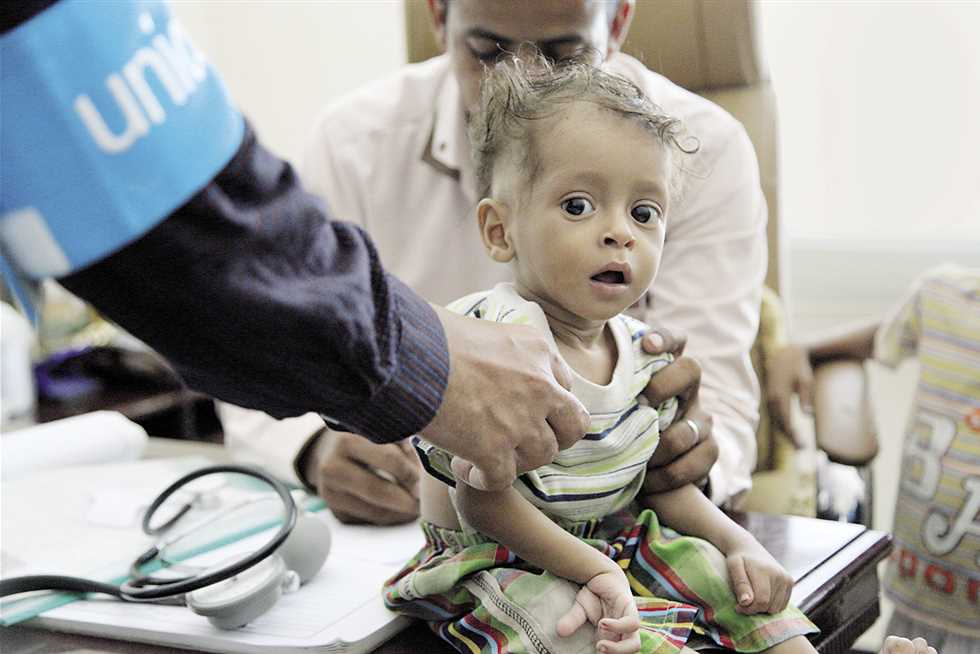
The India Times had an interesting piece yesterday (at https://economictimes.indiatimes.com/markets/commodities/views/slippery-slope-why-opec-may-struggle-with-new-iran-sanctions/articleshow/64051168.cms). Here we see the article ‘Slippery slope: Why Opec may struggle with new Iran sanctions‘. The quote “President Donald Trump has to decide by May 12 whether to extend waivers on Iranian sanctions, and all the indications are that he won’t. The drop in supply could easily exceed a million barrels a day, if the president decides to impose extra-territorial sanctions on anyone doing business with Iran — would-be buyers could decide that the safest course is to shun the country’s oil“, it sounds nice, yet in the end, Iran could still sell oil to Russia and when that happens, China will open up to receive their share (at premium discount that is), so even as Iran ends up selling at a discount to these two players, they will get the financial relief that they need and in that Iran can keep on playing its games and that is the part that needs to stop. We have seen the ‘regard’ President Putin has for President Trump, so there will be little to stop them there and when that happens and the oil market gets flooded with the optional 5 million barrels per day that Iran can produce, the oil prices would tumble again, which is nice for some, but the consumer tends to not see those benefits, so there will be a growing issue on the players who are pushed into a pressure setting. Even as we see “Crown Prince Mohammed bin Salman told Bloomberg in April 2016 that his country could raise output to 11.5 million barrels a day immediately; lifting it to 12.5 million barrels would take six to nine months” and their willingness to produce more, especially in light of moving away from oil dependency, we much wonder how it will fare. You see as Russia, China, Turkey and optionally South Korea end up with the additional oil, oil that Iran will pump into the industry, the US ends up having no stick to work with and that is where Iran ends up in an partially optional win- win situation, one that both Israel and Saudi Arabia are not happy with. Yemen has no vote in this as the Houthi’s are watching that population die. So when we saw “Nearly a third of Yemen’s population – 8.4 million of its 29 million people – rely completely on food aid or else they would starve” last week, we seem to feel impervious to the needs there, we merely watch the news as it is one of the two most horrific settings of humanitarian disasters in history. The mere news of another ‘cholera epidemic’ hits us, but it somehow does not register. As we vaccinated our populations seeing cholera near extinction, we forget that it is still a global issue, the fact that it causes massive dehydration as a side effect makes it a lot worse anywhere in the Middle East. It is in that setting that the Iranian backing of the Houthi’s needs to be seen and even as they go all Italian with ‘I know nothing‘, the issues are growing and the games that Iran is playing will have repercussions, the moment one missile actually hits a populated part of Riyadh and the camera’s show the scores of casualties, that is when all bets are off and it will be a full scale war in the Middle East, whatever Iran states then will fall on empty ears and the bombing of someplace called Tehran will not be out of the question, the good news is that there are only 8 million Iranians there, so the number of casualties would be contained, the other 90% might not have anything to fear.

Apparently that is what Iran is hoping for, it is the price of playing the game via puppets.

All these sides matter, because one successful strike on Northern Israel will change the game, Iran forgot that the puppet game comes at a price and even as they are all in denial by calling instructors ‘military advisors’, the setting is that they were training terrorists to be more ‘effective’ in their job. The last part can only be argued to some part, the impact in the changing timelines and the thousands of Yemeni’s near dying constitutes as evidence here and that needs to be taken into account. The NY Times gave us a mere hour ago https://www.nytimes.com/2018/05/06/world/middleeast/israel-iran-nuclear-deal.html. Here we see a few issues and most of it has been seen in other news, yet with “The country’s currency, the rial, has lost around 35 percent of its value since his re-election in May last year, and his popularity has slipped among the middle classes for having failed to achieve some of the economic and social changes he promised“, we do not see the failure of President Rouhani, we see the optional opportunity for the more extremely outspoken military leaders to take control and do exactly what we need to not happen. When we realise the US setting “Ayatollah Ali Khamenei, has forbidden his diplomats from engaging with American officials on any subject outside of the nuclear talks, but at quarterly meetings on the deal’s status, U.S. and Iranian diplomats have used the opportunity to conduct sideline discussions on matters of shared concern. These meetings are currently the only points of direct and official contact between the governments” that the US needs, we need to understand that there are two versions in play. Al Jazeera (at https://www.aljazeera.com/indepth/opinion/military-coup-iran-180424144510759.html) gives one view with “It is amid these heightened tensions that the possibility of a coup against the current government, whose term expires in 2021, has arisen. There are already some signs that the Iranian Revolutionary Guard Corps (IRGC) could be moving in that direction if Ayatollah Khamenei orders them to do so“, I believe that part to be incomplete (read: inaccurate). The part I see is not merely the defensive based words that Ayatollah Ali Khamenei is speaking, which are valid for any politician to speak when they are speaking out in regards to their nation in defence. Al Arabiya gave us “A video surfaced of Iranian Supreme Leader Ayatollah Khamenei’s top adviser for international affairs, Akbar Ali Velayati, in Syria’s Ghouta on Wednesday getting a report on the developments of the war-stricken area from an Assad military official” a month ago, yet in all this, there is a supporting view from the Tasnim News agency, the Iranian news agency that the quote “According to the Iranian Tasnim news agency, the Syrian foreign minister, Walid al-Muallem, received Velayati on Wednesday morning and they discussed the political developments in the country. Velayat confirmed Iran’s support for the Assad regime during the discussion, the news agency reported” is also linked to the impeding strikes on Syrian bases with Iranian Revolutionary Guard members. Even as the reference was towards the US at the time, I am certain that the discussion had been on how Iran would be retaliating at that time. So the setting of their actions, whilst they were knowingly preparing and training terrorists on the responses in both Israel and Yemen gives rise that the connection between Ayatollah Ali Khamenei and the Iranian military is closer and stronger than either of them ever had for President Rouhani, that is the setting and even as both ‘tolerated’ the elected president, they have been ready to go it alone (read: without the current president) and as such, whomever replaces that person will be either deeply religious or massively military, either path does not bode well or either Israel, Yemen and optionally Saudi Arabia. Now it is in that setting we return to the setting with former president Mahmoud Ahmadinejad. I actually warned on this danger a year ago, not a week or a month, no, a year ago (at https://lawlordtobe.com/2017/05/30/the-hard-line-path/) where the setting as stated in the article ‘The hard-line path‘, is now becoming a reality, even as the details might differ a little, it is exactly as Dr. Majid Rafizadeh, a leading expert on Iran and US foreign policy and president of the International American Council predicted. I saw that same danger. It is actually the same General Amir Ali Hajizadeh that I mentioned then who is now implied in all this by the Times of Israel with “Israel believes Iran’s retaliatory effort is being led by Major General Qassem Soleimani, the head of the IRGC’s Quds Force, which operates around the world, with assistance from the head of the IRGC air corps, Brig. Gen. Amir Ali Hajizadeh“, it reflects on last year with the quote “the commander Brigadier General Amir Ali Hajizadeh, is the very same person who boasted rocket aid to Hezbollah as well as the mention that the Iranian missiles can reach Israel“, so after a year it has all come to fruition, in all this was President Rouhani merely the accepted play toy of these two ‘extreme Iranian nationalists’? We cannot make the leap that this has been in preparation for over a year, but the model fits awkwardly well and as such we need to set the need of what to expect and how to counter that. That brings me to the issue I had, you see Iran feels safe because of its navy and air force, both are nothing to be sneered at, but if we remove their navy, they might just open the door for actual real talks and alleviate the pressure against both Israel and Saudi Arabia. It would even be better if Israel removes that threat called Hezbollah, even if merely for the reason that when a puppet is removed, we might actually achieve something in Yemen and get true humanitarian aid up and running, in that we are still confronted with the UAE presence, but there are too many question marks on the reasons there (read: I actually did not read up on that part of the equation).

We need to stop dozing off, the largest extent of the Middle East is that we idly stood by and did nothing, the Syrian people as well as the Yemeni ones are not happy, because they suffered needlessly for years. The EU all talk and no action has been regarded as one that merely acts on economic needs, that part can be accepted as gospel. Yet that will never be a suitable solution and that is why we need to change, we need to get awake and become hungry for solutions, a hunger we have not seen since 2004, when the bulk of greedy CEO’s saw their income/fortune diminish by 72.6%. Would it not be great if that hunger exists for humanitarian welfare?

So even as it is 7:45:32 later, there is still no strike at present, or it is perhaps in mid-flight, no matter what, we have mere hours to find an actual solution in all this, and it needs to start by stating beyond mere sanctions that Iran is in a stage where it is invoking anger through what should be regarded as clear acts of war. We have played the ‘diplomatic game‘ for far too long with some of the players, it is time to change the game and let people know that in the end when talks are proven to be useless, action must be taken, we merely have no options left, because when this escalates it will truly be an escalation that will end up far beyond Iranian and Middle Eastern borders, that is the greater evil we must now prevent.

Even as the Jerusalem Post is now giving us (a mere 30 minutes ago) that ‘PM Netanyahu Will Be Judged By How Israel Confronts Iran Militarily‘, yet that article also gives one light that is perhaps not the one we wanted to see. With “The spies (Mossad) in February 2016 reportedly discovered a warehouse located in the Shorabad district of the Iranian capital where the documentation was being stored; kept the building under surveillance for two years; and, recently, devised an operation to break into the structure and smuggle back to Israel half a ton of material in less than 24 hours“, in addition we see “This was perhaps the greatest intelligence operation in history, as I do not remember any instance when a complete archive was moved from one part of the world to another“, you see that is the one part that makes no sense, it gives rise to the Iranian defence when we see ““Anyone who says there is nothing new in the material we showed has not seen the material,” Mr. Netanyahu said, days after exposing Israel’s acquisition of a huge archive of stolen Iranian nuclear plans, mostly relating to a covert bomb-making project that was halted in 2003” (source: NY Times), which is still partially an issue, yet if it was halted in 2003, it makes sense to be in some archive after 15 years, so unless there is clear evidence in those documents that nuclear technology is still worked on covertly at the present, we need to give way in both directions. I do not oppose any actions against terrorists, yet going to war over 15 year old documents without proper intelligence on any clear and present danger from Iran, nuclear or not is also a fools path into the sleepy village of ‘no resolution ever‘, we need not become mayor to that place and even as we might lower dangers with firm actions against Iran, it needs to be proportionately or we are not asleep at the wheel, we are merely comatose re-actionists to a situation that does not actually exist, which might end up being more dangerous beyond the short term.

So as we are awake we need to take firm action, I am still in mind of removing Hezbollah permanently of the tactical board. It would be good for Lebanon to find its own way, not poised at the pointing of a gun, it would be good for Yemen and when Iran cannot use Hezbollah it needs to do things out in the open, something that they are very unwilling to do, so tactically that first move makes perfect sense. It lowers the national stresses in both Israel and Saudi Arabia, I see no down side at all (which is a fortunate rarity) from there we can see what happens next, because without the puppet in the game, Iran might actually consider true talks, not merely delays during a missile convoy, which would please the diplomats all over the region.

Am I correct in all this? I believe I am as I have supporting evidence going back a year, yet there remains the interactions of perception, principles and presentation. I merely show my side, and I have never claimed that I do not make mistakes and in light of the actions I illuminate that needs to remain at the very front of the line, in the end I might just be wrong.


1 Comment

Filed under Media, Military, Politics

The truth that kills you

It started in a setting that I observed and wrote about for the last few years, every now and then the NHS rears its ugly head. My look into this started when the Labour party has created a £11.2 billion fiasco that involved IT. When it comes to governmental IT issues, the UK does not score that high. In addition, when you drain a resource in one path, the other path tends to fade away and there were always politicians who claim they could do better, yet experience for over 20 years have shown me that they tend to remain clueless on the matters at hand. The moment they accept it, they go have lunch with friends who all see opportunities and before he/she knows it, the required scope has grown by 250% and soon thereafter it becomes too large to manage. From there onward it goes from bad to worse and that is how the NHS got sliced and diced (just one of many issues plaguing it).

So when I saw ‘Shock figures from top think-tank reveal extent of NHS crisis‘ (at https://www.theguardian.com/society/2018/may/05/nhs-lowest-level-doctors-nurses-beds-western-world) I was not convinced that the Guardian had even ruffled the top layer of feathers here. So I took a look. Now, the article is linked to the King’s Fund that has the numbers (at https://www.kingsfund.org.uk/publications/spending-and-availability-health-care-resources). The work by Deborah Ward and Linda Chijiko is actually really insightful, and an amazing read. So let’s take a look and they do not disappoint, the start gives us “Although it can be difficult to find data on health care resources on a comparable basis across countries, international comparisons can still provide useful context for the debate about how much funding the NHS might need in future. There is also precedent for this approach – for example, when Tony Blair famously pledged on the ‘Breakfast with Frost’ programme in 2000 to get health spending up to the European Union average“, I have to consider the value of adding flair of Blair, but it is fair enough (or was that flair enough). Yet, data is everything and proper data rules the setting, this paper recognises that and that is a massive victory.

It is important to add (pasted) the following, because it shows the value to a much larger degree.

Alongside the UK, we have chosen to look at a selection of 20 European or English-speaking countries drawn from across the OECD. For some analyses, data was available for only a subset of these countries. For some indicators, data was only available for services delivered by the NHS and did not include resources in the private or voluntary sectors.

List of UK comparator countries in this report

Australia Czech Republic Germany New Zealand Slovak Republic
Austria Denmark Ireland Norway Spain
Belgium Finland Italy Poland Sweden
Canada France the Netherlands Portugal Switzerland

Unweighted averages and medians have been used throughout this report to summarise data for the collection of countries as a whole. The amount of people who relied on weighted data cannot be underestimated on stupidity to some degree, as we get raw numbers we see that weighting would look better, yet less accurate. In this we do recognise the danger we see with ‘each country is given equal importance regardless of the size of its population‘, especially when we consider that non-rural Denmark tends to me limited to Copenhagen, and rural Netherlands (if there is any rural part left) tends to reflect Birmingham population numbers on average, so when we also take into consideration the truth of ‘The median and unweighted average are often very similar across these analyses, though the median will be less affected by extremely low or high values‘, we know that we are looking at something serious, but in the micromanaged parts (bordering rural/non-rural), there will be the sliding of values at times, not on a national scale, but where we consider certain parts per nation do not properly reflect internationally (the Netherlands vs France or Canada vs Germany).

Now we take a look at certain segments. The first one is “Under the Organisation for Economic Co-operation and Development (OECD)’s new definition of health spending, the UK spends 9.7 per cent of gross domestic product (GDP) on health care. This in line with the average among the countries we looked at but is significantly less than countries such as Germany, France and Sweden, which spend at least 11 per cent of their GDP on health care“, Sweden stands out as it has a much more refined social based system, so there is a shift there, yet as Sweden has 3 cities (Stockholm, Goteborg and Malmo), whilst the rest are basically villages some no larger than 1600 people (2 of them), the rest are between 2,500 and 140,000 in size, so in that regards, the population spread required an approach that differs from several nations, especially when you consider a place like Skellefteå and Lulea in the north. To give a little more reflection Skellefteå has 33,000 people over 8.39 square miles another 40,000 live outside of the ‘city’ limits. So it is 3,900 persons per square mile that in comparison against Birmingham that has 10,391 Ashton Villa fans per square mile. Different solutions are needed, and more often it the hardware (ambulance/helicopter) is very different especially in the winter season (in Sweden) where they actually have a white Christmas and often a white Easter as well.

Now we get to what initially was considered an issue by me, but that was because Denis Campbell Health Policy Editor of the Observer messed up a little (likely unintentionally). You see the article in the Guardian gives us “They reveal that only Poland has fewer doctors and nurses than the UK, while only Canada, Denmark and Sweden have fewer hospital beds, and that Britain also falls short when it comes to scanners“, now what is stated here is true, yet by stating “Britain falls short in several ways, especially when we compare ourselves to the Unweighted average. When we do that when it comes to nurses, only Spain, Italy and Poland have a less fortunate situation“, the Unweighted average gives a proper light per 1,000 population and that is where we need to look at the start and the King’s Fund research is doing that splendidly and shows that ‘spendingly’, the UK falls behind. It falls behind more and more is still speculative, yet if the coming 3 Financial years do not show a massive increase (read: change to the NHS approach) that will become a worsening situation for the population requiring nurses, doctors and equipment.

In the reports, I find one thing missing, that is, it would be a good idea to have that, you see, in the part Medical Technology, the CT Scanner part is partially flawed, Australia scores massively high, which is nice as I am on that island, but I also recognise the part missing there, even as there is a proper notice given with ‘Data for the UK only includes MRI and CT units in the public sector, so these comparisons should be treated with particular caution‘, the missing element is not the numbers, but the distance. As Australia is an ‘island’ nearly the size of Europe, it has its own problem, most of Queensland is rural territory and when you consider that Australia is twice the size of India, the amount of technology they have is often a burden on the size of that nation and the mere fact that the 5 large villages (Sydney, Melbourne, Brisbane, Adelaide and Perth) merely represent 65% of the population, the rest is rural.

Yet the more I read on this report, the more I respect it, it clearly shows issues that the NHS UK has, partially due to its own flaws (the report does not show that). It shows at the end that there is space for jobs “There are approximately 100,000 vacancies for clinical staff in the English NHS, and nearly half (49 per cent) of nurses do not think there are sufficient staff to let them do their job effectively“, but it does not show the ‘elitist’ approach the UK has had for decades into allowing transference of other nurses (from other nations) to become part of this workforce, yet the impossible standards that the UK have used to stop that falls short of the shortages and lack of services now thrust upon the people in need of medical services. The second part is seen (at https://improvement.nhs.uk/documents/2471/Performance_of_the_NHS_provider_sector_for_the_month_ended_31_December.pdf), here we see: “Providers have not met ambitious cost improvement targets and it is critical that these plans are recovered before year-end

Providers set out plans to deliver a total of £3.7 billion savings this financial year. The sector has outperformed the wider economy by delivering an implied 1.8% productivity improvement. This was supported by cost improvements of 3.3% – equivalent to £2,139 million of improvements in the first nine months of the year, £97 million higher than the same period in 2016/17“, so how to read that? They need to show better for the same amount, they were unable to deliver and they still got paid? Is that how it reflects, because that is merely the setting of a disastrous business model, in that the elitist overkill hire approach of nurses will never be in a proper setting in that way, or solved which would be nice too.

So when we see: “By Q3 the sector had achieved 65% of the forecast efficiency savings for the year – to meet the forecast outturn, providers will need to significantly step up the delivery of CIPs in the final quarter. However, the same pattern was seen in 2016/17, so there is evidence to support the increased delivery in the final quarter“, which sounds nice, but they would still come short by no less than 20%, so even as we complement them by getting better in the home stretch, they still did not make the delivery they promised and no matter how ‘ambitious‘ the goal is, a goal not met remains a failure. So when we do address the shortages on all levels and the setting on how ‘some top think-tank‘ gives us ‘shock figures‘, it still revolved around a much larger mess that has not been addressed for the longest of times and is still nowhere near up to scrap.

The goods we need we see on page 51, with the setting of ‘Nursing vacancy position‘ we see how most other failures are shown to fail merely due to shortages, the fact that the NHS has 35,000 vacancies also shows on how timelines cannot be met, when we see that in regard to the shortages nurses to the job of 1.4 nurses, there will be more burnout and more delays on every field. Throwing money at it will not really solve the issue, because this is the one field where we see the direct impact of service levels versus the impossible demand of nurses. So when we accept that the nurses program requires a larger overhaul in setting the stage we see that this is te first field where the military are actually becoming part of the solution.

How speculative can we get?

Here is a warning that matters, because the changing of settings is essential to shaping the future. Consider two places the first (at https://www.army.mod.uk/who-we-are/corps-regiments-and-units/army-medical-services/queen-alexandras-royal-army-nursing-corps/) where we are introduced to Queen Alexandra’s Royal Army Nursing Corps (QARANC), as well as the recruitment (at https://apply.army.mod.uk/roles/army-medical-service/army-nurse). Now consider that the army is charged with the setting of training all applicant nurses to serve the NHS. So immigrants and optionally their children get a short access path to serve the UK on medical terms and it comes with complete processed nationality (after initial screening is passed). So families get the option to become British and part of the society they moved to. Now, this will not always work, yet if you see a 35,000 shortage and you get to lower that by 1,000 each year? Let’s not forget that the shortage is not going away any day soon, so any approach we can take we should consider. Now this is not for everyone, and more importantly an army nurse is still a military function, yet in this setting, there will be training in English, UK values, medical training, language and more importantly the years to come will show whether they have what it takes, in the end we use a structured system to infuse the NHS in operational ways, in addition, as the there is a growing need at the NHS, we see other parts where such reflections would grow the power of the NHS indirectly.

Both logistical and engineering sides of the Military could spell equal options to grow the NHS, or at least grow the ability of taking care of itself sooner rather than later. When we consider that the cost of agency nurses are close to astronomical (at http://www.kentonline.co.uk/medway/news/trust-spends-11m-on-temporary-nurses-180427/) gave us “Medway NHS Foundation Trust spent more than £11m on temporary nursing staff last year, a Freedom of Information request has revealed“, so when we consider that, is calling the army to aid in setting the boundaries back by a fair amount that much of a farfetched call? When we also see “There is a shortfall of 40,000 nurses across the UK, which has been driven by a lack of nursing training places in recent times“, is my call to call in the army and its instructors that much of a leap? Now we can all agree that it does not work on all fronts, but we can either stare at the missing beaches we have now, or start creating our own beachheads and see if we can see how new solutions could be implemented. There is no certainty, only the certainty that at the present course there will never be a solution that is what needs to be addressed. We need to accept that the current approach towards solving the NHS issues is not realistically set. When we look at merely one source (at https://www.nurseuncut.com.au/how-australians-can-get-nursing-jobs-in-the-uk/), we see the language that is given even after you get the NMC (the Nursing and Midwifery Council), you passed the tests, you have shown that you are who you are, your medical knowledge has been assessed, we then see “The hard work isn’t over after this point though, as you will obviously still need to find an actual job within the NHS. Fortunately, there are places designed to help – such as agencies like Nursing Personnel, where you can find a range of jobs across different disciplines and in different UK cities“, so we see that the agencies are set as a buffer, filling their pockets, so they never ever want to see that changed. In addition there is “Following this, you must apply for and then receive a valid work visa to ensure you can legally work in the UK. Finally, when all the pieces are in place, you can begin your new nursing role. Good luck!“, So even after that path is taken, after you get your NMC pin, there are still two iterations to get through, even as the Army, or even directly via QARAN, we could see that the entire path, towards the NMC, especially by those who have a nursing degree. That was never an option? Not even as I discussed such a path almost 4 years ago? When we see the shortage and the non-actions in this, can we even have faith that those around the NHS want anything fixed? It seems that they get ‘rewarded’ no matter what, especially the agencies, so when we see the money in that, why would they want to fix it? I say start by fixing this for the nurses first, which will get delays down and will give additional rise to finding as the agencies get less work, it also states that the invoices form them disappear meaning that millions become available. More staff and alternatively also more equipment could be the beginning to solving two issues to a larger degree. After that we can start looking into addressing the shortages on doctors, yet I also feel that once the nurse shortage is addressed, the doctor shortage might partially take care of itself. Even as the Financial Times reported last year that almost 400 GP’s a month quitted the NHS, addressing the nurses shortage will lower that number and when there are enough nurses we will see that it might lower to almost zero (speculative), yet as one fixes two other issues, we will suddenly see that when nurses reach above the unweighted number of 10, other numbers are guaranteed to shift too, because as agencies make millions less, those millions will shift to optional beds, medication and technology. Suddenly the UK will not look so bad overall. Now, let’s be clear this is a path that would take no less than 3 years to see certain parts turnaround, but it is a realistic path with a realistic curve of improvement. So even as we get served “Portsmouth Hospitals NHS Trust has 9,264 4 hour breaches (25.5%)“, we can also see from the other numbers that a larger extent is due to a shortage of nurses, so when we accept that they could climb to 85%-90%, we see that the entire setting suddenly looks less grim, so even as we need to realise that there is a setting (based on location) that the overall need of 95% performance is ideal, the question becomes is it a realistic setting, when all matters are equal it might be, yet at present all things are not equal and that is the part that requires attention, it is not the top 5% made that sets the standard, it is the acceptance of those in the 90%-95% range that requires merely some scrutiny, the question becomes, which one alteration might get those in the 90%-95% range there? I believe that nurses are merely one part, technology is the second part and as we deal with nurse shortages, there is a setting that technology gets fixed to some degree in the process. This paper (Spending on and availability of health care resources: how does the UK compare to other countries?) does not answer it, but gives light to the path that requires attention, the paper gives a path to investigate and that is equally massively important, so when we consider figure 2, can the change between New Zealand (10.3 nurses) versus he Netherlands (10.5) above the unweighted average of 10.4 show that difference of attaining the ‘revered’ 95% score or higher? Because of ‘irregularities’ that national needs tend to have, it is a cautious approach, yet the idea that it solves it is one thing, yet the one part not shown here (hence I took these two reports) is that even a we accept that they cannot be used in comparison, the setting of getting the 95% mark is still an essential statistic (by some) and if so, we accept that we go by the Unweighted average as a mere indicator, is that the right indicator to use (read: rely on), or is there a number missing? Is there a ‘Nominal Coverage‘ missing that is an indicatory number that aids us towards the A&E 4-hour standard setting and the attainment of the 95% score? Now it remains indicatory as there will always be a shift towards nominal nurses and actual nurses, but we need to start somewhere and if additional nurses are the first requirement to start turning this around, these numbers will become a lot more important, that part is not addressed (which was never the setting for Deborah Ward and Linda Chijiko), yet it is an issue for the NHS and the writing and results by these two ladies, might be a first step in actually getting there. When we look at the simplicity of it, was it really that far-fetched? I am merely asking, because my flair for oversimplification can be overwhelming for a lot of ‘experienced analysts’.

Yet, my mere focus has always been, how can we fix/improve the current NHS?

It is the path to solution that we need to care for, how it can be fixed, if it can be fixed. I have forever opposed the Jeremy Corbyn approach to throw money at it, because in the current setting the only one getting a better deal are the agencies and they are already cats that are way too fat. Hence I look at the directions where training and education sets the pace and in that pace we need to find opportunities for the NHS to pick the fruits form the yard, it is merely a different set of spectacles, the spectacle is not merely about the presentation, it is about setting the right focus, because focus shows us where the flaw is and where we can initially start the focal point of repairing the situation.

The weird part is that Canada, the UK and Australia have similar issues, so there is a foundation of repair missing which is equally a worry. In all this someone is getting rich, is it so hard to look at those getting rich and why that is? The fix could have been underway as early as 2014, the fact that it is nowhere there is worthy of many more questions, yet the bulk of those who could ask them, do not seem to ask them visible enough for all people to wonder how certain matters could be fixed and when one is fixed how much the other problems diminish, an equally important question. Even if it is merely for the reason that not finding these answers could kill you, either in an ambulance, or in a corner of a hospital awaiting a nurse to get you to the proper place for treatment, would that not be nice too?


Leave a comment

Filed under Finance, Media, Military, Politics, Science

Are there versions of truth?

It is a question that has haunted plenty of people, you see there is just one truth, although, is that ‘there is your side, my side and the truth’; it comes from Robert Evans ‘The kid stays in the picture‘, a 2002 documentary. We have seen the quote is several works including the famous Sci-fi series Babylon 5. The fun part of this is that the three parts are all based on honesty, yet it is more than just a matter of perspective. I have always known that, although the interaction of perception and observations is something that needs to be in a book, not on a blog. So when I was confronted with the site ‘Seeking Alpha‘, which was described by the Wall Street journal in 2014 as “SeekingAlpha.com predicted stock returns, as well as earnings surprises, above and beyond what was evident from Wall Street analyst reports and financial news articles” is from the article more than just that. The article (at https://seekingalpha.com/article/4168001-investors-face-moral-dilemmas-investments-saudi-arabia) gives us ‘Investors Face Moral Dilemmas with Investments in Saudi Arabia‘, can be countered with ‘every investment has a moral dilemma’, so that is not much to go by. Yet the setting of a 500 billion market where we see the foundation with “A component of the Saudis’ Vision 2030 is to create an indigenous defense industry one that will promote volatility, not stability, in a region on perpetual warfooting“, gives me not the shivers, but the contemplation of what game is played. You see there is no doubt that Saudi Arabia wants to create an indigenous defence industry; every nation wants that, especially when it has been under threat for many years. I would have told Crown Prince Mohammed bin Salman if he would respectfully consider buying Remington as it is bankrupt and going cheap. The excellence of its weaponry, weaponry that have made it to the most elite parts of the global national defence forces is not just a matter for defence, hunters and others revere the weapon for its standard of excellence and it is not a bad place to start. You see, that is merely one path, in all this the setting of ‘one that will promote volatility‘, is not only not a given, I wonder where Seeking Alpha got the data in the first place to make that assumption. When we accept that there is an optional truth, there should be a look at the antagonising party, namely Iran as well, in that regard we see (at https://seekingalpha.com/instablog/776842-investorideas-com/5152941-cryptocorner-iran-developing-cryptocurrency-japan-s-sbi-launch-exchange-australia-cracks-icos), “Iran is progressing with its own crypto currency project despite having banned crypto trading in local banks according to a report at Reuters. Information and Communications Technology Minister Javad Azari-Jahromi said the ban from Iran’s state bank would not apply to development of a domestic crypto currency“, as well as “Equally, if not more importantly, investments by Russia’s oil and gas companies in the development of oil fields in Iran may exceed $50 billion, presidential aide Yuri Ushakov told reporters in early April” (at https://seekingalpha.com/article/4167229-effect-unilateral-u-s-sanctions-irans-crude-oil-production?page=3) and in finality we see “On Sunday, pro-Iranian Shiite rebels in Yemen launched a missile attack on Saudi Arabia targeting four cities. The Saudi air defense intercepted the missiles, however, one person died and two others were hurt by shrapnel. Saudi Colonel Turki al-Malki made it clear who Saudi Arabia thought was to blame: “This aggressive and random act by the Iran-backed Houthi group proves that the Iranian regime continues to support the armed Houthi group with qualitative capabilities…”“, which we get from the article (at https://seekingalpha.com/article/4159016-7-missiles-closer-iran-war-100-oil) called ‘7 Missiles Closer To Iran War And $100 Oil‘. So now we see two parts, we see Saudi Arabia accused of volatility and ion all this the aggressor Iran is not painted in any way in any of these mentioned articles merely defined as ‘Pro-Iranian rebels‘, the fact that those rebels cannot afford any missiles and for the most they lack the ballistic skills as well as deployment and knowledge of GOLIS firing solution systems, issues like deployment, missile calibration and beyond that there is setting the precision of the missile by making sure that the electronic settings are correctly tweaked and calibrated to interact with the information that the targeting hardware offers. All that requires skills, skills that the Yemeni do not have, but Seeking Alpha is all over that and, oh, actually they are not!

So in the $500 billion setting of growing the Saudi industry, one valid component is now the stuff of moral discussions and the setting of unproven volatility, can anyone explain why Seeking Alpha has released 7 articles in the last 24 hours on Iran, where one shows opposition between the Iranian judiciary and the President on ‘disrupt national unity‘ in the setting of ‘Rouhani opposing banning social media networks, as he attempts to open up the country to the outside world‘, there is not a moral dilemma here? Or perhaps it is not a setting for volatility whilst the growing of Iranian civil unrest is currently seen as a given. So how do we not see in more articles that for the speculative person investing into Iran is facing all kinds of risks from Iranian civil unrest?

Yet it is that setting that we can all easily check on how certain paths are played. We can see this in another way as well, when we see the French visit; we see “Macron had come to Washington in a bid to convince Trump to remain in the deal. He proposed “pillars” for adding to the existing deal, including extending it for the long term, limiting Iran’s ballistic missiles, and dealing with Iran’s involvement throughout the region“, whilst in the article regarding Crown Prince Mohammed bin Salman we see “Regardless of his charm, offensive MBS will continue his extreme ruthlessness, admittedly a de rigueur requirement in a tough country and even tougher neighborhood especially because his radical changes have created many internal enemies“, we also saw “Saudi crown prince Mohammad bin Salman (MBS) wrapped up his well-orchestrated and unprecedented “meet & greet”, “press the flesh” two-week April tour of the US with the icons and titans of three primary industries in his effort to diversify the Saudi economy as part of the ambitious Vision 2030 plan“, yet nowhere do we read an optional: “Success can only come from a vision, brought by a visionary. We are a nation with resources, with options and opportunities. We are more than the oil that is acquired from our soil, we can and will harness resources as well as investment opportunities to stimulate our economy and diversify our revenues. Our nation sitting central between Africa, Asia and Europe should have been more about growing that advantage and now we will, we have the foundation to grown in technology, in minerals and in services to be a global player, we must take that opportunity before it is lost to us forever. It’s not a fast path, and to do this properly we must grow over the next 12 years to be able to become that global powerhouse“. Well, there is one place where something like that can be read, it is the introduction (at http://vision2030.gov.sa/en/foreword), where we also see a lot more on the Islamic part on Saudi Arabia, which is perfectly valid. So when we go to http://vision2030.gov.sa/en/node/125 we see a massive amount of programs all set to push Vision 2030 forward and the interesting part in that is that there is not one mention of the words ‘defence’, ‘Army’, ‘Navy’ or ‘Air force’. Even as I am convinced that growing national defence is part of that, my wonder is that with all these options and opportunities, Seeking Alpha resorted to the Moral part of a defence structure that is nowhere near a central part of the Vision 2030 brief. We know that Saudi Arabia has the option to go full G5 from day one and the investment options there are massive opportunities not to pick up millions, but billions. Yet the issue becomes larger when we see that the writer Albert Goldson has plenty of experience and should be well aware of commodities (read: he is a bit of an expert according to sources), so when we set this against the view of Bengt Nordström, CEO of consultancy Northstream who gave us last year “growth in the industry has disguised not only the fact the telco industry is largely a commodity, but also that it has not been hugely innovative for a number of years“, that in light of the upcoming 5G, where ‘first in, soaring profits’ could surely be a given, none of that is shown, merely the fact that Saudi Arabia is allegedly about ‘volatility‘, so whose buttering the bread and who is that sandwich being made for?

Another part not shown was ‘Advancing pharmaceuticals and patient safety in Saudi Arabia: A 2030 vision initiative‘ (at https://www.sciencedirect.com/science/article/pii/S1319016417301780). Here we see “A recent conference in Riyadh, sponsored by King Saud University, sought to discuss these issues and develop specific policy recommendations for the Saudi 2030 Vision plan. This and other efforts will require more and more creative educational programs for physicians, pharmacists, hospitals, and patients, and, most importantly evolving regulations on quality standards and oversight by Saudi health authorities“, let’s not forget that we are in the beginning of all this, there is 12 years, which will go quickly I’ll grant you that, yet in all this the opportunity to grow Patent Law, Law firms, and set proper markers in place would be an essential step before such a level of patent bearing change comes. The option for Pharmaceutical investment was not shown in the article, or the mention of the issues shown at https://ncusar.org/programs/17-transcripts/2017-06-20-burton.pdf (attached). So, I am not opposing that there is optionally a need to grow the national defence industry, but is that set in the right light? In the light he gives the investors (which is his right to do), we see “However, for the moral implications mentioned with respect to the development of an indigenous defense industry, check your moral compass. From my perspective, it’s a financially profitable but morally bankrupt undertaking“, yet what morally bankrupt idea is there on growing the pharmaceutical and mobile network industry? they are highly profitable if it is achieved and there is moral question, my moral compass is setting on the field asking Albert Goldson, a member of the Association of Former Intelligence Officers (AFIO) and an Associate Member of the Foreign Policy Association (FPA) why he missed on those options. Also in the view of two dozen projects that are openly stated, why would he focus on a part that represents merely 10% and focus on those two dozen programs, where the investors would find the gems that the investors would want to find in a $500 billion layered cake called ‘Vision 2030‘. Oh, as for that military part, the attached Burton presentation ‘Opportunities in Saudi Arabia – Vision 2030 and Beyond‘ spends two slides on it and the most important part shown is “Vision 2030 calls for 50 percent of military equipment purchases from domestic suppliers instead of imports“, whilst also mentioning that the Kingdom of Saudi Arabia (KSA) “spent a total of over $63 billion on defense and security in 2016, including off-budget spending“, so when we see that, we see that for the smart investor there is an optional $30 billion a year available for those who might not have a moral issue working on a government set national defence program. That in light of Iran delivering missiles hardware and support to non-combatants, which are rebels at best, yet terrorists might be more apt when we consider “Nasrallah’s letter is proven evidence of Iran’s involvement in the Yemeni civil war, since it shows that Hezbollah, which is financed by Iran, is taking part in the fighting in Yemen” (source: Jerusalem Post). So where exactly does Seeking Alpha stand? Let’s be fair, they can be in any place they like as they are merely advisors towards their investors in all this, yet even with my high moral (or is that outspokenly oral) I would not turn away from a $32 billion market, especially if I had that level of cash. Oh, and whilst you consider on where morality needs to be, Boeing, Lockheed and Raytheon have already signed up, so the delay you took made that cake a hell of a lot smaller, but even if there is still $2 billion up for grabs, would you walk away? Let’s not forget that next month’s rent is due!

So in all this, I never stated or implied that Albert Goldson lied to anyone. Yet when we consider there is your side, my side and the truth, what did we see? You see, I get back to perception versus observation. Through perception he is focussed on the defence part, but why? The shifted setting towards Saudi Arabia will impact something else, but what else is impacted? That is the question, is it the Iranian setting (when considering the other articles), is it something else entirely, or is Albert Goldson focussed on something beyond all this? It is a speculation from my side, yet the absence of the Pharmaceutical and Mobile Industry absence implies just that, yet in equal measure I will state that this would merely be my perception, based on all my observations. That is part of the setting. In the realm of ‘there is your side, my side and the truth’, it becomes more and more about observation versus perception. In a case like this, when there is $500 billion on the table, is the perception the amount on the table, or the observation of whom else is at that table that matters. Is that merely an observation or does the perception become: where is MY opportunity? Because in the end that is what the investor cares about, and moreover, where and what size their slice of the cake becomes.

In addition, my observation will be that the changes mean that there are new players and some of the old players have been so well fed for such a long time, in this ‘parting might be such sweet sorrow’ (Romeo and Juliet Act 2, Scene 2), yet for the previous players it will be over their dead bodies, that tends to be the gist of it. The change needs to be observed because it shown also where the pressures of the players will be and that pressure can be seen as cost and risk. It is the wiser player that makes it through and gets the slice of the $500 billion layered cake; it is merely the question on the size of the slice and the perception of the profit it allegedly holds.


2 Comments

Filed under Finance, IT, Law, Media, Military, Politics, Science

Chickie Chickie Bang Bang

Jason Burke is bringing the Guardian goods (at https://www.theguardian.com/world/2018/apr/18/arms-race-criminal-gangs-helping-terrorists-get-weapons-report-warns). You see, I am a gun lover. I loved ‘using’ guns since 1978. I love the design; I most definitely admire and love the tradecraft that the maker had which allows a mere metal object to be placed with 9mm precision over a range of 600 meters. The need and the skill for any person to get the bullet placed EXACTLY there where it needs to be, allowing your brain to correct all needed parameters, like for example wind to make sure that you aim for that point that allows the bullet to hit the bulls-eye dead centre. It is almost a fluidic interaction of skill and art, a balance between the machine, the environment and the shooter. Once you realise that part in this, the admiration for the skill that you get to hone, that passion will stay with you, probably for a lifetime. It was never about looking like the main player in Call of Duty, when I started my passion for guns, there was merely the Atari 2600, and there was no shooting game at that point, there was Pong, there was Pac-Man and there were the Space Invaders.

Even in those days, guns were expensive, so I was limited to the gun that the club had and my granny would not tolerate guns in the house and I personally had no issues with that. In addition to not having the dough to own a rifle, I also never had the initial drive to own one, so that was all fine to me, I just wanted to be on the range and shoot (and hit the mark dead centre). Of course I was a little bit blessed; the club had Feinwerkbau rifles as well as a few .22 LR’s, as well as a collection of pistols so we had all the good goods. It would be another two years until I got introduced to the 7.62 FN FAL, the UZI, the 9mm pistol and another two years until my first Remington.

So when I saw ‘Military grade firearms increasingly available to terrorists in Europe – report‘, I was not at all surprised. It is not merely the ““arms race” between criminal groups in Europe risks making it easier for terrorists to obtain high-powered, military grade firearms“, the fact remains that the image shows the Kalashnikov and the mention ‘Part of a haul of £100,000 worth of eastern European guns smuggled into the UK‘, we are missing that even those with a legal permit are willing to get their fingers on a genuine Kalashnikov. They are willing and eager to part with well over £850, making that part an easy £8500, so not only is it about the ‘arms race‘ it is a very lucrative business as well. If the movie ‘Lord of War‘ is true to some extent and the ‘entrepreneurial’ spirit can buy it per kilo, with a discount per container, making the profit even sweeter. The decently low risk and the huge returns are only going to make it worse for the foreseeable future in Europe. The stream of refugees and the Schengen open borders policies allow for transport from ‘who-gives-a-damn‘ somewhere near the Russian border to the shoreline of the Pass de Calais. That alone should be the nightmare of France (Germany has its own HK market). Even as I admit that I would still love to get my fingers on a full stock AK-47 with silencer as well as the Druganov SVD with its optional noise reduction system. We see that this market is for the collectors that have the cash (and the storage) as well as the criminal elements, so there is a larger stream of customers available. This changes the plot by a large amount. Even as one side will never be a threat to human life, it remains a larger issue. I for one would not have them in an unprotected setting, so the fact that someone (read: trigger happy doped up junk) steals it from my house is a larger worry for me than I care for, so I do not have either of them. Weirdly enough, that issue had been on my mind a lot more lately, because every shooter (or at least all I know) always had a reverence for the Remington. The fact that they went belly up means that if I would not be able to get one soon, the era of the Remington passes me by and that makes me sad, as it would any dedicated range shooter.

There is a part of debate with “The survey says long-standing barriers to obtaining firearms have broken down in recent years owing to the emergence of the internet, cross-border smuggling of military-grade assault rifles into the EU, the conversion of large numbers of blank-firing guns and the widespread reactivation of weapons previously rendered unusable to be sold to collectors“, in the first, the internet was never an issue, the darknet is a much larger issue as people can actively seek out what they need, a window shopping experience with almost complete anonymity. Smuggling operations are indeed an issue, but that is what the open border policy brought, if the government officials are in denial, they should never have been elected in the first place, so the entire matter is not new, it has been there since 1985, it was not until the 1998 Russian financial crisis that the Russian situation ‘exploded’ with container loads of Russian goods (read: military hardware) becoming readily available. So in that, this entire situation has been around for almost 2 decades, OK, 15 years is a lot more accurate. So when we see ‘a criminal gang in 2016‘, we seem to forget that these are either new player, or that the authorities remained in denial for well over 5 years. They aren’t but they seem to be. That evidence is also shown by the Guardian (at https://www.theguardian.com/world/2011/oct/05/steven-greenoe-gun-smuggling-trial). Here even the American entrepreneurs try to participate by getting a few slices of profit cake. So as the clever minded amateur goes with “Steven Greenoe, 37, bought weapons from American gun shops, broke them down to their component parts, and smuggled them into the UK in his luggage, Liverpool crown court heard on Wednesday“, I reckon that he needed to inflate his US Marine pension, it is not valued the way it ever was. You see the lesser amateur gets them ‘attached’ to the inside of the fuel tank of a truck. The Diesel nicely lubes and cleans the weapon whilst the trucker drives his trip and up to 4 AK-47’s giving him an easy £1,000 on the side per trip, a little more if the driver takes a double load of Makarov’s. What a luxury those open borders make, don’t they?

Yet the important part is that there is an issue. It is not merely the terrorists. These people become the go to guys for the Lone Wolves in the UK. With the danger rising of the dealers out for cash and not knowing who their clientele is, making it an almost ironic sense of justice for them to deal to a lone wolf only to come home and learn that the wife and kiddies were gunned down by a crazed extremists who hated all those who did not take him/her seriously, it ended up being all in a day’s work.

The previous part is more important than you think; you see the lone wolf is often in emotional turmoil. Unlike the actual terrorist who has a clear agenda, this person merely needs fame (read: infamy) and recognition, as such, emotion takes over and he/she is most likely to fail, yet not before they kill the innocent bystanders that were never part of any equation. That is what worries the intelligence community the most because there is no defence that would work and that is the ball game at present. You see the article ends with “arms races between criminal groups across the EU“, that is not the scary part. It is for ‘government officials‘ but those criminal elements remain all about exploitation and profit, so in the end they either slaughter each other (not the biggest issue of any week) or keep each other at bay, in most cases the innocent bystanders are less and less likely to get hit, merely because it makes for bad business (remember their profit based mindset). Yet another article partially opposes it with “Converted and reactivated weapons in Europe are seen as having posed an acute problem in recent years. Amedy Coulibaly, who carried out shootings in Paris in January 2015, used two reactivated automatic rifles and six handguns. The firearms had been sold in Slovakia before being reactivated and eventually smuggled into Coulibaly’s hands” which is merely one part in a setting of several. So the weapon smuggle is not merely the one part, you see the ‘reactivated‘ weapons are seemingly a much larger problem in the scheme of things and here we see the larger flaw. There is a legion of articles and papers that talk about reactivated weapons, meaning that the deactivation was improper, incomplete and actually not very inactive. The fact that the NABIS (National Ballistics Intelligence Service) gives us “The process of reactivation in respect of certain types of weapons may not require a sophisticated workshop and can be done with tools available from a DIY store. In one case, for example, reactivation was carried out in the kitchen of a one bedroom sheltered housing bedsit” (see attached) gives additional evidence that the entire ‘deactivation process‘ is as flawed as it is likely ever to get and fixing that one part will make the issue smaller, but will not make it go away. In this we have evidence for almost 7 years and the fact that they European commission is all about reports and as far as I can tell not about actual action makes the EU again merely a gravy train of income opportunity and not a resolving entity of any degree.

So when we have seen the events and the evidence, the article remains true to some point, the factual issue that works to the advantage of the police is that the real terrorist is not screaming its presence and neither is the arms dealer, so they are both in a dark room playing ‘Marco‘  (wait for it)  ‘Polo‘ hoping that the police or the intelligence workers don’t hear either of them, which works out well for the police (for now), the lone wolf is a much harder issue. that person might shout ‘I need a gun‘ and if no flags are raised on that person the police will miss the opportunity, yet the arms dealer will never miss up on a golden opportunity and will go with a go between. So the most likely part is that the wrong person ends up with the gun that is the true danger to every innocent bystander.

The availability remains, yet with open borders the goods can safely travel through Europe, making yet another case that Brexit has the option to solve issues, although in this particular instance it is not really a Brexit matter, yet the borders have been for a much longer time. Yet valid question remains: ‘Should a £12 million smuggle issue stop £200 billion in trade value‘, I think that anyone who states that it is true is absolutely loony tunes. The Brexit issue is a lot larger, and on that entire scale smuggling is almost quite literally the smallest issue of them all.


Leave a comment

Filed under Media, Military, Politics

What surely comes next!

Today I took another look at what the Washington Post reported on Mark Zuckerberg, even as today will not be about that. It will however 100% for certain, soon be about 44 senators, I am collecting data on losers like Rep. David McKinley (W.Va.), who accused Zuckerberg and Facebook of “hurting people” by failing to thwart those who try to sell opioids on the site. So he will soon face my exposure on how Heroin-related overdoses in West Virginia have increased by 200% by Nov 2017 and even more at present since measures were implemented to limit prescription opioid use. In addition a recent source gives us ‘Drug companies shipped nearly 21 million opioid painkillers to a town with 2,900 people‘, which was 3 months ago, so as I see it, the republican loser from West Virginia can join the Texas ranks as one of the least useful persons in the USA. But do not worry, these senators have accumulated loads of visibility and I will save some space for all 44 of them. So as this is coming soon enough, let’s take a look what matters today.

You see, the issues in the Middle East are accelerating and the issues are becoming more and more extreme. Even as we saw “The announcement was made at the High Level Pledging Event for the Humanitarian Crisis in Yemen held in Geneva today, bringing total EU funding to Yemen to €438.2 million since the beginning of the crisis in 2015. Speaking at the event in Geneva today, Commissioner for Humanitarian Aid and Crisis” a mere week ago (source: EU News), the issue is not how much is going there, but whether that pays for any humanitarian relief. You see, Yemeni Houthi’s fired ballistic missiles at Riyadh, which according to Al Jazeera travelled more than 800 Km into Saudi Arabia (at https://www.aljazeera.com/news/2018/04/yemen-houthi-rebels-fire-ballistic-missile-saudi-capital-180411153418562.html), and when we see “Sharaf Lokman, a spokesman for the Houthis, said the attack came after Saleh al-Samad – president of the Supreme Political Council that runs Yemen’s capital, Sanaa, and other rebel-held areas – declared the start of “a year of ballistic missiles“, can we blame Saudi Arabia for whatever comes next? Whatever comes next is likely to be today and as the papers are all about how civilians were hit in all this, it seems to me that there is an unbalance in what is reported on several sides, giving rise to different levels of scrutiny and bias, whilst those needing to get all the news are blatantly ignored. When we see “the kingdom’s defence forces saying they intercepted missiles that targeted Riyadh and another city, and drones targeting an airport and an Aramco oil facility in the country’s south“, many people forget that all this requires technology, knowledge and heaps of additional logistics. So how are the Houthi rebels getting this stuff? Someone is supplying them and even as we realise that these puppies are not cheap, we tend to forget that the cost is rising quickly, especially when we see “a year of ballistic missiles”. Even under the best of conditions Yemen could not afford any of it, so they shouldn’t be able to get the mere fuel for these missiles, where is the rest coming from? When we consider the players who could afford it, how come the EU is all about “Martin Griffiths initial priority should be to listen rather than act“, whilst someone is ordering missiles by the dozen a day (an assumption from my side), where are these funds coming from? I think that the part “Martin Griffiths has an opportunity to serve as a bridge between international and regional actors and to benefit from European diplomatic initiatives” sounds slightly too much like a joke when we see the adverse actions taken. In this the European Council on Foreign Relations (ECFR) might be a mere think tank, yet even they need to work on the premise of reality and achievability, two parts that are not coming to their doorstep any day soon if they keep on ignoring certain cash flow issues in all this. You see, Saudi Arabia almost has no option left but to strike back as hard as they can. If they do not, they are merely opening themselves to additional attacks from Hezbollah Al-Hejaz. A group that Iran planned to revive last year and as matters go, there is every chance that they have gone beyond the planning stage. If there is any truth to the entire “a year of ballistic missiles” matter, it implies (to some extent) that certain parts are in play and Iran cannot get caught there in any way. Having a resurrected puppet like Hezbollah Al-Hejaz is the most likely solution for them. Even as they know that it will be a signal for Israel to hit Hezbollah in their region, the outcome is a certain level of destabilisation, which is as I personally see it the first need for Iran. If they have any plans towards hurting Saudi Arabia, destabilisation is a clear first tactical need. In this Saudi Arabia has its work cut out in equal measure. It needs a few solid iron strikes against the Yemeni Houthi’s for Iran to realise that they are truly biting off more than they can chew and that is the only way (without a full scale skirmish) for Iran to reconsider the situation that they are on. In equal measure, Turkey is seeing the initial impact of its actions in Syria as the Turkey’s embattled lira hit a new low of around 4.14 to the US dollar. Turkey suffers from 10% inflation driven by an enormous internal credit bubble, a current account deficit of nearly 6% of GDP, and a US$220 billion corporate debt load in foreign currency. All this the Erdogan response is ““There are games being played on our economy,” he said in a speech in Ankara. “I call to those attacking our economy: You will not succeed. Just like you failed before, you will fail again”“. As I see it the idea that the cost of a war would largely impede ones economy as billions go to the cost of fuel for tanks and the ammunition for troops and tanks and even more resources for feeding the troops, all Trillions of Turkish Lira’s not going to the Turkish civilian needs and infrastructure probable has not yet sunk in with the President of Turkey, so that is that lack of insight to add to the tumbling Turkish economy as well? The good part here is that as they face those elements they need to shy away from becoming the Iranian tool in the Middle East outside of Syria, so that would optionally give Saudi Arabia more breathing space, how these acts could be used to stop Iran remains unclear at present, but there is every chance that Israel and the US are pissed off enough to do something silly like open up a full scale theatre of war in Syria (after the chemical attacks) and as such, if Russia does not respond with actual war and tries the diplomatic path to calm things down, Iran will not be left with any option but to wage war alone against Saudi Arabia, whilst Israel and the US will side with Saudi Arabia, the second part is that Yemen will suddenly lose all Iranian support which will change everything there as well.

The only direct path at present (as I personally see it) is to find out how the missiles make it to Yemen and make sure that the next 3 shipments are scuttled in the Gulf of Aden or the Arabian Sea, making the entire endeavour way too expensive for those with additional agenda’s. Yet the reality is that there are unknowns at present. It is not the missiles themselves, but the support system behind it all. Someone is getting trained there and finding out by whom and how is actually more important, sinking a shipment is one thing, getting rid of the instructors through targeted killings makes the next 6 shipments useless and therefor a tactic to be favoured (if realistically possible). In all this the person(s) training the Houthi are likely to be shielded, but it seems to me that finding them might be easier in the long run. Any Houthi firing team that the Saudi military can dispose of would delay the “year of ballistic missiles” tactic by several months with each successful hit making the statement Saleh al-Samad an unrealistic boast that could drown moral the way it needs to be, because as long as this goes on in Yemen, the 850,000 half-starved children (as reported by Oxfam) will not get to have any chance of survival.

Yet that is the way of inaction, even as action might be worse in the short term, resolving the issue would also imply that humanitarian aid could be possible after that. In all this, no matter what we think might happen, we do know that death is surely coming for thousands, if not for hundreds of thousands of the civilian population, a population of 10 million of Yemeni who are currently out of food, water, electricity and medicine, and their chances for survival? When we consider the mere premise of “The World Bank predicts that Yemen’s oil and gas revenues will plummet during 2009 and 2010, and fall to zero by 2017 as supplies run out“, we might have to realise that the Yemeni’s need to consider not being alive, at the lives of Syrians were set to zero on the abacus of life due to a none economic value, the plight of the Yemeni people might be worse and that is not just in light of their value, that realisation also gives us that this nation has no funds to work with, so how would they be paying for their “year of ballistic missiles“? #JustAsking!

Leave a comment

Filed under Finance, Media, Military, Science

The sting of history

There was an interesting article on the BBC (at http://www.bbc.com/news/business-43656378) a few days ago. I missed it initially as I tend to not dig too deep into the BBC past the breaking news points at times. Yet there it was, staring at me and I thought it was rather funny. You see ‘Google should not be in business of war, say employees‘, which is fair enough. Apart from the issue of them not being too great at waging war and roughing it out, it makes perfect sense to stay away from war. Yet is that possible? You see, the quote is funny when you see ‘No military projects‘, whilst we are all aware that the internet itself is an invention of DARPA, who came up with it as a solution that addressed “A network of such [computers], connected to one another by wide-band communication lines [which provided] the functions of present-day libraries together with anticipated advances in information storage and retrieval and [other] symbiotic functions“, which let to ARPANET and became the Internet. So now that the cat is out of the bag, we can continue. The objection they give is fair enough. When you are an engineer who is destined to create a world where everyone communicates to one another, the last thing you want to see is “Project Maven involves using artificial intelligence to improve the precision of military drone strikes“. I am not sure if Google could achieve it, but the goal is clear and so is the objection. The BBC article show merely one side, when we go to the source itself (at https://www.defense.gov/News/Article/Article/1254719/project-maven-to-deploy-computer-algorithms-to-war-zone-by-years-end/), in this I saw the words from Marine Corps Colonel Drew Cukor: “Cukor described an algorithm as about 75 lines of Python code “placed inside a larger software-hardware container.” He said the immediate focus is 38 classes of objects that represent the kinds of things the department needs to detect, especially in the fight against the Islamic State of Iraq and Syria“. You see, I think he has been talking to the wrong people. Perhaps you remember the project SETI screensaver. “In May 1999 the University of California launched SETI@Home. SETI stands for the” Search for Extraterrestrial Intelligence,” Originally thought that it could at best recruit only a thousand or so participants, more than a million people actually signed up on the day and in the process overwhelmed the meager desktop PC that was set aside for this project“, I remember it because I was one of them. It is in that trend that “SETI@Home was built around the idea that people with personal computers who often leave them to do something else and then just let the screensaver run are actually wasting good computing resources. This was a good thing, as these ‘idle’ moments can actually be used to process the large amount of data that SETI collects from the galaxy” (source: Manilla Times), they were right. The design was brilliant and simple and it worked better than even the SETI people thought it would, but here we now see the application, where any android (OK, IOS too) device created after 2016 is pretty much a supercomputer at rest. You see, Drew Cukor is trying to look where he needs to look, it is a ‘flaw’ he has as well as the bulk of all the military. You see, when you look for a target that is 1 in 10,000, so he needs to hit the 0.01% mark. This is his choice and that is what he needs to do, I am merely stating that by figuring out where NOT to look, I am upping his chances. If I can set the premise of illuminating 7,500 false potential in a few seconds, his job went from a 0.01% chance to 0.04%, making his work 25 times easier and optionally faster. Perhaps the change could eliminate 8,500 or even 9,000 flags. Now we are talking the chances and the time frame we need. You see, it is the memo of Bob Work that does remain an issue. I disagree with “As numerous studies have made clear, the department of defense must integrate artificial intelligence and machine learning more effectively across operations to maintain advantages over increasingly capable adversaries and competitors,“. The clear distinction is that those people tend to not rely on a smartphone, they rely on a simple Nokia 2100 burner phone and as such, there will be a complete absence of data, or will there be? As I see it, to tackle that, you need to be able to engage is what might be regarded as a ‘Snippet War‘, a war based on (a lot of) ‘small pieces of data or brief extracts‘. It is in one part cell tower connection patterns, it is in one part tracking IMEI (International Mobile Equipment Identity) codes and a part of sim switching. It is a jumble of patterns and normally getting anything done will be insane. Now what happens when we connect 100 supercomputers to one cell tower and mine all available tags? What happens when we can disseminate these packages and let all those supercomputers do the job? Merely 100 smart phones or even 1,000 smart phones per cell tower. At that point the war changes, because now we have an optional setting where on the spot data is offered in real time. Some might call it ‘the wet dream’ of Marine Corps Col. Drew Cukor and he was not ever aware that he was allowed to adult dream to that degree on the job, was he?

Even as these people are throwing AI around like it is Steven Spielberg’s chance to make a Kubrick movie, in the end it is a new scale and new level of machine learning, a combination of clustered flags and decentralised processing on a level that is not linked to any synchronicity. Part of this solution is not in the future, it was in the past. For that we need to read the original papers by Paul Baran in the early 60’s. I think we pushed forward to fast (a likely involuntary reaction). His concept of packet switching was not taken far enough, because the issues of then are nowhere near the issues of now. Consider raw data as a package and the transmission itself set the foundation of the data path that is to be created. So basically the package becomes the data entry point of raw data and the mobile phone processes this data on the fly, resetting the data parameters on the fly, giving instant rise to what is unlikely to be a threat and optionally what is), a setting where 90% could be parsed by the time it gets to the mining point. The interesting side is that the container for processing this could be set in the memory of most mobile phones without installing stuff as it is merely processing parsed data, not a nice, but essentially an optional solution to get a few hundred thousand mobiles to do in mere minutes what takes a day by most data centres, they merely receive the first level processed data, now it is a lot more interesting, as thousands are near a cell tower, that data keeps on being processed on the fly by supercomputers at rest all over the place.

So, we are not as Drew states ‘in an AI arms race‘, we are merely in a race to be clever on how we process data and we need to be clever on how to get these things done a lot faster. The fact that the foundation of that solution is 50 years old and still counts as an optional way in getting things done merely shows the brilliance of those who came before us. You see, that is where the military forgot the lessons of limitations. As we shun the old games like the CBM 64, and applaud the now of Ubisoft. We forget that Ubisoft shows to be graphically brilliant, having the resources of 4K camera’s, whilst those on the CBM-64 (Like Sid Meier) were actually brilliant for getting a workable interface that looked decent as they had the mere resources that were 0.000076293% of the resources that Ubisoft gets to work with me now. I am not here to attack Ubisoft, they are working with the resources available, I am addressing the utter brilliance of people like Sid Meier, David Braben, Richard Garriott, Peter Molyneux and a few others for being able to do what they did with the little they had. It is that simplicity and the added SETI@Home where we see the solutions that separates the children from the clever Machine learning programmers. It is not about “an algorithm of about 75 lines of Python code “placed inside a larger software-hardware container.”“, it is about where to set the slicer and how to do it whilst no one is able to say it is happening whilst remaining reliable in what it reports. It is not about a room or a shopping mall with 150 servers walking around the place, it is about the desktop no one notices who is able to keep tabs on those servers merely to keep the shops safe that is the part that matters. The need for brilliance is shown again in limitations when we realise why SETI@Home was designed. It opposes in directness the quote “The colonel described the technology available commercially, the state-of-the-art in computer vision, as “frankly … stunning,” thanks to work in the area by researchers and engineers at Stanford University, the University of California-Berkeley, Carnegie Mellon University and Massachusetts Institute of Technology, and a $36 billion investment last year across commercial industry“, the people at SETI had to get clever fast because they did not get access to $36 billion. How many of these players would have remained around if it was 0.36 billion, or even 0.036 billion? Not too many I reckon, the entire ‘the technology available commercially‘ would instantly fall away the moment the optional payoff remains null, void and unavailable. $36 billion investment implies that those ‘philanthropists’ are expecting a $360 billion payout at some point, call me a sceptic, but that is how I expect those people to roll.

The final ‘mistake’ that Marine Corps Col. Drew Cukor makes is one that he cannot be blamed for. He forgot that computers should again be taught to rough it out, just like the old computers did. The mistake I am referring to is not an actual mistake, it is more accurately the view, the missed perception he unintentionally has. The quote I am referring to is “Before deploying algorithms to combat zones, Cukor said, “you’ve got to have your data ready and you’ve got to prepare and you need the computational infrastructure for training.”“. He is not stating anything incorrect or illogical, he is merely wrong. You see, we need to realise the old days, the days of the mainframe. I got treated in the early 80’s to an ‘event’. You see a ‘box’ was delivered. It was the size of an A3 flatbed scanner, it had the weight of a small office safe (rather weighty that fucker was) and it looked like a print board on a metal box with a starter engine on top. It was pricey like a middle class car. It was a 100Mb Winchester Drive. Yes, 100Mb, the mere size of 4 iPhone X photographs. In those days data was super expensive, so the users and designers had to be really clever about data. This time is needed again, not because we have no storage, we have loads of it. We have to get clever again because there is too much data and we have to filter through too much of it, we need to get better fast because 5G is less than 2 years away and we will drown by that time in all that raw untested data, we need to reset our views and comprehend how the old ways of data worked and prevent Exabyte’s of junk per hour slowing us down, we need to redefine how tags can be used to set different markers, different levels of records. The old ways of hierarchical data was too cumbersome, but it was fast. The same is seen with BTree data (a really antiquated database approach), instantly passing through 50% data in every iteration. In this machine learning could be the key and the next person that comes up with that data solution would surpass the wealth of Mark Zuckerberg pretty much overnight. Data systems need to stop being ‘static’, it needs to be a fluidic and dynamic system, that evolves as data is added. Not because it is cleverer, but because of the amounts of data we need to get through is growing near exponentially per hour. It is there that we see that Google has a very good reason to be involved, not because of the song ‘Here come the drones‘, but because this level of data evolution is pushed upon nearly all and getting in the thick of things is when one remains the top dog and Google is very much about being top dog in that race, as it is servicing the ‘needs’ of billions and as such their own data centres will require loads of evolution, the old ways are getting closer and closer to becoming obsolete, Google needs to be ahead before that happens, and of course when that happens IBM will give a clear memo that they have been on top of it for years whilst trying to figure out how to best present the delays they are currently facing.
 

Leave a comment

Filed under IT, Media, Military, Science

Slicing the Tiramisu

Perhaps you remember the old days, the days where France was ruled by Marie-Antoinette, as well as King Louis XVI. In days of hunger she stated “Qu’ils mangent de la brioche”, or for those who did not serve in Etrangere: “Let them eat cake”. Yes those were the good days. It was 1789 (it was April if I remember correctly). It was around the day when those bloody colonials (now known as Americans) inaugurated George Washington as the first President of the United States of America. You see, nowadays we fend of hunger by wallowing in greed, to set our stepping stones towards gaining a piece of the action, any action and what I predicted (at https://lawlordtobe.com/2018/02/24/losing-values-towards-insanity/) in ‘Losing values towards insanity‘, is now turning into a reality. You see, when I stated on February 24th “Both Yevgeniy Prigozhin and Dmitry Utkin are now perfectly placed to rake in billions” is now as we see in the Washington Post (at https://www.washingtonpost.com/world/iran-russia-and-turkey-meet-over-syrias-future-as-trump-mulls-troop-withdrawal/2018/04/04/c607e27c-3770-11e8-af3c-2123715f78df_story.html) becoming a reality. With the quote “The three presidents — including Recep Tayyip Erdogan of Turkey, Iran’s Hassan Rouhani and Russia’s Vladimir Putin — gathered in the Turkish capital, Ankara, where they pledged to cooperate on reconstruction and aid” we see the present escalate for the facilitation towards President Assad, whilst they now are willing to state “The leaders called for more support from the international community and emphasized their opposition to “separatist agendas” in Syria“, you see now that they are at the table getting rich the rest of the Syrian oversight will be costly thing and now they are willing to let the US and the EU pick up the bill for those costs. It is the price of doing business with the wrong party, or basically staying out of it all.

In addition, with “It was the second time that Erdogan, Putin and Rouhani have met in recent months to discuss the conflict, underscoring those tensions and the extent to which U.S. power has waned in the region“, which is not news, it is a clear sign of making all the wrong choices and the US is about to make a few more. In regards of Syria, I do stand with President Trump. You see, the title ‘As Trump talks of leaving Syria, his top commander in the Middle East emphasizes the need to stay‘ (also the Washington Post) is deceptive, dangerous and not too bright. I do sympathise with General Joseph L. Votel, head of U.S. Central Command. His statement “A lot of very good military progress has been made over the last couple of years, but the hard part, I think, is in front of us,” is correct. Yet now that the Russians have delivered, the US is at the political mercy of the steps taken by President Rouhani, President Erdogan and President Putin. Each of these players with their own needs to play their games with the U.S. in any way they can and as much as possible. Turkey wants the EU membership, whilst knowingly endangering the EU values forever, Iran wants whatever Iran can lay their fingers on and Putin wants to screw with the Americans for all he can. So any US presence is like walking through a minefield day in day out for months, even years. In addition, there is no evidence that the rebels will ever stop, they will come back and by letting the Russians and Iranians and Turks take those reprisal blows is not the worst idea to have. The wise play is to move out of Syria altogether, the US can only lose here, it is almost the certainty of facing a ‘lose-lose’ situation whilst every blow delivered to the US will mean that the Russians and their Megaline LLC (or known as the delicious cake makers Prigozhin and Utkin).

It will rake in the massive wealth that they will most likely share with President Putin and a few of their friends on the inside. There is every chance that this is the year is the year where Yevgeniy Prigozhin becomes the second most important man in Russia for a very long time and with every contract that they score and deliver to the Syrian government means an additional ascension of his stardom. With the US gone they will actually have to deal with the matters themselves and as the EU stays out, their goose will be partially cooked with every act of retaliation the defeated rebels successfully make. The UK with the entire bungled Salisbury events are only the icing on the cake that Putin is lashing out with for all to see in the media. The fact that he is calling for the joint investigations on several levels whilst there is enough indications that his involvement might never be proven is one part that also works against the UK and the EU. There was never any doubt that Russia created and developed the Novichoks and as the world is seeing what a mess the OPCW and the SAB made of it all merely intensifies the need for other players to get their fingers on this technology and learn skills they never wanted earlier. That part was invigorated by the outspoken misses of the Porter Down and the bunny jumps by Gary Aitkenhead stating “we have provided the scientific information to the government, who have then used a number of other sources to piece together the conclusions that they have come to” only made matters worse. So the Russians are now slicing their Tiramisu which they will share (to some extent) with Iran and turkey, but the message is clear, the US lost massively here and staying behind is not a wise choice (as I personally see it). You see, I do respect the view of General Votel. Even as President Trump thinks short term (his ‘reign’) and General Votel has the right long term strategy view, It is the Trump action that is the wisest one. Syria is about to become cold war territory and the US military is not ready and even nowhere near trained to get into that field. The fallout of such strategic blunders would haunt anyone serving there for a very long time to come. In addition I think it is what the Syrians deserve, they wanted this, so let it be maintained in a ‘cleaned’ state by Russian troops. The US gearing up optionally against Iran by standing next to Saudi Arabia and gaining a better profile in that way is a much better option. It allows for a better humanitarian standing as they set their sights on Yemeni relief is a better option, it will set them against Iran, which is good, because at that point Iran will either back down against Saudi Arabia, or face the wrath of the Saudi, US and Israeli forces which would be quite the show, and I would love to test (for a fee of course) that solution I designed to sink the Iranian fleet (but that is merely my sense of humorous ego).

The second reason is that ISIS might have been dealt serious blows, but they are not out of the fight. The Sinai is merely one focal point, the fact that they are also in Yemen makes for a strategic need for the US to see if they can operate from Saudi Arabia. It would allow for other means to deal with ISIS and for the US to gain a much better foothold in the Middle East. With Saudi Arabia moving well over 500 billion towards a futuristic NOAM, the US have a lot more to gain, doing so before Russia gets options in NOAM is again the wise strategy to follow.

In the second view, it sickens me that ‘after the war‘ we are suddenly ‘allowed‘ to give what the Syrian four now regard as ‘aid’. That was a step they should have allowed 6 years ago. Let them solve it themselves now and live with the consequences of that aftermath and the costs that come with them.

They can have the cake, the crumbs and the table it stands on, that whilst we know that there are several players eager to set fire to that table whilst the 4 rulers are trying to eat the cake. Setting the US and the EU up as a decoy whilst they eat all the cake is a little too distasteful to my liking.

1 Comment

Filed under Finance, Media, Military, Politics

Evidence by candlelight

This was coming. It took me less than an hour to fathom this outcome when i wrote the initial articles on Novichok and the Skripal family. On March 17th, within ‘Something for the Silver Screen‘ (at https://lawlordtobe.com/2018/03/17/something-for-the-silver-screen/), the situation was clear to me and it was given by the media with ‘U.S., France and Germany join Britain‘, as I see it this was about something else. The additional ‘evidence’ as we saw it in the Guardian, the Washington Post and the BBC gave us a lot and when read and put together, the evidence was not stacking up. That is now seen in ‘Porton Down experts unable to verify precise source of novichok‘ (at https://www.theguardian.com/uk-news/2018/apr/03/porton-down-experts-unable-to-verify-precise-source-of-novichok). Now, let’s be clear. It does not make Russia innocent, yet whether it was a Russian or the Russian government can’t be verified and when we consider that truth we need to realise that PM Theresa May overreached her abilities and her office by a long stretch. The fact that Porton Down cannot identify whether the Novichok was made in Russia is merely one side, it does not absolve Russia, yet in similar thought, the fact that the origin cannot be determined also implies, or better stated, clearly indicates that the premise ‘beyond all reasonable doubt‘ goes straight out of the window. Now, do not get me wrong, I am just as eager for the next cold war as the next guy, but let’s do it for the right reasons!

You see the quote “Aitkenhead said the government had reached its conclusion that Russia was responsible for the Salisbury attack by combining the laboratory’s scientific findings with information from other sources” is window dressing at best. You see, the nightmare scenario is about to get to the surface and the second quote gets us there. That would be the quote “He said: “It’s a military-grade nerve agent, which requires extremely sophisticated methods in order to create – something that’s probably only within the capabilities of a state actor.”” You see, they shot themselves in the foot there. With: ‘state actor’ we see ‘evidence’ of optional locality, yet they cannot establish that. So now we get back to the original setting that I had on that day and that was that someone had personal skin in the game. It is overkill on a very different level, whilst we know that there were other ways to do this, the choice of weapon made it emotional and governments tend to not be emotional. Now we can go all conspiracy theory on the statement ‘There’s no way that anything like that would ever have come from us or leave the four walls of our facilities‘, yet the reality is that Porter Down is not the most advanced place in Europe. In Germany Bayer HealthCare Pharmaceuticals LLC have the research locations that equal, if not surpass Porter Down. Even as we agree that this was not made in Russia, Russia is still not absolved and that is where the nightmare starts. You see a Novichok is a NBC weapon and whilst we are pushed towards the ‘state actor’ Russia, we forgot that once out, it Jinn will not get back in the bottle. The Ivan Kivelidi and Leonard Rink part took that out into the open and that happened in 1995. So for the larger part of 23 years this has been out in the open and now that someone trying to score a name for him (or her) the issue is out in the open and I am fairly certain that the UK and France (with their lovely chemical experimental places in Lyon) are now becoming an issue. These places have been unmonitored to the larger extent and someone got to be creative. In a world where the cost of living is rising someone has a commodity that the bulk of organised crime is willing to pay for and they are willing to pay through the nose. That is not withstanding the lone wolves and the terrorist cells that are getting funding from some ‘state actor’.

that is now the ball game and it is reinforced with “He said the location of manufacture could be established through “a number of different input sources which the government has access to”, adding: “Scientific evidence is only one of those sources“, so as Gary Aitkenhead is now hiding behind ‘different input sources ‘, we can see that his PD location failed to establish that and if we comprehend Novichoks than we should see that this is not a surprise, even as the sources could be basic composites, those sources are not always possible to be determined. Even as Dmitry Peskov is crying fowl play (pun intended), Russia is not out of the woods. You see even as Russia was the designer, it falls on their heads that Novichoks possibly got out into the open. The setting of responsibility seems to be clearly there, even as the papers I talked about three weeks ago shows that the executive council of the Organisation for the Prohibition of Chemical Weapons (OPCW) fumbled the ball, their own meeting minutes shows that to be the fact. In a similar light we see the quote from Boris Johnson as an issue (not merely his haircut). As we are introduced to: “When I look at the evidence, the people from Porton Down, the laboratory, they were absolutely categorical. I asked the guy myself, I said: ‘Are you sure?’ And he said: ‘There’s no doubt.’ So we have very little alternative but to take the action that we have taken” and there is the issue, because the entire setting of evidence would have taken weeks not hours, which was a clear indication for me that the entire matter had been bungled by adding ‘projection weight’ into the fold in a place where there was no lighting, no electricity and no illumination of almost any kind. In this day and age evidence by candlelight is no evidence at all.

So it is my personal belief that gives us the last quote in this and the opposition it also creates. With “Alexander Grushko, called the attack a “provocation arranged by Britain” to justify high military spending because “they need a major enemy”“, Grushko might not be wrong, but he failed to add to this that there is every chance that Russia let slip the chemical dog of war and leave it in the hands of Russian organised crime and that is the nightmare that the European State actors were not ready for. The papers of the State Advisory Board (SAB) and the OPCW gave us that part when we see the gap of well over a decade. I am also decently certain that when we ‘grill’ Vil Mirzayanov in a toaster we will learn a few additional uncomfortable truths, the kind that the media is skating around as fast as they can, and in this one instance I actually do not blame them. In the end it still makes for one awesome Matt Damon movie and in light of the shown governmental shortcomings (and adding that to the script) it might just be a billion dollar hit, which is good for whoever decides to produce it.

So even as the media focused on that one place named Shikhany where that bad demon came from, we all forget that places like Dow, Bayer, Unilever, Laboratoire de Chimie ENS de Lyon and at least three more places where the setup could possibly facilitate for its creation and that is merely in Europe, that list gets to be significantly larger when we widen the net. Someone has played a very dangerous game and it is my personal belief that the global intelligence branch was so focused on optional terror cells that they forget that organised crime has a ‘mere’ need to satisfy their need for greed in any way they can and they forgot to look into that direction. I wonder how long it will take for me to be proven right yet again. Don’t get me wrong, I would love (read: prefer) to be wrong. Yet so far that has not happened. The idea of the Russian Mafia, or any large enough organised crime group to have their fingers on the C of NBC is scary, more so than a lone wolf terrorist. Because a lone wolf is likely to get emotional and would therefor fuck up, the calculating nature of organised crime is a much harder puppy to crack.

Yet that is merely my view on the matter.


2 Comments

Filed under Media, Military, Politics, Science

The Red Flags

Today is a day where we are overloaded with actions on parties, yet there is little evidence shown, actual evidence that gives light to the danger. So first we see Russia, the old red with hammer and sickle. First we see ‘Expulsions of Russians are pushback against Putin’s hybrid warfare‘ (at https://www.theguardian.com/world/2018/mar/26/expulsions-of-russians-are-pushback-against-putins-hybrid-warfare), as well as ‘More than 130 people could have been exposed to novichok, PM says‘ (at https://www.theguardian.com/uk-news/2018/mar/26/130-people-feared-exposed-to-novichok-in-spy-attack-says-pm). These two matters are shown to us giving two lights. The first is “The expulsions of Russian diplomats on Monday reflect how widely Vladimir Putin has attempted to wage his brand of hybrid warfare and how many leaders and their intelligence agencies he has angered in the process. Even before the Salisbury poisoning, many governments had lost patience with Vladimir Putin’s grey war for domestic reasons of their own. Their response is not just an act of solidarity with the UK but a collective pushback“, I am not denying any of this. There are indicators that Putin has been waging ‘war’ for some time. There is also the larger indication that he is moving on several fronts and he is gaining field in economic options in the Middle East, whilst America has lost footing. The US needs to appease Saudi Arabia to the maximum degree to avoid the dangers of losing even more footing in the Middle East.

It is with “In Lithuania, the government found Russian spyware on its computers. As far back as 2007, Estonia suffered a three-week wave of cyber-attacks” we do get a first issue, as well as with “US and EU expel scores of Russian diplomats over Skripal attack“. You see when governments start to react with “in a show of solidarity” you should all be aware that there is a lot more going on. This is not some form of ‘conspiracy theory’, this is merely facts that you can check. How much solidarity was shown when we all got screwed over by the meltdowns of 2004 and 2008? The economic impact was shown in several countries. Of course not as massive outside of the US, but we all felt the pinch, millions of us. So how much solidarity was shown AGAINST Wall Street? Please show me the evidence, because for the most, these people might have lost their jobs, but left so wealthy that these men could go into brothels for the rest of their lives, shopping for virgins. So when it comes to solidarity, i have merely seen that as a government sham over the last 10 years. In addition, even if we acknowledge that the Novichok is of Russian making, there is evidence that it was not uniquely in Russian hands. In addition, there are clear questions regarding Vil Mirzayanov as well as some of his statements as I showed in the earlier presented blog ‘Something for the Silver Screen?‘ (at https://lawlordtobe.com/2018/03/17/something-for-the-silver-screen/) where I gave the readers “Regarding new toxic chemicals not listed in the Annex on Chemicals but which may nevertheless pose a risk to the Convention, the SAB makes reference to “Novichoks”. The name “Novichok” is used in a publication of a former Soviet scientist who reported investigating a new class of nerve agents suitable for use as binary chemical weapons. The SAB states that it has insufficient information to comment on the existence or properties of “Novichoks””. Now we need to consider that both the OPCW and the SAB are incompetent beyond belief, or that we are now getting a collection of Fish Stories. They presented the statements in 2013. Now TASS (I know, not the greatest source of non-biased journalism) gives us “As far back as 1998, we looked though a regular edition of the spectral database released by the US National Bureau of Standards, which has spectral data on about 300,000 compounds and is regularly updated, to find an agent that caught our attention as it was an organophosphorate chemical. We understood that it must have a lethal effect. Now it has turned out that, judging by the name of that agent, it was Novichok A234. It has surfaced,” Igor Rybalchenko, chief of the ministry’s chemical laboratory, said in an interview with the Voskresny Vecher news roundup on the Rossiya-1 television channel“. You see, this is something that could have been checked. Is TASS lying? If not than we get the additional of what some might regard as ‘fuck ups‘ by both MI5 and GCHQ. In that regard, the less stated involving MI6 at present the better. Now, that part could be easily verified, yet the US and the UK have not given any clear evidence, whilst several sources have clearly shown that Novichoks were out there. If any of the sources, that I mentioned on Novichoks (like Leonard Rink), are shown to be true than there is a larger issue in play. The issue is that some governments are in denial over the evidence and facts and that is a bad thing. Let’s be clear, that does not absolve the USSR (I love the old names) on many of their actions, it merely shows that painting everything with a single brush shows other levels of incompetence on several fields. Even if that was the Intelligence branch intervening for whatever reason, they went about it really bad and the wrong people end up getting scorched. It is the Guardian that gets credits here for asking the hard questions. With ‘UK’s claims questioned: doubts voiced about source of Salisbury novichok‘ (at https://www.theguardian.com/uk-news/2018/mar/15/uks-claims-questioned-doubts-emerge-about-source-of-salisburys-novichok) it asks the harder questions and in there we see the conflicts that Craig Murray brings. With ““There is no evidence it was Russia. I am not ruling out that it could be Russia, though I don’t see the motive. I want to see where the evidence lies,” Murray said. “Anyone who expresses scepticism is seen as an enemy of the state.”“. I am pretty much on his side on this matter. I found issues that gave rise to the blanket accusation within 30 minutes, perhaps better stated it took an hour because the OPCW documents read as smooth as sandpaper, more boring materials and meetings will seldom be read. Besides the questions from the Guardian, not one of the newspapers dug into the overkill matter. The entire exercise too overly complicated. I could have mugged, executed the two making it look like a robbery in mere minutes (excluding preparation time), it would be done in no time and no chemical risks at all, to no one. So as we saw PM Theresa May give us “More than 130 people could have been exposed to the deadly nerve agent novichok during the Russian spy attack in Salisbury, Theresa May said on Monday“, yet no one raises that it could be a mere individual or even the Russian Mafia. Two likely considerations in all this, and not one has raised that part. No matter how we see the opposing players in Special Forces or Intelligence. To set the stage of 130 bystanders getting in the crossfires is a realistic thing in places like Syria and Yemen, where there is open warfare, in places like Chantilly, Cheltenham, St Petersburg, or Lille is not where one goes playing like that. You see killing a target, a valid target is one thing, doing it whilst setting the stage for getting +100 plus knowingly in the crossfires requires an entirely different type of psychopath and governments tend to not hire those types in the first place.

That alone merely emphasizes the part that my view has been correct all the time. In addition to that, we still have seen no clear stated evidence on how it was done. The Scotsman (at https://www.scotsman.com/news/uk/sergei-skripal-exposed-to-nerve-agent-through-car-vents-reports-1-4707852) stated “may have been exposed to a deadly nerve agent through his car’s ventilation system“, which they got from the US. You see, when we get ‘may have been‘ and ‘possibly‘, we need to realise that we are either kept in the dark, or they actually just do not know at present, which makes a case for blaming the Russian government a weird choice at best. And with every delay in this it merely shows that the entire mess is a lot larger, yet the media ignores that. I call that an actual problem.

I mentioned Lithuania earlier. Now, the following speculation does not absolve Russia, but when you realise that people like the Russian Mafia might oblige the Russian government at times, they are still in it for money, for simple profit and coin. So when we see: “In March 2016, Vladislav Reznik, a Deputy of the State Duma, has been put on the international wanted list and officially charged with membership in Tambovsko-Malyshevskie organized criminal group and money laundering in Spain. Reznik’s villa has been searched. According to the indictment, Reznik was among those controlling the gang operations and a member of Gennady Petrov’s business circle” as well as “€16 million have been received from the British Virgin Islands, Panama, Lithuania, Switzerland, Great Britain, and Russia. On the other hand, monetary funds amounting to some $8.5 million have been transferred from his accounts to Russia, Panama, Cayman Islands, and U.S.“, we see that Lithuania has larger players in the fold. If it is a vessel for transferring funds, having their cyber infrastructure under attack seems to be an effective way to keep the eyes peeled in different direction (extremely speculative), yet in support there is also “In July, Russian hackers were blamed for a similar assault on Lithuanian government Web sites. In Security Fix’s account of that attack, I posted a copy of a congratulatory letter sent to nationalist Russian hackers by Nikolai Kuryanovich, a former member of the Russian Duma. The missive is dated March 2006, and addresses the hacker group Slavic Union after the group had just completed a series of successful attacks against Israeli Web sites“, which is a first link from a ‘gov.ge‘ site. Cyberwar – Georgia

In addition there is “The wave of attacks came after a row erupted over the removal of the Bronze Soldier Soviet war memorial in Tallinn, the Estonian capital. The websites of government departments, political parties, banks and newspapers were all targeted. Analysts have immediately accused the Russian Business Network (RBN), a network of criminal hackers with close links to the Russian mafia and government, of the Georgian attacks“, now remember that Tallinn is in Estonia, not Lithuania. Yet the methods that the Russian Mafia uses are quite often duplicated (an Amway solution) and that part is not so far stretched. It is another cog that is showing us on the acts of the Russian Mafia. The Russian government is not absolved in all this, yet Theresa May did not tell us: ‘we have strong indications that a member or Russian organised crime with links to the Russian governments are behind this‘. No! She went straight for the Russian government and offered no clear evidence, that whilst the clear evidence could be largely dismissed in most courts with merely the use of the documents of the SAB, the OPCW and the testimony of Vil Mirzayanov who seemed to be interested in upping the sold copies of his 2008 publication.

There are sides to my story as well, parts I am not happy about, parts that should be scrutinised, yet in all this, the current facts and statements seem to take down the UK case at present. More importantly it shows us that the US is also playing the fear game, it is now more afraid than ever that it loses more and more turf in the Middle East, whilst Russia is moving forward. That scares them more than anything, even more than any Novichooks (yup intentional typo) in play, especially when we consider the danger that these weapons are and additional could be down the line, is that not odd either?

Ready Player Two

And that is not the whole story. You see in all this the other red flag has a star and a crescent moon. Yes it’s everyone’s favourite humanitarian setting (or was that lack off?), it is Turkey. So when we are again treated to the marketing of ‘Turkey needs Europe, Europe needs Turkey‘, the people in Europe need to run to the Brexit, or any EU-Exit they can find. I stated it in a previous blog with ‘This relates directly to Turkey, because it shows the desperate EU trying to open a many doors as possible‘. I did that in ‘A changing language‘ (at https://lawlordtobe.com/2018/02/15/a-changing-language/) well over a month ago. Now we see “Turkey is not doing very well economically, it needs outlets” said Lamberts, “and it is very clear that bad relations with Europe are harmful to Turkey, so somewhere on the economic level Erdogan needs Europe and Europe in fairness needs Turkey“, which Euro news gave us yesterday. So we see how Philippe Lamberts, a Belgian Green MEP is willing to throw values overboard, the economy does not allow for any humanitarian values. So when I see any journalists hiding behind ‘constant attacks on transgressions of human rights‘, whilst attacking governments making any kind of economy based deals. Can they just kindly go fuck themselves? When we see the Turkish joke evolving on the EU field, no journalist gets to use the ‘Human Rights‘ card for a long time to come. If you want to do that, go visit Turkey and protest in front of those prisons that have journalists locked up for life. Until you can make that change there, do not come crying on other shores. If you need actual Human rights issues, then perhaps turn to Canada where we got “A French waiter who was fired for his “aggressive, rude and disrespectful” manner has claimed compensation, insisting that his behaviour is not unusual, but that he is simply French“, that is the story of Guillame Rey from Vancouver Canada. that is where the Human Rights have gotten us and that is a real win for the ‘15 children that were killed in an airstrike as they hid in the basement of a school in the town of Arbin‘, yes a real humanitarian win in this. So even as the financial Times reported less than 2 hours ago “The EU said it failed to win a pledge from Turkey to free journalists it has jailed and improve other rights for its citizens but that it will maintain talks with President Recep Tayyip Erdogan after their first meeting in almost year“, we see no place stating that turkey will not become a member of the EU. It is another side where the gross negligence of evidence is taking the toll of our humanity. So as the President of the European Council Donald Tusk gives us “Only progress on these issues will allow us to improve EU-Turkey relations, including the accession process” (at https://www.ft.com/content/dbefa9e6-313d-11e8-b5bf-23cb17fd1498), so I am proven correct yet again, they merely need to push the EU deeper in debt, which according to Bloomberg is coming for certain through “Draghi’s call for patience and persistence in delivering stimulus, suggesting bond-buying will be extended beyond September” or set the stage where the so called Humanitarian principles are ignored, which has been the case for close to a year. It has only strengthened my view that the UK is a lot better off outside the EU, because this entire EU mess will collapse onto itself and woe to those who are left behind paying for it all. It could set back the economic markers for close to two generations in Europe, which should scare anyone in the EU.

The last red flag is North Korea (it has blue too)

I mentioned it some time ago. The entire Sony mess and blaming North Korea was never really resolved. So when I got the news from ABC stating “Secret intelligence documents and photos unilaterally collected by the U.S. military were among the stolen cache of South Korea’s classified documents by North Korean hackers, but the totality of what was stolen remains unknown“, we should be starting to get careful. you see it implies one side, but to my view it gives an entirely different issue. It implies that North Korea is a capable cyber operator. Now, we know that one can do plenty of damage with a laptop (like in the movies). Yet when you see these pics you wonder what on earth is going on, because we now get the speculated but believable view that ‘the US gave documents to an ally that does not have its basic cyber protections in place‘, that is a very different kind of cheddar, isn’t it? Now, I have seen a few pics where the computers look a little more advanced, but nothing that an actual gamer would still be using two years ago. And that is the foundation of their hacking? Let’s be clear, there are situation where you can hack with a 10 year old laptop, but you need skills, you need access to documentation and the ability to get past the firewalls and past sniffers and network monitors. They do exist, yet that requires an equal incompetency on the South Korean side, a part that we are also ignoring, the use of Common Cyber Sense.

You see, when you get “Malware contamination of the intranet server of the cyber command that occurred in September last year was confirmed by the South Korea’s Defense Ministry in May but this is the first glimpse of the scope of the damage“, there is another layer in place, one that does make sense. Some of the European, Russian and optional US hackers are selling their stuff to North Korea. That is a very possible scenario, but in that case both the FBI (if the US was involved), as well as the CIA failed in their tasks. Perhaps better stated, the CIA seems to be unable to thwart North Korea from purchasing cyber hacking software from making it to North Korea, which is equally a failure on several levels. It is unfair to blame merely the CIA. It is fair enough to add the earlier avoided MI6 to the mix as they should have been watching that danger, because if these hackers can get to South Korea, they could in theory hit the UK in equal measure, the evidence is there. Even as we agree that North Korea does not have the skills (my personal belief) to create something like Wannacry. I already went there to some degree in ‘In light of the evidence‘ (at https://lawlordtobe.com/2017/05/28/in-light-of-the-evidence/), the evidence given was compelling that was given by ICIT. In addition we had ‘when IBM cannot give view of any mail that propagated the worm’, which also takes North Korea out of the loop, yet they could have acquired the software. So even as the largest cyber player like IBM remains in the dark, there is still evidence that it was North Korea? That view was only enforced when a Dutch media team went to North Korea a few years back. In some places their cameras were locked up because no photographs were allowed. Yet most had them anyway, because the North Korean officers had no idea what a smartphone was and that it was able to take pictures. The Dutch NOS showed it on Television, so that is the place that hacked into South Korea, the birthplace of Samsung? It is not impossible and was never denied by me, but it was so extremely unlikely that unless clearly proven with evidence considering it was utterly impossible to the common sense mind. Yet as the source is not in North Korea, hunting that source down is more important, because the next time it will not be some version like Wannacry 2.0, it could be Stuxnet 7.1 and as the UK has 15 reactors and the US has 99 reactors in 30 states, it seems to me that waking up both MI6 and the CIA to actually get to the bottom of these North Korean ‘praised’ cyber skills and find out where those skills actually were (read: came from), because not doing so is a much larger issue. I hope that the South Korean bungle of their network security constitutes as at least some level of evidence.

Three red flags, none of them are innocent, I never implied that, but as we are changing the play, the marketing vibe and the need of what is real we need to carefully weigh what the media gives us and what those giving the media are actually after. I have seen enough evidence thrown about and have been able to ask questions to the extent that gives rise to many question marks and whilst some media are playing the emotional waves, some are seeking clarity and that clarity gives us additional options and views that we did not consider before. People all over the world are told to jump to the left, whilst there is no evidence that anything form the right was going to hit us in the first place, which makes us wonder why they did not want us on the right side to begin with.

These red flags are important, because even if we had any faith on the Russians trying to attack us, we need to consider that Cambridge Analytica is an English firm and even as Fortune now reports “A non-partisan watchdog group has filed complaints with the Department of Justice and the Federal Election Commission alleging that the data firm Cambridge Analytica violated U.S. election law by having foreign nationals involved in the decisions of political committees“, we see that it was a British firm who scored that job.

So it is possible that the people in Moscow will be treated to a comedy in 22 hours, it will go something like “TASS Is Authorized to Declare that the accusations against the Russian government and its people were propagated by an English Firm“, in this I used part of the 1984 Soviet spy miniseries directed by Vladimir Fokin, because even with my weird sense of humour it seemed important to give it an Orwellian sling. Perhaps you should check out his new book. It apparently deals with life in the US after a presidential election.


3 Comments

Filed under Finance, IT, Media, Military, Politics, Science