Tag Archives: Hezbollah

Oven for (a) Turkey

Yes, normally the life of a turkey is not good, not in the week preceding November 22nd. Yet, that is not the only case, if you are not covered in feathers and let’s say a nation in Europe, at present; your chances are not that much better.

This we see in several settings.

We have all seen the news, the issues around Turkey, their hatred of Kurdistan and the acts that followed through that hatred. Not just the Erdogan setting where one president has been playing any end against the middle in Europe, Yemen and Syria. The simple setting where Saide Inac, 47, who goes by the artistic name Hozan Cane has been detained on June 22 in the western province of Edirne while attending campaign events of the pro-Kurdish People’s Democratic Party (HDP) leading up to Sunday’s parliamentary and presidential elections. Yet, that is not enough, yes this comedy (or is that tragedy) is set where this German-Kurdish singer has been remanded in custody in Turkey on terrorism-related charges. Normally, we would await more info. Yet the Deutsche Welle gives us in addition: “The terror charges against her reportedly relate to scenes she plays in a movie about genocide against Yazidis in Iraq”. That reads as hilarious as optionally reading in the Washington Post that: ‘Emily Blunt was arrested today on suspicion of Manslaughter against her husband and famous movie director John Krasinski, she had reportedly taken him to ‘A Quiet Place’; the man has not been seen for some time‘, so yes, when we compare the issues, where a 35 year young-ling a mere 171 cm tall, took out 191 cm John Krasinsky, who, if I need to remind you looked so gung-ho in the movie 13 hours: The Secret Soldiers of Benghazi that he made Dwayne Johnson look like a pussy. That is the reflective truth of what Saide Inac is going through. Arrested for terrorism and because she played scenes in a movie. So as the Deutsche Welle gives us the goods (at https://www.dw.com/en/kurdish-german-singer-hozan-cane-arrested-in-turkey-on-terrorism-charges/a-44420346), we are wondering whether this is an act of pure stupidity, or is it the Turkish way of saber rattling making Germany give in on some other point of argument they couldn’t win in any other way.

So that is what Turkey has become. Instilling xenophobia, which might be another way to instill the Turkish need for racism and discrimination. It goes even further when we consider the Al Jazeera, where we see: ‘Jordan, Palestine and Saudi Arabia warn Israel against Turkey‘, the influence is apparently growing in Eastern Jerusalem. We can argue that this is merely Turkey seeking the limelight in any way they can, or we can go with the presumption that this is Turkey showing itself to be the tool of Iran.

So when we are treated to: “The report notes that senior officials from the three Arab countries told Israel that Turkey was “extending its influence in Arab neighbourhoods of Jerusalem” which they said was “part of an attempt by Turkish President Recep Tayyip Erdogan to “claim ownership over the Jerusalem issue.”“, we need to see that there are different issues in play here. As the Jerusalem Post reported 3 weeks ago, the economic part of “They were at about $2.5 billion in 2016, and in the first 10 months of 2017, Turkish exports to Israel went up another 14%. Turkey’s state air carrier, Turkish Airlines, is also the second most popular airline out of Tel Aviv after El Al, Joseph Dana reported in an opinion piece written for The National.“, it seems strange that such levels of export are endangered as there are plenty of European nations willing to take over such a lucrative contract and as European facilitators replace Turkish Airlines, the state coffers would get an additional hit in a time that they cannot afford to report additional economic bad news, so what gives?

On one side it seems far-fetched that Turkey would make a rash move on such fronts. We can accept to some degree that the setting of opening an embassy is one setting, yet the quote we see is: “Turkey intends to open an embassy in east Jerusalem, President Tayyip Erdogan said on Sunday, days after leading calls at a summit of Muslim leaders for the world to recognize it as the capital of Palestine“, an interesting setting, as history gives us: “Jerusalem is an ancient city located in ancient Judah that is now the capital of Israel. The city has a history that goes back to the 4th millennium BCE, making it one of the oldest cities in the world“, so not only does President Erdogan not have a case, we could equally offer the setting that after that it was property of Italy (and the people of Rome), so there is a second claim, then we get Caliph Umar who decided to travel to Jerusalem in person to receive the submission of the city in April 637, he came from a family that originally controlled Mecca. The Quraysh opposed Muhammad until converting to Islam, giving Saudi Arabia the next claim. After that Pope Urban II at the Council of Clermont in 1095 decided that it was Christian holy land and began the first Crusades. In all this, Turkey has no right of proclamation in any way, so why set the stage for economic segregation? If we are to give any value to George Antonius, founder of modern Arab nationalist history, who wrote in his 1938 publication The Arab Awakening: “the term ‘Arab’ in Palestine denotes nowadays not merely the incomers from the Arabian Peninsula who occupied the country in the seventh century, but also the older populations who intermarried with their conquerors, acquired their speech, customs and ways of thought and became permanently arabised“, so a blend of other identities. Whilst Bernard Lewis gives us: “the original inhabitants were never entirely obliterated, but in the course of time they were successively Judaized, Christianized, and Islamized. Their language was transformed to Hebrew, then to Aramaic, then to Arabic“, so an adjusted population, we cannot fault these people to that a pragmatic approach to the situation, yet the given in the centuries before does not give the statement that President Erdogan give any value at all, merely an impressed point of view, which he is welcome to have in Turkey.

So form the setting, this is not about Palestine, their cause, their choices or their belief; it is the Turkish setting we see here. Even as we see changes, we see positive ones and dangerous ones. Reuters gave us this week ‘Erdogan says Turkey will continue advancing in Syria’, with the setting “Turkey will continue to “liberate Syrian lands” so that refugees can return to Syria safely, President Tayyip Erdogan said in an election victory speech on Monday“, so how does the Syrian President ‘feel’ about the Turkish version of ‘liberation’?

As Reuters gave us: “Assad, who said in the same interview he would not accept Western funds to rebuild his country, was speaking after Damascus said it rejected the presence of Turkish and U.S. forces around the northern town of Manbij, a day after soldiers of the two countries began patrolling the area” last Sunday, the question becomes why is Turkey still there. If they are there to accept President Assad, is not his word the one that counts? My views are supported by Newsweek as we see their part from yesterday (at http://www.newsweek.com/why-wont-us-stop-russia-iran-syria-asks-opposition-leader-government-moves-1000312). The quote is “Nasr al-Hariri, the secretary-general of the National Coalition for Syrian Revolutionary and Opposition Forces, told reporters Thursday in the Saudi capital of Riyadh that it was “shameful” for the U.S. not to act as a ceasefire brokered last year between Syrian President Bashar al-Assad’s top military ally Russia and opposition supporters the U.S. and Jordan collapsed, the Associated Press reported“, the US actions are not in question, the issue becomes that Iran is the transgressor here, as is optionally Russia. Yet the setting is that Turkey was singled out as not welcome, Iran and Russia were not, that sets a different stage and even as we accept that Iran is the greater threat. Syrian forces have not proclaimed them to be not welcome.

In addition, Turkey makes even more waves in Israel as see (at https://www.israelnationalnews.com/News/News.aspx/246156), where we are given “Jerusalem City Councilman Aryeh King tells Arutz Sheva correspondent how Turkey is posting illegal signs in and around Old City“, in addition we see ““The Turkish government that daily attacks Israel and collaborates with the terrorists in Gaza – they are putting signs around the walls of the Old City, and the Israeli government and the municipality of Jerusalem … are not taking care of these Illegal signs,” King said“, so we hear the video state that there are allegation against Turkey, yet is this truly a Turkish act, or is it an act from Hezbollah to start a military flame that cannot be stopped too easily.

So there is caution that needs to be set, a sign in Turkish with a Turkish government proclamation does not make it so and we need to realise that it is equally likely that Iran is playing the ‘tool’ card here and if the reactions are not careful the outfall may be a lot larger than we can correct for.

The entire month we have been treated to the interactions and it is important to play the game with caution, because at present, we must recognise that Turkey is merely planning to open an embassy in eastern Jerusalem, whilst on the same front they are stating ‘the capital of Palestine’, a wrongful opinion, that is still their right to make (whether correct or not), the Embassy play is possible because the US opened one there, so that puts the state of Israel in an awkward light if the Turkish embassy is suddenly rejected. The rest is a different kind of ginger. Who are the actual players? Is it Turkey, Iran or Hezbollah? That part is not easily answered and until the evidence is brought to light, no actual finding can be regarded as absolute.

Another place where Turkey is active is off course anything related to Iran. The setting is that Turkey refuses to stop importing Iranian crude oil and we might side one way or another yet is there any legal recourse? With India stopping the Iranian import, the Iranian economic outlook is even worse than the worst settings we saw earlier, in this is Turkey playing too dangerously? In the setting where we see Economy Minister Nihat Zeybekci giving us: ““The decisions taken by the United States on this issue are not binding for us. Of course, we will follow the United Nations on its decision. Other than this, we will only follow our own national interests,” Turkey’s Economy Minister Nihat Zeybekci said as quoted by daily Hurriyet, adding that “we will pay attention so our friend Iran will not face any unfair actions.”“, the academic question becomes ‘Does Economy Minister Nihat Zeybekci have a point?

The UN removed the trade restriction, even as the US and EU are enforcing them, what legal foundation is there? You see, at the heart of the matter is that United Nations Security Council Resolution 2231 where the removal of UN sanctions against Iran were removed. Even when we consider the Deutsche Welle 2 years ago with ‘Iran missile tests defied UN resolution, say US and European allies‘, the setting is that this was not illegal, the quotes “Council diplomats said the case for new UN sanctions on Iran was weak. Moreover, Western officials said that although the launches went against 2231, they were not a violation of the core nuclear agreement between Iran, Britain, China, France, Germany, Russia and the United States” and “The letter from the four powers stopped short of calling the Iranian launches a “violation” of the resolution, which calls for Iran to refrain for up to eight years from activity, including launches, related to nuclear-capable ballistic missiles. Diplomats say key powers agree the resolution’s language is not legally binding and cannot be enforced through the use of sanctions or military force” these two are directly the setting. We cannot state as evidence as it is or is not nuclear advancements and as elected legal minds more experienced than me state that the setting is not legally binding, Turkey has a case that it can continue. That is the setting we see ourselves in and even as we see more and more flak coming from the US and the EU, there is no given that Turkey is actually out of bounds on this one setting. It seems that the setting is to some extent hypocrite in actions against Turkey and that too must be stated. The reasoning is that the quotes given by Turkey are also confirmed with “At the same time, oil importers including Japan, South Korea, and India, as well as European countries have said they will continue buying Iranian crude“, even as India is turning that setting back, Japan is not and exactly how many sanctions is America now imposing on Japan?

In all fairness, that too must be stated and even as I think that Turkey has been playing a much too dangerous game involving themselves with Iran on other fronts, we need to scale back some of the dialogues and find the accepted legal frames that are in play, if we do not do that, then we are merely catering to the EU and US to what refer to as their bully tactics and we should be better than that.

The complications seen on the political arena are expanding and as such whatever chance there was for EU ascension, the cold legal light should have clearly communicated that there was no chance for EU membership for Turkey, they undid the small chances they had long before the previous election s were held, so the French ‘special status’ remarks were all hot air with no direction and even less substance. It is seen through Reuters as they gave us “In a statement, the EU General Affairs Council said Brussels could not open any more ‘chapters’ or policy areas in accession talks or modernise the EU-Turkey customs union due to Ankara’s failure to meet European standards in various areas” yesterday, yet that setting had been clear for well over a year, so the end signal is merely a small light of cowardice from several political players.

In all this, part if the hardship that Turkey s facing is due to their own reactions, over reactions, as well as some non-actions in too many political fields. Turkey has every right to do them, yet they are held to account and the balance at this point is not good. Just how bad things will get is depending on some of the events playing out in Jerusalem right now. Whatever happens next, they will also see red lights coming from the US and not merely on their oil activities, even as that might be the one most media will be loudly referring to.
 

Leave a comment

Filed under Finance, Law, Media, Military, movies

Humble Pie

Merely a few hours ago, Bloomberg gave us ‘Iran Is Ready to Discuss Yemen Conflict with European Nations‘ (at https://www.bloomberg.com/news/articles/2018-05-28/iran-says-ready-to-discuss-yemen-conflict-with-european-nations). You might think that this is a good thing, but it is not. Iran is caught in a two side war, just like I predicted in the previous 3 weeks. Just like that, they are willing to talk. They have suddenly realised that time was up and now they are grasping at any side that will be willing to facilitate for them at a price. It is linked to a few escalations on more than one side. Even as we read here: “Iran will be holding a new round of talks with Europe on the Yemen conflict, negotiations that have taken on greater significance as the sides try to salvage a nuclear agreement“, the start gives the goods, Iran wants to protect the nuclear agreement at all cost. Their high farting like sounds of political boasting is coming to an end, there was never any option and now they must concede on several sides. Even as one side is taken from them, they are willing to concede on the Yemen side as it was never going to be a realistic option and as Hezbollah has failed again and again in their pursuit of successful strikes on Saudi Arabia, none happened and now they need to find the one war they might actually have a chance of winning, it is the Nuclear agreement and even that will backfire soon enough. So when we read: ““Iran, like the EU, is unlikely to want to mix fate of the nuclear deal with that of talks on other issues,” said Aniseh Bassiri Tabrizi, a research fellow at the Royal United Services Institute in London. “At the same time, it is important for them to keep a channel of communication open with the EU, whatever happens on the nuclear deal, and the best dossier to do so is Yemen for them.”“, I tend not to be in agreement. You might think that it is all the same, but it is not. It is not about ‘whatever happens on the nuclear deal‘, it is about making sure that this agreement is salvaged, Iran overplayed its hand and now that there will be hell to pay, they need to find a way out, if only they can find the right greed and ego driven Europeans to make a quick deal, at that point the media can reflect on some victory, whilst there is no actual victory. You see, there is a second side that is part of this. Iran has figured out that the only interests that Russia has in Syria are Russian ones and in that picture there is no space for Iran, Israel has made that abundantly clear and as such Iran stands alone and with the hits that Israel has been making in Syria on Iranian troops and the strike last Thursday as well as the silence (or better stated lack of loud boasting) by the Syrian governments indicates that the absence of Iran is well liked, even though they are not willing to state it out loud. Syria wants to get the most out of the Russians and Iranians as it can get, which is perfectly fine, yet Iran is too much of an issue for Israel, after years of boasting and threatening, Israel decided to act; the political field was ripe for that. With both America and Saudi Arabia opposing Iran and Russia not really caring about Iran, Iran is in an unwinnable situation, the Iranian coffers drained by enabling Hezbollah as well as the actions in Syria have drained a large chunk of their reserves, Iran need to cut its losses and it is doing so with the gesture we see in the Bloomberg article, one of many to follow I reckon. That truth becomes a lot harsher when we see: “Chagai Tzuriel, director general of the Israeli ministry of intelligence, said he believed that Moscow realised that fighting between Iran and Israel could undermine gains made by Russia during the Syrian civil war“, we know that there is no hiding for Iran, they played the game as far as they could, now that option after option falls away, they are determined to hold on to the Nuclear agreement. This also opens the second stage for Israel; they can now more effectively take care of Hezbollah, now that there is an open season on Iran, Hezbollah can (hopefully permanently) be dealt with. In that regard there is no lack of either Israel or Saudi Arabia to hunt them down and without Iran that might well happen. For Russia it is not over, you see, the Jerusalem Post gives us “Lavrov’s comments are part of an understanding reached between Israel and Russia to keep Iranian and Hezbollah forces away from Syria’s border with Israel on the Golan Heights“, that sounds nice in theory, yet over the years Hezbollah has shown never to keep any agreement (when they were not out of ammunition), so there is a setting where it is very realistic that Hezbollah will do whatever it wants and puts Russia in a pickle, as such both sides agreeing to get rid of Hezbollah makes perfect sense as such Iran is really not willing to stay there as a piggy in the middle. In addition Russia stands to make a lot of plus points in the Saudi Arabia side of things, not just by pushing Iran away from where they are, but to push Hezbollah away from Syrian and Jordanian borders which gets them nice points at the Jordanian royal court as well. In all this there is actually not one part of Hezbollah that has any redeeming value at all, and the worst part is that Hezbollah knows this too (yet they do not care).

There is one additional side that Iran needs to worry about. As Saudi Arabia has given to Germany to be the aggrieved party in Germany’s support in favour of the nuclear deal for Iran is already costing Germany a lot, the German giants who were tenders on several projects for the Saudi government are seeing them being cut from consideration, with Neom and Vision 2030, both projects totaling in value at well over 800 billion, the German economy will take larger hits, other EU nations might find themselves in a setting where they have to choose to go for a really bad nuclear deal, whilst there is no evidence that it will result in a better position and good economic settings in the longer run (more then 3-5 years) whilst Saudi Arabia is growing a setting that is getting closer to a trillion dollars over 12 years, there is no way that Iran can rely on any level of serious support, not after all the stunts they played. Their actions made it impossible and their boasting made it close to intolerable. In addition with Iran cut in every way, Turkey will now need to realise that they played the game wrong in other ways as well. Even as some might cry over the Russians not getting the F-35 due to getting culled from the program, Russia sees a second option to not just sell Turkey missiles, they could optionally sell them the SU-57 as well, which will get Turkey a new loan agreement for a few billions and let’s face it America needs to test the F-35 anyway, whether they test their F-35 against a Sukhoi, does it matter whether a Russian or a Turk is flying it? (Howls of deriving laughter in the background)

You see, they are doing this whilst their currency is at an all-time low, some might think that it is a great time to buy, yet with their economy in shambles and there should be no chance of them ascending into the EU in the next few years, the setting of spending billions on a new Sukhoi squadron (perhaps even two) seems to be folly to me. Even as there is some good news (read: numbers) coming from Turkey, its unemployment rate is still a little over 10.5% and seems to be rising over the next quarter, surpassing Italy in unemployment statistics. It is there where we see another issue. This matters as there has been a link between Iran and Turkey, so as the pressure on several sides is on Turkey, the economic pressures might force Turkey to make any deal they can, even if they have to break connections to Iran, which would for the most isolate Iran at that point, an option that both Israel and Saudi Arabia would enjoy. Israel especially as Turkey was threatening Israel with all kinds of sanctions (source: Haaretz).

So as Turkey is imposing sanctions on those deciding to recognise the Armenian Holocaust, we see the active economic impact that Turkey faces by being in denial, not the worst day in many lives.

In this there is a reflection that must be noticed, In Al Arabiya, there was an article (at http://english.alarabiya.net/en/views/news/middle-east/2018/05/25/Bitterness-confusion-among-Saudi-Arabia-s-foes.html), an opinion piece that matters. You see, the writer Abdullah bin Bijad Al-Otaibi (Twitter: @abdullahbjad) gives us “Enemies are upset and confused and the world is recalibrating its power equations so that each knows its place and capabilities. Also, so that each country can reflect on its policies and alliances through the power of politics, diplomacy, boycott and sanctions, as well as with the power of armies and weapons“, he is correct, President Donald Trump might have kicked it off with “America First“, it is a truth we have been forced to face for well over 5 years. It does not matter whether you are in the US, UK, Saudi Arabia, Sweden, Australia, Canada or New Zealand. As citizens and politicians we have a duty to protect our national interests and set that as a first essential need. When we look from that angle we get to reflect on how bad Iran is, we cannot fault Turkey for taking its national interests first, yet they did it by not honouring the allies they had for decades and that sets the sliding acceptance (towards rejection) of Turkey in all this when you consider the events from 2001 onwards.

In this his view: “Big European companies are fleeing Iran at a fast pace and everyone who has dealt with Iran, whether banks or companies, are looking for a safe way out of any ties they have with Iran, its parties, militias and ideology. Everyone now accepts the facts about Iran’s crimes such as its sponsoring of terrorism, drug dealing and money laundering in the region and the world” is not incorrect, yet the issue is that this sets the stage on greed influencing the national interest in the stage of big business versus government, a setting that Europe, the US and the Commonwealth have had for the longest time. In addition there is now a small opposition from my side. I agree with part of his statement “They have done so through the Palestinian cause which they have, from Iran, Turkey, Qatar and the Muslim Brotherhood, managed to exploit to serve their interests and fulfil their ambitions“, there is a side I cannot completely agree with (actually there is more than one side here). Not because I think he is wrong, but because there is data missing, data I never had access to, or was given by a reputable media source to the degree that there is enough shown to see it as an actual issue.

This is seen in the parties Iran and Qatar. Now, we accept the puppet game that Iran has played, we do not deny that in any way, but in the end Iran was merely playing the hand it had to show Iranian interest. We can agree that it was done badly, yet they did do this for mere national interest (or so they say). In the second part there is Qatar. I agree that there are questions, yet overall, I have not seen the evidence, the allegations going back to 2014 have been loud, yet the media and others have not given a clear path of evidence that gives light to the wrongful opposition by the Emir of Qatar, Sheikh Tamim bin Hamad Al-Thani, we can agree that there are some terrorist financiers, that was never in question, yet Qatar seems to have tried all legal ways and did not get anywhere, in addition the US state document (at https://www.state.gov/documents/organization/258249.pdf) does not give the goods either, we are confronted with “Qatar is a partner in the Global Coalition to Counter the Islamic State of Iraq and the Levant (ISIL) and has provided significant support in facilitating critical U.S. military operations in the region. Terrorist activity historically has been low in Qatar“, this does not make Qatar innocent; it merely shows that without better and more data, they remain ‘not guilty‘, which is not the same. The document is 3 years old, yet there is no new information that truly sets Qatar in a bad light (for now). In addition we see that Qatar State Security is aggressive when it comes to monitoring internal extremist or terrorism-related activities. Interestingly enough, the players from ‘team’ Qatar State Security seem to have a much better handle on internal extremism and terrorism-related activities than most European countries, so there is that to consider as well. The second issue I had with the statement by Abdullah bin Bijad al-Otaibi is the reference to ‘the Palestinian cause‘, which is not wrong to make, yet for many of us, especially those outside of Saudi Arabia, Palestine or the Middle East, we no longer know what ‘the Palestinian cause‘ actually is. You see in its origin it is directly linked to the 1948 Palestinian exodus, yet the entire Palestinian cause seemed to have been presented, projected and covered by the media in almost any setting that covered news in Lebanon, Israel, the West Bank and the Gaza strip. The entire definition has shown to have shifted over the decades and I still believe that it is shifting, even today. In addition the fact that western media over the years seemed to have made ‘the Palestinian cause‘ and ‘hatred of Jews and the State of Israel‘ close to interchangeable does not help matters either.

All these issues matter as they are connected. that connection is also part of the problem and reason why I am partially in opposition, now, I am fully aware that my opposition is wrong, or better stated incorrect, yet I am like most sensible people, I rely on data, and data is either reliable or not and I tend to regard shifted data as not that reliable, which is why I had the cause for opposition.

So as we see that Iran is facing humble pie on several fronts, we need to realise that our views and more important the views we get from information we accept as reliable is also filtering the view we have, it might be correct, or wrong. In the end we do not know and restoring our filters by attending our national interests first is not the worst place to start, as a citizen we need to do that, because when we look to our nation, our national needs and attend to that, we ground ourselves and perhaps as the economic settings have shifted, so will the national need and that is OK, as long as we do not tend towards corporate greed and consider the needs of our neighbours, we might get through the bad times in a much better way than we thought. In the end it is not about serving Iran Humble Pie, which would be the right thing to do, we need to consider when we are rightfully served Humble Pie, will we eat it when we realise that we were wrong?

That includes us all and it includes me, I have never shied away from optionally being wrong. I merely reacted to the verifiable data that I was served and I made the best of it and tried to remain true to the data based views offered and I reflected on those insights, it is the best we can do in this modern world.


Leave a comment

Filed under Finance, Law, Media, Military, Politics

Seeing correctly and that view’s danger

The title makes no sense to some, if you see something correctly, why is there danger? You see at present we have what some call a fluidic situation in regards to Iran, Israel, Russia, Saudi Arabia and Turkey. They are all connected and as such, certain parts I stated yesterday have been proven correctly. Now, the longer game cannot be predicted, because when they are moves and countermoves in a setting that changes, we cannot always predict certain moves, they are based on intelligence out there and internal intelligence available. For example, in the gaming industry, we see ‘leaked’ information from both Microsoft and Nintendo, yet is it actually leaked as we see it, or did their marketing/corporate department leak information to get the feelers out, to test the audience, in the month preceding the biggest gaming event of the year in the world, it does matter, there are 200 million gamers up for grab and Microsoft felt directly how negative that can get in 2013; what it feels like to piss all them gamers off; it took 3 years to stop the damage, now consider that this is not a video game, but a political arena where it is about billions, about lives and about setting the world stage, the stakes get to be higher. So as I said “the connection between Ayatollah Ali Khamenei and the Iranian military is closer and stronger than either of them ever had for President Rouhani, that is the setting and even as both ‘tolerated’ the elected president, they have been ready to go it alone” (on May 7th in ‘Stopping Slumber, Halting Hesitation‘). Reuters gave less than a day ago (at https://www.reuters.com/article/us-iran-nuclear-rouhani/irans-rouhani-seen-as-lame-duck-after-trump-ditches-deal-idUSKBN1IA287), where we see ““Khamenei prefers a weak president. Rouhani will serve his term, but as a lame duck,” the diplomat said“, so not only am I correct, the dangers of a hardliner replacement like Mahmoud Ahmadinejad is not just likely, it is now almost a given that whoever comes next is not a puppet, it is a person completely in line with the hard-line position of Ali Khamenei. Now we don’t get to have a ballgame, now we have a hard-line setting that will impact the entire Middle East. Reuters got this from ‘an Iranian diplomat, who declined to be named‘, just like Nintendo and Microsoft, Iran is now testing the waters on who stands where. Iran’s larger issue is not on how it attacks Saudi Arabia, it is on how the others react and at present it seems like there will be forceful defence of Saudi Arabia and Israel, their position and what they feel is justified. The US and Europe are in their corners. That is the issue Iran is dealing with, because there is a clear support against Iran, whilst at the same time we see ‘Putin Is Giving Israel a Free Hand against Iran in Syria. But He May Soon Have to Pick a Side‘ (source: Haaretz), as well as ‘Russia seeks to take mediator role between Israel and Iran‘ (at http://www.arabnews.com/node/1300286/world), this is more important; as we see “Russian Foreign Minister Sergei Lavrov said on Thursday that “all issues should be solved through dialogue.”“. There is the crux of the matter where we see that Russia will most certainly not back Iran, but will at times come to their supportive aid (at a price of course), especially when they can have a go at the USA. That last part is speculative from my side, but we have seen enough evidence over the last year to see that be a partial gospel truth, or we could water it down with: ‘it is the crutch of the matter as Israel ends up having Iran by the balls at present

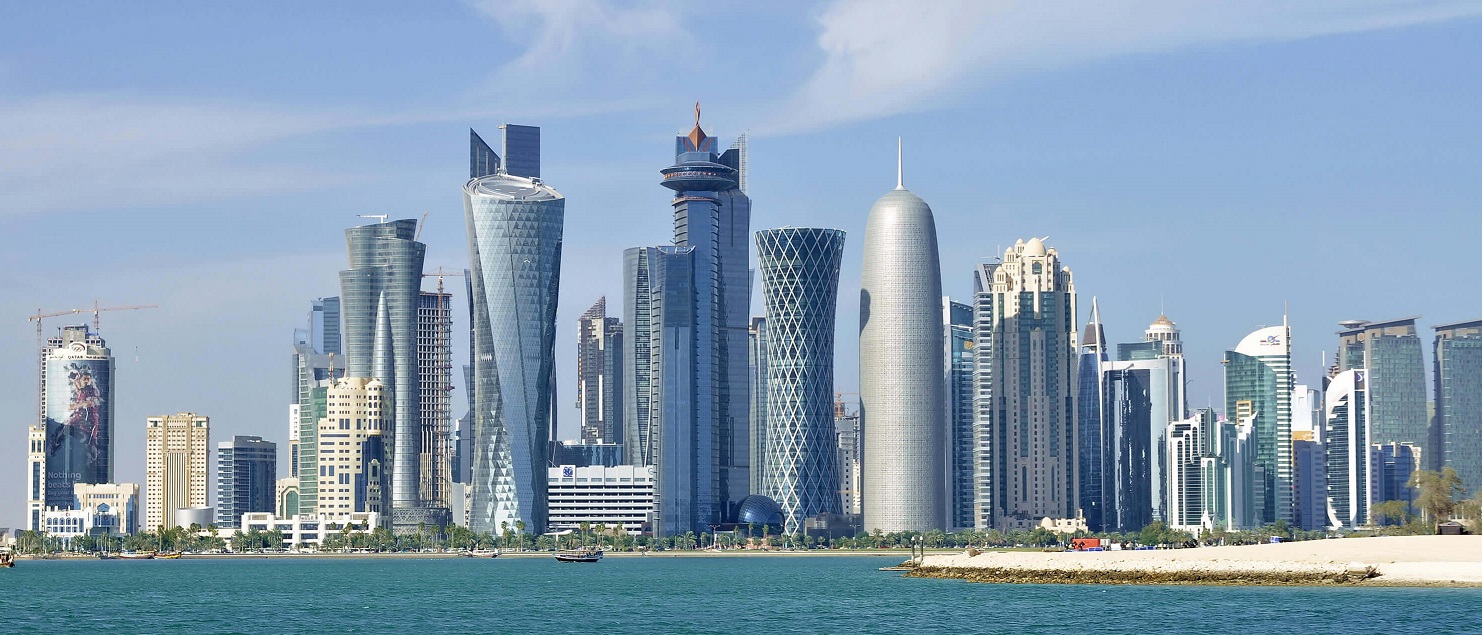
Even as we accept “Russia has become a major player in the Middle East since intervening in the Syrian war on the side of the Damascus regime in September 2015. Analysts also highlight its role as mediator in other conflicts in the area“, as a lot of it is true, depending on the coloured lenses you wear in your glasses, but the foundation has a setting. In this Russian analyst Fyodor Lukyanov is correct. Alexander Krylov, a foreign policy expert at the Moscow State Institute of International Relations gives us “The role of Russia as a mediator is strongly appreciated in the region. This role will be reinforced if the crisis between Israel and Iran worsens,” that too is true, because bluntly stated at present America has no real credibility left outside of the actual support given to Saudi Arabia and Israel. The Middle East is a lot larger than merely Saudi Arabia, even as they are not seen as large players, the still pack a punch and as such the UAE and Qatar will have a voice. The setting at present does not give the UAE a pro Saudi view (speculative) but in equal measure they will not side with Iran as I see it, not on this scale. Even as there is a link between Qatar and Iran, it will not hold, when hostilities grow, Qatar will isolate themselves away from both parties because the largest fear for Qatar is that they become the beachhead for Iran or the entrenchment for Saudi Arabia. When either of the two happens, do you think that after that Doha will look like this?

Just google: ‘Images of Ghouta‘, that is how Doha ends up looking like with a FIFA event merely 3 years away, so that would be instantly cancelled at that point, oh,. FIFA is already on that, not merely because it is Qatar, the anti-Qatar slurs of the media has been long and lasting, a (let’s just be blunt) fucked up situation caused by stupid greedy people who have been taking the longest gravy train ride. When we are all treated to “The British press continues to be hostile towards Qatar because the tournament will be held during winter, to avoid the searing heat in the Gulf“, because they want a 100% exploitative coverage, and Qatar with its weather got in the way of that and large sponsoring corporations like Coca Cola and every other FIFA sponsor now get a 40% reduced bang for their exploitative buck, now they are suddenly willing to go all out, and it links to all this, it matters!

In that setting we are treated to half-truths, especially by the media who willingly looked the other way on all allegations regarding Sepp Blatter, or is that ‘step bladder’ as he was pissing all over everyone for the longest time? When was the last time when you looked at all the work from BBC reporter Andrew Jennings? He was ignored and partially shunned as I see it, and as we saw the escalations regarding all this with “In 2012 the Sunday Times revelations sparked a genuinely independent inquiry by a former US attorney general, Michael Garcia. This report was delivered to Blatter, but he has refused to publish it in full“, the full report was never shown (at that time), merely an example of evidence on how large corporation are in charge and the law is just a nasty side effect that can be ignored when certain people call the shots. So when we see ESPN give us “While the mystery of what details are contained in the full 430-page dossier has been revealed, it does not contain any additional proof of major acts of corruption. However, Garcia said some bidders tested rules of conduct to the limit“, that is ESPN, a sports channel, not the Times, the Guardian or any other newspaper that should have taken it to the front page. The article started with “FIFA released the full contents of the Garcia report that examined alleged corruption in 2018 and 2022 World Cup bidding on Tuesday, one day after it was leaked to German newspaper Bild“, so there is clarity, FIFA only released it when they learned someone else had it already. That is the game played by the press who are ALL afraid for another Leveson inquiry for them to be held to account. In this we see people like James Quincey (CEO of Coca Cola) get to tell the media and others what to do, we see that politicians are no longer in charge, they are merely caretakers, janitors of the high and mighty and the press remains around as mere facilitators of the lot. In this there is another matter that I can feel happy about to message towards Martin Ivens, editor of The Sunday Times to get the fuck out of his office and never return to media (period)! Remember the claim of “obtained millions of secret documents – emails, letters and bank transfers – which it alleges are proof that the disgraced Qatari football official Mohamed Bin Hammam made payments totalling US$5m (£3m) to football officials in return for their support for the Qatar bid“. In all this he is allowed one defence, by publishing all the evidence he claimed to have had. But that will not happen will it?

How is this related?

The entire setting of the Middle East is set for our eyes in misrepresentation by newspapers all over the world. They tell the stories that they are told to tell. I call it at times, writing with blinders, like a horse so they do not get scared by all the events around them. it is one thing to not inform us of everything, another to give us a pack of lies, to stack the deck against us and in all this the media is still at it, facilitating for all the Satya Narayana Nadella’s and James Quincey’s in the world, they are not alone and there are a few. In this these two named people are not evil; they are merely representing the best interest of their shareholders, which is their function is it not?

That is what is in play, Qatar will soon be optionally in the thick of it and their only safe move is not to play the game, to isolate them from their opposition (Saudi Arabia) and their non-friend Iran, they basically have no moves available and that is fine, but we need to make sure that the people realise and understand that no matter how they got to a certain stage, they need to remove themselves from the game, no longer be the pawn in this, the Iranian setting has shown to be adversarial and committed to a long term game to become an active enemy, delusional imagining themselves as conqueror of Saudi Arabia and the exterminator of the state of Israel, but not at the same time, that was never going to work, this is why it is my personal view on the matter that Iran resorted to ‘puppets’. Turkey and Hezbollah are the main ones, they were trying to be as thick as thieves with Russia, but they are no fools and they took the middle path at the earliest setting of them getting into warmer waters. Now the other players see certain matters evolve and whilst Mossad was kind enough to give the people something to read about, it was not enough, yet when we aggregate 15 months of news cycles, we see a path that shows a long term commitment of Iran taking a different path, the path I feared when people were trying to get cosy to President Rouhani to alleviate Middle Eastern tensions (in perfectly valid ways), the truth (as I personally see it) was that Iran had no one to replace Mahmoud Ahmadinejad, a committed hardliner, a politician that does the bidding of Ayatollah Ali Khamenei and Major general Mohammad Bagheri. They needed one that accepted both and I expect that one is in the works, but President Rouhani (the lame duck as voiced by one Iranian diplomat) is not that person and the other two are too powerful for President Rouhani, there will be no moderation in Iran. They are set to destroy their opponents no matter what, their one view is the only one that counts and as such, we might prefer to not be part of it at all, especially as non-Muslims, but they have given us no option, none that are diplomatic that is, we have to side with Saudi Arabia in that setting. Qatar is standing in a shallow spot with too many requiring water, and as solutions dry up, there is every option that Saudi diplomats, together with the GIP (Ri’āsat Al-Istikhbārāt Al-‘Āmah) can change that setting. I personally believe that Iran overplayed its hand a little too soon; perhaps they thought that the timing was right? It remains speculative yet the setting is now that the Iranian Qatar links can be (permanently) broken, in addition to all that the setting offers an option to ‘rekindle’ certain connections with the UAE which now puts the entire Yemen/Houthi situation in play where with the removal of Iran things could be resolved and actual humanitarian aid could commence, which would be a relief for millions of people all over the world. In both matters Iran ends up holding the wrong cards and an additional crack in the Iran/Hezbollah veneer could be created, in this setting, no one will care about the survival of the terrorist organisation Hezbollah and their only path is to hide in the deepest hole, hoping that some of them might survive at best.

I am certain that the matters are seen correctly, we are in an almost hostile setting where we limited options by misrepresenting nations and their views for the need of corporate greed (Qatar), we have been facilitating through all kinds of means to get a fictive deal in place, one that is shown more and more to never have been realistic (Iran), we have alienated other nations by demanding that they adjust to our way of thinking (Saudi Arabia) and in all this we went out of our ways to not hold others accountable because of other needs that the EU had for their personal little deals (Turkey), it is in all this that we should be creating a solution path, yet some have limited moves through previous acts and now that there is a time limit in place to prevent serious escalations, we suddenly see that we are in a place where Russia of all players ends up being the best placed for mediation in this, which will of course delay the second cold war for a fair bit, so we have that to look forward to as well.

In all this we see another reflective part towards this situation and the entire unacceptable mess within FIFA. With ‘Swiss prosecutor appeals for cooperation on FIFA case file‘, we see: “Switzerland’s attorney general has a message for his foreign counterparts as his office pores over reams of seized documents and dozens of criminal cases linked to FIFA: “Come to us.” Michael Lauber said Friday the investigations require both quick action and patience, and noted “good developments” like how growing cooperation has led to 45 requests for legal assistance from Switzerland with regard to soccer“, as well as “One of the complexities, Lauber said, is that Swiss law has no clause for cases of private corruption, meaning that his team has to find creative ways of going after suspected wrongdoing at times — as with the disloyal management allegations against Blatter“. This is interesting as most of the media left us in the dark, but moreover, we see that this was given to us on April 20th 2018. The question becomes regarding FIFA, what other options were never looked at or actively engaged in, and if this escalates and explodes, do we have any recourse left?

Are we in a place where corporate corruption in facilitating towards media and big business in all this is tolerated, what is left for us? If the sports can no longer be trusted, can we merely claw back to the old days that there are no licenses and sports can be freely covered by any media, remove all exclusivity whilst banning advertisements on EVERY sport event. So how many heart attacks could I cause in these higher corporate echelons by demanding this move to be made by the UN on a global scale?  #IDoHaveASenseOfHumour

When you see the media outrage on freedom of the press and the right to know, should that not include coverage of events? In that regard, when the media screams at that point, who will they be representing, the shareholders, the stakeholders, the advertisers or those watching the event, the actual audience? Now take that view towards the Middle East and the escalations and limitations we see, and especially the innuendo not backed by facts or evidence. The Middle East situation is indeed more complex, yet in part we made it that way, so when we see Amnesty International (at https://www.amnesty.org/en/latest/campaigns/2017/02/free-turkey-media/) with ‘Turkey: Journalism Is Not A Crime‘, and we realise the quote “Since the failed coup attempt in July 2016, academics, journalists and writers who criticise the government risk criminal investigation and prosecution, intimidation, harassment and censorship. Coupled with the closure of at least 180 media outlets by executive decree under the state of emergency, the message – and the resulting effect on press freedom – is clear and disturbing. The severity of the Turkish government’s repression of the media is such that it has been described by some as the “death of journalism”“, so when we see this and also realise that this is not the leading story in EVERY newspaper in the free world, why is that? Now consider last January we got: “Turkish President Recep Tayyip Erdogan was in Paris for talks with Macron, part of efforts to improve his government’s strained relationship with Europe. Macron confirmed that Turkey’s wait for EU membership was far from over and suggested a partnership instead in the meantime“, the use of ‘meantime‘, an implied setting of facilitation and the fact that Europe is bending over backwards allowing Turkey to get the sweet spots and not being held accountable for not one, but optionally two genocides (Armenia and Kurds). Can anyone explain where the press is in all this, because it remained ambiguous for the longest of time!

So in the end, how should we see that endangered view, is it merely projection versus perception? I do not belief that this is the case, but that might be merely my view on the matter.

And he game is not over, the issues we will see next week will be impacting on several issues at present and not only for the nations separately, some of the links will be influenced by several events and high end meetings, so next week I might end up looking entirely wrong, as we see some state it in a certain way, like for example: “it was in everyone’s best interest to make certain changes to the agreement as it was currently set”. That is the mere reality of the matter. Yet they will not change the answer, they will end up changing the question so that it matches the answer, which in the end is not the same.


Leave a comment

Filed under Finance, Gaming, Media, Military, Politics

Stopping Slumber, Halting Hesitation

I woke up this morning at 03:30, you see I have messaged that Iran has an impeding missile strike on Israel. Now, in all fairness, ehhh, actually there is none. I got woken up with the prospect that Northern Israel would end up getting hit by missiles. Haaretz gives us some news, yet the validity and value are still in question. Even as we see “Israel has detected unusual involvement by Hezbollah in Iran’s preparations for retaliation, even though the organization has been trying to keep its activity low-profile so as not to affect its position within Lebanon“, as well as “operational planning, however, is being done by members of the Revolutionary Guards’ Quds force” and finally “Iran seeks to settle its open account with Israel, but wants to do so without sparking a war. One possible solution to this dilemma is trying to fire a limited barrage at military targets in northern Israel“. All valid and there is no real arguing on it, but the validity has been hard to confirm. I do understand that the start, which was the attack on April 9th, the airstrike on Syria’s T4 airbase, which killed seven Iranian military advisers and members of the Iranian Revolutionary Guards.

This now opens up the second door. You see, these so called ‘advisors’, shall we call them ‘instructors’? Have been doing a lot more than most realise. I personally belief it to be one of 3-4 places where Hezbollah was being trained, one of them would be to train the Hezbollah and optionally Houthi’s in firing missiles towards Riyadh. Iran can shrug its shoulders at accusations of Iranian missiles being fired, should one of the Saudi bombings hit pay dirt and Iranians are found, then the game changes, Iran has been careful to play its cards, it is a game of plausible deniability which they probably got from an episode of the X-Files.

The Haaretz article (at https://www.haaretz.com/israel-news/.premium-israel-braces-for-iran-missile-attack-from-syria-over-t4-airstrike-1.6060719) gives us a little more than that, especially at the end when we see “Netanyahu will reiterate Israel’s opposition to Iran’s continued military consolidation in Syria and ask Putin to work to prevent it“, that part really works for Russia as they are not happy on the growing influence Iran could get as President Bashar al-Assad needs every friend he can find, yet in Russia’s view they like their ‘friends’ to be singularly focussed on what those ‘friends’ can receive in the form of payable services towards Russia, not handing that cash to Iran. The question is what Russia would want in return. I have no idea. There is little I can offer on that side of Iran, there is no Iranian navy there and my solution was based on sinking their navy (a Saudi issue to be resolved), even as the deployment system is now coming to fruition, I see that there are increasing options to stop Iran in its track. That is the ball game, not on how Israel gets optionally hit (which would be regrettable), but the issue on stopping Iran from playing the game it is.

The India Times had an interesting piece yesterday (at https://economictimes.indiatimes.com/markets/commodities/views/slippery-slope-why-opec-may-struggle-with-new-iran-sanctions/articleshow/64051168.cms). Here we see the article ‘Slippery slope: Why Opec may struggle with new Iran sanctions‘. The quote “President Donald Trump has to decide by May 12 whether to extend waivers on Iranian sanctions, and all the indications are that he won’t. The drop in supply could easily exceed a million barrels a day, if the president decides to impose extra-territorial sanctions on anyone doing business with Iran — would-be buyers could decide that the safest course is to shun the country’s oil“, it sounds nice, yet in the end, Iran could still sell oil to Russia and when that happens, China will open up to receive their share (at premium discount that is), so even as Iran ends up selling at a discount to these two players, they will get the financial relief that they need and in that Iran can keep on playing its games and that is the part that needs to stop. We have seen the ‘regard’ President Putin has for President Trump, so there will be little to stop them there and when that happens and the oil market gets flooded with the optional 5 million barrels per day that Iran can produce, the oil prices would tumble again, which is nice for some, but the consumer tends to not see those benefits, so there will be a growing issue on the players who are pushed into a pressure setting. Even as we see “Crown Prince Mohammed bin Salman told Bloomberg in April 2016 that his country could raise output to 11.5 million barrels a day immediately; lifting it to 12.5 million barrels would take six to nine months” and their willingness to produce more, especially in light of moving away from oil dependency, we much wonder how it will fare. You see as Russia, China, Turkey and optionally South Korea end up with the additional oil, oil that Iran will pump into the industry, the US ends up having no stick to work with and that is where Iran ends up in an partially optional win- win situation, one that both Israel and Saudi Arabia are not happy with. Yemen has no vote in this as the Houthi’s are watching that population die. So when we saw “Nearly a third of Yemen’s population – 8.4 million of its 29 million people – rely completely on food aid or else they would starve” last week, we seem to feel impervious to the needs there, we merely watch the news as it is one of the two most horrific settings of humanitarian disasters in history. The mere news of another ‘cholera epidemic’ hits us, but it somehow does not register. As we vaccinated our populations seeing cholera near extinction, we forget that it is still a global issue, the fact that it causes massive dehydration as a side effect makes it a lot worse anywhere in the Middle East. It is in that setting that the Iranian backing of the Houthi’s needs to be seen and even as they go all Italian with ‘I know nothing‘, the issues are growing and the games that Iran is playing will have repercussions, the moment one missile actually hits a populated part of Riyadh and the camera’s show the scores of casualties, that is when all bets are off and it will be a full scale war in the Middle East, whatever Iran states then will fall on empty ears and the bombing of someplace called Tehran will not be out of the question, the good news is that there are only 8 million Iranians there, so the number of casualties would be contained, the other 90% might not have anything to fear.

Apparently that is what Iran is hoping for, it is the price of playing the game via puppets.

All these sides matter, because one successful strike on Northern Israel will change the game, Iran forgot that the puppet game comes at a price and even as they are all in denial by calling instructors ‘military advisors’, the setting is that they were training terrorists to be more ‘effective’ in their job. The last part can only be argued to some part, the impact in the changing timelines and the thousands of Yemeni’s near dying constitutes as evidence here and that needs to be taken into account. The NY Times gave us a mere hour ago https://www.nytimes.com/2018/05/06/world/middleeast/israel-iran-nuclear-deal.html. Here we see a few issues and most of it has been seen in other news, yet with “The country’s currency, the rial, has lost around 35 percent of its value since his re-election in May last year, and his popularity has slipped among the middle classes for having failed to achieve some of the economic and social changes he promised“, we do not see the failure of President Rouhani, we see the optional opportunity for the more extremely outspoken military leaders to take control and do exactly what we need to not happen. When we realise the US setting “Ayatollah Ali Khamenei, has forbidden his diplomats from engaging with American officials on any subject outside of the nuclear talks, but at quarterly meetings on the deal’s status, U.S. and Iranian diplomats have used the opportunity to conduct sideline discussions on matters of shared concern. These meetings are currently the only points of direct and official contact between the governments” that the US needs, we need to understand that there are two versions in play. Al Jazeera (at https://www.aljazeera.com/indepth/opinion/military-coup-iran-180424144510759.html) gives one view with “It is amid these heightened tensions that the possibility of a coup against the current government, whose term expires in 2021, has arisen. There are already some signs that the Iranian Revolutionary Guard Corps (IRGC) could be moving in that direction if Ayatollah Khamenei orders them to do so“, I believe that part to be incomplete (read: inaccurate). The part I see is not merely the defensive based words that Ayatollah Ali Khamenei is speaking, which are valid for any politician to speak when they are speaking out in regards to their nation in defence. Al Arabiya gave us “A video surfaced of Iranian Supreme Leader Ayatollah Khamenei’s top adviser for international affairs, Akbar Ali Velayati, in Syria’s Ghouta on Wednesday getting a report on the developments of the war-stricken area from an Assad military official” a month ago, yet in all this, there is a supporting view from the Tasnim News agency, the Iranian news agency that the quote “According to the Iranian Tasnim news agency, the Syrian foreign minister, Walid al-Muallem, received Velayati on Wednesday morning and they discussed the political developments in the country. Velayat confirmed Iran’s support for the Assad regime during the discussion, the news agency reported” is also linked to the impeding strikes on Syrian bases with Iranian Revolutionary Guard members. Even as the reference was towards the US at the time, I am certain that the discussion had been on how Iran would be retaliating at that time. So the setting of their actions, whilst they were knowingly preparing and training terrorists on the responses in both Israel and Yemen gives rise that the connection between Ayatollah Ali Khamenei and the Iranian military is closer and stronger than either of them ever had for President Rouhani, that is the setting and even as both ‘tolerated’ the elected president, they have been ready to go it alone (read: without the current president) and as such, whomever replaces that person will be either deeply religious or massively military, either path does not bode well or either Israel, Yemen and optionally Saudi Arabia. Now it is in that setting we return to the setting with former president Mahmoud Ahmadinejad. I actually warned on this danger a year ago, not a week or a month, no, a year ago (at https://lawlordtobe.com/2017/05/30/the-hard-line-path/) where the setting as stated in the article ‘The hard-line path‘, is now becoming a reality, even as the details might differ a little, it is exactly as Dr. Majid Rafizadeh, a leading expert on Iran and US foreign policy and president of the International American Council predicted. I saw that same danger. It is actually the same General Amir Ali Hajizadeh that I mentioned then who is now implied in all this by the Times of Israel with “Israel believes Iran’s retaliatory effort is being led by Major General Qassem Soleimani, the head of the IRGC’s Quds Force, which operates around the world, with assistance from the head of the IRGC air corps, Brig. Gen. Amir Ali Hajizadeh“, it reflects on last year with the quote “the commander Brigadier General Amir Ali Hajizadeh, is the very same person who boasted rocket aid to Hezbollah as well as the mention that the Iranian missiles can reach Israel“, so after a year it has all come to fruition, in all this was President Rouhani merely the accepted play toy of these two ‘extreme Iranian nationalists’? We cannot make the leap that this has been in preparation for over a year, but the model fits awkwardly well and as such we need to set the need of what to expect and how to counter that. That brings me to the issue I had, you see Iran feels safe because of its navy and air force, both are nothing to be sneered at, but if we remove their navy, they might just open the door for actual real talks and alleviate the pressure against both Israel and Saudi Arabia. It would even be better if Israel removes that threat called Hezbollah, even if merely for the reason that when a puppet is removed, we might actually achieve something in Yemen and get true humanitarian aid up and running, in that we are still confronted with the UAE presence, but there are too many question marks on the reasons there (read: I actually did not read up on that part of the equation).

We need to stop dozing off, the largest extent of the Middle East is that we idly stood by and did nothing, the Syrian people as well as the Yemeni ones are not happy, because they suffered needlessly for years. The EU all talk and no action has been regarded as one that merely acts on economic needs, that part can be accepted as gospel. Yet that will never be a suitable solution and that is why we need to change, we need to get awake and become hungry for solutions, a hunger we have not seen since 2004, when the bulk of greedy CEO’s saw their income/fortune diminish by 72.6%. Would it not be great if that hunger exists for humanitarian welfare?

So even as it is 7:45:32 later, there is still no strike at present, or it is perhaps in mid-flight, no matter what, we have mere hours to find an actual solution in all this, and it needs to start by stating beyond mere sanctions that Iran is in a stage where it is invoking anger through what should be regarded as clear acts of war. We have played the ‘diplomatic game‘ for far too long with some of the players, it is time to change the game and let people know that in the end when talks are proven to be useless, action must be taken, we merely have no options left, because when this escalates it will truly be an escalation that will end up far beyond Iranian and Middle Eastern borders, that is the greater evil we must now prevent.

Even as the Jerusalem Post is now giving us (a mere 30 minutes ago) that ‘PM Netanyahu Will Be Judged By How Israel Confronts Iran Militarily‘, yet that article also gives one light that is perhaps not the one we wanted to see. With “The spies (Mossad) in February 2016 reportedly discovered a warehouse located in the Shorabad district of the Iranian capital where the documentation was being stored; kept the building under surveillance for two years; and, recently, devised an operation to break into the structure and smuggle back to Israel half a ton of material in less than 24 hours“, in addition we see “This was perhaps the greatest intelligence operation in history, as I do not remember any instance when a complete archive was moved from one part of the world to another“, you see that is the one part that makes no sense, it gives rise to the Iranian defence when we see ““Anyone who says there is nothing new in the material we showed has not seen the material,” Mr. Netanyahu said, days after exposing Israel’s acquisition of a huge archive of stolen Iranian nuclear plans, mostly relating to a covert bomb-making project that was halted in 2003” (source: NY Times), which is still partially an issue, yet if it was halted in 2003, it makes sense to be in some archive after 15 years, so unless there is clear evidence in those documents that nuclear technology is still worked on covertly at the present, we need to give way in both directions. I do not oppose any actions against terrorists, yet going to war over 15 year old documents without proper intelligence on any clear and present danger from Iran, nuclear or not is also a fools path into the sleepy village of ‘no resolution ever‘, we need not become mayor to that place and even as we might lower dangers with firm actions against Iran, it needs to be proportionately or we are not asleep at the wheel, we are merely comatose re-actionists to a situation that does not actually exist, which might end up being more dangerous beyond the short term.

So as we are awake we need to take firm action, I am still in mind of removing Hezbollah permanently of the tactical board. It would be good for Lebanon to find its own way, not poised at the pointing of a gun, it would be good for Yemen and when Iran cannot use Hezbollah it needs to do things out in the open, something that they are very unwilling to do, so tactically that first move makes perfect sense. It lowers the national stresses in both Israel and Saudi Arabia, I see no down side at all (which is a fortunate rarity) from there we can see what happens next, because without the puppet in the game, Iran might actually consider true talks, not merely delays during a missile convoy, which would please the diplomats all over the region.

Am I correct in all this? I believe I am as I have supporting evidence going back a year, yet there remains the interactions of perception, principles and presentation. I merely show my side, and I have never claimed that I do not make mistakes and in light of the actions I illuminate that needs to remain at the very front of the line, in the end I might just be wrong.


1 Comment

Filed under Media, Military, Politics

Are there versions of truth?

It is a question that has haunted plenty of people, you see there is just one truth, although, is that ‘there is your side, my side and the truth’; it comes from Robert Evans ‘The kid stays in the picture‘, a 2002 documentary. We have seen the quote is several works including the famous Sci-fi series Babylon 5. The fun part of this is that the three parts are all based on honesty, yet it is more than just a matter of perspective. I have always known that, although the interaction of perception and observations is something that needs to be in a book, not on a blog. So when I was confronted with the site ‘Seeking Alpha‘, which was described by the Wall Street journal in 2014 as “SeekingAlpha.com predicted stock returns, as well as earnings surprises, above and beyond what was evident from Wall Street analyst reports and financial news articles” is from the article more than just that. The article (at https://seekingalpha.com/article/4168001-investors-face-moral-dilemmas-investments-saudi-arabia) gives us ‘Investors Face Moral Dilemmas with Investments in Saudi Arabia‘, can be countered with ‘every investment has a moral dilemma’, so that is not much to go by. Yet the setting of a 500 billion market where we see the foundation with “A component of the Saudis’ Vision 2030 is to create an indigenous defense industry one that will promote volatility, not stability, in a region on perpetual warfooting“, gives me not the shivers, but the contemplation of what game is played. You see there is no doubt that Saudi Arabia wants to create an indigenous defence industry; every nation wants that, especially when it has been under threat for many years. I would have told Crown Prince Mohammed bin Salman if he would respectfully consider buying Remington as it is bankrupt and going cheap. The excellence of its weaponry, weaponry that have made it to the most elite parts of the global national defence forces is not just a matter for defence, hunters and others revere the weapon for its standard of excellence and it is not a bad place to start. You see, that is merely one path, in all this the setting of ‘one that will promote volatility‘, is not only not a given, I wonder where Seeking Alpha got the data in the first place to make that assumption. When we accept that there is an optional truth, there should be a look at the antagonising party, namely Iran as well, in that regard we see (at https://seekingalpha.com/instablog/776842-investorideas-com/5152941-cryptocorner-iran-developing-cryptocurrency-japan-s-sbi-launch-exchange-australia-cracks-icos), “Iran is progressing with its own crypto currency project despite having banned crypto trading in local banks according to a report at Reuters. Information and Communications Technology Minister Javad Azari-Jahromi said the ban from Iran’s state bank would not apply to development of a domestic crypto currency“, as well as “Equally, if not more importantly, investments by Russia’s oil and gas companies in the development of oil fields in Iran may exceed $50 billion, presidential aide Yuri Ushakov told reporters in early April” (at https://seekingalpha.com/article/4167229-effect-unilateral-u-s-sanctions-irans-crude-oil-production?page=3) and in finality we see “On Sunday, pro-Iranian Shiite rebels in Yemen launched a missile attack on Saudi Arabia targeting four cities. The Saudi air defense intercepted the missiles, however, one person died and two others were hurt by shrapnel. Saudi Colonel Turki al-Malki made it clear who Saudi Arabia thought was to blame: “This aggressive and random act by the Iran-backed Houthi group proves that the Iranian regime continues to support the armed Houthi group with qualitative capabilities…”“, which we get from the article (at https://seekingalpha.com/article/4159016-7-missiles-closer-iran-war-100-oil) called ‘7 Missiles Closer To Iran War And $100 Oil‘. So now we see two parts, we see Saudi Arabia accused of volatility and ion all this the aggressor Iran is not painted in any way in any of these mentioned articles merely defined as ‘Pro-Iranian rebels‘, the fact that those rebels cannot afford any missiles and for the most they lack the ballistic skills as well as deployment and knowledge of GOLIS firing solution systems, issues like deployment, missile calibration and beyond that there is setting the precision of the missile by making sure that the electronic settings are correctly tweaked and calibrated to interact with the information that the targeting hardware offers. All that requires skills, skills that the Yemeni do not have, but Seeking Alpha is all over that and, oh, actually they are not!

So in the $500 billion setting of growing the Saudi industry, one valid component is now the stuff of moral discussions and the setting of unproven volatility, can anyone explain why Seeking Alpha has released 7 articles in the last 24 hours on Iran, where one shows opposition between the Iranian judiciary and the President on ‘disrupt national unity‘ in the setting of ‘Rouhani opposing banning social media networks, as he attempts to open up the country to the outside world‘, there is not a moral dilemma here? Or perhaps it is not a setting for volatility whilst the growing of Iranian civil unrest is currently seen as a given. So how do we not see in more articles that for the speculative person investing into Iran is facing all kinds of risks from Iranian civil unrest?

Yet it is that setting that we can all easily check on how certain paths are played. We can see this in another way as well, when we see the French visit; we see “Macron had come to Washington in a bid to convince Trump to remain in the deal. He proposed “pillars” for adding to the existing deal, including extending it for the long term, limiting Iran’s ballistic missiles, and dealing with Iran’s involvement throughout the region“, whilst in the article regarding Crown Prince Mohammed bin Salman we see “Regardless of his charm, offensive MBS will continue his extreme ruthlessness, admittedly a de rigueur requirement in a tough country and even tougher neighborhood especially because his radical changes have created many internal enemies“, we also saw “Saudi crown prince Mohammad bin Salman (MBS) wrapped up his well-orchestrated and unprecedented “meet & greet”, “press the flesh” two-week April tour of the US with the icons and titans of three primary industries in his effort to diversify the Saudi economy as part of the ambitious Vision 2030 plan“, yet nowhere do we read an optional: “Success can only come from a vision, brought by a visionary. We are a nation with resources, with options and opportunities. We are more than the oil that is acquired from our soil, we can and will harness resources as well as investment opportunities to stimulate our economy and diversify our revenues. Our nation sitting central between Africa, Asia and Europe should have been more about growing that advantage and now we will, we have the foundation to grown in technology, in minerals and in services to be a global player, we must take that opportunity before it is lost to us forever. It’s not a fast path, and to do this properly we must grow over the next 12 years to be able to become that global powerhouse“. Well, there is one place where something like that can be read, it is the introduction (at http://vision2030.gov.sa/en/foreword), where we also see a lot more on the Islamic part on Saudi Arabia, which is perfectly valid. So when we go to http://vision2030.gov.sa/en/node/125 we see a massive amount of programs all set to push Vision 2030 forward and the interesting part in that is that there is not one mention of the words ‘defence’, ‘Army’, ‘Navy’ or ‘Air force’. Even as I am convinced that growing national defence is part of that, my wonder is that with all these options and opportunities, Seeking Alpha resorted to the Moral part of a defence structure that is nowhere near a central part of the Vision 2030 brief. We know that Saudi Arabia has the option to go full G5 from day one and the investment options there are massive opportunities not to pick up millions, but billions. Yet the issue becomes larger when we see that the writer Albert Goldson has plenty of experience and should be well aware of commodities (read: he is a bit of an expert according to sources), so when we set this against the view of Bengt Nordström, CEO of consultancy Northstream who gave us last year “growth in the industry has disguised not only the fact the telco industry is largely a commodity, but also that it has not been hugely innovative for a number of years“, that in light of the upcoming 5G, where ‘first in, soaring profits’ could surely be a given, none of that is shown, merely the fact that Saudi Arabia is allegedly about ‘volatility‘, so whose buttering the bread and who is that sandwich being made for?

Another part not shown was ‘Advancing pharmaceuticals and patient safety in Saudi Arabia: A 2030 vision initiative‘ (at https://www.sciencedirect.com/science/article/pii/S1319016417301780). Here we see “A recent conference in Riyadh, sponsored by King Saud University, sought to discuss these issues and develop specific policy recommendations for the Saudi 2030 Vision plan. This and other efforts will require more and more creative educational programs for physicians, pharmacists, hospitals, and patients, and, most importantly evolving regulations on quality standards and oversight by Saudi health authorities“, let’s not forget that we are in the beginning of all this, there is 12 years, which will go quickly I’ll grant you that, yet in all this the opportunity to grow Patent Law, Law firms, and set proper markers in place would be an essential step before such a level of patent bearing change comes. The option for Pharmaceutical investment was not shown in the article, or the mention of the issues shown at https://ncusar.org/programs/17-transcripts/2017-06-20-burton.pdf (attached). So, I am not opposing that there is optionally a need to grow the national defence industry, but is that set in the right light? In the light he gives the investors (which is his right to do), we see “However, for the moral implications mentioned with respect to the development of an indigenous defense industry, check your moral compass. From my perspective, it’s a financially profitable but morally bankrupt undertaking“, yet what morally bankrupt idea is there on growing the pharmaceutical and mobile network industry? they are highly profitable if it is achieved and there is moral question, my moral compass is setting on the field asking Albert Goldson, a member of the Association of Former Intelligence Officers (AFIO) and an Associate Member of the Foreign Policy Association (FPA) why he missed on those options. Also in the view of two dozen projects that are openly stated, why would he focus on a part that represents merely 10% and focus on those two dozen programs, where the investors would find the gems that the investors would want to find in a $500 billion layered cake called ‘Vision 2030‘. Oh, as for that military part, the attached Burton presentation ‘Opportunities in Saudi Arabia – Vision 2030 and Beyond‘ spends two slides on it and the most important part shown is “Vision 2030 calls for 50 percent of military equipment purchases from domestic suppliers instead of imports“, whilst also mentioning that the Kingdom of Saudi Arabia (KSA) “spent a total of over $63 billion on defense and security in 2016, including off-budget spending“, so when we see that, we see that for the smart investor there is an optional $30 billion a year available for those who might not have a moral issue working on a government set national defence program. That in light of Iran delivering missiles hardware and support to non-combatants, which are rebels at best, yet terrorists might be more apt when we consider “Nasrallah’s letter is proven evidence of Iran’s involvement in the Yemeni civil war, since it shows that Hezbollah, which is financed by Iran, is taking part in the fighting in Yemen” (source: Jerusalem Post). So where exactly does Seeking Alpha stand? Let’s be fair, they can be in any place they like as they are merely advisors towards their investors in all this, yet even with my high moral (or is that outspokenly oral) I would not turn away from a $32 billion market, especially if I had that level of cash. Oh, and whilst you consider on where morality needs to be, Boeing, Lockheed and Raytheon have already signed up, so the delay you took made that cake a hell of a lot smaller, but even if there is still $2 billion up for grabs, would you walk away? Let’s not forget that next month’s rent is due!

So in all this, I never stated or implied that Albert Goldson lied to anyone. Yet when we consider there is your side, my side and the truth, what did we see? You see, I get back to perception versus observation. Through perception he is focussed on the defence part, but why? The shifted setting towards Saudi Arabia will impact something else, but what else is impacted? That is the question, is it the Iranian setting (when considering the other articles), is it something else entirely, or is Albert Goldson focussed on something beyond all this? It is a speculation from my side, yet the absence of the Pharmaceutical and Mobile Industry absence implies just that, yet in equal measure I will state that this would merely be my perception, based on all my observations. That is part of the setting. In the realm of ‘there is your side, my side and the truth’, it becomes more and more about observation versus perception. In a case like this, when there is $500 billion on the table, is the perception the amount on the table, or the observation of whom else is at that table that matters. Is that merely an observation or does the perception become: where is MY opportunity? Because in the end that is what the investor cares about, and moreover, where and what size their slice of the cake becomes.

In addition, my observation will be that the changes mean that there are new players and some of the old players have been so well fed for such a long time, in this ‘parting might be such sweet sorrow’ (Romeo and Juliet Act 2, Scene 2), yet for the previous players it will be over their dead bodies, that tends to be the gist of it. The change needs to be observed because it shown also where the pressures of the players will be and that pressure can be seen as cost and risk. It is the wiser player that makes it through and gets the slice of the $500 billion layered cake; it is merely the question on the size of the slice and the perception of the profit it allegedly holds.


2 Comments

Filed under Finance, IT, Law, Media, Military, Politics, Science

Yemen, weapons or water lemons?

We see two streams of news; the first is Unicef asking for 250 million to feed the starving children. It is a good cause, a right cause and as they look towards President Trump and his arms sale we see the reference “The comments by Geert Cappelaere, Middle East and North Africa director at the UN children’s fund UNICEF, on Sunday, appeared to mock US President Donald Trump, who last week described billions of dollars in Saudi arms purchases as “peanuts”“. He is right to make the comment as would anyone trying to feed starving children. So as we see “According to the United Nations, the ongoing war has killed more than 10,000 people and wounded more than 40,000. The UN describes Yemen as the “worst humanitarian crisis in the world”“, we can conclude that the UN has completely forgotten the mess in Syria and Kurdistan, but leave it to politicians to have a short term memory linked to remember only what they directly and immediately care for. The fact that Yemen is in a bad state is not denied, the fact that this happened as Iran is stopping any resolution to move forward is also a fact.

In addition, we see ‘Saudi air defense forces shoot down Houthi missile over Riyadh‘ (at http://www.arabnews.com/node/1273566/saudi-arabia), which is one of several sources. So as we see “Saudi air defenses intercepted a ballistic missile over Riyadh late on Sunday, in an apparent Iran-backed Houthi militia attack“, I can definitely predict that things are about to get a hell of a lot worse for Yemen. The additional fact is that this missile as three other ones were manufactured in Iran, so not only is Iran directly involved, the fact that things are escalating remains. You see, it only has to go wrong once. The moment one missile makes it to Riyadh, the moment even one part damages one of the grand mosques, the King Khalid grand mosque or the King Abdullah grand mosque. Do you think that after that any diplomacy will remain? After that they Saudi’s en mass will bomb Yemen into extinction, you better take that part for granted (personal speculation)! After that there will be no diplomacy and all the diplomats will have to reconsider on why there had been no stronger actions against the involvement of Iran.

So even as we were ‘treated’ to ‘Iran urges US, Europe to discontinue support for aggressors in Yemen‘ (at http://www.presstv.com/Detail/2018/03/25/556503/Foreign-Ministry-Iran-Yemen-statement), we see very little about Iran’s involvement in all this. Moreover, the mere issue that the UN was ‘mulling things over’ in February, whilst no results are in play shows the inactions of too many politicians. So when we get “The Iranian Foreign Ministry described as “very deplorable” the ongoing humanitarian situation in Yemen and said the aggressors have failed to achieve any of their objectives and have only ravaged the impoverished country and committed inhumane crimes there“, my response will be ‘So why don’t you stop shipping missiles to Yemen?‘, that conclusion did not require that much rocket science to begin with. In addition the quote “It emphasized that the Saudi-led coalition’s use of famine and hunger as a tool to exert pressure on the Yemeni people is an inhuman move, which runs counter to international humanitarian law”, can be countered with: ‘teaching the Houthi to target Saudi civilian populations like Riyadh might not have been the best idea either‘, but Iran will not make mention of that part, will they?

Now we get from Al Arabia ‘Iran’s use of Hezbollah Unit 3800 to create a new Hezbollah in Yemen‘ (at http://english.alarabiya.net/en/perspective/features/2018/03/25/Iran-s-use-of-Hezbollah-Unit-3800-to-create-a-new-Hezbollah-in-Yemen.html). The source here is Tony Duheaume, who has been around for a few decades, although his LinkedIn does not give us any Journalistic degrees, he has been a middle east analyst for close to 4 decades (self-proclaimed), so I’ll let you decide on the weight of his writing. You see, I cannot tell whether he is right or wrong. the two paragraphs I cared about is “The missiles used in these attacks, were believed to have been smuggled into Yemen in parts, and on arrival, operatives of the Iranian Revolutionary Guards and Hezbollah had reassembled them, in readiness to launch at Saudi targets. More proof came to light November 7, 2017, when US Ambassador to the UN Nikki Haley, specifically referenced a missile fired by the Houthis in July of the same year to have contained Iranian markings, which were also found on missiles fired in the November attacks. Then once again, on December 19, the Yemeni rebel group targeted the Al-Yamamah Palace in the Saudi capital, and just like the others, the missile was unsuccessful in reaching its target, after being intercepted and shot down by air defences operated by the Royal Saudi Air Defence Forces“, I made similar conclusions late December last year (or was it early this year?). In my view it indicated that Iran has ‘boots on the ground’ in Yemen, also because the Yemeni do not really have the skill levels to target Riyadh (my personal assumption). This is however a far stretch from ‘create a new Hezbollah in Yemen‘, as well as the involvement of ‘use of Hezbollah Unit 3800‘, I would need to see much better evidence confirming that and the article does not bring it out in my conviction. Nobody denies Iran’s involvement and the mere fact that Hezbollah would allow them to be used as a tool is not a stretch, but this accusation is much deeper and the Intel I see does not support it. In support is that when you search ‘Hezbollah 3800‘ Google has merely one hit (the article) and open source intelligence doesn’t give us a whole lot more to go on. This is why I mention the matter, not because it is false or true, but the fact that a lot more exposure is missing gives rise that even if Hezbollah is involved, it is nowhere near the level we saw in that one article, but that might be merely my view on the matter.

What is a given is that as missiles are now shot down close to Riyadh means that this situation will escalate, I am not sure if I feel that it should be opposed. The Houthi decided to target civilian populations, whilst there is supporting evidence that the Houthi hid among populations to continue their spread of terror, their total absence of setting safe zones for civilians, and set the pace for humanitarian support to be given to the Yemeni civilians, especially the children is further evidence still.

The additional need to end it all in Yemen sooner rather than later was seen last Friday when we were introduced to ‘Houthi leader vows to fight with Hezbollah in future war with Israel‘ (at http://www.middleeasteye.net/news/houthis-leader-say-they-will-ally-hezbollah-against-israel-future-war-1044362159). I set that part aside initially as there was an opportunity to slap PwC around (one that failed as they had done nothing wrong on that one instance). Yet the given Houthi language is clear. With “Abdul Malik al-Houthi told the Lebanese newspaper Al-Akhbar on Friday that “our announcement that we are prepared to send fighters in any Israeli war against Lebanon or Palestine, is based on our principles”“, we see their need to escalate on a much larger scale. Now with ‘based on our principles‘, we see enough issues as they have hindered humanitarian aid to children and babies (and their mothers). What is now a given is that their principles were never about resolving anything, it was about their ‘glorious war’ and their hatred of the state of Israel. So even as we see: “Israelis had participated alongside UAE officers in planning some military activities in Yemen“, yet they offer no evidence whatsoever, meaning that they are more like Iran on growing the theatre of war. It is my personal belief that they see the stabilising effect of Saudi Arabia as a threat and that is one of the pinnacles to drive this war further forward because it shows that Iran is not a party that could be trusted, not a party that would genuinely offer true peace and stability. The second lie (or perhaps better stated ‘non-truth’) is “Houthi said that his movement is developing its missiles capacity to enable it to reach long-distance targets “in the deep territories of the enemy. [Our missiles] reached Riyadh and the area of Abu Dhabi… and Volcano-2 missiles reached Yamama Palace in Riyadh, and this was confirmed by the Americans“, so the moment someone can explain to me how any level of research can be done in an active warzone (apart from the lack of development engineers) where there is plenty of evidence that no one there holds the knowledge to even ‘develop’ mere fireworks, it is at that point that we realise that Iran is deeper involved than anyone is reporting and more importantly, the dangers of letting Iran continue this could destabilise the Middle East to a much larger degree, which would end up being a loss for every nation in the Middle East.

the fact that this was concluded with: “Death to America, Death to Israel, Curse on the Jews, Victory to Islam” should be regarded as evidence that the Houthi’s were always about progressing war and destabilisation, but feel free not to take my word on that, there are plenty of sources confirming my view and the longer these so called diplomats remain in ‘conversation ‘ on all this, the worse it will get for Yemen and the Middle East in general.


Leave a comment

Filed under Finance, Media, Military, Politics, Science

Insights or Assumptions?

Yesterday’s article in the Washington Post (at https://www.washingtonpost.com/news/global-opinions/wp/2018/01/22/the-rise-of-saudi-arabias-crown-prince-reveals-a-harsh-truth) is an interesting one. In this article Professor Bernard Haykel gives a view on the issues we are optionally likely to see in Saudi Arabia. I am not sure I can agree. You see, he might be the professor of the ‘Near Eastern Studies and the director of the Institute for Transregional Study of the Contemporary Middle East, North Africa and Central Asia’ at a prestigious place like Princeton, but my pupils tend to shape like question marks when someone’s title requires 13 words to be merely one part. We see in the article “depict him as power-hungry and corrupt, and cite these two impulses for his behavior and policies. When King Salman designated MBS as his heir in June 2017, MBS effectively became the most powerful man in the kingdom. And despite ill-advised purchases (including a yacht and a French chateau, which have cemented the impression of the crown prince’s greed)“, so how does that work? You see Prince Mohammed bin Salman is wealthy, his family is very wealthy, and as such is a yacht a splurge? It would depend on the price. Second there is the mention on a French Chateau. Well, I have taken a look and I fell in love with a house in France too, in Cognac (my favourite drink). The house (at http://www.rightmove.co.uk/overseas-property/property-58209296.html), has 7 bedrooms, is amazing in looks and in a nice village. The amount comes down to a little over a million dollars (money I obviously do not have), but consider that the same amount will only get you a decent 2 bedroom apartment in the outskirts of Sydney, within some suburbs and in the city, those prices will go up from 250%-1500%, depending on how outlandish your view needs to be, in a measly 2-3 bedroom apartment. So how does that make the Crown Prince greedy? Now his choice is a chateau 50 times that price and a family that owns billions can splurge a little. His place is west of Paris. And let’s face it, as some economies are going, having your money in something substantial is not the worst idea. His second splurge, linking him to greed and power hunger is a yacht. So how does that leap rhyme? I have no idea and I find the professors view slightly too speculative. Yet, the man is not done. He then gives us: “MBS is trying to deal with a harsh truth about Saudi Arabia: The kingdom is economically and politically unsustainable, and is headed toward a disaster“. There is a truth in that. As Saudi Arabia is dependent on oil, there will be a lull in their lives, as the need for oil exists, with prices going down, there is no real prospect of fixing it, but wait that is exactly what the crown prince is doing. He is setting forth his 2030 view, a growing move away from oil dependency, which is actually a really good thing to do. It does not make him greedy, merely a visionary that technological evolution is essential to the continuing future of Saudi Arabia. We then get two quotes that matter. The first I already gave light on with “a sclerotic state with limited administrative capacity and an economy that is largely reliant on declining oil revenues“, yet sclerotic? That means “losing the ability to adapt“, which is exactly what the crown prince is trying to achieve, adapt the nation to other options and new ways. The second is a lot harsher, but requires additional focus. With: “a venal elite comprised of thousands of royals and hangers-on who operate with impunity and are a huge drain on the economy. It is saddled with a bloated public sector which employs 70 percent of working Saudis, and its military is incapable of defending the homeland despite billions spent on armaments“, so we can argue on the wisdom of ‘employs 70 percent of working Saudis‘, I am not stating that it is true, but when we see Walmart in the US, who employs 1% of Americans pumping billions of profit into that one Walton family, we should wonder how wrong the Saudi actions are. So we might not see corporate greed like in the US, but is one method better than the other? I am not sure that this is the case. The other part I need to comment on is: “its military is incapable of defending the homeland“, what evidence is there (it is not in the article at all)? Let’s not forget that Iran has been a warmongering nation for DECADES! How many wars did Saudi Arabia get into? There was the Saudi -Yemeni war of 1934, The Gulf War, where Saudi Arabia was a member of the allied forces, the Saudi intervention in Yemen and the current upcoming conflict with Iran. So, regarding the inability to defend the homeland? Is that perhaps merely gesture towards the incoming missiles from Yemen? Well, we can bomb the bejezus out of Yemen, but it would imply thousands of civilian casualties as these people are hiding in the civilian masses. Something they learned from groups like Hamas and Hezbollah I would reckon, but that this is merely an assumption from my side. I found the restraint that Saudi Arabia has shown so far quite refreshing.

I am not stating that Saudi Arabia is holier than thou. Like any nation, it makes mistakes; it has views and a set infrastructure. It is moving at a pace that they want, not the pace Wall Street wants, which is equally refreshing.

The article gives us truths, but from a polarised setting as I see it. Yes, there is acknowledgement on the achievements too, in both the directions of the USA and Russia, and we can agree that just like 86% of all other nations (including the USA) that the economy is a weak point. So how is America dealing with a 20 trillion in debt? From my point of view, the USA has not done anything in that direction for over a decade. Instead of lowering the corporate tax to the degree it did, it could have left it 5% higher and let that part be reserved of paying of the debt and interest, oh right, the 5% will not even take care of the interest at present, so as such the USA is in a much worse place at present, which is not what the article is about, but we should take that into consideration, and the end of the article? With “Ultimately, MBS wants to base his family’s legitimacy on the economic transformation of the country and its prosperity. He is not a political liberal. Rather, he is an authoritarian, and one who sees his consolidation of power as a necessary condition for the changes he wants to make in Saudi Arabia“, is that true? The facts are likely true and when you employ 70% of a nation, economic transformations are the legitimacy of that nation. There is the one side Americans never understood. In the end, Saudi Arabia is a monarchy; their duty is the welfare of that nation. So it does not make him authoritarian (even as he might be seen as much), he is the upcoming new monarch of Saudi Arabia, a simple truth. Within any monarchy there is one voice, the King/Queen of that nation. So it is in theory consolidation of power, in actuality it is a monarch who wants all voices and looks to be towards an area of focus, what that is, the future will tell, but in the end, until the Iran-Saudi Arabia issue is solved, there will be plenty of space for chaos.

In this his path is clear and that is the part the professor did illuminate too. With: “MBS is trying to appeal to young Saudis, who form the majority of the population. His message is one of authoritarian nationalism, mixed with populism that seeks to displace a traditional Islamic hyper-conservatism — which the crown prince believes has choked the country and sapped its people of all dynamism and creativity“, it is his need to create a population that is nationalistic, that sees Saudi Arabia as a place of pride, which is not a bad thing. In a setting where the end of hyper-conservatism, as it can no longer reflect any nation in a global economy, is an essential path. He is merely conservative in not handing out all those large benefits and multi-billion dollar revenue in the hands of opportunists who are eager to take those billions over the border, out of Saudi Arabia at the drop of a hat, any hat. That will drag down the Arabian economy with absolute certainty. A dynamic and creative nation, especially fuelled by youth and enthusiasm could spell several wells of innovation and profit that could benefit Saudi Arabia. I think that the path from hyper-conservatism towards where it needs to be in 2023 is so far well played. He is not there yet, but the path is starting and that is in the end a good thing. The only thing that the US needs to fear now is that the creative and innovation path that Saudi Arabia is on, could spell long term problems for a nation that has been fixated on a iterative technology path where the US is no longer the front runner, they were surpassed by Asia some time ago, the US merely has Apple and Google. Oh no, they do not, because those are proclaimed global corporations. So where does that leave the US?

So as we see Bloomberg (at https://www.bloomberg.com/news/articles/2018-01-22/imf-sees-global-growth-picking-up-as-u-s-tax-cuts-gain-traction) gives us ‘IMF Says Global Growth Picking Up as U.S. Tax Cuts Take Hold‘, which is a number I find overly optimistic, Global growth is set to 3.9%, yet the bad news cycle has not started yet, so I reckon that if the global economy ends at 2.45% it would not be a bad achievement. In that light I find the mention “The IMF also predicted that the tax plan will reduce U.S. growth after 2022, offsetting earlier gains, as some of the individual cuts expire and the U.S. tries to curb its budget deficit“. I believe that the US economy takes a hard hit no later than 2020 and the idea of ‘curb its budget deficit‘ is equally amusing, they have not been able to do that for 15 years and as there is at present every chance that President Trump is a one term president only, the Democrats are now likely to win by large margin and the entire budget curbing would be immediately off the table, because spending is the one thing the democrats have proven to be utter experts in, they merely leave the invoices for others to deal with, which is equally unhealthy for any economy.

And in that article we see exactly the fears that are mounting towards Saudi Arabia too. With “the IMF flagged protectionism, geopolitical tensions and extreme weather as risks to the global economy” we see a new frontal attack starting on protectionism. Mentions like “A reduction of Germany’s surplus would help reduce global imbalances” and it is not one source, hundreds of articles over the last 16 hours alone, all hammering the protectionism word in a bad light. It is now becoming all about trade protectionism, even under the terms of Brexit, we saw on how people were stating that it was a disadvantage, the single market falls away and as such the UK cannot benefit. Now that Brexit is still pushing forward, the IMF is changing their tune and it is now on protectionism and trade protectionism. Another way to state that tariffs and import fees are now a problem, it is the final straw in giving large corporation the push for benefit they need and many are in the States (IBM, Microsoft, 3M and so on), they would benefit and even as I mention Brexit, it also affects Saudi Arabia. As we saw last July: “Being a WTO member, Saudi Arabia is expected to bind its tariffs on over three-fourths of U.S. exports of industrial goods at an average rate of 3.2 percent, while tariffs on over 90 percent of agricultural products will be set at 15 percent or lower“, so the IMF is not merely voicing the fear of the US, it is equally scared that the stimulus backlash is about to his impeding presented global growth, the protectionism and trade protectionism are set to plead for open doors, I wonder if that also means that patent protectionism would have to end. I doubt that because pharmacy is what keeps the US afloat in more than one way, and is not a subject that is allowed to be tinkered in.

So were these insights or speculations?

I believe both the professor and myself were doing both, I admit to that upfront, whilst the professor set it in a text that is acceptable yet should have been raising a few more questions that the Washington Post is bargaining for. We can argue that this is a good thing, but it is my personal belief that even as it was a good and insightful article, in the end all the mention of power hungry and corrupt, in the end he showed no real evidence that this was a move of a power hungry person, especially as the person in question (Prince Mohammed bin Salman) is set to be the future king of Saudi Arabia, the crown prince is at the tip of the pyramid, so he needs not be power hungry. That can only be shown if he starts expansion wars with his neighbours. In addition no evidence is shown of corruption, I do not state that this is not the case, but if you accuse a person of being corrupt it would be nice to add actual evidence of that, which is merely my point of view.

In the end, through insight and speculation, I hope that you got some insights of that and feel free to google ‘IMF protectionism‘ and see how many articles were added in the last week alone. It is clear that Davos is about removing limitations, not actually growing a true economy. Which implies from my point of view is that Davos is about big business and what they need, not what the people desperately require. Consider that when you read about the ‘World Economic Forum Annual Meeting’ and when you see who is present. My mind wonders on how many informal meetings there will be and how Theresa May is likely to get hammered on Brexit issues as Emmanuel Macron, Jean-Claude Juncker, Angela Merkel and perhaps even Donald Trump unite against Brexit. It is an assumption from my side, but at the end of the week, will I be proven wrong?


Leave a comment

Filed under Finance, Law, Media, Military, Politics, Science

Into the fire we walk ourselves

Are we in a state where we cannot tell what actually matters? That is the question that I wonder upon. Now, we all have different states of focus, that has always been a given. Some are linked to what we desire, some to what we fear. The issue goes beyond that as the media fuels one or the other, yet they seem to do so for the direct intent of making us look where they want us to look. In Australia there are the morning shows with Channel 7 and 9. In the UK there is the breakfast show and other nations have similar views. It is when we see BBC News, the Dutch NOS, Swedish RTL as well as ABC in Australia. They tend to focus on actual news, yet often very national as one could accept. On a larger scale there is BBC World News, Al Jazeera (to some extent), whilst Fox News and CNN are no longer quality players. So where are we getting the news from, the news that matters? It seems that either we start looking for it or we lose out.

Should I care?

It is the question many might ask themselves, which is fair enough. For many we all have national needs, we have national questions and as those are satisfied we do not look further than that. Many have this setting. Some don’t even have the national curiosity and that is fine, it is whatever you choose. Yet, I have travelled for too long, to too many places. So I tend to look further. I still miss the life I had in Sweden, which like Australia is an amazing place to be in (the weather is less warm though). So when I got confronted with some news, I wondered how others saw it. What is interesting is that none of them gave any clear levels of attention to it.

The news, (at http://english.alarabiya.net/en/News/gulf/2018/01/11/Saudi-Arabia-intercepts-a-ballistic-missile-launched-by-Houthis-at-Najran.html) gives part of what does require attention. Al Jazeera covered it, so did Reuters and BBC as well as Australia’s ABC looked at it, yet the rest? You see, the issue is larger than you think. In Yemen, in the Najran area a ballistic missile was intercepted. Now this is not that big a story, but the missile might have been ready to be fired on Riyadh, like the missile fired a month ago. Is this coming into focus? Missiles that are fired on the civilian population of the capital of Saudi Arabia! This is a threshold that should have been regarded as unacceptable; it is globally ignored by others. In that same setting we see the mention from Al Arabia that Houthi leader Saleh al-Samad is also threatening to threaten international navigation in the Red Sea, which will impact the Suez Canal, which in turn changes the profit margins for all cargo bound to Europe for the most from Asia. So is it now more important? That is the dangerous question but not the most important one. You see, as the Houthi militias have gained access to the Qaher M2 missile, the game is no longer the same. These cuddly little toys pack a punch and have the ability to reap plenty of souls in Riyadh if it hits the right structure. A tactic that has been old and condemned for the longest of times, yet for the most, the west tends to focus on Yemen and cholera (which is really bad too). Over the last year 50,000 children died of disease and starvation, which is of course its own atrocity, no one denies that, yet what was the foundation? President Abdrabbuh Mansour Hadi was trying to get some level of union in Yemen between factions (which is an achievement) in a landscape that was under threat by Houthi militias and AQAP (Al-Qaeda in the Arabian Peninsula). Things went from bad to worse and soon thereafter the deposed Yemen leader started to undo what happened from Saudi Arabia.

Now, I have skipped a few iterations, mainly because it is not part of the issue. The issue is the missiles. Now I am not stating that the Saudi’s are beyond some blame. Civilians have been hit in Yemen; yet is that from intentional events? Are they (as stated by the Saudi government) ‘technical mistakes‘? The fact is that there is a civil war going on and EVERY civil war in history came with civilian casualties, more often than not from human or technical error. The Houthi events are different as they are intentionally targeting a civilian population in Riyadh and are also intentionally targeting all commercial options that use the Red Sea as a route to get to where they have always been travelling. The Houthi’s are in a desperate setting, one that they themselves created and in this regard, we see very little coverage, too little in fact, mainly because this is a powder keg waiting to go wrong. If even one missile hits Saudi Arabia, the lives of every Yemeni could be regarded as forfeit. The Saudi population would demand reprisals unlike any we have seen for decades and in this the Saudi pride will not be content with mere diplomatic discussions, at that point serious skin is in the game and if the world is lucky only 100,000 will die of starvation and disease in 2018. The Syrian war has led to 400,000 casualties in 2012-2016, this Houthi insurrection could spell a lot more and the dangers are that the extremists tend to get profit out of such situations. In fact here is no evidence that they are not already dipping their toes in the Yemeni armouries and as such there would be a dangerous escalation if some of these weapons get transported to other extremist zones. Now, I am trying to steer clear of the Iranian-Houthi rebel links. The issue is that I did not read or inspect the evidence. Also, we should consider that the US has had tainted glasses for the longest of times regarding Iran and they have lost massive credibility ever since the Saddam Hussein WMD presentation. In this U.S. Secretary of State Colin Powell with his silver briefcase destroyed credibility for decades to come. In this Colonel Turki al-Maliki has a much easier job. The evidence that the Houthi rebels are firing missiles on the Saudi civilian population has been clearly established on an international level.

So into the fire we might go!

You see, this keg needs one missile to hit target and the flames start. If any other nation can verify that Iran was involved, Iran will have no options left because at that point it is not impossible that Israel will get the keys to the German and French Squadrons to use those planes for bombing Iran as well, at that point WW3 will be a factual situation. The Saudi air force will not only get the blessing of the Arabian league nations to stop Iran, it will get its ammunition at cost price from several sides. At that point, Hamas and Hezbollah will go into hiding so deep that we will forget that they exist, but Israel will not. Perhaps it might be a good thing, as the extremist groups are dealt with, those who think that extremism is a good thing will decide to hide and wait for the fires to stop. Only at that point will they realise that as Hamas, Hezbollah, ISIS and AQAP are gone that all eyes will move on them. You see these people feel good as extremists because no one is taking notice, when they become the limelight, they will ‘suddenly’ prefer a diplomatic path, one where they have no valid claims and no standing whatsoever.

It is an optional resolution to a bad situation for all other players.

And there is a second side to all this that I have not seen any publications on. The Burkan-2 which was fired at Riyadh airport is also an issue in another direction. It is related to the Scud, it comes from Yemen. So when we consider that the first recorded launch was on 22nd July 2017, how did the Houthi’s get this knowledge? This is not something you put in a clip. You need a mobile launch platform, aiming skills, ballistic knowledge that does not come with a bottle of mineral water. These skills are taught and trained. Someone gave them access and I feel strongly that these skills were not all in Yemen. There is a taskmaster, a coach in that equation and it seems to me that this is also the Houthi militants Achilles heel, because if these skilled are dealt with (the people who have them), that this weapon gets to be diminished to an ugly truck with a couple of steel cigars on top.


So when we see militia rebels, we do not think ‘academics’, we tend to think that they are more likely to be members of the ‘dyslexic-R-us‘ foundation (عسر القراءة، هي، لنا), not the qualified electronic user experts that they need to be, so someone is getting them trained. The fact that these missiles were completed after the insurrection began is equally a worry. With the economy in the basement as the one in Yemen is supposed to be, someone is fuelling funds and knowledge to these militants and when did you see any reliable news on that level?

So we are thrust into the fire in some method where we are left unaware on how large some issues have become and for anyone thinking it is not on their turf.


Think again!

Because those elements with those level of skills will go where ever the money is taking them. In WW2 Russia and the US saw that and took the scientists as quickly as possible. Now we seem to skip that part and as we see extremist move from theatre to theatre there will be a shift of activity as the skill levels are placed in other places where the going was slow, they become catalysts of additional escalations. We can argue whether Iran is playing that card or not, but there is a longer term danger and the people are left unaware of those events. I think that this is the second danger that both Saudi Arabia and Israel face. Not on who is attacking them, but on the realisation that it is happening whilst these extremists have been given additional skill levels, some they would never have had. That evidence can be seen when we consider the Hamas rockets, or as it goes the ISIS players who replaced Hamas in Gaza. When the missile hit rate goes from 0.2% to 2%, there will be a much larger escalation, as well as the additional danger that the people in the state of Israel will face. As the knowledge gets deeper into Syria, what will happen after that? Will Iran be shown to be the player behind the screen or will Saudi Arabia merely face 3-4 additional factions, who when much better trained become a much larger issue for Saudi Arabia. There is a much larger game in play and the fact that the people are left in the dark to a much larger degree is a much bigger issue than you (and I) think it is. It is still the beginning of 2018 and already we see: “Thirteen attack drones were launched against the Khmeimim air base and a naval facility in the city of Tartus on Syria’s western coast, the Russian defence ministry said“, so who was behind that? “the ballistic missile attack by Houthi militia on the city of Najran” is one we looked at as well as “The Syrian Arab Army has discovered another massive Islamic State weapons stockpile that was abandoned by the terrorist group“, the last mention was merely shoulder based rocket launchers (M72 LAW, RPG). Now the learning curve of that one is low. The instructions are on the launcher and as it is used by the US infantry, it should be regarded as close to idiot proof, yet we also see the alleged M72 Dragon in Syria as well as the FGM-148 Javelin, which was in ISIS hands in late 2017. Now we do not know how those were acquired, but the M47 Dragon and the Javelin are a lot more sophisticated and not for anyone to easily wield. The Javelin requires a launch unit and training. This is not something you get included in a ten step leaflet with a package of butter.

So we step into the fire unknowing that someone is fuelling the fire by keeping too many of us uninformed. Now from an intelligence point of view I have no issues with that part. It happens, but the fact that the media is not asking certain questions is a much bigger issue. The fact that most nations are loudly condemning the missile attack on Riyadh makes sense, yet the fact on how the skill levels were handed to the Houthi’s remains unanswered.

I wonder if the most interested party in this (Al Arabiya) will soon be asking this question out loud, more important. If the Saudi Defence Forces are successful in taking out the coaching element, would that suddenly largely cripple Houthi elements and if they were supported by Iran, would that push them into the limelight?

All questions, all speculation!

The question that becomes evident is how within these extremist elements their balance of power is maintained? You see, extremists have logistical needs that part is clearly seen in Yemen. Yet, who provides their needs and what is in it for them? The usual culprit is money, lots and lots of money. Yet it also gives power to the one providing the victor. That part is not seen too often. Most often we think of those are mere weapon merchants, dealers of the tools of death, but the fact that the cost of billions in 2 years, that is without the UN relief needs close to a billion is not taken into consideration. If we have learned anything than it is that plenty will forsake loads for a few million, so what are they willing to do for a few billion? Can you even imagine that, or the fact that the pool of those who gets access to that pool of funds is actually quite small and the media remains in the mindset of not informing any of us!

Should they?

That is a good question, because if the media is about the news, should we limit to the amount of news that we should be exposed to? For the most people in Sweden, the Netherlands and Australia might not be too eager to learn about it, but the impact that we are currently facing hits these places too, was not informing us the right thing to do?

Consider that we are impacted by the red sea and that the cost of living would increase by 20% if the Suez Canal becomes unavailable, does it matter then? Suddenly the preface changes and suddenly the Houthi actions are more important than we considered. At this point the media might change its position on the air time and what to focus on, perhaps not.

Time will tell!

Yet I feel that there are other sides and we are all kept in the dark, so where are these journalists? Well, if we can believe the Sun, they were all mesmerised by the tits of Kim Kardashian, the same day Houthi Missiles were fired. Which of the two ‘news’ articles do you remember of that day?


Leave a comment

Filed under Media, Military, Politics, Science

View from a balcony

On one side I feel like I am missing out on certain matters. On the other side there is the view that is not comprehended by me in light of certain revelations. Now, this is not a new feeling, I have always had certain issues with certain dilemma’s. Mostly they do not make common sense, so I write about them and let you decide. In a western world we get to see the illuminated part and as such we give light to the BS matters that politicians and media cling to. Yet, it is not always that simple. I would like to state that this is always the case in every matter, but that is stretching several levels of truth.

Now, I get shown a Reuters story on CNBC that gives equal doubt. Not on CNBC or Reuters mind you. The setting that is given to us is somewhat of an issue and it needs to be exposed.

With ‘Saudi Arabia, Arab allies in Cairo talks on Iran, Hezbollah’ (at https://www.cnbc.com/2017/11/19/saudi-arabia-arab-allies-in-cairo-talks-on-iran-hezbollah.html), we might consider certain matters, but it is the quote “Discussions will focus on confronting Iran and its Lebanese Shi’ite ally Hezbollah, who the Arab allies say are interfering in their internal affairs” that sets the matter. The second quote makes sense and is equally important the quote “Saudi Arabia’s Foreign Minister Adel Jubeir told Reuters last week the kingdom’s actions in the Middle East were only a response to what he called the “aggression” of Iran“. We can agree that Iran might be an issue, yet when looking at the first part. How does Hezbollah have the pull to get any decent level of interference up and running in places like Saudi Arabia, the UAE and Kuwait? Iran yes, there is no denying that part. But in all this Hezbollah seems to be a facilitating annoyance at best, with their power-base remaining North of Israel. Now, some might wonder why it matters, why we need to look into this. You see, it does matter, if we cannot properly categorise and analyse the actions of Iran and the more extreme parts of the Iranian military, clergy and VAJA, we cannot paint the opponents in the right colour and classes they need to be in. Do you think for one moment that the youthful Gadi Eisenkot is unaware of not merely who the actual players are, and to what degree they are active? Now, we can argue that we do not need to know (and that might be very valid), but as others are painting the image differently, we are being misled. Not misled in the way that we are sold the wrong package, but misled that we are not told just how dangerous the situation is. As I forgot where I saw the original image, lets take the example. There is a 40×60 portrait that shows an estate by the fields, the actual image is 60×60 and shows that the ocean on the right side was cut off for ‘aesthetic’ reasons, but the tragedy is that this shows that the person living there has no escape, if the fields catch fire, he is literally with his back to the water, he might live but the water will not safe his house, there will be no aid coming from there.

Iran is painted in the same way now. Iran is shown to be moderate and that view cannot be dis-proven by the views the media gives on President Rouhani. You see, there is a slowly growing hill of evidence implying that Rouhani has less power than we think he has and behind the curtains the less moderate generals in Iran are beefing Hezbollah and other elements up to be more and more aggressive against the state of Israel as well as the Arabian Nations that are not willing to sing the song of extremism that they want to hear. This is becoming more and more an issue. And as Iran is willing to use the PKK as cannon Fodder they are getting more and more support from Turkey, which now makes Iranian extremism a European issue as well. We might now ‘suddenly’ decide to hide behind the UK Telegraph ‘truths’ (at http://www.telegraph.co.uk/news/2017/11/19/irans-growing-military-threat-blind-spot-british-politicians/), yet that is equally simplifying an image that has been pushed and tweaked for the longest of times by all kinds of parties (and the UK intelligence branch is not innocent in that part either, most notably GCHQ and MI6). You see they might come out with guns blazing stating: “British MPs have a “blind spot” when analysing Iran’s growing military powers and destabilising influence through it support for terrorism in the Middle East, a senior Conservative politician has warned“, but that is short sighted as some layers of filtering will always be there, some for essential security reasons, some for other reasons and only the second one should bear scrutiny and the media themselves have been part of the second layering for the longest of times, so there!

Yet the issue remains, the painting we see and the one that is a viewing of framed reality are exceedingly different. As we tend to expect something like a ‘Edouard Cortès Pont Au Change Au Crepscule‘ to give a certain view of reality of what we see, it becomes more of a worry when the image shown is something resembling the works of Albert Gleizes and that is what we are starting to face more and more. As Hezbollah is shown as a lot more than a facilitator because Iran played it that way and we are not shown the evidence as such, we tend to get pushed into a mindset that is starting to question a few more items than we should and that is how I saw myself trying to see the light in the Reuters article. Now, the article is not wrong and not inaccurate. Yet the view pushed by the parties in these Cairo talks are making a similar mistake by not colouring the opposing parties in the right light, at the right size representing them as the annoyance they actually are. It is almost like there is a play where Iran is the bogeyman and as soon as the facilitators have been taken care of, we can focus on the real evil, yet there is the issue! As the players have been shown as less evil, too many other players who want to try and sit at the grown up table will suddenly come with political options that will only make things worse. Even as we are wiling to see Iran as not evil, we need to acknowledge that the moderates have a vacuum where others dictate strategies and tactics, and there is the danger. The danger for Saudi Arabia, the danger to a much larger extent to the state of Israel and as the European players are unwilling to face up to the dangers we see, they end up facilitating for Iran through Turkey sooner rather than later which will be disastrous for a few more reasons than most are willing to face the reality of and that is a much larger danger. It is a much larger danger not just to the PKK (regardless of their validity and political play wherever they are). The danger is seen in the Sunday Times with ‘President Erdogan: Let Turkey join to save EU’s reputation‘, so when we see: “President Erdogan has told the EU that allowing Turkey to become a member could save its reputation in the Muslim world“, so is that the story, or should they have stated “Europe ready to embrace the Iranian tool into the EEC for Europe“. The Times of all places might report one side, but the dangers that we are not seeing printed at present are still up for debate, because as I see it, at present, if we need to see a decent approach towards Turkey, we might best call the Butterball hotline, you know, as Thanksgiving is an upcoming event after all.

In all this we still see the same old polarisation. As newspapers report on the Arab nations uniting calling Hezbollah a threat and a terrorist organisation, we see the same response we expected. With “Kuwaiti daily Al Rai reports that terror group Hezbollah has raised its alert level in all of Lebanon for fear that Israel will start a war” we see the sad reality of what is happening in the Middle East, players like Hezbollah can always blame the state of Israel, that whilst we have it on good authority that this youthful young chief of the Israeli Defense Forces (read: Gadi Eizenkot) has not even flexed his muscles at present. How easily and ill prepared can Hezbollah get? in that I will avoid going deep in on the the Dahiya Doctrine that shows how to deal with terrorist organisations in an asymmetrical war. What is important is that there is a conflict between Gadi Eizenkot and Richard A. Falk, the American professor emeritus of international law at Princeton University. I take Gadi’s side when we see Professor Falk’s side of “the civilian infrastructure of adversaries such as Hamas or Hezbollah are treated as permissible military targets“, which he opposes, yet the truth is that a terrorist organisation has no ‘civilian infrastructure‘, it is a plain occupied target that can be destroyed if need be, collaborators and all. In this by colouring ‘parts’ of any terrorist organisation as out of bounds is just not on. If an organisation can indiscriminately fire hundreds of missiles on civilian targets, all bets are off and as such whatever infrastructure they have becomes part of the terrorist organisation and a valid option for targeted killing and/or demolition.

So as we are looking at the view from whatever balcony we think we are on, we need to consider what we think we see, what we are told to see and what the actual size of the frame is supposed to be, three elements, all of them in flux through media, our own perception of what we think we see and the mirror image of what we comprehend we are shown. It is a biased view and we are all (me inclusive) part of what we perceive to see. That is often more troubling than we realise, but as long as we are aware that we cannot see the whole picture, we would be able to set our minds to consider what an actual represented danger is, which is a good first step.

Leave a comment

Filed under Media, Military, Politics

A second view, what can we see?

Some might have wondered how last Friday’s blog was weird (at https://lawlordtobe.com/2017/11/10/two-streams-one-view/). That is not a bad thing; it is not with the reader. The writer (read: that would be me) watched too many data sources and too much information on several sides from several fronts, I merely illuminated one path, one journey ever streams of data. More important, even as the Story was published (read finalised) on Friday morning, we see that Reuters reported (at http://www.businessinsider.com/frances-macron-flies-to-saudi-arabia-to-discuss-lebanon-crisis/?r=AU&IR=T) the mention “French President Emmanuel Macron booked a last-minute flight to Riyadh as tensions between Saudi Arabia, Iran and Lebanon heat up“. I am not so sure how ‘last minute’ it was. You see, I already reported on “Credit Agricole SA is selling half its stake in Banque Saudi Fransi to billionaire Prince Alwaleed bin Talal at a discount“, you see, I reported on part of this and I mentioned the Forbes part which had given me “International banks are grappling with how to approach the Middle East’s biggest economy, which blocks foreign control of local lenders. Some are positioning themselves for what’s expected to be a free bonanza as the kingdom overhauls its economy and plans to list Saudi Arabian Oil Co. in what could be the largest-ever initial public offering” already. This free bonanza is part why some of the most eager people trying to become a wave of new billionaires are there. If they have the Gaul, the vastly above average intelligence and the backers, those three will allow for the next few years to make another 300-500 new billionaires. In that light the move of Credit Agricole to leave did not make sense to me. You see, they are greed driven like pretty much any other bank, walking away from a profit bonanza makes no sense at all. The fact that these parties are trying to unload what they have to Prince Alwaleed bin Talal makes little sense. That is until you realise that these people might have been in business with the 200 arrested individual. Yet in this we see that the entire issue goes further when we see that ‘Prince Alwaleed Bin Talal Arrested in Saudi Crackdown‘, so was the event set up for tactical reasons? Do you think that if he had seen his arrest he would have bothered with the sale as it is? The fact that his links with JP Morgan and their facilitation of the sale means that there is a lot more going on behind the screen. You see that share is well over £372 billion; do you think that the media is showing us all? There might be a crackdown, but is it a crackdown? Is it royal annexing of squandered goods or is its trial and a showdown where the other members of the Saudi Royal family are shown that disruption within the ranks are no longer tolerated. In all this what is next? You see, from the view we are given, the existence of these international banks are essential to creating a non-oil depending economy. A new economy set towards services, technology and pharmaceuticals. There is plenty of value in all this for Saudi Arabia to move forward, yet the track will be a lot longer if there is disruption in the ranks. France might have been hard on Hezbollah and as such they are a pleasing presence towards the Royal family of Saudi Arabia, but more important, Banque Saudi Fransi is merely one of several players with trillions in value available. In military terms France is a better beachhead for Saudi Arabia to enter the new fields of economic growth in several ways. The moment the growth in France is seen the other nations will jump like hungry rabbits to the fields of vegetables in a mere instant. France is leading the way because it is figuring out that the present course is not working.

Yet, is any solution so polarised?

No, it never is. Yet again the situation changed. Iran has not been seen in a good light and their nuclear options have been met with large waves of distrust. Not in light of Hassan Rouhani and the path he is on, but the realisation that there was a Mahmoud Ahmadinejad before him and that level of extremism is a danger to most of the world, and the clear danger and additional risk we see that when another Mahmoud Ahmadinejad comes after President Rouhani. It is not merely a risk, it is closer to an actual likelihood and whilst their nuclear knowledge grows, the danger becomes a lot larger. France and Saudi Arabia see that danger too and they are beyond concerned. They are not alone. At https://www.businessinsider.com.au/saudi-arabia-iran-tensions-2017-11 we see the tweet from Israel’s defence minister, Avigdor Lieberman:

  Lebanon=Hezbollah.
Hezbollah=Iran.
Iran=Lebanon.
Iran endangers the world.
Saad Hariri has proved that today. Period.
 

It is the view we have always seen and as such that truth is pretty much undeniable, so now the moment is primed to get this sorted and to get the changes made earlier, there is seemingly no downside to any of this, political Europe merely preferred to sit on their hands when it came to this terrorist organisation (Hezbollah that is). I believe that Saudi forces are considering that Iran will be more and more limited to create turmoil when there is no Hezbollah. As they can no longer facilitate through others, Iran must openly act and turn the world against them or fall in line with the Arabian Leagues and behave according to those voices. At that point Qatar must also adjust many of their policies, and the impact might not be predictable, there would be enough evidence out there to show that they need to adjust in many ways. I believe that this would end up with Saudi Arabia wielding the only voice of power, dissent in the Middle East would end to a much larger degree. As I personally see it, there would be clear benefits for the state of Israel as well. As the threat to Israel ends, it can focus on growth in a way they have not been able to do for decades. There will be clear impacts for the UK, Russia and the USA too. Their diplomatic games will likely fall on ears much less eager to please them. It will be about growth for the Middle East. I believe that this shift will continue into Europe and several Commonwealth nations as well. India might be a frontrunner to grow the generalised pharmaceutical markets. The US will have to water down their wine to a much larger extent and there are options for the US, but no longer at the vulture driven profit margins they used to have. A shift that will take several years and that is where those ‘free bonanza runners‘ currently in Riyadh could make their billion(s) over the next decade. It will be risky to some extent, but art present you run large risks and end up making nothing in Europe at present. So why stay there?

How right am I?

I could be wrong but there is enough evidence out that that I am more likely than not correct. Business Insider, Forbes and the Financial Times have shown these paths over the last 6 months more than once. There is one premise that needs to be pointed out. The direction that this path opens is based on two elements. The first being how the drill-down on corruption in Saudi Arabia is playing out and their true intent on shifting their economy away from their petrochemical side. The more correct those paths are, the more reliable the outcome is that I predict. The corruption crackdown remains a factor as this has never happened before to this degree. I applaud it but I also realise that as this becomes a success a new Saudi Arabia will rise up in the global markets, one that is not in internal strife and one that is breaking out all borders to grow their economic footprint. It is not the status quo the current powers in charge have ever considered and it will make a lot of ‘old’ billionaires very nervous.

This might not be a bad thing either!


Leave a comment

Filed under Finance, Law, Media, Military, Politics