Tag Archives: Samsung

Non iudicium tuum

This telling is a little overdue. You see, when you are looking at one aspect, when the aspect is blended into the frame, it tends to be a larger puzzle to decipher where the colours have ended up. You see, when you start the painting, you work with blue, yellow and perhaps a little red. So before you know it, you have in addition purple, Green, Orange and at times brown appears. Yet, how much of yellow is in each of the blends? Do not think it is a black and white path, it is tainted in contrast and the one trying to decipher it all is in the largest of dangers by letting his or her ego speak in the extent that the amount of yellow that made green is used. It isn’t always science, it is at times art. This is the path of intelligence analyses and whomever is pointing its finger at a mere correlation table of SIGINT (or Business Intelligence) will for the most never have a clue what got themselves into that number and they end up painting themselves into a corner, the deadliest of actions in any given analytical equation.

So when I initially got to the fact that the foundation of the Huawei revenue was down 4.25%, I was looking at the base of it. You see, like the blending of colours, Huawei is also getting blended. Samsung would be the strongest indicator why their profits are up by a fair share. In addition as Apple disappointed to the smallest equation is an equal measure of the impact, yet Google is about to hit the revenue ball out of the park with the Pixel and Pixel XL, where it now seems that filling the initial US and UK orders is no longer feasible, the demand for this communication jewel is crushing all expectations raising the bar by a sizeable amount, something we have not seen since the early days of the Apple iPhone.

You see, in July the Financial Times reported on operating margins shrinking, even though revenue surged 40% (for Huawei), the quotes aren’t too ‘informative’, you see the answer isn’t always easy when a brand is global. Yet this quote will help “But while revenue surged, picking up from 30 per cent growth in the same period last year, Huawei’s operating margin shrank from 18 per cent to 12 per cent, the privately owned company said on Monday“, yes the revenue went up by a lot, mainly because over the previous year Huawei was very aggressive offering the P7 at such discounts that in its league it was almost the only choice to make. Other models were sold at very sharp prices, giving shoppers clear reasons to select something that seemed too good to be true. The rest at the Financial Times is pretty spot on, but incomplete. (at https://www.ft.com/content/12a427e2-5232-11e6-befd-2fc0c26b3c60).

It is the next quote I have an issue with “Sabrina Meng, Huawei’s chief financial officer, predicted the strong sales would continue through the year: “We are confident that Huawei will maintain its current momentum, and round out the full year in a positive financial position backed by sound ongoing operations”“, as stated before, people are getting more and more clued in on what is required in a smartphone, as they went the way of Samsung and others in limiting what was available the market is slowing down for them, it will slow down faster and faster as they ignored to comprehend their mobile customers. The lesson Apple knew and Google comprehends at presale is the reason that the Huawei and other markets will slow down even further. Don’t get me wrong, they will still make a profit, but their mobile share will take a hit (when we exclude the Samsung shift). By listening to the wrong analysts and not realising that their production path could have been optimised by not giving in to fragments, the margin was kept low. This is a choice you can make, and it comes with consequences.

Huawei is following Microsoft, Motorola, Sony and a few others in this. And as we see the news in the corner on how others are following the P9 dual lens, they are all ignoring the main element in all this, it is storage plain and simple! That is, for the consumer users, in addition, when we see Ericsson dive deep down into a 94% drop, we need to consider the quote that IT News gave (at http://www.itnews.com.au/news/ericsson-profits-plunge-94-percent-439317) “Acting CEO Jan Frykhammar was confident Ericsson could fight back, noting it had faced a similar situation in 2007-2009 when it was waiting for demand for 4G technology to kick in“, you see, ‘waiting’ is the issue, you either take the lead and jump or let the revenue slide by, that was the consequence. They gave up the mobile smartphone a long time ago, as there was no way to compete with the market. In addition, Ericsson has been dropping the ball on a few telecom fronts.

I think it is relatively safe to state that there is a lull in the Telecommunication market (in general). The final quote “Our result is significantly lower than (what) we expected, with a particularly weak end of the quarter, and deviates from what we previously have communicated regarding market development,” said acting Ericsson CEO Jan Frykhammar” this sounds like an answer, yet it is not.

Is he showing that he had no way to forecast what the market was doing?
Is there no correct focus on ‘market development’?

The Ericsson case is showing us that there is more than one issue. In the same state we have to see that Huawei is a lot more than just mobile phones, as it is with Ericsson, yet as I personally believe it to be, some places aren’t thinking through, at l;east not to the extent that they should be thinking it through. They are trying to get back to the ’98 time when they were getting rich by selling concepts. I see it as backward thinking. Ericsson states on their website “Opportunities in 5G! We asked 650 executives from 8 industries how they use communications technology today, which use cases are likely to dominate their industry, and what business reasons are driving them to move to 5G“, which is not untrue, but as we see the PR machine waking up 4 years early on the biggest opportunities that are eligibly coming, whilst there are still 4 general meetings and as I see it no less than 8 shareholders meetings, so focussing on the now is extremely essential (don’t you agree?), this is why Ericsson got to drop 94%, the ‘now’ is not covered and we only have yesterday’s technology to compare it to. If you wonder about 5G, look here:

https://5g.co.uk/guides/what-is-5g/
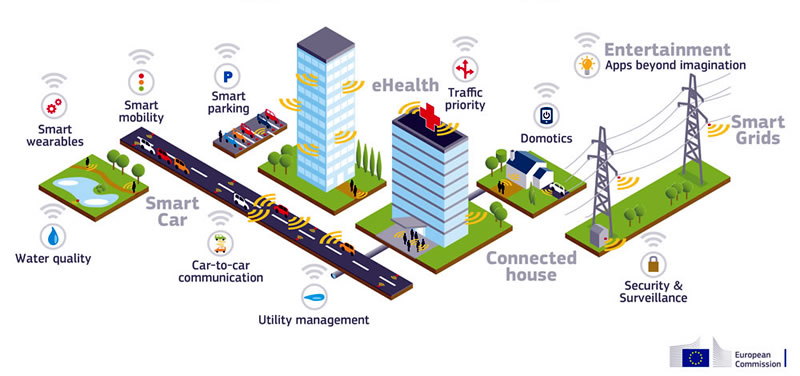
what-is-5g-euroWhat is important is “Huawei is planning to launch the first 5G pilot network with its partners in 2018. Interoperability testing is to be completed in 2019 ahead of a commercial launch in 2020. Ericsson is planning to demonstrate 5G at the Winter Olympics in South Korea (as is Samsung) and at the World Cup in Russia, both in 2018“, this sounds nice, and it actually is, but consider that the devices that need to be there are not created yet, so they are dealing with old tech that is soon no longer interesting, whilst todays needs that shows clear forward momentum thinking is not shown by either and relying on 32GB mobile devices is definitely not it. So the consumer at present is looking at buying at least 2 more mobiles in the next 5 years, so having one now that last 3 years is a massive requirement as I see it. In addition, lowering the upcoming threshold is an initial requirement. The image on that page, shown here, is the first step. The image shows two elements. In the first we see ‘smart mobility‘ and ‘smart wearables‘ in the second we see ‘domotics‘ and ‘Entertainment, apps beyond imagination‘. This gets us now back to ‘Viewpoint to a point of view‘ (at https://lawlordtobe.wordpress.com/2016/10/05/viewpoint-to-a-point-of-view). Google wasn’t just ‘on the ball‘ they are now leading the game and are the new game deciders in the field where everyone wants to play. In that presentation on Google Home they showed to be active in all four elements, and they are now leading in at least two of them. That is the part Huawei ignored. And as so called 2018 G5 partners they had the option to lead the field, they just decided not to do so. By using the initial Apple approach, the Pixel and Pixel XL offer the 128 GB solution for $150 more. Meaning that your phone could last you until 2020 and only when the 5G requirement is actually needed, the current Google solution will give you some of what 5G is supposed to offer, so you will only be upgrading the centre of the hub of your domotics, namely your mobile phone. The rest will most likely already be there, so that is why we see the shift.

So is my view tainted?
It is!

I look at a lot more elements than the consumer will, yet in all this, the consumer is already getting exposure to these elements and as such we see a level of contrasting within the consumers choice that we haven’t seen before, that elements needs to be taken into account as well. Whasun Jho who has published works regarding building Telecom markets. As he sees it and I agree we see a contrasting in the Telecom markets where we see the growth of facility based competition versus service based competition, I believe that the second is only a field of combat if your hardware isn’t up to specs to deal with the wave that will follow over the next 5 years, so in that Huawei, as I stated in the past had the option to grow the market to rule as they went with sharp competition in 2015, they now gave it away by seeking margins instead of overpowered ruling through superior options. In my view as we see where limitations were the only options, it was about competition between providers of the same or similar services (in Australia Telstra versus Optus) and by giving in, they are now losing market share that I stated is a base drop of 4.25% and could rise to 11% before Christmas, almost literally depending on the power of Google’s devices as accepted by the global consumers. In this situation, it is not a given that Google would switch to a Software As A Service path, but by offering the path on corporate whilst leaving the consumers with open and negligible costs, the image as shown implies that ‘smart’ elements and ‘domotics’ will give us Google at number one, with a massive advantage for the longest of times, that is, unless the players change their ways and right fast. Because when proven to work, customer loyalty will soon be the most important metric in this telecom shift. Samsung gambled and got hit hard, yet they are not out. One burning battery does not stop a company the size of Samsung and a lot of burning batteries makes for a fun roasting of Marshmellows (pun intended).

So here we see the use of colours. Which colour is what is not a given and does not matter, what matters is what the consumers and what the corporations need, in the next 3-4 years it will all be about what will last longer, not some hardware as a service that requires annual replacement. Ericsson shows us what happens when you are not proactive on the ball and there will be the licking of wounds for some time there, in addition, as we see the mobile iteration (Experia Z to Z5), actions that I call to be an iterative market that has no chance to survive. sweetening deals like a couple of movies has no place here as I see it, it seems like a quick fix and it is, yet in that Sony has made that mistake a few times too often and Huawei should have learned from those failures. They were all options that could have been avoided and it will hurt Huawei, yet in all this they too are not down or out. Just a little bruised as I see it. So we will see a market that will shift over the next 4-6 weeks. Yet in the end there is no certainty on how matters are impacted. What is clear is that the Telecom market will shift in a massive way, those who do not shift with that market are most likely the players that will not make it to 2019, an extreme prediction, yet will I be wrong?

Consider what the market is trying to imbue to us between 2017 and 2021/2022. As per 2018 you should only consider a device that will last that initial transition (software without the 5G speed), and the one after that will have the speed if you want to play on that level. So buying with clear common sense could save you $1000-$1800, that is for most people serious money, for those relying on a new plan with a new phone, you better remember that soon such a solution might not be that easy to get, or that cheap. The Telecom providers will remain facility based competition, yet the market we swim in is more and more becoming service based, so we need the right device that can deal with this and for telecom companies to keep on playing a ‘this will do for a year‘ isn’t thinking forward, or at least just limited short term. A game we cannot go along with and there are enough people to realise this danger, which is what is pressuring the Huawei market as I personally saw it.

There is more to all this, but a market that revolves on ‘We decide your choice‘ is not a choice, it is a limitation, something that Google is building awareness on by showing us what is possible and then offering the overkill device for a mere $150 extra, like Apple did, but Apple didn’t come with the shown benefits of actually showing us that part. As you realise that you already knew most of these elements as you YouTubed your way through the internet universe, consider the options your phone don’t allow for at present. There is no reason to suddenly update the phone at present, but you should realise that these limitations will hinder you in the future and realising what you need in three years is more and more important in today’s mobile market. It is something you only need to be aware of at present, when the shift comes you will be ready with the right phone and with the options to do it all (without getting pushed into spending $1000+ overnight), as well as the option to keep your movies, your photos, your Pokémon’s, as well as whatever the domotics apps universe brings to your mobile.


1 Comment

Filed under Finance, IT, Media, Science

The smokescreen of a Smartphone War

Yesterday’s news gives us ‘The secret smartphone war over the struggle for control of the user’ (at https://www.theguardian.com/technology/2016/sep/29/smartphone-war-operators-user-phone-service) held my initial interest for about 7.0 seconds. You see, it is an interesting story, but it is not the real battle that is being fought. As I personally see it, the secondary war is about the agreements that the Android phone makers seem to have with one another. That war we are kept in the dark about. In the end, the Telecom companies want you to be dependent on them, their products and their solutions. They give you some BS reasoning of ‘we weren’t offered that option‘, whilst their head office is all about containment. They only hold they have is by pushing you in a position where you need a new phone EVERY year. That is the service path we are all getting pushed into. Which is one reason why outright buy seems to be so overpriced in many cases. For the next bit we need to see GSMArena.com. There we find the following parts:

32/64 GB, 4 GB RAM
32/64 GB, 4 GB RAM
32 GB, 3 GB RAM (EVA-L19/EVA-L09)
64 GB, 4 GB RAM (EVA-L29)

You would think it is all the same, right? The last two are the same brand. I will get back to the list, but for now, what you would like to do is to check where you can get a 64GB edition, and for some that list is zero, you see, in Australian (not the only place) they are making sure that you cannot get the 64GB edition, in an age of consumerism, is that not weird? In that regard, Apple is the only one offering this, because of different reasons.

In all this, I have used my phone with a philosophy. It is a simple one and in my life of budgets an essential one. In the past, I learned the hard way early in life that chasing technology is a race that costs money and never leaves you with a true advantage, the gaming industry in the 90’s on PC were all about that. The mobile industry, like the PC industry learned this from the arms industry and they were really good students. So no matter what competitiveness they have, if they agree on a few ground rules, there will be enough space for exploitation for all of them. Now, in 2015, Huawei decided to rock the boat and as such they got a larger share than ever before, now that they are on par, they seem to go with the average lot of them. My hopes are that LG tries a same approach, which will cost Huawei et al dearly this year.

When you have been around your mobile for a little while, you will see that storage is (nearly) everything on a mobile and with marshmallow, a 32GB system will end up having about 22GB space left. There is the Android system and the mandatory apps, the amount leaves you with 10GB less. This is not a big deal you think, but over the year we will see an exponential growth of apps and they cost space too. Some people already learned this lesson with Pokémon Go and all the pics that were taken. They were realising how much space was lost. Now, we know that you can add a SD card and store pictures there, but apps must be run from the main storage and those apps are growing too. So over 2 years you would have run out of space. Meaning that you either clean up your system, or buy a mobile with more space. This you might have learned if you had an iPad or iPod. Storage was running low for some a lot faster than they bargained for.

So in this age, when the difference between 32GB and 64GB is one component which is in total a mere $32.87 more expensive, why would we even consider a 32GB system? Because at this point, the mobile warranty of 24 months could be served completely and we would not need another phone one year later! In addition, after 2 years we would have the freedom to choose a better and cheaper provider, so as I see it, neither Optus nor Telstra wants a 64GB phone in their arsenal and the only reason is that the iPhone is that size is because Apple has in general a global approach to their hardware.

Now let’s look again:

32/64 GB, 4 GB RAM – Samsung
32/64 GB, 4 GB RAM – LG
32 GB, 3 GB RAM (EVA-L19/EVA-L09) – Huawei P9
64 GB, 4 GB RAM (EVA-L29) – Huawei P9

Unless LG takes advantage of the option they have now, none of them offers the 64GB version in Australia! Is that not weird? Amazon UK offers both, and at times the 64GB is definitely more expensive, yet consider that at $100 more (for some a little more), you have peace of mind that this phone can last you 2 years without storage issues. That seems a pretty big deal to me. In addition, unless Android past Nougat (V7) grows a massive part, the user will have plenty of space to update their system, if the update would be offered. In addition, with all the other stuff we carry (photo’s music and so on), twice the size is pretty much the only way to go.

So why the mobile providers refuse their product to be on sale is just beyond me and the fact that none of them are offering a product in a place seems to be massively out of bounds. With Huawei the fact that there is a single slot and duo slot 32GB option makes even less sense to me. In my mind, this is all about control of the users, and controlling where the users go, which is a limitation on freedom devices have never offered before, so in my mind it was not with the consumers consent. The fact that Samuel Gibbs did not mention that part in their article is not as quoted “Fewer purchases mean the big smartphone players are now under pressure to extract more revenue from their existing user base, which is easier for Apple and its App Store than others reliant on Google’s Play Store, and to try to convince users that life is greener on their side of the smartphone divide“, it is to make sure that continuity prevails, to some extent for the smartphone makers, to the larger extent to mobile providers to keep them in their not seeking another providers place!

In addition the quote “At the same time, the mobile phone operators are in a similar competition. Switching between the major phone networks has always been an issue, whether it’s over price, customer service or the latest handset“, more important it is over bandwidth and facilitation, the more limits the hardware has, the less issues of competition the provider needs to deal with. So is Samuel Gibbs informing you on some ‘secret war’ or is he trying to keep your sight away from the options that matter? The fact that phone limitations is not part of his view (which could be because the UK offers both models) is equally disturbing that he did not look at this from a global point of view, when you are not made aware of what is by me expected and therefore implied is the limitation of hardware offered is as I see it, part of a secret war that they require you not to be aware of. If that is done intentionally, what do you think is in play?

So as the Samsung Note 7 is now an ISIS tool (when you install the 10 second countdown app) and only LG remains to go public with their new model, they now have an option to capture a much larger share of the audience as several of the participating parties refused to consider the consumers’ needs and seems to cater to the telecom request of limitation. LG has an option to grow much stronger in this market than ever before. Apple as IOS has a different situation and as seen on many fronts they have created their own walls of disturbance, so LG could even go after that lot, but we must respect that there is a huge offset between IOS and Android and as such, people are at times less willing to switch there. For now the latest rumours are that the V20 will start the pre-orders this Sunday in the US and European markets will be getting them, yet there is at present no confirmation for both the UK and Australia. So we will have to see about that part too.

The article had more. So consider my words and now see this quote: “Bibby says: “Imitation is the sincerest form of flattery. Flexibility like this is just the next stage of innovation so we’re not surprised to see others adopting it. Manufacturers are trying to ensure that more of their own handsets are sold in the market. They’re trying to clearly compete with each other.”” I disagree with Nina Bibby, marketing and consumer director for O2. The quote is not untrue, but incorrect. It is the presentation of what they want the issue to be, because is sets our mind at rest. I believe that the more correct quote is “They’re trying to clearly compete with each other within the agreed limits of the presented options“, which is not entirely the same! In that same view, the limitations due to the telecom agreements are equally in question. The fact that none offered the complete spectrum is just as much of a worry. Because it is like a corporation trying to make sure that its employees can never truly become independent, because that would be too dangerous for their own continuation. The second part in all this is the entire upgrade service program. It creates brand dependency, which is not essentially a bad thing, but guess what! I reckon that soon thereafter the 64GB option will come and there will be a churn for 12 and 24 months. At that point, the telecom providers would want a phone to last as long as possible. It could be in different ways. For example after 12 months 65% off and a $1 upgrade after 24 months. This is just speculation, so this is not a given, yet overall not that far-fetched.

The most interesting quote is at the end “For now, the battle for control of the phone in your hand is happening behind closed doors. Soon we’ll begin to see the phone-as-a-service idea pushed by one of the big manufacturers, but only once the operators are no longer crucial to sales“. The first part is that not all of the closed doors is about the phone, bandwidth has been a forever war between iiNet, Optus and Telstra in Australia, and the phone-as-a-service is not all in the hands of the manufacturers, that will come soon enough (in one case it already is) in hands of the Telecom companies, because that is a direct factor for customer loyalty, who does not see the $45 a month phone as the margin, it is the $90 a month subscription where their margin is and that part can be set to non-taxation a lot faster too. The phone is merely a hardware write-off, increasing their ROI.

So when you consider your new phone do not be fooled by the SD slot, wonder why the full version is out nearly everywhere else, except Australia? For Australians, consider one nice issue, the Kiwi’s do get the 64GB edition several stores have it available to order. So, do you feel special now, of just used by both the handset sales people and your telecom provider? More important, what other issues did that secret war of smart phones not inform you about? Perhaps you haven’t seen the implications of not having a choice in certain cases. People have been so busy bashing iPhone’s Apple that they forget that Android phones have their own collection of imposed limitations for the consumer.


1 Comment

Filed under Finance, IT, Media

The Taxing Delicious

Taxing delicious is a new sweet tasting Apple, even sweeter than the golden Delicious, and it is to be regarded as healthy for body, mind and government. Yes, in this case it is not a new Irish Cider (which would be a nice idea too), this is about a company getting a bill. You see, the funny part of it was that if there had been no EU, Apple would have been 13 billion wealthier. How doesn’t that beat the odds?

These are some of the thoughts rising within me again as I read ‘Apple tax ruling must be overturned, says US business group‘ (at https://www.theguardian.com/business/2016/sep/16/apple-tax-ruling-must-be-overturned-says-us-business-group).

As I see it, if it is such an issue, why not do an appeal? You see, this entire issue is as convoluted as it is ever likely to get. When I see ‘Ireland Doesn’t Want Apple’s Back Taxes, but the Irish Aren’t So Sure‘ in the New York Times (at http://www.nytimes.com/2016/09/12/business/international/ireland-doesnt-want-apples-back-taxes-but-the-irish-arent-so-sure.html), my initial response to Enda Kenny would be “Are you out of your bloody mind?” Now, let’s be partially fair. There is a method to the governments madness, yet even as giving in to big business might seem appealing, but the US is changing its taxation parameters (as well as tax accountability) and after the elections there is no way to tell how the US governments hats will be pointing, so getting what you can now is not the worst idea. In addition, when Apple et al will make the jump away and to other places, they will leave you with buildings that remain empty and will not have been paid off, so you will have a billion in real estate, whilst not having any return on investment, just empty buildings wasting away. That situation is not as unimaginative or as surreal as you might think. The idea that a government is appealing against a tax bill on behalf of a Forbes 500 company is entertaining, upsetting and obscene all at the same time, but that is sometimes how the cookie crumbles.

What is interesting in all this is how the EU courts will act, you see, if they give in now, it should be regarded as the utter uselessness of that court to begin with. It gives weight that not being part of that very expensive club is indeed the way to go, which will now give weight that Brexit was not a bad move and it will in addition fuel Frexit too. All that over a mere 13 billion invoice. Less than 5% of the costs of Greece, which fuelled Brexit to begin with. This is at the heart of the matter of what the Americans just cannot comprehend. They just received the massive blowback on the lesson that you cannot win every fight and that Economic Status Quo is an illusion that will collapse upon those believing in it.

So as we see the idiotic roundtable threaten those European leaders “In an open letter to the leaders of the 28 European Union countries, the Business Roundtable group defended Apple over its tax dispute with the European commission” and “US businesses have warned European leaders they risk a “grievous self-inflicted wound” unless they overturn Brussels’ demand that Apple pay the Irish government €13bn (£11.4bn)“, I just wonder if they even considered the stupidity of their actions. On the other hand, should those leaders cave, how stupid are the European elected officials to begin with? So as we wonder whether Randall L. Stephenson has looked into the long term issues of his act, when we see that these actions drive Frexit and possibly even Italy’s act on a referendum (although the major influences would be Brexit and Frexit), will Randall respond with a ‘this is much more complex and should not have been pushed by our, what we regard to be a righteous act‘, or will we see a spokesperson state ‘Our Chairman is currently unavailable and is taking his personal time teaching the Youth how to do a proper sheepshank‘? I will let you decide, but consider that tax accountability has been an issue for over a decade and now we finally see an actual result against a large corporation we see people backing down? Perhaps they thought it would never get that far? Just like Brexit was never going to be a reality!

Yet the Irish Times did not remain quiet and less than 24 hours ago reported (at http://www.irishtimes.com/business/technology/apple-fined-in-japan-for-under-reporting-earnings-sent-to-ireland-1.2793469), ‘Apple fined in Japan for under-reporting earnings sent to Ireland‘. So when we read “The Tokyo Regional Taxation Bureau determined that the unit, which sends part of its profits earned from fees paid by subscribers in Japan to another Apple unit in Ireland to pay for software licensing, had not been paying a withholding tax on those earnings in Japan, according to broadcaster NHK“, I just wonder who the Tax Auditor was here.

Now I am not out to make Apple the bad guy, even though they screwed me over twice! What is important is that through all the presentations and all the boasting and ego based actions, there are now 4 groups in play all trying to get Brussels to back down on a legal verdict. We need to wait the appeal on this, yet should this remain and if the US makes noise we will have clear evidence that the EU is no longer something with validity, even stronger, these events are clear signals that the TTIP is an even worse idea than initially thought of in opposition. The one sidedness aside, the fact that American business has basically become the corporate ‘bully’, we need to reassess the situation and remain clear on where our priorities are. I personally remain with the belief as I always have that the Commonwealth nations need to stick together. In these times we now see the Democratic Party under leadership of President Obama do the following “The Obama administration on Thursday took action to limit the use of foreign tax credits by American multinational companies to reduce their U.S. tax bills, a move that followed an EU order that Apple pay back taxes to Ireland“, which I think is not a bad idea. You see, Apple et al might claim how they are so investing everywhere, but that is only done (as I personally see it) to avoid paying tax in America. It is one of the massive reasons why America is so deep in debt (apart from their impossibility to manage a budget) and something has to give. If those tax dollars are used to lower that debt then I would state: “Barack, you legend you, well done!“, because an America with low debt (read: no debt), would be again the superpower it once was and currently pretends to be.

In the end, nations that have a minimal debt, these nations get to decide for themselves, not having their actions overruled by financial institutions or Large Corporation, or by Randall L. Stephenson for that matter. Yes, we can see that those moves will have impact all over Europe and not in a nice way, but that is part of the game. You cannot have it both ways that was never a reality to begin with. Now they only need to fix the holes that Mario Draghi has in his hands and we are possibly perhaps on route to get something sorted.

Yet there is one part we need to get back to and that is the verdict. You see, what is in play here is the statement “an agreement allowing Apple to pay a maximum tax rate of just 1%. In 2014, the tech firm paid tax at 0.005%. The usual rate of corporation tax in Ireland is 12.5%“, this implies that Apple didn’t just get preferential treatment, all the other players were discriminated against. When we see the parts we had already known for a long time, the fact that “Ireland’s tax arrangements with Apple between 1991 and 2015 had allowed the US company to attribute sales to a “head office” that only existed on paper and could not have generated such profits“, which was a given and the result we saw on a global scale “Apple avoided tax on almost all the profit generated from its multibillion-euro sales of iPhones and other products across the EU’s single market. It booked the profits in Ireland rather than the country in which the product was sold“, gives way that a single market is perhaps not the best solution for all but one nation and in addition to this we must realise that the solution I mentioned 5 years ago to set the tax laws that taxation should be set into the nation of the buying consumers physical location could have avoided this and many other issues. A simple taxation change that made all the difference, yet it seems that no one in legislation in those nations as well as those political players ever considered changing that simple law that could have made all the difference.

You see, as the Guardian by-line offers, this case could have another escalation soon enough “Charlie Harrington, 53, a paramedic in Cork, expressed frustration that the Irish government penalized small taxpayers but seemed ready to protect Apple“, which is exactly how millions feel in both France and Italy. If this tax case caves and Apple ends up not being due this invoice, the jump to anti-EU sentiments will go up massively and very fast so. At that point President Obama will only have himself to thank for the mess he started to create when he went 180 degrees on the corporate tax issues discussed in the ‘The Hague Summit of 2013’. That was the first step that could have avoided a few things, this case being one of them.

Cause and Effect

The question becomes ‘What will happen now?’ This is something not easily answered. At present Apple has a few other issues knocking at its door and the iPhone 7 is one of them. The population at large is less money blessed, so paying $1295 for a new phone that according to Forbes is “Purchasing the iPhone 7 this morning from my local Apple Store I found a device that is remarkably similar to last year’s iPhone 6S and the iPhone 6 from 2014. The external design cues remain, the chips inside are faster, and iOS 10 is more polished but is fundamentally the same operating system. Nothing ‘feels’ news even though the package is professional and projects a revolution that is hard to find“, this is at the heart of the matter. Trying to create waves by limiting the system, whilst overall the system is still the same is an issue and at nearly $1300 a very expensive one. That whilst Android competitors are coming into the field with comparable devices, including a headphone jack at 50%-60% of the price of the iPhone 7 and the world is starting to consider the non-IOS alternative. What Apple should fear is not just the market they are losing, the dangers that people could, in regard to the tax pressures they have and the pressure that Apple seems to be able to avoid, is one that could make them feel frustrated and vindictive. The idea that a person could think ‘If the need not pay taxation, they do not need my business either is not that far a stretch‘. People are starting to see the ethical imbalance that large corporations have impressed upon nations and in Europe where the quality of life is not that great at present, seeking the much cheaper alternative that Huawei and LG are offering is one worth considering. That could bring considerable consequences for Apple soon enough. Now I am not stating that the iPhone 7 will be a flop, but for Apple in this stage, should they lose even as little as a 2% market share, the consequence for apple will be intense to state the least. In addition, the fact that the iPad has remained a success for so long could equally be the next problem child for Apple. In that regard releasing the iPad Pro was a really good idea, yet the tablet contenders are starting to realise what it takes to be a contender and if that knowledge is applied properly, there too non-IOS devices (read: android) could start to make a killing and as such undermine that market Apple has at present. The origin is not the device makers, but Google. As Google has been pushing ‘the year of mobile’ for two years, the shift of usage is also growing. There is a growing visibility that at times the mobile screen does not cut it and it gives more and more opportunity to both Phablet and Tablet. These are all examples showing quite clearly that there is no status quo to rely on and the temporary nature of devices shows that Apple needs to really push forward in an innovative way, preferably before the makers of tablets realise that an affordable 128 GB version of an Android tablet is every bit as appealing as the iPad Pro, especially when the Android version could be a lot less than the IOS edition. With Android having its own set of quality games, Apple has more to lose than they are willing to admit to and time is slowly running out for their streak of ignorance to continue. However, it is important to note that Apple has been pretty super innovative with the iPad pro, so there is still a gap to overcome for the competitors. In that regard it is equally interesting that the Android device market have ignored that side of the consumer’s need (read: desire). In all this, it was about taxation and not on markets. Yet one is linked to the other, mainly because if there is no market there is in equal measure no taxable revenue, which gets us to the final part. You see, I have written about these issues before in one form or another and now we see that the Wall Street Journal is finally waking up to this (at http://www.wsj.com/articles/lew-is-right-on-eu-tax-grab-but-lacks-credibility-1473962171), when we read “The Obama administration has had 92 months to tackle corporate tax reform. Now that Europe is making a grab for taxes on profits held by U.S. companies overseas, President Obama is ready to use his last few months in office to address tax issues that were ignored or made worse under his watch“, my response is that neither was done, as stated in earlier blogs in April 2016, when I wrote ‘Ignoranus Totalicus‘ (at https://lawlordtobe.com/2016/04/24/ignoranus-totalicus), he refused to act (as voiced by “Senior officials in Washington have made it known“), so the non-actions are now back firing as event are now escalated. Another iteration of status quo.

What now?

This now all related to the issue at hand. IT corporations decided to maximise their profit by a consumer iterative annual approach of products. The IT market in the US nearly collapsed as it allowed for what was once regarded as a Taiwan Clone (a cheap alternative) to a quality A-brand to catch up. This is the problem with iterative thinking, when you are not in a niche market like Northrop Grumman (who at one stage actually there software patches ‘Iteration version’ I believe), you allow the market to catch up with you. ASUS caught up so and soon thereafter surpassed the original market owners. This lesson was not learned and the Telecom market decided that the profit was good in this way. So, please feel free to correct me. What happened to Ericsson and Nokia? Apple came and overwhelmed everyone and instead of truly remaining innovative, they started to largely iterate their device and called it innovation, now that LG, Samsung and Huawei have caught on and pretty much caught up, they are now offering equal, if not better options at lower prices. So how long will it take Apple to learn that status quo is merely an illusion? I reckon will see that revelation close after Christmas, after the annual sales are gone (and they will be improbable but not impossible a bit disappointing this year).

I reckon we will know in about 15-19 weeks!

Leave a comment

Filed under Finance, IT, Media, Politics, Science

Brilliance or Donkey mode?

The Guardian gives us two stories. One is of course all about the iPhone 7. At https://www.theguardian.com/technology/2016/sep/07/apple-iphone-no-headphone-jack-second-generation-watch we see the revolution of another iteration by Apple. The interesting side is that the head jack is no more, so no headset plugging into your phone. The quote “one that tech pundits predict could have consumers staying away in droves” is one that I find debatable. You see, the article goes on (via two sides) on how head jacks need to remain. Yet Apple decided on a model that is more waterproof. A statement that I find slightly debatable as there is still a lightning connector and speaker holes. Yet that could be an error on my side. What is striking is the quote “Apple announced another new product on Wednesday – AirPods, a pair of barely-larger-than-earplugs headphones that Schiller said use a new kind of chip to deliver a “magical experience” without the usual hassle of Bluetooth pairing and un-pairing“, which means a new era of listening technology. I will not go deeper into that side, especially as I have no idea on the Airpods, yet one side unmentioned is that these ways of transmitting ‘audio’ means that the battery will see a new level of draining. Whether this is better or worse than the head jack is one I can only speculate on. What is a given is that these moves are usually paired with the gravitas of cajones that tends to change the technological battlefield by a fair bit, so it might not be a donkey idea but a brilliant one. Time will tell which one it is. So far Apple remained quiet on the field of true technical innovation so the bar is open on the gamble, but the fallout could be one worth watching.

The other side gives us the consoles. The lacking brilliance of Sony has been evident for a little while and now that they have released batch 1 of the PlayStation Pro for this November, pre-orders are off the hook. Yet in my view, this is more definitely going to be the Donkey idea for a long time. Apart from the price which is not too bad, the massive issue now is that they are offering 4K gaming. Now apart from it not actually being 4K gaming (for now), those in charge of this were blatantly lacking brainpower when setting together this package. You see 1TB just does not cut it. Consider 4K.com (at http://4k.com/news/unsexy-hard-drive-technology-needs-to-keep-up-with-4k-4872/) gives us “Given that a single minute of full ultra HD 4K video in native resolution takes up a full 2 GB of storage memory, large amounts of drive space become more crucial than ever before“. Now, games and movies are not the same, but consider that cut scenes are still going to be large and the average game has at least 30 minutes of cut scenes. That’s 60GB, which exceeds the Blu-Ray disc, which is not an issue for 4K Blu-ray’s, but how about your storage? What happens when you run out of space? I warned about this with the initial PS4 and 500 GB, so I updated to 2TB immediately. Now, that does not worry me, because I am not the average player, yet let’s not forget that after 10 games, the 500 GB edition had run out of space, what do you think 4K gaming will do with a 1TB drive? To equip that system with anything less than 2TB was sheer stupidity!

Even Microsoft saw that one coming and gave all these new versions a 2TB drive. It is likely that the Scorpion will have more than 2TB, but we will have to see. So not only did Sony drop the ball on hardware, they did it TWICE in a row, the same mistake. It seems that someone there is not thinking things through!

By the way, do not take my word for it, Sony themselves announced the new Blu-ray standard with a 1TB disc in March 2014, so I reckon that they are creating their own slippery slope all by themselves. Microsoft only needs to release the original Mass Effect trilogy on 4K within 6 months of releasing Andromeda and Sony could lose a massive stake in the gaming population. EA has clearly said that this would not happen, yet Microsoft has an option it did not have ever before, it has a title both gaming sides revere and desire. If that becomes a XB1 exclusive, Sony would end up crying a river of losses.


Still there is now a given we have not seen until these new systems, Sony botched the ball a second time and this time, the Sony fans might not be as forgiving as before, not only because of the initial PS4 launch fiasco (most day one games were not ready and the big title was delayed by well over 40 weeks). The issues that some faced with HD space, an issue most had not experienced on the PS3 gave more stress than people bargained for and the clarity of drive space is a lot more obvious on the PSPro than it was on the PS4.

So even if we see Sony to be in the ‘not so bright mode’, where should we see Apple? As stated before, I am not certain as there is no way to expect how the people will react to the new requirement of Airpods, the fact that the phone will now be waterproof could be the quality band aid the iPhone fans will accept as a trade-off. However, at $229 they are not the cheapest solution, so that also counts against them. Anyway, with the lightning adapter the old solution remains operational and if that cable is included with the iPhone 7 (yea right!) Phone owners would not have anything to complain about. Time will tell how Apple is seen. I think that they took a bold step in another direction and that might not be a bad thing.

Another part I found debatable was the quote Julie Ask, VP and principal analyst at Forrester Research made. When we see “They’re not trying to win the race to the bottom like [competitors] Samsung or Huawei; they tend to go after the middle-class consumer that can afford the products“, we have to wonder what her data proves. Not unlike the claims she made on Bloomberg, there are a few sides that are actively ignored. For one, Huawei is NOT a bottom competitor (the quote was very peculiarly phrased), Huawei has shown to be an Android top runner and has been giving a stronger bang for the buck than the iPhone has been giving for the longest of time. My issue with Huawei is not the quality of hardware, but the limiting of availability of the higher models is an issue, one that seems to be due through agreements with the telecom companies, which is a big no no in my view. Which now also reflects back to the iPhone, which is now standard have larger sized phones, making Huawei trail. This is what the show from Apple revealed. Now for the fun part, I mentioned on my blog on July 28th 2016 how stupid this move was in the article ‘What we waste away‘ (at https://lawlordtobe.com/2016/07/28/what-we-waste-away/), so less than 8 weeks later I am proven correct in more than one way. So not only is Huawei not offering a decent storage driven system, it is likely to lose a lot of market share as the 32GB Huawei P9 is pretty much the same price as the iPhone 7 128 GB Jet Black. How did Huawei not see this coming? Let’s not forget that (rumour) their CEO would be able to ask PLA Unit 61398 (Chinese Cyber warfare) what Apple was planning to do, nobody in charge there considered calling the honourable Ren Zhengfei informing him on the actions that ‘Imperialistic America’ was planning (read: Apple CEO)?

Brilliance can be found in all levels of technology, yet many of the players here seem to have been asleep these last 8 weeks.

Anybody for pancakes?


Leave a comment

Filed under IT, Media, Military

What we waste away

This is an issue that bugged me for a little while. Even though it started small, the near exponential growth of waste is now looking towards me, looking at me as I look into an abyss of squandered opportunity. You see, this is in part the Monday morning quarterback speaking, whilst in that same view I should hold a mirror to my own choices. Just like you should do.

The idea for this article started small, it started when I realised that Huawei was willing to sacrifice its Australian market share by tweaking the skewing profits they have. They are now making short-sighted decisions and as they do that, they stand to lose close to 10% of the Australian market share. So why waste that? Let’s not forget that before the P7 Huawei was almost synonymous with ‘whazzat?’ and now after the P7, which was and still is awesome, after a less appreciated P8, Huawei is close to being a global household name. Now with the Nexus being a little outdated (Nexus 6P), the 9P could have been ready to gain a decent market share, hurting both the iPhone to a lesser degree and the Samsung phones to a larger degrees. So what does Huawei do? They decide to not release the 64 GB in Australia. Now until recently, we could have expected that, yet when you consider the exponential demand for mobile games that Pokémon GO is pushing, the fact that we now see ‘Apple plans to invest in augmented reality following success of Pokémon Go‘ (at https://www.theguardian.com/technology/2016/jul/26/apple-earnings-pokemon-go-augmented-reality-steve-cook), whilst the players are not thinking their decisions through could be regarded as a larger (read: massive) act of wasting away opportunity.

So why is this a waste?

Until Pokémon GO, the need for storage had not been visible to the degree we thought we needed. Even I did not see this coming and I have been connected to games and gaming in excess of 30 years. Forbes (at http://www.forbes.com/sites/bensin/2016/07/25/these-photos-show-how-crazy-the-pokemon-go-craze-is-in-hong-kong) gives us a clear view with the quote “special phone plans from local companies offering unlimited data usage just for the game“, which shows the amount of users, but not the need for storage. The fact that millions of people are now getting dozens of screenshots every day (more than before) of every Pokémon they caught and even more interesting where it was caught. Of course the average teenager is also feeding the image streams on how they caught a Diglett on their boxer short, so the wildfire of images is growing. All these images require storage and this is only the first game, within a year I expect close to a dozen games with features requiring storage, because there will always be copycats. So do you really think your 32 GB phone will suffice? I think not, with all the other needs your mobile life has, buying any phone less than 64 GB from this point onwards is a massive flaw. It is short-sighted, even if you are not a gamer, this market is erupting into new fields and the chance that this will not affect you is near impossible. So as the difference should be no more than $100, sticking with the 32 GB is in my view for the nuts and fruits, the fibre based mobile user needs 64 GB, yes there is in some cases a 128 GB, yet this is except for the very few really overkill, you need to be a seriously intense user of large files to really need something this big, but by 2019, who can tell?

In my view, you need to consider a mobile phone for the next 2 years. 32 GB will not cut it, especially as Android OS is also growing and will require more space.

Now it is time to take a look at the Apple side, the Guardian gives us “The comments came during an earnings call to discuss the results of the company’s third financial quarter, the three months ending 30th June, in which the company earned $42.4bn in revenue, a 15% decline from the same period last year“, so as Tim Cook is making claims towards Augmented Reality (AR) he seems to have forgotten that Nintendo, with their 3DS got to that point 5 years ago. So, not only did he miss that entire cycle, we can conclude that 3 iterations of new Apple products were not near ready either, so he is running behind the ball, whilst someone saw the AR on the 3DS and game it a little more thought. As we see how Microsoft has been bungling some of their projects, in all of those steps Apple wasn’t just absent, they had no clue where the gaming world was, so as they are trying to pick up the pass, we see the lack of innovation and shear absence regarding the creativity of options that Apple happily avoided. Now as some ask questions we see a sudden mention of AR whilst none of the hardware is ready to facilitate innovation for this track.

As I stated that all (including me) missed the hype this caused and yes, it is a hype but one that is creating a beachhead, not one that is fading away. So Nintendo has options and opportunity here. Beyond the IP needs that are now rearing its ugly head, we need to realise that Apple is now moving to the shallow end of the pool. They moved from innovator to facilitator and until they change the mindset on what a gamer wants and what a game needs to be Apple is now the one barking up the wrong tree. In that regard evidence of their hardware is simple enough. Only the iPhone 6 started to have 2GB or RAM. The issue is that games tend to be memory hungry and no matter how good the swap architecture, the fact that you need it will drag gaming speed and swapping speed down, which makes for a bad solution. The fact that Huawei is skewing profitability by limiting storage is less on an impact, but knowing full well the impact on mobile gamers, the fact that Huawei has not adjusted it view means that they will not be able to keep up. That last one is a little incomplete for Australia, because it is one of the few places where the mobile phone providers do not offer a 64 GB edition, whilst the models do exist. Here we get that Kogan.com is the only open provider offering 64 GB phones, in the non-open field it is only Telstra that offered it (their iPhone 6S), the rest is now trailing storage land with a dangerous backlash that could come their way.

So how important is storage? It might not be that big on one side, until you run out. Ask yourself, when was the last time you deleted pictures, removed MP3 tracks and removed APPS you never use? The moment you run out of memory and as you suddenly see that you do not have enough storage you will freak out like the short-sighted PC users who used to think that 20 GB was enough for their PC. Most of those people ran out of resources less than a year after getting their PC, when they did not know how to clean up their PC they started everyone except themselves. That is what you now face with your upcoming needed Mobile, because that moment with your kids, or your partner who just made that one gesture just as a bus passes by and the water pool near her feet became the inverted waterfall covering her, that moment when you miss it will introduce you to the term ‘frustration’, which is the moment as you realise that storage was everything at some points.

Yet these were not the only parts, just the directly visible ones.

There are more options and several are being missed out on. I am currently sitting on a billion in revenue, yet until the right person comes along. I can’t afford to move towards it without leaving it open for others to pick it up. I just need to get lucky. In that same way, some game developers are sitting on optional IP, some are now finding its way towards us in other ways, some through redesign, some through the mini console gadgets, yet they are coming. Is it enough? That depends on your point of view. For those coming with the mini console, it is a way to cash in on old IP in an easy way, a way where the seasoned gamer will get joy from. Just remember that this $99 solution, with the original games which would have come at a price of almost $1900 when the games were initially released, yet I digress.

You see, the need for gaming is still growing and it is moving away from consoles and moving towards the mobile realm of gaming needs. AR is only one field and it is not the only field. Ubisoft had initially created a small wave with a brotherhood app, one that interacted with the console/PC games and soon thereafter stuffed it up with the AC Unity versions by not proper testing and considering options. Yes, that Ubisoft! Still, they are not done! Consider the options they still have. For one, they have the IP of Just Dance. How long until they get the idea to push songs to the mobile and kids in schools and colleges start holding a little Just dance marathon? Sydney of all places is one place where a dance app could make it big not just in the parks, but on the streets too and summer is coming!

How long until that Just Dance would evolve to work in selfie video mode, so that you can get a rating? This would require storage and some of these speculated options could be just around the corner. Even though Ubisoft dropped the ball initially, they are leading the way of combining gaming with mobile gaming. So there are more options that AR games, even if everyone is running that direction (which is not a bad idea), it will require an open mind to find something that could create the interest that the tsunami of Pokémon GO gamers crave. I will let the developers work that out.

The final part can be seen outside of the economic requirements of technology. It is found in the overly eager acceptance of ‘speculative estimation’. It is not based upon what could be, it is not set on the prediction of what already exists, it is seen in the quote “Shares plunge 10% as revenue falls short of analysts’ estimates amid modest gain of 3 million users“. In this case it is Twitter, you know that great tool. A connectivity tool that link you to existing interests, both professional, personal as recreational. No matter that it is limited to 144 characters, it enables you to get the information you care about. An invention that is profound and its value drops as revenue falls short of what a limited group of people expects it to make. So as we see a solution that is making “Twitter forecast current quarter revenue of $590-$610m“, we get the cold shower because some people claim that it is “well below the average analyst estimate of $678.18m“, so we have half a billion profit and someone says it is not enough. This is the waste, reduction in value, reduction of what those who do not create anything is just not good enough. Yet, this picture that the Guardian initially paints is not accurate either. We see should consider this when we take into account Revenue and Profit, no matter what the profit was, it did beat the expectations of some, making me wonder why analysts cannot get their act together.

Some of those are pretty much the same types who would increase the value of Nintendo by 10 billion, even as Nintendo themselves did not make Pokémon GO. Those same category of people who seem to expertly know that Twitter is supposed to have up to $70M more in revenue, did not realise that “Tokyo Stock Exchange has plummeted 17% in one day, apparently due to investors belatedly discovering that the company doesn’t actually make Pokémon Go, the latest mobile gaming phenomenon“, even as we all knew from day one that Niantec is an American development company in San Francisco, they were not making any mention when Nintendo stock went through the roof. So is this just plain playing the field or just short-sightedness? Even as shares went up 13 cents per share (up 3 cents), they had no good news on Twitter. It seems to me that there is a massive waste coming from analysts predicting values, setting targets that are a little too weird even as Twitter had achieved 20% revenue gain, it still missed targets (according to analysts). The pressure on false targets and fake values is dragging down people and it is dragging down quality of life for those who still made well over half a billion dollars. How is that not a waste?

It seems to me that we need to make large changes, not just on the way we think, but on the way we accept certain values. How is pushing by externals in any way acceptable? Let’s consider the following parts. These analysts we all about predicting the ‘opportunities’ for Greece in the era 2009-2012, even as we saw misrepresentation in more than one way. How did that work out for the Greeks? Brexit was never going to happen, they did not catch on to that part until the day of the election, how again did Wall Street overreact? Now consider the following definitions: ‘Slavery existed before written history, it continues through such practices as debt bondage & serfdom‘. Now consider debt bondage, where we see ‘a person’s pledge of their labour or services as security for the repayment for a debt or other obligation‘, our debts, our essential need to work, the pledge of labour as analysts seem to chasten Twitter (and many other companies). Serfdom is another issue. It is not the same as it was. As the description might be seen as: ‘Serfs who occupied a plot of land were required to work for the lord of the manor who owned that land, and in return were entitled to protection, justice and the right to exploit certain fields within the manor to maintain their own subsistence‘, many might deny that this still exists, yet in an age with high levels of unemployment we seem to push out own boundaries to do whatever it takes to keep levels of ‘protection‘ (read: not being unemployed) and ‘rights to exploit your position‘ (read: additional work requirements), even as we might disagree with parts of this (which is fair enough) the similarities are close to undeniable. In all this we see an iteration of analysts changing predicted needs, raising expectations, after which their errors are released through waves of managed ‘bad news’. Now, this might be just my speculative error of insight. Yet the evidence is all around you. In that regard, many analysts also get it wrong the other way. When we see Facebook exceeding ‘expectations’ by 59%, can we at that point agree that the analysts making the predictions have no real clue? In this age where we can all miss a trend, the fact that we see a 60% miss is not as much as a miss, as it is a massive inability to read your market, which is how I would see it (https://www.theguardian.com/technology/2016/jul/27/facebook-ad-sales-growth-quarterly-results).

You are now wondering how the latter part connects to the initial part. As I personally see it, we are receiving more and more hindrance from places that make one claim, yet in reality they are mere facilitators towards profitability to ‘satisfy’ the greed of ‘investors’ on the terms of analysts. I have nothing against profit and profitability. No company forsaking its ROI will live for long, yet when we see a company surpassing the 600 million revenue and they are turning a profit, everyone seems to have this surrealistic love affair with ‘Number of Users’. This gets us to what is behind the screens, you see, when we see the blind focus on number of users, is it about the product you have, or the data you collect? Those who are still about mere virtual profit through acquisition of personal data, those who proclaim comprehension, those are the same people who were unable to comprehend the value that products like Minecraft and Pokémon GO. Even if I got one wrong, I did not get both wrong, in that same light I can see that No Mans Sky will raise the bar for gaming and even as some proclaim the word ‘disappointment’ with the initial Alpha release of ‘We Happy Few’, I believe that this game can be a lot of fun and can end up being a decent game with a 90% score. Now, it is important to mention that this view was from a reviewer with a good reputation, it is a good review and as such it should not be ignored, yet in all this, it is still an Alpha version and as such there is plenty of space for improvement. This is possible, because the initial engine does look good.

These elements are all linked, the link is imagination and creativity. Not the imagination of hope in the view of ‘I have the winning ticket‘, no it is in the path of ‘What can we do to make a change‘. It is about the imagination to employ creativity to achieve a result. In the first case it is for Huawei to adjust its incorrect (as I see it) stance of that what they make available and for which nation at the bequest of whatever Telco. This is a mere adjustment of policy, it comes with the smallest requirement of creativity and a decent comprehension of data.

The second case with Tim Cook, which requires both immense creativity and imagination (and a good development team). We can make whatever claim we want, but the reality is, is that too much value is given to reengineering, and way too little towards actual true innovation. Where is the creativity and insight that brought us the iPod, iPhone and iPad? Oh, right, I forgot, he died! Yet, should Tim Cook be any less than his predecessor? So why are they not looking at raising the bar and instigating a different mode of gaming? Perhaps the next hype is not gaming at all. I might not have the answer here, but the bringer of the next challenge that will create a real hype might know, for Apple the need of finding that person makes all the difference.

Pablo Picasso once said “Every child is an artist. The problem is how to remain an artist once he grows up”. I wonder if that is still just the case. So far I have learned that “Any innovator will soon after their first big success become the pawn of the needs of Wall Street”. If you doubt that, then consider Adobe, Apple, Coca Cola, IBM, Microsoft, Nintendo and Twitter and let’s not forget that they all started through true innovation.


1 Comment

Filed under Finance, Gaming, IT, Politics

Another online danger

It seems that we the consumers are soon in danger of being left out in the offline cold. You might not realise it, you might not even worry, but your money, your payments online are finite!

You see, not only are the events of last week troubling (not the UK election mind you), the consequence of allowing this to move forward unanswered could be a costly one.

With online presence there is the additional danger of non-online absence.

For this I will emphasize it with one example. The game is from Enix and the title is ‘Order of War: Challenge‘, if you had bought it from Steam, then you have a possible issue, because the game has been wiped of your account. Now, this is not a massive issue of today, this is an issue from the sheer point of view called ‘You paid for it!’ and now it is no more and you can never play it again. An important fact is that this issue played in 2013, so you might wonder what gives!

That is an excellent question. I for one would not care too much for Steam, I never did. Yet the issue of yesterday is now quickly progressing towards issues out today and even more important those who are out tomorrow and after that. This goes far beyond the wiping of a ‘Silent Hill Playable Demo’. Some changes are made because the circumstances changes, which is fair enough. That is not the true issue (even though the Silent Hill fans who missed out would be miffed).

The issue is found in the mobile and console games out now and more important those released after tomorrow.

Let me give you an example.

The mobile/Tables environment has a game called ‘Dungeon Keeper’. Many of those who loved that game when it was originally released on the PC went nuts the moment that game reappeared. Yet, in hindsight this new game was a massive failure on many levels. The game had actually destroyed the image the masterful game maker Peter Molyneux had built. The game is now all about delaying events and forcing people to make very expensive purchases online in the form of Gems. As micro transactions go, this game is the one example why micro transactions should be illegal. A nice view is given at https://www.youtube.com/watch?v=GpdoBwezFVA. Yet compared to the pc edition of the second game (at https://www.youtube.com/watch?v=6DJmS7prcmE), the mobile game is horrendous.

Now we have an additional side, I cannot tell when this happened, but several people (including me) have only had access to the game once in the last two weeks, there have been ongoing server connection issues. In light of the issues that have been mentioned in the past there is now a matter for other cause. You see, if there is an issue with a game, if you had purchased enough gems, the issue at hand is not just that you are forced to a server, the fact that the server is no longer there and the player can no longer play gives weight to the question whether there should be legal consequences for those eager to sell a micro transaction relying game. Can something offered as ‘freemium’ but will only work smoothly when purchases be made, should that game be allowed to be non-functional?  Should the makers not offer an offline side to the game? That is at the foundation of what is wrong. The danger of consumers paying for something that can be removed as soon as the exploiters no longer consider the product to be viable and it stops working for various reasons.

What are those reasons?

Well Dungeon Keeper is a first example. The fact that a server is down is one thing, the fact that the server cannot be reached for two weeks is an entirely other matter. Which leads us to the question, should games that only have online server options be allowed? Beyond that, when gameplay is removed, are those who paid for additional gaming experience be entitled to credit vouchers?

This is the loaded question because basically it is payment for a service, which should be regarded as temporary, however, was that clearly communicated to those buying the service? Now we have ourselves a different video game altogether!

You see, this part will be a growing issue as people are dependent on downloads and could storage of games that are not played on a daily basis. There is the added consideration that these providers never did anything wrong as they might have specified that in the terms of service, yet who reads them? This is not a business agreement, or isn’t it?

Let me move on (for now to another example).

Now we have (or better states we used to have) the PlayStation 3. It has the option of PSN and PlayStation Home. PlayStation Home was discontinued, but what about those people who have spent money for years on the locations there? There had always been an implied assumption that there would be PlayStation Home in PS4. Clearly implied is not correct, too many sources stated most options in silence. Then when the PS4 came it was initially incomplete and in 2014 the verdict was final, no PlayStation Home on the PS4. And recently PlayStation Home was also removed from the PlayStation 3. There was no fault here, there was never any clear agreement that PlayStation Home was to be ported to the PS4, but to lose it on PS3 would never be an acceptable option to those who like it.

I thought it was a cool place, it was partially useless, yet it had the option of being a playful marketing tool. Trailers, unlockable extra’s for games and so on, there were even a few decent games in that environment. Because it had channels so that people could chat, it was something that is out there that would forever be an option. Now it seems that Sony is mostly rejecting the social media, or it is partially doing that. PlayStation home is not the only place, the profiles are a second part, but here we are forced online and in an almost ‘anti-social network’ situation.

This is where the wheels come off the wagon, you see there is another side to all this!

This all links to the previous as there is a real danger that someone at some point will deactivate a service, then what? There is currently an uneven, unequal and a dangerous push to force people online. There is now a second part that has massive consequences for gamers on a global scale. I have made references with the TPP (Trans Pacific Partnership) before, and it seems that several other sources are now on the bandwagon regarding the dangers here, gaming is only one aspect (and not even close to the biggest one, but because of the global setting of gamers a lot easier to spot). It is not just the ‘profile’ issue, that is the least of it all, but it is a driving force around it. More important, the cost of being ‘online’ could soon be another matter altogether.

It would be too simple to state that the TPP is just a bad consequence of a group of utterly incompetent politicians, mostly staying presently at 1600 Pennsylvania Avenue, but that would be not entirely correct either. You see, their inadequacies resulted in a group of industrials to change the premise on Digital Rights Management (DRM) on a massive scale. For the most, I have mixed feelings. I believe that it is perfectly legit for a corporation to protect their product from being illegally copied. Now, the internet providers (ISP’s) are all about bandwidth, so as such, they like people who copy movies, they love it even better when people copy Blu-rays, because 100,000,000 people going for 2-3 blu-rays every night is a massive amount of bandwidth. There is to the smaller extent that a DRM is all about setting up who can legally use something and who cannot, but that seems to be the smallest tip of the iceberg.

An article in the Sydney Morning Herald gives us ‘http://www.smh.com.au/federal-politics/politicalnews/trans-pacific-partnership-will-push-medicine-prices-up-review-finds-20150303-13sxty.html‘. This is not entirely correct, but not wrong either. If we take this quote “The leaked treaty text also reveals new American and Japanese proposals designed to enhance the ability of pharmaceutical manufacturers to extend and widen their patents on drugs and medicines“, it is the word ‘extend’ that is the issue. Because some pharmaceuticals are all about prolonging, we see more and more new patent additions to give any drug a longer exclusivity, which means that generic medication will be less and less of an option. There is in addition the quote “Jeffrey Bleich, accused Australian consumers of habitually stealing copyrighted content and of being some of the worst offenders with amongst the highest piracy rates … in the world“, that statement makes Jeffrey Bleich an idiot to some degree (not the worst he’s ever been called), because his peers in the Netherlands, Denmark and Sweden say exactly the same and he should properly investigate these matters before making those statements.

Now, he was not being too bright (or massively misinformed) and a mere voicer for large corporations, which is to some degree his job I reckon, but he could have been a smudge more thoughtful in that regard. You see, the American side has been utterly stupid for a long time. Because it was always American first, then ‘whomever is left’! We have seen that in Movies, Music and games. Although music not as much. It started in the mid 80’s when Greed took over and American corporations were utterly clueless on global corporate actions from day one. I am not just talking about Games, or movies (even though they are the most visible ones). No the utter consumer disrespect shown by Ashton-Tate, IBM, Lotus Development Corporation, Oracle, Novell and Adobe was beyond belief in those days. You would actually look forward to meeting with Macromedia, WordPerfect and Corel to see that humanity in IT was an option. Now many of them changed tunes over time, the movie and games industry stayed behind for a long time, it is only recently that the US is seeing that the money of their blockbusters are coming from outside the US in some cases in excess of 75%. Now we have ourselves a ballgame! Now we see the shift some are making, but in other ways.

You see, there is a reason why some people have an aversion to buying a game at 40%-70% more. In my early days, I had no options, a game advertised in the American magazines at $19.95 would cost me $69, that’s a not so nice 300%, so America changed the environment from the very beginning. Even today, Australian gamers will pay 40%-70% more for a new game. Now, we will see casual mention on how it is all about shipping. Well guess again. PSN (PS4) was offering games on day one in a shop for $89, On Amazon it was $59 and guess what, the download in Australia was priced at $99.

How do these elements link?

There are two parts. First the quote by Julian Assange “The TPP has developed in secret an unaccountable supranational court for multinationals to sue states. This system is a challenge to parliamentary and judicial sovereignty. Similar tribunals have already been shown to chill the adoption of sane environmental protection, public health and public transport policies“. It is actually not that far a stretch, you only need to consider the legal disagreements between Apple and Samsung to see the dangers here.

After which the following claim is made “The leaked text shows that this agreement is more about corporate power than “free trade”. Investor-state dispute settlement is really a form of corporate sovereignty“. That part can be found here (at https://wikileaks.org/tpp-investment/WikiLeaks-TPP-Investment-Chapter/page-1.html).

Basically, in there you can find the issue “where foreign firms can ‘sue’ states and obtain taxpayer compensation for ‘expected future profits’“, this now reverts back to the earlier mention of games, movies and especially music. A false dimension of revenue has been maintained by corporate ‘baboons’, claiming ‘loss of revenue’. Relying on incomplete information from Napster, Kazaa and a few others players in the peer to peer networking solution. They basically went on the premise, one download means one sale lost. I believe that this was never a reality. People might download and listed, but would never have bought the bulk of it in the first case. That same premise of certain lacks is seen when we see the quote “Attorney-General George Brandis has signalled his intention to introduce more stringent copyright laws to crack down on online piracy“. In that regard the attorney general does not seem to strike too high on the academic scale of logic (on any given day for that matter). I posted an article on September 10th 2014 called ‘Changing topics?‘, in there the issue is better shown, you see it is not just about copyright, because that could have been dealt with quite easily. It was about Malcolm Turnbull’s anti-piracy forum. You see, if copyright was truly the issue, which would have been easy. But in that event the words ‘revenue‘ and ‘bandwidth‘ were very much skated around. Telstra was extremely cautious (and eager) to steer clear of that because in the case of Telstra, monitoring bandwidth, people actually stopping copying movies will cost Telstra billions! Now we see the consequence!

You see, America is figuring out that it cannot deal with its own ISP’s and they definitely cannot deal with the others like Telstra, Tele 2, Com Hem, KPN, TDC and a few others. They are doing it stepwise and the TPP will give them some options. Now back to that term that is laughingly referred to as ‘expected future profits‘.

One source states: “Losses to Video Game Makers Due to Piracy: $8.1 Billion“, based on what numbers? ISP’s state they cannot monitor. Then we get “Pirated Software Impact to Businesses: $63 Billion“. Again on what premise and how?

Well the first one gives us: “Video game piracy of hand-held games leads to the loss of about $8.1 Billion a year, as losses due to pirating of Sony PSP and Nintendo DS games between 2004 and 2009 lead to worldwide losses of nearly $42 Billion“. Here we see an interesting side. These are only two consoles. More important, these consoles have again and again limited legitimate access to games released in US and Japan again and again. So is this truly about piracy, or is the decision as seen here “Monster Hunter 3rd is the best-selling PSP game ever in Japan with 4,780,000 copies sold. Its PS3 HD remaster sold an excellent 500,000 copies as well, yet neither version is scheduled for an international release“. By the way, is the maker not guilty of discrimination? Let me be frank, I will not and have never condoned pirated games. I believe in getting a game and playing the original (I rarely buy games, so when I do, I will go for the VIP options that an original game brings). So, is this about piracy, or about segregation?

That part is harder to prove in the business case. The source “Business Software Alliance, “2011 BSA Global Software Piracy Study,” May 2012” is an issue. I cannot be certain how they got to $63 billion, but with so many illegal versions of Office, that number seems a lot more plausible. It is funny that there, US and China are the biggest transgressors representing a little less than one third of the entire lost stack. The UK is set at 1.9 billion and Australia less than a billion, yet how were these numbers achieved, through ‘rough’ estimation perhaps?

Now we get to the monkey’s banana moment “Losses due to Music Piracy: $12.5 Billion“, which is stated “According to the Recording Industry Association of America (RIAA)“, yes, they wanted the number to be as high as possible, because it made bad productions and louse representatives look a little better. In addition, some of these numbers cannot be decently vouched for in any way, shape or form. It boils down to well over 500 million CD’s, in a numbers game that number on a population of 7 billion seems small, but here is the kicker, that same source had the following, which I found illuminating: “In a survey of over 6,000 people in Finland between the ages of 7 to 84, researchers found that on average each person who downloaded pirated content online had about 2,900 pirated music files and 90 pirated movie files. The researchers who conducted the study believes that downloaders have more music files is due to the ease of downloading pirated music. According to the study, downloading movie files require faster internet speeds, more digital storage space, as well as a higher technological ability to playback movies“.

The term ‘each person’ now becomes really interesting, because 90 movies boils down to 360 Gb, and 2900 songs come to an rough (very rough) estimation of 14.5 Gb. A person downloading that much would be visible on the ISP counter. You see, you buy bandwidth monthly and downloading this much, as well as watching online and perhaps stuff they no longer have, you are looking at $80 a month, however, only 6 years ago, I paid $70 for 25Gb. you see how the picture changes? That is centre here. By the way, if you think that 25 Gb is little, consider that I have only hit that maximum once during my entire contract with my ISP and that was because on a Friday my system decided to update Windows 7, Office 2013 and my Adobe Master collection, which was quite the resource drain that evening.

Your online presence is now a danger in more than one way. In the first more and more ‘providers’ are forcing us to save on the cloud, forcing us using bandwidth. Now, I understand the first download, but many systems are now gearing towards less memory and more reliant on cloud drives. Which was my issue with the Microsoft Xbox One even before that system was launched.  Are those not streamed services? More important, my issue there was that once a service is disconnected, would we just lose it all overnight? Consider your movie and TV series collection. What happens when your old versions of Star Trek, Dexter and Game of Thrones are discontinued?

In addition, if online presence is essential for our services to run, how will that be monitored? I only need to refer to the Sony hack, to give you a first fright that certain owned items could be lost by a mere scripted command. Again, a situation the consumer is not ready and not prepared for. Now, in the case of PlayStation Home, there is some understanding that certain services will be lost, could a local copy have solved it? (I am asking, not telling). There are unresolved issues, mainly because the new technologies move so fast and to be quite honest, some considerations are new, we never had to make them before. We the consumer must accept that some parts are lost to us at some point. Yes, I loved HERO on the Atari 2600, but to expect that game to function 30 years later is not that realistic either. In that regard, we have attached to software (especially games) to the same extent we hold onto a book. They are not the same, which is a simple reality.

But the dangers of online remain, or do they? In that regard, the issues I raise are mostly about time. We see the failing of a game and losing out on what we spend within a year totally unacceptable, yet in that same notion, we should find peace in the notion that nothing lasts, it is all a mere matter of time. Yet, there we see a partial solution, we cannot realistically expect the provider to give ‘eternal’ support, but is a local version (no servers) after a while, or before the service is pulled a possible solution? That I have yet to see and it is not that far-fetched, because in the end, with the amounts of products and the change of IP, that part is slowly but certainly becoming an essential step to consider, especially in light for the business model of any software corporation. Consider you the player with your game of Halo, or Gears of War. I reckon that at some point, you will accept that online mode falls away, but how would you feel is the single player option falls away too, especially if you still have the console or PC to run it on?

A gaming dimension that will fall away at some point, but are we ready to let go of those moments? Now consider that your console/PC can no longer link to the service, even though you have the original disc. In the new DRM, it is entirely possible that no online verification means no playing the game. This is the certainty that we face and the TPP will push us there a lot faster than you realise. Should you doubt any of the last part, then consider the site gog.com. It holds some of the most brilliant games ever created (sold at very low prices), people still revere these games and many of them (especially the original dungeon keeper) will find a place in the heart of gamers. Moreover, several of these would make fine console games when adapted (higher graphics in most cases). I believe that the MSDOS Dungeon Keeper could be a hit 3DS game (like many other games on that site), even today.

Gaming is not about the latest game (decent graphics and sound aside) it is about joy and the games on that site are most pure joy to play.

Now you might all think that this is about games and many of you readers do not care about games, but now consider that same step when you look at your Office 365 account and the fact that you are pushed away from a version that works perfect for you (like the nightmare Office 2007 users faced in the past). There is an abundance of programs that offer a similar scary outlook.

Now translate this to collections you do care about. Your music, your TV shows, perhaps even your digital books. Do not take the word of those stating that it will not happen, because it will, it has happened in the past, it is happening now and it will happen in the future. The DVD and book on your shelf are a touchable item, that part is (if you treat them properly) secure, something online can be lost by merely removing a server or damaging its data. If someone states that this can never happen, then look at Sony, they experienced that event first hand.

Leave a comment

Filed under Finance, IT, Law, Media, Politics

Chicks for free

Yup, that is the name of the game, how to get your chicks for free. You can go towards the end seeing what you can pick up from the free handing from the tray that serves the drinks and babes, but the song is not that simple, you see The Dire Strait sang: “Get your money for nothin’ get your chicks for free“. The song refers to doing things for fun, when it is fun, at times it feels like you are not working at all.

In my view the expression has evolved. As I see it, ‘money for nothing‘ is more and more about value for money. Deals that are too good to pass up. Here we now get to the issue at hand. We look at players like Apple (with their iPhone), Google (with their Nexus) and several other players like Nokia, Microsoft, Samsung, LG and a few others, yet the one player many ignored, namely Huawei did what others would not in their iterative field of exploitation. They decided to give the people value for money, not some half-baked offer, but the power offer that the models P7 and Mate7 are bringing. The P7 priced at almost 50% of the old models of most is more than a contender, in addition, the Mate7 offers a massively stronger device than the new models from Samsung, Apple, LG or Nokia can offer, hundreds of dollars cheaper. So now we get to the BBC article (at http://www.bbc.com/news/business-32126628). So the quote “The world’s second biggest telecoms equipment maker said its net profit was 27.9bn yuan ($4.5bn; £3bn), up from 21bn yuan in 2013” is not all about mobile phones, but Huawei is now quickly showing to be the number one choice for consumers and students (consumers, usually lacking in funds) alike. It seems to me that even though there is a decent group with funds that is all about value for money and that group has been ignored by the providers at large, which means that Huawei is now sweeping the nations on a global level. There are two parts in the story, which become a concern.

The first one is “Huawei’s growth comes despite it facing challenges in several major economies. In the US, it was branded a national security threat by legislators, because of its alleged close ties with the Chinese government“. There is no clarity on how precise this quote is (the next one will touch on this). So, if the statement is true, how about OOCL (containers) and Evergreen (Taiwan containers). Are they a security threat? I think it goes further, as some players were sitting on their hands, Huawei has been growing the business globally, now they are ready to get into bed with ‘facilitators’ in a very wide area of business. If we look at the Huawei Tecal servers we see a device that goes beyond simple needs. Its citrix compatibility gives a first view that soon Huawei will be the number one choice for new SaaS solutions, mobile providers of consultancy but from a cloud environment, meaning that these new engineers will be global. They are not ready for the next part yet, the issue is not just the data; it is about the transit mode of data for Huawei. They are now one step away from nibbling at the feet of Cisco. Cisco is comfortable for now, but that could soon change. You see, in 2012 Huawei was not ready for any of it, but they remained quiet for 2 years whilst their consumer market grew, now within a year, if their router solutions are decently shielded, they can move forward.

Now we get the second quote: “Meanwhile, it has been banned from being involved in broadband projects in Australia over espionage fears“. Really? So American solutions are not any kind of espionage fear? I am not judging, it seems to me that either our personal data goes to America or China. The article does not seem to elaborate on this part. This we see in the final quote of the article: “However, the company said it was well positioned to capture business opportunities with heavy investment in innovative areas such as cloud computing and fifth generation (5G) mobile technology“. Personally, I do not think that 5G is anywhere near an option for providers of mobile networking at present in any affordable kind of way, but the cloud is another matter. Whatever next part will be used to get business growing and moving forward will require the cloud. Yet, as I saw it for the last two years, security is just not good enough, not from any provider. That part can be seen in this place: http://2015itss.ucdavis.edu/event/the-weak-link-in-cloud-security-2/, here we see the following: “This session will illustrate and demonstrate that the very collaborative nature of SaaS (Software as a Service), such as Box or Google Apps, may also be their weakness. When organizations adopt cloud applications, users must take care to ensure that the organization’s sensitive cloud data does not end up in the wrong hands“. This is at the core of one of several issues. SaaS is only one part. The adoption and implementation is at the centre of a cloud that could be the fog that keeps us all blind as we lose data towards whatever provider of consultancy requirements were miscommunicated too. What a weak data web we weave for ourselves!

This event in June 2015 shows several more issues that we all in business need to consider as we are at times decently in the dark of that what must happen and that what needed to be done. The reality is that Huawei is not even a factor here, this all becomes an issue in any implementation. So why is there no clearer broadband issue? Is there truly a Chinese espionage fear, or are some players too dependent on whatever solution SaaS offers and in this stride, data leakage will be an issue from day one, whether the owner of the solution is Chinese or other. What is without a doubt is that Huawei is making massive strides, they are doing it in places where they were not a consideration 6 months ago! So what is wrong with the picture I am showing you?

I am not showing you any picture, but I am implying that the other big players (all American) are currently losing out on business, on revenue and on profit.

I wonder how the Dow will take it!


1 Comment

Filed under Finance, IT, Media, Politics, Science

Exploiting mobile users

Is it not amazing that in an age, where we all move into areas where things getting cheaper and cheaper, we see that mobile phones is the one article that remains into the top priced push. Yes, when you move to the post office, or to some ‘budget’ place, the only ‘cheap’ phones are the ones that are the ones that are basically in the bottom part of functionality, phones that have less than 6 months of decent quality usage before Google pushes for more updates, more android and the applications will add towards the maximum RAM.

This is my situation, I got a new phone in 2012, I needed a new one, and the one I bought was ‘decently’ priced at $299. I never regretted buying it. It still has a good screen, I have one game and a few applications, yet over the last two months the push has shown that when I have more than 2 apps running (including the dialler) the lag, the jittery screen, it all starts getting slightly wobbly, so I lock the phone, unlock it, remove all apps except the one I need and it all works fine again. Yet, my phone needs replacing not due to the hardware, but purely due to software. Looking around has been quite the revelation.

Looking at those options, I see that the $99 phones are less and less useful (specifically the smartphones). So as I started to dig, I am seeing a new change. If you want to find the price of a phone, it is often harder and harder to get clear pricing, more important, we can find less and less about how prices were and how the prices devolve.

Is it not strange that there is such an abundance of buy now places, but less and less information on the devices, the price and how long these articles are set to be for? The mobile is the new field for the technological armistice race and there are too many parties willing to make certain that the people cannot be properly informed. You see, this field has evolved for control. In the 90’s and the decade after that, it was relatively simple to get information on what graphic card one needed, which soundcard would be best. But not unlike the gaming industry, the information places are given less and less information. Is it not strange that Ubisoft (a gaming company) did not give a testing sample of Assassins Creed Unity weeks in advance? Especially when literally billions are riding on it? This is at the core of the issue, at the core of some ‘technology’ pages that are less and less information, more and more ‘typed’ marketing, not for their readers, but for the prospective buyers of the product. The media has been changing more and more and many readers remained asleep whilst reading. I must admit that the last description might not be accurate. Many will not realise this faltering until they are confronted with the fact of change (not unlike me).

If you’re looking for a console you can Google ‘PS4 price console’ and you will get pricing information on the very first page, even price drops, all localised. For mobiles it is a jungle out there and no matter how many ‘suddenly’ appear, when you want to look for that actual good deal (like the ZTE ZMAX) you will suddenly find that no one has such a good deal in stock (finding a decent site is also a challenge). They have cheaper (ad therefor useless) smartphones (I will dwell on that shortly) and of course the really ‘up to date ones’ which are not that much better than a ZTE, but will cost you 275% – 450% more. It is all about the money in the end!

You see those who choose Android (like me), will now learn what the cost of alleged abandonment is. (at http://www.zdnet.com/article/google-stops-providing-patches-for-pre-kitkat-webview-abandons-930m-users/), we saw early this week that Google is now stopping the update of the older versions. This means that as we see the headline ‘Google stops providing patches for pre-KitKat WebView, abandons 930 million users‘. This includes the bulk of the people who bought their mobile before Q4 2013. What a fine android web we weave!

You would think that it is a simple matter for updating, don’t you. Well that is not entirely correct. In my case Motorola was pretty decent in giving the information, however, when I press system update, it tells me that I am up to date, so I cannot get beyond 4.1.2 Android. This is now at the heart of several problems.

Who knows what version they are on and more important, when we consider the following text from ZDNet “In other words, the next time a researcher or hacker finds a way to exploit WebView on pre-KitKat Android, Google won’t create a patch for the vulnerability itself. However, if anyone else builds one, Google will incorporate those patches into the Android Open Source Project code“, more important, as long as this is not fixed, an increasing population will be at the mercy of forced upgrades through buying new phones outright, or chaining themselves to a new contract.

There are two sides. In fairness, should Google keep on fixing their ‘flaws’ ad infinitum? Yet on the other side, if my 2 year old mobile is now a security risk, what on earth am I paying for? More important, in this economy we would keep on paying premium just to be connected? The math does not balance out towards the need of the user. So are we witnessing a start from smartphone, back to normal phones? Let’s face it if smartphones are charged to your account and after that abandoned to this extent, what should we do?

Some will push for Apple, but there to some extent, the danger is changed, not necessarily removed. A normal phone will less likely have these issues, or change to the new player. Even though the brand leaves (from past events) a bitter taste in my month, Samsung has taken a new direction with their mobiles called Tizen OS. The following parts are known at present “It is Linux-based platform built from Nokia and Intel’s ditched MeeGo“, open source means many views, so perhaps better patches. The fact that it is Linux based is not bad either. The fact that Tizen is using HTML5, it means that we will get a wave of content that is state of the art, slim and memory efficient (no flash needed). You can look for yourself to some results (at http://www.creativebloq.com/web-design/examples-of-html-1233547), so it seems that the new road that Samsung is taking is also changing the perception that they are getting. From these upgrades, Samsung could evolve from ‘player’ to ‘top contender’. It will definitely bring the fire to the ankles of Apple, which is never a bad idea.

Tizen is not new or just a gimmick, it had been announced before and more important, it has been in development for years, yet with the Google decisions and with the issues that mobile users might be facing sooner rather than later, the timing for Tizen is pretty good and Samsung could benefit greatly, they will get additional benefit as people realise that patches are no longer coming for their less new mobiles, which will hurt consumer confidence.

If you have any doubts then the clarity from Greenbot.com should help. “Google drops Lollipop on November 3rd 2014,  if you have the right device“, which makes us wonder, do I have the right device? “Maybe you don’t have a Nexus phone or tablet. Well, then the situation gets a little murky. If you have a phone purchased in the last year, odds are good that you’ll get an upgrade to Lollipop…eventually“, which gets us, what if your phone is older than one year? Then what? Which gets us the last part “Manufacturers like Samsung, LG, HTC, and Motorola have promised swift updates (typically within 90 days of release) for top devices, but those have to go to carriers to be tested before release, too“, knowing I am ‘up to date’ with my version ‘4.1.2.’ does not inspire confidence! How many people asked questions about versions of Android when they bought their phone? I am a technologist and I never gave it too much thought (other than that I wanted an Android phone). Now, it seems that my Motorola is will remain on Jelly Beans (4.1.2) and now, we have ourselves a ball game, because as this unbalanced approach is pushed from both the desire to remain free (not chained to a provider) and as the life cycle of a mobile phone is now in danger of staying under two years due to the Google changes, we now see the need to not just chastise Google, but to make it clear (actually demand) that consumers are properly informed on the limitations that they are buying at $300, if we regard that patching is done to undue the lacking security of a product sold, we get a new game where the consumer must be informed clearly in a shop regarding the purchase they make.

A costly jump that might not have been needed! This year will bring changes to the mobiles and the shops selling them, I wonder if Google considered that, or perhaps they never cared. Especially when the people get told that they will not face any issues, if they had a Nexus phone (Google’s mobile). Samsung is not without options either, as they progress towards ownership of Blackberry, they might drill into a new mobile market that revolves around data and communication security, which is another mobile hot potato, and it instantly gets them huge chunks of the financial sector for reasons not here speculated! Tactically both Google and Samsung have made brilliant moves, for the consumers not the worst move but likely a costly one this year!

Will you remain in a Google mind or move to Tizen?

Will Eva choose to try the Apple in the end?

Time will tell!


1 Comment

Filed under Finance, IT, Media, Politics, Science

Billion dollar blame

Some do it quick, some do it with conviction, some take a life time and some don’t experience it at all. You might want to guess on what naughtiness I am talking about. It is simple negative profit in a firm. Some seem clear, some are to be expected and some are just plain ignorant.

We could rephrase them as the alphabet, like A is for Airline that’s lost in the queue; B is for banks, who lost more than a few. But then, that nursery rhyme would get boring real quick. The issue is not Tesco, not as we read in Bloomberg: ‘Bank of America Lost $2.7 Billion in a Maze of Accounting‘, it is simple overreaching. First the car industry, now the mobile industry is getting hammered. It would be fine to just blame Apple, who does have a stake in this, but in the end the true culprit is what I call ‘lack of vision‘.

Sony is downgrading its profits to far below zero. It is projecting a loss of 2,140,000,000 at the end of the current financial year. So we are talking about a loss so big, I personally believe is that those ‘idea-illogicals’ are still with their heads in the pre-recession era, they keep on believing that the old ways still work. Guess what! That time is gone, the financial institutions and banks changed that game forever.

The electronics empire initially forecast a $466 million net loss by the end of the current financial year, but has now informed investors that the projected loss has been revised to $2.14 billion. That is the budget for a small nation, so how is Sony still around? Well, that is not about that part of the equation, but it is an interesting question to consider for the future. The biggest issue is with their mobiles and we should wonder how they are currently surviving. I have nothing against Sony mobiles, I have had Nokia mobiles, I have Sony mobiles and mobiles from Ericsson and currently I use a Motorola. The entire mobile market is plummeting, Apple is doing fine, but overall they are likely to see a peaking of profits too.

Why?

Well, like those in the car industry, the people behind them are just not too clued in. They listen to ‘experts’, ‘analysts’ and from there they think that they comprehend their customers. They get market research, get 1000-2000 responses, weigh the hell out of the data and they consider that they have the knowledge.

Guess what, it does not work that way!

True investigation takes more, takes longer and takes actual preparation. Some half-baked set-up, which is quickly designed on Monday, live on Tuesday, data collected up to Thursday and reporting on Friday can work for some parts to get a general idea, but in the end, you will not get the ACTUAL wisdom you need. And guess what, it is not just Sony doing this; there are a few other larger players. Apple, Alcatel, BenQ, HTC, Motorola, Nokia, Samsung, Siemens and Sony Ericsson et all. All of them have several models; most of them are not that cheap.

To this I add two facts. The first one is the economy. It has been 10 years when the 2004 crash came, that hit many people, then the 2008 crash that turned a massive amount of people over the brink of poverty. In that decade the consumer lost close to 21% of purchasing powers. In that decade, the bulk of all people lost a job, or was retrenched at least once, was forced to live on a frozen income, whilst prices of food and housing kept rising and many are not dealing with their debt, so that part is also hanging round their necks as an anchor. The consumer markets ignored that part and now they see the fallout, a fallout that could have been clear to them for at least 3 years, so the writing is not just on the wall, it is a massive neon billboard that was ignored by those who should not have done this (at http://www.cnet.com/au/news/sony-forecasts-2-1-billion-loss-this-year-due-to-its-smartphone-business/)

There is additional ‘evidence’, which is seen here in the quote “The Company blamed the ‘competitive environment of the mobile business.’ Sony has been hammered by competition and an inability to find distributors in key markets such as the US“, I consider that to be a statement of falsehood. Why?

Well, that is always the real question. Consider the list I gave earlier. Siemens has lost a large share, Ericsson lost it as it united with Sony (the company in question), Alcatel was never the largest party in this and neither is Siemens. Huawei is relatively new and several smaller ones do not make the list any more (like NEC), so overall Sony should have consolidated its visibility, but it did not and neither did Nokia. Apple, Samsung and HTC grew, yet overall Sony should not have lost THAT amount, which means that there is more. I blame the over flooding and iterative consumer model as one reason, such a model cannot be sustained if you cannot grow the customer base and that part is currently diminishing and will keep on diminishing for another 2 years. We can no longer afford a new mobile or car every year, in all honesty, we never could, but that part is mainly the result from the pushed idea of ‘ego’ and peer pressure.

The second quote that gives the ‘frying pan’ and ‘the fire’ expression is: “While its Xperia Z3 flagship is making its way into the US through T-Mobile“, many consumers have had enough of being held over a barrel by telecom providers, the ‘new’ mobile is less and less an incentive to hold on to a solution, that side only works for business customers and they too are shopping in the margins. The final quote is “companies such as Google and Microsoft are laying out plans to broaden their reach into the emerging markets with more affordable smartphones“, that group is now targeting the ACTUAL consumers that are available. Huawei had an advantage there, but they are quickly losing that advantage as they emulate Samsung and HTC more and more.

You see, in this day and age, mobile makers have been pressing the ‘exclusivity’ option just a little too long and now the towers break down. You do not have to believe it, but not unlike the car industry, we do not need 7 models with 22 configurations. That image is created by advertisers, finding people telling you that ‘choice’ is all about ‘individuality’ whilst they try to sell that same package to millions; it is a fake concept as I see it. Yes, we want some choice, but the consumer driven industry took that way over the top. That same issue we have seen in mobiles for some time now and the bigger players, coming with half a dozen models are now finding that they are selling ‘hot’ cakes from a fridge in a place where there is no electricity. So why the ridiculous amounts of ‘add-ons’?

Apple avoided most of the issues by having one phone in 3-4 options, where memory was the choice. We do not need 8-12 models, having one phone, which does most, would suffice. Then we get the issue with price, smaller models cost some, or need a ‘contract’, in my eyes it is an interaction of pimping and harlotry for customers, but who is who is not clear to the consumer. Consider that many do not have $800 for a phone, yes we get options for cheaper, but many providers offer a lot less at that point, whilst a generic cheaper phone would be the solution to many, brands are ego pushing the more expensive models at any given opportunity. Although Huawei seemed to have nailed the market, they seem to slowly start making the same error the others are making. Consider that Huawei offered a 4G phone for less than half the price (unlocked and free of contract) than many other providers, so why would we pay twice the price?

Let’s not forget that many providers are no longer delivering a reliable mobile. If it has android than it is likely that the phone is forcing Google search down our throats, whilst forcing people to store all data on a Google account, so that they can copy the data. Apparently there is a way to switch that off, but the result is implied to be so disgustingly customer unfriendly, that we are starting to wonder whether criminal charges are in order. Now, my Motorola suddenly got ‘enhanced’ buttons at the bottom, where it seems that there is a software overlaid button that FORCES me to Google search. How was that MY choice?

So, in the age of data, the market will soon belong to the mobile maker that will respect the customer and BY DEFAULT, let the person choose what they want to do with their data, photos and other smart phone parts. This is all linked, because where confidence dwindles, people are less likely to choose a smart phone and more likely to go back to the old days of the Nokia 1100 (with silver LCD screen, offering voice and SMS only, oh and it avoided bank security for a little while).

It is my firm believe that if big boys like Sony, Nokia and others want to turn their market around, they will need to take time to ACTUALLY learn their customers’ needs and not force corporate choice as customer wishes down the throats of these consumers. For example, instead of 19 Nokia Lumia models make 4 with one extra landscape option. If you only need 5 models, you can simplify the process, down production costs, distribution complications and get a better return. It is just a crazy thought, but what do I know. I thought that the Lumia was gorgeous, but I am not paying $935 for a phone, not in this age of theft and pickpockets, especially as phone insurances are getting less and less affordable. Sony should consider that same idea. Do you think Apple was lazy? 2 phone models, each with three memory options, which means two models each with three memory chip options. NO! Apple foresaw the complicated BS that others face and as such they have more than a small corner in the market. This is odd as the main component for a phone is its battery and Sony has always had superior battery technology, so Sony should have been the number one choice, but alas, that is not the case, so why do we see a contender with a superior key part run a market at minus 2000 million? Beats me, but someone is clearly asleep at the wheel.

Of course, I admit that I am oversimplifying the entire issue, but am I so wrong? I do not think so. I will admit that I missed a few issues in this, but as Sony is at minus a lot and others have a dwindling market, I feel that I am onto something. I am also certain that people have had enough of data collection and these mobile players to use their consumers as off the books revenue piggy banks, the first one to change the wheel on that process might end up owning the market. For those who would ‘ignore’ that path, remember that no matter how ‘valuable’ that data seems to be, once the customers walk away, you end up without data and without people using your product. Sony has the option to bounce back, but that window of opportunity is small and quickly getting smaller as Google and Microsoft are tapping into their own worlds. Sony might have not have that many options left and they forgot the one lesson Miyamoto Musashi instilled upon them almost 450 years ago: “If you do not control the enemy, the enemy will control you”, they forgot this lesson as well as the fact that ego is as much an enemy as an actual opponent, especially as ego is not regarded as an enemy until it strikes after which it gets named Hinan!


Leave a comment

Filed under Finance, IT, Media