Tag Archives: cloud gaming

Approximately 929 years ago

Here we are today (somewhere in 2024) considering the setting of a revamped old game. This train of thought all started when I saw all the messages on the Crusades on social media. We can speculate on the fear of Christians becoming second place after a thousand years, we can think it is a collection of Christians trying to address the wokeness of people. There are all kind of reasons. Is this one of them? I cannot tell. But it got me started. You see, a streaming game platform is the solution in the middle east and that comes with perks. Over time there is a much larger field that comes to pass and Google had options, now there is merely Amazon, yet Tencent is also on its way and as I see it Tencent has the larger gain with adding millions of gamers to their fold and that is merely the beginning. I saw several games that could help this transition. And just now I had another game on the sharp of the blade. 

In 1984 Mike Singleton designed a game called the Lords of Midnight. In its time it was decently awesome and we can tweak this idea into something (much) more. 

The ‘old’ muslim lands reached from the western side of Africa until the borders of Turkey (then named the Byzantium lands). We can resize the game set the markers to a near real 3D setting and change the premise to make it more time based. As such you have a certain amount of time (based on where you are and unite the tribes to set the premise of an assault on any Crusader taken place.

There was (not in chronicle order)

Battle of Aintab, August of 1150
Battle of al-Babein, March 18th, 1167
Battle of Adramyttium, March 19th, 1205
Battle of Agridi, June 15th, 1232
Battle of al-Buqaia, 1163
Battle of Al-Sannabra, June 28th, 1113
Massacre of Ayyadieh, August 20th, 1191
Battle of Azaz, June 11th, 1125
Battle of Ba’rin, 1137
Ambush at Jacob’s Ford, June of 1157
Siege of Jacob’s Ford, August 23rd, 1179
Siege of Arsuf, March and April of 1265
Capture of Haifa, 1265
Battle of Harim, August 12th, 1164
Battle of Harran, May 7th, 1104
Battle of Lake Huleh, June of 1157
Battle of Al-Uqab, July 16th, 1212
Siege of Mahdia, July through October of 1390
Battle of Makryplagi, 1263
Battle of Muret, September 12th, 1213
Battle of Neopatras, 1273
Battle of Nicopolis, September 25th, 1396
Battle of Pelagonia, September of 1259
Battle of Prinitza, 1263
First Battle of Ramla, September 7th, 1101
Second Battle of Ramla, May 17th, 1102
Third Battle of Ramla, August 27th, 1105
Siege of the Isle of Ruad, 1302-1303
Battle of Shaizar, 1111
Battle of Yibneh, May 29th, 1123

There are a few more, but this is the gist of it. The map should reflect the stages of the battles, as such there are several maps. On the ‘normal’ and the ‘expert’ level there comes a larger premise. If every army can optionally merely used one, or even if there is a second time, the second time that army will likely be smaller. It becomes a much more challenging stage.

The C64 version was limited by technology, now we have a much stronger hardware setting and more is possible, even more in the cloud game setting.
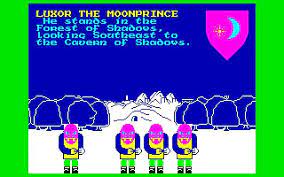
Then there is the stage of finding all the flags and shields of the muslim players is another part of the game, not all the towns and tribes had them (as I suspect) and as such the army will lack strength. There are several ways we can add more elements to this game and it could invigorate the pull to Islamic players. There are hundred of millions of optional islamic gamers and the west ignored them and now there are new players and they want an interesting game and the past can be interesting. In less than an hour I saw a collection of upgrades that could be added to a game and as such we can see another element showing us all how some are asleep at the wheel and I just placed another piece of possible gaming into the public domain. Microsoft eat your heart out.

Oh, and to make matters worse. I just came up with two other games that could be intertwined with this game making for a much stronger experience. Whatever will I think of next.

Vancouver will join us in this day in 45 minutes, the rest have a great Tuesday.

Leave a comment

Filed under Gaming, IT

As updates go

I got a few messages on the previous article named ‘Perception is merely the start’, several readers had a hard time comprehending this, and off course it is my fault. Well, OK, I will accept that, yet I also assumed a few people being ahead of me in a few regards, so the fact I had to explain this was a little weird, but OK, fair enough. It seems that those in several industries were in the dark of a few items there, so here goes.

Perception
The perception circles are a stage where we go from what we perceive to what is unknown, in middle is what we are aware off. Some put that in a different order, yet perception is the larger circle. We perceive and within what we perceive (complete awareness), there is hat we are merely aware off (partial awareness) and the inner circle is what we do not know. People expect it is the other way round, but this is from niche to speciality. For example, we perceive a firearm, we are partially aware of the calibre, we are partially aware of ammunition, spare parts and cleaning kits of a firearm, yet the parts and specific spare parts of  firearm is unknown to us. The same is applicable to games. We are aware of a type of game, we are partially aware of objects, scripting, optionally programming, yet we are in the dark of programming itself. And this repeats itself when we look at the larger approach of cloud gaming and optional other tools of gaming (like Google Glasses). We see the elements, but we do not see how they interact, not precisely. 

Assessment
Then at some point I mention “In a simple form it is about Awareness, Perception, Recognition, Identification, Assessment and Proper response.” In the second graph, we see how identification and assessment goes, now we see that it does not go from the outside inwards, it goes from the unknown to the perceived. This might seem weird, but the brain goes the other direction, we auto label what we know until we are left with the unknown, but the assessment setting goes the other way, the brain merely discards all the steps according to what is known, that is the first issues we see in AI, I left it to linguistic sides, but the AI has a larger problem to identify, because it never learned to learn. Our brains got that from creation (and childhood), we learned to learn and that is our benefit, yet AI (what sales people call AI) relies on deeper learning and AI, when it crosses the unknown it is lost (until the programmer adds options as wide as possible), there is the larger setting where games fail. So we need to set a larger data pool and when we add additional signals we get a level of immersion, it is a data overload and the brain now takes over, it will use what it comprehends and relates to, we enter the game on a deeper level and it seemingly overtakes our sense of reality, because we are vested in THAT game, as the brain has less time for what is around it, we seemingly forget about it until we are yanked out of the game. An example is to see ourselves as a horse in traffic, we are aware of traffic as we have a wide perception, but now )as a horse) we are given blinkers. Their function is to limit vision “a piece of horse tack that prevent the horse seeing to the rear and, in some cases, to the side”, we can get that same effect with other means (like the Google Glasses), as the brain gets more info, it drops what is not relevant, as such the real world falls away. Now, it is important to realise that my model is imprecise (or incomplete). In the assessment stage there are levels of verification that we do automatically. Consider that you are walking and you see a sign stating a time (3:30), yet when you are closing in, you suddenly realise that it was 3:38, the brain verified what it saw again and again until there was clarity, we forget about these automated processes and that is where AI also fails, when it has the data, it is assumed to be correct and on point of what we require, yet when we grapple back the ‘Yo mama’ expression, the AI cannot tell when it is about your mother, a formal declaration of defeat, or a joke. It never comprehended what was real, the programmer never taught the AI and there are waves of missing data pointers. The part we are often given is linked to deeper learning and there we see a lot of good (really a lot). In this Saga Brigs wrote “You can’t search for something you’ve already found, can you? In the case of deeper learning, it appears we’ve been doing just that: aiming in the dark at a concept that’s right under our noses” and that is the problem, an actual AI has the wisdom as a situation approaches, our brain does that, it has that ability, the computer does not. As such it leaves a lot blank (optionally a lot to be desired), yet our brains pick up on a lot of that, hence my anger at Ubisoft and their embrace of mediocrity. Yet as I see it, if we give the brain MORE to deal with, like an HUD in Google Glasses, or something similar, that game changes, the blanks (as our brains see it) fall away, we get a lot more and the brain is now fully engaged, the effect, or immediate effect becomes that the game is seemingly a lot more immersive. So what we perceive increases by factor N, as such the game becomes (seemingly) a lot more rewarding to the player. 

Validation
This now gets us to a model you will have seen in all kinds of versions before, it is validation and verification. Yet in this setting we see Verification (A), where we control what we see and we either confirm what we see or we let the brain think it is doing so (through a second display like the Google Glasses), as it does this it involves a larger stage to immersion, yet this alone will not do this, the other side it gives us Validation (B), it is a bird? (Superman), is it an enemy? (AC Origin), and that list goes on. On the other side it is where we are, where we go and the consideration that we are on the right track, in the middle is the neat stuff. It is the system, the deeper learning, or perhaps a better stage is the data we are given, yet there is an upside and a downside. The upside that if there is data, it will always be correct. Yet our brains have always been in a stage of checks and balances and if the test and the data is always 100% correct, the brain becomes less and less convinced and the model fails in a game. Checks and balances are missing too often and that is where it goes wrong, so if we give the brain more to do it takes longer for it to catch on, the immersion os more and more complete. And these three models are always active and always relating to one another in some form, so as the brain is given the specific item of some table, it shuts down in disbelieve, nature is never perfect and that is where the game goes wrong, the brain was no longer convinced. That is the setting where cloud gaming could become the next thing. We had the provide stage, we knew nothing (Atari 2600), we moved towards seek where we learned what was out there (Atari ST), we entered connect to what we were playing (Playstation 2+3) and now we enter the imprint stage where the game imprints its brand on our needs and desires (Playstation 4+5, Cloud) and this is where the cloud becomes (optionally) more. 

All this was part of yesterday and the developers and IP people should have been on this page long before I put it out here today, so that is where we are now and that is where gaming can go in 2022-2023, will it? It depends on the stage of immersion they are banking on, I reckon that consoles will take longer because of the model of software, but cloud gaming (like Amazon and possibly Netflix) can go further, it will be about a lot more than merely the graphics and the story, I wonder if they are ready for that.

Leave a comment

Filed under Gaming, IT, Science

Colour the stage

I was almost asleep when an article in the Guardian passed my eyes. The article was from Feb 3, but I read it only now. This happens, there is only so much my eyes can deal with and this is one of those moments I am catching up, it is 05:15, as such I am still ahead of the curve. 

The article called ‘Amazon, Google and why you can’t just invent a blockbusting games developer’ is an excellent piece by Keith Stuart. There might be a few quotes in there, but I will try to avoid it as the article (at https://www.theguardian.com/games/2021/feb/03/amazon-google-and-why-you-cant-just-invent-a-blockbusting-games-developer) is a gem from start to finish. You need to read it. 

You see, we are looking who wins the Cloud gaming rush, but even I forgot the setting that is forgotten. I touched on it in the past and I did point out that Amazon is doing much better than expected against Giant Google, yet that is not enough. The lesson that Microsoft refused to learn is upon all three of them. In my view these three are staged in a mindset of ‘Business staging art’, which is the wrong setting. It is now and has always been ‘Art pushing business’, it is the one side that they all forgot (Nintendo and Sony as an exception). Art is the power over business, not the other way around and Ubisoft is learning that the hard way. They forgot the station they were in when they got their business executives push the thought ‘A new Assassins Creed every year’ that is when they lost the plot and if Google and Amazon do not learn that lesson quick enough they will be out of the race too. At present there are thoughts that Amazon is now in the lead. I cannot tell as I do not have certain links and connections, but those who voiced it have a decent case, Amazon might win this, a race I actually never saw. I thought that the people at Google were googly and artsy enough to see that, yet I could be wrong there.

So as cloud gaming is taking a slow stage towards the gaming of tomorrow, the stage is larger and it needs to be painted. Not by some painters R Us franchise, but by kids and dreamers who dream of tomorrow, who dream of what might be and then we see if the artsy people can guide these younglings into a frame of gaming, not the business executives on what looks cool, but art people on feels cool and what plays truly cool, a stage ignored too often and also pushed into silence by the wrong people. Keith makes mention in his article on the business stage of AAA game development, yet the business needs will be the collected data and cloud services and the art of gaming falls away. Just as Microsoft was blinkered into the Azure stage, we see Google and Amazon making similar if not too identical moves. Parts were seen almost a year ago in Forbes when they gave us ‘The Console War Is Over Because Sony Left Microsoft Behind From The Start’ (at https://www.forbes.com/sites/erikkain/2020/02/28/theres-never-really-been-a-console-war-because-playstation-left-xbox-behind-from-the-start/), a stage most saw coming a mile away. Only because Microsoft still doesn’t get it, they never did. Not for almost 7 years, they lost the plot and they had to answer to board members who never understood it in the first place. That is the stage that Google and Amazon face at present and the one getting it last (or not at all) will be the loser in this. To be honest I expected Google to win this, I did not expect Amazon Luna to be on par with Google but they were and if they can solve the software issue, they will be ahead of both Google and Microsoft which is a race result I would never have bet on a year ago, but there you have it.

So when we look back at a quote in the Forbes “the console war is over and Microsoft has moved on, leaving Sony in the dust”, we see the problem. It is a business quote, it is a cloud quote and it is a presumptive quote on what gamers need. Yet the gamer wants a good game, it does not matter where it is and they prefer to play on THEIR system. By making the cloud the axial and not the game Microsoft lost and it will lose bigger because cloud gaming requires a good connection which takes out well over 30% of Europe and well over 35% of the US, so these executives are running in a race with both hands tied behind their back, they will claim that their legs do the running, but the arms are required to keep balance, and without balance they do not stand much of a chance. Even now, as we see congestion after congestions, they keep on saying it is about cloud, but the stage of the cloud is the internet and the connections and they are not on par, 5G is too far away, so those with the options will look at cloud and there the games matter, so Microsoft is out of the race and it is now between Google and Amazon and the Amazon horse has now optionally an advantage.

So even as Forbes is setting the (wrong) stage by consoles and how Microsoft only has one console on that list in the top 10, the Xbox360 in 8th position. We forget that time was an issue, and in a short time Xbox 360 became an actual contender, after that the wrong people at Microsoft started to talk and others were told to listen, it gave folly to the Xbox One and more folly to what came after. All whilst Nintendo completed the Switch and that ended Microsoft. Now Microsoft is a mere distant third and if Amazon gets its game right, optionally Microsoft becomes 4th at that point the people will abandon that system. The titan that was created in 7 years was utterly destroyed 8 years later, and as I see it there will be no coming back from that. This saddens me, not because of Microsoft, but with Microsoft where it was Sony had to up its game and that is the part that matters. It is not about the PS5, it will be about the PS6 in 2028 and without Microsoft the difference between PS5 and PS6 might not be to the degree it should be. I look at the future and gamers, true gamers will look at the games that are dreamt up right now, the dreamers will require hardware that does not exist yet pushing consoles and optionally cloud systems, but any gaming cloud system set to the premise of business people will not have that much of a chance. 

I might be wrong, but so far in gaming I have been right a lot more than wrong, so I feel confident in my view of the matter.

Leave a comment

Filed under Gaming

Hammer hits anvil

Yes, that is the foundation of an idea, the idea is voiced, in the ear, the hammer hits the anvil, the anvil vibrates the wires and the lightbulb in your brain lights up the room and the idea is born. The setting is the same for all, the only difference is that when the hammer hits the anvil, not everyones wires vibrate, and as a result in some people the lightbulb never lights up that room that is known as ‘skull space’, still my setting was that I did not come up with one idea, I came up with three. It is an idea that was someone else’s idea, but that foundation can still be used today and in a cloud space game setting.

Lets go back to 1984, George Orwell was making noises in regards to government oversight (of everyone) and in that same year Mike Singleton had an idea and created ‘the Lords of Midnight’, now even as the setting was nice, it was set to computers with a limit to 48KB (ZX Spectrum) and the 64KB that the Commodore had. Yet what happens when we take that idea and use the map of the UK (that island left of France) and set ourselves in a stage of riding, stealth and travel to collect the alliance of a minimum amount of keeps to secure the safety and unity of one region, each keep is in one county. The stage is all set, so to change it and make it a real challenge, the stages vary, the keep is not always in the same place (sometimes they are), and we aren’t always starting in the same place, so there will always be more than one option. The area is all in a stage where there is an enemy, not always visible, but as we align, we are given who is not our enemy and they will give the information of what is against us. A stage that is more alike the old days, when communication took days, not seconds. We need to adjust our way of thinking without removing the first person challenge. Even as it is based on that game, it will be a completely new game, it will be a larger setting based on the entire UK, all with optional awards (virtual diploma’s) of achievement and a retirement award. A game that shows time in a new setting if you like.

The setting of a cloud will allow a larger setting of randomisation, as the server does all the alignments, as such if 10 players play it, there is a chance that 2 players have close to the same setup, but not completely. A game where you need to do the work and not rely on some wiki solution where the one solution fits all. 

About a decade later someone made a game called Virus! It was an original game and even as it never made any headlines, I never forgot the originality. Yet in this day, what can we do to innovate? For example, a shooting game is one completed a game that has been completed, but it does not need to be like that. What if the opponents and the level of play is determined by a QR code? In the game Virus! It was Windows and your hard-drive, which in those days was innovative, yet today it does not work like that (or at least it should not). QR codes are everywhere and any level completed will be one we have already seen, yet what if we had on any mobile the option to save the code and use it to transfer the image to the cloud game? It does not matter whether it is a spaceship with an environment, a soldier with an urban or rural setting, it is about the fact that we are not in control and the maker cannot be creating levels again and again, and random generators tend to be less random than you think. Yet the setting of a QR code is out of our control and we can decide what every dot means, we merely are in the dark whether that dot is used. A game with almost infinite levels and a never ending stage of challenges, a lovely idea for any shooter with drive to compete.

Yes, I agree that it is in fact an iterative idea when we revisit an old idea, but the people seemingly forgot about the idea and as such it becomes a new ballgame. When we are given “Assassin’s Creed Valhalla – Known Issues [Updated Feb 5]”, in a stage when Ubisoft gave the laughingly statement that the game would be released days early and we see 3 months later that there are well over a dozen issues with impacts on a dozen missions that cannot continue, is it such a bad idea to look at the past when these kind of screw ups would never make the cut of publication?

And a lot could have been prevented from day one by properly testing a game. In this I tend to fall back to Skyrim, a game that has issues, no one denies it, but in all the years (since 11.11.11) that I have played it, I only witnessed 3-4 bugs myself on any console (Xbox360, PS3, Xbox One, PS4, PS5) and a dozen or so glitches, yet glitches do not break a game. And that was made almost 10 years ago. I think it is time to reconsider what we love to play and what maker consider to be a good game. When we consider the size of Skyrim, my only issue with the game (after playing it again and again at least 8 times, is that the missions are always the same, yet the openness of the game allows for a lot of exploring and doing things your way. But what gives when the QR code resets the opposition and changes what you face in every dungeon, crypt or hollow? 

And that gives me another idea, I reckon that there are a few nordic directors with a grasp of the dark side of tinsel town, and when you consider Troll Hunter (2010). I thought it was awesome, André Øvredal took a folktale and pushed it and us into another direction. I am certain that it can be done again. So, what happens when we take that part of Skyrim that is based on Nordic legends and create a new horror movie, but one that is close to the folktale of the Draugar “Draugar usually possessed superhuman strength, and was “generally hideous to look at”, bearing a necrotic black colour, and was associated with a “reek of decay” or more precisely inhabited haunts that often issued foul stench”. Lets not forget in the academic world where people hunt academic recognition, stupidity (read: shortsightedness) is found a dime a dozen and when we see the people’s admiration with the zombie apocalypse, the idea that it had already happened is not the weirdest idea to consider, so what happens when someone opens up the wrong thing (tomb or urn) in Malmo and before the authorities have any clue what actually is going on, the issue has spread to Norway, Denmark and Germany. So as we need to rely on folklore, folklore that is specific to Scandinavia, what will those do who have no knowledge? The military will merely grab bigger weapons, weapons that have some effect, but the stage is different, you can hunt cockroaches with a flamethrower, yet what happens when that roach is somewhat heat resistant? The option are nearly endless and it could make for an entertaining 2-3 hours with a box of popcorn. As you see, these AAA game designers are all about being cool and having hot items (riddled with bugs), I needed one salad to get three ideas on paper. I wonder what I will be able to think off with a decent cheese pizza (with extra oregano).

Have a great Monday!

Leave a comment

Filed under Gaming, movies

Copyright? Copy left

As a trained IP attorney (minus the experience), I am always in line with IP and the traps and tricks are to some degree well known to me, so one question with any design my mind makes is “Is it more alike to the previous version, or not?” This is important, I have no doubt that making TESVII: Restoration myself implies that Bethesda (or their legal team) calls and demands all the materials I copied with an added cease and desist and that would be fair, IP is protected and I will not copy what is not mine, but a good idea is a good idea and that is a larger stage. As such, my mind has been considering a new version of seven cities of gold and when I saw new, I mean totally new. The part of exploration is pretty much the only part that not all mine, but that is too generic as such my version has options. 

As such the game is in two settings, the first one is the original world, with all the bells and whistles and the gamer can start (and should start there) so that he or she can get their feet wet. After this and after the immediate training, you can start a second game, a new game, yet this version will redesign the world, so you will be in a massively new area, an area that differs largely from the original. It will design a new map roughly 1000 by 1000 miles, you start in one part, and that is 200 by 200 miles. You get to explore, map, set sights and start foundations. You get to build a fort, from the fort you grow a trade post, from there a village, a town and if you are good enough a city. But it is not merely ‘building’, you have vassals for that. A city with infrastructure, religion, logistics, a setting that grows with every choice you make yet it is not that mundane. As I was thinking it through, I was listening to Jordi Savall, and a  consideration grew, what if music is part of growth? As the town band grows, its music increases, all production goes up, yet not always, some react to the beat, some to tempo and some to melody, as you set the stage for the local music, you set in motion a choice. We explore and we find, but there is a sort of randomiser in play, so not everything will be there, some parts will be, some will not, some area’s will have hides, a forest has lumber and as we explore what is and what can be grown, we alter the foundation of growth, the game needs to be entertaining, but it can be educational as well. When we played Civilisation, we had the research to make changes, what if something like that is in the game, but different? What if we had writings, but we set a larger stage with laws, we make choices, common law or civil law, later the introduction of accounting, criminal law and taxation, but they can only come into effect if certain conditions are met. And when the addition is made we see the larger benefit, politics, republic, monarchy, all choices that impact the bottom line of life, but we need to see the changes in a larger stage, the settings of natural laws, the benefit of a nameless religion (in the beginning there was a benefit), yet all these elements are in a different shape, this is not civilisation. So what happens when the world is a 1000 by 1000 miles and you can run through it all? Transport becomes important, we start with horses, and as we see more and more challenges, we can also fathom the impact. We get to shape the world as we see it, as we want it to be. Run around like in AC Brotherhood, but here there are no shops, no banks and no buildings, we get to build it all. Build to close together and space becomes a problem, choose the wrong location and you might be cut off from resources a town needs, we want an exploration game that is true to reality and the new consoles allow for that, cloud gaming allows for that. So when you see the AC Brotherhood map below, consider that 25 times the size, if the X and Y axes represented 10 miles, consider it now at 50 miles in each direction, and that is merely stage one.

What more, whenever you make a new game, you get a new map and you have no idea where you are so navigation and cartography become important, no YouTube in that space, in 1607 JamesTown was founded, consider that stage and see if you can do better, a game that has its own little sidesteps, because wildlife could kill you as you ride too far away, no option to get back in time, as such you will see the results of choices. Seven cities of gold was a great idea and what they got out of the CBM64 with 38Kb of space was pretty awesome, so we can take that idea and evolve it into something really serious and from there we get something entirely new, something never seen before, and all this in a third person view, not a top view that is map like, but the actual view, and consider that you might be playing a very different set of rules from your best friend, you can actually consider discussing what the best road to act is, a game setting we rarely see. 

Is it doable? 
I believe it is, the new consoles, PC’s and cloud consoles (Google Stadia) can easily deal with it, the question is, can it be done in such a way to entice the player to dip its toe in the exploration waters and see what will come next? I am game, but I am merely one view, there is a commercial side to this and a game designed to appeal to 10-499 people is not a triumph, it is a niche that has no place to go, it is the 3-5 million group we want to reach, that makes a setting achievable and something worth pursuing. It is merely my view on the matter, but I believe that banking on value for money is never a bad idea. 

Leave a comment

Filed under Gaming