Tag Archives: google

Missed it by THAT much?

It started last night. Actually, it started a little earlier, yet I get information from so many sides, that I have to make a choice what I focus on (my final assignment for my master degree being the big number one). So when I initially heard about a missile issue I had no real interest. You see, the things PwC is up to with added narration of missed issues on Tesco, BHS and two others is a lot more interesting to me. Any missile issue tends to be a simple engineering problem. At times it is about other matters, but that is once properly tested a mere 9% of the time, with 91% being engineering or interfacing, which is basically another realm of interfacing. Oh, for the underlying entertainment. I am writing this whilst listening to The Tales of Hoffmann, which is applicable to all this on more than one level.

So back to the Lockheed Trident we go. Let’s start with the BBC (at http://www.bbc.com/news/uk-politics-38719346) with “Theresa May finds herself under pressure for refusing to answer whether she did, or did she not know that something had gone wrong with our nuclear weapons, when she asked MPs to vote to renew the costly Trident system?

So when I see “So the simple “who knew” question will keep being asked. And for as long as the opposition parties keep pushing for clearer responses, ministers will keep looking like they are awkwardly, even shiftily trying to evade a straight question“, I feel that asking the question is a loaded canon to say the least. In this day and age, regarding any issue on nuclear facilitation, do you really want the other players to openly know that UK defence does not work, so Russia and/or China only needs to work about each other and the USA? With pressures at present it is not the best idea to say the least.

My issue is with “A missile test involving Britain’s Trident nuclear deterrent system ended in failure off the coast of Florida last year, a US defense official with direct knowledge of the incident told CNN on Monday“, so not only are US defense officials sanctimonious on the best of days. It seems that they have no problems revealing certain classified events when it concerns their allies.

OK, I can accept that, so how about I reserve a little space at the end and let the public at large know on the storage issues that PRISM is still bringing, not the observation part, but the fact that the storage as it had been one and how the list of people with access was a lot larger than anyone realises. With the New York Times bringing the people on June 6th 2013 ‘U.S. Confirms That It Gathers Online Data Overseas‘ (at http://www.nytimes.com/2013/06/07/us/nsa-verizon-calls.html), but that the quote by Josh Earnest “has been a critical tool in protecting the nation from terror threats as it allows counterterrorism personnel to discover whether known or suspected terrorists have been in contact with other persons who may be engaged in terrorist activities, particularly people located inside the United States.” is missing one important element, which is “it equally allows the better hackers to alert certain people of red flags they can scan for“, which is not something they wanted us to know. I’ll get back to that later.

Let’s focus on those Lockheed cigars named Trident. You see, there is a question why the US spokesperson opened his mouth in the first place. When we consider (at http://www.businessinsider.com/upgraded-trident-ii-missile-being-tested-from-us-nuclear-submarines-2016-9), the quote “This was the 161st successful Trident II launch since design completion in 1989“, now I have no idea how many test launches we have seen, but 161 good strikes sounds like a good deal, so why suddenly this ‘revelation‘? I am all for fair display of facts, including failures, but the air that this one flaw gives give in addition other considerations, so if this US spokesperson thinks that the UK is grateful for him opening his mouth, I think it is time we make sure his bosses make sure he never considers that ever again. This all gets us to the reasoning of that US spokesperson.

Brown University is/was housing a Nina Tannanwald, who had an interesting essay. Titled ‘Renewing a Regime of Nuclear Restraint‘, we get “the non-nuclear weapons states of the world are growing increasingly impatient with the failure of the nuclear weapons states to move toward what are seen as their moral and legal obligations to eliminate their nuclear stockpiles. The humanitarian consequences movement, a globally popular movement barely discussed in the United States, is one reflection of this frustration with the slow pace of nuclear disarmament. A similar tension plays out in the United States, as the Obama administration committed to move towards a world without nuclear weapons while concurrently authorizing a multi-decade, trillion-dollar modernization of American strategic nuclear forces“, there is a truth in this, there is also the realisation that even as most want to move into a non-nuclear era, with Iran and North Korea in the mix, that is a reality that will not come any day soon, if ever. Time has taught us that putting the genie back in the bottle is not an option. If that is not an indication, try to interview Pandora on what happened to hope. Good luck with the answer to that one in this day and age!

Yet when we consider Tannanwald, there is more and more the need to consider Robert McNamara’s presentation to NATO in Athens laying out flexible response doctrine. I think that Robert McNamara is one of those essential Americans that show the American spirit. Serving under both John F. Kennedy and Lyndon Johnson, he has been confronted with the need to alter perspective and a dimensional scope that has been almost unheard of ever since. He is almost the founding father of policy analysis. In addition he is the person who consolidated functions that is amongst others now known as the Defense Intelligence Agency.

So you might think of him as a spooks Yoda, with a flair for pragmatism. Which gets us to the opposition in all this, namely Dr Julian Lewis, who in the Guardian stated yesterday (at https://www.theguardian.com/uk-news/2017/jan/24/commons-watchdog-criticises-unnecessary-surreptitiousness-trident-missile-malfunction) “chairman of parliament’s defence watchdog has criticised the government’s “unnecessary surreptitiousness” over the Trident missile malfunction, as Michael Fallon declined an invitation to appear before his committee“, in this we congratulate Dr. Lewis for his ability to employ a 17 letter word, yet the issue in all this is twofold. the first is that as far as we can tell this is a 1 in 161 cases, making it an outlier that could have been addressed outside of the view of the public, second that the Government had already clarified a need much earlier (which I will point out a little further, with a link off course) that there was a certain need, that need is now directly undermined. Perhaps there is a political need to get something else started and scuttling one solution will open up a set of new problems onto which certain people with interests can throw a lot of money at, they would only need to get rid of 4 submarines. We know that a new HMS Dreadnought is coming, but what is possibly less known is that a refit of the Vanguard Class should start in 2019, which will impact the defense budget because an overhaul of this kind really requires a serious amount of coins. Now, the latter part is speculation, but is it far-fetched? It is 2017, these matters take time, there is no doubt about that, so there is a gap where certain actions have a lot of impact and the misfire is just a lucky break for some people. In all this I could be, and I am probably wrong in all this. Yet when you look at the facts as they are clear, as we know that our cold war opponent has satellites, so they know about the event, calling this into the open only serves another platform. I have no idea which one, but the visibility of these events call a lot into question, especially the actions of a blabbing yank. Now, for some this might actually be one of those democratic losers with no prospect considered ingratiating himself to optional future employers in the media as this person could be democratically replaced by the new party in charge if his function was high enough and the CNN quote “US defense official with direct knowledge of the incident told CNN on Monday” implies that he is higher up the ranks to some degree.

So how does this reflect back to Trident? Well, if we accept that regional tensions are made worse regarding nuclear policies by unstable regimes where the mental balance of the one in charge leaves a lot to be desired (examples: Kim Jong-un and Mahmoud Ahmadinejad, when he was in office) , we should consider that the solution does not work, tension is not eased, it only invigorates that person to consider pressing the famous red button. This comes mainly from the premise of the thought ‘theirs might not work initially‘, which would only instigate a false sense of ego of that person pressing the button. I am going one step further stating that such a person could call in some simpleton cook, asking him ‘Can you press this button? My hand hurts!‘, so that unsavoury character now has the genuine option of remaining in denial.

Even as we consider that 2 out of 161 might not work, the stats are extremely unkind on the chances for the receiving party. Still the issue remains, what was that US spokesperson thinking off when he/she considered speaking on the matter at all was a good idea? Don’t get me wrong, I am not stating that we should be lied to, but there were clear security considerations in play and I wonder if that person was even high enough on the pay scale to make have this consideration, speaking out regarding an allied nation (read: the UK).

My view?

Well, personally, when I look into the error, I am considering that it was not a simple flaw, you see, when the missile is off by a degree, or even less. When it is that small it becomes an issue because that takes time. When the direction is off by a maximum dart score round (180), it tends to be a simple construction flaw, an interface that was not properly checked, basically, the kind of flaw that requires Lockheed (on average) to send the next missile at $0 (and they also have to pay for postage, packaging, gift wrapping and shipping too). Which would be another reason for some people not to speak, unless officially ordered to do so, as it would start an entirely different debate on the Trident Project. So in this light, as we see that 1 out of 161 went wrong, the dust cloud is very much disproportionate to the events as we see them. Even when we see the connected views on Jeremy Corbyn, who has been for the longest times in the light of ‘Jeremy Corbyn says he will put nuclear disarmament at the heart of his leadership re-election campaign‘. which  is what we saw in July 2016, in September 2016 we see: “to put to one side any attempt to reverse Labour’s support for renewing Trident in a bid to reduce tensions with unions and rebel MPs“, yet that ship has sailed, so he can ‘revive’ his lifelong view of being the soul that is anti-Trident. We might see that as a decent view, yet in all that we see evolve is it the correct one? I think that there is no clear answer and this is not on Jeremy, but it all now shows to be a valid political attack, which he cannot be faulted for. Yet how to proceed?

What makes a cigar a cigar?

So this Lockheed device has several elements. I will not some conceded jerk telling you what went wrong. We can speculate that the electronics were wrong, yet what if that is actually not the case? Consider the following sources. the first (at http://www.publications.parliament.uk/pa/cm200506/cmselect/cmdfence/986/98605.htm) gives us at [40]: “‘De-targeting’ and ‘State of Readiness’: The SDR stated that the Trident missiles aboard the Vanguard-class submarines would not be targeted and would normally be at several days ‘notice to fire’. However, the SDR also noted that “we will… ensure that we can restore a higher state of alert should this become necessary at any time”. In the course of our inquiry, we were told that targeting the missiles does not take very long“, in that is it not interesting that an actual metric was not given?

In addition we get “Dr Rebecca Johnson, of the Acronym Institute for Disarmament Diplomacy, argued that both de-targeting and the reduced state of readiness were essentially meaningless since they could be could be easily overridden“, which was in the same paragraph and it gave me the part that is soon to come. You see (at https://www.gov.uk/government/publications/uk-nuclear-deterrence-factsheet/uk-nuclear-deterrence-what-you-need-to-know) we see ‘A minimum and credible deterrent‘, with the quote “we require a fleet of 4 submarines to maintain 1 continuously on patrol and retaining this posture is essential to assure the invulnerability of the deterrent“.

So, this is me speculating, the triviality that we saw regarding the ‘we were told that targeting the missiles does not take very long‘. So what if the targeting could be messed with? In this day and age, is that such a leap? If that is true and if the targeting can be messed with, the issue now becomes that Her Majesty’s Navy now has 4 cigar boxes that could potentially be regarded as useless, making them extremely expensive non-deterrents. Let’s not forget, this is pure speculation, so it becomes only the smallest of options if the missile was not malfunctioning in a normal way.

So how does this reflect on me making some other case earlier and why mention it?

Well, let’s take you through the motions, it will take a few paragraphs. First there is “NSA whistle-blower Edward Snowden has denied he committed treason with his revelations that the US had been hacking Hong Kong and China since 2009. He said his revelations did not disclose military targets – a treasonable act – only civilian infrastructure“, try and focus on the red parts in all this. The next part is “Without asking for public permission, the NSA is running network operations that affect millions of innocent people. In a previous interview with the South China Morning Post, Snowden said he was releasing the information to demonstrate “the hypocrisy of the US government when it claims that it does not target civilian infrastructure, unlike its adversaries“, which gets us part of the first part. The source is the IB Times (at http://www.ibtimes.co.uk/nsa-whistleblower-edward-snowden-479709) and they are only one of several sources.

From that same source we get “Internet companies – including Facebook, Google, Yahoo, Apple and Microsoft – were reported to have given the NSA “direct access” to their servers under a data collection programme called Prism” as well as “US government agency had access to the raw databases of these companies. “They can enter and get results for anything they want [such as] phone numbers, email, user id, cell phone handset id,”” and “Additionally, audits are cursory, incomplete, and easily fooled by fake justifications. At GCHQ, the number of audited queries is only 5% of those performed.” now we need to consider that “He was employed by several outside contractors including his current employer, defence contractor Booz Allen Hamilton“.

Now I make one step back to a statement I made some time ago. You see, there is a part that never rang true, especially as the amount of data he allegedly took with him, yet this data never saw the light of day. In addition, for one person to have this level of clearance and access is something I always questioned! On the 23rd June 2013 I wrote ‘Who are the real watchers?‘ (at https://lawlordtobe.com/2013/06/23/who-are-the-real-watchers/), in there I wrote “his account is broken down and thousands of dollars on internal communications, price agreements, customer’s details and many more details are now duplicated. It would be worth quite a few coins for the right competitor. As such the quiet student will have all his University debts paid off long before he gets his degree. So, what is this about?“, which I bring on January 18th 2014 in ‘Diary for a wimpy President‘ (at https://lawlordtobe.com/2014/01/18/diary-for-a-wimpy-president/) with “The government will no longer store the phone call information of millions of Americans. But he did not say who should maintain the information, instead giving the intelligence community 60 days to come up with options” as well as former Presidents Obama quote “What I did not do is stop these programs wholesale, not only because I felt that they made us more secure, but also because nothing in that initial review, and nothing that I have learned since, indicated that our intelligence community has sought to violate the law or is cavalier about the civil liberties of their fellow citizens“, the point in all this is not just the traitor Edward Snowden, who decided to become the judge, what also happened is that several sides of this went to private contractors, some of them very much greed driven. It is my belief that one event is linked. It was given on October 5th 2016, I wrote about it, but I will not give the link. The Telegraph (at http://www.telegraph.co.uk/news/2016/10/05/nsa-contractor-charged-over-alleged-theft-of-secret-us-governmen/) gives us the parts we need. “Harold Thomas Martin, 51, was secretly arrested by the FBI in August for allegedly stealing classified information. The US Department of Justice says it found Top Secret documents in Mr Martin’s home, vehicle, and two storage sheds on his property in Glenn Burnie, Maryland during a search on August 27th” as well as “Those documents were reportedly “source code” developed by the NSA to hack its adversaries. The codes would allow the NSA to covertly place malware in the computer systems of foreign governments and to monitor or even attack the networks“. Now, the part that comes next remains speculation!

I think that is exactly what has been happening. I think that whatever Harold Thomas Martin did get out before the NSA/FBI could lock down on it. I think that these contractors have been doing their job, but I also believe that someone has been getting access because part two gave access to part one and those people aren’t sworn in executives of agents of any government.  What if we consider when we combine the ‘claimed facts‘ as published, where other parties have been gathering information from selected mobiles, and where users have been interfered with. You see, we all got the messages as seen (at https://www.nytimes.com/2016/12/13/us/politics/russia-hack-election-dnc.html), where we see “At least one computer system belonging to the D.N.C. had been compromised by hackers federal investigators had named “the Dukes,” a cyberespionage team linked to the Russian government“, so even if we question whether this is a Yay or a Nae, the issue is that the DNC is not the gemstone. Yes, most foreign governments want to see in what direction policies are likely to go. Which is why people like Marine Le Pen are getting monitored and not just by the French. You remember the earlier quote “giving the intelligence community 60 days to come up with options“? What if that has been rolled out, don’t you think that both the Russians and the Chinese are a lot more interested in access to those systems (read: that data)? Now we see the dangers that Harold Thomas Martin brought to America, the fact that these intrusion tools are in the open and possibly in Russian hands. We now see that tools can be used against their collection points. They only need to open one port and slowly siphon data away. How much damage do you think that this brings. In addition, and this last part is pure speculation, as those Tridents rely on ‘targeting the missiles does not take very long‘ yet if the specifications come from the outside, can these tools interfere with that? Do not forget that “would normally be at several days ‘notice to fire’” implies that there is a track that the targeting goes through and only the final step is the most secure one. Can we even know how secure those previous steps are? Which tools have been pushed to less controlled civilian hands due to the entire Snowden debacle? What dangers has he placed us all in? We now see via the Wall Street Journal and The Australian that what is now published in 2017, I already covered to some degree in 2013, I was correct to the largest degree all along. We see the quote “According to a unanimous report declassified on December 22 by the house permanent select committee on intelligence, the investigation showed Snowden had “removed” 1.5 million documents“, with added “based on, among other evidence, electronic logs that recorded the selection, copying and moving of files“, another issue I raised due to my knowledge of SE-UNIX. The fact that he had done this over a period of 6 weeks implies that there is a level of what should be regarded criminal negligence concerning Intelligence matters which is truly unsettling. The fact is that this stuff went into the open void, the question was who else got a hold on that stuff? The Wall Street Journal gives one part I never had (due to a lack of specific knowledge). That part is seen in the quote “Since the NSA was created in 1952, Russia and other adversary nations had been trying to penetrate its Level-3 secrets without great success“, he fact that they clearly have access to some degree, both Edward Snowden and Harold Thomas Martin have made that a near certainty.

This now reflects back to the Lockheed devices. Consider that the UK has a different methodology regarding its missiles. If a test was performed through the normal track and if we accept that the Russians have to some degree Level-3 documentation ‘access’, when we also accept that they have a clear understanding on the PRISM system now and we already know that both China and Russia can interfere with data packages (read: transmitted data) whilst in motion, is it really far-fetched that they intervened (read: corrupted) the data meant for the failed Trident test? Let me reiterate, I am not stating they retargeted that missile as there are too many components they do not control, the package just needed to be corrupt to the smallest degree, which would get the missile into a wrong destination and then self-destruct. Now, as stated, this is speculative, yet based on data which after 3 years is now proving to be utterly (read: mostly) correct. Is the speculation that far-fetched? And Russia has every reason to scuttle the UK Vanguard units now before the newer and totally unknown entity HMS Dreadnought comes into play, as stated by other academics in this field that it is  ‘essential to assure the invulnerability of the deterrent‘, when that invulnerability is gone, what remains?

I can tell you that I might not be entirely correct, but I can tell you that based on 3 years of data coming true that my aim is a lot better than the latest Lockheed Trident missile, which was allegedly off by almost 180 degrees.

 

Leave a comment

Filed under IT, Media, Military, Politics

The rights of one person

Where does the rights of a person stand? Where do we draw the line of reason? These two questions came to mind when I saw the partial readable news in The Times with ‘Asbo woman fears eviction for moving bins‘ It could be seen that there is something amiss, but where does the problem lie? You see, when I was looking into Brexit dangers, the quote “A 61-year-old woman who has been warned about antisocial behaviour claims that she is facing eviction after neighbours made 15 complaints about her for “offences” including moving bins and supporting Brexit“, in addition we see:

  • Over the past seven years, Anne Maple has been sent eight antisocial behaviour notices by Lewisham council.
  • Three ordered her to stop interfering with dustbins.
  • She was warned against displaying “inflammatory” notices after putting pro-Brexit and Conservative election posters in her window.

In this my first response would be that Jim Dowd, the MP there wakes up and takes a personal look at this very case. In the first, is there a law against putting a conservative poster in her window? What kind of people are there in Lewisham to take such offense, Labour minded people perhaps? That is off course as long as there is no housing law against it, which would actually be a breach of the freedom of speech! Now, there is no case I can make against the dustbin issue as I have no idea what actually happened and to what degree. Yet the fact that this is about a 61 year old woman, who is actually making these complaints? In addition the fact that more than 3 anti-social notices were given by the council themselves, I think it is time for Jim Dowd to do a little less posturing, especially when sauce bottles are looking very distinctively different! Mr Dowd should actually take the morning to visit Ms Maple and have an actual conversation. That is, unless he is too busy posturing towards his next election. And the threat of eviction because a person was in favour of Brexit? Is that area filled with sore losers perhaps?

It is nice that The Times is stating that there have not been any conviction, yet these acts against Ms Maple could be seen as Psychic Assault. Perhaps the people making the registration, should inform those complaining that in light of the number of instances, that they could face the consequences of Psychic Assault (although the UK doesn’t really have proper protection in place), which is for now a little bit of an issue. Still the situation remains that the Lewisham Council seems to be no more than a convenient portal for harassment. (Read: taking offense to Brexit and Conservative posters pretty much qualifies), in addition, if no offense was given to Labour Posters in windows anywhere in Lewisham, it now becomes a council act of discrimination as I personally see it.

Yet, even as we see this, the Miss Maple case was not the one that this was going to be about, but it is actually closely related to the matter at hand. You see, the papers are full of deportation articles, it is the Barclay brothers spreading fear. Sir David Rowat Barclay and Sir Frederick Hugh Barclay own these papers, so I call them in charge, even as I know that Aidan Barclay is actually managing pretty much anything they have in the UK (several billions worth I might add). You see, Owen Bowcott at the Guardian stated it perfectly when we see “Mass deportations of the estimated 2.9 million EU nationals living in the UK would be impractical and they should not be used as a “bargaining chip” in Brexit negotiations, the government is being warned“, this is where I see this happen. Emotional reports and statements from Bremainers getting desperate that any alternative is null and void. First of all there is the Immigration Rules on Family and Private Life (HC 194), which the Home office has here: (attachment).

When we get to the best interests of the child, we see: “arrangements are in place to ensure immigration decisions are made having regard to the need to safeguard and promote the welfare of children who are in the UK“, now when I reflect that in regards to the Guardian article (at https://www.theguardian.com/politics/2016/dec/28/dutch-woman-with-two-british-children-told-to-leave-uk-after-24-years), where we see “A Dutch woman who has lived in the UK for 24 years, and has two children with her British husband, has been told by the Home Office that she should make arrangements to leave the country after she applied for citizenship after the EU referendum“, yet when we consider the Home office paper, the interest of her children and Section 55 of the Borders, Citizenship and Immigration Act 2009, where we see in section 55(6): “children means persons who are under the age of 18;“, both children fall into that category, we can argue that the Home office as presently interpreted failed in that assessment, in addition, that this family for 24 years have paid their taxation, have become a part of British society, it is there that we see the notifications from the Home Office seem to be either a careless failure or an intentional attempt to raise fear. I feel that no other direct impression remains. Even if we accept: “European citizens marrying Britons do not automatically qualify for UK citizenship under current rules“, the Borders, Citizenship and Immigration Act 2009 clearly provides in case of underage children which was applicable from the earliest moment on. We can also raise the issue that the 85-page application form for “permanent residency” will become an issue a few hundred thousand times more, so we can state that there will be a blooming business for immigration agents in the UK soon enough.

In all this the rights of one person are currently in danger because certain elements have been left out of too many media outlets for too long, we have forgotten where the media itself was. The Conversation gives us (at http://theconversation.com/hard-evidence-analysis-shows-extent-of-press-bias-towards-brexit-61106) a much clearer view, where we see the Bremain tainted side in blue and the UKF*ckOff (read: Brexit) in red. The fact that the Times is by far the most balanced one yet remains slightly Bremain is pretty awesome to some extent. In all this we all forget that as the least reputable sources (the Sun, Daily Mail and Daily Express) are more widely read and reaches a much larger audience. My view is not incorrect, yet massively incomplete. You should take a look at the Conversation article by David Deacon, Dominic Wring, Emily Harmer, James Stanyer and John Downey because it is an amazing piece of work, and nearly all of them professors (oh, whoop di do). The end result that we see is “when weightings for circulation are factored in, the fact that the highest circulating newspapers have tended to support Brexit means that the gap between the two positions widens into a substantial difference of 18% pro-Remain and 82% pro-Leave“, which is scary!

My reason for remaining ever so slightly in the Brexit field was not on any of those merits and it is perhaps the one part missing here, mainly because it is perhaps not part of the view these people looked at. My view grew based on the actions of others, the inactions of several others and the denial of even more people. The actions of Mario Draghi gave view that Bremain would be too dangerous. The invoice that he would instill on all would debilitate too many, making all mere slaves with implied false freedom. We all become the cogs of the engines of financial institutions and big business whilst the wealth is removed from the people more and more. Servitude to Wall Street! That would be the result and I never signed up for that and I know most Europeans have never signed up for that. In that regard, it is equally interesting how the spokesperson (Prime Minister Joseph Muscat of Malta) considers that “Britain should be made to answer to the European Court of Justice (ECJ) during the process in order to smooth the path for leaving“, it is my question to what regard. You see, the European Court of Justice has clearly intentionally skated away from the issue of a nation leaving for 2 decades. Mainly because no one believed it could ever happen and it is there where we see that the European Court of Justice (ECJ) has utterly failed! When we see “Any member state may decide to withdraw from the union in accordance with its own constitutional requirements”, checks and balances should have been put in place. Perhaps people remember on how ‘Grexit’ was such a big deal. Perhaps you all remember 2012 when people like Roubini stated that Grexit would be possible in 2013. So when I published the paper I found by Phoebus Athanassiou, stating that expulsion from the EU and the EMU wasn’t even legally possible (published in 2009), how betrayed did you feel? All in the media we were led like sheep, and as I saw it intentionally misinformed by those around us. Is it even a surprise that the UK wanted out? It might have started with Nigel Farage, but the issue has grown so much larger, all because the people in charge needed the gravy train to continue, the continuation of the wealthy demanding their Status Quo to remain to grow their fortunes. It is that foundation that is now very much in play. Even as this is all known, even as we have seen that the European exit must be voluntary, we see the BBC give us in June 2016 (at http://www.bbc.com/news/world-europe-36629145), the quote “the risk remains of Brexit precipitating the departure of Greece from the Eurozone and therefore possibly the EU“. At no point do I see the Greeks or the article state clearly that it must be voluntary, no legislation has been put in place ever since this started in 2012. Now we know that laws take a long time to set, but the effort regarding the trimming of the EU tree has been massively absent, why is that?

In all this we see that the rights of one person no longer seems to matter, which is weird because Common Law was clearly set to remain fair in that regard. Even for the most in Europe where civil law was key, the people had a fair amount of rights. Here now we see that the people remain uninformed, the media seems to be unable or unwilling to inform the people where their rights and what their rights are. It is my personal belief that the people are restoring a need for nationalism hoping that local laws will advocate a better level of informing the people, not tailoring to the needs of large global corporations. It sounds weird, yet this is what I believe to be the fear of many. The tax events on large corporations like Apple, Amazon, Google and IBM seem to be catalysts in all this. If you think that I am kidding in this matter, you should see “The discontent with legal tax avoidance, in the UK at least, is clear. A YouGov survey last year found that 59% of people think legally reducing your tax liability is wrong and make no distinction between evasion and avoidance“, which we got from Forbes in August last year (at http://www.forbes.com/sites/jaymcgregor/2016/08/31/apple-falls-victim-to-rapidly-changing-public-mood-around-tax-avoidance), this doesn’t just impact the branding, there are indicators that this also fueled the anger of Brexit voters. In addition, the 180 degree view that President Obama made in The Hague (2012) as he gave a speech on responsibility and then sent senior officials to oppose the tax reformation / tax accountability was no help here. So Brexiteers had a large stack of ammunition that they could hand to the people again and again. Misguiding and misinforming have been instrumental indicators in all this. There are too many sources to name, many are just mongering, yet a large amount came from reputable sources and Forbes has pointed out more than one issue in all this.

As I see it there is an abundance of work to do, some of it should have been addressed a long time ago. Even if I admit that I have not yet filled out my permanent residency papers for the UK, the fact that this is an 85 page booklet is still cause for concern. It is linked to the situation we saw earlier this week regarding the NHS, especially the Coventry ‘issue’. It has become clear that a logistical overhaul is needed in the UK. It is the hardest and most debilitating of overhauls, yet at present it could be seen as the most essential one. Consider the cost for civil servants having to get through 1,000,000 applications, which now implies that 850,000,000 pages get reviewed and decided upon. If a person is really focused and on the ball, that person will make an error once in every 50 pages, this now gives rise to the risk that every submission will have at least one error in its assessment. How efficient is that?

There are steps that can be taken to minimise this, yet it will cost in staff or technology and in both there is still the added flaw that items will be overlooked. That is the mere nature of the beast in all this. The application right of a person will be diminished, not on purpose and not with malice, but the danger is absolute and the scars that soul is left with is pretty much for a long time, perhaps even for life. How is any of it a solution?

In this we can argue that on the middle ground that automated residency is equally not an option, but the middle ground is not trotted on and that is where the solution is to be found, somewhere in the middle, which is turf that the polarised extremists (Brexiteers and Bremainers) are currently not looking, yet neither is the Home Office, or so it seems.


Leave a comment

Filed under Law, Media, Politics

Rephrasing a Minder

Politics tends to be filled full of weird and crazy people, from my point of view those people tend to be members of the Labour party. That view got a new light in the article ‘Labour calls for closer scrutiny of tech firms and their algorithms‘ (at https://www.theguardian.com/business/2016/dec/18/labour-calls-for-regulation-of-algorithms-used-by-tech-firms). Now, there are two sides to any equation, so let me give you the two that I have.

1. I believe that tech companies have been facilitators for too long, many will not accept any responsibility for way too much. On the other side, I do believe that the only working internet is a free one. So when I read the words from Shadow minister Chi Onwurah, I honestly did not regard her to be anything more than a person seeking the limelight. It is equally important to realise that she is using last week’s amazon debacle in Scotland, with questions how that relates to regulating algorithm, it’s a mere application of employment law, is it not?

From the quote: “The outcomes of algorithms are regulated – the companies which use them have to meet employment law and competition law. The question is, how do we make that regulation effective when we can’t see the algorithm?” I feel slightly cautious to call Chi Onwurah a joke, there is a chance that some of this was lost in translation, if not, she has a larger problem to deal with. That problem will be clearly visible when she decided to look into a mirror. So why to look at my point of view?

You see, there are no regulations on algorithms, they are basically formulas with a solution. In addition she states: “greater scrutiny of the mathematical formulas that now control everything from the tailored news served to Facebook members to the speed at which workers are required to move around an Amazon warehouse“. I think that we need to look a little closer at the last statement. You see, it is highly likely that any staff members would need to meet a certain amount of jobs for shipment and delivery. Yet how feasible is that requirement? I can’t tell from the description that was given a week ago, too many variables missing, that does not make the approach regulated. Yet like in any job, workers have ‘responsibilities’, yet more important, they have rights. These are clearly set in most countries of the Commonwealth, so how does that equate to apparent regulated algorithms.

2. The openness of any system will silently advocate the abuse of it. A not so good example was given by the Guardian (at https://www.theguardian.com/technology/2016/dec/04/google-democracy-truth-internet-search-facebook), where we see ‘Google, democracy and the truth about internet search‘. We get Carole Cadwalladr with the quote ‘and this was Google’s answer: Jews are evil. Because there, on my screen, was the proof: an entire page of results, nine out of 10 of which “confirm” this‘, which started with typing 7 letters ‘are Jews’, which is an issue from character one onward. She then tries to dilute the issues by setting the image of the search of ‘are women evil’, probably to ease the tension, but the damage is done, short-sighted (as I see it) she continues. So whilst she wastes two paragraphs on titles of the slightly anti-Semitic nature, which she then sets in an atmosphere as “I feel like I’ve fallen down a wormhole, entered some parallel universe where black is white, and good is bad. Though later, I think that perhaps what I’ve actually done is scraped the topsoil off the surface of 2016” and she ends with “This isn’t a secret Nazi cell lurking in the shadows. It’s hiding in plain sight“. As I personally see it, she is the person who has been standing behind an iron for most of her life and now she sees her first microwave, a cliché if I ever saw one.

You see, the article goes on for some time and there are really good parts in it too, although the spatial map is a bit of nerdy space we could have gone without, the issue I never see properly addressed is that the term ‘are women evil’ and on number one is a WordPress blog, literally with the link ‘sheddingoftheego.com/2015/06/25/are-women-evil/’ and the title ‘Are Women Evil?‘ literally a perfect match for what the person was seeking. Google worked perfectly. What is ignored and what influences many sights, especially on how Google Rankings are influenced. Now Google has a way to counter it, yet this is not immediately done and it is not perfect either. Places like Reddit are actively working on posting whatever they need to raise their ranking and the rankings of their customers. It is interesting that the Guardian, the Huffington Post and Forbes take absolutely ZERO time to explain the games that SEO’s are playing to influence ranking through scripts. because it is in the end what someone was seeking for, yet the fact that this is the direct value for SEO’s and terms like ‘Tips on how to improve your website’s ranking on Google’s search engine results’ were also ignored in these articles giving rise to the one sided and unbalanced view the press is giving, whilst those in the digital media all know that this is done and those who are doing it usually have a massive tag list ready to add to EVERY story they write.

So when we see the quote “Many search results are now reinforcing extreme views, with articles denying the holocaust or disparaging women increasingly appearing at the top of the rankings“, we need to wonder Chi Onwurah should even be allowed to be Shadow Minister of Department for Business, Energy and Industrial Strategy, or Just the elected MP for Sesame Street. By the way, what I did not know is that this department is also responsible in the area of Intellectual Property, so if Labour ever wins, we need to get scared fast.

So getting back to the MP in my sights, it is important for her to realise not just what a google search does and what it shows, but the elements that influence it and what happens under the real guise and the influenced guise of what people are looking for. By the way, her article acted for possible millions of additional clicks, because she raised the issue, whilst not raising the alert of how the numbers get influenced. So, as we go down the article, we do need to stop at a part that matters a lot. This is seen in the quote “Social media platforms are being blamed for allowing the spread of misinformation and online abuse, conditions which some argue are fuelling the resurgence of extreme politics in America and western Europe“, which is a fair point, yet as bullies and trolls can hide behind the freedom of speech without accountability, there is little chance of this changing, in addition, this isn’t a transgression from 68 million people in the UK, it is the search result and interaction of billions of internet users on the planet, so as there is no localised situation, misinformation and online abuse remains. In addition, as Chi Onwurah should clearly realise, when we see webpages with quotes like ‘Millions of People Are Cancelling Their Netflix Account Because Of This One Site‘, whilst the link looks like a cookie 2 miles long, all set to improve visibility. The media at large, including the UK make use of professional cookie, tags and ranking strategies and all kinds of advertisement counters, so when she is talking about regulations, setting anchors against the exploitative use of cookies might not be the worst idea. In addition to that thought, whilst labour was in office, they did zero to get the tax accountability rolling on corporations, so to see this quote “need to take responsibility for the unintended consequences of the algorithms and machine learning that drive their profits” in the reality of the law (the act of facilitation), she needs to realise that her statement is empty and hollow to say the least. So when we see “we need a tech-savvy government to minimise the downside by opening up algorithms to regulation as well as legislating for greater consumer ownership of data and control of the advertising revenue it generates“, she is not unreal, she is utterly unrealistic for even considering to open up that tar pit, because once we see that regulation come to ground, the economic algorithms are the first one we will have a go at and at that point, when that reality comes knocking, she will soon be the loneliest politician in the history of the UK. In addition, is it not interesting how Bing was not mentioned once in all of this? Why is that Chi Onwurah? Basically this is an act of discrimination, however let’s not nit-pick in an article that is already shoddy in several ways.

The software engineering reality (historically speaking) is that the Google search results and Google ranking was filed in 1998 with a priority in 1997. Lawrence Page realised that the content on the internet would be growing exponentially and as others were concentrating on corporations and corporate views the founders of Google looked at a much bigger picture, so finding anything would sooner rather than later become a massive issue.

In an age when the ‘great’ internet companies were about image and looking cool, Google started to get professional. In the days of Yahoo, Yahoo was the search engine of choice. Alta Vista, later Excite and a few others were garbage from week 1 whilst never catching up in any novel way. Yahoo started in 1994 and they were leaders for a while, and in the 90’s as Yahoo grew its value, they started to lag behind. Now the irony is that Yahoo got started at Stanford and the Google rank patent was designed and invented at Stanford too. By the time someone started to ask the right questions it was already too late and the Google patent for ranking gave them exclusivity which will last a little while longer, but others are now considering the consequence that Google Rank patent will still be in effect when G5 starts, as the issue of ranking is still growing near exponentially as more and more files are added and with G5 it will take on an additional dimension.

now we see the issues that are brought to the foreground in what I regard as a half-baked shadow ministers approach, asking ‘questions’ and implying regulations, all this whilst a below par informed level of knowledge is shown in the articles they set to press. One of the issues is actually shown in one paragraph in the Huffington Post “Finally—and this is the key point—even without human intervention, Google’s algorithm, while doing exactly what it’s supposed to do, routinely boosts one candidate higher in search rankings simply because of normal “organic” search activities“, which is the cornerstone. As we know, organic search (what you type in the google search bar) is used, yet what happened when this is done through scripting? What if a few of the 200 parameters gets influenced from outside though scripted actions, again and again? That part was never clearly mentioned, but it is the bread and butter of nearly every SEO, to get the position and ranking of their clients to the very top, in every possible way and method and the shadow minister does not give any visibility to it, the visibility it requires and deserves.

That is the flaw in all this and this is the need to rephrase a minder, a minder who as I saw it never understood the plot, or she did know and she was misinforming the readers to some extent, yet how much requires misinformation and was that not what she was accusing social media of? So as we await Labours industrial paper, we will have a few more options to have fun of labour especially as they define supervision whilst again not getting any results in proper corporate tax legislation, not even as suggested proper corporate tax legislation.

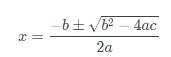
taxformulaSo should we see the taxation algorithm for large firms where x is the taxable amount, b is revenue and a is tax deductible options, you know that it is not just the regulations of algorithms she got wrong.


I’ll let you decide.


Leave a comment

Filed under IT, Law, Media, Politics

The double sided blade

I stumbled upon a situation last night that gives food for thought. You see, I am the first one to give way to those who are growing an actual business, those who are there to be true captains of industry. Yet what defines a captain of industry nowadays? What if the person is stated to be an entrepreneur, investor, and philanthropist; yet, the information given to us makes that person a mere oppressor, a borrower and an antagonist or opposer? In this case I am talking about Jeff Bezos, the man behind Amazon. Multi billionaire before he became half a century old, making him more successful than Bruce Wayne without the cape and the niceties.

So where does my view come from?

That is an important part, because other whiles it would just be envy, which in my condition isn’t entirely untrue either. The part that set it off yesterday was in the Guardian (at https://www.theguardian.com/technology/2016/dec/11/amazon-accused-of-intolerable-conditions-at-scottish-warehouse). We could agree that the subtitle is merely an emotional part, yet the consideration it gives when we read ‘Willie Rennie claims workers are paid so little some camp outside warehouse in tents to cut commuting costs’, depending on the distance, we can agree that alternative solutions would be found and it is not up to an employer to decide how any employee is deciding on their budget.

Yet when we see the following elements:

  1. All permanent and temporary Amazon workers start on £7.35 an hour or more and earn at least £11 an hour for overtime (The new national living wage is £7.20 for workers aged over 25).
  2. Amazon has been accused of creating “intolerable working conditions” after allegations that workers have been penalised for sick days and that some are camping near one of its warehouses to save money commuting to work.
  3. A Sunday Times investigation found that temporary workers at the warehouse were being penalised for taking time off sick and put under pressure to hit targets for picking orders.

So are my impressions founded? You see, point one gives way that the Amazon is acting within their right and as such Amazon does nothing wrong, as stated before is there an issue as we see point two? There are clear labour laws, you get a number of sick days, but you need to build up that right, so again is there a wrongdoing? Item three repeats item 2, giving additional questions when an article seems to rehash a point, yet in addition the requirement for targets and pressure are a clear issue. The question becomes are these targets realistic? If they are not then there is an issue.

Yet this is not the only side in all this. In addition there is the part we would have seen in the Daily Record (at http://www.dailyrecord.co.uk/news/scottish-news/politicians-union-leaders-urge-snp-7235948), more important that this news was from January 2016, so the issue is not really new. The issues in that part is: “Rennie clashed with Sturgeon over the issue at Holyrood on Thursday, highlighting a £1 million grant given to Amazon in the past year alone. The UK arm of the business paid just £11.9 million in tax in 2014, despite taking in £5.3 billion from British shoppers“, which implies that a company making £5.3 billion, only pays £11.9 million in tax in 2014 and got a £1 million grant last year. Now, we can see that three could be an issue, but where are the direct links? You see, Revenue is one, profit is another and after that there is taxation. We can put a straight argument that 5 billion would require more than 10 million in taxation (11 million minus a grant), yet what possessed the giving party to give that 1 million grant? Why was only 11 million in taxation paid? None is this reflects on Jeff Bezos, this is not a failure of the maker of Amazon, but a failure from the governing parties giving out cash where the requirements in light of revenue was nowhere near any justification of any grants, especially when we consider Forbes, who stated that Amazon boss Jeff Bezos ‘added $20 billion to his net worth over the 12 months through late September 2016‘, so, based on how much revenue and profit brought the increased net worth? The newspapers are extremely non-revealing on this. Now consider the two sources, the fact that some was known for nearly a year, we could ask questions from these agencies hiring, we could ask questions at the HR offices of Amazon in the UK and Scotland, yet in all this, were any errors, any transgressions made? Amazon is a business and its concern is profit plain and simple. The fact that according to the initial part that Amazon pays £0.10 per hour above a living wage, we could consider the firm to be Scrooge like which is not a crime! Now we need to look at two elements. The first is the definition of a living wage, which is regarded by several sources as ‘a living wage is the minimum income necessary for a worker to meet their basic needs’. Yet what are basic needs and where does that end? In addition we should consider that the living wage should be substantial enough to ensure that no more than 30% of it needs to be spent on housing. Which is interesting, because that is nowhere near realistic in many places. In larger places, we either need to consider growing cost of commuting or consider that £144 pw is not the cheapest in Scotland and not that sizeable. So at a working week of 40 hours the rent is 48%, implying that the living wage is far below expectations or realism. The only way to get near a living wage is to work a full day extra in overtime, yet in all this the cost of living is not considered, so we have a CEO who is getting demonized here (by yours truly), yet what wrong has he done? From the parts I can see, there seems to be enough evidence to see that there is no wrongdoing on the surface, yet we can in equal measure debate whether he can call himself a philanthropist. If you are spending money on one side by being a ruthless almost cutthroat like business man on the other, they should be cancelling each other out. Is he validly under the same conditions really an investor? If he is using the guise of tax deductibility, is he actually investing or is he relocating funds that were due to HM Revenue & Customs? Relocating some (read: most) of these funds so that they benefit the ‘personal goals‘ of Amazon. Is that really investing? Lastly there is the title of entrepreneur. If we accept the definition: ‘a person who sets up a business or businesses, taking on financial risks in the hope of profit‘, well Amazon has been here for a while, so setting up? We could see it in light of franchises, does that count? And as for taking on financial risk? With the league of tax write offs and grants, should he be allowed to call himself an entrepreneur?

So perhaps the titles or entitlements given to Jeff Bezos are no longer valid, is that a valid view, does this warrant demonization? Off course is does not, because that would be unjust. Yet, we seem to focus on the ‘stamps’ we are giving a successful person, whilst in the cold light of day we overlook the non-repayable funds given to Amazon. In addition, when we look at the independent (at http://www.independent.co.uk/money/tax/revealed-amazon-earns-more-through-government-grants-than-it-pays-in-tax-8617919.html), where in May 2013, the following was given to the public: “Amazon paid less in UK corporation tax last year than it received in government grants, its official company accounts have revealed – sparking condemnation from MPs around the country“, which happened in 2013. We now get another side that is not with Jeff Bezos, but with parliament and elected officials. Yet that news did not really make it to the massive forefront (other than Willie Rennie who seems to shout for attention). You see, if I can be harsh on Jeff, I need to be equally be harsh on Willie and in that regard the fact that the Amazon issues have been on the papers for the longest of times, implies equally that there either is no political issue, or that the most in charge have not committed to anything towards the workers who feel wronged, yet are any laws broken? That is the issue we need to address. What is valid and what is of concern is the labels we seem to bestow on people. For what reason? We can argue that enabling through tax laws does not make a person an investor and the £5.3 billion gains against £11.9 million taxation is equally incomplete more important, how much was exactly invested by Amazon and where? Even if we accept certain labels and certain values, we need to equally accept that the old values entrepreneur, investor, and philanthropist are no longer what they seemed to be. In a world of constants, we see the change and evolution of entitlements on a nearly daily basis giving us less to hold onto and even less than that to consider as the stability of an impression in a constantly changing world.

How is that fair on those who truly were philanthropists, investors, and entrepreneurs?

So until the true investigation, if it happens at all, Jeff Bezos might not be seen as a borrower, an antagonist or opposer. Yet at this point there is in addition nowhere near the clear evidence available to see him as an oppressor, that part would only be seen in the eyes of the workers who decided to stay in tents, to avoid travel costs that does not make him an oppressor. In addition, what scrutiny have the agencies been going through? The smallest quote in the Guardian stating: “Staff have to pay to catch an agency-provided bus to the Dunfermline site” gives us the part where we need to ask how much people have to pay and was this clearly communicated to them in the beginning?

In the end, we need to take a look at what is going on at the Dunfermline site. Is it merely Liberal Democrat shouts for attention via Amazon?  If not, considering that this has been going on for quite some time, how have officials failed and in addition, who signed off on the grants for Amazon? All valid issues and without clear answers we can only see Jeff Bezon as a shrewd business man, which is not a crime and not a valid push for demonization of him in person.

And the hidden messages we now see regarding the whistle-blowers and Google taxation? The independent is giving a nice line, in between the lines of Amazon, yet why is this not seen in a clear tax audit? If there is an issue not reported or not seen by Ernst and Young, it means that either the tax laws are not clear enough, or that Ernst and Young is shown to be unable to do its job. This would be a valid discussion with PwC, yet is there any clear indications with E&Y? And who were those whistle blowers? What many are ignoring is that the benefit of a global company means that you have global options, which is the clear benefit that Amazon is using as well. The fact that politicians have been unwilling to make changes to tax laws makes them negligent and possibly incompetent, not the large corporations, a part clearly not seen in any of the articles. So like Ed Balls, we see another politician shouting for the limelight, yet is there clear wrongdoing?

It seems that this is sidestepped by several parties and when we consider that the sources I mentioned are news sources, perhaps they are missing the plot too, but that just a small speculation from my side. We look at a double sided blade, Amazon and Google alike will slice from the revenue on one side, yet they will in equal measure slice from entitlements within legal limits from the other side of the blade because the option was given to them. Given to them, not taken by them, there is a clear difference and politicians are at the core of that largely diminished roast being presented.


Leave a comment

Filed under Finance, Media, Politics

When games become real

It is one thing to stalk a person, sneak up on that person and slice his throat, it is not that big a deal when we do this on a console or PC, but when we do it for real it is murder, whether targeted killing or not. It is warfare against most often a non-combatant. And when it is simple murder, we are outraged (or we should be) and if the rules of evidence are clear and fulfilled you go to prison, unless you are in the Netherlands and you kill a child and two grandparents whilst speeding, in that case you get 120 hours of community service (at https://www.youtube.com/watch?v=P-Q0Mg9tioM) . So, at times things are not equal, that has never been a surprise.

Yet, what happens when the lines are blurred? Let’s take a step back to 2014, after a year of delay Watchdogs was released. It was over hyped in many ways, yet it was not awful and it was as we needed to recognise an entirely new game, a new Intellectual Property in gaming. So like many, I thought it was a flawed game, but it had potential. So, I kept an open mind for the sequel that was released a week ago. Well, I have spent enough hours of game time to form an opinion. Graphically the game is passable (read: awesome in some ways) and as an open world it is pretty impressive. I think that San Francisco as a choice for several reasons was the deal breaker that took the game from failure to optional success. I reckon that in another major city this game would not have worked. Whether you visit Nudle (read: Google), whether you see Pier 39, the Rock or just Jack London Square. The game gave me the feeling that I was actually seeing San Francisco, and let’s not forget that big bridge!

As an open world it is one of the best released open world locations. I think Ubisoft did what I hoped it would and as such, the jump from Assassins Creed to Assassins Creed 2 has been equalled from the stern Altair we went to Ezio Auditore. In Watchdogs we went from the driven Aiden Pearce to the data tyranny opposing Marcus Holloway. This African American is more than just likeable, like Ezio Auditore he is the good hearted scoundrel we all wish we were. In a similar way to AC, this game is also a large leap forward. They are not there yet, because the game still has issues on several levels, but overall the game is more than just playable. In the first game, I quickly grew a dislike to driving, that feeling was not present in this game. Traffic was a lot better, less annoying (apart from some Taco truck, which might be an inside joke), the game has a much better setting towards stealth, it could improve in many ways, but it is a lot better than it was. Control of Marcus is still a question in some specific cases, yet we might digress too much towards Assassins Creed and this is no Assassins Creed game.

What is above all others is the story, this one is sublime in several ways. Those stinkers (read: level of envy) at Ubisoft Montreal did something brilliant. Even though the game comes with disclaimers of fiction and coincidence if too alike, but they did manage to pull a rabbit out of a bow tie. You see, the world we move towards as per 2017 is in the game. It will not be  like the game in reality, yet when we see the data gathering that is happening now and when we see the 5G world as it is to happen (at https://5g.co.uk/guides/what-is-5g/), parts that were described in my earlier blog ‘Non iudicium tuum‘ (at https://lawlordtobe.com/2016/10/18/non-iudicium-tuum). We need to get an eerie feeling, you see the accusations for 2 years on Facebook selling your data/information, and we see mentions of Google doing the same.

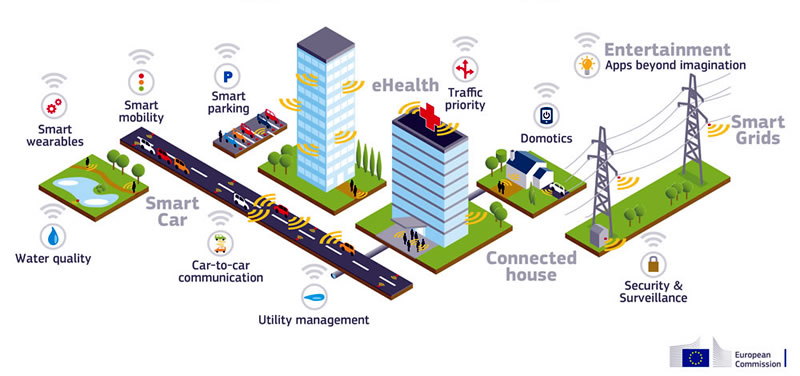
We see these accusations and the opposite defence by both that this is not happening. It is not what I believe, because I do not think that this is what is exactly happening. Yet, when Facebook offers the deepest and most granular population for your advertisement, it seems to me that it has access via portals to offer to advertisers a selection of people. Google does the same, it offers a portal for advertisers even though those advertisers will never know the identity of the individual; their advertisements go to the most likely interested people. So data is not sold, it is a semantic on how people are approached and by what means. This reality will grow over the next 5 years, especially through 5G and that is the group watchdogs 2 is now dealing with. You see, the reality of 5G is offering Smart mobility, domotics and Utility management. It also offers smart security and surveillance. Yet what Watch dogs 1 and now 2 in a larger extent addresses is that one man’s smart is another man’s stupidity. So is the world we move to as in the games or not? You see, the reality is catching up to the games and this game is showing the dangers of no privacy. The issue in reality is seen to some extent (at http://theconversation.com/there-really-is-a-link-between-your-facebook-posts-and-your-personality-68186), where we see “Privacy campaigners this week applauded Facebook’s decision to block big UK insurance firm Admiral from using young people’s social media data to help set their car insurance premiums. But this is just the start of a debate over the use of social media information for such purposes“, yet this the reality we faced for a while. The event seen in November this year happened in real life less than a month before Ubisoft voiced it in its game where people saw premiums rise because of life choices (like ordering pizza) and a mere 10 months after I mentioned it in ‘Double standards, no resolve (part 2)‘ (at https://lawlordtobe.com/2015/01/26/double-standards-no-resolve-part-2/), where I stated: “So if we do the following math 32% of 70 million (falsely assuming that they were all American gamers), then we now get the number of people confronted with a $144 a year additive. So in one swoop, this data set gives way to an additional $3.2 billion for insurance fees. Data is going to be that simply applied sooner than you think“, and guess what, UK insurance firm Admiral did try just that. Yet as we read: “Facebook’s decision to block” is just a shot across the bow, because when the genie is out of the bottle putting him/her back is much less of an option and data tends to get out into the open. If you doubt that, just ask the Mail server IT person of the Clinton family, he can assure you of that.

In this now, we get the point when gaming and reality get uncomfortably close. It is one thing when we play call of duty where it is just guns, guts and adrenaline. The reality of war tends to hold us back from doing stupid things, yet what happens when the reality is merely copying a file, how will we stop acting when we have misguided ourselves into believing that it is just a harmless file? When we see: “The Admiral case could well be remembered as just the beginning of a tortuous back and forth over using digital footprints in financial modelling“, yet the danger is seen in other ways too, yet it is not voiced. We pay a certain premium for a certain risk, yet it takes years to get a discount for loyal non claiming clients. It only takes one algorithm to raise it by 10% plus on collected data that is alleged of personality not a given and as such we get to pay for being social in many ways. This is a clear case of worry at the very end where we see “As long as companies use our data transparently and with our consent, why not allow both parties to an insurance transaction to rely on what appears to be very accurate data?“, because it might give a $10 relief for a healthy young person. It will cost anyone who had been in an accident an additional $200 a year and we have decades of data that these companies are run by greed driven people, board members who do want their 8 figure bonus and giving discounts is creating a gap of getting that bonus. Meaning that we sell our neighbours away for a few dollars whilst the neighbour is cut off from health insurance because he fell and hit his head, that is what the message on Facebook said and it did not come with an admittance or with evidence. That is the danger and Watch Dogs 2 shows that in clarity as you move from hacking router to hacking router.

The 5G guide gives us: “By 2020 it’s predicted that there will be 50-100 billion devices connected worldwide, many of which will need continuous data access“, which is a low estimate. Here at University I see people with a Laptop, a smart phone, some with additional Tablets and music stream devices. Now some of these elements overlap, some are used strictly separate, yet in all this the low estimate of 50 billion devices can easily be surpassed before 2020, and connection are growing in other ways too. Most TV’s are now Android enabled and connected to the home network, so are PC’s and consoles, so the average family will have 8-12 devices connected. That whilst the RFID world is only now starting up within the domestic household sphere, so this number will drastically change soon enough. This is what the Microsoft Enterprise Mobility team advertised today “At least 60% of security breaches start with employee credentials getting into the wrong hands. With modern mobility and bring-your-own-device solutions, protecting your data starts with protecting the identities of your organisation’s employees. That’s why we’ve made identity security central to Microsoft Enterprise Mobility + Security (EMS). Discover how focusing on identity can help make your organisation more secure“, I am not questioning on how needed this is, because mobile security needs to be on the top list of any person, whether as an employee or as a personal reason. You see a system that requires over a 100 patches on an annual basis has issues. Now, we need to accept that this was always the case and a system this big will always have flaws, yet when we see the level of issues in an age where non-repudiation is almost more important than digital evidence gives rise to the reality we face and the games we play.

Are we an algorithm?

Are we real is the question we should ask and whilst we play we are not the real us, we play to be Marcus Holloway in San Francisco, Ezio Auditore in Venice or Geralt of Rivia in some other place. We are seeing that Marcus Holloway is showing us a world that is the one we seem to live in and that should be a little more upsetting than it actually seems to be, because we remain in denial. Although, all things being equal, me working in a place like the Delaware data farm would be a dream come true. Who would not go weak at the knees seeing the tens of thousands of data servers all streaming data? The game story gives us several parts, many I will not speak here because I do not want to give away the game, it is so much better when you experience it for yourself, but the truth will hit you as it remains close to the reality we now see in newspapers, although without 5G none of it can come to pass to the degree we see. The question that we are faced in reality is that as we are valued and weighted by our social interactions, have we been minimalised to a mere algorithm, which then leads me to the question are Sociopaths soon the only people valued correctly? It certainly seems to be the case when we consider the elements of the Admiral insurance scenario. The SK Telecom white paper on 5G (at http://www.sktelecom.com/img/pds/press/SKT_5G%20White%20Paper_V1.0_Eng.pdf) goes as far on page 40 on combining Business Intelligence (BI), Network Intelligence (NI) to form within IoT (Internet of Things) to form Service Intelligence (SI), that whilst we now get one of the earliest official papers to set SI as a “It knows me better than I know Myself“, this will vamp soon enough as they state it themselves as ‘Telco Asset-based personalised service‘, which is pretty much the founding father of Mobile based Software as a Service, based on collected data. It is a stretch to call this a personal data based service level agreement, yet, I wonder how far off I am when I do that. In addition, at the IP conference last week, I predicted that by 2022, the total amount of Trade Marks will have grown by 300% on a global scale. 5G will be driving new versions and new iterations of corporations, many who missed the initial digital age boat, those will run like crazy to not miss a second of the next wave, because those who do will be corporations that become non-existent. If there is one part that Google AdWords and Facebook advertising are proving is that granularity will become the next key in those who advertise, although there is a case to be made that the current data at present is not voluminous enough to currently completely rely on this advertisement track, implying that this path seems to be less than 18 months away.

This is where we are going and Ubisoft was more than a little brilliant implying darker versions of reality in this game, especially in the San Francisco light of living, where freedom of identity is everyone’s Personal Jesus. So in light of that, the game does hold up, due to the improvements and in larger pat to the stories that connect to one another in the game, the fact that some elements are taken from life almost here is just the icing on the cake making for a sweet gaming treat.

So even as the corporate world at large has been ignoring non-repudiation as a bad taste, we see that 5G is no longer making that an affordable option as the collected data is  going to be key in the time of personal services. Don’t take my word for it, Edgar Allen Poe is stating the same thing on Facebook, as did Shakespeare who gave me his fax number (bonus points for those who know what film that was from). In an age of SaaS, SI and service personalisation’s, we will see a dependency on identity and more important the linking of certain elements, which also implies that messing with that part will be the prankster’s new ‘O’ (for Orgasm), giving non-repudiation a very new light in security requirement on a level we have not cared for before, although, the wrong people have not been not-caring on that requirement for a little too long. So as we realise that there is a reality to these things, as our reality caught up with the games we play, we might wonder where Marcus Holloway is. So Ruffin Prentiss (at @RPrentissIII), you need to get your ass in gear and save millions of potential victims from themselves soon enough!

smartfridgeNow, we know that an actor might not have the skills to do what is needed, yet in all fairness, some actors became president, so the call is not that far from centre, in addition, many require decent degrees to get a gig nowadays, not just in communication. The reality that Watchdogs uses is based on real issues, some providers offer ‘zero day exploit protection‘ at premium price, so when we saw “By 2020 it’s predicted that there will be 50-100 billion devices connected worldwide“, how many will have been engineered by the lowest bidder? How many zero day exploits will we be confronted with? Now, many of those devices will have no real information, but what about that ‘intelligent fridge’? Remember Admiral Insurance? What happens when he has that juicy list of your fridge? The fish fingers (optional with custard), the Pizza, all those sugary drinks. What happens when your parties become the health risk you advertised in your fridge, what happens when your health insurance premiums start going up? That reality is not that far-fetched, because Facebook isn’t giving that data at present, does not mean that Admiral Insurance et al cannot get their fingers on the data it wants and needs to spike premiums. That is the issue we all face. And the image of the ‘smart’ fridge is already 3 years old, implying we have come a lot further in less time. The reality of growth is here, but so is the realisation of personal secured privacy data and it did not require a game to give that reality to us, but Ubisoft is bringing this story in an excellent way, a way that should give cause to realise that our private needs of safety are not being met and we are giving away whatever privacy we had much easier and freely than we admit, because we do not realise what else can come of it.

Even as Google is calling this ‘the year of mobile’, there is every clear indication that 2017 needs to be ‘the year of personal data safety’. I wonder how many people realise how little they have done for themselves in that regard and if you have a PC or Console, Ubisoft has a game that can help you figure that part out, even though it is still a little futuristic for now.

Leave a comment

Filed under Gaming, IT, Law, Media, Politics, Science

The risk of androgynous automation

Today we see another message, another prediction and another approach to make people nervous. This time it is a combined effort from the fields of Oxford University and Deloitte, they find that ‘77% probability of ‘repetitive and predictable’ roles being automated‘ (at https://www.theguardian.com/society/2016/oct/25/850000-public-sector-jobs-automated-2030-oxford-university-deloitte-study).

So how true is this?

Actually, there is a lot of truth in it. The truth is not just a given, it is an essential need. Yet the headline ‘Study says 850,000 UK public sector jobs could be automated by 2030‘ is a problem, not one of disaster, but one of opportunity possibly missed. The article gives us a few things, including links to the full report (indirect), which is a good thing and let’s be honest, Deloitte is no PwC; they stand miles above that group of Excel users. My first issue is with page 2. Not because it is incorrect, but the difference from my view is as I see it more than semantics. You see, they state “eliminating the budget deficit – into an era of parallel challenges as it moves towards Brexit“. I believe that Brexit will enable over time a speedier recovery of the deficit, it will be no picnic, but it will happen. Which is why I in earlier writing opposed the view the independent had. They wrote “Britain’s largest banks are planning to move business overseas due to uncertainty over the Brexit process, the head of the British Bankers’ Association has warned“, where my response in a decently diplomatic tone was “So, let them fuck off! The moment they feel the initial 2018 collapse of the Euro and the US Dollar, which will be voiced as ‘our currency will face a temporary contraction of value’, then they will see the cost they face and the revenue they are now missing out of. So, feel free to consider to return after learning that mistake under conditions of massive administrative fees for consideration of inclusion into the UK economy“. This is not an empty view, when the UK returns to strength, those moved away will see contracting economies in Germany, where the Deutsche Bank will be desperate to retain business out of fear of the damage of ‘written off’ collapsing corporations. France will be in a similar state, but there Crédit Agricole and Natixis are the Powerbrokers and neither will consider some ‘grocery bank’ that is relocating to ‘new shores’, so these moving banks will not be too welcome there. And several other nations are in a similar setting. So what is left? Italy? Greece? Good luck with that idea!

So as the UK is facing new issues and new challenges, Deloitte is showing that it is not all roses. The report shows on page 12 “The OECD and IMF views are backed up by OBR analysis that suggests spending on investment, public services and benefits are the interventions most likely to provide rapid economic boosts while providing a platform for medium and longer term growth“, this illuminates an earlier issue that has been mentioned by yours truly (aka: me) more than once. It isn’t just the £11.2 NHS IT failure the UK Labour party gave its citizens. The bigger issue is that governments at large have had a failing grade in managing such projects. Over micro-managing made these projects too massive and in the end no longer feasible or realistic. If this is the path, than it needs to precede an altered adjustment in procedures on how to manage and set these projects. The issue we see that still is required for the NHS, also clearly shows that the political interference tends to be a hindrance rarely a solution. However, the political part cannot be removed, but the entire setup can be altered in another way. A clear definition of what is required, that would after this point be scrutinised by proper IT specialists working for the government (to keep that part of the costing down), only then when that part has been dealt with, can the project move into a new field. If this was the Law and Mental Health, it might be best phrased that the government needs an IT version of a Diagnostic and Statistical Manual of Mental Disorders (DSM-5). Such a manual would need a data requirement part, and application part, a data networking part and a security part. Until such an approach is made, the need that we see, will end up being a massive expenditure towards the Exchequers chest, with the risk of no result and no alternative. These paths make sense in two ways. In the first there will be a lot more clarity on what is requested, required and delivered. There will be less contractual mud and as such whomever took the project will be responsible for the delivered bad boy and it would show a clear path of adjustment and repairs (where needed).

There is even a new side in this, it will shape the required need of technical universities. Because as they become involved, delivering the hours and manpower towards these projects, the costing will be reduced, the Universities will also gain an income and their students would end up with a partial career and years of work and subsequent income. You see, the need to move away from these ‘conceptual consultants’ and selling concepts not products is an essential need to make it all work. There is even an additional benefit that larger IT corporations will lose their grip on governmental budgets and it will serve a wider audience, a change that has been overdue for at least 10 years.

The report gives on page 20 the public’s attitude. My issue is number 2. “More people expect public services to get worse because of Brexit“, I am not sure if that is complete. It is not incorrect, but the point of focus would reset really quickly when we consider the Guardian where we read “Deloitte’s previous work has shown that all sectors will be affected by automation in the next two decades, with 74% of jobs in transportation and storage, 59% in wholesale and retail trades and 56% in manufacturing having a high chance of being automated“, any automation where we see the change from personal towards an automated androgynous system, tends to cause waves of rejection and stress. Even today, we still have an automated irritation when we hear ‘press 1 for sales‘. Until we can upgrade these systems into a much better evolved system, automation will fluctuate into people seeking other avenues in acquiring that what they need. In addition, there is still an aversion to automated sales in some areas as distribution misses the quality marks the recipient demands in some cases. Now, we can all agree that there is plenty of evolution in this field and the evolution is growing in many directions and in long before 2030 we will have systems that are vastly superior to the systems we have today, that is the way the beast tends to work. There is also a given that we cannot yet predict how that will be in 5 years, yet all this requires a solid foundation between sales, services and facilitation/distribution and that part is currently still missing.

Now we get to the part that is a little bit of an issue with the report. We see that the top issue is ‘Better public transport‘, but better how? We see it on page 21 of the full report, so when we see ‘What things would you say would most improve public services in your area?’ Here, I miss a part where we see what the audience now feels is missing or failing. Is it prices, the amounts of times the public transport comes in, how busy it is (no sitting options), you see, they all come with extra costs. More busses means more costs. The solution that seemingly addresses all three mentioned, but is that the failure, the flaw or is it something else? I think that this issue remains subserving to the public’s personal issues ‘Poverty, inequality and low pay‘ as well as ‘Housing‘, which is all about the quality of life for most people. How to address that part is also an issue and automation does not address these policies in any way. Which is respectively 20% and 18% of an asked population of 1099 adults, which in my view is a population way too small to set this ‘State of the State‘ to. For a decent level of reliability, especially as the UK is a mere 65 million people, having a response quota 5,000-10,000 on a national level would have been an essential first. If the results were weighted towards the UK demographics, than it is likely that this report will have additional ‘flaws’, making me wonder who signed off on the requested paper?

There is another side the Guardian gives “However, in contrast to the doomsayers who predict mass unemployment, the firm has argued that over the last 140 years automation has created more work than it destroyed“, I am on the side of Deloitte here. In addition to creating more work, from the issues I raised earlier when considering that 10%-20% is moving towards retirement, the new jobs that are brought will be largely long term jobs and as the setting from tertiary IT education focusses on the governmental automation needs it already has as well as those we will likely see over the next 5 years, the overall quality of the workers in this field could rise almost exponentially when set this against the prepared workforce in the last 10 years. The result of better and more focussed workers will also increase the curve of automation as well as the quality of it. Part of the new data world is discussed on page 34 of that report. the quote “A police and crime commissioner compared data security challenges in the public sector to those in banking, concluding that banks “have secure information and have got away with it”” reads a little weird, yet the foundation of it is a requirement factor that will grow immensely. That field will grow in two ways. The first is the growing field of non-repudiation, a clear register that a certain person accessed certain data and only that person could have done it. This field especially if a cause for concern because there is a gap in technology here and especially in the case of NHS data, that gap needs to be filled (as well as several other fields). Should you doubt that, or prefer to trivialise this, then look towards Ashley Madison, the Office of Personnel Management, Anthem, Hacking Team and Premera. In effect totalling the endangered personal details of up to 150 million people. And this is only the hacks of 2015. When we see the upcoming move towards domotics, the overall danger of personal data getting out has the option of growing the number of people exposed by 1000%, basically a lot more than the complete UK population, at that stage even the sheep, sheepdogs and pony’s on Shetland could find their personal details online. This industry will grow, with a large club of international career opportunities in IT and the growing niche of Data Security.

In the end, we can agree with the numbers, or we can disagree. No matter how the meat is sliced, the recommendation on page 49 are in the end what matters. That part reads a little too diplomatic, but in all fairness they are points that count. Yet, as I personally see this, especially when set against page 2, I am missing something. You see, in my view, there is an item 6. I would state “This state will need to grow into a different dynamic (Government, Non-Profit and Commercial), it requires to grow its government policies by actively engaging and hiring the final year students into its governmental workplace and make them part of the IT evolution“.

It is my view that corporate needs will always exist, yet by preparing these students, graduating them and for them to adhere to corporate policies as they sell their innovations to government is all good for those corporations and I am not against that, because they will get a massive dose of that throughout their careers. There is nothing wrong by having these places of education create part of the engines of solution for the UK government. It falls directly in line with the thoughts in recommendations 2, 3 and 4.

The paper is a lot more than just about IT, even though IT takes the forefront here. When we look at the Guardian quotes “Interactive roles, which require “a high degree of personal interaction, including jobs such as teachers, social workers and police officers”, face a 23% chance of automation“, “senior staff in “cognitive roles that mostly require strategic thinking and complex reasoning, including finance directors and chief executives”, 14% have a chance of being automated” as well as “but the number of health service staff in this “interactive” job is expected to fall to 266,000 by 2030“. This grows another side in the IT business. Over the next 10 years we will see evolution and change as we see CRM systems and the interpretation of ‘What is a CRM system?’

The interpretation of ‘manage and analyse customer interactions and data throughout the customer lifecycle‘ has gone through massive change due to places like Google and systems like Facebook. This is an ongoing path and the inclusion of 5G and domotics over the next 5 years will create even more waves. It is starting to be almost essential that governments at large (not just the UK) are grabbing these changes by the proverbial balls before we see another iteration of lagging adapted technology. It is not the requirement to be ahead, but to be ‘inclusively ready’ will turn the tables on many issues. To be ready to include within the current technological iteration would give an additional decade of data and opportunities, whilst not adhering to these large changes could become increasingly costly over time. In an age where we move towards automation the need to be ahead is not the most essential one, it is staying behind where the danger lies. In that regard, you end up having to adhere towards whatever the commercial technologist brings, instead of shaping technology in ways where it is most useful for you.

A lesson most have learned the expensive way in this generation.

If there is one part I have to disagree with, than it is “Our wider research on automation also shows that while jobs are displaced by automation, new, higher-skilled and better paying jobs are created as a result“, the issue is not the need for these people, but as governments are no longer able to afford certain pricing plans (as those commercial managers hope they could price them at), it becomes a market where the cheapest provider is willing to offer it on, meaning that junior staff gets to be under higher scrutiny for less money, in a place where unemployment is relatively high, these hiring managers will get away with it. I reckon that the market will positively adjust by 2021, but that is still 5 years away. Unless you are a niche specialist, it will be your fate, but overall the quality of life would start to go up by 2019 (due to rising cost of living, aka rent), that is if you have the right degrees.

A slightly gloomy picture that is absent of doom and still a lot better than the issues the EU population overall is facing over the next 3 years.


Leave a comment

Filed under Finance, IT, Politics

Non iudicium tuum

This telling is a little overdue. You see, when you are looking at one aspect, when the aspect is blended into the frame, it tends to be a larger puzzle to decipher where the colours have ended up. You see, when you start the painting, you work with blue, yellow and perhaps a little red. So before you know it, you have in addition purple, Green, Orange and at times brown appears. Yet, how much of yellow is in each of the blends? Do not think it is a black and white path, it is tainted in contrast and the one trying to decipher it all is in the largest of dangers by letting his or her ego speak in the extent that the amount of yellow that made green is used. It isn’t always science, it is at times art. This is the path of intelligence analyses and whomever is pointing its finger at a mere correlation table of SIGINT (or Business Intelligence) will for the most never have a clue what got themselves into that number and they end up painting themselves into a corner, the deadliest of actions in any given analytical equation.

So when I initially got to the fact that the foundation of the Huawei revenue was down 4.25%, I was looking at the base of it. You see, like the blending of colours, Huawei is also getting blended. Samsung would be the strongest indicator why their profits are up by a fair share. In addition as Apple disappointed to the smallest equation is an equal measure of the impact, yet Google is about to hit the revenue ball out of the park with the Pixel and Pixel XL, where it now seems that filling the initial US and UK orders is no longer feasible, the demand for this communication jewel is crushing all expectations raising the bar by a sizeable amount, something we have not seen since the early days of the Apple iPhone.

You see, in July the Financial Times reported on operating margins shrinking, even though revenue surged 40% (for Huawei), the quotes aren’t too ‘informative’, you see the answer isn’t always easy when a brand is global. Yet this quote will help “But while revenue surged, picking up from 30 per cent growth in the same period last year, Huawei’s operating margin shrank from 18 per cent to 12 per cent, the privately owned company said on Monday“, yes the revenue went up by a lot, mainly because over the previous year Huawei was very aggressive offering the P7 at such discounts that in its league it was almost the only choice to make. Other models were sold at very sharp prices, giving shoppers clear reasons to select something that seemed too good to be true. The rest at the Financial Times is pretty spot on, but incomplete. (at https://www.ft.com/content/12a427e2-5232-11e6-befd-2fc0c26b3c60).

It is the next quote I have an issue with “Sabrina Meng, Huawei’s chief financial officer, predicted the strong sales would continue through the year: “We are confident that Huawei will maintain its current momentum, and round out the full year in a positive financial position backed by sound ongoing operations”“, as stated before, people are getting more and more clued in on what is required in a smartphone, as they went the way of Samsung and others in limiting what was available the market is slowing down for them, it will slow down faster and faster as they ignored to comprehend their mobile customers. The lesson Apple knew and Google comprehends at presale is the reason that the Huawei and other markets will slow down even further. Don’t get me wrong, they will still make a profit, but their mobile share will take a hit (when we exclude the Samsung shift). By listening to the wrong analysts and not realising that their production path could have been optimised by not giving in to fragments, the margin was kept low. This is a choice you can make, and it comes with consequences.

Huawei is following Microsoft, Motorola, Sony and a few others in this. And as we see the news in the corner on how others are following the P9 dual lens, they are all ignoring the main element in all this, it is storage plain and simple! That is, for the consumer users, in addition, when we see Ericsson dive deep down into a 94% drop, we need to consider the quote that IT News gave (at http://www.itnews.com.au/news/ericsson-profits-plunge-94-percent-439317) “Acting CEO Jan Frykhammar was confident Ericsson could fight back, noting it had faced a similar situation in 2007-2009 when it was waiting for demand for 4G technology to kick in“, you see, ‘waiting’ is the issue, you either take the lead and jump or let the revenue slide by, that was the consequence. They gave up the mobile smartphone a long time ago, as there was no way to compete with the market. In addition, Ericsson has been dropping the ball on a few telecom fronts.

I think it is relatively safe to state that there is a lull in the Telecommunication market (in general). The final quote “Our result is significantly lower than (what) we expected, with a particularly weak end of the quarter, and deviates from what we previously have communicated regarding market development,” said acting Ericsson CEO Jan Frykhammar” this sounds like an answer, yet it is not.

Is he showing that he had no way to forecast what the market was doing?
Is there no correct focus on ‘market development’?

The Ericsson case is showing us that there is more than one issue. In the same state we have to see that Huawei is a lot more than just mobile phones, as it is with Ericsson, yet as I personally believe it to be, some places aren’t thinking through, at l;east not to the extent that they should be thinking it through. They are trying to get back to the ’98 time when they were getting rich by selling concepts. I see it as backward thinking. Ericsson states on their website “Opportunities in 5G! We asked 650 executives from 8 industries how they use communications technology today, which use cases are likely to dominate their industry, and what business reasons are driving them to move to 5G“, which is not untrue, but as we see the PR machine waking up 4 years early on the biggest opportunities that are eligibly coming, whilst there are still 4 general meetings and as I see it no less than 8 shareholders meetings, so focussing on the now is extremely essential (don’t you agree?), this is why Ericsson got to drop 94%, the ‘now’ is not covered and we only have yesterday’s technology to compare it to. If you wonder about 5G, look here:

https://5g.co.uk/guides/what-is-5g/

what-is-5g-euroWhat is important is “Huawei is planning to launch the first 5G pilot network with its partners in 2018. Interoperability testing is to be completed in 2019 ahead of a commercial launch in 2020. Ericsson is planning to demonstrate 5G at the Winter Olympics in South Korea (as is Samsung) and at the World Cup in Russia, both in 2018“, this sounds nice, and it actually is, but consider that the devices that need to be there are not created yet, so they are dealing with old tech that is soon no longer interesting, whilst todays needs that shows clear forward momentum thinking is not shown by either and relying on 32GB mobile devices is definitely not it. So the consumer at present is looking at buying at least 2 more mobiles in the next 5 years, so having one now that last 3 years is a massive requirement as I see it. In addition, lowering the upcoming threshold is an initial requirement. The image on that page, shown here, is the first step. The image shows two elements. In the first we see ‘smart mobility‘ and ‘smart wearables‘ in the second we see ‘domotics‘ and ‘Entertainment, apps beyond imagination‘. This gets us now back to ‘Viewpoint to a point of view‘ (at https://lawlordtobe.wordpress.com/2016/10/05/viewpoint-to-a-point-of-view). Google wasn’t just ‘on the ball‘ they are now leading the game and are the new game deciders in the field where everyone wants to play. In that presentation on Google Home they showed to be active in all four elements, and they are now leading in at least two of them. That is the part Huawei ignored. And as so called 2018 G5 partners they had the option to lead the field, they just decided not to do so. By using the initial Apple approach, the Pixel and Pixel XL offer the 128 GB solution for $150 more. Meaning that your phone could last you until 2020 and only when the 5G requirement is actually needed, the current Google solution will give you some of what 5G is supposed to offer, so you will only be upgrading the centre of the hub of your domotics, namely your mobile phone. The rest will most likely already be there, so that is why we see the shift.

So is my view tainted?
It is!

I look at a lot more elements than the consumer will, yet in all this, the consumer is already getting exposure to these elements and as such we see a level of contrasting within the consumers choice that we haven’t seen before, that elements needs to be taken into account as well. Whasun Jho who has published works regarding building Telecom markets. As he sees it and I agree we see a contrasting in the Telecom markets where we see the growth of facility based competition versus service based competition, I believe that the second is only a field of combat if your hardware isn’t up to specs to deal with the wave that will follow over the next 5 years, so in that Huawei, as I stated in the past had the option to grow the market to rule as they went with sharp competition in 2015, they now gave it away by seeking margins instead of overpowered ruling through superior options. In my view as we see where limitations were the only options, it was about competition between providers of the same or similar services (in Australia Telstra versus Optus) and by giving in, they are now losing market share that I stated is a base drop of 4.25% and could rise to 11% before Christmas, almost literally depending on the power of Google’s devices as accepted by the global consumers. In this situation, it is not a given that Google would switch to a Software As A Service path, but by offering the path on corporate whilst leaving the consumers with open and negligible costs, the image as shown implies that ‘smart’ elements and ‘domotics’ will give us Google at number one, with a massive advantage for the longest of times, that is, unless the players change their ways and right fast. Because when proven to work, customer loyalty will soon be the most important metric in this telecom shift. Samsung gambled and got hit hard, yet they are not out. One burning battery does not stop a company the size of Samsung and a lot of burning batteries makes for a fun roasting of Marshmellows (pun intended).

So here we see the use of colours. Which colour is what is not a given and does not matter, what matters is what the consumers and what the corporations need, in the next 3-4 years it will all be about what will last longer, not some hardware as a service that requires annual replacement. Ericsson shows us what happens when you are not proactive on the ball and there will be the licking of wounds for some time there, in addition, as we see the mobile iteration (Experia Z to Z5), actions that I call to be an iterative market that has no chance to survive. sweetening deals like a couple of movies has no place here as I see it, it seems like a quick fix and it is, yet in that Sony has made that mistake a few times too often and Huawei should have learned from those failures. They were all options that could have been avoided and it will hurt Huawei, yet in all this they too are not down or out. Just a little bruised as I see it. So we will see a market that will shift over the next 4-6 weeks. Yet in the end there is no certainty on how matters are impacted. What is clear is that the Telecom market will shift in a massive way, those who do not shift with that market are most likely the players that will not make it to 2019, an extreme prediction, yet will I be wrong?

Consider what the market is trying to imbue to us between 2017 and 2021/2022. As per 2018 you should only consider a device that will last that initial transition (software without the 5G speed), and the one after that will have the speed if you want to play on that level. So buying with clear common sense could save you $1000-$1800, that is for most people serious money, for those relying on a new plan with a new phone, you better remember that soon such a solution might not be that easy to get, or that cheap. The Telecom providers will remain facility based competition, yet the market we swim in is more and more becoming service based, so we need the right device that can deal with this and for telecom companies to keep on playing a ‘this will do for a year‘ isn’t thinking forward, or at least just limited short term. A game we cannot go along with and there are enough people to realise this danger, which is what is pressuring the Huawei market as I personally saw it.

There is more to all this, but a market that revolves on ‘We decide your choice‘ is not a choice, it is a limitation, something that Google is building awareness on by showing us what is possible and then offering the overkill device for a mere $150 extra, like Apple did, but Apple didn’t come with the shown benefits of actually showing us that part. As you realise that you already knew most of these elements as you YouTubed your way through the internet universe, consider the options your phone don’t allow for at present. There is no reason to suddenly update the phone at present, but you should realise that these limitations will hinder you in the future and realising what you need in three years is more and more important in today’s mobile market. It is something you only need to be aware of at present, when the shift comes you will be ready with the right phone and with the options to do it all (without getting pushed into spending $1000+ overnight), as well as the option to keep your movies, your photos, your Pokémon’s, as well as whatever the domotics apps universe brings to your mobile.


1 Comment

Filed under Finance, IT, Media, Science

Challenging fruit

There is an old saying: ‘An Apple a day, keeps the doctor away‘, which could be regarded as correct, or at least as something that is not wrong. These are essentially two statements that depending on your way of life is either more or less correct. Yet, in technology it is a lot less correct, mainly because our health does not have a chance to survive if it comes with the daily cost of $679 a day.

You see, the fruity side of mobile phones is not really an issue when we look at the IOS side of things (aka: the iPhone world), it is quite another when we look at the Android side of things. Even though this was last Wednesday’s news. There have been a few things that required digging and it has been a little bit of a chase. The article was not the first one I saw as I was watching the Google event at 04:00 (as stated in a previous blog). The article ‘Pixel is a direct challenge to Apple – and a referendum on Google‘ (at https://www.theguardian.com/technology/2016/oct/05/google-pixel-phone-market-apple-iphone), was on my mind, but so were a few other items.

The article raises a few issues, some of them are not entirely agreeable from my point of view, so let’s deal with them.

Some do get monthly security updates, but others get Android version updates sometimes years after Google releases new versions, creating so-called fragmentation that makes it harder to develop apps and services” is the first quote I have an issue with. For this I need to step back to one of my earlier smartphones. The Motorola Razr-V. Now, when I bought it I though it was an amazing phone. I still have it, it still works and it is in a drawer somewhere. When I bought it 4 years ago 1GB was ‘da bomb’. I had 4GB storage, so I was happy as can be. I had one update, which was from Ice Cream Sandwich (4.0) to Jelly Bean (4.1) at some point and still, all was fine, just a little nagging need for RAM. What happened was what always happens, we need more storage and we need more RAM. Yet it was not the only thing that was an issue. You see, this model would not support Kit Kat (4.4) and now we had ourselves a horse race because we saw more and more news regarding security flaws and the essential need to have android as updated as possible. Now we get to the issue with the quote: “sometimes years after Google releases new versions“, which is not that correct. You see, the makers of phones did not consider upgrades to the OS, for the mere reason that they prefer to sell a new phone instead of upgrading your old phone, when the phone is deep within warranty it is one thing, however after that passes, the seller tends to not care and getting the new system vetted and fitted requires resources and a serious amount of them. So Motorola came with a notice that it would not be possible to update this model beyond KitKat. Now, because it was a cheap deal and I had actually not considered that updating the Android OS would be a biggie, I ignored it, and it was just one of those few lessons you tend to learn the hard way the first time around. You see, I am an Android user for a reason. As Apple advocated a device that can do a million things, and it can call people, the Android was the opposite. It was a phone that could do a lot of additional things. With Android the phone remained the centre, not the apps (as I personally saw it). The issue is more than semantics, I felt it was a state of mind, which is why I prefer Android (whilst not hating the iPhone).

Now with my feelings regarding safety and security, I believe that it is very important never to be more than 2 versions old, so as I am on Lollipop, it is essential for me to get a new phone capable of Nougat. Those on Marshmallow should decide for themselves if they want to wait another version before getting a new phone. In light that the average functional phone is over $600, that rule becomes a lot more important, also knowing that you are buying something that will need essential replacement after 2 years makes it even more important to find the right device and especially at the right price. This is why I have been hammering on systems with 64GB storage and at least 2GB RAM (3GB preferred). The fact that the makers are withholding these devices, whilst they are available, angers me. This is because the Telecom companies love a consumer forced to upgrade on an annual basis. What they fail to realise that our budgets are not as wide as their need for coke and hookers (if we believe the NY marketing needs, so the entire greed philosophy falls away. So when I go to the shops now, I expect a Nougat device, or a Marshmallow version at high discount. When a shop offers a Sony with a 2 year old operating system at $900 (Lollipop, aka Android v5), they have obviously lost their minds! Now this is the part that matters in the case of Sony. They call it ‘The pioneering 4K smartphone‘, as well as ‘Sony’s next-generation camera technologies in collaboration with Sony’s Alpha engineers‘ and then they promote it, whilst not updating the phone with an operating system that is less than a year old? And only this month, will they come with a previous version of Android (Marshmallow, aka Android v6). Now, this falls in line with the quote from the Guardian, the issue I have is that if they had their ducks in a row, the phone would have been in the shops with Marshmallow (v6), with the option to update to Nougat (v7).

It is my suspicion that the service oriented devices have not caught onto the need to have a more generic framework oriented approach. I touched on it in my article ‘Chicks for free‘ (at https://lawlordtobe.com/2015/03/31/chicks-for-free/), where I touches on SaaS in March 2015, as well as the advantage Huawei gave to its customers by being competitive in price and hardware. They had cornered a nice chunk of market in just one year. Parts of all this were also discussed in January 2015 (https://lawlordtobe.com/2015/01/15/exploiting-mobile-users/). So the issue has been around long enough for the market to adjust, they just decided not to do that. So for Google to come with the Google Pixel (XL) makes perfect sense. Although, from my point of view, $1400 for a device that might initially not last beyond 2 years is still a hard pill to swallow. Apart from the retired groups who are out of cash and comprehension of the technology, we are now facing a growing group of people where the risk of malware exposure goes up tenfold. So the precedence to slam the mobile market is very appealing.

I do not believe that Google is the bad guy here, I believe that our comprehension of accepted support is changing. Let’s take the new Pixel. For one, the marketing was perfectly done and so far from cheap Telco page to Forbes, they are all wildly enthusiastic. A fair point of view, especially as I (from my needy point of view) found just one flaw. Now, there is a side that is not yet known, however, if Google delivers on the statement ‘Two years of OS upgrade from launch‘ as stated, meaning that your Google Pixel will support the installation of Android v9 (whatever that candy name will be, I vote for ‘Liquorice’), then the Pixel will be a steal at twice the price. Meaning that your $1400 should last you 3-4 years, twice the current expected lifespan, easily making it the only choice as an Android phone.

I have an even bigger issue with the quote “Francisco Jeronimo, market research firm IDC’s research director for European mobile devices, says: “Many people care about updates. They recognise that getting the latest update is about getting something better, unless they’ve got an old phone. But it’s about how easy it is to do. Going online and finding an update is something most will not do. If you present it as a notification, as Apple does, then most will jump on board.”“, in this I state that it is my personal believe that Francisco Jeronimo didn’t give the right ambiance to this spin. I have presented evidence that this issue has been known and was visible for the better part of 3 years. Old phone or not, the issue has been limitation of hardware and now that the players realise that the gig is up, they are likely to go into some form of blame mode, whilst their own approach should have changed years ago. The fact that brands like Oppo and Sony are selling what they call state of the art today with a 2 year old OS is just as big a joke, especially if it doesn’t come with the clear notice that an upgrade is available. If I need to give it a name, I would call it the annual update Telco requirement is pushing back and most people are willing to switch providers on a moment’s notice if needed. So Google went Fruity, looked at Apple (it has its own model of OS) and from that point of view, the power of a dedicated mobile became apparent. So now we see that for a mere $150 extra, we get a phone that is not 32GB, but 128GB. So only the dedicated silly would not get that, mainly because logic suggests that Android v8 and Android v9 will all be larger than the previous versions, as could logically be deduced. So not getting storage constraints over the next 3 years makes perfect sense, even if you have a minimal amount of apps. In this case it is not the 10 apps I have now, it is the notion that over the next 3 years I might get another 10-20 apps, as well as a few thousand pictures and knowing that storage will not be an issue, that peace of mind is very important, the moment you get hit by the limitation, it will make sense.

So as Google is challenging that fruity named competitor Apple, it needs to adjust its own model a little bit too. You see, there is a reason why corporate clients still rely on Blackberry. It is the one market Apple has not been able to penetrate, once Android does that, if will be able to shift its interests to another field of data gathering (I mean client instigated data gathering) and data encryption interactions, fields that Apple was not able to surpass Blackberry in, Google has a fair chance at changing that field, with Google now entering layer 1, they have a complete layer coverage allowing to take on the industrial strength enterprise security that Blackberry is famous for, which would give Android the push into the areas where critical security issues are the number one need.

The reality is that this would take at least one additional android upgrade before they enter that field, which have giving Apple the time, but not the engineering skills or the architecture to compete with Blackberry on that level. With this I imply that Apple by keeping to its consumer market views, it ignored a corporate side, or so has create the potential to rule the market, whether it will depends on what they do next, but they have been off to a great start.

The final quote is one that the article has dealt with already “Jeronimo says: “With the Nexus, Google attempted to bring the best device running the latest version of Android, but couldn’t give priority to one of the tier two manufacturers that were interested in making it when you have companies like Samsung and Huawei leading the market. It meant Google struggled to differentiate with its own device when its partners were already making very good devices that were good value.”“, it still requires a little extra and the element that is kept silent is the one I dealt with in ‘The smokescreen of a Smartphone War‘ (at https://lawlordtobe.com/2016/09/30/the-smokescreen-of-a-smartphone-war/), you see, making a version and then making it not an option in Australia reeks. It reeks of Telco managed collaboration, the article stipulates why I feel that way. Now that Google blows storage apart with 128GB for $150 should show those two brands and a few others too, the stupidity of their actions. Huawei had an advantage by offering the 64GB, now that is a no no, it seems that Google can make a massive change, what was once a 0.2% market has the potential to become a 10% market in the next 12 months, which would be a growth that is unheard of. A market Huawei decided not to engage and now Google has voiced it will offer options that I would have considered overkill and not essential. Google seems realise that it does not matter whether the person prefers 64GB or 128GB, by offering them 128GB at a 64GB price is a winner in everyone’s books and it shows the consumer that 32GB might be good for nana and grandpa, the rest should just go big at the additional requested fraction more. In that regard the entire model race with two price additions, one for size of screen and one for size of storage is in my view brilliant (I will give credit that Apple had this approach already).

Which leaves us with the last speculation, no matter how we see 2016, with the changes of 2017 we see that Google is entering a new innovative phase of connectivity. Android devices like Google Home, might seem like a party trick, but the reality of Android devices and the option to connect them is more than a fab, the world presentation blew me away and where it matters, your Pixel could become the hub in all this, music on that little boom box, whilst streaming the pics to your TV. For the mere giggles in me, the device (an entertainment unit), which Microsoft promised the Xbox One to be and not delivered. Google now presents and delivers an actual entertainment system whilst not promising it. It is just too funny for words.

So whatever path you take, whether IOS or Android, just make sure it delivers long term what you need, if you do that, you will remain happy with whatever choice you make and that is what truly matters in my humble opinion.


Leave a comment

Filed under IT, Media

Room for Requirement

I looked at a few issues 3 days ago. I voiced them in my blog ‘The Right Tone‘ (at https://lawlordtobe.com/2016/09/21/the-right-tone/), one day later we see ‘MI6 to recruit hundreds more staff in response to digital technology‘ (at https://www.theguardian.com/uk-news/2016/sep/21/mi6-recruit-digital-internet-social-media), what is interesting here is the quote “The information revolution fundamentally changes our operating environment. In five years’ time there will be two sorts of intelligence services: those that understand this fact and have prospered, and those that don’t and haven’t. And I’m determined that MI6 will be in the former category“, now compare it to the statement I had made one day earlier “The intelligence community needs a new kind of technological solution that is set on a different premise. Not just who is possibly guilty, but the ability of aggregation of data flags, where not to waste resources“, which is just one of many sides needed. Alex Younger also said: “Our opponents, who are unconstrained by conditions of lawfulness or proportionality, can use these capabilities to gain increasing visibility of our activities which means that we have to completely change the way that we do stuff”, I reckon the American expression: ‘He ain’t whistling Dixie‘ applies.

You see, the issue goes deeper than mere approach, the issue at hand is technology. The technology needs to change and the way data is handled requires evolution. I have been in the data field since the late 80’s and this field hasn’t changed too much. Let’s face it, parsing data is not a field that has seen too much evolving, for the mere reason that parsing is parsing and that is all about speed. So to put it on a different vehicle. We are entering an age where the intelligence community is about the haulage of data, yet in all this, it is the container itself that grows whilst the haulage is on route. So we need to find alternative matters to deal with the container content whilst on route.

Consider the data premise: ‘If data that needs processing grows by 500 man years of work on a daily basis‘, we have to either process smarter, create a more solutions to process, be smarter on what and how to process, or change the premise of time. Now let’s take another look. For this let’s take a look at a game, the game ‘No Man’s Sky’. This is not about gaming, but about the design. For decades games were drawn and loaded. A map, with its data map (quite literally so). Usually the largest part of the entire game. 11 people decided to use a formula to procedurally generate 18 quintillion planets. They created a formula to map the universe with planets, planet sized. This has never been done before! This is an important part. He turned it all around and moreover, he is sitting on a solution that is worth millions, it could even be worth billions. The reason to use this example is because games are usually the first field where the edge of hardware options are surpassed, broken and redesigned (and there is more at the end of this article). Issues that require addressing in the data field too.

Yet what approach would work?

That is pretty much the ‎£1 billion question. Consider the following situation: Data is being collected non-stop, minute by minute. Set into all kinds of data repositories. Now let’s have a fictive case. The chatter gives that in 72 hours an attack will take place, somewhere in the UK. It gives us the premise:

  1. Who
  2. Where
  3. How

Now consider the data. If we have all the phone records, who has been contacting who, through what methods and when? You see, it isn’t about the data, it is about linking collections from different sources and finding the right needle, that whilst the location, shape and size of the haystack are an unknown. Now, let’s say that the terrorist was really stupid and that number is known. So now we have to get a list of all the numbers that this phone had dialled. Then we get the task of linking the information on these people (when they are not pre-paid or burner phones). Next is the task of getting a profile, contacts, places, and other information. The list goes on and the complexity isn’t just the data, the fact that actual terrorists are not dumb and usually massively paranoid, so there is a limit to the data available.

Now what if this was not reactive, but proactive?

What if the data from all the sources could be linked? Social media, e-mail, connections, forums and that is just the directly stored data. When we add mobile devices, Smartphones, tablets and laptops, there is a massive amount of additional data that becomes available and the amount of data from those sources are growing at an alarming rate. The challenge is to correctly link the data from sources, with added data sources that contain aggregated data. So, how do you connect these different sources? I am not talking about the usage, it is about the impaired data on different foundations with no way to tell whether pairing leads to anything. For this I need to head towards a 2012 article by Hsinchun Chen (attached at end), Apart from the clarity that we see in the BI&A overview (Evolution, Application and Emerging Research), the interesting part that even when we just look at it from a BI point of view, we see two paths missing. That is, they seem to be missing now, if we look back to 2010-2011, the fact that Google and Apple grew a market in excess of 100% quarter on quarter was not to be anticipated to that degree. The image on page 1167 has Big Data Analytics and Mobile Analytics, yet Predictive Interactivity and Mobile Predictive Analytics were not part of the map, even though the growth of Predictive Analytics have been part of BI from 2005 onwards. Just in case you were wondering, I did not change subject, the software need that part of the Intelligence world uses comes from the business part. A company usually sees a lot more business from 23 million global companies than it gets from 23 intelligence agencies. The BI part is often much easier to see and track whilst both needs are served. We see a shift of it all when we look at the table on page 1169. BI&A 3.0 now gets us the Gartner Hype Cycle with the Key Characteristics:

  1. Location-aware analysis
  2. Person-centred analysis
  3. Context-relevant analysis
  4. Mobile visualization & HCI

This is where we see the jump when we relate to places like Palantir that is now in the weeds prepping for war. Tech Crunch (at https://techcrunch.com/2016/06/24/why-a-palantir-ipo-might-not-be-far-off/) mentioned in June that it had taken certain steps and had been preparing for an IPO. I cannot say how deep that part was, yet when we line up a few parts we see an incomplete story. The headline in July was: ‘Palantir sues investor Marc Abramowitz for allegedly stealing company secrets‘, I think the story goes a little further than that. It is my personal belief that Palantir has figured something out. That part was seen 3 days ago (at http://www.defensenews.com/articles/dcgs-commentary), the two quotes that matter are “The Army’s Distributed Common Ground System (DCGS) is proof of this fact. For the better part of the last decade, the Army has struggled to build DCGS from the ground up as the primary intelligence tool for soldiers on the battlefield. As an overarching enterprise, DCGS is a legitimate and worthwhile endeavour, intended to compute and store massive amounts of data and deliver information in real time“, which gives us (actually just you the reader) the background, whilst “What the Army has created, although well-intentioned, is a sluggish system that is difficult to use, layered with complications and unable to sustain the constant demands of intelligence analysts and soldiers in combat. The cost to taxpayers has been approximated at $4 billion“, gives us the realistic scope and that all links back to the Intelligence Community. I think that someone at Palantir has worked out a few complications making their product the one winning solution. When I started to look into the matter, some parts did not make sense, even if we take the third statement (which I was already aware of long before this year “In legal testimony, an Army official acknowledged giving a reporter a “negative” and “not scientific” document about Palantir’s capabilities that was written by a staff member but formatted to appear like a report from the International Security Assistance Force. That same official stated that the document was not based on scientific data“, it would not have added up. What does add up (remember, the next part is speculative), the data links required in the beginning of the article, have to a larger extent been resolved by the Palantir engineers. In its foundation, what the journal refers to as BI&A 3.0 has been resolved by Palantir (top some extent). If true, we will get a massive market shift. To make a comparison, Google Analytics might be regarded as MSDOS and this new solution makes Palantir the new SE-Linux edition, the difference on this element could be that big. The difference would be that great. And I can tell you that Google Analytics is big. Palantir got the puzzle piece making its value go up with billions. They could raise their value from 20 billion to 60-80 billion, because IBM has never worked out that part of analytics (whatever they claim to have is utterly inferior) and Google does have a mobile analytics part, but limited merely as it is for a very different market. There have always been issues with the DCGS-A system (apart from it being as cumbersome as a 1990 SAS mainframe edition), so it seems to me that Palantir could not make the deeper jump into government contracts until it got the proper references and showing it was intentionally kept out of the loop is also evidence that could help. That part was recently confirmed by US Defense News.

In addition there is the acceptance of Palantir Gotham, which offered 30% more work with the same staff levels and Palantir apparantly delivered, which is a massive point that the Intelligence groups are dealing with, the lack of resources. The job has allowed NY City to crack down on illegal AirBnB rentals. A task that requires to connect multiple systems and data that was never designed to link together. This now gets us to the part that matters, the implication is that the Gotham Core would allow for dealing with the Digital data groups like Tablet, mobile and streaming data from internet sites.

When we combine the information (still making it highly speculative) the fact that one Congressman crossed the bridge (Duncan Hunter R-CA), many could follow. That part matters as Palantir can only grow the solution if it is seen as the serious solution within the US government. The alleged false statements the army made (as seen in Defence News at http://www.defensenews.com/articles/dcgs-commentary) with I personally believe was done to keep in the shadows that DCGS-A was not the big success some claimed it to be, will impact it all.

And this now links to the mentions I made with the Academic paper when we look at page 1174, regarding the Emerging Research for Mobile Analytics. The options:

  1. Mobile Pervasive Apps
  2. Mobile Sensing Apps
  3. Mobile Social Networking
  4. Mobile Visualization/HCI
  5. Personalization and Behavioural Modelling

Parts that are a given, and the big players have some sort of top line reporting, but if I am correct and it is indeed the case that Palantir has figured a few things out, they are now sitting on the mother lode, because there is currently nothing that can do any of it anywhere close to real-time. Should this be true, Palantir would end being the only player in town in that field, an advantage corporations haven’t had to this extent since the late 80’s. The approach SPSS used to have before they decided to cater to the smallest iteration of ‘acceptable’ and now as IBM Statistics, they really haven’t moved forward that much.

Now let’s face it, these are all consumer solutions, yet Palantir has a finance option which is now interesting as Intelligence Online reported a little over a week ago: “The joint venture between Palantir and Credit Suisse has hired a number of former interception and financial intelligence officials“, meaning that the financial intelligence industry is getting its own hunters to deal with, if any of those greedy jackals have been getting there deals via their iPhone, they will be lighting up like a Christmas tree on those data sets. So in 2017, the finance/business section of newspapers should be fun to watch!

The fact that those other players are now getting a new threat with actual working solutions should hurt plenty too, especially in the lost revenue section of their spreadsheet.

In final part, why did I make the No Man’s Sky reference? You see, that is part of it all. As stated earlier, it used a formula to create a planet sized planet. Which is one side of the equation. Yet, the algorithm could be reversed. There is nothing stopping the makers to scan a map and get us a formula that creates that map. For the gaming industry it would be forth a fortune. However, that application could go a lot further. What if the Geospatial Data is not a fictive map, but an actual one? What if one of the trees are not trees but mobile users and the other type of trees are networking nodes? It would be the first move of setting Geospatial Data in a framework of personalised behavioural modelling against a predictive framework. Now, there is no way that we know where the person would go, yet this would be a massive first step in answering ‘who not to look for‘ and ‘where not to look‘, diminishing a resource drain to say the least.

It would be a game changer for non-gamers!

special_issue_business_intelligence_rese


Leave a comment

Filed under Finance, IT, Military, Politics, Science