Category Archives: Finance

Can you figure it out?

Let’s play a game, let’s play the game called ‘Can you Figure it out?‘ In this case a very numbers worthy game has been called to attention twice before, so let’s have a look especially with Black Friday coming up (in about 4 weeks). Let’s play it shall we?

Breakpoint, normal PS4 edition is $37.88

Breakpoint, Steelbox Gold edition XB1 $95.68

Breakpoint, Gold edition PS4 $59.56

Breakpoint, normal edition XB1 $62.77

Breakpoint, XB1 digital code $59.99


Can you figure out the 5 prices? And they all come from the same vendor, Amazon! This is a game that had the enormous flaws, the design weaknesses and the discussion issues, Having two bare prices would have been enough, one for XB1, one for PS4, although they too should have been driven across the fold, and what is that about a code for downloading? Why is it priced differently? OK, that latter part is fair enough I think, yet it shows just how unremarkable the Microsoft download is. A game that should be 100% prices until the end of the year no longer is and it will be getting worse up to Black Friday, now 4 weeks away.

I expect Breakpoint to go down a few notches in price, the initial price setting has become that much of a debate, with Ubisoft it has become a buyers’ market, they decided not to learn. Then there are the lightning errors, to see through the window of a bunker has a better light differential, then to just be outside. There are a few more that I noticed, but there could be an alternative approach to events, so I keep my cool.

However, one of the posters on YouTube gave an interesting view (for PC) that he had to lower the resolution to 1080p to deal with the performance of the game, so this game might not be actually playable (on any decent resolution) on anything but a PS Pro, or a Xbox X version (mere speculation by yours truly).

And still, beyond all the facades, beyond all the versions and mapping issues, this as well as the later far cry versions are as close as a playable version of Midwinter as this is going to be. Yes, for some that title is a revelation, but it is what it amounts too, a version that is as close to as the original in a version that is as crazy as possible. Yet in all its shape and all its flaws it is what the player is willing to pay for it, that is the game that Ubisoft invited, that is what ‘failed to complete‘ enticed. An AI that is esteeming below what an AI should offer, and that is merely in game vision, apart from that the colliding parts of one person against simple events like a barricade, or a wall.

In the end, the game that should have been a whopping 75%-90% was merely a 56% by metacritic; PC Gamer (probably because of the resolution issue) gave it a mere 40%, that is the consequence of not properly testing a game before release, if the entire Call of Duty path is part of their decision, the entire matter becomes a larger hoax. And that is not even the largest issue, the larger issue is that we stopped anticipating a 85%-95% game from Ubisoft, so any Ubisoft game will have a lower expectation, from the lower starts of -10% to a maximum of -15% away from the 100% of a near perfect game should be regarded as. That is what they are now fighting for, with Watchdogs: Legion being a game with a rating no more than 70%-85%, the revenue that it should promise will abstain, people will wait for the 50% discount, that is what Ubisoft will be fighting. The eternal fight against average, in case of Ubisoft it will be most likely a rage against average and avarice. For a lot of ‘fans’ it is a rather large problem, I was looking forward to Legion, so the anticipation of that game being within certain levels (an 80%+ game) is rather important and I am considering that Ubisoft will try to make it a game that is over 75%, the problem is that to understand this slide of quality is to expect us to figure out what Yves Guillemot will do.

No matter what their decision will be, it will be out of our hands and in the hands of a reacting population of gamers that have had enough and that is the part that is still willing to consider Ubisoft and do not go directly to Activision’s Call of Duty.

From this point until the end of the year will be intense for Ubisoft, but they did this to themselves, no one can tell us any different on that.


Leave a comment

Filed under Finance, Gaming, IT, Military

And the news is where?

Well there was the news this morning ‘World leaders return to ‘Davos in desert’ a year after Khashoggi boycott‘, but I dealt with that 4 days ago during ‘When we say ‘Ney’ to an event‘ (at https://lawlordtobe.com/2019/10/24/when-we-say-ney-to-an-event/), complete with the summit time frame, seems like such an interesting delay. Perhaps the entire Nikkei setting is rather more interesting than that. Nikkei review giving us “Mizuho and SMBC among 15 names planned for historic listing“, whilst also giving us “The roster of underwriters could change depending on where Saudi Aramco goes public“, that part will get more visibility in the stage where ‘Aramco proposes two-stage IPO, shunning London and Hong Kong‘, that partially made sense, especially as HSBC took a flounder in the last year, by itself it is not a explanation, yet the events that overlap Jamal Khashoggi and certain times events in that light have not been considered ‘fair play’ by the Kingdom of Saudi Arabia and in that light the events shunning London would make sense. And this is the direct consequence of certain tasks made by certain elements who thought that jerking off the market because the going was good some kind of thing. Well, yes, that is exactly how I would phrase it, especially over the year when we saw Saudi Arabia being hunted and nagged in three different ways; I think it is fair to call it that. I see no reason to call it any other way. Now that the initial plans for a petrochemical location in China is ready to be mapped out at $10 billion, China will have new options whilst Saudi Arabia is opening a new vat of tactics, the US is now up in arms to sooth their longtime partner and they better pucker up. The US made sure that the Khashoggi matter got light and then the lost track of their novelty, they were not prepared for the windfall others made of it and now we are given: “The crown prince denies involvement, but told US TV last month that he took “full responsibility as a leader in Saudi Arabia”” an issue that was out in the media, but did you not consider the cost involved? Did you think that this comes for free? Even as we were given “it triggered Saudi Arabia’s biggest diplomatic crisis since the 9/11 attacks as world leaders and business executives sought to distance themselves from Riyadh“, it does come at a cost and Aramco is the first to exact the cost of doing business, it is the first of several steps, the deals with India and China are too soon, too visible and it shows a Kingdom who was sick and tired of two faced options in oil, now that we see that the Kingdom of Saudi Arabia has options, now that the west is about to learn that you cannot play certain games, now they will all be about the ‘miscommunication’, they will be all about the freedom of the press even as we see that the freedom of the press is some convoluted story, some story that we tended to warn scholars about, like we see in Umberto Eco, the name of the Rose (post-glad infringed upon for this event) ““Until then I had thought each preacher spoke of the events, human or economical, that lie outside books not told of. Now I realized that not infrequently books speak of white papers: it is as if they spoke among themselves. In the light of this reflection, the gathering seemed all the more disturbing to me. It was then the place of a long, annual murmuring upon an imperceptible dialogue between one vision debated on and another ones paper, a living thing, a receptacle of powers not to be ruled by any human mind, but the cistern of wealth merely a treasure of ill spoken events emanated by many minds, surviving the death of those who had produced them or had been their conveyors.”

I recently had to revisit an abbey in northern Italy so it made sense as well and the years are actually in several ways applicable. The Divine Comedy (Dante Aliegieri) finishes at this stage, the era was founded by double entry bookkeeping, the Italian bankers who designed it had no idea what impact it would have on accountancy or that the practice would survive until today. Yet, Umberto Eco placed his novella in an interesting time, Yet that time 680 years later we see that the question of wealth is very much at the heart of the matter, yet not in hands of the Christian church, it is there that we see the actions of certain members of coinage to be handled from. Feel free to disagree with me, but when you place the events as they were played over the last year and who exactly started these accusations, with the preemptive part of evidence that cannot have any further meaning, including the UN Essay by A. Callamard, can we answer in any other way that something is apparently wrong?

We merely need to look at the impeachment of a Trump card, a mere clown in the entire financial orchestra, when we see the steps allocated by intelligence and civic groups, whilst a Crown Prince was indited on paper with no resulting evidence, do you really think that it is merely a farce? Now that the Kingdom of Saudi Arabia has met with two events, it is stronger than ever to settle Aramco, to settle oil disputes and America might not care, but now that their own surpluses and their own economic value is now under attack, its 21 trillion dollar noose will become more than just the chain around a junkyard dog seeking a larger yard to bark in. And now it is only just that I include the bank that was around in the beginning of Umberto Eco’s tale, in 1327, from brothers financing governments the Banca Monte dei Paschi di Siena (BMPS) would grow and from its acquisitions in 2008, the hidden losses and the bailout in 2013 it never stopped being the BMPS, J.P. Morgan, Mediobanca, Banco Santander, Bank of America Merrill Lynch, Citigroup, Credit Suisse, Deutsche Bank and Goldman Sachs had signed a pre-underwriting agreement with BMPS in July, with all kinds of assurances, several of them all now shunned in the Aramco deal.

There is part of it that I cannot prove, I am not stating that I found certain links that are personally as shallow as it gets, yet certain people made transfers to other avenues, and in those positions they would if that deal went through made huge waves, if nothing happened, then they would be in an interesting place, so we cannot go on anything that flimsy (I don’t work for the UN after all), but the time line is weirdly skewed in certain visibility graphs, one would consider that certain acts would have been ‘concidental’ top a fault if it would have happened and it would have been the savior of what would be the “the industrial plan of the bank was approved, which the bank would be re-capitalized for €8.1 billion, but only €3.9 billion would be underwritten by the Ministry of Economy and Finance (excluding additional shares that would be buyback from retail bondholders by the government), with the rest were the “bail-in” of bondholders, mandatorily converted the bond of the bank to shares” Some would ask questions on the grounds of Margrethe Vestager, yet they would be wrong, I believe that certain matters had been in the frying pan a lot longer than that. And the entire Saudi Arabia matter does not stop there, where it stops is up in the air, because both Wall Street and a wealth banker that is above all this would prefer it this way, so when some are stumping their chest giving you the goods on some deal, just be thankful that it is not your coinage that is depending on this deal.

That is the underlying sound of more than just an Aramco deal, it is all over the place and even if my view is not to be seen as the correct one, consider what evidence you are going from, I never told you the little evidence that I have based this on, for the mere reason that two or three memos could be seen as mere typo’s, but how could my story exist?

Consider that I gave visibility to certain parts weeks ago, and that I was ahead of the curve for some time, after which my interest merely grew in other directions, I had finished the puzzle, I had no real reason to watch it unfold until completion, it was merely an exercise at that moment and like all other people, I hate exercises.

Yet I left two parts out, it is not important, but it gives a larger play towards the entirety, consider Davos in the Desert 2015, who was there and who absconded, consider that this was BEFORE Khashoggi and who came out of the woodwork? That is one part; I let you figure out the second hint. Now consider what options the Kingdom of Saudi Arabia has left when the table is spread the way it is, I wonder if you can see the irrefutable acts of discrimination.


Leave a comment

Filed under Finance, Media, Politics

The news was there, but was it?

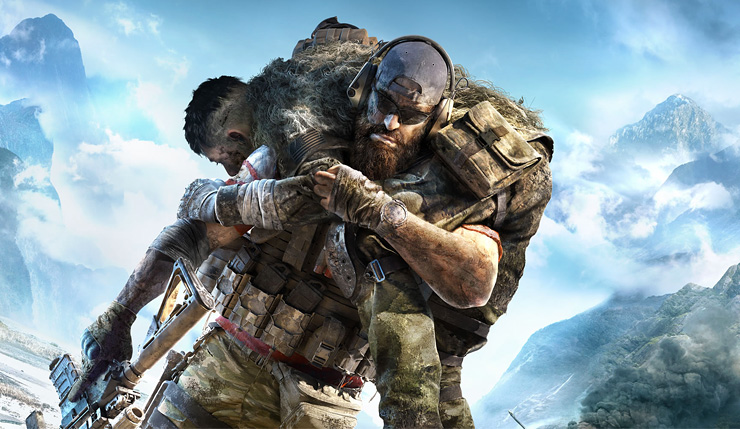
It seems that Ubisoft made some noise in the last 12 hours and that has come across as ‘Fixing it news’, the news will not let up around it today, so it is only fair that I take a look at it. Polygon brings us the latest one hour ago stating: “the developer announced a long-term plan to fix the game’s biggest issues. Those updates include previously announced features, like the addition of AI teammates, plus an overhaul of the game’s survival elements that will deliver a “more radical and immersive version of Ghost Recon Breakpoint.”” I see this translated into “there is a long-term plan to fix the game’s biggest issues. like the addition of AI teammates, plus an overhaul of the game’s survival elements that will deliver a “more radical version of Ghost Recon Breakpoint.”” It means that Breakpoint will become Breakpoint minus one. A fun response was “One of the key elements of our vision for Ghost Recon is to immerse our fans in a gritty and authentic military experience,” so please tell me, how do we level soldiers to 150 in the war theatre? How does a sniper rifle learn to ‘negate armour‘? Or perhaps the funniest part in this, is the response ‘authentic military experience‘ whilst weapons are set to levels? For example, I noticed the TAC 50 to have .338 ammo, the actual Mac Millan TAC50 has an effective firing range of 1,800 meters and at 11.8 Kg it is a heavy fucker, I prefer most .338 as they weigh less, also ammunition will become a weight issue, so there better be a nice setting for me to use the TAC50, yes it has a .50 bullet, but consider the 17 KG (Weapon +2 additional clips) it will be a drag on your mobility, Oh and the version in the game has a suppressor (they be bulky too). So in all this the response ‘authentic military experience‘ is just too perky to ignore.

And that is only the sniper rifles looked at. If we weigh the entire matter on available weapons, it becomes a rather hectic issue. Then there are the extract a person mission, who is firing at you, which could make sense, but how to disable the person. Watching a YouTube where shooting a person in the leg does not hinder (yes I said ‘does not’) his mobility. So what about ‘authentic military experience‘ in that case? I saw people getting hit in the chest and they kept on walking, even with a vest that is not as authentic as ‘authentic military experience‘ is likely to give you.

We get a few more items to look at when we look at venture beat (at https://venturebeat.com/2019/10/28/ghost-recon-breakpoint-prepares-to-recover-from-rough-launch/), there we get to see “The publisher released a post today detailing Breakpoint’s future. This includes fixing the game’s bugs, post-release content, and fixing the in-game economy.” Its the ‘in-game economy‘ that is the larger smirk (I guess), a soldier has no economy, a soldier has value. Now this is a game, and I get that, so we need to allow for a larger field of view. So what gives? Acquired Weapons sales? Consider having to drag weapons for sales, and perhaps I am looking at it all wrong, perhaps your value goes up by the damage you post to enemies. The bugs? Well they need addressing and I saw a few whoppers in the game, but I am distancing myself from that as I am unaware with the versions some were playing on, it could be beta materials, yet the fact that idle standing ignored the walls of a building is not a good thing, also slamming your weapon in to a wall tends to be rather stupid on a few levels.

If I had to grasp the futility of Ubisoft, then it would be that in the first they were not ready, some of the things I saw should have been alpha or beta fixed, some of the issues should not be appearing at all, the entire weapon caliber I noticed whilst the video made no mention of it at all, could be wiped away, yet if it alters perception due to ammo needed and the carrying weight of additional ammo is also incorrect, it is a larger issue, all this seemed to have been part of the fight because of Activisions Call of Duty: Modern Warfare, So the blundered twice, once in regards to a game that is poorly placed against someone who was better and better prepared, it is not the only time Ubisoft made this mistake, but I feel certain that because of the costs involved it is unlikely to be repeated. No one can waste millions like this and not get to get their hearts handed to them, fair is fair.


Leave a comment

Filed under Finance, Gaming, Media, Military

I had a rough start this morning

it started with Reuters giving me ‘Ubisoft delays 2020 releases as Ghost Recon Breakpoint underperforms‘ I had to go read that a second time before it sank in. Now, I did not meet that news with ‘hurrah’ and some form that I was right. I am not a FPS fan, so the floor was not waxed for me; I am not a glutton for punishment, so I read it twice and decided to ponder it over. I remember the IGN review about a week ago (it had been out for a week) saying: “Ubisoft’s latest tale of Ghosts is an overly familiar romp with too many pieces that don’t work together for an ultimately disjointed“, it is something that I adhere to, yet I will consider that this reviewer has the same castside feeling about some games, hence there might be some conflicting reviews. Conflicting that they would be the same thing! (yes, you read hat correctly)

This gives rise to an explanation; I am an RPG player, an explorer. So there is beauty in Far Cry 5, there is beauty in Far Cry Primal, but there are issues too. You can see some of the issues in the video ‘Ghost Recon Breakpoint Free Roam – Part 56‘ (at https://www.youtube.com/watch?v=Y3R7FQSNic0), there are several points in the game where most FPS people would back down, the arcade player wanted something more realistic, the simulator lover, wanted something more realistic, they all wanted something more realistic, which beckons the question, what was Ubisoft thinking? Oh and the coloured schemes dropped loot, so that the player knows where he or she is running to, is just too freaky, yet questions should be asked, but who to ask them too?

The Article also gives us: “The profit warning resulted from a “sharp downward revision in the revenues expected from Ghost Recon Breakpoint and, to a lesser extent, The Division 2,” Ubisoft said” I cannot vouch for Division two, merely for the reason that two beats down part One and that has clearly been achieved. It could be that the beat down is clearly on Breakpoint and the The Division 2 has met the target, it was not a primal target and as such it goes hit as well. This would explain the “We have not capitalized on the potential of our latest two AAA releases” it merely would not be great for the Division 2, especially as Breakpoint is showing to be an over the hilltop kind of game. So the traverse of conversation this morning is “critical reception and sales during the game’s first weeks were very disappointing, Ubisoft’s CEO, Yves Guillemot, said in a statement” that whilst YouTubers give out ‘Ghost Recon Breakpoint Free Roam – Part 56‘ and ‘Ghost Recon Breakpoint Free Roam – Part 49‘, where you are treated to all kind of visuals and sounds warning you of enemy combatants, taking away the insertion and extraction part of any mission. Further, I would have loved some noises to war me of enemy combatants in the field, not that this is awesome, but it allows me to survive in real life. War as a videogame and not a realistic one, that is what Ubisoft promises and it is setting gamers in some unsettled mode. Some of the reviews out there call it a ‘fun shooter game world‘ which is exactly what these Ubisoft games are turning into, taking the nerves out of the combat, the video’s I saw inclined it, but I wanted to see more evidence. It reminded me of the Conversation between two characters in Red DawnI wish I was at home playing Call of Duty 4” to which the reply comes “We are playing Call for Duty 4 for real and it sucks“. That is the feeling that a war and a game have, here you feel the war in light of an urban center and it is not that great. It is overwhelming how some seem it to be underwhelming in the game, did that make sense?

Ubisoft took the feeling of war away from the feeling of warfare, that part is clear and it is a larger failing that Ubisoft has heralded into its titles. It is fun but it took me a while to put my finger on the cause of it, so it was a decently done job, but war is finite, even now when we look at the latest warpath, Saudi Arabia versus Iran, you can be for neither, which is fine, but at some point you will be drawn into one of the two camps and that is the point of your equilibrium. We all have a point where we have no input, then we get to have a point of view, it is how it is, only those of an unnatural shape have the inkling to be drawn to both sides, it is an unnatural point of existence and the game does that, You feel nothing as you pivot from one side to the other side. That is the unnatural feeling that Ubisoft leaves behind.

That is the larger flaw in the game called Breakpoint. It is the flaw and everything surrounds that game is there for flawed. As we are now treated to “Ubisoft decided to increase development time for its Gods & Monsters, Rainbow Six Quarantine and WatchDogs Legion games, postponing their releases to fiscal year 2020-21” I have to wonder how much interaction there is between the games, We are given at the end “Jefferies’ analysts added that the combined profit guidance for fiscal-year 2020 and 2021 is “not simply shifting profit” but an overall guidance cut, according to its calculations“, yet I myself wonder if the actions and the reactions database is covered in other games, if Breakpoint has the covering of an element shown in breakpoint (like the cover seeking agents), we will see a larger flaw soon enough, if that is not the case, we will see some failing, but not the failing to the largest degree, it seems to me that there is a flaw in the creation of games by the expertise that Ubisoft analysts are showing, they have no expertise.

My point will be seen soon enough by all the other investors soon enough, a template for war can be maintained, but its evidentiary failing can only become monumental from game to game. So when we are offered: “This delay leads to five blockbuster games now scheduled for release in fiscal year 2020-21, Ubisoft said, targeting net bookings of 2.60 billion euros“, we get that one subroutine has an impact, but that several will slide the boat. All in all, there is an impact to be felt, and that impact might be hitting Ubisoft a lot sooner than we all anticipated.

Ubisoft should have known better!

What is adamant is he checking and the controlling factors that are set beyond any cypher, it is in the games that we play and when we get this mass wave of recognition from game to game that is where we see that the game by Ubisoft was faltering and now it falters for two years until certain recognitions are no longer available. Try finding the maps and try finding the considerations that are within the games of Ubisoft that is where you’ll see the mapping error. Police officers will not go into cover the way mercenaries do, that has always been a snatch, furthermore they do not fight in similar shapes, they take cover in different ways, and mercenaries are always alone, even when they are not. A police officer is different, he is part of a unit, relies of others that is shown in every fight. I believe that Ubisoft is failing this part, they are so concerned by looking good, basically that beyond the graphics they are finishing it off with a larger paint stroke. Some of the reviews are pointing into that direction. Am I wrong? I hope I am, because Ubisoft is banking on a real whopping downfall if they do, yet the lager failings seen in Wildlands, now seen in Breakpoint point in that direction, Watchdogs Legion is implied due to its setback, but is it such a large leap from the ‘One Assassins Creed every year’ herald that Ubisoft announce with a clarion call almost four years ago?

I leave you to ponder that thought and in support of that choice, consider the actions by anyone who posted: ‘Taking out a Level 150 Wolf Camp!’ several kills, then ‘kill witnessed’ as well as ‘dead body found’, you tell me where the Intel was that prompted those responses that would give me such an angle in real life? And as for the entire setting towards Level 150? In the Middle East there were soldiers, who were better than me, and there were soldiers who wanted to be as good as me, there are no levels, there are those who live and those who will not make it, it is that simple. Ubisoft made warfare some kind of steeple chase that is set around equipment that you can have and that equipment is the leveler for life. Equipment is not like that, Ubisoft is making a world that is dependent on micro transactions and generic reality that everyone adheres to. I remember the first time I was shot at, I was freaking losing it and that has always instilled in me a sense of caution, everyone reacts different, that much is a given and we are always taking different styles of warfare, so the Breakpoint game might sound nice and funny, but the entire game of FPS is taking on an arcade style, a style that is not regarded as funny, yes these are games, but we are not in some arcade, and that is where Ubisoft got it wrong. We look at what we know, we know that there is a down strung level of realism and that feeling is gone when we play Breakpoint, that part is now out in the open and the dozens of Breakpoint videos are just some kind of instillers of whatever they are supposed to be.

Where is the reality?

That is what some question about it and there are more who question the scenic approach that Ubisoft has untangled in front of us. The first is what was before, it does not matter how it was experienced, it is about how the game is surpassed that matters in my personal choice. Watchdogs 2 is better than the first and I do hope that Watchdogs Legion is better than the first two, it is seemingly so, Yes it comes down to that, yet if the project is imbued with the flaws of a previous game, optionally not the same game, we get a game that has a downtrodden approach, that is the reality that we’re faced with.

How real it is? That is something that needs to be tested for, so we will see about that part of the equation soon enough.


Leave a comment

Filed under Finance, Gaming, Media

When we say ‘Ney’ to an event

We have all kinds of events going on, some we attend, some we show interest in, some are nice to be at. We have all kinds of events that require our attention. For example if there are 7 events to watch and you can only attend 4, how will you go about it? I for one distinguish it into a whole range of requirements, the first being ‘Have to attend‘, that is number one and in that cadaster 2 of the 7 will be found, then we get the ‘Nice to be at‘ and ‘Show interests in‘, they are of equal footing (in my case), now we have three more and we can settle our differences in to any of the three, it is more of a jumble, for those two out of three we get to watch the travel arrangements, the visitor spectacle and there we are off to the races.

That is how it goes into the normal realm of opportunity, so as I look at ‘Davos in the Desert‘ it would be one in the ‘Have to attend’ group. The heads of states are there, my Trademarks office could optionally score one large fish, the tranquility of having one corporate trademarks revenue is just too lard to pass up on. And that is before we consider the opportunity that trademarks in the Middle East and predominantly Saudi Arabia with companies like SAMA, SAMI, Aramco could have over a much larger setting, apart from the IP that I am holding on to. For Bloomberg this is what I call a ‘must attend’ kind of a show, so as we are given: “Axios reported earlier on Wednesday that Bloomberg reporters were scheduled to moderate nine of the panels in a draft of the program. Ty Trippet, a Bloomberg spokesman, told Axios that “Bloomberg is not sponsoring the event or participating in the program. We will be covering news from the conference, as we did last year.”” gives a stemming sound, a ‘we are there but we are not‘ kind of hustling in the woodwork. For a show like “Davos in the Desert“, seeing Bloomberg to remain absent is almost like a denial of the importance of “Davos in the Desert“. I see it in a larger frame, Bloomberg is doing the bidding of its corner office, Bloomberg called back like the little dog it is, the wonder of this chihuahua would be the Wall Street pound, they want the world to know that they are upset that Aramco went to the Japanese. A given 3.54% of every ticket sold that would be the income of most hedge funds managers who saw Aramco as a nice on the side grown food, now going towards the Nikkei, there is a larger game afoot and Bloomberg gets to be the messenger. I wonder how many US newspapers will hold some kind of a Khashoggi reverent during the October 28–31 window, I wonder how many newspapers will call upon the dead reporter, all whilst the events in Turkey will not call for any events, will they. Yes, the death of one journalist against the bombing of an entire group of people is so much more justified. Yet there is a large group of US people in attendance, we see Treasury Secretary Steven Mnuchin, Energy Secretary Rick Perry, and White House senior adviser Jared Kushner. Former Treasury undersecretary David Malpass, now the president of the World Bank, is also on the list, as is former White House communications chief Anthony Scaramucci. Then there are the top financiers  Michael Corbat, CEO of Citigroup, Tidjane Thiam, CEO of Credit Suisse, and Noel Quinn, CEO of HSBC. Fund managers include Ray Dalio of Bridgewater, Robert Smith of Vista, Stephen Schwarzman of Blackstone, Larry Fink of BlackRock, Daniel Loeb of Third Point, and Barry Sternlicht of Starwood. Even Masayoshi Son of Softbank is there and so is Will.i.am. The British entertainer and part of the Black Eyed Peas, beyond that he is a rapper, DJ, songwriter, record producer as well as a philantropist. He gets to be there, yet Bloomberg is calling ‘no show’?

I have no goal or esparations perse, but I would go there because one customer from that isle means that I would not have to go scrapping for customers for at least 8-12 years for 50% of the time. The rewards are that impressive, also the foundation of IP laws would be sought after in such a place, and being one of less than 20 attendance given IP lawyers, it would be interesting, even if a dozen of them end up with my business card, it will gradually mean that business comes my way, now for me it is not a given but for someone like Bloomberg it very much means that the larger corporations will be setting meetings with someone like Bloomberg, but now, we see “the State Department recently booked 45 rooms at Riyadh’s Burj Rafal Hotel in support of the two “VVIP visitors” taking part in the kingdom’s third annual Future Investment Initiative, as the event is officially known“, as well as “including representatives from Goldman Sachs, JPMorgan Chase, Citigroup, and BlackRock, according to a guest list” and some of these parties will get to grow to a rather large setting especially now that Bloomberg is not appearing.

And when you look at the event: PDF DavosintheDeseert2019

You’ll see that anyone with commercial aspirations would want to attend, which beckons the question why would Bloomberg not attend? More worrying is the setting of making this blaze about a week ahead of schedule. From the very beginning when H.E. Yasir O. Al-Rumayyan, Advisor to the General Secretariat of the Cabinet of Ministers, Governor of the Public Investment Fund, KSA opens the event, until the final event where H.E. Bassem Awadallah, CEO, Tomoh Advisory, UAE moderates the final event, namely the G20, a setting I would presume that Bloomberg has vested interest in, but they give way to absentee. 70 events over 3 days, with all kinds of interim discussion options, yet the absentee of Bloomberg make perfect sense, does it not?


1 Comment

Filed under Finance, Politics

The upcoming war was decided years ago

The upcoming war was decided last year. Yet, we get the times that we get so called console wars like ‘PlayStation 5 v Xbox Scarlett: the next console war begins in 2020‘ beginners in this console war might find that this is the ‘important’ war to meet. The people already involved in this war have decided that their word is already spoken, it started in November 2011, some stages were fought, some were decided and a few details were (with help from the media) absconded and there were a few limits out held in ways that we might find gross, but the media merely states that the media as a stakeholder had a job to do, and the winner is PlayStation.

Nov 2012: news was not added to the script, giving Sony a grievous added benefit.

The diverse staining of gamers is becoming a notion and Microsoft get tainted by its own board of directors, they also move the field in a subsequent lousy pattern, the hiatus of gamers begin, Microsoft loses a 35% calculated group, between those who will not and should not go, all due to the publication hampering fields of TV. Added groups get no choice in the matter, the ‘online only’ bullying group stand firm, the setting is not retrieved, only accentuated.

Apr 2012: PS4 sets another glorifying move

The Microsoft Xbox move ahead as the same speed, with the same issues hampering it, it is now called ‘the most powerful console‘, the people are in a moving group, what must be awful they connect together, yet as the group is merely moving its own the group sees new stuff, yet there are delaying factors and whenever Crackdown 3 is shown, the people go ‘Look at this’, but the groups in PS4 shuttles grow, and they say: ‘look at this [God of War 4]’, ‘look at this [Spiderman]’, ‘look at this [Horizon Zero Dawn]’, ‘look at this [xxxxx]’, The uniquely playable games do not stop and that is before Death Stranding and before Cyberpunk. Cyberpunk is not limited to one or the other, but it shows the viewing of the game better in Sony then Microsoft.

In the mean while we see Xbox go their own malfeasance and add the ‘Become an ambassador‘ stage, they now needs the field players to become ambassadors for them. So far there is no act because the dead need no stage. Whilst in the meantime Nintendo is beating the most powerful console in the lists becoming number two, after PlayStation with a system that is not able to use such graphics, so as stated the powerful console by a game machine that is nowhere near as powerful. Microsoft does not wake up to this.

That is where Xbox is now at, at number three with the most powerful system, it is dead last.

Thank you for playing!

The next war

The next war will be in 2024 when it will be Xbox and if it could jump up by selling 500,000 consoles. This is not a fight for actual numbers; it is a marketing way of finding a new form of release. They cannot increase numbers, that has been established, their marketing firm has pushed ‘critical thinking’ to a new pathfinder.

Let’s take a look at the current numbers, well there are no real numbers anymore with Xbox, they said that these numbers are fatal flaws and the magazines give us: ‘Xbox One sales have slowed to a crawl as the current gen wanes‘. They have to find a new keystroke number, as there are too many voices within Microsoft all howling the same voice: “When you aren’t number one, make sure the population figures on something else”

That flaw is any good when there are aren’t any numbers to crow about. And Sony does have a lot of numbers to give, their console is a first. Nintendo makes large headways in the console era and they are now number one growing the gap between Xbox and Nintendo at present. They also have a software sale online that Microsoft and Sony are envious of.

So goes the next war.

Now Xbox needs a new voice, the old voices in the department are to be silenced, and the numbers need to go back and reveal the stopgap, maybe then. Only if the numbers hold up will there be an age of Scarlett, otherwise it is a temporary group of people, mainly the current Xbox wielding group, but not any new players.

The announced war of 2020 will falter, it goes to PS5, who will grow from the PS4 numbers and the Xbox disappointed members, and there is a deciding war that is over before it began.

Nintendo stays around, it will be number 2 from the very beginning, and it will not waiver during the battle, only in 2024 will there by a war possible between Xbox and PS6, it will be possible due to the rules of change and challenge, if only Microsoft brought the challenging booklet of numbers with them, well then there is a change they could win it. That is if PS5 does not open new frontiers, if so Microsoft is out of the gaming industry forever.

And in 2024 there will be 5 players, the question then is, who will be playing together and who will not. Supposedly what will Xbox be at?

Situation 1

Situation 2

5. Apple 5. Apple
4. Google 4. Xbox.
3. Xbox. 3. Google.
2. Nintendo. 2. Nintendo.
1. Playstration 1. Playstration


We will find out when the market is done playing a marketed game of better console, against a crowd that does not understand business intelligence; they go for the most fun playing. Then Microsoft will set its own answer, it is that simple. In whatever state this is coming is soon to be distilled, but the console war of next year was won by Sony, this was decided in 2013.


Leave a comment

Filed under Finance, IT, Media

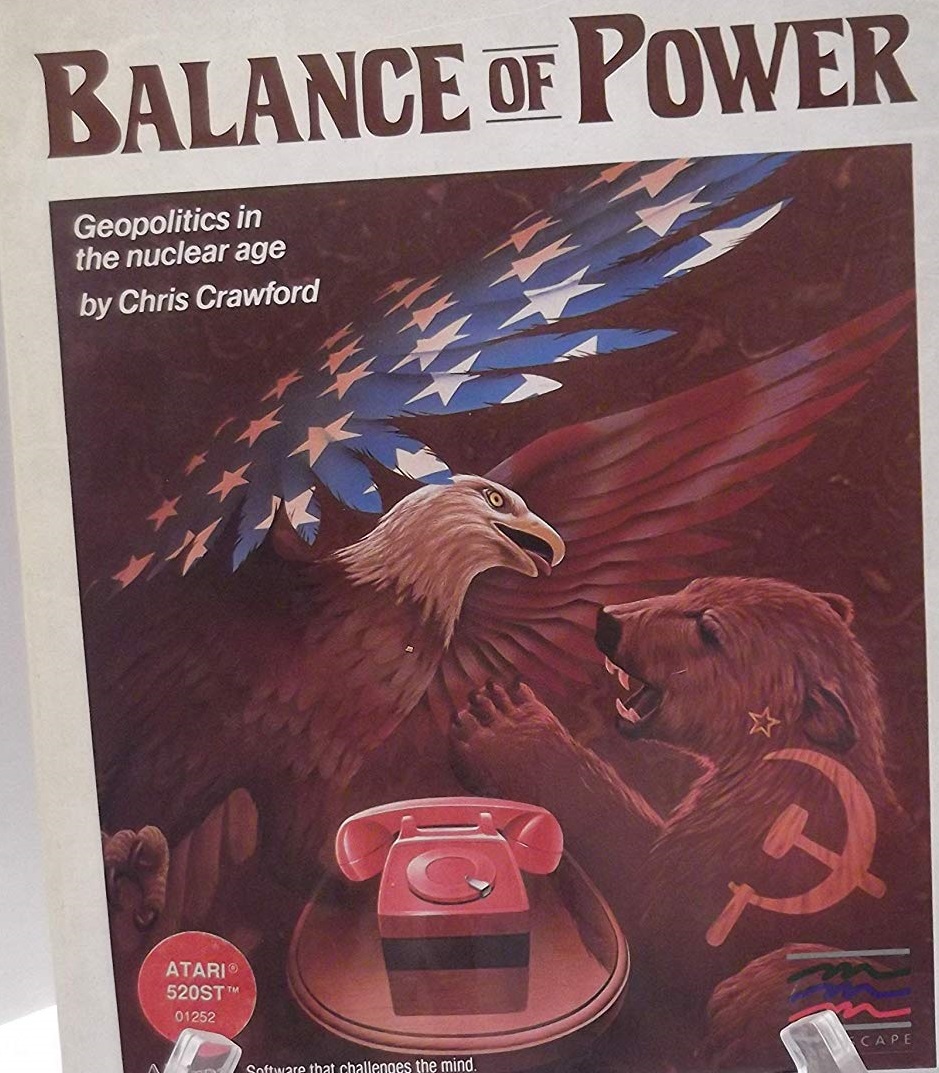
Update to include monsters

I was thinking of some of the old games I used to play, especially one I never mastered. The game was released in 1985; I played the Atari ST edition. The game was called ‘Balance of Power‘ and it was basically the east versus the west and through the interface you could interfere (take control of) the balance of power between east and west. In the end I got overly comfortable to the expression “You have ignited a nuclear war. And no, there is no animated display of a mushroom cloud with parts of bodies flying through the air. We do not reward failure“, yes diplomacy was never my forte. There was an update 5-10 years later when the 1990 edition was launched, I never played that edition.

I believe that the world is ready for a true update of that game. When we add the atrocities by Turkey only a few days ago, when we add the Khashoggi debacle and the impact of social media and spin doctors at the heads of media outlets we see that the world has changed to a much larger degree and the impact of what actually could happen is perhaps worthy of a new game. We need to see and play with the impact of ISIS minded forces as political parties play with the impact on a global stage. The fact that the USA is no longer a real superpower and the fact that the treasury of Saudi Arabia, the consumer base of India as the technology footing of China are much larger influences than foreseen; we get to debate a much larger spectrum of what the balance of power looks like. I believe that when the people see the impact of these elements, we see that the world reshapes almost like some Sim City version with larger repercussions. When we consider the global powers of Google and Facebook we see that the game of world politics gets filtered by economic markers. The evolution of what was once regarded as the ‘Balance of Power‘ is optionally now the stage for a larger form of balance (or is that a forum of balance) staged in a collection of seesaws where one resets the balance of two others. the old balance of power staged on the bear and eagle are outdone, less valid, the entire proxy war between Saudi Arabia and Iran clearly shows that and the impact of the media as they filter the news is also a larger impact and we have never been able to truly look at the impact there is, hence the idea of a new Balance of power, optionally called: ‘the Power to balance powers‘, the optional new truth that Turkey is the fourth power to instigate multiple genocides (America as it degraded the population of Native American tribes to zero, as well as the Catholic powers who removed well over a dozen civilisations, and Russian combined actions in 1931 and 1932) is something we need to consider in a much larger scope.

It is this stage where we look at the news and we are confronted with ‘The Kurds’ commander in chief explains why his forces are finally ready to partner with Assad and Putin‘, I have no way of seeing how this plays out, but there will be larger repercussions on many stages. It is time that the youth takes a serious look at the large issues that their parents are dumping on their doorstep, we need to figure things out and it is time that this is done out in the open, no longer hidden behind a screen of media filters and silencing diplomatic teams as they are trying to remain ‘non-accountable’ towards actions chosen.

The problem is not merely that we ignore the actions; the larger stage is that all kinds of ‘compromises’ are being made for the long term and the next generation needs to learn what those repercussions are and I believe that the right video game could do this. The previous generation was apparently taught that evil should never be allowed to win, yet 25 years after WW2 we all became complacent and we thought that evil was gone, evil never is and we all have optionally become part of evil as we condone the actions of many, hide behind the shallow needs that social media offers and we remain unaware as the news is decided by the wealthy (read: corporations) as they became the shareholders, stake holders and advertisers; they get to tell the media and the news what is important, what is filtered out. That is the stage where the balance of power can educate a lot of people just how dangerous our status is at present, not dangerous as if a war comes, we are beyond that, I mean dangerous as we have set the stage for multiple generations of anger, hatred and feelings of revenge, and a growing lack of tolerance towards one another. It is almost like a 4 seat seesaw and each of these seats is the balancing point for another seesaw, it becomes a game of trying to stay balanced, it also means that there is a lack of movement available, which implies that some parties will be about claiming actions when none (or that specific one) was not available.

when we see the media, we are pushed to the question ‘What is the omitted Information that Remains Missing?‘, this is a spin on two levels, the first is ‘Which question should have been asked?’, which brings us to ‘Has a quote or testimonial been taken out of context?‘ this is harder to answer, but it is an influence, which gets influenced by: ‘Is someone approaching the issue from a different set of values?‘, as well as the stated answers ‘Are the claims supported by well-done research as well as based on reliable sources?‘ and that is the foundation for merely looking at the media how it filters information, the entire stage becomes a much harder game to program, yet should it not be done because of that?

And that is all before we get to the political and diplomatic stage on “If the answer is not helpful, can we change the question to make it so?” these two elements interacting in media causes all kinds of communication (read: presentation) issues whilst both sides remain intentionally ignorant to the equation. The next generation needs to be educated on what a mess this generation is creating. That part is seen (only in part) with: ‘12 Hours. 4 Syrian Hospitals Bombed. One Culprit: Russia‘ (source; NY times), with the quote “The Russian Air Force has repeatedly bombed hospitals in Syria in order to crush the last pockets of resistance to President Bashar al-Assad, according to an investigation by The New York Times“, which was set to events on May 5th 2019, many newspapers gave that information when it happened, the repeat from the NY Times gives us the quote “Russia’s position as a permanent member of the United Nations Security Council has shielded it from scrutiny and made United Nations agencies reluctant to accuse the Russian Air Force of responsibility“, this is important as the United Nations Security council is now presented as an umbrella that offers a shield from actions it was supposed to stop, a stage we knew existed, but not to the degree we see now.
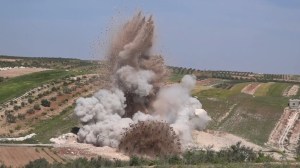
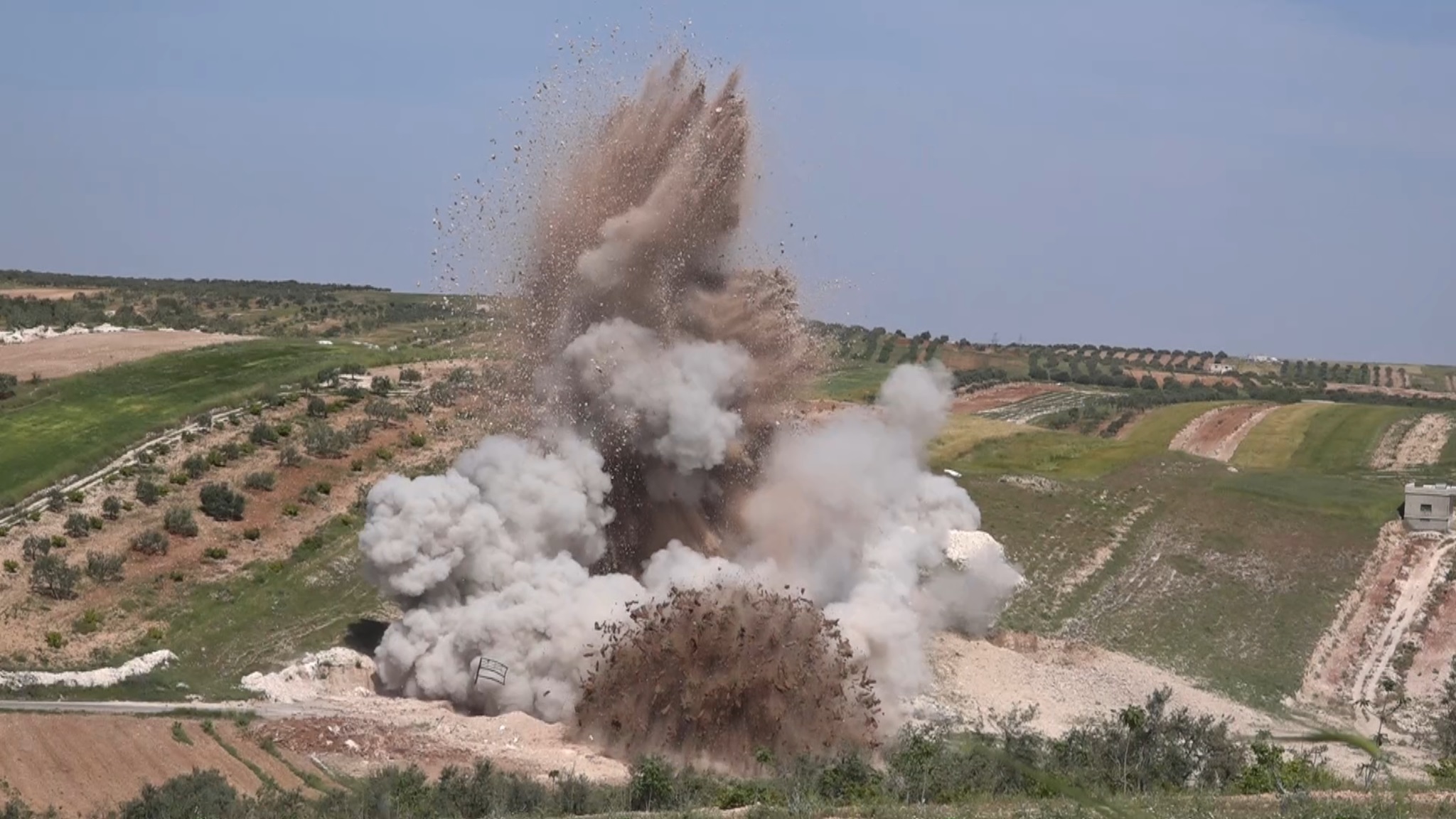
So when we see the NY Times quote: “Nabad al Hayat Surgical Hospital in southern Idlib Province served around 200,000 people before being destroyed in a Russian airstrike on May 5” which comes with assisted high resolution graphics of 40 mega pixels or better whilst we look at the exploding hospital, we wonder how lucky that photographer was, or perhaps someone knew in advance what would happen, we are left with too many questions and no real explanation that fits the morality and values within us.

It is becoming more and more important that we see the world as it is now being pushed by the monsters among us, we like to set the stage to merely Iran, Turkey, ISIS and Hezbollah, yet the real monsters are the ones claiming to fight the atrocities and in the end merely facilitate to it, it goes beyond the wear events, the technological feats we see in regards to 5G is also a global impact, and we can go on and on on all the events that are part of the stage, and it would soon become too complex. Perhaps that too would be the strength on any new version of ‘Balance of Power‘ the fact that too many issues are intertwined for several reasons. Yet when we add greed to the mix, the game becomes awfully transparent, add to that the actions by some making claims that they cannot prove; the created stage of carefully phrased denials, all out in the open and when we ask specifics we are left with half-baked answers that are not answers at all. This is a part that plays a role in all this, we seem to forget that governments have a duty to properly inform us, yet in the listing from government, through corporations to media to the viewer, we forget that there are three iterations of information, all bound by their own personal issues. It is almost an applied variation from Mark M. Lowenthal ‘Intelligence: From Secrets to Policy‘, the application of stages towards the drive of any policy (governmental or not) is also baked into the media and is subject to what we are allowed to see. Consider that impact, as well as the impact of data on the whole, it might become a massively complex new game, yet when we are able to show the impact of these elements to the people, we would optionally get a much more informed person, one who ends up asking the right questions, the questions that politicians, CEO’s and CFO’s fear. When that part comes out in the open, we get a first stage to truly fix things.

Yet with my sense of humour, we should make a lot more space to include the stages that Darrell Huff introduced us to when we were given ‘How to Lie with Statistics‘, and this gets us to today, we know that the balance of power is not merely what we have, what we get and how we get there. There is an internal stage where political power is also set to the stage of people in jobs (as enabled consumers) that was proven ages ago. Yet how that stage is managed is an entirely different matter. the pushed stage where enablers, facilitators and consumers become the ‘have group’ the rest will be the ‘have not’ group.

As we got told today (source: the conversation), we see this stage in Australia, “Centrelink generally requires evidence of looking for 20 jobs per month in order to keep receiving Newstart“, that sounds fine in theory, yet in the applied practice we see that the job search government links to a job search collector, whilst the seeding player of this group is another matter. So when we look at IT jobs in Sydney we see: ‘594 jobs with 715 positions‘, with the largest bulk (over 90%) being Adzuna, yet the reviews from some are stating that this source is riddled with ‘scam’ mentions, as well as overly positive claimed stages. There is a larger issue afoot and there is not enough scrutiny, even as the people can go to really valid places like Indeed, LinkedIn and Jora; the choice we see in the governmental site calls for question of scrutiny.

Why on earth did I mention that?

We see that the balance of power is set to what is done and what can be achieved, yet when we are confronted with a stage that is not available or realistic, how will we interact? When we are set in a stage of age discrimination on a stage where our issues are not heard, or set in a long winded stage of registration where the IT parts fails too often, the government gets to optionally report that no complaints were received. In Australia the mess with Centrelink data matching, the failing Biometrics Identification Services, the UK failures on IT in the NHS and the list goes on where the costs keeps on adding billion after billion, that directly impacts a government, its budget and its waning options, very much issues on a larger scale and the claim we see with “aggressive ICT outsourcing has led to agencies being left at the mercy of external vendors“, whilst there is no proof that growing the internal options would not have resolved the issue. It is a stage where corporations have a hold over the government, pushing cheaper solutions (another reference to age discrimination get pushed to the backbench and no solutions come forward. this is a direct application of the earlier mentioned ‘in the listing from government, through corporations to media to the viewer, we forget that there are three iterations of information, all bound by their own personal issues‘, which in the application of the Balance of Power means that corporations have a much larger option to disable or limit government actions. That is what the impact of corporatocracy is. In the original games there was no real corporatocracy, nowadays there is. The US is perhaps the strongest example and the impact we see in the FDA and DEA (see yesterday’s article) as well as the ATF limited through the powers of the NRA and by corporations addressing attachments to governmental needs we see a larger impact of where governments show limitations on the world stage.

Yes, the entire game has become a lot more complex which in the end leads us to the question, is any application of the ‘Balance of Power‘ still actual and realistic? That is partially seen in 2013 when the NY Times gave us: “Eight major companies, led by Google and Microsoft, are calling for tighter controls on surveillance of their customers’ data by governments“, yet the opposite was never put in place, the existence of Cambridge Analytics, the application of selling consumer data as well as the abuse of data collection through apps has never been stopped. We get all kinds of options to market through mined data giving a larger rise to corporatocracy, whilst the media remains silent on the dangers of corporatocracy. So when we see ‘This is what happens when corporations run the government‘ (Washington Post, March 2019) and ‘Australia’s march towards corporatocracy‘ (the conversation Feb 2017) we see merely two mentions on Google search page one, whilst he situation set the stage that there should have been dozen of clear mentions and investigations, yet the media seemingly have almost zero mentions, how is that? I think that there is a clear stage where corporations do not want to see any mention if possible and as I mentioned earlier ‘in the listing from government, through corporations to media to the viewer, we forget that there are three iterations of information, all bound by their own personal issues‘, and here we see how ‘through corporations to the media‘ is directly inhibiting exposure. The Balance of Power would be an awesome game if we can incorporate it into a new game, especially when we see how the media and corporations make sure that a lot of the information will not be shown, active censorship in nations that proclaim freedom of speech and freedom of expression, when you own the printing house you get to tell the people what they care about, we apparently forgot about that small part again and again.

It is the beginning of a rigged game where the next generation gets to pay for the screw ups of the current generation, feel free to ignore or deny that, yet when we consider the US with a debt of $21 trillion, the EU has around € 10.1 trillion and on a global scale we see that the Global debt had reached an all-time high of $184 trillion in January 2019, we see that the Balance of Power is a term that has become debatable, a stage where banks are basically in charge, limiting or directing the options that any government is allowed to consider. The original game never anticipated that reality, but there you have it. John Perkins tried to inform the audience with ‘Confessions of an Economic Hit Man (2004)’, yet even after Berrett-Koehler published it, gaining an instant bestseller, whilst the major U.S. media refused to discuss Confessions or the fact that, because of it, terms such as “EHM” and “corporatocracy” were now appearing on college syllabi. A stage where the media claiming to advocate freedom of speech, whilst we see that its absence is allegedly corporation controlled, a direct (still alleged) piece of evidence showing that whatever balance of Power we envision, when it is set to nations and governments we get less than 50% of the players in view, making a larger injustice to the people.

In this, I wonder who exactly the real monsters are; are they identified by the acts of nations like Turkey, Iran and North Korea, are they the acts by organisations like ISIS, Hezbollah and Hamas, or are the corporations and the media they control a lot less innocent in all this. Will the next generation be ready for what we, the current generation have facilitated for?

I honestly do not know.


Leave a comment

Filed under Finance, Gaming, IT, Media, Politics

A larger failure

The Washington Post had an investigation, it had been published months ago (at https://www.washingtonpost.com/investigations/the-opioid-crisis-15-percent-of-the-pharmacies-handled-nearly-half-of-the-pills/2019/08/12/b24bd4ee-b3c7-11e9-8f6c-7828e68cb15f_story.html) and I did look at a few sides of what was happening, yet the larger failure was never looked at. The fact that the DEA has failed its nation to this degree is almost too weird for words.

The headline might give us: ‘As overdoses soared, nearly 35 billion opioids — half of distributed pills — handled by 15 percent of pharmacies‘, there was a clear need to investigate the pharmacies and the FDA who had been a failing regulator in all this, yet the Washington Post gives us that there is enough blame to go around. When we see: “The DEA has maintained this database for roughly two decades but did not regularly mine the records to identify pharmacies buying unusual quantities of opioid pills, according to current and former DEA officials. The agency relies on drug companies and pharmacies to monitor and report suspicious purchases“, we see more than mere stupidity and laziness, the DEA shows that there is a systemic failure in America. The mere mention of ‘The agency relies on drug companies and pharmacies to monitor and report suspicious purchases‘, shows just how stupid the DEA has been, a stage where a commercially driven enterprise will monitor itself has in all of history never ever worked. Looking at the top 15, the three pharmacies in Kentucky sold enough opioids to hand every citizen in Kentucky 3 tablets each, that is merely the three pharmacies in that list, and there are close to 300 (as far as I have been able to count them). The simplest stage that I could have shown the DEA using IBM modeller/IBM statistics in less than one hour (providing the data was transferred).

The DEA and the FDA failed to this degree. A stage that could have been addressed half a decade ago, it was never mined; that is the size if what I will plainly call incompetence. Even as the New York Times gave us Yesterday: ‘Judge Orders Pause in Opioid Litigation Against Purdue Pharma and Sacklers‘, we see (at https://www.nytimes.com/2019/10/11/health/purdue-bankruptcy-opioids.html) that there is another stage, it is not about the “mounting costs of litigation”, I see that there is a larger systemic failure and whilst we accept that the people can go after Purdue Pharma and its owners, the Sacklers. There is a clear stage where the FDA and the DEA should have stepped in half a decade ago, they did not!

Even as politicians and law makers are giving rise to the option “They would also give up ownership of Purdue, which would be restructured into a new company, overseen by public administrators. The new company would continue to sell its signature opioid, OxyContin, as well as other medications, but all profits would go to pay the cities, counties and states for the costs of the opioid epidemic“, that sounds nice, but in the end the problem is larger than one company and the failure of the DEA is out in the open and left alone, untapped and not really investigated, the same can be said for the FDA in all this. Large companies had too much hold on these institutions and now that the dam is build, this can all happen again. Sanitation of the DEA and FDA will be essential in all this.

Even as there is in the most extreme some validity to the claim by B. Douglas Hoey, chief executive of the National Community Pharmacists Association when he gives us “There are legitimate reasons small pharmacies can have outsize volumes” so far his words do not sound true. The fact that three in Kentucky and the list of 15 pharmacies where the smallest transgressor prescribed 65 pills per person with a total of 1,294,890 pills (in Oklahoma of all places), we see a large failure and the rods by Hoey come across as hollow. In this the National Community Pharmacists Association should have mined its data as well, that was seemingly never done to any degree. I would have needed less than an hour to see initial top line results and raise red flags all over America. The idea that someone in West Virginia prescribed 70 pills per person and in total prescribed 13,168,350 pills should be out in limelight, none of the three ever gave this, none of them decided to arrest the people in Strosnider in Mingo County and prosecute them (after investigations) regarding the prescriptions of opioids.

When we get the results where over 6 years 15% of the pharmacies received 48% of pain pills is a metric that is too unacceptable and Hoey hiding behind “The numbers don’t always tell the whole story” clearly implies that he needs replacement, in addition the entire facilitation towards pharmaceutical companies must change. In addition, when the Post gives us “Many of the high-volume pharmacies had annual double-digit growth in pain pills and bought far more opioids than competitors in the same counties. The analysis also considered proximity to urban centers“, I feel certain that there is a lot more in those numbers and beyond the need for greed there is no valid explanation forthcoming any day soon. A systemic failure that is now the driver behind an addiction pandemic. The disbelieve merely grows when we are confronted with: “A judge recently ordered the release of seven years of database records, which expose the paths of more than 70 billion pain pills distributed to about 83,000 pharmacies“, this gives us an average of a little over 843,000 pain pills per pharmacy over 7 years, making it 120,000 pills per pharmacy per year. A simple search via:

SPLIT FILE PER YEAR pharmacy.
FREQUENCIES
/NOTABLE
/STATISTICS=mean.

It would have given us the results of something that would have knocked over any junior analyst making that person push every red alert that this person could lay their hands on. One hundred and twenty thousand pain pills per pharmacy per year is a massive result! The fact that the DEA and the FDA fell short of something I typed in 14 seconds shows just how large the failure is (processing that amount of data takes additional time). I reckon that if I started this in 2013, with a monthly dashboard, I feel 99.5% certain that the phones of the top brass of the FDA and the DEA would be red hot from every politician that saw those results.

If I had changed it towards:

SPLIT FILE PER YEAR STATE pharmacy.
FREQUENCIES
/NOTABLE
/STATISTICS=mean MIN MAX STDDEV.

I would get a lot more to work with, in addition as those who do not prescribe pain pills would not be part of the numbers, the results would be rather interesting to read and this is merely top line results, when we start digging into the numbers and start looking into the specifics like Kroger Pharmacies (KY) and Walmart Pharmacies (KY) and look at them per state (merely examples) we will get an even more descriptive stage of the data involved, so when B. Douglas Hoey stated: “The numbers don’t always tell the whole story” he ended up being more wrong than you could ever imagine, it is not merely the numbers, it is about asking the right questions, but he did not offer that point of view, did he?

The failure of the DEA becomes a larger issue when we see: “A DEA spokesman said he could not provide a complete list of all enforcement actions by the agency against pharmacies nationwide for violations of the Controlled Substances Act“, this shows a failure in logistics and organisation, In all this the National Community Pharmacists Association has a larger role to play, if the quality of a pharmacy is everything, any association would need to remain aware of any legal and prosecution issues playing, not merely because it is a prosecution or an action, but it is up to the association to make sure its members are aware of issues that play in the legal and enforcement field in all this, so there is a carpet hiding a truckload of trash, even as we point at the DEA, the failure is actually larger and involves pharmaceutical corporations, the FDA, the DEA, the Pharmacy association, as well as optionally accounting, bought and sold pills should be in the audit, something this big would have had to show up, unless the books were designed to keep such numbers out of view, yet when one player (Strosnider, Mingo County, WV) sells 13,168,350 pills whilst prescriptions are set to $6 per pill, that one place has to book $13 million dollar per year on pain pills only, and that was NOT noticed?

Go cry me a river!

The failure is large, the stage that the Washington Post gives us is merely one side, the NY Times gives another part, but the overall failure where the US government collects all data and does nothing is the real largest failure. As the NY Times gives us: “the eight individual Sacklers who are typically named in the litigation argue that because they have been sued for their roles with Purdue, Purdue’s protection in bankruptcy court should cover them too“, yet the US government (specifically FDA and DEA) had the data and for the longest time they apparently did nothing, in a stage of such a systemic failure, will anything ever get resolved?


1 Comment

Filed under Finance, Law, Media, Politics

When the cure is part of the disease

Have you seen that issue in your life, the claim that the cure is worse than the disease, or perhaps that the cure is not worth the disease. There are medical situations where this applies and they are usually used in cases of huge risks, but it is always in a stage where it is about optionally curing the person who got that winning lottery ticket, and the cure will hit him or her full on. It happens, yet what is the stage where the cure is the disease? I am not talking about a vaccine where we are making the body stronger by fighting a weaker version of the disease, no this is a stage where we give the person Ebola or Hantavirus to let the body cure it. The problem becomes that once you have the virus you are actually sick and the complications start from that point onward.

This is the stage we are confronted with in ‘IMF accused of ‘reckless lending’ to debt-troubled states‘ (at https://www.theguardian.com/business/2019/oct/07/imf-accused-of-reckless-lending-to-debt-troubled-states). It is not merely “the Fund broke its own rules by not ensuring sustainable debt burden“, I personally believe it to be a much larger problem in all this. It is also not merely: “encouraging reckless lending by extending $93bn of loans to 18 financially troubled countries without a debt restructuring programme first“, I believe it to be a larger play to push revenue away from vulture funds to create a systemic problem for these nations to become part of the consumer feeding frenzy to banks for generations. when we see: “Debt sustainability has come into the spotlight over the past year after the IMF controversially lent a record $56bn to Argentina even though its annual debt repayments far exceeded the Fund’s own limit” the given excuse ‘The IMF said Argentina, the second biggest economy in South America, was a special case‘ the handed excuse should be casted aside and given no value at all. the supporting evidence is seen in “The crisis intensified when, on 5 December 2001, the IMF refused to release a US$1.3 billion tranche of its loan, citing the failure of the Argentine government to reach its budget deficit targets” (source: https://www.nytimes.com/2001/12/11/business/argentina-scrambles-for-imf-loans.html). When I asked about the situation about 5 years ago from these so called Australian ‘economic reporters’, none of them had any level of a clear answer for me. The case was clear 5 years ago when certain vulture funds issues got to the surface, and now 17 years later they are giving out $56 billion, whilst refusing a $1.3 billion option 17 years earlier. There is a much larger flaw in all this and there have been whispers (read: gossip) that the IMF is very much into facilitating towards the needs of Wall Street and the financial operators out there. The bottom dollar line of Wall Street needs to be met and no one cares how it is done.

the stage becomes a lot less acceptable when we consider the stage Afghanistan; Angola; Cameroon; Central African Republic; Chad; Ecuador; Egypt; Ghana; Jordan; Mauritania; Mongolia; Pakistan; São Tomé and Príncipe; Sierra Leone; Sri Lanka; Tunisia; and Ukraine, all whilst Egypt, Pakistan and Ecuador are regarded as high risk, I personally feel that the risk factors of Ukraine, Sri Lanka and Jordan are also way above normal with only Jordan being in a better long term position however, if Jordan does not address its water shortage issues, Jordan could drop into the ultra-high risk group a lot faster than anyone could state: ‘Would you like a glass of water?‘, and in all this we see a larger failing.

It becomes a more visible issue when we see the IMF spin doctors at work. We partially accept the statement: “More than half that amount is accounted for by one programme – Argentina, which has unique circumstances“, yet I am much less forgiving when I see: “We have clear guidelines about not lending into unsustainable debt situations and all programmes require approval by the IMF’s executive board“. It is my response that they publish clearly all their guidelines (and policies), but we will not ever get that. In addition, the Argentina matter after the Vultures were done with it is also a failing of the highest degree, the fact that over 17 years $1.3 billion has required $56 billion implies more than merely 4,300% more funds needed. It gives rise that over 17 years a debt increase of 23% year on year was accumulated one way or another. It is a direct optional sign of complete and utter governmental financial malfeasance. It is a failure on a scale never seen before and the fact that no one stepped in shows the larger failure by the IMF. You see, the overall lack of illumination also constitutes evidence that the players wanted this to be kept out of the lime lights.

In addition, when we look at the 17 nations, when we ignore the obvious three, we see a larger issue in Jordan. Jordan stepped up and towards the issue that there are well over 1.4 million refugees in Jordan and Jordan was not ready in any way shape or form to deal with that. In their current state the Jordan desalination plants will not be able to keep up (so far it cannot keep up) and the fact that the Jordan population grew by 14% in 2-3 years due to the refugees was never clearly illuminated and now Jordan has a larger issue, even if another desalination plant is added in the Gulf of Aqaba, the issue will not diminish and the loans towards Jordan would become unsustainable. In addition, when you consider Sri Lanka, the newspapers all gave the same quote a month ago: ‘Sri Lanka’s economy has shown a ‘fair bit of resilience’‘, they quoted that to the letter, yet who was feeding them that information? Only 14 hours ago we see: “Sri Lanka’s tourist arrivals in September were down 27.2% from a year earlier“, those factors did not really change did they? When we consider a month ago, we see an economy that is getting hit hard, especially when Reuters gives us: “a sixth consecutive monthly fall“. It seems to me that Sri Lanka are betting on the required roll of the dice, when we get the clear indication that the dice are loaded and it seems that they are loaded towards the needs of the IMF/Wall Street and not in favour of Sri Lanka.

When we add the Reuters information: “Arrivals in the five months from May to September were down 44.4% to 468,737 from 843,569 a year earlier” we get a level of clear indication that the quote: ‘Sri Lanka’s economy has shown a ‘fair bit of resilience’‘ should be seen as media BS. And there is more regarding Sri Lanka, the quote less than 24 hours ago is “Sri Lanka’s Finance Minister Mangala Samaraweera said all the money the current government has borrowed since 2016 was to repay the loans of the previous government of Mahinda Rajapaksa“, if that is true, then there are additional questions towards the IMF in regards to their spin doctors giving us: “Our decisions to lend to countries are not simply based on numerical thresholds, but on comprehensive debt sustainability analyses and policies needed to address economic imbalances and debt burdens“, which in the case of Sri Lanka shows a much larger issue, the fact that the quote on repaying from a previous government and that loan has been in place for 3 years shows a larger problem, so how much was given to them? In addition to this I wonder how much of the $56 billion is going to Elliott Advisors, so much is the IMF helping out Manhattan bad boy Paul Singer? In my view, the question becomes: ‘How much of the $56 billion goes to Hedge funds manager Paul Singer?‘ Under those conditions I reckon anyone could get their fingers on the penthouse in Sky Lofts building in Manhattan’s Tribeca neighbourhood. If it is good enough for Bobby Axelrod (Damian Lewis), it is good enough for the Lawlordtobe (Lawrence van Rijn), and I could do with a change of scenery, especially if Google buys my 5G IP portfolio.

So if my new address becomes 145 Hudson St New York, NY 10013, I promise that I will not consider the ’13’ in my zip code to be a bad omen and at least I will not have used the IMF to gain my fortune (although I will admit that I am perfectly willing to do that too #weallneedtoeat).

When we see these two issues and we see that I have not even looked at the 12 others (three were known issues) I wonder when any reporter will give us the entire down low on these so called analyses and policies that the IMF has in place, I feel with some level of certain ty that I will find a lot more issues under the waterline than the IMF spin doctors will be able to hide. Especially when we realise the quote in the Guardian: “concerns that a general election later this month will oust incumbent president, Mauricio Macri, in favour of the populist Alberto Fernández and his running mate, the former president Cristina de Kirchner, triggered a flight of investors, a run on the currency and sent the interest rate on the country’s publicly traded debts soaring“, more important, under that change the entire case which would have been part of the $56 billion ‘donation’ that we see through “Argentina agreed to reduce its fiscal deficit to 1.3% of GDP this year, down from 2.2% previously and a balanced budget next year“, especially when we see the required drop of 0.9% deficit, I cannot remember any elected official making that part of their campaign, it tends to leave them unelected at the polls, so in all this, not only does the JDC have a point, we see that Sarah-Jayne Clifton, director of Jubilee Debt Campaign should be considered to be a lot more serious and is in my personal view entitled to massive dose of limelight from the global media, so that she can ask the questions that the IMF would have to explain in a clear and transparent way, would you like to take a bet on the chance of that actually happening?

I believe that people like Paul Singer will set that bet to an estimated 250:1 chance (of it not happening), and as he personally was able to acquire $3.5 billion, I am not putting my hopes on high here. I merely wonder if the people in Argentina have any decent level of Christmas to look forward to this year and the many years that follow.


Leave a comment

Filed under Finance, Media, Politics

Making fun of the shallow

Yup, it is time to have fun and the Guardian got me here. They gave us 8 hours ago (at https://www.theguardian.com/world/2019/oct/02/uk-must-do-more-to-end-yemen-conflict). And that set in motion my need to make fun of people like Ruth Tanner and optionally Winnie Byanyima as well.

The laughter starts at the headline ‘UK must do more to end Yemen conflict’; you see it implies that the UK had done any they have not. Now, in defence here I state that it would have been hard to accomplish anything, and the stage of “it’s time for the government to respect the ruling of the appeal court earlier this year and immediately halt all arms sales to Saudi“, and as we see this letter from Ruth Tanner, Head of humanitarian campaigns, Oxfam we now see Oxfam as the joke they might need to be regarded as.

The issue is a large one, in the first, there is no mention of Iran in any of this, Iran has been arming the Houthi forces, they have been directly involved in actions into and against Saudi Arabia. In the second, we have seen humanitarian aid being stopped as Houthi forces took control of food and aid for their fighters in earlier months. All elements not mentioned in this shallow 224 word essay (an essay at best) by the head of humanitarian campaigns Ruth Tanner.

It gets to be a lot less entertaining (not for me though) when we see in other sources that Yemen foreign minister Mohammed Abdullah al-Hadhrami blames Iran for war, whilst he also blames the UAE for their choices in this escalating location, I will try to steer clear of that small part as it does impact, but not to the degree that allows us to make fun of Oxfam. The fact that Oxfam sails away from the fact that Houthi forces had stopped and interfered with humanitarian aid and relief is just too funny to ignore, especially as Ruth Tanner makes no mention of that part. It’s like hearing Jimmy Carr say: “I sometimes get love sick, well they call it Chlamydia“, and as we see that ‘wisdom’ styled by Ruth Tanner: “Let’s end the Yemeni conflict, let’s call it: ‘stop sending arms to Saudi Arabia’

The fact that Iran is still sending missiles, drones and other goods to Yemeni Houthi will only lengthen the entire matter and it will get additional thousands killed. If there was more consistent support for Saudi Arabia this entire matter would have ended 2 years ago. Yes, TWO YEARS AGO! As such we could make the case that Oxfam (and several other parties and players) are directly linked to the increase suffering in Yemen. We could have a go at Ruth Tanner with the additional question “Was it that time of the month for you to rely on ‘to push for a nationwide ceasefire’ whilst ignoring 50% of the involved parties here?” We have clearly seen that you have a lacking grasp of the entire matter, but you were clear enough to show your lack of the matter in a 224 word letter whilst the entire matter is a lot more complex than that. In addition we can ask Winnie Byanyima, Executive Director of Oxfam why she did not reign in Ruth Tanner when she could have, or better as she SHOULD have done a much better job in informing the audience, which in light of the focal point of Oxfam “alleviation of global poverty” beckons the question why global poverty is a focal point in a war torn nation when there are focal points that Oxfam (according to their mission statement) should focus on; in this case Madagascar, Comoros, South Sudan, Liberia, Mozambique, Niger, Malawi, Congo, Central African Republic and Burundi come to mind, no, we see nothing of them, just a shallow completely unacceptable piece on Yemen comes to print. In this, the Google search gives us: ‘”Ruth Tanner” Oxfam’ with as a result the hatched in the Guardian and after that a mention in the Evening Standard (July 19th), the Telegraph with one small paragraph (June 19th), a few quoted and requoted issues the day before and then the Independent on April 6th. I reckon with that lack of visibility she has a larger problem to deal with, adding what some might regard as a ‘load of bollocks’ will not (and should not) help her.

All whilst last Sunday evening we got “Houthi rebels used civilian infrastructure to launch a ballistic missile at Saudi Arabia on Sunday” (at present unconfirmed), in the stage where the Houthi forces had stated that they would no longer fire into Saudi Arabia in the week before, a promise that was hollow at best. Yet in all this and in all these escalations Oxfam was all about ‘stopping arms sales to Saudi Arabia’, as I personally see it they need to get a clue to comprehend or merely look at the well-being of cows in Applegarth, Aughton, Bilton and Calderdale. They might be able to stop the plight of cows (if there are any).

I agree that it is relatively easy to make fun of any charity, and for the most I never do this, yet to see a letter this short sighted getting attention in the Guardian made me want to step up my game (to deal with my own irritation and frustration). The fact that the clearly established involvement by Iran in all this was not part of the consideration and neither was the Houthi attacks on humanitarian aid in the past made it essential, again a Jimmy Carr comes to mind: “I told my best friend that I fucked his wife and got her pregnant. That cured his hiccups!” Yup, the total absence of subtlety tends to give light to the need of what cures a person (hiccups being the obvious issue here).

As we end this go at Oxfam, I wonder if they wizen up and have a realistic look at the events out there. Especially in light of the situation that was reported one month ago: ‘The UN fund for Yemen has received only a third of the funds needed; most vaccination programmes have already stopped as a result‘, and even as Al Jazeera gives us: “Abu Dhabi and Riyadh pledged $500m each but have so far failed to pay up as humanitarian disaster worsens” the underlying issue is not with these two players, the entire setting of “the UN and humanitarian partners were promised $2.6 billion to meet the urgent needs of more than 20 million Yemenis. To date, less than half of this amount has been received” gives view of a much larger failing, more important, as CNN gave us ‘CNN exposes systematic abuse of aid in Yemen‘ with the added “according to UN reports and CNN reporting on the ground, some of that food is being stolen by Iranian-backed Houthi rebels, on a scale far greater than has been reported before“, as well as “humanitarian and local sources said that aid was now being held up because local tribal leaders associated with the Houthi government were blocking its work” (at https://edition.cnn.com/2019/05/20/middleeast/yemen-houthi-aid-investigation-kiley/index.html). In all this there has been a massive failing on several levels and Oxfam merely whips it off with a ‘Let’s end the Yemeni conflict, let’s call it: ‘stop sending arms to Saudi Arabia’‘, which makes Oxfam come across as a joke and I have no issues whatsoever to have a go at Oxfam, especially when the stage of the matter is a lot larger, as we see in the quote: “Last year the World Food Programme publicly complained that about 1,200 metric tons of food was “diverted” — diplomatic speak for “stolen

The WFP said, asserting there had been fraud. As well as falsified records, the WFP said it discovered unauthorized people were given food and other supplies were being sold in markets in the city. In all this when we see the stage we see David Beasley, executive Director of the World Food Programme is in as we take notice of: “Beasley wrote to the leadership of the Houthis, threatening to stop collaboration with the Houthi government-linked charity blamed for the problems, and to cut off aid altogether. “WFP has a zero-tolerance policy on fraud and corruption, and we cannot allow any interference from any person or entity … including from your officials,” the letter states. The immediate problem was addressed when the Houthis and WFP agreed on a new system of registration and biometric verification to stop abuses. But that’s not yet working.

I feel completely validated in using Oxfam as a punching bag. Even as you hide it in some letter to get secondary exposure through the Guardian (and optionally other sources too), there is a line that describes a stage of stupidity and hypocrisy that as I personally see it Ruth Tanner is in and as I personally see it should force Winnie Byanyima into action as fast as possible.

So have fun and make sure you get all the information when you feel hurt or angry, because this event clearly voices the face that Oxfam is eagerly willing to keep you uninformed as you react in emotion on events that are seemingly reportedly taking place.


Leave a comment

Filed under Finance, Media, Politics