Tag Archives: Financial Times

Media rigging

We have had issues, massive issues for the longest of times. Now we can focus on the blatant transgressors, we can focus on the exclusion examples of good journalism like the guardian, the Independent, the NY Times, the Washington Post, the Times and the Financial Times (the Australian and non-Australian editions), yet the founding flaw is actually larger.

You see, journalism has become an issue in itself. Whatever people and participators thought it was in the 70’s is no longer the case. Perhaps it never was. In my view, journalism is no longer merely about ‘exposing’, it is about partially revealing, whilst mediating the needs of the shareholder, the stake holders and the advertisers making it a very different issue. It is there where I did not just have my issue with Microsoft, in that same setting the hands of Sony are equally tainted. They are the two visible ones; but that list is distinguished and very long. So as we see overcompensation we see it on both sides of the equation, not giving it a level of equilibrium, but an exaggerated level of grossly unsettling.

In this we have two articles. The first is directly linked to what I have been writing about so let’s start with that. The Washington Post (at https://www.washingtonpost.com/news/the-switch/wp/2018/04/16/thousands-of-android-apps-may-be-illegally-tracking-children-study-finds) gives us ‘Thousands of Android apps may be illegally tracking children, study finds’. Now, I am not convinced that this is all limited to Android, but that is a personal feeling that has not been met with in-depth investigation, so I could most certainly be wrong on that count. What is the issue is seen with “Seven researchers analyzed nearly 6,000 apps for children and found that the majority of them may be in violation of the Children’s Online Privacy Protection Act (COPPA). Thousands of the tested apps collected the personal data of children under age 13 without a parent’s permission, the study found“,as this had been going on for years and i reported on it years ago, I am not at all surprised, yet the way that this now reaches the limelight is an issue to some degree. I am unaware what Serge Egelman has been doing with their life, but “The rampant potential violations that we have uncovered points out basic enforcement work that needs to be done” was not a consideration in 2010, or 2009, so why is it an issue now? Is it because Osama Bin Laden is dead now (intentionally utterly unrelated)? There has been a freedom of actions, a blatant setting of non-investigation for close to a decade and even as it is now more and more clear that the issue was never ‘not there’. In February 2016 we saw (unfortunately through the Telegraph) “The security flaw in Fisher-Price’s Smart Toy Bear meant access to a child’s name, date of birth and gender could have been easily accessed. The researchers at Rapid7, a Boston-based security company that spotted the defect, said the toy could also be hijacked to give a malicious actor control over account data and in-built functions“, so this is not new. The fact that it was the Telegraph who brought it does not make it false. And yes, I did bite my tongue to prevent the addition of ‘in this case‘ to the previous line. In addition we see (at http://www.dickinson-wright.com/news-alerts/legal-and-privacy-issues-with-connected-toys) that law firm Dickinson Wright has been on the ball since 2015, so how come that the media is lagging to such an extent? Like me, they saw the rain come and in their case it is profitable to be aware of the issues. So with “Since 2015 the technology and legal implications regarding these types of toys has only grown as the market now includes smart toys, such as Talk-to-Me Mikey, SmartToy Monkey, and Kidizoon Smartwatch DX; connected toys, such as SelfieMic and Grush; and other connected smart toys such as Cognitoys’ DINO, and My Friend Cayla“, they again show to be ahead of the curve and most of the media lagging to a much larger degree. Did you think that this was going to go away by keeping quiet? I think that the answer is clearly shown in the Post article. The most powerful statement is seen with “The researchers note that Google has worked to enforce COPPA by requiring child app developers to certify that they comply with the law. “However, as our results show, there appears to not be any (or only limited) enforcement,” the researchers said. They added that it would not be difficult for Google to augment their research to detect the apps and the developers that may be violating child privacy laws“, in this we see two parts, and the first is that the call of data value tends to nullify ethics to a much larger degree. The second is that I do not disagree with ‘it would not be difficult for Google to augment their research‘, I merely think that the people have not given Google the rights to police systems. Can we hold Microsoft responsible for every NBA gave that collects the abilities of users on that game? Should Microsoft police Electronic Arts, or 2K for that matter? The ability does not imply ‘to have the right’. Although it is a hard stance to make, we cannot go from the fact that all software developers are guilty by default, it is counterproductive. Yet in that same light, those transgressors should face multi-million dollar fines to say the least.

The final quote is a good one, but also a loaded one. With “Critics of Google’s app platform say the company and other players in the digital-advertising business, such as Facebook, have profited greatly from advances in data-tracking technology, even as regulators have failed to keep up with the resulting privacy intrusions” there is a hidden truth that also applies to Facebook. You see, they merely facilitate to give the advertiser the best value of their advertisement (like AdWords), yet the agency of advertiser only benefits from using the system. Their ad does get exposed to the best possible audience, yet the results they get back in AdWords is totally devoid of any personal data. So the advertiser sees Gender, age group location and other data, but nothing that personally identifies a person. In addition, if the ad is shown to an anonymous browser, there will be no data at all for that case.

So yes, data-tracking gives the advantage, but the privacy intrusions were not instigated by either Google or Facebook and as far as I know AdWords does not allow for such intrusions, should I be wrong than I will correct this at the earliest opportunity. Yet in all this, whilst everyone is having a go at Facebook, the media is very much avoiding Cambridge Analytica (minus one whistle-blower), other than to include them in speculations like ‘Cambridge Analytica appears to have an open contract‘, ‘Was it Cambridge Analytica that carried the day for Kenyatta‘ and ‘could have been shared with Cambridge Analytica‘. It almost reads like ‘Daily Mail reporter Sarah Vine might possibly have a vagina‘, which brings us to the second part in all this.

Invisibly linked

For the first time (I think ever) did I feel for a reporter! It was not what she said or how she said it, it was ‘Daily Mail fires reporter who inadvertently published obscenity‘ (at https://www.theguardian.com/media/2018/apr/16/daily-mail-removes-obscene-language-attack-on-reality-tv-stars). Now it is important that we consider two parts. the first is the blatant abuse of ‘political correctness‘ which has been putting the people at large on their rear hooves for way too long, which might also be the reason why comedians like Jimmy Carr are rising in popularity in a way we have not seen since Aristophanes wrote The Frogs in 435BC. My issue starts with “Daily Mail Australia has fired a reporter who accidentally uploaded her own “musings” about reality television contestants being “vapid cunts” on to the news website on Sunday“, so the Daily Mail does not have a draft setting that needs to be approved by the editor, no, it gets uploaded directly and even as that might be commendable. The fact that we also see “Sources at the Daily Mail earlier said the young reporter was “mortified” by the mistake“, whilst the lovers of the TV-Series Newsroom saw a similar event happen in 2014, so the fact that reality catches up with comedy and TV-Series is not merely fun, the fact that this happened in the heralded ‘Newsroom‘ should be seen as a signal. As we see “The Daily Mail reporter was writing in a Google document because of problems with the content management system and she inadvertently cut and pasted a paragraph about Bachelor in Paradise contestant Florence Alexandra which she says was written for her own eyes only, Guardian Australia understands” it is not merely about the fact on who wrote it, the mere part that the content manager part was flawed, we also see “The reporter had filed no fewer than five stories on Sunday and four on Monday, which is a normal workload for a Daily Mail journalist. It is customary for Mail reporters to upload their own copy into the system unless the story is legally contentious“. So even as we accept that the pressure is on, the system was flawed and that there was a lot of truth in her writing, and all this about a Dutch model whose fame seems to be limited to being ‘not ugly‘. So as the Daily Mail was happy to get her bum-shot and label it ‘wardrobe malfunction’ (9th September 2017), whilst in addition there has been no other transgressions, she was quite literally thrown to the wolves and out of a job. So when we do see the term ‘vapid cunts‘ (with the clever application of ‘vapid’, did the editorial consider that the term might have meant ‘a bland covering of the green envious setting of finding love and overcoming rejection‘, which we get from ‘vapid=bland‘ and ‘vagina = a sheath formed round a stem by the base of a leaf‘.

You see, in the end, this is a paper covering a reality show, a fake event created to entice an audience from living a life and wasting an hour on seeing something fake whilst they could have sought it out for real. In all this the overworked journalist gets the axe. So even if I feel a little for the journalist in this case and whilst we see that the audience replied with ‘Refreshing honesty from the Daily Mail this morning‘, which should be a real signal for the editor in change, no he threw it all out to hopefully avoid whatever would come next.

You see, even if it is not now, there are enough issues around which means that Leveson 2 might be delayed, but will still most likely happen. So even as the Telegraph is already on the ‘would be a threat to a free press‘, whilst trying to drown the reader with ‘The first Leveson inquiry cost taxpayers £5.4 million, yet the legal bill for the newspaper industry to comply with the process was far more than that‘, some journalists were up to their old tricks even before the Leveson ink dried. So in this the moment that Leveson 2 does happen, their clean desks will not be because some journalists tried to keep it clean, it will be because they were told to leave. The fact that some see Leveson 2 in relation to ‘undermining high quality journalism‘ seems to forget that high quality journalism is a thing of the past. It perhaps ended long before John Simm decided to portray a journalist in the excellent ‘State of Play‘. In all this there will be a massive blowback for the media at large, the moment it does happen, I will have every intention to get part of it set as an investigation of news that would have been considered as ‘mishandled’. There is at large enough evidence that the Sony event of 2012, the Microsoft events of 2012, 2013, 2014, 2017, as well as IBM 2015 and 2017. There have been too many of events that were somehow ‘filtered’. In addition to that there are not merely the data breaches, the fact that there are strong indications that the media at times, merely reported through the act of copy and paste, whilst not looking deeper into the matter. Tesco, the North Korean Sony ‘Hack’ and a few other matters that should be dug into as there are enough indications that events had faltered and faltered might be seen as the most positive way to define an event that should be seen as utterly negative.

In my view, as some editors and shareholders will try to navigate the term journalist, I would be on the horse of removing that word altogether and have those papers be subject to the full 20% VAT. I wonder how they will suddenly offer to (again) monitor themselves. Like that was a raging success the first time around. It is as I see it the price of not being held to any standards, apart from the overreacting from two unintended words, which is in my view a massive overreaction on several levels. I wonder why that was and who made the call to the editor on that, because I don’t think it was merely an overreacting Dutch model. In that I am decently convinced that she has been called a hell of a lot worse, the side effect of trying to be a ‘social media selfie darling’. Yet that is merely my point of view and I have not always been correct.


Leave a comment

Filed under Finance, Law, Media, Politics

The Red Flags

Today is a day where we are overloaded with actions on parties, yet there is little evidence shown, actual evidence that gives light to the danger. So first we see Russia, the old red with hammer and sickle. First we see ‘Expulsions of Russians are pushback against Putin’s hybrid warfare‘ (at https://www.theguardian.com/world/2018/mar/26/expulsions-of-russians-are-pushback-against-putins-hybrid-warfare), as well as ‘More than 130 people could have been exposed to novichok, PM says‘ (at https://www.theguardian.com/uk-news/2018/mar/26/130-people-feared-exposed-to-novichok-in-spy-attack-says-pm). These two matters are shown to us giving two lights. The first is “The expulsions of Russian diplomats on Monday reflect how widely Vladimir Putin has attempted to wage his brand of hybrid warfare and how many leaders and their intelligence agencies he has angered in the process. Even before the Salisbury poisoning, many governments had lost patience with Vladimir Putin’s grey war for domestic reasons of their own. Their response is not just an act of solidarity with the UK but a collective pushback“, I am not denying any of this. There are indicators that Putin has been waging ‘war’ for some time. There is also the larger indication that he is moving on several fronts and he is gaining field in economic options in the Middle East, whilst America has lost footing. The US needs to appease Saudi Arabia to the maximum degree to avoid the dangers of losing even more footing in the Middle East.

It is with “In Lithuania, the government found Russian spyware on its computers. As far back as 2007, Estonia suffered a three-week wave of cyber-attacks” we do get a first issue, as well as with “US and EU expel scores of Russian diplomats over Skripal attack“. You see when governments start to react with “in a show of solidarity” you should all be aware that there is a lot more going on. This is not some form of ‘conspiracy theory’, this is merely facts that you can check. How much solidarity was shown when we all got screwed over by the meltdowns of 2004 and 2008? The economic impact was shown in several countries. Of course not as massive outside of the US, but we all felt the pinch, millions of us. So how much solidarity was shown AGAINST Wall Street? Please show me the evidence, because for the most, these people might have lost their jobs, but left so wealthy that these men could go into brothels for the rest of their lives, shopping for virgins. So when it comes to solidarity, i have merely seen that as a government sham over the last 10 years. In addition, even if we acknowledge that the Novichok is of Russian making, there is evidence that it was not uniquely in Russian hands. In addition, there are clear questions regarding Vil Mirzayanov as well as some of his statements as I showed in the earlier presented blog ‘Something for the Silver Screen?‘ (at https://lawlordtobe.com/2018/03/17/something-for-the-silver-screen/) where I gave the readers “Regarding new toxic chemicals not listed in the Annex on Chemicals but which may nevertheless pose a risk to the Convention, the SAB makes reference to “Novichoks”. The name “Novichok” is used in a publication of a former Soviet scientist who reported investigating a new class of nerve agents suitable for use as binary chemical weapons. The SAB states that it has insufficient information to comment on the existence or properties of “Novichoks””. Now we need to consider that both the OPCW and the SAB are incompetent beyond belief, or that we are now getting a collection of Fish Stories. They presented the statements in 2013. Now TASS (I know, not the greatest source of non-biased journalism) gives us “As far back as 1998, we looked though a regular edition of the spectral database released by the US National Bureau of Standards, which has spectral data on about 300,000 compounds and is regularly updated, to find an agent that caught our attention as it was an organophosphorate chemical. We understood that it must have a lethal effect. Now it has turned out that, judging by the name of that agent, it was Novichok A234. It has surfaced,” Igor Rybalchenko, chief of the ministry’s chemical laboratory, said in an interview with the Voskresny Vecher news roundup on the Rossiya-1 television channel“. You see, this is something that could have been checked. Is TASS lying? If not than we get the additional of what some might regard as ‘fuck ups‘ by both MI5 and GCHQ. In that regard, the less stated involving MI6 at present the better. Now, that part could be easily verified, yet the US and the UK have not given any clear evidence, whilst several sources have clearly shown that Novichoks were out there. If any of the sources, that I mentioned on Novichoks (like Leonard Rink), are shown to be true than there is a larger issue in play. The issue is that some governments are in denial over the evidence and facts and that is a bad thing. Let’s be clear, that does not absolve the USSR (I love the old names) on many of their actions, it merely shows that painting everything with a single brush shows other levels of incompetence on several fields. Even if that was the Intelligence branch intervening for whatever reason, they went about it really bad and the wrong people end up getting scorched. It is the Guardian that gets credits here for asking the hard questions. With ‘UK’s claims questioned: doubts voiced about source of Salisbury novichok‘ (at https://www.theguardian.com/uk-news/2018/mar/15/uks-claims-questioned-doubts-emerge-about-source-of-salisburys-novichok) it asks the harder questions and in there we see the conflicts that Craig Murray brings. With ““There is no evidence it was Russia. I am not ruling out that it could be Russia, though I don’t see the motive. I want to see where the evidence lies,” Murray said. “Anyone who expresses scepticism is seen as an enemy of the state.”“. I am pretty much on his side on this matter. I found issues that gave rise to the blanket accusation within 30 minutes, perhaps better stated it took an hour because the OPCW documents read as smooth as sandpaper, more boring materials and meetings will seldom be read. Besides the questions from the Guardian, not one of the newspapers dug into the overkill matter. The entire exercise too overly complicated. I could have mugged, executed the two making it look like a robbery in mere minutes (excluding preparation time), it would be done in no time and no chemical risks at all, to no one. So as we saw PM Theresa May give us “More than 130 people could have been exposed to the deadly nerve agent novichok during the Russian spy attack in Salisbury, Theresa May said on Monday“, yet no one raises that it could be a mere individual or even the Russian Mafia. Two likely considerations in all this, and not one has raised that part. No matter how we see the opposing players in Special Forces or Intelligence. To set the stage of 130 bystanders getting in the crossfires is a realistic thing in places like Syria and Yemen, where there is open warfare, in places like Chantilly, Cheltenham, St Petersburg, or Lille is not where one goes playing like that. You see killing a target, a valid target is one thing, doing it whilst setting the stage for getting +100 plus knowingly in the crossfires requires an entirely different type of psychopath and governments tend to not hire those types in the first place.

That alone merely emphasizes the part that my view has been correct all the time. In addition to that, we still have seen no clear stated evidence on how it was done. The Scotsman (at https://www.scotsman.com/news/uk/sergei-skripal-exposed-to-nerve-agent-through-car-vents-reports-1-4707852) stated “may have been exposed to a deadly nerve agent through his car’s ventilation system“, which they got from the US. You see, when we get ‘may have been‘ and ‘possibly‘, we need to realise that we are either kept in the dark, or they actually just do not know at present, which makes a case for blaming the Russian government a weird choice at best. And with every delay in this it merely shows that the entire mess is a lot larger, yet the media ignores that. I call that an actual problem.

I mentioned Lithuania earlier. Now, the following speculation does not absolve Russia, but when you realise that people like the Russian Mafia might oblige the Russian government at times, they are still in it for money, for simple profit and coin. So when we see: “In March 2016, Vladislav Reznik, a Deputy of the State Duma, has been put on the international wanted list and officially charged with membership in Tambovsko-Malyshevskie organized criminal group and money laundering in Spain. Reznik’s villa has been searched. According to the indictment, Reznik was among those controlling the gang operations and a member of Gennady Petrov’s business circle” as well as “€16 million have been received from the British Virgin Islands, Panama, Lithuania, Switzerland, Great Britain, and Russia. On the other hand, monetary funds amounting to some $8.5 million have been transferred from his accounts to Russia, Panama, Cayman Islands, and U.S.“, we see that Lithuania has larger players in the fold. If it is a vessel for transferring funds, having their cyber infrastructure under attack seems to be an effective way to keep the eyes peeled in different direction (extremely speculative), yet in support there is also “In July, Russian hackers were blamed for a similar assault on Lithuanian government Web sites. In Security Fix’s account of that attack, I posted a copy of a congratulatory letter sent to nationalist Russian hackers by Nikolai Kuryanovich, a former member of the Russian Duma. The missive is dated March 2006, and addresses the hacker group Slavic Union after the group had just completed a series of successful attacks against Israeli Web sites“, which is a first link from a ‘gov.ge‘ site. Cyberwar – Georgia

In addition there is “The wave of attacks came after a row erupted over the removal of the Bronze Soldier Soviet war memorial in Tallinn, the Estonian capital. The websites of government departments, political parties, banks and newspapers were all targeted. Analysts have immediately accused the Russian Business Network (RBN), a network of criminal hackers with close links to the Russian mafia and government, of the Georgian attacks“, now remember that Tallinn is in Estonia, not Lithuania. Yet the methods that the Russian Mafia uses are quite often duplicated (an Amway solution) and that part is not so far stretched. It is another cog that is showing us on the acts of the Russian Mafia. The Russian government is not absolved in all this, yet Theresa May did not tell us: ‘we have strong indications that a member or Russian organised crime with links to the Russian governments are behind this‘. No! She went straight for the Russian government and offered no clear evidence, that whilst the clear evidence could be largely dismissed in most courts with merely the use of the documents of the SAB, the OPCW and the testimony of Vil Mirzayanov who seemed to be interested in upping the sold copies of his 2008 publication.

There are sides to my story as well, parts I am not happy about, parts that should be scrutinised, yet in all this, the current facts and statements seem to take down the UK case at present. More importantly it shows us that the US is also playing the fear game, it is now more afraid than ever that it loses more and more turf in the Middle East, whilst Russia is moving forward. That scares them more than anything, even more than any Novichooks (yup intentional typo) in play, especially when we consider the danger that these weapons are and additional could be down the line, is that not odd either?

Ready Player Two

And that is not the whole story. You see in all this the other red flag has a star and a crescent moon. Yes it’s everyone’s favourite humanitarian setting (or was that lack off?), it is Turkey. So when we are again treated to the marketing of ‘Turkey needs Europe, Europe needs Turkey‘, the people in Europe need to run to the Brexit, or any EU-Exit they can find. I stated it in a previous blog with ‘This relates directly to Turkey, because it shows the desperate EU trying to open a many doors as possible‘. I did that in ‘A changing language‘ (at https://lawlordtobe.com/2018/02/15/a-changing-language/) well over a month ago. Now we see “Turkey is not doing very well economically, it needs outlets” said Lamberts, “and it is very clear that bad relations with Europe are harmful to Turkey, so somewhere on the economic level Erdogan needs Europe and Europe in fairness needs Turkey“, which Euro news gave us yesterday. So we see how Philippe Lamberts, a Belgian Green MEP is willing to throw values overboard, the economy does not allow for any humanitarian values. So when I see any journalists hiding behind ‘constant attacks on transgressions of human rights‘, whilst attacking governments making any kind of economy based deals. Can they just kindly go fuck themselves? When we see the Turkish joke evolving on the EU field, no journalist gets to use the ‘Human Rights‘ card for a long time to come. If you want to do that, go visit Turkey and protest in front of those prisons that have journalists locked up for life. Until you can make that change there, do not come crying on other shores. If you need actual Human rights issues, then perhaps turn to Canada where we got “A French waiter who was fired for his “aggressive, rude and disrespectful” manner has claimed compensation, insisting that his behaviour is not unusual, but that he is simply French“, that is the story of Guillame Rey from Vancouver Canada. that is where the Human Rights have gotten us and that is a real win for the ‘15 children that were killed in an airstrike as they hid in the basement of a school in the town of Arbin‘, yes a real humanitarian win in this. So even as the financial Times reported less than 2 hours ago “The EU said it failed to win a pledge from Turkey to free journalists it has jailed and improve other rights for its citizens but that it will maintain talks with President Recep Tayyip Erdogan after their first meeting in almost year“, we see no place stating that turkey will not become a member of the EU. It is another side where the gross negligence of evidence is taking the toll of our humanity. So as the President of the European Council Donald Tusk gives us “Only progress on these issues will allow us to improve EU-Turkey relations, including the accession process” (at https://www.ft.com/content/dbefa9e6-313d-11e8-b5bf-23cb17fd1498), so I am proven correct yet again, they merely need to push the EU deeper in debt, which according to Bloomberg is coming for certain through “Draghi’s call for patience and persistence in delivering stimulus, suggesting bond-buying will be extended beyond September” or set the stage where the so called Humanitarian principles are ignored, which has been the case for close to a year. It has only strengthened my view that the UK is a lot better off outside the EU, because this entire EU mess will collapse onto itself and woe to those who are left behind paying for it all. It could set back the economic markers for close to two generations in Europe, which should scare anyone in the EU.

The last red flag is North Korea (it has blue too)

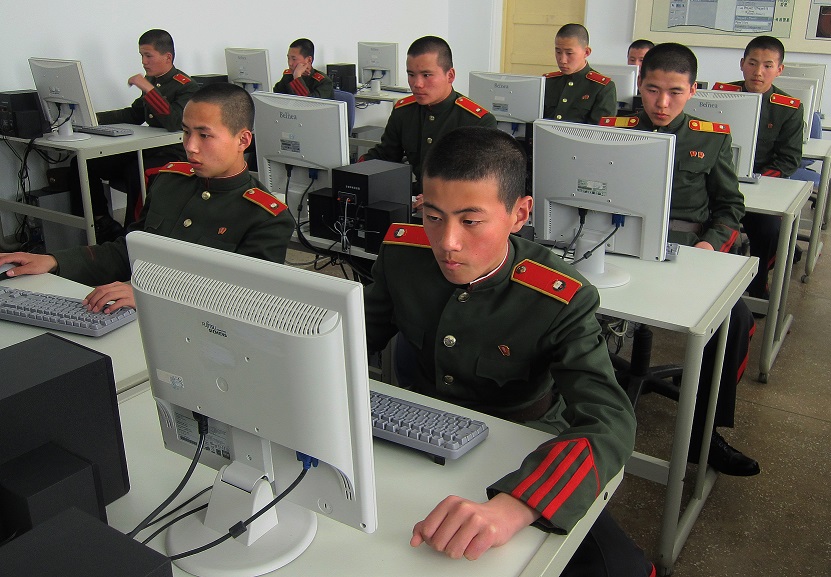
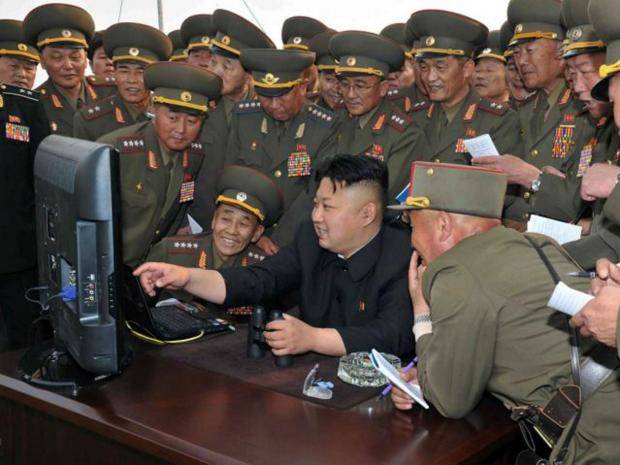
I mentioned it some time ago. The entire Sony mess and blaming North Korea was never really resolved. So when I got the news from ABC stating “Secret intelligence documents and photos unilaterally collected by the U.S. military were among the stolen cache of South Korea’s classified documents by North Korean hackers, but the totality of what was stolen remains unknown“, we should be starting to get careful. you see it implies one side, but to my view it gives an entirely different issue. It implies that North Korea is a capable cyber operator. Now, we know that one can do plenty of damage with a laptop (like in the movies). Yet when you see these pics you wonder what on earth is going on, because we now get the speculated but believable view that ‘the US gave documents to an ally that does not have its basic cyber protections in place‘, that is a very different kind of cheddar, isn’t it? Now, I have seen a few pics where the computers look a little more advanced, but nothing that an actual gamer would still be using two years ago. And that is the foundation of their hacking? Let’s be clear, there are situation where you can hack with a 10 year old laptop, but you need skills, you need access to documentation and the ability to get past the firewalls and past sniffers and network monitors. They do exist, yet that requires an equal incompetency on the South Korean side, a part that we are also ignoring, the use of Common Cyber Sense.

You see, when you get “Malware contamination of the intranet server of the cyber command that occurred in September last year was confirmed by the South Korea’s Defense Ministry in May but this is the first glimpse of the scope of the damage“, there is another layer in place, one that does make sense. Some of the European, Russian and optional US hackers are selling their stuff to North Korea. That is a very possible scenario, but in that case both the FBI (if the US was involved), as well as the CIA failed in their tasks. Perhaps better stated, the CIA seems to be unable to thwart North Korea from purchasing cyber hacking software from making it to North Korea, which is equally a failure on several levels. It is unfair to blame merely the CIA. It is fair enough to add the earlier avoided MI6 to the mix as they should have been watching that danger, because if these hackers can get to South Korea, they could in theory hit the UK in equal measure, the evidence is there. Even as we agree that North Korea does not have the skills (my personal belief) to create something like Wannacry. I already went there to some degree in ‘In light of the evidence‘ (at https://lawlordtobe.com/2017/05/28/in-light-of-the-evidence/), the evidence given was compelling that was given by ICIT. In addition we had ‘when IBM cannot give view of any mail that propagated the worm’, which also takes North Korea out of the loop, yet they could have acquired the software. So even as the largest cyber player like IBM remains in the dark, there is still evidence that it was North Korea? That view was only enforced when a Dutch media team went to North Korea a few years back. In some places their cameras were locked up because no photographs were allowed. Yet most had them anyway, because the North Korean officers had no idea what a smartphone was and that it was able to take pictures. The Dutch NOS showed it on Television, so that is the place that hacked into South Korea, the birthplace of Samsung? It is not impossible and was never denied by me, but it was so extremely unlikely that unless clearly proven with evidence considering it was utterly impossible to the common sense mind. Yet as the source is not in North Korea, hunting that source down is more important, because the next time it will not be some version like Wannacry 2.0, it could be Stuxnet 7.1 and as the UK has 15 reactors and the US has 99 reactors in 30 states, it seems to me that waking up both MI6 and the CIA to actually get to the bottom of these North Korean ‘praised’ cyber skills and find out where those skills actually were (read: came from), because not doing so is a much larger issue. I hope that the South Korean bungle of their network security constitutes as at least some level of evidence.

Three red flags, none of them are innocent, I never implied that, but as we are changing the play, the marketing vibe and the need of what is real we need to carefully weigh what the media gives us and what those giving the media are actually after. I have seen enough evidence thrown about and have been able to ask questions to the extent that gives rise to many question marks and whilst some media are playing the emotional waves, some are seeking clarity and that clarity gives us additional options and views that we did not consider before. People all over the world are told to jump to the left, whilst there is no evidence that anything form the right was going to hit us in the first place, which makes us wonder why they did not want us on the right side to begin with.

These red flags are important, because even if we had any faith on the Russians trying to attack us, we need to consider that Cambridge Analytica is an English firm and even as Fortune now reports “A non-partisan watchdog group has filed complaints with the Department of Justice and the Federal Election Commission alleging that the data firm Cambridge Analytica violated U.S. election law by having foreign nationals involved in the decisions of political committees“, we see that it was a British firm who scored that job.

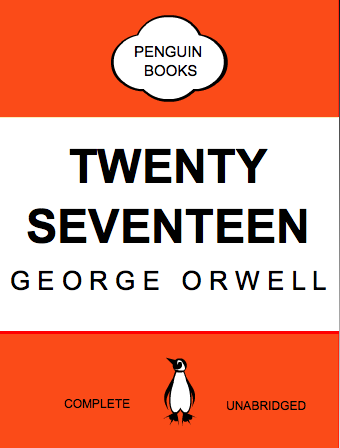
So it is possible that the people in Moscow will be treated to a comedy in 22 hours, it will go something like “TASS Is Authorized to Declare that the accusations against the Russian government and its people were propagated by an English Firm“, in this I used part of the 1984 Soviet spy miniseries directed by Vladimir Fokin, because even with my weird sense of humour it seemed important to give it an Orwellian sling. Perhaps you should check out his new book. It apparently deals with life in the US after a presidential election.


3 Comments

Filed under Finance, IT, Media, Military, Politics, Science

Pinata whacking Couper

There is a little mean streak in me, you see, it started with Tesco, and it actually started a little earlier. But the gist is that when it concerns PwC (PricewaterhouseCoopers) I tend to take a swing at them whenever possible, I just roll that way. So there I was looking at ‘PwC charges more than £20m for first eight weeks of Carillion collapse‘ (at https://www.theguardian.com/business/2018/mar/21/pwc-charges-20m-eight-weeks-carillion-collapse-final-bill) when I realised that when I wack those boys I usually have good reason and supporting documentations to test my latest sledgehammer on a member of their board of Directors. In this article, when I saw “MPs have accused the accountancy firm tasked with salvaging money from Carillion on behalf of its creditors and pensioners of charging “superhuman” fees, after it racked up a bill for £20.4m in eight weeks” it took a mere 3.2 seconds from spitting in my hands and getting ready to swing that hammer at Kevin Ellis (yes all the way from Sydney, my arms are that long). I held off and went ‘wait a minute!

You see, I always had as I saw it good cause, but who are these MP’s thinking that they have good cause? The first is Rachel Reeves, the Labour MP in charge of the business select committee. So she mentioned that ‘superhuman’ part. What does she know? The Wiki claim states that she is an economist. So how much does one charge for 112 consultants? You see at £199 an hour we get £891K for these people working a mere 40 hours a week. As it is the UK, they are more likely to work 60 hours which gets us at flat rate £1.3 million a week which leaves PwC with an overhead of a mere £100K whilst I have not taking into account any additional expenses and they tend to get high. I reckon that these people are likely to make a lot more than 60 hours a week, that is the result of “£2bn to its 30,000 suppliers” and as the article states “a week to employ 112 staff to keep the company running and to honour government contracts” we do not see the inclusion of any additional staff that was not hired and that is still assigned via PwC. So that took a mere 6 seconds to realise that I was not getting to whack Kevin Ellis. Leave it to a Labour MP to spoil a perfectly lovely Friday morning feeling. Now, let’s also realise that my calculations could be way off, there are so little actual facts in the article (I am not blaming the article here) that there are hidden traps all over the place. I think that Rachel should have gotten up from the right side of the vibrator that morning, as we need to realise what an amazing mess Carillion is. The oversight had fallen short on so many sides, with the mention of pensions and a shortfall that is close to a £1,000,000,000 should be a much larger issue and the fact that this had fallen short implies a level of what I regard to be criminal negligence that is unheard of. We merely need to look at ‘Carillion’s pension crisis defies magic legal cure‘ (at https://www.ft.com/content/5041d10e-1a1c-11e8-aaca-4574d7dabfb6). So when we see “Yet in the seven years before its collapse, Carillion made contributions to the fund of just £280m while paying out dividends worth more than £500m“, my first idea is to look at the auditors and the accountancy firm. So how much overview did Rachel Reeves give regarding KPMG? We get part of this when we see ‘Why didn’t anyone working with Carillion say it was going to fail?‘ (at https://www.independent.co.uk/voices/carillion-kpmg-auditors-audit-hbos-financial-crisis-self-regulation-deloitte-a8185356.html). Here we see: “In March 2017, the giant audit firm KPMG signed off on the annual accounts of the construction giant-cum-outsourced services provider Carillion, saying they gave a “true and fair view” of the state of the company’s affairs. For this work, KPMG received a fee of £1.4m. This followed £1.4m of fees recouped the year before. In fact, KPMG had been Carillion’s auditor every year since it was founded in 1999. You don’t need to be an accountant to work out that that adds up to a very lucrative client relationship” that whilst we get the news that a mere four months later “its contracts to provide services were worth a remarkable £845m less than they had previously been valued on its books” that is an amount that exceeds whatever Richard Branson has in his wallet on his best days, so how was this overlooked? So as Rachel Reeves was kind enough that the value of KPMG is not good enough to audit the contents of her fridge, she should also be aware that this entire audit is not merely the outstanding invoices, there is a decent concern that the audit of KPMG has been unable to correctly assess issues for 17 years. So there is a real need to set up the correct framework to be able to take a long term look to the matters as well as the ability to set the right data dimensionality so that the data does not need to migrate over and over as more is found. I would think that an MP who part of the ‘the business select committee’, as well as a graduated economist would know that. You see as an experienced IT worker and a data analyst, I saw that coming a mile away.

So here I am partially standing up for PwC (so how fucked up will my day become?), news at 23:00. So when we get back to the Financial Times article and we see “As a House of Commons report has noted, Carillion’s growing borrowings were not used to invest in the company. In fact, while the group’s debt rose 297 per cent between 2009 and 2017, the value of its long-term assets grew just 14 per cent“, can we agree that there is a side that is terribly wrong here? These matters should have been clear in the KPMG reports, which now clearly overthrows the statement “they gave a “true and fair view” of the state of the company’s affairs“, I think that we can all agree that this part has been debunked in 30 seconds flat. In addition the Independent gives us “Moreover, KPMG was not the only auditor of Carillion’s numbers. Its 2016 report relates that it had a special “internal” auditor too, in Deloitte, with which it worked even more closely than with KPMG. So why didn’t Deloitte pick up on the dodgy contract numbers?” For me that is an interesting side as I have never seen anything dodgy in Deloitte. The fact that they might be part of the mess (unlikely though) is also cause for concern. More important, as I personally see it, it will be up to PwC to get that part out in the open. What was the exact assignment of the internal auditor, what data was presented, what data was accessed and used and who was part of the entire reporting stage of this internal audit? It would show more players in all this and could optionally give a better path in seeing the navigations that the decision makers in Carillion were involved in.

That is a part that we need to realise and consider.

There is another concern that the Independent brought to light. With: “Previous probes by the FRC have produced nothing but clean bills of health for auditors. “In nearly every major financial scandal we’ve had since the financial crisis, the FRC decides none of its charges have done anything wrong,” notes Jim Armitage, city editor of the Evening Standard. Worse, these rulings come with no reports or published evidence, making a mockery of the FRC’s claims to “promote transparency”” we might think that it is merely the FRC, yet what Wall Street taught us is that the entire 2008 joke gave rise to an 8 trillion write off, whilst no actual laws were broken, or at least none that could be proven, so in that regard, if that happens again now, we can clearly look at the House of Lords, point fingers and tell them to improve laws immediately and hold any MP and minister accountable for naming and public shaming. It might work, but I doubt it. You see, until there are large and unforgiving prison sentences, whilst also remove all the rights of ownership to those involved in Carillion, nothing will change. I have seen people setting the ownership of their large estates to their wives and then deny that they had any outstanding financial responsibilities in more than one country. Until these matters are settled this game will continue because greed will always win in the end.

So when we get back to the initial article we get “Kelly, who said his personal rate was £865 an hour, said PwC’s costs would gradually fall as more parts of Carillion were sold and staff from the accounting firm stopped working on the project. He said the firm initially had 257 people working on Carillion, with a bill for about £3m for their services in the first week after its collapse“, we see where part of the costs went to, so as my calculations was based on smaller settings we see how easily these costs were attained and the end of it is not in sight. Rachel Reeves should have seen this clearly as she had access to data I still have not seen. I think it is much more interesting to look at “Finance director Richard Adam, who retired in December 2016 after nine years at Carillion received almost £1.1m in salary and bonuses in 2016“, which we get from the BBC. So if we get to see the wrongdoings of Richard Adams, this is a reasonable speculation as the entire mess goes back a lot further than 2016, will we see these same MPs demand the auctioning of the goods of Richard Adams to make up for the losses of Carillion? You see the article stated MPs, not singular. Rachel Reeves might have been the visible one, but I want to see all those names, because when we consider the BBC news (at http://www.bbc.com/news/business-42703549) as it gives us:

  • The £350m Midland Metropolitan Hospital in Sandwell: opening delayed to 2019 due to construction problems.
  • The £335m Royal Liverpool Hospital: completion date repeatedly pushed back amid reports of cracks in the building.
  • The £745m Aberdeen bypass: delayed because of slow progress in completing initial earthworks.

We need to ask questions on several MPs all over the field, all over the UK apparently. These three alone show a £1.3 billion issue are so out in the open that these three alone will constitute evidence of a much deeper required accountancy dig. Three issues shown last January and these three alone gives rise for me to think that PwC will be able to charge a lot more and in addition, the entire settling and selling could take a lot longer than some expect it to take. So these elements are the setting for additional costs, so those MPs might claim that there is a case of ‘milking the Carillion cow dry‘, but they better be ready for me to take a look at more than these three projects, because I will ask openly on their failings to get a handle on matters, because I am 99% certain that these three projects alone will lead to a dozen others all over the UK and if there are no clear memo’s from those MPs in regards to Carillion, they will be named openly to give rise to their shortcomings (perhaps also what was between their legs), because if you do not have the balls to go against the larger players, you should not be in office at all. Yet, that might be merely my warped expectation of elected officials.

Carillion is a clear mess that had been going on for a much longer time than some expect. You see, that part is seen in ‘cracks in the building‘, ‘construction problems‘ and ‘slow progress in completing initial earthworks‘ it implies optional failings going all the way back to the foundation of the works that were possibly never correctly done in the first place.

So I might still end up treating the bosses of PwC UK as piñatas, but at present there are plenty of other targets and so far (remember I say ‘so far’), in this particular case PwC seems to be in the clear (darn!).


Leave a comment

Filed under Finance, IT, Media, Politics

The rocky road of Congress

There are issues all over the Middle East, and whilst saying that, we see that the UK and the US are now ‘caught’ with their fingers in the big pork pie.

The setting is best seen when we start with the Israeli Haaretz. The article (at https://www.haaretz.com/middle-east-news/top-three-stunning-admissions-from-the-top-u-s-general-in-the-region-1.5910066) gives an initial view.

The title ‘Iran, Syria and Saudi Arabia: Top Three Stunning Admissions from the Top U.S. General in the Middle East‘ sets the pace to the smallest degree and sets the topics to a much larger degree. So let’s take a look.

  1. Assad has won
  2. Iran deal should stand
  3. Saudis use American weapons without accountability in Yemen

Each of these three settings are partially a given. In the first we see that as Lt. Col. Dmitry Utkin has been successful in setting the pace and the plays that are about to follow. Yevgeny Prigozhin, who is linked in all this gives the push for Concord Management and Consulting as well as its subsidiary LLC Megaline, a large push for optional multi-billion dollar contracts. It is yet unconfirmed what exactly will happen, but the setting of the end of the Syrian war will have long lasting repercussions in the Middle East. It is also the first setting where there is a very clear indication that the influence of the US is declining. It will quite literally need to cater to the needs of Saudi Arabia for a much longer time to undo the damage that inaction has brought to the US. So whilst the world is getting torpedoed by news, fake news and gossip regarding to the US and the Internet Research Agency (IRA), there are more and more indications that LLC Megaline is moving beneath the radar to start setting up their infrastructures to grow close to 500% and become the construction facilitator primarily for Syria and after that who knows. Let’s not forget that the $500 billion required for NOAM will go a lot further than Saudi Arabia by its self can currently facilitate for. So as America has been making gruesome steps towards optionally fumbling the collaboration it had created and grown over 75 years. As we were treated earlier this week (at http://thehill.com/opinion/national-security/378132-us-must-push-saudi-arabia-away-from-the-chinese-model-of-governance), so when we see “The widespread concerns are that Saudi Arabia simply won’t meet the stated targets set by Vision 2030. Facing a demographic tidal wave — nearly 45 percent of the population is under the age of 25 — Saudi Arabia needs to generate millions of new jobs to absorb a growing workforce it can no longer afford to subsidize through generous government handouts“, that whilst the US has been unable to even closely set its own agenda for, at times, no more than a quarter in advance at each stage and ending up missing their own forecasts by a lot, we see here that the vision that requires another 12 years is already set to fail, according to the Hill. Now, there is a clear setting that things have to change and there are changes coming, there are even more optional changes in the works as the EU has been playing the wrong settings to cater to the wrong people, in addition, the stress settings between Turkey and several European nations are now impacting a little wider than before. You might see this as separate and as acts they are, but the impact is much wider. France is getting less and less obliging towards Turkey in regards to the Afrin offensive, and the Turks are also getting less and less warm receptions from the Netherlands, so there are political stress situations all over the place. So as we now hear (at https://www.reuters.com/article/us-swiss-turkey/swiss-investigate-alleged-turkish-attempt-to-kidnap-businessman-idUSKCN1GQ2UD) that allegedly accuses that “Turkish diplomats planned to drug and kidnap a Swiss-Turkish businessman as part of a crackdown after the 2016 coup attempt in Turkey“, we see a new iteration of cooling notions. These matters have an impact to a larger degree. You see, there is not just the Saudi issue, issues 2 and three all include Iran, not merely the nuclear deal, but the Houthi support that Iran is giving with the supply of missiles and other goods is still largely ignored by too many players. It is a setting of filtered views, trying to isolate the players and deal with one sided responses. It is the Yemeni setting that makes that utterly impossible. So as we see on one side “The Senator followed up, citing reports that U.S. munitions have been used against civilians in Yemen, she asked, “General Votel, when you receive reports like this from credible media organizations or outside observers, is CENTCOM able to tell if U.S. fuel or U.S. munitions were used in that strike?” “No, senator, I don’t believe we are,” he replied“, we are shown a one sided part in all this that a significant amount of acts was to act against the Iranian missiles as they were targeting civilian areas. That part remains unasked. So in all this, as we realise that Democratic Senator Elizabeth Warren is one of the smarter cookies in the US Senatorial jar of cookies, we need to wonder on her actions and her reasoning. The idea that the US (especially the democrats) needs the nuclear deal to hold, whilst we get (at https://www.ft.com/content/22845a20-27d2-11e8-b27e-cc62a39d57a0) an accepted view from the Financial Times with “The US will on Thursday ramp up pressure on European countries to “fix” a landmark Iran nuclear deal that president Donald Trump has threatened to scrap“, with in addition “A state department spokesperson said: “This is a last chance.”” we know that the end is nigh for that bad situation. It is more than Israel wanted, the additional settings that we see is that the US has played a very dangerous game on the Turkish, the Iranian and the Saudi side, whilst there is enough indication that they never had the Trump cards to make it happen. That view is given more strength when we see “The senior US official said “it was diplomatic malpractice to exclude missiles from the original deal”, adding that long-range missiles are inherently associated with a nuclear weapons programme“. In that regard, it is not just the acts of the US, but the EU and UK players in all this will also be given the spotlight. As we see that things were missing, the hasty excuses like ‘there was no time‘, or ‘this was as good as we were going to get it‘ will hit back with enormous force as it gives more and more view that the initial views of Israel were correct. Now as there is an increased escalation with Iran, it is the view we see (at http://www.bbc.com/news/world-middle-east-43419673) where we see “Crown Prince Mohammed bin Salman told US network CBS News his country did not want to acquire nuclear weapons. “But without a doubt, if Iran developed a nuclear bomb, we would follow suit as soon as possible,” he added“, which now gets us in that stage that comes with the Hollywood phrase ‘This shit is getting real!‘ It was the setting that Israel had dreaded for the longest of times and whilst that shit is getting real we see, or better stated, we should see that the escalated and unbalanced pressures are showing the EU as well as the UN to be set as paper tigers that have no power and in the end no options. It is like Reuters stated in regards to the Council of Europe Commissioner for Human Rights, merely “a 47-nation human rights body that has no legislative powers“, yes that was a setting that really helped it all along, were they not?

It goes further than this

You see, some of the players are waking up (or so it seems), with ‘GOP leaders want to put off Yemen war powers vote’, (at https://edition.cnn.com/2018/03/15/politics/yemen-war-powers-vote-congress/index.html), they realise that the setting is less clear, there are intricate settings that have been ignored by some of the players (read: Democratic Senator Elizabeth Warren), the issue is not how, what, when, where or why it was done. With “GOP leaders would prefer to put off a final vote on the divisive issue until after it can be more closely studied in committee” it is not merely a stalling tactic (stalling might still be a factor). The issues that Democratic Senator Elizabeth Warren danced around are still very much on the table for the governing party and in all this it is also squarely on the plate of Mike Pompeo, who, if confirmed, as Secretary Of State, will need to make sure that his office does not become the SOS signal that breaks the loom before the strings in all this have been separated, untangled and isolated so that the matters do not become some Gordian knot that ends up pushing Saudi Arabia, Iran, Egypt, Qatar and Turkey over some edge, because these connections will set flame to the threads connected to others on the loom of diplomacy. Even as we are ‘treated’ to news items like ‘Iran-Qatar alliance deepens, says Iranian naval official‘ and ‘Iran stands with Qatar, says Guards official‘, the truth remains that a direct head to head with Saudi Arabia is one that Iran is reluctant to have, because when it comes to making choices between Saudi Arabia and Iran, there is clarity that the US, many European nations as well as Israel, pretty much none of them will support Iran, as the deepening cliffs are drawn between the EU nations and Turkey, the support it had with Turkey could essentially fall away further, and in that Turkey has been famous for merely supporting whatever pleases Turkey, getting in bed with Iran that deep is a choice Turkey will not be willing to chance. In all this Iran requires players like Qatar to make the blunders of setting themselves into a light of harm whilst Iran plays the ‘I know nothing‘ card.

A game that ends even before it starts in all earnest. So in that regard, the second and third setting we saw in Haaretz will have stronger impacts and the entire Yemeni setting will not be played out the way some would like that to be. that part was seen merely an hour ago when Reuters (at https://www.reuters.com/article/us-usa-yemen-mattis/mattis-dont-restrict-u-s-support-to-saudi-led-forces-in-yemen-idUSKCN1GS00N) gave us “Defence Secretary Jim Mattis defended U.S. military support to Saudi Arabian-led coalition forces in Yemen on Thursday as he explained a personal appeal to lawmakers who are considering whether to end Washington’s involvement in the devastating conflict“, and it is not merely in regards to support. When it comes to appeasing Turkey or Saudi Arabia, having strong ties with Saudi Arabia would be roughly 1,000% more important than anything else and not in the smallest regard for economic reasons. So as we earlier (in previous bog) saw that what is now stated by Reuters as “A bipartisan group of senators, Republican Mike Lee, independent Bernie Sanders and Democrat Chris Murphy, are attempting to take advantage of a provision in the 1973 war powers act that allows any senator to introduce a resolution on whether to withdraw U.S. armed forces from a conflict not authorized by Congress“, we see that congress might be having the right cap on whilst considering this, the cap would prove to be a massive blowback for Saudi-US settings in the Middle East for the longest of times. So as we might to some degree agree with “Lawmakers have argued for years that Congress has ceded too much authority over the military to the White House. Under the Constitution, Congress – not the president – has the authority to declare war“, we need to also see that the US has not declared war against Yemen, it merely is seeking to stop the Iran-aligned Houthi rebels, a group has been firing missiles into Saudi Arabia as well as target commercial vessels off Yemen’s coast, 2 acts that should never have been allowed for in the first place. The US could have a clear setting in those two parts and as such a larger repair of status would be to be more vigorous in countering merely those two dangers anyway possible.

And in all this there is one final danger that the US desperately needs to negate and they do not have a lot of time to achieve it. You see as the Syrian issues are drawing to a close, it is not impossible that PMC Wagner would be growing its influence by offering support to Saudi Arabia against Yemen. You see, Iran painted itself in a corner by denying the weapons shipments to Yemen. In this the strategy becomes that either Iran walks away, or locks horns with Russia too. So as we see “The Iranian Minister of Defence Amir Hatami has denied the allegations about the presumed shipment of weapons to Yemen“, the door has been opened and now Yevgeny Prigozhin as well as Lt. Col. Dmitry Utkin could end up visiting Crown Prince Mohammad bin Salman, in his role of Minister of Defence and offer to solve the Yemeni issue. Should that happen, which is largely speculative from my side, the Russian delegations would receive a much larger opening of the door of opportunity in the Middle East as well as optional access to offer services towards NOAM, a situation that must be the stuff of nightmare legends for the US (as well as for the UK to some degree).

If that happens, it is expected to happen before the end of July, so we will know then and I could be wrong, but when it comes to business opportunity we have seen Yevgeny Prigozhin take the lane of opportunity in the quickest way and there is no way that he does not want a slice of that $500 billion Lemon Meringue Pie, or as he would be calling it the: Kremlin Profit Sharing Money Supply, a refreshing desert that is as rhymed as the Kremlin could get it with the available Horn of Plenty for all who agree there.

Do you still think that my speculation is that far off? I do not hope to be right, but knowing how the souls of greed move; the chance of me being wrong is declining really fast.

All because some of the players have (as I personally see it) their own ego’s and personal needs in the play and not the national needs they had to serve, the long term needs that is, because there is no doubt that some of these sparks are the direct consequence of short term thinking.


Leave a comment

Filed under Uncategorized

A changing language

Europe is in several stages of unease; there is the spending of Mario Draghi, Brexit remains on the mind of many. Yet, the one change that is now more and more in the foreground of many is the problem that Turkey seems to be. There are those set on the stage to end Turkey as a NATO member and subsequent becoming part of the EU, there are things going forward and backward, but the language involved in all this is changing, so are the settings for the meetings yet to come. In all this the latest Turkish act to double down on the Russian S-400 purchases in 2020. There is, as I stated unease and as I see it the entire EU-Turkey mess is now a dance around unclear settings. Yet the settings are founded on what some would call, clear and blatant lies.

So to recap, on March 26th in the Bulgarian port city of Varna with the attendance of President Recep Tayyip Erdoğan, there will be a summit. The given setting is “to discuss EU-Turkey relations as well as regional and international issues“, this we got from the spokesperson for Donald Franciszek Tusk. The meeting held at the leaders’ level will be hosted as a working dinner, a statement signed by Tusk and Juncker said. Yet soon thereafter it begins. With: “Ankara has been stressing that the EU fails to understand the challenges that the county faces, and calls on all sides to take Turkey’s concerns into consideration, particularly against the PKK and the Gülenist Terror Group (FETÖ), which carried out the failed July 15 coup attempt“, yet how is that true when it has been clear for the longest time “Turkey witnessed the bloodiest coup attempt in its political history on July 15th, 2016, when a section of the Turkish military launched a coordinated operation in several major cities to topple the government and unseat President Recep Tayyip Erdogan“, this is the quote from Aljazeera, but they were not the only one giving this.

The Turkish government blames the failed coup attempt on Fethullah Gulen, a Turkish preacher and businessman who has lived in self-imposed exile in the United States since 1999. So as we accept that the Gülen movement is classified as a terrorist organization by Turkey under the assigned names Gülenist Terror Organisation (Fethullahçı Terör Örgütü, FETÖ) or Parallel State Organisation (Paralel Devlet Yapılanması, PDY), we see the link offered, yet another path in this is “MIT officials admitted that they received the very first intelligence report about a possible attack on July 15, only hours before their own headquarters was under heavy artillery fire“, as well as “As of today, more than 100,000 people have been sacked or suspended and 50,000 arrested in an unprecedented crackdown. The government has deemed the crackdown necessary to ‘root out all coup supporters from the state apparatus’“. When we consider those parts, we need to realise that the Millî İstihbarat Teşkilatı (MİT) was completely out of any loop, which makes Turkish Intelligence not just a flawed setting, it would implicate that it has limited counter terrorism options and no resources to speak of (in intelligence terms).

In opposition to this, there would be enough data to offer that it was an internal issue from within the Turkish military and whatever opposes Recep Tayyip Erdoğan in Turkey got a fat target painted on them. This fills and completes the view we need to have of Turkey much better. In support of this we need to consider that one exiled cleric could not have orchestrated the military support that would have been required and that was seen in action. The width of the Turkish military acting seems to be that of an internal star chamber than a clerical imprint on the military, the latter would have given more visibility to other ranking officers within the Turkish armed forces. As this becomes more and more visible and accepted, we are treated to the view on the unacceptable acts against the Kurds yet again, which followed the Turkish official view of the coup that they ‘survived’.

So in this light the setting for March will be one that is a puzzle. You see as Turkey keeps on playing this game, their credibility will only go down further. The European Council on Foreign Relations (ECFR) (at http://www.ecfr.eu/article/essay_eu_turkey_relations_the_beginning_of_the_end_7226) gives us: “Both Turkey and the EU need the continuation of this partnership. It is a matter of definition whether this partnership will be in the form of full membership or in a different form. What is important is not to break the process and not to cause alienation. The need for sustainable EU-Turkey relations obliges both sides to take steps to honour their commitment to integration“, we can accept that, but at this point, is continuation feasible? We see the shifting language that shows that Germany is less and less taken with Turkey, now siding more and more with France on the anti-Turkey alliance. It gets worse for Turkey as we now hear: “A Turkish court on Wednesday denied entry to the German ambassador to Ankara to the hearing of Selahattin Demirtas, the former co-leader of the pro-Kurdish Peoples’ Democratic Party (HDP)“, which we get from http://www.dw.com/en/turkish-court-denies-german-ambassador-entry-to-kurdish-politicians-trial/a-42579957, even as France is trying to work with Turkey regarding a ‘diplomatic road map‘ on Syria, the sounds of accusation of Turkey violating international law was not far behind it, so there is pressures on nearly every level. Only 12 hours ago, Deutsche Welle gave us “Even NATO Secretary-General Jens Stoltenberg wouldn’t hazard a guess ahead of this week’s defense ministers’ meeting. He said Turkey needs to clarify the status of the contract” (at http://www.dw.com/en/turkish-russian-missile-deal-puts-nato-on-edge/a-42572965), as I said earlier, the language is changing. As we see ‘Turkey needs to clarify the status of the contract‘ that it is about cancelling the contract? Yet in that respect, what would Turkey demand in return? How much is that going to cost and where does that invoice end up? You see, when you consider Reuters with ‘U.S. tells NATO allies spending plans still falling short‘ (at https://www.reuters.com/article/us-usa-trump-nato/u-s-tells-nato-allies-spending-plans-still-falling-short-idUSKCN1FY013), where we see “Spain has said it will not meet the 2024 target. Belgium, the Netherlands, Luxembourg, Italy, Portugal, Norway and Denmark are also lagging. Hungary expects to meet the goal only by 2026“, as well as “France will increase its defense spending by more than a third between 2017 and 2025, but Germany, is not expected to reach the 2 percent target by 2024“, this gives us that the three large economic anchors of the European Union cannot get there. It is these elements that make me wonder on the changing language involving Turkey. From a setting that would have given a clear rejection of Turkey becoming an EU member, we see the setting of new talks, new events and more ‘collaboration’ projects. I think that France is already learning the hard way that this path leads to nowhere, but the others need Turkey to be a spender here, and Erdogan is using that tactic to his own advantage, because once they are in, you cannot throw them out anymore (the EU that is), not even willingly as the UK is learning the hard way. Even as we accept that to some extent Turkey helps to reduce an influx of Syrian and other migrants and refugees into the EU bloc, the question is to what extent and for which purpose, because once these refugees make it into Turkey, Turkey is either stuck with them or they must ‘divert’ them to another place.

In this, in an earlier blog I mentioned the Visa Free EU travel for Turkey and that they had not met the demands. So as we see “Last week, Turkey manifested determination to restart a new chapter in its ailing relationship with the European bloc by submitting a paper detailing Turkey’s roadmap for the fulfilment of the remaining seven benchmarks of 72 criteria” we need to get worried on the non-committed acts from the EU on the matter which had not been met. It seems like Brussels is trying to find any way to either delay it all or give Turkey a pass, which would be disastrous for several players. This is seen in several articles, in this case the Irish Times gives us: “Instead of formally ending EU membership talks, Dr Merkel said she would look at imposing “real restrictions on economic contact” including through the European Investment Bank, EU aid, World Bank and by blocking talks on expanding Turkey’s customs union agreement with the EU, a move that could hit billions of euro in potential Turkish exports“, whilst the EU themselves was ‘dismissive of call for end to Turkey accession talks‘, stating that this is for the heads of government, European Commission says, so the EU revels in inaction and restrictions in other ways. This is a dangerous and explosive combination.

So even as one issue was the contention in the counter terrorism benchmark which has been the definition of terrorism in the counter-terrorism law that Turkey was called repeatedly to amend in order to comply with European democratic and judicial standards. Now, according to reports, a legal provision will be added soon to the current anti-terror law stating that “any critical expression that does not exceed the boundaries of journalism does not constitute a crime“, how is that enough? As we see the Kurdish issues as shown earlier as well as a new complete failure by the Millî İstihbarat Teşkilatı (MİT) should leave anyone a clear indication that not only is the counter-terrorism failing, there is an increased worry that Turkey does not really comprehends the term ‘counter-terrorism’, in support of that fact, or evidence to that, you should talk to the journalists Deniz Yücel, Huseyin Akyol, Ragip Duran, Ayse Duzkan, and Huseyin Bektas. Oh no, you can’t they are in jail! Turkey could have had a genuine excuse, but they lost that option when they denied the German ambassador to Turkey access to the court proceedings. That alone should be regarded as evidence to dismiss the ascension of Turkey to the EU.

And whilst the entire language on Turkey seems to be in a fluid state, the Brexit noise goes on, whilst some are relying on fear-mongering with noise like: “You could have a permanent Operation Stack for 20 miles” regarding shipping between the UK and the EU, ‘could‘ being the operative word. So how large was that ‘stack’ in the 70’s and 80’s? In addition we see the Financial Times (at https://www.ft.com/content/0a8799c6-1190-11e8-940e-08320fc2a277) give us: “Brussels is urging EU leaders to consider radical options such as raiding corporate tax receipts and money raised from selling carbon emission permits to fill a €15bn a year budget hole left by Brexit“, in addition it gives us: “the need to find more money for priorities such as border control and joint defence, mean negotiations are likely to be even more poisonous than previous EU tussles over money“, whilst we see “Some member states don’t want to pay more but they want to do more. Other member states want to receive more“, these elements show the desperate state the EU is in now, that whilst Mario Draghi has printed almost 2 trillion Euro in money for ‘Quantative Easing‘. This relates directly to Turkey, because it shows the desperate EU trying to open a many doors as possible, this is how I see the impact of not dismissing Turkey as an EU member at present. So when we see “impose tougher conditions on access to EU funds as a way to force the likes of Poland and Hungary to comply with EU policies on the rule of law and on asylum” as is a given view on the two needing more money, wanting a stronger voice but cannot contribute. Add to that the earlier pressure from the US for NATO member to do more gives a shifted view of the needed activities within the EU, Turkey is seen as the one floating elements that will allow a few players to keep their heads above water, but it is as I personally see it a desperate act from certain short term viewers, that whilst they also know that it will descent EU elements into chaos. As I (again merely a personal view) see it, it would cripple Strasbourg in getting issues resolved and as Turkey fails to comply with humanitarian sides, it could in equal measure become the puppet for Russia for dislodge other item in consideration, an option honoured by perhaps negating some invoices for S-400 systems, spare parts, training and consultancy? It is merely speculative thinking, but would I be wrong? It would work out very well for Turkey, for the other bloc members a lot less so.

A danger that could have been resolved almost 2 years ago, I will let you ponder on the reasons why the EU never negated this danger.


1 Comment

Filed under Finance, Law, Media, Military, Politics

A Turkey problem

We’ve all had them around thanksgiving, the turkey was still too deep frozen, the filling was incomplete and the oven was not firing up to the right temperature. In the US these are at times regarded as mum’s worst nightmare. Thanksgiving is a day when mum shines and her dinner is heralded and dreamed of for many nights before and a few nights after as well. No, this is not about the plumage; this is about that nation that is trying to basically piss off anyone they deal with. The first is seen (at http://www.france24.com/en/20180207-turkey-says-it-has-met-eu-criteria-visa-free-travel), where Ibrahim Kalin stated that “that Turkey had submitted all related documents to EU officials ahead of an EU-Turkey summit in March“, a Turkish official gives us: “the country has fulfilled all 72 requirements set by the European Union to secure visa-free travel for Turkish citizens to the 28-nation bloc“, this whilst we know that ‘Turkey had failed to meet the 72 criteria, including amending anti-terror laws‘, we might go so far as that of those criteria the bulk had not been met and with the additional issues now in play, there was never a more prompt moment to deny the visa-free travel options. More important, stating that ascension to the EU would not be possible within the next 50 years would equally not be out of the question. The Turkish approach to ‘securing’ Europe as discussed (at http://theconversation.com/turkey-is-using-syrian-refugees-as-bargaining-chips-as-it-moves-against-the-kurds-90904) is beyond tasteless. As I stated before, the acts by Turkey going back as far as 2002 are shown to be unacceptable. The larger issue is why Europe seems to continue to ‘find’ ways to reopen talks whilst the bulk of 72 requirements have not ever been met, even worse, their actions in Syria, their involvement with Qatar and semi union with Iran makes the matter worse. It makes a case that Turkey is the larger security threat for Europe.

The fact that Turkey is so corrupt that immigrant threats get to walk through Turkey, or via Turkish smugglers makes matters worse. Yet, there is no such mention at this time. Even more unnerving is the fact that there is still a meeting. The Commission confirmed Wednesday that Erdogan will meet in Varna, Bulgaria, on March 26 with Commission President Jean-Claude Juncker, European Council President Donald Tusk and Bulgarian Prime Minister Boyko Borissov, whose country holds the bloc’s rotating presidency. What takes the cake was the quote Commission spokesman Alexander Winterstein said the talks will focus on “subjects of mutual interest and recent developments in Turkey. That includes obviously the rule of law and fundamental rights“. Knowing that Turkey has only two elements on the brain, I wonder how this can end well. The EU is getting truly desperate. It is still facing Brexit and the news and the bitterness of Europe is showing them to be spiteful in every way. is that not nice to know that some place that ‘pretends to value’ freedoms, will not honour those who are no longer interesting in its membership? As I personally see it, the levels of corruption that flow through the ECB gravy train is making people nervous, because that part is becoming clear that this train has to stop functioning. the Financial Times (at https://www.ft.com/content/ade8e020-0b50-11e8-8eb7-42f857ea9f09) voices it in light of ‘non-compliance’, the quote “The five-page text (UKCompliance), circulated to EU member states by the European Commission and seen by the Financial Times, sets out how the EU plans to make Britain abide by union law until December 2020 while excluding it from decision-making“, does that sound like amicable? As the article states, it basically reduces the UK to a slave state having to enforce laws designed in the foundation of utter stupidity, whilst not getting a say in the matter. So, as that is pushed upon the UK, with the optional worse decision to continue talks with Turkey, The EU is basically setting a warm fire where the UK can decide to go postal, take the cold Brexit and cut all ties. The tidal wave of chaos that Turkey is likely to bring soon thereafter will make UK the best trade solution for Western Europe and Scandinavia. The document also emphasises that London must refrain from any “action or initiative which is likely to be prejudicial to the Union’s interests”, which sounds nice on one side, but the act that judicially for the UK is the national notice that counts, and that is the setting of any judicial setting in its national origin, it is not for the European Union to set that as anti-Union. Even more pronounced that in itself would constitute another reason for Turkey not to be allowed within the European Union as such. Should that be set aside for consideration, it could invalidate the terms for the UK to abide by, which is a small blessing in disguise.

It is the Financial Times, who in light of Brexit shows that Europe is filled with duality. The economic pressures it faces and the facilitation it requires as it has been playing the monopoly money printer at large for all causes worthless and overvalued. This is seen in several ways. In the first the ECB remained quiet on Mario Draghi and the G30 club, the media has silenced any actions since January 17th. In addition, Bloomberg reported “Mario Draghi said the European Central Bank has no choice but to brace for the possibility that the U.K. will exit the European Union without a transitional agreement“, form my point of view, the 5 pages that the Financial Times initially gave us, and that likelihood is only increasing. Perhaps having a few spiteful children on the Brussels side was not the cleverest of options as I personally see it, but then again. It is merely my view that some of these players want to continue their gravy train, a debatable view to say the least. Even as France has been outspoken and opposing any Turkish ascension to the European Union, there has been a silence from several other players. The fact that the Bulgarian meeting is still on for now, that in light of the Turkey violating international Law in Syria is also light for concern. The Jerusalem Post gives us “Speaking on BFM television, Jean-Yves Le Drian also said there were indications Syrian government forces were using toxic gas against civilians although the UN would need to confirm that“, that might be true, but at this point is Turkey also involved in those actions? Because that is the evidence that matters! You see the quote “Le Drian said international law “is being violated by Turkey, by the Damascus regime, by Iran and those who are attacking eastern Ghouta and Idlib”. His remarks amount to France’s toughest line yet on Turkey’s involvement in the Syrian conflict” might hold water, but only if clear evidence is given that Turkey actually broke international law. You see, from one point of view Turkey was not barred, stopped or told to leave by what should still be regarded as the legitimate government of Syria, as such Turkey ends up having an actual defence against the French claim and that could remain to be an issue. The fact that other papers are voicing the identical quotes does not make this issue more so true, the presentation of evidence does.

So even as Ankara is not meeting some thanksgiving any day soon, it basically soured the waters with the US, France, optionally Germany, Saudi Arabia and a few other members of the European Union. And there was I thinking that only Napoleon was stupid enough to wage a war on two fronts, oh no that Adolf dude made the same stupid error. Anyway, as things go we will see more news soon, because the entire march meeting even as the Netherlands has withdrawn its ambassador to Turkey, we see the Dutch former NATO secretary Jaap de Hoop-Scheffer mention that ‘Turkey is too important for the Netherlands and the Netherlands are too important to Turkey‘, the economic fires are pushed to a higher level, there is nothing like a former official to voice the needs that politicians are not able (read: allowed) to make. The ECB and its gravy train must continue. That is the imperative that the 28 bloc nations are trying to rephrase so that certain questions are not asked. I personally believe that it is all in extremely poor taste. In another source (Dutch Newspaper: Trouw) we see the Dutch Lily Sprangers, former director of the Turkey Institute in The Hague state: “Die problemen zijn geen reden om geen betrekkingen te onderhouden” (These problems are no reason not to maintain relationships), sounds nice in theory, yet when the Dutch fascist JanMaat was about to get elected you (read: the politicians at large) did not follow on that idea to improve options, you tried to silence it to death, when he ended with 3 seats you all united to get that undone. It all seems a little two-fold in the light of the events that are happening.

The Dutch have been trying to improve relationships, which remains valid and they are not the only one, but in light of the 72 non-achievements to get some report going so that they could be included in light of the hostilities shown towards Brexit, gives me the shivers. A club of inclusion tends to be the most dangerous kind, because (as I personally see it) it allows for the utter corruption of ideals that should have excluded parties from the very start.

So then the media reports on the March 26th event. Will I still sound wrong to you, or is that and the lack of response by the ECB on the G30 club a clear signal that a lot of things are wrong in Europe and Brexit might have been the one sane move to begin with?

Did I oversimplify issues again?


Leave a comment

Filed under Finance, Law, Media, Military, Politics

Patsy Ross and the curse of greed

Yes, we can do all kinds of things in Davos, Switzerland. We can enjoy cheese; we can enjoy the white slopes of Davos and not to mention learn about greed in the World Economic Forum. One article to start with Fortune, who gives us ‘Wilbur Ross Tells Davos: U.S. Is Done ‘Being a Patsy’ on Trade‘ (at http://fortune.com/2018/01/24/davos-2018-trump-wilbur-ross-trade-war-tariff/). The article brings up a few things and has a great ending (from a comedy point of view). With: “Ross also issued a warning against misinterpreting the Trump administration’s hardline approach to trade, in what could foretell what Trump himself will communicate to the Davos crowd on Friday. “We don’t intend to abrogate leadership,” Ross said. “Leadership is different from being a sucker and being a patsy.”“, you see if that was actually true than you would have had fairness in mind with the Trans Pacific Partnership. That document is a joke giving all the power to business and leave governments running for the hills as they get sued for diminished profits, in addition the TPP would not have given additional powers to patents leaving the option of generic medication in the basement. That cursed piece of parchment should never have been allowed to be completed to the degree it was, in secret and without proper open consultation. Now, we agree and accept that this was basically before the Trump administration and they rightfully opposed it, yet the dangers that the people of 12 nations are exposed to and exploited by is just too large. Consider the quote “Critics on the left also said the TPP would pave the way for companies to sue governments that change policy on, say, health and education to favour state-provided services“, since when is any corporation allowed to endanger the health of people by suing for damages? How greedy and stupid does a government need to get by endangering their citizens to such a setting? The full text (at https://www.mfat.govt.nz/en/about-us/who-we-are/treaties/trans-pacific-partnership-agreement-tpp/text-of-the-trans-pacific-partnership), also gives other dangers. Part of the deal was that, large pharmaceutical corporations (most of them American) want to extend the life of their patents, arguing that having spent billions to bring their research to fruition they should be entitled to a just reward so they can invest the profits into developing new medicines, the issue is that that timeframe had been given and they merely want to double that profit as much as possible. Yet in light of an aging population the effect is that generic medication becomes a long term inability driving cost up for the retired population by a lot, in some cases well over 100% more. So as we read that “Time Inc. chief content officer Alan Murray, agreed that pacts brokered decades ago “need a facelift,”“, the people are not given a fair shake in all this, it is all about the large corporations, whilst their tax accountability is off the table, making the forum a very imbalanced exercise. So as we saw the Patsy mention of Wilbur Ross, we are treated to no approach to keep the ‘jokers’ of Wall Street in check, there the political wings all fall silent and that is where the kneejerk dangers are. The law has failed the people, the Wall Street gains are beyond normal whilst those getting the cash seem to remains non-taxable, or taxable to merely the smallest possible degree. In this The Financial Times has an additional setting (at https://www.ft.com/content/cb18f700-011b-11e8-9650-9c0ad2d7c5b5). The emphasis on TTIP over TTP, as well as In this we see that he “repeated a willingness to revive negotiations on trade with the European Union“, yet left the United Kingdom unmentioned, which I see is merely a shot across the bow. In this Davos has been making jabs in that direction for 2 days now. In a place where every word and specific mentions are essential, it comes with clear setting on poses, stances and hand gestures, we see the total disregard and consideration regarding Brexit, or Brexit mentions in the same way that toilet paper advertises ‘softness’.

Finally, there is a continuation from yesterday’s blog as we see (at https://www.theguardian.com/business/live/2018/jan/24/davos-2018-merkel-macron-mnuchin-inequality-slavery-wef-day-2-live), the mention “Macron hails French recovery“, which sounds nice, but there is no evidence on that, only overly optimistic views for 2018. So as France still had 9.8% unemployment in July 2017, that against 4.2% in the UK and 3.6% in Germany, France is a long way away from hailing ‘recovery’. In addition, it was the view of Natixis Research that was used by Reuters to give us: “With growing optimism on the health of the Euro zone economy and its equity markets, it’s easy to forget that GDP growth in some countries such as France is somewhat below what one would expect at this stage in the cycle, with forecasts of under 2 percent for 2017 and 2018. According to Natixis’ research, structural unemployment and the rise in numbers of young people with no qualifications are a drag on the Gallic economy and will keep holding it back. “When the structural unemployment rate is as high as in France currently (more than 9%), recruitment difficulties will very prematurely stop growth,” Patrick Artus, who heads research at the French bank“, as such he uses a more academic stance, but our views partially align, France is not out of the woods yet and the Draghi Stimulus will still hit France as well because that money needs to come from somewhere in the end and France stands well over minus 2 trillion Euro. That is the part all the players are ignoring whilst the paths are made for large corporations, whilst the need to dam the flow through proper corporate taxation. None of that is properly in place in Europe (and the UK needs to fix a few things too). And as the people get to hear from Former UK Prime Minister Tony Blair on how Brexit is a mistake, the first part of my prediction comes out. I only need to see one of the five as mentioned last week to make a similar remark to make the prediction I made over a week ago come true. Yet in all this there is also a benefit to get soon enough. You see as the US is now hitting others with steep tariff increases, he is directly giving the danger that all the others (probably with the exception of Japan), will hit back by doing the same to video games, when that happens America will get a massive hit to that $130 billion market which is predominantly American, in this the tariffs would equally hit the digital sold titles. In light of the numbers, The US is making a dangerous move that could hit them harder than they bargained for.

The fact that Digital game revenue surpassed $10 billion in December 2017 alone gives rise to the awkwardly bad decision that the US set itself up for. We will see if the last day of Davos gives us a few more pointers on how large corporations will see more opportunities come your way that is if we can believe Breitbart. That is how we got the news from the Washington Post with ‘Breitbart called Davos a collective of ‘leftist elites’ and ‘corporate cronies.’ Then Trump said he was going’, the article is not really giving us anything besides the views that Breitbart has and therefore not really informative, but they seem to touch on the part that I found interesting, is Davos about upbeat presentations, or is it the one informal place where certain power players can align their presentations because there will be large shifts in 2018, France seems to be starting the events that will hit the people in Europe, in this Reuters also reported on Italy’s view with: “Italian Prime Minister Paolo Gentiloni sent a message to US President Donald Trump on Wednesday (Jan 24) that leaders can defend their countries’ interests but must respect existing international agreements”, which is a truth, yet as several sides are hitting the European Community, it is a view that raises other questions on current international agreements .

In the end, Fortune dot come gives us two additional parts. The love of blockchain and the need for smart data will be driving elements over the next few years. None of that was a real surprise, but the amount of push towards blockchain was a larger surprise that I thought it would be. Forbes (at https://www.forbes.com/sites/dantedisparte/2018/01/28/one-thing-is-clear-from-davos-blockchain-is-out-of-beta), the power is seen in “While Blockchain and digital assets were widely featured on the main stage at Davos, perhaps the most insightful conversations were taking place in standing room only events hosted by groups like the Global Blockchain Business Council, whose CEO, Jamie Smith, and chairman, Tomicah Tillemann, have emerged as global emissaries helping Blockchain go mainstream. Indeed, Jamie Smith has made it her personal mission to be the explainer-in-chief of this powerful technology so that more of the world can grasp its potential”. I am still not convinced! You see, the Blockchain is clever and it is one that has great potential, yet the push of a solution that is unregulated and in addition to that it is an option for others to skate around the laws, because the use of blockchain will raise legislation to another level. This was partially discussed in the Business Insider on October 20th (at http://www.businessinsider.com/blockchain-cryptocurrency-regulations-us-global-2017-10). With: “Blockchain is the technology of choice for many start-ups. As per research by Outlier Ventures Research Team in May to June of 2016, 200 new start-ups were added in six weeks. Businesses and start-ups popped up around the virtual technology and sprouted with lightning speed. While many countries are supporting the development of the digital currencies, thus encouraging new ways of transacting and new businesses to bud, there are some that have boycotted the new technology, deeming it as an illegal negative disruption that brings financial instability and global economic unrest”. There is no denying the view that Davos is spreading, yet the push (partially implied in the Business Insider) to get Blockchain approved and mainstream by 2025 is a larger issue than some realise. The banking industry that took close to two decades to accept ATM’s to the degree it did in the end is now setting a new digital path in less than 10. That worries me, not because of the digital leap forward, but because of WHY they are doing it and I feel certain that we will see more and more revelations in the next 2 years.

It is my personal feeling that it is a greed driven path and that never spells any good for the people at large around, because they end up paying for it all, one way or another.


Leave a comment

Filed under Finance, IT, Law, Media, Politics, Science

The desperate just won’t stop

We have seen so much about Brexit, it is getting ridiculous. Even the Guardian is giving us loads of fear mongering articles. Now, their partial valid defence is that this is what is being said, so that is fair enough, but have you all considered the sources?

For example ‘No-deal Brexit would cost EU economy £100bn, report claims‘ (at https://www.theguardian.com/politics/2018/jan/15/no-deal-brexit-would-cost-eu-economy-100bn-report-claims). Here we see “lack of trade deal would cost UK around £125bn“, so lets take a look at the source ‘Oxford Economics’, from their own claim: “Oxford Economics was founded in 1981 as a commercial venture“, which is fair enough, there is nothing wrong with a commercial venture. Yet now also consider “Our worldwide client base now comprises over 1,500 international organisations, including leading multinational companies and financial institutions“, this is an issue because none of them want Brexit, their need for greed is fuelled best when they have open borders and no tax accountability. In addition, it has been shown that the small businesses would thrive a lot better when the large corporate advantage is taken away and the smaller players are on an equal playing field. Small Business (at http://smallbusiness.co.uk/smes-see-brexit-opportunity-trade-rises-2540071/), gives us “Of the 500 SME owners and senior managers surveyed, two-thirds say they feel confident about doing business overseas (67 per cent). Since the EU referendum, almost half have increased international sales (48 per cent), while 36 per cent expect to start or increase exports in the next twelve months“, now this is merely one source, so this is not gospel, yet the clarity that we have seen is that all large corporations are pushing for Bremain, is because of the singular market, the part where these large corporations have an advantage over all other players.

We see this even today in the Guardian. With “Britain will not be allowed full access to European Union markets, including financial services, unless it pays into the EU budget and accepts all its rules” it is playing a dangerous game. So why exactly should the UK buy into the stupidity of Mario Draghi? The European system that is flawed and discriminatory towards the larger players. In addition there is “Asked whether France would seek to “punish” Britain, by insisting financial services should not be included in a UK-EU trade deal after Brexit, Macron said, “I’m not here to punish or reward”” (at https://www.theguardian.com/politics/2018/jan/18/macron-rebuffs-city-deal-after-brexit-unless-uk-pays-into-eu-budget). You see, France is on the abyss, so they want any advantage they can get. Yet, in equal measure these nations, not just the UK can no longer allow the utter irresponsibility that the EU has been dealing. Governments did this to themselves. With France at €2.1T, a debt that is 32,360 times its population. Italy at €2.2T, with 37,000 times its population and Germany with €2.0T, with 24,750 times its population. In all this the debts are beyond normal and Europe is not listening. We get excuse after excuse. It is unable to stop corporate greed and we see nations giving larger corporations tax exemption after tax exemption, whilst the population have been and is still living on a lowered quality of life, that whilst the current situation is forcing people to live and work more and more until in their deep 70’s, because retirement before 70 is now no longer a feasible option, the cost of the present quality of life has increased by too much. The UK is not in a better state, but is trying to deal with the mounting debts. You see, the quote “The alternative was a Canada-style trade deal, he said, which could include financial services, but would not include access “on the same level” as existing EU members” is actually true, is was always a reality, but the larger corporations do not want that, they need their mistresses, their wealth and their non-accountability with Brexit that is no longer an option and these people could face serious consequences in the UK, they do not want that, but in equal measure leaving 60 million consumers and leaving those people to the small enterprises is equally dangerous, because the moment the UK shows success, the EU will almost instantly fall apart. When we look at Full Fact (at https://fullfact.org/europe/our-eu-membership-fee-55-million/) we see: “The UK pays more into the EU budget than it gets back. In 2016 the UK government paid £13.1 billion to the EU budget, and EU spending on the UK was forecast to be £4.5 billion. So the UK’s ‘net contribution’ was estimated at about £8.6 billion. Each year the UK gets a discount on its contributions to the EU, the ‘rebate’ worth almost £4 billion last year. Without it the UK would have been liable for £17 billion in contributions“, so there are consequences, yet who EXACTLY would be liable for those contributions? How many corporations are doing business with Europe? How much in taxation was paid? Those clear lists are not coming forward are they?

Then we see: “A membership fee isn’t the same as the economic cost or benefit. Being in the EU costs money but does it also create trade, jobs and investment that are worth more?” Here we see a truth on one side, but who exactly gets the trade benefit? Where are those jobs exactly? And these investments, how do they pan out in wealth and taxation?

So, you see, these so called Financial Services which are they? Hedge funds, Banks, Wealth management, crediting firm and debt collection? So which Financial Services are the ones YOU enjoy? At which point do you think that they should enjoy lessened fees? The NY Times is giving us ‘Britain and France Agree on Deals to Limit Brexit Fallout‘ (at https://www.nytimes.com/2018/01/18/world/europe/britain-france-brexit-meeting.html), it is one point of view. I see it in a different way. When you consider the quote: “Mrs. May agreed to pay an additional $62 million to help reinforce security around the French port city of Calais, which has been a gathering point for migrants seeking to enter Britain. That money will be spent on fencing, CCTV cameras and infrared detection technology” it is merely to cost of governing and would have been required no matter what. Today’s events on a global scale show that. To set a strong defence is an essential need for both players, even as it is merely shown as a benefit for the UK. The truth is that these people went through France, for the longest of times and they were not seen as a threat, a disaster and are actually a failure for the DGSE and the French intelligence at present. With the need for that data the DGSE can push forward, yet both nations have stretched budgets and France is in a far worse state than the UK is. The Financial Times gave that in 2016 when we saw: “The Cours des Comptes found the likelihood of pegging the deficit at 2.7 per cent of gross domestic product for 2017 was “very uncertain”, pointing at new spending commitments in 2016 and the use of overly optimistic growth figures when planning public finances” (at https://www.ft.com/content/0d83afca-3e3d-11e6-9f2c-36b487ebd80a), the use of overly optimistic growth figures are a global failure and partially the reason why Europe is in such a dismal state. So as we are ‘treated‘ to a presented ‘bettered economy‘ we still see that the people forget that the team of Mario Draghi is printing $60 billion euro’s a month and spending this money. Yes, if I get to do that, my economy would look good too and this has been down with much higher figures for over two years. Now we see (at https://www.reuters.com/article/ecb-banks-ethics/eu-ombudsman-urges-ecbs-draghi-to-leave-g30-club-of-financiers-idUSL8N1PB5FC) that Mario Draghi is being told to “give up his membership of the Group of 30 talking shop of financiers, as it risked hurting public confidence in the ECB’s independence, the European Union’s ombudsman said on Wednesday“. It is not merely the lack of independence, I would like to see a list of the 2 trillion Euro and how many of these 30 got a part benefit in this. This puts the issue of Mark Carney, Governor of the Bank of England in a dangerous place, because if there is enough evidence and the Governor of the Bank of England did not advice parliament, we get an issue on parliament getting slapped on the European fee’s on Brexit, whilst on the other side 29 bankers directly benefited on the advance knowledge as to where the benefits went to and how optionally up to 39 people directly benefited in growth of wealth here. A European machine where the driver sees what’s coming and had the benefit of diminishing the dangers and damage for him and the 29 people in first class, a dangerous premise to say the least.

And again and again we see how the larger corporations are now desperate to unfold Brexit as much as possible so that their gravy train continues just a few stops more, so until their reign ends. Whatever comes after this is the problem for the next player, they will not care.

So when UKIP stated: ‘let’s spend it on healthcare‘ they were not wrong, the problem is that there are too many powerful players trying to prevent this, because their maximised golden parachute depends on stopping that. So basically, their good intention was folly from the very beginning. Now we see that the bankers were always leading conversations with the one group that was ‘presented’ to be independent.

Now I am taking a step back. I found a paper called ‘SME Performance: The Role of Networking, Innovation Breadth, and Business Model Design‘ which I will try to attach at the end. It gave me a few things, but the paper, which is an amazingly good read, gives us something that I had not initially considered. On page 97 we see some considerations, yet as we realise the descriptive around it “Nine measures were created to test hypotheses: innovation breadth, firm performance (including efficiency and effectiveness), networks, age, size, market concentration and competition. Four of the measures were presented as categorical data in the dataset, and used as such in the regression analyses. These include age (number of years the business have been in operation regardless of 96 changes in ownership), size (number of employees), market share and number of competitors. The other five measures had to be calculated. Figure 4.2 provides an overview of the measurement operationalisation and includes descriptive and frequency statistics“, now consider “Networks 2005 (Nine Variables) (0.738)” with the following setting:

  1. External Accountants (0 = 20.95%; 1 = 41.01%; 2 = 38.05%)b
  2. Financial advisors or banks (0 = 53.03%; 1 = 31.29%; 2 = 15.69%)b
  3. Solicitors (0 = 59.3%; 1 = 28.1%; 2 = 12.59%)a
  4. Business management consultants (0 = 85.95%; 1 = 9.15%; 2 = 4.9%)b
  5. Others in same industry (0 = 53.78%; 1 = 27.44%; 2 = 18.78%)b
  6. Industry Association/Chamber of commerce (0 = 77.64%; 1 = 14.41%; 2 = 7.95%)b
  7. Australian Taxation Office (0 = 64.21%; 1 = 28.1%; 2 = 7.69%)b
  8. Other government organisations (0 = 76.31%; 1 = 17.1%; 2 = 6.58%)b
  9. Other (0 = 98.98%; 1 = 1.02%; 2 = 0%)

Where: 0 = Never, 1 = 1-3 times, 2 = More than 3 times

Now consider that there is a group of 30 bankers go are allegedly getting the heads up of certain changes and directions. So the large corporations are getting an additional boost to maximise their standing whilst those not in the ‘friends group‘ are actually in a disadvantaged position. In Discriminant analyses it is sometimes seen as the Independent variable that via the intervening variable gets us to the dependent variable. So the intervening variable is setting the stage for tolerance towards the dependent variable. In that same light, we can see the group of 30 as the intervening variable, now not as a level of tolerance, but as the intervening factor that takes the cream of the complete load, so as one would expect the financial sector to get milk, where 15% is the milk is cream, the 85% is accepted because it comes with 15% cream, which is the valued profit, or what some would call the ‘easy money’ in all this. Now we see the alleged situation of a group of 30, so consider the European Banking Federation with at the beginning of 2017 with 6,596 bankers. Now consider that the cream is optionally diminished by 30%-60%, so now we see a disjointed amount of cream and decisions are getting made on overly optimistic figures. Is that not an interesting view? So yes, one can argue that any quality debt collector is looking at an optional golden age, where in all decent and ethical levels they would be acting correctly, whilst the people were given a misdirected setting from the beginning. It does not absolve them from responsibility, but as we see on how the people at large were presented the implied 4% growth, whilst certain players knew that it would never go beyond 1.2%, the game looks to have been rigged from the very beginning.

So when we read at Reuters that there are issues of ‘maladministration‘ and a request for ‘stricter rules‘ the fact that this has optionally been going on for 15 years comes a little late, and now we see people complaining on Brexit? Why would anyone want to be in a game that is this rigged? So in this view, the response “An ECB spokesman said the central bank had taken note of the ombudsman’s recommendations and would respond in due course“, is a joke at the smallest setting and a huge betrayal of the European population at the most marginal of settings.

So when we now consider the Finews dot Asia (at https://www.finews.asia/finance/26317-hna-desperate-to-find-cash), we should see ‘HNA: Desperate to Find Cash‘ in a different light. With “HNA Group, the Chinese conglomerate that is also the largest shareholder of Deutsche Bank, is using all its imagination to service the ballooning mountain of debt“, as well as “HNA Group, which has about $100 billion in debt, has been scrambling for months to raise cash to service the burden“, we start to see the dangers that the banks are facing. They have gone past the safe point and in this the people are about to get a really rude awakening. With “as Citigroup, Bank of America, Morgan Stanley and Goldman Sachs either cut business relations or told their bankers not to write new business with the Chinese firm” we see the mention of New Business, but how much is outstanding? And when this collapses and hits Europe and the Deutsche Bank to the degree it could, we now see the truth of what I stated two years ago that the delays of Brexit had taken too long. We are running out of time, we see slowly how my predictions are coming to pass one by one. When the Deutsche bank gets hit with this the impact of Germany will be beyond what they expected and that will directly hit France and Italy, Italy will not recover, France just might, but at great expense. So that large barge I discussed in ‘A noun of non-profit‘ (at https://lawlordtobe.com/2013/05/15/a-noun-of-non-profit/) on the 15th of May 2013, could come to pass less than 5 years later (two years after I expected it though). With “They keep the Barge EU afloat in a stable place on the whimsy stormy sea called economy. If the UK walks away, then we have a new situation. None of the other nations have the size and strength of the anchor required and the EU now becomes a less stable place where the barge shifts” I made a setting that has been proven correctly, yet the sea was kept stable by pouring large amounts of oil on it (the ECB stimulus, which is now about 2.5 trillion Euro). So as time was gained, the situation was never resolved as nations could not get their debt under control. Now we see that the presented situation was never correct because 30 players had access to a shortcut. What a life the Europeans get to live in!

The desperate will never stop, because they have too much to lose, so until the people revolt into an election that takes these greed driven players out of the game, the UK remains a lot better of outside of that single market and they better be fast about it, because as long as they are into that group the UK has a responsibility to pay for the damages that the ECB is pouring onto its population.

So when the voters decide to keep the desperate in business, they better realise that they will have no rights to complain when it collapses, and they only have themselves, not their government to blame when it does.

SME Performance: The Role of Networking, Innovation Breadth, and Business Model Design

Leave a comment

Filed under Finance, Law, Media, Politics

Apples, Pears or Fruit?

I got mesmerised not by the news, but by an article (at https://www.inc.com/heather-r-huhman/how-to-recruit-top-talent-3-trends-youll-need-to-know-for-2018.html) giving me ‘Big Changes Are Coming to Talent Acquisition in 2018. Here’s What You Need to Know‘, you see, there is nothing wrong with the article, it is sound and it makes a lot of sense. Two things jumped out. The first was actually the second issue “Know your ABCs: AI, blockchain, and chatbots“. It took me back to the 80’s where aspiring new IT Turks had their little vocabulary of things you need to know and mention. So that ABC would be a decent testing soon enough. It is a decent approach, yet soon after the thought was given we will be finding the highly desired ‘almanac of answers‘ soon enough and without technical representation at such an interview, the HR director could end up feeling slightly too lonely for that interview.

It was the first issue that was a larger concern. Perhaps concern is the wrong word. The need to contemplate the mention ‘Focus on adaptability‘, you see that train requires more thought and depending on your point of view, you feel right, wrong or decently confused. I always focussed on flexibility, they are NOT the same. Here the dictionary was of some assistance. As an example it gave me “rats are highly adaptable to change“, so do you want a firm full of rats? They tend to jump ship when things get dicey or too challenging. It was not the example I wanted to use, but I will happily adapt my flexibility accordingly. There is a second part; the option ‘capable of bending easily without breaking‘ is much better, but here I do not completely agree with the adaptation of ‘easily‘. I believe that a flexible workforce gives strength, at times adaptable applies in the same way, but there are differences. When you are flexible you can always resort to your earlier ‘shape’, and flexibility is presumed to be immediate. When you adapt to the new environment you change your shape, so we can argue that you become a new person, instead of merely a more versatile one. This is an equally wrong view as there is no given that an adaptable person cannot adapt back to his earlier self, in the application of flexible versus adaptable it is merely implied.

Another source gave me: “Adaptability and Flexibility, “Indecision is the key to flexibility!” The world of work is changing at an ever increasing pace so employers actively seek out graduates who can adapt to changing circumstances and environments, and embrace new ideas, who are enterprising, resourceful and adaptable“, here I disagree. You see, the flexible workforce has its own set of decisions to make, but they tend to have an everlasting changing atmosphere in where to score their Key Performance Indicators. This has been nearly forever the situation in customer service and customer care positions. That is from a software point of view. I will agree that such changes would be much less likely in the banking sector and that conservative placement is actually changing rapidly nowadays. From my point of view in these places would fare better with a flexible person than an adaptable one. If only from the presumption that adaption takes time and flexibility does not.

In all this there it is not same academic debate and in many cases it is basically the same from any point of view. Yet another voice gave the example that one person is talking about oranges, the other one about pears and they all agree that the fruit is peachy. It sounds nice but once we see that certain steps are linked to KPI values, the discussion could impact someone’s career to a larger degree and that is definitely a larger problem for all involved.

In another example we see: “that focuses on a child’s ability to adapt to new situations, improvise, and shift strategies to meet different types of challenges“, it is a view I very much agree with, yet here too there is caution, because flexibility is also set to parameters. It is more clearly shown when we add: “Video games can help improve Flexibility by allowing kids to practice their Flexibility skills while in the midst of a fun and immersive game“. Yes this is true, yet there is a hidden catch here. The hidden catch is that a game has software and hardware. In some cases a game could be played in more than one way, so set this child on a game like Minecraft on a console (PS4 or Xbox One), let the child play for two hours each day for let’s say 4 days, then on the fifth day give that child the same game on a PC or Tablet. Now you get to see the interaction of flexibility and adaptability, the flexibility to comprehend and adjust to another format seems easy enough, but the person adapting from a controller to a mouse/keyboard or a touch panel of a tablet is another matter. We need both and now the two parameters are shown more widely apart.

Yet this is not the only example and even as we can clearly see the interactions, the needs and the optional issues with flexibility and adaptability, the true test is not in a video game, it’s within ourselves, just like with any other new technology, the flexibility to allow adaptation and the adaptability we have to grow as we engage with new and evolved systems, as well as our environment as it changes as well. Blockchain technology is probably the best and clearest example for all involved parties. Parties on several levels are seeing its usefulness and as Mobile G5 is starting to arrive the list of benefits will increase, faster and larger. Moreover, as companies push in a more global way through clouds, Blockchain technology might be the only one that is least likely to hamper growth, even allow for Wild West growth. Yet this push has two opponents. The first is the marketing hype, as the ‘solution’ is oversold, more and more optional implementers will have ‘additional‘ questions and as no clear answers are given, opposition to the new technology will rise. In addition those evangelising ‘be first or become obsolete‘ players are not helping matters because this is a sales pitch that can never be proven, in fact we have seen how some who did not initially race towards the e-commerce side have not ended up dead (or last), in fact they benefitted from the mistakes and costs the early adopters had and avoided loads of hidden traps. In opposition there are those shunning Blockchain. Some seem valid (for now), much more of them are seemingly doing this in fear of loss of control. The latter is more likely to be seen in data and data management as the tools to manage, edit and audit these sources are vast and far away from today’s reality and today’s usage. Yet it does work (as far as it can be observed) and the part that stops some people is to view, depart and give the new format the go is the fear of being left behind with inconsistent data down the track (in case things fall over). Even as the sources can see how powerful this data could be, especially as data is collected for market Research, the fear shown so far seems to be overwhelming. Especially when we look at established brands and their lack of pace and space to upgrade what is into what could be. The people in Market Research merely need to look into the missed options by letting SurveyCraft be vultured, without clear evolution and system continuance, to see how a market was lost to a much larger degree than the players are willing to admit to.

And here we see part of the issue pointed out. We see this also (at https://globaljournals.org/GJMBR_Volume11/2-Impact-of-Employee-Adaptability-to-Change.pdf), in a paper called ‘Impact of Employee Adaptability to Change towards Organizational Competitive Advantage’.

On page 2 we see: “Organizations are now well equipped to switch according to the circumstances that will be sustained the operations in the long run”. When we see this in light of: “Studies by Bishop (1994) and Bartel and Lichtenburg (1987), proved that highly skilled workforce payback to organization in the shape of higher outputs and enhancing adaptability towards change”. Yet in this light ‘enhancing adaptability’ is not the same we see nowadays. Then it was in light of certain values and certain requirements that the masters of their workforce required. When the bottom line is set in light of a mere quarterly growth the short term requirements tend to have a very different impact. It was discussed in 2009 by Daniel A. Mazmanian and Michael E. Kraft in ‘Toward Sustainable Communities’. With: “Applying sustainability criteria to everyday matters of public policy, business management, and personal consumption is fraught with conceptual and moral hazards”. It requires a rare combination of long-range foresight and short- term adaptability, yet that proper usage is as I personally see it no longer ‘adaptability’ it is ‘flexibility’ through our contemplation of proper acts. Proper acts that tend to be absent of morality that the powers to be employ. Their limited care is towards their stake holders, their shareholders and their own bonus within the legal option available to them. The example of PwC in BT Italy and Tesco are merely two of several. The fact that we heard: “PwC has escaped official censure over the Tesco accounting scandal, after the UK’s accountancy watchdog closed its investigation into the auditor’s approval of the grocer’s flawed financial statements”. It is not because there is no evidence, but because it shows that under the most grey of versions of events that PwC cannot be pointed to as a culprit, the fact that no law can be proven to have been broken is central in this. We can argue whether their setting was ‘did we uphold the law’ or ‘will any of this stick to us’, are two very different statements. The flexible person will contemplate ‘did we uphold the law’ and do whatever he/she can without breaking it, which is a valid position to have. Yet the adaptable individual who will be set behind ‘will any of this stick to us’ is more questionable, yet is it wrong?

That is in my view the difference. I do admit that adaptable and flexible might be interchanged here, unless you accept that ‘Flexibility is the Thinking Skill’, when we do that the setting is no longer interchangeable. This is where I find myself now. Are we talking apples, pears or is it all fruit? I am no longer certain because the needs of Business Intelligence have changed. It is not about translating the results into ‘a story’ and presenting that. Not transferring the numbers and what they mean, but what it could be ‘seen as’, which is not the same thing. In this the bosses need adaptability.

Yet what are you adaptable or flexible?

And when you learn you were not one, you were the other, will you listen to your inner voice?

So what gives?

You see, I believe that our lives are in transit and to a larger extent our working lives are changing. There has been a push for a new kind of leadership in corporate circles. This has happened for a longer amount of time, but now we see more and more advertisements looking for people with an adaptable nature. The next example is not uncommon; it is appearing in more and more job offers. For example: “First and foremost, you will be a high calibre Business Systems Accountant with a positive, pro-active and adaptable demeanour”. What is central in all this is that the articles around us and there is an increasing focus on ‘adaptable’. This is not a fab or a hype. As I personally see it, it is the sign of the times. Every company is looking deeper and deeper into what is possible. As accountants, General management and members of boards are trying to hold onto their 20% growth they are more and more thrust into the world of Black Letter Law. UNSW had an interesting opinion piece (at https://newsroom.unsw.edu.au/news/business-law/bias-and-%E2%80%98black-letter%E2%80%99-judge-who-dyson-heydon). You might stare at the fact that it is 2 years old, but the issue is that the change has taken 2 years for people to be more and more thrust into the reality of that cold light. With “The Howard government appointed Heydon to the High Court in 2003 following a speech that was billed as his “job application” for the upcoming vacancy. In it, he set out his vision for the ideal judge. The judge should interpret the law “according to the books” and do so “incorruptibly”.” In addition we see: “Heydon called out the antithesis of the black-letter judge: the “activist” judge. The activist judge decides cases not by reference to established legal principles, but to further “some political, moral or social programme”. The activist judge uses cases to right social wrongs in accordance with the individual judge’s worldview.

I believe it is not entirely so the case, even though the phrase is not incorrect. You see, some look at the letter of the low, some look at the spirit of the law. What was that law meant to achieve? As our vocabulary has changed certain standards, the standards have shifted on, but the law did not. An example could be seen in ‘decimate’, which now means “to destroy a large portion”, yet in the old days, when it was originally used (by them Romans), it literally meant “to kill one-in-ten”, which came from the Latin word decimates, we still use this in the form of decimal, and another example in this case is ‘divest’, which originally meant “undressing as well as depriving others of their rights or possessions”, yet not until quite recently when it became “selling off investments”. I see this as a dangerous change, you see when the laws were made there was a different meaning in some cases, and consider that Australia still has the Crimes Act 1900, such changes could be a little more perilous then others. The importance of the spirit of the law becomes more and more evident when we consider certain implications. Even as we cannot fault the direction of those who embrace the black letter law, the impact is slightly too large for comfort. Laird Kirkpatrick gave us more dangerous examples in his book ‘Black Letter Outline on Evidence’, here we see: “in 2003, the UK changed the statutory definition of hearsay, and in Regina v Chrysostomou (mark), 2010. L. 942 (Ct. App. Crim. Div. 2010), the court of appeal concluded that drug enquiries found on the defendant’s cell phone were not hearsay, apparently rejecting the earlier view.”, that is the application of black letter law. So how often will these changes benefit the proper setting of the spirit of that law as it was initially set into law? So now take this headline: ‘The UK accounting watchdog today dropped a misconduct probe into Tesco’s auditors PwC, saying there was “not a realistic prospect” wrongdoing could be proven’, why was the investigation halted? Why was proving certain matters not realistic?

I would love to speculate here. You see, I think that in the black letter of the law PwC did not break any laws and did nothing wrong. In this Tesco inflated itself for well over £250m, and got fined £129m because of it. Even as some PwC members are still looked at, I believe that to sizzle away. I believe that PwC decided to go Black Letter Law and did EXACTLY what the law told them to do, even as the spirit of the law is nowhere near those actions. This is the age of Adaptable management and the question is will this be a repeat at BT Italy? It is too early to tell, but if we believe the Financial Times, who gave us: “The fraud involved various methods of hiding and minimising operating costs at BT Italia. Some were complex, but others were as basic as moving expenses into the “capital expenditure” column normally reserved for building and acquiring assets. None of it was picked up by PwC, BT’s senior management or its audit committee, which has regularly reviewed the global services unit, which included Italy, since an earlier accounting debacle in 2008-09.” (at https://www.ft.com/content/c633d452-5c99-11e7-b553-e2df1b0c3220).  I reckon that there will be additional questions at some point. Yet the one thing that was never brought to light in case of Tesco was how matters were missed. If you pay £13M that year (including £3M for consultancy), how was there anything left that was not looked at?

If we know from TV that you never say something specific to your attorney, so you say ‘I bought a new carving knife as a present for my mother in law, is that OK?’, instead of ‘my mother in law is rather clumsy, so I got her a super sharp carving knife and I have been lacing her drinks with aspirin so she could potentially bleed to death next Sunday, am I liable if something happens?

I reckon that in the application of accountants similar issues apply. So you would say: ‘We made changes in division X to look better, can you focus there to make sure we are all up to scrap’ instead of ‘for the love of god, do not look at division Y where we inflated the whole bloody lot’. So as the accountant was not ‘aware’, they missed it. It is just a thought, but how far off am I? Consider that the meaning of Nice changed from ‘foolish’ or ‘silly’ to ‘pleasant‘, it does not matter which version I am, I feel perfectly safe with either.

Yet in the spirit of the views that I have, I am slightly damning to the black letter adaptable workload of management, they could undo a lot more than we saw and felt in 2008.


Leave a comment

Filed under Finance, Law, Media, Politics

Two streams, one view

As I see the news pass by, events shown on separate media, I notice myself wondering if my life had any meaning at all. I was young and I went to the Middle East in 1982, I would return in 83 and 84 only to learn that there was change. Terrorists like Hezbollah and Hamas were only small and Hamas rose as I would see in 1984, yet I thought that change would be inevitable. I saw Hezbollah as nothing more than pesky small minded terrorists, a tool to be used by Iran and Syria. Yet even as Lebanon was trying to move forward, there were signs in media and some places that the US needed Syria too much, in their case dealing with Saddam Hussein and as such many of us thinking we would fight for peace, we only fought for the borderlines that the US decided needed to be in place. It must have been the late 80’s, I was not longer in the Middle East and not all clued in towards the events of the day there. You see DARPA had not rolled out the internet at that point; ARPANET was not available for the audience at large. So today I see that the more things change, the more they stay the same. Now we see another push against Hezbollah. You see Saudi Arabia has had enough of those terrorists and is pushing back hard, it is also willing to push against Iran. I see two issues. One is that this issue will be bloody and even as we hope for the victory of Saudi Arabia there, there are more than just a few markers showing us that the three largest players (US, Russia and UK) are not completely in agreement whether the Middle East should have one clear dominant party. The issues in Iran, Egypt, Saudi Arabia, Libya and Kuwait that have been going on for half a century should show that. If that had not been the case Hezbollah and Hamas would have been little more than an inconvenience and they would have been dealt with a long time ago. So even as I see certain steps being taken I need to wonder if Saudi Arabia is pushing for a resolution, what will the larger picture show as it shifts. As that unfolds where will the US and Russia stand? What actions, or inactions will they use to leave the Status Quo in the middle east in a place called ‘as is’? The evidence for the longest time has shown that they pronounce whatever allies they have, but in the end, they only care for their needs and options. Now, this is not wrong or immoral, it is merely the way any nation plays its game. It is not a new game, it goes back even before Nicola Machiavelli thought it was a god idea to write down certain options for politicians to be.

As per Friday morning, we see: ““Due to the circumstances in the Lebanese Republic, the kingdom asks its citizens who are visiting or residing there to leave immediately,” a Foreign Ministry source quoted by the news agency said, adding that Saudis were advised not to travel to Lebanon from any country“, so even as we can merely speculate on what comes next, the onus is now pushed on Iran and what it is going to do with its terrorist ally Hezbollah. There is one opposing side which was shown by Reuters (at http://www.reuters.com/article/us-yemen-security-saudi-insight/deep-in-yemen-war-saudi-fight-against-iran-falters-idUSKBN1D91UR). With: “The dysfunction is a reminder to Saudi Crown Prince Mohammed bin Salman that his campaign to counter arch-enemy Iran in the Middle East, including threats against Tehran’s ally Hezbollah, may be hard to implement” we acknowledge that Iran has resources and skills and they are driven, both sides clearly are. In my mind, is the additional theatre (read: change of scenery) a workable factor? It does put larger pressures on Iran to get the logistics and goods underway, which will be their weakness to some extent. It is equally an issue how Russia will react. They might not openly act in this placement, yet the clear support to Hezbollah and as the times of Israel states: “the truth is that since Russia began its open military activities in Syria, Hezbollah fighters are also learning Russian methods of war, becoming familiar with advanced Russian weaponry, coming to understand the latest Russian technologies, and in some cases, actually fighting alongside Russian special forces“, we might comprehend the skills and training of the Spetsnaz Malcheks, or the ‘Войска специального назначения’ as they call themselves. In one part Avi Issacharoff omitted or decided not to implement one view in his story. In the end when the Spads are not holding their hands, Hezbollah remains what they were trained enthusiastic terrorists, they are only an army in the smallest sense of the total concept, this also means that as logistics falters, as support dwindles the armed Saudi forces will be more than a match and should gain the upper hand. Now, this can only play out if there is a stalemate between Russia and USA, because if the USA backs down and Hezbollah gets open on the ground Russian support, it becomes an entirely different slice of cake and all bets are off at that point. Only the Russians could push Hezbollah in way that the Iranians could never do. You see, if Iran enters the theatre the game changes as they become a clear and present danger to the state of Israel, their vocal insinuations made that so, so as Iran is trying to get a foothold whilst Israel has a few ways to counter them, we will see a more underground event of escalations where Iran is unable to counter a war they never have faced. You see their words (Iran that is) might look good on the news and on PowerPoint presentations, yet in the true data parks there is no setting, because in the end, this generation of Iranians have never faced anyone like Israel before and their faith in their own internal governmental presentations will make them even less prepared. So at that point it is merely a scuffle between Hezbollah and Saudi armed forces and in that equation there is no option of even a remote stalemate for Hezbollah. Is that the goal? I believe that Russia saw Hezbollah as a tool for what they needed, the US has always been hostile and Europe requires high earnings, so the ECB is very much not in favour of any outspoken hostilities against anything that can downgrade their earnings, so they are seemingly steering away from these events as much as they can, yet I will admit that is just me speculating on European events in this case. Even as London is more and more outspoken anti-Hezbollah. Amsterdam and Stockholm are not taking that path. In my mind it is the liberal multicultural flag that they embrace, in that atmosphere a group like Hezbollah can easily hide under this ‘veil’ whilst hating multicultural events as much as possible.

This again has speculative sides, but it is based on solid data and events. You might think that it does not matter, but it does. As more and more nations in their liberal mindset hold off on an actual war on terror, being it for economic or philosophical reasons. Not being part of it is equally a problem down the track. So as we move back towards Lebanon and Hezbollah, we need to realise that not only will this become ugly to a larger degree, there is every chance that unless certain actions are taken the issues seen in Aleppo will be seen in Aleppo too, there is just no way to tell to what extent. In this we can look at Survival Analyses (or listen to the song ‘as time goes by’), where the point in time and the prolongation of all this is the setting on just how much Beirut will look like Aleppo in the end, time is the only factor required here and the people in Europe know this. So as we see the news prepare on how there should be talks and there should be armistices, they all better remember that it was their need for status quo that is pushing the consideration for a terrorist organisation.

Who in Europe would have ever thought that support of a terrorist organisation would be the cool thing to do on September 12th 2001? So consider that and now wonder why Europe is, for now, again sitting on their hands or even contemplating siding to the larger extent with Hexbollah? Yet there is also good news because with the actions by JP Morgan to push into large chunks of the Middle East and more notably the push towards the Kingdom Holding Company. You might think it is not related, but it is. It gives the view that JP Morgan is a facilitator for setting maximised profits and these profits are not to go towards France. There has been a thought that the US is not commitment, but as there is profit in war, the clear fallout of any war is opportunity. It seems to me that the US wants to get as much profit out of that as possible, so as the dominoes are pushed into place, we see a situation where the media proclaims JP Morgan to be a mere financial advisor. I believe that to be incorrect. Even as Reuters reported “JPMorgan is in early talks with Saudi Arabian companies about overseas listings“, that might be true, but JP Morgan has been pushing itself and its ‘friends’ into powerful places where lucrative revenues are not set in millions, but in billions. I cannot answer whether Credit Agricole did the right or wrong thing, they are pretty clever all by themselves. I think that the Saudi issues in play now are pushing for polarising fields of options and opportunity on a global scale. In this case my view will be proven over the next 2 years as we follow the money. They question is where the source will be set and who gets to fill their bucket list from that well. when the options are returned in billions there will be plenty of players, although in this instance I believe that the outside opportunities (non-Saudi based companies) are offered to the friends of JP Morgan and them only, which is again a speculation. Whether I am right or wrong will be initially shown in the next 20 weeks.

There are however facts available to see that there is a direction in place. Reuters show on part (at http://www.reuters.com/article/us-jpmorgan-saudi/jpmorgan-sees-more-saudi-firms-looking-at-overseas-listings-after-aramco-idUSKBN1D7107), some might think that “He said listings in New York, London, Hong Kong or Singapore might help increase the liquidity of these companies and make them attractive for international investors, he said” is the part that gives the goods, yet it is the part not seen and more interestingly not implied that gives power to it all. The implied part is seen with “Commenting on the anti-corruption drive, Pinto said: “If it is done in the right way and for the right reasons it is good to do for the future of the kingdom.”” It is however only the first part. The news given with ‘Saudi Arabia detains 201 princes, businessmen in $100 billion corruption probe’ (at http://www.abc.net.au/news/2017-11-10/saudi-anti-corruption-probe-finds-$100-billion-embezzled/9136608). This was not a sudden part, this had been in play for some time. It was not merely the fact that at present 201 people are now in custody. Even as we see mention of Iran and the Lebanon pressures, we see that there is a larger play. His Royal Highness King Salman bin Abdulaziz Al Saud and Crown Prince Mohammad Bin Salman Al Saud have been on a path to get the nation reformed and moved away from oil dependency. In this the pool of plenty does not last too long when 100 billion get lost one handshake at a time as more and more people are connected to unlimited resources and wealth. As the press seems to be focussing on the crown prince and the ‘wild ride’ he created, there is a larger issue that is not too much in focus. No matter what the sceptics state, There is a clarity that Saudi Arabia is seriously considering that the age of oil is dwindling, as this happens they need to be able to push into other directions and they do have the wealth to create vested interests in pharmaceuticals, consumer goods, consultancy services and educational advantages. Forbes has had its share of articles on the matter, and whilst some look at ‘Saudi Arabia Looks To The Private Sector To Meet Growing Healthcare Demands’ it seems to me that 5G facilitation has much larger and more profitable sides as other providers are considering what to do, Saudi Arabia has the option to facilitate to the largest 4 cities and exceed in opportunity what Sweden has for its entire nation. When there is such a population (9.5 million) in 4 cities, there is an option to grow and grow fast. Now we know that there is a lively market already, but the idea that other services could be added grows the Saudi options to add markets and manufacturing opportunities through investment. I all this JP Morgan is potentially the spider in the centre of the web, growing in value and wealth from all sides at the same time. There is no way to state why Crédit Agricole walked away from those opportunities, but I feel certain that they did not walk away, the merely moved to a place around the corner. Even as the Financial Times (at https://www.ft.com/content/0e629bab-494c-34d0-8fe0-f71c8b089118) show mixed results, yet I believe that this French bank is moving into different fields, acquiring other banks and setting new goals. I have no way to tell on the why of it but I feel that moving away was only one as the clever people in this bank have agreed on a strategy that allows to grow faster and on larger fields. How?

We will learn this over the next 20 weeks. Yet no matter what is done and how the banks react is not a given, the direct dangers on how things escalate in Lebanon and with Iran seems to be crucial in all of this and I reckon that we will see the shifts quite soon. These shifts will not be through armed conflict, but will rely on the pressures and stresses that exist at present. In this Europe seems to take a ‘diplomatic’ stance (at http://www.ecfr.eu/article/commentary_destabilising_lebanon_will_only_strengthen_hezbollah_7235), yet with “Europeans should veer the other way, taking measures that aim to preserve Lebanon’s stability and governance structures, and to prevent wider conflagration. Iran is clearly a key source of regional instability, and Hezbollah has become increasingly assertive in Lebanon” it seems to advocate a path of inaction, 3 decades of inaction have shown that there is no solution on that path, a stream of casualties, of non-actions and broken promises. Saudi Arabia (and the USA) both had enough, and as Iran seems to be an annoying thorn in the side of Saudi Arabia, they have seemingly decided to take Hezbollah out of the equation. This will be interesting, because the moment Hamas and Iran realise that the gig is finally up, I wonder how must tearful pleads of ‘negotiations’ will be shown on nearly every soft hearted news channel on the planet. Perhaps a recollection of March 2016 is needed. With: “Hamas on Sunday sent a delegation to Egypt in an effort to beseech Egyptian security officials to stop destroying its tunnels out of Gaza. These terror tunnels, employed by the terrorist group for nearly a decade, are used to store weapons, smuggle supplies, and infiltrate enemy territory – Israel – as well as carry out surprise attacks in which people are killed and soldiers abducted.” (source: Breaking Israel News). It reads like “please let us be terrorists a little longer, we need the tunnels to do naughty things”. There is every chance that this falls on deaf ears, because as Israel is optionally no longer pressured in possible two front wars, they can fully focus on Hamas whilst Saudi Arabia will only have to deal with Iran after that. It will truly change the Balance of Power in the Middle East with Saudi Arabia as the only true power in that region, all because to a larger extent, Europe decided to remain in a self-imposed state of inaction. After three decades they still haven’t learned that inaction against terrorists will never ever lead to any solution.

Yes, there are a few elements of speculation from my side, but it is based on gathered facts and it I do not believe it is less likely on the balance of probabilities, it is merely one optional setting in a larger game that has been played for much too long.


1 Comment

Filed under Finance, Media, Military, Politics