Tag Archives: UK

The rocky road of Congress

There are issues all over the Middle East, and whilst saying that, we see that the UK and the US are now ‘caught’ with their fingers in the big pork pie.

The setting is best seen when we start with the Israeli Haaretz. The article (at https://www.haaretz.com/middle-east-news/top-three-stunning-admissions-from-the-top-u-s-general-in-the-region-1.5910066) gives an initial view.

The title ‘Iran, Syria and Saudi Arabia: Top Three Stunning Admissions from the Top U.S. General in the Middle East‘ sets the pace to the smallest degree and sets the topics to a much larger degree. So let’s take a look.

  1. Assad has won
  2. Iran deal should stand
  3. Saudis use American weapons without accountability in Yemen

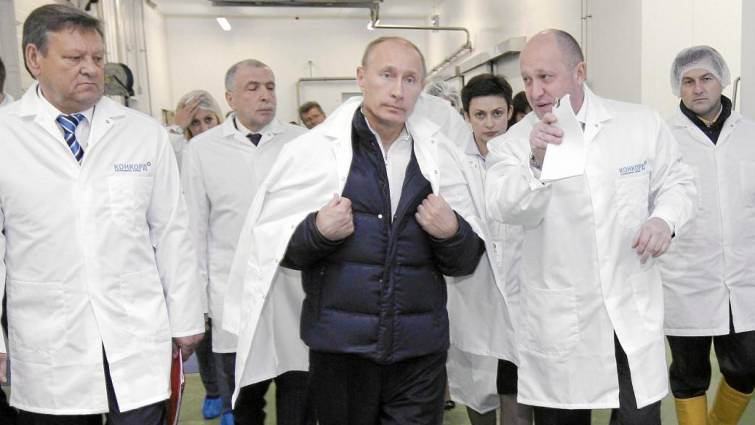
Each of these three settings are partially a given. In the first we see that as Lt. Col. Dmitry Utkin has been successful in setting the pace and the plays that are about to follow. Yevgeny Prigozhin, who is linked in all this gives the push for Concord Management and Consulting as well as its subsidiary LLC Megaline, a large push for optional multi-billion dollar contracts. It is yet unconfirmed what exactly will happen, but the setting of the end of the Syrian war will have long lasting repercussions in the Middle East. It is also the first setting where there is a very clear indication that the influence of the US is declining. It will quite literally need to cater to the needs of Saudi Arabia for a much longer time to undo the damage that inaction has brought to the US. So whilst the world is getting torpedoed by news, fake news and gossip regarding to the US and the Internet Research Agency (IRA), there are more and more indications that LLC Megaline is moving beneath the radar to start setting up their infrastructures to grow close to 500% and become the construction facilitator primarily for Syria and after that who knows. Let’s not forget that the $500 billion required for NOAM will go a lot further than Saudi Arabia by its self can currently facilitate for. So as America has been making gruesome steps towards optionally fumbling the collaboration it had created and grown over 75 years. As we were treated earlier this week (at http://thehill.com/opinion/national-security/378132-us-must-push-saudi-arabia-away-from-the-chinese-model-of-governance), so when we see “The widespread concerns are that Saudi Arabia simply won’t meet the stated targets set by Vision 2030. Facing a demographic tidal wave — nearly 45 percent of the population is under the age of 25 — Saudi Arabia needs to generate millions of new jobs to absorb a growing workforce it can no longer afford to subsidize through generous government handouts“, that whilst the US has been unable to even closely set its own agenda for, at times, no more than a quarter in advance at each stage and ending up missing their own forecasts by a lot, we see here that the vision that requires another 12 years is already set to fail, according to the Hill. Now, there is a clear setting that things have to change and there are changes coming, there are even more optional changes in the works as the EU has been playing the wrong settings to cater to the wrong people, in addition, the stress settings between Turkey and several European nations are now impacting a little wider than before. You might see this as separate and as acts they are, but the impact is much wider. France is getting less and less obliging towards Turkey in regards to the Afrin offensive, and the Turks are also getting less and less warm receptions from the Netherlands, so there are political stress situations all over the place. So as we now hear (at https://www.reuters.com/article/us-swiss-turkey/swiss-investigate-alleged-turkish-attempt-to-kidnap-businessman-idUSKCN1GQ2UD) that allegedly accuses that “Turkish diplomats planned to drug and kidnap a Swiss-Turkish businessman as part of a crackdown after the 2016 coup attempt in Turkey“, we see a new iteration of cooling notions. These matters have an impact to a larger degree. You see, there is not just the Saudi issue, issues 2 and three all include Iran, not merely the nuclear deal, but the Houthi support that Iran is giving with the supply of missiles and other goods is still largely ignored by too many players. It is a setting of filtered views, trying to isolate the players and deal with one sided responses. It is the Yemeni setting that makes that utterly impossible. So as we see on one side “The Senator followed up, citing reports that U.S. munitions have been used against civilians in Yemen, she asked, “General Votel, when you receive reports like this from credible media organizations or outside observers, is CENTCOM able to tell if U.S. fuel or U.S. munitions were used in that strike?” “No, senator, I don’t believe we are,” he replied“, we are shown a one sided part in all this that a significant amount of acts was to act against the Iranian missiles as they were targeting civilian areas. That part remains unasked. So in all this, as we realise that Democratic Senator Elizabeth Warren is one of the smarter cookies in the US Senatorial jar of cookies, we need to wonder on her actions and her reasoning. The idea that the US (especially the democrats) needs the nuclear deal to hold, whilst we get (at https://www.ft.com/content/22845a20-27d2-11e8-b27e-cc62a39d57a0) an accepted view from the Financial Times with “The US will on Thursday ramp up pressure on European countries to “fix” a landmark Iran nuclear deal that president Donald Trump has threatened to scrap“, with in addition “A state department spokesperson said: “This is a last chance.”” we know that the end is nigh for that bad situation. It is more than Israel wanted, the additional settings that we see is that the US has played a very dangerous game on the Turkish, the Iranian and the Saudi side, whilst there is enough indication that they never had the Trump cards to make it happen. That view is given more strength when we see “The senior US official said “it was diplomatic malpractice to exclude missiles from the original deal”, adding that long-range missiles are inherently associated with a nuclear weapons programme“. In that regard, it is not just the acts of the US, but the EU and UK players in all this will also be given the spotlight. As we see that things were missing, the hasty excuses like ‘there was no time‘, or ‘this was as good as we were going to get it‘ will hit back with enormous force as it gives more and more view that the initial views of Israel were correct. Now as there is an increased escalation with Iran, it is the view we see (at http://www.bbc.com/news/world-middle-east-43419673) where we see “Crown Prince Mohammed bin Salman told US network CBS News his country did not want to acquire nuclear weapons. “But without a doubt, if Iran developed a nuclear bomb, we would follow suit as soon as possible,” he added“, which now gets us in that stage that comes with the Hollywood phrase ‘This shit is getting real!‘ It was the setting that Israel had dreaded for the longest of times and whilst that shit is getting real we see, or better stated, we should see that the escalated and unbalanced pressures are showing the EU as well as the UN to be set as paper tigers that have no power and in the end no options. It is like Reuters stated in regards to the Council of Europe Commissioner for Human Rights, merely “a 47-nation human rights body that has no legislative powers“, yes that was a setting that really helped it all along, were they not?

It goes further than this

You see, some of the players are waking up (or so it seems), with ‘GOP leaders want to put off Yemen war powers vote’, (at https://edition.cnn.com/2018/03/15/politics/yemen-war-powers-vote-congress/index.html), they realise that the setting is less clear, there are intricate settings that have been ignored by some of the players (read: Democratic Senator Elizabeth Warren), the issue is not how, what, when, where or why it was done. With “GOP leaders would prefer to put off a final vote on the divisive issue until after it can be more closely studied in committee” it is not merely a stalling tactic (stalling might still be a factor). The issues that Democratic Senator Elizabeth Warren danced around are still very much on the table for the governing party and in all this it is also squarely on the plate of Mike Pompeo, who, if confirmed, as Secretary Of State, will need to make sure that his office does not become the SOS signal that breaks the loom before the strings in all this have been separated, untangled and isolated so that the matters do not become some Gordian knot that ends up pushing Saudi Arabia, Iran, Egypt, Qatar and Turkey over some edge, because these connections will set flame to the threads connected to others on the loom of diplomacy. Even as we are ‘treated’ to news items like ‘Iran-Qatar alliance deepens, says Iranian naval official‘ and ‘Iran stands with Qatar, says Guards official‘, the truth remains that a direct head to head with Saudi Arabia is one that Iran is reluctant to have, because when it comes to making choices between Saudi Arabia and Iran, there is clarity that the US, many European nations as well as Israel, pretty much none of them will support Iran, as the deepening cliffs are drawn between the EU nations and Turkey, the support it had with Turkey could essentially fall away further, and in that Turkey has been famous for merely supporting whatever pleases Turkey, getting in bed with Iran that deep is a choice Turkey will not be willing to chance. In all this Iran requires players like Qatar to make the blunders of setting themselves into a light of harm whilst Iran plays the ‘I know nothing‘ card.

A game that ends even before it starts in all earnest. So in that regard, the second and third setting we saw in Haaretz will have stronger impacts and the entire Yemeni setting will not be played out the way some would like that to be. that part was seen merely an hour ago when Reuters (at https://www.reuters.com/article/us-usa-yemen-mattis/mattis-dont-restrict-u-s-support-to-saudi-led-forces-in-yemen-idUSKCN1GS00N) gave us “Defence Secretary Jim Mattis defended U.S. military support to Saudi Arabian-led coalition forces in Yemen on Thursday as he explained a personal appeal to lawmakers who are considering whether to end Washington’s involvement in the devastating conflict“, and it is not merely in regards to support. When it comes to appeasing Turkey or Saudi Arabia, having strong ties with Saudi Arabia would be roughly 1,000% more important than anything else and not in the smallest regard for economic reasons. So as we earlier (in previous bog) saw that what is now stated by Reuters as “A bipartisan group of senators, Republican Mike Lee, independent Bernie Sanders and Democrat Chris Murphy, are attempting to take advantage of a provision in the 1973 war powers act that allows any senator to introduce a resolution on whether to withdraw U.S. armed forces from a conflict not authorized by Congress“, we see that congress might be having the right cap on whilst considering this, the cap would prove to be a massive blowback for Saudi-US settings in the Middle East for the longest of times. So as we might to some degree agree with “Lawmakers have argued for years that Congress has ceded too much authority over the military to the White House. Under the Constitution, Congress – not the president – has the authority to declare war“, we need to also see that the US has not declared war against Yemen, it merely is seeking to stop the Iran-aligned Houthi rebels, a group has been firing missiles into Saudi Arabia as well as target commercial vessels off Yemen’s coast, 2 acts that should never have been allowed for in the first place. The US could have a clear setting in those two parts and as such a larger repair of status would be to be more vigorous in countering merely those two dangers anyway possible.

And in all this there is one final danger that the US desperately needs to negate and they do not have a lot of time to achieve it. You see as the Syrian issues are drawing to a close, it is not impossible that PMC Wagner would be growing its influence by offering support to Saudi Arabia against Yemen. You see, Iran painted itself in a corner by denying the weapons shipments to Yemen. In this the strategy becomes that either Iran walks away, or locks horns with Russia too. So as we see “The Iranian Minister of Defence Amir Hatami has denied the allegations about the presumed shipment of weapons to Yemen“, the door has been opened and now Yevgeny Prigozhin as well as Lt. Col. Dmitry Utkin could end up visiting Crown Prince Mohammad bin Salman, in his role of Minister of Defence and offer to solve the Yemeni issue. Should that happen, which is largely speculative from my side, the Russian delegations would receive a much larger opening of the door of opportunity in the Middle East as well as optional access to offer services towards NOAM, a situation that must be the stuff of nightmare legends for the US (as well as for the UK to some degree).

If that happens, it is expected to happen before the end of July, so we will know then and I could be wrong, but when it comes to business opportunity we have seen Yevgeny Prigozhin take the lane of opportunity in the quickest way and there is no way that he does not want a slice of that $500 billion Lemon Meringue Pie, or as he would be calling it the: Kremlin Profit Sharing Money Supply, a refreshing desert that is as rhymed as the Kremlin could get it with the available Horn of Plenty for all who agree there.

Do you still think that my speculation is that far off? I do not hope to be right, but knowing how the souls of greed move; the chance of me being wrong is declining really fast.

All because some of the players have (as I personally see it) their own ego’s and personal needs in the play and not the national needs they had to serve, the long term needs that is, because there is no doubt that some of these sparks are the direct consequence of short term thinking.


Leave a comment

Filed under Uncategorized

The G30 court

There is an issue, an issue that we are all missing, more for the reason that after January 17th the media is steering clear of this with all the might and options they had. I reckon that they will spin this in a setting that it is ‘uninteresting‘, but when was it ever uninteresting to look at a group of 30 that has the alleged advantage of getting their fingers into a pool that has 0% risk worth billions?

The more important part is that there was one mention, or at least only one that was found, on July 7th 2017 and November 3rd 2017, both come from Reuters, the media has become that much of a bean flicking, pole pulling grape flocked bunch of pussies as I personally see it. Yet, the fact is that even as the impact is speculated, the setting given is that a group of 30 had an optional exclusive insight in the 3 trillion dollar ECB spending. Consider that each of these 30 got a 1% portfolio, where 75% of it was set at 0% whilst the remaining 25% might have op to 3% risk, in this setting the underwritten $31 billion for each member would set a speculated sanctified security of a multiple factors of $31 billion each. An elite group of 30 all having the top of the financial services cream at zero risk with the optional massive returns none of us ever had insight to. Now I can see that a mere 0.01% of that 1% would set me up for life, and that is merely the one source, the ‘in-crowd’, now would that be the incestuous insider towards untapped ‘considerations of investment‘ and they would all be bringing their own portfolios and economic insight on how to maximise that? Adding the man (read: Mario Draghi) spending Europe’s $3.1 trillion would happily be allowed into their midst, it is merely the setting that this rigs the game towards 30 participants whilst giving a weighted disadvantage to all other bankers is still an issue not covered by anyone.

So as we saw last November ‘ECB says not its call to publish content of Draghi’s meetings with financiers‘ (at https://www.reuters.com/article/us-ecb-banks-ethics/ecb-says-not-its-call-to-publish-content-of-draghis-meetings-with-financiers-idUSKBN1D327U) whilst we also see “At issue is Draghi’s membership of the so-called Group of 30, where policymakers meet bankers, fund managers and academics behind closed doors to discuss economic issues. He sits alongside former and current central bankers, such as Bank of England Governor Mark Carney and the Bank of Japan’s Haruhiko Kuroda, as well as Nobel laureate Paul Krugman

Yet even as we see “Ombudsman Emily O’Reilly had asked whether the ECB would “consider proactively informing the public of the content of these meetings” in response to “a complaint by activist group Corporate Europe Observatory, which said in January it was concerned about proximity at the G30 of ECB officials and bankers they are meant to supervise“, I cannot help but wonder what both Emily O’Reilly and Corporate Europe Observatory left unmentioned. It was also mentioned by the Dutch Volkskrant where the Corporate Europe Observatory (CEO) member Olivier Hoedeman added comment.

I tried to find more, so even as we have found Mario Draghi, Mark Carney, Haruhiko Kuroda and Paul Krugman as confirmed names (from the media), I initially believed that Groupe Credit Agricole (most likely Dominique Lefebvre) would be a member, I am also speculating that Peter Smith (as director of N M Rothschild & Sons) might have been a member of that group. There are a few other players, but it becomes increasingly less certain even from a speculated point of view. What does matter is that this is not merely some ‘secretive’ babble group. Even as we see last July “In a letter to Draghi that was published on Friday, European Ombudsman Emily O’Reilly said the meetings of the Group of Thirty, where central bankers, economists and financiers talk behind closed doors, are “not transparent” and questioned the ECB president’s membership of the club” as well as “Draghi has until September to reply to the letter in writing“, in that, the media and so called journalism stayed clear of this for the largest extent and the ECB did respond in October 2017 in the attached part. In my view, it all sounds nice but a select group of 30 with a pool of a number in excess of 6 trillion, where 30 people get first dibs on a risk bonus that goes beyond the comprehension of many and the media buries it on page 62 is a much larger issue, especially when the response on page 9 gives us “Moreover, Article 130 of the Treaty on the Functioning of the European Union safeguards the independence of the ECB and of the members of its decision-making bodies” whilst we all know that a mere fraction of $6 trillion has been a case for shifted morals and readjusted (read: weighted morals) in many regards, there are countless hours on C-SPAN that saw those liquid morals and settings in regards to the 2008 events, so the idea of ’30’ members ending up with golden parachute the size of Australia is not that much of a leap, speculated or not. So when we look back to the 2008 events and we see in January 2017, nine years later “The credit rating agency Moody’s has agreed to pay nearly $864m to settle with US federal and state authorities over its ratings of risky mortgage securities in the run-up to the 2008 financial crisis, the department of justice said on Friday“, whilst the damage from the 2008 crash was set to top $22 trillion, we should ask the US Justice department on where the remaining 21.991 trillion is and who was supposed to pay for that. So in all this the fact that the media is steering clear from the G30 and asking, or actually not asking anything past the Reuters articles seen should give alarm bells on many sides, not merely the media.

The EU Parliament magazine (at https://www.theparliamentmagazine.eu/articles/news/mario-draghi-under-fire-g30-membership), also gives us “CEO’s monetary and financial policy researcher Kenneth Haar said, “The Ombudsman’s decision is timely and very positive. Draghi’s involvement with the G30 was ill-advised from the start. Since 2016, when the ECB’s mandate for banking supervision was extended, the close ties between the president and the bankers’ group has become absolutely unacceptable“, or is that gave, because it is past tense and so far the media has remained silent since January 17. It seems to me (extremely speculative) that these 30 members are either connected or involved with the shareholders, stakeholders or advertisers in the media, because the media seems to be at all times protective of these three groups, whilst merely informing on those three groups in a filtered way, or to the smallest degree unless it was already out there in the field. The fact that this group has such a global hold is an issue and I might have been a lot less speculated on this, but the lack of transparency as well as the fact that we see “Tyga Gives Kim Kardashian A Hilarious Spelling Lesson On Social Media” and other Kim Kardashian on a daily basis, whilst the media remains silent on the speculated distributors of no risk trillions is a weird setting, especially when those sources have their fingers in thousands of billions. So when we see the BBC with: ‘Is it time we all unfollowed Kim Kardashian?‘, we might wonder whether it is yea or nea, yet there is a speculated 99.9999% likelihood that the G30 members will not make the cut towards monitored inclusion on following, I am certain that the first one that acts on that is has a boss who is likely (again speculated) to get a quick phone call from a shareholder, stakeholder or large advertiser to wonder if they have any grasp on their staff members and whether they want to manage or become managed.

Do you think that this is a stretch?

From my personal point of view I would give to you Sony (2012) issues, in regards to the change to the Terms of Service. The media ignored it, even as it would impact a group of 30 million consumers. Most of those players merely just trivialised it via ‘there is a memo‘ on it. The rest did even less; some even ignored it all together. With Microsoft (2017/2018) we see even more (at https://www.computerworld.com/article/3257225/microsoft-windows/intel-releases-more-meltdownspectre-firmware-fixes-microsoft-feints-an-sp3-patch.html)

You’d have to be incredibly trusting — of both Microsoft and Intel — to manually install any Surface firmware patch at this point. Particularly when you realize that not one single Meltdown or Spectre-related exploit is in the wild. Not one“, the amount of visibility (apart from marketed Microsoft Central views) is close to null, a system with no more than 17 million users is marketed and advertised to the gills, so the media seems to steer clear, merely two examples in a field that is loaded with examples.

Back to the group

So as I gave the speculated view earlier on the ‘whom’, we can see the full list (at http://group30.org/members), these members are according to the website:

  • Jacob A. Frenkel, Chairman, JPMorgan Chase International
  • Tharman Shanmugaratnam, Deputy Prime Minister, Singapore
  • Guillermo Ortiz, Chairman, BTG Pactual Latin America ex-Brazil
  • Paul A. Volcker, Former Chairman, Federal Reserve System
  • Jean-Claude Trichet, Former President, European Central Bank
  • Leszek Balcerowicz, Former Governor, National Bank of Poland
  • Ben Bernanke, Former Chairman, Federal Reserve System
  • Mark Carney, Governor, Bank of England
  • Agustín Carstens, Former Governor, Banco de México
  • Jaime Caruana, Former Governor, Banco de Espana
  • Domingo Cavallo, Former Minister of Economy, Argentina
  • Mario Draghi, President, European Central Bank
  • William C. Dudley, President, Federal Reserve Bank of New York
  • Roger W. Ferguson, Jr., President and CEO, TIAA
  • Arminio Fraga, Founding Partner, Gavea Investimentos
  • Timothy Geithner, President, Warburg Pincus
  • Gerd Häusler, Chairman of the Supervisory Board, Bayerische Landesbank
  • Philipp Hildebrand, Vice Chairman, BlackRock
  • Gail Kelly, Global Board of Advisors, US Council on Foreign Relations
  • Mervyn King, Member, House of Lords
  • Paul Krugman, Distinguished Professor, Graduate Center, CUNY
  • Christian Noyer, Honorary Governor, Banque de France
  • Raghuram G. Rajan, Distinguished Service Professor of Finance
  • Maria Ramos, Chief Executive Officer, Barclays Africa Group
  • Kenneth Rogoff, Professor of Economics, Harvard University
  • Masaaki Shirakawa, Former Governor, Bank of Japan
  • Lawrence Summers, Charles W. Eliot University Professor at Harvard University
  • Tidjane Thiam, CEO, Credit Suisse
  • Adair Turner, Former Chairman, Financial Services Authority
  • Kevin Warsh, Lecturer, Stanford University Graduate School of Business
  • Axel A. Weber, Former President, Deutsche Bundesbank
  • Ernesto Zedillo, Former President of Mexico
  • Zhou Xiaochuan, Governor, People’s Bank of China

They also have senior members, which is interesting as they are younger than at least one of the current members, as well as the fact that most of the members in the current, senior and emeritus group have multiple titles.

  • Stanley Fischer, Former Governor of the Bank of Israel
  • Haruhiko Kuroda, Governor, Bank of Japan
  • Janet Yellen, Former Chair, Federal Reserve System

And the Emeritus members:

  • Abdlatif Al-Hamad, Former Minister of Finance and Planning, Kuwait
  • Geoffrey L. Bell, President, Geoffrey Bell and Associates
  • Gerald Corrigan, Managing Director, Goldman Sachs Group, Inc.
  • Guillermo de la Dehesa, Chairman, Aviva Grupo Corporativo
  • Jacques de Larosière, Former Director, IMF
  • Richard A. Debs, Former President, Morgan Stanley International
  • Martin Feldstein, Professor of Economics, Harvard University
  • Gerhard Fels, Former Member, UN Committee for Development Planning
  • Toyoo Gyohten, Former Chairman, Bank of Tokyo
  • John Heimann, Senior Advisor, Financial Stability Institute
  • Sylvia Ostry, Former Ambassador for Trade Negotiations, Canada
  • William R. Rhodes, President and CEO, William R. Rhodes Global Advisors
  • Ernest Stern, Former Managing Director; The World Bank
  • David Walker, Former Chairman, Barclays
  • Marina v N. Whitman, Professor; University of Michigan
  • Yutaka Yamaguchi, Former Deputy Governor, Bank of Japan

So this group of 30 is slightly larger and in the group each of these members would have the power and economic impact to tell any member of the Fortune500 what to do, or better stated and more important ‘what not to do!‘ It is in that instance that we see the first impact. A game that now looks as I personally see it rigged in several ways; so even as I was allegedly wrong about Dominique Lefebvre or a direct peer, we see Christian Noyer. So in my view, in a 2015 French article on the issue of “Who will succeed Christian Noyer as head of the Banque de France?“, we see “Mario Draghi, the president of the ECB, seems to have had the idea to see his right arm go. Benoît Coeuré would be an important ally for the Italian in the Council of the Governor“, yet in the light of the G30, it seems to me that such a discussion would have been set into a pre-emptive conclusion of who would needed to have been made king in that castle. When we see that in light of a previous article, namely ‘The Global Economic Switch‘ (at https://lawlordtobe.com/2018/03/06/the-global-economic-switch/), were well over 500 billion is to be invested and grown, in addition to the fact that the SAMA has oversight to well over 2 trillion dollars, how come that they do not have a seat at the table? In the same way that the Rothschild’s are not there, but they might be ‘represented‘ through Bernanke or Frenkel, whilst it is not impossible that Mario Draghi might be giving them the low-down to some degree, yet the Kingdom of Saudi Arabia with that much money on the ladle of expansion, that they are not part of it. In a world where that group is about (according to their own website) “The Group of Thirty, established in 1978, is a private, non-profit, international body composed of very senior representatives of the private and public sectors and academia. It aims to deepen understanding of international economic and financial issues, and to explore the international repercussions of decisions taken in the public and private sectors“, where the foundation of Saudi Arabia has been the power of OPEC and the power to instil the push to be a global player in many fields, in that sight in represented value that the repercussions of decisions are set at, to see the Bank of Israel yet not some link to SAMA (Saudi Arabian Monetary Authority) makes equally less sense in the line of thinking that the ‘about‘ section gives us, which makes me wonder what these members are about. they might be all about that, yet what else they are about, or what else they have a useful value in gives rise to my train of thought on where this train with less than 55 occupants is heading off to, and more so, in light of the power that these ‘30’ members have, the fact that the G30 is not the cover talk of many newspapers, especially the Financial Times is beyond me, because anyone coming to you with ‘No News’ or outdated news, or even worse that there is no real issue in play is clearly told what not to write.

It seems to me that not only is there more in play, the personal speculated view that I have in light of learning more and more about the G30 merely confirms my suspicions, as well as the insight that I am getting (a speculated one) where the media is steering clear from all this is a much larger issue. To what and in which direction is one I am not willing to go into, because I know that the ice is wafer thin at this point and skating on water is a realistic ‘no no’, yet the feeling that these members are getting a first view and optionally the option to dip their cups on plenty into a grape juice barrel of risk-less profit is one that I feel is very much in play. This G30 group is networking on an entirely new level, one that I have never seen before. This is not some kingmaker into presidency; this is a long term group where the optional billions will keep on flowing for decades to come. And this all in a setting of non-transparency, because this goes way beyond the 3 publications in 2016 and of course all those papers published before that. In the 2016 publication ‘Shadow Banking and Capital Markets: risks and opportunities‘, (at http://group30.org/images/uploads/publications/ShadowBankingCapitalMarkets_G30.pdf), we see in the conclusion on page 49: “Moreover, growing leverage across the global Economy can create important risks to macroeconomic stability even if the financial system itself is more resilient. And two developments are particularly concerning: the growth of emerging market foreign currency debt and the rapid growth of Chinese leverage accompanied by a proliferation of shadow banking activities are ominously reminiscent of precrisis developments in the advanced economies“, which is in view of the experts would be nothing new, yet resources available and the 36 exhibits and the recommendations would have been available to the G30 group much earlier than anyone else. In that light, we need to wonder not merely on the setting, in Exhibit 36 we see mortgage losses and the fact that there is the US, Canada and Europe, so in that light the fact that the fourth one is the Netherlands, is that not odd? In light of several settings, France, Germany, Italy and the UK, any of these four would have made perfect sense, so why the Netherlands? Exhibit 33 might have been a reason for this, yet in equal measure the absence of Scandinavia and Italy in this setting now adds to the questions. I think it is not merely choice and presentation, the absence of those players give rise to questions, perhaps even speculated questions and as there are none to be given, it makes me wonder what else is missing, what other data was filtered because in the light of data and presentation there is one golden rule I have always kept in the back of my mind.

The Analyst shows you which investment needs to be made, the presentation makes you look forward to the invoice.

So what invoice is the G30 group making you look forward to and where did it need to go? Two questions with optionally very different results, and in that setting, whilst you know the impact the European economy has had over the last 15 years, whilst we also know that Mario Draghi has been spending $3 trillion, in that setting the G30 does not make the news?

Who is getting fooled by all this and who is getting fooled by making sure that you do not get to notice this?

It is a much larger playing field that is from whatever point of view you have a field of inclusion, or a field of exclusion, yet in all this there are questions that are not asked at all, questions that even I am not asking because I decided to go into technology, engineering and law whilst giving a pass on the Economic subjects. Yet the Financial Media is not asking them either and that is an issue, especially in light of that ‘secretive‘ group set to a stage of networking inclusion, or is it networking through filtered exclusion?

I’ll let you decide on that.


Leave a comment

Filed under Finance, Media, Politics, Science

A windmill concussion

That was the first thought I had whilst looking at the Guardian (at https://www.theguardian.com/technology/2018/mar/01/eu-facebook-google-youtube-twitter-extremist-content) where Andrus Ansip was staring back at me. So the EU is giving Facebook and Google three months to tackle extremist content. In what relation is that going to be a workable idea? You see, there are dozens of ways to hide and wrongfully classify video and images. To give you an idea of what Mr Ansip is missing, let me give you a few details.

YouTube
300 hours of video is uploaded every minute.
5 billion videos watched per day.
YouTube gets over 30 million visits a day.

Facebook
500+ terabytes of data added each day.
300 million photos per day
2.5 billion pieces of content added each day

This is merely the action of 2 companies. We have not even looked at Snapchat, Twitter, Google+, Qzone, Instagram, LinkedIn, Netlog and several others. The ones I mentioned have over 100,000,000 registered users and there are plenty more of that size. The largest issue is not the mere size, it is that in Common Law any part of Defamation and the defence of dissemination becomes a player in all this, in Australia it is covered in section 32 of the Defamation Act 2005, the UK, the US and pretty much every Common Law nation has its own version of it, so the EU is merely setting the trend of all the social media hubs to move out of the EU and into the UK, which is good for the UK. The European courts cannot just blanket approve this, because it is in its core an attack on Freedom of Speech and Freedom of expression. I agree that this is just insane, but that is how they had set it up for their liberal non-accountable friends and now that it works against them, they want to push the responsibility onto others? Seems a bit weird does it not? So when we see “Digital commissioner Andrus Ansip said: “While several platforms have been removing more illegal content than ever before … we still need to react faster against terrorist propaganda and other illegal content which is a serious threat to our citizens’ security, safety and fundamental rights.”“, my question becomes whether the man has any clue what he is doing. Whilst the EC is hiding behind their own propaganda with “European governments have said that extremist content on the web has influenced lone-wolf attackers who have killed people in several European cities after being radicalised“, it pretty much ignored the reality of it all. When we look to the new-tech (at https://www.theverge.com/2017/4/18/15330042/tumblr-cabana-video-chat-app-announced-launches-ios), where a solution like Cabana allows for video and instructions whilst screen does not show an image of the watchers, but a piece of carton with texts like “مجنون”, “الجن”, “عسل”, “نهر”, “جمل” and “تاجر”. How long until the threshold of ‘extreme video‘ is triggered? How long until the system figures out that the meeting ended 3 weeks ago and that the video had encryption?

It seems to me that Andrus Ansip is on a fool’s errant. An engineering graduate that went into politics and now he is in a place where he is aware but not clued in to the extent he needs to be (OK that was a cruel comparison by me). In addition, I seriously doubt that he has the largest clue on the level of data parsing that such systems require to be, not merely to parse the data but systems like that will raise false flags, even at 0.01% false flags, that means sifting through 50Mb of data sifted through EVERY DAY. And that is not taking into account, framed Gifs, instead of video of JPG, or text, languages and interpreting text as extreme, so there will be language barriers as well. So in all this even with AI and machine learning, you would need to get the links. It becomes even more complex when Facebook or YouTube start receiving 4chan Video URL’s. So when I see “and other internet companies three months to show that they are removing extremist content more rapidly“, I see the first piece of clear evidence that the European Commission has lost control, they have no way of getting some of this done and they have no option to proceed. They have gone into blame mode with the ultimatum: ‘Do this or else‘. They are now going through the issues that the UK faced in the 60’s with Pirate radio. I remember listening to Radio Caroline in the evening, and there were so many more stations. In that regard, the movie The Boat That Rocked is one that Andrus Ansip should watch. He is the Sir Alistair Dormandy, a strict government minister who endeavours to shut down pirate radio stations in all this. A role nicely played by Kenneth Brannagh I might add. The movie shows just how useless the current exercise is. Now, I am all for finding solutions against extremist video, but when you consider that a small player like Heavy.com had an extreme video online for well over a year (I had the link in a previous article), whilst having no more than a few hundred video’s a week and we see this demand. How ludicrous is the exercise we see now?

The problem is not merely the online extremist materials, it is also the setting of when exactly it becomes ‘extremist‘, as well as realising that when it is a link that goes to a ‘dedicated’ chat group the lone wolves avoid all scrutiny and nothing is found until it is much too late, yet the politicians are hiding behind this puppet presentation, because that is what they tend to do.

So when we look at “It also urged the predominantly US-dominated technology sector to adopt a more proactive approach, with automated systems to detect and remove illegal content, something Facebook and Google have been pushing as the most effective way of dealing with the issue. However, the European Digital Rights group described the Commission’s approach as putting internet giants in charge of censoring Europe, saying that only legislation would ensure democratic scrutiny and judicial review“, we see dangers. That is because, ‘automated systems aren’t‘, ‘censoring can’t‘ and ‘democratic scrutiny won’t‘; three basic elemental issues we are confronted with for most of our teenage life and after that too. So there are already three foundational issues with a system that has to deal with more stored data than we have seen in a history spanning 20 years of spam, yet here we see the complication that we need to find the needle in a field full of haystacks and we have no idea which stack to look in, whether the needle is a metal one and how large it is. Anyone coming to you with: ‘a simple automated system is the solution’ has no idea on what a solution is, has no idea how to automate it and has never seen the scope of data in the matter, so good luck with that approach!

So when we are confronted with “The UK government recently unveiled its own AI-powered system for tackling the spread of extremist propaganda online, which it said would be offered to smaller firms that have seen an increase in terrorist use as they seek to avoid action by the biggest US firms“, I see another matter. You see, the issues and options I gave earlier are already circumventing to the larger degree “The technology could stop the majority of Isis videos from reaching the internet by analysing the audio and images of a video file during the uploading process, and rejecting extremist content“, what is stated (at https://www.theguardian.com/uk-news/2018/feb/13/home-office-unveils-ai-program-to-tackle-isis-online-propaganda), until that upload solution is pushed to 100% of all firms, so good luck with that. In equal measure we see “The AI technology has been trained by analysing more than 1,000 Isis videos, automatically detecting 94% of propaganda with a 99.99% success rate” and here I wonder that if ISIS changes its format, and the way it gives the information (another reference to the Heavy.com video), will the solution still work or will the makers need to upgrade their video solution.

They are meaningless whilst chasing our tails in this and even as I agree that a solution is required, we see the internet as an open system where everyone is watching the front door, but when one person enters the building through the window, the solution stops working. So what happens when someone starts making a new codec encoder that has two movies? Remember the old ‘gimmicky‘ multi angle DVD’s? Was that option provided for? how about video in video (picture in picture variant), the problem there is that with new programming frameworks it becomes easier to set the stage into multi-tier productions, not merely encoding, but a two stage decoder where only the receiver can see the message. So the setting of “extremist content on the web has influenced lone-wolf attackers who have killed people in several European cities after being radicalised” is unlikely to be stopped, moreover, there is every chance that they never became a blip on the radar. In that same setting when we see “If the platform were to process 1m randomly selected videos, only 50 would require additional human review“, from the Daily statistics we get that 300 hours of video is uploaded every minute, so in that regard, we get a total of 26 million hours of video to parse, so if every movie was 2 minutes, we get to parse 21 million videos every day and that means over 1000 movies require vetting every day, from merely one provider. Now that seems like an optional solution, yet what if the signal changes? What if the vetting is a much larger problem? Don’t forget it is not merely extremist videos that get flagged, but copyrighted materials too. When we see that the average video length was 4 minutes and 20 seconds, whilst the range is between 42 seconds and 9:15, how will the numbers shift? This is a daily issue and the numbers are rising, as well as the providers and let’s not forget that this is ONE supplier only. That is the data we are confronted with, so there are a whole lot of issues that are not covered at all. So the two articles read like the political engines are playing possum with reality. And all this is even before the consideration that a hostile player could make internet servers available for extremists, the dark web that is not patrolled at all (read: almost impossible to do so) as well as lazy IT people who did not properly configure their servers and an extremist sympathiser has set up a secondary non indexed domain to upload files. All solutions where the so called anti-ISIS AI has been circumvented, and that is merely the tip of the iceberg.

So I have an issue with the messaging and the issues presented by those who think they have a solution and those who will callously blame the disseminators in all this, whilst the connected players know that this was never a realistic exercise in any part of this, merely the need and the desire to monitor it all and the articles given show that they are clueless (to some extent), which is news we never wanted ISIS to know in the first place. In that regard, when we see news that is a year old, where ISIS was mentioned that they use Twitter to recruit, merely through messaging and monitoring, we see another part where these systems have failed, because a question like that could be framed in many ways. It is almost the setting where the creative mind can ask more questions than any AI can comprehend, that first realisation is important to realise how empty the entire setting of these ‘solutions’ are, In my personal view is that Andrus Ansip has a job that has become nothing more than a temporary castle in the sand before it is washed away by the tide. It is unlikely that this is his choice or desire, but that is how it has become, and there is supporting evidence. Take a look at the Washington Post article (at https://www.washingtonpost.com/news/the-intersect/wp/2014/09/25/absolutely-everything-you-need-to-know-to-understand-4chan-the-internets-own-bogeyman/?utm_term=.35c366cd91eb), where we see “participants can say and do virtually anything they want with only the most remote threat of accountability“, more important, monitoring that part is not impossible yet would require large resources, 4chan is equally a worry to some extend and what happens when ISIS merely downloads a 4chat or 4chan skeleton and places it on the dark web? There is close to no options to ever find them at that point, two simple acts to circumvent the entire circus, a part that Andrus Ansip should have (and he might have) informed the EC commissioners on, so we see the waste of large amounts of money and in the end there will be nothing to show for. Is that what we want to happen to keep ourselves safe? So when the ISIS person needs nothing but a mobile phone and a TOR browser how will we find them and stop the content? Well, there is a two letter word for that. NO! It ain’t happening baby, a mere realisation that can be comprehended by most people in the smallest amount of time.

By the way, when 5G hits us in less than 18 months, with the speeds, the bandwidth and the upload options as well as additional new forms if media, which optionally means new automated forms of Social Media, how much redesign will be required? In my personal book this reads like: “the chance that Europe will be introduced to a huge invoice for the useless application of a non-working solution, twice!” How you feel about that part?

In my view it is not about stopping the upload, it is about getting clever on how the information reaches those who desire, want and optionally need the information. We need to get a grip on that reality and see how we can get there, because the current method is not working. In that regard we can take a grip towards history, where in the Netherlands Aage Meinesz used a thermal lance to go through the concrete next to the vault door, he did that in the early 70’s. So when we see the solutions we saw earlier, we need to remember that this solution only works until 10 seconds after someone else realises that there was a way to ignore the need of an upload, or realise that the system is assuming certain parts. You only need to look through Fatal Vision Alcohol goggles once, to realise that it does not only distort view, it could potentially be used to counter a distorted view, I wonder how those AI solutions comprehend that and consider that with every iteration accuracy decreases, human intervention increases and less gets achieved, some older gimmicks in photography relied on such paths to entice the watchers (like the old Betty Page books with red and green glasses). I could go on for hours, and with every other part more and more flaws are found. In all this it is equally a worry to push this onto those tech companies. It is the old premise of being prepared for that what you do not know, that what you cannot see and that what is not there. The demand of the conundrum, one that Military Intelligence was faced with for over 30 years and the solution needs to be presented in three months.

The request has to be adhered to in three months, it is ludicrous and unrealistic, whilst in addition the demands shows a level of discrimination as there is a massive size of social media enablers that are not involved; there are creators of technology providers that are not accountable to any level. For example Apple, Samsung, Microsoft and IBM (as they are not internet companies), yet some of them proclaim their Deep Blue, Azure and whatever other massive data mining solution provider in a box for ‘everyone’, so where are they in all this? When we consider those parts, how empty is the “face legislation forcing them to do so” threat?

It becomes even more hilarious, when you consider the setting in full, so Andrus Ansip, the current European Commissioner for Digital Single Market is giving us this, whilst we see (at https://ec.europa.eu/commission/priorities/digital-single-market_en) that the European Commission for Digital single market has there on its page the priority for ‘Bringing down barriers to unlock online opportunities’, which they use to create barriers, preferably flexible barriers and in the end it is the creation on opportunities for a very small group of designers and whilst we see that ‘protect children and tackle hate speech‘ is the smallest part of one element in a setting with 7 additional setting on a much larger scale. It seems to me that in this case Andrus Ansip is trying to extent his reach by the size of a continent, it does not add up on several sides, especially when you consider that the documents setting in that commission has nothing past September 2017, which makes the entire setting of pushing social media tech groups as a wishful thinking one, and one that was never realistic to begin with, it’s like he merely chasing windmills, just like Don Quichotte.


Leave a comment

Filed under IT, Media, Politics, Science

The failing Mario Draghi Kart

Just yesterday, the Deutsche Welle (at http://www.dw.com/en/eurozone-economy-still-requires-stimulus-ecbs-mario-draghi/a-42751327), gave us that the ‘Eurozone economy still requires stimulus‘, so after these years the stupid and the rich still will not learn and the people are about to pay for it dearly. That is, not the UK, they might have gotten out just in time, if they don’t add delay upon delay. Even as we are sussed to sleep with: “The bank is gradually reducing its bond purchase program but it may continue past September”, the people are sussed to sleep, in a situation, where they sleep on a luxury liner and it is going down. Like having a nice cabin on the Titanic and you decided to sleep in on April 15th and you did. You never woke up, you could if there was oxygen, yet oxygen is 3786 meters away, 3786 meters straight up!

So when we are pointed at the ECB’s asset purchase program, which began three years ago, and which has seen the central bank spend €2.55 trillion ($3.14 trillion) to buy government bonds and other financial assets. The people are not given clarity on where that money went EXACTLY, in other news, that news we got months ago on Mario Draghi being a member of a very exclusive 5 mile high club. So when we got 6 weeks ago: “European Central Bank President Mario Draghi should give up his membership of the opaque Group of 30 consultative body because it risks hurting public confidence in the ECB’s independence, the European Ombudsman said on Wednesday“, how come the near entire bloody media has not followed up on this? After that one day it was silenced, the ECB will not respond, Mario Draghi apparently keeps on getting away with whatever he needs and there are no questions, not even on an international level which is unsettling in so many ways as it leaves us with the indication that the media may be as unreliable as the politicians they are reporting on.

A program that has sunk 3 trillion dollars and everyone is just stating that the economy is great, yet nobody is asking the number one question and that is ‘How will we pay it back?

The theory of printing money

Mario Draghi, president of the ECB has profiled his place and his ‘bank’ as awesome, marketing on a near supreme level, like a politicians stating on how honest he is. Excellent standards, great breeding and stellar academic excellence, and you know that expression about a story being too good to be true?

So they have their ‘Quantative Easing’, they use it to buy government bonds and other financial assets. The purchases have helped keep borrowing costs low, which in turn have boosted spending and investment in the Eurozone economy. But is this true? You see, there are now two levels of problems and dangers. When we consider that the bond is a debt security, under which the issuer owes the holders (so the government that issued the bonds now owes the ECB), a debt and (depending on the terms of the bond) is obliged to pay them interest and to repay the principal at a later date, termed the maturity date.

So over $3 trillion is bought from these governments and those governments are paying the ECB interest until they pay back the amount at the date of maturity (could be up to 30 years). So basically they are pushing massive debts forward, it is almost like the Greek debt mess, but now close to 173 times more intense in regards to the outstanding amount. The current makers in charge get a free pass and leave the mess to the next person whilst they enjoy the millions they earned as well as the multimillions they got by being a member of an exclusive group of 30, as they get the results before any other publication and they get to the cream all without ever running the risks other ‘investors’ face.

So whilst everyone sees the interest only part, we are kept in the dark on the fact that an additional $3 trillion would be outstanding and with the UK out of play, the other nations will get to pay for it all, so when we consider that last week nations like the Netherlands told the EU that they want a freeze on EU contributions, so now we read: “Rutte has said he does not want the Dutch contribution to the EU to increase, despite the European Commission’s call for higher spending on climate change and border controls, and the gap left by Britain after Brexit. Like the Netherlands, Britain is a net payer into the EU’s coffers and will leave a large hole when it pulls out. The Commission wants to fill the gap through a combination of spending cuts and higher contributions, something which the Dutch strongly oppose” (at https://www.dutchnews.nl/news/archives/2018/02/dutch-prime-minister-begins-campaign-to-freeze-eu-contributions/), what no one is looking at, or mentioning is that the outstanding $3 trillion is going to be an additional matter to deal with, even if that is placed in a very separate part of the books. Payment will be due!

So as they give the mention how Brexit will be one reason to increase payment, the absence of the QA plan and outstanding amount remains unmentioned, it is an impact, but that is exactly why the UK got out in the first place. In this the contribution for the Dutch will go up by $4500 per person, so where is that coming from? Now consider that the impact of the matured bonds will be massive for the positive contributing nations, Germany, France, Italy, Sweden, Belgium, Denmark and Austria would end up getting a blow to their budgets unlike any they have had. The question becomes how intense depends on certain elements. So when we consider the bad curve. So, when the bonds bought reduce in value by 30%, the ECB is not hit, it might lose the value, but that means that the government it was bought from ends up with a smaller invoice to pay, and the losses for the investor (the ECB) loses 30% of their investment, now the EU nations as a bloc will have to come up with that money. So depending on where it was invested in, that government get to laugh as the other EU members need to pay for the ‘losses’, which amounts to the positive paying nations. This is one of the foremost reasons why I was all for the UK getting out as soon as possible. So these nations could end up paying an additional $1 trillion divided amongst them. So how was this ever going to be fair? Of course that is if the value of these bonds depreciates, if that does not happen, than there is no additional issue, but the fact that the outstanding amount is still due for payment and in light of the bulk of these EU nations not being able to keep a decent budget and almost no ability to pay such amounts does not help us in any way in raising confidence in regards to the EU moving forward. Greece is to the smallest extent some indication, even as many sources are positive, I have an issue with “The 2017 primary balance target of 1.75 percent of GDP is expected to be reached with a significant margin. For 2018 the primary balance target of 3.5 percent is considered achievable“, so there are two parts. The first is the use of ‘expected to be reached‘, margin or not, these numbers are not yet set in stone, so there could be a bad news cycle. The second part is ‘target of 3.5 percent is considered achievable‘, which means an almost 100% increase towards the positive result, which has never been realistic. Even as the unemployment numbers are down from 27% a few years ago, to 21%, this still implies that one out of 5 is without a job, that means the stresses on the Greek infrastructure remains and it will remain for several years to come. So when it comes to the larger nations, Spain, Italy and France are still a downward drag here in regards to the overall EU and their drag is draining their infrastructure and options towards pushing the EU economically forward, some others like the Netherlands and Sweden are ahead of the curve, but we forget that they are merely 26 million, whilst the three dragging us down represent close to 185 million people, in that regard we forget the weight that the larger nations have. So in that both the UK and Germany are the positive sides, but the UK is leaving and adding Germany only gets that group of 3 at 50% of the ones slowing the EU down, so even as the slowdown is a good thing, it is still a negative result in the end. So it is in that light that there is a growing risk to the entire Quantative Easing plan that Mario Draghi gave the EU and even as they are all on how ‘the economy is so much better‘, I agree that compared to two years ago, the people are more positive and jobs are getting better, yet this has been at the expense of unrealistic levels of spending and there is no given on when that will be resolved, so those people have a $3 trillion bill hanging over their heads.

You see, part of the problems is infrastructure, EU infrastructure mind you. So as the Australian Financial Review (at http://www.afr.com/news/economy/monetary-policy/mario-draghi-keeps-focus-on-monetary-accommodation-20180226-h0wos8) gave us “Draghi did address a question on why ABLV Bank received emergency support from the Latvian central bank before the ECB declared it failing or likely to fail. He said that the Emergency Liquidity Assistance policy – under which national central banks rather than the ECB decide to provide support to troubled lenders – is a “remnant of a past time” and should be reformed

Say What?

So basically a bank got support from its national bank, whilst the ECB had it as ‘likely to fail‘, so is this how Quantative Easing is ‘miss-spent’? It is not completely clear or fair to state it in that way, yet when we see Reuters with “The ECB said at the weekend that privately held ABLV is likely unable to pay its debts or other liabilities as they fall due. “We believe our bank will be able to settle with all of our clients in full,” ABLV, Latvia’s third-biggest bank by assets, said in a statement. “Voluntary liquidation is an important condition for it – the process has to be done as professionally and as transparently as possible, given the history of Latvian insolvency and liquidation processes”“, yet in all that is there any mention whether that included the emergency support funds? The text does not include that part, so that is money down the drain. That whilst it is not the only scandal that Latvia faces. If we consider the Stratfor view (at https://worldview.stratfor.com/article/what-watch-two-banking-scandals-unfold-latvia), we see “On Feb. 17, the Latvian anti-corruption agency detained the head of the country’s central bank, Ilmars Rimsevics, after Grigory Guselnikov, the Anglo-Russian owner of Latvia’s Norvik bank, accused him of taking bribes. Rimsevics has denied any wrongdoing, and Latvia’s Defense Ministry said that the allegations were part of a “massive information operation” by an external actor. Latvian Finance Minister Dana Reizniece-Ozola said that the corruption allegations would be investigated“, as well as “a report issued Feb. 13 by the U.S. Treasury Department detailing the results of its investigation that found ABLV had facilitated transactions linked to “large-scale illicit activity connected to Azerbaijan, Russia, and Ukraine” as well as activities circumventing sanctions on North Korea. In the wake of that report, significant assets were withdrawn from ABLV“. Now we can see that for what it is, yet we also get “the ECB’s Single Resolution Board has rebuffed ABLV’s efforts to seek financial assistance, determining that shoring up the bank “was not in the public interest.”“, so in light of the mention by Mario Draghi with ‘under which national central banks rather than the ECB decide to provide support to troubled lenders‘, I see it as instead of money wasted from the left trouser pocket, it came from right cheek pocket. How does that solve anything? The fact that the trousers came from the old tailor, the fact that the damage was not contained and allowed certain parties to take their cash out of Latvia is still cause for concern for those wearing the trousers.

That reflects also when we add the Greek issue that is playing right now with “the resignation on Monday of economy minister Dimitris Papadimitriou and his wife, the alternate labour minister, Rania Antonopoulou. Antonopoulou gave her notice after it was revealed that she had accepted €23,000 in housing benefits at a time of immense hardship for Greeks” (source: the Guardian). The issues playing do not seem like much, but it is like mopping the floor in a room where the water main has burst, it is close to pointless. In all this, especially when we hear Alexis Tsipras come with ‘praising the couple, in a speech late on Tuesday, for the “sensibility” they had exhibited in stepping down‘. To me it reads like ‘I am happy you vacated the premises as the people now know what you did and they are angry, thank you for that!‘ Is there any way that the Greeks are not getting fuming mad on that issue?

That is the part that does matter, because that is linked to whatever bonds were purchased, where they were purchased and how much is in play. We see none of that; merely that the invoice at present is set at 30 billion Euros per month, down from 60 billion per month earlier and 80 billion per month before that. So there is no way to tell how unrealistic my 30% loss is, it could be as low as 1% or as much as 41.3%, there is at present no way to tell. It is a long term gamble instigated by those in power now and left to solve for whoever gets to hold that seat when those spending’s mature and payment is due. Yet the chance of breaking even (best case scenario) is almost statistically impossible and no one has answers how to deal with it the moment it happens.

Can the Draghi failing be proven as a failure?

That remains the main event in all this and the fact is that the proof is nowhere near complete because the transparency in the spending and the path to repayment is missing. The fact that the money is printed and that the payment of the printed money is due at some point is not dealt with, by none of the media. Is it because it is not due now, or are we kept in silence because it stops us from asking questions? Perhaps like the elite group of 30 bankers, only initial questions are allowed and no response will be coming. That are merely factors in all of this and it does NOT sets any premise to the failure or success of the acts by Mario Draghi. Part of it is shown by Bloomberg a mere 15 hours ago, as they gave us: “The rate of price growth slowed to 1.2 percent this month from 1.3 percent, dropping to its weakest since 2016. The core measure was unchanged at 1 percent. The figures follow a series of releases that have checked the economy’s thundering momentum at the start of 2018, which had emboldened policy makers who want a faster unwinding of the central bank’s crisis-era monetary stimulus“, so even as that is not evidence, it seems to me that people are stalling and delaying stopping the QA wave, until the QA wave shows a positive. It is like watching a person throw more and more money in the pokeys until that person breaks even. In gambling terms it is watching a fool bleed dry. Even when we accept that a pokey returns 90% over its lifetime, that means that at the very least there is a loss of 10%, even if that person is getting lucky, the small wins are still used up whilst the player is trying to break even and in the end that money too is gone. That is how we could see the QA program to go and if that is true, a loss of 41.3% might have been optimistic, but it remains speculation. The article (at https://www.bloomberg.com/news/articles/2018-02-28/slowing-euro-area-inflation-helps-draghi-push-back-exit-debate) now gives the other parts I mentioned earlier too. With “consumer price growth almost halved in Italy and slowed in Germany” giving the line I had that with unemployment in Germany being an asset, but this slowing and 50% less gives rise to more without a job, or halted in economic growth for Italy, whilst Germany is halting to some degree their forward momentum, which translates in upcoming bad economic news cycles, or better stated less positive ones, so how will that impact the outstanding $3 trillion? The impact is only seen when that amount is due, but the impact will be there and those who pushed it onto us will no longer be around and they end up washing their hands off the dangers and leave us to pay the outstanding invoice, it makes for the most dangerous of market karts.

With ‘Buy now and pay when we make the most profit!‘ is an economic standard that has never been good commerce, or realistic for that matter; but that is exactly what Europeans signed up for, and the people in Europe end up not getting a say in the matter. That is the issue I opposed all that time and that is why I hope that the UK got out in time, because that part will drag the EU economy down to a degree it has not seen before. The only worry is what happens when that issue hits the European tax payers, because it will! No doubt about that!


1 Comment

Filed under Finance, Media, Politics

They had been warned

Only hours ago, the NY Times gives us a part that wants to makes me want to go ‘I told you so!‘, but I will not. With ‘The U.N.’s Uncomfortable Truths About Iran‘, Nikki Haley gives us the goods from a report published a week ago (at https://www.nytimes.com/2018/02/17/opinion/nikki-haley-united-nations-iran.html). The quote: “A panel of experts found that Iran is violating a United Nations weapons embargo — specifically, that missiles fired by Yemen’s Houthi rebels into Saudi Arabia last year were made in Iran“, part of these issues I raised in ‘Disney’s Yemeni Cricket‘ (at https://lawlordtobe.com/2018/02/04/disneys-yemeni-cricket/) two weeks ago. The part I had not looked at is seen in Nikki’s article. She captures it perfectly in: “The mullahs in Iran don’t want to hear this news, because it proves Iran is violating its international agreement. Die-hard defenders of the Iran nuclear deal don’t want to hear it because it proves, once again, that the Iranian regime can’t be trusted. And some members of the United Nations don’t want to hear it because it is further proof that Iran is defying Security Council resolutions, and the pressure will be on the U.N. to do something about it“. Yet, the UN is not acting, is it? The Guardian on Jan 11th gives rise to the ‘need’ that the US is not tearing up the Iranian nuclear deal. With “the three EU signatories to the deal insisted that Iran was respecting the agreement signed in 2015” they are making a reference to the UK, France and Germany. The fact that we see: “Federica Mogherini, said the deal, denounced by Trump as the worst ever made, had in reality “made the world safer and prevented a potential nuclear arms race in the region”“, which might hold some truth in regards to the fact that it was the worst deal, but that is pretty much it. In addition she gives us “any doubts the EU harboured over Iran’s development of ballistic missiles, or its overall policy of interference across the Middle East, were separate from the nuclear deal – also known as the JCPOA“. Now the part in the Guardian happened a week after the actual attack. I think that the entire event is a sham. I think that the three nations had been clearly briefed on the entire Houthi matter, as well as the fact that the three parts that Nikki Haley gives us is on par, the EU is merely in denial, because after all the wasteful blunders and failures they had signed up for, another failure is a lot more than any of the three could handle. The intelligence services did what they needed to do, but here it is again short-sighted side in all this, whilst they remain nationally protective, for now that is.

So is that true?

Well that is the issue. Apart from e not having the original texts, there are a few issues that Nikki is completely correct in, yet in the end she is not (not completely at least). When we look at United Nations Security Council Resolution 1929, we see “The resolution updates and adds to the list of technical items related to nuclear and missile proliferation that are banned for transfer to and from Iran“, which makes the view of Nikki Haley correct, then there is “Iran is subject to a new regime for inspection of suspicious cargo to detect and stop Iran’s smuggling. States should inspect any vessel on their territory suspected of carrying prohibited cargo, including banned conventional arms or sensitive nuclear or missile items. States are also expected to cooperate in such inspections on the high seas“, so is this enough, can we state that the arming of Houthi’s in Yemen is a ‘smuggling operation’, or ‘a classified shipment’ in support of Houthi’s? You see, the classification is everything in this limelight.

The resolution holds a lot more, yet most of that is directed at shipments to Iran and/or nuclear materials. Yet now we get to United Nations Security Council Resolution 2231, which makes the view of Nikki Haley wrong. Here we see: “Resolution 2231 calls for Iran to refrain from activity related to nuclear-capable missiles (“Iran is called upon not to undertake any activity related to ballistic missiles designed to be capable of delivering nuclear weapons, including launches using such ballistic missile technology“, however, the Deutsche Welle give us: “according to diplomats the language is not legally binding and cannot be enforced with punitive measures“, so basically, Nikki is in spirit very correct, yet in black letter law, there is no clarity and more important, no punitive option. In all this, we see that top EU diplomat, Federica Mogherini was correct.

In the spirit of it all, Iran seems to become a bigger player and a much larger danger to any level of Middle Eastern stability. Nikki ends the article with “Today, armed with this evidence, we have the chance to rein in Iran’s behavior and demand that it live up to its international agreements that discourage conflict. But if action is not taken, then someday soon, when innocent Saudi civilians are killed by Iranian weapons, the chance for peace will be lost.

I am not sure of that, you see, just like Turkey, Iran will do whatever it pleases and the US knows that, as did the three players (UK, France and Germany), who are desperately trying to hold on the JCPOA (Joint Comprehensive Plan of Action) like it is the golden fleece.

However, only 4 hours ago Reuters treats us to: “Britain, the United States and France want the United Nations Security Council to condemn Iran for failing to stop its ballistic missiles from falling into the hands of Yemen’s Houthi group and commit to take action over the sanctions violations, according to a draft resolution seen by Reuters“, with “The U.N. Security Council has banned the supply of weapons to Houthi leaders and “those acting on their behalf or at their direction.” It can also blacklist individuals and entities for threatening the peace and stability of Yemen or hindering aid access” we see the other part the Nikki mentioned and here she is proven right. Even as Iran claims that it is fabricated, there is enough evidence, that the parts are indeed from Iranian missiles, which invalidates their side in all this. The most striking part is the part that both Nikki Haley and Reuters are giving us and that part seems to be ignored by too many. The mention of: “Some members of the United Nations don’t want to hear it because it is further proof that Iran is defying Security Council resolutions, and the pressure will be on the U.N. to do something about it” is a much larger issue. Is it because they are unwilling to act, or has the coin toppled in the many outstanding issues in play and the UN is now unable to do anything?

That part is more important, because that means that the UN has no longer options to set issues against rogue nations like Iran, it could be a renewed signal for North Korea to do whatever it pleases as well and that could give more worries regarding stability in Far East Asia as well.

The question becomes can the situation be diffused? Should Iran comply and seize all missile shipments, it will change the Houthi field. They will not win (they never could) but a larger consideration to remove Houthi forces and start larger humanitarian aid would become increasingly more realistic. The bad side is that the Houthi’s would go underground so the humanitarian aid groups would have to deal with sabotage and armed strikes on a daily basis if no green zone can be established. That part is also no longer a real issue as we got only a few days ago that civilian life in Aden is safe, stable and calm, with all signs of life returning to normal, almost three years after diplomats and UN staff fled Aden. Saudi Ambassador to Yemen Mohammad Al Jabir also mentioned that recent demands made by a single social strait, which later led to clashes, have been calmed and resolved. We get this from the Asharq Al-Awsat Newspaper (at https://aawsat.com/english/home/article/1170916/saudi-ambassador-yemen-says-arab-coalition-proved-efficiency-resolving-aden), the issue now becomes, will Iran back off, or continue in its actions to remove stability from the Middle East, that alone gives support to Nikki Haley and her view regarding Iran, If she is proving correct and Iran remains on the path they are now, we should consider that soon enough, the JCPOA will not be worth the paper it was printed on, because if Iran can play games to this extent, there will be absolutely no guarantee that Iran will not break word and move on their path to enrich Uranium, I have no doubt in that regard, the issue has been diminished to a mere when they will start, there is no longer an ‘if’ in the matter.

In my view, these matters are only increasing stresses and pressures between Israel and Iran, they were never cordial, but now they are at an all-time high on the volatility aggressive response scale and that is mainly due to the Syrian issues in play. This now gives more and more rise to the dangers of escalations and the moment this happens all bets are off. The Guardian gives us: “Emboldened by a belief that Assad is winning, Iran is turning its eyes, and guns, on Israel – or so Israeli leaders believe. Their “red lines” – forbidding a permanent Iranian military presence in Syria and the transfer of advanced weapons to Hezbollah – are being ignored”, Another source gave us much earlier (November 2016) that “the Chief of Staff of the Iranian armed forces announced to commanders of the Iranian fleet that Iran may establish naval bases in the future far from its shores”, which was Major general Mohammad Bagheri at that point, in that address both Syria and Yemen were raised as options. Now, if this is happens in Syria the IDF would reacts and Iran will plunge the Middle East in another war, if it is in Yemen, there is every indication that this will set off the legitimate Yemeni government as well as Saudi Arabia optionally starting a war with those players, giving again full support to the views Nikki Haley gave earlier, more important, at that point any UN representative avoiding that discussion better give up their seat quick and proper as the fallout of that discussion will impact the confidence levels of the UN on an almost global scale and it again would open the door for North Korea to do whatever it pleases. A scenario that roughly 98.4% of the UN nations who are currently part of the UN will not be too happy about either.

As I personally see it, too many issues have become interconnected, it has become a mess that several nations want to steer clear off, they want to ignore it and/or they remain in denial. It would make for an excellent front page though, when the moment comes and we get to read ‘UN in denial of Iranian actions’, how will you react?


Leave a comment

Filed under Law, Media, Military, Politics

A Turkey problem

We’ve all had them around thanksgiving, the turkey was still too deep frozen, the filling was incomplete and the oven was not firing up to the right temperature. In the US these are at times regarded as mum’s worst nightmare. Thanksgiving is a day when mum shines and her dinner is heralded and dreamed of for many nights before and a few nights after as well. No, this is not about the plumage; this is about that nation that is trying to basically piss off anyone they deal with. The first is seen (at http://www.france24.com/en/20180207-turkey-says-it-has-met-eu-criteria-visa-free-travel), where Ibrahim Kalin stated that “that Turkey had submitted all related documents to EU officials ahead of an EU-Turkey summit in March“, a Turkish official gives us: “the country has fulfilled all 72 requirements set by the European Union to secure visa-free travel for Turkish citizens to the 28-nation bloc“, this whilst we know that ‘Turkey had failed to meet the 72 criteria, including amending anti-terror laws‘, we might go so far as that of those criteria the bulk had not been met and with the additional issues now in play, there was never a more prompt moment to deny the visa-free travel options. More important, stating that ascension to the EU would not be possible within the next 50 years would equally not be out of the question. The Turkish approach to ‘securing’ Europe as discussed (at http://theconversation.com/turkey-is-using-syrian-refugees-as-bargaining-chips-as-it-moves-against-the-kurds-90904) is beyond tasteless. As I stated before, the acts by Turkey going back as far as 2002 are shown to be unacceptable. The larger issue is why Europe seems to continue to ‘find’ ways to reopen talks whilst the bulk of 72 requirements have not ever been met, even worse, their actions in Syria, their involvement with Qatar and semi union with Iran makes the matter worse. It makes a case that Turkey is the larger security threat for Europe.

The fact that Turkey is so corrupt that immigrant threats get to walk through Turkey, or via Turkish smugglers makes matters worse. Yet, there is no such mention at this time. Even more unnerving is the fact that there is still a meeting. The Commission confirmed Wednesday that Erdogan will meet in Varna, Bulgaria, on March 26 with Commission President Jean-Claude Juncker, European Council President Donald Tusk and Bulgarian Prime Minister Boyko Borissov, whose country holds the bloc’s rotating presidency. What takes the cake was the quote Commission spokesman Alexander Winterstein said the talks will focus on “subjects of mutual interest and recent developments in Turkey. That includes obviously the rule of law and fundamental rights“. Knowing that Turkey has only two elements on the brain, I wonder how this can end well. The EU is getting truly desperate. It is still facing Brexit and the news and the bitterness of Europe is showing them to be spiteful in every way. is that not nice to know that some place that ‘pretends to value’ freedoms, will not honour those who are no longer interesting in its membership? As I personally see it, the levels of corruption that flow through the ECB gravy train is making people nervous, because that part is becoming clear that this train has to stop functioning. the Financial Times (at https://www.ft.com/content/ade8e020-0b50-11e8-8eb7-42f857ea9f09) voices it in light of ‘non-compliance’, the quote “The five-page text (UKCompliance), circulated to EU member states by the European Commission and seen by the Financial Times, sets out how the EU plans to make Britain abide by union law until December 2020 while excluding it from decision-making“, does that sound like amicable? As the article states, it basically reduces the UK to a slave state having to enforce laws designed in the foundation of utter stupidity, whilst not getting a say in the matter. So, as that is pushed upon the UK, with the optional worse decision to continue talks with Turkey, The EU is basically setting a warm fire where the UK can decide to go postal, take the cold Brexit and cut all ties. The tidal wave of chaos that Turkey is likely to bring soon thereafter will make UK the best trade solution for Western Europe and Scandinavia. The document also emphasises that London must refrain from any “action or initiative which is likely to be prejudicial to the Union’s interests”, which sounds nice on one side, but the act that judicially for the UK is the national notice that counts, and that is the setting of any judicial setting in its national origin, it is not for the European Union to set that as anti-Union. Even more pronounced that in itself would constitute another reason for Turkey not to be allowed within the European Union as such. Should that be set aside for consideration, it could invalidate the terms for the UK to abide by, which is a small blessing in disguise.

It is the Financial Times, who in light of Brexit shows that Europe is filled with duality. The economic pressures it faces and the facilitation it requires as it has been playing the monopoly money printer at large for all causes worthless and overvalued. This is seen in several ways. In the first the ECB remained quiet on Mario Draghi and the G30 club, the media has silenced any actions since January 17th. In addition, Bloomberg reported “Mario Draghi said the European Central Bank has no choice but to brace for the possibility that the U.K. will exit the European Union without a transitional agreement“, form my point of view, the 5 pages that the Financial Times initially gave us, and that likelihood is only increasing. Perhaps having a few spiteful children on the Brussels side was not the cleverest of options as I personally see it, but then again. It is merely my view that some of these players want to continue their gravy train, a debatable view to say the least. Even as France has been outspoken and opposing any Turkish ascension to the European Union, there has been a silence from several other players. The fact that the Bulgarian meeting is still on for now, that in light of the Turkey violating international Law in Syria is also light for concern. The Jerusalem Post gives us “Speaking on BFM television, Jean-Yves Le Drian also said there were indications Syrian government forces were using toxic gas against civilians although the UN would need to confirm that“, that might be true, but at this point is Turkey also involved in those actions? Because that is the evidence that matters! You see the quote “Le Drian said international law “is being violated by Turkey, by the Damascus regime, by Iran and those who are attacking eastern Ghouta and Idlib”. His remarks amount to France’s toughest line yet on Turkey’s involvement in the Syrian conflict” might hold water, but only if clear evidence is given that Turkey actually broke international law. You see, from one point of view Turkey was not barred, stopped or told to leave by what should still be regarded as the legitimate government of Syria, as such Turkey ends up having an actual defence against the French claim and that could remain to be an issue. The fact that other papers are voicing the identical quotes does not make this issue more so true, the presentation of evidence does.

So even as Ankara is not meeting some thanksgiving any day soon, it basically soured the waters with the US, France, optionally Germany, Saudi Arabia and a few other members of the European Union. And there was I thinking that only Napoleon was stupid enough to wage a war on two fronts, oh no that Adolf dude made the same stupid error. Anyway, as things go we will see more news soon, because the entire march meeting even as the Netherlands has withdrawn its ambassador to Turkey, we see the Dutch former NATO secretary Jaap de Hoop-Scheffer mention that ‘Turkey is too important for the Netherlands and the Netherlands are too important to Turkey‘, the economic fires are pushed to a higher level, there is nothing like a former official to voice the needs that politicians are not able (read: allowed) to make. The ECB and its gravy train must continue. That is the imperative that the 28 bloc nations are trying to rephrase so that certain questions are not asked. I personally believe that it is all in extremely poor taste. In another source (Dutch Newspaper: Trouw) we see the Dutch Lily Sprangers, former director of the Turkey Institute in The Hague state: “Die problemen zijn geen reden om geen betrekkingen te onderhouden” (These problems are no reason not to maintain relationships), sounds nice in theory, yet when the Dutch fascist JanMaat was about to get elected you (read: the politicians at large) did not follow on that idea to improve options, you tried to silence it to death, when he ended with 3 seats you all united to get that undone. It all seems a little two-fold in the light of the events that are happening.

The Dutch have been trying to improve relationships, which remains valid and they are not the only one, but in light of the 72 non-achievements to get some report going so that they could be included in light of the hostilities shown towards Brexit, gives me the shivers. A club of inclusion tends to be the most dangerous kind, because (as I personally see it) it allows for the utter corruption of ideals that should have excluded parties from the very start.

So then the media reports on the March 26th event. Will I still sound wrong to you, or is that and the lack of response by the ECB on the G30 club a clear signal that a lot of things are wrong in Europe and Brexit might have been the one sane move to begin with?

Did I oversimplify issues again?


Leave a comment

Filed under Finance, Law, Media, Military, Politics

The desperate just won’t stop

We have seen so much about Brexit, it is getting ridiculous. Even the Guardian is giving us loads of fear mongering articles. Now, their partial valid defence is that this is what is being said, so that is fair enough, but have you all considered the sources?

For example ‘No-deal Brexit would cost EU economy £100bn, report claims‘ (at https://www.theguardian.com/politics/2018/jan/15/no-deal-brexit-would-cost-eu-economy-100bn-report-claims). Here we see “lack of trade deal would cost UK around £125bn“, so lets take a look at the source ‘Oxford Economics’, from their own claim: “Oxford Economics was founded in 1981 as a commercial venture“, which is fair enough, there is nothing wrong with a commercial venture. Yet now also consider “Our worldwide client base now comprises over 1,500 international organisations, including leading multinational companies and financial institutions“, this is an issue because none of them want Brexit, their need for greed is fuelled best when they have open borders and no tax accountability. In addition, it has been shown that the small businesses would thrive a lot better when the large corporate advantage is taken away and the smaller players are on an equal playing field. Small Business (at http://smallbusiness.co.uk/smes-see-brexit-opportunity-trade-rises-2540071/), gives us “Of the 500 SME owners and senior managers surveyed, two-thirds say they feel confident about doing business overseas (67 per cent). Since the EU referendum, almost half have increased international sales (48 per cent), while 36 per cent expect to start or increase exports in the next twelve months“, now this is merely one source, so this is not gospel, yet the clarity that we have seen is that all large corporations are pushing for Bremain, is because of the singular market, the part where these large corporations have an advantage over all other players.

We see this even today in the Guardian. With “Britain will not be allowed full access to European Union markets, including financial services, unless it pays into the EU budget and accepts all its rules” it is playing a dangerous game. So why exactly should the UK buy into the stupidity of Mario Draghi? The European system that is flawed and discriminatory towards the larger players. In addition there is “Asked whether France would seek to “punish” Britain, by insisting financial services should not be included in a UK-EU trade deal after Brexit, Macron said, “I’m not here to punish or reward”” (at https://www.theguardian.com/politics/2018/jan/18/macron-rebuffs-city-deal-after-brexit-unless-uk-pays-into-eu-budget). You see, France is on the abyss, so they want any advantage they can get. Yet, in equal measure these nations, not just the UK can no longer allow the utter irresponsibility that the EU has been dealing. Governments did this to themselves. With France at €2.1T, a debt that is 32,360 times its population. Italy at €2.2T, with 37,000 times its population and Germany with €2.0T, with 24,750 times its population. In all this the debts are beyond normal and Europe is not listening. We get excuse after excuse. It is unable to stop corporate greed and we see nations giving larger corporations tax exemption after tax exemption, whilst the population have been and is still living on a lowered quality of life, that whilst the current situation is forcing people to live and work more and more until in their deep 70’s, because retirement before 70 is now no longer a feasible option, the cost of the present quality of life has increased by too much. The UK is not in a better state, but is trying to deal with the mounting debts. You see, the quote “The alternative was a Canada-style trade deal, he said, which could include financial services, but would not include access “on the same level” as existing EU members” is actually true, is was always a reality, but the larger corporations do not want that, they need their mistresses, their wealth and their non-accountability with Brexit that is no longer an option and these people could face serious consequences in the UK, they do not want that, but in equal measure leaving 60 million consumers and leaving those people to the small enterprises is equally dangerous, because the moment the UK shows success, the EU will almost instantly fall apart. When we look at Full Fact (at https://fullfact.org/europe/our-eu-membership-fee-55-million/) we see: “The UK pays more into the EU budget than it gets back. In 2016 the UK government paid £13.1 billion to the EU budget, and EU spending on the UK was forecast to be £4.5 billion. So the UK’s ‘net contribution’ was estimated at about £8.6 billion. Each year the UK gets a discount on its contributions to the EU, the ‘rebate’ worth almost £4 billion last year. Without it the UK would have been liable for £17 billion in contributions“, so there are consequences, yet who EXACTLY would be liable for those contributions? How many corporations are doing business with Europe? How much in taxation was paid? Those clear lists are not coming forward are they?

Then we see: “A membership fee isn’t the same as the economic cost or benefit. Being in the EU costs money but does it also create trade, jobs and investment that are worth more?” Here we see a truth on one side, but who exactly gets the trade benefit? Where are those jobs exactly? And these investments, how do they pan out in wealth and taxation?

So, you see, these so called Financial Services which are they? Hedge funds, Banks, Wealth management, crediting firm and debt collection? So which Financial Services are the ones YOU enjoy? At which point do you think that they should enjoy lessened fees? The NY Times is giving us ‘Britain and France Agree on Deals to Limit Brexit Fallout‘ (at https://www.nytimes.com/2018/01/18/world/europe/britain-france-brexit-meeting.html), it is one point of view. I see it in a different way. When you consider the quote: “Mrs. May agreed to pay an additional $62 million to help reinforce security around the French port city of Calais, which has been a gathering point for migrants seeking to enter Britain. That money will be spent on fencing, CCTV cameras and infrared detection technology” it is merely to cost of governing and would have been required no matter what. Today’s events on a global scale show that. To set a strong defence is an essential need for both players, even as it is merely shown as a benefit for the UK. The truth is that these people went through France, for the longest of times and they were not seen as a threat, a disaster and are actually a failure for the DGSE and the French intelligence at present. With the need for that data the DGSE can push forward, yet both nations have stretched budgets and France is in a far worse state than the UK is. The Financial Times gave that in 2016 when we saw: “The Cours des Comptes found the likelihood of pegging the deficit at 2.7 per cent of gross domestic product for 2017 was “very uncertain”, pointing at new spending commitments in 2016 and the use of overly optimistic growth figures when planning public finances” (at https://www.ft.com/content/0d83afca-3e3d-11e6-9f2c-36b487ebd80a), the use of overly optimistic growth figures are a global failure and partially the reason why Europe is in such a dismal state. So as we are ‘treated‘ to a presented ‘bettered economy‘ we still see that the people forget that the team of Mario Draghi is printing $60 billion euro’s a month and spending this money. Yes, if I get to do that, my economy would look good too and this has been down with much higher figures for over two years. Now we see (at https://www.reuters.com/article/ecb-banks-ethics/eu-ombudsman-urges-ecbs-draghi-to-leave-g30-club-of-financiers-idUSL8N1PB5FC) that Mario Draghi is being told to “give up his membership of the Group of 30 talking shop of financiers, as it risked hurting public confidence in the ECB’s independence, the European Union’s ombudsman said on Wednesday“. It is not merely the lack of independence, I would like to see a list of the 2 trillion Euro and how many of these 30 got a part benefit in this. This puts the issue of Mark Carney, Governor of the Bank of England in a dangerous place, because if there is enough evidence and the Governor of the Bank of England did not advice parliament, we get an issue on parliament getting slapped on the European fee’s on Brexit, whilst on the other side 29 bankers directly benefited on the advance knowledge as to where the benefits went to and how optionally up to 39 people directly benefited in growth of wealth here. A European machine where the driver sees what’s coming and had the benefit of diminishing the dangers and damage for him and the 29 people in first class, a dangerous premise to say the least.

And again and again we see how the larger corporations are now desperate to unfold Brexit as much as possible so that their gravy train continues just a few stops more, so until their reign ends. Whatever comes after this is the problem for the next player, they will not care.

So when UKIP stated: ‘let’s spend it on healthcare‘ they were not wrong, the problem is that there are too many powerful players trying to prevent this, because their maximised golden parachute depends on stopping that. So basically, their good intention was folly from the very beginning. Now we see that the bankers were always leading conversations with the one group that was ‘presented’ to be independent.

Now I am taking a step back. I found a paper called ‘SME Performance: The Role of Networking, Innovation Breadth, and Business Model Design‘ which I will try to attach at the end. It gave me a few things, but the paper, which is an amazingly good read, gives us something that I had not initially considered. On page 97 we see some considerations, yet as we realise the descriptive around it “Nine measures were created to test hypotheses: innovation breadth, firm performance (including efficiency and effectiveness), networks, age, size, market concentration and competition. Four of the measures were presented as categorical data in the dataset, and used as such in the regression analyses. These include age (number of years the business have been in operation regardless of 96 changes in ownership), size (number of employees), market share and number of competitors. The other five measures had to be calculated. Figure 4.2 provides an overview of the measurement operationalisation and includes descriptive and frequency statistics“, now consider “Networks 2005 (Nine Variables) (0.738)” with the following setting:

  1. External Accountants (0 = 20.95%; 1 = 41.01%; 2 = 38.05%)b
  2. Financial advisors or banks (0 = 53.03%; 1 = 31.29%; 2 = 15.69%)b
  3. Solicitors (0 = 59.3%; 1 = 28.1%; 2 = 12.59%)a
  4. Business management consultants (0 = 85.95%; 1 = 9.15%; 2 = 4.9%)b
  5. Others in same industry (0 = 53.78%; 1 = 27.44%; 2 = 18.78%)b
  6. Industry Association/Chamber of commerce (0 = 77.64%; 1 = 14.41%; 2 = 7.95%)b
  7. Australian Taxation Office (0 = 64.21%; 1 = 28.1%; 2 = 7.69%)b
  8. Other government organisations (0 = 76.31%; 1 = 17.1%; 2 = 6.58%)b
  9. Other (0 = 98.98%; 1 = 1.02%; 2 = 0%)

Where: 0 = Never, 1 = 1-3 times, 2 = More than 3 times

Now consider that there is a group of 30 bankers go are allegedly getting the heads up of certain changes and directions. So the large corporations are getting an additional boost to maximise their standing whilst those not in the ‘friends group‘ are actually in a disadvantaged position. In Discriminant analyses it is sometimes seen as the Independent variable that via the intervening variable gets us to the dependent variable. So the intervening variable is setting the stage for tolerance towards the dependent variable. In that same light, we can see the group of 30 as the intervening variable, now not as a level of tolerance, but as the intervening factor that takes the cream of the complete load, so as one would expect the financial sector to get milk, where 15% is the milk is cream, the 85% is accepted because it comes with 15% cream, which is the valued profit, or what some would call the ‘easy money’ in all this. Now we see the alleged situation of a group of 30, so consider the European Banking Federation with at the beginning of 2017 with 6,596 bankers. Now consider that the cream is optionally diminished by 30%-60%, so now we see a disjointed amount of cream and decisions are getting made on overly optimistic figures. Is that not an interesting view? So yes, one can argue that any quality debt collector is looking at an optional golden age, where in all decent and ethical levels they would be acting correctly, whilst the people were given a misdirected setting from the beginning. It does not absolve them from responsibility, but as we see on how the people at large were presented the implied 4% growth, whilst certain players knew that it would never go beyond 1.2%, the game looks to have been rigged from the very beginning.

So when we read at Reuters that there are issues of ‘maladministration‘ and a request for ‘stricter rules‘ the fact that this has optionally been going on for 15 years comes a little late, and now we see people complaining on Brexit? Why would anyone want to be in a game that is this rigged? So in this view, the response “An ECB spokesman said the central bank had taken note of the ombudsman’s recommendations and would respond in due course“, is a joke at the smallest setting and a huge betrayal of the European population at the most marginal of settings.

So when we now consider the Finews dot Asia (at https://www.finews.asia/finance/26317-hna-desperate-to-find-cash), we should see ‘HNA: Desperate to Find Cash‘ in a different light. With “HNA Group, the Chinese conglomerate that is also the largest shareholder of Deutsche Bank, is using all its imagination to service the ballooning mountain of debt“, as well as “HNA Group, which has about $100 billion in debt, has been scrambling for months to raise cash to service the burden“, we start to see the dangers that the banks are facing. They have gone past the safe point and in this the people are about to get a really rude awakening. With “as Citigroup, Bank of America, Morgan Stanley and Goldman Sachs either cut business relations or told their bankers not to write new business with the Chinese firm” we see the mention of New Business, but how much is outstanding? And when this collapses and hits Europe and the Deutsche Bank to the degree it could, we now see the truth of what I stated two years ago that the delays of Brexit had taken too long. We are running out of time, we see slowly how my predictions are coming to pass one by one. When the Deutsche bank gets hit with this the impact of Germany will be beyond what they expected and that will directly hit France and Italy, Italy will not recover, France just might, but at great expense. So that large barge I discussed in ‘A noun of non-profit‘ (at https://lawlordtobe.com/2013/05/15/a-noun-of-non-profit/) on the 15th of May 2013, could come to pass less than 5 years later (two years after I expected it though). With “They keep the Barge EU afloat in a stable place on the whimsy stormy sea called economy. If the UK walks away, then we have a new situation. None of the other nations have the size and strength of the anchor required and the EU now becomes a less stable place where the barge shifts” I made a setting that has been proven correctly, yet the sea was kept stable by pouring large amounts of oil on it (the ECB stimulus, which is now about 2.5 trillion Euro). So as time was gained, the situation was never resolved as nations could not get their debt under control. Now we see that the presented situation was never correct because 30 players had access to a shortcut. What a life the Europeans get to live in!

The desperate will never stop, because they have too much to lose, so until the people revolt into an election that takes these greed driven players out of the game, the UK remains a lot better of outside of that single market and they better be fast about it, because as long as they are into that group the UK has a responsibility to pay for the damages that the ECB is pouring onto its population.

So when the voters decide to keep the desperate in business, they better realise that they will have no rights to complain when it collapses, and they only have themselves, not their government to blame when it does.

SME Performance: The Role of Networking, Innovation Breadth, and Business Model Design

Leave a comment

Filed under Finance, Law, Media, Politics

Two streams, one view

As I see the news pass by, events shown on separate media, I notice myself wondering if my life had any meaning at all. I was young and I went to the Middle East in 1982, I would return in 83 and 84 only to learn that there was change. Terrorists like Hezbollah and Hamas were only small and Hamas rose as I would see in 1984, yet I thought that change would be inevitable. I saw Hezbollah as nothing more than pesky small minded terrorists, a tool to be used by Iran and Syria. Yet even as Lebanon was trying to move forward, there were signs in media and some places that the US needed Syria too much, in their case dealing with Saddam Hussein and as such many of us thinking we would fight for peace, we only fought for the borderlines that the US decided needed to be in place. It must have been the late 80’s, I was not longer in the Middle East and not all clued in towards the events of the day there. You see DARPA had not rolled out the internet at that point; ARPANET was not available for the audience at large. So today I see that the more things change, the more they stay the same. Now we see another push against Hezbollah. You see Saudi Arabia has had enough of those terrorists and is pushing back hard, it is also willing to push against Iran. I see two issues. One is that this issue will be bloody and even as we hope for the victory of Saudi Arabia there, there are more than just a few markers showing us that the three largest players (US, Russia and UK) are not completely in agreement whether the Middle East should have one clear dominant party. The issues in Iran, Egypt, Saudi Arabia, Libya and Kuwait that have been going on for half a century should show that. If that had not been the case Hezbollah and Hamas would have been little more than an inconvenience and they would have been dealt with a long time ago. So even as I see certain steps being taken I need to wonder if Saudi Arabia is pushing for a resolution, what will the larger picture show as it shifts. As that unfolds where will the US and Russia stand? What actions, or inactions will they use to leave the Status Quo in the middle east in a place called ‘as is’? The evidence for the longest time has shown that they pronounce whatever allies they have, but in the end, they only care for their needs and options. Now, this is not wrong or immoral, it is merely the way any nation plays its game. It is not a new game, it goes back even before Nicola Machiavelli thought it was a god idea to write down certain options for politicians to be.

As per Friday morning, we see: ““Due to the circumstances in the Lebanese Republic, the kingdom asks its citizens who are visiting or residing there to leave immediately,” a Foreign Ministry source quoted by the news agency said, adding that Saudis were advised not to travel to Lebanon from any country“, so even as we can merely speculate on what comes next, the onus is now pushed on Iran and what it is going to do with its terrorist ally Hezbollah. There is one opposing side which was shown by Reuters (at http://www.reuters.com/article/us-yemen-security-saudi-insight/deep-in-yemen-war-saudi-fight-against-iran-falters-idUSKBN1D91UR). With: “The dysfunction is a reminder to Saudi Crown Prince Mohammed bin Salman that his campaign to counter arch-enemy Iran in the Middle East, including threats against Tehran’s ally Hezbollah, may be hard to implement” we acknowledge that Iran has resources and skills and they are driven, both sides clearly are. In my mind, is the additional theatre (read: change of scenery) a workable factor? It does put larger pressures on Iran to get the logistics and goods underway, which will be their weakness to some extent. It is equally an issue how Russia will react. They might not openly act in this placement, yet the clear support to Hezbollah and as the times of Israel states: “the truth is that since Russia began its open military activities in Syria, Hezbollah fighters are also learning Russian methods of war, becoming familiar with advanced Russian weaponry, coming to understand the latest Russian technologies, and in some cases, actually fighting alongside Russian special forces“, we might comprehend the skills and training of the Spetsnaz Malcheks, or the ‘Войска специального назначения’ as they call themselves. In one part Avi Issacharoff omitted or decided not to implement one view in his story. In the end when the Spads are not holding their hands, Hezbollah remains what they were trained enthusiastic terrorists, they are only an army in the smallest sense of the total concept, this also means that as logistics falters, as support dwindles the armed Saudi forces will be more than a match and should gain the upper hand. Now, this can only play out if there is a stalemate between Russia and USA, because if the USA backs down and Hezbollah gets open on the ground Russian support, it becomes an entirely different slice of cake and all bets are off at that point. Only the Russians could push Hezbollah in way that the Iranians could never do. You see, if Iran enters the theatre the game changes as they become a clear and present danger to the state of Israel, their vocal insinuations made that so, so as Iran is trying to get a foothold whilst Israel has a few ways to counter them, we will see a more underground event of escalations where Iran is unable to counter a war they never have faced. You see their words (Iran that is) might look good on the news and on PowerPoint presentations, yet in the true data parks there is no setting, because in the end, this generation of Iranians have never faced anyone like Israel before and their faith in their own internal governmental presentations will make them even less prepared. So at that point it is merely a scuffle between Hezbollah and Saudi armed forces and in that equation there is no option of even a remote stalemate for Hezbollah. Is that the goal? I believe that Russia saw Hezbollah as a tool for what they needed, the US has always been hostile and Europe requires high earnings, so the ECB is very much not in favour of any outspoken hostilities against anything that can downgrade their earnings, so they are seemingly steering away from these events as much as they can, yet I will admit that is just me speculating on European events in this case. Even as London is more and more outspoken anti-Hezbollah. Amsterdam and Stockholm are not taking that path. In my mind it is the liberal multicultural flag that they embrace, in that atmosphere a group like Hezbollah can easily hide under this ‘veil’ whilst hating multicultural events as much as possible.

This again has speculative sides, but it is based on solid data and events. You might think that it does not matter, but it does. As more and more nations in their liberal mindset hold off on an actual war on terror, being it for economic or philosophical reasons. Not being part of it is equally a problem down the track. So as we move back towards Lebanon and Hezbollah, we need to realise that not only will this become ugly to a larger degree, there is every chance that unless certain actions are taken the issues seen in Aleppo will be seen in Aleppo too, there is just no way to tell to what extent. In this we can look at Survival Analyses (or listen to the song ‘as time goes by’), where the point in time and the prolongation of all this is the setting on just how much Beirut will look like Aleppo in the end, time is the only factor required here and the people in Europe know this. So as we see the news prepare on how there should be talks and there should be armistices, they all better remember that it was their need for status quo that is pushing the consideration for a terrorist organisation.

Who in Europe would have ever thought that support of a terrorist organisation would be the cool thing to do on September 12th 2001? So consider that and now wonder why Europe is, for now, again sitting on their hands or even contemplating siding to the larger extent with Hexbollah? Yet there is also good news because with the actions by JP Morgan to push into large chunks of the Middle East and more notably the push towards the Kingdom Holding Company. You might think it is not related, but it is. It gives the view that JP Morgan is a facilitator for setting maximised profits and these profits are not to go towards France. There has been a thought that the US is not commitment, but as there is profit in war, the clear fallout of any war is opportunity. It seems to me that the US wants to get as much profit out of that as possible, so as the dominoes are pushed into place, we see a situation where the media proclaims JP Morgan to be a mere financial advisor. I believe that to be incorrect. Even as Reuters reported “JPMorgan is in early talks with Saudi Arabian companies about overseas listings“, that might be true, but JP Morgan has been pushing itself and its ‘friends’ into powerful places where lucrative revenues are not set in millions, but in billions. I cannot answer whether Credit Agricole did the right or wrong thing, they are pretty clever all by themselves. I think that the Saudi issues in play now are pushing for polarising fields of options and opportunity on a global scale. In this case my view will be proven over the next 2 years as we follow the money. They question is where the source will be set and who gets to fill their bucket list from that well. when the options are returned in billions there will be plenty of players, although in this instance I believe that the outside opportunities (non-Saudi based companies) are offered to the friends of JP Morgan and them only, which is again a speculation. Whether I am right or wrong will be initially shown in the next 20 weeks.

There are however facts available to see that there is a direction in place. Reuters show on part (at http://www.reuters.com/article/us-jpmorgan-saudi/jpmorgan-sees-more-saudi-firms-looking-at-overseas-listings-after-aramco-idUSKBN1D7107), some might think that “He said listings in New York, London, Hong Kong or Singapore might help increase the liquidity of these companies and make them attractive for international investors, he said” is the part that gives the goods, yet it is the part not seen and more interestingly not implied that gives power to it all. The implied part is seen with “Commenting on the anti-corruption drive, Pinto said: “If it is done in the right way and for the right reasons it is good to do for the future of the kingdom.”” It is however only the first part. The news given with ‘Saudi Arabia detains 201 princes, businessmen in $100 billion corruption probe’ (at http://www.abc.net.au/news/2017-11-10/saudi-anti-corruption-probe-finds-$100-billion-embezzled/9136608). This was not a sudden part, this had been in play for some time. It was not merely the fact that at present 201 people are now in custody. Even as we see mention of Iran and the Lebanon pressures, we see that there is a larger play. His Royal Highness King Salman bin Abdulaziz Al Saud and Crown Prince Mohammad Bin Salman Al Saud have been on a path to get the nation reformed and moved away from oil dependency. In this the pool of plenty does not last too long when 100 billion get lost one handshake at a time as more and more people are connected to unlimited resources and wealth. As the press seems to be focussing on the crown prince and the ‘wild ride’ he created, there is a larger issue that is not too much in focus. No matter what the sceptics state, There is a clarity that Saudi Arabia is seriously considering that the age of oil is dwindling, as this happens they need to be able to push into other directions and they do have the wealth to create vested interests in pharmaceuticals, consumer goods, consultancy services and educational advantages. Forbes has had its share of articles on the matter, and whilst some look at ‘Saudi Arabia Looks To The Private Sector To Meet Growing Healthcare Demands’ it seems to me that 5G facilitation has much larger and more profitable sides as other providers are considering what to do, Saudi Arabia has the option to facilitate to the largest 4 cities and exceed in opportunity what Sweden has for its entire nation. When there is such a population (9.5 million) in 4 cities, there is an option to grow and grow fast. Now we know that there is a lively market already, but the idea that other services could be added grows the Saudi options to add markets and manufacturing opportunities through investment. I all this JP Morgan is potentially the spider in the centre of the web, growing in value and wealth from all sides at the same time. There is no way to state why Crédit Agricole walked away from those opportunities, but I feel certain that they did not walk away, the merely moved to a place around the corner. Even as the Financial Times (at https://www.ft.com/content/0e629bab-494c-34d0-8fe0-f71c8b089118) show mixed results, yet I believe that this French bank is moving into different fields, acquiring other banks and setting new goals. I have no way to tell on the why of it but I feel that moving away was only one as the clever people in this bank have agreed on a strategy that allows to grow faster and on larger fields. How?

We will learn this over the next 20 weeks. Yet no matter what is done and how the banks react is not a given, the direct dangers on how things escalate in Lebanon and with Iran seems to be crucial in all of this and I reckon that we will see the shifts quite soon. These shifts will not be through armed conflict, but will rely on the pressures and stresses that exist at present. In this Europe seems to take a ‘diplomatic’ stance (at http://www.ecfr.eu/article/commentary_destabilising_lebanon_will_only_strengthen_hezbollah_7235), yet with “Europeans should veer the other way, taking measures that aim to preserve Lebanon’s stability and governance structures, and to prevent wider conflagration. Iran is clearly a key source of regional instability, and Hezbollah has become increasingly assertive in Lebanon” it seems to advocate a path of inaction, 3 decades of inaction have shown that there is no solution on that path, a stream of casualties, of non-actions and broken promises. Saudi Arabia (and the USA) both had enough, and as Iran seems to be an annoying thorn in the side of Saudi Arabia, they have seemingly decided to take Hezbollah out of the equation. This will be interesting, because the moment Hamas and Iran realise that the gig is finally up, I wonder how must tearful pleads of ‘negotiations’ will be shown on nearly every soft hearted news channel on the planet. Perhaps a recollection of March 2016 is needed. With: “Hamas on Sunday sent a delegation to Egypt in an effort to beseech Egyptian security officials to stop destroying its tunnels out of Gaza. These terror tunnels, employed by the terrorist group for nearly a decade, are used to store weapons, smuggle supplies, and infiltrate enemy territory – Israel – as well as carry out surprise attacks in which people are killed and soldiers abducted.” (source: Breaking Israel News). It reads like “please let us be terrorists a little longer, we need the tunnels to do naughty things”. There is every chance that this falls on deaf ears, because as Israel is optionally no longer pressured in possible two front wars, they can fully focus on Hamas whilst Saudi Arabia will only have to deal with Iran after that. It will truly change the Balance of Power in the Middle East with Saudi Arabia as the only true power in that region, all because to a larger extent, Europe decided to remain in a self-imposed state of inaction. After three decades they still haven’t learned that inaction against terrorists will never ever lead to any solution.

Yes, there are a few elements of speculation from my side, but it is based on gathered facts and it I do not believe it is less likely on the balance of probabilities, it is merely one optional setting in a larger game that has been played for much too long.


1 Comment

Filed under Finance, Media, Military, Politics

Lawyers on a weakly basis

It is the Lawyers Weekly that gets the attention at present. The article (at https://www.lawyersweekly.com.au/biglaw/22159-lawyers-don-t-need-to-become-accomplices-to-white-collar-crime) gives us the nice title with ‘Lawyers ‘don’t need to become accomplices’ to white-collar crime‘, yet is that statement anywhere near the truth or the applicable situation that many face in today’s industry? Monty Raphael QC talks the talk and does so very nicely as the experienced QC he is, yet there were a few points in all this that are an issue to me and it should be an issue to a much larger community. For me it starts with the quote ““Cyber space has not created any new crimes, as such, really, of any significance,” Mr Raphael said.” This is of course a correct statement, because until the laws are adjusted, plenty of issues are not covered as crimes. We merely need to look at the defence cloak that ‘facilitation’ gives to see that plenty is not covered. The case D Tamiz v Google Inc is merely one example and as technology renews and evolves, more and newer issues will rise, not merely in cases of defamation breaking on the defence of mere facilitation.

Yet for this matter, what is more a visible situation is the case of Tesco a how PwC seems to not be under the scrutiny it should be, it should have been so from day 1. So when we read: “Mr Raphael insisted that lawyers have an ethical obligation to ensure they do not support or enable white-collar crime” we are introduced to a statement that is for the most seemingly empty. I state it in this way, because the options of scaling the legal walls while not breaking any of the laws that were bended to the will of the needy is an increasingly more challenging task. If the legal walls were better than PwC would clearly be in the dock 2 years ago, or would they? In addition, they are not alone, merely slightly (read: loads) more visible as the profit before tax for Tesco ended up being minus 6.3 billion in 2015.

Monty makes a good case, yet the underlying issue is not the lawyer, it for the most never was. It is the law itself. This is why I object to the title, it is nice but is it true? PwC shows that even as we oppose their actions, the fact that they are not in the dock is because when we see Reuters (at https://uk.reuters.com/article/uk-britain-tesco-fraud/former-tesco-executives-pressured-staff-to-cook-books-court-told-idUKKCN1C41TK) we see “Tesco’s auditors PwC were “misled and lied to,” Wass added“. Is this true? Let’s consider the evidence, can it be shown and proven that they were lied to?

It might never be proven because the people in the dock have had years to get their story right (read: synchronised). What I stated at the very beginning of the events of Tesco remains true and it remains the issue. The fact is that PwC made that year £13 million from this one customer. Much of it in a project and auditors for the rest and they did not spot the fact that the books were ‘cooked’, will remain an issue with me for some time to come. It is the Tesco case that also underlies the issue here. It is about the weak lawyer, not because he is weak, but the lack of proper laws protecting all victims of white collar entrepreneurs is stopping them from aiding potential victims. In addition as the law is struggling to merely remain four passes behind it all, it becomes less and less useful, not to mention a lot less effective. As the next generation of economic tools are being rolled out (block chain being a first), we will see new iteration of issues for the law, for both the CPS and DPP as it cannot progress forward in light of the legal parties not comprehending the technology in front of them, so showing wrongdoing will become an increasingly hard task for lawyer to work with. The biggest issue is that as it is all virtual, the issue of non-repudiation goes out of the window. Not only will it become close to impossible to work with the premise of ‘beyond all reasonable doubt‘, there is the fact that ‘proof on a balance of probabilities‘ is becoming equally a stretch. The fact of non-repudiation is only one of several factors. So as we have seen that successful criminals tend to hide on the edge of technology, the chance to stop them is becoming increasingly less likely.

This now gets us to the statement “In the wake of the Panama Papers revelation from law firm Mossack Fonseca, Mr Raphael cautioned that clients’ criminal activities can come back to haunt their law firms“, the fact that both former prime ministers involved in the Panama paper scandals, Bjarni Benediktsson and Sigmundur Davíð Gunnlaugsson, have been re-elected to the Icelandic parliament (Source: IceNews), so it seems that the Panama papers are a little less of a haunt. In addition there will be a long debate of what constitutes the difference between Tax Avoidance and Tax Evasion, because only one of those two is illegal. In addition certain questions on how 2.6TB was leaked and no alarms went off is also an issue, because the time required to get a hold of such a large amount of documents would take a monumental amount of time and with every option to shorten the path, alarms should have been ringing. When we consider the basic IT issues, we get partial answers but not the answers that clearly address the issues, as they did not. The time it had required to do all this should have placed it on the IT radar and that never happened. So as we see on how patches and security risks are now being pushed for as a reason, we need to wonder if Mossack Fonseca could have been the wealthy party it claimed to have been. When we consider the expression ‘a fool and his money are soon parted‘ the lowest level of IT transgressions that have been seemingly overlooked gives rise to a total lack of Common Cyber Sense, staff that should have been regarded as incompetent and an infrastructure that was lacking to a much larger degree. You see, even before we get to the topic of  ‘illegally obtained data‘ which was used for investigations that have convicted people of crimes, the larger issue that could be in play  on the foundation of that data alone, a few prison sentences could be regarded as invalid, or might get overturned soon enough. There were cases where the story gives clear indications of what was done and here we see the consideration of what is admissible evidence. In this, the one step back is the IT part. The hardware would have regarded as little as $100K to upgrade to better security standards and hiring a better level of University Student in his or her final year might have given a much safer IT environment, perhaps even at half the current cost.

All issues worthy of debate, yet none of it hitting the lawyers; it more hits the infrastructure of it all. Yet these two issues that might now be seen as real hindrances for lawyers, in a place of laws that are now seemingly too weak, the law, not the lawyer. So as we recollect the Toronto Star in January 2017 where we see “Canada is a good place to create tax planning structures to minimize taxes like interest, dividends, capital gains, retirement income and rental income,” when we see the added “the Canadian government has made it easier than ever for criminals and tax cheats to move money in and out by signing tax agreements with 115 countries” we see growing evidence that the law is getting hindered by eager politicians making their mark for large corporations through the signing of tax agreements, and what they think would be long term benefits for their economy, whilst in actuality the opposite becomes the case. So every clever Tom, Dick and Mossack Fonseca can set up valid and legal shapes of international corporations all paying slightly less than a farthing for all their taxations. Legal paths, enabled by politicians and as the laws are not adjusted we can all idly stand by how nothing illegal is going on. So as we admire the weakly lawyers, we get to realise that the law and the politicians adjusting it weakened their impact.

In all this at no point would the Lawyer have been an accomplice. The data lies with IT, the setting of these off shore accounts were largely valid and legally sound and in that, there could always be a bad apple, yet that does not make the Lawyer an accomplice. That brings us to the final part which we see with “Money laundering has been in the spotlight recently, with the Commonwealth Bank facing punishment for failing to report suspicious deposits in its ATMs“. It needs to be seen against “Mr Raphael insisted that lawyers have an ethical obligation to ensure they do not support or enable white-collar crime” in this the banks are already faltering. We seek the dark light events of PwC and Mossack Fonseca, yet the basics are already getting ignored. I believe that the article is missing a part, I feel certain that it has at least been on the mind of my jurisprudential peer. You see, the legal councils will need to evolve. Not only will they need to do what they are already doing, the path where they (or more likely their interns) start to teach IT and other divisions a legal introduction on what is white collar crimes. The fact on how ‘suspicious deposits‘ could be a white collar crime is becoming more and more visible. I see that the education of IP legality in IT is now growing and growing. The intertwining can no longer be avoided. Now, we can agree that an IT person does not need a law degree, but the essential need to comprehend certain parts, in the growing mountains of data is more and more a given.

In all this there is one clear part that I oppose with Mr Raphael, it is the statement ‘There’s nothing cultural about greed‘, you see, as I personally see it that is no longer true, the corporate culture that is globally embraced made it so!


Leave a comment

Filed under Finance, IT, Law, Military, Politics, Science

It starts with a wrong label

Yes, merely ‘the wrong label’ is the beginning of what we see (at https://www.theguardian.com/society/2017/oct/16/nhs-data-loss-scandal-deepens-with-162000-more-files-missing) when we see the press look at ‘loss‘ and data files. You see, when we see a million documents that have been removed, that whilst the media (in this case the Guardian) uses expressions like ‘went missing‘ and ‘gone astray‘ we need to worry about the media as a whole. You see this is nothing less than an optional cover up of intentional negligence, multiple acts of manslaughter and perhaps even mass murder. That is quite a leap is it not? You see, when 137 documents are removed and wiped from a system it is a clear cover-up. Just lose those and 925.000 other documents and you get a systematic failure and no one looks too deeply, because now we have an optional situation where MP’s can vie for a few billion to ‘fix it‘. Yet the levels of what went wrong and more important the fact that I myself had a solution available (which would require another year to implement) is exactly the solution that would be preventing this. By the way, this is not about me trying to sell ‘some’ solution. This is merely the application of common sense. We can all agree that a document can get lost, it should not, but it happens. After the loss, if the system is set up correctly, the loss could be recovered. That is when a system is properly set up.

Yet, the opposite is what we see now. Now, we get a mess that is even larger and no one has any clue on how to proceed.

This last statement requires clarification, because merely stating an issue, does not make it one. It is initially seen in the quote “Officials said that in the course of their inquiries, they had identified a further 150,000 medical documents that had been mistakenly sent to the outsourcing firm Capita by GPs; and a further 12,000 missing papers that had had not been processed by SBS“. So it involves several GP’s, which means that the infrastructure has either a systemic failure, or has been mishandled by those in charge. The document went out of the hands of the GP’s, and those who had no copies basically threw away the health of their patients. So what happened when it went to the outsourcing firm? They should still have the papers, or they have forward them to someone else. You see, 12,000 papers (with envelopes) is a large bundle of paper and that does not just go missing, someone received it, processed it and what happened afterwards? How was it processed? The systemic failure is larger when we consider “However, despite staff raising concerns, the firm – which is 49.99% owned by the Department of Health – did not alert the department or NHS England until March last year, 26 months later. SBS was then “obstructive and unhelpful” to NHS England in the inquiry it then instigated, the NAO found“. The 26 month period implies in my view that arrests and prosecution of staff becomes clear. Was that done? What were the actions of the Department of Health, the NHS or the DPP for that matter? 26 months of inaction, it is perhaps the first clear part in this that gives rise to my suspicions. The additional “SBS has paid £4.34m for the loss” gives rise to the fact that the negligence goes a lot higher up the ladder than we are shown. In a place where anything more than £10,000 requires autographs from people who usually cannot be found to sign for anything for months at a time, someone dished out £4 million plus to make it go away.

There is the foundation of mismanaged events that are also the stepping stones of endangering the lives of people. The alleged issue, or is that evident issue that there is more going on can be seen in the quote “People should be reassured that despite reviewing over 97% of the records that SBS failed to process not a single case of patient harm has been identified”, so how does the NHS spokesperson know this? 97% whilst hundreds of thousands of documents including treatments and health plans are missing, how are they so sure? It gives rise to my suspicions of something else. What else? I do not know and it is mere ‘conspiracy theorist’ waves to make any alleged setting here, but the setting in the end that we read about is not about prosecution, it is about an upcoming wave of spending that the UK government cannot afford at present, giving rise to even more issues to come. With “Jeremy Hunt must urgently come before parliament to explain what steps are being taken to ensure this does not happen again“, You see, the ‘happen again‘ part implies that it is clear how it happened in the first place and that is the part where the DPP should have visibly stepped in, and as far as we can tell this did not happen. In addition, with ‘what steps are being taken‘, there is an implied setting that there was a thorough investigation and that might have been part of those steps, yet that did not happen (as far as we can tell) and the fact that the mess was covered up for 26 months gives rise to my suspicions that this was not merely about records. We only need to loop sat the Pharmaceutical scandals in 2013 and 2017, the link to Aspen holdings and the fact that someone saw the option, through a loophole to drive prices by 4,000%. Perhaps that now gives more suspicion to so many documents being ‘misplaced‘. I am not implying that Aspen Holdings is involved in this (or implying that they were), I am merely stating that there have been larger bungles costing millions upon millions that might not survive the scrutiny that the light of day brings. With the Times and the Independent howling one side, the report of ‘lost’ documents is even more unsettling, because that now implies that the usage of certain medication is now only in the hands of the NHS, and they seem to be very uneasy of seeing certain numbers appear. Those numbers will still appear, but now possible on a whole stack of other medication, so that the impact of 3-5 medication suppliers remains unseen. So am I correct? Do not take my word for it and do not merely believe me, I am not asking you to do that, I am asking you to see the failure of these lost documents is a lot bigger than ‘merely’ one outsourcing firm, to lose this amount of paperwork require orchestration on a higher level, that is one part that should be pretty apparent. Yet that last part is still speculative in nature because with the loss of one side, reporting and data dash-boarding on the other side is not a given and may not be impacted, that is the part I will admit to, there are unknown sides in that part, yet the question and the speculative consideration remains in place.

Now, this is not a new revelation, In February and June we saw this news hit the papers and magazines. In all this the DPP remains unseen. When we consider the impact that the events are having and the possible dangers to people’s health, to see nothing at all in relation to Alison Saunders is pretty weird to say the least. It looks fine when she makes a speech regarding the expectations of the NHS on fairness. So as we see “Alison Saunders said the Crown Prosecution Service will seek stiffer penalties for abuse on Twitter, Facebook and other social media platforms“, we think she is doing her job and she is, yet she has yet to give us anything on the entire lost paper trail, the documents, the actions by the NHL and the outside resource. Is that not even stranger?

You see this all started in February with ‘More than 500,000 pieces of patient data between GPs and hospitals went undelivered between 2011 and 2016‘ (at https://www.theguardian.com/society/2017/feb/26/nhs-accused-of-covering-up-huge-data-loss-that-put-thousands-at-risk). With “The mislaid documents, which range from screening results to blood tests to diagnoses, failed to reach their intended recipients because the company meant to ensure their delivery mistakenly stored them in a warehouse” we get a new part. You see, stored does not mean lost, and this gets weirder with “NHS England secretly assembled a 50-strong team of administrators, based in Leeds, to clear up the mess created by NHS Shared Business Services (NHS SBS), who mislaid the documents“. So at this point 8 months ago, the DPP had a clear responsibility. You see when we look at the CPS we see (on their own website ‘the three specialist casework divisions are: the Specialist Fraud Division (which also incorporates Welfare Rural & Health), the Special Crime & Counter Terrorism Division and the International Justice and Organised Crime Division. They deal with challenging cases that require specialist experience, including the prosecution of cases investigated by the Department of Health and Medicines and Healthcare products Regulatory Agency‘ (I skipped the other departments), so we see here that there was a clear setting last February alone, the longer the inaction, the worse the damage becomes, that has been proven again and again.

In June we see ‘Health secretary forced to respond to urgent Commons question after withering NAO report on loss of 700,000 health documents‘ (at https://www.theguardian.com/society/2017/jun/27/jeremy-hunt-nhs-shared-business-services-data-loss-scandal). With “answer questions from MPs after a damning National Audit Office report found that the scandal may have harmed the health of at least 1,788 patients and had so far cost £6.6m“, we see one side, I expect the damage to be distinctively larger. You see the DPP (as well as the whole of the CPS) seemingly ignored “The private company, co-owned by the Department of Health and the French firm Sopra Steria, was working as a kind of internal postal service within the NHS in England until March last year“, so was this an experiment gone wrong? Was this a PLM error (product lifecycle management) on a massive scale and this does not stop with Sopra Steria, there was an increasing risk that CIMPA S.A.S was linked to all this. The operative word is ‘was’ as the DPP and her CPS seemingly sat on their own hands for at least 8 months, maybe even more. You see, my suspicions are taking me to the fact that the Department of Health knew more on a higher level. That suspicion is shown with “the NAO report pointed out that the DH had chosen not to take up two of the three seats in the boardroom it was entitled to as 49.99% owner of SBS“, so please tell me when was the last time that ANYONE in the department of Health was willing to pass up any boardroom seat. Even if the pay sucks (which it never does) it opens up networking avenues for people they never had before, to the ‘let’s not take this seat‘ would be completely out of the question, dozens at the DH would be chomping at the bits to get a leg up in visibility, so that is how I personally see this mess. When certain members steer clear, there is a larger issue and the DPP was fast asleep (or at least so it seems).

And now the plot thickens!

With: “The government’s response has been complacent and evasive. It’s still not clear how much public money has been wasted in this affair or how this private company is going to be held to account. It’s totally unreasonable for Jeremy Hunt to wash his hands of this when more and more details of his department’s failures keep emerging“, that whilst it had been known that up till 8 months ago £6.6 million was spend and it is not mentioned now is only the top of the issue. With the absence of Sopra Steria and CIMPA it seems that certain sides are pushed away from the centre of the room. It is equally seen when we see “Geoffrey Clifton-Brown, a Conservative committee member, said: “You tell us the bombshell that whilst on a trawl of local trusts you find another 12,000 and then you found another 150,000 missing items“, here I cannot tell whether the issue was raised or not (it was not in the Guardian article), yet there is no way that Geoffrey was unaware, a graduate of Eton and Freeman of the City of London. There is no doubt in my mind that he was aware of the links, the question is why questioning in this direction was not pursued and/or reported on. So when you might have been thinking that I was all about some ‘conspiracy theory‘ in the beginning. Do you still think so? The entire PLM issue is one that is not bathing in millions, but in billions as infrastructure crack more and more on the paper trails and reports they require PLM solutions are the only one stopping systems from collapsing overnight. In this regard even India is on par with the needs and CIMPA is taking every step to be the only player of significance there. So now some of the events make a lot more sense, do they not? You see CIMPA was on the right track, until AI becomes the path that solves certain issues, it will be about automation and data processing. For a lack of term ‘from paper to digital data without people’ is what is required as people are the drain on speed and the postal sorting machines had proven that side decades ago. In the end what exactly happened is uncertain and might never be known, especially as the DPP is seemingly still asleep in all this. Did the solution fall over, did the data collapse? We might never know, yet in all this the one part I left for the very end. With the mention of ‘private company, co-owned by the Department of Health and the French firm Sopra Steria‘ there is one side not mentioned. You see private companies have revenues and profits, these profits go to private individuals. None of the articles shed any light on those people involved did they? The DPP, the CPS, Vince Cable, and the Guardian made no mention of that at all and Geoffrey Clifton-Brown didn’t ask these questions either did he?

5 parties all with interests are avoiding looking into a direction to the extent that it needs to get. The fact that it happens under our noses is particularly interesting. I wonder what we will learn in a few weeks, especially as this 26 month ‘slicer’ is as quoted by Simon Stevens, the NHS’s chief executive to be dealt with in the next 5 months with: “This should be wrapped up by the end of March. End of March is a feasible goal.

By that time what else will they not have looked at?


Leave a comment

Filed under Finance, IT, Law, Media, Politics, Science