Category Archives: IT

From Qatar to the United Kingdom

The last few days have been all about the issues of elections and the gratifications some see with the Labour party. I am impressed on just how gullible people can be. It’s like the need for common sense has gone straight out of the window. The last time the Labour party pushed the UK into deep debt, now because of Austerity the people think that the Labour party will change this. So what do you think will happen when another trillion in debt is added? Its like politicians have gone crazy. Spending without accountability. When will it end? And if you think that the UK is so much better than Greece, than it is important for you to wake up fast, because the debt of the UK is well over 700% of Greece. For now, the UK is above the curve because of manufacturing, tourism, service related profits, but when that curve falls down it goes south in a hurry. Where will you be then? Most will think that it is for someone else to fix, but those short sighted people will be around when the cost of living is up by 20% whilst your income has a mere 3% correction. that is the reality of what is to come. On the other side, Theresa May has mace mistakes, she bungled the balls a few times and that is a flaw that did cost her a majority. Yet, the end is not yet in sight. If the Conservatives can set a correct dialogue with the Lib Dems, then Tim Farron will have 4 years to show he is a leader, to show that the Lib Dems matter. In 4 years whilst we get a clueless Jeremy Corbyn stating how he promises thousands of jobs whilst the treasury has no way to pay for it. Until the tax system will get a true overhaul and take care of the 0.1% tax bracket for the large corporations, there is no chance that anything will be fixed. It is a mere reality all those in the UK face. And Scotland, well they went foolish on a second referendum and 35% of Scotland decided to find another party. Yet there is also the other visibility, the game that should have never been played against the foolish move. Yes, the majority is gone, but 13 seats against the non stop media heist of the truth and playing whatever story would erupt in the most readers and emotions. That game could have given a much larger cost to the Tories by the end of the year. That is merely my view, I have no way of proving my view, which in equal measure means that I could be wrong.

So what is left? Time will tell, but the next events of the Brexit is about to be due. As we see places like the NY Times give us “It enhanced the possibility that a chastened government led by Mrs. May would now strike a less confrontational approach with Europe while seeking a way to keep Britain within the bloc’s large single marketplace“, we have to wonder who is facilitating who? With the additional quote “The European authorities have consistently emphasized that Britain’s continued inclusion in the single market requires that it abide by the bloc’s rules — not least, a provision that people be allowed to move freely within its confines“, this is part of the problem, because it is showing to be unrealistic and the other players, none of them want certain people. They are so happy that all those travellers believe that the UK is the golden dream. When those people end up somewhere else, we are confronted with over half a dozen members who see their own infrastructure collapse. There is Austria with new anti-migrant measures, with ‘protective zones‘ and a whole lot of other issues. The less said about Greece the better, what is a given is that they are under such stress that their reactions make sense, yet most of those illegals don’t even want to be in Greece, they are just passing through. The Albanians being one of the larger illegal immigrant groups is giving the impression that Albania is empty. Bulgaria is setting up barbed wired fences. Those people all howling for free movement are all trying to get rid of the problem. The open borders have failed, only for large corporations needing zero hour workers, they prosper. And those in ‘charge’ in the European Union play their game, their defiance in support of the gravy train. And then we see a new quote, one that gives rise to certain media playing the game they are. “In short, the election has complicated the assumption that Britain is headed irretrievably toward the exits, producing a moment in which seemingly everything may be up for reconsideration“, this was the game all along. those behind the screens, those deciding on the flow of trillions, they need their 34% profit annually, without the UK where it is now, that is no longer an option and the voice of Italy is still not a given at present. So when you read: “Those who have favoured Britain remaining within Europe, or at least softening the terms of its exit, now have “an expectation, or at least a hope, that cooler heads will prevail,” said Jeremy Cook, chief economist at World First, a company based in London that manages foreign exchange transactions.” Is it cooler heads, or greedy heads? There is cause for consideration that a hard Brexit was never a good idea, but as the EU cannot muzzle or chastise Mario Draghi, the EU is becoming too dangerous a place to remain in. It gives additional cause for concern as the deep web has a speaker who has been advocating the need for targeted killing of certain finance officials. I am not sure that this is a good idea, but prosecuting politicians who cannot maintain a neutral budget is not a bad first step. the problem is that Strasbourg is more about protecting terrorists and their rights than it is to protect victims of exploitation, because extremists hiding behind laws is often easier than doing the right thing for the victims they create.

The dark web has a good thing, it lets me see some elements completely unfiltered, yet you get it all, all the hypes, the rages, the ragers and the emotions, you need to learn to filter the values. Which is at times a lot harder than you think. So when you dig beyond grams and the easy access to drugs and weapons, you could find a few places that offer an option to those willing to be tools for a little while. the payoff is extremely large, yet that also beckons what the facilitators get. You see, getting a 7 figure number buys silence, yet in that view, what will the payer get, what is worth facilitating a 7 figure reward for? Some of these offers are getting louder and more frequent. This implies (highly speculative) that there is a hole in the net and certain entrepreneurial players are going whilst the going is good. Several addresses offered even more since the elections, implying that as there is a hung UK government the going is better. I am speculating that there is a finance hole that can be exploited for now, it is speculation, but it is all I have for now. These people are so paranoid that it makes Alexander Bortnikov a mere naive and trusting teenager, an interesting version of the director of the FSB, don’t you think?

We need large changes and throwing money at it will not yield the people anything, merely deeper debt. It is for that reason why I refuse to trust Jeremy Corbyn. Yet these issues are on one side, the other side is equally an issue and equally a problem, also for the UK. Qatar is now in a different place. It started yesterday with ”There is no trust’: Gulf states give up hope on Qatar’  (at https://www.theguardian.com/world/2017/jun/09/qatar-united-arab-emirates-diplomacy). This is not that unexpected, but that we see actions by UAE, Saudi Arabia, Bahrain and Egypt gives rise to more extreme measures. Qatar is now surrounded by people who have had enough of them. As we realise that the quote “Omar Saif Ghobas, the United Arab Emirates’ ambassador to Russia, one of the most eloquent exponents of UAE thinking, insisted the new anti-Qatar alliance was not planning a military invasion or externally enforced regime change. Instead, he said Qatar had a history of internal regime change, implying the UAE would welcome the removal of the emir” with in addition “It is Turkey that is militarising the position“, we now see a first move where Turkey has become a much stronger problem for Europe. And some of the EU players were so adamant in getting Turkey added, even as there were several cases clearly shown that Turkey should not have been allowed into the EU or NATO. So where are those advocating to add Turkey now? They should be placed into the limelight and be held publicly to account. The two key supporters were Poland and the UK. So here we see the issue with Boris Johnson. How could he have been so stupid to get on that unreliable horse? As we see Turkey go off base more and more, the higher the need for Boris Johnson to seek another job and get a haircut. Is that a fair assessment?

Qatar has been a problem for a while now and when you see 4 nations who at present prefer to do business with Israel instead of Qatar, we can honestly state that there is an escalating issue in the region and Turkey is making it worse. Now, wee look at the news we got 6 hours after the initial news (at https://www.theguardian.com/world/2017/jun/09/qatar-crisis-grows-as-arab-nations-draw-up-terror-sanctions-list), where we now see: ‘Qatar crisis grows as Arab nations draw up terror sanctions list‘, it starts with “Saudi Arabia and its Gulf allies have sanctioned a dozen organisations and 59 people it accuses of links to Islamist militancy – a number of them Qataris or with links to Qatar – escalating the diplomatic crisis in the region“, which is a mere way to appease the neutrality of our palette. You see, the news is not just on “increased military cooperation with Qatar, including the potential deployment of Turkish troops“, I think that the ‘support’ has been going on a little longer than we think. It is my speculative believe that someone in Qatar has been facilitating Kurd intelligence to Turkey in some way. For a price Turkey got information and this has been a facilitating event. I cannot prove in any way the idea that the counts that Turkey offers is highly overstated and in fact, their attacks are not as successful. It is the way that we see some of these events reported, that is why I questions some of the numbers. Here I could easily be wrong, so don’t take my word on that.
The reason to mention it is because Turkey is following another pattern, Qatar is so out of the way, it makes no sense to get on the wrong side of Saudi Arabia, the UAE and Egypt, at present I cannot state whether the Turkish military are going insane or that there is another play in action. What is a given is that this will escalate further and it will impact Europe as well! To what degree remains an unknown for now.

So, as we go into a theatre mode, let’s go with ‘Pigs in Space’, we have to narrate towards the next episode with: ‘Tune in next week when we see Boris Johnson getting a haircut, and as the man behind health states, would you like to be in charge, does he have the £350m a week entrance fee? And when the head nurse needs some elevation, will The Lord Newby, also known as Baron Newby et a Saudi Nurse? That and more is answered next week in Piiiiiiiiigs in Spaaaace’ Yes, that was mildly entertaining, but it gives reference to a part many might have missed in the Guardian last week. The article ‘The Qatar spat exposes Britain’s game of thrones in the Gulf’ (at https://www.theguardian.com/commentisfree/2017/jun/05/qatar-spat-exposes-britains-game-of-thrones-gulf-paul-mason). It has more information than you bargained for. We can all hide behind “Britain cannot solve the diplomatic crisis in the Gulf. But it can stop making it worse”. You see, it all sounds good and gravy, but over the decades’ nations made alliances, they made choices and some those are long term. In addition, is the UK better off staying out of it, or try to get a result that fits the needs of the United Kingdom? That is the question is it not? We either align or we let others dictate future global events. Saudi Arabia is a global player, Qatar is not. Some choices are hard and in this Labour is very valid in making a different choice, that cannot be held against them, what can be held against them is them thinking that there will not be long term consequences. That is just utter stupidity on a podium. That is the play, that is the game, so as we align with some and align wrongly with some, we cannot just move towards the others stating, lets play a game. We either commit or state openly that Turkey is a clear and present danger to Europe and the European way of life and let the chips fall where they may. I wonder how quickly some politicians (read Jeremy Corby) spin that in any direction away from them at the drop of a hat. So is one view hypocrite, the other view, or are we considering that electing hypocrites into office comes at a price we all have to pay for?

Just sit down and consider that one. That is after you contemplate the meaning of Mario Draghi’s ‘policy normalisation’ and what it is about to cost you. So have a lovely weekend and enjoy a nice slice of cake on Monday!

Long live the Queen!


Leave a comment

Filed under Finance, IT, Media, Military, Politics

Awaiting next week

Whatever happens, will happen. You see, the E3 is on next week and in this it will be the week of gamers. We will see presentations from the big makers and they will either wow or BS us. The interesting part is that this is the one week in the year where we either do not care or we cannot tell the difference. You could tell a little better if you are actually there, but that is not for all to do, unless you live in California that is.

The big players will give us on Saturday the 10th the EA press conference, the day after it will be for Microsoft and Bethesda to ‘wow’ its public. Monday will be Ubisoft and Sony, followed that day after by Nintendo and several small presentations with two unannounced AAA games. There is a chance that the new GTA expansion Gunrunners will take one of them. Tuesday till Thursday, from 19:30 (LA time), we will get the Giant Bomb Live (whatever that is). During those days we will get additional presentations some like Shadow of War (Shadow of Mordor 2) is set, and we will see demonstrations of games (titles not given, other than the platform they are on) and the rest is about seeing the stands and watching what wealthy gamers can enjoy in person. It is the chaos all gamers desire. There are already games in place, games by marketeers. You see Ubisoft is in a difficult position. When we see: ‘New Assassin’s Creed: Origins Leak Shows Main Character, Pyramid, And Bonus Content‘ we see a title that implies that either the issue of Ubisoft not knowing how to deal with security, which is a problem. Or, what is more likely is that its marketing department is dipping its toes in the water trying to see the feedback. The second is more likely as this is pretty much the last chance Ubisoft has to recapture the audience it lost from this franchise and that is a large audience. The fact that it is safer nowadays to just wait 8 weeks and buy the limited editions with 50% discount gives you the idea of their loss. In the old days those boxes would be sold out even before the first day of release was even close to happening, Ubisoft lost that much. The EA presentation is a hard one. When we consider what is confirmed, than they do have an issue, however, they might have surprises for us, which most tend to have. For EA it is a hard one, because they are kicking off E3 2017. Bethesda did such an amazing overwhelming job last year that EA is in a tough position, I am not writing them off, but until we see a gossip part of something truly amazing, EA might not rock-da-house so to speak. Bethesda comes the next day with several titles that will capture the minds of gamers. Several of them are all about shooting; at least one will be about shooting, stabbing and killing Nazi’s, so Blazkowitz is expected to be nearby. The Evil within 2 is announced through rumour, which is a nice surprise. After giving us a different kind of nightmare a few years ago, we will get to see what will make us fear what is under the bed this year. In addition Elder Scrolls online players will get to see more, so there is that to look forward to. The latest rumour is that there is a small chance that we will get a first glimpse of the new Elder Scrolls game, and a smaller chance that a tease for the next Fallout will hit our eyes in roughly 3 days 4 hours and a few minutes. We got a fistful of teaser last year with the upcoming god of War last year from Sony. The title is still not out, so we should expect to see more of that game, hopefully updated with an actual date of release. For the PS4pro fans, we should be hopeful to see David Braben show off the PS4 edition of Elite Dangerous, as this version is out on June 27th, which is less than 2 weeks after the E3. This E3 will be a lot more about DLC’s, so the Blizzard fans will get to see loads of upcoming stuff. The list of people awaiting the Diablo 3 addition is larger than the LA White pages, so this is something we hope to see the official release date on. Another reason to seek YouTube on the E3 events is to see the floors. When you realise that the booths of Ubisoft, Bethesda, Microsoft and Activision are the size of a department store, you know you will get to see unique things that the non-visitors will envy you for; especially, when you start forwarding the ‘selfies’ with a larger than life Butcher (Evil within, 2013). This is just one of several halls described, so when I say that the E3 is the gamers place to be, I am understating the need to be there by a fair amount. It gets even wilder when you realise that in another hall, the Sony stand is larger than the Bethesda and Microsoft combined, so we will very likely get to see a few more things regarding all things PS4pro.

In the end, do not just take my word, find the E3 events and watch the presentations. Those will show you for one what you missed out on and it will also be a first step in creating your upcoming Christmas wish list. So far the last three years have shown me what was coming and how much I was unaware of the games I really wanted. One presentation is unknown to be there, but the Subnautica early release on Xbox One was overwhelming. Not just as a game, but as the game grew and as we got more and more, the game will become an absolute must on the PS4, which is expected to be released in September 2017. Oh, and the E3 is not just software, hardware players like NVidia will also be present, so any new hardware development for PC graphics will be visible too.

So as we are awaiting the arrival of next week, for those who are a little over the bulk promises from political parties, the escalations in France and Germany’s move from Turkey, there is the option to just get into gaming and see where that leaves your sanity. In addition, as you get deeper into Call of Duty, you might find yourself more and more imagining these Nazi’s to be ISIS fighters; there is no war like the present I say. So as I leave Activision with the idea of a free DLC, so that we can practice. I also leave you with the comment of Josh Hutcherson in Red Dawn, where he states: “Dude, we are living Call of Duty and it sucks!

That is to make you aware of the difference between gaming in a lazy chair and an actual theatre of war. Because as we seek a little escapism from reality, which is good for the soul at times. We should not forget that the deadly reality is on several doorsteps; in addition, the implied changes I suggested yesterday were partially implemented by France less than 24 hours later. What were the chances of me predicting that? I offer the thought that this was not a game and the changes required in Europe seem to be adopted in France, which is good as they lack a level of security that the UK has due to the fact that it is an island. In addition, the BBC (at http://www.bbc.com/news/uk-40195212) gives us more on Youssef Zaghba and more important, the fact that Italy placed Youssef on the SIS2 list, which now beckons the call on how Youssef actually entered the UK. If it was though the Netherlands (Ferry) or the smaller airfields like Rotterdam or Eindhoven, the question becomes how diligent are these checks? There are a few unknowns, but it seems that within Schengen, certain unchecked issues are now an actual security concern. So as we see certain implied accusations, we need to wonder whether Youssef was on SIS2, and if so when was he added?

These are all issues awaiting us for next week, one is all about recreation, one is about anything but recreations and the rest falls in the middle. We can argue, or have a conversation how the terror curve is an inverted recreation curve, yet in all this; the one element that I raised yesterday is now coming to the forefront. I mentioned that we need to think in new ways, we need a new approach to tackle intelligence solutions. The one part they all ignore, or philosophise around it, is that the better game designers have been developing at the edge of hardware possibilities and software creativity for years, a few literally for decades. It is not the worst idea for some of the larger players in the field of security find a way to have a serious conversation with some developers in regards to how creative solutions in data parsing could be found. Some of the larger developers have been doing just that for a decade or more.

As I stated, and I stand by that ‘we need to stop looking in the same direction and regard any box to be obsolete, we need to start being creative to the application of data and technology‘, it is that approach that got me to solve the NHS IT issue. The foundation took a mere hour to ‘solve’.

To those doubting me (always a valid option), I now have a few dozen I told you so articles where what I stated and those following learned came with a difference of weeks, not hours. So I reckon I have made my point a few times. When it comes to the upcoming elections, my larger fear is that Corbyn succeeds by swaying the people to dive the UK in a deeper debt, one that it cannot overcome for decades, it leaves the UK too vulnerable. So consider your choice, and also consider the bleeding hearts of Amnesty International. As they proclaim on loss of rights in Paris, they seem to leave the people in the dark on the dangers that France has faced a few times and how these dangers for now persist. There is a time and a place for everything, and for the most I have never opposed peaceful protests, yet these tend to escalate fast, and it only takes a few people to escalate it beyond proportions. In a time when a man attacking people with a hammer near Notre Dame is just another moment of extremism, is the question, should we protest now, at a time when groups get targeted by extremists? There is nothing stopping them to do this online, via Facebook or Twitter. As stated, it is not about the protest it is about the timing in the light of events as they are happening in Europe. Perhaps my thoughts are wrong on this, and you are welcome to oppose that. Yet with the amount of attacks, with the dangers as the flood of extremists is not known, do you want to be the person starting a peaceful protest, only to guide those who agree to a dangerous life threatening situation?

I do not proclaim to be wise enough to have the answer here; I am merely going on common sense here. So as we get towards and through next week. Perhaps at that point will the information be shown that I was right or wrong? I am happy to be wrong, I am less happy that me, myself and I setting the wrong stage costing the lives of others. That is fair too, is it not?

So as we see the throne of games evolve over the next week on the stages of politics, policies and PlayStation, we need to try and identify, what is marketing and what is BS marketing. The difference will impact the lives of many. It is easy to shrug it off when it is a $100 video game; it is less entertaining when it causes 15 years of austerity. I’ll let you decide on how fair that is, when in doubt, see austerity in action by watching the news on Greece!


Leave a comment

Filed under Finance, Gaming, IT, Media, Military, Politics, Science

How to get yourself killed

On the edge of the elections, we see new developments in a few areas. The issue is not the people trying to keep others safe; it is now to some extent the law that is aiding people getting killed. Here we see the first of a few issues, that first one being the Human Rights Act 1998. Now, let’s be clear! I am not against the HRA. The issue is that it is now protecting terrorists in completing their goals, which was not what it was intended to do. That issue is seen at the very beginning of article 2.1. Here we see: ‘Everyone’s right to life shall be protected by law. No one shall be deprived of his life intentionally save in the execution of a sentence of a court following his conviction of a crime for which this penalty is provided by law.

This gives us that Terrorists cannot be hunted down; the first rule is to capture them alive, whilst knowingly endangering the lives of many. In addition we see articles 6, 7 and 8 messing things up (in light of terrorism); still it is not a failure of the law.

The issue is that these laws were never designed with the abundance of terrorism to the amount we see nowadays. The fact that any armed police action, aimed on capturing terrorists is placing them in harm’s way, but in an unrealistic and unacceptable way. A policeman’s life is set to a higher degree of danger, whilst giving the terrorist a prolonged time to act out the acts of terrorism. It is in this light that we should see ‘May: I’ll rip up human rights laws that impede new terror legislation‘ (at https://www.theguardian.com/politics/2017/jun/06/theresa-may-rip-up-human-rights-laws-impede-new-terror-legislation). There is a growing concern that the laws of our nations have been a hindrance in dealing with acts of terrorism. In addition we see another return with “It is possible May’s plans could involve seeking further derogations from the ECHR. This is the way the government is seeking to prevent human rights claims against soldiers in future military situations“, the question is not just in the laws, the issue we see with “May was then repeatedly challenged about how the Home Office, police and intelligence services dealt with the information relating to the attackers, after Boris Johnson, her foreign secretary, said MI5 had questions to answer. One of the attackers, Khuram Butt, 27, had been reported to the anti-terror hotline in 2015 and a third attacker, Youssef Zaghba, 22, had been detained by Italian authorities in 2016”, there are questions for MI5 to answer, yet it is not just them. The UK needs to establish to with level SIGINT (GCHQ) has been missing the ball.

Now there are two problems with that assumption of mine. The first is whether the European intelligence services have been keeping its allies and NATO partners up to date on movements. The second is how some allies classify certain people of interest (Youssef Zaghba). Without that knowledge we end up kicking both MI6 and GCHQ without actual cause. So it is not just MI5. We can wonder how certain borders were passed as well as how we will stop certain events from happening. So Boris Johnson is correct that there should be questions and answers, yet in the first only to the smallest degree and in the second, I would want to ask GCHQ a few questions before knocking on the door of Andrew Parker. The fact that he goes straight to the door of MI5, gives an implicit lack of knowledge on the address of Boris Johnson which is not the way we know him, so I wonder what he is playing at, at present. This now gets us to ‘Police and MI5 face further scrutiny after third attack since March’ (at https://www.theguardian.com/uk-news/2017/jun/05/police-and-mi5-face-further-scrutiny-after-third-attack-since-march). The part that matters here is “MI5 has a staff of 4,000, with up to 1,000 more promised by 2020, to keep tabs on a list of 3,000 people classified as “subjects of interest”, who included Butt, and to engage in other activities. Counter-terrorism accounts for just over 60% of what MI5 does”. We can hide behind the numbers to some extent as we consider that 1650 keep tabs on 3,000 people. This implied two people to watch per agent, this in a situation where it is about resources. In addition when we consider “Another of the London attackers, Rachid Redouane, was not known to the police or MI5, the police said”. The numbers show the impossibility of the task. In opposition we get that either the UK becomes an unlivable police state, or we take the war to them and prune the HRA to a larger extent. Weirdly enough, that gives us the headache that the HRA is losing potency, something that none of the players want. We basically move a nation into a place where we end up getting ourselves killed. As Richard Barrett, former director of global counter-terrorism operations at MI6 states: “I do not want to live in a state like that”. So even the agencies want a non-police state system, as such we need to consider other evolutions.

So how to go forward?

Until we get an actual union of interest in the Intelligence industry there will be an age of uncertainty. As SIGINT departments unite to set forth the first need of identifying the dangers and replicate that knowledge we are at an impasse. If this reads weird, then let me explain it. The function of GCHQ is to monitor and report to the UK agencies. This is how it should be in the past. In this age of ISIS/ISIL we need to consider that SIGINT agencies set the data in one common database when it concerns terrorists. So basically GCHQ forwards Intel directly to NSO (Netherlands), DGSE (France), SAIC (Germany) and so on. After that (or actually at the same time) the obtained data goes to MI5 and MI6. As filters are removed the whole gets more and quicker intelligence on movements. There is no issue with Brexit or Bremain, this is about European security, and as Europe becomes safer, so will the UK be safer. This path has never been walked because the trouble is with containing intelligence going into the open. In this setting we have intelligence filters this is not a bad thing, but the need in light of the attacks require us all to rethink the issues. There is an additional benefit that the union of data could give additional clusters of information, clustering’s we did not have in the past. It gives voice to not just paths of interests, but a path of people that are a justifiable target in this situation. A path that is partially hindered by the Human Rights Act in a way that was never the intent of the Human Rights Act in the first place.

The issue becomes a larger issue when we see certain media. Now as we exclude the tabloids on mere grounds of inferior intellect and increased factors like being clueless and greed driven through the expanse of emotion, we do get some media that should have known better. So when we see “Dame Stella Rimington, the first female director general of the agency, spoke out this week (6 June) during a keynote speech at 2017’s Infosecurity conference. The former spymaster took the time to urge for a calm response in the wake of recent London terror attacks” (at http://www.ibtimes.co.uk/former-mi5-chief-nobody-really-knows-how-deal-cyber-espionage-1625025), we see in addition “We are facing a world where there’s cyber-espionage now, which nobody really knows how to effectively deal with. We are facing a world of very complex communications which make it very difficult [for] our intelligence services to keep pace with changes taking place.

This is a path that has a few additional repercussions. The first repercussion is seen in the need of new technology to meet the challenges. The second repercussion is seen in combined need to evolve HUMINT, FININT and GEOINT. As money can be transferred through alternative means in faster ways and new methods we see that the terrorists are equipped and given new means to which several intelligence paths have no way to counter at present. The simplest issue of funding terrorist infrastructure through international debit cards is a nightmare to get through. Ordering these debit cards with up to 5,000 euros is getting easier and payment via web becomes increasingly easy. Getting these cards in Western Europe and dispense them to the dangerous elements in the UK is an increased danger as we now have a situation where HUMINT and FININT walk two very different paths. If we do not get an evolved SIGINT solution, we will see an escalation of events whilst the intelligence will fail. At present when a student is found with 2,000 euro a flag is raised (not always), yet when a student is seen with a debit card and 300 Euro, no flag will ever be raised. The cyber path is intervening on several levels increasing the dangers of a successful attack as they just get what they need at their destination. Nowadays a student goes into a car rental place, has his international student ID, picks up a van, pays with the prepaid card and he is off to load it up with explosives. At this point, when properly done, SIGINT, HUMINT and FININT will all have failed to stop this. This is the danger that Dame Stella Rimington is warning us about. And whilst the tabloid jokes are all about the emotions and the blame game towards the intelligence service, we see that failure after failure stacks up, mainly because what the intelligence agencies need is not coming their way. It’s like giving Jenson Button the task of winning the F1 trophy whilst giving him an Edsel to get the job done, which seems a little too unfair on the poor lad.

The world evolved too fast in too many directions and in this terrorists, especially lone wolves could use the system to remain largely invisible until it is too late. It is a collection of what we used to perceive as unrealistic elements ion danger assessment that is now stopping police and agencies in finding the targets trying to hurt innocent civilians. The game has become too unbalanced, and for the most I agree with Richard Barrett. Yet, in equal measure, we see a lack of evolution in technology that the seekers need to classify disseminated information as well as being able to cluster a multitude of databases each filled with variable information to find that needle, hoping that you are even near the right haystack. Consider the scenario I just painted. Finding that person would be near impossible if the Lone Wolf kept to the ground. So where is the validation of blame? There is none and the people actually realise this. It does not change the job, or the challenge. It merely increases the pressure. So when I read: “The third attacker was named as Youssef Zaghba, an Italian national of Moroccan descent, who was living in east London” there is no concern to be elevated into some danger status, yet when we see in addition “is said to have told Italian authorities “I’m going to be a terrorist”, while officers reportedly found Islamic State-related material on his mobile phone when they intercepted him” makes it a different issue (apart from any person proclaiming to become a terrorist to the police). How long until that news reached the UK? In addition, what did the Italians do to stop this possible extremist? When we see a file on Youssef Zaghba in the areas of FININT and SIGINT, what do they reveal? You see, we might not stop all events, yet there is an increased chance that any previous success by these lone wolves will leave us with information that potentially stops the next attack. That will leave us with increased options when SIGINT will start sharing the data internationally.

We are in a phase where we get ourselves killed, not because of the failing of the agencies, but with our complacency regarding human rights and thinking that the agencies did not need certain elements. As we are bragging on Facebook and demanding the government does not collect data, we place ourselves in harm’s way, which is increasingly stupid.

Yet in equal measure spending irresponsibly (read: Jeremy Corbyn’s lame promise) is equally dangerous. You see we need to work on actual solutions, not buy 1000 staff members, 15 servers and hope it will work itself out. That is a recipe for a political pork pie that leaves us with indigestion.

There is a lot that requires doing, let’s not get ourselves killed whilst doing that.


Leave a comment

Filed under Finance, IT, Law, Media, Military, Politics

Two sides of fruit

There are always issues when you get to the topic of fruits. One is the question whether it applies to the members of the US congress (the members of the US Senate are usually labelled as nuts). Is it an issue with actual nutritional products or are we talking about the device that Newton used for gravity? Yes, it is the third one as Newton discovered gravity with an apple.

Yet even here we see two sides at present. The first one is seen with ‘iMac Pro: Apple launches powerful new desktop – starting at $4,999‘ (at https://www.theguardian.com/technology/2017/jun/05/imac-pro-apple-launches-powerful-new-desktop-macbook-starting-at-4999). Here we see the quote “The new iMac Pro starts with an 8-core Intel Xeon processor, but can be configured with an 18-core processor variant, as well as up to 128GB of EEC RAM, 4TB of SSD storage and Radeon Vega discrete graphics cards with up to 16GB of memory“, you see, Apple, like Microsoft, IBM and since resent ASUS have become agents of iterations, true innovation has not been on their shores for too long a time, which is why my new device is for consideration with Huawei and Google alone. Only they have shown the continued race for actual innovation. there is also Samsung, but as I had a legal issue in 1991, I took them from the consideration list, I can hold a grudge like only the Olympian gods can. Still in their defence. the question becomes how can you make a computer truly innovative? It is a question that is not easily answered. there are a few options, yet some of the technology required is still in its infancy here.

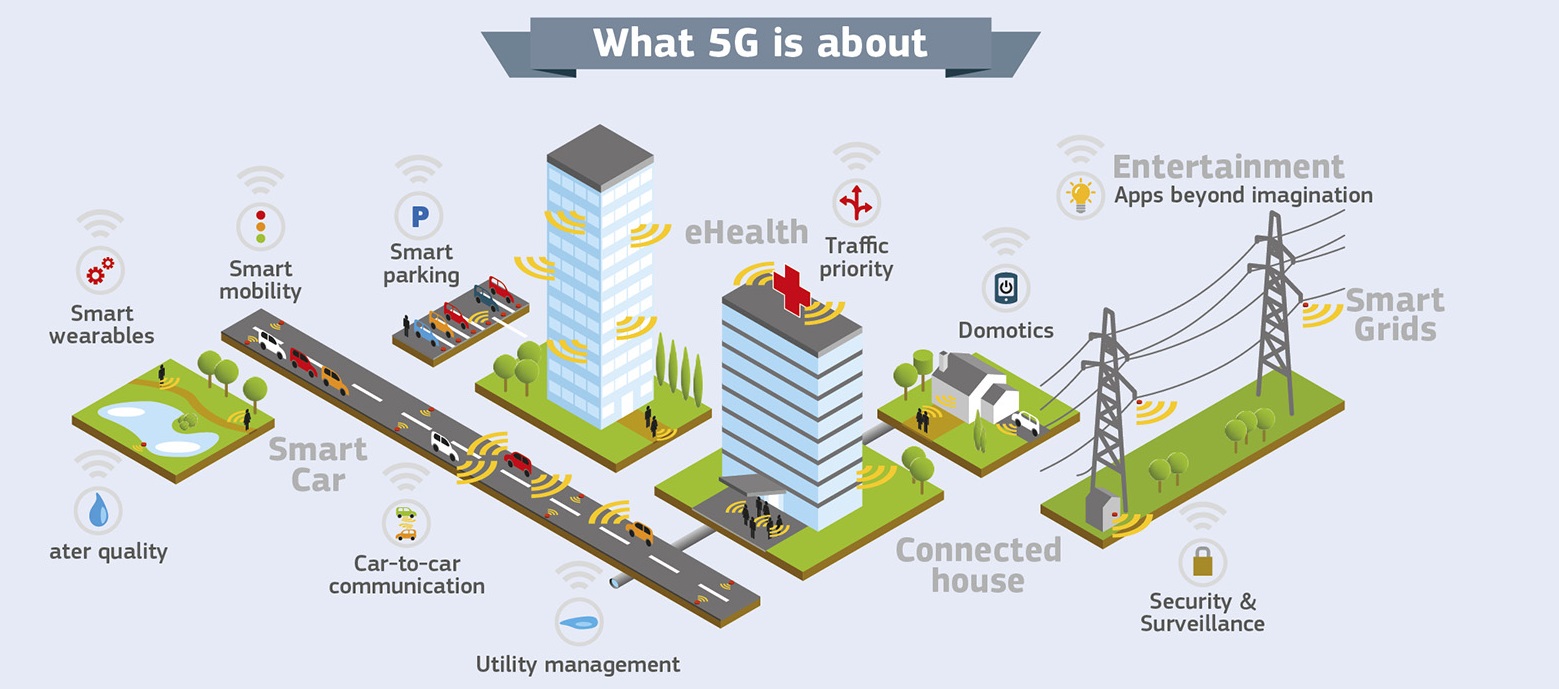
In addition, in similar ways, iWork has been unable to grow due to the restrictions (read: limitations) that the suite offers. Instead of trying to persuade the Microsoft Office users (which is not a bad path), iWork has not grown in the directions it could and they are now paying for it through reduced exposure. Still, there remains a valid opposition to my accusation of: ‘have become agents of iterations’. To see this, we cannot just state that there is a new iMac and as such they are merely iterating. There is in addition the issue of hardware versus software. So in my view, a true innovation would have been a Wi-Fi upgrade, not just a faster system, but a system that is keyed to the home and mobile devices. As we are now a little over a year from the first steps of 5G, as we are all more and more connected via different devices, Apple left out in the open a huge sales opportunity by having the options of having devices linked and interlocked. A missed opportunity. You see as bandwidth becomes more and more an issue, as we tend to have a home bandwidth that is 100 times larger, having the option of the auto upgrade manager on your desktop device (iMac). So when you come home, apps and content will be distributed to the devices you want them to placed in. So at home ‘without even thinking’ (sorry Microsoft for using your Windows 95 slogan). the devices will do what needs to be done and you need not mind. You see, as people are trying to push Block chain into every financial corner, those people forgot on how block chains can also be the foundation for users on multiple devices. Now that is not always needed, because we get mail in the cloud, data in the cloud and via the cloud, but that is not for everyone. In addition, people forget about the photo’s they took and they do not always want that in some cloud. There are legions of options here, but at time we want some of this offline. finally, as we do specific tasks (for example on a train), we prefer not to lose too much bandwidth whilst on a train. Tablet and mobile bandwidth can be expensive. In equal size we tend to forget how large some files are and as such we could rush through our bandwidth in no time. This is just one of two options and we have seen very little development in that regard. Apple might want to let others develop it first, but that also leaves them with less when they need to have that additional step forward. It was a mistake Microsoft hid behind for the better part of 2 decades. In that same approach we see how consultancy and project software could benefit a different side in their designs. Now, that is not for Apple to side with, but it could have been an opportunity to grow in new directions. Anyway this is not about starting a fight on 3rd party vs others, this is about iteration vs innovation and Apple has been reluctantly innovative.

This gets us to the other side of it and here I am not siding with Apple, but I am wondering if Apple has been treated correctly. This we see in ‘Apple ‘error 53’ sting operation caught staff misleading customers, court documents allege‘ (at https://www.theguardian.com/technology/2017/jun/05/apple-error-53-sting-operation-caught-staff-misleading-customers-court-documents-allege). Now first let’s take a look at the error 53 part. The issue is that “‘Error 53’ is a message that occurred after updating to iOS 9.0 on iPhones of people who had had their TouchID fingerprint sensor replaced by a repair shop not licensed by Apple. The phones were rendered useless because the operating system update detected a mismatch between the sensor and the phone, and locked the device, assuming unauthorised access was being attempted.

Now here we see two sides.

In the first side we see “Knives damaged by misuse, improper maintenance, self-repair, or tampering are not covered.“, this is something Buck knives has in play. By the way, this comes with a life time warranty so that remains awesome. In addition, for decades TV warranties were voided if unauthorised repairs were made (or repairs by unqualified repairman). With laptops there was Compaq, who would void any warranty if a non Compaq technician had worked on it. They even created special Compaq screwdrivers to keep a handle on it all. So when we see ‘replaced by a repair shop not licensed by Apple‘, I am not certain if the ACCC has a case, they have not acted against Philips, Sony and a few others for the longest of times.

So when I read: “accuses Apple of wrongly telling customers they were not entitled to free replacements or repair if they had taken their devices to an unauthorised third-party repairer” I remain in doubt whether they have a case.

So when we see “Australian consumer law clearly protects the right of a customer to a replacement or free repair if the product is faulty or of unacceptable quality“, which I agree with, yet the owner did not go to Apple, did they? I have had my own issue with Apple in this regard (different device), yet can we agree that when we read: “It is however important to note that if a non-genuine part is fitted to your Toyota and that part’s failure or the incorrect fitment damages your vehicle, then that damage may not be covered by your Toyota Warranty“, so how can something that applies and is valid for Toyota is not valid for Apple?

I believe that ACCC acted out with another agenda. The need for warranty protection by having repairs done by authorised service people has been in the axial of repairs for decades. In addition, when we look at the facts, why would ANYONE go to a third party for warranty repair? That is just insane. So when we read “wrongly telling customers they were not entitled to free replacements or repair if they had taken their devices to an unauthorised third-party repairer“, I am actually wondering how they could come to the conclusion ‘wrongly‘. You see when we read: “Australian consumer law clearly protects the right of a customer to a replacement or free repair if the product is faulty or of unacceptable quality” we now wonder how true that is. You see, warranty is either valid (Apple fixes it for free), or it is beyond the warranty term and you have to pay for it and then it is no longer done for free, so you might select a third party. Yet if this is not an Apple authorised dealer, don’t you have anyone but yourself to blame?

So this is the other side of the apple, what constitutes voided warranty.

You see, if Apple loses this part, I can start repairing Raytheon’s Griffin systems. You see the upgrade (from C to C-ER) and equipment alignment costs are roughly $15,000 per day (excluding parts), if you do not have the proper Service Level Agreement. I can offer to do it for $5,000 a day. so if my work is shoddy (which they will not know until they fire the device, I can be very innovative towards my income), can they apply for warranty at Raytheon, or have they voided their options? You see I will have a NDA with a ‘this repair has been completed to our highest corporate standards’, so I am in the clear and the way the world goes, with 225 upgrades, I will have a decent Christmas this year. Yet at that point the ACCC will not go after Raytheon, it will go after me (what a whuzzes). So how come that the rights of Raytheon are better than those of Apple?

It seems that people assume so much with their mobile devices nowadays, I need to wonder if people comprehend what they buy and what responsibilities come with it. In this the initial question ‘Why did you not take your device to Apple?‘ is one that is not addressed at present and as such I have little faith that the ACCC has a decent case at present (in the shape we saw presented today).

the second and first part interacts as the upcoming shifts will in equal part see new frontiers in Service Level Agreements, Customer Responsibility and the comprehension of the elements covered in a warranty. Because what is included is likely to shift a fair bit over the next 2 years. In addition, innovation is also a shifting concept. Whilst it was “a new idea, device or method”, we (read: the corporate marketing departments) have often seen it as ‘the application of a solution that allows to meet the new or altered requirement of the customer‘ which we get when we iterate with a more powerful processor, more storage, larger screen. So going from 1080i to 5K screens might be accepted as truly innovative, because that took another level of screen and electronics. Yet at times, the pass through of merely upgraded speeds are also seen as innovation, yet at what level is that? When the device remains merely the same to the largest extent, is that not merely iteration?

So here we see the two sides of the other Apple. What we see, what the maker offers and how we both interpret the presented term of innovation.


Leave a comment

Filed under IT, Law, Media, Military

the next game stage

There is a new game coming. Keith Stuart writes about it and is taking loads of space for it. The title ‘Far Cry 5’s violent civil unrest is a much-needed reality check for games‘ (at https://www.theguardian.com/technology/2017/jun/02/far-cry-5-games-civil-unrest-trump-us-reality-ubisoft). Now, you know hat I have issues with Ubisoft. My issue with Far Cry is even more out there. Let’s start with my introduction to the game. I started it once on the Xbox 360, that version was my introduction to the game. In the past I have only ever returned 2 titles, Far Cry was returned the next morning. I did not like it. I thought it to be a bad game. Now, this is not the end or the killer here. We will always have a game that seemed interesting but ended up not being the game we signed up for. So I ignored Far Cry 2 completely and initially Far Cry 3 as well.

I had heard good things regarding the third game, yet we don’t all like the same games, so as such I have no issue with Far Cry. Next thing I get to (several months later) is that my PSN plus allows me a free download of Far Cry 3, so as I had heard good things, I downloaded it and had a go. Boy oh boy, what an excellent game that was. It starts great with the intro and Vaas is just one of the greatest lowlife badass villains in gaming history and the game stays on a decent high note, which is rare for an open game like that. Yes, there are issues, there is repetition (to some degree), yet the part that a game took a 300% improvement over the first game is stunningly rare. So I was on board! Yet, as we got to Far Cry 4, Ubisoft was facing a lot of issues. I believe that they started in 2013. You see, Black Flag was a good game, yet as I see it it was not an Assassins Creed game. Someone dropped the ball here in a massive way. You see, Black Flag could have been the pirate game that Sid Meier could never make because technology stopped him. The game is excellent in so many ways, but it was not an AC game (my personal view). It had a few other issues, but lets not squander time on those details. Ubisoft with the large issues of Watchdogs was already on the ropes, that is when we got AC Unity (a failure in so many ways, graphical glitches not being the biggest one), Far Cry 4 arrived and The Division was delayed (and would receive more delays until 2016). So Far Cry was already under the gun. It was more about explosions, too much repetition, running back to the outpost you just freed. The game had its fair share of issues. The biggest one was that it was basically a new crazy person and pretty much getting the same thing done. This last part does not need to be a bad thing, yet it was not great either. Like the previous game, the graphics were great, the AI was still shoddy (not the worst part of it all). I found that there were too much scripted issues. Wave after wave after wave of attacks, their AI not being great lessening the joy of the game. yet some parts were brilliant too. the dream missions to the temples were really awesome as it added a little more to it all.

So as I saw the choice for Far Cry 5, I saw another path, not necessarily a bad one, but a different one. The quote “I began to get the sense that America was ready for a Far Cry,” said producer Dan Hay during a recent press event is a fair one, it could be anywhere, so why not the US? The next quote gives us “The group gathers under the edict ‘Freedom, Faith and Firearms’ which is so close to the language of pro-gun religious right firebrands it cannot be coincidence. Furthermore, during the press event, the 2016 armed takeover of a federal building by a civilian militia in Oregon was even name-checked as an influence, tightening the game’s connections with the modern US, with civil unrest and unease, and with the intricate connections between religion, politics and gun control“, which should increase the interest in the game. I remember Bethesda Fallout 3, I was hooked, because I have been to that area, yes it was in 1998 and it was recognising the train station and how alike it was, just added a bit to it all. It is like watching a movie (3 in my case) as the shoots were in the places you have been in (one in my street), it just adds a little tingle on your spinal cord when you see it. This would be the same if an open world arena is placed in an area you know and recognise. When it includes events that actually happen, the suspense of the game goes up, so good for Ubisoft here. Yet now we see Keith going into the wrong direction with “The politics of Trump’s US and Brexit Britain are fascinating cauldrons of fear, uncertainty and division“, which is not false, but he does not mention that ‘cauldrons of uncertainty‘ are created by the media as it prefers too often to leave the people in the shadows instead of clearly exposing certain elements. Yet he hits the nail on the head with “Fear and truth make great, compelling art and the idea of a game steeped in the complex politics of the modern US is hugely enticing“, that is shown as the desire of Cyberpunk 2077 just keeps growing. In addition, the option to drown in ‘fear and truth‘ is not enough, as I see it, the gamer wants to influence both become the decider. In that we need not just more of it, we would like something truly new (or reengineered). Consider the chances that Far Cry 5 will have hunting not just for food, but to increase your backpack? Why not just for food? Why not the need to find scrap and other materials to upgrade the backpack, or the pouch, or whatever? Montana is not a small place. So are they looking at that part? Perhaps they are, it is to soon to tell, yet what if your success is not just to prove yourself to one native American? What if a better chance would depend on getting connections to the Blackfoot, the Cheyenne and Crow? Perhaps this is done, we will know when the game arrives. Keith writes that Ubisoft is ‘already taking steps away from broader controversies‘, which is actually a shame, because it is in the limelight of possibilities where true legendary games are shaped. In addition, we see “And by framing the group as a crazed sect, rather than a plausible conservative right-wing operation, the game distorts any sense of true representation.” Now, this is a shame, because keeping that as close to the reality could be a really good thing. Do not forget that some of these conservative groups are only made crazy by the media. Some prefer to be left alone, they get along with their neighbours, but most important, there is growing evidence that they are not always the bad guys. If we just look at the EPA violations in Montana, and how they were settled, some for less then $400K whilst the cleaning of the water is often no longer a possibility. So skating closer to the reality and options and opportunities could make Far Cry a true legendary game, yet will they go there? I doubt it, we will have to see. I like the very end where we see: “Whatever happens with Far Cry 5 it is at least a tacit admission of something important. We can’t, with a straight face, claim that video games are the storytelling medium of the 21st century, unless we’re telling stories about our real lives, our real fears and the very real monsters around us“, which is actually a really good path to consider. So as we have looked at covert spies (Splinter Cell), at the option to survive in the wild against crazy evil people (Far Cry) and as we have protected the good by cutting throats (Assassins Creed), so what happens when we take certain TV series to an entirely new level? What if we had Washington DC mapped in detail and we re-release ‘Covert Action’, but now we use the latest in digital options, in surveillance where you would have to break into places of ill repute (the North Korean Embassy for example) and truly hunt for intelligence by hacking and gathering intel? To become an actual data broker. Now some is not done on those locations, some happen in server rooms, in cars, in apartments. However, the idea to take Watchdogs and Splinter Cell to a new level, one that is based on an actual flowing political situation? Could that be done to the degree that gamers would like to go. Yet in this game, we apply legal issues as well, so murders are a problem, evidence is an issue, more important, visibility of any kind would stop you to take missions on. You see, the setting in a game is one, but it is set on a storyline, because that is the part that gets us through the game. We can accept that scripted issues happen, especially in the intro of the game, yet we tend to find interference of scripting a lot less fun in the game. In Far Cry 3 with Vaas, it was resolved pretty brilliantly, yet it would always happen there at that point. So what happens when the game has a path that is altered by parameters? What if the shift from Acta to Actb suddenly shifts?

For example, that the Dead Space path has two additional elements, one is time (the longer it takes, the less time you get for the asteroids, or the more subsystem you repair, additional paths or rooms become available later on. We see that story driven games are confining, yet open world games lack direction at times. So as we do every mission in Skyrim or Oblivion we tackle the game in one go, but if we are another race or gender, or even the actual time? What if that decides our missions and paths? I see it as a way to ignite a larger value for replayability. Paths that have been ignored for the longest time in gaming. Although Dishonored gave us additional options to get somewhere based on our powers, that is exactly one of those reasons why Dishonored is a ladder higher than most other games. In such ways Ubisoft dropped the ball in several games. Primal could have given us more if certain considerations were made. It seems more and more that it is not entirely with the makers. It seemed to me (I could be wrong) that Ubisoft Marketing thinks it knows its gamers and from that limited view ‘decisions’ are made that seems to be more and more about the stakeholders, and not the need to get a 95%+ game. They have settled for less, whilst the impression is clear that within the timeframe other considerations could have increased the value and the need for the game. Again, that is just my personal view. So as we see other games coming this year, we will more likely than not see the failing of certain other choices, which is a real shame, because we were truly baffled by Assassins Creed 2 and Far Cry 3. Games that took the edge of gaming, and stretched it making the world of gaming truly larger. So they do have the ability to do that. Yet whether they still have it remains to be seen, time will tell us that. yet the fact that Watchdogs, Far Cry 4 and AC Syndicate are nowhere near the reviews of AC 2 and Far Cry 3 are gives us the clear need to not stay on the same path. In addition, the least stated on Mafia 3 regarding this, the better for all involved. We can agree and accept that some winners face hardship as a flaw was introduced, that happens (Microsoft Vista for example), yet from that we got the winner Windows 7, some Ubisoft titles could end up on the same high path. They only need one person with vision to make it happen.

I have to conclude that Ubisoft due to their number of titles was chosen, yet I think we can agree that other makers have made similar mistakes (Mass Effect Andromeda anyone?) For me it is almost a crusade, not against Ubisoft, but for the next Assassins Creed to give us the buzz that the second and brotherhood gave us. If it is done before, it can be done again! The Ubisoft graphics department proved that by setting a new level of graphical excellence with Black Flag.

Let’s all hope for the best!

Leave a comment

Filed under Gaming, IT, Science

Actively  Missing direction?

The daily star is giving us (at http://www.dailystar.co.uk/news/politics/618722/Who-should-I-vote-for-in-the-General-Election-quiz-Conservative-Labour-Lib-Dem) a nice little questionnaire on who to vote for. I tend to have mixed feelings on these polls, but curious as I am, I took the list and behold, my choice was known and it was my direction. Yet, there are still issues on the questionnaire. You see, it’s fun, and perhaps those who do not know who to vote for should take it to get a general direction, but still there are issues. So let’s take a look at these 15 questions. Yet, this is as you will see the beginning of a much larger issue. What is beneath the surface is a combination of inaction, denial and delay. We are all plagued by the inactions of politicians and we have to pay for their ‘non-choices’. Let me take you on a tour explaining that.

  1. There should be a second Brexit referendum on the terms of the deal.
    Really? There was a referendum and the brits decided to move out. So let’s get on with it! Politicians, especially the sore losers want to turn this all around. I would state because they are sore losers. The last year has been about fearmongering on several levels and even my own party is not innocent here.
  2. Immigration to Britain should be reduced over the next five years.
    Why? Well, I went with never mind, because some might like a reduction on several fronts, yet in the end, we need to think long term, keeping immigration stable seems like a good thing, reducing it? Perhaps it is, perhaps not. What is clearly evident is that as Australia closed immigration and hindered it to some extent, Australia avoided the infrastructure collapse after the 2008 financial crises, if Australia had allowed for the boosted Silicon Valley growth option, the Australian infrastructure would have been in deep trouble and their version of the NHS (Medicare) would not be around today, that part is pretty much a given.
  3. There should be a Bank Holiday on each patron saints’ day.
    I think we have enough bank holidays at present. We could go to the old days (before 1950) when a bank holiday also implied a mandatory visit to the church; you still game at that point?
  4. More selective grammar schools should be opened in the UK.
    I have never ever seen ‘selective’ schooling to amount to anything but excessive pressure on students, that is just a really bad idea. Also, selective schooling tends to imply that certain elements are removed from schools. I believe that the wider and more generalist grammar school is, the wider the development of the student. That has always been a good idea, especially as today’s children in a grammar school will enter the workplace with technologies that we at present haven’t designed yet. So whatever selectivity they now face, the harder some adjustments tend to be.
  5. Key industries such as railways, water and energy should be nationalised, funded by higher taxes.
    This is a real Labour question. This is one of those dangerous questions as the element missing here is that this step alone will drive the UK into deeper debt, a cost that will exceed a quarter of a trillion pound. That is not a good idea at present. The option to nationalise part is not a bad thing, but the UK coffers are empty, a blatant fact Jeremy Corbyn ignores as his promises are all based on the need to drive debts up. Which will be an issue the next two generations will have to pay for, how irresponsible is that?
  6. Britain must help defeat ISIS militarily in Syria and Iraq to tackle the threat of terrorism.
    I believe we should commit to that, we were part of the start, the UK way of life is in danger within the UK. So stomping out those dangers is a clear need. No matter where we need to go to fight it and as it stands at present, with ISIS growing on the Philippines, Opening a large UK base in Darwin, where the ladies are underdressed, the man are overdressed, the sand is warm and the animals are deadly is not out of the question at present.
  7. Older people with more than £100,000 to their name should help pay for social care
    I am not certain here. I would state don’t mind, but we need to see how fair it is. Older people who worked their entire life, saved up, and now get to retire, but because they did well they get additional bills is not really that fair is it? The question is dangerous as the term ‘should help pay’ could be higher premiums, less options or loss of certain pension rights, might be in play and none of these are fair on those people. There are options to barter on certain parts, but in the end, £100,000 is not that much anymore. Look at your annual food bills to realise that impact. I see that there are issue here.
  8. Wealthier pensioners should not automatically receive the winter fuel allowance.
    Impacts on the previous question and here I agree. I see the winter fuel allowance for those in the lowest income groups, there is no validity on them having to live in the cold, decimating their health. This is where I saw the ‘option to barter’ in the previous question. In this case the winter Fuel allowance is for those in the lowest and no income groups, we have a duty to shield them.
  9. Businesses should pay more in taxation to help fund public services.
    A sound ‘yes!’ is clearly reverberating on the grassy hill. The bulk of large businesses are ‘blessed’ with too low taxation. Having all corporations see an increase of 1% with a clear maximum to fund infrastructures is not the worst idea. There should be a clear max as it is equally unsound to have places like Apple, Acorn, Amazon et al pay an additional 1% of their total revenue, we would like that, but we also must acknowledge that this is not fair either.
  10. Britain should have up to date nuclear weapons.
    Are you flipping kidding me? They work, they go mushroom-boom, and it will be the end of it all. Having them updated is merely wasting money to me. Replacing them if they are obsolete is another question. I remain committed to lower the nuclear arsenals over all. Wasting money on up to date nuclear weapons gets zero consideration from my side.
  11. Income tax should be increased for everyone to free up money for the NHS.
    Again, I agree, but it is a dangerous question, because people are pretty much taxed to the max. In my view that would be an option, only if the 0% group goes up by £1200-£2000 per annum. I would have done the offset by increasing layer 2 by 2% and layer 3 by 1%, giving us a little more whilst leaving the lowest group with more. Changing that to layer2 a 3% increase and a layer3 a 2% increase is fine with me. That would require that all the added taxation goes straight to the NHS.
  12. Britain should borrow more money to invest in the economy and abandon the aim of cutting the budget deficit.
    This is another Labour question. Absolutely not! Investing in the economy is a farce from certain people with diminished mind capacity. There is evidence all over the place that this does not work and abandoning the deficit cutting is an even louder no. I am all in favour of imposing mandatory jail sentencing for any politician who is not keeping the deficit in check, which pretty much adds to the fuel of dumping Corbyn in jail for the rest of his life if he is elected and starts nationalising anything.
  13. Students should be able to attend university for free.
    Not merely for the superstitious. I don’t mind, yet the reality is that this is no longer a feasible solution. In some nations this still happens (Germany and Sweden), but they have a very different social and income structure. Germany has a massive manufacturing side, the industrial area that is the envy of entire Europe and Sweden has a social structure and super taxation. Also Sweden is a mere 10 million people. When a nation surpasses a certain size, the solution of free education and certain infrastructures are no longer a solution, it will be a millstone hanging around the neck of the treasurer. It is lovely to offer it when it is a clear option, for the UK that is no longer the case and might never be an option again.
  14. Cannabis should be legalised and taxed.
    The one Lib Dem side that I can live with, legalising it, taxing it could be a solution, especially as the war on drugs is a complete waste of resources as there is no solution and that war cannot be won. There is the option that it could lower the amount of people into hard drugs. This is an option, yet the opposition claiming that once into soft drugs, the jump to hard drugs is massively lower and more easily walked into. That view is equally valid as I personally see it. There is not enough data to prove or disprove any of the paths. The willingness to consider it is perhaps not a bad idea. Yet in equal measure, as binge drinking cannot be controlled, offering legal cannabis in the field remains a controversial option. The fact that this would be taxed is good for the coffers, yet in equal measure, making the NHS pay for it might be another side that should be barred. Setting the field of healthcare regarding narcotics to private insured or paid up front is not the worst idea to have.
  15. More police officers should be recruited to make Britain’s streets safer.
    Yes, the final question is a dangerous one. Who pays for it? Labour offering it as a promise whilst the budget cannot pay for it remains an issue. In addition, in light of the size of increase, there is no evidence that this would make the streets safer. The fact to guarantee that change is the amount of police increase that is just slightly short of absolutely bonkers. Nice to have, but not realistic.

So, these are the 15 questions and they are good ones, yet in a few cases, the changes we want or do not want also have a cause and effect beneath the waterline. The Titanic made that mistake once (well actually the person at the wheel), so we need to take mind of what lies beneath and that part is not always clear to the persons basing their decision on merely this quiz. Still it could be path to take and then look deeper at the party that came out on top. Just be aware of the issues we see and the issues that we cannot see. That is not an attack or criticism of whoever made the quiz. It is merely the consequence of a world that is slightly more complex than we think it is.

And as we see the international impact, when we hear Mario Draghi state: “still requires substantial stimulus” (source Hong Kong Standard), when we see how much deeper in debt the UK is set because no one has the ability to muzzle Mario Draghi, when we get additional noises from other sources that change of this policy is needed, we should question the validity of the Eurozone and the ECB. This fuels now the issues in the elections of Italy as the Central Bank of Italy is now stating loudly: “leaving the euro zone would not solve the country’s economic problems“, which is actually quite true, yet the Italian woes are so intense that staying in might not be preferable to Italy. It might be better off trying to float itself back into business. That is my own unrealistic view. Yet in all this, those before have made the entire mess just too large. The dangers I warned France about are now becoming the one issue that three players are dreading. The quote “The right-wing Northern League wants to pull Italy out of the euro zone, and the anti-establishment 5-Star Movement, which some opinion polls say is now the country’s most popular party, wants to hold a referendum on the issue” is giving us two things. The unrealistic growth of Northern League, headed by Matteo Salvini remained unrealistic, yet Beppe Grillo and his Five Star Movement is another matter, him growing to the extent he did, was not foreseen by me and ignored by too many others. If these two could strike a deal of cooperation, especially if the Italeave referendum result is not one France wanted to face. Because in the previous scenario it left the Euro to Germany and Italy, with the bag in the hands of Germany and France (if Italeave prevails) becomes another matter, it would become an actual fight between those two nations on how to proceed and that would be disastrous for France. The initial downturn of Frexit would be noticeable, yet the downturn when Italy leaves and France gets hit by the swells would show a severity in excess of 250%, it would become a game changer. So as Emmanuel Macron wanted a Eurozone in an age of dangers, whilst Brexit is proceeding, Italy might force the issue under a timeline that neither France nor the UK wanted. That is the consequence of dragging your heels!

Now, as the election must be before 20th May 2018, the later this happens the better for the other players, but their intent of remaining in denial is a bit of an issue for all the players. So those who hid behind ‘What if we play it in such a way so that we don’t have to decide?‘ are now optionally placed in the mortal dangers of getting pointed at as the vile dangerous beasts they forever were. So as the Italian elections are likely to be within the next 5 months, we will see a new scenario unfold. Italy is now becoming much stronger in its ‘reduce deficit’ messages, yet as I see it, that delay is about 5 years too late. In addition, when we realise the intentional misrepresentation of “Visco said Italy must focus its energies on bringing down its huge public debt, the highest in the euro zone after Greece’s at around 132 percent of gross domestic product” is pretty hilarious when you consider that the Greek debt is 336 billion, whilst the Italian one is 2.2 trillion. So the Italian debt is 700% larger than the Greek one. Yet the Italian population is merely 560% larger giving a much larger debt per person. We do recognise that the economy of Italy is vastly better as roughly 99.9945% of the financial world executives wants a Ferrari, a Lamborghini or a Maserati. That is some, most want one of each, and at least these people have actual money to spend. In all this the larger issue is partially avoided if Grillo denies any actions with Salvini. No matter how the Northern League grows, they are nowhere near the size that they need to be to become the major player and lucky for those disliking the far right, Salvini lacks the charisma Farage has, so there is that working against Northern League too. A reality is that as Renzi and Grillo are close to one another, the dangers of a hung government is actually not that far stretched, which gives options to alignment with people like Speranza and Alfano. So as we continue to cater to the ‘next elections’ we need to consider that UK inaction will also act against them down the road (as well as the UK itself). In all this, some players behind the screens have been hoping for that scenario to come, yet I predicted that in the worst case scenario Italy will force the hand of the others, which is now an actual reality. With the public debts to be too large, with the government is massive deficit and with Italy trailing in the economy, being pushed into deeper debt by Mario Draghi is an option most are rejecting. This is now an issue as the talking duo Draghi & Visco would go straight out of the window the moment Grillo wins. That does not mean that the game is over at that point, the official referendum in Italy would still need to be held, but that is at that point only a mere timeline to adhere too. In all this the UK needs to step up its game, because when Italy forces the issue, the UK will lose too much and they would have to give in in several other fields. In this, that would be the good side in all this.

You might wonder how this reflects on the UK election quiz. You see, questions 1, 2, 9, 12 and 13 all influence international links. Q9 could drive some business out of the UK, whilst Q2 and Q13 are an optional source of influx into the UK. A changed European field would also impact all the issues in the UK and as that field changes having clear trade deals would be essential. Yet as my pun intended comment was set at, the Italian car industry will agree to any deal that gives them trade space, so there we see recognition. Also as the job market sees shifts, international workers see changed places of interest. None of this is news, but as we hear the non-relenting cries of Brexit, Bremain and new referendums demanded on setting another chance to Bremain. Yet now there will be a price, these people laughed as a former investment banker became president in France and is now advocating a stronger Eurozone and his ‘proclamation’ of demanding reforms of the European zone has been thrown into a drawer and might never return. Yet Italy is another matter, is it not? The Italians have two parties where one is anti-Europe and the largest one now states that a referendum will happen, that whilst the Italian quality of life has been stagnant for a decade. Overall there is no way to see how that goes, because there is not too much data on the size of these groups. The largest issue is the refugee stream into Italy. That danger is fuelled as we see that Italy is the closest destination for anyone from Tunisia and Libya. With 300,000 refugees in dire desperation, their attempt to get out has only Italy on the menu. In addition the massive shift of African refugees from several places as they all head for Libya, hoping to get to Europe from that beachfront. So as Italy gets a larger and larger stream of refugees, the Italian infrastructure is collapsing more and more (read: under severe stress). Those losing out on essential infrastructure needs will blame whomever they can. The UN has no contingency plan, Italy is buckling under the stress in a few fields and this drives right wing support more and more. If Salvini was a more charismatic person, the drama would be massively larger. So thank the heavens for small favours in all this, one could state. All this also impacts on the UK front, you see, the dangers of deeper debts (like nationalising services) will leave the UK with less and less options. That tends to be the issue with draining towards debts, a lesson Jeremy Corbyn seemingly never learned. The UK should remain business friendly, yet the level of tax avoidance that is currently an option needs to be removed. Corporations need to realise that the party is over; they need to pay their fair share. Nobody denies their valid need for profits, I am merely curious as to what some define as ‘fair’. I remain in opposition of Corbyn who wants to tax them to the age of the Flintstones; I prefer a little more subtle approach where they must pay an honest share. Tax reform is essential here, whilst the people need to realise that Return of Investment is the large equaliser, if the ROI drops too much, they will find other shores and over that thought, the loss of jobs would quickly vastly increase. We might not care too much over financial services, but when it affects manufacturing, the drain will be a lot larger and much wider for longer.

So as we consider the moves that were offered by banks, by mergers and above all the adaptation of Dr Seuss to adapt the readability of what the Bank of England offers, I will take their advice, yet the question becomes, will the voter get this message clearer? Well, the bank with the Cat (Credit Assured Termination) might see it to as a way to flam the flim and get us ‘a story’ in a way, more digestible, yet will it be comprehensible? So as we consider “Romer told staff of the Development Economics Group to write more clearly and succinctly, limiting the use of the word “and.”“, we would want to consider that ‘and’ is the form of inclusion, it seems that it is about clarity of the services and deals offered.

Just like the quiz with 15 questions, it might be fun and it might give us an idea, yet the danger is that anything linked and underlying is now not clearly seen so we tend to trivialise the matters at hand. We forget why it is too dangerous to nationalise services that have been ‘vultured’ in the private sector. We forget that we would love to have all the social perks for every yet that requires the Treasury to have filled coffers, something that stopped to be a reality a decade ago and the politicians of today are vastly in denial of all the wasteful spending, promising all kinds of hires, but they cannot account for the costs of it.

So let’s take a little sidestep using Dr Seuss before the final part is shown. (apologies, WordPress sucks when it comes to table elements).

Jeremy Cobyn Tim Farron Theresa May
I am Voter
Voter I amThat Voter-I-am
That Voter-I-am!
I do not like
That Voter-I-am

Do you like
Corbyn with SPAM

I do not like him,
Voter-I-am.
I do not like
Corbyn with SPAM.

Would you like Corbyn
Here or there?

I would not like Corbyn
Here or there.
I would not like Corbyn
Anywhere.

I do not like
Corbyn with SPAM.

I do not like Corbyn,
Voter I-am

I am Voter
Voter I amThat Voter-I-am
That Voter-I-am!
I do not like
That Voter-I-am

Do you like
Farron with Jam

I do not like him,
Voter-I-am.
I do not like
Farron with Jam.

Would you like Farron
Here or there?

I would not like Farron
Here or there.
I would not like Farron
Anywhere.

I do not like
Farron with Jam.

I do not like Farron,
Voter I-am


I am Voter
Voter I amThat Voter-I-am
That Voter-I-am!
I do not like
That Voter-I-am

Do you like
May with Lamb

I do not like her,
Voter-I-am.
I do not like
May with Lamb.

Would you like May
Here or there?

I would not like May
Here or there.
I would not like May
Anywhere.

I do not like
May with Lamb.

I do not like May,
Voter I-am


This now gets us to the final part in all this. The ISIS escalations as Russia launches an attack, as we see the issues in the Philippines, we read “Teenage ISIS fighters are said to be shooting people dead for failing to quote the Koran“. In addition we see one source give us “Islamic State has issued a chilling call to its followers to use online classified websites such as Gumtree and E-bay to lure unsuspecting people to their deaths” In all this I remember the movie Eye in the Sky, a gem with no one less than Colin Firth as one of three producers, and a movie that is another Alan Rickman gem, as well as stellar performances from all the other cast involved. You might think, that because it involves Kenya and Somalia, you feel removed, but the movie achieves quite the opposite. In addition, it shows the players in a really bad light. Some hiding behind the collateral damages option. Yet the direct impact is seen early, the dangers that two suicide vests give, the three top players in terrorism and the delays we see. Some would think of Manchester, yet when we see these vests with the amount of C-4, we see hesitation of a pilot for one small girl, yet the two suicide bombers would be able to kill hundreds. In addition we see a political delay. The one issue we are confronted with today in real life is shown with: “James, the legal argument is that we could wait but that we need not wait. The military argument is that we should not wait”.

So even as we see the unfolding of ‘need not wait‘ and ‘should not wait‘ hundreds of lives are basically endangered. Now, this is a movie setting, yet the reality of ISIS, now a clear issue in Philippines, we see the effect of pushing issues forward. The acts on Brexit, on debts and on how the effect becomes when inaction forces us down a very different path. France had every right to make its choices, yet when Italy makes another path by actively choosing to leave, France will not be allowed to cry, they only have themselves to blame, that same issue plays in the UK, as some are trying to undo, trying to push forward and to remain in denial, we see that the push from other players will remove options the UK has down the road, yet the politicians decided to play their version of Eye in the Sky by claiming ‘we need not decide’ whilst the other player will decide leaving no options to choose from. As ISIS is changing the game on several fronts, some out of desperation, the end result is the same; we are all left with fewer options. Soon we could face ourselves in a mandatory ‘boots on the ground’ in several ‘theatres of action’. Nobody wanted any of them to actually happen, but that would have required actions to have been taken long ago. Now that we see reports that ISIS attacked a resort in Manila, the game changes further, because with every non Philippine death, those governments will speak out, yet they are unlikely to act. There is the game changer, the non-acting. It will give rise to more extreme parties growing faster. So as some with political and social studies go into denial, consider the actions in Italy when several Italians get killed. How will the Salvini shift go at that moment? There is no way to predict the shift. As we see many try to appease people with talks and presentations, finding new ways to spread a message, the way that they want to spread the instilling of comprehension. A bank with Dr Seuss, others with WannaCry and violence, the UK is now facing an election where it is not merely about a message, but who will act against those willing to blow up the Manchester Arena with as many casualties as possible? In this Eye in the Sky showed a groups of decent people, yet as some found ways to not act, we see that the need to act was clear, it is that delay that aggravates more and more voters. The USA had ‘no boots on the ground’ which was made worse with the Benghazi incident. As a result the USA now has President Trump, which according some is now a place of ‘action without wisdom’. In the Philippines we now see actions without remorse or restraint. If this stops junkies and addicts, what do you think will happen in Italy later this year? Social values are only valued in places with actual wealth. That is a lesson many learned for decades as Europe waltzed into WW1 and WW2, lessons forgotten as free reign to greed was given, now we see similar issues unfold as we do not take notice of underlying issues. There are already increased actions by the Indonesian navy to stop ISIS from crossing their borders. The question is will it work and how will we all react the moment ISIS has any success in Jakarta. So as we saw “Terror attacks in the UK due to military intervention overseas, says Jeremy Corbyn“, how can his willingness to not act and not act overseas be seen as anything but disastrously dangerous?

When we see all these elements, not all linked, yet all still part of the greater whole, are we all (including me) to some degree in denial on what needs to be done? We can all agree that no body actually wants to act, but when we are forced between the options ‘act now’ or ‘react too late’. Who wants to be in the ‘too late’ team and what damage is brought whilst we all only have ourselves to blame for that?


Leave a comment

Filed under Finance, IT, Law, Media, Military, Politics

Privacy v parents

Todays event is giving an interesting application of the law. The issue is actually a lot harder and the impact on Facebook could be severe in the near future. The title ‘Parents lose appeal over access to dead girl’s Facebook account‘ (at https://www.theguardian.com/technology/2017/may/31/parents-lose-appeal-access-dead-girl-facebook-account-berlin) is something that will be discussed for some time to come. You see, the issue is not as simple as some are trying to make it out to be and your own point of view regarding the matter will influence your viewpoint too. So let’s get started.

The subtitle gets to one side of the matter: ‘Berlin court rules parents of 15-year-old, who want to know if she was being bullied, cannot see her chat history‘. Here we see the approach of privacy, the 15-year-old can release this to the parents, but guess what, the 15-year-old girl is dead, deceased, no longer able to make active decisions. We can see “the parents of the teenager, who died in 2012 after falling in front of an underground train, had no claim to access her details or chat history.” Yup that’s a period at the end! You see, is this about privacy of the individual, or is this a minor? The interesting side here, especially when considering the so called united EU nations, the age of consent differs and in Germany the age of consent is 14. I am taking this number as we read in German law (in most nations) the term ‘capacity for sexual self-determination‘, it is the ‘self-determination‘ that matters. The application of Jus Cogens is a cardinal principle in international law. Here we see the ‘the principle of equal rights and fair equality of opportunity, have the right to freely choose their sovereignty and international political status with no interference‘, the application of consent is not exactly the same, but more important shows the clear age definition, and in addition the impact of being ‘an adult’. As such, the adult 15-year-old has the outspoken right to privacy and a parent cannot overrule it. Here is also the issue about digital inheritance. Can death overrule your right to privacy? Let’s take a really rude example, can any perv freely distribute the consensual porn pics of your mum? Where is the right of self determination, the right of privacy (as she never released these photos in life, can the end of that change this?), what if she sets that out in her will for those digital libraries to be released? It is a very slippery slope when we see interference and censoring here beyond the normal scope of the law. and Digital inheritance is not part of the normal scope of the law. The German court took another point of view. They went with “The court said it had made the ruling according to the telecommunications secrecy law which precludes heirs from viewing the communications of a deceased relative with a third party“, is that not an interesting point of view? It is basically another handle on privacy, yet what if that part is defined in her will (if she had one). Technologically speaking, the fact that the parents could not unlock the phone, or try to access her accounts via another path is also a question that is in my mind. I find it pretty normal that a parent wants to learn whether their child was bullied to death. Is it not interesting that the Deutsche Polizei is not all over that? The next part is actually the most disturbing part: “The girl had reportedly given her mother the login details to her account when she was 14 but the company, having been informed of the girl’s death by one of her Facebook friends, froze or “memorialised” her account. The move meant that photos and posts the girl had shared remained visible, and friends could pay tribute to her, but it was no longer possible to log in to the account“. the ‘having been informed of the girl’s death by one of her Facebook friends‘. How was this verified? You see, we see enormous delays on inappropriate and extremist materials, yet death of a social poster seems to have been almost instantaneous. A slight assumption (and exaggeration) on my side, as there is no clear timeline here.

It is the next part that puts Facebook in a proper bad light, one that their marketing division will require months to address, in addition, how many parents will make a move to deny or demand that non-adults between 14 and age of consent will end up having to remove their accounts? The parents can simply state: ‘No Facebook, or you have to pay for your mobile yourself‘, that should change the issue right proper and quick. You see the quote “Facebook has refused to say who applied for the account to be frozen, also citing data protection. The person who lodged the request would have had to provide Facebook with proof that the girl had died

So if there has been an actual lodging, and if that was a school ‘friend‘ we can also speculate in equal ways that it is not impossible that Facebook gave active assistance to a murderer. It is interesting how Facebook skated away from that danger, so with the anti-social-media wave at present, there is a decent chance that Facebook just made matters worse for themselves and for other social media providers. The second blunder we see from the Facebook teams is “They argue that the conversations would have taken place on the understanding that their content remained private“, which is only a correct stance to have when it does not involve criminal activities and cyber bullying is actually a crime. H.R. 1966 (111th congress), gives us “Chapter 41 of title 18, United States Code, is amended by adding at the end the following:“, and the added part that matters gives us:
(a) 
Whoever transmits in interstate or foreign commerce any communication, with the intent to coerce, intimidate, harass, or cause substantial emotional distress to a person, using electronic means to support severe, repeated, and hostile behaviour, shall be fined under this title or imprisoned not more than two years, or both“, so by facilitating this, Facebook has already created an issue in the US, yet it is not in Germany. In EU, only Spain became evolved enough to include cyberbullying in their penal code. Which is interesting as the Facebook actions would differ per nations, which could also now imply that facilitation for cyber bullies is an actual possibility in Europe. From these points alone, we could state that Facebook did not act illegal, or legally wrong, they were however extremely silly in pushing the buttons in court to the extent they did. Björn Retzlaff, the judge who ruled in Berlin did so on the sound foundations as stated in the telecommunications secrecy law, which has elements for phone, email and internet chats. There is a shallow path the judge walked on and it is not shallow by the actions, but shallow by the defining laws that herald the right of privacy above the need to consider the prosecution of criminals. It is a shallow and slippery path to be on and Facebook might have been better off by assigning a specialist team to that request to at least consider the test whether a criminal path had been or had not been walked. By freezing the account, the parents were left in an empty space that large corporations are now slamming shut like the jail cell that could contain the possible murderer. You see, it is more than just privacy versus inheritance. When we start seeing the Facebook accounts and the ‘owner’ of the account has mental health issues, Facebook will find itself in even more deep water. In addition, the legal issues that we see with Doli incapax and Parens patriae. In addition, consider the application of the Hart–Scott–Rodino Antitrust Improvements Act, as we see it in 15 U.S.C. § 18a. Now consider the application on it when we go towards “Title III of the Act[8] allows attorney generals of states to sue companies in federal court for monetary damages under antitrust laws. as parens patriae, on behalf of their citizens“. Now, you might think that this is a joke. But it is not. As we see Vlogging and Youtube Channels set to higher and higher values under commercialisation, the incomes and rewards really go through the roof, some Vloggers are now getting amounts that a decent amount of CEO’s would go crazy for. What happens when Facebook suddenly interferes with that? and this is not a local thing, this issue could go global, which is an additional issue Facebook can face. Especially as the timeline for freezing is not known, additional questions are here. We can debate the legality of the parents having the account access, especially as you are not supposed to share login details, but in the larger side of things that one item seems small and could have prevented a few things for Facebook.

the weak response from Facebook: “At the same time we are sympathetic towards the family and respect their wish. We are making every effort to find a solution which helps the family at the same time as protecting the privacy of third parties who are also affected by this.“, it is weak, because the part ‘Facebook has refused to say who applied for the account to be frozen‘, that answer alone could solve a few issues. The most adamant of issues being ‘was there intent to avoid criminal prosecution‘. I got there in the easiest way. If the freezer account is also the account linked to the same IP address of the bully, we have the problem in the open (bad for Facebook).

There are other issues, yet there are too many instances of ridiculous statements from tabloids, yet I have to say that in this instance the Daily Mail used a lewd call link to what is actually a really good article (at http://www.dailymail.co.uk/news/article-4531934/Facebook-lets-teenagers-porn.html). The quote “Facebook has pledged to hire more staff, but politicians and charities said stricter guidelines were needed“, so how charities enter the equation? In addition to a reference to politicians, where I would prefer to see their names. As the past have shown that some of these complaining politicians seem to be ‘talked to’ to by members of the clergy who could be looking for sextertainment in the choir section a few hours later. The reference could be found in John 12, Mark 9 and Luke 11 (source: Jimmy Carr). The question is not just how many more staff members to hire and where to place them, there is an increasing need for non-repudiation. If you are adult enough to slag-bitch-harass a young girl to death, you get to be sentenced as an adult in court. The issue is that the law (on a global scale) have failed victims for the longest time. One of the clearest cases of failure was in Canada, where in November 2011, Rehtaeh Parsons committed suicide after she was gang raped (17 months earlier) and subsequent of the Sexual assault was non stop bullied via social media. The Milton-Pepler paper, which might be laughingly be regarded as an ‘inquiry‘ stated: “One conclusion of the report was that Nova Soctian schools “need to do a better job preventing harassment and sexual aggression”“, I would state that “the Cole Harbour District High School had failed their student in distress and in clear danger, under psychic assault has failed their student in need 100%. By not taking the dangers serious and by not properly acting in regards to the need of criminal prosecution, in addition, according to sources, the RCMP did equally not act to the degree they should have and it was only 3 years later that the first boy involved was conditionally discharged with a one-year probation“. It is the mere existence of these failures that require different steps. The acts are growing more and more, more often than not to create their fame or infamy through recognition on social media. Censoring has not been a viable solution for a few years. It is not just the Canadian Parsons case, it is the fact that for every case that does make it to the light of the beholders, there are hundreds of cases that do not even make it to the visibility of the media or courts. As there are now years of events on a global scale, the need of acceptance that accountholders need to be hold accountable for these transgressions become even more important. When their mobile and mobile number gets barred from social media channels for life, people tend to take better care of the words spoken. Ask yourself, how many people leave their car keys on the bar? How many walk out leaving their doors open (OK, that actually happens on a daily basis in Canada), yet the message should be clear, we need alteration of the rules, not of the freedom of speech, but of the accountability of the media you engage with (both press and people). We will always understand that when you are young, you will state things on the wrong moment, events happen, no one will deny it, yet as we see a growing number of events of clear bullying and cyber harassment a new line can be drawn. One that could lower the events. In equal measure there is an increasing chance that those people will seek other venues to propel their vitriolic thoughts, and it will never go away completely, but as the curve goes down, the resources in use could be used to seek new paths in confronting those transgressors, and perhaps find new ways to protect the victims as well.

Whatever is happening now, is as that German couple feels, that the law has been screwing them over massively and in their case there were other legal issues and those will remain; yet as those events are countered one by one, the amount of extraordinary cases with legal uniqueness will also diminish, making the field cleaner and much more clear.

Have a great day and consider to be nice to one another.


Leave a comment

Filed under IT, Law, Media, Politics, Science

Opposed to Fry

The Guardian placed an interesting piece regarding Stephen Fry. This is a good thing, it is always nice to see the point of view of a truly intelligent person, even if I do not entirely agree. This is what happens in an intelligent world, one gives a good point of view and the second person opposes it, or agrees with it. In a true interactive dialogue, the problems of the world could be solved in such manner, which is why it tends to be really sad when politicians avoid that approach slightly too often. The article (at https://www.theguardian.com/technology/2017/may/28/stephen-fry-facebook-and-other-platforms-should-be-classed-as-publishers) gives a few nice gems to start with: “Stephen Fry has called for Facebook and other “aggregating news agencies” to be reclassified as publishers in order to stop fake news and online abuse spreading by making social media subject to the same legal responsibilities as traditional news websites“, this is a good start, but here is also the foundation of my disagreement.

You see ‘Facebook and other “aggregating news agencies”‘ gives us a point, in my view Facebook is not an aggregating news agency. It is a social media outlet and as such, the Guardian, the Daily Mail, Reuters, CNN and a whole host of other providers push their articles to Facebook, often just a small eye catcher with a link to their web page. People can use ‘like‘ and ‘follow‘ and as such the news appears on their time line. This is mere facilitation. Do not get me wrong, Stephen Fry makes good points. In my opposition I would state that it makes more sense to go after the tabloids. Until they clean up their act with the innuendo and their not ‘fake’ but ‘intentional misrepresented‘ news, news that is miscommunicated in such ways to create emotional waves. They need to lose their 0% VAT option, that should be reserved for ACTUAL NEWSPAPERS. You see, these tabloids also use the social media as a projecting outlet. In all this Facebook merely facilitates. The second quote is “Fry accused social media platforms of refusing to “take responsibility for those dangerous, defamatory, inflammatory and fake items whose effects will have legal consequences for traditional printed or broadcast media, but which they can escape”“, I find it a lot harder to disagree with, although, when was the last time tabloids were actually truly fined to a realistic amount, an amount where the fine is set to the revenue of a week of published papers? You see when you have 2 billion users, you will get waves of fake news, or false information. There are no numbers, but consider that with 2 billion users, you are looking at 250 million to 1 billion added events per day, how can this be policed? Now, algorithms to police the use of certain words and that could help to some degree, yet the abusers of the social media system are getting clued in too. So they are getting good at avoiding triggering the software by avoiding words that flags them. In addition, when it is done via fake accounts, how can anything be stopped?

Fry makes a good case, yet I think he is not seeing the scope and amount of data involved. In addition, we see “At the moment, they are evading responsibility for their content as they can claim to be platforms, rather than publishers. Given that they are now a major source of news for 80% of the population, that is clearly an absurd anomaly“, he is completely correct, yet the users of Facebook have the option to not watch it or to not accept it on their timeline. Doesn’t that make it a choice of freedom for the users of Facebook? I have in the past needed to block content from a ‘so called‘ friend, merely because of the amount of BS he was forwarding. It was fixed with a mere click of the button. This is not an opposition towards the point Stephen Fry is making, but an answer on how some people could deal with it. In this equation we have the number of people on Facebook, there is a variable that takes into account the amount of BS we get from tabloids, and you better believe that they are active, via ‘stories’ and via advertisement. The advanced options of granularity that Facebook advertisements offers is the reason why those tabloids want to be there and the tabloid group outside of the UK is massively larger than the disgusting size of the UK tabloids is and they are all offering their links on a global scale.

Can Facebook be held to account? Well, to a certain level they can, you see, the actual propagator of events needs a Facebook account. When information is limited to an audience, the impact is lessened. So as Facebook users can no longer send information to friends of friends, only to friends, we have lost an iteration, this could be the difference between 500 people getting the news (fake or real) or the impact that this news goes to 250,000 people, when the addition is that newsmakers can no longer forward it over timelines, but only to the one subscribed timeline, we will soon see a shift on the wave of messages. In addition, not only is the damage contained (to some degree), but as forwarding any post becomes an instance, there would be a much smaller list to police and the users forwarding the post would no longer be the facilitator, they would become the publisher. Facebook is kinda ‘off the hook’, but the user is not, they could to some degree be held to account for certain actions. It makes the events a lot more manageable. In addition, it could limit impact of events.

So here we see the optional solution to some degree. It must be clear that it is to some extent, because it merely drops the impact, it does not take it away. Stephen follows it all up by also making reference to the British Airways IT fiasco. We now see “Fry cautioned that the world’s reliance on digital systems would also inevitably prompt a cataclysmic cyber-attack and bring on a “digital winter for humankind”“, there is certainly a danger and an issue here. The question becomes which issue is in play? As we see Reuters giving us: ““Many of our IT systems are back up today,” BA Chairman and Chief Executive Alex Cruz said in a video posted on Twitter“, we need to realise that even as Terminal 5 was designed to deal with 35 million passengers, in 2015, the numbers give us ‘Terminal 5 handled 33.1 million passengers on 215,716 flights‘, this gets us the average of 91,000 passengers a day, for 590 flights. So there would be an issue for 3-4 days I reckon. That is just the one day impact. The issue that plays and the caution of Stephen Fry is that as we are unaware of why and how it happened, there is no guarantee that it will not happen again. One of the Guardian articles gives us: “The glitch is believed to have been caused by a power supply issue and there is no evidence of a cyber-attack, the airline said. It has denied a claim by the GMB union that BA’s decision to outsource hundreds of IT jobs to India last year was behind the problems“, which has two parts one is the power supply issue, which is a bit of an issue, the second one is outsourcing. The first one is weird, that is, until we know where that power issue was. If there is a server farm, the server farm would be an issue. At this point, the backup systems should have been working, which should if properly set up be in a secondary location. power issues there too? There are several points where the issue could impact, yet with proper setup and tested solutions, the impact should not have been to the degree it was. That is, unless this was done by the same team who ‘tried’ to give the NHS a new system about 5 years ago, if so then all bets are off. The outsourcing sounds nice when you are a union, but that would merely impact the customer service as I personally see it, so until I see specific evidence of that, I will call it a bogus claim by GMB.

The Stephen Fry issue was neither, he merely stated ‘digital winter for humankind‘, which is an actual danger we are facing more and more. You can judge that for yourself and test it. You merely have to switch off mobile data and Wi-Fi from your mobile for 24 hours. 99.992% will not be able to do that, we are that relying on getting fed digital information. We will offer a host of excuses; like ‘I need to be reachable‘ or ‘people need me non-stop‘. I see it as all bogus mentions of the fact that we are digitally too dependent. If you give these people the additional limitation of ONLY using the e-mail and office programs, the chaos is nearly complete. We are all 100% digitally dependent. That means that any damage to such an infrastructure will bring us distress. We then see “An extinction-level event … will obliterate our title deeds, eliminate our personal records, annul our bank accounts and life savings” which is only part of the quote, but this part has already been arranged for the people of the world, it is called Wall Street (remember 2004 and 2008).

The final part to address is the part we see combined in the article. “Fry also addressed the rise of big data, which has seen private companies competing for and using the personal data of millions for corporate gain, the gig economy of Uber and Deliveroo; the inability of governments worldwide to keep up with technological progress; and live-streaming services like Facebook Live allowing people to broadcast acts of violence and self-harm“, the three elements are:

  1. Rise of big data
  2. Keeping up with technological progress
  3. Live streaming towards violence and self-harm

There is no issue with the rise of big data, well, there is but the people are in denial. They are all about government and the optional alleged abuse of that data, whilst they give the green light to places like Facebook and other instances to do just that, and now they get to sell aggregated data. Yet, when we use a certain data property, where every person is 1, like a social security number or a insurance policy number, when every aggregated fact is founded on a population of 1, how aggregated are you then?

We know that governments are not technologically up to date. You see, the cost to get that done is just too high. In addition, governments and other large non-commercial organisations tend to not push or pursue policies too high, which is why the NHS had its Ransomware issues. We see Labour and socialistic parties on how it all needs to be about people programs, whilst they all know perfectly well that without proper infrastructure there would be nothing left to work with, they just don’t care! They need their image of creating jobs, whilst spending all the cash they have and pushing the government into the deepest debt to keep whatever lame promise they make and the next person gets to deal with the mess they leave behind. The lack of long term foresight is also the Achilles of IT, any IT structure needs a foresight of what is to be done next, by living in a fantasy ‘at the present’ setting, is why some politicians go into denial and in that case IT systems will falter over time and no one is set into the field of ‘let’s get this working properly’, the NHS is the clearest example, but not the only one, or the last one to buckle.

The live stream is the larger issue that has no real solution, that is until the numbers are dealt with. As larger facilitators get a handle of what is pushed online, resources open up to resolve certain issues. There will forever be a risk that certain live streams get through, yet the chances might be limited over time. In that, until the laws change, there remains a problem. Part of it is the law itself. The fact that a rape was streamed live, in it watchers saw Raymond Gates, who was accused in the attack and charged with kidnapping, rape, sexual battery and pandering sexual matter involving a minor. That person ended up with 9 years in jail, whilst he ‘enjoyed’ media limelight attention for many months. Marina Lonina, the person who filmed it all got ‘caught up in the likes’. The New York Times stated: “The defendants each face more than 40 years in prison if convicted“, yet in the end, yet the girl filming it got 9 months, the man doing the act got 9 years (source: CBC). So as we see, it seems that the act of live streaming is rewarded with an optional implied sentence reduction of 39 years and 3 months. So if the governments want to make change, I would suggest that they clean up their justice departments and get some proper convictions in place that will deter such live stream actions. In addition, if Marina Lonina would have been convicted with at least the 8 years in addition, so that she and the actual penetrator served the same amount, there might be a chance that live streaming of self harm will fall. There is no evidence that it will, but you get to solve the matter in small steps. Take away the ‘benefits’ of being merely the camera man or girl, the amount of events might drop too.

So here is my view and opposition of the parts Stephen Fry offered. He made good points and raising awareness of issues is always a good thing, especially if they are made by a person as renowned as Stephen Fry, but in all this dimensionality is still a factor. The response against issues (which I blogged earlier) on ‘tough new laws on extremist and explicit video‘, yet in all this, many transgressors will not get convicted and making it the problem of the facilitator, whilst the governments know that the law falls short is just blatantly stupid on the side of the governments. In the end, these people are not stupid, this track will continue for several years, whilst those politicians with: “the rules are not yet public and now enter what is known as “trialogue” – discussions between negotiators from the EC, the European parliament and the Council of the European Union“, gave rise to my ménage-a-trialogue label as this becomes a new EC gravy train which ends up coasting a boatload in lunches, meetings, hotels and flights whilst not resulting in any actual solution. Do you still think Brexit was a bad idea?

OK, my bad, this was not about Brexit, but the issue of laws and free speech have been on the agenda for the longest of times as ‘Strasbourg on March 24th, judges, journalists, lawyers and activists discussed the challenges facing the protection of free expression in Europe‘, there we saw that Helen Darbishire stressed on that event that “it is necessary that the judiciary in individual countries become more aware of European jurisprudence and standards“. If it is true that many countries are establishing regulations, transparency of public information is still far from being a reality. Yet when we consider that freedom of expression can be positive or negative and any hindrance of it goes via Strasbourg, the limitations faced cannot be pushed onto large corporations that facilitate. As the government leaves the field open to tabloids and even make them VAT exempt in the progress, a facilitator that comes with editors, writers and photographers, how can you push the blame onto a facilitation service that has been largely automated? And the worst of all, the governments pushing to place the blame in the other isle know this very well. As long as the debate goes on, they are ‘working on it‘ making the issue even worse.

So even as I oppose Stephen Fry to some extent, it was good and really interesting to read parts of his view (I was not at the event, so the Guardian might not have given me all he said), and as I read his view, I contemplated the views I had and tested them, that is what the views of an intelligent person does, they allow you to test these views against the views you have, which is awesome any given day of the week.


Leave a comment

Filed under IT, Law, Media, Politics

In light of the evidence

We tend to accept facts and given situations whenever we have a reliable source and a decent level of evidence. The interesting side is that howling to the moon like a group of sheep hoping the lone wolf will not hear them is an equally weird revelation. The question becomes at that point, who is the lone wolf and who are the sheep, because neither position nor identity is a given. Now, for the first art, we have the Guardian article (at https://www.theguardian.com/politics/2017/may/27/eu-theresa-may-combat-terror-brexit-europol), with the expected title ‘We need deal with the EU to combat terror, experts tell Theresa May‘, which of course gets them the DGSE, yet the usefulness of the rest becomes a bit of an issue. For this part we need to look somewhere else, and we will do that after the given quote in the mentioned article “Although our partnership with the US for intelligence sharing is extremely important, the fact is that the current terrorist threat is very much a European dimension issue. The Schengen database and knowing about who has moved where are all intimately dependent on European systems and we have got to try to remain in them“. This could be a valid and valued statement, yet is that truly the case? For this we need to take a little gander to another place of intelligence and Intel interest. The Cyber monkeys, or is that the cyber-mercenaries? The difference is merely a moment when you WannaCry 1.4. You will have heard, or perhaps read regarding the NHS as it was struck, here again we see: “However, it instead appears to be down to organisations and individuals failing to run keep Windows up to date“, which was actually voiced by NHS Digital, the failure of policies as they were not adhered to by IT staff, or at least those responsible for keeping those PC’s up to date with patches. The second quote given much earlier in the IT article is ““To be abundantly clear, the recent speculation concerning WannaCry attributes the malware to the Lazarus Group, not to North Korea, and even those connections are premature and not wholly convincing,” wrote James Scott, a senior fellow at the Institute for Critical Infrastructure Technology (ICIT)“, which is where I have been all along. The one nation that has less computer and internet innovation than a Nintendo GameCube sets this level of hardship? It is just too whack for thought. It is the quote “At best, WannaCry either borrowed heavily from outdated Lazarus code and failed to change elements, such as calls to C2 servers, or WannaCry was a side campaign of a minuscule subcontractor or group within the massive cybercriminal Lazarus APT” that changes the game. In addition we see: “The publication referred to “digital crumbs” that the cyber security firm had traced to previous attacks widely attributed to North Korea, like the Sony Pictures hack in late 2014″, we will exclude the quote “Shadow health secretary Jon Ashworth has said Labour would invest an extra £5 billion into new IT infrastructure for the NHS, after hospitals and services were affected by the widespread Ransomware attack on Friday“, especially as Labour had in the previous government wasted £11.2 billion on an IT system that never worked, so keeping them away from it all seems to be an essential first.

The issue is now in several phases. Who got hit (those not updating their systems). It affected according to some sources thousands of systems, yet when it comes to backtracking to a point of origin, the Cyber Intelligence groups remain unclear. The IT article (at http://www.itpro.co.uk/security/28648/nhs-ransomware-north-korea-may-not-be-behind-wannacry), gives us a few things, yet the clear reference to the Guardians of Peace, the identity the hackers had given themselves in the Sony event gives a few additional worries. Either this is clearly a mercenary group without identity, or we have a common new issue on identity when it comes to Cyber criminals. You see, as we see more and more proclaiming the links between the Lazarus group and North Korea, we do not get to see a clear link of evidence. Many sources give us ‘could be linked‘, or ‘highly likely‘, which is an issue. It makes the evidence too shallow and circumstantial. The NY Times gives us (at https://www.nytimes.com/2017/05/22/technology/north-korea-ransomware-attack.html) yet they are basically stating what Symantec game us and mention that. My issue here is “But the hackers left behind a trail of digital crumbs that Mr Chien and his colleagues had traced to previous attacks by the Lazarus Group“, what if the crumbs were an intentional side? You see, the quote “another group of hackers that call themselves the Shadow Brokers published the details of National Security Agency hacking tools that the WannaCry hackers were able to use to add muscle to their attacks” give a different light. The fact that there is a team reengineering tools and flaws to get somewhere fast is one. We have seen the lack of actual cyberpower of North Korea in the past, the fact that they are regarded on the same level as Chinese Cyber forces is a bit silly. You see, any country has its own level of savants, yet the fact that North Korea, a nation as isolated as it is, gets to be on par with China, an actual superpower that has Cyber infrastructures, experts at the University of Shanghai (the white paper on cracking AES-256, 2001), as well as a growing IT technology base is just a little too whack.

This now reflects back to the European need of Schengen. The UK needs quality intelligence and with the US breaches of Manchester, the fact that no high quality evidence was ever given regarding the Sony Hack, the growing source of all kinds of hacker names and no validity or confirmable way to identify these groups leaves us with a mess that pretty much anyone could have done this. In light of the NSA flaw finders, there is now more evidence in the open giving the speculative hacker as one with skills that equal and surpass people graduating with high honours at MIT, than anything North Korea could produce. It does not put North Korea in the clear (well the fact that the generals there had no comprehension of a smartphone should be regarded as such), and as we see the entire Bitcoin go forward, we need to take more critical looks at the given evidence and who is giving that evidence. We all agree that places like Symantec and Kaspersky should be highly regarded, yet I get the feeling that their own interns know more about hacking then the sum of the population of all North Koreans do, which is saying a lot. We see supportive evidence in the Business Insider (at http://www.businessinsider.com/wannacry-ransomware-attack-oddities-2017-5). Here we see IBM with “IBM Security’s Caleb Barlow, researchers are still unsure exactly how the malware spread in the first place. Most cybersecurity companies have blamed phishing emails — messages containing malicious attachments or links to files — that download the ransomware. That’s how most ransomware finds its way onto victims’ computers. The problem in the WannaCry case is that despite digging through the company’s database of more than 1 billion emails dating back to March 1, Barlow’s team could find none linked to the attack“, one billion emails! That is what we call actual evidence and here IBM is claiming that the issue of HOW the malware spread remains a mystery. Now, can you see that the entire North Korean issue is out of touch with the reality of Common Cyber Sense and Actual Cyber Security? Two elements, both are essential in all this. It is the lack of actual evidence that seems to be the issue, giving us the question, who wants the North Korea issue propagated? Any answer here is more likely to be political than anything else, which now gives us additional questions on where for Pete’s sake the need of European Intelligence remains as they fall short of providing answers. In light of the Schengen database. Why would that not be shared? If the US has access as a non-European, non-EC nation, why would the UK, a clear European nation be barred from access? With all the flawed acts by the US, having actual professionals look at Schengen data, seems to be an elemental first, would you not agree?

An additional question would be on how these Bitcoins would be cashed, it is not like an isolated nation like North Korea ever had a flying business in Bitcoins in the first place. It is actually (yes, I am shocked too), that quality information comes from PwC. In this case Marin Ivezic, a cyber-security partner. He gives us “EternalBlue (the hacking tool) has now demonstrated the ROI (return on investment) of the right sort of worm and this will become the focus of research for cybercriminals“, which would be a clear focus for veteran cyber criminals, yet the entire re-engineering foundation gives another slice of circumstantial evidence that moves us actually away from North Korea. So in this we have two elements. As the FBI and CIA have been all about pointing towards North Korea, the question becomes, where do they not want us to look and whatever else do they not have a handle on? These points are essential because we are shown an elemental flaw in Intelligence. When the source is no longer reliable, why would they be around in the first place? We can agree that governments do not have the goods on Cyber criminals, because getting anything of decent value, tends to require inside knowledge, which is the hardest to get in any case, especially with a group as paranoid as cyber criminals. The second side is that China and Russia were on the list as one of the few abled parties to get through Sony, yet Russia has fallen of the map completely in the last case, that whilst they are actually strengthening ties with North Korea. That does not make them guilty, yet on the sale required Russia was one of the few with such levels of Cyber skills. The fact that we see in the NY Times that it is too early to blame North Korea is equally some evidence, it gives vision to the fact that there are too many unknowns and when IBM cannot give view of any mail that propagated the worm, gives additional consideration that there are other places who cannot claim or show correctly how the worm got started, which is now an additional concern for anyone altering the work for additional harm. As the point of infection is not known, stopping the infection becomes increasingly difficult, any GP can tell you that side of the virus. There is one more side I would like to raise. This comes from a source (at http://securityaffairs.co/wordpress/59458/breaking-news/wannacry-linguistic-analysis.html), it is not a journalistic source, or a verified source, so please take consideration that this news could be correct. It is however compelling. The quote ““The text uses certain terms that further narrow down a geographic location. One term, “礼拜” for “week,” is more common in South China, Hong Kong, Taiwan, or Singapore. The other “杀毒软件” for “anti-virus” is more common in the Chinese mainland.” Continues the analysis “Perhaps most compelling, the Chinese note contains substantial content not present in any other version of the note, is lengthier, and differs slightly in format.” The English note of the ransomware appears well written, but it contains a major grammar mistake that suggests its author is either not a native speaker or possibly someone poorly educated“, that would make sense, yet how was that source acquired?

The second quote: ““Given these facts, it is possible that Chinese is the author(s)’ native tongue, though other languages cannot be ruled out,” Flashpoint concluded. “It is also possible that the malware author(s)’ intentionally used a machine translation of their native tongue to mask their identity. It is worth noting that characteristics marking the Chinese note as authentic are subtle. It is thus possible, though unlikely, that they were intentionally included to mislead.” The Flashpoint analysis suggests attackers may have used the Lazarus code as a false flag to deceive investigators, a second scenario sees North Korean APT recruiting freelance Chinese hackers to conduct the campaign” gives us a few elements, the element of misdirection, which I had noted on from other sources and the element that North Korea is still a consideration, yet only if this comes from a freelance hacker, or someone trying to get into the good graces of Pyongyang, both options are not out of the question as the lack of Cyber skills in North Korea is a little too well set from all kinds of sources. The writer Pierluigi Paganini is a Cyber professional. Now even as Symantec’s Eric Chien is from California, did they not have access to this part and did no one else correctly pick up on this? As I stated, I cannot vouch for the original source, but as I had questions before, I have a few additional questions now. So, exactly how needed is European Intelligence for the UK? I think that data should be shared within reason. The question becomes, how is Schengen data not shared between governments? The Guardian gives us “After the Manchester attack, which killed 22 people and left dozens of others grievously injured, it was revealed that suicide bomber Salman Abedi had travelled back to England from Libya via Turkey and Dusseldorf four days before the attack“, so how reliable is Turkish intelligence in the first place? How could he have prepared the bomb and get the ingredients in 4 days? There is an additional view on ISIS support active in the UK, yet as we now see that this drew attention to him, why on earth was the trip made? Also, was Libya or Mecca the starting point (source: claim from the father in earlier Guardian article)? How would sharing have resolved this?

Now look at this in light of the US leaks and the Cyber Intelligence of a dubious nature. There is a growing concern that the larger players NSA, DGSE, GCHQ have flaws of their own to deal with. As they are relying more and more on industry experts, whilst there is a lack of clear communication and reliable intelligence from such sources, the thoughts now become that the foundation of fighting terror is created by having a quality intelligence system that recognises the need for Cyber expertise is becoming an increasing issue for the intelligence branch. Should you wonder than, then reconsider the quote: ‘demonstrated the ROI (return on investment) of the right sort of worm and this will become the focus of research for cybercriminals‘, if you think that cyber jihadists are not considering the chaos that they could create with this, then think again.  They will use any tool to create chaos and to inflict financial and structural damage. They might not have the skills, yet if there is any reliable truth to the fact that the Lazarus group is in fact a mercenary outfit, there would be enough critical danger that they will seek each other out, that is providing that ISIS could bring cash to that table. I have no way of telling how reliable or how certain such a union could be. What is a known is that Sir Hugh Orde is not answering questions, he is creating them, as I personally see it. The quote “UK membership of EU bodies such as Europol and Eurojust, which brokers judicial co-operation in criminal cases, not only allowed access to huge amounts of vital data, but also meant UK police could set up joint inquiries with German police or those from other national forces without delay“. You see, the UK remains part of Europe and Interpol existed before the EC, so as we now see the virtual creation of red tape, the question becomes why the EU has changed rules and regulations to the degree that the UK would fall out of the boat. Is it not weird that the EU is now showing to be an organisation of exclusion? Even if we laugh on the ridiculous promises that Corbyn is making, just to be counted shows that there is a larger problem in place. Why is there suddenly a need for 1,000 more intelligence staff? Can we not see that the current situation is causing more issues then resolve them? As such, is throwing money and staff on a non-viable situation nothing less than creating additional worries?

The last part is seen in “The Schengen database and knowing about who has moved where are all intimately dependent on European systems and we have got to try to remain in them“, yet this does require all players to enter the data accurately, in addition, that only applies to people entering Schengen, yet as has been shown in the past, after that getting locations on people is becoming an increasingly difficult problem. The fact that after the Paris attacks, some people of interest were found to be in Belgium is one side, the fact that these people could have met up with all kinds of contacts on the road is another entirely. The truth is that the intelligence branch has no way of keeping track in such details. In addition we have seen that the list of people of interest is growing way beyond normal means and organising such data streams and finding new ways not just to find the guilty, but to decrease the list by excluding the innocent is growing in complexity on a nearly daily basis. And that is before the cyber mess is added to the cauldron of nutrition. There is at least a small upside, as the technology stream will soon be more and more about non-repudiation, there will be additional sources of information that adds the branches by pruning the list of people of interest. The extent of pruning is not a given and time will tell how this is resolved.

It all affects the evidence that the parties hold and how it is applied, it remains a matter of time and the proper application of intelligence.


1 Comment

Filed under Finance, IT, Law, Media, Military, Politics, Science

Explicitly exposed

There is an issue pushing to the forefront. In the upcoming elections, certain parties are playing a different game. The article ‘Facebook and YouTube face tough new laws on extremist and explicit video‘ (at https://www.theguardian.com/technology/2017/may/24/facebook-youtube-tough-new-laws-extremist-explicit-video-europe) is showing a story that is not just incomplete, it is not telling us about certain dangers we all face and it is not coming from extremists. You might have missed it all and that is fine, but you need to be aware of the mess that some parties are increasing. The quote: “European Union ministers approved proposals from the European Commission on Tuesday“, now the article gives us that the rules are not yet public, because they are still talking about it, which is fine. Let those people get their act together before presenting it, I have no issue with that. It is the ‘trialogue’ part in the article that beckons view. The negotiators from the EC, the European parliament and the Council of the European Union are in the midst of this and we will at some point hear what is agreed upon. What I find utterly boggling is how the people were left in the dark regarding Article 50 for years (during the Grexit era) and we now see an overreaction regarding “forcing them to remove hate speech and sexually explicit videos or face steep fines“, now, I have no issue (within legal limits) on fines for Facebook, Twitter and YouTube. Yet what those players are not realising and not considering is that THEY themselves wanted the smartphone era, they wanted connectivity, they USED those options to get new taxation, new revenues and new technological iterations, yet they are in denial of the opposite side of the scales and there has never been a balance in any place of used technology where it applied. Yet they knew better! I know for a fact (from mere history books), that porn was not part of the first photograph ever taken, it was definitely part of the first 50 photographs taken in history. With movie the same way. There is Etruscan erotic art 900 BC and the clock goes back a lot further, so we knew that it would happen. Now for the most, it gets stopped, yet at times the filters fail. This is because there is a global wave, you see, the statistics gives us that in the recent past there was a total upload of 60 hours of movies EVERY MINUTE. That is just YouTube, there is no way to see how much the other channels in different formats operate at present. What these overreacting individuals seen to be oblivious about is the stuff that they find ‘objectionable’. They will happily steer away from every bogus sales and scam video uploaded as those do not show breasts, penises, vagina’s or suicide bombers. Video’s on how to get wealth with so much certainty. On how the next hype whilst getting your neighbours involved is not a Ponzi scheme. The list goes on, but they will not act there. Or how the people are fooled by ‘YouTube Marketing Training Scams‘. No, they do not care about the thousands that get fooled by slick pitches that could have fooled many in the actual industry. No, the tits are out and we see how the outrage is in a state of overreaction. You see, when these ‘commissions’ start getting traction, the players will suddenly find that these large corporations will insist on other solutions, and the commission will not be able to do that. Because on that point, privacy will actually stop. Now, when it comes to stopping some of the video low lives that exploit the people for personal greed, I will be in full support. Yet these European nations will then learn that they were alas unable to prosecute those people. The mere levels of hypocrisy here is just too sickening for words.

Now, we have two issues. Yes, we do want to stop extremist video’s and I feel 100% certain that Google wants that too. Yet video is about content and identifying an extremist video is a lot harder than one thinks. censoring 60 hours of movies every minute is just nearly impossible. If it is set to priority it will just be another way to stop net neutrality, because the advertisers would want to get checked first. Meaning that an engine of free speech will be taken away from the people. The question that everyone is skating around is the number of explicit video’s produced and where from, as well as the original and numbers of extremist video’s. Now consider the element of Extremism. What if it is an imam giving a Muslim lecture? How could we see that it was extremist in nature? There are so many outlets and methods of communicating these dangers that the setting is (as I personally see it) not about fines, or about stopping any of this. It is about setting a stage to gain control of a media, where the some and the fat cats want control. And in this specific setting Google and Facebook are not the fat cats on the menu. So who are these ‘ménage-a-trialogue’ people facilitating to? You see, when you realise the 60 hours of video a minute, the three examples given in the article are less than 0.000,000,23% of all uploads and that is merely for one day of uploads. This is as useless as trying to get gun control in the US, guns do not kill people, people kill people. So as the criminal offenders film their events and as we can see that it is statistically impossible to prevent this from happening, why are the three parties having large lunches, uncanny levels of expenditure and levels of remunerations that go beyond most incomes, why is this happening?

I believe that this is merely to set levels of control, levels that do not benefit anyone at all, perhaps the church, which would start an entirely different debate. We are already moving towards a new technological setting of non-repudiation online, but the levels of settings, whilst we also know that hackers can get online ending up leaving the blame with some innocent granny who has internet is just not the way to go. The articles do show my side as partial evidence in the final paragraph. As we see: “The proposals, which fall under the digital single market legislation, also include a quota of 30% of European films and TV shows on streaming platforms such as Netflix and Amazon Video, up from the 20% originally proposed by the EC“, so if this is about bandwidth and streaming, we now see a different picture. One, why the hell do I get to pay for some Netflix need, one that I do not want in the first place. And with “Member states will also be able to require video-sharing platforms to contribute financially to the production of European works in the country where they are established and also where they target audiences” we see that video sharing now comes at a price of funding other matters? How will that work? 50,000 students (likely that times 500), all creating their video channel, in a field of their passion, hoping to get discovered and actually make their passion a reality on real life on TV for all their audience to see on the large TV. So as they do this, why is there a need of funding?

Also, when we realise that this is already in play, why would Google need to give 20 hours a minute of streaming time to European films? Will that be free of charge? I am going with ‘NO’ as the answer from the movie creators, so this will be about money, about surcharging that will push the non-viability of net neutrality because it is now about limiting bandwidth with a value to the mandatory availability of other materials.

So as these players are explicitly exposed, their ‘balls to the wall’ so to say, we should request the names of the members of this obscene ‘ménage-a-trialogue’, so that we can get some art going. Perhaps we can get Lars von Trier to make some new work called ‘Nymphomaniac Politicologica’, or perhaps ‘For a few Terabytes more‘ with music from Ennio Morricone. You see, in a few second I added hours of European promiscuous non-explicit art of a European nature. I am willing to bet the house that these people would prefer to remain in the shadows, because that is seen when we consider the quote “discussions between negotiators” in a time when all those imaginative attaining politicians, this is a setting between negotiators? Who missed that part of the article?

Yet it is not all gloom and doom. The quote ““We need to take into account new ways of watching videos, and find the right balance to encourage innovative services, promote European films, protect children and tackle hate speech in a better way,” said Andrus Ansip, EC vice-president for the digital single market” is not one of negativity. Yet as the watching video’s options is set on a shifting scale. New connection methods, new stream utilising options and new ways to offer other materials is in the corner of innovation, keeping that door open is the only way that innovation hits us. The one element in all this is the data provider, that was the simplest of issues to figure out. The issue is however seen, not in Google or Facebook et al, it is seen in the facilitation of the data stream itself, the ISP and they know they cannot get to the stream provider as that person is in it for the money and that provider has local government protection. KPN in the Netherlands, BT in the United Kingdom, Telia in Sweden, Mobile providers all over the European states and so on. The moment they go anywhere near this is when they get cut from everything and the censor marketing police will shout fire, rape, help, whatever they will shout to get the limelight. In all this Netflix might need more bandwidth and better deals, so they will happily facilitate this path. I am merely wondering why Andrus Ansip is happy to facilitate his voice for all this. You see it is not up to YouTube to promote European films, it is up to the film maker to creatively facilitate marketing for their movie. So, perhaps it is less about the DataStream, perhaps it is in equal measure getting proper television to look beyond the Marvel movies. When I was a lot less old than today, I would watch Simon van Collum (Netherlands), Jo Röpcke (Belgium) and Barry Norman (United Kingdom). I would dream of becoming like them, making a living talking about movies. Alas, I never had that option and I happily reviewed Video Games for a decade. These people were giants and they fell away whilst no one filled those shoes. So for the internet to pick that up is a little bit a stretch. And as YouTube is probably one of the most innovative services of this century, we could start asking a few more questions regarding the push that we see here. So as we see the one element in this that can be answered immediately, we see “tackle hate speech in a better way“, which can be solved on the spot. Because my response here is a non-diplomatic: “Clean up the Criminal Justice mess you currently have, and properly identify and prosecute those shits!“. You see? The issue is now solved, yet it is not, because European law is an utter mess and as Strasbourg will do too little to tackle the option as it is too restrictive on free speech, we see that the European Commission is stopping their own European commission to achieve anything ground breaking. In all this, as I personally see it, for those who need it there is a fictive solution in retrenching net neutrality that is no longer neutral and the European Commission Gravy train could run for years on this element alone. So as we see this level of facilitation, the term ménage-a-trialogue is a lot closer to the truth than some consider it to be. And as long as those balls to the wall don’t make it to YouTube, we will see no result that is a solution or fair, European would merely be receiving a lot more Netflix, but at what price?


Leave a comment

Filed under Finance, IT, Law, Media, Politics, Science