That is at times the question. We are so overwhelmed with cost and points of profit that we ignore the essential first step. What is a point of service. Luckily the United Arab Emirates gives us this setting. The Khaleej Times gave me (really) early this morning (at https://www.khaleejtimes.com/uae/travelling-to-uae-free-esim-with-10gb-data-launched-for-tourists) ‘Travelling to UAE? Free eSIM with 10GB data launched for tourists’ This is an absolute wow moment. In stead of getting ripped off with roaming costs and so on, you have the option of a free eSim with 10GB of data.
2GB keeps me in power for days, as such this solution will have a decent setting. It might not solve all issues you have, but you have a solution that will get you to your hotel with internet. I (paranoid as I am) see a few hitches, but ‘it can be self-activated by simply scanning a QR code’ an eSim option at any airport could relieve so much stress, it might not get you call options initially, but you have options. The press release gives us “A statement issued by the UAE’s largest telecom services provider said that visitors can activate their ‘Free Visitor Line eSIM’ as soon as they pass through immigration. The free eSIM also comes with 10GB of complimentary data and is valid for a day, ensuring visitors can connect with loved ones and access essential services immediately.” So it might just be for a day and that is enough. You can email family and friends where you are and from there find a more wholesome solution. Perhaps they will even have that as well. Remember, by handing out a free eSim (even if it’s just for a day) could easily be converted into a month for a few dirham more (AED35 to be exact, which amounts to $9.5) business from service, a not so novel idea that has been forgotten for too long. The first step is offered free of charge and with that in under an hour you will have emailed all your friends (both of them), gained your bearing and the quickest way to your hotel. From there you will learn where the free wifi is (of buy some option that doesn’t make you poor in roaming cost). And in this case the provider Etisalat and has you covered with a free internet connection for a day. And that is dirt cheap, I have paid a lot more for less bandwidth. They offer 30 minutes of talk time and up to 5GB of data. A simple setting but think of it, you merely need to be reachable and you have to be able to read your email. All that for a mere $10 bucks. That is beside the point that you got your first day for free, a complimentary gift from the UAE government. I say, it is all kinds of a win with a shawarma and an ice-water and coffee all around.
I think that these kinds of service points will gain the telecom company a lot of visibility. It might merely be Abu Dhabi and Dubai in the first instance, but when this gets going it will be a visibility all over the middle east. Now consider how many people pass an airport. Dubai is (as I recall) in second place with 86,994,365 (2023) people clocking in. Now consider Jeddah (42,910,407 passengers), Doha (45,916,098 passengers) and Cairo (14,711,500 passengers). Now consider what options Etisalat and has in the coming future. They might not all select them, some of these passengers are coming home and already have a provider. The simple equation is that they be able to show others how good their services are.
I just think that someone working from the point of service perspective has options and they get an increasing amount of opportunity. For me, it was just another pleasant surprise coming to me from the United Arab Emirate, via the Khaleej Times that is.
Have a great day you all and as I am now 20 minutes from the start of the middle of the week (Wednesday), you all enjoy the rest of Tuesday left to you.
That is seemingly the question. We are given by the BBC (at https://www.bbc.com/news/articles/c5y3y79llndo) where the headline gives us ‘TikTok to begin appeal against being sold or banned in US’ with the added text “TikTok will start making its case on Monday against a law that will see it banned in the US unless its Chinese owner ByteDance sells it within nine months.” I don’t really have a voice in this. I do not use TikTok, I don’t have the app. I use YouTube and YouTube shorts and that fits me just fine. There is only so much procrastinating a person can do until the battery of his mobile/tablet gives out. I have nothing against TikTok, but YouTube got here first and it does more than I ever needed.
And for the text “The measure – signed into law by President Biden in April – has been prompted by concerns that US users’ data is vulnerable to exploitation by China’s government.” It gives me the question, what evidence is presented? What evidence has been verified? You see America has seen its OWN influencers hand over data (or make available) to Russia, after 8 years we FINALLY see action and more nations are following. As such I am weary of anything anti China appearing after the BS stage America did regarding Huawei and for that part we still haven’t seen clear evidence. A mere mention of ‘could’ and ‘possible’ were given, but no hard evidence. A mere case that was settled and 10 years old. Even as we are given “advocates of America’s powerful free speech rights, enshrined in the First Amendment of the US Constitution, say upholding the divest-or-ban law would be a gift to authoritarian regimes everywhere.” I need to agree that these first amendment rights were never ready for the digital revolution we are seeing and we see that in relationship to the Russian paid influencers. I find it weird that they can call themselves ‘victims’ all whilst they got a million dollar deals. Influencers need to be addressed and cut short. If this is not done then you hand a victory to ByteDance and its TikTok. Then we see the accusation “Mr Wang also criticised lawmakers for being vague about the specific national security threats that they say TikTok poses”, really? So where were they (US intelligence) when social media influencers decided to invade national security for Russia. We have yet to see results from that and that is the setting stage for TikTok to be held accountable (if there is any accountability). We see too many anti-China rhetoric, all whilst America is merely trying to keep issues in America and still they cannot tax the minimum part of this, so what is it about? Another claim was seen in another BBC article. We are given “They fear the Chinese government could force ByteDance to hand over data about TikTok’s 170 million US users. TikTok insists it would not provide foreign user data to the Chinese government.” So how is this on ByteDance? As far as I can see it, Facebook already took care of that (via Cambridge Analytica), that is seen as we were given “Facebook later confirmed that it actually had data on potentially over 87 million users, most of them in the USA” (source: the Guardian, NBC, CNET) oh, and that is not all. Politicians Ted Cruz and convicted politician Donald Trump were accused of using this tactic. From there we see the quote “It has not been proven, because the difficult thing about proving a situation like that is that you need to do a forensic analysis of the database”this gets us to the next session. What forensic analyses was used to prove the TikTok matter? It does not because as far as I can see, it is a revenue tactic using the accusation of data. So how often is a firm forced to sell on the accusation? In that case, what cases of forced sales exist for Microsoft?
That is one of the pillars we need to see and investigate. In March 2024 we got from the BBC “a similar test carried out by Citizen Lab concluded “in comparison to other popular social media platforms, TikTok collects similar types of data to track user behaviour”” does this not imply that similar settings need to exist to the other social media channels? America is a mere 325 million, Europe has over 742 people, the middle east 381 million people and Asia is near 5 billion people, America is a shoddy minority, but these settings are not tested against Microsoft, Google, Facebook, Whatever Elon Musk has and a few other players. This is as one-sided as it gets. And that is not even considering Russia and its poor poor influencer victims in all this. So how is that going? It frustrates me that Huawei had such scruffy treatment whilst NO evidence has ever been produced.
And in this a report that was given in 2023 where we see “Similarly, a report by the Georgia Institute of Technology last year stated: “The key fact here is that most other social media and mobile apps do the same things.”” So where is the banding of ties to these American social media settings because I do not believe that the NSA isn’t on that same page of collecting non-American data points. And then we get the largest issues “Although it irks privacy experts, most of us accept that handing over swathes of private data is the deal we make with social networks” it is the price of these free mobile networks. So what is this stage? It is fuelled by the item “Article seven of China’s National Intelligence Law states that all Chinese organisations and citizens should “support, assist and co-operate” with the country’s intelligence efforts. This sentence is often cited by people suspicious not just of TikTok, but all Chinese companies.” If people have an issue with that, that’s fair. However be warned that America let data go to Russia without so much as a threat for 14 years, in the end (2022) we get “Facebook owner Meta has agreed to pay $725m (£600m)” and as far as I know a mere £500,000 was the part for the UK, I think that America has a lot more issues than China. It had to overhaul its data policies at least a decade ago. So how many apps via Twitter, Apple apps, google apps (mostly games) and Facebook has been collecting data? This is seen with “Data was collected on at least 30 million users while only 270,000 people downloaded the app”, so where was the anguish there? I personally see this TokTok issue as a governmental money grab and a consolidation of data in America (away from China). If it becomes a side whether I want my data abused by America versus China is entirely up to the elections as I do not now, not ever trust Trump and I feel that China is the safer place for data and I know I am not alone in this. To be honest, I don’t want either to have it. Perhaps it is an option for Evroc to expand its governance from cloud to include social media data to be placed in Sweden (GDPR) or perhaps Saudi Arabia. It seems that bank violations are harshly dealt with there. If data transgressions are dealt with equally harshly it might be an option.
Just some food for thought, time for a sandwich for me, yummy. Enjoy your day this Monday, knowing it is almost Monday in Vancouver.
In this I have to warn upfront that fantastic is not a good side of collected, it is related to fantasy as in a story fantastic in nature, perhaps not as science based as Star Trek, but it started with a gut feeling. So what is in this feeling? It isn’t related to anything I am writing, not to the script I delivered to Dubai Media (no idea how bad they think it is), but two stories triggered something in me, I have no idea if it is foresight or just imagination running wild in any unforeseen direction.
The first story (at https://www.cbc.ca/news/canada/new-brunswick/certified-teacher-struggles-schools-1.7323688) tells us the story based out of New Brunswick giving us ‘Certified teacher struggling to land full-time job in spite of shortage’, this gives us “New Brunswick anglophone schools started the year at least 32 teachers short, according to union”. As such I see saw initially two directions. The one is that the union is banking on staff that they can not realistically hope for. The second is that the schools are out of funds, they do not have enough funds to complete even one year. I do not have any evidence to the stage of the second side of it all. But then I saw a third side. It brushed my senses. It comes from the Evangelical Focus (at https://evangelicalfocus.com/europe/27839/christian-schools-rise-in-germany) ‘Christian schools rise in Germany’ with the setting that has a different premise, in Germany of all places. You see, in this I see the republican sides (many nations). They tried the influencers, they tried fear mongering. But they are coming up short and now these same people are involved in visibility fights with Russia, or China and people are panicking. But the right sees a need to control the narrative and in this religion has been for a long time their favourite tool. So is one the evidence to the other? No, it is not. But there could be a clear path of evidence that the Muslim population needs. First the Catholic press to avoid putting 6% of their clergy in prison (see: Spotlight movie). As such another path is needed or the people. Is Islam the answer? I am certain that this path is seen as optional, hence we see the rise of christian schools. The third stage links indirectly to the first, it is now France (at https://www.france24.com/en/europe/20240914-why-french-teachers-walking-away-from-jobs-education-france) which gives us ‘Why so many French teachers are calling it quits’ with “French teachers are quitting in record numbers, overwhelmed by low pay, crowded classrooms and increasing demands. Despite successive reforms by previous governments, staffing shortages persist. And leaving the profession is often a difficult process. With the announcement of a new education minister just around the corner, will France’s public education crisis finally ease up?” And there is the rub, one already has a shorts (Canada), one resolved the shortage (Germany) and one is pushing the shortage (France). Germany and France settles the need of pressure from the EU, they are the strongest voices and a clergy approach to schools puts the mind at ease for a future generation or two. That depends if there is a real push in place. But we have a new influencer stage coming. And soon this will hit TipTok and YouTube in a larger scale, how large? I have no idea, so here is the phase whether I am merely delusional, I am seeing data connected in a personal stage that could be genius or foolish (anyone’s bet). But am I wrong? That is my first question. Then we see a new stage evolving, Iranian satellites being launched by the IRGC and there is already a fear that this is a prelude to an attack on Israel and at that point the influencers are getting hit with dozens of high paying contracts. The narrative will need to be fed. I think it will be a sudden protest by Iran stating that they will cooperate with any decision the west offers. It puts Iran back on the table and as Israel was destroyed, they will receive millions of prayers by Iraq, Oman, Qatar, Kuwait, Yemen and Jordan. Iran is back on the table. That will be my moment to decide to give all my support to Saudi Arabia, there is no narrative with Iran at the table. The west and east are willing to sacrifice Israel for a longer time at the table with goodies. In this the dangers of influencers are shown and no one is willing to do anything about it. No matter what they think, the FBI files on influencers will be ignored to too large an extent. The narrative for the west is everything. How do you think that the European Union Government Debt is 12.7 trillion dollars? Now add the US debt ($35 trillion) and Japan ($9.23 trillion) and they decide on the narrative? I think it is important to them that the narrative is controlled, that hatred (anti muslim) is fuelled in all kinds of ways, by the next ave of people, the next wave needs to be ‘protected’ and that is where the clergy comes in. They are always happy to help those who enable them. A nice circle that enables the people who waste money to a new weird degree and in this they are all banking on a nearly non-existent world of Quantum computers with 1 trillion up for grabs between now and 2035. I reckon within the next 6 months certain stake holders will tie this with amazing amount of money towards the AI, all whilst the two are nearly there, but not quite. Seemingly in the UK they have a £630,000,000 investment in something that not yet works (source unavailable). But the simplicity of this is that an actual AI requires a trinary system, currently systems will not work, or only in part. We are still in the binary stage. I made mention of this on August 8th 2022, two years ago in the story Altered Image. I did not record all the details, but the Ypsilon particle will enable trinary based systems when the proven theory allows the practical setting to emerge and at that point I saw IBM as the most likely one to pursue this. That and shallow circuits will be the cornerstone of a real AI field.
So as we see this. Am I merely delusional? Is this a factual presumption towards what could come (based on the facts I have been exposed to), or is this merely my creative side founding facts to fantasy, but my mind did not make the leap to a new storyline. I already have three stories evolving and merely published a first one. Four stories in less than a year, not bad.
Well, feel free to Judge me, but this is what is (at present), enjoy your day.
That is on my mind. What set it off was a response (not by me) to a story on Twitter. It amounted to something that would optionally happen under the upcoming wannabe Trump regime. The story went that a settlement would be struck with Russia that Ukraine would hand over a slice of their land to Russia, something I find utterly unacceptable. It would trigger me to change atlases and maps changing all references from USA (United States of America) to FBP (Federated Bitches of Putin). My reasoning?
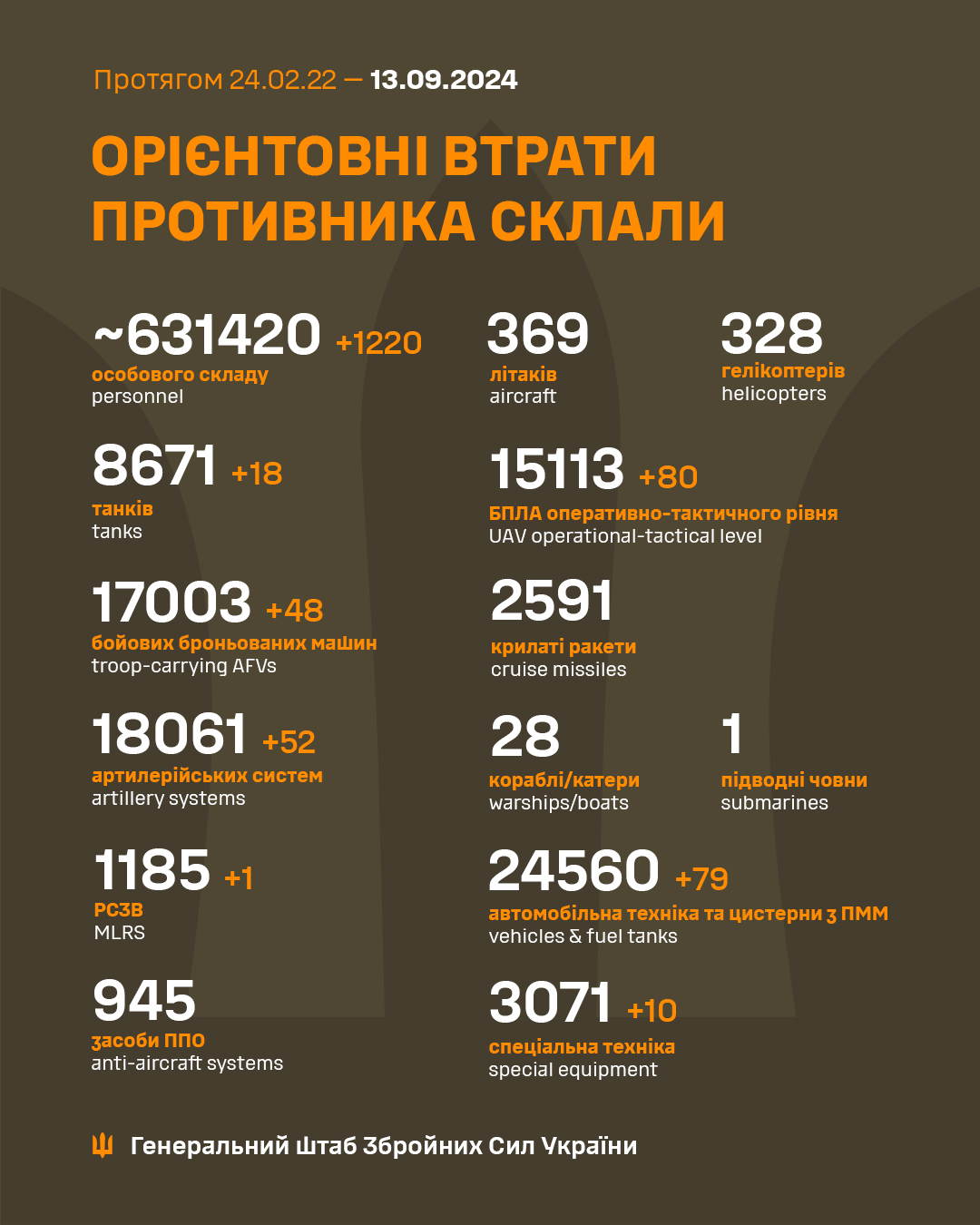
Look at the losses that they so far have under Putin, 631 thousand soldiers, 17,000 AFV (troop carriers), 18000 artillery systems, 28 warships, a submarine and 24500 vehicles and fuel tanks, 368 airplanes, 945 anti aircraft systems, over 300 helicopters and more than 8600 tanks. They lost this to the 20th size army in the world. So when Trump negotiates this ‘settlement’ America loses the right to call themselves some united sort of stated, they become Putin’s bitches. Plain and simple.
The other side There is another side to this. As America hands lands to the loser there is every indication that several nations in Europe, optionally in Australia and oceania as well will turn to China to become a more close friend than America will be. We already heard (lacking evidence) that Huawei was a danger, something that has met with large opposition, particularly in Germany and the world has had enough of a collection of Karen’s and their joker (Donald Trump). The larger setting could be that they would agree to enter BRICS under condition that Russia is evicted from that group which could coincide with alignments to Beijing. And this would only be opposed to Russia, not much of an opposition after 2025. In one strike the new world order would have taken Russia And America out of the equation. Is it a real chance? I am not sure, but the powers that currently are have a setting to obliterate any view that takes Wall Street out of this equation. At present the largest danger that America faces is that the age of McCarthyism went south on May 2, 1957. The day Joseph McCarthy died. We all thought he was no good, but all those who had that opinion (me included) can now see that Joseph McCarthy might not have been wrong at all, ask any Ukrainian for a first opinion.
Is there any good to report on this setting? It is an election year and as such there is a larger stage where neither side will give the goods on the Ukraine. This is partially seen in “Russian restraint in the expectation of a potential Trump victory in November is also matched by caution on the part of the Biden administration for similar reasons. The overriding priority of the US and its allies in their support for Ukraine has always been guided by the desire to avoid the conflict between Ukraine and Russia escalating into a wider war with Nato” There is also the second threat, which a see as a primary threat to Russia. When Europe and allies side with China. Russia and America will both be out of the race. All whilst they think that they are both ‘semi-courageous’ (read: cowardly hyena’s) the setting that comes is economic betterment and as Europe and others side with China, the two who need the recovery the most are abandoned at the drop of any conical hat.
Could I be wrong? Yes, but this is (as I see it) the very tactic that Beijing would employ. To be certain of their economic rise over the next 10 years. Together with Saudi Arabia and the UAE they could even employ larger stages including introducing of free language skills and get the voice of the people by handing them a voice to employ in a non English way. Don’t think this will not happen, Saudi Arabia is already doing this for other reasons as well. It will not be long until universities will employ those stages to students. As I need to see the stage that I could be wrong. I have been correct too many times as well as the stage that certain greed driven policies are abundantly strong in Europe. That takes America with their $35,300,000,000,000 debt is forcing them to consider. As that pile of debt comes crashing down on America, all with connected debts will choose a safer path for themselves. As I see it France and Germany are the first to switch. Germany now has the AfD to deal with and they will see the debts they have and easily switch to China, no matter what the media states. The Media is too linked to American ‘values’ and there the larger stage is thrown over, especially as their influencers (read: stakeholders) will be trying to find a safer harbour to keep whatever they had. As I personally see it, with that large debt it would only take one third of the 760 billionaires in America for the walls of the American economy come tumbling down and I reckon that it will be the first half of the 253 billionaires to switch another country for the American administration to throw out the ‘freedom’ that these people had to shore up the banks and financial institutions. As such the ‘wealthy’ will secure whatever they can via Monaco (optionally), Nassau and the United Arab Emirates. They will merely take small portions on a monthly basis (until a few panic) and they will suddenly leave with whatever they can and live somewhere else for no less than two decades. And that is the second marker Beijing needs. When it is shown to be not on the premise of national security China will buy it all for approximately 16.55 cents on the dollar. That is how I speculate the hardship for America starts and they did it themselves by electing a greed driven idiot (read: Donald John Trump). A stage that I at present speculative, in part presumption. But in this greed driven tactics are a lot more easy to foresee. So how is that peace stage with Russia going now?
What can be done? Not a lot, certain stages are seemingly already happening. As I see it the softness (aka anti-McCarthyism) on Russia will be the straw that breaks the camels back. As I see it, the masses that choose Trump are the second marker, his one sided view with both Russia and against China currently complete the picture.
Try to have a good weekend and ‘أتمنى لك عطلة نهاية أسبوع جميلة’
Yes, this is a little speculative, but the story is not. I just learned of the BBC story that they released 4 hours ago, 17 hours after I wrote the previous story. The BBC article (at https://www.bbc.com/news/articles/cq82852kkz8o) is giving us ‘Microsoft lays off more gaming staff in new cuts’ with the subtext “It laid off 1,900 staff in January and, in May, closed four studios bought before its purchase of Call of Duty maker Activision-Blizzard”, as well as “He said the decision to cut more jobs – about 3% of its gaming staff – was made “as part of aligning our post-acquisition team structure” and organising the business “for long-term success””. The ‘he’ in this story is Phil Spencer, and that long-term success? As I personally see it Microsoft will implode within the next 30 month, so that long term is relatively short (as I see it). And as for the layoffs being towards post-acquisition team structure. That might be the intention, yet the issue remains that the interest alone on a $69,000,000,000 purchase should be no less then 4.5 billion dollars and the gaming stage brought Microsoft (according to several sources) no more than 2 billion dollars. As such Microsoft is coming up short around 50% of the interest alone and that is before we factor in what more is needed to take care of the principle. And as Microsoft is dealing with all kind of fines and several angry people suing for what they think they are due, the numbers will not come up nice, more like tainted and covered in blood covered red. We then get “Xbox boss Mr Spencer told gaming website IGN he was expected to run a “sustainable” gaming business and show growth during a June interview”, so what does this Spencer person think what ‘sustainable’ means? In my book it means able to be maintained at a certain level, and how does that work when you lay off over 2000 people? Support? Managers? One gives relief to hardship and buggy environment to the customers (something that Microsoft is intimate familiar with) and the managers are often the creative part of the company and they have had the ears of their staff. Now these fired people could optionally use my freebees and create these games on NON-Microsoft systems. Giving Microsoft even more hardship. A game that makes perfect sense in the business mind of Microsoft, but gaming is mostly art and that is a setting that they seem to misunderstand. I like it when the unworthy give me resources and tools that can be used against them. Karma tends to be a bitch. The quote we see is “In its latest finance report Microsoft said its gaming revenues had increased, mostly due to its ownership of Activision-Blizzard, which also produces World of Warcraft, Diablo and Overwatch” what we do not see are the issues that Diablo 4 still has (on whatever system). It might have been the big cash cow (over $666M in the first 5 days) but what did it cost to develop Diablo 4? It took 6 years, that is nearly all we know about it and Microsoft is really happy to hide a lot of numbers and merely focus on the good stories which is to be expected, but as we now see that thousands have been cast out, there is every chance that these people could become their worst competitor and not in a good way. Another setting is seen (at https://www.inverse.com/gaming/xbox-enotria-delay-microsoft-ps5) where inverse tells us ‘Enotria Is Just the Latest Game to Hit A Mysterious Snag With Its Xbox Launch’ with the byline “Something’s amiss at Microsoft”, I think that it is a lot more. How is it possible that Phil Spencer can smilingly visit the board of directors as we are given things like “it was canceling the Xbox release of HAAK. According to the developer, it spent over 14 months attempting to register the game for release on Xbox, when it estimated it needed only about two weeks of porting work. However, bugs in Microsoft’s Partner Center and Support site prevented it from applying”, as such I wonder, when a we see registration issues and bugs. What is Microsoft doing, or better asked, not doing? 14 months? There seems to be an increasing issue with transparency and in gaming it is damaging, as such what is Microsoft doing? I see it as a setting where the walls come crumbling, but what if I am wrong? What if Microsoft has a more insidious plan? I have no idea what it is and I have no clue what they are doing but there is a setting where Microsoft is all about all games online and in the cloud. So what happens when gamers are all controlled from a singular place? I have no idea what is going on, it was a mere speculation, but the increasing amount of issues (including bugs all over the place) does not fill me with comfort. Consider this and wonder why they were willing to pay 69 billion, all whilst there is a lack of revenue. There is more going on and I think it is becoming more and more imperative to create games on OTHER systems and bleed Microsoft dry. The other part is that the (speculated) intentional lack of clarity in regards to the numbers we see reports of 160% year on year growth, but with gaming it is merely based on the next game and so far quality has been lacking. The failures that Redfall brought, the lack of issues in Starfield is one side, the lacking sales of the Xbox is the other part. When you see the list of issues we must understand that there are plenty of intelligent people at Microsoft, so what is this about? We can wait to find out, or we can create a wave of excellent games and give the gamers an option to select the Amazon Luna, the Sony PS5 (PS4 too), the Nintendo Switch or the Tencent Handheld as their new home. At this point China becomes a contender in the gaming industry. That should be a hard sell to the US government, would it not be? As such I set the gaming IP I designed as Freebee to non-Microsoft systems. I might not know what Microsoft is up to, but I do know that they are greed/revenue driven, and as such I know what would hurt them and should Kingdom Holding accept my offer the hardship of Microsoft merely increases. A nice way to end my career, by partially saving the gaming world (a bit presumptuous perhaps). Microsoft should never have done what they did, they wanted to become absolute ruler and that didn’t sit well with me, a such I created IP and stories for game developers. The one rule was, ‘not for Microsoft systems’. Making the ideas public domain made the most sense to me. Or as Frank Herbert wrote in 1965 ‘He who destroys a thing, controls a thing’ as such I went to work. Now I believe that the BBC is merely handing me a partial confirmation (as I see it) that I was right all along. When the staff leaves it becomes a problem.
Oh and as this becomes a new reality, China gets a real chance to pick up hundreds of people with a good grasp of gaming. That is merely my point of view and I could be wrong.
That was a little bit of a spark that the Middle East Monitor gave me last week. I wasn’t sure if and how to pick this up. The article (at https://www.middleeastmonitor.com/20240905-what-could-saudi-arabias-first-aaa-game-be-like-following-chinas-success/) starts with ‘What could Saudi Arabia’s first AAA game be like, following China’s success?’ The subtext that stopped me was “Within just three days, “Black Myth: Wukong” shattered records, selling over 10 million copies and reaching 18 million within two weeks, with lifetime sales projected to reach up to 30 million. The game also achieved a peak concurrent player count of 2.2 million worldwide and has overtaken “Cyberpunk 2077” as the most-played single-player game on the online distribution platform Steam.” It shows one part that I have been saying for a long time. You see, the people have basically had enough of a repetitive Ubisoft and their umpteenth version of Assassins Creed, FarCry, Watchdogs and so on.
As such there are hundreds of thousands of gamers who will eagerly pick up an original feeling game and Black Myth: Wukong addressed that feeling. It is yet another side to what I claimed over the last two years when I put original IP on my blog for the eager developer. It was theirs to use. People want original games, a feeling of novel and new and I gave the (eager developing) audience a new system and the storyline to a new approach in gaming. Actually I did a little more than that and again I am seemingly proven correct (yet again). And when some developer takes the ideas I stated here and takes an interest in being original They could go to town on branders like Ubisoft and Bethesda. You see, Microsoft is playing it very careful now. If they push Bethesda too much they lose that brand as well. They first thought they had the bong of happiness with Redfall. At present the game is reviewed as “it faced poor to middling reviews and lost thousands of players in just three days. Currently, it’s one of Steam’s most poorly-rated games due to extremely buggy performance, incredibly stupid AI, lack of matchmaking (in a co-op game!), and a whole other host of issues” and this view was given whilst the game is out now for over a year. Microsoft knows that they banked too much on their arrogance and now they have only have Bethesda left (at present) with some credibility. And Bethesda earned this credibility. Skyrim released on 11.11.11 still holds up as one of the most engaging RPG games in the field. They lost a lot of credibility with Starfield (a 60% game) only for Microsoft systems and even as the people got news that things were coming, the game has been out for a year. We now get ‘While Some Players Are Still Finding Starfield’s Gameplay Frustrating, Others Are Taking Issue With What Fans Are Creating For The Game – And How Bethesda’s Handling It’ (source: ScreenRant) as such Bethesda has basically one arrow left at present. The elder Scrolls and Microsoft knows that this needs to be a hole in one. As we see “The Elder Scrolls 6 is expected to be released sometime during or after 2026”, this might speculatively become their own Swan Song. Not bad for a $7,500,000,000 investment (nyuk, nyuk, nyuk). Activision Blizzard is (as I see it) another decent failure. We get that the annual revenue in 2021 was $12.10B, all whilst Statista reported “In the second quarter of 2023, Activision Blizzard’s net income amounted to 587 million U.S. dollars” (one source gave me US$1.51 billion (2022) of net revenue), you might think this is good, but Microsoft acquired this baby for $69,000,000,000. As such the annual interest of a loan that big is more than the net revenue of that firm (I predicted this well over a year ago as much). This all has impact. At present Microsoft has an immense losing streak in gaming (I truly hope that I am contributing to that). As such I handed original IP to game developers making the hardship worse for Microsoft and now they merely have the one final arrow of Bethesda left, which is expected somewhere in 2026. As such these factors all have impact. You see Black Myth: Wukong is one part (I had absolutely nothing to do with that) for the Kingdom of Saudi Arabia, referred to in the article has options. There is Scheherazade’s 1001 nights. I put a few issues out in the open. The idea of an RPG all based on the Arabian life and challenges. There was an option I considered to use an RPG game to promote Islam (for all people) with teachings in the game. There could be an option to take another look at Peter Molyneux’s Magic Carpet now that the systems are a lot stronger than the first Playstation, as such you can increase more than graphics. The game play could be taken to a new stage and the intensity of the game could be set to 11 (as the saying goes). Those are merely a few mentions that the Kingdom of Saudi Arabia could entertain and I made reference to at least two more games in a relaunch/remaster and refitted vibe. All settings I made mention of over the last two years alone.
But it is not all sunshine for the Kingdom of Saudi Arabia. You see it has an uphill battle as the Middle East Monitor states with “As a non-Western, non-Japanese contribution, the game faced extensive media scrutiny ahead of its launch, including “controversies” over alleged sexism within the development studio, government censorship on politics and feminist propaganda, and some technical issues upon release”, there are a few items. I will state that the accusation of “alleged sexism within the development studio” is pretty much bogus. All the development studios are dealing with these ‘kids on the block’ issues as the saying goes. And government censorship? I need to see this to make it count, but I state this as the Middle East Monitor did.
I think that the biggest challenge for Saudi Arabia is to bring something unique. They have the area and the landmarks, but the other players (Japan, USA, Canada) have had the singular field of gaming, as such it is important to bring something unique. I believe that this is possible as Black Myth: Wukong made it happen. Still, it will be a challenging field. Making something look Arabian has been done and Ubisoft with AC: Mirage pulled it off. So it is just as important to have a unique Arabian voice, look and gameplay. Still, there is something to be said for a new Magic Carpet (from Bullfrog) now that the hardware is 3,500 times more powerful there is a lot of achievement open to the audience. There is an additional field with Arabian lore (which I explore in my created script ‘How to assassinate a politician’) and there is more to do. You see I still believe that RPG is the most true game environment. I have nothing against other modes. But the RPG field can be utilised or used to create another type of game, optionally based on this new RPG.
As I see it (and as Black Myth: Wukong proves) it is more about being original. There will always be some gamers that yearns for a certain game style, but the masses want originality. You see, a lack of choice only works for some time. In this an Arabian game could be good, but it is important that all the right characters are dotted and crossed (as in the I and T). That is a first essential need for any game to make it to the release stage. Then there is the music, here Saudi Arabia has an advantage. There is a lot unknown to us and as such there should be plenty of options. Then there is the additional idea. For example Saudi Arabian developers could use existing locations to create another setting. Whether this is a addition to a new Division game, or a Die Hard touch towards a shooting game. And another idea is to use Tahlia Street (aka Prince Mohammed bin Abdulaziz Street) as the backdrop of a variation of ‘Where in the world is Carmen Sandiego’ But now a realtime challenge to find the person that is trying to evade capture. Your only aid is his/her digital trace that you have access to. That could actually be a multiplayer approach where the mouse (aka criminal) and the cats (aka authorities) and the cheese dealers (contenders for the mouse empire) have to capture this so called mouse. With the stage that capture the wrong person makes you a target for arrest and there is the ring race. The mouse is rated on time it took them to evade capture and the others on the this it took them. And with that location completely mapped out it becomes a nice rat race (for the mice involved). I don’t think this has ever been done before to this degree and there is the rub. I just took this thought to a new level as I was writing this. So why can’t some of the existing developers come up with this? Think about that and as you try to figure this out consider that this is an optional new world with over 150 million possible new gamers. You can become a copy of what is, or come with something new, some version of an old game but now in a way never done before. And I have done that before, I considered a new version of Murder on the Zinderneuf and I made it into a 3D version of the game with interactions as well as imbuing it with elements of Iron Helix (1993). So there is a world of new IP out there. Now consider how much new IP Microsoft got for their $70,500,000,000 and what you could use (from what I have written here) without spending a penny. And the Kingdom of Saudi Arabia has a lot more to offer, Lore, Myths and a few more challenges. All that could create the new generation of games and gaming. The crowds are hungry for original gaming IP and the current player have very little to offer. Feng Ji might have come here first as the new player, but that does not stop Saudi Arabia from heralding their own chapter of gaming to the world of gamers.
Have a great Thursday, The weekend is now one day away (plus an additional 8 hours of work).
Yesterday I saw an article (source: BBC) that gave me reason to give a little recollection. The article (at https://www.bbc.com/news/articles/ckg2dpkpmv1o) giving us ‘Google’s lucrative ad tech business goes on trial’ and the text “A trial beginning on Monday will hear the Department of Justice’s case that the search engine’s parent company Alphabet illegally operates a monopoly in the market.” set me off. You see, I worked on that system as an operator, a technical account manager if you prefer. I worked on this system in 2015. This is important because in the nine following years Microsoft and its ‘system’ Bing couldn’t even remotely get anything working that presented some weak looking imitation. The system was that excellent. And excellent is the operative word. You see before that advertising agencies were taking their clients in some kind of a looting ride. Prices were out of this world for the advertisers. It was a business limited to big business. The Google ad system was made so that everyone had a clear possibility, a fair system that didn’t overcharge, something that wasn’t possible before. That was a new approach to advertising.
Bid for place
Charged
9.00
1.28
3.00
1.27
2.00
1.26
1.25
1.25
The setting was that the higher bid was only charged one cent more than the previous one. The advertisement agencies would pocket the difference from $7.62 of the first bidder. Now consider this happening ten thousands of times every day. When you realise this you see how this was the better system. There was no monopoly, customers suddenly had a fair chance to their advertisement options. That part is missing. It is not the fault of the BBC, they merely report. They also give us “Alphabet has argued its success is due to the “effectiveness” of its services – but prosecutors say it has used its market dominance to stifle rivals” which is exactly what I am saying. But the prosecutors are exaggerating (as anyone would suggest). We then get ““It is a really important industry that grabs billions of consumer dollars every year,” said Laura Phillips-Sawyer, a professor at the University of Georgia School of Law.” A statement (possibly taken out of context) from a law professor from Georgia. The less excusable statement was “grabs billions of consumer dollars every year”, that is where my example comes in. This is not the way of this system. It tempers the cost and need for ‘over’ bidding. I gave an example of four, but the list goes on for a lot more. This illustrates the loss of Laura Phillips-Sawyer and how little she knows of this system. So its not “I think all consumers have an interest in this litigation”, I believe that Microsoft minded people want to get into this business and the prosecutor is a possible way for these people to get in.
As such we see that the statement “Google dominates the digital ad marketplace and has leveraged its market power to stifle innovation and competition” Google innovated this market more than anyone ever considered. The fact that Microsoft has no chance and lacks expertise in software to make any dent in Google application is one part of the evidence. It also didn’t stifle competition, the fact that Microsoft had no option to push anything in Google’s path seems to me that this is the second part of the evidence is also nullified. After decades of ‘exploitation’ of customers, Google gave them all a fair chance. So why doesn’t anyone see that? How come that this is not shown to us all? Is it perhaps that the prosecutor has the ear of those people who lost their golden eggs? I am stating that not only is Google innocent in this, the world doesn’t realise how fair this system is. And the wannabe’s want to hack into this system for their own selfish needs. We are also given “It argues that competition in the digital ad space is growing, not contracting – citing increased ad growth and revenues for companies such as Apple, Amazon and TikTok as proof”, in this I say that the digital ad space is growing because Google made it more fair and as such players like Apple, Amazon and TikTok are given a space where they have millions more to advertise against the once exploitative system. What we do not get to see is that I enabled dozens of advertisers, small business units to get a grasp of advertisement space on. Monthly basis. They had the option to set a budget for as little as $5 a month to get several placements every day. Yes, they might not be above the fold as the expression goes, but they were on the page. The advertisement agencies would not have even talked to those. Now consider that this happens to tens of thousands of customers and realise that the statement “I think all consumers have an interest in this litigation” becomes folly.
When we consider this the statement “Google is a monopolist, and it has acted as one to maintain its monopoly” is equally folly. And I wonder who Judge Amit Mehta was serving. Even as the judge was an optional idolising fair play person we need to realise that the Google rank system was re-invented
The eigenvalue problem behind PageRank’s algorithm was independently rediscovered and reused in many scoring problems.
In 1895, Edmund Landau suggested using it for determining the winner of a chess tournament. The eigenvalue problem was also suggested in 1976 by Gabriel Pinski and Francis Narin, who worked on scientometrics ranking scientific journals, in 1977 by Thomas Saaty in his concept of Analytic Hierarchy Process which weighted alternative choices, and in 1995 by Bradley Love and Steven Sloman as a cognitive model for concepts, the centrality algorithm. (Source: wiki).
Now consider that Sergey Brin and Larry Page made this system 30 years ago based on ideas dating back to (as quoted) 1895. And then three times more and no one at Microsoft woke up. They were all so focussed on greed and gaining the attention of board of directors at big business. Google focussed on the millions of people working there and getting the attention of people who needed a better option. “As of September 24, 2019, all patents associated with PageRank have expired” and now these systems are under attack. However, the data is already with Google and the larger players (read: Microsoft) will need decades to catch up and they know they are not able to, in case of Microsoft I personally believe that they merely have at most 24 months left until they collapse and that is it for the once computer behemoth. As per now, fr a player like Microsoft, the ad space is a much safer option to recollect lost revenue and keep their head above water. I admit that this is speculative, but it makes the most sense. Even in 1995 I saw how Microsoft was lagging behind, but they had serious problems (read: Netscape) and it get worse after that. But that is not the aim of this article. As I have shown here Google was a true innovator and you need to wonder if monopoly is a valid setting when all the others cannot even get close because their innovators are merely presented spinners, or optionally previous exploiters. How is it a monopoly when there is no other realistic contender for the crown? Is an island with a population of one totalitarian in nature?
Simple questions that are hard to answer. Enjoy your day today, this fine Wednesday where we start yearning for the coming weekend.
This is the setting I switched to. From Microsoft (too much issues) to a nice palette. Not to paint, but if the painting on an easel is the current version of a game.
There is another version, ‘my’ improved version. You see between 1985 and 2000 Atari (with their Atari 800 and Atari ST) and Commodore (with their Commodore 64 and Commodore Amiga) launched 10,000 games. Now if we only look at the top 10% of these games we end up with 1000 games. I am guessing that 50% has some level of IP protection (still an optional path) but 50% have no protection at all. That was what I was trying to tell Kingdom Holding. It is a path to about one third of the path to a 5 billion dollar annual revenue. And I recently completed the thought of a fourth game to relaunch. Consider that Microsoft with their 23 development houses have 2000 games. This path would gain 50% of that marker and Microsoft isn’t doing good (they will be in denial) and in that same setting, I got another idea. The top 10% are all set to a rating or 80% or better. This could be done with a lot less people and when the first two dozen games are out their streaming solution would only pick up more and more. The first stage would be reached with a setting of 50 million consoles. So as we were given “As of August 2024, lifetime unit sales of Xbox One consoles in North America reached nearly 33 million, while in Europe, lifetime unit sales surpassed 12.8 million. In total, nearly 58 million Xbox One units have been sold worldwide as of August 2024.” And my idea would equal that within 2 years. It took Microsoft 11 years to get to this and within 4 years I would have surpassed them. And that is just for starters. I speculatively (it remains speculation, not presumption) see the 100 million surpassed within 4 years. It would set this new console on the level of Sony and Nintendo. I personally (wishful thinking) see the new system equal the Nintendo Switch and the Playstation 2 in half the time they needed. This isn’t grandiose posturing. The path was made by them and now I see the option to reap the rewards. Either via Kingdom Holding or via Tencent, hoe doesn’t matter. I still see the vision of handing Phil Spencer the wooden spoon. He’ll end up dead last in a race he never really understood and as Microsoft enters more and more hard times divisions of Microsoft keep on being hollowed out. My work becomes increasingly easier.
So at this point it is largely a stage where my brain sets the premise of how to set the look of these games, not by ‘rad looking’ graphics, even though they will be a lot better. But these games it was largely about playing and the joy of playing. These ‘game makers’ are all about advertisement money. They all advertise ‘no wifi’ or even more ludicrous ‘no payments’ whilst they merely set the premise to another fitting. Pay to win, disguised as an clever way to pay to grind. How disappointing. I do not blame them. Too many gamers nowadays are delusional falling into a trap and that tend to be demoralising. My idea was handed before in this blog and a few people picked up on this, or they had exactly the same idea (I cannot prove how they got there) but that is fair enough. So I decided to remaster in my mind these games and I got game 5 to a second setting of the master version. I will keep these thoughts offline. I initially had the idea for Google, but 3 days later they dropped the Stadia, so basically Amazon (Luna) and Tencent (handheld) remained. Tencent has a satisfying bonus. These high and mighty captains of industry would have surrendered another industry to China. And they do not have a lot left to work with.
A simple setting that I solved three years ago, and they were all blind to what was staring them in the face. Soon I will have to write more about the solution I had for malls. Another path that a few corporations (like Google and Amazon) overlooked. That is fair, you can only run an industry when you have bright developers falling asleep on the job and when waking up they have that spark with a new idea. A never ending stage of deadlines tend to be debilitating in the end.
So how does these two link?
The idea I had came to me three years ago (and I wrote about it here) and in that time I merely revamped these games with more and more improvements, this is not against those games. Some of these games were launched before 1990 and I had 30 years to spin a few webs combine that with the graphic improvements we have now and the versatility of the hardware and we get an estimated 250% better game. And the captains of industry (specifically Microsoft) never looked beyond the spin hype they themselves created. A simple example Richard Garriott created the Ultimate series, ahead of its time and When you recreate Ultimate 4, Ultimate 5, Ultima 6 and Ultimate 7 on an Elder Scrolls Oblivion shoe anvil, there would be millions of gamers reset to this storyline. You see, the storyline of these games were perfect, the location (a whole world) was perfect and the setting we see with the virtues and the stones, mantras and a few setting more was perfect. I got hooked on Ultima 3 (Exodus) in 1984. This game never lost its appeal, not in 40 years. The games 4,5,6, and 7 have a very similar map and the fact that you play with a party of 8 people gives it even more bang. That is what Bethesda could never deliver (they were not trying to). Microsoft overlooked one of the greatest RPG IP’s EVER created and that is merely the tip of the iceberg. 1984 was a marvel in more than one way. The other game was Elite, now called Elite Dangerous by David Braben and he did something amazing. That is the stage Microsoft overlooked as well (or Braben was way ahead of them) and there are dozens more games that could fit the new bill on streaming systems. Another game from those days was Boulder Dash. Upgrade the graphics and you should have an amazing relaunch. That is the simple setting that still hold sway after 40 years. And you wonder why I think that these people were asleep at the wheel? Another stage is that with 2 games the fighting ring could be transitory. And there is space for Kingdom Holding (or Tencent) to enter this field as the current ‘captains of industry’ are seemingly about the “worst decisions of their career” whilst I showed up to three years ago showing that it was already a lot worse.
So what more can be done? I am not sure, I send the notion to both Andy Jassy and Al Waleed bin Talal Al Saud, but I had no response. I am not surprised they both probably get hundreds of people saying that they had the golden idea. And now I get to address Tencent Holding. Not sure how that pans out, but the thought of a 5 billion revenue (annual) might appeal to them (if I get paid that is). I have no illusions that I might merely make 1%, but that still amounts to $50,000,000, as such I would not complain. Still the idea of asking for 1% of the revenue for 20 years seems more on point (for me that is) and if so I shall make the mall solution public domain.
If you look back in my blogs for these three years you will find a lot more, including the stage for a completely new RPG, with original ideas and a few stages I considered during me Oblivion playing days. As well as a completely new IP on RPG that hd not been done before. Including a setting between two worlds which was a little based on the idea Stephen King gave me from the book The Talisman. It was one way of traversing locations. Not a copy of his idea, merely the premise of his approach. All these things I see (in my mind) and game developers never caught on what else they could do. They merely went for ‘looking cool’ whilst wannabe gamers stood in a doorway keeping everyone else out. Oh, what a lovely stage. That is what passes for game developer? Wanting to be cool with multiplayer games all whilst plenty of people (a majority) where happy in single player mode). I still think they did this so that they never had to properly develop clever NPC programming. As such I even surpassed that when I came up with a setting though IP created by Vint Cerf, he merely saw the business need. I saw a whole new approach in gaming and as such his ‘IP’ should be open to me. Another path Microsoft overlooked. They merely bought Bethesda and thought that their problem was solved. I took one look and thought “Oh, perhaps I could do this?” One thought was all it took. So, where is Microsoft now? I reckon by 2026 on a whole new plane of problems (if they still exist by then). For tomorrow I need to write in protection (if protection is the right word) of Google, the BBC forced me to go nuts on my keyboard. Google deserves someone who stands up for them as well, although I feel certain they have that in hand. I merely want to give my support on that cause.
Nearly time for another Jalapeño sandwich with cheese. Have a great day.
Less than 24 hours ago I wrote about Microsoft and the statement I gave there, namely “When you need to appease 400,000 partners things go wrong, they always do. How is anyones guess but whilst Microsoft is all focussed on the letter of the law and their revenue” led to a few questions. So, how is 400,000 partners an issue and the 12,000 partners of Salesforce are not? Well, I never said that 12,000 partners are not a problem, but as I see it the 400,000 are.
To get where I am going, a few definition are needed. A partner (in IT) is set to “A partnership when it comes to IT is within the IT sphere and has mutual or at least some value for both companies.” But here the issue starts. You see, some have a somewhat more defined setting “In some mild cases, there are a few well-intentioned and hard-working partners who are just out of the loop. In more extreme cases, certain partners are not bought in, are not being held accountable, and are negatively impacting performance.” This is where the problem starts. Partners have an alignment to you, but they also have their own agenda. Microsoft can make all the claims they want, but this is reality. So lets get a useful presentation image.
So see this boat, that is the Micro boat (a very soft presentation) the goal is the 100% mark, right on course. Now consider that in a polarising setting there are two directions, And the group of 400,000 is split up. In this we get that one group is larger and it has the breaching impact of the good ship Microsoft coursing to the right. Reality gives us that there will be be clusters in all directions.
Some ahead to the left or the right, but those behind the ship will also slow it down with all kinds of budget overruns. No matter how good the Microsoft agreements are, there will always be interest groups for THEIR interest trying to ‘steer’ the ship more in their direction. As such 400,000 partners is (as I see it) folly. Revenue and greed will only help anyone so far, as I see it, Microsoft has had its problems. I reckon that not all the news is sincere and completely valid. Some were (as I personally see it) issues with alignment. Their might not have been drastic but there will have been issues. That is my point of view and in business intelligence I have seen my share of ‘issues’ not all of them drastic but plenty of them with some kind of impact.
Take this as well as the news we saw through Wired and we get a much larger issue and now as I personally see it, partners could become debilitating. Mess with a partners revenue stream and things go pear shaped really fast. We see this 1 hours ago when we are told “Nvidia Loses $470 Billion in Value in a Week. Should Investors Be Worried? · The market as a whole is shaky · Nvidia remains in an extremely solid position.” Really? At what point does a firm remain in a solid position when they lose $470,000,000,000 in a week? Now take this setting (which might be a temporary thing) and take it to the next level. A major side to the so called AI stage. That firm loses four-hundred and seventy BILLION dollars. That’s about 20%, so this was a simple dip which recovered in mere minutes. So at what point and why did it drop to that degree? And as I see it, any partner that does not react is on a fools errand. Now consider that 400,000 partners call Microsoft at that point to learn what THEIR impact might be. So a software vendor needs to appease 400,000 partners. And I couldn’t get support (in the past) for hours. So how does this compute? Well look at the first image. These partners will not be in one direction, but in dozens of directions. So are you catching on now? So take that and News by TechTarget giving us ‘Understand Microsoft Copilot security concerns’ and the underlying text “Microsoft Copilot can improve end-user productivity, but it also has the potential to create security and data privacy issues.”and that with the news at Wired (see previous article) gives a lot more weight to “the potential to create security and data privacy issues” and now, what will the partners do? How many will optionally panic? Now watch the good ship Microsoft slow down and drop their anchors for the storm (optionally in a teacup) recede. What is the bill belonging to such a knee-jerk reaction?
You tell me, but there will be a reaction. As I see it, they either have 400,000 customers (optionally non paying) and they will not make a sound, but it makes Microsoft seem more important, or they have 400,000 real partners and you see what I described above. I am merely throwing the terms they publish (via media). You can’t have it both ways and it all ends with the setting of Alignment. I do not know a real good read on the alignment of customers versus partners. But one gets you revenue and the other gives you a smoking hand grenade. You tell me what you prefer to deal with.
OK, not the most positive writing, but it came from a question that gave ma additional pause to think.
Have a great Sunday (Vancouver) and I am moving towards Monday a present (in 40 minutes).
That is my stance at present. It might be a wrong position to have, but it comes from a setting of several events that come together at this focal point. We all have it, we are all destined to a stage of negativity thought speculation or presumption. It is within all of us and my article 20 hours ago on Microsoft woke something up within me. So I will take you on a slightly bumpy ride.
The first step is seen through the BBC (at https://www.bbc.com/worklife/article/20240905-microsoft-ai-interview-bbc-executive-lounge) where we get ‘Microsoft is turning to AI to make its workplace more inclusive’ and we are given “It added an AI powered chatbot into its Bing search engine, which placed it among the first legacy tech companies to fold AI into its flagship products, but almost as soon as people started using it, things went sideways.” With the added “Soon, users began sharing screenshots that appeared to show the tool using racial slurs and announcing plans for world domination. Microsoft quickly announced a fix, limiting the AI’s responses and capabilities.” Here we see the collective thoughts an presumptions I had all along. AI does not (yet) exist. How do you live with “Microsoft quickly announced a fix”? We can speculate whether the data was warped, it was not defined correctly. Or it is a more simple setting of programmer error. And when an AI is that incorrect does it have any reliability? Consider the old data view we had in the early 90’s “Garbage In, Garbage Out”. Then. We are offered “Microsoft says AI can be a tool to promote equity and representation – with the right safeguards. One solution it’s putting forward to help address the issue of bias in AI is increasing diversity and inclusion of the teams building the technology itself”, as such consider this “promote equity and representation – with the right safeguards” Is that the use of AI? Or is it the option of deeper machine learning using an LLM model? An AI with safeguards? Promote equity and representation? If the data is there, it might find reliable triggers if it knows where or what to look for. But the model needs to be taught and that is where data verification comes in, verified data leads to a validated model. As such to promote equity and presentation the dat needs to understand the two settings. Now we get the harder part “The term “equity” refers to fairness and justice and is distinguished from equality: Whereas equality means providing the same to all, equity means recognising that we do not all start from the same place and must acknowledge and make adjustments to imbalances.” Now see the term equity being used in all kinds of places and in real estate it means something different. Now what are the chances people mix these two up? How can you validate data when the verification is bungled? It is the simple singular vision that Microsoft people seem to forget. It is mostly about the deadline and that is where verification stuffs up.
Satya Nadella is about technology that understands us and here we get the first problem. When we consider that “specifically large-language models such as ChatGPT – to be empathic, relevant and accurate, McIntyre says, they needs to be trained by a more diverse group of developers, engineers and researchers.” As I see it, without verification you have no validation and you merely get a bucket of data where everything is collected and whatever the result of it becomes an automated mess, hence my objection to it. So as we are given “Microsoft believes that AI can support diversity and inclusion (D&I) if these ideals are built into AI models in the first place”, we need to understand that the data doesn’t support it yet and to do this all data needs to be recollected and properly verified before we can even consider validating it.
Then we get article 2 which I talked about a month ago the Wired article (at https://www.wired.com/story/microsoft-copilot-phishing-data-extraction/) we see the use of deeper machine learning where we are given ‘Microsoft’s AI Can Be Turned Into an Automated Phishing Machine’, yes a real brain bungle. Microsoft has a tool and criminals use it to get through cloud accounts. How is that helping anyone? The fact that Microsoft did not see this kink in their trains of thought and we are given “Michael Bargury is demonstrating five proof-of-concept ways that Copilot, which runs on its Microsoft 365 apps, such as Word, can be manipulated by malicious attackers” a simple approach of stopping the system from collecting and adhering to criminal minds. Whilst Windows Central gives us ‘A former security architect demonstrates 15 different ways to break Copilot: “Microsoft is trying, but if we are honest here, we don’t know how to build secure AI applications”’ beside the horror statement “Microsoft is trying” we get the rather annoying setting of “we don’t know how to build secure AI applications”. And this isn’t some student. Michael Bargury is an industry expert in cybersecurity seems to be focused on cloud security. So what ‘expertise’ does Microsoft have to offer? People who were there 3 weeks ago were shown 15 ways to break copilot and it is all over their 365 applications. At this stage Microsoft wants to push out broken if not an unstable environment where your data resides. Is there a larger need to immediately switch to AWS?
Then we get a two parter. In the first part we see (at https://www.crn.com.au/news/salesforces-benioff-says-microsoft-ai-has-disappointed-so-many-customers-611296) CRN giving us the view of Marc Benioff from Salesforce giving us ‘Microsoft AI ‘has disappointed so many customers’’ and that is not all. We are given ““Last quarter alone, we saw a customer increase of over 60 per cent, and daily users have more than doubled – a clear indicator of Copilot’s value in the market,” Spataro said.” Words from Jared Spataro, Microsoft’s corporate vice president. All about sales and revenue. So where is the security at? Where are the fixes at? So we are then given ““When I talk to chief information officers directly and if you look at recent third-party data, organisations are betting on Microsoft for their AI transformation.” Microsoft has more than 400,000 partners worldwide, according to the vendor.” And here we have a new part. When you need to appease 400,000 partners things go wrong, they always do. How is anyones guess but whilst Microsoft is all focussed on the letter of the law and their revenue it is my speculated view that corners are cut on verification and validation (a little less on the second factor). And the second part in this comes from CX Today (at https://www.cxtoday.com/speech-analytics/microsoft-fires-back-rubbishes-benioffs-copilot-criticism/) where we are given ‘Microsoft Fires Back, Rubbishes Benioff’s Copilot Criticism’ with the text “Jared Spataro, Microsoft’s Corporate Vice President for AI at Work, rebutted the Salesforce CEO’s comments, claiming that the company had been receiving favourable feedback from its Copilot customers.” At this point I want to add the thought “How was that data filtered?” You see the article also gives us “While Benioff can hardly be viewed as an objective voice, Inc. Magazine recently gave the solution a D – rating, claiming that it is “not generating significant revenue” for its customers – suggesting that the CEO may have a point” as well as “despite Microsoft’s protestations, there have been rumblings of dissatisfaction from Copilot users” when the dust settles, I wonder how Microsoft will fare. You see I state that AI does not (yet) exist. The truth is that generative AI can have a place. And when AI is here, when it is actually here not many can use it. The hardware is too expensive and the systems will need close to months of testing. These new systems that is a lot, it would take years for simple binary systems to catch up. As such these LLM deeper machine learning systems will have a place, but I have seen tech companies fire up sales people and get the cream of it, but the customers will need a new set of spectacles to see the real deal. The premise that I see is that these people merely look at the groups they want, but it tends to be not so filtered and as such garbage comes into these systems. And that is where we end up with unverified and unvalidated data points. And to give you an artistic view consider the following when we use a one point perspective that is set to “a drawing method that shows how things appear to get smaller as they get further away, converging towards a single “vanishing point” on the horizon line” So that drawing might have 250,000 points. Now consider that data is unvalidated. That system now gets 5,000 extra floating points. What happens when these points invade the model? What is left of your art work? Now consider that data sets like this have 15,000,000 data points and every data point has 1,000,000 parameters. See the mess you end up with? Now go look into any system and see how Microsoft verifies their data. I could not find any white papers on this. A simple customer care point of view, I have had that for decades and Jared Spataro as I see it seemingly does not have that. He did not grace his speech with the essential need of data verification before validation. That is a simple point of view and it is my view that Microsoft will come up short again and again. So as I (simplistically) see it. Is by any chance, Jared Spataro anything more than a user missing Microsoft value at present?