Tag Archives: Disney

Pushers of media value

We all heard of the name ‘pusher’, usually it is seen in the drugs community. People who prey on children and weak students with: ‘try this, makes you feel good‘. Knowing that as their customer base increases, he can continue his lifestyle of booze and bitches, because that is his only priority, to feel good and to live like a rock star at the expense of everyone and anyone else. So when I saw ‘Alarm for Netflix as shares plummet on worse-than-expected subscriber growth‘ (at https://www.theguardian.com/media/2018/jul/16/netflix-subscribers-numbers-forecasts-wall-street) and was confronted with both “But it also warned that subscriber growth in the current third quarter would likely be around 5 million, again below analysts’ expectations of 6.3 million“, as well as “spooked investors and suggested the company’s explosive subscriber growth may now be slowing. Netflix shares fell 14% to $346.05 in after-hours trading in New York. For the second quarter, Netflix reported a profit of $384.3m, or 85 cents a share, up from $65.6m, or 15 cents a share, a year earlier“, I wondered what the analyst had to offer that gave rise to the situation.

In a world where we see that the quality of life is down, where we are struggling to merely pay the rent in some places, in that world where we learn that “Netflix has almost reached the 100 million mark for streaming subscribers, thereby more than doubling its subscriber numbers from the start of 2014“, so the numbers are showing us an almost 25% year on year growth, that is pretty amazing in many settings.

In this day and age, getting over 10% growth is pretty well done. We all recognise that 100 million users might not be that much on one side, yet the entire business is set against a facade where there is more to the picture. Still, in this the entire setting a 14% drop seems a little extreme. It is set against what I regard to be the pushers of the world (also known as analysts). I have had issues with these analysts before; they are like the drug pushers of Wall Street. They might not see it in this way, but I do. In this setting when we see “that subscriber growth in the current third quarter would likely be around 5 million, again below analysts’ expectations of 6.3 million“, so explain to me where they got that 6.3 million new subscriber issue? Where is the evidence that expected 15 people from Hoboken New Jersey decided not to become a member? Sickness, getting laid off, hospital cost, daughter getting married, all optional reasons where 15 people decided on not becoming a member, now set that number in EVERY zip code in the United States. We can go on with the thousands of additional cases in the US alone, yet the wisdom of some person telling us that a mathematical model should have produced another 1.3 million uses cannot be vetted is merely the setting of a person giving a speculative result and that speculator is the cause of a 14% drop in value?

Now, we do understand that Netflix has responsibilities and with their expected growth is of course linked to the content they can afford to buy. So when I see “Netflix is expected to invest as much as $12bn on content this year, but could face growing competition in the streaming market. Apple is upping its spending on original content in video, music and publishing to $4.2bn by 2022 from $1bn this year. Amazon is expected to almost double its spending on original content from $4.5bn to $8.3bn“, there are two issues. The first is that if we quadruple the quarter and consider the 1.53 billion in profits (or expected profits) for 2018, how come that this year the acquired spending is $12 billion? We get that content is a long term pay off and all the movies acquired now will fuel the customer base for a long time, yet the fact that the profits merely represent 7.5% of the annual content spend is very unbalanced. It also gives us the additional setting that the 1.3 million additional members would not have made a dent there. The setting is fishy and it does not add up. Now, we can all agree that such services are perhaps a lot more complex, but the value long term is also setting the pace that something does not seem to add up. To see that picture we need to realise that Netflix realised well over $11.5 billion in revenue last year alone, so by giving you this, the $20 billion is not only no longer a stretch, it implies that Netflix still ends with $1.5 billion of pure profits, that is nothing to be sneered at, and in that light the spooking of the shareholders make less and less sense and in this, the entire analyst setting comes to the foreground once more, especially when we also add the one small fact that Netflix has $19 billion in assets. It is even more puzzling when we add the NY Times findings with “The company also saw its net income rise to $130 million, well over last year’s third quarter total of $52 million but short of the $143 million that Wall Street expected“, again the analysts now imploding, or is that setting back the market, whilst the records are still showing enormous growth, we see that dark cloud called Wall Street stating that it should have been better. There is nothing that shows evidence of the numbers that Wall Street holds others accountable to. In a system that is unrealistic, punishing realistic growth is not merely dangerous, it tends to be counterproductive in the end.

An additional part seen in the NY Times is now giving another light. They gave “Netflix already outspends its rivals, including HBO, FX and CBS, while Apple has recently signalled to Hollywood it would spend more than $1 billion on original content“, whilst the Guardian treats us to “Apple is upping its spending on original content in video, music and publishing to $4.2bn by 2022 from $1bn this year. Amazon is expected to almost double its spending on original content from $4.5bn to $8.3bn“, so the other two players are also spending billions in a market that is short of resources creating a bubble and bubbles are never good, so then the question becomes, is Wall Street intentionally creating bubbles to overinflate the mess and then short sell the cycle to make it implode in the future?

The fact that three players will represent close to $4 billion a year, each year is already a signal that the big screen, through internet or big screen itself is still flourishing, as the IP is brought through different ways, the only way will be up. So when we consider Australia who gives us “Netflix Australia starts from $9.99 per month for the entry-level, single-stream standard definition package, all the way up to $17.99 for the deluxe, 4K quality, four-stream package“, we see the simple selling point that a month of maximised streaming is close to a mere cinema ticket. That is the simplest of selling points and when we consider that, when we consider that this is not merely on that level, but that the setting also needs to fit the bandwidth that people sign on for, some will not charge Netflix, some do. That is also an influence. So there is more than one player that impacts the Netflix subscriber, all elements in that equation and some we can predict to some extent, but we remains in a setting where the analysts all claim that predictions were outclassing achievement in a place where growth is pretty sweet, it does not add up and that might just be me.

Yet this is where we get the Washington Post with ‘Netflix’s subscriber growth slows, panicking Wall Street‘, this is where we get to the golden egg, the part that Americans never understood, not in 1994 when some made claims on ‘saturation is a myth’, giving us an example with an elastic band, showing that 20% stretch again and again is possible and not today when we see that especially in Australia where housing prices in the big cities are through the roof, where we see that making a budget work is to cut out all extra excesses. In that setting many people can’t merely afford the $18 a month extra. That is supported with: “Professor Muir said it was important to realise that not all of those who live in poverty were unemployed. “One in three people who are living in poverty actually have wages, so we have challenges not just about how we make sure people have jobs, but we also want people to have stable jobs,” she said“. So we have an Australian setting where 1/3 is in poverty and a chunk of that has an actual income. So at that point, who of those people will have Netflix? Will they be willing to sacrifice two meals just to have Netflix? This is not a setting that is only seen in Australia. In America the UC Davis center for Poverty treats us to the setting of a few important characteristics of the 50% percent of minimum-wage earners with an age that is 25 or higher, 50% has a part time job. They have an average family income of $42,500 per year. At this stage it comes down to 20%-25% that live in poverty, when you consider that in 2016  around 43 million Americans were living in poverty, how much of an influence does that stop others from spending sprees outside of the Christmas season? When you see the hardship of anyone in your street, a person who works, fights and does whatever he can to feed his family, often both working, still not making the bills go away. How long until others start to save for the rainy day? I believe that these people are set to the economy as missing values. They do not matter, but they are still part of the total count. I personally believe that there is intent.

When we look at Wiki for a quick explanation, we get the optional view of an economic bubble with the text: “One possible cause of bubbles is excessive monetary liquidity in the financial system, inducing lax or inappropriate lending standards by the banks, which make markets vulnerable to volatile asset price inflation caused by short-term, leveraged speculation“. Yet what happens when it is not the ‘financial system‘? What happens when a bubble is pushed through analysts on the places like Netflix, creating friction with investors that apparently get spooked when a company still reports an optional 1.5 billion annual profit? So what happens when we see ‘volatile asset price inflation caused by short-term, leveraged speculation‘? Now take the leveraged speculation, asset price inflation (due to Apple and Amazon in the market) and it all suddenly implodes as all the analysts stated that Netflix could have easily gotten a million more subscribers that quarter. I hope that you get the drift now!

I am no Netflix fan (I have nothing against Netflix either). I always preferred to watch the big screen whenever I could afford it. I prefer to buy the season DVD/Blu-ray of a TV series I enjoy, that’s how I roll. Some prefer Netflix and that is fine by me too, whatever loads their canon, I say.

So when we see the Washington Post treating us to “they could validate investors’ fears of a company in slowdown mode for the first time in years. Wall Street has already been watching closely as Disney ramps up its subscription-content efforts and HBO, under incoming owner AT&T, is adopting a new strategy to compete“, we are treated to the setting of Pluto and two other dogs competing for the same bone, it is called market saturation and I have had the impression for the longest of times (around two and a half decades) that Americans either do not comprehend that part of business, or they merely do not care and ignore it. Now, we understand that at such points, the stock value of Netflix slows or even halts, yet to see a 14% drop is equally weird, which leaves me to think that Wall Street and all their analysts are in a bubble creating setting, which I believe has been going on for the longest of times. Do I need to remind you of Moody’s and S&P regarding the 2008 events? In the end they paid a fine, but compared to the damage done, it was miniscule. So when we take a step towards FLETC and the ‘Economic Crimes Investigation and Analysis‘ parts. They seem to be all up in arms for investigators, auditors, analysts and individuals serving as direct law enforcement support personnel who provide a foundation for fraud and financial investigations. Yet, when we look closely, how much effort has been done to investigate the Wall Street Analysts and other analysts who seem to be tweaking the expectations?

So when we look at the FLETC syllabus and see: “Successful completion of the ECIA will enable students to:
(1) identify various investigative techniques that may be used to investigate economic crimes;
(2) identify evidentiary documents that may be used to prove the source and disposition of monies;
(3) demonstrate how computer software may be used to organize, analyze, and present information;
(4) identify various ways that an accounting system may be used to conceal the true nature of fraudulent transactions;
(5) demonstrate how indirect methods may be used to identify illegal income; and
(6) demonstrate how effectively present investigative findings

Yet as I see it, in all this the global analysts who are spiking the expectations are all considered not a factor and have the privilege of remaining outside of the scope of all this. That also gives us that unless a 2008 version disaster happens; they and their overpaid asses quite literally get to walk away.

So how does that make sense in any universe, especially when we see the damage others faced over a decade?

Which gets us to the last quote in the Post with “Hastings did acknowledge the second quarter has historically been rough for Netflix, noting another under performance in 2016. “We never did find the explanation [for that],” he said“. In this we need to ask, was this merely a real under performance, or was it all based on a flawed algorithm, one that all the analysts using them will happily silence away?

A group of people never scrutinised, whilst a company making a clean billion plus a year is axed by 14%. Some will say it is all logical and that my lack of an economic degree makes it all my ignorance issue. Yet the Margin Call quote “2 and 2 no longer makes 4” gives the indication that it was not math and according to the math involved the 14% cut is optionally wrong, yet the reality of bubbles and the intentional creation of them is set on greed and that is the one thing that Wall Street thrives on and I wonder how closely some of its players are actually watched, more importantly, once proven, will the events actually be acted on, or will they merely receive a $401K fine in the mail?


1 Comment

Filed under Finance, IT, Media, Politics, Science

Why would we care?

New York is all up in sixes and sevens, even as they aren’t really confused, some are not seeing the steps that are following and at this point giving $65 billion for 21st Century Fox is not seen in the proper light. You see, Comcast has figured something out, it did so a little late (an assumption), but there is no replacement for experience I reckon. Yet, they are still on time to make the changes and it seems that this is the path they will be walking on. So when we see ‘Comcast launches $65bn bid to steal Murdoch’s Fox away from Disney‘, there are actually two parties to consider. The first one is Disney. Do they realise what they are walking away from? Do they realise the value they are letting go? Perhaps they do and they have decided not to walk that path, which is perfectly valid. The second is the path that Comcast is implied to be walking on. Is it the path that they are planning to hike on, or are they merely setting the path for facilitation and selling it in 6-7 years for no less than 300% of what it is now? Both perfectly valid steps and I wonder which trajectory is planned, because the shift is going to be massive.

To get to this, I will have to admit my own weakness here, because we all have filters and ignoring them is not only folly, it tends to be an anchor that never allows us to go forward. You see, in my view the bulk of the media is a collection of prostitutes. They cater in the first to their shareholders, then there stakeholders and lastly their advertisers. After that, if there are no clashes, the audience is given consideration. That has been the cornerstone of the media for at least 15 years. Media revolves around circulation, revenue and visibility, whatever is left is ‘pro’ reader, this is why you see the public ‘appeal’ to be so emotionally smitten, because when it is about emotion, we look away, we ignore or we agree. That is the setting we all face. So when a step like this is taken, it will be about the shareholders, which grows when the proper stakeholders are found, which now leads to advertising and visibility. Yet, how is this a given and why does it matters? The bottom dollar will forever be profit. Now from a business sense that is not something to argue with, this world can only work on the foundation of profit, we get that, yet newspapers and journalism should be about proper informing the people, and when did that stop? Nearly every paper has investigative journalism, the how many part is more interesting. I personally belief that Andrew Jennings might be one of the last great investigative journalists. It is the other side of the coin that we see ignored, it is the one that matters. The BBC (at https://www.bbc.co.uk/programmes/b06tkl9d) gives us: “Reporter Andrew Jennings has been investigating corruption in world football for the past 15 years“, the question we should ask is how long and how many parties have tried to stop this from becoming public, and how long did it take Andrew Jennings to finally win and this is just ONE issue. How many do not see the light of day? We look at the Microsoft licensing corruption scandal and we think it is a small thing. It is not, it was a lot larger. Here I have a memory that I cannot prove, it was in the newspapers in the Netherlands. On one day there was a small piece regarding the Buma/Stemra and the setting of accountancy reports on the overuse of Microsoft licenses in governments and municipality buildings and something on large penalty fees (it would have been astronomical). Two days later another piece was given that the matter had been resolved. The question becomes was it really? I believe that someone at Microsoft figured out that this was the one moment where on a national level a shift to Linux would have been a logical step, something Microsoft feared very very much. Yet the papers were utterly silent on many levels and true investigation never took place and after the second part, some large emotional piece would have followed.

That is the issue that I have seen and we all have seen these events, we merely wiped it from our minds as other issues mattered more (which is valid). So I have no grate faith (pun intended) into the events of ‘exposure‘ from the media. Here it is not about that part, but the parts that are to come. Comcast has figured out a few things and 21st Century Fox is essential to that. To see that picture, we need to look at another one, so it is a little more transparent. It also shows where IBM, Google, Apple and some telecom companies are tinkering now.

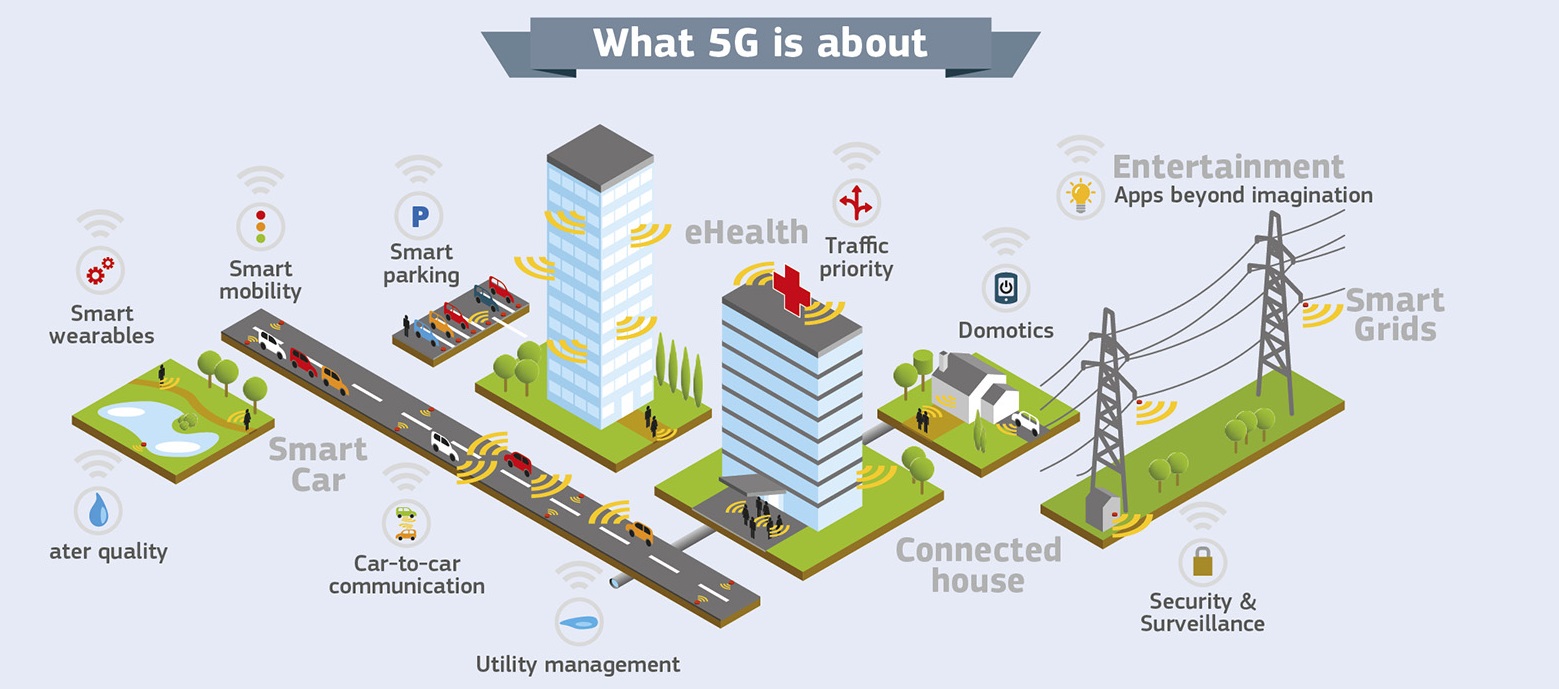
To see this we need to look at this first image and see what there is, it is all tag based, all data and all via mobile and wireless communication. Consider these elements; over 90% of car owners will have them: ‘Smart Mobility, Smart Parking and Traffic priority‘. Now consider the people who are not homeless: ‘Smart grids, Utility management, hose management like smart fridges, smart TV and data based entertainment (Netflix)‘ and all those having smart house devices running on what is currently labelled as Domotics, it adds up to Megabytes of data per household per day. There will be a run on that data from large supermarket to Netflix providers. Now consider the mix between Comcast and 21 Century Fox. Breaking news, new products and new solutions to issues you do not even realise in matters of eHealth, road (traffic) management and the EU set 5G Joint-Declarations in 2015, with Japan, China, Korea and Brazil. The entire Neom setup in Saudi Arabia gives way that they will soon want to join all this, or whoever facilitates for the Middle East and Saudi Arabia will. In all this with all this technology, America is not mentioned, is that not a little too strange? Consider that the given 5G vision is to give ‘Full commercial 5G infrastructure deployment after 2020‘ (expected 2020-2023).

With a 740 million people deployed, and all that data, do you really think the US is not wanting a slice of data that is three times the American population? This is no longer about billions, this will be about trillions, data will become the new corporate and governmental currency and all the larger players want to be on board. So is Disney on the moral high path, or are the requirements just too far from their own business scope? It is perhaps a much older setting that we see when it is about consumer versus supplier. We all want to consume milk, yet most of us are not in a setting where we can be the supplier of milk, having a cow on the 14th floor of an apartment tends to be not too realistic in the end. We might think that it is early days, yet systems like that require large funds and years to get properly set towards the right approach for deployment and implementation. In this an American multinational mass media corporation would fit nicely in getting a chunk of that infrastructure resolved. consider a news media tagging all the watchers on data that passes them by and more importantly the data that they shy away from, it is a founding setting in growing a much larger AI, as every AI is founded on the data it has and more important the evolving data as interaction changes and in this 5G will have close to 20 times the options that 4G has now and in all this we will (for the most) merely blindly accept data used, given and ignored. We saw this earlier this year when we learned that “Facebook’s daily active user base in the U.S. and Canada fell for the first time ever in the fourth quarter, dropping to 184 million from 185 million in the previous quarter“, yet the quarter that followed the usage was back to 185 million users a day. So the people ended up being ‘very’ forgiving, it could be stated that they basically did not care. Knowing this setting where the bump on the largest social media data owner was a mere 0.5405%; how is this path anything but a winning path with an optional foundation of trillions in revenue? There is no way that the US, India, Russia and the commonwealth nations are not part of this. Perhaps not in some 5G Joint-Declarations, but they are there and the one thing Facebook clearly taught them was to be first, and that is what they are all fighting for. The question is who will set the stage by being ahead of schedule with the infrastructure in place and as I see it, Comcast is making an initial open move to get into this field right and quick. Did you think that Google was merely opening 6 data centres, each one large enough to service the European population for close to 10 years? And from the Wall Street journal we got: “Google’s parent company Alphabet is eyeing up a partnership with one of the world’s largest oil companies, Aramco, to aid in the erection of several data centres across the Middle Eastern kingdom“, if one should be large enough to service 2300% of the Saudi Arabian population for a decade, the word ‘several‘ should have been a clear indication that this is about something a lot larger. Did no one catch up on that small little detail?

In that case, I have a lovely bridge for sale, going cheap at $25 million with a great view of Balmain, first come, first serve, and all responsibilities will be transferred to you the new predilector at the moment of payment. #ASuckerIsBornEachMinute

Oh, and this is not me making some ‘this evil Google‘ statement, because they are not. Microsoft, IBM, and several others are all in that race; the AI is merely the front of something a lot larger. Especially when you realise that data in evolution (read: in real-time motion) is the foundation of its optional cognitive abilities. The data that is updated in real-time, that is the missing gem and 5G is the first setting where that is the set reality where it all becomes feasible.

So why would we care? We might not, but we should care because we are the foundation of all that IP and it will no longer be us. It gives value to the users and consumes, whilst those who are not are no longer deemed of any value, that is not the future, it is the near future and the founding steps for this becoming an actual reality is less than 60 months away.

In the end we might have merely cared too late, how is that for the obituary of any individual?


Leave a comment

Filed under Finance, IT, Media, Science

In defiance of definition

I had to think things through yesterday (as well as get over a headache of titanic proportions). The Guardian gave us an interesting view on Friday with ‘loss of role model for boys‘ (at https://www.theguardian.com/tv-and-radio/2017/jul/21/doctor-who-casting-peter-davison-laments-loss-of-role-model-for-boys). The entire issue is that the new Doctor, the 13th one will be a woman named Jodie Whittaker. It is a new step in refreshing the brand; it is equally an interesting step that forums have debated for the longest time. Two previous doctors have given their own view. First we see Peter Davison with “a former star of Doctor Who, has lamented the loss of a role model for boys after the part of the Doctor was given to a female actor for the first time“. It is an interesting premise. I am not sure I agree. Peter Davison who would be regarded as the Doctor by some and as Tristan Farnon by others has played the doctor, and as such has seen waves and waves of fans. The opposition, the side I tend to agree with states “absolute rubbish“, this is Colin Baker who played both the 6th Doctor and Paul Merroney, the cold hearted accountant in ‘The Brothers’. You see, I am not certain why the two sides exist (academically speaking). When we look at ‘role model’, we see ‘a person whose behaviour in a particular role is imitated by others’ (source Meriam-Webster), this came into official usage in 1947, the same year that the words ‘Chopped Liver’, ‘Bikini’, ‘Time Traveller’, ‘Workaholic’ and ‘Final Solution’ were added to the dictionary.

So when we consider that ‘the imitation of a particular role’ is generic, does it actually matter what the gender of the player is? How many people see Oprah Winfrey as their role model? How many are man? Even when we look online for some of the best talk show hosts ever, in one case she was seen below Marc Maron and Howard Stern, who the hell is Marc Maron? So as we see that a renowned talk show host, who was ranked in 2013 as the most influential woman in the world, she got to number 6? I think it is high time that more women become role models. In this we should take heed that Jodie also featured in St. Trinians, so the upcoming role model could be a chaos creator. Yet does that matter? You see in the end, are the younglings regardless of age following the image played, the portraying actor, or the writers who created the image? So are these boys and girls following the image of the Doctor, or the image as written by Steven Moffat, the man who also gave us Jekyll with James Nesbitt?

The definition gives us the character as played by Doctor who, yet in all this, does it matter whether the player is a he or a she? Well, there are a few issues as seen. One source gives us “The gender difference between role models and female students has shown to have no significant effect on student attitudes, whereas perceived dissimilarity with stereotypical role models showed a negative effect on self-confidence in pursuing STEM careers“, in this, STEM careers are the fields of science, technology, engineering, and mathematical . Yet, in this, as we consider the works of Friedrich Weyerhäuser and realising that he died when WW1 began, is there enough traction remaining to give that the highest levels of acceptance? I can understand part of his view and perhaps in those days of set premises on how the family was going to go, it made sense, yet after WW1, we got the great depression, WW2, the era of opportunity, the sexual revolution and higher education. When compared to then the average education now and then, the bulk of the 70% educated now are on par and surpassing the education of the top 90%, the highest 10% is reserved of the higher educated now, whilst 90% of the educated are far beyond the lower 30% of those days. If education is an essential side of acceptance, the premise given earlier should not just surpass the standard of the early 1900, we should see that when a talk show host, an African American woman is the most influential woman on the planet, we can see that it is not the gender of the role model, it is the quality of the model that sets the stance for whomever follows that example, regardless of gender.

Yet, we need to take a step back towards modern sociology. In this, we see that Robert K. Merton is seen by larger groups as is considered as a founding father of modern sociology. In this there might be a foundation to have a new Doctor as a woman. Let me try to reason this as follows. If we accept Robert Merton and his setting of the social strain theory, we should change the barriers. In the social strain we look at the discrepancies between culturally defined goals and the institutionalized means available to achieve these goals. If we accept that ‘success’ is a goal definition and institutionalised means are the setting, the properties to set to get there, we can argue that as it is mainly a man’s world, introducing a woman changes the premise of the path, or in equal measure we can argue that we criminalise the actions women will take to get there. The danger of a strain approach is that there tend to be two paths. If we accept the 5 paths of deviance namely, conformity, innovation, ritualism, retreatism and rebellion, we might see gender as the overthrowing of conformity, ritualism and retreatism. Can any of this be proven? Well, in Chinese culture, most will remember Hua Mulan due to Disney exposure, yet there have been several more.

The question becomes, should it matter?

In my view a role model is a role model. It can be set on bravery like Florence Nightingale, set in science as Madame Curie, set towards engineering like Amelia Earhart (or Charles Lindbergh), we have seen that given the chance in getting toward the path of excellence, gender has never been the challenging factor. As we upped the deviance pressure towards certain paths, we get in equal measure the impact of the opposite direction like the cyclist Lance Armstrong and the fall from grace in 2012. So as stated, it can go in either direction, it is the drive, the realistic option of meeting a goal that has the larger impact.

In this, Colin Baker also stated “They’ve had 50 years of having a role model. So, sorry Peter, you’re talking rubbish there – absolute rubbish” he said. “You don’t have to be of a gender of someone to be a role model. Can’t you be a role model as a people?” This is a fair enough view. Yet in my view it is not merely the one playing the role, but in equal measure the quality of material handed to the layer, which gets us to Steven Moffat. I believe that one enables the other which gets us the result. For those in doubt, ask yourself, who remembers Charles Laughton, Domonic Rowan, Arthur Bouchier or Tony Church? They all played the same character! Now who remembers William Shakespeare who wrote the Henry VIII play?

It is not a fair comparison, but the comparison still matters, these players will be remembered by those who watched the play, probably for the rest of their lives, but the others? Even as TV reaches billions, we realise that our old idols like Gareth Thomas and Paul Darrow in Blake’s 7 were heroes to some, yet have we forgotten about Terry Nation, the man who did not merely created the Blake team, but also was responsible of creating the Daleks, an opposition who has been enthusiastically exterminating mankind since 1962?

When we realise the cogs in the clock that makes the setting for the heroes we have admired for the longest time of our life, is it not sad that those who actually created the wave of role models are too often forgotten? When we realise this, does it actually matter what the gender of the role model is?

It is just a thought that you should consider when you get some hatched job from the Sun or the Mail online, remember that when it comes to role models, they have never been one to follow any, their role model is greed and circulation, so as they give us “It is frankly nauseating that the [BBC] should now get on their sci-fi high horse and gallop into Right-Onsville to plonk a woman sheriff in town“, let us not forget that the people referred to are the same people who gave us “The captain of missing flight MH370 practised crashing into the Indian Ocean on a simulator weeks before his plane disappeared, confidential police documents reveal“, right after the entire Leveson inquiry and never showing ANY ACCEPTABLE level of evidence. It is even better seen in the Guardian article (at https://www.theguardian.com/media/greenslade/2012/nov/16/dailymail-leveson-inquiry), here we see “How is it defensible to talk of “freedom of the press” in the collective sense when a single man exercises so much power?” as well as “For a national paper to devote the best part of a dozen pages to an investigation so obviously based on prejudice against the Leveson inquiry is surely counter-productive”, this shows us that no matter how we see a role model, it is likely to be under non-stop attack by media publications that have merely the doctrine of greed via circulation in mind. So will Jodie become a new role model? Will we see Paul Dacre in a straightjacket? Would it not be great if we got both? We get two role models, Jodie to tell us how we move forward and Paul to show us how being backward tends to be a self-destructive path. All options in the innovation path, none of them gender based, merely two examples on how we should and could see innovation move.

So in defiance of the definition is not entirely in play. Gender was never a given, it was what others made those role models to be in the end, I will leave it to you to follow whomever moves you forward; it does not matter if that person is a he or a she, does it?


Leave a comment

Filed under Media, Politics, Science

Changing topics?

It is Tuesday evening, I had been preparing some of my assignments when the two hour bell rang, it was time for a break. I am still ahead of what is needed, which means I can relax (only a little). For 4 weeks I have been doing my daily Uni work, so there is a moment to breath. This is good for now, so what to look at?

Well, I could take you down the road of a copyright driven Australia, yet, when we look at the facts, especially as presented by Brendan Molloy, councillor of Pirate Bay Australia, then a moment of depression hits me. We all speak in truths (or so I hope) and as such, so does he. I do not completely agree with his approach, but he makes a decent case. There are a few tweets he made as @piecritic that have reverberated in my own writings in the past.

  1. Brandis is known to have not met with any consumer representatives and stakeholders as part of writing this draft. #copyrightau“, which seem to give slightly more weight to the issues I posted on my blog on June 17th 2014 called ‘The real issue here!‘, when I wrote “This is at the centre of it all. From my point of view Mr Burke knows it, Mr Brandis knows it and Google, who has every profit with large broadband usage, knows it too. I think it is time for this sanctimonious posturing to stop” it was to state the issue that in the end this is NOT about copyright, this is about bandwidth and as such the Australian economy cannot survive another multi-BILLION dollar blow to it at present. I think that Attorney General Brandis DEFENITELY got spoken to (not speaking with) by certain stakeholders (off the record of course), yet these people do not want ANY visibility in the limelight at present.
  2. @piratepartyau made an FOI request for that data. They refused to release it. https://www.righttoknow.org.au/request/copyright_legislation_working_gr#incoming-2467 #copyrightau”, which seemed to link to “A question about data costs being absurdly high. Love it. #copyrightau“, this is an interesting side. In my previous blog and other events I focussed on the bandwidth, which is what an ISP should be able to monitor and as such they do not, or better, only monitor for billing purposes. This all takes another turn when we consider the tweet by Ed Husic, Federal MP for Chifley, Shadow ParlSec to @bowenchris. His Tweet is “Abbott Govt should tackle copyright, pricing, access simultaneously and not just @copyrightau 1st“.

Well first, to get it all straight, I am a Liberal, so basically in the Abbott, Hockey corner!

Yet, these people make a decent case. You see, I am not in favour of copyright infringement, so if we can stop illegal downloads then this is just fine with me (additional reasons to follow soon). The issue here is not just about copyright; it is in part the ludicrous idea of continuing the TPP. This is at the centre of strangling honest commerce in the near future. I am all for a better legal system that protects the owners of copyrighted articles that Burke represents, yet ‘the rants’ as Brendan mentioned gives way that he is angry because the ACTUAL profiteers are too strong and too powerful (read the ISP and large telecom companies). This is why we see these ‘packaged’ solutions by Optus lately, amongst others. They are trying to convert people to a package as they know that securing revenue now is becoming increasingly important to THEIR survival, this is not seen anywhere in clarity.

So prices are being partially dealt with and access is being transferred to the US via the TPP. If you consider that to be not true, then wonder why Microsoft is setting up 300,000 servers. Just for gaming? Please get a grip and be fast about it!

Consider the following, this was stated by developer Jonathan Blow, but he is not the only stating issues in this direction. “I can spin up 10,000 virtual servers per host. They would just all suck. Saying 300k when they are virtual is a lie“, this is a developer, my issue, since even BEFORE day one has been on the ridiculousness of certain claims. This has all to do with streaming media and entertainment. Microsoft introduced it, when the backlash came they changed tune and dance, so why is this continued? Because the change to a broadband Foxtel approach will FORCE people in the bandwidth and there is no more downloads (which I do not oppose), but there is also no more privacy, with which I have an issue. When you force consoles online for all the wrong reasons, then we can safely state that this is about monitoring”. As America was the land of the free, it is now quickly becoming the nation of the monitors, which is what a debt of trillions will get you. As stated before, i cannot understand the TPP for the life of me, it strangles digital freedom (actual freedom, not freedom to download illegally), it will strangle generic medication (not part of this discussion) and it will strangle local commerce (very much the issue at present).

Patrick Bach, producer behind Battlefield 4 has an additional view “I’m not sure how the cloud will work for real-time stuff, but I can see how it could work for non-real-time stuff where you need a lot of calculations”, monitoring is not real-time, but requires massive power, here we see a side of that what is monitored and how it requires many servers. By the way, consider that this, when (or if) this is up and running, that the monitoring power of Microsoft will exceed that of the NSA by a massive margin. It seems a little extreme for streaming TV shows and online players, doesn’t it?

Additional evidence comes from the Australian (at http://www.theaustralian.com.au/business/opinion/copyright-law-is-failing-to-keep-up-with-internet/story-e6frg9if-1227050705973, this link requires you to subscribe) “As a former chief financial officer, I follow the money: these schemes haven’t worked, because the content owners aren’t prepared to invest in their administration. If they were genuinely effective, surely the movie and television studios would be happy to throw resources at such schemes“.

Again, as a technologist this could definitely be done, yet this is not in the ISP interest at all, his fortune is all about bandwidth, reducing it costs him money.

This is why I thought that the entire action was a waste of time from before the very beginning. Until greed (read revenue) from the Telco’s is set straight, whatever deal comes, will come at the price of ALL valid users and for the larger extent at the cost of their freedom (read privacy).

Yet, in all the tweets, Brendan Molloy does repeat on many occasions the issue that is at the centre of it all “fix your business models“. This is at the centre, yet in all scenario’s several players lose out on revenue (and loads of it), in addition Australia is not even at the heart of the issue that is playing behind the screens. For people like Google and Netflix (where a few groups have a valued investment of over 10 billion), it is not Australia, but the UK where the big price is. Australia with its 10 million households is just a small individual away from the Commonwealth pack. Yet this does not just hit the bandwidth and download models.

In all this, I have one other link. This one http://www.gizmodo.com.au/2014/09/malcolm-turnbulls-anti-piracy-forum-live-blog-follow-the-news-as-it-happens/ shows us the entire copyright AU evening and when you read it, please try to consider the following:

  1. The words ‘Revenue’ and ‘Bandwidth’ did not get mentioned ONCE. You might think that with illegal downloads and copyright infringements that issue would come up at least once, but both iiNet and Telstra were extremely cautious to sail away from getting near it. In my view that forum did exactly what it needed to do, keep interest away from the TPP, bandwidth and where the actual money would be draining from.

All this is as I expected it to be and if you read my previous blogs then you would have read that pointlessness is next to greediness. Not grammatically correct, but highly accurate. Whether we see changes remains to be seen, but the moment the TPP comes into effect the changes will be massive and it is likely that this changes get announced whilst the ink of the autographs on the TPP agreement is still drying.

So, why is this about changing topics?

Well, the discussion seems to be about piracy, copyright and copyright infringement, but the topic that hinders all events (like revenue and more important ‘blood money’) is kept out of the discussion for now.

I have already discussed revenue in more than one place, so feel free to read the other blog article (The real issue here!, mentioned at the beginning) to catch up on it. What I have not talked about is the issue of ‘Blood-money’. It is not my phrase, but I have adopted it as it applies (to some extent). You see, this is not the price of the game, not the cost of doing business. It is the price of being there and staying alive. It seems pure and simple, but it is not. You see, the topic of micro transactions is a little more complex and as such it is important to distinguish between them.

  1. The good guys and girls!

Highest on my list is Blacklight: Retribution. It is released for the PS4, yet there is also a PC edition. The game is large and is FREE! So how do they make money? Well they rely on micro transactions. When buying stuff you have two options, you start low, but as you get through games and as your score is there, you get money, this money allows for low to medium styled weapons. They are not cheap so it will take a little time to acquire the cash. Yet, it is free and you have time, so this is all good. However, if you want that one piece, that ultimate weapon, the slamalamadingdong of all shotguns that will rip through flesh, bone and Kevlar as you squeeze of the right trigger of your controller, then you must purchase Z-coins. There is an off-set here. Partially I think that without Z-coins you will be in a long trial to get decent gear to oppose, yet consider that this is all multiplayer and for those who are not really into this, it means no $99 and this is good, you can invest $10 to get decent gear. I think the approach is pretty good in this economy. This approach is better than try before you buy and is a decent business model. There are others that do this too and some have too steep a curve of costs, but Blacklight seemed reasonable.

For the iPad there is ‘Elemental Kingdoms’. A game, which is free to play and as you play and win, you get coin, which allows you to buy packs with random cards. It is easy to play, the game looks extremely well and the artwork is amazing, the cards unlike with actual cards evolve as you invest in the card, making it more powerful. If you purchase gems with your own cash you can buy packs with more rare cards and better rare cards, which makes for better odds. New players will get double the amount of gems with their first purchase. a good approach.

So, this is the good model, some like it, some do not, but nothing is for free and this way you get the pleasure to try and the option to grow without spending a cent. Those eager to step forward quicker can place $10-$25 and get a head start.

  1. The demons

Here we have the bad side. Whether we go after the Forza games, Gran Turismo or the classic which should now be regarded as an utter joke on the iPad! Prices range from roughly $7.5 for 500,000 in game credits to $75 for 7 million credits. Now consider that one car could cost you 20 million credits, which would be one of the extreme top cars, but that means one additional car at around twice the price for the whole game. How is this even considered sane? This pales by comparison when we see a great classic like Dungeon Keeper seems to push people to invest vast amounts of money into gems so that the player can get anywhere. This is free-to-play?

These are two extremes, yet how does this relate to the initial issue?

This is where the future takes us. The market on many levels is pushing for micro transactions on all fields. Whether it is an app or just a service, it is not just a worry, the future as we see it comes again from the Apple Market. This is not just the versions of the iPhone6 (plus or not), but the other options like the Apple Watch, where we see an interaction between watch and phone. This sounds like a decent gimmick, yet did you consider the exploitation of the consumer through services via micro transactions as well as the events we get as Apple collects all this data? It is not just Apple, where one goes Google will follow and the entire debate we saw on copyright now gets a whole new meaning as people on a global level sign up for ‘services’. This is where packaging of services will truly get a consequence. What if you have Foxtel?

Now we revisit the following statements:

Ed Husic: “Abbott Govt should tackle copyright, pricing, access simultaneously and not just @copyrightau 1st

Brendan Molloy: “fix your business models

Jonathan BlowSaying 300,000 servers when they are virtual, is a lie

I think that the business models have been adjusted, yet I think the adjustment is moving in a very dangerous direction. The Ed Husic nail is getting hit by a massive hammer; there is, at the core of these changes a need to immediately revisit pricing and taxation sides. You see, the ‘micro-transactions’ might seem small, but it reflects on the dangers we face how the frog will not jump out of the pot when the water is slowly brought to a boil, when we react to micro transactions, we will react too late. In this economy we need to make sure the consumer is protected as well as the national coffers, because when Apple and Google start their $0.99 a month service per service we will be hoisting millions a month outside of Australian tax shores, whilst at the same time collecting all that data to be resold and analysed at the other end giving them additional billions in revenue. The Privacy act will not guard us in any way for this new consumer wave. This all brings me to the question, how much do Telstra, Optus and iiNet know at present? Does the intelligence community realise this change of data and how can they keep track of some of the more shady events. Last but not least, when ‘3rd party’ people start pushing out data apps, how can this tsunami of data even be sifted through?

The final part will get us to the conclusion (at (at http://thenextweb.com/apple/2014/09/01/this-could-be-the-apple-icloud-flaw-that-led-to-celebrity-photos-being-leaked/) we see that last week someone took a look at certain events. and it gives us this quote “The vulnerability allegedly discovered in the Find My iPhone service appears to have let attackers use this method to guess passwords repeatedly without any sort of lockout or alert to the target. Once the password has been eventually matched, the attacker can then use it to access other iCloud functions freely“. As stated, this is not a fact at present, but it does give serious voice to the hacked phones.

Things you might think that have no bearing, but as we consider the case of the 101 naked celebrities (like Disney’s Dalmatians for adults), what else can outsiders get access to when people start using these new gadgets? If we consider that the financially well off start using these innovations first, how long until this clear target becomes a target of interest to the cyber-criminal?

So many issues linked to the changing topic. My question, what topic SHOULD have been debated? This is not about copyright perse, but that links to all of this, it is about a missing league of securities that endangers the lives of many Australians and none Australians alike. It is a change to facilitate for profit and data to be handed to big business at the expense of our personal, social and economic safety. Sides many seem to ignore.

Leave a comment

Filed under Finance, IT, Law, Politics