Tag Archives: Microsoft

What did you expect?

This all started with an article in the Guardian last December, in the air of ‘it was a day plus one before Santa‘, the title ‘Game shares fall 40% after profit warning‘ (at http://www.theguardian.com/business/2015/dec/23/game-shares-fall-40-percent-after-profit-warning-xbox-one-ps4). You see, none of this should be a surprise to anyone. When we look today we see all these ‘what will come in 2016‘ articles (read: multiple) and that is JUST the Guardian, not even a serious gaming source. Another article kicks of one of its paragraphs with ‘E3 WILL BRING SURPRISES‘ and then it reverts to the mundane “This year, we can expect Nintendo’s new machine and plenty of VR games but, beyond that, little is known. And that’s just how we like it“, if that is so, then why waste space on it in January whilst that event is 22 weeks away. Ignoring the event for no less than 10 weeks would not have been out of place. That article ends with ‘A YEAR OF BIG GAMES‘, where we see the quote “but most exciting for gamers are the big sequels“, with several mentions of games that had been delayed from 2015. What they all forget is an element the mentioned article will give you.

So let us take a look!

The subtitle is as good a place as any to start. It states ‘Gamers failed to buy enough games for new consoles to make up for a steep fall in demand for older formats‘, so how about giving the reality of the games which means the subtitle should have been ‘Game developers fail to deliver quality, they failed in many cases on delivering on time, some delayed until 2017, creating a new level of gaming uncertainty‘ that subtitle would have been on point. Assassins Creed is one of those titles, Unity failed massively, the reason for mentioning it is because Syndicate did not become the success it could have been mainly because of Unity. A game that used to be sold out on special editions is now getting flogged for $50 including art book, statue, extra missions and soundtrack. A game sold at 33% of the initial value, new in box. Yes, I give you right now that Syndicate does not deserve to be regarded as a failure, but it remains a non-success. It still has an amount of glitches and issues that go back all the way to brotherhood, they have never been addressed. Mass NPC issues remain and the list goes on, yet again, the graphics department delivered, sound delivered too. There are in mission issues, yet for the most they did work OK, in a few cases they were actually decently brilliant. Yet in all this the NPC issues rose. For example, I can get attacked and the police does not act. I pull a knife and they all start shooting, even in my own (read: liberated) areas. The fact that they act on me is one thing, the fact that they do not act against my attackers is another thing. It becomes even more a joke when a fellow Rook NPC keeps on pulling his knife against my kidnap target alerting the police who now has a go at me too, all scripted screw ups that were not addressed. Yet overall the latest AC is not a failure, in the same light that I placed the Ubisoft business model in the past, planning for non-failure also means that you will never get an exceptional success. Perhaps Ubisoft will catch on at some point (one would hope, would one not?)

But this is not about Ubisoft, they are just one element in a group of many.

The quote: “However, independent retail analyst Nick Bubb said he was “staggered” by Game’s profit warning after John Lewis boasted of strong sales of computer games earlier this week. “We had just begun to wonder if Game Digital might be a good recovery stock,” he said. The department store said gaming and console sales were up 180% in the week to 19 December, picking them out as one of its Christmas bestsellers“, but based on what was this? Special in house deals with 2 games? Places like EB Games are offering new 1TB consoles with 4 or 5 games that is quite the Christmas pick. Oh and what are the numbers? When you normally sell 10 consoles 180% really does not amount to that much. I would think that Nick Bubb would have done his homework a little more meticulously, or perhaps staggering was a factor after he learned that £2290 is not something that gives price to 180% (I am not saying that I know their sales numbers, but I am asking why no one else is making a clear investigation there). And on what margins are those placed? A £299 console is one thing, one with 3 games at £279 is a good deal for the buyer, but it equally means it is a product without margin for the shops.

Yet the big UK player Game should have known that this issue is a lot more clear, so the statement “Game said a 20% rise in sales of games for the Xbox One and PlayStation 4 had not offset a 57% slump in sales of older Xbox 360 and PlayStation 3 games” is a mere given, something they should have known going into the holiday season. You see, many big titles have been delayed, what was coming before Christmas is now coming in March and in a few cases in April. Big titles have not been the success they were supposed to be and in all this So when another article in the Guardian one day later reports “According to the industry body Ukie, sales of new boxed console games in the UK fell 6.3% in 2014 to £935m, and were overtaken by the 17.6% rise in sales of digital console and PC games to £1.05bn“, we should ask the question that Stuart Dredge might have been trying to hide within the text. The issue is “The Steam Winter Sale has gone live today, Dec. 22nd, and runs until January 4th“, yes ‘in sales of digital console and PC games‘ translates to Steam sales for PC games, a place where games were down by 50%, in several cases even down by 80%, so as many game shops have a non-return or exchange policy for PC games (which does make perfect sense), people are happy to download a few 4GB packages (in some cases not more than 2) and store that on their multi-Terabyte drives and the list included discounted games like Witcher 3, Metal Gear Solid 5 and Just Cause 3. So, when we know this, the ‘staggered’ response by Nick Bubb comes across as extremely insincere. Perhaps he did not do his homework? How can a person in that field not be up to date as to what Steam does and how that impact the shops, you see Steam has done this before, so it can’t have been that unexpected.

In that same issue we have places like Game and EB Games. In some cases they rely on fans who want their new upcoming Dark Souls 3 (the apocalypse edition) and that game will likely sell out in mere minutes, yet the dangers when a shop is losing space to a stack of Charing Cross editions, because the previous version was so bad is in equal measure not that weird a surprise.

There is still one other part that links to this. You see, we all play the way we can, some only play the way that they can afford and Microsoft has been dubious in several actions, the issues now arising from the Windows 10 update give more towards the fear that at the earliest moment Microsoft will close the valve on ‘pre-owned’ games, a side people rely upon because the average working family no longer has a spare £50 for a new game. Hell, most people in London are hard pressed to have £50 for simple things like food, so how is the drop in revenue such a big mystery?

The UK (as well as many other places on this world) have been dealing with a sliding cost of living crises. It has been around for 2 years and too many people are ignoring this fact, in any normal household games will be the first one to vanish from any budget consideration, which gives rise to the growing need of places like Steam, because between no gaming and playing a game 2 years old at £5, people usually tend to know what to do. The interesting side is that many of those games do not need the latest hardware, actually, those steam consoles will support the bulk of those games on high quality settings, so the Nextgen consoles are losing their footing, a fact that someone like Nick Bubb should have been aware of straight of the bat.

Are you still confused?

Open your wallet, consider your bank account (your present balance) and now go to any gaming store and get a new game. How many of you will actually do that? As I see it, 40% cannot afford it, 60% does not want to do this because they either do not care for games (which is fair enough), they have other bills to pay (which is fair enough too), or they are waiting for one of those delayed games, because they can only afford a game 3-4 times a year. These are given situations for well over 80% of the people in the UK, in addition it is a similar size in most of the EEC nations, so why exactly are we surprised on these sliding scales? I cannot answer why many readers are surprised (many might be genuinely surprised), but we should ask a few serious questions when retail gurus like Nick Bubb are absent in comprehension. In that case we should be asking a few other questions.

And games are not out of the woods yet, not for the near immediate future. Yes, most of us will run towards No Man’s Sky the day it is released (in around 22 weeks), but consider how we as gamers (millions of us) find fun and joy in a $20 game named Minecraft, or on the Tablets on a $5 game named Blockheads, how long until the analysts are catching on the hyped inflated games galore for PC and next gen is a massive marketing mesh that is short term, based upon a turnover need from the initial 21 days of release? We will always want games like Skyrim, Fallout 4, GTA, Diablo 3 and a few others, but that list is a lot shorter than those marketeers will admit to and the large players remain in denial. Hoping on a new shooter online where people do nothing more that run and ‘super jump’ on all levels like it was the first version of Unreal Tournament. How long until that gets boring and old? The remake Doom might be the first one that infuses life into that group, a mere original gems in a mountain of too many fake crystals.

Yes, we will see a few games we all want, we will see games that we thought we wanted because as games developers rely on hype, they are equally extremely unwilling to give out review copies until AFTER the game is released, because it would hurt numbers and the press at large (the real one and the gaming press) tends to be too often in need of advertisers to actually do something about it.

Finally we get back to Ubisoft, but now for very different reasons. You see, they are offering something called a ‘humble bundle’, which one place stated costed $1. I cannot verify this, but the offer (regardless of price) includes:

  • Tom Clancy’s Rainbow Six
  • Tom Clancy’s Rainbow Six 3
  • Tom Clancy’s Rainbow Six Vegas
  • Tom Clancy’s Splinter Cell Chaos Theory
  • Tom Clancy’s Ghost Recon
  • Tom Clancy’s Splinter Cell Blacklist ($10 or more)
  • Tom Clancy’s Ghost Recon: Future Soldier ($10 or more)
  • Tom Clancy’s Rainbow Six Vegas 2
  • Tom Clancy’s Splinter Cell
  • Tom Clancy’s Splinter Cell Conviction
  • Beta access to The Division

One source implies that the price is open, but if you paid a few bucks more (like $11) you got a few additional beauties. I was never a Rainbow Six fan, but a huge Splinter cell fan and even only those games at $11 is an impressive deal, so when you consider this, when you see that PC gamers are offered a steamy steam life with excellent not so new games, in a price range that most people could afford, how is the 40% drop in shares of Game still a mystery?

The gaming world is in an uproar, because they did not tap the vein of quality when they should, they did not press forward for true non-annual innovation when they could, leaving marketing to make the call on hype, instead of truly addressing their fan base needs. An expensive mistake that has led to the downfall of the biggest players (EA and Ubisoft), gamers are realising more and more that indie developers will bring what they desire, a great gaming experience; and only now is the press at large considering that the need of advertisement revenue and the need of their readers base is not aligned, the question becomes how will this be addressed?

I do know that when the press is relying on a ‘staggered’ Nick Bubb for gaming, too many people might be looking in the wrong direction.

 

Leave a comment

Filed under Finance, Gaming, Media

Forced Discomfort

It is a term you might not know, but this term is central in the current Xbox One debacle. You see the Windows 10 update came with a massive setback, you now have to be online to validate your profile and to play games. The first of a few steps that Microsoft is undertaking, undoing the events of 2013 and to get back on track. Now if you look at Xbox support, you will find that the Xbox now has an ‘offline mode’.

The page (at http://support.xbox.com/en-AU/xbox-one/networking/using-xbox-one-offline), shows several parts, let me show just two that matter:

You need to be online to experience everything Xbox One has to offer, but when you’re offline, you can still:

  • Sign in to your profile, but only if you’ve signed in online before. This includes the Kinect automatic sign-in mode, if you set that up while you were online.
  • Play games, if you have a disk or you’re on your home console (see About My home Xbox to learn more).

Now the second part, a side that was NEVER an issue before:

There are some capabilities that you need to be online to use, such as:

Playing games that require online sign-in, even for a single player.

Now, this has happened with games that came from the Microsoft Store that is not a secret, but is that the only occasion?

As for the steps to do this:

How to go offline

  • Scroll left on the ‘Home‘ screen to open the guide.
  • Select ‘Settings‘.
  • Select ‘All Settings‘.
  • Select ‘Network‘.
  • Select ‘Network settings‘, and then select ‘Go offline‘.

Your network status will change to offline. To go back online, follow the previous steps, but in ‘Network settings‘ select ‘Go online‘.

Here is the massive issue as I see it. With computers and laptops this was never an issue. You go home, you either connect the network cable or the router could be automatically found. No interaction required. The Xbox360 had exactly the same parts. If I wanted to be inline, I connected the network cable for the time that it was needed. It was never an issue. In my case I had one network cable and one free connection and two consoles, this is why I did that. Even today I am faced with this on the PS4 and the Xbox One. In addition, I see no reason to be ‘connected’ all the time. So why is this now such an issue?

As I see it, this mandatory online is not really mandatory, but as I see it Microsoft is forcing us online, or to be connected and by changing the premise by having to set the network offline and online, we will eventually tire and be connected all the time. We do not win here, only Microsoft does!

This is called ‘forced discomfort‘. Which comes from the Forced Choice Scale of Discomfort. This we get from the 1987 work of J. H. Bernardin in the Academy of Management Journal, 30, 162-173. Development and Validation of a Forced Choice Scale to Measure Job-Related Discomfort Among Customer Service Representatives. This is only one approach to it all, but it is the foundation of what we often face today. The man is a decently brilliant Psychologist and has worked on many projects. In this specific case we use a force choice scale, which was developed to measure discomfort based on characteristics of a specific job. You get to choose 2 scenarios, which causes the most discomfort. For example:

  1. Having to listen to someone’s point of view with which you disagree (perhaps this blog).
  2. Your work is closely monitored (loads of examples).

Now knowing the forced scale will influence our reaction to the situation and Microsoft was entirely unpleased with our desire to remain offline when we prefer it. They prefer a steady stream of data. Now take the previous setting and consider the following statements

  1. Having to patch a game regularly.
    b. constantly adjusting your network settings.
    c. Having to synch save games.
    d. Having to change the disc of a game whilst playing.
    e. Switching the batteries in your controller.

Which two would be your most discomfortable ones? Now, in all fairness I should have added 15 more items, but the chances are really great that network settings would score high, which is what we face now on the Xbox One. There was no need for any of this on the Xbox 360, the PS3 and the PS4, so why is this an Xbox One issue?

Because Microsoft wants to return to the 2013 issue that they need data of many kinds. Even if they are not privacy driven. For them to know exactly how many gamers are online playing, the amounts of hours connected is all data they would love to have. None of it goes back to your identity, so there is no privacy issue, but that level of data details one that they can charge game makers for, and they could end up charging a lot.

This is why I am so angry with Microsoft, because as a consumer I feel betrayed! Now consider your desktop and laptop (if you have them), do you need to switch your settings to offline? No you don’t! So if Microsoft can figure this out on those systems as well as the Xbox 360, why make us go through these events?

As I see it, the only conclusion I get is that they have ulterior motives, motives that are not for the consumers that they should be serving as the consumer paid for the device. In this regard we could consider another paper by John Bernardin, namely ‘Conscientiousness and agreeableness as predictors of rating leniency’, you can probably guess the next part. Why should we show leniency towards Microsoft in any way, shape or form? Was their act of backwards compatibility a way to create agreeableness?

And as Microsoft stated on the 12thwe put fans at the centre of everything we do and wanted to make some big changes‘ (at http://news.xbox.com/2015/11/12/new-xbox-one-experience-begins-today/), then why do you keep on pushing for mandatory login through forced discomfort? It seems that you never had any ‘fan’ in the centre, only your own greedy need for a stable stream of connection data! The fact that the press remains oblivious to all this makes me wonder what else we might be forced to face and a third test will be done next week to ascertain a few more items. I do not know what the effect will be but I will explain that fully in the next (and perhaps final part) of all this.

I have no idea whether people will catch on before thanksgiving and Christmas in the US. Even purely Windows 10 has a few issues. Forbes reported: “While the option to disable is nice, ‘Windows Update Delivery Optimization’ (WUDO) is another example of where Microsoft should be more transparent with Windows 10 and let them know upfront what their devices will be doing behind their backs by default” (at http://www.forbes.com/sites/gordonkelly/2015/08/02/windows-10-vs-windows-8-vs-windows-7-whats-the-difference/), so what else does the new Xbox OS push for and Microsoft has not been upfront about it?

I still have an issue with non-stop online. This might be my own paranoia, yet as we see computers getting hacked into (often due to stupidity of the user), having a power core at your disposal as they turn your console into a botnet. Is that such a stretch? No!

Consider the following data: “the slides from Frank Savage’s presentation at Build 2014 along with the audio of the same. We noticed the fact that Xbox One runs Windows 8” Now this will be Windows 10, so having an app that becomes a remote botnet is not a stretch and by the time people start to consider that their console is doing a lot more than walk ‘the wasteland’, we are confronted with a few hundred thousand consoles, all playing ‘spam the neighbour’. Now I am not stating that Microsoft is not taking precautions, but so far every windows version has been breached multiple times. Soon consoles will be also forced to consider additional apps to protect against such intrusions, it is the price of being always online!

Is it an immediate danger? No it is not! I am not stating, suggesting or implying this, but we know that EVERY Windows system has had its flaws and so will the Xbox One. Often not dangerously, but when a console is always reachable that danger just increases. This is my personal issue with always being connected. It is why I am sparingly connected (and because I have one wire for more than one console).

But I diverged from the initial issue of forced discomfort, I did so intentionally so that you realise that consoles have many sides, they often have more options and powers than the average gamer realises. This is not a bad thing, but in all this that realisation is also linked to the sequence of events as they are now playing.

When you realise that your system can do more than you realise, it will give on the other side of the coin the statement: ‘you can lose more than you think because you never realised that you could have lost it’.

That requires a little explaining. Consider ‘you cannot lose what you never knew you had’ and ‘things can be removed from you when you realise that it was an implied gift, not an actual one’. The first one is often shaped into: “you knew what you had, you just never thought you’d lose it“, a statement that might be true, but I do not agree with it. You see in my view, when you lose you never knew you had, you stop your own evolution. The realisation of new is at the core of growth, which takes me to the second part. An implied gift is still a gift, having it taken away is not wrong of debatably criminal, it is merely an act that stops your evolution. For as you lost elements of growth, your actions become empty. This is why I am so against the entire situation. For the most, I was never a multiplayer man, so I never missed multiplayer, yet I learned that Mass Effect 3 came with plenty of grudges and complaints, yet it also came with the best multiplayer experience ever! Mass Effect 3 was the founding father of me remaining a Gold Live member. Even if I no longer play that game in any way shape or form, that game put Gold on the map for me and as such I evolved due to a part I never knew I had. In that same instance, the implied ownership is still an issue, because even though I no longer play it, the Mass Effect 3 Cerberus system is an implied gift, not an actual one. At some point Mass Effect 3 will no longer be multiplayer, no longer work online. At that point our multiplayer evolution stops (until the next game comes along). Even as I ‘demand’ that my single player game will forever play on the intended console, I will never expect a service like multiplayer to remain active. In that same light I expect a game or preowned game to always unreservedly work on the console version it was made for, but in that same light I see multiplayer as a service, which means that a separate multiplayer is not transferable. This is my personal handle on the things that play, so in that same light, being able to play offline without forced discomfort is a given right, not a managed service. As Microsoft is pushing us to be all online (in the approach given to us in 2013), we should all lash out against Microsoft for leaving us betrayed.

There is also an additional issue when we consider ‘section 7b’ of Microsoft’s Services EULA where we see “may automatically check your version of the software and download software update or configuration changes, including those that prevent you from accessing the Services, playing counterfeit games, or using unauthorised hardware peripheral devices“, I do not have an issue with that. I buy my games, all my games! Yet these changes also allow for hunting those who ‘alter’ their Xbox so that they can do something that is called jailbreaking on iOS. These people (to the larger extent) are not interested in pirated games. These people want to play the latest games the moment they are released in Tokyo or the US. They do not want to wait a year for the ‘altered’ edition, they want to full Japanese experience. I get that and I am partially on their side too!

But these changes will not only make those acts no longer possible (which is debatable whether it should be allowed or not), but the second hand gaming world could in equal measure be blocked soon thereafter. Whether this will come true cannot be predicted, yet as Microsoft broke its word on not online gaming, what else will they regard as ‘flexible’?

The fact that the press is still not regarding the online login push as a fact is also a worry, because this was at the heart of the 2013 slump in pre-orders for the Xbox One. So why is no one else picking this up? One friend of mine did state that most people are always online and they do not care. Which is fair enough, yet those people chose this, so why force the others? Is that not a valid question too?

This all links to the premise behind this all. Microsoft marketing might state: “Microsoft will do what is best for you”, but from my evolutionary mind, the premise should be “I know what is best for me“, Microsoft has no clue what my needs are and they will never realise what they are when they push me for setting I am unsettled with, how can that lead to a good experience? I came from DOS, VMS and MVS and I grew into Windows 95 (and Mac OS), we all grew from one system into another one, yet if you allow yourself to be pushed into a system you do not understand, at that point we can only harm ourselves or what we represent (our data and our actions). So as we get pushed into a new system with new rules and changing terms of service we must start to realise that remaining agreeable and lenient is no longer an option, especially as the press is extremely willing to side with whomever advertises the most. Now it is time to address my own implied issues. You see, from my point of view this is not a mere issue, how come that the press is not all over it? I can’t be the only one who saw this element, I am not the only one confronted with the issues as presented with the latest OS update on the Xbox One. So why is no one seeing this? It could all just be me, but if that is the case, we could play online and offline by merely switching off a router and be able to play again without having to login, but that is not the reality I see. What I see is forced discomfort, is it just me or are you realising that switching off your Xbox router comes with setbacks and why is that?

We all need to start asking questions and Microsoft should give us some straight answers.


Leave a comment

Filed under Gaming, IT, Media

What was the right question?

There is an article in the Guardian called ‘Which laptop should we buy for our child?‘ (at http://www.theguardian.com/technology/askjack/2015/nov/05/which-laptop-should-we-buy-for-our-child), you might think that I have an issue with the article, and I do, but not perse with the article. The article is quite decent, however the article is about a ‘solution’. I learned recently that solutions are vague, they are transient and they fade the moment you give them. You see, as a great teacher not too long ago taught me, it is about trust and about answering needs.

I understand what Jack writes, he gives good advice and I would have given a similar advice, yet at some point I learned something new (we all do, trust me). What are the needs of the child? Now, the child might not understand it has needs here (other than cool games, and we can see that in schools laptops, or better stated ‘fat’ mobile devices are going to be the trend. Whether this is an Airbook like the Mac has, a Chromebook like ASUS has or another device in a similar capacity, the child will need to move forward.

Yet, am I not in a mode where the answer is given? No, let me explain. Jack mentions the Windows 2-in-1 “detachables”, which sounds nice Mr. Schofield, but that trend is now, it is 2015, what about 2016 or 2017? What happens when those trends shift? By the way the sentence “we can’t afford to spend lots of money“, so as such Apple will not become a solution any day soon. Interesting the Chromebook solution that many carry are on average of $250 cheaper (Australian comparison), a part not mentioned anywhere, that optional solution did not make it to the table.

For me, do I think it is a solution? I am not at all certain, you see, the needs of the child are unknown. So why spend money? To give the kid some skills? Well that is all good and fine, so why is the possible solution for a tablet; a mere Android based tablet at one third of the cost of a Chromebook not decently investigated? The mention of the tablets (all 6 mentions was regarding the push to the 2015 trend of a ‘detachable’. You see, the object of usage is a small person about to celebrate the moment of his ninth birthday. Kids have accidents, they break things (unintentional), your youngling drinks lemonade and other liquids. So you want to put a laptop there? With his excited friends that is an accident waiting to happen. So, how will you afford the second laptop?

The simplest tablet with a decent casing costs less than a hundred quid. For £49.99 you get a very basic one. The best thing is that the skills will transfer to a laptop or a larger tablet when your child is ready, more important, there is no way of knowing what the needs will be when he gets to a decent school level, when he gets to year 10, what will he need? Perhaps the school provides? Also, the pricing would have gone down to such an extent, that the one device you cannot afford now, could be really affordable in 2016.

So many people so many options, why answer them at all? Why not give the device that at least lets your little one to grow skills and answer the call to the device your young one needs when the moment is there?

So yes, Jack Schofield gives advice, it is sound advice but in all this, he failed to mention that some devices are limited and to get a better return, a much higher cost comes into view. You see a mere simple version from Asus might be £195.64, yet when you consider how fast 32GB is gone you will need something bigger, that will take you to £289.99 very fast. In my situation, I do not offer a solution, for £49.99 you get a very simple device that allows the little one to grow skills, and in 2-3 years when his skills have really outgrown the 8GB device, he might get that same device not for £289.99, but for £179.99, perhaps even less, so the little tablet paid for itself.

Part of me understands that the next generations needs to be clued in, logged in and online earlier in life, I will not stop it, oppose it or question it. Yet in all this we must also answer what is the best to make your child grow. Perhaps it is the 2 in one that Jack Schofield mentioned, but I am not convinced. You see with the quote: “there are several ways to run Android apps on Windows PCs, such as BlueStacks and AmiDuOS” is all about getting someone to windows. Why? I do not oppose Windows as I use it myself. After the blunders Windows 8 had, I am not willing to trust Windows 10 at this point, yet Microsoft is willing to mandatory push it to its user base regardless of what the consumer thinks. A methodology I do not support. This was shown in another Guardian article by Samuel Gibbs where we see: “Consumer users of Windows 10 will have no choice but to accept the installation of automatic updates, even if they break software for them” (at http://www.theguardian.com/technology/2015/jul/17/windows-10-updates-mandatory-home-users), what happens when our choice of software breaks? Are we forced to a Microsoft solution? How is that not an instilled dictatorship? The final quote from that article was “Automatic updates may also create a situation where an update breaks something on a computer system, perhaps a legacy program“, which is what many will face over the next decade. Microsoft is starting a cleaning operation and the user is losing their rights. I might have had to pay $199 for my Windows 7, but at present trusting my system on the net is not an option, that trust was destroyed by Microsoft in a way 10,000 viruses could not. Regardless of that choice, Jack should have remained a lot more neutral than he did. I believe for the bulk of all needs Android fills the requirement of a user, this does not take away to prospect of Microsoft, but last time you looked, which software was free? Weirdly enough, for the normal student, the software like writing, calculating and presenting is free on android and Linux. Apple and Microsoft charges for that.

Yet in all this, where are the needs of the user? When he gets to the setting up of things he is addressing fear in my humble opinion. Now let me add one too. The text: “Windows 8.1 and 10 will email you a weekly record of your son’s activities: how many hours he’s used his PC, the websites he’s visited, and how long he spent in his favourite apps“, so are you the only one who gets this, or will Microsoft have this data too? There is validity in keeping your child safe, but that starts with the need for strong passwords and knowing what to do and what not to do. Your child will make mistakes and even today many adults still make these blunders and larger ones too!

So in my view, spending little is not a shame and your child should be safe, but consider the options hackers and malware have nowadays, it is close to impossible to stop, in that case let it be a device that when it happens will not infer heavy losses. In that part, let me end with another quote the article has “I don’t think it’s worth buying or installing the full desktop programs for a 9-year-old“, which is true, so how large are the hands of a nine year old. Can they not hold onto a 7” tablet easier? More important, when he gets soaked in the rain and his backpack got drenched, my money will be on a skinned tablet not any laptop or ‘2 in one’ solution to survive that ordeal.

In the end it is as I expect growing skills with your child. I get that, and I applaud that approach, yet let it be skills, playful skills and artistic skills. Let the child enjoy their life until year 6 when the skills will be tested, let them grow into the savvy programmer they can be and get them the system they can handle and let them grow into a stronger system, the needs of any child will grow stronger when ingenuity is required, factual evidence that has been known for decades. Yet how they grow will usually be up to them, not you or me, or their teachers for that matter, we can only hope to guide them in a decent direction, let’s not forget if you as a parent do not have the skills to guide them, where will they get their example? What happens when they follow the wrong example?

In the end, what was the right question? Which device allows your child to grow in all directions a device offers growth? On which device are their drawing skills challenged? Anyone can type a text, anyone can do ‘math’ with a spreadsheet, yet the art of drawing (a skill I never mastered) is getting lost more and more in this world of laptops, is that not a shame too?

Leave a comment

Filed under IT, Media, Science

A lesson learned late

We all have this, we stump our heads into a wall, some in ignorance, some through stubbornness, ideologically and the last group through determination. I am one of these four. As I bring the bad news first, I need to talk about myself. I got an extension on a test which might not be a massive one in points, but I am in a state where every point counts! Hoping to save up to 15 points on a test 44 pages long. My little big horn is a ‘Memorandum of Detailed Opinion‘. I still have 30 hours of work actual to go and I had to restart as I was turning my ‘Other Applicable Revocation Issues’ into a mesh of Titanic distraught and the deep dark feeling when you are at the top of a truly high building (like the Hancock building) and you see the street 100 flights down, that one step through the glass looks suddenly so appealing, such dread! I feel a little better, especially as I started fresh again, things are slowly adding up, connections are now coming to life. the smallest issue I had initially was a part in section 40 of the Patents Act 1990disclose the best method known to the applicant of performing the invention‘, this and a personal believe that my professor was intertwining ‘best method’ with the mathematical approach to describing Cantonese had an impact too. Yet those feelings were all between my own ears. You see, this is the first subject ever in history, where I got confronted with the limitation of my thinking. This has never happened before! We all face the music that we do not get something, but in most cases someone explains, someone aides or you find a supporting document that helps you. We all have that. No, I mean that feeling you get when your life depends on the next conversation and the one part you were not told is that everyone speaks Aramaic, that level of non-comprehension!

Yet, I also feel stronger today, because the light suddenly came on and I am starting to put it together. I took longer than I expected and if I had not been confronted with bad news last week that stress would not have stopped me from completing my assignment. Getting told you need to find another apartment tends to do that to a person whilst his exam just started. So as I finished my notes for tonight, prepping to get loads done tomorrow, I had to write this. You see, this intersects with something I read yesterday on my mobile, I believe.

That part was about Xbox boss Phil Spencer. Microsoft has always been about ideology and ignorance, so to call this part ideological ignorance is not too big a leap. Spencer stated that he was not interested in beating Sony, he was interested in gaining customers, as many as possible. In my view, his predecessors ‘messed’ it all up. I reckon not intentionally. In my view Microsoft was convinced that the TPP would have been in effect now and the steps initially made towards the XB1 would have been massively exploitative, with the law allowing them to destroy certain markets (the preowned game market for one). This all took a step back towards a streaming enterprise that did not quite make it off the floor. The 2013 promise of a 300,000 servers for gamers in one cloud. The quote is in light of the backwards compatibility claim a little hilarious: “Microsoft’s Don Mattrick stated “If you’re backwards compatible, you’re really backwards”” (at https://lawlordtobe.com/2013/05/24/spin-dryers-by-microsoft/). Even then I claimed how stupid the 500 GB thought was. Sony made the same mistake, but with the Sony version a person can update when he/she is ready, the XB1 does not allow for that. In that same article I chewed on some of the presented facts: “Their on-line system is now getting grown from the initial 15,000 servers now that Xbox 360 uses, to 300,000 servers from the moment the next Xbox is launched. It is a 2,000% growth in data collection and over 200,000% storage capacity. If foundations of business are set to return-on-investment, then ask yourself why a gaming system requires that level of growth“, a question that was never answered, but with the TPP, the streaming and the data requirements, it was about the gamer, it was how he/she could best be exploited. That was the view that my mind saw and so far I have been proven correct in almost every way. The next quote supports all this “In all honesty Microsoft Marketing did state that there will be pre-owned possibilities, yet they have not officially stated how this EXACTLY will play out, so we await clarity by Microsoft“, consider that part, if the TPP would have been in effect that part would have costed gamers dearly, so in all this, we can speculate that Don Mattrick was no more than the bearer of bad news and his career took a massive tumble. Now we get Phil Spencer and how this is about gamers. A 2 year stretch that now demands a 145 degree course adjustment. The weird thing is that if the decision makers realised their audience in the era of Xbox and Xbox 360, they should have known what gamers wanted, and adjusting that with their own view of exploitation is a misplaced view to say the least.

So as I see myself ignorant and determined, I also see Microsoft as ideologically ignorant. Ideological in their pursuit of maximising profit any way they can and ignorant to consider that gamers would take this lying down. Microsoft now set at less than 40% of what Sony has, losing the market share the 360 had grown, how stupid is that? The big issue is still that Mettrick and Spencer leave the feeling of being no more than puppets on a string, jumping to the needs of the decision makers behind the screens of Microsoft. Their strings to be cut at a moment’s notice. It is the second failing compared to Sony. Yet, in all this I must admit that Sony is likely to work in similar ways, but in a much better setting as their focus has been the gamer for 4 iterations of their console. That does account for something.

I feel that I learned my lesson late, hopefully not too late and the next two weeks will be about work 24%, study 48% and the rest is about trying to get sleep, food and an apartment. I feel strengthened as my eyes open towards the issues I could not solve for almost 10 days. I also feel better as Microsoft seems oblivious towards the gain they lost whilst they should have known better, in that respect Gamespot (who was source to most of the Microsoft information) should also have known better and as they seem to hide behind the PS4 vs XB1 console war, they have done too little regarding the investigation on the business decisions that did hurt a contending console and forced it towards a gloomier place. We can all admit that backwards compatibility will gain them momentum, yet in the end it will be about good games and yes, Microsoft has done a decent job, but with the lost field, decent will not hack it.

So I end this article with a personal message to Phil Spencer. Phil, I am not blaming you (which would be unfair), I am not having a go at you (which would be too easy), yet I will do your job for you this one instance. There is a game coming, it is nowhere near ready at present, but it is getting there. It is for PC and it has the option of becoming every bit as addictive as Minecraft currently is. So another masterpiece by an indie developer! The game is called Heat Signature as it shows massive promise. This game could propel the XB1 even further. The quirkiness and the connected options for multiplayer could be next thing people desire. The single player part is showing real promise. So instead of waiting and having to shell out another 2 billion for a game Microsoft didn’t create, so how about getting in front of a repetitive timeline for a change?

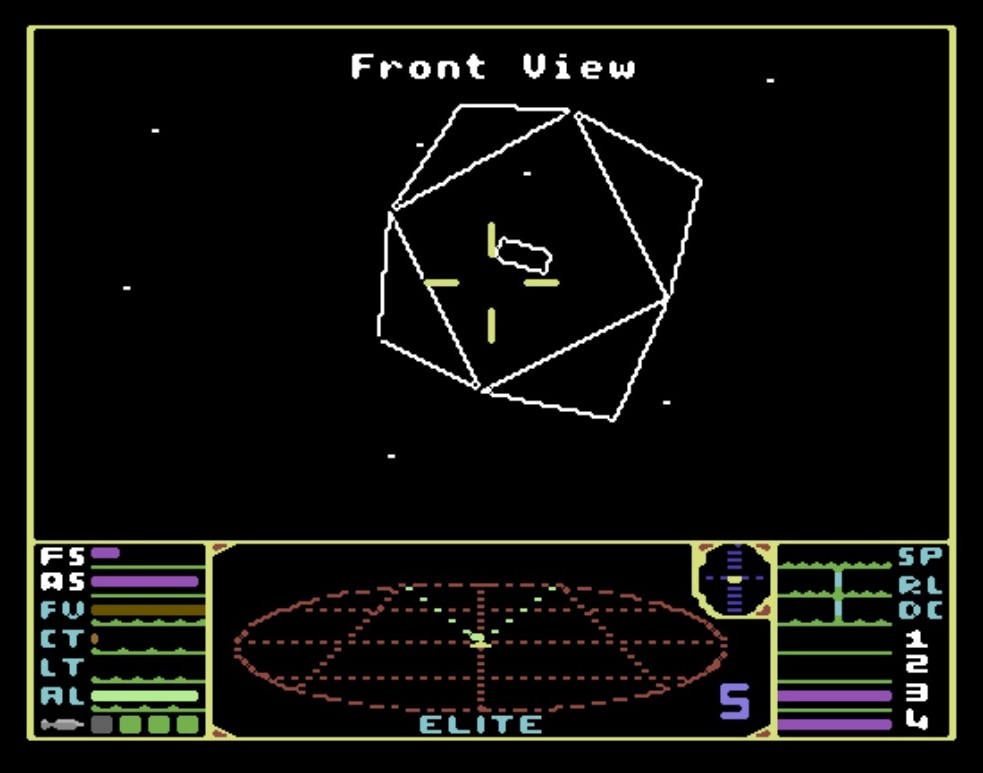
Heat Signature (heatsig.com) is able to be uniquely placed next to Elite Dangerous, Eve Online, Star Citizen and No Mans Sky. It can exist next to all of them and will be as entertaining to all those who play the other mentioned titles. I suggest that you keep your eye on @HeatSig (Twitter address) and feel free not heeding my word (I have only been wrong 4 times in the last 30 years when it comes to gaming), so I am due another failure. Yet the stats go hugely my way and as such I predict that Heat Signature, a Tom Francis production which was, as I remember it a Johnny Chiodini discovery evolve into a true contender for being the next big thing (as an indie developer title).

In all this, am I too ideological when it comes to gaming? That is a fair question and I must ask this from myself if I want to remain connected to a field I have been involved in since 1983. I believe so and games like Fallout 4 show my view to be a good one. In equal part Elite Dangerous shows that true passion for a game can last decades (something Blizzard also proved with the Diablo series) and in all this Ubisoft squandered it and Microsoft rejected their view only to get bitten on their sitting area really hard. The future belongs to the believers, because faith has always been the most pure and natural driving force. It got me my law degree it got me to the final stage of my MIP and it can get anyone to their place of achievement. Greed is never an achievement! Will Microsoft learn from their mistakes? That remains dubious because the puppeteers behind the screens remain an unknown. I do believe that illuminating them could shed light on the problem and truly propel the world of gamers forward as the onslaught of counterproductive acts end up getting terminated with extreme prejudice. EA has 7 months left to learn their lesson and not fall into the traps with Mass Effect Andromeda, traps that Ubisoft seems to be unable to avoid. Still, if they are unable to do that, John Oliver will be able to have a little fun here too.


Leave a comment

Filed under Gaming, IT, Law

CISA and Privacy are not opposites

There is a view that many hold, this view is not educated. A view which was given to us from the moment we spawned as a living person. Some got this knowledge as they went to their church or temple. They were told about good and evil. When we started to go to school we got to learn about order and chaos. This last one matters, you see, the opposite that order and chaos represent has been used in books, in videogames, in TV shows and in movies. In the Avengers movie ‘Age of Ultron’, near the end of the film we hear a quote from Vision, played by Paul Bettany that matters: “Humans are odd. They think order and chaos are somehow opposites“.

You might not realise it but the gem that we have here is in the foundations of many issues that have been plaguing us in several ways. Let’s take a look at this in two parts. The first is a Guardian article (at http://www.theguardian.com/world/2015/oct/01/blackphone-release-data-protection-privacy-surveillance) called ‘Blackphone: privacy-obsessed smartphone aims to broaden its appeal‘. The very first paragraph is a quote that shows issues on more than one side “Privacy company Silent Circle has released a second version of its signature handheld, a smartphone designed to quell the data scraping and web tracking that’s become such an integral part of the digital economy in the last few years (and whose results might well end up with the NSA, if the Cybersecurity Information Sharing Act passes)“, now I have no issue with the data scraping part and for the most the term ‘whose results might well end up with the NSA’ is less of an issue, but the overall taste is about privacy, I have no issue with this. The next quote is an interesting one, which will matter soon enough “In the beginning, Janke said, the Blackphone project was just a way for people working for his security firm SOC, since sold, to call home without having their communications intercepted“.

You see, there is no issue with the message shown here, but what is linked to all this is the message that is not shown here. You see, this device should now be regarded as the most excellent tool for hedge funds managers, organised crimes and all other kinds of non-mentioned criminals, who will now get to do with ease and freedom the things they had to steeplechase around the block for. This device will allow financial advisors to take certain steps that they were too scared to do, all out of fear of getting caught. This device will be opening doors.

There is no issue with the approach Janke had, he was submerged (read: drowning) in a world where any slip up could mean the death of him, his comrades and perhaps even his family. So his need for security was a given. There is a need for such a device. I have written about the need for this device as early as 2009, so the fact that someone picks this up is not a surprise, so why are we looking at this?

You see, it is the mention of CISA that is part of all this. CISA or better stated the Cybersecurity Information Sharing Act is sponsored by Republican Senator Richard Burr (North-Carolina). Why would anyone oppose ‘the bill makes it easier for companies to share cyber threat information with the government‘? Let’s be clear this is about dealing with Cyber Threats!

So what is a Cyber Threat? A Cyber threat is defined as ‘a malicious attempt to damage or disrupt a computer network or system‘, so we have the fact that this is about malicious attempts! So why would there be an issue? Well, there is because people and as it seems to be especially criminals, terrorists and Organised Crime seem to be allowed a lot more privacy than their victims, so in all this I see little issues pop up all over the place. This sounds all emotional, but what does the official text state? Well, the complete text is at https://www.congress.gov/bill/114th-congress/senate-bill/754, so let’s take a look at some parts.

Permits state, tribal, or local agencies to use shared indicators (with the consent of the entity sharing the indicators) to prevent, investigate, or prosecute offenses relating to: (1) an imminent threat of death, serious bodily harm, or serious economic harm, including a terrorist act or a use of a weapon of mass destruction; or (2) crimes involving serious violent felonies, fraud and identity theft, espionage and censorship, or trade secrets“, How can we be opposed to this? Is this not the foundation of growing fair play?

Well, that is partially the question. You see, the issue is in part the language. Consider this paraphrase which remains correct in light of the previous statement: “Permits local agencies to use shared indicators (with the consent of the entity sharing the indicators) to prosecute offenses relating to serious economic harm“. Which is now the floodlight of all this.

Now we get to the second part in all this, which is offenses relating to serious economic harm. Serious economic harm tends to be seen as pure economic loss, but it is not limited to that. For this we can look at the element ‘Loss of production suffered by an enterprise whose electricity supply is interrupted by a contractor excavating a public utility‘, which we see in Spartan Steel & Alloys Ltd v Martin & Co (Contractors) Ltd. In here the legislatively famous Lord Denning raised the issue of ‘Duty to mitigate loss’. Yet today, in the world of data and digital media, how can we measure that element? Let me show this through an exaggerated fictive example.

Microsoft raises the issue that as they required an investigation into acts that are causing serious economic harm to Microsoft. Unique software has been released that directly negatively impacts they trademarked business. The CISA could now be in effect to investigate data and data sources, but who minds that store? Who has that knowledge? Now consider that the person investigated would be Markus Persson, because his program ‘Minecraft’ is now stopping all people who are part of the Microsoft Gaming brand to continue.

So who will make that call? You might think that this is a ludicrous example, but is that so? Microsoft ended up paying more than 2 billion for it, so someone implying ‘Serious Economic Harm’ is not that far-fetched. This now becomes an issue for a timeline. What timeline is in effect here? With an imminent threat of death this is a simple matter, with serious economic harm that matter is far from simple, moreover will the claim be valid? I used the ludicrous Minecraft and Microsoft Games brand. Yet what happens when this is a lot more ‘grey’, what happens when this is Raytheon versus the Belgium based TTN Verhaert? A Technology Transfer Network (TTN) that has innovated the latest classified satellite navigation systems. Is it still a clear call as to what constitutes serious economic harm?

This act opens up a can of intellectual property, the one can everyone wants to swim in and the elected official channels do not even have a fraction of the minimum required insight to make such a call.

Section 9 gives us “Directs the DNI to report to Congress regarding cybersecurity threats, including cyber-attacks, theft, and data breaches. Requires such report to include: (1) an assessment of current U.S. intelligence sharing and cooperation relationships with other countries regarding cybersecurity threats to the U.S. national security interests, economy, and intellectual property; (2) a list of countries and non-state actors that are primary threats; (3) a description of the U.S. government’s response and prevention capabilities; and (4) an assessment of additional technologies that would enhance U.S. capabilities, including private sector technologies that could be rapidly fielded to assist the intelligence community

When we consider both A and B, we should look at ‘U.S. SEC drops Onyx insider trading lawsuit against Dubai men’ (at http://finance.yahoo.com/news/u-sec-drops-onyx-insider-230111643.html) from September 15th. The quote here is “Smith said the Newman decision was ‘helpful,’ but that the SEC ‘never had a tipper’ or evidence that his clients received inside information”, one would think that this is where CISA could now step in. Alas, apart from the side that is implied by the CISA text: ‘assessment of additional technologies that would enhance U.S. capabilities, including private sector technologies that could be rapidly fielded to assist the intelligence community’, which according to Blackphone is not an option, we now see that this opens a door to ‘patsy management’ on how two unsecured parties, could be set-up through the use of Blackphone through encrypted conversations and when the two unsecured parties talk, they could be setting each other up thanks to the other two parties that were using a Blackphone. Blackphone here has no blame whatsoever, they would be offering the one part criminals desperately want, a secured phone. This now sets a dangerous precedence, not a legal one, because Blackphone is behaving itself as it should, the provider of secure communications, it is what people do with it that matters that part cannot be guaranteed by the Cybersecurity Information Sharing Act. In addition, S. 754 has one additional flaw. That flaw is seen in the definitions, where we see that the earlier mentioned definition ‘serious economic harm’ is not specified in the definitions at all, so what definition applies?

Beyond that, we see the definition of a cybersecurity threat. In here it is important to take a look at part A and part B.

part a gives us: “IN GENERAL.—Except as provided in subparagraph (B), the term “cybersecurity threat” means an action, not protected by the First Amendment to the Constitution of the United States, on or through an information system that may result in an unauthorized effort to adversely impact the security, availability, confidentiality, or integrity of an information system or information that is stored on, processed by, or transiting an information system” and part B gives us “EXCLUSION.—The term “cybersecurity threat” does not include any action that solely involves a violation of a consumer term of service or a consumer licensing agreement“, which sounds nice, yet how does it help stem cybersecurity threats?

You see, when you consider the letter send by UCLA to Chairman Dianne Feinstein in June last year, we see: “CISA’s inadequate use limitations risk turning the bill into a backdoor for warrantless use of information the government receives for investigations and prosecutions of crimes unrelated to cybersecurity“, which could be regarded as the biggest failure, but it is not, it is the part we see in “CISA requires that cyber threat indicators shared from the private sector with the Department of Homeland Security (DHS) be immediately disseminated to the Department of Defense, which includes the NSA and U.S. Cyber Command. This new flow of private communications information to NSA is deeply troubling given the past year’s revelations of overbroad NSA surveillance“. It is the ‘be immediately disseminated to the Department of Defense’ that comes into play now. When we consider ‘Overbroad Liability Protection‘, which can now hide by giving that function to an intern so that “good faith” reliance remains is a potential risk that could be pushed by big business to hide behind the ‘dope’ who acts in ‘good faith’.

Is that truly the blackness we face? Well, that is hard to say, the fact that this act relies on ambiguity and is lacking certain rules of restraint, or at least certain safeguards so that data cannot leave the intelligence office is reasons enough to have a few more discussions on this topic. What is interesting is that CISA would create a fear, which Black phone addresses, yet in similar method other players will now receive an option allowing them to play large dangerous games whilst not becoming accountable, that new Blackphone could address several issues the shady commercial interest guy is very happy to exploit.

The question becomes, how does any of this make us any safer?

So now we get back to the Age of Ultron line. As we see that crime is becoming an orderly event, the fact that we tend to hide in chaos the issues that should be open for all is part of the dilemma we now face. Again we are confronted with laws that remain inadequate to deal with the issues that needed to be dealt with. CISA takes in my view a chaotic approach to keep a level of order that was delusional from the very start, from missing definitions to application of methodology. It is a cog not linked to any machine, proclaiming soon to be of use to all machines and in the end, as I see it will only hinder progress on many levels, mainly because it tries to circumvent the accountability of some. And this is not just an American issue. In that regard laws and the protection of the victims have been an issue for a longer time. We only need to look to the Tesco grocery store on the corner to comprehend that part of the equation.


1 Comment

Filed under IT, Law, Military, Politics, Science

The danger the UN brings

Yes, the UN has been active, the news in several places including the Netherlands shows a sight that many might not grasp. As one of the sources US News reports ‘UN summit approves 15-year blueprint to eradicate extreme poverty and combat climate change‘, of course many are now cheering on how lives will become better. Will they?

193 countries agreed on this. Like the millennium plans. Not all targets were met, but as some state (like Dutch NOS News), there is progress. The news stated on how poverty got halved. Here I wonder on what grounds that evidence is brought, where the data is. I am not stating it is incorrect, I am stating that poverty shifted and several nations are playing possum on those numbers. Has anyone considered the US numbers on how many people are living below the poverty line? How many need double jobs just to make ends meet? How is that not poverty in its own right? Now they are stating on how businesses need to get involved, moving from charitable to profitable (quote Dutch Prime Minister Rutten).

Here is the danger! You see we have ample evidence on many levels that the bulk of business will not make these jumps unless there is a benefit to them. Like tax breaks, like non-accountability. So as these new plans needs funding, funding many nations no longer have, how much additional taxation will get lost and how will that impact the lives of you and me all?

Is that not a valid question? The Dutch king might be very committed, yet funds are not there. Critics are already in disagreement. The overall lack of environmental improvements have been overly visible for a long time, getting it in an UN speech is unlikely to make change here. Which is just my personal view.

The quote from the prime minister is also very tainting. “These problems are too large for a government to tackle, we need corporations to step in“. This is perhaps the first clear statement from a leading EEC member that governments can no longer hack it. This is what I have stated for a long time. The law stayed its hand and as such the treasuries remain non protected and non-accountability with improper wasting of resources have given weight to a now faltering group of governments. Yet, corporations have to rise to the occasion, to which I ask: ‘At what price?

Feel of course free to disagree, yet in 8 years, see how goals are not being met, not even close and then listen to the carefully phrased excuses people will give regarding not making the targets. The US News article has one quote that needs to be regarded: “Supporters say there is no choice but to go big in a world of expanding population, growing inequality, dwindling resources and the existential threat from global warming“. It is the ‘dwindling resources’ that is at the heart of many issues. We allow the exploitative and imbalanced Wal-Mart to continue, yet we all realise that resources are an issue. In all this that same Wal-Mart will be asked to give support so that they can get a free pass. Does this make the entire UN operation a new chapter in its recognition as a paper tiger?

You only need to look at the Syrian issue to see how the UN is largely ignored. Now we get another ‘issue’, not with the speaker, she is as I see it in all this part of the UN PowerPoint. The quote ““Promise peace to all children in Pakistan, in India, in Syria and in every corner of the world,” Malala implored the leaders“, it sounds nice, it makes for good TV, but there is no realism here. Syria has its issues where the life of a child is conceptual at best. The Indian government has close to no options at all to deal with its child labour issues, the same situation exists in Pakistan. Both nations where the realistic view is to either work or starve. The combined child labour population of Pakistan and Indian exceeds the total population of either Australia or Sri Lanka. That is how unrealistic the issues are. Again, I have nothing against Malala, she overcame more hardship than most of us will encounter in a lifetime, but those in the UN should know better and adding her to this presentation is good for Malala and I wish her every positivity as well as the fact that we should not be silent on these issues, but the delegates of the UN should know a lot better, this issue is one that will not be met.

Another shifted view comes from Egyptian President Abdel-Fattah el-Sissi who said that “the international community has to deal with global challenges that hinder development“. The quote “Egypt has been fighting an insurgency by Sinai militants allied to the Islamic State group. At the same time, security forces have cracked down on Egypt’s Muslim Brotherhood and other Islamists“, as well as “El-Sissi also expressed concern that “the tools” to achieve the goals are insufficient, and stressed that richer nations have a responsibility to help poorer ones“. This sounds not even close to nice. The direct option was to engage in a dialogue with Israel on how to deal with the Sinai, Israel is very willing to assist and find solutions here, as the pressure is also on Israel due to Sinai Extremists. No, President Abdel-Fattah el-Sissi wants the rich countries to step in. Likely also making sure that some hands are tied in all this. The last one is a speculation, yet in addition the entire MFO situation are set after certain accords, so how will these accords be impacted? The September 17th 1978 Camp David Accords will likely see a different light over that evolving future. Is this truly a ploy to deal with the Sinai Extremists, or a played option to sway a vote to allow more Egyptian troops and military into Sinai, with all kinds of new pressures? I just set into the light three small issues that give worry to the entire 15 year blueprint. Yes, there is benefit and essential growth to eradicating extreme poverty, yet in all this it can ONLY be achieved by overhauling laws on a global level. Changes that players like Wal-Mart will never allow for, moreover, they have a sizeable lobby at their side to make sure that the fortunes of the Walton family remains guaranteed. Wal-Mart spend will over 7 million in 2013 to its lobby to make sure certain pawns were either moved, or not moved according to their needs. As the members of that family grows in fortune a billion a year, 7 million is nothing, even then times that would be a steal at twice the price, the cost of doing business and the laws of the land, the laws of most nations fall short in this regard.

Interesting that this side saw no exposure at all.

In this, the monarchist nations remain the strongest supporters, they are mostly about the nations and the global good, republics are all about the elected principle and the lobbies in the back, corporations rule there! Is it any surprise that Sweden and the Netherlands are so socially inclined? That is the impact of a monarchy reflecting on all the people and the moral and social good of the world. In similar light, how should we see the quote by India’s Prime Minister Narendra Modi in Canadian Global News, where we read: “Modi confirmed plans for a fivefold boost in renewable energy but added two years to the time frame, saying it will take seven years instead of five”, is it because of American politics and what we have seen in the past that this could be seen as a shift until after the next election and that issue will be dealt with after the elections? Will we see an offer by Narendra Modi offering the open gap NTT DoCoMo left to the next mobile player under conditions of renewable energy installations? Will that suddenly count towards the total? In all this, those installations count as a cost, which means that those players will not be saucing the treasury coffers. That is the foundation of problems several other nations must remain aware off and unless the laws are adjusted this all shows like another paper tiger, offered in consideration from a group of people who get paid very nicely on an annual base, so the next 15 years some of these players would be decently well fed. Is that my sarcasm that you read now?

I must admit that sarcasm swims within me as I have seen the faltering side of several branches in law and politics not adjusting the view required to guarantee their nation towards growth, a view that is not an option at present. In all this not enough people are looking onto the sides that long term adjustments are required to make so that any option is realistic, yet with Wal-Mart equals on other shores their game is not dissimilar to the game the Walton’s are playing in a legally correct way, in all this the law has faltered in several nations, with no view of improvements any day soon.

So the dangers the UN bring will impact economies, unless the law adjusts firm and fast that plan is not likely to be made. If you doubt my words then consider the ‘plans’ that were made in 2000, they were not met, in some cases they were met only 50%, it is called an improvement, but from that we must accept that either the plans were never realistic, which beckons the question, why accept a non-realistic plan, in the second there is the validity that progress was booked, yet at what price and in this time and in this economic age what is the realistic chance that such funds remain to be available?

As for my doubts, that part can be seen in the very end of the article (at http://globalnews.ca/news/2242584/un-summit-approves-15-year-plan-to-erase-extreme-poverty-fight-climate-change/) called ‘UN summit approves 15-year plan to erase extreme poverty, fight climate change‘, the quote is “As for finding the trillions needed to implement the goals, Microsoft co-founder and philanthropist Bill Gates said Thursday “we’d be doing very well to have anywhere near that amount of money available by 2030”“. We know Bill Gates to be one of the leading philanthropists. He has not tried to hold on to the massive wealth Microsoft brought him and he has spent a lot, yet he knows how much money this requires, something I expect the politicians involved have no realistic clue about. If Bill Gates shows signs of worry regarding the need of these trillions, how come the governments involved are not extremely outspoken regarding the massive debts they have and that no one has these level of funds. In part only corporations do and my worry is that the price of agreeing to all this will cost us a lot down the road. In addition, it is also interesting to note on how papers have the same stories, the same quotes and the same title, so is the journalistic branch now limited to do the copy and paste action? In that I set Reuters apart. The one issue they show and the other papers did not (as far as I can tell), is the article (at http://www.reuters.com/article/2015/09/26/us-un-assembly-china-idUSKCN0RQ0HW20150926), so as we accept the second quote to be “Chinese President Xi Jinping announced on Saturday that Beijing will establish an assistance fund with an initial pledge of $2 billion to help developing countries implement a sweeping global sustainable development agenda over the next 15 years“. Now if we accept the first quote to be from Bill Gates (the one stated earlier), now compare the statement just given by Chinese President Xi Jinping, controlling the second largest economy on the planet (if we accept the US numbers to be true), than 2 billion (the article states another 12 billion by China too), in light of the statement by Bill Gates “As for finding the trillions needed to implement the goals“, gives the vision that the second largest economy is contributing less than 0.7% of the required amount. So is anyone still considering the realistic view offered by the UN, a 15 year goal that is not realistic is in my view nothing more than a concept in presentations, if you are there and if the coffee was nice, the day might not be lost, but in all certainty, it is unlikely to be a true gain to anyone attending other than Malala, who as a UN envoy achieved what she had to achieve, to shed light on a situation that needs addressing, how that is done is actually on the plate of Gordon Brown who is the political side of the United Nations Special Envoy for Global Education.

In the most worrying closure, I have stated it before, would the culling of our population help? If so how can the UN exist, or even remain to continue when the required solution is to dim the lights for billions of people, a population decline in excess of 90%. This is not humane and equally unrealistic. I want to see realism in the shape and size that we the people are properly informed on what is needed, where the law will properly adjust to hold corporations accountable for steps taken and for profits made. A reality I am unlikely to see happen in my life, so what will be left to the generation that follows me?

I honestly do not know, yet in the light of what I just showed you the reader, did you consider any of the issues that I noticed and that none of the articles discussed and more important, why were these issues not raised by the involved journalists?


Leave a comment

Filed under Finance, Law, Media, Politics

A digital deception?

There is an interesting weekend going on. First we see people waking up to the Microsoft premise that free is apparently never free, in addition, we now see more and more noises regarding Net Neutrality. We will get back to Microsoft soon enough, because there is more to Net Neutrality than meets the eye. First let’s take a look at the definition of Net Neutrality. Wiki tells us “Net neutrality (also network neutrality, Internet neutrality, or net equality) is the principle that Internet service providers and governments should treat all data on the Internet equally, not discriminating or charging differentially by user, content, site, platform, application, type of attached equipment, or mode of communication”, now this sounds interesting, but the reality is not that easy as I see it. For example, consider Oracle Forms, who needs the reserved bandwidth, if we cannot deliver, that solution would become an issue to implement. Oracle Forms is not the only one, many other situations exist where priority is essential. Video conferences is one of several. The idea came from Tim Wu, he is the Isidor and Seville Sulzbacher Professor of Law at Columbia Law School. His paper Network Neutrality, Broadband Discrimination. The paper can be downloaded at http://papers.ssrn.com/sol3/papers.cfm?abstract_id=388863.

As any academic work, it is quality stuff, yet, do I agree? I have an issue with the following parts:

On page 1 “Critics, meanwhile, have taken open-access regulation as unnecessary and likely to slow the pace of broadband deployment“, America is about to encounter the point where ALL the TCP/IP addresses have been taken, no more addresses, which means that IPv6 will soon be the only option remaining. You see IPv4 provides roughly 4.3 billion addresses. Companies, people, devices all requiring an IP address (mucho plural), well at some point the end is reached and that point is now, but that is not the entire point of my objections, because “likely to slow the pace of broadband deployment” is about need. I do not see how broadband deployment is hindered by the current system (other than running out of addresses). We have seen an almost exponential growth in getting online. Ever since the broadband has been an option, we have seen spectacular growth. First through normal internet connections, then via cable providers, now in addition we have mobiles with 4G and WiMax providers.

The second quote is “That deviation is favouritism of data applications, as a class, over latency-sensitive applications involving voice or video“. Which might be fair, but for the most, this has apart from specific application NEVER been a true issue. YouTube caches, so I personally have never truly seen an issue, not in over 15 years. Voice is a different situation, is this about VOIP? On one side, in an academic paper we need to keep an open mind, which makes it a good statement, but when we regard government pushed policy “open access alone can be an insufficient remedy for many of the likely instances of network discrimination“, the use of the word ‘likely’ seems a little unacceptable.

The next issue is found on page 158 of the paper “Have broadband operators tended to favour certain uses of the Internet?” To what extent? The goal of this section is to answer these questions, to the extent possible, for broadband networks during the year 2002, so we get answers based on a situation that is 13 years old, so this is BEFORE true smartphones, before quality 3G and whilst 100Mb broadband was rare. 1000Mb is now in some places regarded as slow, we get internet information faster on our mobiles now, than on broadband in those days, overall the growth of speed has been near unparalleled since the beginning of the internet and I am just looking at the last 5 years. The more I read of this 39 page paper, the less this makes sense in the current environment. Not the thoughts by themselves, the thoughts made perfect sense (to a certain degree) in those days. Yet, the ISP’s and Cable providers evolved almost exponential in their offerings. For the same price I now get a little over 10 times the amount I had before. I now end up with 500% download space of what I need (and I have one of the cheapest offers), so far I have not seen any limitation on what I require, so is this a pure American issue? That could be the case, but those pushing Net Neutrality better realise that moving business from US to Canada is not that far-fetched an option, I personally see these events as the FCC seems shooting itself in the foot.

Yet are my thoughts correct? (Always a good question to ask)

Let’s take a look at the Washington Post (at https://www.washingtonpost.com/news/the-switch/wp/2015/07/24/republicans-are-trying-to-defund-net-neutrality-will-it-work/), ‘Republicans are trying to defund net neutrality. Will it work?‘ The quote “This week, the Senate Appropriations Committee approved a bill that contains an amendment singling out the FCC and net neutrality. Notably, the rider would prohibit the FCC from using its most powerful regulatory tool to police Internet providers — Title II of the Communications Act” is at the centre. Yet, what the Washington Post shows is nothing more than a political side.

It’s CNN that gives us part of the goods (at http://money.cnn.com/2015/06/12/technology/net-neutrality/), they ask a few questions and give us answers. That is what matters. So let’s take a look.

Isn’t that what exists today? For the most part. In reality, the world won’t look much different on Friday. Netflix won’t suddenly stream any faster for you. AT&T (T, Tech30) and Comcast (CMCSA) won’t abruptly stop laying down high-speed fiber cables and investing in their networks as retaliation“, after which CNN brings a quote that is surprising “And Comcast can’t slow down file-sharing websites, like it did to BitTorrent a few years ago“, which is more than interesting. Because, for the commerce of the USA file sharing is not a good thing, even though downloading movies is copyright infringement, pursuing these events is a near impossible task, especially when those servers are outside of the USA.

Who supports net neutrality? Now this is the number one question. “AOL (AOL, Tech30), Facebook (FB, Tech30), Netflix (NFLX, Tech30), Twitter (TWTR, Tech30), Vimeo and every other major Internet company are in favour of the FCC’s new rules. They create the content you read and watch online, and they don’t want to face discrimination by network owners who can threaten to charge higher fees or slow them down“. This statement is pretty far out there when you are not an American. In America, when you see places like Comcast, you pay for 75Mbs, 150Mbs and prices go up fast. So from this point is there reasoning for Net Neutrality? I still do not agree, but before going into this we need to look at Sprint, they offer unlimited high speeds with a sharable 10Gb for $100. This is less than 40% of the bandwidth I had 6 years ago at half this price. San Francisco gave me decent prices that are in alignment with what we see in Europe. Again, will Net Neutrality solve this?

Now let’s take a look at those supporters, Facebook and Twitter are data collectors, Twitter is the smaller and Facebook in the larger extent. Netflix customers require download power a lot more than Net Neutrality. The same can be said for Vimeo, AOL and Google+ for that matter. They all are vying for a customer base and when a person gets 10 GB at $100, whilst Europe and Australia enjoy prices like $70 for 200 GB you can see the issue at play. I am wondering whether this is about Net Neutrality or is there an issue with cartelisation in the US? We are so used to see that things are cheaper in the US, the fact that the US is leaps behind when it comes to the internet. That does not address the Net Neutrality. In my view it leaves us with more questions. The fact that prices are so high makes me wonder why a place like the US is not more competitive in that regard. But this article is not about that. It seems that Netflix needs download power to survive, and that is lacking in the US. In addition, it seems that the providers are extremely ‘protective’ on pricing, when investigating prices, TWC gave me “You are visiting our website from an area we don’t currently service“, which I got whilst entering a Chicago Address. So in all this, there is a multitude of issues, which have less to do with Net Neutrality and more about the stranglehold on pricing some seem to keep in the US.

Now am I upset? Well that is not really the question is it? I am like many others a capitalist (to some degree), yet that part has always been drenched in reason. As the information is reaching me, reason is not really a part that the internet providers seem to employ in the US. Especially as they offer internet at 33% of the speed and at 20 times the price. So it seems to me that Net Neutrality, even though in this light might have some effect to some of the solutions depending on the internet, yet the overwhelming thought from me is that as the FCC pushes Net Neutrality, we will also see a shift of the business world seeking an alternative.

When we see an argument that “Comcast could slow down BitTorrent traffic (it did)“, yet when we consider an article by Jacqui Cheng from the 24th July 2010, we see ‘Only 0.3% of files on BitTorrent confirmed to be legal‘, this was from a study that involved 1000 downloads, so 997 were infringing in one way or another, so why is it an issue to slow down BitTorrent?

A final issue should be given to Wired Magazine, who (at http://www.wired.com/2014/01/three-dangers-net-neutrality-nobodys-really-talking/) gives us several views in the article ‘Three Dangers of Losing Net Neutrality That Nobody’s Talking About

The first comes from American Library Association head Barbara Stripling “we’re in danger of prioritizing high-quality internet access for entertainment over education“, is this about the costs of a broadband plan? I have seen how this is not cheap, even as the article is only a year old. She also states “Ultimately, “pay to play” only benefits the privileged“, which I can agree with, it will be about usage and bandwidth, Net Neutrality will not up the game for them, it is about pricing and in some cases the prices are overwhelmingly ridiculous.

The second issue is ‘we continue to give more control over the internet to the government‘, which seems to be the case, but why is it done? Draining additional resources, forcing costs that should not be with the government. The quote here is “What’s worse is that we won’t see it coming, because the FCC’s power will creep in incrementally, on a case-by-case basis — a death by a thousand cuts“. Why is the FCC even bothering with this? Regarding the extent of what I saw as it applies to the US, this is becoming an increasing case of ‘Unjust Enrichment‘. Yet, the legal scope is not entirely ready to deal with this from an internet point of view. The North Dakota Supreme Court ruled in Schroeder v. Buchholz, 2001 ND 36, 622 N.W.2d 202 that five elements must be established to prove unjust enrichment.

They were:

  • An enrichment (Telco’s making excessive profits)
  • An impoverishment (Consumers are charged above their affordable income).
  • A connection between enrichment and the impoverishment
  • Absence of a justification for the enrichment and impoverishment
  • An absence of a remedy provided by the law (clearly in absentia)

It will be hard to prove this part, you see, it is not just about enrichment and impoverishment. The internet world is moving population classes into the haves and the have not, which is a different standard, yet the foundation might apply in finding the remedy for internet pricing, especially when we realise that one in 10 that would end up spending a little over 10% of income to allow for internet (based on the Chicago example), is this an excessive cost? That would be for a court to decide and that decision would not be the same state by state. Yet as that becomes a solution, the Net Neutrality need would diminish.

In the end, I am not convinced that the issues are about ‘neutrality‘, but it is about current technology and about fairness and affordability of the internet, especially when we consider that every child today needs to learn to proper use the internet from a young age, only to keep even with the other players, once the US falls deeper into the pay to play trench, we will see the growth of additional classes of segregation, those who are technically viable users and those who are not. That last one must be avoided at all costs, an issue Net Neutrality as I personally see it will not answer.


Leave a comment

Filed under Gaming, IT, Law, Politics, Science

You decide!

I have spoken out against the (bad) choices that Ubisoft has made in the past. On November 16th 2014 in the blog ‘How the mighty can fall‘ (at https://lawlordtobe.com/2014/11/16/how-the-mighty-can-fall/), I wrote “Gamers are about done with Ubisoft, ratings that seem decent, but game expectations had not been met. Watchdogs fell short of expectations (rated 8 out of 10); Bug fest (we mean Assassins Creed Unity) launched on all major platforms. (7 out of 10); The last one became Far Cry 4 with 7 out of 10”, issues from gamers and other not so small considerations, Ubisoft failed to deliver a legend status for all of their AAA game. 2014/2015 is to be considered a disaster. Now at E3, we see that some parts are getting delivered, the Division is now a 2016 release (which is not that much delayed when you consider this to have been a 2015 release), yet, again, Ubisoft does present their games really well, which gives them time, yet, relying in a place like the E3 on DLC’s for a 65% game is not a good thing either. I refuse to be negative on a game like ‘Just Dance’. It is not my game, but plenty of youthful gamers (some not so youthful too) reserve a place in their heart for Just Dance, which is fine by me. Questions on the phrasing on the interaction with mobile phones need to be made, as no one (at present) have asked the questions involved. What is novel is the option that could propel the game forward are the streaming service on PC and Nextgen, even though no pricing information is given, it should not be about the price, it is about keeping a game novel and Ubisoft delivered that with this title.

Yet, did anyone else notice that the applause in the audience during was good, but not great? Compared to Bethesda, who blew the roof off the house! We saw many introductions with cut scenes, and even if the Division showed game play, with an interesting closing twist, which makes the entire view great. Also, the gameplay on ‘For Honor’ (4×4) was very good, but what if online play is not your thing? In addition, it is competing with Evolve, which is an excellent game. That does not diminish For Honor. The people saw gameplay and a smooth one at that. I liked the act that I had stayed away from any gossip or screens on that, so it was all new and it did not disappoint. The same could be said for Rainbow Siege. It is better, more realistic tactically speaking (as far as I saw) and graphically far above the norm. It will not be out until the end of September, but so far it looks like a good product. Just this is also the issue with Ubisoft. The presentations were good, not amazing! It did not blow me away like Bethesda did, more than once I might add. And off course there is Assassins Creed Syndicate. It looks smooth, but what the demo also shows is what we have seen too often in the previous moments. The game story depends on too many scripted moments. The coach chase, the tumble over the bridge then the train, a too strong a smell of scripted events. So as Yves Guillemot closes the presentation with the introduction of ‘Ghost Recon Wild land’ with an awesome movie, we need to consider that the words from Yves “surprise you with revolutionising our beloved franchises“, this sounds nice in theory, but that has not been achieved. Some are a strong step forward (Rainbow 6, Ghost recon), some are more of the same but as I see it, none showed true ‘revolutionising’ steps. A quote from a marketing department that now hangs like a chain around the neck of Yves Guillemot with the weight of a tombstone.

The IP they have is diminishing, trying whatever they can to revitalise the games that have missed their target. It will soon be about the reception of new IP (For Honor), it is holds up, that would be great for Ubisoft, if it falls short (gamers can be a merciless audience), the value of Ubisoft will take another pounding. It is not done yet. The consequences of AC: Unity are still felt. When we read (source: Softpedia and several others) “The latest thing to come out of Ubisoft’s riot machine is the announcement that the upcoming instalment in the publisher’s acclaimed action adventure series Assassin’s Creed, titled Unity, will run at 30 frames per second and in 900p resolution on both the Xbox One and PlayStation 4. Of course, this type of polarizing announcement can only widen the gap between the fanbases of Sony and Microsoft, and so it did“, or Forbes where we see “Ubisoft is at least saying something regarding the tech/embargo issues. In terms of technical fixes, Ubisoft didn’t go so far as to apologize to fans for the early troubles, but they did say they are working on fixes past what was already fixed during the day one patch. In another fix patch, they’re taking on glitches like Arno falling through the map and getting stuck on things, and in future patches, they’ll turn to collision problems and framerate issues“, an apology came too weeks later. Yet, this is not about slamming Ubisoft (yes slamming a billion plus company feels good on the ego). This is about the future of gaming. Microsoft has also been active, the XB1 is now backwards compatible with a twist. there are downloadable titles and they did clearly state that you need not pay for titles you own, so that might sound great, but now consider that ‘live’ implies downloading a full game, which means that your 500Gb hardrive will fill up really fast, apaprt from the question is, whether ‘your’ game is on that list. It is still a step forward, but at 4-13 Gb (6 Gb being the average size of a game), with around 250Gb free for content, and of course space needed for other games, you are looking at perhaps 40 games, which of course need to be downloaded too. It is still a nice option to have, but let’s face it, why let go of your Xbox 360? This is about market growth and the Xbox one, which is increasingly hard as Sony v Microsoft consoles is currently set at 2:1, so two PS4’s for every Xbox One. The release day scare tactic (as I saw the Xbox One announcement in 2013) has hurt Microsoft a lot, the fact that they only realise almost two year later that their 500Gb, just does not hack it is equally unsettling.

So where do you the gamer stand?

I personally believe that it has never been about the hype, but about great gameplay. This is exactly why Infamous Second Son came up short, while it had all the elements to be truly great. It feels such a shame to see an 80% game, which could have been a 92% game. Watchdogs has similar issues, but in that case, it is a new game, a first, like Assassins Creed 1, the second game of that IP could blow us all away, it takes only one visionary!

Tomorrow will be the defining moment. Bethesda delivered and exceeded, Ubisoft did not and Microsoft stayed on par, showing a few exclusive teasers, so now it will be up to Sony. If they blow the roof, Xbox will lose a lot of ground, yet we must not forget that Microsoft delivered last year and it still surprises, that part is seen in the game beyond eyes, which could indicate that the exclusivity on Xbox is more than a delay for Sony, it could be reason for people to switch, or to get an additional console and buy games there. That view I hope to give tomorrow, but for today, I can only confirm that the bar set by Bethesda was not surpassed and their games are coming to PS4 (and Microsoft too). Yet, exclusivity is not a fight of Sony vs Microsoft, which is not set by Elite vs No Mans Sky, that part will only set the pace of getting the additional PS4 vs getting the Xbox One too. It is the still waiting population which gives us whether games like Ion and Elite will push the people towards Xbox One that will be partially settled tomorrow, the Tombraider presentation was too much of scripted sequences with times responses. It is the one part of Tombraider I never cared for, what was great, became average. No matter how I feel about Tombraider, you must decide what you like, where your gaming view resides. The upcoming challenge for Sony will be a harsh. They are equal to the task, but will they have the games to make it? You see Microsoft kept the best for last. ‘Rare Replay’ is the trump card from the left field. The very best of gaming that Nintendo 64 offered now on Xbox One resolution. Missing is the Donkey Kong parts with is Nintendo IP, but some of those games are not, which means 30 games for $30, which is a killer option!

To be continued!


Leave a comment

Filed under Gaming, Media

As the heart thumps

We are only two days away from the E3, those who are into gaming will wonder ‘what will we see next?’ We all feel that way, yet lately, the more I see of Elite: Dangerous, the more I await its arrival on PS4. For now it is a Microsoft exclusive. I remember the day I became ‘dangerous’ I had been playing it for quite some time. Consider the screen below. This was the screen we drooled about. It was on a C-64 and it was ‘da bomb’ in those days!

Lave

So many hours, at first jumping short distances, hoping no one would attack me, but after my first pulse laser, I got to be cocky (and got killed in the process). Now we see the next gen pics, one is the PC, the other is as I was told the Xbox One edition (this is not a cut scene, this is actual game view). If you think that ‘it is all about the resolution’ then you are quite frankly a nob (or a dweeb). I have been and will remain a Sony fan (I still love my Xbox 360), there is no denying that this game is beyond amazing!

XB1_1

Most information on the XB1 edition so far, I got from YouTube. As I played the original and have had decades of gaming experience (which is why I knew the flaws Microsoft is fixing now, were a solid known issue for me 6 months before the system was released, and not all have been fixed by the way). Now, most gamers will be the Mario kind, or the Grand Theft Auto kind. This game might not appeal to either, yet, I feel that the flight simulator and Role Playing Game kind will truly love this game, and we are in for a lot more heart elevation than just this game!

To get a good initial look of the game then watch this: https://www.youtube.com/watch?v=grIGMs3Kj4k. The man talks clear but waffles a little in the beginning. He is going through it all clearly, so bear with his explanation, because it is worth it! If need be, skip the movie to 4:45, now you see the first glimpse on how a mere idea in 1984, becomes something truly amazing when the computers catch up to the imagination of an individual, in this case the imagination of David Braben and Ian Bell.

This is not a 30 hour game, this is a game that will keep you busy for many months, if not years to get it all to a worthy level, but let that not stop you, because as you evolve from one ship to the next one, you will be able to transport more goods, have better protection and go hunt criminals. The openness of the game that was, was already impressive, the size of the new edition is beyond anything you can imagine. We are talking a few million times larger than the original. For those who like the idea of space exploration, this is one of two games to get.

What is amazing is not just what it looks like now, it is the fact on how the navigation systems from 1984 are still at the core of what is now, it was the most innovative look and now, this view is the centre of aligning your ship and weapons systems towards your enemies. And it does not just ‘seem’ to be the best, as you watch the game on YouTube you can see how fluent the controls seem to be, especially as we consider the response from Blitz ‘Oops! We’re going the wrong way’ moments later it is all back to normal.

The other game to get is ‘No Man’s sky’, but that one I will leave alone, because, too many people are hyping this game, based on the same materials most saw (YouTube and so on). So we will wait for actual release date information.

What is interesting is that leaking information is not just limited to the political branch of the media, it seems that Dishonored 2 information has leaked. Dishonored was the stealth game on 360/PS3/PC, which had open levels and had a steampunk look to it all. The interesting part is that there was no set way to do the game, stealth or kill everyone, you got to choose. Another interesting part was hat when I replayed it on the 360 a while after I completed it, I found in more than one level another way to get the game done, which is awesome, because that gives a clean ‘open level’ approach, something that I am a big fan of. There is still question whether it comes and whether it is a leak or a ‘miscommunication’ but gamers live for these moments, because Dishonored 2 was not in the open pipeline and a fan will get overly enthusiastic when a sequel arrives of a game he is a fan of.

At this point, the Bethesda conference is only 12 hours away! 12 hours until the Fallout 4 trailer will get additional support and information to those who love that game (that would be me). 12 hours after that the show takes off for thousands of gaming fans! There will be joy, there will be tears and there will be outrage. The latter part might be a bit much for Ubisoft, but there is no way to tell how they will fix previous blunders and how they will appease the deserting population they have experienced. Time will tell and on that part I will not speculate at present! I still feel that they could turn it around and rebuild what they had lost, it just takes one truly visionary person (often not found in a board of directors).

Ubisoft does its presentation 20 hours after Bethesda, Bethesda has a 12 hour leap on Microsoft too, so whatever news they bring will get unadulterated limelight for the better part of a day. The rumours are ripe and some state there will be more than just Fallout 4 and Doom, but again, they are just rumours and Fallout 4 is pretty massive sized news, especially as it comes out this year, so that means within the next 6 months.

So why more on games? You see, games are getting to be a much more important part in the lives of people, many of them not into gaming at all. Gaming is now a major player for Trademarks and let’s take a look at patents!

You see, IP Australia tells us “Software inventions must be industrially applied. Software that is merely a procedure for solving a given type of mathematical problem is not patentable”, yet when we look at the The Copyright Act 1968 (Cth) we see the following “Under the Act an article is industrially applied when, with the consent of the copyright owner, fifty or more items are made from it, which we see in section 77, 17. If the design is not able to be registered, for example because it is not new and original, it will still lose copyright protection once it is commercialised section 77“, now we get to the part that matters: “By registering a design under the Designs Act 2003 (Cth), for example a design for a kettle, the owner obtains a monopoly in that design but, unlike with copyright, the protection is only for a maximum of ten years and not for the life of the owner. With copyright the owner does not obtain a monopoly. If two people independently prepare a drawing of a kettle neither infringes copyright in the other’s drawing. The registration of a design gives the owner a monopoly in that design and the owner can prevent another applying the design, or any fraudulent or obvious imitation of it, to any article in respect of which the design is registered [see s 71(1)]

This jewel comes from the Legal Commission of South Australia (at http://www.lawhandbook.sa.gov.au/ch11s12.php).

New we get back to the gem, the jewel of gaming, Elite. I mentioned that navigational part of the game, which is the kettle. Was it registered, is it protected? Let’s not forget that ‘it will still lose copyright protection once it is commercialised [s 77]’, which gets us to the need for protection for these games and the growing powers of trademarks and Patents. Yet, trying to get a Trade Mark or Patent after you gone public is another matter, so what legal protection did these new makers prepare?

Consider the uniqueness of the Elite navigation display, how protected is it? You might think that this is a joke, but it is not. A new game will cost between 20-150 million dollars, so you need to get it right and make sure you have your protection in place. Even though larger productions are less likely to fear Trade Marks or Patent infringement (usually they fear industrial espionage), but having the protection just makes your case stronger. So here is the Crux for some of the new Law firms. If you take time to visit the E3, how many products are in need for protection? Who has actually done the full scope of this? IP is an evolving market, the protection required will increase with every iteration of the game. You see, the gaming industry has arrived in the location, the hardware industry was in 1998. Now that makers will return to an annual release of a game, an iteration of the original, the game will also face the danger of a ‘white’ version. A look that is similar (but not ‘looks alike’) that provides the gameplay the gamer would like. You see, no matter how their marketing division brings it, Assassins Creed 2, AC Brotherhood, AC Revelations, AC3 and AC Black Flag are in many parts similar, as such, game makers have had 5-7 years to catch up, 3-5 years for those who waited for the second one to become a hit. As such, in light of the fact that re-engineering can usually be done in 40% of the timeframe, the need for legal protection will increase almost exponentially. Do you think that no one else is now thinking of a ‘new’ GTA5? The game brought in a billion dollars, so YES! There is someone trying to flog of a new game offering a similar game. It only takes one innovative part for the original to feel the pain of losing a market share. There is however a change, you see, some still feel the following description: “Obtaining a patent is a long, tedious, and expensive process, that it can be challenged by the examiners and later by others in court“. Yet the Patent Cooperation Treaty (PCT), which is internationally accepted, has an international patent, which does not have the same threshold patents used to have, which means filing is easier and most important cheaper!

If we look at the definitions in section 39.1 of the PCT treaty, we see :”(vi) computer programs to the extent that the International Searching Authority is not equipped to search prior art concerning such programs“, yet is that not a failing of the organisation? The fact that a billion in revenue cannot be protected, is perhaps slightly ludicrous. Again, in Robert Bosch v Siemens we see: “However, it is not to be inferred from these rules that searches or examinations in the software field are to be ruled out in international authorities. On the contrary, it seems to the board that according to the PCT searches and, if applicable, examinations of this type can and may very well (perhaps even should) be carried out if the competent authority is appropriately equipped“.

So, the victims remain as international authorities are ‘trying’ to get equipped? There is enough here to see a needed evolution that not unlike Torts will go on a case to case bases. The case on Sega v Fox Interactive, Electronic Arts, and Radical Entertainment regarding a US Patent, which was settled for an undisclosed amount. There the core of the infringement was the navigation system, the copied one was ‘too’ similar.

The core of gaming is expected to exceed 80 billion in 2015, that target is already likely to be exceeded, so as we see that gaming is now expected to overtake BI Intelligence market revenue by 1300% (yes thirteen hundred), we can surely see the short path we have in view as the need for software patents are required to strengthen an iterative market. Even though there will be some protection in Trade Marks as the branding of a game is too similar, consider the quote “if the novel elements are functional, the item cannot be copyrighted: although it might be eligible for patent protection“, which takes us back to Elite as a first example. Its navigation is quite unique, I have not ever seen it anywhere else to that extend and now as the larger masses go to play, such protection is more and more an issue. Take into consideration that the affordability of patents are now a fact, giving an option to patent, until opposed (which still needs to be decided), we have enough to see the change in the gaming industry, IP is taking a foothold, so when you follow the E3, see how often you hear the term, ‘our new IP’, because that part will take centre stage as per last year. So where are you now in all this?

More interesting, which law firms are considering evolving their portfolio with the gaming industry, which is only an $80 billion market for now!


1 Comment

Filed under Gaming, Law, Media, Politics

Bazynga!

There are many thoughts and phrases we can use, most of us will use the term ‘told you so’ in regards to a certain former Microsoft person. I am not like that, reasoning in this case is that I do not really know Don Mattrick. Many gamers saw the acts and choices voiced by Don Mattrick before the Xbox One was released and these acts almost drowned the console long before it was released. Now, I asked myself more than once, why he went this way, and I am not convinced that a few members of the Microsoft board pushed him into that direction. The problem was that these members have absolutely ZERO concept on what a gamer is, moreover, I feel certain that the mere concept of the dimension of a gamer is a pure alien concept to these BI Based Excel readers, so it all seemed like Don got fed to the sharks and after that got thrown into the Piranha pool and ended up in a bad situation, when the board members realised the error of their thoughtlessness, he got ‘promoted’ to CEO of Zynga. Now, all this is pure conjecture on my side, but I feel decently certain that I am not that far of the mark.

It must be said that I remained loyal to my Sony consoles (although I will never stop loving my Xbox 360). The Xbox One has a few flaws, mainly short-sighted ones. I will not bore you with resolution, although that could be regarded as a factor. My issue was twofold. One, the mandatory push to online acts (Sony has a similar flaw as your achievements can ONLY be seen when you are online). The system has a few additional glitches Sony does not have, but my biggest issue was the short-sightedness of the drive. You see, Sony offers the same drive size, but they let you upgrade if need be, so the ‘real’ gamers upgraded their systems on zero hour, so they start the system with a 1-2Tb system, which means as long there is no crash, the system will always have space for whatever you need. Many are willing to pay the additional $125 to get that maximisation. Microsoft failed because for $15 (yes, fifteen dollars) the system could have been a 1Tb system from day one. The difference between a 500 Gb and a 1Tb drive is a mere 15 dollars. What a silly level of short-sightedness, it would have satisfied 90% of the gamers. This is part of the message Don Mattrick ended up delivering and the fact that drives cannot be upgraded was not a good thing.

The games were another matter. The initial game release was as shallow as it gets, Ryse showed promise, but if you watch the YouTube movie (at https://www.youtube.com/watch?v=k-e1MQnh3V0) you will get three clear impressions.

  1. The movies look really good, the storyline is an excellent one
  2. Too much of the game is repetitive, slamming your shield and diving out of the way
  3. ‘Second wind’ rejuvenation in boss fights

This does NOT make for a good game.

So what had all the possibilities of legendary status, became a below average game. Delays form games like Watchdogs did not help either. The big issues that makes a console were all substandard, so Don Mattrick got the short end of the stick.

In this setting he got placed as CEO of Zynga. Now Mark Pincus is back. It is the subtitle of the article that makes for the issue in play. “Farmville and Words with Friends publisher still trying to recapture past glories, with new (old) boss saying ‘we need to get back to being the leader in mobile data and analytics’“. I do not disagree, but Zynga already had issues as Pincus went on a nice sabbatical. That part is given in the quote: “Zynga reported revenues of $690.4m (£467m) in 2014, compared to Candy Crush maker King’s $2.26bn (£1.5bn) and Clash of Clans publisher Supercell’s $1.67bn (£1.13bn)“.


The part not shown is that Farmville was a really fun game to play, but Zynga became all about harassment, harassment of friends and mails to get your friends to send you stuff. That is not the best way to remain on friendly terms with your friends, especially as they might not be into gaming. So those who play a lost hour on games like Farmville, Fishville, Mafia Wars, Cityville, Cafe World and Hidden Chronicles (to name but a few) resulted in people ‘losing’ friends and the aggravation of waiting forever for the parts, or spending way too much to skip of to ‘purchase’ those parts was for many reason to call it a day and to move to other grounds (perhaps the loss of 60% of the gamers that Zynga had, was exactly for this reason). Candy Crush and likeminded titles work on other principles and they have been very successful. I saw through that ploy too and I am not willing to spend on it (in the way King wanted us to). I would have been willing to purchase the game for $20 on my mobile. Providing that the special candy would reset with a decent counter, so that the challenge could remain. I reckon that most of those games would be excellent games on a Nintendo, so instead of ‘harassing’ others, the Nintendo street pass solution could be used. In that case the game could be an instant hit and Zynga ends up catching 30-50 per player (but only once). I still believe that this could be a path Zynga could walk with those games. 40 million users could amount to well over 100 million dollars in revenue for one game, which is not that bad.

The quote “Pincus added that he intends to make Zynga’s famous focus on data and analytics a key part of its continued comeback strategy” might be a possibility, but in which direction? Truly new games, added challenges for all games or another ploy in marketing growth? Because growth in players would imply growth of revenue, but that only happens when people fell relaxed spending a few extra dollars. It is often not the dollars spend, it is the value for money that pulls players across. I personally feel that spending a few dollars, not when I have to, but when the tactical advantage, or the long term benefit is shown. That part was clearly shown in games like Castle age, where I spend like $10 in 2009, which gave me some powerful items which changed the curve completely (in my favour), meaning that the strength going from level 4 to level 15 in one moment had long term benefits. The same can be said for Elemental Kingdoms. The fact that both games are completely different has no bearing. Elemental Kingdoms is a truly innovative Customisable card game, which can be played on a tablet. However, unlike Magic, these cards, as they are virtual can actually ‘evolve’ in more powerful cards. By spending ‘coins’ you get from winning games. The artwork is excellent and the game is a decent challenge. A last example is Book of Heroes (Android/IOS) where a mere $5 doubles the power of the game. Those approaches makes many dash out the dollars for the pleasure. Consider again those 40 million players, that $5 could constitute 200 million, an amount that is almost guaranteed to work. It is when the power and the fun of the game hits us that many players would be eager to add a few more dollars to the counter. That part had been absent in Zynga games.

So, will Zynga be able to turn the tables around? There is no real way to say. What looks nice, still needs to be playable. If there is one lesson that has been pounded on these developers is shown by games like Minecraft and Blockheads (IOS). These sandbox games are the type of games that players find more entertaining and they are enjoyed a lot longer. The question becomes where could Zynga go then?

I reckon that the past (CBM Amiga) shows several games (and possible directions for Zynga), 20 years old but every bit as playable and could be a new iteration of gaming. RPG and Sandbox games have a future and no one seems to be tapping into that source. Consider some of the games from Amiga (and in one case CBM-64) where we get value for gaming and where Zynga could still make money too. Those are options for the future. Now you wonder why I mentioned those two platforms. Well, simple. Many of these games were excellent in addiction, challenge and fun. The tablet and Mobile phone is more powerful than those systems ever were, so they are likely to be easily implemented in new technology that beside the fact that most of these games can be found on what is called ‘abandonware’. I am on one side in favour of this happening, on the other side do not want to trespass on someone’s copyrights. But when we consider that today’s generation could be equally excited to play Dungeon Master, 7 cities of gold, System Shock, Populous, Lemmings and a league of other games is just a good thing. Some of these games should never be forgotten.

So how does this hit back on Zynga? I think that they can look at these achievements and look at new ways to appease the coin of the mobile player. I do not think that the vision of Mark Pincus is wrong, I just think that Zynga needs to cast a wider net, because it is partially about: ‘he intends to make Zynga’s famous focus on data and analytics a key part of its continued comeback strategy’, but for a much larger part it is to make the game about gaming and gamers, not just about the maximised profit of a business plan, because when the player catches that scent, they’ll permanently move away quite quickly (but that might be just my view on the matter).


Leave a comment

Filed under Gaming, IT