Tag Archives: Microsoft

All eyes on Nintendo

We have 9 weeks left, 9 weeks until we are hopefully blown away by the 2018 E3 presentations. This year the stakes are very high. You see, the number one place in not up for grabs, it is there for Sony, there is no chance for anyone to catch up and the next 15 months will give Sony the boost of a lifetime, optionally the strongest boost in its existence. The games are just that impressive. The only worry is, will they all be on time and how long until the next one is released. That last question is actually more important than you’d imagine, and not for the reason you might think.

You see Microsoft fumbled, they dropped the ball and whilst too many are listening to their marketing ‘the Xbox One X is the most powerful gaming console ever made‘ these many are now seeing the negative sides, the flaws. Some are handed how components are held together by thermal paste (I cannot verify that validity), some state that bricking and hardware failures are too often heard (another thing I never heard myself). My issue remains that the entire design was flawed all the way back to the beginning of the Xbox One. Microsoft had the opportunity to fix their gigantic screw up with the release of the Xbox One X, but their ego got the better of them and it is about to cost them even more, more than they ever realised. It is not about the PlayStation, that ship has sailed and it is now almost half an ocean ahead of Microsoft. The setup for the upcoming releases of Sony PlayStation games is more than stellar; it is close to the best setting of amazing games since the release of the PS4 console itself. The only worry is will they all be on time? There are always the hazardous moments that gamers call ‘delays’.

This all matters as Microsoft is about to qualify for a very special award. One that would make Satya Narayana Nadella, Phil Spencer and Bill Gates proud (I guess). You see, Microsoft is about to qualify for the Wooden Spoon award, the award for being dead last. That is not a joke. We are closing in on the moment where the Nintendo Switch will surpass the Xbox One sales. In just over a year the Nintendo Switch got 50% of the total number of sales that the Xbox One had in its total lifetime. What I predicted last year is going to happen, it is still unlikely that it will happen in 2018, but in 2019 the goose of Microsoft will get cooked in the most entertaining way. Fun filled Nintendo does with glamour and joy what the Marketing department of Microsoft was unable deliver, an actual product that brought joy. And now the previous line ‘The only worry is, will they all be on time‘ becomes very much an issue. You see, more and more PlayStation players are moving into the line to get a Nintendo Switch on the side. And it actually works, because these two are in very different gaming lanes and whilst some always thought that having the Xbox One and the PS4 together was a good idea, the bungles of Microsoft is making these people reconsider and they will switch for a Nintendo Switch. I see it as a very good choice; Microsoft has been too stupid for far too long a time.

It is weird because even as Microsoft bungled their E3 in 2016, they actually hit the ball out of the ballpark in 2017. There was a glimmer of hope for Microsoft at that point. I was not convinced, even though I thought that the 2017 show was the best they had given in a very long time, the Xbox One flaws were too clear on the surface and they ignored it in the Xbox One X. So as we await what will happen in 9 weeks, we will realise that if Nintendo does another great show, the date of Nintendo overtaking Microsoft will move slowly and steadily towards the beginning of 2019 and perhaps even towards December 31st 2018, this year the thanksgiving and Christmas season will make all the difference, it will set the stage for the optional new number two console, the Nintendo Switch.

I have no doubt that Nintendo will take that spot, it is merely the fact that, at present, it will not happen before January 2019. That could still change if the Nintendo Show is stealing it this year at the E3 2018 whilst the Microsoft show drops the ball like it did in 2016 and 2017. There is supporting evidence. You see, when I read “While announcing its E3 2018 press conference date and change of venue, Microsoft has promised that the company’s E3 presence will be greater than ever before“, I personally did not see it as the spectacular option to make a change for the better. You see “This year the show will be held in the Microsoft Theater, a separate venue located across the street from the Los Angeles Convention Center” is the indication that once seen together, in the same place as the Nintendo and Sony, the people get to see that Microsoft is losing, losing faster and becomes increasingly less impressive.

That is the war and that is the stage where Microsoft marketing has no chance of staying afloat. Digital Trends gives us the final part with “As Microsoft becomes the latest major player to ditch the E3 mold, it will be interesting to see if other studios follow suit in the years to come. Microsoft will still be present at the convention center with a Mixer booth that will hold play and streaming sessions throughout E3“, you see if you have something truly spectacular, you want the others to stand next to you, fading away as you sparkly shine bright. I remember the ECTS in London (the UK version of the E3 in the 90’s) the year that SEGA had its Dreamcast on show, Sony was not a happy player that year. Microsoft is about to have the same issues and bailed ahead of that inescapable downturn. The E3 booth is as I see it merely for show and presence. The audience at large are all hoping and expecting to see The Last of Us: Part II, not merely a small demo, but a playable part and that is the first of several games that will blow Microsoft out of the water, they have nothing to counter with, they did this to themselves. Yet in all this the Nintendo games are still a little bit of a question mark. Some have been announced, most will be there, but in all, most are hoping to see the Pokémon Switch part as the rumours have been all and about. Others are still wondering if Metroid 4 will capture the awesomeness of the first two and some (including me) are hoping that the first two will make it to the Switch too. Some are all on the Skyrim Switch horse and those are equally ‘demanding’ that fallout will make the jump too. I am not convinced, you see, when you played this on XB1 and/or PS4, you know you will lose partly some of the power of the game, it just does not completely hold on the Switch, that is not bad for the switch, because the game was never designed as such, but those who play the whole part do not want to settle for something that is partial. Yet, that seems to be merely me and most are all on the Bethesda Switch horse, which is a growing community pushing the date of overtaking much closer to December 2018.

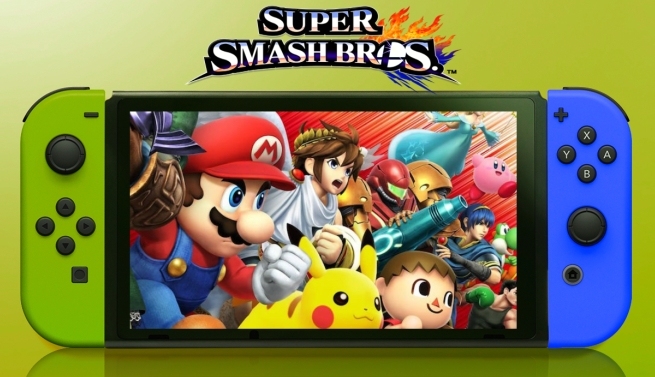
In this the 2018 E3 might be one of the most important E3’s that the NextGen consoles have ever faced. Even as Sony is in a happy all rosy setting at present, for Microsoft it will be a day where not one but two swords of Damocles are looming over the heads of these executives. One sword is linked to the failure of the Microsoft show; the second one is linked to the success of the Nintendo show. The most powerful console of the world is about to get bashed twice, once by their own ego, the second bashing will come through the actions of a smashing plumber named Mario, in this specific case in the shape of Super Smash Bros, the enduring agony of Microsoft will not be fixed in the short term, if they had only actually listened to gamers beforehand, their predicament wouldn’t have been anywhere near this bad.

So as we are now swamped by news on all levels on how “Microsoft’s E3 2018 plans will give the Xbox One a chance to shine away from the show floor”, with one source giving us “With the larger venue, Microsoft will be able to host more fans and partners at its press event than ever. Of course, it will all be for naught if Microsoft doesn’t have anything to show off, but the company knows that it is on shaky ground”. The source (@JacobSiegal) is right of course, but the fact remains that when it comes to exclusives at present, Microsoft is clearly a Far Cry behind Sony. Oh, no! Far Cry 5 is there for PS4 too, so there is that loss for them. Yet the pun was intentional. There is a clear visible case that the only reason that Microsoft remained in the game for so long at this speed was due to the unrelenting support from Ubisoft, without them there would be no Xbox One, or the One X at all. Ubisoft set the post high enough for that so called ‘most powerful system’ to be around at all. Even now, we see that as the Ubisoft listing is showing that their games are for both systems, they will also be releasing Switch titles. It is there that the Switch will gain even more momentum, whilst their dedication (Ubisoft) to all consoles give rise to the fact that the slowdown of Xbox One X consoles will remain minimised. So it is in that part that we will see that implied huge display from Microsoft in that place across the street from the E3 will be really heavy on Ubisoft presence, and in all honesty, plenty of Xbox gamers will love that, especially when they are treated to playable multi player parts of the Division 2 (speculation from my side). That is essential as we now see that several exclusive titles for the PS4 will never make it to the XB1x. It will be the other way round for some titles as well, but weirdly enough, none of those titles score anywhere near the excellence of the PS4 games. It seems that the most powerful system in the world gets to lag in more than one area, that whilst Switch is bringing their own remastered titles, like the Spyro trilogy (several sources), what is shown is pretty much amazing in quality, so it is there that my one warning to Sony is given, they were already worried that Nintendo was taking off in stellar ways, Sony will show another worry, not that Nintendo will catch up with them, but that software sales of Nintendo will make a huge leap, whilst the overall sales of PS4 games are extremely excellent, its top increase will merely lag by an optional 1%-2% as many consumers might buy one less game on the PS4 and will change that one title less bought for two Nintendo Switch titles instead, which would make perfect sense in several ways.

We will know a lot more (read: we can predict a few things better) in 9 weeks; I just can’t wait to voice the words ‘I told you so!‘ to Satya Narayana Nadella (apparently the CEO of Microsoft).


1 Comment

Filed under Gaming, Media

The politics of denial

I started this last Friday, so as I started writing this, I got to do the clumsy thing and actually kick out the power cable, losing all I had written. It led to my own denial and anger, and it fittingly fits this. Now, as I revisit the issue I have on one side the pleasure of having ‘new’ data, and the displeasure of going over this, but I will a little later in the article as it actually has bearing on all this.

So these three senators have decided to see if they can break up their entire Saudi Arabian support system, which will work out swimmingly for the UK, but about that later. The three senators Bernie Sanders, Mike Lee, Chris Murphy have started the US on a path, where the setting is that those three have introduced a resolution that will force the chamber to vote for the first time on whether the US should continue to support Saudi Arabia in the war in Yemen, a conflict that has led to the deaths of at least 10,000 civilians. In itself that is not the question, you see this is not whether what they do is ‘right’ or ‘wrong’. As we see it in the Guardian (at https://www.theguardian.com/world/2018/feb/28/yemen-saudi-arabia-war-us-support-senator-push-to-end) we get ““This is about the process,” said an aide to Lee. “What decisions do we make for a country that has been at war constantly for almost 20 years? When do we say that something is worthy of intervening in and when do we make that determination? It’s about the how“, which is fair enough. It is a political decision in all this and we can view it from one side, or from the other side. But there is actually a lot more going on.

Part is seen when we see “Yemen’s conflict began in 2014, when the Houthis, Shia rebels from the country’s north, seized the nation’s capital and ousted the Saudi-backed ruler, Abd Rabbu Mansour Hadi, who lives in exile in Riyadh. In response, a Saudi-led Arab coalition began a bombing campaign in 2015, to restore the exiled government to power”, in all this, we might see these matters as separate, but they are not, they are very connected.

The first part is seen in the NY Times (one of many sources), on April 14th 2011 we see ‘U.S. Groups Helped Nurture Arab Uprisings‘ (at http://www.nytimes.com/2011/04/15/world/15aid.html), here we see “a small core of American government-financed organizations were promoting democracy in authoritarian Arab states“, as well as “as American officials and others look back at the uprisings of the Arab Spring, they are seeing that the United States’ democracy-building campaigns played a bigger role in fomenting protests than was previously known, with key leaders of the movements having been trained by the Americans in campaigning, organizing through new media tools and monitoring elections” we see that America never learned from its mistakes in Egypt, Iran and other places. Now, I have nothing against democracy, I grew up in that environment and we should all accept that, but is it that clear? These nations had a sovereign right, they decided not to be democracies and as some filled the heads of some people with the ‘golden dream‘, and got trained into the creation of flocks and let them flock to those Arab spring groups the damage ended up getting close to complete. What started in Tunisia in 2010, moved to Libya, Egypt, Yemen, Syria, and Bahrain, where we saw the unsettling of regimes, major uprisings and social violence, riots, civil wars and/or insurgencies. Places like Morocco, Iraq, Algeria, Iranian Khuzestan, Lebanon, Jordan, Kuwait, Oman and Sudan were not impervious either to some extent. So in the age of the fucked up Obama administration we saw the start of more violence and the death of close to a million citizens, yet the Democratic Party goes into denial at that stage, because they were not involved. Now, legally speaking there is absolutely no evidence that this was done with the blessing of the Democratic Party, or parties in the White House in that time. Now, it might exist, but I have not seen it. In addition as the NY Times gives us we see references to “the International Republican Institute, the National Democratic Institute and Freedom House, a non-profit human rights organization based in Washington“, as well as “The National Endowment receives about $100 million annually from Congress. Freedom House also gets the bulk of its money from the American government, mainly from the State Department“. So here we see the crux, these three senators want to set the how and the process, but their own system caused this and now they want it to go away. The US burned them self on Syria by standing at the sideline whilst we see that they caused it indirectly. Now as they numbers in Yemen add up, we see that the US is ready to get into denial fast. The issue is even more ‘hilarious’ when we see in that same NY Times article “Ms. Qadhi, the Yemeni youth activist, attended American training sessions in Yemen. “It helped me very much because I used to think that change only takes place by force and by weapons,” she said. But now, she said, it is clear that results can be achieved with peaceful protests and other nonviolent means“, so how peaceful did things go in Yemen, and how peaceful did those 10,000 citizens die?

I am not implying that Ms. Qadhi was involved in any of that, but for aspiring autocrats the notion of destabilisation breeds opportunity, which is pretty much what we are seeing now; with splintering in Yemen the damage is actually increasing with Iran, Islamic State, Ansar Allah playing their part. As the BBC reported in February 2015 “But as the interim government of President Abdrabbuh Mansour Hadi stalled in early 2014, Ansar Allah launched an aggressive military campaign in the north, defeating key military units allied to Gen Ali Mohsen al-Ahmar and the Islah political party” so how peaceful should we see this ‘aggressive military campaign‘?

And that is not even the beginning of the issue. The NY Times give us in conclusion “we appreciated the training we received through the NGOs sponsored by the U.S. government, and it did help us in our struggles, we are also aware that the same government also trained the state security investigative service, which was responsible for the harassment and jailing of many of us, said Mr. Fathy, the Egyptian activist“, which now reads that the US government was selling short and betting on both sides of the event, like an arms dealer providing both sides with the latest creation in the effort to end the lives of those on the other side of the equation.

It gets even more disturbing when we see the Telegraph (UK) give us (at https://www.telegraph.co.uk/news/wikileaks-files/bahrain-wikileaks-cables/8334643/GUARDING-NDIS-FLANK.html) the part where there is a dis-proportionality in all this making the issue even more toxic and dangerous. That part is seen in “Al-Hamer promises to be a cooperative partner for emboffs and, we judge, will support NDI programming so long as it does not disproportionately benefit Al-Wifaq and other opposition political societies. He is somewhat favourably disposed towards the U.S. — all four of his children study in Boston or Austin, TX — and his wife, Afnan Al-Zayani, is a MEPI grantee. Al-Hamer’s chief focus will remain his job as the King’s media advisor; he will likely leave BIPD strategy and operations to other members of the new board of trustees and to Al-Khayat and his senior staff. Emboffs will engage with Al-Khayat and board members such as Al-Otaibi, and will remain alert for any signs of BIPD or GOB discomfort with NDI in an effort to avoid any repetition of the controversy NDI encountered in 2006“,

Finally the NY Times gave us: “Hosni Mubarak, then Egypt’s president, was “deeply sceptical of the U.S. role in democracy promotion,” said a diplomatic cable from the United States Embassy in Cairo dated Oct. 9, 2007“, which took roughly 3 years, 4 months and two days until that same democracy promotion scheme got rid of him and his presidency on 11th February 2011.

Now we see that the US is adding to its own misery. As it had lost any credibility it has, we see that three senators are setting the stage where the US could lose even more. We see that (at https://lawlordtobe.com/2018/03/06/the-global-economic-switch/), the issue of Saudi investments are now bubbling to the surface. Not just some need for a desalinisation plant. No this is a setting in excess of 500 billion and as the US government is trying to make a play for some parts of that, we see three senators trying to get on a high moral horse and change the setting of support to Saudi Arabia. So as they hold the high moral horse and stop any actions to take place, how would Saudi Arabia react with their “the half a trillion dollar NEOM“, the massive growth in dependency and requirements for technology will take a nice seat where these actions might result in Saudi Arabia talking to British Telecom and Verizon might end up sitting at the side of the road. What was a near equal race between the two for the graces of 5G opportunity is now a race where Verizon could in theory end dead last. Cory Booker the Democrat senator for New Jersey is just going to love all this or not?

The problem is that this should have been about the morality and not the cash, yet that is what politics in a bankrupt state has been reduced to. Now as we are seeing all that good news in regards to the US economy. Most ignore the other side as “Toys “R” Us may be planning to liquidate its bankrupt U.S. stores, according to a report by Bloomberg News. The retailer, reportedly, has not found a buyer or secured a debt restructuring deal with its lenders” (Source: CBS), in addition the LA Times gives us “The downfall of Toys R Us can be traced back to a $7.5 billion leveraged buyout in 2005, when Bain Capital, KKR & Co. and Vornado Realty Trust loaded the company with debt. For years, the retailer was able to refinance its debt and delay a reckoning. But the emergence of online competitors, such as Amazon.com Inc., weighed on results. The company’s huge interest payments also sucked up resources that could have gone toward technology and improving operations“, the interest payments, the issue that several larger players face, with Google, Amazon, and Microsoft being likely the only exceptions, we still see the growth of debt where these larger players are all fending off the inevitable. Gun maker Remington and guitar company Gibson, two iconic companies, neither made it out and are now in the bankruptcy setting, and they are not alone, so as they vanish thousands of workers will be in the need of finding new jobs and possibly even resettling in another state changing state pressures on the support systems that were in place, because those people made products that needed shipping, they had infrastructures and shops depended on these thousands, they are most likely to move and as that happens more pressure is exerted on others.

Is that all relevant?

Only indirectly! You see it is part of a pattern. The US has pushed the media to be in denial of the debts and the costs of these debts. So when we consider that Intergovernmental holdings stood at $6.3 trillion, giving a combined total gross national debt of $19.8 trillion or about 106% of the previous 12 months of GDP, with 45% that the public has is owned by foreign investors, the largest of which were Japan and China each having a little over a trillion of that debt. So even at 1% the debt is a large issue, even as it slowly decreases, two of the 32 nations should be getting $10 billion each and that is merely the interest and that is if it is only 1%, it is unlikely to be below 4%, so the US has to come up with well over 250 billion and that is beside all the normal expenses they have. It only takes one negative event to push them over the hill and more than one is coming, in addition the US desperately needs part of the economic $500 billion windfall, and that is likely to become the diplomatic debate that the State department will be confronted with. with the debt adding well over $240 billion in the last 11 months the forward momentum is not there at present (it was earlier than that though), we see that the US has issues and dilemma’s to deal with, only one of them is Yemen and several are with Saudi Arabia, a nation they need to be friends with for all the reasons they can muster.

So as we look at Al Jazeera (at https://www.aljazeera.com/news/2018/03/180310204215697.html) where we see “A military solution to the conflict in Yemen will be a disaster”, said al-Hamdi, a former member of the Yemeni parliament who was ambassador to the Czech Republic from 2009 until 2014“, we might give him the benefit of the doubt, yet is that true? You see “History is repeating itself. There is a history of Saudi intervention in Yemen, from the revolution in 1962 to the 1994 Yemeni civil war,” said al-Hamdi at the event, which was hosted by the Cordoba Foundation and titled Yemen: War, Politics and Human Tragedy event. “Yemen is being destroyed. A nation is dying,” said al-Hamdi“, yet we already know that it was the Yemeni president that was requesting assistance, there was an uprising and that started the current situation.

You see, what we do not see form any source is that when I look into Abdulrahman al-Hamdi, I find very little. I did find “Abu Salim mayor Abdulrahman al-Hamdi told Reuters that the unusually intense fighting that erupted last Thursday was triggered by members of competing armed factions capturing each other“, which is what Reuters gave us in March 2017 (might not be the same person), so the only other articles are from the last hours. Consider an ambassador that fell from all the news channels between his non-working status between 2014 and 2018, almost a death sentence. So is this ‘high morality‘ his way to get back into politics? Back in the news merely because it is convenient for some of the players, that is how I personally see it.

Back to the beginning of me

Now I get to go to the part I mentioned in the beginning. You see there was a small accident on Friday and I lost power and as a result my article was gone, I had not yet saved it. Now, I could have gone back to it all and rewrite it, but after 2,000 words (roughly) I felt a little drained and extremely agitated with myself. Kicking out the power cable is my own stupidity and it was on me and me alone. Perhaps you can relate? Consider that you leave home, you get to the train station and it is there that you recognise that your wallet is still at home. Now, this is not a biggie, we have all had that moment and it is that moment that you realise that you have to do that 15 minute walk twice more just to get back to the start. That is when your nerves hit you and I have resolved it to walk twice that much to the other station because the repetitive feeling falls away and weirdly enough the anger subsides quicker (no idea why though). I know, it is irrational but that is how my brain at works at times and we all have some kind of quirk like that. That quirk is shown in more clarity when we see the impact of the US Arab spring and the subsequent actions of the US. They are now trying to change it all because the death list that the US aided in starting the death counts in Syria, Yemen, and Libya to name three is also opening the wounds towards the Iran and the CIA-backed 1953 coup that ousted democratically elected Prime Minister Mohammad Mossadegh. Some are asking if the US will ever learn its lesson in this regard. Others are wondering how deep ‘Christian bitching fish wife fairy-tale mongering‘ goes in regards to the intervening actions in Middle Eastern rule and politics.

The end is nowhere near the end and it reflects also directly towards Syria, as we see “The UN secretary general has described the situation in eastern Ghouta as “hell on earth” and the body’s high commissioner for human rights described the military offensive as a “monstrous annihilation”“, in that it ended exactly as I expected it to play out. so as we see “The report from the UK-based human rights group, which said both Douma and the smaller nearby town of Harasta were surrounded and cut off, was disputed by locals, but such an outcome seems inevitable in any event as the regime presses its advantage, backed by both Syrian and Russian airstrikes“, so as the Syrian situation draws to a close we see that both US administrations have failed the Syrian people and as that population has been culled we see that the docile remaining part will become the sheep that the Syrian president needed them to be. In all this the profile of Russia is now further up and the US diminishes in parts of the Middle East, so alienating Saudi Arabia is likely the worst choice that America could make. Fortunately the UK still has a large opportunity there, but in all, as Saudi Arabia wants more options, the doors will open further for Russia. That was seen last week at CNBC as they gave us: “The agreement between Saudi Arabia and Russia to cut back on oil production has boosted oil prices and is now the foundation for a broader relationship“, even as Saudi Arabia is pushing for less power on oil, they still want the best price possible for what they have, a mere business approach to a commodity. In addition, less than a month ago we saw Bloomberg report that the liquefied natural gas (LNG) options, is  new field for Saudi Arabia to do in conjunction with Russia as we got “Russian gas producer Novatek PJSC and Saudi oil giant Aramco agreed to consider teaming up on Novatek’s Arctic LNG-2 project“, so we see growth on economic options for Russia as America has been closing its own doors, or to some extent, they are getting closed by Bernie Sanders, Mike Lee and Chris Murphy for whatever reasons they had.

It is now becoming a stronger imperative to find a path forward. Not merely in regards to Saudi- Us relationship, the issue of Yemen and Syria will plague us for decades to come, even if it is settled overnight (which is not ever happening), the cleaning tasks as well as finding a longer term solution for Humanitarian solutions can only become successful if the players enable Saudi Arabia to take the lead for ending the Yemeni crises. For Syria it is likely too late, as Russia is completing ‘its’ mission (at https://lawlordtobe.com/2018/02/24/losing-values-towards-insanity/), where we see in ‘Losing values towards insanity‘ the quote “With these two gentleman owning 50% (actually more than that) into LLC Megaline, with Megaline receiving a large chunk of the capital construction contracts for the Russian military we see that link. When the dust settles, Assad will need to rebuild, and they will be the front player and possibly only consideration on a nation needing to be reconstructed. So now how weird are their actions? Both Yevgeniy Prigozhin and Dmitry Utkin are now perfectly placed to rake in billions and in that regard we get back to the options for the dying in Syria; they don’t get to have any” a mere two weeks ago, now shown to be more accurate than anything else published. The media could have seen this coming with a ruler and an abacus, no high mathematical forecasting required.

So as we see the outrage on Yemen from all those seeking the limelight, I wonder if anyone will ask them the question, what exactly did you do for those Yemeni’s over the last 4 years? The list of activities might not add up to much, that is how I saw Abdulrahman al-Hamdi, because if you seek him on Google for the last year, he shows up once, just once for the Al Jazeera event 6 hours ago, that is also the next issue that both Syria and Yemen face, those who merely talk to get a seat on the table, because soon there will be money available and now they all want a seat at the table, it is the politics of denial, to only get there when the going is good.

 

Leave a comment

Filed under Finance, Law, Media, Military, Politics

The G30 court

There is an issue, an issue that we are all missing, more for the reason that after January 17th the media is steering clear of this with all the might and options they had. I reckon that they will spin this in a setting that it is ‘uninteresting‘, but when was it ever uninteresting to look at a group of 30 that has the alleged advantage of getting their fingers into a pool that has 0% risk worth billions?

The more important part is that there was one mention, or at least only one that was found, on July 7th 2017 and November 3rd 2017, both come from Reuters, the media has become that much of a bean flicking, pole pulling grape flocked bunch of pussies as I personally see it. Yet, the fact is that even as the impact is speculated, the setting given is that a group of 30 had an optional exclusive insight in the 3 trillion dollar ECB spending. Consider that each of these 30 got a 1% portfolio, where 75% of it was set at 0% whilst the remaining 25% might have op to 3% risk, in this setting the underwritten $31 billion for each member would set a speculated sanctified security of a multiple factors of $31 billion each. An elite group of 30 all having the top of the financial services cream at zero risk with the optional massive returns none of us ever had insight to. Now I can see that a mere 0.01% of that 1% would set me up for life, and that is merely the one source, the ‘in-crowd’, now would that be the incestuous insider towards untapped ‘considerations of investment‘ and they would all be bringing their own portfolios and economic insight on how to maximise that? Adding the man (read: Mario Draghi) spending Europe’s $3.1 trillion would happily be allowed into their midst, it is merely the setting that this rigs the game towards 30 participants whilst giving a weighted disadvantage to all other bankers is still an issue not covered by anyone.

So as we saw last November ‘ECB says not its call to publish content of Draghi’s meetings with financiers‘ (at https://www.reuters.com/article/us-ecb-banks-ethics/ecb-says-not-its-call-to-publish-content-of-draghis-meetings-with-financiers-idUSKBN1D327U) whilst we also see “At issue is Draghi’s membership of the so-called Group of 30, where policymakers meet bankers, fund managers and academics behind closed doors to discuss economic issues. He sits alongside former and current central bankers, such as Bank of England Governor Mark Carney and the Bank of Japan’s Haruhiko Kuroda, as well as Nobel laureate Paul Krugman

Yet even as we see “Ombudsman Emily O’Reilly had asked whether the ECB would “consider proactively informing the public of the content of these meetings” in response to “a complaint by activist group Corporate Europe Observatory, which said in January it was concerned about proximity at the G30 of ECB officials and bankers they are meant to supervise“, I cannot help but wonder what both Emily O’Reilly and Corporate Europe Observatory left unmentioned. It was also mentioned by the Dutch Volkskrant where the Corporate Europe Observatory (CEO) member Olivier Hoedeman added comment.

I tried to find more, so even as we have found Mario Draghi, Mark Carney, Haruhiko Kuroda and Paul Krugman as confirmed names (from the media), I initially believed that Groupe Credit Agricole (most likely Dominique Lefebvre) would be a member, I am also speculating that Peter Smith (as director of N M Rothschild & Sons) might have been a member of that group. There are a few other players, but it becomes increasingly less certain even from a speculated point of view. What does matter is that this is not merely some ‘secretive’ babble group. Even as we see last July “In a letter to Draghi that was published on Friday, European Ombudsman Emily O’Reilly said the meetings of the Group of Thirty, where central bankers, economists and financiers talk behind closed doors, are “not transparent” and questioned the ECB president’s membership of the club” as well as “Draghi has until September to reply to the letter in writing“, in that, the media and so called journalism stayed clear of this for the largest extent and the ECB did respond in October 2017 in the attached part. In my view, it all sounds nice but a select group of 30 with a pool of a number in excess of 6 trillion, where 30 people get first dibs on a risk bonus that goes beyond the comprehension of many and the media buries it on page 62 is a much larger issue, especially when the response on page 9 gives us “Moreover, Article 130 of the Treaty on the Functioning of the European Union safeguards the independence of the ECB and of the members of its decision-making bodies” whilst we all know that a mere fraction of $6 trillion has been a case for shifted morals and readjusted (read: weighted morals) in many regards, there are countless hours on C-SPAN that saw those liquid morals and settings in regards to the 2008 events, so the idea of ’30’ members ending up with golden parachute the size of Australia is not that much of a leap, speculated or not. So when we look back to the 2008 events and we see in January 2017, nine years later “The credit rating agency Moody’s has agreed to pay nearly $864m to settle with US federal and state authorities over its ratings of risky mortgage securities in the run-up to the 2008 financial crisis, the department of justice said on Friday“, whilst the damage from the 2008 crash was set to top $22 trillion, we should ask the US Justice department on where the remaining 21.991 trillion is and who was supposed to pay for that. So in all this the fact that the media is steering clear from the G30 and asking, or actually not asking anything past the Reuters articles seen should give alarm bells on many sides, not merely the media.

The EU Parliament magazine (at https://www.theparliamentmagazine.eu/articles/news/mario-draghi-under-fire-g30-membership), also gives us “CEO’s monetary and financial policy researcher Kenneth Haar said, “The Ombudsman’s decision is timely and very positive. Draghi’s involvement with the G30 was ill-advised from the start. Since 2016, when the ECB’s mandate for banking supervision was extended, the close ties between the president and the bankers’ group has become absolutely unacceptable“, or is that gave, because it is past tense and so far the media has remained silent since January 17. It seems to me (extremely speculative) that these 30 members are either connected or involved with the shareholders, stakeholders or advertisers in the media, because the media seems to be at all times protective of these three groups, whilst merely informing on those three groups in a filtered way, or to the smallest degree unless it was already out there in the field. The fact that this group has such a global hold is an issue and I might have been a lot less speculated on this, but the lack of transparency as well as the fact that we see “Tyga Gives Kim Kardashian A Hilarious Spelling Lesson On Social Media” and other Kim Kardashian on a daily basis, whilst the media remains silent on the speculated distributors of no risk trillions is a weird setting, especially when those sources have their fingers in thousands of billions. So when we see the BBC with: ‘Is it time we all unfollowed Kim Kardashian?‘, we might wonder whether it is yea or nea, yet there is a speculated 99.9999% likelihood that the G30 members will not make the cut towards monitored inclusion on following, I am certain that the first one that acts on that is has a boss who is likely (again speculated) to get a quick phone call from a shareholder, stakeholder or large advertiser to wonder if they have any grasp on their staff members and whether they want to manage or become managed.

Do you think that this is a stretch?

From my personal point of view I would give to you Sony (2012) issues, in regards to the change to the Terms of Service. The media ignored it, even as it would impact a group of 30 million consumers. Most of those players merely just trivialised it via ‘there is a memo‘ on it. The rest did even less; some even ignored it all together. With Microsoft (2017/2018) we see even more (at https://www.computerworld.com/article/3257225/microsoft-windows/intel-releases-more-meltdownspectre-firmware-fixes-microsoft-feints-an-sp3-patch.html)

You’d have to be incredibly trusting — of both Microsoft and Intel — to manually install any Surface firmware patch at this point. Particularly when you realize that not one single Meltdown or Spectre-related exploit is in the wild. Not one“, the amount of visibility (apart from marketed Microsoft Central views) is close to null, a system with no more than 17 million users is marketed and advertised to the gills, so the media seems to steer clear, merely two examples in a field that is loaded with examples.

Back to the group

So as I gave the speculated view earlier on the ‘whom’, we can see the full list (at http://group30.org/members), these members are according to the website:

  • Jacob A. Frenkel, Chairman, JPMorgan Chase International
  • Tharman Shanmugaratnam, Deputy Prime Minister, Singapore
  • Guillermo Ortiz, Chairman, BTG Pactual Latin America ex-Brazil
  • Paul A. Volcker, Former Chairman, Federal Reserve System
  • Jean-Claude Trichet, Former President, European Central Bank
  • Leszek Balcerowicz, Former Governor, National Bank of Poland
  • Ben Bernanke, Former Chairman, Federal Reserve System
  • Mark Carney, Governor, Bank of England
  • Agustín Carstens, Former Governor, Banco de México
  • Jaime Caruana, Former Governor, Banco de Espana
  • Domingo Cavallo, Former Minister of Economy, Argentina
  • Mario Draghi, President, European Central Bank
  • William C. Dudley, President, Federal Reserve Bank of New York
  • Roger W. Ferguson, Jr., President and CEO, TIAA
  • Arminio Fraga, Founding Partner, Gavea Investimentos
  • Timothy Geithner, President, Warburg Pincus
  • Gerd Häusler, Chairman of the Supervisory Board, Bayerische Landesbank
  • Philipp Hildebrand, Vice Chairman, BlackRock
  • Gail Kelly, Global Board of Advisors, US Council on Foreign Relations
  • Mervyn King, Member, House of Lords
  • Paul Krugman, Distinguished Professor, Graduate Center, CUNY
  • Christian Noyer, Honorary Governor, Banque de France
  • Raghuram G. Rajan, Distinguished Service Professor of Finance
  • Maria Ramos, Chief Executive Officer, Barclays Africa Group
  • Kenneth Rogoff, Professor of Economics, Harvard University
  • Masaaki Shirakawa, Former Governor, Bank of Japan
  • Lawrence Summers, Charles W. Eliot University Professor at Harvard University
  • Tidjane Thiam, CEO, Credit Suisse
  • Adair Turner, Former Chairman, Financial Services Authority
  • Kevin Warsh, Lecturer, Stanford University Graduate School of Business
  • Axel A. Weber, Former President, Deutsche Bundesbank
  • Ernesto Zedillo, Former President of Mexico
  • Zhou Xiaochuan, Governor, People’s Bank of China

They also have senior members, which is interesting as they are younger than at least one of the current members, as well as the fact that most of the members in the current, senior and emeritus group have multiple titles.

  • Stanley Fischer, Former Governor of the Bank of Israel
  • Haruhiko Kuroda, Governor, Bank of Japan
  • Janet Yellen, Former Chair, Federal Reserve System

And the Emeritus members:

  • Abdlatif Al-Hamad, Former Minister of Finance and Planning, Kuwait
  • Geoffrey L. Bell, President, Geoffrey Bell and Associates
  • Gerald Corrigan, Managing Director, Goldman Sachs Group, Inc.
  • Guillermo de la Dehesa, Chairman, Aviva Grupo Corporativo
  • Jacques de Larosière, Former Director, IMF
  • Richard A. Debs, Former President, Morgan Stanley International
  • Martin Feldstein, Professor of Economics, Harvard University
  • Gerhard Fels, Former Member, UN Committee for Development Planning
  • Toyoo Gyohten, Former Chairman, Bank of Tokyo
  • John Heimann, Senior Advisor, Financial Stability Institute
  • Sylvia Ostry, Former Ambassador for Trade Negotiations, Canada
  • William R. Rhodes, President and CEO, William R. Rhodes Global Advisors
  • Ernest Stern, Former Managing Director; The World Bank
  • David Walker, Former Chairman, Barclays
  • Marina v N. Whitman, Professor; University of Michigan
  • Yutaka Yamaguchi, Former Deputy Governor, Bank of Japan

So this group of 30 is slightly larger and in the group each of these members would have the power and economic impact to tell any member of the Fortune500 what to do, or better stated and more important ‘what not to do!‘ It is in that instance that we see the first impact. A game that now looks as I personally see it rigged in several ways; so even as I was allegedly wrong about Dominique Lefebvre or a direct peer, we see Christian Noyer. So in my view, in a 2015 French article on the issue of “Who will succeed Christian Noyer as head of the Banque de France?“, we see “Mario Draghi, the president of the ECB, seems to have had the idea to see his right arm go. Benoît Coeuré would be an important ally for the Italian in the Council of the Governor“, yet in the light of the G30, it seems to me that such a discussion would have been set into a pre-emptive conclusion of who would needed to have been made king in that castle. When we see that in light of a previous article, namely ‘The Global Economic Switch‘ (at https://lawlordtobe.com/2018/03/06/the-global-economic-switch/), were well over 500 billion is to be invested and grown, in addition to the fact that the SAMA has oversight to well over 2 trillion dollars, how come that they do not have a seat at the table? In the same way that the Rothschild’s are not there, but they might be ‘represented‘ through Bernanke or Frenkel, whilst it is not impossible that Mario Draghi might be giving them the low-down to some degree, yet the Kingdom of Saudi Arabia with that much money on the ladle of expansion, that they are not part of it. In a world where that group is about (according to their own website) “The Group of Thirty, established in 1978, is a private, non-profit, international body composed of very senior representatives of the private and public sectors and academia. It aims to deepen understanding of international economic and financial issues, and to explore the international repercussions of decisions taken in the public and private sectors“, where the foundation of Saudi Arabia has been the power of OPEC and the power to instil the push to be a global player in many fields, in that sight in represented value that the repercussions of decisions are set at, to see the Bank of Israel yet not some link to SAMA (Saudi Arabian Monetary Authority) makes equally less sense in the line of thinking that the ‘about‘ section gives us, which makes me wonder what these members are about. they might be all about that, yet what else they are about, or what else they have a useful value in gives rise to my train of thought on where this train with less than 55 occupants is heading off to, and more so, in light of the power that these ‘30’ members have, the fact that the G30 is not the cover talk of many newspapers, especially the Financial Times is beyond me, because anyone coming to you with ‘No News’ or outdated news, or even worse that there is no real issue in play is clearly told what not to write.

It seems to me that not only is there more in play, the personal speculated view that I have in light of learning more and more about the G30 merely confirms my suspicions, as well as the insight that I am getting (a speculated one) where the media is steering clear from all this is a much larger issue. To what and in which direction is one I am not willing to go into, because I know that the ice is wafer thin at this point and skating on water is a realistic ‘no no’, yet the feeling that these members are getting a first view and optionally the option to dip their cups on plenty into a grape juice barrel of risk-less profit is one that I feel is very much in play. This G30 group is networking on an entirely new level, one that I have never seen before. This is not some kingmaker into presidency; this is a long term group where the optional billions will keep on flowing for decades to come. And this all in a setting of non-transparency, because this goes way beyond the 3 publications in 2016 and of course all those papers published before that. In the 2016 publication ‘Shadow Banking and Capital Markets: risks and opportunities‘, (at http://group30.org/images/uploads/publications/ShadowBankingCapitalMarkets_G30.pdf), we see in the conclusion on page 49: “Moreover, growing leverage across the global Economy can create important risks to macroeconomic stability even if the financial system itself is more resilient. And two developments are particularly concerning: the growth of emerging market foreign currency debt and the rapid growth of Chinese leverage accompanied by a proliferation of shadow banking activities are ominously reminiscent of precrisis developments in the advanced economies“, which is in view of the experts would be nothing new, yet resources available and the 36 exhibits and the recommendations would have been available to the G30 group much earlier than anyone else. In that light, we need to wonder not merely on the setting, in Exhibit 36 we see mortgage losses and the fact that there is the US, Canada and Europe, so in that light the fact that the fourth one is the Netherlands, is that not odd? In light of several settings, France, Germany, Italy and the UK, any of these four would have made perfect sense, so why the Netherlands? Exhibit 33 might have been a reason for this, yet in equal measure the absence of Scandinavia and Italy in this setting now adds to the questions. I think it is not merely choice and presentation, the absence of those players give rise to questions, perhaps even speculated questions and as there are none to be given, it makes me wonder what else is missing, what other data was filtered because in the light of data and presentation there is one golden rule I have always kept in the back of my mind.

The Analyst shows you which investment needs to be made, the presentation makes you look forward to the invoice.

So what invoice is the G30 group making you look forward to and where did it need to go? Two questions with optionally very different results, and in that setting, whilst you know the impact the European economy has had over the last 15 years, whilst we also know that Mario Draghi has been spending $3 trillion, in that setting the G30 does not make the news?

Who is getting fooled by all this and who is getting fooled by making sure that you do not get to notice this?

It is a much larger playing field that is from whatever point of view you have a field of inclusion, or a field of exclusion, yet in all this there are questions that are not asked at all, questions that even I am not asking because I decided to go into technology, engineering and law whilst giving a pass on the Economic subjects. Yet the Financial Media is not asking them either and that is an issue, especially in light of that ‘secretive‘ group set to a stage of networking inclusion, or is it networking through filtered exclusion?

I’ll let you decide on that.


Leave a comment

Filed under Finance, Media, Politics, Science

The red lights of death

It has been one year, one year since the doors opened to the consumers to become the owner of the Nintendo Switch. Nintendo has been a true gaming company that has focussed on gaming since the beginning of time. Even as we loved their journey and whilst we globally disliked the WiiU; that what followed is a machine that has been embraced by pretty much every gamer young and old. The numbers are giving a picture, one that is not yet complete, yet Nintendo has had one year, Sony and Microsoft have both had 6 years and the numbers are actually quite scary. The analytical site Statistica (at https://www.statista.com/statistics/687059/nintendo-switch-unit-sales-worldwide/) gives us that after a year, the Switch has now surpassed 14 million consoles sold, in one year it is close to 45% of the Xbox One lifetime sales over 6 years, and the Nintendo is still rising its sales numbers. Another source (VGChartz, at http://www.vgchartz.com/article/272742/ps4-vs-xbox-one-vs-switch-global-lifetime-salesjanuary-2018/) gives us more, the monthly numbers are that Nintendo has close to 225% of what Microsoft is doing and it is getting close to nipping the Sony sales numbers at the heels. Even as the PlayStation 4 is now set to 75 million gamers, the achievement of Nintendo is noticed. It is noticed to the extent that in the market share, the PlayStation 4 managed to achieve 48 percent. The Nintendo Switch accounted for 37 percent of the consoles sold, and the Xbox One 15 percent. So even as the total numbers are not yet equalled, Nintendo has defeated the Microsoft market share by well over 2:1, I predicted that Nintendo would surpass the total sales numbers, but the fact that the Microsoft share numbers would be outdone 2:1 in just one year is a little more positive than even I imagined.

So if the Xbox360 users might remember the red lights of death, we can now say that for Microsoft as a gaming provider, they too are now facing the red lights of death, because at present Microsoft will be surpassed by Nintendo well before December 2019, even Sony who is still ahead by 400K systems per month is feeling some pressure growing. As I stated in the past, Microsoft can pretend whatever they want to in the business world, gamers demand results and excellence and in that regard, both the Xbox One and Xbox One X have faltered the gamer at large. Did they actually think that hiding behind ‘the most powerful console‘ would help them? That system can store no more than at most 50% of a Nintendo Switch? Who were they kidding?

Forbes had a go at Microsoft on more than one occasion and their views are not good, even as they ‘hide’ it with ‘rough’ time, with “Sony is coming out swinging next year with games like Spider-Man, God of War, The Last of Us Part 2, Death Stranding, Days Gone and more. Exclusives remain Sony’s most important advantage over Microsoft, and the company’s 2018 line-up is one of its strongest yet” we see the first part, the second part was given by Forbes a month later with “I can’t really get into specifics because Microsoft no longer shares sales information on Xbox One consoles, but common estimates put it at about half of what the PS4 has sold, maybe around 30-35 million units. The Xbox One is not a failure, I don’t think anyone but Sony die-hards would say that, as we are miles past something like the scant 13 million sales of the Wii U, but it is clear that if we had to pick an odd man out in this current climate, it’s Microsoft“. Forbes is partially right. I see it in two parts; the first one is that the Xbox offers merely 80% of what the Xbox360 offered, which is a really bad thing. What is more important is that Microsoft refused to listen to the gamers and when they pretend that they did, they still harassed gamers to do what Microsoft wanted against the express desire of the gamer, so how long was that EVER going to work? Some took the $150 loss and traded in for the PS4Pro, others (like me) left to old Xbox to gather dust and played and enjoyed their PS4 and some their Switch on the side too. One console they could not keep up with, the other has surpassed them in market share and will within the next year also surpass their total console sales.

In this the only losers will be the independent game designers who will now have to see if Sony and Nintendo offer a better deal. Two of the most amazing ones have been Astroneer and Subnautica. Astroneer would be a great Switch addition and Subnautica might make it, If they can get this playable on Switch too, it is a long shot, but it would be a unique experience to say the least. And that also triggers another part. As independent designers are now looking if their game can be ported, Microsoft will be losing out in all three fields, meaning that the red lights of death for Microsoft in gaming would soon be heralded. That is the consequence of not listening to gamers and selling short what gamers need. You see, all that Microsoft Azure pep talk sounds nice, but there they have rough competition, to bank in that direction whilst short selling a $125 billion market was perhaps one of the most stupid acts that Microsoft could have tried, they tried and they are getting fried!

Even now, as we saw only a week ago (at https://www.windowscentral.com/new-xbox-one-preview-build-spring-update), on how there are improvements, we see “As with any pre-release update, expect bugs – a lot of them. Current known issues include black screens, update errors and various issues across the Xbox One experience. These will soon clear up in forthcoming builds, though caution should be taken, especially when installing on your daily driver“, so apart from non-stop updates, the fact that the largest console is 1TB, how much space will be wasted in that regard? In that side there is one issue that both Sony and Microsoft share, or is it? With ‘Fortnite’s new 60fps mode is the real deal‘ (at http://www.eurogamer.net/articles/digitalfoundry-2018-fortnites-new-patch-really-does-deliver-60fps), where we see “Now, we’ve seen a range of ‘performance’ modes in the past that target 60fps on Sony and Microsoft’s enhanced consoles, but generally, they fail to deliver. The good news here is that Epic’s work is the real deal – and it’s by no means exclusive to the more powerful consoles, with owners of the standard models getting an equally impressive boost“, so both PS4pro and Xbox One X have issues and as the most powerful system cannot deliver at present as implied by multiple parties, the issue remains why that was not properly addressed before launch? That is still a dangerous subject as several games (example Forza: Horizon) do promise to deliver 60fps, so there is still an issue there. Still as the Switch is showing more and more games that get a much larger appreciation than other consoles tend to have for titles give even more rise to the Switch, which Nintendo will see as a handsome extra to the setting as given at present.

So in how much death danger is Microsoft?

That is the whole picture and until the 12th-14th June 2018, when the E3 will explode in our faces there will be no way to tell. The Microsoft marketing engine will continue to boast and boost what it can, but the E3 will be the first true test where Microsoft is and if they have any serious intentions to listen to the gamers and please their needs to the minimum, which is at present essential for their survival, Sony learned that lesson in 2017 and their adjusted views are back on the positive side for the most (they had less issues to deal with), in addition, the new exclusive game line-up that Sony has for this year is much stronger than before, so they are likely to rule the show. Although, there is no saying what Bethesda hits us with and they are on all systems, so Microsoft will have a benefit there. I also predict that they will be more and more dependent on Ubisoft stealing the show (whilst including the Xbox One X as much as possible) , more than ever before, so there will be information coming from several sides in all this and that should not be ignored.

The one thing that is at present almost a given, that is that the tickets to the Nintendo E3 show might be the hottest tickets in town because whatever they bat out of the park is also the size of the market share that Microsoft could lose to Nintendo, a side they never had to fear before. The game of gaming changed and Microsoft missed at least two exits from that road to nowhere. The E3 which is of course still rumours for the most as it is 12 weeks away is still an issue as it also rumoured to include a new Pokémon, Kirby, Yoshi and Metroid Prime 4 on Switch, whilst the Xbox One has 3 titles at present (no exclusives rumoured or announced) but does include the long awaited Cyberpunk 2077 by the makers that gave us Witcher 3, so there is that to desire. Bethesda had a teaser with references to Elder scrolls, Fallout and Doom, so there is more behind that whilst Sony might be stealing the show in regards to exclusives and it includes a conformed The Last of Us Part II, so there is enough to see that the Xbox might need to be placed in the ICU sooner than thought. Yet, in that last part, it will be at least another 5-7 weeks until there is a stronger confirmed list of games and gamers. The one part that is missing for now is the list of indie developers, because they can actually change the landscape by a lot, so I wonder what we will see. what is now clear and what is being shown by data, by the evidence out in the field is that Microsoft has lost the benefits they had and unless there is a massive overhaul and a large course adjustment by the Microsoft board of directors it is not impossible that the E3 2019 is one that will happen without Microsoft, or with them not getting noticed at all. I wonder which they think will be worse, but hey, they have ‘the most powerful console’, so this speculation might just be me with no chance of this becoming a reality, or will it?


Leave a comment

Filed under Gaming, IT, Media

A windmill concussion

That was the first thought I had whilst looking at the Guardian (at https://www.theguardian.com/technology/2018/mar/01/eu-facebook-google-youtube-twitter-extremist-content) where Andrus Ansip was staring back at me. So the EU is giving Facebook and Google three months to tackle extremist content. In what relation is that going to be a workable idea? You see, there are dozens of ways to hide and wrongfully classify video and images. To give you an idea of what Mr Ansip is missing, let me give you a few details.

YouTube
300 hours of video is uploaded every minute.
5 billion videos watched per day.
YouTube gets over 30 million visits a day.

Facebook
500+ terabytes of data added each day.
300 million photos per day
2.5 billion pieces of content added each day

This is merely the action of 2 companies. We have not even looked at Snapchat, Twitter, Google+, Qzone, Instagram, LinkedIn, Netlog and several others. The ones I mentioned have over 100,000,000 registered users and there are plenty more of that size. The largest issue is not the mere size, it is that in Common Law any part of Defamation and the defence of dissemination becomes a player in all this, in Australia it is covered in section 32 of the Defamation Act 2005, the UK, the US and pretty much every Common Law nation has its own version of it, so the EU is merely setting the trend of all the social media hubs to move out of the EU and into the UK, which is good for the UK. The European courts cannot just blanket approve this, because it is in its core an attack on Freedom of Speech and Freedom of expression. I agree that this is just insane, but that is how they had set it up for their liberal non-accountable friends and now that it works against them, they want to push the responsibility onto others? Seems a bit weird does it not? So when we see “Digital commissioner Andrus Ansip said: “While several platforms have been removing more illegal content than ever before … we still need to react faster against terrorist propaganda and other illegal content which is a serious threat to our citizens’ security, safety and fundamental rights.”“, my question becomes whether the man has any clue what he is doing. Whilst the EC is hiding behind their own propaganda with “European governments have said that extremist content on the web has influenced lone-wolf attackers who have killed people in several European cities after being radicalised“, it pretty much ignored the reality of it all. When we look to the new-tech (at https://www.theverge.com/2017/4/18/15330042/tumblr-cabana-video-chat-app-announced-launches-ios), where a solution like Cabana allows for video and instructions whilst screen does not show an image of the watchers, but a piece of carton with texts like “مجنون”, “الجن”, “عسل”, “نهر”, “جمل” and “تاجر”. How long until the threshold of ‘extreme video‘ is triggered? How long until the system figures out that the meeting ended 3 weeks ago and that the video had encryption?

It seems to me that Andrus Ansip is on a fool’s errant. An engineering graduate that went into politics and now he is in a place where he is aware but not clued in to the extent he needs to be (OK that was a cruel comparison by me). In addition, I seriously doubt that he has the largest clue on the level of data parsing that such systems require to be, not merely to parse the data but systems like that will raise false flags, even at 0.01% false flags, that means sifting through 50Mb of data sifted through EVERY DAY. And that is not taking into account, framed Gifs, instead of video of JPG, or text, languages and interpreting text as extreme, so there will be language barriers as well. So in all this even with AI and machine learning, you would need to get the links. It becomes even more complex when Facebook or YouTube start receiving 4chan Video URL’s. So when I see “and other internet companies three months to show that they are removing extremist content more rapidly“, I see the first piece of clear evidence that the European Commission has lost control, they have no way of getting some of this done and they have no option to proceed. They have gone into blame mode with the ultimatum: ‘Do this or else‘. They are now going through the issues that the UK faced in the 60’s with Pirate radio. I remember listening to Radio Caroline in the evening, and there were so many more stations. In that regard, the movie The Boat That Rocked is one that Andrus Ansip should watch. He is the Sir Alistair Dormandy, a strict government minister who endeavours to shut down pirate radio stations in all this. A role nicely played by Kenneth Brannagh I might add. The movie shows just how useless the current exercise is. Now, I am all for finding solutions against extremist video, but when you consider that a small player like Heavy.com had an extreme video online for well over a year (I had the link in a previous article), whilst having no more than a few hundred video’s a week and we see this demand. How ludicrous is the exercise we see now?

The problem is not merely the online extremist materials, it is also the setting of when exactly it becomes ‘extremist‘, as well as realising that when it is a link that goes to a ‘dedicated’ chat group the lone wolves avoid all scrutiny and nothing is found until it is much too late, yet the politicians are hiding behind this puppet presentation, because that is what they tend to do.

So when we look at “It also urged the predominantly US-dominated technology sector to adopt a more proactive approach, with automated systems to detect and remove illegal content, something Facebook and Google have been pushing as the most effective way of dealing with the issue. However, the European Digital Rights group described the Commission’s approach as putting internet giants in charge of censoring Europe, saying that only legislation would ensure democratic scrutiny and judicial review“, we see dangers. That is because, ‘automated systems aren’t‘, ‘censoring can’t‘ and ‘democratic scrutiny won’t‘; three basic elemental issues we are confronted with for most of our teenage life and after that too. So there are already three foundational issues with a system that has to deal with more stored data than we have seen in a history spanning 20 years of spam, yet here we see the complication that we need to find the needle in a field full of haystacks and we have no idea which stack to look in, whether the needle is a metal one and how large it is. Anyone coming to you with: ‘a simple automated system is the solution’ has no idea on what a solution is, has no idea how to automate it and has never seen the scope of data in the matter, so good luck with that approach!

So when we are confronted with “The UK government recently unveiled its own AI-powered system for tackling the spread of extremist propaganda online, which it said would be offered to smaller firms that have seen an increase in terrorist use as they seek to avoid action by the biggest US firms“, I see another matter. You see, the issues and options I gave earlier are already circumventing to the larger degree “The technology could stop the majority of Isis videos from reaching the internet by analysing the audio and images of a video file during the uploading process, and rejecting extremist content“, what is stated (at https://www.theguardian.com/uk-news/2018/feb/13/home-office-unveils-ai-program-to-tackle-isis-online-propaganda), until that upload solution is pushed to 100% of all firms, so good luck with that. In equal measure we see “The AI technology has been trained by analysing more than 1,000 Isis videos, automatically detecting 94% of propaganda with a 99.99% success rate” and here I wonder that if ISIS changes its format, and the way it gives the information (another reference to the Heavy.com video), will the solution still work or will the makers need to upgrade their video solution.

They are meaningless whilst chasing our tails in this and even as I agree that a solution is required, we see the internet as an open system where everyone is watching the front door, but when one person enters the building through the window, the solution stops working. So what happens when someone starts making a new codec encoder that has two movies? Remember the old ‘gimmicky‘ multi angle DVD’s? Was that option provided for? how about video in video (picture in picture variant), the problem there is that with new programming frameworks it becomes easier to set the stage into multi-tier productions, not merely encoding, but a two stage decoder where only the receiver can see the message. So the setting of “extremist content on the web has influenced lone-wolf attackers who have killed people in several European cities after being radicalised” is unlikely to be stopped, moreover, there is every chance that they never became a blip on the radar. In that same setting when we see “If the platform were to process 1m randomly selected videos, only 50 would require additional human review“, from the Daily statistics we get that 300 hours of video is uploaded every minute, so in that regard, we get a total of 26 million hours of video to parse, so if every movie was 2 minutes, we get to parse 21 million videos every day and that means over 1000 movies require vetting every day, from merely one provider. Now that seems like an optional solution, yet what if the signal changes? What if the vetting is a much larger problem? Don’t forget it is not merely extremist videos that get flagged, but copyrighted materials too. When we see that the average video length was 4 minutes and 20 seconds, whilst the range is between 42 seconds and 9:15, how will the numbers shift? This is a daily issue and the numbers are rising, as well as the providers and let’s not forget that this is ONE supplier only. That is the data we are confronted with, so there are a whole lot of issues that are not covered at all. So the two articles read like the political engines are playing possum with reality. And all this is even before the consideration that a hostile player could make internet servers available for extremists, the dark web that is not patrolled at all (read: almost impossible to do so) as well as lazy IT people who did not properly configure their servers and an extremist sympathiser has set up a secondary non indexed domain to upload files. All solutions where the so called anti-ISIS AI has been circumvented, and that is merely the tip of the iceberg.

So I have an issue with the messaging and the issues presented by those who think they have a solution and those who will callously blame the disseminators in all this, whilst the connected players know that this was never a realistic exercise in any part of this, merely the need and the desire to monitor it all and the articles given show that they are clueless (to some extent), which is news we never wanted ISIS to know in the first place. In that regard, when we see news that is a year old, where ISIS was mentioned that they use Twitter to recruit, merely through messaging and monitoring, we see another part where these systems have failed, because a question like that could be framed in many ways. It is almost the setting where the creative mind can ask more questions than any AI can comprehend, that first realisation is important to realise how empty the entire setting of these ‘solutions’ are, In my personal view is that Andrus Ansip has a job that has become nothing more than a temporary castle in the sand before it is washed away by the tide. It is unlikely that this is his choice or desire, but that is how it has become, and there is supporting evidence. Take a look at the Washington Post article (at https://www.washingtonpost.com/news/the-intersect/wp/2014/09/25/absolutely-everything-you-need-to-know-to-understand-4chan-the-internets-own-bogeyman/?utm_term=.35c366cd91eb), where we see “participants can say and do virtually anything they want with only the most remote threat of accountability“, more important, monitoring that part is not impossible yet would require large resources, 4chan is equally a worry to some extend and what happens when ISIS merely downloads a 4chat or 4chan skeleton and places it on the dark web? There is close to no options to ever find them at that point, two simple acts to circumvent the entire circus, a part that Andrus Ansip should have (and he might have) informed the EC commissioners on, so we see the waste of large amounts of money and in the end there will be nothing to show for. Is that what we want to happen to keep ourselves safe? So when the ISIS person needs nothing but a mobile phone and a TOR browser how will we find them and stop the content? Well, there is a two letter word for that. NO! It ain’t happening baby, a mere realisation that can be comprehended by most people in the smallest amount of time.

By the way, when 5G hits us in less than 18 months, with the speeds, the bandwidth and the upload options as well as additional new forms if media, which optionally means new automated forms of Social Media, how much redesign will be required? In my personal book this reads like: “the chance that Europe will be introduced to a huge invoice for the useless application of a non-working solution, twice!” How you feel about that part?

In my view it is not about stopping the upload, it is about getting clever on how the information reaches those who desire, want and optionally need the information. We need to get a grip on that reality and see how we can get there, because the current method is not working. In that regard we can take a grip towards history, where in the Netherlands Aage Meinesz used a thermal lance to go through the concrete next to the vault door, he did that in the early 70’s. So when we see the solutions we saw earlier, we need to remember that this solution only works until 10 seconds after someone else realises that there was a way to ignore the need of an upload, or realise that the system is assuming certain parts. You only need to look through Fatal Vision Alcohol goggles once, to realise that it does not only distort view, it could potentially be used to counter a distorted view, I wonder how those AI solutions comprehend that and consider that with every iteration accuracy decreases, human intervention increases and less gets achieved, some older gimmicks in photography relied on such paths to entice the watchers (like the old Betty Page books with red and green glasses). I could go on for hours, and with every other part more and more flaws are found. In all this it is equally a worry to push this onto those tech companies. It is the old premise of being prepared for that what you do not know, that what you cannot see and that what is not there. The demand of the conundrum, one that Military Intelligence was faced with for over 30 years and the solution needs to be presented in three months.

The request has to be adhered to in three months, it is ludicrous and unrealistic, whilst in addition the demands shows a level of discrimination as there is a massive size of social media enablers that are not involved; there are creators of technology providers that are not accountable to any level. For example Apple, Samsung, Microsoft and IBM (as they are not internet companies), yet some of them proclaim their Deep Blue, Azure and whatever other massive data mining solution provider in a box for ‘everyone’, so where are they in all this? When we consider those parts, how empty is the “face legislation forcing them to do so” threat?

It becomes even more hilarious, when you consider the setting in full, so Andrus Ansip, the current European Commissioner for Digital Single Market is giving us this, whilst we see (at https://ec.europa.eu/commission/priorities/digital-single-market_en) that the European Commission for Digital single market has there on its page the priority for ‘Bringing down barriers to unlock online opportunities’, which they use to create barriers, preferably flexible barriers and in the end it is the creation on opportunities for a very small group of designers and whilst we see that ‘protect children and tackle hate speech‘ is the smallest part of one element in a setting with 7 additional setting on a much larger scale. It seems to me that in this case Andrus Ansip is trying to extent his reach by the size of a continent, it does not add up on several sides, especially when you consider that the documents setting in that commission has nothing past September 2017, which makes the entire setting of pushing social media tech groups as a wishful thinking one, and one that was never realistic to begin with, it’s like he merely chasing windmills, just like Don Quichotte.


Leave a comment

Filed under IT, Media, Politics, Science

Losing business in America

The Washington Post had an interesting article during the weekend. The article (at https://www.washingtonpost.com/world/national-security/supreme-court-case-centers-on-law-enforcement-access-to-data-held-overseas/2018/02/25/756f7ce8-1a2f-11e8-b2d9-08e748f892c0_story.html) gives us ‘Supreme Court to hear Microsoft case: A question of law and borders‘ where the issue debated is: “At issue is whether a U.S. company must comply with a court order to turn over emails, even if they are held abroad — in this case in a Dublin server. The litigation turns on a 1986 law, the Stored Communications Act, passed long before email became a ubiquitous way to communicate and before American firms began storing massive amounts of data outside U.S. borders“, in this case it goes even further then the lawmakers or lawyers have considered. Apart from the fact that the server is physically in Dublin and a case would be required to be made in Strasbourg, there is one additional need (beyond the stringent privacy laws in Europe). Microsoft is phrasing it that in opposition, “an adverse ruling would leave the government “no basis to object” when other countries demand Americans’ emails stored inside the United States, that it would “trammel” other nations’ sovereignty and erode trust in a way that poses “an existential threat” to the $250 billion cloud-computing industry“, this leads us to the Cloud Act, as we get the quote (in this case from WCCFTech) “Congress is currently considering to make it easier for the law enforcement to access international data – one of the major headaches that the prosecutors currently face. Microsoft, Google and other tech companies who have had their fair share of issues with the government have long asked for a revamp of the legislation that demands companies to hand over data stored on a foreign land“, the question is not why it is needed, but on how the changing rule of privacy is impacting those outside of the US, more important, how it could turn against the US in the long term.

The danger is seen, not in Europe, but in Saudi Arabia where banking laws are actually extremely protective of the customers. Let me explain with the following information.

There are certain secular regulations passed by government, which although not dedicated as a whole to data privacy/protection, contain specific provisions governing the right to privacy and data protection in certain contexts. Examples of such regulations include:

  • the Basic Law of Governance (no: A/90 dated 27th Sha’ban 1412 H (corresponding to 1 March 1992)), which provides that telegraphic, postal, telephone and other means of communications shall be safeguarded. They cannot be confiscated, delayed, read or breached.
  • The Anti-Cyber Crime Law (8 Rabi 1, 1428 (corresponding to 26 March 2007)) (as amended), which generally prohibits, amongst other things, the interception of data transmitted through an information network, the invasion of privacy through the misuse of camera-equipped mobile phones and the like, illegally accessing bank or credit data of another, unlawful access to computers for the purpose of deleting, destroying, altering or redistributing private data, or the production, preparation, transmission or storage of material impinging on public order, religious values, public morals, and privacy, through an information network or computers;
  • The Telecoms Act (approved pursuant to the Royal Decree No. (M/12) dated 12/03/1422H (corresponding to 3 June 2001), which states that the privacy and confidentiality of telephone calls and information transmitted or received through public telecommunications networks shall be maintained, and disclosure, listening or recording the same is generally prohibited

The Regulations for the Protection of Confidential Commercial Information (issued by Minister of Commerce and Industry Decision No. (3218) dated 25/03/1426H (corresponding to 4 May 2005), and as amended), which governs the protection of data considered to be “commercial secrets” under these regulations.
(Source: DLA Piper, at https://www.dlapiperdataprotection.com/index.html?t=law&c=SA)

So if we see Saudi Arabia push for equally protection in regards to digital privacy and digital personal data, there would soon be a jump by many people to get a futuristic @gmail.sa account.

So now we see the US pushing and they could lose out twice, first the fact that others will demand US data in the same trend for their own criminal legislation reasons (which should make the Wall Street boys nice and nervous. the second is that those who they are trying to prosecute will take their business to Saudi Arabia and protective minded nations. With Saudi Arabia looking at billions of investments coming from the Tech sector, giving in to big business like Apple, Google and Microsoft would be a small step to get the infusion of massive cash drops, infrastructure and evolution of their technological infrastructure. That alone could push the ‘Vision 2030’ plan that has been the shiny jewel for Saudi Arabia as envisioned by Crown Prince Mohammad Bin Salman Al Saud ahead by several years.

Yet when we see the WCCFTech, we also see the dangerous finale. With “Tech companies have continued to hint for a legislative reform that could help them deliver data on criminals when a warrant is served but the data is stored outside of the country. What these companies feel about the Cloud Act, however, remains unclear“, we see the crucible. This test is not set in law, but in interpretation. With ‘deliver data on criminals when a warrant is served‘, you see, a person is innocent until proven guilty, so as such the warrant becomes useless if there is no conviction. Now, I feel certain that the Cloud Act will take such matters into account, but in the clarity of the Act, it is an American Act and as such, even when we get “Thomas Bossert, assistant to the president for homeland security and counterterrorism and Paddy McGuinness, deputy national security adviser for Britain wrote. “The first one would be with Britain, which already has the authority to enter into such a pact.”” I am personally not convinced of that. The entire mess of the Safe Harbour or Safe Harbour 2.0 and/or the EU-US Privacy Shield, when we see privacy, yet in some places we see “for commercial purposes”, which is causing more confusion than give clarity, the fact that a lot is not done in the open and merely between the US and big business is making plenty of people worried. So when we see “2,400 companies – including Facebook, Microsoft, Google and Alphabet Inc.” whilst we see “Facebook’s default privacy settings and use of personal data are against German consumer law, according to a judgement handed down by a Berlin regional court”, whilst at the same time we see that Facebook list a case in the Belgian courts too. So the entire setting as we are given the view by Reuters “EU justice commissioner Vera Jourova, who presented the first annual report on the agreement, the Shield is “working well”“, whilst at the same time we see that one of the three largest players in the data industry is handed their marching papers all over Europe is a much larger cause for concern and Saudi Arabia is gaining an unique position to cash in on that setting, and they are not alone, in that same view China could make equal protective leaps, enticing business and data away from the US.

In this regard, when we look back at the Washington Post where we see: “With congressional action unclear, the stakes are high for U.S. v. Microsoft, such that more than 30 friend-of-the-court briefs have been filed by the European Union, members of Congress, the U.S. Chamber of Commerce, tech firms, privacy advocates, and former law enforcement and national security officials, among others”, the issue is not merely what is in play, but with the changes towards G5 all bets are off because it is not merely more data and faster data, there will be a new dimension of machine learning and automation within the apps themselves and as such the issue on legislation on personal data and application data becomes a new and different fields of consideration. Now, this has no bearing on national borders yet, but when the value of application data grows (and it will soon enough on a near exponential scale), we will see these fields come into the view of consideration and debate.

The Saudi opportunity is seen in a much better light when we consider “E. Joshua Rosenkranz, who will argue Microsoft’s case, called the government’s position “a recipe for global chaos.” He added: “If ever there were a step that is sure to stoke international tension, it is sidestepping the treaties that were negotiated by countries precisely to protect their sovereignty, and instead unilaterally obtaining reams of personal letters”, so as we see that side in regards to the ‘sovereignty’ of accounts, we also see that if Mossack Fonseca pushes their boundaries and if they get their infrastructure and security up to scrap, they could open up new doors to alternative and additional revenues, because those who have the cash to secure their privacy will pay through the nose for it. So it will no longer merely be about tax avoidance, it will become about identity avoidance, repudiation avoidance and their cyber persona, all up for Encrypted Cyber Outsourcing. If your value in cyberspace is set to a value, being the one surfing with an economic value of $0 will be the most anonymous one and there are plenty of people who prefer to be that, out of sight of the Skip Tracers, the investigators and the media at large, in the cyber age, anonymity is becoming more and more important, especially to those who embrace anonymity.

The Washington Post gives a few alternative views and all very valid, yet in all this there is not merely the ‘criminal’ data as it is seen, it is the setting of data privacy within the persons national sovereignty set against the US, or any other nation that requests your data for whatever reason they give. We see this in the US case Blackwell, 2004, where we get “Illegally obtained evidence applies to criminal cases only and is typically “evidence acquired by violating a person’s constitutional protection against illegal searches and seizures; evidence obtained without a warrant or probable cause”“, that setting could stretch, especially when data obtained from another country is set against additional privacy laws and in addition, the proof required to set ‘or probable cause’ which might be another bump in the setting of borderlines, whether they are merely digital or physical. The law was never ready for Clouds and Cyberspace. This is seen in the unjust setting of ‘the law does not apply in Cyberspace‘, which is not true (proven on several settings), as the “conflicting laws from different jurisdictions would apply, and even as that happens for any person simultaneously, to some extent, to the same event. The Internet might not make geographical and jurisdictional boundaries clear, but Internet users remain in physical jurisdictions“. There is an agreement there, but as most systems as well as the lack of non-repudiation has been in play from even before I got my University IT degree, and since then too little changed, the failure to prove that the ‘internet user‘ is THAT ‘internet user‘ the law keeps on falling over and as that is paramount in setting the need of the warrant, the warrant should in the end go nowhere, which is exactly what the alleged criminal hopes for and legislation has remained behind the curve by a lot, optionally helping them out evading conviction.

So as we see these settings, we see that the U.S. v. Microsoft could in the end cost the US a lot more than they themselves bargained for, because that is in the end the nature of the beast of commerce, it goes where business and profit resides.


Leave a comment

Filed under Finance, IT, Law, Media, Politics, Science

That sinking console feeling

I stated it in the past, I was even going to be cautious on the numbers, yet the banging buck that the Nintendo Switch is bringing, is now completely bringing down the house. Last November, numbers were given out by certain sources (not Microsoft) that the total Xbox One sales had surpassed the 31 million mark. It had taken well over 3 years to get to that number, yet Nintendo has now clearly surpassed the 14 million mark in less than a year and the sales numbers are still rising, rising a lot faster than even Nintendo expected, the forecast now is that in two months the 17 million mark will be reached, meaning that in a little over 1 year the 50% mark against Microsoft is reached. Even a Microsoft marketing is still hiding behind ‘the most powerful console‘, other publications, especially in the UK are now getting on the bandwagon I proclaimed six months before the very first Xbox One was released and the technical flaw is only getting worse, especially with the space that 4K games need. This is not a David versus Goliath, this is now becoming a fight between one that is trying to be the coolest (and apparently the most powerful one) against one that is about having the most fun. So when you consider the price your ego is trying to cost you, what would you do?

Now, there is no way they get close to the Sony numbers any day soon, but the long term view for the Switch is that this console could potentially equal the total sales over time. This is becoming more and more realistic as the list of PS4 players who want a Switch on the side, that group is actually growing rapidly, and it as massively surpassed the group of people who had a PS2 and any kind of Nintendo on the side. So even as there is no threat for the PS4/PS4pro, there is now a clear indication on where Sony would need to grow its software arsenal, mainly because from the past as it was, Nintendo is re-establishing itself as the family fun system that the GameCube and Wii used to be, in this Nintendo is getting more attention from parents at present, a dilemma that Sony would want to fix fast and with quality fun based games.

There is an additional jump, with some of the more power pounding games like the original Dark Souls, Skyrim and their unique label with a new Pokémon RPG, there will be less and less reasons not to get the Switch, or optionally a Nintendo Switch on the side. I saw the winner it would be when the Switch was presented in the world premiere, but even I am amazed at the rush to sales it became. I knew that Microsoft would take a rating loss, but that the Switch console is now optionally closing in on the current total sales of PS4 over time is something that I did not see coming, of course the fun part will also be on how Microsoft moves into third place on the console market around 2019, at that point I wonder what excuse they will use. Perhaps they will blame the Azure Cloud resources, let’s face it, the Xbox One is uploading Gigabytes of console data to it, whilst Microsoft support stated that this issue is with our internet provider. So as we can see that it will take Nintendo a while to get there, the vibe is that they will actually pull that off. If they add and re-master Metroid Prime 1, 2 and 3, this closing gap is almost a certainty, because over time none of the consoles ever got a game franchise like that produced. As Nintendo is now starting to embrace remastered games and is also looking into the PS2 range, whilst the makers are potentially upgrading those games, other developers will see options and larger fortunes by remastering some of those golden oldies (Dark Souls is already announced). I will go one step further, if Nintendo gets their fingers on some of the Dreamcast titles, for example Soulcalibur and Fur Fighters (which has always been a personal favourite, but not the PS2 edition, that one was mucho yuck), they could increase their market share and increase it faster. So there are over 600 games on the Dreamcast and over 1800 PS2 games. So, if only some of the 95%+ games are remastered, the Switch owners could end up with a decent amount of games from the ‘totally addictive‘ and ‘blowing my game mind on fun‘ category and that is before the older PC game makers consider what an opportunity the Switch is for them as well. Not to mention all the IOS and Android developers, who would be able to add a large chunk of players. They could also gain speed by offering the cross platform choice like Minecraft did. So Owners of one platform could buy the new platform version for a mere $4. I updated from PS3 to Xbox One and Xb360 to PS4, for $8 instead of $24, that is a real saving!

With the Switch, Nintendo did not just break the mould in gaming, it could potentially replace it with a titanic sized golden statue named ‘opportunity‘, because the events as given now don’t just show just how Microsoft missed the calling, it in equal measure could potentially show that Sony needs to up its game high to not fall victim to closing gap of gaming fun aimed populous, a fight that we have not seen before. The first PlayStation became well established before Nintendo could grow to a better placement, now that people are realising that it is about the quality of the game. Even as I found it hilarious that the Switch supports up to 2TB, whilst the ‘most’ powerful console with 4K gaming cannot get past 1TB. How you like your Xbox One X console now? We clearly see that Nintendo is laying down the gauntlet for both Sony and Microsoft, we can see that in numbers Microsoft is pretty much done for, but the fact that that little Mario will in the future get closer to what Sony has (closer not catch up) is something the markers could not have foreseen.

So where is the evidence?

Well, most of it has been reported by the Guardian, IGN and a few other gaming sites, some of the numbers are from Statistica and VZCharts. It is my personal view that gaming is about fun (challenging fun at times), it is not about 4K gaming, although we all agree that the identical game on 4K and Switch will look better on the 4K system, there is no denying it. Yet that is where Microsoft marketing is hiding, and whilst we can all agree that Assassins Creed Origin in 4K is an amazing feat, which it is without any reservations, the issue that the Xbox One will support in 1TB around a dozen games in total before it runs out of space, there are already articles out where gamers ran out after 14 games. Considering that Forza, Gears of War 4 and Halo 5 are around 100Gb, whilst several other AAA games are somewhere between 70 and 85 GB, I am surprised they got to 14. The utter stupidity of saving on a drive twice the size for a mere $15 is shown in the most gruesome way. If only Microsoft had done what Sony does and let the gamers upgrade the drive themselves, this issue would be close to non-existing, but now it is and it is happening whilst Nintendo is moving in, and it is moving in with the optional storage that is twice their size, it gives the gamer and the consumer confidence in that brand, something Microsoft should have realised a long time ago. I foresaw this and wrote about it (at https://lawlordtobe.com/2013/05/24/spin-dryers-by-microsoft/) almost 5 years ago, that was long before there was a 4K option, the issue was already clear at that point. That point alone gives clear evidence that Microsoft does not really care about its gamers, merely about their revenue and their Azure cloud, that alone should anger people and that is why Nintendo is catching up so much faster than anticipated (this is a personal assumption). You see, you might have the most powerful console in the world, but when its management team ignores its user base, that contraption will end up on the side of the road like an Ford Edsel, catching dust, rust and leaving the gamer without trust.

Leave a comment

Filed under Gaming, IT, Media

Insights or Assumptions?

Yesterday’s article in the Washington Post (at https://www.washingtonpost.com/news/global-opinions/wp/2018/01/22/the-rise-of-saudi-arabias-crown-prince-reveals-a-harsh-truth) is an interesting one. In this article Professor Bernard Haykel gives a view on the issues we are optionally likely to see in Saudi Arabia. I am not sure I can agree. You see, he might be the professor of the ‘Near Eastern Studies and the director of the Institute for Transregional Study of the Contemporary Middle East, North Africa and Central Asia’ at a prestigious place like Princeton, but my pupils tend to shape like question marks when someone’s title requires 13 words to be merely one part. We see in the article “depict him as power-hungry and corrupt, and cite these two impulses for his behavior and policies. When King Salman designated MBS as his heir in June 2017, MBS effectively became the most powerful man in the kingdom. And despite ill-advised purchases (including a yacht and a French chateau, which have cemented the impression of the crown prince’s greed)“, so how does that work? You see Prince Mohammed bin Salman is wealthy, his family is very wealthy, and as such is a yacht a splurge? It would depend on the price. Second there is the mention on a French Chateau. Well, I have taken a look and I fell in love with a house in France too, in Cognac (my favourite drink). The house (at http://www.rightmove.co.uk/overseas-property/property-58209296.html), has 7 bedrooms, is amazing in looks and in a nice village. The amount comes down to a little over a million dollars (money I obviously do not have), but consider that the same amount will only get you a decent 2 bedroom apartment in the outskirts of Sydney, within some suburbs and in the city, those prices will go up from 250%-1500%, depending on how outlandish your view needs to be, in a measly 2-3 bedroom apartment. So how does that make the Crown Prince greedy? Now his choice is a chateau 50 times that price and a family that owns billions can splurge a little. His place is west of Paris. And let’s face it, as some economies are going, having your money in something substantial is not the worst idea. His second splurge, linking him to greed and power hunger is a yacht. So how does that leap rhyme? I have no idea and I find the professors view slightly too speculative. Yet, the man is not done. He then gives us: “MBS is trying to deal with a harsh truth about Saudi Arabia: The kingdom is economically and politically unsustainable, and is headed toward a disaster“. There is a truth in that. As Saudi Arabia is dependent on oil, there will be a lull in their lives, as the need for oil exists, with prices going down, there is no real prospect of fixing it, but wait that is exactly what the crown prince is doing. He is setting forth his 2030 view, a growing move away from oil dependency, which is actually a really good thing to do. It does not make him greedy, merely a visionary that technological evolution is essential to the continuing future of Saudi Arabia. We then get two quotes that matter. The first I already gave light on with “a sclerotic state with limited administrative capacity and an economy that is largely reliant on declining oil revenues“, yet sclerotic? That means “losing the ability to adapt“, which is exactly what the crown prince is trying to achieve, adapt the nation to other options and new ways. The second is a lot harsher, but requires additional focus. With: “a venal elite comprised of thousands of royals and hangers-on who operate with impunity and are a huge drain on the economy. It is saddled with a bloated public sector which employs 70 percent of working Saudis, and its military is incapable of defending the homeland despite billions spent on armaments“, so we can argue on the wisdom of ‘employs 70 percent of working Saudis‘, I am not stating that it is true, but when we see Walmart in the US, who employs 1% of Americans pumping billions of profit into that one Walton family, we should wonder how wrong the Saudi actions are. So we might not see corporate greed like in the US, but is one method better than the other? I am not sure that this is the case. The other part I need to comment on is: “its military is incapable of defending the homeland“, what evidence is there (it is not in the article at all)? Let’s not forget that Iran has been a warmongering nation for DECADES! How many wars did Saudi Arabia get into? There was the Saudi -Yemeni war of 1934, The Gulf War, where Saudi Arabia was a member of the allied forces, the Saudi intervention in Yemen and the current upcoming conflict with Iran. So, regarding the inability to defend the homeland? Is that perhaps merely gesture towards the incoming missiles from Yemen? Well, we can bomb the bejezus out of Yemen, but it would imply thousands of civilian casualties as these people are hiding in the civilian masses. Something they learned from groups like Hamas and Hezbollah I would reckon, but that this is merely an assumption from my side. I found the restraint that Saudi Arabia has shown so far quite refreshing.

I am not stating that Saudi Arabia is holier than thou. Like any nation, it makes mistakes; it has views and a set infrastructure. It is moving at a pace that they want, not the pace Wall Street wants, which is equally refreshing.

The article gives us truths, but from a polarised setting as I see it. Yes, there is acknowledgement on the achievements too, in both the directions of the USA and Russia, and we can agree that just like 86% of all other nations (including the USA) that the economy is a weak point. So how is America dealing with a 20 trillion in debt? From my point of view, the USA has not done anything in that direction for over a decade. Instead of lowering the corporate tax to the degree it did, it could have left it 5% higher and let that part be reserved of paying of the debt and interest, oh right, the 5% will not even take care of the interest at present, so as such the USA is in a much worse place at present, which is not what the article is about, but we should take that into consideration, and the end of the article? With “Ultimately, MBS wants to base his family’s legitimacy on the economic transformation of the country and its prosperity. He is not a political liberal. Rather, he is an authoritarian, and one who sees his consolidation of power as a necessary condition for the changes he wants to make in Saudi Arabia“, is that true? The facts are likely true and when you employ 70% of a nation, economic transformations are the legitimacy of that nation. There is the one side Americans never understood. In the end, Saudi Arabia is a monarchy; their duty is the welfare of that nation. So it does not make him authoritarian (even as he might be seen as much), he is the upcoming new monarch of Saudi Arabia, a simple truth. Within any monarchy there is one voice, the King/Queen of that nation. So it is in theory consolidation of power, in actuality it is a monarch who wants all voices and looks to be towards an area of focus, what that is, the future will tell, but in the end, until the Iran-Saudi Arabia issue is solved, there will be plenty of space for chaos.

In this his path is clear and that is the part the professor did illuminate too. With: “MBS is trying to appeal to young Saudis, who form the majority of the population. His message is one of authoritarian nationalism, mixed with populism that seeks to displace a traditional Islamic hyper-conservatism — which the crown prince believes has choked the country and sapped its people of all dynamism and creativity“, it is his need to create a population that is nationalistic, that sees Saudi Arabia as a place of pride, which is not a bad thing. In a setting where the end of hyper-conservatism, as it can no longer reflect any nation in a global economy, is an essential path. He is merely conservative in not handing out all those large benefits and multi-billion dollar revenue in the hands of opportunists who are eager to take those billions over the border, out of Saudi Arabia at the drop of a hat, any hat. That will drag down the Arabian economy with absolute certainty. A dynamic and creative nation, especially fuelled by youth and enthusiasm could spell several wells of innovation and profit that could benefit Saudi Arabia. I think that the path from hyper-conservatism towards where it needs to be in 2023 is so far well played. He is not there yet, but the path is starting and that is in the end a good thing. The only thing that the US needs to fear now is that the creative and innovation path that Saudi Arabia is on, could spell long term problems for a nation that has been fixated on a iterative technology path where the US is no longer the front runner, they were surpassed by Asia some time ago, the US merely has Apple and Google. Oh no, they do not, because those are proclaimed global corporations. So where does that leave the US?

So as we see Bloomberg (at https://www.bloomberg.com/news/articles/2018-01-22/imf-sees-global-growth-picking-up-as-u-s-tax-cuts-gain-traction) gives us ‘IMF Says Global Growth Picking Up as U.S. Tax Cuts Take Hold‘, which is a number I find overly optimistic, Global growth is set to 3.9%, yet the bad news cycle has not started yet, so I reckon that if the global economy ends at 2.45% it would not be a bad achievement. In that light I find the mention “The IMF also predicted that the tax plan will reduce U.S. growth after 2022, offsetting earlier gains, as some of the individual cuts expire and the U.S. tries to curb its budget deficit“. I believe that the US economy takes a hard hit no later than 2020 and the idea of ‘curb its budget deficit‘ is equally amusing, they have not been able to do that for 15 years and as there is at present every chance that President Trump is a one term president only, the Democrats are now likely to win by large margin and the entire budget curbing would be immediately off the table, because spending is the one thing the democrats have proven to be utter experts in, they merely leave the invoices for others to deal with, which is equally unhealthy for any economy.

And in that article we see exactly the fears that are mounting towards Saudi Arabia too. With “the IMF flagged protectionism, geopolitical tensions and extreme weather as risks to the global economy” we see a new frontal attack starting on protectionism. Mentions like “A reduction of Germany’s surplus would help reduce global imbalances” and it is not one source, hundreds of articles over the last 16 hours alone, all hammering the protectionism word in a bad light. It is now becoming all about trade protectionism, even under the terms of Brexit, we saw on how people were stating that it was a disadvantage, the single market falls away and as such the UK cannot benefit. Now that Brexit is still pushing forward, the IMF is changing their tune and it is now on protectionism and trade protectionism. Another way to state that tariffs and import fees are now a problem, it is the final straw in giving large corporation the push for benefit they need and many are in the States (IBM, Microsoft, 3M and so on), they would benefit and even as I mention Brexit, it also affects Saudi Arabia. As we saw last July: “Being a WTO member, Saudi Arabia is expected to bind its tariffs on over three-fourths of U.S. exports of industrial goods at an average rate of 3.2 percent, while tariffs on over 90 percent of agricultural products will be set at 15 percent or lower“, so the IMF is not merely voicing the fear of the US, it is equally scared that the stimulus backlash is about to his impeding presented global growth, the protectionism and trade protectionism are set to plead for open doors, I wonder if that also means that patent protectionism would have to end. I doubt that because pharmacy is what keeps the US afloat in more than one way, and is not a subject that is allowed to be tinkered in.

So were these insights or speculations?

I believe both the professor and myself were doing both, I admit to that upfront, whilst the professor set it in a text that is acceptable yet should have been raising a few more questions that the Washington Post is bargaining for. We can argue that this is a good thing, but it is my personal belief that even as it was a good and insightful article, in the end all the mention of power hungry and corrupt, in the end he showed no real evidence that this was a move of a power hungry person, especially as the person in question (Prince Mohammed bin Salman) is set to be the future king of Saudi Arabia, the crown prince is at the tip of the pyramid, so he needs not be power hungry. That can only be shown if he starts expansion wars with his neighbours. In addition no evidence is shown of corruption, I do not state that this is not the case, but if you accuse a person of being corrupt it would be nice to add actual evidence of that, which is merely my point of view.

In the end, through insight and speculation, I hope that you got some insights of that and feel free to google ‘IMF protectionism‘ and see how many articles were added in the last week alone. It is clear that Davos is about removing limitations, not actually growing a true economy. Which implies from my point of view is that Davos is about big business and what they need, not what the people desperately require. Consider that when you read about the ‘World Economic Forum Annual Meeting’ and when you see who is present. My mind wonders on how many informal meetings there will be and how Theresa May is likely to get hammered on Brexit issues as Emmanuel Macron, Jean-Claude Juncker, Angela Merkel and perhaps even Donald Trump unite against Brexit. It is an assumption from my side, but at the end of the week, will I be proven wrong?


Leave a comment

Filed under Finance, Law, Media, Military, Politics, Science

Overpricing or Segregation?

What is enough in a PC? That is the question many have asked in the past. Some state that for gaming you need the max hardware possible; for those using a word processor, a spreadsheet, email and browse the internet, the minimum often suffices.

I have been in the middle of that equation for a long time; I was for well over a decade in the high end of it, as gaming was my life. Yet, the realisation became more and more that high end gaming is a game for those with high paying jobs was a reality we all had to face. Now we see the NVIDIA GeForce GTX Titan Xp 12GB GDDR5X Video Card at $1950, whilst we can do 4K gaming and that one card is a 4K 65″ TV with either the Xbox X or the PS4 pro. Now consider that this is merely the graphics card and that the high end PC requires an additional $2K that is where the PC with 4K gaming requires 4 thousand dollars. It is a little stretch, because you can get there with a little less, but then also the less requires the hardware to be replaced quicker. So I moved to console gaming and I never regretted it. We all agree that I have lost out, but I can live with that. I can truly enjoy gaming without the price. So in this situation, can someone explain to me how the new iMac Pro will cost you in its maximum setting $20,743? Is there any justification to need such an overpowered device? I reckon that those into professional video editing might need it, but when we consider those 43 people in Australia (on that high level) who else does it benefit?

In comparison, a maximised Mac Pro costs you $11,617, so it is almost 50% cheaper. Now the comparison is not fair because the iMac Pro has an optional 4TB SSD drive, and that is not a cheap item, but the issue is that the overpowering of hardware might seem cool and nice, but let’s be fair, when we compare this through MS Word, we see the issue. The bulk of all people will never use more than 20% of that text editor, which is a reality we face yet at $200 we do not care, take the price a hundred fold, with $20,000 in the balance it adds up and even as MS Word has one version the computers do have options, and a lesser option is available, in this, that new iMac Pro is in minimum configuration $7K and at twice the price of a 4K gaming machine, with no real option for gaming, is that not a system that is over the top?

Now, some might think it is, some will state it is not and it is really in the eyes of the beholder. Yet in this day and age, when we have been thrusted into a stage where mobiles and most computer environments are set to a 2-4 year stage at best, how should we see the iMac pro? In addition, where the base model of the pro is 100% more expensive than the upgraded iMac 27″, is there a level of disjointed presentation?

Well, some do not think in that way and they are right to see it as such. One source (ZDNet) gives us: “The iMac Pro is aimed at professionals working with video (a lot of video), those into VR, 3D modeling, simulations, animation, audio engineers and such“, a view I wholeheartedly agree with, yet that view and that image has not been given when we see the marketing, the Apple site and even the apple stores. Now, first off, the apple stores have not been misleading, most have kept to some strict version of ‘party line’ and that is not a wrong stance. Also the view that ZDNet gives us at the end is spot on. With “It’s Mac for the 1 percent of Mac users, not the 99 percent. For the 99 percent, yes, the iMac Pro is overpriced and just throwing away money, but for the 1 percent who need the sort of power that a system like that can generate, it’s very reasonably priced” and that is where we see the issue, Mac is now segregating the markets trying to get the elite back into the Mac fold. Their timing is impeccable. Microsoft made a mess of things and with the gaming industry in the chaotic view of hardware the PC industry has become a mess. It moved towards the gamers who now represent $100 billion plus already we see that others went on the games routine whilst to some extent ignoring the high end graphical industry. It is something that I have heard a few times and to be honest, I ignored it. I grew there whilst being completely aware of all the hardware, which was 15-25 years ago. The graphical hardware market grew close to 1000%, so when I needed to dig into the PC hardware for another reason, I was amazed just how much there was and how affordable some stuff was, but in the highest gaming tier, the one tier where the gamer and high end video editing need overlaps, we see a lag, because selling to 99 gamers and one video editor means that most will not give a toss about the one video editor. Most will know what they need, but that market is not well managed. Issues like video drivers and Photoshop CC 2017 against Windows 10 are just a few of the dozens upon dozens of issues that seems to plague these users. Important is that this is not just some Adobe issue; it seems that the issues are still in a stage of flux. With “Microsoft warned that the April 2017 security update package has a known issue that could affect users’ computers and which the company is seeking to fix” a few months ago, we are starting to see more and more that Windows forgot that its core was not merely the gamer, it was an elite user group that it had slowly snagged away from Apple and now Apple is striking back in the best way possible, by giving them that niche again, by pushing these people with money away, they might soon see that the cutting edge Azure targets for high end graphic applications become a pool of enjoyment for the core Microsoft Office users. A market that they are targeting just as Apple gets its ducks in a row and snatches that population away from them.

That is indeed a clever move, because that was the market that made Apple great in the first place. So as we read on how Azure is aiming for the ArcGIS Pro population, we see that Apple has them outgunned and outclassed and not by a small amount either. Here the iMac Pro could be the difference between real time prototyping and anticipated results awaiting aggregation. That would instantly make the difference between a shoddy $5K-$8K gaming system used for data and the iMac Pro at $20K that can crunch data like a famished piranha, you can wait and watch those results become reality before you finish your first coffee.

In addition, as soon as Apple makes the second step we will see them getting a decent chunk out of the Business Intelligence, forecasting and even the Enterprise sized dash boarding market, because with 18 cores, you can do it all at the same time. This is not the first, not the second and not even the third case where Microsoft dropped the ball. They went wide, and forgot about the core business needs (or so you would think). Yet, the question remains how many can or are willing to pay the $20K question, even as we know that there are options in the $8K and $13K setting in that same device, because there is room for change between 8 and 18 cores. It seems that for a lot the system is overpriced, we can all agree on that, but for those who are in the segregated markets, it is not about a new player, it is more that the windows driven PC market, they just lost a massively sized niche, it is the price we pay for catering to the largest denominator, the question then becomes: ‘Can Microsoft and will it hit back?

Time will tell, what is the case is that the waiting is over and 2018 could potentially see a massive shift of high end users towards Apple, a change we have not seen for the longest of times, I wish them well, because in the end many average users will benefit from such a shift as well, because in confusion there is profit and Microsoft is optionally becoming one of the larger confused places in 2018.

So why should I care?

Apple started something that will soon be copied by A-brands like ASUS. It will remain a PC, but they now see that the high end users they do have, they want to keep it. This makes it almost exactly 20 years after I learned this lesson the hard way. There was a Dutch sales shop who had a special deal, the deal was the Apple Performa, maxed (as far as that was possible) for almost $2750, I was happy as hell. My apple (My first 100% owned by my own self) and I had a great time. I never regretted buying it, but there was a snatch, 3 months later that same shop had the Power-Mac on special, the difference was well over 300%, the difference $1000 (a lot in those days), but still 300% more power and new software that would no longer support the Performa system and older models, a system outdated before the warranty ran out. We are about to see a similar shift. We know multi-core systems, they have been around for a while, yet the shift is larger, so as we see new technologies, new solutions pushed on us whilst the actual current solutions as still broken to some extent, we will be pushed into a choice, will we follow the core or fall behind? Even as we see the marketing babble now on how it is upper tier, merely for the 1% and we feel to be in agreement (for now) we see a first wave of segregation. As the followers will emphasise on the high end computers, we will see a new wave of segregation.

And? So what? I do not want to pay too much!

This is the valid response for many players, for many users, they do not have the needs IT people have, many merely see the need they have now and that is not wrong, not in this life as the economy is not coming back the way it needs to be. Yet two elements are taking over, the first is Microsoft, we can’t get around them for the most and as e-commerce and corporate industry is moving, shows to be both their option and their flaw. As we see more push where 90% of the Fortune 500 is now stated to be on the Microsoft cloud, we see the need for multi-core systems more and more. Even as some might remember the quote form early 2017 “Find out why it’s the most complete #cloud solution“, the rest is only now catching on that the Azure cloud is dangerous in several ways. Chip Childers, the fearless leader of the Cloud Foundry Foundation gives us “We are shifting to a “cloud-first” world more and more. Even with private data centres, the use of cloud technologies is changing how we think about infrastructure, application platforms and software development“, yet the danger is also there yet not mentioned. This danger is slowly pushed onto us through the change that the US gave yesterday. As Net Neutrality is being abolished, there is a real danger that certain blocks could grow on a global scale. So as we see trillions in market value shift, how long until other players will set up barriers and set minimum business needs and cater to them above all others?

Core Cloud Solutions become a danger, because it forces the contemplation that it is no longer about bandwidth and strength of your internet connection, the high end of business is moving back to the Mainframe standards that existed strongly before the 90’s started. It will be about CPU Time Used. So at that point it is not about the amount of data, but the reception of CPU channels, as such the user with a multi core system will have a massive advantage, and the rest is segregated back towards second level, decreased options. It does not change consumer use of places like Netflix, but when you require the power of your value to be in Azure, the multicore systems are the key to enable you and disable connection huggers and non-revenue connected users, consumers at a price for limited access.

This is the future we push for; it is not created by or instigated by Apple. It merely sees what will be needed in 4 years when 5G is the foundation of our lives. I saw part of this as I designed part of a solution that will solve the NHS issues in the UK, the Netherlands, Sweden and Germany, but I was slow to see that the lesson I was handed the hard way in 1997 is also around the corner. As Netflix and others (Google in part) is regressing towards the mean in some of their services and options that they will offer the global audience at large. The outliers (Google, Amazon, IBM, Microsoft and SAP) will soon be facilitators to the Expression Dataset of the next model of usage that comes. There will be a shift and it will go on until 2022, as 5G will enable some players like NTT Data and Tata Communications to get an elevated seat, perhaps even a seat at that very table.

They will decide over the coming years that there is a shift and as people decide the level of access that they are getting they will soon learn that they are not merely deciding for themselves, because the earlier their children get full access, the more options they will get beyond their tertiary education. Soon we will learn that access is almost everything, but we will not learn that lesson the way we thought we would. Even I have no idea how this will play out, but such a shift beyond the iteration IT world we see now is exciting beyond belief. I hope I will end up being part of that world, I have been part of the IT/BI Industry since 1980 and I am about to see a new universe of skills unfold before my very eyes. I wonder how far I am able to get into that part, because these players will all need facilitation of services and most of them have been commission driven for too long, meaning that they are already falling behind.

What a world we are about to need to live in!


Leave a comment

Filed under Finance, IT, Media, Politics, Science

Another opinion

Today is about something I read yesterday. It was an opinion piece in the Guardian. The title ‘How to stop Google and Facebook from becoming even more powerful‘ sounds all nice and sexy, but is that what we want? The subtitle ‘Banning these tech giants from buying any more companies would prevent them from entrenching their monopoly position – and help protect our freedom‘ is nothing that I am taking too seriously. The ‘freedom’ of people is too often being hindered by other means. The fact that IBM and Microsoft have had such places of power for decades shows me to be right to a larger extent. Freedom is a dangerous ploy to use to get things your way, but the players (not merely the writers of the opinion piece) have played this game before and they played it well. He has played the fear mongering card often and he knows how to play it. When it came to the new tax reform bill we hear “Kennedy believes reducing taxes on businesses could allow them the funding to hire more people and raise wages“, yet in equal measure it does not stop companies to pour it all into the bonus of the members of those boards of directors. So getting back to the Guardian, it is the part “a fundamental problem that Facebook and Google cannot solve on their own; these institutions are designed to gather vast amounts of information about every American, but they are not built to manage that information in the interest of those individuals or the public as a whole, such as by preventing Russian hackers from targeting propaganda at specific voters“, he mixes up a few elements and hopes that fear and anti-communism does the rest. When we see ‘not built to manage that information‘, we are forgetting the fact that they do not need to do this to the degree he proclaims, because if that is so, Facebook could have just given the data dump to the NSA, couldn’t they? The systems are more and more automated and the people decide what to like and what or who to follow. You see, Facebook has become more and more granular into finding populations on whom to advertise to, who to address and who to invite towards the groups that some seek. It was their version to counter Google AdWords, a freedom of speech that is protected in the USA in the first amendment and as such free speech goes overboard (like on steroids). The US did this to set up the failed dominos against Brexit, they went so far that the former President of the United States was stupid enough to speak out the political issues of another nation, whilst everyone knew that this was largely about corporate greed, the benefit of large corporations, their status quo now endangered in Europe. So how long until that same freedom is used by everyone else to push whatever agenda they had? That is the danger (or is that the consequence of free speech), because those liberals wanted to take accountability out of the equation, the people became entangled into a stream of feeble minded needs and rights in moving towards the waterfalls of too much data and information, call it death by spam drowning us in every device we have. It gets worse as we can often no longer tell between real information and sponsored words, they all use the same template and they all use Facebook to get their view across, merely because it is the largest player.

In this we get to the next part, because the story gets a nice twist, one that can be used against the corporations and against the US. You see with “how to ensure Google, Facebook and the other giant platform monopolists truly serve the political and commercial interests of the American people“, in this we see the countering by 96% of the population of this planet, because the US is only 4% in all this (this planets population that is) and as such any move could be used as evidence to remove all tax breaks from those corporations outside of America because discriminating for one nations will take them away from global consideration for all others. That was a stupid move in all this by those working for John Kennedy. As I see it there should never be a political interest, because you will always oppose 50% of that one consideration. The laws of no accountability took care of that part. There can be no political interest; there can merely be the option and opportunity to facilitate to any and all political needs and political information, in this digital age is there another way? Perhaps there is one but I am pretty sure that I cannot think of any that stops others in one way or another, which is the foundation of discrimination. So, by giving all the players in this a chance to show their case, and getting their interests across, we cater to some level of fairness. In this, there is no actual fairness and no real political catering, there will be merely political discrimination in one form or another and such forms of discrimination will merely hinder a much larger group of people to find the facts and to decide for themselves where they stand. This is the entrenched future of non-accountable free speech, and as for the commercial interest of the American people? In my view that is a group that is even more hollow than any other group. The commercial interest of the American people changes with almost every voice you hear. The bulk not in greed, but in support to feed and give their family a future, but they do not get to have a real voice. The voices that decide on it are merely greed driven and it is about their personal greed, not that of their nation. So by catering to ‘the commercial interests of the American people‘ they are merely catering to greed, unchecked, unregulated and outside of many legal settings that limits greed. That makes the entire opinion piece interesting because the piece in my mind seems to oppose what is good for the people. Now, we can argue that Google is slightly greedy by the prices they set with their Pixel 2, yet they are still decently cheaper than both Samsung and Apple, for what the people get they get it for hundreds of dollars cheaper than the new Apple X, so it seems that Google is catering to the American people by offering a top range device for a lot less than its competitor. How is that a bad business model? As it comes to data, the people of the world have been offered most of all of it at no charge, for 2 decades the people were able to search what we needed to find, in opposition, we see Bing (by Microsoft) to offer some limited version of this. A version made by someone who was better off being brain-dead at birth. By catering to the people by filtering through assumption we never get what we needed. So as I see it, the continuation of Google is a lot more essential than American politicians are comfortable with. For Facebook there is another part that the piece illuminates. The view of “For one thing, there is no doubt these corporations qualify for antitrust regulation. Facebook, for instance, has 77% of mobile social networking traffic in the United States, with just over half of all American adults using Facebook every day” is part of it. Now I get it that these people are merely looking at the American side. Yet Facebook has a lot more. When we accept: “Facebook has more than a billion active users: The platform has 1.71 billion monthly active users and 1.13 billion daily active users, on average. Facebook boasts 1.57 billion mobile monthly active users and 1.03 million mobile daily active users, on average” we see that the American population is below 15% of all Facebook users. America has become part of a global community and that is scaring the politicians in America a lot more than anything else. You see the people are starting to learn on how they were sold some cheap package and their quality of life has gone out the window.
Now everyone is out in arms and as Google and Facebook are largely truly independent the politicians and certain ‘captains of industry‘ can’t push for their personal needs. Now they are trying to take off the gloves and see if they can punch their way upwards. Their desperation shows even better with “Nearly all new online advertising spending goes to just Facebook and Google, and those two companies refer over half of all traffic to news websites“. You see until the early 2000’s the advertisement space was a joke, a few people has ludicrous prices and the papers lived of advertisements. People were often unable to promote their business because the prices were ridiculous, hundreds of dollars for a small image and a few words. Hoping someone would read it. Google decided that they could do better and they decided to make something affordable, suddenly everyone could afford to show their place and/or product for mere dollars, not for hundreds of dollars to a specific larger audience than ever before. In less than 8 years the print advertisement has become almost a wash, the advertisers are targeting THEIR audience and those others, who wanted to milk their systems for the maximum time are now out of a job, out of a business because they were all about the Status Quo. So now we see the writers of this opinion piece “Barry Lynn is the Executive Director of the Open Markets Institute. Matt Stoller is a fellow at the Open Markets Institute” advocating opposition to a world they and their peers created. You see the corporate world is a lot larger than these two players. Apple, Amazon, Walmart, Verizon and Cardinal Health. None of them are mentioned. This gives a more and more critical view that these two players are trying to get global visibility because their tune is getting old and tired in the US, or is that New America as they call it? And none are mentioning General Electric in all this. There are true boogeymen in America who are wrestling in on the American Quality of Life; the weird this is that is the one element that Google and Facebook are not inhibiting. So if it is truly about growing America, would having a go at the other players be more important? Well we can argue against that with the quote “Seven years ago, Google paid $700m for a company called ITA that provides software for the travel industry. The Department of Justice approved the deal on the condition that Google keep access to the software open to other businesses for at least 5 years. This year, Google closed that access“, so as I read it, the industry had 5 years to make something equal or better to the ITA software. So where is that software now? We have seen for decades that software can be vultured on for a lot less, but that always comes with an end date. So as there is no alternative, no new software those people will just have to go to Google. This is a simple world. You either have the product we need, or we get it somewhere else. Yet in the end you still need to bring a product to the table. We saw this as WordPerfect was pushed out of the world and MS Word remained. It was done to Lotus by Excel and the least said about the predecessors of PowerPoint the Better (although some were impressively cool and better than what we have now). Even in Databases, Access was the most inferior product. Now who remembers dBase, SuperBase or FoxBase? So this is not the first time it happens, so why cry now? In my view it is not about the people writing it, it is about the businesses who are now being pushed out of the market because the Status Quo days are over and the people want to know what is actually happening and they are more likely to hear that from Google and Facebook that they will from Bing and friends. Now I agree that there are issues on several levels and improvements are needed, but we know that this is work in progress. In my view it started a long time ago. When we allowed the glossy news from certain publishers go forth with innuendo and advertisements go through, whilst not having to pay GST (read: VAT) on their product, they saw a nice little loophole to gain a lot more. This is how some people like Rupert Murdoch really made a bundle. Newspapers, magazines and other printed issues. Now it is going Digital at 0.1% of the cost, so the numbers of players in this field are growing almost exponentially and fake news is becoming a problem. Not just for the people bringing the news, but in equal measure any support player connected to it and it is the first and most visible play on ‘free speech’ going over the edge. All because no one in America wanted to entertain the actual need for accountability.

This is merely another opinion in all this and you will need to decide for yourself if my view is valid or not. And before you lash out against Google and Facebook (something I have done in the past and will do so again in the future), consider, did they cost you money, did they ask you to pay or did they give you options at $0? Now we know they get their money in other ways, but it has not cost us anything. So why cry? It seems to me that the Open Markets Institute has its own agenda, I am merely wondering if it was about open markets or about markets for friends who are losing their markets because they were unwilling to move forward. It is merely a view I am considering. It is up to you to decide what you think is actually going in. And when you pay $650 (+$299 for Apple care in addition) more for your new iPhone , $650 (or $949) more than its competitor, what that because it was really that much better, was it because of some proclaimed open market or was it because of something else?

It’s your opinion (read: your point of view) and you get to decide!


Leave a comment

Filed under Finance, IT, Media, Politics