Category Archives: Finance

Telecom providers & swaggering vanity

Any business has issues; the one that states that they do not is lying to you. We understand that there is mostly smooth sailing, that there are bumps in the road and that things are not always on track. We have all seen them; we might have all seen them near our desks. It is a reality, if a lumberjack is working, there will be wood chips, such is life. So when we see the Telstra ‘purpose & values’, we see: “The telecommunications industry is experiencing enormous growth; network traffic is growing faster than any other period of time and digital technology is changing our world. Telstra is at the heart of this change—and we’re helping make it happen by connecting everything to everyone“. That might be true, yet when you price yourself out of a market, there tend to be consequences.

So when the Business Insider gives us merely 2 days ago: “It looked like there were national problems with the Telstra network again today, but the Telco says no” (at https://www.businessinsider.com.au/telstra-is-down-nationally-2018-6), we see a troubling setting. So the quote “The Telstra network appeared to have another national meltdown, with services in most of the major capitals disrupted in the first half of Tuesday, but the company denies there were any problems with its mobile network.“, concessions on social media were made and the services were back up in the afternoon. Yet the damage was done. Not the fault, the disruption or the faulty service. The fact that Telstra was in denial is the issue. So when we also see: “Telstra said there was no issue for Telstra customers and the Telco’s 3G and 4G networks. “There was a vendor platform issue that impacted mobile virtual network operating services for a small number of wholesale customers,” a spokesperson said“, we see the issue that Telstra has moved on through carefully phrased denials. It is a tactic to use, it is however the wrong tactic, because it takes away trust and Telstra did not have that much left to begin with. One source gives another view entirely; it is the view that makes CEO Andy Penn too confused for his own good and the health of the company. In regards to the question that ABC host Leigh Sales asked, which was: “How can shedding 8000 jobs, not make your service worse?“, the response “Mr Penn deflected the question and talked about the complexity of a Telco network and the inevitability of network interruptions when dealing with such sprawling physical technology assets and software. After the host tried once more to ask the question, the Telstra boss steered clear of the jobs losses and moved the conversation back towards his message of increased simplicity for customers“, we merely see the fact that Telstra is playing a dangerous game of stupidity. Deflection is bad and shares will get slammed (and they did). You see, the proper answer (or better stated a proper answer) would be: “As we are moving to a flatter organisation, management is now directly in touch with the workforce, management will get the full scope of issues in their area of responsibility. There is no longer a delay of information trickling on the path of 2-3 managers deciding where what goes, the buck stops with the manager in charge. Basically the lower managers get more responsibility and as they resolve the issues also a much better reward. The direct exposure to issues and answering the questions of staff members and consumers will lead to a much better understanding and also decrees the timeline of issues and questions requiring a resolution“. You see?  I resolved that question, I gave an answer, I exceeded the expectation of the current customer base and I did not deflect. So perhaps I might be the better CEO Andy? Now, we can add that this is a work in progress and as any company needs to adjust settings; with a flat organisation structure it is much more direct and easier to adjust. So yesterday’s interview, published today, I merely required seconds to set the stage in a more positive way. Yet Telstra has more issues. Their mobile plans are still horrendously expensive; in some cases placed like Optus will offer 20 times the data at the same price and that was merely a month ago. So Telstra needs to realise that unless they truly become competitive with some of their competitors. In addition when we look at IT News, we see (at https://www.itnews.com.au/news/telstra-completely-changes-how-it-sells-enterprise-services-494853) the issues that some expect. Issues like ‘Confirms it took ‘too long’ to revamp enterprise core’, yet the revamping is not the issue, actually it is as there was no ‘real’ revamping, merely adjust the tailoring to fit other elements (as I personally see it). You see, the danger offered through: ““It is the ability to provide fixed voice, unified communications and messaging with add-ons for mobile and applications on a per seat pricing basis for our midmarket customers. “It will be all digital.” It will be ordered in minutes, provisioned in minutes to hours, and everything will be billed electronically with the ability for the customer to flex up and down in volume in real time. This is what I call the folly setting. It starts with ‘our midmarket customers‘, which translate to ‘corporations and those with money’, which is fair enough, yet the economy is still in a place where the cost of living is way too high. The rest is merely a statement of ‘buy on our website or through a phone app’; there will be no negotiating, no personal touch, not a warm touch to any of it. Merely a ‘buy this by clicking or go somewhere else’. You can rephrase it again and again, but that is where it is heading and the people have no real high regard for an automated Telstra, so that will hammer the share prices for at least an additional 2%-3% in a negative direction. So as more and more people go towards the ‘Yes’ oriented Optus stores, we see that in some places Telstra is setting up movable selling points (Westfield Burwood), yet in the direct cold light of day, it is not merely a transforming business, it is the setting where Telstra looks less appealing than before. That requires addressing and Andy Penn did not go the right way about it from the beginning, yet in the setting we now see it, it is even less appealing than ever before.

It goes further than all this, a mere 3 hours ago, ABC gives us ‘Is this really the end of Telstra’s ‘confusopoly’?‘ (at http://www.abc.net.au/news/2018-06-21/telstra-what-is-in-it-for-customers/9891076), there we see: “Andy Penn says the job losses will largely come from management so presumably consumer-facing staff will remain”, so why is Andy Capp hiding behind ‘presumably‘?


The AFR takes it in another direction. There we see ‘Telstra’s strategy is all about killing Optus, Vodafone and TPG‘. So (at https://www.afr.com/brand/chanticleer/telstras-strategy-is-all-about-killing-optus-vodafone-and-tpg-20180620-h11mtt), we see ” competitors are clearly going to be most obvious victims of his 2022 strategy, which prioritises mobile above everything else in Telstra’s sprawling portfolio of businesses”, yet with the website as it is and the announced 5G rumours that are nowhere near 5G we wonder how much trouble they are in. so even as we see the boastful “Telstra’s mobile business currently earns about $4 billion a year on revenue of $10 billion“, it will have little effect until the data offered is a hell of a lot higher than they currently offer. It might have been a good moment of timing for me, I ended up with twice the data ant half the price. The largest population really cares about a deal that is 75% better and that is not merely me, it includes well over 60% of all households and pretty much 99.43% of all students. Even if Telstra proclaims that they only care about midmarkets, the shareholders will not understand how they lost out on millions of customers and that change is not reflected in anything we heard. It does not stop there. With the setting of the quote “Telstra said on Wednesday that the number of Australian households with no fixed broadband service is between 10 and 15 per cent. It expects this to rise to 25 to 30 per cent as 5G is rolled out around the country“, we see that Telstra is to lose out on more markets. The shear fact that Vodafone figured out in the EU is an optional gain of momentum for Vodafone, yet the hybrid options that Telstra failed to see could cost them even more in the 2020-2024 period. In addition, when we see “Penn’s decision to adopt an aggressive roll out strategy for 5G plays into the established trend of greater use of mobile networks relative to fixed line, much of which is driven by the widespread frustration caused by the poor performance of the NBN Co”, considering the part I discussed yesterday in ‘Telstra, NATO and the USA’ (at https://lawlordtobe.com/2018/06/20/telstra-nato-and-the-usa/) alerted us to a previous stunt played with 3.7G, yet the setting is reflective here. In part it is expected to be merely temporary. So when we see on the Telstra site “Verizon and Ericsson recently decided to test the 5G network on a moving target — a car being driven around a racetrack — and were able to record a 6.4gb/s connection”, now I get it. It is a test setting yet the speed is still off by almost 40%, which is not good. It is better than what we have now, but getting out in front before the technology is truly ready is very dangerous. In addition CNet had another issue that also reflects in Australia, as well as a league of other nations. With “Cybersecurity for 5G networks had been a top priority for the previous FCC under Tom Wheeler, a Democrat appointed by President Barack Obama. But the current Republican-led agency believes the FCC should not have authority to ensure wireless providers are building secure networks. “This correctly diagnoses a real problem. There is a worldwide race to lead in 5G and other nations are poised to win,” FCC commissioner Jessica Rosenworcel, a Democrat, noted in her statement. “But the remedy proposed here really misses the mark.”

You see, I have been writing for the longest time on the benefits and powers that 5G will give on a whole new range of options, yet the overly non-repudiation ignorance in Telecom town is staggering. Their view is almost on par where the NSA decides to set the admin rights to the guest account and leave the password blank. The dangers that people will face on that level cannot be comprehended. The moment the ball is dropped, the damage to people will be beyond comprehension. It boils down to Cambridge Analytica times 50, with all privacy set to public reading. The business will love the amount the amount of data; the people will be less enthusiastic as their consumer rights and needs are no longer in stock with any shop using the internet for sales. I raised issues on that field in March 2017 (at https://lawlordtobe.com/2017/03/13/the-spotlight-on-exploiters/), yet that was merely the lowest setting. At that point, the Guardian (the writer that is) raised: “The mass connectivity it allows for will also help expand the so-called internet of things (IoT), in which everyday appliances and devices wirelessly connect to the internet and each other“. Yet, this is in equal measure the danger. You see as Telstra gave visibility to ‘Lessons from CES 2018: everything is connected‘ (at https://exchange.telstra.com.au/after-ces-2018-everything-in-tech-is-connected/) and Huawei is giving us ‘Huawei Connect 2018: Activate Intelligence’ (at http://www.huawei.com/en/press-events/events/huaweiconnect2018), they will likely all miss out on giving proper light to non-repudiation. It needs to be the cornerstone, yet for now there seems to be the global ‘understanding’ that someone is working on it, or that ‘block chain solves it’ and a few other hype responses that merely are deflections of a situation not understood and even less properly attended to. To better understand it, I found a promising paper (at https://arxiv.org/pdf/1708.04027.pdf) from Mohamed Amine Ferrag, Leandros Maglaras, Antonios Argyriou, Dimitrios Kosmanos, and Helge Janicke. In the conclusion we see: “Based on the vision for the next generation of connectivity, we proposed six open directions for future research about authentication and privacy-preserving schemes, namely, Fog paradigm-based 5G radio access network, 5G small cell-based smart grids, SDN/NFV-based architecture in 5G scenarios, dataset for intrusion detection in 5G scenarios, UAV systems in 5G environment, and 5G small cell-based vehicular crowd sensing“, which gets us to the real setting that this part is still some time ahead and even as telecoms are rushing to get 5G first to get the better market share, it appears that the players have no clue on the time they will lose by not properly investigating and setting the steps to get non-repudiation on the proper path, it will be seen the moment some CEO decided to listen to marketing and give a first roll out of 5G, whilst not listening to support as they are a cost and not an asset. At that point the situation will unfold where the clever hacker ends up having an optional access to 100% of the available data on several floors and at that point the people attached to any of that will have lost whatever choice they had in the first place regarding their privacy, their accounts and their data. It had all been denied to them.

This was seen in the Economist last year where we saw: “The flaw lies largely with the weakest link: the phone system and the humans who run it. Mr Mckesson and the bitcoin victim, for example, suffered at the hands of attackers who fooled phone-company employees into re-routing the victim’s phone number to a device in the attacker’s possession“. You see this is not about non-repudiation, it is about authentication and that is not the same. There is a whole league of issues and in part because the solution is still not a true given, it is in its initial stage and even as we accept that non-repudiation is sometimes essential, it is not always essential, there is a larger issue on where and when it is needed and it cannot be when the user decides because roughly 92.556% is too ignorant on the subject. The impact on a personal life can be too far stretched and that is where the problem starts. Telstra fails here, in their Cyber security White paper 2017 it comes up once and there we see: “Transaction approval should satisfy certain characteristics – including but not limited to integrity, non-repudiation and separation of duties“, that is it! In a ‘Cyber Security White Paper‘ that give s on the front page ‘Managing risk in a digital world‘, non-repudiation needs to have a much higher priority and in a 52 page paper that gives ‘acknowledgements’ all kinds of high priced firms mentioned in the end, with the ending of “We can assist your organisation to manage risk and meet your security requirements“, so what happens when customers want clear answers on non-repudiation? What is currently in play and available?

The non-acknowledgment that even, if not practised in 2017, or 2016, might be fine, this is about what comes next? That part we see on page 45 with ‘The increased adoption of incident response drives the growth of the after breach market‘ and “In Australia, the highest usage for emerging security solutions is in ‘incident response’, and Cloud Access Security Brokers (CASB) are used the most in Asia. 47 per cent of organisations surveyed in Australia and 55 per cent in Asia have adopted ‘incident response’ toolsets or services“, as well as “announcement of legislation around mandatory data breach notification by the Australian Government“, so how long until non-repudiation makes it to the main focal area? I reckon one incident too late, at that time Telstra becomes a ‘responsive telecom‘ nothing pro-active about it. When the first victim comes and the 99% realises that there is no actual non-repudiation properly in place, how many will remain with Telstra? And it is not merely them, a much larger global Telecom provider pool has that same flaw, the one who did think ahead will be gaining exponential growth the day after someone got hit and we have seen the growth of non-repudiation need for almost 4-5 years, so it is not coming out of the blue.

So, when we see the sales pitch called executive summary in the beginning, the mention of “That organisations are prepared to take such acknowledged risks speaks to the urgency of their move to cloud services“. So is non-repudiation addressed there? and the start of that page with “Organisations and individuals are dealing with new security and business opportunities, many of which are fuelled by mobility,” which of these sides are giving in that you and only you bought the 50,000,000 shares at $29.04 and the loss of 63.223% (roughly) we saw in the 45 seconds after that. At that point, or a boss that you and only you bought them, would that perhaps be good, bad, or perhaps was blaming a hacker the solution?

so in that report, where we saw ‘Mobile malware‘, ‘Advanced Persistent Threats‘ and ‘Web and application vulnerabilities‘; When we realise that the report gives us ‘Number of days compromise went undiscovered (median)‘ with the average value of 520 days (almost 18 months), would the flag that ‘not an employee’ had access helped perhaps in finding it sooner than 18 months?

It all read like a cloud sales paper as security is less complex. It does not solve the non-repudiation issue which would soon be at the footsteps of telecom companies and as they are in denial (for too long that something needs to be done, whomever solves it, that will be the winner of the 5G race and they will gain the 5G business from those claiming to have any non-repudiation and those who did not bother. It is not sexy, it is not limelight, but it will be the cornerstone of personal and corporate safety lot sooner than most people realise.

It all matters because flattening the organisation means that there is either space provision for that branch of security or it falls in the gaps and is forgotten until too late. Andy Penn can deflect all he can at that point (or his successor), but at that point the impact of such an event will be too devastating to respond to or correct for.

The issue remains complex, and if people remember the issues I have with Microsoft, will also accept the part I now give them, because one quote on this from Microsoft is bang on: “Can we say we have non-repudiation by putting a check in a box on a certificate template? Absolutely not, we must first jump through many hoops to be sure that only the owner of a private key associated with the certificate ever has access to it. This involves many controls, policies, procedures and security practices, some of which are listed above“, it is a much harder field, but an essential one and even as financial services are eager to embrace it, data handlers need to start doing this too.

We need to acknowledge that: ‘authentication is easy, non-repudiation is hard‘, and as 5G, automation and cloud systems evolve, the legal need for non-repudiation grows almost exponentially for every day that the three are active in a corporate and personal environment. Those who ignored that essential need end up having no legal foothold on any claim whatsoever. In my mind companies who ignored it will lose their IP and most legal options to get it back the moment it gets downloaded to another place. That IP will soon thereafter be owned by someone else, or it ends up in public domain where anyone can use it free of charge, both are nightmare scenarios for any firm relying on IP.

 

Leave a comment

Filed under Finance, IT, Law, Science

Telstra, NATO and the USA

There are three events happening, three events that made the limelight. Only two seem to have a clear connection, yet that is not true, they all link, although not in the way you might think.

Telstra Calling

The Guardian (at https://www.theguardian.com/business/2018/jun/20/telstra-to-cut-8000-jobs-in-major-restructure) starts with ‘Telstra to cut 8,000 jobs in major restructure‘. Larger players will restructure in one way or another at some point, and it seems that Telstra is going through the same phase my old company went through 20 years ago. The reason is simple and even as it is not stated as such, it boils down to a simple ‘too many captains on one ship‘. So cut the chaff and go on. It also means that Telstra would be able to hire a much stronger customer service and customer support division. Basically, it can cut the overhead and they can proclaim that they worked on the ‘costing’ side of the corporation. It is one way to think. Yet when we see: “It plans to split its infrastructure assets into a new wholly owned business unit in preparation for a potential demerger, or the entry of a strategic investor, in a post-national broadband network rollout world. The new business unit will be called InfraCo“. That is not a reorganisation that is pushing the bad debts and bad mortgages out of the corporation and let it (optionally) collapse. The congestion of the NBN alone warrants such a move, but in reality, the entire NBN mess was delayed for half a decade, whilst relying on technology from the previous generation. With 5G coming closer and closer Telstra needs to make moves and set new goals, it cannot do that without a much better customer service and a decently sized customer support division, from there on the consultants will be highly needed, so the new hiring spree will come at some stage. The ARNnet quote from last month: “Shares of Australia’s largest telco operator Telstra (ASX:TLS) tumbled to their lowest in nearly seven years on 22 May, after the firm was hit by a second major mobile network service outage in the space of a month“, does not come close to the havoc they face, it is not often where one party pisses off the shareholders, the stakeholders and the advertisers in one go, but Telstra pulled it off!

A mere software fault was blamed. This implies that the testing and Q&A stage has issues too, if there is going to be a Telstra 5G, that is not a message you want to broadcast. The problem is that even as some say that Telstra is beginning to roll out 5G now, we am afraid that those people are about to be less happy soon thereafter. You see, Telstra did this before with 4G, which was basically 3.5G, now we see the Business Insider give us ‘Telstra will roll out 2Gbps speeds across Australian CBDs within months‘, but 2Gbps and 10Gbps are not the same, one is merely 20%, so there! Oh, and in case you forgot the previous part. It was news in 2011 when ABC gave us (at http://www.abc.net.au/technology/articles/2011/09/28/3327530.htm) “It’s worth pointing out that that what Telstra is calling 4G isn’t 4G at all. What Telstra has deployed is 1800MHz LTE or 3GPP LTE that at a specification level should cap out at a download speed of 100Mb/s and upload speed of 50Mbps [ed: and the public wonders why we can’t just call it 4G?]. Telstra’s sensibly not even claiming those figures, but a properly-certified solution that can actually lay claim to a 4G label should be capable of downloads at 1 gigabit per second; that’s the official 4G variant known as LTE-A. Telstra’s equipment should be upgradeable to LTE-A at a later date, but for now what it’s actually selling under a ‘4G’ label is more like 3.7-3.8G. “3.7ish G” doesn’t sound anywhere near as impressive on an advertising billboard, though, so Telstra 4G it is“, which reflects the words of Jeremy Irons in Margin Call when he states: “You can be the best, you can be first or you can cheat“. I personally think that Telstra is basically doing what they did as reported in 2011 and they will market it as ‘5G’, giving premise to two of the elements that Jeremy Irons mentioned.

This now gives a different visibility to the SMH article last week (at https://www.smh.com.au/business/companies/how-a-huawei-5g-ban-is-about-more-than-espionage-20180614-p4zlhf.html), where we see “The expected ban of controversial Chinese equipment maker Huawei from 5G mobile networks in Australia on fears of espionage reads like a plot point from a John le Carre novel. But the decision will have an impact on Australia’s $40 billion a year telecoms market – potentially hurting Telstra’s rivals“, as well as “The Sydney Morning Herald and The Age reported in March that there were serious concerns within the Turnbull government about Huawei’s potential role in 5G – a new wireless standard that could be up to 10 times as powerful as existing mobile services, and used to power internet connections for a range of consumer devices beyond phones“, you see I do not read it like that. From my point of view I see “There are fears within the inner circle of Telstra friends that Huawei who is expected to offer actual 5G capability will hurt Telstra as they are not ready to offer anything near those capabilities. The interconnectivity that 5G offers cannot be done in the currently upgradable Telstra setting of a mere 2bps, which is 20% of what is required. Leaving the Telstra customers outside of the full range of options in the IoT in the near future, which will cost them loads of bonus and income opportunities“. This gives two parts, apart from Optus getting a much larger slice of the cake, the setting is not merely that the consumers and 5G oriented business is missing out, private firms can only move forward to the speed that Telstra dictates. So who elected Telstra as techno rulers? As for the entire Huawei being “accused of spying by lawmakers in the US“, is still unfounded as up to now no actual evidence has been provided by anyone, whilst at the same speed only a week ago, the Guardian gave us ‘Apple to close iPhone security gap police use to collect evidence‘, giving a clear notion that in the US, the police and FBI were in a stage where they were “allowed to obtain personal information from locked iPhones without a password, a change that will thwart law enforcement agencies that have been exploiting the vulnerability to collect evidence in criminal investigations“, which basically states that the US were spying on US citizens and people with an iPhone all along (or at least for the longest of times). It is a smudgy setting of the pot calling the kettle a tea muffler.

The fact that we are faced with this and we prefer to be spied on through a phone 50% cheaper is not the worst idea. In the end, data will be collected, it is merely adhering to the US fears that there is a stronger setting that all the collected data is no longer in the US, but in places where the US no longer has access. That seems to be the setting we are confronted with and it has always been the setting of Malcolm Turnbull to cater to the Americans as much as possible, yet in this case, how exactly does Australia profit? I am not talking about the 37 high and mighty Telstra ‘friends’. I am talking about the 24,132,557 other Australians on this Island, what about their needs? If only to allow them than to merely get by on paying bills and buying food.

Short term and short sighted

This gets us to something only thinly related, when we see the US situation in ‘Nato chief warns over future of transatlantic relationship‘. The news (at https://www.theguardian.com/world/2018/jun/19/transatlantic-relationship-at-risk-says-nato-chief) has actually two sides, the US side and the side of NATO. NATO is worried on being able to function at all. It is levied up to the forehead in debts and if they come to fruition, and it will they all drown and that requires the 27 block nation to drastically reduce defence spending. It is already trying to tailor a European defence force which is a logistical nightmare 6 ways from Sunday and that is before many realise that the communication standards tend to be a taste of ‘very nationally’ standard and not much beyond that point. In that regard the US was clever with some of their ITT solutions in 1978-1983. Their corn flaky phones (a Kellogg joke) worked quite well and they lasted a decent amount of time. In Europe, most nations were bound to the local provider act and as such there were all kinds of issues and they all had their own little issues. So even as we read: “Since the alliance was created almost 70 years ago, the people of Europe and North America have enjoyed an unprecedented period of peace and prosperity. But, at the political level, the ties which bind us are under strain“, yup that sounds nice, but the alliances are under strain by how Wall Street thinks the funding needs to go and Defence is not their first priority, greed is in charge, plain and simple. Now, to be fair, on the US side, their long term commitment to defence spending has been over the top and the decade following September 11 2001 did not help. The spending went from 10% of GDP up to almost 20% of GDP between 2001 and 2010. It is currently at about 12%, yet this number is dangerous as the economy collapsed in 2008, so it basically went from $60 billion to $150 billion, which hampered the infrastructure to no end. In addition we get the splashing towards intelligence consultants (former employees, who got 350% more when they turned private), so that expenditure became also an issue, after that we see a whole range of data gathering solutions from the verbose (and not too user friendly) MIIDS/IDB.

In CONUS (or as you might understand more clearly the contiguous United 48 States; without Alaska and Hawaii), the US Army Forces Command (FORSCOM) Automated Intelligence Support Activity (FAISA) at Fort Bragg, NC, has access to the MIIDS and IDB by tactical users of the ASAS, and they maintain a complete copy of DIA’s MIIDS and IDB and update file transactions in order to support the tactical user. So there are two systems (actually there are more) and when we realise that the initial ASAS Block I software does not allow for direct access from ASAS to the FAISA System. So, to accomplish file transfer of MIIDS and IDB files, we are introduced to a whole range of resources to get to the data, the unit will need an intermediate host(s) on the LAN that will do the job. In most cases, support personnel will accomplish all the file transfers for the unit requesting that intel. Now consider 27 national defence forces, one European one and none of them has a clue how to get one to the other. I am willing to wager $50 that it will take less than 10 updates for data to mismatch and turn the FAISA system into a FAUDA (Arabic for chaos) storage system, with every update taking more and more time until the update surpasses the operational timeframe. That is ample and to the point as there is a growing concern to have better ties with both Israel and Saudi Arabia, what a lovely nightmare for the NSA as it receives (optionally on a daily basis) 9 updates all containing partially the same data (Army-Navy, Army-Air force, Army-Marines, Navy-Air force, Navy-Marines, Air force-Marines, DIA, DHS and Faisa HQ). Yes, that is one way to keep loads of people employed, the cleaning and vetting of data could require an additional 350 hours a day in people to get the vetting done between updates and packages. In all this we might see how it is about needing each other, yet the clarity for the US is mostly “Of the 29 Nato members, only eight, including the US and the UK, spend more than 2% of their GDP on defence, a threshold that the alliance agreed should be met by all the countries by 2024. Germany spent €37bn (£32.5bn), or 1.2% of GDP, on defence last year“, it amounts to the US dumping billions in an area where 28 members seem to have lost the ability to agree to standards and talk straight to one another (a France vs Germany pun). In all this there is a larger issue, but we will now see that in part three

Sometimes a cigar is an opportunity

you see, some saw the “‘Commie cadet’ who wore Che Guevara T-shirt kicked out of US army” as an issue instead of an opportunity. The article (at https://www.theguardian.com/us-news/2018/jun/19/west-point-commie-cadet-us-army-socialist-views-red-flags) gives light to some sides, but not to the option that the US basically threw out of the window. You see the Bill of rights, a mere piece of parchment that got doodled in 1789 offering things like ‘freedom to join a political party‘, as we see the setting at present. The issue as I see it is the overwhelming hatred of Russia that is in play. Instead of sacking the man, the US had an opportunity to use him to see if a dialogue with Cuba could grow into something stronger and better over time. It might work, it might not, but at least there is one person who had the option to be the messenger between Cuba and the US and that went out of the window in a heartbeat. So when we see: “Spenser Rapone said an investigation found he went online to advocate for a socialist revolution and disparage high-ranking officers and US officials. The army said in a statement only that it conducted a full investigation and “appropriate action was taken”“. Was there a full investigation? To set this in a proper light, we need to look at NBC (at https://www.nbcnews.com/news/us-news/sexual-assault-reports-u-s-military-reach-record-high-pentagon-n753566), where we see: “Service members reported 6,172 cases of sexual assault in 2016 compared to 6,082 last year, an annual military report showed. This was a sharp jump from 2012 when 3,604 cases were reported“, we all should realise that the US defence forces have issues, a few a hell of a lot bigger than a person with a Che Guevara T-Shirt. So when we ask for the full investigations reports of 6172 cases, how many have been really investigated, or prosecuted on? NBC reported that “58 percent of victims experienced reprisals or retaliation for reporting sexual assault“, so how exactly were issues resolved?

Here we see the three events come together. There is a flawed mindset at work, it is flawed through what some might call deceptive conduct. We seem to labels and when it backfires we tend to see messages like ‘there were miscommunications hampering the issues at hand‘, standards that cannot be agreed on, or after there was an agreement the individual players decide to upgrade their national documents and hinder progress. How is that ever going to resolve issues? In all this greed and political needs seem to hinder other avenues though players that should not even be allowed to have a choice in the matter. It is the setting where for close to decades the politicians have painted themselves into a corner and are no longer able to function until a complete overhaul is made and that is the problem, a solution like that costs a serious amount of funds, funds that are not available, not in the US and not in Europe. The defence spending that cannot happen, the technology that is not what is specified and marketing will merely label it into something that it is not, because it is easier to sell that way. A failing on more than one level and by the time we are all up to speed, the others (read: Huawei) passed us by because they remained on the ball towards the required goal.

So as we are treated to: “A parliamentary hearing in Sydney got an extra touch of spice yesterday, after the chief executive of NBN Co appeared to finger one group of users supposedly responsible for congestion on NBN’s fixed wireless network: gamers“, whilst the direct setting given is “Online gaming requires hardly any bandwidth ~10+ megabytes per hour. A 720p video file requires ~ 500+ megabytes per hour. One user watching a YouTube video occupies the same bandwidth as ~50 video gamers“, we can argue who is correct, yet we forgot about option 3. As was stated last week we see that the largest two users of online games were Counterstrike (250MB/hour) add Destiny 2 (300 MB/hour), whilst the smallest TV watcher ABC iView used the same as Destiny 2, the rest a multitude of that, with Netflix 4K using up to 1000% of what gamers used (in addition to the fact that there are now well over 7.5 million Netflix users, whilst the usage implies that to be on par, we need 75 million gamers, three times the Australian population). Perhaps it is not the gamers, but a system that was badly designed from the start. Political interference in technology has been a detrimental setting in the US, Europe and Australia as well, the fact that politicians decide on ‘what is safe‘ is a larger issue when you put the issues next to one another. If we openly demand that the US reveal the security danger that Huawei is according to them, will they remain silent and let a ‘prominent friend‘ of Telstra speak?

When we look one tier deeper into NATO, they themselves become the source (at https://www.nato-pa.int/document/2018-defence-innovation-capitalising-natos-science-and-technology-base-draft-report) with: ‘Capitalising on Nato’s Science and Technology Base‘. Here we see on page 5: “In an Alliance of sovereign states, the primary responsibility to maintain a robust defence S&T base and to discover, develop and adopt cutting-edge defence technologies lies with NATO member states themselves. Part of the answer lies in sufficient defence S&T and R&D budgets“. It is the part where we see: ‘adopt cutting-edge defence technologies lies with NATO member states themselves‘ as well as ‘sufficient defence S&T and R&D budgets‘. You introduce me to a person that shows a clear partnership between the needs of Philips (Netherlands) and Siemens (Germany) and I will introduce you to a person who is knowingly miscommunicating the hell out of the issue. You only need to see the 2016 financial assessment: “After divesting most of its former businesses, Philips today has a unique portfolio around healthy lifestyle and hospital solutions. Unlike competitors like GE Healthcare and Siemens Healthineers, the company covers the entire health continuum” and that is merely one field.

Rubber Duck closing in on small Destroyer.

In that consider a military equivalent. The 5th best registered CIWS solution called MK15 Phalanx (US), the 3rd position is for the Dutch Goalkeeper (Thales Netherlands) and the 2nd best CIWS solution comes from the US with the Raytheon SeaRAM. Now we would expect every nationality would have its own solution, yet we see the SeaRAM was only adopted by Germany, why is it not found in the French, Italian, Spanish and Canadian navy? Belgium has the valid excuse that the system is too large for their RIB and Dinghy fleet, but they are alone there. If there is to be true connectivity and shared values, why is this not a much better and better set partnership? Now, I get that the Dutch are a proud of their solution, yet in that entire top list of CIWS systems, a larger group of NATO members have nothing to that degree at all. So is capitalising in the title of the NATO paper actually set to ‘gain advantage from‘, or is it ‘provide (someone) with capital‘? Both are options and the outcome as well as the viability of the situation depending on which path you take. So are the Australians losing advantage from Telstra over Huawei, or are some people gaining huge lifestyle upgrades as Huawei is directed to no longer be an option?

I will let you decide, but the settings are pushing all boundaries and overall the people tend to not benefit, unless you work for the right part of Palantir inc, at which point your income could double between now and 2021.


2018 – DEFENCE INNOVATION – ALLESLEV DRAFT REPORT – 078 STC 18 E

3 Comments

Filed under Finance, Gaming, IT, Media, Military, Politics, Science

Ghost in the Deus Ex Machina

James Bridle is treating the readers of the Guardian to a spotlight event. It is a fantastic article that you must read (at https://www.theguardian.com/books/2018/jun/15/rise-of-the-machines-has-technology-evolved-beyond-our-control-?). Even as it starts with “Technology is starting to behave in intelligent and unpredictable ways that even its creators don’t understand. As machines increasingly shape global events, how can we regain control?” I am not certain that it is correct; it is merely a very valid point of view. This setting is being pushed even further by places like Microsoft Azure, Google Cloud and AWS we are moving into new territories and the experts required have not been schooled yet. It is (as I personally see it) the consequence of next generation programming, on the framework of cloud systems that have thousands of additional unused, or un-monitored parameters (read: some of them mere properties) and the scope of these systems are growing. Each developer is making their own app-box and they are working together, yet in many cases hundreds of properties are ignored, giving us weird results. There is actually (from the description James Bridle gives) an early 90’s example, which is not the same, but it illustrates the event.

A program had windows settings and sometimes there would be a ghost window. There was no explanation, and no one could figure it out why it happened, because it did not always happen, but it could be replicated. In the end, the programmer was lazy and had created a global variable that had the identical name as a visibility property and due to a glitch that setting got copied. When the system did a reset on the window, all but very specific properties were reset. You see, those elements were not ‘true’, they should be either ‘true’ or ‘false’ and that was not the case, those elements had the initial value of ‘null’ yet the reset would not allow for that, so once given a reset they would not return to the ‘null’ setting but remain to hold the value it last had. It was fixed at some point, but the logic remains, a value could not return to ‘null’ unless specifically programmed. Over time these systems got to be more intelligent and that issue had not returned, so is the evolution of systems. Now it becomes a larger issue, now we have systems that are better, larger and in some cases isolated. Yet, is that always the issue? What happens when an error level surpasses two systems? Is that even possible? Now, moist people will state that I do not know what I am talking about. Yet, they forgot that any system is merely as stupid as the maker allows it to be, so in 2010 Sha Li and Xiaoming Li from the Dept. of Electrical and Computer Engineering at the University of Delaware gave us ‘Soft error propagation in floating-point programs‘ which gives us exactly that. You see, the abstract gives us “Recent studies have tried to address soft errors with error detection and correction techniques such as error correcting codes and redundant execution. However, these techniques come at a cost of additional storage or lower performance. In this paper, we present a different approach to address soft errors. We start from building a quantitative understanding of the error propagation in software and propose a systematic evaluation of the impact of bit flip caused by soft errors on floating-point operations“, we can translate this into ‘A option to deal with shoddy programming‘, which is not entirely wrong, but the essential truth is that hardware makers, OS designers and Application makers all have their own error system, each of them has a much larger system than any requires and some overlap and some do not. The issue is optionally speculatively seen in ‘these techniques come at a cost of additional storage or lower performance‘, now consider the greed driven makers that do not want to sacrifice storage and will not handover performance, not one way, not the other way, but a system that tolerates either way. Yet this still has a level one setting (Cisco joke) that hardware is ruler, so the settings will remain and it merely takes one third party developer to use some specific uncontrolled error hit with automated assumption driven slicing and dicing to avoid storage as well as performance, yet once given to the hardware, it will not forget, so now we have some speculative ‘ghost in the machine’, a mere collection of error settings and properties waiting to be interacted with. Don’t think that this is not in existence, the paper gives a light on this in part with: “some soft errors can be tolerated if the error in results is smaller than the intrinsic inaccuracy of floating-point representations or within a predefined range. We focus on analysing error propagation for floating-point arithmetic operations. Our approach is motivated by interval analysis. We model the rounding effect of floating-point numbers, which enable us to simulate and predict the error propagation for single floating-point arithmetic operations for specific soft errors. In other words, we model and simulate the relation between the bit flip rate, which is determined by soft errors in hardware, and the error of floating-point arithmetic operations“. That I can illustrate with my earliest errors in programming (decades ago). With Borland C++ I got my first taste of programming and I was in assumption mode to make my first calculation, which gave in the end: 8/4=2.0000000000000003, at that point (1991) I had no clue about floating point issues. I did not realise that this was merely the machine and me not giving it the right setting. So now we all learned that part, we forgot that all these new systems all have their own quirks and they have hidden settings that we basically do not comprehend as the systems are too new. This now all interacts with an article in the Verge from January (at https://www.theverge.com/2018/1/17/16901126/google-cloud-ai-services-automl), the title ‘Google’s new cloud service lets you train your own AI tools, no coding knowledge required‘ is a bit of a giveaway. Even when we see: “Currently, only a handful of businesses in the world have access to the talent and budgets needed to fully appreciate the advancements of ML and AI. There’s a very limited number of people that can create advanced machine learning models”, it is not merely that part, behind it were makers of the systems and the apps that allow you to interface, that is where we see the hidden parts that will not be uncovered for perhaps years or decades. That is not a flaw from Google, or an error in their thinking. The mere realisation of ‘a long road ahead if we want to bring AI to everyone‘, that in light of the better programmers, the clever people and the mere wildcards who turn 180 degrees in a one way street cannot be predicted and there always will be one that does so, because they figured out a shortcut. Consider a sidestep

A small sidestep

When we consider risk based thinking and development, we tend to think in opposition, because it is not the issue of Risk, or the given of opportunity. We start in the flaw that we see differently on what constitutes risk. Even as the makers all think the same, the users do not always behave that way. For this I need to go back to the late 80’s when I discovered that certain books in the Port of Rotterdam were cooked. No one had figured it out, but I recognised one part through my Merchant Naval education. The one rule no one looked at in those days, programmers just were not given that element. In a port there is one rule that computers could not comprehend in those days. The concept of ‘Idle Time’ cannot ever be a linear one. Once I saw that, I knew where to look. So when we get back to risk management issues, we see ‘An opportunity is a possible action that can be taken, we need to decide. So this opportunity requires we decide on taking action and that risk is something that actions enable to become an actual event to occur but is ultimately outside of your direct control‘. Now consider that risk changes by the tide at a seaport, but we forgot that in opposition of a Kings tide, there is also at times a Neap tide. A ‘supermoon’ is an event that makes the low tide even lower. So now we see the risk of betting beached for up to 6 hours, because the element was forgotten. the fact that it can happen once every 18 months makes the risk low and it does not impact everyone everywhere, but that setting shows that once someone takes a shortcut, we see that the dangers (read: risks) of events are intensified when a clever person takes a shortcut. So when NASA gives us “The farthest point in this ellipse is called the apogee. Its closest point is the perigee. During every 27-day orbit around Earth, the Moon reaches both its apogee and perigee. Full moons can occur at any point along the Moon’s elliptical path, but when a full moon occurs at or near the perigee, it looks slightly larger and brighter than a typical full moon. That’s what the term “supermoon” refers to“. So now the programmer needed a space monkey (or tables) and when we consider the shortcut, he merely needed them for once every 18 months, in the life cycle of a program that means he merely had a risk 2-3 times during the lifespan of the application. So tell me, how many programmers would have taken the shortcut? Now this is the settings we see in optional Machine Learning. With that part accepted and pragmatic ‘Let’s keep it simple for now‘, which we all could have accepted in this. But the issue comes when we combine error flags with shortcuts.

So we get to the guardian with two parts. The first: Something deeply weird is occurring within these massively accelerated, opaque markets. On 6 May 2010, the Dow Jones opened lower than the previous day, falling slowly over the next few hours in response to the debt crisis in Greece. But at 2.42pm, the index started to fall rapidly. In less than five minutes, more than 600 points were wiped off the market. At its lowest point, the index was nearly 1,000 points below the previous day’s average“, the second being “In the chaos of those 25 minutes, 2bn shares, worth $56bn, changed hands. Even more worryingly, many orders were executed at what the Securities Exchange Commission called “irrational prices”: as low as a penny, or as high as $100,000. The event became known as the “flash crash”, and it is still being investigated and argued over years later“. In 8 years the algorithm and the systems have advanced and the original settings no longer exist. Yet the entire setting of error flagging and the use of elements and properties are still on the board, even as they evolved and the systems became stronger, new systems interacted with much faster and stronger hardware changing the calculating events. So when we see “While traders might have played a longer game, the machines, faced with uncertainty, got out as quickly as possible“, they were uncaught elements in a system that was truly clever (read: had more data to work with) and as we are introduced to “Among the various HFT programs, many had hard-coded sell points: prices at which they were programmed to sell their stocks immediately. As prices started to fall, groups of programs were triggered to sell at the same time. As each waypoint was passed, the subsequent price fall triggered another set of algorithms to automatically sell their stocks, producing a feedback effect“, the mere realisation that machine wins every time in a man versus machine way, but only toward the calculations. The initial part I mentioned regarding really low tides was ignored, so as the person realises that at some point the tide goes back up, no matter what, the machine never learned that part, because the ‘supermoon cycle’ was avoided due to pragmatism and we see that in the Guardian article with: ‘Flash crashes are now a recognised feature of augmented markets, but are still poorly understood‘. That reason remains speculative, but what if it is not the software? What if there is merely one set of definitions missing because the human factor auto corrects for that through insight and common sense? I can relate to that by setting the ‘insight’ that a supermoon happens perhaps once every 18 months and the common sense that it returns to normal within a day. Now, are we missing out on the opportunity of using a Neap Tide as an opportunity? It is merely an opportunity if another person fails to act on such a Neap tide. Yet in finance it is not merely a neap tide, it is an optional artificial wave that can change the waves when one system triggers another, and in nano seconds we have no way of predicting it, merely over time the option to recognise it at best (speculatively speaking).

We see a variation of this in the Go-game part of the article. When we see “AlphaGo played a move that stunned Sedol, placing one of its stones on the far side of the board. “That’s a very strange move,” said one commentator“, you see it opened us up to something else. So when we see “AlphaGo’s engineers developed its software by feeding a neural network millions of moves by expert Go players, and then getting it to play itself millions of times more, developing strategies that outstripped those of human players. But its own representation of those strategies is illegible: we can see the moves it made, but not how it decided to make them“. That is where I personally see the flaw. You see, it did not decide, it merely played every variation possible, the once a person will never consider, because it played millions of games , which at 2 games a day represents 1,370 years the computer ‘learned’ that the human never countered ‘a weird move’ before, some can be corrected for, but that one offers opportunity, whilst at the same time exposing its opponent to additional risks. Now it is merely a simple calculation and the human loses. And as every human player lacks the ability to play for a millennium, the hardware wins, always after that. The computer never learned desire, or human time constraints, as long as it has energy it never stops.

The article is amazing and showed me a few things I only partially knew, and one I never knew. It is an eye opener in many ways, because we are at the dawn of what is advanced machine learning and as soon as quantum computing is an actual reality we will get systems with the setting that we see in the Upsilon meson (Y). Leon Lederman discovered it in 1977, so now we have a particle that is not merely off or on, it can be: null, off, on or both. An essential setting for something that will be close to true AI, a new way of computers to truly surpass their makers and an optional tool to unlock the universe, or perhaps merely a clever way to integrate hardware and software on the same layer?

What I got from the article is the realisation that the entire IT industry is moving faster and faster and most people have no chance to stay up to date with it. Even when we look at publications from 2 years ago. These systems have already been surpassed by players like Google, reducing storage to a mere cent per gigabyte and that is not all, the media and entertainment are offered great leaps too, when we consider the partnership between Google and Teradici we see another path. When we see “By moving graphics workloads away from traditional workstations, many companies are beginning to realize that the cloud provides the security and flexibility that they’re looking for“, we might not see the scope of all this. So the article (at https://connect.teradici.com/blog/evolution-in-the-media-entertainment-industry-is-underway) gives us “Cloud Access Software allows Media and Entertainment companies to securely visualize and interact with media workloads from anywhere“, which might be the ‘big load’ but it actually is not. This approach gives light to something not seen before. When we consider makers from software like Q Research Software and Tableau Software: Business Intelligence and Analytics we see an optional shift, under these conditions, there is now a setting where a clever analyst with merely a netbook and a decent connection can set up the work frame of producing dashboards and result presentations from that will allow the analyst to produce the results and presentations for the bulk of all Fortune 500 companies in a mere day, making 62% of that workforce obsolete. In addition we see: “As demonstrated at the event, the benefits of moving to the cloud for Media & Entertainment companies are endless (enhanced security, superior remote user experience, etc.). And with today’s ever-changing landscape, it’s imperative to keep up. Google and Teradici are offering solutions that will not only help companies keep up with the evolution, but to excel and reap the benefits that cloud computing has to offer“. I take it one step further, as the presentation to stakeholders and shareholders is about telling ‘a story’, the ability to do so and adjust the story on the go allows for a lot more, the question is no longer the setting of such systems, it is not reduced to correctly vetting the data used, the moment that falls away we will get a machine driven presentation of settings the machine need no longer comprehend, and as long as the story is accepted and swallowed, we will not question the data. A mere presented grey scale with filtered out extremes. In the end we all signed up for this and the status quo of big business remains stable and unchanging no matter what the economy does in the short run.

Cognitive thinking from the AI thought the use of data, merely because we can no longer catch up and in that we lose the reasoning and comprehension of data at the high levels we should have.

I wonder as a technocrat how many victims we will create in this way.


Leave a comment

Filed under Finance, IT, Media, Science

Commerce inverted

A decently intelligent salesperson educated me (some time ago) in the concept of think global, act local. it is something to live by for several reasons. It made perfect business sense, yet what I did not know at the time that it came from the consideration towards the health of the entire planet; to take action in communities and cities. It comes from that ‘sane’ period of time when individuals were coming together to protect habitats and the organisms that live within them. It is what founds the event we now call grassroots efforts, occurring on a local level and are primarily run by volunteers and helpers. So when we consider this and in the business sense we see that It asks that employees to consider the global impact of their actions. It can be applied on a near universal scale and it is a setting of common sense as I see it. So why exactly is Microsoft doing the opposite of it by acting global on a local way of thinking?

Now, they are not alone, but they are the most visible one, because that is how they played the game themselves. When you want to consider an eCommerce move, you need to consider what you are up against and adjust your model accordingly. So why exactly do they advertise the new game Shadow of the Tombraider for AU$144 and the Digital download for AU$114, whilst the shops in Sydney are already offering it for AU$79 and a special edition for AU$89? How does a 42GB download (speculated size) become 44% more expensive, whilst getting an actual physical copy in Sydney is stated to be up to 61% more expensive to download from the Microsoft store? So here we saw (all over the E3) ‘pre-order it on the Microsoft store‘ to be slightly too none lucrative for anyone to ever consider it. Another (weaker) example is FIFA19, where the download is a whole AU$2 cheaper than the physical copy. Yes, it seems to make perfect sense that 4-11 hours download to get that game AU$2 cheaper, does it not?

Now, in itself, I have no issues with the Microsoft store, there are several perfect examples where the store comes with awesome deals, absolutely a given, but now, just after the E3, the new games are what counts and that is where we tend to look. OK, not everyone, I saw ‘games coming soon‘ and the entry was the anticipated game ‘We happy few‘, so I wanted to take a look at what it would cost (and when it is released), and guess what, it wasn’t even in there at all. It is just as deceptive as ‘Play FIFA World Cup Free‘, whilst you are taken to the FIFA18 game of AU$24 (which is a good deal) and in the text is somewhere that it is an addition, a free DLC for anyone who has FIFA18, so why not state ‘Free FIFA 18 World cup DLC‘? It would clearly indicate that it is part of FIFA18 and gives out that it comes with a DLC. None of that is seen and Microsoft is not learning how to properly play the game, not to treating gamers like kids, but like the savant controller users most of them are (and many of them are adults). Microsoft needs to up their game by a fair bit at present.

Oh, and before you think that this is all me, that this is merely an error. I first mentioned it in regards to Shadows of War on May 13th in the article ‘It is done!‘ (at https://lawlordtobe.com/2018/05/13/it-is-done/). There the difference was 50%. Microsoft made no adjustments of any kind. Now, let’s be clear, they are not required to do that, yet in light of the evidence we see where buying from the Microsoft Store will regularly be well over 30% more expensive than a physical copy, why would we consider getting new games there unless we needed that title desperately? This gets us to the entire ‘think local, act global‘. When the question becomes: ‘we need x% margin‘, and when it comes from an overpriced place, the equation changes and logic goes out the window (as I personally see it).

So when we tally the issues that Phil Spencer has on his desk, we also feel sorry for the man. Not, pity mind you, I do not give a hoot about giving him pity, his income is likely in line with a fortune 500 CEO, so he is laughing to the bank on payday (every month), yet he does have an awful mess to clean up from the previous sceptre wielding bosses, not a job I envy.

You see, these small matters are important. The gap with Nintendo is getting smaller and when you consider that Fortnite was downloaded 2 million times in the last 24 hours, you get to see the issue. These players will play on route to somewhere, it merely takes a view for others not having a Switch to consider one getting one at the earliest option, the Fortnite clans are also growing the Nintendo Switch population and cross play gives these people options to get the Switch. The bad side for Microsoft is that they buy additional games, non-Xbox games and that is where the hurt begins, because any gamer will initially get 3-4 games, so that takes an additional $300 away from both Sony and Microsoft. And that is not all, what kind of an impact do you think 120 million Fallout shelter users can make? You see part of this is that the top 10 of downloaded games has 5-7 titles with well over a million downloads, those numbers rack up. Anyone with a passion for multiplayer gaming will not ignore millions of gamers, especially when it comes to half a dozen games of multi-player capable titles. The numbers start to add up at that point, so when we see such shifts Microsoft really cannot afford the issues seen in the Microsoft store as they are at present and it has been an issue for a long time. Their only positive side is that Sony made pretty much the same mistake from day one, so there is no competitive issue on that side for them.

That brings us to another side, which to some regard shows Microsoft marketing dropping the ball. To be honest, it took me by surprise as well. We got to see a filmclip at the Bethesda show with a very special edition of Skyrim. We all laughed, yet the joke is on us, so as Business Insider (at https://www.businessinsider.com.au/skyrim-very-special-edition-amazon-echo-alexa-bethesda-video-2018-6) gives us you can actually download the game for your Echo‘, and with Keegan-Michael Key on the sofa, why would you not think it was comedy? Yet when you look at Amazon (at https://www.amazon.com/dp/B07D6STSX8), you get the goods. So there is an actual Skyrim Very Special Edition on Amazon. The movie you can watch again (at https://www.youtube.com/watch?time_continue=1&v=FnEW6dX_BmU). When we read: “Fans have since uploaded videos of themselves playing “Skyrim: Very Special Edition.”“, we see that Bethesda marketing is creating waves in several fields on several places and in places where we never thought to look before. So as we keep on seeing ‘the most powerful console in the world‘, there is a much larger need to adjust view and vision. Even as the hardware is slightly too flawed, the Game Pass, which I tend to call: ‘GamerPass’ is something to work with. Anyone who has the intent of buying more than 2 games a year would be crazy not to get it. No matter the congestion, the hardware flaws and other matters. Game Pass is an almost certain game changer for Microsoft, it will give them time to clean up other matters and it will set the stage for more. So why am I not seeing Game Pass on YouTube and on web pages at least once a day? In the last 3 days I have seen nothing from Microsoft. Anthem, Fallout 76, Summerset, Fortnite and a few others, they all got their advertisement minute in (more than once I might add), not Game Pass though. The digital visibility is everything and Microsoft seems to be blindly staring at some surface (pun intended), how will that help Phil Spencer? I might not be pro Microsoft, yet I remain pro-gaming no matter what format it is on. There lies the setting from both EA Access and Game Pass, to give but a simple example.

None existing example

When printing these ‘credit card funds‘ to buy and enter a code on your console, why do places like Gamestop, JB Hifi, EB Games not have the Game Pass out in front? There seems to be an English version. Why can’t we get a load-n-go Microsoft debit card to use for the Xbox for gamers? All simple implementations of systems that are already in the field, with additional account linking as well as additional download bonuses with every purchase (over a specific amount). If visibility is the essential need of any console, I am confronted with a personal belief that Microsoft Marketing is looking at the wrong surface, the surface of some tablet, not the surface of a 130 billion dollar a year industry. Does Microsoft want to matter or not, that should become the thought on the front of anyone’s mind that has one. I am getting pissed off and angry for the same reason I have been pissed off with Yves Guillemot (he apparently owns Ubisoft) for half a decade. He had an amazing IP and let it go to waste for years. We are starting to see the same thing here and it becomes a much larger field of where Microsoft needs to look. We can agree that to some extent Ubisoft is adjusting its trajectory (last 2 years already), now we see Microsoft starting a similar spiraling downfall (from the gamers point of view). Some things cannot be prevented, but a lot of them can be fixed and change the path for the future. It needs a visionary! The presentation showed that Phil Spencer has vision, but is it enough and will is he fast enough to correct all the previous mistakes (not done by him), that is the part I cannot tell at present. It is also unfair to confront him this strong a mere two days after the E3, but he needs to recognise that the third period is starting and he has 2 goals against him, so he needs to get his star players on the ice and against the teams that are slowing him down, even if it is his own Azure team dragging issues along (a 2014 issue). Now as the game changes, or better stated as Microsoft wants to change the game, they need to be on the ball all the time and that does not seem to be the case (a personal observation). You cannot do this with a static shop 11% the size of an Apple store down the road (less than 100 metres down the road), you do it be creating engagement. You set the stage where everyone can game for an hour and feel the goods, to get the parents involved and show why the Game Pass is the solution, get to the mothers, seeing how AU$120 per year gets them 100 games (valued at an average total of AU$ 7500), and how that value increases year after year, especially on money saved from not buying games.

Get the ‘Consider Game Pass‘ on every digital download card you buy in store, post office and supermarket. Because parents see the ones in the post office and supermarket, these places can start engagement, a path that gives long term visibility. In all honesty, I haven’t seen any of that. Is it merely placement of product? If it is that important, I should see something like that twice a day and not on my console, when I am there, I merely want to start the game I felt like playing.

Oh, and that is not merely my thought, Google has all these free advertising classes on learning to use their products, pretty much stating the same thing. The foundation of digital marketing seems to be missing. So when I get to the start page of a place like JB Hifi (everyone in Australia knows that one), I would care less on seeing ‘Surface Pro‘ every time I get there, There is no mention at all of Game Pass. I can actually search ‘Game Pass’ and I get all kinds of passes and the 19 linked to the Xbox One, not one is about the Game Pass. That is the game! That is how you lose it, by merely not having visibility. Oh, and they are not alone, seeking it on Amazon gives you one option in the ‘Currency & Subscription Cards, Subscription Cards‘ department. It is the 12 months Gold Live subscription. A mere example on how visibility is the key to forward momentum. Sony knows it, Nintendo definitely knows it, and it is time for Microsoft to wake up to the proper digital age. For these examples are all clear pieces of evidence of inverted commerce in the digital age. I’ll let you decide on how many of those corporations stay afloat whilst making a living through applying inverted commerce, if you find one, ask them to send me a postcard.

Was that over the top?


Leave a comment

Filed under Finance, Gaming, Media, Science

Why would we care?

New York is all up in sixes and sevens, even as they aren’t really confused, some are not seeing the steps that are following and at this point giving $65 billion for 21st Century Fox is not seen in the proper light. You see, Comcast has figured something out, it did so a little late (an assumption), but there is no replacement for experience I reckon. Yet, they are still on time to make the changes and it seems that this is the path they will be walking on. So when we see ‘Comcast launches $65bn bid to steal Murdoch’s Fox away from Disney‘, there are actually two parties to consider. The first one is Disney. Do they realise what they are walking away from? Do they realise the value they are letting go? Perhaps they do and they have decided not to walk that path, which is perfectly valid. The second is the path that Comcast is implied to be walking on. Is it the path that they are planning to hike on, or are they merely setting the path for facilitation and selling it in 6-7 years for no less than 300% of what it is now? Both perfectly valid steps and I wonder which trajectory is planned, because the shift is going to be massive.

To get to this, I will have to admit my own weakness here, because we all have filters and ignoring them is not only folly, it tends to be an anchor that never allows us to go forward. You see, in my view the bulk of the media is a collection of prostitutes. They cater in the first to their shareholders, then there stakeholders and lastly their advertisers. After that, if there are no clashes, the audience is given consideration. That has been the cornerstone of the media for at least 15 years. Media revolves around circulation, revenue and visibility, whatever is left is ‘pro’ reader, this is why you see the public ‘appeal’ to be so emotionally smitten, because when it is about emotion, we look away, we ignore or we agree. That is the setting we all face. So when a step like this is taken, it will be about the shareholders, which grows when the proper stakeholders are found, which now leads to advertising and visibility. Yet, how is this a given and why does it matters? The bottom dollar will forever be profit. Now from a business sense that is not something to argue with, this world can only work on the foundation of profit, we get that, yet newspapers and journalism should be about proper informing the people, and when did that stop? Nearly every paper has investigative journalism, the how many part is more interesting. I personally belief that Andrew Jennings might be one of the last great investigative journalists. It is the other side of the coin that we see ignored, it is the one that matters. The BBC (at https://www.bbc.co.uk/programmes/b06tkl9d) gives us: “Reporter Andrew Jennings has been investigating corruption in world football for the past 15 years“, the question we should ask is how long and how many parties have tried to stop this from becoming public, and how long did it take Andrew Jennings to finally win and this is just ONE issue. How many do not see the light of day? We look at the Microsoft licensing corruption scandal and we think it is a small thing. It is not, it was a lot larger. Here I have a memory that I cannot prove, it was in the newspapers in the Netherlands. On one day there was a small piece regarding the Buma/Stemra and the setting of accountancy reports on the overuse of Microsoft licenses in governments and municipality buildings and something on large penalty fees (it would have been astronomical). Two days later another piece was given that the matter had been resolved. The question becomes was it really? I believe that someone at Microsoft figured out that this was the one moment where on a national level a shift to Linux would have been a logical step, something Microsoft feared very very much. Yet the papers were utterly silent on many levels and true investigation never took place and after the second part, some large emotional piece would have followed.

That is the issue that I have seen and we all have seen these events, we merely wiped it from our minds as other issues mattered more (which is valid). So I have no grate faith (pun intended) into the events of ‘exposure‘ from the media. Here it is not about that part, but the parts that are to come. Comcast has figured out a few things and 21st Century Fox is essential to that. To see that picture, we need to look at another one, so it is a little more transparent. It also shows where IBM, Google, Apple and some telecom companies are tinkering now.

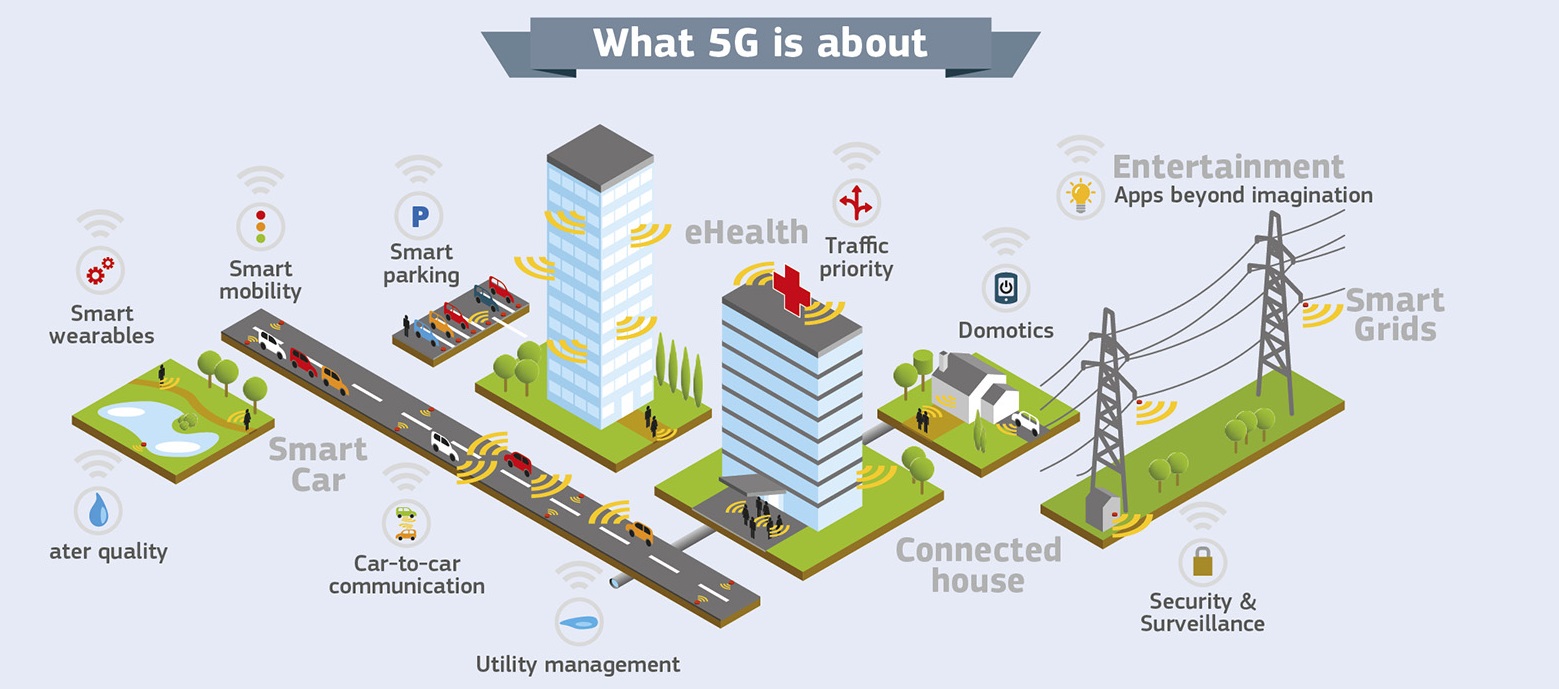
To see this we need to look at this first image and see what there is, it is all tag based, all data and all via mobile and wireless communication. Consider these elements; over 90% of car owners will have them: ‘Smart Mobility, Smart Parking and Traffic priority‘. Now consider the people who are not homeless: ‘Smart grids, Utility management, hose management like smart fridges, smart TV and data based entertainment (Netflix)‘ and all those having smart house devices running on what is currently labelled as Domotics, it adds up to Megabytes of data per household per day. There will be a run on that data from large supermarket to Netflix providers. Now consider the mix between Comcast and 21 Century Fox. Breaking news, new products and new solutions to issues you do not even realise in matters of eHealth, road (traffic) management and the EU set 5G Joint-Declarations in 2015, with Japan, China, Korea and Brazil. The entire Neom setup in Saudi Arabia gives way that they will soon want to join all this, or whoever facilitates for the Middle East and Saudi Arabia will. In all this with all this technology, America is not mentioned, is that not a little too strange? Consider that the given 5G vision is to give ‘Full commercial 5G infrastructure deployment after 2020‘ (expected 2020-2023).

With a 740 million people deployed, and all that data, do you really think the US is not wanting a slice of data that is three times the American population? This is no longer about billions, this will be about trillions, data will become the new corporate and governmental currency and all the larger players want to be on board. So is Disney on the moral high path, or are the requirements just too far from their own business scope? It is perhaps a much older setting that we see when it is about consumer versus supplier. We all want to consume milk, yet most of us are not in a setting where we can be the supplier of milk, having a cow on the 14th floor of an apartment tends to be not too realistic in the end. We might think that it is early days, yet systems like that require large funds and years to get properly set towards the right approach for deployment and implementation. In this an American multinational mass media corporation would fit nicely in getting a chunk of that infrastructure resolved. consider a news media tagging all the watchers on data that passes them by and more importantly the data that they shy away from, it is a founding setting in growing a much larger AI, as every AI is founded on the data it has and more important the evolving data as interaction changes and in this 5G will have close to 20 times the options that 4G has now and in all this we will (for the most) merely blindly accept data used, given and ignored. We saw this earlier this year when we learned that “Facebook’s daily active user base in the U.S. and Canada fell for the first time ever in the fourth quarter, dropping to 184 million from 185 million in the previous quarter“, yet the quarter that followed the usage was back to 185 million users a day. So the people ended up being ‘very’ forgiving, it could be stated that they basically did not care. Knowing this setting where the bump on the largest social media data owner was a mere 0.5405%; how is this path anything but a winning path with an optional foundation of trillions in revenue? There is no way that the US, India, Russia and the commonwealth nations are not part of this. Perhaps not in some 5G Joint-Declarations, but they are there and the one thing Facebook clearly taught them was to be first, and that is what they are all fighting for. The question is who will set the stage by being ahead of schedule with the infrastructure in place and as I see it, Comcast is making an initial open move to get into this field right and quick. Did you think that Google was merely opening 6 data centres, each one large enough to service the European population for close to 10 years? And from the Wall Street journal we got: “Google’s parent company Alphabet is eyeing up a partnership with one of the world’s largest oil companies, Aramco, to aid in the erection of several data centres across the Middle Eastern kingdom“, if one should be large enough to service 2300% of the Saudi Arabian population for a decade, the word ‘several‘ should have been a clear indication that this is about something a lot larger. Did no one catch up on that small little detail?

In that case, I have a lovely bridge for sale, going cheap at $25 million with a great view of Balmain, first come, first serve, and all responsibilities will be transferred to you the new predilector at the moment of payment. #ASuckerIsBornEachMinute

Oh, and this is not me making some ‘this evil Google‘ statement, because they are not. Microsoft, IBM, and several others are all in that race; the AI is merely the front of something a lot larger. Especially when you realise that data in evolution (read: in real-time motion) is the foundation of its optional cognitive abilities. The data that is updated in real-time, that is the missing gem and 5G is the first setting where that is the set reality where it all becomes feasible.

So why would we care? We might not, but we should care because we are the foundation of all that IP and it will no longer be us. It gives value to the users and consumes, whilst those who are not are no longer deemed of any value, that is not the future, it is the near future and the founding steps for this becoming an actual reality is less than 60 months away.

In the end we might have merely cared too late, how is that for the obituary of any individual?


Leave a comment

Filed under Finance, IT, Media, Science

The play of the Sponsor

I have had my issues with sport and the enormous setting of corruption on several settings; we merely have to look at FIFA to see just how bad it can get in any setting. In equal measure I have had several issues against Iran; the corruption does not even come up to high as we see the interactions with Hezbollah and the shipping of missiles to Yemen.

Yet, when I see the news in the Washington Post (at https://www.washingtonpost.com/news/early-lead/wp/2018/06/09/nike-will-not-outfit-iranian-world-cup-team-due-to-sanctions), it is my personal belief that certain political parties have gone overboard. When I see ‘Nike will not outfit Iranian World Cup team due to sanctions’, it’s gone too far. We have always accepted that sports needs to remain outside of all political scopes. If the spirit of the Olympics was: ‘During the celebration of the games, an Olympic Truce was enacted so that athletes could travel from their cities to the games in safety‘, so that one moment was a time when there was no war, no discord and those players had the freedom to travel uninterrupted. To suddenly get them in a setting without an outfit has all other kinds of interactive issues and touching on that is the beginning of the end. I personally consider it a really bad call on nearly every level to set the stage that the providers of such an event would be prohibited from supplying one of the teams. Politicians have the options to shout out to exclude sports and official events of inhibiting any international support. I personally never gave a hoot about football, but the option to open any level of dialogue at a sporting event could be the beginning of options that are usually not a given. I have always believed in keeping channels of communications open, even if it would be a mere ‘Oops! I apologise for sinking your fleet!‘, or perhaps something less drastic, yet the option to have it is still important and the Washington Post  gives us that Nike, by its own actions or not has closed that door. It becomes a little less nice when we see: “Some teams allow players to select their own cleats, including which brand, for competition. Some players, for example, may have sponsorship with Nike. Those deals, according to CNBC, will not be affected. Other teams are sponsored by a particular brand — the main players in the international soccer scene are Nike, Adidas and Puma — and require players to wear a certain shoe“, so when I see ‘sponsorship with Nike. Those deals, according to CNBC, will not be affected‘, so if people are paid for, they can still be supplied? It feels like an uneven game and makes football and other games merely settings for exploitation, how does that help in keeping any level of corruption out of sport? OK, that is a different topic, but the setting that we see with “We call on the U.S. Government to take immediate steps to address this shameful situation and that Nike actively seeks a resolution. FIFA should also take necessary steps to address this issue and ensure that none of the teams in the World Cup are subject to double standards“. In this I actually side with Jamal Abdi, the vice president for policy of the National Iranian American Council. It is important for politicians to take the politics and these economic settings away from the sporting events like the Olympics, world cups and official international games. If equality is the only way to finding common ground, and should Nike to shy away, I hope that the Germans with Puma and Adidas to pick up the baton, so that sport events like the world cup will keep on having a level playing field, so that it remains about the game and not about the sponsored players and the politics.


Leave a comment

Filed under Finance, Law, Media, Politics

The Iranian funds play

Today is all about Iran, the Washington Post and many others are giving the world the information that the previous president misled congress. Yet the Washington Post phrases it as ‘Obama administration misled Congress on possible Iranian access to U.S. financial system‘, they also mention that it is a Republican investigation. There are two issues, right off the bat, even before you read the article, the question becomes, where were the FBI and the CIA in this?

So when we get the first lines with “The Obama administration went out of its way in early 2016 to help Iran recoup previously sanctioned oil revenue stranded in an overseas account after the nuclear deal went into effect and actively misled Congress regarding those efforts, according to the results of a nearly two-year Republican investigation released early Wednesday“, we need to realise that the setting is wrong from the very start.

Before I go there, let’s follow the trail of crumbs that we get offered. next there is “Iran wanted to convert the money into U.S. dollars and then euros, but top U.S. officials had repeatedly promised Congress that Iran would never gain access to America’s financial system“, which is followed by “the Obama administration secretly issued a license to let Iran sidestep U.S. sanctions for the brief moment required to convert the funds through an American bank, an investigation by Senate Republicans released Wednesday showed. The plan failed when two U.S. banks refused to participate” and finally we get: “the revelation is re-igniting the bitter debate over the nuclear deal and whether former President Barack Obama was too eager to grant concessions to Tehran“. The full story (at https://www.washingtonpost.com/politics/federal_government/obama-era-license-aimed-to-let-iran-convert-money-in-dollars/2018/06/06/60be6d36-6971-11e8-a335-c4503d041eaf_story.html) gives us a lot more, but initially, we get ‘The plan failed‘. So this was seemingly (according to a previous Obama official) about the Iranian money held overseas. The issue seems seen with “No one involved seems certain whether Iran has yet received all of its $5.7 billion“, yet as I see it, that does not seem to be the case. When you think this through, $5.7 billion amounts to 11.2 million barrels based on the average oil price, this amounts to funds equal to 26 hours of oil production in Saudi Arabia, 26 hours! Now we are not debating whether Iran is allowed access to the funds, the fact that we see that this much oil (or so little in Saudi Arabia), whilst in Iranian production it amounts to 4 days of oil production is a Joke. Oil still goes to Asia, so all this fanfare for 4 days of oil production? This is about something else entirely, or it is about a very different amount of money. I let you mull that part over, so when we look at the second article (also Washington Post), we see in the article called ‘Secret Obama-era permit let Iran convert funds to dollars’ where we are ‘treated’ to “Iran had been promised access to its long-frozen overseas reserves, including $5.7 billion stuck in an Omani bank“, which we knew to some extent, yet the full economic value is not given, which is also an issue, you see that stuff makes interest, so at that point who gets that money? Is it locked in the Iranian account, or was it the balancing act to the seesaw that is going up and down on €11 trillion in essential European and American debt guarantees? The second article has pretty much what the first one had, but we also see (slightly more clearly) “And when questioned by lawmakers about the possibility of granting Iran any kind of access to the U.S. financial system, Obama-era officials never volunteered that the specific license for Bank Muscat in Oman had been issued two months earlier. According to the report, Iran is believed to have found other ways to access its money, possibly by exchanging it in smaller quantities through another currency“, this now gives us the part (when going back to the first article: “Lew, according to documents reproduced in the report, had been given Treasury talking points explaining the Omani conundrum, he chose not to mention it in a House hearing in late March“, this reference to former Treasury Secretary Jack Lew, where we wonder that if this is about the question, was the question correctly phrased, or perhaps the better setting is, was he breaking any laws not mentioning the ‘Omani Conundrum’?

I cannot state without the full text and even if we agree that there is an issue, we now get back to the very core of the matter. If it involves US Banks and when we reconsider ‘the plan failed when two U.S. banks refused to participate‘, two out of exactly how many banks? That part is also not revealed here. So now we get to the part where it becomes either the US treasury AND the FBI who seemingly did not act here, the Omani Conundrum implies that the CIA turf was trodden on and the communications (in several levels) give us that the NSA ignored it. So what is going on? Did anything actually happen? Because that question is becomes valid when we reconsider ‘the plan failed‘. If that is true, then why is the Washington Post, one of the most revered newspapers in the USA not giving the correct light on this? In addition, the outstanding questions that we get from the mere substance given becomes an issue when we see the words of President Trump “this disastrous deal gave this [Iranian] regime — and it’s a regime of great terror — many billions of dollars, some of it in actual cash — a great embarrassment to me as a citizen and to all citizens of the United States,”. Yet how much money was actually released, through the deal and from 2015 onwards? None of that data is available through the articles. So what exactly is US congress playing with now, because this all looks like a really loud smokescreen, all emotion and no contributable facts on the matter. How many banks were part of it (and their names), which two banks refused (double plus points for them two) and in light of merely one $5.7 billion source we need to see the scope of the money, especially in light of the setting that Iran is even now shipping oil to Asia. Are those not valid questions? In all this, where were the FBI and CIA when this was going down and more importantly why is there no mention of their part in all this, or were they not part of any of it? That is equally an issue, because if there is evidence that they were in different states of activity and actionable requirements regarding Iran during the two presidencies, the people have an equal right to know, do they not? You see, in the larger scope that matters, because the Yemeni issue is covering two presidencies, so if (a very clear if) the CIA was less vigilant during the previous presidency, it might also explain a few things on how missiles are getting shipped from Iran to Yemen, if the manifest states 1013 barrels of oil for humanitarian aid, it might explain a little more than we bargained for. Now the last part was speculative and knowingly incorrect, yet the question remains valid. This was not some article from the enquirer, or the Canton Cherokee Tribune, it is the Washington Post. In many (global) cases that newspaper is seen as gospel right next to the Financial Times, so when two articles give us so many questions in all this, I need to wrap my head around the option that Martin Baron is either on vacation or perhaps down with the flu. The man who inspired Tom McCarthy to make Spotlight should have a better grasp on the entire Iranian fund issue and how it should be made visible in my Hummer opinion.

Because behind all this is not merely the oil, or the Iranian uranium enrichment plans. It in equal measure gives another light that we get from “The draft involved a general license, a blanket go-ahead that allows all transactions of a certain type, rather than a specific license like the one given to Oman’s Bank Muscat, which only covers specific transactions and institutions“, you see, if that is in play and when we remember the G30 bankers group, the one that got some limelight, for ONE DAY. After that all the media dropped the issues when the people were given the sight of Mario Draghi being a member of this insiders only club, a club that he had to give up and no one (except for me that is) followed up on that. All the media left it alone. So when we see that part from April 18th 2018, where Reuters and the Financial Times give us that he would remain a member, the ECB and others never acted on it and silently wait it to go away, now we see the Omani Conundrum issue and I have to wonder, as bankers will do trade with anyone, what licenses are out there that no one knows about, more important, whoever the owner of the funds are that they get to play with ahead of all other banks, with close to €3 trillion in extra printed money for the game of bonds, in all this, what else are we not seeing and as this optionally directly reflects on Iran’s and all the billions we are left unaware of, how is it that the Washington Post seems to not care (or rather stated, believingly unimportant issues that are therefor not investigated) are out there with two pages set to issues in a setting of ‘the plan failed‘ and ‘at the end of the day, nothing worked‘. Which makes me wonder if any transgression was committed and what it was all about. Time will tell whether we see more revelations tomorrow and more important if it leads to anything actionable, because that will be come the heart of the matter soon enough.


1 Comment

Filed under Finance, Law, Media, Military, Politics

Bang Bang Common Sense

Jason Wilson brought to light an article (at https://www.theguardian.com/world/2018/jun/03/us-senate-hopeful-washington-joey-gibson) that made me think. You see, I am pragmatic and pro guns, I never hid that. Yet in equal measure I have an issue with people bringing their guns to a night club, especially when they are not members of organised crime. So, when you do a dancing backflip and accidently shoot a person as you pick up your gun, FBI agent or not, it raises questions.

This is not me having a go at that officer, there might be a very valid reason for him to have had his piece on him, but making backflips (impressive as it may be) was not the brightest thought to be having. Yet that was not what this will be about. You see, Joey Gibson, the far right Republican Senate candidate is advocating what I call a scenario too dangerous for words. With: “That’s why we’re doing it, there’s people dying. Gun-free zones disgust me because we’re not protecting the kids on the campus. People look at it backwards“, the dangerous precedent is set. Those who do not know, or have proper skill to counter an armed attack end up being dead and handing additional weapons and ammunition to the attackers. I think we all realise that the setting of having an armed response team in any University might not be the worst idea. In that we need to realise that there are trained professionals from the Army, Marines, Navy and police that are now retired that might be more than willing to be there, making a few dollars and being there when there is real trouble. In the first hour it could lower or even prevent fatalities. Making the University a no gun-free zone, letting anyone have a go is not just stupid; it is very dangerous, that approach will increase casualties by a lot. The moment these extreme thinking or mental health cases realise that the university have additional guns and ammunition up for grabs, they might just take the leap with one gun and one clip, which is a realistic and serious danger. Until you have shot a person, or are in the second to shoot someone, that is when you realise that you have what it takes, or not and that second group will be arming the attackers. The second consideration is weapon skill. You might have shot at these nice targets on the range, or puppets standing still, but once they are moving, being accurate is something that would become too unpredictable. So here I am, as a virtual supporter of the NRA stating that this setting is way too dangerous to consider. I never had any kids, but I realise the need to protect the next generation and letting everyone armed on the university makes the danger worse, not safer.

Yet the issue is larger, you see Joey Gibson is not some right extremist. As a Japanese American (or is that American Japanese?) we see that he denounces white supremacists, advocates peaceful actions and is outspokenly anti-antifa (anti-fascist movement). Most of this was seen last year (at https://www.washingtontimes.com/news/2017/sep/3/patriot-prayer-free-speech-group-urges-supporters-/).  It was Valerie Richardson that gave the goods in the Washington Times. The issue becomes more murky when we see “So many people were so disgusted about how they treated us. The liberals were literally standing around with peace signs and love signs while antifa is just yelling and cussing and beating the crap out of us and pepper-spraying us“, which gets us to the question why would anyone pepper spray a person advocating peace? Even as the article gives us a lot, I think we are missing out, a better in depth article by a writer (Valerie or someone else) who would actually to an in depth view of Joey Gibson, especially if that person is running for the senate. It seems that the one person giving a decent and perhaps the most valid view was Daveed Walzer Panadero who gave us “urging antifa to stop trying to silence Mr. Gibson and “get that man a podium and a mike.”“, that makes sense, because if we do not know what he stands for, you cannot make up your registered voting mind.

Yet as we go back to the article, where exactly is he plotting? So far he seems to be out in the open. Yet I also acknowledge the setting we see with: “Speakers with handguns or rifles addressed a small crowd in McGraw Square, at the heart of a busy shopping district. At the other side of the square, around 10 members of an armed leftist group, the Puget Sound John Brown Gun Club, stood watching for what their spokesman called a “known white supremacist element”. They carried AR-15s and side arms“, it is a dangerous setting! You see, it only takes one person to lose his/her cool and we end up in a setting where 20 rifles will be used and there is actually zero chance of innocent bystanders not getting hurt. As a pro gun person, I recognise that danger and I see levels or irresponsibility that is way too high, because the trial that follows will all be about ‘the blame game’ and there will be no one around being able to tell who was the first one shooting, in all likelihood that person would be deceased including optionally dozens of others.

The two sided knife is that gun banning will not work, not ever (those who say it will in America are plain nuts). The open gun policy is equally dangerous and until we recognise the fact that guns do not kill people, people kill people this situation will not get better. As I wrote before, until the Bureau of Alcohol, Tobacco, Firearms and Explosives (ATF) gets a real incentive of resources and funds, this situation will never ever improve. In that regard, Joey Gibson can preach and pray all he likes, yet the setting of no gun-free zones are just too dangerous, that alone might defeat his bid for the Senate or Congress. You see, as I discussed last February with ‘United they grow‘ (at https://lawlordtobe.com/2018/02/22/united-they-grow/), as well as ‘In continuation of views‘ (at https://lawlordtobe.com/2018/02/23/in-continuation-of-views/), we see that the issue was not the NRA, in a much larger setting the issue is with the ATF and the media, as well as the woolly people proclaiming that the NRA is killing their children is the massive issue that the ATF cannot get anything done due to a lack of funds and resources. The largest setting that can do something is not allowed to do anything and the people remain ignorant, deaf and blind to that part of the equation, which implies that not only are things not changing for the better, the view that Joey Gibson is giving us is that no actual progress will be possible adding to the no gun-free zones debacle, it is just too dangerous. Recognising that one element solves a lot of issues and could make changes for the better, yet the ATF is just bound by a budget that is 10 years old, resources closer to 15 years outdated and an absence of clear leadership that goes back from before the Obama administration, so why would progress ever be made?

So by the time we get to the explosives directive of the ATF, we might wonder how many buildings in New York and Los Angeles are still standing at present. Is it not interesting that we are kept in the dark on that setting?

Yet, when we get back to Joey Gibson, there is one side that most were not aware of and it is awesome that Jason Wilson gives us that view. With “Washington is seen as a Democratic state, but that impression conceals a deep divide between urban and rural, west and east, characteristic of west coast states. Money, power and population are centred on Seattle, which is often resented by rural conservatives in the state’s eastern half. Gibson’s rhetoric has always been stridently critical of the liberal cities. In Seattle, he said the city “despises patriots” and “will spit in your face for loving the constitution”“, which most (including me would not have been aware of), so when we consider King and Pierce county to represent 1/3 of the entire state, we see another picture entirely, oh and by the way these two are overwhelmingly Democratic. Even as we might accept Sightline on ‘follow the money‘ (at http://www.sightline.org/2016/10/11/following-the-money-in-washington-state-elections-part-1/), as it shows us issues on campaign funding, it does not give us the influence that the wealthy have in some districts in the east, the results say that this is not the case, yet there is an issue when we look at the map (at https://www.nytimes.com/elections/results/washington). The speculated issue is that rural Washington State is left to fend for itself. We can understand that the logic requires the funds to be set on the coastal area where the cities are, but when we see the Yakima herald (at http://www.yakimaherald.com/news/local/with-percent-in-program-food-stamp-cuts-could-hit-yakima/article_c3fe8d18-429e-11e7-9396-67c7dd7bbd33.html), we see that the cuts are rougher and still in place. That sets the stage for people like Joey Gibson to take the stage and his view does not imply that he is extreme in his thinking, yet the setting of inequality is a much larger issue and it does set the stage that tends to lean to extreme right thinking. Anti-government thinking in a stage where places like Seattle, Vancouver and Bellingham are taken care of, whilst the rest is largely ignored is not a healthy way to move forward. The slightline view on corporate sponsoring merely increases the issue on a view of inequality. That is where (as I personally see it) the right wing foundation comes from and even as it implies that Joey Gibson has no real chance. He is up against Maria Cantwell, who has shown to be pro-business, a successful job creator and stopped Artic drilling which makes her the additional sweetheart of the green parties. As a resident of the Snohomish county and being pro-business she has funding from King, Thurston and Clark County on her side which is almost a third of her state. The pro-business part should also give her Bellingham and if done correctly with the right agreements should deliver Spokane to her and at that point it is pretty much game over for Joey Gibson. So even as we see ‘Joey Gibson and plots’, the setting in Washington State is not ideal for him, apart from the mere common sense that his idea is not one that will work, there will be decreased safety from his gunpoint of view and that will cost him votes as well, especially when one piece of evidence is shown that children would be endangered from his viewpoint, an issue that will come up, with a certainty of close to 100%.

I like the approach he took. Not from the pro-gun point, but from the mere common sense that the installation of no gun-free zones is more than likely to be the start of more casualties. You see, the firearms death rate is low in Washington State and in the lowest tier that is 3.4-9 per 100,000. Washington State is exactly on the 9 border with 686 casualties. It only takes one event to put them in the 9.1-11.0 per 100,000 which takes the entire state to a higher tier, so one event and it is game over for Joey Gibson (source: CDC). In addition the Washington State health services also give us that 2008-2010 data gives 585 firearms casualties, whilst only 119 were homicide, 9 were unintentional and the largest group was suicide with 455. In that regard gun banning would not have any significant change, because when there is no gun, there will still be the opportunity for razors, sleeping tablets, a bathtub and the three in combination with nice soothing filled bathtub. So that will still happen one way or the other, considering that it is on par with motor vehicle crashes (both 8.6 per 100,000) gives additional rise to gun banning not making a difference in the state. Yet the Joey Gibson change is very likely to impact that in a very negative way, where he ends up defeating himself. The direct solution is also seen here, if the ATF had done their job (with proper resources and funding available) there is every chance that the suicide rate would have been positively influences and as that side is 77% of the fire arms fatalities, a chunk of it prevented as assistance to overcome mental hardship was given. Is that not an interesting overlooked fact? And it is not the only one, there are plenty more where that came from, fatalities all preventable by giving the ATF the right tools, resources and staff members.


Leave a comment

Filed under Finance, Media, Politics

As you are exploited

Today is different, with the E3 a mere week away; it is time for the people to become aware. Now, you will take great offense, especially if you are a drug dealer, a sex slave trader or an employee of Microsoft. You know what, today I do not care, especially if you are part of the third category. The media will not keep you informed of certain matters, so it is time to take the gloves off.

I have had issues with Microfsoft in the past that is no secret. I have clearly stated that they dropped the ball on at least three occassions, yet they have taken it a little further. Soon we might see some patch, or some message that there was a bug and it got fixed, but no company is this incompetent and there have been examples of true incompetancy, especially in politics. Yet this is not about that.

We are a week away from the E3 and all players are leaking hints and innuendo at nearly every corner in town. Gamespot is giving us: “E3 2018 Xbox One Rumors“, Polygon is giving us: “we expect to see Microsoft to use E3 to reveal new features and expand ongoing programs to further bridge the divide between Xbox and Windows PC gaming” and the list goes on. Yet none of them are zooming in on the exploitation of gamers, gamers that are now advertising coin for Microsoft. We see very little of that. It is my personal view that the Xbox One series now offer 30% less than the Xbox360. Whilst Sony is enjoying “PS4 hardware sales in April were more than Xbox One and Switch combined“, as far as we can tell mainly due to the release of God of War, in addition, some sources in give us that for April 2018, The Switch sold 171,000, the Xbox One sold 132,000 giving the raise that the Switch needs to counter Microsoft and surpass their total numbers. In addition, Forbes gave us 4 days ago “nine out of 10 belong to Switch“, the tenth game is a PS4 game. In the entire Amazon Top 10 Microsoft with their Xbox One does not show up at all. And now we get the big bang. The Pokémon Franchise is giving the players a lot more, you see with “What happens when your mobile Pokémon game gets more than 800 million downloads, and then you release two companion titles for Switch that let users sync their progress between both platforms? You’re going to sell a ridiculous amount of hardware.” This is the one thing that Sony cannot counter either. A Pokémon hype that allows those players to go on playing outside of their mobile range, by doing the Switch. Neither party counted on that and move it will impact both, optionally reducing the Microsoft Xbox total sales to number three no later than thanksgiving. A bold move that is about to push Nintendo forward in a way we had not predicted and that is the reality the gamers get to see at the E3. You can read that part all (at https://www.forbes.com/sites/jasonevangelho/2018/05/30/nintendo-switch-games-are-dominating-amazons-best-sellers-list), including a few small facts that I have not mentioned yet. Now we get to the overwhelming part.

How do you like to get exploited by Microsoft? That is the question on my mind yesterday when (not for the first time), I got their marketing machine all over my console.

Now normally I do not care, you can try to ignore it, but when the functionality of a console is severed, you cannot ignore it. So normally I get the direct view of my console desktop, the parts in red are advertisement, Microsoft added that, and the sponsored one is expected to be paid advertisement, so Microsoft is gaining an optional $3 million a day (that is if they charge $0.10 per user). So they optionally gain $3 million by using our desktop without permission (intentional speculation). The issue is that suddenly my games page with pinned games was gone, instead of the functional part I usually have, I got something that is usually not there.


I got the third screen, which you can see is useless for 75%, the second screen was gone. Now, any user can tell that I could click on the ‘my games & apps‘, scroll to the game I wanted to play, but that is not what I paid for, was it? I merely wanted to start the game I was playing earlier that week, so the only way to get my pinned games screen to appear was to restart the computer. This is harassment! This is not a bug, this is Microsoft telling me and harassing me to take notice of the Xbox One X and to get Microsoft gold. This is intent! It reflects directly to a piece in the Computer World from 2016. The article (at https://www.computerworld.com/article/3101947/microsoft-windows/more-forced-advertising-creeps-into-windows-10-pro.html) gives us: “When the Anniversary Update rolls out on Aug. 2, Windows 10 Pro users will no longer be able to turn off certain kinds of advertising. That presents a real concern for admins, who will not be able to keep Microsoft from pushing the likes of Candy Crush Soda Saga onto their domain-joined Pro machines. It’s also a frightening concern for anyone who paid for Pro’s GPEdit feature“, and with “Microsoft recently announced it will be able to push live tiles for the likes of Photoshop Express onto any Windows 10 PC, unless it’s an Enterprise or Education version. Starting Aug. 2, you won’t be able to block them”, we now see implied that Microsoft can now push advertisement on children with or without parental control. Is that why you buy a console for your child, or for yourself for that matter, to watch advertisements?

Now, the issue is not merely your child getting exposed to advertisers, the issue is that my second screen was just casually not available until I rebooted the system, that is as screwed up as it gets, I do not believe it to be a bug, I believe it to be the intentional push from Microsoft to “Buy a newer Xbox and get Xbox Gold whilst you are busy!” I did not sign up for any of that. As the system is flawed and architecturally unsound, spending another dollar on it is just too ill advised an action.

And the bad news does not end there for Microsoft. If sources are to be believed, we see “It looks like Epic Games’ battle royale spectacular Fortnite is coming to Nintendo Switch. A leak posted on 4Chan’s video games board Thursday night, which suggested the game would appear at the E3 conference alongside eight other games, came just before more reports emerged Friday that the game would receive a port to the Nintendo hybrid console“, it is not that bad for Sony, yet, the optional leap in revenue and consoles sold is going to be a lot higher than anyone imagined, it will be the first time that Sony needs to up their game by a fair amount. Even as we see that the exclusive games for the PlayStation console is off the wall, the effort of growth by Nintendo is not to be underestimated. This comes in sharp contrast that we see (at https://www.extremetech.com/gaming/269049-even-the-xbox-one-x-cant-stop-microsofts-console-sales-slide). The issue is that Microsoft will not release official consoles sold anymore (not a great surprise), yet, if we are to believe the quote “implies Microsoft’s total Xbox One X shipments were extremely poor in 2017 — around 5 million units, compared with roughly 20 million units for the PS4 Pro“, so that implies that the most powerful console in the world merely appealed to 1 out of 5 people upgrading, or buying a new next generation console. Things are considerably worse than anyone expected, perhaps the advertisement on your console is to pay for the multiplayer server bills (and its electricity) that Microsoft faces every month? (Slight punch below the belt)

Whatever the reasoning of all the ball fumbles that we have seen from 5 months before the first Xbox One was launched, the entire mess is just getting bigger and unless we see true new exclusive games and true innovation coming from Microsoft, it is my personal view that when it comes to gaming, Microsoft is pretty much done for. Even now there are a few issues rising, yet I prefer to wait until the actual news is released as I do not want to kick a game below the belt before verifiable facts are set to the net and media.

Yet when we go back to the issue that truly angered me, I wonder why Microsoft is this stupid. it is almost like they want us the switch away from them. How can a storage weakness remain unattended for 6 years? Sony solved it on day one of the PS3 and that solution was maintained throughout the PS4 and PS4 pro, the additional issue is that the difference was a mere $15, so that should not have been an issue either. If there is one thing that speaks for Microsoft than it is Forza 7, it is exquisite in many ways, and Microsoft should tend to the needs of those fans as much as possible if they do not want to see this group switch to F1 2017 on PS4, or Mario Kart 8 on the Nintendo Switch.

I think for the most, Microsoft brought all the woe onto itself, and they have no reason to break down in tears or complain about the gamers, the fact that Nintendo surpassed the expectations in what fun was and Sony brought us how awesomeness can be surpassed (God of War) is just the beginning in a race that Microsoft has no valid reason to win for any other reason to end up with the wooden spoon. There is now enough evidence and visual proof that my predictions will not be wrong, the E3 has leaked so much information that the setting is now reduced to a mere exercise. Still, there is a side we are missing out on and that is the part that still matters, the indie developers could tilt towards Microsoft a little, yet the damage has been done, with advertisements and lack of gamer care (as I personally see it).

I reckon we all hope that Microsoft gets a homerun at the E3, yet there is now enough evidence that this is not likely the case, especially in light of the astounding results Nintendo gets to show (making Sony more than a little nervous) and the fact that so far, the Sony exclusives are making people buy or upgrade their PS4, is rising, especially as some Spiderman YouTube videos on the PS4 have now surpassed 32 million views, that against God of War having only had 19 million views and crushing all sales predictions. Let’s be fair, one does not guarantee the other, but the interest has not waned over a year, implying that this game will be out of stock for the better part of a month when it is released in September. All options Microsoft missed out on, to some degree. As stated, there is no way that any gamer loving games would not be impacted by Forza 7, it will set a new standard that is hard to equal and time will tell if that will be proven to be true.

Until then Microsoft has so many things to fix and merely a week to prove that they can fix things, because 4 days later, after the E3 the people will decide and for now it does not look good for Microsoft.


Leave a comment

Filed under Finance, Gaming, Media

Cheese Pizza with Oregano

I love Pizza, I hardly ever get it, merely because the people here tend to rely on Domino’s and Pizza Hut and neither tends to be a true pizza (as I personally see it). As I walked through Sydney over the last week, it dawned on me just the massive lack of actual decent Pizza places in Sydney. It is almost like they are no longer in a sustainable environment. People got used to the cheap solutions two chains bring and they call it Pizza. All the people in the neighbourhood accepted it as the real deal and now, we forgot what true awesome Pizza is like. Now, I am a little off the wall here. I love my Cheese Pizza, with the 5 cheeses and loads of Oregano on top. So when I think Pizza, I always think of the Bravo Trattoria Pizza’s at Crow’s Nest, they are my favourite! Yet, is it about pizza, or the place, or what Pizza actually is? You see, it does matter when we consider the Financial Review (at https://www.afr.com/personal-finance/italys-debt-barely-sustainable-ubs-chief-economist-20180601-h10uun), we see here what I said weeks ago and last week to some degree. When we see “Italy’s debt-to-GDP ratio of 130 per cent is “borderline sustainable”, the UBS top economist says. There is a level of the primary budget surplus which keeps debt stable, and above which you can begin to pay down your obligations, Kapteyn explains. For Italy this figure is a surplus of 1.3 per cent of GDP, versus the actual surplus of 2 per cent. It’s a skinny buffer of around 0.8 percentage points which at current debt levels “doesn’t inspire confidence”, Kapteyn says“. That is merely the tip of the iceberg. The issue is not that it is Italy, it matters more that it is one of the big four. UK, France, Germany and Italy are the large economic suppliers of a 27 nation bloc where they basically represent well over 50% of the EU economy, the fact that they all are in deep debt does not help and the fact that the UK is getting out, or is that ‘was trying to get out‘? So when we see add the issues of the UK and now we see how the Italian issues are growing and France is not far behind. A 27 nation failure due to the inability to set proper budgets, deal with debt levels and add to that a failed economy jump start that is now close to 3 trillion Euro printed with no real prospects to pay for any of it. That revelation is why Italy seems to be vacating the union. The action by President Sergio Mattarella by rejecting the Eurosceptic finance minister and put in his place Giovanni Tria a pro-EU professor. This is perhaps the first setting where we see that voting is no longer an issue for any government, the holier than thou setting of protecting the Euro and the EU against all odds, whilst those in the EU commissions are massively overpaid is setting the foundation of a dangerous mindset. The issue that the AFR is bringing to light is “markets are not pricing in the risk of an Italian exit, they are repricing the risk of a Italian default“. I always rated the Iexit (aka iLeave) setting very low, the two populist parties in charge was not that realistic in 2016 and when Marine Le Pen was ‘surpassed’ by a former investment funds manager we were all wondering what would come next and I thought it would lower the chances of the populists in Italy. And the news is not getting any better. We see that with “The European economy hit a wall over the final months of last year, with growth dropping from a quarterly growth rate of 0.7 per cent to more like 0.4 per cent. Economists are unclear of the reasons for the slowdown, but broadly believed the European economy would quickly rebound“, the issue I personally see is ‘broadly believed the European economy would quickly rebound‘, not the slowdown. You see there is no evidence that there is an actual quick rebound. There is every chance that there will be a rebound, but it will not be quick. The fact that these so called experts are all thumbs when it comes to their forecasting and with 0.3% unaccounted for, we can see that they are in the dark or playing the bad news cycle. I personally believe it to be the second one. And the Italian issues are increasing. Not merely the debt settings, it is a changed political landscape. Even as Paolo Savona was replaced by Giovanni Tria, there is still “Mr Di Maio will be vice-premier and minister for labour and economic development, including trade policy. Matteo Salvini, head of the League, will also be vice-premier and interior minister in charge of immigration“. This we got from the Financial Times (at https://www.ft.com/content/79cf905c-64a8-11e8-90c2-9563a0613e56). This duo is going to be a lot more important than even I initially thought. They now have a handle on labour economic development and immigration will see larger changes. There is no way to predict whether that is good or bad. If we listen to people like George Soros we are instantly rejecting liberalism, because it is easy to be a liberalist when you are a multi billionaire, yet he had no issues to short sell US$10 billion worth of Pound sterling, earning a billion in the process during the 1992 Black Wednesday UK currency crisis. He did nothing wrong, he played the system when he could and make a billion. Things like that never go away and he must regard the EU zone as a very profitable short sell opportunity, which makes whatever he is trying to do dangerous, so in that light all his settings for “Best for Britain pushes for second referendum on Theresa May’s deal with EU“, a cause he is backing is very dangerous. In this by pushing the UK away from Brexit, the pressure on Italy decreases. The dangers become that irresponsible spending in the big four can go on for several more years and there is no way to control the ECB and their puppet masters. Unelected people deciding on the descent of financial futures in 27 nations that is how I personally see it. You can agree or disagree, yet ask yourself when was the last time that any European got a decent explanation on who of how the 3 trillion euro spend was going to be dealt with? You see over a decade in an economic setting that is close to the late 90’s, whilst keeping strict austerity in play all over Europe. There is quite literally no way that this will happen, because politicians will adjust their policy towards any speculative proclaimer of ‘the European economy would quickly rebound‘ economists, whilst not prosecuting them when they get it wrong (merely because making any claim of expectation is not a crime, is it?). A setting that the people have no chance of winning, hell, they won’t ever be able to break even on this. This shows that Brexit will be a hard, but the better way to go. When billionaires start proclaiming how bad it is and how ‘we all’ can get a better deal that is when you become afraid for your life and that is what is at stake. And we see this in the Australian Financial Review with ““creeping into the market”, Kapteyn says – “a potentially dangerous one”. After the glory days of 2017 in which investors basked in a globally synchronised upswing, markets are now faced with the potential return of the two-speed world economy: the US vs the rest“, so when we get “America’s economy is growing around 3.5 per cent; some independent analysts estimate growth as fast as 4 per cent. Europe is “at best” growing by 2 per cent“, that shows the dangers, because as George Soros is getting the winnings, the other players do not, from my point of view it is a form of leeching, leeching Europe dry for the term of a generation or better. You see again it is a personal view, it is why Best for Britain is getting the support, it is about delaying Brexit at the very least for as long as possible, merely because it stops the game people like George Soros are likely to be playing and when that stops Europe can start bringing things about, hopefully for the better, especially as the ECB will be forced to print money for all kinds of dubious reasons, dubious because kick-starting the economy after you printed 3 trillion to try it twice is just ridiculous, that money has to be paid back at some point and everyone is in denial about the latter part.

Yet this is still about Italy, not the UK. You see, Italians want what is best for Italy and I am fine with that, I believe in a healthy sense of national pride. Yet with “Italy’s debt-to-GDP ratio of 130 per cent is ‘borderline sustainable’” they are facing an ugly truth, Italy needs to face 5-15 years of Austerity, yet with the ECB trying to economically equalise Europe, at the cost of the big four, so it amounts to Italy trying on top of an economy for 60 million Italians, whilst they are weighted with invoices for close to 250 million Europeans who can’t be bothered to get their house in order. it amounts to giving an addicted gambler $500 whilst they are only allowed to use $10 for gambling, you tell me how long it takes for things to go really wrong, and that is pretty much a given on this situation. It was seen in the Netherlands 2012 and 2013, and now we see, when we look at the Dutch government statements with in September 2017 we see “The economy will grow by 3.3% in 2017 and a projected 2.5% in 2018“, we see the EU commission giving the Netherlands a ‘mere’ 3.2% last month for that same timespan. Now the 0.1% is actually pretty good, but it is still dangerous when it is a 0.1% in Italy, the issue is seen when we see that the Netherlands has a 65% debt level against Italy at 130% of GDP, and the Dutch are actually in a much better position, so the 0.1% is no actual pain level. Portugal, Spain, Greece, Belgium and Italy all have debt levels well over 100% of GDP, several other nations are somewhere between 60% and 80% of GDP, whilst France is at 99.8%. It is the debt levels that are excellent for banks and not so good for the people. You see, when the big four are required to pay €254 billion in interest each year and that is just the large 4, how do you think that this gets paid for? A decade of inability to set a proper budget and all this is before we consider the €3,000 billion that the ECB printed for what they call Quantative Easing. That is what Italy needs to get away from and at 135% they have the hardest job of all. So when you see that all that money goes all to the banks, short sold loans that they never had the money for to pay for can you see just how dangerous the George Soros setting is in all this? It all impacts Italy to some degree. These are not merely the facts; there is also presentation, representation and misrepresentation. The issue is in the Australian Review, it is the view of Arend Kapteyn. Yet where is he at when he gives us “We are only now at the beginning to find out how responsible or irresponsible [the new coalition government] are going to be on the fiscal side“, you see, the setting then becomes what is irresponsible? Being not pro Eurozone, being forced to default whilst the alternatives are just too unacceptable for the Italian people? So is he the pro greed setting, or the pro solution setting, because with such debt levels we can almost unanimously accept that these two choices are mutually exclusive. The most interesting political part is that Enzo Moavero Milanesi is now Minister of Foreign Affairs. I would have thought that the populists wanted that part for themselves, the fact that this post is now with an Italian independent is an interesting choice, if the populists can work with this setting and use it to maximise their economy by setting new option and opportunities, Italy gets an optional path where minimised immigration and maximised economy could have a setting where the Italian unemployment rates could fall to a number below 10% over the next 24 months (highly speculative on my side). If they pull that off, the entire euro sceptic setting could grow a lot faster than would have been possible with Paolo Savona in the mix.

No matter how you slice the Pizza, the factual and actual quality Italian dish is under massive amounts of pressure on several sides and any Italian thinking that their life will get better in the short run is just gobbling down a [Unnamed Franchise] Pizza, bland food that look like a UFO and tastes not as great. The fact is that like Germany did earlier this decade, Italy will know 5-10 years of hardship, yet when persevered Italy could have an actual growing economy for a much longer time, something to look forward to (if you are Italian). Can this government pull it off? That is hard to say because it has been shown that the actions of the ECB are close to non-stoppable and that will still impacts the bottom line. It is good for America and George Soros in the short term, yet after that they will not care and Europe will not be going anywhere ever soon. That danger is just ignored all over the place. Just 2 days ago the Financial Times also gave us “There are still two weeks to go before Riga, but naming an end date for QE right now would be like the ECB shooting itself in the Italian boot,” said Carsten Brzeski, economist at ING-DiBa. “The Italian situation has tilted the balance towards the doves [and] clearly calls for the ECB to keep its options open and even to make clear that they will extend QE at least until December” (at https://www.ft.com/content/dd6b5d70-6413-11e8-90c2-9563a0613e56), which is already an extension of well over a year. so when we see “The ECB has pledged to reinvest an average of €15bn a month over the first four months of next year, using the proceeds of government bonds bought under QE that have now matured” in that same article, we need to consider ‘bonds that have now matured‘, so that danger is seen in the Spanish setting where we see from some sources: “Spain will have refinancing requirements that exceed €300 billion per annum before 2022. In 2018, 41.2 billion euro, in 2019, 82.4, in 2020 83.9 and in 2021 58.5 billion euro, with 60.4 billion maturing in 2022“, so this fiscal year Spain will be required to find €41 billion, or increase taxes or cut services, and it will be twice that amount next year around, so how exactly is Spain in a setting to get the economy back whilst the debts are rising beyond normal control? Italy faces “84 billion euro maturities in 2018, 161 billion in 2019, 164 billion in 2020 and 172.5 billion euro in 2021” do the Italian people know that they are in such deep and hot waters? I wonder, and when they get confronted with that part of the bad news cycle, what will the previous and opposition then proclaim? I wonder if we will see true honest coverage on that blame game. I will order a decent Pizza to watch that unfold, because there are merely the two larger players in the EU-debt zone bloc confronted with the hardships that will hit them hard. Pushing these debts forward is just not a workable solution, not when the debt exceeded 130% of GDP, if you doubt my words, just talk to the average Greek in Athens and ask him how his quality of life is nowadays.

So as you wanted that your slice of life included a slice of pizza, consider the 99% in Italy who soon face the reality that they are no longer able to afford that for a long time to come.


1 Comment

Filed under Finance, Media, Politics