The non-knowing speak loudest

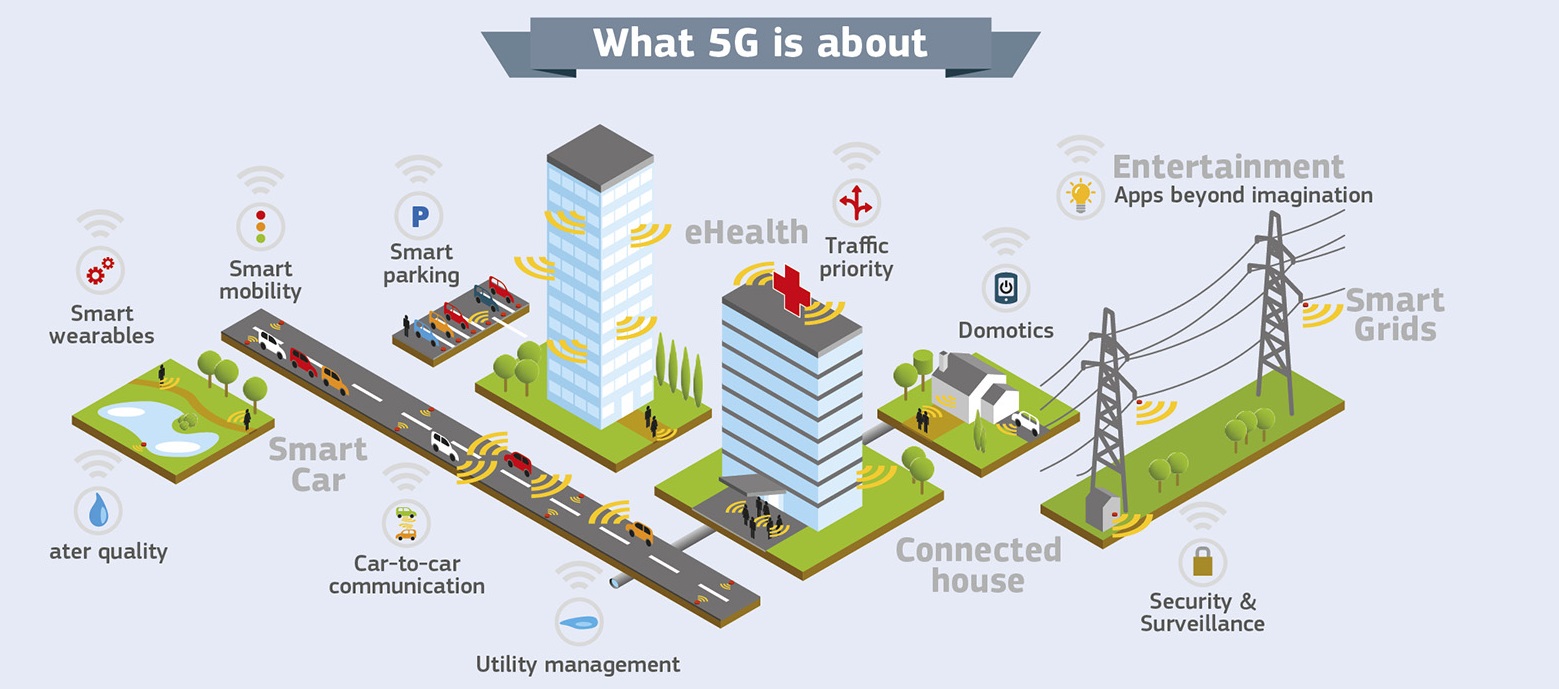
There is an old saying that goes back to the original circus, the days of Sir Alec Guiness, John Le Carre and the circus (MI6). Those who do not know speak and those who do will not. There is however a valid issue with that mindset. When it is merely intelligence and what some regard as spyshit, we tend to not care. It is their world and they tend to live by other rules even as they have the same lack of common cyber sense as some US generals, it is their choice to make. Yet when we see labour people like Michael Danby need to present evidence in regards to “an opposition Labor party MP, called on the Liberal-National coalition to block Huawei and fellow Chinese telecoms company ZTE from supplying equipment for the 5G network. “Both Huawei and ZTE must report to the Communist party cell at the top of their organisations,” he told parliament. “Let me issue a clarion call to this parliament: Australia’s 5G network must not be sold to these telcos.”” I am actually in the mindset that his seat should be put up for auction if he does not disclose a proper setting and give evidence as to the reasoning of all this. It becomes more pressing when we see “Mr Lord, a former rear admiral in the Royal Australian Navy, told Australia’s state broadcaster on Monday that these claims were “wrong”, adding that Huawei was not owned by any committee of government and posed no risk to Australia’s security“. It is not just because Mr Lord is a former rear admiral, more that the average naval midshipman tends to be more reliable than any politician. We get this from the Financial Times (at https://www.ft.com/content/1a2d19ba-67b1-11e8-8cf3-0c230fa67aec). In addition, when we get politicians start the scare tactics of ‘critical infrastructure pose a risk to national security’, there is a clear need for both Duncan Lewis and Paul Symon AO to get hauled in a chair in Canberra and ask them to openly answer the questions regarding any evidence that Huawei is a security threat. To blatantly accept the US on their ‘china fears’ is all well and good for Telstra, yet the setting is not a given and the fact that Telstra is nowhere near the technological levels of Huawei is not something that we blame them from, but they basically lost the 5G war before it started through their own actions and inactions.

Now if there is an actual national security concern, we should be open about that and when that happens, and evidence is presented, at that point we can all relax and state to Huawei that we feel sorry for the inconvenience caused, but such concerns are just too big to ignore. I think we have had quite enough of these presentations that reek of Colin Powell and his silver suitcase with evidence that no one ever saw in 2001. We cannot go in that direction ever again. We will not be the play toy of greedy telecom companies and their internal needs for stupidity and inactions; we can no longer afford such a nepotism environment.

That same issue can be said regarding Nationals MP George Christensen. Apart from him trying to undo a business deal of a 99 year lease, no matter how silly that deal was, Australia cannot be perceived as a nation that cannot be trusted at the business table. My second issue is why a maroon (Queenslander) is involving himself with NT politics. In that regard, why do we not see the responses form Vicki O’Halloran is she has any, is she not the appointed administrator? In this, the game is not over. The Australian Financial Review gives us: “Huawei faces the likelihood that Cabinet’s national security committee will veto it supplying equipment for the 5G network, based on the recommendations of security agencies, over concerns about the potential for cyber espionage at the behest of China’s leaders“. In this the question becomes, is there an actual security concern, or is it that the national concern is the devaluation of Telstra? In additional support we need to see the Sydney Morning Herald two weeks ago when they gave us (at https://www.smh.com.au/business/companies/how-a-huawei-5g-ban-is-about-more-than-espionage-20180614-p4zlhf.html): “The Sydney Morning Herald and The Age reported in March that there were serious concerns within the Turnbull government about Huawei’s potential role in 5G – a new wireless standard that could be up to 10 times as powerful as existing mobile services, and used to power internet connections for a range of consumer devices beyond phones“, as well as “the decision will have an impact on Australia’s $40 billion a year telecoms market – potentially hurting Telstra’s rivals“. the first part is something I wrote about for well over a year, the second one is important as we see ‘potentially hurting Telstra’s rivals‘, from my personal point of view it reads like the one lobotomised idiot in telecom country gets to decide through arm-twisting on how we need to remain backwards as they set the standard that they could not deliver for the longest of times (a little sarcasm regarding Telstra’s 2011 3.7G), I wrote about that recently.

ABC gave us yesterday: “it continues to be the target of criticism over its connections to the Chinese Government, including allegations it is involved in state-sponsored espionage“, yet the people have never been shown actual evidence, so where is that at? There might have been doubts to some degree for a while, but the Powell stunt is too clear in our minds and the USA does not have the credibility (or credit rating for that matter) it once had. The fact that the opposing former rear admiral of the Australian navy trumps two half bit politicians seeking the limelight any day of the week and some stay silent, the reason for that is only speculation, but we might not need to seek far and a few words ion Google Search might help find that answer (like ‘Telstra’ and ‘8000’). When we see some giving us: ‘Telstra Corporation Ltd (ASX:TLS) is betting it all on 5G‘ and we see the Telstra strategy briefing (at https://www.telstra.com.au/content/dam/tcom/about-us/investors/pdf-e/2018-Strategy-Update.pdf), we see on page 6, Leading with 5G, that would never be an option with Huawei in play as they are ahead by a lot, so the presentation given a week ago, whilst we realise that the presentation was prepared way before that is giving the setting that Huawei is no longer considered to be competition, that is what we now face! What some might call a backward organisation proclaiming to be leading whilst 8000 men will be missing through inaction. That page is even more fun when you consider the quote ‘new technologies like IoT‘, which is funny when you consider that the Internet of Things (IoT) is a system of interrelated computing devices. It is not a technology; it is a network that enables technology. In addition, when you start nit-picking in that 34 page event, we see all the bells and whistles we need to see, yet when you consider consumers and small business (the millions of people that Telstra charges) starts at page 9 and gives us 5 slides. We see ‘cutting edge 5G capability’ (by whose standards?), we see location devices (with the image of a dog), Access to rewards an tickets, a fully-digital relationship with Telstra (an implied no more personal interaction after the sales, merely a chatbot) and value added services, yet the value of a service like customer service and customer care are absent in that part of the equation, so how does this push the people forward, because I doubt that it actually will achieve anything in the long run and one flaw will anger the actual consumers without limits.

You see, personally I believe in the IoT, I believe in 5G, they are tools to enhance experiences and interactions, not make them obsolete and that is what  feel when I saw the Telstra strategy update. These two elements can enhance customer care, customer service and customer support, not replace them with ‘AI’ enhanced chatbots. So the moment we get a 2.0 version of ‘Telstra’s new chatbot, Codi, is making so many mistakes customers are furious’ (at https://www.businessinsider.com.au/telstra-codi-bot-backlash-2018-3), chatbots can be a great asset to get the information and channel the call to the right person, yet that again is merely enhancing and that can work fine. The presentation implies the loss of actual customer values and ignoring their need for interactions. That in an aging population might be the least intelligent stance to make ever.

Yet this does not give way to the issue on Telstra versus Huawei, as the Sydney Morning Herald states “Telstra has refused to exclude Huawei from its 5G tender, but that is seen more as a way of keeping its existing supplier Ericsson on its toes“, as well as “In other words, a ban could be bad news for TPG, Vodafone and Optus. Whether it is necessarily good news for Telstra – which has its own issues at the moment – is less clear“. In finality we get “Intelligence agencies tend to get their way on matters like these“, this beckons the question what are they actually after? The US seems to be in bed with Samsung and their 5G routers, so it makes sense that this will be the path that Telstra walks as well, time will tell how it ends.

So why is this such a big deal?

We are currently in danger of actually falling behind Saudi Arabia, yes, that place in a large sandbox is about to surpass us in 5G and other technologies. They had the audacity to reserve half a trillion dollars toward Vision 2030 and Neom. So when we got “Al-Khobar in the Eastern Province, of Saudi Arabia, has become the first city in the region to benefit from the fifth-generation wireless network or 5G network, according to a press statement issued by the Center of International Communication“, last month. There was not a surprise in my bone. You see, this will drive their Vision 2030 plans even further. So as Saudi Arabia is now the new pond to grow speciality in 5G, app designers can promote, test and deliver on knowledge that will be available whilst Telstra is trying to figure out how to get 5G installed. with “All the necessary national 5G policies and supporting administrative provisions are planned to be in place before the end of 2019, along with the award of initial batches of the spectrum to support the full commercial deployment of 5G technologies“, we see that Saudi Arabia had been taking this serious for a much longer time. This goes a little further when we see ‘the Middle East and Africa 5G Technology market (Egypt, Saudi Arabia, UAE, Nigeria, and South Africa)‘, so at this point, Saudi Arabia has a head start to not just push Saudi Arabia forward, they have quite literally first dibs on gaining a chunk of the 98 million Egyptians. Not all can afford 5G, we get that, but those who do are confronted with only Saudi Arabia as a Muslim player, you did not actually believe that they would run to Vodafone, did you?

So back to the 5G local ‘market’! For this we need to take a look at the Australian Financial review 2 weeks ago. Here we see (at https://www.afr.com/opinion/columnists/the-technical-reasons-why-huawei-too-great-a-5g-risk-20180614-h11e3o), with the title ‘The technical reasons why Huawei is too great a 5G risk‘, the start is good, this is what we wanted. Yet we are treated to paragraphs of emotion and alleged settings. So when we see: “Huawei presents unique additional risk beyond the “normal” risk of buying complex equipment. China has demonstrated a long-standing intent to conduct cyber-espionage“, so is ‘intent’ shown in evidence? How did the CIA and NSA acquire our data or Cambridge Analytica for that matter? ‘China is thought to be behind data breaches‘ is merely a statement ‘thought‘ is speculation, not evidence. Then we get: “The US Trade Representative’s Section 301 report from March this year details the very close cooperation between the Third Department of China’s People’s Liberation Army (3PLA is a military hacking unit, also known as Unit 61398) and Chinese enterprises“, I have to get back to this. We are treated to ‘At one extreme, Huawei could be asked‘, is a case of fear mongering and not evidence. In addition we get ‘it is certainly a possibility‘ which came after ‘Vulnerabilities may already exist. This may not be the most likely possibility‘ as well as ‘very likely‘ all emotional responses, none of them evidence in any way, so the article with included in the title ‘The technical reasons’, has pretty much zero technology and close to 90% ‘allegedly’, speculations and emotional twists, whilst we cannot deny the optional existence of vulnerabilities, yet these are found regularly in Cisco hardware and Microsoft software, so have those two been banned in Australia?

Now to get back to the Section 301 report (at https://ustr.gov/sites/default/files/Section%20301%20FINAL.PDF). It is 215 pages and I did not read that complete political US marketing behemoth. There is one that actually carries weight. On page 153 we see: “evidence from U.S. law enforcement and private sources indicates that the Chinese government has used cyber intrusions to serve its strategic economic objectives. Documented incidents of China’s cyber intrusions against U.S. commercial entities align closely with China’s industrial policy objectives. As the global economy has increased its dependence on information systems in recent years, cyber theft became one of China’s preferred methods of collecting commercial information because of its logistical advantages and plausible deniability“, which is basically good application of intelligence gathering. Please do not take my word for it, feel free to call the NSA (at +1-301-6886311, all their calls are recorded for training and quality purposes). Oh, and before I forget, the text came with footnote 970, which gave us “A number of public submissions provided to USTR state that the Chinese government has no reason to conduct cyber intrusions or commit cyber theft for commercial purposes, see CHINA GENERAL CHAMBER OF COMMERCE [hereinafter “CGCC”], Submission, Section 301 Hearing 16 (Sept. 28, 2017); that the US has not provided evidence of such actions by China, that China is also a target of cyber-attacks, and that the two countries should work together“, there is that to deal with and is that not a rare instance where we are treated to ‘the US has not provided evidence of such actions‘, how many times have we seen claims like that since 2001? Would that number be a 4 or 5 digit number?

The point is not whether it can or could happen, the question becomes did it happen here? let’s not forget that in most settings the section 301 report is about US interests and their technological advancement (which they lost by becoming iteratively stupid). Here we have a different setting. In the setting we face Huawei has a technological advance over all we have in Australia and most of Europe as well. Huawei was one of the first to realise the power of data and 5G and they are close to a market leader, the US is basically relying on Samsung to get them there. BT (British Telecom) is on the ball, but still not on par. They are in bed with Finland “BT has teamed with Nokia to collaborate on the creation of 5G proof of concept trials, the development of emerging technology standards and equipment, and potential 5G use cases“, so this sets the larger players in a field where Nokia and Huawei are now active. The SAMENA Telecom Leaders Summit 2018 and Saudi Telecom Company (STC) announced today that it is working with Nokia to launch a 5G network in 2018 within Saudi Arabia, yet the technology agreements show that it does include Huawei and Cisco, so they aren’t already active, the setting for the initial bumps in the road that Cisco, Nokia and Huawei will surely overcome is knowledge that we will not have in Australia long after someone was able to connect the 5G router to a power point (very presentable, yet the online green light seems to be broken).

So whilst politicians are considering who to be buddies with, Saudi Arabia joins the US and they will be the first 5G providers, which means that the UK and Australia are lagging behind and optionally not for the short term either.

So am I not knowing or am I all knowing? I actually prefer the first, because it is more relaxing; yet the need to speak out loud is becoming increasingly important even if it was only to place the loud mouth limelight seeking politicians like Michael Danby and George Christensen in their slightly too arrogant place. They are of course welcome to present ACTUAL evidence proving me wrong. #WishingForAMiracleHere


Leave a comment

Filed under Finance, IT, Media, Military, Politics, Science

Way of the Dodo

Tariffs are nothing new, these things have existed for the longest time. I grew up where that was a given, so in my youth, only the rich bought a Harley, a Chrysler or a Chevy. I still remember walking to the shop in Rotterdam and look at all those awesome vehicles through the windows (I was too young to drive in those days), many grew their passion that way. It seems odd that living next to the country that made Volkswagen and Mercedes, we wanted a Blazer, a Harley or another American car. Nowadays, the petrol guzzlers they used to be wouldn’t make it today in Europe. So when we see: ‘EU tariffs force Harley-Davidson to move some production out of US‘, I merely see a stage setting to the old ways. The Guardian gives us loads of information as the market slides, as the shift of production and the changing of the US stock market. That is the direct visible impact of the Trade wars. Australia had this setting a few years earlier as the car industry packed up and left Australia for more exploitative settings in Asia. In the booming market that is stated to exist, we see ‘Harley: EU tariffs will cost $100m/year in short term‘ (source: the Guardian). this is a war the US president started and he forgot that companies, especially US ones, have one focus, short term ROI and a trade war changes the hats of many corporations overnight. This is seen to some degree as Bloomberg treated us to ‘Bigger Booby Trap for U.S. Economy‘. We get introduced to “Federal Reserve Chairman Jerome Powell said on June 20 that officials are beginning to hear that companies are postponing investment and hiring due to uncertainty about what comes next” (at https://www.bloomberg.com/news/articles/2018-06-24/trump-s-trade-war-sets-bigger-booby-trap-for-strong-u-s-economy). It is what is sometimes referred to as the corporate mindset, the consideration that tomorrow is not going to be any better for now. In all this the US hides behind “tax cuts power both consumer and company spending. That would be the strongest in almost four years and twice as fast as the first quarter’s annualized advance of 2.2 percent“, yet the US seems to forget that tax cuts also means that infrastructures are falling apart, the US has a debt it cannot seem to pay and the debt keeps on rising. This in a nation where the national debt has surpassed $21 trillion (103% of GDP), whilst in addition the statistics show that the US faces a setting where the debt per taxpayers is $175K opposing a revenue per taxpayer is merely $27K, a $148K per taxpayer shortfall, that is not the moment when tax cuts have any clear momentum, because the moment the infrastructures start failing, at that point their momentum seizes. Even as Nariman Behravesh the IHS Markit’s Macroeconomic Adviser give us “If they keep down this path, all the positive effects of the tax cut will be gone“, it is worse than that. This gives the indirect implication that unemployment rates will go up giving additional ‘attack’ against the US infrastructure. All this seems to become a direct result of the tug of war between tariffs and protectionism. The BBC gives the best light (at https://www.bbc.com/news/world-43512098), when we consider ‘Five reasons why trade wars aren’t easy to win‘. In this we see (not all five added):

  1. Tariffs may not actually boost steel and aluminium jobs much. The question becomes, how much of a boost would be possible, and is this proven or still merely speculation?
  2. Tariffs are likely to raise costs in the US, so the cost of the product will be increased as these CEO’s do not want to take it out of their margins, so it will be bookkept in another place, the consumer has to pay for all these charges in the end.
  3. Tariffs could hurt allies and prompt retaliation, which is already the case and when you consider that the two largest deliverers of steel are Canada and the EU, the move does not make that much sense. So we see a tariff war that will be about exemptions. In that regard, the tariff war is a bust where the companies hit will be facing a rock and a hard stand on tariffs, this is shown by a few clever people to move part of their operation to Europe, and Harley Davidson is merely the first of several to make that move.
  4. China has options, this is the big one. The US blames China for flooding the market with cheap steel and aluminium and has already stepped up protective measures against Chinese steel products. In opposition, US businesses, including those in the car, tech and agriculture industries, are eager to get into the Chinese market, giving leaders there some leverage. So in the end, the tariff war is not strangling US businesses to fan out to the Chinese market, as exemptions are gained here, the tariff war becomes close to pointless and it merely drove down the economy. This last part is not a given and cannot be proven until 2019, which could null and void any chance of President Trump getting a second term, in addition, if this is not going to be a slam dunk win for the Democrats, the Republicans better have a strong case, because 2020 is the one election where the chances for winning by Jeb Bush (Florida) and Ann Coulter (Florida) seems to be a better option than re-electing the current president. Who would have thought that in 2016? It becomes hilarious when you consider that 2020 is the year that Marco Rubio declined to run, only to give the presidency to Ann Coulter. My sense of humour needs to point that out, whether it becomes reality or not.

The previous part is important to consider, not for the matter of who becomes president, but the setting that the economy is in such a state where we all see the proclamation ““Anyone who thinks the economy is being wrecked doesn’t know what they’re talking about,” Commerce Secretary Wilbur Ross said in a June 21 Bloomberg Television interview“. We accept the fact that he states that, yet everyone seems to overlook that the debt also gives an annual interest that is close to $100 per taxpayer, now consider that 80% of the population is in the 15% or 10% bracket. So from their taxation we see a maximum of $755 where 13% goes straight to the paying of the interest, when you are in the higher bracket 3% is lost. So before anything else is done up to 16% is lost and that accounts for 80% of the population, merely because no budgets were properly kept, the US infrastructure lost up to 16% straight from the start, that is the undermining of an infrastructure that also fuels the economy which it can no longer do. You see behind this is the IP, or as the US calls it the IP theft by China. I am uncertain if we can agree. I am not stating that it does not happen, I merely look at the Dutch examples from Buma/Stemra in the 90’s and their numbers were flawed, perhaps even cooked. They never made sense and after that we have seen ‘political weighting‘ of numbers that were debatable from the start.

So when we look back to 2017, we see the NY Times giving us: “Intellectual-property theft covers a wide spectrum: counterfeiting American fashion designs, pirating movies and video games, patent infringement and stealing proprietary technology and software“, yet I have seen these accusations in Europe and the numbers never added up. So when we see: “Central to Chinese cybersecurity law is the “secure and controllable” standard, which, in the name of protecting software and data, forces companies operating in China to disclose critical intellectual property to the government and requires that they store data locally. Even before this Chinese legislation, some three-quarters of Chinese imported software was pirated. Now, despite the law, American companies may be even more vulnerable“. It will happen, yet to what degree does it happen? What evidence is there? Consider the setting when we think of students. Students tend to have one of the harshest budgets to live on. Let’s take 100 students and they all decided to duplicate (read: borrow) the latest album from Taylor Swift ‘Reputation’ (it is easier to imagine it when the victim is a beautiful blonde who only recently stopped being a teenager). Now, basically she lost $2390 in revenue, yet is that true? How many would have actually bought the album? Let’s say 10% of all students are real fans and they would have bought the album (when not confronted with the choice of food versus entertainment), so the actual loss is $239. Now, this is still a loss and she is entitled to take action here. Yet the people making a living in the facilitation industry will demand the loss be set to $2390 that is where the numbers do not add up! There is the setting of eagerness to hear an album versus the need to have the album. We are all driven with the need to hear the album and some will buy it. This opposes several views and whilst the implied copied work allegedly is done so in the hundreds of thousands, the evidence is not there to support it. That is where weighted forecasts are the setting and it is an inaccurate one. So in all this, from the IP point of view, do we have 23,675,129 C# programmers, or merely 24 million people who wanted to take a look at C# only to install it and never use it because they could not figure out what they were looking at?

Now we get to 2018, where we see (at http://money.cnn.com/2018/03/23/technology/china-us-trump-tariffs-ip-theft/index.html) the projected issues with “The United States Trade Representative, which led the seven-month investigation into China’s intellectual property theft and made recommendations to the Trump administration, found that “Chinese theft of American IP currently costs between $225 billion and $600 billion annually“, I wonder what numbers they are set on. Now we can agree that the likelihood of “”China has sought to acquire US technology by any means, licit or illicit,” James Andrew Lewis, senior vice president at the Center for Strategic and International Studies in Washington, wrote in a blog post Thursday” being true in regard to defence projects would be high. Yet in all this, where is the data supporting these views? Without proper data we are faced with US companies setting expected revenue that is many millions too high and that part remains unanswered on many fronts. Now in defence, we get it! That is the game, so as we consider the news last year from breaking defense with the news that: “compassion for the Army, which is trying to standardize its computer systems across more than 400 units in the next 28 months. The objective is a “single software baseline,” where every unit has the same set of information technologies. Such standardization should simplify everything from training, maintenance, operations and future upgrades“, this is fun to read as I had to set up something like that for a company much smaller. There we learned that Dell was kind enough to have within two shipments the same model computer yet both had different patches because one chip had been changed. Now consider that this ‘unsettling dream of standardisation‘ was for a company with hardware usage merely a rough 0.13% of what the US Army has. So, that is something that will bite them soon enough. This doesn’t make the setting smaller, but a lot larger, the wrong patches tend to open up networks for all kinds of flaws not correctly set. So the cyber intrusion setting would be an optional 300% larger, giving a much larger success rate, all people willing to sell data to the Chinese (or the Chinese merely enticing the American people to embrace marketing capitalism for their own gains).

To explain the previous part in its proper light we need to realise. It is not merely about IP theft and rights; it is also about common cyber sense. In both the military and corporate setting there is a need for levels of standardisation, whilst IP that tends to rely on standardisation to be more successful, the IP theft setting is actually opposite to that. The Conversation (at http://theconversation.com/three-reasons-why-pacemakers-are-vulnerable-to-hacking-83362) gives us when they look at the medical dangers. As they give us Power versus security as well as Convenience versus security we see the first dangers. So consider the following. First there is “according to Carnegie Mellon researchers, can increase the energy consumption of some mobile phones by up to 30% because of the loss of proxies“, then we get “Most embedded medical devices don’t currently have the memory, processing power or battery life to support proper cryptographic security, encryption or access control“, giving us that hacking into someone’s pacemaker is actually not as hard as one might think. Now consider that encryption, or a lack thereof can be found on a large variety of IoT devices, and any army has their own devices that need to be more accessible at all times. In the second consideration we get “The prospect of having to keep usernames, passwords and encryption keys handy and safe is contrary to how they plan to use them“, as well as “When your pacemaker fails and the ambulance arrives, however, will you really have the time (or ability) to find the device serial number and authentication details to give to the paramedics“, it is the age old setting of convenience for the safety of all. So as we realise this, how much IP theft was already available before anyone realised its need? It is almost like the gun laws in the US, everyone wants gun laws whilst there are millions available for unmonitored purchasing defeating the purpose altogether. In that same setting we ignore common Cyber Sense too often allowing for IP theft on a much larger scale. The issue is that it does not mean that this is actually happening, or that others have interest to steal that particular IP. So we can optionally agree that the Chinese government that they definitely want all the IP on that front, even as some sources state that there is still a problem. So when we consider to an example, we need to look at that part of the information came from a research report by LtCol B. L. Ream, USAF, which gives us “There are two types of guidance systems available, the AGM-65A/B is optical guided and the AGM-65D model Is Infrared guided“, as well as “Once launched, the missile maintains a lock on to the target and guides autonomously, providing a standoff launch and leave capability. The aircraft can then egress the target area or set up to fire again in a target rich environment“, yet the other undisclosed source gives us that a programming issue on the locking when it is set through a buddy system. The: “data link control of the weapon can be provided from two different sources. Either the launch aircraft can guide the weapon or a buddy aircraft can control the weapon after launch. In either case, data link line of sight must be maintained between the data link aircraft and the weapon. Thus, on a standoff control scenario, the further away from the target the control aircraft is the higher altitude it must maintain. Even though this may not appear to be tactically sound, the standoff range is impressive“, so the undisclosed source that gives that the Data Link has a match issue and there is a chance that the speculated offset of 35 metres is ‘accidently implemented on targeting‘, will there be an issue of IP theft? When materials are openly available on the internet, as I was able to read the report on the Defense Technical Information Center site. When is there a case of IP theft? In this I love the reference that WIPO uses. Here we see: “Copyright protection extends only to expressions, and not to ideas, procedures, methods of operation or mathematical concepts as such“, considering that ballistic software is 90% math (read: the application of mathematical concepts), copyright as an option goes straight out of the window, in addition, the data link adjustment makes it in theory a new product that was not covered in the first place. So standardisation makes it easier to get to the lollies, and by adjusting the wrapper it ends up not being IP theft, as long as no trademarks reside on the wrapper (a ‘it is more alike than not‘ issue in IP law).

And now for the main meal

This is seen in the CNN article I raised earlier. The headline ‘President Donald Trump has slapped tariffs on $50 billion worth of Chinese goods, taking aim at China’s theft of US intellectual property‘. It was and has always been about IP protectionism. Business Insider gives us “Two former senior Defence Department officials said Chinese intellectual property theft cost the US as much as $US600 billion a year, calling it possibly the “greatest transfer of wealth in history.”“, the Financial Times (at https://www.ft.com/content/995063be-1e0a-11e8-956a-43db76e69936) gives us: “as Chrystia Freeland, Canada’s foreign minister, suggests: “It is entirely inappropriate to view any trade with Canada as a national security threat to the United States.” Yet once this loophole is used so irresponsibly by the US, of all countries, where might it stop?” The Financial Times takes it a lot further giving raise to the question how did it in the end serve IP? Where we saw more than once the terms ‘as much as $US600 billion a year‘, yet no evidence is presented. There is no setting that ‘Two former senior Defence Department officials‘ can present a list adding the numbers up and with $600 billion in the balance (as opposed to the commercial industry) we see that if proper evidence was presented a better case could have been made. Where we see in opposition to China: a lucrative market in designer knockoff goods in places like Amsterdam and London. London getting its share of 17 million tourists, all happy to get the latest Gucci bag for a special discount price of £19.95 as well as in Amsterdam where the 14 million visitors can get them for a mere €25. So did Gucci report a €812 million in IP theft losses? What about the other brands? I was the proud owner of an Australian Polo for $12, I merely needed a polo shirt (many years ago) as some drunk blonde thought it was perfectly normal to dance in high heels in the middle of the road holding a glass of red wine, so as she jumped to get away from a car (who had an actual reason to be on the road), I ended up with her wine on my shirt. So I got to the first place that sold a polo shirt and got a new one so I would not arrive at a diner red stained before it even began. Did I initiate IP theft? I had no idea what ‘Australian’ was in those days. There is the setting, what we know, what was real damage and how it is presented by those needing inflated IP theft numbers?

It is in this setting that we need to see the stage for reported IP theft. We agree that the smallest fraction is indeed set to the covert acquisition of military IP, yet the bulk (well over 95%) is all about a misrepresenting economy, the brands want their losses to seem as large as possible, the US is setting that stage to prospective economic health, yet that evidence cannot be validated and the tariff war is likely to become a much more detrimental factor in the US economy that is currently presented as a revenue bubble that will impact sooner rather than later. The independent gave us last December (at https://www.independent.co.uk/voices/economy-signs-interest-rates-donald-trump-market-bubble-burst-next-year-a8102356.html) that ‘Five economic signs that can tell us if the bubble will burst next year‘. Here we see “The good news is that the world is at last experiencing a coordinated expansion, with all major regions growing reasonably swiftly“, as well as “the policies that have led to this expansion, especially ultra-easy money conditions, have created a boom in asset prices that at some stage will come to an end“. There are a few views in all direction, yet the one that no one seems to focus on is the quality of life. Earlier this year USA Today reported that “California has the worst quality of life in America“, the sunny state is where people can no longer afford to live to any decent degree. That part is forgotten, the QoL in New York is in 25th position, not a great place to be. The Quality of Life in the US has decreased to the degree where it is the lowest in the developed world. That and the fact that the US is at minus 21 trillion does not help. It is shown in the US Social Progress Index where none of the five largest state economies (California, New York, Illinois, Florida and Texas) are in the top ten states on social progress. This is important and reflects back to the student example I gave earlier. So as these people will all ‘borrow’ the latest Taylor Swift album and none of those will buy it, because they cannot afford to do so. That part becomes even more visible when you consider the Wired setting on pre-owned games in 2016. At some point Microsoft made the terminal choice as given by Wired through “You may remember that Microsoft attempted to do away with “used games” with the launch of the Xbox One. (Yeah, they made some hand-wavy claims of players being able to trade games at “participating retailers,” but the DRM scheme meant you couldn’t borrow, lend, sell them on eBay“, that setting is merely exploding in an economy that is not moving forward. That with 80% of the people on merely a 15% tax bracket or lower and the cost of living there is still going up. Even as Microsoft is pushing to “buy at the Microsoft store“, a digital copy cannot be handed out to friends, so there is little push for that move when you can only afford 4 games a year. However, Microsoft is in equal measure pushing for the Game Pass which balances one for the other. EA is making a similar move and it is actually an intelligent move to make. The few that would buy the latest NHL version no matter what gives is nothing compared to the overwhelming group that will happily buy the previous year version when it is part of a package deal at $40 a year. So I might wield the latest NHL version, at $40 a year getting the previous season of FIFA, NBA and NFL is just smart thinking. Yet these people are equally part of the claimants of IP theft. The question becomes (even as we accept that it will happen), how large is the actual IP theft? So when the US adds a 10% tariff on video games, does that merely make the download 10% more expensive? I do not think that from $40 to $44 for EA games is an increase we lose sleep about, yet the ‘cost’ of downloading remains as well, and in the flawed Microsoft design, how does the tariff apply over time, on DLC and other elements in gaming? All these changes and increases, where the consumer sees no upside, all based on projected and presented numbers without its proper representation and scrutiny.

This is how an economy goes the way of the Dodo, so when you think (source: Sydney Morning Herald) that the start of ‘US plans to curb Chinese tech investments, citing security‘ is a good idea and it is waxed with “the White House would use one of the most significant legal measures available to declare China’s investment in US companies involved in technologies such as new-energy vehicles, robotics and aerospace a threat to economic and national security, according to eight people familiar with the plans“, we need to see in equal setting the fact that 750 million Europeans might find the escalation of events important and threatening enough to take a 180 degree position on tech operators like Huawei when we are treated to “Huawei, China’s biggest maker of handsets and networking equipment, which has been flagged numerous times by US lawmakers as a possible security threat to Americans. Upon the New York Times’ publication of a piece (paywall) highlighting Facebook’s data sharing with Huawei, as well as with three other Chinese companies, the social network told the paper it would wind down (paywall) its partnership with the Shenzhen-based phone brand“. One side tries to stop and filter, whilst the other side turned open the tap and let the room flood. Even now, after a congressional hearing and the Cambridge Analytica events, we see alleged transgressions and the sharing of data on a stage where we see only growth. With “Due to the importance of highlighting the natural and heritage landmarks in the Kingdom, “Huawei Saudi” joined together with Qumra’s community of photographers to organize a workshop around “photography through smartphones” by using the latest “Huawei P20 Pro” phone” and the setting that offers the latest in mobile technology far below the prices that Google, Apple and Samsung have. It does not matter on how the tariff war is to become a disaster, it is the mere realisation that it fails because those implementing changes do not seem to comprehend that the economy consists of well over a billion consumers and they cannot afford the 10% more or the 28% more expensive mobile phone alternatives. In all this the people confronted with the dilemma merely went directly to the consumers, as such Harley Davidson is moving to Europe to circumvent a few barricades, a tariff war that was short sighted to a lot of people more intelligent than me and the country that considers naked short selling to not be illegal seems to be doing just that to its own economy, how is that the setting of morality of capitalism?

We consider the way of the Dodo and realise that in the end it merely tasted like chicken.

#HowSmartWereWe or is that #HowSmartHuawei

Leave a comment

Filed under Finance, Law, Media, Military, Politics, Science

They are still lying to us

There is a piece that the Guardian gave us less than 12 hours ago. The title ‘Greece ‘turning a page’ as Eurozone agrees deal to end financial crisis‘ should worry you. You are getting played! The article (at https://www.theguardian.com/world/2018/jun/22/eurozone-greece-financial-crisis-deal) is giving a dangerous situation as it is downplayed on nearly every level. Now, to set the stage, we need to understand that government budgets are complex. No one is denying it. Yet, what is complex about: “Eurozone member states reached an agreement on the final elements of a plan to make its massive debt pile more manageable, ending an eight-year bailout programme“, can you tell me that? You see in the heart of this is ‘its massive debt pile more manageable‘, we all see that. Yet do we understand it?  €328 billion, the interest on that small sucker is well over €500 a second! The debt is around 180% of GDP, it was 178% last year. These are issues that matter, because it gives Greece no options. Then the Guardian gives us the bit that matters a lot more. You see, in part one we consider “The plan allows Greece to extend and defer repayments on part of its debt for another 10 years and gives Athens another €15bn (£13.2bn) in new credit. Tsakalotos said it marked “the end of the Greek crisis … I think Greece is turning a page.”“, so an option to get even MORE DEBT. When was that a good idea? Now consider that the interest on the current loan is €640 million a year, so how does raising the debt by 5% help? You see, we see the game played, because the next elections are 20 October 2019. This is the beginning of an election stunt and the Eurozone is happy to help only if the current government does what the Eurozone tells them to. How is that for an option?

The next pack of non-truths is given by PM Alexis Tsipras with “The prime minister, Alexis Tsipras, told a meeting of MPs: “Greece is once again becoming a normal country, regaining its political and financial independence.”” I hope you understand that financial independence will not happen until 2045. The debt is that severe. The banks are not willing to be soft any longer, when the access to the markets are given it will merely take one screw up, one act of short sighted stupidity and people all over Europe will rally to demand the barring of Greece from the markets for decades. So when we are presented within: “The plan allows Greece to extend and defer repayments on part of its debt for another 10 years and gives Athens another €15bn (£13.2bn) in new credit“, you see this is what the beginning of slave labour looks like, a debt that cannot be repaid, a setting where €15 billion is merely a smoke screen and the coming years when you think your life is getting better, the truth is merely that your options are taken away. That is how you enter into slave labour. And the Eurozone will be nice and humane about it, they will not call it slave labour, they will call it new zero hour contracts and with the definition “Any individual on a zero hours contract who is a ‘worker’ will be entitled to at least the National Minimum Wage, paid annual leave, rest breaks and protection from discrimination” and the Greeks will realise too late that this government AFTER its election will set the stage where because of the high debts the National Minimum Wage would optionally have to be lowered by 20%, until the debts are better dealt with. So there you are sitting on a terrace having your last pita gyros with an Ouzo realising that you can no longer afford to do that, your income got cut by 20%. The opposing party reacted to the credit buffer with ‘Kostis Hatzidakis said it reflected the lack of faith international creditors had in Athens’ ability to successfully return to capital markets.‘ And in this Kostis is right, the international markets have zero faith in their return, they rely on a small thing called mathematics and the clarity there is that the scales are not in the favour of the Greeks. The financial market is hailing the success, especially those making money of every trade, and until the money is gone, some parties on Wall Street will love the Greek, give parties in their honour. The parties behind this were shown in the NY Times last week (at https://www.nytimes.com/2018/06/19/business/economy/greece-europe-bailout.html). Here we see “To play it safe, Greece won’t start selling bonds until well after it exits the bailout. Instead, the government, which is being advised by Paris-based Rothschild & Company, will pick a moment in the next two years when market conditions seem favourable. A cash buffer of up to €18 billion, funded by creditors, may help Greece secure the liquidity it needs in the meantime“, so now the credit makes a lot more sense, does it not? A credit to pay the bills until there is one more fish to cook for Wall Street ending the existence of Greece. Well, actually the Greek elected officials will do that all by themselves. Because it will be there choice (through whispers) that benefits could be gained through 10 year bonds giving 10 more years of relief. Yet those billions come at a cost, a 2% cost which goes to the traders, they will cash in millions at the expense of a few parties costing them mere thousands, after which they switch off their phones, walk away and it is no longer their problem. For them it was merely good business, the direct application of a mere fool and his money getting parted.

Yet, this is not the only part. In what I would regard to be a direct outright lie, we see the actions from Pierre Moscovici as we are treated to: “Greece had received €275bn in financial support from its international creditors over the past eight years and twice came perilously close to being kicked out of the Eurozone group, the EU commissioner, Pierre Moscovici, said, adding: “There have been enormous sacrifices. But at last Greece will be capable of moving on its own two feet.”“. This is what I personally see an outright lie! Let me explain why I think that this is as bad as such. The documentation gave us (I already published it before). It is a paper from 2009 from the ECB and I gave light to it in my article on July 1st 2015, yes, almost 3 years ago. The article was ‘Dress rehearsal (part 1)‘ (at https://lawlordtobe.com/2015/07/01/dress-rehearsal-part-1/), the original paper is there at the end. It is called ‘Withdrawal and expulsion from the EU and EMU some reflections‘, a paper written by Phoebus Athanassiou. Here we see “The idea that the treaties should explicitly provide for a possibility of expulsion was discussed in the 2001-2003 Intergovernmental Conference responsible for drafting the ill-fated Constitutional Treaty, but was abandoned“, on page 32 it gives the premise that greed driven politicians did not consider that expulsion should be an option. In addition, the EU observer gives us in 2011 ““Neither exit nor expulsion from the euro area is possible, according to the Lisbon treaty under which participation in the euro area is irrevocable,” he added, referring to the European Union’s rule-book.” and there is May 2012, where we get “The Mechanics of Eurozone Withdrawal, It has frequently been stated that the EU Treaties contain no legal framework for a withdrawal from the Eurozone.  This is true and, indeed, the Treaties make it clear that the process of monetary union was intended to be “irreversible” and “irrevocable”“. The last we got from Locke Lord LLP, a Texas Lawfirm. So I now need to revert to my original Dutch Diplomatic self stating: ‘Moscovici, you stupid fuck! There is 9 years of documentation from people better educated than me stating that kicking out of the Eurozone was not an option in any way. So get a fucking grip on your stupidity and amend it or resign your post, your choice!‘ (Sorry, I needed to get that off my chest, I feel a little better now).

The final straw for my ego is found in the Guardian quote “But it means the left-led government in Athens will have to stick to austerity measures and reforms, including high budget surpluses, for more than 40 years. Adherence will be monitored quarterly“, when we consider that my setting was without the ‘discount’, the proven setting that the debt will be a 3G debt, it will push hardship on three generations. A setting I was able to prove with an abacus is now finally recognised by those less fortunate as they were not able to get basic calculus done. I am happy for me being correct, but not for the hardship that the next generation of Greeks face, they never had any choice in the matter, merely have to clean up after grandpa’s bad political choices, to them it is massively unfair.

The final part if given with: “At almost 180% of GDP, Greece is burdened with the highest debt load in Europe. The €320bn debt mountain is widely recognised as the single biggest obstacle to economic recovery. The International Monetary Fund had resolutely refused to sign up to the country’s latest bailout unless Eurozone creditors agreed to a restructuring that would ultimately make the debt sustainable“, most will not recognise the miswording that is used here. With ‘widely recognised as the single biggest obstacle to economic recovery‘, which is actually ‘Greece has no options to recover from a debt that high, not ever‘. Which leads to ‘International Monetary Fund had resolutely refused to sign up to the country’s latest bailout‘ and ‘make the debt sustainable‘, which needs to be read as: ‘the IMF cannot allow the support of a debt that cannot be paid off, lower it!‘, yet when is the setting for sustainable made? Making it longer by setting the €328 billion in three stages of 26 years each? Who will sign up for that? How many forward pushing bond programs will it require and we understand that among the banks (read: financial institutions), they are willing to do that as long as it is set in 25% profit stages, giving light to the fact that the additional pressure beyond the debt is the Greek population paying an additional €78 billion in sustainable bonus. If you’re Greek, would you want your child to inherit a €75 billion invoice at birth? That was what I predicted three years ago and I have been proven correctly and I have been conservative, when you consider the cost of the bonds, the interest paid to the people buying the bonds as well as the impact of devaluation of a nation that cannot fund its infrastructure. It is a mess and when you consider Forbes on 28th Jan 2017, where we see: “The IMF projects Greek debt will reach 170 percent of GDP by 2020 and 164 percent of GDP by 2022 but will rise thereafter, reaching around 275 percent of GDP by 2060” (at https://www.forbes.com/sites/timworstall/2017/01/28/amazingly-yes-the-imf-is-still-saying-that-the-greek-debt-problem-is-not-yet-solved), we see that they were off last year by close to 10%, so the prospect for Greece is even worse than the IMF predicted (I admit a slight overbearing assumption at present).

To illustrate that, I will revert to a source that I cannot vouch for, yet they give (at https://www.thenation.com/article/goldmans-greek-gambit/) “As a result, about 2 percent of Greece’s debt magically disappeared from its national accounts. Christoforos Sardelis, then head of Greece’s Public Debt Management Agency, later described the deal to Bloomberg Business as “a very sexy story between two sinners.” For its services, Goldman received a whopping 600 million euros ($793 million), according to Spyros Papanicolaou, who took over from Sardelis in 2005“, a fee closing that surpassed half a billion euros.

So in the end, the news, the papers the quotes, it will be up to you to decide how Greece is given a fair go, yet they themselves have mostly only themselves to blame. You see, in all this, how many Greek politicians went to prison? How many got their assets taken from them? Or are we all agreeing that there was no legal option? Now wonder if the legal options exist at present, if not. Then this is the bed of hardship that the Greeks made for Greece.

So, are the Greeks still being lied to? If that is so who exactly is presenting their version of the ‘facts’ to the Greeks?


2 Comments

Filed under Uncategorized

The Tesla orator

The issue has been out for a little while, yet up to now it didn’t really interest me. Cars come and go, some cars have flaws, and others have merely a dent in its design. There are consumer laws and there are legal paths for those buying the wrong product, or better stated a flawed article. Like below, the T7 transporter, a space ship costing 17 million, its manoeuvrability is so bad that an opponent flying something at the cost of 5% of this ship can destroy it without too much hassle.

Worst buy ever (at 17,472,252 credits)


So why a game reference?

Does it matter what you bought, what it was for or why you bought it in the first place? Cars are like video games to most people; their marketing is about look, about sensation, about satisfaction and about joy. When was the last time that a car was actually marketed or sold to you with only a focus to get you from point A to point B?

So when I saw the article (at https://www.theguardian.com/technology/2018/jun/21/tesla-whistleblower-sabotage-elon-musk-gigafactory-martin-tripp), with the title ‘Tesla whistleblower claims company is ‘doing everything it can to silence me’‘, I started to wonder what this was actually about. The subtitle gives us “The electric carmaker is suing a former technician for alleged hacking, but he says he’s being scapegoated for leaking concerns“.

So the two parties, is this one side about ‘leaking concerns (whistleblowing)‘ or is this about ‘alleged hacking (industrial espionage)‘. As the Guardian treats us to “By the end of the day, he had been sued by his former employer for alleged hacking and theft, engaged in a hostile email exchange with Elon Musk, come out as a whistleblower, and was being patted down by sheriff’s deputies over allegations that he was threatening to go to his former workplace and “shoot the place up”“, we need to wonder what this is actually about. You see, from my point of view, if there are concerns you take them up with the ‘right’ parties. Those who know me know that I did just that, straight to the CEO and I was not nice about it. I had customers to protect, I had their data to protect and I did just that. The real deal is not now, or was ever the issue to anyone outside the company. That is what a caring employee does. A caring employee does his job to the best ability and to the degree where he sets the proper stage to be able to do this. We see allegations left right and centre and when we see ““I’m a scapegoat because I provided information that is absolutely true,” Tripp told the Guardian on Wednesday evening. “This is obscene … It feels like I have no rights as a whistleblower.”” This is where we get the questions that matters:

  1. I provided information that is absolutely true‘ yet, who was this information provided to?
  2. I have no rights as a whistleblower‘, might be right or wrong depending on who you provided the information to.

At times the equation can be that simple. The Washington Post gives us “But Tripp, who says he became a whistleblower after seeing what he called dangerous conditions in the company’s car batteries, told The Washington Post“, gives less valid light to Martin Tripp, depending on the path he took. Any company has its own path to take. Are their emails that Martin Tripp took to the bosses, to his boss, to the legal department of the firm and to the QA division? Even if it was the subtle “Are you out of your effing mind to put such a battery in a car?” Did Martin do any of that?

In opposition the Washington Post gives “The showdown has exposed deep rancor at a tech giant famous for its head-turning cars, high-pressure workloads — and Musk, its unyielding boss. It also marks a new depth of suspicions from Musk, who recently sent companywide emails urging workers to stay vigilant against shadowy “outside forces,” saying, “Only the paranoid survive.”” (at https://www.washingtonpost.com/news/the-switch/wp/2018/06/21/saboteur-or-whistleblower-battle-between-elon-musk-and-former-tesla-employee-turns-ugly-exposing-internal-rancor), You see, we might be triggered by ‘high-pressure workloads‘, or ‘stay vigilant against shadowy “outside forces,”‘ in this we need to accept to some degree and realise that all the other brands are petrochemical driven, so any Tesla success will hurt them all. The Dow Jones Index is set by 30 companies, they include Chevron and Exxon, as well as a few financial institutions doing business with those two and as such a success on one site, is in the long term implies diminishment on the other side, so being paranoid is not the worst mindset to have, yet in all this, an unreceptive CEO (or should that be: unperceptive) is never a good thing. In all this it becomes a slight issue that neither side is bringing home the bacon on actual safety concerns or documented interaction other than the emotional one in the Washington Post. The other part we see is “He said he and his family have temporarily vacated their home after their address was posted online.” The question becomes, which person thought that doing that was a good idea ever? The Washington Post does give a link to the Business Insider (which had issues for me). It does give something else, which does not bode well for Martin Tripp. When we see: “Tripp said he tampered with no systems and shared information with the media only after seeing things that alarmed him within the company, including what he says were dangerously punctured batteries used in Tesla’s latest Model 3 sedans“. Here my question becomes, why the Media? Why not openly give this to the authorities? You see, a claim like ‘dangerously punctured batteries used in Tesla’s latest Model 3 sedans‘ implies that there is optionally a federal crime at the very least as production is national, in addition to allegedly endangering lives. So why not go to the FBI? Perhaps that was done, but the articles do not seem to give light to that part.

Yet another Business Insider article (at https://www.businessinsider.com.au/tesla-model-3-production-in-2018-so-far-2018-6), gives us:

  • Tesla has completed about 30,000 of its Model 3 sedans in 2018, according to internal documents viewed by Business Insider and two Tesla employees.
  • The company is trying to ramp up its output of the car to 5,000 a week, but that effort has been beset by challenges.
  • Tesla has made about 6,000 Model 3 cars in June, so far, according to a person familiar with the matter.

There are clearly issues with production, yet is it about managing expectations? Keeping the hype up and adjusting delivery times? Is there a resource issue, which we see with “CEO Elon Musk has called it a “production hell” on more than one occasion! The effort has been beset by bottlenecks, and the company has gone as far as flying equipment from Germany to speed up the process“. There was a news article last week on a battery catching fire, yet this is merely one instance, one instance on thousands of cars made. It does not give light to anything serious, not when it is merely one. This whilst in opposition there are more and more articles given claims that do matter, you see the element is not the car, it is about something entirely different. We see that when we consider the following: “cobalt has been a key ingredient in building high-energy-density lithium-ion batteries, like those used in electric vehicles. In some batteries chemistry, cobalt makes up as much as a third of the chemistry in a lithium-ion battery. Around half of the world’s cobalt production goes into rechargeable batteries, and concerns about supply constraints and the environmental and human impacts of cobalt mining have made it a controversial component of electric vehicles“, then we get “But Tesla CEO Elon Musk dropped a bombshell on the industry earlier this spring when he revealed that the battery cells in the Model 3 use less than 3% cobalt, a fraction of the amount that other state-of-the-art battery chemistries are using” (source: thestreet.com). The issue is not merely the battery; it is the Cobalt in the equation. If that is true in any way shape or form than Tesla is sitting on the hottest tech in decades. Well over 30% of our daily need is dependent on batteries. Your smartphone, your iPad, iPod, torches, compact camera, movie camera’s, Car batteries in general, batteries for motor cycles, so when we see that Cobalt is $42 a pound, and there has been reported lack of supplies, the one solving that problem is sitting on hundreds of billions of IP, and now Martin Tripp does not look so holy, he does not seem to be this concerned citizen. It is like someone publishing the recipe of Coca Cola. Once it is out, it is gone to public domain and in that Elon Musk is very correct to go ‘slightly’ overboard. People have been assassinated for a hell of a lot less.

Yet in opposition of this, we do see from Ars Technica: “I then had to provide numbers to a group of engineers/production every morning and asked several times if anything was being done to rectify the issues. [I] even [had] a few meetings with my HR rep and brought the issues up.” At that point, he began leaking to the press, specifically to Business Insider, which wrote a June 4, 2018 story entitled: “Internal documents reveal Tesla is blowing through an insane amount of raw material and cash to make Model 3s, and production is still a nightmare”“. It is clear that errors were made in action and reaction on both sides, yet, for Martin Tripp the issues should have stopped to some degree after he went to HR, and even if it makes for good ‘publicity’ from a media point of view to report ‘production is still a nightmare‘, as well as ‘Tesla is blowing through an insane amount of raw material and cash‘, they are issues that fall well above the pay grade of a technician, especially whilst we see clarity that this entire matter is being evolved to more and larger plants. A company in motion, no one denied that. Even as we see that there are production issues, they are not for us to opt on (unless we want to sell Elon Musk a solution). In all that I see, I see two parts. The first is that Martin Tripp is not and should not receive whistle blower protection. The second is that if the given presentations are true, Elon Musk is not merely sitting on some electrical car, he is sitting on an optional battery solution that might be the biggest desire for every mobile implementer around the globe. You only need to talk to half a dozen camera men working around the globe for news organisations to realise that their lives revolve around a better battery. Elon Musk might be in a stage where he is on top of a new IP. Sony had the same option in the early 90’s and with their battery (which was loads better than anyone else had) they conquered several battery dependent markets overnight. In a little over 25 years that dependency has only grown and it implies that the better battery can own the market share of whatever opposes it.

So as we saw that the confirmation was for the current batteries to have less than 3% (it was tested to contain only 2.8% cobalt), the claim “Musk recently doubled down, saying on Twitter that Tesla’s next-generation battery will use none of the element” would have an astronomical impact. In this the science is twofold. if less cobalt is an option, yet costs size (not an issue for cars) we see the first, now consider the second setting that with cobalt, the battery is even smaller and more powerful, this in equal measure counts, because when you consider the current players (iPhone 7, Samsung Galaxy 9, Google Pixel 2 XL and Huawei P20), when one of them has that solution now offering the same phone with 5200 MAh, which one would you buy? All same sized, yet one has a battery span 40% longer? What would you do?

Consider the last time you needed a power bank or you were low on battery power, now consider some dumb individual makes that IP public knowledge and that was by right your property, what would you do?

I see no evidence that Martin Tripp is on some holy crusade. Him going to the Business Insider and not to the FBI, NY Times, LA Times or Washington Post gives me that conviction.

Feel free to disagree; this is merely my point of view on the matter.

Have a great weekend (to recharge your own internal battery) everyone!


Leave a comment

Filed under Finance, Law, Media, Politics, Science

Telecom providers & swaggering vanity

Any business has issues; the one that states that they do not is lying to you. We understand that there is mostly smooth sailing, that there are bumps in the road and that things are not always on track. We have all seen them; we might have all seen them near our desks. It is a reality, if a lumberjack is working, there will be wood chips, such is life. So when we see the Telstra ‘purpose & values’, we see: “The telecommunications industry is experiencing enormous growth; network traffic is growing faster than any other period of time and digital technology is changing our world. Telstra is at the heart of this change—and we’re helping make it happen by connecting everything to everyone“. That might be true, yet when you price yourself out of a market, there tend to be consequences.

So when the Business Insider gives us merely 2 days ago: “It looked like there were national problems with the Telstra network again today, but the Telco says no” (at https://www.businessinsider.com.au/telstra-is-down-nationally-2018-6), we see a troubling setting. So the quote “The Telstra network appeared to have another national meltdown, with services in most of the major capitals disrupted in the first half of Tuesday, but the company denies there were any problems with its mobile network.“, concessions on social media were made and the services were back up in the afternoon. Yet the damage was done. Not the fault, the disruption or the faulty service. The fact that Telstra was in denial is the issue. So when we also see: “Telstra said there was no issue for Telstra customers and the Telco’s 3G and 4G networks. “There was a vendor platform issue that impacted mobile virtual network operating services for a small number of wholesale customers,” a spokesperson said“, we see the issue that Telstra has moved on through carefully phrased denials. It is a tactic to use, it is however the wrong tactic, because it takes away trust and Telstra did not have that much left to begin with. One source gives another view entirely; it is the view that makes CEO Andy Penn too confused for his own good and the health of the company. In regards to the question that ABC host Leigh Sales asked, which was: “How can shedding 8000 jobs, not make your service worse?“, the response “Mr Penn deflected the question and talked about the complexity of a Telco network and the inevitability of network interruptions when dealing with such sprawling physical technology assets and software. After the host tried once more to ask the question, the Telstra boss steered clear of the jobs losses and moved the conversation back towards his message of increased simplicity for customers“, we merely see the fact that Telstra is playing a dangerous game of stupidity. Deflection is bad and shares will get slammed (and they did). You see, the proper answer (or better stated a proper answer) would be: “As we are moving to a flatter organisation, management is now directly in touch with the workforce, management will get the full scope of issues in their area of responsibility. There is no longer a delay of information trickling on the path of 2-3 managers deciding where what goes, the buck stops with the manager in charge. Basically the lower managers get more responsibility and as they resolve the issues also a much better reward. The direct exposure to issues and answering the questions of staff members and consumers will lead to a much better understanding and also decrees the timeline of issues and questions requiring a resolution“. You see?  I resolved that question, I gave an answer, I exceeded the expectation of the current customer base and I did not deflect. So perhaps I might be the better CEO Andy? Now, we can add that this is a work in progress and as any company needs to adjust settings; with a flat organisation structure it is much more direct and easier to adjust. So yesterday’s interview, published today, I merely required seconds to set the stage in a more positive way. Yet Telstra has more issues. Their mobile plans are still horrendously expensive; in some cases placed like Optus will offer 20 times the data at the same price and that was merely a month ago. So Telstra needs to realise that unless they truly become competitive with some of their competitors. In addition when we look at IT News, we see (at https://www.itnews.com.au/news/telstra-completely-changes-how-it-sells-enterprise-services-494853) the issues that some expect. Issues like ‘Confirms it took ‘too long’ to revamp enterprise core’, yet the revamping is not the issue, actually it is as there was no ‘real’ revamping, merely adjust the tailoring to fit other elements (as I personally see it). You see, the danger offered through: ““It is the ability to provide fixed voice, unified communications and messaging with add-ons for mobile and applications on a per seat pricing basis for our midmarket customers. “It will be all digital.” It will be ordered in minutes, provisioned in minutes to hours, and everything will be billed electronically with the ability for the customer to flex up and down in volume in real time. This is what I call the folly setting. It starts with ‘our midmarket customers‘, which translate to ‘corporations and those with money’, which is fair enough, yet the economy is still in a place where the cost of living is way too high. The rest is merely a statement of ‘buy on our website or through a phone app’; there will be no negotiating, no personal touch, not a warm touch to any of it. Merely a ‘buy this by clicking or go somewhere else’. You can rephrase it again and again, but that is where it is heading and the people have no real high regard for an automated Telstra, so that will hammer the share prices for at least an additional 2%-3% in a negative direction. So as more and more people go towards the ‘Yes’ oriented Optus stores, we see that in some places Telstra is setting up movable selling points (Westfield Burwood), yet in the direct cold light of day, it is not merely a transforming business, it is the setting where Telstra looks less appealing than before. That requires addressing and Andy Penn did not go the right way about it from the beginning, yet in the setting we now see it, it is even less appealing than ever before.

It goes further than all this, a mere 3 hours ago, ABC gives us ‘Is this really the end of Telstra’s ‘confusopoly’?‘ (at http://www.abc.net.au/news/2018-06-21/telstra-what-is-in-it-for-customers/9891076), there we see: “Andy Penn says the job losses will largely come from management so presumably consumer-facing staff will remain”, so why is Andy Capp hiding behind ‘presumably‘?


The AFR takes it in another direction. There we see ‘Telstra’s strategy is all about killing Optus, Vodafone and TPG‘. So (at https://www.afr.com/brand/chanticleer/telstras-strategy-is-all-about-killing-optus-vodafone-and-tpg-20180620-h11mtt), we see ” competitors are clearly going to be most obvious victims of his 2022 strategy, which prioritises mobile above everything else in Telstra’s sprawling portfolio of businesses”, yet with the website as it is and the announced 5G rumours that are nowhere near 5G we wonder how much trouble they are in. so even as we see the boastful “Telstra’s mobile business currently earns about $4 billion a year on revenue of $10 billion“, it will have little effect until the data offered is a hell of a lot higher than they currently offer. It might have been a good moment of timing for me, I ended up with twice the data ant half the price. The largest population really cares about a deal that is 75% better and that is not merely me, it includes well over 60% of all households and pretty much 99.43% of all students. Even if Telstra proclaims that they only care about midmarkets, the shareholders will not understand how they lost out on millions of customers and that change is not reflected in anything we heard. It does not stop there. With the setting of the quote “Telstra said on Wednesday that the number of Australian households with no fixed broadband service is between 10 and 15 per cent. It expects this to rise to 25 to 30 per cent as 5G is rolled out around the country“, we see that Telstra is to lose out on more markets. The shear fact that Vodafone figured out in the EU is an optional gain of momentum for Vodafone, yet the hybrid options that Telstra failed to see could cost them even more in the 2020-2024 period. In addition, when we see “Penn’s decision to adopt an aggressive roll out strategy for 5G plays into the established trend of greater use of mobile networks relative to fixed line, much of which is driven by the widespread frustration caused by the poor performance of the NBN Co”, considering the part I discussed yesterday in ‘Telstra, NATO and the USA’ (at https://lawlordtobe.com/2018/06/20/telstra-nato-and-the-usa/) alerted us to a previous stunt played with 3.7G, yet the setting is reflective here. In part it is expected to be merely temporary. So when we see on the Telstra site “Verizon and Ericsson recently decided to test the 5G network on a moving target — a car being driven around a racetrack — and were able to record a 6.4gb/s connection”, now I get it. It is a test setting yet the speed is still off by almost 40%, which is not good. It is better than what we have now, but getting out in front before the technology is truly ready is very dangerous. In addition CNet had another issue that also reflects in Australia, as well as a league of other nations. With “Cybersecurity for 5G networks had been a top priority for the previous FCC under Tom Wheeler, a Democrat appointed by President Barack Obama. But the current Republican-led agency believes the FCC should not have authority to ensure wireless providers are building secure networks. “This correctly diagnoses a real problem. There is a worldwide race to lead in 5G and other nations are poised to win,” FCC commissioner Jessica Rosenworcel, a Democrat, noted in her statement. “But the remedy proposed here really misses the mark.”

You see, I have been writing for the longest time on the benefits and powers that 5G will give on a whole new range of options, yet the overly non-repudiation ignorance in Telecom town is staggering. Their view is almost on par where the NSA decides to set the admin rights to the guest account and leave the password blank. The dangers that people will face on that level cannot be comprehended. The moment the ball is dropped, the damage to people will be beyond comprehension. It boils down to Cambridge Analytica times 50, with all privacy set to public reading. The business will love the amount the amount of data; the people will be less enthusiastic as their consumer rights and needs are no longer in stock with any shop using the internet for sales. I raised issues on that field in March 2017 (at https://lawlordtobe.com/2017/03/13/the-spotlight-on-exploiters/), yet that was merely the lowest setting. At that point, the Guardian (the writer that is) raised: “The mass connectivity it allows for will also help expand the so-called internet of things (IoT), in which everyday appliances and devices wirelessly connect to the internet and each other“. Yet, this is in equal measure the danger. You see as Telstra gave visibility to ‘Lessons from CES 2018: everything is connected‘ (at https://exchange.telstra.com.au/after-ces-2018-everything-in-tech-is-connected/) and Huawei is giving us ‘Huawei Connect 2018: Activate Intelligence’ (at http://www.huawei.com/en/press-events/events/huaweiconnect2018), they will likely all miss out on giving proper light to non-repudiation. It needs to be the cornerstone, yet for now there seems to be the global ‘understanding’ that someone is working on it, or that ‘block chain solves it’ and a few other hype responses that merely are deflections of a situation not understood and even less properly attended to. To better understand it, I found a promising paper (at https://arxiv.org/pdf/1708.04027.pdf) from Mohamed Amine Ferrag, Leandros Maglaras, Antonios Argyriou, Dimitrios Kosmanos, and Helge Janicke. In the conclusion we see: “Based on the vision for the next generation of connectivity, we proposed six open directions for future research about authentication and privacy-preserving schemes, namely, Fog paradigm-based 5G radio access network, 5G small cell-based smart grids, SDN/NFV-based architecture in 5G scenarios, dataset for intrusion detection in 5G scenarios, UAV systems in 5G environment, and 5G small cell-based vehicular crowd sensing“, which gets us to the real setting that this part is still some time ahead and even as telecoms are rushing to get 5G first to get the better market share, it appears that the players have no clue on the time they will lose by not properly investigating and setting the steps to get non-repudiation on the proper path, it will be seen the moment some CEO decided to listen to marketing and give a first roll out of 5G, whilst not listening to support as they are a cost and not an asset. At that point the situation will unfold where the clever hacker ends up having an optional access to 100% of the available data on several floors and at that point the people attached to any of that will have lost whatever choice they had in the first place regarding their privacy, their accounts and their data. It had all been denied to them.

This was seen in the Economist last year where we saw: “The flaw lies largely with the weakest link: the phone system and the humans who run it. Mr Mckesson and the bitcoin victim, for example, suffered at the hands of attackers who fooled phone-company employees into re-routing the victim’s phone number to a device in the attacker’s possession“. You see this is not about non-repudiation, it is about authentication and that is not the same. There is a whole league of issues and in part because the solution is still not a true given, it is in its initial stage and even as we accept that non-repudiation is sometimes essential, it is not always essential, there is a larger issue on where and when it is needed and it cannot be when the user decides because roughly 92.556% is too ignorant on the subject. The impact on a personal life can be too far stretched and that is where the problem starts. Telstra fails here, in their Cyber security White paper 2017 it comes up once and there we see: “Transaction approval should satisfy certain characteristics – including but not limited to integrity, non-repudiation and separation of duties“, that is it! In a ‘Cyber Security White Paper‘ that give s on the front page ‘Managing risk in a digital world‘, non-repudiation needs to have a much higher priority and in a 52 page paper that gives ‘acknowledgements’ all kinds of high priced firms mentioned in the end, with the ending of “We can assist your organisation to manage risk and meet your security requirements“, so what happens when customers want clear answers on non-repudiation? What is currently in play and available?

The non-acknowledgment that even, if not practised in 2017, or 2016, might be fine, this is about what comes next? That part we see on page 45 with ‘The increased adoption of incident response drives the growth of the after breach market‘ and “In Australia, the highest usage for emerging security solutions is in ‘incident response’, and Cloud Access Security Brokers (CASB) are used the most in Asia. 47 per cent of organisations surveyed in Australia and 55 per cent in Asia have adopted ‘incident response’ toolsets or services“, as well as “announcement of legislation around mandatory data breach notification by the Australian Government“, so how long until non-repudiation makes it to the main focal area? I reckon one incident too late, at that time Telstra becomes a ‘responsive telecom‘ nothing pro-active about it. When the first victim comes and the 99% realises that there is no actual non-repudiation properly in place, how many will remain with Telstra? And it is not merely them, a much larger global Telecom provider pool has that same flaw, the one who did think ahead will be gaining exponential growth the day after someone got hit and we have seen the growth of non-repudiation need for almost 4-5 years, so it is not coming out of the blue.

So, when we see the sales pitch called executive summary in the beginning, the mention of “That organisations are prepared to take such acknowledged risks speaks to the urgency of their move to cloud services“. So is non-repudiation addressed there? and the start of that page with “Organisations and individuals are dealing with new security and business opportunities, many of which are fuelled by mobility,” which of these sides are giving in that you and only you bought the 50,000,000 shares at $29.04 and the loss of 63.223% (roughly) we saw in the 45 seconds after that. At that point, or a boss that you and only you bought them, would that perhaps be good, bad, or perhaps was blaming a hacker the solution?

so in that report, where we saw ‘Mobile malware‘, ‘Advanced Persistent Threats‘ and ‘Web and application vulnerabilities‘; When we realise that the report gives us ‘Number of days compromise went undiscovered (median)‘ with the average value of 520 days (almost 18 months), would the flag that ‘not an employee’ had access helped perhaps in finding it sooner than 18 months?

It all read like a cloud sales paper as security is less complex. It does not solve the non-repudiation issue which would soon be at the footsteps of telecom companies and as they are in denial (for too long that something needs to be done, whomever solves it, that will be the winner of the 5G race and they will gain the 5G business from those claiming to have any non-repudiation and those who did not bother. It is not sexy, it is not limelight, but it will be the cornerstone of personal and corporate safety lot sooner than most people realise.

It all matters because flattening the organisation means that there is either space provision for that branch of security or it falls in the gaps and is forgotten until too late. Andy Penn can deflect all he can at that point (or his successor), but at that point the impact of such an event will be too devastating to respond to or correct for.

The issue remains complex, and if people remember the issues I have with Microsoft, will also accept the part I now give them, because one quote on this from Microsoft is bang on: “Can we say we have non-repudiation by putting a check in a box on a certificate template? Absolutely not, we must first jump through many hoops to be sure that only the owner of a private key associated with the certificate ever has access to it. This involves many controls, policies, procedures and security practices, some of which are listed above“, it is a much harder field, but an essential one and even as financial services are eager to embrace it, data handlers need to start doing this too.

We need to acknowledge that: ‘authentication is easy, non-repudiation is hard‘, and as 5G, automation and cloud systems evolve, the legal need for non-repudiation grows almost exponentially for every day that the three are active in a corporate and personal environment. Those who ignored that essential need end up having no legal foothold on any claim whatsoever. In my mind companies who ignored it will lose their IP and most legal options to get it back the moment it gets downloaded to another place. That IP will soon thereafter be owned by someone else, or it ends up in public domain where anyone can use it free of charge, both are nightmare scenarios for any firm relying on IP.


Leave a comment

Filed under Finance, IT, Law, Science

Telstra, NATO and the USA

There are three events happening, three events that made the limelight. Only two seem to have a clear connection, yet that is not true, they all link, although not in the way you might think.

Telstra Calling

The Guardian (at https://www.theguardian.com/business/2018/jun/20/telstra-to-cut-8000-jobs-in-major-restructure) starts with ‘Telstra to cut 8,000 jobs in major restructure‘. Larger players will restructure in one way or another at some point, and it seems that Telstra is going through the same phase my old company went through 20 years ago. The reason is simple and even as it is not stated as such, it boils down to a simple ‘too many captains on one ship‘. So cut the chaff and go on. It also means that Telstra would be able to hire a much stronger customer service and customer support division. Basically, it can cut the overhead and they can proclaim that they worked on the ‘costing’ side of the corporation. It is one way to think. Yet when we see: “It plans to split its infrastructure assets into a new wholly owned business unit in preparation for a potential demerger, or the entry of a strategic investor, in a post-national broadband network rollout world. The new business unit will be called InfraCo“. That is not a reorganisation that is pushing the bad debts and bad mortgages out of the corporation and let it (optionally) collapse. The congestion of the NBN alone warrants such a move, but in reality, the entire NBN mess was delayed for half a decade, whilst relying on technology from the previous generation. With 5G coming closer and closer Telstra needs to make moves and set new goals, it cannot do that without a much better customer service and a decently sized customer support division, from there on the consultants will be highly needed, so the new hiring spree will come at some stage. The ARNnet quote from last month: “Shares of Australia’s largest telco operator Telstra (ASX:TLS) tumbled to their lowest in nearly seven years on 22 May, after the firm was hit by a second major mobile network service outage in the space of a month“, does not come close to the havoc they face, it is not often where one party pisses off the shareholders, the stakeholders and the advertisers in one go, but Telstra pulled it off!

A mere software fault was blamed. This implies that the testing and Q&A stage has issues too, if there is going to be a Telstra 5G, that is not a message you want to broadcast. The problem is that even as some say that Telstra is beginning to roll out 5G now, we am afraid that those people are about to be less happy soon thereafter. You see, Telstra did this before with 4G, which was basically 3.5G, now we see the Business Insider give us ‘Telstra will roll out 2Gbps speeds across Australian CBDs within months‘, but 2Gbps and 10Gbps are not the same, one is merely 20%, so there! Oh, and in case you forgot the previous part. It was news in 2011 when ABC gave us (at http://www.abc.net.au/technology/articles/2011/09/28/3327530.htm) “It’s worth pointing out that that what Telstra is calling 4G isn’t 4G at all. What Telstra has deployed is 1800MHz LTE or 3GPP LTE that at a specification level should cap out at a download speed of 100Mb/s and upload speed of 50Mbps [ed: and the public wonders why we can’t just call it 4G?]. Telstra’s sensibly not even claiming those figures, but a properly-certified solution that can actually lay claim to a 4G label should be capable of downloads at 1 gigabit per second; that’s the official 4G variant known as LTE-A. Telstra’s equipment should be upgradeable to LTE-A at a later date, but for now what it’s actually selling under a ‘4G’ label is more like 3.7-3.8G. “3.7ish G” doesn’t sound anywhere near as impressive on an advertising billboard, though, so Telstra 4G it is“, which reflects the words of Jeremy Irons in Margin Call when he states: “You can be the best, you can be first or you can cheat“. I personally think that Telstra is basically doing what they did as reported in 2011 and they will market it as ‘5G’, giving premise to two of the elements that Jeremy Irons mentioned.

This now gives a different visibility to the SMH article last week (at https://www.smh.com.au/business/companies/how-a-huawei-5g-ban-is-about-more-than-espionage-20180614-p4zlhf.html), where we see “The expected ban of controversial Chinese equipment maker Huawei from 5G mobile networks in Australia on fears of espionage reads like a plot point from a John le Carre novel. But the decision will have an impact on Australia’s $40 billion a year telecoms market – potentially hurting Telstra’s rivals“, as well as “The Sydney Morning Herald and The Age reported in March that there were serious concerns within the Turnbull government about Huawei’s potential role in 5G – a new wireless standard that could be up to 10 times as powerful as existing mobile services, and used to power internet connections for a range of consumer devices beyond phones“, you see I do not read it like that. From my point of view I see “There are fears within the inner circle of Telstra friends that Huawei who is expected to offer actual 5G capability will hurt Telstra as they are not ready to offer anything near those capabilities. The interconnectivity that 5G offers cannot be done in the currently upgradable Telstra setting of a mere 2bps, which is 20% of what is required. Leaving the Telstra customers outside of the full range of options in the IoT in the near future, which will cost them loads of bonus and income opportunities“. This gives two parts, apart from Optus getting a much larger slice of the cake, the setting is not merely that the consumers and 5G oriented business is missing out, private firms can only move forward to the speed that Telstra dictates. So who elected Telstra as techno rulers? As for the entire Huawei being “accused of spying by lawmakers in the US“, is still unfounded as up to now no actual evidence has been provided by anyone, whilst at the same speed only a week ago, the Guardian gave us ‘Apple to close iPhone security gap police use to collect evidence‘, giving a clear notion that in the US, the police and FBI were in a stage where they were “allowed to obtain personal information from locked iPhones without a password, a change that will thwart law enforcement agencies that have been exploiting the vulnerability to collect evidence in criminal investigations“, which basically states that the US were spying on US citizens and people with an iPhone all along (or at least for the longest of times). It is a smudgy setting of the pot calling the kettle a tea muffler.

The fact that we are faced with this and we prefer to be spied on through a phone 50% cheaper is not the worst idea. In the end, data will be collected, it is merely adhering to the US fears that there is a stronger setting that all the collected data is no longer in the US, but in places where the US no longer has access. That seems to be the setting we are confronted with and it has always been the setting of Malcolm Turnbull to cater to the Americans as much as possible, yet in this case, how exactly does Australia profit? I am not talking about the 37 high and mighty Telstra ‘friends’. I am talking about the 24,132,557 other Australians on this Island, what about their needs? If only to allow them than to merely get by on paying bills and buying food.

Short term and short sighted

This gets us to something only thinly related, when we see the US situation in ‘Nato chief warns over future of transatlantic relationship‘. The news (at https://www.theguardian.com/world/2018/jun/19/transatlantic-relationship-at-risk-says-nato-chief) has actually two sides, the US side and the side of NATO. NATO is worried on being able to function at all. It is levied up to the forehead in debts and if they come to fruition, and it will they all drown and that requires the 27 block nation to drastically reduce defence spending. It is already trying to tailor a European defence force which is a logistical nightmare 6 ways from Sunday and that is before many realise that the communication standards tend to be a taste of ‘very nationally’ standard and not much beyond that point. In that regard the US was clever with some of their ITT solutions in 1978-1983. Their corn flaky phones (a Kellogg joke) worked quite well and they lasted a decent amount of time. In Europe, most nations were bound to the local provider act and as such there were all kinds of issues and they all had their own little issues. So even as we read: “Since the alliance was created almost 70 years ago, the people of Europe and North America have enjoyed an unprecedented period of peace and prosperity. But, at the political level, the ties which bind us are under strain“, yup that sounds nice, but the alliances are under strain by how Wall Street thinks the funding needs to go and Defence is not their first priority, greed is in charge, plain and simple. Now, to be fair, on the US side, their long term commitment to defence spending has been over the top and the decade following September 11 2001 did not help. The spending went from 10% of GDP up to almost 20% of GDP between 2001 and 2010. It is currently at about 12%, yet this number is dangerous as the economy collapsed in 2008, so it basically went from $60 billion to $150 billion, which hampered the infrastructure to no end. In addition we get the splashing towards intelligence consultants (former employees, who got 350% more when they turned private), so that expenditure became also an issue, after that we see a whole range of data gathering solutions from the verbose (and not too user friendly) MIIDS/IDB.

In CONUS (or as you might understand more clearly the contiguous United 48 States; without Alaska and Hawaii), the US Army Forces Command (FORSCOM) Automated Intelligence Support Activity (FAISA) at Fort Bragg, NC, has access to the MIIDS and IDB by tactical users of the ASAS, and they maintain a complete copy of DIA’s MIIDS and IDB and update file transactions in order to support the tactical user. So there are two systems (actually there are more) and when we realise that the initial ASAS Block I software does not allow for direct access from ASAS to the FAISA System. So, to accomplish file transfer of MIIDS and IDB files, we are introduced to a whole range of resources to get to the data, the unit will need an intermediate host(s) on the LAN that will do the job. In most cases, support personnel will accomplish all the file transfers for the unit requesting that intel. Now consider 27 national defence forces, one European one and none of them has a clue how to get one to the other. I am willing to wager $50 that it will take less than 10 updates for data to mismatch and turn the FAISA system into a FAUDA (Arabic for chaos) storage system, with every update taking more and more time until the update surpasses the operational timeframe. That is ample and to the point as there is a growing concern to have better ties with both Israel and Saudi Arabia, what a lovely nightmare for the NSA as it receives (optionally on a daily basis) 9 updates all containing partially the same data (Army-Navy, Army-Air force, Army-Marines, Navy-Air force, Navy-Marines, Air force-Marines, DIA, DHS and Faisa HQ). Yes, that is one way to keep loads of people employed, the cleaning and vetting of data could require an additional 350 hours a day in people to get the vetting done between updates and packages. In all this we might see how it is about needing each other, yet the clarity for the US is mostly “Of the 29 Nato members, only eight, including the US and the UK, spend more than 2% of their GDP on defence, a threshold that the alliance agreed should be met by all the countries by 2024. Germany spent €37bn (£32.5bn), or 1.2% of GDP, on defence last year“, it amounts to the US dumping billions in an area where 28 members seem to have lost the ability to agree to standards and talk straight to one another (a France vs Germany pun). In all this there is a larger issue, but we will now see that in part three

Sometimes a cigar is an opportunity

you see, some saw the “‘Commie cadet’ who wore Che Guevara T-shirt kicked out of US army” as an issue instead of an opportunity. The article (at https://www.theguardian.com/us-news/2018/jun/19/west-point-commie-cadet-us-army-socialist-views-red-flags) gives light to some sides, but not to the option that the US basically threw out of the window. You see the Bill of rights, a mere piece of parchment that got doodled in 1789 offering things like ‘freedom to join a political party‘, as we see the setting at present. The issue as I see it is the overwhelming hatred of Russia that is in play. Instead of sacking the man, the US had an opportunity to use him to see if a dialogue with Cuba could grow into something stronger and better over time. It might work, it might not, but at least there is one person who had the option to be the messenger between Cuba and the US and that went out of the window in a heartbeat. So when we see: “Spenser Rapone said an investigation found he went online to advocate for a socialist revolution and disparage high-ranking officers and US officials. The army said in a statement only that it conducted a full investigation and “appropriate action was taken”“. Was there a full investigation? To set this in a proper light, we need to look at NBC (at https://www.nbcnews.com/news/us-news/sexual-assault-reports-u-s-military-reach-record-high-pentagon-n753566), where we see: “Service members reported 6,172 cases of sexual assault in 2016 compared to 6,082 last year, an annual military report showed. This was a sharp jump from 2012 when 3,604 cases were reported“, we all should realise that the US defence forces have issues, a few a hell of a lot bigger than a person with a Che Guevara T-Shirt. So when we ask for the full investigations reports of 6172 cases, how many have been really investigated, or prosecuted on? NBC reported that “58 percent of victims experienced reprisals or retaliation for reporting sexual assault“, so how exactly were issues resolved?

Here we see the three events come together. There is a flawed mindset at work, it is flawed through what some might call deceptive conduct. We seem to labels and when it backfires we tend to see messages like ‘there were miscommunications hampering the issues at hand‘, standards that cannot be agreed on, or after there was an agreement the individual players decide to upgrade their national documents and hinder progress. How is that ever going to resolve issues? In all this greed and political needs seem to hinder other avenues though players that should not even be allowed to have a choice in the matter. It is the setting where for close to decades the politicians have painted themselves into a corner and are no longer able to function until a complete overhaul is made and that is the problem, a solution like that costs a serious amount of funds, funds that are not available, not in the US and not in Europe. The defence spending that cannot happen, the technology that is not what is specified and marketing will merely label it into something that it is not, because it is easier to sell that way. A failing on more than one level and by the time we are all up to speed, the others (read: Huawei) passed us by because they remained on the ball towards the required goal.

So as we are treated to: “A parliamentary hearing in Sydney got an extra touch of spice yesterday, after the chief executive of NBN Co appeared to finger one group of users supposedly responsible for congestion on NBN’s fixed wireless network: gamers“, whilst the direct setting given is “Online gaming requires hardly any bandwidth ~10+ megabytes per hour. A 720p video file requires ~ 500+ megabytes per hour. One user watching a YouTube video occupies the same bandwidth as ~50 video gamers“, we can argue who is correct, yet we forgot about option 3. As was stated last week we see that the largest two users of online games were Counterstrike (250MB/hour) add Destiny 2 (300 MB/hour), whilst the smallest TV watcher ABC iView used the same as Destiny 2, the rest a multitude of that, with Netflix 4K using up to 1000% of what gamers used (in addition to the fact that there are now well over 7.5 million Netflix users, whilst the usage implies that to be on par, we need 75 million gamers, three times the Australian population). Perhaps it is not the gamers, but a system that was badly designed from the start. Political interference in technology has been a detrimental setting in the US, Europe and Australia as well, the fact that politicians decide on ‘what is safe‘ is a larger issue when you put the issues next to one another. If we openly demand that the US reveal the security danger that Huawei is according to them, will they remain silent and let a ‘prominent friend‘ of Telstra speak?

When we look one tier deeper into NATO, they themselves become the source (at https://www.nato-pa.int/document/2018-defence-innovation-capitalising-natos-science-and-technology-base-draft-report) with: ‘Capitalising on Nato’s Science and Technology Base‘. Here we see on page 5: “In an Alliance of sovereign states, the primary responsibility to maintain a robust defence S&T base and to discover, develop and adopt cutting-edge defence technologies lies with NATO member states themselves. Part of the answer lies in sufficient defence S&T and R&D budgets“. It is the part where we see: ‘adopt cutting-edge defence technologies lies with NATO member states themselves‘ as well as ‘sufficient defence S&T and R&D budgets‘. You introduce me to a person that shows a clear partnership between the needs of Philips (Netherlands) and Siemens (Germany) and I will introduce you to a person who is knowingly miscommunicating the hell out of the issue. You only need to see the 2016 financial assessment: “After divesting most of its former businesses, Philips today has a unique portfolio around healthy lifestyle and hospital solutions. Unlike competitors like GE Healthcare and Siemens Healthineers, the company covers the entire health continuum” and that is merely one field.

Rubber Duck closing in on small Destroyer.

In that consider a military equivalent. The 5th best registered CIWS solution called MK15 Phalanx (US), the 3rd position is for the Dutch Goalkeeper (Thales Netherlands) and the 2nd best CIWS solution comes from the US with the Raytheon SeaRAM. Now we would expect every nationality would have its own solution, yet we see the SeaRAM was only adopted by Germany, why is it not found in the French, Italian, Spanish and Canadian navy? Belgium has the valid excuse that the system is too large for their RIB and Dinghy fleet, but they are alone there. If there is to be true connectivity and shared values, why is this not a much better and better set partnership? Now, I get that the Dutch are a proud of their solution, yet in that entire top list of CIWS systems, a larger group of NATO members have nothing to that degree at all. So is capitalising in the title of the NATO paper actually set to ‘gain advantage from‘, or is it ‘provide (someone) with capital‘? Both are options and the outcome as well as the viability of the situation depending on which path you take. So are the Australians losing advantage from Telstra over Huawei, or are some people gaining huge lifestyle upgrades as Huawei is directed to no longer be an option?

I will let you decide, but the settings are pushing all boundaries and overall the people tend to not benefit, unless you work for the right part of Palantir inc, at which point your income could double between now and 2021.


2018 – DEFENCE INNOVATION – ALLESLEV DRAFT REPORT – 078 STC 18 E

3 Comments

Filed under Finance, Gaming, IT, Media, Military, Politics, Science

How to design a death trap

The Grenfell inquiry is still going on and the last testimony from Dr Barbara Lane is not just an eye opener, it shows two elemental parts. The first is that the ‘stay put’ scenario could never have worked, the second one is that the cladding itself had the additional issue of getting set against combustible materials. That does not make the person who decided on the cladding innocent, it merely proves that the people behind it all failed in spectacular ways. The first part given is “Styrofoam core panels were installed between the new windows and around kitchen vents; ethylene propylene diene terpolymer was used around the new window frames; and polyurethane expanding foam was used to fill joints in the insulation and in gaps between new windows and walls – all combustible materials. She also found combustible polymeric foam above some windows, even though there was no evidence of it being specified, and polyisocyanurate foam that was not in the design” This states that not only was there more combustible materials, there was additional combustible materials that were not even part of the design. So someone acted, someone approved those additional costs. Then we get the first killer. With “horizontal cavity barriers designed to stop fire spreading through the facade had wrongly been installed vertically. They feature an intumescent strip that is meant to expand and close the gap during a fire, but some of these barriers were installed facing into the existing concrete, rendering them useless. She said some of the required cavity barriers had simply not been installed around windows“, we see not merely a construction error, a direct flaw on parts that would stop fires, or at least largely decrease the speed was done wrong and now we see that the building had ‘vent columns‘ to allow the fire to reach maximum speed. At this point, we have issues with procurement, with the installation and construction inspection. Optionally, the architectural setting was wrong, which gives us a failing on nearly every level from the council to the person telling the man with the drill what to do and where to do it. I think that this is a first for me, to see failing to this degree. The stay put was basically a death sentence in 30 minutes. It is the additional “more than 100 fire doors inside Grenfell did not meet fire regulations” that gives the light that the corridors would have been as deadly as the apartment to stay put in, in close to 30 minutes. She gives a few more points, but at this stage, what she gives out is that the killing blow would have been close to a given when those remained inside beyond the first 15 minutes. The article ends with “The same compartmentalisation strategy was essential for firefighting internally, which relied on a working firefighting lift, protected lobbies, ways of getting water up the buildings, a protected space between the firefighting stair and the flats. All of these failed to one degree or another“, now we see that Grenfell was a death-trap for tenants and firefighters alike, the fact that no firefighter died that day is a small miracle to say the least.

So in all this, when we consider the Telegraph article a day earlier (a clear reason for a second Leveson), we see a different side. The article job is a hatchet job by Hayley Dixon, a person who should not be allowed in journalism (a personal belief on mine due to this one article). So when we get back to the title ‘Grenfell survivors question why it took 15 minutes for firefighters to tackle initial blaze‘, and as Hayley Dixon published this at 21:30 local time the previous day. Was this the result of writers block? Was this a mere emotional writing of 104 words to meet a deadline requirement? If so, how irresponsible is the editor? When we put the Telegraph article next to the Independent, the Guardian and the testimony of Dr Barbara Lane, we are confronted with the emotional push of some kind? You see, the setting we see now, the videos that are online and the pictures clearly show that there was nothing normal about the fire and that Grenfell was a constructed death-trap in the shape of a Roman candle. Additional views (from the Independent) gave us “One survivor reported that building’s dry risers – vertical pipes used by firefighters to distribute water to multiple levels of a building – were not working“, so in all this, how was the Telegraph article not merely a waste of space and existence?

This entire fish gets another flavour when we consider an earlier BBC article (at https://www.bbc.com/news/uk-40330789). In this we see “Four ministers – all from the Department for Communities and Local Government – received letters but did not strengthen the regulations. Ronnie King, a former chief fire officer who sits on the group, says the government has ignored repeated warnings about tower block safety. “We have spent four years saying ‘Listen, we have got the evidence, we’ve provided you with the evidence, there is clear public opinion towards this, you ought to move on this’,” said Mr King.”” we would expect that at least some move would be made and even as the cladding and other issues now showing would not have stopped anything, better regulations might have at least delayed enough for people to reconsider getting out. So who gets to be on the front page? Yes it is Liberal Democrat MP Stephen Williams – who was then a minister in the department – replied: “I have neither seen nor heard anything that would suggest that consideration of these specific potential changes is urgent and I am not willing to disrupt the work of this department by asking that these matters are brought forward“. This can be countered by the BBC (at https://www.bbc.com/news/uk-40422922, where we see “London Fire Brigade warned all 33 councils about the potential risks of external cladding on tower blocks in May this year, the BBC has learned. It followed tests on panels from a high rise that suffered a fire last August. The insulation panels were made up of polystyrene and plywood, and tests concluded they were the likely cause of the fire spreading up the outside“, so there was clear evidence from May 2017 (after his ‘reign’), yet the issues had been clear put forward in 2014 when he was there. He remains in our sights when we realise that this had been going on since 2009, as it was highlighted at the coroner’s inquest into a fire at Lakanal House in Camberwell in 2009, which led to the deaths of six people, including three children. So at that point, the words of Liberal Democrat MP Stephen Williams become a statement of falsehood the moment he spoke them in 2014. When we hear ‘I am not willing to disrupt the work of this department by asking that these matters are brought forward‘, whilst there is a clear coroner’s inquest regarding 6 people, including 3 children, when did ‘disrupt the work of this department‘ become an accepted answer?

I am not sure if we could blame the London Fire Brigade from walking away in the future and let 100% of London burn down, you know, they would not want to ‘disrupt any department‘ by caring, now would they?

The fact is just slightly too dark when we consider that there was ample evidence up to 9 years before the Grenfell blaze. If there is one positive, we might see a change where councils need the office of Dany Cotton, or the office of her previous post where she was the Director of Safety and Assurance at the London Fire Brigade, to sign off on any refurbishment before allowing it to happen. It would optionally stop every council from seeking a ‘short cut’ to adhere to the wishes of rich investors. I am mentioning this, because it will have to be said again and again that the refurbishment and cladding was added “a low-cost way of improving the front of the building – was chosen in part so that the tower would look better when seen from the conservation areas and luxury flats that surround North Kensington, according to planning documents, as well as to insulate it” (source: The Independent). So as luxury flat owners nearby thought Grenfell was too yucky, it ended up being upgraded from apartment building to Roman candle.

I believe that the testimony of Dr Barbara Lane is one of the most damaging to the council, the constructors and decision makers in the refurbishment of Grenfell we have ever seen, the question will turn soon enough into: ‘how many death-traps are there in London?’ It is merely my personal view that there is a level of complacency to set the economic values of London in a way that might be way too dangerous for the people living there. If we see these issues in North Kensington and Chelsea, what would we find if there was an actual serious look at a council like Islington? The fact that Islington is overcrowded, it is growing in the sparkling area for socialites and professionals, so the visibility is high. Even as the London Metropolitan Police is working hard to lower the rising crime number, the impact of a Grenfell like event in Islington will do more than merely burn a building and the people in there. now, let’s also realise that Islington is nowhere near the worst, Also, the high rise situation seems a lot better, yet the overcrowded part seems to give ‘rise’ to other considerations and whilst we all focus on high rises, there are other ways for fires to propagate. Another reason to raise Islington is that so far its housing strategy (2014-2019) looks nice (as all brochures are), we also see that house prices are close to 50% higher than the London average, so the damage is a lot bigger if things do go pear shaped. I also raised it as I know it decently well, yet the brochure on page 29, who gives us all the acts and strategies and legislation gives no voice to the fire dangers. The Housing Act 2004 does give two mentions, ‘Consultation with fire and rescue authorities in certain cases‘ as well as ‘miscellaneous repeals etc. in relation to fire hazards‘, yet there is more. You see even as the brochure might look less sexy by mentioning an issue like: “Depending on the type of property and how it is occupied some or all of the following will apply:

  • the Building Regulations 2010 Part B
  • Housing Health & Safety Rating System
  • The Smoke and Carbon Monoxide Alarm (England) Regulations 2015
  • The Regulatory Reform (Fire Safety) Order 2005

The issue we see with Grenfell is the lack of fire prevention focus, the Housing Strategy for Islington 2014-2019 shows that there is a mere reference to the Housing Act 2004, yet housing strategy is a lot larger towards tenancy and Asset management, and in a place as overcrowded as Islington it could become a problem. Now we understand that Grenfell is only a year old, yet there is additional evidence on several levels that this is an issue that had been going on since 2009, so even as we ‘brand’ Liberal Democrat MP Stephen Williams by his extremely poorly chosen words. He is not alone in not having a much larger fire safety focus. The question becomes if the councils were much stronger on fire prevention, would Grenfell have been prevented? My personal believe is that this would be an absolute certain. The failings that Dr Barbara Lane gave testimony on reflects the failing on nearly every level, so as more levels need to mandatory look at certain hazards, issues would have been brought to light (a personal belief), in this London (not just Kensington and Chelsea) have a much larger workload to content with and these changes would require a reflection on a multitude of levels in the coming year. Even as we accept that voices from Islington stated “Fire safety in Islington. We are the landlord/freeholder for over 35,000 households, and we take our responsibility for your safety very seriously“, we accept that this is a response to Grenfell, yet the housing strategy also shown that there was not enough focus in the past. One additional page in that brochure on certain (read: specific) hazards could have given light that the Islington council had that focus, we now merely see (read: expect) that this is not entirely the case.

London and a lot more metropolitan areas like London mind you will have to adjust their current course on actions and considerations when it comes to fire hazard, because we do not want the London population to wake up looking at the speculative sights shown below from a distance.

Rotterdam 1940


OR

Hawaii 2012

Leave a comment

Filed under Law, Media, Politics

Ghost in the Deus Ex Machina

James Bridle is treating the readers of the Guardian to a spotlight event. It is a fantastic article that you must read (at https://www.theguardian.com/books/2018/jun/15/rise-of-the-machines-has-technology-evolved-beyond-our-control-?). Even as it starts with “Technology is starting to behave in intelligent and unpredictable ways that even its creators don’t understand. As machines increasingly shape global events, how can we regain control?” I am not certain that it is correct; it is merely a very valid point of view. This setting is being pushed even further by places like Microsoft Azure, Google Cloud and AWS we are moving into new territories and the experts required have not been schooled yet. It is (as I personally see it) the consequence of next generation programming, on the framework of cloud systems that have thousands of additional unused, or un-monitored parameters (read: some of them mere properties) and the scope of these systems are growing. Each developer is making their own app-box and they are working together, yet in many cases hundreds of properties are ignored, giving us weird results. There is actually (from the description James Bridle gives) an early 90’s example, which is not the same, but it illustrates the event.

A program had windows settings and sometimes there would be a ghost window. There was no explanation, and no one could figure it out why it happened, because it did not always happen, but it could be replicated. In the end, the programmer was lazy and had created a global variable that had the identical name as a visibility property and due to a glitch that setting got copied. When the system did a reset on the window, all but very specific properties were reset. You see, those elements were not ‘true’, they should be either ‘true’ or ‘false’ and that was not the case, those elements had the initial value of ‘null’ yet the reset would not allow for that, so once given a reset they would not return to the ‘null’ setting but remain to hold the value it last had. It was fixed at some point, but the logic remains, a value could not return to ‘null’ unless specifically programmed. Over time these systems got to be more intelligent and that issue had not returned, so is the evolution of systems. Now it becomes a larger issue, now we have systems that are better, larger and in some cases isolated. Yet, is that always the issue? What happens when an error level surpasses two systems? Is that even possible? Now, moist people will state that I do not know what I am talking about. Yet, they forgot that any system is merely as stupid as the maker allows it to be, so in 2010 Sha Li and Xiaoming Li from the Dept. of Electrical and Computer Engineering at the University of Delaware gave us ‘Soft error propagation in floating-point programs‘ which gives us exactly that. You see, the abstract gives us “Recent studies have tried to address soft errors with error detection and correction techniques such as error correcting codes and redundant execution. However, these techniques come at a cost of additional storage or lower performance. In this paper, we present a different approach to address soft errors. We start from building a quantitative understanding of the error propagation in software and propose a systematic evaluation of the impact of bit flip caused by soft errors on floating-point operations“, we can translate this into ‘A option to deal with shoddy programming‘, which is not entirely wrong, but the essential truth is that hardware makers, OS designers and Application makers all have their own error system, each of them has a much larger system than any requires and some overlap and some do not. The issue is optionally speculatively seen in ‘these techniques come at a cost of additional storage or lower performance‘, now consider the greed driven makers that do not want to sacrifice storage and will not handover performance, not one way, not the other way, but a system that tolerates either way. Yet this still has a level one setting (Cisco joke) that hardware is ruler, so the settings will remain and it merely takes one third party developer to use some specific uncontrolled error hit with automated assumption driven slicing and dicing to avoid storage as well as performance, yet once given to the hardware, it will not forget, so now we have some speculative ‘ghost in the machine’, a mere collection of error settings and properties waiting to be interacted with. Don’t think that this is not in existence, the paper gives a light on this in part with: “some soft errors can be tolerated if the error in results is smaller than the intrinsic inaccuracy of floating-point representations or within a predefined range. We focus on analysing error propagation for floating-point arithmetic operations. Our approach is motivated by interval analysis. We model the rounding effect of floating-point numbers, which enable us to simulate and predict the error propagation for single floating-point arithmetic operations for specific soft errors. In other words, we model and simulate the relation between the bit flip rate, which is determined by soft errors in hardware, and the error of floating-point arithmetic operations“. That I can illustrate with my earliest errors in programming (decades ago). With Borland C++ I got my first taste of programming and I was in assumption mode to make my first calculation, which gave in the end: 8/4=2.0000000000000003, at that point (1991) I had no clue about floating point issues. I did not realise that this was merely the machine and me not giving it the right setting. So now we all learned that part, we forgot that all these new systems all have their own quirks and they have hidden settings that we basically do not comprehend as the systems are too new. This now all interacts with an article in the Verge from January (at https://www.theverge.com/2018/1/17/16901126/google-cloud-ai-services-automl), the title ‘Google’s new cloud service lets you train your own AI tools, no coding knowledge required‘ is a bit of a giveaway. Even when we see: “Currently, only a handful of businesses in the world have access to the talent and budgets needed to fully appreciate the advancements of ML and AI. There’s a very limited number of people that can create advanced machine learning models”, it is not merely that part, behind it were makers of the systems and the apps that allow you to interface, that is where we see the hidden parts that will not be uncovered for perhaps years or decades. That is not a flaw from Google, or an error in their thinking. The mere realisation of ‘a long road ahead if we want to bring AI to everyone‘, that in light of the better programmers, the clever people and the mere wildcards who turn 180 degrees in a one way street cannot be predicted and there always will be one that does so, because they figured out a shortcut. Consider a sidestep

A small sidestep

When we consider risk based thinking and development, we tend to think in opposition, because it is not the issue of Risk, or the given of opportunity. We start in the flaw that we see differently on what constitutes risk. Even as the makers all think the same, the users do not always behave that way. For this I need to go back to the late 80’s when I discovered that certain books in the Port of Rotterdam were cooked. No one had figured it out, but I recognised one part through my Merchant Naval education. The one rule no one looked at in those days, programmers just were not given that element. In a port there is one rule that computers could not comprehend in those days. The concept of ‘Idle Time’ cannot ever be a linear one. Once I saw that, I knew where to look. So when we get back to risk management issues, we see ‘An opportunity is a possible action that can be taken, we need to decide. So this opportunity requires we decide on taking action and that risk is something that actions enable to become an actual event to occur but is ultimately outside of your direct control‘. Now consider that risk changes by the tide at a seaport, but we forgot that in opposition of a Kings tide, there is also at times a Neap tide. A ‘supermoon’ is an event that makes the low tide even lower. So now we see the risk of betting beached for up to 6 hours, because the element was forgotten. the fact that it can happen once every 18 months makes the risk low and it does not impact everyone everywhere, but that setting shows that once someone takes a shortcut, we see that the dangers (read: risks) of events are intensified when a clever person takes a shortcut. So when NASA gives us “The farthest point in this ellipse is called the apogee. Its closest point is the perigee. During every 27-day orbit around Earth, the Moon reaches both its apogee and perigee. Full moons can occur at any point along the Moon’s elliptical path, but when a full moon occurs at or near the perigee, it looks slightly larger and brighter than a typical full moon. That’s what the term “supermoon” refers to“. So now the programmer needed a space monkey (or tables) and when we consider the shortcut, he merely needed them for once every 18 months, in the life cycle of a program that means he merely had a risk 2-3 times during the lifespan of the application. So tell me, how many programmers would have taken the shortcut? Now this is the settings we see in optional Machine Learning. With that part accepted and pragmatic ‘Let’s keep it simple for now‘, which we all could have accepted in this. But the issue comes when we combine error flags with shortcuts.

So we get to the guardian with two parts. The first: Something deeply weird is occurring within these massively accelerated, opaque markets. On 6 May 2010, the Dow Jones opened lower than the previous day, falling slowly over the next few hours in response to the debt crisis in Greece. But at 2.42pm, the index started to fall rapidly. In less than five minutes, more than 600 points were wiped off the market. At its lowest point, the index was nearly 1,000 points below the previous day’s average“, the second being “In the chaos of those 25 minutes, 2bn shares, worth $56bn, changed hands. Even more worryingly, many orders were executed at what the Securities Exchange Commission called “irrational prices”: as low as a penny, or as high as $100,000. The event became known as the “flash crash”, and it is still being investigated and argued over years later“. In 8 years the algorithm and the systems have advanced and the original settings no longer exist. Yet the entire setting of error flagging and the use of elements and properties are still on the board, even as they evolved and the systems became stronger, new systems interacted with much faster and stronger hardware changing the calculating events. So when we see “While traders might have played a longer game, the machines, faced with uncertainty, got out as quickly as possible“, they were uncaught elements in a system that was truly clever (read: had more data to work with) and as we are introduced to “Among the various HFT programs, many had hard-coded sell points: prices at which they were programmed to sell their stocks immediately. As prices started to fall, groups of programs were triggered to sell at the same time. As each waypoint was passed, the subsequent price fall triggered another set of algorithms to automatically sell their stocks, producing a feedback effect“, the mere realisation that machine wins every time in a man versus machine way, but only toward the calculations. The initial part I mentioned regarding really low tides was ignored, so as the person realises that at some point the tide goes back up, no matter what, the machine never learned that part, because the ‘supermoon cycle’ was avoided due to pragmatism and we see that in the Guardian article with: ‘Flash crashes are now a recognised feature of augmented markets, but are still poorly understood‘. That reason remains speculative, but what if it is not the software? What if there is merely one set of definitions missing because the human factor auto corrects for that through insight and common sense? I can relate to that by setting the ‘insight’ that a supermoon happens perhaps once every 18 months and the common sense that it returns to normal within a day. Now, are we missing out on the opportunity of using a Neap Tide as an opportunity? It is merely an opportunity if another person fails to act on such a Neap tide. Yet in finance it is not merely a neap tide, it is an optional artificial wave that can change the waves when one system triggers another, and in nano seconds we have no way of predicting it, merely over time the option to recognise it at best (speculatively speaking).

We see a variation of this in the Go-game part of the article. When we see “AlphaGo played a move that stunned Sedol, placing one of its stones on the far side of the board. “That’s a very strange move,” said one commentator“, you see it opened us up to something else. So when we see “AlphaGo’s engineers developed its software by feeding a neural network millions of moves by expert Go players, and then getting it to play itself millions of times more, developing strategies that outstripped those of human players. But its own representation of those strategies is illegible: we can see the moves it made, but not how it decided to make them“. That is where I personally see the flaw. You see, it did not decide, it merely played every variation possible, the once a person will never consider, because it played millions of games , which at 2 games a day represents 1,370 years the computer ‘learned’ that the human never countered ‘a weird move’ before, some can be corrected for, but that one offers opportunity, whilst at the same time exposing its opponent to additional risks. Now it is merely a simple calculation and the human loses. And as every human player lacks the ability to play for a millennium, the hardware wins, always after that. The computer never learned desire, or human time constraints, as long as it has energy it never stops.

The article is amazing and showed me a few things I only partially knew, and one I never knew. It is an eye opener in many ways, because we are at the dawn of what is advanced machine learning and as soon as quantum computing is an actual reality we will get systems with the setting that we see in the Upsilon meson (Y). Leon Lederman discovered it in 1977, so now we have a particle that is not merely off or on, it can be: null, off, on or both. An essential setting for something that will be close to true AI, a new way of computers to truly surpass their makers and an optional tool to unlock the universe, or perhaps merely a clever way to integrate hardware and software on the same layer?

What I got from the article is the realisation that the entire IT industry is moving faster and faster and most people have no chance to stay up to date with it. Even when we look at publications from 2 years ago. These systems have already been surpassed by players like Google, reducing storage to a mere cent per gigabyte and that is not all, the media and entertainment are offered great leaps too, when we consider the partnership between Google and Teradici we see another path. When we see “By moving graphics workloads away from traditional workstations, many companies are beginning to realize that the cloud provides the security and flexibility that they’re looking for“, we might not see the scope of all this. So the article (at https://connect.teradici.com/blog/evolution-in-the-media-entertainment-industry-is-underway) gives us “Cloud Access Software allows Media and Entertainment companies to securely visualize and interact with media workloads from anywhere“, which might be the ‘big load’ but it actually is not. This approach gives light to something not seen before. When we consider makers from software like Q Research Software and Tableau Software: Business Intelligence and Analytics we see an optional shift, under these conditions, there is now a setting where a clever analyst with merely a netbook and a decent connection can set up the work frame of producing dashboards and result presentations from that will allow the analyst to produce the results and presentations for the bulk of all Fortune 500 companies in a mere day, making 62% of that workforce obsolete. In addition we see: “As demonstrated at the event, the benefits of moving to the cloud for Media & Entertainment companies are endless (enhanced security, superior remote user experience, etc.). And with today’s ever-changing landscape, it’s imperative to keep up. Google and Teradici are offering solutions that will not only help companies keep up with the evolution, but to excel and reap the benefits that cloud computing has to offer“. I take it one step further, as the presentation to stakeholders and shareholders is about telling ‘a story’, the ability to do so and adjust the story on the go allows for a lot more, the question is no longer the setting of such systems, it is not reduced to correctly vetting the data used, the moment that falls away we will get a machine driven presentation of settings the machine need no longer comprehend, and as long as the story is accepted and swallowed, we will not question the data. A mere presented grey scale with filtered out extremes. In the end we all signed up for this and the status quo of big business remains stable and unchanging no matter what the economy does in the short run.

Cognitive thinking from the AI thought the use of data, merely because we can no longer catch up and in that we lose the reasoning and comprehension of data at the high levels we should have.

I wonder as a technocrat how many victims we will create in this way.


Leave a comment

Filed under Finance, IT, Media, Science

Commerce inverted

A decently intelligent salesperson educated me (some time ago) in the concept of think global, act local. it is something to live by for several reasons. It made perfect business sense, yet what I did not know at the time that it came from the consideration towards the health of the entire planet; to take action in communities and cities. It comes from that ‘sane’ period of time when individuals were coming together to protect habitats and the organisms that live within them. It is what founds the event we now call grassroots efforts, occurring on a local level and are primarily run by volunteers and helpers. So when we consider this and in the business sense we see that It asks that employees to consider the global impact of their actions. It can be applied on a near universal scale and it is a setting of common sense as I see it. So why exactly is Microsoft doing the opposite of it by acting global on a local way of thinking?

Now, they are not alone, but they are the most visible one, because that is how they played the game themselves. When you want to consider an eCommerce move, you need to consider what you are up against and adjust your model accordingly. So why exactly do they advertise the new game Shadow of the Tombraider for AU$144 and the Digital download for AU$114, whilst the shops in Sydney are already offering it for AU$79 and a special edition for AU$89? How does a 42GB download (speculated size) become 44% more expensive, whilst getting an actual physical copy in Sydney is stated to be up to 61% more expensive to download from the Microsoft store? So here we saw (all over the E3) ‘pre-order it on the Microsoft store‘ to be slightly too none lucrative for anyone to ever consider it. Another (weaker) example is FIFA19, where the download is a whole AU$2 cheaper than the physical copy. Yes, it seems to make perfect sense that 4-11 hours download to get that game AU$2 cheaper, does it not?

Now, in itself, I have no issues with the Microsoft store, there are several perfect examples where the store comes with awesome deals, absolutely a given, but now, just after the E3, the new games are what counts and that is where we tend to look. OK, not everyone, I saw ‘games coming soon‘ and the entry was the anticipated game ‘We happy few‘, so I wanted to take a look at what it would cost (and when it is released), and guess what, it wasn’t even in there at all. It is just as deceptive as ‘Play FIFA World Cup Free‘, whilst you are taken to the FIFA18 game of AU$24 (which is a good deal) and in the text is somewhere that it is an addition, a free DLC for anyone who has FIFA18, so why not state ‘Free FIFA 18 World cup DLC‘? It would clearly indicate that it is part of FIFA18 and gives out that it comes with a DLC. None of that is seen and Microsoft is not learning how to properly play the game, not to treating gamers like kids, but like the savant controller users most of them are (and many of them are adults). Microsoft needs to up their game by a fair bit at present.

Oh, and before you think that this is all me, that this is merely an error. I first mentioned it in regards to Shadows of War on May 13th in the article ‘It is done!‘ (at https://lawlordtobe.com/2018/05/13/it-is-done/). There the difference was 50%. Microsoft made no adjustments of any kind. Now, let’s be clear, they are not required to do that, yet in light of the evidence we see where buying from the Microsoft Store will regularly be well over 30% more expensive than a physical copy, why would we consider getting new games there unless we needed that title desperately? This gets us to the entire ‘think local, act global‘. When the question becomes: ‘we need x% margin‘, and when it comes from an overpriced place, the equation changes and logic goes out the window (as I personally see it).

So when we tally the issues that Phil Spencer has on his desk, we also feel sorry for the man. Not, pity mind you, I do not give a hoot about giving him pity, his income is likely in line with a fortune 500 CEO, so he is laughing to the bank on payday (every month), yet he does have an awful mess to clean up from the previous sceptre wielding bosses, not a job I envy.

You see, these small matters are important. The gap with Nintendo is getting smaller and when you consider that Fortnite was downloaded 2 million times in the last 24 hours, you get to see the issue. These players will play on route to somewhere, it merely takes a view for others not having a Switch to consider one getting one at the earliest option, the Fortnite clans are also growing the Nintendo Switch population and cross play gives these people options to get the Switch. The bad side for Microsoft is that they buy additional games, non-Xbox games and that is where the hurt begins, because any gamer will initially get 3-4 games, so that takes an additional $300 away from both Sony and Microsoft. And that is not all, what kind of an impact do you think 120 million Fallout shelter users can make? You see part of this is that the top 10 of downloaded games has 5-7 titles with well over a million downloads, those numbers rack up. Anyone with a passion for multiplayer gaming will not ignore millions of gamers, especially when it comes to half a dozen games of multi-player capable titles. The numbers start to add up at that point, so when we see such shifts Microsoft really cannot afford the issues seen in the Microsoft store as they are at present and it has been an issue for a long time. Their only positive side is that Sony made pretty much the same mistake from day one, so there is no competitive issue on that side for them.

That brings us to another side, which to some regard shows Microsoft marketing dropping the ball. To be honest, it took me by surprise as well. We got to see a filmclip at the Bethesda show with a very special edition of Skyrim. We all laughed, yet the joke is on us, so as Business Insider (at https://www.businessinsider.com.au/skyrim-very-special-edition-amazon-echo-alexa-bethesda-video-2018-6) gives us you can actually download the game for your Echo‘, and with Keegan-Michael Key on the sofa, why would you not think it was comedy? Yet when you look at Amazon (at https://www.amazon.com/dp/B07D6STSX8), you get the goods. So there is an actual Skyrim Very Special Edition on Amazon. The movie you can watch again (at https://www.youtube.com/watch?time_continue=1&v=FnEW6dX_BmU). When we read: “Fans have since uploaded videos of themselves playing “Skyrim: Very Special Edition.”“, we see that Bethesda marketing is creating waves in several fields on several places and in places where we never thought to look before. So as we keep on seeing ‘the most powerful console in the world‘, there is a much larger need to adjust view and vision. Even as the hardware is slightly too flawed, the Game Pass, which I tend to call: ‘GamerPass’ is something to work with. Anyone who has the intent of buying more than 2 games a year would be crazy not to get it. No matter the congestion, the hardware flaws and other matters. Game Pass is an almost certain game changer for Microsoft, it will give them time to clean up other matters and it will set the stage for more. So why am I not seeing Game Pass on YouTube and on web pages at least once a day? In the last 3 days I have seen nothing from Microsoft. Anthem, Fallout 76, Summerset, Fortnite and a few others, they all got their advertisement minute in (more than once I might add), not Game Pass though. The digital visibility is everything and Microsoft seems to be blindly staring at some surface (pun intended), how will that help Phil Spencer? I might not be pro Microsoft, yet I remain pro-gaming no matter what format it is on. There lies the setting from both EA Access and Game Pass, to give but a simple example.

None existing example

When printing these ‘credit card funds‘ to buy and enter a code on your console, why do places like Gamestop, JB Hifi, EB Games not have the Game Pass out in front? There seems to be an English version. Why can’t we get a load-n-go Microsoft debit card to use for the Xbox for gamers? All simple implementations of systems that are already in the field, with additional account linking as well as additional download bonuses with every purchase (over a specific amount). If visibility is the essential need of any console, I am confronted with a personal belief that Microsoft Marketing is looking at the wrong surface, the surface of some tablet, not the surface of a 130 billion dollar a year industry. Does Microsoft want to matter or not, that should become the thought on the front of anyone’s mind that has one. I am getting pissed off and angry for the same reason I have been pissed off with Yves Guillemot (he apparently owns Ubisoft) for half a decade. He had an amazing IP and let it go to waste for years. We are starting to see the same thing here and it becomes a much larger field of where Microsoft needs to look. We can agree that to some extent Ubisoft is adjusting its trajectory (last 2 years already), now we see Microsoft starting a similar spiraling downfall (from the gamers point of view). Some things cannot be prevented, but a lot of them can be fixed and change the path for the future. It needs a visionary! The presentation showed that Phil Spencer has vision, but is it enough and will is he fast enough to correct all the previous mistakes (not done by him), that is the part I cannot tell at present. It is also unfair to confront him this strong a mere two days after the E3, but he needs to recognise that the third period is starting and he has 2 goals against him, so he needs to get his star players on the ice and against the teams that are slowing him down, even if it is his own Azure team dragging issues along (a 2014 issue). Now as the game changes, or better stated as Microsoft wants to change the game, they need to be on the ball all the time and that does not seem to be the case (a personal observation). You cannot do this with a static shop 11% the size of an Apple store down the road (less than 100 metres down the road), you do it be creating engagement. You set the stage where everyone can game for an hour and feel the goods, to get the parents involved and show why the Game Pass is the solution, get to the mothers, seeing how AU$120 per year gets them 100 games (valued at an average total of AU$ 7500), and how that value increases year after year, especially on money saved from not buying games.

Get the ‘Consider Game Pass‘ on every digital download card you buy in store, post office and supermarket. Because parents see the ones in the post office and supermarket, these places can start engagement, a path that gives long term visibility. In all honesty, I haven’t seen any of that. Is it merely placement of product? If it is that important, I should see something like that twice a day and not on my console, when I am there, I merely want to start the game I felt like playing.

Oh, and that is not merely my thought, Google has all these free advertising classes on learning to use their products, pretty much stating the same thing. The foundation of digital marketing seems to be missing. So when I get to the start page of a place like JB Hifi (everyone in Australia knows that one), I would care less on seeing ‘Surface Pro‘ every time I get there, There is no mention at all of Game Pass. I can actually search ‘Game Pass’ and I get all kinds of passes and the 19 linked to the Xbox One, not one is about the Game Pass. That is the game! That is how you lose it, by merely not having visibility. Oh, and they are not alone, seeking it on Amazon gives you one option in the ‘Currency & Subscription Cards, Subscription Cards‘ department. It is the 12 months Gold Live subscription. A mere example on how visibility is the key to forward momentum. Sony knows it, Nintendo definitely knows it, and it is time for Microsoft to wake up to the proper digital age. For these examples are all clear pieces of evidence of inverted commerce in the digital age. I’ll let you decide on how many of those corporations stay afloat whilst making a living through applying inverted commerce, if you find one, ask them to send me a postcard.

Was that over the top?


Leave a comment

Filed under Finance, Gaming, Media, Science

Why would we care?

New York is all up in sixes and sevens, even as they aren’t really confused, some are not seeing the steps that are following and at this point giving $65 billion for 21st Century Fox is not seen in the proper light. You see, Comcast has figured something out, it did so a little late (an assumption), but there is no replacement for experience I reckon. Yet, they are still on time to make the changes and it seems that this is the path they will be walking on. So when we see ‘Comcast launches $65bn bid to steal Murdoch’s Fox away from Disney‘, there are actually two parties to consider. The first one is Disney. Do they realise what they are walking away from? Do they realise the value they are letting go? Perhaps they do and they have decided not to walk that path, which is perfectly valid. The second is the path that Comcast is implied to be walking on. Is it the path that they are planning to hike on, or are they merely setting the path for facilitation and selling it in 6-7 years for no less than 300% of what it is now? Both perfectly valid steps and I wonder which trajectory is planned, because the shift is going to be massive.

To get to this, I will have to admit my own weakness here, because we all have filters and ignoring them is not only folly, it tends to be an anchor that never allows us to go forward. You see, in my view the bulk of the media is a collection of prostitutes. They cater in the first to their shareholders, then there stakeholders and lastly their advertisers. After that, if there are no clashes, the audience is given consideration. That has been the cornerstone of the media for at least 15 years. Media revolves around circulation, revenue and visibility, whatever is left is ‘pro’ reader, this is why you see the public ‘appeal’ to be so emotionally smitten, because when it is about emotion, we look away, we ignore or we agree. That is the setting we all face. So when a step like this is taken, it will be about the shareholders, which grows when the proper stakeholders are found, which now leads to advertising and visibility. Yet, how is this a given and why does it matters? The bottom dollar will forever be profit. Now from a business sense that is not something to argue with, this world can only work on the foundation of profit, we get that, yet newspapers and journalism should be about proper informing the people, and when did that stop? Nearly every paper has investigative journalism, the how many part is more interesting. I personally belief that Andrew Jennings might be one of the last great investigative journalists. It is the other side of the coin that we see ignored, it is the one that matters. The BBC (at https://www.bbc.co.uk/programmes/b06tkl9d) gives us: “Reporter Andrew Jennings has been investigating corruption in world football for the past 15 years“, the question we should ask is how long and how many parties have tried to stop this from becoming public, and how long did it take Andrew Jennings to finally win and this is just ONE issue. How many do not see the light of day? We look at the Microsoft licensing corruption scandal and we think it is a small thing. It is not, it was a lot larger. Here I have a memory that I cannot prove, it was in the newspapers in the Netherlands. On one day there was a small piece regarding the Buma/Stemra and the setting of accountancy reports on the overuse of Microsoft licenses in governments and municipality buildings and something on large penalty fees (it would have been astronomical). Two days later another piece was given that the matter had been resolved. The question becomes was it really? I believe that someone at Microsoft figured out that this was the one moment where on a national level a shift to Linux would have been a logical step, something Microsoft feared very very much. Yet the papers were utterly silent on many levels and true investigation never took place and after the second part, some large emotional piece would have followed.

That is the issue that I have seen and we all have seen these events, we merely wiped it from our minds as other issues mattered more (which is valid). So I have no grate faith (pun intended) into the events of ‘exposure‘ from the media. Here it is not about that part, but the parts that are to come. Comcast has figured out a few things and 21st Century Fox is essential to that. To see that picture, we need to look at another one, so it is a little more transparent. It also shows where IBM, Google, Apple and some telecom companies are tinkering now.

To see this we need to look at this first image and see what there is, it is all tag based, all data and all via mobile and wireless communication. Consider these elements; over 90% of car owners will have them: ‘Smart Mobility, Smart Parking and Traffic priority‘. Now consider the people who are not homeless: ‘Smart grids, Utility management, hose management like smart fridges, smart TV and data based entertainment (Netflix)‘ and all those having smart house devices running on what is currently labelled as Domotics, it adds up to Megabytes of data per household per day. There will be a run on that data from large supermarket to Netflix providers. Now consider the mix between Comcast and 21 Century Fox. Breaking news, new products and new solutions to issues you do not even realise in matters of eHealth, road (traffic) management and the EU set 5G Joint-Declarations in 2015, with Japan, China, Korea and Brazil. The entire Neom setup in Saudi Arabia gives way that they will soon want to join all this, or whoever facilitates for the Middle East and Saudi Arabia will. In all this with all this technology, America is not mentioned, is that not a little too strange? Consider that the given 5G vision is to give ‘Full commercial 5G infrastructure deployment after 2020‘ (expected 2020-2023).

With a 740 million people deployed, and all that data, do you really think the US is not wanting a slice of data that is three times the American population? This is no longer about billions, this will be about trillions, data will become the new corporate and governmental currency and all the larger players want to be on board. So is Disney on the moral high path, or are the requirements just too far from their own business scope? It is perhaps a much older setting that we see when it is about consumer versus supplier. We all want to consume milk, yet most of us are not in a setting where we can be the supplier of milk, having a cow on the 14th floor of an apartment tends to be not too realistic in the end. We might think that it is early days, yet systems like that require large funds and years to get properly set towards the right approach for deployment and implementation. In this an American multinational mass media corporation would fit nicely in getting a chunk of that infrastructure resolved. consider a news media tagging all the watchers on data that passes them by and more importantly the data that they shy away from, it is a founding setting in growing a much larger AI, as every AI is founded on the data it has and more important the evolving data as interaction changes and in this 5G will have close to 20 times the options that 4G has now and in all this we will (for the most) merely blindly accept data used, given and ignored. We saw this earlier this year when we learned that “Facebook’s daily active user base in the U.S. and Canada fell for the first time ever in the fourth quarter, dropping to 184 million from 185 million in the previous quarter“, yet the quarter that followed the usage was back to 185 million users a day. So the people ended up being ‘very’ forgiving, it could be stated that they basically did not care. Knowing this setting where the bump on the largest social media data owner was a mere 0.5405%; how is this path anything but a winning path with an optional foundation of trillions in revenue? There is no way that the US, India, Russia and the commonwealth nations are not part of this. Perhaps not in some 5G Joint-Declarations, but they are there and the one thing Facebook clearly taught them was to be first, and that is what they are all fighting for. The question is who will set the stage by being ahead of schedule with the infrastructure in place and as I see it, Comcast is making an initial open move to get into this field right and quick. Did you think that Google was merely opening 6 data centres, each one large enough to service the European population for close to 10 years? And from the Wall Street journal we got: “Google’s parent company Alphabet is eyeing up a partnership with one of the world’s largest oil companies, Aramco, to aid in the erection of several data centres across the Middle Eastern kingdom“, if one should be large enough to service 2300% of the Saudi Arabian population for a decade, the word ‘several‘ should have been a clear indication that this is about something a lot larger. Did no one catch up on that small little detail?

In that case, I have a lovely bridge for sale, going cheap at $25 million with a great view of Balmain, first come, first serve, and all responsibilities will be transferred to you the new predilector at the moment of payment. #ASuckerIsBornEachMinute

Oh, and this is not me making some ‘this evil Google‘ statement, because they are not. Microsoft, IBM, and several others are all in that race; the AI is merely the front of something a lot larger. Especially when you realise that data in evolution (read: in real-time motion) is the foundation of its optional cognitive abilities. The data that is updated in real-time, that is the missing gem and 5G is the first setting where that is the set reality where it all becomes feasible.

So why would we care? We might not, but we should care because we are the foundation of all that IP and it will no longer be us. It gives value to the users and consumes, whilst those who are not are no longer deemed of any value, that is not the future, it is the near future and the founding steps for this becoming an actual reality is less than 60 months away.

In the end we might have merely cared too late, how is that for the obituary of any individual?


Leave a comment

Filed under Finance, IT, Media, Science