Tag Archives: Egypt

The Qatarian debacle

There is no denying it, we sometimes take the most stupid steps, even though it was for the best intentions. Yet when we are confronted with the reality, it becomes a different thing, especially when corruption and corporations intervene. First we were confronted with the prospect of Qatar 2022, I was actually pretty happy about it. To bring the enthousiasm of Soccer into the Middle East is a good thing, it opens all kinds of dialogues between Middle Eastern nations and as Europe has one universal event in common, soccer could have become the bridge between the nations in Europe and the Middle East. That’s how I naively saw it. But it took merely a week or two until suddenly the accusations of corruption came out of the woodwork. More and more news outlets have become the ‘whores’ of shareholders and stake holders, all in fear because it wasn’t merely about Qatar, it was the fact that it would be held in winter overlapping the normal soccer season, leaving us with the clear set that clubs could not play with their stars representing the national teams. With all that advertisement opportunity gone, they are all screaming like bitches. The biggest of them (Martin Ivens) is part of this (at https://www.thetimes.co.uk/article/plot-to-buy-the-world-cup-lvxdg2v7l7w), and when we see “revealed for the first time this weekend in a bombshell cache of millions of documents leaked to The Sunday Times“, the editorial has a clear duty to inform the public showing the evidence. The fact that ‘millions of documents‘ were parsed is close to impossible, but that’s going to be another story. Yet since June 1st 2014, we keep in getting more and more speculations, yet no evidence was presented. In the end, the FIFA corruption was merely parsed aside, no clear imprisonment, merely ‘a six-year ban from participating in FIFA activities‘, the corruption and the facilitation to the stake holders and shareholders have gone that far, yet no one presented clear evidence at any level to the public, partially my setting for demanding Martin Ivens that he gets the hell out of journalism.

In all this, Qatar has remained the battered victim (in this instance) and I thought it was good for those shareholders and stakeholders to feel the consequences of diminished value for a change. Yet that is not happening. Still, we see is some olive branch towards soccer by setting the news as we saw it in the Washington Post with ‘FIFA could expand World Cup to 48 teams in 2022, ahead of schedule‘, either it is a 50% bigger strain for Qatar to keep up with the changes or it collapses and the torch quickly gets handed over to another soccer nation pleasing all stake holders involved.

Yet the issue is now escalating and not in a good way, it is also not on the soccer side that things are becoming a mess. In this case it is not about the article (at https://www.thenational.ae/world/britain-warned-over-qatar-s-london-intelligence-network-1.749819), where we see the quote “A group of Arab countries demanded action from the British government to restrict an expansion of Qatar’s intelligence activities in London, including surveillance operations as well as political and propaganda activity“, I am not sure if this is actually happening, but it is one part that increases the pressures going on. The actual dangers are coming from two siders, the first is seen in Haaretz (at https://www.haaretz.com/us-news/how-qatar-is-warming-ties-with-both-trump-and-iran-at-the-same-time-1.6247714), where we get ‘How Qatar Is Warming Ties with Both Trump and Iran – at the Same Time‘, it is the Iran side that is a worry. We might take notice of an old fact given in “Saudi Arabia, the United Arab Emirates, Bahrain and Egypt severed ties with Qatar in June 2017, accusing it of fomenting regional unrest, supporting terrorism and getting too close to Iran, all of which Doha denies“, yet that is not the danger (at present). In addition we see the actions (the clever actions) from Qatar with “A review on Monday of Foreign Agent Registration Act records show that since May 31, six U.S. companies or individuals have registered new Qatari lobbying contracts with the Department of Justice. That number includes the major firms Ogilvy (which is being paid $10,000 per month) and Portland PR ($20,000 per month)“, in addition, Ogilvy gives them full access to the Commonwealth, so London (as mentioned earlier), Canada and Australia are part of the setting to change public opinion, a task Ogilvy is very good at. The second part is different, when we look (at https://en.mehrnews.com/news/135396/Iran-1st-quarter-export-to-Qatar-quadrupled-year-on-year), we see something that seems harmless enough, yet the fact that “In the first quarter of the current year of 1397 (March 21, 2018- June 21, 2018), 74 million and 61 thousand dollars of goods were shipped from Iran to Qatar, which has increased by 214 percent year-on-year“, seems innocent enough, yet it also gives us that with over $300 million of trade goods before the end of the year, a large amount of people go back and forth, which also optionally offers military advisors as well as people of the Hezbollah persuasion opportunities and now it becomes a very different game, now we have a setting that allows for the settling of units and their sole reason for playing possum the next three years is to go out with a bang in November 2022. Consider this setting against the Washington Post of April (at https://www.washingtonpost.com/world/national-security/hacked-messages-show-qatar-appearing-to-pay-hundreds-of-millions-to-free-hostages/2018/04/27/46759ce2-3f41-11e8-974f-aacd97698cef_story.html) where we see ‘Hacked messages show Qatar appearing to pay hundreds of millions to free hostages’, the operative word is ‘appearing’. When we see both: “with a half-dozen militias and foreign governments jostling to squeeze cash from the wealthy Persian Gulf state. “The Syrians, Hezbollah-Lebanon, Kata’ib Hezbollah, Iraq — all want money, and this is their chance,” Zayed bin Saeed al-Khayareen, Qatar’s ambassador to Iraq and chief negotiator in the hostage affair, wrote in the message. “All of them are thieves.” And yet, the Qataris were willing to pay, and pay they did, confidential documents confirm“, as well as “they appear to consent to payments totalling at least $275 million to free nine members of the royal family and 16 other Qatari nationals kidnapped during a hunting trip in southern Iraq“, there are issues that do not add up. Now consider that such a large group of dignitaries was too unprotected as well as the fact that this event did not become world news on every level!

Now we have a series of players like Kata’ib Hezbollah and Hezbollah-Lebanon ready for the next event. This they will play really clever, with $150 million ready, they have the time to prepare and truly make the beginning of Qatar 2022 go badaboom (big badaboom); Qatar gets to play the wounded victim and whatever happens will be in the news for years to come after that. The fact that this threat is actually growing and no longer unrealistic is also part of the issue now for considering the relocation of Qatar 2022 to somewhere else. That setting was not there in 2014, or not as far as I would be able to tell. What is now a given is that not only is there an actual danger here, the fact that this setting exists, is an additional threat to Saudi Arabia, if they will be able to attack the stadium as well as fire missiles on Riyadh, the stage changes as Riyadh is now a mere 449.23 Km, very much within range of several missile solutions. Tactically speaking they would come into Qatar into parts, like as spare parts for engineering equipment, most could be hidden in several ways and with $300 million in goods, the chance of finding even one part is close to impossible. They will have 3 years to assemble it all. Saudi Arabia is not alone, as this situation unfolds, we need to realise that the UAE and Abu Dhabi is a mere 200 Km away, an equally appealing target for Iran. You might think that it is not an option, yet the ‘goodwill’ that Iran bought with missiles for Hezbollah is exactly why it is an optional reality to face; it is the cost of doing business.

So, as we consider the cost of doing business we can only hope for the places like Ogilvy that if this happens that they have all the right paperwork ready for their presentations on what they facilitated for. It’s not like it might actually impact its parent company WPP plc, is it? We can only watch (and smile) from the sidelines when its £55.56 billion value starts fading like snowflakes in the summer sunshine. Should you think that I am kidding and my view is far-fetched? Consider what happens when 200 countries filled with an estimated 3.5 billion devoted soccer fans go berserk. I will be selling tickets and popcorn to that event and make a killing (figuratively speaking).

The Qatarian debacle was poorly set from the very start, it was a non-issue and whilst people filled their pockets we saw close to no concise actions against FIFA for decades. Now that the world stage, especially in the Middle East is polarising and escalating on several fields, we see that the allowed setting is becoming more than merely ‘optionally hazardous‘. The actions on several sides give a clear danger that no matter how you slice it Qatar 2022 is a clear tactical target, not only for the players, but the amount of dignitaries attending are now are set in a stage where the tiger gets offered a pound of flesh and everyone on the sidelines is considering that the tiger might be a vegetarian whilst it all gets aired in prime-time to every part of the world, you tell me who the short sighted player in that stage is.


Leave a comment

Filed under Uncategorized

Chaos, benefit or danger?

As an aspiring agent of chaos, I have always been in favour of chaos. There are two quotes from the movie The Dark knight (2008) that are important here. They seem meaningless, but they are not. Consider the events surrounding Brexit. The IMF, Wall Street, the ECB all desperate to scheme through fear mongering, and they are even at it today, all so eager to keep their status quo in place. So, the first quote is: “Y’know they’re schemers. Schemers trying to control their little worlds. I try to show the schemers how pathetic their attempts to control things really are“, that is only partially true. The evidence is all around us on how Wall Street is still largely in control. I am not giving you some conspiracy theory on how they did one or the other. The news as we read it in nearly every decent newspaper gives you that evidence and they call it ‘policy’. It is fun to make a second movie reference, especially as it also included Christian Bale. The movie the Big Short (2015) shows clearly the facts of the subprime mortgage issues that unfolded and became a reality. It was based on the book by Michael Lewis called The Big Short: Inside the Doomsday Machine. I was sceptic at first, not because of the actors involved. Yet the notion that it involved Steve Carell and Ryan Gosling made me a little wary. In the end, I saw a movie that showed a Steve Carell who shows us how brilliant he actually is, more than merely a really good comedian. Even as he had already worked together with his prospective son in law (a Crazy, Stupid, Love pun), as the narrator in part of the movie Ryan Gosling gives it that extra, that part that will make you remember the movie long after you have seen it. The movie ends up being not merely an entertainer, the movie becomes an educator almost to the degree that the book was. Together with Margin Call and Inside Job you get a real grasp of the economic wasteland that 2008 created.

This part is truly important, because when you consider those facts and the mere realisation that the US, EU and many other places still have no proper protective laws in place is just scary.

Part of this is seen in the McKinsey report on June 5th 2018 where we see: “That the effects of Pillar 2 add-ons and capital buffers should result in two widely different assessments, of €56 billion and €2.2 billion, is notable, highlighting the room for national discretion during implementation. In Sweden and Norway, for example, supervisors are reflecting higher risk weights for mortgage loans in Pillar 2 capital requirements. Some analysts are therefore expecting that these add-ons will be removed, given that they are already captured by an internal model floor for mortgages under Pillar 1“, the part ‘expecting that these add-ons will be removed‘ is the danger here. You see, Bloomberg reported in January 2018 (at https://www.bloomberg.com/news/articles/2018-01-25/banks-prepare-for-battle-as-europe-readies-rules-to-cut-risk), “banks are uncertain about how Pillar 2 capital requirements — demands set over and above legal minimums — will be imposed“, the statement is odd as they were already there in Basel 2, so why is there now ‘miscommunication’? (Perhaps ‘ignorance through intentional non-comprehension‘ might be a better term).

When we look at those two pillars we see:

First Pillar: Minimum Capital Requirement
The first pillar Minimum Capital Requirement is mainly for total risk including the credit risk, market risk as well as Operational Risk.

Second Pillar: Supervisory Review Process
The second pillar i.e. Supervisory Review Process is basically intended to ensure that the banks have adequate capital to support all the risks associated in their businesses.

You see, we have seen the game of CDO’s, derivatives in many forms, sometimes being ‘diplomatically’ called Bespoke Tranche Opportunities nowadays, the Big Short mentions it at the very end. Consider that this was a 2015 movie, and Bloomberg gives us last August: “Pacific Investment Management Co., Goldman Sachs Asset Management, Columbia Threadneedle and others are snatching up bonds tied to subprime mortgages and other home loans made before the housing crisis, while selling speculative-grade company debt. They say junk yields are too low for the risk investors are taking, and securities backed by mortgages — which have already gained as much as 6.9 percent this year according to Bank of America Corp. data — offer higher potential returns given the risk“, it implies that some could get rich by taking risk on junk. So when that collapses, considering Basel 3 pillar one and two, what are the chances that pillar one, the operational side does not include such events as it is not ‘operational‘ but based on non-operational settings? Where is the risk then? In addition, when we see that now, the banks are expected to ‘expecting that these add-ons will be removed‘ from consideration, how dangerous is the balance at that point? Did we not learn enough in the years 2008-2011? Why are we allowing these gambles leaving us with nothing twice over? Why are there no clear laws banning credit swaps and BTO’s? It might sound nice and soundbyte nice when the pope makes such a claim, yet it is still legally an option, so why was this not halted? The fact that the book and movie mention this gives rise to the fact that Wall Street knew for many years, yet they let it slide. So what happens when the people DEMAND from their president that the banks will no longer bailout banks involved in that? What happens when Wall Street faces the rage of the people and there is no continuance or replay of the Emergency Economic Stabilization Act of 2008? What happens when the people have had enough and in honour of the American Civil War (1861 to 1865) decide on the American Wall Street Clambake of (20xx) where 150 million Americans decide to lynch the 63,779 bankers on Wall Street in public, would that change a few noses to be more morally inclined (of those still alive that is)?

Agustin Carstens gives us a more diplomatic view in the Financial Times (at https://www.ft.com/content/720efbe2-75fa-11e8-a8c4-408cfba4327c) where we see “the future is not pre-ordained. The right policies can help. While the path ahead is a narrow one, it can be taken. We should seize the day to rebalance the policy mix and sustain the current expansion. That means regaining room for policy manoeuvre and reviving the flagging efforts to implement structural policies. Let’s use macroprudential tools to strengthen resilience where financial vulnerabilities are building up. Let’s ensure that public finances are on a sound footing“, yet he phrases it better, but as I stated in the beginning, I am an aspiring agent of chaos after all. This gets me to the second quote in the Dark Knight. It is applicable in two settings, the one we saw and the one we are about to see. The quote: “You know what I noticed? Nobody panics when things go according to plan. Even when the plan is horrifying. If tomorrow I told the press that, like, a gang-banger would get shot, or a truckload of soldiers will be blown up, nobody panics. Because it’s all part of the plan. But when I say that one little old mayor will die, well then everybody loses their minds!

This gets me to the situation where Israel made a choice to speak, but from where I am sitting, it seems like the wrong voice to raise and it is the setting of a dangerous strategy that could backfire in ways that we cannot perceive as yet.

You see, on Wednesday afternoon Netanyahu tweeted out a video praising the Iranian soccer team for its performance in the World Cup against Portugal with “The Iranian team just did the impossible. To the Iranian people I say: You showed courage on the playing field, and today you showed the same courage in the streets of Iran.

For soccer fans it was a remarkable day, most of them did not give Iran any chance of winning, not against Morocco, who has a team that can stand up to the likes of Spain, a nation devoted to soccer, so for Iran to win, that was a really big thing. Now consider the words ‘today you showed the same courage in the streets of Iran‘. This is a reference to the Iranian currency plunging to the depths of the Mariana trench, having a massive impact on the Iranian people. ABC gave us (at http://www.abc.net.au/news/2018-06-26/thousands-protest-in-iran-over-failing-economy/9909184) ‘Thousands protest in Iran over failing economy, forcing closure of Tehran’s Grand Bazaar‘, now we can acknowledge the event, yet from the lips of PM Benjamin Netanyahu, or in this one particular case ‘PM Be not a Yahoo‘ it seems to give notification that revolution needs to be on their mind. The problems is even as they currently have a lame duck in place (President Hassan Rouhani), who is merely accepted as the temporary voice of the Clerical and Military power in Iran. Such a revolution would merely empower the military and give rise to the Clerical side to end up supporting the military

Yet the setting in the frame whilst the nuclear negotiations are still going on, Iran is under pressure. The danger we are now exposed to is that the Iranian clerics and military will not place another ‘liberal’ minded person for another 4 years, so the danger of having some short minded version of former president Ahmadinejad on steroids as the next president of Iran is not out of the question. No one can tell whether the clerics and military have prepared the next one, but to get one in their years early tends to push chaos to a level of devastation and this is not the time to make this happen. So basically we see the feeding towards ‘then everybody loses their minds!‘ Could I be wrong?

Off course I can, yet the data and events seeping towards a more extreme new president was always coming, the acceleration in Saudi Arabia and the Iranian acts in Yemen clearly point that way. We see in some sources phrases like “Iranian Foreign Ministry spokesman Bahram Qasemi told a news conference that the ongoing offensive on Hodeidah has put the country on the brink of famine“, from my point of view, the Iranians achieved that last year with the aid of a tool like Hezbollah and pointing the Houthi rebels to cause maximum damage to the people of Yemen. So when we see: “The international organizations and the UN should make an effort to end the aggression against the oppressed Yemeni people“, the UN knows perfectly well that delivered missiles firing from Houthi positions into civilian targets in Saudi Arabia made that a non-option right of the bat. Yet, we must not forget that Foreign Ministry Spokesman Bahram Qassemi played his part very well, the main players are not new to this game and merely waiving their options away is not something the UN is willing to do, in that regard we all need time to get anything proper in place and Israel just changed that instance to some degree. Chaos in Tehran can unfold in ways that cannot be predicted because several players behind the scenes cannot be identified. Yes, the top two (Ali Khamenei and Qasem Soleimani) are known, yet their inner circle is not completely known and now we are in an upcoming impasse where we could be forced to wait until their moves are done, that whilst Iran is nowhere near on the ropes, so they have what might be seen as the field advantage for a little while and that is where chaos can go unbridled and cause actual long term damage.

There is enough evidence of that in Syria, Libya, Egypt and Yemen, none coming with short term solutions to get some actual productive. the Egyptian $500 million education reform bill is only two months old and took some time to get it all in the right shape. This is long term thinking, a true working strategy where the next generation will be more educated giving additional options for long term dialogues and giving a nation options to grow economically. Now consider that any prospective improvement is now optionally off the table for Iran until 2027. This gives a long term danger to sparks evolving in a very different form of chaos, one that no one can predict how it will unfold in the end. That is the game at present. Now consider such an event happening whilst Europe and the US go through another 2008 event, something that several predict and most seem to agree that it is pretty much unavoidable.

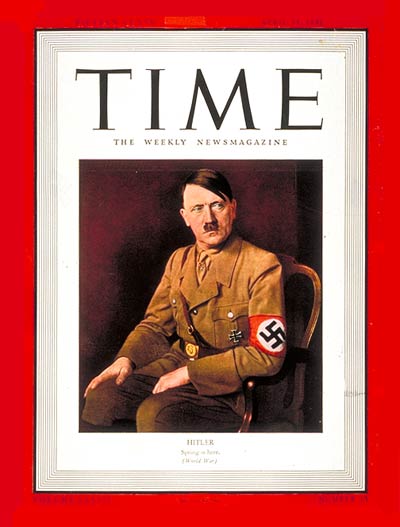
Almost like some used to say that the Great War (1914-1918) was the war to end all wars and we were treated to a very different reality in 1938. In that year we got the very first issue of Superman and Time magazine elected Adolf Hitler as ‘Man of the Year‘, do you remember how that ended, apparently all remaining 9 million Israeli’s definitely do!

Chaos can be good, it allows for true change. In this the quote: “It’s like knocking over an ant-hill. Every new generation gets stronger, the ant-hill gets redesigned, made better” is appropriate, yet the danger is that those ants have access to an arsenal of ‘solutions’ that can make a real dent ensuring long term chaos, that is why the Israeli push is not the beneficial push that the PM thought it could be, so tweeting that video was slightly too rash (for more than one reason). In that the earlier setting where we let the banks completely collapse might be the better options (if we had to choose between the two). In the second part, the Iranian debacle is also set on how China will react. Some are speculating that Iran wants to offer an oil solution if China is the saviour that they hope it will be. I cannot tell, I never looked at any data or papers giving real light to one path towards the other path. For china it might be an option, especially after the vitriolic actions against Huawei and ZTE, yet in the end that market is for now not large enough to cause truest concern, not whilst they have plenty of options to grow 5G in Europe with a population twice the size of the US and an overwhelming desire of the local populations in western Europe and Scandinavia to adopt it, there is enough for China to focus on, they might love to help out Iran, just to spite the US and to get under-priced oil, yet that is a separate play from what is on offer.

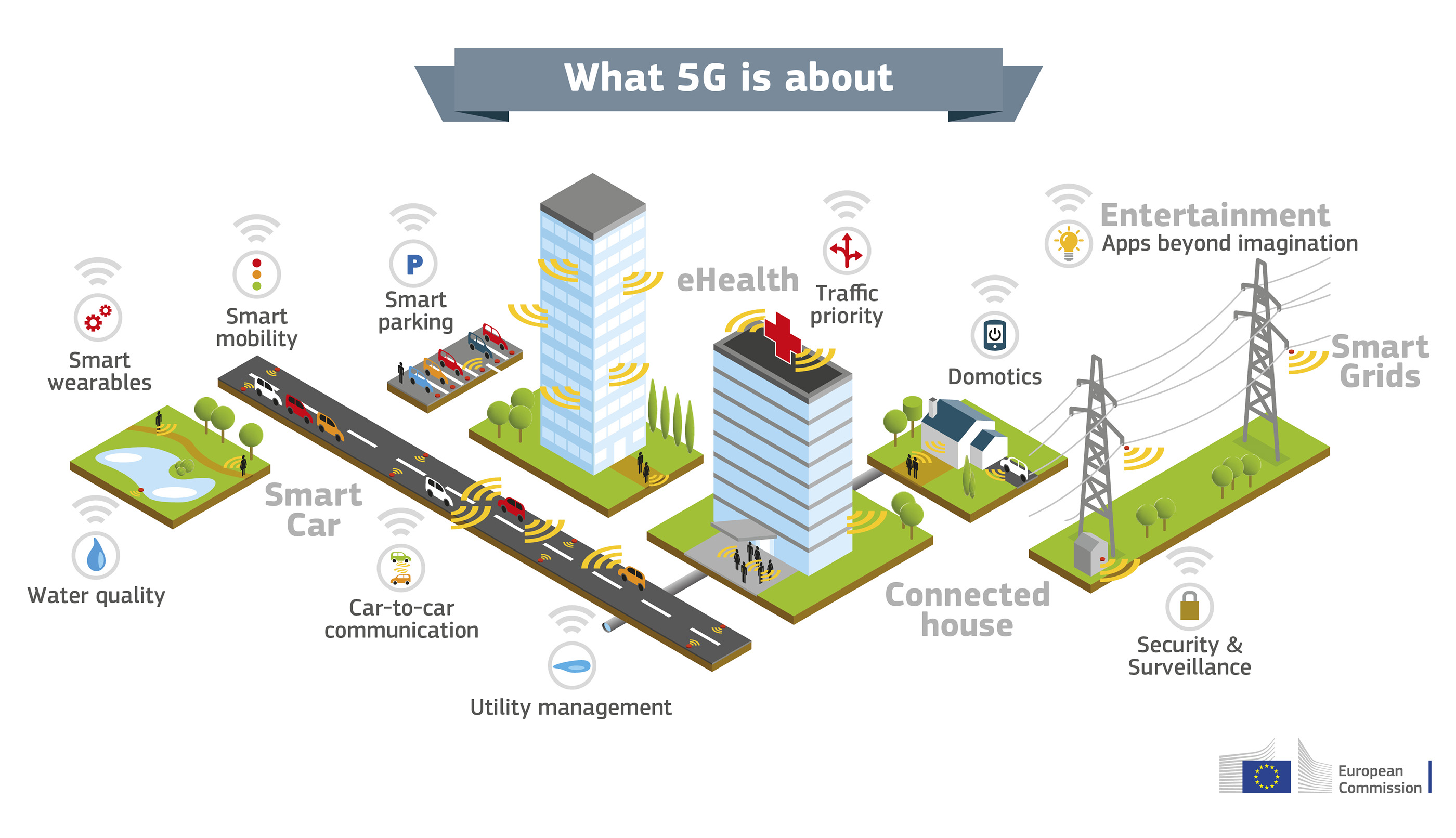
Scandinavia is also interesting as it allows Huawei to reach the bulk of Swedes through their three cities (Stockholm, Goteborg and Malmo). As Malmo is merely a bridge crossing away from Denmark’s capital Copenhagen a growth path for Huawei could show others soon thereafter what the rest is missing out on and with Swedish Telia on board, the setting for both Denmark and Norway becomes a reality. Even as the US is all up in arms, Reuters gave us merely 4 months ago on Huawei being “the company in prime position to lead the global race for next-generation 5G networks despite U.S. allegations it poses a security threat“. So even as we see newscasts like ‘Sprint, T-Mobile merger will generate 5G powerhouse, cut costs for users‘, that setting is definitely not a given. You see the chaos is not in getting the 5G, the chaos comes from 5G as governments and large telecom companies are nowhere near dealing with the setting that cyber threats can become. this is not merely phishing, scamming or abducting accounts, this is the realistic danger that for the first two years 5G facilitators become start points of all kinds of chaos though the facilitation of non-calibrated systems, architecture lacking equilibrium. the difference between ‘a holistic approach towards DDoS attacks and 5G networks, rather than relying on outdated defence tactics‘ (source: Wireless Week). Non-repudiation would have been a quality first step in that, in a time when too many are relying on authentication, we seem to forget that it remains relatively easy to get a ‘false positive’. Please do not take my word for that, merely visit 675 N Randolph St, Arlington, VA USA (address of DARPA) and ask Dr. Steven H. Walker if you can take a look at a massive archive of false positives that their previous research gave in all kinds of fields, it is an impressive read to get your fingers on and you’ll die of old age before you even get through 30% of the materials, even if you start as a teenager.

That was the ball game from the start. A mere setting of order versus chaos; a simple setting where order could have prevailed, if not for the economic setting of greed and speed over quality. In that 5G does not open up the super highway of data, it merely opened `15 highways next to the one we cannot even properly control now and we end getting 16 highways flooding us with false positives, chaos on a new level and not chaos of the good kind. It will be the wet dream of organised crime for close to a decade to come and the larger players remain is presented denial.

For that you merely have to search Google and use the search term “Telstra non-repudiation“, you get ‘Mobile Authenticator’, which states to be ‘Enhanced non-repudiation’. These two are not the same! Now, important that this is not anti-Telstra, the bulk of all systems on a global level have these issues. My issue in this particular case is “reduce the costs associated with robust user authentication for large populations of staff or customers accessing your online service” Non-repudiation is never cheaper (for now) and in the end the flaws are not obvious, yet they are there and it takes one sloppy moment to give access. Computer world gave us last year the article by Evan Schuman involved here is Steven Sprague is the CEO of Rivetz, this project that comes the from National Institute of Standards and Technology’s National Cybersecurity Center of Excellence (yes, it’s a mouth full) is giving us: ““Software code is easily altered, and memory can be copied,” he said. “The [whole] software process can be observed. You simply cannot hide a secret in the operating system. It’s time to finally do it correctly, with hardened keys within the device.”“. It is one step stronger, yet this is still not non-repudiation, where the setting is that you and only you could have done the deed. Some go for the ‘Dual biometrics may just be the authentication answer we need‘, yet that is still ways away and in the end on the mobile path not really a good solution. One player called Sensory is making positive headway, yet they are not there yet and time ran out close to two years ago to get something really good on the roadmap. So even as we see that authentication solutions are there, in the immediate setting where mobiles can now move billions, the game is now and has always been non-repudiation. At present we move over a billion dollars a day via mobiles and ecommerce, when we consider that this push is going to fivefold in the next decade, do you really think that authentication is going to get the job done securely and on time before the big bank download begins?

Is there a connection?

Consider Bank Melli Iran: $45.5 billion, Bank Mellat: $39.7 billion and Bank Saderat Iran: $39.3 billion. Merely three banks with a few billions. Now consider the following settings. In the first we get “While the standards of the Bahrain-based Accounting and Auditing Organization for Islamic Financial Institutions (AAOIFI) are widely followed around the world, they are not enforced in Iran“, a mere setting of rules. Now we consider the resetting of Basel 3 pillars one and two, with the support from several financial sources giving us “The Central Bank of Iran has played a significant and effective role in implementing Basel II and III standards in the banking system“. Now we take those elements and add 5G, whilst non-repudiation is non-existent and some devious entrepreneurs help themselves to the $125 billion of cream. This fat cat, can we call them ‘organised cats’, could potentially use the 5G debacle to remain anonymous and sail away on their new yacht (by the way, if you guys pull that off, please remember my AU$20,000,000 consultancy fee through Riyadh, so I can use the legally available tax avoidance rules).

Do you still think I am joking?

We have heard all kinds of noise concerning security, so in addition to that, one source (Internet of business dot com) gives us “5G will enable IoT applications such as autonomous vehicles, healthcare solutions, and robotics. But the technology also poses a much larger security risk than the 2G, 3G, and 4G networks that came before it. Why is this?
Significantly, 5G represents an overhaul in the way that networks are run and managed. In contrast to the hardware-based networks of the past, the technology takes advantage of virtualisation and cloud systems, leaving it more vulnerable to breaches if not properly secured.
” There we see the connection, proclamation of proper security are at the foundation of it, whilst the systems are all about Authentication and not about clear non-repudiation, in an age where mobile hi-jacking is a reality of life, the authentications in place are often too easily avoided. In the time a person walks to the bathroom a highly jacked phone can now set up the vibe of 25 million transactions, all completed in 52 seconds, most likely at that point, the person going to the toilet barely sat down for the event to release, that’s what it took to set the Iranian coffers to ’empty’. Now, many will not react that it happens to Iran, yet the newly elected extremist will not let that slide; and what happens when it is not Iran, but another nation? What happens when we realise too late that our own banks are not up to scrap?

Only this month did we see: “Security breaches continue to be an ever-present threat for financial institutions. Defending against attacks and authenticating customers without creating undue friction is something financial institutions have not yet completely solved. Consumers seem to be willing to use more secure methods to access their accounts, but not necessarily give up on ease and speed of transacting“, and in addition ““Attacks haven’t died down,” said Will Lasala, director of security solutions at OneSpan, a cybersecurity firm. “The amount of loss is through the roof. Stopping losses and the need to analyze what’s happening in those transactions is important.”“. That was this month, whilst the FDIC (Federal Deposit Insurance Corporation) treated all willing to learn to “Internet connections establish a pathway for hackers and thieves to access and steal sensitive personal information, including the banking records that many customers store on their home computers. Phishing, pharming, spyware, malware, worms, nimdas, viruses, buffer overflows, and spam—all relatively recent entries to our vocabulary—have raised electronic/Internet banking risk levels to new highs, and financial institutions have had to increase security measures to address those risks“, that was in 2005, thirteen years ago. Welcome to the age of ‘if it costs too much, sit on the solution for now‘, you see, not much headway was made (clearly nowhere near enough) and in that result we are now on the edge of 5G where the speed and issues are driven upwards at least tenfold, so that is where non-repudiation was a solution, if only someone had gotten us there. It was a risk covered in my University IT classes in 2010, so it is not like there was no awareness, merely a path that was seen by too many decision makers as too unprofitable to consider.

Now we see chaos in its proper light. Chaos could have set the stage properly, if they only allowed the banks to collapse in 2008, yet that did not happen and some players are up to their ‘old’ tricks in a new jacket whilst the people are more likely than not having to pay for it all again.


Leave a comment

Filed under Finance, IT, Law, Military, Politics, Science

The non-knowing speak loudest

There is an old saying that goes back to the original circus, the days of Sir Alec Guiness, John Le Carre and the circus (MI6). Those who do not know speak and those who do will not. There is however a valid issue with that mindset. When it is merely intelligence and what some regard as spyshit, we tend to not care. It is their world and they tend to live by other rules even as they have the same lack of common cyber sense as some US generals, it is their choice to make. Yet when we see labour people like Michael Danby need to present evidence in regards to “an opposition Labor party MP, called on the Liberal-National coalition to block Huawei and fellow Chinese telecoms company ZTE from supplying equipment for the 5G network. “Both Huawei and ZTE must report to the Communist party cell at the top of their organisations,” he told parliament. “Let me issue a clarion call to this parliament: Australia’s 5G network must not be sold to these telcos.”” I am actually in the mindset that his seat should be put up for auction if he does not disclose a proper setting and give evidence as to the reasoning of all this. It becomes more pressing when we see “Mr Lord, a former rear admiral in the Royal Australian Navy, told Australia’s state broadcaster on Monday that these claims were “wrong”, adding that Huawei was not owned by any committee of government and posed no risk to Australia’s security“. It is not just because Mr Lord is a former rear admiral, more that the average naval midshipman tends to be more reliable than any politician. We get this from the Financial Times (at https://www.ft.com/content/1a2d19ba-67b1-11e8-8cf3-0c230fa67aec). In addition, when we get politicians start the scare tactics of ‘critical infrastructure pose a risk to national security’, there is a clear need for both Duncan Lewis and Paul Symon AO to get hauled in a chair in Canberra and ask them to openly answer the questions regarding any evidence that Huawei is a security threat. To blatantly accept the US on their ‘china fears’ is all well and good for Telstra, yet the setting is not a given and the fact that Telstra is nowhere near the technological levels of Huawei is not something that we blame them from, but they basically lost the 5G war before it started through their own actions and inactions.

Now if there is an actual national security concern, we should be open about that and when that happens, and evidence is presented, at that point we can all relax and state to Huawei that we feel sorry for the inconvenience caused, but such concerns are just too big to ignore. I think we have had quite enough of these presentations that reek of Colin Powell and his silver suitcase with evidence that no one ever saw in 2001. We cannot go in that direction ever again. We will not be the play toy of greedy telecom companies and their internal needs for stupidity and inactions; we can no longer afford such a nepotism environment.

That same issue can be said regarding Nationals MP George Christensen. Apart from him trying to undo a business deal of a 99 year lease, no matter how silly that deal was, Australia cannot be perceived as a nation that cannot be trusted at the business table. My second issue is why a maroon (Queenslander) is involving himself with NT politics. In that regard, why do we not see the responses form Vicki O’Halloran is she has any, is she not the appointed administrator? In this, the game is not over. The Australian Financial Review gives us: “Huawei faces the likelihood that Cabinet’s national security committee will veto it supplying equipment for the 5G network, based on the recommendations of security agencies, over concerns about the potential for cyber espionage at the behest of China’s leaders“. In this the question becomes, is there an actual security concern, or is it that the national concern is the devaluation of Telstra? In additional support we need to see the Sydney Morning Herald two weeks ago when they gave us (at https://www.smh.com.au/business/companies/how-a-huawei-5g-ban-is-about-more-than-espionage-20180614-p4zlhf.html): “The Sydney Morning Herald and The Age reported in March that there were serious concerns within the Turnbull government about Huawei’s potential role in 5G – a new wireless standard that could be up to 10 times as powerful as existing mobile services, and used to power internet connections for a range of consumer devices beyond phones“, as well as “the decision will have an impact on Australia’s $40 billion a year telecoms market – potentially hurting Telstra’s rivals“. the first part is something I wrote about for well over a year, the second one is important as we see ‘potentially hurting Telstra’s rivals‘, from my personal point of view it reads like the one lobotomised idiot in telecom country gets to decide through arm-twisting on how we need to remain backwards as they set the standard that they could not deliver for the longest of times (a little sarcasm regarding Telstra’s 2011 3.7G), I wrote about that recently.

ABC gave us yesterday: “it continues to be the target of criticism over its connections to the Chinese Government, including allegations it is involved in state-sponsored espionage“, yet the people have never been shown actual evidence, so where is that at? There might have been doubts to some degree for a while, but the Powell stunt is too clear in our minds and the USA does not have the credibility (or credit rating for that matter) it once had. The fact that the opposing former rear admiral of the Australian navy trumps two half bit politicians seeking the limelight any day of the week and some stay silent, the reason for that is only speculation, but we might not need to seek far and a few words ion Google Search might help find that answer (like ‘Telstra’ and ‘8000’). When we see some giving us: ‘Telstra Corporation Ltd (ASX:TLS) is betting it all on 5G‘ and we see the Telstra strategy briefing (at https://www.telstra.com.au/content/dam/tcom/about-us/investors/pdf-e/2018-Strategy-Update.pdf), we see on page 6, Leading with 5G, that would never be an option with Huawei in play as they are ahead by a lot, so the presentation given a week ago, whilst we realise that the presentation was prepared way before that is giving the setting that Huawei is no longer considered to be competition, that is what we now face! What some might call a backward organisation proclaiming to be leading whilst 8000 men will be missing through inaction. That page is even more fun when you consider the quote ‘new technologies like IoT‘, which is funny when you consider that the Internet of Things (IoT) is a system of interrelated computing devices. It is not a technology; it is a network that enables technology. In addition, when you start nit-picking in that 34 page event, we see all the bells and whistles we need to see, yet when you consider consumers and small business (the millions of people that Telstra charges) starts at page 9 and gives us 5 slides. We see ‘cutting edge 5G capability’ (by whose standards?), we see location devices (with the image of a dog), Access to rewards an tickets, a fully-digital relationship with Telstra (an implied no more personal interaction after the sales, merely a chatbot) and value added services, yet the value of a service like customer service and customer care are absent in that part of the equation, so how does this push the people forward, because I doubt that it actually will achieve anything in the long run and one flaw will anger the actual consumers without limits.

You see, personally I believe in the IoT, I believe in 5G, they are tools to enhance experiences and interactions, not make them obsolete and that is what  feel when I saw the Telstra strategy update. These two elements can enhance customer care, customer service and customer support, not replace them with ‘AI’ enhanced chatbots. So the moment we get a 2.0 version of ‘Telstra’s new chatbot, Codi, is making so many mistakes customers are furious’ (at https://www.businessinsider.com.au/telstra-codi-bot-backlash-2018-3), chatbots can be a great asset to get the information and channel the call to the right person, yet that again is merely enhancing and that can work fine. The presentation implies the loss of actual customer values and ignoring their need for interactions. That in an aging population might be the least intelligent stance to make ever.

Yet this does not give way to the issue on Telstra versus Huawei, as the Sydney Morning Herald states “Telstra has refused to exclude Huawei from its 5G tender, but that is seen more as a way of keeping its existing supplier Ericsson on its toes“, as well as “In other words, a ban could be bad news for TPG, Vodafone and Optus. Whether it is necessarily good news for Telstra – which has its own issues at the moment – is less clear“. In finality we get “Intelligence agencies tend to get their way on matters like these“, this beckons the question what are they actually after? The US seems to be in bed with Samsung and their 5G routers, so it makes sense that this will be the path that Telstra walks as well, time will tell how it ends.

So why is this such a big deal?

We are currently in danger of actually falling behind Saudi Arabia, yes, that place in a large sandbox is about to surpass us in 5G and other technologies. They had the audacity to reserve half a trillion dollars toward Vision 2030 and Neom. So when we got “Al-Khobar in the Eastern Province, of Saudi Arabia, has become the first city in the region to benefit from the fifth-generation wireless network or 5G network, according to a press statement issued by the Center of International Communication“, last month. There was not a surprise in my bone. You see, this will drive their Vision 2030 plans even further. So as Saudi Arabia is now the new pond to grow speciality in 5G, app designers can promote, test and deliver on knowledge that will be available whilst Telstra is trying to figure out how to get 5G installed. with “All the necessary national 5G policies and supporting administrative provisions are planned to be in place before the end of 2019, along with the award of initial batches of the spectrum to support the full commercial deployment of 5G technologies“, we see that Saudi Arabia had been taking this serious for a much longer time. This goes a little further when we see ‘the Middle East and Africa 5G Technology market (Egypt, Saudi Arabia, UAE, Nigeria, and South Africa)‘, so at this point, Saudi Arabia has a head start to not just push Saudi Arabia forward, they have quite literally first dibs on gaining a chunk of the 98 million Egyptians. Not all can afford 5G, we get that, but those who do are confronted with only Saudi Arabia as a Muslim player, you did not actually believe that they would run to Vodafone, did you?

So back to the 5G local ‘market’! For this we need to take a look at the Australian Financial review 2 weeks ago. Here we see (at https://www.afr.com/opinion/columnists/the-technical-reasons-why-huawei-too-great-a-5g-risk-20180614-h11e3o), with the title ‘The technical reasons why Huawei is too great a 5G risk‘, the start is good, this is what we wanted. Yet we are treated to paragraphs of emotion and alleged settings. So when we see: “Huawei presents unique additional risk beyond the “normal” risk of buying complex equipment. China has demonstrated a long-standing intent to conduct cyber-espionage“, so is ‘intent’ shown in evidence? How did the CIA and NSA acquire our data or Cambridge Analytica for that matter? ‘China is thought to be behind data breaches‘ is merely a statement ‘thought‘ is speculation, not evidence. Then we get: “The US Trade Representative’s Section 301 report from March this year details the very close cooperation between the Third Department of China’s People’s Liberation Army (3PLA is a military hacking unit, also known as Unit 61398) and Chinese enterprises“, I have to get back to this. We are treated to ‘At one extreme, Huawei could be asked‘, is a case of fear mongering and not evidence. In addition we get ‘it is certainly a possibility‘ which came after ‘Vulnerabilities may already exist. This may not be the most likely possibility‘ as well as ‘very likely‘ all emotional responses, none of them evidence in any way, so the article with included in the title ‘The technical reasons’, has pretty much zero technology and close to 90% ‘allegedly’, speculations and emotional twists, whilst we cannot deny the optional existence of vulnerabilities, yet these are found regularly in Cisco hardware and Microsoft software, so have those two been banned in Australia?

Now to get back to the Section 301 report (at https://ustr.gov/sites/default/files/Section%20301%20FINAL.PDF). It is 215 pages and I did not read that complete political US marketing behemoth. There is one that actually carries weight. On page 153 we see: “evidence from U.S. law enforcement and private sources indicates that the Chinese government has used cyber intrusions to serve its strategic economic objectives. Documented incidents of China’s cyber intrusions against U.S. commercial entities align closely with China’s industrial policy objectives. As the global economy has increased its dependence on information systems in recent years, cyber theft became one of China’s preferred methods of collecting commercial information because of its logistical advantages and plausible deniability“, which is basically good application of intelligence gathering. Please do not take my word for it, feel free to call the NSA (at +1-301-6886311, all their calls are recorded for training and quality purposes). Oh, and before I forget, the text came with footnote 970, which gave us “A number of public submissions provided to USTR state that the Chinese government has no reason to conduct cyber intrusions or commit cyber theft for commercial purposes, see CHINA GENERAL CHAMBER OF COMMERCE [hereinafter “CGCC”], Submission, Section 301 Hearing 16 (Sept. 28, 2017); that the US has not provided evidence of such actions by China, that China is also a target of cyber-attacks, and that the two countries should work together“, there is that to deal with and is that not a rare instance where we are treated to ‘the US has not provided evidence of such actions‘, how many times have we seen claims like that since 2001? Would that number be a 4 or 5 digit number?

The point is not whether it can or could happen, the question becomes did it happen here? let’s not forget that in most settings the section 301 report is about US interests and their technological advancement (which they lost by becoming iteratively stupid). Here we have a different setting. In the setting we face Huawei has a technological advance over all we have in Australia and most of Europe as well. Huawei was one of the first to realise the power of data and 5G and they are close to a market leader, the US is basically relying on Samsung to get them there. BT (British Telecom) is on the ball, but still not on par. They are in bed with Finland “BT has teamed with Nokia to collaborate on the creation of 5G proof of concept trials, the development of emerging technology standards and equipment, and potential 5G use cases“, so this sets the larger players in a field where Nokia and Huawei are now active. The SAMENA Telecom Leaders Summit 2018 and Saudi Telecom Company (STC) announced today that it is working with Nokia to launch a 5G network in 2018 within Saudi Arabia, yet the technology agreements show that it does include Huawei and Cisco, so they aren’t already active, the setting for the initial bumps in the road that Cisco, Nokia and Huawei will surely overcome is knowledge that we will not have in Australia long after someone was able to connect the 5G router to a power point (very presentable, yet the online green light seems to be broken).

So whilst politicians are considering who to be buddies with, Saudi Arabia joins the US and they will be the first 5G providers, which means that the UK and Australia are lagging behind and optionally not for the short term either.

So am I not knowing or am I all knowing? I actually prefer the first, because it is more relaxing; yet the need to speak out loud is becoming increasingly important even if it was only to place the loud mouth limelight seeking politicians like Michael Danby and George Christensen in their slightly too arrogant place. They are of course welcome to present ACTUAL evidence proving me wrong. #WishingForAMiracleHere


Leave a comment

Filed under Finance, IT, Media, Military, Politics, Science

Business will be booming

There are all kinds of settings in the tech industry, some we like and some we like a lot less. It is the most visible in the mobile industry, the clear discriminatory setting there is almost unheard of. No matter what the reason is, a person for the most is iOS (Apple) minded, or they tend to go the way of the Android (Google, Huawei et al). There is for the most no in-between there. The reasons are as wide as the drops of water in a lake on a rainy day and for some these reasons make sense, or they do not. Yet we all tend to have them. I have been and remain an Android follower. I have nothing against apple. The initial setting was done by their marketing departments. Where Apple gave us: ‘You can do all these things and it is a phone too‘ and Android gave us: ‘This phone can do all kinds of things, some you will not have believed was even possible‘. I went the way of Android. You see, they are stating the same thing, yet Android focussed on a phone that can do other things. Apple went towards the things they could do, including being a phone. So from my point of view, I needed a phone, so I went the non-iOS way.

I know that in the end the difference is negligible, but it did matter. So it is a little over three years when I got myself (because it was a bargain) the Huawei P7. The difference from the previous phone (Motorola) was so distinct I became a Huawei fan overnight. Now that it is time to put that phone to bed and switch it off for the last time, I find myself clinging onto the idea that I need a new Huawei. Let me be clear, apart from my distinct non liking Samsung (a past issue I had with them), I do think that the other brands are decent too. Yet, when you have the option for a Google Pixel 2 XL, or a Huawei P20 close to $500 cheaper, what will you choose? Let’s also consider that the difference is almost nil, well it is not nil but the real differences do not stand out too much, not worth $500 as I see it. For me, if I get that phone, it will be a 300% improvement of what I have now and I am not dissatisfied with what I have, it merely has been acting up and after 3 years of working 24:7, that makes perfect sense. The little workhorse has earned its retirement. So when I started to look around, and I took a new look at the P20 and P20 pro, which is a $300 difference, I wondered why I would want the P20 pro for the usage I have. I have been able to do everything I needed with 2 GB RAM, so the 4 GB and  6GB RAM issue is not one I need to worry about. Both come with 128 GB storage, which is 800% more than I have now and even as I ran out of storage merely once, it did not worry me to any degree. The camera options are not the same, yet the PRO has an additional 40 MP camera option, which is slightly over the top need for someone who uses an EOS 1 Camera. The only issue is the battery, it is 3400 mAh versus 4000 mAh and I am not sure that this constitutes the value of $300 difference, not on my budget. More important, the P20 holds its own against the $1500 phones out there and when you consider the fact that it is 30% cheaper, what would you choose? This constitutes a difference that is well over a week’s rent for some people, so there is that to consider as well.

Yet, it is not about that part, it is that Huawei has seen the light of opportunity in both Saudi Arabia and Egypt, so when we see (at https://www.albawaba.com/business/pr/huawei-announces-%E2%80%98vip%E2%80%99-service-p20-pro-saudi-arabia-1135384), the fact that branding is getting momentum in the Middle East with their Huawei Consumer Business Group and their “a ‘VIP’ service for its customers in Saudi Arabia through its authorized service centres for any customer buys Huawei P20 Pro with Huawei KSA warranty”. Some call it marketing, which in all fairness it actually is, yet with 95 million people in Egypt and 33 million in the KSA, the market could be booming for Huawei, even as an Apple store is coming in 2019, the Apple SA store is pointing towards “Apple-designed outlets located within selected Apple resellers and other retail shops. Many are staffed with Apple-trained experts who can help you to find the right solution for you“, which is a perfectly valid and acceptable text. Yet, when you can consider an ‘outlet’ versus “Huawei has announced “Huawei Flex” which is a free drop off service in which customer can drop his device for service in more than 300 locations across kingdom for Huawei device under Saudi Arabia warranty to be send for Huawei Authorized service centre for warranty repair and return“, we see that Huawei is on the ball (I am not saying that Apple is not), but the service minded sales pitch is clearly there and as we see: “Pablo Ning, President of Huawei Consumer Business Group Saudi Arabia said: “The Kingdom is a strategic market for us, and this announcement reflects our commitment to doing business in the region. It is our effort to always cater to the specific needs of the markets we operate in. Recognising the needs of our loyal customers in the Kingdom, we are very pleased to announce these services and we are looking forward to announcing many more unique offers for them in the future”“, we see that even as we realise that too is a marketing setting, it also states that Huawei means business. With a chunk of a 125 million customer base, these two alone could drive sales even further in the Middle Eastern nations; in addition, the Huawei centre is rumoured to be coming to Neom, which could drive the brand even further. Even Forbes was recognising the growth Huawei had in 2017, even though we do take notice of the fact that anti-Chinese sentiments in the US barred the phone from the US markets, we need to realise that the planet is a lot bigger than the 325 million in the US. Also consider the fact that Huawei does a lot more than merely smartphones and the opening of the market that is a third of the US population matters, in addition the 740 million Europeans are now more than ever looking for a good deal. So the group of people who have the cash to go all out and get a phone $500 more expensive is shrinking fast. Yet Huawei is not out of the woods there either. It is up against Samsung and Samsung is doing a good job of gaining ground. In there we see that Apple is losing their footing, losing sales share in the UK, France and Spain. So even as some had growth, iOS was merely growing at 0.1%, against Android 2.8%, that is a massive difference, and Huawei is tinkering very effectively on these two markets. Although, I have to admit (speculatively) that the largest growth was due to the release of the Google Pixel family. Still Huawei remains in the fight of growth and its setting in the Middle East is as assertive as it gets. I reckon that if Pablo Ning pulls it off, he might be looking forward to his new apartment overlooking Chaoyang Park in Beijing. It is that extreme because the market share that Huawei has to grow is pretty astounding. You see, not everyone is looking towards the coolest marketed phone that most cannot normally afford, in the Middle East revenue is often set towards pragmatism and that is a setting that Marketing on a global basis tends to be unfocussed on. It is in this setting that mobile phones will gain traction in sales. So when we consider the progress that Huawei is making towards growth by going via the support and customer care path, or as Pablo Ning phrases it “the needs of our loyal customers in the Kingdom“, we see not some message on selling a phone like ‘iPhone X, Say hello to the future‘ with after that ‘Sales, Apple Authorized Resellers‘ or ‘Sales, Apple Authorized Resellers‘ but with ““Huawei Flex” which is a free drop off service in which customer can drop his device for service in more than 300 locations across kingdom for Huawei device under Saudi Arabia warranty to be send for Huawei Authorized service centre for warranty repair and return“, we see that Huawei means business. It is not about the initial sale, it is putting to bed any worry the consumer has afterwards and the Huawei version sells much stronger than the other messages and that is how commercial traction leaps forward making it market share gain. The lower sales threshold only speeds it up. In that we see that “aiming of strengthening its business base, its operations and customer service in the Kingdom“, is not just vital for growth of Huawei, the commitment of 5G in Saudi Arabia as it is at present, will only fuel the need for the Huawei smartphone (and smart phones in general); with its upcoming Huawei Mate 30 (Q3 2019) Huawei could give a further boost, as those buying today would be ready for a new phone just as the Mate 30 will be released and it will drive it a lot faster if it is both 4G and 5G enabled (which is not officially confirmed), so as Apple and others are looking to open a shop at that point, we will see that if (consider that it is an ‘if) Huawei kept its services and exceeded the expectations of the consumer, they will have a much larger advantage and as such Google might profit with their own Android phones on the coattails of Huawei. This is shown in another way too. Statista (at https://www.statista.com/statistics/271774/share-of-android-platforms-on-mobile-devices-with-android-os/) gives a view that takes some mulling. When we consider the Android market share, we see that the largest part is owned by Marshmallow (v6) and Nougat (v7), so that means that those who update now to Oreo (v8) will be most likely to update the moment 5G is out, those who delay more than 6 months are not likely, or better stated less likely to update more than once, so either they miss out on 5G or are in a much smaller segment (not serious smartphone users). So they use it as a phone and that is it, which is fair enough, because a phone is a phone and for that 5G is not essential. Yet when we consider that this group is almost 37%, there is an option for smartphone sales everywhere to evolve those users towards a more smartphone driven use of apps and data, yet what are these consumers made of? There is no data that I had at my disposal, yet finding out is actually a lot more important here. If we know what the consumer needs, we can see if there is a better solution in new hardware, not merely because of the security risk that older phones hold, the fact that smartphone functionality is optionally missed out on is basically a sales opportunity missed and when it affects an optional 37% slice of smartphones it starts to matter as that involves a serious amount of cash. Now we need to accept that it is not merely the phone, for the larger places like the island of Australia mobile data was until last year pretty expensive, so why upgrade when the data used will monthly kill your budget? to go from 15GB a month for $65 in 2016 to 200Gb for $70 in 2018 is actually a massive leap and not all places have made such changes, so not everyone is on board yet, but with 5G that will change by a lot, not only will they drive down the 4G data prices, but the mobile setting in places like Egypt and Saudi Arabia (outside of Cairo and Riyadh) will drive the need of people much larger. The fact that Egyptian TV outside of the large cities is not fabulous, for these people to suddenly get a clear reception of matches of Al Ahly SC or Zamalek SC could drive sales, so the larger the part of that 37% slice is actually found in the Middle East, the easier the upgrade sales will get; when we consider the joke (that is how I personally see the Vodafone Egypt site), as well as the clarity of http://www.egyptsim.com/, we see that there is still space to improve it all and Huawei is in an interesting place to make that happen. In addition, the Egyptsim site shows a setting that was almost the 2016 setting in Australia, so they are not that far behind, so when we see the evolution where the prices reflect 500% if what they offer now (which is what we can get in places like Australia nowadays), we see a more competitive setting where upgrading any smartphone will become the essential need of anyone wanting to use such amounts of bandwidth. Even a mere 50 GB at €15 could change the game, it will drive app use, phone use and more important, the need for phone upgrades and competitive phones will become more and more desired. This is shown in direct opposition to the anti-Huawei feelings that we see from America (at https://www.politico.eu/article/huawei-china-ghost-in-europe-telecom-machine/), a story from last January. So in all this when we see “The Chinese tech giant is banned from bidding for government contracts in the U.S. over concerns that its telecommunication equipment could be used for spying by Beijing“, that whilst it refers right next to it a story regarding ‘Mark Zuckerberg hearing: As it happened‘, in all this Huawei is a concern? As the US has not even got clear legislation on data and as we see the Facebook events, I can state that some people have their mindset in the wrong place. In addition, if we can believe the Daily Mail who gave us “Google caught using $580 million worth of Australians’ phone data to spy on them by monitoring their movements“, so in that, is Google getting government contracts? And if the second is true, why is there no outcry in that setting? Is it about the company, or where the revenue is going to? It is a multiple facetted setting of greed, technology and whose ego is the largest to present. How does that help the consumer who wants a good affordable phone, if the Google Pixel and Huawei phones offer the same thing, yet Huawei can do it 30% cheaper, why would we want the more expensive one, our privacy? Facebook gave that away and there is no actual act in place to thwart that, in addition, the US senate hearing gave more and more reluctance as we seem to get the impression that these senators do not even comprehend technology in its basic foundation. We merely have to look back at the moment with Senator Orrin Hatch (R-UT), who asks on: ‘how do you sustain a business model where users don’t pay for your services‘, the answer by Mark Zuckerberg was priceless: ‘Senator, we run ads!“. When we are confronted with such a level of what I regard to be ignorance towards business reality, that is the not party we should rely on when they state to us: “its telecommunication equipment could be used for spying by Beijing“, yet in that foundation, not one piece of evidence has been presented that this is actually the case. The “potential for secret ‘backdoors’” is astounding. Not one piece of evidence, not one setting that gives any level of reliability on ‘potential‘. I wonder how many of these gentlemen have been receiving calls from Cisco, Apple, IBM and other parties on their fear of China getting a slice of American business, or perhaps it is even more simple. With American firms the government of the USA can make tax deals, because the inability of paying invoices can always get bartered on a national level, not international. And there is where Huawei has its opportunity. As it grows its segments in both Europe and the Middle East it can potentially grow the services they offer as the reach of those services and in that light and the next level of growth towards 5G, we see that Huawei has a growing distinction against all competitors. It can offer a new price range, one that consumers have not had for the longest of times and it can place a setting where customer loyalty can grow towards Huawei as it offers something affordable, now when the providers think it is time, but when the consumers need them, which is always a war that works in favour of the consumer. It is a war of settings between optionally, actually, and eventually. The first one offering it has the benefit. Yet is Huawei ready to make that commitment? I do not know, yet should Huawei grace the settings and be announced as a participant of the new high tech city Neom, at that point you can be decently certain that Huawei will become a much larger player in the Middle East and from that, growth in Europe will be a near certainty. Business for Huawei will be booming and it all started by making high end mobiles an affordable item for those not in high paying jobs, or forced to get themselves chained to a two year contract with a telecom provider.


Leave a comment

Filed under Finance, IT, Media, Politics, Science

Tubing it along

There is news, news that has been about a few weeks and I have kept an iLook on it. In one part it is as techofreak as it gets, so I should be on board the moment it launches, it is so versatile that it has no other option than to change lives on a global scale, yet there is the issue that it is so new that it is a little scary. That is the reality of all new technology; consider the first 10,000 Facebook accounts, the first 100,000 internet users. It all starts in a small geeky way and this will be no difference. It had more presence in the Saudi Arabia Vision 2030, so that is why I took another look. You see, the entire matter is not merely where it is, but it is how the technology is adapted, that is the first part in all this. To set this in the proper light, we need to take a step back. In the UK they have the HS2. So when we see the BBC (at http://www.bbc.com/news/uk-16473296), we see “The initial plan is for a new railway line between London and the West Midlands carrying 400m-long (1,300ft) trains with as many as 1,100 seats per train. They would operate at speeds of up to 250mph – faster than any current operating speed in Europe – and would run as often as 14 times per hour in each direction“, so when we consider London – Birmingham we see ‘1 h 25 min’, as their fast option at present, which at 117 miles, makes the HS2 a 45 minute saving, so how many billions is that going to cost? Now consider that each one technical glitch will cut the 45 minutes. Now, I am all for progress, now when we go by two numbers we see “a projected cost of £56 billion, up from the initial cost of £32.7 billion in 2010“, we see that 8 years ago, they had it wrong by close to 100%, so we see a waste of £56 billion plain and simple. The UK could fix its schools for that amount of money and overall, there is absolutely no reason to go that distance, it is just too short. Now we get to the next stage of travel.

Welcome to Hyperloop!

Now as we see this in the Saudi Arabian setting it changes, you see when we look (at https://www.tahawultech.com/news/virgin-hyperloop-one-unveils-vision-2030-pod/) we see ‘Traveling from Riyadh to Jeddah would take 76 minutes (currently over 10 hours) utilising the land bridge for both passenger and freight movement, positioning KSA as the gateway to 3 continents‘ as well as ‘Traveling from Riyadh to Abu Dhabi would take 48 minutes (currently over 8.5 hours)‘, so here we see a clear forward momentum. Not merely 45 minutes gain, but gains that take away 90% of the travel time, now we are talking improvements! I never quite understood the HS movement, not in the UK (where there is some benefit) and even less in the Netherlands where the improvements are as shallow as it gets, all this ‘good for the economy‘ whilst I think it greased the careers of certain people, and in the end nothing for the citizens, and the less stated on the Dutch government joke called Fyra at a mere €11 billion loss, it is not a lot if you say the amount fast!

So even as we are burning ourselves all over Europe on high speed trains Hyperloop technology is different, you go by tube (as literally as it gets) and within that tube you have the option to truly accelerate, the nice setting that this will reflect on cargo and passengers alike, so it is also versatile. So when we read “The hyperloop-enabled transportation sector in the Kingdom of Saudi Arabia will stimulate economic growth and diversification of Saudi industries, according to Virgin Hyperloop One. It will also nurture the manufacturing and innovation sectors, and spur job growth in support of the country’s Vision 2030 plan increasing the GDP 1-2 percent across the Kingdom“, we are not seeing the whole picture. You see it is almost a lot bigger than that. The currently planned £380 billion mega city Neom would be an optional first as well, so Riyadh would be linked to Neom, which now is set to connect Egypt and Jordan, it also opens the doors almost directly to Sharm-El-Sheik as well as the Israeli city of Eilat, all golden opportunities which allows Saudi Arabia to grow the economy in Riyadh on a much larger foundation than ever before. In all this Cargo and passengers are set to near exponential growth, especially in the short term. So we have near direct connections between Bahrain, Egypt, Israel, Jordan, Oman, Qatar and Saudi Arabia in the centre of all this. It will not take long for these nations to grow all kinds of alliances and commerce will flourish like nothing we have seen before and Virgin, with its Hyperloop One is in the centre of this growth. Even as Europe is trying to get something similar rolling, we see that France is alas out of cash for such an endeavour (at present) ‘Hyperloop gives cash-strapped French cities hope‘ (at https://www.thenational.ae/business/economy/hyperloop-gives-cash-strapped-french-cities-hope-1.726967), it is a stretch, but it makes a lot of sense for France to get involved in all this, in their setting Hyperloop makes sense, especially regarding cargo (cheese and wine settings anyone). So when I see “TransPod’s technology is based on magnetic propulsion and electrified tracks, moving pods through a vacuum tunnel designed to reduce friction. As with most Hyperloop projects, the bulk of the estimated costs are for deploying infrastructure. Co-founder Sebastien Gendron estimates his company needs €20 million (Dh88.1m) in financing to complete the Limoges project at the current stage, and says he’ll raise half of that from private investors“, in all this, I am surprised that no one there called Ubisoft (more specifically Christian Guillemot, Claude Guillemot, Gérard Guillemot, Michel Guillemot or Yves Guillemot), they have the cash and more important, to be the founders of something this futuristic that will be moving through France with the Ubisoft symbol would be worth its weight of a train in gold I’d imagine.

So back to Saudi Arabia, the one part I do disagree with is ‘in support of the country’s Vision 2030 plan increasing the GDP 1-2 percent across the Kingdom‘, you see, once the line is in place, it will spur the economy in more ways, beyond tourism and beyond cargo, for close to double that prediction. A system that far ahead will also spur infrastructures growth as the rest of the world will be lagging behind, especially where engineering is concerned. They all claim they have ‘the technology‘ yet at present there is a lot more reliability that under these settings it will only be running in the KSA in a more serious setting in the foreseeable future and that is where the advantage grows, in addition, when the travel times are shifted to those degrees, emergency surgeries, medical disasters when Hyperloop technologies transfers and adjusts in more than one perk, we will see both the King Faisal Specialist Hospital and Research Centres in Riyadh and Jeddah grow abilities to attain options because they are now less than 2 hours apart. That transfers to all manner of services, when they are no longer separated by time to that degree, it will drive a lot more than the ones we see at present. and let’s not forget, this is merely the first degree of Hyperloop, as the engineers figure out a lot more than is currently possible, the growth will blossom further, and as we see forward momentum on this scale, we understand that there are risks, you when the gain is not 45 minutes, but 90% travel time is reduced the picture shifts a lot further on a larger scale. Even as we were introduced to ‘tube’ transport in Logan’s Run in 1976, we never imagined that it would be an actual solution, not until now do we see that there are places where it is more than a solution, it is the drive to move forward on nearly every field.

So even as I accept that we are not there yet and there are all kinds of issues down the line, movement is now a given, and even a some used the London underground map and added some Hyperloop fun to it, the setting is not that impossible on some part of those tracks. It is a part where all technology can move forward, we merely have to adapt parts of it. Consider that change as new venues of technology open will up, and there is serious cash to be made for all the players in this field, you merely have to find the niche where your solution fits.

That is where Vision 2030 is now becoming a driving force, not merely because there is $500 billion to be found, but because those who do get their working solution in place, for those there is a lot more to be made over time, Saudi Arabia is merely the pilot, it is the global setting where profit becomes a very serious opportunity, it will drive the now nearly born new Nouveau Riche generation to a very new level with amounts the previous generation never ever dreamed of.

When you sit down and consider the map, we do not merely see Africa, Asia, and the Middle East, we see that Saudi Arabia has the opportunity become the axial for those three continents, an option we never would considered as realistic when Vision 2030 launched 10 years ago, now that picture is shifting and with the growing technologies as Saudi Arabia is embracing these new opportunities we see a shifting picture, even as oil might be funding this, the reliance on it is fading a lot faster than we thought possible, not merely through Hyperloop, but through the changes all the technologies enable one another with and that also gives new directions, because it is no longer about volatility  (as Saudi Arabia was accused of by others in a previous blog), it is about stability and the enabled stability that these solutions bring.

For in the end making money will always win over waging war, that has been proven for the longest of times.

Leave a comment

Filed under Media, Politics, Science

The rocky road of Congress

There are issues all over the Middle East, and whilst saying that, we see that the UK and the US are now ‘caught’ with their fingers in the big pork pie.

The setting is best seen when we start with the Israeli Haaretz. The article (at https://www.haaretz.com/middle-east-news/top-three-stunning-admissions-from-the-top-u-s-general-in-the-region-1.5910066) gives an initial view.

The title ‘Iran, Syria and Saudi Arabia: Top Three Stunning Admissions from the Top U.S. General in the Middle East‘ sets the pace to the smallest degree and sets the topics to a much larger degree. So let’s take a look.

  1. Assad has won
  2. Iran deal should stand
  3. Saudis use American weapons without accountability in Yemen

Each of these three settings are partially a given. In the first we see that as Lt. Col. Dmitry Utkin has been successful in setting the pace and the plays that are about to follow. Yevgeny Prigozhin, who is linked in all this gives the push for Concord Management and Consulting as well as its subsidiary LLC Megaline, a large push for optional multi-billion dollar contracts. It is yet unconfirmed what exactly will happen, but the setting of the end of the Syrian war will have long lasting repercussions in the Middle East. It is also the first setting where there is a very clear indication that the influence of the US is declining. It will quite literally need to cater to the needs of Saudi Arabia for a much longer time to undo the damage that inaction has brought to the US. So whilst the world is getting torpedoed by news, fake news and gossip regarding to the US and the Internet Research Agency (IRA), there are more and more indications that LLC Megaline is moving beneath the radar to start setting up their infrastructures to grow close to 500% and become the construction facilitator primarily for Syria and after that who knows. Let’s not forget that the $500 billion required for NOAM will go a lot further than Saudi Arabia by its self can currently facilitate for. So as America has been making gruesome steps towards optionally fumbling the collaboration it had created and grown over 75 years. As we were treated earlier this week (at http://thehill.com/opinion/national-security/378132-us-must-push-saudi-arabia-away-from-the-chinese-model-of-governance), so when we see “The widespread concerns are that Saudi Arabia simply won’t meet the stated targets set by Vision 2030. Facing a demographic tidal wave — nearly 45 percent of the population is under the age of 25 — Saudi Arabia needs to generate millions of new jobs to absorb a growing workforce it can no longer afford to subsidize through generous government handouts“, that whilst the US has been unable to even closely set its own agenda for, at times, no more than a quarter in advance at each stage and ending up missing their own forecasts by a lot, we see here that the vision that requires another 12 years is already set to fail, according to the Hill. Now, there is a clear setting that things have to change and there are changes coming, there are even more optional changes in the works as the EU has been playing the wrong settings to cater to the wrong people, in addition, the stress settings between Turkey and several European nations are now impacting a little wider than before. You might see this as separate and as acts they are, but the impact is much wider. France is getting less and less obliging towards Turkey in regards to the Afrin offensive, and the Turks are also getting less and less warm receptions from the Netherlands, so there are political stress situations all over the place. So as we now hear (at https://www.reuters.com/article/us-swiss-turkey/swiss-investigate-alleged-turkish-attempt-to-kidnap-businessman-idUSKCN1GQ2UD) that allegedly accuses that “Turkish diplomats planned to drug and kidnap a Swiss-Turkish businessman as part of a crackdown after the 2016 coup attempt in Turkey“, we see a new iteration of cooling notions. These matters have an impact to a larger degree. You see, there is not just the Saudi issue, issues 2 and three all include Iran, not merely the nuclear deal, but the Houthi support that Iran is giving with the supply of missiles and other goods is still largely ignored by too many players. It is a setting of filtered views, trying to isolate the players and deal with one sided responses. It is the Yemeni setting that makes that utterly impossible. So as we see on one side “The Senator followed up, citing reports that U.S. munitions have been used against civilians in Yemen, she asked, “General Votel, when you receive reports like this from credible media organizations or outside observers, is CENTCOM able to tell if U.S. fuel or U.S. munitions were used in that strike?” “No, senator, I don’t believe we are,” he replied“, we are shown a one sided part in all this that a significant amount of acts was to act against the Iranian missiles as they were targeting civilian areas. That part remains unasked. So in all this, as we realise that Democratic Senator Elizabeth Warren is one of the smarter cookies in the US Senatorial jar of cookies, we need to wonder on her actions and her reasoning. The idea that the US (especially the democrats) needs the nuclear deal to hold, whilst we get (at https://www.ft.com/content/22845a20-27d2-11e8-b27e-cc62a39d57a0) an accepted view from the Financial Times with “The US will on Thursday ramp up pressure on European countries to “fix” a landmark Iran nuclear deal that president Donald Trump has threatened to scrap“, with in addition “A state department spokesperson said: “This is a last chance.”” we know that the end is nigh for that bad situation. It is more than Israel wanted, the additional settings that we see is that the US has played a very dangerous game on the Turkish, the Iranian and the Saudi side, whilst there is enough indication that they never had the Trump cards to make it happen. That view is given more strength when we see “The senior US official said “it was diplomatic malpractice to exclude missiles from the original deal”, adding that long-range missiles are inherently associated with a nuclear weapons programme“. In that regard, it is not just the acts of the US, but the EU and UK players in all this will also be given the spotlight. As we see that things were missing, the hasty excuses like ‘there was no time‘, or ‘this was as good as we were going to get it‘ will hit back with enormous force as it gives more and more view that the initial views of Israel were correct. Now as there is an increased escalation with Iran, it is the view we see (at http://www.bbc.com/news/world-middle-east-43419673) where we see “Crown Prince Mohammed bin Salman told US network CBS News his country did not want to acquire nuclear weapons. “But without a doubt, if Iran developed a nuclear bomb, we would follow suit as soon as possible,” he added“, which now gets us in that stage that comes with the Hollywood phrase ‘This shit is getting real!‘ It was the setting that Israel had dreaded for the longest of times and whilst that shit is getting real we see, or better stated, we should see that the escalated and unbalanced pressures are showing the EU as well as the UN to be set as paper tigers that have no power and in the end no options. It is like Reuters stated in regards to the Council of Europe Commissioner for Human Rights, merely “a 47-nation human rights body that has no legislative powers“, yes that was a setting that really helped it all along, were they not?

It goes further than this

You see, some of the players are waking up (or so it seems), with ‘GOP leaders want to put off Yemen war powers vote’, (at https://edition.cnn.com/2018/03/15/politics/yemen-war-powers-vote-congress/index.html), they realise that the setting is less clear, there are intricate settings that have been ignored by some of the players (read: Democratic Senator Elizabeth Warren), the issue is not how, what, when, where or why it was done. With “GOP leaders would prefer to put off a final vote on the divisive issue until after it can be more closely studied in committee” it is not merely a stalling tactic (stalling might still be a factor). The issues that Democratic Senator Elizabeth Warren danced around are still very much on the table for the governing party and in all this it is also squarely on the plate of Mike Pompeo, who, if confirmed, as Secretary Of State, will need to make sure that his office does not become the SOS signal that breaks the loom before the strings in all this have been separated, untangled and isolated so that the matters do not become some Gordian knot that ends up pushing Saudi Arabia, Iran, Egypt, Qatar and Turkey over some edge, because these connections will set flame to the threads connected to others on the loom of diplomacy. Even as we are ‘treated’ to news items like ‘Iran-Qatar alliance deepens, says Iranian naval official‘ and ‘Iran stands with Qatar, says Guards official‘, the truth remains that a direct head to head with Saudi Arabia is one that Iran is reluctant to have, because when it comes to making choices between Saudi Arabia and Iran, there is clarity that the US, many European nations as well as Israel, pretty much none of them will support Iran, as the deepening cliffs are drawn between the EU nations and Turkey, the support it had with Turkey could essentially fall away further, and in that Turkey has been famous for merely supporting whatever pleases Turkey, getting in bed with Iran that deep is a choice Turkey will not be willing to chance. In all this Iran requires players like Qatar to make the blunders of setting themselves into a light of harm whilst Iran plays the ‘I know nothing‘ card.

A game that ends even before it starts in all earnest. So in that regard, the second and third setting we saw in Haaretz will have stronger impacts and the entire Yemeni setting will not be played out the way some would like that to be. that part was seen merely an hour ago when Reuters (at https://www.reuters.com/article/us-usa-yemen-mattis/mattis-dont-restrict-u-s-support-to-saudi-led-forces-in-yemen-idUSKCN1GS00N) gave us “Defence Secretary Jim Mattis defended U.S. military support to Saudi Arabian-led coalition forces in Yemen on Thursday as he explained a personal appeal to lawmakers who are considering whether to end Washington’s involvement in the devastating conflict“, and it is not merely in regards to support. When it comes to appeasing Turkey or Saudi Arabia, having strong ties with Saudi Arabia would be roughly 1,000% more important than anything else and not in the smallest regard for economic reasons. So as we earlier (in previous bog) saw that what is now stated by Reuters as “A bipartisan group of senators, Republican Mike Lee, independent Bernie Sanders and Democrat Chris Murphy, are attempting to take advantage of a provision in the 1973 war powers act that allows any senator to introduce a resolution on whether to withdraw U.S. armed forces from a conflict not authorized by Congress“, we see that congress might be having the right cap on whilst considering this, the cap would prove to be a massive blowback for Saudi-US settings in the Middle East for the longest of times. So as we might to some degree agree with “Lawmakers have argued for years that Congress has ceded too much authority over the military to the White House. Under the Constitution, Congress – not the president – has the authority to declare war“, we need to also see that the US has not declared war against Yemen, it merely is seeking to stop the Iran-aligned Houthi rebels, a group has been firing missiles into Saudi Arabia as well as target commercial vessels off Yemen’s coast, 2 acts that should never have been allowed for in the first place. The US could have a clear setting in those two parts and as such a larger repair of status would be to be more vigorous in countering merely those two dangers anyway possible.

And in all this there is one final danger that the US desperately needs to negate and they do not have a lot of time to achieve it. You see as the Syrian issues are drawing to a close, it is not impossible that PMC Wagner would be growing its influence by offering support to Saudi Arabia against Yemen. You see, Iran painted itself in a corner by denying the weapons shipments to Yemen. In this the strategy becomes that either Iran walks away, or locks horns with Russia too. So as we see “The Iranian Minister of Defence Amir Hatami has denied the allegations about the presumed shipment of weapons to Yemen“, the door has been opened and now Yevgeny Prigozhin as well as Lt. Col. Dmitry Utkin could end up visiting Crown Prince Mohammad bin Salman, in his role of Minister of Defence and offer to solve the Yemeni issue. Should that happen, which is largely speculative from my side, the Russian delegations would receive a much larger opening of the door of opportunity in the Middle East as well as optional access to offer services towards NOAM, a situation that must be the stuff of nightmare legends for the US (as well as for the UK to some degree).

If that happens, it is expected to happen before the end of July, so we will know then and I could be wrong, but when it comes to business opportunity we have seen Yevgeny Prigozhin take the lane of opportunity in the quickest way and there is no way that he does not want a slice of that $500 billion Lemon Meringue Pie, or as he would be calling it the: Kremlin Profit Sharing Money Supply, a refreshing desert that is as rhymed as the Kremlin could get it with the available Horn of Plenty for all who agree there.

Do you still think that my speculation is that far off? I do not hope to be right, but knowing how the souls of greed move; the chance of me being wrong is declining really fast.

All because some of the players have (as I personally see it) their own ego’s and personal needs in the play and not the national needs they had to serve, the long term needs that is, because there is no doubt that some of these sparks are the direct consequence of short term thinking.


Leave a comment

Filed under Uncategorized

The politics of denial

I started this last Friday, so as I started writing this, I got to do the clumsy thing and actually kick out the power cable, losing all I had written. It led to my own denial and anger, and it fittingly fits this. Now, as I revisit the issue I have on one side the pleasure of having ‘new’ data, and the displeasure of going over this, but I will a little later in the article as it actually has bearing on all this.

So these three senators have decided to see if they can break up their entire Saudi Arabian support system, which will work out swimmingly for the UK, but about that later. The three senators Bernie Sanders, Mike Lee, Chris Murphy have started the US on a path, where the setting is that those three have introduced a resolution that will force the chamber to vote for the first time on whether the US should continue to support Saudi Arabia in the war in Yemen, a conflict that has led to the deaths of at least 10,000 civilians. In itself that is not the question, you see this is not whether what they do is ‘right’ or ‘wrong’. As we see it in the Guardian (at https://www.theguardian.com/world/2018/feb/28/yemen-saudi-arabia-war-us-support-senator-push-to-end) we get ““This is about the process,” said an aide to Lee. “What decisions do we make for a country that has been at war constantly for almost 20 years? When do we say that something is worthy of intervening in and when do we make that determination? It’s about the how“, which is fair enough. It is a political decision in all this and we can view it from one side, or from the other side. But there is actually a lot more going on.

Part is seen when we see “Yemen’s conflict began in 2014, when the Houthis, Shia rebels from the country’s north, seized the nation’s capital and ousted the Saudi-backed ruler, Abd Rabbu Mansour Hadi, who lives in exile in Riyadh. In response, a Saudi-led Arab coalition began a bombing campaign in 2015, to restore the exiled government to power”, in all this, we might see these matters as separate, but they are not, they are very connected.

The first part is seen in the NY Times (one of many sources), on April 14th 2011 we see ‘U.S. Groups Helped Nurture Arab Uprisings‘ (at http://www.nytimes.com/2011/04/15/world/15aid.html), here we see “a small core of American government-financed organizations were promoting democracy in authoritarian Arab states“, as well as “as American officials and others look back at the uprisings of the Arab Spring, they are seeing that the United States’ democracy-building campaigns played a bigger role in fomenting protests than was previously known, with key leaders of the movements having been trained by the Americans in campaigning, organizing through new media tools and monitoring elections” we see that America never learned from its mistakes in Egypt, Iran and other places. Now, I have nothing against democracy, I grew up in that environment and we should all accept that, but is it that clear? These nations had a sovereign right, they decided not to be democracies and as some filled the heads of some people with the ‘golden dream‘, and got trained into the creation of flocks and let them flock to those Arab spring groups the damage ended up getting close to complete. What started in Tunisia in 2010, moved to Libya, Egypt, Yemen, Syria, and Bahrain, where we saw the unsettling of regimes, major uprisings and social violence, riots, civil wars and/or insurgencies. Places like Morocco, Iraq, Algeria, Iranian Khuzestan, Lebanon, Jordan, Kuwait, Oman and Sudan were not impervious either to some extent. So in the age of the fucked up Obama administration we saw the start of more violence and the death of close to a million citizens, yet the Democratic Party goes into denial at that stage, because they were not involved. Now, legally speaking there is absolutely no evidence that this was done with the blessing of the Democratic Party, or parties in the White House in that time. Now, it might exist, but I have not seen it. In addition as the NY Times gives us we see references to “the International Republican Institute, the National Democratic Institute and Freedom House, a non-profit human rights organization based in Washington“, as well as “The National Endowment receives about $100 million annually from Congress. Freedom House also gets the bulk of its money from the American government, mainly from the State Department“. So here we see the crux, these three senators want to set the how and the process, but their own system caused this and now they want it to go away. The US burned them self on Syria by standing at the sideline whilst we see that they caused it indirectly. Now as they numbers in Yemen add up, we see that the US is ready to get into denial fast. The issue is even more ‘hilarious’ when we see in that same NY Times article “Ms. Qadhi, the Yemeni youth activist, attended American training sessions in Yemen. “It helped me very much because I used to think that change only takes place by force and by weapons,” she said. But now, she said, it is clear that results can be achieved with peaceful protests and other nonviolent means“, so how peaceful did things go in Yemen, and how peaceful did those 10,000 citizens die?

I am not implying that Ms. Qadhi was involved in any of that, but for aspiring autocrats the notion of destabilisation breeds opportunity, which is pretty much what we are seeing now; with splintering in Yemen the damage is actually increasing with Iran, Islamic State, Ansar Allah playing their part. As the BBC reported in February 2015 “But as the interim government of President Abdrabbuh Mansour Hadi stalled in early 2014, Ansar Allah launched an aggressive military campaign in the north, defeating key military units allied to Gen Ali Mohsen al-Ahmar and the Islah political party” so how peaceful should we see this ‘aggressive military campaign‘?

And that is not even the beginning of the issue. The NY Times give us in conclusion “we appreciated the training we received through the NGOs sponsored by the U.S. government, and it did help us in our struggles, we are also aware that the same government also trained the state security investigative service, which was responsible for the harassment and jailing of many of us, said Mr. Fathy, the Egyptian activist“, which now reads that the US government was selling short and betting on both sides of the event, like an arms dealer providing both sides with the latest creation in the effort to end the lives of those on the other side of the equation.

It gets even more disturbing when we see the Telegraph (UK) give us (at https://www.telegraph.co.uk/news/wikileaks-files/bahrain-wikileaks-cables/8334643/GUARDING-NDIS-FLANK.html) the part where there is a dis-proportionality in all this making the issue even more toxic and dangerous. That part is seen in “Al-Hamer promises to be a cooperative partner for emboffs and, we judge, will support NDI programming so long as it does not disproportionately benefit Al-Wifaq and other opposition political societies. He is somewhat favourably disposed towards the U.S. — all four of his children study in Boston or Austin, TX — and his wife, Afnan Al-Zayani, is a MEPI grantee. Al-Hamer’s chief focus will remain his job as the King’s media advisor; he will likely leave BIPD strategy and operations to other members of the new board of trustees and to Al-Khayat and his senior staff. Emboffs will engage with Al-Khayat and board members such as Al-Otaibi, and will remain alert for any signs of BIPD or GOB discomfort with NDI in an effort to avoid any repetition of the controversy NDI encountered in 2006“,

Finally the NY Times gave us: “Hosni Mubarak, then Egypt’s president, was “deeply sceptical of the U.S. role in democracy promotion,” said a diplomatic cable from the United States Embassy in Cairo dated Oct. 9, 2007“, which took roughly 3 years, 4 months and two days until that same democracy promotion scheme got rid of him and his presidency on 11th February 2011.

Now we see that the US is adding to its own misery. As it had lost any credibility it has, we see that three senators are setting the stage where the US could lose even more. We see that (at https://lawlordtobe.com/2018/03/06/the-global-economic-switch/), the issue of Saudi investments are now bubbling to the surface. Not just some need for a desalinisation plant. No this is a setting in excess of 500 billion and as the US government is trying to make a play for some parts of that, we see three senators trying to get on a high moral horse and change the setting of support to Saudi Arabia. So as they hold the high moral horse and stop any actions to take place, how would Saudi Arabia react with their “the half a trillion dollar NEOM“, the massive growth in dependency and requirements for technology will take a nice seat where these actions might result in Saudi Arabia talking to British Telecom and Verizon might end up sitting at the side of the road. What was a near equal race between the two for the graces of 5G opportunity is now a race where Verizon could in theory end dead last. Cory Booker the Democrat senator for New Jersey is just going to love all this or not?

The problem is that this should have been about the morality and not the cash, yet that is what politics in a bankrupt state has been reduced to. Now as we are seeing all that good news in regards to the US economy. Most ignore the other side as “Toys “R” Us may be planning to liquidate its bankrupt U.S. stores, according to a report by Bloomberg News. The retailer, reportedly, has not found a buyer or secured a debt restructuring deal with its lenders” (Source: CBS), in addition the LA Times gives us “The downfall of Toys R Us can be traced back to a $7.5 billion leveraged buyout in 2005, when Bain Capital, KKR & Co. and Vornado Realty Trust loaded the company with debt. For years, the retailer was able to refinance its debt and delay a reckoning. But the emergence of online competitors, such as Amazon.com Inc., weighed on results. The company’s huge interest payments also sucked up resources that could have gone toward technology and improving operations“, the interest payments, the issue that several larger players face, with Google, Amazon, and Microsoft being likely the only exceptions, we still see the growth of debt where these larger players are all fending off the inevitable. Gun maker Remington and guitar company Gibson, two iconic companies, neither made it out and are now in the bankruptcy setting, and they are not alone, so as they vanish thousands of workers will be in the need of finding new jobs and possibly even resettling in another state changing state pressures on the support systems that were in place, because those people made products that needed shipping, they had infrastructures and shops depended on these thousands, they are most likely to move and as that happens more pressure is exerted on others.

Is that all relevant?

Only indirectly! You see it is part of a pattern. The US has pushed the media to be in denial of the debts and the costs of these debts. So when we consider that Intergovernmental holdings stood at $6.3 trillion, giving a combined total gross national debt of $19.8 trillion or about 106% of the previous 12 months of GDP, with 45% that the public has is owned by foreign investors, the largest of which were Japan and China each having a little over a trillion of that debt. So even at 1% the debt is a large issue, even as it slowly decreases, two of the 32 nations should be getting $10 billion each and that is merely the interest and that is if it is only 1%, it is unlikely to be below 4%, so the US has to come up with well over 250 billion and that is beside all the normal expenses they have. It only takes one negative event to push them over the hill and more than one is coming, in addition the US desperately needs part of the economic $500 billion windfall, and that is likely to become the diplomatic debate that the State department will be confronted with. with the debt adding well over $240 billion in the last 11 months the forward momentum is not there at present (it was earlier than that though), we see that the US has issues and dilemma’s to deal with, only one of them is Yemen and several are with Saudi Arabia, a nation they need to be friends with for all the reasons they can muster.

So as we look at Al Jazeera (at https://www.aljazeera.com/news/2018/03/180310204215697.html) where we see “A military solution to the conflict in Yemen will be a disaster”, said al-Hamdi, a former member of the Yemeni parliament who was ambassador to the Czech Republic from 2009 until 2014“, we might give him the benefit of the doubt, yet is that true? You see “History is repeating itself. There is a history of Saudi intervention in Yemen, from the revolution in 1962 to the 1994 Yemeni civil war,” said al-Hamdi at the event, which was hosted by the Cordoba Foundation and titled Yemen: War, Politics and Human Tragedy event. “Yemen is being destroyed. A nation is dying,” said al-Hamdi“, yet we already know that it was the Yemeni president that was requesting assistance, there was an uprising and that started the current situation.

You see, what we do not see form any source is that when I look into Abdulrahman al-Hamdi, I find very little. I did find “Abu Salim mayor Abdulrahman al-Hamdi told Reuters that the unusually intense fighting that erupted last Thursday was triggered by members of competing armed factions capturing each other“, which is what Reuters gave us in March 2017 (might not be the same person), so the only other articles are from the last hours. Consider an ambassador that fell from all the news channels between his non-working status between 2014 and 2018, almost a death sentence. So is this ‘high morality‘ his way to get back into politics? Back in the news merely because it is convenient for some of the players, that is how I personally see it.

Back to the beginning of me

Now I get to go to the part I mentioned in the beginning. You see there was a small accident on Friday and I lost power and as a result my article was gone, I had not yet saved it. Now, I could have gone back to it all and rewrite it, but after 2,000 words (roughly) I felt a little drained and extremely agitated with myself. Kicking out the power cable is my own stupidity and it was on me and me alone. Perhaps you can relate? Consider that you leave home, you get to the train station and it is there that you recognise that your wallet is still at home. Now, this is not a biggie, we have all had that moment and it is that moment that you realise that you have to do that 15 minute walk twice more just to get back to the start. That is when your nerves hit you and I have resolved it to walk twice that much to the other station because the repetitive feeling falls away and weirdly enough the anger subsides quicker (no idea why though). I know, it is irrational but that is how my brain at works at times and we all have some kind of quirk like that. That quirk is shown in more clarity when we see the impact of the US Arab spring and the subsequent actions of the US. They are now trying to change it all because the death list that the US aided in starting the death counts in Syria, Yemen, and Libya to name three is also opening the wounds towards the Iran and the CIA-backed 1953 coup that ousted democratically elected Prime Minister Mohammad Mossadegh. Some are asking if the US will ever learn its lesson in this regard. Others are wondering how deep ‘Christian bitching fish wife fairy-tale mongering‘ goes in regards to the intervening actions in Middle Eastern rule and politics.

The end is nowhere near the end and it reflects also directly towards Syria, as we see “The UN secretary general has described the situation in eastern Ghouta as “hell on earth” and the body’s high commissioner for human rights described the military offensive as a “monstrous annihilation”“, in that it ended exactly as I expected it to play out. so as we see “The report from the UK-based human rights group, which said both Douma and the smaller nearby town of Harasta were surrounded and cut off, was disputed by locals, but such an outcome seems inevitable in any event as the regime presses its advantage, backed by both Syrian and Russian airstrikes“, so as the Syrian situation draws to a close we see that both US administrations have failed the Syrian people and as that population has been culled we see that the docile remaining part will become the sheep that the Syrian president needed them to be. In all this the profile of Russia is now further up and the US diminishes in parts of the Middle East, so alienating Saudi Arabia is likely the worst choice that America could make. Fortunately the UK still has a large opportunity there, but in all, as Saudi Arabia wants more options, the doors will open further for Russia. That was seen last week at CNBC as they gave us: “The agreement between Saudi Arabia and Russia to cut back on oil production has boosted oil prices and is now the foundation for a broader relationship“, even as Saudi Arabia is pushing for less power on oil, they still want the best price possible for what they have, a mere business approach to a commodity. In addition, less than a month ago we saw Bloomberg report that the liquefied natural gas (LNG) options, is  new field for Saudi Arabia to do in conjunction with Russia as we got “Russian gas producer Novatek PJSC and Saudi oil giant Aramco agreed to consider teaming up on Novatek’s Arctic LNG-2 project“, so we see growth on economic options for Russia as America has been closing its own doors, or to some extent, they are getting closed by Bernie Sanders, Mike Lee and Chris Murphy for whatever reasons they had.

It is now becoming a stronger imperative to find a path forward. Not merely in regards to Saudi- Us relationship, the issue of Yemen and Syria will plague us for decades to come, even if it is settled overnight (which is not ever happening), the cleaning tasks as well as finding a longer term solution for Humanitarian solutions can only become successful if the players enable Saudi Arabia to take the lead for ending the Yemeni crises. For Syria it is likely too late, as Russia is completing ‘its’ mission (at https://lawlordtobe.com/2018/02/24/losing-values-towards-insanity/), where we see in ‘Losing values towards insanity‘ the quote “With these two gentleman owning 50% (actually more than that) into LLC Megaline, with Megaline receiving a large chunk of the capital construction contracts for the Russian military we see that link. When the dust settles, Assad will need to rebuild, and they will be the front player and possibly only consideration on a nation needing to be reconstructed. So now how weird are their actions? Both Yevgeniy Prigozhin and Dmitry Utkin are now perfectly placed to rake in billions and in that regard we get back to the options for the dying in Syria; they don’t get to have any” a mere two weeks ago, now shown to be more accurate than anything else published. The media could have seen this coming with a ruler and an abacus, no high mathematical forecasting required.

So as we see the outrage on Yemen from all those seeking the limelight, I wonder if anyone will ask them the question, what exactly did you do for those Yemeni’s over the last 4 years? The list of activities might not add up to much, that is how I saw Abdulrahman al-Hamdi, because if you seek him on Google for the last year, he shows up once, just once for the Al Jazeera event 6 hours ago, that is also the next issue that both Syria and Yemen face, those who merely talk to get a seat on the table, because soon there will be money available and now they all want a seat at the table, it is the politics of denial, to only get there when the going is good.


Leave a comment

Filed under Finance, Law, Media, Military, Politics

The Global Economic Switch

There is a shift going on, now this shift is still in the planning stages, but the switch is very real and as we see the crumbling switch from enabler and entrepreneur, the US is moving towards becoming a mere consumer and dependent user. That is a switch some might have seen coming, others have not seen it at all and some are still in denial, claiming it is a short term inconvenient stage. I have no idea which is true, but the events that are a given are showing to be more than a mere short term event and the diplomatic impact will equally show to be a long term impact on what the US had and what it will become. Now there are indicators, but the image is not seen in a single view, so let’s paint this picture for you whilst adding the sources.

Saudi Arabia

The Saudi Arabian announced investment (at https://www.cnbc.com/2018/03/05/saudi-arabia-and-egypt-agree-to-a-10-billion-deal-to-build-a-new-mega-city.html), is actually a lot more than the $10 billion forecasted, because the value as I showed in over the last year is more than becoming a reality, it is now in a planned stage, and planned much larger than I foresaw it going. It starts with “Saudi Arabia and Egypt have agreed to create a $10 billion joint fund to develop a mega-city in Egypt’s southern Sinai Peninsula, with both countries committing more than 1,000 square kilometres (386 square miles) of land to the new project“, you see, depending on the distance from Sharm-El-Sheikh the infrastructure will grow much faster and even as they will rely on what Sharm-El-Sheikh has, the growth of this new Mega-city could be the start of the tech-hub that benefits both Egypt and Saudi Arabia. As the technology hubs grow, so will the economy. It is also the first part to start getting combined 4G/5G preparation in place, because as this technology becomes available Saudi Arabia now has a first advantage in both upgrading its services and that gives optional access to 23-32 million out of a 95 million population. With the tech hubs, both the Sinai one as the half a trillion dollar NEOM, there will be a massive growth in dependency and requirements for technology. There is in addition, the Barcelona World Mobile Congress where on February 26th Huawei announced its full range of end-to-end (E2E) 3GPP-compliant 5G product solutions, now the other players will be following, yet Huawei has an advantage for now. With “The featured products are also the only available options within the industry to provide 5G E2E capabilities” we see that Huawei has chosen a path that allows them to grow and they will not be alone, but for now they are ahead of the crowds, so even as we see now “Huawei partnered with Zain Saudi Arabia, signing a Memorandum of Understanding promising to develop a new network strategy in the Kingdom. The aim of the MoU is to accelerate the realization of 5G networks and assist Zain in building the most advanced end-to-end networks in the region. The two companies will work together to accelerate the deployment of 4.5 to 5G networks, make further advances towards full cloudification, and produce additional strategy and planning in the field of ICT Synergy Cloud” (at https://www.arabtimesonline.com/news/huawei-outlines-vision-5g-future-co-unveils-latest-innovative-products-solutions-mwc/) merely a day ago. I gave that indication almost two weeks earlier, so how is that for a prediction. So even as the US is setting the bar at “Chicago, Los Angeles, Dallas, Atlanta, Washington, DC and Houston” to be the first with 5G at the end of the year, what happens when you need to reach out to Wall Street and Manhattan? Will that be merely 4G, or will you suddenly experience other issues (between providers, reception issues and so on; oh, and as you go from protocol to protocol switching per cell tower on the move, watch that battery power drain as the battery percentage goes down like a timer in seconds 75, 74, 73, 72, 71 and so on. Please do not take my word on this, it is much better when your own eyes see the battery counter go down, it adds to the dramatic effect when you hear me howl with laughter (stating: ‘I told you so’). So even as the article ended with “Ken Hu, Huawei Rotating CEO, said: “The intelligent world is drawing near, filled with potential and possibilities. Ground-breaking technologies like 5G and IoT promise to solve complex business challenges and improve the lives of the population. Yet challenges remain on our path before these dreams are realized. MWC 2018 was an excellent opportunity for us to meet with other leading companies and discuss how together we can overcome these obstacles, achieve sustainable business growth, and Build a Better Connected World.”“, I will admit that I have an issue with that part, you see with ‘IoT promise to solve complex business challenges‘, we see the implied solution, but the IoT (Internet of Things) is merely the applied hype word in a solution that has not been designed yet. It is true that the application of IoT is a solution in itself towards a whole shoal of options and challenges, but as we consider that the 4G smartphone brings solutions, it requires the apps to be there and solve actual settings and that takes time, like all other needs. In that regard I see the IoT as the old sales technique of selling a concept before the product exists and I always thought that to be a broken non resolving approach to the greedy salespeople coming with a ‘pay it forward’ solution that is paid for before the product has been completed. It is a dodgy need, because in the end the (business) consumer needs and actual product to work with. Yet that might just be me imagining things.

United States of America

The view here starts with the Financial Times, who brought us ‘Currency markets send a warning on the US economy‘ (at https://www.ft.com/content/de57a6a2-1e32-11e8-a748-5da7d696ccab). So even as this is about the financial markets, there are a few points to take away from that. First there is “The pattern of higher interest rates and a weakening currency suggests that on multiple dimensions US assets now have to be put on sale to convince foreigners to hold them or induce Americans not to diversify into overseas assets. This pattern is relatively uncommon in the US though it happened in the Carter administration before Paul Volcker’s appointment as chair of the Federal Reserve and in the Clinton administration before Treasury secretary Robert Rubin’s invocation of the “strong dollar” policy. It is fairly ubiquitous in emerging markets where it reflects anxiety over a country’s policy framework“. The dangerous part here is ‘convince foreigners to hold them or induce Americans not to diversify into overseas assets’; you see it is a move of limitation, either the non-American buyer holds onto the for a much longer time, which needs convincing (usually with higher yields), as well as stopping Americans to go overseas into other markets, so it is not actually an ‘or’ situation, it is actually an ‘and’ setting where the inclusion needs to be both to remove doubt and volatility. The article ends with “The confidence of global markets is much easier to maintain than to regain. Currency markets are sending a signal that the US is not on a healthy path. Its time for the US to strengthen the strong fundamentals on which a strong dollar and healthy economy depends“, you see that view is set not merely in the war of tariffs, it is set where the global markets have been seeing a decline in US activity and more important acts that show that the US economy is feeble and the US infrastructure is not in strength, it is merely getting by and that is a dangerous place to be in. Even as I predicted that the inactions and the inability to act against Russia will be felt when Russia calls the bluff of America, it is now showing that the US on a larger scale is showing to be set towards a series of hurdles that will stagnate its economy and over the long haul (within two years) will show the danger of another recession, so when that happens and projects get halted, how will Sprint and other players pay for 5G? Entrepreneurial innovation tends to demand buckets of cash, cash that is not available, certainly not readily. Protectionism is merely the first hurdle and one of at least three in the setting of the tariff war. The Financial times gave the people the biggest fear and doubt on February 21st with “US ‘too big to fail’ regime set for Trump overhaul“, that ‘too big to fail‘ has been used before and a whole bunch of billionaire grapes got bitten rather badly in Europe. It is not merely the Chapter 14 implementation with the by-line ‘to shield the tax payers’, it is the text “Both Wall Street and overseas regulators have warned the administration over the dangers of dismantling the system but the Treasury said it wanted to narrow its use so it could serve only as a last resort“, the fact that ‘narrow’ and ‘Wall Street’ imply that the Chapter 14 will lack the teeth it needs and as such it is another parachute for the 1% bankers, banks and those making upwards of $253 million a year. So how much will this marker cost the tax payers in the end? Even as there is an abundance of recession fear articles and announcements by the media at large, that part even as it is likely to happen, it is not certain to happen and that fear needs to be removed (by other means than the Chapter 14 messages). You see, the problem is that the 1% has enough wealth to survive the next two recessions, whilst the quality of life of the other 99% has not been pushing forward towards the level it needed to be. So they will get hurt really bad if another recession happens within the next 16 months, which is close to all speculated views by the media at large. Whilst that is not much of an indication, the events in Saudi Arabia is only one element, the other elements is the one we will see next

Other players

There is more than one player in all this. The first is seen by CNBC (at https://www.cnbc.com/2018/03/05/saudi-russia-oil-deal-leads-to-bigger-russia-role-in-middle-east.html), where we are treated to “The partnership with OPEC, led by Saudi Arabia, allows Russia to strengthen its hand in the Middle East at the same time the U.S. role has been diminished“, the diminishing of the US as stated by other sources closes doors to the US on several shores, a dangerous change that comes at one of the least fortunate times. The quote “it is now the foundation for a broader relationship that has the potential to reduce already waning U.S. influence in the Middle East” is foremost set to the chilling friendships with Syria and Iran, it is not merely there. Turkey has been out of control for the longest of times and now that Turkey is smelling blood, it is trying to get much more out of the US, making them a very expensive ‘friend’, more so, the question becomes was Turkey ever a friend? In that whatever bites there could hinder the US with its access to the Middle East at large. Should Incirlik and Izmir become an issue, the economic print of the US would drastically change, because that would require the US to find a way to grow the option to get a base in Saudi Arabia and optionally in Israel. Whilst neither is a given, the costs of that will be staggering and the economic footprint of the US will equally become an issue down the road. Even if there would be an option to get one in Western India (who would like that economic windfall in their region), it would be a drastic fund pressuring move for the US.
Another option would be in Egypt and if that becomes an option it would in the longer term benefit both Egypt and Saudi Arabia, whilst Egypt gets to grow its stability in the Sinai, the US would become a much larger target in Egypt, wherever its base would be placed. So that too would come at a cost for the US in a time it needs to turn over every dollar it spends. Another is Jordan, but there is no way to tell the impact, the costs and the options in that regard as I have no clear information or sources to give at this time. You see, the memorandum of understanding was signed with Jordan with Rex Tillerson a mere 3 weeks ago, so adding a conversation of adding a US base there might not be the one that would work (pure speculation from my side). In addition, the EU News (and others) who gave us “Commissioner for Trade Cecilia Malmström added: “These US measures will have a negative impact on transatlantic relations and on global markets. In addition, they will raise costs and reduce choice for US consumers of steel and aluminium, including industries that import these commodities”” gives rise that there is a cooling of ‘friendliness’ between the EU nations and the US to some degree, so there is that impact as well. I am not talking about the tariff, I am talking to the diplomatic language where Dutch Prime Minister Mark Rutte gave us “Relations with the United States can no longer be taken for granted“, which is not a good thing as the Dutch port of Rotterdam is the gateway to Germany and its industrial heart, in addition the US pressures on France regarding the Iran nuclear deal could impact the two, but that is not a given, even better, it is unlikely to be an issue, which is a plus point, for the US for now as the Italian elections are over and the anti-EU parties made a massive gain (from 4% to 18%, whilst they surpassed the Berlusconi party) is still an issue in play. I agree with the Guardian that stated that the EU-issue is not in play, but as we see (at https://www.theguardian.com/commentisfree/2018/mar/03/italian-elections-european-union-populism), the need for Berlusconi was the man to save them from populism has now become a non-reality, the impact will grow and in that matter the US would need to play nice, very nice with Italy. You see there was always going to be an issue with Matteo Salvini, yet the fact that they became the largest party with 37% was unforeseen. There is no issue with iExit as the Italian version of Brexit is called, but its anti-immigration policies will give headaches for many EU nations and as the impact of US-EU nations is cooling, becoming an enabler for Italy might be the wiser of solution for the US. The BBC (at http://www.bbc.com/news/world-europe-43294041) gives much more, but the power is at the end with “Voter frustration here in Italy but evident and ongoing in Germany too surely shows it’s time for Brussels to sit up and really pay attention“, the shown fact that Brussels have not been doing that is the anchor around the neck for the EU and that will impact the US numbers as well. Even as Germany was the biggest friend of the US in the EU, the tariff and, the EU army and the need by America for Germany to play a larger role in the EU borders (taking some pressures from the US) are all elements that put more and more pressures on the US, even as some of the needs by the US are very valid, we need to realise that Newsweek gave us “Germany’s top diplomat has told foreign policy experts that his country’s relationship with the U.S. has suffered irreparable damage under the administration of President Donald Trump“, even as the damage began in the previous administration (to a small extent), the chosen path by the Trump administration has been adding negativity to it all. Syria must be seen as the largest of catalysts in that regard, it is merely my sense of humour that the Germans see the forced ‘friendship‘ with the French as a larger issue than the actual absence of the US in all that, but that is just my take on humour.

All these elements are part of the economic switch in all this, in support of this, there are sources that show that Saudi Arabia wants to grow its arms industry and as SAMI (Saudi Arabian Military Industries) is sitting down with the Russian who are eager to accommodate, I need to wonder why the hell Raytheon and Northrop Grumman were asleep at the wheel, or decided to remain vacant from that setting. So even as Remington (American outdoor Brands) has a product of sheer excellence, they are now not at the middle Eastern table, but in a novel mentioned in Chapter 11 and seeking a quick sale, perhaps someone can tell me how much could have been gained at the Riyadh SAMI conference table? So even as we read (at http://www.business-standard.com/article/international/saudi-arabia-wants-to-make-their-own-weapons-russia-eager-to-help-118030300622_1.html) that “likely to alarm American policy makers, who worry about losing ground to Russia and China in the Middle East“, where we see that this is understated to the largest degree. With “They’re already planning to buy the Russian S-400 air-defense system, under a deal that would let them manufacture related products at home” as well as “Half of Saudi procurement is supposed to be done locally by 2030, from about 2 per cent today” we see the extent of the market lost for both Raytheon and Northrop Grumman as two of the largest players in that field. Someone (more than one player) was asleep at the helm and by playing the card of exclusivity the ended up playing the card of exclusion, which takes them out of the game as such and that is the issue in this, because as far as I see it we have not seen such a large shift of plays optionally towards Russia and away from the US since before WW2, perhaps it might be more correct that this has never happened to this degree in history, that too is a factor that must be considered; so, suddenly the extended play changes. I mentioned part of this on Feb 24th (at https://lawlordtobe.com/2018/02/24/losing-values-towards-insanity/) in ‘Losing values towards insanity‘, yet I only had some unconfirmed parts and no idea why I had some parts, I had these parts a week ago, yet all these parts came to me over the last 24 hours with 1-2 exceptions, now we see a shifted picture. When we consider LLC Megaline (as well as Concord Management and Consulting) where Yevgeniy Prigozhin and Dmitry Utkin allegedly have been preparing to grow an ICT/Mobile infrastructure in Syria, that whilst construction fortunes would be coming their way too, the entire growth with Saudi Arabia as an optional side allows those two to split a few billions between the two of them, whilst at the same time growing the other fields they have access to and get a seat at the Saudi Arabian table at the same time. A side I never saw as I did not have the information I have read over the last 24 hours. To get any additional part in that play could set me up for life within 3 years, to get a 400% better lifestyle in 36 months than the 36 years of hard work allowed me to get is what would get any person to change their pupils to dollar signs and that is merely in their need for ICT, Data farms, Mobile facilitation, Data systems, forecasting, reporting and logistical infrastructures. In all this we see the clear evidence as given by several players that is now on route in a place where the US has a setting that is diminishing, so as those currencies go elsewhere, do you think it will not impact the US economy. That is apart from the greedy pharmaceuticals that are now pushing on India for the longest time. It is an additional place where non-US players will have options to gain market share. All that because certain players in the patent field were enablers towards the few greedy US pharmaceuticals as they increasingly ‘demanded‘ more and more outside of the patent scope that was once given (the attempted Trans Pacific Partnership was clear evidence of that), now we see hat impact and the US is at the axis of an economic switch where someone else will soon decide whether that switch will be switched on or off, no longer as the setting where the US sets the status, which is something the US has not faced before ever as far as I can tell, even the 2004 and 2008 events did not remove that option from them, but that is now a reality from sources like Bloomberg, Reuters, the Financial Times, CNBC, BBC and other players are setting the view that we are getting now. Even as none as saying it outright, the news as given provides a speculated picture where that may become a reality. I do believe that it could be prevented to some extent, but at the current course of the US ‘Kingmakers’ and ‘Wall Street regents’, that reality is slowly being removed from the US table of decision makers and once that reality hits, when they have to report that the Switch is set to ‘OFF‘, the impact will hit pretty much every market where the US is policy maker.

A world where the US player involved goes from being exclusive to excluded!

I wonder how the media will then cover it and who will they blame, because they will always be about laying the blame.


3 Comments

Filed under Finance, IT, Media, Military, Politics, Science

Poly….what? Politics!

It is almost a week ago, yet the news is still rustling through the Middle Eastern meadows. The news is partially all over it. Yet, it is the Business Insider who gave us ‘a plot to shore up the country’s depleted coffers’ (at http://www.businessinsider.com/saudi-arabia-corruption-crackdown-looks-like-a-plot-to-plug-deficit-2017-12), Ambrose Carey makes an interesting point here. The beginning quote “Now a more probable motive for Crown Prince Mohammed bin Salman’s unprecedented detention of members of the country’s rich elite is emerging. Reports suggest that detainees are signing away cash and assets to secure their freedom in what looks like an unorthodox bid to plug the kingdom’s gaping budget deficit” could be a given truth. When we consider the Guardian last week with ‘Saudi prince Miteb bin Abdullah pays $1bn in corruption settlement‘, some of us thought that it was interesting not just that the counts of corruption had already been investigated, the idea that there was a ‘get out of jail card‘ for a mere $1,000,000,000 is equally stunning, that I beside the fact that the sum has been agreed upon and that the head of the Saudi National Guard is apparently still smiling after having paid the amount. In light of one of the accusations “awarding contracts to his own firms, including a $10bn deal for walkie talkies and bulletproof military gear worth billions of Saudi riyals” we could see that the price is interestingly light. So does the Business insider have a case?

Well, when we consider how the oil prices have slumped from the almighty $135 to $58 we all have to wonder how the impact on the long term has been. pumping oil might be like printing money at your own convenience, but once the spending spree and the high rises are there, the long term issue is that oil is at 42% of what was and upping production by 193% is just not realistic in the long term. Yet there is another worry. the quote “a huge budget deficit, which stood at $79 billion in 2016. The government has had to use foreign reserves to help cover the revenue shortfall, with the former shrinking by about a third over the last three years. The recession has forced MbS to rein back public spending, alarming cosseted Saudis long accustomed to cradle-to-grave subsidies” does not give it. Even as that is merely the deficit, that and the selling of domestic debt in July gives rise to thoughts, yet we need to wonder how inflated this issue is, as it seems to be presented. Lets not forget that it is less than 10% of the Greek debt and unlike Greece, Saudi Arabia is still getting income from the oil fields. So the need to panic should not be there. And lets face it, who is actually panicking?

Even as the Business Insider is making a nice case. I fear I cannot agree on some of the ‘findings‘ and ‘assumed speculations‘ that they offer. With “So, in all likelihood, MbS will struggle to generate the money he needs. Worse still for him, his actions could have deleterious consequences for the economy. While the acquisition of assets and cash is likely to play well with ordinary Saudis weary of corruption amongst the royals and the business elite, it may unnerve already jittery foreign investors whose engagement is critical to the Crown Prince’s economic plans. Though allies have sought to portray the detentions as an anti-graft campaign aimed at cleaning up the corporate landscape, its apparently arbitrary nature and disregard for property rights and due process will worry the investment community“. You see, it might be correct to some extent, but knowing the greed that some have for mere millions, roughly 99.32554% of that population will not run away from optional billions, that is a given you can take to the bank. From my own point of view, Crown Prince Mohammed bin Salman can still have it all, the timeline might slip a little, but there are clear signs that there are options to grow opportunity within Saudi Arabia. They still have options to rival Al Jazeera if certain censoring is changed, By investing into tertiary degrees for Saudi’s its dependency for foreign workers will go down, which would be a massive boost for Saudi Arabia and as Saudi Arabia grows its entertainment network it can start opening doors on setting a 5G environment which will have them being amongst those leading the charge in the next mobile evolution which will enable a lot more industry all over the Middle East. In this aging day, pharmaceutical options seem to be the next step. There is no way it can compete with India, but in partnership with India they will have options to grow this industry internally. It seems like that need is too small for Saudi Arabia, yet with 28 million people it could profit by having an industry that is mainly for export within the Middle East that is comprised of 410 million people. That is still a large market that cannot be ignored and as the quality is proven and the export grows, Saudi Arabia could see a drastically reduced need for oil soon thereafter. There are more technology options for Saudi Arabia to enjoy, but the clear path of larger growth has been proven on several counts in several nations to be within the mobile and pharmaceutical industry and that could be the growing start for an entire next generation, because these two fields will have an almost exponential need for Patent lawyers, which means that the legal field will be pushed into revolutionary growth soon after that. Mind you, not merely a local growth, the IP field would enable global growth for Saudi Arabia as well and as this field is set in stone (or marble) it will attract even more foreign investors and opportunity seekers. All issues clearly set in this field and in this the Business Insider is still on the horse that states “The Crown Prince has staked his reputation on the success of an ambitious economic transformation plan, Vision 2030, to wean the country off its dependence on oil, but he needs to fund planned reforms and projects. He was banking on a part-floatation of the national oil company Aramco, which appears to have been postponed for at least a year. The ruthless purge and financial strong-arming could now deter the very western investors and regulators needed to move forward with the sell-off“, yet there is no given that other fields need to stop getting a foothold and as these two (or three) elements are grown within Saudi Arabia, other players will find options to get their own kind of fuzzy drink labelled ‘profit’ in their hands and as such they will still be fighting for a seat at this table called vision 2030. Even as the venue per plate is much higher than expected, the long terms gains are beyond what they are able to make now. With US deficits on the rise, the EU currently has 6 nations that are at risk of breaking the deficit rule (France, Italy, Belgium, Austria, Portugal and Slovenia), so there will be consequences there too, which would imply diminished profit, so those players are looking for seats at tables with loads of gain and that is where Saudi Arabia is one of the few that would accommodate their needs. So as such, Saudi Arabia has options if they have optional controls for greedy mobs. And even as there will be good news stories coming from Strasbourg, there will be eyes on the EU as it will likely dial down the consequences for these six nations. In addition with the Mario Draghi stimulus game where we will see a likely extension into 2018 yet at a lessened 30 billion a month implies that Europe will be diving into close to half a trillion of additional debt, with the likely result that there will be nothing to show for it, no actual economic growth, so in all this debt driven society, Saudi Arabia could have a larger windfall if it plays its cards right. Once certain plays are in place, Saudi Arabia would be more and more primed for export and exporting opportunities to places that ignored and neglected its own infrastructure. In this the US would have to cut costs and corners to a level never seen before as it optionally faces the ridicule for being at best at par and more likely to stray behind Saudi Arabia in the 5G mobile networking, a field they were once the only one dominating in. What a massive set back that will be for the old USA. In this Crown Prince Mohammed bin Salman could have the forefront by preferring the Polytechnic sciences over Politics. In his role he cannot avoid politics, but by focussing on Science and technology he has the option to propel Saudi Arabia beyond what others thought possible. So even as it has its issues with deficits and treasury needs, can we rely on the Business Insider that it is so much worse than we expect? I for one am not convinced that this is the case. I might be wrong, but the fact that the larger players are still willing to sell their first born for a seat at that table makes me think that there are a lot more opportunities for investors than many perceive. the question becomes does the House of Saud feel safe letting these opportunities go beyond the national borders to other players? It is always a rocky road to travel. In the end I do believe that it is more about the speed of growth and less about who owns the growth. that should keep plenty of investors tallying their optional profits for some time to come.

Leave a comment

Filed under Finance, Media, Politics, Science

Two streams, one view

As I see the news pass by, events shown on separate media, I notice myself wondering if my life had any meaning at all. I was young and I went to the Middle East in 1982, I would return in 83 and 84 only to learn that there was change. Terrorists like Hezbollah and Hamas were only small and Hamas rose as I would see in 1984, yet I thought that change would be inevitable. I saw Hezbollah as nothing more than pesky small minded terrorists, a tool to be used by Iran and Syria. Yet even as Lebanon was trying to move forward, there were signs in media and some places that the US needed Syria too much, in their case dealing with Saddam Hussein and as such many of us thinking we would fight for peace, we only fought for the borderlines that the US decided needed to be in place. It must have been the late 80’s, I was not longer in the Middle East and not all clued in towards the events of the day there. You see DARPA had not rolled out the internet at that point; ARPANET was not available for the audience at large. So today I see that the more things change, the more they stay the same. Now we see another push against Hezbollah. You see Saudi Arabia has had enough of those terrorists and is pushing back hard, it is also willing to push against Iran. I see two issues. One is that this issue will be bloody and even as we hope for the victory of Saudi Arabia there, there are more than just a few markers showing us that the three largest players (US, Russia and UK) are not completely in agreement whether the Middle East should have one clear dominant party. The issues in Iran, Egypt, Saudi Arabia, Libya and Kuwait that have been going on for half a century should show that. If that had not been the case Hezbollah and Hamas would have been little more than an inconvenience and they would have been dealt with a long time ago. So even as I see certain steps being taken I need to wonder if Saudi Arabia is pushing for a resolution, what will the larger picture show as it shifts. As that unfolds where will the US and Russia stand? What actions, or inactions will they use to leave the Status Quo in the middle east in a place called ‘as is’? The evidence for the longest time has shown that they pronounce whatever allies they have, but in the end, they only care for their needs and options. Now, this is not wrong or immoral, it is merely the way any nation plays its game. It is not a new game, it goes back even before Nicola Machiavelli thought it was a god idea to write down certain options for politicians to be.

As per Friday morning, we see: ““Due to the circumstances in the Lebanese Republic, the kingdom asks its citizens who are visiting or residing there to leave immediately,” a Foreign Ministry source quoted by the news agency said, adding that Saudis were advised not to travel to Lebanon from any country“, so even as we can merely speculate on what comes next, the onus is now pushed on Iran and what it is going to do with its terrorist ally Hezbollah. There is one opposing side which was shown by Reuters (at http://www.reuters.com/article/us-yemen-security-saudi-insight/deep-in-yemen-war-saudi-fight-against-iran-falters-idUSKBN1D91UR). With: “The dysfunction is a reminder to Saudi Crown Prince Mohammed bin Salman that his campaign to counter arch-enemy Iran in the Middle East, including threats against Tehran’s ally Hezbollah, may be hard to implement” we acknowledge that Iran has resources and skills and they are driven, both sides clearly are. In my mind, is the additional theatre (read: change of scenery) a workable factor? It does put larger pressures on Iran to get the logistics and goods underway, which will be their weakness to some extent. It is equally an issue how Russia will react. They might not openly act in this placement, yet the clear support to Hezbollah and as the times of Israel states: “the truth is that since Russia began its open military activities in Syria, Hezbollah fighters are also learning Russian methods of war, becoming familiar with advanced Russian weaponry, coming to understand the latest Russian technologies, and in some cases, actually fighting alongside Russian special forces“, we might comprehend the skills and training of the Spetsnaz Malcheks, or the ‘Войска специального назначения’ as they call themselves. In one part Avi Issacharoff omitted or decided not to implement one view in his story. In the end when the Spads are not holding their hands, Hezbollah remains what they were trained enthusiastic terrorists, they are only an army in the smallest sense of the total concept, this also means that as logistics falters, as support dwindles the armed Saudi forces will be more than a match and should gain the upper hand. Now, this can only play out if there is a stalemate between Russia and USA, because if the USA backs down and Hezbollah gets open on the ground Russian support, it becomes an entirely different slice of cake and all bets are off at that point. Only the Russians could push Hezbollah in way that the Iranians could never do. You see, if Iran enters the theatre the game changes as they become a clear and present danger to the state of Israel, their vocal insinuations made that so, so as Iran is trying to get a foothold whilst Israel has a few ways to counter them, we will see a more underground event of escalations where Iran is unable to counter a war they never have faced. You see their words (Iran that is) might look good on the news and on PowerPoint presentations, yet in the true data parks there is no setting, because in the end, this generation of Iranians have never faced anyone like Israel before and their faith in their own internal governmental presentations will make them even less prepared. So at that point it is merely a scuffle between Hezbollah and Saudi armed forces and in that equation there is no option of even a remote stalemate for Hezbollah. Is that the goal? I believe that Russia saw Hezbollah as a tool for what they needed, the US has always been hostile and Europe requires high earnings, so the ECB is very much not in favour of any outspoken hostilities against anything that can downgrade their earnings, so they are seemingly steering away from these events as much as they can, yet I will admit that is just me speculating on European events in this case. Even as London is more and more outspoken anti-Hezbollah. Amsterdam and Stockholm are not taking that path. In my mind it is the liberal multicultural flag that they embrace, in that atmosphere a group like Hezbollah can easily hide under this ‘veil’ whilst hating multicultural events as much as possible.

This again has speculative sides, but it is based on solid data and events. You might think that it does not matter, but it does. As more and more nations in their liberal mindset hold off on an actual war on terror, being it for economic or philosophical reasons. Not being part of it is equally a problem down the track. So as we move back towards Lebanon and Hezbollah, we need to realise that not only will this become ugly to a larger degree, there is every chance that unless certain actions are taken the issues seen in Aleppo will be seen in Aleppo too, there is just no way to tell to what extent. In this we can look at Survival Analyses (or listen to the song ‘as time goes by’), where the point in time and the prolongation of all this is the setting on just how much Beirut will look like Aleppo in the end, time is the only factor required here and the people in Europe know this. So as we see the news prepare on how there should be talks and there should be armistices, they all better remember that it was their need for status quo that is pushing the consideration for a terrorist organisation.

Who in Europe would have ever thought that support of a terrorist organisation would be the cool thing to do on September 12th 2001? So consider that and now wonder why Europe is, for now, again sitting on their hands or even contemplating siding to the larger extent with Hexbollah? Yet there is also good news because with the actions by JP Morgan to push into large chunks of the Middle East and more notably the push towards the Kingdom Holding Company. You might think it is not related, but it is. It gives the view that JP Morgan is a facilitator for setting maximised profits and these profits are not to go towards France. There has been a thought that the US is not commitment, but as there is profit in war, the clear fallout of any war is opportunity. It seems to me that the US wants to get as much profit out of that as possible, so as the dominoes are pushed into place, we see a situation where the media proclaims JP Morgan to be a mere financial advisor. I believe that to be incorrect. Even as Reuters reported “JPMorgan is in early talks with Saudi Arabian companies about overseas listings“, that might be true, but JP Morgan has been pushing itself and its ‘friends’ into powerful places where lucrative revenues are not set in millions, but in billions. I cannot answer whether Credit Agricole did the right or wrong thing, they are pretty clever all by themselves. I think that the Saudi issues in play now are pushing for polarising fields of options and opportunity on a global scale. In this case my view will be proven over the next 2 years as we follow the money. They question is where the source will be set and who gets to fill their bucket list from that well. when the options are returned in billions there will be plenty of players, although in this instance I believe that the outside opportunities (non-Saudi based companies) are offered to the friends of JP Morgan and them only, which is again a speculation. Whether I am right or wrong will be initially shown in the next 20 weeks.

There are however facts available to see that there is a direction in place. Reuters show on part (at http://www.reuters.com/article/us-jpmorgan-saudi/jpmorgan-sees-more-saudi-firms-looking-at-overseas-listings-after-aramco-idUSKBN1D7107), some might think that “He said listings in New York, London, Hong Kong or Singapore might help increase the liquidity of these companies and make them attractive for international investors, he said” is the part that gives the goods, yet it is the part not seen and more interestingly not implied that gives power to it all. The implied part is seen with “Commenting on the anti-corruption drive, Pinto said: “If it is done in the right way and for the right reasons it is good to do for the future of the kingdom.”” It is however only the first part. The news given with ‘Saudi Arabia detains 201 princes, businessmen in $100 billion corruption probe’ (at http://www.abc.net.au/news/2017-11-10/saudi-anti-corruption-probe-finds-$100-billion-embezzled/9136608). This was not a sudden part, this had been in play for some time. It was not merely the fact that at present 201 people are now in custody. Even as we see mention of Iran and the Lebanon pressures, we see that there is a larger play. His Royal Highness King Salman bin Abdulaziz Al Saud and Crown Prince Mohammad Bin Salman Al Saud have been on a path to get the nation reformed and moved away from oil dependency. In this the pool of plenty does not last too long when 100 billion get lost one handshake at a time as more and more people are connected to unlimited resources and wealth. As the press seems to be focussing on the crown prince and the ‘wild ride’ he created, there is a larger issue that is not too much in focus. No matter what the sceptics state, There is a clarity that Saudi Arabia is seriously considering that the age of oil is dwindling, as this happens they need to be able to push into other directions and they do have the wealth to create vested interests in pharmaceuticals, consumer goods, consultancy services and educational advantages. Forbes has had its share of articles on the matter, and whilst some look at ‘Saudi Arabia Looks To The Private Sector To Meet Growing Healthcare Demands’ it seems to me that 5G facilitation has much larger and more profitable sides as other providers are considering what to do, Saudi Arabia has the option to facilitate to the largest 4 cities and exceed in opportunity what Sweden has for its entire nation. When there is such a population (9.5 million) in 4 cities, there is an option to grow and grow fast. Now we know that there is a lively market already, but the idea that other services could be added grows the Saudi options to add markets and manufacturing opportunities through investment. I all this JP Morgan is potentially the spider in the centre of the web, growing in value and wealth from all sides at the same time. There is no way to state why Crédit Agricole walked away from those opportunities, but I feel certain that they did not walk away, the merely moved to a place around the corner. Even as the Financial Times (at https://www.ft.com/content/0e629bab-494c-34d0-8fe0-f71c8b089118) show mixed results, yet I believe that this French bank is moving into different fields, acquiring other banks and setting new goals. I have no way to tell on the why of it but I feel that moving away was only one as the clever people in this bank have agreed on a strategy that allows to grow faster and on larger fields. How?

We will learn this over the next 20 weeks. Yet no matter what is done and how the banks react is not a given, the direct dangers on how things escalate in Lebanon and with Iran seems to be crucial in all of this and I reckon that we will see the shifts quite soon. These shifts will not be through armed conflict, but will rely on the pressures and stresses that exist at present. In this Europe seems to take a ‘diplomatic’ stance (at http://www.ecfr.eu/article/commentary_destabilising_lebanon_will_only_strengthen_hezbollah_7235), yet with “Europeans should veer the other way, taking measures that aim to preserve Lebanon’s stability and governance structures, and to prevent wider conflagration. Iran is clearly a key source of regional instability, and Hezbollah has become increasingly assertive in Lebanon” it seems to advocate a path of inaction, 3 decades of inaction have shown that there is no solution on that path, a stream of casualties, of non-actions and broken promises. Saudi Arabia (and the USA) both had enough, and as Iran seems to be an annoying thorn in the side of Saudi Arabia, they have seemingly decided to take Hezbollah out of the equation. This will be interesting, because the moment Hamas and Iran realise that the gig is finally up, I wonder how must tearful pleads of ‘negotiations’ will be shown on nearly every soft hearted news channel on the planet. Perhaps a recollection of March 2016 is needed. With: “Hamas on Sunday sent a delegation to Egypt in an effort to beseech Egyptian security officials to stop destroying its tunnels out of Gaza. These terror tunnels, employed by the terrorist group for nearly a decade, are used to store weapons, smuggle supplies, and infiltrate enemy territory – Israel – as well as carry out surprise attacks in which people are killed and soldiers abducted.” (source: Breaking Israel News). It reads like “please let us be terrorists a little longer, we need the tunnels to do naughty things”. There is every chance that this falls on deaf ears, because as Israel is optionally no longer pressured in possible two front wars, they can fully focus on Hamas whilst Saudi Arabia will only have to deal with Iran after that. It will truly change the Balance of Power in the Middle East with Saudi Arabia as the only true power in that region, all because to a larger extent, Europe decided to remain in a self-imposed state of inaction. After three decades they still haven’t learned that inaction against terrorists will never ever lead to any solution.

Yes, there are a few elements of speculation from my side, but it is based on gathered facts and it I do not believe it is less likely on the balance of probabilities, it is merely one optional setting in a larger game that has been played for much too long.


1 Comment

Filed under Finance, Media, Military, Politics