Tag Archives: gaming

Relaunch or remaster?

It was 04:00 (local time) and I needed to seek out some address in London, the address did not matter, but the stage did. In the first there was Lancaster Gate station, it now holds a dearly departed sign, it is closed (apparently). For some reason seeing the map of the underground again made my mind wander. It went back to the days of the Commodore 64. I reviewed a rather fun game for the younger players. It was called ‘Where in the world is Carmen Sandiego’, it was fun because of two elements. Instead of dealing with copy protection, they merely wanted a word from a line in a page in a book, the book was however an Almanac with 900 pages.

I think I still have that book somewhere. It was fun because it had an educational side, it had an exploration side and it was fun to play. Now consider that a lot of this info is in apps, consider that the Switch could hold that info, so consider a game where the location you currently are (and offline containing the old mode) you can play a game that has at least two modes, it might not be that possible on the Switch, but both Android and iOS can contain all the elements needed. An enhanced stage with optional local added information that is added to the bookshelves of the app. We can look on any map in any location, so why not use that to a larger playing stage? Racing, wandering, sleuthing and a whole range more. The Almanac was essential in those days, but now we have equal options online and perhaps the makers have the rights to that almanac. Consider that in the old game we could go to 4 locations and from there to three buildings. Now we have the entire map, we can go anywhere, we can up the ante on several levels and even as we start with a number of locations, we can add and add as the game is released, making 200 locations, 5000 locations, making 3 buildings, 150 buildings. Making the dozen or so facts hundreds of facts. A playful app with educational sides and its educational sides could remain growing for a long time. We can add complexities with airlines, busses, ferries and subways. We can add photo’s as part of the investigation, we can do more with currencies and make credit cards a larger stage in the game (it was none in those days). All additional sides that give a much larger stage to the game and this game could resurface in a refurbished coat. In that case as it evolves into streaming systems we see a game that is for the younger players and when you count the games for younger gamers on a non-Nintendo system, how many do you find? 

Just a small idea before I am having my first coffee (05:23 now).

Leave a comment

Filed under Gaming, IT

The stage of commerce

There are all kinds of issues, mine are focussed on the stage of gaming. The larger stage of gaming is always up to discussion, yet what happens when you want an open system that manages itself? Consider a clock, cogs interacting with other cogs.

For a clock the cogs are set, for system that allows an open system the foundations of cogs connected and have a connected interaction, but each of these cogs can connect to a different system and their sizes, when changed allows for a different interaction. I spoke about taverns in an earlier blog, but what if we consider guilds. A Guild of commerce would have a guild master and artisans connect to that guild house, so we see interaction on one hand, on the other hand we see shops interacting with NPC consumers. You think it is easy, but it is not. Consider that you need to create a ‘global’ stage of interactions. The cogs help here, they give a clear indication on connection points. In any nation you have costs and payments. So as a nation has taxation, we need to set these interactions to some kind of level. Let’s say the nation of Carrotville has income, it gets it from shops. It gets it from large farms. This means that they need income, better national income means a better nation. But how to set that? You can set a fake number, and go from there, but to set a stage of thousands of interacting NPC’s requires a different system, hence my idea of a machine of cogs to aid in this. And consider, the entire land is bigger than the game, so we get a part and that is seen per county. Lets say the game represents 4 counties, the nation if 8-9 counties. Now we see the stage where guilds play a role. In the middle ages there were merchant guilds and craft guilds. Of course for any RPG we would need a guild of the arcane and a guild of fighters. Yet let’s not duck into all the elements and let’s focus on commerce.

In the past I already discussed bookshops, taverns, and smith. We need to include goods and foods. This gives us the shops we need as a bare minimum, and considering the size of any area (in the past shops were seen in larger towns and anyone within a distance came to this place). So we now have the larger stage, and the people in that area add to this commerce. Farms sell food and goods to shops. Miners deliver resources to smiths, so as the cogs interact, we see what and how much (on average) goes in any way, but the cogs are not enough. Cogs make it an exact science, we need a random factor to be added between 1%-3% and within that percentage we need a chance element books that affect your business 50%-75%, other books 15%-35%, in that setting we now get a larger fluctuation, when we add elements for town enrichment and town size the numbers become interesting. We see enough fluctuation to make it work and to make it random enough to set a fit. The bookshop is interesting as in the old days literacy was a virtue left to the wealthier people, so the small towns would never have a book shop, but there was the larger need of a tavern, over time as we inspect the cogs we get a stage that can create the rainbow tables for a game, and the nice part if it is that because of the random factors the rainbow tables are dynamic and that creates a whole new environment. One where the game can live without you and you become a contributor, not the driving force of anything. We need to consider these steps as gaming must continue to evolve and any game needs to grow. It is time to stat designing the great RPG games of 2024/2025 and this is one direction that it could optionally go.

3 Comments

Filed under Gaming

It’s IP but not mine

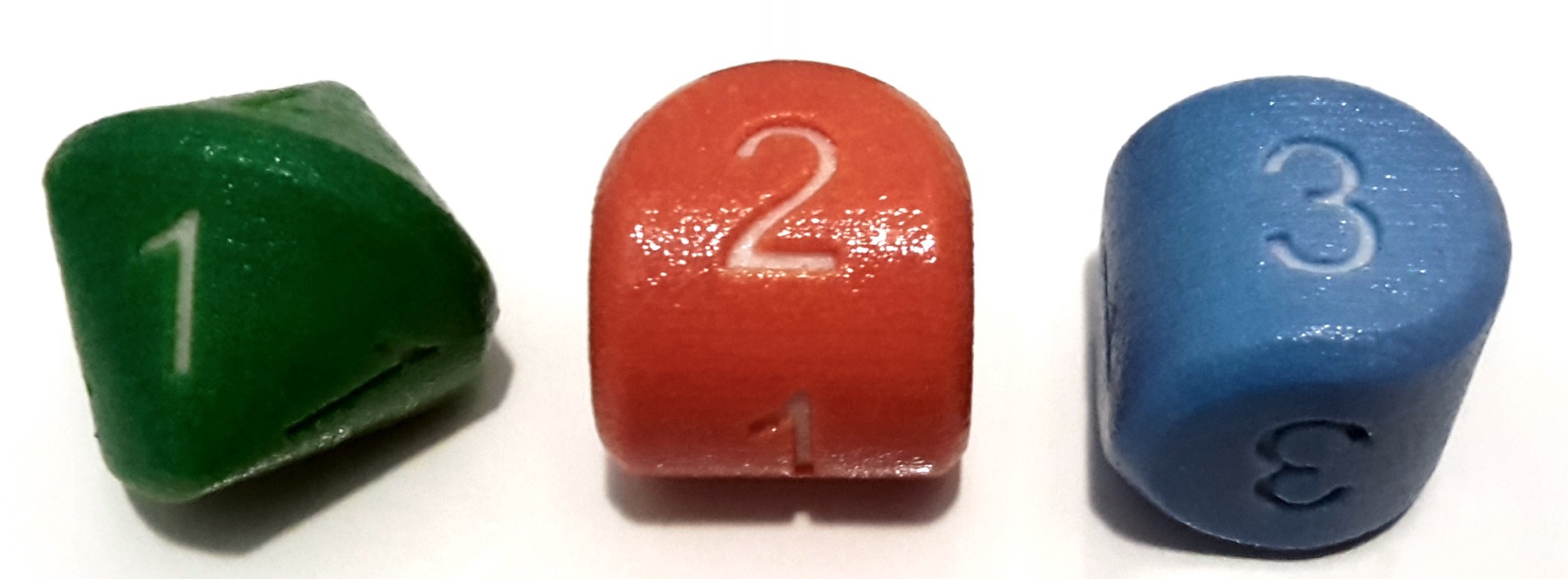
I just had the weirdest daydream. In the dream I was playing a game I had never seen before. I think it was a mini-game. It was set to either DC or Batman, I honestly cannot tell. What was the setting is that the mini game had two sides and you play one side. It was like a puzzle, the weird part is that you decide to either play the antagonist, which was based on Christian Bale as the Mad Hatter with ginger moustache and goatee and the stronger he becomes in the mini game, the better your upgrades get in the real game. The mini game is time based, so you get time to consider moves and the time is set to the maximum amount of moves and time to think is reduced. So as you ponder moves you might end up only having 3 moves (in stead of 4). The opposition was the assisting protagonist played by Ewan McGregor as Bobcat. If he gets stronger he gets more upgrades and the main character gets less. It is an odd thee sided equation. The weird part is that time is a larger element in the game. I was playing the game and I was selecting moves. The board looked very “steampunk Jugendstil’ if I had to coin a phrase. I had never seen the setting before, but it was not the mini game that was capturing me, it was the tactical side of the mini game. We always tend to go to make OURSELVES stronger, to set another level by making the opponent stronger is something I had never contemplated before. We could make our assisting protagonist stronger but that also comes at a price. It is almost the equation of 10 points can be divided. If the opponent ends up with 4 points, the 6 points go to you you think, but that would be wrong, Bobcat gets 6 and you get 4, so it is a different kettle of fish. You need to make the opposition stronger to gain strength, so if Mad hatter gets 6, 6 points open up in the main game and Bobcat only gets 4. It is a different kind of seesaw. The issue in the game becomes if Bobcat becomes too strong, Mad hatter ends up being weaker, but then so do you. A puzzle where you need to consider that your allies need strength, but you need to enable a little more for you. Because if one gets too strong, the third party (either you or bobcat) loses out too fast and when the game essentially requires two players, you are out of the game, because Bobcat ended up out of the game. It is a very different dynamic and that dynamic requires a level of balance. You see the (so called) AI in a game can be twisted to break on your behalf, but if YOU become the measurement of balance and opposing decisions the decision making tree becomes a whole new thing. To coin a phrase; “The game Skyrim has skills, so if you become stealth level 5: You are 40% harder to detect when sneaking”, so what happens when your stealth level 5 implies that some opponents automatically become level 4? You have all these kinds of opponents in the DC universe. So we have the armies of the clown, two face and the penguin. They have soldiers, sergeants, lieutenants, and captains. So what happens that in stealth the captains automatically become level 4? In fighting, if you are level 4, officers are automatically level 3 and below are level 2. But it is on top of what they naturally have, so you need an altering game, you cannot become a one trick pony. And the mini games decide on your assistant in that part of the game Bobcat, Catwoman, Bluebird and Azrael. It changes the dynamic of the game and more importantly is creates a much larger replayability and more challenges. Because you were playing part of a 3 sided dice and that changes the odds and the options throughout the game.

1,2,3 sided dice

As I stated this is not my IP, if any it belongs to Bob Kane, as such I put my thoughts here as Public domain so that (optionally) Mr. Kane can still become aware of it. 

As far as I can tell, this has never been done before and as such it might be an interesting push for a more challenging form of tactical games. Well, that is my part played, and it is time for me to have a sandwich and contemplate a few things in the Middle East. I think it is time to check what the media was so eager not to tell, especially as some players do no longer have the means to do the things some claim THEM to do but that is life. Have fun and Auf Weinerschitzel.

Leave a comment

Filed under Gaming, IT, Science, Stories

daemonis more

Yes, from one we go to the other and it is time to look towards the setting of protection. Armour if you want. You see the games all have their take on it, and so do I. We have cloth, leather and…..

Yes, you are roaring to name dozens of armour, all from other games, Blizzard and Bethesda did their work, yet I believe we need to go back to the basics. You can have 60-200 forms of armour, but what does it serve? The basics are what some call undergarments, the armour and the cloak. Yet be not deceived, the undergarments can be fur, cloth, thin leather or chainmail. Each their protection, each their weakness. Try walking through the winter scape of Scandinavia or Canada and try doing that wearing chainmail UNDER your vest, you soon will learn that col travels and Chainmail holds onto the freezing cold like nothing you have ever experienced. Yet chainmail has properties that we need. So we could go chainmail coated fur. You see, each benefit will have a drawback and it becomes a much larger puzzle when you imbue the armour with magical properties. I do not believe that there are only upsides. Like magnets, what pulls on one side, pushes on another. Any natural product is like a small balance, upside and downside go hand in hand, but overall the larger benefit is found. The cloak might have stealth magic, yet the iron armour imbued with strength or poison magic will negatively impact stealth. It is not completely set in stone yet, but I believe that a lot more can be done on balance instead of merely adding percentages here or there. 

And as armour is stronger, it tends to be less stealthy, still stealth will have a side that benefits all, it will have options making it worth having and so begins a new water table of balance. 

As I personally see it, we get a lot more puzzles and joy by having the three elements of armour in the personal screen and work our way from there. Three elements in stead of a combination of 8. Three elements and each having its options instead of X*Y*Z armour settings you have to program ahead of release. There is of course more to be done, but I just handed three separate sides (including the previous two articles) to get you going and become a new and competing Blizzard. Let’s not forget that there are several systems where Microsoft is not welcome, so you have options in the long run and this was handed to you without charge so you can design your version of a slicer and dicer on Sony and Amazon systems at no charge. When was the last time you had an offer like that? You still have to do your dues and your perseverance in making the game, but you have a head start now. I will try to add a few more sides to this all giving you more to work with and let us remember that we want a better set of options for gamers in total. You see Microsoft is about removing choice, they have the largest companies and you get to play those games as long as it is on a Microsoft system. An inferior system that betrayed its gamers (as I personally see it) more than once. Do  you really want to be part of that, or do you want to be the new wave of game designers in a setting where the gamer gets to choose and they choose you? Now they will choose Microsoft because there is no other system that has it, how is that freedom for gamers? 

And freedom is where it is at, so I design the IP for you all so you can oppose a Microsoft dictatorship for gamers. It is merely my way of fighting that technology usurper. At least that is how I personally see it.

So feel free to agree or disagree, yet those who disagree when choices fall away, you better realise that you were part of that limitation of choice.

1 Comment

Filed under Uncategorized

Expanding story time

Yes, this happens. Sometimes we get more to a story, but when was that when it was expanded on the main system and not a DLC or expansion? When was the last time that you were confronted with an additional story in the main game? I reckon that most of us cannot clearly give an example. And when someone pushed a demo of the Unreal Engine v5 to YouTube showing us a broken down version of Riverwood, my mind went 145% on the body and thoughts came to mind. Now in this case it will not apply, because Riverwood is decently fresh in the mind of all gamers, but when they see the new (older looking) Riverwood they should catch on.

What happens when we add a few villages, not unlike Riverwood, off the beaten track, off the caught setting and all storylines by themselves. A setting that some might recognise in Spinalonga Island on Crete. It had its own story, but remains a ghost town even now. So what happens when we find the story, evolve the story in the now, solve the story, the riddles and the curse (or other reason for abandonment) and when we find refugees, traders and other people we could direct them to the empty village. Riverwood had a trader, a smith and an inn. There is no stopping us from adding shops, and it would fit the equation towards building the local economy as well. As I wrote earlier. Too many RPG’s are depending on US to build the economy. Yet what happens when the NPC’s are in a secondary stage that they too become drivers of an economy? What happens when traders build economies, adventurers do, mercenaries do and as such, some places will grow even larger, grow more and grow distinctive. In this we can set markers like you need to have certain ranks in the main quest, and side quests as well as levels of fame before your word is accepted, but at that stage your influence grows too. We need to realise that in RPG games we are NOT the machine, we are a mere cog that fuels the machine, but we are one in many cogs and that has never taken a larger stand in RPG games and that has been overlooked for too long. I do understand that some might state that this was not possible until the PS4pro. I believe that this is not merely that case. Game makers are too often in an iterative mode, we get more of the same (Far Cry, Assassins Creed), there are leaps forward (Fallout and Elder Scrolls), yet I believe that more could be done and I also believe that the PS5 now shows that more is possible. And it will not take long for the streamers to show that they are capable of more. And until these players consider that the main quest is nothing more than an outspoken side quest we will not see the leaps forward that RPG’s are capable of. The fact that I came up with TESVII: Restoration and the fact that I am still finding new ways to grease the system into other directions, directions that TESVI:unknown place might not even touch on is speculative, but not entirely impossible. A stage where we see that RPG makers are for a lot about more of the same (not their fault) is a little troublesome and When I wrote about a new RPG, a generation one that I summarised in ‘Recap to the intro’ (at https://lawlordtobe.com/2021/09/25/recap-to-the-intro/) which I wrote last September and even now I am still gaining more ideas that could grow that IP to larger stations is interesting to say the least. The side quests are merely one setting. Growing a virtual economy is another one, but it all sets the station where we have an RPG game where there are two stations. The station of you the player and you the influencer, both important, yet influencer we can become through skills, through power and through achievement and they all interact to some degree, and it is those influencer sides that give a much larger unknown to the game and how it shapes. We need to do it in that way, so that the system is free to evolve, if we merely have two settings with a clean and a deprived location (A Fable II event) we lose the plot, we will not see the impact of flourishing villages.

I believe that this is the expansive side of gaming, it fuels replayability and optionally dampens grinding. The last part is not a given or a real event, but could be the impact of influencers, it is merely a thought. So when did you see your last creativity on the sliding scale of something you haven’t figured out yet? A station that keeps me busy, why? I can tell you that I can, but for some reason I feel more comfortable with the thought “Because I have to”, and I am not sure why at present.

Leave a comment

Filed under Gaming, Stories

When the plot thickens

This happens, it happens all the time. We notice it in movies and books, we sometimes face it in real life. There are moments when the plot thickens, but it tends not to happen in games and in RPG games fit rarely happens. There the NPC threat in singular directional, it always awaits your command, your action and your dialogue. So why is that?

It cannot be the technology, the technology was on par 1-2 generations ago. Is it gaming technology versus scripting? It could be, I am not the best source of information on this. 

We tend to see the Louis 14 approach in gaming, the world revolves around the gamer, it is like the missions. As the missions are lacking time needs, as the missions can be completed at YOUR convenience, we get to do it all. I think it is wrong and I think we need to alter our perceptions here. We cannot do everything, we can not please everyone and we cannot be everywhere. Just like good RPG games need an economy, it needs a transitional stage, it also needs  servicing stage. Mercenaries and guards that do take charge. Games like Shadow of Mordor invented and realised a nemesis system, I reckon that was a real step forward in gaming. So why did we not adjust RPG gaming to be more challenging? Was it that much of a leap? 

There is nothing like a stage that has no opposition, it becomes docile, it becomes a stage of non-stress. So what happens when you are there but so is the stage of mercenaries that can finish your jobs, making you lose fame and more important making you lose credibility. A stage we have never faced before. There is always the more seasoned adventurer, this happens. Yet in gaming we do not see that part. We are denied the challenge. Why is that?

When you create a career and you grind the same levels, we think we are being clever. Yet what happens when you lose out to a lot more? What happens when another adventurer becomes the famous one? Not in a multi player environment, but a single player environment that has its own nemesis system, not merely opposition, but a setting of peers and antagonists that become more that a mere hassle. It sets your career mode in a mode of bland anticipation. A station where you are not the best thing since sliced bread, you are merely the last resort and starting the game out like that is not the worst idea either. It shows the player that they need to be on their A-game all the time. And so far the RPG games have not been facilitating in that degree. Why is that?

It cannot be that I am the only one thinking in this direction, it cannot be that technology stayed behind. I believe that Bethesda pushed RPG into mainstream gaming and left a few things out. It is not their fault because their Elder Scrolls and Fallout series are pretty amazing. Yet by pushing that into mainstream they left something out and we all lost a little, it is a shame and at present there is no one replacing or contesting them. I pushed a few ideas to the surface in earlier articles, yet I also overlooked that part in RPG games. I apologise and I am trying to alter what I have at present to add that setting to future games, or at least inspire others to reconsider what they have and there is a lot that could be done. Will it? I hope so, but at present there is no way to tell, so we will have to see who picks this gaming direction up first.

Leave a comment

Filed under Gaming

That lucky blow

Yes, these things happen, the point where luck is a factor and in some games they do happen, but the factor is not as profound as a Ravenclaw boy hoping he gets noticed by Emma Granger, or was that Hermione Watson? No here we apply the Skyrim principle. Instead of grinding, later in the game, I enter the embershard mine wearing dragon plate and before the bridge there are two miners, I walk up to them and let them have a go at me, with Dragon plate my armour rating is well above 550, so they can pound on me whilst I have dinner, read a magazine and at the end I am up 1-3 levels and my heavy armour is now legendary 100. A simple solution.

Yet what happens when we change the premise? What happens when the bad guys get a lucky blow as well? Consider:

  • Bandit
  • Bandit Marauder / Plunderer
  • Bandit Chief

There lucky blow rating starts at 1%-3%-5%, yet as levels go they can go up to 5% – 15% and 25%. Now that game changes a lot, but we can introduce negative influx. A 25%-50% and 75% protection through blocking and defence parameters. A stage that alters the game somewhat. So my approach of walking into their midst would no longer work (well likely a very limited version). It is the old battle setting that all attack without defence is pointless and all defence without attack is useless. A setting we all forgot about, or at least too many of us forgot about it. Oh, and their lucky blow is a blow that does 300% of the normal damage.

That same principle applies to sneak as well, we tend to see ‘a failed sneak’ as a side effect, whilst a failed sneak giving the opponent a free first hit is much more intense and optionally realistic? Many RPG games see a failed attempt at the stage of a loss of positive elements, whilst introducing no negative ones. That failing stopped the gamer from becoming clever at what they to, a setting that is a failing in the game because the game needs to contribute, always contribute. 

I believe that having a lucky blow element is nice for us, but it needs to contribute by being nice for them too (to coin a phrase).

We can never rely on more of the same, we can never rely on the easy path because it will undo gaming in the long run. And in this Skyrim is a perfect example as it has shown itself to be close to perfect for over a decade now. And the only way we get better games it to push that envelope. Did you think I was kidding when I stated that Amazon with its Luna has an option to sell 50,000,000 consoles? It isn’t that Google is not worthy, they decided not to develop games. And any clear and massive bodyblow to Microsoft is a winning punch for gamers everywhere. We gamers must stick together because Microsoft only stands for itself, it has shown that for well over a decade as well.

Leave a comment

Filed under Gaming

Upgrades

Upgrades, we all know them, at times we desire them or we hope to be around to see them. For the most, no upgrade was every loathed (except Windows Vista). So where can we take gaming? We have one stage, w have more stages and we have the ability to connect stages. Now, lets take Skyrim. The anniversary edition was a welcome edition, beside the glitches there is not much to tell, and focussing on the glitches with a game this big is utter BS. For the most I have had a hell of a time. But the mind keeps slipping, and it is not needed, I want to wait until Hogwarts Legacy is released to see what else is possible. So far I have created two new gaming IP, yet the mind is struggling to find a third. This matters to me, because that IP will focus on a separate station. Something that might not be unique, but this version has never been done before. A Greek RPG, that focusses on the three Olympian gods. You must choose between Zeus, Poseidon and Hades. You align with them and as such you will be instilled with the powers that align to that god. So we get basically several worlds. Olympus, Earth, the oceans (earth too) and Tartarus. A world where the gods have missions, they play games and you have to steer your ways into diplomacy, battle and conquest, and subterfuge. You will need to resolve issues, collect evidence, clean messes up and at all times you are rewarded with Ambrosia. Very small items and you need three full cups to become a genuine deity. So could you do that? It is not merely can you do that, can such a game be made? In this it makes sense to look at Skyrim. Now consider that I had the setup for TESVIII: Restoration, that setting had the map of Cyrodill, but now at 9 times the size, connected to that was Skyrim (about 50% larger) and for the main story Valenwood AND Elsweijr. Now consider that the map for Όλυμπος would be well over three Times the size of Όλυμπος and it would encompass the entire Mediterranean, Spain, Italy, Greece and north Africa. That is beside the setting that Tartarus would be massive as well, and mount Olympus would not be too shabby or small either. 

Why so big?
This is easy, to create a biodiversity, a larger setting for natural combat and survival, the need for interactions. The larger the map the more natural could feel. So this ends up being not a console game, but a streaming game. This leaves us with the Google Stadia, the Amazon Luna and optionally the Netflix console as well. And the game needs three main quests (three gods, three paths, three main quest lines), that is bedside the side quests that will take up a massive amount of time, there are two versions, the one you have as an aligned player, or an unaligned players. So you will need to consider what you can get away with and what you need to drop. That is the part we forgot about in Skyrim, is it not? We can do everything and there is always time to do everything. So what happens when time and alignment becomes a hindrance? We forget the oldest setting, we need to consider that some things cannot be done and that is before the people intervene. 

Not everything can be done, not even as a god, doubt me, then ask Hades. He’ll tell you when you die and he always has the same joke “So where is your wine now?” And that is before you see the impact that happens when the game-map is not static, it is actually dynamic. The Mediterranean map that goes from the beginning of the game 4500 BC – 2000AD, and the map will evolve and you can watch, travel or participate. A game setting that has never before been done. There would be a real consideration that this generation of streaming consoles cannot deal with it at present and that is fine. Yet should we stop developing to the fringes of hardware in the future? I believe not. 

And this is not a small project, it has never been done, so it is appealing, the stage where we can traverse this area over 6500 years, and as a god you are immortal, but the stage is still finite (reason classified for now). Consider mapping out the Roman Empire and the impact it had, an impact you can watch yourself. A stage where we need (beside the quest lines) well over 300 quests per alignment, well a lot can be replicated and aligned challenge versus unaligned challenge. And as you become more olympian and as you lose your humanity you might lose options and you might lose links but that is part of life and we forgot to add life to the RPG’s of the last decade. There is no blame, it is no ones fault. It is a mere setting of what the computer can deal with and now that we have the hardware that can deal with it, ignoring that much of a leap seems trivial. 

A game that is a challenge and educational in several areas, a game that has never before been made, because until recent there was no hardware to support a stage that big. 

So what do you think, would you try such an upgrade? 

Leave a comment

Filed under Gaming

Pricing of choice

There is always a counter side. It does not mater how good anything is, it does not matter how large the win is, there is an opposite it is the price we pay, the price we accept, because on the whole the deal is actually rather good. There is no opposition, this has been a given truth for decades. At time you need to be ruthless, at times you can be compassionate, at times you have to cut the deadlines, at times you can extent deliveries. They are choices, there are always choices. Some good, some less so. It is the way it has always been

The price of lame
It is a side we see and often ignore. In many situations it means crappy, I would say it merely means crappy but that would be wrong. In this example we look at Bethesda and their latest iteration of Skyrim. Some will say ‘Lame’, ‘more exploitation’, and ‘more of the same’. I say when a game is this perfect you would want to have it as you move on. I have played the game on Xbox360, PS3, Xbox One, PS4, and PS5. The game is so large and so near perfect I would want to keep it and there is an upside. The PS5 is free as download if you have the PS4 version. There was alas no physical version. We can state it is lame, it is less, but this is a game that millions have enjoyed for 10 years. So yes, parts are a set A$80, yet the game gives you a lot more, the free edition gives you less new stuff, but I have seen my share of free parts already, after 4 days I see that the game is renewed, it has more and it feels great getting these achievements again. In 10 years the game never disappointed. The price of lame is perhaps a lack of innovation, the opposite is that the players want this game, not another game, it is a tough balancing line and so far Bethesda has done OK, apart from selling their soul to Microsoft (for $8,500,000,000).

The price of tame
Weirdly enough it is Google who gets that part. On the one side they have shown great innovation, they have shown massive strides in many areas, from searching to advertisements, they were there, they were first and they keep on rocking, on the other side their console (Google Stadia) is tame, they are not developing software, they are relying on Ubisoft to push that crate (and it will cost them). The other side is that two innovations will pass them by, the innovation I worked out (and are now meant for Amazon Luna) could bring Amazon an additional 50,000,000 consoles to the market. I know, even with shortages it will be a stretch, but that is the setting of tame, you can be non-aspiring, to be non-exciting yet that too comes at a price and in this setting Amazon would be in second place (temporarily overtaking Nintendo). On the upside, it makes Microsoft the wooden spoon contender, with the most powerful console in the world they end up in 4th position and I like that. Microsoft needed to be taught a lesson and I intend to bring it (If Amazon accepts). And that is not a high number, it is massively conservative, because this has never been done before so I have no data to rely on, the numbers could end up being decently higher. And that is merely the first wave, the second wave relies on another player, so I cannot say at present, but that could end up pushing the Luna even more, but I have no idea how much more. What is a certainty that gaming will alter and in the first stage many players ant a piece of that, not all, but plenty.

The price of game
It is not easy to look at people as game, but these anti-vaxxers are taking their toll. We can be as social as we like to be, we are unable to properly set up taxation, but we will tax the health system to the max. We see people dying of heart conditions in ambulances, because the ICU’s are filled with anti-vaxxers who now have covid and they are crying like little children. I say that unvaccinated people are not eligible for ICU unless they pay upfront, the reckless endangerment of life is not a cause for healthcare, it needs to become private care. The umbers are staggering. Of all the hospital admissions 80%-90% is unvaccinated. This evidence is ignored too much by too many. There is a slight difference per nation, yet that is understandable. We can treat these people like kids, but then they claim they have rights. OK, you do and with that you get the right to pay for it yourself. 

We see three examples where we price choice, price is not always monetary, but often it is, yet the opposite of that coin is often not monetary. It tends to be quality, quantity or quest like. There is no clear formula either, it is not a neat package, yet there tends to be some red line forming in the sand. The underlying part is that some accept the cost of doing business, others are in denial and they want it all, and guess what. You cannot have it all, there is no way. It is like the old equation of a house. Price, Quality and speed. You can only select two of the three, the third will go in another direction. A sales division will state that you can have all three and then they task their marketing department to set the premise of the third to expectations. Yet that is a figment in their imaginations, and when the data comes forward we get some ‘miss communication’ excuse. 

All neatly wrapped up, yet when we dig we get to see the price more clearly and we often see a party in denial, but what happens when it is YOU who pays that price? What happens when YOU need to make a choice, can you? Choosing is often hard, especially when the price is clear. But what do you do when it is not? It happens and not always intentionally, how can you decide the price then? 

Leave a comment

Filed under Finance, Gaming, Media, Science

Inventing the economy

Yes, this sounds bigger than it is (and it is). This is the economy for an RPG. A few places had idea’s, one was particularly helpful. Yet in the stage of the game I designed here, I decided to take a different route. You can barter all you want, yet in the end it is the economy around you that needs to flourish as well. If you do not take that route, you get either a ghost town, or a passively silent one, one that can only move when you are there. It is that approach that is reluctant to me. You cannot create your story, become your story on a blank page where everything is depending on you. That has been the case sine before I was born (in the age of Black and White TV’s). 

So as I was mulling over what I personally believe to be a shortcoming on the Elder Scrolls. I turned in another direction and saw the glitch in Fable 2, but the stage was good, so I decided to take a larger gander and set up my own premise. On September 25th I wrote ‘Recap to the intro’ (at https://lawlordtobe.com/2021/09/25/recap-to-the-intro/) which gives the list of most articles linked to this game.  I will now add:

Behold the economy
(OK, that was way too ego driven) yet the stage remains true, you cannot live or play in a vacuum, so as I wrote ‘An almost ordinary generation quest’, I set out the stage of stamping out the economy, there needed to be a stage where you can grow and optionally through you the town could grow. In t6his we need to take notice that a city takes decades to grow (if not centuries), so the town can only grow to some degree. If we consider the baker, the butcher, the fisherman, the blacksmith, the bookshop, the tailor, the potter and the leather shop we see that these people have average skills (2 or 3 out of 5), we need to see how to grow the town. In one stage I talked about the potter part, it will be a growth stage, so to grow the economy, when you gain skills (in your travels) on any of this, when you return home you can teach the shops the skills you learned, it gives you some income, but the larger stage becomes that a town gets X amount of people travelling through it. More important, when a shop becomes more important, more people will come, so there is a benefit to teaching them, because what they sell, benefits you too. And more importantly, when these shops grow into 4 star places, I needed to add a risk as well. You see, some people are depending on ‘non change’ I insist on change, so there is a small percentage of a chance that when the get to that level there is a small chance that they will pack up and leave for ‘the big city’, in addition to it that risk increases by a factor when they become 5 star places. It creates momentum and it creates a larger stage of movement and turmoil. You or your kids can teach the shop again, or they can move themselves. 

A stage of fluidity that we haven’t seen before in RPG gaming, and I wonder why not. I can not be the first one to come up with this, could I? A stage of increased growth and economic values will also hit the city, when the city grows, the shops have less reason to move (they are revenue driven too). It sets a new stage, instead of having 15 axes, 23 swords, 7 mauls and 2 halberts, we get a stage where we can sell that as scrap to the blacksmith who will create new ingots and create new weapons. That only works when he becomes 4 star or more location. The herbalist has a need for resources, you bring he has no need to move, or to seek out danger. And in this all shops are almost the same, there are shops that will not need ‘feeding’, but their skills too are related to the ranking they have and as you teach them, their value increases and the village grows another step. 

And so we create a new stage, not merely collecting weapons and armour, but a stage where the shops grow what they have and to that respect also the scrap they receive from NPC’s and the new goods that come with that.

I feel happy, I created the foundation of an entire economy in a game, there are a few unmentioned parts and there are a few parts not here, but I am still mulling them over. In the meantime, anyone who wants to create an Amazon Luna and Sony Playstation exclusive RPG, feel free to use these ideas (free of charge) and let’s give Bethesda a run for their money, whilst pissing off Microsoft at the same time (slugging two for the price of one tends to be more satisfactory).  

Have a great day

P.S. WordPress still haven’t fixed colouring, their CEO might be colourblind

Leave a comment

Filed under Finance, Gaming