Tag Archives: reuters

Democracy is dead

If there is one thing that the UK situation showed is the mere fact that not only is democracy dead, the question becomes has it even existed in the last 10 years? The fact that bullying and harassment are now the core uses of the media in facilitation towards power players (not even the political players) is at the heart of it all.

What started as an actual discussion became a trodden lane of smear campaigns and misstated innuendo. In the end a golden cage is still a prison, no matter how you slice it and even as the UK is all over the place, I do hope that they realise that they are about to become part of an additional 3 trillion in debt. The part that the media has refused to look into for the longest of times, the mindless spending by Mario Draghi and now a mere two hours ago we are confronted with “some economists argue that rapid technological development keeps a lid on prices, forcing central banks to exhaust their firepower fighting an economic paradigm shift, and leaving them with few tools for the next downturn“.

How does that relate?

Part of an issue I mentioned yesterday was (source: CNN) “Europe’s third biggest economy has suffered years of anaemic growth, high unemployment and budget deficits, while neighbours such as Germany and the U.K. have enjoyed a stronger recovery from the global financial crisis” at present the forecast is that the economy will rise by 0.2% less, giving a setting that is close to stagnant. In addition, even with the news from yesterday, we also now see: “Italian Economy Minister Giovanni Tria is pushing the parties in the governing coalition to keep next year’s budget deficit below 2 percent of output, sources close to the dossier said on Monday, lower than the party leaders have indicated so far“, as well as the part I mentioned last week as the article (at https://uk.reuters.com/article/uk-europe-view-friday/daily-briefing-italian-debt-yields-get-stretched-idUKKCN1LG0T2) was giving me “Fitch is due to provide the latest evaluation of Italy’s creditworthiness with national debt standing at 130 percent of GDP. The Italian-German bond yield spread is already at its highest since 2013 – a downgrade will widen it further and make Italy’s borrowing even more expensive“, there was an overall loss of faith, yet we are now treated to ““The actual rating wasn’t lowered, and anyone who follows Italy closely will know that a lowered outlook for the future should be taken with a grain of salt because so much of the political situation can change so quickly,” Alessandro Polli, an economic statistics researcher with Rome’s La Sapienza University” and when we add Bloomberg (at https://www.bloomberg.com/news/articles/2018-09-03/italian-bonds-get-a-respite-as-fitch-affirms-credit-rating) with: “Basically the politician with the greatest clout is saying Italy will remain within the 3 percent deficit band“, which is not only 1% deficit more, it is also an initial indication (indication mind you) that the 2% deficit marker is now more and more likely not the be a feasible one. But in all this, it would all rely on Germany and now we see the play, the EU and ECB are desperate to thwart UK democracy, because without it there is no euro, no Eurozone and no options remain and big business is willing to betray 65 million people to keep their cushy 7-8 figure income jobs, they are willing to do that at the drop of a hat, any hat.

The political players let the media be the facilitator for big business, first the banks, then tech companies and now the car industry. One by one fear mongering until the people got too scared and according to the Independent, 2.6 million people jumped ship and decided the swim to remain. So the new UK lyrics become ‘Ruled Brittannia, Brittania is the bitch! We shall never never ever trust in Fitch‘.

We get that to the setting of ‘Fitch ratings review gives reprieve to Italian govt bond yields‘ (source: Reuters). It is seen with: “Italian bond yields edged lower on Monday after Fitch left its credit rating unchanged at BBB, revising only its outlook to negative, though mixed news flow from senior ministers and manufacturing PMI data due later this morning could mean the rally is short-lived, analysts said” where we need to focus on ‘manufacturing PMI data due later this morning‘ which gives me that the rating was done ‘just in time‘ to avoid having to lower it, which implies to me that it was not a reprieve, merely the application of time management to force an upped rating. In that regards, when we see that and the UK realise that the EU barge cannot be stable, not with only one solid anchor, we get to see the equation where the UK becomes the force anchor to keep the EU dinghy from sinking on the spot. So as the industry will see ‘assurances’ of their value protection from the ECB. You see when we look at Section 9.4.5 of Part II of the AnaCredit Reporting Manual (this is about to become a massive leap of speculation on my side), we get to see:

If the appraisal aims to estimate the spot value taking into consideration market conditions, then “market value” is reported; on the other hand if the appraisal aims to estimate the market value ignoring cyclical factors, then “long-term sustainable value” is reported

Now consider that the UK is in Brexit and the Italian economy is rated down, when we now consider “APP holdings, Purchases of marketable debt instruments increase the Euro system holdings of such instruments and inject liquidity into the banking system“, we would see that under those conditions the entire ‘expanded asset purchase programme‘ would have to stop as per immediately and that is what the members of the ECB do not want to do, no matter how useless their exercise is and still seems to be regarded as (by critical outside minds). As I personally see it, the reported net acquisition of €24 billion a month, will need to stop before the current held holdings of €2.51 trillion might end up being regarded as dumped value, the setting of a ‘bad mortgage’ write-off. And do you think that this bad ‘mortgage’ is suddenly whisked away? Nope the outstanding amount becomes a taxpayer’s debt to deal with and without the UK the other players get a nightmare amount to deal with and that is what none of the 27 members want.

Now in all this I will be accused of comparing apples to oranges and that would be correct, yet what those people are (intentionally) forget to mention of illuminate that the ECB is a fruit vendor in all this. They are not the apple sales person or the banana (republic) sales vendor. In all this the ECB does not get to compartmentalise any of it. They bought 3,000,000,000 barrels of fruit at €1,000 each, so when some of these barrels contains rotten fruit, it becomes their loss, not the salesperson who they bought it from and as the barrels were unattended for the longest of times, more barrels and larger portions of every barrel become infected increasing loss over time to amounts too large to even contemplate. So, when the Italian shipper and the French shipper state: You bought it, it’s yours now; they will have no defence. In this it is the British supermarket that they need to buy some of these worthless goods or they go belly up and that is what they deserved in all this.

They should have sold the stock a year ago and stop purchasing those barrels of fruit and they are still buying junk fruit. And when we were treated to the earlier mentioned ‘manufacturing PMI data‘, when we see that it was reported down from 51.50 to 50.10, in the setting where highest was 59.00 and lowest was 48.00. So when we see the Trading Economics report and when we focus on that part and see the statement: “The reading pointed to the weakest pace of expansion in the manufacturing sector since a contraction in August 2016, as new orders fell for the first time in two years and output posted the first decline in over three years. In addition, employment growth was the weakest recorded in nearly two years and expectations slumped to the lowest since May 2013 amid concerns over future global trading conditions, particularly in relation to the US” is there any doubt on orchestration? This was done to stretch the game, not truly act on the reported value, if that was done the setting of ‘BBB’ could not have been maintained, it should have been dropped to ‘BBB-‘ (my speculated view). So whilst we think we are being told the truth, in my personal opinion, we are sold a bag of goods, because that is how the game is players and we are all being duped, just like in 2008, I would have thought that those players had learned their lesson, but apparently they did not and I truly believe that the UK needs to get out before that tidal wave hits them. When it does and they were still in that boat, they get to lose it, to drown just like the other players. So if all else fails, I hope that those players grow a set of gills, because they will need them and right quick at that point.

All this wheeling and dealing gives me the impression that the people are merely offer the choice between poor and destitute, I wonder if any of them can tell the difference from this point onwards. Oh, and if you think that I am kidding there, consider Greece that is under all that oversight. And only 12 hours ago, the Greeks decided to strand all the tourists on a strike. so as we see “Members of the union are reportedly seeking a 5 per cent increase for ferry crews, a request which they claim is long overdue as pay has remained static for eight years“, which now has two impacts. The first is that “affect around 180,000 people who have booked travel to and from some of Greece’s most popular tourist destinations“, who will optionally infect another 600,000 tourists not to consider Greece in 2019. In addition the fact that those people are demanding an additional 5%, because ‘pay has remained static for eight years‘, then those Greeks better wake up, because static incomes will be the cornerstone of their life for perhaps another 15 years. that is the long term effect of austerity, that is the impact of that massive a debt, so tax breaks are basically a thing of the past for them and the UK is still steering to a similar setting, that €3 trillion will make of that very clearly and it will over time affect all 27 member states to some degree, likely to Germany the most. In this, the Politician and environmentalist Nikos Chrysogelos has even more to deal with. the man is correct on all counts, yet until the Greeks are willing to strangle these dangers by installing Singaporean like methods (like a €500 fine for any environmental transgression) the tourists (and to some degree the people) will not change and the Greek islands will transform into an open sewer soon enough.

These are all issues that will impact the citizens of other member nations in some form or another; the impact of long term austerity and short term thinking. It will be about “some sustainable model of tourism” soon enough, but that also implies one thing. It implies that people will still be able to afford a vacation, because that group is actually shrinking and the economic upset that Europeans are currently facing makes that issue a non-option to at least some degree. That evidence was seen earlier with ‘forcing central banks to exhaust their firepower‘, so when that stagnation shifts to downturn the economic hurt will be on all over Western Europe and the ECB will have 1-2 options reserved for themselves and their ‘friends’; and the people in Europe? Well, who cared about them anyway?

So in all it is not merely the economy for the now in all this. The setting is also the backwash from the consequences we see in Saudi Arabia. Canada, Sweden and Germany are all losing business in Saudi Arabia. Let’s be honest, we see that Iran is their enemy; we see that there is more and more evidence that Iran is facilitating missiles for Yemen, who are then fired on Riyadh. All this whilst the EC nations are bending over backwards to keep a nuclear deal alive that is quite honestly not worth the paper it was printed on and they expect to rake in billions in Saudi Arabia as well, whilst criticising Saudi Arabia at almost every turn. So as I am contemplated (read fantasising) on “an $11 billion arms deal between Saudi Arabia and Canada may be scrapped“; and how I could optionally sell that deal to a few alternative players (for a 1% commission). Whilst at the same time we see the quote “To German news outlet Der Spiegel, an unidentified businessman said, “For Germans, the doors in Riyadh have suddenly been closed” here I see a few non-European options as well (the 1% commission still applies) and when I see “Saudi Arabia is Sweden’s fourth largest recipient of arms outside the EU with sale totals in 2014 reaching approximately $39 million“, I see an opportunity to consider talks to get that shifted to perhaps a ‘Northrop Grumman X-47A Pegasus‘ consideration and perhaps even more, once the abilities are confirmed. Of course for all the extra work I will be taking an additional 1% on top of the 1%, so in all this, the European Hypocrisy works well for me, providing that Wesley G. Bush is still taking my calls, or I will have to postpone that deal and start wining and dining Kathy Warden (at her expense, it is an emancipated world after all) and she might be hungry for the setting of an additional 200 million, especially as the doors to Sweden and Germany are closed. All economic settings that are clear to all and clearly visible to all, so in all that, how are we not seeing that there is an increasing realisation that economic stagnation is closer to mere millimetres away from an actual economic downturn.

All elements that will hit the UK one way or another, because if it took this little to get the economy down with the smallest of efforts on two EU nations by up to 1%, how unstable do you think that the EU economy was in the first place? You see, the ECB ‘forcing central banks to exhaust their firepower‘ is one without firepower and options, making it merely a logistic system administrating €3 trillion of debt. So how desperate do they need the UK and how dim sum is the view that being a ‘remain’ member will make their lives easier? When everyone around you says: ‘Stay with us, or else‘, how much does who need who in the end?

Consider the truth there, if it was such a bad deal for the UK and a good one for Europe, do you think that the bullying and harassment would have been this severe? Until the EU and the ECB stops facilitating for the large corporations, you need to realise that those ‘facilitating’ are merely ‘tools’ trying to get a ticket on the next gravy train and those rides always cost the taxpayer and most often way more than acceptable.


1 Comment

Filed under Finance, Media, Politics

As the car industry dies

Yes, today is the nicest day of the week. After the weekend, after all done, it is again Monday morning. So, happy, happy, joy, joy!

I am waking up with the news ‘Shaken-up Aston Martin hopes to stir investors with a public offering‘. When it comes to cars, the Aston Martin is about the coolest car in existence. I would favour it over the Jaguar XF, the Infiniti Q60, the Tesla Roadster (2020) and the Lexus LC500, yet to be honest, I cannot afford any of them.

Now, I have nothing against cars, by themselves they killed each other. It was too much about ego, all about status and too few about what mattered, to get safely from A to B. So even as I have nothing against cars, the setting of those behind them? Yes, that matters a great deal, and most of them fuelling each other, most of them pushing for more models, more options and all financed in a try before the debt phase. Just like the PC industry. Makers having a dozen models every year, the market just could not sustain it and it collapsed. The same is happening here now in a few ways. We will always have a few exotic members (like Aston Martin), or a brand that is unique because of the niche they choose (like Morris Mini Cooper). For some of them, there will always be a market, they are established. The Japanese market made a mess of close to everything and now we see an entirely different kind of fallout. So even as we are treated to the ‘threat’: “Japan’s ambassador has warned Japanese companies will quit the country if a botched Brexit hits profits“, it is not a vague threat, but overall that does not matter and it has absolutely nothing to do with Brexit. You see, I discussed this in February 2014 when the Australians got confronted with ‘The last Australian car‘. Here we see: “The world’s largest car maker announced it would stop building cars in Australia by the end of 2017 and would operate in this country only as a sales and distribution company. One additional factor needs to be told, which will have bearing down the road. Namely “Toyota is Australia’s biggest vehicle exporter with around 70,000 of the 100,000-plus cars it builds here being sold in foreign markets”“. What is even more upsetting is the part that Business Insider gave with it and my response to it in the article (at https://lawlordtobe.com/2014/02/12/the-last-australian-car/) “The car industry is estimated to have received a total of $12 billion in direct subsidies and protections over the past 20 years, including $1.8 billion to Holden in the 11 years to 2012.” is at the heart of this. So basically, 4 car makers have enjoyed an annual $600 million in subsidies a year. This is so off the wall it is not even funny!” In addition, the Australian, via Judith Sloan gave us the overall view: “Australia has subsidised almost $1900 per vehicle produced. If we take that and we add the initial quote I mentioned “Toyota is Australia’s biggest vehicle exporter with around 70,000 of the 100,000-plus cars it builds here being sold in foreign markets” leaves me with the question whether we have been sponsoring that part too“. So here is the crux. This is not about mere profits; this is about subsidies and what I personally see as legalised slave labour. This is about maximised potential without accountability or taxation. In all this, let them move away, let other nations subsidise it all and when their coffers are empty, we will see another ‘Cars from Japan’ setting soon enough. From my point of view, let them move out and lose 65 million potential consumers. When those wells dry up, when they see that the free ride is over, they will suddenly offer some price package, or is that prize package?

The nice part is when those brands fall away; we will see a revitalisation of other brands, those who will grow inside the UK. It might be a harsh reality, but it is a reality none the less. Will consumers miss out? I do not know, their ego’s might, but in the end, if a decent affordable car gets you from A to B, does it matter? This goes beyond the British car brands and who owns then nowadays, Morgan is seemingly the only one still in British hands, but again a niche market. So if the Japanese walk away and Daewoo and Kia walk in, would that be such a hard thing? Then there is China and India. They might actually like having a much better spot in the UK car industry. Many brands left life over time, all killed by the subsidised markets and drowned by subsidised cheap options. Who even remembers the Dutch brand DAF, or the German brand NSU? We have options, there are opportunities and the bottom dollar that japan wants needs to be barred. In all that, the only acceptable conflicts were the ones that Honda and BMW offered, which are about customs delays. I believe that to be the valid part and for the most, it is not merely about custom deals. It is about the EU trying to pressure into a another vote, trying to get Brexit killed, because Europe has no actual solution for the debt now moving towards 3 trillion Euro that Mario Draghi created. Now with the Italian economy is an approaching freefall, unsurmountable debts, Greece still in a bad spot, Europe cannot survive without the UK, now that France is also lowering expectations via: “The French government has revised its growth forecast for 2019 downwards to 1.7 percent from 1.9 percent, Prime Minister Edouard Philippe told the Journal du Dimanche” also implies that the Economy is not really moving forward, creating a setting that the debts of Europe are becoming a much larger issue. All those interests, when they come due there will be no infrastructure. That is the setting and the 1500 voices in charge of all that money are seemingly now scaring 15,000 politicians into pressuring others, because their life of well-being is about to end and someone must pay for their way of life.

That is the setting that is behind the cars, not merely the cars, but when you realise that your taxes were funding cheaper build cars, please show me where you signed up for that part of the equation. You cannot, can you?

I do agree with Dr Paul Nieuwenhuis of Cardiff University. He is correct Aston Martin is making a move at the right time, and when the economy truly picks up, their fortune is set for close to two generations. They are in a niche, but one with a good margin and with the growing of millionaires all over the place, they are also creating demand, because getting seen in the 007 choice of wheels does count (as your ego is able to foot that bill) even as the car looks supercool regardless. And when you consider the quote: “Issues such as Brexit are quite different for Aston compared with mainstream manufacturers because it is not as reliant on the EU for sales as the volume producers“, when you consider transport and other elements, why were they in the UK anyway? With these brands margins were always the case, for well over a decade, so in all that, why were they here? Is the reason merely because there were 65 million optional consumers in the UK or because the EU was all about big business, and a lot less about the people living there? Well, that was a rhetorical question, because Reuters in 2016 gave us:  “Compensating carmakers in Britain for any post-Brexit tariffs on exports to Europe could see the government hand the companies more money than they need to pay the salaries of all their British workers, a Reuters analysis of corporate filings shows“, that was exactly the image that we saw in Australia and there is the crux, what is the use of having a company in the UK, when we see that the UK government is paying for the wages? Where was that ever a solution? A flawed presented image on the presentation of great industrial UK revenue whilst hiding some of the costs?

So many questions and in the end, merely a drain on the coffers, so let them leave, let them move to Germany (Mercedes & BMW will love that), or France (at the loving side of Citroen, Peugeot and Renault). So when the subsidies are demanded, will those local brands even accept that? I wonder how long until they move back east and let the reality of the cost of manufacturing hit these players full on. I wonder how many brands will still be around in 5-10 years. A lot less that seems almost certain, but that is pure speculation on my side.


Leave a comment

Filed under Finance, Media, Politics, Science

Lying through truth

It is a sad day, it is sad for several reasons. The first is because the Press is now intentionally misleading the public. The second is that the press now decides the scope of information that the people are allowed to have, by spoon feeding us part of the information. It is about emotional impact at the expense of the truth, truth through omission whenever needed.

That is at the centre of all this and I cannot comprehend why this is continuing in this way. The articles part of this are ‘US supplied bomb that killed 40 children on Yemen school bus‘, the article (at https://www.theguardian.com/world/2018/aug/19/us-supplied-bomb-that-killed-40-children-school-bus-yemen), in addition it links to an article called ‘Yemen school bus bombing ‘one of 50 strikes on civilian vehicles this year’‘ (at https://www.theguardian.com/world/2018/aug/16/yemen-school-bus-bombing-one-of-50-strikes-on-civilian-vehicles-this-year). In all this you are deceived by Julian Borger in Washington and Saeed Kamali Dehghan in London. Now, before I continue is that the part “The bomb dropped on a school bus in Yemen by a Saudi-led coalition warplane was sold to Riyadh by the US, according to reports based on analysis of the debris” is not a lie in itself, it is a lie, but that is what we will look at in a moment.

You see, the more complete truth (as I personally see it) is: “Saudi-led coalition forces attacked a Houthi stronghold; the bomb either directly or indirectly hit a bus, which later turned out being a school bus with children on board. As far as the information gives us the warplane was sold to Riyadh by the US, according to reports based on analysis of the debris“. This difference matters because the attack, from several sources was a Houthi stronghold. The photo that I discussed on August 13th in my article ”Is it mere wording” (at https://lawlordtobe.com/2018/08/13/is-it-mere-wording/),we see the ABC article gives us the footage where we see a non-scourged bus, implying that the bus was indirectly hit. The white paint of the bus was still intact. We admit there is total devastation, but this is the first part of the deception by Julian Borger in Washington and Saeed Kamali Dehghan in London. The second part is the fact in what I would regard as intentional omission. In addition, Al Jazeera gives us: “a Saudi-Emirati coalition air strike has killed dozens of children in a Houthi stronghold“, an unconfirmed part (apart from Al Jazeera) and in all this there is no mention of that part in there?

As for the setting of “US supplied bomb“, we have to realise that “As of April 2016, Saudi Arabia’s 2016 defence budget has decreased only by a relatively small amount from 2015 levels, as the government appears determined to support the economy and focus on economic diversification. Military and security still comprise 25 percent of the total budget, representing a sizable opportunity for U.S. aerospace and defence companies“, so this is a spending and investment that has been going on for years, hence the chance was great that it was American equipment that would be used. I think it is slightly hypocrite that the papers (dozens of them) on where the missile came from whilst the US economy has been barely surviving and with those dozens of billions a year the US would have stopped some time ago. In addition, if you want to go for the source, ask the people in London how they feel about the French Exocet missile, it took out the HMS Sheffield. These things happen and the fact that there was a bus full of children that was most likely indirectly hit is still really sad, no one denies that. Yet what were they doing in a Houthi Stronghold? No one really has that answer, do they? The Houthi’s have taken on board the Hezbollah and Iranian advice to hide within the population, that is a setting where plenty of innocents will get hit and the fact that this is done whilst even now we see that last Friday missiles were fired, aimed at the population of the city of Najran is not mentioned. Now, I accept that this is not part of the bus news, but several other parts were. The fact that Houthi’s have launched 176 ballistic missiles towards the kingdom so far is also a fact that is part of all this (not of the news article though). Yet the Saudi-led coalition will act in reprisal, who will get hit next? The Deutsche Welle also gives us: “arms researcher Pieter Wezeman told DW the missiles were likely not in Yemen before the war“, I am personally decently certain that they came from Iran, but how is still a mystery.

We also see important news that is clearly given by the Guardian where we see: “according to an analysis by Human Rights Watch (HRW), out of 75 incidents where civilian casualties were reported, JIAT has admitted Saudi rules of engagement may have been broken in only two“, I am willing to go as far as stating “2 out of 75, is still two too many“. The problem is how preventable were the two issues, was the bus incident avoidable? When I inspect the image again I see the white bus frame totally non burned, a direct hit would have set it on fire and there would have been no white paint left, that gives indication that the bus was indirectly hit (but still got slammed massively), I also (personal speculation) surmise that a direct hit and fire would have ended the life of the left rear tires, which is not the case. In this, there are a lot more questions in all this and the focus on the dead children is understandable, yet what were they doing in a Houthi stronghold? I equally oppose to some degree Jim Carrey’s setting. Now, the man is entitled to his opinion, and it is not a wrong thought to have, but was it the correct setting? When we see “The United States actor and artist Jim Carrey blasted on Aug. 17 the deadly airstrike in Yemen last week that reportedly killed 40 children on a school bus, calling the incident “Our crime.”” I cannot agree. You see several nations sell defence solutions. The US a lot more than most others, but the US, China and Russia all sell their governmental goods. Just like I will not blame France for selling the exocet missile to Argentina (the USS Sheffield incident), I cannot blame those three when the buying governments use them as actionable goods, for good or for bad. In this, I have always lived with the setting that bullets do not kill people, people kill people. So yes, there is a setting where the Saudi government should consider the investigation. Perhaps they do not have all the answers; equally it might never be resolved in a satisfactory way. The Houthi’s also have the setting to deal with that in a warzone children should have been clearly directed on safer roads. You cannot fire 176 ballistic missiles and expect this not to be answered. Like in any warzone, mistakes will be made, sometimes they are misguided setting of what was a valid target, sometimes it is mere technology that is off by 15 meters (whilst flying 160Km an hour, or faster, over a valid target) and sometimes it is the choice of blatant stupidity. Yet I can give you now that there is no way to prove which of the three options the case here was. We can only speculate and let’s be honest no one wants to admit to a mistake of this size.

We were also informed on “The Bellingcat report cautioned that the bomb fragments had not been photographed where they had fallen, but had been gathered together, leaving open the possibility that they had been planted“, yet that is still an option, but somehow the parts were still acquired, how is unlikely to be proven.

Even though the Guardian is one of the better newspapers, I have to question “Statistics collated by an independent monitoring group, the Yemen Data Project, suggest that the targeting of the school bus was part of a wider pattern. According to its records, there have been 55 airstrikes against civilian vehicles and buses in the first seven months of this year – a higher rate than in 2017“, the issue is that it is important to see where those buses and vehicles were. You see, a bus is not merely a vehicle; it is also a decently effective shield against missiles. We get to the setting that the bus might not have been as important as knowing what building it was parked in front of. As that data is not available, we might accept the top line event of number of buses hit, but until we know more of the vehicles surrounding there is no way to tell on what the target was.

I equally object to the statement “Andrew Smith of the Campaign Against Arms Trade said “the complicit silence from No 10 is a clear case of arms company profits being put above human rights and Yemeni lives“, They are separate issues, yet people like Andrew Smith will never see it that way. Yemeni lives have been declared null and void when Iran began its proxy war, but we see little of that part of the equation.

In all this there is another part, a part that is not exposed. The source (at https://aawsat.com/english/home/article/1364036/exclusive-houthis-exploit-poverty-struck-children-cannon-fodder) is questionable; I will be honest about that. Yet the article has images, images that are debatable as the kids are all wearing really clean clothes. Even as we see that the images are from Reuters. The text ‘Child soldiers with Houthis hold weapons during a demonstration in Sanaa on March 13, 2015. Reuters‘ is illustrative, and also questionable. The clothes are too clean, the weapons too shiny and there is a cameraman on the car. I have an issue with the picture. Yet the article is all about ‘Houthis Exploit Poverty-Struck Children as Cannon Fodder‘, an accusation that has been seen in more than one place. So was the bus with children a military target at that moment? It is unlikely to be ever proven. When we see: “Rehabilitating child soldiers has proven to be the most difficult challenge faced by the internationally-recognized Yemeni government headed by Abdrabbuh Mansur Hadi. “The rehabilitation of children recruited and participating in the war costs over $200,000 for 80 children in one month,” government sources said. The Hadi administration is already trying to balance a depreciating national currency in hopes of improving one of the worst economic crises ever known to the war-torn country” should cry for anger. Yes, we need rehabilitation of children, yet the Houthi’s are using children in their war and that should stop all support to the Houthi’s as well as stop whatever consideration you had for Iran as they are part of this proxy war. So when we see (at https://www.hrw.org/news/2015/05/12/yemen-houthis-send-children-battle), the same image as Asharq Al-Awsat had, we need to re-assess a few things. For example the statement of Andrew Smith, who is playing stupid, but he is not stupid. You know what I am saying? There seems to be clear evidence that this was going on since 2015, which means that in all this, from multiple sources the intelligence on non-adult combatants has been ignored from several sources. There is an abundance of images available all over the place and it seems that this was left from consideration, in some cases they are children holding weapons that are way too big for them (an AK-47), ‘his’ weapon is well over 50% the size of the child. Information that is kept from the readers, so when we are confronted with ‘US supplied bomb that killed 40 children on Yemen school bus‘ and not ‘40 child soldiers were killed in an airstrike‘ is equally an issue and the fact that we are not confronted with the complete setting here is a much larger problem. The fact that Reuters, Asharq Al-Awsat and the Human Rights Watch had this makes it a lot more debatable on why the people seem to be misdirected and misinformed on events.

In equal parts, there is no evidence that these 40 children were ‘soldiers’ for the Houthi’s and I accept that, as well as the fact that I am not willing to call them that until there is a lot more evidence. Yet I will inform you on those elements, giving additional questions on how the Saudi’s can find their valid targets. Yet in all this, we see the lack of completeness of the information (to some extent) and that is equally a worry, because it all boils down to setting public opinion, emotional setting to shape policy whilst misinforming the audience, so how is that going over with you?

This now gets us a little away from the story and gets us the UN setting, where we were treated in 2017 to ‘Confidential U.N. Report Accuses Saudi Coalition of Killing Hundreds of Yemeni Kids. Top U.N. advisor to recommend coalition should be put on the black list of countries that kill and maim children in war‘, a United nations setting where we see the consideration: “The current standoff has its roots in the 2001 adoption of U.N. Security Council Resolution 1379, which mandated a senior U.N. official to produce a report each year documenting attacks against children in armed conflicts, including an annex that serves as a blacklist of governments, terrorists and armed groups that kill and maim kids. But it has proven highly controversial among states, who resent being publicly singled out and placed on a list that includes some of the world’s most notorious terrorist organizations, including Al Qaeda, Boko Haram, and the Islamic State“, that whilst in this we see that the information of children used in battle by the Houthi forces was already established for two years. I am the first to admit that this does not excuse the deaths of well over “600 children were killed and 1,150 injured in Yemen between March 2016 and March 2017, according to UNICEF“, that is appalling and no one denies it. Yet the information was incomplete and that is not merely the setting of the stage, it is filtering the information giving a sleight of hand view of what was going on. The mere part that Houthi’s and Hezbollah were using the population as a human shield is equally missing here. So how is there a proper setting of information?

That whilst last month was reported “Hodeida: The Iranian-backed Al Houthi militia, yesterday, bombed two schools in Al Tuhayat district in Yemen’s Hodeida Governorate“, which was not the first time it happened, so there is additional settings of the stage where we see that some parts are not even due to the Saudi Coalition. It does not make them innocent, merely that there is a lot more blame to go around and those seeking the limelight are conveniently forgetting certain established facts. We see even more debatable sides in the staging that we see (at https://www.youtube.com/watch?v=vhdZbszAekU). The start all ‘happy’, it seems genuine, but there is a part that calls into question certain other parts. Let’s be clear. I did this with the naked eye; I did not scoop this through professional equipment. In this the chairs seemed a little too dark, which could be shadows versus sunlight. In addition the outside of the bus is remarkable white. A fire would not have left it in that way. I am not stating that there was no hit, merely that it is more and more unlikely that it was a direct hit. Also the load of Unicef bags at 00:49 give additional rise to a few more questions, especially when you see that there is an utter lack of that blue in the first 21 seconds, mere staging for emotion through misdirection.

In all this we need to go back to the statement by Pieter Wezeman in the Deutsche Welle, where we see: “The missiles which have been used appear to be a type that was not previously known to be in the arsenals of Yemen before the current conflict broke out“. It is more important than you think. You see, if that can be part of the evidence that the missiles come from Iran, we need to accept that there is no nuclear deal with Iran and anyone trying to save that deal must accept the fact that they have blood on their hands, optionally the blood of Yemeni children. I wonder how many European politicians will be willing to accept that part of the equation. You see my reasoning in this is that when we accept ‘Iran Mulls ‘Solutions’ to Sell Oil Bypassing US Sanctions‘ we must also consider that part of these proceeds will fund the next shipment of missiles towards Yemen, which can then be fired on the Saudi civil population. At that point, how do you expect the Saudi government to react?

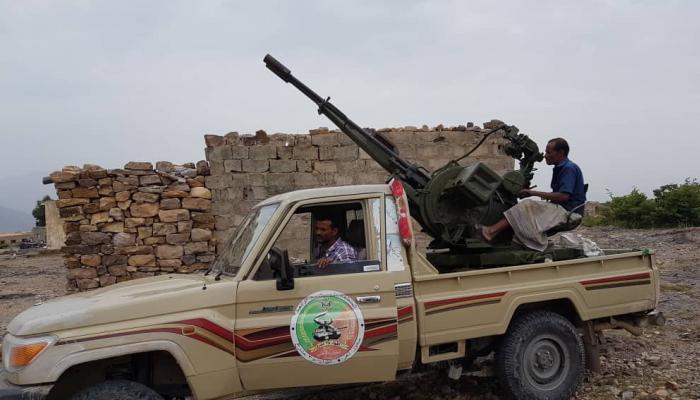
I believe that there is a much larger setting of pushing international policies by lying through partial truths and what is even worse, that the number of players is not large, it is basically a lot larger than most are willing to consider or accept, making the issue larger in some ways and unacceptable in other ways. I get it that people like Andrew Smith have a narrow vision, a vision of focus and basically his only setting is the ‘Campaign Against Arms Trade‘, it makes him an ideologist, which is not essentially bad, yet in all this the missed part are part of the true scope and in this Julian Borger and Saeed Kamali Dehghan made the wrong call by leaving out certain parts. In addition, stating ”The bombing of a bus full of schoolchildren last week was just one of more than 50 airstrikes against civilian vehicles by the Saudi-led coalition” whilst hiding behind “according to new data” is increasingly deceptive, especially when there is no way to tell whether the vehicle or the building or the street was the target, especially the ‘civilian vehicles‘ part. When we consider that an armed Houthi vehicle could have been part of this and as we saw that they tend to be armed, there are enough images of Houthi Toyota’s with a .50 on it, so ‘what a feeling‘ that gives is basically depending on whether you are the driver or the gunner. In one case, the one I show here, it is able to counter a lot more, so you tell me on how ‘according to new data‘ should be seen, as I am bound to find a decent amount of glitches in that new data. Yet that will not be questioned, or the initial quote by the reporters, which should have been a first.

With the subtext on the photo stating “A military source said in a statement to “Al-Akhbar news” that the army’s national army repulsed an attack launched by the Huthi militia coup on positions in the outskirts of the Directorate of Khadir, southeast of Taiz province” (source: al-ain.com), I will not state the validity or deny it, basically the fact that this is in all setting likely to be seen as a civilian vehicle. So how accurate is the data if the AA-gun had been removed after it was hit (which would be a first requirement even if it was merely needed for spare parts)?


#ATruckIsAHummerWithoutHorsepower


Leave a comment

Filed under Media, Military, Politics

Rocking the bullshit

There has been a massive issue with Huawei, the accusations by the US is the largest one, one of its sheep (aka Australia) has been on the same post on how Huawei is such a large danger to the safety and security of a nation. It gets ‘worse’ when we see ‘The DNC tells Democrats not to buy Huawei or ZTE devices ever’, (at https://www.theverge.com/2018/8/3/17649920/dnc-democrats-huawei-zte-devices-ban-china-hacking-threat). Here we see the quote “people shouldn’t be using devices from either Chinese company for work or personal use. The words echo what federal officials have already said about Huawei and ZTE posing possible security threats to the US. In February, CIA, NSA, and FBI chiefs testified in front of a Senate committee that the two companies were beholden to the Chinese government and the devices could become tools for undetected espionage“, my issue has always been: ‘show me the evidence!’ Basically EVERY phone can be used as a spying device, that is one clear thing we got out of the Cambridge Analytica part, in addition, the Fitness tracking app Strava was a great way to find CIA black ops bases, so even as Strava merely mapped ‘a regular jogging route’, using Google or Apple maps, you would be able to map out the base, the supply routes and so on, the Apple Fitbit would be there for the Russian government knowing where these specialists were and when the were there. So in all that, and all the security transgressions seen here, not of the were Huawei or ZTE, yet, how much noise have you heard from the CIA, NSA, or FBI on Apple? Even now, they are that one Trillion dollar company, are they too big to mention?

I wonder why?

Yet, Huawei is not out of the hot water yet, they are actually in deeper hot waters now but this time it is allegedly by their own actions. Reuters is giving u mere hours ago: ‘Huawei in British spotlight over use of U.S. firm’s software’, the news (at https://www.reuters.com/article/huawei-security-britain-usa/huawei-in-british-spotlight-over-use-of-us-firms-software-idUSL5N1US343) gives us: “One of those is due to Huawei’s use of the VxWorks operating system, which is made by California-based Wind River Systems, said three people with knowledge of the matter, all of whom spoke on condition of anonymity when discussing details which were not made public in the report“, which now leads me to the setting that the American accusations are set on the premise of American Software used? How dopey is that?

Then we get: “the version of VxWorks being used by Huawei will stop receiving security patches and updates from Wind River in 2020, even though some of the products it is embedded in will still be in service“. In all this, the fact that it is still serviced for another 2 years, how are we now in the stage of: “potentially leaving British telecoms networks vulnerable to attack“? Is that not equally a questioning setting? Do we not have enough issues out there with Microsoft which has been nearly forever a security concerns, at this point, 2 years early we get the security warning on Huawei, yet not on Microsoft or Apple for that matter, in all this Google is equally a place of patches, and in all this, Huawei is the one getting unbalanced and unfairly burned at the stake like a Catholic at an Elisabeth I barbecue gathering.

Yet the good stuff is “All three sources said there was no indication that the VxWorks mismatch was deliberate. There is also no suggestion that the software itself represents a security risk“, this now leads us to two parts. The first is if it is true that ‘no suggestion that the software itself represents a security risk‘, does this mean that Huawei never had a security risk and if that is incorrect, why not present that evidence so that every Huawei Owner can test for this transgressions ending whatever future Huawei had in the first place.

In the second part, if there is no proven security flaw in the Huawei on hardware, is the security flaw a software one, or better stated an American software one, and if so, why are these people only going after Huawei and not after a dozen American firms?

The one part that we see in Channel News Asia is “Consultant Edward Amoroso, a former chief security officer at AT&T, said Huawei’s experience in Britain showed the challenges of securing international supply chains. Although no one should dismiss Huawei as a supplier solely because of its geographical location, reliance on software that is going out of support is a legitimate concern, Amoroso said“, the news (at https://www.channelnewsasia.com/news/business/huawei-in-british-spotlight-over-use-of-us-firm-s-software-10590268) gives the part that does matter, in this Edward Amoroso is right, software at the end of its reign is often the true safety concern, not merely because of the time frame, but in extent the time required to properly update the software on all the devices, which is not always a smooth path and tends to open up additional security gaps. In that part of the equation Huawei does have a legitimate problem to address. The second part to all that is “In addition to the issue with VxWorks, this year’s report also cited technical issues which limited security researchers’ ability to check internal product code“, I believe it to be a minor part and the proper investigators could seek or test for the issues, not merely that, the limitations also remove whatever options there are for zero day breaches, which has a much larger legal frame to address. So even as we agree that the US setting of accusation without evidence (proper presented evidence is merely the stuff that makes the grass grow in Texas). We also get that the US is giving us: “In the United States, the Pentagon is working on a “do not buy” list to block vendors who use software code originating from Russia and China“, there is an actual thing called national security and as such, it is their right to implement that part, I do believe that in the end it might be somewhat counterproductive, but it is still within their rights to be in such a setting nor no other reasons.

In the end there are a few issues in the field and some are out there, but with a lack of technical details, some cannot be proven, yet the fact of what some have done in the past might give the setting of ‘is it more likely than not that some do not really have 5G‘ is a true setting, yet I prefer to have the actual evidence, that some are trying to keep buried, and the media is part of that chase, which is odd to say the least. Huawei is bouncing back and forth and their hold to grow fast via the UK will be there, but from my point of view, they will need to fix the VxWorks part a lot faster than they think they need. From my estimation a new software solution should be well beyond the Beta stage in Q1 2019 if they want to have any chance of keeping their lucrative growth contracts in place. In equal measure we need to look at Canada and Australia, as they are currently set to be nothing more than US tools in all this. In all respects no actual and factual evidence was thrown out in the open. If that was done Huawei would have lost pretty much every non-Chinese contract, the fact that the BS is spread even larger with absence of evidence gives more reliability that there is no real security danger and it is more a tool for some to get the slice of 5G pie, probably at the expense of a monthly data dump, nicely mailed via UPS to: N 11600 W, Saratoga Springs, UT 84045, USA. That alone should give us the goods on who to trust and who to be cautious of. In all this, no evidence has been presented to the public (and their right to know) on how Huawei is a threat to our security. The fact that I believe that this is all bogus in one thing, the issues seems to be blown up as everyone takes a queue from John Bolton, that whilst the setting “Five Eyes is an alliance between Canada, New Zealand, the United States, Australia, and the United Kingdom that facilitates collaboration in intelligence activities” gives us that there are three in the dark, the UK might be around with the knowledge and the rest merely takes a queue form the US, which has seemingly been whispering like they did in the WMD in Iraq phase, you do remember that in the end, they were never found and it was merely bad intel. So in that setting whilst Corporate America, Canada and Australia are all in fear of their gap against leading Huawei, in that setting we are supposed to have faith on the American gospel on what constitutes a danger from Huawei? And now that we are made aware that the software solution used is an American one?

Yup, we have all kinds of problems and some are valid issues of concern as Edward Amoroso phrases it. Yet between a setting of concern and an actual concern is a mile long gap and whilst we acknowledge that Huawei has some fixing to do, until actual evidence is shown that there is a security breach, the only thing that the US can do is to offer a $229 instant price match for the Apple, or an $100 instant price match for the Google Pixel 2, or a $400 instant price match for the Samsung 9, why would anyone in this day and age pay more for the same, actually, with the enhanced batteries of Huawei you will still miss out, but that might be the smallest cross to bear. All this because some players just didn’t get the pricing right, too many fingers on the margin pie, that alone seems to unbalance the entire equation, because all these players will miss out when Huawei is given free reign there. In this the equation is no longer about security, it will be merely about greed and those enabling for it. Is that not equally important an element to consider?

I’ll be honest, I am still happy with my Huawei P7, it was really affordable against anyone offering anything and after 3 years working 24:7, where would you think I would look first? The one who had proven himself, or the one overpricing its brand (OK, with the Pixel at a mere $100 more, that is still an awesome deal).

When we decide on pricing it is one, when unreliable players in the game force us away from the affordable option it becomes a different stage and so far, the US has proven to lose reliability again and again when it comes to their version of security. To emphasize on that, check on all the printing regarding the Landmines in Yemen placed by the Houthi and the amount of articles that we see in the NY Times, the LA Times and the Washington Post. Now consider the impact of mines and why Americans seem to be eager not to inform you. By the way, that setting was almost certain a setting that Iran enabled, if you questions that (which is fair) then answer the simple question, where did the Houthi forces get 1,000,000 mines from?

We are kept in the dark on the wrong topics and it is time to set the limelight on those people keeping us knowingly in the dark.


Leave a comment

Filed under Finance, IT, Law, Media, Politics, Science

Trusting Anti-trust cases?

Today will be about Jennifer Rankin and her article ‘Google fined £3.8bn by EU over Android antitrust violations’. First off, it is a good article, she did absolutely nothing wrong (at https://www.theguardian.com/business/2018/jul/18/google-faces-record-multibillion-fine-from-eu-over-android). We get the goods (not all mind you) but a clear picture and that is what I like, a clear picture to work with.

Right off the bat we start with “Google has been hit with a landmark €4.34bn (£3.8bn) fine by the European Union over “serious illegal behaviour” to secure the dominance of its search engine on mobile phones“. Interesting setting as there are Android based phones and IOS (Apple brand X phones). The android systems ALL have full access to Google. As for the search engine, there are two elements. The first the engine for searching itself, which is in android, giving us an open source setting and (at https://searchcode.com/), you can take a look yourself, now you will still need the skills to program, but that is a discussion for another day. The second part is to find stuff, which requires the PageRank. Now we have an issue, because (as the Americans say): ‘that shit is patented!‘ plain and simple. Whilst Microsoft and IBM were belittling Google in 1999 (heard it myself in the UK) Google was working and growing in what is now defined as ‘the development of the Android mobile operating system, the Google Chrome web browser, and Chrome OS, a lightweight operating system based on the Chrome browser‘, it took 5 years for them to get serious traction and whilst they grew, the other two were marketing their BS on every level whilst trusting in VP and players who actually did not know any of their shit, people relying on PowerPoint presentations, bullet points and hype expressions. Now we get the first part that matters: “The European commission imposed the record penalty after finding that the US tech firm required smartphone manufacturers to pre-install Google’s search and browser apps on devices using its Android operating system, which is used on 80% of all phones“. This is the first part. You see, there is a merely a partial truth and it is largely incomplete. Any mobile smartphone needs an OS. So we have Apple with IOS, there is or was) Blackberry, Microsoft and Google with Android. The rest was either not willing or eager to play on any serious level. They all had this: ‘it is much better going for larger systems‘. Even the larger players ignored the power of Mobile and Smartphones for too long. That evidence is seen with NBC where we see “In a farewell post on LinkedIn, Microsoft’s former head of Windows, Terry Myerson, explained why Microsoft failed in the smartphone business“, (at https://www.cnbc.com/2018/03/29/why-microsoft-failed-in-phones.html). The quote: “It comes down to two problems: Underestimating Android’s business model, and building on an older technical platform that wasn’t quite ready for the job“. So in two mere dimensions we see the acknowledgment of large corporations set in a place of short sighted expectations whilst using a narrow minded business model. That is apart from the issues that Windows Mobile had, I wanted to add that list of issues, but I calculated that this section would be no less than 6000 words, with the additional issues on Windows 10 mobile adding a serious amount of words to the 6000 words required. Blackberry did not survive the times either. It had a good platform, but ultimately too expensive for most businesses. It is still going on, but not in the same way it was. Blackberry was not flawed, it focused on specific groups and those groups, those who choose Blackberry will love it forever, it merely could not hold up the settings there were, I reckon that the 2008 crash wiped well over 35% of their customer base instantly, a setting that many corporations tend to see as a fatal blow, Blackberry was no exception. So 50% of the ‘larger’ players are already gone, none of it had anything to do with Google, or with the patented parts. So I would love to scrutinise the Danish Margrethe Vestager (without resorting to Denmark and Hamlet). It starts with: “Google has used its Android mobile phone operating system “to cement its dominance as a search engine”, preventing rivals from innovating and competing “and this is illegal under EU antitrust rules”” No! They did not! We see the clear admission from Terry Myerson giving us ‘building on an older technical platform that wasn’t quite ready for the job‘, knowing that already sets one of the two outside of the consideration. I have given the audience evidence again and again on how stupidity rules at Microsoft. The Surface and Xbox platforms are two distinctive places where this is visible. Both have a narrow minded setting, both are short sighted and even the business approach to grow the customer base failed to do its job. Reuters gave us that last year with ‘Microsoft Surface devices fail on reliability: Consumer Reports‘, an overpriced system that cannot even get close to 80% of what Apple could do with its very first iPad in 2011. In addition Reuters gives us: “The non-profit publication surveyed 90,000 tablet and laptop owners and found that an estimated 25 percent of those with Microsoft Surface devices would be presented with “problems by the end of the second year of ownership,” according to a study published on Thursday“, how can any device with a 25% failure issue be in the market in the first place, and it is very connected, as this is the mobile industry, the mobile industry is more than merely a mobile phone, all connected devices that rely on mobile technology (Wi-Fi or cellular) are part of that failure. The Reuters article (at https://www.reuters.com/article/us-microsoft-surface-idUSKBN1AQ1EP) we also get “According to the Consumer Reports survey responses, the Microsoft devices were found to freeze, unexpectedly shut down or have issues with their touchscreens, Beilinson said. Altogether, the reliability issues made Microsoft a statistical outlier compared with other brands. Apple Inc. had the most reliable devices, Beilinson said“, so how many corporations should be considered when they are the outlier in a negative way? #JustAsking

It is time to look at article 101 (antitrust) (at https://eur-lex.europa.eu/legal-content/EN/TXT/HTML/?uri=CELEX:12008E101&from=EN). Here we see:

  1. The following shall be prohibited as incompatible with the internal market: all agreements between undertakings, decisions by associations of undertakings and concerted practices which may affect trade between Member States and which have as their object or effect the prevention, restriction or distortion of competition within the internal market, and in particular those which:
    (a) directly or indirectly fix purchase or selling prices or any other trading conditions; (not charging for a service is a right anyone has)
    (b) limit or control production, markets, technical development, or investment; (impeding your own technical development, intentional or not is merely your own visionary stupidity)
    (c) share markets or sources of supply;
    (d) apply dissimilar conditions to equivalent transactions with other trading parties, thereby placing them at a competitive disadvantage; (nope, the non-patented part of android is open to anyone)
    (e) make the conclusion of contracts subject to acceptance by the other parties of supplementary obligations which, by their nature or according to commercial usage, have no connection with the subject of such contracts.

The first issue is that the Page rank which is part of this is patented, so there is already a setting of exclusion. The fact that the others are 10 year late to the party is equally evidence that there is a wrongful conviction here. The setting that they are all scared with the coming of 5G, whilst Apple and Google are the ONLY ONES who will be decently ready, both ending up with a massive market share. We see at this point the third failure of Microsoft. You see, it was not merely the two that Terry Myerson stated at CNBC, the ‘Underestimating Android’s business model‘, as well as the ‘an older technical platform that wasn’t ready for the job‘, it is to some extent the ‘25 percent of those with Microsoft Surface devices‘ failing, they are all connected to overlapping user groups making the damage even larger. The Xbox debacle that showed a bullying setting of ‘always online’ as well as storage shortage issues (a killer in the mobile devices), their bullying setting of pushing people online is equally part of the failure. It was the fourth part that truly took Microsoft out of the race. Google (as I personally see it) looked at roughly 1.7 million university students and looked at where the future was pointing. They saw where the future was heading and they build on that long term view. Just look at the Gmail storage, the YouTube facilitation, and to openness of their business suite apps, just a few examples. Over 3 years I have only two parts where I missed Microsoft Office a little, over 3 years that is nothing. That in a setting where Microsoft went into the ‘greed’ setting it becomes a lot more funny, especially when we see students having to get by a few dollars a day, yet Microsoft has a $199 version for these students, yes it will be cloud, secure (so they say) and update cost free, a subscription service. Google merely states $0, on the cloud. You tell me what students want! The issues are linked, because Microsoft had been actively growing the anti-Microsoft feelings for almost a decade. I understand that Microsoft has a business model and ‘free software’ is an issue for them, they have a right to be like hat. Google understood that the poor students who hardly can keep a budget now, are going to be the executives of tomorrow, those people then are executives now and they all embrace Google (well, most of them anyway). There was no force, there was no (how did that Danish lady put it?) ‘Restriction or distortion of competition within the internal market‘, many went to iPhone and IOS and Google is fine with that. No, the issue is that the other players are confronted with the stupidity of the previous post holders and that is an issue now, it links together.

By not realising the future 15 years ago, the present is close to unobtainable for them. I watched how I saw again and again how some of them went by ‘We are now working on the new technology surpassing the others‘ again and again (and not delivering). You merely need to find the history of ‘SPSS Data entry for Windows‘ and realise that this was an excellent way to lose 6000 businesses, and close to 35,000 users (relabeling it ‘form design software’ was never a solution). Microsoft went in that same direction and now they are close to side lined from the next technology by their own stupidity. No resources, no ‘know-how’ and no vision, yet Google is the big bad wolf here!

This is the underlying story that links it all and some companies are merely indicative, but they overall went the same direction. So where we see ‘preventing rivals from innovating and competing‘, I see that this was not the case, they merely went a greed driven path (OK, I admit, I should say ‘revenue driven path’), whilst actual new technology is all about innovation and never about iteration. Microsoft, after IBM the larger player feeling left out has shown us on several fields that innovation is merely marketing, not actively pursuing issues and with a ‘25% failure issue’ setting in the Surface department, I believe that their flaws are clearly shown. It becomes more of a farce when we see “Vestager added: “The vast majority of users simply take what comes with their device and don’t download competing apps.”“, users want what works; we are not interesting in a $199 fee for apps that they we get for free, ask any student. There are apparently 207 million higher education students globally, ask them! In addition, that mere setting where we see the onus of the user, to not look for more is punishing a company because the users are lazy? Since when can we convict Google for not installing in the second degree, because the user was lazy?

In many situations there are no competing apps, not of any quality that is and when you look in the Google play, we see that the users are allowed to set the tone. I will be the first to agree, that there are issues and that there might have been a case to some extent. Microsoft faced that years ago when it was still in the delusional setting that they had the better browser. Now we see a different picture. Now we are faced with IBM that put everything on Watson (not sure if that was a good idea), but it can facilitate to the larger degree in every direction, including the third parties banking on 5G, IBM is eager to oblige. Microsoft has nowhere to go, they burned down their options and as they screwed up again and again, it has nothing left but to sulk like a little child. Just consider the upcoming Microsoft Surface Go, for people with budgets. Now consider the News we are given: “With a starting price of $469, the Apple iPad (with Wi-Fi connectivity only) is the winner on affordability”, “The consumer/education version is priced at $599 and will run Windows 10 Home in S mode – which only allows apps that are available in the Windows store”, all this, for a system not out yet, and the Australian Financial Review (at https://www.afr.com/technology/mobiles-and-tablets/will-the-surface-go-boldly-where-other-tablets-cannot-20180713-h12n71) gives us: “Why has Microsoft just released a tablet at a time when almost everyone is buying smartphones and almost no one is buying tablets? Sales of tablets such as Apple’s iPad have been in steep decline since 2015, a decline that shows no signs of reversing in the next four or five years, analysts say”, so in that setting another optional failure is introduced. That whilst I saw it coming, just as the short sighted failures that are part what now with giggles is called the ‘most powerful console on the market’ (The Xbox One X), that is the company that is connected to all this.

That part can be found in a few places. In this case I give you the New York Post where (at https://nypost.com/2015/04/15/microsoft-the-big-winner-in-google-antitrust-lawsuit/) we see “While Google CEO Larry Page took his lumps with the suit, Microsoft, very quietly, came out the big winner, sources said. “Microsoft complained a lot,” said a source with direct knowledge of the situation. “Microsoft definitely counselled the [EC], suggesting it made sense to send Google a statement of objections so Google would be forced to produce documents” showing its search-result recipe, another source said”, this was a joke 3 years in the making. I hope that I can turn that joke on these losers as they have diminished consumer trust in their narrow minded way (not to mention short sighted ways).

Even when we turn this in another direction through the Register two month ago (at https://www.theregister.co.uk/2018/05/21/antitrust_google_us_government/), where we see ‘On 20th anniversary of Microsoft antitrust, US Treasury Sec calls for Google monopoly probe‘, I am not arguing how right or wrong it is. I am merely pointing out that Google went in a direction that was long term, whilst all the others went into the short term path that was demanded from their board of directors, who for the most could not read a spreadsheet properly because the bullet points were missing (their optional opposition to the NRA perhaps?). That was the setting and those with vision are dumbfounded and they got hurt through the inadequacy of stupid people.

So the Danish party was already active then. What is an issue is Jeremy Stoppelman, he had vision with Yelp, even as he did not understand certain markets (miscalculated is a better word), he had faith in his product, which I applaud. it worked for a while, yet I see that bad choices (unfortunate choices is a better setting) impacted it all, so even as Yelp failed to meet expectations, if it survives and gets 5G traction, it will be ahead of others a decent amount, it turned down Google who wanted them when the going was good and he would have had a strong place if he had taken that part, but it was his decision and I applaud him for it. Yelp and Turnstyle Analytics would have an optional strong 5G setting if it had kept international operations and grow the data the way they had, it will not be easy now for them, but I digress. With: “Mnuchin’s comments on Google came after a special 60 Minutes episode that focused in part on the company and its effective search monopoly. That segment was notable for the inclusion of two people: EU competition commissioner Margrethe Vestager and Yelp founder Jeremy Stoppelman“, yet all parties have their ‘its effective search monopoly‘, what they are not telling us is that they had a vision that everyone would come with a future need and they got Stanford University to create the algorithm that got patented. All the other players remained dumb to the future. And then we get the one gem I expected: “Also, the EU announced it was launching a probe of Google’s Android operating system to see if its agreements with cellular phone makers was hurting rivals. While Microsoft likely does not care much about search preference, “the investigation throws sand in the gears of Google’s innovation,” the former FTC official said“, so there it is ‘agreements with cellular phone makers was hurting rivals‘, phone makers had options, Apple had its own system and there are NO non-Apple IOS phones. Interesting that this does not make that cut is it? An open system was offered and the alternative Microsoft (rejected because it was not up to the job), Blackberry (is only after the collapse that it became an option to others), we see that Google has an open option, yet they are the boogeymen. So we get two elements, a partially failed entrepreneur (only in part) and a limelight seeking politician. The power of the google Appeal is found in a simple statement: “Her staff ran through over a billion Google searches and found that Google was knowingly manipulating its search algorithms to promote its own products and push competitors far down the ranking“, that evidence must be shown in court and get scrutinised! You see, the timeline for a billion searches can only partially be automated and those results can be used by Google as evidence against Margrethe Vestager as well. The evidence of ‘manipulating its search algorithms‘ will be equally a discussion point putting EVERY intern and assistant of Margrethe Vestager in the witness box, no exception. A setting that I personally see as the EC has close to no chance of winning. Even as I saw the algorithm in my University classes for an assignment, I am decently certain that I did not see the whole 100% of all elements of the algorithm, one element out of place and that is as I (again: personally) see it the crushing of the EC case, the appeal will be won by Google.

The fact that Microsoft was part of this in several ways from 2015 onwards and likely before that is more than enough for me to consider the premise that trusting antitrust is not always a good thing. I do agree that antitrust should exist, yet it should be clear that this is not a handle for the narrow minded, the short sighted, the greedy and the stupid to use because they could not get their shit together. They should reread Chapter 11 of their favourite pornographic work, whether that text comes in 50 shades of mixing several combinations of white and black. A colourless equation in a setting where colour was the only part that the global users demanded, listening to them would have been a first requirement. It is the setting, which gets me to the final image.
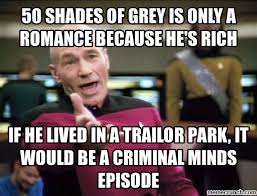
An interesting to set the stage, because if Microsoft was a marketing firm, they would be reduced to merely being a spammer, look at the first screen of your Xbox One (X optional) for that part, also all the parts people have to go through in Windows 10 (https://www.windowscentral.com/how-remove-advertising-windows-10), so in the end, the advisors have their own games to play (quite literally at some point). The Independent was kind enough to give us this with: “In the meantime, we probably ought to do our bit to help her by making a little more use of Google’s rivals, such as Microsoft’s Bing, which is a perfectly serviceable search engine“, it is seen at (https://www.independent.co.uk/news/business/comment/google-eu-fine-margrethe-vestager-android-search-microsoft-bing-silicon-valley-mobile-phones-a8453486.html)

Just ‘Bing’ “UK Law firms”, to get a UK law firm and immediately I see 10 law firms (page top view), 50% Australian ones (3 of those advertised), so if Bing cannot give me what I am looking for, why should I even consider them? With the term “Dutch Lawyers” I get 25% fulfilling the search. I can go on for a while, but I think the case of the doubt regarding ‘a perfectly serviceable search engine’ and the case on how it isn’t one has been made. I did not need to go far. Oh, and if you do have a sense of humour, try “Microsoft guilty” (with brackets), to see Bing give you “We didn’t find any results for “Microsoft guilty””, whilst Chrome giving us an immediate 8 results, with the quotes on these links. So when it comes to censoring (or is that just their flawed algorithm), we can soon see that there is an optional setting where Margrethe Vestager could be seen as a tool for Microsoft (as they might have been ‘searching’ for optional solutions), it might not be a fair setting, yet the entirety of the Antitrust case is seen by me in that way. Microsoft and a few others need time to catch up, being stupid merely gets you at the back of the line (which is where all future opportunities are lost), they need time and they are using the EC to try to catch up. My sense of giggling will be found the moment the appeal is won by Google; we are likely to see a tsunami of ‘carefully phrased denials from European political players trying to avoid the limelight’.

Oh, and whilst we are at it, when we see ‘placing them at a competitive disadvantage‘, that in light of Huawei surpassing Apple (source: the Verge). With: “Huawei has surpassed Apple as the world’s second largest smartphone brand. Sales have overtaken Apple for the first time”, Margrethe Vestager will call it ‘proving her point’, yet the truth is that Huawei went for the affordable option, a side Apple has not considered in decades, whilst in addition, the decline of Samsung and the growth of Huawei reinforces that it was about affordability for the longest of times, those losing market shares are their own worst enemy, because the wrong people are setting the price, I added enough evidence of that for the longest of times. This all in a setting where we see that even as Huawei realises that Europe is the key, the others are isolating themselves even more. Soon enough it will no longer be about Google and Android, it will become on non-American mobile players gaining the upper hand  over all the others, I wonder what anti-trust case will be filed at that point.

#PriceDiscriminationAnyone?


Leave a comment

Filed under Finance, IT, Law, Media, Politics, Science

Seeking security whilst growing anarchy

We all want national security; it does not matter whether you are American, Australian, British, Dutch, French, German or Swedish. National security is a matter that is not just set in laws; it is set in morality, in justice and in perception. Most of us are set in a stage where we are willing to give out many perks so that national security can be maintained. Many liberals grasp back at Benjamin Franklin who once said: “Those who would give up essential Liberty, to purchase a little temporary Safety, deserve neither Liberty nor Safety“, I would have agreed when he allegedly wrote it in 1755. In those days the biggest fear they had was England, the Dutch trade wars (the VOC) and apparently the French to the north. It was a very different age, in a setting where a naval was not done in minutes, but hours, battle settings took a while and there was clarity on who the enemy actually was (usually the one speaking your language and not firing on you, wearing the same uniform was also a nice indicator).

In this day and age it is not given, nowadays all the wolves have onesies looking like Shaun the sheep and often we cannot tell them apart. This is the setting where oversight, surveillance, data gathering and analyses can help, in equal setting there are a few players that still cannot get their algorithms correct and they are making the same mistake that I caught a few players on in the late 80’s.

There is however a new setting, a line that has been crossed and the Washington Post gives us that setting (at https://www.washingtonpost.com/world/national-security/there-have-to-be-limits-lawyers-for-guantanamo-inmates-challenge-lifetime-imprisonment-without-charge/2018/07/11/f3933faa-8533-11e8-9e80-403a221946a7_story.html). the title ‘‘There have to be limits’: Lawyers for Guantanamo inmates challenge lifetime imprisonment without charge‘ gives us that part and it is one that cannot be ignored, with ‘lifetime imprisonment without charge‘, we see not the first step, but an early setting that the law is changing into ‘Guilty until proven innocent‘ and I am not sure if that is merely a wrongful step, or a desire step for large corporations to give the setting a new life in other directions as well. There can be a setting where it is easier for the courts to work on that level. You see, when a corporation has failed their SLA’s, there will not be the documentation where they can prove it, yet when we see the application to ‘lifetime imprisonment without charge‘ the setting is very much inverted from what we find acceptable. We see the Post giving us “A handful of commission cases have inched along in pre-trial proceedings for years, many of them plagued by irregularities” and it is the ‘irregularities’ where we need to seek first, you see an abused system will rely on irregularities to remain in the shadows and active, whilst it almost never has bearing on National security and it will have even less a bearing on justice or lawful settings. The question becomes where it failed. There is a second side to the Post when we realise that the quote “Justice Department lawyer Ronald Wiltsie said authorities had a responsibility to detain suspects who could pose a future threat, even if it wasn’t clear they would actually take any action against the United States” is incomplete. The fact that we are faced with ‘it wasn’t clear they would actually take any intentional action against the United States‘. You see it comes with the setting that there is no proof that they had actually taken any action against the US, if so there would be a charge and that failure falls not merely on the FBI, it falls on the CIA, the NSA (data gathering agency) and most of all the investigator looking into the matter. We can illustrate this with the weirdest of examples.

In a spreadsheet we can use a random number, so we create 5 groups, each in one column, and each having 100 random observations. Now we will test for them stating that “IF(A2<0.2,1,0)“, I am setting the stage where 80% was guilty (so basically 20% was innocent). If the number is smaller then 0.2, they are presumed innocent. We do this for the 5 groups. Then we count the groups, in the initial test no one was innocent overall, but 3 were innocent on 3 counts and 20 were innocent on two counts. Now remember, this is merely 100 ‘persons’ tested on 5 elements. When we change the setting to “IF(A2<0.25,1,0)” (a joke on the premise that 3 out of 4 all people are guilty of something) we get a different setting. Now we see that two were innocent on 4 counts, yet 10 are innocent on 3 counts and 23 are innocent on 2 counts. Intelligence software works on facts not on random numbers, but the principle is partially the same, how many flags were raised by that one person, yet now not on 5 tests, but on dozens of tests, against people, places, actions and locations at specific times and as we consider that thousands are tested, in the random setting when the number of people are large enough we will get respectfully get a group that was innocent (less than 0.2 or 0.25) on all counts, that is the impact of random.

Yet on the flags raised in real live, we either have them guilty of something, which means that there can be a trial and a charge can be made, when you see the examples next to one another and we realise that the group of all people where no flags is raised did not occur (it will with a larger test group), we need to consider the flaws we are faced with and more importantly, the setting that we open ourselves to in legislation and in law when we allow for ‘lifetime imprisonment without charge‘. So in this setting, no matter how much we want actual national security Missy Ryan makes an interesting case. We get to see the larger issue when we look at Baher Azmy, legal director for the Center for Constitutional Rights, a group representing some of the detainees. With “Baher said the government had distorted a 2001 law authorizing U.S. military operations against al-Qaeda and affiliated forces by using it as a basis for indefinite imprisonment. He said insurgent wars, waged against small, clandestine and evolving bands of militants, could go on forever. But laws governing wars were devised with conflicts between states in mind, he said“, we are treated to the setting that we face in the upcoming decades. We are not waging was on nations, we are waging war on groups and tools. As Hezbollah is still the tool of Iran, the setting of a larger problem becomes apparent. In the first source (at https://www.terrorism-info.org.il/en/hezbollah-iran-handled-shiite-militias-integrated-syrian-army-campaign-take-control-south-syria/) we see “Shi’ite forces, handled by Iran, are being integrated into the campaign currently waged by the Syrian army in south Syria. There are at least two Iraqi-Shi’ite forces (the Dhu al-Fiqar Brigade and the Abu F–al-Abbas Brigade). There are also Afghan Shi’ite fighters in the Fatemiyoun Brigade. In addition, it was reported that Hezbollah operatives also participate in the fighting, including operatives from its elite al-Radwan unit, who were sent from Lebanon“, yet when we see “According to ITIC information, Hezbollah and the Shi’ite militias (some or all) have been integrated into the various Syrian army units and do not operate as independent forces. Pictures show Shi’ite militiamen wearing Syrian army uniforms, and it is difficult to distinguish them from Syrian soldiers“, we get the danger with ‘Pictures show Shi’ite militiamen wearing Syrian army uniforms‘. So now we get the setting of ‘who is exactly waging war on who’, or is that whom?

Not being able to identify the setting gives rise that Baher Azmy has a larger issue to deal with, because any denial from the Syrian army that these people were army units, and they get identified as militia who dressed ‘wrongly’, sets the stage that the defence ‘laws governing wars were devised with conflicts between states in mind‘ can no longer be upheld and that escalates the need for a much larger Guantanamo and indeed it continues and even fortifies the setting of ‘guilty until proven innocent‘.

the second source is a week old and gives us ““Hezbollah is a fundamental participant in planning and directing this battle,” a commander in the regional alliance that backs Damascus told Reuters. “Everyone knows this – the Israeli enemy, friends, and even the Russians.”“, it is given to us by Reuters (at https://www.reuters.com/article/us-mideast-crisis-syria-iran/hezbollah-role-in-syrian-south-exposes-limits-of-us-policy-idUSKBN1JV19U), so as the enemy changes its onesie (yup that was funny) we see a whole league of Shaun the sheep and we have no idea how to deal with them in life (the other alternative is solved through hiring people with the actual ability to aim).

Now change that setting away from the current ‘debacles’ in Yemen and Syria and consider the impact when we look at the Indian view of Pakistan (at http://www.dnaindia.com/analysis/column-terrorism-is-pak-s-business-2627746), it is not a hollow part, and there have been accusations from India and Afghanistan for the longest of times. In this setting we are given the quote: “India and Pakistan are not caught in some existential Punjabiyat love-hate relationship. Pakistan is a state sponsor of terrorism. No other nation has used terror so ruthlessly as an instrument of state policy as Pakistan has done for decades — principally against India but also against Afghanistan” is only the beginning. There are other headlines, even as they should be seen as no more than to illustrate that the issue exist, we cannot tell to what extent. So when we consider “The Islamic State’s flag emerges in Pakistan’s capital. How serious is the threat?” Is there a threat or is it merely a freedom of expression? So when we see the second headline ‘The terrorist group is increasingly present in Pakistan’s southern province‘, we are confronted with how to proceed, yet Reuters gives us 3 months ago “Islamic State claims attack on Christian family in Pakistan“, we see that the game changes. If state sponsored terrorism is the new ‘Letter of marque and reprisal‘, how can we proceed? Is there an actual option other than guilty until proven innocent?

What is clear is that the data crunchers will have their hands full because none of these algorithms and data gathering systems are ready for this leap. And it is not a small setting as Pakistan is a nuclear power who for the most is happy to push the button on India if need be, so the game is not merely changing, the players (Hamas, Hezbollah, Islamic State et al) are aware that hiding under the roof of any government gives them options and they accept being the tool for those governments, yet the systems and our mandates are less equipped to act. Yemen has so far been an excellent example on how to not act and it will escalate beyond this. Now consider that I do agree that ‘lifetime imprisonment without charge‘ is wrong, but what options do we have? Until 2016 I believe that the data and the evidence was the weak link. Now we are in a situation where we need to wage war on three fronts, an overt one, a covert one, and a data intelligence war and we need to find a way to intertwine them and use them to find the right checks and balances. We need to evolve what we can do so that we can determine how to do things correctly, or perhaps better stated efficiently to the right opponent.

You might think that this is ludicrous, yet have you considered the actions in Yemen? They were firing missiles into Saudi Arabia, on civilian targets, yet the only thing we see is messages like ‘Yemeni security officials claimed that cluster bombs were dropped in a civilian area of the Western suburbs of the Yemeni capital Sanaa‘, whilst we see ‘after Houthi rebels fired a missile at Riyadh‘ any justification reduced to an 8 word response. The media at large does not give us: ‘Houthi rebels fired a missile on Riyadh, the Saudi Capital with over 5 million people, the fired missile could have caused the death of hundreds of people if struck correctly, Saudi Arabia reacted in the attack against its citizens‘, we do not get that do we? Yet that is the game that is the danger some face. In light of the missiles getting fired under the noses of Yemeni security officials, they need to realise that not stopping the missiles does have repercussions and innocent people will always be caught in the middle.

The change of conflict is large and it will be growing over the next decade. I am on the side of Missy Ryan in this, lifetime imprisonment without charge must be challenged and everyone needs to know about the setting we have here, but when it comes to the defence of that setting, I wonder if we have any actual option to oppose it, those who are send to that place are willing to (allegedly) support people who hide in other uniforms knowingly firing methods of termination on civilians merely because they can and because it makes them continue the fight that they believe is just for much longer. It is a dangerous setting that strips the veneer of civilisation in nearly all nations, look at France and Germany, they went through this several times. We need to set a different stage and we need to do this before we set a legal lawful setting of targeted killing and the wrong people are shot, because that will be the point of no return for all of us.

You see ‘Guilty until proven innocent‘ (forced or not) is merely a first step, when that setting is entered in stone we get the second danger, when cyber-attacks removes the option to prove innocence, what do you think happens next? It is what I personally believe to be the setting stage for chaos leading to anarchy and there the game changes again, because most governments have cut on so many parts in infrastructure that most cannot overcome anarchy for a much longer time forcing the hands of many governments, especially in Europe and I feel certain that some of the players behind the screens realise that too and they might just be banking on it.


1 Comment

Filed under IT, Media, Military, Politics, Science

Space Quest 2.5

It is an interesting setting; the reference comes from one of Sierra-on-Line’s most famous games called Space Quest, in this game we see the hero going up against Vohaul and his evil plan: to eradicate sentient life by launching millions of cloned insurance salesmen at the planet!

That game came to mind the moment I was treated to ‘Grenfell-type cladding on London flats to be replaced at insurer’s cost‘ (at https://www.theguardian.com/society/2018/jul/09/grenfell-type-cladding-on-london-flats-to-be-replaced-at-insurers-cost), in this we all might seem relieved, but the truth is hidden in the subtitle with ‘Decision over New Capital Quay could have repercussions for other apartment blocks’. This is the setting and it was never going to be a win-win situation for the house owners. We see the emotional part with “A second family, which has seen the value of its London flat slashed from £600,000 to just £90,000 because of the Grenfell-style cladding, was thrilled to learn they no longer faced the bill“, I am happy for that family, I truly am, even with the first example the Guardian gave. Yet the hidden trap is not invisible, it does not hold out in camouflage. The simplest question gets you there. How much effort have you gone through to get your insurance money? I have been through it twice in my lifetime and in the end it costed me more than the premiums ever did. When it comes to insurances (beyond third party insurance) you tend to never ever win, or break even.

You see, getting an insurance firm to part with money is a bit of an issue. So when I see that they are footing the bill, all kinds of red flags went up. In Victoria (Australia) we saw in 2015 “Victorian Building Association (VBA) conducted an audit of 170 building permits following an Melbourne apartment fire that climbed 13 floors in November 2014, causing $2 million in damages, due to combustible wall cladding used in construction“, and until you get the headline ‘cladding hazard may nullify claims‘, you might not get the essential one. This is not any different in the UK. In addition there is (from another source) “However, a good number of policies stipulate that if you’ve told your insurer you have fire alarms, they must work. If an insurer finds that a home’s fire detectors weren’t functioning correctly at the time of a fire, they might reduce the claim pay out, or even turn it down altogether“, as well as “Did we have working fire alarms? Did we have a fire blanket in the kitchen and extinguishers in the house? Was there an up-to-date electrical inspection report? Luckily, we complied, but similar issues apply to almost any policy“. Now consider these parts with the Grenfell like issues seen in: “The Guardian has learned that another deficiency notice from the London Fire and Emergency Planning Authority (LFEPA) was issued on 25 January in relation to all 11 blocks in the complex. It identified 16 fire safety issues, including a lack of arrangements to evacuate vulnerable and elderly residents, an ineffective maintenance regime, a broken firefighting lift and a broken fire hydrant outside one of the blocks. It found that “the procedures to be followed in the event of serious and imminent danger to relevant persons are inadequate”, raising residents’ fears about being trapped in the event of a fire“, which is given to us (at https://www.theguardian.com/society/2018/feb/15/further-defects-discovered-at-housing-with-grenfell-style-cladding).

So in these cases, we have an insurance problem, the building is not up to specs, and any fire voids the insurance, in most cases the home insurance is also affected, yet the insurers are covering it all this time. This is not merely the Grenfell setting, all the buildings are covered. Yet what we are likely to see is that this is a quick return on investment from the insurers. You see, there is every chance that the premiums will go up between £120 and £360 a year next year onwards. Now consider that this is not merely handed to those buildings fixed, it will most likely be an overall premium increase of 1%-1.5% for every building in London, which will give the insurance companies an expected £12m-£36m per year for the next 5 years at least. So the quote “Residents, who were facing a share of a bill estimated at between £25m and £40m for cladding and millions more for round-the-clock fire wardens, were elated with the news” gives us that the insurers will take an optional short term hit with the turning point in year 2 and large profits after that. It seems like a nice business deal for them, and in light of the avoided costs most will not blink at being happy, even when the new bills arrive.

Part of that danger is seen in things like “Common buildings insurance exclusions may include: Damage from general wear and tear & wilful neglect of the property“. That part matters, because the failing fire doors, non-working water pipes for firefighting as well as other elements. Now add the quote from the Conversation (at http://theconversation.com/yes-the-grenfell-tower-fire-is-political-its-a-failure-of-many-governments-79599), which was: “Worse, it has been reported that the London Fire Authority actually wrote to all boroughs as recently as April, advising them of their concerns on the use of some kinds of cladding panels. A number of expert reports have argued in favour of revising the building regulations, notably following the inquiry into the 2009 Lakanal House fire in Southwark in which six people died. The fact that the Lakanal House fire was eight years ago and building regulations have still not been updated demonstrates a complete failure to learn the lessons from previous disasters and take speedy corrective action“. We now see a clear path to both ‘Damage from general wear and tear‘, the fire doors and ‘Wilful neglect of the property‘ optionally the fire doors, the writing of the Local Fire Authority and the non-actions on the cladding. In these cases as well as most other buildings the insurance companies can basically walk away, leaving the tenants with a nightmare scenario. They did not and there is decades of evidence that insurance companies are in a black letter law cold environment in the heat of pretty much every fire. So this is about more than merely ‘a helping hand‘. This is about the SWOT where their position was in strength; the building cooperation as well as the local government were in a place of Weakness, the Opportunity is a nice premium rise giving them many millions a year more, with one year as optional collateral loss and the Threat is close to none, optionally the initial builders will get billed to some extend as well, making the optional losses for the insurance companies even lower than initially penciled in.

For this and the previous government it is a quick fix as well as a nice setting where everyone walks away without an invoice, the only thing that this government has to agree to is the coming premium rise and as the amount seems small, they will not oppose it, the one thing that bites is that all home owners will be likely to get that increase, cladding or not. And as we get bad news management through optimistic news, we see messages like “Flood Re confirmed that the announcement comes on the back of its decision not to pass on the annual increase to premium thresholds in April“, yet later this year we will with a decent measure of ‘most likely’ get news like: ‘The added risks as well as the additional costs of upgrading the buildings that have Grenfell like cladding have forced us to add a short term increase to all premiums, so that there will be no dangers to those currently in hazardous setting of coverage against fire’, yet I personally feel certain that all those not in those buildings, where the rule “Common buildings insurance exclusions may include: Wilful neglect of the property“. Those people will still take a hit on their claim if they have one.

I admit that a lot of it is based on personal experience (not fire based though) and in light of thousands of complaints in the past, my vision in what is likely to happen, might be correct and even conservative in the projected changes. Even as I am willing to grant the response that we see with: “Then we arrive and we are the big bad wolf, because the claim is not covered“, I personally see this as the people expect a spirit of the insurance setting whilst insurance firms see only a ‘black letter insurance policy setting‘. It is a view that the legal minds understand, but that might be the only group that does. It is an idiomatic antithesis that tends to settle in the world of laws (especially taxation laws). It is important to understand that I used to see the insurance companies as ‘white collar criminals’, but not anymore. I think that this is a deeper issue that we are all mostly ignorant to. It is almost a given that spirit of law and letter of law should be taught in secondary school. It is an important skill for anyone to have by the time they get their first house and get the insurances they need. It is an important view as this one setting in London giving us the realisation that the insurance companies are embracing the spirit of the insurance, not the letter of it; yet I personally believe that this is done to create a windfall that gives these companies millions down the track for a very long time to come. We can argue that they offer a cheaper solution for those who are faces with many thousands of pounds in cladding costs, yet others will not feel the same. I was not alone in this path, Reuters gave us last October “While they cannot change existing insurance cover, renewals, many of which fall due in Jan or April 2018, will give them a chance to adjust prices or policy wordings to mitigate their risks“, and so they already had something. The question becomes, what is the cost of mitigating risk? The people will find out when they get their news premium invoice in 2019. Then we can see just how conservative my numbers were. I do expect to see the changes being released earlier that year as it will be an option for insurance companies to poach new customers from those giving voice to higher than expected premiums.

So even as we were given “AXA had upgraded its administration so that information on the number of tall buildings it insures or the type of cladding they are using is more easily available, helping to identify risks quickly“, as well as “Zurich Municipal would work with customers “to help them manage these exposures”“, the question is what exposure?

Is that exposure to the expected risk, or to the risk of getting exposed to upgraded premiums?


Leave a comment

Filed under Finance, Law, Media, Politics

Round two

Yesterday was a day when I thought it was essential to speak out against the language used in the NY Times. It was part of a larger whole that will be shown to all over time (as I am missing three pieces of evidence). Yet the oil issue was in the centre of it all and so it remains. Now, I had done my homework (for the most), yet there was one element I overlooked and it is an important one. Reuters was awake and gave us (at https://www.reuters.com/article/us-oil-opec-saudi-trump/can-saudi-arabia-pump-much-more-oil-idUSKBN1JR1HI) the part I forgot about. “the kingdom, OPEC’s biggest member, can barely raise output by 1 million bpd to 11 million bpd and even that would be difficult, according to industry analysts who forecast a further oil price rally due to a lack of new supply“, yes we forgot about the engine that drives it all. It has been increasing production again and again, yet at some point; the system that drives the production of crude reaches its maximum and that is where the teller of barrels is now hitting a little issue. I like (yet optionally disagree) with Gary Ross, head of global oil analytics at S&P Global. With “While Saudi Arabia has the capacity in theory, it takes time and money to bring these barrels online, possibly up to 1 year“, we see a ‘stabilising’ comment, but based on what, knowledge of the parts that are driving the crude oil machine forward? Perhaps that is true, yet if that is the case the one year setting is off. Other elements require adjustment, but the one year (yes he did add ‘up to’) implies that engines and perhaps pipes require adjustment, meaning that the system is set to increase beyond the 100% marker might be more dangerous. Pressure can be a bitching issue and the mere fact that even in suburbia water mains still go out (mine went kablooie yesterday evening) implies that there is a setting where pressures do not align. Now with water it is a nuisance, so my evening of pasta went straight out of the window. With crude oil it is another matter entirely. There the blown gasket can optionally make a mess to the environment and more important, it could optionally force Saudi Arabia to turn the dial down to 60%-80% until that mess is fixed. When that happens they go into a freefall where one plugging evokes another part to burst emotionally, that is where the problem starts and that is an important side in all this.

It is not the only part; CNBC gave us (at https://www.cnbc.com/2018/06/30/oil-deal-may-stir-the-pot-in-the-middle-east-and-test-saudi-capacity.html) a few other parts. Even as we might be able to ignore “Iran and Venezuela are both reeling economically, with Tehran feeling the bite of new sanctions“, especially as Iran has a set clientele. Yet the given part of “President Donald Trump surprised the world on Saturday by announcing a new side agreement with the Saudis to compensate for supply shortages from crisis-hit producers“. I found the setting of ‘compensate for supply shortages from crisis-hit producers‘. It is interesting for two reasons. The first is that the US had no application for Iranian oil in the first place and the second is that Venezuela had all kinds of issues; I personally believe that the low price of oil is reasons for some of it. Yet when we take a step back we get three pieces. The first in 2017 when we saw the Business Insider treat us to “Falling output at refineries means that Venezuela needs to import more gasoline, squeezing the national budget even further. Refineries are currently working at less than 30 percent of average 2016 levels. State-run oil company PDVSA is importing between 100 and 150 thousand barrels per day of gasoline”, so why are the refineries down to 30%? In addition, that is the refinery issue, the setting is not the petrochemical part it is merely the availability of crude oil that was the issue. The second was March 2018 where Reuters gave us “Indian imports of oil from Venezuela have fallen to their lowest levels in over half a decade, shipping and industry data showed, as a severe economic and political crisis hits crude output in the South American OPEC member“, so that is a production need, which beckons why India has decided to import less, are there suddenly 275 million cars less? No there are not, just try to blindly cross Saket Metro Station in New Delhi and you will get hit by two dozen cars within a minute, so that part is not happening. Forbes had its own version of the issue in 2017 and even as it sounds acceptable, I belief that there is a larger issue in play. You see We might look at the Financial Times and see ‘A Venezuelan oil embargo would wipe out Maduro & Co‘, yet the setting is larger than that. Consider Chili, Brazil and Argentine, all needing petrochemical products, the fact that refineries have issues is one thing, the fact that there is a shortage of crude oil and that cannot be met is equally an issue, so why is that?

I have no answers, mere speculations, yet whenever I searched for the Venezuelan reserves and beyond the Argentinian president Mauricio Macri advocating of ‘there would be ‘broad support’ across the region for a full oil embargo‘, I see no evidence of shortage (out in the open). All these actions on Venezuela, forcing them into even more hardship, how has that ever led to anything positive?

Yet the story is the crude, would an arm-twisting scenario to send 30% of the crude oil price into a fund that is only to be used for humanitarian and local support. Would that not work? It seems better than an embargo kicking things over. The additional news that China is importing less from that source is making things worse and no resolution will be coming forward making things better. The other party Iran is a given, yet they still export to a few nations.

Oil price dot come is giving numbers that clearly imply that over a year oil production has fallen by close to 50%, with the implied forecast that the International Energy Agency (IEA) states regarding the Venezuelan oil production which could drop to just 800,000 bpd or even lower next year. it seems that most actions against Venezuela is a little too harsh, now nobody is implying that they are saints, yet we can all agree that they are not Iran. In 2017 it was all about censorship (or anti hatred laws as the Venezuelan government puts it). Yet, there is light at the end of the tunnel. Al Jazeera (at https://www.aljazeera.com/indepth/features/2017/04/venezuela-happening-170412114045595.html) gave us a more in depth part. So when I see some of the issues, with items like ‘Health assistance’, ‘Food shortages’ as well as ‘Hyperinflation’, where a deal could be made that 30% of the sale goes into 10% sprockets addressing these three settings, it could be an optional solution to negotiate. It seems to me that an embargo is often the least of all working solutions, even as it enables the US to get basement prices on a million barrels a day, apart from the setting that they have more immediate problems and removing Venezuela form the equation pushes the other pressures more. Even if it means that the Maduro administration would have to swallow its pride, there might be a path to a long term solution that they were part of, at present they have nothing to look forward to but an angry mob of people left with nothing. It should not allow the US to discuss the price of eggs, yet the Maduro government will realise that the price of fish came at a premium and it is not derived from merely sweat and tears.

This setting is important, because when we look back at the Saudi situation with its 10 million barrels a day, when the pressure goes wrong and the US suddenly loses access to two to four million barrels a day. when that happens and that danger is not unrealistic, do you really think that the American economy is ready for a 25% price hike? Do you think that there will be mere frowns? That danger is not merely a speculation. the danger was shown last week when we saw reports on “The shutdown of Syncrude’s oilsands facility last week could lead to a shortage of oil in North America, investment bank Goldman Sachs has warned“, the source was the Huffington Post (at https://www.huffingtonpost.ca/2018/06/26/syncrude-outage-oil-shortage-north-america_a_23468490/), in addition we got “Syncrude’s facility has a capacity of 350,000 barrels of oil per day, but it shut down production on Friday after a transformer blew, the Globe and Mail reported. The company says production could be offline for all of July“, so there was the given part I left for last, merely a ‘transformer’ and without Optimus Oil rolling out the juice, no crude for a month. So do you really want to play a game of Russian Turbines with the Saudi oil setting and pushing the need from them to deep into the red zone of engineering safety? With that given, what are the dangers when the push goes south in a very realistic way when the downfall will be 90-150 days? Do you still think that finding some dialogue with Venezuela is not an optional much better solution? I would tell you the story of the silly politician and that person relying one basket for all his eggs (and his demoted belief that they were golden ones), your parents might have told you the story when you were young. So when Goldman Sachs gives us: “shrink stockpiles at the main U.S. storage hub at Cushing, Oklahoma, putting upward pressure on oil prices“, they are telling you no fibs, what they neglect to mention is that the danger is a lot more realistic then most predict and the impact could end up being an increase in price that is not pennies, but several dollars. to emphasize that, you merely need to consider May 2008 when the crude price went to $148 a barrel, twice the price it is now. You still ready to play that game of chicken with oil producing hardware, because in the end you will always lose that game. These devices adhere to the cold calculations of pressures and power and in the end the Wall Street motto of ‘120% of norm is merely our version of a Monday morning wakeup call‘ will backfire to all those who relied on affordable fuel.


Leave a comment

Filed under Finance, Politics, Science

The Iranian funds play

Today is all about Iran, the Washington Post and many others are giving the world the information that the previous president misled congress. Yet the Washington Post phrases it as ‘Obama administration misled Congress on possible Iranian access to U.S. financial system‘, they also mention that it is a Republican investigation. There are two issues, right off the bat, even before you read the article, the question becomes, where were the FBI and the CIA in this?

So when we get the first lines with “The Obama administration went out of its way in early 2016 to help Iran recoup previously sanctioned oil revenue stranded in an overseas account after the nuclear deal went into effect and actively misled Congress regarding those efforts, according to the results of a nearly two-year Republican investigation released early Wednesday“, we need to realise that the setting is wrong from the very start.

Before I go there, let’s follow the trail of crumbs that we get offered. next there is “Iran wanted to convert the money into U.S. dollars and then euros, but top U.S. officials had repeatedly promised Congress that Iran would never gain access to America’s financial system“, which is followed by “the Obama administration secretly issued a license to let Iran sidestep U.S. sanctions for the brief moment required to convert the funds through an American bank, an investigation by Senate Republicans released Wednesday showed. The plan failed when two U.S. banks refused to participate” and finally we get: “the revelation is re-igniting the bitter debate over the nuclear deal and whether former President Barack Obama was too eager to grant concessions to Tehran“. The full story (at https://www.washingtonpost.com/politics/federal_government/obama-era-license-aimed-to-let-iran-convert-money-in-dollars/2018/06/06/60be6d36-6971-11e8-a335-c4503d041eaf_story.html) gives us a lot more, but initially, we get ‘The plan failed‘. So this was seemingly (according to a previous Obama official) about the Iranian money held overseas. The issue seems seen with “No one involved seems certain whether Iran has yet received all of its $5.7 billion“, yet as I see it, that does not seem to be the case. When you think this through, $5.7 billion amounts to 11.2 million barrels based on the average oil price, this amounts to funds equal to 26 hours of oil production in Saudi Arabia, 26 hours! Now we are not debating whether Iran is allowed access to the funds, the fact that we see that this much oil (or so little in Saudi Arabia), whilst in Iranian production it amounts to 4 days of oil production is a Joke. Oil still goes to Asia, so all this fanfare for 4 days of oil production? This is about something else entirely, or it is about a very different amount of money. I let you mull that part over, so when we look at the second article (also Washington Post), we see in the article called ‘Secret Obama-era permit let Iran convert funds to dollars’ where we are ‘treated’ to “Iran had been promised access to its long-frozen overseas reserves, including $5.7 billion stuck in an Omani bank“, which we knew to some extent, yet the full economic value is not given, which is also an issue, you see that stuff makes interest, so at that point who gets that money? Is it locked in the Iranian account, or was it the balancing act to the seesaw that is going up and down on €11 trillion in essential European and American debt guarantees? The second article has pretty much what the first one had, but we also see (slightly more clearly) “And when questioned by lawmakers about the possibility of granting Iran any kind of access to the U.S. financial system, Obama-era officials never volunteered that the specific license for Bank Muscat in Oman had been issued two months earlier. According to the report, Iran is believed to have found other ways to access its money, possibly by exchanging it in smaller quantities through another currency“, this now gives us the part (when going back to the first article: “Lew, according to documents reproduced in the report, had been given Treasury talking points explaining the Omani conundrum, he chose not to mention it in a House hearing in late March“, this reference to former Treasury Secretary Jack Lew, where we wonder that if this is about the question, was the question correctly phrased, or perhaps the better setting is, was he breaking any laws not mentioning the ‘Omani Conundrum’?

I cannot state without the full text and even if we agree that there is an issue, we now get back to the very core of the matter. If it involves US Banks and when we reconsider ‘the plan failed when two U.S. banks refused to participate‘, two out of exactly how many banks? That part is also not revealed here. So now we get to the part where it becomes either the US treasury AND the FBI who seemingly did not act here, the Omani Conundrum implies that the CIA turf was trodden on and the communications (in several levels) give us that the NSA ignored it. So what is going on? Did anything actually happen? Because that question is becomes valid when we reconsider ‘the plan failed‘. If that is true, then why is the Washington Post, one of the most revered newspapers in the USA not giving the correct light on this? In addition, the outstanding questions that we get from the mere substance given becomes an issue when we see the words of President Trump “this disastrous deal gave this [Iranian] regime — and it’s a regime of great terror — many billions of dollars, some of it in actual cash — a great embarrassment to me as a citizen and to all citizens of the United States,”. Yet how much money was actually released, through the deal and from 2015 onwards? None of that data is available through the articles. So what exactly is US congress playing with now, because this all looks like a really loud smokescreen, all emotion and no contributable facts on the matter. How many banks were part of it (and their names), which two banks refused (double plus points for them two) and in light of merely one $5.7 billion source we need to see the scope of the money, especially in light of the setting that Iran is even now shipping oil to Asia. Are those not valid questions? In all this, where were the FBI and CIA when this was going down and more importantly why is there no mention of their part in all this, or were they not part of any of it? That is equally an issue, because if there is evidence that they were in different states of activity and actionable requirements regarding Iran during the two presidencies, the people have an equal right to know, do they not? You see, in the larger scope that matters, because the Yemeni issue is covering two presidencies, so if (a very clear if) the CIA was less vigilant during the previous presidency, it might also explain a few things on how missiles are getting shipped from Iran to Yemen, if the manifest states 1013 barrels of oil for humanitarian aid, it might explain a little more than we bargained for. Now the last part was speculative and knowingly incorrect, yet the question remains valid. This was not some article from the enquirer, or the Canton Cherokee Tribune, it is the Washington Post. In many (global) cases that newspaper is seen as gospel right next to the Financial Times, so when two articles give us so many questions in all this, I need to wrap my head around the option that Martin Baron is either on vacation or perhaps down with the flu. The man who inspired Tom McCarthy to make Spotlight should have a better grasp on the entire Iranian fund issue and how it should be made visible in my Hummer opinion.

Because behind all this is not merely the oil, or the Iranian uranium enrichment plans. It in equal measure gives another light that we get from “The draft involved a general license, a blanket go-ahead that allows all transactions of a certain type, rather than a specific license like the one given to Oman’s Bank Muscat, which only covers specific transactions and institutions“, you see, if that is in play and when we remember the G30 bankers group, the one that got some limelight, for ONE DAY. After that all the media dropped the issues when the people were given the sight of Mario Draghi being a member of this insiders only club, a club that he had to give up and no one (except for me that is) followed up on that. All the media left it alone. So when we see that part from April 18th 2018, where Reuters and the Financial Times give us that he would remain a member, the ECB and others never acted on it and silently wait it to go away, now we see the Omani Conundrum issue and I have to wonder, as bankers will do trade with anyone, what licenses are out there that no one knows about, more important, whoever the owner of the funds are that they get to play with ahead of all other banks, with close to €3 trillion in extra printed money for the game of bonds, in all this, what else are we not seeing and as this optionally directly reflects on Iran’s and all the billions we are left unaware of, how is it that the Washington Post seems to not care (or rather stated, believingly unimportant issues that are therefor not investigated) are out there with two pages set to issues in a setting of ‘the plan failed‘ and ‘at the end of the day, nothing worked‘. Which makes me wonder if any transgression was committed and what it was all about. Time will tell whether we see more revelations tomorrow and more important if it leads to anything actionable, because that will be come the heart of the matter soon enough.


1 Comment

Filed under Finance, Law, Media, Military, Politics

Iranian decisions

At 00:10 Tel Aviv Time, roughly 07:10 here, the time of waiting was over, Iran has fired its missiles on Israel making the outstanding option of an impending war a lot more realistic. In this the Guardian gives us (at https://www.theguardian.com/world/2018/may/09/iran-fires-20-rockets-syria-golan-heights-israel) “Iranian forces stationed in Syria fired approximately 20 projectiles at Israeli military positions in the Golan Heights just after midnight on Thursday, Israel’s defence forces (IDF) said“, in addition we see “Several but not all rockets were intercepted by Israeli air defences, an IDF spokesman, Lt. Col. Jonathan Conricus, told reporters“, whatever happens, will happen soon, because if sch a barrage cannot completely be stopped, we can deduce that it will not take long for Iran to take a more targeted notion, yes, my version is speculative, yet the warmongering words from the last weeks gives rise to take it all a lot more serious than it has been taken in the past. So when we see ““The IDF views this Iranian attack very severely,” Conricus said. “This event is not over”“, we better believe that more is to come. There is an additional setting, this attack could only have been done with the approval of President Bashar al-Assad, so he is feeling secure enough with Iran and Russia backing him, so the picture changes on a few fronts, this is no longer merely settling whatever Iran thought it was settling, this could have much larger repercussions. Turkey is already voicing support for Iran and siding with Russia (they are playing their hand cautiously, yet Turkey is all in with their anti-Israel views. It gets to be worse, because as the US pulled out of the nuclear Iran accord, we now see ‘EU rushes to arrange crisis meeting with Iran over nuclear deal‘ (at https://www.theguardian.com/world/2018/may/09/eu-moves-to-protect-european-firms-from-us-sanctions-on-iran), so even as we know that there are several things wrong, even as Iran meddled in other business and now is responsible for direct missile attacks on Israel, we see that Europe is still trying to make some level of a deal with Iran. It goes even further when we see “Work on the package being coordinated by the European Union is at an early stage, but the EU is being urged to warn the US it will impose countersanctions if the US attempts unjustifiably to cripple EU firms trading with Iran“, yet the foundation is that there has been more and more overwhelming evidence that Iran has not been dealing in good faith. When we consider the earlier settings that I mentioned 3 days ago in ‘Stopping Slumber, Halting Hesitation‘ (at https://lawlordtobe.com/2018/05/07/stopping-slumber-halting-hesitation/), we can just quickly decide that they were prepping for all this, which would be incorrect, yet the fact that 20 missiles got there so quickly to be fired on the Golan heights also indicates that there was Iranian willingness to go that distance in several political branches and on pretty much all military levels, which is equally unsettling. The issue is that the EU remains a lot quieter when it comes to the involvement of Turkey. It is a personal view of mine, yet I believe that there will be diminished needs soon enough and there is a Turkey EU membership play coming. The beginning of ‘compliance delay messages‘ is merely an indicator, I believe that the fear mongering will get worse and too many parties are playing that game, that whilst the denial of Turkey into the EU should have been clearly made well over a year ago.  So when we are treated to “The European Union is scrambling to arrange a crisis meeting with Iran after Donald Trump pulled out of the nuclear agreement, as the Iranian president Hassan Rouhani said Europe had a “very limited opportunity” to save the deal“, we also need to keep in mind that terms like ‘could’ connected to ‘shut down UK’ on EU laws, this level of fear mongering is just beyond acceptable and we might all be better off in a direct war and whomever survives will suddenly demand near draconian treatment of the media, even as Leveson 2 is (for now) off the rails, the next crises will not go that smooth for whomever is demanding greater accountability of the media. That is not the only part, the entire Turkish economy and the S&P decision to regard Turkey. As it junkified its currency rating from ‘BB/B’ to ‘BB-/B’, we see a larger impact and when we consider that the Turkish lira (TRY) has fallen 7.4% this year and in that setting, including the corporate debt problems that Turkey is facing, the entire blow hard whilst they are not producing any music is more than merely wind in the air, as Turkish economic growth has been fueled by cheap international credit, we still see the need to pay for all that and now as we see (actually it was last month) with “Yildiz Holding—owner of the brands Godiva chocolate and McVitie’s biscuits requires a complete restructure of $6.5bn of its total $8.5bn of debt by the end of this week“, a cookie factory having an eight billion dollar debt? What else is in such disrepair? That shows just how desperate Turkey is at present to get into bed with almost anyone, that is what we are allowing in our midst and there is no level of fear that seems to be reflecting off the sides of EU Brussels and Strasbourg, which is also unsettling, now as they are optional diplomats in a really bad case of reconsideration by merely the EU to get the nuclear deal going, now we see the rise of mentions and soft press tapping on Turkish doors.

That alone should scare us beyond measure!

There is no case against it all and whilst Turkey is at a stage what some call ‘Hostage Diplomacy‘ whilst they are now upgrading their arsenal with the Russian S-400, the game switches and none of this will end up having a happy ending. For now we can leave Russia out of this as its focus is merely the US, or intermittent board hugging to make the US look bad via the EU, yet overall the setting here is not too negative (for now), the issue merely becomes hoe friendly it needs to remain with Iran in the mix, because there is the game on a different level. From my point of view there is a certain level of polarisation, even as Europe should stand next to Israel, it seems intent on standing ‘diplomatically‘ alone so that they need not stand opposing Turkey, that is merely one view, yet in light of its financial hardships and Turkish needs to be seen positive towards becoming an EU nation is not a good combination. So when we see the EU with “As long as Iran continues to implement its nuclear related commitments, as it has been doing so far and has been confirmed by the International Atomic Energy Agency in 10 consecutive reports, the EU will remain committed to the continued full and effective implementation of the nuclear deal“, which all might be very true, yet Iran has shown different colours in Syria and against Israel, so that stance is not merely wrong it promotes polarisation. On the one hand, the EU is not doing anything wrong from that one treaty point of view, yet in light of what we have seen in Syria, there are a lot more issues in play, not all are on Iran, some are allegedly issues for Iran to answer, but I wish to not use that in the examples, merely because they are allegedly part of anything, meaning they are part of nothing until confirmed and when we consider the utter uselessness on the last chemical attack reports, certain Syrian issues cannot be labelled to anyone but Syria itself. So as things in Syria escalates and as Iran is escalating them, or at least actively part of the escalation, the EU will need to take a stance sooner rather than later, they prefer later, yet when they are forced onto a corner and they select Turkey and Iran over Israel, the game will quickly change and not only is Europe feeling that drain, the impact that will happen in the middle East, is one that Europe will suffer for a much longer time than they bargained for and there is no quick solution for the wrong decision. That will be evident pretty soon at this stage.

So as we see one side evolve, we see in similar news from the Wall Street Journal (at https://www.wsj.com/articles/missiles-fired-at-saudi-arabia-signal-support-for-iran-by-its-proxies-1525886469) the mention “Iran-backed Houthi rebels in Yemen fired a barrage of missiles into Saudi Arabia on Wednesday, an early indication that Iran’s allies in the Middle East are likely to flex their muscles in a show of support for their patron—risking a wider conflict“, I think that these events which were apart by merely a few hours had some levels of coordination. So when we see “Yemeni army forces, supported by allied fighters from Popular Committees, have fired a salvo of domestically-designed and -developed ballistic missiles at “economic targets” in the Saudi capital city of Riyadh in retaliation to the Al Saud’s devastating military aggression against their impoverished country“, we need to keep a clear mind. The missiles are said to be Yemeni (Borkan H-2 missiles), yet the information on the H2 is that it is said to be a short range ballistic missile with normally a range of about 1,000 kilometres (620 mi) or less. Even as we see it is almost capable of making the 1,036 km to Riyadh, the setting that we see with ‘economic targets‘, whilst at the maximum distance, the chance of actually hitting what is aimed for at the maximum range is a lot less likely or possible, not without and ace rocket and ballistic expert at the missile site; the Houthi’s are a little short on both, so we have, in my personal opinion, either Houthi’s that want to hit any part (mainly civilian parts) of Riyadh and they merely claim to be aiming for a bank, or the optional more likely setting is that Iran has been directly involved in training the Houthi’s or firing the missiles themselves. Now, we can opt for option one, yet the training curve would be a little devastating on all minds involved (even if you use targeting computers and software, yet they have had the time to train the Houthi’s for months, so it is possible, yet I personally see it as less likely (again merely speculation from my side), so when we consider that Iran is waging war on two fronts, so far (as far as I can recall) only Napoleon and Adolf Hitler were that stupid and how did it end for them? There is an optional thought that Iran will be hiding behind European coat tails in the end, but that is still speculation without evidence (at present), perhaps that is why Turkey is in a desperate state to become part of the EU?

I am merely asking, because the Iranian decisions we are seeing over the last 24 hours give rise not to the US, but to other players hoping to wage ‘extreme’ solutions to make things go forward for them, whilst the opposing player has no intention of playing nice, the US can’t start another war and Iran might be hoping that the EU is too unwilling to see its economic setting dissolved through armed conflict. It would be a decent tactic to play, but for now it merely remains a setting of speculation. Yet, in all this, there is more than just saber rattling. When we look at Reuters we see “Turkey will continue its trade with Iran as much as possible and will not be answerable to anyone else, Economy Minister Nihat Zeybekci said on Tuesday, as U.S. President Donald Trump said the United States was withdrawing from the 2015 Iran nuclear deal“, so we see Turkey with an utter lack of accepting accountability for the economic paths that they are trying to get on (aka the EU gravy train). How can anyone expect Turkey to have any level of civility in the setting of economic partnerships? Because in the EU setting, we have seen more than one play where such acts would not have been allowed, yet Turkey is setting the pace to do just that. It is an important setting as it gives Iran a green light they should not have had, it is merely the outspoken voice to set the colour of options, and that colour is the one of explosive red. That is shown by others as the setting that is not to be allowed. Even as we understand that there is a setting that Italy, Germany and France do not want these sanctions to happen, we see that their voice gives “Patrick Pouyanné, the chief executive of the French energy firm Total, has already called for the EU to pass a blocking statute“, which makes perfect sense, and it is likely to happen, yet when we see the Turkish response with “Turkey will continue its trade with Iran as much as possible and will not be answerable to anyone else“, it merely shows that they are nowhere near ready to be allowed into the EU as a member state, because when they do something like this after they are admitted, the game changes by a lot and from that moment onward Turkey becomes merely the liability of the EU, not a member of the EU and there is a large distinct difference, even as we see them in the current setting for now, there is absolutely no guarantee that they will not continue on the undermining path that they are on, we have seen too many instances of Turkey acting that way that way in the last few years.

When we return to Iran we seem to be in deep water, not healthy waters by the way, the Riyadh/Golan actions are debatable at the very least and the fact that they are being mixed gives light to the dangers that are upcoming. Can they be avoided is the larger question, I am unsure of an answer, the fact that Yemen and Syria happened at almost the same time is a larger issue to contemplate and I have no factual useful response. Waiting for now is pretty much all we can do. I don’t think that we have to wait for too long as Israel has already announced retaliatory strikes a mere 15 minutes ago (source: Haaretz). So this cookie will not merely escalate, it is certainly the setting where other cookies get crumbled as well, the mere question is: “What are our options as per tomorrow, or the day after?

I do not know, when it comes to Yemen, we all (mainly the EU, NATO and USA) sat on our hands for far too long and they have made it part of the package deal. So the first act (at present) might just depend on how much Saudi Arabia feels threatened.


Leave a comment

Filed under Finance, Media, Military, Politics