Tag Archives: Saudi Arabia

Is it mere wording?

That is where I am at. The issues are still escalating in Yemen, the issues are a given escalation and no one is proclaiming that either side, Yemen and Saudi Arabia are both innocent. Both made choices, both decided on choices that also clearly indicate that errors were made. Some will call them judgment errors, some will call for perspectives. I tend to call for facts and evidence. Yet we can all agree that no matter how right and just your setting is, in any war, in any act of war, things go pear shaped. Errors will be part of that and the instigator of that error will have to live with that.

It all started Friday morning, when ABC (one amongst many) gives us (at http://www.abc.net.au/news/2018-08-10/yemen-air-strike-dozens-killed-including-children-on-a-bus/10104136) the simple setting: ‘Yemen: Children on a bus among dozens killed in Saudi-led air strikes, Red Cross says‘. We might get angry on this; we might get the feeling that children should always be avoided at all cost. Yet the ABC does not give the people the issue that is at the centre of it, besides the mention of: “It accused the Houthis of using children as human shields and said the strikes were carried out in accordance with international humanitarian law“, and let’s forget the setting of ‘strikes’ and ‘in accordance with international humanitarian law‘ for a moment, I just can’t laugh at his now (mainly because I was at the dentist this morning). You see, Al Jazeera (at https://www.aljazeera.com/news/2018/08/didnt-find-remains-yemens-survivors-deadly-bus-attack-180812062952530.html) gives us the additional part. The missing part is “a Saudi-Emirati coalition air strike has killed dozens of children in a Houthi stronghold.” Now the fact that Al Jazeera had the news 18 hours ago and ABC gave it on Friday morning, I partially pass for ABC, because information might have been missing, which tends to be the case in the first hours. Yet the setting: ‘dozens of children in a Houthi stronghold‘, so what the EFF were children doing in a Houthi stronghold? If that can be confirmed, it does not merely give rise to the human shield part, it might be evidence and that makes the setting a very different one.

In addition, the Canberra Times gives us 11 hours ago the setting (at https://www.canberratimes.com.au/national/act/saudi-bus-bombing-marks-a-new-low-in-yemen-20180810-p4zwsm.html) “The bus, which is reported to have been taking a group of children to summer camp, was travelling through the crowded Dahyan market in Sa’ada, the capital of Sada province. The region is the traditional homeland of the Houthi rebels who rose up against the Saudi-backed Yemeni government in 2014“, it sounds innocent enough. Yet in a war, taking a bus full of children THROUGH a Houthi Stronghold shows a massive lack of insight, does it not? The fact that several newspapers lack that information seems more deceptive conduct than journalism, which is merely my view point on all this. In addition, the Canberra Times, makes light of this with “bombing of a school bus in Yemen probably doesn’t qualify as a war crime because the Royal Saudi Air Force is so incompetent the odds are it just made a mistake“, so the Canberra Times hides behind ‘Credible commentators, including a leading German analyst‘ (no names though, odd is it not?) No, it becomes some ‘silly Arab not knowing how to use a bomber or fighter jet’ anecdote. Yet when we dig deeper, we see all kinds of information that require scrutiny, on both sides, mind you. Another comment here is “the Saudis, even with the active assistance of the Americans and the British, can’t differentiate between hospitals, schools, orphanages and school buses on one hand, and missile launching sites on the other“, this sloppy comment is all absent from a few facts, how were the missiles fired? In addition, the fact that the missiles were fired towards Riyadh and civilian targets is also brushed aside. In addition, the entire setting of how the missiles are fired into Saudi Arabia as well as the fact that both Iran and Hezbollah are part of those firing teams are just as easily brushed aside. So a terrorist organisation is firing missiles at Riyadh and we seem to focus on the most emotional part in the aftermath. I personally call that really bad journalism, I call that emotion creation on a false premise, and now that Fairfax is part of Channel Nine, not that big a surprise, is it?

The fact that this article does not have a name and is merely from ‘the Canberra Times‘ is equally a worry, is it not? The end of the article giving us “are some innocents more equal than others?” is an interesting side, especially in the trivialisation of Iran as well as the absence of Hezbollah, the utter absence of missiles being launched towards the Saudi Capital is also worth noting. In all this, what has the Canberra Times shown other than its sliding regard for journalism?

If we dig, we see that Gulf News gave last Thursday: “165 rebel missiles launched since 2015, according to the coalition“, that is a lot of damage fired, whether they made it or not does not matter, they were fired. The Deutsche Welle gave us last December (at https://www.dw.com/en/how-did-yemens-houthis-obtain-ballistic-missiles/a-41873594), a few niceties. With “The missiles which have been used appear to be a type that was not previously known to be in the arsenals of Yemen before the current conflict broke out. It is known that the previous Yemeni government had invested in different types of ballistic missiles. For example, some were delivered from North Korea, some 15 years ago or so. But it’s not those missiles that appear to have been used right now. The images and information we have shows that this is a different type of missile“, so the Houthis are clearly supplied in some way. A few sources state the ‘evidence’ from the US that the missiles are from Iran. It is indeed most likely, yet not unlike the Deutsche Welle, there is no clear independent confirmation and that is equally important. We can accept that we know (from several sources) that Iran and Hezbollah joined the Houthi ranks, but that does not give rise to the evidence regarding the missile, until an actual missile is independently tested. Several sources show that the Houthis are firing the Burkan 2-H, it is shown to be Iranian (or Yemeni), but no evidence can be shown ruling out (or in) the direct involvement of Iran shipping the missiles in all this. It is more likely than not, yet still unproven.

Now we get to the good part. You see, to fire one of them bad boys, you need a decent launch pad. the more stable the setting, the better the result. We need to realise that a static launch setting is not possible for the firing party, so they need to have something really sturdy, something decently large and metallic. I have not specific details, and as it is based on the Qiam-1, an 11 meter long missile, the setting of a bus being used as a launch platform is not the silliest idea. In addition, there are some issues with the entire smuggling setting, in this Jane’s Intelligence review stated: “it would be difficult to ship entire ballistic missiles to Yemen, suggesting the Burkan-2 is a Scud modified in Yemen for longer range“, that is certainly one setting. The other version (my version) is that it was shipped in 2-3 parts and assembled in Yemen by parties unknown. There is some intelligence that this is why Iran is there, equally reasonable is that engineers are there to teach both Houthi and Hezbollah troops to do these actions, giving them a better bang for the buck (as well as the fact that Houthi forces need to shell out a hell of a lot more towards Iran in the end), all optional settings that have evidentiary support, but not enough to state it as a fact or as a given truth.

All issues linked in all this and all missed by the former Fairfax outlet. In addition, several other sources, merely skated over the facts and the stopped the icing at ‘children dead’. We all agree that this is not a good thing, but the answer on what those kids were doing in a Houthi stronghold is equally important and avoided. That all reeks like Hezbollah and what they have been doing for the longest time (as well as Hamas), Israel has plenty of evidence on that matter.

In this, we also need to set the stage against Al Jazeera in all this. Especially when we see: “Al Jazeera’s Mohammed Adow reports from neighbouring Djibouti on what has been described as the worst attack on Yemen’s children“. In this I question the voice of Mohammed Adow in this. I do not doubt his view, but when he stated ‘the worst attack on Yemen’s children‘. Were children the target? That part lacks evidence as they were, by his own admission ‘in a Houthi stronghold’; one does not mix with the other, does it? When I see: “It targeted a bus carrying children“, was that the case? I am assuming that optionally the bus was the target, yet the wreck shown is that it was right next to a building, it was in a setting where (a little unlikely) missiles were fired from, it was a Houthi stronghold, all parts shown from more than one source. I did state ‘a little unlikely’, for the mere reasons that all missile launches, the ones that made it to YouTube and likewise sources were fired from the open area setting. That does not mean that they all were, but until evidence is given, I am not merely accepting that the bus was a launch platform, merely that a bus could optionally be one, which is not the same. And I am making that distinction, as it matters as a distinction.

Even as several sources are stating that the missiles have too many Iranian ‘Characteristics’, we need to realise that Industrial espionage is not a non-option. (it is extremely unlikely), the fact that none of the parties involved has been able to give enough evidence (real physical one) that these are Iranian missiles, and in this regard I mean independent evidence, the setting is a twofold one and even as we say that when it walks, quacks and swims like a duck, there is still some regard whether it could optionally be a small goose. I know, it is far-fetched in a few ways, but evidence of this nature needs to be beyond all reasonable doubt, making it a lot harder, yet equally more essential. A setting that the press has been skating around for the longest of times and with certain ownership of certain papers changing, that setting will not change any day soon.

From my point of view the setting has changed where we need to distill the truths form several sources, not from one source, it seems that there is enough evidence that one source will in the end intentional or not, not inform you at all. Not even ABC, for whom I have had a much higher regard then most other news media providers. Yemen shows that there is a larger issue in all this and the media seems to cater to the need of emotional imprinting at the cost of the quality of journalism, but that too is merely my own personal view on the matter and I personally do not believe that I am the most impartial source in all this, I will admit to that too.


1 Comment

Filed under Media, Military, Politics

Sleeping with the enemy

We have heard the expression; most will remember the movie with Julia Roberts and Patrick Bergin. The expression is slightly harsh and a little over the top for the setting that I find myself presently in with PwC. You see, some people are playing a dangerous game. So when I see ‘UK firm PwC criticised over bid for major Saudi Arabia contract‘ (at https://www.theguardian.com/world/2018/jul/31/uk-firm-pwc-criticised-over-bid-for-major-saudi-arabia-contract), I find myself on the side of PwC supporting them. The article is an issue on a few levels. I touched on a few two days ago with: ‘Oman’s neighbour‘ (at https://lawlordtobe.com/2018/07/30/omans-neighbour/), so this setting is actually most informative when we consider the issues seen here. I objected to the setting that Amnesty International gave a consequence, yet the original setting that started it was missing, in all this, the fact that the Houthi forces are firing missiles into Saudi Arabia, as is Hezbollah and Iran is the puppet master behind all this, so when I see “Peter Frankental, Amnesty International UK’s economic affairs programme director, urged PwC to explain what due diligence it had undertaken before pitching for the work“, I wonder if Peter Frankental has done its due diligence into the situation where a terrorist organisation (with evidence from several sources) is operation on Yemeni soil with full backing of Yemeni officials, who are also extremely aware that they are facilitating for Iran. That part is missing from the charade that Amnesty International states is ‘the humanitarian nightmare‘. We agree that too many Yemeni are in the middle of this, no one denies that, yet the actions by Iran via Hezbollah and the Houthi’s are an issue and in this they merely ignore the founding factors.

In addition, the UK, with a desperate need to improve the economy has options and opportunities in Saudi Arabia, creating a dialogue, helping Saudi Arabia move forward. We admit that it will not be fast, it might raise obstacles, which is a fact of life. So when Peter Frankental sets ‘due diligence‘, I am of the mind that he clearly did not proceed with that duly noted diligence to a rather large extent.

So when I see “The United Nations guiding principles on business and human rights make it clear that a company may be viewed as complicit if they are seen to benefit from abuses committed by another party“, in that view, Frank please explain to me how you will prosecute Northrop Grumman, Palantir, Blackberry, Dell, Pelican and Apple? I would really like to know that at present. I am going to grasp back at an expression that we get from Robocop, it was spoken by Kurtwood Smith: ‘Good business is where you find it!‘ and Saudi Arabia has business settings for up to £825 billion, so PwC is getting vetted for a chunk of business that could optionally keep thousands employed, grow optional new businesses and industries. In addition, when exactly did Peter Frankental set the stage for a similar attack on Virgin? Are they not setting up the first Hyperloop there? So where is Frankie boy in all that? Now, it is not my intent to slam out at Frank, he seems to have his heart in the right place. Especially when we look at a paper by the House of Lords called: ‘Any of our business? Human Rights and the UK private sector‘, it seems that he has forever focussed on this, the paper (Attached) is from 2009, where we see on page 15 “In particular, we contend that the UK state could and should play a greater role in the governance of corporations so as to contribute to the protection of human rights from corporate abuse, whether the abuse occurs in the UK or abroad“, that is fair enough, yet he is setting now the acts of an attacked government into a corporate right, in that same setting all exports to the US should in that light be equally questioned and regarded as illegal, you basically can’t have it both ways Frank!

So when we grasp at: “In particular, we do support the idea of some kind of international instrument for corporate accountability within the UN system, but we agree with Professor Ruggie that such an instrument would not exist to monitor the activities of tens of thousands of transnational corporations, that would be unfeasible, but it would exist to reinforce the will of states to hold companies to account within their jurisdiction” and set the dimensionality of a flaccid UN when it comes to the events in Syria, there is such overwhelming evidence of inaction (through Veto or not), which gives us that in the faced setting PwC should not even be a blip on his radar. Not when we compare it to “the US contractors are mostly focused on supporting the 2,000 US troops in Syria by delivering hot meals, gasoline and other supplies. More than 30% of them support logistics and maintenance, according to the quarterly Pentagon report, and another 27% help with support and construction of US military outposts in the region” (source: Al-Monitor, April 2018). So how much visibility did Frank give here? In all this, he does not get to hide behind the ‘It is not linked to the UK‘ you just cannot become a ‘local’ party towards a global event when you decide it is. It just does not work that way.

In this, we also see: “PwC already has a presence in Saudi Arabia, but it is the company’s UK operation that is behind the defence project“, which is true, because I applied and they were not taking any non-UK citizens. Darn!

In addition, with: “PwC has launched a “call for resources” – asking specialists and consultants in London whether they would be interested in moving to Riyadh to start the work – because, it has said, it is “currently finalising the deal”“, we see that PwC has the setting to move people to Saudi Arabia, more employment and in addition a sector growth that could lead to 10 figure long term deals, but fear not! Peter Frankental will be there to try and undo the economic boom that will benefit the UK (was that overly simplified?)

So with the upcoming opportunity and the subsequent quote “focus on how to reshape recruitment, resourcing, performance management and strategic workforce planning, and how to manage and communicate change“, it actually goes further than that, even as a lot more performance management is likely to be shown, it will also be about what is the hierarchy and what is not. In light of work safety and preparedness (yes, even in the military), the setting of ‘Own the challenge‘ is a lot harder to scribe into the soul of the person. To set ‘solving’ the issue as the forefront of ‘that what is my actual responsibility‘ tend to be a challenge even within the most flexible workers, so I predict that there is a shift that will soon be shown in places like Saudi Arabia as well. I will admit that having never worked there, that this setting is more speculative than anything else.

So when I see Frankie give us: “As any accountancy firm involved in work for the Saudi ministry of defence must know, the Royal Saudi air force has an appalling record in Yemen, with the Saudi-led military coalition having indiscriminately bombed Yemeni homes, hospitals, funeral halls, schools and factories. Thousands of Yemeni civilians have been killed and injured“, the equal question on how many missiles that Iran enabled the Houthi and Hezbollah forces allowed to be shot into Saudi Arabia, and there is the drone strike issues in the UAE to consider as well. In addition, it is called ‘Saudi Ministry of defence‘, not the Hezbollah missile strike team. It might be nit-picking on my side, but then, I was always willing to go for broke.

Then there is the setting of “the UK “should be focusing on trying to stop this terrible conflict, not assisting the Saudi government.”“, yes it is an interesting setting by Anna Macdonald (younger sister of Ronald). When we go to the site (at https://controlarms.org/meet-the-team/), we see Anna Macdonald, Raluca Muresan, Zoya Craig and half a dozen volunteers. Yet, lets also congratulate on the bang up (or is that blow up) job they did in Syria, as well as a few other places. So when I see: “a global coalition working for international arms control“, which is a good goal to have, the flow of missiles and arms from Iran into a few places was not really stopped was it? Iran has exported small arms and ammunition to Sudan and Syria, anti-tank missiles to Syria, Sudan and Somalia; rocket exports to Syria, Sudan, Libya as well as shipments to Hezbollah and Iraqi insurgents. So in that list, and the goal Anna Macdonald envisions is a noble one, no one denies that, in all that, with at least two dozen of export mentions excluded, I think that PwC should not be on her list either. Especially, as the Saudi Arabian civil population is still under threat of missiles from a terrorist organisation. No one denies that the Yemeni people caught in the middle are in a really unbearable place, but all these actions means that no actual actions are taken against Iran. So as we were given ‘the European Commission has moved to add Iran to the investment mandate of the European Investment Bank (EIB)‘ a mere 18 hours ago, it seems to me that in all this Anna Macdonald and Peter Frankental should be setting their focus in a different direction, or perhaps that will merely not give them the limelight that they so desperately need (for all the right reasons mind you).

In all this, the defence from Saudi Arabia in the person of the foreign minister, Adel al-Jubeir was reduced to a mere: “Judeir blamed the Houthi rebels for blocking aid and contributing to the humanitarian crisis“, is that not interesting too? The actual blockers of humanitarian aid was set into a mere footnote, a mere 14 words, so in all this, where is Peter Frankental at this point?


Leave a comment

Filed under Uncategorized

Oman’s neighbour

You might remember the state of Oman, capital Muscat. There are several reasons to remember Oman, the fact that they got into the news last March with: “The Central Bank of Iran has allowed lenders to issue guarantees for Iranian businesses planning to invest in Oman or those who seek to take out loans from Omani banks” is merely one reason. The fact that they are next to Yemen is the actual reason to mention them. You see, when you look at Amnesty International, you see (at https://www.amnesty.org/en/latest/news/2015/09/yemen-the-forgotten-war/) the quote “On 25 March 2015, an international coalition led by Saudi Arabia launched air strikes against the Huthi armed group in Yemen sparking a full-blown armed conflict. Over the following three years, the conflict in Yemen is showing no real signs of abating. Horrific human rights abuses, as well as war crimes, are being committed throughout the country by all parties to the conflict, causing unbearable suffering for civilians” is the issue. Now, let’s be clear, Amnesty International is not lying to you, but the setting that led to it is equally important. The missing part is: “Houthi forces controlling the capital Sana’a and allied with forces loyal to the former president Ali Abdullah Saleh have clashed with forces loyal to the government of Abdrabbuh Mansur Hadi, based in Aden“, the setting is ‘former president Ali Abdullah Saleh‘ versus ‘deposed president Abdrabbuh Mansur Hadi‘, deposed by the Houthi’s who had instigated a Coup d’état. I will admit that it is more complex than that (or better stated there are additional unmentioned facts here), yet the forced deposing of the then president Abdrabbuh Mansur Hadi is still an issue; he went for help towards his allies.

That part is an important part that is missing. After that things went from bad to worse with on the frontlines Iran using Hezbollah enabling the deniable launching of missiles on Saudi Arabia, that is a clear setting and this escalation has no sign of letting up or slowing down.

Now we get the setting that Bloomberg is giving us. the setting (at https://www.bloomberg.com/news/articles/2018-07-26/yemen-rebels-say-they-attacked-abu-dhabi-airport-with-drones), with the headline ‘Yemen Rebels Say They Attacked Abu Dhabi Airport With Drones‘, the issue is not merely that they have access to drones, the setting of the Iranian missiles and the fact that the Houthi’s are attacking both Saudi Arabia and the UAE (which is denied by the UAE) gives rise to other parts. with the quote “The source confirmed that the drone, Sammad 3, begun its operations by targeting Abu Dhabi International Airport with several raids, in response to the UAE crimes against Yemen” gives rise to the setting that this is no longer merely a Houthi versus the world setting, the entire premise that not only was there a new Drone developed, the Sammad 3 is also actively attacking the UAE, the question becomes is this done via Saudi Arabia, or via Oman, not merely transgressing on their sovereign land, but is it done whilst some in either government was aware? The direct path via Saudi Arabia makes more sense as there is a whole lot of nothing in that region. The second question becomes: why strategically deploy in this way? We might accept that whatever the Yemeni have is nowhere near what the US has, so it will be less than $12M per drone, but how much less is it?

In addition, what is the operational ability of the Sammad 3 (the speculated drone in question)? When you look into the timeline that one announcement comes after the announcement of the Sammad 2, whilst increasing the operational support 10 fold is also suspicious on a few levels. You see, every system increases as becomes better, but 1000% increase is a little much by any standard. Even as we accept that some strategies are better than others, Middle East Eye gives us: “Since the Saudi-led coalition launched its war in Yemen in March 2015, the UAE has been a key player. Yet, while Riyadh’s goal has been to restore President Abd Rabbuh Mansour Hadi to power and crush the Houthi uprising, Abu Dhabi has focused more on the south, training security forces to secure its own geopolitical ambitions“, in this we might question some actions, and they are to some extent, yet the overbearing issue is that there is an Iranian finger in this pie. Only 14 weeks ago we were treated to: “The Yemeni government says that Iran supplied the Houthi rebels with drones used to attack Saudi Arabia. On Wednesday, Riyadh said it shot down two drones in the south of the country and intercepted ballistic missiles launched by the Houthi forces in Yemen. The drones are “made in Iran”, said Yemen’s internationally-recognised government on Saturday. It added that the country’s military did not possess such aircraft and it was “impossible to manufacture them locally””, this not directly contradicts the Bloomberg news by Mohammed Hatem. You cannot erect a drone solution in this short a time span, not even if you had all the Viagra in the world, so the tool erected setting of Iran trying new tools in the political and escalating statement arena regarding ‘drone strikes’ is more than an issue. When we see the news given from Almasirah Media Network with ‘Air Force Unveils New Drone, Sammad 3‘, are they the tool or, was the statement by The National who by their own words are ‘committed to serving the local UAE community‘ misled and they are misleading the UAE community? You see one of the two is true, not both. No matter which path is the real one, it is my personal opinion that none of this existed without Iran, they are in the middle of this and the other media sources are trying to steer clear as some are trying to ‘save’ an illusionary deal with Iran that was never a real prospect to begin with. No matter which one is true, the Yemeni population remains in the middle of it all. there is a second side to this, the events in the red Sea where a tanker was hit is now stopping transfer of oil via the Bab el-Mandeb strait, potentially upping oil prices. It is a clear intentional push for the US to get involved, especially after we were told “A huge tanker with a shipment of oil from Saudi Arabia bound for Egypt was damaged by a missile attack from the northern Bab el-Mandeb strait in the Red Sea. The Houthi rebels in Yemen, armed and financed by Iran, were responsible for the attack. It happened in the wake of the renewed exchange of threats between the United States and Iran, which could also hurt the oil market” (source: Haaretz), in addition we got “Iran’s Quds force chief Qassem Soleimani said on Thursday that the Red Sea was not secure with the presence of American troops in the area”, so there is a much louder setting that Iran is willing to escalate towards direct outspoken war. I reckon that as Europe is becoming meaningless, the direct involvement of Iran will turn defeat to victory. That is not only not given, there is every chance that the UAE and Saudi Arabia will make a united front, in addition, the naval actions could be bad times for Egypt, so there would be additional support for Saudi Arabia and the UAE. The questions will soon become, where does Qatar stand in all this and what are their options. They have their own worries as accusations more and more ridiculous are hitting the media. It seems that the Sydney Morning Herald is becoming the joke of independent journalism, whilst merely parroting that idiot Martin Ivens (as I personally see him in all this) on “In article published by The Sunday Times alleges the Qatar bid team used a PR agency and former CIA operatives to disseminate fake propaganda about its main competitors, the United States and Australia“, whilst the Sunday Times still has not given the people the millions of documents he stated he had with the previous accusations, so we can all optionally agree that Nine Networks is now wearing the pants in the new merger. That matters, because some are not merely tailoring to the needs of places like (censored name of sponsor), they are setting the stage for unsolicited change and through these events they are adding needlessly to pressures in the Middle East.

Pressures that need avoidance because the expression ‘If you have to fight, fight like a cornered cat‘ is a role that Qatar could be pushed into. I actually prefer the Dutch version of that expression which is ‘A cornered cat can move very unpredictable‘, that is more worrying, because the unsubstantiated accusation are an actual issue on a few levels now. so when we see “the alleged smear campaign included paying a professor $US 9,000 to write a damning report on the economic cost of a US World Cup, recruiting journalists and bloggers to promote negative stories in the US, Australian and international media, and organising grassroots protests at rugby matches in Australia“, we demand to see that report, as well as all other evidence; we need to be shown clearly where the lies in that report were as well as the other evidence. Is that not simple? Show us the ACTUAL evidence!

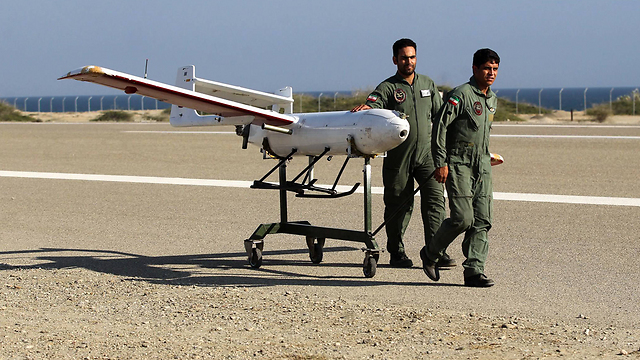
All these settings are important. We can vocally set the stage against Iran (like I am doing with both evidence as well as a comic look at the two images earlier), and I can look at the presented and i am using the published details available to me with all the settings that are open to the audience at large. I never proclaim to have all the wisdom in the world, yet hiding behind ‘unnamed sources’ and ‘unpublished evidence’ like the Sunday Times, whilst I regard them because of that as nothing more than a mere courtesan to sponsors, that is how I see their actions, when the need to investigate FIFA was there, these media buffs were all about the hooker in the bookcase, the entire setting of the media had become questionable. The setting of the Garcia report, whilst the newspapers and media failed to hammer down on Hans-Joachim Eckert, so when we got the ‘refused to publish on various legal grounds‘, who went after Hans-Joachim Eckert? the entire matter also involved the Qatar 2022 cup bids, so as it stands, we need to make sure that places like the Sunday Times and the SMH are now also optionally the spreaders of Fake News, but that is apparently not the case when they have their unnamed sources.

Even as I spoke out in the end against Qatar 2022, it is only because of the stage that Qatar found itself in. It is not up to me who got them there, some was all their own doing, but a larger part was the act of smear campaigns that we see now. Almost four years of smear campaigns. If we are to actually do something about it, then EVERY newspaper is to offer the 350-page report of Michael J. Garcia from September 2014 on their website with a full page 3 summary of the report. That is the first moment that we can start taking journalists serious again (possibly with the Sun as the one exception). It is my view that anyone who was part of misleading regarding Qatar, or in the other direction supporting in falsehood the Qatar bid should be barred for life from every official sport event. It is the only way and that is merely the one side-track that the Yemen situation now calls for. With Iran upping the stakes in Yemen and with alleged drone strikes on UAE and actual attacks on Saudi Arabia, how long until one of them sees a reason to lash out against Qatar? You see, the plot is also thickening when we see the Iran increasing non-oil trade with Oman by 136% in the last quarter alone. That is half a billion in value, now we can agree that every nation has and needs trade, so I would be the last one to state against it, yet there is every indication that Iran is trying to set the mood fir additional change. Some will remember the setting last year when we were offered “Bank Melli Iran and Bank Saderat Iran will resume their operations in the Omani capital Muscat which had halted during the sanctions that cut off Iran from the international financial network“, this is now seen against the news from March when we saw ‘Iran, Oman resolute to grow banking relations’ with the additional quote “Drafting an operational and practical program with opening joint accounts based on the national currencies of Iran and Oman, independent from foreign currencies, should be considered as one of the requirements of developing banking relations“, so what happens, when the setting of the national currencies becomes the foundation of a credit swap where oil is the determined value? It is merely one step away and the US crying for cheap oil is that one element that could make it happen. The US not acting against Oman, whilst knowingly allowing for the swapping of Iranian originated oil based CDO’s is not that far stretched, is it?

Now we have billions in funds, an operational drone team and additional Hezbollah populists trying to set the stage in Yemen. there is support for that view (to the smallest extent), Arab News two weeks ago gave us: “Yemen’s foreign minister has called on Lebanon’s caretaker government to “rein in” Hezbollah and its aggressive tactics in support of the Iranian-backed Houthi militia“, whilst in addition, whilst the National gave us last week: “The UAE Embassy in Beirut has denied claims made by Lebanon’s pro-Hezbollah Al Akhbar newspaper regarding an “Emirates Leaks” report that says Abu Dhabi is applying pressure on Muscat over the Qatar crisis. The embassy has called the leaked diplomatic correspondence from the UAE Embassy in Muscat “false” and said that it was aimed at creating tension with Oman“. We need to realise that the two are unrelated articles are merely that. One has apples, the other pears and the fact that they both represent pieces of fruit is no evidence, changing one of them into oranges does not behold additional truth that should be clear. Yet the stage where Iran decided to increase trade by 136% is a shown fact and Iran has been doing something similar with Turkey which has not given Turkey an additional amount close to $5 billion in the last 6 months alone. Iran is setting a trade stage where in the end, in light of their devaluation and monetary value can soon (or already) only be honoured with oil, how quaint!

It is not merely the plans in place, it is the funding that these projects require, that is where it seems to make sense, but it is not a given that those are the only paths that are being trodden. You see, there is still the Uranium enrichment program that is worked on. With those in the works, we see the need for serious amounts of cash, skills and equipment, all that from a setting where the infrastructure was no longer able to meet the financial needs and the commitment from Iran towards Yemen by the Iranian commander in chief shows that the next step is not that far away, they will need resources and there is now at least a partial setting in place where the facilitation is close to complete. From my point of view, lowering the pressures on Qatar allows Qatar to walk away from Iran as far as possible limiting the options that Iran has, and that is an essential requirement at present.

Even as we see several sources give us lines like: ‘Oman and Kuwait has taken a neutral position in the dispute involving Qatar‘, I am actually less and less convinced that Oman is completely neutral in all this. Is the trade merely growing sympathy in Oman, or is news from places like Sarfayt and Dhalkut changing the sentiment that the people in Oman have? I actually do not know, but something seems to be stirring in Oman, perhaps it is not a pro-Iran feeling, merely a lessened anti-Iran sentiment, they are not the same. What does matter is that all this is escalating giving Iran more options in Yemen, to counter that outside of a full scale event in Yemen is to take away the available fuel that Iran has and I think that removing pressure from Qatar is a first step in all this. Should this be successful, we might see a setting where Oman feels less comfortable having strong ties with Iran, which seems to serve everyone’s purpose (except Iran of course).


1 Comment

Filed under Finance, Media, Military, Politics, Science

Chivalry vs Rivalry

The news is still hanging onto several things that are playing. This is not a bad thing; this is the setting as news moves forward and remains news. Even when we consider the events in Saudi Arabia, where we get the Guardian quote: “Saudi Arabia has rushed to boost oil production under pressure from US President Donald Trump – only to discover that global markets might not need it yet, according to some financial experts“, we see that certain players do not tend to use a presidency as a tool, so the quote might be correct, but there is a game in play, played between Donald Trump and Wall Street. So far it works, because everyone thinks he is an idiot, that is the popular story, but I am not convinced. This is direct and it is with purpose, so something else will rear its ugly head soon enough. Yet this is not about that. You see, when it comes down to chivalry versus rivalry, we see that chivalry is dead, it has no place anymore. Even as Saudi Arabia wanted to come to the aid of America, we see the news that “the Saudis are struggling to sell as much extra oil as they’d hoped and are privately fretting that they may have opened the taps too quickly, according to people briefed by Riyadh in the last few days“, it this merely an American ply to keep the reserves maxed so the President can haul away a cheap political victory as heating prices remain low this coming winter?

Even as the Independent offers: “Societe Generale’s Mr Wittner, said: “We have hardly started to see a reduction in flows from Iran. Though there’s a lot of crude coming out from Saudi Arabia now, spare capacity is really going to be the big issue going forward. And spare capacity is getting very tight very quickly.”“, I am not convinced that this is about Iran; this is about keeping prices down over the next 8 months. The flow fall of Iran is merely a nice bonus. Even as we start on oil, we now see that a similar fight is going on in entertainment, the actual issue. In the light of Netflix against the world, we see a few changes that are now more adamant and also impacting us all. The Guardian starts the event with: “Below-par subscriber numbers last week were bad news for a service that must keep growing to survive. How will it respond?“, yet the story is not there. You see, from my point of view, 100 million subscribers is nothing to sneer at and the saturation makes new members a much harder setting, it is by no means the setting for a down draft. Even last week, when I wrote ‘Pushers of media value‘ (at https://lawlordtobe.com/2018/07/17/pushers-of-media-value/), I was confronted with several responses, that I was crazy, that there was no saturation. Yet now we see in the Guardian: ““Netflix’s big challenge is maintaining growth worldwide while its customer base saturates in core western markets,” says Richard Broughton, analyst at Ampere. “Netflix is having to work ever harder to gain new subscribers.” The low-cost nature of the streaming service – a premium subscription costs £9.99 per month in the UK and $13.99 in the US – means that it needs inexorable growth to pay for its content“, so apparently with ‘while its customer base saturates in core western markets‘ my setting shows to be the correct one. Now that we have that out of the way, and for now I ignore the one market that Netflix ignored in the UK and a few other places, worth close to an additional £15 million a month, we see that Netflix is for now all about the “it costs a lot of money to attract a Hollywood star such as Will Smith to a sci-fi film like Bright – and in recent years it has been raised by about $1bn annually. Netflix is stuck in a costly and precarious cycle“, Netflix has chosen a short term solution that will go nowhere in about 3 years.

It is the setting of the man who makes a deal with the devil, to bring 10 souls a day to stay out of hell, and accepting a 20% annual increase, as a sales director he accepts it, because he knows it can be done, yet souls are not revenue and in 3 years he needs to have accumulated 12,230 souls. After 6 years it is up to 34,200. A setting that started with 10 souls has now been increased to 25 a day, no option to fail. Greed is like that, it has no problems, because in the end the house wins or collapses, until the second happens, all serving the house are in a spiral of servitude with sliding morals. You see, the first 10 years seems fine, but after 10 years the daily soul quota has gone up to 51 a day and after that it gets interesting with decennial party where 319 souls a day will be required. That is the game everyone forgets about, steps absent of long term vision with in the end the executive having to hand over his soul, no matter what. The house of greed always wins!

Netflix is now in that downward spiral, not when it comes to members, but the setting to gain followers, set against the tides of resources, that is the war they cannot win, not until they resist temptation and take it to a very different level. They have the option and the means, but will they be willing to take the plunge?

Rivalry

This is the setting of greed, rivalry is everything, because now that Netflix has shown the value, now that the others are seeing that the setting is not merely revenue, it is massive profit for the one holding the data, that is the setting that we now get with: “Netflix was able to get hold of the rights to TV shows and films on the cheap. Rights owners and future rivals had not identified the global potential of subscription video-on-demand rights, and Netflix prospered. The value of those rights has now spiralled, which has pushed up Netflix’s content budgets and fuelled its drive to produce its own content“, there are solutions and the nice part is that both the UK and Australia have a leg up in all this, they have an advantage if the proper person gets the parties working together, but can they realise the potential that is still out in the open for the next person to grab?

I am certain that the issue is there, but sees it? I am not giving away the plot here, because there are three aces up for grabs, the question is whoever holds the fourth ace is in the running to get the clean sweep. Yet, the second party is Netflix, are they up to the task to get set up for the chop? That is the game, it is not merely winner takes all, failure is at this stage slightly too dangerous. It took me a day to realise the opportunity, because even as an IP master, I had to wonder how far it could be stretched, yet it can in the Commonwealth and as far as I can tell in the US as well, so this gives Netflix the option, however, to get this up and running, they need to truly focus. It cannot be half baked!

The next pitfall

With “Youth-targeted shows such as Stranger Things and Thirteen Reasons Why have been major hits, but Netflix faces some of the same pressures caused by the rapid generational shift in viewing habits“, that is true, but in that same setting, we see that in some cases everything old is new again, so there is space and place to grow and to do that, a first step is needed, but are the shareholders willing to play the longer game, a game that could potentially grow value by 400%? The long game is not something that shareholders are good at. They believe in short term gratification (not just on 42nd street mind you), so the game is optionally out of the hands of the Americans, giving the UK and Australia now a partial advantage over America on the entertainment business and there is plenty of famous entertainers here, beyond the Australian King and Queen (Geoffrey Rush & Cate Blanchett). This gets us to the final part in all this. The quote “Netflix’s long-term strategy is that it has to increase its revenue from subscribers; it needs to move into those content genres to replicate the journey of traditional pay-TV companies,” says Mulligan. “You need a full suite of content if you want to be a real substitute, not just an additive service.”” we see here is a dangerous one. I do not completely agree with Tim Mulligan, analyst at MIDiA Research. You see, he relates Netflix back to TV, yet we all forget that Netflix is not merely new, it is in a position to become more than: ‘the large new kid on the block‘, yet what Tim fails to see is that Netflix is optionally the new cornerstone of entirely different block, Netflix has been setting new grounds, but the inconceivable still exists, Netflix and rivals have the option to become the rulers of Tinsel town II, a setting that scares Hollywood and the large players in cinematography. They know that this is still a reality that they face and it makes every analyst take a 90 degree turn, but the reality is that short sighted on what makes for any Tinsel town is the opportunity that hands Netflix the goods. Whilst the realisation of avoiding ‘value of those rights has now spiralled, which has pushed up Netflix’s content budgets and fuelled its drive to produce its own content‘ is clearly there, the fact that no one sees the options available is equally disturbing, are they not seeing it, or are they too scared and pushing away FROM it, two very different realities. and one is a steal to own if you see beyond the 4 lines that makes the square that some analysts put you in, realising that lines on a map mean nothing to the map itself, only then can you embrace the new course where those talking the leap have an option (if ALL the conditions are right) to become the new rulers of a market no one saw coming in the first place.

That is what separates the visionaries from the second rate followers.


1 Comment

Filed under Finance, IT, Law, Media, Politics, Science

They did what?

Newsweek is bringing out the news, news that had me rattled. The story (at https://www.newsweek.com/saudi-arabia-bans-47-popular-video-games-general-commission-audio-visual-1028013) gives us ‘Saudi Arabia bans 47 popular video games including ‘Assassins Creed,’ ‘Deadpool’ And ‘Final Fantasy’‘. For a moment I could not fathom why video games would be banned. Now, even as Deadpool is unlikely to be my choice of game ever. It does have a ‘tongue-in-cheek’ approach to gaming, which gives it a positive flair. Yet overall, even as I loved the movies, I never read the comic books, so there is a gap there and I reckon that the comic book fans are most likely the ones who would want the game.

So, I was intrigued to learn what the reasons were. The article merely gives me “The kingdom’s General Commission for Audio-Visual Media said Monday that 47 games will be banned for violating rules and regulations“, pretty much all the media gives the same setting some of them give other titles, even though as far as I could tell, none gave the full list. All of them set the stage that the game ‘Blue Whale Challenge‘ is the starting point for the decision involved. Now, I do get the fact that censorship remains strong in Saudi Arabia, the fact that this is the first year that the cinemas are open, the movies are still all to be screened before allowed in the cinema.

The National (at https://www.thenational.ae/world/gcc/after-suicide-in-saudi-arabia-parents-urged-to-do-more-to-curb-gaming-effects-1.746328) had another side in all this. Here we see one of the Saudi fathers in question giving us: “A Saudi father has blamed the suicide of his 12-year-old son on an online game that he said “broke the spirit” of his child. But therapists and gaming experts say the onus is on parents to step in“, I feel sorry for the loss of that father and the other parents. Yet in this part, even as a gamer and gaming expert for decades, I do not agree with the response. Yes, parents need to step in at time, yet the setting given against that father is unrealistic. You see, for a large portion of the world, gaming is life. Let me explain that, so that you do not get the wrong idea. Our lives are bettered through social interaction, at times we also need our own space to unwind, to relax and let the brain work things out. Gaming allows for all that. The multiplayer games allow friends and schoolmates to compete and sometimes cooperate in games like Fortnite and online RPG’s. By ourselves we can escape our place for a little while and seek comfort elsewhere. I myself can lose myself for hours in Minecraft by myself and feel really awesome after an hour or so, games have that ability. The nice part of Minecraft is that you can play it at times without even thinking, a version of virtual Lego that allows you to create, explore as well as destroy spiders and skeletons. Now with the ocean world addition the game just become more than twice the size it already was. It is great to game at times. All these games are positive reinforcements, no matter what the game is. You might be scared of every corner in Bloodborne; you might see the cliffs and not know the next move like a Tomb Raider should, or sneak through the corridors removing the henchmen of the Arkham Knight. None of them are negative against you and for the most they are positive parts. Even in Assassins Creed where you are correcting great injustice through killing mind you. You are one against an army! It is a challenge and at times even more. The cultural references and the additional scenes in Assassins Creed Origin were overwhelming, making it a learning experience as well.

In the darkness there are monsters

Yes, there are monsters too; in this case it is one person. It is Philipp Budeikin. The information on him is sketchy to an extent. He is a former psychology student who was expelled from his university for reasons I have not found yet. According to his own claims he invented the game in 2013. In more than one source we (BBC was one of them) he gives it to the press that his intention was to cleanse society by pushing persons to suicide whom he deemed as having no value, they were he referred to as “biological waste”. This is new; this is the first time where someone with psychological skills was out to make children destroy their own life. The game known as the ‘Blue Whale Challenge‘, the game allegedly instructs challengers to participate in a series of strange and disturbing challenges. These can include live streaming self-harm and staying up late to watch horror movies (source: The New Arab). The challenges are stated to grow increasingly extreme, until they are reportedly instructed to kill themselves as part of the 50th and final challenge. Apart from any person doing that, or being willing to do that. The fact that someone is willing to go this path (I refer to the game maker) is just weird and insane. In addition, the fact that this person was intentionally and knowingly targeting vulnerable people and the fact he is merely facing 3 years in jail is equally an issue. I will be the first one to sign any petition to ban this game for life on a global scale. This is not about the freedom of expression; this is not about freedom of speech. This is about protecting children! I have seen weird games in my lifetime. The most offensive game I saw was on the Commodore-64 in the late 80’s. It was a game called ‘Paki bang’, an offensive game where you have to shoot Pakistani’s. You got 1 point for every Pakistani you shot and -1000 for every Caucasian. It was offensive and I walked away within a minute, a game with absolutely no redeeming values, little did I know how bad could turn to worse. In my life, the setting where children are intentionally targeted by someone with psychological skills is just too unnatural; the setting clearly makes Philipp Budeikin “biological waste”, as he states the value himself. I do like and agree with the response that we see in The National. With “Omar Sharif, owner of Geeky Lizard, a gaming community and store in Dubai states: “But it’s the job of parents to make sure that kids are engaging in healthy online habits”“, I believe that to be a truth, online has many positive sides, but it has negative sides too. Parents need to be aware what their children are up to, it might not make sense at times to parents, but there is a difference between kids shouting at their friends in competition and collaboration in a game, against the setting that they are given a challenge to physically and emotionally harming themselves. We can argue that children do not always realise this, but the setting of protecting ourselves form harm is coded in our DNA, we tend to not act in self harm, the fact that ‘Blue Whale Challenge‘ is stripping away these defences is an issue and the ‘defence’ given by some with “But therapists and gaming experts say the onus is on parents to step in” is not one that I can agree with. The fact that this ‘Blue Whale Challenge‘ is not hunted down on every server by government and hackers alike is much larger issue. This setting is so unnatural that parents would not have been ready. We all should have stepped up and made sure that any server having this software got hacked and all its data removed any way possible.

In the end, the Saudi government will need to make another ruling here, it might not be immediate, but in the long run it is perhaps essential to consider the reason for any games banned other than ‘Blue Whale Challenge‘. In the end, we need to realise that Saudi Arabia has strict rules on what is allowed and the event that caused the death of two children was the one step that caused a clamp down on certain matters. Saudi Arabia has a sovereign right here. Gamers might not like it, but it is a reality. Even as we might not agree with the verdict on nearly all but one game getting the “Saudi Arabia today banned dozens of video games that it says lead children to harm themselves” label of non-approval.

Time will tell on how things evolve, in the end, we need to realise that it is a list of 47, whilst most consoles have hundreds of titles that were not banned, let’s make sure that we do not forget that part of the equation either.

In other gaming news

The predictions I have given in the past regarding Butterfingers Microsoft versus Eagerly Innovating Nintendo is taking a stronger turn, unofficial numbers (and not from a reliable source I must add) have implied the setting that Nintendo has now approached the 2/3rd marker. It is about to pass (or has just passed) the line where since the release of the Nintendo Switch (March 2017) now equaled two thirds of all the Microsoft Xbox One sold in its life cycle (since November 2013). In less than 18 months it has reached the speculated 2/3rd marker (It is hard to be precise as Microsoft is no longer releasing total consoles sold). It might be because the ‘most powerful console in the world‘ is getting surpassed by the weakest one, but that would be speculation on my side. I see it as the price for being short sighted and narrow minded, not to mention the inability to listen to their customers. 3 elements that became the alleged cause on a lessened revenue path for ‘the most powerful console in the world’.

That moment is still important, it is the clear message that it is all about playing the game and Microsoft has not been doing that. Even as Forbes gave us merely 4 days ago “Microsoft continues to surprise us with strong support for backwards compatibility and an equally remarkable offering with its subscription Xbox Games Pass as it quickly becomes the Netflix of video games” (at https://www.forbes.com/sites/erikkain/2018/07/14/xbox-one-vs-ps4-vs-nintendo-switch-the-state-of-the-console-wars-in-2018/#21fbe2571a8e), yet it is interesting that Forbes seems to be so protective of Microsoft, ignoring that the ‘the Netflix of video games‘ does so with a massively inferior storage system. It talks hard against Sony (validly I might add), and acknowledges the ‘Nintendo has had a remarkable resurgence‘ with the added ‘but investors are still spooked about the system‘, is that not interesting on how soft Forbes is on Microsoft? so as we get ‘will investors ever give Nintendo a break?‘, which might be a valid statement, yet it is not properly set in the dimension against the Microsoft failures (four times over), as well as ‘and will Sony stop being such sore winners?‘, which is a fair call, yet the question is how many are truly hurt by no cross playing? In the past it was never an option and we all wanted it, Sony might not be ready on a few levels, but the Sony remark is still valid, correct and acceptable, so why be so soft on Microsoft, because they are getting a beating from Nintendo? I do not recall such sentimental considerations when Microsoft Word took WordPerfect to an abattoir and gutted it completely. It was not about consideration then, so why is it now?

I am still uncertain whether Nintendo Switch will surpass Microsoft before New Year’s evening this year. The delay of 2-3 big titles are largely the cause of that, yet in light of the amount of games released, there is good cause for joy around Christmas time for Nintendo. At that point it does not really matter whether the Xbox One life cycle sales gets surpassed no sooner than Q1 2019. What matters is that gamers get to play games, perhaps it will wake up the board of directors of Microsoft to rethink their choices on all the times that they fumbled the ball, because one fumble was enough to end a console in the past (with the exception of the Sega Dreamcast, they lost because Sony was willing to be the marketeer with deadly intent). Or perhaps the fact that Microsoft advertises in Forbes? I might be speculating on the three steps on a certain Wi-Fi enabled print ad, but that does not take away the setting that we see the valid existence of ‘its subscription Xbox Games Pass‘. For me that setting comes across as someone telling a leprechaun to go screw an elephant, to which the leprechaun responds: ‘with what?

Having a small drive tends to be not so memorable. #PunIntended


Leave a comment

Filed under Gaming, Law, Media, Politics

The Qatarian debacle

There is no denying it, we sometimes take the most stupid steps, even though it was for the best intentions. Yet when we are confronted with the reality, it becomes a different thing, especially when corruption and corporations intervene. First we were confronted with the prospect of Qatar 2022, I was actually pretty happy about it. To bring the enthousiasm of Soccer into the Middle East is a good thing, it opens all kinds of dialogues between Middle Eastern nations and as Europe has one universal event in common, soccer could have become the bridge between the nations in Europe and the Middle East. That’s how I naively saw it. But it took merely a week or two until suddenly the accusations of corruption came out of the woodwork. More and more news outlets have become the ‘whores’ of shareholders and stake holders, all in fear because it wasn’t merely about Qatar, it was the fact that it would be held in winter overlapping the normal soccer season, leaving us with the clear set that clubs could not play with their stars representing the national teams. With all that advertisement opportunity gone, they are all screaming like bitches. The biggest of them (Martin Ivens) is part of this (at https://www.thetimes.co.uk/article/plot-to-buy-the-world-cup-lvxdg2v7l7w), and when we see “revealed for the first time this weekend in a bombshell cache of millions of documents leaked to The Sunday Times“, the editorial has a clear duty to inform the public showing the evidence. The fact that ‘millions of documents‘ were parsed is close to impossible, but that’s going to be another story. Yet since June 1st 2014, we keep in getting more and more speculations, yet no evidence was presented. In the end, the FIFA corruption was merely parsed aside, no clear imprisonment, merely ‘a six-year ban from participating in FIFA activities‘, the corruption and the facilitation to the stake holders and shareholders have gone that far, yet no one presented clear evidence at any level to the public, partially my setting for demanding Martin Ivens that he gets the hell out of journalism.

In all this, Qatar has remained the battered victim (in this instance) and I thought it was good for those shareholders and stakeholders to feel the consequences of diminished value for a change. Yet that is not happening. Still, we see is some olive branch towards soccer by setting the news as we saw it in the Washington Post with ‘FIFA could expand World Cup to 48 teams in 2022, ahead of schedule‘, either it is a 50% bigger strain for Qatar to keep up with the changes or it collapses and the torch quickly gets handed over to another soccer nation pleasing all stake holders involved.

Yet the issue is now escalating and not in a good way, it is also not on the soccer side that things are becoming a mess. In this case it is not about the article (at https://www.thenational.ae/world/britain-warned-over-qatar-s-london-intelligence-network-1.749819), where we see the quote “A group of Arab countries demanded action from the British government to restrict an expansion of Qatar’s intelligence activities in London, including surveillance operations as well as political and propaganda activity“, I am not sure if this is actually happening, but it is one part that increases the pressures going on. The actual dangers are coming from two siders, the first is seen in Haaretz (at https://www.haaretz.com/us-news/how-qatar-is-warming-ties-with-both-trump-and-iran-at-the-same-time-1.6247714), where we get ‘How Qatar Is Warming Ties with Both Trump and Iran – at the Same Time‘, it is the Iran side that is a worry. We might take notice of an old fact given in “Saudi Arabia, the United Arab Emirates, Bahrain and Egypt severed ties with Qatar in June 2017, accusing it of fomenting regional unrest, supporting terrorism and getting too close to Iran, all of which Doha denies“, yet that is not the danger (at present). In addition we see the actions (the clever actions) from Qatar with “A review on Monday of Foreign Agent Registration Act records show that since May 31, six U.S. companies or individuals have registered new Qatari lobbying contracts with the Department of Justice. That number includes the major firms Ogilvy (which is being paid $10,000 per month) and Portland PR ($20,000 per month)“, in addition, Ogilvy gives them full access to the Commonwealth, so London (as mentioned earlier), Canada and Australia are part of the setting to change public opinion, a task Ogilvy is very good at. The second part is different, when we look (at https://en.mehrnews.com/news/135396/Iran-1st-quarter-export-to-Qatar-quadrupled-year-on-year), we see something that seems harmless enough, yet the fact that “In the first quarter of the current year of 1397 (March 21, 2018- June 21, 2018), 74 million and 61 thousand dollars of goods were shipped from Iran to Qatar, which has increased by 214 percent year-on-year“, seems innocent enough, yet it also gives us that with over $300 million of trade goods before the end of the year, a large amount of people go back and forth, which also optionally offers military advisors as well as people of the Hezbollah persuasion opportunities and now it becomes a very different game, now we have a setting that allows for the settling of units and their sole reason for playing possum the next three years is to go out with a bang in November 2022. Consider this setting against the Washington Post of April (at https://www.washingtonpost.com/world/national-security/hacked-messages-show-qatar-appearing-to-pay-hundreds-of-millions-to-free-hostages/2018/04/27/46759ce2-3f41-11e8-974f-aacd97698cef_story.html) where we see ‘Hacked messages show Qatar appearing to pay hundreds of millions to free hostages’, the operative word is ‘appearing’. When we see both: “with a half-dozen militias and foreign governments jostling to squeeze cash from the wealthy Persian Gulf state. “The Syrians, Hezbollah-Lebanon, Kata’ib Hezbollah, Iraq — all want money, and this is their chance,” Zayed bin Saeed al-Khayareen, Qatar’s ambassador to Iraq and chief negotiator in the hostage affair, wrote in the message. “All of them are thieves.” And yet, the Qataris were willing to pay, and pay they did, confidential documents confirm“, as well as “they appear to consent to payments totalling at least $275 million to free nine members of the royal family and 16 other Qatari nationals kidnapped during a hunting trip in southern Iraq“, there are issues that do not add up. Now consider that such a large group of dignitaries was too unprotected as well as the fact that this event did not become world news on every level!

Now we have a series of players like Kata’ib Hezbollah and Hezbollah-Lebanon ready for the next event. This they will play really clever, with $150 million ready, they have the time to prepare and truly make the beginning of Qatar 2022 go badaboom (big badaboom); Qatar gets to play the wounded victim and whatever happens will be in the news for years to come after that. The fact that this threat is actually growing and no longer unrealistic is also part of the issue now for considering the relocation of Qatar 2022 to somewhere else. That setting was not there in 2014, or not as far as I would be able to tell. What is now a given is that not only is there an actual danger here, the fact that this setting exists, is an additional threat to Saudi Arabia, if they will be able to attack the stadium as well as fire missiles on Riyadh, the stage changes as Riyadh is now a mere 449.23 Km, very much within range of several missile solutions. Tactically speaking they would come into Qatar into parts, like as spare parts for engineering equipment, most could be hidden in several ways and with $300 million in goods, the chance of finding even one part is close to impossible. They will have 3 years to assemble it all. Saudi Arabia is not alone, as this situation unfolds, we need to realise that the UAE and Abu Dhabi is a mere 200 Km away, an equally appealing target for Iran. You might think that it is not an option, yet the ‘goodwill’ that Iran bought with missiles for Hezbollah is exactly why it is an optional reality to face; it is the cost of doing business.

So, as we consider the cost of doing business we can only hope for the places like Ogilvy that if this happens that they have all the right paperwork ready for their presentations on what they facilitated for. It’s not like it might actually impact its parent company WPP plc, is it? We can only watch (and smile) from the sidelines when its £55.56 billion value starts fading like snowflakes in the summer sunshine. Should you think that I am kidding and my view is far-fetched? Consider what happens when 200 countries filled with an estimated 3.5 billion devoted soccer fans go berserk. I will be selling tickets and popcorn to that event and make a killing (figuratively speaking).

The Qatarian debacle was poorly set from the very start, it was a non-issue and whilst people filled their pockets we saw close to no concise actions against FIFA for decades. Now that the world stage, especially in the Middle East is polarising and escalating on several fields, we see that the allowed setting is becoming more than merely ‘optionally hazardous‘. The actions on several sides give a clear danger that no matter how you slice it Qatar 2022 is a clear tactical target, not only for the players, but the amount of dignitaries attending are now are set in a stage where the tiger gets offered a pound of flesh and everyone on the sidelines is considering that the tiger might be a vegetarian whilst it all gets aired in prime-time to every part of the world, you tell me who the short sighted player in that stage is.


Leave a comment

Filed under Uncategorized

Seeking security whilst growing anarchy

We all want national security; it does not matter whether you are American, Australian, British, Dutch, French, German or Swedish. National security is a matter that is not just set in laws; it is set in morality, in justice and in perception. Most of us are set in a stage where we are willing to give out many perks so that national security can be maintained. Many liberals grasp back at Benjamin Franklin who once said: “Those who would give up essential Liberty, to purchase a little temporary Safety, deserve neither Liberty nor Safety“, I would have agreed when he allegedly wrote it in 1755. In those days the biggest fear they had was England, the Dutch trade wars (the VOC) and apparently the French to the north. It was a very different age, in a setting where a naval was not done in minutes, but hours, battle settings took a while and there was clarity on who the enemy actually was (usually the one speaking your language and not firing on you, wearing the same uniform was also a nice indicator).

In this day and age it is not given, nowadays all the wolves have onesies looking like Shaun the sheep and often we cannot tell them apart. This is the setting where oversight, surveillance, data gathering and analyses can help, in equal setting there are a few players that still cannot get their algorithms correct and they are making the same mistake that I caught a few players on in the late 80’s.

There is however a new setting, a line that has been crossed and the Washington Post gives us that setting (at https://www.washingtonpost.com/world/national-security/there-have-to-be-limits-lawyers-for-guantanamo-inmates-challenge-lifetime-imprisonment-without-charge/2018/07/11/f3933faa-8533-11e8-9e80-403a221946a7_story.html). the title ‘‘There have to be limits’: Lawyers for Guantanamo inmates challenge lifetime imprisonment without charge‘ gives us that part and it is one that cannot be ignored, with ‘lifetime imprisonment without charge‘, we see not the first step, but an early setting that the law is changing into ‘Guilty until proven innocent‘ and I am not sure if that is merely a wrongful step, or a desire step for large corporations to give the setting a new life in other directions as well. There can be a setting where it is easier for the courts to work on that level. You see, when a corporation has failed their SLA’s, there will not be the documentation where they can prove it, yet when we see the application to ‘lifetime imprisonment without charge‘ the setting is very much inverted from what we find acceptable. We see the Post giving us “A handful of commission cases have inched along in pre-trial proceedings for years, many of them plagued by irregularities” and it is the ‘irregularities’ where we need to seek first, you see an abused system will rely on irregularities to remain in the shadows and active, whilst it almost never has bearing on National security and it will have even less a bearing on justice or lawful settings. The question becomes where it failed. There is a second side to the Post when we realise that the quote “Justice Department lawyer Ronald Wiltsie said authorities had a responsibility to detain suspects who could pose a future threat, even if it wasn’t clear they would actually take any action against the United States” is incomplete. The fact that we are faced with ‘it wasn’t clear they would actually take any intentional action against the United States‘. You see it comes with the setting that there is no proof that they had actually taken any action against the US, if so there would be a charge and that failure falls not merely on the FBI, it falls on the CIA, the NSA (data gathering agency) and most of all the investigator looking into the matter. We can illustrate this with the weirdest of examples.

In a spreadsheet we can use a random number, so we create 5 groups, each in one column, and each having 100 random observations. Now we will test for them stating that “IF(A2<0.2,1,0)“, I am setting the stage where 80% was guilty (so basically 20% was innocent). If the number is smaller then 0.2, they are presumed innocent. We do this for the 5 groups. Then we count the groups, in the initial test no one was innocent overall, but 3 were innocent on 3 counts and 20 were innocent on two counts. Now remember, this is merely 100 ‘persons’ tested on 5 elements. When we change the setting to “IF(A2<0.25,1,0)” (a joke on the premise that 3 out of 4 all people are guilty of something) we get a different setting. Now we see that two were innocent on 4 counts, yet 10 are innocent on 3 counts and 23 are innocent on 2 counts. Intelligence software works on facts not on random numbers, but the principle is partially the same, how many flags were raised by that one person, yet now not on 5 tests, but on dozens of tests, against people, places, actions and locations at specific times and as we consider that thousands are tested, in the random setting when the number of people are large enough we will get respectfully get a group that was innocent (less than 0.2 or 0.25) on all counts, that is the impact of random.

Yet on the flags raised in real live, we either have them guilty of something, which means that there can be a trial and a charge can be made, when you see the examples next to one another and we realise that the group of all people where no flags is raised did not occur (it will with a larger test group), we need to consider the flaws we are faced with and more importantly, the setting that we open ourselves to in legislation and in law when we allow for ‘lifetime imprisonment without charge‘. So in this setting, no matter how much we want actual national security Missy Ryan makes an interesting case. We get to see the larger issue when we look at Baher Azmy, legal director for the Center for Constitutional Rights, a group representing some of the detainees. With “Baher said the government had distorted a 2001 law authorizing U.S. military operations against al-Qaeda and affiliated forces by using it as a basis for indefinite imprisonment. He said insurgent wars, waged against small, clandestine and evolving bands of militants, could go on forever. But laws governing wars were devised with conflicts between states in mind, he said“, we are treated to the setting that we face in the upcoming decades. We are not waging was on nations, we are waging war on groups and tools. As Hezbollah is still the tool of Iran, the setting of a larger problem becomes apparent. In the first source (at https://www.terrorism-info.org.il/en/hezbollah-iran-handled-shiite-militias-integrated-syrian-army-campaign-take-control-south-syria/) we see “Shi’ite forces, handled by Iran, are being integrated into the campaign currently waged by the Syrian army in south Syria. There are at least two Iraqi-Shi’ite forces (the Dhu al-Fiqar Brigade and the Abu F–al-Abbas Brigade). There are also Afghan Shi’ite fighters in the Fatemiyoun Brigade. In addition, it was reported that Hezbollah operatives also participate in the fighting, including operatives from its elite al-Radwan unit, who were sent from Lebanon“, yet when we see “According to ITIC information, Hezbollah and the Shi’ite militias (some or all) have been integrated into the various Syrian army units and do not operate as independent forces. Pictures show Shi’ite militiamen wearing Syrian army uniforms, and it is difficult to distinguish them from Syrian soldiers“, we get the danger with ‘Pictures show Shi’ite militiamen wearing Syrian army uniforms‘. So now we get the setting of ‘who is exactly waging war on who’, or is that whom?

Not being able to identify the setting gives rise that Baher Azmy has a larger issue to deal with, because any denial from the Syrian army that these people were army units, and they get identified as militia who dressed ‘wrongly’, sets the stage that the defence ‘laws governing wars were devised with conflicts between states in mind‘ can no longer be upheld and that escalates the need for a much larger Guantanamo and indeed it continues and even fortifies the setting of ‘guilty until proven innocent‘.

the second source is a week old and gives us ““Hezbollah is a fundamental participant in planning and directing this battle,” a commander in the regional alliance that backs Damascus told Reuters. “Everyone knows this – the Israeli enemy, friends, and even the Russians.”“, it is given to us by Reuters (at https://www.reuters.com/article/us-mideast-crisis-syria-iran/hezbollah-role-in-syrian-south-exposes-limits-of-us-policy-idUSKBN1JV19U), so as the enemy changes its onesie (yup that was funny) we see a whole league of Shaun the sheep and we have no idea how to deal with them in life (the other alternative is solved through hiring people with the actual ability to aim).

Now change that setting away from the current ‘debacles’ in Yemen and Syria and consider the impact when we look at the Indian view of Pakistan (at http://www.dnaindia.com/analysis/column-terrorism-is-pak-s-business-2627746), it is not a hollow part, and there have been accusations from India and Afghanistan for the longest of times. In this setting we are given the quote: “India and Pakistan are not caught in some existential Punjabiyat love-hate relationship. Pakistan is a state sponsor of terrorism. No other nation has used terror so ruthlessly as an instrument of state policy as Pakistan has done for decades — principally against India but also against Afghanistan” is only the beginning. There are other headlines, even as they should be seen as no more than to illustrate that the issue exist, we cannot tell to what extent. So when we consider “The Islamic State’s flag emerges in Pakistan’s capital. How serious is the threat?” Is there a threat or is it merely a freedom of expression? So when we see the second headline ‘The terrorist group is increasingly present in Pakistan’s southern province‘, we are confronted with how to proceed, yet Reuters gives us 3 months ago “Islamic State claims attack on Christian family in Pakistan“, we see that the game changes. If state sponsored terrorism is the new ‘Letter of marque and reprisal‘, how can we proceed? Is there an actual option other than guilty until proven innocent?

What is clear is that the data crunchers will have their hands full because none of these algorithms and data gathering systems are ready for this leap. And it is not a small setting as Pakistan is a nuclear power who for the most is happy to push the button on India if need be, so the game is not merely changing, the players (Hamas, Hezbollah, Islamic State et al) are aware that hiding under the roof of any government gives them options and they accept being the tool for those governments, yet the systems and our mandates are less equipped to act. Yemen has so far been an excellent example on how to not act and it will escalate beyond this. Now consider that I do agree that ‘lifetime imprisonment without charge‘ is wrong, but what options do we have? Until 2016 I believe that the data and the evidence was the weak link. Now we are in a situation where we need to wage war on three fronts, an overt one, a covert one, and a data intelligence war and we need to find a way to intertwine them and use them to find the right checks and balances. We need to evolve what we can do so that we can determine how to do things correctly, or perhaps better stated efficiently to the right opponent.

You might think that this is ludicrous, yet have you considered the actions in Yemen? They were firing missiles into Saudi Arabia, on civilian targets, yet the only thing we see is messages like ‘Yemeni security officials claimed that cluster bombs were dropped in a civilian area of the Western suburbs of the Yemeni capital Sanaa‘, whilst we see ‘after Houthi rebels fired a missile at Riyadh‘ any justification reduced to an 8 word response. The media at large does not give us: ‘Houthi rebels fired a missile on Riyadh, the Saudi Capital with over 5 million people, the fired missile could have caused the death of hundreds of people if struck correctly, Saudi Arabia reacted in the attack against its citizens‘, we do not get that do we? Yet that is the game that is the danger some face. In light of the missiles getting fired under the noses of Yemeni security officials, they need to realise that not stopping the missiles does have repercussions and innocent people will always be caught in the middle.

The change of conflict is large and it will be growing over the next decade. I am on the side of Missy Ryan in this, lifetime imprisonment without charge must be challenged and everyone needs to know about the setting we have here, but when it comes to the defence of that setting, I wonder if we have any actual option to oppose it, those who are send to that place are willing to (allegedly) support people who hide in other uniforms knowingly firing methods of termination on civilians merely because they can and because it makes them continue the fight that they believe is just for much longer. It is a dangerous setting that strips the veneer of civilisation in nearly all nations, look at France and Germany, they went through this several times. We need to set a different stage and we need to do this before we set a legal lawful setting of targeted killing and the wrong people are shot, because that will be the point of no return for all of us.

You see ‘Guilty until proven innocent‘ (forced or not) is merely a first step, when that setting is entered in stone we get the second danger, when cyber-attacks removes the option to prove innocence, what do you think happens next? It is what I personally believe to be the setting stage for chaos leading to anarchy and there the game changes again, because most governments have cut on so many parts in infrastructure that most cannot overcome anarchy for a much longer time forcing the hands of many governments, especially in Europe and I feel certain that some of the players behind the screens realise that too and they might just be banking on it.


1 Comment

Filed under IT, Media, Military, Politics, Science

A mined pathway

There is news out there. It is coming from several sides making it slightly more reliable, yet the path that some seem to shine on is actually a very dangerous one. Now, let’s be straight, I am no fan of Iran, they overstepped the mark again and again and as such they are a genuine danger. Yet, the steps that we see contemplated is one that is slightly too dodgy as I see it. Don’t get me wrong, there are plenty of sanctions in place, there is all kinds of pressures on Iran and the direct threat that they pose to both the state of Israel and the Kingdom of Saudi Arabia is more than enough to make us all act against Iran, yet when we look at i24 News (at https://www.i24news.tv/en/news/international/179007-180708-mossad-chief-secretly-visited-washington-to-coordinate-on-iran-report), it is not the travel plans of Yossi Cohen, the El Jefe of Mossad that is an issue, it is the quote “held meetings with senior White House officials to discuss Iran” that needs more light. You see, a man like Yossi Cohen does not leave his operational bunker unless there is something that needs to be communicated directly. There have been all kinds of water-cooler chats on active operations (as some put it) in Iran to create more destabilisation. The Middle East Eye gives us “Is it the government’s policy to pursue regime change in Iran? Do they think the MEK actually have popular legitimacy in Iran?“, “This prospect moves the US and Iran closer to a direct military confrontation” from Forbes and “some segments of the economically driven protests are likely driven by Iran’s factional infighting over the direction of Iran’s policy, particularly within the context of elite disagreement on how to manage and mitigate the impact of US sanctions” from Nazanin Soroush at IHS Jane’s Intelligence Weekly. Now, realise that these three quotes are not on the same topic, yet the word of the week regarding Iran is ‘destabilisation‘. This is actually a lot more dangerous, it has the distinct danger of setting the people optionally against its own structures and the military tends to act rather negatively on that setting. Iran lost a lot of face and options with the Nuclear deal when the US backed out of it and even as the EU seems to be driven to keep it alive at the expense of every risk, the dangers are putting pressure in the wrong places and the visit from Yossi Cohen towards the US leaves us with the thought that more is coming. In this, the news that was given yesterday with the French shipping company CMA CGM pulling out of Iran is only increasing pressures. So even as Iran says it needs more help from Europe to keep alive the 2015 deal it worked out with world powers to curb its nuclear program, we need to consider that the Nuclear deal is unlikely to be salvaged unless the EU makes very large concessions making things even harder on the US-EU front. In this the prospect of being banned in the United States appears to have been enough to persuade some European companies to keep out and several others are now reconsidering the options that they have.

In all this, the news of internal actions remains on the table, yet I feel that this is not the best move to make. Part of the drive here is likely the news that had been around, in this former CIA officer Phil Giraldi gives us “what happens when Washington tries to sanction the Central Bank of China over business dealings with Iran — utter chaos on top of the already existing trade war!” This is a dangerous development and it is the most likely of settings that the US will want to avoid it, and some of the players are eager for a swift victory (yea right!), so here we have the dangers that the US will be pushing, or asking Mossad to contemplate to act directly in Iran, optionally in conjunction with CIA teams. If destabilisation is the operative word, there will be the implied dangers to all kinds of infrastructures (highly speculated by me here), and that is not the best of ideas. You see, even as there is Iranian opposition to both the clergy and military. A direct intervention in Iran, if proven could unite the people with the military and that is a dangerous step for both Israel, the US and Saudi Arabia. As there are internal conflicts Iran cannot and will not completely commit to the open setting of actions against the three nations. If the people unite the picture changes drastically almost immediate and that will most likely impact Saudi Arabia and Israel in the first instance, in addition to that Saudi Arabia would become a more visible target for Hezbollah overnight (with all the direct actions that follow), all issues that need to be avoided.

So how wrong am I?

I could be wrong, I honestly gave to some of the parts the setting that it was speculative, yet the quotes are from a collection of newscasts and news publications, the fact that some of it is not supported on an international setting needs scrutiny, yet the direct facts of additional pressures on Iran are clearly published making it much reliable. The additional fact that Haaretz released information that the IDF made their donations to an Iranian Air Force Base Near Homs, giving it loads of rubble is also clear indications that Israel is more and more active against Iran, yet there we must still consider that their actions remain still focussed on the Iranian presence in Syria (for now). Yet in all this, the setting is still not complete, there is evidence (a slight exaggeration) is pointing that Qatar is increasing its ties with US and Iran. Even as Haaretz gives us: “Treasury Secretary Steven Mnuchin sat next to the minister, Sheikh Mohammed bin Abdulrahman al-Thani. “You have been a great friend to the United States,” Mnuchin told Thani, praising Qatar for its cooperation on counter-terrorism financing efforts“, it must be looked into who instigated the Qatar-Iran ‘warming up’ party recently. If it is Iran then it is merely a tactic to increase policy gaps all over the Middle East, if it is Qatar, the issue becomes a larger problem. You see, just over a week ago, we saw the continuation (source: Arab News) through ‘Qatar will pay a price for its financial links with Iran‘, this is not news as it was going on for close to a year, yet if the previous setting was opened by Qatar, it implies that Saudi Arabia has a larger problem and even as the initial target might not be Saudi Arabia as the quote “Traditionally reliant on Dubai as a financial bridge to the outside world, Tehran is now looking to find new safe harbors to protect its financial interests, and Qatar is in its crosshairs. If Iran succeeds in building such a relationship with Qatar, it will be in a far stronger position to endure and evade US sanctions” implies, which makes operational and tactical sense, the secondary setting is that Iran could gain a more direct path of access to Saudi Arabia. This opens up Iranian settings towards Al Hofuf, Al Kharj and from there interference directly into Riyadh becomes (even though a far-fetched one) to Riyadh, all this at a time that Saudi Arabia should be focussing on Yemen and Hezbollah. It would force itself to instigate stronger internal security measures, all costing resources.

In the end

As some of this requires better access to data that goes beyond open source we need to learn (over time) if we are confronted with Iran playing a game of Fox and Rabbit, or is there more going on? Let’s not forget that Qatar has its own issues in the game, with Turkey in the mix on that level as well, the game is becoming much harder to read, especially when the intelligence setting of data is set to a much higher level than yours truly has access to. That part is not just seen in the January setting that Al Jazeera gave with ‘Qatar’s investment in Turkey exceeds $20bn, the second highest by any country‘ (at https://www.aljazeera.com/news/2017/10/turkey-qatar-strategic-alliance-171024133518768.html), the time lines and the weighting of the official and unofficial settings, these two matter as one does not merely invest $20 billion in a nation that has no real economic investment values, and when we consider that a large chunk of that party pie is about opening paths of facilitation the considerations we need to have tends to change by a fair bit. Even as the news was given in January, the setting of such an amount of money goes into a timeline of at least two years, so there is more to take notice of, especially now. So even as Al Jazeera makes a big thing on the import of milk and beef, the amount given could feed every Syrian refugee for close to three years, the math does not add up. there is however no telling what the actual settings are as the open books and the second balance need not be the same, and might not be set in covert needs, merely in non-taxable, or 100% deductibility reasoning, the mere legal application of tax avoidance could make all the difference.

Sometimes clarity of data tends to become murky, intentionally done for the mere reason as to avoid that supervillian (taxman) to gain access to the intended funds. If you doubt that reason, feel free to ask Ruth Porat (CFO Google) and Luca Maestri (CFO Apple) on the hardships that this supervillian (taxman) gives them.


Leave a comment

Filed under Finance, Media, Military, Politics

Round two

Yesterday was a day when I thought it was essential to speak out against the language used in the NY Times. It was part of a larger whole that will be shown to all over time (as I am missing three pieces of evidence). Yet the oil issue was in the centre of it all and so it remains. Now, I had done my homework (for the most), yet there was one element I overlooked and it is an important one. Reuters was awake and gave us (at https://www.reuters.com/article/us-oil-opec-saudi-trump/can-saudi-arabia-pump-much-more-oil-idUSKBN1JR1HI) the part I forgot about. “the kingdom, OPEC’s biggest member, can barely raise output by 1 million bpd to 11 million bpd and even that would be difficult, according to industry analysts who forecast a further oil price rally due to a lack of new supply“, yes we forgot about the engine that drives it all. It has been increasing production again and again, yet at some point; the system that drives the production of crude reaches its maximum and that is where the teller of barrels is now hitting a little issue. I like (yet optionally disagree) with Gary Ross, head of global oil analytics at S&P Global. With “While Saudi Arabia has the capacity in theory, it takes time and money to bring these barrels online, possibly up to 1 year“, we see a ‘stabilising’ comment, but based on what, knowledge of the parts that are driving the crude oil machine forward? Perhaps that is true, yet if that is the case the one year setting is off. Other elements require adjustment, but the one year (yes he did add ‘up to’) implies that engines and perhaps pipes require adjustment, meaning that the system is set to increase beyond the 100% marker might be more dangerous. Pressure can be a bitching issue and the mere fact that even in suburbia water mains still go out (mine went kablooie yesterday evening) implies that there is a setting where pressures do not align. Now with water it is a nuisance, so my evening of pasta went straight out of the window. With crude oil it is another matter entirely. There the blown gasket can optionally make a mess to the environment and more important, it could optionally force Saudi Arabia to turn the dial down to 60%-80% until that mess is fixed. When that happens they go into a freefall where one plugging evokes another part to burst emotionally, that is where the problem starts and that is an important side in all this.

It is not the only part; CNBC gave us (at https://www.cnbc.com/2018/06/30/oil-deal-may-stir-the-pot-in-the-middle-east-and-test-saudi-capacity.html) a few other parts. Even as we might be able to ignore “Iran and Venezuela are both reeling economically, with Tehran feeling the bite of new sanctions“, especially as Iran has a set clientele. Yet the given part of “President Donald Trump surprised the world on Saturday by announcing a new side agreement with the Saudis to compensate for supply shortages from crisis-hit producers“. I found the setting of ‘compensate for supply shortages from crisis-hit producers‘. It is interesting for two reasons. The first is that the US had no application for Iranian oil in the first place and the second is that Venezuela had all kinds of issues; I personally believe that the low price of oil is reasons for some of it. Yet when we take a step back we get three pieces. The first in 2017 when we saw the Business Insider treat us to “Falling output at refineries means that Venezuela needs to import more gasoline, squeezing the national budget even further. Refineries are currently working at less than 30 percent of average 2016 levels. State-run oil company PDVSA is importing between 100 and 150 thousand barrels per day of gasoline”, so why are the refineries down to 30%? In addition, that is the refinery issue, the setting is not the petrochemical part it is merely the availability of crude oil that was the issue. The second was March 2018 where Reuters gave us “Indian imports of oil from Venezuela have fallen to their lowest levels in over half a decade, shipping and industry data showed, as a severe economic and political crisis hits crude output in the South American OPEC member“, so that is a production need, which beckons why India has decided to import less, are there suddenly 275 million cars less? No there are not, just try to blindly cross Saket Metro Station in New Delhi and you will get hit by two dozen cars within a minute, so that part is not happening. Forbes had its own version of the issue in 2017 and even as it sounds acceptable, I belief that there is a larger issue in play. You see We might look at the Financial Times and see ‘A Venezuelan oil embargo would wipe out Maduro & Co‘, yet the setting is larger than that. Consider Chili, Brazil and Argentine, all needing petrochemical products, the fact that refineries have issues is one thing, the fact that there is a shortage of crude oil and that cannot be met is equally an issue, so why is that?

I have no answers, mere speculations, yet whenever I searched for the Venezuelan reserves and beyond the Argentinian president Mauricio Macri advocating of ‘there would be ‘broad support’ across the region for a full oil embargo‘, I see no evidence of shortage (out in the open). All these actions on Venezuela, forcing them into even more hardship, how has that ever led to anything positive?

Yet the story is the crude, would an arm-twisting scenario to send 30% of the crude oil price into a fund that is only to be used for humanitarian and local support. Would that not work? It seems better than an embargo kicking things over. The additional news that China is importing less from that source is making things worse and no resolution will be coming forward making things better. The other party Iran is a given, yet they still export to a few nations.

Oil price dot come is giving numbers that clearly imply that over a year oil production has fallen by close to 50%, with the implied forecast that the International Energy Agency (IEA) states regarding the Venezuelan oil production which could drop to just 800,000 bpd or even lower next year. it seems that most actions against Venezuela is a little too harsh, now nobody is implying that they are saints, yet we can all agree that they are not Iran. In 2017 it was all about censorship (or anti hatred laws as the Venezuelan government puts it). Yet, there is light at the end of the tunnel. Al Jazeera (at https://www.aljazeera.com/indepth/features/2017/04/venezuela-happening-170412114045595.html) gave us a more in depth part. So when I see some of the issues, with items like ‘Health assistance’, ‘Food shortages’ as well as ‘Hyperinflation’, where a deal could be made that 30% of the sale goes into 10% sprockets addressing these three settings, it could be an optional solution to negotiate. It seems to me that an embargo is often the least of all working solutions, even as it enables the US to get basement prices on a million barrels a day, apart from the setting that they have more immediate problems and removing Venezuela form the equation pushes the other pressures more. Even if it means that the Maduro administration would have to swallow its pride, there might be a path to a long term solution that they were part of, at present they have nothing to look forward to but an angry mob of people left with nothing. It should not allow the US to discuss the price of eggs, yet the Maduro government will realise that the price of fish came at a premium and it is not derived from merely sweat and tears.

This setting is important, because when we look back at the Saudi situation with its 10 million barrels a day, when the pressure goes wrong and the US suddenly loses access to two to four million barrels a day. when that happens and that danger is not unrealistic, do you really think that the American economy is ready for a 25% price hike? Do you think that there will be mere frowns? That danger is not merely a speculation. the danger was shown last week when we saw reports on “The shutdown of Syncrude’s oilsands facility last week could lead to a shortage of oil in North America, investment bank Goldman Sachs has warned“, the source was the Huffington Post (at https://www.huffingtonpost.ca/2018/06/26/syncrude-outage-oil-shortage-north-america_a_23468490/), in addition we got “Syncrude’s facility has a capacity of 350,000 barrels of oil per day, but it shut down production on Friday after a transformer blew, the Globe and Mail reported. The company says production could be offline for all of July“, so there was the given part I left for last, merely a ‘transformer’ and without Optimus Oil rolling out the juice, no crude for a month. So do you really want to play a game of Russian Turbines with the Saudi oil setting and pushing the need from them to deep into the red zone of engineering safety? With that given, what are the dangers when the push goes south in a very realistic way when the downfall will be 90-150 days? Do you still think that finding some dialogue with Venezuela is not an optional much better solution? I would tell you the story of the silly politician and that person relying one basket for all his eggs (and his demoted belief that they were golden ones), your parents might have told you the story when you were young. So when Goldman Sachs gives us: “shrink stockpiles at the main U.S. storage hub at Cushing, Oklahoma, putting upward pressure on oil prices“, they are telling you no fibs, what they neglect to mention is that the danger is a lot more realistic then most predict and the impact could end up being an increase in price that is not pennies, but several dollars. to emphasize that, you merely need to consider May 2008 when the crude price went to $148 a barrel, twice the price it is now. You still ready to play that game of chicken with oil producing hardware, because in the end you will always lose that game. These devices adhere to the cold calculations of pressures and power and in the end the Wall Street motto of ‘120% of norm is merely our version of a Monday morning wakeup call‘ will backfire to all those who relied on affordable fuel.


Leave a comment

Filed under Finance, Politics, Science

In my house I decide

Do you have that situation where you are and you want a new sofa, so you decide to buy a new sofa? So far, so good. You go to the shop and you buy the sofa you want. Now this is the setting where the flavour changes. So now you are there and you almost have it, yet you need it in Cobalt blue and it has to be 35 cm wider. So you tell the furniture maker that you expect that model to be there as per next week.

This is where we are when we see ‘Trump Pressures Saudi Arabia to Increase Oil Production‘. With the quote “President Trump tweeted on Saturday that he had once again leaned on Saudi Arabia, the world’s largest oil exporter, to increase production by as much as 2 million barrels a day” the NY Times implies at (https://www.nytimes.com/2018/06/30/us/trump-oil-saudi-arabia.html) that the US is in charge of Saudi productions. So in light of the setting that Bloomberg gives through “President Donald Trump said he persuaded Saudi Arabia to effectively boost oil production to its maximum capacity to cool down prices“. In that directive, I think that we all deserve equality and that fair prices need to be set. So in that setting, it is my view to demand from the president that he call Bill Gates and demand that the pressure on the life of gamers need to be equalised and through that, he must demand that Microsoft on line stores prices should not be more than 20% of the physical copy of a Microsoft product, or a Microsoft Live, or a Microsoft game console product.

You get it Donald? It’s their house, their product, their choice. Your predecessors fucked up ‘your’ house by not properly taking care, now that the consequences are here, you have to pay, that is the deal in real life. 1300 children are killed each year through guns because the previous holders of the oval office refused to take proper care (an ATF reflection).

The people are in a state when we see that California has the 50th lowest quality of life for all states in the US, a consequence of not being able to set the proper stage against exploitation, yet that is not possible as we see through CNN (at https://edition.cnn.com/2018/01/13/opinions/sams-club-walmart-corporate-greed-tasini-opinion/index.html). We merely have to see: “as if by doling out money, Walmart should earn a medal. But, let’s look closely at the reality. If you worked 40 hours a week, 52 weeks a year at $11 per hour, with not a shred of time off, you would earn $22,880. The federal poverty rate for a family of four is $24,600 — and the formula for the official poverty rate understates the difficulty of surviving at that income level“, now consider getting by anywhere in California on $22K, that whilst the bills pile up and when we consider the dozens of Sam’s club stores closing in California, the people will need to see where they can ends meet soon thereafter. It means more mileage and that is where cheap oil is essential, without cheap oil the American cogs stop. So as the US has already pissed off the larger player (Iran), it is desperate to get Saudi to give 2 million barrels a day more so that the price can be kept low. Yet, why should they? Were we given fair dealings in the 90’s? When oil makers could make a killing in upsizing price on petrol, were we protected? No, we were not, yet now, all have to give in for the needs of America. So what’s in it for Saudi Arabia, two F-35 squadrons on the house perhaps? So now we get to US News (at https://www.usnews.com/news/business/articles/2018-06-30/trump-claims-saudi-arabia-will-boost-oil-production), where we see: “”During the call, the two leaders stressed the need to make efforts to maintain the stability of oil markets and the growth of the global economy,” the statement said. It added that there also was an understanding that oil-producing countries would need “to compensate for any potential shortage of supplies.” It did not elaborate. In a statement issued Saturday night, the White House did not specify that Saudi Arabia would increase production but that “King Salman affirmed that the Kingdom maintains a two million barrel per day spare capacity, which it will prudently use if and when necessary to ensure market balance and stability, and in coordination with its producer partners, to respond to any eventuality.”“, yet in that how must we see ‘necessary to ensure market balance and stability‘, and in line towards the needs of others? How is that seen? You see the US is not the only place with an issue, even as the signals are clearest in the US, seeing southern Europe in a state where ends can barely be met, the need is actually seen in different ways. That is partially set when we go to Oilprice dot com. There we see Gail Tverberg give us: “Newspapers in the United States seem to emphasize the positive aspects of the drop in prices. I have written Ten Reasons Why High Oil Prices are a Problem. If our only problem was high oil prices, then low oil prices would seem to be a solution. Unfortunately, the problem we are encountering now is extremely low prices. If prices continue at this low level, or go even lower, we are in deep trouble with respect to future oil extraction“. When we look back we see that the oil prices have been above what it is now from 2004 onwards, with a small dip in 2009. So the issue of prices should not have been an issue, because all prices go up, even if the production prices go down (like downloading online games), the full price (sometimes even more is demanded, also when the shoe is on the other foot, does the US have any right to complain? In this Europe is in a similar track. This is clearest seen in the Independent (at https://www.independent.co.uk/news/business/news/uk-petrol-pump-prices-latest-rise-crude-oil-diesel-cost-aa-a8382801.html), where we are treated to: “UK petrol prices near four-year high despite crude oil costs falling. Latest figures from AA show pump prices have not followed the slight decline in crude costs over recent weeks“, in addition we were given “Less than a month ago, the petrol retailers were falling over themselves to warn of pump prices at record levels. Now that the price of oil has fallen away and fuel costs have followed, in true form, they have kept quiet and carried on charging cash-strapped motorists the maximum for their fuel“, that was last month, and now there are indication that such a move might not be far behind in the US and for them the only remaining option is to artificially push prices down.

So who is in charge in the house of Saud? One would assume the King, yet the way the US is presenting the news, he is not and that is a really bad move to make. If there is a chance that barrels get back to $100 each, the setting from California becomes a nightmare, with summer and no air conditioning, the people are faced with air conditioning in their cars, so that they, oh no! They cannot afford the gas, because when a full working week still leaves you $2,000 below the poverty threshold, we will see that life in California will not be one for the better, but one for the lesser. So when we get back to the quality of life with Texas in 46th, Nevada 43rd, Alabama 35th, and Georgia 32nd, those living there and smothering to death because of the fuel prices might consider North Dakota in 1st, just be aware that they also get fuel prices, they get them in winter. Yet the list (at https://www.businessinsider.com.au/us-news-best-states-quality-of-life-ranked-2018-2), in the end, the quality of life i not merely the heating and electricity, the fact that I push it does not make it correct, it is merely a factor in that larger setting of a nation where equilibrium has faltered for too much and the unbalance is not merely there, it is also all over Europe. The entire ‘everyone on the equal size‘ was never going to work, but those worse off were willing to sign on for the EU fairy tale. Now that the dream ended and the owners of resources have a clear option to push forward their own agenda’s, the other players start being cranky because they continued the unrealistic dream.

It does not stop there, in their house (the USA) the issues are now equally exploding as Axios reported that “21,000 companies in the United States have filed for tariff exclusions claiming Trump’s trade war has caused layoffs and makes them at risk of folding completely“, yes that was always a danger and it is now hitting the US full on, so whilst there was the given notice of benefit, the drawback is growing almost exponentially. That whilst CBC (the Canadian edition) reported “On Friday, the federal government unveiled an updated list of U.S. products that are about to be slapped with tariffs while promising to spend up to $2 billion to protect jobs in the steel and aluminium sectors on this side of the border in the wake of a burgeoning trade war with the U.S.“, so not only is the US down $2 billion (and a lot more than that), the inflicted damage of businesses folding (as Axios stated it), is the double whammy of the worst kind on the US economy. So not only are they facing ‘retaliatory’ issues from Mexico, China and Canada. The setting is now that in addition to the backlash on one side, the other side is buckling too. This is given to us by Jeremy Grantham (co-founder and chief investment strategist of Grantham, Mayo, & van Otterloo, a Boston-based asset management firm) gave us “Once you start thinking in certainties, you have real trouble. When the facts move against me, I moved down from 50 per cent probable to 35, which is my official forecast. If we keep on fighting trade wars with Canada and the EU, and so on, it will go to 30, and then eventually 25 and fade away“, so these are merely probabilities of making even or better. So how many will invest their fortune when the chance of merely breaking even is on a half way chance or worse? It seems to me that the option of short selling US commodities never looked better. Don’t take his word for it, I surely wouldn’t do that. What can a 79 year old Brit tell you? The fact that he is on the list of the 50 most influential voices in the market would not count, would it?

We can agree that the house of Trump is in all kinds of settings and dangers, but it is his house (to merely coin a phase). In that same place the house of Saud is the sandbox of King Salman of Saudi Arabia (with oil and all). The mention that: ‘he had once again leaned on Saudi Arabia‘, is not only a wrong setting, it is a disrespectful one and the NY Times should have known better. You see, the NY Times implied a quote, yet the actual quote was: “Just spoke to King Salman of Saudi Arabia and explained to him that, because of the turmoil & disfunction in Iran and Venezuela, I am asking that Saudi Arabia increase oil production, maybe up to 2,000,000 barrels, to make up the difference…Prices to high! He has agreed!“, which is a very different setting. Now, we will never accuse President Trump that he has any correlation to a diplomatic mind, but the given issues ‘turmoil & disfunction in Iran‘ , as well as ‘am asking that Saudi Arabia increase oil production, maybe up to 2,000,000 barrels‘, the message is not the same and there the NY Times failed the readers in a disastrous way.

There we see that a dialogue is optionally created where lowering oil prices might get the US through the next summer and winter. In these two houses (US & Saudi Arabia), we see changes, we see technological progress in Saudi Arabia, yet in the US that is happening less and less because the house of US is as Americans say ‘not a house of us‘, it is the house of Wall Street and we are merely allowed to rent it for now. It is a dangerous setting and the changes that the Tariff war will push, as well as the exploitative nature of corporate America. You merely have to look at the track that it took for minimum wages to go up by $1 an hour and when you consider that the minimum wage was $7.50 in 2007, So when you consider the consumer price index and that it was 209.876 in 2007, and that it is now 261.696 implies a 24% shift, the income gives rise a 46% increase, one would state that this is good. Yet the one does not refer to the other and that is where the people are really hurt by people hiding behind consumer indexes. You see, the Consumer Price Index (CPI) is a measure that examines the weighted average of prices of a basket of consumer goods and services, such as transportation, food and medical care. It is calculated by taking price changes for each item in the predetermined basket of goods and averaging them. And that is where the issues start. Not merely the ‘average’, the fact of where they are offered and where the people are. Transportation has taken a much larger shift as has the price of medication, so the entire setting is out of balance. So when we see: “The cost of living in California is higher than the national average. State of California salaries average $62,964.00, indicating a pay rate that is higher than the U.S. average annual salary by $9,343.00. The consumer price index (CPI) of 270 in California is 10.20% higher than the U.S. city average CPI of 245. The sales tax is 7.25%“, all shifts that line up and now look back at the Wal-Mart person having to get by on $22K. Now, California is the most visible one, but by no feat the only one, or the largest one and similar issues are growing in Europe. That is the shift that matters. We need to make sure our houses are in order and we have rights to decide on how our house is set in order, the ones elected to be in charge decide, not the media or the players setting a stage of profiteering. The gap of rich and poor does not merely exist, the gap between the two is growing faster and faster on a daily basis. Did anyone ever signed up for that?

I have no issuer that the well-educated and the visionaries make more, because that is the game, yet the issues are growing where those who have neither are rigging the game in their favour and against everyone else. The mere indication that governments let them is also a larger issue and even as we see that it is the largest in Wall Street, that same issue is seen all over the world, even in Australia where parliament is all up in arms on issues that are not gifted with any evidence on stopping Huawei, whilst we see a larger push from places like CBRE and the Noble Investment Group on housing that no one seems to be able to afford. The leaflets look to good to be true, but when we see, it is all in Chinese, is that not peculiar in Sydney? Whilst we see in the Sydney Morning Herald (at https://www.smh.com.au/business/companies/investors-snap-up-90m-in-city-fringe-offices-20180610-p4zknj.html), ‘Investors snap up $90m in City fringe offices‘ with the quote “Investors have snapped up more than $95 million in sales of city fringe office assets to get a foothold in the booming sector“, with in addition “CBRE and JLL recently co-sold the 7 City View Road property in Pennant Hills, Sydney to EG Funds Management for $32 million. It is leased to the National Broadband Network, which is moving to Dexus Property’s 100 Mount Street when its completed, and Government Property NSW“, that whilst social housing is at an all-time low. Is it not interesting how governments give millions away with a marketing ploy down the road that it feeds the coffers? Yet when you give away 90 million, how much do you snap up? That in contrast from Android Headlines, who gives us: “In a prepared statement, Australian Prime Minister Malcolm Turnbull asserted the laws passed on Thursday aren’t meant to target any particular country but previously went on record to express concerns about China’s geopolitical ambitions in the region, having previously admitted the new legislation is bound to raise tensions between Canberra and Beijing. Previous reports suggested Australian lawmakers resolved to enact harsher punishments for foreign political interference attempts after the local intelligence community provided them with evidence suggesting China attempted to influence a broad range of its institutions, going to the very top of the administration“. So when we see ‘harsher punishments for foreign political interference‘ did the PM consider that they already opened the door to make housing unaffordable? So when you can no longer afford to live anywhere, does it matter what happens afterwards? It seems to me that the PM is playing a game of the parliamentary calling the landlord dubious, whilst giving a wide open field to those changing the settings towards Australian quality of life. It seems almost childish to look at the Huawei Mobile because it was not made in America.

So when we look at ‘In my house I decide’ was that merely the building, or does that include the commodities and the Feng Shui setting of what brand of mobile is allowed and who delivers the crude that pumps the ovens for the creation of electricity to recharge our mobiles?

How deep did the security services look into the fact of those (read: Chinese investors) who are the upcoming landlords of Sydney


Leave a comment

Filed under Finance, Media, Politics