Tag Archives: Sony

A lesson learned late

We all have this, we stump our heads into a wall, some in ignorance, some through stubbornness, ideologically and the last group through determination. I am one of these four. As I bring the bad news first, I need to talk about myself. I got an extension on a test which might not be a massive one in points, but I am in a state where every point counts! Hoping to save up to 15 points on a test 44 pages long. My little big horn is a ‘Memorandum of Detailed Opinion‘. I still have 30 hours of work actual to go and I had to restart as I was turning my ‘Other Applicable Revocation Issues’ into a mesh of Titanic distraught and the deep dark feeling when you are at the top of a truly high building (like the Hancock building) and you see the street 100 flights down, that one step through the glass looks suddenly so appealing, such dread! I feel a little better, especially as I started fresh again, things are slowly adding up, connections are now coming to life. the smallest issue I had initially was a part in section 40 of the Patents Act 1990disclose the best method known to the applicant of performing the invention‘, this and a personal believe that my professor was intertwining ‘best method’ with the mathematical approach to describing Cantonese had an impact too. Yet those feelings were all between my own ears. You see, this is the first subject ever in history, where I got confronted with the limitation of my thinking. This has never happened before! We all face the music that we do not get something, but in most cases someone explains, someone aides or you find a supporting document that helps you. We all have that. No, I mean that feeling you get when your life depends on the next conversation and the one part you were not told is that everyone speaks Aramaic, that level of non-comprehension!

Yet, I also feel stronger today, because the light suddenly came on and I am starting to put it together. I took longer than I expected and if I had not been confronted with bad news last week that stress would not have stopped me from completing my assignment. Getting told you need to find another apartment tends to do that to a person whilst his exam just started. So as I finished my notes for tonight, prepping to get loads done tomorrow, I had to write this. You see, this intersects with something I read yesterday on my mobile, I believe.

That part was about Xbox boss Phil Spencer. Microsoft has always been about ideology and ignorance, so to call this part ideological ignorance is not too big a leap. Spencer stated that he was not interested in beating Sony, he was interested in gaining customers, as many as possible. In my view, his predecessors ‘messed’ it all up. I reckon not intentionally. In my view Microsoft was convinced that the TPP would have been in effect now and the steps initially made towards the XB1 would have been massively exploitative, with the law allowing them to destroy certain markets (the preowned game market for one). This all took a step back towards a streaming enterprise that did not quite make it off the floor. The 2013 promise of a 300,000 servers for gamers in one cloud. The quote is in light of the backwards compatibility claim a little hilarious: “Microsoft’s Don Mattrick stated “If you’re backwards compatible, you’re really backwards”” (at https://lawlordtobe.com/2013/05/24/spin-dryers-by-microsoft/). Even then I claimed how stupid the 500 GB thought was. Sony made the same mistake, but with the Sony version a person can update when he/she is ready, the XB1 does not allow for that. In that same article I chewed on some of the presented facts: “Their on-line system is now getting grown from the initial 15,000 servers now that Xbox 360 uses, to 300,000 servers from the moment the next Xbox is launched. It is a 2,000% growth in data collection and over 200,000% storage capacity. If foundations of business are set to return-on-investment, then ask yourself why a gaming system requires that level of growth“, a question that was never answered, but with the TPP, the streaming and the data requirements, it was about the gamer, it was how he/she could best be exploited. That was the view that my mind saw and so far I have been proven correct in almost every way. The next quote supports all this “In all honesty Microsoft Marketing did state that there will be pre-owned possibilities, yet they have not officially stated how this EXACTLY will play out, so we await clarity by Microsoft“, consider that part, if the TPP would have been in effect that part would have costed gamers dearly, so in all this, we can speculate that Don Mattrick was no more than the bearer of bad news and his career took a massive tumble. Now we get Phil Spencer and how this is about gamers. A 2 year stretch that now demands a 145 degree course adjustment. The weird thing is that if the decision makers realised their audience in the era of Xbox and Xbox 360, they should have known what gamers wanted, and adjusting that with their own view of exploitation is a misplaced view to say the least.

So as I see myself ignorant and determined, I also see Microsoft as ideologically ignorant. Ideological in their pursuit of maximising profit any way they can and ignorant to consider that gamers would take this lying down. Microsoft now set at less than 40% of what Sony has, losing the market share the 360 had grown, how stupid is that? The big issue is still that Mettrick and Spencer leave the feeling of being no more than puppets on a string, jumping to the needs of the decision makers behind the screens of Microsoft. Their strings to be cut at a moment’s notice. It is the second failing compared to Sony. Yet, in all this I must admit that Sony is likely to work in similar ways, but in a much better setting as their focus has been the gamer for 4 iterations of their console. That does account for something.

I feel that I learned my lesson late, hopefully not too late and the next two weeks will be about work 24%, study 48% and the rest is about trying to get sleep, food and an apartment. I feel strengthened as my eyes open towards the issues I could not solve for almost 10 days. I also feel better as Microsoft seems oblivious towards the gain they lost whilst they should have known better, in that respect Gamespot (who was source to most of the Microsoft information) should also have known better and as they seem to hide behind the PS4 vs XB1 console war, they have done too little regarding the investigation on the business decisions that did hurt a contending console and forced it towards a gloomier place. We can all admit that backwards compatibility will gain them momentum, yet in the end it will be about good games and yes, Microsoft has done a decent job, but with the lost field, decent will not hack it.

So I end this article with a personal message to Phil Spencer. Phil, I am not blaming you (which would be unfair), I am not having a go at you (which would be too easy), yet I will do your job for you this one instance. There is a game coming, it is nowhere near ready at present, but it is getting there. It is for PC and it has the option of becoming every bit as addictive as Minecraft currently is. So another masterpiece by an indie developer! The game is called Heat Signature as it shows massive promise. This game could propel the XB1 even further. The quirkiness and the connected options for multiplayer could be next thing people desire. The single player part is showing real promise. So instead of waiting and having to shell out another 2 billion for a game Microsoft didn’t create, so how about getting in front of a repetitive timeline for a change?

Heat Signature (heatsig.com) is able to be uniquely placed next to Elite Dangerous, Eve Online, Star Citizen and No Mans Sky. It can exist next to all of them and will be as entertaining to all those who play the other mentioned titles. I suggest that you keep your eye on @HeatSig (Twitter address) and feel free not heeding my word (I have only been wrong 4 times in the last 30 years when it comes to gaming), so I am due another failure. Yet the stats go hugely my way and as such I predict that Heat Signature, a Tom Francis production which was, as I remember it a Johnny Chiodini discovery evolve into a true contender for being the next big thing (as an indie developer title).

In all this, am I too ideological when it comes to gaming? That is a fair question and I must ask this from myself if I want to remain connected to a field I have been involved in since 1983. I believe so and games like Fallout 4 show my view to be a good one. In equal part Elite Dangerous shows that true passion for a game can last decades (something Blizzard also proved with the Diablo series) and in all this Ubisoft squandered it and Microsoft rejected their view only to get bitten on their sitting area really hard. The future belongs to the believers, because faith has always been the most pure and natural driving force. It got me my law degree it got me to the final stage of my MIP and it can get anyone to their place of achievement. Greed is never an achievement! Will Microsoft learn from their mistakes? That remains dubious because the puppeteers behind the screens remain an unknown. I do believe that illuminating them could shed light on the problem and truly propel the world of gamers forward as the onslaught of counterproductive acts end up getting terminated with extreme prejudice. EA has 7 months left to learn their lesson and not fall into the traps with Mass Effect Andromeda, traps that Ubisoft seems to be unable to avoid. Still, if they are unable to do that, John Oliver will be able to have a little fun here too.


Leave a comment

Filed under Gaming, IT, Law

Imperitos idiot

This is a view I have had for a while, it is a view that I have advocated on more than one situation, yet business remains silent, deaf and as they hide in ignorance they are limiting the options they have, in the future and in an acted decimation of one’s own future. The information in the Guardian (at http://www.theguardian.com/us-news/2015/sep/23/us-intelligence-services-surveillance-privacy) shows a title ‘Facebook case may force European firms to change data storage practices‘ that questions certain elements. The quote “a court accused America’s intelligence services of conducting “mass, indiscriminate surveillance”” in the first paragraph is the act of alerting, but is that all?

The Case C‑362/14 Maximillian Schrems v Data Protection Commissioner is the calling entity here. A request for a preliminary ruling.

Let’s take a look at the elements. We see at [25] Mr Schrems lodged a complaint with the Commissioner on 25 June 2013, claiming, in essence, that the law and practices of the United States offer no real protection of the data kept in the United States against State surveillance. That was said to follow from the revelations made by Edward Snowden from May 2013 concerning the activities of the United States intelligence services, in particular those of the National Security Agency (‘the NSA’).

[35] Nevertheless, according to the High Court, the revelations made by Edward Snowden demonstrated a significant over-reach on the part of the NSA and other similar agencies. While the Foreign Intelligence Surveillance Court (‘the FISC’), which operates under the Foreign Intelligence Surveillance Act of 1978, (18) exercises supervisory jurisdiction, proceedings before that court take place in secret and are ex parte. In addition, apart from the fact that decisions relating to access to personal data are taken on the basis of United States law, citizens of the Union have no effective right to be heard on the question of the surveillance and interception of their data.

This all goes back to ‘the revelations made by Edward Snowden‘. I have forever had issues with the ‘revelations’, too many holes, too many issues that from an IT perspective are a given no no. In addition, it assumes a level of ‘openness’ within the alphabet group that does not exist. Such openness has never existed, yet the press and many others have been very willing to blindly accept the events of Edwards Snowden, yet the data was never made bare, the data is filtered and was largely ‘stamped’ as complex, as too dangerous. Yet proper analyses of the data was never made by any person that could be regarded as trustworthy. For now, to underline what comes, I will give you this quote “An intelligence operation is the process by which governments, military groups, businesses, and other organizations systematically collect and evaluate information for the purpose of discovering the capabilities and intentions of their rivals. With such information, or intelligence, an organization can both protect itself from its adversaries and exploit its adversaries’ weaknesses“, the source is not important right now, the impact will be discussed, yet before I do this I want to continue the other elements I started.

Now consider [224] where we see “In addition, the Commission expressly acknowledged at the hearing that, under Decision 2000/520, as currently applied, there is no guarantee that the right of citizens of the Union to protection of their data will be ensured. However, in the Commission’s submission, that finding is not such as to render that decision invalid. While the Commission agrees with the statement that it must act when faced with new circumstances, it maintains that it has taken appropriate and proportionate measures by entering into negotiations with the United States in order to reform the safe harbour scheme“.

Now consider the following thought by transforming the quote: ‘there is no guarantee that the right of citizens of the Union to protection of their data will be ensured‘ into ‘it will be certain that the right of citizens of the Union to protection of their data will be unsuccessful‘. The issue is that moving data will open up a massive amount of dangers, data instabilities and data security hazards. Too many players within the EEC and other places all want their fingers on the data so that they can get a foothold of power. It is THAT simple in my opinion!

All these nations wanting access to data, setting up corporations, all trying to make a quick buck whilst during political manipulating, the security of our data will be available to anyone offering 39 pieces of silver. Before you start listening to people with nice PowerPoint presentations and long winded explanations with considerable non liability asterisks on how this is so not possible consider the following events (at http://www.informationisbeautiful.net/visualizations/worlds-biggest-data-breaches-hacks/). Ashley Maddison might be the most sensual one, but also the most embarrassing. In that same light we can see 145 million records of EBay, Sony, Heartland with 130 million and that list goes on for a long time. So the last thing I want to see is our data in the hands of some ‘seemingly’ ignorant individual, whilst completely unexpectedly and totally against ‘protocol’ the data will make it into the hands of third parties. Now I go back to that other quote, which I will paraphrase: “An intelligence operation is the process by which businesses systematically collect and evaluate information for the purpose of discovering the capabilities and intentions of their rivals and exploit the weakness of its adversaries“. This is what I foresee. This is why the crying over the NSA, whilst handing over health data to parties too unprepared to properly protect that data is more than just a big farce. Now we need to look at two sources. The first is the Guardian on the 28th February 2014 (at http://www.theguardian.com/society/2014/feb/28/nhs-data-will-not-be-sold-insurance-companies-jeremy-hunt), which gives us “Health secretary to provide assurance that confidential information will not be used for commercial insurance“, now Wired three days before that reported (at http://www.wired.co.uk/news/archive/2014-02/25/insurance-companies-buy-medical-records) “Details relating to hospital admissions from 1989 to 2010 were given (for an extraction fee) to the Institute and Faculty of Actuaries. The 13 years of data covering 47 million patients were given to the professional body to help them ‘improve accuracy in pricing’ of insurance“, yet all insurance is commercial, so as data goes, it is out there and too many players want a slice of that pie. Forcing more personal data into any open direction is beyond dangerous. That part can be constructed from http://www.wsj.com/articles/more-health-care-insurers-seek-big-premium-increases-1433206078. “Blue Cross and Blue Shield of Illinois is looking to raise rates by averages of 29% or more. In Pennsylvania, Highmark Health Insurance Co. is asking for 30%, according to proposals submitted by insurers for the year ahead. Around the country, some of the main market leaders are looking for double digit increases“. What do you think in all honesty will happen when they get the option to make healthcare unaffordable to all or unaffordable to some. Data will become the compromise and that danger is a lot larger when it is in the hands of ‘other’ third parties whilst the law is unable to deal with the issues at hand. The US has some strict rules in place that barring national security cannot be broken. Now we see a push towards fields where these levels of security do not stringently exist. What do you expect will happen? And healthcare is not the biggest slice of it all, just the most visible one.

In all this there are issues on both sides, yet at the core the pushed fear for governmental access is a fake and an illusionary one and it is shouted the loudest by people who have a little too much to hide. Hiding for the sake of their ego, their acts and/or the need for continue or renewed satisfaction of greed. Yes, I agree that my view is polarised to some extent, I agree that my view has flaws, but I approach it from a clinical side, whilst the others are all hiding through the shouting and claims set behind the emotions, the push to fear.

In all this I have yet to see the cold light of evidence that the alphabet group is disserving the people. The link to movies and conspiracy theories, nearly all of those claimants with their own agenda, sometimes badly hidden. Yet, in that light, is my view not too conspiracy theory set? I ask that of myself too, because without that consideration it is just a viewpoint. It will remain a viewpoint no matter what, yet consider that when you seek ‘NSA transgressions’ you find very little acceptable news events, with this I mean events that are of a decent level of report. When we look at data transgressions from other parties, that list is growing at an almost exponential rate and the size of the transgressions seems to be increasing, shifting data all over the place is not my first idea of safety.

Is it your choice?

When you decide and it goes wrong, you only have yourself to blame and as I see it, you lose all rights to complain when (not if) it goes wrong.

The next iteration of our lifestyles that what happens over the next 2 generations will all be about data and who has control over it and who gets access to it, which is not freedom.


Leave a comment

Filed under IT, Law, Media, Politics

Confirmation!

It is always nice to see confirmation, as the large players have now made their presentation, I see that the battle lines are drawn in my favour, in favour of PlayStation players. Make sure you get this, I am not stating that Xbox lost, or that they have bad games, in the world of games, the ones I prefer to play, Sony delivered! The Last Guardian coming in 2016 is pure poetry by controller, Horizon is taking post-apocalyptic views to a new level and the small demo gives a clear view that we have new levels of gameplay to adhere to. Agent 47 is coming to PS4 and the console is also giving us new versions of the old, classics like Streetfighter, with new and awesome graphics, but the same play line that Streetfighter fans love. I saw a new part of actual gameplay of No Man’s Sky, the vreator (not a typo) was showing it off and getting the limelight he deserved. He is showing a level of exploring never seen before, the more I look at it, the more that I see on how Elite: Dangerous and No Man’s Sky together are the perfect experiences non shooter addicted gamers will likely see this generation.

It is scary, but it is true. Consider the past. Most of those over 30 grew up seeing Steven Spielberg as the one creator of movies. After that we now get on his level Joss Whedon and JJ Abrams (not dismissing any other directors here). In games we had a few more, but over 20 years, the big names have been Peter Molyneux, Sid Meier and Richard Garriott. Now we get Gareth Bourn (No Man’s Sky) and David Braben (Elite: Dangerous). In the ‘old’ days David was the man of one game (one game I loved). Now we see that same game evolved beyond our imagination blowing me away and that is not all, so as we see more exceptional movie makers, we will also see more exceptional game makers. These Virtual Creators (vreators) are raising the bar by a lot, One on Xbox (me growling a little now) and one on Sony. Personally I truly hope that both consoles get to enjoy both games, because no matter which console you decided on, both games are as I see it, an absolute must!

Sony also showed a few games that were out there. Firewatch and Dreams, dreams is completely off the wall. Different and unique, which means it will completely appeal to the artsy gamer. Firewatch is set in Wyoming, pretty much in the middle of nowhere, you’re all alone. A mystery that involves two missing women, so good luck with that challenge. And this is just the top of the games. More clear appeal than Microsoft offered, more pure gameplay we had not seen before and this is before we get more on Metal Gear Solid 5. So both systems have unique offerings, and offerings on both, you the gamer gets to choose what gaming style appeals to you. For me, Sony delivers what I desire (apart from Elite: Dangerous).

Sony did not ignore the younger players. With Disney’s Infinity 3.0 it will be giving the Star Wars universe with a limited 1 month exclusive for PlayStation players. So, parents who want to imbue the passion for Star Wars to their kids, they will have the materials to do just that. Loads of options and exclusives, which will be opened for all others after 30 days, some will remain exclusive until the holidays. At least it is a temporary thing for none Sony players. Looking back at the presentations, it seems to me that we got twice the value from Sony in the same time that Microsoft was ‘hyping’ some of their exclusives.

The best thing is to go to www.IGN.com and look at the Sony presentation yourself, download the movie, watch online of stream it to your tablet offline. Everything Sony showed is telling me that we are in for an excellent year of gaming. I reckon that most of us will have plenty to play until the end of 2016. The show ended with Drake, a smooth introduction movie with a nice twist at the beginning, which shows us that the beginners that brought a ‘Crash Bandicoot’ is still reeling the wow factors of players today, with games like ‘a thieves end’ whilst ‘the Last of Us’ still has not stopped appealing the players. Yet so far, the one part that was never truly answered was the gossip and ‘leaked’ news regarding the Mass Effect trilogy on Nextgen, which seems to be not happening as far as I can tell from the news released, but I did see the question all over IGN, they all accept that for those new on consoles, Mass Effect is an established game that can grab the imagination of new players, whilst fulfilling the desire of the seasoned gaming veteran. So we must wonder how much can we rely on this information as such, if not, then why can you pre-order the game in some online shops (with a clear TBA mention though)?

The E3 is still going on, but for me, the important parts are done. Tomorrow we will see Square Enix and Nintendo. I still have my Wii in a box somewhere, I never got the WiiU and to be honest, I have no intention of getting it. The Wii started strong, was messed up by Nintendo Marketing, as such, Nintendo lost a market share part. Yet, last year they regained a lot of visibility with Splatoon, a game that amazed and impressed, it was released this month. For now, Nintendo has nothing new to offer and what I have (3DS) works really well, yet an upgraded version of a Gameboy advance game alone will not do it. Nintendo has work to do, whilst Sony keeps on amazing. Square Enix is another matter. Deus Ex is the big ticket for me, yet the remastered Final Fantasy VII should not be ignored. So far the news all over the place are stating almost the same. Sony delivered!

So as Sony ended one part of the presentation of Dreams with the music ‘life is but a dream’, I will say: “Thank you Sony!”


Leave a comment

Filed under Gaming, Media

You decide!

I have spoken out against the (bad) choices that Ubisoft has made in the past. On November 16th 2014 in the blog ‘How the mighty can fall‘ (at https://lawlordtobe.com/2014/11/16/how-the-mighty-can-fall/), I wrote “Gamers are about done with Ubisoft, ratings that seem decent, but game expectations had not been met. Watchdogs fell short of expectations (rated 8 out of 10); Bug fest (we mean Assassins Creed Unity) launched on all major platforms. (7 out of 10); The last one became Far Cry 4 with 7 out of 10”, issues from gamers and other not so small considerations, Ubisoft failed to deliver a legend status for all of their AAA game. 2014/2015 is to be considered a disaster. Now at E3, we see that some parts are getting delivered, the Division is now a 2016 release (which is not that much delayed when you consider this to have been a 2015 release), yet, again, Ubisoft does present their games really well, which gives them time, yet, relying in a place like the E3 on DLC’s for a 65% game is not a good thing either. I refuse to be negative on a game like ‘Just Dance’. It is not my game, but plenty of youthful gamers (some not so youthful too) reserve a place in their heart for Just Dance, which is fine by me. Questions on the phrasing on the interaction with mobile phones need to be made, as no one (at present) have asked the questions involved. What is novel is the option that could propel the game forward are the streaming service on PC and Nextgen, even though no pricing information is given, it should not be about the price, it is about keeping a game novel and Ubisoft delivered that with this title.

Yet, did anyone else notice that the applause in the audience during was good, but not great? Compared to Bethesda, who blew the roof off the house! We saw many introductions with cut scenes, and even if the Division showed game play, with an interesting closing twist, which makes the entire view great. Also, the gameplay on ‘For Honor’ (4×4) was very good, but what if online play is not your thing? In addition, it is competing with Evolve, which is an excellent game. That does not diminish For Honor. The people saw gameplay and a smooth one at that. I liked the act that I had stayed away from any gossip or screens on that, so it was all new and it did not disappoint. The same could be said for Rainbow Siege. It is better, more realistic tactically speaking (as far as I saw) and graphically far above the norm. It will not be out until the end of September, but so far it looks like a good product. Just this is also the issue with Ubisoft. The presentations were good, not amazing! It did not blow me away like Bethesda did, more than once I might add. And off course there is Assassins Creed Syndicate. It looks smooth, but what the demo also shows is what we have seen too often in the previous moments. The game story depends on too many scripted moments. The coach chase, the tumble over the bridge then the train, a too strong a smell of scripted events. So as Yves Guillemot closes the presentation with the introduction of ‘Ghost Recon Wild land’ with an awesome movie, we need to consider that the words from Yves “surprise you with revolutionising our beloved franchises“, this sounds nice in theory, but that has not been achieved. Some are a strong step forward (Rainbow 6, Ghost recon), some are more of the same but as I see it, none showed true ‘revolutionising’ steps. A quote from a marketing department that now hangs like a chain around the neck of Yves Guillemot with the weight of a tombstone.

The IP they have is diminishing, trying whatever they can to revitalise the games that have missed their target. It will soon be about the reception of new IP (For Honor), it is holds up, that would be great for Ubisoft, if it falls short (gamers can be a merciless audience), the value of Ubisoft will take another pounding. It is not done yet. The consequences of AC: Unity are still felt. When we read (source: Softpedia and several others) “The latest thing to come out of Ubisoft’s riot machine is the announcement that the upcoming instalment in the publisher’s acclaimed action adventure series Assassin’s Creed, titled Unity, will run at 30 frames per second and in 900p resolution on both the Xbox One and PlayStation 4. Of course, this type of polarizing announcement can only widen the gap between the fanbases of Sony and Microsoft, and so it did“, or Forbes where we see “Ubisoft is at least saying something regarding the tech/embargo issues. In terms of technical fixes, Ubisoft didn’t go so far as to apologize to fans for the early troubles, but they did say they are working on fixes past what was already fixed during the day one patch. In another fix patch, they’re taking on glitches like Arno falling through the map and getting stuck on things, and in future patches, they’ll turn to collision problems and framerate issues“, an apology came too weeks later. Yet, this is not about slamming Ubisoft (yes slamming a billion plus company feels good on the ego). This is about the future of gaming. Microsoft has also been active, the XB1 is now backwards compatible with a twist. there are downloadable titles and they did clearly state that you need not pay for titles you own, so that might sound great, but now consider that ‘live’ implies downloading a full game, which means that your 500Gb hardrive will fill up really fast, apaprt from the question is, whether ‘your’ game is on that list. It is still a step forward, but at 4-13 Gb (6 Gb being the average size of a game), with around 250Gb free for content, and of course space needed for other games, you are looking at perhaps 40 games, which of course need to be downloaded too. It is still a nice option to have, but let’s face it, why let go of your Xbox 360? This is about market growth and the Xbox one, which is increasingly hard as Sony v Microsoft consoles is currently set at 2:1, so two PS4’s for every Xbox One. The release day scare tactic (as I saw the Xbox One announcement in 2013) has hurt Microsoft a lot, the fact that they only realise almost two year later that their 500Gb, just does not hack it is equally unsettling.

So where do you the gamer stand?

I personally believe that it has never been about the hype, but about great gameplay. This is exactly why Infamous Second Son came up short, while it had all the elements to be truly great. It feels such a shame to see an 80% game, which could have been a 92% game. Watchdogs has similar issues, but in that case, it is a new game, a first, like Assassins Creed 1, the second game of that IP could blow us all away, it takes only one visionary!

Tomorrow will be the defining moment. Bethesda delivered and exceeded, Ubisoft did not and Microsoft stayed on par, showing a few exclusive teasers, so now it will be up to Sony. If they blow the roof, Xbox will lose a lot of ground, yet we must not forget that Microsoft delivered last year and it still surprises, that part is seen in the game beyond eyes, which could indicate that the exclusivity on Xbox is more than a delay for Sony, it could be reason for people to switch, or to get an additional console and buy games there. That view I hope to give tomorrow, but for today, I can only confirm that the bar set by Bethesda was not surpassed and their games are coming to PS4 (and Microsoft too). Yet, exclusivity is not a fight of Sony vs Microsoft, which is not set by Elite vs No Mans Sky, that part will only set the pace of getting the additional PS4 vs getting the Xbox One too. It is the still waiting population which gives us whether games like Ion and Elite will push the people towards Xbox One that will be partially settled tomorrow, the Tombraider presentation was too much of scripted sequences with times responses. It is the one part of Tombraider I never cared for, what was great, became average. No matter how I feel about Tombraider, you must decide what you like, where your gaming view resides. The upcoming challenge for Sony will be a harsh. They are equal to the task, but will they have the games to make it? You see Microsoft kept the best for last. ‘Rare Replay’ is the trump card from the left field. The very best of gaming that Nintendo 64 offered now on Xbox One resolution. Missing is the Donkey Kong parts with is Nintendo IP, but some of those games are not, which means 30 games for $30, which is a killer option!

To be continued!


Leave a comment

Filed under Gaming, Media

As the heart thumps

We are only two days away from the E3, those who are into gaming will wonder ‘what will we see next?’ We all feel that way, yet lately, the more I see of Elite: Dangerous, the more I await its arrival on PS4. For now it is a Microsoft exclusive. I remember the day I became ‘dangerous’ I had been playing it for quite some time. Consider the screen below. This was the screen we drooled about. It was on a C-64 and it was ‘da bomb’ in those days!

Lave

So many hours, at first jumping short distances, hoping no one would attack me, but after my first pulse laser, I got to be cocky (and got killed in the process). Now we see the next gen pics, one is the PC, the other is as I was told the Xbox One edition (this is not a cut scene, this is actual game view). If you think that ‘it is all about the resolution’ then you are quite frankly a nob (or a dweeb). I have been and will remain a Sony fan (I still love my Xbox 360), there is no denying that this game is beyond amazing!

XB1_1

Most information on the XB1 edition so far, I got from YouTube. As I played the original and have had decades of gaming experience (which is why I knew the flaws Microsoft is fixing now, were a solid known issue for me 6 months before the system was released, and not all have been fixed by the way). Now, most gamers will be the Mario kind, or the Grand Theft Auto kind. This game might not appeal to either, yet, I feel that the flight simulator and Role Playing Game kind will truly love this game, and we are in for a lot more heart elevation than just this game!

To get a good initial look of the game then watch this: https://www.youtube.com/watch?v=grIGMs3Kj4k. The man talks clear but waffles a little in the beginning. He is going through it all clearly, so bear with his explanation, because it is worth it! If need be, skip the movie to 4:45, now you see the first glimpse on how a mere idea in 1984, becomes something truly amazing when the computers catch up to the imagination of an individual, in this case the imagination of David Braben and Ian Bell.

This is not a 30 hour game, this is a game that will keep you busy for many months, if not years to get it all to a worthy level, but let that not stop you, because as you evolve from one ship to the next one, you will be able to transport more goods, have better protection and go hunt criminals. The openness of the game that was, was already impressive, the size of the new edition is beyond anything you can imagine. We are talking a few million times larger than the original. For those who like the idea of space exploration, this is one of two games to get.

What is amazing is not just what it looks like now, it is the fact on how the navigation systems from 1984 are still at the core of what is now, it was the most innovative look and now, this view is the centre of aligning your ship and weapons systems towards your enemies. And it does not just ‘seem’ to be the best, as you watch the game on YouTube you can see how fluent the controls seem to be, especially as we consider the response from Blitz ‘Oops! We’re going the wrong way’ moments later it is all back to normal.

The other game to get is ‘No Man’s sky’, but that one I will leave alone, because, too many people are hyping this game, based on the same materials most saw (YouTube and so on). So we will wait for actual release date information.

What is interesting is that leaking information is not just limited to the political branch of the media, it seems that Dishonored 2 information has leaked. Dishonored was the stealth game on 360/PS3/PC, which had open levels and had a steampunk look to it all. The interesting part is that there was no set way to do the game, stealth or kill everyone, you got to choose. Another interesting part was hat when I replayed it on the 360 a while after I completed it, I found in more than one level another way to get the game done, which is awesome, because that gives a clean ‘open level’ approach, something that I am a big fan of. There is still question whether it comes and whether it is a leak or a ‘miscommunication’ but gamers live for these moments, because Dishonored 2 was not in the open pipeline and a fan will get overly enthusiastic when a sequel arrives of a game he is a fan of.

At this point, the Bethesda conference is only 12 hours away! 12 hours until the Fallout 4 trailer will get additional support and information to those who love that game (that would be me). 12 hours after that the show takes off for thousands of gaming fans! There will be joy, there will be tears and there will be outrage. The latter part might be a bit much for Ubisoft, but there is no way to tell how they will fix previous blunders and how they will appease the deserting population they have experienced. Time will tell and on that part I will not speculate at present! I still feel that they could turn it around and rebuild what they had lost, it just takes one truly visionary person (often not found in a board of directors).

Ubisoft does its presentation 20 hours after Bethesda, Bethesda has a 12 hour leap on Microsoft too, so whatever news they bring will get unadulterated limelight for the better part of a day. The rumours are ripe and some state there will be more than just Fallout 4 and Doom, but again, they are just rumours and Fallout 4 is pretty massive sized news, especially as it comes out this year, so that means within the next 6 months.

So why more on games? You see, games are getting to be a much more important part in the lives of people, many of them not into gaming at all. Gaming is now a major player for Trademarks and let’s take a look at patents!

You see, IP Australia tells us “Software inventions must be industrially applied. Software that is merely a procedure for solving a given type of mathematical problem is not patentable”, yet when we look at the The Copyright Act 1968 (Cth) we see the following “Under the Act an article is industrially applied when, with the consent of the copyright owner, fifty or more items are made from it, which we see in section 77, 17. If the design is not able to be registered, for example because it is not new and original, it will still lose copyright protection once it is commercialised section 77“, now we get to the part that matters: “By registering a design under the Designs Act 2003 (Cth), for example a design for a kettle, the owner obtains a monopoly in that design but, unlike with copyright, the protection is only for a maximum of ten years and not for the life of the owner. With copyright the owner does not obtain a monopoly. If two people independently prepare a drawing of a kettle neither infringes copyright in the other’s drawing. The registration of a design gives the owner a monopoly in that design and the owner can prevent another applying the design, or any fraudulent or obvious imitation of it, to any article in respect of which the design is registered [see s 71(1)]

This jewel comes from the Legal Commission of South Australia (at http://www.lawhandbook.sa.gov.au/ch11s12.php).

New we get back to the gem, the jewel of gaming, Elite. I mentioned that navigational part of the game, which is the kettle. Was it registered, is it protected? Let’s not forget that ‘it will still lose copyright protection once it is commercialised [s 77]’, which gets us to the need for protection for these games and the growing powers of trademarks and Patents. Yet, trying to get a Trade Mark or Patent after you gone public is another matter, so what legal protection did these new makers prepare?

Consider the uniqueness of the Elite navigation display, how protected is it? You might think that this is a joke, but it is not. A new game will cost between 20-150 million dollars, so you need to get it right and make sure you have your protection in place. Even though larger productions are less likely to fear Trade Marks or Patent infringement (usually they fear industrial espionage), but having the protection just makes your case stronger. So here is the Crux for some of the new Law firms. If you take time to visit the E3, how many products are in need for protection? Who has actually done the full scope of this? IP is an evolving market, the protection required will increase with every iteration of the game. You see, the gaming industry has arrived in the location, the hardware industry was in 1998. Now that makers will return to an annual release of a game, an iteration of the original, the game will also face the danger of a ‘white’ version. A look that is similar (but not ‘looks alike’) that provides the gameplay the gamer would like. You see, no matter how their marketing division brings it, Assassins Creed 2, AC Brotherhood, AC Revelations, AC3 and AC Black Flag are in many parts similar, as such, game makers have had 5-7 years to catch up, 3-5 years for those who waited for the second one to become a hit. As such, in light of the fact that re-engineering can usually be done in 40% of the timeframe, the need for legal protection will increase almost exponentially. Do you think that no one else is now thinking of a ‘new’ GTA5? The game brought in a billion dollars, so YES! There is someone trying to flog of a new game offering a similar game. It only takes one innovative part for the original to feel the pain of losing a market share. There is however a change, you see, some still feel the following description: “Obtaining a patent is a long, tedious, and expensive process, that it can be challenged by the examiners and later by others in court“. Yet the Patent Cooperation Treaty (PCT), which is internationally accepted, has an international patent, which does not have the same threshold patents used to have, which means filing is easier and most important cheaper!

If we look at the definitions in section 39.1 of the PCT treaty, we see :”(vi) computer programs to the extent that the International Searching Authority is not equipped to search prior art concerning such programs“, yet is that not a failing of the organisation? The fact that a billion in revenue cannot be protected, is perhaps slightly ludicrous. Again, in Robert Bosch v Siemens we see: “However, it is not to be inferred from these rules that searches or examinations in the software field are to be ruled out in international authorities. On the contrary, it seems to the board that according to the PCT searches and, if applicable, examinations of this type can and may very well (perhaps even should) be carried out if the competent authority is appropriately equipped“.

So, the victims remain as international authorities are ‘trying’ to get equipped? There is enough here to see a needed evolution that not unlike Torts will go on a case to case bases. The case on Sega v Fox Interactive, Electronic Arts, and Radical Entertainment regarding a US Patent, which was settled for an undisclosed amount. There the core of the infringement was the navigation system, the copied one was ‘too’ similar.

The core of gaming is expected to exceed 80 billion in 2015, that target is already likely to be exceeded, so as we see that gaming is now expected to overtake BI Intelligence market revenue by 1300% (yes thirteen hundred), we can surely see the short path we have in view as the need for software patents are required to strengthen an iterative market. Even though there will be some protection in Trade Marks as the branding of a game is too similar, consider the quote “if the novel elements are functional, the item cannot be copyrighted: although it might be eligible for patent protection“, which takes us back to Elite as a first example. Its navigation is quite unique, I have not ever seen it anywhere else to that extend and now as the larger masses go to play, such protection is more and more an issue. Take into consideration that the affordability of patents are now a fact, giving an option to patent, until opposed (which still needs to be decided), we have enough to see the change in the gaming industry, IP is taking a foothold, so when you follow the E3, see how often you hear the term, ‘our new IP’, because that part will take centre stage as per last year. So where are you now in all this?

More interesting, which law firms are considering evolving their portfolio with the gaming industry, which is only an $80 billion market for now!


1 Comment

Filed under Gaming, Law, Media, Politics

A week of Awesome

It is now 2 years since the site team of Gamespot showed all lack of insight, sense of humour and based on their ego alone decided to ban me. Ah well! Such is life! The weekend of Awesome is coming to the You Es of A! The E3 is coming and all gamers are looking forward to the avalanche of games and releases. But as there is much to be joyous about, there will also be several issues that the makers, shakers and bakers will be confronted with.

Some of the games, teased with last year are still not released

The most memorable issues are Metal Gear Solid 5, still to come. Batman Arkham Knight, Mass Effect 4, Elder Scrolls online (consoles). The Division, which has faced massive delays and Fable Legends. In all honesty, some had a 2015 release, but no date given. Yet, the feeling that gamers are now faced with is the fact that gamers will be a lot more sceptical, Ubisoft will need to show the best of what they got and with the failing of AC: Unity, visitors might end up getting really cool extras from Ubisoft as they are trying to mend fences with the gaming community.

The makers of Mass Effect will also need to give a view of what is truly in store, even though they have not been announced at present. What will be interesting will be the Microsoft event. You see, their initial crash and burn was partially fixed last year at E3 2014. Than something happened, you see Microsoft delivered and brought the Xbox one community a decent year, in my view a much better year than Sony delivered. In that regard, Sony might need to deliver extra and better than last year. Many gamers are still unsettled that the achievements are not visible off line. Several other issues have been targeted, but overall Sony did not do too badly, it is the fact that Xbox One did so well is why PS4 lost some headway.

Will it all be about the new games? The announcement of Fallout 4 only days ago will have the gaming community riled like nothing the E3 has seen, especially in light of the disappointment that ESO (Elder Scrolls Online) have left the people feeling. Even though they have been strong to try to fix the damage, more work will be needed and the true feelings of the game via the consoles is as I reckon the time line, 2 months away, so AFTER the E3 2015 has passed.

The announced game for this year, No Mans Sky will be the front runner for loads of praise and awards, in addition, I partially expect that the official launch date will be given at that point. For the Sony players (PS4) one of the most desired answers will be the time of the exclusivity that Xbox players will get on Elite: Dangerous. Many PS4 people (including me) are very much looking forward to that game. I played it on the BBC Micro B as well as the CBM-64. What was shown last year for PC was very much what gamer’s desire, so I can’t wait to see that release. In addition, even though there is no news on Mass Effect 4, what about the rumours on the trilogy being remastered for nextgen? Will we hear the confirmation? We are one week away from finding out more!

The E3 will have all kinds of information, all kinds of confirmation and in some cases even less answers, but that is the magic of the E3, whether you are the gamer of death, the gamer of collection or the family gamer, the E3 will have something of your liking. Yet the trend we face is not the greatest one. Yes, I loved Ratchet and Clank and I would love to play it again, but is it more of the same? You see, Mass Effect 4, MGS5 and Fallout 4 might be new games, but they are mostly new iterations of a game we love. This is not a bad thing, it just is a fact!

You see, last year we got teased with Splatoon, The XB1 fans got a treat with Sunset overdrive, but now? What is coming not that is totally new? The division is delayed, a final date of no man’s sky is not set and Elite is locked to non-Sony gamers. What will the PS4 bring that is totally new?

Well, if you follow the people as they all went to the rapture, you will actually see something that is new. Not unique, but truly new. Which is good for Sony, but that might just be a temporary advantage. Part of me does hope it will get to other platforms, because this is a newer approach to open world gaming, which could spark a new generation of games. In the end exclusivity is nice if you have the console, but open to all is a massive driver to games, which is why some of those acts of exclusivity tends to be counterproductive a I see it.

The countdown of E3 has started, 5 days to go!

Let the gaming commence!


Leave a comment

Filed under Gaming, Media

In reference to the router

Is this a case of Mythopoeia? Am I the JRR Tolkien of bloggers (I wish) and writer of facts by a non-journalist? It might be. You see, this is all about a mythological theme that is constant as war is, because war never changes! Its concept and construct is as old as the first ‘soldier’ who combined a flint and a stick and started to spear people. In this mindset it is all about the other person, an archaic approach to the issue that does not lie beneath, it’s in front of the person not seeing what is right in front of him/her.

It is also the first evidence that we consider the concept ‘old soldier never die, they simply fade away’ to be no longer a genuine consideration. In this day and age, the old soldier gets his/her references deleted from the database of considerations. We remain with nothing more than an old person that cannot connect or interact, the router won’t let him/her!

This is how it begins, this is about certain events that just occurred, but I will specify this momentarily, you see, it goes back to an issue that Sony remembers rather well they got hacked. It was a long and hard task to get into that place Login=BigBossKazuoHirai; Password=WhereDreamsComeTrue;

Soon thereafter no more firewall, no more routers, just the bliss of cloud servers and data, so much data! The people behind it were clever, and soon it was gone and the blame fell to the one nation that does not even have the bandwidth to get 10% past anything. Yes, North Korea got blamed and got fingered and in all that the FBI and other spokespeople gave the notion that it was North Korea. The people who understand the world of data know better, it was the only player less then least likely to get it done, the knowhow and the infrastructure just isn’t there. I did have a theory on how it was done and I published that on February 8th 2015 (at https://lawlordtobe.com/2015/02/08/the-next-cyber-wave/) in the article called ‘The next cyber wave’. It is only a theory, but it is a lot more reliable and likely than a North Korean incursion because of a movie no one cares about.

The FBI has plenty of achievements (FIFA being the latest one), but within the FBI there is a weakness, not a failing, but a weakness. Because the US has such a niche setup for NSA, CIA and other Intel officers, their offices are for the most still archaic when it come to the digital era. They go to all the events, spend millions on courses and keep up to date, but for the most, these people are following a wave that is one generation old, they follow, they do not lead. The entire Edward Snowden issue is clear evidence. I remain to regard him a joke, not a hacker, so far he is just placed on a pedestal by the press, who have created something unreal and whatever they do not to change it, it will only cut themselves. That is the fall-back of creating an artificial hero who isn’t one.

Yet, this is not about Snowden, he is only an element. Now we get to the concept of paleo-philosophy and how it hits government structures behind IT. This all started yesterday (at http://www.theguardian.com/technology/2015/jun/04/us-government-massive-data-breach-employee-records-security-clearances), where we see ‘OPM hack: China blamed for massive breach of US government data’. Now first of all, if one power can do this, than it is China! France, UK and a few others can do it too, but let’s just assume it is not an ally! Here is where the entire paleo-philosophy comes into play. You see, even though war remained constant, the players changed and for the most, it is no longer about governments. This is all about corporations. Even the movies are catching on, there is no true side to Russia or China as the enemy. Yes, their students might do it to impress their superiors/professors, but that would just be there defining moment. Ethan Hunt is not hunting a nation, it is now hunting conglomerates, large players who remain and require to be zero percent taxable. Those are the actual ream enemies for the UK, the US and China. You see, I am not stating it was not China, I am only questioning the reasoning and other acts. You see, I tried to get an answer from State Secretary John Kerry at +1-202-647-9572, who does not seem to be answering the phone, neither is his right hand man, Jonathan J. Finer at +1-7234 202-647-8633. This is not a secret, the State Department has the PDF with office numbers, locations and phone numbers in an open PDF and you can Google the little sucker! In the age where loads of stuff is open the right person can combine tonnes of data in a moment’s notice.

So can the larger players! The quote in the beginning is the kicker “the impact of a massive data breach involving the agency that handles security clearances and US government employee records“, you see loads of this information is already with intelligence parts and counter parts. I reckon Beijing and Moscow had updated the records within the hour that the next record keeper moved into the office. Yet, now in 2015, as the engine starts up for the presidential elections of 2016, that data is important to plenty of non-governments, that part is not seen anywhere is it?

Then we get “A US law enforcement source told the Reuters news agency on Thursday night that a ‘foreign entity or government’ was believed to be behind the attack“, which is fair enough, so how was the jump made to China? You see, only 5 weeks ago, the Financial Review gave us “US Treasury pressures Tony Abbott to drop ‘Google tax’” (at http://www.afr.com/news/policy/tax/us-treasury-pressures-tony-abbott-to-drop-google-tax-20150428-1mu2sg). So as the Obama administration ‘vowed’ to crackdown on Tax avoidance, they are really not the player who wants to do anything to upset those luscious donators of pieces of currency paper (loads of currency paper), so a mere 6 months later the US, is trying to undo what they promised, whilst still trying to push the TPP papers through the throats of consumers everywhere, what an interesting web we weave!

You see, for the large corporation that list of who has access to papers, and his/her situation is worth gold today, for the Chinese a lot less so. Yet, I am not writing China off as a possible culprit! Let’s face it, they are not North Korea, which means that they do not need to power their router with a Philips 7424 Generator! So at this point, I would tend to agree with Chinese foreign ministry spokesman Hong Lei who branded the accusations “irresponsible and unscientific” at a news briefing on Friday.

Now we get to the quote that is central to the entire paleo-philosophy matters: “DHS is continuing to monitor federal networks for any suspicious activity and is working aggressively with the affected agencies to conduct investigative analysis to assess the extent of this alleged intrusion”, first of all, I am not having a go at the DHS. I have done so in the past with good reason, but this is not that case. I think that in many areas government in not just falling behind, it started to fall behind in 2005 and has been falling behind ever since. Not just them though, organised large corporations like Sony, CVS Health, Valero Energy and Express Scripts Holding are only a few of the corporations that do not even realise the predicament they are in. The Deep Web is not just a place or a community, some of the players there have been organising and have been sharing and evolving that what they know. A massive pool of information, because Data is money, governments know it, corporation know it and THE HACKERS know it too. For them it is all relative easy, they have been living and walking the cloud data with the greatest of ease they can conflict data points and flood certain shared data hosts, only to achieve to get behind the corridor and remain invisible whilst the data is available at their leisure. In that environment the intelligence community is still trying to catch up with the basics (compared to where the hackers are). You see, whilst people in corporations and government are all about politics, those hackers were bout mayhem and anarchy, now they are figuring out that these skills get them a wealthy and luxurious lifestyle and they like the idea of not having a degree whilst owning most of Malibu Drive, a 21st century Point Break, where the funds allow them to party all the time. Corporations got them into that thinking mode. So were the culprits ‘merely’ hackers or was it a foreign government? That is the question I am unable to answer with facts, but to point at China being likely is event less assuring. Consider who gains power with that data? This much data can be up for sale, it can be utilised. In the premise of both, China is not unlikely, but what is ‘more likely than not’ is also a matter, even though that question is less easily answered and without evidence (I have none) any answer should not be regarded as reliable!

Now we get to the quote “Embassy spokesman Zhu Haiquan said China had made great efforts to combat cyberattacks and that tracking such events conducted across borders was difficult” it is correct, it matters and it is to the point. In addition, we must accept that trackers can also be set on the wrong path, it is not easy, but it can be done, both the hackers and China have skills there, as do the NSA and GCHQ. Yet, in all that, with the Sony hack still fresh in memory, who did it, which is the interesting question, but WHY is more interesting. We tend to focus on clearances here, but what else was there? What if the OPM has health details? What is the value of health risk analyses of 4 million people? At $10 a month that is a quick and easy half a billion isn’t it?

You see, the final part is seen here: “DHS is continuing to monitor federal networks for any suspicious activity and is working aggressively with the affected agencies to conduct investigative analysis to assess the extent of this alleged intrusion”, This is to be expected, but the intruders know this too, so how did they get past it all again? That is the issue, I gave in my earlier blog one possible solution, but that could only be done through the inside person, to be clear of that, someone did a similar thing in the cloud, or in the stream of data, in a way that it does not show. Perhaps a mere pressure of data in a shared cloud point is all it took to get past the security. How many data packages are lost? what intel is gained from there, perhaps it is just a pure replication of packages job, there is no proper way to monitor data in transit, not in cloudy conditions, so as we see that more data is ‘breached’ we all must wonder what the data holders, both government and non-government are not ready for. It is the data of you and me that gets ‘sold’ who does it get sold to?

So as we see an article of a data hack and a photo of routers and wiring, which looks geeky and techy, was this in reference to the router? Or perhaps it is in reference to a reality many in charge are not ready to face any day soon, and in light of the upcoming US elections of 2016, some of these politicians definitely do not want to face it before 2017. Like the Google Tax, let the next person fix it!

A preferred political approach that will allow them to lose exclusivity of your data real fast!


2 Comments

Filed under Finance, IT, Media, Military, Politics, Science

Another online danger

It seems that we the consumers are soon in danger of being left out in the offline cold. You might not realise it, you might not even worry, but your money, your payments online are finite!

You see, not only are the events of last week troubling (not the UK election mind you), the consequence of allowing this to move forward unanswered could be a costly one.

With online presence there is the additional danger of non-online absence.

For this I will emphasize it with one example. The game is from Enix and the title is ‘Order of War: Challenge‘, if you had bought it from Steam, then you have a possible issue, because the game has been wiped of your account. Now, this is not a massive issue of today, this is an issue from the sheer point of view called ‘You paid for it!’ and now it is no more and you can never play it again. An important fact is that this issue played in 2013, so you might wonder what gives!

That is an excellent question. I for one would not care too much for Steam, I never did. Yet the issue of yesterday is now quickly progressing towards issues out today and even more important those who are out tomorrow and after that. This goes far beyond the wiping of a ‘Silent Hill Playable Demo’. Some changes are made because the circumstances changes, which is fair enough. That is not the true issue (even though the Silent Hill fans who missed out would be miffed).

The issue is found in the mobile and console games out now and more important those released after tomorrow.

Let me give you an example.

The mobile/Tables environment has a game called ‘Dungeon Keeper’. Many of those who loved that game when it was originally released on the PC went nuts the moment that game reappeared. Yet, in hindsight this new game was a massive failure on many levels. The game had actually destroyed the image the masterful game maker Peter Molyneux had built. The game is now all about delaying events and forcing people to make very expensive purchases online in the form of Gems. As micro transactions go, this game is the one example why micro transactions should be illegal. A nice view is given at https://www.youtube.com/watch?v=GpdoBwezFVA. Yet compared to the pc edition of the second game (at https://www.youtube.com/watch?v=6DJmS7prcmE), the mobile game is horrendous.

Now we have an additional side, I cannot tell when this happened, but several people (including me) have only had access to the game once in the last two weeks, there have been ongoing server connection issues. In light of the issues that have been mentioned in the past there is now a matter for other cause. You see, if there is an issue with a game, if you had purchased enough gems, the issue at hand is not just that you are forced to a server, the fact that the server is no longer there and the player can no longer play gives weight to the question whether there should be legal consequences for those eager to sell a micro transaction relying game. Can something offered as ‘freemium’ but will only work smoothly when purchases be made, should that game be allowed to be non-functional?  Should the makers not offer an offline side to the game? That is at the foundation of what is wrong. The danger of consumers paying for something that can be removed as soon as the exploiters no longer consider the product to be viable and it stops working for various reasons.

What are those reasons?

Well Dungeon Keeper is a first example. The fact that a server is down is one thing, the fact that the server cannot be reached for two weeks is an entirely other matter. Which leads us to the question, should games that only have online server options be allowed? Beyond that, when gameplay is removed, are those who paid for additional gaming experience be entitled to credit vouchers?

This is the loaded question because basically it is payment for a service, which should be regarded as temporary, however, was that clearly communicated to those buying the service? Now we have ourselves a different video game altogether!

You see, this part will be a growing issue as people are dependent on downloads and could storage of games that are not played on a daily basis. There is the added consideration that these providers never did anything wrong as they might have specified that in the terms of service, yet who reads them? This is not a business agreement, or isn’t it?

Let me move on (for now to another example).

Now we have (or better states we used to have) the PlayStation 3. It has the option of PSN and PlayStation Home. PlayStation Home was discontinued, but what about those people who have spent money for years on the locations there? There had always been an implied assumption that there would be PlayStation Home in PS4. Clearly implied is not correct, too many sources stated most options in silence. Then when the PS4 came it was initially incomplete and in 2014 the verdict was final, no PlayStation Home on the PS4. And recently PlayStation Home was also removed from the PlayStation 3. There was no fault here, there was never any clear agreement that PlayStation Home was to be ported to the PS4, but to lose it on PS3 would never be an acceptable option to those who like it.

I thought it was a cool place, it was partially useless, yet it had the option of being a playful marketing tool. Trailers, unlockable extra’s for games and so on, there were even a few decent games in that environment. Because it had channels so that people could chat, it was something that is out there that would forever be an option. Now it seems that Sony is mostly rejecting the social media, or it is partially doing that. PlayStation home is not the only place, the profiles are a second part, but here we are forced online and in an almost ‘anti-social network’ situation.

This is where the wheels come off the wagon, you see there is another side to all this!

This all links to the previous as there is a real danger that someone at some point will deactivate a service, then what? There is currently an uneven, unequal and a dangerous push to force people online. There is now a second part that has massive consequences for gamers on a global scale. I have made references with the TPP (Trans Pacific Partnership) before, and it seems that several other sources are now on the bandwagon regarding the dangers here, gaming is only one aspect (and not even close to the biggest one, but because of the global setting of gamers a lot easier to spot). It is not just the ‘profile’ issue, that is the least of it all, but it is a driving force around it. More important, the cost of being ‘online’ could soon be another matter altogether.

It would be too simple to state that the TPP is just a bad consequence of a group of utterly incompetent politicians, mostly staying presently at 1600 Pennsylvania Avenue, but that would be not entirely correct either. You see, their inadequacies resulted in a group of industrials to change the premise on Digital Rights Management (DRM) on a massive scale. For the most, I have mixed feelings. I believe that it is perfectly legit for a corporation to protect their product from being illegally copied. Now, the internet providers (ISP’s) are all about bandwidth, so as such, they like people who copy movies, they love it even better when people copy Blu-rays, because 100,000,000 people going for 2-3 blu-rays every night is a massive amount of bandwidth. There is to the smaller extent that a DRM is all about setting up who can legally use something and who cannot, but that seems to be the smallest tip of the iceberg.

An article in the Sydney Morning Herald gives us ‘http://www.smh.com.au/federal-politics/politicalnews/trans-pacific-partnership-will-push-medicine-prices-up-review-finds-20150303-13sxty.html‘. This is not entirely correct, but not wrong either. If we take this quote “The leaked treaty text also reveals new American and Japanese proposals designed to enhance the ability of pharmaceutical manufacturers to extend and widen their patents on drugs and medicines“, it is the word ‘extend’ that is the issue. Because some pharmaceuticals are all about prolonging, we see more and more new patent additions to give any drug a longer exclusivity, which means that generic medication will be less and less of an option. There is in addition the quote “Jeffrey Bleich, accused Australian consumers of habitually stealing copyrighted content and of being some of the worst offenders with amongst the highest piracy rates … in the world“, that statement makes Jeffrey Bleich an idiot to some degree (not the worst he’s ever been called), because his peers in the Netherlands, Denmark and Sweden say exactly the same and he should properly investigate these matters before making those statements.

Now, he was not being too bright (or massively misinformed) and a mere voicer for large corporations, which is to some degree his job I reckon, but he could have been a smudge more thoughtful in that regard. You see, the American side has been utterly stupid for a long time. Because it was always American first, then ‘whomever is left’! We have seen that in Movies, Music and games. Although music not as much. It started in the mid 80’s when Greed took over and American corporations were utterly clueless on global corporate actions from day one. I am not just talking about Games, or movies (even though they are the most visible ones). No the utter consumer disrespect shown by Ashton-Tate, IBM, Lotus Development Corporation, Oracle, Novell and Adobe was beyond belief in those days. You would actually look forward to meeting with Macromedia, WordPerfect and Corel to see that humanity in IT was an option. Now many of them changed tunes over time, the movie and games industry stayed behind for a long time, it is only recently that the US is seeing that the money of their blockbusters are coming from outside the US in some cases in excess of 75%. Now we have ourselves a ballgame! Now we see the shift some are making, but in other ways.

You see, there is a reason why some people have an aversion to buying a game at 40%-70% more. In my early days, I had no options, a game advertised in the American magazines at $19.95 would cost me $69, that’s a not so nice 300%, so America changed the environment from the very beginning. Even today, Australian gamers will pay 40%-70% more for a new game. Now, we will see casual mention on how it is all about shipping. Well guess again. PSN (PS4) was offering games on day one in a shop for $89, On Amazon it was $59 and guess what, the download in Australia was priced at $99.

How do these elements link?

There are two parts. First the quote by Julian Assange “The TPP has developed in secret an unaccountable supranational court for multinationals to sue states. This system is a challenge to parliamentary and judicial sovereignty. Similar tribunals have already been shown to chill the adoption of sane environmental protection, public health and public transport policies“. It is actually not that far a stretch, you only need to consider the legal disagreements between Apple and Samsung to see the dangers here.

After which the following claim is made “The leaked text shows that this agreement is more about corporate power than “free trade”. Investor-state dispute settlement is really a form of corporate sovereignty“. That part can be found here (at https://wikileaks.org/tpp-investment/WikiLeaks-TPP-Investment-Chapter/page-1.html).

Basically, in there you can find the issue “where foreign firms can ‘sue’ states and obtain taxpayer compensation for ‘expected future profits’“, this now reverts back to the earlier mention of games, movies and especially music. A false dimension of revenue has been maintained by corporate ‘baboons’, claiming ‘loss of revenue’. Relying on incomplete information from Napster, Kazaa and a few others players in the peer to peer networking solution. They basically went on the premise, one download means one sale lost. I believe that this was never a reality. People might download and listed, but would never have bought the bulk of it in the first case. That same premise of certain lacks is seen when we see the quote “Attorney-General George Brandis has signalled his intention to introduce more stringent copyright laws to crack down on online piracy“. In that regard the attorney general does not seem to strike too high on the academic scale of logic (on any given day for that matter). I posted an article on September 10th 2014 called ‘Changing topics?‘, in there the issue is better shown, you see it is not just about copyright, because that could have been dealt with quite easily. It was about Malcolm Turnbull’s anti-piracy forum. You see, if copyright was truly the issue, which would have been easy. But in that event the words ‘revenue‘ and ‘bandwidth‘ were very much skated around. Telstra was extremely cautious (and eager) to steer clear of that because in the case of Telstra, monitoring bandwidth, people actually stopping copying movies will cost Telstra billions! Now we see the consequence!

You see, America is figuring out that it cannot deal with its own ISP’s and they definitely cannot deal with the others like Telstra, Tele 2, Com Hem, KPN, TDC and a few others. They are doing it stepwise and the TPP will give them some options. Now back to that term that is laughingly referred to as ‘expected future profits‘.

One source states: “Losses to Video Game Makers Due to Piracy: $8.1 Billion“, based on what numbers? ISP’s state they cannot monitor. Then we get “Pirated Software Impact to Businesses: $63 Billion“. Again on what premise and how?

Well the first one gives us: “Video game piracy of hand-held games leads to the loss of about $8.1 Billion a year, as losses due to pirating of Sony PSP and Nintendo DS games between 2004 and 2009 lead to worldwide losses of nearly $42 Billion“. Here we see an interesting side. These are only two consoles. More important, these consoles have again and again limited legitimate access to games released in US and Japan again and again. So is this truly about piracy, or is the decision as seen here “Monster Hunter 3rd is the best-selling PSP game ever in Japan with 4,780,000 copies sold. Its PS3 HD remaster sold an excellent 500,000 copies as well, yet neither version is scheduled for an international release“. By the way, is the maker not guilty of discrimination? Let me be frank, I will not and have never condoned pirated games. I believe in getting a game and playing the original (I rarely buy games, so when I do, I will go for the VIP options that an original game brings). So, is this about piracy, or about segregation?

That part is harder to prove in the business case. The source “Business Software Alliance, “2011 BSA Global Software Piracy Study,” May 2012” is an issue. I cannot be certain how they got to $63 billion, but with so many illegal versions of Office, that number seems a lot more plausible. It is funny that there, US and China are the biggest transgressors representing a little less than one third of the entire lost stack. The UK is set at 1.9 billion and Australia less than a billion, yet how were these numbers achieved, through ‘rough’ estimation perhaps?

Now we get to the monkey’s banana moment “Losses due to Music Piracy: $12.5 Billion“, which is stated “According to the Recording Industry Association of America (RIAA)“, yes, they wanted the number to be as high as possible, because it made bad productions and louse representatives look a little better. In addition, some of these numbers cannot be decently vouched for in any way, shape or form. It boils down to well over 500 million CD’s, in a numbers game that number on a population of 7 billion seems small, but here is the kicker, that same source had the following, which I found illuminating: “In a survey of over 6,000 people in Finland between the ages of 7 to 84, researchers found that on average each person who downloaded pirated content online had about 2,900 pirated music files and 90 pirated movie files. The researchers who conducted the study believes that downloaders have more music files is due to the ease of downloading pirated music. According to the study, downloading movie files require faster internet speeds, more digital storage space, as well as a higher technological ability to playback movies“.

The term ‘each person’ now becomes really interesting, because 90 movies boils down to 360 Gb, and 2900 songs come to an rough (very rough) estimation of 14.5 Gb. A person downloading that much would be visible on the ISP counter. You see, you buy bandwidth monthly and downloading this much, as well as watching online and perhaps stuff they no longer have, you are looking at $80 a month, however, only 6 years ago, I paid $70 for 25Gb. you see how the picture changes? That is centre here. By the way, if you think that 25 Gb is little, consider that I have only hit that maximum once during my entire contract with my ISP and that was because on a Friday my system decided to update Windows 7, Office 2013 and my Adobe Master collection, which was quite the resource drain that evening.

Your online presence is now a danger in more than one way. In the first more and more ‘providers’ are forcing us to save on the cloud, forcing us using bandwidth. Now, I understand the first download, but many systems are now gearing towards less memory and more reliant on cloud drives. Which was my issue with the Microsoft Xbox One even before that system was launched.  Are those not streamed services? More important, my issue there was that once a service is disconnected, would we just lose it all overnight? Consider your movie and TV series collection. What happens when your old versions of Star Trek, Dexter and Game of Thrones are discontinued?

In addition, if online presence is essential for our services to run, how will that be monitored? I only need to refer to the Sony hack, to give you a first fright that certain owned items could be lost by a mere scripted command. Again, a situation the consumer is not ready and not prepared for. Now, in the case of PlayStation Home, there is some understanding that certain services will be lost, could a local copy have solved it? (I am asking, not telling). There are unresolved issues, mainly because the new technologies move so fast and to be quite honest, some considerations are new, we never had to make them before. We the consumer must accept that some parts are lost to us at some point. Yes, I loved HERO on the Atari 2600, but to expect that game to function 30 years later is not that realistic either. In that regard, we have attached to software (especially games) to the same extent we hold onto a book. They are not the same, which is a simple reality.

But the dangers of online remain, or do they? In that regard, the issues I raise are mostly about time. We see the failing of a game and losing out on what we spend within a year totally unacceptable, yet in that same notion, we should find peace in the notion that nothing lasts, it is all a mere matter of time. Yet, there we see a partial solution, we cannot realistically expect the provider to give ‘eternal’ support, but is a local version (no servers) after a while, or before the service is pulled a possible solution? That I have yet to see and it is not that far-fetched, because in the end, with the amounts of products and the change of IP, that part is slowly but certainly becoming an essential step to consider, especially in light for the business model of any software corporation. Consider you the player with your game of Halo, or Gears of War. I reckon that at some point, you will accept that online mode falls away, but how would you feel is the single player option falls away too, especially if you still have the console or PC to run it on?

A gaming dimension that will fall away at some point, but are we ready to let go of those moments? Now consider that your console/PC can no longer link to the service, even though you have the original disc. In the new DRM, it is entirely possible that no online verification means no playing the game. This is the certainty that we face and the TPP will push us there a lot faster than you realise. Should you doubt any of the last part, then consider the site gog.com. It holds some of the most brilliant games ever created (sold at very low prices), people still revere these games and many of them (especially the original dungeon keeper) will find a place in the heart of gamers. Moreover, several of these would make fine console games when adapted (higher graphics in most cases). I believe that the MSDOS Dungeon Keeper could be a hit 3DS game (like many other games on that site), even today.

Gaming is not about the latest game (decent graphics and sound aside) it is about joy and the games on that site are most pure joy to play.

Now you might all think that this is about games and many of you readers do not care about games, but now consider that same step when you look at your Office 365 account and the fact that you are pushed away from a version that works perfect for you (like the nightmare Office 2007 users faced in the past). There is an abundance of programs that offer a similar scary outlook.

Now translate this to collections you do care about. Your music, your TV shows, perhaps even your digital books. Do not take the word of those stating that it will not happen, because it will, it has happened in the past, it is happening now and it will happen in the future. The DVD and book on your shelf are a touchable item, that part is (if you treat them properly) secure, something online can be lost by merely removing a server or damaging its data. If someone states that this can never happen, then look at Sony, they experienced that event first hand.

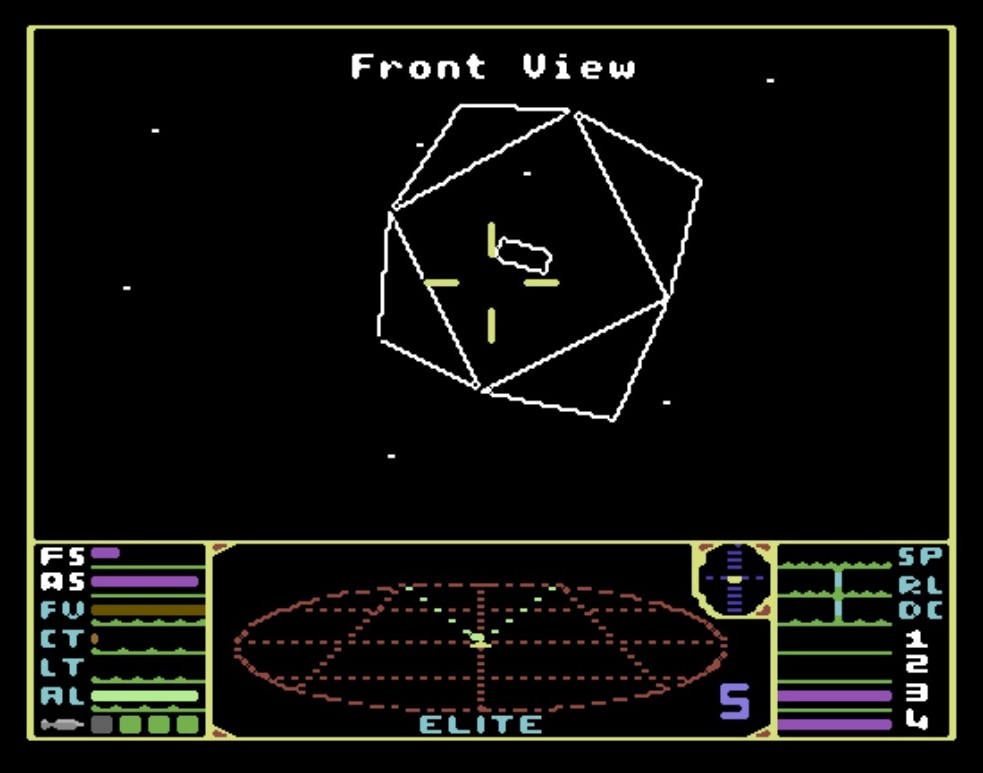
Leave a comment

Filed under Finance, IT, Law, Media, Politics

The next cyber wave

The news is almost two weeks old. There was no real reason to not look at it, I just missed the initial article. It happens! This is also at the heart of the issue on more than one level. Consider the quotes “The first 13-week programme for Cyber London (CyLon) will kick off in April, with a group of startups drawn from industries including defence, retail, telecoms and health services” and “On the one hand, the government is keen to invest in cyber-security startups: witness chancellor George Osborne’s announcement that GCHQ is investing “£3bn over nine years into developing the next stage of national cyber intelligence”“. So is this just about getting your fingers on a slice of this yummy slice of income? You see, this issue skates on problem that I (many others too) saw that Common Cyber Sense existed, but the bulk of companies treated it as an overhyped requirement. Yes, those managers were always so nervous when they got introduced to ‘costs’. I reckon that the Sony hack will remain the driving force for some time, in addition several business units are more and more in need for some better up to data encryption, so this cyber wave is getting some decent visibility. So as we look at the title ‘Cyber London aims to make the UK a launchpad for cyber-security startups‘ (at http://www.theguardian.com/technology/2015/jan/28/cyber-london-accelerator-cyber-security-startups).

There is no denying that the call of 9,000 million is a strong one, especially in this economy. More important, as more companies are gripped by a decent amount of fear regarding their own future, this event will be at the foundation of several longer running projects and corporations. There is of course question on what is real. That question becomes an issue when we see that even now, rumours still emerge on what happened in regards to who did the works on Sony and how it was done, especially in light that the article in Business Insider claims that the hackers still have access. The latter part will be speculated on by me later in this article.

For the most, the next cyber wave is a good thing, especially when thousands of data holders realise that their corporate future depends on keeping these systems decently safe. I use the term decently safe, because ‘complete’ safety is not something that is achievable, not on budget levels that many depend upon. Yes, security can be better and a lot of companies will invest, they will raise the threshold of many companies, yet will they raise it enough? That is at the foundation of what is about to come.

I predict that these startups are all about consultancy and some will offer products, some on safety and some on encryption. Encryption will be the next big thing, the question becomes how will encryption be properly managed? There are plenty of people who enthusiastically encrypt files and after that forget the password. So what then, all data lost? So, you see that clever solutions are needed, which will bring forth a new wave of solutions, new barriers and new bottlenecks. I wonder if these new startup firms have considered a trainings division, not one that is all about ‘their’ solutions and ‘their’ products, but all about raising proper awareness for Common Cyber Sense.

Training that is meant to give long term knowledge to people working at a firm as well as setting a proper initiation of knowledge with these companies, so that a wave of change will not start a rollercoaster of people jumping from firm to firm, a risk many companies will predict to hit them.

Now it is time for some speculation. I have been thinking on how Sony was hit. I came up with a possible idea on New Year’s Eve. When I wrote this part: “In my view of Occam’s razor, the insider part is much more apt”, my mind started to wander on how it was done.

Speculation on the Sony Hack

The inside story is on the hack of Sony, yes, there was a hack at some point, but, in my view, that is not what actually happened. a destruction was started, but that is not what started it, that is how it all ended. When I did my CCNA (2011), I had the initial idea. You see, hacking is about data at rest, so what happens when the hack is done when data is in motion? That part is often not considered, because it seemingly unmanageable, but is it? You see, when you buy the Cisco books on CCNA you get all the wisdom you need, Cisco is truly very thorough. It shows how packages are build, how frames are made and all in great detail. That wisdom can be bought with a mere $110 for two books.  Now we get to the good stuff, how hard is it to reengineer the frames into packages and after that into the actual data? Nearly all details are in these CCNA books. Now, managing hardware is different, you need some decent skills, more than I have, but the foundation of what is needed is all in the Cisco IOS. The hack would need to achieve two things.

  1. The frame that is send needed to be duplicated and ‘stored’.
  2. The ‘stored’ data needs to be transmitted without causing reason to look into spikes.

I think that ‘hackers’ have created a new level (as I mentioned before). I think that Cisco IOS was invisibly patched, patched, so that every package would be stored on the memory card in the router, in addition, the system would be set to move 2% during the day to an alternative location, at night, that percentage would be higher, like 3-5%. So overnight, most of the data would arrive at its secondary location. Normally CCNP technologists with years of experience will look into these matters, now look and investigate how many companies ACTUALLY employ CCNP or CCSI certified people. To do this, you would need one insider, someone in IT, one person to switch the compact flash card, stating 64Mb (if they still have any in existence) and put the sticker on a 512Gb Compact Flash card. Easy peasy! More important, who would ACTUALLY check the memory card for what was on it? The Cisco people will look at the startup file and only that one. The rest is easily hidden, over time the data is transferred, in the worst case, the culprit would only need to restart the routers and all activity would be completely hidden, until the coast is clear, afterwards the memory cards would be switched (if needed) and no trace of what happened would ever be there. What gave me the idea? Well I wondered about something similar, but most importantly, when I did my CCNA, the routers had 64Mb cards, I was amazed, because these suckers are no longer made, go to any shop and I would be surprised if you can even find any compact flash card smaller than 16Gb. Consider a place where Gb’s of data could be hidden under the eyes of everyone, especially as Cisco IOS has never been about file systems.

When the job was finished, the virus could be released damaging whatever they can, when cleanup starts, every aspect would be reset and wiped, whatever the culprit might have forgotten, the cleaning team might wipe.

So this is my speculation on how it was done, more importantly, it gives credibility to the claims that the hacks are still going on and the fact that no one has a clue how data was transferred, consider that this event was brokered over weeks, not in one instance, who else is getting their data syphoned? More importantly have these people involved in this next cyber wave considered this speculated path of transgression? If not, how safe would these systems end up being?

Let’s not forget that this was no easy feat. The system had to be re-programmed to some extent, no matter how enabling Cisco IOS is, this required top notch patches, which means that it required a CCSI or higher to get it done, more important would be the syphoning of the data in such a way that there would be no visible spike waking any eager beaver to prove themselves. That would require spiffy programming. Remember! This is all speculation; there is no evidence that this is what happened.

Yes, it is speculation and it might not be true, but at least I am not pointing the finger at a military force that still does artillery calculations with an abacus (another assumption on my side).

There are a few issues that remain, I think upping corporate awareness of Common Cyber Sense makes all the sense in the world, I reckon that the entire Cyber Security event in London is essential and it is good to have it in the Commonwealth. This industry will be at the foundation of growth when the economy picks up, having the UK play a centre role is good strategy and if it does evolve in the strongest way, a global financial node with improved cyber protection will lead to more business and possible even better business opportunities. This event also gives weight and view to my writing on January 29th and a few other occasions “As small innovators are given space to proceed and as larger players are denied blocking patents to force amalgamation of the true visionary into their moulding process that is the moment when economies will truly move forward. That is how you get forward momentum!“, this is something I have stated on several occasions and I truly believe that this will be the starting pulse to a stronger economy. It seems that the event creators Alex van Someren of Amadeus Capital Partners, Grace Cassy and Jonathan Luff of Epsilon Advisory Partners, and advisors Jon Bradford of startup accelerator TechStars and Eileen Burbridge of venture capital firm Passion Capital are on such a path. No matter how it is started, they are likely to get a first leg up as these startups will truly move forward. As the event stated: ‘No equity taken’, but it seems to me that on the receiving end of implementing working solutions, finder’s fees and linked contracts could be very very profitable and let’s face it, any surfer will tell you that being at the beginning of the wave gives you the best ride of all.

Let’s see what 2015 brings us, startups tend to be not too boring. Not unlike startups, so will be more waves of speculations on how Sony was hacked, the US government will likely continue on how North Korea was involved and at the centre of it all.


2 Comments

Filed under IT, Media, Politics, Science

Double standards, no resolve (part 2)

Part two is not about Greece or the Greeks, it is about what has been behind several parts for a long time now. Yet, the visibility of certain events is now forcing another large change to the surface. First let us look at the events as we see them in the Guardian (at http://www.theguardian.com/technology/2015/jan/25/wikileaks-google-staff-emails-us-government).

The title ‘WikiLeaks demands answers after Google hands staff emails to US government‘ calls for a few thoughts, but I think you should consider a few quotes and then reconsider how you feel. The first one is “Google revealed to WikiLeaks on Christmas Eve – a traditionally quiet news period – that it had responded to a Justice Department order to hand over a catch-all dragnet of digital data including all emails and IP addresses relating to the three staffers“. The second one is “Harrison, who also heads the Courage Foundation, told the Guardian she was distressed by the thought of government officials gaining access to her private emails” and then we get “The investigation followed WikiLeaks’ publication, initially in participation with international news organisations including the Guardian, of hundreds of thousands of US secrets that had been passed to the organisation by the army private Chelsea Manning“. So this was specific! Let us not forget that this person (Manning) should be regarded as guilty of treason! This is nothing less than an intelligence analyst going beyond rogue! Manning was a simple E-1 private with no comprehension of the complexity of wars, especially the war the US found itself in, a theatre that is hard to grasp for some of the brightest generals (you know these highly educated, passed their middle age point individuals with a few decades of military experience, in the US seen wearing stars on their shoulders). No, Manning decided on the safety of hundreds if not thousands of lives. In addition US diplomatic efforts were thrown out of the window, setting economic options back for up to a decade, if not longer.

So when we see the response by investigative editor Sarah Harrison “Knowing that the FBI read the words I wrote to console my mother over a death in the family makes me feel sick“, seems a little hollow. For one the FBI does not care about her mommy, two, what did you expect to happen when you access unauthorised data to the size, scope and extent as Manning had transmitted?

I think Harrison is overreacting, if we accept chapter 13 in the Art of war, both the spy and the receiver of information should have been put to death. Is it not a good thing that it was merely investigated by the FBI?

Yet, there is a side that many are ignoring; many do so in an unintentional way, mainly because it tends to not hit us in any way. For that we need to take a step back to Forbes 2013 (at http://www.forbes.com/sites/robertwood/2013/08/06/excuse-me-apple-google-starbucks-h-p-irs-wants-to-tax-stateless-income/), here we see the following parts: “U.S. companies are said to have more than $1.5 trillion sitting offshore. Most claim that they must keep the money there to avoid the taxes they would face by bringing it back to the U.S.“, “the money at stake is enormous. Plus, the companies involved have treasure troves of cash for many war chests. Big and protracted battles seem inevitable. Still, some big companies may be in for battles that are even larger than they think. They may even need to think different” and “The OECD plan claims that companies like Apple and Google avoid billions in taxes. The G20 is made up of 19 leading world economies plus the European Union. It too has voiced support for a fundamental reassessment of the rules on taxing multinationals“. These thoughts all sound nice, but there is an additional element to all this. You see, as I stated more than once, currency is slowly on the way out (loosely approached). The nations that are left with manageable debt are now slowly but surely diminishing to zero. Greece may be the first one, but at minus 18 trillion, the US is the clearest one to end up with nothing, especially as those large US firms have become stateless. You see, now we get to the good part, the new currency will be IP, but here is the kicker, most (including me) seemed to forget that IP is more than Patents and Trade Marks, it includes data! Now we get to the nice stuff, you see, Google adhered to a situation, Twitter and a few others did not, or at least in a delayed way, but the new currency will include massive amounts of data and many players are now catching on that data is at the core a stateless, virtual and duplicable currency. No matter how Sony called its hack attack, does it now look a little clearer that those having a copy of that data are preparing for more than just a data dump? This is what McKinsey & Company had to say in August 2014 “Indeed, the analytics performed by actuaries are critically important to an insurer’s continued existence and profitability“, as well as “While the impetus to invest in analytics has never been greater for insurance companies, the challenges of capturing business value should not be underestimated. Technology, as everyone knows, changes much faster than people. The key for insurers is to motivate their highly skilled experts to adopt the newest tools and use them with creativity, confidence, and consistency” and finally there is “The proliferation of third-party data sources is reducing insurers’ dependence on internal data. Digital “data exhaust” from social media and multimedia, smartphones, computers, and other consumer and industrial devices—used within privacy guidelines and assuring anonymity—has become a rich source for behavioural insights for insurance companies, as it has for virtually all businesses. Recently, the release of previously unavailable or inaccessible public-sector data has greatly expanded potential sources of third-party data“. Yes, it sounds nice that there is public-sector data, but the one part no mentioned is how the analytics is not driven by those, but ascertained through private-sector data fields. You see the data that Sony had on its employees and on the actions of 70 million customers is a lot more insightful when you link it to medical records. Consider how much profit a company gets if it could ascertain more precisely the risk 7 million of its own customers are. If the connection of medical (obesity) and the gamer data of one person results in a $12 per month surcharge, what happens when we see the US having an obesity rating of around 32%? Now we have 70 million accounts and their gaming behaviour. So if we do the following math 32% of 70 million (falsely assuming that they were all American gamers), then we now get the number of people confronted with a $144 a year additive. So in one swoop, this data set gives way to an additional $3.2 billion for insurance fees. Data is going to be that simply applied sooner than you think. With the cloud being forever virtual (as one would think), people forget that a personal space is linked to a real location (wherever that drive is), but what when the data set is beyond massively huge? What if it is spread over several locations? How do we think then? You see Stateless data is not a new concept, but until recently it was never a realistic concept. It is interesting how tax dodging makes engineers a lot more creative.

At the foundation of all this is not the Wikileaks part, that part just illuminates the nutty side of data. Consider the amounts you as the reader had shared in the last 72 hours via Facebook, LinkedIn, SnapChat, Instagram and such. You freely distributed that, you gave up your privacy rights for whatever you openly published. Now consider that whatever you shared got collected. Several people were on vacation (so someone knows that their house is empty and possible unguarded), some revealed that they were sick (health data) and some revealed other details like parties attended and such.

Now the empty house is the most direct one, but not the most important one. Consider the times you updated your status that you were at home with the flu, or something else. Under normal conditions you just had a sickie, or perhaps another way. Now consider that someone now automatically collects the times you were sick, how does that affect your premium? How will your health cycle be analysed if you are shown to have attended 15-30, or even 50-100 parties a year? How long until this shows as detrimental on your health chart? Weirdly enough not having that does not lower your premium, but there is every evidence that doing it will increase your premium.

Do you think that this is over the top?

Then see the following (at http://www.qbe.com.au/Personal/Home/Managing-Your-Risk/Insurance.html). Here we see “Importantly, reducing the likelihood of making a claim helps protect your No Claim Bonus, helping to keep the cost of your insurance premium down“, which has been a truth for a long time. Yet when we consider the mention ‘Don’t alert people you are going away (including on social networking sites)‘. How long until someone combines the two? At reputation.com we see the following “Life insurance companies are increasingly turning to the Internet to determine a potential customer’s risk“, so if you like extreme sports, you might pay for that passion in other ways too. In addition, the one most disturbing was “Donating to charitable causes is a noble gesture, but if you show too great an interest in any particular medical-focused cause, say breast cancer research or prostate cancer awareness, it might indicate to insurance companies that you’re at a higher risk for certain illnesses“, that gives a possible (implied, but not proven), connection that your social responsibility comes at an insurance price. Did you consider that? And this is not starting this year, or next year. Some of these events started no later than 2010.

This all was nothing but to pave the way for that what comes next. You see, there are several sides to Google and Facebook. They are all about bandwidth and several nations are now seeing that even though Facebook is too large, there is a clear path that data is currency, so how long until we see a growth of radicalisation through localisation? This is not radicalisation in the violent way, but in the opposite way. You should see radicalisation of data, attained by washing all the data markers in local server environments. You can’t wash all the markers, but you can make access to it a lot less available. This is the fear Google (possibly Facebook too) has had for some time. As these privacy acts, that data acts and data collection rights of the US grew in a need for compliance, people become falsely fearful of what is dangerous and what is not. The US government ascertaining whether you are a terrorist is not a danger. An insurance company upping your fees by $150 through collected data is a direct danger (to your cost of living). Now we see the link as it gets us to the first story that included Greece.

There will soon be a higher need for localised connected providers. Localised forms of Hushmail (www.hushmail.com), where the people get encrypted mail accounts that can be accessed online, through the web. How long until mobile users will select encrypted android apps, that do not connect to Google, but to local Hushmail providers. We still have the internet, but it will now go through national portals. The fact that Sony happened was only a matter of time. The fact that people now want that there data comes with actual privacy is a growing wave. The Wikileaks issue was the most visible and the most harmless one (for us citizens at least). The world is changing a lot faster than last year and many are now getting clued in that the things of value have not been guarded in the right way.

We will soon see new options on cheaper internet, cheaper mobiles and on package deals, this is what was skated around when this so called IP hearing was going on. Yet, when we look at an earlier statement by Mr Turnbull, in regards to IP, who said at the time. “It is very, very, very difficult if not impossible for someone that is just selling connectivity, just providing bandwidth to then be monitoring what people are doing“.

This is at the heart of the problem, they live of bandwidth, because bandwidth implies data, and the more used, the more data collected, which leads to the better their lives are. This is why they do not want monitoring. I am fairly certain that as their bandwidth falls away, as people move to localised solutions, which remain at the core local, these providers will ‘suddenly’ opt in a ‘possible’ solution. Only at the end of the tether will an industrial give in. Oddly enough, with fear of privacy and the dangers of insurance exploitation on the rise that tether will end up a sudden two inches shorter and now those providers will have to share that what they never had to share before.

Greece has changed the way they play the game; now perhaps we can change the game that is played and make a first monumental change for all!

2 Comments

Filed under Finance, IT, Law, Media, Military, Politics