Tag Archives: 5G

Prospecting black gold

There has been news all over the world, some news is good, some less so and at times we cannot see whether news is good, bad or irrelevant. To see the dangers, or perhaps the opportunity of what is what we need to look back to 2014, and start that issue with a quote from the Marvel Movie: Age of Ultron. The quote originally from Tony Stark was: “As I always say, keep your friends rich, and your enemies rich, and then find out which is which“, it is a reference to the arms industry and the benefit of mutual escalation. Keep this in mind when you consider the article in the Independent (at http://www.independent.co.uk/news/business/news/royal-mail-float-scandal-how-hedge-funds-cleaned-up-9303674.html), the title gives us the immediate threat with ‘Royal Mail float scandal: how hedge funds cleaned up‘, and “Speculators were allowed to buy £150m of shares despite Vince Cable’s pledge to favour long-term investors“, I omitted the claim that it was all due to the postman. That person usually rings twice, especially when Jessica Lange is around. Yet the heart of the matter, like in the movie, is not in the ‘boner’ or the ‘bonee’, it is the aftermath that matters. You see, the gem is seen in the local prosecutor and his ploy to get to the truth by going after one side, yet it is Cora’s Lawyer Katz who stops the evidence to get to the prosecutor, which nullifies whatever was attempted. So consider the part we see in the Independent: “around 20 per cent of the shares it had allocated to 16 preferred investors had gone to hedge funds and other short-term investors. This would equate to around £150m of Royal Mail shares – 13 per cent of the entire stock sold by the Government. The companies bought in at the float price of 330p a share. The shares shot up within seconds of trading, eventually peaking within weeks at more than 600p, allowing the hedge funds to bank vast profits at the taxpayers’ expense“, now consider also that this is a reflection of ‘£150m of Royal Mail shares‘. A system that has issues and allows for ‘deal sweeteners‘, now when you see this, and knowing that the bulk of hedge funds managers seem to get away with murder, consider the arrival of Aramco, better stated, the Financial Times headline ‘The $2tn Saudi Aramco question‘, which is now squarely an issue of titanic proportions (intentional pun towards the sinking dinghy). First things first, you see, this is not a fuel vendor like Shell, or a social media company like Facebook, this is the Privatised Saudi oil company that is larger than the sum of Shell, Facebook, Apple and Google. It is a 2 trillion dollar company, now consider the danger of the floating dangers of something like that, hedge funds managers can clean up and those who do will be set for a decadent life, for the rest of their lives. The dangers of something this big is pretty astounding and the fact that it could happen is not that small. You see, the dangers increases as we consider certain facts. NASDAQ gives us: “OPEC agreed in November last year to curb its output by about 1.2 million barrels per day between January and June“, that is because the stocks are a little higher than expected. This happens, oil will always fluctuate, now consider in the US alone there are 32 oil fired power plants. Production is down (for now) and the moment the first heatwave gets to the US, we see a massive spike in power requirements and 32 of those power makers require fossil fuel. In this I am only mentioning the USA, there has been power issues on a global scale, which is always going to be the case, but one of the largest providers towards the demand is going public and that is what speculators really like, because if the supply & demand need is not properly managed, we see an increase option towards fluctuation. Those speculators only need to get lucky once and the mess would be unrepairable.

The Financial Times gives us some of the goods with: “Privatising Aramco is the first step in rebalancing the economy. By disentangling the company, which accounts for more than two-thirds of government revenues, from the state, Prince Mohammed hopes to make Riyadh less oil-reliant, while providing capital for investment in new industries, ranging from technology, where it is pumping $45bn into the SoftBank Vision Fund, to mining. The privatisation of its national champion is crucial to this process” (at https://www.ft.com/content/7ed59bee-163b-11e7-b0c1-37e417ee6c76), but the heart is seen in: “That is even without looking at the question of how much oil actually lies beneath the desert kingdom’s sands“, when we consider that the oil gains in the North sea is slowing down and this is a signal seen in several places, the fact that at some point (in past, present or future) that something similar will happen to the Aramco goods is a certain fact, it is the when that cannot be anticipated. In addition, going public means that you need to be commercial, when it is government no one really cares, but in the public sector the trend must forever be upwards, so when will we see a similar float in Aramco when the numbers are not as great? It has been an utter certainty that nearly all companies go through, some did it calculated knowing they would kill the numbers within a quarter, some hoping they would kill the numbers and some did it whilst they were desperate for a miracle. Yet floating they went. How much of a $2 trillion dollar company in stock value will tumble when that happens?

And these are the circumstances where the acts were valid and not criminal at all (see UK Mail), I am not making any Tesco assumptions here, because the damage in that case will be devastating to the London Stock Exchange. One firm representing close to 70% of its entire market, there would be no London Stock Exchange after such a disaster. Bloomberg gives us the second tier of risks and dangers with ‘Saudi Aramco Cuts Oil Pricing for Europe Where Russia Dominates‘ (at https://www.bloomberg.com/news/articles/2017-04-05/saudi-aramco-lowers-some-crude-pricing-for-asia-raises-for-u-s), a market that Russia already dominates. What would happen if let’s say 3 days after going public, Russia decides to slash their prices for a short time? How would the market react? Not just to Aramco having to follow, but the forecasted annual numbers then take a dive, at who’s expense? Consider that the European market is ‘ruled’ by Russia and Norway, together they make up for 50% of that market and the Saudi part is smaller than Norway and 80% of that 50% market is just Russia. So they can influence the market a fair bit. You see, Bloomberg gives us “There is a risk price wars may resume in Europe, raising the possibility the output cut agreement won’t be extended to the second half of this year“, meaning that in the second half Russia could flood the markets and the streets with black gold. That impact would be felt all over the stock market. There is one part that I am uncertain on. You see, it reads like a small and insignificant part. The quote: “Aramco will tweak the benchmark it uses in the region to make it easier for crude buyers to hedge their purchases” seems small, but consider that hedging is done by a few hundred buyers for up to 25,000 barrels. It seems like nothing, but with 179 buyers it is almost a week worth of crude oil, now the ‘stock is full‘ issue becomes a larger one, because this is a level of fluctuation on stock levels that would impact on the stock prices, the mere stock is full a few weeks ago had a $3 impact (or 4.6%), that becomes a little more than insignificant. Now, I could be wrong here as I am not in the oil, yet you see that this is a concern when it impacts a $2T invested interest by more than just hedge funds managers.

The last part comes from the Guardian. In Jan 2016 they stated “Saudi Aramco is likely to be worth well over $1tn (£685bn)“, this is important as we do not see 1.2 or 1.5 trillion, so this given number implies that in a year Saudi Aramco grow by more than 40%, the exact number cannot be determined. Other media stated that Aramco had grown to 2 trillion last year, but none have given enough evidence to state which number is the reliable one. That too impacts this new market, especially the initial dangers of floating a stock. Yesterday (at https://www.theguardian.com/business/2017/apr/05/theresa-may-lse-saudi-aramco-uk-london-stock-exchange-oil) we see: ‘May and LSE chief woo Saudi ministers for $2tn Aramco listing‘, here we see: “Xavier Rolet, has launched a charm offensive in Riyadh to woo Saudi ministers with the prospect of London hosting the upcoming flotation of Saudi state oil company Aramco, which is likely to be the largest of all time“, the word ‘flotation‘ is given and the danger is now out and about, in clear view of all. So as the UK government is trying to appease Khalid Al-Falih, energy minister of Saudi Arabia (and CEO of Aramco), as well as Yasir al-Rumayyan, the director of the Saudi public investment fund – a sovereign wealth fund, I have to wonder where the Rothschild’s are, because there is no way in heaven or hell that the Rothschild family would be absent of a 5% of a $2T company option and not be a player in something with the ROI of billions, especially after the losses they had with Kurdistan and Africa. They have skin in the game now, and they need a victory in this field, their ego demands it from themselves!

In all this the final part given in the Guardian must not be overlooked, because the quote “Downing Street announced on Monday it had drawn up plans with Riyadh to boost support for Saudi’s much-vaunted Vision 2030 strategic plan for diversifying the Saudi economy to decrease its over-reliance on oil, spearheaded by the deputy crown prince, Mohammed bin Salman, who met May on Tuesday“, as this now offers the level of revenue to fund the ability to become the largest 5G player in the middle east, with options to diversify into Europe, the far East and America. It is perhaps the first time in history that a public company would shoot to a top position in mobile communication, ready to set the market and their values in a few ways on a global scale. For the simple reason that moving into technology and not go for the new tech that will determine the fate of the large mobile and telecom players between 2019 and 2027 seems extremely short-sighted.


Leave a comment

Filed under Finance, IT, Media, Politics

The spotlight on ‘exploiters’

The Mobile World Congress finished on March 2nd. These places are always a little weird. It is often about concepts and about desires, but for the most we see some new stuff and some that was released in the last few months. It is loaded with exhibitors, the list is 72 pages, so you better believe that there is close to no way to see it all. If you are in apps, smart cards, tags or smartphones, you are either there or you do not count. Now, that is not really a true given, if you are really small, or truly enormous you might want to give it a pass. Apple can because they have nothing to add (at present), but at that point they give ground to Google (Google Pixel) and Huawei (Mate9). It is a choice and as being in the place is plenty super expensive, so whatever you bring, better be an important game changer, because the large players can drown you out.

So as the Guardian (at https://www.theguardian.com/technology/2017/mar/11/is-5g-the-future-robots-delivering-pizza-house-viewing-vr) gave us ‘Robots delivering pizza and house viewing by VR: is 5G really the future?‘ last Saturday, the question became, what is this really about?

However, 5G, which is set to be rolled out in the UK next decade, also has its critics. They argue consumers don’t need the superfast speeds the upgrade from current 4G technology promises, and many in the industry believe that logistical issues mean that 5G may not be properly rolled out in the UK for decades“, this is an interesting statement, because I heard a similar thing when 3G was to be replaced by 4G. Some claimed it was not needed, mainly those having the 3G equipment and not the funds to go to 4G. So I saw this as a repetition of that. An opinion piece in the Computer World 2 years ago gave us ‘Tony Milbourn, vice president of strategy at u-blox‘ who questioned it, as did the Cambridge Wireless Network. We can question party one (as well as party two), yet we must admit that Cambridge Wireless is at least a techno savvy industry group. So dismissing them out of hand is not the wisest of choices.

To me, the 5G jump is essential. It is not just about speed. I see that 5G can be the cornerstone to fix some of the NHS UK issues. From there it can be an optional solution to a host of International Health Systems. 5G brings a lot more than just speed, it brings optional innovations that some are unwilling to consider (Larry Page can buy the solution for 15 million pounds up front price is post taxation).

As many sources in short minded ways hide behind “When the 5G wireless standard hits the mainstream, our home internet speeds have the potential to be so fast that we’ll be downloading 4K movies, games, software, and any other large form of content at a fraction of the time we’re used to“, the truth goes a hell of a lot further. 5G can be the cornerstone of non-repudiation, which has been a mobile flaw for the longest of times. In addition, the new connecting devices can change in many ways facilitate interlocked solutions as well as managing a host of non-considered options for systems already rolled out.

In addition, 5G could initially allow for a much better solution towards scaling the performance of short TCP connections on multicore systems. Which will also evolve the smartphone in several new directions. In addition, the Tablet would grow into a new level interactive system, I reckon that Google would need to evolve Android into something like Cyborg, which basically is Android plus, the plus is for the libraries and functionality that would slow down the average phone by way too much, but under 5G, the upgraded system would allow for authentication and new ways of privacy driven encryption that 4G cannot allow for, mainly because it is just too impractical.

The Guardian article also correctly identifies: “The mass connectivity it allows will also help expand the so-called internet of things (IoT), in which everyday appliances and devices wirelessly connect to the internet and each other. “IoT technology is being used in everything from smart homes to wearables,” says Ofcom. “5G should help the evolution of IoT“, which clearly shows that those against ‘advancing’ are either not in this field, or merely unaware of what they are missing (that is some of the critics, not all of them). The one prediction I do not completely agree with is “Analysts Gartner estimate that by 2020 there will be 20 billion IoT-connected devices“, if the 5G preparation goes correctly, there are opportunities to get that to 25 million devices easily, I reckon that 30 million is possible, but only if all elements work favourably to all and that is just not entirely realistic. The next part is one of caution, because blindly going for something is just not cricket. “The report by Lord Adonis, who heads the National Infrastructure Commission, found that the UK’s 4G network ranked only 54th in terms of coverage, behind countries such as Albania, Panama and Peru“, now we can argue that two of the places are merely two villages, a cafe and a cemetery is not entirely accurate. Yet, the idea comes across. Panama has over 50% of its population in the capital, so that is not a fair comparison, yet there are plenty of players (read: Scandinavian nations), who are doing plenty better, we know that it is a small population 3 times the size of panama, but stretched over a massive amount of miles, so things are not entirely great for the UK. Improvements are essential and perhaps considering 5G as the main drive to get to a much higher coverage rating might not be the worst idea.

In light of some responses we also need to look at “Professor William Webb, an academic and former Ofcom director, has been outspoken in warning that 5G could be a case of the “emperor and his supposed new clothes”. Webb is not convinced that the industry obsession with faster speeds is matched by consumer demand“. In this that the professor might talk a decent pitch, but the issue as stated before is not just about speed. 5G will allow for avenues that are currently under 4G not practical, which is partially about speed, but also partially about the options to connectivity currently not possible. Yet in the next part we see the exploitation part “mobile operators may be in danger of investing billions in 5G networks that they may struggle to recoup their costs from. Telecoms companies forked out £2.3bn in Ofcom’s auction of 4G spectrum just a few years ago in 2013“. So as we see the £2.3bn auction, we see that Orange (at https://www.orange.com/en/Press-Room/press-releases-2017/press-releases-2016/2015-full-year-results) gives us “Restated EBITDA was 12.426 billion euros in 2015, ahead of the 2015 target“, so basically in one year they got 12 billion Euros (approx. £10.778 billion in 2015). So I reckon that the 2.3 billion on all players was not that much of an issue to begin with and this is just ONE player and not even the biggest one, so as such (even as we understand that there are always more cost), Professor William Webb should reconsider his position before we put a massive spreadsheet showing just how much the mobile providers are driving you for. You will not be happy or impressed to realise what better a deal you could have gotten whilst they would still end up with a massive profit.

Now there is a lot more going on and this path will not be a smooth sailing one, yet when we realise that 5G will offer support and solutions in directions that some seem to be craving, the news (at https://www.digitalhealth.net/2017/03/nhs-england-working-with-us-internet-giants-to-promote-digital-tools/), give us more shallow parts. It seems that everyone wants to drive some digital solution, that is tool based and has heavy dangers when it comes to cyber security. That was clearly shown by the Financial Times on February 3rd (at https://www.ft.com/content/b9abf11e-e945-11e6-967b-c88452263daf). So as there is too much fidgeting and some giving in to these criminals instead of hunting them down and injecting their children with Ebola (just to give clear indication that health care data is essential and should not be messed with, EVER). The fact is shown that cybercrimes is still too open a field, with many criminals not ending up getting prosecuted and/or incarcerated gives view to the essential need to change thinking and not like a collection of Emu’s run to what seems to be the next (easy) solution in postponing the essential changes the NHS and healthcare in general needs. The Financial Times has actually one additional gem. The quote “According to data from Intel Security, ransomware is growing at an alarming rate across all industries: total ransomware incidents grew by 128 per cent in the 12 months to September 2016“, gives a much needed light on the dangers that “NHS England is working with Google and Bing to increase the visibility of NHS content online and the forthcoming NHS app store” is bringing the people and the next release of ransomware. There is currently too much dangers and the 5G gives a first optional approach to non-repudiation as well as the option to block several similar dangers to health care data. I feel rather confident that Juliet Bauer, director of digital experience at NHS England could end up having to send out all kinds of statements on unauthorised accessed data. I hope to be wrong, yet the statements in the Financial Times, gives us that Jason Allaway, vice-president of UK & Ireland from cyber security firm RES. In that light, Juliet Bauer has every reason to become massively cautious. Any MP that is pushing for some Mobile app solution could find themselves into the limelight explaining how they could have pushed for such a change endangering the lives of many. It could also immediately spark a by election replacing that person pushing for cyber changes whilst the NHS and many health care trusts and providers are nowhere near ready at present. To give but the shortest of lists, you need to consider Healthcare.GOV, Pathology servers (blood tests), Radiological Patient data and images, Ultrasounds imaging systems, Magnetic resonance imaging data, images and reports and the list goes on (each category with a long list of providers). In all this there is still the GP, the specialist and the NHS staff to consider, so in the end, the digital paths some are taking are limited, inferior and no release of pressures to the NHS, so where is the benefit? I went over all that before I made certain designs. There needs to be a massive shift and the first time around the politicians had this utterly disgustingly dangerous idea that it was a great idea to put it in one place. I reckon that there is enough data to not ever consider that. The solution is on the other side of the spectrum, yet there needs to be a shift on the other side of the players too. There needs to be Common Cyber Sense and there needs to be accountability which non repudiation is a first step in, because there will be no more, my ‘device’ was on the fritz. Now there will be a clear digital path, which in health care is essential before considering the digital path in the more serious sides of healthcare.


1 Comment

Filed under Finance, IT, Politics, Science

Alphabet Soup

I have been away for a little while. I delivered my final paper on Friday after a 34 hour stretch, mainly because I have the unequaled ability to doubt my own work any given moment. This is weird, because when it comes to data and data systems, I can see through the fog of implied BS in ways most cannot fathom. In that same way, I am now seeing a weird transition by Microsoft that has the ability to endanger its own customer base, which might be a new low in their list of achievements. After a day of attempted rest whilst I faced 44 degrees (summer in Sydney), the Guardian treats me (at https://www.theguardian.com/technology/2017/feb/03/skills-shortage-harming-uks-ability-to-protect-itself-from-cyber-attacks). There is something either incomplete or not matching here. The article by ‘Rajeev Syal and agencies’ is actually quite good, it gives us “the role of the Cabinet Office, which is responsible for coordinating information protection across government, remains unclear“, which is in one way awesome because of the admitted issue, a little less so when you consider that his has been going on for over 6 years. You see, those people still got paid, and the admission of non-clarity for that amount of time should validate a few additional questions to those occupying postal code SW1A 2AS. So, when you are in front of that Downing Street fence, which separates the Prime Minister from the common riff raff, it will be the building on the right! One of the interesting quotes is: “The threat of cybercrime is ever-growing, yet evidence shows Britain ranks below Brazil, South Africa and China in keeping phones and laptops secure. In this context it should concern us all that the government is struggling to ensure its security profession has the skills it needs.

I would add to that is the fact that those nations tend to hold employees accountable for cyber losses, which might not be fair but it is apparently wildly effective. In the cyber industry a decent dose of paranoia tends to keep people cautious and on their toes, which does allow to explain the situation the Commonwealth at large finds itself in, not just the UK. One of the gems in the article was “The report said the Cabinet Office’s ability to make informed decisions about security is “undermined by inconsistent and chaotic processes for recording personal data breaches”“, that is just one factor. The fact that Microsoft has been uploading gigabytes of data (per person) from gaming consoles, without consent and whilst Microsoft is in denial blaming the ISP for this event, the question the press at large has not considered asking Microsoft. Why do you need 6 GB of data from a console playing a single player game? There is no way that this is about ‘enhancing‘ the experience.

newzoo-games-market-segments

This is about collecting data and in addition, there is no divulging on what exactly is being uploaded, the fact that it is done without consent is another matter and there is no record on the system. If one victim had not shown me the $60 additional fee he got for 2 weeks of unknown uploading, I would not have believed it. The fact is that this person had mobile broadband was a kink in the attempt to keep the uploads unnoticed is one that Microsoft had not considered and as such we need to consider that an Xbox User needs to realise he is facing an estimated $1400 a year in additional fees upload fees, how affordable is that console now?

So is this about money, about data or about privacy? The issue is that worldwide 15 million were sold by November 2015, whilst the US has roughly 8.5 million of them. So a sizeable chunk of the 6.5 million outstanding consoles are in the UK and whilst Microsoft is not revealing the sales numbers, likely as the humiliation against the PS4 sales is too great, we also need to wonder in light of the upcoming Scorpio (the Xbox One plus plus) edition, the light of so much uploads without consent is an issue, because in the first the people did not get a choice and the second is that there is no way to tell what was uploaded, how much privacy information. In that light, we need to look at not just what is done, but what actions need to be made against these large corporations and I am willing to bet the house that these ‘inconsistent and chaotic processes for recording personal data breaches‘ involve groups giving protection to Microsoft to some degree creating chaos. In addition, I wonder if GCHQ is aware on what Microsoft is pushing into its Azure cloud via Windows 10, what level of privacy breaches is Microsoft involved in?

That is part of all the issues because there is no issue with skill shortage, especially when cybercrimes cannot be properly monitored as everything is in a cloud environment, a US driven cloud environment I might add. Before those in Whitehall start to snicker on the premise of gaming, perhaps those are reminded that as we see in Newzoo (at https://newzoo.com/insights/articles/global-games-market-reaches-99-6-billion-2016-mobile-generating-37/), the gaming industry is a $100 billion plus field and the UK has shown its teeth in this field for the longest of times.

q2_2016_newzoo_global_games_market_revenue_growth_2015-2019

Yet the makers are now creating an unfair advantage (and without consent) on mineable data allowing US companies to take the highest road at the least cost. In all this they have the ability of selling spiked lemons, impeding the industry outside of the AAA American companies’ even further. That is all before we see the dangers of cloud intrusions and the damage organised crime can inflict. And any of those people claiming that this cannot happen, I would advise those people to take a look at the Sony track record of getting hacked. There are too many unknowns, but the fact that a lot of this is done without consent is perhaps the most damaging one and so far, it seems that skills shortage in the UK is not even the most debilitating one. When you consider this quote: “The government ignored its own advice by failing to carry out a business case for government security classifications system, which was meant to deliver £110- to £150m-a-year in benefits, MPs said“, a quote that is not in question perse, yet the fact that the games industry surpassed $100 billion, in this the UK could stand to corner up to $30 billion, I am decently certain that ‘£110- to £150m-a-year in benefits‘ won’t be getting close to covering it any day soon.

The losses and the growing loss of industries in several sectors are leaving the UK with a diminishing amount of options in an industry that will the first and almost the only one growing its production, manufacturing and development base. All items that would have the effect of spicing the coffers of her majesties treasury by a fair bit, that is of course not the bottom line, but it is the icing on the cake and those who had to live by ‘let them eat cake‘ have been doing so without any icing for nearly a decade. And that is all before Google has decided on the next step that could bring them an additional 6-13 billion (13 billion would be most advantageous forecasted model), a jump that will affect software and hardware evolutions in a few ways for the next decade as 5G gets a hold of these new devices and opens the field for even more devices and concept solution. A change few had seen coming and less of them thought the change was realistic, some hold that opinion even today, it’s a sad world, I know!

In that atmosphere the Cabinet office and MP’s are deliberating on Cyber needs and skills whilst their train is already 3 stops delayed and they have no idea what is awaiting two stops ahead, meaning they are already one train stop behind and that is just delay through inaction. So as we are looking at the last part given, where we see: “A National Cyber Security Centre spokesman said: “The government has been clear that the newly formed NCSC is the UK’s definitive authority on cyber security. In the four months since becoming operational, the NCSC has transformed how the UK deals with cyber security by offering incident management capabilities, fostering technical innovation to help prevent attacks and providing real-time cyber threat information to 3,000 organisations from over 20 different industries”“, yet in that, where is the turnaround? You see, as we see linked to all this: “New generation of ethical hackers aims to impress recruiters“, we see: “Defence experts have long warned of the growing menace of cyber-crime and now they have good reason to believe the threat is being given priority treatment“, yet we do not see: “Last year’s Cyber Security Challenge was fairly fanciful. It involved a bio-hazard attack and a threat against a minor royal. This year, the challenge is more grounded in reality. The contestants are asked to find evidence of large corporations gaining an increased advantage by uploading personal data without consent for advantageous data mining“, that no less a threat and it seems that government parties on a global scale are actively avoiding this. You see, we agree that organised crime and batches of exploiting hackers must be stopped, yet for the longest time, the party’s involved are ignoring the ‘legal‘ crimes and how it is shifting the balance of cyber power. slowly but certainly towards the 5 big players leaving the field barren for nearly all other innovative corporation hoping to grow into that field and as the field is limited to 5 players we will lose out on actual innovation and we are left with the iterative field we have had for slightly too long. By the way, this goes far beyond games, this field is now intersecting a very different field. Consider the paper ‘Big Data Framework for Analyzing Patents to Support Strategic R&D Planning‘, by Wonchul Seo, Namhyoung Kim and Sungchul Choi. In this paper they set in the abstract “In this paper, we propose a big data framework to process and analyse large-scale patent data. The proposed framework consists of four layers: an aggregator layer, a storage layer, an analysis layer, and an application layer. These layers are designed to collect patent data, store the collected data, analyse the data, and present the results. The primary objectives of the proposed framework are to provide a patent analysis service platform based on big data technologies, and to support strategic R&D planning for organizations“, now consider interfacing that with a database that has the goods on 270 million devices using Windows 10. Does it still sound so strange? The gaming industry might seem juvenile to the people in Whitehall, but even they cannot be stupid enough to ignore a $100 billion plus industry. So as Microsoft is uploading data and no one is asking questions, we have to wonder why the questions are not asked, more important, the fact that ‘without consent‘ is not addressed is even more worrying, especially with the cyber players in town and the fact that anyone actively ignoring a few billion in revenue tends to not have a career after that comes out.

So you tell me, is the water still too murky or are the players murky about the actions taken?

And when we see the marketing responses like ‘to give the players a better gaming experience‘ or ‘uploading is not with us, that responsibility lies with your ISP‘, you better be able to answer the question why the ISP is dumping all that data on the Azure cloud, because ISP’s tend to not do anything they aren’t paid for and they tend to not do anything without consent, as the retaliatory claims and penalties tend to be much too high. So when the alphabet soup gives us Avarice, Build-up & Covetousness. Is the alphabet soup about protecting against cyber-attacks or trying to minimise corporate losses?

They are both victims, but one does not include the other, I’ll leave it up to you to decide who remains a victim in the long run.


Leave a comment

Filed under Finance, Gaming, IT, Media, Politics, Science

This last day

This last day should be a day of reflection, a day of consideration. I feel none of these things as I am observing the mistakes that Marine Le Pen is now making. I get why she would get the referendum vamped up and get stronger waves towards Frexit, yet her call to leave NATO makes a lot less sense. For one, NATO still does mean the North Atlantic Treaty Organisation, France is part of that North Atlantic, she has a duty of care there (a lot less so for the EC, the EEC or the Euro for that matter). She does make a point when we look at the expansion into Eastern Europe. Let’s face it, when we look into the original line, there was Germany which goes a lot to the south, then basically it is Italy. Getting into Eastern Europe makes a lot less sense. Let’s not forget, the Americans at present no longer have the means to play this game. A fact Lockheed needs to take into consideration, even if the price of the F-35 is given without an engine ($133 million, without engine), making it basically the most expensive paperweight in history. In addition, it came with a truckload of issues in 2014, whilst the 2015 report states “the majority of the fixes and for capability deficiencies being discovered are being deferred to later blocks rather than being resolved“, with new items of concern added. I found the additional quote form the 2015 report “inherent design problems that are only becoming more obvious and difficult to fix” most amusing, so if Marine Le Pen has in mind to not go anywhere near a Lockheed design, that would make sense. Now I do not want to brag, but with all my flying hours in the Microsoft Flight Simulator (2004), I might actually beat that latest flawed Lockheed F-35 with my experience in a Mikoyan MiG-35 (OK, I am bragging a little as I have never flown ANY jet in my life). What is the issue is that the politicians have not kept a good accord on the military abilities of the armed forces, not the people mind you, but the equipment they get stuck with. As such we see a 1.5 trillion dollar project showing more holes than an IKEA Pasta insert (named ‘Stabil’, which is hilarious as it is also means stable in Swedish). A project $160 billion over budget and 7 years behind schedule, and these were the numbers in 2014. A defence project that was too big to kill and that is what the NATO partners have to content with?

So why these topics? The world is changing, it is changing faster than ever before and the minders of the store have been so selfish in regards to their own personal needs (read: visibility of self via ego) and achievements that the duty they had was pushed under the rug. This is how I personally see the F-35 project.

The financial sector in the UK alone these financial boys (girls also) had the bulk of the £44bn in bonuses this year, so did your quality of life increase any (the topic jump will make sense in a few moments)? Now, even as wealth increased, it did not do so to that extent. It is not that fair to just have a go at the financial sector, apart from the fact that they ended up with bonuses of 1900% more than the amount all the others got, so balance is not that much in play. That view is shown stronger as we look at Forbes this week (at http://www.forbes.com/sites/francescoppola/2016/12/28/greece-the-game-is-on-again/#2585dbd946e5), the quotes that matter here are “Euclid Tsakalotos, the normally mild-mannered Finance Minister, accused the IMF writers of “economizing on the truth”. He pointed out that the main reason why so few Greeks pay income taxes is that their incomes have crashed, and that nearly half of Greek pensioners are living below the poverty line” and “The IMF’s case is that pension cost as a proportion of GDP is now unsustainable, and further, that the creditors are not going to agree to debt relief while pension cost remains so high. It is probably right on both counts. But once again, what really matters is the psychological framing“, in that regard I will be on the side of the Greeks, but not on the side of Greece. You see when their previous governments got loans and misrepresented their value, they had zero consideration on what pensions were in regards to the loans that they were getting under false pretense, in that regard, did any of those politicians go to jail? Did they refund 90% of their incomes? I am certain that the answer to both is ‘No!’, in addition those elected officials are sitting pretty and nowhere near the poverty line. Yet in all this the hardship is not over, in addition, the facts (as I personally see them) requires a little more digging, especially when I read “Attica Bank, the country’s fifth-largest lender, was poised to install a new management team he thought was capable of turning round the struggling lender” which were the thoughts of Yannis Stournaras, the governor of the central bank of Greece, which was followed by “While he was in the air, the government in Athens reversed the decision to award the job to Mr Pantalakis. It was his introduction to a web of allegedly related events, ranging from a raid on his wife’s business to an unsuccessful bid for TV rights backed by Attica loans“, this gives the implied issues on Yannis Stournaras, which gives more cause concern when we see “A confidential report on Attica carried out this year by the European Central Bank, the Eurozone’s top bank supervisor, and seen by the Financial Times, cited “severe findings” of poor governance and inadequate controls on lending. With some 70 per cent of its loans rated as non-performing, Mr Stournaras and others believed Attica urgently needed a professional banker at the helm. Government sources denied any intervention in the process to select Attica’s CEO” (at https://www.ft.com/content/aab0aaba-c6db-11e6-8f29-9445cac8966f). The implications are on a few levels especially in the light of ‘government sources denied‘, there is a mess on a few levels and the idea that personal needs were adamant in decisions is not without probable cause. The levels that are in question cannot be set because too much information is missing, but there are issues, make no mistake about that.

These issues connect, not directly but in the view of national voters, governments have made absolute shambles of their nations giving power to those with key wealth management options, in that need those who need to be at the helm are politicised and set to markers that are off the table and outside of the scope of visibility to scrutinise, whilst the presentations are showing markers that do not fit the person best suited for the job, in that Greece is not the only place with such issues. In the UK Mark Carney is facing similar issues, yet in the opposite direction. The best person for the job is the one the elected government seems to have an issue with. The independent (at http://www.independent.co.uk/news/uk/politics/bank-of-england-mark-carney-theresa-may-attack-monetary-policy-tory-conference-speech-a7380016.html) gives us “Mr Carney argued that the monetary policy pursued by the Bank in recent years has had a positive impact that is “without parallel”, despite the Prime Minister using her speech to claim it had led to “bad side effects”“, in addition we see “Since quantitative easing was first introduced in the economy in 2009 … there’s been 2.6 million jobs created, GDP is up 16 per cent, per capita income is up 9 per cent and this is following a trauma in the economy“, we might see this as good news, but the good news is in the UK not dripping down to the other people just yet. In addition, the dangers will change if sharp budgets are not maintained. Getting the debt down is an absolute first, it will have additional benefits down the road, yet the initial benefit is that money could go to other destinations than paying for the interest of the debt, the interest of a debt amount that is currently in excess of 1.6 trillion. This was not the first attack, Michael Gove had a go at England’s Marky Mark in October. It is always nice when a person is called arrogant, especially when that person has proven to be amongst the very best in his field on the planet. I myself had had some issues in the past with Mark Carney, yet not against the man, but the economic issues that the UK faced because of actions (read objectives) pushed for by politicians, however his speech in the House of Lords showed him to be the expert he is and he nearly got me away from the Brexit team. Yet Mark Carney himself states it very well when he said: “Politicians have done a very good job of setting up the system. Where it can be difficult, sometimes, is if there are political comments on our policies as opposed to political comments on our objectives“, in this we see the issue that is part of the problem. as the politicians set up the objectives, they are then confronted with the policies from technocrats and those two groups do not see eye to eye, so friction goes back and forth, the Lockheed F-35 lightning is an excellent example here, in addition that part got an extra iteration as the military requirements were added by yet another group (read: the military). In all this the political objective is hampering the essential need against ‘it needs to be done by date X for no more than amount Y‘, which gives us the political joke that the NHS IT project was. A present from the Labour government which boiled down to a £11.2 billion wrapper around an empty box. Two projects set through objectives that ended up being off the wall and the back and forth friction that resulted in something unmanageable and non-functional. I reckon the political side of both events needs a new level of scrutiny, one that we have not considered before. In that regard having people like Mark Carney around is essential for the wheels of a state to remain functional, because if there is one clear thing, it is that America lost that oversight some time ago, before this Democratic Administration, the previous republican one lost sight of the needs and the accountability of the intelligence network and data processing side no later than 2006, we can all agree that the 2007-2012 total budget of $435 billion was money massively spent in all the wrong ways. This was shown in a Foreign office document that was quoted in an article stating “Army officials, though, said Palantir wasn’t up to the job. Now, a 57-page report by the Pentagon’s acquisitions arm basically says the Army was wrong to dismiss the Palantir system. The study instead gives Palantir high marks on most of the Army’s 20 key requirements for the intelligence system, including the ability to analyse large amounts of information, including critical data about terrorist networks and the locations of explosive devices, and synchronize it in a way that helps troops on the ground combat their enemies more effectively“, so there too billions were spent when millions could have sufficed. When the EGO of an individual with the power to decide is on the line, the results could be disastrous. In my personal view, if we accept the wrongful spending of 25 billion, how many extra troops could have been saved by adding fire support groups to those in IRAQ in those years? How many of the 4486 fatalities could have been prevented?

Politicians, advisors and ego are a really dangerous combination in many ways, even as we look at what is coming now, we need to be mindful of the changes that some are pushing for. Even if we are in favour of dropping the EC altogether, pushing NATO boundaries might not be the best solution. France might be privy to one of the better intelligence machines, that machine is also dependent on the intelligence it is fed from allies, an essential element that will fall away when NATO does, Marine Le Pen should be very mindful of that.

Yet this year and more important 2017 will go beyond Frexit. There is still a large debate on the Netherlands making any move away from the European Community, the numbers require people to be realistic on what will happen, yet those numbers are nowhere near the numbers Brexit had, so it is still unlikely that this will happen at present, no matter how certain Frexit will be. Italy might not have any manoeuvring space, it requires a massive infuse of funds, when we see the Reuters quote “An Italian government official told Reuters on Tuesday that €20bn earmarked for the rescue of the Italian banking system should suffice“, we need to wonder in how much trouble Italy is. This question is raised as we see Banca Monte dei Paschi di Siena will issue €15 billion of debt next year (source: RTE). So we see another iteration where “The Treasury may have to put up around €6.6 billion to salvage the lender, including €2 billion to compensate around 40,000 retail bond holders“, so, how exactly is it acceptable that people ‘invest’ with a risk, yet when that risk comes calling, they still get compensated? How did any of us ever sign up for that?

Anyone who mentions that it is for the good of all is of their rocker plain and simple. Here too we see connection between France and Italy, mainly that the Natixis Global Asset Management (NGAM) thought it was a good idea to list Banca Monte dei Paschi di Siena as a major purchase right next to Ubisoft. I reckon a little less ‘lack of nationalism’ and putting all of that cash in addition to the other amount into Ubisoft might have been a decently better idea. I feel certain that next year when we see the ‘Top Ten Holdings’ in the Natixis report will not make mention of Banca Monte dei Paschi di Siena, which could just be me though.

So in this last day we see that we have quite the collection of choices to deal with, some good and many bad ones. Yet no matter what is happening, no matter what will fall, there is a decent indication that unless changes are made 2017 will not be a good year. I might be too negative to see some level of collapse in Q2 (no later than Q3) in the next year, yet the proper setting and if the key players are willing to forego ego and focus on cooperation, they would be setting the stage for a lucrative 2018, that is beside the initial technological presentations of the new age of G5. G5 will be the pushing power in IP, especially Trade Marks, yet that path is also loaded with new growth opportunities for IT and developers as they start setting the tone of what 5G could personalise, it will be the first firm push to switch providers to SaaS. That is almost without question, the degree to it happening is very much depending on actual cooperation. In that the Telco providers need to realise as per immediate that thinking SaaS whilst selling Paas and charging IaaS, which sounds nice on bonus day. Yet the boomerang effect is that clients will walk away a lot faster and they will also automatically entice 10 personal connection to not seek the services of the telecom provider being that stupid. Infrastructure as a Service is almost a thing of the past. It seems weird, because there should be space for it, yet in our new outfits we see that infrastructure is a long term commitment and with annual mobile purchase the people have learned to be as flexible as possible, so the limited mobiles that some sell (32Gb instead of 64Gb editions) is why people are realising to walk away from those offering limitations instead of solutions. It is at times harder with Platform as a Service. You see, PaaS might sound nice when we see Apple and SAP connecting, yet the bulk of the revenue will be the smaller fish in the pond, the small players will be 80% of the revenue, one can argue the actual taxable cake of government will be largely depending on those players and for them IaaS is a laughable solution when they are trying to get as much as possible in the first few years and those smaller players want as much flexibility as possible taking to some extent PaaS from the table. SaaS will be solution of choice and those now adhering to that need will fall short in 2018 and they are unlikely to be part of anything in 2019. In that we see the government need of objectives that cater to what the SME’s need. A mere application of supply and requirement. You might think that this is not connected to the previous parts, but it is. When we see the NHS, Banks and government, their needs to address their audience, they need to consider that no matter the infrastructure or platform for communications, they all need to see that their clientele is no longer rigid, no longer bound to certain paths for the simple reason that the infrastructure of places like the NHS can no longer deal with. It is by definition a mobile customer base that needs addressing, this means, or at least implies that the SaaS solutions require a wider setup, other paths of non-repudiation and a very different approach to data, its quality, its controls and the application of the results in any report or estimation towards costings and profit. It is a path of contribution, which is set as revenue minus costing.

For the better part an entirely new path in a setting that has for too long been about a rigid collection of data, which when compared to a setting in a flexible framework no longer holds a candle and will come with the implied death of data quality. in these places there will be a growing need for a data team that has the sole purpose of managing the quality of data, this path is one that IT has never worked on to the degree it had, because in the past systems were set in concrete and after the correct data pass had been made, the data usually would not require ‘resetting’ it in another framework, a change that will be almost evident in the systems we will see start in the next 4 years. There, for some the problem becomes that they have never contemplated the changes, which now also means that once they go into the deep of it all, the time required and the resources required will be a lot more draining than ever before. It is in that path that we see the danger of politicians and technocrats in the required path of objectives and policies. As there is plenty of evidence that so far this track record is not that great, we will see a squandering of funds and a dangerous curve of unprotected data whilst no one will be actually held accountable for the transgressions against those consumers aka victims.

So on this last day there is no way that any solution will be found, just take in the information and next week wonder what on earth is about to hit you, there is some speculation in this, yet I believe that the ‘objective callers’ (read: politicians) will rely on the word ‘glitch’ a lot more than ever before, it might just become the most popular word for 2017.


1 Comment

Filed under Finance, IT, Media, Military, Politics

When games become real

It is one thing to stalk a person, sneak up on that person and slice his throat, it is not that big a deal when we do this on a console or PC, but when we do it for real it is murder, whether targeted killing or not. It is warfare against most often a non-combatant. And when it is simple murder, we are outraged (or we should be) and if the rules of evidence are clear and fulfilled you go to prison, unless you are in the Netherlands and you kill a child and two grandparents whilst speeding, in that case you get 120 hours of community service (at https://www.youtube.com/watch?v=P-Q0Mg9tioM) . So, at times things are not equal, that has never been a surprise.

Yet, what happens when the lines are blurred? Let’s take a step back to 2014, after a year of delay Watchdogs was released. It was over hyped in many ways, yet it was not awful and it was as we needed to recognise an entirely new game, a new Intellectual Property in gaming. So like many, I thought it was a flawed game, but it had potential. So, I kept an open mind for the sequel that was released a week ago. Well, I have spent enough hours of game time to form an opinion. Graphically the game is passable (read: awesome in some ways) and as an open world it is pretty impressive. I think that San Francisco as a choice for several reasons was the deal breaker that took the game from failure to optional success. I reckon that in another major city this game would not have worked. Whether you visit Nudle (read: Google), whether you see Pier 39, the Rock or just Jack London Square. The game gave me the feeling that I was actually seeing San Francisco, and let’s not forget that big bridge!

As an open world it is one of the best released open world locations. I think Ubisoft did what I hoped it would and as such, the jump from Assassins Creed to Assassins Creed 2 has been equalled from the stern Altair we went to Ezio Auditore. In Watchdogs we went from the driven Aiden Pearce to the data tyranny opposing Marcus Holloway. This African American is more than just likeable, like Ezio Auditore he is the good hearted scoundrel we all wish we were. In a similar way to AC, this game is also a large leap forward. They are not there yet, because the game still has issues on several levels, but overall the game is more than just playable. In the first game, I quickly grew a dislike to driving, that feeling was not present in this game. Traffic was a lot better, less annoying (apart from some Taco truck, which might be an inside joke), the game has a much better setting towards stealth, it could improve in many ways, but it is a lot better than it was. Control of Marcus is still a question in some specific cases, yet we might digress too much towards Assassins Creed and this is no Assassins Creed game.

What is above all others is the story, this one is sublime in several ways. Those stinkers (read: level of envy) at Ubisoft Montreal did something brilliant. Even though the game comes with disclaimers of fiction and coincidence if too alike, but they did manage to pull a rabbit out of a bow tie. You see, the world we move towards as per 2017 is in the game. It will not be  like the game in reality, yet when we see the data gathering that is happening now and when we see the 5G world as it is to happen (at https://5g.co.uk/guides/what-is-5g/), parts that were described in my earlier blog ‘Non iudicium tuum‘ (at https://lawlordtobe.com/2016/10/18/non-iudicium-tuum). We need to get an eerie feeling, you see the accusations for 2 years on Facebook selling your data/information, and we see mentions of Google doing the same.

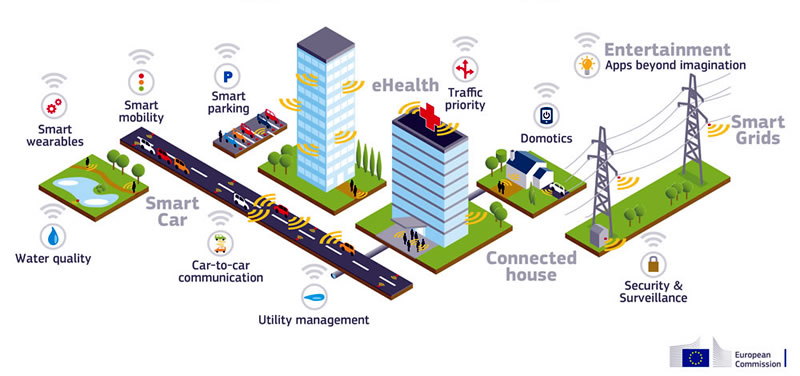
We see these accusations and the opposite defence by both that this is not happening. It is not what I believe, because I do not think that this is what is exactly happening. Yet, when Facebook offers the deepest and most granular population for your advertisement, it seems to me that it has access via portals to offer to advertisers a selection of people. Google does the same, it offers a portal for advertisers even though those advertisers will never know the identity of the individual; their advertisements go to the most likely interested people. So data is not sold, it is a semantic on how people are approached and by what means. This reality will grow over the next 5 years, especially through 5G and that is the group watchdogs 2 is now dealing with. You see, the reality of 5G is offering Smart mobility, domotics and Utility management. It also offers smart security and surveillance. Yet what Watch dogs 1 and now 2 in a larger extent addresses is that one man’s smart is another man’s stupidity. So is the world we move to as in the games or not? You see, the reality is catching up to the games and this game is showing the dangers of no privacy. The issue in reality is seen to some extent (at http://theconversation.com/there-really-is-a-link-between-your-facebook-posts-and-your-personality-68186), where we see “Privacy campaigners this week applauded Facebook’s decision to block big UK insurance firm Admiral from using young people’s social media data to help set their car insurance premiums. But this is just the start of a debate over the use of social media information for such purposes“, yet this the reality we faced for a while. The event seen in November this year happened in real life less than a month before Ubisoft voiced it in its game where people saw premiums rise because of life choices (like ordering pizza) and a mere 10 months after I mentioned it in ‘Double standards, no resolve (part 2)‘ (at https://lawlordtobe.com/2015/01/26/double-standards-no-resolve-part-2/), where I stated: “So if we do the following math 32% of 70 million (falsely assuming that they were all American gamers), then we now get the number of people confronted with a $144 a year additive. So in one swoop, this data set gives way to an additional $3.2 billion for insurance fees. Data is going to be that simply applied sooner than you think“, and guess what, UK insurance firm Admiral did try just that. Yet as we read: “Facebook’s decision to block” is just a shot across the bow, because when the genie is out of the bottle putting him/her back is much less of an option and data tends to get out into the open. If you doubt that, just ask the Mail server IT person of the Clinton family, he can assure you of that.

In this now, we get the point when gaming and reality get uncomfortably close. It is one thing when we play call of duty where it is just guns, guts and adrenaline. The reality of war tends to hold us back from doing stupid things, yet what happens when the reality is merely copying a file, how will we stop acting when we have misguided ourselves into believing that it is just a harmless file? When we see: “The Admiral case could well be remembered as just the beginning of a tortuous back and forth over using digital footprints in financial modelling“, yet the danger is seen in other ways too, yet it is not voiced. We pay a certain premium for a certain risk, yet it takes years to get a discount for loyal non claiming clients. It only takes one algorithm to raise it by 10% plus on collected data that is alleged of personality not a given and as such we get to pay for being social in many ways. This is a clear case of worry at the very end where we see “As long as companies use our data transparently and with our consent, why not allow both parties to an insurance transaction to rely on what appears to be very accurate data?“, because it might give a $10 relief for a healthy young person. It will cost anyone who had been in an accident an additional $200 a year and we have decades of data that these companies are run by greed driven people, board members who do want their 8 figure bonus and giving discounts is creating a gap of getting that bonus. Meaning that we sell our neighbours away for a few dollars whilst the neighbour is cut off from health insurance because he fell and hit his head, that is what the message on Facebook said and it did not come with an admittance or with evidence. That is the danger and Watch Dogs 2 shows that in clarity as you move from hacking router to hacking router.

The 5G guide gives us: “By 2020 it’s predicted that there will be 50-100 billion devices connected worldwide, many of which will need continuous data access“, which is a low estimate. Here at University I see people with a Laptop, a smart phone, some with additional Tablets and music stream devices. Now some of these elements overlap, some are used strictly separate, yet in all this the low estimate of 50 billion devices can easily be surpassed before 2020, and connection are growing in other ways too. Most TV’s are now Android enabled and connected to the home network, so are PC’s and consoles, so the average family will have 8-12 devices connected. That whilst the RFID world is only now starting up within the domestic household sphere, so this number will drastically change soon enough. This is what the Microsoft Enterprise Mobility team advertised today “At least 60% of security breaches start with employee credentials getting into the wrong hands. With modern mobility and bring-your-own-device solutions, protecting your data starts with protecting the identities of your organisation’s employees. That’s why we’ve made identity security central to Microsoft Enterprise Mobility + Security (EMS). Discover how focusing on identity can help make your organisation more secure“, I am not questioning on how needed this is, because mobile security needs to be on the top list of any person, whether as an employee or as a personal reason. You see a system that requires over a 100 patches on an annual basis has issues. Now, we need to accept that this was always the case and a system this big will always have flaws, yet when we see the level of issues in an age where non-repudiation is almost more important than digital evidence gives rise to the reality we face and the games we play.

Are we an algorithm?

Are we real is the question we should ask and whilst we play we are not the real us, we play to be Marcus Holloway in San Francisco, Ezio Auditore in Venice or Geralt of Rivia in some other place. We are seeing that Marcus Holloway is showing us a world that is the one we seem to live in and that should be a little more upsetting than it actually seems to be, because we remain in denial. Although, all things being equal, me working in a place like the Delaware data farm would be a dream come true. Who would not go weak at the knees seeing the tens of thousands of data servers all streaming data? The game story gives us several parts, many I will not speak here because I do not want to give away the game, it is so much better when you experience it for yourself, but the truth will hit you as it remains close to the reality we now see in newspapers, although without 5G none of it can come to pass to the degree we see. The question that we are faced in reality is that as we are valued and weighted by our social interactions, have we been minimalised to a mere algorithm, which then leads me to the question are Sociopaths soon the only people valued correctly? It certainly seems to be the case when we consider the elements of the Admiral insurance scenario. The SK Telecom white paper on 5G (at http://www.sktelecom.com/img/pds/press/SKT_5G%20White%20Paper_V1.0_Eng.pdf) goes as far on page 40 on combining Business Intelligence (BI), Network Intelligence (NI) to form within IoT (Internet of Things) to form Service Intelligence (SI), that whilst we now get one of the earliest official papers to set SI as a “It knows me better than I know Myself“, this will vamp soon enough as they state it themselves as ‘Telco Asset-based personalised service‘, which is pretty much the founding father of Mobile based Software as a Service, based on collected data. It is a stretch to call this a personal data based service level agreement, yet, I wonder how far off I am when I do that. In addition, at the IP conference last week, I predicted that by 2022, the total amount of Trade Marks will have grown by 300% on a global scale. 5G will be driving new versions and new iterations of corporations, many who missed the initial digital age boat, those will run like crazy to not miss a second of the next wave, because those who do will be corporations that become non-existent. If there is one part that Google AdWords and Facebook advertising are proving is that granularity will become the next key in those who advertise, although there is a case to be made that the current data at present is not voluminous enough to currently completely rely on this advertisement track, implying that this path seems to be less than 18 months away.

This is where we are going and Ubisoft was more than a little brilliant implying darker versions of reality in this game, especially in the San Francisco light of living, where freedom of identity is everyone’s Personal Jesus. So in light of that, the game does hold up, due to the improvements and in larger pat to the stories that connect to one another in the game, the fact that some elements are taken from life almost here is just the icing on the cake making for a sweet gaming treat.

So even as the corporate world at large has been ignoring non-repudiation as a bad taste, we see that 5G is no longer making that an affordable option as the collected data is  going to be key in the time of personal services. Don’t take my word for it, Edgar Allen Poe is stating the same thing on Facebook, as did Shakespeare who gave me his fax number (bonus points for those who know what film that was from). In an age of SaaS, SI and service personalisation’s, we will see a dependency on identity and more important the linking of certain elements, which also implies that messing with that part will be the prankster’s new ‘O’ (for Orgasm), giving non-repudiation a very new light in security requirement on a level we have not cared for before, although, the wrong people have not been not-caring on that requirement for a little too long. So as we realise that there is a reality to these things, as our reality caught up with the games we play, we might wonder where Marcus Holloway is. So Ruffin Prentiss (at @RPrentissIII), you need to get your ass in gear and save millions of potential victims from themselves soon enough!

smartfridgeNow, we know that an actor might not have the skills to do what is needed, yet in all fairness, some actors became president, so the call is not that far from centre, in addition, many require decent degrees to get a gig nowadays, not just in communication. The reality that Watchdogs uses is based on real issues, some providers offer ‘zero day exploit protection‘ at premium price, so when we saw “By 2020 it’s predicted that there will be 50-100 billion devices connected worldwide“, how many will have been engineered by the lowest bidder? How many zero day exploits will we be confronted with? Now, many of those devices will have no real information, but what about that ‘intelligent fridge’? Remember Admiral Insurance? What happens when he has that juicy list of your fridge? The fish fingers (optional with custard), the Pizza, all those sugary drinks. What happens when your parties become the health risk you advertised in your fridge, what happens when your health insurance premiums start going up? That reality is not that far-fetched, because Facebook isn’t giving that data at present, does not mean that Admiral Insurance et al cannot get their fingers on the data it wants and needs to spike premiums. That is the issue we all face. And the image of the ‘smart’ fridge is already 3 years old, implying we have come a lot further in less time. The reality of growth is here, but so is the realisation of personal secured privacy data and it did not require a game to give that reality to us, but Ubisoft is bringing this story in an excellent way, a way that should give cause to realise that our private needs of safety are not being met and we are giving away whatever privacy we had much easier and freely than we admit, because we do not realise what else can come of it.

Even as Google is calling this ‘the year of mobile’, there is every clear indication that 2017 needs to be ‘the year of personal data safety’. I wonder how many people realise how little they have done for themselves in that regard and if you have a PC or Console, Ubisoft has a game that can help you figure that part out, even though it is still a little futuristic for now.

Leave a comment

Filed under Gaming, IT, Law, Media, Politics, Science

The risk of androgynous automation

Today we see another message, another prediction and another approach to make people nervous. This time it is a combined effort from the fields of Oxford University and Deloitte, they find that ‘77% probability of ‘repetitive and predictable’ roles being automated‘ (at https://www.theguardian.com/society/2016/oct/25/850000-public-sector-jobs-automated-2030-oxford-university-deloitte-study).

So how true is this?

Actually, there is a lot of truth in it. The truth is not just a given, it is an essential need. Yet the headline ‘Study says 850,000 UK public sector jobs could be automated by 2030‘ is a problem, not one of disaster, but one of opportunity possibly missed. The article gives us a few things, including links to the full report (indirect), which is a good thing and let’s be honest, Deloitte is no PwC; they stand miles above that group of Excel users. My first issue is with page 2. Not because it is incorrect, but the difference from my view is as I see it more than semantics. You see, they state “eliminating the budget deficit – into an era of parallel challenges as it moves towards Brexit“. I believe that Brexit will enable over time a speedier recovery of the deficit, it will be no picnic, but it will happen. Which is why I in earlier writing opposed the view the independent had. They wrote “Britain’s largest banks are planning to move business overseas due to uncertainty over the Brexit process, the head of the British Bankers’ Association has warned“, where my response in a decently diplomatic tone was “So, let them fuck off! The moment they feel the initial 2018 collapse of the Euro and the US Dollar, which will be voiced as ‘our currency will face a temporary contraction of value’, then they will see the cost they face and the revenue they are now missing out of. So, feel free to consider to return after learning that mistake under conditions of massive administrative fees for consideration of inclusion into the UK economy“. This is not an empty view, when the UK returns to strength, those moved away will see contracting economies in Germany, where the Deutsche Bank will be desperate to retain business out of fear of the damage of ‘written off’ collapsing corporations. France will be in a similar state, but there Crédit Agricole and Natixis are the Powerbrokers and neither will consider some ‘grocery bank’ that is relocating to ‘new shores’, so these moving banks will not be too welcome there. And several other nations are in a similar setting. So what is left? Italy? Greece? Good luck with that idea!

So as the UK is facing new issues and new challenges, Deloitte is showing that it is not all roses. The report shows on page 12 “The OECD and IMF views are backed up by OBR analysis that suggests spending on investment, public services and benefits are the interventions most likely to provide rapid economic boosts while providing a platform for medium and longer term growth“, this illuminates an earlier issue that has been mentioned by yours truly (aka: me) more than once. It isn’t just the £11.2 NHS IT failure the UK Labour party gave its citizens. The bigger issue is that governments at large have had a failing grade in managing such projects. Over micro-managing made these projects too massive and in the end no longer feasible or realistic. If this is the path, than it needs to precede an altered adjustment in procedures on how to manage and set these projects. The issue we see that still is required for the NHS, also clearly shows that the political interference tends to be a hindrance rarely a solution. However, the political part cannot be removed, but the entire setup can be altered in another way. A clear definition of what is required, that would after this point be scrutinised by proper IT specialists working for the government (to keep that part of the costing down), only then when that part has been dealt with, can the project move into a new field. If this was the Law and Mental Health, it might be best phrased that the government needs an IT version of a Diagnostic and Statistical Manual of Mental Disorders (DSM-5). Such a manual would need a data requirement part, and application part, a data networking part and a security part. Until such an approach is made, the need that we see, will end up being a massive expenditure towards the Exchequers chest, with the risk of no result and no alternative. These paths make sense in two ways. In the first there will be a lot more clarity on what is requested, required and delivered. There will be less contractual mud and as such whomever took the project will be responsible for the delivered bad boy and it would show a clear path of adjustment and repairs (where needed).

There is even a new side in this, it will shape the required need of technical universities. Because as they become involved, delivering the hours and manpower towards these projects, the costing will be reduced, the Universities will also gain an income and their students would end up with a partial career and years of work and subsequent income. You see, the need to move away from these ‘conceptual consultants’ and selling concepts not products is an essential need to make it all work. There is even an additional benefit that larger IT corporations will lose their grip on governmental budgets and it will serve a wider audience, a change that has been overdue for at least 10 years.

The report gives on page 20 the public’s attitude. My issue is number 2. “More people expect public services to get worse because of Brexit“, I am not sure if that is complete. It is not incorrect, but the point of focus would reset really quickly when we consider the Guardian where we read “Deloitte’s previous work has shown that all sectors will be affected by automation in the next two decades, with 74% of jobs in transportation and storage, 59% in wholesale and retail trades and 56% in manufacturing having a high chance of being automated“, any automation where we see the change from personal towards an automated androgynous system, tends to cause waves of rejection and stress. Even today, we still have an automated irritation when we hear ‘press 1 for sales‘. Until we can upgrade these systems into a much better evolved system, automation will fluctuate into people seeking other avenues in acquiring that what they need. In addition, there is still an aversion to automated sales in some areas as distribution misses the quality marks the recipient demands in some cases. Now, we can all agree that there is plenty of evolution in this field and the evolution is growing in many directions and in long before 2030 we will have systems that are vastly superior to the systems we have today, that is the way the beast tends to work. There is also a given that we cannot yet predict how that will be in 5 years, yet all this requires a solid foundation between sales, services and facilitation/distribution and that part is currently still missing.

Now we get to the part that is a little bit of an issue with the report. We see that the top issue is ‘Better public transport‘, but better how? We see it on page 21 of the full report, so when we see ‘What things would you say would most improve public services in your area?’ Here, I miss a part where we see what the audience now feels is missing or failing. Is it prices, the amounts of times the public transport comes in, how busy it is (no sitting options), you see, they all come with extra costs. More busses means more costs. The solution that seemingly addresses all three mentioned, but is that the failure, the flaw or is it something else? I think that this issue remains subserving to the public’s personal issues ‘Poverty, inequality and low pay‘ as well as ‘Housing‘, which is all about the quality of life for most people. How to address that part is also an issue and automation does not address these policies in any way. Which is respectively 20% and 18% of an asked population of 1099 adults, which in my view is a population way too small to set this ‘State of the State‘ to. For a decent level of reliability, especially as the UK is a mere 65 million people, having a response quota 5,000-10,000 on a national level would have been an essential first. If the results were weighted towards the UK demographics, than it is likely that this report will have additional ‘flaws’, making me wonder who signed off on the requested paper?

There is another side the Guardian gives “However, in contrast to the doomsayers who predict mass unemployment, the firm has argued that over the last 140 years automation has created more work than it destroyed“, I am on the side of Deloitte here. In addition to creating more work, from the issues I raised earlier when considering that 10%-20% is moving towards retirement, the new jobs that are brought will be largely long term jobs and as the setting from tertiary IT education focusses on the governmental automation needs it already has as well as those we will likely see over the next 5 years, the overall quality of the workers in this field could rise almost exponentially when set this against the prepared workforce in the last 10 years. The result of better and more focussed workers will also increase the curve of automation as well as the quality of it. Part of the new data world is discussed on page 34 of that report. the quote “A police and crime commissioner compared data security challenges in the public sector to those in banking, concluding that banks “have secure information and have got away with it”” reads a little weird, yet the foundation of it is a requirement factor that will grow immensely. That field will grow in two ways. The first is the growing field of non-repudiation, a clear register that a certain person accessed certain data and only that person could have done it. This field especially if a cause for concern because there is a gap in technology here and especially in the case of NHS data, that gap needs to be filled (as well as several other fields). Should you doubt that, or prefer to trivialise this, then look towards Ashley Madison, the Office of Personnel Management, Anthem, Hacking Team and Premera. In effect totalling the endangered personal details of up to 150 million people. And this is only the hacks of 2015. When we see the upcoming move towards domotics, the overall danger of personal data getting out has the option of growing the number of people exposed by 1000%, basically a lot more than the complete UK population, at that stage even the sheep, sheepdogs and pony’s on Shetland could find their personal details online. This industry will grow, with a large club of international career opportunities in IT and the growing niche of Data Security.

In the end, we can agree with the numbers, or we can disagree. No matter how the meat is sliced, the recommendation on page 49 are in the end what matters. That part reads a little too diplomatic, but in all fairness they are points that count. Yet, as I personally see this, especially when set against page 2, I am missing something. You see, in my view, there is an item 6. I would state “This state will need to grow into a different dynamic (Government, Non-Profit and Commercial), it requires to grow its government policies by actively engaging and hiring the final year students into its governmental workplace and make them part of the IT evolution“.

It is my view that corporate needs will always exist, yet by preparing these students, graduating them and for them to adhere to corporate policies as they sell their innovations to government is all good for those corporations and I am not against that, because they will get a massive dose of that throughout their careers. There is nothing wrong by having these places of education create part of the engines of solution for the UK government. It falls directly in line with the thoughts in recommendations 2, 3 and 4.

The paper is a lot more than just about IT, even though IT takes the forefront here. When we look at the Guardian quotes “Interactive roles, which require “a high degree of personal interaction, including jobs such as teachers, social workers and police officers”, face a 23% chance of automation“, “senior staff in “cognitive roles that mostly require strategic thinking and complex reasoning, including finance directors and chief executives”, 14% have a chance of being automated” as well as “but the number of health service staff in this “interactive” job is expected to fall to 266,000 by 2030“. This grows another side in the IT business. Over the next 10 years we will see evolution and change as we see CRM systems and the interpretation of ‘What is a CRM system?’

The interpretation of ‘manage and analyse customer interactions and data throughout the customer lifecycle‘ has gone through massive change due to places like Google and systems like Facebook. This is an ongoing path and the inclusion of 5G and domotics over the next 5 years will create even more waves. It is starting to be almost essential that governments at large (not just the UK) are grabbing these changes by the proverbial balls before we see another iteration of lagging adapted technology. It is not the requirement to be ahead, but to be ‘inclusively ready’ will turn the tables on many issues. To be ready to include within the current technological iteration would give an additional decade of data and opportunities, whilst not adhering to these large changes could become increasingly costly over time. In an age where we move towards automation the need to be ahead is not the most essential one, it is staying behind where the danger lies. In that regard, you end up having to adhere towards whatever the commercial technologist brings, instead of shaping technology in ways where it is most useful for you.

A lesson most have learned the expensive way in this generation.

If there is one part I have to disagree with, than it is “Our wider research on automation also shows that while jobs are displaced by automation, new, higher-skilled and better paying jobs are created as a result“, the issue is not the need for these people, but as governments are no longer able to afford certain pricing plans (as those commercial managers hope they could price them at), it becomes a market where the cheapest provider is willing to offer it on, meaning that junior staff gets to be under higher scrutiny for less money, in a place where unemployment is relatively high, these hiring managers will get away with it. I reckon that the market will positively adjust by 2021, but that is still 5 years away. Unless you are a niche specialist, it will be your fate, but overall the quality of life would start to go up by 2019 (due to rising cost of living, aka rent), that is if you have the right degrees.

A slightly gloomy picture that is absent of doom and still a lot better than the issues the EU population overall is facing over the next 3 years.


Leave a comment

Filed under Finance, IT, Politics

Non iudicium tuum

This telling is a little overdue. You see, when you are looking at one aspect, when the aspect is blended into the frame, it tends to be a larger puzzle to decipher where the colours have ended up. You see, when you start the painting, you work with blue, yellow and perhaps a little red. So before you know it, you have in addition purple, Green, Orange and at times brown appears. Yet, how much of yellow is in each of the blends? Do not think it is a black and white path, it is tainted in contrast and the one trying to decipher it all is in the largest of dangers by letting his or her ego speak in the extent that the amount of yellow that made green is used. It isn’t always science, it is at times art. This is the path of intelligence analyses and whomever is pointing its finger at a mere correlation table of SIGINT (or Business Intelligence) will for the most never have a clue what got themselves into that number and they end up painting themselves into a corner, the deadliest of actions in any given analytical equation.

So when I initially got to the fact that the foundation of the Huawei revenue was down 4.25%, I was looking at the base of it. You see, like the blending of colours, Huawei is also getting blended. Samsung would be the strongest indicator why their profits are up by a fair share. In addition as Apple disappointed to the smallest equation is an equal measure of the impact, yet Google is about to hit the revenue ball out of the park with the Pixel and Pixel XL, where it now seems that filling the initial US and UK orders is no longer feasible, the demand for this communication jewel is crushing all expectations raising the bar by a sizeable amount, something we have not seen since the early days of the Apple iPhone.

You see, in July the Financial Times reported on operating margins shrinking, even though revenue surged 40% (for Huawei), the quotes aren’t too ‘informative’, you see the answer isn’t always easy when a brand is global. Yet this quote will help “But while revenue surged, picking up from 30 per cent growth in the same period last year, Huawei’s operating margin shrank from 18 per cent to 12 per cent, the privately owned company said on Monday“, yes the revenue went up by a lot, mainly because over the previous year Huawei was very aggressive offering the P7 at such discounts that in its league it was almost the only choice to make. Other models were sold at very sharp prices, giving shoppers clear reasons to select something that seemed too good to be true. The rest at the Financial Times is pretty spot on, but incomplete. (at https://www.ft.com/content/12a427e2-5232-11e6-befd-2fc0c26b3c60).

It is the next quote I have an issue with “Sabrina Meng, Huawei’s chief financial officer, predicted the strong sales would continue through the year: “We are confident that Huawei will maintain its current momentum, and round out the full year in a positive financial position backed by sound ongoing operations”“, as stated before, people are getting more and more clued in on what is required in a smartphone, as they went the way of Samsung and others in limiting what was available the market is slowing down for them, it will slow down faster and faster as they ignored to comprehend their mobile customers. The lesson Apple knew and Google comprehends at presale is the reason that the Huawei and other markets will slow down even further. Don’t get me wrong, they will still make a profit, but their mobile share will take a hit (when we exclude the Samsung shift). By listening to the wrong analysts and not realising that their production path could have been optimised by not giving in to fragments, the margin was kept low. This is a choice you can make, and it comes with consequences.

Huawei is following Microsoft, Motorola, Sony and a few others in this. And as we see the news in the corner on how others are following the P9 dual lens, they are all ignoring the main element in all this, it is storage plain and simple! That is, for the consumer users, in addition, when we see Ericsson dive deep down into a 94% drop, we need to consider the quote that IT News gave (at http://www.itnews.com.au/news/ericsson-profits-plunge-94-percent-439317) “Acting CEO Jan Frykhammar was confident Ericsson could fight back, noting it had faced a similar situation in 2007-2009 when it was waiting for demand for 4G technology to kick in“, you see, ‘waiting’ is the issue, you either take the lead and jump or let the revenue slide by, that was the consequence. They gave up the mobile smartphone a long time ago, as there was no way to compete with the market. In addition, Ericsson has been dropping the ball on a few telecom fronts.

I think it is relatively safe to state that there is a lull in the Telecommunication market (in general). The final quote “Our result is significantly lower than (what) we expected, with a particularly weak end of the quarter, and deviates from what we previously have communicated regarding market development,” said acting Ericsson CEO Jan Frykhammar” this sounds like an answer, yet it is not.

Is he showing that he had no way to forecast what the market was doing?
Is there no correct focus on ‘market development’?

The Ericsson case is showing us that there is more than one issue. In the same state we have to see that Huawei is a lot more than just mobile phones, as it is with Ericsson, yet as I personally believe it to be, some places aren’t thinking through, at l;east not to the extent that they should be thinking it through. They are trying to get back to the ’98 time when they were getting rich by selling concepts. I see it as backward thinking. Ericsson states on their website “Opportunities in 5G! We asked 650 executives from 8 industries how they use communications technology today, which use cases are likely to dominate their industry, and what business reasons are driving them to move to 5G“, which is not untrue, but as we see the PR machine waking up 4 years early on the biggest opportunities that are eligibly coming, whilst there are still 4 general meetings and as I see it no less than 8 shareholders meetings, so focussing on the now is extremely essential (don’t you agree?), this is why Ericsson got to drop 94%, the ‘now’ is not covered and we only have yesterday’s technology to compare it to. If you wonder about 5G, look here:

https://5g.co.uk/guides/what-is-5g/

what-is-5g-euroWhat is important is “Huawei is planning to launch the first 5G pilot network with its partners in 2018. Interoperability testing is to be completed in 2019 ahead of a commercial launch in 2020. Ericsson is planning to demonstrate 5G at the Winter Olympics in South Korea (as is Samsung) and at the World Cup in Russia, both in 2018“, this sounds nice, and it actually is, but consider that the devices that need to be there are not created yet, so they are dealing with old tech that is soon no longer interesting, whilst todays needs that shows clear forward momentum thinking is not shown by either and relying on 32GB mobile devices is definitely not it. So the consumer at present is looking at buying at least 2 more mobiles in the next 5 years, so having one now that last 3 years is a massive requirement as I see it. In addition, lowering the upcoming threshold is an initial requirement. The image on that page, shown here, is the first step. The image shows two elements. In the first we see ‘smart mobility‘ and ‘smart wearables‘ in the second we see ‘domotics‘ and ‘Entertainment, apps beyond imagination‘. This gets us now back to ‘Viewpoint to a point of view‘ (at https://lawlordtobe.wordpress.com/2016/10/05/viewpoint-to-a-point-of-view). Google wasn’t just ‘on the ball‘ they are now leading the game and are the new game deciders in the field where everyone wants to play. In that presentation on Google Home they showed to be active in all four elements, and they are now leading in at least two of them. That is the part Huawei ignored. And as so called 2018 G5 partners they had the option to lead the field, they just decided not to do so. By using the initial Apple approach, the Pixel and Pixel XL offer the 128 GB solution for $150 more. Meaning that your phone could last you until 2020 and only when the 5G requirement is actually needed, the current Google solution will give you some of what 5G is supposed to offer, so you will only be upgrading the centre of the hub of your domotics, namely your mobile phone. The rest will most likely already be there, so that is why we see the shift.

So is my view tainted?
It is!

I look at a lot more elements than the consumer will, yet in all this, the consumer is already getting exposure to these elements and as such we see a level of contrasting within the consumers choice that we haven’t seen before, that elements needs to be taken into account as well. Whasun Jho who has published works regarding building Telecom markets. As he sees it and I agree we see a contrasting in the Telecom markets where we see the growth of facility based competition versus service based competition, I believe that the second is only a field of combat if your hardware isn’t up to specs to deal with the wave that will follow over the next 5 years, so in that Huawei, as I stated in the past had the option to grow the market to rule as they went with sharp competition in 2015, they now gave it away by seeking margins instead of overpowered ruling through superior options. In my view as we see where limitations were the only options, it was about competition between providers of the same or similar services (in Australia Telstra versus Optus) and by giving in, they are now losing market share that I stated is a base drop of 4.25% and could rise to 11% before Christmas, almost literally depending on the power of Google’s devices as accepted by the global consumers. In this situation, it is not a given that Google would switch to a Software As A Service path, but by offering the path on corporate whilst leaving the consumers with open and negligible costs, the image as shown implies that ‘smart’ elements and ‘domotics’ will give us Google at number one, with a massive advantage for the longest of times, that is, unless the players change their ways and right fast. Because when proven to work, customer loyalty will soon be the most important metric in this telecom shift. Samsung gambled and got hit hard, yet they are not out. One burning battery does not stop a company the size of Samsung and a lot of burning batteries makes for a fun roasting of Marshmellows (pun intended).

So here we see the use of colours. Which colour is what is not a given and does not matter, what matters is what the consumers and what the corporations need, in the next 3-4 years it will all be about what will last longer, not some hardware as a service that requires annual replacement. Ericsson shows us what happens when you are not proactive on the ball and there will be the licking of wounds for some time there, in addition, as we see the mobile iteration (Experia Z to Z5), actions that I call to be an iterative market that has no chance to survive. sweetening deals like a couple of movies has no place here as I see it, it seems like a quick fix and it is, yet in that Sony has made that mistake a few times too often and Huawei should have learned from those failures. They were all options that could have been avoided and it will hurt Huawei, yet in all this they too are not down or out. Just a little bruised as I see it. So we will see a market that will shift over the next 4-6 weeks. Yet in the end there is no certainty on how matters are impacted. What is clear is that the Telecom market will shift in a massive way, those who do not shift with that market are most likely the players that will not make it to 2019, an extreme prediction, yet will I be wrong?

Consider what the market is trying to imbue to us between 2017 and 2021/2022. As per 2018 you should only consider a device that will last that initial transition (software without the 5G speed), and the one after that will have the speed if you want to play on that level. So buying with clear common sense could save you $1000-$1800, that is for most people serious money, for those relying on a new plan with a new phone, you better remember that soon such a solution might not be that easy to get, or that cheap. The Telecom providers will remain facility based competition, yet the market we swim in is more and more becoming service based, so we need the right device that can deal with this and for telecom companies to keep on playing a ‘this will do for a year‘ isn’t thinking forward, or at least just limited short term. A game we cannot go along with and there are enough people to realise this danger, which is what is pressuring the Huawei market as I personally saw it.

There is more to all this, but a market that revolves on ‘We decide your choice‘ is not a choice, it is a limitation, something that Google is building awareness on by showing us what is possible and then offering the overkill device for a mere $150 extra, like Apple did, but Apple didn’t come with the shown benefits of actually showing us that part. As you realise that you already knew most of these elements as you YouTubed your way through the internet universe, consider the options your phone don’t allow for at present. There is no reason to suddenly update the phone at present, but you should realise that these limitations will hinder you in the future and realising what you need in three years is more and more important in today’s mobile market. It is something you only need to be aware of at present, when the shift comes you will be ready with the right phone and with the options to do it all (without getting pushed into spending $1000+ overnight), as well as the option to keep your movies, your photos, your Pokémon’s, as well as whatever the domotics apps universe brings to your mobile.


1 Comment

Filed under Finance, IT, Media, Science

Viewpoint to a point of view

It all started at 04:00, Google started their announcement of Google Home (which blew me away and that is a rare thing) and Google Pixel, which instantly proved my telecom issues of mobile phones and memory. Shortly after that George Monbiot gave me ‘Lies, fearmongering and fables: that’s our democracy‘ (at https://www.theguardian.com/commentisfree/2016/oct/04/democracy-people-power-governments-policy). It is an excellent piece, because it made me ask questions of myself and how I saw things. I have never proclaimed to have all the answers, I give insights and I oppose other views without personally attacking them. You see, many disagreements are not always on the facts, but on the points of view, usually that view is laced in a perceived (non-)factual interpretation of what we observe. So let’s take a look.

You see, when we get to “Democracy for Realists, published earlier this year by the social science professors Christopher Achen and Larry Bartels, argues that the “folk theory of democracy” – the idea that citizens make coherent and intelligible policy decisions, on which governments then act – bears no relationship to how it really works. Or could ever work“, now, we can accept that, or we can consider another option without stating that this view was wrong, because it isn’t.

You see, this is what happens ‘citizens make coherent and intelligible policy decisions‘, which leads to ‘on which governments then act‘, yet the reality is that ‘coherent and intelligible policy decisions‘ tend to be made through the information given to us by the news and by the newspapers, yet too often they do not completely inform, they voice too often the point of view that a government (or benefiting party) wants us to see (or obscure). For example, the previous government of the Netherlands with their approach to ‘managed bad news‘. I wrote about those events in 2013 and 2014. Why what this happening? Well, I was clearly aware of a non-reality of their overly positive news on how commerce would improve, pretty much all the Dutch shared that sentiment and a real revelation would have meant harsh cutbacks, yet that government did not want to do that, so the Dutch were informed of overly positive news, and after the spending date, the NOS started to ‘release’ (read: voice) news regarding setbacks. Not all at once, but step by step by step. So what we perceive to be ‘intelligible’ is nothing more but a reaction to what should be regarded as ‘misinformation’. My defence here was that I foresaw the not so good economy. I (with no economic education) was off by 0.4% (too negative) and the economic experts on high incomes were off by 0.9% (too positive). I’ll let you decide this one!

The next quote is even better “In reality, the research summarised by Achen and Bartels suggests, most people possess almost no useful information about policies and their implications, have little desire to improve their state of knowledge, and have a deep aversion to political disagreement“, now, there is one part that is an absolute given in most occasions ‘most people possess almost no useful information about the implications of policies‘, that is one truth that is undeniable, even the more alert and aware people tend to miss things there, because, unless you are not part of it, you tend not to be fully in the know. It is almost a non-issue, yet the other part of policies is because getting a politician to sit down and explain it all is usually and equally a non-option, the more relevant info the politician has, the less likely it will be to find him available to explain it all. The best example would be the global collection of ministers of defence. Now, I am not talking about the hush hush stuff, because it would be a low and simple blow to get towards the classified stuff. No, I am talking about the large open things. So let’s state a NATO member, its Minister of Defence and Raytheon agreements. Some news now only 14 hours old (at http://www.army-technology.com/news/newsraytheon-to-upgrade-antpy-2-radars-with-gan-technology-5021950), seems to give NATO (initially just the US) with an advantage. So the quote from Dave Gulla who said: “GaN components have significant, proven advantages when compared to the previous generation GaAs technology“. Yet, when we take a look Patent US 6586778 B2, (at https://www.google.ch/patents/US6586778), we see “A gallium nitride layer is pendeoepitaxially grown on weak posts on a substrate that are configured to crack due to a thermal expansion coefficient mismatch between the substrate and the gallium nitride layer on the weak posts. Thus, upon cooling, at least some of the weak posts crack, to thereby relieve stress in the gallium nitride semiconductor layer. Accordingly, low defect density gallium nitride semiconductor layers may be produced. Moreover, the weak posts can allow relatively easy separation of the substrate from the gallium nitride semiconductor layer to provide a freestanding gallium nitride layer“. At this point I would initially state ‘Oops!’, yet that is not the issue, because there is a patent, means that there is a solution. The issue is not the fact that there is a solution, but that the solution is patented, in addition, we see an august article (at https://www.sciencedaily.com/releases/2016/08/160801093236.htm), which gives us the summary of “From 2020 the 5G mobile standard is aiming to transmit data rapidly and energy-efficiently. For that purpose researchers are developing new power amplifiers based on the semiconductor gallium nitride“. So now we have an old fashioned horse race, because did that Minister of Defence realise that Raytheon is relying on parts that will drive the costs through 5G needs sky high? So, we are a looking at something that has an optional growth opportunity of close to 50,000% (blatantly extremely speculative by yours truly), so how will that drive the prices? In the UK who will get the sharp component deal, those servicing 68 million mobile users, or that one ministry of Defence? #JustAsking

So here you see information in action. Moreover, from my point of view, it is speculative as well. My speculation is that the Gallium Nitride (GaN) will grow so fast in demand that it will drive up prices fast and near exponentially (and with that the margins they had). Is that speculation so far out of bounds? You only need to remember the 4G rush to know that I am right. And if the patent has any real impact until 2023 as conditional initial end date, then North Carolina State University could end up with both the Angels share and the Devils Cut, which is a nice deal to begin with (for them that is), yet for the rest, it will drive prices up fast and by a large amount. Was this considered and is my view right or wrong?

So this technology war is not over, not by a long shot.

Now this is just one instance, for one nation. And when we ignore classified materials, how many issues play in this alone and where have we not looked? Now, we cannot expect that all issues were dealt with in the initial approach, but when we see that these issues are now undertaken and there is no direct solution, how much higher will the cost be in the end? So, without these facts, would the other NATO members dump the Raytheon upgrade? Is the upgrade mandatory, or even perhaps, my point of view is wrong. The last one is still valid, yet in my defence, what happens when there is suddenly a shortage of something? Show me one instance when the price of the goods were not spiralling upwards. I remember the chip war and the memory bank war. In those days, those critters were on a day price, it was like buying a lobster for Pete’s sake (not the other Pete, because he is a Vegan).

Yet part of my views are seen in “Direct democracy – referendums and citizens’ initiatives – seems to produce even worse results. In the US initiatives are repeatedly used by multimillion-dollar lobby groups to achieve results that state legislatures won’t grant them. They tend to replace taxes with user fees, stymie the redistribution of wealth and degrade public services. Whether representative or direct, democracy comes to be owned by the elites“, Geoff deals with lobby groups, which is what I raised too, yet in my view, I looked at the (miss)-presented side and in the past, just a few days ago, I raised the incapability of tax reforms, all over Europe for that matter. It seems that taxation is a pox on both houses, this whilst both sides know it is essential, yet from 2013 onwards the US has done so much to utterly stop the essential overhaul from happening.

So, I loved the article because it showed for the most my point of view (as I have stated it for many months), from another viewpoint, which is always nice. An article that should wake us up not to the lack of Democracy, but to the realisation how democracy is shaping us all to no longer seek it and spearhead the presented needs straight into the direction that helps big business the most (for now). So did we elect the wrong politicians, or were we only given the media that made us choose the individual currently in charge? Here I now look towards the dozens of morning shows that ‘do’ the news on a local level, but sugar coat a massive part outside of those few minutes on the whole and half hour to push opinions and interpretation of events, ‘guiding’ us towards a choice we could have avoided. As media changed so fast, whilst we did not keep up, we saw our fenced pasture change into a maze of fences and no way to see where the exit is.

This democratic world reminds me of the wisdom seen on a card: “and God promised men that good and obedient wives would be found in all corners of the world…then he made the Earth round…and he laughed and laughed“, which reverberates here too, ‘as democracy reached all corners of the earth’, you get the idea!


Leave a comment

Filed under Finance, IT, Media, Military, Politics, Science

Chicks for free

Yup, that is the name of the game, how to get your chicks for free. You can go towards the end seeing what you can pick up from the free handing from the tray that serves the drinks and babes, but the song is not that simple, you see The Dire Strait sang: “Get your money for nothin’ get your chicks for free“. The song refers to doing things for fun, when it is fun, at times it feels like you are not working at all.

In my view the expression has evolved. As I see it, ‘money for nothing‘ is more and more about value for money. Deals that are too good to pass up. Here we now get to the issue at hand. We look at players like Apple (with their iPhone), Google (with their Nexus) and several other players like Nokia, Microsoft, Samsung, LG and a few others, yet the one player many ignored, namely Huawei did what others would not in their iterative field of exploitation. They decided to give the people value for money, not some half-baked offer, but the power offer that the models P7 and Mate7 are bringing. The P7 priced at almost 50% of the old models of most is more than a contender, in addition, the Mate7 offers a massively stronger device than the new models from Samsung, Apple, LG or Nokia can offer, hundreds of dollars cheaper. So now we get to the BBC article (at http://www.bbc.com/news/business-32126628). So the quote “The world’s second biggest telecoms equipment maker said its net profit was 27.9bn yuan ($4.5bn; £3bn), up from 21bn yuan in 2013” is not all about mobile phones, but Huawei is now quickly showing to be the number one choice for consumers and students (consumers, usually lacking in funds) alike. It seems to me that even though there is a decent group with funds that is all about value for money and that group has been ignored by the providers at large, which means that Huawei is now sweeping the nations on a global level. There are two parts in the story, which become a concern.

The first one is “Huawei’s growth comes despite it facing challenges in several major economies. In the US, it was branded a national security threat by legislators, because of its alleged close ties with the Chinese government“. There is no clarity on how precise this quote is (the next one will touch on this). So, if the statement is true, how about OOCL (containers) and Evergreen (Taiwan containers). Are they a security threat? I think it goes further, as some players were sitting on their hands, Huawei has been growing the business globally, now they are ready to get into bed with ‘facilitators’ in a very wide area of business. If we look at the Huawei Tecal servers we see a device that goes beyond simple needs. Its citrix compatibility gives a first view that soon Huawei will be the number one choice for new SaaS solutions, mobile providers of consultancy but from a cloud environment, meaning that these new engineers will be global. They are not ready for the next part yet, the issue is not just the data; it is about the transit mode of data for Huawei. They are now one step away from nibbling at the feet of Cisco. Cisco is comfortable for now, but that could soon change. You see, in 2012 Huawei was not ready for any of it, but they remained quiet for 2 years whilst their consumer market grew, now within a year, if their router solutions are decently shielded, they can move forward.

Now we get the second quote: “Meanwhile, it has been banned from being involved in broadband projects in Australia over espionage fears“. Really? So American solutions are not any kind of espionage fear? I am not judging, it seems to me that either our personal data goes to America or China. The article does not seem to elaborate on this part. This we see in the final quote of the article: “However, the company said it was well positioned to capture business opportunities with heavy investment in innovative areas such as cloud computing and fifth generation (5G) mobile technology“. Personally, I do not think that 5G is anywhere near an option for providers of mobile networking at present in any affordable kind of way, but the cloud is another matter. Whatever next part will be used to get business growing and moving forward will require the cloud. Yet, as I saw it for the last two years, security is just not good enough, not from any provider. That part can be seen in this place: http://2015itss.ucdavis.edu/event/the-weak-link-in-cloud-security-2/, here we see the following: “This session will illustrate and demonstrate that the very collaborative nature of SaaS (Software as a Service), such as Box or Google Apps, may also be their weakness. When organizations adopt cloud applications, users must take care to ensure that the organization’s sensitive cloud data does not end up in the wrong hands“. This is at the core of one of several issues. SaaS is only one part. The adoption and implementation is at the centre of a cloud that could be the fog that keeps us all blind as we lose data towards whatever provider of consultancy requirements were miscommunicated too. What a weak data web we weave for ourselves!

This event in June 2015 shows several more issues that we all in business need to consider as we are at times decently in the dark of that what must happen and that what needed to be done. The reality is that Huawei is not even a factor here, this all becomes an issue in any implementation. So why is there no clearer broadband issue? Is there truly a Chinese espionage fear, or are some players too dependent on whatever solution SaaS offers and in this stride, data leakage will be an issue from day one, whether the owner of the solution is Chinese or other. What is without a doubt is that Huawei is making massive strides, they are doing it in places where they were not a consideration 6 months ago! So what is wrong with the picture I am showing you?

I am not showing you any picture, but I am implying that the other big players (all American) are currently losing out on business, on revenue and on profit.

I wonder how the Dow will take it!


1 Comment

Filed under Finance, IT, Media, Politics, Science