Tag Archives: AI

Waking up 5 years late

I have had something like this, I swear it’s true. It was after I came back from the Middle East, I was more of a ‘party person’ in those days and I would party all weekend non-stop. It would start on Friday evening and I would get home Sunday afternoon. So one weekend, I had gone through the nightclub, day club, bars and Shoarma pit stops after which I went home. I went to bed and I get woken up by the telephone. It is my boss, asking me whether I would be coming to work that day. I noticed it was 09:30, I had overslept. I apologised and rushed to the office. I told him I was sorry that I had overslept and I did not expect too much nose as it was the first time that I had overslept. So the follow up question became “and where were you yesterday?” My puzzled look from my eyes told him something was wrong. It was Tuesday! I had actually slept from Sunday afternoon until Tuesday morning. It would be the weirdest week in a lifetime. I had lost an entire day and I had no idea how I lost a day. I still think back to that moment every now and then, the sensation of the perception of a week being different, I never got over it, now 31 years ago, and it still gets to me every now and then.

A similar sensation is optionally hitting Christine Lagarde I reckon, although if she is still hitting the party scene, my initial response will be “You go girl!

You see with “Market power wielded by US tech giants concerns IMF chief” (at https://www.theguardian.com/business/2018/apr/19/market-power-wielded-by-us-tech-giants-concerns-imf-chief-christine-lagarde) we see the issues on a very different level. So even as we all accept “Christine Lagarde, has expressed concern about the market power wielded by the US technology giants and called for more competition to protect economies and individuals”, we see not the message, but the exclusion. So as we consider “Pressure has been building in the US for antitrust laws to be used to break up some of the biggest companies, with Google, Facebook and Amazon all targeted by critics“, I see a very different landscape. You see as we see Microsoft, IBM and Apple missing in that group, it is my personal consideration that this is about something else. You see Microsoft, IBM and Apple have one thing in common. They are Patent Powerhouses and no one messes with those. This is about power consolidation and the fact that Christine Lagarde is speaking out in such a way is an absolute hypocrite setting for the IMF to have.

You see, to get that you need to be aware of two elements. The first is the American economy. Now in my personal (highly opposed) vision, the US has been bankrupt; it has been for some time and just like the entire Moody debacle in 2008. People might have seen in in ‘the Big Short‘, a movie that showed part of it and whilst the Guardian reported ““Moody’s failed to adhere to its own credit-rating standards and fell short on its pledge of transparency in the run-up to the ‘great recession’,” principal deputy associate attorney general Bill Baer said in the statement“, it is merely one version of betrayal to the people of the US by giving protection to special people in excess of billions and they merely had to pay a $864m penalty. I am certain that those billionaires have split that penalty amongst them. So, as I stated, the US should be seen as bankrupt. It is not the only part in this. The Sydney Morning Herald (at https://www.smh.com.au/business/the-economy/how-trump-s-hair-raising-level-of-debt-could-bring-us-all-crashing-down-20180420-p4zank.html) gives us “Twin reports by the International Monetary Fund sketch a chain reaction of dangerous consequences for world finance. The policy – if you can call it that – puts the US on an untenable debt trajectory. It smacks of Latin American caudillo populism, a Peronist contagion that threatens to destroy the moral foundations of the Great Republic. The IMF’s Fiscal Monitor estimates that the US budget deficit will spike to 5.3 per cent of GDP this year and 5.9 per cent in 2019. This is happening at a stage of the economic cycle when swelling tax revenues should be reducing net borrowing to zero“. I am actually decently certain that this will happen. Now we need to look back to my earlier statement.

You see, if the US borrowing power is nullified, the US is left without any options, unless (you saw that coming didn’t you). The underwriting power of debt becomes patent power. Patents have been set to IP support. I attended a few of those events (being a Master of Intellectual Property Law) and even as my heart is in Trademarks, I do have a fine appreciation of Patents. In this the econometrics of the world are seeing the national values and the value of any GDP supported by the economic value of patents.

In this, in 2016 we got “Innovation and creative endeavors are indispensable elements that drive economic growth and sustain the competitive edge of the U.S. economy. The last century recorded unprecedented improvements in the health, economic well-being, and overall quality of life for the entire U.S. population. As the world leader in innovation, U.S. companies have relied on intellectual property (IP) as one of the leading tools with which such advances were promoted and realized. Patents, trademarks, and copyrights are the principal means for establishing ownership rights to the creations, inventions, and brands that can be used to generate tangible economic benefits to their owner“, as such the cookie has crumbled into where the value is set (see attached), one of the key findings is “IP-intensive industries continue to be a major, integral and growing part of the U.S. economy“, as such we see the tech giants that I mentioned as missing and not being mentioned by Christine Lagarde. It is merely one setting and there are optionally a lot more, but in light of certain elements I believe that patents are a driving force and those three have a bundle, Apple has so many that it can use those patents too buy several European nations. IBM with their (what I personally believe to be) an overvalued Watson, we have seen the entire mess moving forward, presenting itself and pushing ‘boundaries’ as we are set into a stage of ‘look what’s coming’! It is all about research, MIT and Think 2018. It is almost like Think 2018 is about the point of concept, the moment of awareness and the professional use of AI. In that IBM, in its own blog accidently gave away the goods as I see it with: “As we get closer to Think, we’re looking forward to unveiling more sessions, speakers and demos“, I think they are close, they are getting to certain levels, but they are not there yet. In my personal view they need to keep the momentum going, even if they need to throw in three more high exposed events, free plane tickets and all kinds of swag to flim flam the audience. I think that they are prepping for the events that will not be complete in an alpha stage until 2020. Yet that momentum is growing, and it needs to remain growing. Two quotes give us that essential ‘need’.

  1. The US Army signed a 33-month, $135 million contract with IBM for cloud services including Watson IoT, predictive analytics and AI for better visibility into equipment readiness.
  2. In 2017, IBM inventors received more than 1,900 patents for new cloud technologies to help solve critical business challenges.

The second is the money shot. An early estimate is outside of the realm of most, you see the IP Watchdog gave us: “IBM Inventors received a record 9043 US patents in 2017, patenting in such areas as AI, Cloud, Blockchain, Cybersecurity and Quantum Computing technology“, the low estimate is a value of $11.8 trillion dollars. That is what IBM is sitting on. That is the power of just ONE tech giant, and how come that Christine Lagarde missed out on mentioning IBM? I’ll let you decide, or perhaps it was Larry Elliott from the Guardian who missed out? I doubt it, because Larry Elliott is many things, stupid ain’t one. I might not agree with him, or at times with his point of view, but he is the clever one and his views are valid ones.

So in all this we see that there is a push, but is it the one the IMF is giving or is there another play? The fact that banks have a much larger influence in what happens is not mentioned, yet that is not the play and I accept that, it is not what is at stake. There is a push on many levels and even as we agree that some tech giants have a larger piece of the cake (Facebook, Google and Amazon), a lot could have been prevented by proper corporate taxation, but that gets to most of the EU and the American Donald Duck, or was that Trump are all about not walking that road? The fact that Christine has failed (one amongst many) to introduce proper tax accountability on tech giants is a much larger issue and it is not all on her plate in all honesty, so there are a few issues with all this and the supporting views on all this is not given with “Lagarde expressed concern at the growing threat of a trade war between the US and China, saying that protectionism posed a threat to the upswing in the global economy and to an international system that had served countries well“, it is seen in several fields, one field, was given by The Hill, in an opinion piece. The information is accurate it is merely important to see that it has the views of the writer (just like any blog).

So with “Last December, the United States and 76 other WTO members agreed at the Buenos Aires WTO Ministerial to start exploring WTO negotiations on trade-related aspects of e-commerce. Those WTO members are now beginning their work by identifying the objectives of such an agreement. The U.S. paper is an important contribution because it comprehensively addresses the digital trade barriers faced by many companies“, which now underlines “A recent United States paper submitted to the World Trade Organization (WTO) is a notable step toward establishing rules to remove digital trade barriers. The paper is significant for identifying the objectives of an international agreement on digital trade“. This now directly gives rise to “the American Bar Association Section of Intellectual Property Law also requested that the new NAFTA require increased protections in trade secrets, trademarks, copyrights, and patents“, which we get from ‘Ambassador Lighthizer Urged to Include Intellectual Property Protections in New NAFTA‘ (at https://www.jdsupra.com/legalnews/ambassador-lighthizer-urged-to-include-52674/) less than 10 hours ago. So when we link that to the quote “The proposals included: that Canada and Mexico establish criminal penalties for trade secrets violations similar to those in the U.S. Economic Espionage Act, an agreement that Mexico eliminate its requirement that trademarks be visible, a prohibition on the lowering of minimum standards of patent protection“. So when we now look back towards the statement of Christine Lagarde and her exclusion of IBM, Microsoft and Apple, how is she not directly being a protectionist of some tech giants?

I think that the IMF is also feeling the waters what happens when the US economy takes a dip, because at the current debt levels that impact is a hell of a lot more intense and the games like Moody’s have been played and cannot be played again. Getting caught on that level means that the US would have to be removed from several world economic executive decisions, not a place anyone in Wall Street is willing to accept, so that that point Pandora’s Box gets opened and no one will be able to close it at that point. So after waking up 5 years late we see that the plays have been again and again about keeping the status quo and as such the digital rights is the one card left to play, which gives the three tech giants an amount of power they have never had before, so as everyone’s favourite slapping donkey (Facebook) is mentioned next to a few others, it is the issue of those not mentioned that will be having the cake and quality venison that we all desire. In this we are in a dangerous place, even more the small developers who come up with the interesting IP’s they envisioned. As their value becomes overstated from day one, they will be pushed to sell their IP way too early, more important, that point comes before their value comes to fruition and as such those tech giants (Apple, IBM, and Microsoft) will get an even more overbearing value. Let’s be clear they are not alone, the larger players like Samsung, Canon, Qualcomm, LG Electronics, Sony and Fujitsu are also on that list. The list of top players has around 300 members, including 6 universities (all American). So that part of the entire economy is massively in American hands and we see no clear second place, not for a long time. Even as the singled out tech giants are on that list, it is the value that they have that sets them a little more apart. Perhaps when you consider having a go at three of them, whilst one is already under heavy emotional scrutiny is perhaps a small price to pay.

How nice for them to wake up, I merely lost one day once, they have been playing the sleeping game for years and we will get that invoice at the expense of the futures we were not allowed to have, if you wonder how weird that statement is, then take a look at the current retirees, the devaluation they face, the amount they are still about to lose and wonder what you will be left with when you consider that the social jar will be empty long before you retire. The one part we hoped to have at the very least is the one we will never have because governments decided that budgeting was just too hard a task, so they preferred to squander it all away. The gap of those who have and those who have not will become a lot wider over the next 5 years, so those who retire before 2028 will see hardships they never bargained for. So how exactly are you served with addressing “‘too much concentration in hands of the few’ does not help economy“, they aren’t and you weren’t. It is merely the setting for what comes next, because in all this it was never about that. It is the first fear of America that counts. With ‘US ponders how it can stem China’s technology march‘ (at http://www.afr.com/news/world/us-ponders-how-it-can-stem-chinas-technology-march-20180418-h0yyaw), we start seeing that shift, so as we see “The New York Times reported on April 7 that “at the heart” of the trade dispute is a contest over which country plays “a leading role in high-tech industries”. The Wall Street Journal reported on April 12 that the US was preparing rules to block Chinese technology investment in the US, while continuing to negotiate over trade penalties“, we see the shifted theatre of trade war. It will be about the national economic value with the weight of patents smack in the middle. In that regard, the more you depreciate other parts, the more important the value of patents becomes. It is not a simple or easy picture, but we will see loads of econometrics giving their view on all that within the next 2-3 weeks.

Have a great weekend and please do not bother to wake up, it seems that Christine Lagarde didn’t bother waking up for years.


Leave a comment

Filed under Finance, IT, Law, Media, Politics, Science

The sting of history

There was an interesting article on the BBC (at http://www.bbc.com/news/business-43656378) a few days ago. I missed it initially as I tend to not dig too deep into the BBC past the breaking news points at times. Yet there it was, staring at me and I thought it was rather funny. You see ‘Google should not be in business of war, say employees‘, which is fair enough. Apart from the issue of them not being too great at waging war and roughing it out, it makes perfect sense to stay away from war. Yet is that possible? You see, the quote is funny when you see ‘No military projects‘, whilst we are all aware that the internet itself is an invention of DARPA, who came up with it as a solution that addressed “A network of such [computers], connected to one another by wide-band communication lines [which provided] the functions of present-day libraries together with anticipated advances in information storage and retrieval and [other] symbiotic functions“, which let to ARPANET and became the Internet. So now that the cat is out of the bag, we can continue. The objection they give is fair enough. When you are an engineer who is destined to create a world where everyone communicates to one another, the last thing you want to see is “Project Maven involves using artificial intelligence to improve the precision of military drone strikes“. I am not sure if Google could achieve it, but the goal is clear and so is the objection. The BBC article show merely one side, when we go to the source itself (at https://www.defense.gov/News/Article/Article/1254719/project-maven-to-deploy-computer-algorithms-to-war-zone-by-years-end/), in this I saw the words from Marine Corps Colonel Drew Cukor: “Cukor described an algorithm as about 75 lines of Python code “placed inside a larger software-hardware container.” He said the immediate focus is 38 classes of objects that represent the kinds of things the department needs to detect, especially in the fight against the Islamic State of Iraq and Syria“. You see, I think he has been talking to the wrong people. Perhaps you remember the project SETI screensaver. “In May 1999 the University of California launched SETI@Home. SETI stands for the” Search for Extraterrestrial Intelligence,” Originally thought that it could at best recruit only a thousand or so participants, more than a million people actually signed up on the day and in the process overwhelmed the meager desktop PC that was set aside for this project“, I remember it because I was one of them. It is in that trend that “SETI@Home was built around the idea that people with personal computers who often leave them to do something else and then just let the screensaver run are actually wasting good computing resources. This was a good thing, as these ‘idle’ moments can actually be used to process the large amount of data that SETI collects from the galaxy” (source: Manilla Times), they were right. The design was brilliant and simple and it worked better than even the SETI people thought it would, but here we now see the application, where any android (OK, IOS too) device created after 2016 is pretty much a supercomputer at rest. You see, Drew Cukor is trying to look where he needs to look, it is a ‘flaw’ he has as well as the bulk of all the military. You see, when you look for a target that is 1 in 10,000, so he needs to hit the 0.01% mark. This is his choice and that is what he needs to do, I am merely stating that by figuring out where NOT to look, I am upping his chances. If I can set the premise of illuminating 7,500 false potential in a few seconds, his job went from a 0.01% chance to 0.04%, making his work 25 times easier and optionally faster. Perhaps the change could eliminate 8,500 or even 9,000 flags. Now we are talking the chances and the time frame we need. You see, it is the memo of Bob Work that does remain an issue. I disagree with “As numerous studies have made clear, the department of defense must integrate artificial intelligence and machine learning more effectively across operations to maintain advantages over increasingly capable adversaries and competitors,“. The clear distinction is that those people tend to not rely on a smartphone, they rely on a simple Nokia 2100 burner phone and as such, there will be a complete absence of data, or will there be? As I see it, to tackle that, you need to be able to engage is what might be regarded as a ‘Snippet War‘, a war based on (a lot of) ‘small pieces of data or brief extracts‘. It is in one part cell tower connection patterns, it is in one part tracking IMEI (International Mobile Equipment Identity) codes and a part of sim switching. It is a jumble of patterns and normally getting anything done will be insane. Now what happens when we connect 100 supercomputers to one cell tower and mine all available tags? What happens when we can disseminate these packages and let all those supercomputers do the job? Merely 100 smart phones or even 1,000 smart phones per cell tower. At that point the war changes, because now we have an optional setting where on the spot data is offered in real time. Some might call it ‘the wet dream’ of Marine Corps Col. Drew Cukor and he was not ever aware that he was allowed to adult dream to that degree on the job, was he?

Even as these people are throwing AI around like it is Steven Spielberg’s chance to make a Kubrick movie, in the end it is a new scale and new level of machine learning, a combination of clustered flags and decentralised processing on a level that is not linked to any synchronicity. Part of this solution is not in the future, it was in the past. For that we need to read the original papers by Paul Baran in the early 60’s. I think we pushed forward to fast (a likely involuntary reaction). His concept of packet switching was not taken far enough, because the issues of then are nowhere near the issues of now. Consider raw data as a package and the transmission itself set the foundation of the data path that is to be created. So basically the package becomes the data entry point of raw data and the mobile phone processes this data on the fly, resetting the data parameters on the fly, giving instant rise to what is unlikely to be a threat and optionally what is), a setting where 90% could be parsed by the time it gets to the mining point. The interesting side is that the container for processing this could be set in the memory of most mobile phones without installing stuff as it is merely processing parsed data, not a nice, but essentially an optional solution to get a few hundred thousand mobiles to do in mere minutes what takes a day by most data centres, they merely receive the first level processed data, now it is a lot more interesting, as thousands are near a cell tower, that data keeps on being processed on the fly by supercomputers at rest all over the place.

So, we are not as Drew states ‘in an AI arms race‘, we are merely in a race to be clever on how we process data and we need to be clever on how to get these things done a lot faster. The fact that the foundation of that solution is 50 years old and still counts as an optional way in getting things done merely shows the brilliance of those who came before us. You see, that is where the military forgot the lessons of limitations. As we shun the old games like the CBM 64, and applaud the now of Ubisoft. We forget that Ubisoft shows to be graphically brilliant, having the resources of 4K camera’s, whilst those on the CBM-64 (Like Sid Meier) were actually brilliant for getting a workable interface that looked decent as they had the mere resources that were 0.000076293% of the resources that Ubisoft gets to work with me now. I am not here to attack Ubisoft, they are working with the resources available, I am addressing the utter brilliance of people like Sid Meier, David Braben, Richard Garriott, Peter Molyneux and a few others for being able to do what they did with the little they had. It is that simplicity and the added SETI@Home where we see the solutions that separates the children from the clever Machine learning programmers. It is not about “an algorithm of about 75 lines of Python code “placed inside a larger software-hardware container.”“, it is about where to set the slicer and how to do it whilst no one is able to say it is happening whilst remaining reliable in what it reports. It is not about a room or a shopping mall with 150 servers walking around the place, it is about the desktop no one notices who is able to keep tabs on those servers merely to keep the shops safe that is the part that matters. The need for brilliance is shown again in limitations when we realise why SETI@Home was designed. It opposes in directness the quote “The colonel described the technology available commercially, the state-of-the-art in computer vision, as “frankly … stunning,” thanks to work in the area by researchers and engineers at Stanford University, the University of California-Berkeley, Carnegie Mellon University and Massachusetts Institute of Technology, and a $36 billion investment last year across commercial industry“, the people at SETI had to get clever fast because they did not get access to $36 billion. How many of these players would have remained around if it was 0.36 billion, or even 0.036 billion? Not too many I reckon, the entire ‘the technology available commercially‘ would instantly fall away the moment the optional payoff remains null, void and unavailable. $36 billion investment implies that those ‘philanthropists’ are expecting a $360 billion payout at some point, call me a sceptic, but that is how I expect those people to roll.

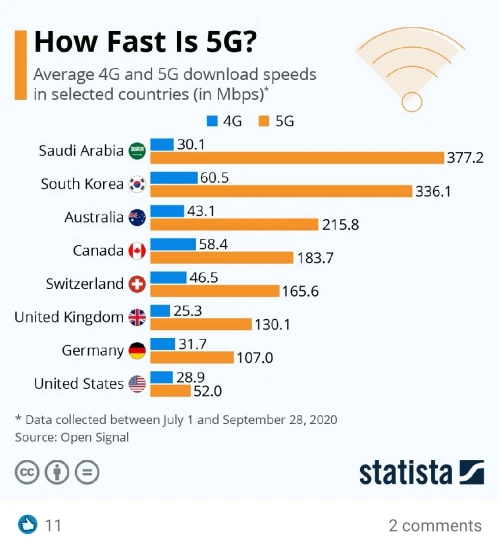
The final ‘mistake’ that Marine Corps Col. Drew Cukor makes is one that he cannot be blamed for. He forgot that computers should again be taught to rough it out, just like the old computers did. The mistake I am referring to is not an actual mistake, it is more accurately the view, the missed perception he unintentionally has. The quote I am referring to is “Before deploying algorithms to combat zones, Cukor said, “you’ve got to have your data ready and you’ve got to prepare and you need the computational infrastructure for training.”“. He is not stating anything incorrect or illogical, he is merely wrong. You see, we need to realise the old days, the days of the mainframe. I got treated in the early 80’s to an ‘event’. You see a ‘box’ was delivered. It was the size of an A3 flatbed scanner, it had the weight of a small office safe (rather weighty that fucker was) and it looked like a print board on a metal box with a starter engine on top. It was pricey like a middle class car. It was a 100Mb Winchester Drive. Yes, 100Mb, the mere size of 4 iPhone X photographs. In those days data was super expensive, so the users and designers had to be really clever about data. This time is needed again, not because we have no storage, we have loads of it. We have to get clever again because there is too much data and we have to filter through too much of it, we need to get better fast because 5G is less than 2 years away and we will drown by that time in all that raw untested data, we need to reset our views and comprehend how the old ways of data worked and prevent Exabyte’s of junk per hour slowing us down, we need to redefine how tags can be used to set different markers, different levels of records. The old ways of hierarchical data was too cumbersome, but it was fast. The same is seen with BTree data (a really antiquated database approach), instantly passing through 50% data in every iteration. In this machine learning could be the key and the next person that comes up with that data solution would surpass the wealth of Mark Zuckerberg pretty much overnight. Data systems need to stop being ‘static’, it needs to be a fluidic and dynamic system, that evolves as data is added. Not because it is cleverer, but because of the amounts of data we need to get through is growing near exponentially per hour. It is there that we see that Google has a very good reason to be involved, not because of the song ‘Here come the drones‘, but because this level of data evolution is pushed upon nearly all and getting in the thick of things is when one remains the top dog and Google is very much about being top dog in that race, as it is servicing the ‘needs’ of billions and as such their own data centres will require loads of evolution, the old ways are getting closer and closer to becoming obsolete, Google needs to be ahead before that happens, and of course when that happens IBM will give a clear memo that they have been on top of it for years whilst trying to figure out how to best present the delays they are currently facing.
 

Leave a comment

Filed under IT, Media, Military, Science

Retaining stupidity

This is the very first thought I had when I saw “Artificial intelligence commission needed to predict impact says CBI“. Within half a second my mind went into time travel mode. Back to the late 70’s where all the unions were up in arms on computers. The computers would end labour, all those jobs lost. This is not a new subject as the magazine Elsevier showed un in 2015 with “Angst voor nieuwe technologie is zo oud als de industriële revolutie zelf. Diverse commentatoren refereerden de afgelopen tijd aan de luddieten, genoemd naar een Engelse wever die eind achttiende eeuw machines zou hebben gesaboteerd omdat die banen vernietigden“. “Fear for new technology is as old as the industrial revolution itself. Several commentaries referred to the luddites, named after an English weaver who allegedly sabotaged machines at the end of the 18th century because it destroyed jobs“. There is a partial truth here, you see, it is not about the loss of jobs. It is the mere fact that some of these Business group will soon truly show to be obsolete. In this they rely on a firm whose largest achievement is (as I personally see it) to remain silent on overstated profits whilst not having to go to court, or to jail for that matter (read: PriceWaterhouse Coopers). So by engaging this party they have already lost their case as I personally see it. So when we see “Accountancy firm PwC warned in March that more than 10 million workers may be at risk of being replaced by automation“, with the offset we needed in the past (read: Tesco) the damage might merely be a few hundred people. So I do not deny that some jobs will go, yet like the automation sequence that computers brought from the 80’s onwards. That same industry would give jobs and infrastructure to thousands, livening up an industry we could not consider at that time. The same happened in the 18th century when the looms and weavers grew, the blossoming of a textile industry on a global setting. So when you see “The business lobby group said almost half of firms were planning to devote resources to AI, while one in five had already invested in the technology in the past year“, you are looking at what I would call a flim flam statement. You see, perhaps the more accurate statements might be: “The business lobby group stated that 50% of the firms are moving away from the facilitation that the business groups provides for“, so these firms are pushing in another direction, why give credence to their flawed way of thinking? You see, this is the consequence of the greed driven executives who rely on status quo, they ran out of time and they need extra time to get their upgraded pensions in play. Why should we allow for them to continue at all?

I am willing to give the TUC a small consideration because of their heritage. Yet, when we see in the Financial Times (September 11th) “Frances O’Grady, the general secretary of the Trades Union Congress, said the government was hurtling towards a “kamikaze Brexit” and should keep open the option of remaining in the single market” (at https://www.ft.com/content/c5f7afb8-9641-11e7-b83c-9588e51488a0), yet there is overwhelming presented evidence from all sides both positive and negative mind you that the single market only benefits the large corporations, the small companies are merely disadvantaged by the single market as such we must wonder where the loyalty lies of the TUC, by that notion if the TUC is there for large corporations, or to serve them first, we see another piece of evidence that shows the TUC to be redundant, and as they merely vie for the large corporations as their main priority, the fear of those companies would become the fear of the TUC and as such, they are becoming equally obsolete. The Trades Union Congress (TUC) is a national trade union centre should show clear cause with all the data, not merely the aggregated data results of a data scientist at PwC. So when I see “the CBI is urging Theresa May to launch the commission from early 2018. It said companies and trade unions should be involved and the commission should help to set out ways to increase productivity and economic growth as well looking into the impact of AI.” Who is going to pay for all that? I submit that the Trade Unions pay their own way and ask their members for the needed funds. What are the chances of that? The poisoners part is seen in ‘set out ways to increase productivity and economic growth‘. You see, AI will do that to some extent on several paths, yet it is not up to the government to figure that out or to set debilitating fences there. It is up to the business sector to figure out where that profit is. That is why they are in business! You see, as I see it, the drive to remain in some level of Status Quo was nice until it ended, these companies have driven away the people who wanted to innovate and now they are in start-ups, or in companies that embraced innovation, the older larger players are now without skills to a larger extent, without drive through misdirected use of funds and lacking ambition, so they are going to get hit in all three ways when the driver comes. 5G will be a first and when it does happen AI (it is still years away from being anything truly practical), these two paths will drive new methods of automation and data gathering. But the larger players wanted to milk their 4G base as much as possible, setting up side channels with smaller players like Orange, DODO, TPG, Tesco and giffgaff. Now that they are learning that 5G will be a larger wave then some academics presented (likely at the expense of some placement), now we see the panic wave that follows. Now we see the need for commissions to slow things down so that the milkers can catch up. In my view there are clear reasons that such paths should be allowed to exist.

That is my supported view, it has been supported by other articles and I have written about these events for close to two years now. Now that the party is over, we see players trying to change the game so that they can continue just a little longer. We allowed for these matters in 2004 and 2008, it is time for the governments to give a clear signal that change will come and stopping it should not be allowed, not until they alter the tax laws, the laws on accountability and the powers of prosecution to have a better grasp at these players, a change that must happen before we allow any level of catering to their needs.

By the way, when we consider ‘PwC placed under investigation following BT accountancy scandal‘ (at http://www.independent.co.uk/news/business/news/pwc-investigation-bt-accountancy-scandal-italian-operations-pricewaterhousecoopers-a7813726.html), as well as the Fortune.com issue (at http://fortune.com/2017/02/28/pricewaterhousecoopers-pwc-scandals-oscars/), where we see the five larger issues at PwC, which includes the previous mentioned Tesco, but now has an added Tyco, Taylor Bean & Whitaker, Bank of Tokyo – Mitsubishi and MF Global. So as I have been on the prosecuting tank, ready to roll it over the board of directors of PwC regarding Tesco, having any faith in whatever they want to report on now, unless it comes with all the data for the public at large to scrutinise, they should not get close to any commission and even less be part of the reporting. Now we can irresponsibly use 5 bad apples to identify someone who ships containers of fruit and that would be a valid response and defence. Yet overall the players asking for the commission seem to have their own needs first in all this. There would have been a consideration if there was any given that Google or the Alphabet group to be part in all this, yet that mention is missing and therefor the setting is void. Now, there are more players in the AI field, but it seems that the Google headway is the strongest, the largest and at present the fastest. And with a sense of humour I will add that you merely have to ‘Bing‘ the search ‘AI Commission‘ to see that Microsoft is in no danger of getting anywhere near an AI this upcoming decade. Perhaps the mention of ‘Australian Securities and Investments Commission – Official Site‘ on position 2 and ‘Fair Work Commission | Australia’s national workplace …‘ in position 5 to realise that their AI could be sunk in 13 keystrokes. The power of assumption will kill anything, including ones sense of humour and that same persons appetite.

Yet is there more?

Yes, there most certainly is. You see with “Investment in technology could help bolster Britain’s sputtering record on labour productivity, which is among the worst in the G7 and is failing to improve in line with expectations since the financial crisis” we see part of the fear being spread. The ‘milkers’ as I prefer to call some of them are realising that having space and capital for growth was essential to remain in the game. Some of the milkers are ending up being too visible and plenty of consumers are moving to a place where they can get a better deal. That was seen in Australia in June as ABC news gave the bad news that Telstra had to shed 1400 jobs. We see all kinds of excuses, yet the reality was that for well over 5 years they were too expensive, not by a margin, but by being up to 300% more expensive than a decent alternative. I have had personal experience whilst in a Telstra Shop because I was not an optional business account he had no time for me. Do you think that a company like that can remain in existence? Over the last 3 years, the shares dropped from $6.61 to $3.52, that is pain that a company feels and they remains ignorant and blind to the consequences. That view is enhanced even further by the statements given in the Sydney Morning Herald. With “Our approach [to 5G] is to get in earlier and try to have it modified so it’s more suitable to Australia when it arrives, rather than us have to try to modify it when it gets here,” Mr Wright told BusinessDay.“, so basically there is every chance that Australian 5G will be undercut by some level of standard that is not as given in the 5G handbook. As I personally see it is Telstra’s approach to setting a standard that is no standard at all. A ‘get in first so that we can tell others what the standard is‘, or better stated, what the standard is that you are not adhering to; 3.5G for your mobile anyone?

This Australian view translates to the UK as well. With “Despite the potential for technology to increase productivity, firms are cautious about investing owing to uncertainty over Brexit. Growth in business investment was flat in the three months to June, the latest official figures show“, so these business types are not willing to invest, they merely want the one market side to go on and in light of the delays needed, they want a commission, so that they can force government investment and delays. So they can get the best out of both worlds. The (as I personally see it) exploitative model is continued in every venue we see come and as I see it, it will be much better for us if those business models and business players go, they should go now before they become the detrimental force on UK industries. 5G will be a new beacon of industry and progress, it will open up additional venues for many telecom players and as such we are all better to get on board now and think of that one idea we had that could work for us all. It equally holds the solutions the NHS desperately needs and the fact that 3 larger players still haven’t seen that light is a larger worry than anything else. It merely shows them to be obsolete, dinosaurs in a modern age. As one person told me, the reason the T-Rex is such an angry creature is because its arms are too short to take a selfie. That does make sense, especially when you consider what some of these players think when they think 5G, they merely look at speed, whilst 5G opens up so much more than merely a quick download of a movie, in all this AI could be breaking the moulds and give us something that even I cannot envision, which is actually a really good thing. You see, the new waves will come from people that are different from me; they are the dreamers like the game designers in the early 80’s. They will show vision and give us something we never considered before. That is true progress and the people who bring us weighted predictions and tell us of fear of 20% of all jobs lost need to do what they were meant to do, die and become extinct just like the dinosaurs before them and soon thereafter I will become extinct too. That is the nature of future evolution. Just like my grandfather who could not comprehend the electronic calculator. I am clever enough to comprehend quantum computing, yet I hope I cannot comprehend what comes after, because if I can remain on board at that point we have all become technologically stagnant and we merely move backwards, that too is a personal view I have.


Leave a comment

Filed under Finance, IT, Media, Politics, Science

A legislative system shock

Today the Guardian brings us the news regarding the new legislation on personal data. The interesting starts with the image of Google and not Microsoft, which is a first item in all this. I will get back to this. The info we get with ‘New legislation will give people right to force online traders and social media to delete personal data and will comply with EU data protection‘ is actually something of a joke, but I will get back to that too. You see, the quote it is the caption with the image that should have been at the top of all this. With “New legislation will be even tougher than the ‘right to be forgotten’ allowing people to ask search engines to take down links to news items about their lives“, we get to ask the question who the protection is actually for?

the newspapers gives us this: “However, the measures appear to have been toughened since then, as the legislation will give people the right to have all their personal data deleted by companies, not just social media content relating to the time before they turned 18“, yet the reality is that this merely enables new facilitation for data providers to have a backup in a third party sense of data. As I personally see it, the people in all this will merely be chasing a phantom wave.

We see the self-assured Matt Hancock standing there in the image and in all this; I see no reason to claim that these laws will be the most robust set of data laws at all. They might be more pronounced, yet in all this, I question how facilitation is dealt with. With “Elizabeth Denham, the information commissioner, said data handlers would be made more accountable for the data “with the priority on personal privacy rights” under the new laws“, you see the viewer will always respond in the aftermath, meaning that the data is already created.

We can laugh at the statement “The definition of “personal data” will also be expanded to include IP addresses, internet cookies and DNA, while there will also be new criminal offences to stop companies intentionally or recklessly allowing people to be identified from anonymous personal data“, it is laughable because it merely opens up venues for data farms in the US and Asia, whilst diminishing the value of UK and European data farms. The mention of ‘include IP addresses‘ is funny as the bulk of the people on the internet are all on dynamic IP addresses. It is a protection for large corporations that are on static addresses. the mention of ‘stop companies intentionally or recklessly allowing people to be identified from anonymous personal data‘ is an issue as intent must be shown and proven, recklessly is something that needs to be proven as well and not on the balance of it, but beyond all reasonable doubt, so good luck with that idea!

As I read “The main aim of the legislation will be to ensure that data can continue to flow freely between the UK and EU countries after Brexit, when Britain will be classed as a third-party country. Under the EU’s data protection framework, personal data can only be transferred to a third country where an adequate level of protection is guaranteed“, is this another twist in anti-Brexit? You see none of this shows a clear ‘adequate level of protection‘, which tends to stem from technology, not from legislation, the fact that all this legislation is all about ‘after the event‘ gives rise to all this. So as I see it, the gem is at the end, when we see “the EU committee of the House of Lords has warned that there will need to be transitional arrangements covering personal information to secure uninterrupted flows of data“, it makes me wonder what those ‘actual transitional arrangements‘ are and how come that the new legislation is covering policy on this.

You see, to dig a little deeper we need to look at Nielsen. There was an article last year (at http://www.nielsen.com/au/en/insights/news/2016/uncommon-sense-the-big-data-warehouse.html), here we see: “just as it reached maturity, the enterprise data warehouse died, laid low by a combination of big data and the cloud“, you might not realise this, but it is actually a little more important than most realise. It is partially seen in the statement “Enterprise decision-making is increasingly reliant on data from outside the enterprise: both from traditional partners and “born in the cloud” companies, such as Twitter and Facebook, as well as brokers of cloud-hosted utility datasets, such as weather and econometrics. Meanwhile, businesses are migrating their own internal systems and data to cloud services“.

You see, the actual dangers in all that personal data, is not the ‘privacy’ part, it is the utilities in our daily lives that are under attack. Insurances, health protection, they are all set to premiums and econometrics. These data farms are all about finding the right margins and the more they know, the less you get to work with and they (read: their data) will happily move to where ever the cloud takes them. In all this, the strong legislation merely transports data. You see the cloud has transformed data in one other way, the part Cisco could not cover. The cloud has the ability to move and work with ‘data in motion’; a concept that legislation has no way of coping with. The power (read: 8 figure value of a data utility) is about being able to do that and the parties needing that data and personalised are willing to pay through the nose for it, it is the holy grail of any secure cloud environment. I was actually relieved that it was not merely me looking at that part; another blog (at https://digitalguardian.com/blog/data-protection-data-in-transit-vs-data-at-rest) gives us the story from Nate Lord. He gives us a few definitions that are really nice to read, yet the part that he did not touch on to the degree I hoped for is that the new grail, the analyses of data in transit (read: in motion) is cutting edge application, it is what the pentagon wants, it is what the industry wants and it is what the facilitators want. It is a different approach to real time analyses, and with analyses in transit those people get an edge, an edge we all want.

Let’s give you another clear example that shows the value (and the futility of legislation). Traders get profit by being the first, which is the start of real wealth. So whoever has the fastest connection is the one getting the cream of the trade, which is why trade houses pay millions upon millions to get the best of the best. The difference between 5ms and 3ms results in billions of profit. Everyone in that industry knows that. So every firm has a Bloomberg terminal (at $27,000 per terminal), now consider the option that they could get you that data a millisecond faster and the automated scripts could therefor beat the wave of sales, giving them a much better price, how much are they willing to pay suddenly? This is a different level of armistice, it is weaponised data. The issue is not merely the speed; it is the cutting edge of being able to do it at all.

So how does this relate?

I am taking you back to the quote “it would amount to a “right to be forgotten” by companies, which will no longer be able to get limitless use of people’s data simply through default “tick boxes” online” as well as “the legislation will give people the right to have all their personal data deleted by companies“. The issue here is not to be forgotten, or to be deleted. It is about the data not being stored and data in motion is not stored, which now shows the futility of the legislation to some extent. You might think that this is BS, consider the quote by IBM (at https://www.ibm.com/developerworks/community/blogs/5things/entry/5_things_to_know_about_big_data_in_motion?lang=en), it comes from 2013, IBM was already looking at matters in different areas close to 5 years ago, as were all the large players like Google and Microsoft. With: “data in motion is the process of analysing data on the fly without storing it. Some big data sources feed data unceasingly in real time. Systems to analyse this data include IBM Streams “, here we get part of it. Now consider: “IBM Streams is installed on nearly every continent in the world. Here are just a few of the locations of IBM Streams, and more are being added each year“. In 2010 there were 90 streams on 6 continents, and IBM stream is not the only solution. As you read that IBM article, you also read that Real-time Analytic Processing (RTAP) is a real thing, it already was then and the legislation that we now read about does not take care of this form of data processing, what the legislation does in my view is not give you any protection, it merely limits the players in the field. It only lets the really big boys play with your details. So when you see the reference to the Bloomberg terminal, do you actually think that you are not part in the data, or ever forgotten? EVERY large newspaper and news outlet would be willing to pay well over $127,000 a year to get that data on their monitors. Let’s call them Reuter Analytic Systems (read: my speculated name for it), which gets them a true representation of all personalised analytical and reportable data in motion. So when they type the name they need, they will get every detail. In this, the events that were given 3 weeks ago with the ITPRO side (at http://www.itpro.co.uk/strategy/29082/ecj-may-extend-right-to-be-forgotten-ruling-outside-the-eu) sounds nice, yet the quote “Now, as reported by the Guardian, the ECJ will be asked to be more specific with its initial ruling and state whether sites have to delete links only in the country that requests it, or whether it’s in the EU or globally” sounds like it is the real deal, yet this is about data in rest, the links are all at rest, so the data itself will remain and as soon as HTML6 comes we might see the beginning of the change. There have been requests on that with “This is the single-page app web design pattern. Everyone’s into it because the responsiveness is so much better than loading a full page – 10-50ms with a clean API load vs. 300-1500ms for a full HTML page load. My goal would be a high-speed responsive web experience without having to load JavaScript“, as well as “having the browser internally load the data into a new data structure, and the browser then replaces DOM elements with whatever data that was loaded as needed“, it is not mere speed, it would allow for dynamic data (data in motion) to be shown. So when I read ‘UK citizens to get more rights over personal data under new laws‘, I just laughed. The article is 15 hours old and I considered instantly the issues I shown you today. I will have to wait until the legislation is released, yet I am willing to bet a quality bottle of XO Cognac that data in motion is not part of this, better stated, it will be about stored data. All this whilst the new data norm is still shifting and with G5 mobile technologies, stored data might actually phase out to be a much smaller dimension of data. The larger players knew this and have been preparing for this for several years now. This is also an initial new need for the AI that Google wants desperately, because such a system could ascertain and give weight to all data in motion, something IBM is currently not able to do to the extent they need to.

The system is about to get shocked into a largely new format, that has always been the case with evolution. It is just that actual data evolution is a rare thing. It merely shows to me how much legislation is behind on all this, perhaps I will be proven wrong after the summer recess. It would be a really interesting surprise if that were the case, but I doubt that will happen. You can see (read about that) for yourself after the recess.

I will follow up on this, whether I was right or wrong!

I’ll let you speculate which of the two I am, as history has proven me right on technology matters every single time (a small final statement to boost my own ego).


Leave a comment

Filed under Finance, IT, Law, Media, Politics, Science

Fear mongers cannot learn, will the reader?

The technology section of the Guardian had an interesting article (at http://www.theguardian.com/technology/2016/feb/13/artificial-intelligence-ai-unemployment-jobs-moshe-vardi), ‘Would you bet against sex robots? AI ‘could leave half of world unemployed’‘, is that so? So, is the title a reference that 50% is in prostitution, or is there more?

The article starts straight of the bat without delay it gives the quote: “Machines could put more than half the world’s population out of a job in the next 30 years, according to a computer scientist who said on Saturday that artificial intelligence’s threat to the economy should not be understated“.

I remember a similar discussion now 35 years ago. It was 1981, I was working on the defence mainframe and I got the inside scoop how computers would replace people, how those machines would put hardworking people out of a job and a future. In the first 5 years that followed I saw the opposite, yes some work became easier, but that also meant that more work could be done. The decade that followed gave us an entire new region of technology. A region that would open doors that had never been there in the first place.

This technology is not any different, it will open up different doors.

Now, the people in ‘fear’ of it all are not the most half-baked individuals. They include Physicist Stephen Hawking and the tech billionaires Bill Gates and Elon Musk, in addition there is professor Vardi from Rice University, his statement “AI could drive global unemployment to 50%, wiping out middle-class jobs and exacerbating inequality“, I massively disagree here. The words of Elon Musk calling it “our biggest existential threat” and in addition professor Vardi stated “humanity will face an existential challenge“, those two comments are closer to the reality. Yet here too I believe changes will dominate. Consider a few years back, back to the time when I was younger then young (like 900BC roughly), in an age of Greek wars and utter ‘nationalism’ the Olympic truce was created. “Ekecheiria”, was established in Ancient Greece in the 9th century BC through the signing of a treaty by three kings: Iphitos of Elis, Cleosthenes of Pisa and Lycurgus of Sparta. (Source: olympic.org) There was a lull but in 1896 it started again. An event, which origin was to create an option to not be in a war and to compete. Of all the existential angst we have, robots should not be on the list any time soon.

My reasoning?

As we saw the start of recruitment for Mars, a serious recruitment to start colonising mars, we must admit that there are issues on mars, several could be diminished with the use of intelligent robots. Or perhaps the idea that NASA is looking on how to get resources from asteroids, so how about that Android solution? The BBC gives us the speculation on ocean living (at http://www.bbc.com/future/story/20131101-living-on-the-ocean), again an element where we do not thrive, but a robot could pave the way. In my own view, with the massive energy issues, how long until someone has the idea to place paddled wheels above a hydrothermal vent in the ocean to capture it as an energy source? Not the kind of work a person can do, a machine could, and an AI driven one could excel there. Just three places where we could end up with more and not less. Yet Vardi does give an interesting side, if robots replace people to some extent, that value of physicality might be lost. Now ask the bricklayer if he could do something else, would he? There is indeed the danger that physical labour becomes less and less appealing, yet that does not mean it will be gone. It would take at least half a century for things to be completed, whilst in that mean time new evolutions start, new challenges start.

More important, much more important is the one fact people tend to avoid out of fear. But you the reader, if you are over 45, consider that in the near future you will be dead! So will 3 out of 7 of your friends. Yes, the population is growing, yet the age groups are shifting, this implies that robots could be a solution for some of the work areas that do not require academic thinking. All these opportunities, not threats!

So as we see a new iteration of fear, is this version more valid than then the previous one? With that I mean the implementation of the PC. Perhaps having another set of less fear mongering eyes would help. The second part people forget is that fear mongering is also a drain on productivity here. Even as we speak Japan has a lead in this market, as does America. So how about we start getting ahead of the rest, so that is wrong with the commonwealth picking up a robotic skill or two, because one truth remains, once the other player get too much of a lead, the consequence will be that the followers are not considered for the creational jobs here and that is where the real mulah is, the IT explosion taught us that and that field grew a multitude of billionaires, the next technological iteration will do no less.

I am not alone in my way of thinking, the writer Nicholas Carr gives us: “human creativity and intuition in the face of complex problems is essentially irreplaceable, and an advantage over computers and their overly accurate reputation“, which is where the new future will head. Not to create robots, but the creativity to make then excel in extreme places where we could not comprehend until out boundaries are clearly mapped. So how is this news such an eyeopener? Well, when we get back to the beginning we saw “artificial intelligence’s threat to the economy“, as stated, much like the Personal Computer, it will not be a threat, but a solution, an opening into a new arm of the technology sector, even more important, this is not just a IT only field. It will require quality engineers and depending on the application of the scene. This means that we get new challenges, different ones mind you, but not lesser ones?

In that regard, depending on the implementation, it will require analysts, engineers, programmers and a few others on the list of adepts.

all these options and we did not even need to get close to the technological design of the new age cybernetic machines for the purpose of erotic exploration (level 1 at http://www.vanityfair.com/culture/2015/04/sexbots-realdoll-sex-toys), which is nowhere near an AI experience, time will tell how real that field becomes. Consider the age of STD’s we see nowadays. Mycoplasma Genitalium might be the new ‘trend’, as it can be cured with a mere one week setting of anti-biotics. So how long until it evolves into something that does not cure? Yet we do not even have to go that far, consider all the areas where man (or woman) cannot function, the risk too high and the rewards become too low. Here comes the clockwork system (aka the AI robot) and we are back on track.

So I see the robot as a positive wave. For careers, for jobs, for business evolution and for evolving technology. We only need to see the light of creation and we will end up with a lot more options than we bargained for.


Leave a comment

Filed under Finance, IT, Law, Politics