Tag Archives: Brian Blessed

When books are more

That was the setting I saw myself in this morning. As you (optionally) read this morning, I had given a walk down on a piece of IP by Meta, with the reference to stories more then two years old on my view on what is now the Orion with references to tourism advertising and a few settings towards creating awareness. But whilst I was writing that setting, I thought of another stage. The stage that reverts by to books. 

Consider the TV series I, Claudius. A drama that is the best drama ever written. Now I had the ‘initial’ version released in the 80’s, now it’s a Penguin title. The nice part of Penguin is that it is cheap. But my mind took it to a new direction and with augmented reality it is possible. Consider the story (which plays in ancient Rome) but now add augmented reality and at that point we have access to artwork like the statues of the old Romans like Augustus (Brian Blessed), Tiberius (George Baker), Caligula (John Hurt), Sejanus (Patrick Steward) and many more. Not the actors (or optionally included), but the art work, the statues, the places like the Colosseum, the royal palace and many more places that we might have seen. Draw the reader in with the art and references of how those people likely looked with ‘A.I.’ as the sculptures are drawn the the living version of these people. The stage is never ending. We could enable a much larger realm that some books give us. I, Claudius might show us how that world might have looked. Even as there are still issues to be resolved (Meta does little for free), but the sights could open a much larger world and Orion could bring that to the living room of anyone who has an Orion, the spectacle that brings a spectacle to the living room (to coin a phrase). 

I for one would like a little more spice with some of my books. It is OK if this title has these views added to a new version (like a limited edition), but the art still needs to be initially created. And there is no reason that these works of art cannot be accessible by the Orion glasses. Especially if one grows the tourism stage with these places and items. Consider if you are at the Colosseum, you put on your glasses, or see though your mobile art and stages of places at the simple connections? Wouldn’t that be great? I took this example as this is the best series the BBC ever created. But in my writing of ‘The opportunity for 2022’ on February 1st 2022, I used the option of Monte Carlo, through QR codes the people saw a much larger stage using a mobile. There is no reason that the Orion glasses couldn’t be used. I reckon that these glasses paired with your mobile wouldn’t do the trick too (a lot more comfortable) and with that we see the new tier of these glasses as it fuels tourism. Seeing the augmented reality of the winner William Grover-Williams driving his Bugatti Type 35B on 14 April 1929 on the track (which in Monte Carlo still exists), it gives the people more then they had and now we are literally off to the races. Augmented Reality is merely constraint by the limitation of the creative thinker and Meta removed several borders. That is the larger stage we need to embrace. I get that some people will state that there is enough tourism there. But the early bird will gain access to the revenue worms that are out there. Like the malls they need to push borders to engage the people and the malls are now feeling the pressure to create engagement and you merely need to see the amount of people who attended the malls in 2019 versus 2024 to see that places like Eaton centre mall (Toronto) and Dubai Mall (Dubai) have lost visitors (Dubai not that much) but the keep on top of matters is done by offering people more then before. That has always been proven (again and again).

America had 116,000 malls and there is no real list where I could read the numbers. But the Dubai Mall has a good amount of visitors. Now the top three malls in Dubai are the Dubai Mall, the mall of the emirates and Nakheel mall. Still there is (or soon will be) the Dubai Hills Mall. So how will you keep people engaged? By offering more and optionally something that the others do no have, as such there is apace and place for augmented reality and I saw that years ago. Now that Meta has the Orion there will be space and a place for growing that market. Funny, this was out in the open for years and both Google and Amazon were both asleep at the wheel. Now Meta has a new realm to grow a few markets and could end up being the game changer in certain fields.

Have a great day and for the Vancouverians out there, nothing will happen at 21:21 in the evening. I just learned that. I love my time based jokes, like photo bombing, it is an acquired guilty pleasure.

Leave a comment

Filed under Finance, IT, Media, Science, Tourism

It is the same coin

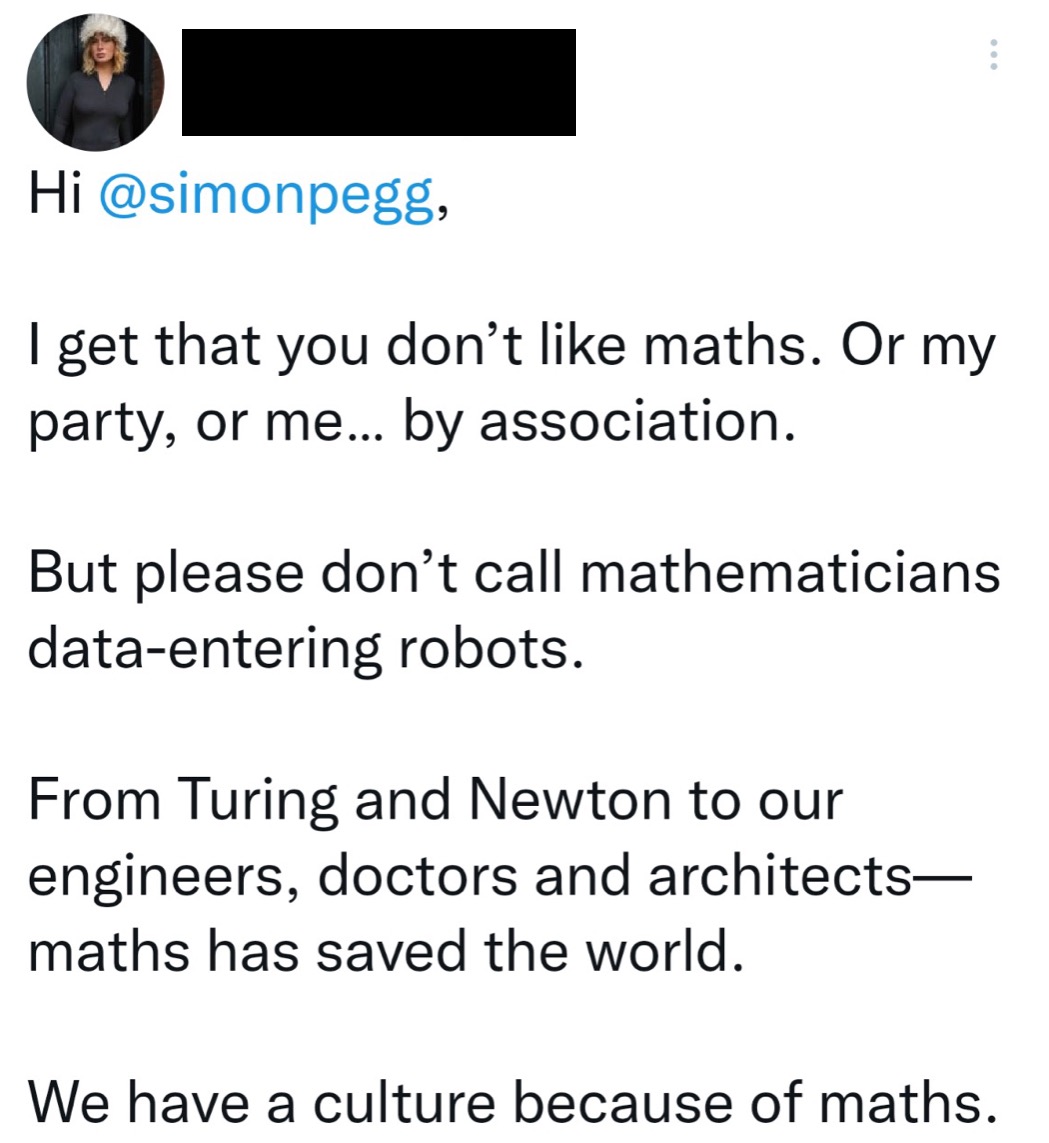
I got alerted to something via Twitter. It has two sides and a friend of mine had one side, as such I give you the tweet below. This of course made me look at the YouTube by Simon Pegg (the Hot Fuzz man). 

He was emotional and he has a point, but so does my friend. Optionally they do not realise that they are both a side of the same coin, one cannot exist without the other. It is a flaw in those heralding science as the one solution, it never is. It merely becomes some Theranos creation, all science and too much of it debatable. You see my friend had the answer in her tweet. Alan Turing created something from nothing. A setting that is utterly impossible. He got there through an artsy side in him. Alan Turing created the foundations of computers and AI, both required an art element to get there. You see, even when we realise it was all science, his brain had to make some leap of faith and that requires art, science alone will not let you do that. He created these two and his foundation of AI is still used today, over half a century later, with all the elements of evolved science, his artsy side overcame what did not yet exist. It is one of the reasons that (even if I was not eligible), I would have voted for Brian Blessed to become Chancellor of Cambridge in 2011, but I was not eligible. It became Lord Sainsbury of Turville, my issue here is that science was taking too big a chunk of what was almost an even Steven setting. I personally believe that Science without art is pointless, art without science is useless. It is not completely true, but as an axiom it often works. Science without art cannot grow because science for the most relies on previous data and as such NEW technologies cannot evolve. Alan Turing created (for the most) the foundations of electronics. It required investigations into the electron as well, but when you see that Alan Turing created AI half a century before we had any partial foundation of that is optionally evidence enough. 

The other side needs to be illuminated as well. Simon Pegg did this (at https://www.youtube.com/watch?v=rHEpywFCtwA) in his own emotional way and he does have a point, but so did my friend. The artsy people tend to ignore that science is their friend. Take any movie, the lights are set up to maximise the effect, it is not art, that foundation is science, science created the camera and a lot of other parts. They use that technology and they use it well. But it supports art and that is forgotten. That being said that children need maths, but they need art too and the science pushers are all about ‘forgetting’ the art and that power. You see, if you have all science and no art, you end up creating Theranos minded creators. The ones that are convicted for fraud and end up well over 11 years in prison. Art might have prevented this (and created an actual solution). In that same setting it might be the flaw that created FTX and the $33,000,000,000 losses it ensued. 

I myself tend to grasp back to an old Market research credo. “The scientist, or mathematician will show you the course of best margins of profit, or best results. The presenter, or politician makes sure that you look forward to the attached invoice” it is a bit artsy but therefor not any less true. We need to realise that art and science are to sides of the same coin. Science made it circular and the artsy people gave it a nice image. We need another and there is one part we should all agree to, if Rishi Sunak wants to imbue a sense of science, he better be ready to imbue an equal measure of art in these people, because Simon Pegg is right about that part. Science without the art will have far reaching negative impacts. We need one another to see it, one shows us, one presents it and that has been the case from before that writer William Shakespeare became a reality. It goes back all the way to the outdoor Theatre of Dionysius where in 500BC Sophocles, Euripides, Aeschylus, and Aristophanes performed, but we forget that science created the stage for over 15,000 people to enjoy, that part was science, not art. And it was there centuries before Christianity became reality.

Leave a comment

Filed under Finance, IT, Media, Politics, Science

Timeless Art

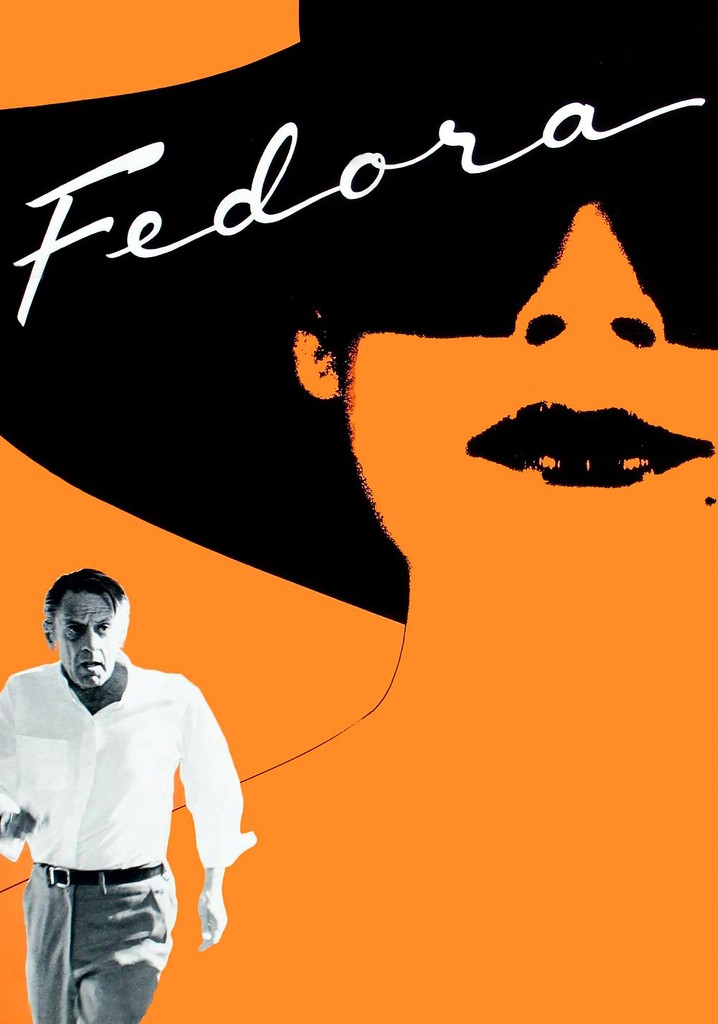
Yes, that is a setting at times. Art that is truly timeless. We see it in paintings and sculptures, yet we forget that the boob tube and the big screen have these settings too. Take I, Claudius (1978) is one of these pieces. It fulfils the 4 elements. A script, the cast, the directors and the chemistry. With Robert Graves they had the book, it was altered and tweaked for TV by Jack Pulman. Then there was the cast. Derek Jacobi, Siân Phillips, Brian Blessed, John Hurt, George Baker, Margaret Tyzack, Patrick Stewart, John Castle, James Faulkner, John Rhys-Davies, and many more. Some will argue that the cast director got lucky and that might be true, several of these people were largely unknown, but not after I Claudius, That much is very certain, and the chemistry between all these actors, all set to the task of making real one of the most illusive books became a reality. When you realise this, it is now time to get you to the real story. You see, this has happened again in 1978, Billy Wilder would give us Fedora (not the hat), an equal amazing piece of work. With Marthe Keller, William Holden, Hildegard Knef, and Jose Ferrer. These people would do something that is close to the perfection we saw in I Claudius. They created a piece of art that is still remembered 44 years later. I would suggest that it is time for a remaster with a new cast, and a female director. The idea that we set the elements of the movie in a new stage (me trying to avoid spoilers) with the view of Kathryn Bigelow, Sofia Coppola or Olivia Wilde might make it an interesting journey for the people watching it. Let’s be clear there is nothing wrong with Billy Wilder, but at present he is busy with other projects. And these is something mesmerising on a female view in this setting. Still it will become a tall order. Billy Wilder was a legendary director, the script was really good and so was the cast. Yet I believe that after 44 years and the alterations in real life that we see and those events thrust upon us, some of the elements in the movie might do well with an upgrade and I believe the new movie could be better for it. I am not stating that Billy Wilder dropped the ball, the movie was full on and way beyond interesting in 1978, we merely have more to go on in this day and age. To be honest, it seems that most have forgotten this gem and that is sad. There is no recrimination, there is no blame, it is as it is and perhaps me tossing the ball in the air will give a scriptwriter the inspiration to take this to the next level. 

Enjoy the day!

P.S. Enjoy the day as much as you can, there are 744,297 new COVID cases in the last 24 hours, so if only 1% is terminal, there will be 7,000 jobs and optionally up to 7,000 houses and apartments available early next year. And with the US and UK racing for first position, all whilst the UK has 20% of the US population and 50% of the cases that are inflicted on the US the race is wide open towards more affordable living. So you can write a script or start screaming like the other anti-lockdown people. It is up to you. I tend to be as productive as possible and as I do not interact directly with other people I will for the longest time avoid getting this irritating flu, and let’s consider that we can call it the super-flu, just like Stephen King did in the Stand. How did that end again?

Leave a comment

Filed under movies

The TV as a weapon

There is an old saying and there are alternatives to it. In Australia we say:

Q: Do you know the difference between ABC and Channel 7?
A: ABC shows you how bad things are in the world, Channel 7 shows you how screwed up your TV life is.

In the Netherlands it used to be NOS versus SBS6, and every nation has its own version. So what happens, when we see the millions of smart TV’s and Apple enters the race opposing Netflix? The New Daily gives the quote: “Spielberg who appeared live, touted the revival of his Amazing Stories anthology, while Reese Witherspoon, Jennifer Aniston, and Steve Carrell then took the stage to discuss another Apple original, The Morning Show” with the added: “a range of new streaming entertainment services, as well as financial products, at a star-studded event Tuesday morning“. the message was apparently clearly brought and when we get to see: “Apple is expected to spend US$2 billion this year on original content to challenge established steaming players Netflix, Hulu, Amazon and the forthcoming Disney+ service“, we need to realise that Apple has an optional goldmine in the making. In addition we see: “Hot on the heels of the Google game streaming service, Stadia, Apple launched Apple Arcade in a bid to grab a slice of the multi-billion dollar gaming market“, which will be fun to watch as Apple has shown a keen interest in negating the need of gamers (which is not all their fault in all honesty), will they figure it out this time? At least with the established Android gaming platform size, Google does have a huge advantage for now. OK, apple does have a gaming community on IOS and I was not short selling that (yes, I was). Yet the overall view I have seen in the past gives a better light of gaming to gamers on the android, than the Apple (a mere personal view on the matter).

So here we are watching two streams being created. First is the Netflix drain by Apple and as soon as they realise that 2 billion is a mere stack of money, to get the TV series that get the people to sign up, even besides Netflix will requires series that surpass The Chilling Adventures of Sabrina, The Haunting of Hill House, Bird Box and a few other gems, Netflix has the writers, will Apple have them? We all know that Game of Thrones will enter their final season, so there are plenty of needy watchers to pick up after that conclusion, yet if Apple does not have the IP, they are not going anywhere. Even with the added Spielberg Amazing Stories anthology, which was actually quite decent when it was initially released on VHS, they will still have quite the task at hand. More important, even if they have all the ducks in a row, they will still having to deal with the market shares of Hulu, Stan, Amazon and the forthcoming Disney + service as well (and a few local others). Do they have the IP when that goes online? I can see half a dozen series that could be hits, and I am not the only one. Plenty of dedicated story tellers will have a list. Yet, does the Apple executive (whomever Tim Cook handed this hot potato to), does that person have a clue? The difference between a good presentation and an actual good idea comes with a gap that can fit the Grand Canyon and many Apple executives are a little lost when they face that gap.

It goes further, having a great idea is not enough and most visionaries have that in mind. to see that part we need to reflect on: “Apple, which became the world’s first trillion-dollar company in August last year, had been dropping cryptic hints about the launch event for weeks, sending the internet rumour-mill into overdrive“, yet since then Apple lost well over 20% of its value and the next few ‘slam bam’ misers will dent that even further. The next part is interesting as it impacts gaming and TV.

To get a great product you need at the very least (before marketing gets to have a go):

  1. A script, a story that will compel the reader to go on. Loading it with sex and graphics will only hold a small percentage for some time. A great example of a near perfect script was I Claudius by Robert Graves.
  2. A cast that works well together, each good actors, but together they become ambrosia, wine and nitro-glycerine, all at the same time. Again I Claudius became the golden standard. With Derek Jacobi, George Baker, Siân Phillips, Brian Blessed, James Faulkner, John Hurt, Patrick Steward, Ian Ogilvy, John Castle, and John Rhys-Davies we got something unheard of. They were already good actors, yet together they created greatness, they are now globally celebrities, but in 1976 that was not a given, they were iron rods and the director shaped them into high tempered steel increasing their mark close to tenfold.
  3. The director. Not merely the man implying 3, 2, 1, action! No, he is the person that becomes the visual visionary and Herbert Wise delivered. The evidence is seen in his work. As a director he has 91 marks on his career rod and when we look at it all, it is all decent work, insightful work, yet I Claudius is a 180 cm person walking in Indonesia (where the average height is 152cm), it stood out tall above all others. So, even as we accept that I Claudius could not have been done without the cast, it equally required the right director to make it work.
  4. The Producer (in this case the BBC), who had to put up the dough with a need of blind faith and no idea how much they were going to lose. These four required to be completely in sync and they were as such I Claudius is still seen as the best BBC drama ever produced, even now, 43 years later we see that new TV series merely hope to equal this achievement, thinking that it can be surpassed is mere folly (yet optionally not impossible).

This is the setting that Apple is trying to get into and throwing 2 billion at it thinking that it will be easy by presenting a few famous people is as reliable as getting rich by spending what you have on blow and hookers. It looks pretty, yet it is an absolute non-winner 100% of the time. Finding the right people will be the task for Apple and as they are all competing for the same pig through increasing the value of good scriptwriters, yet they too are starting to look critical at the offers, because they lose value with every failure and often enough, they do not get to blame the director of the production company, they get to be the scapegoat. So they will require their optional bosses to set an income and levels of freedom and commitment to a much higher degree.

As for gaming

Gaming has a similar setting. It will be about getting the gamers on board and that requires a great product, in an age where Apple has been all about marketed iteration, they are vying for innovation? In a market they do not seem to really comprehend? I am slightly puzzled.

There the director is the project director; the cast are the graphic designers and the scripters and coders. The art and stage might have similar issues, but finding these parts to intertwine and interconnect is where good coders are required. Then there is the learning curve of the game. And it gets to be worse fast when it becomes a product relying on micro transactions. Ubisoft, Bethesda too never quite worked it out and the first screw up will diminish the value of the event overnight. Apple will have to steer clear of micro transactions in the first year by a certainty of 100% and in the subsequent 2-3 years for 90%. Can they afford that game? Their essential path will be the RPG games that call the horn of attendance for gamers on a global scale, if not, than this becomes a long term project that will not end up becoming a winner. In that they have additional competition form makers like Nintendo, their Switch is still gaining momentum and the games I have seen lined up for that system shows that Nintendo is taking this momentum extremely serious. I wonder if Apple has thought this through beyond their return on investment expectations from executives who rely in spreadsheets and lack essential data skills other than identifying their ROI and bonus column. Once that goes south Apple will take a few hits in short succession and they will be painful. If it goes wrong (I am not stating or indication that this is the case), they could face the hits where their total value is a mere 50% of what it was on September 16th 2018.

Yes, Apple could rise high with streaming on TV and consoles, but in the end they require the golden eggs to get there and I am not convinced that they have what it takes to get there. For the most it is an art, I have been involved in gaming since 1984 and I still miss elements in all it. It is both science and an art, the moment you separate the two is the moment you lose. That has been an essential given for close to two decades. Ubisoft got it wrong more than once, Bethesda took massive hits with miscalculations and they are dedicated experts in that field, I doubt Apple has seen that shortfall at present.

To illustrate that we need to look at a game called the Division 2, an Ubisoft product. Important fact, it is seen as a really good game, better than the first version and steps forward, at times leaps forward, some reviewers have stated that is sets a new bar of online gaming and that is awesome to learn. Now add the two headlines: ‘Ubisoft Patches Annoying ‘The Division 2’ Skills Bug‘, as well as ‘The Division 2 PC players report a 100% CPU usage issue, Ubisoft is investigating‘, on games this size this will always happen and the fact that it is looked at and fixed this early is really good, so this is not about pulling Division 2 down. This is what happens on games this big depending on online elements, which is besides server down times. A consequence of online gaming and in this Apple is as I expect it not ready to see gaming to the higher levels it needs to see it.

If they see these two elements as a method to use the TV as a weapon, a data weapon for additional wealth, we see a company that is about to get hit really hard. That is in the foundation of it all. I believe that they are making the same mistake that Microsoft made. Microsoft is talking a good talk, yet the people all over the world are seeing the impact, the most powerful console in the world is being surpassed by the weakest of the three. Their setting of always online, their bullying tactics, their essential inability to listen to gamers (or ignoring what they are being told) is what is dragging down Microsoft and Apple will experience that lesson in a very hard way soon enough if they walk that same silly line.

Just like Microsoft, we see a company that more likely than not does not comprehend gamers and will falter because of corporate ROI needs soon enough. They see the two as connected to grow better, but these are two separate entities (TV and Gaming) representing 6 dimensions that can go in any direction, when these executives learn that lesson the hard way and they are looking what to do next, I will offer Tim Cook my last $99 for the company (Apple, a fruit of the loom division).

Could I be massively wrong?

Absolutely, yet the Apple marketing need of the hype and their viral needs seem to be on my side, as the gaming industry as a whole tends to be as gossipy as any old tea lady, so word would have circulated into my inner core of contacts much earlier, as such I think that Apple is not ready, nowhere near ready, personally I do hope to be proven wrong. I would love to see more contenders in the gaming world, more choice, more innovation and better games is the consequence from that war, and I do love playing good games.

I will keep you all posted on what happens next.


Leave a comment

Filed under Finance, IT, Media, movies, Science

Where we disagree

There is another article in the Guardian; it was published almost 12 hours ago (at http://www.theguardian.com/business/2014/dec/14/deficit-problem-crisis-productivity-george-osborne). It is a good story, it gives a decent view, but I feel that I cannot agree. It must be said that this is all in the eyes of the beholder. The article is good and sound and many will adhere to this idea. Yet, I do not completely agree. Yes, all the facts are right, the view is not incorrect, but it feels incomplete. The first quote “The most important issue is the poor performance of the nation’s productivity, which, far from being improved, has almost certainly been exacerbated by the constant emphasis on the putative need for austerity”, now this is a decent view to have, it is an optional view, yet in my view the following com up:

  1. Productivity relies on orders; the UK is competing with its baby brother India where daily labour rates are decently below the hourly rate of a UK worker. That in itself is not enough, the EEC overall is pretty broke, no less than one in 10 has no job, it is driven up by Spain and Greece, yet after a long term most Europeans are very careful about where money is spend on. So which manufacturing industry is getting the few coins that do get spend?
  2. There is no reputed need to austerity; there is an overspending in excess of 1 trillion that needs to be addressed. We can bark high and low on the reasoning for it, but that water passed the bridge a long time ago, now the debt needs to be taken care of. The US, Japan and UK have a combined debt of 30 trillion of national debt, the UK is a little over 3% of all this, let’s make sure that when the two behemoths stumble into nothingness, the UK does not end up being the biggest debt of all (again just my view), yet I feel certain that the banks will be in charge of a nation with such debts.

Yes, productivity will take care of all it, but I believe that the debt needs more then productivity. It needs innovation and IP. They will drive true productivity. People forget about the innovators. Alan Turing is still regarded as the man behind the concept of Artificial intelligence. What was a fab in the 40’s became the driving power for the planet from the 90’s onward; let’s not forget the foundations for the computer. We seem to herald IBM and others, yet Professor Sir F.C. Williams was at the foundation of the driving force that became the behemoth for almost half a century and this wave is still going strong.

The new currency will be IP; innovation will drive the places of work, the places of sales and the filling of coffers (the empty bags currently in a corner of George Osborne’s office).

People keep on ignoring the need for innovation; I tried it twice in a previous job. The response remained almost the same ‘it works as it is, so leave it‘, that is the drive stopper that ends a future, although the early 1900’s did not have the need for IP, consider the history of the paperclip and Gem Manufacturing Ltd, a British company. They had the better design, but never registered the patent, which is why Johan Vaaler is often seen as the inventor. I am not debating the validity, yet he registered his patent. In those days the rights were approached a lot more liberal then now. Nowadays our lives are all about IP, patents and who it is registered to. Haven’t we learned anything in 115 years? No matter that we now enjoy an article that is not patented, in nice contrast to people who enjoy a life because the man behind finding a cure (read vaccine) for polio did intentionally decide not to patent it (Dr Jonas Salk, who deserves a sainthood for that act), our future for certain, our survival to some exaggerated extent is depending on IP. Need drives production, but who owns the article that is needed? That part I see ignored again and again.

William Keegan does not look at the IP side, because he focuses on the steps following it, yet those in this real rat race seems to silence the need to look at it as they talk about productivity and manufacturing, but the innovator behind it, the one designing the IP, that person is worth gold. Consider Microsoft paying 2 billion for a piece of IP called Minecraft. A simple game, looking the way Minecraft does, is worth the revenue the high end looking GTA-5 made. It is all about IP in gaming; it should be the same in nearly any industry, not just the one that got kicked off by Alan Turing and Professor Sir F.C. Williams. IP drives every computer industry, it became the centre piece in the jewel that is now called ‘Business Intelligence‘ and ‘Predictive Analytics‘, but we broke the system after that.

Why was the system broken?

It is a broken system that is now illuminated in its flaws by people like Sir Kenneth Robinson and Brian Blessed. We ignored for too long that IP and innovation requires creativity. As Universities have been pushing logic and business, they forgot that the future tends to be created in the arts. Creativity is the driving force for any future, whatever is produced after this required a need for IP. It is a chicken and the egg issue, will the thought create the idea or is the idea the drive for creation? As I see it, this drive needs an artistic side, a side I was never any good in, but the best futures will need an artistic hand. It is shown into the massive amounts of IP the gaming industry manages. People might wonder why I keep on coming back to the gaming industry.

The answer is simple Games have driven a trillion dollar industry (totalled). Commodore Business Machines (C-64, Amiga) Atari (2600,800, ST), Creative Labs (soundcard), The consoles that followed by Nintendo, Sony, SEGA and Microsoft and the list goes on and on, all from creativity. Even the military sees the essential need of creativity. Consider the text “Space-based Missile Defense: Advancing Creativity“, it is at the heart of everything, so many forgot about that, those in charge forgot about that part. It is why my vote for Cambridge chancellor would not have been for Lord Sainsbury of Turville, but for Brian Blessed. Lord Sainsbury is not a wrong person, or a bad choice. As I see it, all our futures require a much stronger drive towards the arts and creativity. In my crazy creative view photography was invented in 1642 by a Dutchman named Rembrandt van Rijn; his visionary view came 200 years before the chemicals were invented, if you want evidence? It is in the Rijksmuseum and they call it ‘the Nightwatch’.


Leave a comment

Filed under Finance, Gaming, IT, Science

A rare moment in time

I have been watching the news in several places, the papers (online), newscasts and other media. I saw how we see articles with issues that I predicted over a year ago. Now, let’s be honest, that what I predicted and that what now is not one and the same. I might have been lucky, that happens, yet that gave me the impulse to take a look into my mind (with some external support) and I got a revelation (odd how that happens).

There are moments in time that are chiselled to be with us forever, that part happens, a set of circumstances so unique that it passes the stress test of time.

It was 1976, I was in high school and I saw on TV something so unique that it would remain with me for all time; it is likely I will take the images into my grave. Even then there was a need for the direct in our eyes. This series delivered! I still regard it as the best Drama ever to be made. The series was called I Claudius and the fact that it is drenched in history and filled with flexible morals is what seems to catch us. Yet, is that enough? If we see TV series like Dexter, Trueblood and a few more HBO series. They seem to have the trademark on directness, so why did they not surpass a series made 38 years ago?

I believe that this is because that there is a lot more to the achievement. I think it was more than just timing. Derek Jacobi as Claudius, Brian Blessed as Augustus, George Baker as Tiberius, Patrick Steward as Sejanus, John Hurt as Caligula, Bernard Hill as Gratus, Ian Ogilvy as Drusus and who will ever forget Siân Phillips as Livia. It is not just the group of actors, but the fact that these actors would set new boundaries; some are even today regarded as the top of drama. I think that timing brought these people together and that part caused the effect that this was not a series with one or two diamonds in the rough, but we ended up with a series holding over a dozen exquisitely cut diamonds. A TV-series, which through timing has remained close to unmatchable.

I must of course mention that the book was an amazing piece of work, yet that is one factor we have all seen before, the fact that a book had been turned into such a vision by cast and crew was and has for the most remained a unique experience in TV series. It is ‘I Claudius’ that makes me appreciate how rare such moments are and hoping on regular repetitions such achievements are a waste of time.

When we see how productions are made nowadays, we see a shift from what was insightful towards what is to be expected. Now, the second part is not necessarily a bad thing as we avoid blunders, failures and flops, yet the opposite is also true, the chance of that 99.4% rated production becomes equally impossible. So do we set ourselves up for mediocrity? That is at the heart of the question, as we see movies, games and other forms of entertainment set into a matrix of ‘certain’ non-failures, we get just that, a non-failure, yet when we do that, we will endure a level of ‘entertainment’ that is not out there, that does not shift borders and that will not leave us in awe. Yes, we will get to some extent levels of originality. Waves of TV shows, like Gotham and a few others in the new millennia of comic book representation of TV shows, and some will prove to be good, expanding and even will become successes, yet, they will not get to the level that we got when someone had a vision, found the people and ‘I Claudius’ became a reality. Even the HBO version ‘Rome’, which shows life in those days, falls short. Spartacus, which was regarded as excellent and had a strong cast, but none gave the shine like Andy Whitfield, when he was lost to family and audience because of non-Hodgkin lymphoma, we got the cold reality of how large a jewel he was in that series. Lucy Lawless and John Hannah as well as a league of others showed an amazing performance, but the absence of Andy Whitfield became just too noticeable.

The link is the rarity, when we see series holding the New Zealand Actor Kevin Smith (as Ares in Hercules and Xena) and Andy Whitfield, we see that these rare treasures of charisma have a lasting effect on a series, losing them will hurt whatever series they are working on, which makes the overwhelming list of ‘I Claudius’ even more rare then we consider possible.

But is this just about casting? No, I think that the vision of the director is too often downplayed, as is the work the writers put into place. Should you doubt the latter, consider the massive success the West Wing was and the strength that the Newsroom and House of Cards are showing. In the name of the director, the scriptwriter and the players that are, we announce this series {insert fictive name here} to be a non-failure. It sounds almost deceptively mundane. You see, many of these series are ‘powered’ by what America considers and regards, so slow sales will get a series cancelled too fast. Star Trek, the original series is one of the strongest pieces of evidence, what was regarded as failure (and therefor cancelled), is still regarded as one of the strongest visions of originality ever to grace the TV screens. In that light we see similar issues regarding Firefly, what could have become a game changer was dropped before its time. Here too the trinity is almost a given. Joss Whedon is shown to be the new Steven Spielberg (a shared place with JJ Abrams) and he had a strong support cast. Nathan Fillion might be the number one player, yet the support Alan Tudyk, Gina Torres, Morena Baccarin and Jewel Staite are undeniable. A series shut down before its time to shine. It is not the only time that this happened. The same reception was given to Doll House, what is at the foundation a mind shifting cyberpunk story was again cut short by that what the American audience did not understand.

Here is where we see the failure: yes it is true that America, catered to Americans, yet at present it seems that these deciders are forgetting that the European population is twice the size of America, the EEC alone is 50% larger than the USA, now consider that The Commonwealth consists of a few more nations all looking at these American series. This is taken into another direction as we see that HBO seems to address those needs almost perfectly and they are gaining strength, whilst British drama is actually a little on the decline. It seems that these deciders need to take new looks at how series are continued or dropped. Doll House is less than 4 years ago.

So where is this going?

It seems to me that the deciders of ‘where to leave the coins’ are looking at prognoses and not at the places where real visionaries come from. This has always been true, yet most true and very much most visible in the entertainment industry. It is shown as we see the game Test Drive a year late, yet, the verdict is a mere mediocre (at http://www.gamespot.com/reviews/driveclub-review/1900-6415900/). Is it a fair verdict? Hard to say, I am not much of a racing fan, but I consider the rating of Forza (an XBox one game) at 88% well deserved, a game that was very playable and looked extremely good. So as we see more PS4 games end up with mediocre ratings, the question now becomes will it affect the console war? Sony seems strong here, but in the end, consoles will not survive without really good games, and at present exclusive games on the XB1 are (I am sorry to report) better than the exclusive PS4 games, and at present Microsoft has a few more exclusive releases upcoming. Yet it does not end there, we see new levels of mediocrity by Ubisoft as they locked Assassins Creed both at 900p, so 20% below the PS4 maximum. I wonder what will happen when the gamers are treated to a failing AI in 6 weeks. Is that a given? No! It is not, yet the quote “because we thought that this was going to be a tenfold improvement over everything AI-wise, and we realised it was going to be pretty hard. It’s not the number of polygons that affect the framerate. We could be running at 100fps if it was just graphics, but because of AI, we’re still limited to 30 frames per second” (source: eurogamer.net), yet when we see (if this happens) another AC game with iterated glitches as we have seen since AC2, then what will the audience cry? This will be at the heart of what will come next. We will know in a few weeks, yet the questions are rising all over the internet by gamers of all size and creed. They expect that a game will show the game at the maximum of possibilities of the console they chose, not what we at present regard to be some excuse of ‘parity’, time will tell how it is received.

I have accused Ubisoft before on the lack of vision, it is not all deserved as Watchdogs, even though not as great as expected did open new doors, not unlike the very first Assassins Creed and it must be said a few more are expected to come, showing that Ubisoft has vision, but these titles are yet to be released.

True vision, it is a rare moment in time when we face it, yet in this age of need, why do we not see more of it?


Leave a comment

Filed under Gaming, Media