Tag Archives: google

Das altes Deutschland

Yesterday, the Guardian gave us an article that is a dangerous one. The Guardian did nothing wrong, they are reporting the news, yet this news is reporting on a change. Now, the foundation of the change is good, you see, the title does not bear this out. With ‘Germany approves plans to fine social media firms up to €50m‘ (at https://www.theguardian.com/media/2017/jun/30/germany-approves-plans-to-fine-social-media-firms-up-to-50m), we get to see another issue. It is shown in “The measure requires social media platforms to remove obviously illegal hate speech and other postings within 24 hours after receiving a notification or complaint, and to block other offensive content within seven days“, this is the beginning of a new age of censoring and it is dangerous. The terms ‘and other postings‘ as well as ‘a notification or complaint‘ are central in the chaos that might unfurl. So the people who gave us Kristalnacht, Adolf Hitler and the Nazi regime are now pushing this against social media.

Now, lets be clear, removing hate speech is fine. No one would oppose that. It is the ‘and other postings‘ where things get tricky opening up levels of ambiguity that we have never seen before. In addition, what validates ‘a notification or complaint‘? Heiko Maas, the German Justice minister is a little more clear when we see: “Freedom of speech ends where the criminal law begins” when we consider that the number of hate crimes in Germany increased by more than 300% in the last two years, we see why this step is becoming essential. Yet, now we get to the situation that Germany has laws that are a lot tougher than most other European nations and as such how will they implement this on a global system? Well, we could state that Germany has an official language called German, so if it is not in German on Twitter, would Germany be powerless at that point? Can Germany force direction of social media on other nations? These mere two small footnotes give rise to the problems of the implementation that Germany is about to make. Heiko Maas seems to smile for the camera in the article, yet will he be laughing when he is powerless to do anything voiced in Dutch, Flemish, Swedish or Spanish?

The second quote is “Aside from the hefty fine for companies, the law also provides for fines of up to €5m for the person each company designates to deal with the complaints procedure if it doesn’t meet requirements“, so what are the requirements? We can all agree on the repetitive mention of ‘obviously illegal hate speech’, we can all agree. Yet consider the following ‘mentions’

  • All gays are softies.
  • All lesbians wear comfortable shoes.
  • All Blacks suck at rugby (it’s an Australian thing).
  • The only good communist is a dead one.
  • Bundeskanzler Siegfried von Schweinestein hat entschieden, dass das Schweineknistern in München aufgrund der Hautknappheit in den Verbrennungseinheiten des Krankenhauses nicht verkauft werden kann.

So which of these are obvious mentions of hate speech? Where will the borders be drawn? The problem is not the need to deal with obvious hate speech, it is how the systems that were never designed for that reason be policed and monitored? You see, it is not the social media that is at fault, it is national legislation that failed the victims, so now, like an army of hungry swamp rats, the politicians will now push the onus onto the social media. It is a flawed approach to a non-working solution. So we have a flawed solution (as per day -1), there is no view on the procedures that are required to be in place and the issue will push into all directions no one wants to go in on the best of days soon thereafter. In all this another voice gives us ““Jews are exposed to anti-Semitic hatred in social networks on a daily basis,” the Central Council of Jews said. “Since all voluntary agreements with platform operators produced almost no result, this law is the logical consequence to effectively limit hate speech.”“. OK yet, this is as I personally see it still a failure of legislation and public prosecutions. You see, the biggest issue is that security on social media is laughable at the best of times, so we cannot even learn who the ACTUAL poster is. So on one evening I get nude pictures from Jennifer Lawrence with the request if I wanna stay the night. The next morning sitting in a lounge on LAX, I learn that her mobile was hacked (that did not really happen to me, but you get the idea). Non-repudiation is not there so prosecution is next to impossible. This is the failure that the EU is looking at and someone got the Germans to pick up the baton and run like a guppy towards a hook line and sinker that are merely a mirage. So I get it, we need to stop hate crimes, yet until AMERICAN legislation changes and makes Facebook, Twitter and others give over ALL ACCOUNT DETAILS to the prosecuting instances, there will be no resolve and the members of the EU, they all know that because they are supposed to be more intelligence than me (me with 3 University degrees). Oh and the next quote is funny when we read: “The nationalist Alternative for Germany party, which has frequently been accused of whipping up sentiments against immigrants and minorities, said it is considering challenging the law in Germany’s highest court“, so is there a link to ‘whipping up sentiments‘ and ‘challenging the law in Germany’s highest court‘, or are they seeing from the very beginning that this is a lot more than just a slippery slope. Any case opposed, any issue that goes to court will lock judges and court rooms for months, even years. Perhaps Heiko Maas would like to consider small legal phrases like ‘evidence’, ‘facilitation’ and ‘literary meaning’. The last one is also important. Because, as given in the example earlier, ‘All Blacks‘ is the New Zealand national Rugby team. You see ‘Fick I‘ could be German for ‘Fuck me‘, yet in Swedish it means ‘Got in‘, so what happens when the perpetrators start getting a little savvy and use languages in a phonetic way to spread hate speech? Perhaps you have heard of this product, for people who unlike me do not speak half a dozen languages. They get to use Google Translate, so are we still in any level of delusion that there is an easy solution to this underestimated problem? There is not, because the US does not want certain legal changes, they are abusing the system as much as anyone and they need the data to flow. They need social media to propel forward so that the largest players in the US can remain in denial of other issues hitting their shores. An emotional population is an exploitable and manipulative one. Many (also in the EU) know that and as such there is no resolve. In addition, the US will not like large fines to go to the EU, because as I see it, they are too bankrupt to afford to lose too much cash into any other directions.

And Free speech?

Well, that is just it, there will be an impact on Free speech, yet personally when it comes to hate crime, hate crime is no speech, it is not even free speech, it is intentional abuse and as such there is no real place of that in this day and age. Many agree and see that there is no real way to solve it or to dissolve it. Hate speech comes from fear, from inequality and from hardship. The EU forgot about that as it was facilitating to large corporations and gravy trains. The people have not had a decent quality of life for well over a decade and it is starting to show and it is starting to show in an increased amount of places to more and more people. Frustration, irritation, aggravation, hate speech, and hate crime. It is a slippery slope, yet the one part we see is that basically the data intelligence of origin of hate speech is also the first marker in hopefully finding a solution and more hopeful in preventing hate speech to erupt into hate crimes. For some extreme groups this can never be prevented so the intelligence should be used to see where it is coming from so that the extreme values can be dealt with. Yet in all this, in a decade of events, the politicians have no solutions, because they never set any budget for it. As their credit cards are now maximum withdraws (France, Germany and Italy), they are now faced with the situation that there is nothing left to work with on prevention. That is the hardest sell of all, they no longer have the level of funds needed to combat this all, as there is no real economy. It will return, but no one can tell anyone when and those who speculate on ‘next year’ have been wishful thinking the wrong numbers for half a decade. It was their choice of non-free speech and allowed for speculated non anticipation to grease the cogs of the gravy train and facilitate to large corporations. So what is this actually about? They know that their case is shallow as I see it.

As I see it, it is becoming a pattern, the Apple, Google and now social media are getting pushed. The EU is seeing that they are in deep water and they need to push others to start investing into Europe, Greece is not the only one in deep water, Greece is merely the most visible one. Now we see the three elemental players in this field that have actual wealth and actual levels of power. This is how I saw the Google push since the moment that ridiculous fine was brought to light. It is not merely about ‘wealth distribution‘ it is about ‘technology distribution‘ as well. As large European players sat on their hands waiting for the money to come in so that they could be with other alternative ‘bedroom’ consorts, the water tap started to give less and less, technology passed them by. Translators found that 50% of the work was gone because Google Translate can get a lot done, Market research is fusing more and more and as all the small players are gone, they realise that there are no alternatives for a lot of them. now as data streams into the two larger players Azure and Google clouds, the others are now in a stage of being fearful, the largest technology pillar has only a few large players and none of them are European, this is already a worry and even as Europe still has large pharmaceuticals, yet what happens in the next decade, or better what happens 2029 as large batches of patents will be at the end and generic medication gets a free hand in tripling their market share?

Forbes gives us (at https://www.forbes.com/sites/quora/2017/06/26/how-technology-will-change-over-the-next-decade/#23427f3f3d84) a link here. There is the quote “What could a self-driving Salesforce look like? On the sales rep side, input of activity could happen automatically. The system may source and prioritize leads that have high likelihood of closing, automatically draft correspondence for these leads, and then reach out to them in the most appropriate channels (chat, email, etc). Then it’ll go back and forth with these leads to drive them down the funnel. A human may get involved when the machine is uncertain or when it’s time for the sales rep to take the potential customers out to dinner“, now consider the issues that Joanne Chen, Partner at Foundation Capital makes.

  • A data set that is truly unique. I believe unique data sets are increasingly rare.
  • The scale of data is proprietary. For example, LinkedIn has one of the largest resume books in the world. Is each profile individually unique? Not necessarily, but the scale is proprietary
  • The weight of data network relationships is proprietary, the links between the relations are everything.

Social media is on all three here, the LinkedIn example is pretty unique here, but 2 and 3 are showing you why the EU is going after Google, its PageRank is unique, when visionaries should have been active, they decided to fill their pockets as fast as they could. Now, after 20 years Google’s strategy is paying off, they are in charge and even as the patent will run out soon, it will be a trillion dollar company before that happens, which means that the EU has no chances of growing its economic industry to the degree it desperately needs. Three might merely be Facebook, but the Internet of things will be really about relationships and 5G is coming, it sets the EU back by a lot, whilst places like Facebook and Google will merely accelerate the business they have. The first one is indicative of the visibility that unique datasets are so rare; most of us will see the bulk of data as a repetition of products, X, Y and Z, or a combination thereof.

The solution I designed to solve the NHS issue is merely a solution to issues show in the mid 80’s, I merely recognised that in regards to the NHS, all horses are currently pointing in the wrong direction.

In all this, free speech and hate crimes are merely elements in a much larger pie. For sure, the hate speech needs to be resolved, yet the path the Germans are on seems to be merely presentational, a non-sensational way of trying to beat some people over the heads with the message: ‘do this or else‘, we have waited long enough. The ‘14 months of discussion with major social media companies had made no significant progress‘ is evidence of that.

Still on the larger perspective how much hate speech is there? Is the mention: ‘You a slag and a whore and I is going to get you‘ hate speech? Yes, likely, yet now the perspective as this is a 17 year old girl who lost her boyfriend to the other girl, is it still actual hate speech? As my degrees do not involve psychology, I will refrain from stating a sound ‘Yes’ or ‘No’ in this case. So could Twitter of Facebook? Now consider that this happens to tens of thousands of girls (and boys) on a nearly daily basis. How will these procedures be implemented or enforced and more important, have we crossed the free speech line too far? I cannot say, because I feel uncertain and I know that people a lot more intelligent and expert in that field are exactly where I am as well. The algorithm that can spot this will be worth billions and as Google has a Google translate, they might have something in the works at some stage I reckon (speculative remark).

So as we see Germany in action over hate speech, we need to consider not that they are wrong, but we need to consider why they could not be right. The world is already ta little too complex on a national level, so considering this more global is almost a non-issue because it lacks certain levels of realistic application. It is not the 20 rules that apply; it will be drowned by the 25,000 exceptions to every rule. It is linguistically the issue of language one having 25,000 rules and 20 exceptions, whilst language 2 has 20 rules and 25,000 exceptions. The mere realisation of this with only 2 languages, whilst Europe has more than a dozen official languages, that is just the first stepping stone. Germany, and specifically Heiko Maas knew this from the very beginning.


Leave a comment

Filed under Finance, IT, Media, Politics, Science

Google is fine, not fined

Yup, that’s me in denial. I know that there will be an appeal and it is time for the EU to actually get a grip on certain elements. In this matter I do speak with some expert authority as I have been part of the Google AdWords teams (not employed by Google though). The article ‘Google fined record €2.4bn by EU over search engine results‘ (at https://www.theguardian.com/business/2017/jun/27/google-braces-for-record-breaking-1bn-fine-from-eu) is a clear article. Daniel Boffey gives us the facts of the case, which is what we were supposed to read and get. Yet there is another side to it all and I think the people forgot just how terribly bad the others are. So when I read: “By artificially and illegally promoting its own price comparison service in searches, Google denied both its consumers real choice and rival firms the ability to compete on a level playing field, European regulators said“, so let’s start with this one and compare it to the mother of all ….. (read: Bing). First of all, there is no ‘Shopping’ tab. So there is that! If I go into the accursed browser of them (read: Internet Explorer), I get loads of unwanted results. In light of the last few days I had to enter ‘Grenfell .co.uk‘ a few times and guess what, I get “Visit Grenfell, Heart of Weddin Shire” in my top results, a .org.au site. The place is in NSW. Did I ask for that? Google gives a perfectly fine result. Now, I am not including the top ads as the advertisers can bid for whatever solution they want to capture. So let’s have a look at Bing ads. First I can choose to be visible in Aussie or Kiwi land, I can be visible globally or I can look at specific locations. So how do you appeal to the Australian and Scandinavian markets? Oh, and when you see the Bing system, it is flawed, yet it uses all the Google AdWords terms and phrases, callout extensions, snippets. They didn’t even bother to give them ‘original’ Bing names. And I still can’t see a way to target nations. So when we see a copy to this extent, we see the first evidence that Google made a system that a small time grocery shop like Microsoft cannot replicate at present. We can argue that the user interface is a little friendlier for some, but it is lacking in several ways and soon, when they are forced to overhaul, you get a new system to learn. So when the racer (Micro$oft) is coming in an Edsel and is up against a Jaguar XJ220, is it dominance by manipulating the race, or should the crying contender considered coming in an actual car?

Next, when I read ‘rival firms the ability to compete on a level playing field’, should the EU regulator consider that the other player does not have a shopping tab, the other players has a lacking advertisement management system that require massive overbidding to get there? Then we get the change history. I cannot see specifics like ‘pausing a campaign‘, this seems like a really important item to show, for the most ALL changes are important and the user is not shown several of them.

In the end, each provider will have its own system; it is just massively unsettling on how this system ‘mimics’ Google AdWords. Yet this is only the beginning.

The quote “The commission’s decision, following a seven-year probe into Google’s dominance in searches and smartphones, suggests the company may need to fundamentally rethink the way it operates. It is also now liable to face civil actions for damages by any person or business affected by its anti-competitive behaviour” really got me started. So, if we go back to 2010, we see the BBC (at http://news.bbc.co.uk/2/hi/business/8174763.stm) give us “Microsoft’s Bing search engine will power the Yahoo website and Yahoo will in turn become the advertising sales team for Microsoft’s online offering. Yahoo has been struggling to make profits in recent years. But last year it rebuffed several takeover bids from Microsoft in an attempt to go it alone” in addition there is “Microsoft boss Steve Ballmer said the 10-year deal would provide Microsoft’s Bing search engine with the necessary scale to compete“. Now he might well be the 22nd richest person on the planet, yet I wonder how he got there. We have known that the Yahoo system has been flawed for a long time, I was for a long time a Yahoo fan, I kept my account for the longest of times and even when Google was winning the race, I remained a loyal Yahoo fan. It got me what I needed. Yet over time (2006-2009) Yahoo kept on lagging more and more and the Tim Weber, the Business editor of the BBC News website stated it the clearest: “Yahoo is bowing to the inevitable. It simply had neither the resources nor the focus to win the technological arms race for search supremacy“. There is no shame here, Yahoo was not number one. So as we now realise that the Bing Search engine is running on a flawed chassis, how will that impact the consumer? Having a generic chassis is fine, yet you lose against the chassis of a Bentley Continental. Why? Because the designer was more specific with the Bentley, it was specific! As Bentley states: “By bringing the Speed models 10mm closer to the ground, Bentley’s chassis engineering team laid the foundation for an even sportier driving experience. To do so they changed the springs, dampers, anti-roll bars and suspension bushes. The result is improved body control under hard cornering, together with greater agility“, one element influences the other, and the same applies to online shopping, which gets us back to Steve Ballmer. His quote to the BBC “Through this agreement with Yahoo, we will create more innovation in search, better value for advertisers, and real consumer choice in a market currently dominated by a single company“, is that so? You see, in 2009 we already knew that non-Google algorithms were flawed. It wasn’t bad, there was the clear indication that the Google algorithms were much better, these algorithms were studies at universities around the world (also at the one I attended), the PageRank as Stanford University developed it was almost a generation ahead of the rest and when the others realised that presentations and boasts didn’t get the consumer anywhere (I attended a few of those too), they lost the race. The other players were all about the corporations and getting them online, getting the ‘path build’ so that the people will buy. Yet Google did exactly the opposite they wondered what the consumer needed and tended to that part, which won them the race and it got transferred into the Advertisement dimension as such. Here too we see the failing and the BBC published it in 2009. So the second quote “Microsoft and Yahoo know there’s so much more that search could be. This agreement gives us the scale and resources to create the future of search“, well that sounds nice and all marketed, yet, the shown truth was that at this point, their formula was flawed, Yahoo was losing traction and market share on a daily basis and what future? The Bing system currently looks like a ripped of copy (a not so great one) of the Google AdWords system, so how is there any consideration of ‘the ability to compete on a level playing field‘? In my view the three large players all had their own system and the numbers two and three were not able to keep up. So is this the case (as the EU regulator calls it) of “by promoting its own comparison shopping service in its search results, and demoting those of competitors“, or is there a clear growing case that the EU regulator does not comprehend that the algorithm is everything and the others never quite comprehended the extend of the superiority of the Google ranks? Is Google demoting others, or are the others negating elements that impact the conclusion? In car terms, if the Google car is the only one using Nitro, whilst the use of Nitro is perfectly legal (in this case). In addition, we see in 2015 ‘Microsoft loses exclusivity in shaken up Yahoo search deal‘ as well as “Microsoft will continue to provide search results for Yahoo, but in a reduced capacity. The two have renegotiated the 2009 agreement that saw Redmond become the exclusive provider of search results for a company that was once known for its own search services. This came amid speculation that Yahoo would try to end the agreement entirely“, so not only are they on a flawed system, they cannot agree on how to proceed as friends. So why would anyone continue on a limited system that does not go everywhere? In addition in April 2015 we learn “The other major change is that Microsoft will now become the exclusive salesforce for ads delivered by Microsoft’s Bing Ads platform, while Yahoo will do the same for its Gemini ads platform“, So Yahoo is cutting its sales team whilst Microsoft has to grow a new one, meaning that the customers have to deal with two systems now. In addition, they are now dealing with companies having to cope with a brain drain. Still, how related are these factors?

I personally see them as linked. One will influence the other, whilst changing the car chassis to something much faster will impact suspension and wheels, we see a generalised article (at no fault to the Guardian or the writer), yet I want to see the evidence the EU regulator has, I have been searching for the case notes and so far no luck. Yet in my mind, as I see the issues that those involves on the EU regulator side d not really comprehend the technology. This can be gotten from “According to an analysis of around 1.7bn search queries, Google’s search algorithm systematically was consistently giving prominent placement to its own comparison shopping service to the detriment of rival services“, where is that evidence? Analyses are the results of the applied algorithm (when it is done correct) and in this the advertiser is still the element not begotten. I have seen clients willing to bid through the roof for one keyword, whilst today, I notice that some of the elements of the Bing Ads do not support certain parts, so that means that my results will be impacted for no less than 10%-20% on the same bidding, so is it ‘demoting results of competitors‘, or is the competitor system flawed and it requires bids that are 20% higher just to remain competitive? And if I can already state that there are dodgy findings based on the information shown, how valid is the EU regulation findings and more important, where else did they lack ‘wisdom’?

There are references to AdSense and more important the issue they have, yet when we consider that the EU is all about corporations, these places want facilitation and as they ignored AdSense, that solutions started to get traction via bloggers and information providers. So when we see: “In a second investigation into AdSense, a Google service that allows websites to run targeted ads, the commission is concerned that Google has reduced choice by preventing sites from sourcing search ads from competitors“. Is that so? The larger publishing houses like VNU (well over 50 magazines and their related sites), so in 2005, Google got new clients and as such grew a business. And that was just in the Netherlands. Now those just yanking in a corner, trying to present systems they did not have 4 years later, and they are now crying foul?

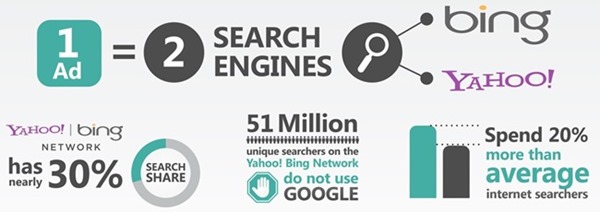
There are leagues of comparison sites. One quote I really liked was “Google is like the person that has it all together but is too conservative sometimes, and Bing is like the party friend who is open to anything but is a hot mess”. Another quote is from 2016: “With Bing Ads though, you can only show your ads on the Content Network if you’re targeting the entire US”. So an issue of targeting shown in 2016, an issue that Google AdWords did not have a year earlier. This is important because if you cannot target the right people, the right population, you cannot be competitive. This relates to the system and the EU-regulators, because a seven year ‘investigation’ shows that a year ago, the other players were still lagging against Google, in addition, when we read in the Guardian article: “the EU regulator is further investigating how else the company may have abused its position, specifically in its provision of maps, images and information on local services”, we need to realise that when we relate to cars, the other players are confined to technology of 1989 whilst Google has the Williams F1 FW40 – 2017. The difference is big and getting bigger. It is more than technology, whilst Microsoft is giving the people some PowerPoint driven speech on retention of staff, something that IBM might have given the year before, Google is boosting mental powers and pushing the envelope of technology. Whilst Bing maps exist, they merely show why we needed to look at the map in Google. This is the game, Microsoft is merely showing most people why we prefer to watch them on Google and it goes beyond maps, beyond shopping. As I personally see it, Microsoft is pushing whatever they can to boost Azure cloud. IBM is pushing in every direction to get traction on Watson. Google is pushing every solution on its own merit; that basic difference is why the others cannot keep up (that’s just a personal speculative view). I noticed a final piece of ‘evidence’ in a marketing style picture, which I am adding below. So consider the quote ’51 million unique searchers on the Yahoo! Bing Network do not use GOOGLE’, so consider the fact of those trying to address those 51 million, whilst they could be addressing 3.5 billion searchers.

The business sector wants results, not proclaimed concepts of things to come. Microsoft is still showing that flaw with their new Consoles and the upcoming Scorpio system (Xbox One X), users want storage, not streaming issues. They lost a gaming market that was almost on equal term with Sony (Xbox 360-PlayStation 3), to a situation where it now has a mere 16% market of the Sony market and that is about to drop further still as Nintendo is close to surpassing Microsoft too.

There is always a niche market (many people), who want to kick the biggest player in town, I get that. Yet at present the issues shown and as far as I get the technology, I feel that the EU regulators are failing in a bad way. I might be wrong here and If I get the entire commission papers and if issues are found, I will update this article as I am all about informing people as good and as correct as possible. Yet the one element that is most funny, is that when I open up Internet Explorer and I type in ‘Buy a Washing Machine‘ Bing gives me 8 options, 7 from David Jones and 1 from Snowys outdoors, which is a portable one and looks like a cement mixer. So when was the last time you went to David Jones to watch a washing machine? In Google Chrome I get 6 models on the right side, with 3 from Harvey Norman, 2 from the Good Guys and one from Betta, and that is before I press the shopping tab, so can we initially conclude that Micro$oft has a few issues running at present? Oh and the Google edition gives me models from $345 to $629, Bing prices were $70 for the portable one and the rest were $499-$1499.

This is not on how good one or the other is, this is how valid the EU regulator findings were and so far, I have several questions in that regard. Now, I will be the last one keeping governments from getting large corporations to pay taxation, yet that part is set in the tax laws, not in EU-antitrust. As mentioned the searchers before, I wonder whether the EU regulators are facilitating for players who seem more and more clueless in a field of technology that is passing them by on the left and the right side of the highway called, the ‘Internet Of Things’.

From my point of view Google is doing just fine!

The EU regulator? Well we have several questions for that EU department.

1 Comment

Filed under IT, Media, Science

Explicitly exposed

There is an issue pushing to the forefront. In the upcoming elections, certain parties are playing a different game. The article ‘Facebook and YouTube face tough new laws on extremist and explicit video‘ (at https://www.theguardian.com/technology/2017/may/24/facebook-youtube-tough-new-laws-extremist-explicit-video-europe) is showing a story that is not just incomplete, it is not telling us about certain dangers we all face and it is not coming from extremists. You might have missed it all and that is fine, but you need to be aware of the mess that some parties are increasing. The quote: “European Union ministers approved proposals from the European Commission on Tuesday“, now the article gives us that the rules are not yet public, because they are still talking about it, which is fine. Let those people get their act together before presenting it, I have no issue with that. It is the ‘trialogue’ part in the article that beckons view. The negotiators from the EC, the European parliament and the Council of the European Union are in the midst of this and we will at some point hear what is agreed upon. What I find utterly boggling is how the people were left in the dark regarding Article 50 for years (during the Grexit era) and we now see an overreaction regarding “forcing them to remove hate speech and sexually explicit videos or face steep fines“, now, I have no issue (within legal limits) on fines for Facebook, Twitter and YouTube. Yet what those players are not realising and not considering is that THEY themselves wanted the smartphone era, they wanted connectivity, they USED those options to get new taxation, new revenues and new technological iterations, yet they are in denial of the opposite side of the scales and there has never been a balance in any place of used technology where it applied. Yet they knew better! I know for a fact (from mere history books), that porn was not part of the first photograph ever taken, it was definitely part of the first 50 photographs taken in history. With movie the same way. There is Etruscan erotic art 900 BC and the clock goes back a lot further, so we knew that it would happen. Now for the most, it gets stopped, yet at times the filters fail. This is because there is a global wave, you see, the statistics gives us that in the recent past there was a total upload of 60 hours of movies EVERY MINUTE. That is just YouTube, there is no way to see how much the other channels in different formats operate at present. What these overreacting individuals seen to be oblivious about is the stuff that they find ‘objectionable’. They will happily steer away from every bogus sales and scam video uploaded as those do not show breasts, penises, vagina’s or suicide bombers. Video’s on how to get wealth with so much certainty. On how the next hype whilst getting your neighbours involved is not a Ponzi scheme. The list goes on, but they will not act there. Or how the people are fooled by ‘YouTube Marketing Training Scams‘. No, they do not care about the thousands that get fooled by slick pitches that could have fooled many in the actual industry. No, the tits are out and we see how the outrage is in a state of overreaction. You see, when these ‘commissions’ start getting traction, the players will suddenly find that these large corporations will insist on other solutions, and the commission will not be able to do that. Because on that point, privacy will actually stop. Now, when it comes to stopping some of the video low lives that exploit the people for personal greed, I will be in full support. Yet these European nations will then learn that they were alas unable to prosecute those people. The mere levels of hypocrisy here is just too sickening for words.

Now, we have two issues. Yes, we do want to stop extremist video’s and I feel 100% certain that Google wants that too. Yet video is about content and identifying an extremist video is a lot harder than one thinks. censoring 60 hours of movies every minute is just nearly impossible. If it is set to priority it will just be another way to stop net neutrality, because the advertisers would want to get checked first. Meaning that an engine of free speech will be taken away from the people. The question that everyone is skating around is the number of explicit video’s produced and where from, as well as the original and numbers of extremist video’s. Now consider the element of Extremism. What if it is an imam giving a Muslim lecture? How could we see that it was extremist in nature? There are so many outlets and methods of communicating these dangers that the setting is (as I personally see it) not about fines, or about stopping any of this. It is about setting a stage to gain control of a media, where the some and the fat cats want control. And in this specific setting Google and Facebook are not the fat cats on the menu. So who are these ‘ménage-a-trialogue’ people facilitating to? You see, when you realise the 60 hours of video a minute, the three examples given in the article are less than 0.000,000,23% of all uploads and that is merely for one day of uploads. This is as useless as trying to get gun control in the US, guns do not kill people, people kill people. So as the criminal offenders film their events and as we can see that it is statistically impossible to prevent this from happening, why are the three parties having large lunches, uncanny levels of expenditure and levels of remunerations that go beyond most incomes, why is this happening?

I believe that this is merely to set levels of control, levels that do not benefit anyone at all, perhaps the church, which would start an entirely different debate. We are already moving towards a new technological setting of non-repudiation online, but the levels of settings, whilst we also know that hackers can get online ending up leaving the blame with some innocent granny who has internet is just not the way to go. The articles do show my side as partial evidence in the final paragraph. As we see: “The proposals, which fall under the digital single market legislation, also include a quota of 30% of European films and TV shows on streaming platforms such as Netflix and Amazon Video, up from the 20% originally proposed by the EC“, so if this is about bandwidth and streaming, we now see a different picture. One, why the hell do I get to pay for some Netflix need, one that I do not want in the first place. And with “Member states will also be able to require video-sharing platforms to contribute financially to the production of European works in the country where they are established and also where they target audiences” we see that video sharing now comes at a price of funding other matters? How will that work? 50,000 students (likely that times 500), all creating their video channel, in a field of their passion, hoping to get discovered and actually make their passion a reality on real life on TV for all their audience to see on the large TV. So as they do this, why is there a need of funding?

Also, when we realise that this is already in play, why would Google need to give 20 hours a minute of streaming time to European films? Will that be free of charge? I am going with ‘NO’ as the answer from the movie creators, so this will be about money, about surcharging that will push the non-viability of net neutrality because it is now about limiting bandwidth with a value to the mandatory availability of other materials.

So as these players are explicitly exposed, their ‘balls to the wall’ so to say, we should request the names of the members of this obscene ‘ménage-a-trialogue’, so that we can get some art going. Perhaps we can get Lars von Trier to make some new work called ‘Nymphomaniac Politicologica’, or perhaps ‘For a few Terabytes more‘ with music from Ennio Morricone. You see, in a few second I added hours of European promiscuous non-explicit art of a European nature. I am willing to bet the house that these people would prefer to remain in the shadows, because that is seen when we consider the quote “discussions between negotiators” in a time when all those imaginative attaining politicians, this is a setting between negotiators? Who missed that part of the article?

Yet it is not all gloom and doom. The quote ““We need to take into account new ways of watching videos, and find the right balance to encourage innovative services, promote European films, protect children and tackle hate speech in a better way,” said Andrus Ansip, EC vice-president for the digital single market” is not one of negativity. Yet as the watching video’s options is set on a shifting scale. New connection methods, new stream utilising options and new ways to offer other materials is in the corner of innovation, keeping that door open is the only way that innovation hits us. The one element in all this is the data provider, that was the simplest of issues to figure out. The issue is however seen, not in Google or Facebook et al, it is seen in the facilitation of the data stream itself, the ISP and they know they cannot get to the stream provider as that person is in it for the money and that provider has local government protection. KPN in the Netherlands, BT in the United Kingdom, Telia in Sweden, Mobile providers all over the European states and so on. The moment they go anywhere near this is when they get cut from everything and the censor marketing police will shout fire, rape, help, whatever they will shout to get the limelight. In all this Netflix might need more bandwidth and better deals, so they will happily facilitate this path. I am merely wondering why Andrus Ansip is happy to facilitate his voice for all this. You see it is not up to YouTube to promote European films, it is up to the film maker to creatively facilitate marketing for their movie. So, perhaps it is less about the DataStream, perhaps it is in equal measure getting proper television to look beyond the Marvel movies. When I was a lot less old than today, I would watch Simon van Collum (Netherlands), Jo Röpcke (Belgium) and Barry Norman (United Kingdom). I would dream of becoming like them, making a living talking about movies. Alas, I never had that option and I happily reviewed Video Games for a decade. These people were giants and they fell away whilst no one filled those shoes. So for the internet to pick that up is a little bit a stretch. And as YouTube is probably one of the most innovative services of this century, we could start asking a few more questions regarding the push that we see here. So as we see the one element in this that can be answered immediately, we see “tackle hate speech in a better way“, which can be solved on the spot. Because my response here is a non-diplomatic: “Clean up the Criminal Justice mess you currently have, and properly identify and prosecute those shits!“. You see? The issue is now solved, yet it is not, because European law is an utter mess and as Strasbourg will do too little to tackle the option as it is too restrictive on free speech, we see that the European Commission is stopping their own European commission to achieve anything ground breaking. In all this, as I personally see it, for those who need it there is a fictive solution in retrenching net neutrality that is no longer neutral and the European Commission Gravy train could run for years on this element alone. So as we see this level of facilitation, the term ménage-a-trialogue is a lot closer to the truth than some consider it to be. And as long as those balls to the wall don’t make it to YouTube, we will see no result that is a solution or fair, European would merely be receiving a lot more Netflix, but at what price?


Leave a comment

Filed under Finance, IT, Law, Media, Politics, Science

See Other Side

I am just looking at an article of last Saturday, and I have to be fair, I really liked Pamela Duncan and Cath Levett’s article (at https://www.theguardian.com/politics/datablog/2017/may/20/general-election-2017-manifesto-word-count-in-data), now there will be a whole host of issues we could go into, yet the article is a nice read. Weirdly enough it is the part of the Lib Dems that stands out a little in a positive way. You see, in this age, they are the ones having a high usage of the word ‘support’. That does not mean that it is a good way (or a bad way), the fact that neither Labour or Conservatives have that word in their top 5 is an equal issue to make. Labour is all about ensure and we saw how that went over. the idea that they are using ‘ensure’ whilst they are about to push the UK well over a third of a trillion deeper in debt is a massive issue. The Tories are using it down the line as well, so in what way are the words used? You do not have to wonder or think of it too deep. Reading the manifesto is a first and I had loads of issues with the Labour one, the way it was made (secretive) the way they shouted when it leaked and the way they so easily want to make ‘promises’ whilst having no finds to do so. The UK will need at least another decade to get over their previous spending spree and the least said about bungling the NHS IT issues the better. It is interesting that UKIP was taken out of the consideration at all. That is because now in the age of Brexit, their next steps are actually interesting and required knowledge. It is the follow up of the party that advocated Brexit that is an essential. Do not think for one minute that the article does not matter, you see, the Facebook article (at https://www.theguardian.com/news/2017/may/21/revealed-facebook-internal-rulebook-sex-terrorism-violence), shows that in a lot more detail. Facebook is no longer a mere facilitator. With the ‘Revealed: Facebook’s internal rulebook on sex, terrorism and violence‘ article on moderation, we see that there is a shift from moderation to opportunity creation. The quote “Yet these blueprints may also alarm free speech advocates concerned about Facebook’s de facto role as the world’s largest censor. Both sides are likely to demand greater transparency” is in the limelight here. The article gives us generic terms to illustrate, yet in a setting where the secondary lines are all about swaying, how does text and text analytics have any consideration of validity to censor or impede? In this the article skates near it in a sentence of life ending regarding President Trump. The reality is “they are not regarded as credible threats” is the jewel that cannot be ascertained by algorithms, for the mere reason that content is created, it tends to be a shifting wave not set in stone, making algorithms pretty useless. It is also why Google is focussing on AI, as with that, the ability to dimensionally set content becomes a close reality. In this another realisation is coming to light. The article gives us “Some photos of non-sexual physical abuse and bullying of children do not have to be deleted or “actioned” unless there is a sadistic or celebratory element“, consider that this gives the setting that bullying is to be condoned. One source stated: “The statistics on bullying and suicide are alarming: Suicide is the third leading cause of death among young people, resulting in about 4,400 deaths per year, according to the CDC. For every suicide among young people, there are at least 100 suicide attempts“, whilst Facebook is stating that it is not intervening in bullying. We can argue that there is the freedom of speech, yet the bulk of such bullying is done through fake accounts. Facebook is at present ‘reviewing more than 6.5m reports a week relating to potentially fake accounts – known as FNRP (fake, not real person)‘. That is a potential 350 million accounts a year, that is a little short of 17% of all Facebook accounts. We cannot fault Facebook here completely, as the quote “Facebook cannot keep control of its content,” said one source. “It has grown too big, too quickly.“, the ‘too quick‘ and ‘too big‘ have sunk large corporations before. It is the realisation of content that is at play. Another quote that matters, links to a May 1st article on dangerous content. The quote “the biggest and richest social media companies are shamefully far from taking sufficient action to tackle illegal or dangerous content, to implement proper community standards or to keep their users safe“. Which is pretty much the quote of Yvette Cooper, Labour MP. Yet in all this we ask how? Either the world becomes a censoring police state, or it allows as much freedom of speech and freedom of expression possible. Facebook and Google both have issues in this. By trying to facilitate they set up a situation that those not allowed to speak do so in almost extreme fashion. We know and were ‘sullied’ by political players regarding content. And in this ‘sullied’ is pretty much the way they set it. You see, the quote “Referring to Google’s failure to prevent paid advertising from reputable companies appearing next to YouTube videos posted by extremists“, which seems to be the correct description in a pig’s eye. the statement is true, yet the actual truth is that Google designed a online facilitation of advertisement allowing small businesses to gain proper and granulated visibility of what they offer to the interested audience at less than 10% of what printed media demands. Give me one example where that will not be exploited? And when it comes to explosive situations, lets remember Alfred Nobel who found a way to make working for tunnel diggers relatively safe. It was these crying governments who thought of using dynamite against people during acts of war was a good idea, so please Yvette Cooper, go cry me a river somewhere else, and please feel free to flush yourself like you are a cast member of Trainspotting; please please pretty please. In this Germany is not without fault either. The quote “In Germany, the report points out, the justice ministry has proposed imposing financial penalties of up to €50m on social media companies that are slow to remove illegal content“, Illegal where, and what is ‘slow to remove‘? All pointless statements in a proposition that is laughable. We can all agree that ‘illegal‘ content is to be removed, yet I think the Germans need to consider their high chair when we consider the issues regarding the CDU before Angela Merkel was in charge, the days of Christian Wulff has a few issues whilst he resigned and subsequently got acquitted in 2014. The press and government hid behind ‘since it was not clear who had paid for these holidays‘ should be an issue as there is a debatable consideration that they did not pay for it, you see for the bulk of all of us, when we go on holidays it tends to be a real dip in our daily cost of living. That might not be for everyone, yet when we see clarity of who did pay, there is a lot more going on. The entire Google matter gives rise to political games in favour of printed media who feels massively threatened, whilst Google has NEVER EVER been unclear of how their AdWords system worked and how you could maximise YOUR visibility. So when the part of ‘YOUR visibility‘ is a not so nice organisation, in a system that facilitates for millions, the damage could happen. It is a lot more complex than merely paying for a vacation using your bank card or credit card. Here, we now have content!

In this light, when we consider the elements and we go back to the first article “the parties will “ensure” that in “government” they will “work” to do “new” things that “support” you, the “people”.” it is a clear political message that can fit any of the three parties and that is what the writers set out to do. Yet what are the new things? Where are the funds coming from? How will it better your life? That is where the content is. Labour pushes you in even further debt, the Tories are trying to go one way, whilst you lose as little as possible, and that whilst trying to deal with large issues like the NHS and the debt. The Lib Dems want to be supportive of you as they have lost way too much to actually achieve anything. The manifestos are trying to sway you in the way they can and ways that are allowed. In this social media is the unspoken gun that will spray consequences on the choices of opponents and whilst they would like to guide you towards their base of choice, the censors are seeing a shift in methodology. In all this we see non political parties trying to play a similar game whilst ‘enticing’ you to ‘their’ places of ‘combat’, which in extremist views are actually ‘theatres of war’. In all this we see shifts as governments on a global scale (USA and Indonesia) are now on the verge of having to deal with people who return from Syria in a radicalised state. America in this has even more problems as Syrian and Iranian ties are getting stronger. This implies the dangers for America as this pool of radicalised people is an optional source for VEJA to see what damage they could to to America and more important, whether they could give pressure to Indonesia giving American Allies (read: Australia) more headaches that they are comfortable with at present. So where is that content? You see, as you might have seen in the past and in the media, content is created, it is created by setting a stage and let data be data, making the watcher nervous, or reactive, in social media is an absolute first to create large waves. The problem with censorship is that you create waves, whether you censor or not, by trying to create the waves in your favour you are also fuelling the opposition who could hurt you if intentional censorship is exposed. In this the attempt to ‘save’ the Trans Pacific Partnership is a clear monument of evidence how political players are there to ‘cater’ to big business whilst misrepresenting it as ‘labour rights and environmental protections‘ that whilst too many media outlets have already reported on how consumers will basically lose rights. So as we see that we keep an optional job, whilst having no say on where we spend our money and having no options to the amount we have to pay to get better, can you explain to me how that is a good thing for anyone else than big business? In this we now get back to Google. Yes of course they are in it for the money (to some extent), yet they have shifted the bar of technology 5 times in the last 7 years, whilst Microsoft has merely pushed the same bar forwards three times and making us pay for those new iterations. Does Google have issues? Of course it has, when you push out something as revolutionary as Google AdWords, things will happen and flaws will be found. You show me a windows version that got the bulk of basic parts correct after 29 iterations and you will be on the shortlist for receiving a Nobel price (they gave one to Barack Obama after all).

We all create content and whilst we saw on how the number of words might persuade us on how well any political manifesto was, we know that content was not given, mere curiosity (read: and it is still a nice article to read). We can agree that speech, whether elective or hate based is to address a group that will listen to them. in this there are points of technology (read: facilitation), yet in UK law there is an explicit defence for facilitation, as there is in almost every Common Law nation. In this we can clearly argue that there are issues to solve, nobody denies that, not even the technology firms. Yet do you want to live in a Microsoft world where it is merely iterative result of non fixed software that works, yet has issues and we get to pay for these flaws again or again, or are we willing to see Google solutions evolve where we have been introduced to new options, and amazing new boundaries as we moved from 3G, 4G and now towards 5G, with smartphone issues that Apple could not give in the last 4 versions of their iPhone. I got introduced to more invigorating options in 12 months of Google than I saw Microsoft show us in 15 years and that is whilst the Media remains very uninformative on non-consensual upload of data by Microsoft, that too is content!

In finality, consider the quote “Facebook also told MPs that it is is reviewing how it handles violent videos and other objectionable material after a video of a murder in the United States remained on its service for more than two hours“, whilst we need to consider the 2014 event of ‘Video of ISIS beheading U.S. journalist James Foley‘, the issue the CNN brought forward was: “The question is why taking it down is controversial at all. The answer, I think, shows how important services like Twitter have become, and how this has thrust unexpected responsibilities onto them“, it took years in court to deal with the Christian Wulff case as some would state it in a very unsatisfied way, whilst there is the raising of hell in light of certain videos? We can agree that some should not have gotten through, yet that is when we are in the emotional stage of not realising the size of technology involved. We should like the 2008 Facebook sex tape case conviction towards the poster of the video. Yet the political players know that this is a game that they cannot win, so it is easier to go after Facebook and Google, that whilst they rely on businesses to use these solutions to turn a few pennies, all knowing perfectly well that it is a cloud of facilitation. Is it merely because being linked to a large firm getting kicked is sexier that actually solving issues like age discrimination or giving suspended sentences on intentional fraud. When we are set in such an environment, can we trust anyone? We are all dealing with concepts of ‘facilitation’, ‘censoring’, and ‘technology’, at times on a daily basis. We all need to consider what is on the other side of that piece of paper, because when we consider that on page two of that news is an advertisement mentioning bogus scientific results? How criminal is the paper? and how will you take down printed advertisement? The elements here matter, because it introduces a term that has bearing, one that politicians have used for decades. In this they ‘hide’ behind the term “wilful blindness“, to remain ignorant intentionally of a situation is an issue, an issue that Yvette Cooper has been demonstrating in the response as given by the media. In equal measure can we accuse Microsoft of the same thing? The fact that some bugs that were seen in Office 95 and are still an issue in Office 2007, does that matter? That’s well over 12 years!

We ourselves also create content by not looking at the other side, which during the upcoming election is a bit of an issue, because, as I personally see it, Europe is in a new level of turmoil, one that it has not seen for several decades. It is also a larger issue as most nations have borrowed away the reserves they had. The safety netting is gone, which makes proper and complete information a lot more important than the previous 4 elections.

So lets not forget to see the other side, because when we are told: ‘look here’ the actual action that harms us is over there on the other side, in that it is my personal view, that in that regard all politicians are alike, and not one party has ever been ignorant of using that tactic.

In this business will go vastly beyond politics, because as the 5G waves start hitting us all, it will be about creating content, in this we will all look at the other side of the page and wonder about the validity, not because we want to, but because we have to. We will no longer have a choice in the matter.

Leave a comment

Filed under IT, Media, Politics, Science

As a puppet

Have you been in a place where a person behind the screens is slowly shows his ability to give appeal? He is majestically moving his hands, not seen by anyone, hidden in shadow, yet the audience is delighted, the audience is watching a show of puppets, whether Muppet or Punch and Judy, the kids are in delight, at times, so are the parents. You see, the true master is not just about the posing or the dance of the puppets, as a master his voice give reign to banter, gossip in two layers, one that makes the children laugh and that makes the adults go: ‘Ha!’. The mark of of a savant. Yet, the bulk of them are not savants and in the political field there are at times a few people who are a lot less than savants and the media lets them, because the outrage created is what their circulation depends on. That was my view when I initially saw: ‘Doctors’ leaders accuse ministers of ‘callous disregard’ for the NHS’, a piece of work by the Health policy editor. We see a few things in the article and we all know that the NHS is in serious trouble. The part that stopped me was: “Norman Lamb, the Liberal Democrats’ health spokesman, said: “Instead of £350m a week for the NHS, under the Conservatives we’ve seen the health service being gradually run into the ground“, you see, leave it to a LibDem to be clueless on the best of days, but just in case (because I make mistakes too), there was the small decision by me to take a second look, for that just in case moment in my life. You see, I remember that number, for one, I have never had that much money in my wallet, but I remember the amount in different ways. You see, the busses, the mention, when was that exactly a promise? The Brexit team bus (fuelled by UKIP) states: “We send the EU £350 million a week, let’s fund our NHS instead“, it is a valid slogan and it is a wish, in addition, the Nigel Farage interview on some morning TV show gives us “I would much rather give it to the NHS“, that is wishful thinking, it was not a promise or commitment, that came from nearly EVERY anti-Brexiteer. Now, I have slapped Labour UK around on their manifesto. It states: “The people of Britain are rightly proud of the NHS and we will invest £12 billion over the next five years to keep it working for them“, so we get a little over £6 million a day, or slightly more than £200 million a month, so where does this £350 a week ‘pledge’ come from? The independent (at http://www.independent.co.uk/news/uk/politics/conservatives-must-make-manifesto-commitment-of-350m-a-week-for-the-nhs-say-doctors-a7739401.html) shows us: “Doctors, academics and public health officials have called on the Conservative Party to include in its general election manifesto a commitment to spend £350m a week on the NHS, in keeping with the notorious posters of the Vote Leave campaign“, which makes me wonder where the actual pledge comes from. So it seems that Dr Chand Nagpaul and Norman Lamb are both missing a few parts here (I am happy to be proven wrong), The conservatives pledge (2015 manifesto) was to increase £8 billion over 5 years, the increase goes nowhere near the 350 million some are muttering and this manifesto was BEFORE Brexit happened, so I am wondering what the article is based upon. If it was written with in mind the presentation of some think-tank, then this approach is a massive failure. So this health foundation think-tank is also moving in other not so clever directions. I could start that I had a solution (which only costed me 135 minutes to figure out and Google could get it from me for £15 million post taxation), yet they aren’t interested in a multi billion-pound revenue solution. And if this article is about spiralling pressures, well, we all agree and if the wasted £11.2 billion pounds on a previous IT project under previous labour, there might have been some space, yet the pressure would always have been there. As I wrote in previous blogs, the first thing that the NHS needs to do is change its mindset. That is an initial need on several levels. The ‘old’ way of doing things is no longer an option and it is weighing down as the cost of infrastructure is just increasing, that initial change is essential to survive. In my view (which might be flawed and incorrect) there seems to be an increasing wave of commissions in play and those groups are not free, there was a paper showing it and the reference is in my previous blog from January 15th 2017, where we see: “Coventry and Warwickshire NHS chiefs fork out £340,000 for advice on how to SAVE money” (at https://lawlordtobe.com/2017/01/15/the-views-we-question/), this time it is not about the money, well perhaps partially. It is about the 7 commissions in Warwickshire. How much to they cost? Now, this is not about their validity to exist, yet it seems to me that these trusts and commission groups might need trimming or reengineering. And that is just Warwickshire. This is what I am implying with the ‘rethinking‘ part. Yet, when, I ask again when did any of these think tanks go there in looking on changing the NHS and the costs they have? I am pretty sure that the media have not seen or reported on that issue for the longest of times. As I read now that they are looking to fill 80,000 positions, whilst I with three Uni degrees can’t get a job because I turned 55 is just obscene in several ways. And the entire ‘government must plug funding gap in healthcare spending between UK and other European countries‘, which is debatable right there as the Netherlands is twice the size of Ross-shire, with 16 million people in there, in addition we see Sweden which is almost twice the size of the UK, with 10 million people and 20% of that in the three largest cities. So here we already see three very different dimension of issues, making the ‘funding gap’ a bit of a question mark, in addition, as the UK is well over minus a trillion, the health care issue will be an issue and remain so unless some players start considering different paths, throwing money at it does not make it go away, you merely move the issue after which you end up having to solve two problems. So how does that solve anything? Well, I believe that we need to get the Universities involved and start brainstorming on how certain problems might be solved. You see, there is nothing like the unbiased view of a politically incorrect student to try and solve a puzzle, especially when political lobbyists are not allowed to ‘forge’ minds to become politically accepted minds. I think that turning the puzzle into a creativity challenge will get us potentially some options people forgot about. I found my solution whilst browsing a historical page on Scotland, of all the technological solutions, I found mine in a history book that predates that device that Graham Alexander Bell invented (read: telephone). How weird was that?

The puppet issue still remains. You see, the quote at the end: “Urgent action is needed, the thinktank says, because 900 people a day are quitting as social care workers, too few new recruits are joining the sector“, is an issue. I am not doubting the number as a total, yet when monthly a industry is drained by 18,000 workers, there are additional problems. When we in addition see a source claiming that NHS digital had notified staff on patches and we see news that Labour now wants to pump £37 bn in the NHS, we have several issues. For one, the unrealistic prompt for money that cannot be found in a realistic way and the fact that Labour gave out a manifesto promising the UK to get them a quarter of a trillion in deeper debt is a worry. The IT story is also linked to all this as it shows that there are additional infrastructure issues. If the endgadget quote is true “It seems this advisory fell on some deaf ears, which explains why only certain NHS Trusts were affected“, it clearly shows that the infrastructure needs an overhaul and there is a strong requirement to take a harsh look on where the money is going. The endgadget quote shows a STRUCTURAL failure of the NHS, and only an idiot will pump £37 billion in something that could be structurally unsound. That part has been ignored by the media on too large a scale. Oh and that is not limited to the UK, there is a European failure here (as well as a few other parts of the British empire, like Australia). So we need to consider that we have to give stronger illumination to the puppeteers, because, who exactly is part of the the Health Foundation think-tank? And as we illuminate the players in such think-tank, as the people have a right to know, we need to stop being puppets. We need to look at actual solutions, that is because I have seen a few ‘think tanks’ and ‘consultancy teams’ mentioned and even as we can agree that ‘£340,000 for advice‘ could be money well spend, it seems that over the last year there have been a few of these events and I am decently certain that these people do not work for free, so how much has been spend? I feel that I am massively underrating and could end up being equally massively underpaid with my £15,000,000 solution that would bring the project completionist a few billion.

It is also my personal belief that in many cases the person claiming ‘urgent action is needed‘ is also the person who wants the ‘victim’ to jump the shark so that they can coin in as large a way as possible. Yet I agree that the NHS needs acts that lead to solutions, here I differ in labelling the action as an act. The act of instigating change is not done in a few minutes and I do not want it to be wasteful, so people need to have their bullet point list ready (I actually hate those lists). Not a longwinded presentation, or is that ‘long wined and did possibly’? The NHS issue is in too critical a state, pretty much everyone agrees, yet the way how it is addressed and where the highest priority lies is another debate, in my mind (possibly a wrong deduction) is in the first, nurses, in the second infrastructure shifts and three the doctors. The infrastructure is important, not because doctors are not, but because the infrastructure has been showing to be a drain on the funds available. In that part we see that as issues are resolved more and more funds would become for both doctors (and GP’s) and upgrades. It is not that points two and three could not be instigated at the same time, yet in equal measure whatever infrastructure issues is resolved might actually give additional funds for more doctors and GP’s as well. It is merely a thought and there will be enough opposition, or better stated valid opposition to my priority list, it is just finding the path that is best walked. And in this case, I have the feeling that from the very beginning of the failed IT project that the NHS decision makers have been all about talking the walk and not getting any actual walking done, which would be a terminal disaster for any project, no matter how many billions you throw at it. It will merely be wasted coin.


1 Comment

Filed under Finance, IT, Media, Politics

Prospecting black gold

There has been news all over the world, some news is good, some less so and at times we cannot see whether news is good, bad or irrelevant. To see the dangers, or perhaps the opportunity of what is what we need to look back to 2014, and start that issue with a quote from the Marvel Movie: Age of Ultron. The quote originally from Tony Stark was: “As I always say, keep your friends rich, and your enemies rich, and then find out which is which“, it is a reference to the arms industry and the benefit of mutual escalation. Keep this in mind when you consider the article in the Independent (at http://www.independent.co.uk/news/business/news/royal-mail-float-scandal-how-hedge-funds-cleaned-up-9303674.html), the title gives us the immediate threat with ‘Royal Mail float scandal: how hedge funds cleaned up‘, and “Speculators were allowed to buy £150m of shares despite Vince Cable’s pledge to favour long-term investors“, I omitted the claim that it was all due to the postman. That person usually rings twice, especially when Jessica Lange is around. Yet the heart of the matter, like in the movie, is not in the ‘boner’ or the ‘bonee’, it is the aftermath that matters. You see, the gem is seen in the local prosecutor and his ploy to get to the truth by going after one side, yet it is Cora’s Lawyer Katz who stops the evidence to get to the prosecutor, which nullifies whatever was attempted. So consider the part we see in the Independent: “around 20 per cent of the shares it had allocated to 16 preferred investors had gone to hedge funds and other short-term investors. This would equate to around £150m of Royal Mail shares – 13 per cent of the entire stock sold by the Government. The companies bought in at the float price of 330p a share. The shares shot up within seconds of trading, eventually peaking within weeks at more than 600p, allowing the hedge funds to bank vast profits at the taxpayers’ expense“, now consider also that this is a reflection of ‘£150m of Royal Mail shares‘. A system that has issues and allows for ‘deal sweeteners‘, now when you see this, and knowing that the bulk of hedge funds managers seem to get away with murder, consider the arrival of Aramco, better stated, the Financial Times headline ‘The $2tn Saudi Aramco question‘, which is now squarely an issue of titanic proportions (intentional pun towards the sinking dinghy). First things first, you see, this is not a fuel vendor like Shell, or a social media company like Facebook, this is the Privatised Saudi oil company that is larger than the sum of Shell, Facebook, Apple and Google. It is a 2 trillion dollar company, now consider the danger of the floating dangers of something like that, hedge funds managers can clean up and those who do will be set for a decadent life, for the rest of their lives. The dangers of something this big is pretty astounding and the fact that it could happen is not that small. You see, the dangers increases as we consider certain facts. NASDAQ gives us: “OPEC agreed in November last year to curb its output by about 1.2 million barrels per day between January and June“, that is because the stocks are a little higher than expected. This happens, oil will always fluctuate, now consider in the US alone there are 32 oil fired power plants. Production is down (for now) and the moment the first heatwave gets to the US, we see a massive spike in power requirements and 32 of those power makers require fossil fuel. In this I am only mentioning the USA, there has been power issues on a global scale, which is always going to be the case, but one of the largest providers towards the demand is going public and that is what speculators really like, because if the supply & demand need is not properly managed, we see an increase option towards fluctuation. Those speculators only need to get lucky once and the mess would be unrepairable.

The Financial Times gives us some of the goods with: “Privatising Aramco is the first step in rebalancing the economy. By disentangling the company, which accounts for more than two-thirds of government revenues, from the state, Prince Mohammed hopes to make Riyadh less oil-reliant, while providing capital for investment in new industries, ranging from technology, where it is pumping $45bn into the SoftBank Vision Fund, to mining. The privatisation of its national champion is crucial to this process” (at https://www.ft.com/content/7ed59bee-163b-11e7-b0c1-37e417ee6c76), but the heart is seen in: “That is even without looking at the question of how much oil actually lies beneath the desert kingdom’s sands“, when we consider that the oil gains in the North sea is slowing down and this is a signal seen in several places, the fact that at some point (in past, present or future) that something similar will happen to the Aramco goods is a certain fact, it is the when that cannot be anticipated. In addition, going public means that you need to be commercial, when it is government no one really cares, but in the public sector the trend must forever be upwards, so when will we see a similar float in Aramco when the numbers are not as great? It has been an utter certainty that nearly all companies go through, some did it calculated knowing they would kill the numbers within a quarter, some hoping they would kill the numbers and some did it whilst they were desperate for a miracle. Yet floating they went. How much of a $2 trillion dollar company in stock value will tumble when that happens?

And these are the circumstances where the acts were valid and not criminal at all (see UK Mail), I am not making any Tesco assumptions here, because the damage in that case will be devastating to the London Stock Exchange. One firm representing close to 70% of its entire market, there would be no London Stock Exchange after such a disaster. Bloomberg gives us the second tier of risks and dangers with ‘Saudi Aramco Cuts Oil Pricing for Europe Where Russia Dominates‘ (at https://www.bloomberg.com/news/articles/2017-04-05/saudi-aramco-lowers-some-crude-pricing-for-asia-raises-for-u-s), a market that Russia already dominates. What would happen if let’s say 3 days after going public, Russia decides to slash their prices for a short time? How would the market react? Not just to Aramco having to follow, but the forecasted annual numbers then take a dive, at who’s expense? Consider that the European market is ‘ruled’ by Russia and Norway, together they make up for 50% of that market and the Saudi part is smaller than Norway and 80% of that 50% market is just Russia. So they can influence the market a fair bit. You see, Bloomberg gives us “There is a risk price wars may resume in Europe, raising the possibility the output cut agreement won’t be extended to the second half of this year“, meaning that in the second half Russia could flood the markets and the streets with black gold. That impact would be felt all over the stock market. There is one part that I am uncertain on. You see, it reads like a small and insignificant part. The quote: “Aramco will tweak the benchmark it uses in the region to make it easier for crude buyers to hedge their purchases” seems small, but consider that hedging is done by a few hundred buyers for up to 25,000 barrels. It seems like nothing, but with 179 buyers it is almost a week worth of crude oil, now the ‘stock is full‘ issue becomes a larger one, because this is a level of fluctuation on stock levels that would impact on the stock prices, the mere stock is full a few weeks ago had a $3 impact (or 4.6%), that becomes a little more than insignificant. Now, I could be wrong here as I am not in the oil, yet you see that this is a concern when it impacts a $2T invested interest by more than just hedge funds managers.

The last part comes from the Guardian. In Jan 2016 they stated “Saudi Aramco is likely to be worth well over $1tn (£685bn)“, this is important as we do not see 1.2 or 1.5 trillion, so this given number implies that in a year Saudi Aramco grow by more than 40%, the exact number cannot be determined. Other media stated that Aramco had grown to 2 trillion last year, but none have given enough evidence to state which number is the reliable one. That too impacts this new market, especially the initial dangers of floating a stock. Yesterday (at https://www.theguardian.com/business/2017/apr/05/theresa-may-lse-saudi-aramco-uk-london-stock-exchange-oil) we see: ‘May and LSE chief woo Saudi ministers for $2tn Aramco listing‘, here we see: “Xavier Rolet, has launched a charm offensive in Riyadh to woo Saudi ministers with the prospect of London hosting the upcoming flotation of Saudi state oil company Aramco, which is likely to be the largest of all time“, the word ‘flotation‘ is given and the danger is now out and about, in clear view of all. So as the UK government is trying to appease Khalid Al-Falih, energy minister of Saudi Arabia (and CEO of Aramco), as well as Yasir al-Rumayyan, the director of the Saudi public investment fund – a sovereign wealth fund, I have to wonder where the Rothschild’s are, because there is no way in heaven or hell that the Rothschild family would be absent of a 5% of a $2T company option and not be a player in something with the ROI of billions, especially after the losses they had with Kurdistan and Africa. They have skin in the game now, and they need a victory in this field, their ego demands it from themselves!

In all this the final part given in the Guardian must not be overlooked, because the quote “Downing Street announced on Monday it had drawn up plans with Riyadh to boost support for Saudi’s much-vaunted Vision 2030 strategic plan for diversifying the Saudi economy to decrease its over-reliance on oil, spearheaded by the deputy crown prince, Mohammed bin Salman, who met May on Tuesday“, as this now offers the level of revenue to fund the ability to become the largest 5G player in the middle east, with options to diversify into Europe, the far East and America. It is perhaps the first time in history that a public company would shoot to a top position in mobile communication, ready to set the market and their values in a few ways on a global scale. For the simple reason that moving into technology and not go for the new tech that will determine the fate of the large mobile and telecom players between 2019 and 2027 seems extremely short-sighted.


Leave a comment

Filed under Finance, IT, Media, Politics

The spotlight on ‘exploiters’

The Mobile World Congress finished on March 2nd. These places are always a little weird. It is often about concepts and about desires, but for the most we see some new stuff and some that was released in the last few months. It is loaded with exhibitors, the list is 72 pages, so you better believe that there is close to no way to see it all. If you are in apps, smart cards, tags or smartphones, you are either there or you do not count. Now, that is not really a true given, if you are really small, or truly enormous you might want to give it a pass. Apple can because they have nothing to add (at present), but at that point they give ground to Google (Google Pixel) and Huawei (Mate9). It is a choice and as being in the place is plenty super expensive, so whatever you bring, better be an important game changer, because the large players can drown you out.

So as the Guardian (at https://www.theguardian.com/technology/2017/mar/11/is-5g-the-future-robots-delivering-pizza-house-viewing-vr) gave us ‘Robots delivering pizza and house viewing by VR: is 5G really the future?‘ last Saturday, the question became, what is this really about?

However, 5G, which is set to be rolled out in the UK next decade, also has its critics. They argue consumers don’t need the superfast speeds the upgrade from current 4G technology promises, and many in the industry believe that logistical issues mean that 5G may not be properly rolled out in the UK for decades“, this is an interesting statement, because I heard a similar thing when 3G was to be replaced by 4G. Some claimed it was not needed, mainly those having the 3G equipment and not the funds to go to 4G. So I saw this as a repetition of that. An opinion piece in the Computer World 2 years ago gave us ‘Tony Milbourn, vice president of strategy at u-blox‘ who questioned it, as did the Cambridge Wireless Network. We can question party one (as well as party two), yet we must admit that Cambridge Wireless is at least a techno savvy industry group. So dismissing them out of hand is not the wisest of choices.

To me, the 5G jump is essential. It is not just about speed. I see that 5G can be the cornerstone to fix some of the NHS UK issues. From there it can be an optional solution to a host of International Health Systems. 5G brings a lot more than just speed, it brings optional innovations that some are unwilling to consider (Larry Page can buy the solution for 15 million pounds up front price is post taxation).

As many sources in short minded ways hide behind “When the 5G wireless standard hits the mainstream, our home internet speeds have the potential to be so fast that we’ll be downloading 4K movies, games, software, and any other large form of content at a fraction of the time we’re used to“, the truth goes a hell of a lot further. 5G can be the cornerstone of non-repudiation, which has been a mobile flaw for the longest of times. In addition, the new connecting devices can change in many ways facilitate interlocked solutions as well as managing a host of non-considered options for systems already rolled out.

In addition, 5G could initially allow for a much better solution towards scaling the performance of short TCP connections on multicore systems. Which will also evolve the smartphone in several new directions. In addition, the Tablet would grow into a new level interactive system, I reckon that Google would need to evolve Android into something like Cyborg, which basically is Android plus, the plus is for the libraries and functionality that would slow down the average phone by way too much, but under 5G, the upgraded system would allow for authentication and new ways of privacy driven encryption that 4G cannot allow for, mainly because it is just too impractical.

The Guardian article also correctly identifies: “The mass connectivity it allows will also help expand the so-called internet of things (IoT), in which everyday appliances and devices wirelessly connect to the internet and each other. “IoT technology is being used in everything from smart homes to wearables,” says Ofcom. “5G should help the evolution of IoT“, which clearly shows that those against ‘advancing’ are either not in this field, or merely unaware of what they are missing (that is some of the critics, not all of them). The one prediction I do not completely agree with is “Analysts Gartner estimate that by 2020 there will be 20 billion IoT-connected devices“, if the 5G preparation goes correctly, there are opportunities to get that to 25 million devices easily, I reckon that 30 million is possible, but only if all elements work favourably to all and that is just not entirely realistic. The next part is one of caution, because blindly going for something is just not cricket. “The report by Lord Adonis, who heads the National Infrastructure Commission, found that the UK’s 4G network ranked only 54th in terms of coverage, behind countries such as Albania, Panama and Peru“, now we can argue that two of the places are merely two villages, a cafe and a cemetery is not entirely accurate. Yet, the idea comes across. Panama has over 50% of its population in the capital, so that is not a fair comparison, yet there are plenty of players (read: Scandinavian nations), who are doing plenty better, we know that it is a small population 3 times the size of panama, but stretched over a massive amount of miles, so things are not entirely great for the UK. Improvements are essential and perhaps considering 5G as the main drive to get to a much higher coverage rating might not be the worst idea.

In light of some responses we also need to look at “Professor William Webb, an academic and former Ofcom director, has been outspoken in warning that 5G could be a case of the “emperor and his supposed new clothes”. Webb is not convinced that the industry obsession with faster speeds is matched by consumer demand“. In this that the professor might talk a decent pitch, but the issue as stated before is not just about speed. 5G will allow for avenues that are currently under 4G not practical, which is partially about speed, but also partially about the options to connectivity currently not possible. Yet in the next part we see the exploitation part “mobile operators may be in danger of investing billions in 5G networks that they may struggle to recoup their costs from. Telecoms companies forked out £2.3bn in Ofcom’s auction of 4G spectrum just a few years ago in 2013“. So as we see the £2.3bn auction, we see that Orange (at https://www.orange.com/en/Press-Room/press-releases-2017/press-releases-2016/2015-full-year-results) gives us “Restated EBITDA was 12.426 billion euros in 2015, ahead of the 2015 target“, so basically in one year they got 12 billion Euros (approx. £10.778 billion in 2015). So I reckon that the 2.3 billion on all players was not that much of an issue to begin with and this is just ONE player and not even the biggest one, so as such (even as we understand that there are always more cost), Professor William Webb should reconsider his position before we put a massive spreadsheet showing just how much the mobile providers are driving you for. You will not be happy or impressed to realise what better a deal you could have gotten whilst they would still end up with a massive profit.

Now there is a lot more going on and this path will not be a smooth sailing one, yet when we realise that 5G will offer support and solutions in directions that some seem to be craving, the news (at https://www.digitalhealth.net/2017/03/nhs-england-working-with-us-internet-giants-to-promote-digital-tools/), give us more shallow parts. It seems that everyone wants to drive some digital solution, that is tool based and has heavy dangers when it comes to cyber security. That was clearly shown by the Financial Times on February 3rd (at https://www.ft.com/content/b9abf11e-e945-11e6-967b-c88452263daf). So as there is too much fidgeting and some giving in to these criminals instead of hunting them down and injecting their children with Ebola (just to give clear indication that health care data is essential and should not be messed with, EVER). The fact is shown that cybercrimes is still too open a field, with many criminals not ending up getting prosecuted and/or incarcerated gives view to the essential need to change thinking and not like a collection of Emu’s run to what seems to be the next (easy) solution in postponing the essential changes the NHS and healthcare in general needs. The Financial Times has actually one additional gem. The quote “According to data from Intel Security, ransomware is growing at an alarming rate across all industries: total ransomware incidents grew by 128 per cent in the 12 months to September 2016“, gives a much needed light on the dangers that “NHS England is working with Google and Bing to increase the visibility of NHS content online and the forthcoming NHS app store” is bringing the people and the next release of ransomware. There is currently too much dangers and the 5G gives a first optional approach to non-repudiation as well as the option to block several similar dangers to health care data. I feel rather confident that Juliet Bauer, director of digital experience at NHS England could end up having to send out all kinds of statements on unauthorised accessed data. I hope to be wrong, yet the statements in the Financial Times, gives us that Jason Allaway, vice-president of UK & Ireland from cyber security firm RES. In that light, Juliet Bauer has every reason to become massively cautious. Any MP that is pushing for some Mobile app solution could find themselves into the limelight explaining how they could have pushed for such a change endangering the lives of many. It could also immediately spark a by election replacing that person pushing for cyber changes whilst the NHS and many health care trusts and providers are nowhere near ready at present. To give but the shortest of lists, you need to consider Healthcare.GOV, Pathology servers (blood tests), Radiological Patient data and images, Ultrasounds imaging systems, Magnetic resonance imaging data, images and reports and the list goes on (each category with a long list of providers). In all this there is still the GP, the specialist and the NHS staff to consider, so in the end, the digital paths some are taking are limited, inferior and no release of pressures to the NHS, so where is the benefit? I went over all that before I made certain designs. There needs to be a massive shift and the first time around the politicians had this utterly disgustingly dangerous idea that it was a great idea to put it in one place. I reckon that there is enough data to not ever consider that. The solution is on the other side of the spectrum, yet there needs to be a shift on the other side of the players too. There needs to be Common Cyber Sense and there needs to be accountability which non repudiation is a first step in, because there will be no more, my ‘device’ was on the fritz. Now there will be a clear digital path, which in health care is essential before considering the digital path in the more serious sides of healthcare.


1 Comment

Filed under Finance, IT, Politics, Science

Is it a Prise, Prize or Price fight?

This is an interesting time, you see, many will not yet realise it, but we are roughly 19 months away from a game changing moment in our lives. There are groups of people scurrying to get to a virtual starting position, because they have learned the hard way that not setting the stage for the fight means that they will lose out the second time and this time there will be no third round for them. If you are at this point considering that I am kidding or that my statement is over the top, you better reconsider fast, because Orange Poland is now starting to get backers who have serious amounts of cash and last Wednesday, AT&T released ECOMP (their version) in San Francisco. They called it Indigo and it is one of two markers that are now actively in place to set the stage for massive shifts in Big Data. Yes, you are reading this correct!

This is not just a stage of evolution, this is now starting to be a stage of transition. As the people are marketed into a sullied state of dreams, they are tempted to seek what the places bring to them. Places like Tableau relying on AdWords top placement to show how important they are in this industry, with others using the same path on how ‘the magic quadrant of Big Business‘ is the solution, on how we see the ‘Gartner Magic Quadrant Leader‘, but the truth is actually in another direction. Places like AT&T who basically got their asses handed to them as they did not act in the 90’s, they now see that being there ahead of the game is the only move left to them, because AT&T sees that America will not make them great, it will not make them the global player. That is the first shift we see are now witnessing.

In this a very similar view can be found in the movie Assassins Creed. Now, it got written off by a several critics, but the beauty of the product is not in the movie, which is still bringing in a decent amount of profit (millions) for first time producer (and actor) Michael Fassbender. The reason why this movie is so interesting is seen in the revenue. Only 25% came from the US, the rest international. Rogue One: A Star Wars Story does it to some degree where the US and international set is 50/50, the US is no longer the bulk of the income for, a basic issue that now needs addressing, especially by the American players.  That time has gone and these players have caught on that in 22 months the infrastructure is either in place, or they are out of the race. Even as we still see large players (like the Dutch KPN) rely on presentations on how ‘great’ they are. Certain players are realising more that tactics need to change, the presentation is no longer enough, and they need to be ready sooner than ever expected.

This is seen in another way, a way I already saw coming. This time it is the Canberra Times (at http://www.canberratimes.com.au/technology/technology-news/ftc-accuses-vizio-of-spying-on-smart-tv-customers-20170206-gu70p5.html) that gives the goods. We see ‘The US Federal Trade Commission said on Monday that Vizio used 11 million televisions to spy on its customers‘, which reminded me of my blog article ‘The back door‘ (at https://lawlordtobe.com/2016/12/29/the-back-door/), which I wrote on December 29th 2016 with the part “consider the amount of mail you have at present and see what happens when 10 devices are added to your house profile. The refrigerator, your smart TV, your smart recorder, your game console, your laptop/tablet/PC, your 5 smart devices” as well as “A large group of people will get more and more access to your way of life. In addition, there will be an option to influence your way of life, which is a side nobody signed up for“, a stage that is now coming a lot faster than I expected. The Vizio case is only the most visible one now, this whilst more evidence is coming that Microsoft is engaged in similar actions. Is it not interesting that Microsoft is not mentioned? Perhaps that is because they are only doing that outside of the US? What is interesting is that with Vizio, places like Time.com states how to deactivate certain options, there are more and more indicators out there that this is not an option with Windows 10. How many devices use that? The other part we need to know is that the Vizio case started all the way back in 2014. So it took the trade commission well over 2 years to get there, and for how long was data collected? The interesting part is however not there, it is in the quote “manufactured VIZIO smart TVs that capture second-by-second information about video displayed on the smart TV, including video from consumer cable, broadband, set-top box, DVD, over-the-air broadcasts, and streaming devices. In addition, VIZIO facilitated appending specific demographic information to the viewing data, such as sex, age, income, marital status, household size, education level, home ownership, and household value, the agencies allege. VIZIO sold this information to third parties, who used it for various purposes, including targeting advertising to consumers across devices, according to the complaint“. You see, the issue is not seen towards one place, when you consider ‘including video from consumer cable, broadband, set-top box, DVD, over-the-air broadcasts, and streaming devices‘, this implies that Vizio played the field and was also getting the data from Consoles (which hurts Microsoft and Sony) as well as Foxtel (several data paths), so did Vizio get dobbed in? You see, in 2014 this field was in its infancy, now in 2017, whilst data will be the essential centre stage to all matters big data related, now it gets to be a different thing and still the media at large is asking way too few questions on the who, where and for how long. And as our exposure is set to 2014 cases that are only decided now. Even as now suddenly a wave of newscasts is hitting the screens of people on how Microsoft has privacy tools, how Microsoft is trying to quash gag orders. Microsoft is part of all this from the ground up. Whilst within a Chinese wall environment, one side of the wall is boasting that they champion the privacy of others. As we see that there are now Microsoft privacy tools, we see that that part comes with the small quote “coming to future editions of Windows 10“, which is the case because Microsoft and AT&T are very aware that being alive is being in the game and data is the one element that allows them to do it in an affordable way. There is an additional side, which was brought by Forbes. It is just a week old and gives us the consideration we actually need. The part where we get hit with ‘Tempest in a Teapot’, which could just be a storm in a teacup is not that minor an issue. You see Forbes own Thomas Fox-Brewster is setting the stage, but is he doing it intentionally so? consider “Trump’s decision should only affect the privacy of data handled by government agencies, not private companies” as well as “the only way in which the order may affect non-U.S. individuals lies in the manner the Department of Homeland Security handles personal information“, which is actually the part we should not care about. It is the ‘private companies‘ part that is the actual danger. First we need to take a look at the legal part. Now, I can do that, but the experienced people at DLA Piper (at https://www.dlapiper.com/en/us/insights/publications/2016/07/privacy-shield-is-final/) did that and I just hate inventing the wheel twice. Yet in that part the following issue rose, and it did so because it has happened before (and it will happen again). It is seen in this part ‘Secure personal data and ensure the ability to restrict secondary uses‘ and the issue is not because of that part exactly, it is because of the technological side to it. You see the restrictions on data and backup data are not the same, backup data is not seen as data. Forbes actually raised it in 2012 with “First and foremost, IT auditors need to come up to speed on the implications of auditing data that’s beyond the organization’s control and beyond the organization’s home borders. While some auditors are worried, many are more optimistic that these requirements provide business opportunities within the security, compliance and auditing community as organizations move data and long-term storage into the cloud” as well as “When data is moved beyond an organization’s technological and geographic borders, the organization runs the risk of losing control of how that data complies with regulatory compliance. By addressing legal and regulatory challenges up front through technology, an organization can begin architecting an off-premise, cloud-based storage solution that meets the business’s needs as well as keeps regulatory compliance at bay“, yet only now, or better stated only recently do we see a shift that places like SAP are now realising that technicians and consultants have their own agenda’s and an American one does not see things the same way a European technician sees things. Computer Weekly raised it, but they did so with the interesting quote “data analytics technology, will ensure that only technicians in Europe will have access to potentially sensitive data held in its cloud datacentres, if companies demand it“, you see, it’s the ‘if companies demand it‘ part that matters. If provider A has an infrastructure yet it gets its backup serviced by consultancy provider B who uses a different cloud and cloud system, where is the security set when system B is in the USA and system A is in Italy? There we might see the term ‘data safety is not impacted‘, yet it is equally not impacted when Intelligence Agency ‘who gives a damn‘ has mirrored that backup and now has 100% of all data. That is the realistic issue that the Privacy Shield addresses, but does it do that in equal measure for a cloud corporate infrastructure? Is the backup party vetted, or even identified? You see, this is not about paranoia or what people learn about me. This is about large corporations getting an even more unbalanced advantage. That part is not addressed because those supporting large corporation only need to delay things (Vizio 2014 is evidence enough). It is Kevin Werbach from The Wharton School, University of Pennsylvania who gives the parts I have been referring to. In a podcast on innovation we get “Companies like Uber and Airbnb are built on algorithms. They’re built on software that understands supply and demand and matches people on both sides of the network“, THIS IS IT!

That is why the players need the data and as much as they can. Do you think that people like Mike McNamara (Target Corp) got a massive oversized budget for the fun of it? No, he realised (and successfully sold that to the board of directors), that if he had the data and the systems in place he can take K-Mart and Walmart to town and take chunks of their share, in the next 6 months we are likely to see the first small victories, small in start but it will be a growing wave, have no doubt about that part. These are the advantages that larger corporations have and some are doing it ethically acceptable. Yet in a similar fashion I see that those taking a different path are not questioned or hold to any level of accountability. How is that for screwed up? I have nothing against these places, but in the global setting, Target would gain an advantage against the Dutch C&A if this continues. I believe that to some degree competitiveness is a good thing, but what happens when the tools available are not available to all? What happens when one retailer is ethically kept blind, whilst the outside competitor has a dataset describing the national population in excellent detail? Where is the fairness then?

So are we facing a fight with three players? That is not a given, there are a few elements in motion over the next 18+ months so there will be shifting. Except those who are claiming and considering not participating, they are pretty much out of the game for good. Nokia is now re-joining the mobile fight, trying to bring a competitor to the Pixar XL and the iPhone 7 to the fight (Nokia P1), what was interesting is that they avoided the one ‘mistake’ the Google Pixar has. It will be one way for people to get a cheap solution this year, but will it be enough?

Not enough data to tell and that is where it sets the pace of the continuing fighters, who has the data? Which might be the premise of a joke. Three fighters were getting into the match. One thought it was a prize fight, one thought it was a prise fight and one assumed it was a price fight.

Which player do you think will be the one left standing in the end?


Leave a comment

Filed under IT, Law, Media, Science

Alphabet Soup

I have been away for a little while. I delivered my final paper on Friday after a 34 hour stretch, mainly because I have the unequaled ability to doubt my own work any given moment. This is weird, because when it comes to data and data systems, I can see through the fog of implied BS in ways most cannot fathom. In that same way, I am now seeing a weird transition by Microsoft that has the ability to endanger its own customer base, which might be a new low in their list of achievements. After a day of attempted rest whilst I faced 44 degrees (summer in Sydney), the Guardian treats me (at https://www.theguardian.com/technology/2017/feb/03/skills-shortage-harming-uks-ability-to-protect-itself-from-cyber-attacks). There is something either incomplete or not matching here. The article by ‘Rajeev Syal and agencies’ is actually quite good, it gives us “the role of the Cabinet Office, which is responsible for coordinating information protection across government, remains unclear“, which is in one way awesome because of the admitted issue, a little less so when you consider that his has been going on for over 6 years. You see, those people still got paid, and the admission of non-clarity for that amount of time should validate a few additional questions to those occupying postal code SW1A 2AS. So, when you are in front of that Downing Street fence, which separates the Prime Minister from the common riff raff, it will be the building on the right! One of the interesting quotes is: “The threat of cybercrime is ever-growing, yet evidence shows Britain ranks below Brazil, South Africa and China in keeping phones and laptops secure. In this context it should concern us all that the government is struggling to ensure its security profession has the skills it needs.

I would add to that is the fact that those nations tend to hold employees accountable for cyber losses, which might not be fair but it is apparently wildly effective. In the cyber industry a decent dose of paranoia tends to keep people cautious and on their toes, which does allow to explain the situation the Commonwealth at large finds itself in, not just the UK. One of the gems in the article was “The report said the Cabinet Office’s ability to make informed decisions about security is “undermined by inconsistent and chaotic processes for recording personal data breaches”“, that is just one factor. The fact that Microsoft has been uploading gigabytes of data (per person) from gaming consoles, without consent and whilst Microsoft is in denial blaming the ISP for this event, the question the press at large has not considered asking Microsoft. Why do you need 6 GB of data from a console playing a single player game? There is no way that this is about ‘enhancing‘ the experience.

newzoo-games-market-segments

This is about collecting data and in addition, there is no divulging on what exactly is being uploaded, the fact that it is done without consent is another matter and there is no record on the system. If one victim had not shown me the $60 additional fee he got for 2 weeks of unknown uploading, I would not have believed it. The fact is that this person had mobile broadband was a kink in the attempt to keep the uploads unnoticed is one that Microsoft had not considered and as such we need to consider that an Xbox User needs to realise he is facing an estimated $1400 a year in additional fees upload fees, how affordable is that console now?

So is this about money, about data or about privacy? The issue is that worldwide 15 million were sold by November 2015, whilst the US has roughly 8.5 million of them. So a sizeable chunk of the 6.5 million outstanding consoles are in the UK and whilst Microsoft is not revealing the sales numbers, likely as the humiliation against the PS4 sales is too great, we also need to wonder in light of the upcoming Scorpio (the Xbox One plus plus) edition, the light of so much uploads without consent is an issue, because in the first the people did not get a choice and the second is that there is no way to tell what was uploaded, how much privacy information. In that light, we need to look at not just what is done, but what actions need to be made against these large corporations and I am willing to bet the house that these ‘inconsistent and chaotic processes for recording personal data breaches‘ involve groups giving protection to Microsoft to some degree creating chaos. In addition, I wonder if GCHQ is aware on what Microsoft is pushing into its Azure cloud via Windows 10, what level of privacy breaches is Microsoft involved in?

That is part of all the issues because there is no issue with skill shortage, especially when cybercrimes cannot be properly monitored as everything is in a cloud environment, a US driven cloud environment I might add. Before those in Whitehall start to snicker on the premise of gaming, perhaps those are reminded that as we see in Newzoo (at https://newzoo.com/insights/articles/global-games-market-reaches-99-6-billion-2016-mobile-generating-37/), the gaming industry is a $100 billion plus field and the UK has shown its teeth in this field for the longest of times.

q2_2016_newzoo_global_games_market_revenue_growth_2015-2019

Yet the makers are now creating an unfair advantage (and without consent) on mineable data allowing US companies to take the highest road at the least cost. In all this they have the ability of selling spiked lemons, impeding the industry outside of the AAA American companies’ even further. That is all before we see the dangers of cloud intrusions and the damage organised crime can inflict. And any of those people claiming that this cannot happen, I would advise those people to take a look at the Sony track record of getting hacked. There are too many unknowns, but the fact that a lot of this is done without consent is perhaps the most damaging one and so far, it seems that skills shortage in the UK is not even the most debilitating one. When you consider this quote: “The government ignored its own advice by failing to carry out a business case for government security classifications system, which was meant to deliver £110- to £150m-a-year in benefits, MPs said“, a quote that is not in question perse, yet the fact that the games industry surpassed $100 billion, in this the UK could stand to corner up to $30 billion, I am decently certain that ‘£110- to £150m-a-year in benefits‘ won’t be getting close to covering it any day soon.

The losses and the growing loss of industries in several sectors are leaving the UK with a diminishing amount of options in an industry that will the first and almost the only one growing its production, manufacturing and development base. All items that would have the effect of spicing the coffers of her majesties treasury by a fair bit, that is of course not the bottom line, but it is the icing on the cake and those who had to live by ‘let them eat cake‘ have been doing so without any icing for nearly a decade. And that is all before Google has decided on the next step that could bring them an additional 6-13 billion (13 billion would be most advantageous forecasted model), a jump that will affect software and hardware evolutions in a few ways for the next decade as 5G gets a hold of these new devices and opens the field for even more devices and concept solution. A change few had seen coming and less of them thought the change was realistic, some hold that opinion even today, it’s a sad world, I know!

In that atmosphere the Cabinet office and MP’s are deliberating on Cyber needs and skills whilst their train is already 3 stops delayed and they have no idea what is awaiting two stops ahead, meaning they are already one train stop behind and that is just delay through inaction. So as we are looking at the last part given, where we see: “A National Cyber Security Centre spokesman said: “The government has been clear that the newly formed NCSC is the UK’s definitive authority on cyber security. In the four months since becoming operational, the NCSC has transformed how the UK deals with cyber security by offering incident management capabilities, fostering technical innovation to help prevent attacks and providing real-time cyber threat information to 3,000 organisations from over 20 different industries”“, yet in that, where is the turnaround? You see, as we see linked to all this: “New generation of ethical hackers aims to impress recruiters“, we see: “Defence experts have long warned of the growing menace of cyber-crime and now they have good reason to believe the threat is being given priority treatment“, yet we do not see: “Last year’s Cyber Security Challenge was fairly fanciful. It involved a bio-hazard attack and a threat against a minor royal. This year, the challenge is more grounded in reality. The contestants are asked to find evidence of large corporations gaining an increased advantage by uploading personal data without consent for advantageous data mining“, that no less a threat and it seems that government parties on a global scale are actively avoiding this. You see, we agree that organised crime and batches of exploiting hackers must be stopped, yet for the longest time, the party’s involved are ignoring the ‘legal‘ crimes and how it is shifting the balance of cyber power. slowly but certainly towards the 5 big players leaving the field barren for nearly all other innovative corporation hoping to grow into that field and as the field is limited to 5 players we will lose out on actual innovation and we are left with the iterative field we have had for slightly too long. By the way, this goes far beyond games, this field is now intersecting a very different field. Consider the paper ‘Big Data Framework for Analyzing Patents to Support Strategic R&D Planning‘, by Wonchul Seo, Namhyoung Kim and Sungchul Choi. In this paper they set in the abstract “In this paper, we propose a big data framework to process and analyse large-scale patent data. The proposed framework consists of four layers: an aggregator layer, a storage layer, an analysis layer, and an application layer. These layers are designed to collect patent data, store the collected data, analyse the data, and present the results. The primary objectives of the proposed framework are to provide a patent analysis service platform based on big data technologies, and to support strategic R&D planning for organizations“, now consider interfacing that with a database that has the goods on 270 million devices using Windows 10. Does it still sound so strange? The gaming industry might seem juvenile to the people in Whitehall, but even they cannot be stupid enough to ignore a $100 billion plus industry. So as Microsoft is uploading data and no one is asking questions, we have to wonder why the questions are not asked, more important, the fact that ‘without consent‘ is not addressed is even more worrying, especially with the cyber players in town and the fact that anyone actively ignoring a few billion in revenue tends to not have a career after that comes out.

So you tell me, is the water still too murky or are the players murky about the actions taken?

And when we see the marketing responses like ‘to give the players a better gaming experience‘ or ‘uploading is not with us, that responsibility lies with your ISP‘, you better be able to answer the question why the ISP is dumping all that data on the Azure cloud, because ISP’s tend to not do anything they aren’t paid for and they tend to not do anything without consent, as the retaliatory claims and penalties tend to be much too high. So when the alphabet soup gives us Avarice, Build-up & Covetousness. Is the alphabet soup about protecting against cyber-attacks or trying to minimise corporate losses?

They are both victims, but one does not include the other, I’ll leave it up to you to decide who remains a victim in the long run.


Leave a comment

Filed under Finance, Gaming, IT, Media, Politics, Science

Taking Xbox to Court?

Microsoft seems to have done it again and if the evidence holds up, there will be a powerful backlash towards Microsoft which will have interesting repercussions for Sony. Now, we have seen this all before and even I have a few issues with this all, which was until the following evidence was presented.

  1. The Broadband 4G modem had been exclusively used for the Xbox One.
  2. Security was properly in place (as far as I have been able to confirm)

The following had happened:

Without consent, the Xbox One has seemingly uploaded the following amounts of data:

Date Uploads Date Uploads
2017-01-13 339.1 MB 2017-01-21 591.0 MB
2017-01-14 445.1 MB 2017-01-22 277.6 MB
2017-01-15 242.3 MB 2017-01-23 607.5 MB
2017-01-16 268.8 MB 2017-01-24 210.6 MB
2017-01-17 113.1 MB 2017-01-25 358.8 MB
2017-01-18 793.6 MB 2017-01-26 493.5 MB
2017-01-19 251.6 MB 2017-01-27 482.4 MB
2017-01-20 332.0 MB 2017-01-28 65.2 MB


According to the mobile provider the uploaded files are all labelled Windows Azure – support large files download? When calling Microsoft, the help was not any better, the lady was trying to be nice, yet not really aware of what she was talking about. Her response was: ‘we have no influence on uploads, that is the responsibility of your ISP!

So, as the Xbox is uploading, that is suddenly the worry of the victims ISP?

So far the player has only played Fallout 4 without DLC’s, Diablo 3 and the Ezio Collection (Assassins Creed), all these games were played in single player only, so there is absolutely no reason to upload at all. What is even more disturbing is that there are no checks on this part, the mobile provider data so far matches the times that the system was in use for gaming and the times the uploads were happening.

What Microsoft would not be realising, which was a former Microsoft executive referred to as Don Mattrick, who tried to be funny with: “Fortunately we have a product for people who aren’t able to get some form of connectivity; it’s called Xbox 360“, yes and as orders were cancelled all over the place Xbox suddenly had a new boss. This all started in November 2015. Well as we seem to gather Microsoft is at it again and they haven’t been thinking this through as per usual (that is, if the facts handed to me and collected are correct), because some gamers are now facing a $120 a month additional bill, so year one for these gamers would be 12 * $120 + $450 for the console, making this device at $1850, three times more expensive than any other console. I think Microsoft forgot about mobile broadband users, they just get additional hardship. What is the issue is that all this is happening without consent and as far as the absent help from Xbox support has indicated, without the ability to switch it off. You see, there are plenty of places where broadband is an issue and those people are depending on mobile broadband and at $10 per 1 GB it adds up really fast.

So, even as Microsoft has now changed this approach (again), would customers have a case to get a full refund for console and all purchased games? Let’s not forget that Microsoft has done a 180 degrees turn on their ‘online requirements’ twice now, as well as it seems the requirement to be online to upload, which in light of single player games should result in several additional questions by parties involved.

So this is where I now stand. Awaiting two additional pieces of evidence. Should they arrive, the plan as the victim wants it is to prohibit Microsoft to continue sales of their devices until the forced uploads are deactivated, as well as reimbursements have been made. I do not think that this has any decent chance, but I will lend my support to all this. Microsoft has been playing their game via third party ‘players’ and as such there have been a few things rising to the surface. I personally believe it to be a harassment approach by Microsoft ‘to be online or else‘. I tested that with the Ezio collection. I went offline and played the game, so far after two days, after restarting the game, the achievement begotten whilst off line did not update. An issue the Xbox 360 never had and actually until recently it was not an issue (so this might be the side effect of something else). As I see it, the same day our victim suddenly say his annual Xbox one usage cost go up by a potential $1440, so we can agree that Microsoft, as per their usual self decided that profit at the expense of anyone else is preferred to a situation where the needs of the customer were respected, especially after the backlash that the first attempt had given them, again, awaiting those two pieces of evidence.

So far all contacts with Microsoft have been with the given air of ‘Well, everyone has unlimited broadband, don’t they?‘, which is nice until you get confronted with the most dangerous of obstacles, the disagreeable landlord, which in this day and age is not a good person to cross and that tends to happen more and more often, yet that is not what this fight is about. We are dealing with consent and undocumented consequences that doubles a person’s internet bill, through means that were not even essential. Off course that is not regarding the need Microsoft has to keep a record and copy of everything you are doing on your console, which by the way is well over 1000% of what multiplayer bandwidth would require, so there too are questions that need to be addressed.

From my point of view, apart from the financial damages that some players are now facing there is:

  1. How can uploads without consent be allowed?
  2. How can 2 single player games trigger a 5.8 GB upload in 15 days?
  3. The reference that the Mobile operator gave was: ‘Windows Azure – support large files download’, all uploads have that same title!
  4. Why is there no logging of uploads in the Xbox One?
  5. Which files and what exactly is being uploaded?
  6. Why did this suddenly start at midnight Friday January 13th 2017? (Which reads equally weird).

These are questions that matter, the reason is that without certain facts, there is absolutely no guarantee that this isn’t merely a hijacked router, which I have been able to prove that this is not the case to some extent.

Questions remain, you see, that part is given by the following sources: “They have clearly mentioned that their commitment to the UK is unchanged. In particular, those customers in Microsoft’s UK data centres should continue to rely on Microsoft’s significant investment plans there“, as well as “Microsoft highlighted that they have more than 5,000 highly qualified people working in fields including support, marketing, gaming, communications, cybersecurity and computer science research in the UK. Also, they have built a global centre of excellence for the development of artificial intelligence and other computing disciplines“, which we see in MS Power User (at https://mspoweruser.com/microsoft-re-affirms-its-commitment-to-the-uk-data-centre-expansion-plans-are-still-on-track/), now we need to realise that these are statements from a spokesperson, which means that that we are misrepresented without being lied to. I know, it’s a harsh world. Yet ‘5,000 highly qualified people‘, whilst seeing ‘marketing, gaming, communications, cybersecurity‘, could clearly imply that these are employees and it is not impossible that 40% of that workforce is not working on or connected to Azure. You see, the issue is when we see “Global Data Center Market Strategies, Analysis and Opportunities 2017-2023: Amazon (AWS), Microsoft, Google, and Facebook are in a Class of Their Own“, which we see in Global Newswire. The question that these parts lead to is whether it is possible that:

  1. Microsoft is trying to get an advantage on its capabilities and is trying to maximise the load of their Azure data centres, someone had the bright idea to use gamers for that and the people who tend to be useless in the technical field (read: senior management) forgot about the fact that not everyone has unlimited broadband and that some people (all over the world) pay per gigabyte and after a certain point that gets to be very expensive.
  2. Because the test requires that all (read: unknowingly) must participate, there is no option to switch uploads off, leaving us with the mess in option 1.

Now, this is for now speculative, but in light that I got this scoop and the media is ignoring gaming issues, just like the Sony Issue of 2012, so I am going ahead, so mind you, this story will be updated and there will be a part 2 when the rest of the evidence arrives, which could spark an official request against Microsoft with the Australian ACCC and the British CPS, and if Microsoft is proven not to be the evil organisation that they have been too often, than I will report that too, because just and fairness go both ways, and because it must rain on the just and unjust alike.

So stay tuned!


2 Comments

Filed under Gaming, IT, Science