Tag Archives: Huawei

As life becomes affordable

The US is not becoming affordable. It has been affordable for some time. The issue is that America is too focused on the larger places of fame. They want to be in a place where they can get notices. Places like New York, Los Angeles, San Francisco and Houston seem to get the attention (a few more then that), and it is all about the opportunity to grow business. Yet, what happens when your life is for the most online? What happens when you are not set in a stage of location, location, location? What happens when you are the analyst that can work equally easy in a cubicle or your own living room?

When you consider that this can be the stage of tomorrow, the US starts to open up by a lot in a few ways. There is however one limitation. This is a game for the young, merely because the health system of the US is decently screwed and is unlikely to resolve itself in the next two generations. Yet consider, when you have a few years of experience and you are confronted in a place like Lancaster Pennsylvania offering a townhouse, 200 m2, with a mortgage of $1,059 per month, whilst a place half the size in Sydney costs close to $450 per week, and whether the value increases or not. You are now in a setting growing your ‘wealth’. Now, if you are all about weekend parties and clubbing these are not the places for you, yet at some stage you need to consider that some places are non-events with a $1300 a week price tag. So be honest, have you considered to be anywhere else? And that is not the only place, the US is a place of opportunity for anyone with handy to upgrade the place they get. Also consider that a simple place in Boulder, Colorado where $722 a month gets you 110 M2 with 3 bedrooms. My rent in a similar place (in Australia) was $450 a week, so there is a clear setting of ‘oops!’, for me that is.

So why are we considering this?

When we look at some of the speakers in all this, we get to see the Deloitte report (at https://www2.deloitte.com/au/en/pages/economics/articles/5g-mobile-technology.html). Here we see the first number that impacts. After the first decade, we will see a production growth, not merely more per person, but optionally more per teams in play. It equates to: ‘around $50 billion in additional GDP‘. Do you still think that it was merely about ‘security’? The entire Huawei mess gave us quotes in several places and the SMH gives us: “He noted with “not many suppliers in the marketplace”, taking out a major player “puts pressure on prices”“, when we add we see: “That leaves the Finnish and Swedish multinationals Nokia and Ericsson as the most likely developers of 5G technologies adopted by Australian telcos, potentially raising concerns of higher costs“. Even as no evidence was ever shown in the entire Australian Huawei debacle, we need to consider that Australia could lose the ‘be first, or lose market share‘ options soon enough. When the brain drain starts and certain groups of players will seek the better income in a cheaper place, how will that serve the Australian interest? For Telstra it is not a problem, they can’t go anywhere and they will not care about the fallout that is likely to hit the Australian shores. As we see the growth of new mobile set work stages, so as the plate is ‘dammed’ in stages and we are exposed to “Businesses don’t want costly 5G, new research reveals. New research shows businesses won’t upgrade from 4G to 5G if it comes at a price” (source: The Australian), we need to consider Forbes who gives us: “this time around, something has changed. When it comes to the next generation, 5G, some telecom executives seem to have lost their faith in the power of technology. A survey of recent public statements by executives of the 19 largest mobile network operators worldwide shows that more than half (53%) see no near-term business case for 5G. In a 5G network, wireless data can travel at speeds of greater than 1 gigabit per second, more than 10 times faster than most 4G networks“, so there would be a case from the earlier quote, yet when we consider the Deloite report with the quoted: ‘around $50 billion in additional GDP‘, you tell me how long it will last until the doubters and the pussy footers will no longer be players, merely runners after the fact losing market share on a near daily basis, and that is my benefit. I can slice, and dice and dashboard data anywhere on the planet. I can do technical support and customer care equally anywhere on the planet. With my half a dozen languages the customer will not care where I am as long as I speak the local language. And the larger changes are still coming, when you consider what you can get in London at an affordable price, consider where you have to live in London for £174,950, whilst it gets you a decent 1 bedroom place in Birmingham, or a 2 bedroom bungalow at £369,995 for that matter, that will not get you anywhere in London, you need 100% more to get it in London (a smaller place too) and not the greatest location either. That is the setting we seem to have forgotten about. It is the one 5G element I equally forgot about. It is not merely about making more money, it is the new stage where you can live more affordable and the same income gets you a hell of a lot more. Whilst most stuff will remain the same, your groceries would be better prices and with the housing at a much better place we see that the appeal of the larger places like Sydney and London lose their appeal. So whilst we see and accept ‘around $50 billion in additional GDP‘, it is not going arrive anywhere when the people have moved to better shores and that is the setting that MacroBusiness reported on last year. There is a brain drain and it is not only in Sydney, or merely in Australia. As the quality of life remained stagnant for the longest of times, the 5G push will also give a shift in other jobs, and the companies not ready for that accommodation will find themselves too soon in a stage where they take hit upon hit and lose more than merely short term revenue. It will be the start of losing long terms contracts because the service level agreements can no longer be met. At that point, reconsider the issues I have raised for the longest of times, also reconsider the Telstra setting and the Australian government is suddenly required (read: demanded) to provide the evidence that Huawei was insecure, I wonder what happens at that point. When the business clauses fails and we see the stage of ‘infighting like bitches‘ and some people start pointing at each other, it will be great fun to see the damage and even more damage when some media channels start trivialising certain events with the causality of ‘it’ll be all right‘. At that point, when we are confronted not with: ‘around $50 billion in additional GDP‘, but with ‘Australia is set to grow its GDP by almost $3 billion through its amazing efforts in 5G‘, at that point will someone seriously ask what happened with the other 94%, or will we see gamers getting blamed again? Perhaps with a speculated: ‘As gamers have taken usage to a new level, businesses have been losing out for too much‘. Yes at that point we will see some flames flare in all directions. As we see that we are no longer limited to a city or a country, we see that opportunity will flare in every direction and those not merely embracing 5G, but those facilitating for the move towards quality of life will end up with a better and a much larger workforce gaining even more revenue momentum. When we realise that our workflow has become global we see the additional impact of businesses, where the nation facilitating for this will end up with a much better market share than ever before. So in that end it is not better to be merely fast and early, this is the one race where being first matters more than ever before, a very new setting. That was always the stage, but never seen a clearly as recently, and when we realise that the UK is actually racing the 5G path, we see that there will be additional options there too, so in the end as 5G does not care about Brexit, it merely handles data, we see that the UK recovery will still be fast and will take them further, especially when they realise that there is more to the UK than London, even Wales has its part to play. When we see: “Vodafone has said it will test 5G in Birmingham, Bristol, Cardiff, Glasgow, Liverpool, London and Manchester from October“, so even as it is Vodafail, it still required them to put 5G option in place, and whoever has that access has a distinct advantage. When you consider that Birmingham is a mere 75 minutes from London by train, does it really matter if you only see it in the weekends, there are over 140 trains taking that route each day, implying well over 5 trains an hour.

It is my personal belief that 5G is not merely changing the game; it will create personal opportunities for anyone flexible enough to make the larger changes, even if they are merely short term, a game for the young.


Leave a comment

Filed under Finance, IT, Media, Politics, Science

The politics of 5G technology

I was watching the news and all the announcements of the new iPhone series and it dawned on me that even as they are not just the most expensive phone, they are close to 400% the price of the top Huawei P20. So why is this now a massive price jump? It is not merely that it is a 512 GB Phone, or that is has 4GB RAM, or that it is IP68 dust and water resistance (maximum depth of 2 metres for up to 30 minutes). I think that Apple is changing the game. It is realising something different, It is also why I designed the ‘dumb’ smart devices for 5G.

You see, for better or for worse, I ask you the question: ‘What is this?’ You swill respond with it is a phone (or variant of it), it is a connection to everything, it is your personal assistant. No, it is none of those. It is important that you realise that this is now becoming your personal data server. When 5G enters your life it will be the foundation of you. You must realise it now, or lose your personal value very very fast; even as we are shown the political ‘BS’ on Telstra regarding Huawei, US telecom companies and other players. This is the vault all the players want. This is the setting of the next generation. Apple is cashing in on mere then just the price of a product. They are setting a stage that Huawei is already walking (slower in some regards, faster in others). This is the future and the Apple version of that future arrives within the next 7 days.

Google is on that path too. Its mint flavoured (or is that coloured?) is arriving in 4 weeks, they too are on the path of the future. That path is you and your personal data server. You better get used to that very quickly, you better realise that you, you yourself enabled all this. So even as we will not know the specifics of the new Pixel 3 XL, we all know that this too will be the personal data server, just like the Huawei P20 series, the Apple Xs series, the Samsung Galaxy and the Google Pixel 3. No longer merely phones, no longer merely the Spotify point. You see, the steps we have had with 4G are closing down, and the marketing changes. It is no longer ‘Fastest Mobile Broadband Network‘, it is no longer ‘Live More Internet‘ (which might be Ogilvy’s worst slogan), and it was never ‘Rethink Possible‘. It will be ‘Whatever you need, anywhere you need it‘. That is the foundation of 5G, anywhere you need it is going to be your cornerstone. It is in that part, when you have transplanted yourself in that new dimension you will get exposed to the change and the need to protect your personal data server wherever you are, because your personal data server (the next mobile phone) will become to some extent: “Your Identity”. Now you will need to consider getting it properly protected, because your data value is you and you need to realise that your mobile phone will have more processing and collection power than any server that was out 10 years ago, facilitating for you and 49 other employees. This personal data server will work for you, on your behalf and to your needs. This was why I came up with the protection layer of ‘dumb’ smart devices. No matter whether you go for IOS or Android, you will be your own cornerstone to social life, to entertainment, to business ventures and to your financial pathway. Consider what you are doing now on your phone. Your banking needs, your radio, your TV, your games, your appointments, your insurances and your investment and retirement portfolio. You do it all from your mobile phone and soon with block chain added to the data stream we are now moving towards a point of non-repudiation. In non-repudiation it means that you and only you could have done this. It is the one step above authentication; it is your future of accountability. At that point you cannot go to the judge stating you lost everything, because your phone got stolen. The easy path is getting removed; that is the future of whatever you want, anywhere you need it. Because only you could have wanted it and the new phones are about setting the stage enabling you and protecting you and foremost keeping your data safe, as long as you realise what you are doing.

So that got me thinking of the old Re-Flex hit: ‘The Politics of Dancing‘

We got the message, I heard it on the airwaves
the politicians are now DJ’s
the broadcast was spreading, Station to station
like an infection, across the nation

We see and hear it all as these settings evolve; politicians are becoming evangelists for places like Telstra, Vodafone and T-Mobile (to coin an example). The speed and radius of influence increased with every technology jump, three times in the last 10 years alone. Forever growing, ignoring borders and natural obstacles.

When we look at the refrain we see:

The politics of dancing, the politics of ooh feeling good
the politics of moving, aha, If this message’s understood

The setting of movement, dance and self-gratification, the fastest way to move the population in the direction they needed you to go in. You better realise this now and not too late.

You see, In Australia Telstra is the best example to look at. In 2016 they themselves set the stage with: “The Connected Government Program is Telstra’s premier thought leadership program for the public sector“. You did not think this was some philanthropic society, did you? This was the initial culling of those good for the in-crowd and those who are not. And I will also include “Dramatic economic, political, cultural and technology changes are creating opportunities and risks for growth, inclusion and sustainability that are making new demands on government and the public sector which require the ability to lead for innovation in conditions of volatile change, ambiguity and fragile trust“. This is all about growing the status quo for Telstra against whatever threatens it (Huawei is a nice example). Whatever they consider to be ‘innovative‘, I personally view it to be, ‘innovative at whatever speed Telstra can manage in an optimised setting of ROI and profit from whatever was deployed before‘. That is not the same is it?

So here we see the setting of 5G, you all want it and your personal data server will be the first choice that either enables of limits you. This is why Apple has upped the ante by a lot and until the answer of Google is ready, I am unwilling to make any choice other than Huawei, especially as it is at merely 25% the price of the new iPhone. 5G is optionally 2 years away for consumers at the facilitated speed of the new apps and protections; we see that this system needs to be at full force when the City Gates of Neom opens, because that will be the first fully fledged setting of a 5G environment giving you whatever you need anywhere you need it. Interactive information posts, shops that inform you 24:7, giving you the data you needed and showing you the products and offer sales and interactivity even when the shop keeper is asleep. All setting the stage for the explosive data growth you will be faced with and your personal data server is your link to all that. In this Google has the advantage as they solved three elemental parts in that essential need, added to that the marketing agents who specialised and focused on actual engagement. That is where you see the benefit of the next generation of data and visibility at the speed it needed to be at. This is not marketing through the eyes of their clients, this is marketing through the eyes of the respondents and how they envisioned it to be. A flexible setting set to the owner of the owner of the personal data server, not the approach towards that server as players like Telstra thought it needed to be, based on their metrics and their perception. Two distinct different ways and many marketeers and self-professed evangelists never understood that part, or learned it too late.

So yes, Re-flex was partially correct when they stated: ‘The politicians are now DJ’s‘, yet they did not forgot it, it was merely in a time when that option did not yet exist. Now there is no lack of choice and the owner of that personal data server can switch channels in the blink of an eye, an engagement opportunity lost as the focus of the evangelist (read: marketeer) was set to the wrong party. The owner who gets whatever they want, whenever they want it also gains the power to decide on what they want, any time they need or desire something, so making sure that there is engagement also gives the strength of retaining that person for a much longer time and in this game in 5G time is close to absolutely everything. It is the one where we start to realise that time is the essential unit of measure. It was there in the old days. CPU time set the stage of costing; it was there in the old phones, where the duration of a call was the unit of costing. Down the road it was trivialised in most places and set to zero, but it was never zero. Now we get to the next stage, yet now it is in the hands of the consumer, because the time of engagement is the sales funnel, so engagement becomes the stage for success. It is close to the end of mass marketing. It will be the stage of smart marketing. In that setting phishing becomes the new skeleton key and there is the first clear need to protect your personal data server and to protect the data it holds. A setting of consideration in 3G and 4G becomes a setting that is essential for anyone that wants to remain in the game in the next generation with a setting of continued value.

#40800SecondsTillMondayMorning


Leave a comment

Filed under Finance, IT, Media, Politics, Science

2.5 Million seconds

That is the frame we are talking about. In 2.5 million seconds we will see what the people are missing out on. The News Minute gives us that we are about to witness a new phone. Were treated to “world’s first 5G-ready 7nm mobile chipset Kirin 980“, from there it is easy to become a 5G phone. This is seen with “Huawei Announces Mate 20 Phone with Upgraded Chipset“, the phone that is 5G ready, which is launching in London on October 16. This is merely the chicken feed stuff, the small fry in all this. So even as Australia became the collar of the US and banned Huawei from delivering 5G equipment, we are also treated to the setting that “Huawei P20 Pro and P20 were the world’s first devices to receive a triple-digit score by DxOMark — the industry standard for camera and lens image quality measurements and ratings“, which is nice, but as a phone not essential. Yes, it sounds like I am trivialising a little, but that is because the big part here is not the camera option, the big part is that since its release the P20 family has sold 10 million units globally and that is a n important distinction, that is the part that matters. People have embraced the Huawei as an excellent phone. For the larger part (is my personal understanding) that the undeniable fact is that the Huawei is in most cases 27% cheaper than the similar phones out there (Samsung & Apple), whilst not giving that much extra to begin with. Apart from the Huawei camera heralded as the very best (with a decent margin), it is also important to note that the Samsung has a battery delivering up to 13% less then Huawei. The Apple has even less, yet IOS is not the same as Android and comparing the two does not give what I regard to be a valid comparison, so I am not including that. Huawei seems to comprehend its customers and delivers a solution that works for them, which is shown in the speed that these 10 million units were sold. I expect that an even larger sale will be imminent by December in all this, as it might be a year to get a new phone and Huawei has their options nicely set in a row. In all this, Huawei is actually its own worst enemy. You see, for all those (like me) who needs a decent camera, good battery life and decent storage, the Huawei Nova 3i 128GB Handset fits that bill too, yet that model is new and 50% cheaper than the P20 family Oreo based and all. So for me personally, I can forego a P20 and merely use the 3i. After the P7 (which I still use, I see a massive leap forward and even as it is not the greatest Kirin processor for games, all my games will now see a 30%+ increase, so that settles it for me.

In an age where you have to turn over nearly every dollar, especially as we can expect to either freeze next winter, or stop wasting money on mobile phones at twice the price, we see that Huawei has an option for everyone. One for the mediocre users (like me) and a phone for the latest gadget lover, all addressed within a decent budget. So, even as we are confronted with faulty iPhones (which apple will replace at no cost), whilst we see that the Budget iPhone is delayed. Yet that is not merely the issue. When we are confronted with: “Owing to some instability of the production schedule, the lower priced iPhone will see the light of the day by October. On the other hand, the alleged iPhone X successor and the iPhone X Plus model should be launched by the end of September. One of these two devices and the budget variant are highly likely to offer even dual-SIM variants in a few selected countries” and we see ‘the budget variant are highly likely to offer‘, we need to step back. In this day and age, in the setting where Apple seemingly had leaked information in the past, and we have next to nothing on those models. We get phrases like ‘Apple is also rumoured to have been trying to reduce the cost of components by bargaining with its supply chain partners and Samsung as well‘, as well as ‘What we expect from the Apple line-up‘. It seems that this is a marketing ploy of ‘Let’s keep them waiting a little longer’, so in all this, whilst Huawei has been the more solid offering (as has Samsung to some degree), what on earth does Apple think it’s doing?

It is the Deccan Chronicle that gives us: ‘New budget iPhone X leak validate Apple’s serious problems‘. Yet here we need to accept that there are unknown issues, and even as we see references to Forbes, we much also recognise the use of ‘predicts‘, which implies they know nothing at all (or nothing confirmed). Here we see the one part that is a problem (a speculated one), and it is seen with ‘a low capacity battery certainly raises a few concerns‘. Yes that would be the case, if it was confirmed, but it is not. In addition we see: “the handset will feature just 3GB of RAM and a maximum of 256GB storage which is less than compared to the iPhone XS and XS Plus that are believed to have 4GB RAM and a maximum of 512GB of on-board storage“. That made me laugh, because I still have great traction with my Huawei P7 sporting 2GB Ram and 16GB storage, so this would be a step forward and a large one at that. Yes, we agree that it is way behind what Huawei offers, but in reality, the truth is that anyone requiring more than 64GB truly has a massive need for their phone and at that time, if it is so important, you basically have to shell out to the larger Apple’s and not go for any budget one. I am one who can deal with the Budget range option, so in my Case the Huawei Nova 3i 128GB Handset gets me what I need at close to 45% less, so that is actually a real budget phone, All the iPhone 8 and X models start well over a thousand dollars, so at least180% more than the Huawei offers. In light of that, what constitutes a budget phone?

This in comparison to the Samsung Note9, which in all honesty is the very latest in mobile technology, but at 300% of the price of the other phone, where do you have the cash lying about? In comparison, that new Samsung constitutes the Huawei Nova 3i 128GB, A PlayStation 4 Pro and a Nintendo Switch together. You tell me what has your preference. Now, for those eager with true technology needs, it might not be about the price. It might be what the Samsung offers with the Exynos 9810, versus the Kirin processor and that is fair enough. Some are very willing to pay for that difference. I am a more meagre user in mobile technology and I would go for the PS4pro and Switch offer if given the choice. Perhaps an idea that Huawei could float. Buy the Huawei P20 for $1400 and get a free PS4pro (first 5000 customers only). That might just sell like hotcakes, and I like it when those techno providers think outside of the product wrapping box.

The technical part that does matter is the part that Richard Yu, CEO of the Huawei Consumer Business Group gave us. With: “the Kirin 980 chip, Mali-G76 offers 46 per cent greater graphics processing power at 178 per cent improved power efficiency over the previous generation” he implies (to my limited thinking) that the processor, to limit heat and damage in that way, by making it less power consuming and there, that same battery will go heaps further, implying that a 4000 MaH battery will go close to 20% longer then before making it even more interesting to consider.

in addition the mention of “the Huawei Locator powered by Internet of Things (IoT) technology that can help people easily locate their belongings, be it their luggage or pets” implies that the phone will also have RFID tracking options, which is actually a 5G trademark. I know I am highly speculating here, but that would be an interesting first, to give the users first 5G options that can easily run on 4G, whilst demanding that the opponents to equal or better what is out there and the innovative advantage that Huawei currently has, implies that their gain will only increase and not by any small margin. The option for mothers to tag their adventurous toddler will greatly fuel the need of that function. Only yesterday was I a witness to a wandering 3 year old, when arrived at the concierge, only to see two highly panicked Asian mothers running around trying to find where the devil the little one had gone off to. Yes, the adventurous toddler was going from shop to shop trying to find mommy and adjusting course at every stand where blinking lights and noises were heard. Good luck with that one and the RFID option would be a gift from the heavenly clouds for every mom having to cope with a easily speedy distracted toddler..

They also launched the Huawei also launched at IFA 2018 AI Cube, its home speaker with 4G router and built-in Alexa that can perform several tasks such turning on the TV or playing music. Now, this is not a mobile part, but it is actually a mobile pressure release; the option not to rely on a hotspot and just get one of these puppies, as well as a second sim to not put additional pressure on your mobile. What is interesting that even as we see the frame of these speakers and the versatile options here, I am making the reference as Huawei, like Google and Apple all dropped the ball in the same way. You have all that space and you did not consider it to be a mobile charger on the side? It seems to me a first that the speaker would be awesome, especially when you rely on Spotify for music, so in that regard, making it a charger as well would have been my first thought and that is the final part in all this. When you realise that the USB-C is the weakest part in all this, giving it additional options by having some cradle charger that does not rely on that port would be a first thought for us and even as I accept that this would not have been an option for the $599 model, the bulk of all other phones are close to double that price, even the Google Pixel 3 (XL) was not on that page, so when it comes to innovation we still have plenty of places to visit, even before 5G opens the door and states that the bar is open. The charge bar that is!

Is there more?

Well yes, but that is slightly anti-Apple (unintentional). It was brought in the Business Insider by Antonio Villas-Boas and Clancy Morgan. Their article gives us “the other weird thing is, the USB cable doesn’t plug into the new MacBook Pros. I have an iPhone and out of the box, I cannot plug it into the new MacBook Pros. To me, this is absolutely nuts. It’s mind-boggling“. The issue I see here is that Apple always had the mindset that it always connected. That was a selling point and a good one. People relied on that. Here we see that Apple threw that part in the wind. Perhaps they thought that those with money will by anything, not realising that some do not buy a MacBook Pro by choice, it is by need and through the boss, so the phone does not connect, which is a larger issue over time and that does matter. Even as we complain on the USB-C, mine has worked for 3 years 24:7. It might be faltering now at times, but it does imply that I had plugged it into a cable almost 1500 times, so at some point one thing has got to give and the USB-C port is the most likely of candidates.

Whatever happens, in 2.5 Million seconds (or 28 days for those who failed calculus), we will see the actual official goods on the new P20 siblings and just in time for Christmas (and Saint Nicholas) too, which is awesome. no matter how that fares, I will have the Huawei Nova 3i 128GB to fall back on, which is also a huge step forward to me, so not matter which Huawei model comes to our mind to buy, we get to win in a life that is expensive nowadays, especially in the cold winters and that is always a good thing for everyone involved.


Leave a comment

Filed under IT, Media, Science

The future arrived Yesterday

I was at an interesting gig yesterday. I was introduced by a friend to several new options to engage with an audience, and options to interact in engagement, not mere presenting, we got to see true engagement. Several solutions that by them self are impressive enough, but combine the abilities we see options for engagement that will knock the socks off from players like Marvel and Nintendo, options that large players like Microsoft set aside for too long, options missed by some players as they are pushing for similar results again and again. Yet like the failures of Ubisoft in the past, as I stated it ‘a game that was designed to not be a failure will in equal measure never become a true winner‘, Ubisoft learned that the hard way with the their Assassins Creed franchise and now, we see opportunities that EA Games could get with FIFA19 and micro transactions, not just that, the act of engagement would allow for plenty of additional visibility towards groups that are currently not considering certain products. Engagement has always been the primary key in that and I saw a truckload of that, much of it in a new wardrobe that fits basically everyone.

So even as some are given to be a display towards retail, they have the ability to be much more, this is a marketing dream and all available for so many participants before this year’s Christmas shopping spree sets in. Options that are more than just engagement, they are optional content distributors, unlockable gems that people in certain areas love, a simple image that can immediately translate with you in the foreground and your destination in the background, combined send as a postcard to your mobile on the spot.

It is a simple setting, where an RFID scanner that could instantly reveal what the Nintendo Amiibo offers to the customer in store, not relying on dodgy third party lists, one Nintendo list and places like EB Games could in store reveal what the person is buying. The applications are here and not in the stores, not used by players that could gain the brand additional momentum, so what gives?

Well, for the most retail and larger places are seeing these devices and solutions as a cost, which they are (to some degree), but they in equal measure forget the opportunity that they bring. If we consider Market Watch (which I question), we see the setting that the games market, in particularly the Augmented reality Gaming Market, we see a forecast where we are treated to “According to Infoholic Research, the “AR Gaming Market” is expected to reach $284.93 billion by 2023, growing at a CAGR of 152.7% during the forecast period 2017-2023“, I still think that this is ludicrous, I have zero percent faith in that, or to state this that I am predicting that this is 100% wrong. Gaming is a 135 billion dollar market globally, if we get “expected to reach $75 billion by 2023“, then this would be an awesome result for AR gaming. I am certain that Infoholic Research did not just get their wires crossed; I feel that they are buttering someone’s bread on both sides. In both normal gaming and gambling, we see that there is a trend on the rise and some of the systems shown yesterday can grab in on these potential markets in several ways, it is up to the creative marketing mind in the larger places to use this not merely for branding, but also for creating awareness and grow interest through engagement.

Consider that this goes further than mere advertising and branding, consider the information kiosks, you might wonder what a mere information kiosk could add. The new generation can also scan you or what you are holding. A logo, a brochure, or merely a QR code. These parts can immediately be converted to a shop with location, a digital travel brochure that can be interacted with on the screen or merely a QR code that your mobile device can scan, giving you the app, the additional information or a mere YouTube video to watch. All options actively available now and when you place such solutions in a place like Neom (for those not in the know) “Neom is a planned 26’500 sq. km transnational city and economic zone to be constructed in Tabuk, Saudi Arabia close to the border region of Saudi Arabia and Egypt“, and Saudi Arabia has set aside 500 billion for the creation of that city. The option of being the first and more important, setting up the 5G hub allowing a primary spot for a 5G growth in both Egypt and Saudi Arabia, a place where Huawei is already roaring to set up shop, they have the lead there, and now consider that the push from the Saudi Arabia government is all about being ahead of the rest, the smartest of all smart cities and it will not take long before they realise that to get ahead of all the others you need to be willing and ready to have solutions for engagement there, primed, active and ready to grow. More important, three months ago, we were treated to “Chinese tech conglomerate Huawei is already committed to training 1,500 local engineers over the next two years“, so this is one place where Telstra got in way too late, as did the European players. The hub for a 120 million customer 5G population, when I mentioned this in the beginning of this year I was not kidding. Now we see that certain paths have started, we need to look at how you can get a smart city population to engage, because that is the trigger for growth. This directly relates to gaming as gaming is the big equaliser here, it has always been that, as early as the early 90’s. For 25 years I have seen how gaming and engagement lowered the threshold for those nervous about technology and yesterday I saw a whole range of engagement opportunities. Not merely interactions and RFID application in other ways to show interaction, but a setting where it pushes non-personalised data to a tenfold and that data can push the curiosity towards engagement for everyone.

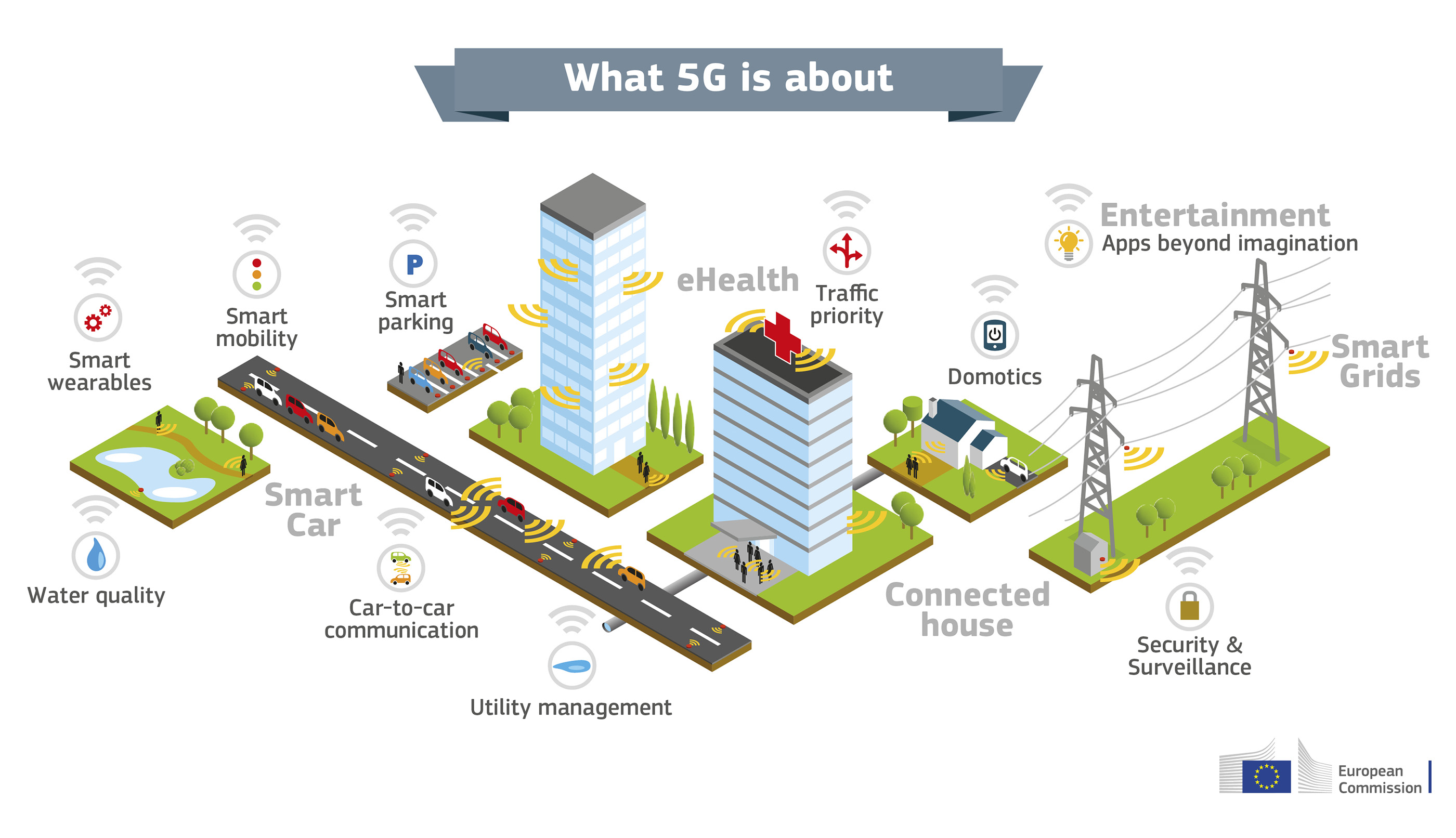
When he European commission gave us the ‘What 5G is about‘ most looked at it and thought ‘Nice!’ what they missed is that is goes beyond mere RFID and Domotics. The direct interactions of Smart Wearables, Smart Mobility, Smart Grids and Smart Parking show that when the car is low on fuel (or an almost empty battery is you have a Tesla), the SATNAV will reveal the closes fuel point, or warn you if you cannot make it to the homestead, the smart wearable can link directly to health care, the nearest pharmacy, the doctor allowing for a prescription on the spot, the phone that now shows a map and receives the information YOU wanted to engage with from a kiosk that is now also a data hub and transfer point of information, all on the fly without YOU having to type anything, all done intuitively on the spot. In all this, you remain in charge of your data and (except for the healthcare part) all null and void of actual personal data.


Let’s take this to a next level, some have seen something like this, it looks like an old amplifier volume knob, but it is actually a Bluetooth speaker, place it on nearly any table and it becomes an amazing speaker, yet the next level is not merely a speaker, it is also perfectly placed to be a data hub. Now combine that with a sheet of Perspex as a display (at https://www.youtube.com/watch?v=fdDAG0uwg3s), when we combine the three, we get the information on the kiosk, transferred instantly to your ‘speaker’ that is also the data hub and displays the information on that sheet display, wearable or other option. Maps, data, and brochures, all instantly available; Google already owns that solution, a solution that is merely awaiting implementation. A setting driven by what I would call ‘dumb’ smart devices. All the fear of personal data gone and total interactivity remains, engagement and the ultimate lure that draws consumers into your business; that is what engagement allows for, no other way will get that great result because that is the advertisement of tomorrow, not the data they hold, but the curiosity that they bring, all linked to the need for engagement. All those people, millions, who would walk in because your window had something interesting to show, yet now it is not your window, your window is also in every data kiosk, every advertiser point and every screen.
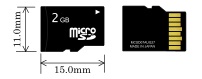
It is no longer about the mobile, people are less trusting with their data, but a smart (dumb) device, their watch, their Pendent or ring, now a data hub and consider that the 15 mm for a micro SD fits into rings, pendants and watches, all optional long term data hubs on the go, without any long interaction and we can get 32 GB for a mere $5. Picking up the ideas and interacting from place to place, our shopping needs and information on the fly when YOU want it; the data kiosks merely one of many places to interact with the addressed needs everywhere.

All settings not yet available in such an advanced state and all options out in the field for those willing to be the enterprising in the new places where they are willing to spend $500 billion in total, to make a next gen tech hub a reality. Or as Jeremy Irons stated in Margin Call: “There are three ways to make a living in this business. Be first, be smarter, or cheat“, he said it and I agree, it is always best to be first and whilst some are still trying to market what they are trying to set as 5G, we see that Huawei who are setting the stage on what 5G could be, Huawei s in the implementation stage of preparing the engineers of setting it all up in a live environment. So whilst America is still in anti-China mode, we see “Now, the whole industry is taking the final sprint towards 5G commercialization. The completion of SA specifications which complements the NSA specifications, not only gives 5G NR the ability of independent deployment, but also brings a brand new end-to-end network architecture, making 5G a facilitator and an accelerator during the intelligent information and communications technology improvement process of enterprise customers and vertical industries” and Huawei has already started in Saudi Arabia, so my other prediction is coming to pass as well, By Q1 2019, Saudi Arabia will become a market leader in 5G and will connect with Europe soon thereafter. In all this Australia things will go from bad to worse, especially as we cannot tell whether we need to consider if people like John Watters, Executive Vice President and Chief Corporate Strategy Officer of cybersecurity firm FireEye Inc is bedding Telstra or the USA, the fact that no one has been able to produce any clear evidence in Huawei’s ‘dependency’ on the Chinese government and the overly fearful US Tech as well as Telstra in all this is more than what I consider to be merely a sham, they are currently quite the opposite of embracing engagement and new tech, it will end the end make them look like the fools they should have been trademarked as in 2017.

So as we might remember Telstra at IT News with “Telstra said in a slide deck that “full commercial deployment of 5G in capital cities, major regional centres and other high demand areas” would occur in financial year 2020“, we can now see that they will be almost a year behind Huawei. Al this angers me, merely because it stops advancement and innovation, which makes Saudi Arabia the one remaining golden opportunity for true 5G innovation and yesterday’s presentations showed me how much many more avenues can be approached, because some of the innovations are out here today, in some cases, merely linking the solutions remain. It is important that we consider the Huawei part a little longer, it is important because 5G is so crucial to all this. When we see the article (at https://motherboard.vice.com/en_us/article/59w49b/huawei-surveillance-no-evidence), we see that the title gives us: ‘There’s No Public Evidence Huawei Spies on Americans‘, in addition we see “Huawei’s efforts to make inroads in the U.S. quickly resulted in numerous allegations over the company’s alleged connections to Chinese intelligence. Despite breathless hysteria, numerous investigations (one 18 months in length) found absolutely no evidence of such a threat.“, as well as “a follow up report by Reuters indicates that there has been pressure applied on U.S. telcos to avoid doing business with Huawei, with companies like Verizon and AT&T being told they risk losing their lucrative government business contracts if they strike deals with the massive Chinese multinational“, when we complete it with ““We knew certain parts of government really wanted (evidence of active spying),” one person familiar with the probe told Reuters at the time. “We would have found it if it were there”“, now we see the parts missing, in all this the Australian government needs to be optionally seen as a dog collar without a leash around the neck of a rabid dog named USA. This all smells like AT&T and Telstra in desperate need to not get drowned by an actually innovative technological opponent, who did just that, they became truly innovative. We need Huawei in all this more then most can comprehend.

To get this a little better, we need to look at ‘Media Engagement and Advertising Effectiveness‘ by Bobby J Calder and Edward C Malthouse. Here we see “Traditionally, marketers have thought about advertising as a process of translating a brand, expressed as a benefit, a promise to the consumer, a value proposition, or a positioning in the consumer’s mind into a message that is delivered to the consumer through some medium. This advertising will be effective to the extent that the consumer values the brand idea and the message does a good job creatively of communicating the idea“. Yet when we consider it more fully, we see: “It is engagement with a TV program that causes someone to want to watch it, to be attentive to it, to recommend it to a friend, or to be disappointed if it were no longer on the air“, through engagement, the TV Series Lucifer was not cancelled, it moved from Fox to Netflix, merely by the acts of engaging fans. Engagement can be that powerful and it goes beyond merely revitalising a TV series, it will be the bread and butter for most companies as growth is often seen as  linear with ‘advertising’ whilst we have to accept that exponential growth can only be achieved with an actual engaging audience. Because like in Facebook, that one engaging person is linked to dozens, if not hundreds of others, and their actions are more easily accepted by their close connections then the one advertisement is. In two stages this is seen that one engagement is optionally 900 hits in a low estimation, versus a mere advertisement that gets 5% out of 10,000 shows, so it took 10,000 attempts to get 500 people taking a second look, whilst one engagement event could be the start of 900 instant opportunities, so which option would you more likely turn to?

Yet, we must also be aware of the negative side in engagement. Calder and Malthouse give us that with: “Intrusion may produce a negative response from consumers because the advertising harms the experience of the media content. This in turn could lead to a negative reaction to the advertising, compromising its effectiveness. The consumer may feel that the ad has intruded on the experience with the content and accordingly may have a less positive reaction to the ad“, so in this the interactive kiosk becomes again not merely a vehicle, but THE vehicle in all this and Time is the one currency that is at the centre of it all, it is time that usually and largely triggers the intrusion emotion (waiting, or idle time tends to do that). With the smart ‘dumb’ devices, the automatism of storage whilst the interaction is merely a second, perhaps even two seconds. The element of intrusion decreases and engagement remains, or optionally even increases. It is achieved as the advertisement is not the focal point, but merely part of it and the experience is not impeached, as we get 125Mb in that one second, we get the brochure, the movie clip, the setting, the review and the applicability; all available to watch at our leisure and when we want to decide what to see and how to watch it. So from a $5 32GB Micro SD card, we can get more with a $100 200Gb card, and that is now, in 2-3 years we can get 5 times that storage for the same price. In this non-personalised interaction setting, we achieve to get heaps of analytical information whilst driving engagement. So in that we are confronted with all the latest trailers by merely passing a cinema. And we can just leisurely watch what we need and wipe the rest. It is a brand new day and those ahead in the game get to set that stage of new tech needs for an entire population, engagement is the key element to drive all that.

The future arrived yesterday, whatever will we get treated to tomorrow?


Leave a comment

Filed under Uncategorized

A new danger

There is a setting of dangers, the dangers are not merely setting, and for the US it is inequal discussion on how many allies they have left in the near future. It is not a new danger; the actions have been under scrutiny for some time. Yet last night something changed. We understand that electing the 45th president, a ‘former’ greed driven billionaire would always have consequences, yet the amount of consequences shown is now escalating.

The Washington Post gave uis 90 minutes ago ‘GOP fundraiser Broidy under investigation for alleged effort to sell government influence, people familiar with probe say‘, the article (at https://www.washingtonpost.com/politics/gop-fundraiser-broidy-under-investigation-for-alleged-effort-to-sell-government-influence-people-familiar-with-probe-say/2018/08/17/c9e55792-a185-11e8-8e87-c869fe70a721_story.html?utm_term=.774c7a3358da) a different setting. We always knew that there are two sides and the ‘less progressive’ republican side was always a little of a hot potato to some. Yet with “The Justice Department is investigating whether longtime Republican fundraiser Elliott Broidy sought to sell his influence with the Trump administration by offering to deliver U.S. government actions for foreign officials in exchange for tens of millions of dollars“, that hot potato has now turned into a handgranate. With the quote “As part of their efforts, prosecutors have subpoenaed casino magnate Steve Wynn, the former RNC finance chairman and longtime Trump friend, for copies of records and communications related to Broidy” we see that there is a much larger net being used. It is not merely about Broidy, with names like Steve Wynn we see that there are several names involved, all people with almost direct access to the President of the United States, and with names like Jho Low and Guo Wengui we see another side of ‘entrepreneurship’ hitting the limelight.

Yet how real is the setting?

Part of it is seen in the Wall Street Journal, and with “through June and into July, Mr. Low had been living freely in China, a person aware of his travels said”, as well as “Mr. Low had a close relationship with former Malaysian Prime Minister Najib Razak, who in turn was courted by China. Malaysia’s new government suspects Mr. Low helped arrange infrastructure projects, financed by China, from which funds were diverted to cover debts”, the second part now giving us that America as well as other players wanted access to Mr. Low, yet that in itself is not evidence against Elliott Broidy. What it does tell us that multiple players want access to this billionaire, all for their own reasons and with the US with a debt surpassing 21 trillion, we can only wonder what some people want Mr. Low for. The additional part is that Malaysia is now pulling all the plugs. This is seen as Channel NewsAsia is reprting that “The Bombardier Global 5000 aircraft, estimated to cost US$35 million was allegedly bought with money belonging to 1Malaysia Development Berhad (1MDB)” (at https://www.channelnewsasia.com/news/asia/malaysia-to-prove-jho-low-private-jet-bought-stolen-money-1mdb-10621726). It seems so flaky and weird to merely focus on one plane. The amounts are massively larger then the $35 million, so in that case, if that evidence falls over, will the case on that side against Jho Low collapse? When we look in that direction and look at Malaysian Prime Minister Mahathir Mohamad, we see that hsi platform is set upon anti-Chinese activities and when we see the accusation “critic on Chinese ventures in his home country for being too expensive and has suspended three China-backed projects worth around $22 billion that were signed under the previous administration”, we see that there might be  case in that part, yet why focus on $35 million in a $22,000 million setting? We also see an additional stage in “Explaining his decision at a news conference last month, the veteran politician said the contract and loan terms behind the deals were unfair, noting that the interest rates on China’s loans were much higher than the 3 percent figure at which the government normally borrowed, the Associate Press reported“, is this all about the money, or merely a way to set the stage for re-negotiation. In that setting, the sound strategy becomes that Elliott Broidy was setting the stage for the United States to poach the finance deals away from China and in that setting, getting Jho Low to give the goods would help the US pretty decent. In addition, when we look at the education of Jho Low, we see that he is an alumni of the Wharton School of the University of Pennsylvania, the same school that has President Trump, as well as the bulk of CEO’s that at one stage were the captains of the Fortune 500 lists, it includes dozens of airline CEO’s, so in that setting the Malaysian government goes looking for a $35 million plane?

So what is exactly the danger?

It is not on merely the setting of Elliott Broidy in all this, it is the setting where we all need to realise that there is a cost to doing business and it has transgressed borders for the longest of times that, whilst we accepted that in Europe to some degree, Americans never accepted or comprehended that. The media players used that part in all kinds of election setting and fear mongering for the longest of times. From my point of view (optionally a wrong one), we see how people like John Brennan is a danger to that setting. People dedicated to the protection of that their nation will not accept the global cost of doing business; they are in line with monarchists and devoted workers to their nations like we see in the Netherlands, the United Kingdom, Sweden, Denmark, as well as Canada. In republics, republicans are in a setting that this time is gone; it is the age of the corporate setting of common sense towards pragmatism. The problem as I see it is that those of no use to the needs of such a republic lose value overnight, that whilst the monarchist setting is to embrace all the citizens and protect them all. It is done at a cost, one that those people tend to accept. Yet in the republican view, these costs are counterproductive to corporate profit, the non-consumers are a cancer, needed to be cut out. When globalisation sets in to the business degree that will be a lot easier and that is where we see the stage. So when we see “In the 48 hours since President Trump revoked the security clearance of former CIA director John Brennan, over 70 former intelligence officers and leaders have come forward denouncing the president’s decision to revoke or threaten to take away security clearances from former government officials, including a list of 60 former CIA officers who signed a statement today, obtained by Axios“, we also see that America (or is that Wall Street) are confronted with a change no one was ready for, so the economy becomes a stagnant danger to them, one where they do not make profit.

When we see names like:

  • Jeremy Bash, former CIA and DoD chief of staff
  • Bob Flores, former CIA chief technology officer
  • Kent Harrington, former national intelligence officer for East Asia and CIA director of public affairs
  • George Little, former chief spokesman, CIA and DoD
  • Phillip Mudd, former CIA analyst
  • John Nixon, former CIA analyst
  • Greg Vogel, former CIA deputy director for operations

We see that the USA is in an upcoming setting of polarisation and that is just within the republican side of government and its administration. There is a change coming and the outcome is hoped for (on both sides) but the outcry gives us that this is a round that Wall Street is likely to lose this battle and that changes the game. In addition, when we see the required application of intelligence data and who gets access to it sets a new border, the fact that others (like France and UK) need to realise that shared intelligence data is no longer safe, because the data shared within corporations while used to set a very different stage of what is regarded as needed for security. The corporate side is already countering the advantage that a national intelligence system has. We see this in part when we look at Business Wire (at https://www.businesswire.com/news/home/20180806005526/en/Global-Database-Valuable-Italian-Business-Intelligence-Data), where we see ‘Global Database Makes Valuable Italian Business Intelligence Data Available – Completely Free‘, before you dismiss this, also consider that “Any registered user can now access key information about 7,564.575 registered companies in Italy“, registration is free and that is merely one of close to a dozen places where this is happening. All connected, it is an optional setting of open source intelligence that is merely a foundation pillar. You merely have to add LinkedIn and Facebook to have a dataset that will allow you to extrapolate data that will make plenty of intelligence groups envious. You see, this is not about finding the criminal, or the terrorist. They are either known or not an issue. This is the setting of finding economic opportunities, the setting to see who is connected and interacting with the alumni of places like the Wharton School of the University of Pennsylvania. A group of people with connection and access to funds totaling well over 157 trillion Euro, so whilst we wonder on the fear of where is the terrorist (whilst the danger of getting run over in the street is 20 times more likely, we forgot that our futures, any future is set in the stage where there is economic viability and availability.

That is the part that we see to forget, or even worse actively avoid contemplating. In the time when we are led to believe that there is economic upturn everywhere, we seem to forget that as the river of economy changes, we will either be in a place of plenty, or we are set into the next stage of drought and it will be the one view we have until the end of our lives. It is about ability to live with a level of expected comfort which is likely no longer set to national boundaries, it will be set to the boundary of the corporation or business group that we work for and facilitate for, it will be as cold as that, and until we get past this greying generation, which is optional until 2035, that is how it will be for those in this era. The man behind the Global Database, namely Nicolae Buldumac has figured parts of that out, so that is why he and 30 others in London are doing this. When we look at the article (at https://medium.com/@buldumak/cookie-audience-vs-data-audience-which-is-better-44971ad12ee4), we also see ‘Cookie Audience Vs Data Audience: Which is Better?‘, he found a way to not create the best of both worlds, he found out how he can make both work for him and that is where he created more than economic opportunity. He has found the stage where he can optionally get the facilitators work for him and that seems to be exactly what he is doing. When he is done he will have a similar setting for France, Germany, the UK and Spain. So basically the 5 largest European economies are opportunities where he has the keys and data to.

So when we get to look at the US again, do you think that this will be about Elliott Broidy or people like him in an outdated setting? No, they are the garnishing of economic times that surpassed them and it is the data makers and facilitators like Nicolae Buldumac where the republican mindset of corporations will rely on next, they are the future and their path for enablement is what sets the stage for Europe. This is not clever technology (well in a way it is), it is about the quality of data and what it allows for and that is where we see that the moment that data hits a critical point, it will equal the value of Facebook or more. Some will argue that most of that is all in any Chamber of Commerce and they would be right, but those entities do not talk to each other, they are founded on borders of a national level or lower and in the entire euro setting they for the most never aligned, so someone did it for them and on their own dime, optionally replacing them, or better stated, reducing those previous players to mere data entry points. Governments had to realign their data dimensionality a decade ago, but everyone was so busy keeping their own pond clean that they forgot that the pond is only important to the land surrounding it, when that floods, the ponds become merely crevices of a lake, Lake Europa, that is where Nicolae Buldumac it taking them, so soon others (like Asia and America) they will look at the parts of Lake Europa and see where fishing is the best, those land borders no longer matter and that is the stage we find ourselves in. A changing setting of what sets the identity.

Am I the first?

Hell no! This was all done before. Forbes in 2013 gave us an article by George Bradt. The article called ‘How Army Intelligence Techniques Apply to Business Leads‘. Here we see “Marketing may have a bias to giving sales people a large number of leads, while sales people seek potential customers they can engage with. The answer is to move from big, unstructured data sets to “finding that guy” that really cares. This was Mishor’s ah-ha moment, realizing that army intelligence techniques could be applied to business“, yet it goes further, when you consider one, and the other, you should also realise that the parameters are bidirectional with the proper data flags. So when we see the two streams lead to the same insight. “On the one hand, Mishor is creating value with a systemic, scalable way to connect seemingly unconnected data to identify the most valuable target customers. On the other hand, Mishor built his business by connecting seemingly unconnected hopes and needs of his prospects” we see the solution at both ends, and in addition we see that we can define the need much more precise. From my point of view we can see a third direction. That part is not easily seen, so I will give an alternative example.

In factor analyses we go from many to one. We get the setting that the numbers equate to a factor, it is basic statistics. When we go into the other direction we see the foundation of a discriminant analyses. The third part is seen in that the data setting when something is proven in a factor analyses, it should almost always fail as a discriminant analyses and vice versa. I tend to use humour on that and state ‘It is sarcasm, when it backfires it is merely irony‘. The intelligence data was always on finding the person, yet in a stage of lacking resources, being able to safely remove a person as a threat is equally valuable. If you cannot find that one person, reducing the 5,000,000 stack to a mere 5,000 with 99% certainty is just as valuable, because the one final link could reduce that to 50 whilst not having to revisit the previous 4,995,000 considerations. As I see it in this day and age, not only is the stage of military intelligence and business intelligence not mutually exclusive, they are more and more overlapping. The overlapping field becomes an insightful pool of data where it will no longer be about the one person, it will be more and more about a setting where the value of Analysis of covariance will be important.

In the intelligence it could be seen that it is not merely about the terrorist and its connections. It will be about the moneyman and who else links, both optionally to the mastermind. In business intelligence that setting is not merely see as to where a person studied. It is more and more important on where the patents are and who has them as well as the people creating those patents. In this economy the economic value of a patent over overwhelmingly important. That part is seen when we get back to the 5G race, we saw that last march when we were confronted with “U.S. President Donald Trump has blocked microchip maker Broadcom Ltd’s (AVGO.O) $117 billion takeover of rival Qualcomm (QCOM.O) amid concerns that it would give China the upper hand in the next generation of mobile communications, or 5G“, in addition Forbes gives us within the article ‘Ericsson Vs Huawei: Who’s Winning The 5G Race?‘ Yet there we see two parts. The first is “However, two of particularly significant scale and market presence are Ericsson and Huawei. Will one conquer overall?“, as well as “Financial strength matters. Ericsson will have to turn the ship towards profitability and growth waters, in order to continue the required investment in product development”, which relies on “Ericsson recently announced what seems on the surface to be an impressive 5G patent application. Calling it an “end-to-end” submission, the filing combines the work of 130 Ericsson inventors and promises to include everything needed to build a complete 5G network“, the ability to set 600 million will give the optional 60 billion in return and it will in addition set the stage for European growth to a recently unprecedented (or was that non-presidential?) scale and America wants slices of that pie, if not the whole pie. The stage of corporate setting versus national setting in direct exposure of what is to come and the 5G battle theatre will be a big one, because the winners there will be the next kingmakers and everyone will want parts of it; that was never in doubt. The evidence is all over the place.

Forbes also gives us the new danger setting with the question ‘Does a global geographic footprint matter?‘ It is close to everything in this game, if only that the global footprint lets corporations walk all over government. Amazon, Apple, IBM and Microsoft have been doing that for the longest of times.

There is one part with Forbes that I do not agree with. They state “I would give Ericsson the edge here, considering its global presence includes North America“, I believe that Europe is the much larger powerhouse. You see, America is a mere 325 million, whilst the EU represents 512 million with direct access to India, China and Russia. All stages that America denied itself; if the setting of data (amounts and quality) determines their value; which players and where would they be able to grow this path the fastest and longer? The fact that Ericsson is not merely in the US, but they are showboating in Saudi Arabia is also a sign that they realise that stronger growth everywhere matters, the presented quote “Saudi telecom operator Mobily and Ericsson held a 5G demo at the Mall of Arabia in Jeddah, Saudi Arabia, showcasing the functionalities of the next-generation mobile technology. Ericsson supplied Mobily with a standalone 5G system, including a prototype 3.5GHz radio, baseband, and prototype UE device for the 5G demo, which showcased 5G throughput, targeting speeds of up to 1Gbps. The demo is part of Mobily’s plan to highlight expected 5G benefits consumers and industries across Saudi Arabia“, is merely one of many.

The question now becomes: ‘is exponential growth, growing too fast in all directions not a danger all on itself?’


Leave a comment

Filed under Finance, IT, Law, Military, Politics, Science

When inability drives fear

It is a dangerous place to be in. We all have been there and in most cases it is as innocent as it could ever be. You see, sometimes life throws you a curveball. Gamers tend to identify it most easily. In my particular case it was a game called Magic Carpet. It was a Bullfrog game and I was testing it on the PC. It played magnificently there, and soon thereafter I also tested it on the very first PlayStation. There, because of the controller it was good, but not great. Still, it was fun to play and I tended (in those early years) to really get into a game, so when the situation blew into my face, I got a little frustrated. The next two times were worse and the last time (on that day) I went slightly angry (with myself) and I kicked the door. The issue was not the door, it was my steel tipped boot and I went straight through the door, so, I was not merely ticked off, I had a hole in the door (which would require funds to repair) and the boss in Magic Carpet was still alive. We all have had these moments. Our car, our bike, the TV, things go wobbly on you and we sometimes react wrongly to this situation and in light of that get to reflect on our own ego’s a little.

These are the images going through me when I was confronted to new information when looking at the unrealistic response by America (and Australia) to Huawei. In the case of Australia it seemed the mere application of greed and fear as politicians cater to the greed of a large telecom company, which was not seemingly the case with America. Yet that tip was raised for me less than 24 hours ago. The article (at https://foreignpolicy.com/2018/08/15/botched-cia-communications-system-helped-blow-cover-chinese-agents-intelligence/), shows how the CIA got their own systems handed to them through ego and what I would regard as stupidity. The initial headline ‘The number of informants executed in the debacle is higher than initially thought‘ is rather unsettling. It gets to be worse with “The CIA had imported the system from its Middle East operations, where the online environment was considerably less hazardous, and apparently underestimated China’s ability to penetrate it. “The attitude was that we’ve got this, we’re untouchable,” said one of the officials who, like the others, declined to be named discussing sensitive information. The former official described the attitude of those in the agency who worked on China at the time as “invincible.” Other factors played a role as well, including China’s alleged recruitment of former CIA officer Jerry Chun Shing Lee around the same time.” This is the most dangerous of settings. The wrongful setting comes straight from Sun Tsu where we learn that all war is based on deception. China is not some place that is tinkering at the side of the road, the Art of War COMES FROM CHINA! It gets to be worse when you consider that that book was written long before Americans had adopted proper reading and writing skills, close to 1200 years before that, so that was their first error.

When we see: “But the penetration of the communication system seems to account for the speed and accuracy with which Chinese authorities moved against the CIA’s China-based assets. “You could tell the Chinese weren’t guessing. The Ministry of State Security [which handles both foreign intelligence and domestic security] were always pulling in the right people,” one of the officials said. “When things started going bad, they went bad fast.”“. The entire matter seems to be exponentially wrong. The big issue is not on how it was cracked, or even if it was cracked. My issue had been (for a much longer time now) that for too long, the deciding voices, all listening to some CTO, often with multiple sides lacking wisdom that the setting was not merely that there was ‘a security risk’, there was for the longer time a much larger security flaw. For much too long a time, we got the ‘slides of wisdom’ on how data in transit tends to be safe and data at rest tended to be in danger. Even when I started my CCNA, the amount of knowledge given in the Cisco books gave the rise to the consideration that data in transit is not merely as vulnerable, it was that a lot more could be done unnoticed (not merely by the Chinese mind you). It was some time before the Sony hack that I expected a setting where the routers themselves might be used against the owner, it went further when we consider Wired in 2013 (at https://www.wired.com/2013/09/nsa-router-hacking/). The headline is not merely ‘NSA laughs at pc’s, prefers hacking routers and switches‘. It is the setting where we see: ““No one updates their routers,” he says. “If you think people are bad about patching Windows and Linux (which they are) then they are … horrible about updating their networking gear because it is too critical, and usually they don’t have redundancy to be able to do it properly.” He also notes that routers don’t have security software that can help detect a breach“. This is where I was in 2011, when I started to comprehend the working of a router and router tables, I figured out that it is not the router they can see that is the problem; it is the one they cannot see. That idea came from a presentation by Thomas Akin, CISSP, Director, Southeast Cybercrime Institute who had a presentation for the Blackhat briefings. The 2002 presentation gave me the idea. You see apart from the lack of security, the +1 hop hack allows form something truly unique. Consider [.MIL Server], that server connects to <secure router 1> and things are set into motion. Now, we cannot direct all the traffic, yet materials from that location to let’s say ‘preferred consultant one‘ will go via certain paths, yet the first router after <secure router 1> tends to be merely one or two routers (depending on traffic) to that preferred consultant. It is easy to find a router that could optionally be a link to these routers and duplicate all packages that go to that specific next step. Not only is the task easily done, the path is not hindered, the router is not intervened with and a simple reset takes away whatever evidence existed in the first place. In addition, the additional part is that the compact flash in those routers is ‘The maximum storage capacity for the CF in Slot0 and Slot1 is 4GB‘, yet the only part here is that you only needed 32 MB, which is what most of us used then, but cards that small are no longer made, so most IT people just plug in what they have. You have well over 3GB of package storage, so all packages to that one location could be stored and redirected on the ‘off’ hours as not to leave any monitored spike. Until the CFlash card is ejected from the router and investigated no one will have a clue. That was 7 years ago and the systems are even more capable now, a 3GB glitch will not register on most systems, especially when those IT people do not block Spotify and/or YouTube. By the time they figured it out, the setting is already wiped, and this path can be adjusted on a daily bases so that most IT networkers never had a clue in the first place.

You think that I am alone in this, that I am this clever? No, I am not! There are plenty of IT Networkers running circles around me and that is now set into the stage of ‘we’re untouchable‘. The CIA was never that, they never needed to be touched, the opponent merely needed a clear line of sight to the router that is one skip from the secure router that they needed to get to. We see more in the Foreign Policy article with the quotes “Information about sources is so highly compartmentalized that Lee would not have known their identities. That fact and others reinforced the theory that China had managed to eavesdrop on the communications between agents and their CIA handlers” and “an encrypted digital program, allows for remote communication between an intelligence officer and a source, but it is also separated from the main communications system used with vetted sources, reducing the risk if an asset goes bad“. Now we merely add “But the CIA’s interim system contained a technical error: It connected back architecturally to the CIA’s main covert communications platform. When the compromise was suspected, the FBI and NSA both ran “penetration tests” to determine the security of the interim system. They found that cyber experts with access to the interim system could also access the broader covert communications system the agency was using to interact with its vetted sources, according to the former officials“. I believe it goes further than that. If we see the entire layer process and consider that in the end, certain systems merely replicate a process. Cisco (at https://www.cisco.com/c/en/us/support/docs/lan-switching/8021q/17056-741-4.html) gives us: “A device can determine which VLAN the traffic belongs to by its VLAN identifier. The VLAN identifier is a tag that is encapsulated with the data. ISL and 802.1Q are two types of encapsulation that are used to carry data from multiple VLANs over trunk links”, as well as “The DA field of the ISL packet is a 40-bit destination address. This address is a multicast address and is set at “0x01-00-0C-00-00” or “0x03-00-0c-00-00”. The first 40 bits of the DA field signal the receiver that the packet is in ISL format“, so as the destination was known, the people needing this could search very specifically. When we consider ‘It connected back architecturally to the CIA’s main covert communications platform‘, the connection back would enable those seeking to find the needed value of the DA field. That does not merely impede the CIA, it stands to reason that to some degree the NSA would be just as vulnerable.

The main course

In my case, I tend to go for the Bambi burger, ideally I watch Bambi whilst having that lovely slice of venison. You see when we get to “As part of China’s Great Firewall, internet traffic there is watched closely, and unusual patterns are flagged. Even in 2010, online anonymity of any kind was proving increasingly difficult. Once Chinese intelligence obtained access to the interim communications system,­ penetrating the main system would have been relatively straightforward, according to the former intelligence officials. The window between the two systems may have only been open for a few months before the gap was closed, but the Chinese broke in during this period of vulnerability“, I believe the setting is worse than that. These players still require their consultants. It does not matter whether you call them construction workers, members of Blackwater, Xe Services, or Academi. It is those places as well as Booz Allan Hamilton and other providers that still require to be informed, and that is where the interception could start. The setting is not ‘the Chinese broke in during this period of vulnerability‘, it is the long term flags that they were able to test at this point and that is the fear we see with their setting of Huawei and partners. Not that Huawei is the danger, but the fact that Chinese intelligence is just as able to get into nearly all systems, it merely can get into Chinese systems faster (for now). This is where it gets a little more complicated, because it is not about the now, it is about tomorrow and the tomorrows that are coming. The only ones who have a chance of getting things done are players like the Constellis Group and Palantir when they unite abilities. It is going to be about data and about the ability to forecast how traffic goes. Thomas Akin was teaching this wisdom 16 years ago. We see this when we are made to realise

  • Live system data is the most valuable.
  • Immediate shutdown destroys all of this data.
  • Investigators must recover live data for analysis.

And the loss is merely a reset away, in most cases if there is an automatic reset; the only data available is the last transgression at best. With the coming of 5G live real-time capturing data streams is what is more likely to set the stage of finding out what happened, in this the entire setting of ‘China’s Great Firewall‘, we are already looking at outdated Chinese technology and I do believe that those behind the article, as well as some DARPA people are aware of that. America and Europe are behind in ways that we cannot even perceive, because the players that need to move forward are doing so iteratively, that whilst the time of reengineering is now merely 10% of what the development time was. We see this with “Call this the IBM problem, which faced an existential threat as soon as Asian groups started churning out cheap PCs in the 1990s. But here IBM also provides a few tips to the future, with its pivot to software and solutions. By the time of IBM’s iconic “solutions for a small planet” ad campaign in 1996, the company was trumpeting voice recognition and ecommerce — producing the sort of digital enterprise backbone that ended up helping develop the internet economy” (source: Australian Financial Review). In the first instance the Asian market required 10-15 years to catch up, the second time around it took 2-3 years and now with Google and Apple working globally, it takes months. IBM (others too) took iterative steps to maximise the economic footprint, instead of truly leaping forward whenever possible, they lost the advantage and are now trailing the markets. Huawei is one clear example where the American market was surpassed. Samsung showed its supremacy by having 5G home routers ahead of everyone else and the advantage in Asia is only growing. It is seen with “Alternatively, authorities might have identified the system through a pattern analysis of suspicious online activities. China was so determined to crack the system that it had set up a special task force composed of members of the Ministry of State Security and the Chinese military’s signals directorate (roughly equivalent to the NSA), one former official said“. I do not read this part in the same way. I believe that with ‘set up a special task force composed of members of the Ministry of State Security‘, was not about cracking. I personally believe that the Cisco books were so illuminating that they decided to change the setting in their own game. I believe that the Chinese now have a more advanced system. They have done what players like Cisco should have done before 2014 and they did not. I believe that when we see a partnership between Constellis and Palantir, their findings will bear that out with in addition an optional link that shows part of the accusation that China let Russia in on certain findings (and the Russian evolution of certain networking devices). This and the next part is largely speculative, but it is supported to some extent. We see this in: “Once one person was identified as a CIA asset, Chinese intelligence could then track the agent’s meetings with handlers and unravel the entire network. (Some CIA assets whose identities became known to the Ministry of State Security were not active users of the communications system, the sources said.)“. I believe that he part given in ‘not active users of the communications system‘ gives us the third part. I believe that the system was not merely invaded. There is every chance that certain systems when activated also leave tags behind and that is where the intrusion would have paid off. You see, in the Cisco setting (as an example), the data frame has an optional 60 bytes of extension headers, yet is that always empty? More important, when were these data packages truly thoroughly checked? In this speculative setting I take you to the movie Die Hard 2. In that movie we see on how someone decided to get clever and uses the outer marker beacon to warn the planes that were in danger. The beacon can be used in other ways than merely give a beep. I believe that Cisco data packages have other optional parts than can be ‘reused’ to do something different, like the optional headers. They are to most merely empty pre-set ‘spaces’, but they could have more. That is the setting that America faces and the fact that they could get overwhelmed by Chinese intelligence because they did not rely on iterative parts. Huawei had been leaping forward, for example now offering a 128GB Android 8.1 phone (the Huawei nova 3i 128GB Handset), for 50% less than its competitors. A system that is just as advanced as anything Apple and Samsung offer; at merely half the price whilst Chinese Intelligence has been digging into that device for months, unlike the NSA that needs to queue up with all the other users to get to look at the Pixel 3 and the iPhone 8 on launch day. That is the setting we seem to be seeing and America is indeed and rightfully worried, not because Huawei has backdoors (which I never really believed) but because the players here had been held backwards through iterative technology. Apple is actually staged by Forbes that way with the quote ‘a minor point update for the iOS 11.1 iteration‘, even Forbes speaks about iterative changes. That is the setting that they are up against and they have been surpassed for years and with Huawei leading the 5G stage on a global setting the US authorities are merely getting more and more afraid that not only are they no longer the leading players, they are now sidelined by not being able to keep up with what will be presented ‘tomorrow’.

That part can be supported through the CIA with analyses reports (at https://www.cia.gov/library/center-for-the-study-of-intelligence/csi-publications/csi-studies/studies/vol49no3/html_files/Collection_Analysis_Iraq_5.htm), in here we see that Richard Kerr, Thomas Wolfe, Rebecca Donegan, and Aris Pappas give us (in a different context): “The analysis on this issue by the Intelligence Community clearly was wide of the mark. That analysis relied heavily on old information acquired largely before late 1998 and was strongly influenced by untested, long-held assumptions. Moreover, the analytic judgments rested almost solely on technical analysis, which has a natural tendency to put bits and pieces together as evidence of coherent programs and to equate programs to capabilities. As a result the analysis, although understandable and explainable, arrived at conclusions that were seriously flawed, misleading, and even wrong“. It is important to realise that this was on the WMD setting, so in a different context and on a different setting. Yet the information systems were all designed to upholster that flaw to an ‘evolved’ placement, the systems in their entirety are nowhere near ready, now even for the previous setting. The movement from a lot of staff to more fruitful consultant settings is now paying off in a negative way for the CIA (and the NSA too). This is where it gets interesting. You see, the previous setting that I gave should partially have been dealt with through the flashlight program that DARPA has. Raytheon BBN is working on that with Professor Richard Guidorizzi from George Mason University Fairfax. I think that the system is not entirely ready here, not if the packages can be duplicated via the router and as long as the original is not touched, that system will not get the alert lights ringing.

To get you on board on how far all the NATO partners are behind, let me give you two settings. The first is a DARPA Project called ‘Probabilistic Programming for Advancing Machine Learning (PPAML)‘, the man in charge is Dr. Suresh Jagannathan, yet the bigger brain might be MIT graduate Dr. Jennifer Roberts. The given setting is “Probabilistic programming is a new programming paradigm for managing uncertain information. Using probabilistic programming languages, PPAML seeks to greatly increase the number of people who can successfully build machine learning applications and make machine learning experts radically more effective“, whilst we also see the goods in the DARPA article by Dr Roberts with “If successful, PPAML could help revolutionize machine learning capabilities in fields from Intelligence, Surveillance and Reconnaissance (ISR) and Natural Language Processing (NLP) to predictive analytics and cybersecurity“, this is certainly leaping forward, but it is still based on a system. I believe that the Chinese decided to turn the funnel upside down. To illustrate this I need to get you to an app called Inke. The article (at https://thenextweb.com/contributors/2018/02/09/hidden-world-chinese-livestreaming-app-inke/), gives us ‘The hidden world of Chinese livestreaming app Inke‘, this is not a few people; this is a craze that has already infected millions upon millions. So with “he was actually doing a livestream, an extremely popular hobby for young people in China. China is way ahead of the rest of the world when it comes to embracing livestreams.” you are missing out and missing out by a lot. These streams are real-time and often geo-tagged. I believe that the Chinese have changed the setting, they are optionally collecting Terabytes of daily data and they are converting that to actionable intelligence. Facial recognitions in phones, geo-tagged and all uploaded and streamed, all converted on the spot, like the SETI screensaver, millions of affordable mobiles (this is where the Huawei nova 3i 128GB Handset and all other new handsets come in), parsing all that data into uploaded files and Chinese intelligence gets global information close to real time, whilst their learning machines are about efficiencies of collected data, it is not about the better application by making them more effective, it is about the massive amounts of data offered to get the systems to upgrade the efficiency of parsing data, because parsing data is where the bottleneck will be in 5G and they already have a larger advantage.

In the meantime, on any given day thousands of Inke users are filming life around them in malls and famous places looking awesome doing it. Yet, if you look at the CCTV settings, how many users would have passed 935 Pennsylvania Avenue, Washington DC, or at London SE1 9EL, UK walking towards London Bridge? How many people were merely assuming that they were tourists face timing with mom and dad? Are you getting that picture now? and also realise that Inke is merely one of more than 300 live streaming companies, all capturing that data all those tags that a smartphone allows it to capture and at the top of all this, Facebook and YouTube are eagerly pushing people to gain following by doing just that. So how long until the user realises that uploading the same stream to 2-3 providers gets them to gain a lot more following and optionally cash? Yes, the intelligence community is that far behind at present. So when we are worrying on “The system was not designed to withstand the scrutiny of a place like China, where the CIA faced a highly sophisticated intelligence service and a completely different online environment“, we need to consider that China is already ahead of the game and the CIA systems might be merely an option to scrutinise their own data, because that remains the Chinese bottleneck, the data will require verification and that is the one field where their opposition could gain the advantage if they set their minds to a different algorithm, one on reliability, not on likelihood. It is a setting where all the players involved have a second tier of consideration. They embrace a ‘not now, but soon‘ thought, when ‘I needed this yesterday‘ is the proper setting as I personally see it, because data without proper vetting is merely used space on any given storage device.

That final part can be considered when we look at the linked article that NBC had from last January. There we see: “When agents searched Lee’s hotel rooms in 2012, they found notebooks with the names of covert CIA sources, according to court documents. But not all of the agent arrests and deaths could be linked to information possessed by Lee, who left the CIA in 2007“, an issue I mentioned in an earlier blog. We get there when we consider his actions and ‘found notebooks with the names of covert CIA sources‘, do you think that anyone, especially in this setting would be that stupid? It’s like keeping the condom as a trophy after having intercourse, its useless and stupid. I believe that either it is not the ‘covcom’ system, or not merely the ‘covcom’ system. I believe that (if it is all correct) that Chinese intelligence got in further and deeper into acquiring the data required and the notebook is the proverbial red herring in all this, especially as Jerry Chun Shing Lee left the CIA in 2007. You do not hold on to that level of information 11 years after you might have had some level of valid reasons to have it in the first place. That is the part many overlooked, or looked away from.

In the end, I do believe that it is not merely the inability that drove the anti-Huawei waves, it is the fact that those decision makers have no idea where to navigate towards next is what drives their fears almost exponentially.


Leave a comment

Filed under IT, Military, Politics, Science

Rocking the bullshit

There has been a massive issue with Huawei, the accusations by the US is the largest one, one of its sheep (aka Australia) has been on the same post on how Huawei is such a large danger to the safety and security of a nation. It gets ‘worse’ when we see ‘The DNC tells Democrats not to buy Huawei or ZTE devices ever’, (at https://www.theverge.com/2018/8/3/17649920/dnc-democrats-huawei-zte-devices-ban-china-hacking-threat). Here we see the quote “people shouldn’t be using devices from either Chinese company for work or personal use. The words echo what federal officials have already said about Huawei and ZTE posing possible security threats to the US. In February, CIA, NSA, and FBI chiefs testified in front of a Senate committee that the two companies were beholden to the Chinese government and the devices could become tools for undetected espionage“, my issue has always been: ‘show me the evidence!’ Basically EVERY phone can be used as a spying device, that is one clear thing we got out of the Cambridge Analytica part, in addition, the Fitness tracking app Strava was a great way to find CIA black ops bases, so even as Strava merely mapped ‘a regular jogging route’, using Google or Apple maps, you would be able to map out the base, the supply routes and so on, the Apple Fitbit would be there for the Russian government knowing where these specialists were and when the were there. So in all that, and all the security transgressions seen here, not of the were Huawei or ZTE, yet, how much noise have you heard from the CIA, NSA, or FBI on Apple? Even now, they are that one Trillion dollar company, are they too big to mention?

I wonder why?

Yet, Huawei is not out of the hot water yet, they are actually in deeper hot waters now but this time it is allegedly by their own actions. Reuters is giving u mere hours ago: ‘Huawei in British spotlight over use of U.S. firm’s software’, the news (at https://www.reuters.com/article/huawei-security-britain-usa/huawei-in-british-spotlight-over-use-of-us-firms-software-idUSL5N1US343) gives us: “One of those is due to Huawei’s use of the VxWorks operating system, which is made by California-based Wind River Systems, said three people with knowledge of the matter, all of whom spoke on condition of anonymity when discussing details which were not made public in the report“, which now leads me to the setting that the American accusations are set on the premise of American Software used? How dopey is that?

Then we get: “the version of VxWorks being used by Huawei will stop receiving security patches and updates from Wind River in 2020, even though some of the products it is embedded in will still be in service“. In all this, the fact that it is still serviced for another 2 years, how are we now in the stage of: “potentially leaving British telecoms networks vulnerable to attack“? Is that not equally a questioning setting? Do we not have enough issues out there with Microsoft which has been nearly forever a security concerns, at this point, 2 years early we get the security warning on Huawei, yet not on Microsoft or Apple for that matter, in all this Google is equally a place of patches, and in all this, Huawei is the one getting unbalanced and unfairly burned at the stake like a Catholic at an Elisabeth I barbecue gathering.

Yet the good stuff is “All three sources said there was no indication that the VxWorks mismatch was deliberate. There is also no suggestion that the software itself represents a security risk“, this now leads us to two parts. The first is if it is true that ‘no suggestion that the software itself represents a security risk‘, does this mean that Huawei never had a security risk and if that is incorrect, why not present that evidence so that every Huawei Owner can test for this transgressions ending whatever future Huawei had in the first place.

In the second part, if there is no proven security flaw in the Huawei on hardware, is the security flaw a software one, or better stated an American software one, and if so, why are these people only going after Huawei and not after a dozen American firms?

The one part that we see in Channel News Asia is “Consultant Edward Amoroso, a former chief security officer at AT&T, said Huawei’s experience in Britain showed the challenges of securing international supply chains. Although no one should dismiss Huawei as a supplier solely because of its geographical location, reliance on software that is going out of support is a legitimate concern, Amoroso said“, the news (at https://www.channelnewsasia.com/news/business/huawei-in-british-spotlight-over-use-of-us-firm-s-software-10590268) gives the part that does matter, in this Edward Amoroso is right, software at the end of its reign is often the true safety concern, not merely because of the time frame, but in extent the time required to properly update the software on all the devices, which is not always a smooth path and tends to open up additional security gaps. In that part of the equation Huawei does have a legitimate problem to address. The second part to all that is “In addition to the issue with VxWorks, this year’s report also cited technical issues which limited security researchers’ ability to check internal product code“, I believe it to be a minor part and the proper investigators could seek or test for the issues, not merely that, the limitations also remove whatever options there are for zero day breaches, which has a much larger legal frame to address. So even as we agree that the US setting of accusation without evidence (proper presented evidence is merely the stuff that makes the grass grow in Texas). We also get that the US is giving us: “In the United States, the Pentagon is working on a “do not buy” list to block vendors who use software code originating from Russia and China“, there is an actual thing called national security and as such, it is their right to implement that part, I do believe that in the end it might be somewhat counterproductive, but it is still within their rights to be in such a setting nor no other reasons.

In the end there are a few issues in the field and some are out there, but with a lack of technical details, some cannot be proven, yet the fact of what some have done in the past might give the setting of ‘is it more likely than not that some do not really have 5G‘ is a true setting, yet I prefer to have the actual evidence, that some are trying to keep buried, and the media is part of that chase, which is odd to say the least. Huawei is bouncing back and forth and their hold to grow fast via the UK will be there, but from my point of view, they will need to fix the VxWorks part a lot faster than they think they need. From my estimation a new software solution should be well beyond the Beta stage in Q1 2019 if they want to have any chance of keeping their lucrative growth contracts in place. In equal measure we need to look at Canada and Australia, as they are currently set to be nothing more than US tools in all this. In all respects no actual and factual evidence was thrown out in the open. If that was done Huawei would have lost pretty much every non-Chinese contract, the fact that the BS is spread even larger with absence of evidence gives more reliability that there is no real security danger and it is more a tool for some to get the slice of 5G pie, probably at the expense of a monthly data dump, nicely mailed via UPS to: N 11600 W, Saratoga Springs, UT 84045, USA. That alone should give us the goods on who to trust and who to be cautious of. In all this, no evidence has been presented to the public (and their right to know) on how Huawei is a threat to our security. The fact that I believe that this is all bogus in one thing, the issues seems to be blown up as everyone takes a queue from John Bolton, that whilst the setting “Five Eyes is an alliance between Canada, New Zealand, the United States, Australia, and the United Kingdom that facilitates collaboration in intelligence activities” gives us that there are three in the dark, the UK might be around with the knowledge and the rest merely takes a queue form the US, which has seemingly been whispering like they did in the WMD in Iraq phase, you do remember that in the end, they were never found and it was merely bad intel. So in that setting whilst Corporate America, Canada and Australia are all in fear of their gap against leading Huawei, in that setting we are supposed to have faith on the American gospel on what constitutes a danger from Huawei? And now that we are made aware that the software solution used is an American one?

Yup, we have all kinds of problems and some are valid issues of concern as Edward Amoroso phrases it. Yet between a setting of concern and an actual concern is a mile long gap and whilst we acknowledge that Huawei has some fixing to do, until actual evidence is shown that there is a security breach, the only thing that the US can do is to offer a $229 instant price match for the Apple, or an $100 instant price match for the Google Pixel 2, or a $400 instant price match for the Samsung 9, why would anyone in this day and age pay more for the same, actually, with the enhanced batteries of Huawei you will still miss out, but that might be the smallest cross to bear. All this because some players just didn’t get the pricing right, too many fingers on the margin pie, that alone seems to unbalance the entire equation, because all these players will miss out when Huawei is given free reign there. In this the equation is no longer about security, it will be merely about greed and those enabling for it. Is that not equally important an element to consider?

I’ll be honest, I am still happy with my Huawei P7, it was really affordable against anyone offering anything and after 3 years working 24:7, where would you think I would look first? The one who had proven himself, or the one overpricing its brand (OK, with the Pixel at a mere $100 more, that is still an awesome deal).

When we decide on pricing it is one, when unreliable players in the game force us away from the affordable option it becomes a different stage and so far, the US has proven to lose reliability again and again when it comes to their version of security. To emphasize on that, check on all the printing regarding the Landmines in Yemen placed by the Houthi and the amount of articles that we see in the NY Times, the LA Times and the Washington Post. Now consider the impact of mines and why Americans seem to be eager not to inform you. By the way, that setting was almost certain a setting that Iran enabled, if you questions that (which is fair) then answer the simple question, where did the Houthi forces get 1,000,000 mines from?

We are kept in the dark on the wrong topics and it is time to set the limelight on those people keeping us knowingly in the dark.


Leave a comment

Filed under Finance, IT, Law, Media, Politics, Science

In my house I decide

Do you have that situation where you are and you want a new sofa, so you decide to buy a new sofa? So far, so good. You go to the shop and you buy the sofa you want. Now this is the setting where the flavour changes. So now you are there and you almost have it, yet you need it in Cobalt blue and it has to be 35 cm wider. So you tell the furniture maker that you expect that model to be there as per next week.

This is where we are when we see ‘Trump Pressures Saudi Arabia to Increase Oil Production‘. With the quote “President Trump tweeted on Saturday that he had once again leaned on Saudi Arabia, the world’s largest oil exporter, to increase production by as much as 2 million barrels a day” the NY Times implies at (https://www.nytimes.com/2018/06/30/us/trump-oil-saudi-arabia.html) that the US is in charge of Saudi productions. So in light of the setting that Bloomberg gives through “President Donald Trump said he persuaded Saudi Arabia to effectively boost oil production to its maximum capacity to cool down prices“. In that directive, I think that we all deserve equality and that fair prices need to be set. So in that setting, it is my view to demand from the president that he call Bill Gates and demand that the pressure on the life of gamers need to be equalised and through that, he must demand that Microsoft on line stores prices should not be more than 20% of the physical copy of a Microsoft product, or a Microsoft Live, or a Microsoft game console product.

You get it Donald? It’s their house, their product, their choice. Your predecessors fucked up ‘your’ house by not properly taking care, now that the consequences are here, you have to pay, that is the deal in real life. 1300 children are killed each year through guns because the previous holders of the oval office refused to take proper care (an ATF reflection).

The people are in a state when we see that California has the 50th lowest quality of life for all states in the US, a consequence of not being able to set the proper stage against exploitation, yet that is not possible as we see through CNN (at https://edition.cnn.com/2018/01/13/opinions/sams-club-walmart-corporate-greed-tasini-opinion/index.html). We merely have to see: “as if by doling out money, Walmart should earn a medal. But, let’s look closely at the reality. If you worked 40 hours a week, 52 weeks a year at $11 per hour, with not a shred of time off, you would earn $22,880. The federal poverty rate for a family of four is $24,600 — and the formula for the official poverty rate understates the difficulty of surviving at that income level“, now consider getting by anywhere in California on $22K, that whilst the bills pile up and when we consider the dozens of Sam’s club stores closing in California, the people will need to see where they can ends meet soon thereafter. It means more mileage and that is where cheap oil is essential, without cheap oil the American cogs stop. So as the US has already pissed off the larger player (Iran), it is desperate to get Saudi to give 2 million barrels a day more so that the price can be kept low. Yet, why should they? Were we given fair dealings in the 90’s? When oil makers could make a killing in upsizing price on petrol, were we protected? No, we were not, yet now, all have to give in for the needs of America. So what’s in it for Saudi Arabia, two F-35 squadrons on the house perhaps? So now we get to US News (at https://www.usnews.com/news/business/articles/2018-06-30/trump-claims-saudi-arabia-will-boost-oil-production), where we see: “”During the call, the two leaders stressed the need to make efforts to maintain the stability of oil markets and the growth of the global economy,” the statement said. It added that there also was an understanding that oil-producing countries would need “to compensate for any potential shortage of supplies.” It did not elaborate. In a statement issued Saturday night, the White House did not specify that Saudi Arabia would increase production but that “King Salman affirmed that the Kingdom maintains a two million barrel per day spare capacity, which it will prudently use if and when necessary to ensure market balance and stability, and in coordination with its producer partners, to respond to any eventuality.”“, yet in that how must we see ‘necessary to ensure market balance and stability‘, and in line towards the needs of others? How is that seen? You see the US is not the only place with an issue, even as the signals are clearest in the US, seeing southern Europe in a state where ends can barely be met, the need is actually seen in different ways. That is partially set when we go to Oilprice dot com. There we see Gail Tverberg give us: “Newspapers in the United States seem to emphasize the positive aspects of the drop in prices. I have written Ten Reasons Why High Oil Prices are a Problem. If our only problem was high oil prices, then low oil prices would seem to be a solution. Unfortunately, the problem we are encountering now is extremely low prices. If prices continue at this low level, or go even lower, we are in deep trouble with respect to future oil extraction“. When we look back we see that the oil prices have been above what it is now from 2004 onwards, with a small dip in 2009. So the issue of prices should not have been an issue, because all prices go up, even if the production prices go down (like downloading online games), the full price (sometimes even more is demanded, also when the shoe is on the other foot, does the US have any right to complain? In this Europe is in a similar track. This is clearest seen in the Independent (at https://www.independent.co.uk/news/business/news/uk-petrol-pump-prices-latest-rise-crude-oil-diesel-cost-aa-a8382801.html), where we are treated to: “UK petrol prices near four-year high despite crude oil costs falling. Latest figures from AA show pump prices have not followed the slight decline in crude costs over recent weeks“, in addition we were given “Less than a month ago, the petrol retailers were falling over themselves to warn of pump prices at record levels. Now that the price of oil has fallen away and fuel costs have followed, in true form, they have kept quiet and carried on charging cash-strapped motorists the maximum for their fuel“, that was last month, and now there are indication that such a move might not be far behind in the US and for them the only remaining option is to artificially push prices down.

So who is in charge in the house of Saud? One would assume the King, yet the way the US is presenting the news, he is not and that is a really bad move to make. If there is a chance that barrels get back to $100 each, the setting from California becomes a nightmare, with summer and no air conditioning, the people are faced with air conditioning in their cars, so that they, oh no! They cannot afford the gas, because when a full working week still leaves you $2,000 below the poverty threshold, we will see that life in California will not be one for the better, but one for the lesser. So when we get back to the quality of life with Texas in 46th, Nevada 43rd, Alabama 35th, and Georgia 32nd, those living there and smothering to death because of the fuel prices might consider North Dakota in 1st, just be aware that they also get fuel prices, they get them in winter. Yet the list (at https://www.businessinsider.com.au/us-news-best-states-quality-of-life-ranked-2018-2), in the end, the quality of life i not merely the heating and electricity, the fact that I push it does not make it correct, it is merely a factor in that larger setting of a nation where equilibrium has faltered for too much and the unbalance is not merely there, it is also all over Europe. The entire ‘everyone on the equal size‘ was never going to work, but those worse off were willing to sign on for the EU fairy tale. Now that the dream ended and the owners of resources have a clear option to push forward their own agenda’s, the other players start being cranky because they continued the unrealistic dream.

It does not stop there, in their house (the USA) the issues are now equally exploding as Axios reported that “21,000 companies in the United States have filed for tariff exclusions claiming Trump’s trade war has caused layoffs and makes them at risk of folding completely“, yes that was always a danger and it is now hitting the US full on, so whilst there was the given notice of benefit, the drawback is growing almost exponentially. That whilst CBC (the Canadian edition) reported “On Friday, the federal government unveiled an updated list of U.S. products that are about to be slapped with tariffs while promising to spend up to $2 billion to protect jobs in the steel and aluminium sectors on this side of the border in the wake of a burgeoning trade war with the U.S.“, so not only is the US down $2 billion (and a lot more than that), the inflicted damage of businesses folding (as Axios stated it), is the double whammy of the worst kind on the US economy. So not only are they facing ‘retaliatory’ issues from Mexico, China and Canada. The setting is now that in addition to the backlash on one side, the other side is buckling too. This is given to us by Jeremy Grantham (co-founder and chief investment strategist of Grantham, Mayo, & van Otterloo, a Boston-based asset management firm) gave us “Once you start thinking in certainties, you have real trouble. When the facts move against me, I moved down from 50 per cent probable to 35, which is my official forecast. If we keep on fighting trade wars with Canada and the EU, and so on, it will go to 30, and then eventually 25 and fade away“, so these are merely probabilities of making even or better. So how many will invest their fortune when the chance of merely breaking even is on a half way chance or worse? It seems to me that the option of short selling US commodities never looked better. Don’t take his word for it, I surely wouldn’t do that. What can a 79 year old Brit tell you? The fact that he is on the list of the 50 most influential voices in the market would not count, would it?

We can agree that the house of Trump is in all kinds of settings and dangers, but it is his house (to merely coin a phase). In that same place the house of Saud is the sandbox of King Salman of Saudi Arabia (with oil and all). The mention that: ‘he had once again leaned on Saudi Arabia‘, is not only a wrong setting, it is a disrespectful one and the NY Times should have known better. You see, the NY Times implied a quote, yet the actual quote was: “Just spoke to King Salman of Saudi Arabia and explained to him that, because of the turmoil & disfunction in Iran and Venezuela, I am asking that Saudi Arabia increase oil production, maybe up to 2,000,000 barrels, to make up the difference…Prices to high! He has agreed!“, which is a very different setting. Now, we will never accuse President Trump that he has any correlation to a diplomatic mind, but the given issues ‘turmoil & disfunction in Iran‘ , as well as ‘am asking that Saudi Arabia increase oil production, maybe up to 2,000,000 barrels‘, the message is not the same and there the NY Times failed the readers in a disastrous way.

There we see that a dialogue is optionally created where lowering oil prices might get the US through the next summer and winter. In these two houses (US & Saudi Arabia), we see changes, we see technological progress in Saudi Arabia, yet in the US that is happening less and less because the house of US is as Americans say ‘not a house of us‘, it is the house of Wall Street and we are merely allowed to rent it for now. It is a dangerous setting and the changes that the Tariff war will push, as well as the exploitative nature of corporate America. You merely have to look at the track that it took for minimum wages to go up by $1 an hour and when you consider that the minimum wage was $7.50 in 2007, So when you consider the consumer price index and that it was 209.876 in 2007, and that it is now 261.696 implies a 24% shift, the income gives rise a 46% increase, one would state that this is good. Yet the one does not refer to the other and that is where the people are really hurt by people hiding behind consumer indexes. You see, the Consumer Price Index (CPI) is a measure that examines the weighted average of prices of a basket of consumer goods and services, such as transportation, food and medical care. It is calculated by taking price changes for each item in the predetermined basket of goods and averaging them. And that is where the issues start. Not merely the ‘average’, the fact of where they are offered and where the people are. Transportation has taken a much larger shift as has the price of medication, so the entire setting is out of balance. So when we see: “The cost of living in California is higher than the national average. State of California salaries average $62,964.00, indicating a pay rate that is higher than the U.S. average annual salary by $9,343.00. The consumer price index (CPI) of 270 in California is 10.20% higher than the U.S. city average CPI of 245. The sales tax is 7.25%“, all shifts that line up and now look back at the Wal-Mart person having to get by on $22K. Now, California is the most visible one, but by no feat the only one, or the largest one and similar issues are growing in Europe. That is the shift that matters. We need to make sure our houses are in order and we have rights to decide on how our house is set in order, the ones elected to be in charge decide, not the media or the players setting a stage of profiteering. The gap of rich and poor does not merely exist, the gap between the two is growing faster and faster on a daily basis. Did anyone ever signed up for that?

I have no issuer that the well-educated and the visionaries make more, because that is the game, yet the issues are growing where those who have neither are rigging the game in their favour and against everyone else. The mere indication that governments let them is also a larger issue and even as we see that it is the largest in Wall Street, that same issue is seen all over the world, even in Australia where parliament is all up in arms on issues that are not gifted with any evidence on stopping Huawei, whilst we see a larger push from places like CBRE and the Noble Investment Group on housing that no one seems to be able to afford. The leaflets look to good to be true, but when we see, it is all in Chinese, is that not peculiar in Sydney? Whilst we see in the Sydney Morning Herald (at https://www.smh.com.au/business/companies/investors-snap-up-90m-in-city-fringe-offices-20180610-p4zknj.html), ‘Investors snap up $90m in City fringe offices‘ with the quote “Investors have snapped up more than $95 million in sales of city fringe office assets to get a foothold in the booming sector“, with in addition “CBRE and JLL recently co-sold the 7 City View Road property in Pennant Hills, Sydney to EG Funds Management for $32 million. It is leased to the National Broadband Network, which is moving to Dexus Property’s 100 Mount Street when its completed, and Government Property NSW“, that whilst social housing is at an all-time low. Is it not interesting how governments give millions away with a marketing ploy down the road that it feeds the coffers? Yet when you give away 90 million, how much do you snap up? That in contrast from Android Headlines, who gives us: “In a prepared statement, Australian Prime Minister Malcolm Turnbull asserted the laws passed on Thursday aren’t meant to target any particular country but previously went on record to express concerns about China’s geopolitical ambitions in the region, having previously admitted the new legislation is bound to raise tensions between Canberra and Beijing. Previous reports suggested Australian lawmakers resolved to enact harsher punishments for foreign political interference attempts after the local intelligence community provided them with evidence suggesting China attempted to influence a broad range of its institutions, going to the very top of the administration“. So when we see ‘harsher punishments for foreign political interference‘ did the PM consider that they already opened the door to make housing unaffordable? So when you can no longer afford to live anywhere, does it matter what happens afterwards? It seems to me that the PM is playing a game of the parliamentary calling the landlord dubious, whilst giving a wide open field to those changing the settings towards Australian quality of life. It seems almost childish to look at the Huawei Mobile because it was not made in America.

So when we look at ‘In my house I decide’ was that merely the building, or does that include the commodities and the Feng Shui setting of what brand of mobile is allowed and who delivers the crude that pumps the ovens for the creation of electricity to recharge our mobiles?

How deep did the security services look into the fact of those (read: Chinese investors) who are the upcoming landlords of Sydney


Leave a comment

Filed under Finance, Media, Politics

Chaos, benefit or danger?

As an aspiring agent of chaos, I have always been in favour of chaos. There are two quotes from the movie The Dark knight (2008) that are important here. They seem meaningless, but they are not. Consider the events surrounding Brexit. The IMF, Wall Street, the ECB all desperate to scheme through fear mongering, and they are even at it today, all so eager to keep their status quo in place. So, the first quote is: “Y’know they’re schemers. Schemers trying to control their little worlds. I try to show the schemers how pathetic their attempts to control things really are“, that is only partially true. The evidence is all around us on how Wall Street is still largely in control. I am not giving you some conspiracy theory on how they did one or the other. The news as we read it in nearly every decent newspaper gives you that evidence and they call it ‘policy’. It is fun to make a second movie reference, especially as it also included Christian Bale. The movie the Big Short (2015) shows clearly the facts of the subprime mortgage issues that unfolded and became a reality. It was based on the book by Michael Lewis called The Big Short: Inside the Doomsday Machine. I was sceptic at first, not because of the actors involved. Yet the notion that it involved Steve Carell and Ryan Gosling made me a little wary. In the end, I saw a movie that showed a Steve Carell who shows us how brilliant he actually is, more than merely a really good comedian. Even as he had already worked together with his prospective son in law (a Crazy, Stupid, Love pun), as the narrator in part of the movie Ryan Gosling gives it that extra, that part that will make you remember the movie long after you have seen it. The movie ends up being not merely an entertainer, the movie becomes an educator almost to the degree that the book was. Together with Margin Call and Inside Job you get a real grasp of the economic wasteland that 2008 created.

This part is truly important, because when you consider those facts and the mere realisation that the US, EU and many other places still have no proper protective laws in place is just scary.

Part of this is seen in the McKinsey report on June 5th 2018 where we see: “That the effects of Pillar 2 add-ons and capital buffers should result in two widely different assessments, of €56 billion and €2.2 billion, is notable, highlighting the room for national discretion during implementation. In Sweden and Norway, for example, supervisors are reflecting higher risk weights for mortgage loans in Pillar 2 capital requirements. Some analysts are therefore expecting that these add-ons will be removed, given that they are already captured by an internal model floor for mortgages under Pillar 1“, the part ‘expecting that these add-ons will be removed‘ is the danger here. You see, Bloomberg reported in January 2018 (at https://www.bloomberg.com/news/articles/2018-01-25/banks-prepare-for-battle-as-europe-readies-rules-to-cut-risk), “banks are uncertain about how Pillar 2 capital requirements — demands set over and above legal minimums — will be imposed“, the statement is odd as they were already there in Basel 2, so why is there now ‘miscommunication’? (Perhaps ‘ignorance through intentional non-comprehension‘ might be a better term).

When we look at those two pillars we see:

First Pillar: Minimum Capital Requirement
The first pillar Minimum Capital Requirement is mainly for total risk including the credit risk, market risk as well as Operational Risk.

Second Pillar: Supervisory Review Process
The second pillar i.e. Supervisory Review Process is basically intended to ensure that the banks have adequate capital to support all the risks associated in their businesses.

You see, we have seen the game of CDO’s, derivatives in many forms, sometimes being ‘diplomatically’ called Bespoke Tranche Opportunities nowadays, the Big Short mentions it at the very end. Consider that this was a 2015 movie, and Bloomberg gives us last August: “Pacific Investment Management Co., Goldman Sachs Asset Management, Columbia Threadneedle and others are snatching up bonds tied to subprime mortgages and other home loans made before the housing crisis, while selling speculative-grade company debt. They say junk yields are too low for the risk investors are taking, and securities backed by mortgages — which have already gained as much as 6.9 percent this year according to Bank of America Corp. data — offer higher potential returns given the risk“, it implies that some could get rich by taking risk on junk. So when that collapses, considering Basel 3 pillar one and two, what are the chances that pillar one, the operational side does not include such events as it is not ‘operational‘ but based on non-operational settings? Where is the risk then? In addition, when we see that now, the banks are expected to ‘expecting that these add-ons will be removed‘ from consideration, how dangerous is the balance at that point? Did we not learn enough in the years 2008-2011? Why are we allowing these gambles leaving us with nothing twice over? Why are there no clear laws banning credit swaps and BTO’s? It might sound nice and soundbyte nice when the pope makes such a claim, yet it is still legally an option, so why was this not halted? The fact that the book and movie mention this gives rise to the fact that Wall Street knew for many years, yet they let it slide. So what happens when the people DEMAND from their president that the banks will no longer bailout banks involved in that? What happens when Wall Street faces the rage of the people and there is no continuance or replay of the Emergency Economic Stabilization Act of 2008? What happens when the people have had enough and in honour of the American Civil War (1861 to 1865) decide on the American Wall Street Clambake of (20xx) where 150 million Americans decide to lynch the 63,779 bankers on Wall Street in public, would that change a few noses to be more morally inclined (of those still alive that is)?

Agustin Carstens gives us a more diplomatic view in the Financial Times (at https://www.ft.com/content/720efbe2-75fa-11e8-a8c4-408cfba4327c) where we see “the future is not pre-ordained. The right policies can help. While the path ahead is a narrow one, it can be taken. We should seize the day to rebalance the policy mix and sustain the current expansion. That means regaining room for policy manoeuvre and reviving the flagging efforts to implement structural policies. Let’s use macroprudential tools to strengthen resilience where financial vulnerabilities are building up. Let’s ensure that public finances are on a sound footing“, yet he phrases it better, but as I stated in the beginning, I am an aspiring agent of chaos after all. This gets me to the second quote in the Dark Knight. It is applicable in two settings, the one we saw and the one we are about to see. The quote: “You know what I noticed? Nobody panics when things go according to plan. Even when the plan is horrifying. If tomorrow I told the press that, like, a gang-banger would get shot, or a truckload of soldiers will be blown up, nobody panics. Because it’s all part of the plan. But when I say that one little old mayor will die, well then everybody loses their minds!”

This gets me to the situation where Israel made a choice to speak, but from where I am sitting, it seems like the wrong voice to raise and it is the setting of a dangerous strategy that could backfire in ways that we cannot perceive as yet.

You see, on Wednesday afternoon Netanyahu tweeted out a video praising the Iranian soccer team for its performance in the World Cup against Portugal with “The Iranian team just did the impossible. To the Iranian people I say: You showed courage on the playing field, and today you showed the same courage in the streets of Iran.”

For soccer fans it was a remarkable day, most of them did not give Iran any chance of winning, not against Morocco, who has a team that can stand up to the likes of Spain, a nation devoted to soccer, so for Iran to win, that was a really big thing. Now consider the words ‘today you showed the same courage in the streets of Iran‘. This is a reference to the Iranian currency plunging to the depths of the Mariana trench, having a massive impact on the Iranian people. ABC gave us (at http://www.abc.net.au/news/2018-06-26/thousands-protest-in-iran-over-failing-economy/9909184) ‘Thousands protest in Iran over failing economy, forcing closure of Tehran’s Grand Bazaar‘, now we can acknowledge the event, yet from the lips of PM Benjamin Netanyahu, or in this one particular case ‘PM Be not a Yahoo‘ it seems to give notification that revolution needs to be on their mind. The problems is even as they currently have a lame duck in place (President Hassan Rouhani), who is merely accepted as the temporary voice of the Clerical and Military power in Iran. Such a revolution would merely empower the military and give rise to the Clerical side to end up supporting the military

Yet the setting in the frame whilst the nuclear negotiations are still going on, Iran is under pressure. The danger we are now exposed to is that the Iranian clerics and military will not place another ‘liberal’ minded person for another 4 years, so the danger of having some short minded version of former president Ahmadinejad on steroids as the next president of Iran is not out of the question. No one can tell whether the clerics and military have prepared the next one, but to get one in their years early tends to push chaos to a level of devastation and this is not the time to make this happen. So basically we see the feeding towards ‘then everybody loses their minds!‘ Could I be wrong?

Off course I can, yet the data and events seeping towards a more extreme new president was always coming, the acceleration in Saudi Arabia and the Iranian acts in Yemen clearly point that way. We see in some sources phrases like “Iranian Foreign Ministry spokesman Bahram Qasemi told a news conference that the ongoing offensive on Hodeidah has put the country on the brink of famine“, from my point of view, the Iranians achieved that last year with the aid of a tool like Hezbollah and pointing the Houthi rebels to cause maximum damage to the people of Yemen. So when we see: “The international organizations and the UN should make an effort to end the aggression against the oppressed Yemeni people“, the UN knows perfectly well that delivered missiles firing from Houthi positions into civilian targets in Saudi Arabia made that a non-option right of the bat. Yet, we must not forget that Foreign Ministry Spokesman Bahram Qassemi played his part very well, the main players are not new to this game and merely waiving their options away is not something the UN is willing to do, in that regard we all need time to get anything proper in place and Israel just changed that instance to some degree. Chaos in Tehran can unfold in ways that cannot be predicted because several players behind the scenes cannot be identified. Yes, the top two (Ali Khamenei and Qasem Soleimani) are known, yet their inner circle is not completely known and now we are in an upcoming impasse where we could be forced to wait until their moves are done, that whilst Iran is nowhere near on the ropes, so they have what might be seen as the field advantage for a little while and that is where chaos can go unbridled and cause actual long term damage.

There is enough evidence of that in Syria, Libya, Egypt and Yemen, none coming with short term solutions to get some actual productive. the Egyptian $500 million education reform bill is only two months old and took some time to get it all in the right shape. This is long term thinking, a true working strategy where the next generation will be more educated giving additional options for long term dialogues and giving a nation options to grow economically. Now consider that any prospective improvement is now optionally off the table for Iran until 2027. This gives a long term danger to sparks evolving in a very different form of chaos, one that no one can predict how it will unfold in the end. That is the game at present. Now consider such an event happening whilst Europe and the US go through another 2008 event, something that several predict and most seem to agree that it is pretty much unavoidable.

Almost like some used to say that the Great War (1914-1918) was the war to end all wars and we were treated to a very different reality in 1938. In that year we got the very first issue of Superman and Time magazine elected Adolf Hitler as ‘Man of the Year‘, do you remember how that ended, apparently all remaining 9 million Israeli’s definitely do!

Chaos can be good, it allows for true change. In this the quote: “It’s like knocking over an ant-hill. Every new generation gets stronger, the ant-hill gets redesigned, made better” is appropriate, yet the danger is that those ants have access to an arsenal of ‘solutions’ that can make a real dent ensuring long term chaos, that is why the Israeli push is not the beneficial push that the PM thought it could be, so tweeting that video was slightly too rash (for more than one reason). In that the earlier setting where we let the banks completely collapse might be the better options (if we had to choose between the two). In the second part, the Iranian debacle is also set on how China will react. Some are speculating that Iran wants to offer an oil solution if China is the saviour that they hope it will be. I cannot tell, I never looked at any data or papers giving real light to one path towards the other path. For china it might be an option, especially after the vitriolic actions against Huawei and ZTE, yet in the end that market is for now not large enough to cause truest concern, not whilst they have plenty of options to grow 5G in Europe with a population twice the size of the US and an overwhelming desire of the local populations in western Europe and Scandinavia to adopt it, there is enough for China to focus on, they might love to help out Iran, just to spite the US and to get under-priced oil, yet that is a separate play from what is on offer.

Scandinavia is also interesting as it allows Huawei to reach the bulk of Swedes through their three cities (Stockholm, Goteborg and Malmo). As Malmo is merely a bridge crossing away from Denmark’s capital Copenhagen a growth path for Huawei could show others soon thereafter what the rest is missing out on and with Swedish Telia on board, the setting for both Denmark and Norway becomes a reality. Even as the US is all up in arms, Reuters gave us merely 4 months ago on Huawei being “the company in prime position to lead the global race for next-generation 5G networks despite U.S. allegations it poses a security threat“. So even as we see newscasts like ‘Sprint, T-Mobile merger will generate 5G powerhouse, cut costs for users‘, that setting is definitely not a given. You see the chaos is not in getting the 5G, the chaos comes from 5G as governments and large telecom companies are nowhere near dealing with the setting that cyber threats can become. this is not merely phishing, scamming or abducting accounts, this is the realistic danger that for the first two years 5G facilitators become start points of all kinds of chaos though the facilitation of non-calibrated systems, architecture lacking equilibrium. the difference between ‘a holistic approach towards DDoS attacks and 5G networks, rather than relying on outdated defence tactics‘ (source: Wireless Week). Non-repudiation would have been a quality first step in that, in a time when too many are relying on authentication, we seem to forget that it remains relatively easy to get a ‘false positive’. Please do not take my word for that, merely visit 675 N Randolph St, Arlington, VA USA (address of DARPA) and ask Dr. Steven H. Walker if you can take a look at a massive archive of false positives that their previous research gave in all kinds of fields, it is an impressive read to get your fingers on and you’ll die of old age before you even get through 30% of the materials, even if you start as a teenager.

That was the ball game from the start. A mere setting of order versus chaos; a simple setting where order could have prevailed, if not for the economic setting of greed and speed over quality. In that 5G does not open up the super highway of data, it merely opened `15 highways next to the one we cannot even properly control now and we end getting 16 highways flooding us with false positives, chaos on a new level and not chaos of the good kind. It will be the wet dream of organised crime for close to a decade to come and the larger players remain is presented denial.

For that you merely have to search Google and use the search term “Telstra non-repudiation“, you get ‘Mobile Authenticator’, which states to be ‘Enhanced non-repudiation’. These two are not the same! Now, important that this is not anti-Telstra, the bulk of all systems on a global level have these issues. My issue in this particular case is “reduce the costs associated with robust user authentication for large populations of staff or customers accessing your online service” Non-repudiation is never cheaper (for now) and in the end the flaws are not obvious, yet they are there and it takes one sloppy moment to give access. Computer world gave us last year the article by Evan Schuman involved here is Steven Sprague is the CEO of Rivetz, this project that comes the from National Institute of Standards and Technology’s National Cybersecurity Center of Excellence (yes, it’s a mouth full) is giving us: ““Software code is easily altered, and memory can be copied,” he said. “The [whole] software process can be observed. You simply cannot hide a secret in the operating system. It’s time to finally do it correctly, with hardened keys within the device.”“. It is one step stronger, yet this is still not non-repudiation, where the setting is that you and only you could have done the deed. Some go for the ‘Dual biometrics may just be the authentication answer we need‘, yet that is still ways away and in the end on the mobile path not really a good solution. One player called Sensory is making positive headway, yet they are not there yet and time ran out close to two years ago to get something really good on the roadmap. So even as we see that authentication solutions are there, in the immediate setting where mobiles can now move billions, the game is now and has always been non-repudiation. At present we move over a billion dollars a day via mobiles and ecommerce, when we consider that this push is going to fivefold in the next decade, do you really think that authentication is going to get the job done securely and on time before the big bank download begins?

Is there a connection?

Consider Bank Melli Iran: $45.5 billion, Bank Mellat: $39.7 billion and Bank Saderat Iran: $39.3 billion. Merely three banks with a few billions. Now consider the following settings. In the first we get “While the standards of the Bahrain-based Accounting and Auditing Organization for Islamic Financial Institutions (AAOIFI) are widely followed around the world, they are not enforced in Iran“, a mere setting of rules. Now we consider the resetting of Basel 3 pillars one and two, with the support from several financial sources giving us “The Central Bank of Iran has played a significant and effective role in implementing Basel II and III standards in the banking system“. Now we take those elements and add 5G, whilst non-repudiation is non-existent and some devious entrepreneurs help themselves to the $125 billion of cream. This fat cat, can we call them ‘organised cats’, could potentially use the 5G debacle to remain anonymous and sail away on their new yacht (by the way, if you guys pull that off, please remember my AU$20,000,000 consultancy fee through Riyadh, so I can use the legally available tax avoidance rules).

Do you still think I am joking?

We have heard all kinds of noise concerning security, so in addition to that, one source (Internet of business dot com) gives us “5G will enable IoT applications such as autonomous vehicles, healthcare solutions, and robotics. But the technology also poses a much larger security risk than the 2G, 3G, and 4G networks that came before it. Why is this?
Significantly, 5G represents an overhaul in the way that networks are run and managed. In contrast to the hardware-based networks of the past, the technology takes advantage of virtualisation and cloud systems, leaving it more vulnerable to breaches if not properly secured.
” There we see the connection, proclamation of proper security are at the foundation of it, whilst the systems are all about Authentication and not about clear non-repudiation, in an age where mobile hi-jacking is a reality of life, the authentications in place are often too easily avoided. In the time a person walks to the bathroom a highly jacked phone can now set up the vibe of 25 million transactions, all completed in 52 seconds, most likely at that point, the person going to the toilet barely sat down for the event to release, that’s what it took to set the Iranian coffers to ’empty’. Now, many will not react that it happens to Iran, yet the newly elected extremist will not let that slide; and what happens when it is not Iran, but another nation? What happens when we realise too late that our own banks are not up to scrap?

Only this month did we see: “Security breaches continue to be an ever-present threat for financial institutions. Defending against attacks and authenticating customers without creating undue friction is something financial institutions have not yet completely solved. Consumers seem to be willing to use more secure methods to access their accounts, but not necessarily give up on ease and speed of transacting“, and in addition ““Attacks haven’t died down,” said Will Lasala, director of security solutions at OneSpan, a cybersecurity firm. “The amount of loss is through the roof. Stopping losses and the need to analyze what’s happening in those transactions is important.”“. That was this month, whilst the FDIC (Federal Deposit Insurance Corporation) treated all willing to learn to “Internet connections establish a pathway for hackers and thieves to access and steal sensitive personal information, including the banking records that many customers store on their home computers. Phishing, pharming, spyware, malware, worms, nimdas, viruses, buffer overflows, and spam—all relatively recent entries to our vocabulary—have raised electronic/Internet banking risk levels to new highs, and financial institutions have had to increase security measures to address those risks“, that was in 2005, thirteen years ago. Welcome to the age of ‘if it costs too much, sit on the solution for now‘, you see, not much headway was made (clearly nowhere near enough) and in that result we are now on the edge of 5G where the speed and issues are driven upwards at least tenfold, so that is where non-repudiation was a solution, if only someone had gotten us there. It was a risk covered in my University IT classes in 2010, so it is not like there was no awareness, merely a path that was seen by too many decision makers as too unprofitable to consider.

Now we see chaos in its proper light. Chaos could have set the stage properly, if they only allowed the banks to collapse in 2008, yet that did not happen and some players are up to their ‘old’ tricks in a new jacket whilst the people are more likely than not having to pay for it all again.

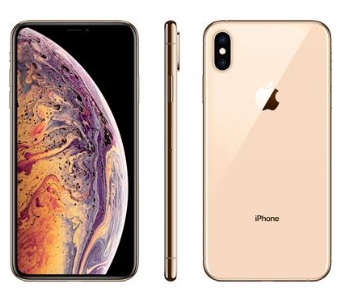
 

Leave a comment

Filed under Finance, IT, Law, Military, Politics, Science

The non-knowing speak loudest

There is an old saying that goes back to the original circus, the days of Sir Alec Guiness, John Le Carre and the circus (MI6). Those who do not know speak and those who do will not. There is however a valid issue with that mindset. When it is merely intelligence and what some regard as spyshit, we tend to not care. It is their world and they tend to live by other rules even as they have the same lack of common cyber sense as some US generals, it is their choice to make. Yet when we see labour people like Michael Danby need to present evidence in regards to “an opposition Labor party MP, called on the Liberal-National coalition to block Huawei and fellow Chinese telecoms company ZTE from supplying equipment for the 5G network. “Both Huawei and ZTE must report to the Communist party cell at the top of their organisations,” he told parliament. “Let me issue a clarion call to this parliament: Australia’s 5G network must not be sold to these telcos.”” I am actually in the mindset that his seat should be put up for auction if he does not disclose a proper setting and give evidence as to the reasoning of all this. It becomes more pressing when we see “Mr Lord, a former rear admiral in the Royal Australian Navy, told Australia’s state broadcaster on Monday that these claims were “wrong”, adding that Huawei was not owned by any committee of government and posed no risk to Australia’s security“. It is not just because Mr Lord is a former rear admiral, more that the average naval midshipman tends to be more reliable than any politician. We get this from the Financial Times (at https://www.ft.com/content/1a2d19ba-67b1-11e8-8cf3-0c230fa67aec). In addition, when we get politicians start the scare tactics of ‘critical infrastructure pose a risk to national security’, there is a clear need for both Duncan Lewis and Paul Symon AO to get hauled in a chair in Canberra and ask them to openly answer the questions regarding any evidence that Huawei is a security threat. To blatantly accept the US on their ‘china fears’ is all well and good for Telstra, yet the setting is not a given and the fact that Telstra is nowhere near the technological levels of Huawei is not something that we blame them from, but they basically lost the 5G war before it started through their own actions and inactions.

Now if there is an actual national security concern, we should be open about that and when that happens, and evidence is presented, at that point we can all relax and state to Huawei that we feel sorry for the inconvenience caused, but such concerns are just too big to ignore. I think we have had quite enough of these presentations that reek of Colin Powell and his silver suitcase with evidence that no one ever saw in 2001. We cannot go in that direction ever again. We will not be the play toy of greedy telecom companies and their internal needs for stupidity and inactions; we can no longer afford such a nepotism environment.

That same issue can be said regarding Nationals MP George Christensen. Apart from him trying to undo a business deal of a 99 year lease, no matter how silly that deal was, Australia cannot be perceived as a nation that cannot be trusted at the business table. My second issue is why a maroon (Queenslander) is involving himself with NT politics. In that regard, why do we not see the responses form Vicki O’Halloran is she has any, is she not the appointed administrator? In this, the game is not over. The Australian Financial Review gives us: “Huawei faces the likelihood that Cabinet’s national security committee will veto it supplying equipment for the 5G network, based on the recommendations of security agencies, over concerns about the potential for cyber espionage at the behest of China’s leaders“. In this the question becomes, is there an actual security concern, or is it that the national concern is the devaluation of Telstra? In additional support we need to see the Sydney Morning Herald two weeks ago when they gave us (at https://www.smh.com.au/business/companies/how-a-huawei-5g-ban-is-about-more-than-espionage-20180614-p4zlhf.html): “The Sydney Morning Herald and The Age reported in March that there were serious concerns within the Turnbull government about Huawei’s potential role in 5G – a new wireless standard that could be up to 10 times as powerful as existing mobile services, and used to power internet connections for a range of consumer devices beyond phones“, as well as “the decision will have an impact on Australia’s $40 billion a year telecoms market – potentially hurting Telstra’s rivals“. the first part is something I wrote about for well over a year, the second one is important as we see ‘potentially hurting Telstra’s rivals‘, from my personal point of view it reads like the one lobotomised idiot in telecom country gets to decide through arm-twisting on how we need to remain backwards as they set the standard that they could not deliver for the longest of times (a little sarcasm regarding Telstra’s 2011 3.7G), I wrote about that recently.

ABC gave us yesterday: “it continues to be the target of criticism over its connections to the Chinese Government, including allegations it is involved in state-sponsored espionage“, yet the people have never been shown actual evidence, so where is that at? There might have been doubts to some degree for a while, but the Powell stunt is too clear in our minds and the USA does not have the credibility (or credit rating for that matter) it once had. The fact that the opposing former rear admiral of the Australian navy trumps two half bit politicians seeking the limelight any day of the week and some stay silent, the reason for that is only speculation, but we might not need to seek far and a few words ion Google Search might help find that answer (like ‘Telstra’ and ‘8000’). When we see some giving us: ‘Telstra Corporation Ltd (ASX:TLS) is betting it all on 5G‘ and we see the Telstra strategy briefing (at https://www.telstra.com.au/content/dam/tcom/about-us/investors/pdf-e/2018-Strategy-Update.pdf), we see on page 6, Leading with 5G, that would never be an option with Huawei in play as they are ahead by a lot, so the presentation given a week ago, whilst we realise that the presentation was prepared way before that is giving the setting that Huawei is no longer considered to be competition, that is what we now face! What some might call a backward organisation proclaiming to be leading whilst 8000 men will be missing through inaction. That page is even more fun when you consider the quote ‘new technologies like IoT‘, which is funny when you consider that the Internet of Things (IoT) is a system of interrelated computing devices. It is not a technology; it is a network that enables technology. In addition, when you start nit-picking in that 34 page event, we see all the bells and whistles we need to see, yet when you consider consumers and small business (the millions of people that Telstra charges) starts at page 9 and gives us 5 slides. We see ‘cutting edge 5G capability’ (by whose standards?), we see location devices (with the image of a dog), Access to rewards an tickets, a fully-digital relationship with Telstra (an implied no more personal interaction after the sales, merely a chatbot) and value added services, yet the value of a service like customer service and customer care are absent in that part of the equation, so how does this push the people forward, because I doubt that it actually will achieve anything in the long run and one flaw will anger the actual consumers without limits.

You see, personally I believe in the IoT, I believe in 5G, they are tools to enhance experiences and interactions, not make them obsolete and that is what  feel when I saw the Telstra strategy update. These two elements can enhance customer care, customer service and customer support, not replace them with ‘AI’ enhanced chatbots. So the moment we get a 2.0 version of ‘Telstra’s new chatbot, Codi, is making so many mistakes customers are furious’ (at https://www.businessinsider.com.au/telstra-codi-bot-backlash-2018-3), chatbots can be a great asset to get the information and channel the call to the right person, yet that again is merely enhancing and that can work fine. The presentation implies the loss of actual customer values and ignoring their need for interactions. That in an aging population might be the least intelligent stance to make ever.

Yet this does not give way to the issue on Telstra versus Huawei, as the Sydney Morning Herald states “Telstra has refused to exclude Huawei from its 5G tender, but that is seen more as a way of keeping its existing supplier Ericsson on its toes“, as well as “In other words, a ban could be bad news for TPG, Vodafone and Optus. Whether it is necessarily good news for Telstra – which has its own issues at the moment – is less clear“. In finality we get “Intelligence agencies tend to get their way on matters like these“, this beckons the question what are they actually after? The US seems to be in bed with Samsung and their 5G routers, so it makes sense that this will be the path that Telstra walks as well, time will tell how it ends.

So why is this such a big deal?

We are currently in danger of actually falling behind Saudi Arabia, yes, that place in a large sandbox is about to surpass us in 5G and other technologies. They had the audacity to reserve half a trillion dollars toward Vision 2030 and Neom. So when we got “Al-Khobar in the Eastern Province, of Saudi Arabia, has become the first city in the region to benefit from the fifth-generation wireless network or 5G network, according to a press statement issued by the Center of International Communication“, last month. There was not a surprise in my bone. You see, this will drive their Vision 2030 plans even further. So as Saudi Arabia is now the new pond to grow speciality in 5G, app designers can promote, test and deliver on knowledge that will be available whilst Telstra is trying to figure out how to get 5G installed. with “All the necessary national 5G policies and supporting administrative provisions are planned to be in place before the end of 2019, along with the award of initial batches of the spectrum to support the full commercial deployment of 5G technologies“, we see that Saudi Arabia had been taking this serious for a much longer time. This goes a little further when we see ‘the Middle East and Africa 5G Technology market (Egypt, Saudi Arabia, UAE, Nigeria, and South Africa)‘, so at this point, Saudi Arabia has a head start to not just push Saudi Arabia forward, they have quite literally first dibs on gaining a chunk of the 98 million Egyptians. Not all can afford 5G, we get that, but those who do are confronted with only Saudi Arabia as a Muslim player, you did not actually believe that they would run to Vodafone, did you?

So back to the 5G local ‘market’! For this we need to take a look at the Australian Financial review 2 weeks ago. Here we see (at https://www.afr.com/opinion/columnists/the-technical-reasons-why-huawei-too-great-a-5g-risk-20180614-h11e3o), with the title ‘The technical reasons why Huawei is too great a 5G risk‘, the start is good, this is what we wanted. Yet we are treated to paragraphs of emotion and alleged settings. So when we see: “Huawei presents unique additional risk beyond the “normal” risk of buying complex equipment. China has demonstrated a long-standing intent to conduct cyber-espionage“, so is ‘intent’ shown in evidence? How did the CIA and NSA acquire our data or Cambridge Analytica for that matter? ‘China is thought to be behind data breaches‘ is merely a statement ‘thought‘ is speculation, not evidence. Then we get: “The US Trade Representative’s Section 301 report from March this year details the very close cooperation between the Third Department of China’s People’s Liberation Army (3PLA is a military hacking unit, also known as Unit 61398) and Chinese enterprises“, I have to get back to this. We are treated to ‘At one extreme, Huawei could be asked‘, is a case of fear mongering and not evidence. In addition we get ‘it is certainly a possibility‘ which came after ‘Vulnerabilities may already exist. This may not be the most likely possibility‘ as well as ‘very likely‘ all emotional responses, none of them evidence in any way, so the article with included in the title ‘The technical reasons’, has pretty much zero technology and close to 90% ‘allegedly’, speculations and emotional twists, whilst we cannot deny the optional existence of vulnerabilities, yet these are found regularly in Cisco hardware and Microsoft software, so have those two been banned in Australia?

Now to get back to the Section 301 report (at https://ustr.gov/sites/default/files/Section%20301%20FINAL.PDF). It is 215 pages and I did not read that complete political US marketing behemoth. There is one that actually carries weight. On page 153 we see: “evidence from U.S. law enforcement and private sources indicates that the Chinese government has used cyber intrusions to serve its strategic economic objectives. Documented incidents of China’s cyber intrusions against U.S. commercial entities align closely with China’s industrial policy objectives. As the global economy has increased its dependence on information systems in recent years, cyber theft became one of China’s preferred methods of collecting commercial information because of its logistical advantages and plausible deniability“, which is basically good application of intelligence gathering. Please do not take my word for it, feel free to call the NSA (at +1-301-6886311, all their calls are recorded for training and quality purposes). Oh, and before I forget, the text came with footnote 970, which gave us “A number of public submissions provided to USTR state that the Chinese government has no reason to conduct cyber intrusions or commit cyber theft for commercial purposes, see CHINA GENERAL CHAMBER OF COMMERCE [hereinafter “CGCC”], Submission, Section 301 Hearing 16 (Sept. 28, 2017); that the US has not provided evidence of such actions by China, that China is also a target of cyber-attacks, and that the two countries should work together“, there is that to deal with and is that not a rare instance where we are treated to ‘the US has not provided evidence of such actions‘, how many times have we seen claims like that since 2001? Would that number be a 4 or 5 digit number?

The point is not whether it can or could happen, the question becomes did it happen here? let’s not forget that in most settings the section 301 report is about US interests and their technological advancement (which they lost by becoming iteratively stupid). Here we have a different setting. In the setting we face Huawei has a technological advance over all we have in Australia and most of Europe as well. Huawei was one of the first to realise the power of data and 5G and they are close to a market leader, the US is basically relying on Samsung to get them there. BT (British Telecom) is on the ball, but still not on par. They are in bed with Finland “BT has teamed with Nokia to collaborate on the creation of 5G proof of concept trials, the development of emerging technology standards and equipment, and potential 5G use cases“, so this sets the larger players in a field where Nokia and Huawei are now active. The SAMENA Telecom Leaders Summit 2018 and Saudi Telecom Company (STC) announced today that it is working with Nokia to launch a 5G network in 2018 within Saudi Arabia, yet the technology agreements show that it does include Huawei and Cisco, so they aren’t already active, the setting for the initial bumps in the road that Cisco, Nokia and Huawei will surely overcome is knowledge that we will not have in Australia long after someone was able to connect the 5G router to a power point (very presentable, yet the online green light seems to be broken).

So whilst politicians are considering who to be buddies with, Saudi Arabia joins the US and they will be the first 5G providers, which means that the UK and Australia are lagging behind and optionally not for the short term either.

So am I not knowing or am I all knowing? I actually prefer the first, because it is more relaxing; yet the need to speak out loud is becoming increasingly important even if it was only to place the loud mouth limelight seeking politicians like Michael Danby and George Christensen in their slightly too arrogant place. They are of course welcome to present ACTUAL evidence proving me wrong. #WishingForAMiracleHere


Leave a comment

Filed under Finance, IT, Media, Military, Politics, Science