Tag Archives: Huawei

Confirmation on Arrival

Last week, I gave you some of the views I had in ‘Google is fine, not fined‘ (at https://lawlordtobe.com/2017/06/28/google-is-fine-not-fined/). I stated “This is not on how good one or the other is, this is how valid the EU regulator findings were and so far, I have several questions in that regard. Now, I will be the last one keeping governments from getting large corporations to pay taxation, yet that part is set in the tax laws, not in EU-antitrust. As mentioned the searchers before, I wonder whether the EU regulators are facilitating for players who seem more and more clueless in a field of technology that is passing them by on the left and the right side of the highway called, the ‘Internet Of Things’“, 5 days later we see that my views were correct, again and again I have shown that looking behind the scenes is adamant to see the levels of misinformation and betrayal. Now in ‘To tackle Google’s power, regulators have to go after its ownership of data‘ (at https://www.theguardian.com/technology/2017/jul/01/google-european-commission-fine-search-engines) we now see: “The Google workshop at the Viva Technology show last month in Paris, which brought together players who shape the internet’s transformation“, this is what it always has been about. Who owns the data? Evgeny Morozov gives us a good story on what should be and what should not be, he pictures a possible upcoming form of feudalism, all drenched in data. It is no longer just about merely data and applicability; it is more and more about governments becoming obsolete. The EU is the first evidence in this. The EU is regarded as something that is on top of governments, yet that is not the case. It seems to be replacing them through orchestration. Mario Draghi is spending massive amounts of funds none of them have, yet in all this, yesterday we see “The European Central Bank has been dealt a heavy blow after inflation in June tumbled further below target, despite extreme measures from policymakers to stoke the economic measure” as well as “Unless price rises are stronger, ECB chief Mario Draghi has signaled that he is unlikely to scale back the mammoth levels of support for the economy“, so it is he and the ECB who are now setting the precedence of spending, printing money without any value behind supporting it. So is it ‘wealth distribution‘ or ‘wealth abolishment‘?

If we agree that this economy has failed, if we believe that this way of life is no more, when we accept that ¼th of this planets population is dead in roughly 25 years, what would come next? I would not presume to know that answer, yet can we imagine that if the dollar stops, we would need something else, in that case is data not a currency?

Now, I am perfectly happy to be utterly wrong here, I am also weirdly unsettled with the notion that our money is dwindling in value day after day. Now let’s get back to the ‘view’ of Morozov. When we see “Alphabet has so much data on each of us that any new incoming email adds very little additional context. There are, after all, diminishing returns to adding extra pieces of information to the billions it already possesses. Second, it’s evident that Alphabet, due to competition from Microsoft and Amazon, sees its paying corporate clients as critical to its future. And it’s prepared to use whatever advantages it has in the realm of data to differentiate itself from the pack – for example, by deploying its formidable AI to continue scanning the messages for viruses and malware“, we see more than just an adjustment in strategy.

Yet, I do not completely agree, you see data is only truly valued when it is up to date, so as data rolls over for new data new patterns will emerge. That would be an essential need for anything towards an AI, in this Data in motion and evolving data is essential to the core of any AI. and that timeline is soon becoming more adamant than some realise.

When we consider a quote from a 2006 article relating to a 2004 occurrence “Google published a new version of its PageRank patent, Method for node ranking in a linked database. The PageRank patent is filed under its namesake, Lawrence Page, and assigned to The Board of Trustees of the Leland Stanford Junior University; US Patent 7,058,628“, we should consider that the value it has will diminish (read: be reduced) in 2024 (for Google that is). There is of course another sight that this was ‘version 2‘, so others would be able to get closer with their own version. In 6 years as the Patent ends it will be open to all to use. No matter what some have, you only need to switch to Bing for a few days to see how straggling and incomplete it is. When you realise that Microsoft has no way at present to offer anything close to it, you get the first inside of how high the current Google value is and how much it scares governments and large corporations alike.

Now we get to the ‘ground works’ of it. From this we can see that Google seems to have been the only one working on an actual long term strategy, an event that others have stopped doing for a long time. All we see from Microsoft and IBM has been short term, masquerading as long term goals with 70% of those goals falling into disrepair and become obsolete through iteration (mainly to please the stakeholders they report to), is it such a surprise that I or anyone else would want to be part of an actual visionary company like Google? If Google truly pulls of the AI bit (it has enough data) we would see a parsing of intelligence (read: Business Intelligence) on a scale never witnessed before. It would be like watching a Google Marine holding a 9mm, whilst the opposite is the IBM Neanderthal (read: an exaggeration, the IBM would be the Cro-Magnon, not Neanderthal) holding a pointy stick named Watson. The extreme difference would be that large. In all this governments are no longer mentioned. They have diminished into local governments organising streams of data and facilitating consumers, mere civil servants in service of the people in their district. Above that, those levels of workers would become obsolete; the AI would set structures and set resources for billions. We went from governments, to organisations, we left fair opportunity behind and moved to ‘those who have and those who have not‘, and they are soon to be replaced for the ‘enablers and obstructers‘ and those who are the latter would fall into the shadows and face away.

Am I Crazy?

Well, that is always a fair argument, yet in all this, we have Greece as an initial example. Greece is possibly the only European nation with a civilisation that would soon become extinct twice. So as we see reports of lagging tourism revenue, on top of high regarded rises in GDP, rises we know that are not happening as the revenues are down by a larger margin (source: GTP), Greek revenue is down by 6.8 percent, which is massive! This gives stronger notions that the ‘beckoning of Greek bonds‘ is nothing more than a façade of a nation in its final moments of life. The fact that the ECB is not giving it any consideration for its trillion spending could also be regarded as evidence that the ECB has written off Greece. So tell me, when was the last time that nations were written off? Some of the press is now considering the works of former ‘rock star’ Yanis Varoufakis. Yet in all this, when did they actually change the landscape by investigating and prosecuting those who got Greece in the state it is in now? In the end, only the journalist releasing a list of millionaires pulling their money out of Greece, only he went to prison. So, as such, Greece is a first step of evidence that governments are no longer the powers they once claimed they were, and as less and less government officials are being held to account when it comes to larger financial transgressions is also a factor as to why the people of those nations no longer give them any regard.

The second view is in the UK, here we see ‘U.K. to End Half Century of Fishing Rights in Brexit Slap to EU‘, in this Bloomberg gives us “Prime Minister Theresa May will pull Britain out of the 1964 London convention that allows European fishing vessels to access waters as close as six to twelve nautical miles from the U.K. coastline“, in here we also see “This is an historic first step towards building a new domestic fishing policy as we leave the European Union — one which leads to a more competitive, profitable and sustainable industry for the whole of the U.K.“, which is only partially true. You see, Michael Gove has only a partial point and it is seen with: “Britain’s fishing industry is worth 775 million pounds and in 2015 it employed 10,162 full-time fishermen, down from about 17,000 in 1990. In almost three decades, fleet numbers dropped a third to 6,200 vessels and the catch has shrunk 30 percent“, the part that is not given is that from 1930 onwards engineering made massive strides in the field of ship engines, not large strides but massive ones. A ship, and its crew can catch fish, yet it is the engines that allow for the nets to be bigger and for the winches to be stronger to hoist those filled nets. In the ‘old’ days 2000 horsepower was a really powerful vessel, which amounted to 1.5 megawatts. Nowadays, these boats start at well over 300% of what was, so not only are the ships larger, can hold more fish and pull more weight, these ships are also getting more efficient in finding fish. I personally witnessed one of the first colour screen fish radars in 1979. In this field technology has moved far beyond this, almost 4 decades beyond this. If there is one part clearly shown, than it is the simple fact that technology changed industries, which has been a given for the better part of three generations. Not merely because we got better at what we do or how we do it, but as fishing results show that catches has been down by 30%, there is the optional element that there is less to catch because we got too efficient. It is a dwindling resource and fishing is merely the first industry to see the actual effects that lack of restraint is leading to.

So when we see a collapsed industry, can we blame governments? Who can we blame and is blame an actual option? In this, is there any validity in the fact that this part of government has surpassed its date of usefulness? Perhaps yes and there is equal consideration that this is not the case, yet the amount of consumers remains growing and as available resources go down we see the need for other solutions.

This is merely a first part. As we now move into the US and their 4th of July part, I will now look at other sides as well, sides we stopped considering. You see, there is opposition and it is growing. CNBC gives us one side to this with ‘Google Deep Mind patient data deal with UK health service illegal, watchdog says‘ (at http://www.cnbc.com/2017/07/03/google-deepmind-nhs-deal-health-data-illegal-ico-says.html), three points were raised. “A data sharing deal between Google’s Deep Mind and the U.K.’s National Health Service “failed to comply with data protection law“, the U.K.’s Information Commissioner’s Office (ICO) said“, “The deal between the two parties was aimed at developing a new app called Streams that helped monitor patients with acute kidney disease” as well as “the ICO said that patients were not notified correctly about how their data was being used“. Now, we can agree that an optional situation could exist. So does Elisabeth Denham have a point? For now let’s agree that she does, I would reckon that there has been a communicative transgression (this is how she plays it), yet is she being over formal or is she trying to slice the cake in a different way? The strongest statement is seen with “For example, a patient presenting at accident and emergency within the last five years to receive treatment or a person who engages with radiology services and who has had little or no prior engagement with the Trust would not reasonably expect their data to be accessible to a third party for the testing of a new mobile application, however positive the aims of that application may be.” OK, I can go along with that, we need certain settings for any level of privacy to be contained, yet…..there is no yet! The issue is not Google, the issue is that the data protection laws are there for a reason and now, it will hinder progress as well. As health services and especially UK NHS will need to rely on other means to stay afloat as costs are weighing it more and more to the bottom of an ocean of shortage of funding, the NHS will need to seek other solutions that will set an upward movement whilst the costs are slowly being worked on, it will take a long time and plenty of cash to sort it out, Google is merely one player who might solve the partial issue. Yet, the news could go in other directions too. Google is the largest, yet not the only player in town, as people seem to focus on marketing and presentations, we see IBM and to the smaller extent Microsoft and we all forget that Huawei is moving up in this field and it is gaining momentum. The cloud data centre in Peru is only a first step. It is only the arrogance of Americans that seem to think that this field is an American field. With Peru, India and China, Huawei is now active on a global scale. It has hired the best of the best that China has to offer and that is pretty formidable, There is no way that Huawei could catch up with Google in the short term, yet there services are now in a stage that they can equal IBM. As we see a race for what is now at times called the IoT landscape, we see the larger players fight for the acceptance of ‘their IoT standard’, and even as we see IBM mentioned, we see clearly that Google has a large advantage in achievements here and is heading the number of patents in this field, as Huawei is pretty much accepting the Google IoT standard, we see that they can focus on growth surpassing IBM, Qualcomm and Intel. In this Huawei will remain behind Apple in size and revenue, but as it is not in that field in a true competitive way Huawei might not consider Apple a goal, yet as they grow in India, Huawei could surpass the Tata group within 2 years.

So how does this matter?

As we see the steps (the not incorrect steps) of Elisabeth Denham, the acts as we saw in the Guardian on how regulators are trying to muzzle and limit the growth and activities of Google, how much influence do they have with Huawei? Even as we see that Huawei is privately owned, there have been a few articles on Ren Zhengfei and his connection to the Chinese military. It has spooked the US in the past, and consider how spooked they will get when Huawei grows their service levels in places like Greece, Spain and Italy? What will the EU state? Something like “your money smells, we will not accept it“. No! The EU is in such deep debt that they will invite Huawei like the prodigal son being welcomed home. So whilst everyone is bitching on how Google needs to be neutered, those people allow serious opponents and threats to Google’s data future to catch up. Huawei is doing so, one carrier at a time and they are doing it in a global way.

So as we see all kind of confirmations from media outlets all over the world, we seem to forget that they are not the only player in town as their growth in EU nations like Spain with a new android base Set Top Box (STB), Huawei just now becomes the competitor for Telefonica, Vodafone and Orange, implying that it now has a growing beach head into Europe with decent technology for a really affordable price. In a place where they all complain on how there is no economy, Huawei is more than a contender and it is growing business where others had mere presence and sustainable levels of revenue. It is merely a contained view on how the EU regulators seem to be fumbling the ball for long term growth, whilst handing opportunity to China (read: Huawei), who will be eagerly exporting to Europe the products they can.

In all this, CoA can be seen as a mere confirmation, a Course of Action by regulators, the Court of Appeal for Google, the Cost of Application for Huawei, the Coming of Age for Business Intelligence and the Center of Attention that Google is calling on themselves, whether intentional or not does not matter. We are left with the question whether at this point, the limelight is the best for them, we will leave that to Mr. Alphabet to decide.

1 Comment

Filed under Finance, IT, Law, Media, Politics, Science

The spotlight on ‘exploiters’

The Mobile World Congress finished on March 2nd. These places are always a little weird. It is often about concepts and about desires, but for the most we see some new stuff and some that was released in the last few months. It is loaded with exhibitors, the list is 72 pages, so you better believe that there is close to no way to see it all. If you are in apps, smart cards, tags or smartphones, you are either there or you do not count. Now, that is not really a true given, if you are really small, or truly enormous you might want to give it a pass. Apple can because they have nothing to add (at present), but at that point they give ground to Google (Google Pixel) and Huawei (Mate9). It is a choice and as being in the place is plenty super expensive, so whatever you bring, better be an important game changer, because the large players can drown you out.

So as the Guardian (at https://www.theguardian.com/technology/2017/mar/11/is-5g-the-future-robots-delivering-pizza-house-viewing-vr) gave us ‘Robots delivering pizza and house viewing by VR: is 5G really the future?‘ last Saturday, the question became, what is this really about?

However, 5G, which is set to be rolled out in the UK next decade, also has its critics. They argue consumers don’t need the superfast speeds the upgrade from current 4G technology promises, and many in the industry believe that logistical issues mean that 5G may not be properly rolled out in the UK for decades“, this is an interesting statement, because I heard a similar thing when 3G was to be replaced by 4G. Some claimed it was not needed, mainly those having the 3G equipment and not the funds to go to 4G. So I saw this as a repetition of that. An opinion piece in the Computer World 2 years ago gave us ‘Tony Milbourn, vice president of strategy at u-blox‘ who questioned it, as did the Cambridge Wireless Network. We can question party one (as well as party two), yet we must admit that Cambridge Wireless is at least a techno savvy industry group. So dismissing them out of hand is not the wisest of choices.

To me, the 5G jump is essential. It is not just about speed. I see that 5G can be the cornerstone to fix some of the NHS UK issues. From there it can be an optional solution to a host of International Health Systems. 5G brings a lot more than just speed, it brings optional innovations that some are unwilling to consider (Larry Page can buy the solution for 15 million pounds up front price is post taxation).

As many sources in short minded ways hide behind “When the 5G wireless standard hits the mainstream, our home internet speeds have the potential to be so fast that we’ll be downloading 4K movies, games, software, and any other large form of content at a fraction of the time we’re used to“, the truth goes a hell of a lot further. 5G can be the cornerstone of non-repudiation, which has been a mobile flaw for the longest of times. In addition, the new connecting devices can change in many ways facilitate interlocked solutions as well as managing a host of non-considered options for systems already rolled out.

In addition, 5G could initially allow for a much better solution towards scaling the performance of short TCP connections on multicore systems. Which will also evolve the smartphone in several new directions. In addition, the Tablet would grow into a new level interactive system, I reckon that Google would need to evolve Android into something like Cyborg, which basically is Android plus, the plus is for the libraries and functionality that would slow down the average phone by way too much, but under 5G, the upgraded system would allow for authentication and new ways of privacy driven encryption that 4G cannot allow for, mainly because it is just too impractical.

The Guardian article also correctly identifies: “The mass connectivity it allows will also help expand the so-called internet of things (IoT), in which everyday appliances and devices wirelessly connect to the internet and each other. “IoT technology is being used in everything from smart homes to wearables,” says Ofcom. “5G should help the evolution of IoT“, which clearly shows that those against ‘advancing’ are either not in this field, or merely unaware of what they are missing (that is some of the critics, not all of them). The one prediction I do not completely agree with is “Analysts Gartner estimate that by 2020 there will be 20 billion IoT-connected devices“, if the 5G preparation goes correctly, there are opportunities to get that to 25 million devices easily, I reckon that 30 million is possible, but only if all elements work favourably to all and that is just not entirely realistic. The next part is one of caution, because blindly going for something is just not cricket. “The report by Lord Adonis, who heads the National Infrastructure Commission, found that the UK’s 4G network ranked only 54th in terms of coverage, behind countries such as Albania, Panama and Peru“, now we can argue that two of the places are merely two villages, a cafe and a cemetery is not entirely accurate. Yet, the idea comes across. Panama has over 50% of its population in the capital, so that is not a fair comparison, yet there are plenty of players (read: Scandinavian nations), who are doing plenty better, we know that it is a small population 3 times the size of panama, but stretched over a massive amount of miles, so things are not entirely great for the UK. Improvements are essential and perhaps considering 5G as the main drive to get to a much higher coverage rating might not be the worst idea.

In light of some responses we also need to look at “Professor William Webb, an academic and former Ofcom director, has been outspoken in warning that 5G could be a case of the “emperor and his supposed new clothes”. Webb is not convinced that the industry obsession with faster speeds is matched by consumer demand“. In this that the professor might talk a decent pitch, but the issue as stated before is not just about speed. 5G will allow for avenues that are currently under 4G not practical, which is partially about speed, but also partially about the options to connectivity currently not possible. Yet in the next part we see the exploitation part “mobile operators may be in danger of investing billions in 5G networks that they may struggle to recoup their costs from. Telecoms companies forked out £2.3bn in Ofcom’s auction of 4G spectrum just a few years ago in 2013“. So as we see the £2.3bn auction, we see that Orange (at https://www.orange.com/en/Press-Room/press-releases-2017/press-releases-2016/2015-full-year-results) gives us “Restated EBITDA was 12.426 billion euros in 2015, ahead of the 2015 target“, so basically in one year they got 12 billion Euros (approx. £10.778 billion in 2015). So I reckon that the 2.3 billion on all players was not that much of an issue to begin with and this is just ONE player and not even the biggest one, so as such (even as we understand that there are always more cost), Professor William Webb should reconsider his position before we put a massive spreadsheet showing just how much the mobile providers are driving you for. You will not be happy or impressed to realise what better a deal you could have gotten whilst they would still end up with a massive profit.

Now there is a lot more going on and this path will not be a smooth sailing one, yet when we realise that 5G will offer support and solutions in directions that some seem to be craving, the news (at https://www.digitalhealth.net/2017/03/nhs-england-working-with-us-internet-giants-to-promote-digital-tools/), give us more shallow parts. It seems that everyone wants to drive some digital solution, that is tool based and has heavy dangers when it comes to cyber security. That was clearly shown by the Financial Times on February 3rd (at https://www.ft.com/content/b9abf11e-e945-11e6-967b-c88452263daf). So as there is too much fidgeting and some giving in to these criminals instead of hunting them down and injecting their children with Ebola (just to give clear indication that health care data is essential and should not be messed with, EVER). The fact is shown that cybercrimes is still too open a field, with many criminals not ending up getting prosecuted and/or incarcerated gives view to the essential need to change thinking and not like a collection of Emu’s run to what seems to be the next (easy) solution in postponing the essential changes the NHS and healthcare in general needs. The Financial Times has actually one additional gem. The quote “According to data from Intel Security, ransomware is growing at an alarming rate across all industries: total ransomware incidents grew by 128 per cent in the 12 months to September 2016“, gives a much needed light on the dangers that “NHS England is working with Google and Bing to increase the visibility of NHS content online and the forthcoming NHS app store” is bringing the people and the next release of ransomware. There is currently too much dangers and the 5G gives a first optional approach to non-repudiation as well as the option to block several similar dangers to health care data. I feel rather confident that Juliet Bauer, director of digital experience at NHS England could end up having to send out all kinds of statements on unauthorised accessed data. I hope to be wrong, yet the statements in the Financial Times, gives us that Jason Allaway, vice-president of UK & Ireland from cyber security firm RES. In that light, Juliet Bauer has every reason to become massively cautious. Any MP that is pushing for some Mobile app solution could find themselves into the limelight explaining how they could have pushed for such a change endangering the lives of many. It could also immediately spark a by election replacing that person pushing for cyber changes whilst the NHS and many health care trusts and providers are nowhere near ready at present. To give but the shortest of lists, you need to consider Healthcare.GOV, Pathology servers (blood tests), Radiological Patient data and images, Ultrasounds imaging systems, Magnetic resonance imaging data, images and reports and the list goes on (each category with a long list of providers). In all this there is still the GP, the specialist and the NHS staff to consider, so in the end, the digital paths some are taking are limited, inferior and no release of pressures to the NHS, so where is the benefit? I went over all that before I made certain designs. There needs to be a massive shift and the first time around the politicians had this utterly disgustingly dangerous idea that it was a great idea to put it in one place. I reckon that there is enough data to not ever consider that. The solution is on the other side of the spectrum, yet there needs to be a shift on the other side of the players too. There needs to be Common Cyber Sense and there needs to be accountability which non repudiation is a first step in, because there will be no more, my ‘device’ was on the fritz. Now there will be a clear digital path, which in health care is essential before considering the digital path in the more serious sides of healthcare.


1 Comment

Filed under Finance, IT, Politics, Science

The cost of free trade

There is a side in me that is a little beyond angry. When I see these politicians whine like little bitches on how good ‘Free Trade‘ is, on how it is so good for all. I wonder if they remember the days when slavery was an actual solution for commerce. How these people look and praise Chiwetel Ejiofor (aka Baron Mordo) for playing a slave in ‘12 years a slave’. When we see “Mexico, Japan, Australia, Malaysia, New Zealand and Singapore aim to continue with TPP with or without the United States, Mexico’s economy minister, Ildefonso Guajardo, said on Friday” (Source: SBS), we need to wonder on how the TPP is seen as anything but evil, a mere apparatus of convenience for large corporations to keep a stranglehold on those around them and to minimise the number of opportunities for smaller businesses.

The Evidence?

The Economic Policy Institute gives us: “This paper does not include an exhaustive review but cites as an example Capaldo, Izurieta, and Sundaram (2016), who noted that studies claiming that the TPP would have a positive impact on the U.S. and global economy are based on unrealistic assumptions, including no change in the U.S. trade balance with the TPP countries and full employment“, which is only the top of the iceberg. You see, in addition we have “Currency manipulation is the most important cause of the large and growing U.S. goods trade deficit with the group of countries in the Trans-Pacific Partnership. Coupled with the fact that the United States is the largest and most reliable trading partner for many of the TPP countries, this is a recipe for U.S. pain at others’ gain“. This is not the USA, it would also hit Australia in other ways, not the people who secretly arranged all that they get top dollar in a few other ways. Yet, before we move on, let’s take one more part, because that will have connecting issues. The quote “Many members of the proposed TPP, including Malaysia, Singapore, and Japan, are known currency manipulators. Others, namely Vietnam, appear to be following the lead of currency manipulators by, for example, acquiring excess foreign exchange reserves to depress the value of their currency. Currency manipulation explains a substantial share of the large, persistent U.S. trade deficit with the 11 other TPP countries that has not only cost millions of U.S. jobs but also increased income inequality and put downward pressure on American wages“, and although this paper focuses on US consequences, it will in addition have a speculative negative impact on Australia, Canada and New Zealand.

The Dutch Financial Times (at https://fd.nl/economie-politiek/1176922/tpp-opzegging-holt-voorbeeldfunctievs-uit) gives us: “Donald Trump heeft de wereld deze week een belangrijke boodschap gegeven. Door te stellen dat hij de Verenigde Staten op de eerste dag van zijn presidentschap terug zal trekken uit het Pacifische vrijhandelsverdrag TPP, geeft hij het signaal af dat hij de relaties met andere landen puur vanuit de blik van een zakenman zal zien. Hij wil bilateraal met landen gaan onderhandelen ‘over eerlijke handelsafspraken die ertoe leiden dat banen en industrieën terugkeren naar Amerika’. Internationale relaties moeten voordelig zijn; anders hoeft het niet“, which paraphrased gives us: “Donald Trump will be withdrawing from the TPP on day one of his presidency. He will be looking at relationships with other countries from a business point of view, international relations need to be advantageous, or need not be“. Is that a bad thing? You see for exploiters it is, which gives us the Malayan Times (at http://www.themalaymailonline.com/what-you-think/article/tpp-aint-over-till-its-over-firdaos-rosli). Last week they had the headline ‘TPP ain’t over till it’s over‘, the article is a decent legal view of getting the TPP ratified, which only gives additional cause for concern in a few ways, yet that is not the issue for now. The one quote at the end that matters is “The government must proceed with its top-down reforms agenda and these are direly required to make Malaysia great again” This is fair enough on one side, Malayans are there to make Malaysia strong, there is no cause more just, yet in what ways are they doing this?

This is where the other side gets to show us the dangers. You see the headline ‘Malaysia workers speak of their despair: ‘Samsung only knows how to take’‘ (at https://www.theguardian.com/global-development/2016/nov/21/malaysia-workers-speak-of-their-despair-samsung-only-knows-how-to-take), shows that large corporations are at the heart of the problem. Tax shelters, exploitation and what cannot be seen as anything else than intentional slavery are at the heart of the matter. The Samsung Port Klang factory as mentioned shows how Samsung is growing its business by massively reducing costs whilst maximising customer exploitation at almost the same time.

When we see “In total, Bhandari says he paid £750 to secure his job in Malaysia – more than the average annual salary in his home district” as well as “There are an estimated 2.1 million documented migrant workers like Bhandari in Malaysia, many of them hired through third-party labour supply companies who recruit foreign workers from Nepal, Indonesia, India and Bangladesh to drive Malaysia’s industrial boom“. Implying that Samsung has no HR to speak of, it is arranged through third party affairs that are buttering their bread on both sides of the isle with a labour population in slavery. So when we rethink the Malayan Times with ‘TPP ain’t over till it’s over‘, we get that they (those making the profits) need the TPP, because slaves tend to be free (read: really cheap) and too many people seem to be filling their pockets in a few ways. So when you see “Now he’s in Malaysia, Bhandari’s recruitment debt – and the 60% interest loan he took to pay it – has a stranglehold on the teenager“, you know that this is how slavery is created and how it is maintained. Not through shackles that bind you, but debts that stop you from moving and breathing. I reckon that the old southern ‘solution’ was a lot more humane. At least you knew that there was slavery, now the boat load of governments remain in denial and the large corporations can claim to remain negligently unaware. Which of the two is the larger hypocrite remains to be seen. The fact that Australia signed this, whilst they had to be aware that this was happening to some degree is an issue on many fronts, not just the slavery part, but the fact that the TPP has the largest option of being a negative influence. You see, those who had walked away wanted to do so via the TPP, there is absolutely no guarantee that whilst in the TPP jobs are not lost to areas where labour laws are a lot more flexible.

Consider the quote “Many of the group now want to leave, if only they could. They say their passports were all confiscated on arrival in the country, an illegal but pervasive practice, and they have been told they will have to pay £740 if they want to go – the equivalent of four months’ basic salary“, which translates to a little over 4 weeks of Australian welfare. Which in light of “A Samsung statement said: “As a committed member of the Electronics Industry Citizenship Coalition (EICC), we comply fully with the EICC’s Code of Conduct and have found no evidence of violations in the hiring process of migrant workers hired directly by our manufacturing facility in Malaysia. Once there is any complaint, we take swift actions to investigate” as well as “When asked whether Samsung had repaid any worker debts at the factory, one man employed directly by Samsung instead of through a labour supply company says he hasn’t received any compensation. “Samsung doesn’t know how to give,” he says. “It only knows how to take.”” which to some degree shows that not only is Samsung not doing too much about it, it is also intent towards reaping the benefit of these trade deals for as long as they can. More important, even though Samsung is the visible one, the fact that from several sources we see “Malaysia’s trade volume is booming“, implies that there are other brands exploiting this way of cutting costs. So from that part, the evidence that Slave labour is again a ‘valid’ form of cost cutting towards commerce is given.

Should any government object that I reckon it is time that clear labour requirements are added to the TPP, I wonder how many would suddenly oppose such actions, because as I see it it is clear that Japan and USA, the two direct requirements for the TPP would not oppose it, unless Sony decides that their margins would dwindle, but that is just pure speculation from my side.

What to do?

Well, I do not think it is too far-fetched that those linked to these unacceptable labour practices are required to have a specific import license for their good, which is at a price, FTA or not! I wonder what will happen when Samsung gets a 23% surcharge on slave labour goods import. Will that suddenly make them see the light? I do not mind if they decide to make them in Malaysia, but I reckon we all agree that these workers are due decent pay and no slave labour conditions. At that point, when the margins are hit, how good was the TPP and how beneficial were factories in Asia? I do not proclaim to have the answer, I am merely asking the question. When slavery is dealt with, we will suddenly see that there is no benefit in some of these places and that other places like Argentina, Texas, New Zealand, Australia, Canada, the UK and Belgium are decent places where goods can be produced whilst the company still has a margin. And perhaps there is no need for a $229 Samsung Microwave when a $129 Sharp version would suffice. So, a $100 more expensive whilst ‘depending’ on slave labour (to at least some degree), seems odd doesn’t it?

Consider: “it promised only £268 a month, including overtime“, whilst “a payslip seen by the Guardian shows Bhandari worked 29 out of 30 days in September, including 65 hours of overtime“, so we get 65 hours a slave every month and an income of £9.20 a day, which amounts to 25% of what you get in Australian Centrelink and the cost of living in Sydney is actually high. So the next time you see those Samsung advertisements, consider that they can afford these billboards thanks to slave labour. Look at your Samsung phone and admire how you got that great deal, if you are lucky only one person literally worked himself/herself to death to make you one. Feel better now?

It is also important to realise that Samsung is not alone here, one firm does not make for “Malaysia’s trade volume is booming“, it takes a lot more than one firm and if only Samsung was involved, those people would apply for every other place on day two of their arrival. This makes the issue a lot larger and this also makes the unbalanced use of what we now laughingly call ‘Free Trade Agreements‘. So when we get another load of Bill Shorten and how the TPP isn’t costing jobs, we see a clear case that the man needed to be tarred, feathered and walked through George Street whilst a person behind him clanks the bell shouting ‘Shame!‘ It might be a little too much Game of Thrones, yet in that place they are only now abolishing slavery on the East side of that place (read: Essos), in addition, Malcom Turnbull is not free of any moral harm either. The fact that the TPP was supposed to implement stronger protections and the fact that Malaysia is still very much on the TPP ball, whilst as the Guardian shows, that what amounts to Slave labour is still going strong to me implies that those involved have either loop holes in place or that there are alternative options for those enjoying the fruits of their exploitation.

You see, the TPP Labour summary gives us: “In addition to commitments by Parties to eliminate forced labor in their own countries, the Labor chapter includes commitments to discourage importation of goods that are produced by forced labor or that contain inputs produced by forced labor, regardless of whether the source country is a TPP country“, this implies that those involved at Samsung have either a Chinese wall in place or a system of deniability. The fact that The Guardian received evidence (payslips) and had testimonials of multiple workers should suffice as evidence.

The fact that Huawei has the option to expose issues with Samsung, whilst not seeming to act, gives also pause for concern. China is not part of the TPP, it is trying to seal its own trade agreement. Even though we have no evidence on how China works in certain matters, the existence of China’s State Owned Enterprise’s (SOE) is another circle of issues and it will be so for both Australia and New Zealand, yet to what extent cannot be stated by me (read: ignorant of such levels of government rules). In that regard Huawei might have an unfair advantage (read: when compared to Samsung) and of course, Huawei could impact the booming Mobile business Australia has (read: Exchange rate of sarcasm towards giggles). As many see that China has been non-enthusiastic when it comes to dealing with corruption, the shown evidence gives us that several other nations aren’t that much better and corporate greed tends to trump government requirements. So there!

No matter how we slice it, the trade agreements only truly benefit large corporations and no one else, which is an issue on a few fronts and in that President Elect Donald Trump might be the clearest American patriot when he states “international relations need to be advantageous, or need not be“, for the simple truth is that for the most and agreement signed that was not advantageous was an agreement best not signed at all.


Leave a comment

Filed under Finance, Law, Media, Politics

Non iudicium tuum

This telling is a little overdue. You see, when you are looking at one aspect, when the aspect is blended into the frame, it tends to be a larger puzzle to decipher where the colours have ended up. You see, when you start the painting, you work with blue, yellow and perhaps a little red. So before you know it, you have in addition purple, Green, Orange and at times brown appears. Yet, how much of yellow is in each of the blends? Do not think it is a black and white path, it is tainted in contrast and the one trying to decipher it all is in the largest of dangers by letting his or her ego speak in the extent that the amount of yellow that made green is used. It isn’t always science, it is at times art. This is the path of intelligence analyses and whomever is pointing its finger at a mere correlation table of SIGINT (or Business Intelligence) will for the most never have a clue what got themselves into that number and they end up painting themselves into a corner, the deadliest of actions in any given analytical equation.

So when I initially got to the fact that the foundation of the Huawei revenue was down 4.25%, I was looking at the base of it. You see, like the blending of colours, Huawei is also getting blended. Samsung would be the strongest indicator why their profits are up by a fair share. In addition as Apple disappointed to the smallest equation is an equal measure of the impact, yet Google is about to hit the revenue ball out of the park with the Pixel and Pixel XL, where it now seems that filling the initial US and UK orders is no longer feasible, the demand for this communication jewel is crushing all expectations raising the bar by a sizeable amount, something we have not seen since the early days of the Apple iPhone.

You see, in July the Financial Times reported on operating margins shrinking, even though revenue surged 40% (for Huawei), the quotes aren’t too ‘informative’, you see the answer isn’t always easy when a brand is global. Yet this quote will help “But while revenue surged, picking up from 30 per cent growth in the same period last year, Huawei’s operating margin shrank from 18 per cent to 12 per cent, the privately owned company said on Monday“, yes the revenue went up by a lot, mainly because over the previous year Huawei was very aggressive offering the P7 at such discounts that in its league it was almost the only choice to make. Other models were sold at very sharp prices, giving shoppers clear reasons to select something that seemed too good to be true. The rest at the Financial Times is pretty spot on, but incomplete. (at https://www.ft.com/content/12a427e2-5232-11e6-befd-2fc0c26b3c60).

It is the next quote I have an issue with “Sabrina Meng, Huawei’s chief financial officer, predicted the strong sales would continue through the year: “We are confident that Huawei will maintain its current momentum, and round out the full year in a positive financial position backed by sound ongoing operations”“, as stated before, people are getting more and more clued in on what is required in a smartphone, as they went the way of Samsung and others in limiting what was available the market is slowing down for them, it will slow down faster and faster as they ignored to comprehend their mobile customers. The lesson Apple knew and Google comprehends at presale is the reason that the Huawei and other markets will slow down even further. Don’t get me wrong, they will still make a profit, but their mobile share will take a hit (when we exclude the Samsung shift). By listening to the wrong analysts and not realising that their production path could have been optimised by not giving in to fragments, the margin was kept low. This is a choice you can make, and it comes with consequences.

Huawei is following Microsoft, Motorola, Sony and a few others in this. And as we see the news in the corner on how others are following the P9 dual lens, they are all ignoring the main element in all this, it is storage plain and simple! That is, for the consumer users, in addition, when we see Ericsson dive deep down into a 94% drop, we need to consider the quote that IT News gave (at http://www.itnews.com.au/news/ericsson-profits-plunge-94-percent-439317) “Acting CEO Jan Frykhammar was confident Ericsson could fight back, noting it had faced a similar situation in 2007-2009 when it was waiting for demand for 4G technology to kick in“, you see, ‘waiting’ is the issue, you either take the lead and jump or let the revenue slide by, that was the consequence. They gave up the mobile smartphone a long time ago, as there was no way to compete with the market. In addition, Ericsson has been dropping the ball on a few telecom fronts.

I think it is relatively safe to state that there is a lull in the Telecommunication market (in general). The final quote “Our result is significantly lower than (what) we expected, with a particularly weak end of the quarter, and deviates from what we previously have communicated regarding market development,” said acting Ericsson CEO Jan Frykhammar” this sounds like an answer, yet it is not.

Is he showing that he had no way to forecast what the market was doing?
Is there no correct focus on ‘market development’?

The Ericsson case is showing us that there is more than one issue. In the same state we have to see that Huawei is a lot more than just mobile phones, as it is with Ericsson, yet as I personally believe it to be, some places aren’t thinking through, at l;east not to the extent that they should be thinking it through. They are trying to get back to the ’98 time when they were getting rich by selling concepts. I see it as backward thinking. Ericsson states on their website “Opportunities in 5G! We asked 650 executives from 8 industries how they use communications technology today, which use cases are likely to dominate their industry, and what business reasons are driving them to move to 5G“, which is not untrue, but as we see the PR machine waking up 4 years early on the biggest opportunities that are eligibly coming, whilst there are still 4 general meetings and as I see it no less than 8 shareholders meetings, so focussing on the now is extremely essential (don’t you agree?), this is why Ericsson got to drop 94%, the ‘now’ is not covered and we only have yesterday’s technology to compare it to. If you wonder about 5G, look here:

https://5g.co.uk/guides/what-is-5g/

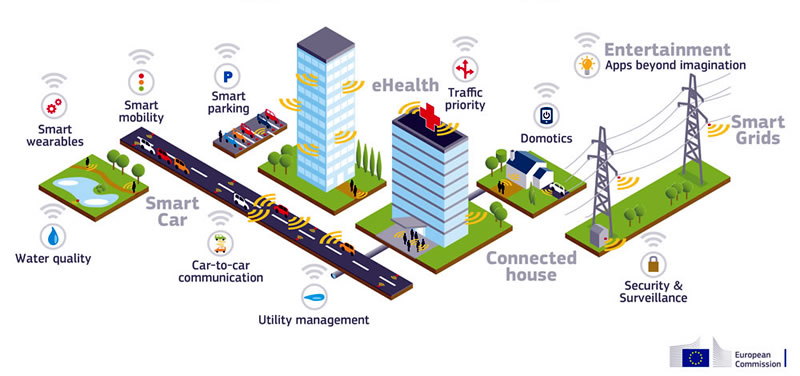
what-is-5g-euroWhat is important is “Huawei is planning to launch the first 5G pilot network with its partners in 2018. Interoperability testing is to be completed in 2019 ahead of a commercial launch in 2020. Ericsson is planning to demonstrate 5G at the Winter Olympics in South Korea (as is Samsung) and at the World Cup in Russia, both in 2018“, this sounds nice, and it actually is, but consider that the devices that need to be there are not created yet, so they are dealing with old tech that is soon no longer interesting, whilst todays needs that shows clear forward momentum thinking is not shown by either and relying on 32GB mobile devices is definitely not it. So the consumer at present is looking at buying at least 2 more mobiles in the next 5 years, so having one now that last 3 years is a massive requirement as I see it. In addition, lowering the upcoming threshold is an initial requirement. The image on that page, shown here, is the first step. The image shows two elements. In the first we see ‘smart mobility‘ and ‘smart wearables‘ in the second we see ‘domotics‘ and ‘Entertainment, apps beyond imagination‘. This gets us now back to ‘Viewpoint to a point of view‘ (at https://lawlordtobe.wordpress.com/2016/10/05/viewpoint-to-a-point-of-view). Google wasn’t just ‘on the ball‘ they are now leading the game and are the new game deciders in the field where everyone wants to play. In that presentation on Google Home they showed to be active in all four elements, and they are now leading in at least two of them. That is the part Huawei ignored. And as so called 2018 G5 partners they had the option to lead the field, they just decided not to do so. By using the initial Apple approach, the Pixel and Pixel XL offer the 128 GB solution for $150 more. Meaning that your phone could last you until 2020 and only when the 5G requirement is actually needed, the current Google solution will give you some of what 5G is supposed to offer, so you will only be upgrading the centre of the hub of your domotics, namely your mobile phone. The rest will most likely already be there, so that is why we see the shift.

So is my view tainted?
It is!

I look at a lot more elements than the consumer will, yet in all this, the consumer is already getting exposure to these elements and as such we see a level of contrasting within the consumers choice that we haven’t seen before, that elements needs to be taken into account as well. Whasun Jho who has published works regarding building Telecom markets. As he sees it and I agree we see a contrasting in the Telecom markets where we see the growth of facility based competition versus service based competition, I believe that the second is only a field of combat if your hardware isn’t up to specs to deal with the wave that will follow over the next 5 years, so in that Huawei, as I stated in the past had the option to grow the market to rule as they went with sharp competition in 2015, they now gave it away by seeking margins instead of overpowered ruling through superior options. In my view as we see where limitations were the only options, it was about competition between providers of the same or similar services (in Australia Telstra versus Optus) and by giving in, they are now losing market share that I stated is a base drop of 4.25% and could rise to 11% before Christmas, almost literally depending on the power of Google’s devices as accepted by the global consumers. In this situation, it is not a given that Google would switch to a Software As A Service path, but by offering the path on corporate whilst leaving the consumers with open and negligible costs, the image as shown implies that ‘smart’ elements and ‘domotics’ will give us Google at number one, with a massive advantage for the longest of times, that is, unless the players change their ways and right fast. Because when proven to work, customer loyalty will soon be the most important metric in this telecom shift. Samsung gambled and got hit hard, yet they are not out. One burning battery does not stop a company the size of Samsung and a lot of burning batteries makes for a fun roasting of Marshmellows (pun intended).

So here we see the use of colours. Which colour is what is not a given and does not matter, what matters is what the consumers and what the corporations need, in the next 3-4 years it will all be about what will last longer, not some hardware as a service that requires annual replacement. Ericsson shows us what happens when you are not proactive on the ball and there will be the licking of wounds for some time there, in addition, as we see the mobile iteration (Experia Z to Z5), actions that I call to be an iterative market that has no chance to survive. sweetening deals like a couple of movies has no place here as I see it, it seems like a quick fix and it is, yet in that Sony has made that mistake a few times too often and Huawei should have learned from those failures. They were all options that could have been avoided and it will hurt Huawei, yet in all this they too are not down or out. Just a little bruised as I see it. So we will see a market that will shift over the next 4-6 weeks. Yet in the end there is no certainty on how matters are impacted. What is clear is that the Telecom market will shift in a massive way, those who do not shift with that market are most likely the players that will not make it to 2019, an extreme prediction, yet will I be wrong?

Consider what the market is trying to imbue to us between 2017 and 2021/2022. As per 2018 you should only consider a device that will last that initial transition (software without the 5G speed), and the one after that will have the speed if you want to play on that level. So buying with clear common sense could save you $1000-$1800, that is for most people serious money, for those relying on a new plan with a new phone, you better remember that soon such a solution might not be that easy to get, or that cheap. The Telecom providers will remain facility based competition, yet the market we swim in is more and more becoming service based, so we need the right device that can deal with this and for telecom companies to keep on playing a ‘this will do for a year‘ isn’t thinking forward, or at least just limited short term. A game we cannot go along with and there are enough people to realise this danger, which is what is pressuring the Huawei market as I personally saw it.

There is more to all this, but a market that revolves on ‘We decide your choice‘ is not a choice, it is a limitation, something that Google is building awareness on by showing us what is possible and then offering the overkill device for a mere $150 extra, like Apple did, but Apple didn’t come with the shown benefits of actually showing us that part. As you realise that you already knew most of these elements as you YouTubed your way through the internet universe, consider the options your phone don’t allow for at present. There is no reason to suddenly update the phone at present, but you should realise that these limitations will hinder you in the future and realising what you need in three years is more and more important in today’s mobile market. It is something you only need to be aware of at present, when the shift comes you will be ready with the right phone and with the options to do it all (without getting pushed into spending $1000+ overnight), as well as the option to keep your movies, your photos, your Pokémon’s, as well as whatever the domotics apps universe brings to your mobile.


1 Comment

Filed under Finance, IT, Media, Science

Challenging fruit

There is an old saying: ‘An Apple a day, keeps the doctor away‘, which could be regarded as correct, or at least as something that is not wrong. These are essentially two statements that depending on your way of life is either more or less correct. Yet, in technology it is a lot less correct, mainly because our health does not have a chance to survive if it comes with the daily cost of $679 a day.

You see, the fruity side of mobile phones is not really an issue when we look at the IOS side of things (aka: the iPhone world), it is quite another when we look at the Android side of things. Even though this was last Wednesday’s news. There have been a few things that required digging and it has been a little bit of a chase. The article was not the first one I saw as I was watching the Google event at 04:00 (as stated in a previous blog). The article ‘Pixel is a direct challenge to Apple – and a referendum on Google‘ (at https://www.theguardian.com/technology/2016/oct/05/google-pixel-phone-market-apple-iphone), was on my mind, but so were a few other items.

The article raises a few issues, some of them are not entirely agreeable from my point of view, so let’s deal with them.

Some do get monthly security updates, but others get Android version updates sometimes years after Google releases new versions, creating so-called fragmentation that makes it harder to develop apps and services” is the first quote I have an issue with. For this I need to step back to one of my earlier smartphones. The Motorola Razr-V. Now, when I bought it I though it was an amazing phone. I still have it, it still works and it is in a drawer somewhere. When I bought it 4 years ago 1GB was ‘da bomb’. I had 4GB storage, so I was happy as can be. I had one update, which was from Ice Cream Sandwich (4.0) to Jelly Bean (4.1) at some point and still, all was fine, just a little nagging need for RAM. What happened was what always happens, we need more storage and we need more RAM. Yet it was not the only thing that was an issue. You see, this model would not support Kit Kat (4.4) and now we had ourselves a horse race because we saw more and more news regarding security flaws and the essential need to have android as updated as possible. Now we get to the issue with the quote: “sometimes years after Google releases new versions“, which is not that correct. You see, the makers of phones did not consider upgrades to the OS, for the mere reason that they prefer to sell a new phone instead of upgrading your old phone, when the phone is deep within warranty it is one thing, however after that passes, the seller tends to not care and getting the new system vetted and fitted requires resources and a serious amount of them. So Motorola came with a notice that it would not be possible to update this model beyond KitKat. Now, because it was a cheap deal and I had actually not considered that updating the Android OS would be a biggie, I ignored it, and it was just one of those few lessons you tend to learn the hard way the first time around. You see, I am an Android user for a reason. As Apple advocated a device that can do a million things, and it can call people, the Android was the opposite. It was a phone that could do a lot of additional things. With Android the phone remained the centre, not the apps (as I personally saw it). The issue is more than semantics, I felt it was a state of mind, which is why I prefer Android (whilst not hating the iPhone).

Now with my feelings regarding safety and security, I believe that it is very important never to be more than 2 versions old, so as I am on Lollipop, it is essential for me to get a new phone capable of Nougat. Those on Marshmallow should decide for themselves if they want to wait another version before getting a new phone. In light that the average functional phone is over $600, that rule becomes a lot more important, also knowing that you are buying something that will need essential replacement after 2 years makes it even more important to find the right device and especially at the right price. This is why I have been hammering on systems with 64GB storage and at least 2GB RAM (3GB preferred). The fact that the makers are withholding these devices, whilst they are available, angers me. This is because the Telecom companies love a consumer forced to upgrade on an annual basis. What they fail to realise that our budgets are not as wide as their need for coke and hookers (if we believe the NY marketing needs, so the entire greed philosophy falls away. So when I go to the shops now, I expect a Nougat device, or a Marshmallow version at high discount. When a shop offers a Sony with a 2 year old operating system at $900 (Lollipop, aka Android v5), they have obviously lost their minds! Now this is the part that matters in the case of Sony. They call it ‘The pioneering 4K smartphone‘, as well as ‘Sony’s next-generation camera technologies in collaboration with Sony’s Alpha engineers‘ and then they promote it, whilst not updating the phone with an operating system that is less than a year old? And only this month, will they come with a previous version of Android (Marshmallow, aka Android v6). Now, this falls in line with the quote from the Guardian, the issue I have is that if they had their ducks in a row, the phone would have been in the shops with Marshmallow (v6), with the option to update to Nougat (v7).

It is my suspicion that the service oriented devices have not caught onto the need to have a more generic framework oriented approach. I touched on it in my article ‘Chicks for free‘ (at https://lawlordtobe.com/2015/03/31/chicks-for-free/), where I touches on SaaS in March 2015, as well as the advantage Huawei gave to its customers by being competitive in price and hardware. They had cornered a nice chunk of market in just one year. Parts of all this were also discussed in January 2015 (https://lawlordtobe.com/2015/01/15/exploiting-mobile-users/). So the issue has been around long enough for the market to adjust, they just decided not to do that. So for Google to come with the Google Pixel (XL) makes perfect sense. Although, from my point of view, $1400 for a device that might initially not last beyond 2 years is still a hard pill to swallow. Apart from the retired groups who are out of cash and comprehension of the technology, we are now facing a growing group of people where the risk of malware exposure goes up tenfold. So the precedence to slam the mobile market is very appealing.

I do not believe that Google is the bad guy here, I believe that our comprehension of accepted support is changing. Let’s take the new Pixel. For one, the marketing was perfectly done and so far from cheap Telco page to Forbes, they are all wildly enthusiastic. A fair point of view, especially as I (from my needy point of view) found just one flaw. Now, there is a side that is not yet known, however, if Google delivers on the statement ‘Two years of OS upgrade from launch‘ as stated, meaning that your Google Pixel will support the installation of Android v9 (whatever that candy name will be, I vote for ‘Liquorice’), then the Pixel will be a steal at twice the price. Meaning that your $1400 should last you 3-4 years, twice the current expected lifespan, easily making it the only choice as an Android phone.

I have an even bigger issue with the quote “Francisco Jeronimo, market research firm IDC’s research director for European mobile devices, says: “Many people care about updates. They recognise that getting the latest update is about getting something better, unless they’ve got an old phone. But it’s about how easy it is to do. Going online and finding an update is something most will not do. If you present it as a notification, as Apple does, then most will jump on board.”“, in this I state that it is my personal believe that Francisco Jeronimo didn’t give the right ambiance to this spin. I have presented evidence that this issue has been known and was visible for the better part of 3 years. Old phone or not, the issue has been limitation of hardware and now that the players realise that the gig is up, they are likely to go into some form of blame mode, whilst their own approach should have changed years ago. The fact that brands like Oppo and Sony are selling what they call state of the art today with a 2 year old OS is just as big a joke, especially if it doesn’t come with the clear notice that an upgrade is available. If I need to give it a name, I would call it the annual update Telco requirement is pushing back and most people are willing to switch providers on a moment’s notice if needed. So Google went Fruity, looked at Apple (it has its own model of OS) and from that point of view, the power of a dedicated mobile became apparent. So now we see that for a mere $150 extra, we get a phone that is not 32GB, but 128GB. So only the dedicated silly would not get that, mainly because logic suggests that Android v8 and Android v9 will all be larger than the previous versions, as could logically be deduced. So not getting storage constraints over the next 3 years makes perfect sense, even if you have a minimal amount of apps. In this case it is not the 10 apps I have now, it is the notion that over the next 3 years I might get another 10-20 apps, as well as a few thousand pictures and knowing that storage will not be an issue, that peace of mind is very important, the moment you get hit by the limitation, it will make sense.

So as Google is challenging that fruity named competitor Apple, it needs to adjust its own model a little bit too. You see, there is a reason why corporate clients still rely on Blackberry. It is the one market Apple has not been able to penetrate, once Android does that, if will be able to shift its interests to another field of data gathering (I mean client instigated data gathering) and data encryption interactions, fields that Apple was not able to surpass Blackberry in, Google has a fair chance at changing that field, with Google now entering layer 1, they have a complete layer coverage allowing to take on the industrial strength enterprise security that Blackberry is famous for, which would give Android the push into the areas where critical security issues are the number one need.

The reality is that this would take at least one additional android upgrade before they enter that field, which have giving Apple the time, but not the engineering skills or the architecture to compete with Blackberry on that level. With this I imply that Apple by keeping to its consumer market views, it ignored a corporate side, or so has create the potential to rule the market, whether it will depends on what they do next, but they have been off to a great start.

The final quote is one that the article has dealt with already “Jeronimo says: “With the Nexus, Google attempted to bring the best device running the latest version of Android, but couldn’t give priority to one of the tier two manufacturers that were interested in making it when you have companies like Samsung and Huawei leading the market. It meant Google struggled to differentiate with its own device when its partners were already making very good devices that were good value.”“, it still requires a little extra and the element that is kept silent is the one I dealt with in ‘The smokescreen of a Smartphone War‘ (at https://lawlordtobe.com/2016/09/30/the-smokescreen-of-a-smartphone-war/), you see, making a version and then making it not an option in Australia reeks. It reeks of Telco managed collaboration, the article stipulates why I feel that way. Now that Google blows storage apart with 128GB for $150 should show those two brands and a few others too, the stupidity of their actions. Huawei had an advantage by offering the 64GB, now that is a no no, it seems that Google can make a massive change, what was once a 0.2% market has the potential to become a 10% market in the next 12 months, which would be a growth that is unheard of. A market Huawei decided not to engage and now Google has voiced it will offer options that I would have considered overkill and not essential. Google seems realise that it does not matter whether the person prefers 64GB or 128GB, by offering them 128GB at a 64GB price is a winner in everyone’s books and it shows the consumer that 32GB might be good for nana and grandpa, the rest should just go big at the additional requested fraction more. In that regard the entire model race with two price additions, one for size of screen and one for size of storage is in my view brilliant (I will give credit that Apple had this approach already).

Which leaves us with the last speculation, no matter how we see 2016, with the changes of 2017 we see that Google is entering a new innovative phase of connectivity. Android devices like Google Home, might seem like a party trick, but the reality of Android devices and the option to connect them is more than a fab, the world presentation blew me away and where it matters, your Pixel could become the hub in all this, music on that little boom box, whilst streaming the pics to your TV. For the mere giggles in me, the device (an entertainment unit), which Microsoft promised the Xbox One to be and not delivered. Google now presents and delivers an actual entertainment system whilst not promising it. It is just too funny for words.

So whatever path you take, whether IOS or Android, just make sure it delivers long term what you need, if you do that, you will remain happy with whatever choice you make and that is what truly matters in my humble opinion.


Leave a comment

Filed under IT, Media

The smokescreen of a Smartphone War

Yesterday’s news gives us ‘The secret smartphone war over the struggle for control of the user’ (at https://www.theguardian.com/technology/2016/sep/29/smartphone-war-operators-user-phone-service) held my initial interest for about 7.0 seconds. You see, it is an interesting story, but it is not the real battle that is being fought. As I personally see it, the secondary war is about the agreements that the Android phone makers seem to have with one another. That war we are kept in the dark about. In the end, the Telecom companies want you to be dependent on them, their products and their solutions. They give you some BS reasoning of ‘we weren’t offered that option‘, whilst their head office is all about containment. They only hold they have is by pushing you in a position where you need a new phone EVERY year. That is the service path we are all getting pushed into. Which is one reason why outright buy seems to be so overpriced in many cases. For the next bit we need to see GSMArena.com. There we find the following parts:

32/64 GB, 4 GB RAM
32/64 GB, 4 GB RAM
32 GB, 3 GB RAM (EVA-L19/EVA-L09)
64 GB, 4 GB RAM (EVA-L29)

You would think it is all the same, right? The last two are the same brand. I will get back to the list, but for now, what you would like to do is to check where you can get a 64GB edition, and for some that list is zero, you see, in Australian (not the only place) they are making sure that you cannot get the 64GB edition, in an age of consumerism, is that not weird? In that regard, Apple is the only one offering this, because of different reasons.

In all this, I have used my phone with a philosophy. It is a simple one and in my life of budgets an essential one. In the past, I learned the hard way early in life that chasing technology is a race that costs money and never leaves you with a true advantage, the gaming industry in the 90’s on PC were all about that. The mobile industry, like the PC industry learned this from the arms industry and they were really good students. So no matter what competitiveness they have, if they agree on a few ground rules, there will be enough space for exploitation for all of them. Now, in 2015, Huawei decided to rock the boat and as such they got a larger share than ever before, now that they are on par, they seem to go with the average lot of them. My hopes are that LG tries a same approach, which will cost Huawei et al dearly this year.

When you have been around your mobile for a little while, you will see that storage is (nearly) everything on a mobile and with marshmallow, a 32GB system will end up having about 22GB space left. There is the Android system and the mandatory apps, the amount leaves you with 10GB less. This is not a big deal you think, but over the year we will see an exponential growth of apps and they cost space too. Some people already learned this lesson with Pokémon Go and all the pics that were taken. They were realising how much space was lost. Now, we know that you can add a SD card and store pictures there, but apps must be run from the main storage and those apps are growing too. So over 2 years you would have run out of space. Meaning that you either clean up your system, or buy a mobile with more space. This you might have learned if you had an iPad or iPod. Storage was running low for some a lot faster than they bargained for.

So in this age, when the difference between 32GB and 64GB is one component which is in total a mere $32.87 more expensive, why would we even consider a 32GB system? Because at this point, the mobile warranty of 24 months could be served completely and we would not need another phone one year later! In addition, after 2 years we would have the freedom to choose a better and cheaper provider, so as I see it, neither Optus nor Telstra wants a 64GB phone in their arsenal and the only reason is that the iPhone is that size is because Apple has in general a global approach to their hardware.

Now let’s look again:

32/64 GB, 4 GB RAM – Samsung
32/64 GB, 4 GB RAM – LG
32 GB, 3 GB RAM (EVA-L19/EVA-L09) – Huawei P9
64 GB, 4 GB RAM (EVA-L29) – Huawei P9

Unless LG takes advantage of the option they have now, none of them offers the 64GB version in Australia! Is that not weird? Amazon UK offers both, and at times the 64GB is definitely more expensive, yet consider that at $100 more (for some a little more), you have peace of mind that this phone can last you 2 years without storage issues. That seems a pretty big deal to me. In addition, unless Android past Nougat (V7) grows a massive part, the user will have plenty of space to update their system, if the update would be offered. In addition, with all the other stuff we carry (photo’s music and so on), twice the size is pretty much the only way to go.

So why the mobile providers refuse their product to be on sale is just beyond me and the fact that none of them are offering a product in a place seems to be massively out of bounds. With Huawei the fact that there is a single slot and duo slot 32GB option makes even less sense to me. In my mind, this is all about control of the users, and controlling where the users go, which is a limitation on freedom devices have never offered before, so in my mind it was not with the consumers consent. The fact that Samuel Gibbs did not mention that part in their article is not as quoted “Fewer purchases mean the big smartphone players are now under pressure to extract more revenue from their existing user base, which is easier for Apple and its App Store than others reliant on Google’s Play Store, and to try to convince users that life is greener on their side of the smartphone divide“, it is to make sure that continuity prevails, to some extent for the smartphone makers, to the larger extent to mobile providers to keep them in their not seeking another providers place!

In addition the quote “At the same time, the mobile phone operators are in a similar competition. Switching between the major phone networks has always been an issue, whether it’s over price, customer service or the latest handset“, more important it is over bandwidth and facilitation, the more limits the hardware has, the less issues of competition the provider needs to deal with. So is Samuel Gibbs informing you on some ‘secret war’ or is he trying to keep your sight away from the options that matter? The fact that phone limitations is not part of his view (which could be because the UK offers both models) is equally disturbing that he did not look at this from a global point of view, when you are not made aware of what is by me expected and therefore implied is the limitation of hardware offered is as I see it, part of a secret war that they require you not to be aware of. If that is done intentionally, what do you think is in play?

So as the Samsung Note 7 is now an ISIS tool (when you install the 10 second countdown app) and only LG remains to go public with their new model, they now have an option to capture a much larger share of the audience as several of the participating parties refused to consider the consumers’ needs and seems to cater to the telecom request of limitation. LG has an option to grow much stronger in this market than ever before. Apple as IOS has a different situation and as seen on many fronts they have created their own walls of disturbance, so LG could even go after that lot, but we must respect that there is a huge offset between IOS and Android and as such, people are at times less willing to switch there. For now the latest rumours are that the V20 will start the pre-orders this Sunday in the US and European markets will be getting them, yet there is at present no confirmation for both the UK and Australia. So we will have to see about that part too.

The article had more. So consider my words and now see this quote: “Bibby says: “Imitation is the sincerest form of flattery. Flexibility like this is just the next stage of innovation so we’re not surprised to see others adopting it. Manufacturers are trying to ensure that more of their own handsets are sold in the market. They’re trying to clearly compete with each other.”” I disagree with Nina Bibby, marketing and consumer director for O2. The quote is not untrue, but incorrect. It is the presentation of what they want the issue to be, because is sets our mind at rest. I believe that the more correct quote is “They’re trying to clearly compete with each other within the agreed limits of the presented options“, which is not entirely the same! In that same view, the limitations due to the telecom agreements are equally in question. The fact that none offered the complete spectrum is just as much of a worry. Because it is like a corporation trying to make sure that its employees can never truly become independent, because that would be too dangerous for their own continuation. The second part in all this is the entire upgrade service program. It creates brand dependency, which is not essentially a bad thing, but guess what! I reckon that soon thereafter the 64GB option will come and there will be a churn for 12 and 24 months. At that point, the telecom providers would want a phone to last as long as possible. It could be in different ways. For example after 12 months 65% off and a $1 upgrade after 24 months. This is just speculation, so this is not a given, yet overall not that far-fetched.

The most interesting quote is at the end “For now, the battle for control of the phone in your hand is happening behind closed doors. Soon we’ll begin to see the phone-as-a-service idea pushed by one of the big manufacturers, but only once the operators are no longer crucial to sales“. The first part is that not all of the closed doors is about the phone, bandwidth has been a forever war between iiNet, Optus and Telstra in Australia, and the phone-as-a-service is not all in the hands of the manufacturers, that will come soon enough (in one case it already is) in hands of the Telecom companies, because that is a direct factor for customer loyalty, who does not see the $45 a month phone as the margin, it is the $90 a month subscription where their margin is and that part can be set to non-taxation a lot faster too. The phone is merely a hardware write-off, increasing their ROI.

So when you consider your new phone do not be fooled by the SD slot, wonder why the full version is out nearly everywhere else, except Australia? For Australians, consider one nice issue, the Kiwi’s do get the 64GB edition several stores have it available to order. So, do you feel special now, of just used by both the handset sales people and your telecom provider? More important, what other issues did that secret war of smart phones not inform you about? Perhaps you haven’t seen the implications of not having a choice in certain cases. People have been so busy bashing iPhone’s Apple that they forget that Android phones have their own collection of imposed limitations for the consumer.


1 Comment

Filed under Finance, IT, Media

The Taxing Delicious

Taxing delicious is a new sweet tasting Apple, even sweeter than the golden Delicious, and it is to be regarded as healthy for body, mind and government. Yes, in this case it is not a new Irish Cider (which would be a nice idea too), this is about a company getting a bill. You see, the funny part of it was that if there had been no EU, Apple would have been 13 billion wealthier. How doesn’t that beat the odds?

These are some of the thoughts rising within me again as I read ‘Apple tax ruling must be overturned, says US business group‘ (at https://www.theguardian.com/business/2016/sep/16/apple-tax-ruling-must-be-overturned-says-us-business-group).

As I see it, if it is such an issue, why not do an appeal? You see, this entire issue is as convoluted as it is ever likely to get. When I see ‘Ireland Doesn’t Want Apple’s Back Taxes, but the Irish Aren’t So Sure‘ in the New York Times (at http://www.nytimes.com/2016/09/12/business/international/ireland-doesnt-want-apples-back-taxes-but-the-irish-arent-so-sure.html), my initial response to Enda Kenny would be “Are you out of your bloody mind?” Now, let’s be partially fair. There is a method to the governments madness, yet even as giving in to big business might seem appealing, but the US is changing its taxation parameters (as well as tax accountability) and after the elections there is no way to tell how the US governments hats will be pointing, so getting what you can now is not the worst idea. In addition, when Apple et al will make the jump away and to other places, they will leave you with buildings that remain empty and will not have been paid off, so you will have a billion in real estate, whilst not having any return on investment, just empty buildings wasting away. That situation is not as unimaginative or as surreal as you might think. The idea that a government is appealing against a tax bill on behalf of a Forbes 500 company is entertaining, upsetting and obscene all at the same time, but that is sometimes how the cookie crumbles.

What is interesting in all this is how the EU courts will act, you see, if they give in now, it should be regarded as the utter uselessness of that court to begin with. It gives weight that not being part of that very expensive club is indeed the way to go, which will now give weight that Brexit was not a bad move and it will in addition fuel Frexit too. All that over a mere 13 billion invoice. Less than 5% of the costs of Greece, which fuelled Brexit to begin with. This is at the heart of the matter of what the Americans just cannot comprehend. They just received the massive blowback on the lesson that you cannot win every fight and that Economic Status Quo is an illusion that will collapse upon those believing in it.

So as we see the idiotic roundtable threaten those European leaders “In an open letter to the leaders of the 28 European Union countries, the Business Roundtable group defended Apple over its tax dispute with the European commission” and “US businesses have warned European leaders they risk a “grievous self-inflicted wound” unless they overturn Brussels’ demand that Apple pay the Irish government €13bn (£11.4bn)“, I just wonder if they even considered the stupidity of their actions. On the other hand, should those leaders cave, how stupid are the European elected officials to begin with? So as we wonder whether Randall L. Stephenson has looked into the long term issues of his act, when we see that these actions drive Frexit and possibly even Italy’s act on a referendum (although the major influences would be Brexit and Frexit), will Randall respond with a ‘this is much more complex and should not have been pushed by our, what we regard to be a righteous act‘, or will we see a spokesperson state ‘Our Chairman is currently unavailable and is taking his personal time teaching the Youth how to do a proper sheepshank‘? I will let you decide, but consider that tax accountability has been an issue for over a decade and now we finally see an actual result against a large corporation we see people backing down? Perhaps they thought it would never get that far? Just like Brexit was never going to be a reality!

Yet the Irish Times did not remain quiet and less than 24 hours ago reported (at http://www.irishtimes.com/business/technology/apple-fined-in-japan-for-under-reporting-earnings-sent-to-ireland-1.2793469), ‘Apple fined in Japan for under-reporting earnings sent to Ireland‘. So when we read “The Tokyo Regional Taxation Bureau determined that the unit, which sends part of its profits earned from fees paid by subscribers in Japan to another Apple unit in Ireland to pay for software licensing, had not been paying a withholding tax on those earnings in Japan, according to broadcaster NHK“, I just wonder who the Tax Auditor was here.

Now I am not out to make Apple the bad guy, even though they screwed me over twice! What is important is that through all the presentations and all the boasting and ego based actions, there are now 4 groups in play all trying to get Brussels to back down on a legal verdict. We need to wait the appeal on this, yet should this remain and if the US makes noise we will have clear evidence that the EU is no longer something with validity, even stronger, these events are clear signals that the TTIP is an even worse idea than initially thought of in opposition. The one sidedness aside, the fact that American business has basically become the corporate ‘bully’, we need to reassess the situation and remain clear on where our priorities are. I personally remain with the belief as I always have that the Commonwealth nations need to stick together. In these times we now see the Democratic Party under leadership of President Obama do the following “The Obama administration on Thursday took action to limit the use of foreign tax credits by American multinational companies to reduce their U.S. tax bills, a move that followed an EU order that Apple pay back taxes to Ireland“, which I think is not a bad idea. You see, Apple et al might claim how they are so investing everywhere, but that is only done (as I personally see it) to avoid paying tax in America. It is one of the massive reasons why America is so deep in debt (apart from their impossibility to manage a budget) and something has to give. If those tax dollars are used to lower that debt then I would state: “Barack, you legend you, well done!“, because an America with low debt (read: no debt), would be again the superpower it once was and currently pretends to be.

In the end, nations that have a minimal debt, these nations get to decide for themselves, not having their actions overruled by financial institutions or Large Corporation, or by Randall L. Stephenson for that matter. Yes, we can see that those moves will have impact all over Europe and not in a nice way, but that is part of the game. You cannot have it both ways that was never a reality to begin with. Now they only need to fix the holes that Mario Draghi has in his hands and we are possibly perhaps on route to get something sorted.

Yet there is one part we need to get back to and that is the verdict. You see, what is in play here is the statement “an agreement allowing Apple to pay a maximum tax rate of just 1%. In 2014, the tech firm paid tax at 0.005%. The usual rate of corporation tax in Ireland is 12.5%“, this implies that Apple didn’t just get preferential treatment, all the other players were discriminated against. When we see the parts we had already known for a long time, the fact that “Ireland’s tax arrangements with Apple between 1991 and 2015 had allowed the US company to attribute sales to a “head office” that only existed on paper and could not have generated such profits“, which was a given and the result we saw on a global scale “Apple avoided tax on almost all the profit generated from its multibillion-euro sales of iPhones and other products across the EU’s single market. It booked the profits in Ireland rather than the country in which the product was sold“, gives way that a single market is perhaps not the best solution for all but one nation and in addition to this we must realise that the solution I mentioned 5 years ago to set the tax laws that taxation should be set into the nation of the buying consumers physical location could have avoided this and many other issues. A simple taxation change that made all the difference, yet it seems that no one in legislation in those nations as well as those political players ever considered changing that simple law that could have made all the difference.

You see, as the Guardian by-line offers, this case could have another escalation soon enough “Charlie Harrington, 53, a paramedic in Cork, expressed frustration that the Irish government penalized small taxpayers but seemed ready to protect Apple“, which is exactly how millions feel in both France and Italy. If this tax case caves and Apple ends up not being due this invoice, the jump to anti-EU sentiments will go up massively and very fast so. At that point President Obama will only have himself to thank for the mess he started to create when he went 180 degrees on the corporate tax issues discussed in the ‘The Hague Summit of 2013’. That was the first step that could have avoided a few things, this case being one of them.

Cause and Effect

The question becomes ‘What will happen now?’ This is something not easily answered. At present Apple has a few other issues knocking at its door and the iPhone 7 is one of them. The population at large is less money blessed, so paying $1295 for a new phone that according to Forbes is “Purchasing the iPhone 7 this morning from my local Apple Store I found a device that is remarkably similar to last year’s iPhone 6S and the iPhone 6 from 2014. The external design cues remain, the chips inside are faster, and iOS 10 is more polished but is fundamentally the same operating system. Nothing ‘feels’ news even though the package is professional and projects a revolution that is hard to find“, this is at the heart of the matter. Trying to create waves by limiting the system, whilst overall the system is still the same is an issue and at nearly $1300 a very expensive one. That whilst Android competitors are coming into the field with comparable devices, including a headphone jack at 50%-60% of the price of the iPhone 7 and the world is starting to consider the non-IOS alternative. What Apple should fear is not just the market they are losing, the dangers that people could, in regard to the tax pressures they have and the pressure that Apple seems to be able to avoid, is one that could make them feel frustrated and vindictive. The idea that a person could think ‘If the need not pay taxation, they do not need my business either is not that far a stretch‘. People are starting to see the ethical imbalance that large corporations have impressed upon nations and in Europe where the quality of life is not that great at present, seeking the much cheaper alternative that Huawei and LG are offering is one worth considering. That could bring considerable consequences for Apple soon enough. Now I am not stating that the iPhone 7 will be a flop, but for Apple in this stage, should they lose even as little as a 2% market share, the consequence for apple will be intense to state the least. In addition, the fact that the iPad has remained a success for so long could equally be the next problem child for Apple. In that regard releasing the iPad Pro was a really good idea, yet the tablet contenders are starting to realise what it takes to be a contender and if that knowledge is applied properly, there too non-IOS devices (read: android) could start to make a killing and as such undermine that market Apple has at present. The origin is not the device makers, but Google. As Google has been pushing ‘the year of mobile’ for two years, the shift of usage is also growing. There is a growing visibility that at times the mobile screen does not cut it and it gives more and more opportunity to both Phablet and Tablet. These are all examples showing quite clearly that there is no status quo to rely on and the temporary nature of devices shows that Apple needs to really push forward in an innovative way, preferably before the makers of tablets realise that an affordable 128 GB version of an Android tablet is every bit as appealing as the iPad Pro, especially when the Android version could be a lot less than the IOS edition. With Android having its own set of quality games, Apple has more to lose than they are willing to admit to and time is slowly running out for their streak of ignorance to continue. However, it is important to note that Apple has been pretty super innovative with the iPad pro, so there is still a gap to overcome for the competitors. In that regard it is equally interesting that the Android device market have ignored that side of the consumer’s need (read: desire). In all this, it was about taxation and not on markets. Yet one is linked to the other, mainly because if there is no market there is in equal measure no taxable revenue, which gets us to the final part. You see, I have written about these issues before in one form or another and now we see that the Wall Street Journal is finally waking up to this (at http://www.wsj.com/articles/lew-is-right-on-eu-tax-grab-but-lacks-credibility-1473962171), when we read “The Obama administration has had 92 months to tackle corporate tax reform. Now that Europe is making a grab for taxes on profits held by U.S. companies overseas, President Obama is ready to use his last few months in office to address tax issues that were ignored or made worse under his watch“, my response is that neither was done, as stated in earlier blogs in April 2016, when I wrote ‘Ignoranus Totalicus‘ (at https://lawlordtobe.com/2016/04/24/ignoranus-totalicus), he refused to act (as voiced by “Senior officials in Washington have made it known“), so the non-actions are now back firing as event are now escalated. Another iteration of status quo.

What now?

This now all related to the issue at hand. IT corporations decided to maximise their profit by a consumer iterative annual approach of products. The IT market in the US nearly collapsed as it allowed for what was once regarded as a Taiwan Clone (a cheap alternative) to a quality A-brand to catch up. This is the problem with iterative thinking, when you are not in a niche market like Northrop Grumman (who at one stage actually there software patches ‘Iteration version’ I believe), you allow the market to catch up with you. ASUS caught up so and soon thereafter surpassed the original market owners. This lesson was not learned and the Telecom market decided that the profit was good in this way. So, please feel free to correct me. What happened to Ericsson and Nokia? Apple came and overwhelmed everyone and instead of truly remaining innovative, they started to largely iterate their device and called it innovation, now that LG, Samsung and Huawei have caught on and pretty much caught up, they are now offering equal, if not better options at lower prices. So how long will it take Apple to learn that status quo is merely an illusion? I reckon will see that revelation close after Christmas, after the annual sales are gone (and they will be improbable but not impossible a bit disappointing this year).

I reckon we will know in about 15-19 weeks!

Leave a comment

Filed under Finance, IT, Media, Politics, Science

Did UKIP get it right?

That is a question that is slowly growing within the minds of Britons and non-Britons alike. Some will be in denial over it all, some will ignore their inner voice and some will ponder it. You see, once the banter and the mudslinging stops and people are sitting down thinking over a year in political waves, we are slowly getting the aftermath news and suddenly things are a lot less gloomy. Bloomberg gives us “There’s dwindling talk of a recession caused by the vote the leave the European Union, and British politicians are wondering if a “hard Brexit” option –rapid withdrawal from Europe without a new trade agreement – might be feasible. The answer is no. Such views rest upon bad economic reasoning and the cost of Brexit remains high, albeit mostly invisible for the time being“, is part of the news. You see, the scaremongers are now out of the view and the negative impacts, the ones we knew about are showing to be less negative than the scaremongers proclaimed. I agree and always did agree that the cost would be high. Mark Carney, Governor of the Bank of England had stated it, and in addition stated that there were elements that could not be forecasted. Which is also a truth. They are the invisible costs that will come and come again. The issue in my mind has always been, will it in the end be worth it (are the costs not unaffordable high) and I leaned more and more towards the Yes side!

You see, one of the main reasons for leaning towards Brexit was Mario Draghi. The trillion plus stimulus plans he had were too unfounded. Japan and the US are showing that there had been no clear increase whilst we hear opposite claims. The issue is actually brought to light by Bloomberg last week (at http://www.bloomberg.com/news/videos/2016-09-08/ecb-s-mario-draghi-downplays-more-stimulus), where we hear at 00:39 that there is an impact on the markets, but no real impact on the economy, which was my issue from the start. Politicians casually mixing both up in their speeches were playing, as I see it a flim-flam artist dictionary game, trying to make us think it is one and the same, yet they all know that it is not. So no real impact yet will over a trillion deeper in debt, only those on the financial markets, only some of them got a big payday out of all of it, the rest just has to assist in paying off the invoice. It is one of the pillars UKIP had!

Now we see even more issues, especially when we see additional issues in City A.M. (at http://www.cityam.com/249335/christine-lagarde-and-mario-draghi-call-politicians-do-more), with the quote “Christine Lagarde, head of the International Monetary Fund (IMF) and Mario Draghi, president of the European Central Bank (ECB) said governments and institutions needed to make sure their policies did not leave the poorest members of society behind, and called for structural reforms to help share the spoils of economic growth“, the failure of the European Community laid bare! You see, the people on EEC incomes have been meeting and not getting anywhere for almost 15 years now! The fact that tax laws and Corporate laws required revision even before 2004 as a requirement and after 2004 as a given is shown that none of this has been adequately done. The fact that the US played its cards in the Summit in the Netherlands in 2013, we all knew how that ended, so as we see that some are now crying cockroach, whilst littering food all over the floor only have themselves to thank for this situation. This all reflects back on the initial issue UKIP gave, ‘let’s make Britain about the British’. This is not racism, this is nationalism (read: nationalistic pride). An issue that neither Christine Lagarde nor Mario Draghi could resolve as they have been setting a neutral pose in aid of large corporations for far too long.

The next issue is the economic plan B that is now all over the news. The powerful monetary tool (TLTRO) that at 1:37 comes with the quote “that nobody has really fully understood or analysed“, and that is the plan B they are now grasping for!

TLTRO?

It is not a cereal or breakfast solution. It is a Targeted Long-Term Refinancing Operation. The ECB states “provide financing to credit institutions for periods of up to four years. They offer long-term funding at attractive conditions to banks in order to further ease private sector credit conditions and stimulate bank lending to the real economy“, that sounds nice on paper, but if we know that the impact is not understood, has never been analysed to the effect it is, this all whilst we know that taxation laws are failing and corporate laws are not up to scrap, the ECB quote could be translated to “provide financing to credit institutions for periods of up to four years. They offer a refinanced the current outstanding debts to banks, guaranteeing large bonuses by resetting bad debts and revitalising the conditions of what were supposed to be written off debts, giving a false incentive to a dangerous presented economy at present“, you see, I am almost stating the same whilst the intent completely changes, the markets are now getting a boost via the other side. This is a reality we could face!

You see, the view is given with “All the new operations will have a four-year maturity, with the possibility of repayment after two years” (at https://www.ecb.europa.eu/press/pr/date/2016/html/pr160310_1.en.html), yet like the US, Greece and Japan, it is almost a given (speculation from my side) that these maturities will be paid with new debts. When we see the quote “Counterparties will be able to repay the amounts borrowed under TLTRO II at a quarterly frequency starting two years from the settlement of each operation. Counterparties will not be subject to mandatory early repayments” gives way to the thought that it is entirely possible that when the debts mature, they could be replaced be a new debt. Giving weight to the dangers. The fact that the option ‘not subject to early repayments’ is clearly included gives ample weight to the solution, whilst not preventing additional debts from this rephrased stimulus. In the end, the economy will not prosper, the rise of the debt will. Whilst under the debts the UK already is, these arrangements are as I see it too dangerous, all this as the increase of debts only give rise and power to non-governmental institutions to grow their influence via corporations over nations. One of the better players (Natixis), had this quote “Natixis Asset Management ranks among the leading European asset managers with €328.6 billion in assets under management” (source at present intentionally omitted), with the TLTRO in play, depending on the rules of the game (which were not available to me at present), it is entirely possible that once really in play, banks can indirectly refinance risky debts in additional loans via the applicant and as such get themselves a boost. It could potentially allow Natixis to grow its asset management part up to 20%. The ECB states (at https://www.ecb.europa.eu/mopo/implement/omo/tltro/html/index.en.html) “The TLTROs are targeted operations, as the amount that banks can borrow is linked to their loans to non-financial corporations and households“, so basically companies in hardship can get relief, whilst the banks will still get their cut (aka administration and processing fee). Consider that Wealth Management is many things and Estate planning is one, now consider that Natixis has Credit and counterparty risks amounting in excess to 295 billion euro’s. Now there is a Draghi solution, one that no one seems to have ‘analysed’ that allows for solutions to non-financial corporations. Natixis is that, but their clients are not, and they can apply for the shifted funds, offsetting their loans, paying of the loans towards Natixis, who now have a massive amount of freed up cash that they can now pour into all kinds of solutions and endeavours. So do you still think that my view of 20% is oversimplified? And in 4 years? Well at that point, when things go south, Natixis and parties alike can jump in and possibly help out, ‘but at a price’ (which is fair enough).

This now reflects back to UKIP and Brexit!

The Guardian had an opinion piece (at https://www.theguardian.com/commentisfree/2014/sep/14/ttip-deal-british-sovereignty-cameron-ukip-treaty), that gives us the following, remember this is September 2014! “If you are worried about the power of corporations over our democracy, be very afraid: ISDS in effect grants multinationals the same legal position as a nation-state itself, and allows them to sue sovereign governments in so-called arbitration tribunals on the grounds that their profits are threatened by government policies. Is this scaremongering, as TTIP supporters claim?” So far there have been many voices who seem to be over the moon that the TTIP is now a failure and that the issues within the EU would have been far more reaching that many players were willing to admit to before the signing. Politico.eu reported “U.S. diplomats are sketching out a last-ditch plan to salvage core sections of the EU’s moribund trade deal with Washington“, that with the added “U.S. and Italian officials are now weighing the option of a “Step 1” deal to lock in elements that can be finalized by December, possibly including joint testing regimes and mutually agreed upon standards for cars, pharmaceuticals and medical devices“. It is clear that the US want to lock in Pharmaceuticals and cars, yet how is such a niche nothing more than a path trying to ditch the title ‘total loser government’ regarding the current administration. In addition “The idea has sparked immediate scepticism in the European Commission and in some EU member countries, which argue that any form of a downgraded deal will be very hard to sell politically, particularly after French Trade Minister Matthias Fekl and German Economy Minister Sigmar Gabriel turned hostile on the negotiations” gives way that BMW, Mercedes, Bayer Pharmaceuticals, Peugeot, Citroen and Sanofi are none too pleased with such a one sided piece of paper. The idea that such set benefits would be allotted at this point gives even more weight to some of the UKIP statements in the past.

If 2 out of the many projection come true, you are not suddenly a better prognosticator, mainly because that title is reserved for the likes of Punxsutawney Phil, Queen Charlotte and Shubenacadie Sam. Let’s face it, it is the title worthy of a groundhog! But some of these steps were clearly seen, because this is where everything was headed, the more forward you look, the easier the prediction could come true is not wrong, but only if you are travelling on a straight road. A road that corporate greed depends on I might say!

In my view, there is not enough to state that UKIP got it right, yet there are also enough facts and questions in play that UKIP did not get it wrong. We might listen those who keep on shouting that Brexit was wrong and see them as the people trying to reinvent the vote, but overall people are starting to realise that the US (read Wall Street) has been trying to give people a bad deal to benefit their own greed. The fact that this is going on at this very minute is equally a worry. This is on both sides of the isle, yet we can understand that Labour needs to clean house and they have decided on the method of accidentally leaking names. How will that solve anything? If Labour was on the ball, than they would steering towards real economic improvements, not bickering minors trying to decide who should be the number two, and soon thereafter remove the number one (read: allegedly attempt to). Actions that are totally counterproductive as the Conservatives are governing until the next general elections. It seems like such a waste of energy to me.

Now we see a new escalation. It seems (at http://www.ibtimes.co.uk/jean-claude-juncker-proposes-new-european-military-hq-worj-towards-eu-army-1581391). So the quote “The president of the European Commission Jean-Claude Juncker has called for a European Union military headquarters to work towards an EU-controlled army. Juncker made the proposals during his State of the Union address to MEPs in Strasbourg on Wednesday (14 September)“, which automatically makes me wonder how this correlates with Nazi Germany as this was how they resolves their bad economic times. It is a harsh history lesson to learn, but in that I am actually less afraid for a ‘new’ Nazi Europe. My issue is that many nations have their Cyber plan not in hand and any actions here give rise to the dangers that this would open up data for the Chinese Cyber groups to learn a lot more than they bargained for. You see, no matter how much denial we see, the facts are simple, Ren Zhengfei is the Huawei CEO and a former officer for the PLA. Now this does not mean that he is now still committed to the PLA, yet Huawei does business with the Chinese government and as such, they have all the specs and as such, they have all the weaknesses  of these devices too, meaning that governments all over Europe are in a possible place of Cyber Scrutiny. This does not mean that I am willing to just blindly accept the NSA report, but ties like that, when you are on these levels talking to the ruling members of Chinese government, you need to be networking on a massive scale and if both the Chinese military and Chinese Intelligence (MSS) gives you the thumbs up, you have been playing the game they want you to play, plain and simple. By the way, this is not a rant, or a side step into the matter, this is a direct factual response. Nigel Farage addressed the EU on an EU Army opposing it on valid points, and he got a few more hands clapping than his opponents are comfortable with. Now this was about opposition of the EU army as a whole, but underneath is the need for any military organisation to be secure and have systems in place, systems that could be compromised. In this Huawei could validly give the same argument that all Cisco Systems are compromised by the CIA and NSA. As we cannot prove either side, or perhaps even both sides, how to proceed? Both sides would be fair enough and it only makes a case strong enough to not proceed with any EU Army, which is no solution to any existing threat, will cost massive amounts of money (and that just the initial infrastructure) and with the current upcoming changes to the EC as a whole. Especially as Marine Le Pen has vowed to hold the French referendum if she is elected, this whilst several European magazines are now stating that France can no longer avoid Frexit (at https://www.letemps.ch/economie/2016/09/12/france-ne-pourra-eviter-frexit), which I stated was a growing realistic danger if Brexit would commence, in addition, Italy is seeding its own departure later this year, but no given certainty exists at present.

All these parts I gave visibility to almost 2 years ago, the press still largely in denial and additional players are now coming out to (as I personally see it) fill their pockets as fast as possible because when this comes to town and the referendums do fall, certain people will have to give account of their actions. The fact will remain that the Credit Card that Mario Draghi used will be spread over several nations, most of them with no option to get into deeper debt. So they have this to look forward to. In Italy there seems to be a plus side, as the larger players are now looking towards the option of as referendum, the act as such seems to be taking the wind out of the sails of Matteo Salvini, head of the far-right Lega Nord, which is regarded as a relief in many European nations. They seem to regard Matteo Salvini the same way that they regard the French Newspaper Minute, too far to the right and not really that readable. I cannot confirm that (as my French does not surpass the ability to read a menu), but I understand the sentiment as there have been Dutch papers on the other side of the political isle receiving similar accusations.

In the end Europe is about to take economic steps with large implications, the fact that they are trying to push it through regardless of whatever consideration it required, which makes me worried on the fact that the impact on the European populations have been ignored for too long. The weird thing is that any action should have been in support of the European population and their needs, giving weight to more than one statement from the side of Nigel Farage.

I would suggest you ponder those facts before blindly moving into the Bremain field in the near future, because there are several issues that no one can answer and they come with obscenely high price tags!


Leave a comment

Filed under Finance, Law, Media, Politics

Brilliance or Donkey mode?

The Guardian gives us two stories. One is of course all about the iPhone 7. At https://www.theguardian.com/technology/2016/sep/07/apple-iphone-no-headphone-jack-second-generation-watch we see the revolution of another iteration by Apple. The interesting side is that the head jack is no more, so no headset plugging into your phone. The quote “one that tech pundits predict could have consumers staying away in droves” is one that I find debatable. You see, the article goes on (via two sides) on how head jacks need to remain. Yet Apple decided on a model that is more waterproof. A statement that I find slightly debatable as there is still a lightning connector and speaker holes. Yet that could be an error on my side. What is striking is the quote “Apple announced another new product on Wednesday – AirPods, a pair of barely-larger-than-earplugs headphones that Schiller said use a new kind of chip to deliver a “magical experience” without the usual hassle of Bluetooth pairing and un-pairing“, which means a new era of listening technology. I will not go deeper into that side, especially as I have no idea on the Airpods, yet one side unmentioned is that these ways of transmitting ‘audio’ means that the battery will see a new level of draining. Whether this is better or worse than the head jack is one I can only speculate on. What is a given is that these moves are usually paired with the gravitas of cajones that tends to change the technological battlefield by a fair bit, so it might not be a donkey idea but a brilliant one. Time will tell which one it is. So far Apple remained quiet on the field of true technical innovation so the bar is open on the gamble, but the fallout could be one worth watching.

The other side gives us the consoles. The lacking brilliance of Sony has been evident for a little while and now that they have released batch 1 of the PlayStation Pro for this November, pre-orders are off the hook. Yet in my view, this is more definitely going to be the Donkey idea for a long time. Apart from the price which is not too bad, the massive issue now is that they are offering 4K gaming. Now apart from it not actually being 4K gaming (for now), those in charge of this were blatantly lacking brainpower when setting together this package. You see 1TB just does not cut it. Consider 4K.com (at http://4k.com/news/unsexy-hard-drive-technology-needs-to-keep-up-with-4k-4872/) gives us “Given that a single minute of full ultra HD 4K video in native resolution takes up a full 2 GB of storage memory, large amounts of drive space become more crucial than ever before“. Now, games and movies are not the same, but consider that cut scenes are still going to be large and the average game has at least 30 minutes of cut scenes. That’s 60GB, which exceeds the Blu-Ray disc, which is not an issue for 4K Blu-ray’s, but how about your storage? What happens when you run out of space? I warned about this with the initial PS4 and 500 GB, so I updated to 2TB immediately. Now, that does not worry me, because I am not the average player, yet let’s not forget that after 10 games, the 500 GB edition had run out of space, what do you think 4K gaming will do with a 1TB drive? To equip that system with anything less than 2TB was sheer stupidity!

Even Microsoft saw that one coming and gave all these new versions a 2TB drive. It is likely that the Scorpion will have more than 2TB, but we will have to see. So not only did Sony drop the ball on hardware, they did it TWICE in a row, the same mistake. It seems that someone there is not thinking things through!

By the way, do not take my word for it, Sony themselves announced the new Blu-ray standard with a 1TB disc in March 2014, so I reckon that they are creating their own slippery slope all by themselves. Microsoft only needs to release the original Mass Effect trilogy on 4K within 6 months of releasing Andromeda and Sony could lose a massive stake in the gaming population. EA has clearly said that this would not happen, yet Microsoft has an option it did not have ever before, it has a title both gaming sides revere and desire. If that becomes a XB1 exclusive, Sony would end up crying a river of losses.


Still there is now a given we have not seen until these new systems, Sony botched the ball a second time and this time, the Sony fans might not be as forgiving as before, not only because of the initial PS4 launch fiasco (most day one games were not ready and the big title was delayed by well over 40 weeks). The issues that some faced with HD space, an issue most had not experienced on the PS3 gave more stress than people bargained for and the clarity of drive space is a lot more obvious on the PSPro than it was on the PS4.

So even if we see Sony to be in the ‘not so bright mode’, where should we see Apple? As stated before, I am not certain as there is no way to expect how the people will react to the new requirement of Airpods, the fact that the phone will now be waterproof could be the quality band aid the iPhone fans will accept as a trade-off. However, at $229 they are not the cheapest solution, so that also counts against them. Anyway, with the lightning adapter the old solution remains operational and if that cable is included with the iPhone 7 (yea right!) Phone owners would not have anything to complain about. Time will tell how Apple is seen. I think that they took a bold step in another direction and that might not be a bad thing.

Another part I found debatable was the quote Julie Ask, VP and principal analyst at Forrester Research made. When we see “They’re not trying to win the race to the bottom like [competitors] Samsung or Huawei; they tend to go after the middle-class consumer that can afford the products“, we have to wonder what her data proves. Not unlike the claims she made on Bloomberg, there are a few sides that are actively ignored. For one, Huawei is NOT a bottom competitor (the quote was very peculiarly phrased), Huawei has shown to be an Android top runner and has been giving a stronger bang for the buck than the iPhone has been giving for the longest of time. My issue with Huawei is not the quality of hardware, but the limiting of availability of the higher models is an issue, one that seems to be due through agreements with the telecom companies, which is a big no no in my view. Which now also reflects back to the iPhone, which is now standard have larger sized phones, making Huawei trail. This is what the show from Apple revealed. Now for the fun part, I mentioned on my blog on July 28th 2016 how stupid this move was in the article ‘What we waste away‘ (at https://lawlordtobe.com/2016/07/28/what-we-waste-away/), so less than 8 weeks later I am proven correct in more than one way. So not only is Huawei not offering a decent storage driven system, it is likely to lose a lot of market share as the 32GB Huawei P9 is pretty much the same price as the iPhone 7 128 GB Jet Black. How did Huawei not see this coming? Let’s not forget that (rumour) their CEO would be able to ask PLA Unit 61398 (Chinese Cyber warfare) what Apple was planning to do, nobody in charge there considered calling the honourable Ren Zhengfei informing him on the actions that ‘Imperialistic America’ was planning (read: Apple CEO)?

Brilliance can be found in all levels of technology, yet many of the players here seem to have been asleep these last 8 weeks.

Anybody for pancakes?


Leave a comment

Filed under IT, Media, Military

What we waste away

This is an issue that bugged me for a little while. Even though it started small, the near exponential growth of waste is now looking towards me, looking at me as I look into an abyss of squandered opportunity. You see, this is in part the Monday morning quarterback speaking, whilst in that same view I should hold a mirror to my own choices. Just like you should do.

The idea for this article started small, it started when I realised that Huawei was willing to sacrifice its Australian market share by tweaking the skewing profits they have. They are now making short-sighted decisions and as they do that, they stand to lose close to 10% of the Australian market share. So why waste that? Let’s not forget that before the P7 Huawei was almost synonymous with ‘whazzat?’ and now after the P7, which was and still is awesome, after a less appreciated P8, Huawei is close to being a global household name. Now with the Nexus being a little outdated (Nexus 6P), the 9P could have been ready to gain a decent market share, hurting both the iPhone to a lesser degree and the Samsung phones to a larger degrees. So what does Huawei do? They decide to not release the 64 GB in Australia. Now until recently, we could have expected that, yet when you consider the exponential demand for mobile games that Pokémon GO is pushing, the fact that we now see ‘Apple plans to invest in augmented reality following success of Pokémon Go‘ (at https://www.theguardian.com/technology/2016/jul/26/apple-earnings-pokemon-go-augmented-reality-steve-cook), whilst the players are not thinking their decisions through could be regarded as a larger (read: massive) act of wasting away opportunity.

So why is this a waste?

Until Pokémon GO, the need for storage had not been visible to the degree we thought we needed. Even I did not see this coming and I have been connected to games and gaming in excess of 30 years. Forbes (at http://www.forbes.com/sites/bensin/2016/07/25/these-photos-show-how-crazy-the-pokemon-go-craze-is-in-hong-kong) gives us a clear view with the quote “special phone plans from local companies offering unlimited data usage just for the game“, which shows the amount of users, but not the need for storage. The fact that millions of people are now getting dozens of screenshots every day (more than before) of every Pokémon they caught and even more interesting where it was caught. Of course the average teenager is also feeding the image streams on how they caught a Diglett on their boxer short, so the wildfire of images is growing. All these images require storage and this is only the first game, within a year I expect close to a dozen games with features requiring storage, because there will always be copycats. So do you really think your 32 GB phone will suffice? I think not, with all the other needs your mobile life has, buying any phone less than 64 GB from this point onwards is a massive flaw. It is short-sighted, even if you are not a gamer, this market is erupting into new fields and the chance that this will not affect you is near impossible. So as the difference should be no more than $100, sticking with the 32 GB is in my view for the nuts and fruits, the fibre based mobile user needs 64 GB, yes there is in some cases a 128 GB, yet this is except for the very few really overkill, you need to be a seriously intense user of large files to really need something this big, but by 2019, who can tell?

In my view, you need to consider a mobile phone for the next 2 years. 32 GB will not cut it, especially as Android OS is also growing and will require more space.

Now it is time to take a look at the Apple side, the Guardian gives us “The comments came during an earnings call to discuss the results of the company’s third financial quarter, the three months ending 30th June, in which the company earned $42.4bn in revenue, a 15% decline from the same period last year“, so as Tim Cook is making claims towards Augmented Reality (AR) he seems to have forgotten that Nintendo, with their 3DS got to that point 5 years ago. So, not only did he miss that entire cycle, we can conclude that 3 iterations of new Apple products were not near ready either, so he is running behind the ball, whilst someone saw the AR on the 3DS and game it a little more thought. As we see how Microsoft has been bungling some of their projects, in all of those steps Apple wasn’t just absent, they had no clue where the gaming world was, so as they are trying to pick up the pass, we see the lack of innovation and shear absence regarding the creativity of options that Apple happily avoided. Now as some ask questions we see a sudden mention of AR whilst none of the hardware is ready to facilitate innovation for this track.

As I stated that all (including me) missed the hype this caused and yes, it is a hype but one that is creating a beachhead, not one that is fading away. So Nintendo has options and opportunity here. Beyond the IP needs that are now rearing its ugly head, we need to realise that Apple is now moving to the shallow end of the pool. They moved from innovator to facilitator and until they change the mindset on what a gamer wants and what a game needs to be Apple is now the one barking up the wrong tree. In that regard evidence of their hardware is simple enough. Only the iPhone 6 started to have 2GB or RAM. The issue is that games tend to be memory hungry and no matter how good the swap architecture, the fact that you need it will drag gaming speed and swapping speed down, which makes for a bad solution. The fact that Huawei is skewing profitability by limiting storage is less on an impact, but knowing full well the impact on mobile gamers, the fact that Huawei has not adjusted it view means that they will not be able to keep up. That last one is a little incomplete for Australia, because it is one of the few places where the mobile phone providers do not offer a 64 GB edition, whilst the models do exist. Here we get that Kogan.com is the only open provider offering 64 GB phones, in the non-open field it is only Telstra that offered it (their iPhone 6S), the rest is now trailing storage land with a dangerous backlash that could come their way.

So how important is storage? It might not be that big on one side, until you run out. Ask yourself, when was the last time you deleted pictures, removed MP3 tracks and removed APPS you never use? The moment you run out of memory and as you suddenly see that you do not have enough storage you will freak out like the short-sighted PC users who used to think that 20 GB was enough for their PC. Most of those people ran out of resources less than a year after getting their PC, when they did not know how to clean up their PC they started everyone except themselves. That is what you now face with your upcoming needed Mobile, because that moment with your kids, or your partner who just made that one gesture just as a bus passes by and the water pool near her feet became the inverted waterfall covering her, that moment when you miss it will introduce you to the term ‘frustration’, which is the moment as you realise that storage was everything at some points.

Yet these were not the only parts, just the directly visible ones.

There are more options and several are being missed out on. I am currently sitting on a billion in revenue, yet until the right person comes along. I can’t afford to move towards it without leaving it open for others to pick it up. I just need to get lucky. In that same way, some game developers are sitting on optional IP, some are now finding its way towards us in other ways, some through redesign, some through the mini console gadgets, yet they are coming. Is it enough? That depends on your point of view. For those coming with the mini console, it is a way to cash in on old IP in an easy way, a way where the seasoned gamer will get joy from. Just remember that this $99 solution, with the original games which would have come at a price of almost $1900 when the games were initially released, yet I digress.

You see, the need for gaming is still growing and it is moving away from consoles and moving towards the mobile realm of gaming needs. AR is only one field and it is not the only field. Ubisoft had initially created a small wave with a brotherhood app, one that interacted with the console/PC games and soon thereafter stuffed it up with the AC Unity versions by not proper testing and considering options. Yes, that Ubisoft! Still, they are not done! Consider the options they still have. For one, they have the IP of Just Dance. How long until they get the idea to push songs to the mobile and kids in schools and colleges start holding a little Just dance marathon? Sydney of all places is one place where a dance app could make it big not just in the parks, but on the streets too and summer is coming!

How long until that Just Dance would evolve to work in selfie video mode, so that you can get a rating? This would require storage and some of these speculated options could be just around the corner. Even though Ubisoft dropped the ball initially, they are leading the way of combining gaming with mobile gaming. So there are more options that AR games, even if everyone is running that direction (which is not a bad idea), it will require an open mind to find something that could create the interest that the tsunami of Pokémon GO gamers crave. I will let the developers work that out.

The final part can be seen outside of the economic requirements of technology. It is found in the overly eager acceptance of ‘speculative estimation’. It is not based upon what could be, it is not set on the prediction of what already exists, it is seen in the quote “Shares plunge 10% as revenue falls short of analysts’ estimates amid modest gain of 3 million users“. In this case it is Twitter, you know that great tool. A connectivity tool that link you to existing interests, both professional, personal as recreational. No matter that it is limited to 144 characters, it enables you to get the information you care about. An invention that is profound and its value drops as revenue falls short of what a limited group of people expects it to make. So as we see a solution that is making “Twitter forecast current quarter revenue of $590-$610m“, we get the cold shower because some people claim that it is “well below the average analyst estimate of $678.18m“, so we have half a billion profit and someone says it is not enough. This is the waste, reduction in value, reduction of what those who do not create anything is just not good enough. Yet, this picture that the Guardian initially paints is not accurate either. We see should consider this when we take into account Revenue and Profit, no matter what the profit was, it did beat the expectations of some, making me wonder why analysts cannot get their act together.

Some of those are pretty much the same types who would increase the value of Nintendo by 10 billion, even as Nintendo themselves did not make Pokémon GO. Those same category of people who seem to expertly know that Twitter is supposed to have up to $70M more in revenue, did not realise that “Tokyo Stock Exchange has plummeted 17% in one day, apparently due to investors belatedly discovering that the company doesn’t actually make Pokémon Go, the latest mobile gaming phenomenon“, even as we all knew from day one that Niantec is an American development company in San Francisco, they were not making any mention when Nintendo stock went through the roof. So is this just plain playing the field or just short-sightedness? Even as shares went up 13 cents per share (up 3 cents), they had no good news on Twitter. It seems to me that there is a massive waste coming from analysts predicting values, setting targets that are a little too weird even as Twitter had achieved 20% revenue gain, it still missed targets (according to analysts). The pressure on false targets and fake values is dragging down people and it is dragging down quality of life for those who still made well over half a billion dollars. How is that not a waste?

It seems to me that we need to make large changes, not just on the way we think, but on the way we accept certain values. How is pushing by externals in any way acceptable? Let’s consider the following parts. These analysts we all about predicting the ‘opportunities’ for Greece in the era 2009-2012, even as we saw misrepresentation in more than one way. How did that work out for the Greeks? Brexit was never going to happen, they did not catch on to that part until the day of the election, how again did Wall Street overreact? Now consider the following definitions: ‘Slavery existed before written history, it continues through such practices as debt bondage & serfdom‘. Now consider debt bondage, where we see ‘a person’s pledge of their labour or services as security for the repayment for a debt or other obligation‘, our debts, our essential need to work, the pledge of labour as analysts seem to chasten Twitter (and many other companies). Serfdom is another issue. It is not the same as it was. As the description might be seen as: ‘Serfs who occupied a plot of land were required to work for the lord of the manor who owned that land, and in return were entitled to protection, justice and the right to exploit certain fields within the manor to maintain their own subsistence‘, many might deny that this still exists, yet in an age with high levels of unemployment we seem to push out own boundaries to do whatever it takes to keep levels of ‘protection‘ (read: not being unemployed) and ‘rights to exploit your position‘ (read: additional work requirements), even as we might disagree with parts of this (which is fair enough) the similarities are close to undeniable. In all this we see an iteration of analysts changing predicted needs, raising expectations, after which their errors are released through waves of managed ‘bad news’. Now, this might be just my speculative error of insight. Yet the evidence is all around you. In that regard, many analysts also get it wrong the other way. When we see Facebook exceeding ‘expectations’ by 59%, can we at that point agree that the analysts making the predictions have no real clue? In this age where we can all miss a trend, the fact that we see a 60% miss is not as much as a miss, as it is a massive inability to read your market, which is how I would see it (https://www.theguardian.com/technology/2016/jul/27/facebook-ad-sales-growth-quarterly-results).

You are now wondering how the latter part connects to the initial part. As I personally see it, we are receiving more and more hindrance from places that make one claim, yet in reality they are mere facilitators towards profitability to ‘satisfy’ the greed of ‘investors’ on the terms of analysts. I have nothing against profit and profitability. No company forsaking its ROI will live for long, yet when we see a company surpassing the 600 million revenue and they are turning a profit, everyone seems to have this surrealistic love affair with ‘Number of Users’. This gets us to what is behind the screens, you see, when we see the blind focus on number of users, is it about the product you have, or the data you collect? Those who are still about mere virtual profit through acquisition of personal data, those who proclaim comprehension, those are the same people who were unable to comprehend the value that products like Minecraft and Pokémon GO. Even if I got one wrong, I did not get both wrong, in that same light I can see that No Mans Sky will raise the bar for gaming and even as some proclaim the word ‘disappointment’ with the initial Alpha release of ‘We Happy Few’, I believe that this game can be a lot of fun and can end up being a decent game with a 90% score. Now, it is important to mention that this view was from a reviewer with a good reputation, it is a good review and as such it should not be ignored, yet in all this, it is still an Alpha version and as such there is plenty of space for improvement. This is possible, because the initial engine does look good.

These elements are all linked, the link is imagination and creativity. Not the imagination of hope in the view of ‘I have the winning ticket‘, no it is in the path of ‘What can we do to make a change‘. It is about the imagination to employ creativity to achieve a result. In the first case it is for Huawei to adjust its incorrect (as I see it) stance of that what they make available and for which nation at the bequest of whatever Telco. This is a mere adjustment of policy, it comes with the smallest requirement of creativity and a decent comprehension of data.

The second case with Tim Cook, which requires both immense creativity and imagination (and a good development team). We can make whatever claim we want, but the reality is, is that too much value is given to reengineering, and way too little towards actual true innovation. Where is the creativity and insight that brought us the iPod, iPhone and iPad? Oh, right, I forgot, he died! Yet, should Tim Cook be any less than his predecessor? So why are they not looking at raising the bar and instigating a different mode of gaming? Perhaps the next hype is not gaming at all. I might not have the answer here, but the bringer of the next challenge that will create a real hype might know, for Apple the need of finding that person makes all the difference.

Pablo Picasso once said “Every child is an artist. The problem is how to remain an artist once he grows up”. I wonder if that is still just the case. So far I have learned that “Any innovator will soon after their first big success become the pawn of the needs of Wall Street”. If you doubt that, then consider Adobe, Apple, Coca Cola, IBM, Microsoft, Nintendo and Twitter and let’s not forget that they all started through true innovation.


1 Comment

Filed under Finance, Gaming, IT, Politics