Tag Archives: Huawei

Clueless to the end

That is quite the statement is it not? The question that follows is is the writer clueless (aka me) or the presenter of certain statements (aka Peter Dutton, current Home Affairs Minister). I will leave that to you as I am merely presenting the facts as I see them.

It all started on a simple Wednesday (2 days ago) when I was confronted with the statement ‘Coalition calls on Google and Facebook to get on side with encryption bill‘, just another political yada yada moment and I was about to ignore it and more to the next page when I noticed ‘the internet giants have a responsibility to help combat organised crime‘, which woke me up nice and widely. So the article (at https://www.theguardian.com/technology/2018/oct/10/coalition-calls-on-google-and-facebook-to-get-on-side-with-encryption-bill) gives us: “Australia’s law enforcement agencies have been prevented from infiltrating paedophile networks and other organised crime groups because the messages they send over encrypted electronic messaging services, such as Wickr and Whatsapp, cannot be intercepted by authorities“, in light of Australia being America’s minion in the anti-Huawei activities is admitting that mere app decryption is beyond their ability? And they have the loudly shouted notion that Huawei is a 5G risk whilst ‘basic’ skills are not in their arsenal? Apart from making a case that Huawei is now basically a political fuelled exploitation game and a setting of bias (and optionally nepotism), we are interested in learning that certain skills are beyond Australian Intelligence. I am certain that Paul Symon, Mike Burgess and Duncan Lewis would have been delighted to learn of this revelation via the Guardian, but that was merely comical relief anecdote, let’s get down to the brass of it all.

We get to see the first part in “He said a new report from the Australian Institute of Criminology, released on Wednesday, estimated the cost of serious and organised crime in Australia in 2016–17 was between $23.8bn and $47.4bn, and showed how sophisticated internet-based crimes can be“. So as we take a look at that report (attached), we take a first look at the end (just like any detective story, starting at the end we see the revelations we needed to see if the story adds up). So there we see: “This paper sought to estimate the cost of serious and organised crime in Australia for the 2016–17 financial year. It was not possible to undertake new empirical research to provide more accurate baseline data to support the estimated costs, so in most cases uprating using the RBA (2018) inflation calculator was used in conjunction with the most recent reported crime statistics to assess the prevalence of the various crime types examined“, which gives us another part. The first is on page 3 where we clearly see (in bold) ‘$31.5 BILLION for the cost of serious and organised criminal activity as well as the serious and organised component of conventional crimes‘, so now we see in opposition an amount against ‘between $23.8bn and $47.4bn‘, which I admit remains a truth, yet when we do the math, we see $15.9B for prevention and $31.5B for the so called organised and serious criminal activity, which gets us to $47.4B. At this point we could surmise that Peter Dutton passed his basic math test, was it not that the same page 3 (just like in the Sun, for the longest of times) gives us an additional $8.6 on organised Fraud (debatable), and $6.5B, $9.6B, $4.1B and others adding up to almost $2.7B, so in total we have the $31.7B, yet here is the problem, the individuals cannot clearly represent 100% of organised crime. We are now getting to the miscategorised and the miss set properties of certain players, which also deflates the issue. It becomes a larger setting when we consider the ABC, who reported in May 2017: “the Australian Cybercrime Online Reporting Network, and the reported losses from online scams across the nation come in at around $300 million“. So here we get the second part. We see ‘online scams‘ and I am willing to accept that, yet against ‘PURE CYBER CRIME‘ the question becomes what is what and where are the definitions and this gets us to page 18 where we see: “It extends the conventional understanding of organised crime groups by adding all serious crime of an entrepreneurial nature or committed to support a criminal enterprise, whether by a group or an individual“, now the entire setting changes. It optionally includes all the entrepreneurial naughty people in places like Wall Street does it not? Good luck getting anything done at that point!

Then we get to the illicit drug activity. Now, I am not debating the number overall. I do not have the data to do so, yet consider the part on page 10 where the three costs are included namely Medical costs, Lost Output and Expenditure on drugs. The items are fine, it is how you set your filter, I get that, yet in all this when we consider the numbers and the setting whilst we also have been treated to the longest time to those individuals in caravans in the middle of nowhere making their acid/ecstasy junk. So when we look at Methyl​enedioxy​methamphetamine (MDMA), we can see that it is a serious crime and that we are given a dangerous setting, no one denies that, yet in all this, those singular people who do something with gallons of cough syrup (as It was presented at one point) we should also see that at this point that Peter Dutton had all the elements added together and presents it like a Ponzi scheme, or should I say that it looks like an Amway sales presentation (the one I saw at least)? You know, the one where someone states ‘replicate, don’t reinvent‘ it is a good sales pitch, no one denies that, and it is here that we see the flaw and failing of Peter Dutton.

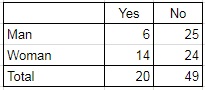
You see his presentation adds up ‘perfect’, these numbers add up, whilst a millennia of history shows us that numbers never add up, not in any criminal enterprise; to do that I have to teach you a little data basic. The best comparison is the use of a cross tabulation. Let’s take gender and shoes. For example we see 6 men and 14 women bought shoes. We also see that 24 women and 25 men did not buy shoes. So far we get the table on the left, yet now we also get the setting that a cross tabulation will not deal with.

For example the fact where we know that shoes were bought, yet the gender is unknown or we see a gender reference and that something was bought, but we cannot see if they were shoes. These are called missing values and they will not show up in that cross tabulation and there we see the first part. It gives us the setting of crimes but not by whom, they are serious in setting but that is not enough is it? You see Peter Dutton gave us ‘help combat organised crime‘, yet not all serious crime is done by organised crime and now we have a $47 billion dollar question and in addition the failing that we are now introduced to is a much larger failing. In this we now see that we saw in the beginning when we went to the end of the story. It is seen with: ‘estimated the cost of serious and organised crime‘ and that is not enough. We could argue that it should be, we can argue that (the amount involved) is way too big, but the setting is not merely that Tech companies should ‘help’, it is the prosecution setting. The setting that there is too much junk attached and the prosecution will fail in the bulk of all those cases because the evidence relies on loaded and unproven data. It is the part that we have faced for well over 7 years. The court barristers will give every jury the speech of authentication versus non-repudiation and the second one cannot be proven (in most cases), so we end up not merely not having ‘beyond all reasonable doubt‘, there will be a high and likely chance that the courts will not even be able to prove ‘on the balance of probabilities‘ or ‘is it more likely than not‘ and it is here where we see that Peter Dutton could be optionally wasting millions upon millions of costs to set the stage of presentation that will have little to no results and that is a much larger problem. The additional play is that any smudging of any presented evidence will give us the stage that a case will be thrown out of court, how is that helping anyone?

So whilst we ponder this, we need to review the statement “And it should be noted the same companies who protest about having to help police with the encryption problem, operate their business in less democratic countries and accept a compromise on privacy to allow their presence in those growth markets“. We are not those countries are we? so at this point, we get the impression that Peter Dutton is merely a minion for the intelligence services who according to him were unable to ge to places in the first place, which implies that certain players have much larger problems and the serious cirme part, which is not on their plate is already beyond them, so there!

At this point we get to the final part where we see: “It is important that tech firms understand and embrace their responsibilities to the community that has helped enrich them“, I actually do agree with that part, yet that should be set in taxation law. A flaw that I reported on yesterday (at https://lawlordtobe.com/2018/10/11/taxation-solved-the-old-way/) which I charmingly called ‘Taxation solved the old way‘ (pun intended). So when we now consider the biggest organised crime master in Common Law (Al Capone), who funny enough got scuttled not by crime fighters but by tax laws. How we get to relearn the lessons of old, do we not?

It gets us to the quote: “Currently our police and intelligence officers who have a warrant may be able to covertly recover an email or a photo or other evidence of a crime from someone’s computer, but they can’t crack encryption, which is why it is now being exploited by criminals“, so these are criminals and not organised crime. Or in a simplistic setting that every square is a rectangle, but not every rectangle is a square. It is at that point that I will teach Peter Dutton the one lesson he never learned (optionally he merely forgot the lesson).

Consider: “When sarcasm bounces it is merely irony“, a lesson that has a much wider application that the honourable youthful young Dutton might not have contemplated yet. However, we have to consider he was only reappointed his seat on August 24th, so he has time to settle in. And the lesson does not end, the second part of the lesson is not from me, it comes from Lizzie O’Shea who gives us: “they were united for the first time in their opposition to the government’s encryption bill“, when we see united tech giants, how short sighted was this encryption bill in the first place? It gets to be a larger issue when we add the setting from World Animal Day (pun intended) when we see the two parts “Telstra has won a $8.2 million contract with the Department of Foreign Affairs and Trade (DFAT) for the landing of the Coral Sea Cable System” and “Chinese technology giant Huawei was originally set to build the 2.5TB-cable linking Australia to the Pacific island nation back in July 2017. However, following concerns that Huawei’s involvement posed a security risk, the Australian government stepped in to fund the multi-million-dollar project from its foreign aid budget“, whilst clear evidence has never been presented and in that stage we see optional nepotism and ego and not fact and science based solutions. We are supposed to trust any of the reporting parties on any of this? The articles are different on different settings, yet the entire mess as it is now shows a much larger failing and a setting of doubt, not one of justified confidence and in that we see the second part of the reason why the tech giants are uniting. A certain play performed by adjusting to the notion of stupid and short sighted whilst the captains of industry have been getting their A-game in gear and others never did. It is merely another stage of the impact of iterative exploitation and profit founding, that whilst Huawei, Google, Apple and Samsung are no longer going iterative, they are now making larger leaps over the next 5 years as they want the largest slice of 5G pie possible and in an iterative setting the others can catch up and that is where we see the clash, because these hardware jumps will also prevail in software and data jumps and some players are in no way ready to play that game. That is where this so called balanced report strikes out as well. this is seen on page 21, where we see: “Because information and communications technologies are used widely throughout society and are instrumental to government, business and consumer activities, there is considerable overlap between the estimated costs of cybercrime and the costs of other crime types— particularly economic crimes, banking and financial crimes, transnational crime, online commerce and internet-facilitated crime such as consumer fraud, online dissemination of child exploitation material and intellectual property infringement“. You see in that stage we see the mention of ‘economic crimes, banking and financial crimes‘. Here we see that Financial institutions and Wall Street come into play (perhaps ‘entrepreneurial bankers’ is a much better term). This is not organised crime because Wall Street never committed any crimes did they, yet they are at the centre of a group of people in that classification are they not? And there we see not merely the adaptations of block chains, we see that organised crime will go there (as soon as they possibly can) whilst the bulk of all the players will not be ready and any encryption bill will hinder the progress of new technology as other players are not anchors of stability, they are concrete blocks of deceleration, another part not considered in any of this.

So yet, the tech companies are uniting and there is a second part in all that. When they strike a deal with Saudi Arabia and set a large part in the city of Neom; when Saudi Arabia accepts certain concessions towards the FAANG group? I personally believe that as soon as the benefit is clearly shown to the rulers of Saudi Arabia and the headway that they could make, they will adjust whatever they can according to Islamic Law, and at what point will governments realise that their only option of control will be isolation and a loss of economy? We are not that far away from that point. Even as we were told yesterday “A senior executive who works for Google’s parent company and a former US secretary of energy have dropped out of a Saudi Arabia tech and business advisory board following international outcry over the disappearance and alleged murder of a dissident Saudi journalist“, yet as Google cloud picks up more and more banks, how long until they reverse the setting? In this the Financial Times also gave us (a day earlier): “A radical blueprint to transform Saudi Arabia through socio-economic reform and ambitious development projects is persuading banks to return to Riyadh“, so at what point will we realise that Saudi Banking is growing and that all players want them as customers? It all boils to dollars and crime is merely a cost of doing business. It is that side that shows the missing data part (going back to the cross tabulation comparison). Corporations have always been about the privileges that come with a certain network and the most facilitating one is the one they will choose, that is in the heart of the flaw that I saw regarding Peter Dutton’s claims here. A bill that stops facilitation and stops optional business on much more levels, as banks need to show more and more profit. The greed driven business model will always be destructive in nature, learning that lesson 10 years ago would have made a difference, now it no longer will.

That is part of the heart of the “$40bn of foreign money is expected to flow into the stock market as a result of Saudi Arabia gaining MSCI emerging markets index status next year“, that against a flawed encryption bill, it was a bad play, played even worse on the surface of all the facts shown and I did not even bother going all the way when it comes to the initial ‘sought to estimate the cost‘, it almost reads like ‘the lady gains weight and we are trying to determine whether she is pregnant, or if she really likes pizza‘, how was that ever going to go? Perhaps asking her: ‘Have you been screwed (over) lately?‘ It could give you a truth and a lot more non-truths. That is the problem with data, whilst moulding data in one direction, you tend to open a door in another direction too, I learned to see and seek those doors, oh and that is before we consider the estimates and the application of weights to a data file, which I do not know whether it happened. this we should have consider with the statement on page 2 ‘Where data were not available for this period, the Reserve Bank of Australia (RBA) (2018) inflation calculator was used to uprate estimated costs from earlier periods‘, the part ‘uprate estimated costs‘ would have gotten us that part, also the fact that it is not data merely a ballpark idea on what the data could be, it is not the same, is it?


Leave a comment

Filed under Finance, IT, Law, Media, Military, Politics, Science

Just like everyone else

For the longest of times, I have worshiped Google. I have always been pro Google, and having worked in their offices for a year, being exposed to the options within Google is just overwhelming (and the food is pretty much the best in the world). So what happens when you are shown that Google is basically just like all the other large corporations? What when you wake up to an early e-mail where google advises you on the new Google Home Hub and the Google Pixels 3 (which is appealing even if it is at the price of your soul), yet 150 minutes later, you are shown by the Wall Street Journal that Google is just like every other corporation at present, how would you feel?

I can tell you that an ice bucket of water over your head at that point would have seemed a soft caress in contrast to the rude awakening I was made privy to.

To get the better view, we need to go back to May 2108, where we were treated to: “Google Australia’s boss Jason Pellegrino, who spoke on a CEO panel at Sydney’s CeBIT tech conference today, told the audience there had to be a “utility exchange” for the data a business obtains, adding if there is no trust, it can prove detrimental“, as well as ““That was about a leaky bucket. That data was going to places that consumers didn’t expect, didn’t agree with and got not value out of themselves. “None of these data buckets should be leaky. However, it’s started a discussion about what’s in the bucket itself. The data that’s there has been used to deliver a great service – no one has been sitting there saying Netflix ‘I can’t believe the data that you’re sharing’ – because they are delivering a wonderful service.”“. So as we were given on Monday ‘Google Exposed User Data, Feared Repercussions of Disclosing to Public‘ with the two quotes: “Google exposed the private data of hundreds of thousands of users of the Google+ social network and then opted not to disclose the issue this past spring, in part because of fears that doing so would draw regulatory scrutiny and cause reputational damage, according to people briefed on the incident and documents reviewed by The Wall Street Journal“, as well as “A software glitch in the social site gave outside developers potential access to private Google+ profile data between 2015 and March 2018, when internal investigators discovered and fixed the issue, according to the documents and people briefed on the incident“, so basically Jason Pellegrino (not the exquisite Italian sparkling water) was basically calling the kettle black, whilst we can agree at this point that he had no business opening his mouth in the first place in light of 3 years of hidden software screw ups. It seems to me that both are in equal hot waters. Even if we water it down (not using sparking Pellegrino) into a setting that Cambridge Analytica was doing it on purpose and that the implied setting by Alphabet Inc. is that their software engineers basically did not know what they were doing (to some extent). We can call a fair dinkum, but something this hidden for three years. What optional issues can we expect from the Google Pixel 3, with Android version 3.14159265418 (Android Pie), as well as the Google Home Hub where the consumer is optionally revealing all their daily needs (including the speculatively implied and roughly estimated 54,233 daily attempts to watch Pornhub) with or without the optional keywords Jennifer Lawrence, Kate Upton, Ariana Grande, Shania Twain, Selena Gomez, Kirsten Dunst and Taylor Swift. Yes, that is the data those marketeers are willing to pay handsomely for, not to mention those unnamed parties speculatively involved in election persuasion consultancy projects.

It gets even more interesting that the Home Hub could potentially reveal when a person is at home or not (like on vacation), because there is no one who would want that data, right? Last week we would not have given it a second thought, yet with the revelations in the Wall Street Journal (at https://www.wsj.com/articles/google-exposed-user-data-feared-repercussions-of-disclosing-to-public-1539017194) we now have a much larger issue. It was fun to see the review on the Verge where we see this puppy in action (the Google Home Hub) where the operator asks for the overview of the Pixel 2, whilst pre-orders of the Pixel 3 are happening all over the world, another fallen blobby in all this.

So as we see the turmoil that one of the world’s biggest tech giants will face over the last quarter of the year, we need to realise that you should never meet your idol whilst he is still alive. I reckon that Google Chief Executive Sundar Pichai will be able to hold his cool for the smallest amount when he meets me, but that is presently not a given.

So as well are treated to “The closure of Google+ is part of a broader review of privacy practices by Google that has determined the company needs tighter controls on several major products, the people said. In its announcement Monday, the company said it is curtailing the access it gives outside developers to user data on Android smartphones and Gmail” we need to wonder what is next for the social media people. I actually preferred Google+ as it was less junk driven then Facebook. And it also gave me the timeline as a first instead of the populist drive, which still annoys me in Facebook. So even as some at Google as trying to wane us to slumber, the cold reality is : ‘the company has no evidence that any outside developers misused the data but acknowledges it has no way of knowing for sure‘. That is the immediate setting in this, we no longer know who has our details and we might never know how we were optionally specifically phished and targeted as per 2015, is that not a nice new reality to face?

So as we need to realise “The company will stop letting most outside developers gain access to SMS messaging data, call log data and some forms of contact data on Android phones“, we might think it is no big deal, but this has the data potential to be a lot larger than any nightmare scenario that the UK ‘Hacked Off‘ ever envisioned in their nightmare settings that the press would have been up to, when people with less scruples (not by much though) have been given optional access to and let’s not forget, the criminals tend to be more creative then the law enforcers ever have been (or some of the intelligence services for that matter).

So even as we accept that the Google plus issue is a dwarf compared to the Facebook scandal, it still optionally victimised the setting through: “It found 496,951 users who had shared private profile data with a friend could have had that data accessed by an outside developer, the person said. Some of the individuals whose data was exposed to potential misuse included paying users of G Suite, a set of productivity tools including Google Docs and Drive, the person said. G Suite customers include businesses, schools and governments“.

I am not alone in this, a few hours ago, the New York Times are giving us: ‘How Will Google Play Its New Product Announcements on the Back of a Data Scandal?‘ (at https://www.nytimes.com/2018/10/09/business/dealbook/google-data-products.html). It is not merely that part, we need to consider that at present only Apple has a seemingly clean slate and they can use this to their advantage. It is in the end watered down by the NY Times through “They’re all part of Google’s strategy to highlight the company’s services via hardware (rather than necessarily become best-sellers in their own right)“, they are all still ruled by software and the cold setting here is that it is their software that was incompletely tested and prodded by those who should have done so. I refuse to merely blame a programmer here, it is a much larger problem!

The failing here can be seen in places like Ubisoft, EA Games, Bethesda, Microsoft and several other large developers. The non-stop trivialisation of proper testing and proper timelines to test settings is at the back of all this. It is not merely a lacking QA, it is a non believe in the power of testers and longer conversations in their insights that is here as well. Issues seen in FIFA 19, several shortcomings in NHL 19, AC Odyssey bugs reported mere hours ago and the less said regarding the Microsoft Surface Go the better and the list goes on. These issues shows that Google is part of the entire problem, the quality testing and scrutiny is seemingly not done (or not done to the extent needed), and with the Google Pixel 3 just around the corner, with a lessened confidence level at present, would you at that point trust the Google Pixel 3XL 128GB at $1500, or will you play it cautiously and select the less powerful, but still a large step forward when selecting the Huawei nova 3i 128GB Handset at $600, in this day and age, can we feel comfortable with spending an optional $900 too much? I will admit that there are a few alternatives at that price, not merely Huawei, but the list of quality choices is very small.

The revelation that the Wall Street Journal exposed us to on Monday is probably the most inconvenient that Google has faced in a long time. Even before we see whatever Google has to promote in the near future on 5G capabilities and enabling technologies, they now have a visible problem to address. It is not merely a dent in their armour, it now shows us a Google that was optionally never the knight in shining armour it has largely been seen as, which is a much larger problem for Google then they are willing to admit to any day soon.

Too many are hiding behind hype terms like AI and machine learning, yet the realisation that non repudiation and authentication was required on many more levels where data is involved in all this, is a failing on several levels, predominantly the developers one and it is there that Google will possibly face a very hard time to come.

#Halfwaytotheweekendnow


Leave a comment

Filed under Finance, IT, Media, Science

One thousand solutions

Yes, it has been 5 years in the making, or was that six? But the day is here, today is my 1000th article. So in light of some of the slamming that I have done against Microsoft (which they deserved and it was highly entertaining for me as well), it is also just to give recognition where it is due.

To see that in its proper light, we need to take a jump towards Sony, the very first PlayStation and a game called Gran Turismo. The first having the highest rating was one that stood out. You see, Kazunori Yamauchi gave us with Gran Turismo something that we had not seen before. Oh, we had seen racing games going all the way back to the CBM-64 with pole position. Yet Gran Turismo was something new, something unheard of and the screenshot that you see here might seem laughable to you now, but this was 4 console generations before now and then this was amazing. It was new it was fresh and it gave the players something that they had not had before and we all loved it!

These elements are important when we realise the article on Forza Horizons 4 for Xbox One (X) when we read “There’s almost been a sense of rediscovering what Britain is. I don’t think we’ll ever make a game quite like this again“, they were the words of Ralph Fulton. I personally believe he got it right, but he was not correct. I believe that this game added heart to Britain, which is a lot more then you bargained for. If there was one game that gives light to the consideration to buying a model X console then this game is it. The images are not merely about the cars, the views of wherever you drive, whenever and in what weather just jumps at you; it surpasses almost everything you will have played in racing games, and in this, even me, who is not a racing fan at all, I got blown away. They did not merely add some tracks to race, they gave us the UK to race in, and everyone, not merely those in the UK seems to be loving it.

I have written this before, so why repeat it?

Well, in my view Microsoft did something that Ubisoft should have done. You see, if you plan to make a game that is designed not to be a failure, you’ll never create a true winner. To do this, you need to jump out of the box and optionally burn it. This is seen on a much wider scale. We get part of this with ‘Instagram co-founders resign to explore ‘creativity again’‘ (at https://www.theguardian.com/technology/2018/sep/25/instagram-co-founders-resign-to-explore-creativity-again). Here we see that “Kevin Systrom and Mike Krieger, have announced their resignation from the company, which is owned by Facebook Inc, saying that they are leaving to “explore our curiosity and creativity again”“. We can speculate on whether this is the full truth, or whether there is the setting that Mark Zuckerberg has made some colossal errors and these errors are not done yet, they are still to some degree escalating and as the wild wild west of the internet is now in a stage where governments are starting to ‘cooperate’ on setting rules and regulations in place. We see the Independent giving us last year: ‘Government outlines plans to ‘regulate the internet’ and get rid of problem content‘, which is hilarious for all the usual reasons.

So, as we see how government is introducing rephrased ways to set censorship, instigate discrimination and avoid issues of accountability, we are left to our own devices and there are more and more devices arriving, all remaining in some set league to avoid setting the stage where data is the most eagerly desired currency, because some people are not willing to go there just now. the one element avoided is that whilst we see in paces everywhere that porn is a problem, we see that it is so widely available that the internet is not the problem and that identification is at the heart of the matter, because America is not the solution, America has for the longest time been part of the problem. It has been for quite a while. It wants to police the internet, it wants to have freedom and set boundaries, but only as long as it does not hinder American business and that was the problem all along. Even as the numbers are not up to date, when you consider that “When faster internet led to a boom in video pornography in the mid-2000s, worldwide industry revenue skyrocketed to an estimated $40-$50 billion” is set on taxable dollars, do you think that America wants to do anything that is realistically achievable? I remember the short discussion that was going on somewhere around 1993-1996. I forgot the actual date, but there was a discussion that was started by the adult entertainment industry. They were the adults staging the setting that by having an .XXX domain (or something similar), there would be a place for adults and children could more easily be kept away. It did not go far and it was not successful as some religiously pushed people wanted all the porn from the internet. So tell me, after 20 years, how did that go? American bias, ego and greed stopped a whole range of solutions getting through and some could have made a decent impact. All stopped by ego and greed. It gets to be worse, because as the US is now trying to arm wrestle IP powers away from the people and making it government goods. To see this, we need to take a look at the IP Watchdog (at http://www.ipwatchdog.com/2018/03/01/u-s-patent-system-americas-decline-competitiveness/id=94249/), and we get treated to: “To find out who is responsible for the demise of American competitiveness you only reflect a mirror against U.S. innovation policy“. We see additional parts with: “China has established courts that specialize in intellectual property litigation so litigants have an experienced, fast and cost-effective forum to resolve patent disputes. These specialist courts take about 10 months to resolve patent infringement lawsuits with litigation costs running at approximately $200,000. In contrast, patent litigation in the U.S. often takes five or more years to resolve with litigation costs running in the many millions of dollars. A fairly ordinary dispute when litigated in the U.S. can easily surge past $3,000,000 when you factor in the inevitable post grant challenges (each of which will run $500,000 to defend, sometimes more) and the federal court litigation after that“, Yet another source (the Diplomat) gives us: “The United States government believes that IP protection is critical to both the physical and economic security of the country. IP protection ensures that American businesses, which produce a disproportionate percentage of their value in IP, will remain competitive on the international market. The U.S. government also believes that advanced technology is critical to U.S. military superiority, and that protecting this technology (through IP law and other means) will keep the United States ahead”, the setting of security and the stage of innovation have been opposing one another almost forever, so how does that help innovation? And when we consider ‘IP protection is critical to both the physical and economic security of the country’, how long until some level of ‘national security’ stops the IP from remaining with the actual owner that filed the IP?

It gets to be shown as worse off, when we consider both: “patents challenged in federal district court as claiming unpatentable subject matter were invalidated 67% of the time. The vast majority of these invalidated U.S. patents would have been deemed valid under current Chinese patent law, and some of these invalidated patents do actually remain valid and enforceable in China, Europe and elsewhere throughout the world“, as well as the economic setting which we got last March with “a whopping $215 billion in sales for medications could be lost from patent expirations between 2015-2020 and $31 billion are at risk in 2018 alone“. How do you think the US economy will get hit when certain nations start their generic solutions, lowering medication costs by optionally thousands or dollars per patient for both hospitals and patients?

As the patent holders are now also realising that there are added benefits to be part of the Chinese IP system and due to a lack of enforcement, the US market is no longer of decent value, we see that they are confronted with global benefits against much larger local setbacks and limitations.

How does one relate to the other?

There is a correlation between video games and patents (yes there really is). The correlation is seen in creativity and out of the box thinking. The conservative path of: ‘make sure it is not a failure‘ stops innovation. You see, we have been treated to so many resources that some people cannot fathom how some solutions were designed on a 2 MB RAM, 1 MB VRAM system, with a disc that had a maximum of 650MB (the original PlayStation). The makers avoided all kinds of traps and found new innovative solutions to make the game work. Gran Turismo is one of those jewels that show what a system when properly used to the max could achieve. As we went to iterative solution thinking, we lost the ability to become truly innovative and that is where we see that innovative patents no longer are, merely in the presentation are they optionally regarded as innovative, and that is where we see the next wave of technology.

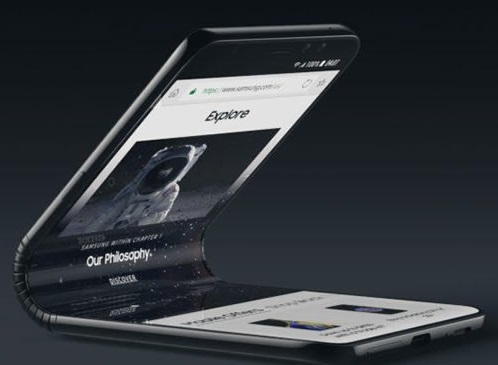
Even as we are still confronted with the allegations against Huawei, we got shown 6 months ago: “Huawei filed 2,398 patent applications with the European Patent Office in 2017 out of a total of 166,000 for the year“, basically 1.44% of ALL files European patents were from that one company. And when it comes to innovation, we were treated to: “In our first [5G] smartphone we’re going to introduce a foldable screen“, and if you think towards the old flip phones think again, you merely have to consider the concept image to see that actual innovation in not merely a jump from iPhone 6, to iPhone 7. When we start seeing Huawei optional speculated settings, we see an actual jump and we can agree that to some extent 2398 patents do make for an interesting push towards the future.

This all takes another leap forward when we consider that if we want to be players, the iterative model no longer works. We need to be first and we need to be better than everyone else and iterative thinking is what merely gets them second place. It is not merely brand marketing, it is becoming a new level of marketing all together. We merely have to see the settings and changes we see towards Neom in Saudi Arabia to see the potential there. It is Ericsson that has already set the stage where the UAE has the potential to gain business benefits of $3.3B over the next 7 years, that is an additional $500 million, nothing to sneer at and when we consider the opportunities we see when we add the stages and places that Salini Impregilo is already working on, we see the growth of a long term stage with dozens of golden parachutes for those who have the financial backers to get it up and running. Take information to a new level, not merely showing up on a display, but for you to tune in with your phone or tablet and select what you want to see, with the optional setting of “Line 3, also known as the Orange line, is 41.5km long with an 11km underground section. It will have 22 stations“, two 5G stations on the line and repeaters at every station will suddenly give you thousands of users, getting informed by you, giving them choice of what they want to be informed about and with the smart dumb devices I mentioned a month ago, you get the setting of any train with up to 250 people getting informed. It is not merely marketing at this stage; it becomes entertainment facilitation with personalised advertisements. Creating branding and loyalty at the same time, because it is the first trip, that moment when you are going to work, or going home when consistency tends to be a need for so many travelers, that is where the next stage is and that is in Riyadh, expose that to the Neom stage where the city is 32 times the size of New York, it is no longer merely on how fast people get from one place to the other, it is the setting that people will want and need information at this moment, the one giving what they need is the one with the information required. It is no longer mass media; it becomes what I would call ‘Legion media‘, a facilitated one to one media solution for all. Not one stream all watch, but hundreds of media streams interacting seamlessly on the needs of the user giving them one seamless stream of information. A fluidic setting of interactions as configured/disseminated for the viewer, all personalised and automated; a situation that requires 5G to work and a solution that remains fluidic for the changing need of the user. We know the reality of Neom being years away (apart from the act that building will take quite a while), it will be now that we see the need to prototype and pilot those new projects to get the flaws out and stage the setting for large deployment, for the mere reason that new solutions are nice to have, but when your new idea fails on day one, that entire city will switch to the next solution on day two and never consider you again, because that too is the stage of 5G. It will be more and more about getting it right the first time. I wonder how many developers have realised this and most of them will trivialise that of course, and it makes sense that they do. Yet when the backers learn that the 5G community will be a lot more critical than ever before, will they still continue backing, or will they hide behind alternative wealth bringing solutions?

You see the apps that will be the most valued and priced ones are not the ones that look cool. In 5G it will more and more about enhanced pragmatism and managing of your personal infrastructure. Did you not figure that out? When we see the options that Saudi Arabia brings, we need to also see the limitations that it has. So the right ability to manage that through domotics and smart solutions will be close to everything, pre heating, pre cooling, adjusting, shopping and groceries, all done on the fly when you have time.

Even when we see the opposition (always important) giving us: “King Abdullah Financial District north of Riyadh, meant to rival Dubai as an economic hub, is still incomplete after more than a decade. As of last April, nary a financial institution had agreed to occupy any of the district’s 73 buildings“. I think that this is important too. Is it merely the language? You see, when we see: ‘Financial District‘, we think Wall Street and consider that area. Yet when we see: “Designed by architecture firm Henning Larsen, the 17.2 million-square-foot master plan calls for over 60 residential, office, and retail towers, several schools and parking garages, a medical clinic, civic buildings, and three hotels“, we see a lot more than merely a financial district, we see an almost self-contained city. You see when we see the larger scale I see an optional obstacle, not a negative one, but one none the less. To give comparison, I need to take you back to an original game. It was called ‘Sim City’ and it was a game, but gave the player an insight into designing his city of the future. Zoning was important at this point, so it required gradual growth. By going too large in one area, you would be broke and could not gain momentum in other ways. Even as it looks amazingly beautiful, how will you get people there fast? How can you vacate 2 million people (most likely from Riyadh and other larger cities) and set them in the new stage? There are two ways. You either create a need in the new place, or you create opportunity in that place. The first requires essential growth; the second requires a staging investment drive.

In the first example, we need ‘a pressing need’, when there is an infrastructure or a structural need, you create jobs and people will move there for the new job, which is fine, but requires vast amounts of money and large players getting there. The second one is great, but is initially also costly. For the second example I will use a solution that was in South Australia some time ago. To get people there, they gave away land. They still need to build the house, but in this setting he people had 50% additional money, or lessened costs, yet to break even the government stated that the land was given, but represented value X, and when they sold the house, they would have to pay the invoice for the land first. Now consider this in the setting of the King Abdullah Financial District. And there we set the stage of ‘selling’ houses/apartments at a mere 10% of the price, yet cannot be sold until the 100% price is satisfied first. So you now have a setting where the next 10,000 apartments only seem really cheap, yet in that setting you also create need, because these 10,000 households will need infrastructure like food, water, clothing, transportation, entertainment, schooling and so on; with that we see the investors come. build their shops and grow their business, as a result housing value rises fast and creates not merely a need, but also creates additional growth, so as these houses exchange hands and new occupation, the government gets the outstanding 90% back and a thriving place. It is not a short term, or a fast solution, but it is one that brings growth, and creating larger infrastructure solutions, because at that point with the additional 10,000 people or more we see the growing need in every direction. As these elements grow other needs can grow too, when there are 10,000 potential candidates in the financial industry and a clear path of growth exists, only then would there be interest into growing the stock exchange in a new place. Yet in that setting we need to realise that for many industries the capital remains alluring. So when we are confronted with “potential tenants and investors are less optimistic than the district’s planners about its future success“, as well as “The potential is amazing. The inside is impressive,’ one Dubai-based expat, who toured the site and preferred to remain anonymous, told Reuters. But he added, ‘It will not be finished. Decision-making is very slow (on the project, and) people don’t have cash“, we see the clarity of what I described. The ‘not having cash’ can be alleviated in one way, creating additional needs. It is the ‘decision making’ part that now requires to be decided on (yes I see the trap here) and there too is a solution. If we consider the statement that Business Insider mentioned: “Some of the kingdom’s strict social codes, including one requiring women to wear dark robes, will be relaxed“, we see the option of creating an opportunity for the foreign players in Qatar to become a larger mesmerising target for ‘poaching’. When we consider the Bloomberg message earlier in May this year giving us: ‘Qatar to Allow 100% Foreign Ownership of Firms in All Sectors‘, we see the setting that there is interest, especially in the financial sector to grow options on a global scale and there too Saudi Arabia would be able to set the stage for the future. More important, once these investors see the benefit in one place, there will be an added stage towards growth towards Neom for them too. This could have additional benefits as a much larger stage between Saudi Arabia and places like Egypt could become a much more interesting choice for the future. that part is not merely seen in one way, it becomes an entirely different stage when we consider yesterday’s news with ‘Award-winning Dubbo solar home uses Tesla Powerwall 2 battery‘, you might think that this is a ‘So What?‘ stage, but it is more than you think. That part is seen with: “A building company in Dubbo says the Tesla Powerwall 2 battery in its new display home means the Dubbo solar home could potentially go off-grid. Award-winning Greenmark Homes installed a Tesla Powerwall 2 battery to boost the display home’s energy efficiency“, it becomes even more impressive when you consider the added: “Tesla big battery wins awards, prevents blackouts“, you see, even as Saudi Arabia has plenty of sunshine, at some point the sun goes down and that is where the usage changes and whilst we know that air-conditioning takes the bulk of the energy, we see that the overall need could be filled in more efficient ways and that too needs time to evolve and refine. It is taking solutions out of the box where we see the beginning of true innovation and there are plenty of places that can benefit, but we need to open the door to creativity to make it thrive and set the next stage of innovation. We can make fun of some situations as we are offered (a very old joke): ‘a new powder for hydration, to make it, merely adds water‘. It is the innovative person that uses the solution and creates a powder to capture the moist in the air and end up with water. That same application is seen when we see applications on energy and hydro needs and creates another solution, the one we forgot about. That is the nice part about these stages and on why we need to keep our focus on Neom, you see it is not about the size of the city, it will be about how certain situations get solved and how innovative those solutions are. That is where we will be able to test our creativity and optionally become an actual innovative player ourselves, driving solutions and new technologies forward, not iterative over time, but by leaps, which is how you end up with one thousand new solutions not a thousand versions of one solution.


1 Comment

Filed under Finance, Gaming, IT, Law, Media, Politics, Science

As life becomes affordable

The US is not becoming affordable. It has been affordable for some time. The issue is that America is too focused on the larger places of fame. They want to be in a place where they can get notices. Places like New York, Los Angeles, San Francisco and Houston seem to get the attention (a few more then that), and it is all about the opportunity to grow business. Yet, what happens when your life is for the most online? What happens when you are not set in a stage of location, location, location? What happens when you are the analyst that can work equally easy in a cubicle or your own living room?

When you consider that this can be the stage of tomorrow, the US starts to open up by a lot in a few ways. There is however one limitation. This is a game for the young, merely because the health system of the US is decently screwed and is unlikely to resolve itself in the next two generations. Yet consider, when you have a few years of experience and you are confronted in a place like Lancaster Pennsylvania offering a townhouse, 200 m2, with a mortgage of $1,059 per month, whilst a place half the size in Sydney costs close to $450 per week, and whether the value increases or not. You are now in a setting growing your ‘wealth’. Now, if you are all about weekend parties and clubbing these are not the places for you, yet at some stage you need to consider that some places are non-events with a $1300 a week price tag. So be honest, have you considered to be anywhere else? And that is not the only place, the US is a place of opportunity for anyone with handy to upgrade the place they get. Also consider that a simple place in Boulder, Colorado where $722 a month gets you 110 M2 with 3 bedrooms. My rent in a similar place (in Australia) was $450 a week, so there is a clear setting of ‘oops!’, for me that is.

So why are we considering this?

When we look at some of the speakers in all this, we get to see the Deloitte report (at https://www2.deloitte.com/au/en/pages/economics/articles/5g-mobile-technology.html). Here we see the first number that impacts. After the first decade, we will see a production growth, not merely more per person, but optionally more per teams in play. It equates to: ‘around $50 billion in additional GDP‘. Do you still think that it was merely about ‘security’? The entire Huawei mess gave us quotes in several places and the SMH gives us: “He noted with “not many suppliers in the marketplace”, taking out a major player “puts pressure on prices”“, when we add we see: “That leaves the Finnish and Swedish multinationals Nokia and Ericsson as the most likely developers of 5G technologies adopted by Australian telcos, potentially raising concerns of higher costs“. Even as no evidence was ever shown in the entire Australian Huawei debacle, we need to consider that Australia could lose the ‘be first, or lose market share‘ options soon enough. When the brain drain starts and certain groups of players will seek the better income in a cheaper place, how will that serve the Australian interest? For Telstra it is not a problem, they can’t go anywhere and they will not care about the fallout that is likely to hit the Australian shores. As we see the growth of new mobile set work stages, so as the plate is ‘dammed’ in stages and we are exposed to “Businesses don’t want costly 5G, new research reveals. New research shows businesses won’t upgrade from 4G to 5G if it comes at a price” (source: The Australian), we need to consider Forbes who gives us: “this time around, something has changed. When it comes to the next generation, 5G, some telecom executives seem to have lost their faith in the power of technology. A survey of recent public statements by executives of the 19 largest mobile network operators worldwide shows that more than half (53%) see no near-term business case for 5G. In a 5G network, wireless data can travel at speeds of greater than 1 gigabit per second, more than 10 times faster than most 4G networks“, so there would be a case from the earlier quote, yet when we consider the Deloite report with the quoted: ‘around $50 billion in additional GDP‘, you tell me how long it will last until the doubters and the pussy footers will no longer be players, merely runners after the fact losing market share on a near daily basis, and that is my benefit. I can slice, and dice and dashboard data anywhere on the planet. I can do technical support and customer care equally anywhere on the planet. With my half a dozen languages the customer will not care where I am as long as I speak the local language. And the larger changes are still coming, when you consider what you can get in London at an affordable price, consider where you have to live in London for £174,950, whilst it gets you a decent 1 bedroom place in Birmingham, or a 2 bedroom bungalow at £369,995 for that matter, that will not get you anywhere in London, you need 100% more to get it in London (a smaller place too) and not the greatest location either. That is the setting we seem to have forgotten about. It is the one 5G element I equally forgot about. It is not merely about making more money, it is the new stage where you can live more affordable and the same income gets you a hell of a lot more. Whilst most stuff will remain the same, your groceries would be better prices and with the housing at a much better place we see that the appeal of the larger places like Sydney and London lose their appeal. So whilst we see and accept ‘around $50 billion in additional GDP‘, it is not going arrive anywhere when the people have moved to better shores and that is the setting that MacroBusiness reported on last year. There is a brain drain and it is not only in Sydney, or merely in Australia. As the quality of life remained stagnant for the longest of times, the 5G push will also give a shift in other jobs, and the companies not ready for that accommodation will find themselves too soon in a stage where they take hit upon hit and lose more than merely short term revenue. It will be the start of losing long terms contracts because the service level agreements can no longer be met. At that point, reconsider the issues I have raised for the longest of times, also reconsider the Telstra setting and the Australian government is suddenly required (read: demanded) to provide the evidence that Huawei was insecure, I wonder what happens at that point. When the business clauses fails and we see the stage of ‘infighting like bitches‘ and some people start pointing at each other, it will be great fun to see the damage and even more damage when some media channels start trivialising certain events with the causality of ‘it’ll be all right‘. At that point, when we are confronted not with: ‘around $50 billion in additional GDP‘, but with ‘Australia is set to grow its GDP by almost $3 billion through its amazing efforts in 5G‘, at that point will someone seriously ask what happened with the other 94%, or will we see gamers getting blamed again? Perhaps with a speculated: ‘As gamers have taken usage to a new level, businesses have been losing out for too much‘. Yes at that point we will see some flames flare in all directions. As we see that we are no longer limited to a city or a country, we see that opportunity will flare in every direction and those not merely embracing 5G, but those facilitating for the move towards quality of life will end up with a better and a much larger workforce gaining even more revenue momentum. When we realise that our workflow has become global we see the additional impact of businesses, where the nation facilitating for this will end up with a much better market share than ever before. So in that end it is not better to be merely fast and early, this is the one race where being first matters more than ever before, a very new setting. That was always the stage, but never seen a clearly as recently, and when we realise that the UK is actually racing the 5G path, we see that there will be additional options there too, so in the end as 5G does not care about Brexit, it merely handles data, we see that the UK recovery will still be fast and will take them further, especially when they realise that there is more to the UK than London, even Wales has its part to play. When we see: “Vodafone has said it will test 5G in Birmingham, Bristol, Cardiff, Glasgow, Liverpool, London and Manchester from October“, so even as it is Vodafail, it still required them to put 5G option in place, and whoever has that access has a distinct advantage. When you consider that Birmingham is a mere 75 minutes from London by train, does it really matter if you only see it in the weekends, there are over 140 trains taking that route each day, implying well over 5 trains an hour.

It is my personal belief that 5G is not merely changing the game; it will create personal opportunities for anyone flexible enough to make the larger changes, even if they are merely short term, a game for the young.


Leave a comment

Filed under Finance, IT, Media, Politics, Science

The politics of 5G technology

I was watching the news and all the announcements of the new iPhone series and it dawned on me that even as they are not just the most expensive phone, they are close to 400% the price of the top Huawei P20. So why is this now a massive price jump? It is not merely that it is a 512 GB Phone, or that is has 4GB RAM, or that it is IP68 dust and water resistance (maximum depth of 2 metres for up to 30 minutes). I think that Apple is changing the game. It is realising something different, It is also why I designed the ‘dumb’ smart devices for 5G.

You see, for better or for worse, I ask you the question: ‘What is this?’ You swill respond with it is a phone (or variant of it), it is a connection to everything, it is your personal assistant. No, it is none of those. It is important that you realise that this is now becoming your personal data server. When 5G enters your life it will be the foundation of you. You must realise it now, or lose your personal value very very fast; even as we are shown the political ‘BS’ on Telstra regarding Huawei, US telecom companies and other players. This is the vault all the players want. This is the setting of the next generation. Apple is cashing in on mere then just the price of a product. They are setting a stage that Huawei is already walking (slower in some regards, faster in others). This is the future and the Apple version of that future arrives within the next 7 days.

Google is on that path too. Its mint flavoured (or is that coloured?) is arriving in 4 weeks, they too are on the path of the future. That path is you and your personal data server. You better get used to that very quickly, you better realise that you, you yourself enabled all this. So even as we will not know the specifics of the new Pixel 3 XL, we all know that this too will be the personal data server, just like the Huawei P20 series, the Apple Xs series, the Samsung Galaxy and the Google Pixel 3. No longer merely phones, no longer merely the Spotify point. You see, the steps we have had with 4G are closing down, and the marketing changes. It is no longer ‘Fastest Mobile Broadband Network‘, it is no longer ‘Live More Internet‘ (which might be Ogilvy’s worst slogan), and it was never ‘Rethink Possible‘. It will be ‘Whatever you need, anywhere you need it‘. That is the foundation of 5G, anywhere you need it is going to be your cornerstone. It is in that part, when you have transplanted yourself in that new dimension you will get exposed to the change and the need to protect your personal data server wherever you are, because your personal data server (the next mobile phone) will become to some extent: “Your Identity”. Now you will need to consider getting it properly protected, because your data value is you and you need to realise that your mobile phone will have more processing and collection power than any server that was out 10 years ago, facilitating for you and 49 other employees. This personal data server will work for you, on your behalf and to your needs. This was why I came up with the protection layer of ‘dumb’ smart devices. No matter whether you go for IOS or Android, you will be your own cornerstone to social life, to entertainment, to business ventures and to your financial pathway. Consider what you are doing now on your phone. Your banking needs, your radio, your TV, your games, your appointments, your insurances and your investment and retirement portfolio. You do it all from your mobile phone and soon with block chain added to the data stream we are now moving towards a point of non-repudiation. In non-repudiation it means that you and only you could have done this. It is the one step above authentication; it is your future of accountability. At that point you cannot go to the judge stating you lost everything, because your phone got stolen. The easy path is getting removed; that is the future of whatever you want, anywhere you need it. Because only you could have wanted it and the new phones are about setting the stage enabling you and protecting you and foremost keeping your data safe, as long as you realise what you are doing.

So that got me thinking of the old Re-Flex hit: ‘The Politics of Dancing

We got the message, I heard it on the airwaves
the politicians are now DJ’s
the broadcast was spreading, Station to station
like an infection, across the nation

We see and hear it all as these settings evolve; politicians are becoming evangelists for places like Telstra, Vodafone and T-Mobile (to coin an example). The speed and radius of influence increased with every technology jump, three times in the last 10 years alone. Forever growing, ignoring borders and natural obstacles.

When we look at the refrain we see:

The politics of dancing, the politics of ooh feeling good
the politics of moving, aha, If this message’s understood

The setting of movement, dance and self-gratification, the fastest way to move the population in the direction they needed you to go in. You better realise this now and not too late.

You see, In Australia Telstra is the best example to look at. In 2016 they themselves set the stage with: “The Connected Government Program is Telstra’s premier thought leadership program for the public sector“. You did not think this was some philanthropic society, did you? This was the initial culling of those good for the in-crowd and those who are not. And I will also include “Dramatic economic, political, cultural and technology changes are creating opportunities and risks for growth, inclusion and sustainability that are making new demands on government and the public sector which require the ability to lead for innovation in conditions of volatile change, ambiguity and fragile trust“. This is all about growing the status quo for Telstra against whatever threatens it (Huawei is a nice example). Whatever they consider to be ‘innovative‘, I personally view it to be, ‘innovative at whatever speed Telstra can manage in an optimised setting of ROI and profit from whatever was deployed before‘. That is not the same is it?

So here we see the setting of 5G, you all want it and your personal data server will be the first choice that either enables of limits you. This is why Apple has upped the ante by a lot and until the answer of Google is ready, I am unwilling to make any choice other than Huawei, especially as it is at merely 25% the price of the new iPhone. 5G is optionally 2 years away for consumers at the facilitated speed of the new apps and protections; we see that this system needs to be at full force when the City Gates of Neom opens, because that will be the first fully fledged setting of a 5G environment giving you whatever you need anywhere you need it. Interactive information posts, shops that inform you 24:7, giving you the data you needed and showing you the products and offer sales and interactivity even when the shop keeper is asleep. All setting the stage for the explosive data growth you will be faced with and your personal data server is your link to all that. In this Google has the advantage as they solved three elemental parts in that essential need, added to that the marketing agents who specialised and focused on actual engagement. That is where you see the benefit of the next generation of data and visibility at the speed it needed to be at. This is not marketing through the eyes of their clients, this is marketing through the eyes of the respondents and how they envisioned it to be. A flexible setting set to the owner of the owner of the personal data server, not the approach towards that server as players like Telstra thought it needed to be, based on their metrics and their perception. Two distinct different ways and many marketeers and self-professed evangelists never understood that part, or learned it too late.

So yes, Re-flex was partially correct when they stated: ‘The politicians are now DJ’s‘, yet they did not forgot it, it was merely in a time when that option did not yet exist. Now there is no lack of choice and the owner of that personal data server can switch channels in the blink of an eye, an engagement opportunity lost as the focus of the evangelist (read: marketeer) was set to the wrong party. The owner who gets whatever they want, whenever they want it also gains the power to decide on what they want, any time they need or desire something, so making sure that there is engagement also gives the strength of retaining that person for a much longer time and in this game in 5G time is close to absolutely everything. It is the one where we start to realise that time is the essential unit of measure. It was there in the old days. CPU time set the stage of costing; it was there in the old phones, where the duration of a call was the unit of costing. Down the road it was trivialised in most places and set to zero, but it was never zero. Now we get to the next stage, yet now it is in the hands of the consumer, because the time of engagement is the sales funnel, so engagement becomes the stage for success. It is close to the end of mass marketing. It will be the stage of smart marketing. In that setting phishing becomes the new skeleton key and there is the first clear need to protect your personal data server and to protect the data it holds. A setting of consideration in 3G and 4G becomes a setting that is essential for anyone that wants to remain in the game in the next generation with a setting of continued value.

#40800SecondsTillMondayMorning


Leave a comment

Filed under Finance, IT, Media, Politics, Science

2.5 Million seconds

That is the frame we are talking about. In 2.5 million seconds we will see what the people are missing out on. The News Minute gives us that we are about to witness a new phone. Were treated to “world’s first 5G-ready 7nm mobile chipset Kirin 980“, from there it is easy to become a 5G phone. This is seen with “Huawei Announces Mate 20 Phone with Upgraded Chipset“, the phone that is 5G ready, which is launching in London on October 16. This is merely the chicken feed stuff, the small fry in all this. So even as Australia became the collar of the US and banned Huawei from delivering 5G equipment, we are also treated to the setting that “Huawei P20 Pro and P20 were the world’s first devices to receive a triple-digit score by DxOMark — the industry standard for camera and lens image quality measurements and ratings“, which is nice, but as a phone not essential. Yes, it sounds like I am trivialising a little, but that is because the big part here is not the camera option, the big part is that since its release the P20 family has sold 10 million units globally and that is a n important distinction, that is the part that matters. People have embraced the Huawei as an excellent phone. For the larger part (is my personal understanding) that the undeniable fact is that the Huawei is in most cases 27% cheaper than the similar phones out there (Samsung & Apple), whilst not giving that much extra to begin with. Apart from the Huawei camera heralded as the very best (with a decent margin), it is also important to note that the Samsung has a battery delivering up to 13% less then Huawei. The Apple has even less, yet IOS is not the same as Android and comparing the two does not give what I regard to be a valid comparison, so I am not including that. Huawei seems to comprehend its customers and delivers a solution that works for them, which is shown in the speed that these 10 million units were sold. I expect that an even larger sale will be imminent by December in all this, as it might be a year to get a new phone and Huawei has their options nicely set in a row. In all this, Huawei is actually its own worst enemy. You see, for all those (like me) who needs a decent camera, good battery life and decent storage, the Huawei Nova 3i 128GB Handset fits that bill too, yet that model is new and 50% cheaper than the P20 family Oreo based and all. So for me personally, I can forego a P20 and merely use the 3i. After the P7 (which I still use, I see a massive leap forward and even as it is not the greatest Kirin processor for games, all my games will now see a 30%+ increase, so that settles it for me.

In an age where you have to turn over nearly every dollar, especially as we can expect to either freeze next winter, or stop wasting money on mobile phones at twice the price, we see that Huawei has an option for everyone. One for the mediocre users (like me) and a phone for the latest gadget lover, all addressed within a decent budget. So, even as we are confronted with faulty iPhones (which apple will replace at no cost), whilst we see that the Budget iPhone is delayed. Yet that is not merely the issue. When we are confronted with: “Owing to some instability of the production schedule, the lower priced iPhone will see the light of the day by October. On the other hand, the alleged iPhone X successor and the iPhone X Plus model should be launched by the end of September. One of these two devices and the budget variant are highly likely to offer even dual-SIM variants in a few selected countries” and we see ‘the budget variant are highly likely to offer‘, we need to step back. In this day and age, in the setting where Apple seemingly had leaked information in the past, and we have next to nothing on those models. We get phrases like ‘Apple is also rumoured to have been trying to reduce the cost of components by bargaining with its supply chain partners and Samsung as well‘, as well as ‘What we expect from the Apple line-up‘. It seems that this is a marketing ploy of ‘Let’s keep them waiting a little longer’, so in all this, whilst Huawei has been the more solid offering (as has Samsung to some degree), what on earth does Apple think it’s doing?

It is the Deccan Chronicle that gives us: ‘New budget iPhone X leak validate Apple’s serious problems‘. Yet here we need to accept that there are unknown issues, and even as we see references to Forbes, we much also recognise the use of ‘predicts‘, which implies they know nothing at all (or nothing confirmed). Here we see the one part that is a problem (a speculated one), and it is seen with ‘a low capacity battery certainly raises a few concerns‘. Yes that would be the case, if it was confirmed, but it is not. In addition we see: “the handset will feature just 3GB of RAM and a maximum of 256GB storage which is less than compared to the iPhone XS and XS Plus that are believed to have 4GB RAM and a maximum of 512GB of on-board storage“. That made me laugh, because I still have great traction with my Huawei P7 sporting 2GB Ram and 16GB storage, so this would be a step forward and a large one at that. Yes, we agree that it is way behind what Huawei offers, but in reality, the truth is that anyone requiring more than 64GB truly has a massive need for their phone and at that time, if it is so important, you basically have to shell out to the larger Apple’s and not go for any budget one. I am one who can deal with the Budget range option, so in my Case the Huawei Nova 3i 128GB Handset gets me what I need at close to 45% less, so that is actually a real budget phone, All the iPhone 8 and X models start well over a thousand dollars, so at least180% more than the Huawei offers. In light of that, what constitutes a budget phone?

This in comparison to the Samsung Note9, which in all honesty is the very latest in mobile technology, but at 300% of the price of the other phone, where do you have the cash lying about? In comparison, that new Samsung constitutes the Huawei Nova 3i 128GB, A PlayStation 4 Pro and a Nintendo Switch together. You tell me what has your preference. Now, for those eager with true technology needs, it might not be about the price. It might be what the Samsung offers with the Exynos 9810, versus the Kirin processor and that is fair enough. Some are very willing to pay for that difference. I am a more meagre user in mobile technology and I would go for the PS4pro and Switch offer if given the choice. Perhaps an idea that Huawei could float. Buy the Huawei P20 for $1400 and get a free PS4pro (first 5000 customers only). That might just sell like hotcakes, and I like it when those techno providers think outside of the product wrapping box.

The technical part that does matter is the part that Richard Yu, CEO of the Huawei Consumer Business Group gave us. With: “the Kirin 980 chip, Mali-G76 offers 46 per cent greater graphics processing power at 178 per cent improved power efficiency over the previous generation” he implies (to my limited thinking) that the processor, to limit heat and damage in that way, by making it less power consuming and there, that same battery will go heaps further, implying that a 4000 MaH battery will go close to 20% longer then before making it even more interesting to consider.

in addition the mention of “the Huawei Locator powered by Internet of Things (IoT) technology that can help people easily locate their belongings, be it their luggage or pets” implies that the phone will also have RFID tracking options, which is actually a 5G trademark. I know I am highly speculating here, but that would be an interesting first, to give the users first 5G options that can easily run on 4G, whilst demanding that the opponents to equal or better what is out there and the innovative advantage that Huawei currently has, implies that their gain will only increase and not by any small margin. The option for mothers to tag their adventurous toddler will greatly fuel the need of that function. Only yesterday was I a witness to a wandering 3 year old, when arrived at the concierge, only to see two highly panicked Asian mothers running around trying to find where the devil the little one had gone off to. Yes, the adventurous toddler was going from shop to shop trying to find mommy and adjusting course at every stand where blinking lights and noises were heard. Good luck with that one and the RFID option would be a gift from the heavenly clouds for every mom having to cope with a easily speedy distracted toddler..

They also launched the Huawei also launched at IFA 2018 AI Cube, its home speaker with 4G router and built-in Alexa that can perform several tasks such turning on the TV or playing music. Now, this is not a mobile part, but it is actually a mobile pressure release; the option not to rely on a hotspot and just get one of these puppies, as well as a second sim to not put additional pressure on your mobile. What is interesting that even as we see the frame of these speakers and the versatile options here, I am making the reference as Huawei, like Google and Apple all dropped the ball in the same way. You have all that space and you did not consider it to be a mobile charger on the side? It seems to me a first that the speaker would be awesome, especially when you rely on Spotify for music, so in that regard, making it a charger as well would have been my first thought and that is the final part in all this. When you realise that the USB-C is the weakest part in all this, giving it additional options by having some cradle charger that does not rely on that port would be a first thought for us and even as I accept that this would not have been an option for the $599 model, the bulk of all other phones are close to double that price, even the Google Pixel 3 (XL) was not on that page, so when it comes to innovation we still have plenty of places to visit, even before 5G opens the door and states that the bar is open. The charge bar that is!

Is there more?

Well yes, but that is slightly anti-Apple (unintentional). It was brought in the Business Insider by Antonio Villas-Boas and Clancy Morgan. Their article gives us “the other weird thing is, the USB cable doesn’t plug into the new MacBook Pros. I have an iPhone and out of the box, I cannot plug it into the new MacBook Pros. To me, this is absolutely nuts. It’s mind-boggling“. The issue I see here is that Apple always had the mindset that it always connected. That was a selling point and a good one. People relied on that. Here we see that Apple threw that part in the wind. Perhaps they thought that those with money will by anything, not realising that some do not buy a MacBook Pro by choice, it is by need and through the boss, so the phone does not connect, which is a larger issue over time and that does matter. Even as we complain on the USB-C, mine has worked for 3 years 24:7. It might be faltering now at times, but it does imply that I had plugged it into a cable almost 1500 times, so at some point one thing has got to give and the USB-C port is the most likely of candidates.

Whatever happens, in 2.5 Million seconds (or 28 days for those who failed calculus), we will see the actual official goods on the new P20 siblings and just in time for Christmas (and Saint Nicholas) too, which is awesome. no matter how that fares, I will have the Huawei Nova 3i 128GB to fall back on, which is also a huge step forward to me, so not matter which Huawei model comes to our mind to buy, we get to win in a life that is expensive nowadays, especially in the cold winters and that is always a good thing for everyone involved.


Leave a comment

Filed under IT, Media, Science

The future arrived Yesterday

I was at an interesting gig yesterday. I was introduced by a friend to several new options to engage with an audience, and options to interact in engagement, not mere presenting, we got to see true engagement. Several solutions that by them self are impressive enough, but combine the abilities we see options for engagement that will knock the socks off from players like Marvel and Nintendo, options that large players like Microsoft set aside for too long, options missed by some players as they are pushing for similar results again and again. Yet like the failures of Ubisoft in the past, as I stated it ‘a game that was designed to not be a failure will in equal measure never become a true winner‘, Ubisoft learned that the hard way with the their Assassins Creed franchise and now, we see opportunities that EA Games could get with FIFA19 and micro transactions, not just that, the act of engagement would allow for plenty of additional visibility towards groups that are currently not considering certain products. Engagement has always been the primary key in that and I saw a truckload of that, much of it in a new wardrobe that fits basically everyone.

So even as some are given to be a display towards retail, they have the ability to be much more, this is a marketing dream and all available for so many participants before this year’s Christmas shopping spree sets in. Options that are more than just engagement, they are optional content distributors, unlockable gems that people in certain areas love, a simple image that can immediately translate with you in the foreground and your destination in the background, combined send as a postcard to your mobile on the spot.

It is a simple setting, where an RFID scanner that could instantly reveal what the Nintendo Amiibo offers to the customer in store, not relying on dodgy third party lists, one Nintendo list and places like EB Games could in store reveal what the person is buying. The applications are here and not in the stores, not used by players that could gain the brand additional momentum, so what gives?

Well, for the most retail and larger places are seeing these devices and solutions as a cost, which they are (to some degree), but they in equal measure forget the opportunity that they bring. If we consider Market Watch (which I question), we see the setting that the games market, in particularly the Augmented reality Gaming Market, we see a forecast where we are treated to According to Infoholic Research, the “AR Gaming Market” is expected to reach $284.93 billion by 2023, growing at a CAGR of 152.7% during the forecast period 2017-2023“, I still think that this is ludicrous, I have zero percent faith in that, or to state this that I am predicting that this is 100% wrong. Gaming is a 135 billion dollar market globally, if we get “expected to reach $75 billion by 2023“, then this would be an awesome result for AR gaming. I am certain that Infoholic Research did not just get their wires crossed; I feel that they are buttering someone’s bread on both sides. In both normal gaming and gambling, we see that there is a trend on the rise and some of the systems shown yesterday can grab in on these potential markets in several ways, it is up to the creative marketing mind in the larger places to use this not merely for branding, but also for creating awareness and grow interest through engagement.

Consider that this goes further than mere advertising and branding, consider the information kiosks, you might wonder what a mere information kiosk could add. The new generation can also scan you or what you are holding. A logo, a brochure, or merely a QR code. These parts can immediately be converted to a shop with location, a digital travel brochure that can be interacted with on the screen or merely a QR code that your mobile device can scan, giving you the app, the additional information or a mere YouTube video to watch. All options actively available now and when you place such solutions in a place like Neom (for those not in the know) “Neom is a planned 26’500 sq. km transnational city and economic zone to be constructed in Tabuk, Saudi Arabia close to the border region of Saudi Arabia and Egypt“, and Saudi Arabia has set aside 500 billion for the creation of that city. The option of being the first and more important, setting up the 5G hub allowing a primary spot for a 5G growth in both Egypt and Saudi Arabia, a place where Huawei is already roaring to set up shop, they have the lead there, and now consider that the push from the Saudi Arabia government is all about being ahead of the rest, the smartest of all smart cities and it will not take long before they realise that to get ahead of all the others you need to be willing and ready to have solutions for engagement there, primed, active and ready to grow. More important, three months ago, we were treated to “Chinese tech conglomerate Huawei is already committed to training 1,500 local engineers over the next two years“, so this is one place where Telstra got in way too late, as did the European players. The hub for a 120 million customer 5G population, when I mentioned this in the beginning of this year I was not kidding. Now we see that certain paths have started, we need to look at how you can get a smart city population to engage, because that is the trigger for growth. This directly relates to gaming as gaming is the big equaliser here, it has always been that, as early as the early 90’s. For 25 years I have seen how gaming and engagement lowered the threshold for those nervous about technology and yesterday I saw a whole range of engagement opportunities. Not merely interactions and RFID application in other ways to show interaction, but a setting where it pushes non-personalised data to a tenfold and that data can push the curiosity towards engagement for everyone.

When he European commission gave us the ‘What 5G is about‘ most looked at it and thought ‘Nice!’ what they missed is that is goes beyond mere RFID and Domotics. The direct interactions of Smart Wearables, Smart Mobility, Smart Grids and Smart Parking show that when the car is low on fuel (or an almost empty battery is you have a Tesla), the SATNAV will reveal the closes fuel point, or warn you if you cannot make it to the homestead, the smart wearable can link directly to health care, the nearest pharmacy, the doctor allowing for a prescription on the spot, the phone that now shows a map and receives the information YOU wanted to engage with from a kiosk that is now also a data hub and transfer point of information, all on the fly without YOU having to type anything, all done intuitively on the spot. In all this, you remain in charge of your data and (except for the healthcare part) all null and void of actual personal data.


Let’s take this to a next level, some have seen something like this, it looks like an old amplifier volume knob, but it is actually a Bluetooth speaker, place it on nearly any table and it becomes an amazing speaker, yet the next level is not merely a speaker, it is also perfectly placed to be a data hub. Now combine that with a sheet of Perspex as a display (at https://www.youtube.com/watch?v=fdDAG0uwg3s), when we combine the three, we get the information on the kiosk, transferred instantly to your ‘speaker’ that is also the data hub and displays the information on that sheet display, wearable or other option. Maps, data, and brochures, all instantly available; Google already owns that solution, a solution that is merely awaiting implementation. A setting driven by what I would call ‘dumb’ smart devices. All the fear of personal data gone and total interactivity remains, engagement and the ultimate lure that draws consumers into your business; that is what engagement allows for, no other way will get that great result because that is the advertisement of tomorrow, not the data they hold, but the curiosity that they bring, all linked to the need for engagement. All those people, millions, who would walk in because your window had something interesting to show, yet now it is not your window, your window is also in every data kiosk, every advertiser point and every screen.
It is no longer about the mobile, people are less trusting with their data, but a smart (dumb) device, their watch, their Pendent or ring, now a data hub and consider that the 15 mm for a micro SD fits into rings, pendants and watches, all optional long term data hubs on the go, without any long interaction and we can get 32 GB for a mere $5. Picking up the ideas and interacting from place to place, our shopping needs and information on the fly when YOU want it; the data kiosks merely one of many places to interact with the addressed needs everywhere.

All settings not yet available in such an advanced state and all options out in the field for those willing to be the enterprising in the new places where they are willing to spend $500 billion in total, to make a next gen tech hub a reality. Or as Jeremy Irons stated in Margin Call: “There are three ways to make a living in this business. Be first, be smarter, or cheat“, he said it and I agree, it is always best to be first and whilst some are still trying to market what they are trying to set as 5G, we see that Huawei who are setting the stage on what 5G could be, Huawei s in the implementation stage of preparing the engineers of setting it all up in a live environment. So whilst America is still in anti-China mode, we see “Now, the whole industry is taking the final sprint towards 5G commercialization. The completion of SA specifications which complements the NSA specifications, not only gives 5G NR the ability of independent deployment, but also brings a brand new end-to-end network architecture, making 5G a facilitator and an accelerator during the intelligent information and communications technology improvement process of enterprise customers and vertical industries” and Huawei has already started in Saudi Arabia, so my other prediction is coming to pass as well, By Q1 2019, Saudi Arabia will become a market leader in 5G and will connect with Europe soon thereafter. In all this Australia things will go from bad to worse, especially as we cannot tell whether we need to consider if people like John Watters, Executive Vice President and Chief Corporate Strategy Officer of cybersecurity firm FireEye Inc is bedding Telstra or the USA, the fact that no one has been able to produce any clear evidence in Huawei’s ‘dependency’ on the Chinese government and the overly fearful US Tech as well as Telstra in all this is more than what I consider to be merely a sham, they are currently quite the opposite of embracing engagement and new tech, it will end the end make them look like the fools they should have been trademarked as in 2017.

So as we might remember Telstra at IT News with “Telstra said in a slide deck that “full commercial deployment of 5G in capital cities, major regional centres and other high demand areas” would occur in financial year 2020“, we can now see that they will be almost a year behind Huawei. Al this angers me, merely because it stops advancement and innovation, which makes Saudi Arabia the one remaining golden opportunity for true 5G innovation and yesterday’s presentations showed me how much many more avenues can be approached, because some of the innovations are out here today, in some cases, merely linking the solutions remain. It is important that we consider the Huawei part a little longer, it is important because 5G is so crucial to all this. When we see the article (at https://motherboard.vice.com/en_us/article/59w49b/huawei-surveillance-no-evidence), we see that the title gives us: ‘There’s No Public Evidence Huawei Spies on Americans‘, in addition we see “Huawei’s efforts to make inroads in the U.S. quickly resulted in numerous allegations over the company’s alleged connections to Chinese intelligence. Despite breathless hysteria, numerous investigations (one 18 months in length) found absolutely no evidence of such a threat.“, as well as “a follow up report by Reuters indicates that there has been pressure applied on U.S. telcos to avoid doing business with Huawei, with companies like Verizon and AT&T being told they risk losing their lucrative government business contracts if they strike deals with the massive Chinese multinational“, when we complete it with ““We knew certain parts of government really wanted (evidence of active spying),” one person familiar with the probe told Reuters at the time. “We would have found it if it were there”“, now we see the parts missing, in all this the Australian government needs to be optionally seen as a dog collar without a leash around the neck of a rabid dog named USA. This all smells like AT&T and Telstra in desperate need to not get drowned by an actually innovative technological opponent, who did just that, they became truly innovative. We need Huawei in all this more then most can comprehend.

To get this a little better, we need to look at ‘Media Engagement and Advertising Effectiveness‘ by Bobby J Calder and Edward C Malthouse. Here we see “Traditionally, marketers have thought about advertising as a process of translating a brand, expressed as a benefit, a promise to the consumer, a value proposition, or a positioning in the consumer’s mind into a message that is delivered to the consumer through some medium. This advertising will be effective to the extent that the consumer values the brand idea and the message does a good job creatively of communicating the idea“. Yet when we consider it more fully, we see: “It is engagement with a TV program that causes someone to want to watch it, to be attentive to it, to recommend it to a friend, or to be disappointed if it were no longer on the air“, through engagement, the TV Series Lucifer was not cancelled, it moved from Fox to Netflix, merely by the acts of engaging fans. Engagement can be that powerful and it goes beyond merely revitalising a TV series, it will be the bread and butter for most companies as growth is often seen as  linear with ‘advertising’ whilst we have to accept that exponential growth can only be achieved with an actual engaging audience. Because like in Facebook, that one engaging person is linked to dozens, if not hundreds of others, and their actions are more easily accepted by their close connections then the one advertisement is. In two stages this is seen that one engagement is optionally 900 hits in a low estimation, versus a mere advertisement that gets 5% out of 10,000 shows, so it took 10,000 attempts to get 500 people taking a second look, whilst one engagement event could be the start of 900 instant opportunities, so which option would you more likely turn to?

Yet, we must also be aware of the negative side in engagement. Calder and Malthouse give us that with: “Intrusion may produce a negative response from consumers because the advertising harms the experience of the media content. This in turn could lead to a negative reaction to the advertising, compromising its effectiveness. The consumer may feel that the ad has intruded on the experience with the content and accordingly may have a less positive reaction to the ad“, so in this the interactive kiosk becomes again not merely a vehicle, but THE vehicle in all this and Time is the one currency that is at the centre of it all, it is time that usually and largely triggers the intrusion emotion (waiting, or idle time tends to do that). With the smart ‘dumb’ devices, the automatism of storage whilst the interaction is merely a second, perhaps even two seconds. The element of intrusion decreases and engagement remains, or optionally even increases. It is achieved as the advertisement is not the focal point, but merely part of it and the experience is not impeached, as we get 125Mb in that one second, we get the brochure, the movie clip, the setting, the review and the applicability; all available to watch at our leisure and when we want to decide what to see and how to watch it. So from a $5 32GB Micro SD card, we can get more with a $100 200Gb card, and that is now, in 2-3 years we can get 5 times that storage for the same price. In this non-personalised interaction setting, we achieve to get heaps of analytical information whilst driving engagement. So in that we are confronted with all the latest trailers by merely passing a cinema. And we can just leisurely watch what we need and wipe the rest. It is a brand new day and those ahead in the game get to set that stage of new tech needs for an entire population, engagement is the key element to drive all that.

The future arrived yesterday, whatever will we get treated to tomorrow?


Leave a comment

Filed under Uncategorized

A new danger

There is a setting of dangers, the dangers are not merely setting, and for the US it is inequal discussion on how many allies they have left in the near future. It is not a new danger; the actions have been under scrutiny for some time. Yet last night something changed. We understand that electing the 45th president, a ‘former’ greed driven billionaire would always have consequences, yet the amount of consequences shown is now escalating.

The Washington Post gave uis 90 minutes ago ‘GOP fundraiser Broidy under investigation for alleged effort to sell government influence, people familiar with probe say‘, the article (at https://www.washingtonpost.com/politics/gop-fundraiser-broidy-under-investigation-for-alleged-effort-to-sell-government-influence-people-familiar-with-probe-say/2018/08/17/c9e55792-a185-11e8-8e87-c869fe70a721_story.html?utm_term=.774c7a3358da) a different setting. We always knew that there are two sides and the ‘less progressive’ republican side was always a little of a hot potato to some. Yet with “The Justice Department is investigating whether longtime Republican fundraiser Elliott Broidy sought to sell his influence with the Trump administration by offering to deliver U.S. government actions for foreign officials in exchange for tens of millions of dollars“, that hot potato has now turned into a handgranate. With the quote “As part of their efforts, prosecutors have subpoenaed casino magnate Steve Wynn, the former RNC finance chairman and longtime Trump friend, for copies of records and communications related to Broidy” we see that there is a much larger net being used. It is not merely about Broidy, with names like Steve Wynn we see that there are several names involved, all people with almost direct access to the President of the United States, and with names like Jho Low and Guo Wengui we see another side of ‘entrepreneurship’ hitting the limelight.

Yet how real is the setting?

Part of it is seen in the Wall Street Journal, and with “through June and into July, Mr. Low had been living freely in China, a person aware of his travels said”, as well as “Mr. Low had a close relationship with former Malaysian Prime Minister Najib Razak, who in turn was courted by China. Malaysia’s new government suspects Mr. Low helped arrange infrastructure projects, financed by China, from which funds were diverted to cover debts”, the second part now giving us that America as well as other players wanted access to Mr. Low, yet that in itself is not evidence against Elliott Broidy. What it does tell us that multiple players want access to this billionaire, all for their own reasons and with the US with a debt surpassing 21 trillion, we can only wonder what some people want Mr. Low for. The additional part is that Malaysia is now pulling all the plugs. This is seen as Channel NewsAsia is reprting that “The Bombardier Global 5000 aircraft, estimated to cost US$35 million was allegedly bought with money belonging to 1Malaysia Development Berhad (1MDB)” (at https://www.channelnewsasia.com/news/asia/malaysia-to-prove-jho-low-private-jet-bought-stolen-money-1mdb-10621726). It seems so flaky and weird to merely focus on one plane. The amounts are massively larger then the $35 million, so in that case, if that evidence falls over, will the case on that side against Jho Low collapse? When we look in that direction and look at Malaysian Prime Minister Mahathir Mohamad, we see that hsi platform is set upon anti-Chinese activities and when we see the accusation “critic on Chinese ventures in his home country for being too expensive and has suspended three China-backed projects worth around $22 billion that were signed under the previous administration”, we see that there might be  case in that part, yet why focus on $35 million in a $22,000 million setting? We also see an additional stage in “Explaining his decision at a news conference last month, the veteran politician said the contract and loan terms behind the deals were unfair, noting that the interest rates on China’s loans were much higher than the 3 percent figure at which the government normally borrowed, the Associate Press reported“, is this all about the money, or merely a way to set the stage for re-negotiation. In that setting, the sound strategy becomes that Elliott Broidy was setting the stage for the United States to poach the finance deals away from China and in that setting, getting Jho Low to give the goods would help the US pretty decent. In addition, when we look at the education of Jho Low, we see that he is an alumni of the Wharton School of the University of Pennsylvania, the same school that has President Trump, as well as the bulk of CEO’s that at one stage were the captains of the Fortune 500 lists, it includes dozens of airline CEO’s, so in that setting the Malaysian government goes looking for a $35 million plane?

So what is exactly the danger?

It is not on merely the setting of Elliott Broidy in all this, it is the setting where we all need to realise that there is a cost to doing business and it has transgressed borders for the longest of times that, whilst we accepted that in Europe to some degree, Americans never accepted or comprehended that. The media players used that part in all kinds of election setting and fear mongering for the longest of times. From my point of view (optionally a wrong one), we see how people like John Brennan is a danger to that setting. People dedicated to the protection of that their nation will not accept the global cost of doing business; they are in line with monarchists and devoted workers to their nations like we see in the Netherlands, the United Kingdom, Sweden, Denmark, as well as Canada. In republics, republicans are in a setting that this time is gone; it is the age of the corporate setting of common sense towards pragmatism. The problem as I see it is that those of no use to the needs of such a republic lose value overnight, that whilst the monarchist setting is to embrace all the citizens and protect them all. It is done at a cost, one that those people tend to accept. Yet in the republican view, these costs are counterproductive to corporate profit, the non-consumers are a cancer, needed to be cut out. When globalisation sets in to the business degree that will be a lot easier and that is where we see the stage. So when we see “In the 48 hours since President Trump revoked the security clearance of former CIA director John Brennan, over 70 former intelligence officers and leaders have come forward denouncing the president’s decision to revoke or threaten to take away security clearances from former government officials, including a list of 60 former CIA officers who signed a statement today, obtained by Axios“, we also see that America (or is that Wall Street) are confronted with a change no one was ready for, so the economy becomes a stagnant danger to them, one where they do not make profit.

When we see names like:

  • Jeremy Bash, former CIA and DoD chief of staff
  • Bob Flores, former CIA chief technology officer
  • Kent Harrington, former national intelligence officer for East Asia and CIA director of public affairs
  • George Little, former chief spokesman, CIA and DoD
  • Phillip Mudd, former CIA analyst
  • John Nixon, former CIA analyst
  • Greg Vogel, former CIA deputy director for operations

We see that the USA is in an upcoming setting of polarisation and that is just within the republican side of government and its administration. There is a change coming and the outcome is hoped for (on both sides) but the outcry gives us that this is a round that Wall Street is likely to lose this battle and that changes the game. In addition, when we see the required application of intelligence data and who gets access to it sets a new border, the fact that others (like France and UK) need to realise that shared intelligence data is no longer safe, because the data shared within corporations while used to set a very different stage of what is regarded as needed for security. The corporate side is already countering the advantage that a national intelligence system has. We see this in part when we look at Business Wire (at https://www.businesswire.com/news/home/20180806005526/en/Global-Database-Valuable-Italian-Business-Intelligence-Data), where we see ‘Global Database Makes Valuable Italian Business Intelligence Data Available – Completely Free‘, before you dismiss this, also consider that “Any registered user can now access key information about 7,564.575 registered companies in Italy“, registration is free and that is merely one of close to a dozen places where this is happening. All connected, it is an optional setting of open source intelligence that is merely a foundation pillar. You merely have to add LinkedIn and Facebook to have a dataset that will allow you to extrapolate data that will make plenty of intelligence groups envious. You see, this is not about finding the criminal, or the terrorist. They are either known or not an issue. This is the setting of finding economic opportunities, the setting to see who is connected and interacting with the alumni of places like the Wharton School of the University of Pennsylvania. A group of people with connection and access to funds totaling well over 157 trillion Euro, so whilst we wonder on the fear of where is the terrorist (whilst the danger of getting run over in the street is 20 times more likely, we forgot that our futures, any future is set in the stage where there is economic viability and availability.

That is the part that we see to forget, or even worse actively avoid contemplating. In the time when we are led to believe that there is economic upturn everywhere, we seem to forget that as the river of economy changes, we will either be in a place of plenty, or we are set into the next stage of drought and it will be the one view we have until the end of our lives. It is about ability to live with a level of expected comfort which is likely no longer set to national boundaries, it will be set to the boundary of the corporation or business group that we work for and facilitate for, it will be as cold as that, and until we get past this greying generation, which is optional until 2035, that is how it will be for those in this era. The man behind the Global Database, namely Nicolae Buldumac has figured parts of that out, so that is why he and 30 others in London are doing this. When we look at the article (at https://medium.com/@buldumak/cookie-audience-vs-data-audience-which-is-better-44971ad12ee4), we also see ‘Cookie Audience Vs Data Audience: Which is Better?‘, he found a way to not create the best of both worlds, he found out how he can make both work for him and that is where he created more than economic opportunity. He has found the stage where he can optionally get the facilitators work for him and that seems to be exactly what he is doing. When he is done he will have a similar setting for France, Germany, the UK and Spain. So basically the 5 largest European economies are opportunities where he has the keys and data to.

So when we get to look at the US again, do you think that this will be about Elliott Broidy or people like him in an outdated setting? No, they are the garnishing of economic times that surpassed them and it is the data makers and facilitators like Nicolae Buldumac where the republican mindset of corporations will rely on next, they are the future and their path for enablement is what sets the stage for Europe. This is not clever technology (well in a way it is), it is about the quality of data and what it allows for and that is where we see that the moment that data hits a critical point, it will equal the value of Facebook or more. Some will argue that most of that is all in any Chamber of Commerce and they would be right, but those entities do not talk to each other, they are founded on borders of a national level or lower and in the entire euro setting they for the most never aligned, so someone did it for them and on their own dime, optionally replacing them, or better stated, reducing those previous players to mere data entry points. Governments had to realign their data dimensionality a decade ago, but everyone was so busy keeping their own pond clean that they forgot that the pond is only important to the land surrounding it, when that floods, the ponds become merely crevices of a lake, Lake Europa, that is where Nicolae Buldumac it taking them, so soon others (like Asia and America) they will look at the parts of Lake Europa and see where fishing is the best, those land borders no longer matter and that is the stage we find ourselves in. A changing setting of what sets the identity.

Am I the first?

Hell no! This was all done before. Forbes in 2013 gave us an article by George Bradt. The article called ‘How Army Intelligence Techniques Apply to Business Leads‘. Here we see “Marketing may have a bias to giving sales people a large number of leads, while sales people seek potential customers they can engage with. The answer is to move from big, unstructured data sets to “finding that guy” that really cares. This was Mishor’s ah-ha moment, realizing that army intelligence techniques could be applied to business“, yet it goes further, when you consider one, and the other, you should also realise that the parameters are bidirectional with the proper data flags. So when we see the two streams lead to the same insight. “On the one hand, Mishor is creating value with a systemic, scalable way to connect seemingly unconnected data to identify the most valuable target customers. On the other hand, Mishor built his business by connecting seemingly unconnected hopes and needs of his prospects” we see the solution at both ends, and in addition we see that we can define the need much more precise. From my point of view we can see a third direction. That part is not easily seen, so I will give an alternative example.

In factor analyses we go from many to one. We get the setting that the numbers equate to a factor, it is basic statistics. When we go into the other direction we see the foundation of a discriminant analyses. The third part is seen in that the data setting when something is proven in a factor analyses, it should almost always fail as a discriminant analyses and vice versa. I tend to use humour on that and state ‘It is sarcasm, when it backfires it is merely irony‘. The intelligence data was always on finding the person, yet in a stage of lacking resources, being able to safely remove a person as a threat is equally valuable. If you cannot find that one person, reducing the 5,000,000 stack to a mere 5,000 with 99% certainty is just as valuable, because the one final link could reduce that to 50 whilst not having to revisit the previous 4,995,000 considerations. As I see it in this day and age, not only is the stage of military intelligence and business intelligence not mutually exclusive, they are more and more overlapping. The overlapping field becomes an insightful pool of data where it will no longer be about the one person, it will be more and more about a setting where the value of Analysis of covariance will be important.

In the intelligence it could be seen that it is not merely about the terrorist and its connections. It will be about the moneyman and who else links, both optionally to the mastermind. In business intelligence that setting is not merely see as to where a person studied. It is more and more important on where the patents are and who has them as well as the people creating those patents. In this economy the economic value of a patent over overwhelmingly important. That part is seen when we get back to the 5G race, we saw that last march when we were confronted with “U.S. President Donald Trump has blocked microchip maker Broadcom Ltd’s (AVGO.O) $117 billion takeover of rival Qualcomm (QCOM.O) amid concerns that it would give China the upper hand in the next generation of mobile communications, or 5G“, in addition Forbes gives us within the article ‘Ericsson Vs Huawei: Who’s Winning The 5G Race?‘ Yet there we see two parts. The first is “However, two of particularly significant scale and market presence are Ericsson and Huawei. Will one conquer overall?“, as well as “Financial strength matters. Ericsson will have to turn the ship towards profitability and growth waters, in order to continue the required investment in product development”, which relies on “Ericsson recently announced what seems on the surface to be an impressive 5G patent application. Calling it an “end-to-end” submission, the filing combines the work of 130 Ericsson inventors and promises to include everything needed to build a complete 5G network“, the ability to set 600 million will give the optional 60 billion in return and it will in addition set the stage for European growth to a recently unprecedented (or was that non-presidential?) scale and America wants slices of that pie, if not the whole pie. The stage of corporate setting versus national setting in direct exposure of what is to come and the 5G battle theatre will be a big one, because the winners there will be the next kingmakers and everyone will want parts of it; that was never in doubt. The evidence is all over the place.

Forbes also gives us the new danger setting with the question ‘Does a global geographic footprint matter?‘ It is close to everything in this game, if only that the global footprint lets corporations walk all over government. Amazon, Apple, IBM and Microsoft have been doing that for the longest of times.

There is one part with Forbes that I do not agree with. They state “I would give Ericsson the edge here, considering its global presence includes North America“, I believe that Europe is the much larger powerhouse. You see, America is a mere 325 million, whilst the EU represents 512 million with direct access to India, China and Russia. All stages that America denied itself; if the setting of data (amounts and quality) determines their value; which players and where would they be able to grow this path the fastest and longer? The fact that Ericsson is not merely in the US, but they are showboating in Saudi Arabia is also a sign that they realise that stronger growth everywhere matters, the presented quote “Saudi telecom operator Mobily and Ericsson held a 5G demo at the Mall of Arabia in Jeddah, Saudi Arabia, showcasing the functionalities of the next-generation mobile technology. Ericsson supplied Mobily with a standalone 5G system, including a prototype 3.5GHz radio, baseband, and prototype UE device for the 5G demo, which showcased 5G throughput, targeting speeds of up to 1Gbps. The demo is part of Mobily’s plan to highlight expected 5G benefits consumers and industries across Saudi Arabia“, is merely one of many.

The question now becomes: ‘is exponential growth, growing too fast in all directions not a danger all on itself?’


Leave a comment

Filed under Finance, IT, Law, Military, Politics, Science

When inability drives fear

It is a dangerous place to be in. We all have been there and in most cases it is as innocent as it could ever be. You see, sometimes life throws you a curveball. Gamers tend to identify it most easily. In my particular case it was a game called Magic Carpet. It was a Bullfrog game and I was testing it on the PC. It played magnificently there, and soon thereafter I also tested it on the very first PlayStation. There, because of the controller it was good, but not great. Still, it was fun to play and I tended (in those early years) to really get into a game, so when the situation blew into my face, I got a little frustrated. The next two times were worse and the last time (on that day) I went slightly angry (with myself) and I kicked the door. The issue was not the door, it was my steel tipped boot and I went straight through the door, so, I was not merely ticked off, I had a hole in the door (which would require funds to repair) and the boss in Magic Carpet was still alive. We all have had these moments. Our car, our bike, the TV, things go wobbly on you and we sometimes react wrongly to this situation and in light of that get to reflect on our own ego’s a little.

These are the images going through me when I was confronted to new information when looking at the unrealistic response by America (and Australia) to Huawei. In the case of Australia it seemed the mere application of greed and fear as politicians cater to the greed of a large telecom company, which was not seemingly the case with America. Yet that tip was raised for me less than 24 hours ago. The article (at https://foreignpolicy.com/2018/08/15/botched-cia-communications-system-helped-blow-cover-chinese-agents-intelligence/), shows how the CIA got their own systems handed to them through ego and what I would regard as stupidity. The initial headline ‘The number of informants executed in the debacle is higher than initially thought‘ is rather unsettling. It gets to be worse with “The CIA had imported the system from its Middle East operations, where the online environment was considerably less hazardous, and apparently underestimated China’s ability to penetrate it. “The attitude was that we’ve got this, we’re untouchable,” said one of the officials who, like the others, declined to be named discussing sensitive information. The former official described the attitude of those in the agency who worked on China at the time as “invincible.” Other factors played a role as well, including China’s alleged recruitment of former CIA officer Jerry Chun Shing Lee around the same time.” This is the most dangerous of settings. The wrongful setting comes straight from Sun Tsu where we learn that all war is based on deception. China is not some place that is tinkering at the side of the road, the Art of War COMES FROM CHINA! It gets to be worse when you consider that that book was written long before Americans had adopted proper reading and writing skills, close to 1200 years before that, so that was their first error.

When we see: “But the penetration of the communication system seems to account for the speed and accuracy with which Chinese authorities moved against the CIA’s China-based assets. “You could tell the Chinese weren’t guessing. The Ministry of State Security [which handles both foreign intelligence and domestic security] were always pulling in the right people,” one of the officials said. “When things started going bad, they went bad fast.”“. The entire matter seems to be exponentially wrong. The big issue is not on how it was cracked, or even if it was cracked. My issue had been (for a much longer time now) that for too long, the deciding voices, all listening to some CTO, often with multiple sides lacking wisdom that the setting was not merely that there was ‘a security risk’, there was for the longer time a much larger security flaw. For much too long a time, we got the ‘slides of wisdom’ on how data in transit tends to be safe and data at rest tended to be in danger. Even when I started my CCNA, the amount of knowledge given in the Cisco books gave the rise to the consideration that data in transit is not merely as vulnerable, it was that a lot more could be done unnoticed (not merely by the Chinese mind you). It was some time before the Sony hack that I expected a setting where the routers themselves might be used against the owner, it went further when we consider Wired in 2013 (at https://www.wired.com/2013/09/nsa-router-hacking/). The headline is not merely ‘NSA laughs at pc’s, prefers hacking routers and switches‘. It is the setting where we see: ““No one updates their routers,” he says. “If you think people are bad about patching Windows and Linux (which they are) then they are … horrible about updating their networking gear because it is too critical, and usually they don’t have redundancy to be able to do it properly.” He also notes that routers don’t have security software that can help detect a breach“. This is where I was in 2011, when I started to comprehend the working of a router and router tables, I figured out that it is not the router they can see that is the problem; it is the one they cannot see. That idea came from a presentation by Thomas Akin, CISSP, Director, Southeast Cybercrime Institute who had a presentation for the Blackhat briefings. The 2002 presentation gave me the idea. You see apart from the lack of security, the +1 hop hack allows form something truly unique. Consider [.MIL Server], that server connects to <secure router 1> and things are set into motion. Now, we cannot direct all the traffic, yet materials from that location to let’s say ‘preferred consultant one‘ will go via certain paths, yet the first router after <secure router 1> tends to be merely one or two routers (depending on traffic) to that preferred consultant. It is easy to find a router that could optionally be a link to these routers and duplicate all packages that go to that specific next step. Not only is the task easily done, the path is not hindered, the router is not intervened with and a simple reset takes away whatever evidence existed in the first place. In addition, the additional part is that the compact flash in those routers is ‘The maximum storage capacity for the CF in Slot0 and Slot1 is 4GB‘, yet the only part here is that you only needed 32 MB, which is what most of us used then, but cards that small are no longer made, so most IT people just plug in what they have. You have well over 3GB of package storage, so all packages to that one location could be stored and redirected on the ‘off’ hours as not to leave any monitored spike. Until the CFlash card is ejected from the router and investigated no one will have a clue. That was 7 years ago and the systems are even more capable now, a 3GB glitch will not register on most systems, especially when those IT people do not block Spotify and/or YouTube. By the time they figured it out, the setting is already wiped, and this path can be adjusted on a daily bases so that most IT networkers never had a clue in the first place.

You think that I am alone in this, that I am this clever? No, I am not! There are plenty of IT Networkers running circles around me and that is now set into the stage of ‘we’re untouchable‘. The CIA was never that, they never needed to be touched, the opponent merely needed a clear line of sight to the router that is one skip from the secure router that they needed to get to. We see more in the Foreign Policy article with the quotes “Information about sources is so highly compartmentalized that Lee would not have known their identities. That fact and others reinforced the theory that China had managed to eavesdrop on the communications between agents and their CIA handlers” and “an encrypted digital program, allows for remote communication between an intelligence officer and a source, but it is also separated from the main communications system used with vetted sources, reducing the risk if an asset goes bad“. Now we merely add “But the CIA’s interim system contained a technical error: It connected back architecturally to the CIA’s main covert communications platform. When the compromise was suspected, the FBI and NSA both ran “penetration tests” to determine the security of the interim system. They found that cyber experts with access to the interim system could also access the broader covert communications system the agency was using to interact with its vetted sources, according to the former officials“. I believe it goes further than that. If we see the entire layer process and consider that in the end, certain systems merely replicate a process. Cisco (at https://www.cisco.com/c/en/us/support/docs/lan-switching/8021q/17056-741-4.html) gives us: “A device can determine which VLAN the traffic belongs to by its VLAN identifier. The VLAN identifier is a tag that is encapsulated with the data. ISL and 802.1Q are two types of encapsulation that are used to carry data from multiple VLANs over trunk links”, as well as “The DA field of the ISL packet is a 40-bit destination address. This address is a multicast address and is set at “0x01-00-0C-00-00” or “0x03-00-0c-00-00”. The first 40 bits of the DA field signal the receiver that the packet is in ISL format“, so as the destination was known, the people needing this could search very specifically. When we consider ‘It connected back architecturally to the CIA’s main covert communications platform‘, the connection back would enable those seeking to find the needed value of the DA field. That does not merely impede the CIA, it stands to reason that to some degree the NSA would be just as vulnerable.

The main course

In my case, I tend to go for the Bambi burger, ideally I watch Bambi whilst having that lovely slice of venison. You see when we get to “As part of China’s Great Firewall, internet traffic there is watched closely, and unusual patterns are flagged. Even in 2010, online anonymity of any kind was proving increasingly difficult. Once Chinese intelligence obtained access to the interim communications system,­ penetrating the main system would have been relatively straightforward, according to the former intelligence officials. The window between the two systems may have only been open for a few months before the gap was closed, but the Chinese broke in during this period of vulnerability“, I believe the setting is worse than that. These players still require their consultants. It does not matter whether you call them construction workers, members of Blackwater, Xe Services, or Academi. It is those places as well as Booz Allan Hamilton and other providers that still require to be informed, and that is where the interception could start. The setting is not ‘the Chinese broke in during this period of vulnerability‘, it is the long term flags that they were able to test at this point and that is the fear we see with their setting of Huawei and partners. Not that Huawei is the danger, but the fact that Chinese intelligence is just as able to get into nearly all systems, it merely can get into Chinese systems faster (for now). This is where it gets a little more complicated, because it is not about the now, it is about tomorrow and the tomorrows that are coming. The only ones who have a chance of getting things done are players like the Constellis Group and Palantir when they unite abilities. It is going to be about data and about the ability to forecast how traffic goes. Thomas Akin was teaching this wisdom 16 years ago. We see this when we are made to realise

  • Live system data is the most valuable.
  • Immediate shutdown destroys all of this data.
  • Investigators must recover live data for analysis.

And the loss is merely a reset away, in most cases if there is an automatic reset; the only data available is the last transgression at best. With the coming of 5G live real-time capturing data streams is what is more likely to set the stage of finding out what happened, in this the entire setting of ‘China’s Great Firewall‘, we are already looking at outdated Chinese technology and I do believe that those behind the article, as well as some DARPA people are aware of that. America and Europe are behind in ways that we cannot even perceive, because the players that need to move forward are doing so iteratively, that whilst the time of reengineering is now merely 10% of what the development time was. We see this with “Call this the IBM problem, which faced an existential threat as soon as Asian groups started churning out cheap PCs in the 1990s. But here IBM also provides a few tips to the future, with its pivot to software and solutions. By the time of IBM’s iconic “solutions for a small planet” ad campaign in 1996, the company was trumpeting voice recognition and ecommerce — producing the sort of digital enterprise backbone that ended up helping develop the internet economy” (source: Australian Financial Review). In the first instance the Asian market required 10-15 years to catch up, the second time around it took 2-3 years and now with Google and Apple working globally, it takes months. IBM (others too) took iterative steps to maximise the economic footprint, instead of truly leaping forward whenever possible, they lost the advantage and are now trailing the markets. Huawei is one clear example where the American market was surpassed. Samsung showed its supremacy by having 5G home routers ahead of everyone else and the advantage in Asia is only growing. It is seen with “Alternatively, authorities might have identified the system through a pattern analysis of suspicious online activities. China was so determined to crack the system that it had set up a special task force composed of members of the Ministry of State Security and the Chinese military’s signals directorate (roughly equivalent to the NSA), one former official said“. I do not read this part in the same way. I believe that with ‘set up a special task force composed of members of the Ministry of State Security‘, was not about cracking. I personally believe that the Cisco books were so illuminating that they decided to change the setting in their own game. I believe that the Chinese now have a more advanced system. They have done what players like Cisco should have done before 2014 and they did not. I believe that when we see a partnership between Constellis and Palantir, their findings will bear that out with in addition an optional link that shows part of the accusation that China let Russia in on certain findings (and the Russian evolution of certain networking devices). This and the next part is largely speculative, but it is supported to some extent. We see this in: “Once one person was identified as a CIA asset, Chinese intelligence could then track the agent’s meetings with handlers and unravel the entire network. (Some CIA assets whose identities became known to the Ministry of State Security were not active users of the communications system, the sources said.)“. I believe that he part given in ‘not active users of the communications system‘ gives us the third part. I believe that the system was not merely invaded. There is every chance that certain systems when activated also leave tags behind and that is where the intrusion would have paid off. You see, in the Cisco setting (as an example), the data frame has an optional 60 bytes of extension headers, yet is that always empty? More important, when were these data packages truly thoroughly checked? In this speculative setting I take you to the movie Die Hard 2. In that movie we see on how someone decided to get clever and uses the outer marker beacon to warn the planes that were in danger. The beacon can be used in other ways than merely give a beep. I believe that Cisco data packages have other optional parts than can be ‘reused’ to do something different, like the optional headers. They are to most merely empty pre-set ‘spaces’, but they could have more. That is the setting that America faces and the fact that they could get overwhelmed by Chinese intelligence because they did not rely on iterative parts. Huawei had been leaping forward, for example now offering a 128GB Android 8.1 phone (the Huawei nova 3i 128GB Handset), for 50% less than its competitors. A system that is just as advanced as anything Apple and Samsung offer; at merely half the price whilst Chinese Intelligence has been digging into that device for months, unlike the NSA that needs to queue up with all the other users to get to look at the Pixel 3 and the iPhone 8 on launch day. That is the setting we seem to be seeing and America is indeed and rightfully worried, not because Huawei has backdoors (which I never really believed) but because the players here had been held backwards through iterative technology. Apple is actually staged by Forbes that way with the quote ‘a minor point update for the iOS 11.1 iteration‘, even Forbes speaks about iterative changes. That is the setting that they are up against and they have been surpassed for years and with Huawei leading the 5G stage on a global setting the US authorities are merely getting more and more afraid that not only are they no longer the leading players, they are now sidelined by not being able to keep up with what will be presented ‘tomorrow’.

That part can be supported through the CIA with analyses reports (at https://www.cia.gov/library/center-for-the-study-of-intelligence/csi-publications/csi-studies/studies/vol49no3/html_files/Collection_Analysis_Iraq_5.htm), in here we see that Richard Kerr, Thomas Wolfe, Rebecca Donegan, and Aris Pappas give us (in a different context): “The analysis on this issue by the Intelligence Community clearly was wide of the mark. That analysis relied heavily on old information acquired largely before late 1998 and was strongly influenced by untested, long-held assumptions. Moreover, the analytic judgments rested almost solely on technical analysis, which has a natural tendency to put bits and pieces together as evidence of coherent programs and to equate programs to capabilities. As a result the analysis, although understandable and explainable, arrived at conclusions that were seriously flawed, misleading, and even wrong“. It is important to realise that this was on the WMD setting, so in a different context and on a different setting. Yet the information systems were all designed to upholster that flaw to an ‘evolved’ placement, the systems in their entirety are nowhere near ready, now even for the previous setting. The movement from a lot of staff to more fruitful consultant settings is now paying off in a negative way for the CIA (and the NSA too). This is where it gets interesting. You see, the previous setting that I gave should partially have been dealt with through the flashlight program that DARPA has. Raytheon BBN is working on that with Professor Richard Guidorizzi from George Mason University Fairfax. I think that the system is not entirely ready here, not if the packages can be duplicated via the router and as long as the original is not touched, that system will not get the alert lights ringing.

To get you on board on how far all the NATO partners are behind, let me give you two settings. The first is a DARPA Project called ‘Probabilistic Programming for Advancing Machine Learning (PPAML)‘, the man in charge is Dr. Suresh Jagannathan, yet the bigger brain might be MIT graduate Dr. Jennifer Roberts. The given setting is “Probabilistic programming is a new programming paradigm for managing uncertain information. Using probabilistic programming languages, PPAML seeks to greatly increase the number of people who can successfully build machine learning applications and make machine learning experts radically more effective“, whilst we also see the goods in the DARPA article by Dr Roberts with “If successful, PPAML could help revolutionize machine learning capabilities in fields from Intelligence, Surveillance and Reconnaissance (ISR) and Natural Language Processing (NLP) to predictive analytics and cybersecurity“, this is certainly leaping forward, but it is still based on a system. I believe that the Chinese decided to turn the funnel upside down. To illustrate this I need to get you to an app called Inke. The article (at https://thenextweb.com/contributors/2018/02/09/hidden-world-chinese-livestreaming-app-inke/), gives us ‘The hidden world of Chinese livestreaming app Inke‘, this is not a few people; this is a craze that has already infected millions upon millions. So with “he was actually doing a livestream, an extremely popular hobby for young people in China. China is way ahead of the rest of the world when it comes to embracing livestreams.” you are missing out and missing out by a lot. These streams are real-time and often geo-tagged. I believe that the Chinese have changed the setting, they are optionally collecting Terabytes of daily data and they are converting that to actionable intelligence. Facial recognitions in phones, geo-tagged and all uploaded and streamed, all converted on the spot, like the SETI screensaver, millions of affordable mobiles (this is where the Huawei nova 3i 128GB Handset and all other new handsets come in), parsing all that data into uploaded files and Chinese intelligence gets global information close to real time, whilst their learning machines are about efficiencies of collected data, it is not about the better application by making them more effective, it is about the massive amounts of data offered to get the systems to upgrade the efficiency of parsing data, because parsing data is where the bottleneck will be in 5G and they already have a larger advantage.

In the meantime, on any given day thousands of Inke users are filming life around them in malls and famous places looking awesome doing it. Yet, if you look at the CCTV settings, how many users would have passed 935 Pennsylvania Avenue, Washington DC, or at London SE1 9EL, UK walking towards London Bridge? How many people were merely assuming that they were tourists face timing with mom and dad? Are you getting that picture now? and also realise that Inke is merely one of more than 300 live streaming companies, all capturing that data all those tags that a smartphone allows it to capture and at the top of all this, Facebook and YouTube are eagerly pushing people to gain following by doing just that. So how long until the user realises that uploading the same stream to 2-3 providers gets them to gain a lot more following and optionally cash? Yes, the intelligence community is that far behind at present. So when we are worrying on “The system was not designed to withstand the scrutiny of a place like China, where the CIA faced a highly sophisticated intelligence service and a completely different online environment“, we need to consider that China is already ahead of the game and the CIA systems might be merely an option to scrutinise their own data, because that remains the Chinese bottleneck, the data will require verification and that is the one field where their opposition could gain the advantage if they set their minds to a different algorithm, one on reliability, not on likelihood. It is a setting where all the players involved have a second tier of consideration. They embrace a ‘not now, but soon‘ thought, when ‘I needed this yesterday‘ is the proper setting as I personally see it, because data without proper vetting is merely used space on any given storage device.

That final part can be considered when we look at the linked article that NBC had from last January. There we see: “When agents searched Lee’s hotel rooms in 2012, they found notebooks with the names of covert CIA sources, according to court documents. But not all of the agent arrests and deaths could be linked to information possessed by Lee, who left the CIA in 2007“, an issue I mentioned in an earlier blog. We get there when we consider his actions and ‘found notebooks with the names of covert CIA sources‘, do you think that anyone, especially in this setting would be that stupid? It’s like keeping the condom as a trophy after having intercourse, its useless and stupid. I believe that either it is not the ‘covcom’ system, or not merely the ‘covcom’ system. I believe that (if it is all correct) that Chinese intelligence got in further and deeper into acquiring the data required and the notebook is the proverbial red herring in all this, especially as Jerry Chun Shing Lee left the CIA in 2007. You do not hold on to that level of information 11 years after you might have had some level of valid reasons to have it in the first place. That is the part many overlooked, or looked away from.

In the end, I do believe that it is not merely the inability that drove the anti-Huawei waves, it is the fact that those decision makers have no idea where to navigate towards next is what drives their fears almost exponentially.


Leave a comment

Filed under IT, Military, Politics, Science

Rocking the bullshit

There has been a massive issue with Huawei, the accusations by the US is the largest one, one of its sheep (aka Australia) has been on the same post on how Huawei is such a large danger to the safety and security of a nation. It gets ‘worse’ when we see ‘The DNC tells Democrats not to buy Huawei or ZTE devices ever’, (at https://www.theverge.com/2018/8/3/17649920/dnc-democrats-huawei-zte-devices-ban-china-hacking-threat). Here we see the quote “people shouldn’t be using devices from either Chinese company for work or personal use. The words echo what federal officials have already said about Huawei and ZTE posing possible security threats to the US. In February, CIA, NSA, and FBI chiefs testified in front of a Senate committee that the two companies were beholden to the Chinese government and the devices could become tools for undetected espionage“, my issue has always been: ‘show me the evidence!’ Basically EVERY phone can be used as a spying device, that is one clear thing we got out of the Cambridge Analytica part, in addition, the Fitness tracking app Strava was a great way to find CIA black ops bases, so even as Strava merely mapped ‘a regular jogging route’, using Google or Apple maps, you would be able to map out the base, the supply routes and so on, the Apple Fitbit would be there for the Russian government knowing where these specialists were and when the were there. So in all that, and all the security transgressions seen here, not of the were Huawei or ZTE, yet, how much noise have you heard from the CIA, NSA, or FBI on Apple? Even now, they are that one Trillion dollar company, are they too big to mention?

I wonder why?

Yet, Huawei is not out of the hot water yet, they are actually in deeper hot waters now but this time it is allegedly by their own actions. Reuters is giving u mere hours ago: ‘Huawei in British spotlight over use of U.S. firm’s software’, the news (at https://www.reuters.com/article/huawei-security-britain-usa/huawei-in-british-spotlight-over-use-of-us-firms-software-idUSL5N1US343) gives us: “One of those is due to Huawei’s use of the VxWorks operating system, which is made by California-based Wind River Systems, said three people with knowledge of the matter, all of whom spoke on condition of anonymity when discussing details which were not made public in the report“, which now leads me to the setting that the American accusations are set on the premise of American Software used? How dopey is that?

Then we get: “the version of VxWorks being used by Huawei will stop receiving security patches and updates from Wind River in 2020, even though some of the products it is embedded in will still be in service“. In all this, the fact that it is still serviced for another 2 years, how are we now in the stage of: “potentially leaving British telecoms networks vulnerable to attack“? Is that not equally a questioning setting? Do we not have enough issues out there with Microsoft which has been nearly forever a security concerns, at this point, 2 years early we get the security warning on Huawei, yet not on Microsoft or Apple for that matter, in all this Google is equally a place of patches, and in all this, Huawei is the one getting unbalanced and unfairly burned at the stake like a Catholic at an Elisabeth I barbecue gathering.

Yet the good stuff is “All three sources said there was no indication that the VxWorks mismatch was deliberate. There is also no suggestion that the software itself represents a security risk“, this now leads us to two parts. The first is if it is true that ‘no suggestion that the software itself represents a security risk‘, does this mean that Huawei never had a security risk and if that is incorrect, why not present that evidence so that every Huawei Owner can test for this transgressions ending whatever future Huawei had in the first place.

In the second part, if there is no proven security flaw in the Huawei on hardware, is the security flaw a software one, or better stated an American software one, and if so, why are these people only going after Huawei and not after a dozen American firms?

The one part that we see in Channel News Asia is “Consultant Edward Amoroso, a former chief security officer at AT&T, said Huawei’s experience in Britain showed the challenges of securing international supply chains. Although no one should dismiss Huawei as a supplier solely because of its geographical location, reliance on software that is going out of support is a legitimate concern, Amoroso said“, the news (at https://www.channelnewsasia.com/news/business/huawei-in-british-spotlight-over-use-of-us-firm-s-software-10590268) gives the part that does matter, in this Edward Amoroso is right, software at the end of its reign is often the true safety concern, not merely because of the time frame, but in extent the time required to properly update the software on all the devices, which is not always a smooth path and tends to open up additional security gaps. In that part of the equation Huawei does have a legitimate problem to address. The second part to all that is “In addition to the issue with VxWorks, this year’s report also cited technical issues which limited security researchers’ ability to check internal product code“, I believe it to be a minor part and the proper investigators could seek or test for the issues, not merely that, the limitations also remove whatever options there are for zero day breaches, which has a much larger legal frame to address. So even as we agree that the US setting of accusation without evidence (proper presented evidence is merely the stuff that makes the grass grow in Texas). We also get that the US is giving us: “In the United States, the Pentagon is working on a “do not buy” list to block vendors who use software code originating from Russia and China“, there is an actual thing called national security and as such, it is their right to implement that part, I do believe that in the end it might be somewhat counterproductive, but it is still within their rights to be in such a setting nor no other reasons.

In the end there are a few issues in the field and some are out there, but with a lack of technical details, some cannot be proven, yet the fact of what some have done in the past might give the setting of ‘is it more likely than not that some do not really have 5G‘ is a true setting, yet I prefer to have the actual evidence, that some are trying to keep buried, and the media is part of that chase, which is odd to say the least. Huawei is bouncing back and forth and their hold to grow fast via the UK will be there, but from my point of view, they will need to fix the VxWorks part a lot faster than they think they need. From my estimation a new software solution should be well beyond the Beta stage in Q1 2019 if they want to have any chance of keeping their lucrative growth contracts in place. In equal measure we need to look at Canada and Australia, as they are currently set to be nothing more than US tools in all this. In all respects no actual and factual evidence was thrown out in the open. If that was done Huawei would have lost pretty much every non-Chinese contract, the fact that the BS is spread even larger with absence of evidence gives more reliability that there is no real security danger and it is more a tool for some to get the slice of 5G pie, probably at the expense of a monthly data dump, nicely mailed via UPS to: N 11600 W, Saratoga Springs, UT 84045, USA. That alone should give us the goods on who to trust and who to be cautious of. In all this, no evidence has been presented to the public (and their right to know) on how Huawei is a threat to our security. The fact that I believe that this is all bogus in one thing, the issues seems to be blown up as everyone takes a queue from John Bolton, that whilst the setting “Five Eyes is an alliance between Canada, New Zealand, the United States, Australia, and the United Kingdom that facilitates collaboration in intelligence activities” gives us that there are three in the dark, the UK might be around with the knowledge and the rest merely takes a queue form the US, which has seemingly been whispering like they did in the WMD in Iraq phase, you do remember that in the end, they were never found and it was merely bad intel. So in that setting whilst Corporate America, Canada and Australia are all in fear of their gap against leading Huawei, in that setting we are supposed to have faith on the American gospel on what constitutes a danger from Huawei? And now that we are made aware that the software solution used is an American one?

Yup, we have all kinds of problems and some are valid issues of concern as Edward Amoroso phrases it. Yet between a setting of concern and an actual concern is a mile long gap and whilst we acknowledge that Huawei has some fixing to do, until actual evidence is shown that there is a security breach, the only thing that the US can do is to offer a $229 instant price match for the Apple, or an $100 instant price match for the Google Pixel 2, or a $400 instant price match for the Samsung 9, why would anyone in this day and age pay more for the same, actually, with the enhanced batteries of Huawei you will still miss out, but that might be the smallest cross to bear. All this because some players just didn’t get the pricing right, too many fingers on the margin pie, that alone seems to unbalance the entire equation, because all these players will miss out when Huawei is given free reign there. In this the equation is no longer about security, it will be merely about greed and those enabling for it. Is that not equally important an element to consider?

I’ll be honest, I am still happy with my Huawei P7, it was really affordable against anyone offering anything and after 3 years working 24:7, where would you think I would look first? The one who had proven himself, or the one overpricing its brand (OK, with the Pixel at a mere $100 more, that is still an awesome deal).

When we decide on pricing it is one, when unreliable players in the game force us away from the affordable option it becomes a different stage and so far, the US has proven to lose reliability again and again when it comes to their version of security. To emphasize on that, check on all the printing regarding the Landmines in Yemen placed by the Houthi and the amount of articles that we see in the NY Times, the LA Times and the Washington Post. Now consider the impact of mines and why Americans seem to be eager not to inform you. By the way, that setting was almost certain a setting that Iran enabled, if you questions that (which is fair) then answer the simple question, where did the Houthi forces get 1,000,000 mines from?

We are kept in the dark on the wrong topics and it is time to set the limelight on those people keeping us knowingly in the dark.


Leave a comment

Filed under Finance, IT, Law, Media, Politics, Science