Tag Archives: PS4

Lessening the consumer?

After yesterday’s Ignoranus Totalicus it seemed to take another look at this level of ‘brilliance’ (read: active attempt to use sarcasm). And it did not take much time to find it. You see, whenever greed is at the foundations of things, less bright decisions will be made. And that issue was already the case at several places in that industry. Now, it is off course important to make distinction here. The makers do not seem to have this need, other than the righteous desire for the funds of their product. Yet, there is more than one side to the issue at play (isn’t there always?) One of the issues is facilitation. Here we see, as I see it, the consumer betrayal Sony is now starting to give us, which is only now starting to take shape. I initially wrote about this in ‘Pricing a Sony game!‘ in November 2013 (at https://lawlordtobe.com/2013/11/20/pricing-a-sony-game/) this issue was raised, but in another shape. You see Don Mattrick made this speech on how the Xbox One would be mandatory. It drove the public on mass away from that system into the hands of the PlayStation 4. Now we see that Sony is slowly breaking that promise. In the first case (Fallout 4) there was a possible issue as Microsoft has never made the online ‘need’ a secret, which is why people have been flocking towards Sony so strong. Now we see quite a different scene and it is soon to get worse. For me it is the issue of a different matter, it is the part that now stops me from playing fallout 4. You see, a small accident broke my router, so when I initially started the game, whilst in the end of Automatron it told me that the DLC could not be found. Only after I got back online would the game load correctly with DLC and all. Now we get the second part, the fantastic achievement Ratchet & Clank, which came with a weapon called the bouncer (DLC code) was suddenly gone when playing offline. When I got back online, it was still gone and I had to purchase it again and got it at level 1 (purchasing it offline was not an option.

I personally do not believe it is a bug, or an oversight. It is merely another way to ‘force’ people to work online. You see, I have had a few issues with article 7 of the Sony service agreement in those days. The fact that games could no longer be pre-owned, which was my only issue. Even as I personally believe that people should be able to exchange their old games with other ones (just like books, records and movies). I do not have that sentiment when we look at DLC’s. They are separate additions to the game and as such often sold for a mere few dollars. So as the game goes, so do the DLC’s. I have no issues with that. Yet, the need to be online so that the DLC works is another matter. That has never been a requirement in previous systems. I see this move a mere attempt to keep a flair of innocence whilst now Sony and Microsoft are using other ways to force people to be online. They were already, in a feigned way, trying to keep people online by denying gamers their achievements, now the DLC’s seem to be become part of the additional pressure to keep people online. Online data is to be regarded as the profiling data mine of the future, and both Microsoft and Sony want their share of that coffer. So far the only two are Bethesda with their new DLC’s on Sony PS4. On the Xbox One Bethesda had already changed their way as it would not proceed the game without online logging in from the moment Windows 10 became part of the Xbox One, now this need has been added to the PS4. In addition, Ratchet and Clank has added them to the downloaded weapon (I have only one). It seems that the online push is going through. The rights of gamers now starting to be diminished, forced online against their choice (those who prefer to play offline), this issue had been in play for a while and the press had been very interested in ignoring this issue in the past, especially as the changes given came two weeks before the release of the PS4, like any decent prostitute, the press at large would hold off as much as possible for the need of advertisement and circulation. I wonder how the press feels after 3 years, now that it is less about advertisement?

It is hard to state how I feel about this. I am online often enough, but when you cannot continue a game because of a broken router and two weeks away from a pay check tends to make most gamers a little irritated. That is the part most of us know. The other group of gamers, the ones Americans (and Japanese) tend to ignore are the rural gamers, those with less online options, no great connections and those relying on wireless broadband, depending on 5 pounds per gigabyte, those gamers are soon to be left in the cold. Short-sightedness of a small group of people who look at the 90% of their flock and casually forget about the potential 3 million people forced to higher expenses. This is not a local group, there are several groups all over the Commonwealth, all requiring some connectivity to keep on gaming.

A nasty dilemma for those faced with it, a minor inconvenience for those greedy for data revenue. It is irritating how easy those deciding voices seem to ignore the need of the few. Sony has now illustrated itself to be no longer about being ‘for the players’, they are now the players who will exploit at the expense of the gamers, a simple path that was delayed for a mere three years. Now, it is back on track. Yet the interesting part is not just the choice Sony made, it is equally interesting that Japan today reported (at http://www.japantoday.com/category/politics/view/clinton-pivots-from-obamas-asia-policy-with-tpp-opposition). Here we see thee quote “The TPP has been the main economic plank of President Barack Obama’s seven-year effort to intensify engagement with a fast-growing region and counter China’s rising clout with nations that count it as their principal trading partner“, which seems to prove that being the lame quack quack in the White House comes at a price, one that could now cost him a 7 year plan as it falls away completely. The fact that both sides of the American Isle regard the TPP as a disaster can’t be a good thing, apart from the fact that people all over the world had issues with it. There is more to the TPP, partially it does affect the digital world as well. The digital world (read: gaming as a mere fraction here), would be under massive duress due to the TPP, that is still an issue, but it seems to me that it now realises that the bulk of gaming might no longer be coming from the US. The shift of indie gamers is growing strong and even though this is extremely likely not the cause of action by Hillary Clinton (read: most likely financial and pharmaceutical industries), we might see a flitter of hope for gamers as they could profit from the events playing at present and as such, it is not entirely impossible that Microsoft and Sony will have to do a 180 on their current path of forced connectivity.

The last part is a mere speculation on my side, but not a farfetched one. I reckon that the DRM part of the TPP gave path to the ideas Microsoft had initially. The parts we hear now is not a given, one article is not a guarantee for any about face. Yet, the fact that both sides in the US were never happy with the TPP is an initial good sign. If we consider the DRM, than there are sides. Yes, I agree with the quote “deprive the public domain of decades of creative works“, yet in that same part I personally feel that when Bethesda makes digital content, it has every right to sell this material. I would never oppose this, yet if this requires mandatory online presence than the systems are either massively flawed (which is not likely the issue), or just a new path for Sony to walk and Microsoft will be walking the same path.

In the end, consider what you want, take the path you want, just consider that corporations will find a way to the profit they consider they are entitled to, games are just one medium. Which is exactly what seems to be happening in the world of Facebook at present. You see, Facebook doesn’t need to rely on connectivity, when you are on Facebook, you are online. Facebook shows us the next iteration of limited special deals, or perhaps we need to call it ‘intentional discrimination’.

You see, when we see certain special offers and we get the text: “Couldn’t Complete Purchase: We didn’t receive all the information we needed from this app to complete your purchase. You haven’t been charged for this purchase, so please try again. If you keep seeing this error, contact the app developer”, we are given the impression that it was a mere error. Yet, the truth is a lot harsher than you imagine. You see, when the ‘normal’ purchase works without issues, it is no longer about a mere error. The special deal is about collecting information. A special deal that gives you a trinket for the mere option of collecting identity and credit card details. The issue is that the special deal does not give clear indication of this, it does not state “in exchange for your credit card details we will give you an extra trinket”, so why does the offer not show this? Perhaps I am just assuming that and it shows that my assumption is wrong. That would be fair enough, we are all wrong at times, which is why I await initial feedback from Facebook and when that response comes, I will update this story.


1 Comment

Filed under Finance, Gaming, IT, Media, Politics

Forced Discomfort

It is a term you might not know, but this term is central in the current Xbox One debacle. You see the Windows 10 update came with a massive setback, you now have to be online to validate your profile and to play games. The first of a few steps that Microsoft is undertaking, undoing the events of 2013 and to get back on track. Now if you look at Xbox support, you will find that the Xbox now has an ‘offline mode’.

The page (at http://support.xbox.com/en-AU/xbox-one/networking/using-xbox-one-offline), shows several parts, let me show just two that matter:

You need to be online to experience everything Xbox One has to offer, but when you’re offline, you can still:

  • Sign in to your profile, but only if you’ve signed in online before. This includes the Kinect automatic sign-in mode, if you set that up while you were online.
  • Play games, if you have a disk or you’re on your home console (see About My home Xbox to learn more).

Now the second part, a side that was NEVER an issue before:

There are some capabilities that you need to be online to use, such as:

Playing games that require online sign-in, even for a single player.

Now, this has happened with games that came from the Microsoft Store that is not a secret, but is that the only occasion?

As for the steps to do this:

How to go offline

  • Scroll left on the ‘Home‘ screen to open the guide.
  • Select ‘Settings‘.
  • Select ‘All Settings‘.
  • Select ‘Network‘.
  • Select ‘Network settings‘, and then select ‘Go offline‘.

Your network status will change to offline. To go back online, follow the previous steps, but in ‘Network settings‘ select ‘Go online‘.

Here is the massive issue as I see it. With computers and laptops this was never an issue. You go home, you either connect the network cable or the router could be automatically found. No interaction required. The Xbox360 had exactly the same parts. If I wanted to be inline, I connected the network cable for the time that it was needed. It was never an issue. In my case I had one network cable and one free connection and two consoles, this is why I did that. Even today I am faced with this on the PS4 and the Xbox One. In addition, I see no reason to be ‘connected’ all the time. So why is this now such an issue?

As I see it, this mandatory online is not really mandatory, but as I see it Microsoft is forcing us online, or to be connected and by changing the premise by having to set the network offline and online, we will eventually tire and be connected all the time. We do not win here, only Microsoft does!

This is called ‘forced discomfort‘. Which comes from the Forced Choice Scale of Discomfort. This we get from the 1987 work of J. H. Bernardin in the Academy of Management Journal, 30, 162-173. Development and Validation of a Forced Choice Scale to Measure Job-Related Discomfort Among Customer Service Representatives. This is only one approach to it all, but it is the foundation of what we often face today. The man is a decently brilliant Psychologist and has worked on many projects. In this specific case we use a force choice scale, which was developed to measure discomfort based on characteristics of a specific job. You get to choose 2 scenarios, which causes the most discomfort. For example:

  1. Having to listen to someone’s point of view with which you disagree (perhaps this blog).
  2. Your work is closely monitored (loads of examples).

Now knowing the forced scale will influence our reaction to the situation and Microsoft was entirely unpleased with our desire to remain offline when we prefer it. They prefer a steady stream of data. Now take the previous setting and consider the following statements

  1. Having to patch a game regularly.
    b. constantly adjusting your network settings.
    c. Having to synch save games.
    d. Having to change the disc of a game whilst playing.
    e. Switching the batteries in your controller.

Which two would be your most discomfortable ones? Now, in all fairness I should have added 15 more items, but the chances are really great that network settings would score high, which is what we face now on the Xbox One. There was no need for any of this on the Xbox 360, the PS3 and the PS4, so why is this an Xbox One issue?

Because Microsoft wants to return to the 2013 issue that they need data of many kinds. Even if they are not privacy driven. For them to know exactly how many gamers are online playing, the amounts of hours connected is all data they would love to have. None of it goes back to your identity, so there is no privacy issue, but that level of data details one that they can charge game makers for, and they could end up charging a lot.

This is why I am so angry with Microsoft, because as a consumer I feel betrayed! Now consider your desktop and laptop (if you have them), do you need to switch your settings to offline? No you don’t! So if Microsoft can figure this out on those systems as well as the Xbox 360, why make us go through these events?

As I see it, the only conclusion I get is that they have ulterior motives, motives that are not for the consumers that they should be serving as the consumer paid for the device. In this regard we could consider another paper by John Bernardin, namely ‘Conscientiousness and agreeableness as predictors of rating leniency’, you can probably guess the next part. Why should we show leniency towards Microsoft in any way, shape or form? Was their act of backwards compatibility a way to create agreeableness?

And as Microsoft stated on the 12thwe put fans at the centre of everything we do and wanted to make some big changes‘ (at http://news.xbox.com/2015/11/12/new-xbox-one-experience-begins-today/), then why do you keep on pushing for mandatory login through forced discomfort? It seems that you never had any ‘fan’ in the centre, only your own greedy need for a stable stream of connection data! The fact that the press remains oblivious to all this makes me wonder what else we might be forced to face and a third test will be done next week to ascertain a few more items. I do not know what the effect will be but I will explain that fully in the next (and perhaps final part) of all this.

I have no idea whether people will catch on before thanksgiving and Christmas in the US. Even purely Windows 10 has a few issues. Forbes reported: “While the option to disable is nice, ‘Windows Update Delivery Optimization’ (WUDO) is another example of where Microsoft should be more transparent with Windows 10 and let them know upfront what their devices will be doing behind their backs by default” (at http://www.forbes.com/sites/gordonkelly/2015/08/02/windows-10-vs-windows-8-vs-windows-7-whats-the-difference/), so what else does the new Xbox OS push for and Microsoft has not been upfront about it?

I still have an issue with non-stop online. This might be my own paranoia, yet as we see computers getting hacked into (often due to stupidity of the user), having a power core at your disposal as they turn your console into a botnet. Is that such a stretch? No!

Consider the following data: “the slides from Frank Savage’s presentation at Build 2014 along with the audio of the same. We noticed the fact that Xbox One runs Windows 8” Now this will be Windows 10, so having an app that becomes a remote botnet is not a stretch and by the time people start to consider that their console is doing a lot more than walk ‘the wasteland’, we are confronted with a few hundred thousand consoles, all playing ‘spam the neighbour’. Now I am not stating that Microsoft is not taking precautions, but so far every windows version has been breached multiple times. Soon consoles will be also forced to consider additional apps to protect against such intrusions, it is the price of being always online!

Is it an immediate danger? No it is not! I am not stating, suggesting or implying this, but we know that EVERY Windows system has had its flaws and so will the Xbox One. Often not dangerously, but when a console is always reachable that danger just increases. This is my personal issue with always being connected. It is why I am sparingly connected (and because I have one wire for more than one console).

But I diverged from the initial issue of forced discomfort, I did so intentionally so that you realise that consoles have many sides, they often have more options and powers than the average gamer realises. This is not a bad thing, but in all this that realisation is also linked to the sequence of events as they are now playing.

When you realise that your system can do more than you realise, it will give on the other side of the coin the statement: ‘you can lose more than you think because you never realised that you could have lost it’.

That requires a little explaining. Consider ‘you cannot lose what you never knew you had’ and ‘things can be removed from you when you realise that it was an implied gift, not an actual one’. The first one is often shaped into: “you knew what you had, you just never thought you’d lose it“, a statement that might be true, but I do not agree with it. You see in my view, when you lose you never knew you had, you stop your own evolution. The realisation of new is at the core of growth, which takes me to the second part. An implied gift is still a gift, having it taken away is not wrong of debatably criminal, it is merely an act that stops your evolution. For as you lost elements of growth, your actions become empty. This is why I am so against the entire situation. For the most, I was never a multiplayer man, so I never missed multiplayer, yet I learned that Mass Effect 3 came with plenty of grudges and complaints, yet it also came with the best multiplayer experience ever! Mass Effect 3 was the founding father of me remaining a Gold Live member. Even if I no longer play that game in any way shape or form, that game put Gold on the map for me and as such I evolved due to a part I never knew I had. In that same instance, the implied ownership is still an issue, because even though I no longer play it, the Mass Effect 3 Cerberus system is an implied gift, not an actual one. At some point Mass Effect 3 will no longer be multiplayer, no longer work online. At that point our multiplayer evolution stops (until the next game comes along). Even as I ‘demand’ that my single player game will forever play on the intended console, I will never expect a service like multiplayer to remain active. In that same light I expect a game or preowned game to always unreservedly work on the console version it was made for, but in that same light I see multiplayer as a service, which means that a separate multiplayer is not transferable. This is my personal handle on the things that play, so in that same light, being able to play offline without forced discomfort is a given right, not a managed service. As Microsoft is pushing us to be all online (in the approach given to us in 2013), we should all lash out against Microsoft for leaving us betrayed.

There is also an additional issue when we consider ‘section 7b’ of Microsoft’s Services EULA where we see “may automatically check your version of the software and download software update or configuration changes, including those that prevent you from accessing the Services, playing counterfeit games, or using unauthorised hardware peripheral devices“, I do not have an issue with that. I buy my games, all my games! Yet these changes also allow for hunting those who ‘alter’ their Xbox so that they can do something that is called jailbreaking on iOS. These people (to the larger extent) are not interested in pirated games. These people want to play the latest games the moment they are released in Tokyo or the US. They do not want to wait a year for the ‘altered’ edition, they want to full Japanese experience. I get that and I am partially on their side too!

But these changes will not only make those acts no longer possible (which is debatable whether it should be allowed or not), but the second hand gaming world could in equal measure be blocked soon thereafter. Whether this will come true cannot be predicted, yet as Microsoft broke its word on not online gaming, what else will they regard as ‘flexible’?

The fact that the press is still not regarding the online login push as a fact is also a worry, because this was at the heart of the 2013 slump in pre-orders for the Xbox One. So why is no one else picking this up? One friend of mine did state that most people are always online and they do not care. Which is fair enough, yet those people chose this, so why force the others? Is that not a valid question too?

This all links to the premise behind this all. Microsoft marketing might state: “Microsoft will do what is best for you”, but from my evolutionary mind, the premise should be “I know what is best for me“, Microsoft has no clue what my needs are and they will never realise what they are when they push me for setting I am unsettled with, how can that lead to a good experience? I came from DOS, VMS and MVS and I grew into Windows 95 (and Mac OS), we all grew from one system into another one, yet if you allow yourself to be pushed into a system you do not understand, at that point we can only harm ourselves or what we represent (our data and our actions). So as we get pushed into a new system with new rules and changing terms of service we must start to realise that remaining agreeable and lenient is no longer an option, especially as the press is extremely willing to side with whomever advertises the most. Now it is time to address my own implied issues. You see, from my point of view this is not a mere issue, how come that the press is not all over it? I can’t be the only one who saw this element, I am not the only one confronted with the issues as presented with the latest OS update on the Xbox One. So why is no one seeing this? It could all just be me, but if that is the case, we could play online and offline by merely switching off a router and be able to play again without having to login, but that is not the reality I see. What I see is forced discomfort, is it just me or are you realising that switching off your Xbox router comes with setbacks and why is that?

We all need to start asking questions and Microsoft should give us some straight answers.


Leave a comment

Filed under Gaming, IT, Media

Seeking the next stage

As we move towards the end of an era, exams, some move towards a new life and towards other challenges and new games. Tonight the start of Fallout 4 begins, too busy to make a real dent in it, but I will take a peak. I did take a peek at Assassins Creed in another way. I did not buy the game for the reason that Ubisoft has disappointed twice now, thrice including the latest one. As far as shown it does not have the massive issues that Unity had, but overall it ends up being more of the same. The finale is completely over the top, but at times one must allow for that. Like all previous AC games, the graphics are beyond unreal, but that is it. The AI of the opponents is still out there, the control, or better the consequence of assumption by the game engine is also still out there, just like in Unity. In all fairness those who want more of the same will like it, partially I want it too but too many irritating moments where Assassins Creed is controlled by the Prince of Persia team and I hate that part. In some instances loading took forever, but that was a PC edition so there are a few elements in play. Even after the introduction when you arrive in London will you get into a squirm who lifts your pocket, you chase and then you need to fight someone (2 persons in this case) Assassins Creed 2, AC Brotherhood, 3 and Unity anyone?

Of course there is more ‘synchronisation location’ here, but that is the one repetitive element I do not object to that much. It shows up the graphics (which has always been awesome) and it is one way to upgrade the map, but that is it, upgrading the map, not buying what you must seek, but upgrading what any synchronisation offers. Did no one at Ubisoft consider that? Oh and again chests all over the place, in the age of Queen Victoria, do you really think that a chest only you will reach has silk money and other things waiting? I can go on for hours, but if you like the game, you will get it, if you don’t you will not bother reading this (which is fair enough), so after that part it is time to get onto the next game. It will not be Fallout 4 as that game is 3 hours away. At the end of the month the GOTY edition of Bloodborne will arrive. Now, this game is not for the weak, it is near impossible to play and I have not been able to finish this game. Yet, I will not give up because it is graphically one of the most beautiful games I ever beheld. All this whilst I see another part of AC Syndicate passes my eyes with particular view on the bad scripted AI and the glitched civilian reaction to you the player. The reason for both games is that both have awesome graphics, but as Bloodborne is unplayable because of the high challenge level, AC becomes almost unplayable due to the faulty approach. If AC had no glitches but remains unplayable because the challenge is massive I would end up revering the game as I did in the time of AC 2 and AC Brotherhood.

Yet here is the kicker, is it all me?

I have always shied away from racing games as it was never my cup of tea, RPG and stealth games were. This is why I have had massive issues with the AC range, but is that fair? I believe that my view matters here, but it is for you the reader to decide how my view adheres to YOUR view of the game, because it is about you the gamer! I can only offer my view and hope that your view is enhanced, nothing more. Whatever you truly enjoy is what you enjoy, so keep that in mind. Another game to keep in mind in November is the nextgen release for Deadpool. Now consider the next paragraph.

In the first I was never a fan of that comic, never followed the character and never played the console editions. There are a few things on this game. It is one of the most politically incorrect games you will find at present. It looks nice graphically. It is smooth, the graphics have a nice comic book look to all of it. So as the doorbell goes and the narrative goes ‘let’s forget about the boobs and go for pecs and biceps’ you know that this gamer is decently over the top. So as you learn how to control Deadpool in original new ways.

So even as you are reading this now, this part was written after midnight. Yes, Fallout 4 is here. I will not bore you with the intro, the explanation that you will read everywhere or the codes. Let’s get to basics. Graphically the game is awesome, I had a go at the PS4 version and the intro that you will likely have seen in many places shows the intro in a decent way. Controls are very much like the previous versions of Fallout, so if you played those, you are well on your way. If this is new then realise a few little things. The interaction is about freedom, in this version it is a lot more about freedom and a little less about carrying all kinds of things and not knowing whether you need them yes or no. the development is also as YOU see fit, so if you are a slugger (slam bam fisticuffs), ‘tchk tchk bang’ (gun nut), or squeak squeak slice (stealth), you have a freedom of choice to go your own way. For the non-initiate I still feel that a first need is intelligence and repair skills (do not decide now, finish reading the article). You see, whatever direction you take, intelligence gives you skills faster and repair gives you better weapons and in addition more revenue from selling them. So we might consider there is a small flaw in the game, but that is not entirely true, it is the way of the world the game is set in. So what should you do? That is the beauty of Fallout 4, you decide and whatever you decide, there is no wrong here, there is just your choice and unlike in real life, you must live with the consequences of the choices you make. In real life you just blame someone else.

Now for the truth, after AC Syndicate (or Unity for that matter), does the game have bugs. Well, I can tell you that this is a fair certainty. So far I have not crossed any, but that will be a mere matter of time. Skyrim had bugs, Fallout New Vegas had its share of bugs and this one will have them, yet in this case we must also consider two parts. Fallout 4 is completely open, so in many cases you can go around such an issue, in the past patches did come out and they resolved many (not all) issues. Will this be the same? It is too soon to tell, but when I learn, I will inform. For now realise that a good game remains a good game and that some things (like open worlds) tend to come at a price, but is that what you wanted to hear?

That is not the main issue, is the game worth it all? So far as I see it, with Rise of the Tombraider the answer is no, with Fallout 4 the answer is yes. Is there another game you seek? Than look for it, perhaps read the review and if you do, always read more than one and decide after you get the goods from a reliable source. You see I do not side with the IGN review, but I stop short form disagreeing with it, because a gaming review tends to be a personal one. In this case Lucy O’Brien writes “Although I could have done with a few more puzzles and fewer firefights“, which was a given in previous versions, but as I saw it to the part I saw, it was massively repetitive form the previous game, so I had an issue there. Another part is what Lucy experienced, which is fair enough “She’s such a potent fighter that I didn’t find any real incentive to avoid combat altogether“, that is in truth the formula that Lara relied upon in the path, yet the steal options we got introduced to in earlier games were very enticing, too often there was a trigger forcing a fight, but the idea of taking a decent part out in stealth is too appealing to ignore, it is one addition I truly enjoyed. In addition, the quote “For true completionists, there are plenty of relics, documents, murals and caves to discover, which can take an average play through from 15 hours to around 30 or 40” implies much improvements above the previous version, yet the initial issue remains that 15 hours (likely just the main game) is not good enough. It is slightly less than the very first game which required 10% of the power we see nowadays, and the game was contained on a disc holding less than 2% of what a Blu-ray can store, so the question becomes, is it value for money, which is something I will let you decide.

Now it is time to take a look at fallout 4. I went in with the experience of the previous games, so I made my character on the Xbox One and I went off to the races (oops, I almost forgot, the installation takes a little over half an hour, so feel free to start the installation and prepare the room with snacks and drinks so that you do not look at that super slow installation progress counter. The game began and here I made an interesting ‘mistake’ Fallout 4 plays in the same way the previous versions did, but that turned out to be an oops moment. This is not something I regret. You see, the play is the same, but the game is also vastly different. An important issue here is the fact that guns no longer degrade! It has changed into upgrading weapons. It does so more versatile than you see in the Bioshock games. Now it will be about finding junk, scrapping it and use those parts to upgrade the weapons you have. In addition perks now have several levels, which means that certain perks will receive additional options. I will not go into this any deeper, because exploration of what you find and what you could be is part of the massive fun that Fallout 4 is delivering in this game.

As for the rest?

Well, building your settlement is a fun addition and that fact is not giving away anything (shown in many demos), but you will soon learn that this part is a lot more important and it shows a new side to the fallout 4 games and it just shows why Bethesda still rules the RPG land. So far, the game is showing me everything I wanted to see, including a decent level of surprises. For me gaming will now stop for a week as exams are about to start. I am still uncertain how bad my exam scores will be in the end, but that will not stop me from fighting for every point I did not get (I am an incurable optimist).

Whatever you do, make sure you enjoy what you do! (I am referring to gaming and not the equally rewarding horizontal lambada)

See you all next week!


Leave a comment

Filed under Gaming, IT

A steamy deception?

As I started to dive into the world of hardware just to satisfy my renewed addiction for Elite (now Elite Dangerous), I thought it was my duty to keep a relatively normal approach to this. This is purely because I am a student on a budget and I need to make certain that I keep a normal life after paying my bills, so as I have been weighing the options, the views of re-entering the world of PC gaming is one that comes with several traps, even though some people entering this field are not realising this.

For some this jump is riddled with confrontational choices of lesser applicability.

In my case, Elite Dangerous does not take an over the moon graphics card, so I personally have an advantage, but many other people are not gifted with that option.

So as some ‘diss’ the PS4 or the Xbox One, because they are ‘only’ consoles, be wary of the dangers of factors you might not be taking into account.

In my previous blog ‘Getting back on the horse‘ (at https://lawlordtobe.com/2015/07/19/getting-back-on-the-horse/), where I consider the costly dangers of a PC, my alternative thought was to move towards the new Steam Consoles, let’s face it, a steam console is basically a console for PC games (via Steam). So why not consider that?

Well, let’s take a look:

As I personally see it, Steam itself is misinforming the people from the very beginning. You see, in gaming, graphics is key and when we see ‘Alienware Steam Machine‘ with the mention  NVIDIA® GeForce® GTX GPU 2GB, yet it doesn’t not mention, whether it is a Titan, a 980, or a 740 or anything SPECIFIC, you better believe that the non-mention could set you on the short end of the equation.

The steam store does however mention models that do correctly mention that part, they often mention more too, which is good, but all this comes with the hidden trap. For example, the Asus ROG GR8S, which looks extremely pretty with that aggressive redness for the FPS killer amongst us. It offers the option to upgrade memory and storage, but not the graphics card… Oops! Is that not the heart of the gaming matter? Now in all honesty, it comes with NVIDIA® GeForce® 750Ti, which is decent, but it is a little less than one third of the GeForce GTX 980, so how long until we see a 2016 game (or even a December 2015 game) that you cannot fully appreciate on your brand new console? The graphic needs of the PC gamers accelerates a lot faster than the consoles, which is why some games look so much better on PC (Skyrim is a good mention), but it does come at a price.

Now there are more and more places where you get the option of building a steam machine, of course with the added bonus of having parts that can be upgraded, yet at that point we will get too close to the PC again, which means pricing and now with the limitation that it is not a PC, so only for gaming.

So how is this a good idea, or better stated, is it a good idea?

As I go through most new upcoming steam consoles (the bulk ready for release in November 2015), I must admit that the 3XS ST15 (at http://www.scan.co.uk/) stood out of being completely adjustable, yet when we add it all up, we get a £1106.74 system (AU$ 2,355.71), which is more than the above average gaming PC, so how are steam consoles a solution against the gaming PC?

At least with actual consoles, the games will be made for that console for years to come, maximising the game, without you spending a fortune. That was clear the moment you realised that the powerful graphic cards are prices at the cost of a PS4 and an Xbox One combined. So are these ‘new’ consoles a steamed deception?

On one hand, yes, because the steam store does not mention certain essential facts, which is not really their fault, but in the case of Alienware it is likely to become an Alienware issue. As the two models state: ‘NVIDIA® GeForce® GPU 2GB GDDR5’ for a graphics card and the Alienware Alpha at $849.99 states “Fully maxed; giving you all the console you will ever need“, which is great, because from my point of view that implies that this console should come with a ‘EVGA GeForce GTX TITAN X Superclocked 12GB‘, if that is not the case than the term ‘all the console you will ever need‘ is deceptive in the very least! So as I see it, Alienware is setting itself up for one humongous issue when people (after receiving local legal advice), whilst the buyer after this will claim for the fore mentioned graphics card, as to keep the promise ‘all the console you will ever need’.

In my view, the Competition and Consumer Act 2010 (Australian Law), might soon become popular reading with the steam console gaming community where we now see that the graphics card likely to be included is already not up to par to deal the full ability of either Tomb Raider or Metro Last Light gives voice to the limited truth of the claim and as such Alienware could theoretically end up having to upgrade their $700 system by a lot for the current customers at no charge (as a gamer, I find that path nicely amazing).

This is not a given until settled in court (if it gets there), but in all this, the slippery slope of steam consoles as their release seems to be (as I see it) is shown decently clearly.

Setting an upcoming hype in average equipment, hoping for that day one killing revenue in November 2015 is debatable at best. I wonder what happens to the sales commission in January when the consumers get either their refunds or free upgrades.

So even as we can accept that there is a market for these consoles, the fair fact is that the good machines are at the price of a PC, whilst only being able to do their console duties, which is of course the choice of the consumer. Yet, did this consumer group properly investigate their options and more specifically the limitations that their budgets would bring?

So, what do I have against these steam consoles? I personally do not care, as I decided towards the Xbox One for Elite Dangerous, but overall, when I see what people will want now on steam, and what people will desire next year on steam (like No Man’s Sky, Eve Valkyrie, Star Citizen, Survarium and Asylum). Whilst there are a lot more games coming in 2016 and even by the time Assassins Creed: Syndicate is released (late 2015), what will that game require to fill its hunger for graphical needs? Will the installed graphic card offer the maxed experience?

So even now, in foresight, there is no guarantee at all that many of the steam consoles will offer max gaming whilst the system is still in its warranty stage. The systems that do offer the options of maximising will cost a bundle, which is what steam machines were definitely not about.

For now I will call these consoles a dicey market to say the least, for the rest, time will tell!


Leave a comment

Filed under Gaming, IT, Media

Getting back on the horse

Finally a blog article from me that is for the most all about my view of gaming  (because there is nothing interesting about reading stories regarding Varoufakis being a sore loser in the Guardian).

We all have these moments where we go shopping, whilst there are no funds available. A situation I have been very familiar with, yet we still go browsing in many places to see whether there is something to work towards. This certainly describes my case and as I found out soon thereafter, I got myself into a mingled world of facts and none facts a lot more than I bargained for. So what started this?

I’ll be honest, ever since the release of Elite: Dangerous I have been living on the edge of my previous addiction. It is one of the most loved games I had ever played. I still think back with utter fondness playing this game on the CBM-64. Wireframe and low resolution were at the core of a game that offered such fun, its challenge and entertainment that left its mark on me ever since. I played the remake on the Amiga somewhere in the 90’s, but the original was still the soul breaker for me. With David Braben making the ‘now’ version for today’s PC environment and by adding not just a galactic map, but by almost mapping the ENTIRE galaxy, this game is now an entirely new revelation and because Sean Murray keeps on not giving a release date for his upcoming masterpiece No Man’s sky, my desire to play Elite: Dangerous increases. It is however not that simple, my PC (which still works excellently) is now 9 years old, so it cannot deal with today’s gaming. As I stated, there is no way to afford a new PC at present, which is why I kept on browsing.

Now we get to the issue: The amount of gaming systems out there appear to be a joke! I lost two days getting back into the field I had high expertise in, but as I moved to consoles (as keeping up with gaming PC’s became way too expensive, even when I had my good income), the market moved on (as it would) and I learned that changes had been many. Now, for the most I understand it all, but the diversity to learn what is needed to know is one that a non-hardware savvy person, gamer or not, is one that could boggle the mind.

It took me two days to get back onto the level of knowledge I once had. Even now, there are still diminishing gaps.

So, why is all this an issue?

Well, even though the graphics card was always an issue, in my days I moved from a Diamond Viper (which was top of the market in 1998) to a NVIDIA GeForce 6800 card (in 2005), which was again pretty high up (and not cheap), at this point I could game pretty much anything, I had the top of the range SoundBlaster and a good screen and I could game and compute my life away behind my desktop.

Now gaming has changed. For one, it is no longer really about sound cards, the system board has all it needs for gamers, so we are left with the proper processor, the right amount of memory and the graphics card. This is where the issue starts. The diversity of graphic cards is now a jungle, how can any parent choose the right system for their kid, or for that matter, how can any newbie gamer select the best card for their needs?

I can tell you right now that many shops are truly lacking in knowledge there. When you go to online places (which is an initial MUST), you get a boatload of options too. System prices range from 999 to 4299, so where is the best choice? In the middle or at the far end? Questions that many do not have and others state: ‘the more expensive the better’ (which is a truth to some degree). You see, at some point I decided to stay one hardware iteration behind, so that I could game at a very high level, yet needing a decently less amount of money. That truth in gaming remains to be an almost absolute truth. There is a new property in play, one that was never a real issue even 5 years is now a massive part, it is about the noise level of the graphics card as some of those bad boys make noise when they are working, which is not that dissimilar an issue from the Xbox 360 DVD drive and fan noise. So getting a quiet system is worth it. A lesser item is the power consumption of such a card, which at maximum uses as much energy as two PS4 systems in full gaming mode and at the price of $999 (just for a graphics card), that bad boy costs the same as two PlayStation 4 systems. So is gaming on the PC worth it?

That is the question you must ask yourself, especially considering that gaming will take another bang in hardware in 3-4 years, even as you might only need to replace the graphics card, you see a devaluation of 25% a year. That is the part many people are not always considering, which fair is enough. Now, the truth is that if you see some games like Skyrim, where some mods were made to truly blast the hell out of the word pretty, as an RPG fan, I would fold like a bad poker player at the mere sight of the created graphics, yet, I never felt that Skyrim was anything less than amazing on a console, and I knew that the PC was a lot better.

Fortunately for me Elite: Dangerous does not require the most massive card, so that system is a lot less unaffordable than any new system, but unaffordable it remains, so what is this about? First of all, people need to really take a look at what they are willing to afford online before walking into a computer shop. Places like http://www.pccasegear.com and http://www.mwave.com.au/ (for Australian consumers) are good places to take a first look. When you see the prices you are in for (that is before you add the keyboard, mouse and display), you need to see what the graphical needs will be, and moreover, how some games perform. In this I relied on http://www.tomshardware.com/  in the past and it is still around. It is here where we would read “In the graph, MSI’s card is listed at 34 decibels. This is done to represent just how quiet the Twin Frozr V solution really is. The meter wouldn’t register a reading two inches from the rear panel, even when the fans started up“, that is indeed one part that matters, another part is frame-rate, so how smooth is the game, this site gives us that too, although one setback is that Tom does not seem to test all resolutions whilst the new gamers all want 1440p and a few now demand 4K resolution performance graphs, but the new upcoming cards will likely show that too.

There are other sites that give good independent review of cards, just be willing to spend an hour looking at the different places before you go shopping, I have tried a few conversations out there and I can tell you now that these places (read: shops) are often devoid of true inside knowledge on cards, finding one gamer amongst that lot is a treasure, but also a hindrance, as you might find yourself overspending a bit sooner and a little more than you expected.

In all this, PC gaming will remain and there is no reason why it should not, but in this day and age that part is too often forgotten, and electricity, especially in the UK does not come cheap. The amount of gamers not considering their electricity bill is growing on a daily basis.

For example, 9.429p per 1kWh, 600W PSU means 0.094 x 0.6 x 24 = £1.35 per day, meaning that your gaming PC (if you keep it on all day) will cost you £495 a year alone. The Australian example is harder as energy suppliers seem to REFUSE to give out clear pricing, only when they know all your facts will they give you any information, making them slightly less reputable than the ice dealers in Kings Cross. So if we go by the same system and a 20c per KwH, we get: 0.2 x 0.6 x 24 = $2.88, which amounts to $1042 a year on power to the gaming system alone.

You might think that this is trivial, but in this day and age, in these moments, you better consider shutting down your PC. A friend of mine got scared as he got his quarterly bill, he now shuts down the computer properly. It is one of the running costs of gaming that people forget as they think it does not matter, and when you are renting in a university dorm it might not, but when you work, you are not working to be the bitch of Energy Australia, or EDF Energy for that matter, are you? At least UK power (www.ukpower.co.uk) gave me some decent prices to work with.

How does this relate?

Getting back on the horse is a term we see ourselves confronted with, because the term ‘is the juice worth the squeeze’ is becoming a predominant question in gaming, not just in PC gaming, the fact that several high profile cases have changed the industry is linked to all this. When we see Assassins Creed: Unity, with needing gigabytes in patches, where a game almost a year old is still receiving patches (number 5 was released 3 days ago). The gamer’s view of quality demand and the industry of lacking the ability to meet even the minimal requirement here is also affecting the choice of gaming system. Why spend $4200 on a system that will require patching for a year? And that game is not alone. Arkham knight is now treading that same line, an industry inherently unable to even meet basic expectations. And even though Witcher 3 exceeded expectations wildly, the new patch is massive at 7Gb and as Forbes is informing us (at http://www.forbes.com/sites/davidthier/2015/07/18/theres-a-problem-with-the-witcher-3s-new-patch/), where we see “the new patch means that The Witcher 3 doesn’t perform as well on either the Xbox One or the PS4, dipping down to 20 FPS fairly consistently in some of the game’s busier locales” gives clear indication that PC gaming is however much desired a path that is riddled with issues at a price so much higher than the console world.

So even if it were possible for me to get back on that horse, I have serious doubts whether the juice will be worth the squeeze, because at $4200 ($1999 is a more realistic choice in decent gaming PC’s) I would demand a decent level of perfection in gaming and even though the hardware meets it, it seems more and more clear that the industry is no longer able to meet these expectations, so even though I will require a PC at some point, my old one still (thankfully) suffices for non-gaming purposes and gaming on a PC is no longer truly surpassing the joy of a console.

Many will not agree with me on the latter and that is just fine, some will get great gaming on their PC when it comes down to World of Warcraft and League of Legends, yet when we consider the following headlines ‘Battlefield 4 – what can we expect from the summer patch?‘ (July 10th 2015), ‘Batman: Arkham Knight PC Version Fixes Not Coming Until Fall‘ (July 16th 2015), ‘The Huge Witcher 3 Patch Is Rolling Out Over The Next 24 Hours‘ (July 17th 2015) and the least said about ‘F1 2015 Errors, Crashes, Bugs, Performance, Low FPS, and Fixes‘ the better, with 2 patches within a week (including a day 1 patch) and as stated “PC community still seemed to struggle to get a decent gameplay experience” the question is not just about the massive cost of hardware, the issue becomes, if this industry does not up its game by a lot real fast, will there still be a long term future for these less affordable gaming PC’s?


1 Comment

Filed under Gaming, IT, Media

As the heart thumps

We are only two days away from the E3, those who are into gaming will wonder ‘what will we see next?’ We all feel that way, yet lately, the more I see of Elite: Dangerous, the more I await its arrival on PS4. For now it is a Microsoft exclusive. I remember the day I became ‘dangerous’ I had been playing it for quite some time. Consider the screen below. This was the screen we drooled about. It was on a C-64 and it was ‘da bomb’ in those days!

Lave

So many hours, at first jumping short distances, hoping no one would attack me, but after my first pulse laser, I got to be cocky (and got killed in the process). Now we see the next gen pics, one is the PC, the other is as I was told the Xbox One edition (this is not a cut scene, this is actual game view). If you think that ‘it is all about the resolution’ then you are quite frankly a nob (or a dweeb). I have been and will remain a Sony fan (I still love my Xbox 360), there is no denying that this game is beyond amazing!

XB1_1

Most information on the XB1 edition so far, I got from YouTube. As I played the original and have had decades of gaming experience (which is why I knew the flaws Microsoft is fixing now, were a solid known issue for me 6 months before the system was released, and not all have been fixed by the way). Now, most gamers will be the Mario kind, or the Grand Theft Auto kind. This game might not appeal to either, yet, I feel that the flight simulator and Role Playing Game kind will truly love this game, and we are in for a lot more heart elevation than just this game!

To get a good initial look of the game then watch this: https://www.youtube.com/watch?v=grIGMs3Kj4k. The man talks clear but waffles a little in the beginning. He is going through it all clearly, so bear with his explanation, because it is worth it! If need be, skip the movie to 4:45, now you see the first glimpse on how a mere idea in 1984, becomes something truly amazing when the computers catch up to the imagination of an individual, in this case the imagination of David Braben and Ian Bell.

This is not a 30 hour game, this is a game that will keep you busy for many months, if not years to get it all to a worthy level, but let that not stop you, because as you evolve from one ship to the next one, you will be able to transport more goods, have better protection and go hunt criminals. The openness of the game that was, was already impressive, the size of the new edition is beyond anything you can imagine. We are talking a few million times larger than the original. For those who like the idea of space exploration, this is one of two games to get.

What is amazing is not just what it looks like now, it is the fact on how the navigation systems from 1984 are still at the core of what is now, it was the most innovative look and now, this view is the centre of aligning your ship and weapons systems towards your enemies. And it does not just ‘seem’ to be the best, as you watch the game on YouTube you can see how fluent the controls seem to be, especially as we consider the response from Blitz ‘Oops! We’re going the wrong way’ moments later it is all back to normal.

The other game to get is ‘No Man’s sky’, but that one I will leave alone, because, too many people are hyping this game, based on the same materials most saw (YouTube and so on). So we will wait for actual release date information.

What is interesting is that leaking information is not just limited to the political branch of the media, it seems that Dishonored 2 information has leaked. Dishonored was the stealth game on 360/PS3/PC, which had open levels and had a steampunk look to it all. The interesting part is that there was no set way to do the game, stealth or kill everyone, you got to choose. Another interesting part was hat when I replayed it on the 360 a while after I completed it, I found in more than one level another way to get the game done, which is awesome, because that gives a clean ‘open level’ approach, something that I am a big fan of. There is still question whether it comes and whether it is a leak or a ‘miscommunication’ but gamers live for these moments, because Dishonored 2 was not in the open pipeline and a fan will get overly enthusiastic when a sequel arrives of a game he is a fan of.

At this point, the Bethesda conference is only 12 hours away! 12 hours until the Fallout 4 trailer will get additional support and information to those who love that game (that would be me). 12 hours after that the show takes off for thousands of gaming fans! There will be joy, there will be tears and there will be outrage. The latter part might be a bit much for Ubisoft, but there is no way to tell how they will fix previous blunders and how they will appease the deserting population they have experienced. Time will tell and on that part I will not speculate at present! I still feel that they could turn it around and rebuild what they had lost, it just takes one truly visionary person (often not found in a board of directors).

Ubisoft does its presentation 20 hours after Bethesda, Bethesda has a 12 hour leap on Microsoft too, so whatever news they bring will get unadulterated limelight for the better part of a day. The rumours are ripe and some state there will be more than just Fallout 4 and Doom, but again, they are just rumours and Fallout 4 is pretty massive sized news, especially as it comes out this year, so that means within the next 6 months.

So why more on games? You see, games are getting to be a much more important part in the lives of people, many of them not into gaming at all. Gaming is now a major player for Trademarks and let’s take a look at patents!

You see, IP Australia tells us “Software inventions must be industrially applied. Software that is merely a procedure for solving a given type of mathematical problem is not patentable”, yet when we look at the The Copyright Act 1968 (Cth) we see the following “Under the Act an article is industrially applied when, with the consent of the copyright owner, fifty or more items are made from it, which we see in section 77, 17. If the design is not able to be registered, for example because it is not new and original, it will still lose copyright protection once it is commercialised section 77“, now we get to the part that matters: “By registering a design under the Designs Act 2003 (Cth), for example a design for a kettle, the owner obtains a monopoly in that design but, unlike with copyright, the protection is only for a maximum of ten years and not for the life of the owner. With copyright the owner does not obtain a monopoly. If two people independently prepare a drawing of a kettle neither infringes copyright in the other’s drawing. The registration of a design gives the owner a monopoly in that design and the owner can prevent another applying the design, or any fraudulent or obvious imitation of it, to any article in respect of which the design is registered [see s 71(1)]

This jewel comes from the Legal Commission of South Australia (at http://www.lawhandbook.sa.gov.au/ch11s12.php).

New we get back to the gem, the jewel of gaming, Elite. I mentioned that navigational part of the game, which is the kettle. Was it registered, is it protected? Let’s not forget that ‘it will still lose copyright protection once it is commercialised [s 77]’, which gets us to the need for protection for these games and the growing powers of trademarks and Patents. Yet, trying to get a Trade Mark or Patent after you gone public is another matter, so what legal protection did these new makers prepare?

Consider the uniqueness of the Elite navigation display, how protected is it? You might think that this is a joke, but it is not. A new game will cost between 20-150 million dollars, so you need to get it right and make sure you have your protection in place. Even though larger productions are less likely to fear Trade Marks or Patent infringement (usually they fear industrial espionage), but having the protection just makes your case stronger. So here is the Crux for some of the new Law firms. If you take time to visit the E3, how many products are in need for protection? Who has actually done the full scope of this? IP is an evolving market, the protection required will increase with every iteration of the game. You see, the gaming industry has arrived in the location, the hardware industry was in 1998. Now that makers will return to an annual release of a game, an iteration of the original, the game will also face the danger of a ‘white’ version. A look that is similar (but not ‘looks alike’) that provides the gameplay the gamer would like. You see, no matter how their marketing division brings it, Assassins Creed 2, AC Brotherhood, AC Revelations, AC3 and AC Black Flag are in many parts similar, as such, game makers have had 5-7 years to catch up, 3-5 years for those who waited for the second one to become a hit. As such, in light of the fact that re-engineering can usually be done in 40% of the timeframe, the need for legal protection will increase almost exponentially. Do you think that no one else is now thinking of a ‘new’ GTA5? The game brought in a billion dollars, so YES! There is someone trying to flog of a new game offering a similar game. It only takes one innovative part for the original to feel the pain of losing a market share. There is however a change, you see, some still feel the following description: “Obtaining a patent is a long, tedious, and expensive process, that it can be challenged by the examiners and later by others in court“. Yet the Patent Cooperation Treaty (PCT), which is internationally accepted, has an international patent, which does not have the same threshold patents used to have, which means filing is easier and most important cheaper!

If we look at the definitions in section 39.1 of the PCT treaty, we see :”(vi) computer programs to the extent that the International Searching Authority is not equipped to search prior art concerning such programs“, yet is that not a failing of the organisation? The fact that a billion in revenue cannot be protected, is perhaps slightly ludicrous. Again, in Robert Bosch v Siemens we see: “However, it is not to be inferred from these rules that searches or examinations in the software field are to be ruled out in international authorities. On the contrary, it seems to the board that according to the PCT searches and, if applicable, examinations of this type can and may very well (perhaps even should) be carried out if the competent authority is appropriately equipped“.

So, the victims remain as international authorities are ‘trying’ to get equipped? There is enough here to see a needed evolution that not unlike Torts will go on a case to case bases. The case on Sega v Fox Interactive, Electronic Arts, and Radical Entertainment regarding a US Patent, which was settled for an undisclosed amount. There the core of the infringement was the navigation system, the copied one was ‘too’ similar.

The core of gaming is expected to exceed 80 billion in 2015, that target is already likely to be exceeded, so as we see that gaming is now expected to overtake BI Intelligence market revenue by 1300% (yes thirteen hundred), we can surely see the short path we have in view as the need for software patents are required to strengthen an iterative market. Even though there will be some protection in Trade Marks as the branding of a game is too similar, consider the quote “if the novel elements are functional, the item cannot be copyrighted: although it might be eligible for patent protection“, which takes us back to Elite as a first example. Its navigation is quite unique, I have not ever seen it anywhere else to that extend and now as the larger masses go to play, such protection is more and more an issue. Take into consideration that the affordability of patents are now a fact, giving an option to patent, until opposed (which still needs to be decided), we have enough to see the change in the gaming industry, IP is taking a foothold, so when you follow the E3, see how often you hear the term, ‘our new IP’, because that part will take centre stage as per last year. So where are you now in all this?

More interesting, which law firms are considering evolving their portfolio with the gaming industry, which is only an $80 billion market for now!


1 Comment

Filed under Gaming, Law, Media, Politics

Redo from start?

I have been considering the games that are, that are soon to come and those we wish to see again. I feel that I am not unique, I am one of many who feels the same way many gamers feel. It all started with a simple pre-order notice I saw at JB-Hifi. The order was not for Mass Effect 4, but for Mass Effect, which seemed a little odd. Soon I found a few less reliable mentions of a possible upcoming re-release of Mass Effect 1, 2 and 3 for Nextgen (Xbox One and PS4). I got excited, because overall the Mass Effect series are nothing short of a marvellous achievement. Consider that Mass Effect is one of the earliest Xbox360 releases, it still hold a storyline that was amazing to play. Yes, we will replay and we will know certain key parts, but that is still not an issue for those who love Mass Effect.

The revamped version of the last of us seemed to have instilled a desire for games on Nextgen that should make developers happy. Is that because the lack of good games or is that because the new games are leaving us cold? I think it is a little bit of both. As studios tried to play the ‘marketing game’ they are now learning harshly that playing that game on gamers is a sure way to see your product get smashed. The outrage that Assassins Creed Unity brought is only one of the elements. I will go one step further, a relaunch with upgrades to the story of Assassins Creed 1, 2 and brotherhood would very likely be more successful than the next Assassins Creed. This for the simple reason that the makers seem to have lost their way (the fact that Unity is regarded by many as the worst Nextgen release does not help any).

Even a relaunch of System Shock (1+2) is likely to draw in a much larger crowd than the likely disappointments new PS4 RPG’s are going to bring. The added issues is not just the game, the problem is for the most the marketing division for these developers; a decent example is the Division by Ubisoft. My issue is that so far the game might look good and could even become great, but in their approach to feed the hungry hordes of journalists and to remain ‘visible’, the people at E3 2014 got to see something that is now not coming until 2016, even the Q1 part here is currently under debate, so as the gamer is promised a game that is now 19 months from its initial ‘presentation’ the people are wondering whether to trust the game because of the mental link we all make between presentation and delivery. It leaves many of us with the thought ‘how many bugs do they need to fix‘? Now, that thought might not be the correct one, but when 10,000+ people think it, some outspoken nitwit will scream it on YouTube, which results in many players moving away from what could be a good game. An example here is Elder Scrolls online, which is a marketing disaster, yet when we see the review from ChaosD1 (at https://www.youtube.com/watch?t=2082&v=csY7RYF4rKQ), which is excellent and might change the minds of those who walked away from Elder Scrolls Online.

We the players now want to move to games we know, we trust and believe in, which gives added weight to relaunched games. Let’s not forget that Borderlands, The Last of Us and God of War 3 were excellent games. There is however another form of relaunch, one that is not actually a relaunch, but a new evolution of the game. Elite, the legendary game from the BBC Micro B, might have made its fame on the CBM64, it is the upcoming console version which left some parts intact that is now the talk of many towns and even more gamer communities. It shows a new air and an approach to a ‘sandbox’ world many are eager to get onto. As Elite upped the game by mapping the galaxy, with the added wink to legendary science fiction moments, which they did by adding Vulcan and the Leonard Nimoy Space Station as well as Pratchett’s Disc Starport. It is still many years away (as he is in good health), but the moment will come when we will get a place like Badger’s station or the President Lampkin’s station of justice as Mark Sheppard joins the legendary ranks in Elite: Dangerous. You might wonder what does it matter, but it does! You see, as the gamer identifies with moments of his own ‘reality’, the things he/she is passionate about! The game becomes more fun and we will see that people connect more to a game. The danger is that when the threshold lowers and too many ‘legends’ are added, it could drive down the sentiment overall, but the sentiment remains! This will not hinder the upcoming No Man’s sky and both titles will very likely appeal to many players. In that same air we should see the upcoming Shadow of the Beast. What was a scrolling game with slashing on the Amiga/Atari ST, is showing itself to be a Nextgen blood dripping slice and dice extravaganza. This is a new group where the makers can relaunch their original idea and many gamers will love them. So, as the ‘new’ games don’t hack it, the gamers will get treated to a game that did and will do so again. The benefit here is that game makers will need to up their game by a lot to get out there. In the end the gamer wins no matter what! (Don’t you just love that?)

So they will pray at the ‘shrine of Pong‘ to replay System Shock, which does not hinder others either. When we consider Paradroid, or even some games for a chosen crowd like Sierra Entertainment’s games called Manhunter New York and Manhunter 2: San Francisco. They were well above average games then and could now get vamped into truly awesome games tomorrow. Perhaps we will actually live to see the conclusion of part 3 in London. It will be up to Activision to decide and as I see it, it just takes one visionary view within Activision to unlock that revenue! That same feeling is there for the Ultima series. Even though game 10 was an experience released too soon, the idea of an ‘Elder scrolls World’ that is Britannia could be massive. The fact that a developed ‘world’ is scanned and transferred to a first person environment complete with quests, side quests and upgraded storyline could give way to a new generation of gamers, let’s not forget that those who played the original are now regarded to be in the ‘old’ section (yes, that includes me), whilst the young section will experience something completely original in a new jacket. A world where you get Ultima 4, 5 and 6 in one game on the same world with the challenges to master is not only new and novel, pulling it off would raise the bar of gaming considerably. Something all gamers desire!

We became complacent in gaming as we played the Assassins Creed series, which for the most was just ‘more’ (specifically 2, Brotherhood and Revelations). Shadow of the Beast and Elite: Dangerous are now showing that ‘more’ can be an entire new range in evolution, a part many gamers (and developers) have not truly contemplated. As those behind the developers, learn to look behind them on what was and what can be great again, we learn, actually as I see it, it is the gamer taught the developer that games can be recycled.

Yet, we must also consider that it is not about the open world part, a trap I myself tend to fall into. The immersing part of being trapped in a house and surviving it, or as some will call it Alien: Isolation is basically redoing what was great and leaving the player with a replayable challenge. Which is the holy grail of gaming! I believe that more could be coming. I still regard Metroid Prime and Metroid Prime 2 (GameCube games) as one of the most amazing games Nintendo ever released, they did on 3” DVD what many developers could not achieve on a 4.7” Blu-ray, which is truly amazing.

On the other side we see the failures, the hype that was Watchdogs is regarded by some as a failure and a joke. I do not completely agree, but overall the game is not the titan it was heralded to be, but it could be the introduction to a second game that is really awesome (Assassins Creed 1 + 2 are evidence of that), I am just willing to see the glass half full in the case of Watchdogs and I am willing to give Ubisoft a little slack in this game, especially as they do not deserve any slack for butchering the Assassins Creed series (yes, I am slightly obsessed with that). On that same line I tend to set Thief! It was not great, but decent, I do not regret getting the game when I did.

What will come next? Well, that is the question, so as many stare at the horizon for Fallout 4 and Mass Effect 4, we should not hesitate to look behind us to see new (and hopefully improved versions) of Tenchu and Mega-lo-Mania. In my view as all the developers are focussing on multi-player and micro transactions, they forget that the bulk of ALL gamers need moments of escapism, where they need not weigh anything, but focus on just having fun. This is why Minecraft is so bloody addictive. Diablo again shows levels of fulfilment. It is basically why people on Facebook keep a game like Zombie Slayer around. It has no mental need (minimal) it has decent graphics (images) and it shows progress. I will take it one step further, especially as I am not that much of a zombie fan. It is in my view one of the reasons why some of these games will always survive, when we add Pokémon to the mix we see that part even further. It is only because of the technological flaw that Sapphire and Ruby could no longer be played, yet now, with the 3DS editions, we see the power of that formula. Those who played before still love what can be played again, so as some stare forward to the horizon of new games due to technology, do not forget about the treasures behind us. Now some do not feel that ‘vigour’ when they play Colonization, a Sid Meier masterpiece, because it is board like and turn based, but what happens when the mastery of Colonization gets blended with the freedom of play that Seven Cities of Gold on the CBM-64 brought? Evolution, re-playability and challenge all in one go! I would really be curious to see such a result. I believe that within 95% of all gamers is a casual gamer that just wants to have fun, which is why Diablo and Minecraft will survive forever, we will do the multi thing in Mass Effect 3 for periods of time (best multi player experience EVER!), yet we will always return to the games that mentally satisfy, the part that scripted games cannot deliver, a niche market with long term gaming fun many developers seem to ignore.

Let the games begin!

Leave a comment

Filed under Gaming, IT, Media

Another online danger

It seems that we the consumers are soon in danger of being left out in the offline cold. You might not realise it, you might not even worry, but your money, your payments online are finite!

You see, not only are the events of last week troubling (not the UK election mind you), the consequence of allowing this to move forward unanswered could be a costly one.

With online presence there is the additional danger of non-online absence.

For this I will emphasize it with one example. The game is from Enix and the title is ‘Order of War: Challenge‘, if you had bought it from Steam, then you have a possible issue, because the game has been wiped of your account. Now, this is not a massive issue of today, this is an issue from the sheer point of view called ‘You paid for it!’ and now it is no more and you can never play it again. An important fact is that this issue played in 2013, so you might wonder what gives!

That is an excellent question. I for one would not care too much for Steam, I never did. Yet the issue of yesterday is now quickly progressing towards issues out today and even more important those who are out tomorrow and after that. This goes far beyond the wiping of a ‘Silent Hill Playable Demo’. Some changes are made because the circumstances changes, which is fair enough. That is not the true issue (even though the Silent Hill fans who missed out would be miffed).

The issue is found in the mobile and console games out now and more important those released after tomorrow.

Let me give you an example.

The mobile/Tables environment has a game called ‘Dungeon Keeper’. Many of those who loved that game when it was originally released on the PC went nuts the moment that game reappeared. Yet, in hindsight this new game was a massive failure on many levels. The game had actually destroyed the image the masterful game maker Peter Molyneux had built. The game is now all about delaying events and forcing people to make very expensive purchases online in the form of Gems. As micro transactions go, this game is the one example why micro transactions should be illegal. A nice view is given at https://www.youtube.com/watch?v=GpdoBwezFVA. Yet compared to the pc edition of the second game (at https://www.youtube.com/watch?v=6DJmS7prcmE), the mobile game is horrendous.

Now we have an additional side, I cannot tell when this happened, but several people (including me) have only had access to the game once in the last two weeks, there have been ongoing server connection issues. In light of the issues that have been mentioned in the past there is now a matter for other cause. You see, if there is an issue with a game, if you had purchased enough gems, the issue at hand is not just that you are forced to a server, the fact that the server is no longer there and the player can no longer play gives weight to the question whether there should be legal consequences for those eager to sell a micro transaction relying game. Can something offered as ‘freemium’ but will only work smoothly when purchases be made, should that game be allowed to be non-functional?  Should the makers not offer an offline side to the game? That is at the foundation of what is wrong. The danger of consumers paying for something that can be removed as soon as the exploiters no longer consider the product to be viable and it stops working for various reasons.

What are those reasons?

Well Dungeon Keeper is a first example. The fact that a server is down is one thing, the fact that the server cannot be reached for two weeks is an entirely other matter. Which leads us to the question, should games that only have online server options be allowed? Beyond that, when gameplay is removed, are those who paid for additional gaming experience be entitled to credit vouchers?

This is the loaded question because basically it is payment for a service, which should be regarded as temporary, however, was that clearly communicated to those buying the service? Now we have ourselves a different video game altogether!

You see, this part will be a growing issue as people are dependent on downloads and could storage of games that are not played on a daily basis. There is the added consideration that these providers never did anything wrong as they might have specified that in the terms of service, yet who reads them? This is not a business agreement, or isn’t it?

Let me move on (for now to another example).

Now we have (or better states we used to have) the PlayStation 3. It has the option of PSN and PlayStation Home. PlayStation Home was discontinued, but what about those people who have spent money for years on the locations there? There had always been an implied assumption that there would be PlayStation Home in PS4. Clearly implied is not correct, too many sources stated most options in silence. Then when the PS4 came it was initially incomplete and in 2014 the verdict was final, no PlayStation Home on the PS4. And recently PlayStation Home was also removed from the PlayStation 3. There was no fault here, there was never any clear agreement that PlayStation Home was to be ported to the PS4, but to lose it on PS3 would never be an acceptable option to those who like it.

I thought it was a cool place, it was partially useless, yet it had the option of being a playful marketing tool. Trailers, unlockable extra’s for games and so on, there were even a few decent games in that environment. Because it had channels so that people could chat, it was something that is out there that would forever be an option. Now it seems that Sony is mostly rejecting the social media, or it is partially doing that. PlayStation home is not the only place, the profiles are a second part, but here we are forced online and in an almost ‘anti-social network’ situation.

This is where the wheels come off the wagon, you see there is another side to all this!

This all links to the previous as there is a real danger that someone at some point will deactivate a service, then what? There is currently an uneven, unequal and a dangerous push to force people online. There is now a second part that has massive consequences for gamers on a global scale. I have made references with the TPP (Trans Pacific Partnership) before, and it seems that several other sources are now on the bandwagon regarding the dangers here, gaming is only one aspect (and not even close to the biggest one, but because of the global setting of gamers a lot easier to spot). It is not just the ‘profile’ issue, that is the least of it all, but it is a driving force around it. More important, the cost of being ‘online’ could soon be another matter altogether.

It would be too simple to state that the TPP is just a bad consequence of a group of utterly incompetent politicians, mostly staying presently at 1600 Pennsylvania Avenue, but that would be not entirely correct either. You see, their inadequacies resulted in a group of industrials to change the premise on Digital Rights Management (DRM) on a massive scale. For the most, I have mixed feelings. I believe that it is perfectly legit for a corporation to protect their product from being illegally copied. Now, the internet providers (ISP’s) are all about bandwidth, so as such, they like people who copy movies, they love it even better when people copy Blu-rays, because 100,000,000 people going for 2-3 blu-rays every night is a massive amount of bandwidth. There is to the smaller extent that a DRM is all about setting up who can legally use something and who cannot, but that seems to be the smallest tip of the iceberg.

An article in the Sydney Morning Herald gives us ‘http://www.smh.com.au/federal-politics/politicalnews/trans-pacific-partnership-will-push-medicine-prices-up-review-finds-20150303-13sxty.html‘. This is not entirely correct, but not wrong either. If we take this quote “The leaked treaty text also reveals new American and Japanese proposals designed to enhance the ability of pharmaceutical manufacturers to extend and widen their patents on drugs and medicines“, it is the word ‘extend’ that is the issue. Because some pharmaceuticals are all about prolonging, we see more and more new patent additions to give any drug a longer exclusivity, which means that generic medication will be less and less of an option. There is in addition the quote “Jeffrey Bleich, accused Australian consumers of habitually stealing copyrighted content and of being some of the worst offenders with amongst the highest piracy rates … in the world“, that statement makes Jeffrey Bleich an idiot to some degree (not the worst he’s ever been called), because his peers in the Netherlands, Denmark and Sweden say exactly the same and he should properly investigate these matters before making those statements.

Now, he was not being too bright (or massively misinformed) and a mere voicer for large corporations, which is to some degree his job I reckon, but he could have been a smudge more thoughtful in that regard. You see, the American side has been utterly stupid for a long time. Because it was always American first, then ‘whomever is left’! We have seen that in Movies, Music and games. Although music not as much. It started in the mid 80’s when Greed took over and American corporations were utterly clueless on global corporate actions from day one. I am not just talking about Games, or movies (even though they are the most visible ones). No the utter consumer disrespect shown by Ashton-Tate, IBM, Lotus Development Corporation, Oracle, Novell and Adobe was beyond belief in those days. You would actually look forward to meeting with Macromedia, WordPerfect and Corel to see that humanity in IT was an option. Now many of them changed tunes over time, the movie and games industry stayed behind for a long time, it is only recently that the US is seeing that the money of their blockbusters are coming from outside the US in some cases in excess of 75%. Now we have ourselves a ballgame! Now we see the shift some are making, but in other ways.

You see, there is a reason why some people have an aversion to buying a game at 40%-70% more. In my early days, I had no options, a game advertised in the American magazines at $19.95 would cost me $69, that’s a not so nice 300%, so America changed the environment from the very beginning. Even today, Australian gamers will pay 40%-70% more for a new game. Now, we will see casual mention on how it is all about shipping. Well guess again. PSN (PS4) was offering games on day one in a shop for $89, On Amazon it was $59 and guess what, the download in Australia was priced at $99.

How do these elements link?

There are two parts. First the quote by Julian Assange “The TPP has developed in secret an unaccountable supranational court for multinationals to sue states. This system is a challenge to parliamentary and judicial sovereignty. Similar tribunals have already been shown to chill the adoption of sane environmental protection, public health and public transport policies“. It is actually not that far a stretch, you only need to consider the legal disagreements between Apple and Samsung to see the dangers here.

After which the following claim is made “The leaked text shows that this agreement is more about corporate power than “free trade”. Investor-state dispute settlement is really a form of corporate sovereignty“. That part can be found here (at https://wikileaks.org/tpp-investment/WikiLeaks-TPP-Investment-Chapter/page-1.html).

Basically, in there you can find the issue “where foreign firms can ‘sue’ states and obtain taxpayer compensation for ‘expected future profits’“, this now reverts back to the earlier mention of games, movies and especially music. A false dimension of revenue has been maintained by corporate ‘baboons’, claiming ‘loss of revenue’. Relying on incomplete information from Napster, Kazaa and a few others players in the peer to peer networking solution. They basically went on the premise, one download means one sale lost. I believe that this was never a reality. People might download and listed, but would never have bought the bulk of it in the first case. That same premise of certain lacks is seen when we see the quote “Attorney-General George Brandis has signalled his intention to introduce more stringent copyright laws to crack down on online piracy“. In that regard the attorney general does not seem to strike too high on the academic scale of logic (on any given day for that matter). I posted an article on September 10th 2014 called ‘Changing topics?‘, in there the issue is better shown, you see it is not just about copyright, because that could have been dealt with quite easily. It was about Malcolm Turnbull’s anti-piracy forum. You see, if copyright was truly the issue, which would have been easy. But in that event the words ‘revenue‘ and ‘bandwidth‘ were very much skated around. Telstra was extremely cautious (and eager) to steer clear of that because in the case of Telstra, monitoring bandwidth, people actually stopping copying movies will cost Telstra billions! Now we see the consequence!

You see, America is figuring out that it cannot deal with its own ISP’s and they definitely cannot deal with the others like Telstra, Tele 2, Com Hem, KPN, TDC and a few others. They are doing it stepwise and the TPP will give them some options. Now back to that term that is laughingly referred to as ‘expected future profits‘.

One source states: “Losses to Video Game Makers Due to Piracy: $8.1 Billion“, based on what numbers? ISP’s state they cannot monitor. Then we get “Pirated Software Impact to Businesses: $63 Billion“. Again on what premise and how?

Well the first one gives us: “Video game piracy of hand-held games leads to the loss of about $8.1 Billion a year, as losses due to pirating of Sony PSP and Nintendo DS games between 2004 and 2009 lead to worldwide losses of nearly $42 Billion“. Here we see an interesting side. These are only two consoles. More important, these consoles have again and again limited legitimate access to games released in US and Japan again and again. So is this truly about piracy, or is the decision as seen here “Monster Hunter 3rd is the best-selling PSP game ever in Japan with 4,780,000 copies sold. Its PS3 HD remaster sold an excellent 500,000 copies as well, yet neither version is scheduled for an international release“. By the way, is the maker not guilty of discrimination? Let me be frank, I will not and have never condoned pirated games. I believe in getting a game and playing the original (I rarely buy games, so when I do, I will go for the VIP options that an original game brings). So, is this about piracy, or about segregation?

That part is harder to prove in the business case. The source “Business Software Alliance, “2011 BSA Global Software Piracy Study,” May 2012” is an issue. I cannot be certain how they got to $63 billion, but with so many illegal versions of Office, that number seems a lot more plausible. It is funny that there, US and China are the biggest transgressors representing a little less than one third of the entire lost stack. The UK is set at 1.9 billion and Australia less than a billion, yet how were these numbers achieved, through ‘rough’ estimation perhaps?

Now we get to the monkey’s banana moment “Losses due to Music Piracy: $12.5 Billion“, which is stated “According to the Recording Industry Association of America (RIAA)“, yes, they wanted the number to be as high as possible, because it made bad productions and louse representatives look a little better. In addition, some of these numbers cannot be decently vouched for in any way, shape or form. It boils down to well over 500 million CD’s, in a numbers game that number on a population of 7 billion seems small, but here is the kicker, that same source had the following, which I found illuminating: “In a survey of over 6,000 people in Finland between the ages of 7 to 84, researchers found that on average each person who downloaded pirated content online had about 2,900 pirated music files and 90 pirated movie files. The researchers who conducted the study believes that downloaders have more music files is due to the ease of downloading pirated music. According to the study, downloading movie files require faster internet speeds, more digital storage space, as well as a higher technological ability to playback movies“.

The term ‘each person’ now becomes really interesting, because 90 movies boils down to 360 Gb, and 2900 songs come to an rough (very rough) estimation of 14.5 Gb. A person downloading that much would be visible on the ISP counter. You see, you buy bandwidth monthly and downloading this much, as well as watching online and perhaps stuff they no longer have, you are looking at $80 a month, however, only 6 years ago, I paid $70 for 25Gb. you see how the picture changes? That is centre here. By the way, if you think that 25 Gb is little, consider that I have only hit that maximum once during my entire contract with my ISP and that was because on a Friday my system decided to update Windows 7, Office 2013 and my Adobe Master collection, which was quite the resource drain that evening.

Your online presence is now a danger in more than one way. In the first more and more ‘providers’ are forcing us to save on the cloud, forcing us using bandwidth. Now, I understand the first download, but many systems are now gearing towards less memory and more reliant on cloud drives. Which was my issue with the Microsoft Xbox One even before that system was launched.  Are those not streamed services? More important, my issue there was that once a service is disconnected, would we just lose it all overnight? Consider your movie and TV series collection. What happens when your old versions of Star Trek, Dexter and Game of Thrones are discontinued?

In addition, if online presence is essential for our services to run, how will that be monitored? I only need to refer to the Sony hack, to give you a first fright that certain owned items could be lost by a mere scripted command. Again, a situation the consumer is not ready and not prepared for. Now, in the case of PlayStation Home, there is some understanding that certain services will be lost, could a local copy have solved it? (I am asking, not telling). There are unresolved issues, mainly because the new technologies move so fast and to be quite honest, some considerations are new, we never had to make them before. We the consumer must accept that some parts are lost to us at some point. Yes, I loved HERO on the Atari 2600, but to expect that game to function 30 years later is not that realistic either. In that regard, we have attached to software (especially games) to the same extent we hold onto a book. They are not the same, which is a simple reality.

But the dangers of online remain, or do they? In that regard, the issues I raise are mostly about time. We see the failing of a game and losing out on what we spend within a year totally unacceptable, yet in that same notion, we should find peace in the notion that nothing lasts, it is all a mere matter of time. Yet, there we see a partial solution, we cannot realistically expect the provider to give ‘eternal’ support, but is a local version (no servers) after a while, or before the service is pulled a possible solution? That I have yet to see and it is not that far-fetched, because in the end, with the amounts of products and the change of IP, that part is slowly but certainly becoming an essential step to consider, especially in light for the business model of any software corporation. Consider you the player with your game of Halo, or Gears of War. I reckon that at some point, you will accept that online mode falls away, but how would you feel is the single player option falls away too, especially if you still have the console or PC to run it on?

A gaming dimension that will fall away at some point, but are we ready to let go of those moments? Now consider that your console/PC can no longer link to the service, even though you have the original disc. In the new DRM, it is entirely possible that no online verification means no playing the game. This is the certainty that we face and the TPP will push us there a lot faster than you realise. Should you doubt any of the last part, then consider the site gog.com. It holds some of the most brilliant games ever created (sold at very low prices), people still revere these games and many of them (especially the original dungeon keeper) will find a place in the heart of gamers. Moreover, several of these would make fine console games when adapted (higher graphics in most cases). I believe that the MSDOS Dungeon Keeper could be a hit 3DS game (like many other games on that site), even today.

Gaming is not about the latest game (decent graphics and sound aside) it is about joy and the games on that site are most pure joy to play.

Now you might all think that this is about games and many of you readers do not care about games, but now consider that same step when you look at your Office 365 account and the fact that you are pushed away from a version that works perfect for you (like the nightmare Office 2007 users faced in the past). There is an abundance of programs that offer a similar scary outlook.

Now translate this to collections you do care about. Your music, your TV shows, perhaps even your digital books. Do not take the word of those stating that it will not happen, because it will, it has happened in the past, it is happening now and it will happen in the future. The DVD and book on your shelf are a touchable item, that part is (if you treat them properly) secure, something online can be lost by merely removing a server or damaging its data. If someone states that this can never happen, then look at Sony, they experienced that event first hand.

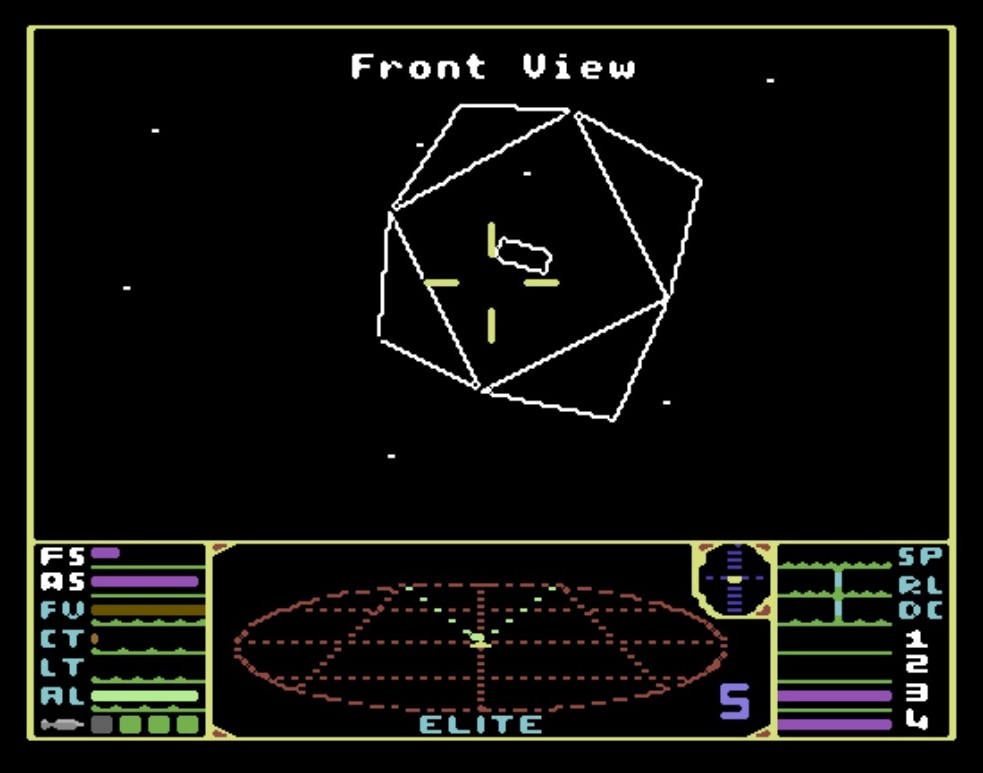
Leave a comment

Filed under Finance, IT, Law, Media, Politics

How it should be

I have had my issues with the latest released games. No quality previews, no quality exams, just after released reviews. In that regard Gamespot has lost a lot of respect in the eyes of many gamers. An example is Dying Light released on January 27th (Digital copy) and reviewed by Kevin VanOrd on January 30th, 2015. It is at present debatable what value Gamespot has left for the gamers at large.

In opposition to this is the review by ‘the RadBrad’ Published on December 10th 2014 (at https://www.youtube.com/watch?v=RLHR5smxbsc).

To be honest I have never been too much for Zombie games and Zombie movies. I have seen a few good ones, but it was never my cup of tea. Why tell you this part? Because this game, as far as shown by RadBrad blew me away! This game looks beyond awesome. The graphics are smooth and it looks pretty detailed. When I took a second slow look, there were a few little ‘glitch’ like parts, but they were minimal. The graphics in the houses and rooms were top notch. This was the PC edition, so I am curious regarding the PS4 edition, time will tell. The video is a must if you are interested in this game. So now I get to the second issue. Kevin rated the game 7 out of 10 with as one bad mark ‘Too many missions are either boring, frustrating, or just plain bad‘. The first hour video (by Radbrad) shows a clear intro on how to play the game, which was pretty amazing. So, the question becomes how this game was just set to 7/10 (partially questioning Kevin’s reasoning). The game is very open world, but still scripted into missions, all in Zombie style. The approach is not unlike several RPG games, now in a modern setting. Here I get my first issue, Infamous: Second son, a game that started good, but then declined in many ways gets a rating higher than this game. So far this game is all full on great, so let’s take another look at the game. When I looked at the smooth Gamespot view, I did see the critique given, there is however an issue, these glitches seem to be PC glitches, were the consoles not compared? That is all a factor, especially as PC, Xbox One and PS4 are all separate consumer markets. YouTube also had a review by Playstation Access (at https://www.youtube.com/watch?v=0AyhZyOMX6A), showing that the PC version had superior graphics, yet the PS4 version still looked really good. So as such, it seems that Dying Light is a different challenge for those into RPG’s and a passion for watching the waking dead, Dying Light seem to successfully combine the two.

Now for the timeline, what was shown by RadBrad, which was not a finished version showed a lot more quality than the Gamespot version. There is of course a difference, Gamespot covers quickly in 5 minutes, what RadBrad takes an hour to show, which gives you a better overall view, but of course, seeing the actual first 2 missions are at that point a massive spoiler. Considering that the first two missions are all about getting the feel of the game, it is not a biggie.

For the most, my biggest issue is that RadBrad covered better and more in depth almost 6 weeks before Gamespot could be bothered to do so. I do not care about the reasoning, they are supposed to be the big boys, and all sponsored up by Ubisoft no less, so the delay and lack of view is not excusable. I am not attacking Kevin on the review, glitches and issues. They are his view (and he is entitled to them), and in the movie he clearly shows the glitches. It is so interesting that the consumer was denied this insight with Assassins Creed Unity until after the game was released in the shops. Dying Light will arrive in stores in 3 weeks; the digital copy is available now (for those who cannot wait).

So, how should things be?

That is at the core, when I was a reviewer; I had access to games usually 3-4 weeks before release. In a few instances that gap was a lot less, but it did not happen too often.

Should we allow for reshaped originality?

That is the question that is linked to all this as new markets are starting to open up. It seems that Sony is finally seeing the light. Perhaps better is the fact that they are seeing the light they initially ignored and now, a year later we are slowly seeing ‘new’ versions appear, new version of previously released games. This is not a bad thing or an issue. Is borderlands 2 any less original now on the PS4 when it was released on the 360/PS3 over a year ago? The game was amazing fun and will give loads of pleasure to the new additions on nextgen systems. The linked issue to all this, is how it will be reviewed. Even it is a transfer, even if it is a combination of the game and DLC parts, will it be properly looked at?

The next step reviewers should investigate is what I would call a ‘redundancy level’ of gaming. To ‘accommodate’ the marketing divisions to optimise their path, some companies have done away with massive levels of quality control. Halo: The Master Chief Collection, Far Cry 4, Assassins Creed Unity, GTA5 and the list seems to go on, all have the same problem, when you buy the game, you are again forced online to download a day one patch, many of them well over 1Gb. It seems that for the most offline play is a thing of the past. Sony and Microsoft needed their data and they will take whatever path they need to get it. So is the last part true, or is it a path that is only in my imagination? For Halo that patch was not 1Gb, it was 20Gb, which means that for some the patch represents no less than 30% of their download bandwidth, which also makes it over 10% of the total hard drive space of the Xbox One, a little excessive, isn’t it? In addition, when looking at the Gamespot review (at http://www.gamespot.com/reviews/halo-the-master-chief-collection-review/1900-6415958/), we see that not only was the review done 4 days after release, but the day one patch issue (the mandatory 20Gb download) did not get any mention, yes, the game did not get a decent rating (6 out of 10 is not that good), but when looking at the ‘bad’ points, the mention of the day one patch is blatantly not there either. So whether we like a revamp of a game, it seems that reviewers need to up their game by a fair bit, a side Gamespot has not been on par with.

These events all link to another issue, which is now getting more and more negative visibility to the audience at large. That negative view only became stronger when Sony got hacked again, and even though not deserved, Microsoft is getting hit by this negative paint to some degree as well. It seems a little too simple to call this ‘conspiracy theory’, yet from their own site we get “Collection and use of your information by Sony Online Services is governed by the SNEA Privacy Policy, which can be found here: http://www.qriocity.com/us/en/legal-privacy“. The link throws you to a generic page where we see a menu and no privacy policy. How interesting such an oversight, whilst this was a direct link, perhaps the privacy policy was removed? In addition, no matter how much we protect our system, no matter how strong our passwords were, the fact that at Sony we find the following: “We do not require that website visitors reveal any personally identifying information in order to gain general access to our websites. However, visitors who do not wish to, or are not allowed by law to share personally identifying information, may not be able to access certain areas of our websites, participate in certain activities, or make a purchase from the PlayStation®Shop“, which is nice, because that is where the patches seem to be, so again, your data is collected, which is than downloaded because of failing security measures and shared with the world. This also has influence on gaming as such, the fact that a less than acceptable version is sold, means that the gamer is not getting value for money. No matter how great the update is, we need to be online and lose time downloading the patch and installing it, with all the additional loss of hard drive space.

This is however not about data collection, but there was a reason for the mention. As we go to ‘reshaping originality’ and ‘how things should be’, we see that even though PS4 started a relaunch with ‘The last of Us‘, which was the last gem on PS3, it is not close to being the only one. The Russian based game Metro is another ‘re’-launch. The question then becomes, will the reviewer take their time to take a proper look at these games? We have seen lack of reviewing with true new titles, how much more lacking will a relaunched title be?

Time will tell, but there is definitely a little less time as gamers are less and less positive about the quality of the latest launches, I also suspect that as the ball is fumbled in both places (reviewer and game maker) that people are less inclined to buy and more inclined to get to a place like Pirate Bay to get the goods and properly test the game, however, there will be a definite drop in revenue for the game maker here. They partially only have themselves to blame, because this has happened before! We saw similar steps when the CBM-64 and Atari-800 were out and even more issues in the time of the Commodore Amiga and Atari-ST. The consumer demands a decent quality game and they want it when it is released (a global thing), not 6 months later on a local market. The second issue has been successfully fought in the past, and it is not as bad as it used to be, but as digital copy and physical copy are too far apart in price and release dates, people will resort to other means, the fact that digital copies tend to be well over 40% more expensive in Australia then in other places is another matter that is angering the gamers and as such, the move towards a place like Pirate Bay is slow, but also slowly but surely is getting a lot more profound.

So how should things be?


Leave a comment

Filed under Gaming, IT, Media

As we trusted games

There is an interesting article in the Guardian I had an issue with to some degree. There is nothing wrong with the article itself, Keith Stuart made a good piece and it reads well (at http://www.theguardian.com/technology/2014/nov/13/games-reviews-are-changing-from-product-assessments-to-tourist-guides), so it came out last week and I only saw it just now.

First paragraph: “A decade ago, a games publisher would send out early copies of its latest release to magazines and websites. It would arrive with some sort of embargo restricting the date of any subsequent review coverage. Then, before the game hit the shelves, there would be range of critical responses to read through. That’s how games reviewing worked for 30 years“, well apart from the embargo, which I was never got. That is pretty much how it went. I started my reviewing in 1988. The age of CBM-64,  Atari ST, CBM Amiga and the IBM PC, which had something graphically ‘state of the art’ called ‘EGA’, the enhanced graphic adapter, which added up to the 15” resolution roughly the same of the average low level smart phone today. Games were in CGA and even though the quality of graphics was low, the quality of gaming was exceptionally high (for what we knew in those days). Roberta Williams (Sierra-on-Line), Peter Molyneux (Bullfrog), Richard Garriott (Origin) and Sid Meijer (Microprose) were the titans of gaming; they are the most profound, but not the only ones from those days.

The second part is the first part I disagree with “Now, it’s so much more complicated. Publishers don’t like releasing code early. It’s not just about protecting sales of mediocre titles (though that happens): they worry about piracy; they worry about major spoilers that could put players off purchasing a game that is highly narrative driven“, I personally believe that it is about mediocre titles. The worry of piracy is less an issue, for the reasons that consoles don’t really allow for piracy any more (compared to the days of Atari ST and Amiga), PC Games need more and more internet authentication (like 99.99% of them), and there is a truth in narrative driven games. When a $50 MGS Zero can be played in less than 30 minutes (according to Gamespot), you know that there is an issue. I go for the mediocre side, because in case of Ubisoft, we saw Watchdogs, AC Unity and now Far Cry 4, Far Cry 4 might have gotten themselves a 85% rating (only 70% on Gamespot), yet this is below par (for such a triple-A title), it means that Ubisoft failed to deliver a main title with a 90% plus game review this year, which is a really bad thing. In addition, Destiny didn’t make the high numbers and on the PlayStation 4, the only titles that truly showed the rating was ‘The last of us’ an amazing game originally released on PS3. From my point of view, it is one of the worst release years in a long while. No matter how new Nextgen consoles are, there is a level of competency lacking more and more.

This links directly to the next part of the article “With triple-A releases now costing $30-50m a pop, no wonder the companies responsible want to control the dissemination of their data and messaging. As in movies, everything is geared toward that opening week – millions of dollars of marketing, the acres of shelf space bought at key retailers – everything has to work just right“, if everything has to work just right, it made me wonder why quality assurance was not managed in better ways. If we see the failing that Assassins Creed Unity shows, gaming is overdue for an overhaul, especially considering the cost of such a triple-A game.

It saddens me to say, as a Sony fan, it did hurt me to see that PS4 gamers have not met the high octane game quality I had expected, I was personally more impressed with several titles exclusive on the Xbox One.

The next part is one I do completely agree with “And then the games themselves have changed. Most new titles have intricate and extensive online multiplayer elements – or they require you to be online just to download updates and/or because publishers want to keep an eye on you“, even though in several regards online play is less and less appealing, or just plainly inferior, the updates are more and more an issue. GTA-V, which is regarded as a good game ended up having a day one 1 Gb+ update need. Which is not the worst, but it shows a level of pressure to market deadlines and not quality. Our broadband internet connections seem to have removed the need of quality testing and fixing before release.

Then we get the part that is indeed an issue “The industry is always telling us that games aren’t products anymore, they are services. You get the initial release, but after that, you get updates, downloadable content, new modes, missions and experiences … So what are you reviewing when a game comes out? It’s potential? It’s raw functionality? You are not reviewing the complete experience anymore” Keith is nailing the nail on the head with a massive hammer, we are now getting a service, not software, but if we see the option that a bought game is nothing more than a service or a potential, how can we be treated fairly as a consumer, when we do not know the full article we are buying? It is a dangerous development when we buy not a game, but a concept. We are not there yet, but the danger is slowly creeping towards the installation drive of the computer we use for gaming, and with that approach is a larger and larger danger that the PC/console will get invaded in a hostile way and how can we be protected when not the system, but the game becomes the backdoor into our private lives, because that is a danger that several parties are not yet looking at (as far as I know).

The rest of the article, you should just read on the Guardian site. I do not completely agree, but Keith gives a good view of his reasoning and it is sound and well worth reading. The question becomes where will we go next? There is more and more indication that people (gamers), are less and less interested in the MMO/multiplayer experience and more into a quality solo play game. There is also a feeling from many that Multiplayer is more and more about micro transactions and less about quality fun. Most will accept micro transactions in free multiplayer games like ‘Blacklight’ and ‘War frame’, we can accept micro transactions to get the weapons that really pack a punch, yet with $90 games, people are not interested in additional charges. Even though in the situation of Black Flag, the additional $4 to get the weapons or technology advantage is nice, and the option clearly states that the upgrades can be gotten in the game whilst playing it. It is left to the person to choose. There is nothing bad about it, but when we see AC: Unity, where micro transactions can get up to $100, questions should be asked, even if those parts can be unlocked through playing. Now, I am not judging the $100 micro transactions, but there is a worry why such a purchase is even offered, how much can be leaped through? The worry is not with Ubisoft’s Assassins Creed: Unity, but after the ‘lessons’ many players were taught through Forza 5 how unsettling micro transactions were. Yet, in all honesty (as I am not an Xbox one user), can they be normally unlocked? If so, the issue is not really there, yet the value of high end cars, when we consider that in Forza 5 you get driver payouts of 35,000. However, some cars go into the millions, you need 285 level updates to be able to afford the 1964 Ferrari 250 GTO and that is only one of many cars, which seems to be an unacceptable way to push people towards micro transactions, it left many players with a bad taste in their mouths. If we look at the issues we see, no matter how we feel about a game, there are sides we’d not agree with and there are sides we are truly against. This varies per player, and as such we need to balance view and feelings, because there is no denying that gaming and games are all about emotions. We go for the games that drive our passion. I myself have been a massive RPG fan, yet when I look at the Elder Scrolls Online (ESO) game, I see little interest to continue this path, yet when I look at Mass Effect 3 and Diablo 3, I see and I experienced the best multi-player ever. To illuminate, ME3 has micro transactions, yet the boxes can be gotten by playing multi-player games, each round gets you credits and the higher leveled you played, the more coins you would get, and then you buy a box with random stuff, some good, some amazing and some average. Diablo has no micro transactions; multi-player there is just great and makes the bosses harder, which gives you better loot. There are not the only good games, there are more, and there are many games are nowhere near this good.

In the end it is about good gaming and plenty of games have it, but my issue is as mentioned earlier, overall quality is down, more often not properly tested, whilst as Keith Stuart states it, newer games seem to be about buying the concept, not the finished product. How games get higher in graphical quality, yet not in gaming quality. Is it just about the new systems, or are we faced with a new level of designers, that cannot stand up to the older titans, the actual visionaries. Titles like System Shock (1+2) can, when graphically updated, compete with the RPG games that were released almost 20 years later. If you want to consider First Person Shooters, then in my mind, Metroid Prime 1+2 are top notch achievements that have not been equaled. They were released on a system inferior to the PS3 and Xbox 360, so why are there no games of that calibre? Well, that would not be honest, they have games of that calibre, but they are equals at best, two games, and the first one 12 years old.

This shows the issue I have with the statements some make. ‘A new game each year’, now we must allow for the fact that marketeers will make wild statements at any given place to keep the press at bay and well fed, so we should not overly ‘analyse’ that part. An example can be found when we look at the Tomb raider series, a series that has seen highs and less so. The series also illuminates a flaw in the gaming industry, when we consider the earlier games we see an amount of gaming that is unparalleled, especially when we consider the first two games. No matter the graphic levels, the games were truly large in comparison and some of the levels were amazing in design. The cistern in the first one and the ship in the second one show a level of design the last one cannot even compete with. What took days in the first two games, took a mere 15 hours in the last game. I will agree that the graphics were amazingly unreal in that game, the game looks large but the levels are in the end small. I saw it as opportunities missed on several levels, but not for the quality of graphics. the interesting side is that Tomb Raider shows the gaming industry as it moved from storyline and innovation towards graphics and narration, which is not that big a mystery. Yet in that shift we have lost levels and game time. Which is why the appeal of RPG is vastly growing, the option to play long times, to visit places and go it your own way and speed, not hindered by narration, scripted events and scripting is more and more appealing to the gamers at large.

Even though many are focusing on the next generation of systems, the next level of gaming is not ready. As I see it, 2015 will show a large rise in quality of gaming, but the true gems will not come until 2016. Mass Effect 4 could be such a game, but will we see true innovation, or will we see a sliding line as the Assassins Creed series have shown. This thought also has a drawback. Good gaming is based on vision, a franchise is about evolutions and forward momentum, but visionary is not a given, but for good gaming an essential need. This is where the wheels tend to come off the wagon. God of War 3 brought that, the AC series did not, it brought iteration. Mass Effect might, and so far, the hype of No man’s sky is likely to bring new boundaries in gaming, but the reality is not always a given and as such, we can only wait and keep faith with the developers, which is why their change and their approach to gaming is so essential to us. There are of course issues with other approaches too. Even though the title ‘Whore of the Orient‘ sounds appealingly original, but will it be so? Time will tell! The danger isn’t what will be good and what won’t be. The issue is that we know how rare visionaries in gaming are. The last proven one was Markus Persson (maker of Minecraft) and Microsoft bought his idea for a mere 2 billion (it’s not that much when you say it fast), which is the highest amount paid for a gaming IP EVER! Consider Microsoft paying that much for one title and you know how rare visionaries in this field are, which is exactly why games are not set in one year increments, and why franchises seem to be key for gaming, but there is a new iteration that some forgot. The upcoming release of Elite, a revamp from the original game decades old, shows that good games are rare and will stand the test of time. The initial interest for Elite could be regarded as proof for that.

So is this about trusted games, trusted developers or new endeavours?

I have one thought, but I keep it to myself, it is important that you the reading gamer make up your own mind. I have given my thoughts on that what I experienced and what I value. I ignored some parts as they are not my cup of gaming, which we all have, out there are leagues of GTA lovers; I am not one of them. I do not debate the 90%+ score, gaming is for gamers and there is space for all of us, no matter which part we run to, from Silent Hills to Mario land. there is space for all of us, some will slaughter in the world of Unity, some crush in the lands of Diablo, we have our preferred places, yet the overall issue is not where we play or who we play as, but the quality of what we play is now in question, it has been in question for some time now and it seems to be getting more and more visible as the industry is pushing for revenue on 5 systems. My direct worry is that we end up with a product based on a 60% effort, which is something none of us had signed on for.

Leave a comment

Filed under Gaming, Media