Tag Archives: Unreal

The ability to create

That is at time the question is ask myself. You see, I can reengineer something in seconds, that is my brain does. It takes a little more to type the idea (usually in hours) and as such I wondered today if I still had it in me. I created a set of RPG games, from almost the ground up and they could be united in creating a completely new game. But in this case I wanted to create a new ‘action’ game. I really prefer stealth games, but to cleanse the pallet I need to revert to something new. It is hard to make something from the ground up as my brain contains the hundreds of CBM64 games I have played and they tend to get outside of my train of thoughts. Yet the idea of combining these games has merit as it becomes a totally new game. Not to mention that the CBM64 had massive limits and getting those lifted could send a new piece of IP to streaming systems. 

Why streaming systems?
I believe in these systems to entertain people for at least another decade and when they accept Unreal Engine 5 apps, the entertainment level goes straight through the roof. You see in the past I united Iron Helix and Murder on the Zinderneuf to create a new challenge a new game. I had the Amazon Luna in mind as it was the most likely contender, especially when Google dropped their Google Stadia. Then I considered another edition (a highly upgraded version) of Seven Cities of gold. From there I went to boggle my mind and consider a new version of Covert Action. With more memory comes more options. Then there was a setting to create a ‘Where the hell is Carmen Santiago’ with real mappings of wherever the game takes you. So where Microsoft failed and got mediocre games out of, I created a wave of partial originality. And now?

Now it is time to flex the brain one more time to set my (I think) ninth gaming idea to my blog.

So let’s combine Archipelagos (CBM Amiga) and Sentinel (Atari ST). These games were in its time awesome. It had all the trimmings of an addictive game and with the amount of levels quite the long play time. Yet the game was bland, in 1989 that was fine, but with streaming solutions we can have a lot more. So as I see it, the foundations are fine, but there are changes. The idea of an egg leading to an obelisk is one thing, but what if we changed the premise that the Obelisk is still the goal, but there are several ways that we get to that goal. There is the egg, but that leads to a bird (large) and that one needs to be defeated. When we take away the time limit of 90 seconds and we add more challenges as you proceed in the game. Devouring elements like trees (wood), blocks (stone), Ice (water) and fire we get a new setting. As the game grows we get more elements and more issues to resolve. It is in part reengineering, but that was merely one part of it. As we have Water, Wood, Stone and Fire we can get more elemental challenges. Water and Stone gives us the mud challenge, Fire and wood gets us the charcoal element, Water and Wood leads to forests and so on. Wood and fire are insensitive to each other, but mud and fire can interact. As such we get a wealth of new challenges to any archipelago. The trick is to find the right solution to get new options. It isn’t as single dimensional and simple as that. But this is a start and as I work out a few more kinks and alignments, we get a new game. Will it have appeal? Archipelagos did and that was 36 years ago. To add graphics and music isn’t enough. The game needs to be playable and should appeal to a niche of gamers and that has to be enough for a while. You see, players like Ubisoft want a game for everyone. I still believe (and have always believed) that a Game that appeals to all will please no one. That is the flaw Ubisoft never accepted. So as I align more games to make one niche more appealing I feel certain it will work. So how long did this take? Less then an hour. So as 20,100 worked on a few dozen of games. I thought of at least 10 games within a month of considering them. Would they all be successful? I do not know. I merely thought of the game (the RPG is completely unique). And as such I feel that it would hold up as it isn’t a copy of anything created. And they were all created around streaming systems. I believe in that solution as a console. I have nothing against my PlayStation and I will keep ion playing that system, but it cannot survive by itself and Microsoft is losing the edge they once had. So a new contender is needed. I still have faith in Amazon Luna. There is now the Tencent Handheld. It seems to be great, but it is a contender for Nintendo whilst harming the Microsoft market share they have. As such the Amazon Luna is likely the system to have as a streaming solution. 

So what about a unique game? That might take a little longer and there are contenders. Sony has Horizon, Microsoft has Fable and Nintendo has all things Mario and Pokemon. There is still space for more, however when you consider Horizons, the drive and ability to create totally new IP (like my RPG) takes time, effort and some luck. I think I got lucky and whilst I decided to focus on the storyline, there is more to it all. Is there space for a ‘simple’ single playing shooter, or non-RPG is possible, but between the CBM64 and the CBM Amiga over 10,000 games were created between 1982 and 2000. As such the option to create completely original games that fits the mould is rather rare. It becomes possible when the limits of these two systems are surpassed. Yes there is space for reengineering and that would become the first setting for any new game. We could go for ‘Defense of the Crown’ and set the premise to a Muslim side with ‘realistic’ challenges. We could unite games, get us a more challenging version of Covert Action and now not a 1990 Max Remington in the lead, but a more 2100 (year) version setting a more Tom Cruise minded person in this. A game with more electronic events, mobile events and there would still be the need to invade embassies, but we could add a few challenges with a 3D need.

Whilst all are focusing on their IP (which is not bad), Microsoft decided to focus on its system (also not a bad thing), but as the console wars go on with their IP on the forefront of their minds, more is needed and as such new IP (or reengineered) with a more open setting is as I see it a first. You see, gamers want more and as such the streaming systems have a unique perspective to add Sony and Microsoft gamers to their arsenal. Tencent seems to have figured it out and is going for all four systems with their Tencent system. The problem for me is that I have no idea where Tencent is going with their solution. As I saw it they have the option to add 50,000,000 ‘gamers’ and that puts them far ahead of Microsoft. How that goes? Time will tell. 

So whilst I am still focussing on creation, I will have to do that behind the lids of my eyes for now. So have a lovely day and consider what I could come up with in the next day.
Leave a comment

Filed under Gaming, IT

The name of the game

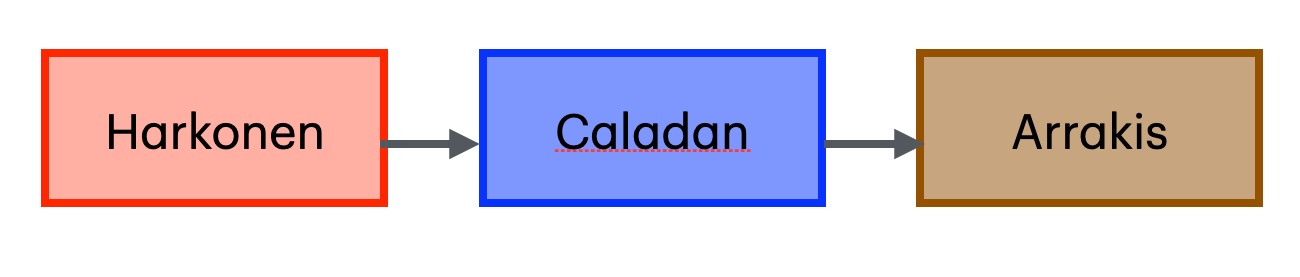
Last night I had an idea (I’ve had many). The inspiration was a game called Midwinter. It was designed by Mike Singleton and released in 1989. He was the first to revolutionise gaming, tactical gaming. When games (for the most) all focussed on one part, he made it an open challenge and it played on the Commodore Amiga. You could do almost anything, walk to a place, drive a truck to a base, swim to a base. You name it, you could do it. We stepped a little away from that. There is a foundation to do it, but not open enough. I thought of throwing fuel on the fire and make it more challenging. To do this I turned to the war on Arrakis. It is (for the most part) really open. Consider where you and your skills decide on the abilities your troops and the enemy troops have. In the first part of the game you are an Harkonen officer. A starter, a milk mouth. You start as a soldier and you are part of the managing forces from Harkonen. So you start as a land trooper. Consider the last two Dune movies (which should be part of the design). You attack and subdue Fremen. You oversee the miners, you fight the fremen, you fly the ornithopters and you get to do this over and over again. The game is set up in time slices. As you do better and better the dials of the Harkonen are set higher and higher. When all the slices are done, when all the tasks are done, the Harkonen are set. If you score well enough you get medals awarded to you by an officer or even the Baron. The challenge is to defeat your own achievements. 

Screenshot

And the setting is that as a Caladeen (the home world of Paul Atreides) you will have to do really good to defeat the forces you enabled. The second scenario is two fold, you have to create an alliance with the Fremen (or you cannot get to stage three). You get small stages in the beginning then larger stages and the challenge is to beat yourself. The system is set by what you achieve. In stage two the Harkonen might be seen as NPC’s. Their powers are set to values you achieved in stage one. In stage three you reset YOUR values, but they are supported by the Caladeen and their presence becomes available by what you achieved in stage two. 

This is all I have for now, but the idea is that this has not been done before. Also the setting is supposed to be smooth. You can walk in the imperial palace (stage 2) and then walk up to an ornithopter and fly off, but you get to deal with Harkonen troops and Harkonen saboteurs and depending on how well you did, they become more than a nuisance. Unlike Dune: Awakening it is 

not multiplayer, that is an important difference. Here you create the levels of your opponent. 

The setting does not need to styled by Dune. But that was the setting I had. You could do this as a re-write of the game Knights of the sky where you get to start in the German airforce and after that can choose French or British airforces. Knights of the sky was not high defined graphics. But now you can to this in Unreal Engine 5 on a PS5 and get the whole battlefield on your computer. The setting of gaming like this is almost the same. You get to set the power of the opposing forces (NPC’s) with THEIR quirkiness but with the fighting powers of you. Go look at the history of gaming. It has not been done before. Old games setting the taste of the new game. But with a larger defining edge. As I see it, it will give a larger timeline because as you get into Stage three of the first game, you might want to redo stage one and make the game harder to beat. A game that you can replay over and over again, because as you upgrade the scores of one opponent, your challenge will be greater. How are those spice truffles?

Perhaps over time I will write more, consider that you have to train a mentat (Piter de Vries/Thufir Hawat), a troop trainer (Glossu Rabban/Gurney Halleck) and so on. There is more thinking to do, because the need for training Piter de Vries or Thufir Hawat sets a taste to the game, but we do not see them in the movies to that degree. So how to go about it? It could be that the palace has a strategic room and as you do troop management, it sets the properties on how you are directed playing the game, so as these two are added later in the game, the troops will be according to what you decided on in the strategic room. I do not have all the answers yet, but as you can see, so far the gaming industry has done nothing of a kind and they had decades to get their ideas straight. 

Well that is enough for today, Saturday starts in 4 minutes.

Leave a comment

Filed under Gaming

Changing the game

There was a setting that was designed with the recently departed Google Stadia and the Amazon Luna in mind. I set the premise to 50 million systems in phase one and up to 200 million in phase two in mind. Alas Amazon wasn’t attracted to such a sales venue. Last night I pondered a few items and I occurred to me that the Apple Vision Pro was equally set to that premise. There is a limitation, they would have to be able to run Unreal Engine 5 environments. When that is possible the rest would auto fill in, the other parts would not need UE5. Take that and like it to the Apple Arcade and they would make Microsoft irrelevant within a year, optionally to years. It is the setting that will show the other players (like Kingdom Holding) that they lost out. When this setting goes to apple, they can define a new niche customer base. Apple Arcade matter because not everyone can afford the Vision Pro. Even if a cheaper version comes to market close to 75 million people would be left in the cold. And I reckon that Apple wants the entire cluster of people. The fact that you get an arcade setting that could be upgraded to Vision Pro almost sells itself. And my predictions were conservative. 200 million is a little over 10% of the entire cluster with Indonesia, Bangladesh and Egypt leading the way. Places were Apple have great growth potential. That and a largely untapped advertisement potential as well. In the end It is a market that will end Microsoft, it gaming and their edge population (the little they had in the first place). I have been going over the numbers in the first place and I can see no downfall here. 

Apple’s first task is to set the Vision Pro to deal with Unreal Engine 5, it is the cornerstone of success, or at least it will be. In the end Apple will have to open (or enhance) a data cloud in Saudi Arabia with later on added clusters in Indonesia and Egypt. But I reckon that when they pass 100 million added people it would be a trivial expenditure. And if they surpass the 10% group (which requires data insight that I cannot lay my fingers on) the entire setting will cost Microsoft and Facebook revenue that they currently think is ‘safe’. But they didn’t count on a wildcard and it was lost because they never looked behind them. Their was billions in revenue and it was left on the floor. I wonder if Apple ever considered that. Apple has no blame, their mission statement was based on their niche market. But technology and requirements changed. With Brics it changes even more. Now they have Tencent Technology to content with. Tencent might not have the Vision Pro, but my system was initially designed without it. The Vision Pro has as  see it a larger benefit, but it is a mere ‘nice to have’. You see, sales engineering has a three tiered awareness approach. It is set to ‘must tell everyone’, ‘nice to have’ and the rest. When you focus on the first line, most people tend to ignore the ‘nice to have’ but it is there that the setting gives people outside the designated clusters are found. So don’t set to the wealthy, just make sure that they see the upside, and Vision Pro would do that. It sets the premise of a solution from 5 billion in phase one up to 18 billion in phase two and that will not include advertisement money over a dozen countries. I reckon that this is more than I can imagine (because this has not been done before) and several parts were found be looking behind me, something the current captains of technology industry aren’t doing. They are all looking forward, to the mystical AI (which does not exist). I decided to look at what was forgotten and tinkered it into a new mould. This implies innovation patents and all that is outside of the AR and printable displays (see other stories on this blog). All that and more are a future stage for the implementor of this solution, which was exactly why I got to Kingdom holding. On the far end of that, there was the real estate upgrade I considered. In light of what I noticed around Dubai. A side not considered, because all these web solutions couldn’t think out of their pond. But water is here it is and as such they didn’t consider it and it is here were I saw a side that could elevate Tencent and Huawei to a larger profit margin, not just for Dubai, but a global solution that allow real estates on a global setting to elevate their business to unfold. Dubai makes it clear. Yet it will not stop there. As the song goes New York, London, Paris, Munich they will all see the benefit and after that all metropolitan areas will follow suit. So do you think I was kidding when I said that Google et al fumbled the ball here? They ignored billions in revenue and they are all chasing a false AI dream. In a few years they will realise that a hype is merely a path to awareness and not towards revenue. Revenue needs to be real and achievable. For that we get “fake and deeply flawed Artificial Intelligence (AI) is rampant”, a quote by Frederike Kaltheuner based on works of over 20 writers. You see what the people regard s AI is merely to sides if it. LLM (Large Language Models) and DML (Deeper Machine Learning), both powerful and both opening all kinds of doors, but it is not AI, or Real AI as they now call it. Like other awareness hypes created, it isn’t real and in the mean time I created the idea for something real that could the right party give up to 18 billion a year. So when did these parts hit you, does it make sense that Google and Amazon lay off around 35,000 jobs? I will let you decide on that. In the mean time I will place more IP online so that it can only continue as Freeware. The Public Domain will show the rest on what they all missed out on. It might give me some cash, it might not. But I Will get the last laugh. I will have kept it out of the hands of Microsoft.

Have a great Thursday.

Leave a comment

Filed under IT, Law

Here come the eardrums

Yup, it is about sound and for a second the BBC woke me up (they tend to do that). There we see (at https://www.bbc.co.uk/news/technology-68004968) ‘Gamers at risk of irreversible hearing loss and tinnitus’. I never was in a position to play music too loud, or play games too loud. I at times had my earphones and the music was up by a little. But some devices (like my MD player) had the ability to limit earphone volume to protect my hearing. Huh, what? Yes, hearing. So to read this article where we are given “The new review suggests that gamers play for long periods of time with the volume turned up, beyond safe limits. It says this could contribute to irreversible hearing loss or tinnitus, a constant ringing in the ears.” We are also given that this test was done in over 14 studies which in total involved more than 50,000 people. Now I have an issue with this. It implies that these studies had no more than 5,000 people each. This is not enough, but should not be dismissed out of hand because of it. Then there was “Some of the studies they looked at went back to the 1990s, when the gaming world was very different to now.” So the ‘damage’ is larger. It is over a much longer time making me question if a real medical investigation was done. In the 90’s games weren’t taken seriously, hardware was to some degree a joke (compared to today). Sound started to come through with the Soundblaster in 1990. It became serious with the AWE32 in 1994. But the overall setting was still not the best environmental setting. The only game who took sound serious in gaming was 

There you could be ‘heard’ and you could hear opponents. It was the first attempt to more serious stealth and they did it pretty good. Now we have a new setting. The new consoles could take the entire setting to new heights, where stealth is about hearing and not being heard. Even the Horizons series aren’t on that page yet. It is all about not being seen. Still, there is no telling where they take it in Horizons 3, the PS5 is ready for this. There are some indications (from unverified sources) that Unreal 5.5 will be ready too (not sure how Unreal Engine 5 picks it up). Gamers are visual (for the most). So stealth gaming could make a big swing in the next 5 years. Those who screwed up their hearing can rely on the next Call of Duty and Fortnite3 (or 4). It will be all about the graphics and sounds will be not an issue, if it is you (the deaf person) will become the ultimate loser in that game. 

This sounds sad and it is. We have all that hardware and certain protection stages have been either ignored or could be circumvented.

My first question becomes ‘Could more be done?’ It is not clear, because the article alerts us and does not show where the borders are. It is easy to blame the parents and they were probably the one who got him the earphones in the first place. We have seen a whole range of optical improvements, starting with the Unreal Engine all the way back to 1998, I reckon that sound is soon the next wave of improvements. I reckon that this is also the moment that there will be a huge improvement in stealth games. 

Below was my achievement some time ago. I am pretty proud of it, but I do realise that these Russians never heard me, I wonder how well I ended up if that was the case. 

I do love my stealth games, and I hope to see a whole range of improvements over the time to come. In addition, consider what happens when sound becomes a real player in the next Assassins Creed games. You still think you can sneak into places Basim? Or do you need to upgrade your stealth first? A stage that is merely waiting to happen, if you could hear that it. As such finding new protection systems for the hearing of the gamers seem to have a bigger need at present.

Just a thought to consider whilst I approach Friday in 3.1 hours.

Leave a comment

Filed under Gaming, IT, Science

The joke is on us (all)

Reuters gave light (again) to an article that I wrote earlier, 2 days ago (at https://lawlordtobe.com/2021/03/30/an-almost-funny-thing/) I wrote ‘An almost funny thing’, I got it from the BBC and I feel certain that some official people were already already on the ball, being a mere 2 years late. I reckon that some figured out that the growing cash flow these people ended up with will count against certain players, if not a lot more. Some people might have gotten additional considerations with “In the OSI model, we see layers 3-7 (layer 8 is the user). So as some have seen the issues from Cisco, Microsoft and optionally Zoom, we see a link of issues from layer 3 through to layer 7 ALL setting a dangerous stage. Individually there is no real blame and their lawyers will happily confirm that, but when we see security flaw upon security flaw, there is a larger stage of danger and we need to take notice” and that is the tip of the iceberg. So when Reuters gives us ‘Ransomware tops U.S. cyber priorities, Homeland secretary says’ this morning, we might not get the entire field in view and that is not on Reuters. And as Alejandro Mayorkas gives us “ransomware was “a particularly egregious type of malicious cyber activity” and listed it as the first of several top priorities that his department would tackle in the online sphere” we are not getting the entire story and we are happily giving the Department of Homeland Security that as they have other consideration as well. Yet I personally believe (speculatively) that some programmers working in specific places got handed libraries to make more, but also got a setting where they created software that opened a backdoor, so that all parties have an excuse and any investigation will end up going nowhere. You see there are plenty of real option givers that start as ‘Top 9 Python Frameworks For Game Development’, and that is where it starts. Consider the following scenario: as some developers become better they seemingly need shortcuts and would you believe it, some knows someone on the darkweb and they will hand the developer an option, two actually, one is free, the other one is $19.99, but is ‘presented’ as a lot more secure and it has documentation, that is all that they need and as the library is linked, the trap is set. The game maker does the right thing and enhances his program with either version (both have the flaw), and now, with a passive backdoor is passive (gaming is required), it passes through a whole range of systems and as the game is offered free with ‘in-app purchases’ the people behind the screens suddenly have 100K+ stations for all kinds of use. So whilst some are trivialising “No one really knows the size of the dark web, but most estimates put it at around 5% of the total internet. Again, not all the dark web is used for illicit purposes despite its ominous-sounding name”, we see, ohh not all is illicit, but consider that this software would be in the open internet if it was all on the up and up. The indie developer (many companies of one) has that ‘special feeling’ as he was introduced and others were not, but they all were and some were offered similar links in the end all linking to the same package, and that is the game, so when we we see greed driven idiots like Epic games (and a few others) setting the stage to avoid the Google and Apple store, we will see a much larger shift, one that gives free reign to criminal minded people to infect a massive amount of systems. So when you think that players like DHS is ready for these assaults, the people will soon learn the hard way that they were not and from there it will go from bad to worse.

And this is not about Epic games, even as some will herald “Cesium will be available for free for all creators on the Unreal Engine Marketplace. It’s an open-source plugin for the engine that unlocks global 3D data and geospatial technology. This means that games that use it will be able to discover in real time the location of a player in a given 3D space, using accurate real-world 3D content captured from cameras, sensors, drones, and smart machines” (source: venture beat), we think it is all for the good of us, and it is not, it is good for the pockets of Epic Games, but what happens when other elements get a hold of the saved data linked to geospatial technology? What happens, when foundational advantages that were (for the most) in the hands of players like CIA and GCHQ; what happens when cyber criminals get THAT level of precise data and THOSE cluster data groups? Did you think of that? So whilst some laugh away “games that use it will be able to discover in real time the location of a player in a given 3D space, using accurate real-world 3D content captured from cameras, sensors, drones, and smart machines”, the data will go a lot further, it will optionally end up not merely showing those systems, but the locations of all systems they link to as well. It is a hidden version of what I called the ‘Hop+1’ intrusion malware (thought up by yours truly) that made much of the CIA counter software close to useless, someone took that idea and made a corporate version with some version of a backdoor, in that stage the internet will end up being as dangerous as walking the dog (not the ‘M’ word), in a minefield. Letting the dog have a shit will be the last thing you did that day for a very long time to come.

As such, some might applaud the DHS (they actually did nothing wrong) as we see “a DHS official said the reference was to underground forums that help cybercriminals franchise out their malicious campaigns.” Yet under these situations, finding blame is close to impossible and the mistrusting developers end up helping cyber criminals in the process, and that is if there is ever any prosecutable connection found. 4 stages not directly linked will make prosecution close to impossible. So how is that for size? And whilst we take notice of “He said the agency would “quarterback” the U.S. government’s digital defences and serve as a “trusted interlocutor” between business executives and public servants” we see that their heart is in the right place, but the people they are hunting are heartless, devious, better funded and technologically more up to speed. It is a race many politically governmental intelligence organisations cannot win, not now, and optionally not ever. What a fine mess some corporations got us into.

Leave a comment

Filed under Gaming, IT, Law, Military, Politics, Science

Burning out your life

Yesterday’s news in the Guardian is skating on an interesting side. Yes, there are more games awards coming, there are new releases and there are all kinds of events coming into play. So when I read ‘Crunched: has the games industry really stopped exploiting its workforce?’ (at http://www.theguardian.com/technology/2015/feb/18/crunched-games-industry-exploiting-workforce-ea-spouse-software), I read it with a different set of eyes.

The first part is “EA relied on vagaries of American law that classify some IT professionals as exempt from overtime pay. The settlement in the second case featured a quid pro quo: employees would be reclassified in order to get overtime but would give up their stock options“, I can guarantee you that I have been in the same set of shoes, Market Research is at times as caring as a steamroller driving over Miss Daisy. It is nice to see the claim ‘stock options‘, yet that flavour of reward tends to be for the managers and the heads of development, not for all the programmers. They tend to get an evening of free food and booze. Take 35 programmers each having done 100-250 hours of extra time, getting paid off with a $300 meal, works out great for the manager getting his 25,000 stocks at $0.50, not so great for others. I am not stating that this works exactly like that in gaming, but I have seen it in other areas of software.

The most common theory is that the industry is simply too young and too fast-moving to integrate proper management techniques. “Our project was huge and our overall quality assurance process at the time was very basic and waterfall-esque,” recalls one quality assurance worker at EA“, is the second part. This has been shown in several games of late, if we look at the flawed releases of 2014, we can clearly see a lacking scale of QA. It then refers to the work of Fred Brooks on how company size influences efficiency. There is no denying that. Proper management is required, especially when the group grows faster than projected. A special mention of the honour guard must be given to the Marketing department who then also changes the timeline, to get that extra revenue, like marketing COULD have figured that part out at the very beginning. All this will add to the burden of quality delivery and the stress of the workers.

This quote is important, as I consider this to be a stronger part of the sliding quality scale “I was a quality assurance tester at Rockstar, and at its worst, we worked 72 hours a week“, a decent reason for quality to slide (irritating that Rockstar still pulled of a 90% plus rating, although they had a few start-up issues), especially when you consider the following quote “if you had issues with it, you were told ‘Well, you can go stack shelves at Tesco instead or answer phones at a call centre’. You were treated as disposable“, not an entirely unknown event for some in the IT pool. When we consider ““Developers and managers should never have to work more than 40 hours a week,” he says. “It’s a fun job, but it shouldn’t be an exploitative one. Everyone has a life. Let them live it, it’s short enough as it is”“, that sounds partially as a solution, but only if it affects the entire range of staff.

I personally see this all as a reason on why there has been a sliding scale of quality. Is there a chance that Ubisoft has been on this track? This is NOT an accusation! You see, too many hours result in burnout, burnout influences creativity and resolve, crunch time, might give a little extra resolve, but in the end it costs more then it brings. I think that the power of innovation will always win, if balance and rest (to some extent) is made available to revive the soul and the mind.

I think that the next quote sounds nice, but is it enough? “Over the past 18 months, EA has been making significant investments in new quality assurance tools and automation technology, implementing ongoing testing right from the beginning of game conceptualisation. These changes are ultimately improving game quality, as well as reducing the need for the crunch periods”. These tools need proper implementation, they need proper assessment and the people need to properly use them. It tends to add a strain to all levels for a little while. More important, it is only one side of the game (pun intended). For example Mass Effect 4, the engine, the locations, the interface, all are under stress to be made. What if a solution throws the gaming experience? What happens then? What happens when the initial reception is ‘average’, what will marketing do then and more, what will the size of crunch become at that point? You see, the article ignores one little part. For all intent and purpose, games tend to surf at the very edge of technology.  In some cases the makers will attempt to get the max of a system that is at times a little buggy and when you try to use 99% of the system, things tend to go pear shaped really fast. We can offer that the danger of being over ambitious is a bad thing, but this is how some games came into existence. The very first Unreal and Unreal tournament were both chartering the maximum of graphical capability when they were released. Some people invested hundreds of dollars to get a Diamond Labs Graphics card to get the maximum of the game. This is only the tip of the iceberg, when we see consoles there is less manoeuvrability, yet getting the maximum of a game has never stopped the developers. That part is not addressed and that part is every bit as important in dealing with the timeline and QA of a game.

Yet, it is not as much as it was (or so they say), but making the great hit at the E3 or another main release date is the main drive of crunch, especially when the final piece of the development puzzle does not quite fit. That part might be addressed in the management charter, but we must also be realistic that a great game takes time to develop, which made a statement given by Ubisoft “We are able to offer people a new Assassin’s Creed every year because they want Assassin’s Creed every year” nothing more than a joke. Especially if they wanted to rule the gaming industry. In addition I would like to raise that the next big thing is supposed to be ‘No Man’s Sky‘ which will arrive in 2015. We must realistically anticipate that the hype gets away from us all, but it is still seen as the big thing. It took several years, which gives additional view to the hilariousness of: “Ubisoft: No Annual ‘Assassin’s Creed’ Would Be ‘Very Stupid’“, it is such an issue because true innovation takes time, consider on how certain glitches had been around in AC2, AC2B, AC3 and AC Revelations. I can understand that some of these glitches were around in the second game, but to still have those issues 2 games after that is just a laughing matter. There is a reason for me to mention Ubisoft, not because I am ‘so’ against them (I truly am not), but their track record speaks for themselves. So will 2015 be an EA year? That part remains to be seen, however, as I see it at present, there is enough indication that Ubisoft had been hit by burnout staff (assumption on my side). Will a change of atmosphere give us better games? I certainly hope so, because games thrive on the creative and innovative mind, a state that crunch time seems to destroy. This is not just my view, there are loads of views out in the open, some scholarly, some less so, most of them all agree that crunch time and creativity are opposites, so why rely on it? My personal view is that in several cases, these companies (the big ones) didn’t choose the wrong style of management, they choose the wrong sort of manager altogether.

If you doubt my words (which is always fair enough), then consider which games were the true big hits and how they were made. The age old example remains the strongest one. Minecraft was never a big project, yet Microsoft regarded it to be worth over 2 billion. a simple low res game, addictive as hell is worth more than the bulk of the gaming industry, you see, Ubisoft and Electronic Arts both made the same mistake, as they ‘relied’ on a business approach with BI solutions and spreadsheets, they forgot their number one part. If a game is no fun, you lose all your customers really fast. They both made that mistake in huge ways. Both forgetting that their games rely on innovation and creativity, both have ad massive losses in that regard. Will Ubisoft recover? That is hard to say, the EA machine is claiming improvement and it seems that Mass Effect 4 will be their greatest test. EA got hurt badly by Sims 4 and Battlefield, we should also look at ‘Dragon Age: Inquisition is great, but here are 8 things it could do much better‘ on GamesRadar, because when we read that this is a 100 hour game and it loses momentum, we can agree that $100 for a game that could be played within 2 weeks is a little demotivating. It goes back to long before Infamous: Second Son (which is just one of the games that could have been legend), I think that the makers need to retrace their steps on how many hours a game should offer. No matter how good the graphics are, I finished Tombraider in one weekend, which is not good mojo money, especially when you consider that the initial edition (on PS1, 19 years earlier) took a lot longer and was riddled with juicy little challenges. Aren’t games supposed to go forward on more sides than mere graphical resolution?

So as we judge those who make the games we desire, we see that those thinking that they are pushing towards what we desire, only end up delivering a lessened product due to pressures from too many sides, not in the least pressures that they internally created. Even delays (Watchdogs and Elder Scrolls Online) end up not being solutions, in case of the Elder Scrolls, with so many delays that the latest tells us June 2015, has been the reason for many people to just cancel the order altogether. The fact that Elder Scrolls has dropped the subscription part shows just how dangerous their position has been. Here I do want to brag a little, because I came up with an entirely new Elder Scrolls almost two years ago, one that could have saved them many issues as they tried to ‘fix’ their MMO approach. Just as consoles require great games to survive, great games require the right people, people who need to be well rested to get them that golden idea that will make legend. Watchdogs did get a lot closer due to the delay, but what if the difference between 84% and 93% was two weeks of rest? That one golden idea that drove the game to legend status? Is it realistic? You see in hindsight that is all good and well for me to claim, but that is AFTER the fact. I believe my view is the right one, they just needed the right manager to inspire them a little further along, but as always, it is a personal view and it is a debatable one, I do admit to that part.


Leave a comment

Filed under Gaming, IT