Tag Archives: AI

A legislative system shock

Today the Guardian brings us the news regarding the new legislation on personal data. The interesting starts with the image of Google and not Microsoft, which is a first item in all this. I will get back to this. The info we get with ‘New legislation will give people right to force online traders and social media to delete personal data and will comply with EU data protection‘ is actually something of a joke, but I will get back to that too. You see, the quote it is the caption with the image that should have been at the top of all this. With “New legislation will be even tougher than the ‘right to be forgotten’ allowing people to ask search engines to take down links to news items about their lives“, we get to ask the question who the protection is actually for?

the newspapers gives us this: “However, the measures appear to have been toughened since then, as the legislation will give people the right to have all their personal data deleted by companies, not just social media content relating to the time before they turned 18“, yet the reality is that this merely enables new facilitation for data providers to have a backup in a third party sense of data. As I personally see it, the people in all this will merely be chasing a phantom wave.

We see the self-assured Matt Hancock standing there in the image and in all this; I see no reason to claim that these laws will be the most robust set of data laws at all. They might be more pronounced, yet in all this, I question how facilitation is dealt with. With “Elizabeth Denham, the information commissioner, said data handlers would be made more accountable for the data “with the priority on personal privacy rights” under the new laws“, you see the viewer will always respond in the aftermath, meaning that the data is already created.

We can laugh at the statement “The definition of “personal data” will also be expanded to include IP addresses, internet cookies and DNA, while there will also be new criminal offences to stop companies intentionally or recklessly allowing people to be identified from anonymous personal data“, it is laughable because it merely opens up venues for data farms in the US and Asia, whilst diminishing the value of UK and European data farms. The mention of ‘include IP addresses‘ is funny as the bulk of the people on the internet are all on dynamic IP addresses. It is a protection for large corporations that are on static addresses. the mention of ‘stop companies intentionally or recklessly allowing people to be identified from anonymous personal data‘ is an issue as intent must be shown and proven, recklessly is something that needs to be proven as well and not on the balance of it, but beyond all reasonable doubt, so good luck with that idea!

As I read “The main aim of the legislation will be to ensure that data can continue to flow freely between the UK and EU countries after Brexit, when Britain will be classed as a third-party country. Under the EU’s data protection framework, personal data can only be transferred to a third country where an adequate level of protection is guaranteed“, is this another twist in anti-Brexit? You see none of this shows a clear ‘adequate level of protection‘, which tends to stem from technology, not from legislation, the fact that all this legislation is all about ‘after the event‘ gives rise to all this. So as I see it, the gem is at the end, when we see “the EU committee of the House of Lords has warned that there will need to be transitional arrangements covering personal information to secure uninterrupted flows of data“, it makes me wonder what those ‘actual transitional arrangements‘ are and how come that the new legislation is covering policy on this.

You see, to dig a little deeper we need to look at Nielsen. There was an article last year (at http://www.nielsen.com/au/en/insights/news/2016/uncommon-sense-the-big-data-warehouse.html), here we see: “just as it reached maturity, the enterprise data warehouse died, laid low by a combination of big data and the cloud“, you might not realise this, but it is actually a little more important than most realise. It is partially seen in the statement “Enterprise decision-making is increasingly reliant on data from outside the enterprise: both from traditional partners and “born in the cloud” companies, such as Twitter and Facebook, as well as brokers of cloud-hosted utility datasets, such as weather and econometrics. Meanwhile, businesses are migrating their own internal systems and data to cloud services“.

You see, the actual dangers in all that personal data, is not the ‘privacy’ part, it is the utilities in our daily lives that are under attack. Insurances, health protection, they are all set to premiums and econometrics. These data farms are all about finding the right margins and the more they know, the less you get to work with and they (read: their data) will happily move to where ever the cloud takes them. In all this, the strong legislation merely transports data. You see the cloud has transformed data in one other way, the part Cisco could not cover. The cloud has the ability to move and work with ‘data in motion’; a concept that legislation has no way of coping with. The power (read: 8 figure value of a data utility) is about being able to do that and the parties needing that data and personalised are willing to pay through the nose for it, it is the holy grail of any secure cloud environment. I was actually relieved that it was not merely me looking at that part; another blog (at https://digitalguardian.com/blog/data-protection-data-in-transit-vs-data-at-rest) gives us the story from Nate Lord. He gives us a few definitions that are really nice to read, yet the part that he did not touch on to the degree I hoped for is that the new grail, the analyses of data in transit (read: in motion) is cutting edge application, it is what the pentagon wants, it is what the industry wants and it is what the facilitators want. It is a different approach to real time analyses, and with analyses in transit those people get an edge, an edge we all want.

Let’s give you another clear example that shows the value (and the futility of legislation). Traders get profit by being the first, which is the start of real wealth. So whoever has the fastest connection is the one getting the cream of the trade, which is why trade houses pay millions upon millions to get the best of the best. The difference between 5ms and 3ms results in billions of profit. Everyone in that industry knows that. So every firm has a Bloomberg terminal (at $27,000 per terminal), now consider the option that they could get you that data a millisecond faster and the automated scripts could therefor beat the wave of sales, giving them a much better price, how much are they willing to pay suddenly? This is a different level of armistice, it is weaponised data. The issue is not merely the speed; it is the cutting edge of being able to do it at all.

So how does this relate?

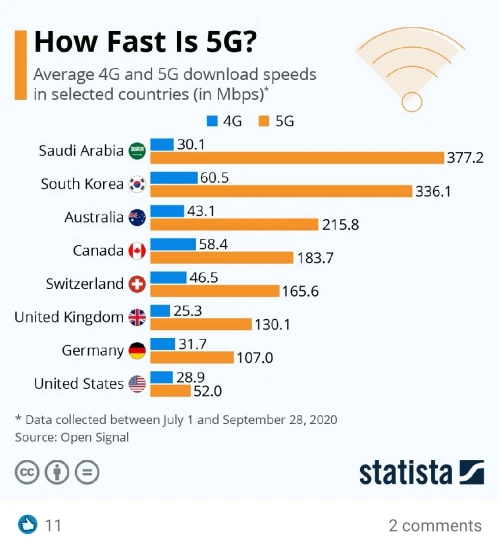
I am taking you back to the quote “it would amount to a “right to be forgotten” by companies, which will no longer be able to get limitless use of people’s data simply through default “tick boxes” online” as well as “the legislation will give people the right to have all their personal data deleted by companies“. The issue here is not to be forgotten, or to be deleted. It is about the data not being stored and data in motion is not stored, which now shows the futility of the legislation to some extent. You might think that this is BS, consider the quote by IBM (at https://www.ibm.com/developerworks/community/blogs/5things/entry/5_things_to_know_about_big_data_in_motion?lang=en), it comes from 2013, IBM was already looking at matters in different areas close to 5 years ago, as were all the large players like Google and Microsoft. With: “data in motion is the process of analysing data on the fly without storing it. Some big data sources feed data unceasingly in real time. Systems to analyse this data include IBM Streams “, here we get part of it. Now consider: “IBM Streams is installed on nearly every continent in the world. Here are just a few of the locations of IBM Streams, and more are being added each year“. In 2010 there were 90 streams on 6 continents, and IBM stream is not the only solution. As you read that IBM article, you also read that Real-time Analytic Processing (RTAP) is a real thing, it already was then and the legislation that we now read about does not take care of this form of data processing, what the legislation does in my view is not give you any protection, it merely limits the players in the field. It only lets the really big boys play with your details. So when you see the reference to the Bloomberg terminal, do you actually think that you are not part in the data, or ever forgotten? EVERY large newspaper and news outlet would be willing to pay well over $127,000 a year to get that data on their monitors. Let’s call them Reuter Analytic Systems (read: my speculated name for it), which gets them a true representation of all personalised analytical and reportable data in motion. So when they type the name they need, they will get every detail. In this, the events that were given 3 weeks ago with the ITPRO side (at http://www.itpro.co.uk/strategy/29082/ecj-may-extend-right-to-be-forgotten-ruling-outside-the-eu) sounds nice, yet the quote “Now, as reported by the Guardian, the ECJ will be asked to be more specific with its initial ruling and state whether sites have to delete links only in the country that requests it, or whether it’s in the EU or globally” sounds like it is the real deal, yet this is about data in rest, the links are all at rest, so the data itself will remain and as soon as HTML6 comes we might see the beginning of the change. There have been requests on that with “This is the single-page app web design pattern. Everyone’s into it because the responsiveness is so much better than loading a full page – 10-50ms with a clean API load vs. 300-1500ms for a full HTML page load. My goal would be a high-speed responsive web experience without having to load JavaScript“, as well as “having the browser internally load the data into a new data structure, and the browser then replaces DOM elements with whatever data that was loaded as needed“, it is not mere speed, it would allow for dynamic data (data in motion) to be shown. So when I read ‘UK citizens to get more rights over personal data under new laws‘, I just laughed. The article is 15 hours old and I considered instantly the issues I shown you today. I will have to wait until the legislation is released, yet I am willing to bet a quality bottle of XO Cognac that data in motion is not part of this, better stated, it will be about stored data. All this whilst the new data norm is still shifting and with G5 mobile technologies, stored data might actually phase out to be a much smaller dimension of data. The larger players knew this and have been preparing for this for several years now. This is also an initial new need for the AI that Google wants desperately, because such a system could ascertain and give weight to all data in motion, something IBM is currently not able to do to the extent they need to.

The system is about to get shocked into a largely new format, that has always been the case with evolution. It is just that actual data evolution is a rare thing. It merely shows to me how much legislation is behind on all this, perhaps I will be proven wrong after the summer recess. It would be a really interesting surprise if that were the case, but I doubt that will happen. You can see (read about that) for yourself after the recess.

I will follow up on this, whether I was right or wrong!

I’ll let you speculate which of the two I am, as history has proven me right on technology matters every single time (a small final statement to boost my own ego).


Leave a comment

Filed under Finance, IT, Law, Media, Politics, Science

Fear mongers cannot learn, will the reader?

The technology section of the Guardian had an interesting article (at http://www.theguardian.com/technology/2016/feb/13/artificial-intelligence-ai-unemployment-jobs-moshe-vardi), ‘Would you bet against sex robots? AI ‘could leave half of world unemployed’‘, is that so? So, is the title a reference that 50% is in prostitution, or is there more?

The article starts straight of the bat without delay it gives the quote: “Machines could put more than half the world’s population out of a job in the next 30 years, according to a computer scientist who said on Saturday that artificial intelligence’s threat to the economy should not be understated“.

I remember a similar discussion now 35 years ago. It was 1981, I was working on the defence mainframe and I got the inside scoop how computers would replace people, how those machines would put hardworking people out of a job and a future. In the first 5 years that followed I saw the opposite, yes some work became easier, but that also meant that more work could be done. The decade that followed gave us an entire new region of technology. A region that would open doors that had never been there in the first place.

This technology is not any different, it will open up different doors.

Now, the people in ‘fear’ of it all are not the most half-baked individuals. They include Physicist Stephen Hawking and the tech billionaires Bill Gates and Elon Musk, in addition there is professor Vardi from Rice University, his statement “AI could drive global unemployment to 50%, wiping out middle-class jobs and exacerbating inequality“, I massively disagree here. The words of Elon Musk calling it “our biggest existential threat” and in addition professor Vardi stated “humanity will face an existential challenge“, those two comments are closer to the reality. Yet here too I believe changes will dominate. Consider a few years back, back to the time when I was younger then young (like 900BC roughly), in an age of Greek wars and utter ‘nationalism’ the Olympic truce was created. “Ekecheiria”, was established in Ancient Greece in the 9th century BC through the signing of a treaty by three kings: Iphitos of Elis, Cleosthenes of Pisa and Lycurgus of Sparta. (Source: olympic.org) There was a lull but in 1896 it started again. An event, which origin was to create an option to not be in a war and to compete. Of all the existential angst we have, robots should not be on the list any time soon.

My reasoning?

As we saw the start of recruitment for Mars, a serious recruitment to start colonising mars, we must admit that there are issues on mars, several could be diminished with the use of intelligent robots. Or perhaps the idea that NASA is looking on how to get resources from asteroids, so how about that Android solution? The BBC gives us the speculation on ocean living (at http://www.bbc.com/future/story/20131101-living-on-the-ocean), again an element where we do not thrive, but a robot could pave the way. In my own view, with the massive energy issues, how long until someone has the idea to place paddled wheels above a hydrothermal vent in the ocean to capture it as an energy source? Not the kind of work a person can do, a machine could, and an AI driven one could excel there. Just three places where we could end up with more and not less. Yet Vardi does give an interesting side, if robots replace people to some extent, that value of physicality might be lost. Now ask the bricklayer if he could do something else, would he? There is indeed the danger that physical labour becomes less and less appealing, yet that does not mean it will be gone. It would take at least half a century for things to be completed, whilst in that mean time new evolutions start, new challenges start.

More important, much more important is the one fact people tend to avoid out of fear. But you the reader, if you are over 45, consider that in the near future you will be dead! So will 3 out of 7 of your friends. Yes, the population is growing, yet the age groups are shifting, this implies that robots could be a solution for some of the work areas that do not require academic thinking. All these opportunities, not threats!

So as we see a new iteration of fear, is this version more valid than then the previous one? With that I mean the implementation of the PC. Perhaps having another set of less fear mongering eyes would help. The second part people forget is that fear mongering is also a drain on productivity here. Even as we speak Japan has a lead in this market, as does America. So how about we start getting ahead of the rest, so that is wrong with the commonwealth picking up a robotic skill or two, because one truth remains, once the other player get too much of a lead, the consequence will be that the followers are not considered for the creational jobs here and that is where the real mulah is, the IT explosion taught us that and that field grew a multitude of billionaires, the next technological iteration will do no less.

I am not alone in my way of thinking, the writer Nicholas Carr gives us: “human creativity and intuition in the face of complex problems is essentially irreplaceable, and an advantage over computers and their overly accurate reputation“, which is where the new future will head. Not to create robots, but the creativity to make then excel in extreme places where we could not comprehend until out boundaries are clearly mapped. So how is this news such an eyeopener? Well, when we get back to the beginning we saw “artificial intelligence’s threat to the economy“, as stated, much like the Personal Computer, it will not be a threat, but a solution, an opening into a new arm of the technology sector, even more important, this is not just a IT only field. It will require quality engineers and depending on the application of the scene. This means that we get new challenges, different ones mind you, but not lesser ones?

In that regard, depending on the implementation, it will require analysts, engineers, programmers and a few others on the list of adepts.

all these options and we did not even need to get close to the technological design of the new age cybernetic machines for the purpose of erotic exploration (level 1 at http://www.vanityfair.com/culture/2015/04/sexbots-realdoll-sex-toys), which is nowhere near an AI experience, time will tell how real that field becomes. Consider the age of STD’s we see nowadays. Mycoplasma Genitalium might be the new ‘trend’, as it can be cured with a mere one week setting of anti-biotics. So how long until it evolves into something that does not cure? Yet we do not even have to go that far, consider all the areas where man (or woman) cannot function, the risk too high and the rewards become too low. Here comes the clockwork system (aka the AI robot) and we are back on track.

So I see the robot as a positive wave. For careers, for jobs, for business evolution and for evolving technology. We only need to see the light of creation and we will end up with a lot more options than we bargained for.


Leave a comment

Filed under Finance, IT, Law, Politics