Tag Archives: China

The heart processes

There is an awful lot of technology news today or perhaps better stated a lot happened in the last week that we are made privy to. It is not exactly the same, and it is not that we are downplaying 70,000 cadavers are we? If you question that part, talk to The Independent (UK Newspaper) and ask a long-time foreign correspondent Patrick Cockburn, on how the media screwed the readers over for the longest of times. The quote that matters here is: “For almost two years, the corporate media have cited a UN figure of 10,000 Yemenis who have been killed in the US-and UK-backed Saudi war. Recently, Cockburn pointed out that this figure grossly downplays the real, catastrophic death toll which is likely in the range 70,000-80,000“, it is merely another piece of evidence that shows just how unreliable corporate media has become.

Yet this is about technology (is it?). We start of in the precious life of gamers where we are treated to: “Blizzard’s divisive new Diablo title tops the week in games” (source: Wired), and to give you the dimensionality here. The last Diablo game was launched on May 15th, 2012 a game I have since launch day and I still play it today on my PS4. This game has kept me entertained surprised and challenged for that long and whenever they release a new challenge season where the rewards can really stack up in ultra-rare weapons and outfits, the stage restarts and we start a new character just to get there. Blizzard has been able to keep the attention of its gamers for that long. Do when I was made aware of ‘upcoming Blizzard Entertainment mobile title Diablo: Immortal at the BlizzCon‘, I was a little sad. Not in a bad way, merely in a way that I might still be playing Diablo 3 whilst also playing Diablo 4. You see, to have a hard-core dream team (a hard-core person is a person that gets one life, if you die at any point, there is no option to load it again, that person is gone forever) with paragon 150 on every class takes some doing and the long hours in all of them will make me a little sad. Yet this is not Diablo 4, this is Diablo on a smartphone, which is presently less of an issue and more of a ‘this is not me‘ part. I never have the cool new phone. I have a Huawei P7 and even as I have to replace it soon (dodgy battery) I will only do so when I have no options left. I am happy that I can get a really nice new phone for a sharp price, but it will not be the strongest the fastest or the most upgraded one, so gaming is usually not going to happen on a smartphone, which is no great loss to me, but that also means no Diablo: Immortal for me. And in the second, I want my diablo on a 55″ TV, not on some 5.5″ mobile screen. Staring at such a screen will make you lose your eyesight faster than a life time of non-stop masturbating, so I do not intend to go there. Microsoft does not escape the gravity here and is now expected to release Crackdown 3 in February 2019, which, after its initial announcement in 2014 some delay, almost the longest in gaming history, so again Microsoft sets a new record, but not a good one. This all follows the news in Mobile phones where the latest of Huawei is heralded as an absolute superstar by more than one reviewer, the most important part here for me is the battery that scores 10 out of 10, a 100% score, which is quite the reason. This high end horse is still cheaper than the Samsung, the Apple by roughly 15%-20%, yet at the same price as the Google Pixel 3. That whilst its baby brother the Huawei Nova 3i 128GB, which came out almost 3 months ago is 50% cheaper and is only minimally less powerful, as well as overkill for anyone that has mere regular use for a mobile phone (people like me) and it comes with 2 years manufacturers warranty, who would not go for that awesome deal (if you can afford it that is)?

Then we see several players bringing us a foldable phone, but one where the screen actually folds. There will be Samsung; there is also Chinese company with FlexPai. All new tastes of an old concept now pushed into another dimension, the screen. It seems that Chinese (and South-Korean) technology is taking leaps where others are merely moving inches. Even as Google is only in its third iteration of phones all three made rapid leaps forward. The roles have been reversed, where Taiwan and Chinese clones were cheap knock offs from the PC’s that IBM heralded (the one with the $2500 10MB hard drive), we are now in a revered stage where the west is trying to keep up with the east and their idea of novelty and innovation, all in a stage that is increasingly affordable by many, the first hurdle we all need to overcome and the Telecom corporations are only now starting to figure out the shallow marshes they put themselves on. Their game of exclusivity is about to go out of the window, older players like TPG who started really bad are now on top and they are in an auction fight with Telstra (who claimed to be so high and mighty) for the 5G spectrum, three years ago that notion would have been a laughing matter in more than one way. The field is changing and some players are out of their depth, especially as their depth perception was merely a virtual one and laced through ego driven presentations.

Yet when we look at Telstra we suddenly see news that is no longer available, it seems that Geelong news (https://www.bay939.com.au/) is no longer having the article that was supposed to be (at https://www.bay939.com.au/news/local-news/99401-nation-wide-telstra-issue-potentially-swept-under-rug) so when they said ‘under the rug‘ they were not kidding. Was this fake news, or was this the Telstra legal department in a ‘seize and desist’ action? I cannot tell from one one-sided part of information. ABC News (at https://www.abc.net.au/news/2018-11-04/telstra-outage-leaves-hundreds-of-offenders-unmonitored/10463642) gives us: “Hundreds of offenders have been left unmonitored for more than 24 hours in South Australia following an electronic failure in monitoring devices blamed on a nationwide Telstra outage“, now this would not be a biggie, yet the question becomes, what kind of back-up was there? And even so, in most cases the criminals would not have been trying to edge their options if they were unaware at the time. When we see: “The company also confirmed the cause of the outage, describing it as a “complex issue” which technicians had worked through on Friday night. “The issue was caused by a fault in a vendor’s network and we had expert technicians onsite to assist them with restoration,” the spokesperson said“, we should realise that something like this could always happen, the fact that there was no backup and that the outage took 24 hours to rectify remains an issue. We see a little more with the quote “The outage has been blamed on faulty vendor equipment that had since been replaced. Telstra did not say what the equipment was, or name the vendor in question” (source: CRN), which now also gives us another part. You see, The government took Huawei out of the equation and will not give us a reason or evidence, and here we see clear faults and a downed system, whilst giving us ‘Telstra did not say what the equipment was, or name the vendor in question‘. I do not think that Telstra is allowed to have it both ways, are they? On the other hand, Michelle Bullock can get the balls for all I care. When we see her giving: “These sorts of outages disrupt commerce and erode trust of consumers in payment systems”, whilst I have had one outage in the last 8-10 years. ONE!, not once every now and then, merely one, at that point she needs to take a long hard look at herself and contemplate what ‘customer trust erosion‘ really is, because I proclaim her to be clueless in that regard. Whilst she is puckering up to Fintech people, and she needs addition apart from ‘outages disrupt commerce‘, she needs to consider what investments have been made by some players in the last 10 years and how many are merely fleecing and roaching of a well-built system hoping it will last a lot longer.

So when I see: ““Regulators are therefore starting to focus on the operational risks associated with retail payment systems and whether the operators and the participants are meeting appropriately high standards of resilience.” Bullock’s comments appear prescient as Telstra and financial institutions tried to hose down consumer and merchant anger“, yet when I also learn that the element not shown here is “ANZ confirmed that the outage had hit its merchants whose terminals are connected to Telstra’s 3G network“, so whilst there is now a direction that this is about a failed 3G Network moment, it is my personal view that Michelle Bullock needs to sit in some corner and shut the fuck up! The question is now whether the criminal monitoring part is also set on 3G technologies, because there is a much larger issue at that point. Not only is 4G consistently faster which gives us the ‘participants are meeting appropriately high standards of resilience‘, merely because of the consideration that ‘Communication in 3G networks may experience packet losses due to transmission errors on the wireless link(s) which may severely impact the quality‘, a paper from the Helsinki University of Technology made in 2008, so a system with optional issues that has been known for 10 years. That is why I asked for the muzzling of Michelle Bullock. This has nothing to do with any resilient of optionally very reliable system. This is about something on one flaw that we have noticed, whilst we see the optional foundation of ‘prescient’ as we revisit ‘Bullock’s comments appear prescient as Telstra and financial institutions tried to hose down consumer and merchant anger‘, prescient meaning ‘showing knowledge of events before they take place‘, which in her case means that she was shouting in some meaningless direction instead of asking the hard questions of Telstra. She becomes merely another stooge in the machine to aid Telstra in any direction required. This now links it back to Huawei (5G barred), the iterative actions of technology whilst we are being surpassed on every technological side. The full article (at https://www.crn.com.au/news/telstra-fault-takes-down-eftpos-and-atms-515080) gives a few more question, yet I will get to them in another article when I give you all a few more technological jabs against certain Telco players as they presented their ego and not their actual capability.

When we add the triple zero (000) call failures, the setting where we now see that “Telstra failed to deliver 1,433 calls to the emergency service operator on May 4 due to a network outage, breaching s22 of the Telecommunications (Emergency Call Service) Determination 2009 and the Telecommunications (Consumer Protection and Service Standards) Act 1999“. It gets to be worse when you consider one source giving us: “deputy commissioner of State Emergency Operations Controller Mark Walton speak to media in Sydney on Friday. Mr Walton says an issue with triple-zero calls is not resolved, and Mr Gately admits Telstra did not notify emergency services of the issue. “We identified, through our normal processes, that things were not operating as normal,” Mr Gately says“, Yet Telstra allegedly seems to have notified Michelle Bullock to cool tempers in another stage. Double standards in a few ways and whilst we do not know the vendor of the supplied ‘faulty vendor equipment‘ (which weirdly was reported by EVERY news outlet, not one speculated on the owner) and until the hearing we might not know, in the end we might never be notified on whose faulty equipment it was, which in light of the barred Huawei equipment is a much larger issue and it should anger us all.

Technology is failing people, not because of the technology, but because of the corporations that used technology as the bottom line and now we learn that they seemingly never learned the foundation of the hard-core needs linked to all this. The Age gave us last week: “Telstra cannot give proper service, even with those extra 8000 staff. I have been trying to get Wi-Fi on since July. Promises were made, contracts were agreed to, then broken, over and over again“, it seems that an issue that has been around for 20 weeks, an issue that should take a maximum of three visits any of them less than an hour could have resolved it. There is a 72% chance that the first visit would have fixed it, yet the latter one is merely a guess. Even as we also see ‘Telstra vans – declaring “We are here to help” – are whizzing around my suburb‘ a seemingly simple issue that has been around for 20 weeks, I believe that the problem for Australians is a lot larger than they even realise. The issue is not the technology, it is the fear that a place like TPG, an organisation that would be regarded as a banana republic at best, could with the Huawei solution surpass Telstra, could even replace Telstra and that scares a lot of politicians, it scares them beyond believe and that is optionally the truth that we are not told, so as Telstra sheds jobs, sheds proper emergency services (whilst blaming Zeus and his lightning), we are closing in on the most uncomfortable truth. We are not allowed to leap technologically ahead as some corporations become utterly redundant in our lives and let’s face it that board of directors would not survive the label ‘redundant’ would they?

So how did games fit into this?

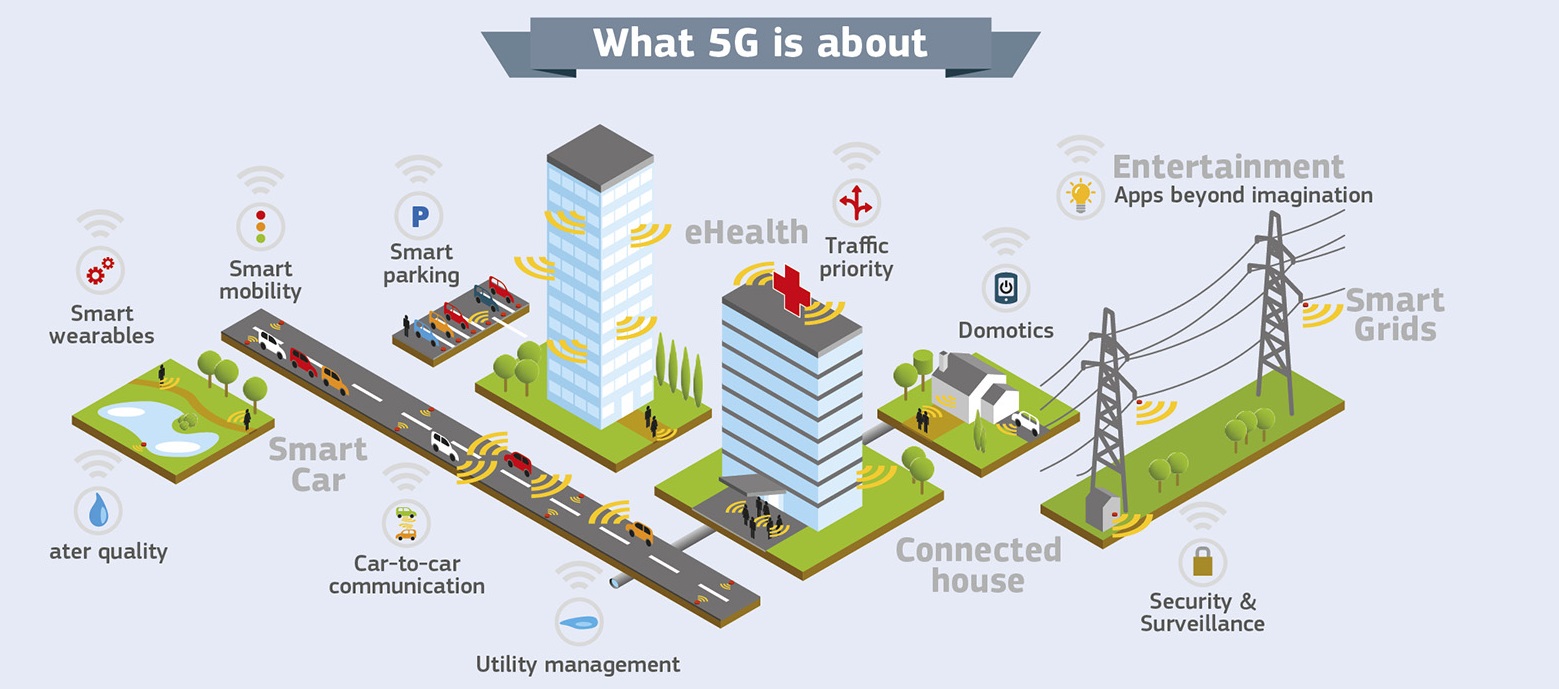
It is the first of several steps where people are better managed and anticipated when they have a much better mobile. You see, all the new devices, any mobile smartphone that was released after 2017 is no longer a mobile phone. You think it is, but it is not. These devices are now clearly evolved, they have become your personal data server and as you move forward in this mobile age your perception will change, it will be catered to every individual, it will cater to your needs and filter out what you do not need, or perhaps more precise, it will filter out what the system regards you do not need, which is not the same. The choice that was never offered to you is just as deceptive as the wrong choice given to you, do you not agree? And as 5G allows corporations to maximise their impact on your finances, these corporations require you to be ready from the get go. Corporations are finally accepting that gaming is a part of everyone’s life and pushing the latest technology onto these people has a large benefit that falls in their scope, yet is presently not always considered by the user, 5G will push those boundaries by a lot within 16 months of availability.

Telstra is desperate to remain part of that equation because those who are not no longer have a future and TPG surpassing Telstra was the one nightmare they cannot handle (Huawei would have enabled that) and there are more parts to that, you will learn those in 2019.

Oh and when you realise that some commonwealth nations end up being technologically second to nations with Huawei solutions feel free to demand the resignation of your local politician because of that. Yet, the heart processes and so does yours. The question is not merely that we control our hearts and that it does not overwhelm the brain with emotion, it requires us to take an additional cold look at things, and when we do that, how do any of the Telco troubles make sense? It does when the heart becomes an accountant, at that point it all makes perfect sense, but that was not our problem was it? We were expected to get the best deal, whilst the telecom players wanted the ultimate perfected profit wave, now that it bites back they want to change the deck of cards and make the consumer pay for it all, including letting them pay for the bad decisions they made in the past, do you feel obliged to pay for their screw ups?
 

1 Comment

Filed under Finance, IT, Media, Politics, Science

The price of identity

We all have needs, we all have identities. It is important to us, as it is for many others. No one debates or disagrees with it. Yet what to do when identity hinders us? When we see the Washington Post (at https://www.washingtonpost.com/world/national-security/former-nsa-deputy-is-mattiss-leading-choice-to-head-the-spy-service-if-it-splits-from-cyber-command/2018/10/05/1be8d7a8-c73d-11e8-b2b5-79270f9cce17_story.html) giving us ‘Former NSA deputy is Mattis’s leading choice to head the spy service if it splits from Cyber Command‘, we need to consider the impact of identity, corporate identity, governmental identity, military identity, projected and presented identity. They are not the same and can vary to a much larger degree. When someone is part of what used to be referred to ‘No Such Agency‘. We will get the impact of identity; we all know that and many faced it too. Look at any friend or co-worker you have ever known and ask him/her about the impact of a merger and they will tell you, there are changes. Some are subtly, some are not noticed, yet others are, usually in infrastructure and the way things were done. Now the change tends to be for the good in the long run but that is not a given.

So what gives?

It is my personal observation and a highly speculative one at that. Yet I believe that the Washington Post giving us: “The current head of both organizations, Gen. Paul Nakasone, has urged Mattis to keep the NSA and U.S. Cyber Command under one leader on the grounds that the nine-year-old military organization is not ready to stand on its own, these people said. In recent weeks, Mattis was close to a decision to separate the leadership arrangement, but Nakasone’s counsel has caused him to reconsider, according to two U.S. officials. The officials spoke on the condition of anonymity to discuss sensitive internal deliberations“, is not entirely accurate. I believe that ‘military organization is not ready to stand on its own‘ is not the setting that matter. I believe that Stratfor who gives us ‘A New, More Aggressive U.S. Cybersecurity Policy Complements Traditional Methods‘ is very much at the heart of that. I believe that the general is not ready or perhaps unwilling to set the offensive and aggressive part in motion. Now, this is no bad reflection on the general, let that be a first. He is well decorated, he has seen the field in many ways and he has done a fair share of field events. He has earned his rank. I merely wonder that a man who has seemingly played a defence and protection game is the man for the offense. I think that this is a football moment, and as a non-football expert (and a 49ers fan) I would compare the General to DeMarcus Lawrence from the Dallas Cowboys against what the US seems to demand is a Derrick Henry (Tennessee Titans), or even a Tom Brady (New England Patriots), roles that are not really moveable. Even as a Quarterback might become a really good Derick Henry that Quarterback will never become a DeMarcus Lawrence. The defence and offense game is that far apart. This is where Chris Inglis comes in. He is an analyst (at heart), he is used to counter offensive strategies and introduce strategies of his own (effective one’s mind you). I believe that this is the game that is in the open at present and these two will need to find a way to make it work. Not merely because it is good for the needed strategy, but because the segregation of the two elements might hurt U.S. Cyber Command in a few ways, not merely funding, but the elements that U.S. Cyber Command currently have access to will partially fall away and getting two infrastructures like the NSA is unyielding, unaffordable and in the end will introduce flaws and dangers on both sides of the isle making the setting (as I personally see it) a non-option right of the bat. Stratfor gives us a few other items.

One of them is “A best-case scenario for a U.S. cyberattack would be disabling computer systems and networks being used against U.S. interests to prevent an attack from happening or to disrupt an attack that is in progress“. The problem there is that some of the opponents are getting to be really good at what they do and a few of them are not state driven, not by any state changing the dynamics of the solution. Even as I discussed the hop+1 strategy almost three years ago, settings like that require an expert layer one knowledge and the players cannot both have these experts changing the needs of the infrastructure overnight.

The second consideration is: “Perhaps the main challenge to U.S. engagement in tit-for-tat cyberattacks is that the United States is by far the biggest target for such attacks“. That might be true but that goes beyond mere true enemies, it includes a truckload of students wanting to finger the man (or is that giving them the bird)? Do they really want to waste resources to those people whilst the US has actual enemies in the world?

The larger issue is seen with: “Discussing the strategy, national security adviser John Bolton hinted that the administration had already taken steps to bolster offensive efforts in recent weeks, warning that the United States is no longer just playing defense when it comes to cybersecurity. But despite the Trump administration’s more hawkish tone regarding cybersecurity, it will continue mainly to rely on traditional measures such as the legal process, regulations and cooperation with the private sector when it comes to cybersecurity” It is here when we get the consideration of the resources required. The defence, offense and legal sides of it all becomes a real mess if the two split up giving the chance that targets and issues walk away on technicalities. How does that help?

The strategy s even more profound when we consider “Clandestine, discreet attacks are certainly already key elements of U.S. cyber tactics. There have likely been more examples of U.S.-launched attacks that have not come to light, perhaps because they were never recognized as cyberattacks. While the less known about U.S. cyber capabilities, the more effective they will be when deployed, this by definition limits the deterrence value of U.S. cyber capabilities“, at this point is the setting of ‘discreet’ that comes into play. With the two separated they will get into each other’s fare waters and more important give accidental light to the discreet part of the operation, there will be no avoiding it, only the most delusional person would think that it does not get out when more than one player is involved, because that will always introduce a third item being the intermediary, the cold war taught many players that part of the equation. And that is even before we get to the statement: “recent cases like the September indictment of North Korean cyber operatives, which displayed heavy FBI reliance on private security firms such as Mandiant and Alphabet to collect technical evidence and carry out investigations“, now we see the folly as Mandiant and Alphabet are mentioned, the entire matter grows further as soon as Constellis becomes part of the equation. That is beside the point of realising (highly speculative on my side) that neither three Mandiant, Alphabet and Constellis have the required safe servers in place to prevent names, places and facts from going out into the open. I might not be able to get in, but there are dozens who will get in and that voids the security of the matter to a much larger degree. For arguments sake I will leave Booz Allan Hamilton out of that equation, they have been snowed on long enough.

And even as we see the instance of legal preference, the US must realise that any attack from state or non-state parties in China or Russia has close to 0% of being successful (outside of the exposure part), the entire matter in case of the OPCW in the Netherlands is one. An attack was thwarted, yet was it THE attack? The guardian article (at https://www.theguardian.com/world/2018/oct/04/visual-guide-how-dutch-intelligence-thwarted-a-russian-hacking-operation) reads nice, and we see all these facts and from my point of view, things do not add up. You see, I would have used the car that we see mentioned “In the boot of their car was uncovered an arsenal of specialist electronic Wi-Fi hacking equipment” as a fire and forget consumable, use it as an access point, segregating the hacker from the accessing unit. When you have (as they stated) “cash: €20,000 and $20,000” getting a second car far enough to access yet not be directly linked is seemingly easy enough. Then there is the setting of the photo at Amsterdam’s Schiphol airport. I am not debating the issue of the photo, it seems genuine enough. In this operation they did not fly to Germany and took the train, or take a car and cross at Oldenzaal, Emerich, or even via Belgium and enter via Antwerp, or Eindhoven. It almost read like they wanted to get noticed. They know that Amsterdam Airport is high tech and nothing escapes their camera eyes. To me (a paranoid me) it comes across as ‘Where did they not want us to look‘. A mere sleight of hand deception, and again the entire GRU mention. A phone outside of that building and they had the taxi receipt? No one merely driving them to the airport in Russia or even them taking a bus from any hotel in Moscow. No a taxi receipt of all things, is anyone buying that? So in this it is not the Dutch, it is the Russian side that makes no sense at all.

How did I get there?

This is the initial setting of offense and defence. The proper application of strategy in all this matters, because we seem to undervalue and underestimate the need of either in all this. Because we get to push a button anywhere and anytime we seem to underestimate on what is recorded, what is collected and what can we verify. That entire mistake is how any offensive strategy can optionally become folly from the moment the instigation of ‘press any key‘ to start gets us. Proper offensive is not about doing what needs to be done, it is about being able to prove who did what. Perhaps Sony remembers that part as they were given that it was North Korea did something, whilst their computers were not even close to PC gaming ready, the mere processor, which was about 25% (at best) of a 1994 Silicon Graphics Indigo system is not the system that gives you what you need to hack the night away. The tools are equally as important as the access and ability to negate identity. When you see that part, the entire hop+1 intrusion path makes a lot more sense.

This now gets us to the end of the Washington Post, where we were treated to: ““As the build of the cyber mission force wraps up, we’re quickly shifting gears from force generation to sustainable readiness,” Nakasone said in a statement in May. “We must ensure we have the platforms, capabilities and authorities ready and available” to carry out successful cyber-offensives. Some former senior intelligence and defense officials oppose separating the “dual-hat” leadership arrangement, including former NSA Director Keith Alexander, former Director of National Intelligence Mike McConnell and former Defense Secretary Robert Gates. This week, former CIA Director David Petraeus, a retired Army general, said during a Washington Post cyber summit that he’d keep the dual-hat arrangement “for the time being.”” It is not merely the ‘we have the platforms, capabilities and authorities ready and available‘, you see, when we get to capabilities we see the need of offensive players and even as Cyber command might be aces in their field, the offensive game differs to some degree and even as we see that they are way above the student levels, we get back to the Football equivalent you see the application of defence and offense. It is not DeMarcus Lawrence versus Derrick Henry, the question becomes can DeMarcus Lawrence be a Derrick Henry that is good enough, that is the battle within. The mere realisation that if you fail this when the offensive is broken into a train wreck that makes the limelight in every paper, that is the game that is the dilemma that Gen. Paul Nakasone faces as I personally see it.

And when we see Stratfor with the one little gem we did not consider, the mere proposed fact that North Korea has a mere 9,000 IP Addresses, do you really think that they could have done this all, or are we in a setting where someone had the ability to act on BGP hijacking and was able to mask it to the level it needed to be masked at, because that was the offensive play that needed to be considered and there was no way that the evidence had been uncovered to that degree with a backdoor could be removed with a simple reset of routers.

#FourtyNinersRule


Leave a comment

Filed under IT, Law, Media, Military, Politics, Science

Merely a week ago

It has been eight days since ‘A haircut before the guillotine‘, which can be found at https://lawlordtobe.com/2018/08/21/a-haircut-before-the-guillotine/. The article dealt like the one ABC gave us all about Greece and I think that it is nice that they finally came to the same conclusions, it only took them a week. Yet, the part that I never looked at (before now) s the part that ABC is giving. It is the setting that Italy is the most likely next country to add the fuel of life after the Euro. When we are treated to: “The warning signs are gathering: Government borrowing stands at 130 per cent of GDP, and bond yields have been rising, a sign of low confidence by financial markets which will make it more difficult for Rome to raise money by selling long-term sovereign debt“, yet unlike Greece and other players, they really do not have that much of faith in that muzzle called the EU and the ECB. The less popular and growing situation is offered with “it is also filled with ministers who are deeply distrustful of European institutions and regularly raise the possibility of pulling Italy out of the EU“, something Greece should have considered. In the setting where the Italians can float their currency during the seasons and get a much better return, lowering debt slightly faster is an option, one that is currently being discussed in Rome. What is also a setting is that Italy now has an example on when things go pear shaped, an advantage that Greece did not have. After that, ABC, of better stated Anne Bagamery gives us “many European analysts draw a straight line from the rise of Euroscepticism and nationalism generally — trends that led directly to Britain’s vote to leave the European Union next year — to the Greek bailout and other, similar rescue plans that followed the 2008 world financial crisis“. That is likely to be true, but the element that she ignores is that Mario Draghi was also a factor. What is more and more seen as a reckless, wrecking action by a second jumpstart to the economy, one that is still failing, but now the European members are well over 2.5 trillion Euro deeper in debt, so how is that playing out?

I am still of the mind that Mario Draghi and his membership into the elite 30 bank clubs enabled them to deals and advantages that are ethically an issue, perhaps even legally so. Yet there is no intervention, no investigation and in the end, the interest on 2.5 trillion dollars will have to go somewhere, does it not?

Then we get two sides, the first one is one I agree with. With: “Ms Merkel, at the time the most powerful head of government on the continent, pushed the notion that forcing the kind of budgetary discipline that had worked in Germany was the best way to bring spendthrift countries into line. A fervent European, Ms Merkel also felt austerity was the best way to preserve both the EU and the euro” we see a harsh reality, but when you look at Germany, their debt is way down (compared to what it was) and as such a few billion euros each year gets to be spend on infrastructure and not on interest payments, so that is a clear sign. In opposition we see: “Pierre Moscovici, the European commissioner for economic affairs, acknowledged in an interview last year with the Italian daily Corriere della Sera that the handling of Greece’s bailout program was “a scandal in terms of democratic processes”“.

That might optionally be the case, but how far was the democratic path used to misrepresent the numbers, cooking the books and fraudulently give rise to economic levels that never existed? How many of those Greek cooks actually were prosecuted and ended in prison? Show me that list please Pierre Moscovici, can you?

Now we get to the BS of the part and it is seen in “Economists have now had plenty of time to evaluate whether the decision to impose austerity measures was the wisest course — and, for the most part, the verdict is negative”. Is that so? You see, I stated that in 2013 and several economists stated that I did not have an economy degree (which is true) and as such, I could never comprehend the ‘complexities’ of such macroeconomics. they optionally had a point, was it not that my version and my calculations using my fingers and an abacus gave a result that was merely a year away from their results and I published mine 5 years ago, so in all that, it seems that these economical ‘experts’ are seemingly more about the preservation of the gravy train that they are on and a lot less on finding the setting of resolution that they were supposed to have and now that Italy is on the iExit path (or was that ILeave?), we see that ‘the verdict is negative‘ part, I reckon merely 5 years late in light of the degrees they have.

Finally we need to stop at the setting we see regarding Portugal. With the quote “Joao Borges de Assuncao, a professor at the Catolica Lisbon School of Business and Economics and a former economic adviser to the Portuguese government, said recently that Portugal’s recovery only really started when it ended austerity measures and invested in job creation to keep growth alive“. I cannot completely agree, even if that was a partial correct setting for Portugal. A setting when we consider that Portugal has a population of 11.2 million, about the size of Sweden, a mere 25% of Spain. In addition, Portugal got lucky with their cork. It supplies 50% of the global needs and that gives them a huge niche market and until China starts growing their cork forests in a serious way, Portugal will have an advantage there. In addition Portugal has a similar advantage with tungsten and lithium, with lithium battery needs at an all-time high, and unlikely to slow down for now, we see that 75% is in South America, meaning that Portugal cannot rely on their amounts, but it still makes for a nice additional sandwich with what they offer. All elements that they have and plenty of other European players do not, so Portugal has a small advantage, which is why I oppose the view of Joao Borges de Assuncao, not because the view is wrong, but in the current available options, with a much smaller population there is a benefit for Portugal and that is why the investments required would have been significantly lower, whilst the ROI would have been much easier to achieve. What works for Portugal is not likely to work in Spain and Italy to the degree it needs to, not whilst the Italian population is 600% of Portugal. The sales amount of Maserati’s and Ducati’s needed to offset that difference is slightly more than realistically possible.

I expected for the longest time that there was a much larger issue within Europe, no matter how ideological the setting was, the setting of a push for big business to get the exploitative advantage over small companies was too visible and now we see those same companies giving the UK such hassle. I wonder when the UK economy picks up and those players are learning that they are missing out on 68 million consumers, I wonder what marketing scheme they will try to get back into favour with those they tried to strongarm initially. We merely have to look at the Galileo satellite navigation system, and the setting that we see now to learn that the easiest option is to merely block the Galileo from accessing that part, which the UK would be allowed to do. When we see the setting of people using their car abroad (UK in EU vs EU in UK) we see that this stage will hurt the EU a lot more, and even as we see the need for a UK satnav system, the UK one will come, 68 million people implies 30 million cars in the very least and plenty of people are relying on the satnav, so the ones who have that in good order will have access to those consumers, in addition, as we might overlook the entire ‘due to be launched in 2020 with civilian and military variants, and requires 24 satellites in orbit to be operational‘, for the UK 2-3 is all that is required, so a national market whilst those satellites would also be able to provide media and other options, will benefit the UK greatly, that whilst most people are ‘kept’ in the dark regarding both “The Galileo system went live in December last year, providing initial services with a weak signal, having taken 17 years at more than triple the original budget“, as well as “The main causes of the malfunctions have been identified and measures have been put in place to reduce the possibility of further malfunctions of the satellites already in space” commission spokeswoman Lucia Caudet said.

ESA found after an investigation that its rubidium clocks had a faulty component that could cause a short circuit, according to European sources”, so even at 300% of the original costs, they still weren’t able to properly test the systems and the faulty components are an excellent piece of evidence. The fact that the EU has the larger setting of budget overrides on several grounds and when we consider the fact that when infrastructures and facilities take well over 300% of initially projected costs, we see a failing on too large a scale and no proper penalty setting is in place and is unlikely to ever get there. The UK has had its massive bungles too, but even in the national setting it would never have been to the degree that we see here. In addition, when we are treated to the setting of a project that some state costed 30 billion, for 30 satellites, the most simple of all calculations (admitting that they might be way off) is telling me that the pricing is incorrect from the very beginning. We can agree to a quote that is up in the air in several sources. When we see “It is estimated that a single satellite launch can range in cost from a low of about $50 million to a high of about $400 million“, I am willing to believe that, yet, when we see the application of 30 satellites, we see the need of a much larger scope of electronics, verification and channels, all this implies that such a setting should require multiple safeguards, and let’s not forget that all this was merely about the launch, so the hundreds of engineers, designers, programmers and testers are also part of those costs, the electronics that were designed, developed and build will take even more resources, so here I am in a setting where the lowest estimate is close to 1.3 billion each, and I am willing to accept that I lack plenty of knowledge, so even as I expected the cost to be closer to 15 billion, the fact that my estimate was 50% higher and still 100% short of the actual costs gives us the setting that the entire Galileo project was wrongly priced, wrongly designed and in the end still flawed.

Galileo satellite navigation system has a few more issues, flaws and weaknesses. That part was shown 12 years ago (at http://news.cornell.edu/stories/2006/07/cornell-sleuths-crack-secret-codes-europes-galileo-satellite) where we are treated to ““We were told that cracking the encryption of creative content, like music or a movie, is illegal, but the encryption used by a navigation signal is fair game,” said Psiaki. The upshot: The Europeans cannot copyright basic data about the physical world, even if the data are coming from a satellite that they built“, so 12 years ago basic ‘protection’ was negated by students, so in the end, this extremely expensive project, just how secure is it, and once we learn that even as it is really really hard to hack it, what happens, when we see the system being readjusted through a hack causing time clock issues? When that happens and inter satellite group messaging is no longer reliable or valid, how long until that system crashes itself from within? It might not seem to be hackable, but the satellites rely on an uplink and a downlink, once the element is there to cause clear miscommunication from the source towards the satellite, forcing a sequence of reboots might be enough to take alignment of these satellites away from one another, and in the end, the mess that this will cost? I wonder just how much the makers did not perceive from a system that had a negated security system for the better part of 12 years. I wonder what happens when they get the option to ask each satellite for a verification protocol from each of the other satellites. Do that for an hour and how many users will be confronted with the setting when they drive home and the SAT navigator tells them: “This location does not exist“.

When we get to that part, I wonder who in the EU will be suddenly on sick leave and cut all ties from a project that has already been projected as more than 300% more expensive. When we dig into that part what else will we find?

That is merely one of many settings that was shown in a whole host of EU applicable operations and in all that Italy has their options too, whether the decide to leave the EU cannot be predicted to any near decency, but in that, when we see that the Italians are equally barred from Galileo, we will see another part where the EU will have to pay back at least two nations for their part, how will that end?

I will let you decide that, just make sure you know how to drive home and do not rely on your satnav to the degree you expected it to be useful, on how far the Italian High Speed rail from Berlin to Palermo is when the ties are announced to be cut, because that too will impact the EU in a much larger part then expected. In that regard, how many people would have ever needed the train to get to Palermo anyway, is that not an interesting question? When we are confronted with “The cost of EU infrastructure development needs in order to match the demand for transport has been estimated at over €1.5 trillion for the period 2010-2030” and we realise that Palermo has 1.2 million people, so it is a sizeable city, but let’s be honest, spending 1.5 trillion to get there, what was Europe thinking?

When we take the accounts and the pulse of such investments, whilst the ROI will never ever be achieved (not even close), how much more wasteful spending is this EU throwing on people and their additional taxation?

Remember, you must repay what they have been spending and they have been spending a lot with the additional costs of all these gravy trains, so how much out of pocket will you and those around you be for the rest of your life?


Leave a comment

Filed under Finance, IT, Politics, Science

A new danger

There is a setting of dangers, the dangers are not merely setting, and for the US it is inequal discussion on how many allies they have left in the near future. It is not a new danger; the actions have been under scrutiny for some time. Yet last night something changed. We understand that electing the 45th president, a ‘former’ greed driven billionaire would always have consequences, yet the amount of consequences shown is now escalating.

The Washington Post gave uis 90 minutes ago ‘GOP fundraiser Broidy under investigation for alleged effort to sell government influence, people familiar with probe say‘, the article (at https://www.washingtonpost.com/politics/gop-fundraiser-broidy-under-investigation-for-alleged-effort-to-sell-government-influence-people-familiar-with-probe-say/2018/08/17/c9e55792-a185-11e8-8e87-c869fe70a721_story.html?utm_term=.774c7a3358da) a different setting. We always knew that there are two sides and the ‘less progressive’ republican side was always a little of a hot potato to some. Yet with “The Justice Department is investigating whether longtime Republican fundraiser Elliott Broidy sought to sell his influence with the Trump administration by offering to deliver U.S. government actions for foreign officials in exchange for tens of millions of dollars“, that hot potato has now turned into a handgranate. With the quote “As part of their efforts, prosecutors have subpoenaed casino magnate Steve Wynn, the former RNC finance chairman and longtime Trump friend, for copies of records and communications related to Broidy” we see that there is a much larger net being used. It is not merely about Broidy, with names like Steve Wynn we see that there are several names involved, all people with almost direct access to the President of the United States, and with names like Jho Low and Guo Wengui we see another side of ‘entrepreneurship’ hitting the limelight.

Yet how real is the setting?

Part of it is seen in the Wall Street Journal, and with “through June and into July, Mr. Low had been living freely in China, a person aware of his travels said”, as well as “Mr. Low had a close relationship with former Malaysian Prime Minister Najib Razak, who in turn was courted by China. Malaysia’s new government suspects Mr. Low helped arrange infrastructure projects, financed by China, from which funds were diverted to cover debts”, the second part now giving us that America as well as other players wanted access to Mr. Low, yet that in itself is not evidence against Elliott Broidy. What it does tell us that multiple players want access to this billionaire, all for their own reasons and with the US with a debt surpassing 21 trillion, we can only wonder what some people want Mr. Low for. The additional part is that Malaysia is now pulling all the plugs. This is seen as Channel NewsAsia is reprting that “The Bombardier Global 5000 aircraft, estimated to cost US$35 million was allegedly bought with money belonging to 1Malaysia Development Berhad (1MDB)” (at https://www.channelnewsasia.com/news/asia/malaysia-to-prove-jho-low-private-jet-bought-stolen-money-1mdb-10621726). It seems so flaky and weird to merely focus on one plane. The amounts are massively larger then the $35 million, so in that case, if that evidence falls over, will the case on that side against Jho Low collapse? When we look in that direction and look at Malaysian Prime Minister Mahathir Mohamad, we see that hsi platform is set upon anti-Chinese activities and when we see the accusation “critic on Chinese ventures in his home country for being too expensive and has suspended three China-backed projects worth around $22 billion that were signed under the previous administration”, we see that there might be  case in that part, yet why focus on $35 million in a $22,000 million setting? We also see an additional stage in “Explaining his decision at a news conference last month, the veteran politician said the contract and loan terms behind the deals were unfair, noting that the interest rates on China’s loans were much higher than the 3 percent figure at which the government normally borrowed, the Associate Press reported“, is this all about the money, or merely a way to set the stage for re-negotiation. In that setting, the sound strategy becomes that Elliott Broidy was setting the stage for the United States to poach the finance deals away from China and in that setting, getting Jho Low to give the goods would help the US pretty decent. In addition, when we look at the education of Jho Low, we see that he is an alumni of the Wharton School of the University of Pennsylvania, the same school that has President Trump, as well as the bulk of CEO’s that at one stage were the captains of the Fortune 500 lists, it includes dozens of airline CEO’s, so in that setting the Malaysian government goes looking for a $35 million plane?

So what is exactly the danger?

It is not on merely the setting of Elliott Broidy in all this, it is the setting where we all need to realise that there is a cost to doing business and it has transgressed borders for the longest of times that, whilst we accepted that in Europe to some degree, Americans never accepted or comprehended that. The media players used that part in all kinds of election setting and fear mongering for the longest of times. From my point of view (optionally a wrong one), we see how people like John Brennan is a danger to that setting. People dedicated to the protection of that their nation will not accept the global cost of doing business; they are in line with monarchists and devoted workers to their nations like we see in the Netherlands, the United Kingdom, Sweden, Denmark, as well as Canada. In republics, republicans are in a setting that this time is gone; it is the age of the corporate setting of common sense towards pragmatism. The problem as I see it is that those of no use to the needs of such a republic lose value overnight, that whilst the monarchist setting is to embrace all the citizens and protect them all. It is done at a cost, one that those people tend to accept. Yet in the republican view, these costs are counterproductive to corporate profit, the non-consumers are a cancer, needed to be cut out. When globalisation sets in to the business degree that will be a lot easier and that is where we see the stage. So when we see “In the 48 hours since President Trump revoked the security clearance of former CIA director John Brennan, over 70 former intelligence officers and leaders have come forward denouncing the president’s decision to revoke or threaten to take away security clearances from former government officials, including a list of 60 former CIA officers who signed a statement today, obtained by Axios“, we also see that America (or is that Wall Street) are confronted with a change no one was ready for, so the economy becomes a stagnant danger to them, one where they do not make profit.

When we see names like:

  • Jeremy Bash, former CIA and DoD chief of staff
  • Bob Flores, former CIA chief technology officer
  • Kent Harrington, former national intelligence officer for East Asia and CIA director of public affairs
  • George Little, former chief spokesman, CIA and DoD
  • Phillip Mudd, former CIA analyst
  • John Nixon, former CIA analyst
  • Greg Vogel, former CIA deputy director for operations

We see that the USA is in an upcoming setting of polarisation and that is just within the republican side of government and its administration. There is a change coming and the outcome is hoped for (on both sides) but the outcry gives us that this is a round that Wall Street is likely to lose this battle and that changes the game. In addition, when we see the required application of intelligence data and who gets access to it sets a new border, the fact that others (like France and UK) need to realise that shared intelligence data is no longer safe, because the data shared within corporations while used to set a very different stage of what is regarded as needed for security. The corporate side is already countering the advantage that a national intelligence system has. We see this in part when we look at Business Wire (at https://www.businesswire.com/news/home/20180806005526/en/Global-Database-Valuable-Italian-Business-Intelligence-Data), where we see ‘Global Database Makes Valuable Italian Business Intelligence Data Available – Completely Free‘, before you dismiss this, also consider that “Any registered user can now access key information about 7,564.575 registered companies in Italy“, registration is free and that is merely one of close to a dozen places where this is happening. All connected, it is an optional setting of open source intelligence that is merely a foundation pillar. You merely have to add LinkedIn and Facebook to have a dataset that will allow you to extrapolate data that will make plenty of intelligence groups envious. You see, this is not about finding the criminal, or the terrorist. They are either known or not an issue. This is the setting of finding economic opportunities, the setting to see who is connected and interacting with the alumni of places like the Wharton School of the University of Pennsylvania. A group of people with connection and access to funds totaling well over 157 trillion Euro, so whilst we wonder on the fear of where is the terrorist (whilst the danger of getting run over in the street is 20 times more likely, we forgot that our futures, any future is set in the stage where there is economic viability and availability.

That is the part that we see to forget, or even worse actively avoid contemplating. In the time when we are led to believe that there is economic upturn everywhere, we seem to forget that as the river of economy changes, we will either be in a place of plenty, or we are set into the next stage of drought and it will be the one view we have until the end of our lives. It is about ability to live with a level of expected comfort which is likely no longer set to national boundaries, it will be set to the boundary of the corporation or business group that we work for and facilitate for, it will be as cold as that, and until we get past this greying generation, which is optional until 2035, that is how it will be for those in this era. The man behind the Global Database, namely Nicolae Buldumac has figured parts of that out, so that is why he and 30 others in London are doing this. When we look at the article (at https://medium.com/@buldumak/cookie-audience-vs-data-audience-which-is-better-44971ad12ee4), we also see ‘Cookie Audience Vs Data Audience: Which is Better?‘, he found a way to not create the best of both worlds, he found out how he can make both work for him and that is where he created more than economic opportunity. He has found the stage where he can optionally get the facilitators work for him and that seems to be exactly what he is doing. When he is done he will have a similar setting for France, Germany, the UK and Spain. So basically the 5 largest European economies are opportunities where he has the keys and data to.

So when we get to look at the US again, do you think that this will be about Elliott Broidy or people like him in an outdated setting? No, they are the garnishing of economic times that surpassed them and it is the data makers and facilitators like Nicolae Buldumac where the republican mindset of corporations will rely on next, they are the future and their path for enablement is what sets the stage for Europe. This is not clever technology (well in a way it is), it is about the quality of data and what it allows for and that is where we see that the moment that data hits a critical point, it will equal the value of Facebook or more. Some will argue that most of that is all in any Chamber of Commerce and they would be right, but those entities do not talk to each other, they are founded on borders of a national level or lower and in the entire euro setting they for the most never aligned, so someone did it for them and on their own dime, optionally replacing them, or better stated, reducing those previous players to mere data entry points. Governments had to realign their data dimensionality a decade ago, but everyone was so busy keeping their own pond clean that they forgot that the pond is only important to the land surrounding it, when that floods, the ponds become merely crevices of a lake, Lake Europa, that is where Nicolae Buldumac it taking them, so soon others (like Asia and America) they will look at the parts of Lake Europa and see where fishing is the best, those land borders no longer matter and that is the stage we find ourselves in. A changing setting of what sets the identity.

Am I the first?

Hell no! This was all done before. Forbes in 2013 gave us an article by George Bradt. The article called ‘How Army Intelligence Techniques Apply to Business Leads‘. Here we see “Marketing may have a bias to giving sales people a large number of leads, while sales people seek potential customers they can engage with. The answer is to move from big, unstructured data sets to “finding that guy” that really cares. This was Mishor’s ah-ha moment, realizing that army intelligence techniques could be applied to business“, yet it goes further, when you consider one, and the other, you should also realise that the parameters are bidirectional with the proper data flags. So when we see the two streams lead to the same insight. “On the one hand, Mishor is creating value with a systemic, scalable way to connect seemingly unconnected data to identify the most valuable target customers. On the other hand, Mishor built his business by connecting seemingly unconnected hopes and needs of his prospects” we see the solution at both ends, and in addition we see that we can define the need much more precise. From my point of view we can see a third direction. That part is not easily seen, so I will give an alternative example.

In factor analyses we go from many to one. We get the setting that the numbers equate to a factor, it is basic statistics. When we go into the other direction we see the foundation of a discriminant analyses. The third part is seen in that the data setting when something is proven in a factor analyses, it should almost always fail as a discriminant analyses and vice versa. I tend to use humour on that and state ‘It is sarcasm, when it backfires it is merely irony‘. The intelligence data was always on finding the person, yet in a stage of lacking resources, being able to safely remove a person as a threat is equally valuable. If you cannot find that one person, reducing the 5,000,000 stack to a mere 5,000 with 99% certainty is just as valuable, because the one final link could reduce that to 50 whilst not having to revisit the previous 4,995,000 considerations. As I see it in this day and age, not only is the stage of military intelligence and business intelligence not mutually exclusive, they are more and more overlapping. The overlapping field becomes an insightful pool of data where it will no longer be about the one person, it will be more and more about a setting where the value of Analysis of covariance will be important.

In the intelligence it could be seen that it is not merely about the terrorist and its connections. It will be about the moneyman and who else links, both optionally to the mastermind. In business intelligence that setting is not merely see as to where a person studied. It is more and more important on where the patents are and who has them as well as the people creating those patents. In this economy the economic value of a patent over overwhelmingly important. That part is seen when we get back to the 5G race, we saw that last march when we were confronted with “U.S. President Donald Trump has blocked microchip maker Broadcom Ltd’s (AVGO.O) $117 billion takeover of rival Qualcomm (QCOM.O) amid concerns that it would give China the upper hand in the next generation of mobile communications, or 5G“, in addition Forbes gives us within the article ‘Ericsson Vs Huawei: Who’s Winning The 5G Race?‘ Yet there we see two parts. The first is “However, two of particularly significant scale and market presence are Ericsson and Huawei. Will one conquer overall?“, as well as “Financial strength matters. Ericsson will have to turn the ship towards profitability and growth waters, in order to continue the required investment in product development”, which relies on “Ericsson recently announced what seems on the surface to be an impressive 5G patent application. Calling it an “end-to-end” submission, the filing combines the work of 130 Ericsson inventors and promises to include everything needed to build a complete 5G network“, the ability to set 600 million will give the optional 60 billion in return and it will in addition set the stage for European growth to a recently unprecedented (or was that non-presidential?) scale and America wants slices of that pie, if not the whole pie. The stage of corporate setting versus national setting in direct exposure of what is to come and the 5G battle theatre will be a big one, because the winners there will be the next kingmakers and everyone will want parts of it; that was never in doubt. The evidence is all over the place.

Forbes also gives us the new danger setting with the question ‘Does a global geographic footprint matter?‘ It is close to everything in this game, if only that the global footprint lets corporations walk all over government. Amazon, Apple, IBM and Microsoft have been doing that for the longest of times.

There is one part with Forbes that I do not agree with. They state “I would give Ericsson the edge here, considering its global presence includes North America“, I believe that Europe is the much larger powerhouse. You see, America is a mere 325 million, whilst the EU represents 512 million with direct access to India, China and Russia. All stages that America denied itself; if the setting of data (amounts and quality) determines their value; which players and where would they be able to grow this path the fastest and longer? The fact that Ericsson is not merely in the US, but they are showboating in Saudi Arabia is also a sign that they realise that stronger growth everywhere matters, the presented quote “Saudi telecom operator Mobily and Ericsson held a 5G demo at the Mall of Arabia in Jeddah, Saudi Arabia, showcasing the functionalities of the next-generation mobile technology. Ericsson supplied Mobily with a standalone 5G system, including a prototype 3.5GHz radio, baseband, and prototype UE device for the 5G demo, which showcased 5G throughput, targeting speeds of up to 1Gbps. The demo is part of Mobily’s plan to highlight expected 5G benefits consumers and industries across Saudi Arabia“, is merely one of many.

The question now becomes: ‘is exponential growth, growing too fast in all directions not a danger all on itself?’


Leave a comment

Filed under Finance, IT, Law, Military, Politics, Science

Rocking the bullshit

There has been a massive issue with Huawei, the accusations by the US is the largest one, one of its sheep (aka Australia) has been on the same post on how Huawei is such a large danger to the safety and security of a nation. It gets ‘worse’ when we see ‘The DNC tells Democrats not to buy Huawei or ZTE devices ever’, (at https://www.theverge.com/2018/8/3/17649920/dnc-democrats-huawei-zte-devices-ban-china-hacking-threat). Here we see the quote “people shouldn’t be using devices from either Chinese company for work or personal use. The words echo what federal officials have already said about Huawei and ZTE posing possible security threats to the US. In February, CIA, NSA, and FBI chiefs testified in front of a Senate committee that the two companies were beholden to the Chinese government and the devices could become tools for undetected espionage“, my issue has always been: ‘show me the evidence!’ Basically EVERY phone can be used as a spying device, that is one clear thing we got out of the Cambridge Analytica part, in addition, the Fitness tracking app Strava was a great way to find CIA black ops bases, so even as Strava merely mapped ‘a regular jogging route’, using Google or Apple maps, you would be able to map out the base, the supply routes and so on, the Apple Fitbit would be there for the Russian government knowing where these specialists were and when the were there. So in all that, and all the security transgressions seen here, not of the were Huawei or ZTE, yet, how much noise have you heard from the CIA, NSA, or FBI on Apple? Even now, they are that one Trillion dollar company, are they too big to mention?

I wonder why?

Yet, Huawei is not out of the hot water yet, they are actually in deeper hot waters now but this time it is allegedly by their own actions. Reuters is giving u mere hours ago: ‘Huawei in British spotlight over use of U.S. firm’s software’, the news (at https://www.reuters.com/article/huawei-security-britain-usa/huawei-in-british-spotlight-over-use-of-us-firms-software-idUSL5N1US343) gives us: “One of those is due to Huawei’s use of the VxWorks operating system, which is made by California-based Wind River Systems, said three people with knowledge of the matter, all of whom spoke on condition of anonymity when discussing details which were not made public in the report“, which now leads me to the setting that the American accusations are set on the premise of American Software used? How dopey is that?

Then we get: “the version of VxWorks being used by Huawei will stop receiving security patches and updates from Wind River in 2020, even though some of the products it is embedded in will still be in service“. In all this, the fact that it is still serviced for another 2 years, how are we now in the stage of: “potentially leaving British telecoms networks vulnerable to attack“? Is that not equally a questioning setting? Do we not have enough issues out there with Microsoft which has been nearly forever a security concerns, at this point, 2 years early we get the security warning on Huawei, yet not on Microsoft or Apple for that matter, in all this Google is equally a place of patches, and in all this, Huawei is the one getting unbalanced and unfairly burned at the stake like a Catholic at an Elisabeth I barbecue gathering.

Yet the good stuff is “All three sources said there was no indication that the VxWorks mismatch was deliberate. There is also no suggestion that the software itself represents a security risk“, this now leads us to two parts. The first is if it is true that ‘no suggestion that the software itself represents a security risk‘, does this mean that Huawei never had a security risk and if that is incorrect, why not present that evidence so that every Huawei Owner can test for this transgressions ending whatever future Huawei had in the first place.

In the second part, if there is no proven security flaw in the Huawei on hardware, is the security flaw a software one, or better stated an American software one, and if so, why are these people only going after Huawei and not after a dozen American firms?

The one part that we see in Channel News Asia is “Consultant Edward Amoroso, a former chief security officer at AT&T, said Huawei’s experience in Britain showed the challenges of securing international supply chains. Although no one should dismiss Huawei as a supplier solely because of its geographical location, reliance on software that is going out of support is a legitimate concern, Amoroso said“, the news (at https://www.channelnewsasia.com/news/business/huawei-in-british-spotlight-over-use-of-us-firm-s-software-10590268) gives the part that does matter, in this Edward Amoroso is right, software at the end of its reign is often the true safety concern, not merely because of the time frame, but in extent the time required to properly update the software on all the devices, which is not always a smooth path and tends to open up additional security gaps. In that part of the equation Huawei does have a legitimate problem to address. The second part to all that is “In addition to the issue with VxWorks, this year’s report also cited technical issues which limited security researchers’ ability to check internal product code“, I believe it to be a minor part and the proper investigators could seek or test for the issues, not merely that, the limitations also remove whatever options there are for zero day breaches, which has a much larger legal frame to address. So even as we agree that the US setting of accusation without evidence (proper presented evidence is merely the stuff that makes the grass grow in Texas). We also get that the US is giving us: “In the United States, the Pentagon is working on a “do not buy” list to block vendors who use software code originating from Russia and China“, there is an actual thing called national security and as such, it is their right to implement that part, I do believe that in the end it might be somewhat counterproductive, but it is still within their rights to be in such a setting nor no other reasons.

In the end there are a few issues in the field and some are out there, but with a lack of technical details, some cannot be proven, yet the fact of what some have done in the past might give the setting of ‘is it more likely than not that some do not really have 5G‘ is a true setting, yet I prefer to have the actual evidence, that some are trying to keep buried, and the media is part of that chase, which is odd to say the least. Huawei is bouncing back and forth and their hold to grow fast via the UK will be there, but from my point of view, they will need to fix the VxWorks part a lot faster than they think they need. From my estimation a new software solution should be well beyond the Beta stage in Q1 2019 if they want to have any chance of keeping their lucrative growth contracts in place. In equal measure we need to look at Canada and Australia, as they are currently set to be nothing more than US tools in all this. In all respects no actual and factual evidence was thrown out in the open. If that was done Huawei would have lost pretty much every non-Chinese contract, the fact that the BS is spread even larger with absence of evidence gives more reliability that there is no real security danger and it is more a tool for some to get the slice of 5G pie, probably at the expense of a monthly data dump, nicely mailed via UPS to: N 11600 W, Saratoga Springs, UT 84045, USA. That alone should give us the goods on who to trust and who to be cautious of. In all this, no evidence has been presented to the public (and their right to know) on how Huawei is a threat to our security. The fact that I believe that this is all bogus in one thing, the issues seems to be blown up as everyone takes a queue from John Bolton, that whilst the setting “Five Eyes is an alliance between Canada, New Zealand, the United States, Australia, and the United Kingdom that facilitates collaboration in intelligence activities” gives us that there are three in the dark, the UK might be around with the knowledge and the rest merely takes a queue form the US, which has seemingly been whispering like they did in the WMD in Iraq phase, you do remember that in the end, they were never found and it was merely bad intel. So in that setting whilst Corporate America, Canada and Australia are all in fear of their gap against leading Huawei, in that setting we are supposed to have faith on the American gospel on what constitutes a danger from Huawei? And now that we are made aware that the software solution used is an American one?

Yup, we have all kinds of problems and some are valid issues of concern as Edward Amoroso phrases it. Yet between a setting of concern and an actual concern is a mile long gap and whilst we acknowledge that Huawei has some fixing to do, until actual evidence is shown that there is a security breach, the only thing that the US can do is to offer a $229 instant price match for the Apple, or an $100 instant price match for the Google Pixel 2, or a $400 instant price match for the Samsung 9, why would anyone in this day and age pay more for the same, actually, with the enhanced batteries of Huawei you will still miss out, but that might be the smallest cross to bear. All this because some players just didn’t get the pricing right, too many fingers on the margin pie, that alone seems to unbalance the entire equation, because all these players will miss out when Huawei is given free reign there. In this the equation is no longer about security, it will be merely about greed and those enabling for it. Is that not equally important an element to consider?

I’ll be honest, I am still happy with my Huawei P7, it was really affordable against anyone offering anything and after 3 years working 24:7, where would you think I would look first? The one who had proven himself, or the one overpricing its brand (OK, with the Pixel at a mere $100 more, that is still an awesome deal).

When we decide on pricing it is one, when unreliable players in the game force us away from the affordable option it becomes a different stage and so far, the US has proven to lose reliability again and again when it comes to their version of security. To emphasize on that, check on all the printing regarding the Landmines in Yemen placed by the Houthi and the amount of articles that we see in the NY Times, the LA Times and the Washington Post. Now consider the impact of mines and why Americans seem to be eager not to inform you. By the way, that setting was almost certain a setting that Iran enabled, if you questions that (which is fair) then answer the simple question, where did the Houthi forces get 1,000,000 mines from?

We are kept in the dark on the wrong topics and it is time to set the limelight on those people keeping us knowingly in the dark.


Leave a comment

Filed under Finance, IT, Law, Media, Politics, Science

Round two

Yesterday was a day when I thought it was essential to speak out against the language used in the NY Times. It was part of a larger whole that will be shown to all over time (as I am missing three pieces of evidence). Yet the oil issue was in the centre of it all and so it remains. Now, I had done my homework (for the most), yet there was one element I overlooked and it is an important one. Reuters was awake and gave us (at https://www.reuters.com/article/us-oil-opec-saudi-trump/can-saudi-arabia-pump-much-more-oil-idUSKBN1JR1HI) the part I forgot about. “the kingdom, OPEC’s biggest member, can barely raise output by 1 million bpd to 11 million bpd and even that would be difficult, according to industry analysts who forecast a further oil price rally due to a lack of new supply“, yes we forgot about the engine that drives it all. It has been increasing production again and again, yet at some point; the system that drives the production of crude reaches its maximum and that is where the teller of barrels is now hitting a little issue. I like (yet optionally disagree) with Gary Ross, head of global oil analytics at S&P Global. With “While Saudi Arabia has the capacity in theory, it takes time and money to bring these barrels online, possibly up to 1 year“, we see a ‘stabilising’ comment, but based on what, knowledge of the parts that are driving the crude oil machine forward? Perhaps that is true, yet if that is the case the one year setting is off. Other elements require adjustment, but the one year (yes he did add ‘up to’) implies that engines and perhaps pipes require adjustment, meaning that the system is set to increase beyond the 100% marker might be more dangerous. Pressure can be a bitching issue and the mere fact that even in suburbia water mains still go out (mine went kablooie yesterday evening) implies that there is a setting where pressures do not align. Now with water it is a nuisance, so my evening of pasta went straight out of the window. With crude oil it is another matter entirely. There the blown gasket can optionally make a mess to the environment and more important, it could optionally force Saudi Arabia to turn the dial down to 60%-80% until that mess is fixed. When that happens they go into a freefall where one plugging evokes another part to burst emotionally, that is where the problem starts and that is an important side in all this.

It is not the only part; CNBC gave us (at https://www.cnbc.com/2018/06/30/oil-deal-may-stir-the-pot-in-the-middle-east-and-test-saudi-capacity.html) a few other parts. Even as we might be able to ignore “Iran and Venezuela are both reeling economically, with Tehran feeling the bite of new sanctions“, especially as Iran has a set clientele. Yet the given part of “President Donald Trump surprised the world on Saturday by announcing a new side agreement with the Saudis to compensate for supply shortages from crisis-hit producers“. I found the setting of ‘compensate for supply shortages from crisis-hit producers‘. It is interesting for two reasons. The first is that the US had no application for Iranian oil in the first place and the second is that Venezuela had all kinds of issues; I personally believe that the low price of oil is reasons for some of it. Yet when we take a step back we get three pieces. The first in 2017 when we saw the Business Insider treat us to “Falling output at refineries means that Venezuela needs to import more gasoline, squeezing the national budget even further. Refineries are currently working at less than 30 percent of average 2016 levels. State-run oil company PDVSA is importing between 100 and 150 thousand barrels per day of gasoline”, so why are the refineries down to 30%? In addition, that is the refinery issue, the setting is not the petrochemical part it is merely the availability of crude oil that was the issue. The second was March 2018 where Reuters gave us “Indian imports of oil from Venezuela have fallen to their lowest levels in over half a decade, shipping and industry data showed, as a severe economic and political crisis hits crude output in the South American OPEC member“, so that is a production need, which beckons why India has decided to import less, are there suddenly 275 million cars less? No there are not, just try to blindly cross Saket Metro Station in New Delhi and you will get hit by two dozen cars within a minute, so that part is not happening. Forbes had its own version of the issue in 2017 and even as it sounds acceptable, I belief that there is a larger issue in play. You see We might look at the Financial Times and see ‘A Venezuelan oil embargo would wipe out Maduro & Co‘, yet the setting is larger than that. Consider Chili, Brazil and Argentine, all needing petrochemical products, the fact that refineries have issues is one thing, the fact that there is a shortage of crude oil and that cannot be met is equally an issue, so why is that?

I have no answers, mere speculations, yet whenever I searched for the Venezuelan reserves and beyond the Argentinian president Mauricio Macri advocating of ‘there would be ‘broad support’ across the region for a full oil embargo‘, I see no evidence of shortage (out in the open). All these actions on Venezuela, forcing them into even more hardship, how has that ever led to anything positive?

Yet the story is the crude, would an arm-twisting scenario to send 30% of the crude oil price into a fund that is only to be used for humanitarian and local support. Would that not work? It seems better than an embargo kicking things over. The additional news that China is importing less from that source is making things worse and no resolution will be coming forward making things better. The other party Iran is a given, yet they still export to a few nations.

Oil price dot come is giving numbers that clearly imply that over a year oil production has fallen by close to 50%, with the implied forecast that the International Energy Agency (IEA) states regarding the Venezuelan oil production which could drop to just 800,000 bpd or even lower next year. it seems that most actions against Venezuela is a little too harsh, now nobody is implying that they are saints, yet we can all agree that they are not Iran. In 2017 it was all about censorship (or anti hatred laws as the Venezuelan government puts it). Yet, there is light at the end of the tunnel. Al Jazeera (at https://www.aljazeera.com/indepth/features/2017/04/venezuela-happening-170412114045595.html) gave us a more in depth part. So when I see some of the issues, with items like ‘Health assistance’, ‘Food shortages’ as well as ‘Hyperinflation’, where a deal could be made that 30% of the sale goes into 10% sprockets addressing these three settings, it could be an optional solution to negotiate. It seems to me that an embargo is often the least of all working solutions, even as it enables the US to get basement prices on a million barrels a day, apart from the setting that they have more immediate problems and removing Venezuela form the equation pushes the other pressures more. Even if it means that the Maduro administration would have to swallow its pride, there might be a path to a long term solution that they were part of, at present they have nothing to look forward to but an angry mob of people left with nothing. It should not allow the US to discuss the price of eggs, yet the Maduro government will realise that the price of fish came at a premium and it is not derived from merely sweat and tears.

This setting is important, because when we look back at the Saudi situation with its 10 million barrels a day, when the pressure goes wrong and the US suddenly loses access to two to four million barrels a day. when that happens and that danger is not unrealistic, do you really think that the American economy is ready for a 25% price hike? Do you think that there will be mere frowns? That danger is not merely a speculation. the danger was shown last week when we saw reports on “The shutdown of Syncrude’s oilsands facility last week could lead to a shortage of oil in North America, investment bank Goldman Sachs has warned“, the source was the Huffington Post (at https://www.huffingtonpost.ca/2018/06/26/syncrude-outage-oil-shortage-north-america_a_23468490/), in addition we got “Syncrude’s facility has a capacity of 350,000 barrels of oil per day, but it shut down production on Friday after a transformer blew, the Globe and Mail reported. The company says production could be offline for all of July“, so there was the given part I left for last, merely a ‘transformer’ and without Optimus Oil rolling out the juice, no crude for a month. So do you really want to play a game of Russian Turbines with the Saudi oil setting and pushing the need from them to deep into the red zone of engineering safety? With that given, what are the dangers when the push goes south in a very realistic way when the downfall will be 90-150 days? Do you still think that finding some dialogue with Venezuela is not an optional much better solution? I would tell you the story of the silly politician and that person relying one basket for all his eggs (and his demoted belief that they were golden ones), your parents might have told you the story when you were young. So when Goldman Sachs gives us: “shrink stockpiles at the main U.S. storage hub at Cushing, Oklahoma, putting upward pressure on oil prices“, they are telling you no fibs, what they neglect to mention is that the danger is a lot more realistic then most predict and the impact could end up being an increase in price that is not pennies, but several dollars. to emphasize that, you merely need to consider May 2008 when the crude price went to $148 a barrel, twice the price it is now. You still ready to play that game of chicken with oil producing hardware, because in the end you will always lose that game. These devices adhere to the cold calculations of pressures and power and in the end the Wall Street motto of ‘120% of norm is merely our version of a Monday morning wakeup call‘ will backfire to all those who relied on affordable fuel.


Leave a comment

Filed under Finance, Politics, Science

The non-knowing speak loudest

There is an old saying that goes back to the original circus, the days of Sir Alec Guiness, John Le Carre and the circus (MI6). Those who do not know speak and those who do will not. There is however a valid issue with that mindset. When it is merely intelligence and what some regard as spyshit, we tend to not care. It is their world and they tend to live by other rules even as they have the same lack of common cyber sense as some US generals, it is their choice to make. Yet when we see labour people like Michael Danby need to present evidence in regards to “an opposition Labor party MP, called on the Liberal-National coalition to block Huawei and fellow Chinese telecoms company ZTE from supplying equipment for the 5G network. “Both Huawei and ZTE must report to the Communist party cell at the top of their organisations,” he told parliament. “Let me issue a clarion call to this parliament: Australia’s 5G network must not be sold to these telcos.”” I am actually in the mindset that his seat should be put up for auction if he does not disclose a proper setting and give evidence as to the reasoning of all this. It becomes more pressing when we see “Mr Lord, a former rear admiral in the Royal Australian Navy, told Australia’s state broadcaster on Monday that these claims were “wrong”, adding that Huawei was not owned by any committee of government and posed no risk to Australia’s security“. It is not just because Mr Lord is a former rear admiral, more that the average naval midshipman tends to be more reliable than any politician. We get this from the Financial Times (at https://www.ft.com/content/1a2d19ba-67b1-11e8-8cf3-0c230fa67aec). In addition, when we get politicians start the scare tactics of ‘critical infrastructure pose a risk to national security’, there is a clear need for both Duncan Lewis and Paul Symon AO to get hauled in a chair in Canberra and ask them to openly answer the questions regarding any evidence that Huawei is a security threat. To blatantly accept the US on their ‘china fears’ is all well and good for Telstra, yet the setting is not a given and the fact that Telstra is nowhere near the technological levels of Huawei is not something that we blame them from, but they basically lost the 5G war before it started through their own actions and inactions.

Now if there is an actual national security concern, we should be open about that and when that happens, and evidence is presented, at that point we can all relax and state to Huawei that we feel sorry for the inconvenience caused, but such concerns are just too big to ignore. I think we have had quite enough of these presentations that reek of Colin Powell and his silver suitcase with evidence that no one ever saw in 2001. We cannot go in that direction ever again. We will not be the play toy of greedy telecom companies and their internal needs for stupidity and inactions; we can no longer afford such a nepotism environment.

That same issue can be said regarding Nationals MP George Christensen. Apart from him trying to undo a business deal of a 99 year lease, no matter how silly that deal was, Australia cannot be perceived as a nation that cannot be trusted at the business table. My second issue is why a maroon (Queenslander) is involving himself with NT politics. In that regard, why do we not see the responses form Vicki O’Halloran is she has any, is she not the appointed administrator? In this, the game is not over. The Australian Financial Review gives us: “Huawei faces the likelihood that Cabinet’s national security committee will veto it supplying equipment for the 5G network, based on the recommendations of security agencies, over concerns about the potential for cyber espionage at the behest of China’s leaders“. In this the question becomes, is there an actual security concern, or is it that the national concern is the devaluation of Telstra? In additional support we need to see the Sydney Morning Herald two weeks ago when they gave us (at https://www.smh.com.au/business/companies/how-a-huawei-5g-ban-is-about-more-than-espionage-20180614-p4zlhf.html): “The Sydney Morning Herald and The Age reported in March that there were serious concerns within the Turnbull government about Huawei’s potential role in 5G – a new wireless standard that could be up to 10 times as powerful as existing mobile services, and used to power internet connections for a range of consumer devices beyond phones“, as well as “the decision will have an impact on Australia’s $40 billion a year telecoms market – potentially hurting Telstra’s rivals“. the first part is something I wrote about for well over a year, the second one is important as we see ‘potentially hurting Telstra’s rivals‘, from my personal point of view it reads like the one lobotomised idiot in telecom country gets to decide through arm-twisting on how we need to remain backwards as they set the standard that they could not deliver for the longest of times (a little sarcasm regarding Telstra’s 2011 3.7G), I wrote about that recently.

ABC gave us yesterday: “it continues to be the target of criticism over its connections to the Chinese Government, including allegations it is involved in state-sponsored espionage“, yet the people have never been shown actual evidence, so where is that at? There might have been doubts to some degree for a while, but the Powell stunt is too clear in our minds and the USA does not have the credibility (or credit rating for that matter) it once had. The fact that the opposing former rear admiral of the Australian navy trumps two half bit politicians seeking the limelight any day of the week and some stay silent, the reason for that is only speculation, but we might not need to seek far and a few words ion Google Search might help find that answer (like ‘Telstra’ and ‘8000’). When we see some giving us: ‘Telstra Corporation Ltd (ASX:TLS) is betting it all on 5G‘ and we see the Telstra strategy briefing (at https://www.telstra.com.au/content/dam/tcom/about-us/investors/pdf-e/2018-Strategy-Update.pdf), we see on page 6, Leading with 5G, that would never be an option with Huawei in play as they are ahead by a lot, so the presentation given a week ago, whilst we realise that the presentation was prepared way before that is giving the setting that Huawei is no longer considered to be competition, that is what we now face! What some might call a backward organisation proclaiming to be leading whilst 8000 men will be missing through inaction. That page is even more fun when you consider the quote ‘new technologies like IoT‘, which is funny when you consider that the Internet of Things (IoT) is a system of interrelated computing devices. It is not a technology; it is a network that enables technology. In addition, when you start nit-picking in that 34 page event, we see all the bells and whistles we need to see, yet when you consider consumers and small business (the millions of people that Telstra charges) starts at page 9 and gives us 5 slides. We see ‘cutting edge 5G capability’ (by whose standards?), we see location devices (with the image of a dog), Access to rewards an tickets, a fully-digital relationship with Telstra (an implied no more personal interaction after the sales, merely a chatbot) and value added services, yet the value of a service like customer service and customer care are absent in that part of the equation, so how does this push the people forward, because I doubt that it actually will achieve anything in the long run and one flaw will anger the actual consumers without limits.

You see, personally I believe in the IoT, I believe in 5G, they are tools to enhance experiences and interactions, not make them obsolete and that is what  feel when I saw the Telstra strategy update. These two elements can enhance customer care, customer service and customer support, not replace them with ‘AI’ enhanced chatbots. So the moment we get a 2.0 version of ‘Telstra’s new chatbot, Codi, is making so many mistakes customers are furious’ (at https://www.businessinsider.com.au/telstra-codi-bot-backlash-2018-3), chatbots can be a great asset to get the information and channel the call to the right person, yet that again is merely enhancing and that can work fine. The presentation implies the loss of actual customer values and ignoring their need for interactions. That in an aging population might be the least intelligent stance to make ever.

Yet this does not give way to the issue on Telstra versus Huawei, as the Sydney Morning Herald states “Telstra has refused to exclude Huawei from its 5G tender, but that is seen more as a way of keeping its existing supplier Ericsson on its toes“, as well as “In other words, a ban could be bad news for TPG, Vodafone and Optus. Whether it is necessarily good news for Telstra – which has its own issues at the moment – is less clear“. In finality we get “Intelligence agencies tend to get their way on matters like these“, this beckons the question what are they actually after? The US seems to be in bed with Samsung and their 5G routers, so it makes sense that this will be the path that Telstra walks as well, time will tell how it ends.

So why is this such a big deal?

We are currently in danger of actually falling behind Saudi Arabia, yes, that place in a large sandbox is about to surpass us in 5G and other technologies. They had the audacity to reserve half a trillion dollars toward Vision 2030 and Neom. So when we got “Al-Khobar in the Eastern Province, of Saudi Arabia, has become the first city in the region to benefit from the fifth-generation wireless network or 5G network, according to a press statement issued by the Center of International Communication“, last month. There was not a surprise in my bone. You see, this will drive their Vision 2030 plans even further. So as Saudi Arabia is now the new pond to grow speciality in 5G, app designers can promote, test and deliver on knowledge that will be available whilst Telstra is trying to figure out how to get 5G installed. with “All the necessary national 5G policies and supporting administrative provisions are planned to be in place before the end of 2019, along with the award of initial batches of the spectrum to support the full commercial deployment of 5G technologies“, we see that Saudi Arabia had been taking this serious for a much longer time. This goes a little further when we see ‘the Middle East and Africa 5G Technology market (Egypt, Saudi Arabia, UAE, Nigeria, and South Africa)‘, so at this point, Saudi Arabia has a head start to not just push Saudi Arabia forward, they have quite literally first dibs on gaining a chunk of the 98 million Egyptians. Not all can afford 5G, we get that, but those who do are confronted with only Saudi Arabia as a Muslim player, you did not actually believe that they would run to Vodafone, did you?

So back to the 5G local ‘market’! For this we need to take a look at the Australian Financial review 2 weeks ago. Here we see (at https://www.afr.com/opinion/columnists/the-technical-reasons-why-huawei-too-great-a-5g-risk-20180614-h11e3o), with the title ‘The technical reasons why Huawei is too great a 5G risk‘, the start is good, this is what we wanted. Yet we are treated to paragraphs of emotion and alleged settings. So when we see: “Huawei presents unique additional risk beyond the “normal” risk of buying complex equipment. China has demonstrated a long-standing intent to conduct cyber-espionage“, so is ‘intent’ shown in evidence? How did the CIA and NSA acquire our data or Cambridge Analytica for that matter? ‘China is thought to be behind data breaches‘ is merely a statement ‘thought‘ is speculation, not evidence. Then we get: “The US Trade Representative’s Section 301 report from March this year details the very close cooperation between the Third Department of China’s People’s Liberation Army (3PLA is a military hacking unit, also known as Unit 61398) and Chinese enterprises“, I have to get back to this. We are treated to ‘At one extreme, Huawei could be asked‘, is a case of fear mongering and not evidence. In addition we get ‘it is certainly a possibility‘ which came after ‘Vulnerabilities may already exist. This may not be the most likely possibility‘ as well as ‘very likely‘ all emotional responses, none of them evidence in any way, so the article with included in the title ‘The technical reasons’, has pretty much zero technology and close to 90% ‘allegedly’, speculations and emotional twists, whilst we cannot deny the optional existence of vulnerabilities, yet these are found regularly in Cisco hardware and Microsoft software, so have those two been banned in Australia?

Now to get back to the Section 301 report (at https://ustr.gov/sites/default/files/Section%20301%20FINAL.PDF). It is 215 pages and I did not read that complete political US marketing behemoth. There is one that actually carries weight. On page 153 we see: “evidence from U.S. law enforcement and private sources indicates that the Chinese government has used cyber intrusions to serve its strategic economic objectives. Documented incidents of China’s cyber intrusions against U.S. commercial entities align closely with China’s industrial policy objectives. As the global economy has increased its dependence on information systems in recent years, cyber theft became one of China’s preferred methods of collecting commercial information because of its logistical advantages and plausible deniability“, which is basically good application of intelligence gathering. Please do not take my word for it, feel free to call the NSA (at +1-301-6886311, all their calls are recorded for training and quality purposes). Oh, and before I forget, the text came with footnote 970, which gave us “A number of public submissions provided to USTR state that the Chinese government has no reason to conduct cyber intrusions or commit cyber theft for commercial purposes, see CHINA GENERAL CHAMBER OF COMMERCE [hereinafter “CGCC”], Submission, Section 301 Hearing 16 (Sept. 28, 2017); that the US has not provided evidence of such actions by China, that China is also a target of cyber-attacks, and that the two countries should work together“, there is that to deal with and is that not a rare instance where we are treated to ‘the US has not provided evidence of such actions‘, how many times have we seen claims like that since 2001? Would that number be a 4 or 5 digit number?

The point is not whether it can or could happen, the question becomes did it happen here? let’s not forget that in most settings the section 301 report is about US interests and their technological advancement (which they lost by becoming iteratively stupid). Here we have a different setting. In the setting we face Huawei has a technological advance over all we have in Australia and most of Europe as well. Huawei was one of the first to realise the power of data and 5G and they are close to a market leader, the US is basically relying on Samsung to get them there. BT (British Telecom) is on the ball, but still not on par. They are in bed with Finland “BT has teamed with Nokia to collaborate on the creation of 5G proof of concept trials, the development of emerging technology standards and equipment, and potential 5G use cases“, so this sets the larger players in a field where Nokia and Huawei are now active. The SAMENA Telecom Leaders Summit 2018 and Saudi Telecom Company (STC) announced today that it is working with Nokia to launch a 5G network in 2018 within Saudi Arabia, yet the technology agreements show that it does include Huawei and Cisco, so they aren’t already active, the setting for the initial bumps in the road that Cisco, Nokia and Huawei will surely overcome is knowledge that we will not have in Australia long after someone was able to connect the 5G router to a power point (very presentable, yet the online green light seems to be broken).

So whilst politicians are considering who to be buddies with, Saudi Arabia joins the US and they will be the first 5G providers, which means that the UK and Australia are lagging behind and optionally not for the short term either.

So am I not knowing or am I all knowing? I actually prefer the first, because it is more relaxing; yet the need to speak out loud is becoming increasingly important even if it was only to place the loud mouth limelight seeking politicians like Michael Danby and George Christensen in their slightly too arrogant place. They are of course welcome to present ACTUAL evidence proving me wrong. #WishingForAMiracleHere


Leave a comment

Filed under Finance, IT, Media, Military, Politics, Science

Why would we care?

New York is all up in sixes and sevens, even as they aren’t really confused, some are not seeing the steps that are following and at this point giving $65 billion for 21st Century Fox is not seen in the proper light. You see, Comcast has figured something out, it did so a little late (an assumption), but there is no replacement for experience I reckon. Yet, they are still on time to make the changes and it seems that this is the path they will be walking on. So when we see ‘Comcast launches $65bn bid to steal Murdoch’s Fox away from Disney‘, there are actually two parties to consider. The first one is Disney. Do they realise what they are walking away from? Do they realise the value they are letting go? Perhaps they do and they have decided not to walk that path, which is perfectly valid. The second is the path that Comcast is implied to be walking on. Is it the path that they are planning to hike on, or are they merely setting the path for facilitation and selling it in 6-7 years for no less than 300% of what it is now? Both perfectly valid steps and I wonder which trajectory is planned, because the shift is going to be massive.

To get to this, I will have to admit my own weakness here, because we all have filters and ignoring them is not only folly, it tends to be an anchor that never allows us to go forward. You see, in my view the bulk of the media is a collection of prostitutes. They cater in the first to their shareholders, then there stakeholders and lastly their advertisers. After that, if there are no clashes, the audience is given consideration. That has been the cornerstone of the media for at least 15 years. Media revolves around circulation, revenue and visibility, whatever is left is ‘pro’ reader, this is why you see the public ‘appeal’ to be so emotionally smitten, because when it is about emotion, we look away, we ignore or we agree. That is the setting we all face. So when a step like this is taken, it will be about the shareholders, which grows when the proper stakeholders are found, which now leads to advertising and visibility. Yet, how is this a given and why does it matters? The bottom dollar will forever be profit. Now from a business sense that is not something to argue with, this world can only work on the foundation of profit, we get that, yet newspapers and journalism should be about proper informing the people, and when did that stop? Nearly every paper has investigative journalism, the how many part is more interesting. I personally belief that Andrew Jennings might be one of the last great investigative journalists. It is the other side of the coin that we see ignored, it is the one that matters. The BBC (at https://www.bbc.co.uk/programmes/b06tkl9d) gives us: “Reporter Andrew Jennings has been investigating corruption in world football for the past 15 years“, the question we should ask is how long and how many parties have tried to stop this from becoming public, and how long did it take Andrew Jennings to finally win and this is just ONE issue. How many do not see the light of day? We look at the Microsoft licensing corruption scandal and we think it is a small thing. It is not, it was a lot larger. Here I have a memory that I cannot prove, it was in the newspapers in the Netherlands. On one day there was a small piece regarding the Buma/Stemra and the setting of accountancy reports on the overuse of Microsoft licenses in governments and municipality buildings and something on large penalty fees (it would have been astronomical). Two days later another piece was given that the matter had been resolved. The question becomes was it really? I believe that someone at Microsoft figured out that this was the one moment where on a national level a shift to Linux would have been a logical step, something Microsoft feared very very much. Yet the papers were utterly silent on many levels and true investigation never took place and after the second part, some large emotional piece would have followed.

That is the issue that I have seen and we all have seen these events, we merely wiped it from our minds as other issues mattered more (which is valid). So I have no grate faith (pun intended) into the events of ‘exposure‘ from the media. Here it is not about that part, but the parts that are to come. Comcast has figured out a few things and 21st Century Fox is essential to that. To see that picture, we need to look at another one, so it is a little more transparent. It also shows where IBM, Google, Apple and some telecom companies are tinkering now.

To see this we need to look at this first image and see what there is, it is all tag based, all data and all via mobile and wireless communication. Consider these elements; over 90% of car owners will have them: ‘Smart Mobility, Smart Parking and Traffic priority‘. Now consider the people who are not homeless: ‘Smart grids, Utility management, hose management like smart fridges, smart TV and data based entertainment (Netflix)‘ and all those having smart house devices running on what is currently labelled as Domotics, it adds up to Megabytes of data per household per day. There will be a run on that data from large supermarket to Netflix providers. Now consider the mix between Comcast and 21 Century Fox. Breaking news, new products and new solutions to issues you do not even realise in matters of eHealth, road (traffic) management and the EU set 5G Joint-Declarations in 2015, with Japan, China, Korea and Brazil. The entire Neom setup in Saudi Arabia gives way that they will soon want to join all this, or whoever facilitates for the Middle East and Saudi Arabia will. In all this with all this technology, America is not mentioned, is that not a little too strange? Consider that the given 5G vision is to give ‘Full commercial 5G infrastructure deployment after 2020‘ (expected 2020-2023).

With a 740 million people deployed, and all that data, do you really think the US is not wanting a slice of data that is three times the American population? This is no longer about billions, this will be about trillions, data will become the new corporate and governmental currency and all the larger players want to be on board. So is Disney on the moral high path, or are the requirements just too far from their own business scope? It is perhaps a much older setting that we see when it is about consumer versus supplier. We all want to consume milk, yet most of us are not in a setting where we can be the supplier of milk, having a cow on the 14th floor of an apartment tends to be not too realistic in the end. We might think that it is early days, yet systems like that require large funds and years to get properly set towards the right approach for deployment and implementation. In this an American multinational mass media corporation would fit nicely in getting a chunk of that infrastructure resolved. consider a news media tagging all the watchers on data that passes them by and more importantly the data that they shy away from, it is a founding setting in growing a much larger AI, as every AI is founded on the data it has and more important the evolving data as interaction changes and in this 5G will have close to 20 times the options that 4G has now and in all this we will (for the most) merely blindly accept data used, given and ignored. We saw this earlier this year when we learned that “Facebook’s daily active user base in the U.S. and Canada fell for the first time ever in the fourth quarter, dropping to 184 million from 185 million in the previous quarter“, yet the quarter that followed the usage was back to 185 million users a day. So the people ended up being ‘very’ forgiving, it could be stated that they basically did not care. Knowing this setting where the bump on the largest social media data owner was a mere 0.5405%; how is this path anything but a winning path with an optional foundation of trillions in revenue? There is no way that the US, India, Russia and the commonwealth nations are not part of this. Perhaps not in some 5G Joint-Declarations, but they are there and the one thing Facebook clearly taught them was to be first, and that is what they are all fighting for. The question is who will set the stage by being ahead of schedule with the infrastructure in place and as I see it, Comcast is making an initial open move to get into this field right and quick. Did you think that Google was merely opening 6 data centres, each one large enough to service the European population for close to 10 years? And from the Wall Street journal we got: “Google’s parent company Alphabet is eyeing up a partnership with one of the world’s largest oil companies, Aramco, to aid in the erection of several data centres across the Middle Eastern kingdom“, if one should be large enough to service 2300% of the Saudi Arabian population for a decade, the word ‘several‘ should have been a clear indication that this is about something a lot larger. Did no one catch up on that small little detail?

In that case, I have a lovely bridge for sale, going cheap at $25 million with a great view of Balmain, first come, first serve, and all responsibilities will be transferred to you the new predilector at the moment of payment. #ASuckerIsBornEachMinute

Oh, and this is not me making some ‘this evil Google‘ statement, because they are not. Microsoft, IBM, and several others are all in that race; the AI is merely the front of something a lot larger. Especially when you realise that data in evolution (read: in real-time motion) is the foundation of its optional cognitive abilities. The data that is updated in real-time, that is the missing gem and 5G is the first setting where that is the set reality where it all becomes feasible.

So why would we care? We might not, but we should care because we are the foundation of all that IP and it will no longer be us. It gives value to the users and consumes, whilst those who are not are no longer deemed of any value, that is not the future, it is the near future and the founding steps for this becoming an actual reality is less than 60 months away.

In the end we might have merely cared too late, how is that for the obituary of any individual?


Leave a comment

Filed under Finance, IT, Media, Science

Stopping Slumber, Halting Hesitation

I woke up this morning at 03:30, you see I have messaged that Iran has an impeding missile strike on Israel. Now, in all fairness, ehhh, actually there is none. I got woken up with the prospect that Northern Israel would end up getting hit by missiles. Haaretz gives us some news, yet the validity and value are still in question. Even as we see “Israel has detected unusual involvement by Hezbollah in Iran’s preparations for retaliation, even though the organization has been trying to keep its activity low-profile so as not to affect its position within Lebanon“, as well as “operational planning, however, is being done by members of the Revolutionary Guards’ Quds force” and finally “Iran seeks to settle its open account with Israel, but wants to do so without sparking a war. One possible solution to this dilemma is trying to fire a limited barrage at military targets in northern Israel“. All valid and there is no real arguing on it, but the validity has been hard to confirm. I do understand that the start, which was the attack on April 9th, the airstrike on Syria’s T4 airbase, which killed seven Iranian military advisers and members of the Iranian Revolutionary Guards.

This now opens up the second door. You see, these so called ‘advisors’, shall we call them ‘instructors’? Have been doing a lot more than most realise. I personally belief it to be one of 3-4 places where Hezbollah was being trained, one of them would be to train the Hezbollah and optionally Houthi’s in firing missiles towards Riyadh. Iran can shrug its shoulders at accusations of Iranian missiles being fired, should one of the Saudi bombings hit pay dirt and Iranians are found, then the game changes, Iran has been careful to play its cards, it is a game of plausible deniability which they probably got from an episode of the X-Files.

The Haaretz article (at https://www.haaretz.com/israel-news/.premium-israel-braces-for-iran-missile-attack-from-syria-over-t4-airstrike-1.6060719) gives us a little more than that, especially at the end when we see “Netanyahu will reiterate Israel’s opposition to Iran’s continued military consolidation in Syria and ask Putin to work to prevent it“, that part really works for Russia as they are not happy on the growing influence Iran could get as President Bashar al-Assad needs every friend he can find, yet in Russia’s view they like their ‘friends’ to be singularly focussed on what those ‘friends’ can receive in the form of payable services towards Russia, not handing that cash to Iran. The question is what Russia would want in return. I have no idea. There is little I can offer on that side of Iran, there is no Iranian navy there and my solution was based on sinking their navy (a Saudi issue to be resolved), even as the deployment system is now coming to fruition, I see that there are increasing options to stop Iran in its track. That is the ball game, not on how Israel gets optionally hit (which would be regrettable), but the issue on stopping Iran from playing the game it is.

The India Times had an interesting piece yesterday (at https://economictimes.indiatimes.com/markets/commodities/views/slippery-slope-why-opec-may-struggle-with-new-iran-sanctions/articleshow/64051168.cms). Here we see the article ‘Slippery slope: Why Opec may struggle with new Iran sanctions‘. The quote “President Donald Trump has to decide by May 12 whether to extend waivers on Iranian sanctions, and all the indications are that he won’t. The drop in supply could easily exceed a million barrels a day, if the president decides to impose extra-territorial sanctions on anyone doing business with Iran — would-be buyers could decide that the safest course is to shun the country’s oil“, it sounds nice, yet in the end, Iran could still sell oil to Russia and when that happens, China will open up to receive their share (at premium discount that is), so even as Iran ends up selling at a discount to these two players, they will get the financial relief that they need and in that Iran can keep on playing its games and that is the part that needs to stop. We have seen the ‘regard’ President Putin has for President Trump, so there will be little to stop them there and when that happens and the oil market gets flooded with the optional 5 million barrels per day that Iran can produce, the oil prices would tumble again, which is nice for some, but the consumer tends to not see those benefits, so there will be a growing issue on the players who are pushed into a pressure setting. Even as we see “Crown Prince Mohammed bin Salman told Bloomberg in April 2016 that his country could raise output to 11.5 million barrels a day immediately; lifting it to 12.5 million barrels would take six to nine months” and their willingness to produce more, especially in light of moving away from oil dependency, we much wonder how it will fare. You see as Russia, China, Turkey and optionally South Korea end up with the additional oil, oil that Iran will pump into the industry, the US ends up having no stick to work with and that is where Iran ends up in an partially optional win- win situation, one that both Israel and Saudi Arabia are not happy with. Yemen has no vote in this as the Houthi’s are watching that population die. So when we saw “Nearly a third of Yemen’s population – 8.4 million of its 29 million people – rely completely on food aid or else they would starve” last week, we seem to feel impervious to the needs there, we merely watch the news as it is one of the two most horrific settings of humanitarian disasters in history. The mere news of another ‘cholera epidemic’ hits us, but it somehow does not register. As we vaccinated our populations seeing cholera near extinction, we forget that it is still a global issue, the fact that it causes massive dehydration as a side effect makes it a lot worse anywhere in the Middle East. It is in that setting that the Iranian backing of the Houthi’s needs to be seen and even as they go all Italian with ‘I know nothing‘, the issues are growing and the games that Iran is playing will have repercussions, the moment one missile actually hits a populated part of Riyadh and the camera’s show the scores of casualties, that is when all bets are off and it will be a full scale war in the Middle East, whatever Iran states then will fall on empty ears and the bombing of someplace called Tehran will not be out of the question, the good news is that there are only 8 million Iranians there, so the number of casualties would be contained, the other 90% might not have anything to fear.

Apparently that is what Iran is hoping for, it is the price of playing the game via puppets.

All these sides matter, because one successful strike on Northern Israel will change the game, Iran forgot that the puppet game comes at a price and even as they are all in denial by calling instructors ‘military advisors’, the setting is that they were training terrorists to be more ‘effective’ in their job. The last part can only be argued to some part, the impact in the changing timelines and the thousands of Yemeni’s near dying constitutes as evidence here and that needs to be taken into account. The NY Times gave us a mere hour ago https://www.nytimes.com/2018/05/06/world/middleeast/israel-iran-nuclear-deal.html. Here we see a few issues and most of it has been seen in other news, yet with “The country’s currency, the rial, has lost around 35 percent of its value since his re-election in May last year, and his popularity has slipped among the middle classes for having failed to achieve some of the economic and social changes he promised“, we do not see the failure of President Rouhani, we see the optional opportunity for the more extremely outspoken military leaders to take control and do exactly what we need to not happen. When we realise the US setting “Ayatollah Ali Khamenei, has forbidden his diplomats from engaging with American officials on any subject outside of the nuclear talks, but at quarterly meetings on the deal’s status, U.S. and Iranian diplomats have used the opportunity to conduct sideline discussions on matters of shared concern. These meetings are currently the only points of direct and official contact between the governments” that the US needs, we need to understand that there are two versions in play. Al Jazeera (at https://www.aljazeera.com/indepth/opinion/military-coup-iran-180424144510759.html) gives one view with “It is amid these heightened tensions that the possibility of a coup against the current government, whose term expires in 2021, has arisen. There are already some signs that the Iranian Revolutionary Guard Corps (IRGC) could be moving in that direction if Ayatollah Khamenei orders them to do so“, I believe that part to be incomplete (read: inaccurate). The part I see is not merely the defensive based words that Ayatollah Ali Khamenei is speaking, which are valid for any politician to speak when they are speaking out in regards to their nation in defence. Al Arabiya gave us “A video surfaced of Iranian Supreme Leader Ayatollah Khamenei’s top adviser for international affairs, Akbar Ali Velayati, in Syria’s Ghouta on Wednesday getting a report on the developments of the war-stricken area from an Assad military official” a month ago, yet in all this, there is a supporting view from the Tasnim News agency, the Iranian news agency that the quote “According to the Iranian Tasnim news agency, the Syrian foreign minister, Walid al-Muallem, received Velayati on Wednesday morning and they discussed the political developments in the country. Velayat confirmed Iran’s support for the Assad regime during the discussion, the news agency reported” is also linked to the impeding strikes on Syrian bases with Iranian Revolutionary Guard members. Even as the reference was towards the US at the time, I am certain that the discussion had been on how Iran would be retaliating at that time. So the setting of their actions, whilst they were knowingly preparing and training terrorists on the responses in both Israel and Yemen gives rise that the connection between Ayatollah Ali Khamenei and the Iranian military is closer and stronger than either of them ever had for President Rouhani, that is the setting and even as both ‘tolerated’ the elected president, they have been ready to go it alone (read: without the current president) and as such, whomever replaces that person will be either deeply religious or massively military, either path does not bode well or either Israel, Yemen and optionally Saudi Arabia. Now it is in that setting we return to the setting with former president Mahmoud Ahmadinejad. I actually warned on this danger a year ago, not a week or a month, no, a year ago (at https://lawlordtobe.com/2017/05/30/the-hard-line-path/) where the setting as stated in the article ‘The hard-line path‘, is now becoming a reality, even as the details might differ a little, it is exactly as Dr. Majid Rafizadeh, a leading expert on Iran and US foreign policy and president of the International American Council predicted. I saw that same danger. It is actually the same General Amir Ali Hajizadeh that I mentioned then who is now implied in all this by the Times of Israel with “Israel believes Iran’s retaliatory effort is being led by Major General Qassem Soleimani, the head of the IRGC’s Quds Force, which operates around the world, with assistance from the head of the IRGC air corps, Brig. Gen. Amir Ali Hajizadeh“, it reflects on last year with the quote “the commander Brigadier General Amir Ali Hajizadeh, is the very same person who boasted rocket aid to Hezbollah as well as the mention that the Iranian missiles can reach Israel“, so after a year it has all come to fruition, in all this was President Rouhani merely the accepted play toy of these two ‘extreme Iranian nationalists’? We cannot make the leap that this has been in preparation for over a year, but the model fits awkwardly well and as such we need to set the need of what to expect and how to counter that. That brings me to the issue I had, you see Iran feels safe because of its navy and air force, both are nothing to be sneered at, but if we remove their navy, they might just open the door for actual real talks and alleviate the pressure against both Israel and Saudi Arabia. It would even be better if Israel removes that threat called Hezbollah, even if merely for the reason that when a puppet is removed, we might actually achieve something in Yemen and get true humanitarian aid up and running, in that we are still confronted with the UAE presence, but there are too many question marks on the reasons there (read: I actually did not read up on that part of the equation).

We need to stop dozing off, the largest extent of the Middle East is that we idly stood by and did nothing, the Syrian people as well as the Yemeni ones are not happy, because they suffered needlessly for years. The EU all talk and no action has been regarded as one that merely acts on economic needs, that part can be accepted as gospel. Yet that will never be a suitable solution and that is why we need to change, we need to get awake and become hungry for solutions, a hunger we have not seen since 2004, when the bulk of greedy CEO’s saw their income/fortune diminish by 72.6%. Would it not be great if that hunger exists for humanitarian welfare?

So even as it is 7:45:32 later, there is still no strike at present, or it is perhaps in mid-flight, no matter what, we have mere hours to find an actual solution in all this, and it needs to start by stating beyond mere sanctions that Iran is in a stage where it is invoking anger through what should be regarded as clear acts of war. We have played the ‘diplomatic game‘ for far too long with some of the players, it is time to change the game and let people know that in the end when talks are proven to be useless, action must be taken, we merely have no options left, because when this escalates it will truly be an escalation that will end up far beyond Iranian and Middle Eastern borders, that is the greater evil we must now prevent.

Even as the Jerusalem Post is now giving us (a mere 30 minutes ago) that ‘PM Netanyahu Will Be Judged By How Israel Confronts Iran Militarily‘, yet that article also gives one light that is perhaps not the one we wanted to see. With “The spies (Mossad) in February 2016 reportedly discovered a warehouse located in the Shorabad district of the Iranian capital where the documentation was being stored; kept the building under surveillance for two years; and, recently, devised an operation to break into the structure and smuggle back to Israel half a ton of material in less than 24 hours“, in addition we see “This was perhaps the greatest intelligence operation in history, as I do not remember any instance when a complete archive was moved from one part of the world to another“, you see that is the one part that makes no sense, it gives rise to the Iranian defence when we see ““Anyone who says there is nothing new in the material we showed has not seen the material,” Mr. Netanyahu said, days after exposing Israel’s acquisition of a huge archive of stolen Iranian nuclear plans, mostly relating to a covert bomb-making project that was halted in 2003” (source: NY Times), which is still partially an issue, yet if it was halted in 2003, it makes sense to be in some archive after 15 years, so unless there is clear evidence in those documents that nuclear technology is still worked on covertly at the present, we need to give way in both directions. I do not oppose any actions against terrorists, yet going to war over 15 year old documents without proper intelligence on any clear and present danger from Iran, nuclear or not is also a fools path into the sleepy village of ‘no resolution ever‘, we need not become mayor to that place and even as we might lower dangers with firm actions against Iran, it needs to be proportionately or we are not asleep at the wheel, we are merely comatose re-actionists to a situation that does not actually exist, which might end up being more dangerous beyond the short term.

So as we are awake we need to take firm action, I am still in mind of removing Hezbollah permanently of the tactical board. It would be good for Lebanon to find its own way, not poised at the pointing of a gun, it would be good for Yemen and when Iran cannot use Hezbollah it needs to do things out in the open, something that they are very unwilling to do, so tactically that first move makes perfect sense. It lowers the national stresses in both Israel and Saudi Arabia, I see no down side at all (which is a fortunate rarity) from there we can see what happens next, because without the puppet in the game, Iran might actually consider true talks, not merely delays during a missile convoy, which would please the diplomats all over the region.

Am I correct in all this? I believe I am as I have supporting evidence going back a year, yet there remains the interactions of perception, principles and presentation. I merely show my side, and I have never claimed that I do not make mistakes and in light of the actions I illuminate that needs to remain at the very front of the line, in the end I might just be wrong.


1 Comment

Filed under Media, Military, Politics

The politics of denial

I started this last Friday, so as I started writing this, I got to do the clumsy thing and actually kick out the power cable, losing all I had written. It led to my own denial and anger, and it fittingly fits this. Now, as I revisit the issue I have on one side the pleasure of having ‘new’ data, and the displeasure of going over this, but I will a little later in the article as it actually has bearing on all this.

So these three senators have decided to see if they can break up their entire Saudi Arabian support system, which will work out swimmingly for the UK, but about that later. The three senators Bernie Sanders, Mike Lee, Chris Murphy have started the US on a path, where the setting is that those three have introduced a resolution that will force the chamber to vote for the first time on whether the US should continue to support Saudi Arabia in the war in Yemen, a conflict that has led to the deaths of at least 10,000 civilians. In itself that is not the question, you see this is not whether what they do is ‘right’ or ‘wrong’. As we see it in the Guardian (at https://www.theguardian.com/world/2018/feb/28/yemen-saudi-arabia-war-us-support-senator-push-to-end) we get ““This is about the process,” said an aide to Lee. “What decisions do we make for a country that has been at war constantly for almost 20 years? When do we say that something is worthy of intervening in and when do we make that determination? It’s about the how“, which is fair enough. It is a political decision in all this and we can view it from one side, or from the other side. But there is actually a lot more going on.

Part is seen when we see “Yemen’s conflict began in 2014, when the Houthis, Shia rebels from the country’s north, seized the nation’s capital and ousted the Saudi-backed ruler, Abd Rabbu Mansour Hadi, who lives in exile in Riyadh. In response, a Saudi-led Arab coalition began a bombing campaign in 2015, to restore the exiled government to power”, in all this, we might see these matters as separate, but they are not, they are very connected.

The first part is seen in the NY Times (one of many sources), on April 14th 2011 we see ‘U.S. Groups Helped Nurture Arab Uprisings‘ (at http://www.nytimes.com/2011/04/15/world/15aid.html), here we see “a small core of American government-financed organizations were promoting democracy in authoritarian Arab states“, as well as “as American officials and others look back at the uprisings of the Arab Spring, they are seeing that the United States’ democracy-building campaigns played a bigger role in fomenting protests than was previously known, with key leaders of the movements having been trained by the Americans in campaigning, organizing through new media tools and monitoring elections” we see that America never learned from its mistakes in Egypt, Iran and other places. Now, I have nothing against democracy, I grew up in that environment and we should all accept that, but is it that clear? These nations had a sovereign right, they decided not to be democracies and as some filled the heads of some people with the ‘golden dream‘, and got trained into the creation of flocks and let them flock to those Arab spring groups the damage ended up getting close to complete. What started in Tunisia in 2010, moved to Libya, Egypt, Yemen, Syria, and Bahrain, where we saw the unsettling of regimes, major uprisings and social violence, riots, civil wars and/or insurgencies. Places like Morocco, Iraq, Algeria, Iranian Khuzestan, Lebanon, Jordan, Kuwait, Oman and Sudan were not impervious either to some extent. So in the age of the fucked up Obama administration we saw the start of more violence and the death of close to a million citizens, yet the Democratic Party goes into denial at that stage, because they were not involved. Now, legally speaking there is absolutely no evidence that this was done with the blessing of the Democratic Party, or parties in the White House in that time. Now, it might exist, but I have not seen it. In addition as the NY Times gives us we see references to “the International Republican Institute, the National Democratic Institute and Freedom House, a non-profit human rights organization based in Washington“, as well as “The National Endowment receives about $100 million annually from Congress. Freedom House also gets the bulk of its money from the American government, mainly from the State Department“. So here we see the crux, these three senators want to set the how and the process, but their own system caused this and now they want it to go away. The US burned them self on Syria by standing at the sideline whilst we see that they caused it indirectly. Now as they numbers in Yemen add up, we see that the US is ready to get into denial fast. The issue is even more ‘hilarious’ when we see in that same NY Times article “Ms. Qadhi, the Yemeni youth activist, attended American training sessions in Yemen. “It helped me very much because I used to think that change only takes place by force and by weapons,” she said. But now, she said, it is clear that results can be achieved with peaceful protests and other nonviolent means“, so how peaceful did things go in Yemen, and how peaceful did those 10,000 citizens die?

I am not implying that Ms. Qadhi was involved in any of that, but for aspiring autocrats the notion of destabilisation breeds opportunity, which is pretty much what we are seeing now; with splintering in Yemen the damage is actually increasing with Iran, Islamic State, Ansar Allah playing their part. As the BBC reported in February 2015 “But as the interim government of President Abdrabbuh Mansour Hadi stalled in early 2014, Ansar Allah launched an aggressive military campaign in the north, defeating key military units allied to Gen Ali Mohsen al-Ahmar and the Islah political party” so how peaceful should we see this ‘aggressive military campaign‘?

And that is not even the beginning of the issue. The NY Times give us in conclusion “we appreciated the training we received through the NGOs sponsored by the U.S. government, and it did help us in our struggles, we are also aware that the same government also trained the state security investigative service, which was responsible for the harassment and jailing of many of us, said Mr. Fathy, the Egyptian activist“, which now reads that the US government was selling short and betting on both sides of the event, like an arms dealer providing both sides with the latest creation in the effort to end the lives of those on the other side of the equation.

It gets even more disturbing when we see the Telegraph (UK) give us (at https://www.telegraph.co.uk/news/wikileaks-files/bahrain-wikileaks-cables/8334643/GUARDING-NDIS-FLANK.html) the part where there is a dis-proportionality in all this making the issue even more toxic and dangerous. That part is seen in “Al-Hamer promises to be a cooperative partner for emboffs and, we judge, will support NDI programming so long as it does not disproportionately benefit Al-Wifaq and other opposition political societies. He is somewhat favourably disposed towards the U.S. — all four of his children study in Boston or Austin, TX — and his wife, Afnan Al-Zayani, is a MEPI grantee. Al-Hamer’s chief focus will remain his job as the King’s media advisor; he will likely leave BIPD strategy and operations to other members of the new board of trustees and to Al-Khayat and his senior staff. Emboffs will engage with Al-Khayat and board members such as Al-Otaibi, and will remain alert for any signs of BIPD or GOB discomfort with NDI in an effort to avoid any repetition of the controversy NDI encountered in 2006“,

Finally the NY Times gave us: “Hosni Mubarak, then Egypt’s president, was “deeply sceptical of the U.S. role in democracy promotion,” said a diplomatic cable from the United States Embassy in Cairo dated Oct. 9, 2007“, which took roughly 3 years, 4 months and two days until that same democracy promotion scheme got rid of him and his presidency on 11th February 2011.

Now we see that the US is adding to its own misery. As it had lost any credibility it has, we see that three senators are setting the stage where the US could lose even more. We see that (at https://lawlordtobe.com/2018/03/06/the-global-economic-switch/), the issue of Saudi investments are now bubbling to the surface. Not just some need for a desalinisation plant. No this is a setting in excess of 500 billion and as the US government is trying to make a play for some parts of that, we see three senators trying to get on a high moral horse and change the setting of support to Saudi Arabia. So as they hold the high moral horse and stop any actions to take place, how would Saudi Arabia react with their “the half a trillion dollar NEOM“, the massive growth in dependency and requirements for technology will take a nice seat where these actions might result in Saudi Arabia talking to British Telecom and Verizon might end up sitting at the side of the road. What was a near equal race between the two for the graces of 5G opportunity is now a race where Verizon could in theory end dead last. Cory Booker the Democrat senator for New Jersey is just going to love all this or not?

The problem is that this should have been about the morality and not the cash, yet that is what politics in a bankrupt state has been reduced to. Now as we are seeing all that good news in regards to the US economy. Most ignore the other side as “Toys “R” Us may be planning to liquidate its bankrupt U.S. stores, according to a report by Bloomberg News. The retailer, reportedly, has not found a buyer or secured a debt restructuring deal with its lenders” (Source: CBS), in addition the LA Times gives us “The downfall of Toys R Us can be traced back to a $7.5 billion leveraged buyout in 2005, when Bain Capital, KKR & Co. and Vornado Realty Trust loaded the company with debt. For years, the retailer was able to refinance its debt and delay a reckoning. But the emergence of online competitors, such as Amazon.com Inc., weighed on results. The company’s huge interest payments also sucked up resources that could have gone toward technology and improving operations“, the interest payments, the issue that several larger players face, with Google, Amazon, and Microsoft being likely the only exceptions, we still see the growth of debt where these larger players are all fending off the inevitable. Gun maker Remington and guitar company Gibson, two iconic companies, neither made it out and are now in the bankruptcy setting, and they are not alone, so as they vanish thousands of workers will be in the need of finding new jobs and possibly even resettling in another state changing state pressures on the support systems that were in place, because those people made products that needed shipping, they had infrastructures and shops depended on these thousands, they are most likely to move and as that happens more pressure is exerted on others.

Is that all relevant?

Only indirectly! You see it is part of a pattern. The US has pushed the media to be in denial of the debts and the costs of these debts. So when we consider that Intergovernmental holdings stood at $6.3 trillion, giving a combined total gross national debt of $19.8 trillion or about 106% of the previous 12 months of GDP, with 45% that the public has is owned by foreign investors, the largest of which were Japan and China each having a little over a trillion of that debt. So even at 1% the debt is a large issue, even as it slowly decreases, two of the 32 nations should be getting $10 billion each and that is merely the interest and that is if it is only 1%, it is unlikely to be below 4%, so the US has to come up with well over 250 billion and that is beside all the normal expenses they have. It only takes one negative event to push them over the hill and more than one is coming, in addition the US desperately needs part of the economic $500 billion windfall, and that is likely to become the diplomatic debate that the State department will be confronted with. with the debt adding well over $240 billion in the last 11 months the forward momentum is not there at present (it was earlier than that though), we see that the US has issues and dilemma’s to deal with, only one of them is Yemen and several are with Saudi Arabia, a nation they need to be friends with for all the reasons they can muster.

So as we look at Al Jazeera (at https://www.aljazeera.com/news/2018/03/180310204215697.html) where we see “A military solution to the conflict in Yemen will be a disaster”, said al-Hamdi, a former member of the Yemeni parliament who was ambassador to the Czech Republic from 2009 until 2014“, we might give him the benefit of the doubt, yet is that true? You see “History is repeating itself. There is a history of Saudi intervention in Yemen, from the revolution in 1962 to the 1994 Yemeni civil war,” said al-Hamdi at the event, which was hosted by the Cordoba Foundation and titled Yemen: War, Politics and Human Tragedy event. “Yemen is being destroyed. A nation is dying,” said al-Hamdi“, yet we already know that it was the Yemeni president that was requesting assistance, there was an uprising and that started the current situation.

You see, what we do not see form any source is that when I look into Abdulrahman al-Hamdi, I find very little. I did find “Abu Salim mayor Abdulrahman al-Hamdi told Reuters that the unusually intense fighting that erupted last Thursday was triggered by members of competing armed factions capturing each other“, which is what Reuters gave us in March 2017 (might not be the same person), so the only other articles are from the last hours. Consider an ambassador that fell from all the news channels between his non-working status between 2014 and 2018, almost a death sentence. So is this ‘high morality‘ his way to get back into politics? Back in the news merely because it is convenient for some of the players, that is how I personally see it.

Back to the beginning of me

Now I get to go to the part I mentioned in the beginning. You see there was a small accident on Friday and I lost power and as a result my article was gone, I had not yet saved it. Now, I could have gone back to it all and rewrite it, but after 2,000 words (roughly) I felt a little drained and extremely agitated with myself. Kicking out the power cable is my own stupidity and it was on me and me alone. Perhaps you can relate? Consider that you leave home, you get to the train station and it is there that you recognise that your wallet is still at home. Now, this is not a biggie, we have all had that moment and it is that moment that you realise that you have to do that 15 minute walk twice more just to get back to the start. That is when your nerves hit you and I have resolved it to walk twice that much to the other station because the repetitive feeling falls away and weirdly enough the anger subsides quicker (no idea why though). I know, it is irrational but that is how my brain at works at times and we all have some kind of quirk like that. That quirk is shown in more clarity when we see the impact of the US Arab spring and the subsequent actions of the US. They are now trying to change it all because the death list that the US aided in starting the death counts in Syria, Yemen, and Libya to name three is also opening the wounds towards the Iran and the CIA-backed 1953 coup that ousted democratically elected Prime Minister Mohammad Mossadegh. Some are asking if the US will ever learn its lesson in this regard. Others are wondering how deep ‘Christian bitching fish wife fairy-tale mongering‘ goes in regards to the intervening actions in Middle Eastern rule and politics.

The end is nowhere near the end and it reflects also directly towards Syria, as we see “The UN secretary general has described the situation in eastern Ghouta as “hell on earth” and the body’s high commissioner for human rights described the military offensive as a “monstrous annihilation”“, in that it ended exactly as I expected it to play out. so as we see “The report from the UK-based human rights group, which said both Douma and the smaller nearby town of Harasta were surrounded and cut off, was disputed by locals, but such an outcome seems inevitable in any event as the regime presses its advantage, backed by both Syrian and Russian airstrikes“, so as the Syrian situation draws to a close we see that both US administrations have failed the Syrian people and as that population has been culled we see that the docile remaining part will become the sheep that the Syrian president needed them to be. In all this the profile of Russia is now further up and the US diminishes in parts of the Middle East, so alienating Saudi Arabia is likely the worst choice that America could make. Fortunately the UK still has a large opportunity there, but in all, as Saudi Arabia wants more options, the doors will open further for Russia. That was seen last week at CNBC as they gave us: “The agreement between Saudi Arabia and Russia to cut back on oil production has boosted oil prices and is now the foundation for a broader relationship“, even as Saudi Arabia is pushing for less power on oil, they still want the best price possible for what they have, a mere business approach to a commodity. In addition, less than a month ago we saw Bloomberg report that the liquefied natural gas (LNG) options, is  new field for Saudi Arabia to do in conjunction with Russia as we got “Russian gas producer Novatek PJSC and Saudi oil giant Aramco agreed to consider teaming up on Novatek’s Arctic LNG-2 project“, so we see growth on economic options for Russia as America has been closing its own doors, or to some extent, they are getting closed by Bernie Sanders, Mike Lee and Chris Murphy for whatever reasons they had.

It is now becoming a stronger imperative to find a path forward. Not merely in regards to Saudi- Us relationship, the issue of Yemen and Syria will plague us for decades to come, even if it is settled overnight (which is not ever happening), the cleaning tasks as well as finding a longer term solution for Humanitarian solutions can only become successful if the players enable Saudi Arabia to take the lead for ending the Yemeni crises. For Syria it is likely too late, as Russia is completing ‘its’ mission (at https://lawlordtobe.com/2018/02/24/losing-values-towards-insanity/), where we see in ‘Losing values towards insanity‘ the quote “With these two gentleman owning 50% (actually more than that) into LLC Megaline, with Megaline receiving a large chunk of the capital construction contracts for the Russian military we see that link. When the dust settles, Assad will need to rebuild, and they will be the front player and possibly only consideration on a nation needing to be reconstructed. So now how weird are their actions? Both Yevgeniy Prigozhin and Dmitry Utkin are now perfectly placed to rake in billions and in that regard we get back to the options for the dying in Syria; they don’t get to have any” a mere two weeks ago, now shown to be more accurate than anything else published. The media could have seen this coming with a ruler and an abacus, no high mathematical forecasting required.

So as we see the outrage on Yemen from all those seeking the limelight, I wonder if anyone will ask them the question, what exactly did you do for those Yemeni’s over the last 4 years? The list of activities might not add up to much, that is how I saw Abdulrahman al-Hamdi, because if you seek him on Google for the last year, he shows up once, just once for the Al Jazeera event 6 hours ago, that is also the next issue that both Syria and Yemen face, those who merely talk to get a seat on the table, because soon there will be money available and now they all want a seat at the table, it is the politics of denial, to only get there when the going is good.


Leave a comment

Filed under Finance, Law, Media, Military, Politics