Tag Archives: IBM

Confirmation on Arrival

Last week, I gave you some of the views I had in ‘Google is fine, not fined‘ (at https://lawlordtobe.com/2017/06/28/google-is-fine-not-fined/). I stated “This is not on how good one or the other is, this is how valid the EU regulator findings were and so far, I have several questions in that regard. Now, I will be the last one keeping governments from getting large corporations to pay taxation, yet that part is set in the tax laws, not in EU-antitrust. As mentioned the searchers before, I wonder whether the EU regulators are facilitating for players who seem more and more clueless in a field of technology that is passing them by on the left and the right side of the highway called, the ‘Internet Of Things’“, 5 days later we see that my views were correct, again and again I have shown that looking behind the scenes is adamant to see the levels of misinformation and betrayal. Now in ‘To tackle Google’s power, regulators have to go after its ownership of data‘ (at https://www.theguardian.com/technology/2017/jul/01/google-european-commission-fine-search-engines) we now see: “The Google workshop at the Viva Technology show last month in Paris, which brought together players who shape the internet’s transformation“, this is what it always has been about. Who owns the data? Evgeny Morozov gives us a good story on what should be and what should not be, he pictures a possible upcoming form of feudalism, all drenched in data. It is no longer just about merely data and applicability; it is more and more about governments becoming obsolete. The EU is the first evidence in this. The EU is regarded as something that is on top of governments, yet that is not the case. It seems to be replacing them through orchestration. Mario Draghi is spending massive amounts of funds none of them have, yet in all this, yesterday we see “The European Central Bank has been dealt a heavy blow after inflation in June tumbled further below target, despite extreme measures from policymakers to stoke the economic measure” as well as “Unless price rises are stronger, ECB chief Mario Draghi has signaled that he is unlikely to scale back the mammoth levels of support for the economy“, so it is he and the ECB who are now setting the precedence of spending, printing money without any value behind supporting it. So is it ‘wealth distribution‘ or ‘wealth abolishment‘?

If we agree that this economy has failed, if we believe that this way of life is no more, when we accept that ¼th of this planets population is dead in roughly 25 years, what would come next? I would not presume to know that answer, yet can we imagine that if the dollar stops, we would need something else, in that case is data not a currency?

Now, I am perfectly happy to be utterly wrong here, I am also weirdly unsettled with the notion that our money is dwindling in value day after day. Now let’s get back to the ‘view’ of Morozov. When we see “Alphabet has so much data on each of us that any new incoming email adds very little additional context. There are, after all, diminishing returns to adding extra pieces of information to the billions it already possesses. Second, it’s evident that Alphabet, due to competition from Microsoft and Amazon, sees its paying corporate clients as critical to its future. And it’s prepared to use whatever advantages it has in the realm of data to differentiate itself from the pack – for example, by deploying its formidable AI to continue scanning the messages for viruses and malware“, we see more than just an adjustment in strategy.

Yet, I do not completely agree, you see data is only truly valued when it is up to date, so as data rolls over for new data new patterns will emerge. That would be an essential need for anything towards an AI, in this Data in motion and evolving data is essential to the core of any AI. and that timeline is soon becoming more adamant than some realise.

When we consider a quote from a 2006 article relating to a 2004 occurrence “Google published a new version of its PageRank patent, Method for node ranking in a linked database. The PageRank patent is filed under its namesake, Lawrence Page, and assigned to The Board of Trustees of the Leland Stanford Junior University; US Patent 7,058,628“, we should consider that the value it has will diminish (read: be reduced) in 2024 (for Google that is). There is of course another sight that this was ‘version 2‘, so others would be able to get closer with their own version. In 6 years as the Patent ends it will be open to all to use. No matter what some have, you only need to switch to Bing for a few days to see how straggling and incomplete it is. When you realise that Microsoft has no way at present to offer anything close to it, you get the first inside of how high the current Google value is and how much it scares governments and large corporations alike.

Now we get to the ‘ground works’ of it. From this we can see that Google seems to have been the only one working on an actual long term strategy, an event that others have stopped doing for a long time. All we see from Microsoft and IBM has been short term, masquerading as long term goals with 70% of those goals falling into disrepair and become obsolete through iteration (mainly to please the stakeholders they report to), is it such a surprise that I or anyone else would want to be part of an actual visionary company like Google? If Google truly pulls of the AI bit (it has enough data) we would see a parsing of intelligence (read: Business Intelligence) on a scale never witnessed before. It would be like watching a Google Marine holding a 9mm, whilst the opposite is the IBM Neanderthal (read: an exaggeration, the IBM would be the Cro-Magnon, not Neanderthal) holding a pointy stick named Watson. The extreme difference would be that large. In all this governments are no longer mentioned. They have diminished into local governments organising streams of data and facilitating consumers, mere civil servants in service of the people in their district. Above that, those levels of workers would become obsolete; the AI would set structures and set resources for billions. We went from governments, to organisations, we left fair opportunity behind and moved to ‘those who have and those who have not‘, and they are soon to be replaced for the ‘enablers and obstructers‘ and those who are the latter would fall into the shadows and face away.

Am I Crazy?

Well, that is always a fair argument, yet in all this, we have Greece as an initial example. Greece is possibly the only European nation with a civilisation that would soon become extinct twice. So as we see reports of lagging tourism revenue, on top of high regarded rises in GDP, rises we know that are not happening as the revenues are down by a larger margin (source: GTP), Greek revenue is down by 6.8 percent, which is massive! This gives stronger notions that the ‘beckoning of Greek bonds‘ is nothing more than a façade of a nation in its final moments of life. The fact that the ECB is not giving it any consideration for its trillion spending could also be regarded as evidence that the ECB has written off Greece. So tell me, when was the last time that nations were written off? Some of the press is now considering the works of former ‘rock star’ Yanis Varoufakis. Yet in all this, when did they actually change the landscape by investigating and prosecuting those who got Greece in the state it is in now? In the end, only the journalist releasing a list of millionaires pulling their money out of Greece, only he went to prison. So, as such, Greece is a first step of evidence that governments are no longer the powers they once claimed they were, and as less and less government officials are being held to account when it comes to larger financial transgressions is also a factor as to why the people of those nations no longer give them any regard.

The second view is in the UK, here we see ‘U.K. to End Half Century of Fishing Rights in Brexit Slap to EU‘, in this Bloomberg gives us “Prime Minister Theresa May will pull Britain out of the 1964 London convention that allows European fishing vessels to access waters as close as six to twelve nautical miles from the U.K. coastline“, in here we also see “This is an historic first step towards building a new domestic fishing policy as we leave the European Union — one which leads to a more competitive, profitable and sustainable industry for the whole of the U.K.“, which is only partially true. You see, Michael Gove has only a partial point and it is seen with: “Britain’s fishing industry is worth 775 million pounds and in 2015 it employed 10,162 full-time fishermen, down from about 17,000 in 1990. In almost three decades, fleet numbers dropped a third to 6,200 vessels and the catch has shrunk 30 percent“, the part that is not given is that from 1930 onwards engineering made massive strides in the field of ship engines, not large strides but massive ones. A ship, and its crew can catch fish, yet it is the engines that allow for the nets to be bigger and for the winches to be stronger to hoist those filled nets. In the ‘old’ days 2000 horsepower was a really powerful vessel, which amounted to 1.5 megawatts. Nowadays, these boats start at well over 300% of what was, so not only are the ships larger, can hold more fish and pull more weight, these ships are also getting more efficient in finding fish. I personally witnessed one of the first colour screen fish radars in 1979. In this field technology has moved far beyond this, almost 4 decades beyond this. If there is one part clearly shown, than it is the simple fact that technology changed industries, which has been a given for the better part of three generations. Not merely because we got better at what we do or how we do it, but as fishing results show that catches has been down by 30%, there is the optional element that there is less to catch because we got too efficient. It is a dwindling resource and fishing is merely the first industry to see the actual effects that lack of restraint is leading to.

So when we see a collapsed industry, can we blame governments? Who can we blame and is blame an actual option? In this, is there any validity in the fact that this part of government has surpassed its date of usefulness? Perhaps yes and there is equal consideration that this is not the case, yet the amount of consumers remains growing and as available resources go down we see the need for other solutions.

This is merely a first part. As we now move into the US and their 4th of July part, I will now look at other sides as well, sides we stopped considering. You see, there is opposition and it is growing. CNBC gives us one side to this with ‘Google Deep Mind patient data deal with UK health service illegal, watchdog says‘ (at http://www.cnbc.com/2017/07/03/google-deepmind-nhs-deal-health-data-illegal-ico-says.html), three points were raised. “A data sharing deal between Google’s Deep Mind and the U.K.’s National Health Service “failed to comply with data protection law“, the U.K.’s Information Commissioner’s Office (ICO) said“, “The deal between the two parties was aimed at developing a new app called Streams that helped monitor patients with acute kidney disease” as well as “the ICO said that patients were not notified correctly about how their data was being used“. Now, we can agree that an optional situation could exist. So does Elisabeth Denham have a point? For now let’s agree that she does, I would reckon that there has been a communicative transgression (this is how she plays it), yet is she being over formal or is she trying to slice the cake in a different way? The strongest statement is seen with “For example, a patient presenting at accident and emergency within the last five years to receive treatment or a person who engages with radiology services and who has had little or no prior engagement with the Trust would not reasonably expect their data to be accessible to a third party for the testing of a new mobile application, however positive the aims of that application may be.” OK, I can go along with that, we need certain settings for any level of privacy to be contained, yet…..there is no yet! The issue is not Google, the issue is that the data protection laws are there for a reason and now, it will hinder progress as well. As health services and especially UK NHS will need to rely on other means to stay afloat as costs are weighing it more and more to the bottom of an ocean of shortage of funding, the NHS will need to seek other solutions that will set an upward movement whilst the costs are slowly being worked on, it will take a long time and plenty of cash to sort it out, Google is merely one player who might solve the partial issue. Yet, the news could go in other directions too. Google is the largest, yet not the only player in town, as people seem to focus on marketing and presentations, we see IBM and to the smaller extent Microsoft and we all forget that Huawei is moving up in this field and it is gaining momentum. The cloud data centre in Peru is only a first step. It is only the arrogance of Americans that seem to think that this field is an American field. With Peru, India and China, Huawei is now active on a global scale. It has hired the best of the best that China has to offer and that is pretty formidable, There is no way that Huawei could catch up with Google in the short term, yet there services are now in a stage that they can equal IBM. As we see a race for what is now at times called the IoT landscape, we see the larger players fight for the acceptance of ‘their IoT standard’, and even as we see IBM mentioned, we see clearly that Google has a large advantage in achievements here and is heading the number of patents in this field, as Huawei is pretty much accepting the Google IoT standard, we see that they can focus on growth surpassing IBM, Qualcomm and Intel. In this Huawei will remain behind Apple in size and revenue, but as it is not in that field in a true competitive way Huawei might not consider Apple a goal, yet as they grow in India, Huawei could surpass the Tata group within 2 years.

So how does this matter?

As we see the steps (the not incorrect steps) of Elisabeth Denham, the acts as we saw in the Guardian on how regulators are trying to muzzle and limit the growth and activities of Google, how much influence do they have with Huawei? Even as we see that Huawei is privately owned, there have been a few articles on Ren Zhengfei and his connection to the Chinese military. It has spooked the US in the past, and consider how spooked they will get when Huawei grows their service levels in places like Greece, Spain and Italy? What will the EU state? Something like “your money smells, we will not accept it“. No! The EU is in such deep debt that they will invite Huawei like the prodigal son being welcomed home. So whilst everyone is bitching on how Google needs to be neutered, those people allow serious opponents and threats to Google’s data future to catch up. Huawei is doing so, one carrier at a time and they are doing it in a global way.

So as we see all kind of confirmations from media outlets all over the world, we seem to forget that they are not the only player in town as their growth in EU nations like Spain with a new android base Set Top Box (STB), Huawei just now becomes the competitor for Telefonica, Vodafone and Orange, implying that it now has a growing beach head into Europe with decent technology for a really affordable price. In a place where they all complain on how there is no economy, Huawei is more than a contender and it is growing business where others had mere presence and sustainable levels of revenue. It is merely a contained view on how the EU regulators seem to be fumbling the ball for long term growth, whilst handing opportunity to China (read: Huawei), who will be eagerly exporting to Europe the products they can.

In all this, CoA can be seen as a mere confirmation, a Course of Action by regulators, the Court of Appeal for Google, the Cost of Application for Huawei, the Coming of Age for Business Intelligence and the Center of Attention that Google is calling on themselves, whether intentional or not does not matter. We are left with the question whether at this point, the limelight is the best for them, we will leave that to Mr. Alphabet to decide.

1 Comment

Filed under Finance, IT, Law, Media, Politics, Science

Google is fine, not fined

Yup, that’s me in denial. I know that there will be an appeal and it is time for the EU to actually get a grip on certain elements. In this matter I do speak with some expert authority as I have been part of the Google AdWords teams (not employed by Google though). The article ‘Google fined record €2.4bn by EU over search engine results‘ (at https://www.theguardian.com/business/2017/jun/27/google-braces-for-record-breaking-1bn-fine-from-eu) is a clear article. Daniel Boffey gives us the facts of the case, which is what we were supposed to read and get. Yet there is another side to it all and I think the people forgot just how terribly bad the others are. So when I read: “By artificially and illegally promoting its own price comparison service in searches, Google denied both its consumers real choice and rival firms the ability to compete on a level playing field, European regulators said“, so let’s start with this one and compare it to the mother of all ….. (read: Bing). First of all, there is no ‘Shopping’ tab. So there is that! If I go into the accursed browser of them (read: Internet Explorer), I get loads of unwanted results. In light of the last few days I had to enter ‘Grenfell .co.uk‘ a few times and guess what, I get “Visit Grenfell, Heart of Weddin Shire” in my top results, a .org.au site. The place is in NSW. Did I ask for that? Google gives a perfectly fine result. Now, I am not including the top ads as the advertisers can bid for whatever solution they want to capture. So let’s have a look at Bing ads. First I can choose to be visible in Aussie or Kiwi land, I can be visible globally or I can look at specific locations. So how do you appeal to the Australian and Scandinavian markets? Oh, and when you see the Bing system, it is flawed, yet it uses all the Google AdWords terms and phrases, callout extensions, snippets. They didn’t even bother to give them ‘original’ Bing names. And I still can’t see a way to target nations. So when we see a copy to this extent, we see the first evidence that Google made a system that a small time grocery shop like Microsoft cannot replicate at present. We can argue that the user interface is a little friendlier for some, but it is lacking in several ways and soon, when they are forced to overhaul, you get a new system to learn. So when the racer (Micro$oft) is coming in an Edsel and is up against a Jaguar XJ220, is it dominance by manipulating the race, or should the crying contender considered coming in an actual car?

Next, when I read ‘rival firms the ability to compete on a level playing field’, should the EU regulator consider that the other player does not have a shopping tab, the other players has a lacking advertisement management system that require massive overbidding to get there? Then we get the change history. I cannot see specifics like ‘pausing a campaign‘, this seems like a really important item to show, for the most ALL changes are important and the user is not shown several of them.

In the end, each provider will have its own system; it is just massively unsettling on how this system ‘mimics’ Google AdWords. Yet this is only the beginning.

The quote “The commission’s decision, following a seven-year probe into Google’s dominance in searches and smartphones, suggests the company may need to fundamentally rethink the way it operates. It is also now liable to face civil actions for damages by any person or business affected by its anti-competitive behaviour” really got me started. So, if we go back to 2010, we see the BBC (at http://news.bbc.co.uk/2/hi/business/8174763.stm) give us “Microsoft’s Bing search engine will power the Yahoo website and Yahoo will in turn become the advertising sales team for Microsoft’s online offering. Yahoo has been struggling to make profits in recent years. But last year it rebuffed several takeover bids from Microsoft in an attempt to go it alone” in addition there is “Microsoft boss Steve Ballmer said the 10-year deal would provide Microsoft’s Bing search engine with the necessary scale to compete“. Now he might well be the 22nd richest person on the planet, yet I wonder how he got there. We have known that the Yahoo system has been flawed for a long time, I was for a long time a Yahoo fan, I kept my account for the longest of times and even when Google was winning the race, I remained a loyal Yahoo fan. It got me what I needed. Yet over time (2006-2009) Yahoo kept on lagging more and more and the Tim Weber, the Business editor of the BBC News website stated it the clearest: “Yahoo is bowing to the inevitable. It simply had neither the resources nor the focus to win the technological arms race for search supremacy“. There is no shame here, Yahoo was not number one. So as we now realise that the Bing Search engine is running on a flawed chassis, how will that impact the consumer? Having a generic chassis is fine, yet you lose against the chassis of a Bentley Continental. Why? Because the designer was more specific with the Bentley, it was specific! As Bentley states: “By bringing the Speed models 10mm closer to the ground, Bentley’s chassis engineering team laid the foundation for an even sportier driving experience. To do so they changed the springs, dampers, anti-roll bars and suspension bushes. The result is improved body control under hard cornering, together with greater agility“, one element influences the other, and the same applies to online shopping, which gets us back to Steve Ballmer. His quote to the BBC “Through this agreement with Yahoo, we will create more innovation in search, better value for advertisers, and real consumer choice in a market currently dominated by a single company“, is that so? You see, in 2009 we already knew that non-Google algorithms were flawed. It wasn’t bad, there was the clear indication that the Google algorithms were much better, these algorithms were studies at universities around the world (also at the one I attended), the PageRank as Stanford University developed it was almost a generation ahead of the rest and when the others realised that presentations and boasts didn’t get the consumer anywhere (I attended a few of those too), they lost the race. The other players were all about the corporations and getting them online, getting the ‘path build’ so that the people will buy. Yet Google did exactly the opposite they wondered what the consumer needed and tended to that part, which won them the race and it got transferred into the Advertisement dimension as such. Here too we see the failing and the BBC published it in 2009. So the second quote “Microsoft and Yahoo know there’s so much more that search could be. This agreement gives us the scale and resources to create the future of search“, well that sounds nice and all marketed, yet, the shown truth was that at this point, their formula was flawed, Yahoo was losing traction and market share on a daily basis and what future? The Bing system currently looks like a ripped of copy (a not so great one) of the Google AdWords system, so how is there any consideration of ‘the ability to compete on a level playing field‘? In my view the three large players all had their own system and the numbers two and three were not able to keep up. So is this the case (as the EU regulator calls it) of “by promoting its own comparison shopping service in its search results, and demoting those of competitors“, or is there a clear growing case that the EU regulator does not comprehend that the algorithm is everything and the others never quite comprehended the extend of the superiority of the Google ranks? Is Google demoting others, or are the others negating elements that impact the conclusion? In car terms, if the Google car is the only one using Nitro, whilst the use of Nitro is perfectly legal (in this case). In addition, we see in 2015 ‘Microsoft loses exclusivity in shaken up Yahoo search deal‘ as well as “Microsoft will continue to provide search results for Yahoo, but in a reduced capacity. The two have renegotiated the 2009 agreement that saw Redmond become the exclusive provider of search results for a company that was once known for its own search services. This came amid speculation that Yahoo would try to end the agreement entirely“, so not only are they on a flawed system, they cannot agree on how to proceed as friends. So why would anyone continue on a limited system that does not go everywhere? In addition in April 2015 we learn “The other major change is that Microsoft will now become the exclusive salesforce for ads delivered by Microsoft’s Bing Ads platform, while Yahoo will do the same for its Gemini ads platform“, So Yahoo is cutting its sales team whilst Microsoft has to grow a new one, meaning that the customers have to deal with two systems now. In addition, they are now dealing with companies having to cope with a brain drain. Still, how related are these factors?

I personally see them as linked. One will influence the other, whilst changing the car chassis to something much faster will impact suspension and wheels, we see a generalised article (at no fault to the Guardian or the writer), yet I want to see the evidence the EU regulator has, I have been searching for the case notes and so far no luck. Yet in my mind, as I see the issues that those involves on the EU regulator side d not really comprehend the technology. This can be gotten from “According to an analysis of around 1.7bn search queries, Google’s search algorithm systematically was consistently giving prominent placement to its own comparison shopping service to the detriment of rival services“, where is that evidence? Analyses are the results of the applied algorithm (when it is done correct) and in this the advertiser is still the element not begotten. I have seen clients willing to bid through the roof for one keyword, whilst today, I notice that some of the elements of the Bing Ads do not support certain parts, so that means that my results will be impacted for no less than 10%-20% on the same bidding, so is it ‘demoting results of competitors‘, or is the competitor system flawed and it requires bids that are 20% higher just to remain competitive? And if I can already state that there are dodgy findings based on the information shown, how valid is the EU regulation findings and more important, where else did they lack ‘wisdom’?

There are references to AdSense and more important the issue they have, yet when we consider that the EU is all about corporations, these places want facilitation and as they ignored AdSense, that solutions started to get traction via bloggers and information providers. So when we see: “In a second investigation into AdSense, a Google service that allows websites to run targeted ads, the commission is concerned that Google has reduced choice by preventing sites from sourcing search ads from competitors“. Is that so? The larger publishing houses like VNU (well over 50 magazines and their related sites), so in 2005, Google got new clients and as such grew a business. And that was just in the Netherlands. Now those just yanking in a corner, trying to present systems they did not have 4 years later, and they are now crying foul?

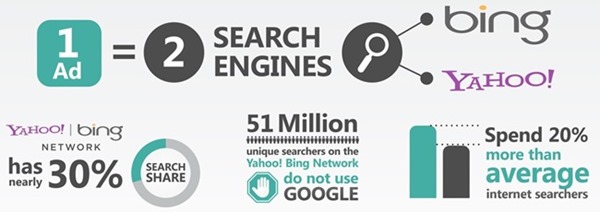
There are leagues of comparison sites. One quote I really liked was “Google is like the person that has it all together but is too conservative sometimes, and Bing is like the party friend who is open to anything but is a hot mess”. Another quote is from 2016: “With Bing Ads though, you can only show your ads on the Content Network if you’re targeting the entire US”. So an issue of targeting shown in 2016, an issue that Google AdWords did not have a year earlier. This is important because if you cannot target the right people, the right population, you cannot be competitive. This relates to the system and the EU-regulators, because a seven year ‘investigation’ shows that a year ago, the other players were still lagging against Google, in addition, when we read in the Guardian article: “the EU regulator is further investigating how else the company may have abused its position, specifically in its provision of maps, images and information on local services”, we need to realise that when we relate to cars, the other players are confined to technology of 1989 whilst Google has the Williams F1 FW40 – 2017. The difference is big and getting bigger. It is more than technology, whilst Microsoft is giving the people some PowerPoint driven speech on retention of staff, something that IBM might have given the year before, Google is boosting mental powers and pushing the envelope of technology. Whilst Bing maps exist, they merely show why we needed to look at the map in Google. This is the game, Microsoft is merely showing most people why we prefer to watch them on Google and it goes beyond maps, beyond shopping. As I personally see it, Microsoft is pushing whatever they can to boost Azure cloud. IBM is pushing in every direction to get traction on Watson. Google is pushing every solution on its own merit; that basic difference is why the others cannot keep up (that’s just a personal speculative view). I noticed a final piece of ‘evidence’ in a marketing style picture, which I am adding below. So consider the quote ’51 million unique searchers on the Yahoo! Bing Network do not use GOOGLE’, so consider the fact of those trying to address those 51 million, whilst they could be addressing 3.5 billion searchers.

The business sector wants results, not proclaimed concepts of things to come. Microsoft is still showing that flaw with their new Consoles and the upcoming Scorpio system (Xbox One X), users want storage, not streaming issues. They lost a gaming market that was almost on equal term with Sony (Xbox 360-PlayStation 3), to a situation where it now has a mere 16% market of the Sony market and that is about to drop further still as Nintendo is close to surpassing Microsoft too.

There is always a niche market (many people), who want to kick the biggest player in town, I get that. Yet at present the issues shown and as far as I get the technology, I feel that the EU regulators are failing in a bad way. I might be wrong here and If I get the entire commission papers and if issues are found, I will update this article as I am all about informing people as good and as correct as possible. Yet the one element that is most funny, is that when I open up Internet Explorer and I type in ‘Buy a Washing Machine‘ Bing gives me 8 options, 7 from David Jones and 1 from Snowys outdoors, which is a portable one and looks like a cement mixer. So when was the last time you went to David Jones to watch a washing machine? In Google Chrome I get 6 models on the right side, with 3 from Harvey Norman, 2 from the Good Guys and one from Betta, and that is before I press the shopping tab, so can we initially conclude that Micro$oft has a few issues running at present? Oh and the Google edition gives me models from $345 to $629, Bing prices were $70 for the portable one and the rest were $499-$1499.

This is not on how good one or the other is, this is how valid the EU regulator findings were and so far, I have several questions in that regard. Now, I will be the last one keeping governments from getting large corporations to pay taxation, yet that part is set in the tax laws, not in EU-antitrust. As mentioned the searchers before, I wonder whether the EU regulators are facilitating for players who seem more and more clueless in a field of technology that is passing them by on the left and the right side of the highway called, the ‘Internet Of Things’.

From my point of view Google is doing just fine!

The EU regulator? Well we have several questions for that EU department.

1 Comment

Filed under IT, Media, Science

Two sides of fruit

There are always issues when you get to the topic of fruits. One is the question whether it applies to the members of the US congress (the members of the US Senate are usually labelled as nuts). Is it an issue with actual nutritional products or are we talking about the device that Newton used for gravity? Yes, it is the third one as Newton discovered gravity with an apple.

Yet even here we see two sides at present. The first one is seen with ‘iMac Pro: Apple launches powerful new desktop – starting at $4,999‘ (at https://www.theguardian.com/technology/2017/jun/05/imac-pro-apple-launches-powerful-new-desktop-macbook-starting-at-4999). Here we see the quote “The new iMac Pro starts with an 8-core Intel Xeon processor, but can be configured with an 18-core processor variant, as well as up to 128GB of EEC RAM, 4TB of SSD storage and Radeon Vega discrete graphics cards with up to 16GB of memory“, you see, Apple, like Microsoft, IBM and since resent ASUS have become agents of iterations, true innovation has not been on their shores for too long a time, which is why my new device is for consideration with Huawei and Google alone. Only they have shown the continued race for actual innovation. there is also Samsung, but as I had a legal issue in 1991, I took them from the consideration list, I can hold a grudge like only the Olympian gods can. Still in their defence. the question becomes how can you make a computer truly innovative? It is a question that is not easily answered. there are a few options, yet some of the technology required is still in its infancy here.

In addition, in similar ways, iWork has been unable to grow due to the restrictions (read: limitations) that the suite offers. Instead of trying to persuade the Microsoft Office users (which is not a bad path), iWork has not grown in the directions it could and they are now paying for it through reduced exposure. Still, there remains a valid opposition to my accusation of: ‘have become agents of iterations’. To see this, we cannot just state that there is a new iMac and as such they are merely iterating. There is in addition the issue of hardware versus software. So in my view, a true innovation would have been a Wi-Fi upgrade, not just a faster system, but a system that is keyed to the home and mobile devices. As we are now a little over a year from the first steps of 5G, as we are all more and more connected via different devices, Apple left out in the open a huge sales opportunity by having the options of having devices linked and interlocked. A missed opportunity. You see as bandwidth becomes more and more an issue, as we tend to have a home bandwidth that is 100 times larger, having the option of the auto upgrade manager on your desktop device (iMac). So when you come home, apps and content will be distributed to the devices you want them to placed in. So at home ‘without even thinking’ (sorry Microsoft for using your Windows 95 slogan). the devices will do what needs to be done and you need not mind. You see, as people are trying to push Block chain into every financial corner, those people forgot on how block chains can also be the foundation for users on multiple devices. Now that is not always needed, because we get mail in the cloud, data in the cloud and via the cloud, but that is not for everyone. In addition, people forget about the photo’s they took and they do not always want that in some cloud. There are legions of options here, but at time we want some of this offline. finally, as we do specific tasks (for example on a train), we prefer not to lose too much bandwidth whilst on a train. Tablet and mobile bandwidth can be expensive. In equal size we tend to forget how large some files are and as such we could rush through our bandwidth in no time. This is just one of two options and we have seen very little development in that regard. Apple might want to let others develop it first, but that also leaves them with less when they need to have that additional step forward. It was a mistake Microsoft hid behind for the better part of 2 decades. In that same approach we see how consultancy and project software could benefit a different side in their designs. Now, that is not for Apple to side with, but it could have been an opportunity to grow in new directions. Anyway this is not about starting a fight on 3rd party vs others, this is about iteration vs innovation and Apple has been reluctantly innovative.

This gets us to the other side of it and here I am not siding with Apple, but I am wondering if Apple has been treated correctly. This we see in ‘Apple ‘error 53’ sting operation caught staff misleading customers, court documents allege‘ (at https://www.theguardian.com/technology/2017/jun/05/apple-error-53-sting-operation-caught-staff-misleading-customers-court-documents-allege). Now first let’s take a look at the error 53 part. The issue is that “‘Error 53’ is a message that occurred after updating to iOS 9.0 on iPhones of people who had had their TouchID fingerprint sensor replaced by a repair shop not licensed by Apple. The phones were rendered useless because the operating system update detected a mismatch between the sensor and the phone, and locked the device, assuming unauthorised access was being attempted.

Now here we see two sides.

In the first side we see “Knives damaged by misuse, improper maintenance, self-repair, or tampering are not covered.“, this is something Buck knives has in play. By the way, this comes with a life time warranty so that remains awesome. In addition, for decades TV warranties were voided if unauthorised repairs were made (or repairs by unqualified repairman). With laptops there was Compaq, who would void any warranty if a non Compaq technician had worked on it. They even created special Compaq screwdrivers to keep a handle on it all. So when we see ‘replaced by a repair shop not licensed by Apple‘, I am not certain if the ACCC has a case, they have not acted against Philips, Sony and a few others for the longest of times.

So when I read: “accuses Apple of wrongly telling customers they were not entitled to free replacements or repair if they had taken their devices to an unauthorised third-party repairer” I remain in doubt whether they have a case.

So when we see “Australian consumer law clearly protects the right of a customer to a replacement or free repair if the product is faulty or of unacceptable quality“, which I agree with, yet the owner did not go to Apple, did they? I have had my own issue with Apple in this regard (different device), yet can we agree that when we read: “It is however important to note that if a non-genuine part is fitted to your Toyota and that part’s failure or the incorrect fitment damages your vehicle, then that damage may not be covered by your Toyota Warranty“, so how can something that applies and is valid for Toyota is not valid for Apple?

I believe that ACCC acted out with another agenda. The need for warranty protection by having repairs done by authorised service people has been in the axial of repairs for decades. In addition, when we look at the facts, why would ANYONE go to a third party for warranty repair? That is just insane. So when we read “wrongly telling customers they were not entitled to free replacements or repair if they had taken their devices to an unauthorised third-party repairer“, I am actually wondering how they could come to the conclusion ‘wrongly‘. You see when we read: “Australian consumer law clearly protects the right of a customer to a replacement or free repair if the product is faulty or of unacceptable quality” we now wonder how true that is. You see, warranty is either valid (Apple fixes it for free), or it is beyond the warranty term and you have to pay for it and then it is no longer done for free, so you might select a third party. Yet if this is not an Apple authorised dealer, don’t you have anyone but yourself to blame?

So this is the other side of the apple, what constitutes voided warranty.

You see, if Apple loses this part, I can start repairing Raytheon’s Griffin systems. You see the upgrade (from C to C-ER) and equipment alignment costs are roughly $15,000 per day (excluding parts), if you do not have the proper Service Level Agreement. I can offer to do it for $5,000 a day. so if my work is shoddy (which they will not know until they fire the device, I can be very innovative towards my income), can they apply for warranty at Raytheon, or have they voided their options? You see I will have a NDA with a ‘this repair has been completed to our highest corporate standards’, so I am in the clear and the way the world goes, with 225 upgrades, I will have a decent Christmas this year. Yet at that point the ACCC will not go after Raytheon, it will go after me (what a whuzzes). So how come that the rights of Raytheon are better than those of Apple?

It seems that people assume so much with their mobile devices nowadays, I need to wonder if people comprehend what they buy and what responsibilities come with it. In this the initial question ‘Why did you not take your device to Apple?‘ is one that is not addressed at present and as such I have little faith that the ACCC has a decent case at present (in the shape we saw presented today).

the second and first part interacts as the upcoming shifts will in equal part see new frontiers in Service Level Agreements, Customer Responsibility and the comprehension of the elements covered in a warranty. Because what is included is likely to shift a fair bit over the next 2 years. In addition, innovation is also a shifting concept. Whilst it was “a new idea, device or method”, we (read: the corporate marketing departments) have often seen it as ‘the application of a solution that allows to meet the new or altered requirement of the customer‘ which we get when we iterate with a more powerful processor, more storage, larger screen. So going from 1080i to 5K screens might be accepted as truly innovative, because that took another level of screen and electronics. Yet at times, the pass through of merely upgraded speeds are also seen as innovation, yet at what level is that? When the device remains merely the same to the largest extent, is that not merely iteration?

So here we see the two sides of the other Apple. What we see, what the maker offers and how we both interpret the presented term of innovation.


Leave a comment

Filed under IT, Law, Media, Military

In light of the evidence

We tend to accept facts and given situations whenever we have a reliable source and a decent level of evidence. The interesting side is that howling to the moon like a group of sheep hoping the lone wolf will not hear them is an equally weird revelation. The question becomes at that point, who is the lone wolf and who are the sheep, because neither position nor identity is a given. Now, for the first art, we have the Guardian article (at https://www.theguardian.com/politics/2017/may/27/eu-theresa-may-combat-terror-brexit-europol), with the expected title ‘We need deal with the EU to combat terror, experts tell Theresa May‘, which of course gets them the DGSE, yet the usefulness of the rest becomes a bit of an issue. For this part we need to look somewhere else, and we will do that after the given quote in the mentioned article “Although our partnership with the US for intelligence sharing is extremely important, the fact is that the current terrorist threat is very much a European dimension issue. The Schengen database and knowing about who has moved where are all intimately dependent on European systems and we have got to try to remain in them“. This could be a valid and valued statement, yet is that truly the case? For this we need to take a little gander to another place of intelligence and Intel interest. The Cyber monkeys, or is that the cyber-mercenaries? The difference is merely a moment when you WannaCry 1.4. You will have heard, or perhaps read regarding the NHS as it was struck, here again we see: “However, it instead appears to be down to organisations and individuals failing to run keep Windows up to date“, which was actually voiced by NHS Digital, the failure of policies as they were not adhered to by IT staff, or at least those responsible for keeping those PC’s up to date with patches. The second quote given much earlier in the IT article is ““To be abundantly clear, the recent speculation concerning WannaCry attributes the malware to the Lazarus Group, not to North Korea, and even those connections are premature and not wholly convincing,” wrote James Scott, a senior fellow at the Institute for Critical Infrastructure Technology (ICIT)“, which is where I have been all along. The one nation that has less computer and internet innovation than a Nintendo GameCube sets this level of hardship? It is just too whack for thought. It is the quote “At best, WannaCry either borrowed heavily from outdated Lazarus code and failed to change elements, such as calls to C2 servers, or WannaCry was a side campaign of a minuscule subcontractor or group within the massive cybercriminal Lazarus APT” that changes the game. In addition we see: “The publication referred to “digital crumbs” that the cyber security firm had traced to previous attacks widely attributed to North Korea, like the Sony Pictures hack in late 2014″, we will exclude the quote “Shadow health secretary Jon Ashworth has said Labour would invest an extra £5 billion into new IT infrastructure for the NHS, after hospitals and services were affected by the widespread Ransomware attack on Friday“, especially as Labour had in the previous government wasted £11.2 billion on an IT system that never worked, so keeping them away from it all seems to be an essential first.

The issue is now in several phases. Who got hit (those not updating their systems). It affected according to some sources thousands of systems, yet when it comes to backtracking to a point of origin, the Cyber Intelligence groups remain unclear. The IT article (at http://www.itpro.co.uk/security/28648/nhs-ransomware-north-korea-may-not-be-behind-wannacry), gives us a few things, yet the clear reference to the Guardians of Peace, the identity the hackers had given themselves in the Sony event gives a few additional worries. Either this is clearly a mercenary group without identity, or we have a common new issue on identity when it comes to Cyber criminals. You see, as we see more and more proclaiming the links between the Lazarus group and North Korea, we do not get to see a clear link of evidence. Many sources give us ‘could be linked‘, or ‘highly likely‘, which is an issue. It makes the evidence too shallow and circumstantial. The NY Times gives us (at https://www.nytimes.com/2017/05/22/technology/north-korea-ransomware-attack.html) yet they are basically stating what Symantec game us and mention that. My issue here is “But the hackers left behind a trail of digital crumbs that Mr Chien and his colleagues had traced to previous attacks by the Lazarus Group“, what if the crumbs were an intentional side? You see, the quote “another group of hackers that call themselves the Shadow Brokers published the details of National Security Agency hacking tools that the WannaCry hackers were able to use to add muscle to their attacks” give a different light. The fact that there is a team reengineering tools and flaws to get somewhere fast is one. We have seen the lack of actual cyberpower of North Korea in the past, the fact that they are regarded on the same level as Chinese Cyber forces is a bit silly. You see, any country has its own level of savants, yet the fact that North Korea, a nation as isolated as it is, gets to be on par with China, an actual superpower that has Cyber infrastructures, experts at the University of Shanghai (the white paper on cracking AES-256, 2001), as well as a growing IT technology base is just a little too whack.

This now reflects back to the European need of Schengen. The UK needs quality intelligence and with the US breaches of Manchester, the fact that no high quality evidence was ever given regarding the Sony Hack, the growing source of all kinds of hacker names and no validity or confirmable way to identify these groups leaves us with a mess that pretty much anyone could have done this. In light of the NSA flaw finders, there is now more evidence in the open giving the speculative hacker as one with skills that equal and surpass people graduating with high honours at MIT, than anything North Korea could produce. It does not put North Korea in the clear (well the fact that the generals there had no comprehension of a smartphone should be regarded as such), and as we see the entire Bitcoin go forward, we need to take more critical looks at the given evidence and who is giving that evidence. We all agree that places like Symantec and Kaspersky should be highly regarded, yet I get the feeling that their own interns know more about hacking then the sum of the population of all North Koreans do, which is saying a lot. We see supportive evidence in the Business Insider (at http://www.businessinsider.com/wannacry-ransomware-attack-oddities-2017-5). Here we see IBM with “IBM Security’s Caleb Barlow, researchers are still unsure exactly how the malware spread in the first place. Most cybersecurity companies have blamed phishing emails — messages containing malicious attachments or links to files — that download the ransomware. That’s how most ransomware finds its way onto victims’ computers. The problem in the WannaCry case is that despite digging through the company’s database of more than 1 billion emails dating back to March 1, Barlow’s team could find none linked to the attack“, one billion emails! That is what we call actual evidence and here IBM is claiming that the issue of HOW the malware spread remains a mystery. Now, can you see that the entire North Korean issue is out of touch with the reality of Common Cyber Sense and Actual Cyber Security? Two elements, both are essential in all this. It is the lack of actual evidence that seems to be the issue, giving us the question, who wants the North Korea issue propagated? Any answer here is more likely to be political than anything else, which now gives us additional questions on where for Pete’s sake the need of European Intelligence remains as they fall short of providing answers. In light of the Schengen database. Why would that not be shared? If the US has access as a non-European, non-EC nation, why would the UK, a clear European nation be barred from access? With all the flawed acts by the US, having actual professionals look at Schengen data, seems to be an elemental first, would you not agree?

An additional question would be on how these Bitcoins would be cashed, it is not like an isolated nation like North Korea ever had a flying business in Bitcoins in the first place. It is actually (yes, I am shocked too), that quality information comes from PwC. In this case Marin Ivezic, a cyber-security partner. He gives us “EternalBlue (the hacking tool) has now demonstrated the ROI (return on investment) of the right sort of worm and this will become the focus of research for cybercriminals“, which would be a clear focus for veteran cyber criminals, yet the entire re-engineering foundation gives another slice of circumstantial evidence that moves us actually away from North Korea. So in this we have two elements. As the FBI and CIA have been all about pointing towards North Korea, the question becomes, where do they not want us to look and whatever else do they not have a handle on? These points are essential because we are shown an elemental flaw in Intelligence. When the source is no longer reliable, why would they be around in the first place? We can agree that governments do not have the goods on Cyber criminals, because getting anything of decent value, tends to require inside knowledge, which is the hardest to get in any case, especially with a group as paranoid as cyber criminals. The second side is that China and Russia were on the list as one of the few abled parties to get through Sony, yet Russia has fallen of the map completely in the last case, that whilst they are actually strengthening ties with North Korea. That does not make them guilty, yet on the sale required Russia was one of the few with such levels of Cyber skills. The fact that we see in the NY Times that it is too early to blame North Korea is equally some evidence, it gives vision to the fact that there are too many unknowns and when IBM cannot give view of any mail that propagated the worm, gives additional consideration that there are other places who cannot claim or show correctly how the worm got started, which is now an additional concern for anyone altering the work for additional harm. As the point of infection is not known, stopping the infection becomes increasingly difficult, any GP can tell you that side of the virus. There is one more side I would like to raise. This comes from a source (at http://securityaffairs.co/wordpress/59458/breaking-news/wannacry-linguistic-analysis.html), it is not a journalistic source, or a verified source, so please take consideration that this news could be correct. It is however compelling. The quote ““The text uses certain terms that further narrow down a geographic location. One term, “礼拜” for “week,” is more common in South China, Hong Kong, Taiwan, or Singapore. The other “杀毒软件” for “anti-virus” is more common in the Chinese mainland.” Continues the analysis “Perhaps most compelling, the Chinese note contains substantial content not present in any other version of the note, is lengthier, and differs slightly in format.” The English note of the ransomware appears well written, but it contains a major grammar mistake that suggests its author is either not a native speaker or possibly someone poorly educated“, that would make sense, yet how was that source acquired?

The second quote: ““Given these facts, it is possible that Chinese is the author(s)’ native tongue, though other languages cannot be ruled out,” Flashpoint concluded. “It is also possible that the malware author(s)’ intentionally used a machine translation of their native tongue to mask their identity. It is worth noting that characteristics marking the Chinese note as authentic are subtle. It is thus possible, though unlikely, that they were intentionally included to mislead.” The Flashpoint analysis suggests attackers may have used the Lazarus code as a false flag to deceive investigators, a second scenario sees North Korean APT recruiting freelance Chinese hackers to conduct the campaign” gives us a few elements, the element of misdirection, which I had noted on from other sources and the element that North Korea is still a consideration, yet only if this comes from a freelance hacker, or someone trying to get into the good graces of Pyongyang, both options are not out of the question as the lack of Cyber skills in North Korea is a little too well set from all kinds of sources. The writer Pierluigi Paganini is a Cyber professional. Now even as Symantec’s Eric Chien is from California, did they not have access to this part and did no one else correctly pick up on this? As I stated, I cannot vouch for the original source, but as I had questions before, I have a few additional questions now. So, exactly how needed is European Intelligence for the UK? I think that data should be shared within reason. The question becomes, how is Schengen data not shared between governments? The Guardian gives us “After the Manchester attack, which killed 22 people and left dozens of others grievously injured, it was revealed that suicide bomber Salman Abedi had travelled back to England from Libya via Turkey and Dusseldorf four days before the attack“, so how reliable is Turkish intelligence in the first place? How could he have prepared the bomb and get the ingredients in 4 days? There is an additional view on ISIS support active in the UK, yet as we now see that this drew attention to him, why on earth was the trip made? Also, was Libya or Mecca the starting point (source: claim from the father in earlier Guardian article)? How would sharing have resolved this?

Now look at this in light of the US leaks and the Cyber Intelligence of a dubious nature. There is a growing concern that the larger players NSA, DGSE, GCHQ have flaws of their own to deal with. As they are relying more and more on industry experts, whilst there is a lack of clear communication and reliable intelligence from such sources, the thoughts now become that the foundation of fighting terror is created by having a quality intelligence system that recognises the need for Cyber expertise is becoming an increasing issue for the intelligence branch. Should you wonder than, then reconsider the quote: ‘demonstrated the ROI (return on investment) of the right sort of worm and this will become the focus of research for cybercriminals‘, if you think that cyber jihadists are not considering the chaos that they could create with this, then think again.  They will use any tool to create chaos and to inflict financial and structural damage. They might not have the skills, yet if there is any reliable truth to the fact that the Lazarus group is in fact a mercenary outfit, there would be enough critical danger that they will seek each other out, that is providing that ISIS could bring cash to that table. I have no way of telling how reliable or how certain such a union could be. What is a known is that Sir Hugh Orde is not answering questions, he is creating them, as I personally see it. The quote “UK membership of EU bodies such as Europol and Eurojust, which brokers judicial co-operation in criminal cases, not only allowed access to huge amounts of vital data, but also meant UK police could set up joint inquiries with German police or those from other national forces without delay“. You see, the UK remains part of Europe and Interpol existed before the EC, so as we now see the virtual creation of red tape, the question becomes why the EU has changed rules and regulations to the degree that the UK would fall out of the boat. Is it not weird that the EU is now showing to be an organisation of exclusion? Even if we laugh on the ridiculous promises that Corbyn is making, just to be counted shows that there is a larger problem in place. Why is there suddenly a need for 1,000 more intelligence staff? Can we not see that the current situation is causing more issues then resolve them? As such, is throwing money and staff on a non-viable situation nothing less than creating additional worries?

The last part is seen in “The Schengen database and knowing about who has moved where are all intimately dependent on European systems and we have got to try to remain in them“, yet this does require all players to enter the data accurately, in addition, that only applies to people entering Schengen, yet as has been shown in the past, after that getting locations on people is becoming an increasingly difficult problem. The fact that after the Paris attacks, some people of interest were found to be in Belgium is one side, the fact that these people could have met up with all kinds of contacts on the road is another entirely. The truth is that the intelligence branch has no way of keeping track in such details. In addition we have seen that the list of people of interest is growing way beyond normal means and organising such data streams and finding new ways not just to find the guilty, but to decrease the list by excluding the innocent is growing in complexity on a nearly daily basis. And that is before the cyber mess is added to the cauldron of nutrition. There is at least a small upside, as the technology stream will soon be more and more about non-repudiation, there will be additional sources of information that adds the branches by pruning the list of people of interest. The extent of pruning is not a given and time will tell how this is resolved.

It all affects the evidence that the parties hold and how it is applied, it remains a matter of time and the proper application of intelligence.


1 Comment

Filed under Finance, IT, Law, Media, Military, Politics, Science

The danger of Colbert and the Press

When we see an interview with General Michael Hayden and Stephen Colbert, it is hard to imagine, but it is actually Stephen Colbert who is endangering the lives of many. Did you realise that? First, the interview (at https://www.youtube.com/watch?v=buI8aO7nRDM) should be watched. It is a brilliant interview. Getting a former CIA and NSA director in view is always a little awesome and the man plays the audience brilliantly. Now, I say ‘play’ and I mean that in the best positive way. He is funny direct and answers the questions clearly. It is Hayden that gets the applause and it was an applause that was well deserved. He debunks conspiracy theorists and cuckoo cases all over America. Then something happens, suddenly Colbert does something dangerous and stupid. At 4:55 he plays the game regarding Smart TV’s spying on you, he plays us all as he is linking this to the CIA. What happened was that on February 6th the FTC fined Vizio $2.2 million for collecting viewing histories without users consent (at https://www.ftc.gov/news-events/press-releases/2017/02/vizio-pay-22-million-ftc-state-new-jersey-settle-charges-it), pretty much the same thing that Microsoft seems to be doing to its Xbox population at present and uploading their data into the Azure cloud (without consent).

This might seem like a nuisance, but it is a lot more than that. Large corporations have run out of spreadable funds and like any other corporations, they now need to optimise. It is almost the same situation that SPSS was selling when it offered companies a product called AnswerTree (back in 1997). Marketing firms had to get a certain quota, let’s say 4%, now to get there you could either throw more money on it, and going from 2% to 4% did not just mean a little over 100% more to get the growth. No, with their product AnswerTree, you could make an inventory of who you mailed and who responded and started to prune the tree of those who responded a lot below quota, so basically, the mailings became more efficient, a more clever path to the people buying and it is all perfectly legal and acceptable. That is what is happening now in new ways and Vizio got caught because it happened in an automated way without any level of consent. So who did not get caught? Because I can tell you right now that the bulk of the people with a smart TV have not considered where this data is being logged.

Now, I am going to ask you a question: ‘If marketing is harassment, is the marketing contact that you purchase from still a harasser?

If we have all the do not call registers, how long until these marketeers use other methods? Free games, free apps and free TV shows, all connected, you just have to agree to advertisements connected to them. It is a mere reward for exposure which is all perfectly valid. In all this the CIA was not a factor or a danger. It is the large corporations that are classifying you, more important, it is the links that they can resell that are a danger to your way of life, which is why at times smart TV’s are sold with 60% discount (speculation from my side).

In 2015 I would never have expected to be able to afford a 55 inch smart TV, it is huge (and I was happy with my 42 inch one) but it broke, I had a decent job, but the surprise that a brand new 100 Hz Sony 55 inch was priced down from $1900 to $800 (very lucky me), which was just ridiculous as the next TV (almost the same as my broken one) was a 40 inch at $699, which was perfectly decently priced for those days. Now, we can hang onto the idea that it was just a crazy sales, which does happen, but to flood the market with something almost twice the size, with much higher specifications at next to the same price as a small B-brand TV is too weird. It is almost like having a Canon 5D at the normal $2500 and offering next to it a Hasselblad X1D-50c at $3000, which would be awesome as these babies go for $13,000. It would be 20Mp versus 50Mp. As a photographer I can tell you that I would kill for a Hasselblad 50 Megapixel camera (and as I know the Evidence Act 1995, I might get away with it).

So, I hope you understand the weirdness of such good deals. And in all this, Sony has the ability to capture this data (I am not accusing them of doing this, I have no evidence of any kind that this is happening), but the threat to our privacy is real. Now you might not think that this is important. Yet consider that this data could be sold, how many hours are you not sporting, how many hours do you watch TV and what do you watch? How long until you suddenly get a 12% spike in health insurance? There is where the difference is! You see, these players are very very interested in that data, minimise their risk and charge extra to anyone that is a risk. In my case it does not matter, my smart TV is connected to my console and my Blu-ray player, so there is no ‘smart’ data to capture. What is important for these sales people that the 0.5% of the group that I represent is not the issue, their value is the 80%+ that does connect their TV for Netflix and other reasons, that is where their value is and it is potentially bringing in millions, so the 60% discount is a joke to them. That is the part Colbert smoothly walked over whilst he joked about the CIA and the press at large stayed away from that FTC ruling, so there is one of the dangers.

The other danger is organised crime. How long until people realise that being away from home means no TV? That means that the smart TV logs are not showing movement. How long until the criminals can connect smart TV usage and social media action into, which house is empty? Oh and as you advertise on Facebook that you are on Cuba, how long until you realise that you gave away the info that your house is unprotected? More important the quote “Oversharing on social media could not only leave you open to burglary but it could also invalidate your home insurance policy” is not a joke, this quote was given 2 years ago. Justice Gibson of the District Court of New South Wales raised the issue as early as 2014, the courts are not ready for this and for the most, they are only dealing with the fallout that Contract Law is giving them, more precisely the contracts that Insurance agencies have been working on. With currently well over 80% of Australians on social media (which is actually low compared to Scandinavian nations), the consideration of implementing certain risks is an essential need for any insurance agent. Yet, at what point can usage of social media be seen as evidence towards negligence? Mobile phones tells us where we are, smartphones tell everyone what we do (through our usage), and Smart TV’s give us what we watch, out interests and our activities, or lack thereof. At what point is any of this evidence to act, to surcharge to act as a penalty or as an option to nullify the security of insurance?

That is the part not considered and it gets even worse!

This is seen in the news that is hitting us now through what is marketed as Vault 7. CNN Money (at http://money.cnn.com/2017/03/09/technology/cia-smart-tv-wikileaks-public-hacks/) gives us the news on how the CIA is spying, although they do also mention “security researchers say the methods imitate exploits that were discovered — and made public years ago“, So when I see “Samsung warned users about exactly this type of susceptibility in 2015. The company told CNNTech this week that it is ‘urgently looking into the matter.’“, my question becomes: ‘How much data did you collect?‘, so as the warning is 2 years old, apart from making batteries explode, did you do anything to stop this threat? And as we see Dan Trentler, CEO of the Phobos Group security firm state: ‘That appears to be the same exploit he witnessed in action onstage at a security conference in 2013, he said‘, can we give accusation that there is nothing innocent going on and the level of negligence shown in one article spanning 3 years of events, that is enough to warrant a much larger investigation into privacy invasion by large corporations?


It is not about just consent, they are mining our choices and leaving us with less. You might not consider this or comprehend this, but it is an optimised way of American business. I have to explain this.

I was confronted with a larger group of board members of a large firm. As an ‘upper’ grunt I had two distinct jobs. One give the best service to my clients and protect them as much as possible from any negative event, which is what any good Technical consultant does. And I had to be faithful and supportive to my bosses, which is what a loyal employee does. Now consider the meeting where we get the premise: ‘What if you cannot service your client 100%, but only 80%, would that be acceptable?

Now, the danger here is that my answer would be a solid ‘No!’ A danger from the corporation side when we consider the introduction of service level agreements, the introduction that the client was unwilling to pay for the service given. How do you take a stand (driven by wisdom) at that point?

This is where you the consumer are at, but it comes from another direction. Places like Samsung, Sony, Microsoft, HP, IBM and Apple are all in the optimisation phase, because the economy is still not great and most of us would only be able to afford one of these devices, perhaps a second one for Christmas if we are lucky. So as we can get 2 out of 5, so how do corporations go about getting the largest share you can? Now we get to the AnswerTree part, you become smarter in how you get to your audience to choose you, not merely marketing but marketing to the most likely buying population. The question then becomes what options you have at your disposal. Do you sacrifice one device so you get an option to see 2 more options for alternative sale and get the contribution needed? The reasons is that in this day and age, it is not about revenue, when you are a listed company, when you have stakeholders, it will be about contribution (revenue minus costs), if you fail that, no great bonus, no mistress, no fast car and in the end no job.

So here we see the rundown on how Stephen Colbert became a danger to you, he made it into a CIA joke, whilst the bitter and solemn truth is that the real danger is the invitation you readily give out to all manner of freebie givers, only to learn the hard way that they get back what they gave out in tenfold, just by collecting your inactions and sell it to whomever can transform that into personal profit. So whilst some people are falling asleep reading (at http://searchhealthit.techtarget.com/essentialguide/Providers-adjusting-to-greater-use-of-social-media-in-healthcare) how social media is interacting in health care, consider what an insurer would give to know that you visited a free clinic for the third time this quarter. It might not cost them anything, but it will set a flag to raise premiums the next year. Did you consider that? And as we shrug at seeing “Social media analysis done with natural language processing has given care facilities a more efficient way to get patient feedback“, many will ignore, just like the previous example on raising premiums. Even as you consider a visit for planned parenthood to be perfectly natural and normal (which it is), but when the insurer realises that you will be needing to visit an OBGYN in the near future, you better realise that you are lucky if your premium rises with only 5%. That is the way business is done and the initial ‘risk’ numbers to which you were held at premium are 10 years old and you fall in a much higher group. Only the super healthy teenager who does not get sick gets the low increase, that whilst he was actually a 0% risk. How fair is that and why is the media not all over that on a daily basis?

The CIA was never worthy to be mentioned in this regard, for 99% of the Americans they are nothing as these 99% of Americans were harmless so the CIA never cared to begin with and that is the group Colbert was aiming for which is odd in one way and on the other hand, we do get that he is a comedian who is trying to entertain 100% of his clients, those who tune in on his version of humour. He cannot be faulted for that, the press at large however can be faulted and they should but they stay away from it for other reasons. Mainly because they want a slice of the Samsung $700 million advertisement budget (that is for the USA alone), Microsoft and Sony are in similar predicaments, which is why certain events will not make the front cover any day soon. The reason of data collection being the most obvious one, but at times it can be trivialised as they are only gamers, or it is only a console and consent is overrated. I’ll let you be the judge of what matters and what not, just remember, when you are no longer within the 80% of the group they cater for and you already bought the device, where will your rights be, or your service provider? Perhaps you get the same answer Microsoft gave me: ‘we have no control over uploads, that is all with your internet provider!‘ Interesting how my consent was manoeuvred around in all of this.


Leave a comment

Filed under Finance, IT, Law, Media, Politics, Science

The rights of one person

Where does the rights of a person stand? Where do we draw the line of reason? These two questions came to mind when I saw the partial readable news in The Times with ‘Asbo woman fears eviction for moving bins‘ It could be seen that there is something amiss, but where does the problem lie? You see, when I was looking into Brexit dangers, the quote “A 61-year-old woman who has been warned about antisocial behaviour claims that she is facing eviction after neighbours made 15 complaints about her for “offences” including moving bins and supporting Brexit“, in addition we see:

  • Over the past seven years, Anne Maple has been sent eight antisocial behaviour notices by Lewisham council.
  • Three ordered her to stop interfering with dustbins.
  • She was warned against displaying “inflammatory” notices after putting pro-Brexit and Conservative election posters in her window.

In this my first response would be that Jim Dowd, the MP there wakes up and takes a personal look at this very case. In the first, is there a law against putting a conservative poster in her window? What kind of people are there in Lewisham to take such offense, Labour minded people perhaps? That is off course as long as there is no housing law against it, which would actually be a breach of the freedom of speech! Now, there is no case I can make against the dustbin issue as I have no idea what actually happened and to what degree. Yet the fact that this is about a 61 year old woman, who is actually making these complaints? In addition the fact that more than 3 anti-social notices were given by the council themselves, I think it is time for Jim Dowd to do a little less posturing, especially when sauce bottles are looking very distinctively different! Mr Dowd should actually take the morning to visit Ms Maple and have an actual conversation. That is, unless he is too busy posturing towards his next election. And the threat of eviction because a person was in favour of Brexit? Is that area filled with sore losers perhaps?

It is nice that The Times is stating that there have not been any conviction, yet these acts against Ms Maple could be seen as Psychic Assault. Perhaps the people making the registration, should inform those complaining that in light of the number of instances, that they could face the consequences of Psychic Assault (although the UK doesn’t really have proper protection in place), which is for now a little bit of an issue. Still the situation remains that the Lewisham Council seems to be no more than a convenient portal for harassment. (Read: taking offense to Brexit and Conservative posters pretty much qualifies), in addition, if no offense was given to Labour Posters in windows anywhere in Lewisham, it now becomes a council act of discrimination as I personally see it.

Yet, even as we see this, the Miss Maple case was not the one that this was going to be about, but it is actually closely related to the matter at hand. You see, the papers are full of deportation articles, it is the Barclay brothers spreading fear. Sir David Rowat Barclay and Sir Frederick Hugh Barclay own these papers, so I call them in charge, even as I know that Aidan Barclay is actually managing pretty much anything they have in the UK (several billions worth I might add). You see, Owen Bowcott at the Guardian stated it perfectly when we see “Mass deportations of the estimated 2.9 million EU nationals living in the UK would be impractical and they should not be used as a “bargaining chip” in Brexit negotiations, the government is being warned“, this is where I see this happen. Emotional reports and statements from Bremainers getting desperate that any alternative is null and void. First of all there is the Immigration Rules on Family and Private Life (HC 194), which the Home office has here: (attachment).

When we get to the best interests of the child, we see: “arrangements are in place to ensure immigration decisions are made having regard to the need to safeguard and promote the welfare of children who are in the UK“, now when I reflect that in regards to the Guardian article (at https://www.theguardian.com/politics/2016/dec/28/dutch-woman-with-two-british-children-told-to-leave-uk-after-24-years), where we see “A Dutch woman who has lived in the UK for 24 years, and has two children with her British husband, has been told by the Home Office that she should make arrangements to leave the country after she applied for citizenship after the EU referendum“, yet when we consider the Home office paper, the interest of her children and Section 55 of the Borders, Citizenship and Immigration Act 2009, where we see in section 55(6): “children means persons who are under the age of 18;“, both children fall into that category, we can argue that the Home office as presently interpreted failed in that assessment, in addition, that this family for 24 years have paid their taxation, have become a part of British society, it is there that we see the notifications from the Home Office seem to be either a careless failure or an intentional attempt to raise fear. I feel that no other direct impression remains. Even if we accept: “European citizens marrying Britons do not automatically qualify for UK citizenship under current rules“, the Borders, Citizenship and Immigration Act 2009 clearly provides in case of underage children which was applicable from the earliest moment on. We can also raise the issue that the 85-page application form for “permanent residency” will become an issue a few hundred thousand times more, so we can state that there will be a blooming business for immigration agents in the UK soon enough.

In all this the rights of one person are currently in danger because certain elements have been left out of too many media outlets for too long, we have forgotten where the media itself was. The Conversation gives us (at http://theconversation.com/hard-evidence-analysis-shows-extent-of-press-bias-towards-brexit-61106) a much clearer view, where we see the Bremain tainted side in blue and the UKF*ckOff (read: Brexit) in red. The fact that the Times is by far the most balanced one yet remains slightly Bremain is pretty awesome to some extent. In all this we all forget that as the least reputable sources (the Sun, Daily Mail and Daily Express) are more widely read and reaches a much larger audience. My view is not incorrect, yet massively incomplete. You should take a look at the Conversation article by David Deacon, Dominic Wring, Emily Harmer, James Stanyer and John Downey because it is an amazing piece of work, and nearly all of them professors (oh, whoop di do). The end result that we see is “when weightings for circulation are factored in, the fact that the highest circulating newspapers have tended to support Brexit means that the gap between the two positions widens into a substantial difference of 18% pro-Remain and 82% pro-Leave“, which is scary!

My reason for remaining ever so slightly in the Brexit field was not on any of those merits and it is perhaps the one part missing here, mainly because it is perhaps not part of the view these people looked at. My view grew based on the actions of others, the inactions of several others and the denial of even more people. The actions of Mario Draghi gave view that Bremain would be too dangerous. The invoice that he would instill on all would debilitate too many, making all mere slaves with implied false freedom. We all become the cogs of the engines of financial institutions and big business whilst the wealth is removed from the people more and more. Servitude to Wall Street! That would be the result and I never signed up for that and I know most Europeans have never signed up for that. In that regard, it is equally interesting how the spokesperson (Prime Minister Joseph Muscat of Malta) considers that “Britain should be made to answer to the European Court of Justice (ECJ) during the process in order to smooth the path for leaving“, it is my question to what regard. You see, the European Court of Justice has clearly intentionally skated away from the issue of a nation leaving for 2 decades. Mainly because no one believed it could ever happen and it is there where we see that the European Court of Justice (ECJ) has utterly failed! When we see “Any member state may decide to withdraw from the union in accordance with its own constitutional requirements”, checks and balances should have been put in place. Perhaps people remember on how ‘Grexit’ was such a big deal. Perhaps you all remember 2012 when people like Roubini stated that Grexit would be possible in 2013. So when I published the paper I found by Phoebus Athanassiou, stating that expulsion from the EU and the EMU wasn’t even legally possible (published in 2009), how betrayed did you feel? All in the media we were led like sheep, and as I saw it intentionally misinformed by those around us. Is it even a surprise that the UK wanted out? It might have started with Nigel Farage, but the issue has grown so much larger, all because the people in charge needed the gravy train to continue, the continuation of the wealthy demanding their Status Quo to remain to grow their fortunes. It is that foundation that is now very much in play. Even as this is all known, even as we have seen that the European exit must be voluntary, we see the BBC give us in June 2016 (at http://www.bbc.com/news/world-europe-36629145), the quote “the risk remains of Brexit precipitating the departure of Greece from the Eurozone and therefore possibly the EU“. At no point do I see the Greeks or the article state clearly that it must be voluntary, no legislation has been put in place ever since this started in 2012. Now we know that laws take a long time to set, but the effort regarding the trimming of the EU tree has been massively absent, why is that?

In all this we see that the rights of one person no longer seems to matter, which is weird because Common Law was clearly set to remain fair in that regard. Even for the most in Europe where civil law was key, the people had a fair amount of rights. Here now we see that the people remain uninformed, the media seems to be unable or unwilling to inform the people where their rights and what their rights are. It is my personal belief that the people are restoring a need for nationalism hoping that local laws will advocate a better level of informing the people, not tailoring to the needs of large global corporations. It sounds weird, yet this is what I believe to be the fear of many. The tax events on large corporations like Apple, Amazon, Google and IBM seem to be catalysts in all this. If you think that I am kidding in this matter, you should see “The discontent with legal tax avoidance, in the UK at least, is clear. A YouGov survey last year found that 59% of people think legally reducing your tax liability is wrong and make no distinction between evasion and avoidance“, which we got from Forbes in August last year (at http://www.forbes.com/sites/jaymcgregor/2016/08/31/apple-falls-victim-to-rapidly-changing-public-mood-around-tax-avoidance), this doesn’t just impact the branding, there are indicators that this also fueled the anger of Brexit voters. In addition, the 180 degree view that President Obama made in The Hague (2012) as he gave a speech on responsibility and then sent senior officials to oppose the tax reformation / tax accountability was no help here. So Brexiteers had a large stack of ammunition that they could hand to the people again and again. Misguiding and misinforming have been instrumental indicators in all this. There are too many sources to name, many are just mongering, yet a large amount came from reputable sources and Forbes has pointed out more than one issue in all this.

As I see it there is an abundance of work to do, some of it should have been addressed a long time ago. Even if I admit that I have not yet filled out my permanent residency papers for the UK, the fact that this is an 85 page booklet is still cause for concern. It is linked to the situation we saw earlier this week regarding the NHS, especially the Coventry ‘issue’. It has become clear that a logistical overhaul is needed in the UK. It is the hardest and most debilitating of overhauls, yet at present it could be seen as the most essential one. Consider the cost for civil servants having to get through 1,000,000 applications, which now implies that 850,000,000 pages get reviewed and decided upon. If a person is really focused and on the ball, that person will make an error once in every 50 pages, this now gives rise to the risk that every submission will have at least one error in its assessment. How efficient is that?

There are steps that can be taken to minimise this, yet it will cost in staff or technology and in both there is still the added flaw that items will be overlooked. That is the mere nature of the beast in all this. The application right of a person will be diminished, not on purpose and not with malice, but the danger is absolute and the scars that soul is left with is pretty much for a long time, perhaps even for life. How is any of it a solution?

In this we can argue that on the middle ground that automated residency is equally not an option, but the middle ground is not trotted on and that is where the solution is to be found, somewhere in the middle, which is turf that the polarised extremists (Brexiteers and Bremainers) are currently not looking, yet neither is the Home Office, or so it seems.


Leave a comment

Filed under Law, Media, Politics

A bit in the stream

Something alerted me towards events this morning in LinkedIn of all places. There was a reference towards an article titled ‘New Accenture boss Bob Easton throws down gauntlet to big four on digital’ (at http://www.afr.com/business/accounting/new-accenture-boss-bob-easton-lays-down-gauntlet-to-big-four-on-digital-20160829-gr3huj ).

The initial quote is “The trouble is there is a lot of people running around talking about digital“, which is true. Bob Easton is right that there is a lot of talk about digital. Yet, when we look at the definitions, I wonder how many have a true grasp of digital. Even I myself wonder when the use ‘digital’ is warranted. You see, when it is media, my photography is digital, so is my filming. Advertisement is digital as it goes through AdWords and not trough the newspapers. Here is the issue. When is something digital? Bob Easton states in the article “they are confusing the market by misunderstanding digital strategy and lacking the global capabilities of his firm“, the fact that IBM took a massive hit is not a surprise because they are confused on the best of times. They still present the 14 managers and 2 technicians approach. I cannot speak for either PricewaterhouseCoopers in this instance, or for EY, but my last encounter with Deloitte gave a much better view on them and they seem to know it (to some extent). So where does this leave Accenture?

The term “moving to aggressively compete for work in the consulting, digital and business transformation space” is only a concern if they do not meet customers’ expectations. So where should they be?

So where should you be? You see Dave Aron from Gartner (at that time) gives me: “A digital strategy is a form of strategic management and a business answer or response to a digital question, often best addressed as part of an overall business strategy“, what I liked was “Every business and public sector agency needs both an IT Strategy and a Digital Business Strategy. They must be highly aligned with each other, but they are not the same thing“, which gives part of the goods, yet when we consider his claim “All aspects of the business strategy should be informed by digital considerations“, we tend to get confused here, because different elements have the same word (read: digital), but in that the setting is not the same.

We can see it as advancements in digital technologies such as computers, data, telecommunications and Internet, which is still true, but how to go about it?

A digital media manager looks at how to get the solutions towards their ROI, which in many turns means to get it all electronically solved, whilst keeping costs to a minimum. Here we see the first failing from IBM as they are about revenue and about getting the business onto their solutions. Even in a step by step solution it is about getting one foot into the door and upsell from there. That is not a solution for the client, it is merely a solution for the sales person’s target.

And in some cases there is no digital path, but to a lot of people that does not exist so they will feign a solution. As an example I have my old dentist, he had a card system so perfect that no IT solution could bring the goods. I saw yuppies in all sizes try to sell him a solution between 1983 and 1995, one failure after another. The mere realisation that not all solutions fit and that some solutions will drive down the ROI in unacceptable ways is why several of these players will never succeed. Because what the client truly needs is never addressed. If we take the approach from Macala Wright (at http://mashable.com/2012/09/05/how-to-digital-strategy/#oc3qMBqfF8qC)

We see a decently clear path. I can quote all the steps again, but the article has them down to a nice clean size, so reading it is a recommendation.

I am downgrading it to these four steps for comfort (read: mine).

  1. Identifying the opportunities and challenges in a business where online assets can provide a solution or a difference.
  2. Identifying the unmet needs and goals of the external stakeholders that most closely align with those key business opportunities and challenges, and especially if there are threats there.
  3. Developing a vision around how the online assets will fulfil those business and external stakeholder needs, goals, opportunities, challenges and threats.
  4. Prioritizing a set of online initiatives which can deliver on this vision.

These steps also include the views Cisco had in step 3, yet it is a watered down list. I am emphasising this as the entire ‘going digital’ is larger and more complex than most realise. When I look at what can be done and what can be achieved we need to realise that this all needs the decision makers to be aligned and in that both IT and business needs must be addressed. Most people going digital seem that it is a cheaper solution towards a better ROI. Yes, it is a path towards a better ROI, which will not make it cheaper. It requires serious investments and not tinkering around with half a dozen people working from home, sending in some finished element. Whilst the Australian Financial Review gives us a chart with Revenue versus margin and adds a little hype by adding AirBnB and Uber in the new business models, we see a forgotten element. You see, these new business models come with a little hook, one was highlighted by Bell Partners, where we see “Some critics argue that Uber drivers are not subject to the same premiums for compulsory third-party (CTP) insurance as taxis, as it is harder to identify an Uber car in an accident“. Is that so? So how does this impact the passenger? Until you are in an accident you might not care, but when the hospital bills come and the Uber player does not have the coverage, you will soon learn that hospitals are very expensive.

There is a lot of truth in the article and it is well worth reading, yet the lack of threats discussed is equally unsettling. The fact that Expenses in the digital world are up and very much so with Accenture is an element, and also a threat. You see, we all understand that there are a lot more expenses coming over (nearly all tax deductable), the matter of a shifting ROI remains and until the model is used to fuel growth the benefit will not be easily seen. For this path requires a globalising mindset. If you want to remain the big cheese in Darlinghurst and that is all you want, you need to consider what sides need the digital approach and what you want to grow. This for the mere reason that costs will come in the early days and if you are ready it is not an issue, if not, your ROI went straight into the basement, good luck enjoying that view!

Depending on your market, it will be about your customers and their experience, if that is not upgraded, then why byte into the digital apple? I truly worry about the bit you do not end up with, as you would limit your position and enable your competitor overnight. This is the part that is not addressed in many places, because everyone is in a sales hat thinking bonus and saying, we can get you onto the digital path! You see, the presentation in the AFR, regarding the digital disruption framework is aptly drawn as a spear point and it points towards you! The better the comprehension and implementation, the more it becomes a weapon of offense instead of a solution to suicide. In that regard, towards the offense we see that the spear could be the stepping stone that upgrades the customer experience and as such truly grow your business, which is exactly what it is, but it is not a cheap solution or an overnight solution, it is merely a new solution to grow towards places you never grew before, so you grow the options in getting a grown customer base, which is what many want.

The only question is how correctly the path has been drawn out and here we see the elements that Bob Easton sells on. Accenture seems to know this path through and through. We have seen how IBM scuttled their knowledge and for the most, the other players (read: self-proclaimed players) are not up to scrap, but their level of failure is not clearly shown, Bob Easton points at it, but there is clear doubt if that is a given, especially in the case of Deloitte.

Finally we see the mention of government contracts, which is of course fun to read. Especially as 20 years have shown me that the bulk of government is relatively clueless on any digital path, with Defence on a whole being close to the sole exception.

In all this I find one part slightly debatable, even as the chart makes perfect sense. The quote “Digitising the experience for your customers, digitising your internal operations and the creation of the capabilities to recognise and exploit new business models” is true, yet recognising new business models is always a non-given, because that requires the altered mindset of a board of directors, which tends to focus on the golf game and less on the balls they slice, which gives weight to the debate, not the issue with the model as shown. In that for Taxi’s the model makes perfect sense, because Uber is now forcing a different mindset on the taxi corporations. Yet consider the year before Uber started, how many Taxi companies were actively looking into new business models? That list is hugely close to zero!

I say that competitors and threats, the second more than the first is driving that element, which is why even in the digital move, a SWOT analyses tends to have more decisive impact on the decisions. When we know the elements strengths, weaknesses, opportunities, and threats, we can start to look at the options we have, and they do include the two Bob Easton axis scales namely Revenue and Margin. As stated, his view is not incorrect, I personally find it a little incomplete in this instance.

And to finalise this, the problem he states is on many levels, I am not even sure if America is the largest waster of options and resources here, yet when we see politicians go with (read: Donald Trump on CBS today) “you know cyber is becoming so big today. It’s becoming something that a number of years ago, short number of years ago, wasn’t even a word. And now the cyber is so big“, in this case Donald Trump for his elections. The fact that Cyber threats have been on the FBI agenda even before October 6th 1999, stating that the damage from those threats had surpassed 7 billion in Q1 and Q2 of 1999 gives us worry that Cyber and Digital are more than words and those who are aiming to be in a seat of power have not grasped it. The entire educational system is not ready for these changes, which is not their fault. The market that Bob Easton described has grown nearly exponentially and the next generation is not aware of what is what, that whilst the current generation is not up to scrap as to what the definitions are, how they should be seen and how they apply in a real time environment and the people in charge are not getting educated either, most they get is from trade shows dying for you to buy their solution, which is not much of an education and finally the previous generation that is hoping to make it to retirement before they have to learn it all.

That is the issue as it evolves. So we are all bits in the stream, bits of what? I am not sure if anyone can tell at present, but good luck trying to figure out where you are placed and where you stand, because resolving that will place you in a much stronger position than you were in this morning.


Leave a comment

Filed under Finance, IT, Media, Politics

What we waste away

This is an issue that bugged me for a little while. Even though it started small, the near exponential growth of waste is now looking towards me, looking at me as I look into an abyss of squandered opportunity. You see, this is in part the Monday morning quarterback speaking, whilst in that same view I should hold a mirror to my own choices. Just like you should do.

The idea for this article started small, it started when I realised that Huawei was willing to sacrifice its Australian market share by tweaking the skewing profits they have. They are now making short-sighted decisions and as they do that, they stand to lose close to 10% of the Australian market share. So why waste that? Let’s not forget that before the P7 Huawei was almost synonymous with ‘whazzat?’ and now after the P7, which was and still is awesome, after a less appreciated P8, Huawei is close to being a global household name. Now with the Nexus being a little outdated (Nexus 6P), the 9P could have been ready to gain a decent market share, hurting both the iPhone to a lesser degree and the Samsung phones to a larger degrees. So what does Huawei do? They decide to not release the 64 GB in Australia. Now until recently, we could have expected that, yet when you consider the exponential demand for mobile games that Pokémon GO is pushing, the fact that we now see ‘Apple plans to invest in augmented reality following success of Pokémon Go‘ (at https://www.theguardian.com/technology/2016/jul/26/apple-earnings-pokemon-go-augmented-reality-steve-cook), whilst the players are not thinking their decisions through could be regarded as a larger (read: massive) act of wasting away opportunity.

So why is this a waste?

Until Pokémon GO, the need for storage had not been visible to the degree we thought we needed. Even I did not see this coming and I have been connected to games and gaming in excess of 30 years. Forbes (at http://www.forbes.com/sites/bensin/2016/07/25/these-photos-show-how-crazy-the-pokemon-go-craze-is-in-hong-kong) gives us a clear view with the quote “special phone plans from local companies offering unlimited data usage just for the game“, which shows the amount of users, but not the need for storage. The fact that millions of people are now getting dozens of screenshots every day (more than before) of every Pokémon they caught and even more interesting where it was caught. Of course the average teenager is also feeding the image streams on how they caught a Diglett on their boxer short, so the wildfire of images is growing. All these images require storage and this is only the first game, within a year I expect close to a dozen games with features requiring storage, because there will always be copycats. So do you really think your 32 GB phone will suffice? I think not, with all the other needs your mobile life has, buying any phone less than 64 GB from this point onwards is a massive flaw. It is short-sighted, even if you are not a gamer, this market is erupting into new fields and the chance that this will not affect you is near impossible. So as the difference should be no more than $100, sticking with the 32 GB is in my view for the nuts and fruits, the fibre based mobile user needs 64 GB, yes there is in some cases a 128 GB, yet this is except for the very few really overkill, you need to be a seriously intense user of large files to really need something this big, but by 2019, who can tell?

In my view, you need to consider a mobile phone for the next 2 years. 32 GB will not cut it, especially as Android OS is also growing and will require more space.

Now it is time to take a look at the Apple side, the Guardian gives us “The comments came during an earnings call to discuss the results of the company’s third financial quarter, the three months ending 30th June, in which the company earned $42.4bn in revenue, a 15% decline from the same period last year“, so as Tim Cook is making claims towards Augmented Reality (AR) he seems to have forgotten that Nintendo, with their 3DS got to that point 5 years ago. So, not only did he miss that entire cycle, we can conclude that 3 iterations of new Apple products were not near ready either, so he is running behind the ball, whilst someone saw the AR on the 3DS and game it a little more thought. As we see how Microsoft has been bungling some of their projects, in all of those steps Apple wasn’t just absent, they had no clue where the gaming world was, so as they are trying to pick up the pass, we see the lack of innovation and shear absence regarding the creativity of options that Apple happily avoided. Now as some ask questions we see a sudden mention of AR whilst none of the hardware is ready to facilitate innovation for this track.

As I stated that all (including me) missed the hype this caused and yes, it is a hype but one that is creating a beachhead, not one that is fading away. So Nintendo has options and opportunity here. Beyond the IP needs that are now rearing its ugly head, we need to realise that Apple is now moving to the shallow end of the pool. They moved from innovator to facilitator and until they change the mindset on what a gamer wants and what a game needs to be Apple is now the one barking up the wrong tree. In that regard evidence of their hardware is simple enough. Only the iPhone 6 started to have 2GB or RAM. The issue is that games tend to be memory hungry and no matter how good the swap architecture, the fact that you need it will drag gaming speed and swapping speed down, which makes for a bad solution. The fact that Huawei is skewing profitability by limiting storage is less on an impact, but knowing full well the impact on mobile gamers, the fact that Huawei has not adjusted it view means that they will not be able to keep up. That last one is a little incomplete for Australia, because it is one of the few places where the mobile phone providers do not offer a 64 GB edition, whilst the models do exist. Here we get that Kogan.com is the only open provider offering 64 GB phones, in the non-open field it is only Telstra that offered it (their iPhone 6S), the rest is now trailing storage land with a dangerous backlash that could come their way.

So how important is storage? It might not be that big on one side, until you run out. Ask yourself, when was the last time you deleted pictures, removed MP3 tracks and removed APPS you never use? The moment you run out of memory and as you suddenly see that you do not have enough storage you will freak out like the short-sighted PC users who used to think that 20 GB was enough for their PC. Most of those people ran out of resources less than a year after getting their PC, when they did not know how to clean up their PC they started everyone except themselves. That is what you now face with your upcoming needed Mobile, because that moment with your kids, or your partner who just made that one gesture just as a bus passes by and the water pool near her feet became the inverted waterfall covering her, that moment when you miss it will introduce you to the term ‘frustration’, which is the moment as you realise that storage was everything at some points.

Yet these were not the only parts, just the directly visible ones.

There are more options and several are being missed out on. I am currently sitting on a billion in revenue, yet until the right person comes along. I can’t afford to move towards it without leaving it open for others to pick it up. I just need to get lucky. In that same way, some game developers are sitting on optional IP, some are now finding its way towards us in other ways, some through redesign, some through the mini console gadgets, yet they are coming. Is it enough? That depends on your point of view. For those coming with the mini console, it is a way to cash in on old IP in an easy way, a way where the seasoned gamer will get joy from. Just remember that this $99 solution, with the original games which would have come at a price of almost $1900 when the games were initially released, yet I digress.

You see, the need for gaming is still growing and it is moving away from consoles and moving towards the mobile realm of gaming needs. AR is only one field and it is not the only field. Ubisoft had initially created a small wave with a brotherhood app, one that interacted with the console/PC games and soon thereafter stuffed it up with the AC Unity versions by not proper testing and considering options. Yes, that Ubisoft! Still, they are not done! Consider the options they still have. For one, they have the IP of Just Dance. How long until they get the idea to push songs to the mobile and kids in schools and colleges start holding a little Just dance marathon? Sydney of all places is one place where a dance app could make it big not just in the parks, but on the streets too and summer is coming!

How long until that Just Dance would evolve to work in selfie video mode, so that you can get a rating? This would require storage and some of these speculated options could be just around the corner. Even though Ubisoft dropped the ball initially, they are leading the way of combining gaming with mobile gaming. So there are more options that AR games, even if everyone is running that direction (which is not a bad idea), it will require an open mind to find something that could create the interest that the tsunami of Pokémon GO gamers crave. I will let the developers work that out.

The final part can be seen outside of the economic requirements of technology. It is found in the overly eager acceptance of ‘speculative estimation’. It is not based upon what could be, it is not set on the prediction of what already exists, it is seen in the quote “Shares plunge 10% as revenue falls short of analysts’ estimates amid modest gain of 3 million users“. In this case it is Twitter, you know that great tool. A connectivity tool that link you to existing interests, both professional, personal as recreational. No matter that it is limited to 144 characters, it enables you to get the information you care about. An invention that is profound and its value drops as revenue falls short of what a limited group of people expects it to make. So as we see a solution that is making “Twitter forecast current quarter revenue of $590-$610m“, we get the cold shower because some people claim that it is “well below the average analyst estimate of $678.18m“, so we have half a billion profit and someone says it is not enough. This is the waste, reduction in value, reduction of what those who do not create anything is just not good enough. Yet, this picture that the Guardian initially paints is not accurate either. We see should consider this when we take into account Revenue and Profit, no matter what the profit was, it did beat the expectations of some, making me wonder why analysts cannot get their act together.

Some of those are pretty much the same types who would increase the value of Nintendo by 10 billion, even as Nintendo themselves did not make Pokémon GO. Those same category of people who seem to expertly know that Twitter is supposed to have up to $70M more in revenue, did not realise that “Tokyo Stock Exchange has plummeted 17% in one day, apparently due to investors belatedly discovering that the company doesn’t actually make Pokémon Go, the latest mobile gaming phenomenon“, even as we all knew from day one that Niantec is an American development company in San Francisco, they were not making any mention when Nintendo stock went through the roof. So is this just plain playing the field or just short-sightedness? Even as shares went up 13 cents per share (up 3 cents), they had no good news on Twitter. It seems to me that there is a massive waste coming from analysts predicting values, setting targets that are a little too weird even as Twitter had achieved 20% revenue gain, it still missed targets (according to analysts). The pressure on false targets and fake values is dragging down people and it is dragging down quality of life for those who still made well over half a billion dollars. How is that not a waste?

It seems to me that we need to make large changes, not just on the way we think, but on the way we accept certain values. How is pushing by externals in any way acceptable? Let’s consider the following parts. These analysts we all about predicting the ‘opportunities’ for Greece in the era 2009-2012, even as we saw misrepresentation in more than one way. How did that work out for the Greeks? Brexit was never going to happen, they did not catch on to that part until the day of the election, how again did Wall Street overreact? Now consider the following definitions: ‘Slavery existed before written history, it continues through such practices as debt bondage & serfdom‘. Now consider debt bondage, where we see ‘a person’s pledge of their labour or services as security for the repayment for a debt or other obligation‘, our debts, our essential need to work, the pledge of labour as analysts seem to chasten Twitter (and many other companies). Serfdom is another issue. It is not the same as it was. As the description might be seen as: ‘Serfs who occupied a plot of land were required to work for the lord of the manor who owned that land, and in return were entitled to protection, justice and the right to exploit certain fields within the manor to maintain their own subsistence‘, many might deny that this still exists, yet in an age with high levels of unemployment we seem to push out own boundaries to do whatever it takes to keep levels of ‘protection‘ (read: not being unemployed) and ‘rights to exploit your position‘ (read: additional work requirements), even as we might disagree with parts of this (which is fair enough) the similarities are close to undeniable. In all this we see an iteration of analysts changing predicted needs, raising expectations, after which their errors are released through waves of managed ‘bad news’. Now, this might be just my speculative error of insight. Yet the evidence is all around you. In that regard, many analysts also get it wrong the other way. When we see Facebook exceeding ‘expectations’ by 59%, can we at that point agree that the analysts making the predictions have no real clue? In this age where we can all miss a trend, the fact that we see a 60% miss is not as much as a miss, as it is a massive inability to read your market, which is how I would see it (https://www.theguardian.com/technology/2016/jul/27/facebook-ad-sales-growth-quarterly-results).

You are now wondering how the latter part connects to the initial part. As I personally see it, we are receiving more and more hindrance from places that make one claim, yet in reality they are mere facilitators towards profitability to ‘satisfy’ the greed of ‘investors’ on the terms of analysts. I have nothing against profit and profitability. No company forsaking its ROI will live for long, yet when we see a company surpassing the 600 million revenue and they are turning a profit, everyone seems to have this surrealistic love affair with ‘Number of Users’. This gets us to what is behind the screens, you see, when we see the blind focus on number of users, is it about the product you have, or the data you collect? Those who are still about mere virtual profit through acquisition of personal data, those who proclaim comprehension, those are the same people who were unable to comprehend the value that products like Minecraft and Pokémon GO. Even if I got one wrong, I did not get both wrong, in that same light I can see that No Mans Sky will raise the bar for gaming and even as some proclaim the word ‘disappointment’ with the initial Alpha release of ‘We Happy Few’, I believe that this game can be a lot of fun and can end up being a decent game with a 90% score. Now, it is important to mention that this view was from a reviewer with a good reputation, it is a good review and as such it should not be ignored, yet in all this, it is still an Alpha version and as such there is plenty of space for improvement. This is possible, because the initial engine does look good.

These elements are all linked, the link is imagination and creativity. Not the imagination of hope in the view of ‘I have the winning ticket‘, no it is in the path of ‘What can we do to make a change‘. It is about the imagination to employ creativity to achieve a result. In the first case it is for Huawei to adjust its incorrect (as I see it) stance of that what they make available and for which nation at the bequest of whatever Telco. This is a mere adjustment of policy, it comes with the smallest requirement of creativity and a decent comprehension of data.

The second case with Tim Cook, which requires both immense creativity and imagination (and a good development team). We can make whatever claim we want, but the reality is, is that too much value is given to reengineering, and way too little towards actual true innovation. Where is the creativity and insight that brought us the iPod, iPhone and iPad? Oh, right, I forgot, he died! Yet, should Tim Cook be any less than his predecessor? So why are they not looking at raising the bar and instigating a different mode of gaming? Perhaps the next hype is not gaming at all. I might not have the answer here, but the bringer of the next challenge that will create a real hype might know, for Apple the need of finding that person makes all the difference.

Pablo Picasso once said “Every child is an artist. The problem is how to remain an artist once he grows up”. I wonder if that is still just the case. So far I have learned that “Any innovator will soon after their first big success become the pawn of the needs of Wall Street”. If you doubt that, then consider Adobe, Apple, Coca Cola, IBM, Microsoft, Nintendo and Twitter and let’s not forget that they all started through true innovation.


1 Comment

Filed under Finance, Gaming, IT, Politics

Spelling fraud with a ‘T’

So, after we see the events in Tesco, which has taken its billions in toll from September 2014 onwards, we now learn that Japan has its own version of Tesco, which we read in ‘Toshiba boss quits over £780m accounting scandal‘ (at http://www.theguardian.com/world/2015/jul/21/toshiba-boss-quits-hisao-tanaka-accounting-scandal).

Here it is not the meagre 263 million that Deloitte discovered would only be the tip of the Titanic sinker, in the case of Japan, it is three times the amount, which initially might beckon the question whether the fall out for Toshiba could be 9 times worse. Is it that simple?

The Guardian gives us the following “Tanaka and Sasaki knew about the profit overstatement and created a pressurised corporate culture that prompted business heads to manipulate figures to meet targets, the investigators found“, the other one is “Improper accounting at Toshiba included overstatements and booking profits early or pushing back the recording of losses or charges. Those actions often resulted in still higher targets being set for business divisions in the following period“.

These two are aimed at one side of a picture, but what some sales people will know is that this is already a disjointed part. Before I go into this, there is one more quote that needs to be mentioned. It is “Despite its shares losing almost a quarter of their value since the irregularities surfaced in April, it is still Japan’s 10th biggest company by market value. It was created by a merger in 1938 but its roots date back to 1875 and it was one of the companies that turned Japan into an industrial power“, so these irregularities have been part of something already for months, in addition, from an article one day earlier we get “The report said much of the improper accounting, stretching back to fiscal year 2008, was intentional and would have been difficult for auditors to detect“.

The last paragraph alone implies that like with Tesco, this system could not be done without massive ‘support’ from accountancy firms, moreover in all this, we have to wonder if anything will be achieved, especially as PwC (Pricewaterhouse Coopers) seems to have fallen off the view of journalists, and as we have seen no news from the SFO (Serious Fraud Office) since December 2014, we can ask in equal measure, whether the now sparkly news on Toshiba will go anywhere at all. Is it not interesting that PwC added 64 new partners three weeks ago, they get all the limelight as we read “Luke Sayers, chief executive of PwC Australia, congratulated the new partners on their appointment, praising their outstanding professional expertise“, whilst at the same time we get “IOOF has hired accounting giant PwC to review its regulatory breach reporting policy and procedures within the firm’s research division“, whilst in all this, PwC should still be regarded as the number one problem, as for a long time Tesco’s ‘issues of monetary matters‘ ended up getting overstated by well over a quarter of a billion, and so far it seems that either the SFO is nowhere, it is hushed or it seems to pussyfoot around PwC as the PwC marketing engine goes on like there was never a glitch in their seamless sky to begin with.

Now it is important that the entire PwC issue hits the UK, so a global company like PwC should not get hindered by one rotten basket, especially as they have dozens of baskets. Yet as one basket was regarded to have gone ‘rotten through’, the fact that there remains a system of silence, gives way to ask the question why PwC should be trusted at all and in that light, in the case of Toshiba, how intensely damaged the accounting business has become, you see Tesco and if we go by the words of Sheldon Ray of the Financial times we see “non-GAAP earnings per share that were more than 100 per cent higher than its GAAP numbers in the last quarter. Another reported 2 cents a share non-GAAP profit vs $1.41 per share loss under GAAP in one quarter” (at http://www.ft.com/intl/cms/s/0/f07720d4-c9b1-11e4-b2ef-00144feab7de.html#axzz3gWXJGSSF), so how deep goes all this? This grows in light when we consider ‘Richard Bove on Fannie Mae’s Accounting Irregularities‘ (at http://www.valuewalk.com/2015/07/fannie-mae-accounting/). Not a number one source, yet consider the quote “The result of their work is a conspiracy theory concerning the government takeover of Fannie Mae in which the public has been lied to concerning Fannie Mae’s financial condition in 2008 and in subsequent years“, this is linked to the work by Adam Spittler CPA, MS, and Mike Ciklin JD, MBA, MRE. Spittler is a Senior Associate at KPMG and Ciklin is an investor in a number of start-up digitally based companies, so we see that there is at least some Gravitas with these people, now add to that the information from the Washington Times (at http://www.washingtontimes.com/news/2015/mar/11/fannie-mae-recklessness-risks-future-financial-cri/), where we see ‘Mortgage giant hired unqualified auditor with conflict of interest for critical position‘ and “Nearly seven years after it was bailed out from the housing market crash, mortgage giant Fannie Mae is still engaging in behaviour that could precipitate future financial crises and taxpayer losses, a government watchdog warns in a report to be released Wednesday“, which was an article from last March. Now, the fact that this is not ‘new’ news is not the issue, what is the issue is that there is an almost Global act of blatant disregard, leaving the people the feeling that accounting seems to be set to levels of intentional misrepresenting companies for the need of bonuses and the ‘Holy Dow’. The fact that the activity against such transgressions is seemingly kept of the table in these economic times will only grow stronger unrest.

Yet, is my view correct, is it not me that is in error? Let’s face it, One in the US, one in Japan and one in UK does not a conspiracy make, it does not reflect on some non-existing criminal empire based on the quill, ink and parchment (as accounting used to go in the old days). What is an issue is how on a global scale governments seem to act or not act is matter for discussion, yet in all this external forces have been at work too, let’s face it that the US in 2008 was a place of desperation, even as it is now still on the ‘to-be-regarded-as-bankrupt’ even governments will make weird leaps when they are pushed into a corner. In my view, the fact that the bulk of global accounting is pretty much in the hands of half a dozen accounting firms remains cause for alarm and PwC is in the thick of many events. Including the 40 million property scandal surrounding Xu Jiayin last march.

Yet back we go to Japan, the land of yummy Sushi and as it seems shady bookkeeping. You see, there is no way to tell how deep Toshiba will get gutted, if Tesco is any form of indication, there will be a massive backlash, If 256 million leads to a well over 3 billion drop in value, what will it do to Toshiba? More important, with Japan so deep in debt, would it push Japan over the edge of bankruptcy? Let’s not forget that Japan hung over that Abyss a few times and the US seemed to have ‘intervened’ in favour of Japan in the past, in this case, that might not ever be an option again. For those who think that I overreact, think again. Tesco lost value factor 12. Now, we all agree that this is extremely unlikely to hit Toshiba to that degree, but what happens when stockholders walk out? Now consider that Toshiba is amongst the 10 largest Japanese companies with a global reach that equals IBM, that whilst Japan has a debt of $10 trillion, the fallout will hit Japan (again). To give view to the next part, I need to revisit a part I mentioned in the past. Let us take a look at the following example:

In week 10 a salesperson makes a sale, knowing it will not be a solution, during the next week that customer gets managed all over support and after a week, they escalate and communicate with the customer on solving it, a week after that the customer gets the apology that there is no solution, but that the customer will get a full refund, case closed.

Week 10 Sale made
Week 11  Support starts
Week 12 Escalation
Week 13 No resolution
Week 15 Refund

Now the part, the sale was made, in Week 13 no resolution, now we leave one quarter and go into the new quarter, the refund will not affect the sales person’s bonus, nor will the sales target be affected due to negative sale.

This is based on actual events, now think of the impact when this is not mere sales, but 1.2 billion in sales. Did this happen? I cannot state that all of the funds were done in that way, but consider the impact of increased sales and the people who enjoyed their bonuses from that (if that happens in Japan).

Consider the quote “blamed on management’s overzealous pursuit of profit“, which we get from the ABC article (at http://www.abc.net.au/news/2015-07-21/toshiba-top-executives-quit-over-us12-billion-scandal/6637976). Now add to that the quote “underlings could not challenge powerful bosses who were intent on boosting profits at almost any cost“, so how was the profit boosted? You see, this is not just an auditing issue, when we look at these large companies and the way that sales are arranged and forecasted, consider the events involved. To name but a few

  1. Leads
  2. Contacts (the consequence of a lead)
  3. Forecasting (the consequence of contact and the push for sale)
  4. Sales registration (Scopus, Salesforce, SAP)
  5. Accounting
  6. Reporting

Six iterations of paper and electronic trails that had to handle 1.2 billion in virtual revenue to some extent. Even if the leads cycle was avoided (by going through existing customers), there are other divisions that needed to be aware of a large non existing sale. You see, twelve hundred million dollars makes for a massive amount of monitors, laptops and other items Toshiba makes. Even over time, flags should have been raised on several levels, so when I read “The report said much of the improper accounting, which stretched back to 2008, was intentional and would have been difficult for auditors to detect“, which implies that the intentional misdirection was done over 6 iterations, which means that the group involved was a bit larger than we read in the articles at present. More important, how well did the Auditors seek in this regard? Which now takes me back to the reference I made earlier regarding “PwC added 64 new partners“, so how good are these ‘senior’ players? Making someone a partner, so that they can be misdirected by a senior partner would be equally disturbing. The fact that Toshiba falls through just like Olympus did, in a place where these events are regarded as ‘shocking’ according to investigating lawyer Koichi Ueda does not make me any less nervous. How institutionalised is overstating revenues on a global scale? You see, this is happening a lot more than many realise and even though many are not found, it does not mean it is not happening next to your own place of business. Now we get back to the issue I raised regarding Fannie Mae. The fact that it is not unrealistic that the government looked the other way here is still a fact we must consider. More important, are the two parts not mentioned in any of this. The first is linked to the issue I reported on January 30th 2013 (yes over 2 years ago at https://lawlordtobe.com/2013/01/30/time-for-another-collapse/) in my article ‘Time for another collapse‘, I questioned the way the Dow did not just recover, it did so whilst places all around us were remaining below par for a very long time after that. Now consider the following speculative theory:

What if places like Fannie Mae used the ‘leave one in’ approach. So there were mortgage packages and derivatives. So, we have four properties that are doing fine and we add one worthless one to the mix. The package deal as the salesperson states. So the buyer ends up with a ‘value’ and whilst one part is ‘given’ without value, that person has a good deal, now consider that this one place is no longer a lost place, it is no longer a write off. Over time the market would recover with less losses, so is this truly an action that is virtually impossible? Moreover, if such a thing truly happens, would it be fraud? How could an auditor ever find the event in the first place?

This now links back to Toshiba, not just in how you push up 1.2 billion, but how to get it passing the view of a ton of auditors. In the case of Tesco, I personally considered the involvement of PwC from the first moment the news came out, there it was a less murky place because as supermarket chain their product goes to Joe and Jolene Public. That is not the case with Toshiba. Not only are they global, but with a power plant division (including the one that makes you grow in the dark) as well as medical equipment (likely needed for previous mentioned division), Toshiba deals with consumers, corporations and governments, which on one side requires a lot more administration, but that administration would have the ability to go murky on an exponential level, which gives added value to the claim “difficult for auditors to detect” yet that gives option to two parts, is there a questionable level of administration, or are we confronted that the auditing partner in this case was a 28 year old recently promoted individual who now gets his/her first real large account?

Why these statements?

You see in all this, on a global scale, the law has failed. It fails because the rewards are just too good to pass up for those playing that game, the chance to get away with it and the option to keep at least a decent part of these earnings safe makes the option to do this again and again almost a certainty. The law has no bite and the corporations involved are too powerful to get smitten down, so this avenue will continue for a long time to come. In addition to this we ask what else is affected and why is there a tendency from the press to not keep these matters a lot more visible? Consider how much the Guardian and others reported in 2014, if you now Google ‘PwC Fraud SFO Tesco‘ we get nothing after December 22nd, what a Christmas present that is! What is funny that one other part showed up, which is Keith McCarthy, now director at PwC London, who was Chief Investigator with the UK Serious Fraud Office before that, so would it be mere speculation that the best way to avoid prison is to hire the police officer so you know where they will be looking? #JustAsking

I am only asking!

Anyway, with a wish for a better lifestyle, I will consider helping Toshiba to retrench their IP and Patents for a mere 0.4% of the value, now if I could only persuade my Law Professor to help me out, 0.3% for her and 0.1% for me, I should end up with enough to buy http://www.cooperbrouard.com/St-Peter-Port/Ridge-House-property/3835453 and retire in a relaxing way!

I agree that I could do better, but then I was never a greedy person, which is a failing the Toshiba executive clearly lacked.


Leave a comment

Filed under Finance, IT, Law, Media, Politics

Another online danger

It seems that we the consumers are soon in danger of being left out in the offline cold. You might not realise it, you might not even worry, but your money, your payments online are finite!

You see, not only are the events of last week troubling (not the UK election mind you), the consequence of allowing this to move forward unanswered could be a costly one.

With online presence there is the additional danger of non-online absence.

For this I will emphasize it with one example. The game is from Enix and the title is ‘Order of War: Challenge‘, if you had bought it from Steam, then you have a possible issue, because the game has been wiped of your account. Now, this is not a massive issue of today, this is an issue from the sheer point of view called ‘You paid for it!’ and now it is no more and you can never play it again. An important fact is that this issue played in 2013, so you might wonder what gives!

That is an excellent question. I for one would not care too much for Steam, I never did. Yet the issue of yesterday is now quickly progressing towards issues out today and even more important those who are out tomorrow and after that. This goes far beyond the wiping of a ‘Silent Hill Playable Demo’. Some changes are made because the circumstances changes, which is fair enough. That is not the true issue (even though the Silent Hill fans who missed out would be miffed).

The issue is found in the mobile and console games out now and more important those released after tomorrow.

Let me give you an example.

The mobile/Tables environment has a game called ‘Dungeon Keeper’. Many of those who loved that game when it was originally released on the PC went nuts the moment that game reappeared. Yet, in hindsight this new game was a massive failure on many levels. The game had actually destroyed the image the masterful game maker Peter Molyneux had built. The game is now all about delaying events and forcing people to make very expensive purchases online in the form of Gems. As micro transactions go, this game is the one example why micro transactions should be illegal. A nice view is given at https://www.youtube.com/watch?v=GpdoBwezFVA. Yet compared to the pc edition of the second game (at https://www.youtube.com/watch?v=6DJmS7prcmE), the mobile game is horrendous.

Now we have an additional side, I cannot tell when this happened, but several people (including me) have only had access to the game once in the last two weeks, there have been ongoing server connection issues. In light of the issues that have been mentioned in the past there is now a matter for other cause. You see, if there is an issue with a game, if you had purchased enough gems, the issue at hand is not just that you are forced to a server, the fact that the server is no longer there and the player can no longer play gives weight to the question whether there should be legal consequences for those eager to sell a micro transaction relying game. Can something offered as ‘freemium’ but will only work smoothly when purchases be made, should that game be allowed to be non-functional?  Should the makers not offer an offline side to the game? That is at the foundation of what is wrong. The danger of consumers paying for something that can be removed as soon as the exploiters no longer consider the product to be viable and it stops working for various reasons.

What are those reasons?

Well Dungeon Keeper is a first example. The fact that a server is down is one thing, the fact that the server cannot be reached for two weeks is an entirely other matter. Which leads us to the question, should games that only have online server options be allowed? Beyond that, when gameplay is removed, are those who paid for additional gaming experience be entitled to credit vouchers?

This is the loaded question because basically it is payment for a service, which should be regarded as temporary, however, was that clearly communicated to those buying the service? Now we have ourselves a different video game altogether!

You see, this part will be a growing issue as people are dependent on downloads and could storage of games that are not played on a daily basis. There is the added consideration that these providers never did anything wrong as they might have specified that in the terms of service, yet who reads them? This is not a business agreement, or isn’t it?

Let me move on (for now to another example).

Now we have (or better states we used to have) the PlayStation 3. It has the option of PSN and PlayStation Home. PlayStation Home was discontinued, but what about those people who have spent money for years on the locations there? There had always been an implied assumption that there would be PlayStation Home in PS4. Clearly implied is not correct, too many sources stated most options in silence. Then when the PS4 came it was initially incomplete and in 2014 the verdict was final, no PlayStation Home on the PS4. And recently PlayStation Home was also removed from the PlayStation 3. There was no fault here, there was never any clear agreement that PlayStation Home was to be ported to the PS4, but to lose it on PS3 would never be an acceptable option to those who like it.

I thought it was a cool place, it was partially useless, yet it had the option of being a playful marketing tool. Trailers, unlockable extra’s for games and so on, there were even a few decent games in that environment. Because it had channels so that people could chat, it was something that is out there that would forever be an option. Now it seems that Sony is mostly rejecting the social media, or it is partially doing that. PlayStation home is not the only place, the profiles are a second part, but here we are forced online and in an almost ‘anti-social network’ situation.

This is where the wheels come off the wagon, you see there is another side to all this!

This all links to the previous as there is a real danger that someone at some point will deactivate a service, then what? There is currently an uneven, unequal and a dangerous push to force people online. There is now a second part that has massive consequences for gamers on a global scale. I have made references with the TPP (Trans Pacific Partnership) before, and it seems that several other sources are now on the bandwagon regarding the dangers here, gaming is only one aspect (and not even close to the biggest one, but because of the global setting of gamers a lot easier to spot). It is not just the ‘profile’ issue, that is the least of it all, but it is a driving force around it. More important, the cost of being ‘online’ could soon be another matter altogether.

It would be too simple to state that the TPP is just a bad consequence of a group of utterly incompetent politicians, mostly staying presently at 1600 Pennsylvania Avenue, but that would be not entirely correct either. You see, their inadequacies resulted in a group of industrials to change the premise on Digital Rights Management (DRM) on a massive scale. For the most, I have mixed feelings. I believe that it is perfectly legit for a corporation to protect their product from being illegally copied. Now, the internet providers (ISP’s) are all about bandwidth, so as such, they like people who copy movies, they love it even better when people copy Blu-rays, because 100,000,000 people going for 2-3 blu-rays every night is a massive amount of bandwidth. There is to the smaller extent that a DRM is all about setting up who can legally use something and who cannot, but that seems to be the smallest tip of the iceberg.

An article in the Sydney Morning Herald gives us ‘http://www.smh.com.au/federal-politics/politicalnews/trans-pacific-partnership-will-push-medicine-prices-up-review-finds-20150303-13sxty.html‘. This is not entirely correct, but not wrong either. If we take this quote “The leaked treaty text also reveals new American and Japanese proposals designed to enhance the ability of pharmaceutical manufacturers to extend and widen their patents on drugs and medicines“, it is the word ‘extend’ that is the issue. Because some pharmaceuticals are all about prolonging, we see more and more new patent additions to give any drug a longer exclusivity, which means that generic medication will be less and less of an option. There is in addition the quote “Jeffrey Bleich, accused Australian consumers of habitually stealing copyrighted content and of being some of the worst offenders with amongst the highest piracy rates … in the world“, that statement makes Jeffrey Bleich an idiot to some degree (not the worst he’s ever been called), because his peers in the Netherlands, Denmark and Sweden say exactly the same and he should properly investigate these matters before making those statements.

Now, he was not being too bright (or massively misinformed) and a mere voicer for large corporations, which is to some degree his job I reckon, but he could have been a smudge more thoughtful in that regard. You see, the American side has been utterly stupid for a long time. Because it was always American first, then ‘whomever is left’! We have seen that in Movies, Music and games. Although music not as much. It started in the mid 80’s when Greed took over and American corporations were utterly clueless on global corporate actions from day one. I am not just talking about Games, or movies (even though they are the most visible ones). No the utter consumer disrespect shown by Ashton-Tate, IBM, Lotus Development Corporation, Oracle, Novell and Adobe was beyond belief in those days. You would actually look forward to meeting with Macromedia, WordPerfect and Corel to see that humanity in IT was an option. Now many of them changed tunes over time, the movie and games industry stayed behind for a long time, it is only recently that the US is seeing that the money of their blockbusters are coming from outside the US in some cases in excess of 75%. Now we have ourselves a ballgame! Now we see the shift some are making, but in other ways.

You see, there is a reason why some people have an aversion to buying a game at 40%-70% more. In my early days, I had no options, a game advertised in the American magazines at $19.95 would cost me $69, that’s a not so nice 300%, so America changed the environment from the very beginning. Even today, Australian gamers will pay 40%-70% more for a new game. Now, we will see casual mention on how it is all about shipping. Well guess again. PSN (PS4) was offering games on day one in a shop for $89, On Amazon it was $59 and guess what, the download in Australia was priced at $99.

How do these elements link?

There are two parts. First the quote by Julian Assange “The TPP has developed in secret an unaccountable supranational court for multinationals to sue states. This system is a challenge to parliamentary and judicial sovereignty. Similar tribunals have already been shown to chill the adoption of sane environmental protection, public health and public transport policies“. It is actually not that far a stretch, you only need to consider the legal disagreements between Apple and Samsung to see the dangers here.

After which the following claim is made “The leaked text shows that this agreement is more about corporate power than “free trade”. Investor-state dispute settlement is really a form of corporate sovereignty“. That part can be found here (at https://wikileaks.org/tpp-investment/WikiLeaks-TPP-Investment-Chapter/page-1.html).

Basically, in there you can find the issue “where foreign firms can ‘sue’ states and obtain taxpayer compensation for ‘expected future profits’“, this now reverts back to the earlier mention of games, movies and especially music. A false dimension of revenue has been maintained by corporate ‘baboons’, claiming ‘loss of revenue’. Relying on incomplete information from Napster, Kazaa and a few others players in the peer to peer networking solution. They basically went on the premise, one download means one sale lost. I believe that this was never a reality. People might download and listed, but would never have bought the bulk of it in the first case. That same premise of certain lacks is seen when we see the quote “Attorney-General George Brandis has signalled his intention to introduce more stringent copyright laws to crack down on online piracy“. In that regard the attorney general does not seem to strike too high on the academic scale of logic (on any given day for that matter). I posted an article on September 10th 2014 called ‘Changing topics?‘, in there the issue is better shown, you see it is not just about copyright, because that could have been dealt with quite easily. It was about Malcolm Turnbull’s anti-piracy forum. You see, if copyright was truly the issue, which would have been easy. But in that event the words ‘revenue‘ and ‘bandwidth‘ were very much skated around. Telstra was extremely cautious (and eager) to steer clear of that because in the case of Telstra, monitoring bandwidth, people actually stopping copying movies will cost Telstra billions! Now we see the consequence!

You see, America is figuring out that it cannot deal with its own ISP’s and they definitely cannot deal with the others like Telstra, Tele 2, Com Hem, KPN, TDC and a few others. They are doing it stepwise and the TPP will give them some options. Now back to that term that is laughingly referred to as ‘expected future profits‘.

One source states: “Losses to Video Game Makers Due to Piracy: $8.1 Billion“, based on what numbers? ISP’s state they cannot monitor. Then we get “Pirated Software Impact to Businesses: $63 Billion“. Again on what premise and how?

Well the first one gives us: “Video game piracy of hand-held games leads to the loss of about $8.1 Billion a year, as losses due to pirating of Sony PSP and Nintendo DS games between 2004 and 2009 lead to worldwide losses of nearly $42 Billion“. Here we see an interesting side. These are only two consoles. More important, these consoles have again and again limited legitimate access to games released in US and Japan again and again. So is this truly about piracy, or is the decision as seen here “Monster Hunter 3rd is the best-selling PSP game ever in Japan with 4,780,000 copies sold. Its PS3 HD remaster sold an excellent 500,000 copies as well, yet neither version is scheduled for an international release“. By the way, is the maker not guilty of discrimination? Let me be frank, I will not and have never condoned pirated games. I believe in getting a game and playing the original (I rarely buy games, so when I do, I will go for the VIP options that an original game brings). So, is this about piracy, or about segregation?

That part is harder to prove in the business case. The source “Business Software Alliance, “2011 BSA Global Software Piracy Study,” May 2012” is an issue. I cannot be certain how they got to $63 billion, but with so many illegal versions of Office, that number seems a lot more plausible. It is funny that there, US and China are the biggest transgressors representing a little less than one third of the entire lost stack. The UK is set at 1.9 billion and Australia less than a billion, yet how were these numbers achieved, through ‘rough’ estimation perhaps?

Now we get to the monkey’s banana moment “Losses due to Music Piracy: $12.5 Billion“, which is stated “According to the Recording Industry Association of America (RIAA)“, yes, they wanted the number to be as high as possible, because it made bad productions and louse representatives look a little better. In addition, some of these numbers cannot be decently vouched for in any way, shape or form. It boils down to well over 500 million CD’s, in a numbers game that number on a population of 7 billion seems small, but here is the kicker, that same source had the following, which I found illuminating: “In a survey of over 6,000 people in Finland between the ages of 7 to 84, researchers found that on average each person who downloaded pirated content online had about 2,900 pirated music files and 90 pirated movie files. The researchers who conducted the study believes that downloaders have more music files is due to the ease of downloading pirated music. According to the study, downloading movie files require faster internet speeds, more digital storage space, as well as a higher technological ability to playback movies“.

The term ‘each person’ now becomes really interesting, because 90 movies boils down to 360 Gb, and 2900 songs come to an rough (very rough) estimation of 14.5 Gb. A person downloading that much would be visible on the ISP counter. You see, you buy bandwidth monthly and downloading this much, as well as watching online and perhaps stuff they no longer have, you are looking at $80 a month, however, only 6 years ago, I paid $70 for 25Gb. you see how the picture changes? That is centre here. By the way, if you think that 25 Gb is little, consider that I have only hit that maximum once during my entire contract with my ISP and that was because on a Friday my system decided to update Windows 7, Office 2013 and my Adobe Master collection, which was quite the resource drain that evening.

Your online presence is now a danger in more than one way. In the first more and more ‘providers’ are forcing us to save on the cloud, forcing us using bandwidth. Now, I understand the first download, but many systems are now gearing towards less memory and more reliant on cloud drives. Which was my issue with the Microsoft Xbox One even before that system was launched.  Are those not streamed services? More important, my issue there was that once a service is disconnected, would we just lose it all overnight? Consider your movie and TV series collection. What happens when your old versions of Star Trek, Dexter and Game of Thrones are discontinued?

In addition, if online presence is essential for our services to run, how will that be monitored? I only need to refer to the Sony hack, to give you a first fright that certain owned items could be lost by a mere scripted command. Again, a situation the consumer is not ready and not prepared for. Now, in the case of PlayStation Home, there is some understanding that certain services will be lost, could a local copy have solved it? (I am asking, not telling). There are unresolved issues, mainly because the new technologies move so fast and to be quite honest, some considerations are new, we never had to make them before. We the consumer must accept that some parts are lost to us at some point. Yes, I loved HERO on the Atari 2600, but to expect that game to function 30 years later is not that realistic either. In that regard, we have attached to software (especially games) to the same extent we hold onto a book. They are not the same, which is a simple reality.

But the dangers of online remain, or do they? In that regard, the issues I raise are mostly about time. We see the failing of a game and losing out on what we spend within a year totally unacceptable, yet in that same notion, we should find peace in the notion that nothing lasts, it is all a mere matter of time. Yet, there we see a partial solution, we cannot realistically expect the provider to give ‘eternal’ support, but is a local version (no servers) after a while, or before the service is pulled a possible solution? That I have yet to see and it is not that far-fetched, because in the end, with the amounts of products and the change of IP, that part is slowly but certainly becoming an essential step to consider, especially in light for the business model of any software corporation. Consider you the player with your game of Halo, or Gears of War. I reckon that at some point, you will accept that online mode falls away, but how would you feel is the single player option falls away too, especially if you still have the console or PC to run it on?

A gaming dimension that will fall away at some point, but are we ready to let go of those moments? Now consider that your console/PC can no longer link to the service, even though you have the original disc. In the new DRM, it is entirely possible that no online verification means no playing the game. This is the certainty that we face and the TPP will push us there a lot faster than you realise. Should you doubt any of the last part, then consider the site gog.com. It holds some of the most brilliant games ever created (sold at very low prices), people still revere these games and many of them (especially the original dungeon keeper) will find a place in the heart of gamers. Moreover, several of these would make fine console games when adapted (higher graphics in most cases). I believe that the MSDOS Dungeon Keeper could be a hit 3DS game (like many other games on that site), even today.

Gaming is not about the latest game (decent graphics and sound aside) it is about joy and the games on that site are most pure joy to play.

Now you might all think that this is about games and many of you readers do not care about games, but now consider that same step when you look at your Office 365 account and the fact that you are pushed away from a version that works perfect for you (like the nightmare Office 2007 users faced in the past). There is an abundance of programs that offer a similar scary outlook.

Now translate this to collections you do care about. Your music, your TV shows, perhaps even your digital books. Do not take the word of those stating that it will not happen, because it will, it has happened in the past, it is happening now and it will happen in the future. The DVD and book on your shelf are a touchable item, that part is (if you treat them properly) secure, something online can be lost by merely removing a server or damaging its data. If someone states that this can never happen, then look at Sony, they experienced that event first hand.

Leave a comment

Filed under Finance, IT, Law, Media, Politics