Tag Archives: LINUX

A Shakespeare saying

That is on the table and it started 3 days when I wrote ‘The changing of games’ (at https://lawlordtobe.com/2025/06/13/the-changing-of-games/) Here I showed the setting that Microsoft opened itself to and Denmark is not the only one. There is a larger setting that America is no longer the go-to guy for European business. It is not a setting President Trump was looking for, but then he never anticipated that Microsoft would back a solution (builder.ai) with at the core a stated 700 engineers. Trust me, it matters (trusting me is always up in the air). You see, Europe and other places are now suddenly reminded how Microsoft got to the top and innovation is not the first ‘setting’ that comes to mind. Netscape and the Wordperfect corporation comes to mind in the first instance. You see, I never got to the top of anything. In part because I never heralded the limelight, in part because the people who got there feared me. I don’t back down (ever) from the setting of supporting solutions for good instead of what was politically convenient. And I am not alone., thousands of tech support and customer care people are n my side and they can now dish up the past and hit certain players where it hurts. 

So now we get to TechRadar and its slightly taste adjusted setting. The story (at https://www.techradar.com/pro/denmark-wants-to-replace-windows-and-office-with-linux-and-libreoffice-as-it-seeks-to-embrace-digital-sovereignty) gives us ‘Denmark wants to replace Windows and Office with Linux and LibreOffice as it seeks to embrace digital sovereignty’ a mere 18 hours ago. It has the byline “Denmark bets big on open source revolution and control”. You see, I don’t think it is a big bet. Since the end of the 90’s when times and budgets were good, the IT setting (not merely Microsoft) was to instigate an IT armistice race and those times are gone. So whist certain players went to the ‘safety’ on IT armistice, the governments merely accepted the setting that this is how it was supposed to be, never realising they had other chances. And as I personally see it Microsoft turned that tap off towards others and redirected it to themselves. This is basically how multi-trillion companies are made. Yet the underlying setting is that there was always a larger field and Microsoft was not it. Or better stated Microsoft was not alone here, they merely tempered the setting for themselves, as this setting was never anticipated. A President that shallowed expenses and a larger premise to self. So whilst Denmark was being treated that America wants Greenland as allegedly houses a wealth of minerals, Denmark decided to look what could be done and so they did and in the process woke up Dutch politicians as well. So here we are seeing “Denmark is embarking on an ambitious effort to reduce its reliance on proprietary software from foreign tech giants by transitioning its government systems away from Microsoft offerings Windows and Office 365. The Danish Ministry of Digitalization reportedly plans a phased migration to Linux operating systems and LibreOffice for office productivity.” And as I personally see it, TechRadar is adding the ‘ambitious part’ for non-sentimental reasons. This setting was thwarted by Microsoft in the late 90’s and now they are less likely to succeed as the political field has changed. As I remember open Office is still a direction that is open. As Microsoft closes sluices they couldn’t close them all and now these sluices are the key to lose dependency to Microsoft. And here we see “The core objective, according to Minister Caroline Stage, is strategic: to safeguard Denmark’s digital infrastructure from the uncertainties of geopolitical tensions and the risk of disrupted access to US-based services.” Which is massively bad news for Microsoft because this is the one instance where they never had to protect their home guard before and here those tech support and customer care people will side with Denmark. The people Microsoft cut loose and away as it they didn’t see eye to eye to the larger need of Microsoft, those people will laugh out loud to the lacking needs of Microsoft minded people. In retrospect I saw this coming, but not in this form and not to the degree it will be hitting US-shored businesses. As such we get a few more settings, they all sound bad for Microsoft and it will enhance the needs of IBM and Oracle as they seek European sides to their business. And as we read in, we see the third player to this event. It is shown with “Denmark’s initiative is not without precedent. More than a decade ago, Germany, most notably the city of Munich, attempted to replace Microsoft products with Linux and LibreOffice.” And in that same setting, I remember that a France location had a similar idea, which is likely to have connections to Monaco and Luxembourg. As such Europe goes from 1 to 5 players and the impact on America will not be without consequences. And where TechRadar gives us, without sources “The Danish government, however, appears to be proceeding with greater caution. The rollout will be gradual, and the ministry has stated that it will temporarily revert to Microsoft tools if serious disruptions arise.” This part actually reads like a ‘divert or lose’ situation and Microsoft needs to take heed as this comes with a larger setting. You see, there is an upside for the Netherlands and out reflects back to the Wordperfect Corporation. America made Wordperfect a solution from Utah and it reflected that it was to be put down, but the Dutch had reasons for this solution. It was the first serious solution that perfectly converted syntax’s into Dutch and they had reasons to be proud as the ‘older’ reason is set to the proverbial English setting of 40,000 words and 800 exceptions to the Dutch setting of 800 words and 40,000 exceptions. You see, that was the larger conundrum and that small company in Utah figured the solutions out and that is the larger setting. Getting from Dutch to German, French and English is a breeze (as the depression goes) and after all these years. Did Microsoft protect that IP by paying for these fees year after year? I doubt it, Microsoft is at best a greedy user and it had cut off these fees after at least a decade setting them short by a decade at the very least and that is where these techies come in. They still have the bad feelings of getting cut short with the little retirement fees they were handed and they will massively support any anti-Microsoft feelings they see. So, when your birds come home to roost, they really will have a party.

I feel that TechRadar was ‘spicing’ it up with “Compatibility with Microsoft Office documents and user adaptation to a new interface may pose significant challenges.” I doubt it will be very hard. Open Office had things brewing in 2012 when they were the number one challenge and these files have not been upgraded much. The larger setting is in newer files that has solutions in place that old ones didn’t, but as far as I can tell aside from Excel files, most files can be ‘altered’ to another solution. Consider that Google Docs, Apple Pages and a few others have little to no problems to read word files. Google Sheets and Apple Numbers can for the most read Excel files and I will give Microsoft the benefit of the doubt that Excel is way advanced to those two solutions, but with the gathered intel from them and OpenOffice there are little snags to be expected. When you see that and the joke that PowerPoint has basically become that most of this setting is close to academic. There is a chance that SAP will have to ‘shed’ its neutrality by claiming it is important for its SAP Dashboard to stay with Excel as it is ‘important’ (I merely think that XCelcius was the go to solution with Excel ad that is basically what SAP Dashboard is) and they will shed that when they see the damage they will do to themselves. As I personally see it Google Sheets could step in there. So as Microsoft will be losing 50% of their solutions, the larger demise will start. 

Whilst Wiki is not really a dependable source as it has no real academic value, it does serve its purpose and (at https://en.wikipedia.org/wiki/WordPerfect) we get to see “In November 2004, Novell filed an antitrust lawsuit against Microsoft for alleged anti-competitive behavior (such as tying Word to sales of Windows and withdrawal of support for APIs) that Novell claims led to loss of WordPerfect market share.That lawsuit, after several delays, was dismissed in July 2012. Novell filed an appeal from the judgment in November 2012, but the Court of Appeals for the Tenth Circuit affirmed. Novell sought review in the US Supreme Court, but in 2014 that court declined to hear the case, ending the legal action almost a decade after it had begun.” It isn’t what it states, it shows that the Novell vs Microsoft antitrust lawsuit gives Denmark the blanket it needs. I remember the massive setting the WP6 for Windows had and Microsoft used that to push its own solution (Word) and when we see this, we see that Microsoft has a government wheelbarrow (if that expression is still used) and as such Denmark has another handle to shed Microsoft (as have the other four). As I see it, in a decade the laws were meant to protect America solutions, and now we get the Canadian setting of Alludo. A Canadian firm no less and as Wordperfect is still under in France, another side opens up. And it doesn’t look good for Microsoft as the niches they created unite as one bubble against Microsoft and America. There is every chance that we will get to see new innovation but no longer in the hands of Microsoft and whilst this happens Microsoft loses market share after market share.

And as Windows support ends, the people considering shift will merely increase. As such after this I wonder if there is any case left for Azure. It makes you feel blue (and not in a good way) leaving larger gaps for players like Oracle and AWS to step in. Yes they are American, but they at least have had the good of any corporation in view of the needs of their solutions and that is where Denmark might make choices as long as these two have European clouds in mind. As fast as as I see it, they do and as Europe shift, the Arabian peninsula does to.

As this happens in my lifetime gives me a tear of joy. They say pride cometh before the fall and as I see it Microsoft will have a long way to fall down (the boom of impact might be the first boom that is globally felt and heard) as such there is a lot to be seen and soon as Satya Nadella gives ‘us’ the need for ‘friendly cooperation’ will be the first setting that is laughed away by some, but when the company is seen as ‘in danger’ it will be the first massive hit to any American operation and that will set a larger scene (what that scene is, I have no idea. As I see it, this has never happened before) and as Microsoft goes, Apple will shortly follow. It quite literally will be left without option.

So have a great day and if you are in Abu Dhabi, enjoy the Chicken Shawarma as it is lunch time there now. Have a fun day

Leave a comment

Filed under Finance, IT, Media, Politics

True to the old word

The ‘old’ saying is “Where are idiots grouped”, the answer is “Usually between Canada and Mexico”, I don’t completely agree as politicians are for the most to some degree a global problem. But you get the gist of the matter. It gets to be funnier as we look at the numbers on Fentanyl smuggling where 86.4% of the convictions are US citizens. Take that and the anger from Canadian people (regarding the 51st state) and we have ourselves a clambake. And that is getting more traction now. The setting has gone viral as many places (I am reluctant to hide behind the operative word ‘all’) have removed America booze from the shopping racks (example: LCBO). For others (Australia) it could be seen as good news as Bundaberg Rum might grace the stalls of these shops, UK already had their gin setting, but that could grow a lot more now that brands like American Gin are removed (sorry Mr. Reynolds) as well, and the removal of several Vodka brands will be good news for Sweden. The branding marks will currently see a shift in consumer ‘appreciation’ as over $20,000,000,000 is removed from America’s branding. I reckon that soon others will see places like Coca Cola will soon also have an impact. Then there is tourism, that ship still under investigation might also see impacts. I think that the numbers for the tourist operators (like Disney, Warner Brothers and Universal) might see a bad summer coming. I don’t think that they have a large dip as they were seemingly over capacitated, but there will be an impact. As such the estimated impact from Canada on Fentanyl is getting a weird impact. According to some, the In the first 10 months of 2024, the Canadian border service reported seizing 10.8lb (4.9kg) of fentanyl entering from the US, while US Border Patrol intercepted 32.1lb (14.6kg) of fentanyl coming from Canada. And if the NPR is to be believed that joke has a nasty sting as in 2024, only about 43 pounds of fentanyl was seized at America’s northern border. That compares with roughly 21,100 pounds seized at the southern border. So the difference of this implies that the 43 pounds of substance caught on the Canadian side amounts to a mere 0.002 of the actual problem and that is now costing America an additional $20B plus change and commission. So how does that go over with Wall Street? So in a short moment, Alcohol, Tourism and retail is impacted in America. If we can believe Doug Ford (Premier of Ontario) has given the headline ‘Ontario premier Doug Ford cancels $100-million Starlink contract’, it becomes a comedy should Huawei fill that gap. So how is that Trump ego going at present? As Canadian tourists generated $20.5 billion in spending and supported 140,000 American jobs last year. They could see an optional 40% drop at present, I personally believe that this could be as much as 60% in an area where spend was 20% down from pre-Covid settings. And others are taking notice Especially the UK, Australia and New Zealand. They might not amount to much, but they do have an impact. I for one had dreamt (I have silly dreams) of seeing Universal Orlando once, but at present I will chose Abu Dhabi over USA. Warner Brothers would still see my money, but where in America my contribution would be close to 100%, In Abu Dhabi they merely fetch 30% of my money and the rest is all for Miral Experiences L.L.C. As such I become an asset feed to Julien Kauffmann. And consider I am merely one person, now consider that 40% of the commonwealth sees this the same way? How much damage did President Trump do to his own economy? If he was the King of Australia I would advice the board of Governors in Australia to muzzle him. This typically refers to the Reserve Bank Board, which oversees the monetary policy of the Reserve Bank of Australia (RBA) and is made up of the Governor (currently Michele Bullock), Deputy Governor, and other appointed members. So, what did Wall Street duo to reign in this level of idiocy? (Just to coin a phrase). 

So, as we realize that over the course of Rome’s long history, taxation was frequently a source of outrage and grief. Indeed there is a basic lesson to be learned from Roman history, namely that people did not like paying taxes they found unjust. And this setting comes from 357AD. As such it is over 1700 years old. Even Julius Caesar, according to the historian Ammianus Marcellinus “declared that he would rather lose his life than allow it to be done. For he knew that the incurable wounds of such arrangements, or rather derangements had often driven provinces to extreme poverty.” So President Trump (and his advisors) had examples coming from history and now the stone is set and Beijing announced retaliatory tariffs of 10-15%, starting 10 February, on various US imports, including coal, crude oil and large cars. (Source: BBC) and that has larger repercussions. Huawei is sensing blood in the water and at present they are ‘arming’ their devices with Linux (I reckon for Europe and other places). People might not ‘go’ for HarmonyOS at present but they now have a foot in the door and with a linux setting they could get into the Commonwealth to a larger degree (Canada included) as America now has to prove that there is an actual danger (which they never did). And only yesterday ‘Huawei Unveils Latest Suite of Intelligent Campus Solutions to Accelerate Intelligent Campus 2.0 Development’ that is the business opening to more. By providing high-quality 10 Gbps network experiences, it accelerates the digital transformation of enterprises across various sectors. No American solution got this close before (only on leaflets as far as I could tell). So whilst Huawei was stated to look out for what was coming, they opened the door to a juicy steak for all the greed hungry entrepreneurs sailing the global waters and they will get their grain. With ‘Intelligent Stadium Solution: Redefining Sports Venues’ they stand to win the hearts over in Saudi Arabia and the UAE, including people in Glasgow (2026), 2027 Cricket World Cup (South Africa, Zimbabwe, and Namibia),  French Alps (2030), 2031 Cricket World Cup (India and Bangladesh) and Brisbane (2032). So when you add that up, how much of the world stage will Huawei capture? And China will be there to laugh out loud, especially as America NEVER showed any evidence and that has been voiced by Germany more than once. 

So how stupid was starting a trade war founded on tariffs and based on a ludicrous setting whilst Canada was a mere 0.002 of the actual problem? Oh, for desert we get the quote we were fed less than 10 minutes ago (source: USA Today) ‘Canadian province leader threatens to cut off energy to 3 US states, imposes 25% surcharge’ and I suggest that the MAGA fans in Michigan, Minnesota, and New York find a good hiding spot, because when that energy block comes through a lot of people will curse the day President Trump was reelected for some time. And then there is the energy coming at +25%, so how much energy does New York need?

Have a great day and happy trails to Bundaberg Rum as they now have an open door to an optional 40 million additional consumers.

Leave a comment

Filed under Finance, IT, Media, Politics, sport, Tourism

Are they really?

I have had my issues with Microsoft for the longest of times and for the most I never cared, that was until they decided to mess with the serenity of gamers. At that point I became livid and I made mention of this as late as yesterday (read: previous article). Then I saw a piece by the Verge and I had to let that sink in. The article (at https://www.theverge.com/2023/8/30/23851902/microsoft-bing-popups-windows-11-malware) comes from writer (Tom Warren). He is a senior editor covering Microsoft, PC gaming, console, and tech. He founded WinRumors, a site dedicated to Microsoft news, before joining The Verge in 2012. He still looks like a teenager in the photo, so he might want to update that one. Even as the article starts with “I thought I had malware on my main Windows 11 machine this weekend. There I was minding my own business in Chrome before tabbing back to a game and wham a pop-up appeared asking me to switch my default search engine to Microsoft Bing in Chrome. Stunningly, Microsoft now thinks it’s ok to shove a pop-up in my face above my apps and games just because I dare to use Chrome instead of Microsoft Edge.” I reckon that Microsoft has been desperate for a while and I had my issues with sicofans pushing edge in my Google search issues, but now we get that Microsoft is on that same page. So when we get to “We are aware of these reports and have paused this notification while we investigate and take appropriate action to address this unintended behaviour,” says Caitlin Roulston, director of communications, in a statement to The Verge.” As such it is the same BS spin we have seen too often before. As I personally see it, a pop-up is not unintended behaviour. It is the mark of intent, as such how does ‘investigate’ fit? Is it their way of trying to ascertain how far they can go with these actions? Well, when you lose a match 5 times over (see previous article) that sense of desperation seems on point, not correct, but on point. You see, I wrote this before and I do not mind repeating this. I foresee Microsoft collapsing in 2026. It is still a fair bit away, but when the 5 lost battles also gets a new player on the field (Tencent Technologies) and that combination invokes close to 15% of the global population going somewhere else. How much damage will Microsoft endure? How much more damage will Microsoft spin until the banks start to catch on and even as we see reports that they only have a debt of $60,000,000,000 (which is not much compared to their revenue). The setting of losses across several industries imply that Microsoft will have to prune their corporate tree no later then next year, not doing so implies (implies is not a given) that 221,000 employees will have an impact on the total revenue and that is about to become a shifty one. 

You see if that was not on the premise of shifty, Microsoft would not resort to pop-ups telling people what to do (they will call it politely giving consideration to change). It took me some time to undo the unrequested changes that Microsoft minded people did to my laptop, as such I reckon that these pop-ups have larger impacts all over the field. How far it goes is unknown, because the media is too unwilling to look into matters. Microsoft is too large an advertisement account to unsettle (a personal issue I faced in 2012 with Sony), but it applies to all advertisers and now we see how filtered information works. When I seek (in Google) “Microsoft pop-up news” I get three hits, the Verge is one of them. None of the news media picked it up for any reason. Weird that.

The Verge also gives us “This isn’t Microsoft’s first rodeo, either. I’m growing increasingly frustrated by the company’s methods of getting people to switch from Google and Chrome to Bing and Edge. Microsoft has been using a variety of prompts for years now, with pop-ups appearing inside Chrome, on the Windows taskbar, and elsewhere. Microsoft has even forced people into Edge after a Windows Update, and regularly presents a full-screen message to switch to Bing and Edge after updates.” And this is before they hit the upcoming hard times. So when you consider that Microsoft has become the bully of IT, how much longer before you consider switching away from Windows? To Linux of Mac? 

And after all this, you should wonder how come the media is avoiding this issue. Why the media is just ignoring the bullied plight of millions, because that is what this amounts to and this is far from over. So when we consider that Edge’s is 8.1% on desktop and just 0.1% on mobile (another lost battle) and with Bing having a marketshare of 3.02%, which implies yet another battle lost. How many losses will Microsoft endure before considering to refocus on strengths. You see they are slowly losing the office market share too. So you still think that my predicted downfall of Microsoft around 2026 was a jest? How many times does any army need to lose before it is regarded as a has-been and now seen as a joke?

I let you figure that one out, but consider that their only asset is the ability to spin, how far will that get them? 

Enjoy the weekend.

Leave a comment

Filed under IT, Media

My presumption is real

This article goes over several parts, parts you might agree with and parts you will not agree with. That is fair! You see several parts are set to presumption, which is still better than speculation. The difference is seen in the meaning. Presumption is an idea that is taken to be true on the basis of probability. There is more than probability in my case. I have worked in IT since 1983, as such I have been around (at least twice). Speculation is the forming of a theory or conjecture without firm evidence. And both are important because I am talking from the past, which is not always seen or accepted as evidence. This is fair, and this is why people might disagree and I get it, never take anything for granted, not Ven when I say it. I love the expression from NCIS in this case ‘Trust but verify’ Gibbs was right, always verify what you learn. It is the only real way to move forward.

So this all started yesterday with an article. The article (at https://www.bbc.co.uk/news/business-66118831) gives us ‘Gallium and germanium: What China’s new move in microchip war means for world’, they say it is 8 hours old, but I saw the article a little over 25 hours ago, so not sure what changed. The setting is “Under the new controls, special licences are needed to export gallium and germanium from the world’s second largest economy. The materials are used to produce chips and have military applications. The curbs come after Washington made efforts to limit Beijing’s access to advanced microprocessor technology.” You can turn and twist this to your heart content, but the setting is inaccurate and largely incorrect. Not what you read, that is fine. But there is a whole mess that precedes this and to see this we need to go back to the 90’s. You see, the IT world saw hoe the arms race was going and how military contractors were filling their pockets and the IT world took a page from that stage and started its IT Armistice race. I was caught up in it as well. A 386, a 486, a 486DX2, the Pentium, the Pentium 2, the Pentium-450, the Pentium2, as such between 1993 and 2002 I had wasted thousands on 7 systems, 7 systems in 10 years and I had enough. You see for the most the Pentium2 was enough to do 90% of everything I did, except gaming. Then I switched to consoles and saved myself thousands more. As such I avoided to the largest extend the graphic card war which might seem small but high end gaming needs a $1200 card, my PS5 was less then a thousand dollars on day one. In this Microsoft also pushed the borders, making us upgrade again and again. Oh, they played their cards cautiously and they played it well. Yet consider “Vista alone had 50 million lines of code, 10 million lines more than its successor, Windows 7. Because of the excessive amount of bloat and code, it was very slow on devices at the time, even on the latest and greatest hardware of 2007. This meant that it was more expensive to buy a machine that ran Vista properly.” Between Windows XP and Windows 7 we had the Vista nightmare and it cost too many too much. Yet weirdly enough with a little effort (Suse Linux at $99) you had an equal if not much better option, it would work on most Pentium2 systems like lightning. You could download it for free but for that money you got the discs and a DVD, the DVD had all the discs which included Linux and a truckload of programs, even open office I believe. If not it was easily downloaded. A linux lookalike version of Microsoft office that was free. It had an SQL database and so much more, even a nice collection of games, but they were not high resolution games. Fo that you needed a console and you saved thousands. It is this armistice race. We went though thousands of processors and that is what counts, because that drained the Gallium and Germanium we had and now China is one of the few that has it now. You see, we might act against China, but Gallium is found in Japan, South Korea, and Russia as well. China has however 90% at present. That does not mean there isn’t more, but finding it is not easy. Germanium is also found in Canada, Finland, Russia and the United States. China has about 60% and that is where we see the odd duck out (on your left). And is it not interesting that the second material is not mentioned that it is also found in Canada and the US? In this greed was again a much larger stage to this. The IT Armistice race dwindled whatever the west had and now China and Russia seem to have the upper hand. Still the larger stage is not merely who has it, but it becomes who can find it better, because that is where this is heading. I get it, we all need the latest PC (or MAC) but ask yourself, what allows you to do what you need to do? That is the question that IT providers like Dell and HP were eager to avoid at all cost as it impacted their bottom dollar. They will make the ‘party line’ To enjoy the best of Windows (whatever version) you are best off having a (the latest chip). That is what caused a large part of the drain and I was every bit as guilty. By the time I figured out what was going on I my bank account had about $22,000 less (11 systems with 2 still in use). You can scream whatever you want on how I could ‘save’ some dollars, but the truth is that we all enjoyed that feeling of the latest system, but it came at a price. So when we now see “a Pentagon spokesperson said the US had reserves of germanium but no stockpile of gallium” and why is that? It it is such a crucial element, why is there no stockpile? That is an easy answer, but no answer will be forthcoming. A race for supremacy, all whilst at least two racers are no longer able to keep up and that race is about to turn nasty for at least one of them. The Commonwealth might rely on Australia, but until the deposits are found the UK is in a tight spot. As I personally see it we might have to take a step back and see how else we can get the job done. As such I am phrasing an extremely speculative question. French chemist Paul-Émile Lecoq de Boisbaudran found in 1875 the substance we now know to be gallium, it is in group 13 of the periodic table and is similar to the other metals of the group (aluminium, indium, and thallium. My question becomes Is there another solution that employs indium or thallium? I honestly have no idea, I do not even know where these two are found and whether they can do what Gallium does. Also there is Rhodium, can it (or a combination) get the job done? I have no idea, but it seems to me that the head-banging against a wall we raised ourselves is massively stupid to say the least and there is every chance that there is a chemist and an electronic engineer who will laugh at my suggestion, which is fair enough. To see this we need to look at 1965 when Friedrich Schächter created a ballpoint that works in space as it is a pressurised ink solution. In in 1967 it was reported that NASA purchased approximately 400 pens for $2.95 a piece, all whilst Bic pens were $0.29 in those days. Russia decided to solve it by using a pencil, which costed $0.39 at the time. So we can caress our ego’s or find another solution.  And this is merely one of many issues. So will you embrace someone who adds 10 million lines of code, or seek whatever else is out there? I get it, the other solution will not work for everyone, but over 2 billion people use a PC out there. I am willing to bet the bank that at least 25% could do with a cheaper solution. There are (according to some) an estimated 300 million computers in production annually. I feel certain that at least a third doesn’t need to be bought and if Microsoft woke up and recreated Windows XP for households and adds a decent office version to it several other gallium issues could suddenly be less stringent. In 2018 970 units of Gallium were used. In 2022 it was almost 3500 units (the chart did not clearly give me what the units were). Why is that? I know that PC output is not over 300% in 2022. There might be other uses as well, but I would not know that, but the more I see the more questions I end up with and the BBC (or its article) isn’t giving me the goods. There was no mention of Canada or the US in it, was there?

It is time for plenty of people to wake up, I for one would send a wake up call (plus coffee) to Dr. Stefanie Tompkins of DARPA, perhaps they can find alternative options for these two metals? Not the weirdest idea and as the Pentagon needs these materials it seems to me that between lunch and diner DARPA might find an answer, these boffins are kinda clever so it is one way to go. What do you think?

Enjoy the middle of the week, its all uphill in anticipation to the weekend until Friday. 


Leave a comment

Filed under Finance, IT, Media, Military, Politics, Science

Retro engineering

This is a bit of a weird subject. It is not really that weird, retro parts are on top of our minds, well at least most of us anyway. And for the most it is in areas we normally have not that much of an outspoken voice to say the least. I started this thought as I woke up from a disturbing nightmare. I know it was disturbing in the way I woke up, as well as the fact that the dream is gone from my mind, it was gone the moment I woke up. This implies that it was unsetting in many ways. 

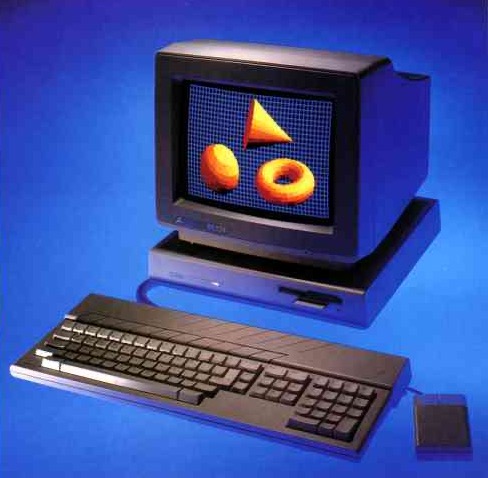
So the mind pushed me into different directions and that is where the retro mind pushed me. In computers the mind pushed me towards the MegaST. I always loved that one, I merely had the 1024STF (or something like that) and now we do not need the CRT monitor, but consider that this is the foundation of enough power for most of our daily needs and it still is. A 1991 released computer and it can do whatever we need and still could 32 years later. We all (including me) gave in to the BS of Microsoft and others. Then there was the old dream (definitely not a nightmare), you see if there is truth to that and Microsoft becomes obsolete in 2026, we will need alternatives and in that case an upgraded LINUX version for the 68000 makes perfect sense. We do not have to give in to the E-armistice race others are trying to push onto us. And lets be clear the 68000 was one hell of a graphic chip. Now this would give the field to Apple in a massive way, but for the most that does not scare me (at least if there is some truth to their streaming aspirations) and they will need an alternative path too, if thee is any hope of crushing Microsoft they will need a way to content with an additional 2 billion customers/households.You really think that the MegaST4 is such a bad run? Consider EVERYTHING you do now on it and consider whether it is possible on a 68000 (or 68020) now, for the most it is all possible and when streaming takes off, and it will, the push to buy a new and upgraded PC every other year will mostly be done for. I reckon the only really complaining part with be the bitcoin mining one and I reckon that group can be ignored for the most. And there will be competition, I don’t thing that this ill not be the case for one moment. At that point Sony will consider making anew PS5, sleeker and more refined to the needs of the household, not merely the gamer and it already has the power to do just that, it merely needs the interface to make that work and I reckon that it is not too far away as well. 

Then we get to cars, a subject I know next to nothing about. Yet here too Tesla has options. 

I personally always loved the Citroen DS90 (I know I’m dorky), but someone will figure out that the setting of these automated designs are over the top and someone will consider that the chassis of some retro cars are perfectly well, most of these retro cars cannot come back because the engine is not up to it, but with an electric car this goes out the window and the aging population can reconsider their first car yet again. And the DS90 has plenty of high points, the one thing it did not have is a lasting engine but the Tesla battery will come in handy at that point. Now that a car has a massively shifted interest. That car can now be safer, it can be more entertaining inclusive and it could be more desired. Lets face it, how many people go “I just love my Suzuki Swift?” They don’t, the group was specific, most were on a budget and most needed small space, plenty of them the second one more than the first and that remains an issue for a while. But consider where you are now, consider what is real and consider what makes you happy. Banks are bailing each other out with billions and at some point they will get tax benefits as well, billions they do not have to pay FOR you and they are happy, it is time to get some happiness back. Retro is one of those paths, we do retro things because they leave us with a feeling we missed. In clothing, in games, in stuff (like vinyls). It is time to consider the two elements that could add to this equation. Gaming and household items are one and we do not need to give in to the next Microsoft failure, no matter what spin they give it, cars is another. And these two have a following of billions. Don’t take my word for it, look around and see for yourself. When you overlook the dreams that we all have (me too), as the Bugatti Chiron is something I will never be able (or willing to afford), as I personally believe that a car at a million plus is folly on any given day with all the Karen’s and road rage moment out there, we get the sobering thoughts of what we always loved when we were young and a few models come out (in my case the Citroen DS90). And for these carmakers to return their golden choices as electric cars is the creation of another branch of what people actually want, no branding required and when some of them get back, they will introduce their first (or early) love to ALL their friends. A market that almost grows itself, like the almost forgotten MegaST, which could now easily become a MegaST128 (or 256 for that matter) and still be cheaper than that Surface joke at $2599. A market waiting for the right person to be captured, although the MegaST will need a massive OS overhaul, as well as an upgraded versions of Calamus/Pagestream, but here there is an upside, Adobe has parts of these for the 68000 as it is the old Mac version. Consider the Adobe suite which has nearly all we need, we merely need some kind of Lotus 123 version on there and our Homeoffice suite is ready. It takes that little and we add a few nails to the coffin holding the cadaver of Microsoft. Isn’t life lovely sometimes?

Leave a comment

Filed under Finance, IT, Science

The theory of new

Before I connect to the story of today which BBC gives us is something from my past. In the 80’s I learned that there are 4 basic stances. Attack, defend, avoid and evade. The last two are not the same. In one we deflect here the attacker goes in the other we avoid where the opponent is expecting to be. It helped me in many of the stages I ever faced. It is the basic of being, that is how I saw it anyway. So these matters were in my mind when an article hit my eyes. It was ‘US-China chip war: America is winning’ (at. https://www.bbc.com/news/world-asia-pacific-64143602), are they? Really?

You see the article gives us “These tiny fragments of silicon are at the heart of a $500bn industry that is expected to double by 2030. And whoever controls the supply chains – a tangled network of companies and countries that make the chips – holds the key to being an unrivalled superpower.” I cannot disagree, but the setting is folly. You see for the most in the last 30 years that industry tried to be everywhere and there is a stage where we see them in many places. But is that a good thing, or can that truly be pushed everywhere? Think of it, think of the stage from let’s say 1996 and now 2023. Electronics got to drown everything else. 

Now lets look at the simple image below

It is an abacus, and it comes from Persia about 600BC, there is enough speculation that they got it from somewhere else and that story goes back to the age of Mesopotamia. What is important is that a person truly versatile in this device can get to a result faster than anyone with a calculator and there is the solution, or perhaps the direction of the solution. The second strap is not what is out today, but what was out yesterday. In the older days we had Microsoft laptops, they outgrew their usefulness, or so that was what Microsoft wanted us to believe. The laptops were too slow, but guess what, those laptops became decently powerful Unix/Linux servers and that was a mere 10 years ago. The old PS3 could be broken into a Linux system, which was surprisingly powerful. They got a new lease on life and that is what we need to do, we need to consider other directions. Yes we see all the bla bla bla on AI and on what a powerful system can do, but guess what? AI does not exist. Machine learning does and deeper machine learning exists too and they are awesome. AI needs a lot more and these parts do not yet exist. In the first a real quantum computer is required and IBM is the closest to getting one. Once they get a handle on shallow circuits and the power is upped, that is when the system exists where a real AI could be, the second part is still a decade (at least) away. A Dutch physicist did find the Ypsilon particle and that is essential to get the shallow circuit truly going, but it is a decade away. You see chips are binary. It is either yer or no and an AI needs the Ypsilon particle. It is Yes, No, Neither or Both and these last two will evolve systems into closer to true AI and we are not there yet. So how does it all fill together? 

That is the core and we see part of that with “The manufacture of semiconductors is complex, specialist and deeply integrated. An iPhone has chips that are designed in the US, manufactured in Taiwan, Japan or South Korea, then assembled in China. India, which is investing more in the industry, could play a bigger role in the future.” This is true, or at least it sounds true, but the real issue is what can be replaced with a chip? You think it is ludicrous, but is it? Do we need them? It is a serious question. You see any new technology is derived from the limits of others and as power is more and more an issue in many places, the idea of exploring the field of mechanical computer is not the craziest. What did we overlook? What did we reject because an American told us that their chip was better? They did it before with VHS, Betamax was highly superior, but VHS had the numbers, it is the only reason they won. So what else did we reject? If an abacus can equal a person with a calculator. A system with a time advantage of 3000 years, what else is possible? We forget to look behind us (which is where I found billions in IP) what else is there and what else could be done? And this is not done overnight, this will take years, decades perhaps but it would result in a new technology stream, one not founded on electronics and guess what, when the power falls away, so do your chips. So is my idea weird? Yes. Is it preposterous? Perhaps. Is it invalid? No! There is enough evidence all over the field and seeking replacement systems is not the weirdest idea, not in this day and age. 

Consider one other system, in the old days (a little past WW2) someone invented the Knijpkap (squeeze cat) the torch had a small dynamo inside which sounded like a purring cat when operated. 

The interesting part is that it needed no battery. So how many torches do you know that have no battery? What happens when batteries are not available? We can add a recharging battery to hold that power, or not. But one device completely without battery. So what happens when we adjust this to other means? These are two simple applications, now consider one where whomever invents it reuses a mechanical computer to take the load away (and revenue) for electronic ones? That will be the exercise and it is not an easy one. It takes one with serious brains and a decade at their disposal. But I reckon the spoils will be so worth it in the end. 

Leave a comment

Filed under Finance, Politics, Science

Search towards exhaustion

We all have that at times. We all have the trap in front of us, but we are in some delusional state that w can avoid it. And I am no different. I am just as flawed as those around me. Even as I am sitting on billions, I would rather give it away to China than to have some deceptive fuck with fake promises from the US come to me with the promise that they will look after me if I only hand over the IP. I fell for that in the 90’s, I will not do that again and I would rather give it away to their enemies than to caress their friends in some fake agreement. There is a second side to that. I am still looking, not for the money making IP, but for true new IP, something that had not been seen before. To be the true inventor, the true storyteller, to be unique. We all have that and we all fall for the same trap. We are not unique snowflakes. We are merely ants looking for individuality. It is within us all and I am no different. The difference is that I am clearly aware that I do not matter, and I am willing to screw over those who do believe that they are more than they are. So I set up the traps in 4Chan, I set up the IP in a stage that the really clever could find, to make a funny, I was merely a matter of hue. And I was a little more clever than that. It has two make contacts and two break contacts. I can forward it via one, and the other will autoforward it unless I do something. So the new timeline was set. If I do nothing, the 4chan gets a small boost of 4 dozen photographs, the hue riddle within and if I do not reset the timeline, it goes public 31st of July. 

Yet that is merely one stage. I have been contemplating the Hybrid setting. I wrote about it before. We think of Meta as one new place, but it is not. You see Adobe has an advantage, Their objects have a geo marker, now if they add the second marker (the one where the business really resides) we get a new set of markers. This need will be clear when Hybrid technology becomes a reality. It is not hard, it is the setting where one display gives us the real view, with the internet, the second display gives the person the meta view, where ever he (or she) is. It is an important stage and it is already possible, most gaming PC’s have the ability. What is required is a new operating system, or better stated an enhanced one. I do not think that Microsoft with all the attached junk is a solution, but in a pinch it will do. I reckon that Apple has an advantage, yet the stronger systems will be the Linux stations with double vision, normal and Meta. Hybrid 2.0 will show which player is the strongest. Yet it is not the setting I am looking towards. You see, Hybrid will call for new metrics, metrics that has the normal space and meta space in mind, there will be a new category of statistics and new ways of measurements. I believe that it comes with an evolution towards T-Tests and Anova. You see there are meta points where people will gather, there will be Sony places, Amazon places, Oracle places, IBM places and more. But the third party players ant to be as close as possible with their meta space to the big bird they service. So There will be a closeness between Google and Apple, yet there will also be other players who want to be ‘in view of’ the largest players. Even as Meta is visual, not all is covered. But it will result in new statistics and new ways of measuring business. Even as the value of land is open, that will change and the early bird that can place it business will have an advantage. In Hybrid we will see a new version of real estate, real estate that is selling real places but in Meta they can be anywhere and that is one solution I saw coming, but it goes further then that, advertisement will take a different turn and that is what I saw coming two years ago. Saudi Arabia’s Neom alerted me to that and I prepared to this, but now I learn that the idea goes beyond that and when Hybrid becomes a reality I will have a few more advantages on my lines. 

Yet that is not the part I am writing about now. I reckon that with Hybrid and Meta we will see see a new class of statistics and it gives a much larger plus towards places like Geospatial Intelligence Pty Ltd and any serious GEOINT endeavour, because this is a business that will be worth billions and they already have most of the needed parts, well not the Hybrid part, but they have enough time to prepare. It is the new metrics that will give a much larger advantage to these GEOINT players and there is a stage where we see new statistics, new numbers and altered usage of something like a T-Test. I cannot say how to use it yet, but the idea is forming in my mind and when it comes out there will be a rush to be able to mine these numbers. Adobe can hand it to their designers and anyone who creates a meta object will have to fill two places and that is the start of new business. GEOINT will become some form of METAINT. How will it evolve? I cannot tell, it is too early for that, but I believe that dat analyses will take a turn into new realms and it will have much larger implications than anyone can fathom at present. I cannot tell you where it will end, because that means I mastered it, no one has mastered that and anyone making that claim is lying to you. 

There is much more that I cannot see yet and as we learn more about META we can consider more, but it is an exhausting trip because you will have to adjust that view daily and you cannot rely on what is, you can merely document all the issues of what is and consider about what could be. That is as good as it gets, but there are of course settings that are close to what is now and that is where I saw Real estate go and that is where I saw one IP part that could Amazon optionally (optionally being to operative word) bring in the billions. A market never considered and it is there for the taking, but there is a risk, there always is, but in this case there are a few sides I cannot predict, but Amazon has the inside track and it is a good place to be in I reckon. Three stages where Microsoft has no value (I love it). Google has an option there too, but not as strong as Amazon and their risk might be slightly larger. I cannot see or predict how much larger. 

No matter how I twist or turn, it is a mind-race and mine is getting tired, it is racing towards exhaustion, just like anyone else’s mind would be. But at least I am contemplating and I am doing that today whilst listening to Jeff Wayne’s War of the World. Listening to the narration of Richard Burton. There is a certain symmetry there as that piece of music is what gave me the idea for the Third bundle of IP in the first place. 

I will let you work out the hints in this by yourself. Enjoy!

Leave a comment

Filed under IT, Media, Science

What was the right question?

There is an article in the Guardian called ‘Which laptop should we buy for our child?‘ (at http://www.theguardian.com/technology/askjack/2015/nov/05/which-laptop-should-we-buy-for-our-child), you might think that I have an issue with the article, and I do, but not perse with the article. The article is quite decent, however the article is about a ‘solution’. I learned recently that solutions are vague, they are transient and they fade the moment you give them. You see, as a great teacher not too long ago taught me, it is about trust and about answering needs.

I understand what Jack writes, he gives good advice and I would have given a similar advice, yet at some point I learned something new (we all do, trust me). What are the needs of the child? Now, the child might not understand it has needs here (other than cool games, and we can see that in schools laptops, or better stated ‘fat’ mobile devices are going to be the trend. Whether this is an Airbook like the Mac has, a Chromebook like ASUS has or another device in a similar capacity, the child will need to move forward.

Yet, am I not in a mode where the answer is given? No, let me explain. Jack mentions the Windows 2-in-1 “detachables”, which sounds nice Mr. Schofield, but that trend is now, it is 2015, what about 2016 or 2017? What happens when those trends shift? By the way the sentence “we can’t afford to spend lots of money“, so as such Apple will not become a solution any day soon. Interesting the Chromebook solution that many carry are on average of $250 cheaper (Australian comparison), a part not mentioned anywhere, that optional solution did not make it to the table.

For me, do I think it is a solution? I am not at all certain, you see, the needs of the child are unknown. So why spend money? To give the kid some skills? Well that is all good and fine, so why is the possible solution for a tablet; a mere Android based tablet at one third of the cost of a Chromebook not decently investigated? The mention of the tablets (all 6 mentions was regarding the push to the 2015 trend of a ‘detachable’. You see, the object of usage is a small person about to celebrate the moment of his ninth birthday. Kids have accidents, they break things (unintentional), your youngling drinks lemonade and other liquids. So you want to put a laptop there? With his excited friends that is an accident waiting to happen. So, how will you afford the second laptop?

The simplest tablet with a decent casing costs less than a hundred quid. For £49.99 you get a very basic one. The best thing is that the skills will transfer to a laptop or a larger tablet when your child is ready, more important, there is no way of knowing what the needs will be when he gets to a decent school level, when he gets to year 10, what will he need? Perhaps the school provides? Also, the pricing would have gone down to such an extent, that the one device you cannot afford now, could be really affordable in 2016.

So many people so many options, why answer them at all? Why not give the device that at least lets your little one to grow skills and answer the call to the device your young one needs when the moment is there?

So yes, Jack Schofield gives advice, it is sound advice but in all this, he failed to mention that some devices are limited and to get a better return, a much higher cost comes into view. You see a mere simple version from Asus might be £195.64, yet when you consider how fast 32GB is gone you will need something bigger, that will take you to £289.99 very fast. In my situation, I do not offer a solution, for £49.99 you get a very simple device that allows the little one to grow skills, and in 2-3 years when his skills have really outgrown the 8GB device, he might get that same device not for £289.99, but for £179.99, perhaps even less, so the little tablet paid for itself.

Part of me understands that the next generations needs to be clued in, logged in and online earlier in life, I will not stop it, oppose it or question it. Yet in all this we must also answer what is the best to make your child grow. Perhaps it is the 2 in one that Jack Schofield mentioned, but I am not convinced. You see with the quote: “there are several ways to run Android apps on Windows PCs, such as BlueStacks and AmiDuOS” is all about getting someone to windows. Why? I do not oppose Windows as I use it myself. After the blunders Windows 8 had, I am not willing to trust Windows 10 at this point, yet Microsoft is willing to mandatory push it to its user base regardless of what the consumer thinks. A methodology I do not support. This was shown in another Guardian article by Samuel Gibbs where we see: “Consumer users of Windows 10 will have no choice but to accept the installation of automatic updates, even if they break software for them” (at http://www.theguardian.com/technology/2015/jul/17/windows-10-updates-mandatory-home-users), what happens when our choice of software breaks? Are we forced to a Microsoft solution? How is that not an instilled dictatorship? The final quote from that article was “Automatic updates may also create a situation where an update breaks something on a computer system, perhaps a legacy program“, which is what many will face over the next decade. Microsoft is starting a cleaning operation and the user is losing their rights. I might have had to pay $199 for my Windows 7, but at present trusting my system on the net is not an option, that trust was destroyed by Microsoft in a way 10,000 viruses could not. Regardless of that choice, Jack should have remained a lot more neutral than he did. I believe for the bulk of all needs Android fills the requirement of a user, this does not take away to prospect of Microsoft, but last time you looked, which software was free? Weirdly enough, for the normal student, the software like writing, calculating and presenting is free on android and Linux. Apple and Microsoft charges for that.

Yet in all this, where are the needs of the user? When he gets to the setting up of things he is addressing fear in my humble opinion. Now let me add one too. The text: “Windows 8.1 and 10 will email you a weekly record of your son’s activities: how many hours he’s used his PC, the websites he’s visited, and how long he spent in his favourite apps“, so are you the only one who gets this, or will Microsoft have this data too? There is validity in keeping your child safe, but that starts with the need for strong passwords and knowing what to do and what not to do. Your child will make mistakes and even today many adults still make these blunders and larger ones too!

So in my view, spending little is not a shame and your child should be safe, but consider the options hackers and malware have nowadays, it is close to impossible to stop, in that case let it be a device that when it happens will not infer heavy losses. In that part, let me end with another quote the article has “I don’t think it’s worth buying or installing the full desktop programs for a 9-year-old“, which is true, so how large are the hands of a nine year old. Can they not hold onto a 7” tablet easier? More important, when he gets soaked in the rain and his backpack got drenched, my money will be on a skinned tablet not any laptop or ‘2 in one’ solution to survive that ordeal.

In the end it is as I expect growing skills with your child. I get that, and I applaud that approach, yet let it be skills, playful skills and artistic skills. Let the child enjoy their life until year 6 when the skills will be tested, let them grow into the savvy programmer they can be and get them the system they can handle and let them grow into a stronger system, the needs of any child will grow stronger when ingenuity is required, factual evidence that has been known for decades. Yet how they grow will usually be up to them, not you or me, or their teachers for that matter, we can only hope to guide them in a decent direction, let’s not forget if you as a parent do not have the skills to guide them, where will they get their example? What happens when they follow the wrong example?

In the end, what was the right question? Which device allows your child to grow in all directions a device offers growth? On which device are their drawing skills challenged? Anyone can type a text, anyone can do ‘math’ with a spreadsheet, yet the art of drawing (a skill I never mastered) is getting lost more and more in this world of laptops, is that not a shame too?

Leave a comment

Filed under IT, Media, Science

Dark side of the moon

The Guardian ended up with an interesting article on Friday. The title ‘Malware is not only about viruses – companies preinstall it all the time‘ (at http://www.theguardian.com/technology/2015/may/22/malware-viruses-companies-preinstall), it is a good article and Richard Stallman is a great man, but there are parts in this article that I have an issue with. Mind you, the man is not telling stories or lying, but he is showing one side of the coin. He is also reinforcing other sides to the software industry that are a definite issue.

The first part is a part I am completely in agreement with “In 1983, the software field had become dominated by proprietary (i.e. non-free) programs, and users were forbidden to change or redistribute them“, a side which I do not oppose. In addition there is “But proprietary developers in the 1980s still had some ethical standards: they sincerely tried to make programs serve their users, even while denying users control over how they would be served“, I have a partial issue with the last bit ‘denying users control over how they would be served‘. I disagree for two reasons.

The first is based on resources. In those days, an IBM PC was a massive behemoth, it had 256Kb memory and if you were really really rich, you also had a 10Mb hard drive. So, yes, the expensive personal computer had less resources then the cheapest $39 Non-smart Nokia phone. Go figure! By the way, that 10Mb hard drive was priced at $1499 in those days. So, user control was an issue, because resources did not allow for them, but soon thereafter, the 512Kb PC was released and there was so much we could do then! No sarcasm here, it was true! In those days I learned and mastered Lotus Symphony an excellent program! This was also a time when we started to get some choices in control, control remained limited, but some control was gained.

Next we see the first part that is an issue, even though he makes a nice point on End User License Agreements. I would like to add the Terms of service as a clear point here, but overall there is a part that is too coloured. The quote “So many cases of proprietary malware have been reported, that we must consider any proprietary program suspect and dangerous. In the 21st century, proprietary software is computing for suckers“.

I cannot completely disagree that Microsoft soured the market by a lot, it has done so in several directions, yet Corporate Earth is at times too stupid to consider growing a brain, which is also part of the problem. It is an element that is shown all over the place. The Netherlands, Sweden, UK, France, Germany, Denmark and even Australia (I worked in all those countries). Instead of sitting down and considering a switch to LINUX with open office, the IT and other elements are just too lazy and too under resourced to push for a change, so the users are no longer people, they are for the most mere meek sheep following the ‘corporate standard‘, which means that they too use windows and Office.

Another direction is the hardware world. Windows comes preinstalled, more important, Windows and Microsoft have been a driving force, forcing people to buy stronger and more expensive computers. Even though many users have not needed any need for more powerful and stronger hardware, Windows forced them to upgrade again and again. Anyone not into gaming and using their computer merely for office activities and browsing mail on the internet should not have needed to upgrade their computer for the better part of 10 years, but that is not the reality, go to any computer shop for windows hardware and we see how the ‘old’ ASUS, ACER, Lenovo, HP or Toshiba no longer hacks it. Which is actually weird, because if you reinstall your old laptop with LINUX and Apache Open Office there is a high chance that you will work in 90% of the time just as fast as with that new $2000 laptop on Windows 7. Setback? You have to install and configure it yourself. Upside? LINUX and Open Office are both free software, no costs and no fees!

Is it not interesting how companies are not jumping on that free horse? Why is that you think? In addition, with all the needs for government costs to go down, why are they not more pro-active to push for a shift towards LINUX? Is it security? This is also odd, because with the massive amount of non-stop security patches, Windows is not that secure to begin with.

So where do I disagree? Well the first clear quote is “Some are designed to shackle users, such as Digital Rights Management (DRM)“, I believe that if a firm makes software, it has every right to prevent illegal use, for a long time, how many people do you know that have a LEGAL version of Adobe? Even when the stars are in your favour. In many Universities, Adobe offers the entire master collection (all their software) for $400, which is an amazing deal! I got my legal versions of both Windows 7 and Microsoft Office Ultimate for an additional $199. Why not buy it? No many just find a download place and get the software for free, in addition you can get the codes. It goes even further that I stumbled on a place in Germany some years ago where they were offering the OEM stickers for PC complete with license key for 20 Mark. I could not tell the difference from the original sticker in the software box I had bought. Do you think that DRM would have been such a push if people just bought their software? I will take it one step further, I feel certain that if every person was charged $275 a year, we all would have the complete Adobe, Windows and Office programs free to download, with no need to illegally copy anything.

But there is still that other side. You see, I still believe that Microsoft and hardware providers have been forcing a technological armistice race upon the consumers, which now adds up to us all wasting resources on iterative junk we should not need. So even though I do not completely agree with Richard Stallman here, he does have a point.

Now we get to an issue that I actually faced without knowing it “Even Android contains malware in a non-free component: a back door for remote forcible installation or deinstallation of any app“, you see, I thought I was bonkers (which I actually are) but for some reason one of my apps had suddenly be removed and not by me. It was not something I needed. I had just downloaded it from Google play out of curiosity, but suddenly it was gone! In addition, on more than one occasion it just decided to update my apps, without my permission. When you have bandwidth issues, seeing a force upgrade which could cost you is not that nice a moment.

Yet, for the most, I remain a loyal fan towards Android, even though at times programs use background resources for reasons unknown, or are they unknown?

We get the next part from the quote “Even humble flashlight apps for phones were found to be reporting data to companies. A recent study found that QR code scanner apps also snoop“, there is a lot more at http://www.facstaff.bucknell.edu/ejsmith/scan.this.or.scan.me.2015.pdf; now we have ourselves a massive issue, although the paper shows that there is a prompt for GPS and the sending of GPS, none of them has the situation where they do not prompt for GPS and still send it. Eric Smith and Dr Nina A. Kollars who wrote the paper give us another consideration on page 8. There we see “Moreover, contemporary privacy norms are increasingly threatened as what initially appears to be signals of consumer preference slide further into determining bigger-picture life patterns and behavior. The term most commonly used to address this creeping phenomenon is the literature on consumer panopticism“, which now refers to ‘Gandy, Oscar H. The Panoptic Sort: A Political Economy of Personal Information‘. Before getting the book (which is worth the purchase), you might want to take a look at a paper by Adam Arvidsson, from the Department of Film and Media Studies, University of Copenhagen, Denmark (at http://www.surveillance-and-society.org/articles1(4)/prehistory.pdf), you see, my partial issue with the article by Richard Stallman becomes slowly visible now. He is right in his view and his vision as he sees this, but you the user did this to yourself! You think that Facebook is ‘free’, that these apps are there merely for amusement (some actually are), their goal is income! Some work the Freemium game market, where games like ‘Book of Heroes‘ gives you a free game, but if you want to grow faster and better in the game, you will have to invest. For the most, these games will rely on the investment from $10-$25 to truly open up, which is, if you consider the amount of hours played still great value. Freemium games also come with that ‘try before you buy’ approach, as you can play the game, but to enjoy it, to get more moves and more joy a few dollars will be essential. The other part that relies on ‘captured data’ did they inform you? If not, there is an issue, but the app programmer will get his pound of flesh, either by cash of by data!

Yet the other side is also true, you see, as Richard mentions and as Adam Arvidsson report on, there are places like Red Sheriff, that rely on hidden script, which is more advanced/intrusive as it keeps track of ALL your online movements. You get this script as a ‘present’ when you visit one of its affiliated sites. Did you the internet user sign up for that? When we see the reference on who pushes this. We see “since most major commercial sites use Redsheriff“, which means that nearly all will somehow be tracked. I for one do not really care that much, but I never signed up for any of it, so should we see this as an invasion to our privacy?

This is where we see that freeware is almost never free.

Yet Richard also alerts us to another state of freedom, or lack thereof! In the quote “If the car itself does not report everywhere you drive, an insurance company may charge you extra to go without a separate tracker“. Can anyone explain to me why it is ANY business of the insurer where we are?

In the end, Richard states three parts, which are fair enough, but overall the issue is missed. The issues reported are:

Individually, by rejecting proprietary software and web services that snoop or track“, here I do not completely agree! I used Adobe as an example for a reason, there is simply no viable alternative, it only became worse when Macromedia bought Adobe (I know it is the other way round, but I will remain a faithful Macromedia fan until the day I die!), there is in addition, no tracking done by Adobe, other than keeping track whether you have a valid license, which I never opposed.

Collectively, by organising to develop free/libre replacement systems and web services that don’t track who uses them“, which I whole heartedly agree with, I am even willing to devote time to this worthy cause (not sure how I could ever size up to the hundreds of Richard Stallman’s, but I am willing to give it a go!

And last there is “Democratically, by legislation to criminalise various sorts of malware practices. This presupposes democracy, and democracy requires defeating treaties such as the TPP and TTIP that give companies the power to suppress democracy“, this is the big one. The political branches all over Europe and the Commonwealth have sold us short and have not done anything to properly enforce the rights to privacy. In addition, Google and Apple remains in a state of non-clarity on what data these apps capture and what they convey. In that regard Facebook is equally guilty. Facebook goes further that it does not even proper police those who claim to give a free app, only to no longer work, but when you went to the install the data is as I see it already captured by the app provider, which gives wonder to where that data went.

In regards to suppressing democracy, which is perhaps partially overstated, there is an issue with the TPP that seems to empower large corporations and nullify the protection to smaller innovators and even governments as the TTP wants to enforce “where foreign firms can ‘sue’ states and obtain taxpayer compensation for ‘expected future profits’”, how long until we get an invoice for overinflated ego’s? Especially from those people in the entertainment industry claiming the loss of so many billions in an era when the bulk of the population can hardly pay their rent!

I regard Graham Burke of Village Roadshow to be one of the greater jokes this era has brought forth. Consider who he is supposed to ‘protect’, he goes on regarding “‘crazies’ whose hidden agenda is the ‘theft of movies’“, which is not that far-fetched a statement, because movies will be downloaded and not bought, it happens, yet not to the degree Graham Burke claims it is! So we get him soon enough to claim billions from losses due to the massive download of ‘the LEGO movie’ perhaps? Yet in the public forum on copyright infringement, we did not hear him utter a word on bandwidth, perhaps the response from Telstra’s Jane Van Beelen would likely have been a little too uncomfortable Mr Burke?

You see, in my view it is less about the democracy as Richard Stallman sees it. The legal protection seems to be massively delayed as bandwidth is income, and when piracy is truly stopped bandwidth will simmer down. If we accept the word of Village Roadshow with global revenue of 13 billion since 1997. Yet, I wrote about movie piracy in ‘The real issue here!‘ on June 17th 2014 (at https://lawlordtobe.com/2014/06/17/the-real-issue-here/), in the calculation, which I kept very conservative, Telstra could lose up to 320 million a month in revenue, due to diminished bandwidth, which gets us 4 billion a year. Consider that Village Roadshow is global, which means that Australian revenue is a mere fraction of that, how soon until they see that Village roadshow might only get 5-10 million a year more, against the 320 million a month loss for Telstra? So Mr. Burke is not regarded as a serious party as I see it (yet he is not an invalid party), Telstra would have too much to lose, not to mention the loss Optus and iiNet could face. However, if the TPP changes that with ‘expected future profits’, whilst there is absolutely no quality data to prove that the loss is nothing more than there ego’s talking.

There is the crunch that politicians are too afraid to touch!

Yet, in light of many factors, legal protection (including protection for Village Roadshow) is essential, yet the large corporations seem to hold the game to the need of their bottom dollar, which is the dollar, not democracy or decent rights. If it were decent rights than telecom companies would properly monitor abuse of digital rights, because the movie is for Village Roadshow to sell, or to stream for a fee via Netflix. I do not deny this at all, I just oppose the outlandish income some of them claim that they ‘lost’!

So on the dark side of the moon we see that (actually we do not see any of that) things are not right. I do not completely adhere to the idealist view that Richard Stallman validly has (we are all entitled to our views), but he touches on several parts that definitely need change and until we see a governmental push away from Microsoft solutions, we will see that the government will spend loads of money on never-ending updates to hardware and software. We all agree that such a change is not easily made, but in light of the cost of living, the fact that nearly no one makes that change is equally worrisome.

When we stare up to the sky we always see the same side of the moon, the dark side is wild, and is covered with impact craters, impacts we never see. It is a lot more reminiscent of the chaotic wild life of malware, a side that is constantly lacking the exposure it should have, mainly because it affects the bottom dollar.


Leave a comment

Filed under Finance, IT, Law, Media, Politics

Exploiting mobile users

Is it not amazing that in an age, where we all move into areas where things getting cheaper and cheaper, we see that mobile phones is the one article that remains into the top priced push. Yes, when you move to the post office, or to some ‘budget’ place, the only ‘cheap’ phones are the ones that are the ones that are basically in the bottom part of functionality, phones that have less than 6 months of decent quality usage before Google pushes for more updates, more android and the applications will add towards the maximum RAM.

This is my situation, I got a new phone in 2012, I needed a new one, and the one I bought was ‘decently’ priced at $299. I never regretted buying it. It still has a good screen, I have one game and a few applications, yet over the last two months the push has shown that when I have more than 2 apps running (including the dialler) the lag, the jittery screen, it all starts getting slightly wobbly, so I lock the phone, unlock it, remove all apps except the one I need and it all works fine again. Yet, my phone needs replacing not due to the hardware, but purely due to software. Looking around has been quite the revelation.

Looking at those options, I see that the $99 phones are less and less useful (specifically the smartphones). So as I started to dig, I am seeing a new change. If you want to find the price of a phone, it is often harder and harder to get clear pricing, more important, we can find less and less about how prices were and how the prices devolve.

Is it not strange that there is such an abundance of buy now places, but less and less information on the devices, the price and how long these articles are set to be for? The mobile is the new field for the technological armistice race and there are too many parties willing to make certain that the people cannot be properly informed. You see, this field has evolved for control. In the 90’s and the decade after that, it was relatively simple to get information on what graphic card one needed, which soundcard would be best. But not unlike the gaming industry, the information places are given less and less information. Is it not strange that Ubisoft (a gaming company) did not give a testing sample of Assassins Creed Unity weeks in advance? Especially when literally billions are riding on it? This is at the core of the issue, at the core of some ‘technology’ pages that are less and less information, more and more ‘typed’ marketing, not for their readers, but for the prospective buyers of the product. The media has been changing more and more and many readers remained asleep whilst reading. I must admit that the last description might not be accurate. Many will not realise this faltering until they are confronted with the fact of change (not unlike me).

If you’re looking for a console you can Google ‘PS4 price console’ and you will get pricing information on the very first page, even price drops, all localised. For mobiles it is a jungle out there and no matter how many ‘suddenly’ appear, when you want to look for that actual good deal (like the ZTE ZMAX) you will suddenly find that no one has such a good deal in stock (finding a decent site is also a challenge). They have cheaper (ad therefor useless) smartphones (I will dwell on that shortly) and of course the really ‘up to date ones’ which are not that much better than a ZTE, but will cost you 275% – 450% more. It is all about the money in the end!

You see those who choose Android (like me), will now learn what the cost of alleged abandonment is. (at http://www.zdnet.com/article/google-stops-providing-patches-for-pre-kitkat-webview-abandons-930m-users/), we saw early this week that Google is now stopping the update of the older versions. This means that as we see the headline ‘Google stops providing patches for pre-KitKat WebView, abandons 930 million users‘. This includes the bulk of the people who bought their mobile before Q4 2013. What a fine android web we weave!

You would think that it is a simple matter for updating, don’t you. Well that is not entirely correct. In my case Motorola was pretty decent in giving the information, however, when I press system update, it tells me that I am up to date, so I cannot get beyond 4.1.2 Android. This is now at the heart of several problems.

Who knows what version they are on and more important, when we consider the following text from ZDNet “In other words, the next time a researcher or hacker finds a way to exploit WebView on pre-KitKat Android, Google won’t create a patch for the vulnerability itself. However, if anyone else builds one, Google will incorporate those patches into the Android Open Source Project code“, more important, as long as this is not fixed, an increasing population will be at the mercy of forced upgrades through buying new phones outright, or chaining themselves to a new contract.

There are two sides. In fairness, should Google keep on fixing their ‘flaws’ ad infinitum? Yet on the other side, if my 2 year old mobile is now a security risk, what on earth am I paying for? More important, in this economy we would keep on paying premium just to be connected? The math does not balance out towards the need of the user. So are we witnessing a start from smartphone, back to normal phones? Let’s face it if smartphones are charged to your account and after that abandoned to this extent, what should we do?

Some will push for Apple, but there to some extent, the danger is changed, not necessarily removed. A normal phone will less likely have these issues, or change to the new player. Even though the brand leaves (from past events) a bitter taste in my month, Samsung has taken a new direction with their mobiles called Tizen OS. The following parts are known at present “It is Linux-based platform built from Nokia and Intel’s ditched MeeGo“, open source means many views, so perhaps better patches. The fact that it is Linux based is not bad either. The fact that Tizen is using HTML5, it means that we will get a wave of content that is state of the art, slim and memory efficient (no flash needed). You can look for yourself to some results (at http://www.creativebloq.com/web-design/examples-of-html-1233547), so it seems that the new road that Samsung is taking is also changing the perception that they are getting. From these upgrades, Samsung could evolve from ‘player’ to ‘top contender’. It will definitely bring the fire to the ankles of Apple, which is never a bad idea.

Tizen is not new or just a gimmick, it had been announced before and more important, it has been in development for years, yet with the Google decisions and with the issues that mobile users might be facing sooner rather than later, the timing for Tizen is pretty good and Samsung could benefit greatly, they will get additional benefit as people realise that patches are no longer coming for their less new mobiles, which will hurt consumer confidence.

If you have any doubts then the clarity from Greenbot.com should help. “Google drops Lollipop on November 3rd 2014,  if you have the right device“, which makes us wonder, do I have the right device? “Maybe you don’t have a Nexus phone or tablet. Well, then the situation gets a little murky. If you have a phone purchased in the last year, odds are good that you’ll get an upgrade to Lollipop…eventually“, which gets us, what if your phone is older than one year? Then what? Which gets us the last part “Manufacturers like Samsung, LG, HTC, and Motorola have promised swift updates (typically within 90 days of release) for top devices, but those have to go to carriers to be tested before release, too“, knowing I am ‘up to date’ with my version ‘4.1.2.’ does not inspire confidence! How many people asked questions about versions of Android when they bought their phone? I am a technologist and I never gave it too much thought (other than that I wanted an Android phone). Now, it seems that my Motorola is will remain on Jelly Beans (4.1.2) and now, we have ourselves a ball game, because as this unbalanced approach is pushed from both the desire to remain free (not chained to a provider) and as the life cycle of a mobile phone is now in danger of staying under two years due to the Google changes, we now see the need to not just chastise Google, but to make it clear (actually demand) that consumers are properly informed on the limitations that they are buying at $300, if we regard that patching is done to undue the lacking security of a product sold, we get a new game where the consumer must be informed clearly in a shop regarding the purchase they make.

A costly jump that might not have been needed! This year will bring changes to the mobiles and the shops selling them, I wonder if Google considered that, or perhaps they never cared. Especially when the people get told that they will not face any issues, if they had a Nexus phone (Google’s mobile). Samsung is not without options either, as they progress towards ownership of Blackberry, they might drill into a new mobile market that revolves around data and communication security, which is another mobile hot potato, and it instantly gets them huge chunks of the financial sector for reasons not here speculated! Tactically both Google and Samsung have made brilliant moves, for the consumers not the worst move but likely a costly one this year!

Will you remain in a Google mind or move to Tizen?

Will Eva choose to try the Apple in the end?

Time will tell!


1 Comment

Filed under Finance, IT, Media, Politics, Science