Tag Archives: Xbox One

Redo from start?

I have been considering the games that are, that are soon to come and those we wish to see again. I feel that I am not unique, I am one of many who feels the same way many gamers feel. It all started with a simple pre-order notice I saw at JB-Hifi. The order was not for Mass Effect 4, but for Mass Effect, which seemed a little odd. Soon I found a few less reliable mentions of a possible upcoming re-release of Mass Effect 1, 2 and 3 for Nextgen (Xbox One and PS4). I got excited, because overall the Mass Effect series are nothing short of a marvellous achievement. Consider that Mass Effect is one of the earliest Xbox360 releases, it still hold a storyline that was amazing to play. Yes, we will replay and we will know certain key parts, but that is still not an issue for those who love Mass Effect.

The revamped version of the last of us seemed to have instilled a desire for games on Nextgen that should make developers happy. Is that because the lack of good games or is that because the new games are leaving us cold? I think it is a little bit of both. As studios tried to play the ‘marketing game’ they are now learning harshly that playing that game on gamers is a sure way to see your product get smashed. The outrage that Assassins Creed Unity brought is only one of the elements. I will go one step further, a relaunch with upgrades to the story of Assassins Creed 1, 2 and brotherhood would very likely be more successful than the next Assassins Creed. This for the simple reason that the makers seem to have lost their way (the fact that Unity is regarded by many as the worst Nextgen release does not help any).

Even a relaunch of System Shock (1+2) is likely to draw in a much larger crowd than the likely disappointments new PS4 RPG’s are going to bring. The added issues is not just the game, the problem is for the most the marketing division for these developers; a decent example is the Division by Ubisoft. My issue is that so far the game might look good and could even become great, but in their approach to feed the hungry hordes of journalists and to remain ‘visible’, the people at E3 2014 got to see something that is now not coming until 2016, even the Q1 part here is currently under debate, so as the gamer is promised a game that is now 19 months from its initial ‘presentation’ the people are wondering whether to trust the game because of the mental link we all make between presentation and delivery. It leaves many of us with the thought ‘how many bugs do they need to fix‘? Now, that thought might not be the correct one, but when 10,000+ people think it, some outspoken nitwit will scream it on YouTube, which results in many players moving away from what could be a good game. An example here is Elder Scrolls online, which is a marketing disaster, yet when we see the review from ChaosD1 (at https://www.youtube.com/watch?t=2082&v=csY7RYF4rKQ), which is excellent and might change the minds of those who walked away from Elder Scrolls Online.

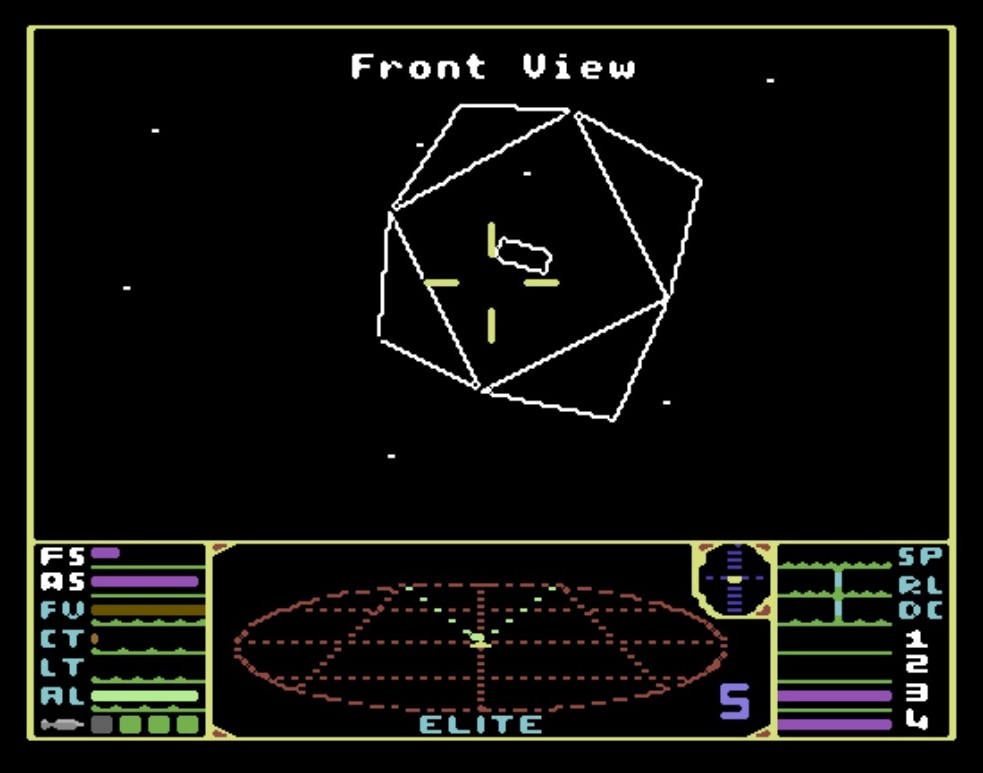
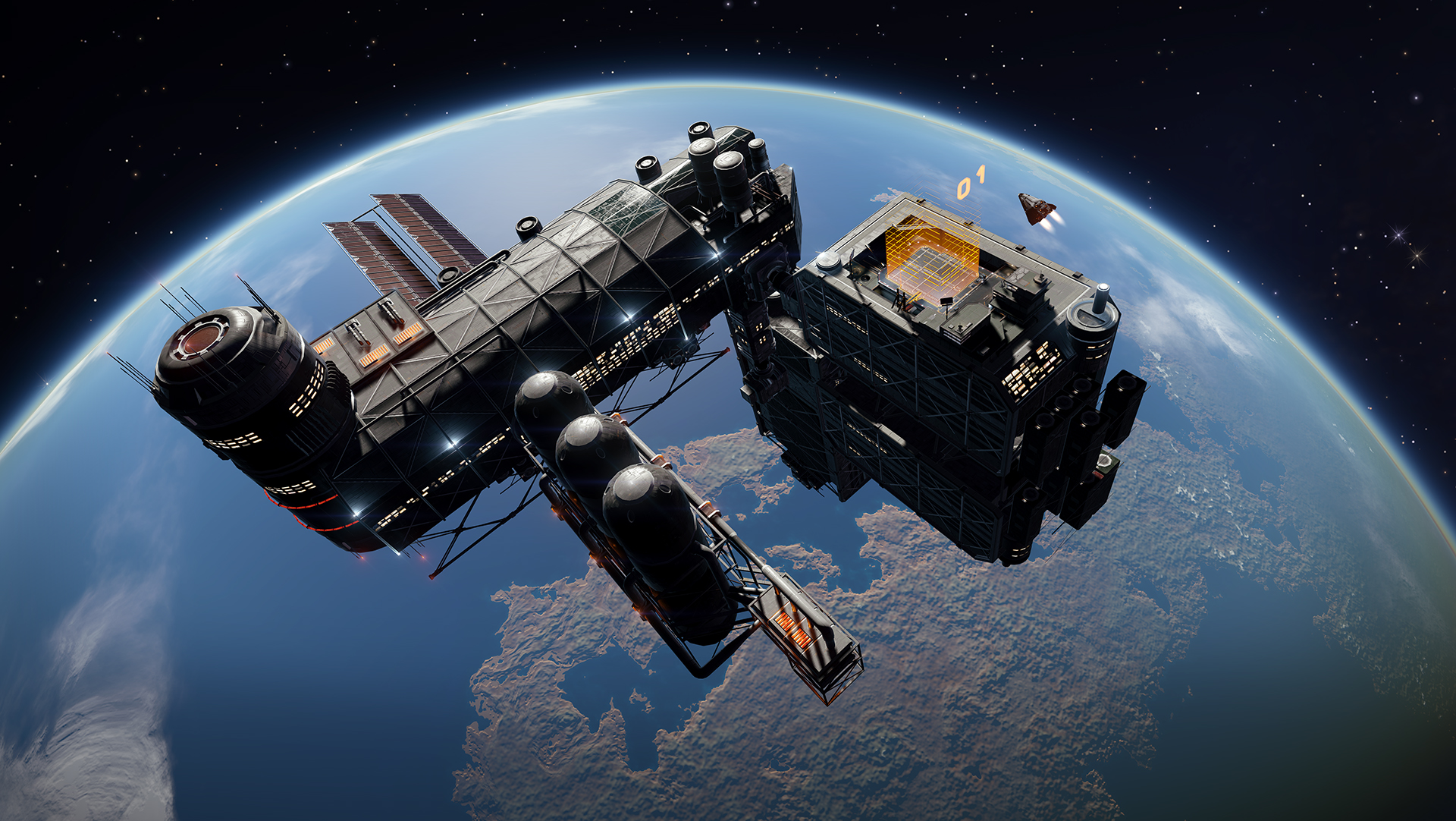
We the players now want to move to games we know, we trust and believe in, which gives added weight to relaunched games. Let’s not forget that Borderlands, The Last of Us and God of War 3 were excellent games. There is however another form of relaunch, one that is not actually a relaunch, but a new evolution of the game. Elite, the legendary game from the BBC Micro B, might have made its fame on the CBM64, it is the upcoming console version which left some parts intact that is now the talk of many towns and even more gamer communities. It shows a new air and an approach to a ‘sandbox’ world many are eager to get onto. As Elite upped the game by mapping the galaxy, with the added wink to legendary science fiction moments, which they did by adding Vulcan and the Leonard Nimoy Space Station as well as Pratchett’s Disc Starport. It is still many years away (as he is in good health), but the moment will come when we will get a place like Badger’s station or the President Lampkin’s station of justice as Mark Sheppard joins the legendary ranks in Elite: Dangerous. You might wonder what does it matter, but it does! You see, as the gamer identifies with moments of his own ‘reality’, the things he/she is passionate about! The game becomes more fun and we will see that people connect more to a game. The danger is that when the threshold lowers and too many ‘legends’ are added, it could drive down the sentiment overall, but the sentiment remains! This will not hinder the upcoming No Man’s sky and both titles will very likely appeal to many players. In that same air we should see the upcoming Shadow of the Beast. What was a scrolling game with slashing on the Amiga/Atari ST, is showing itself to be a Nextgen blood dripping slice and dice extravaganza. This is a new group where the makers can relaunch their original idea and many gamers will love them. So, as the ‘new’ games don’t hack it, the gamers will get treated to a game that did and will do so again. The benefit here is that game makers will need to up their game by a lot to get out there. In the end the gamer wins no matter what! (Don’t you just love that?)

So they will pray at the ‘shrine of Pong‘ to replay System Shock, which does not hinder others either. When we consider Paradroid, or even some games for a chosen crowd like Sierra Entertainment’s games called Manhunter New York and Manhunter 2: San Francisco. They were well above average games then and could now get vamped into truly awesome games tomorrow. Perhaps we will actually live to see the conclusion of part 3 in London. It will be up to Activision to decide and as I see it, it just takes one visionary view within Activision to unlock that revenue! That same feeling is there for the Ultima series. Even though game 10 was an experience released too soon, the idea of an ‘Elder scrolls World’ that is Britannia could be massive. The fact that a developed ‘world’ is scanned and transferred to a first person environment complete with quests, side quests and upgraded storyline could give way to a new generation of gamers, let’s not forget that those who played the original are now regarded to be in the ‘old’ section (yes, that includes me), whilst the young section will experience something completely original in a new jacket. A world where you get Ultima 4, 5 and 6 in one game on the same world with the challenges to master is not only new and novel, pulling it off would raise the bar of gaming considerably. Something all gamers desire!

We became complacent in gaming as we played the Assassins Creed series, which for the most was just ‘more’ (specifically 2, Brotherhood and Revelations). Shadow of the Beast and Elite: Dangerous are now showing that ‘more’ can be an entire new range in evolution, a part many gamers (and developers) have not truly contemplated. As those behind the developers, learn to look behind them on what was and what can be great again, we learn, actually as I see it, it is the gamer taught the developer that games can be recycled.

Yet, we must also consider that it is not about the open world part, a trap I myself tend to fall into. The immersing part of being trapped in a house and surviving it, or as some will call it Alien: Isolation is basically redoing what was great and leaving the player with a replayable challenge. Which is the holy grail of gaming! I believe that more could be coming. I still regard Metroid Prime and Metroid Prime 2 (GameCube games) as one of the most amazing games Nintendo ever released, they did on 3” DVD what many developers could not achieve on a 4.7” Blu-ray, which is truly amazing.

On the other side we see the failures, the hype that was Watchdogs is regarded by some as a failure and a joke. I do not completely agree, but overall the game is not the titan it was heralded to be, but it could be the introduction to a second game that is really awesome (Assassins Creed 1 + 2 are evidence of that), I am just willing to see the glass half full in the case of Watchdogs and I am willing to give Ubisoft a little slack in this game, especially as they do not deserve any slack for butchering the Assassins Creed series (yes, I am slightly obsessed with that). On that same line I tend to set Thief! It was not great, but decent, I do not regret getting the game when I did.

What will come next? Well, that is the question, so as many stare at the horizon for Fallout 4 and Mass Effect 4, we should not hesitate to look behind us to see new (and hopefully improved versions) of Tenchu and Mega-lo-Mania. In my view as all the developers are focussing on multi-player and micro transactions, they forget that the bulk of ALL gamers need moments of escapism, where they need not weigh anything, but focus on just having fun. This is why Minecraft is so bloody addictive. Diablo again shows levels of fulfilment. It is basically why people on Facebook keep a game like Zombie Slayer around. It has no mental need (minimal) it has decent graphics (images) and it shows progress. I will take it one step further, especially as I am not that much of a zombie fan. It is in my view one of the reasons why some of these games will always survive, when we add Pokémon to the mix we see that part even further. It is only because of the technological flaw that Sapphire and Ruby could no longer be played, yet now, with the 3DS editions, we see the power of that formula. Those who played before still love what can be played again, so as some stare forward to the horizon of new games due to technology, do not forget about the treasures behind us. Now some do not feel that ‘vigour’ when they play Colonization, a Sid Meier masterpiece, because it is board like and turn based, but what happens when the mastery of Colonization gets blended with the freedom of play that Seven Cities of Gold on the CBM-64 brought? Evolution, re-playability and challenge all in one go! I would really be curious to see such a result. I believe that within 95% of all gamers is a casual gamer that just wants to have fun, which is why Diablo and Minecraft will survive forever, we will do the multi thing in Mass Effect 3 for periods of time (best multi player experience EVER!), yet we will always return to the games that mentally satisfy, the part that scripted games cannot deliver, a niche market with long term gaming fun many developers seem to ignore.

Let the games begin!

Leave a comment

Filed under Gaming, IT, Media

How it should be

I have had my issues with the latest released games. No quality previews, no quality exams, just after released reviews. In that regard Gamespot has lost a lot of respect in the eyes of many gamers. An example is Dying Light released on January 27th (Digital copy) and reviewed by Kevin VanOrd on January 30th, 2015. It is at present debatable what value Gamespot has left for the gamers at large.

In opposition to this is the review by ‘the RadBrad’ Published on December 10th 2014 (at https://www.youtube.com/watch?v=RLHR5smxbsc).

To be honest I have never been too much for Zombie games and Zombie movies. I have seen a few good ones, but it was never my cup of tea. Why tell you this part? Because this game, as far as shown by RadBrad blew me away! This game looks beyond awesome. The graphics are smooth and it looks pretty detailed. When I took a second slow look, there were a few little ‘glitch’ like parts, but they were minimal. The graphics in the houses and rooms were top notch. This was the PC edition, so I am curious regarding the PS4 edition, time will tell. The video is a must if you are interested in this game. So now I get to the second issue. Kevin rated the game 7 out of 10 with as one bad mark ‘Too many missions are either boring, frustrating, or just plain bad‘. The first hour video (by Radbrad) shows a clear intro on how to play the game, which was pretty amazing. So, the question becomes how this game was just set to 7/10 (partially questioning Kevin’s reasoning). The game is very open world, but still scripted into missions, all in Zombie style. The approach is not unlike several RPG games, now in a modern setting. Here I get my first issue, Infamous: Second son, a game that started good, but then declined in many ways gets a rating higher than this game. So far this game is all full on great, so let’s take another look at the game. When I looked at the smooth Gamespot view, I did see the critique given, there is however an issue, these glitches seem to be PC glitches, were the consoles not compared? That is all a factor, especially as PC, Xbox One and PS4 are all separate consumer markets. YouTube also had a review by Playstation Access (at https://www.youtube.com/watch?v=0AyhZyOMX6A), showing that the PC version had superior graphics, yet the PS4 version still looked really good. So as such, it seems that Dying Light is a different challenge for those into RPG’s and a passion for watching the waking dead, Dying Light seem to successfully combine the two.

Now for the timeline, what was shown by RadBrad, which was not a finished version showed a lot more quality than the Gamespot version. There is of course a difference, Gamespot covers quickly in 5 minutes, what RadBrad takes an hour to show, which gives you a better overall view, but of course, seeing the actual first 2 missions are at that point a massive spoiler. Considering that the first two missions are all about getting the feel of the game, it is not a biggie.

For the most, my biggest issue is that RadBrad covered better and more in depth almost 6 weeks before Gamespot could be bothered to do so. I do not care about the reasoning, they are supposed to be the big boys, and all sponsored up by Ubisoft no less, so the delay and lack of view is not excusable. I am not attacking Kevin on the review, glitches and issues. They are his view (and he is entitled to them), and in the movie he clearly shows the glitches. It is so interesting that the consumer was denied this insight with Assassins Creed Unity until after the game was released in the shops. Dying Light will arrive in stores in 3 weeks; the digital copy is available now (for those who cannot wait).

So, how should things be?

That is at the core, when I was a reviewer; I had access to games usually 3-4 weeks before release. In a few instances that gap was a lot less, but it did not happen too often.

Should we allow for reshaped originality?

That is the question that is linked to all this as new markets are starting to open up. It seems that Sony is finally seeing the light. Perhaps better is the fact that they are seeing the light they initially ignored and now, a year later we are slowly seeing ‘new’ versions appear, new version of previously released games. This is not a bad thing or an issue. Is borderlands 2 any less original now on the PS4 when it was released on the 360/PS3 over a year ago? The game was amazing fun and will give loads of pleasure to the new additions on nextgen systems. The linked issue to all this, is how it will be reviewed. Even it is a transfer, even if it is a combination of the game and DLC parts, will it be properly looked at?

The next step reviewers should investigate is what I would call a ‘redundancy level’ of gaming. To ‘accommodate’ the marketing divisions to optimise their path, some companies have done away with massive levels of quality control. Halo: The Master Chief Collection, Far Cry 4, Assassins Creed Unity, GTA5 and the list seems to go on, all have the same problem, when you buy the game, you are again forced online to download a day one patch, many of them well over 1Gb. It seems that for the most offline play is a thing of the past. Sony and Microsoft needed their data and they will take whatever path they need to get it. So is the last part true, or is it a path that is only in my imagination? For Halo that patch was not 1Gb, it was 20Gb, which means that for some the patch represents no less than 30% of their download bandwidth, which also makes it over 10% of the total hard drive space of the Xbox One, a little excessive, isn’t it? In addition, when looking at the Gamespot review (at http://www.gamespot.com/reviews/halo-the-master-chief-collection-review/1900-6415958/), we see that not only was the review done 4 days after release, but the day one patch issue (the mandatory 20Gb download) did not get any mention, yes, the game did not get a decent rating (6 out of 10 is not that good), but when looking at the ‘bad’ points, the mention of the day one patch is blatantly not there either. So whether we like a revamp of a game, it seems that reviewers need to up their game by a fair bit, a side Gamespot has not been on par with.

These events all link to another issue, which is now getting more and more negative visibility to the audience at large. That negative view only became stronger when Sony got hacked again, and even though not deserved, Microsoft is getting hit by this negative paint to some degree as well. It seems a little too simple to call this ‘conspiracy theory’, yet from their own site we get “Collection and use of your information by Sony Online Services is governed by the SNEA Privacy Policy, which can be found here: http://www.qriocity.com/us/en/legal-privacy“. The link throws you to a generic page where we see a menu and no privacy policy. How interesting such an oversight, whilst this was a direct link, perhaps the privacy policy was removed? In addition, no matter how much we protect our system, no matter how strong our passwords were, the fact that at Sony we find the following: “We do not require that website visitors reveal any personally identifying information in order to gain general access to our websites. However, visitors who do not wish to, or are not allowed by law to share personally identifying information, may not be able to access certain areas of our websites, participate in certain activities, or make a purchase from the PlayStation®Shop“, which is nice, because that is where the patches seem to be, so again, your data is collected, which is than downloaded because of failing security measures and shared with the world. This also has influence on gaming as such, the fact that a less than acceptable version is sold, means that the gamer is not getting value for money. No matter how great the update is, we need to be online and lose time downloading the patch and installing it, with all the additional loss of hard drive space.

This is however not about data collection, but there was a reason for the mention. As we go to ‘reshaping originality’ and ‘how things should be’, we see that even though PS4 started a relaunch with ‘The last of Us‘, which was the last gem on PS3, it is not close to being the only one. The Russian based game Metro is another ‘re’-launch. The question then becomes, will the reviewer take their time to take a proper look at these games? We have seen lack of reviewing with true new titles, how much more lacking will a relaunched title be?

Time will tell, but there is definitely a little less time as gamers are less and less positive about the quality of the latest launches, I also suspect that as the ball is fumbled in both places (reviewer and game maker) that people are less inclined to buy and more inclined to get to a place like Pirate Bay to get the goods and properly test the game, however, there will be a definite drop in revenue for the game maker here. They partially only have themselves to blame, because this has happened before! We saw similar steps when the CBM-64 and Atari-800 were out and even more issues in the time of the Commodore Amiga and Atari-ST. The consumer demands a decent quality game and they want it when it is released (a global thing), not 6 months later on a local market. The second issue has been successfully fought in the past, and it is not as bad as it used to be, but as digital copy and physical copy are too far apart in price and release dates, people will resort to other means, the fact that digital copies tend to be well over 40% more expensive in Australia then in other places is another matter that is angering the gamers and as such, the move towards a place like Pirate Bay is slow, but also slowly but surely is getting a lot more profound.

So how should things be?


Leave a comment

Filed under Gaming, IT, Media

As we trusted games

There is an interesting article in the Guardian I had an issue with to some degree. There is nothing wrong with the article itself, Keith Stuart made a good piece and it reads well (at http://www.theguardian.com/technology/2014/nov/13/games-reviews-are-changing-from-product-assessments-to-tourist-guides), so it came out last week and I only saw it just now.

First paragraph: “A decade ago, a games publisher would send out early copies of its latest release to magazines and websites. It would arrive with some sort of embargo restricting the date of any subsequent review coverage. Then, before the game hit the shelves, there would be range of critical responses to read through. That’s how games reviewing worked for 30 years“, well apart from the embargo, which I was never got. That is pretty much how it went. I started my reviewing in 1988. The age of CBM-64,  Atari ST, CBM Amiga and the IBM PC, which had something graphically ‘state of the art’ called ‘EGA’, the enhanced graphic adapter, which added up to the 15” resolution roughly the same of the average low level smart phone today. Games were in CGA and even though the quality of graphics was low, the quality of gaming was exceptionally high (for what we knew in those days). Roberta Williams (Sierra-on-Line), Peter Molyneux (Bullfrog), Richard Garriott (Origin) and Sid Meijer (Microprose) were the titans of gaming; they are the most profound, but not the only ones from those days.

The second part is the first part I disagree with “Now, it’s so much more complicated. Publishers don’t like releasing code early. It’s not just about protecting sales of mediocre titles (though that happens): they worry about piracy; they worry about major spoilers that could put players off purchasing a game that is highly narrative driven“, I personally believe that it is about mediocre titles. The worry of piracy is less an issue, for the reasons that consoles don’t really allow for piracy any more (compared to the days of Atari ST and Amiga), PC Games need more and more internet authentication (like 99.99% of them), and there is a truth in narrative driven games. When a $50 MGS Zero can be played in less than 30 minutes (according to Gamespot), you know that there is an issue. I go for the mediocre side, because in case of Ubisoft, we saw Watchdogs, AC Unity and now Far Cry 4, Far Cry 4 might have gotten themselves a 85% rating (only 70% on Gamespot), yet this is below par (for such a triple-A title), it means that Ubisoft failed to deliver a main title with a 90% plus game review this year, which is a really bad thing. In addition, Destiny didn’t make the high numbers and on the PlayStation 4, the only titles that truly showed the rating was ‘The last of us’ an amazing game originally released on PS3. From my point of view, it is one of the worst release years in a long while. No matter how new Nextgen consoles are, there is a level of competency lacking more and more.

This links directly to the next part of the article “With triple-A releases now costing $30-50m a pop, no wonder the companies responsible want to control the dissemination of their data and messaging. As in movies, everything is geared toward that opening week – millions of dollars of marketing, the acres of shelf space bought at key retailers – everything has to work just right“, if everything has to work just right, it made me wonder why quality assurance was not managed in better ways. If we see the failing that Assassins Creed Unity shows, gaming is overdue for an overhaul, especially considering the cost of such a triple-A game.

It saddens me to say, as a Sony fan, it did hurt me to see that PS4 gamers have not met the high octane game quality I had expected, I was personally more impressed with several titles exclusive on the Xbox One.

The next part is one I do completely agree with “And then the games themselves have changed. Most new titles have intricate and extensive online multiplayer elements – or they require you to be online just to download updates and/or because publishers want to keep an eye on you“, even though in several regards online play is less and less appealing, or just plainly inferior, the updates are more and more an issue. GTA-V, which is regarded as a good game ended up having a day one 1 Gb+ update need. Which is not the worst, but it shows a level of pressure to market deadlines and not quality. Our broadband internet connections seem to have removed the need of quality testing and fixing before release.

Then we get the part that is indeed an issue “The industry is always telling us that games aren’t products anymore, they are services. You get the initial release, but after that, you get updates, downloadable content, new modes, missions and experiences … So what are you reviewing when a game comes out? It’s potential? It’s raw functionality? You are not reviewing the complete experience anymore” Keith is nailing the nail on the head with a massive hammer, we are now getting a service, not software, but if we see the option that a bought game is nothing more than a service or a potential, how can we be treated fairly as a consumer, when we do not know the full article we are buying? It is a dangerous development when we buy not a game, but a concept. We are not there yet, but the danger is slowly creeping towards the installation drive of the computer we use for gaming, and with that approach is a larger and larger danger that the PC/console will get invaded in a hostile way and how can we be protected when not the system, but the game becomes the backdoor into our private lives, because that is a danger that several parties are not yet looking at (as far as I know).

The rest of the article, you should just read on the Guardian site. I do not completely agree, but Keith gives a good view of his reasoning and it is sound and well worth reading. The question becomes where will we go next? There is more and more indication that people (gamers), are less and less interested in the MMO/multiplayer experience and more into a quality solo play game. There is also a feeling from many that Multiplayer is more and more about micro transactions and less about quality fun. Most will accept micro transactions in free multiplayer games like ‘Blacklight’ and ‘War frame’, we can accept micro transactions to get the weapons that really pack a punch, yet with $90 games, people are not interested in additional charges. Even though in the situation of Black Flag, the additional $4 to get the weapons or technology advantage is nice, and the option clearly states that the upgrades can be gotten in the game whilst playing it. It is left to the person to choose. There is nothing bad about it, but when we see AC: Unity, where micro transactions can get up to $100, questions should be asked, even if those parts can be unlocked through playing. Now, I am not judging the $100 micro transactions, but there is a worry why such a purchase is even offered, how much can be leaped through? The worry is not with Ubisoft’s Assassins Creed: Unity, but after the ‘lessons’ many players were taught through Forza 5 how unsettling micro transactions were. Yet, in all honesty (as I am not an Xbox one user), can they be normally unlocked? If so, the issue is not really there, yet the value of high end cars, when we consider that in Forza 5 you get driver payouts of 35,000. However, some cars go into the millions, you need 285 level updates to be able to afford the 1964 Ferrari 250 GTO and that is only one of many cars, which seems to be an unacceptable way to push people towards micro transactions, it left many players with a bad taste in their mouths. If we look at the issues we see, no matter how we feel about a game, there are sides we’d not agree with and there are sides we are truly against. This varies per player, and as such we need to balance view and feelings, because there is no denying that gaming and games are all about emotions. We go for the games that drive our passion. I myself have been a massive RPG fan, yet when I look at the Elder Scrolls Online (ESO) game, I see little interest to continue this path, yet when I look at Mass Effect 3 and Diablo 3, I see and I experienced the best multi-player ever. To illuminate, ME3 has micro transactions, yet the boxes can be gotten by playing multi-player games, each round gets you credits and the higher leveled you played, the more coins you would get, and then you buy a box with random stuff, some good, some amazing and some average. Diablo has no micro transactions; multi-player there is just great and makes the bosses harder, which gives you better loot. There are not the only good games, there are more, and there are many games are nowhere near this good.

In the end it is about good gaming and plenty of games have it, but my issue is as mentioned earlier, overall quality is down, more often not properly tested, whilst as Keith Stuart states it, newer games seem to be about buying the concept, not the finished product. How games get higher in graphical quality, yet not in gaming quality. Is it just about the new systems, or are we faced with a new level of designers, that cannot stand up to the older titans, the actual visionaries. Titles like System Shock (1+2) can, when graphically updated, compete with the RPG games that were released almost 20 years later. If you want to consider First Person Shooters, then in my mind, Metroid Prime 1+2 are top notch achievements that have not been equaled. They were released on a system inferior to the PS3 and Xbox 360, so why are there no games of that calibre? Well, that would not be honest, they have games of that calibre, but they are equals at best, two games, and the first one 12 years old.

This shows the issue I have with the statements some make. ‘A new game each year’, now we must allow for the fact that marketeers will make wild statements at any given place to keep the press at bay and well fed, so we should not overly ‘analyse’ that part. An example can be found when we look at the Tomb raider series, a series that has seen highs and less so. The series also illuminates a flaw in the gaming industry, when we consider the earlier games we see an amount of gaming that is unparalleled, especially when we consider the first two games. No matter the graphic levels, the games were truly large in comparison and some of the levels were amazing in design. The cistern in the first one and the ship in the second one show a level of design the last one cannot even compete with. What took days in the first two games, took a mere 15 hours in the last game. I will agree that the graphics were amazingly unreal in that game, the game looks large but the levels are in the end small. I saw it as opportunities missed on several levels, but not for the quality of graphics. the interesting side is that Tomb Raider shows the gaming industry as it moved from storyline and innovation towards graphics and narration, which is not that big a mystery. Yet in that shift we have lost levels and game time. Which is why the appeal of RPG is vastly growing, the option to play long times, to visit places and go it your own way and speed, not hindered by narration, scripted events and scripting is more and more appealing to the gamers at large.

Even though many are focusing on the next generation of systems, the next level of gaming is not ready. As I see it, 2015 will show a large rise in quality of gaming, but the true gems will not come until 2016. Mass Effect 4 could be such a game, but will we see true innovation, or will we see a sliding line as the Assassins Creed series have shown. This thought also has a drawback. Good gaming is based on vision, a franchise is about evolutions and forward momentum, but visionary is not a given, but for good gaming an essential need. This is where the wheels tend to come off the wagon. God of War 3 brought that, the AC series did not, it brought iteration. Mass Effect might, and so far, the hype of No man’s sky is likely to bring new boundaries in gaming, but the reality is not always a given and as such, we can only wait and keep faith with the developers, which is why their change and their approach to gaming is so essential to us. There are of course issues with other approaches too. Even though the title ‘Whore of the Orient‘ sounds appealingly original, but will it be so? Time will tell! The danger isn’t what will be good and what won’t be. The issue is that we know how rare visionaries in gaming are. The last proven one was Markus Persson (maker of Minecraft) and Microsoft bought his idea for a mere 2 billion (it’s not that much when you say it fast), which is the highest amount paid for a gaming IP EVER! Consider Microsoft paying that much for one title and you know how rare visionaries in this field are, which is exactly why games are not set in one year increments, and why franchises seem to be key for gaming, but there is a new iteration that some forgot. The upcoming release of Elite, a revamp from the original game decades old, shows that good games are rare and will stand the test of time. The initial interest for Elite could be regarded as proof for that.

So is this about trusted games, trusted developers or new endeavours?

I have one thought, but I keep it to myself, it is important that you the reading gamer make up your own mind. I have given my thoughts on that what I experienced and what I value. I ignored some parts as they are not my cup of gaming, which we all have, out there are leagues of GTA lovers; I am not one of them. I do not debate the 90%+ score, gaming is for gamers and there is space for all of us, no matter which part we run to, from Silent Hills to Mario land. there is space for all of us, some will slaughter in the world of Unity, some crush in the lands of Diablo, we have our preferred places, yet the overall issue is not where we play or who we play as, but the quality of what we play is now in question, it has been in question for some time now and it seems to be getting more and more visible as the industry is pushing for revenue on 5 systems. My direct worry is that we end up with a product based on a 60% effort, which is something none of us had signed on for.

Leave a comment

Filed under Gaming, Media

How the mighty can fall

You see, I’ve have had a few issues with Ubi-Soft (or you be soft) in the past. After 5 iterations of glitches and increasingly less reliable accounting of that what they claim, we can see that the floodgates are opening. I wonder if anyone ever explained to Yves Guillemot that relying on marketing and shareholders equals screwing your company value over, those who push for short term gains, will long term destroy a company, in that view the danger of the existence of Ubisoft grows. They are in sizeable company IBM, Microsoft, Electronic Arts, WordPerfect and that list goes on. The first part you see can be found here http://www.forbes.com/sites/insertcoin/2014/11/14/ubisoft-responds-inadequately-to-assassins-creed-unity-embargo-and-performance-issues/Obviously, they can handle this situation however they want, but there has been close to zero diplomacy throughout this launch. This statement simply reads as “we are fixing the things you are yelling about.”“, but there is insincerity in that past. It reminds me of a Beta version that was launched, just to keep with dividend expectations. Unity as I personally expect it to be is nowhere near ready. The glitches seen should be caught by a decent QA team, so either it was skipped, or this was about setting shareholder expectations. It is short-sighted and dumbfounded as I see it.

The second term is one I really have a problem with “It’s now a significant, highly uncommon event to have a major game launch without issue“, how about doing your job right? How about proper game testing, how about not being the bitch of marketing (for the shareholders)? These issues are central in the entire debate on quality software. I wonder why a billion plus company did not figure that out, or is this the bad side of the image they accepted?

There are even criminal charges to consider at present “To say that this one aspect of the game mandated a 12-hour-post-launch review embargo time is nonsensical” is more dangerous than people realise. You see, for that time, people buy a product which the company knows to be faulty, that by itself constitutes fraud, which might be seen as ‘an act commonly understood as dishonesty calculated for advantage‘, is that not the case here? The fact that it was shipped broken seems to be enough of an indication.

I will take it one step further: ‘A party who has lost something due to fraud is entitled to file a lawsuit for damages against the party acting fraudulently, and the damages may include punitive damages as a punishment or public example due to the malicious nature of the fraud‘, now let’s take a look at this. Consider that the gamer lost time, which is a given, now consider that many gamers can only afford one game until thanksgiving, now they bought Assassins Creed, whilst they might have bought Sunset Overdrive of the Evil within. So it might be considered that they defrauded the others whilst keeping knowingly the lid on faulty merchandise.

I foresaw this coming roughly three years ago, when we heard about a new Assassins Creed ‘every year’. Good gaming does not come on command and innovation takes time, which means that the gamer gets sold short right of the bat!

Forbes brings a good tone, but they remain soft on Ubisoft. Looking at YouTube and searching “Unity sucks” will get you a massive list of rants, which is only in the second day of release. Can we agree to some extent that Yves Guillemot needs to get a grip on his company unless he ends up being found liable on a near global scale (this game is apparently not played in North Korea)?

Gamespot seemed a little ‘softer’ on the makers as they are their primary sponsor, but likely they will claim that it had nothing to do with that, yet the fact that Gamespot gave the game 7 out of 10, should be indicative that the game has massive issues beyond the glitches and bugs as well. Yet Gamespot had good things to say as well “I had that roof approach licked, jumping into the building through an open window and blending into a crowd of bourgeois loyalists before sneaking up on my target and making the kill. With multiple options of attack available, the replay ability factor here is huge, giving you more of an incentive to go back and nail those bonus conditions for completing a mission“, this truly sounds like the old Assassins Creed many loved, yet then they state “These excellent sandbox-style assassinations make up the bulk of Unity’s missions” followed by a few negative notes. You see, the only true sandbox style I have seen is with Bethesda and both Elder scrolls and Fallout. The rest are often scripted to force you in a direction in the main story (for a larger part). Unity does take additional leaps when we consider the quote “I’m all for giving people the option to extend the experience onto mobiles and tablets, or on the web, but those things should offer standalone extra content; locking stuff out of a game you’ve just dropped $60 on is infuriating“, this I felt in the past as well with other games, so seeing it here is not a good thing. I personally think that this is about the data collection side of it all, as they get the information of the player, added with PC and Console information, we become targets in a very real sense. A view I do not treasure.

So as I had decided to let AC Unity slip by (a lack of funds will do that), I feel happy to miss out on the bugs and the glitches. There is one issue in hindsight of this, this is definitely strike two for Ubisoft, I reckon that Far Cry 4 will be their Waterloo in a very real sense. Gamers are more than just a little angry and their end might come harsher then they think. If we consider the quote by Play4Real (at http://www.p4rgaming.com/ubisoft-to-release-eight-assassins-creed-titles-in-2015/) stating “With the release of both Assassin’s Creed Unity for the PS4, Xbox One and PC plus Assassin’s Creed Rogue for the PS3 and Xbox 360 this year, Ubisoft knows that the demand for Assassin’s Creed will never die“, if we believe Ubisoft CEO Yves Guillemot, then they have 8 releases planned from now until 2016. I reckon he needs to revisit quality before even attempting one next one. When we see “but will wait for reviews as AC unity was a bug fest” in regards to Far Cry 4, which was supposed to be the big thing for Ubisoft, we see that gamers are about done with Ubisoft

  1. Watchdogs fell short of expectations (rated 8 out of 10)
  2. Bug fest (we mean Assassins Creed Unity) launched on all major platforms. (7 out of 10)
  3. ? (X out of Y)

Strike three might come next week, so we will hold out fairly for Far Cry 4, especially as number 3 was a decently good game.

This is the first true indication of the sliding levels of quality in gaming. As developers (likely more precise would be marketing and shareholders) are pushing deadlines, we see a lowering standard of gaming. The approach, ‘we’ll patch it on day one’ is more and more the standard, whilst this tends to lower the joyous gaming we all anticipated, it also sets a dangerous precedent, because as proper QA is more and more ignored, the overall quality of the game tends to falter too. I do not ignore, that with size comes glitches, yet when we see an overall lack of care, then it is something entirely different and stringing gaming fans along seems almost too criminal. It might be regarded as criminal as people bought a finished game, which is not what this game seems to be, not by a long shot!

1 Comment

Filed under Gaming, IT, Law, Media

Sony customers deceived?

It is not a new story. We have seen delay after delay on several titles. It is however time to look at the issue surrounding this. First, the game many people will not care about, but it is one of the largest played franchises. The title is Minecraft and it was said to be a launch day title. It has shown itself too be a massive hit on PC and Xbox360, so the fact that it was going to grace the shores of Sony was good news. It was delayed on the PS3, and when it came just before Christmas it showed that the graphic improvements as we saw the shading on the PS3 it gave us a clear indication that the game on NextGen would be well worth it. It has not come yet and it is now said to be delayed until June 2014. That gives it a delay of 3 quarters. That same delay is now shared with Watchdogs and Driveclub. The game Watchdogs has at least a little amount of excuse as it clearly stated the delay a week before the launch of the PS4. But these delays show a deeper issue. Either Sony marketing is not managing their issues correctly and in fear of desertion are willing to keep the gamers for too long in the dark, or we see a level of miscommunication between console and software houses that should not be acceptable in any way, shape or form. Which is the correct one?

I leave that up to the reader, but consider how this list of delayed games is growing. Witcher 3 was announced for later this year. Now it will not be seen until February 2015. In this case, like with Watchdogs the gamer gets a timely announcement, yet the amount of delays are now adding up and gamers should consider themselves as investors into a new gaming system, yet they get no return on investment. Is that fair?

If we consider the quote “This is the list of games planned to launch for the PlayStation 4 between Day 1 and the end of March 2014” and we see the delays of Oddworld: New ‘n’ Tasty (spring 2014), The Witness (mid 2014) and Wolfenstein: The New Order (may 2014) then you can understand how we should get worried. This all is even worse for Oddworld, which is a revamp of the original PS1 game, now for the PS4, which means that most issues of this game would have been known long before the console came out. So it all adds up. These last few titles are not that much delayed as they were launch window titles, but the delay still counts towards to overall lack of games. Infamous is still on track and Thief got released on time, it is the bad rating of Thief (in my view slightly undeserved) that still ends up having a negative impact, which is not to be ignored.

I must also admit on the other side of the scales that Sony has been trying to offer a level of overkill for the members of PlayStation Plus. They are throwing everything but the kitchen sink in that direction. Even though not all on PS4 (some on PS3), the amount of quality games (including Killzone) that could be freely downloaded must be acknowledged. I think that this is what gives them a little more time for now.

In the end we will see more delays. The Crew (a racing game) is also delayed, but then on all platforms, so it is not just a Sony ‘issue’. So why is this all such a massive issue for gamers?

Consider the ‘advertisement’ we all saw on the game Drive club. Sony has been beating us to death with it and it did look really good. Now, the way it was shown and the fact that it was a launch day title was not just an error. It was in my view a blatant form of intentional misrepresentation. If we consider the path of any game; development-testing-alpha-testing-beta-testing and then the gold master, the fact that a game has 3 quarters delay means that they were in a place long before the alpha stage. This means that it had been known for some time that there was no way to get this game out in time, so how was the ‘demo’ arranged? Consider the ‘implied’ votes on the score in the rolling demo. All this points getting back to ‘utter deception’ show us that the hands of Sony are not clean in this regard either.

So even though I am (and remain for now) a huge Sony fan, we must hold them to account for both their actions and in-actions, if not, then indeed some gamers might consider that the safest move is to move towards the Xbox One (even with the architectural flaws it currently has). In some cases the games have been delayed on both systems, but consider that Titanfall has a 90% rating and as Forza also got rated that high, shows that racing fans can at least get their racing freak on with an Xbox One, something currently not possible on the PS4. Those who have read my other blogs might know that I have been highly criticising against the XB1, I have also stated more than once that a console can only survive if it releases top games. At present the scales of balance are moving away from Sony as the games are more and more getting delayed. This is the lesson that was imprinted into the heads of members of the board of directors of Sony with a sledgehammer when we saw the issues on PS2 and PS3. It seems that they still have not learned this lesson. It is hard to blame them for the failing of other software houses, yet the fact that it is happening again with the PS4 should turn on many red lights in Sony HQ. I reckon it takes one more delayed top title for the PS4 to start making a sales shift and start changing the balance of power for NextGen consoles. No matter what hype some acclaimed ‘experts’ throw at you for 1080i resolution and frame rate. The first is that this level of quality is rarely offered by games, and in the end a good game is a good game, no matter what resolution it runs on. It does not matter if the PS4 shows graphic superiority, not having the games is what stops people buying the console in the first place.


Leave a comment

Filed under Gaming, Media

A body blow to gaming

We are about to start Q2 of 2014 and the news is not good for Sony. Thief is about to be seen as below average by several reviewers (a score of 60 from Gamespot at http://www.gamespot.com/reviews/thief-review/1900-6415675/). Now, Thief might be an acquired taste, but its following has been fierce fully loyal. The issues and the ‘good’ looks that were given at the E3 are now getting slammed on several levels by several review sites; in this regard I gave it a score of 75%. I initially gave it 80%, but as the blatant levels of sloppiness became visible after completing the game, the score dwindled a little.

People might think that it does not matter, but consider the game release claims that Sony made for 2014. It only takes up to 4 games under achieving the gamer’s expectations, for a console to lose a massive following. Yes, Sony is at present happy with the fact that 6 million are sold, but how long will that continue when the released games do not hold up to scrutiny?

I personally thought AC4 was a lacking game on several fronts, and thief might have given pressure and serious nervousness to UBI-Soft. This is however no longer the case considering the score Thief got. Yet, they are not out of the woods yet. Watchdogs was initially a first day console game, which is now supposed to be out by the end of Q2. If they do not meet expectations, Sony will enter Q3 with its PS4 having several flops, that is a massively bad result for something that is supposed to save Sony. Before you think I am Sony bashing with some Xbox-One motive, then think again, I willingly choose Sony and I am hoping that they will get their ‘game’ in order, as one more flop could have an majority of ‘console undecided’ people running towards Microsoft’s Xbox-One. When we see quotes like “Thief’s main story ultimately goes nowhere” and “Thief rarely captures the right sense of risk, however, which in turn reduces the sense of reward” should give many gamers cause for concern, especially with an icon title like Thief.

This is in my mind however, the consequence of a larger issue. I have noted it before on several occasions and again I state that the addition of what some laughingly refer to as ‘Business Intelligence‘ to the gaming industry might be seen as the main cause of several failed titles in the last year alone. Whether it was to hatch onto an established branding, because a certain deadline had to be met or because budgetary needs (which is actually a more valid reason), outstripped in the end the legendary status a game could have gotten, is now left with score like ‘average’ or ‘fair’ and many will now try to solve the revenue issues through subscriptions and micro transactions.

So, we could in the near future see the status: “Gaming is dead, long live……whatever!

This is no way for gaming to go down. This is not just about setting up the IP of a brand, or just branding in general; this is about the pure lack of visionaries in gaming!

Is it a fair statement to make, even if it is only my view?

Consider what a game costs, for that we want to see something pretty spectacular, but overall, the value for money is no longer given by the creator, but by an analyst and a marketeer, who both seem to be oblivious to the gaming condition of the gamer. They look at branding, profitability and in the end it will all be about micro transactions.

In the gaming industry, I am a devoted RPG fan. So, I have little interest in HALO, GTA and a few other games, which is fair enough. There are plenty of gamers liking them, but overall, consider how many hours you actually play a game. Will it be worth it? Make no mistake, I do enjoy a decent multiplayer and I have played many many hours on Mass Effect 3 multiplayer mode. In my view it is the best multiplayer experience I have ever had. God of War Ascension is another game where the multiplayer is a great experience. There we see the additional part that these levels are quite unique, so that just adds to it. These games have a certain level of playability which makes multiplayer a delight. Something UBI-Soft never figured out. When I start on level 1, and Assassins Creed (2/3/4) gives me a ranked match where I end up against people from level 51, something is definitely wrong and the fun to play multiplayer is soon diminished. Another mess they did not solve in 4 iterations of the game.

So as we see Sony move forward on PS4, they will depend on good games to remain the top player. Many of the games we expected in Q1 2014 (as mentioned in Nov 2013), have been delayed. That makes for unhappy gamers. Now, in all honesty, every game is likely to have some delay, but when we see a delay of three quarters (Watchdogs) there will be cause for alarm. Now, we see that not just the delay, but the diminished power punch that a disappointing game brings is still a fear on the mind of many. No matter what Sony does, if Titanfall truly delivers on the Xbox-One, then Sony will have a first fear to deal with, because it takes one good game to make a gamer reconsider. That was clearly shown when Metal Gear Solid: Guns of the Patriot was released on the PS3. Even now, 6 years later it can still be regarded as one of the most perfect games ever to be released on the PS3. Here I agree with Gamespot who named the game as ‘technically flawless‘! It sold almost 6 million copies, which is an impressive result, especially as the action adventure is not for everyone. Analysts stated that this game would be the reason for increased console sales, so as high scoring PS4 games remain absent; will Titanfall be a first step changing the direction of gamers? For me it is hard to say. The first worry is that Gamespot had no preview, or review on their site, which is weird as the game will be released in one week time. Titanfall is not my cup of tea, so I have no view one way or the other, yet overall as the next-gen consoles are supposed to be the hot item, the absence of top games on the PS4 will have an impact.

Should you have another view (which is fair enough), then also consider the following, when you go to a site like EB games, with the ‘top’ titles at the top of the screen on the PS4 page, only one is for sale now (Thief) the others are all preorders, is that not a little weird?

Personally I do hope that PS4 will win the console war (I am slightly biased here), but they will need the games to make it work and the next possible top game is still 2 weeks away.


Leave a comment

Filed under Gaming, Media

Nextgen console first failing

There are these moments a person cherishes. In my case it was the info as I saw it in the last week. I am not in a gloating mood, but the idea that I can say to the CEO of Sony (and Microsoft) “I told you so!” feels pretty good.

So what happened? As I looked at my PlayStation Plus options I saw a great thing (really!). You see, Killzone is available as a free download for those who have PlayStation Plus. So, a new game, which was $100 at release night, is now a freebie if you have PlayStation Plus! This is truly a great thing! I did take an initial look, but I did not like the game (a personal choice), so it was not for me.

Make sure you take note, that I am not calling this a bad game! It is just not the game for me. This is fair enough as we can’t all like the same game!

It was at that moment that I noticed the little setback (for those who want it). The Download is 39Gb. Yes! It is 39,000 Megabyte, the size of 900 DVD’s. This is what my issue was from the very beginning with all that Microsoft online store approach for games and movies. This online approach is all nice, but take into consideration that many will likely have less than a 60 Gb monthly allowance. Adjusting that, a person’s internet costs would go up by $240-$600 a year, this means ADDITIONAL costs, not your overall internet bill. The second part is now also clear. Those who want this would sacrifice 10% of their hard drive in one go. Now, I will admit that you can buy a larger drive if need be (and you will need to). Instead of adding the $20 at the very beginning and giving the consumers a drive twice the size would have been so worth it. Now, they will need to spend $89 – $179 to get the size a gamer needs long term (1-2 Tb, which is 1,000-2,000 Gb).

Oh, and it seems that people with the Xbox One, they do not have that option, they will only have the option to add an external drive, so more cables, possible additional power plugs, it will get messy quite quickly!

So, we have two issues, our internet will max really fast and in addition we will need more storage space and all this becomes visible within 5 weeks of these NextGen consoles being released. There is of course the other side too; did these ISP’s consider the issue when millions will all download the latest games and movies? These people might all be connected through different ISP’s, yet when the internet needs to facilitate a data need of 35,000,000 Gigabyte on the night of release, things will go pear shaped really fast. That part was shown when 100,000 people tried to connect to their GTA-V online part, routers all over the world could not keep up and that was just the login. Yes, we know that the makers themselves had issues as well, but when we see issues where ISP, Rockstar and Console makers are pointing at one another we the gamers lose and that was ‘just’ a 7Gb game. I foresee that many ISP’s will get massive issues when tens of thousands of gamers try to get that 35 Gb download.

This is where we stand and there is more to come sooner than most think. Even if you have the game on disk, what happens when you have to download patches that are several Gigabytes in size? Killzone needs a large patch (not sure the exact size) and it seems that a patch will need to come for Lego Marvel super heroes. What happens when you have a dozen games? How much bandwidth for downloads will be required then? Let us not forget that downloads for patches and updates have existed forever, when we see that these larger games are above 35 Gb each, the size of these patches will dramatically increase as well. When you move from a broadband plan of $49 to a plan of $120 each month? Will you still be happy with your Next Generation console? I will admit that $120 was the largest I saw in one case only (worst scenario approach), but the reality still remains. How long for these downloads to complete? That really depends on your connection, but unless you have ADSL2 or better, downloading games that big becomes a non-option, even in the best circumstances of ADSL2 it could take around 9 hours to get through it all and if you are doing other things on the internet whilst it downloads (like Facebook/Google+) that download time will go up by a lot, so it is more than overnight. If there is a connection loss at any time you might lose more than a day. I feel certain that many people had not thought that through and did not reckon on having to deal with a download Behemoth (unless they stick to buying discs). Now, many games will not get to be that large!

Anything below 10Gb (which is still 2 DVD’s) can easily be downloaded on most connections, even though it might take a little while. Yet the NextGen is all about really high resolution (like Blu-ray), which makes the 35Gb minimum space more likely to be the average standard size then the exceptional large title.

So, do you still feel good about your Next Gen console? I truly hope you do, just make sure that you do not cut your own fingers on the download issues and if you have a PS4 (or will get one), then upgrade that hard drive sooner rather than later, because upgrading the drive immediately is just an annoyance, upgrading it after a year of gaming might turn that operation into a small nightmare.


Leave a comment

Filed under Gaming, IT, Science

A changing console war

We are 12 days from the beginning of a new war, an all-out war, it is the war of the consoles and this war will start now and will go on until past Christmas. Yes, Christmas is the new center of these war efforts.

On the left side we have the one, and on the right side, the other. It is Sony versus Microsoft and it does not matter who you choose or support, you the gamer will make at some point a choice. Some with get neither and some will get both, 4 groups! From my view, I choose the Sony side, as the PlayStation 4 is stated by them as a system for gamers! Yet, both sides made the same mistake, even though Sony had an optional alternative, both systems come with a 500 Gb drive. The PS4 allows for the system to be upgraded with a bigger drive. What I do not understand is why they did not install a 1Tb drive for a mere $20 more. There is a lot more to this, but about that part more a little later.

I will mention at this point, right now, that part of the view that follows has bias. I want to be completely impartial, but to claim impartiality when a person’s passion is attacked is at times way to ludicrous!

My issue with the Xbox One, the Microsoft (aka Micro$oft) product had issues from the very beginning. First, they (Microsoft via Don Mattrick) announced on the need for a once a day login to the Microsoft system. I discussed that in my blog called ‘Discrimination or Segmentation in gaming? (UPDATED!)‘ In June 2013, that part was later recalled, which is why I updated the blog. I do believe in keeping people abreast of the correct information. Microsoft made the blog again in August 2013 in my blog called ‘Tax evasion, copyrighted by Vodafone?‘ This was all about ‘pay as little as taxation as possible‘, which will link to this later. Then in September 2013 we get the blog ‘The marks of trade‘ which again links Microsoft. So, why are these linked to the console war?

The last article has the mayor link to what the consumers of their choice in the console wars are not getting informed about.  “When the digital world is entering the field where more and more possible ‘new’ consumers are updated through the net, it seems that their marketing and party lines need to get a massive overhaul and it should all get a much better mentor system then it currently seems to have.” There is a side that had been hidden, even from me. This side is not on the up and up and even game sites like Gamespot have until now been silent about it. The latter one is silent about it as they might not be aware at all, which would be fair enough.

So what is going on?

The next generation of consoles will evolve into a new world that is all about DRM (Digital Rights Management). Even though you think that this was off the table, certain changes are now becoming visible doubting that all no matter what some executives claim to be the case. In case of Microsoft, for their system, as this is not a gaming system, but it has been labelled as an ‘entertainment system’ this all will become a much bigger issue. Do not think that Sony is off the hook here, they will be part of all this down the road too!

The issue came to light when I was made aware to an article called “TPP ‘A Substantial Threat To Australian Sovereignty’” (at https://newmatilda.com/2013/11/14/tpp-serious-threat-australian-sovereignty). If we ignore mentions like ‘secret law‘ for now and concentrate on “a law that will override the High Court of Australia” as quoted, then we see that our attention was pulled away from lawmaking that will have a massive influence on global users of all forms of entertainment.

Suelette Dreyfus a research fellow from the University of Melbourne states “At its heart the TPP is basically a grab for money. It will take money out of the pockets of average Australians and give it to large corporations in the US“. She also makes a mention on how illegal movies will now have to be policed by the ISP’s, even though the high Court of Australia had already ruled in ‘Roadshow Films Pty Ltd v iiNet Ltd [2012] HCA 16‘ in this matter. The law changes would influence future events. I dealt with the initial issues of illegal downloads somewhere during the year, but the change might, if enforced mean that, should illegal downloads stop (I am not against that), that the economic fallout would be enormous. Consider that Telco’s would see a bandwidth drop of two marks, which would mean that the consumer bill would lower an average of $30 a month, with over 7 million users this amounts to 210 million revenue per month less (spread over several providers), this would have a massive consequence, but the effect would soon be global if this path continues. To be frank, it does not affect me, I never download movies. I prefer the quality of a DVD/Blu-Ray on my TV screen, whenever I want it.

Brendan Molloy, the Information freedom activist and Councillor for Pirate Party Australia has an interesting view on other changes. “Perhaps the most shocking inclusion in the TPP IP chapter is criminalisation of non-commercial copyright infringement.” The Australian patent law changes, discussed in what is referred to as the ‘raising the bar act 2013‘, is all about promoting innovation. These events change everything. His quote “The text even attempts to consider temporary copies to be copyright infringement!” is an interesting (read dangerous) change. It implies that personal owned transfers (like CD to MP3) could be affected. A final quote is “There is language that would lower global standards on medical patents and potentially extend patents beyond 20 years, all supported by the United States.” This means that there steps in place to thwart innovation and strangle hold commerce. This means that only the big boys will be able to dictate progress for the next few decades, which means innovation goes out the window for a long time to come.

Angela Mitropoulos, Researcher at the University of Sydney has the following to say “The biggest winners in the TPP are the largest global corporations and, with the proliferation of mechanisms proposed, they intend to fully harness the infrastructures of the internet and the full force of the law in order to capture and extract even larger profits and a wider share of the world market.

Basically, the new world terrorists will be the large corporations, if these reported events are true. So how does this strike back to the console war of Sony and Microsoft?

First of all, games and consoles are ALL about innovation. A console is only as good as its games and without innovation a console dies fast. Sometimes reverse engineering is the only way to get true progress. Consider the parts mentioned earlier, and if you have a console (either Wii, Xbox 360 or PS3), look at all the parts you have and how many of these parts were not an official Sony, Nintendo or Microsoft product. Items like recharge-able batteries, controllers and head sets. All that could stop! The issue goes a lot further, if we consider the quote from Brendan Molloy “article QQ.G.10 reinforces one of the worst parts of our current IP regime, which consists of legal protections for technical protection measures. Why should it be illegal to jailbreak your iPhone?

So products like Blu-Ray’s and DVD regions and Smartphones. All of it treated under scrutiny of big business! Consider that due to these changes the new iPhone 6 could then only be there for the Telstra (or Vodafone) customers (presumption). These changes would make these events possible. Smaller firms would quickly be pushed out of existence, giving even more power to big Telco’s. This could also have an effect on consoles. If we consider the implications, then the danger becomes ever more apparent that the innovation that we desire to see gaming go forward is also in danger as a sizeable part of the indie developers are in the Czech Republic, Finland, Germany and a few others, who are not part of this agreement. So, if Sony and Microsoft set their IP stranglehold to such an extent to drive these developers away, then what happens to innovation?

The TPP seems to be about segregation not about innovation (as far as I saw the information pass by), which means that whatever happens will be under complete control for Sony and Microsoft for their respective consoles. Is this bad or is this good?

I think it is a bad thing, if we consider innovation in gaming. I am not against Activision protecting themselves against a reverse engineered version of Skylanders on one side, but to strangle hold a market will never lead to innovation, which translates in our case to better and new original games.

The next part is on Microsoft specifically. This is because they ‘wanted’ to label their system as an ‘entertainment system’ as such; the changes that the TPP is trying to push through will have additional consequences for the Xbox One.

The initial TPP article made the following mention, which came from Brendan Molloy “The United States has proposed several provisions that are anti-innovation. One such provision is a blanket ban on the retransmission of TV signals over the Internet in Article QQ.H.12, regardless of purpose, without permission of the rights holder.” This is where I get back to that small drive in the Xbox One. There are two sides. If we cannot store too much on the Xbox One, then we must either park it on the cloud (where we can be monitored), or we download it again and again (costing us bandwidth). That was ‘yesterday’, when the TPP comes into play, the retransmission of a movie from the cloud might come with additional limitations where any additional ‘replay’ could be charged. I am not stating that it will, yet the changes are ALL about economic control, so it could happen. This reflects back to the part in ‘Tax evasion, copyrighted by Vodafone?‘, because even though we are all charged, the provider is likely to pay a lot less taxation on these services, so not only will local commerce get hurt, those local governments will collect a lot less corporate taxation because of this all. We saw that in cases of Apple, Amazon, Google and a few others.

That means that the digital movie and TV options from Microsoft would go through very specific bans and very tight rules. This means that picking up the Swedish or the Dutch newscasts online might not be possible. You see, QQ.H.12 is one step away from WHICH stations your entertainment system will receive, all set in a nice package pushed through by a nation that is one step away from bankruptcy, desperately in need of money! You still feel safe with your Xbox One?

So, as we see the interaction of QQ.G.10 (jail breaking) and QQ.H.12 (retransmission) we see that in the broadest sense of the word that Microsoft could decide what we see and when we see it. Is this the global, shared world we were supposed to move forward to?

The site ‘Business Spectator’ quoted the following in regards to the TPP. “Besides the United States, the pact would include 11 other nations, among them Australia, Japan, Malaysia and Mexico, though it excludes regional powerhouse China as well as Indonesia, Southeast Asia’s largest economy.” So, it seems that the IP world is no longer about making a global effort in moving forward, with these different trade pacts we will get a new war, not on resources, but on who gets to play with what, when and how and the new consoles are smack in the middle of this changing landscape.

So if your console does more then play games, the question will soon become ‘at what price‘ will it do what it does?

Philip Dorling from the Sydney Morning Herald reported this 2 days ago “Australians could pay more for drugs and medicines, movies, computer games and software” so even though we get to pay 30%-60% more on games at present and 60% more for movies, we might end up paying even more then that? I am not even touching medication, which is a hot iron on several levels. To read that Tony Abbott is quoted in the article with “Prime Minister Tony Abbott has indicated he is keen to see the trade talks pushed to a successful conclusion next month” gives us further pause for concern. The man just got elected and it looks like he sold us out to the Americans within 80 days of his election, this must be a new world record!

So the choice of your new console could come with an additional price tag, one that the politicians will happily leave to big business to decide. I have not known ANY instance EVER, where greed driven entities EVER decided in favour of the consumer! It is an expensive lesson gamers might soon be forced to learn again soon.

Have a great holiday and don’t let that new console hit you too hard in the Credit Card on the way out of the shop.


Leave a comment

Filed under Finance, Gaming, IT, Law, Media, Politics, Science

The marks of trade

Even as we look into an abyss of unsettling economic prospects, we notice that many of the gadgets providing entities are still playing the high game for now. The fact of the matter is that even though many places are in recession, some places seem to be getting through and only a few are on the path of former comfort, all of the people are looking at some light point in their life, whether it is for them personally, or for the entire family. However, in the US there are the upcoming Thanksgiving Day and Christmas. A large portion of the world relies on Christmas day with a few places having an added feast of Saint Nicholas. Basically three moments the retail industry relies on these days to stop them from turning into Lemmings and run of the nearest cliff (could be an excellent game).

The following players (some of them) are:

  • Sony is going for the Playstation 4
  • Microsoft is going for the Xbox One
  • Nokia (a Microsoft company) is aiming at the Lumia 1020
  • Apple has a league of ‘new’ options, with all kinds of letters (and/or numbers).

So if these places have trademarks, then are they about protecting their recognisable design or expression. Yet, is that true, or is that what they proclaim they do?

What if their recognisable design becomes:

  • Playstation 4 – An average renewed system where they forgot about harddrive space?
  • XBox One – The place where your privacy truly went lost forever
  • Lumia 1020 – Another model, now with 41Mp camera, but where to store all those pics?
  • iPhone – more of the same and additional ways to run out of battery power before lunch.

So whist the brand (Apple, Microsoft, Nokia, Sony) have the one story, their products are getting different labels, and it is likely that the junior marketeers as stated ‘Junior’ seem to be not on par with HQ as it goes for the mission of the brand, and drop the ball all over as it comes to the product. When I see the trade shows, as I saw the stories and the way they try to hype the concept, I do wonder whether some of these ‘soldiers’ are on proper par with the concepts of trademark and long term damage that they seem to invoke.

So let us go over these ‘Trademarks’ in that order.

Playstation 4 – This is the one system I have decent levels of faith in. It’s initially weaknesses has been dealt with. The too small hard drive can now be upgraded. Mind you the 500 Gb should last a while, however, as 500Gb to 1 Tb is a mere $25 extra, so I wonder why 500Gb was chosen. If you spend an additional $100, you can upgrade immediately to 2Tb. I agree it is overkill, however upgrading once at start could prevent a 1-2 day loss down the line. I did it with my PS3 and never regretted it. ‘Sony, where storage was left at Kennard’s!’

XBox One – There have been loads of messages about online all the time, or even once a day. This has now been ‘removed’ as an issue as Microsoft no longer requires it. You see, it is so much better to get these people connected with a carrot then with a shotgun, so now the console comes with a free digital copy of FIFA 14. Which still needs to be downloaded! Whether this is only once, or the start to get people online in a sneakier way is yours to debate or conclude. Gamers for the most (the multi-player group) need to be online; the rest could be if the game is good. Many of the issues are about digital privacy fears. Some are realistic, some are speculated rumours, but a large portion is just absurd conspiracy theory. There was a rumour that deliveries were down, but this was denied by two sources. So in case you heard the 1 million less consoles on launch day, be sure to check your sources. I personally believe that the invasion of privacy was the biggest blast this trademark took. The additional issue of online once a day did not help, especially knowing how irritating broadband has been in plenty of places outside of the US. It would be nice to just dump this on Don Mattrick, yet I feel that this was not just his call and those above him should start taking a long hard look at the population of gamers. Calling this an ‘entertainment system’ instead of a ‘gaming console’ might seem nice and claiming that it will make you win the war is also nice, but the reality is that this multi-billion dollar market is all about gamers, not knowing that population will turn out to be ultimately fatal to the Microsoft XB-1 brand, no matter what else it can do.

Lumia 1020 – This is a new contraption. It has two sides. One, it is really fun to use (I tried it) and the camera abilities blew me away. Yet, the other side is that it is linked to Microsoft and they will have a few issues to deal with down the line (not just that weird OS). The device itself is no longer a Nokia device, or not in the traditional sense. Nokia was always the number one brand for me and it lost appeal as it was too slow moving into the smart phone world. They are coming back strong, but a 2 Gb ram when you have a 41Mp camera? Seems a little short sighted. So, they added a free 7 Gb SkyDrive option. Oh, wait? Is that not the place from Microsoft who gave their access to the NSA? So what about your privacy, not to mention the data usage price?

As you see, we are getting more and more towards the new Microsoft Trademark ‘Microsoft, because privacy is just an illusion!’ Is that fair? Not sure! You see, in the end I do not care whether the NSA gets access to my data. My worry is that overall, cyber criminals have more resources and abilities then we see at federal places. You know those small, massively underfunded places where they try to stop cybercrime (read FBI). The fact that the NSA gets access means that there is external access, which means that criminals get to have a go too. To that part I do object.

iPhone – the device that truly revolutionised smartphone and mobile usage is now going towards mobile phones in the same way Russia showed diversity for the S-300 (22 letters added over 30 years). Apple seems to forget to truly move their battery forward and in other fields of smartphones the iPhone is no longer regarded as the heralded winner. The device wants to be too much of everything and ends up coming up short in many of the fields they are in. So will the new Apple Trademark read ‘Apple – Master of none, drowning in some?’

There are plenty more devices out and about for the expensive festive season, yet it seems to me that some of the players entered that field by using spokespeople with a golf handicap equalling their IQ, or is that the other way round? When the digital world is entering the field where more and more possible ‘new’ consumers are updated through the net, it seems that their marketing and party lines need to get a massive overhaul and it should all get a much better mentor system then it currently seems to have.

Trademarks!

They might be seen as great assets, yet when those trademarks get assigned by the audience (example: Vodafail, because Vodafone just doesn’t connect) and it gives your brand itself a twist moving its customers towards to competition, you know you have problems coming (and many of these from your own board of directors).


Leave a comment

Filed under IT, Media

Tax evasion, copyrighted by Vodafone?

If we look at copyright in the UK, then according to the UK copyright service, which states that “In the case of business ideas, it is again the recorded work rather than an intangible idea that is protected. Copyright would apply to items such as written documents, artwork, etc. – i.e. a Business plan, promotional literature, website, logo, and such items could certainly be registered.”

From that point of view, the creative tax efforts by Vodafone could be seen as an original work of ‘art’ (by lack of a better word), yet are they alone and are they really the first?

Yes, there is so much frustration in voices of people all around me as I hear them complain about the too fast rising cost of living. The fact that I saw an article last week in a newspaper stating that the minimum income for getting a mortgage in London now exceeds a million pounds, which I reckon is some new record to fight. So as many, who dream of a place around Swiss Cottage or Bond street (to keep the Lord’s Cricket grounds within walking distance), we see that this new price tag makes London an affordable place, mainly for Bankers and dealers in amphetamine based chemicals and that is pretty much it. So when these realities hit us and we see that a deal is struck with Vodafone for hundreds of millions of revenue (for the goal of non-taxability) made by what was described as an empty office in Ireland, waves of anger hit many people. This could be seen as a sign that the rich will get richer, at the expense of everyone else.

But is that the actual truth? It seems more a sign of the time than anything else. Vodafone is in pretty good company. They are actually one of the smaller players when we consider grocery shop sized companies like Google and Amazon. It gets to be a lot more hilarious listening to MP Margaret Hodge complaining about it to Google (in May 2013), whilst she is directly connected through family to Stemcor who is having the very same artistic approach to the payment of taxation (or lack thereof). The Telegraph in November 2012 reported that Stemcor, which reported revenue around 2.1 billion with a reported profit of 65 million paid a mere 163,000 pounds in taxation.

Whoever came up with that idea was worth his weight in gold and gemstones in the eye of these corporations.

It does not end there and it goes far beyond the borders of the UK. Consider the following. A software company has an item prices at ‘X’ and then adds consultancy valued at ‘Y’ and the total being ‘Z’ is charged.

So let us take a basic approach. The customer wants the package which requires software and a consultant and is willing to pay 100, consultancy is set at the basic price of 80, which means if the disc could be valued at 20, the price is met, and as such the customer is a new and happy customer. Yet, the books would reveal that even though 100 is truly placed in the books (as a package deal), the disc value is now set at 70 and the consultants at 30, 100 remains the fixed set price. It is interesting that the 70 is set towards the foreign owner of the program and a value of 30 remains behind. Of course the consultant was more (a lot more) expensive, and as this is all within one corporation the consultant will get his monthly income. Yet, was there a case of tax evasion?

It becomes an interesting debate, more important, it becomes the environment of global corporations and even more interesting is where the revenue and taxable revenue should be placed. I would share the view that this is more than a sign of the times; it is now fast becoming THE sign of the future.

In the age of technology today, many government types (PM, MP’s and exchequers alike) might look at certain developments of ‘new technology’ moves, as corporations go to the cloud and digital distribution, yet there seems an apparent lack of ‘comprehension’ is not the right word, perhaps it is ‘realisation’ that all these revenues would no longer be taxable and Microsoft is not even close to being a frontrunner. At present Adobe is far in the lead there. Consider all these advertising and publications houses, they are in abundance in the UK and those houses have moved to some extent, or are largely moving to the Adobe creative cloud, software, that is no longer sold in the UK, costs that are paid for in the UK and are therefore tax deductable revenue, which is shrinking the UK government revenue pie chart by a lot, especially as revenue from the other side of that equation is no longer in the UK for any level of taxation.

Whether we realise it or not, the old tax deduction scheme was designed on some level of equilibrium. We had tax deductions on one side, because we bought certain items like hardware and software. Hardware is now no longer the expensive post it used to be and the software part that is still steep in some cases is no longer bought, it is leased. As such the equilibrium is gone and a nation cannot continue on one side to hand out deductions as the other side of the scale no longer exists. This gives us two dangers. The first is that certain parts would lose deductibility as the other side stops existing; this should be seen in the light that the cost of business is going up, whilst revenues will not get better. This approach is set by the bulk of cloud providing ‘solutions’ and that group is growing really fast. If the UK government (not just them) loses out on taxable revenues exceeding 15 billion pounds on software alone, where will they get the money from? When we consider the trillion pound debt, then we should worry about such changes and it is not just the UK who is facing them. These companies as mentioned before are doing this on a global scale, which means that Europe is getting hit hard all over the place and it is not unlikely that as cloud servers are placed all over the planet these companies will move into new group that could be labelled as ‘the global non-taxable core of corporations’.

In the past I proclaimed strongly that when we saw the information about Microsoft with their Xbox One approach and the cloud was not about gamers. Gamers do not warrant the implementations of over 300,000 servers. Yet, add the earlier mentioned events to the equation and we end up with a global customer base of software and as Microsoft stated it themselves, an entertainment provider of TV, Movies and Software, all in the cloud! As we see the situation now, likely less than one tenth of a percent might end up being taxable. In that same light should you wonder why NTT DoCoMo was so happy to get into the Indian market, then here is the evidence. Out of a very rough estimation (by me) of a total value of entertainment products that is cloud distributable which exceeds 350 billion (business and entertainment products), consider that these products would in future yield less than 0.5 billion in tax revenue on a global scale. This means that national infrastructures on a global scale are about to get hit really hard (unlikely before 2014). So as NTT DoCoMo starts streaming 4G based entertainment solutions, a massive amount of taxable revenue would no longer end up being taxable at all. So long Tax department of India!

It was exactly for these reasons that I advocated an approach where taxability of services are charged on the consumers side, to avoid the pitfall many governments are about to get faced with. That approach would end the dangers of Google, Amazon, Vodafone et al to walk away with a ‘non-taxability’ based commission solution.

Leave a comment

Filed under Finance, IT, Law, Media, Politics