Tag Archives: CNBC

Interaction

Today is part on what happened, what we see now and something from the past. It started yesterday when the Guardian (at https://www.theguardian.com/politics/2018/may/17/vote-leave-strategist-dominic-cummings-refuses-to-appear-before-mps) gave us “The chief strategist of the Vote Leave campaign has refused to appear in front of MPs, risking possible censure from the House of Commons but also raising questions about what more can be done when a witness ignores the will of parliament“. Apart from the folly of his action, there are other questions beneath the surface and they must be answered. Now, for the record, I have been in favour of Brexit! I have my reasons and I will introduce you to some of them. When I see “Dominic Cummings, who has been credited as the brains behind the successful Brexit campaign, told the select committee investigating fake news that he would not be willing to answer questions in public before the Electoral Commission finishes its ongoing investigation into his campaign” I do see a valid concern and even as I called it folly, which it partially remains, there is the setting that these MP’s need to come in front of the camera as well. I have serious questions from these MP’s and if they cannot answer them to MY satisfaction, they should be removed from office, it is THAT simple.

When I see that the leave groups have connections to Cambridge Analytica, I have questions as well. Even as we see “questions about the use of Facebook data during the EU referendum campaign“, we need to make certain that we are not caught on the rings of misinformation and that is happening on both sides of the isle in this case.

You see, to get to the core of it we need to look at the entire mess. Some are still willing to blame it all on Nigel Farage, but it goes deeper. He brought something to light, the issue is that we have had a massive amount of question marks before it started and that remains in the dark. The corrupt and the exploitative never want the limelight. The fact that Nigel brought to light issues on a larger scale needs to be commended. For the longer time, there had been an issue. Even as there was such a large level of positivity in 1975, by 2016 there was not much positivity left, the numbers show a degradation of the interest in being part of Europe. We see all those messages and news casts on how good things are, yet were they? Apart from the large corporations having benefits which did not go beyond the board of directors and senior sales staff having ‘training’ sessions in sunny places, the wheels of the system continued by the workers, by the support systems and the logistics who never saw anything in support return with the optional getting wasted evening on a Christmas party, that was the extent of the appreciation given. When we look at the issues from 2004 onwards we saw stagnation and until 2017 we saw no improved quality of life, whilst bills went up and incomes froze. In all this we see not an increase of living and future, merely a setting of getting by at best. That was never a good setting. So as we consider that the UK had EU costs. Some state “But the UK actually paid around £275 million a week in 2014 and paid around £250 million a week in 2016“, we also see (at https://fullfact.org/europe/our-eu-membership-fee-55-million/) a few additional numbers. The numbers look nice, but they leave us with all kinds of questions and the mistrust grows as we are not offered any clarity. It is largely seen with “the EU spent nearly £5 billion on the public sector“, would that not have happened if the UK was not part of the EU? We also see “Extra money not counted here, goes directly to the private sector“, is that perhaps merely commerce? When we see the ‘gravy trains‘ running in Europe on how some ‘elected’ officials make 10 times the average income, questions come to the surface and the EU has never given proper response that is one part that has been setting people off. It becomes even worse when we see ‘Different figures from different sources‘ with the part “The Treasury and ONS both publish figures on the subject, but they’re slightly different. The ONS also publishes other figures on contributions to EU institutions which don’t include all our payments or receipts, which complicates matters“, it is not the ‘complications’ it is the lack of clarity and transparency, transparency has been an issue for the longest time in the EU and the people have had enough. The UK has seen close to no benefit to the EU, only the large corporations have benefited, those who need to work internationally anyway, so 1,500 corporations have a benefit and 150,000 do not and that is a visible setting that the UK faced. Even as we see ‘open borders‘, the fact that well over 60% has not been able to afford vacations for many years see no benefit, the setting had become too surreal. In all this we also need to realise that setting that the ECB have given all involved, whilst everyone keeps quiet that the taxpayer gets the bill. Everyone is seeing this fabric of illusion call quantative easing. Mario Draghi as head of the ECB had instigated a setting TWICE on this spending a trillion the first time and almost double that the second time around, so when you spend €3,000,000,000,000 do you think there will not be any invoice? Do you think that this money is printed and forgotten? No, it impacts all within the Euro, as money loses value you must pay more, you must pay longer and there is nothing you can do on this. Non-elected official spend that much money and they are not held accountable to any extent. In what I personally call a setting of corruption, this Mario Draghi was in a group of exclusive bankers (G30 bankers) and there was a question on it ONCE! There was no response and the media merely let it go, the media that is all up in arms on the freedom of speech did NOTHING! They let it slip away, how can we ever agree to be part of such a setting?

We have given away the quality of life and we are letting this go, in that regard Nigel Farage was perfectly correct, we are better of outside of the EU. The moment we heard this we got a lot more than a few ruffled feathers. Banks started threatening to move away, the same screwed up individuals who bolstered massive profits in bonuses as our lives faded in 2009; they are all about the gravy train. Why should anyone support this?

Now we get a new setting, with Cambridge Analytica, people woke up! I warned many people for well over 4 years, but they were all about ‘the government should not spy on us, we have a right to privacy‘, those same individuals got played in Facebook, pressed on fear, pressed on choices and like lambs they went to the slaughter and no one ‘blahed’ like the sheep they were. Yet there is a setting that is now in the open. When we act on fake news, is that fraud? The news was not asking us to jump, the people at large merely did and now they are crying fowl (pun intended), the turkeys got the sauce and now realised that they were going to dinner, yet they were the meal, to the ones getting fed.

So now we go back to the first setting. We have two issues; the first is the investigation from the Electoral Commission. That investigation is still ongoing, so why exactly is the digital, culture, media and sport committee rolling over that event? When we see the quote “lawyers had told him to “keep my trap shut” until the Electoral Commission completes its investigation into Vote Leave this summer“, I tend to fall behind Dominic Cummings in all this. When we look at parliament and specifically the ‘Digital, Culture, Media and Sport Committee‘, I personally come with the blunt and direct question (and as politically incorrect as possible) with the question to the conservative members Damian Collins (Chair), Simon Hart, Julian Knight, Rebecca Pow and Giles Watling. In addition also to the Labour members Julie Elliott, Paul Farrelly, Ian C. Lucas, Christian Matheson, Jo Stevens as well as Brendan O’Hara from the SNP. My question would be: ‘Who the fuck do you think you are interfering with an investigation by the Electoral Commission?‘, I might get shut down that they have a perfect right, but in all this, the overlap, this does not add up well. This is about interfering, creating opportunity perhaps? We can all agree that there are issue, that there are coincidences, yet with the exception of the Scottish and Welsh member, they are all from Brexit constituencies, I think that this bad news is going to their heads, and serious questions need to be asked by the media regarding a committee that is what I call clear interfering with an electoral investigation. Is that not a valid question? Oh, and for the number, you can check that at http://www.bbc.com/news/politics/eu_referendum/results.

the other quote we need to consider is “It is the second time this week that a potential witness has turned down a formal summons to answer questions from MPs, after Facebook’s Mark Zuckerberg turned down a request from the same committee“, so why are they, trying to get Mark Zuckerberg in the ‘dock’? Do they need the limelight? What silly questions could they ask that the US senate could not come up with? Another quote from Dominic Cummings was “He said he had been willing to give evidence to the committee after this date, but the MPs’ decision to issue a formal summons via the media showed their priority was “grandstanding PR, not truth-seeking”” and I tend to agree with that.

When I look at two publications, the first being “The potential impact of Brexit on the creative industries, tourism and the digital single market“, I see issues, I seem them as personal issues, merely on what I have personally witnessed over the years that I have visited England. The first is “There is a phrase people like to use, “Locals selling to locals”. It does not matter whether it is the box office or the Royal Opera House or whether it is the distribution department of a television company selling finished programmes or formats, you need multilingual, multicultural teams to sell great British content around the world or to sell great British culture to tourists who come“, which might be true as a setting, yet in practicality? This is about local selling skills, how many grocers are hiring foreigners to sell a great cabbage? I also have an issue with Deirdre Wells, Chief Executive of UKinbound. She gives us that she employed; “70% EU nationals in their London office so they can communicate with the outbound operators in Germany, France and Italy and create those sorts of business deals in their own languages—that is still primarily how business is done. They need those language skills with skilled operations staff who can work with their clients overseas to be able to put these packages together“, which is interesting as most metropolitan Europeans speak English, in the Netherlands, Sweden, Denmark and Norway that language skill is way above average. Now, we can accept that language skills are important, yet when I see the footnote (16) and I look there, we see: “16 Q63“, I wonder what Q63 actually was, it goes a little further when we consider the issue given with item 31, where we see “Visit Britain emphasised the dearth (meaning lack of skill) of language skills available to tourism and hospitality businesses and compared the lack of skills affecting tourism with the IT skills required by the wider business community: In a 2013 survey of businesses by the Confederation of British Industry only 36% were satisfied with their employees’ language skills, compared with 93% who were satisfied or very satisfied with school and college leavers’ skills in the use of IT.“, here we see a reference to ‘IOB 027 p6‘ (at http://data.parliament.uk/writtenevidence/committeeevidence.svc/evidencedocument/culture-media-and-sport-committee/impact-of-brexit/written/42076.pdf), the paper gives a good view, yet it lacks a view of the Total EU compared to the rest of the world, when we see mention of “70% of respondents agreed that ‘the weak pound makes it a good time to visit Britain. This was highest in China (85%) and the US (78%)“, so if that is important, how large a slice of the cake do they represent? In light of that connection we need to see how important the EU slice is, if we are looking at a margin compared to the US and China, why are we bothering over the crumbs? At present we cannot tell, because it is missing, which tends to imply that the impact is not as large as expected, because I am (roughly) 89.4335% certain that if it was massive (compared to China and US) it would have been mentioned clearly and shown in some kind of Pecan Pie setting. [42076]

The second setting is seen in ‘Facebook written evidence‘ as published 26th April 2018 [attached]. Here we see in regards to This Is Your Digital LifeWhen an advertiser runs an ad campaign on Facebook one way they can target their ads is to use a list of email addresses (such as customers who signed up to their mailing list). AIQ used this method for many of their advertising campaigns during the Referendum. The data gathered through the TIYDL app did not include the email addresses of app installers or their friends“, which make the plot thicken, in addition we see “We also conducted an analysis of the audiences targeted by AIQ in its Referendum-related ads, on the one hand, and UK user data potentially collected by TIYDL, on the other hand, and found very little overlap (fewer than 4% of people were common to both data sets, which is the same overlap we would find with random chance)“, so at this point, I see no actual need to invite Dominic Cummings at all, or better stated, inviting him before the Electoral Commission finishes its report, it seems that certain members like the limelight a little too much. In addition we are treated to: “Our records show that AIQ spent approximately $2M USD on ads from pages that appear to be associated with the 2016 Referendum. We have provided details on the specific campaigns and related spending to the ICO and Electoral Commission. In the course of our ongoing review, we also found certain billing and administration connections between SCL/Cambridge Analytica and AIQ. We have shared that information with ICO for the purposes of their investigation“, it merely makes me wonder more on things being done twice at the same time, if there is validity to this, I cannot see it at present, at least not until the Electoral Commission is published. It makes perfect sense to scrutinise the findings to some degree, but to give two summaries at the same time overlapping one another is merely a way to diminish factuality and muddy transparency as I see it. Written-evidence-Facebook

In this, Yahoo had an interesting article last year at https://uk.finance.yahoo.com/news/brexit-remain-campaign-struggled-grasp-145100601.html), herer we see M&C Saatchi give us: “The downfall of the “Remain” campaign during Brexit was due to its inability to understand the electorate, according to the advertising chief enlisted to run the campaign. M&C Saatchi’s worldwide chief executive, Moray MacLennan told CNBC in the latest episode of Life Hacks Live, how M&C Saatchi’s unsuccessful Remain campaign struggled to grasp what the British people were really thinking about. “Everyone thought it was about leaving the European Union. I’m not sure it was. It wasn’t about that. It was about something else.”“, this is important as chair holder Damian Collins used to work for M&C Saatchi, so for the chair to take notice of his friends (if he has any), might not have been the worst idea. in that light, we see that there are issues that plague the British mind, yet the Remain Group never figured out what it was, which now gives light to all but to (Wales and Scotland) ended up with a ‘leaving’ constituency. It seems to be a mere example of a flaming frying pan, and no lid to stop the flames. In that, in light of the fact that M&C Saatchi tends to be terribly expensive, I wonder who funded that part of the deal, is that not a fair questions too?

As I see it, Hannah White, of the Institute for Government states it best when we see “Every time everyone observers the emperor has no clothes, in that parliament can’t force people to come, they lose a little bit of their authority“, which is an awesome revelation, so as we witness levels of interaction, whilst we are realising that the players should have known a lot better than what we are witnessing gives rise to other matters. What matters that they are why they are larger than you think remains a speculation to some degree and we all will have our own ideas on that. Yet without clear and accurate data it is merely speculation and we should not depend on speculation too much, should we?

Or perhaps when we consider ‘Dominic Cummings, who has been credited as the brains behind the successful Brexit campaign‘, we might, in light of the Moray MacLennan disclosure consider that Dominic Cummings comprehended the voters and Will Straw (the opposing team leader) did not, we need to realise that wars have been lost with a smaller disadvantage like that, so the Remain group might merely have themselves to blame for all this. If interaction is about communicating, we can deduce that not properly communicating was the cause, and in this the grandstanding by the Digital, Culture, Media and Sport Committee will not help any, will it?
 

Leave a comment

Filed under Finance, IT, Media, Politics

It is done!

There are a few issues today and the first one is not really an issue, unless you are a movie producer and you are up against Infinity war. I just learned that it smashed the Chinese box office on Friday with an additional $76 million, which makes it surpass both Black Panther and Harry Potter and the Deathly Hollows part 2. It is now the 8th most successful movie on the planet in the All Time Box Office and that is before the global Saturday revenues are known. I expect it to crush the first Avengers Movie and settle (during the week) on the 5th position. It is the fastest ascension of any movie ever. That is big news, so as per ‘today’ 40% of the top 10 movies ever worldwide are Marvel Productions. I think that the Legacy of Stan Lee is very safe for all time; in addition, I reckon that the Russo brothers will be walking around with that feeling of pride and accomplishment for some time to come. This will not be some DC Marvel comparing; this is a comic book victory that spans 3 generations, and perhaps the setting of an old truth that a dreamer with only $0.25 can conquer the world (small reference to Walt Disney there).

We watched for all kinds of reasons and none of us were disappointed, not even those who went to see it with the silent promise that they could see that Chris Hemsworth is merely slightly less than half the size of Peter Dinklage. We are not even at the halfway point yet! The pressure on part 2 will be overwhelming with every weekend we get towards that point of release, especially those who recognised the message in the teaser at the very end.

But our worlds do not merely revolve on Marvel Production (some need chocolates too), and if it was only so good, it is not, The independent gives us mere hours ago (updated) that in Iran the Clerics are shown to be as simple as one could expect. With the quote “Iranian senior cleric Ayatollah Ahmad Khatami said during Friday prayers that Western pressure will backfire, threatening that Israel will pay the price.” The holy system of Islamic Republic will step up its missile capabilities day by day so that Israel, this occupying regime, will become sleepless and the nightmare will constantly haunt it that if it does anything foolish, we will raze Tel Aviv and Haifa to the ground,” the hard-line cleric said. The warshippers chanted: “Death to America,” and “Death to Israel“.”, it is their invitation to War, they thought they were clever with their ‘Syrian‘ missile attack, but they now have the impeding wrath of the State of Israel, the Kingdom of Saudi Arabia who has had their fill of the Yemeni Issues, as well as Iran’s commitment to terrorism and Hezbollah and now that both parties know that the rest of the world is willing to united behind Saudi Arabia and Israel, now they need to cry and scream like little children. It is in that setting that I see the mention of “Antonio Guterres, the UN secretary-general, asked for the halt to avoid “a new conflagration” in the region following the most extensive military exchange between Israel and Iran“, Iran did not listen for the longest of times, during the entire Syrian slaughter the UN was merely a lame duck, an expensive voice that was not listened to at all. So why should anyone listen now? So when we see “we will raze Tel Aviv and Haifa to the ground,” the hard-line cleric said. The worshippers chanted: “Death to America,” and “Death to Israel”“, we see a part that they are still in denial of the Houthi situation. Yet now, after the years of their chants, many are sick of the Iranian debacle, option upon option were given, but the two players in charge of Iran, the clerics and the military are soon to be called to put their money where their mouths are and now, the game changes for them, because as far as I see it, they cannot deliver. The fact that I saw the flaw that ends their navy, they will be on an unbalanced setting, they still have plenty of air force and army, but that too falls against the naval settings of what non-Iranians remains in the Persian Gulf and in that setting they have a much larger disadvantage. Iran must rely on the puppets and tools they had and these players are no longer sure of Iran at all. Iran overplayed their hand!

Sinem Cengiz the Turkish political analyst in Arab News gives us: “Turkey will not be taking sides in the crisis as it is already dealing with the effects of the turbulence affecting its other neighbors, Syria and Iraq. So a third neighbor under sanctions will not serve Turkish interests in the region. A nuclear-armed Iran is not in the interest of Turkey either as it would challenge Ankara’s own regional-power position in the Middle East“, she is not wrong, but I personally do not completely agree. You see, Turkey moved itself into a much higher echelon for its own reasons on Kurds and Kurdistan and the setting in Syria remains provocative. Russia wants the middle mediation spot and Iran thinks that they could still push some for certain agreements. Turkey’s actions could push itself into either directly opposing Iran as it wants to soften the setting with European players, or try approach, which was to make Europe more lenient. I do not think either will work, yet with the US in play, they could be pushed into denying certain settings with Iran. Turkey might not want to take sides and for the short term (4-8 weeks) that could be possible, yet both US and the EU want commitments from the Turkish government, but one that is set against Iran (or at least withdraw completely form that setting), it might be one of the few paths remaining to avoid a direct war and in all that, the others want commitments. The path could be delayed when open hostilities against Hezbollah are chosen, because at this point, such actions need to go without any Iranian support, and in that Turkey would be willing to sacrifice Hezbollah for their own needs. Iran will at some point use them as martyrs, which is fine for some as martyrs can no longer hold guns that is the reality of war!

In this we see support from the Courier Mail, who makes mention of ‘Russia reeling in Iran’, which might prevent worse, which is partially true. The issue is not any of the outside players; the issue is that the Iranian clergy and military have been prepping for the longest time. Now they want to move in and look good, yet the starting signal was not given at the right time, so now their entire strategy is falling upon the floor with no one wanting the visibility of picking that trash up. In this CNBC has its own view (at https://www.cnbc.com/2018/05/09/trump-iran-sanctions-give-saudi-arabia-and-russia-more-clout.html). With “Saudi Arabia said it will help meet world oil demand if President Donald Trump’s Iran sanctions create shortfalls, but analysts say it will do so only in conjunction with Russia, and the world may have to get used to higher prices as a result” they are correct, that is indeed the midterm play that we all face, increasing oil prices and the energy companies will try to cash in on this as soon as possible, even as they have been enjoying cheap oil for years. This strategy works for both Saudi Arabia and Russia on several fronts, there will be no opposing party ready or able to pick up that slack. Their only way to prevent worse is the action offered by Israel, If the Syrian president tells Iran to go home, it would relieve tensions. The question becomes if Syria willing to do just that? There are still scores of Russians there and perhaps Turkey has an option to show willingness to increase troops, which works for them on all but one front, Iran will see this as an act of desertion against the Iranian settings. Iran’s actions or responses cannot be predicted as present. Even a Syria has had issues with the Turkish ties towards the Muslim Brotherhood and as such, it might be the best option, but not one President Assad is willing to consider (personal speculation). It is a Gordian knot of complications at best, cutting it might be the best, but that too might not be seen as a solution for any of those players.

So where is the option to remove the pressures? I am not certain if there are any left, the issue is the pressures are coming from Iran and they are not willing to change for the time being.

For desert

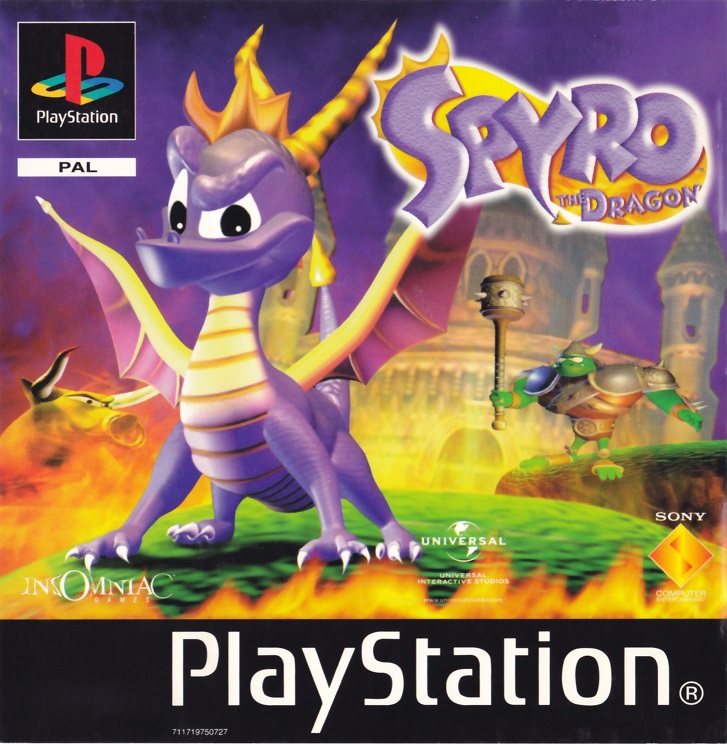
The end of this should be something light and frothy, there is nothing lighter and frothy than a good game and in light of the upcoming war, is that such a bad deal? We have seen all kinds of allegations and leaks. Now that we see a few announcements, and now that we have seen a few things that Sony will be bringing, I am now at a loss how Microsoft will get anywhere with the uphill battle they face this year. It seems to me that the upcoming Book of the dead is doing to PS4 what the initial the Last of Us did to the PS3. It was overwhelming. In addition when we see the Last of Us 2, Ghost of Tsushima, Spiderman, Death Stranding and Book of the dead, realising that at least three of these titles will be released in 2018, one is extremely unlikely to come before 2019 (Death Stranding) and one remains an unknown at present, and that is merely the exclusives. Sony has remastered the Spyro trilogy which will entice a new generation and satisfy the ones who played it on the original PlayStation. There are loads more coming, but this is at present what Nintendo and Microsoft are up against, which in light of the results of God of War is not a good thing to be up against. Now that the Sony gamers have heard that the release of Subnautica on PS4 is more and more imminent; an unknown title (to many) that is merely one of the best survival adventures I ever played and original from beginning to end. So in that view, we see that the other brand has a diminishing level of unique games left and that was never a good thing for any console. In my personal view, there is now only one reason why I still have the Xbox One. It is the one game, the game that I revered ever since I got my fingers on the demo that was added to the PC Format disc, al little over 20 years ago. Take a look at the update of the remastered and remade System Shock (at https://www.youtube.com/watch?v=lKfnTnZuC5E) where you can see the game in progress and even as it is announced to come to PS4, it is for the time being a lot earlier on Xbox One and PC.

The advantage Microsoft once had is now pretty much gone.

Even as some are all about the gifting a game hype, from my personal experience most people have never given me anything correct when it comes to gaming. Now, in some cases it is indeed nice, but most people prefer to go to shop and get a physical copy of the game. We acknowledge that backward compatibility is a nice setting; there is no denying that, yet over the next year do you want to replay a few good games, or play amazing new games? Backward compatibility is nice to have and an asset, no one denies that, yet the setting of no amazing new games is not something you want to rely on. The Verge actually almost nails it with “The Xbox One is the best console if you don’t care about exclusive new games“, I do agree with the setting, but those exclusives that Sony has is just beyond amazing and Microsoft has nothing to counter that, that is the setting that does matter. Nintendo upped the setting even more with the leak of Pokémon Switch coming this year; this will get millions of 3DS players now update to Switch much faster than initially expected. It gets to be interesting when you consider that Ultra Sun and Ultra Moon sold in excess of 7 million copies. With Pokken on Switch (originally a WiiU title) already out and now the new Pokémon’s coming (I expect at least two), we see that Nintendo is upping the score and the pressure on both Microsoft and Sony.

So even as Verge was almost correct, they missed it that the gamers love exclusive titles and the fact that the Sony players are getting the Switch on the side matters as well, apart from them not getting the XB1 on the side. With 26 titles announced by August 2018, the games list is also impacting the other two. Bethesda is giving Wolfenstein 2 a ‘switch’ over in 7 weeks, The Crash Bandicoot fans get to do it all over again on Switch as well and Capcom is breathing life to Streetfighter with a 30th anniversary edition this month on Switch, yes, my prediction that I made a mere two weeks ago is coming to pass, the worst nightmare for Microsoft is coming, Nintendo and Sony have upped their game and as it is less likely that Microsoft can equal that during the E3; by no more than late August will we see the setting whether the total Nintendo Switch sales will surpass Xbox One total sales by Christmas 2018, it is now becoming increasingly likely that Microsoft Xbox One will grace third position in the console race before December 31st 2018. Microsoft will have to produce a miracle by the end of the year and it better be a lot better than there marketing department hiding behind “All Xbox One games and Microsoft Store PC games are now eligible for digital gifting“, because when I look at AC Origin Gold (AU$145) and Shadow of War Gold (AU$158), I wonder if the people know that these games are around 40Gb to download and a 100% larger if you have 4K capabilities. So not only is it a massive download, the fact that these XB1 consoles have no more than 1TB is also a consideration. Nothing on any of this is a ‘pro’ gamer setting, merely a maximum exploitation setting from Microsoft. And that is even before you realise that a new Shadow of War Gold edition (with Steelbook) is a mere AU$99.95 at EB Games, so, do you still think I am kidding when it comes to Microsoft dropping the ball three times over? Are you kidding with downloading a game at a price that is 50% higher than a physical version in the shops?

Like Iran, Microsoft overplayed their hand way too soon and they are also in the venue of not being able to counter what comes. A setting that they should have avoided, in that light we can compare the Microsoft marketeers with the Iranian clerics, they shout from the highest peaks, but without the support of actual product you end up merely irritating people, which is how I personally see this all.

A desert that was a little less light on the bowels, but in all this we see that some games over the next month will be shown to be not up to the fight against reality and consumerism. Because both rely on smooth sailing and those who have never been hit by internet congestion have for the most never ever used the full setting of it. Until very recently, Sydney NBN users had 4 hours a week of congestion, now consider having to fetch your Sex in the city, the latest movie, download games, watch reality (kitchen) TV and focus on the big footy games. So how welcome was that digital download game to the internet welfare of the family in the end?


1 Comment

Filed under Gaming, Media, Military, movies, Politics

The politics of denial

I started this last Friday, so as I started writing this, I got to do the clumsy thing and actually kick out the power cable, losing all I had written. It led to my own denial and anger, and it fittingly fits this. Now, as I revisit the issue I have on one side the pleasure of having ‘new’ data, and the displeasure of going over this, but I will a little later in the article as it actually has bearing on all this.

So these three senators have decided to see if they can break up their entire Saudi Arabian support system, which will work out swimmingly for the UK, but about that later. The three senators Bernie Sanders, Mike Lee, Chris Murphy have started the US on a path, where the setting is that those three have introduced a resolution that will force the chamber to vote for the first time on whether the US should continue to support Saudi Arabia in the war in Yemen, a conflict that has led to the deaths of at least 10,000 civilians. In itself that is not the question, you see this is not whether what they do is ‘right’ or ‘wrong’. As we see it in the Guardian (at https://www.theguardian.com/world/2018/feb/28/yemen-saudi-arabia-war-us-support-senator-push-to-end) we get ““This is about the process,” said an aide to Lee. “What decisions do we make for a country that has been at war constantly for almost 20 years? When do we say that something is worthy of intervening in and when do we make that determination? It’s about the how“, which is fair enough. It is a political decision in all this and we can view it from one side, or from the other side. But there is actually a lot more going on.

Part is seen when we see “Yemen’s conflict began in 2014, when the Houthis, Shia rebels from the country’s north, seized the nation’s capital and ousted the Saudi-backed ruler, Abd Rabbu Mansour Hadi, who lives in exile in Riyadh. In response, a Saudi-led Arab coalition began a bombing campaign in 2015, to restore the exiled government to power”, in all this, we might see these matters as separate, but they are not, they are very connected.

The first part is seen in the NY Times (one of many sources), on April 14th 2011 we see ‘U.S. Groups Helped Nurture Arab Uprisings‘ (at http://www.nytimes.com/2011/04/15/world/15aid.html), here we see “a small core of American government-financed organizations were promoting democracy in authoritarian Arab states“, as well as “as American officials and others look back at the uprisings of the Arab Spring, they are seeing that the United States’ democracy-building campaigns played a bigger role in fomenting protests than was previously known, with key leaders of the movements having been trained by the Americans in campaigning, organizing through new media tools and monitoring elections” we see that America never learned from its mistakes in Egypt, Iran and other places. Now, I have nothing against democracy, I grew up in that environment and we should all accept that, but is it that clear? These nations had a sovereign right, they decided not to be democracies and as some filled the heads of some people with the ‘golden dream‘, and got trained into the creation of flocks and let them flock to those Arab spring groups the damage ended up getting close to complete. What started in Tunisia in 2010, moved to Libya, Egypt, Yemen, Syria, and Bahrain, where we saw the unsettling of regimes, major uprisings and social violence, riots, civil wars and/or insurgencies. Places like Morocco, Iraq, Algeria, Iranian Khuzestan, Lebanon, Jordan, Kuwait, Oman and Sudan were not impervious either to some extent. So in the age of the fucked up Obama administration we saw the start of more violence and the death of close to a million citizens, yet the Democratic Party goes into denial at that stage, because they were not involved. Now, legally speaking there is absolutely no evidence that this was done with the blessing of the Democratic Party, or parties in the White House in that time. Now, it might exist, but I have not seen it. In addition as the NY Times gives us we see references to “the International Republican Institute, the National Democratic Institute and Freedom House, a non-profit human rights organization based in Washington“, as well as “The National Endowment receives about $100 million annually from Congress. Freedom House also gets the bulk of its money from the American government, mainly from the State Department“. So here we see the crux, these three senators want to set the how and the process, but their own system caused this and now they want it to go away. The US burned them self on Syria by standing at the sideline whilst we see that they caused it indirectly. Now as they numbers in Yemen add up, we see that the US is ready to get into denial fast. The issue is even more ‘hilarious’ when we see in that same NY Times article “Ms. Qadhi, the Yemeni youth activist, attended American training sessions in Yemen. “It helped me very much because I used to think that change only takes place by force and by weapons,” she said. But now, she said, it is clear that results can be achieved with peaceful protests and other nonviolent means“, so how peaceful did things go in Yemen, and how peaceful did those 10,000 citizens die?

I am not implying that Ms. Qadhi was involved in any of that, but for aspiring autocrats the notion of destabilisation breeds opportunity, which is pretty much what we are seeing now; with splintering in Yemen the damage is actually increasing with Iran, Islamic State, Ansar Allah playing their part. As the BBC reported in February 2015 “But as the interim government of President Abdrabbuh Mansour Hadi stalled in early 2014, Ansar Allah launched an aggressive military campaign in the north, defeating key military units allied to Gen Ali Mohsen al-Ahmar and the Islah political party” so how peaceful should we see this ‘aggressive military campaign‘?

And that is not even the beginning of the issue. The NY Times give us in conclusion “we appreciated the training we received through the NGOs sponsored by the U.S. government, and it did help us in our struggles, we are also aware that the same government also trained the state security investigative service, which was responsible for the harassment and jailing of many of us, said Mr. Fathy, the Egyptian activist“, which now reads that the US government was selling short and betting on both sides of the event, like an arms dealer providing both sides with the latest creation in the effort to end the lives of those on the other side of the equation.

It gets even more disturbing when we see the Telegraph (UK) give us (at https://www.telegraph.co.uk/news/wikileaks-files/bahrain-wikileaks-cables/8334643/GUARDING-NDIS-FLANK.html) the part where there is a dis-proportionality in all this making the issue even more toxic and dangerous. That part is seen in “Al-Hamer promises to be a cooperative partner for emboffs and, we judge, will support NDI programming so long as it does not disproportionately benefit Al-Wifaq and other opposition political societies. He is somewhat favourably disposed towards the U.S. — all four of his children study in Boston or Austin, TX — and his wife, Afnan Al-Zayani, is a MEPI grantee. Al-Hamer’s chief focus will remain his job as the King’s media advisor; he will likely leave BIPD strategy and operations to other members of the new board of trustees and to Al-Khayat and his senior staff. Emboffs will engage with Al-Khayat and board members such as Al-Otaibi, and will remain alert for any signs of BIPD or GOB discomfort with NDI in an effort to avoid any repetition of the controversy NDI encountered in 2006“,

Finally the NY Times gave us: “Hosni Mubarak, then Egypt’s president, was “deeply sceptical of the U.S. role in democracy promotion,” said a diplomatic cable from the United States Embassy in Cairo dated Oct. 9, 2007“, which took roughly 3 years, 4 months and two days until that same democracy promotion scheme got rid of him and his presidency on 11th February 2011.

Now we see that the US is adding to its own misery. As it had lost any credibility it has, we see that three senators are setting the stage where the US could lose even more. We see that (at https://lawlordtobe.com/2018/03/06/the-global-economic-switch/), the issue of Saudi investments are now bubbling to the surface. Not just some need for a desalinisation plant. No this is a setting in excess of 500 billion and as the US government is trying to make a play for some parts of that, we see three senators trying to get on a high moral horse and change the setting of support to Saudi Arabia. So as they hold the high moral horse and stop any actions to take place, how would Saudi Arabia react with their “the half a trillion dollar NEOM“, the massive growth in dependency and requirements for technology will take a nice seat where these actions might result in Saudi Arabia talking to British Telecom and Verizon might end up sitting at the side of the road. What was a near equal race between the two for the graces of 5G opportunity is now a race where Verizon could in theory end dead last. Cory Booker the Democrat senator for New Jersey is just going to love all this or not?

The problem is that this should have been about the morality and not the cash, yet that is what politics in a bankrupt state has been reduced to. Now as we are seeing all that good news in regards to the US economy. Most ignore the other side as “Toys “R” Us may be planning to liquidate its bankrupt U.S. stores, according to a report by Bloomberg News. The retailer, reportedly, has not found a buyer or secured a debt restructuring deal with its lenders” (Source: CBS), in addition the LA Times gives us “The downfall of Toys R Us can be traced back to a $7.5 billion leveraged buyout in 2005, when Bain Capital, KKR & Co. and Vornado Realty Trust loaded the company with debt. For years, the retailer was able to refinance its debt and delay a reckoning. But the emergence of online competitors, such as Amazon.com Inc., weighed on results. The company’s huge interest payments also sucked up resources that could have gone toward technology and improving operations“, the interest payments, the issue that several larger players face, with Google, Amazon, and Microsoft being likely the only exceptions, we still see the growth of debt where these larger players are all fending off the inevitable. Gun maker Remington and guitar company Gibson, two iconic companies, neither made it out and are now in the bankruptcy setting, and they are not alone, so as they vanish thousands of workers will be in the need of finding new jobs and possibly even resettling in another state changing state pressures on the support systems that were in place, because those people made products that needed shipping, they had infrastructures and shops depended on these thousands, they are most likely to move and as that happens more pressure is exerted on others.

Is that all relevant?

Only indirectly! You see it is part of a pattern. The US has pushed the media to be in denial of the debts and the costs of these debts. So when we consider that Intergovernmental holdings stood at $6.3 trillion, giving a combined total gross national debt of $19.8 trillion or about 106% of the previous 12 months of GDP, with 45% that the public has is owned by foreign investors, the largest of which were Japan and China each having a little over a trillion of that debt. So even at 1% the debt is a large issue, even as it slowly decreases, two of the 32 nations should be getting $10 billion each and that is merely the interest and that is if it is only 1%, it is unlikely to be below 4%, so the US has to come up with well over 250 billion and that is beside all the normal expenses they have. It only takes one negative event to push them over the hill and more than one is coming, in addition the US desperately needs part of the economic $500 billion windfall, and that is likely to become the diplomatic debate that the State department will be confronted with. with the debt adding well over $240 billion in the last 11 months the forward momentum is not there at present (it was earlier than that though), we see that the US has issues and dilemma’s to deal with, only one of them is Yemen and several are with Saudi Arabia, a nation they need to be friends with for all the reasons they can muster.

So as we look at Al Jazeera (at https://www.aljazeera.com/news/2018/03/180310204215697.html) where we see “A military solution to the conflict in Yemen will be a disaster”, said al-Hamdi, a former member of the Yemeni parliament who was ambassador to the Czech Republic from 2009 until 2014“, we might give him the benefit of the doubt, yet is that true? You see “History is repeating itself. There is a history of Saudi intervention in Yemen, from the revolution in 1962 to the 1994 Yemeni civil war,” said al-Hamdi at the event, which was hosted by the Cordoba Foundation and titled Yemen: War, Politics and Human Tragedy event. “Yemen is being destroyed. A nation is dying,” said al-Hamdi“, yet we already know that it was the Yemeni president that was requesting assistance, there was an uprising and that started the current situation.

You see, what we do not see form any source is that when I look into Abdulrahman al-Hamdi, I find very little. I did find “Abu Salim mayor Abdulrahman al-Hamdi told Reuters that the unusually intense fighting that erupted last Thursday was triggered by members of competing armed factions capturing each other“, which is what Reuters gave us in March 2017 (might not be the same person), so the only other articles are from the last hours. Consider an ambassador that fell from all the news channels between his non-working status between 2014 and 2018, almost a death sentence. So is this ‘high morality‘ his way to get back into politics? Back in the news merely because it is convenient for some of the players, that is how I personally see it.

Back to the beginning of me

Now I get to go to the part I mentioned in the beginning. You see there was a small accident on Friday and I lost power and as a result my article was gone, I had not yet saved it. Now, I could have gone back to it all and rewrite it, but after 2,000 words (roughly) I felt a little drained and extremely agitated with myself. Kicking out the power cable is my own stupidity and it was on me and me alone. Perhaps you can relate? Consider that you leave home, you get to the train station and it is there that you recognise that your wallet is still at home. Now, this is not a biggie, we have all had that moment and it is that moment that you realise that you have to do that 15 minute walk twice more just to get back to the start. That is when your nerves hit you and I have resolved it to walk twice that much to the other station because the repetitive feeling falls away and weirdly enough the anger subsides quicker (no idea why though). I know, it is irrational but that is how my brain at works at times and we all have some kind of quirk like that. That quirk is shown in more clarity when we see the impact of the US Arab spring and the subsequent actions of the US. They are now trying to change it all because the death list that the US aided in starting the death counts in Syria, Yemen, and Libya to name three is also opening the wounds towards the Iran and the CIA-backed 1953 coup that ousted democratically elected Prime Minister Mohammad Mossadegh. Some are asking if the US will ever learn its lesson in this regard. Others are wondering how deep ‘Christian bitching fish wife fairy-tale mongering‘ goes in regards to the intervening actions in Middle Eastern rule and politics.

The end is nowhere near the end and it reflects also directly towards Syria, as we see “The UN secretary general has described the situation in eastern Ghouta as “hell on earth” and the body’s high commissioner for human rights described the military offensive as a “monstrous annihilation”“, in that it ended exactly as I expected it to play out. so as we see “The report from the UK-based human rights group, which said both Douma and the smaller nearby town of Harasta were surrounded and cut off, was disputed by locals, but such an outcome seems inevitable in any event as the regime presses its advantage, backed by both Syrian and Russian airstrikes“, so as the Syrian situation draws to a close we see that both US administrations have failed the Syrian people and as that population has been culled we see that the docile remaining part will become the sheep that the Syrian president needed them to be. In all this the profile of Russia is now further up and the US diminishes in parts of the Middle East, so alienating Saudi Arabia is likely the worst choice that America could make. Fortunately the UK still has a large opportunity there, but in all, as Saudi Arabia wants more options, the doors will open further for Russia. That was seen last week at CNBC as they gave us: “The agreement between Saudi Arabia and Russia to cut back on oil production has boosted oil prices and is now the foundation for a broader relationship“, even as Saudi Arabia is pushing for less power on oil, they still want the best price possible for what they have, a mere business approach to a commodity. In addition, less than a month ago we saw Bloomberg report that the liquefied natural gas (LNG) options, is  new field for Saudi Arabia to do in conjunction with Russia as we got “Russian gas producer Novatek PJSC and Saudi oil giant Aramco agreed to consider teaming up on Novatek’s Arctic LNG-2 project“, so we see growth on economic options for Russia as America has been closing its own doors, or to some extent, they are getting closed by Bernie Sanders, Mike Lee and Chris Murphy for whatever reasons they had.

It is now becoming a stronger imperative to find a path forward. Not merely in regards to Saudi- Us relationship, the issue of Yemen and Syria will plague us for decades to come, even if it is settled overnight (which is not ever happening), the cleaning tasks as well as finding a longer term solution for Humanitarian solutions can only become successful if the players enable Saudi Arabia to take the lead for ending the Yemeni crises. For Syria it is likely too late, as Russia is completing ‘its’ mission (at https://lawlordtobe.com/2018/02/24/losing-values-towards-insanity/), where we see in ‘Losing values towards insanity‘ the quote “With these two gentleman owning 50% (actually more than that) into LLC Megaline, with Megaline receiving a large chunk of the capital construction contracts for the Russian military we see that link. When the dust settles, Assad will need to rebuild, and they will be the front player and possibly only consideration on a nation needing to be reconstructed. So now how weird are their actions? Both Yevgeniy Prigozhin and Dmitry Utkin are now perfectly placed to rake in billions and in that regard we get back to the options for the dying in Syria; they don’t get to have any” a mere two weeks ago, now shown to be more accurate than anything else published. The media could have seen this coming with a ruler and an abacus, no high mathematical forecasting required.

So as we see the outrage on Yemen from all those seeking the limelight, I wonder if anyone will ask them the question, what exactly did you do for those Yemeni’s over the last 4 years? The list of activities might not add up to much, that is how I saw Abdulrahman al-Hamdi, because if you seek him on Google for the last year, he shows up once, just once for the Al Jazeera event 6 hours ago, that is also the next issue that both Syria and Yemen face, those who merely talk to get a seat on the table, because soon there will be money available and now they all want a seat at the table, it is the politics of denial, to only get there when the going is good.


Leave a comment

Filed under Finance, Law, Media, Military, Politics

The Global Economic Switch

There is a shift going on, now this shift is still in the planning stages, but the switch is very real and as we see the crumbling switch from enabler and entrepreneur, the US is moving towards becoming a mere consumer and dependent user. That is a switch some might have seen coming, others have not seen it at all and some are still in denial, claiming it is a short term inconvenient stage. I have no idea which is true, but the events that are a given are showing to be more than a mere short term event and the diplomatic impact will equally show to be a long term impact on what the US had and what it will become. Now there are indicators, but the image is not seen in a single view, so let’s paint this picture for you whilst adding the sources.

Saudi Arabia

The Saudi Arabian announced investment (at https://www.cnbc.com/2018/03/05/saudi-arabia-and-egypt-agree-to-a-10-billion-deal-to-build-a-new-mega-city.html), is actually a lot more than the $10 billion forecasted, because the value as I showed in over the last year is more than becoming a reality, it is now in a planned stage, and planned much larger than I foresaw it going. It starts with “Saudi Arabia and Egypt have agreed to create a $10 billion joint fund to develop a mega-city in Egypt’s southern Sinai Peninsula, with both countries committing more than 1,000 square kilometres (386 square miles) of land to the new project“, you see, depending on the distance from Sharm-El-Sheikh the infrastructure will grow much faster and even as they will rely on what Sharm-El-Sheikh has, the growth of this new Mega-city could be the start of the tech-hub that benefits both Egypt and Saudi Arabia. As the technology hubs grow, so will the economy. It is also the first part to start getting combined 4G/5G preparation in place, because as this technology becomes available Saudi Arabia now has a first advantage in both upgrading its services and that gives optional access to 23-32 million out of a 95 million population. With the tech hubs, both the Sinai one as the half a trillion dollar NEOM, there will be a massive growth in dependency and requirements for technology. There is in addition, the Barcelona World Mobile Congress where on February 26th Huawei announced its full range of end-to-end (E2E) 3GPP-compliant 5G product solutions, now the other players will be following, yet Huawei has an advantage for now. With “The featured products are also the only available options within the industry to provide 5G E2E capabilities” we see that Huawei has chosen a path that allows them to grow and they will not be alone, but for now they are ahead of the crowds, so even as we see now “Huawei partnered with Zain Saudi Arabia, signing a Memorandum of Understanding promising to develop a new network strategy in the Kingdom. The aim of the MoU is to accelerate the realization of 5G networks and assist Zain in building the most advanced end-to-end networks in the region. The two companies will work together to accelerate the deployment of 4.5 to 5G networks, make further advances towards full cloudification, and produce additional strategy and planning in the field of ICT Synergy Cloud” (at https://www.arabtimesonline.com/news/huawei-outlines-vision-5g-future-co-unveils-latest-innovative-products-solutions-mwc/) merely a day ago. I gave that indication almost two weeks earlier, so how is that for a prediction. So even as the US is setting the bar at “Chicago, Los Angeles, Dallas, Atlanta, Washington, DC and Houston” to be the first with 5G at the end of the year, what happens when you need to reach out to Wall Street and Manhattan? Will that be merely 4G, or will you suddenly experience other issues (between providers, reception issues and so on; oh, and as you go from protocol to protocol switching per cell tower on the move, watch that battery power drain as the battery percentage goes down like a timer in seconds 75, 74, 73, 72, 71 and so on. Please do not take my word on this, it is much better when your own eyes see the battery counter go down, it adds to the dramatic effect when you hear me howl with laughter (stating: ‘I told you so’). So even as the article ended with “Ken Hu, Huawei Rotating CEO, said: “The intelligent world is drawing near, filled with potential and possibilities. Ground-breaking technologies like 5G and IoT promise to solve complex business challenges and improve the lives of the population. Yet challenges remain on our path before these dreams are realized. MWC 2018 was an excellent opportunity for us to meet with other leading companies and discuss how together we can overcome these obstacles, achieve sustainable business growth, and Build a Better Connected World.”“, I will admit that I have an issue with that part, you see with ‘IoT promise to solve complex business challenges‘, we see the implied solution, but the IoT (Internet of Things) is merely the applied hype word in a solution that has not been designed yet. It is true that the application of IoT is a solution in itself towards a whole shoal of options and challenges, but as we consider that the 4G smartphone brings solutions, it requires the apps to be there and solve actual settings and that takes time, like all other needs. In that regard I see the IoT as the old sales technique of selling a concept before the product exists and I always thought that to be a broken non resolving approach to the greedy salespeople coming with a ‘pay it forward’ solution that is paid for before the product has been completed. It is a dodgy need, because in the end the (business) consumer needs and actual product to work with. Yet that might just be me imagining things.

United States of America

The view here starts with the Financial Times, who brought us ‘Currency markets send a warning on the US economy‘ (at https://www.ft.com/content/de57a6a2-1e32-11e8-a748-5da7d696ccab). So even as this is about the financial markets, there are a few points to take away from that. First there is “The pattern of higher interest rates and a weakening currency suggests that on multiple dimensions US assets now have to be put on sale to convince foreigners to hold them or induce Americans not to diversify into overseas assets. This pattern is relatively uncommon in the US though it happened in the Carter administration before Paul Volcker’s appointment as chair of the Federal Reserve and in the Clinton administration before Treasury secretary Robert Rubin’s invocation of the “strong dollar” policy. It is fairly ubiquitous in emerging markets where it reflects anxiety over a country’s policy framework“. The dangerous part here is ‘convince foreigners to hold them or induce Americans not to diversify into overseas assets’; you see it is a move of limitation, either the non-American buyer holds onto the for a much longer time, which needs convincing (usually with higher yields), as well as stopping Americans to go overseas into other markets, so it is not actually an ‘or’ situation, it is actually an ‘and’ setting where the inclusion needs to be both to remove doubt and volatility. The article ends with “The confidence of global markets is much easier to maintain than to regain. Currency markets are sending a signal that the US is not on a healthy path. Its time for the US to strengthen the strong fundamentals on which a strong dollar and healthy economy depends“, you see that view is set not merely in the war of tariffs, it is set where the global markets have been seeing a decline in US activity and more important acts that show that the US economy is feeble and the US infrastructure is not in strength, it is merely getting by and that is a dangerous place to be in. Even as I predicted that the inactions and the inability to act against Russia will be felt when Russia calls the bluff of America, it is now showing that the US on a larger scale is showing to be set towards a series of hurdles that will stagnate its economy and over the long haul (within two years) will show the danger of another recession, so when that happens and projects get halted, how will Sprint and other players pay for 5G? Entrepreneurial innovation tends to demand buckets of cash, cash that is not available, certainly not readily. Protectionism is merely the first hurdle and one of at least three in the setting of the tariff war. The Financial times gave the people the biggest fear and doubt on February 21st with “US ‘too big to fail’ regime set for Trump overhaul“, that ‘too big to fail‘ has been used before and a whole bunch of billionaire grapes got bitten rather badly in Europe. It is not merely the Chapter 14 implementation with the by-line ‘to shield the tax payers’, it is the text “Both Wall Street and overseas regulators have warned the administration over the dangers of dismantling the system but the Treasury said it wanted to narrow its use so it could serve only as a last resort“, the fact that ‘narrow’ and ‘Wall Street’ imply that the Chapter 14 will lack the teeth it needs and as such it is another parachute for the 1% bankers, banks and those making upwards of $253 million a year. So how much will this marker cost the tax payers in the end? Even as there is an abundance of recession fear articles and announcements by the media at large, that part even as it is likely to happen, it is not certain to happen and that fear needs to be removed (by other means than the Chapter 14 messages). You see, the problem is that the 1% has enough wealth to survive the next two recessions, whilst the quality of life of the other 99% has not been pushing forward towards the level it needed to be. So they will get hurt really bad if another recession happens within the next 16 months, which is close to all speculated views by the media at large. Whilst that is not much of an indication, the events in Saudi Arabia is only one element, the other elements is the one we will see next

Other players

There is more than one player in all this. The first is seen by CNBC (at https://www.cnbc.com/2018/03/05/saudi-russia-oil-deal-leads-to-bigger-russia-role-in-middle-east.html), where we are treated to “The partnership with OPEC, led by Saudi Arabia, allows Russia to strengthen its hand in the Middle East at the same time the U.S. role has been diminished“, the diminishing of the US as stated by other sources closes doors to the US on several shores, a dangerous change that comes at one of the least fortunate times. The quote “it is now the foundation for a broader relationship that has the potential to reduce already waning U.S. influence in the Middle East” is foremost set to the chilling friendships with Syria and Iran, it is not merely there. Turkey has been out of control for the longest of times and now that Turkey is smelling blood, it is trying to get much more out of the US, making them a very expensive ‘friend’, more so, the question becomes was Turkey ever a friend? In that whatever bites there could hinder the US with its access to the Middle East at large. Should Incirlik and Izmir become an issue, the economic print of the US would drastically change, because that would require the US to find a way to grow the option to get a base in Saudi Arabia and optionally in Israel. Whilst neither is a given, the costs of that will be staggering and the economic footprint of the US will equally become an issue down the road. Even if there would be an option to get one in Western India (who would like that economic windfall in their region), it would be a drastic fund pressuring move for the US.
Another option would be in Egypt and if that becomes an option it would in the longer term benefit both Egypt and Saudi Arabia, whilst Egypt gets to grow its stability in the Sinai, the US would become a much larger target in Egypt, wherever its base would be placed. So that too would come at a cost for the US in a time it needs to turn over every dollar it spends. Another is Jordan, but there is no way to tell the impact, the costs and the options in that regard as I have no clear information or sources to give at this time. You see, the memorandum of understanding was signed with Jordan with Rex Tillerson a mere 3 weeks ago, so adding a conversation of adding a US base there might not be the one that would work (pure speculation from my side). In addition, the EU News (and others) who gave us “Commissioner for Trade Cecilia Malmström added: “These US measures will have a negative impact on transatlantic relations and on global markets. In addition, they will raise costs and reduce choice for US consumers of steel and aluminium, including industries that import these commodities”” gives rise that there is a cooling of ‘friendliness’ between the EU nations and the US to some degree, so there is that impact as well. I am not talking about the tariff, I am talking to the diplomatic language where Dutch Prime Minister Mark Rutte gave us “Relations with the United States can no longer be taken for granted“, which is not a good thing as the Dutch port of Rotterdam is the gateway to Germany and its industrial heart, in addition the US pressures on France regarding the Iran nuclear deal could impact the two, but that is not a given, even better, it is unlikely to be an issue, which is a plus point, for the US for now as the Italian elections are over and the anti-EU parties made a massive gain (from 4% to 18%, whilst they surpassed the Berlusconi party) is still an issue in play. I agree with the Guardian that stated that the EU-issue is not in play, but as we see (at https://www.theguardian.com/commentisfree/2018/mar/03/italian-elections-european-union-populism), the need for Berlusconi was the man to save them from populism has now become a non-reality, the impact will grow and in that matter the US would need to play nice, very nice with Italy. You see there was always going to be an issue with Matteo Salvini, yet the fact that they became the largest party with 37% was unforeseen. There is no issue with iExit as the Italian version of Brexit is called, but its anti-immigration policies will give headaches for many EU nations and as the impact of US-EU nations is cooling, becoming an enabler for Italy might be the wiser of solution for the US. The BBC (at http://www.bbc.com/news/world-europe-43294041) gives much more, but the power is at the end with “Voter frustration here in Italy but evident and ongoing in Germany too surely shows it’s time for Brussels to sit up and really pay attention“, the shown fact that Brussels have not been doing that is the anchor around the neck for the EU and that will impact the US numbers as well. Even as Germany was the biggest friend of the US in the EU, the tariff and, the EU army and the need by America for Germany to play a larger role in the EU borders (taking some pressures from the US) are all elements that put more and more pressures on the US, even as some of the needs by the US are very valid, we need to realise that Newsweek gave us “Germany’s top diplomat has told foreign policy experts that his country’s relationship with the U.S. has suffered irreparable damage under the administration of President Donald Trump“, even as the damage began in the previous administration (to a small extent), the chosen path by the Trump administration has been adding negativity to it all. Syria must be seen as the largest of catalysts in that regard, it is merely my sense of humour that the Germans see the forced ‘friendship‘ with the French as a larger issue than the actual absence of the US in all that, but that is just my take on humour.

All these elements are part of the economic switch in all this, in support of this, there are sources that show that Saudi Arabia wants to grow its arms industry and as SAMI (Saudi Arabian Military Industries) is sitting down with the Russian who are eager to accommodate, I need to wonder why the hell Raytheon and Northrop Grumman were asleep at the wheel, or decided to remain vacant from that setting. So even as Remington (American outdoor Brands) has a product of sheer excellence, they are now not at the middle Eastern table, but in a novel mentioned in Chapter 11 and seeking a quick sale, perhaps someone can tell me how much could have been gained at the Riyadh SAMI conference table? So even as we read (at http://www.business-standard.com/article/international/saudi-arabia-wants-to-make-their-own-weapons-russia-eager-to-help-118030300622_1.html) that “likely to alarm American policy makers, who worry about losing ground to Russia and China in the Middle East“, where we see that this is understated to the largest degree. With “They’re already planning to buy the Russian S-400 air-defense system, under a deal that would let them manufacture related products at home” as well as “Half of Saudi procurement is supposed to be done locally by 2030, from about 2 per cent today” we see the extent of the market lost for both Raytheon and Northrop Grumman as two of the largest players in that field. Someone (more than one player) was asleep at the helm and by playing the card of exclusivity the ended up playing the card of exclusion, which takes them out of the game as such and that is the issue in this, because as far as I see it we have not seen such a large shift of plays optionally towards Russia and away from the US since before WW2, perhaps it might be more correct that this has never happened to this degree in history, that too is a factor that must be considered; so, suddenly the extended play changes. I mentioned part of this on Feb 24th (at https://lawlordtobe.com/2018/02/24/losing-values-towards-insanity/) in ‘Losing values towards insanity‘, yet I only had some unconfirmed parts and no idea why I had some parts, I had these parts a week ago, yet all these parts came to me over the last 24 hours with 1-2 exceptions, now we see a shifted picture. When we consider LLC Megaline (as well as Concord Management and Consulting) where Yevgeniy Prigozhin and Dmitry Utkin allegedly have been preparing to grow an ICT/Mobile infrastructure in Syria, that whilst construction fortunes would be coming their way too, the entire growth with Saudi Arabia as an optional side allows those two to split a few billions between the two of them, whilst at the same time growing the other fields they have access to and get a seat at the Saudi Arabian table at the same time. A side I never saw as I did not have the information I have read over the last 24 hours. To get any additional part in that play could set me up for life within 3 years, to get a 400% better lifestyle in 36 months than the 36 years of hard work allowed me to get is what would get any person to change their pupils to dollar signs and that is merely in their need for ICT, Data farms, Mobile facilitation, Data systems, forecasting, reporting and logistical infrastructures. In all this we see the clear evidence as given by several players that is now on route in a place where the US has a setting that is diminishing, so as those currencies go elsewhere, do you think it will not impact the US economy. That is apart from the greedy pharmaceuticals that are now pushing on India for the longest time. It is an additional place where non-US players will have options to gain market share. All that because certain players in the patent field were enablers towards the few greedy US pharmaceuticals as they increasingly ‘demanded‘ more and more outside of the patent scope that was once given (the attempted Trans Pacific Partnership was clear evidence of that), now we see hat impact and the US is at the axis of an economic switch where someone else will soon decide whether that switch will be switched on or off, no longer as the setting where the US sets the status, which is something the US has not faced before ever as far as I can tell, even the 2004 and 2008 events did not remove that option from them, but that is now a reality from sources like Bloomberg, Reuters, the Financial Times, CNBC, BBC and other players are setting the view that we are getting now. Even as none as saying it outright, the news as given provides a speculated picture where that may become a reality. I do believe that it could be prevented to some extent, but at the current course of the US ‘Kingmakers’ and ‘Wall Street regents’, that reality is slowly being removed from the US table of decision makers and once that reality hits, when they have to report that the Switch is set to ‘OFF‘, the impact will hit pretty much every market where the US is policy maker.

A world where the US player involved goes from being exclusive to excluded!

I wonder how the media will then cover it and who will they blame, because they will always be about laying the blame.


3 Comments

Filed under Finance, IT, Media, Military, Politics, Science

SW2, not WW2

Is there a Syrian War 2 brewing? That was the initial thought I had when I got exposed to the ridiculous claims from Turkey this morning. There are two parts. the first comes from the Guardian (at https://www.theguardian.com/world/2018/feb/19/turkey-warns-assad-not-intervene-kurdish-enclave-afrin), the quote is “Turkey warned the Syrian government of Bashar al-Assad that it risked a military confrontation with Ankara if it intervened in an ongoing war in the Kurdish enclave of Afrin, in a further escalation of tensions that hint at the possible widening of an already complex conflict“, now, just to make sure you get this. Turkey invaded Syria for the alleged reason of coming to aid towards Assad, or perhaps merely to ‘fight ISIS‘ in a presentation attempt to silently start the second genocide, the genocide of the Kurdish people. So Turkey goes invades Syria and now states: “Turkey warned the Syrian government of Bashar al-Assad that it risked a military confrontation with Ankara if it intervened“, so how is optionally opposing an invader ‘intervening‘?

The second part comes from the BBC (at http://www.bbc.com/news/world-middle-east-43107013), where we see basically the same with ‘Afrin offensive: Turkey warns Syria against helping Kurds‘. So when we read “Deputy Prime Minister Bekir Bozdag said Turkey’s operations were going ahead as planned and it would be a “disaster” if Syrian troops were to intervene“, should we deduce that a failed introduction to genocide is a ‘disaster‘?

Even as we see the similarities, we see that the issue is larger than merely a scuffle between the Turks and the Kurds, the way we see the quotes and the way that they are reported give rise to the fact that there are other issues below the waterline. It is not merely semantics, it is the interaction that Turkey has been having with several nations gives that rise and the optional viewing of that should make plenty of people worried at the very least and decently nervous in the nominal setting of international relationships.

The BBC article ends with “President Recep Tayyip Erdogan told Russia’s Vladimir Putin that Damascus would face “consequences” if it struck a deal with the Kurds, CNN Turk reported on Monday“. So, Erdogan, President of Turkey, a person with not much diplomatic skills or powers outside of Turkey for that matter, is telling Putin….? Oh, sorry, I nearly lost my breakfast laughing myself into several layers of bellyaches. It is almost as impactful and powerful as me calling Alexander Bortnikov, telling him to give me access to all his data, or he is going to hear ‘stuff he will not like‘ (most likely me calling him a pussy). Yes, people like the President of the Russian Federation, or the director of the Federal Security Service of the Russian Federation (Федеральная служба безопасности Российской Федерации (ФСБ)) getting told by the likes of President Erdogan (or me for that matter) is something they should take extremely serious (sorry, second laughing attack, I will be back shortly). So, after I had my second laughing attack that lasted close to 611 seconds, I got back into my seat and decided to take another gander at a few parts. You see, the nice part of such short sighted actions is that it alienates the players Turkey actually desperately needs. Which in turn is making Iran more and more nervous, which is good news for several countries in the Middle East. The interesting part in all this that he BBC reported “During the course of the Syrian war, pro-government forces have largely avoided direct conflict with the YPG, but they have had sporadic clashes“, which now gives the optional food for thought that Syria might actually set some resources that way with the optional thought that they will not be targeting the YPG, because if we agree that direct conflict was never a real necessity, the Turkish forces changing that by sticking their short stick in a hornets nest, that part would be the greater threat to Syria, which now gets them into hot water is a few places and on several ways. In addition, it will also change the conversation that is going to happen in Kazakhstan in two weeks, giving more questions if there is still going to be a summit in Istanbul on Syria. The changing pressures are by no means a way to get things talked about and smoothed over. Even as Reuters gives us: “The three countries are working together to try to push the troubled Syrian peace process forward“, we need to also consider the mandate that Tehran gave to Foreign Minister Mohammad Javad Zarif as the outbursts from President Recep Tayyip Erdoğan is pushing its own agenda whilst at the same time causing chaos towards the plans that Iran seemed to be having in all this, his self-serving hatred of Kurdistan is making the creation of coalitions next to impossible. With the Netherlands adding fuel to the fire of Turkish non-diplomacy, as they have now voted to recognise the Armenian genocide of 1915, pressures are growing there too, at a time when Turkey needed every European nation to be on his side regarding the non-realistic approach to becoming an EU nation, we see that the gap is increasing beyond the chance of that ever becoming a reality. The Turkish parties kicking every hornets nest in the Middle East is not very useful. On the other hand, Turkey could decide after Kicking both the US and Russia, to see if this level of craziness is useful in Beijing, which it is unlikely to be unless they open up all kinds of open trade paths which might actually be a lot less interesting to Turkey, especially at a time when Turkey is trying to get increased Cherry exports to China in time for the next harvest, the need to grow their export which according to some is in excess of 80,000 tons, they are now in a stage where they can no longer afford to get on anyone else’s wrong side, which must be a novel experience for the Turkish Diplomatic Corps.

All this whilst the issues in Greece and Cyprus are at present still unresolved, with the Ekathimerini making a connection between the report published on March 28, 1897 in Empros newspaper where we get: “referred to a foreign diplomat who described Greeks’ behaviour in relation to Turkey as that of a dog that barks, but does not bite. We all know what followed, but we still tend to forget how bad it is in international affairs when you bark, but no one really feels any threat“, and the escalations on gas resources at present, that whilst there is a certain logic to make the statement, especially when we consider Europe, NATO and the UN is seen in relation to: “where tensions broke out between Greece and Turkey, these organizations never really offered anything more than carefully worded statements“, that is the situation when we rely on the paper tiger to get things done. So when we read: “Athens must be very careful in weighing its next moves. It’s a balance of terror. If it shows compliancy, one can’t be certain where the other side will stop“, whilst we all know perfectly well that Ankara will not stop until forcefully halted. As the article ends with the absence of emotion in the Turkish-Greek debates, the issue is that the theatre is getting prepared to get very emotional from more than one side. Turkey almost has no options left after kicking all the wrong shins. In my view, when Syria escalates and escalates in one wrong direction we will get a flood of orchestrated news (whilst journalists have been sentenced to life in prison) and from there onwards it becomes a long winded marketing campaign, because Turkey seems to be realising that the US, the UN and Europe are all about statements and statements alone. Which is a dangerous game as it could press towards a second Syrian war where the Syrian Kurdish area could get annexed into Turkey and its population would optionally somehow mysteriously vanish.

So, how should we see the optional threat of a second Syrian war? that is hard to see, with too many high level meetings, with the latest addition being one with the Russian President Vladimir Putin, Turkish President Recep Tayyip Erdoğan and Iranian President Hassan Rouhani to meet in April in Turkey, there is no telling what it will actually be about. Even as we have seen from enough sources that it will be about Syria, there is in my personal view absolutely no way that it will just be about Syria, especially as the meetings are going to be behind closed doors. That view is made stronger when we consider the news merely a few days ago when Kirill Dmitriev, the chief executive of the Russian Direct Investment Fund (RDIF), told CNBC “We’re at the breaking point in positive territory of this relationship … We really embarked on an amazing positive journey“, that in light of Iranian issues and the fact that President Putin’s face is on the homepage of the RFID gives enough indication that nothing happens there without the explicit approval from more than one key member of the Kremlin and there lies the complication, The meeting around Syria is set in a stage where all three have separate agenda’s. Turkey has the Kurdistan region, Russia has a truckload of billions it can win with Saudi Arabia and Iran is extremely opposing anything pro-Saudi Arabia, as well as having a few additional issues regarding Yemen, who would really like Russia to become a mediator here, so the Syrian talks will come with close to half a dozen unscheduled stress points. So, when we see these issues in the lights that can be confirmed, will Syria see more or less stability?

Less stability is not a given, but the premise of it happening is actually more realistic than I would have foreseen less than a year ago.


Leave a comment

Filed under Media, Military, Politics

Enabling crime

Thursday saw the light of an unsettling situation, unsettling to some that is. You see the article ‘UK police to lose phone and web data search authorisation powers‘ is very one sided. At https://www.theguardian.com/technology/2017/nov/30/police-to-lose-phone-and-web-data-search-authorisation-powers we see “Senior police officers are to lose the power to self-authorise access to personal phone and web browsing records” and as it ends with “an attempt to comply with a European court ruling on Britain’s mass surveillance powers“, this merely fuels my setting for Brexit. Yet it is not that simple. As people are shouting, screaming and considering how they are allowed, in rights of, and needing privacy. I stopped caring and worrying. When you consider the following parts:

SS7 hack explained (at https://www.theguardian.com/technology/2016/apr/19/ss7-hack-explained-mobile-phone-vulnerability-snooping-texts-calls), in 2016.

Here we see “Hackers can read text messages, listen to phone calls and track mobile phone users’ locations with just the knowledge of their phone number using ‘a vulnerability’ in the worldwide mobile phone network infrastructure“. We hear that something was done. It is given with “Since the exposure of security holes within the SS7 system, certain bodies, including the mobile phone operators’ trade association, the GSMA, have set up a series of services that monitor the networks, looking for intrusions or abuse of the signalling system“. So guess what! It was not or ever solved. It is merely monitored, the moment that this monitoring number is tweaked; organised crime has full access to you. This is only the first piece of evidence that European Laws have been enabling criminals and organised crime.

And with the quote “Reportedly, recent security testing of SS7 by an operator in Luxembourg took Norway’s largest network operator offline for over three hours due to an “unexpected external SS7 event”.” we see clear evidence that the criminals are winning. I wonder if those extremely high paid judges are considering that. Because their claim “mass harvesting of personal communications data could only be considered lawful if accompanied by strong safeguards including judicial or independent authorisation and only with the objective of fighting serious crime including terrorism” has no hold on criminals as they are in it for the money, not terrorism.

So even as the Guardian trivialises the danger in the correct way with “given the billions of mobile phone users across the globe, is small”, yet these criminals are learning and learning really fast. The contact book shows them who is connected to important people (for example @RBS.co.uk or @natixis.fr), that list goes on for a while as the contacts are lining up, the tally shows that the value of that person goes up by a lot. And let’s not forget, this level of data mining can be done with most ordinary computers. So as they are seeking data, downloading dumps for later, 99% gets washed and 1% is kept on the computer. I reckon that 99% gets burned on discs for later use and verification. Lorenzo Franceschi-Bicchierai gave warning in an article on May 4th 2016 (at https://motherboard.vice.com/en_us/article/mg7bd4/how-a-hacker-can-take-over-your-life-by-hijacking-your-phone-number), here we see “In 2014, UK authorities warned that criminals were taking over victim’s cell phone numbers and using them to get into the victim’s bank accounts. Now, a social engineering expert is warning that taking control of someone’s phone number is easier than previously thought, thanks to a code normally made of three letters and six numbers called the Porting Authorisation Code, or PAC“, the consequence is given with “De Vere was simply testing this on numbers he owned, but if he had been a criminal taking over other people’s phone numbers, he could have done real damage. Once in control of the numbers, he said, he could’ve use it to approve bank transactions with SMS notifications, bypass two-factor authentication on online accounts such as Gmail, and do other types of fraud” and that was three years ago. So how many operators have increased their levels of security? When I designed the initial solution towards the UK NHS issues, the largest issue I had was to contemplate a new level of non-repudiation, that person and only that person could have requested the medication for a patient. It is that part that gave me an insight on just how casual the online banking security is and this has seemingly been the case for over three years now.

I do believe that security is on the mind of every bank, yet absolute security is an illusion so they resorted to the bank vault principle. They started to design time based security. When you know that burning a bank vault takes 12 hours, you merely need to walk past it every hour to keep it secure. Even with sensors and other things, bank robberies never stopped, they merely became very rare, or better stated extremely rare being successful. In this online efforts are pushed, yet the same issue stays. Now it can be attempted every Nano second by billions, the banks consider that and see the effort as working because only a few ever get through. Yet the end is not near. As given by CNBC (at https://www.cnbc.com/2017/02/01/consumers-lost-more-than-16b-to-fraud-and-identity-theft-last-year.html). Here we see “15.4 million consumers were victims of identity theft or fraud last year, according to a new report from Javelin Strategy & Research. That’s up 16 percent from 2015“, so even as the bank is not all in this, we see in equal measure “Card-not-present fraud — transactions made online or via phone where the cardholder does not need to present the physical card to complete the purchase — jumped the most, increasing 40 percent compared to 2015“, so this implies that 40% more successful actions. This gives us “In all, thieves stole $16 billion, the report found — nearly $1 billion more than in 2015“. That is just the acts of cyber criminals out for cash. The more organised peers are collecting data for other needs. Inside trading data, options to make large cash drops from intelligence, that is the game that does not bring $16 billion, that is the stuff that brings 1000% more, yes, ten times more than current. The issue of non-repudiation could solve part of that, but the banks suddenly become all about ‘customer care’ and not being a hassle. Because their flood comes from casual use with no extra effort required. Their existence is set on that and ‘non-repudiation’ is a more toxic thought for their KPI’s and bonus needs. Even the trivial: “thanks to fraud protections governing credit and debit cards. The mean cost to the consumer was just $48, down from $56, according to the report“, you see it is not the $48 that matters, it will be the fact that your data is out there that matters, when that is flagged the highly priced job you want will be forever out of your reach, because your data is out there and now we see “We warned the government from the start that the authoritarian surveillance powers in the Investigatory Powers Act were unlawful. It should be a source of deep embarrassment that, less than a year after it passed, ministers have had to launch a public consultation asking for help to make it comply with people’s basic rights.“, from an ideological point of view I would side with Silkie Carlo, Liberty’s senior advocacy officer, yet the other side in me stops this, because if the cyber world is a prison, than you gave the prisoners the keys, you made the prison staff vacate the building and these advocates are stating that they prisoners are still in that prison and the doors are watched. But these prisoners can casually go past every wall, tunnel and high rope out of the building never needing the front door and everyone is now in the dark on what is actually happening in that prison, we did not merely lost oversight, we lost sight and visibility of what is going on and that is also the most dangerous of situations, that is when the people forget that by blocking the government and openly giving this all to criminals they are merely shooting themselves in the foot, demanding that the NHS pay for all the needs, medication and staffing to keep them ‘active’, so as the ‘snooper laws’ are altered, the people are forgetting one part that the article is hiding from them. You see, there is a truth in “Restricting the use of communications data to investigations of serious crime but using an offence carrying a six-month prison sentence rather than the usual three-year threshold so that offences such as stalking and grooming are not excluded“, even as that is true, those facilitating for these criminals because they sold other items like routers and computers, those people are out of the race, they are safe and that changes things because finding those stalkers, paedophiles and groomers just became a lot harder, it will take longer to find them and collect enough evidence to make a case against them. At that point remember that the altered snooping laws just gave those roaches 3 times the span to do damage and do 300% more damage to the number of victims.

Yet that casual usage also comes with other prices. As reported in CNBC we see Paul Stephens, director of policy and advocacy for the Privacy Rights Clearinghouse stating: “Third-party budgeting apps, like Prosper Daily and Mint, also flag unusual spending and suspicious charges. Keep tabs on your credit report for new inquiries or accounts opened in your name, said Stephens. Free sites such as CreditKarma and CreditSesame offer free monitoring, and you can also pull reports from AnnualCreditReport.com. Pay attention to any changes in your credit score, too. “A significant shift in your credit score might be a heads up that there’s something wrong with your credit report,” he said“. So now we have to keep tabs on things we never needed to keep tabs on before, how is that any better? It might not be an issue for 80% of the people, but the 20% that ends up getting hit will be in deeper water, deeper than ever before.

That is a part we do not see and matters will get worse with the upholding of this European ideological agenda bullet point. It was a nice to have in an economy of plenty, but those times are forever over and the rule of land and law seems to be shifting, the question becomes in what direction do you want to see it shift into a direction where every household will be required to have some kind of cyber insurance? How much will that set you back? And when you decide not to take it, what will the cost be when you lose a lot more than the inventory of your house because you were on Barbados or St. John’s? It gets even worse, when one of your litter (I think you call them children) decides to Facebook their friends showing off their new fashion or cool item conquest. What happens when the insurance does not cover the house damage because everyone apparently knew you were out of the country?

That is less and less of a speculation, with “Posting pictures of your holiday on social media could leave you open to being burgled – and have an insurance claim invalidated” is becoming a reality. You see, the insurance companies will phrase it as ‘contents insurance limits the number of consecutive days your home can be unoccupied without invalidating your cover‘, apparently it is already in place in some places. This is an issue that has seen the limelight well over 2 years now, and many also state ‘expect you to take ‘reasonable care’ when it comes to security‘, the ambiguity of that goes beyond close windows and locks, it actually includes you bragging on Instagram that you got lucky and ended up blissfully satisfied 2,000 miles from home.

All these issues are now coming more and more to the surface and you do not get to blame the police for that, you yourself voted to give away the keys and limit the options the police had to stop cyber-crimes. It was all connected, you were merely unwilling to see that floodlight and very soon you will see the impact around you. In a world that is mere and more depending on a credit score, on online savvy actions and on knowing who you divulge information to, you decided to give it all to the criminals out there whilst stopping the police all in the same action. So in all this we watch whilst we blame the police and enable cybercrime with our thumbs as we dabble statements through a non-upgraded smartphone. That too is important, because by the end of this year (more likely Q1 2018) over 15% of the current smartphones in use (android phones) will have a phone that will no longer be patched or updated, meaning that at that point we are all open to new forms of attacks, bigger and to a much larger audience. You can read more about that in Tom’s guide (at https://www.tomsguide.com/us/old-phones-unsafe,news-24846.html). Yet, do not worry, the police will be there.

Oh, they won’t be, you stopped that from happening too. Well, good luck to you!

1 Comment

Filed under Finance, IT, Law, Media, Politics, Science

View from a balcony

On one side I feel like I am missing out on certain matters. On the other side there is the view that is not comprehended by me in light of certain revelations. Now, this is not a new feeling, I have always had certain issues with certain dilemma’s. Mostly they do not make common sense, so I write about them and let you decide. In a western world we get to see the illuminated part and as such we give light to the BS matters that politicians and media cling to. Yet, it is not always that simple. I would like to state that this is always the case in every matter, but that is stretching several levels of truth.

Now, I get shown a Reuters story on CNBC that gives equal doubt. Not on CNBC or Reuters mind you. The setting that is given to us is somewhat of an issue and it needs to be exposed.

With ‘Saudi Arabia, Arab allies in Cairo talks on Iran, Hezbollah’ (at https://www.cnbc.com/2017/11/19/saudi-arabia-arab-allies-in-cairo-talks-on-iran-hezbollah.html), we might consider certain matters, but it is the quote “Discussions will focus on confronting Iran and its Lebanese Shi’ite ally Hezbollah, who the Arab allies say are interfering in their internal affairs” that sets the matter. The second quote makes sense and is equally important the quote “Saudi Arabia’s Foreign Minister Adel Jubeir told Reuters last week the kingdom’s actions in the Middle East were only a response to what he called the “aggression” of Iran“. We can agree that Iran might be an issue, yet when looking at the first part. How does Hezbollah have the pull to get any decent level of interference up and running in places like Saudi Arabia, the UAE and Kuwait? Iran yes, there is no denying that part. But in all this Hezbollah seems to be a facilitating annoyance at best, with their power-base remaining North of Israel. Now, some might wonder why it matters, why we need to look into this. You see, it does matter, if we cannot properly categorise and analyse the actions of Iran and the more extreme parts of the Iranian military, clergy and VAJA, we cannot paint the opponents in the right colour and classes they need to be in. Do you think for one moment that the youthful Gadi Eisenkot is unaware of not merely who the actual players are, and to what degree they are active? Now, we can argue that we do not need to know (and that might be very valid), but as others are painting the image differently, we are being misled. Not misled in the way that we are sold the wrong package, but misled that we are not told just how dangerous the situation is. As I forgot where I saw the original image, lets take the example. There is a 40×60 portrait that shows an estate by the fields, the actual image is 60×60 and shows that the ocean on the right side was cut off for ‘aesthetic’ reasons, but the tragedy is that this shows that the person living there has no escape, if the fields catch fire, he is literally with his back to the water, he might live but the water will not safe his house, there will be no aid coming from there.

Iran is painted in the same way now. Iran is shown to be moderate and that view cannot be dis-proven by the views the media gives on President Rouhani. You see, there is a slowly growing hill of evidence implying that Rouhani has less power than we think he has and behind the curtains the less moderate generals in Iran are beefing Hezbollah and other elements up to be more and more aggressive against the state of Israel as well as the Arabian Nations that are not willing to sing the song of extremism that they want to hear. This is becoming more and more an issue. And as Iran is willing to use the PKK as cannon Fodder they are getting more and more support from Turkey, which now makes Iranian extremism a European issue as well. We might now ‘suddenly’ decide to hide behind the UK Telegraph ‘truths’ (at http://www.telegraph.co.uk/news/2017/11/19/irans-growing-military-threat-blind-spot-british-politicians/), yet that is equally simplifying an image that has been pushed and tweaked for the longest of times by all kinds of parties (and the UK intelligence branch is not innocent in that part either, most notably GCHQ and MI6). You see they might come out with guns blazing stating: “British MPs have a “blind spot” when analysing Iran’s growing military powers and destabilising influence through it support for terrorism in the Middle East, a senior Conservative politician has warned“, but that is short sighted as some layers of filtering will always be there, some for essential security reasons, some for other reasons and only the second one should bear scrutiny and the media themselves have been part of the second layering for the longest of times, so there!

Yet the issue remains, the painting we see and the one that is a viewing of framed reality are exceedingly different. As we tend to expect something like a ‘Edouard Cortès Pont Au Change Au Crepscule‘ to give a certain view of reality of what we see, it becomes more of a worry when the image shown is something resembling the works of Albert Gleizes and that is what we are starting to face more and more. As Hezbollah is shown as a lot more than a facilitator because Iran played it that way and we are not shown the evidence as such, we tend to get pushed into a mindset that is starting to question a few more items than we should and that is how I saw myself trying to see the light in the Reuters article. Now, the article is not wrong and not inaccurate. Yet the view pushed by the parties in these Cairo talks are making a similar mistake by not colouring the opposing parties in the right light, at the right size representing them as the annoyance they actually are. It is almost like there is a play where Iran is the bogeyman and as soon as the facilitators have been taken care of, we can focus on the real evil, yet there is the issue! As the players have been shown as less evil, too many other players who want to try and sit at the grown up table will suddenly come with political options that will only make things worse. Even as we are wiling to see Iran as not evil, we need to acknowledge that the moderates have a vacuum where others dictate strategies and tactics, and there is the danger. The danger for Saudi Arabia, the danger to a much larger extent to the state of Israel and as the European players are unwilling to face up to the dangers we see, they end up facilitating for Iran through Turkey sooner rather than later which will be disastrous for a few more reasons than most are willing to face the reality of and that is a much larger danger. It is a much larger danger not just to the PKK (regardless of their validity and political play wherever they are). The danger is seen in the Sunday Times with ‘President Erdogan: Let Turkey join to save EU’s reputation‘, so when we see: “President Erdogan has told the EU that allowing Turkey to become a member could save its reputation in the Muslim world“, so is that the story, or should they have stated “Europe ready to embrace the Iranian tool into the EEC for Europe“. The Times of all places might report one side, but the dangers that we are not seeing printed at present are still up for debate, because as I see it, at present, if we need to see a decent approach towards Turkey, we might best call the Butterball hotline, you know, as Thanksgiving is an upcoming event after all.

In all this we still see the same old polarisation. As newspapers report on the Arab nations uniting calling Hezbollah a threat and a terrorist organisation, we see the same response we expected. With “Kuwaiti daily Al Rai reports that terror group Hezbollah has raised its alert level in all of Lebanon for fear that Israel will start a war” we see the sad reality of what is happening in the Middle East, players like Hezbollah can always blame the state of Israel, that whilst we have it on good authority that this youthful young chief of the Israeli Defense Forces (read: Gadi Eizenkot) has not even flexed his muscles at present. How easily and ill prepared can Hezbollah get? in that I will avoid going deep in on the the Dahiya Doctrine that shows how to deal with terrorist organisations in an asymmetrical war. What is important is that there is a conflict between Gadi Eizenkot and Richard A. Falk, the American professor emeritus of international law at Princeton University. I take Gadi’s side when we see Professor Falk’s side of “the civilian infrastructure of adversaries such as Hamas or Hezbollah are treated as permissible military targets“, which he opposes, yet the truth is that a terrorist organisation has no ‘civilian infrastructure‘, it is a plain occupied target that can be destroyed if need be, collaborators and all. In this by colouring ‘parts’ of any terrorist organisation as out of bounds is just not on. If an organisation can indiscriminately fire hundreds of missiles on civilian targets, all bets are off and as such whatever infrastructure they have becomes part of the terrorist organisation and a valid option for targeted killing and/or demolition.

So as we are looking at the view from whatever balcony we think we are on, we need to consider what we think we see, what we are told to see and what the actual size of the frame is supposed to be, three elements, all of them in flux through media, our own perception of what we think we see and the mirror image of what we comprehend we are shown. It is a biased view and we are all (me inclusive) part of what we perceive to see. That is often more troubling than we realise, but as long as we are aware that we cannot see the whole picture, we would be able to set our minds to consider what an actual represented danger is, which is a good first step.

Leave a comment

Filed under Media, Military, Politics

Drop the Mike, Ashley!

Welcome to the issues on a man that I do not know. This is not the most straight-forward of starts, yet the man who has been valued more than once and that verdict is several thousand stacks of £1,000,000. The man who owns Newcastle United, which means he gets the swanky seat in the stadium. Now, we can understand that this man founded Sports Direct. When you get enthusiastic about sports, you can bet that it will be part of your life. There is no denying it and as it became a good success, I would state ‘good for him’. Yet, the focus on him started in an entirely different way. It started with him getting in on the videogame action by getting a near 26% stake in the franchise ‘Game‘. That brand did not go well here in Australia, yet I always found it to be a decent store and the people working there knew their games and consoles. I have seen them in the UK as well and a similar feeling remained on that experience. Here it did not go well as they were up against EB Games (who grew aggressively at that time) and JB Hifi that was an established chain of quality stores, so they had a murder competition, they did not make it (for the most). Yet all this is now in play when I read “Mike Ashley swoops on video games retailer after profit warning forced by shortage of Nintendo Switch consoles“, this is a weird issue. We get ‘profit warning‘ in regards to a situation of shortage. Basically the story becomes, we are short on revenue/profit because we can’t get any more consoles, they are sold out, and everyone wants one! Which at present is pretty much the truth of the desire of people and their need for the Nintendo Switch, it is actually THAT amazing.

The result was “Game shares rose by more than 15% to 28p on the news, and later traded at 26.5p (up 9.3%), giving it a market value of £47m“, apart from the 28p not sounding like that impressive, it is the end result of +9.3% that is staggering. You see, I have issues with the entire part where ‘profit warnings‘ are labelled in the way they were. You see, the entire mess (as reported) gives no clue on the actual situation (well, the one as I personally see it), I do not care how people quantify one way or the other; it is the addressing of profit warnings.

I offer in evidence the following pieces

Part 1, Sony (at http://www.playstationlifestyle.net/2017/01/03/uk-2016-sales-chart-2016-game-sales-down-13-infinite-warfare-the-2-best-selling-game-of-the-year/) gives us ‘UK Sales Chart: 2016 Game Sales Down 13%, Infinite Warfare the #2 Best-Selling Game of the Year‘. In this we see: “The major titles of 2016 also disappointed when compared to 2015’s, with Call of Duty: Infinite Warfare (the second biggest title of 2016) lagging 31.5% behind Call of Duty: Black Ops 3. In other comparisons, Watch Dogs 2 fell just short of the 500,000 copies Assassin’s Creed Syndicate sold in 2015, Steep performed worse than Rainbow Six Siege, Gears of War 4 couldn’t reach the heights of Halo 5, and Final Fantasy XV was outsold by Just Cause 3.” For those who do not talk games, let me boil it down to the first item is that overall less games were bought. In my personal view, the overall quality of games was not great. Even as Watchdogs 2 was a good step up from the previous game, yet many gamers felt too burned by the first game. I believe that the second game was good, it has online and offline options and people were not forced to go online here. Regarding the other title, I am not a fan of Call of Duty, I know many are. the fact that a game like that became ‘the’ game is not entirely on the fact on how good their Infinite Warfare was, it is more that the other games were way below the line. The fact that the last four larger releases this year alone could be bought for 50% down, including the special editions with figurines is also a changing trend. People are less willing to just shell out the cash for games, reviews are more competitive and even though there are really good reviewers, there are a lot more really bad reviewers and they tend to get plenty of exposure. Yet in the end, the games were for a larger extent not up to snuff. The reviewers ‘deserve’ extra attention as some are more and more about the larger players, whilst some of the true gems have been largely ignored by plenty of people. Nioh is perhaps one of the most visible ones. Like Infinite warfare it is a specific game. I actually like this game, but I loathe the challenge it contains at times (they are really hard games). Some saw that is was some Dark Souls games and plenty of people ran for the hills as this is a game for actual gamers, not for wannabe’s. In my view there are several similarities, yet the only thing that the game Nioh truly has in common with Dark Souls III was its graphical excellence.

So here we see two elements that would push any revenue down.

Part 2, Pushsquare. At http://www.pushsquare.com/news/2017/01/ps4_physical_game_sales_increase_as_uk_industry_suffers_blow, we see more confirmation: “Overall sales down 13.4 per cent“, the mere subtitle and the direct impact that matters, less sales overall, this is not entirely correct, but I will get to that in a moment. The next quote is, as I personally see it wrong, but still essential. With “Bethesda’s Dishonored 2, for example, couldn’t come close to matching the success of Fallout 4, while Square Enix’s Final Fantasy XV somehow failed to outsell Just Cause 3.” My issue is that no matter how you slice it, Dishonored 2 is a little bit of a niche game, more intent for those who love stealth gaming (me being one), it is graphically superb, the game is a little steampunk in a very good way, but for the most, it is highly original and exquisite in quality. It is not fair to compare it to a game that has millions of followers and has been revered since its original release (Xbox 360, PlayStation 3 and PC) on 11/11/11, the date that some will carry with them for all time. An established success that was bought on the console be new players as well as nearly everyone who had the previous version. The game is good for months of gameplay, so a game that sells itself due to 5 years of raving reports. The second is equally unfair. I myself was never a FF fan, but I have always admired the originality and scope of the stories and the near perfection each game brought. Even I am surprised that Just Cause 3 outsold it, perhaps merely because of the over the top explosions and things you can do with the game? I cannot tell what the exact reason is, yet the second part implies that the gamers are diversifying in different directions, changing the gaming requirement. It is almost like there is a new generation taking over the baton of gaming and it has different tastes.

Yet he best is left for last, in part 3 we see Retail Week

The mention (at https://www.retail-week.com/sectors/entertainment/game-issues-profit-warning-as-uk-sales-falter/7022184.article), where we see “The specialist retailer, which posted a slump in its interim profits in March, said anticipated supply in the UK of the latest Nintendo console had failed to meet expectations, negatively impacting overall sales“, is a first issue. In this the mention ‘anticipated supply‘ beckons the question, so did you order enough or not? As the experts, you should have seen the impact it would make. The E3 and other events clearly showed that Nintendo was blowing both others out of the water. In addition we see “alongside ongoing poor sales of Xbox and PlayStation devices“, now we can argue about Xbox for several reasons, so let’s take this out of the equation, the PlayStation part gives the issue. Overall sales of the PS4 and PS4pro are still up by a decent amount, so it now becomes a shifting focus, but I will get to that soon.

For now I will end with the quote “The group continues to actively implement its UK action plan, encompassing improved supplier arrangements, enhancements to the customer experience, further operational progress including cost reduction programmes and disciplined cash management“, yet will not address it yet. Let’s take a look at three more elements.

The first is from the Business Insider which gives us “Sony sold 10 million PlayStation 4 consoles between early May 2016 and December 6, 2016. That puts sales in the neighbourhood of over 1 million sold every month, which keeps it locked in as the fastest-selling PlayStation console of all-time

The second is again from PlayStation Lifestyle with “Taking a deeper look at software last year in the UK, Games Industry points out that nearly 80% of all boxed games sold last year were either on PS4 or Xbox One (up from 66% in 2015)

The last is G24/7 where we see (at https://www.vg247.com/2016/11/14/ps4-console-sales-have-tripled-in-the-uk-following-the-launch-of-the-ps4-pro/) “Sony’s PS4 Pro launched at the end of last week and has had quite the impact on PS4 console sales. According to MCVUK, PS4 sales for the week ending Saturday, November 12, were up 204%. 65% of the total PS4 sales last week were for the PS4 Pro, while the final sales figure for all PS4 consoles was 44% higher than those for the Xbox One.

Now we put the whole together!

We know that sales were massive end of year 2016, especially with a new console and Christmas coming up, all that makes sense. We can also clearly see that overall, the consoles represent the bulk of all game sales. This partially makes sense because that is what we see as flagships in pretty much any gaming store, PC owners have a lot more options to buy in other places and at times a lot cheaper and there is Steam to consider, so that part remains an unknown and as such a much lesser impact to these stores (apart from the selling of steam credit). The fact that the PS4 is surpassing the previous consoles, is debatable (PS2 sold over three times the amount in its life time), yet the overall market trend is that games should be on par and were up by a fair bit last year. So when we go back to the initial start with “Video game retailers have been particularly badly affected by the broader shift away from the high street in recent years, with developers moving to increase their own profit margins selling games as direct downloads“, which we get from the Financial Times (at https://www.ft.com/content/172c3ba1-e880-35e8-9273-957e325cd7f4?mhq5j=e3).

In this there is debate, yet he part no one touches on is how the expectations were set, what they were weighed on and on the given image that sales were down, which had been an upcoming known for close to 2 quarters of a year. The part that the Financial Times gives us is that direct downloads are playing more of a role nowadays. It actually impacts the industry in 2 ways. Apart from buying directly, the additional issue is that consoles have a premium service; most gamers take that because of online gaming and the fact that both systems offer at least 2 free games a month. Microsoft was initially really bad with that (lousy games or games everyone had), they are still not great, yet this month it includes Lego pirates of the Caribbean, which is actually a nice and decent game (and not a large download in console terms). Sony beats Microsoft here hands down with titles like Until Dawn and Life is Strange. In all this both offer decent free games, with a bonus for Sony people as their account will also enable them to get free games for their Vita handheld, all that for around £50 per year, the premium service sells itself to both consoles without any difficulty. All elements that shows the impact of a bad year of games, not consoles, the overall quality of games gives rise to people deciding to just download an average game instead. The interesting part that even as Ubisoft lagged in a few ways, the one game what was awesome in many ways, ‘For Honor’ actually did not do that well, which is a mixed signal that multiplayer games are wanted, yet without a strong one player side, it tends to not make the cut in a top 10, which would be unfairly devastating on the makers I think. All elements that the analysts in this case should have known and realised and as such, when we see ‘would not meet expectations‘, my question becomes: “the expectations of whom and on what foundations?” Now we get to the part I skipped.

With “The group continues to actively implement its UK action plan, encompassing improved supplier arrangements, enhancements to the customer experience, further operational progress including cost reduction programmes and disciplined cash management” I wonder what we are being served.

  • Did they call short because they did not keep an eye on running costs, what arrangements would be needed with suppliers? Were they not up to scrap?
  • Even more customer experience? Were the current settings and anticipations of the competitor not up to scrap?
  • Disciplined cash management? Is cash not managed correctly?

The feedback we got from Game, directly below the image of a sort of smiley ‘Game CEO Martyn Gibbs on the merits of in-store gaming arenas‘ is one that leaves us with the thoughts that Game is going down because they are not on the ball of the game, and the game is passing them by? So in all this Mike Ashley merely flying in to pick up a bargain? In this he better realise fast that Game has an issue and more than one potential issue in play, he also needs to realise that the Games market is a shifty one and in the years before the publishers see clear to push a bigger load to online sales in the next 5 years (depending on where you live), we better consider that top games is a market in motion and it is likely to see a shift that Microsoft and Adobe made some time ago on PC’s, it is not a change that gamers are currently happy with, but it is one that the next generations of consoles will likely face, the game shop is seen as the middle man and they are trying to cut it out to maximise it for their own need to please whatever stakeholders they report on. It is early days now, but in 5 years it won’t be.

In the aftermath we actually need to look where I normally do not go. It is the Telegraph, in this case the business section, where (at http://www.telegraph.co.uk/business/2017/06/30/game-warns-profits-will-substantially-expectations/) we see the generic parts like “following its third profit warning“, we know that Christmas was weak (to some extent), yet in equality when you consider the previous information, the issue is not entirely just ‘weak Christmas‘, it is merely a much stronger competition to some extent and the fact that the cost of living in metropolitan UK seems to be ignored by analysts and those who speculate on how it would (read: should) be. The issue that is stronger is “The shares nosedived to just 21p on the back of the profit warning, valuing the business at £35.6m only two years after it was floated at 200p a share by US hedge fund Elliott Advisors” as well as “Elliott cashed in £101m at the time of Game’s stock market listing by selling a stake and made a further £59m by dumping a further 10pc of its stake just three months afterwards, despite agreeing to a lock-up period of six months” which now also implies that Game got played and not in such a nice way. Yet the bulk of all the sources do not give any clarity of the part that Elliott Advisors was playing, even the Financial Times steered clear of that part. In this, I am now also questioning the setting as given to Game and its senior management. Even as CNBC is giving the notion that Paul Singer, CEO of Elliott Management is just the best invention since Frozen Yoghurt (if we are to believe places like Forbes, CNBC and the Wall Street Journal), I wonder what price we can see the UK pay for getting played to the extent it is getting by the US Hedge market, in that regard should we allow for any US company coming in under false pretences and flood the market so that they can drain the profit quickly and walk away? It seems to me that they tried that in the Netherlands with Akzo Nobel, which had the great benefit of Elliott Management failing (for now), but it shows the extent that as a shareholder Elliott Management will go to get their profit, it seems to me that Game was not nearly as lucky and the fact that the different levels of publications left that side seemingly in the dark corners of ‘them not printing that part‘ is also upsetting (to me even more upsetting is the part that the Telegraph actually did get that info out). The fact that Game has been seemingly under exploitative attack does not diminish the issues as given by some of the publishers by the quotes, Game got caught out, which under the current size and the possible level of possible losses is a dangerous place to be in.

In all this, I am aware of things, but not as much as a person like Mike Ashley would be, so is this his triumph with Game, should we see this as a mere quick victory to see if he can get more out of this than Paul Singer’s place did, or is it an actual rescue and grow attempt? I am not implying one or the other, but as you see the presented evidence, there are a few issues with Game and I believe as such they were set up as the weak runt in the market, whether this will happen twice in a row is something I have no way of telling and I am not implying anything wrong, immoral or illegal. The entire mess is not completely shown by some players and that is what seems to be the actual issue. I remain in an attempt to be protective of the places that feed my need for gaming and there is a positive in having a diverse and competitive market. It guarantees to some degree I get the best games at the sharpest price, which is what every gamer wants, there is no exceptions to that rule.


Leave a comment

Filed under Finance, Gaming, IT, Media

Confirmation on Arrival

Last week, I gave you some of the views I had in ‘Google is fine, not fined‘ (at https://lawlordtobe.com/2017/06/28/google-is-fine-not-fined/). I stated “This is not on how good one or the other is, this is how valid the EU regulator findings were and so far, I have several questions in that regard. Now, I will be the last one keeping governments from getting large corporations to pay taxation, yet that part is set in the tax laws, not in EU-antitrust. As mentioned the searchers before, I wonder whether the EU regulators are facilitating for players who seem more and more clueless in a field of technology that is passing them by on the left and the right side of the highway called, the ‘Internet Of Things’“, 5 days later we see that my views were correct, again and again I have shown that looking behind the scenes is adamant to see the levels of misinformation and betrayal. Now in ‘To tackle Google’s power, regulators have to go after its ownership of data‘ (at https://www.theguardian.com/technology/2017/jul/01/google-european-commission-fine-search-engines) we now see: “The Google workshop at the Viva Technology show last month in Paris, which brought together players who shape the internet’s transformation“, this is what it always has been about. Who owns the data? Evgeny Morozov gives us a good story on what should be and what should not be, he pictures a possible upcoming form of feudalism, all drenched in data. It is no longer just about merely data and applicability; it is more and more about governments becoming obsolete. The EU is the first evidence in this. The EU is regarded as something that is on top of governments, yet that is not the case. It seems to be replacing them through orchestration. Mario Draghi is spending massive amounts of funds none of them have, yet in all this, yesterday we see “The European Central Bank has been dealt a heavy blow after inflation in June tumbled further below target, despite extreme measures from policymakers to stoke the economic measure” as well as “Unless price rises are stronger, ECB chief Mario Draghi has signaled that he is unlikely to scale back the mammoth levels of support for the economy“, so it is he and the ECB who are now setting the precedence of spending, printing money without any value behind supporting it. So is it ‘wealth distribution‘ or ‘wealth abolishment‘?

If we agree that this economy has failed, if we believe that this way of life is no more, when we accept that ¼th of this planets population is dead in roughly 25 years, what would come next? I would not presume to know that answer, yet can we imagine that if the dollar stops, we would need something else, in that case is data not a currency?

Now, I am perfectly happy to be utterly wrong here, I am also weirdly unsettled with the notion that our money is dwindling in value day after day. Now let’s get back to the ‘view’ of Morozov. When we see “Alphabet has so much data on each of us that any new incoming email adds very little additional context. There are, after all, diminishing returns to adding extra pieces of information to the billions it already possesses. Second, it’s evident that Alphabet, due to competition from Microsoft and Amazon, sees its paying corporate clients as critical to its future. And it’s prepared to use whatever advantages it has in the realm of data to differentiate itself from the pack – for example, by deploying its formidable AI to continue scanning the messages for viruses and malware“, we see more than just an adjustment in strategy.

Yet, I do not completely agree, you see data is only truly valued when it is up to date, so as data rolls over for new data new patterns will emerge. That would be an essential need for anything towards an AI, in this Data in motion and evolving data is essential to the core of any AI. and that timeline is soon becoming more adamant than some realise.

When we consider a quote from a 2006 article relating to a 2004 occurrence “Google published a new version of its PageRank patent, Method for node ranking in a linked database. The PageRank patent is filed under its namesake, Lawrence Page, and assigned to The Board of Trustees of the Leland Stanford Junior University; US Patent 7,058,628“, we should consider that the value it has will diminish (read: be reduced) in 2024 (for Google that is). There is of course another sight that this was ‘version 2‘, so others would be able to get closer with their own version. In 6 years as the Patent ends it will be open to all to use. No matter what some have, you only need to switch to Bing for a few days to see how straggling and incomplete it is. When you realise that Microsoft has no way at present to offer anything close to it, you get the first inside of how high the current Google value is and how much it scares governments and large corporations alike.

Now we get to the ‘ground works’ of it. From this we can see that Google seems to have been the only one working on an actual long term strategy, an event that others have stopped doing for a long time. All we see from Microsoft and IBM has been short term, masquerading as long term goals with 70% of those goals falling into disrepair and become obsolete through iteration (mainly to please the stakeholders they report to), is it such a surprise that I or anyone else would want to be part of an actual visionary company like Google? If Google truly pulls of the AI bit (it has enough data) we would see a parsing of intelligence (read: Business Intelligence) on a scale never witnessed before. It would be like watching a Google Marine holding a 9mm, whilst the opposite is the IBM Neanderthal (read: an exaggeration, the IBM would be the Cro-Magnon, not Neanderthal) holding a pointy stick named Watson. The extreme difference would be that large. In all this governments are no longer mentioned. They have diminished into local governments organising streams of data and facilitating consumers, mere civil servants in service of the people in their district. Above that, those levels of workers would become obsolete; the AI would set structures and set resources for billions. We went from governments, to organisations, we left fair opportunity behind and moved to ‘those who have and those who have not‘, and they are soon to be replaced for the ‘enablers and obstructers‘ and those who are the latter would fall into the shadows and face away.

Am I Crazy?

Well, that is always a fair argument, yet in all this, we have Greece as an initial example. Greece is possibly the only European nation with a civilisation that would soon become extinct twice. So as we see reports of lagging tourism revenue, on top of high regarded rises in GDP, rises we know that are not happening as the revenues are down by a larger margin (source: GTP), Greek revenue is down by 6.8 percent, which is massive! This gives stronger notions that the ‘beckoning of Greek bonds‘ is nothing more than a façade of a nation in its final moments of life. The fact that the ECB is not giving it any consideration for its trillion spending could also be regarded as evidence that the ECB has written off Greece. So tell me, when was the last time that nations were written off? Some of the press is now considering the works of former ‘rock star’ Yanis Varoufakis. Yet in all this, when did they actually change the landscape by investigating and prosecuting those who got Greece in the state it is in now? In the end, only the journalist releasing a list of millionaires pulling their money out of Greece, only he went to prison. So, as such, Greece is a first step of evidence that governments are no longer the powers they once claimed they were, and as less and less government officials are being held to account when it comes to larger financial transgressions is also a factor as to why the people of those nations no longer give them any regard.

The second view is in the UK, here we see ‘U.K. to End Half Century of Fishing Rights in Brexit Slap to EU‘, in this Bloomberg gives us “Prime Minister Theresa May will pull Britain out of the 1964 London convention that allows European fishing vessels to access waters as close as six to twelve nautical miles from the U.K. coastline“, in here we also see “This is an historic first step towards building a new domestic fishing policy as we leave the European Union — one which leads to a more competitive, profitable and sustainable industry for the whole of the U.K.“, which is only partially true. You see, Michael Gove has only a partial point and it is seen with: “Britain’s fishing industry is worth 775 million pounds and in 2015 it employed 10,162 full-time fishermen, down from about 17,000 in 1990. In almost three decades, fleet numbers dropped a third to 6,200 vessels and the catch has shrunk 30 percent“, the part that is not given is that from 1930 onwards engineering made massive strides in the field of ship engines, not large strides but massive ones. A ship, and its crew can catch fish, yet it is the engines that allow for the nets to be bigger and for the winches to be stronger to hoist those filled nets. In the ‘old’ days 2000 horsepower was a really powerful vessel, which amounted to 1.5 megawatts. Nowadays, these boats start at well over 300% of what was, so not only are the ships larger, can hold more fish and pull more weight, these ships are also getting more efficient in finding fish. I personally witnessed one of the first colour screen fish radars in 1979. In this field technology has moved far beyond this, almost 4 decades beyond this. If there is one part clearly shown, than it is the simple fact that technology changed industries, which has been a given for the better part of three generations. Not merely because we got better at what we do or how we do it, but as fishing results show that catches has been down by 30%, there is the optional element that there is less to catch because we got too efficient. It is a dwindling resource and fishing is merely the first industry to see the actual effects that lack of restraint is leading to.

So when we see a collapsed industry, can we blame governments? Who can we blame and is blame an actual option? In this, is there any validity in the fact that this part of government has surpassed its date of usefulness? Perhaps yes and there is equal consideration that this is not the case, yet the amount of consumers remains growing and as available resources go down we see the need for other solutions.

This is merely a first part. As we now move into the US and their 4th of July part, I will now look at other sides as well, sides we stopped considering. You see, there is opposition and it is growing. CNBC gives us one side to this with ‘Google Deep Mind patient data deal with UK health service illegal, watchdog says‘ (at http://www.cnbc.com/2017/07/03/google-deepmind-nhs-deal-health-data-illegal-ico-says.html), three points were raised. “A data sharing deal between Google’s Deep Mind and the U.K.’s National Health Service “failed to comply with data protection law“, the U.K.’s Information Commissioner’s Office (ICO) said“, “The deal between the two parties was aimed at developing a new app called Streams that helped monitor patients with acute kidney disease” as well as “the ICO said that patients were not notified correctly about how their data was being used“. Now, we can agree that an optional situation could exist. So does Elisabeth Denham have a point? For now let’s agree that she does, I would reckon that there has been a communicative transgression (this is how she plays it), yet is she being over formal or is she trying to slice the cake in a different way? The strongest statement is seen with “For example, a patient presenting at accident and emergency within the last five years to receive treatment or a person who engages with radiology services and who has had little or no prior engagement with the Trust would not reasonably expect their data to be accessible to a third party for the testing of a new mobile application, however positive the aims of that application may be.” OK, I can go along with that, we need certain settings for any level of privacy to be contained, yet…..there is no yet! The issue is not Google, the issue is that the data protection laws are there for a reason and now, it will hinder progress as well. As health services and especially UK NHS will need to rely on other means to stay afloat as costs are weighing it more and more to the bottom of an ocean of shortage of funding, the NHS will need to seek other solutions that will set an upward movement whilst the costs are slowly being worked on, it will take a long time and plenty of cash to sort it out, Google is merely one player who might solve the partial issue. Yet, the news could go in other directions too. Google is the largest, yet not the only player in town, as people seem to focus on marketing and presentations, we see IBM and to the smaller extent Microsoft and we all forget that Huawei is moving up in this field and it is gaining momentum. The cloud data centre in Peru is only a first step. It is only the arrogance of Americans that seem to think that this field is an American field. With Peru, India and China, Huawei is now active on a global scale. It has hired the best of the best that China has to offer and that is pretty formidable, There is no way that Huawei could catch up with Google in the short term, yet there services are now in a stage that they can equal IBM. As we see a race for what is now at times called the IoT landscape, we see the larger players fight for the acceptance of ‘their IoT standard’, and even as we see IBM mentioned, we see clearly that Google has a large advantage in achievements here and is heading the number of patents in this field, as Huawei is pretty much accepting the Google IoT standard, we see that they can focus on growth surpassing IBM, Qualcomm and Intel. In this Huawei will remain behind Apple in size and revenue, but as it is not in that field in a true competitive way Huawei might not consider Apple a goal, yet as they grow in India, Huawei could surpass the Tata group within 2 years.

So how does this matter?

As we see the steps (the not incorrect steps) of Elisabeth Denham, the acts as we saw in the Guardian on how regulators are trying to muzzle and limit the growth and activities of Google, how much influence do they have with Huawei? Even as we see that Huawei is privately owned, there have been a few articles on Ren Zhengfei and his connection to the Chinese military. It has spooked the US in the past, and consider how spooked they will get when Huawei grows their service levels in places like Greece, Spain and Italy? What will the EU state? Something like “your money smells, we will not accept it“. No! The EU is in such deep debt that they will invite Huawei like the prodigal son being welcomed home. So whilst everyone is bitching on how Google needs to be neutered, those people allow serious opponents and threats to Google’s data future to catch up. Huawei is doing so, one carrier at a time and they are doing it in a global way.

So as we see all kind of confirmations from media outlets all over the world, we seem to forget that they are not the only player in town as their growth in EU nations like Spain with a new android base Set Top Box (STB), Huawei just now becomes the competitor for Telefonica, Vodafone and Orange, implying that it now has a growing beach head into Europe with decent technology for a really affordable price. In a place where they all complain on how there is no economy, Huawei is more than a contender and it is growing business where others had mere presence and sustainable levels of revenue. It is merely a contained view on how the EU regulators seem to be fumbling the ball for long term growth, whilst handing opportunity to China (read: Huawei), who will be eagerly exporting to Europe the products they can.

In all this, CoA can be seen as a mere confirmation, a Course of Action by regulators, the Court of Appeal for Google, the Cost of Application for Huawei, the Coming of Age for Business Intelligence and the Center of Attention that Google is calling on themselves, whether intentional or not does not matter. We are left with the question whether at this point, the limelight is the best for them, we will leave that to Mr. Alphabet to decide.

1 Comment

Filed under Finance, IT, Law, Media, Politics, Science

How the Franks make France

It is possibly one of the first times that the entire world is keeping their eyes on France and on its elections. The situation as seen in France has not happened since Charles de Gaulle. France in a state of massive changes, changes that are essential if it wants to have any options of shedding the massive debt it has and restructure the options of owning a stronger economy. The question becomes, who will be the enabler in that regard. The BBC shows us (at http://www.bbc.com/news/world-europe-39038685) how 5 charts will explain the elections. The first shows the growth of Front National, the party of Marine Le Pen. The quote “Opinion polls currently suggest Marine Le Pen would be defeated in the second round by Emmanuel Macron. Without the backing of a traditional political party, the former economy minister, who has never held an elected office, is standing as a centrist candidate” is in the central place here. She might be front runner now, but there is the real issue that Marine Le Pen is seen as too much of an extremist. Even as part of her strength is seen in the second chart where we see how unemployment rates have sky rocketed under President Hollande and that level of dissatisfaction has been an enabling factor for Marine Le Pen. The 4th chart is also a Le Pen indicator. As France has been hit multiple times, the people started to listen to the logic of Marine Le Pen and as such all drove straight towards the far right. That is the way of things. The 5th one is less of a positive influence, but it is an influence none the less. As the amount of asylums are given increase, the rejection of the social path of France will increase and that too works for Marine Le Pen. In all this, the consequence is equally a positive part for Macron. Emmanuel Macron is making strong headway and to many French, the preferred choice. Yet, Emmanuel Macron has never held office, which counts against him, as an economist he does have an edge, but that would only work if his policies had resulted in jobs, which was not the case. The reality, or better stated, the stronger reality is that for those under 25, 1 out of 4 does not have a job and that is where Marine Le Pen is getting a growing traction. No matter how the French here on how important social issues are, the reality of no work translates to hunger and uncertainty. In addition, Hollande has data in play that shows that the high point of his economy was a year ago and decline is already showing, this translates to even more people moving from the left towards the centre and the right side of the isle, all moving towards Macron and Le Pen. With the UK showing a growing economy whilst Brexit is starting is also pushing the people to listen to Marine Le Pen and that is the reality that will continue, yet will it translate to enough votes? There is the uncertainty and I predicted that it was a reality France was facing. A reality I have claimed for over 2 years now and so far I have been proven correct. However, this does not take Emmanuel Macron out of the race. There the reality is that anyone feeling too uncertain regarding the more right wing Marine Le Pen that voter might hesitate and decide on Macron instead, a choice that is logical yet untested and unproven. It is the unproven part that the French also realise, so Marine Le Pen stays in the race. The one factor that matters is Benoit Hamon. Now, he might not be the front runner and he will not amount to serious opposition of large numbers, but the one part that still matters is whether he can get enough votes to make the 50% impossible for Marine Le Pen, that is now the game that plays, the others are not able to do anything serious to that extent. It is now starting to be merely a race between Macron and Le Pen, Hamon would enable the situation that a second round would be essential, which now takes us to May and that opens the field again, in that regard, Marine Le Pen needs to be really clever on how she plays the game. In addition, she needs to be clever on how to oppose or diffuse any situation that the anti Le Pen press is pushing onto her.

The NY Times (at https://www.nytimes.com/2017/03/07/opinion/france-braces-for-the-now-possible-impossible.html) is now stating ‘France Braces for the Now-Possible Impossible‘, which only shows that they are either two years late to the party, or they just did not care before. Sylvie Kauffmann talks a good article, but she misses when she states “This is a French campaign like no other. All the political patterns established since 1958, when the present Constitution was adopted, have come apart. The National Front has been a fixture of national politics for 40 years, but never before has its presidential candidate been a consistent front-runner. Today, none of Ms. Le Pen’s opponents doubt that she will get to the second round; in fact, they are not even fighting her. They are fighting among themselves to win second place on April 23, to have a chance to beat her in the runoff“, she is not stating anything incorrect or wrong, it is the one additional fact that is important. This is also the first time in modern history that a current president is not seeking re-election, which she does mention on the side. The scandals we saw and the consecutive “François Fillon, a conservative former prime minister who is now the Republican candidate, has stopped campaigning” is another part of the sliding numbers to go in other directions, yet, will they go towards Marine Le Pen. A smaller influence is the Dutch elections. The Farage-Le Pen-Wilders triangle is pretty famous. Yet in all this the US is now an influence, because with every claim that President Trump is making, the people are confronted with a connection to each of these three and a reason why not to make the same mistake the US has made, with ludicrous claim after ludicrous claim, the Republican win is now hurting the right side vote in both France and the Netherlands, but will the shift be enough? Those matters are not known and are even less predictable.

What is at this point a certainty is that in the end Marine Le Pen will be one of two parties that can be voted for, yet there is enough doubt to see that there will be a round in May, the matter will just be how will the people see this than and how far off is that 50%, because if the call is too close to that, the smallest fluctuation could change the game. Now with the 17% of Fillon in the air and the 15% of Hamon under discussion, there is the smallest chance that a slice of that will go towards Marine Le Pen actually that is certain, yet how much will go her way? If the split is even, there is now the largest chance that 23% will divide between Macron and Le Pen, setting Le Pen at 39%. I feel that Hamon will lose, but I very much doubt if he falls below 10% and that would be the best case scenario for Hamon, there is a chance that Hamon will get a few of the Fillon numbers, but I feel certain that he will lose traction within his own ranks. With 1 in 4 people under 25 not having a job, the alleged fake job that he gave his wife is not sitting well with a large part of the voters who were already looking at Le Pen and are now utterly unlikely to select anyone left of centre which works very nicely for Le Pen, but there is still a steady group that has no love for the right, so those votes will go somewhere else, or better stated these people will vote anyone but Le Pen, which could benefit Hamon to the smaller degree and Macron to a larger degree. so as those impacts are seen, there is now a serious chance that Le Pen would grow from 39% to 42%-46% and that is where the issue starts, she is now way too close to 50% and even as it is unlikely that she gets to that point passing 50%, it is not impossible and that is where the game changes by a lot, because if she gets there, she would potentially be in the strongest position to make a lot more radical changes. Like Trump, her examples would drive the Frexit start and that will be the start of the nightmare for both the US and Japan, the Euro collapsing will drive a market fear of unbridled proportions, one that cannot be countered by the players involved, which will have a disastrous effect on the global economy. CNBC has been giving voice to several dangers, which includes rate hikes (which is off the table the moment Frexit starts), Beijing is another factor, but if properly set would actually create stability and less uncertainty. It is the utterly unbelievable part that the Financial Tribune is giving us. They proclaimed that the global economy is expected to grow 3.5% in 2018, which sounds nice, but unrealistic. You see, the changes that are essential to growth are in the wrong corners as I personally see them. If Frexit starts than the contractions in Europe will start an escalating drop, making a global economy growth of 1.5%-2% decently unlikely. Frexit is the first cornerstone, the Brexit escalation that comes, or will drive the change is another part. These two will now push Italy and Germany in very different directions making the Euro no longer a feasible currency, especially as Mario Draghi was kind enough to spend a 13 figure number onto an economy that would not hike or set in motion to the degree that was essential. So as we see the quote “Its forecasts remained broadly unchanged from its November report, however, both the US and the eurozone saw minor downgrades“, we see it without the mention that this happened even as the UK economy went upwards. Market volatility is actually the smallest influence for now, but that will change before the end of the year. So as we see the dangers of a recession slam in either Q2 or Q3, we will see it with the realisation that the forecast given by the Financial tribune was not that realistic, just prophesising on sunny weather with a few small clouds whilst we see storms on Eastern and Southern shores, and there is no way to pierce the fog from the remaining directions, a dark fog that seems unable to have any sunshine. All that and two additional dangers remain unexplored. That is given not in who gets into power, but the danger that no matter who goes into power, the new players will be inexperienced in many ways; that too will stagnate any positive move from the economy. The only bright spot is that in Germany there are differences growing, especially as Alternativ fur Deutschland has started rounds of infighting, the final straw of anti-Europe will not be in any position to move into that direction, the question then becomes what will Italy do? Even as Merkel is facing a much stronger SPD, that election will not come until 4-5 months after France, which means that Frexit, if called for would also impact the German grounds of choice. In addition we see more waves of ‘Grexit’ news on the need for cutting Greece lose. Which is not an option in EEC laws, and I am surprised that the PRESS has not caught on yet (especially as they played that fake card twice already). All these elements are in play and they will together result in a global economic growth of less than 2%, especially if the European economy contracts a little too much and that is decently certain to happen.

A rollercoaster economy that is about to be started by the modern version of the Franks that make up the French population. In this the trend is as I see it no longer about some united fake region, it is about growing nationalism and national pride, because that will also grow an economy. We all forgot about that (me, myself and I included). You see, there might be open borders, there might be free travel, but as we forgot in which place we were we also forgot on what made that place great. The beers of Belgium, the cheeses and wines from France. Some might claim that this is not true, but it is and we lost sight of it. Because we only value that what requires effort, a reality we have always faced, we just forgot about it and the larger companies had a better time by offering us something mediocre and unhealthily cheap, something that fitted too many of us. I personally believe that this is most clearly seen in the gaming industry, which is why I recognised the flaw in myself early on.

The good thing about all this is that as national pride grows in all the nations, we will see a drastic improvement of appeal and quality, I believe that the smaller places will now have the option to grow and that will drive the economies. So as Carrefour and Auchan end up talking to a new group of suppliers, France will witness a shift in economy, not one that maximises the bonus of larger provider of goods, but enables deliveries from smaller players and they do not have the board sizes that some of the current players have, so it actually will end up driving the economy. It sounds crazy and weird, but I believe this path to be the first drive of growth.

That would benefit the economic numbers of France enormously and it will also push other nations into reinvestigating the options for growth. The Financial Times show part of this (at https://www.ft.com/content/6de52a3a-aca4-11e6-9cb3-bb8207902122), yet this growth is mainly due to other factors. John Ellis, retail & consumer partner at PwC, gives us an interesting point here: “Over the next few months, the way in which retailers deal with cost headwinds, particularly the impact of foreign exchange on product prices, will be crucial for consumers’ future spending patterns.

He is correct in that way, however, I also believe that as people will seek more and more local solutions (read: deals) it will actually drive the local economies stronger in an upwards direction, and in that, I am predicting that the same will happen in France. The second part he is not giving us is that the individual currencies will allow national governments to float their currency ever so slightly to avoid massive negative impacts, something that was not an option under the Euro. So another tool will be handed to the French as they restore the imbalance that their economy has faced for well over a decade. I do not believe it will be the measure towards success, it merely avoids the chance of failure, which is also a driving force in any economy.

Now, feel free to completely disagree with me, which will always remain a valid view. Yet when we see the impact of positivity that segregation has and if Marine Le Pen cashes in on this, than we will see a second step in the European economy that will stop the Euro. As we end with that coin, did anyone tally how many European officials are no longer required? How much did they cost? A gravy train that was riding the slopes of Europe at the expense of taxpayers, whilst for the larger extent not having any positive national impact. We are talking of a group that exceeds 32500 people. So how much was that costing on a monthly basis? 751 MEP members were getting a monthly pre-tax salary of €8,484.05. That’s already 6.3 million a month, so how much for the other 31,750 employees? Let’s not forget that this is a monthly expense. So I reckon that the sweet reality is that there will be a positive impact on budgets. Now these costs are not going away immediately, but I think I am making a clear point that national costings will change.

France is about to start a wave of changes, or better stated, there is a real change that massive changes will commence, but in the end, we will have no certainties before the elections are over and until France makes a claim and voices the intent to exit the EEC, there is no certainty that there will be actual change, because the Euro could survive without the UK, but not if the economy contracts, in that case several options will go straight out the window for several European nations, especially those in the EEC. Mario Draghi has made sure of that. You see, when we accept Bloomberg view (at https://www.bloomberg.com/news/articles/2017-03-08/draghi-s-caution-on-inflation-signals-ecb-stimulus-stays-for-now), where we see “The rate remains stuck below 1 percent, but what’s worse is that the trend has consistently pointed down in the euro’s 18-year history, suggesting structural weaknesses may be at play” a weakness I mentioned (in a different way) in several earlier blogs, is now getting more and more to the forefront. Bloomberg also gives us “the measure that excludes volatile components such as food and energy” gives us that in a dangerously low setting volatile products will still have an impact. The additional “After policy makers’ preferred gauge of future price developments approached levels of below but close to 2 percent at the end of last year — signalling the ECB’s goal was in sight — it’s now on the wane once more” gives more and more strength to my prediction of economic contractions, which now also gives a view that any prediction of a global economic growth of 3.5% in 2018 is getting less and less realistic. so as we see positive forecasts from several sources, we need to be careful on who we will believe, because like several nations stated in earlier years, the forecast of today will soon be shown to be overly optimistic one quarter later, which is after the ‘predictors’ got some of the players to unwisely spend what they should not have been spending. A game that has been played for too long, it is the national push that gives for change and more important, it gives for a push by people who can be held accountable and can at that point be incarcerated, which tends to make certain forecasters a lot more cautious and it will give us an actual realistic economy to work with. It might not be great and in the beginning it will also not be good, but it will be mending and growing, which is what the people want and need. In that we have to voice with certainty that we do not give a fuck on what large corporations want or desire to get them their bonuses, we have had way too much of that for too long.

Leave a comment

Filed under Finance, Media, Politics