That is where I found myself a few days ago. The realisation that things weren’t what they were supposed to be. Now, it is not really new. Settings change, but for the most it is up to the makers to herald a certain stage of doing business. This is a strange telling, because I believe in the Robocop setting that Kurtwood Smith handed to us “Good business is where you find it” and for the most I believe this is true. The stage was handed to us by Satya Nadella when on December 26th 2024 he gave us “the era of SaaS as we know it is coming to an end, giving way to integrated platforms where AI becomes the central driver. This transformation is poised to disrupt traditional tools and workflows, paving the way for a new generation of applications.” Not only do I not believe him at present. He is paving the way for people to set doubt in a place and push them all towards Azura (i’ll get to this later). Still, this is a weird statement from Microsoft when we got on July 22nd 2024 ‘Microsoft joins forces with Austrade to help its Australian SaaS partners go global’ (at https://news.microsoft.com/en-au/features/microsoft-joins-forces-with-austrade-to-help-its-australian-saas-partners-go-global/), seems like a strange setting. And with the statement “Microsoft has today announced a new program in collaboration with the Australian Trade and Investment Commission (Austrade) to help local partners that offer software-as-a-service (SaaS) solutions accelerate their international growth” It almost sounds like the Asian joke “Two Wongs don’t make a Write” (or something like that).
You see, as I personally see it, Microsoft is in trouble. It hatched its eggs too widely and too many of them are not paying off. There is only so many losses you can book and not take a massive hit. And as long as people are ‘dependent’ on Microsoft Nadella can sing whatever he wants. And that is where the shoe becomes a tight fit (and not in a good way). There is a cluster of people reposting and optionally with their ‘own’ insights as why it is such a stellar move. But there are issues. You see, the first is that SaaS is a good solution for a lot of people, but as the Indian indie developers are gaining in that field Microsoft needs to haul exceedingly into another field where it is just them and their ‘agents’. And Microsoft will get a percentage for EVERY deployment we face.
The second setting is that SaaS goes together with IaaS and PaaS, but with the Microsoft setup all PaaS becomes Azure. It was the Microsoft solution to get from the statement “It is very possible to link single service of IaaS, PaaS and SaaS on 3 different cloud providers.” We got this answer three years ago and that never worked for Microsoft. You see, Microsoft wants it all. They failed too many times (in several fields). The need it all to survive and if enough are connected Microsoft (as I see it) prevents collapse. As I see it the AWS (Amazon) and the Oracle’s Platform as a service are vastly superior to Microsoft. As such Microsoft is dwindled down to size and they do not like it. I also think that Googles PaaS service is better than. Microsoft, but that is a more personal view then evidence driven. As such Microsoft needs to change speed and I reckon that the impending death proclamation of Software as a Service was Microsoft’s way to go and that is what Satya Nadella went with. The issue in this is an additional stage. In the 5 days of Christmas it is all that LinkedIn went with. I was torpedoed with these ‘news casts’ and opinionated settings from hundreds of sources (not only on LinkedIn) and these millennial sales screw ups all wanted a piece of that pie. They want it all whilst the getting was good and it is Christmas, wasn’t it?
It is at this point when I wonder what Huawei has in store with their cloud solutions. It is the media appeasement of Microsoft that I wonder what the ‘enemy’ will bring us and that is where the setting stalls. The attack on our senses is almost infinite and some are deciding where we are able to (or allowed) to look. And we are all in the setting that we want to know where we can go and places like LinkedIn will not give us the full news making them propaganda channels for people like Microsoft. So when will we get the real deal of how to avoid Microsoft? I wonder what Oracle and/or AWS will bring to the table, them and Google would make a good replacement for Microsoft. But will we see that given to us, or is the influencer scene of Microsoft drowning it all out?
I cannot say for sure because the others are seemingly staying silent. Have a great day you all.
You remember that famous character? Forest Gump with his ‘stupid is as stupid does’. This is the setting that I saw happening when the BBC (at https://www.bbc.co.uk/news/technology-68025683) alerted us to ‘US regulator admits cyber-security lapse before rogue Bitcoin post’, this is not a lapse, this is a screwup of the umpteenth order. They give us “The Securities and Exchange Commission (SEC) did not have multi-factor authentication (MFA) in place when hackers gained access to the account.” To give a clear view, to give you proportions. MFA was a discussed issue in University when I was at UTS 10 years ago. It was invented in 1996, well over a quarter century ago, although it was called two factor authentication. It is my speculation but I think that they left it aside until the call was needed and that call was clearly needed a decade ago. As such heads at the SEC need to roll (a queen of hearts idea). As such the quote “cyber-security experts say it should be a wake-up call for other agencies” is equally a joke. Those who aren’t ready need to be sanitised on several levels. There is no boo or bah about it. The fact that it took hackers this long to catch on is perhaps a small blessing in disguise. And the quote ““While MFA had previously been enabled on the @SECGov X account, it was disabled by X Support, at the staff’s request, in July 2023 due to issues accessing the account,” the SEC said in a statement.” The setting here is the question whether this was an SEC staff request or an X staff request (it could be read either way), but to remove security for access reasons implies stupidity of an unacceptable level. It means that systems were not ready, protocols were not ready and systems were deployed and configured in unacceptable ways. Then we get “The SEC has confirmed the account was compromised by a fraudster convincing a mobile operator to transfer an SEC employee’s phone number to a new Sim.” As such is it purely the fraudster, or is the mobile operator equally guilty? I honestly cannot tell on these facts, but multiple systems were unable to perform because the human element was not correctly set in stone. At present (based on SLA, or Service Level Agreements) there is a case that the mobile operator did not have the proper hat on because certain facts might not have been known to the mobile operator. The fact that an SEC phone number got swapped leaves the guilty party in the middle, but in this I admit that it is based on missing information. That missing information might show who went wrong (SEC or Mobile operator). And above all a properly placed MFA is intended to protect against this kind of hack (and several others). And lets be clear, this was not a grocery store, this was the SEC that got compromised in this way.
As such stupid is indeed as stupid does and I reckon the head honchos in charge there will be upturning every process, protocol and service level agreement in place just to keep their jobs somewhat secured. That might be merely my speculative view, but I personally believe that to be the only step left for those yahoo’s.
Yup, we think salad but it is not. You see, I gave you yesterday the inkling on what would be coming and today the events seemingly have gone away, but the link lies in the story ‘Lap Time’ (at https://lawlordtobe.com/2019/06/27/lap-time/) a story I wrote in June 2019. The issue given was “giving us levels of unparalleled congestion soon enough after that”, as well as “The moment that ANY vendor needs to acknowledge 5G and congestion in the first year will be the point that turns the customer base into a churn tidal wave and that will happen if the infrastructure is not in place” and guess what. I just have faced over two days of congestion. The interesting part is that the media is seemingly silent on this. Optus already has issues in different areas and now I face additional congestion. Lets be clear, there is at any time a change for congestion. When it is a few minutes at some point, it should be seen as a simple glitch. When it is well over a day it becomes a systemic problem. In my setting it took over 10 minutes to do a simple Google Search. Apps would not update and apply changes, the issue was seen on laptop, tablet and mobile. This is a larger problem and it applied to DIFFERENT connections. Youtube kept freezing, LinkedIn would not update and the list continues. This is the start of congestion and no matter what ‘excuse’ the telecom company gives us, this setting was always going to happen. As such I wonder what comes next. Of course we will see denials, we will see debunking and we will see a whole range of issues.
Really? So, could it just be me? Yup, that is an option, but to get it on several devices, each with their own connections becomes an issue. It could be one tower, all options, but it was days, not merely a few hours and congestion is a killer for any telecom company. I could rely on other sources, but the press has lost most of its credibility, so they are not much use and telecom companies would deny it is happening, and refer to some ‘glitch’ trying to trivialise the issue. I see it differently, when sources lose cohesive credibility there is no real reporting and the people who should be are too afraid for their bonus setting. This is now becoming a problem.
Could I be wrong? That is a fair question and that could be the case, but after 2+ days of this, I do not believe I am. The fact that a simple Google question took minutes is also reenforcing my speculation. There is an issue and we are at the start of it. As the issue dwindled away, we think it is over, but peak issues (Christmas and New Years eve) will show wether I am wrong, or more correct than ever. I a happy to be wrong, but congestion is a problem because when this becomes systemic someone will attack net neutrality and that implies that we need to be aware of our service level agreements. So, who kept their mobile contract? I should have it somewhere, but not sure where. Others would have dumped their papers and now their service level agreement is whatever the telecom company tells us it is. That is a fine way to go through December, is it not?
The additional station isn’t merely our phones and mobiles. It becomes whatever else are we dependent on. And when your Zoom or whatever other solution you use quits on you, you will see the impact of being on the lower scale of the cluster that a telecom company immediately cares about.
I get it, it is a slippery slope. What does matter is that I now faced the first instance of congestion 3.5 years after I predicted this. And this happens before this network is fully 5G implemented. As such I believe the impact will be wider, but that is pure speculation from my side.
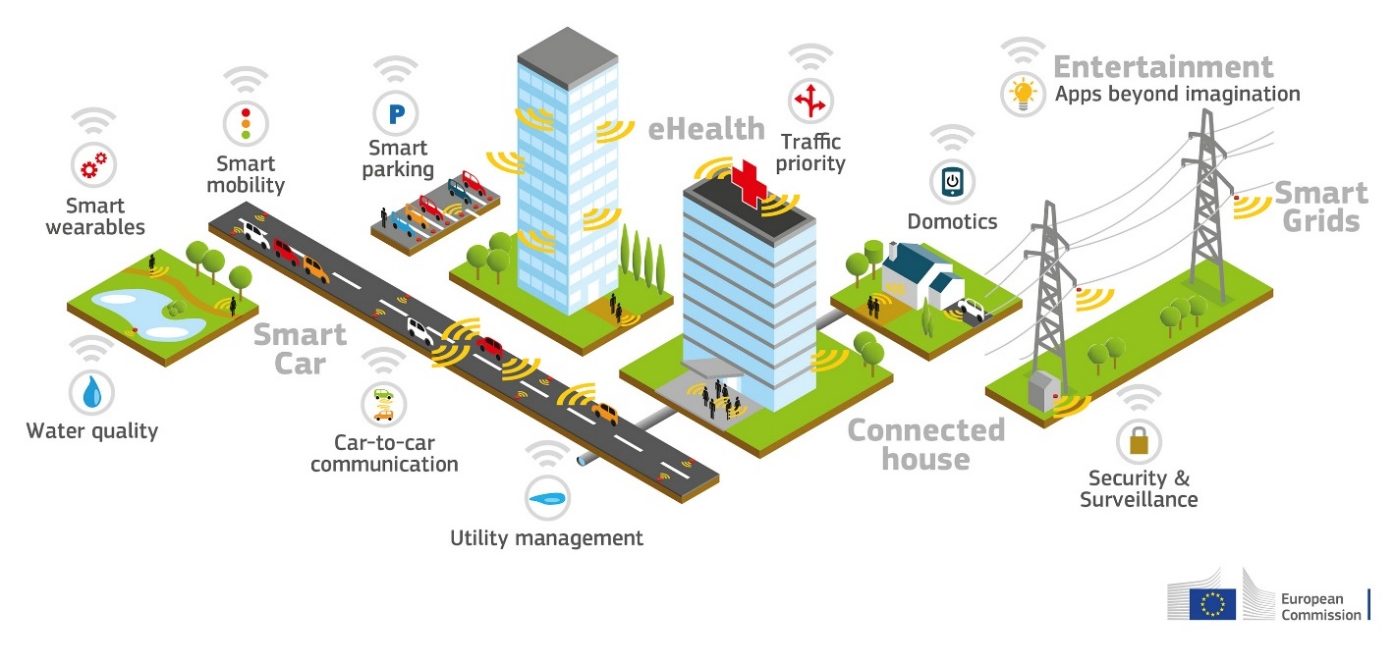
Yup, we all go there at some point. My ex once wanted me to watch a movie on foreplay so that she could get a better night of sex and I did not mind. To be honest, once I skipped the boring bits at the start the movie they gave me a few excellent ideas as well. In gaming this situation exists as well. But in gaming what is foreplay? Some state that it is the intro of the game. That tends to differ per game. In Horizon Zero Dawn it could be the part where Eloy is a little girl (when she finds the focus) in TombRaider it was the mansion level, in Oblivion it is the escape from prison and many games have their own way of staging the introduction. And now the joke I started with starts making sense. Weirdly enough it was not a direct stage that assaulted my senses. I had been contemplating and considering additional parts to my 5G devices when it hit me. I was so ‘obsessed’ to hand more functionality to the customers that it hit me. There needs to be a larger stage of introducing more to the customer, educating them as it were. Just like the video, we need more extensive foreplay. You see the age of dumping a device in the lap of customers, whether they are consumers or retailers. That stage is gone and too many rely on word of mouth, the internet and other means for people to figure it out. Consider the TV below.
It drains your account by $11,500 dollars and I had to use this example as I am a huge Sony fan. But consider the fact that the startup guide is two pages and the reference guide is 8 pages, which also gives us “For more information on troubleshooting, refer to the Help Guide”, which is a button on the remote. Now there is nothing really wrong with that, but if someone courts me for that amount, it better comes with breakfast and a final blowjob after a night of super great sex.
Devices have been pushed as almost literally a push and seek on the internet stage. Now for a $49 Google ChromeCast that makes sense. But for a $499 Bose bluetooth speaker? Not even a manual that explains what one port on the speaker does? That is a failure and gaming tends to go in that direction as well. A stage where too much is auto assumed. To be honest, Ubisoft and Bethesda actually has a decent grasp on that especially in their latest games. There are more than a few games out there that fails its consumers. There are quotes like ‘The internet is full of help’, or the demeaning “Your friends do not seem to have that same problem” And when Meta is fully deployed especially when hybrid comes to life there will be all kinds of hiatus. Now there is nothing wrong with setting up the internet to help out, but ask yourself “How many supplier set up a decent amount of white papers to help you out?” The answer will scare you. They all skipped the boring bits of the foreplay video and went straight for ‘orgasmic revenue’. And here is the stage where I found the interesting part of forplay (not a typo) “Foreplay is the fun, flirty, arousing goings on right before actually having sex. It’s an act that sexually excites a person. In forplay some people use icing, chocolate sauce, whatever..” And this applies here too. In hardware the ‘chocolate sauce’ are the accessories you can buy, or DLC’s in gaming (a ‘for play’ joke). The extra yummy parts are not in the real game, they come later (that has been Ubisoft as well). It worries me because it implies that the consumer is not the person who buys the game, but the person who buys the game and all the other bits and that is disappointing. It is disappointing in gaming, it is disappointing in hardware, software and concepts. It is like companies are too much abut the sales pipeline in some fire and forget setting, and no one (or too few) people care what happens to their customers afterwards and it offends me. I was in Customer service since 1992 and it was for a long time a great stage yet in too many places it became about cost reduction and cutting corners whilst the consumers where not properly taken care off too often and for too long. There are exceptions the most striking one is either Norton or Adobe customer service versus Microsoft customer service, or try dialling your internet provider. Try setting a care line there (a line that show they actually care for you), the results might scare you and that is where I found myself. Educating the customer on the boring bits of 5G, as well the boring bits of added 5G because that field is MASSIVE and I am hopefully a player in that stage in the not so far distant future, so it matters to me to get that part right too. And for the size of what I am talking about, see below
There was news on ABC news, it was not really news, this was a stage that I saw coming a mile away and that was 5 years ago, yet the speed at which this is procreating is cause for concern. The article ‘Protecting yourself from phone porting and SIM card scams’ (at https://www.abc.net.au/everyday/protecting-yourself-from-phone-porting-and-sim-card-scams/100421586) is not just this, the entire COVID registration issues are making things worse. When we take notice of ““At 5:55pm, I got a text message from my telco. It said, ‘Hi, received your port out request for this service,'” he says. “By the time I tried to call them, my phone already went to SOS only. Before I could even react, my number was gone.””, you might think that this is an isolated case, but it is not, when we add ““They had my customer ID [for online banking], and you can do a password reset if you have the customer ID and mobile number,” he explains. “It was really professional. I had daily limit of $10,000, so they sent $10,000. They bypassed that limit by opening another account inside my account, which you can do online, and then they transferred another $10,000.”” There is. massive flaw, the banks refer to this as being customer friendly, I personally see it criminal friendly. All kinds of level of checks and balances are left out of the equation and for now we see banking party-lines that these matters are seldom, the people are protected and it can be reversed. Yet in 5G, within the next 2-3 years the costs will go beyond what the banks find reasonable and we are left with the costs, we are left with the impact and we are left outside in the cold. That is an almost given and matters are merely getting worse.
The banks (to cut corners) are setting up more and more to be done online, all whilst proper security is lagging and there is a whole range of actions that will not and should not be allowed. I had to check and make sure that online banking was DISABLED, it makes a few issues a bit more hassle, but compared to the damage I could face 2-5 times a year it is a no-brainer. This is a mere beginning when we consider “If I want to change providers, before the [new] standard was put in place, I just had to give my name, my date of birth and my address,”, all whilst the increased made “scammers ask a victim’s existing telco to switch the number to a new SIM”, the effect is the same and because some players are cutting corners the consumer is left with the hardship. There is no easy way here and I get that, yet there is a larger stage of checks and balances missing all whilst cost cutting parties make ‘customer friendly’ needs, whilst parses of verification needs to be at the centre of this all and it is getting worse.
Why is it getting worse? Well, There were 5 attempts to scam me in the last 8 weeks, 2 of them were so good that I could not find anything wrong with the information and sources given, more importantly in one case I had to make a separate call to PayPal to make checks to make sure, they had become that good and I know what to look for, yet I have an ace up my sleeve (which I will not reveal here), it stopped numerous scams from being completed.
The first is that YOU NEVER EVER USE A LINK GIVEN! You find the number, the generic number of for example PayPal and you reference the numbers that you write down, they were ready to tell me that no such activity exists. If you click on any link you are causing damage to yourself. But the two (including PayPal) were so well done that finding the differences were close to impossible and I know what to look for. A consumer will have little to no chance at all.
And matters are getting worse, because 5G will enable the scammers to approach well over 500% in the same time, their revenue goes up and at some point it will cost us, insurances will soon stop paying out and then it will become a much larger problem. You either pay an annual fee, or lose your money. I feel that this is where it is going.
So whilst we see “to enable to SIM port or swap, scammers will need personal information, like your name, address, and date of birth” COVID give them the name and phone number, the phone number can in some cases link to an address and then only the date of birth is missing and with all these transgressed data bases. Now consider all these places that got hacked, which have a birthdate? Which have a phone number? And the image below completes the picture.
We see three sources required to get all the data they need and they keep on adding data, data you freely give away in apps, data they captured, data from hacks on the dark web and it is BIG BUSINESS, in the example it is one person with the $10,000 target, now consider 750,000 in the UK alone, 500,000 in Australia, 35,000,000 in the US and consider that $10,000 was a small jab, even smaller would work for them, like a mere $500, with these numbers these criminals become billionaires within a month and these actions need to be done fast. They have per nation 3-4 days at the most, so within 2 weeks they are looking at millions and with 5G they can get more and they can get there faster. Do you still think I am kidding? Take a good look at what data you entered in ANY app or any website, now consider that these people are doing nothing more but to add data as much as they can, at some point (within a dozen sources) they have enough data to port you, to capture your bank accounts and to make changes to your life. They merely needed some time, a $2500 computer and a decent internet connection, the pay off would be a 7 figure number and with the speed they are tracked they would be living large in another country with nothing attached to them. That is the current reality and the level of checks and balances that are missing is just too unbelievable for words.
Enjoy your bank account (for as long as you still have it)
It is something we all face, we see what we had and we miss it. Consider NCIS, an awesome series, and when we were introduced to Agent Fornell, I remembered Joe Spano, he was young innocent, wearing a bowtie and being the psychiatrist at Hill Street blues station. I miss that series at times. I know time moves on and we got Blue Bloods now, yet Hill Street Blues struck a chord in 1981, others did less so, it is hard to explain, because it sounds negative on the series that are out now, but the reality is that something got lost in TV series in the last 10 years. There are series that spring outside the equation, series like NCIS, the Magicians, Lucifer, Fortitude, American Horror Story, but the equation is very unbalanced. When you are trying to figure out how that happened, do not worry, it is simple. In 2019, the number of original scripted television series in the United States hit 532. It is almost 450% up from 1981. Hollywood is so much towards creating amount and less about creating quality, which is why the series I mentioned and a few more stand out. I keep n hearing mentions of Game of Thrones, but not much more, one show takes the cake and that used to be different. Discussions were going on regarding Hill Street Blues, Dallas, Dynasty, Bergerac, Tatort, and a few more. Yet nowadays, the amount of series crossing our eyes increases, yet it seems that nothing between the ear sticks. That tends to be quality, not quantity. There is a reason why a series like NCIS has been around for 18 seasons. Yet at times I still think of the old Hill Street blues station. And each nation had its own quality shows. Germany brought us Tatort and Derrick, the UK gave us Bergerac, the Avengers, Hammer house of horrors, and the list from other nations goes on. But now it seemingly needs to be American, whilst overall (with a few exceptions) the quality is not fantastic, not bad, just not great. And I do believe it is not the cast, not the team and not the writers. It seems to be the pressures to create on too limited a schedule with repetitive ideas again and again.
Why is that? It is no secret, Hollywood is all about return on investment, but that circle becomes virtual and fictive when quality goes down. There is a need to make money and we get that, I am not against the idea of making money, but what do you think when 2019 had 532 series, all needing originality, all needing ideas and only so many writers with actual original ideas around. It didn’t require rocket science, it was a simple equation. So how long does it take for the Hollywoodians to figure out that there is a limit to quality series that can be produced? You might think that I am talking out of my (non-mouth), but the setting of Netflix handing over $18 billion in the last year for IP should get us to ask questions. Netflix’s 2019 costs to buy, produce and license content will be $15 billion. And when you considered they made a little over $20 billion in 2019, it seems that I am wrong, but am I? Consider how long this pattern can continue? No one denies that you have to spend to make money. Yet, how is the equation correct? And
Netflix is merely one of several stations, so when this model implodes, we will see Netflix, HBO, Stan, Apple, Amazon and Disney, all spending billions, all whilst the people will have to make choices and we get that, as such some will survive, some will not, we all get that. Yet at that point, what happens to HBO, Stan, Disney, Apple, Amazon and Netflix? Where will you be?
Differential I need to set a separation here, we have the money side and the creation side. Yet the money side will hinder, impair, and optionally drive the creation side, even though the negative sides are only looked at after things go wrong. I believe that continuation can only exist if the quality is of the highest caliber and I personally believe that this is not possible when you create 532 series in a year. At some point something has to give and that is before we consider that there are really good series out there and no one denies that they are good. Yet consider that in 2009 Joss Whedon created an amazing series called the Dollhouse, not merely a good series, it set the tone on serious matters and was cut off after two seasons. He also lost the tone on Firefly, yet that one is still around, after 17 years, now seen as a cult classic. Out of the 532 series, what else will we lose out on, because they are the silent victims, scrapped because the moment was wrong, the analyst did not get what mattered and as such the makers lose out. This setting is important, because with 532 titles that group will increase, too little time, too much to miss out on.
Creation cut short for reasons not within the stage of an audience. Streaming makes this a much smaller factor, but it still will not make it zero. Yes streaming will be important to give good series a larger chance, but in all that the numbers are not adding up, not when you consider what Netflix as one provider sets their cost at and all the other streamers with their own costs as well. Soon it will change again, yet not for the reasons you considered before. You see streamers have one larger station, and internet congestion will hit them too, especially in light of the issues hitting the internet. And we will see places all over the world get a earful of fibre-to-the-node (FTTN) and fibre-to-the-premises (FTTP), and int he end we will rely on all kind of matters, but we forgot that streaming is not alone, there are PC’s for gaming, there are computers for FaceTime, there are computers for work from home, gamers and now with PS5 and the new Xbox it will increase, there are ‘digital editions’ consoles without 4K drives and they all have to download. And they will need to do so a lot more than before on the Xbox One and PS4. The stage is not on the gamers, but we have already seen the news on YouTube and Netflix throttling down, so how can the growth rate continue when the internet is clearly becoming the weakest chain in that link? In March the Guardian reported ‘Disney+ streaming service to launch in UK with lower bandwidth’, so there you are, your new 4K TV so that you can admire Baby Yoda in the Mandalorian, and the service can merely give you 1080 resolution. That is the reality and it is not getting any better until 2023, so can you consider the issues that streaming has and cannot deliver? It is not merely the amount of series, it is the stage where we cannot see their full potential and the UK is not alone, these elements are showing up all over the Commonwealth, al over the EU and the US is also not absent of issues. It was a stage I saw coming in 2018, yet they all declared me a fool, now they say it is a complex issue. Well it is not, it is the issue that was clearly out in the open, ignored by too many. Even now we see the blame game continue n other fields, how long has the PS5 been sold out? How long did we know that this was a setting of hundreds of thousands per nation and we get ‘The UK’s biggest game retailer blames PS5 size for launch delivery delays’, really? The size was known for months, the amount of systems were known for months. Too many people are reacting at the 11th hour, in systems, on the internet and with the ISP’s. Who will they blame when streaming is cut down again? When do the people get the next news from ISP’s that there are issues? Oh, wait, that moment passed already. When we are treated to “Possibly the most common form of buffering occurs when your internet speed is too slow to download the amount of data needed”, as well as “You need at least 25 Mbps for 4K streaming video on your computer or Ultra HD enabled devices”, yet on a global scale and especially outside of metropolitan area that issue is becoming an issue in streaming. So as Net Neutrality is back on the political table in the US, it becomes a massively larger issue to face. This all is not the fault of the streamers, lets be clear about that part, they are a factor, but not the cause, like the blame game couriers, here the ISP’s should have been ready to a much larger degree and we cannot blame them for the covid lockdowns, yet the setting of bandwidth limits has been known for some time, at least a year and that was also out in the open, as such the stage we see will be a larger issue and that I merely a fraction of the station that I see, the math does not add up, it was clear for a much longer time and so far too many parties are aligned to ignore that part. We see solution A, option B and everyone dances around the overwhelming lack of bandwidth.
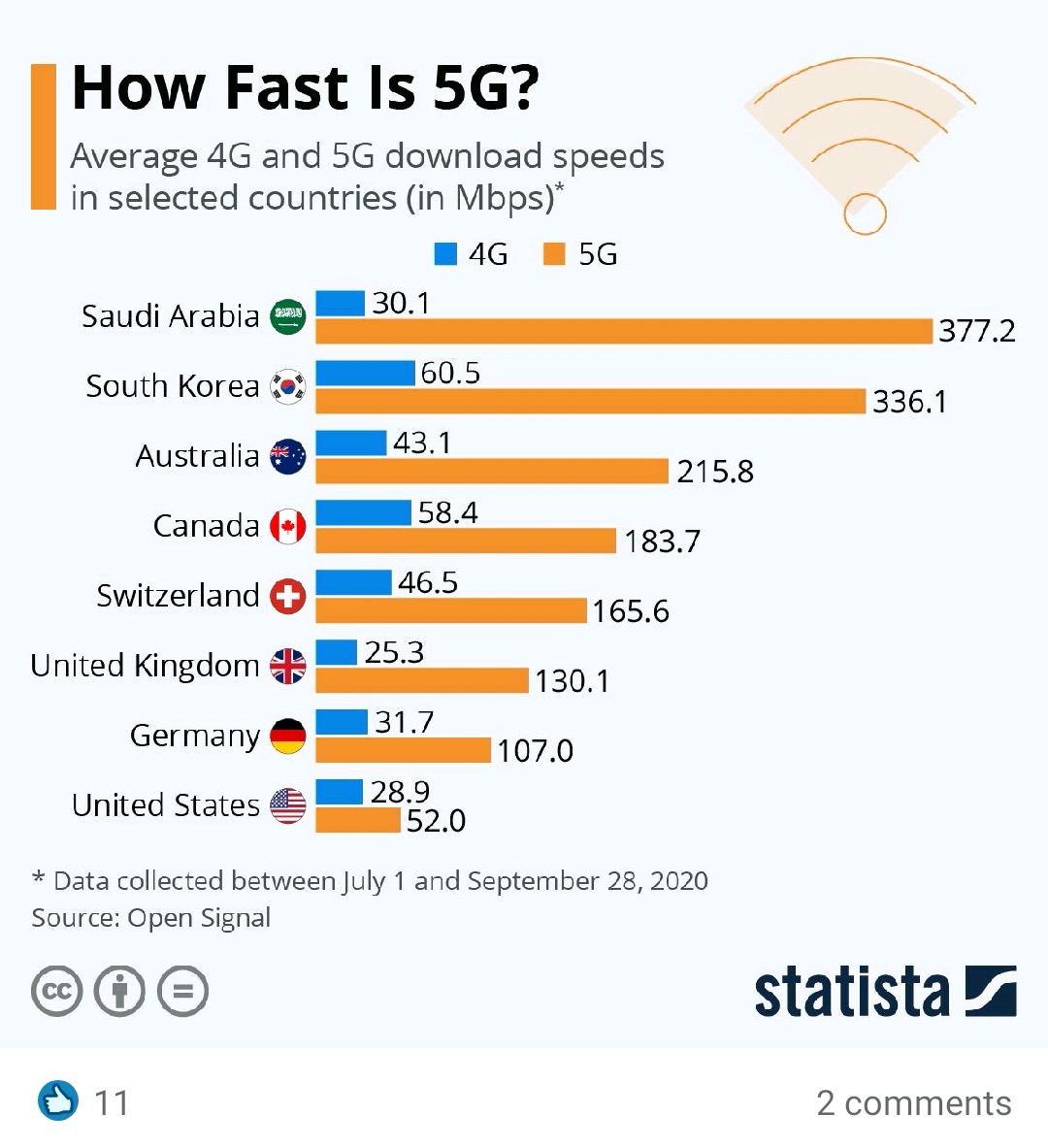
Consider that Saudi Arabia has a 5G internet that is 750% faster than anything the US has, did anyone consider the weird setting in that regard? And the interesting part is that no one is asking the questions that matters, how come that Saudi Arabia of all places has an internet is so much faster? It is a much larger setting and the people are seemingly kept blind, which is fine by me, but when you lose out on HD episodes of NCIS, American Horror Show season 10, Superman & Lois (2021), or A Discovery of Witches season 2 (2021)? When the throttling continues or increases, what happens to streaming? What happens to net neutrality? Did anyone consider that part of the equation when they saw the $15,000,000,000 bill that Netflix had for 2019? There was a reason why sacking Huawei was a really bad idea and others will soon catch up on that idea. I have no issues with an alternative being found, but none have the capabilities at present and they are unlikely to have them until 2022, should you doubt that? Take a look at how abysmal the USA has its 5G at present, look at how fast streaming is in rural USA, you see the US is a lot more than the 25 large cities and plenty of people live outside these places, should they not be able to stream at the max? When we see that discrimination is the prejudicial treatment of different categories of people, as is the streaming of rural versus metropolitans discrimination or not? Consider that for a moment. So let’s not wait until the 11th hour, let’s make sure that the right people look to the right places quickly, the term sooner rather than later cannot apply, we are already 2 years too late for that. It is the technology side, with the finance and creativity, too many forgot about the technology side of it and now it starts calling foul, it cannot deliver more.
Politics tends to be filled full of weird and crazy people, from my point of view those people tend to be members of the Labour party. That view got a new light in the article ‘Labour calls for closer scrutiny of tech firms and their algorithms‘ (at https://www.theguardian.com/business/2016/dec/18/labour-calls-for-regulation-of-algorithms-used-by-tech-firms). Now, there are two sides to any equation, so let me give you the two that I have.
1. I believe that tech companies have been facilitators for too long, many will not accept any responsibility for way too much. On the other side, I do believe that the only working internet is a free one. So when I read the words from Shadow minister Chi Onwurah, I honestly did not regard her to be anything more than a person seeking the limelight. It is equally important to realise that she is using last week’s amazon debacle in Scotland, with questions how that relates to regulating algorithm, it’s a mere application of employment law, is it not?
From the quote: “The outcomes of algorithms are regulated – the companies which use them have to meet employment law and competition law. The question is, how do we make that regulation effective when we can’t see the algorithm?” I feel slightly cautious to call Chi Onwurah a joke, there is a chance that some of this was lost in translation, if not, she has a larger problem to deal with. That problem will be clearly visible when she decided to look into a mirror. So why to look at my point of view?
You see, there are no regulations on algorithms, they are basically formulas with a solution. In addition she states: “greater scrutiny of the mathematical formulas that now control everything from the tailored news served to Facebook members to the speed at which workers are required to move around an Amazon warehouse“. I think that we need to look a little closer at the last statement. You see, it is highly likely that any staff members would need to meet a certain amount of jobs for shipment and delivery. Yet how feasible is that requirement? I can’t tell from the description that was given a week ago, too many variables missing, that does not make the approach regulated. Yet like in any job, workers have ‘responsibilities’, yet more important, they have rights. These are clearly set in most countries of the Commonwealth, so how does that equate to apparent regulated algorithms.
2. The openness of any system will silently advocate the abuse of it. A not so good example was given by the Guardian (at https://www.theguardian.com/technology/2016/dec/04/google-democracy-truth-internet-search-facebook), where we see ‘Google, democracy and the truth about internet search‘. We get Carole Cadwalladr with the quote ‘and this was Google’s answer: Jews are evil. Because there, on my screen, was the proof: an entire page of results, nine out of 10 of which “confirm” this‘, which started with typing 7 letters ‘are Jews’, which is an issue from character one onward. She then tries to dilute the issues by setting the image of the search of ‘are women evil’, probably to ease the tension, but the damage is done, short-sighted (as I see it) she continues. So whilst she wastes two paragraphs on titles of the slightly anti-Semitic nature, which she then sets in an atmosphere as “I feel like I’ve fallen down a wormhole, entered some parallel universe where black is white, and good is bad. Though later, I think that perhaps what I’ve actually done is scraped the topsoil off the surface of 2016” and she ends with “This isn’t a secret Nazi cell lurking in the shadows. It’s hiding in plain sight“. As I personally see it, she is the person who has been standing behind an iron for most of her life and now she sees her first microwave, a cliché if I ever saw one.
You see, the article goes on for some time and there are really good parts in it too, although the spatial map is a bit of nerdy space we could have gone without, the issue I never see properly addressed is that the term ‘are women evil’ and on number one is a WordPress blog, literally with the link ‘sheddingoftheego.com/2015/06/25/are-women-evil/’ and the title ‘Are Women Evil?‘ literally a perfect match for what the person was seeking. Google worked perfectly. What is ignored and what influences many sights, especially on how Google Rankings are influenced. Now Google has a way to counter it, yet this is not immediately done and it is not perfect either. Places like Reddit are actively working on posting whatever they need to raise their ranking and the rankings of their customers. It is interesting that the Guardian, the Huffington Post and Forbes take absolutely ZERO time to explain the games that SEO’s are playing to influence ranking through scripts. because it is in the end what someone was seeking for, yet the fact that this is the direct value for SEO’s and terms like ‘Tips on how to improve your website’s ranking on Google’s search engine results’ were also ignored in these articles giving rise to the one sided and unbalanced view the press is giving, whilst those in the digital media all know that this is done and those who are doing it usually have a massive tag list ready to add to EVERY story they write.
So when we see the quote “Many search results are now reinforcing extreme views, with articles denying the holocaust or disparaging women increasingly appearing at the top of the rankings“, we need to wonder Chi Onwurah should even be allowed to be Shadow Minister of Department for Business, Energy and Industrial Strategy, or Just the elected MP for Sesame Street. By the way, what I did not know is that this department is also responsible in the area of Intellectual Property, so if Labour ever wins, we need to get scared fast.
So getting back to the MP in my sights, it is important for her to realise not just what a google search does and what it shows, but the elements that influence it and what happens under the real guise and the influenced guise of what people are looking for. By the way, her article acted for possible millions of additional clicks, because she raised the issue, whilst not raising the alert of how the numbers get influenced. So, as we go down the article, we do need to stop at a part that matters a lot. This is seen in the quote “Social media platforms are being blamed for allowing the spread of misinformation and online abuse, conditions which some argue are fuelling the resurgence of extreme politics in America and western Europe“, which is a fair point, yet as bullies and trolls can hide behind the freedom of speech without accountability, there is little chance of this changing, in addition, this isn’t a transgression from 68 million people in the UK, it is the search result and interaction of billions of internet users on the planet, so as there is no localised situation, misinformation and online abuse remains. In addition, as Chi Onwurah should clearly realise, when we see webpages with quotes like ‘Millions of People Are Cancelling Their Netflix Account Because Of This One Site‘, whilst the link looks like a cookie 2 miles long, all set to improve visibility. The media at large, including the UK make use of professional cookie, tags and ranking strategies and all kinds of advertisement counters, so when she is talking about regulations, setting anchors against the exploitative use of cookies might not be the worst idea. In addition to that thought, whilst labour was in office, they did zero to get the tax accountability rolling on corporations, so to see this quote “need to take responsibility for the unintended consequences of the algorithms and machine learning that drive their profits” in the reality of the law (the act of facilitation), she needs to realise that her statement is empty and hollow to say the least. So when we see “we need a tech-savvy government to minimise the downside by opening up algorithms to regulation as well as legislating for greater consumer ownership of data and control of the advertising revenue it generates“, she is not unreal, she is utterly unrealistic for even considering to open up that tar pit, because once we see that regulation come to ground, the economic algorithms are the first one we will have a go at and at that point, when that reality comes knocking, she will soon be the loneliest politician in the history of the UK. In addition, is it not interesting how Bing was not mentioned once in all of this? Why is that Chi Onwurah? Basically this is an act of discrimination, however let’s not nit-pick in an article that is already shoddy in several ways.
The software engineering reality (historically speaking) is that the Google search results and Google ranking was filed in 1998 with a priority in 1997. Lawrence Page realised that the content on the internet would be growing exponentially and as others were concentrating on corporations and corporate views the founders of Google looked at a much bigger picture, so finding anything would sooner rather than later become a massive issue.
In an age when the ‘great’ internet companies were about image and looking cool, Google started to get professional. In the days of Yahoo, Yahoo was the search engine of choice. Alta Vista, later Excite and a few others were garbage from week 1 whilst never catching up in any novel way. Yahoo started in 1994 and they were leaders for a while, and in the 90’s as Yahoo grew its value, they started to lag behind. Now the irony is that Yahoo got started at Stanford and the Google rank patent was designed and invented at Stanford too. By the time someone started to ask the right questions it was already too late and the Google patent for ranking gave them exclusivity which will last a little while longer, but others are now considering the consequence that Google Rank patent will still be in effect when G5 starts, as the issue of ranking is still growing near exponentially as more and more files are added and with G5 it will take on an additional dimension.
now we see the issues that are brought to the foreground in what I regard as a half-baked shadow ministers approach, asking ‘questions’ and implying regulations, all this whilst a below par informed level of knowledge is shown in the articles they set to press. One of the issues is actually shown in one paragraph in the Huffington Post “Finally—and this is the key point—even without human intervention, Google’s algorithm, while doing exactly what it’s supposed to do, routinely boosts one candidate higher in search rankings simply because of normal “organic” search activities“, which is the cornerstone. As we know, organic search (what you type in the google search bar) is used, yet what happened when this is done through scripting? What if a few of the 200 parameters gets influenced from outside though scripted actions, again and again? That part was never clearly mentioned, but it is the bread and butter of nearly every SEO, to get the position and ranking of their clients to the very top, in every possible way and method and the shadow minister does not give any visibility to it, the visibility it requires and deserves.
That is the flaw in all this and this is the need to rephrase a minder, a minder who as I saw it never understood the plot, or she did know and she was misinforming the readers to some extent, yet how much requires misinformation and was that not what she was accusing social media of? So as we await Labours industrial paper, we will have a few more options to have fun of labour especially as they define supervision whilst again not getting any results in proper corporate tax legislation, not even as suggested proper corporate tax legislation.
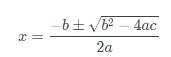
So should we see the taxation algorithm for large firms where x is the taxable amount, b is revenue and a is tax deductible options, you know that it is not just the regulations of algorithms she got wrong.
The Netherlands are facing a new issue, one that they had not bargained for. It is my personal view that the matter at hand seems to be getting misrepresented, so I need to do something about it.
First let us take a look at the reported facts.
On Saturday 21st September the Dutch NOS reported on TV and on their website on how the Dutch are opening their doors to the NSA (at http://nos.nl/artikel/553680-nederland-opent-deur-voor-nsa.html) The issue is that on business grounds the Amsterdam Internet Exchange is considering opening an office in the US, which would under the FISA all their servers open to investigation by the NSA. In that scenario all of the Dutch internet traffic can at that point be monitored by the NSA.
The first question that comes to mind is what the exact benefit is to open an American office. I wonder why that step is so essential. That reason might be very valid, I just do not know.
The danger is not ‘privacy‘ as such. So many people keep on blabbing on how their privacy is so much in danger. I think that remains to be grossly exaggerated. The additional issue raised by the NOS on their Saturday broadcast (which was not on their website) is a different matter. In there the mention was made by Nico van Eijk from the University of Amsterdam, where British executives from an online gambling site, something that is perfectly legal in England, is not legal in the US and when these executives were in the US on business for other ventures, they got themselves arrested. This info can be found at http://www.cato.org/blog/uk-gambling-ceo-arrested-us-airport. The important quote here is “the U.S. has exploited those treaties to effectively kidnap British citizens who broke no British laws, and extradite them to the U.S. for trial on charges of violating U.S. law“. There is of course another legal side to this. Did David Carruthers actually enable these transgressions of law? Connected to this is the Mark Emery case, which involved a Canadian ‘evangelist’ for medical Marijuana. Did either enable US business?
A quote from the UK’s Daily Mail gave us “Investment bankers Goldman Sachs says that the clampdown by the American authorities could mean ‘that the US could cease to be a viable market for online gaming companies.’ That would be tantamount to destroying the earnings of the main firms since 70% of them originate from the United States.”
The two sides here are that in the first degree these companies do rely on their American market. Knowing that the events were illegal, going to the place looking out for you was not really that bright was it? The second was that the statement came from Goldman Sachs. Bringers of the popular gambling option ‘soon, because of our bad judgement, you no longer own a house‘. Seems a little warped doesn’t it?
We could of course come to the notion that the NSA executive is riddled with spineless paperbacks, not a hardcover amongst them! But the reality is not that clear. In actuality, the game they could end up playing is a lot less appealing for those outside of the US.
For that part we need to take a look at the NSA website (certain parts of it) and to start we need to look at a document that came from the Defense Technical Information Center in Fort Belvoir Virginia. This document called “2009 National Intelligence, A Consumer’s Guide“, where at page 52 it states “The Act specifies that OIA shall be responsible for the receipt, analysis, collation, and dissemination of foreign intelligence and foreign counter-intelligence information related to the operation and responsibilities of the Department of the Treasury.”
Now add the information on the mission statement from the treasury as displayed by the white house. “Support the Department of the Treasury’s mission to promote economic prosperity and the financial security of the United States” this is only part of that mission statement, but by itself it is just as valid. The two now give them additional possibilities through the NSA.
That part is seen on the actual website of the NSA and specifically a department called the ‘Information Assurance Business Affairs Office‘ (at http://www.nsa.gov/ia/business_research/ia_bao/index.shtml), here we see the following parts:
1. The IA Business Affairs Office (BAO) is the focal point for IA partnerships with industry. It also provides guidance to vendors and the NSA workforce in establishing IA business relationships and cultivates partnerships with commercial industry through demonstrations and technical exchanges.
2. The benefits of working with the BAO are (two of them):
Increased product marketability
Assistance in the development of next generation solutions
These are only part of the mission. They do a lot more. So in the upcoming age where the world will revolve on big data and parsing information, US businesses might get the option to get access to Exabyte sized data, marketable, distributable and sell-able. The intelligence side of the US was never the problem. The corporate side, for which I have tried on several occasions to warn others about (like ‘the Google’ and ‘the Facebook’) will get access to information and innovation on a global scale.
When we consider the utter inability by the US government to get their own spending under control (not just them mind you). As they are now closer and closer on the edge of bankruptcy (17 trillion in national debt will do that to anyone), their own treasury will only need to receive just one mandate ‘to grow and assure the continuation of the United States and its economy‘, which is already part of the treasuries mission statement. In the age where the current president is so polarised against his opposition, where he is adamant that spending is the only option, he will not hesitate to speak these words (can’t really blame him, can I?). It is decently likely that this would give specifically assigned parts of corporate America the option to market Petabytes of data. Outside of the US, the industrial age would then collapse in a way you cannot even imagine. They could globally sell lists on scales no one can compete with. Consider the future to have one provider in data; the ripple effect in the industry would be devastating. However bad you think you have it is nothing compared to what happens if the thought I am having is a reality. Consider the data files people created. The issue I was confronted with yesterday is that someone saw a nice design on a 3d printer and he wanted to use it, but it was not his design. The help file contained the info I expected it to have. All files from that program were to be considered shareware/freeware and could be used and distributed freely. The software maker had done this to avoid liabilities. It made perfect sense. He made a program he wanted people to use, he did not charge anyone for it and to avoid people coming after him for being nice, he made it all freeware. But whoever designs in that program, those data files are freeware too. So anyone can use it. How many programs do you think are out there built on that principle? Now consider those artistic idea’s, traded freely and there is nothing you can do about it.
That was part of the fear I had and as almost EVERYONE gave away their rights on social media, who profits? It seems to me, not the creator!
But then those in social media opted for that, however those on corporate networks and business internet connections did not opt for such futures. The question is, how protected are they from misuse of their data?
So how long until it is no longer about finding terrorists?
The Dutch giant KPN is in the market to stay alive. As the message is now that they are selling E-plus to Telefonica. Consider that the sale of this company is sold for 8 billion, which might seem good. It was however bought a decade ago for 20 billion. So that means a loss of 1.2 billion a year.
So this seems not that good an investment, when you look at it. Is this turning into a moment of selling the family silver cutlery, or is it about more? KPN is not the only one in this regard. Nuon (a Dutch energy provider) is also surfing the red waves of tremendous debt. So much so that its mother company Vattenfal is now putting the Dutch energy giant up for sale. Experts have stated that some of these problems are due to the company holding on to old methods for too long. Considering that they require gas, and the price of gas is up, means that their energy is more expansive then most others.
Back to the Telecoms! In Australia, Vodafone has a multitude of problems. Due to less reliable connection issues they had, over 550 thousand customers left Vodafone Australia for other providers. That is a shift of customers that started only 6 months ago. That means that Vodafone is facing a loss of revenue approaching 20 million a month. So we are talking about a decent amount of revenue. It amounts to a loss of almost 8% of their customer base. That is not even close to the end for Vodafone Australia. They currently have a class action running against them, so that is likely to be a none too small bill, and linked to the loss of customers (at http://www.zdnet.com/au/vodafone-australia-reports-customer-losses-of-551k-7000018290/) we also see that there are currently some legal threats coming from Telstra. That can be read at http://www.zdnet.com/au/telstra-ramps-up-4g-rollout-as-3g-scales-down-7000018225/.
The quote that matters is “Riley also took aim at recent claims from Vodafone that it has better spectrum holdings than Telstra in the capital cities, allowing the company to offer faster 4G services.”
Yes, I got to hear all about it in Uni when I was doing my mobile technologies subject (party of my IT degree), so if this is about ‘marketing’ claims, then Telstra might revoice the words stated in the claim. They could read the following: “Riley also took aim at recent claims from Vodafone that it has better spectrum holdings than Telstra in the capital cities, allowing the company to offer faster 4G services” in the air of “Riley is also aiming at the mention that Vodafone is more colourful then Telstra when offering a mobile service labelled as 4G in the capital cities“. Have you seen those BORING 4G posters all over Sydney? Yup, making legal threats against opinions, that makes perfect sense to me…..NOT!
OK, it is 2013 now and there are true 4G providers now, but what is important?
4G is the fourth generation of mobile phone mobile communication technology standards. (Quick Wiki grab). When we consider the 4th generations, we see WiMAX and we see LTE (Long Term Evolution). The ITU (International Telecommunication Union) stated the requirements on what makes a 4G standard. So when the International Mobile Telecommunications Advanced (IMT-Advanced) specification was set for the 4th generation in 2008, there was an actual next generation target to achieve. You wonder why it took so long? Well, the ITU looks forward on what the next step would be. So they set peak speed requirements for 4G service at 100 megabits per second (Mbit/s) for high mobility communication (such as from trains and cars) and 1 gigabit per second (Gbit/s) for low mobility communication (such as pedestrians and stationary users). This would indeed be a massive step forward in a time when those speeds were not even close to an option. It makes perfect sense. You have seen this before. When we went from VHS to DVD, similar steps forward were made. This step was even larger as people moved from DVD to Blu-Ray.
It is technical evolution baby!
Yet, Telco’s are all about marketing, and Telstra was really clever. From the information that WAS then, they basically offered 3G+ and named it 4G, but that does not make it true 4G. That is how I personally see it! When I think of a power Telco offering 4G, I think of NTT DoCoMo and TATA (India). DoCoMo has close to 60 million customers in Japan, which is well over 45% of the mobile user population. How many Telco’s can actually make the claim that 1 in 2 connects to them in the Mobile community? In India there is the Tata Teleservices group with over 75 million customers, and NTT DoCoMo owns 25% of this.
So when we think Telco, Telstra and Vodafone Australia do not really measure up. Yet the interesting link here is that NTT DoCoMo had Billions invested all over the world, including in KPN in the Netherlands. Is it not interesting to see how these Telco’s seem to cross pollinate? This raises an issue that many people forget. If we consider the Vodafone class action, and if we consider the reasons of bad connections, then what is going on? Our little Island has 20 million people, which is less than a third of the active Japanese mobile phone users. So why are our connections failing (I am only considering the large cities)? It is clearly not about technology, but about infrastructure and implementation (in my humble view). Yes, we should not forget costing here either, as it all costs money, but consider the income in India and Japan, consider the amount of users. NTT ended up with a net income (after expenses and licenses) of roughly 5 billion dollar last year, which is almost 12% of the total revenue. So we see three things.
1. A ROI of 12% is not that bad.
2. Several nations are competing against giants with means we cannot fathom.
3. All of them seem to be writing off ‘losses’ on massive levels.
Is this about losses, about write offs or about something that is not here?
I reckon it is mostly about the not being there bit. When we look at incomes then we see that the Vodafone Europe CEO (Vittorio Colao) made 2.2 million Euro, whilst David Thodey, CEO of Telstra makes a mere 7 million dollars. So, yes they make decent coin, yet nothing more a mere mid-level banker is likely to get as an annual bonus, so the money is not draining away in that direction either.
No, I personally see the issues as a side effect of devaluation of technology. This is a side that has been ignored by most members of the public from 1997 onwards. You see, technology providers saw the benefit of the armistice race and went the same way. Every year we see a PC, laptop or tablet that is better, faster and newer, but how much faster? The impact with computers is not that big as it hits the individual. They deal with slightly larger programs, and that is pretty much it. Your text file is not that much larger. If you consider a 3000 word document, then that file remained relatively the same over the last 10 years. For electronic devices like TV’s it is also the same. We get the same signal and beyond that it only looks nicer, all this did not impact the provider.
With telecom it’s a different cattle of fish (pun intended). When we upgrade our phones we also attach to that an almost exponential growth of data needs, as such as Apple sold around 25 million mobile phones per quarter, we see that the need for an almost exponential growth of infrastructure is needed (a lesson Vodafone is learning the hard way). Even as the large Telco’s are installing the need for hardware on a continuing base, and as we see the replacement of equipment, we see that the life time of current facilitating hardware is likely less than 40% of its actual life cycle. It is either that of build more places with facilitating equipment, with a connected drain of ‘revenue left’ as well. The last level is one that is not that apparent at present, but will hit Telco company values on a massive scale soon enough. This side can be read at http://www.globallegalpost.com/blogs/global-view/registered-patents-devalued-by-outdated-ip-laws-6786253. Considering the issues at play, then the assets of Telco companies are about (read 2-4 years) to hit a certain basement value. I reckon that there will be consequences down the road. In my view it will be that the truly big boys will continue, the smaller packs will no longer be able to compete in a field where they will get charged for services needed and then some.
What is the solution? Not sure, it is in the end a business answer. Yet, voicing a 1.2 billion loss a year cannot be that good for the ego, and as the amount of players increase, these levels of ‘bad’ news will continue. It will not hit your taxes, but consider that services falter, where will you run to when your mobile phone leaves you with the message ‘searching…’ from your provider?
Both Sky News and the Guardian come this Sunday with stories on how Prime Minister David Cameron is calling on web companies to block certain sexual child abuse searches.
That sounds nice in theory and I am all for hunting down these groups. Yet, that request is at least 10 years late and in all honesty, I reckon it is a massive waste of time and resources. How long until these perverts come up with ‘other’ search terms? We would even be allowing for some to get away scot free as they searched for “yummier candy” or whatever other code they would be using. The Judge would have to let these people go as they were truly looking for a place to dunk their bagels in jelly?
As stated, I am all for hunting these people down. Yet perhaps other means should be (should have been is a lot better) employed. Google had been so innovative in avoiding corporate taxation, are they not aiding the police (not just in the UK) hunting down these people? They have the hardware, the software, the expertise and more options on their shelves. In addition the PM should actually stop that gap which allows Google to only pay 0.0025% in taxation (but that is a story for another time).
No matter how quick we stop this gap of non-taxation. Google has in my view and strong belief a moral duty to train the police and other units in search and track knowledge (perhaps they are). They have no issues in teaching/aiding bosses to track their employees. Yet, hunting down criminals is not in their scope? (At http://business.time.com/2012/06/27/google-maps-now-helping-your-boss-track-your-every-move/). It was stated in the article that “the cost to workplace privacy would be serious“. Is that true? If you get paid by the hour, should you not be working? In the office, one is supposed to sit at their desk. There are always reasons why we need to go somewhere, yet we should be at our desks for a certain time. So it is easy and perfectly OK to track employees and we cannot track criminals? I get the issue that there might be some level of privacy in play for an employee (for example, his lunch break is his and his alone), but finding those hurting children are allowed protection so that they can hurt children? Such methods could aid the authorities in actually getting some protection to the children that needed it for a long time.
If we relate the options to track these child abusers to the boss tracking actions, we definitely have the technology to find these people, so what Is stopping us?
In addition, the legal side is also in play. If we consider the “Protection of Children Act 1978”
If we consider: “Section 1 (c) to have in his possession such indecent photographs [or pseudo-photographs], with a view to their being distributed or transferred digitally or shown by himself or others; or”
By adding three words we now let the issue no longer fall into the issue where the responsibility was, we now give pressure on the ISP to report this immediately. If not, they become part of the chain. Now, if we look at the defamation act, then we know there are issues, especially when we consider operators of content.
In Australia the Defamation Act 2005 (NSW) states:
32 Defence of innocent dissemination
(1) It is a defence to the publication of defamatory matter if the defendant proves that:
(a) the defendant published the matter merely in the capacity, or as an employee or agent, of a subordinate distributor, or a facilitator [or ISP] and
(b) the defendant neither knew, nor ought reasonably to have known, that the matter was defamatory, and
(c) the defendant’s lack of knowledge was not due to any negligence on the part of the defendant.
Here I added 5 words (those in bold), which could give additional levels of options to the claimants. It is nice to give certain services out for free, yet in that case, the facilitators will need to adjust their ‘terms of service’ to protect themselves and give aid in finding those using their services to further certain criminal goals. The reason to mention this is because when we look at the UK “Defamation Act 2013“, as narrated by Forbes we see the following (please read Forbes article as linked below).
It seems that the known issues of the ISP had been avoided here as well (an issue that had been in play for at least 8 years). There is a valid defence that an ISP cannot monitor the massive flow of content, which is indeed a valid defence in my book, yet the cooperation required by the police to do their jobs is too often too slow or at times likely even completely lacking.
When we add ISP in the Australian case, then their lack of negligence would overturn their defence in court. So when we consider 32.1.d, then they will need to get active, creative and corrective really fast.
This translates to the UK defamation act by changing “5 Operators and/or facilitators of websites and/or virtual locations“; this would change the game immediately. Of course, prosecuting an ISP is not productive in the end, yet this part will give them the ‘negligence‘ label and as such, serious headway might be made in hunting down these child abusing criminals as the ISP is now seriously motivated to aid the police and find these criminals. The change would go further than those seeking materials. It would also give way to look at providers and mapping out these people far beyond the UK national borders. So as the map, with names, locations and acts will visibly grow, we might actually get the information the police needs.
I personally believe that law changes will get us a lot further then just blocking a search term.