Tag Archives: Apple

Why would we care?

New York is all up in sixes and sevens, even as they aren’t really confused, some are not seeing the steps that are following and at this point giving $65 billion for 21st Century Fox is not seen in the proper light. You see, Comcast has figured something out, it did so a little late (an assumption), but there is no replacement for experience I reckon. Yet, they are still on time to make the changes and it seems that this is the path they will be walking on. So when we see ‘Comcast launches $65bn bid to steal Murdoch’s Fox away from Disney‘, there are actually two parties to consider. The first one is Disney. Do they realise what they are walking away from? Do they realise the value they are letting go? Perhaps they do and they have decided not to walk that path, which is perfectly valid. The second is the path that Comcast is implied to be walking on. Is it the path that they are planning to hike on, or are they merely setting the path for facilitation and selling it in 6-7 years for no less than 300% of what it is now? Both perfectly valid steps and I wonder which trajectory is planned, because the shift is going to be massive.

To get to this, I will have to admit my own weakness here, because we all have filters and ignoring them is not only folly, it tends to be an anchor that never allows us to go forward. You see, in my view the bulk of the media is a collection of prostitutes. They cater in the first to their shareholders, then there stakeholders and lastly their advertisers. After that, if there are no clashes, the audience is given consideration. That has been the cornerstone of the media for at least 15 years. Media revolves around circulation, revenue and visibility, whatever is left is ‘pro’ reader, this is why you see the public ‘appeal’ to be so emotionally smitten, because when it is about emotion, we look away, we ignore or we agree. That is the setting we all face. So when a step like this is taken, it will be about the shareholders, which grows when the proper stakeholders are found, which now leads to advertising and visibility. Yet, how is this a given and why does it matters? The bottom dollar will forever be profit. Now from a business sense that is not something to argue with, this world can only work on the foundation of profit, we get that, yet newspapers and journalism should be about proper informing the people, and when did that stop? Nearly every paper has investigative journalism, the how many part is more interesting. I personally belief that Andrew Jennings might be one of the last great investigative journalists. It is the other side of the coin that we see ignored, it is the one that matters. The BBC (at https://www.bbc.co.uk/programmes/b06tkl9d) gives us: “Reporter Andrew Jennings has been investigating corruption in world football for the past 15 years“, the question we should ask is how long and how many parties have tried to stop this from becoming public, and how long did it take Andrew Jennings to finally win and this is just ONE issue. How many do not see the light of day? We look at the Microsoft licensing corruption scandal and we think it is a small thing. It is not, it was a lot larger. Here I have a memory that I cannot prove, it was in the newspapers in the Netherlands. On one day there was a small piece regarding the Buma/Stemra and the setting of accountancy reports on the overuse of Microsoft licenses in governments and municipality buildings and something on large penalty fees (it would have been astronomical). Two days later another piece was given that the matter had been resolved. The question becomes was it really? I believe that someone at Microsoft figured out that this was the one moment where on a national level a shift to Linux would have been a logical step, something Microsoft feared very very much. Yet the papers were utterly silent on many levels and true investigation never took place and after the second part, some large emotional piece would have followed.

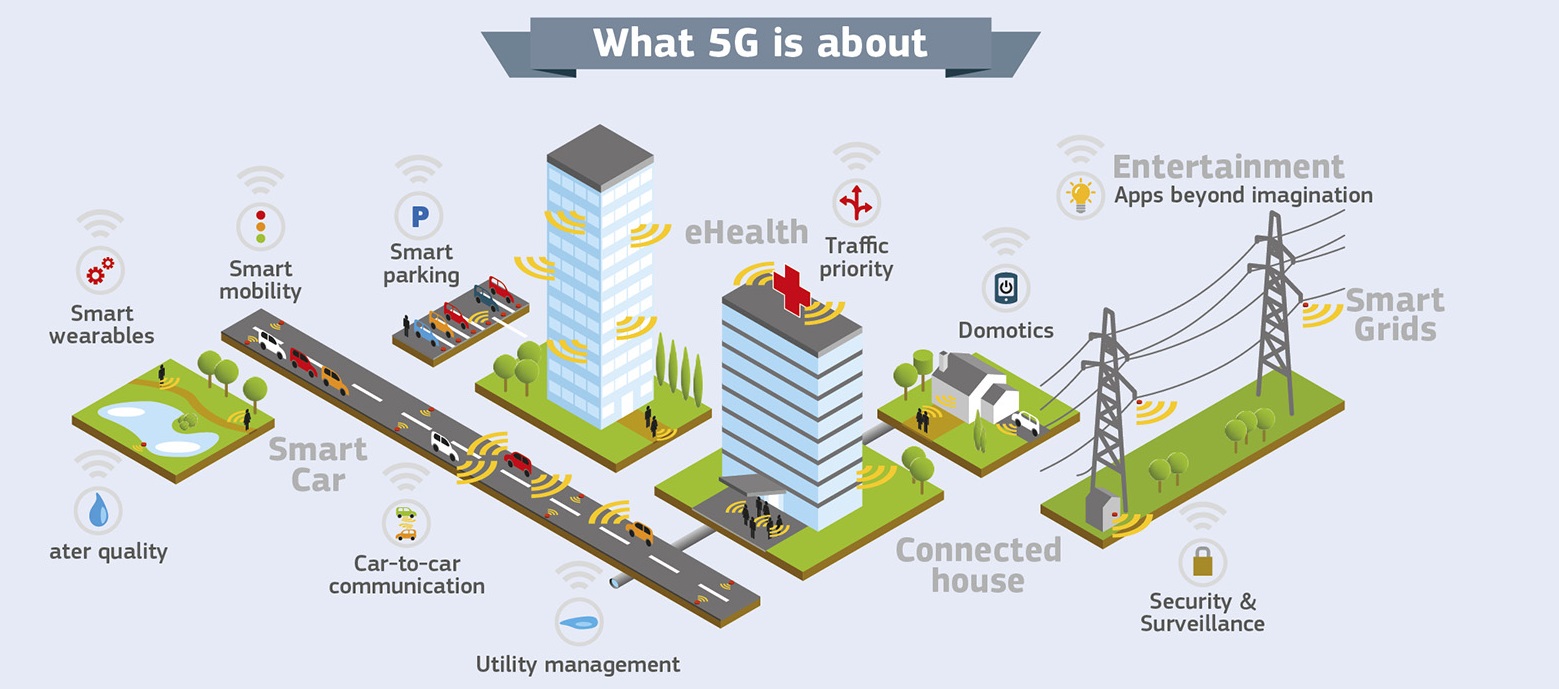
That is the issue that I have seen and we all have seen these events, we merely wiped it from our minds as other issues mattered more (which is valid). So I have no grate faith (pun intended) into the events of ‘exposure‘ from the media. Here it is not about that part, but the parts that are to come. Comcast has figured out a few things and 21st Century Fox is essential to that. To see that picture, we need to look at another one, so it is a little more transparent. It also shows where IBM, Google, Apple and some telecom companies are tinkering now.

To see this we need to look at this first image and see what there is, it is all tag based, all data and all via mobile and wireless communication. Consider these elements; over 90% of car owners will have them: ‘Smart Mobility, Smart Parking and Traffic priority‘. Now consider the people who are not homeless: ‘Smart grids, Utility management, hose management like smart fridges, smart TV and data based entertainment (Netflix)‘ and all those having smart house devices running on what is currently labelled as Domotics, it adds up to Megabytes of data per household per day. There will be a run on that data from large supermarket to Netflix providers. Now consider the mix between Comcast and 21 Century Fox. Breaking news, new products and new solutions to issues you do not even realise in matters of eHealth, road (traffic) management and the EU set 5G Joint-Declarations in 2015, with Japan, China, Korea and Brazil. The entire Neom setup in Saudi Arabia gives way that they will soon want to join all this, or whoever facilitates for the Middle East and Saudi Arabia will. In all this with all this technology, America is not mentioned, is that not a little too strange? Consider that the given 5G vision is to give ‘Full commercial 5G infrastructure deployment after 2020‘ (expected 2020-2023).

With a 740 million people deployed, and all that data, do you really think the US is not wanting a slice of data that is three times the American population? This is no longer about billions, this will be about trillions, data will become the new corporate and governmental currency and all the larger players want to be on board. So is Disney on the moral high path, or are the requirements just too far from their own business scope? It is perhaps a much older setting that we see when it is about consumer versus supplier. We all want to consume milk, yet most of us are not in a setting where we can be the supplier of milk, having a cow on the 14th floor of an apartment tends to be not too realistic in the end. We might think that it is early days, yet systems like that require large funds and years to get properly set towards the right approach for deployment and implementation. In this an American multinational mass media corporation would fit nicely in getting a chunk of that infrastructure resolved. consider a news media tagging all the watchers on data that passes them by and more importantly the data that they shy away from, it is a founding setting in growing a much larger AI, as every AI is founded on the data it has and more important the evolving data as interaction changes and in this 5G will have close to 20 times the options that 4G has now and in all this we will (for the most) merely blindly accept data used, given and ignored. We saw this earlier this year when we learned that “Facebook’s daily active user base in the U.S. and Canada fell for the first time ever in the fourth quarter, dropping to 184 million from 185 million in the previous quarter“, yet the quarter that followed the usage was back to 185 million users a day. So the people ended up being ‘very’ forgiving, it could be stated that they basically did not care. Knowing this setting where the bump on the largest social media data owner was a mere 0.5405%; how is this path anything but a winning path with an optional foundation of trillions in revenue? There is no way that the US, India, Russia and the commonwealth nations are not part of this. Perhaps not in some 5G Joint-Declarations, but they are there and the one thing Facebook clearly taught them was to be first, and that is what they are all fighting for. The question is who will set the stage by being ahead of schedule with the infrastructure in place and as I see it, Comcast is making an initial open move to get into this field right and quick. Did you think that Google was merely opening 6 data centres, each one large enough to service the European population for close to 10 years? And from the Wall Street journal we got: “Google’s parent company Alphabet is eyeing up a partnership with one of the world’s largest oil companies, Aramco, to aid in the erection of several data centres across the Middle Eastern kingdom“, if one should be large enough to service 2300% of the Saudi Arabian population for a decade, the word ‘several‘ should have been a clear indication that this is about something a lot larger. Did no one catch up on that small little detail?

In that case, I have a lovely bridge for sale, going cheap at $25 million with a great view of Balmain, first come, first serve, and all responsibilities will be transferred to you the new predilector at the moment of payment. #ASuckerIsBornEachMinute

Oh, and this is not me making some ‘this evil Google‘ statement, because they are not. Microsoft, IBM, and several others are all in that race; the AI is merely the front of something a lot larger. Especially when you realise that data in evolution (read: in real-time motion) is the foundation of its optional cognitive abilities. The data that is updated in real-time, that is the missing gem and 5G is the first setting where that is the set reality where it all becomes feasible.

So why would we care? We might not, but we should care because we are the foundation of all that IP and it will no longer be us. It gives value to the users and consumes, whilst those who are not are no longer deemed of any value, that is not the future, it is the near future and the founding steps for this becoming an actual reality is less than 60 months away.

In the end we might have merely cared too late, how is that for the obituary of any individual?


Leave a comment

Filed under Finance, IT, Media, Science

Business will be booming

There are all kinds of settings in the tech industry, some we like and some we like a lot less. It is the most visible in the mobile industry, the clear discriminatory setting there is almost unheard of. No matter what the reason is, a person for the most is iOS (Apple) minded, or they tend to go the way of the Android (Google, Huawei et al). There is for the most no in-between there. The reasons are as wide as the drops of water in a lake on a rainy day and for some these reasons make sense, or they do not. Yet we all tend to have them. I have been and remain an Android follower. I have nothing against apple. The initial setting was done by their marketing departments. Where Apple gave us: ‘You can do all these things and it is a phone too‘ and Android gave us: ‘This phone can do all kinds of things, some you will not have believed was even possible‘. I went the way of Android. You see, they are stating the same thing, yet Android focussed on a phone that can do other things. Apple went towards the things they could do, including being a phone. So from my point of view, I needed a phone, so I went the non-iOS way.

I know that in the end the difference is negligible, but it did matter. So it is a little over three years when I got myself (because it was a bargain) the Huawei P7. The difference from the previous phone (Motorola) was so distinct I became a Huawei fan overnight. Now that it is time to put that phone to bed and switch it off for the last time, I find myself clinging onto the idea that I need a new Huawei. Let me be clear, apart from my distinct non liking Samsung (a past issue I had with them), I do think that the other brands are decent too. Yet, when you have the option for a Google Pixel 2 XL, or a Huawei P20 close to $500 cheaper, what will you choose? Let’s also consider that the difference is almost nil, well it is not nil but the real differences do not stand out too much, not worth $500 as I see it. For me, if I get that phone, it will be a 300% improvement of what I have now and I am not dissatisfied with what I have, it merely has been acting up and after 3 years of working 24:7, that makes perfect sense. The little workhorse has earned its retirement. So when I started to look around, and I took a new look at the P20 and P20 pro, which is a $300 difference, I wondered why I would want the P20 pro for the usage I have. I have been able to do everything I needed with 2 GB RAM, so the 4 GB and  6GB RAM issue is not one I need to worry about. Both come with 128 GB storage, which is 800% more than I have now and even as I ran out of storage merely once, it did not worry me to any degree. The camera options are not the same, yet the PRO has an additional 40 MP camera option, which is slightly over the top need for someone who uses an EOS 1 Camera. The only issue is the battery, it is 3400 mAh versus 4000 mAh and I am not sure that this constitutes the value of $300 difference, not on my budget. More important, the P20 holds its own against the $1500 phones out there and when you consider the fact that it is 30% cheaper, what would you choose? This constitutes a difference that is well over a week’s rent for some people, so there is that to consider as well.

Yet, it is not about that part, it is that Huawei has seen the light of opportunity in both Saudi Arabia and Egypt, so when we see (at https://www.albawaba.com/business/pr/huawei-announces-%E2%80%98vip%E2%80%99-service-p20-pro-saudi-arabia-1135384), the fact that branding is getting momentum in the Middle East with their Huawei Consumer Business Group and their “a ‘VIP’ service for its customers in Saudi Arabia through its authorized service centres for any customer buys Huawei P20 Pro with Huawei KSA warranty”. Some call it marketing, which in all fairness it actually is, yet with 95 million people in Egypt and 33 million in the KSA, the market could be booming for Huawei, even as an Apple store is coming in 2019, the Apple SA store is pointing towards “Apple-designed outlets located within selected Apple resellers and other retail shops. Many are staffed with Apple-trained experts who can help you to find the right solution for you“, which is a perfectly valid and acceptable text. Yet, when you can consider an ‘outlet’ versus “Huawei has announced “Huawei Flex” which is a free drop off service in which customer can drop his device for service in more than 300 locations across kingdom for Huawei device under Saudi Arabia warranty to be send for Huawei Authorized service centre for warranty repair and return“, we see that Huawei is on the ball (I am not saying that Apple is not), but the service minded sales pitch is clearly there and as we see: “Pablo Ning, President of Huawei Consumer Business Group Saudi Arabia said: “The Kingdom is a strategic market for us, and this announcement reflects our commitment to doing business in the region. It is our effort to always cater to the specific needs of the markets we operate in. Recognising the needs of our loyal customers in the Kingdom, we are very pleased to announce these services and we are looking forward to announcing many more unique offers for them in the future”“, we see that even as we realise that too is a marketing setting, it also states that Huawei means business. With a chunk of a 125 million customer base, these two alone could drive sales even further in the Middle Eastern nations; in addition, the Huawei centre is rumoured to be coming to Neom, which could drive the brand even further. Even Forbes was recognising the growth Huawei had in 2017, even though we do take notice of the fact that anti-Chinese sentiments in the US barred the phone from the US markets, we need to realise that the planet is a lot bigger than the 325 million in the US. Also consider the fact that Huawei does a lot more than merely smartphones and the opening of the market that is a third of the US population matters, in addition the 740 million Europeans are now more than ever looking for a good deal. So the group of people who have the cash to go all out and get a phone $500 more expensive is shrinking fast. Yet Huawei is not out of the woods there either. It is up against Samsung and Samsung is doing a good job of gaining ground. In there we see that Apple is losing their footing, losing sales share in the UK, France and Spain. So even as some had growth, iOS was merely growing at 0.1%, against Android 2.8%, that is a massive difference, and Huawei is tinkering very effectively on these two markets. Although, I have to admit (speculatively) that the largest growth was due to the release of the Google Pixel family. Still Huawei remains in the fight of growth and its setting in the Middle East is as assertive as it gets. I reckon that if Pablo Ning pulls it off, he might be looking forward to his new apartment overlooking Chaoyang Park in Beijing. It is that extreme because the market share that Huawei has to grow is pretty astounding. You see, not everyone is looking towards the coolest marketed phone that most cannot normally afford, in the Middle East revenue is often set towards pragmatism and that is a setting that Marketing on a global basis tends to be unfocussed on. It is in this setting that mobile phones will gain traction in sales. So when we consider the progress that Huawei is making towards growth by going via the support and customer care path, or as Pablo Ning phrases it “the needs of our loyal customers in the Kingdom“, we see not some message on selling a phone like ‘iPhone X, Say hello to the future‘ with after that ‘Sales, Apple Authorized Resellers‘ or ‘Sales, Apple Authorized Resellers‘ but with ““Huawei Flex” which is a free drop off service in which customer can drop his device for service in more than 300 locations across kingdom for Huawei device under Saudi Arabia warranty to be send for Huawei Authorized service centre for warranty repair and return“, we see that Huawei means business. It is not about the initial sale, it is putting to bed any worry the consumer has afterwards and the Huawei version sells much stronger than the other messages and that is how commercial traction leaps forward making it market share gain. The lower sales threshold only speeds it up. In that we see that “aiming of strengthening its business base, its operations and customer service in the Kingdom“, is not just vital for growth of Huawei, the commitment of 5G in Saudi Arabia as it is at present, will only fuel the need for the Huawei smartphone (and smart phones in general); with its upcoming Huawei Mate 30 (Q3 2019) Huawei could give a further boost, as those buying today would be ready for a new phone just as the Mate 30 will be released and it will drive it a lot faster if it is both 4G and 5G enabled (which is not officially confirmed), so as Apple and others are looking to open a shop at that point, we will see that if (consider that it is an ‘if) Huawei kept its services and exceeded the expectations of the consumer, they will have a much larger advantage and as such Google might profit with their own Android phones on the coattails of Huawei. This is shown in another way too. Statista (at https://www.statista.com/statistics/271774/share-of-android-platforms-on-mobile-devices-with-android-os/) gives a view that takes some mulling. When we consider the Android market share, we see that the largest part is owned by Marshmallow (v6) and Nougat (v7), so that means that those who update now to Oreo (v8) will be most likely to update the moment 5G is out, those who delay more than 6 months are not likely, or better stated less likely to update more than once, so either they miss out on 5G or are in a much smaller segment (not serious smartphone users). So they use it as a phone and that is it, which is fair enough, because a phone is a phone and for that 5G is not essential. Yet when we consider that this group is almost 37%, there is an option for smartphone sales everywhere to evolve those users towards a more smartphone driven use of apps and data, yet what are these consumers made of? There is no data that I had at my disposal, yet finding out is actually a lot more important here. If we know what the consumer needs, we can see if there is a better solution in new hardware, not merely because of the security risk that older phones hold, the fact that smartphone functionality is optionally missed out on is basically a sales opportunity missed and when it affects an optional 37% slice of smartphones it starts to matter as that involves a serious amount of cash. Now we need to accept that it is not merely the phone, for the larger places like the island of Australia mobile data was until last year pretty expensive, so why upgrade when the data used will monthly kill your budget? to go from 15GB a month for $65 in 2016 to 200Gb for $70 in 2018 is actually a massive leap and not all places have made such changes, so not everyone is on board yet, but with 5G that will change by a lot, not only will they drive down the 4G data prices, but the mobile setting in places like Egypt and Saudi Arabia (outside of Cairo and Riyadh) will drive the need of people much larger. The fact that Egyptian TV outside of the large cities is not fabulous, for these people to suddenly get a clear reception of matches of Al Ahly SC or Zamalek SC could drive sales, so the larger the part of that 37% slice is actually found in the Middle East, the easier the upgrade sales will get; when we consider the joke (that is how I personally see the Vodafone Egypt site), as well as the clarity of http://www.egyptsim.com/, we see that there is still space to improve it all and Huawei is in an interesting place to make that happen. In addition, the Egyptsim site shows a setting that was almost the 2016 setting in Australia, so they are not that far behind, so when we see the evolution where the prices reflect 500% if what they offer now (which is what we can get in places like Australia nowadays), we see a more competitive setting where upgrading any smartphone will become the essential need of anyone wanting to use such amounts of bandwidth. Even a mere 50 GB at €15 could change the game, it will drive app use, phone use and more important, the need for phone upgrades and competitive phones will become more and more desired. This is shown in direct opposition to the anti-Huawei feelings that we see from America (at https://www.politico.eu/article/huawei-china-ghost-in-europe-telecom-machine/), a story from last January. So in all this when we see “The Chinese tech giant is banned from bidding for government contracts in the U.S. over concerns that its telecommunication equipment could be used for spying by Beijing“, that whilst it refers right next to it a story regarding ‘Mark Zuckerberg hearing: As it happened‘, in all this Huawei is a concern? As the US has not even got clear legislation on data and as we see the Facebook events, I can state that some people have their mindset in the wrong place. In addition, if we can believe the Daily Mail who gave us “Google caught using $580 million worth of Australians’ phone data to spy on them by monitoring their movements“, so in that, is Google getting government contracts? And if the second is true, why is there no outcry in that setting? Is it about the company, or where the revenue is going to? It is a multiple facetted setting of greed, technology and whose ego is the largest to present. How does that help the consumer who wants a good affordable phone, if the Google Pixel and Huawei phones offer the same thing, yet Huawei can do it 30% cheaper, why would we want the more expensive one, our privacy? Facebook gave that away and there is no actual act in place to thwart that, in addition, the US senate hearing gave more and more reluctance as we seem to get the impression that these senators do not even comprehend technology in its basic foundation. We merely have to look back at the moment with Senator Orrin Hatch (R-UT), who asks on: ‘how do you sustain a business model where users don’t pay for your services‘, the answer by Mark Zuckerberg was priceless: ‘Senator, we run ads!“. When we are confronted with such a level of what I regard to be ignorance towards business reality, that is the not party we should rely on when they state to us: “its telecommunication equipment could be used for spying by Beijing“, yet in that foundation, not one piece of evidence has been presented that this is actually the case. The “potential for secret ‘backdoors’” is astounding. Not one piece of evidence, not one setting that gives any level of reliability on ‘potential‘. I wonder how many of these gentlemen have been receiving calls from Cisco, Apple, IBM and other parties on their fear of China getting a slice of American business, or perhaps it is even more simple. With American firms the government of the USA can make tax deals, because the inability of paying invoices can always get bartered on a national level, not international. And there is where Huawei has its opportunity. As it grows its segments in both Europe and the Middle East it can potentially grow the services they offer as the reach of those services and in that light and the next level of growth towards 5G, we see that Huawei has a growing distinction against all competitors. It can offer a new price range, one that consumers have not had for the longest of times and it can place a setting where customer loyalty can grow towards Huawei as it offers something affordable, now when the providers think it is time, but when the consumers need them, which is always a war that works in favour of the consumer. It is a war of settings between optionally, actually, and eventually. The first one offering it has the benefit. Yet is Huawei ready to make that commitment? I do not know, yet should Huawei grace the settings and be announced as a participant of the new high tech city Neom, at that point you can be decently certain that Huawei will become a much larger player in the Middle East and from that, growth in Europe will be a near certainty. Business for Huawei will be booming and it all started by making high end mobiles an affordable item for those not in high paying jobs, or forced to get themselves chained to a two year contract with a telecom provider.


Leave a comment

Filed under Finance, IT, Media, Politics, Science

Waking up 5 years late

I have had something like this, I swear it’s true. It was after I came back from the Middle East, I was more of a ‘party person’ in those days and I would party all weekend non-stop. It would start on Friday evening and I would get home Sunday afternoon. So one weekend, I had gone through the nightclub, day club, bars and Shoarma pit stops after which I went home. I went to bed and I get woken up by the telephone. It is my boss, asking me whether I would be coming to work that day. I noticed it was 09:30, I had overslept. I apologised and rushed to the office. I told him I was sorry that I had overslept and I did not expect too much nose as it was the first time that I had overslept. So the follow up question became “and where were you yesterday?” My puzzled look from my eyes told him something was wrong. It was Tuesday! I had actually slept from Sunday afternoon until Tuesday morning. It would be the weirdest week in a lifetime. I had lost an entire day and I had no idea how I lost a day. I still think back to that moment every now and then, the sensation of the perception of a week being different, I never got over it, now 31 years ago, and it still gets to me every now and then.

A similar sensation is optionally hitting Christine Lagarde I reckon, although if she is still hitting the party scene, my initial response will be “You go girl!

You see with “Market power wielded by US tech giants concerns IMF chief” (at https://www.theguardian.com/business/2018/apr/19/market-power-wielded-by-us-tech-giants-concerns-imf-chief-christine-lagarde) we see the issues on a very different level. So even as we all accept “Christine Lagarde, has expressed concern about the market power wielded by the US technology giants and called for more competition to protect economies and individuals”, we see not the message, but the exclusion. So as we consider “Pressure has been building in the US for antitrust laws to be used to break up some of the biggest companies, with Google, Facebook and Amazon all targeted by critics“, I see a very different landscape. You see as we see Microsoft, IBM and Apple missing in that group, it is my personal consideration that this is about something else. You see Microsoft, IBM and Apple have one thing in common. They are Patent Powerhouses and no one messes with those. This is about power consolidation and the fact that Christine Lagarde is speaking out in such a way is an absolute hypocrite setting for the IMF to have.

You see, to get that you need to be aware of two elements. The first is the American economy. Now in my personal (highly opposed) vision, the US has been bankrupt; it has been for some time and just like the entire Moody debacle in 2008. People might have seen in in ‘the Big Short‘, a movie that showed part of it and whilst the Guardian reported ““Moody’s failed to adhere to its own credit-rating standards and fell short on its pledge of transparency in the run-up to the ‘great recession’,” principal deputy associate attorney general Bill Baer said in the statement“, it is merely one version of betrayal to the people of the US by giving protection to special people in excess of billions and they merely had to pay a $864m penalty. I am certain that those billionaires have split that penalty amongst them. So, as I stated, the US should be seen as bankrupt. It is not the only part in this. The Sydney Morning Herald (at https://www.smh.com.au/business/the-economy/how-trump-s-hair-raising-level-of-debt-could-bring-us-all-crashing-down-20180420-p4zank.html) gives us “Twin reports by the International Monetary Fund sketch a chain reaction of dangerous consequences for world finance. The policy – if you can call it that – puts the US on an untenable debt trajectory. It smacks of Latin American caudillo populism, a Peronist contagion that threatens to destroy the moral foundations of the Great Republic. The IMF’s Fiscal Monitor estimates that the US budget deficit will spike to 5.3 per cent of GDP this year and 5.9 per cent in 2019. This is happening at a stage of the economic cycle when swelling tax revenues should be reducing net borrowing to zero“. I am actually decently certain that this will happen. Now we need to look back to my earlier statement.

You see, if the US borrowing power is nullified, the US is left without any options, unless (you saw that coming didn’t you). The underwriting power of debt becomes patent power. Patents have been set to IP support. I attended a few of those events (being a Master of Intellectual Property Law) and even as my heart is in Trademarks, I do have a fine appreciation of Patents. In this the econometrics of the world are seeing the national values and the value of any GDP supported by the economic value of patents.

In this, in 2016 we got “Innovation and creative endeavors are indispensable elements that drive economic growth and sustain the competitive edge of the U.S. economy. The last century recorded unprecedented improvements in the health, economic well-being, and overall quality of life for the entire U.S. population. As the world leader in innovation, U.S. companies have relied on intellectual property (IP) as one of the leading tools with which such advances were promoted and realized. Patents, trademarks, and copyrights are the principal means for establishing ownership rights to the creations, inventions, and brands that can be used to generate tangible economic benefits to their owner“, as such the cookie has crumbled into where the value is set (see attached), one of the key findings is “IP-intensive industries continue to be a major, integral and growing part of the U.S. economy“, as such we see the tech giants that I mentioned as missing and not being mentioned by Christine Lagarde. It is merely one setting and there are optionally a lot more, but in light of certain elements I believe that patents are a driving force and those three have a bundle, Apple has so many that it can use those patents too buy several European nations. IBM with their (what I personally believe to be) an overvalued Watson, we have seen the entire mess moving forward, presenting itself and pushing ‘boundaries’ as we are set into a stage of ‘look what’s coming’! It is all about research, MIT and Think 2018. It is almost like Think 2018 is about the point of concept, the moment of awareness and the professional use of AI. In that IBM, in its own blog accidently gave away the goods as I see it with: “As we get closer to Think, we’re looking forward to unveiling more sessions, speakers and demos“, I think they are close, they are getting to certain levels, but they are not there yet. In my personal view they need to keep the momentum going, even if they need to throw in three more high exposed events, free plane tickets and all kinds of swag to flim flam the audience. I think that they are prepping for the events that will not be complete in an alpha stage until 2020. Yet that momentum is growing, and it needs to remain growing. Two quotes give us that essential ‘need’.

  1. The US Army signed a 33-month, $135 million contract with IBM for cloud services including Watson IoT, predictive analytics and AI for better visibility into equipment readiness.
  2. In 2017, IBM inventors received more than 1,900 patents for new cloud technologies to help solve critical business challenges.

The second is the money shot. An early estimate is outside of the realm of most, you see the IP Watchdog gave us: “IBM Inventors received a record 9043 US patents in 2017, patenting in such areas as AI, Cloud, Blockchain, Cybersecurity and Quantum Computing technology“, the low estimate is a value of $11.8 trillion dollars. That is what IBM is sitting on. That is the power of just ONE tech giant, and how come that Christine Lagarde missed out on mentioning IBM? I’ll let you decide, or perhaps it was Larry Elliott from the Guardian who missed out? I doubt it, because Larry Elliott is many things, stupid ain’t one. I might not agree with him, or at times with his point of view, but he is the clever one and his views are valid ones.

So in all this we see that there is a push, but is it the one the IMF is giving or is there another play? The fact that banks have a much larger influence in what happens is not mentioned, yet that is not the play and I accept that, it is not what is at stake. There is a push on many levels and even as we agree that some tech giants have a larger piece of the cake (Facebook, Google and Amazon), a lot could have been prevented by proper corporate taxation, but that gets to most of the EU and the American Donald Duck, or was that Trump are all about not walking that road? The fact that Christine has failed (one amongst many) to introduce proper tax accountability on tech giants is a much larger issue and it is not all on her plate in all honesty, so there are a few issues with all this and the supporting views on all this is not given with “Lagarde expressed concern at the growing threat of a trade war between the US and China, saying that protectionism posed a threat to the upswing in the global economy and to an international system that had served countries well“, it is seen in several fields, one field, was given by The Hill, in an opinion piece. The information is accurate it is merely important to see that it has the views of the writer (just like any blog).

So with “Last December, the United States and 76 other WTO members agreed at the Buenos Aires WTO Ministerial to start exploring WTO negotiations on trade-related aspects of e-commerce. Those WTO members are now beginning their work by identifying the objectives of such an agreement. The U.S. paper is an important contribution because it comprehensively addresses the digital trade barriers faced by many companies“, which now underlines “A recent United States paper submitted to the World Trade Organization (WTO) is a notable step toward establishing rules to remove digital trade barriers. The paper is significant for identifying the objectives of an international agreement on digital trade“. This now directly gives rise to “the American Bar Association Section of Intellectual Property Law also requested that the new NAFTA require increased protections in trade secrets, trademarks, copyrights, and patents“, which we get from ‘Ambassador Lighthizer Urged to Include Intellectual Property Protections in New NAFTA‘ (at https://www.jdsupra.com/legalnews/ambassador-lighthizer-urged-to-include-52674/) less than 10 hours ago. So when we link that to the quote “The proposals included: that Canada and Mexico establish criminal penalties for trade secrets violations similar to those in the U.S. Economic Espionage Act, an agreement that Mexico eliminate its requirement that trademarks be visible, a prohibition on the lowering of minimum standards of patent protection“. So when we now look back towards the statement of Christine Lagarde and her exclusion of IBM, Microsoft and Apple, how is she not directly being a protectionist of some tech giants?

I think that the IMF is also feeling the waters what happens when the US economy takes a dip, because at the current debt levels that impact is a hell of a lot more intense and the games like Moody’s have been played and cannot be played again. Getting caught on that level means that the US would have to be removed from several world economic executive decisions, not a place anyone in Wall Street is willing to accept, so that that point Pandora’s Box gets opened and no one will be able to close it at that point. So after waking up 5 years late we see that the plays have been again and again about keeping the status quo and as such the digital rights is the one card left to play, which gives the three tech giants an amount of power they have never had before, so as everyone’s favourite slapping donkey (Facebook) is mentioned next to a few others, it is the issue of those not mentioned that will be having the cake and quality venison that we all desire. In this we are in a dangerous place, even more the small developers who come up with the interesting IP’s they envisioned. As their value becomes overstated from day one, they will be pushed to sell their IP way too early, more important, that point comes before their value comes to fruition and as such those tech giants (Apple, IBM, and Microsoft) will get an even more overbearing value. Let’s be clear they are not alone, the larger players like Samsung, Canon, Qualcomm, LG Electronics, Sony and Fujitsu are also on that list. The list of top players has around 300 members, including 6 universities (all American). So that part of the entire economy is massively in American hands and we see no clear second place, not for a long time. Even as the singled out tech giants are on that list, it is the value that they have that sets them a little more apart. Perhaps when you consider having a go at three of them, whilst one is already under heavy emotional scrutiny is perhaps a small price to pay.

How nice for them to wake up, I merely lost one day once, they have been playing the sleeping game for years and we will get that invoice at the expense of the futures we were not allowed to have, if you wonder how weird that statement is, then take a look at the current retirees, the devaluation they face, the amount they are still about to lose and wonder what you will be left with when you consider that the social jar will be empty long before you retire. The one part we hoped to have at the very least is the one we will never have because governments decided that budgeting was just too hard a task, so they preferred to squander it all away. The gap of those who have and those who have not will become a lot wider over the next 5 years, so those who retire before 2028 will see hardships they never bargained for. So how exactly are you served with addressing “‘too much concentration in hands of the few’ does not help economy“, they aren’t and you weren’t. It is merely the setting for what comes next, because in all this it was never about that. It is the first fear of America that counts. With ‘US ponders how it can stem China’s technology march‘ (at http://www.afr.com/news/world/us-ponders-how-it-can-stem-chinas-technology-march-20180418-h0yyaw), we start seeing that shift, so as we see “The New York Times reported on April 7 that “at the heart” of the trade dispute is a contest over which country plays “a leading role in high-tech industries”. The Wall Street Journal reported on April 12 that the US was preparing rules to block Chinese technology investment in the US, while continuing to negotiate over trade penalties“, we see the shifted theatre of trade war. It will be about the national economic value with the weight of patents smack in the middle. In that regard, the more you depreciate other parts, the more important the value of patents becomes. It is not a simple or easy picture, but we will see loads of econometrics giving their view on all that within the next 2-3 weeks.

Have a great weekend and please do not bother to wake up, it seems that Christine Lagarde didn’t bother waking up for years.


Leave a comment

Filed under Finance, IT, Law, Media, Politics, Science

Identity denied

There are moments when we resort to other ways of expressing ourselves; it is in our nature to find alternatives to the story, so that we can tell the story. Nearly every person does it. Sometimes we ask ‘would you take that extra pastry?‘ instead of telling someone that you really feel like having another pastry. So when it comes to social media, we see not ourselves, but the person we want to be. We want to own the Hall of Faces (Game of Thrones) where we can mask ourselves with the identity of a dead person, like Ethan Hawke in Mission Impossible, walk in, sound like the person we are not, because we do not like ourselves in that particular moment. So when we look at Facebook, are we thinking the Hall of faces? In light of all that was revealed, are we in a stage where we prefer to be someone else?

You see, the shit is on the walls as some would say. Mark the Zuckyman did the right thing, he stood up (after a few days of silence) and held himself responsible and we are all over this that he is the culprit, but is he truly guilty? We see all kinds of articles on Facebook, like ‘You’ve decided to delete Facebook but what will you replace it with?‘ (at https://www.theguardian.com/technology/2018/mar/31/youve-decided-to-delete-facebook-but-what-will-you-replace-it-with), even after a week this is still highly valid, because for millions of the multibillion users of Facebook, it has yet to sink in. Go to WhatsApp? Instagram? Both are owned by Facebook, so where does that leave you? So when we try to trivialise it with #DeleteFacebook, we need to realise that this is new territory. We now talk about the Social Media Landscape and it is not small. It is huge and most importantly, this is the first true generation of the Social media generation. We were not ready, and i have been trying to explain that to people for nearly 3 years. Now we see overreactions whilst sitting down contemplating it all was never an option. The law was missing it as it is more interested in facilitating for commerce, exploitation and profit (Sony and Microsoft are nice examples there), Human rights are failing, because the issue of Digital rights is only seen in the relation of commerce, not in the relation of privacy, in this the entire Google and the people’s rights to be forgotten is merely a reason to giggle, a Google giggle if you preferred.

The article has one funny part, with “For those determined to exit the Facebook ecosystem, the best approach is more likely to be a patchwork of sites and apps that mirror individual features. Messaging is the easiest: apps such as Telegram and Signal offer messaging and group chats, as well as voice calls, with encryption to keep your communications private. Telegram even has a thriving collection of chatbots, similar to Facebook Messenger“, you see, it is done on a smartphone (mostly), so you could consider dialing a person and have a conversation, your mum if she is still alive is not the worst idea to have. You see, the plain point is where you end up. So when we see “Part of Vero’s appeal to Facebook deleters is its determination to be ad-free. It is planning instead to start charging a small annual subscription at some point“, you see these people designed it for wealth (as one would) so where are they getting the money? The small annual subscription does make sense, but in light of that you better remember where all your data is and even as we see ‘emphasis on privacy‘ we need to realise that there are clear situations where the word Privacy is open to suggestion. What people forget is that ‘The boundaries and content of what is considered private differ among cultures and individuals, but share common themes‘, so are their settings of what is private the same as yours? Also, when they sell their company for a mere 2 billion, make no mistake, the word privacy is not open for debate, it will be whatever the new owner decides it to be. This is merely one side of data, as data is currency. That is what I have been trying to explain to nearly everyone (for 5 years now) and they all shrugged and stated, ‘it’ll be right‘, so is it right? Is it all right now? If you are considering becoming a member of the growing party of #DeleteFacebook it clearly was not.

So when we are treated to ‘News of Facebook’s secret tool to delete executive messages caps days of chaos‘ (at https://www.theguardian.com/technology/2018/apr/06/facebook-using-secret-tool-to-delete-messages-from-executives) we see another part of Facebook, we see new uproar. The question is whether this is justified. You see, when we see “the company has a two-tiered privacy standard (one for executives, one for everyone else) and over its use of facial recognition software“, in most cases this makes perfect sense. Corporate executives tend to be under scrutiny a lot, as it sometimes is valid; they still have a job to be done. I was amazed on how many people Mark Zuckerberg was connected to in the beginning of Facebook. It was awesome and cool, but I reckoned that it was not always constructive to productivity. I have been in places where the executives had their own server for a number of reasons, mostly for HR reasons and whether it is valid or not, it is a corporate decision, in that light I am not amazed, only when I was doing work for Google was I on a system where I could see everything and everyone all including what I thought was the board of directors. Here is where it gets interesting, because Google has a (what we refer to) a true open system for all who work there. It is invigorating to get access to so much information and my first night was me dreaming of combining things, what if we did ….. and ….. would we then be able to …..? It was exhilarating to feel that rush of creativity, in areas where I had no skill levels to boot. With a ‘closed’ system like Facebook, we need to consider that by setting the state of all is open that it is a legal trap when you give billions of people access to systems and situations. The mere legal differences between the UK, US and AUS, all common law nations would be the legal nightmare of decades. Shielding the executives from that is a first priority, because without them at the wheel it all falls to chaos.

That reality is seen with “Facebook says the change was made following the 2014 Sony Pictures hack, when a mass data breach at the movie studio resulted in embarrassing email histories being leaked for a number of executives, ultimately costing co-chair Amy Pascal her job“, some might remember the mail that George Clooney send in regards to the Monuments Man, it made pretty much all the papers. I love his work, I enjoy the artistic values he has, shares and embodies, but without certain levels of privacy and shielding his artistic side might take a large dump towards uncertainty, not a side I am hoping for, because even as he is merely 360 days older than me, he should be able to create another 30 years of movie excellence and I would like to see those movies, especially as we see that he is doing to Matt Damon in Suburbicon, what the Coen brothers were doing to him in Burn after reading and Hail, Caesar!, so plenty of fun times ahead for all us movie fans.

Even as we are all looking where we want to go next, the foundation of issues remain. There is an utter lack of Social media legislation; there is a mess of issues on where privacy is and what is to be regarded as privacy. The users gave it all away when they signed up for options, apps and ‘solutions’ again and again. Until that is settled, any move we make moves the issue and moves the problems, it will not solve anything, no matter what some of the app developers decide to state. In the third part “‘The third era of Zuck’: how the CEO went from hero to humiliation” (at https://www.theguardian.com/technology/2018/apr/06/mark-zuckerberg-public-image-cambridge-analytica-facebook), I think he got kicked in the head real hard, but not humiliated, although he might think he was. So as we recall Dean Martin with Ain’t That a Kick in the Head? we need to realise that is what happens. That is what happens when Social media becomes a multi-billion user behemoth. Mark Zuckerberg made mistakes plain and simple. What do you do? You get up from the floor, fix it and restore the need for growth. And now still we see that mistakes are made. This is seen with “On Friday morning, the company apologized and pledged to stop deleting executives’ messages until they could make the same functionality available to everyone“, the largest mistake and it opens social media to all kinds of organised crime. Merely send the threat, tell the people to do …. or else and after an hour, after it is seen to have been read, the message is deleted, it becomes a miscommunication and no prosecution is possible.

That is the biggest mistake of all, to set a multi-billion user group open to the needs of organised crime even further then it likely is. How stupid is that? You see, as I interpret this, both Sheryl Sandberg and Mark Zuckerberg are in the musical chair setting, trying to do things on the fly and that will hurt them a lot more than anything else. We get it that mistakes were made, fix them, but not on the fly and not just quick jumps overnight. Someone has pushed them into defence play and they actually suck at that. It is time for them to put their foot down and go into offensive and attack mode (pun intended). When we consider what was before, we get it that Zuckerberg made mistakes and he will make more. We merely need to look at Microsoft and their actions over the last 3 decades to see that they screwed to pooch even more royally than Zuckerberg will be able to do, but the media is silent there as it relies on Microsoft advertiser funds. IBM and Apple have made their blunders in the past as well, yet they all had one large advantage, the impact was never towards billions of users, it potentially could have hit them all, but it mostly just a much smaller group of people, that was their small blessing. Apple directly hurt me and when I lost out on $5500, I merely got a ‘C’est la vie‘ from their technical centre, so screw that part!

There will be a large change sooner rather than later, the issue with Cambridge Analytica was too large to not make that happen. I merely hope that Zuckerberg has his ducks on a row when he makes the jump, in addition to that was Steve Bannon arrested? Especially when we consider Article 178, violating the Free decision of Voters. You see, it is not that simple, social media has never been used in that way, to such an extent, the law is unclear and proving that what Cambridge Analytica did would constitute a clear violation of the free decision of voters, that is what makes this a mess, legislation on a global scale has failed when it came to privacy and options regarding the people in social media. Steve Bannon can keep on smiling because of all the visibility he will get for years to come and after years when no conviction comes, he can go on the ‘I told you so!‘ horse and ride of wealthy into the sunset. That situation needs to be rectified and it needs to go way beyond Facebook, the law itself has faltered to a much larger degree.

The fact that politicians are all about terror cells and spilling inflammatory messages whilst having no resolution on any of this is merely showing what a bunch of apes they have proven themselves to be. So when we saw in January ‘Facebook, Google tell Congress they’re fighting extremist content‘, where were these congressmen? Where the fuck was Clint Watts, the Robert A. Fox Fellow at the Foreign Policy Research Institute, and National Security analyst as CNN now reports that optionally 78 million records have been pushed onto the Russian servers? (at https://edition.cnn.com/2018/04/08/politics/cambridge-analytica-data-millions/index.html), now implying that Cambridge Analytica has undermined US safety and security in one operation to a much larger extent than any terrorist has been able to achieve since September 13th 2001. That is 17 years of figments, against one political setting on the freedom to choose. I wonder how Clint Watts can even validate his reasoning to attend the US Congress at all. And this goes way beyond the US; in this the European Commission could be regarded as an even larger failure in all this. But it is unlikely we ever get treated to that side of the entire show.

The media needs both players a lot more and bashing Facebook makes for good entertainment they reckon. Time will tell whether they were right, or that the people at large just never cared, we merely end up having no social media identity, it will have been denied for reasons that were never real in the first place.


Leave a comment

Filed under Uncategorized

A windmill concussion

That was the first thought I had whilst looking at the Guardian (at https://www.theguardian.com/technology/2018/mar/01/eu-facebook-google-youtube-twitter-extremist-content) where Andrus Ansip was staring back at me. So the EU is giving Facebook and Google three months to tackle extremist content. In what relation is that going to be a workable idea? You see, there are dozens of ways to hide and wrongfully classify video and images. To give you an idea of what Mr Ansip is missing, let me give you a few details.

YouTube
300 hours of video is uploaded every minute.
5 billion videos watched per day.
YouTube gets over 30 million visits a day.

Facebook
500+ terabytes of data added each day.
300 million photos per day
2.5 billion pieces of content added each day

This is merely the action of 2 companies. We have not even looked at Snapchat, Twitter, Google+, Qzone, Instagram, LinkedIn, Netlog and several others. The ones I mentioned have over 100,000,000 registered users and there are plenty more of that size. The largest issue is not the mere size, it is that in Common Law any part of Defamation and the defence of dissemination becomes a player in all this, in Australia it is covered in section 32 of the Defamation Act 2005, the UK, the US and pretty much every Common Law nation has its own version of it, so the EU is merely setting the trend of all the social media hubs to move out of the EU and into the UK, which is good for the UK. The European courts cannot just blanket approve this, because it is in its core an attack on Freedom of Speech and Freedom of expression. I agree that this is just insane, but that is how they had set it up for their liberal non-accountable friends and now that it works against them, they want to push the responsibility onto others? Seems a bit weird does it not? So when we see “Digital commissioner Andrus Ansip said: “While several platforms have been removing more illegal content than ever before … we still need to react faster against terrorist propaganda and other illegal content which is a serious threat to our citizens’ security, safety and fundamental rights.”“, my question becomes whether the man has any clue what he is doing. Whilst the EC is hiding behind their own propaganda with “European governments have said that extremist content on the web has influenced lone-wolf attackers who have killed people in several European cities after being radicalised“, it pretty much ignored the reality of it all. When we look to the new-tech (at https://www.theverge.com/2017/4/18/15330042/tumblr-cabana-video-chat-app-announced-launches-ios), where a solution like Cabana allows for video and instructions whilst screen does not show an image of the watchers, but a piece of carton with texts like “مجنون”, “الجن”, “عسل”, “نهر”, “جمل” and “تاجر”. How long until the threshold of ‘extreme video‘ is triggered? How long until the system figures out that the meeting ended 3 weeks ago and that the video had encryption?

It seems to me that Andrus Ansip is on a fool’s errant. An engineering graduate that went into politics and now he is in a place where he is aware but not clued in to the extent he needs to be (OK that was a cruel comparison by me). In addition, I seriously doubt that he has the largest clue on the level of data parsing that such systems require to be, not merely to parse the data but systems like that will raise false flags, even at 0.01% false flags, that means sifting through 50Mb of data sifted through EVERY DAY. And that is not taking into account, framed Gifs, instead of video of JPG, or text, languages and interpreting text as extreme, so there will be language barriers as well. So in all this even with AI and machine learning, you would need to get the links. It becomes even more complex when Facebook or YouTube start receiving 4chan Video URL’s. So when I see “and other internet companies three months to show that they are removing extremist content more rapidly“, I see the first piece of clear evidence that the European Commission has lost control, they have no way of getting some of this done and they have no option to proceed. They have gone into blame mode with the ultimatum: ‘Do this or else‘. They are now going through the issues that the UK faced in the 60’s with Pirate radio. I remember listening to Radio Caroline in the evening, and there were so many more stations. In that regard, the movie The Boat That Rocked is one that Andrus Ansip should watch. He is the Sir Alistair Dormandy, a strict government minister who endeavours to shut down pirate radio stations in all this. A role nicely played by Kenneth Brannagh I might add. The movie shows just how useless the current exercise is. Now, I am all for finding solutions against extremist video, but when you consider that a small player like Heavy.com had an extreme video online for well over a year (I had the link in a previous article), whilst having no more than a few hundred video’s a week and we see this demand. How ludicrous is the exercise we see now?

The problem is not merely the online extremist materials, it is also the setting of when exactly it becomes ‘extremist‘, as well as realising that when it is a link that goes to a ‘dedicated’ chat group the lone wolves avoid all scrutiny and nothing is found until it is much too late, yet the politicians are hiding behind this puppet presentation, because that is what they tend to do.

So when we look at “It also urged the predominantly US-dominated technology sector to adopt a more proactive approach, with automated systems to detect and remove illegal content, something Facebook and Google have been pushing as the most effective way of dealing with the issue. However, the European Digital Rights group described the Commission’s approach as putting internet giants in charge of censoring Europe, saying that only legislation would ensure democratic scrutiny and judicial review“, we see dangers. That is because, ‘automated systems aren’t‘, ‘censoring can’t‘ and ‘democratic scrutiny won’t‘; three basic elemental issues we are confronted with for most of our teenage life and after that too. So there are already three foundational issues with a system that has to deal with more stored data than we have seen in a history spanning 20 years of spam, yet here we see the complication that we need to find the needle in a field full of haystacks and we have no idea which stack to look in, whether the needle is a metal one and how large it is. Anyone coming to you with: ‘a simple automated system is the solution’ has no idea on what a solution is, has no idea how to automate it and has never seen the scope of data in the matter, so good luck with that approach!

So when we are confronted with “The UK government recently unveiled its own AI-powered system for tackling the spread of extremist propaganda online, which it said would be offered to smaller firms that have seen an increase in terrorist use as they seek to avoid action by the biggest US firms“, I see another matter. You see, the issues and options I gave earlier are already circumventing to the larger degree “The technology could stop the majority of Isis videos from reaching the internet by analysing the audio and images of a video file during the uploading process, and rejecting extremist content“, what is stated (at https://www.theguardian.com/uk-news/2018/feb/13/home-office-unveils-ai-program-to-tackle-isis-online-propaganda), until that upload solution is pushed to 100% of all firms, so good luck with that. In equal measure we see “The AI technology has been trained by analysing more than 1,000 Isis videos, automatically detecting 94% of propaganda with a 99.99% success rate” and here I wonder that if ISIS changes its format, and the way it gives the information (another reference to the Heavy.com video), will the solution still work or will the makers need to upgrade their video solution.

They are meaningless whilst chasing our tails in this and even as I agree that a solution is required, we see the internet as an open system where everyone is watching the front door, but when one person enters the building through the window, the solution stops working. So what happens when someone starts making a new codec encoder that has two movies? Remember the old ‘gimmicky‘ multi angle DVD’s? Was that option provided for? how about video in video (picture in picture variant), the problem there is that with new programming frameworks it becomes easier to set the stage into multi-tier productions, not merely encoding, but a two stage decoder where only the receiver can see the message. So the setting of “extremist content on the web has influenced lone-wolf attackers who have killed people in several European cities after being radicalised” is unlikely to be stopped, moreover, there is every chance that they never became a blip on the radar. In that same setting when we see “If the platform were to process 1m randomly selected videos, only 50 would require additional human review“, from the Daily statistics we get that 300 hours of video is uploaded every minute, so in that regard, we get a total of 26 million hours of video to parse, so if every movie was 2 minutes, we get to parse 21 million videos every day and that means over 1000 movies require vetting every day, from merely one provider. Now that seems like an optional solution, yet what if the signal changes? What if the vetting is a much larger problem? Don’t forget it is not merely extremist videos that get flagged, but copyrighted materials too. When we see that the average video length was 4 minutes and 20 seconds, whilst the range is between 42 seconds and 9:15, how will the numbers shift? This is a daily issue and the numbers are rising, as well as the providers and let’s not forget that this is ONE supplier only. That is the data we are confronted with, so there are a whole lot of issues that are not covered at all. So the two articles read like the political engines are playing possum with reality. And all this is even before the consideration that a hostile player could make internet servers available for extremists, the dark web that is not patrolled at all (read: almost impossible to do so) as well as lazy IT people who did not properly configure their servers and an extremist sympathiser has set up a secondary non indexed domain to upload files. All solutions where the so called anti-ISIS AI has been circumvented, and that is merely the tip of the iceberg.

So I have an issue with the messaging and the issues presented by those who think they have a solution and those who will callously blame the disseminators in all this, whilst the connected players know that this was never a realistic exercise in any part of this, merely the need and the desire to monitor it all and the articles given show that they are clueless (to some extent), which is news we never wanted ISIS to know in the first place. In that regard, when we see news that is a year old, where ISIS was mentioned that they use Twitter to recruit, merely through messaging and monitoring, we see another part where these systems have failed, because a question like that could be framed in many ways. It is almost the setting where the creative mind can ask more questions than any AI can comprehend, that first realisation is important to realise how empty the entire setting of these ‘solutions’ are, In my personal view is that Andrus Ansip has a job that has become nothing more than a temporary castle in the sand before it is washed away by the tide. It is unlikely that this is his choice or desire, but that is how it has become, and there is supporting evidence. Take a look at the Washington Post article (at https://www.washingtonpost.com/news/the-intersect/wp/2014/09/25/absolutely-everything-you-need-to-know-to-understand-4chan-the-internets-own-bogeyman/?utm_term=.35c366cd91eb), where we see “participants can say and do virtually anything they want with only the most remote threat of accountability“, more important, monitoring that part is not impossible yet would require large resources, 4chan is equally a worry to some extend and what happens when ISIS merely downloads a 4chat or 4chan skeleton and places it on the dark web? There is close to no options to ever find them at that point, two simple acts to circumvent the entire circus, a part that Andrus Ansip should have (and he might have) informed the EC commissioners on, so we see the waste of large amounts of money and in the end there will be nothing to show for. Is that what we want to happen to keep ourselves safe? So when the ISIS person needs nothing but a mobile phone and a TOR browser how will we find them and stop the content? Well, there is a two letter word for that. NO! It ain’t happening baby, a mere realisation that can be comprehended by most people in the smallest amount of time.

By the way, when 5G hits us in less than 18 months, with the speeds, the bandwidth and the upload options as well as additional new forms if media, which optionally means new automated forms of Social Media, how much redesign will be required? In my personal book this reads like: “the chance that Europe will be introduced to a huge invoice for the useless application of a non-working solution, twice!” How you feel about that part?

In my view it is not about stopping the upload, it is about getting clever on how the information reaches those who desire, want and optionally need the information. We need to get a grip on that reality and see how we can get there, because the current method is not working. In that regard we can take a grip towards history, where in the Netherlands Aage Meinesz used a thermal lance to go through the concrete next to the vault door, he did that in the early 70’s. So when we see the solutions we saw earlier, we need to remember that this solution only works until 10 seconds after someone else realises that there was a way to ignore the need of an upload, or realise that the system is assuming certain parts. You only need to look through Fatal Vision Alcohol goggles once, to realise that it does not only distort view, it could potentially be used to counter a distorted view, I wonder how those AI solutions comprehend that and consider that with every iteration accuracy decreases, human intervention increases and less gets achieved, some older gimmicks in photography relied on such paths to entice the watchers (like the old Betty Page books with red and green glasses). I could go on for hours, and with every other part more and more flaws are found. In all this it is equally a worry to push this onto those tech companies. It is the old premise of being prepared for that what you do not know, that what you cannot see and that what is not there. The demand of the conundrum, one that Military Intelligence was faced with for over 30 years and the solution needs to be presented in three months.

The request has to be adhered to in three months, it is ludicrous and unrealistic, whilst in addition the demands shows a level of discrimination as there is a massive size of social media enablers that are not involved; there are creators of technology providers that are not accountable to any level. For example Apple, Samsung, Microsoft and IBM (as they are not internet companies), yet some of them proclaim their Deep Blue, Azure and whatever other massive data mining solution provider in a box for ‘everyone’, so where are they in all this? When we consider those parts, how empty is the “face legislation forcing them to do so” threat?

It becomes even more hilarious, when you consider the setting in full, so Andrus Ansip, the current European Commissioner for Digital Single Market is giving us this, whilst we see (at https://ec.europa.eu/commission/priorities/digital-single-market_en) that the European Commission for Digital single market has there on its page the priority for ‘Bringing down barriers to unlock online opportunities’, which they use to create barriers, preferably flexible barriers and in the end it is the creation on opportunities for a very small group of designers and whilst we see that ‘protect children and tackle hate speech‘ is the smallest part of one element in a setting with 7 additional setting on a much larger scale. It seems to me that in this case Andrus Ansip is trying to extent his reach by the size of a continent, it does not add up on several sides, especially when you consider that the documents setting in that commission has nothing past September 2017, which makes the entire setting of pushing social media tech groups as a wishful thinking one, and one that was never realistic to begin with, it’s like he merely chasing windmills, just like Don Quichotte.


Leave a comment

Filed under IT, Media, Politics, Science

Losing business in America

The Washington Post had an interesting article during the weekend. The article (at https://www.washingtonpost.com/world/national-security/supreme-court-case-centers-on-law-enforcement-access-to-data-held-overseas/2018/02/25/756f7ce8-1a2f-11e8-b2d9-08e748f892c0_story.html) gives us ‘Supreme Court to hear Microsoft case: A question of law and borders‘ where the issue debated is: “At issue is whether a U.S. company must comply with a court order to turn over emails, even if they are held abroad — in this case in a Dublin server. The litigation turns on a 1986 law, the Stored Communications Act, passed long before email became a ubiquitous way to communicate and before American firms began storing massive amounts of data outside U.S. borders“, in this case it goes even further then the lawmakers or lawyers have considered. Apart from the fact that the server is physically in Dublin and a case would be required to be made in Strasbourg, there is one additional need (beyond the stringent privacy laws in Europe). Microsoft is phrasing it that in opposition, “an adverse ruling would leave the government “no basis to object” when other countries demand Americans’ emails stored inside the United States, that it would “trammel” other nations’ sovereignty and erode trust in a way that poses “an existential threat” to the $250 billion cloud-computing industry“, this leads us to the Cloud Act, as we get the quote (in this case from WCCFTech) “Congress is currently considering to make it easier for the law enforcement to access international data – one of the major headaches that the prosecutors currently face. Microsoft, Google and other tech companies who have had their fair share of issues with the government have long asked for a revamp of the legislation that demands companies to hand over data stored on a foreign land“, the question is not why it is needed, but on how the changing rule of privacy is impacting those outside of the US, more important, how it could turn against the US in the long term.

The danger is seen, not in Europe, but in Saudi Arabia where banking laws are actually extremely protective of the customers. Let me explain with the following information.

There are certain secular regulations passed by government, which although not dedicated as a whole to data privacy/protection, contain specific provisions governing the right to privacy and data protection in certain contexts. Examples of such regulations include:

  • the Basic Law of Governance (no: A/90 dated 27th Sha’ban 1412 H (corresponding to 1 March 1992)), which provides that telegraphic, postal, telephone and other means of communications shall be safeguarded. They cannot be confiscated, delayed, read or breached.
  • The Anti-Cyber Crime Law (8 Rabi 1, 1428 (corresponding to 26 March 2007)) (as amended), which generally prohibits, amongst other things, the interception of data transmitted through an information network, the invasion of privacy through the misuse of camera-equipped mobile phones and the like, illegally accessing bank or credit data of another, unlawful access to computers for the purpose of deleting, destroying, altering or redistributing private data, or the production, preparation, transmission or storage of material impinging on public order, religious values, public morals, and privacy, through an information network or computers;
  • The Telecoms Act (approved pursuant to the Royal Decree No. (M/12) dated 12/03/1422H (corresponding to 3 June 2001), which states that the privacy and confidentiality of telephone calls and information transmitted or received through public telecommunications networks shall be maintained, and disclosure, listening or recording the same is generally prohibited

The Regulations for the Protection of Confidential Commercial Information (issued by Minister of Commerce and Industry Decision No. (3218) dated 25/03/1426H (corresponding to 4 May 2005), and as amended), which governs the protection of data considered to be “commercial secrets” under these regulations.
(Source: DLA Piper, at https://www.dlapiperdataprotection.com/index.html?t=law&c=SA)

So if we see Saudi Arabia push for equally protection in regards to digital privacy and digital personal data, there would soon be a jump by many people to get a futuristic @gmail.sa account.

So now we see the US pushing and they could lose out twice, first the fact that others will demand US data in the same trend for their own criminal legislation reasons (which should make the Wall Street boys nice and nervous. the second is that those who they are trying to prosecute will take their business to Saudi Arabia and protective minded nations. With Saudi Arabia looking at billions of investments coming from the Tech sector, giving in to big business like Apple, Google and Microsoft would be a small step to get the infusion of massive cash drops, infrastructure and evolution of their technological infrastructure. That alone could push the ‘Vision 2030’ plan that has been the shiny jewel for Saudi Arabia as envisioned by Crown Prince Mohammad Bin Salman Al Saud ahead by several years.

Yet when we see the WCCFTech, we also see the dangerous finale. With “Tech companies have continued to hint for a legislative reform that could help them deliver data on criminals when a warrant is served but the data is stored outside of the country. What these companies feel about the Cloud Act, however, remains unclear“, we see the crucible. This test is not set in law, but in interpretation. With ‘deliver data on criminals when a warrant is served‘, you see, a person is innocent until proven guilty, so as such the warrant becomes useless if there is no conviction. Now, I feel certain that the Cloud Act will take such matters into account, but in the clarity of the Act, it is an American Act and as such, even when we get “Thomas Bossert, assistant to the president for homeland security and counterterrorism and Paddy McGuinness, deputy national security adviser for Britain wrote. “The first one would be with Britain, which already has the authority to enter into such a pact.”” I am personally not convinced of that. The entire mess of the Safe Harbour or Safe Harbour 2.0 and/or the EU-US Privacy Shield, when we see privacy, yet in some places we see “for commercial purposes”, which is causing more confusion than give clarity, the fact that a lot is not done in the open and merely between the US and big business is making plenty of people worried. So when we see “2,400 companies – including Facebook, Microsoft, Google and Alphabet Inc.” whilst we see “Facebook’s default privacy settings and use of personal data are against German consumer law, according to a judgement handed down by a Berlin regional court”, whilst at the same time we see that Facebook list a case in the Belgian courts too. So the entire setting as we are given the view by Reuters “EU justice commissioner Vera Jourova, who presented the first annual report on the agreement, the Shield is “working well”“, whilst at the same time we see that one of the three largest players in the data industry is handed their marching papers all over Europe is a much larger cause for concern and Saudi Arabia is gaining an unique position to cash in on that setting, and they are not alone, in that same view China could make equal protective leaps, enticing business and data away from the US.

In this regard, when we look back at the Washington Post where we see: “With congressional action unclear, the stakes are high for U.S. v. Microsoft, such that more than 30 friend-of-the-court briefs have been filed by the European Union, members of Congress, the U.S. Chamber of Commerce, tech firms, privacy advocates, and former law enforcement and national security officials, among others”, the issue is not merely what is in play, but with the changes towards G5 all bets are off because it is not merely more data and faster data, there will be a new dimension of machine learning and automation within the apps themselves and as such the issue on legislation on personal data and application data becomes a new and different fields of consideration. Now, this has no bearing on national borders yet, but when the value of application data grows (and it will soon enough on a near exponential scale), we will see these fields come into the view of consideration and debate.

The Saudi opportunity is seen in a much better light when we consider “E. Joshua Rosenkranz, who will argue Microsoft’s case, called the government’s position “a recipe for global chaos.” He added: “If ever there were a step that is sure to stoke international tension, it is sidestepping the treaties that were negotiated by countries precisely to protect their sovereignty, and instead unilaterally obtaining reams of personal letters”, so as we see that side in regards to the ‘sovereignty’ of accounts, we also see that if Mossack Fonseca pushes their boundaries and if they get their infrastructure and security up to scrap, they could open up new doors to alternative and additional revenues, because those who have the cash to secure their privacy will pay through the nose for it. So it will no longer merely be about tax avoidance, it will become about identity avoidance, repudiation avoidance and their cyber persona, all up for Encrypted Cyber Outsourcing. If your value in cyberspace is set to a value, being the one surfing with an economic value of $0 will be the most anonymous one and there are plenty of people who prefer to be that, out of sight of the Skip Tracers, the investigators and the media at large, in the cyber age, anonymity is becoming more and more important, especially to those who embrace anonymity.

The Washington Post gives a few alternative views and all very valid, yet in all this there is not merely the ‘criminal’ data as it is seen, it is the setting of data privacy within the persons national sovereignty set against the US, or any other nation that requests your data for whatever reason they give. We see this in the US case Blackwell, 2004, where we get “Illegally obtained evidence applies to criminal cases only and is typically “evidence acquired by violating a person’s constitutional protection against illegal searches and seizures; evidence obtained without a warrant or probable cause”“, that setting could stretch, especially when data obtained from another country is set against additional privacy laws and in addition, the proof required to set ‘or probable cause’ which might be another bump in the setting of borderlines, whether they are merely digital or physical. The law was never ready for Clouds and Cyberspace. This is seen in the unjust setting of ‘the law does not apply in Cyberspace‘, which is not true (proven on several settings), as the “conflicting laws from different jurisdictions would apply, and even as that happens for any person simultaneously, to some extent, to the same event. The Internet might not make geographical and jurisdictional boundaries clear, but Internet users remain in physical jurisdictions“. There is an agreement there, but as most systems as well as the lack of non-repudiation has been in play from even before I got my University IT degree, and since then too little changed, the failure to prove that the ‘internet user‘ is THAT ‘internet user‘ the law keeps on falling over and as that is paramount in setting the need of the warrant, the warrant should in the end go nowhere, which is exactly what the alleged criminal hopes for and legislation has remained behind the curve by a lot, optionally helping them out evading conviction.

So as we see these settings, we see that the U.S. v. Microsoft could in the end cost the US a lot more than they themselves bargained for, because that is in the end the nature of the beast of commerce, it goes where business and profit resides.


Leave a comment

Filed under Finance, IT, Law, Media, Politics, Science

Removing the right of choice

Fox News had an opinion piece 2 days ago that only now met my eyes. Now, for the most, apart from some Guardian opinion pieces, I tend to stay away from them. Yet, this one caught my eye because not only was the situation upsetting. The issue that Americans use their right to free speech to deny others the right to choose (to some degree) is another matter and it became clear that I should give my view in all this.

The title ‘Is the West finally pushing Saudi Arabia to squelch its version of radical Islam?‘ First off, why on earth do we see the need ‘forcefully silence or suppress‘ the choice of Islam? Now, I am merely a Christian in this, but I do not see any reason here. In the second, the setting of ‘radical Islam‘ is equally an issue. What makes it radical? That is not me being clever, it is an actual question. When does any religion become ‘radical’?

Now, I am merely quoting Wiki here (just the easiest part), and important that as a Christian and not armed with a knowledge of Arabic, I might wrongfully quote her, so be aware of that. With: “In the 18th century, a pact between Islamic preacher Muhammad ibn Abd al-Wahhab and a regional emir, Muhammad bin Saud, brought a fiercely puritanical strain of Sunni Islam first to the Najd region and then to the Arabian Peninsula. Referred to by supporters as “Salafism” and by others as “Wahhabism”, this interpretation of Islam became the state religion and interpretation of Islam espoused by Muhammad bin Saud and his successors (the Al Saud family), who eventually created the modern kingdom of Saudi Arabia in 1932“, you see, my issue, perhaps partially better stated as my grievance with Nina Shea is not that she is a lawyer or a Christian, but that she is both. That one nation that has been hypocrite towards empowering outspoken Christians and Christian puritans at nearly every twist and turn of every American administration since WW1 is now speaking out against another puritan based religion? How screwed up is that?

And the fact that we also see in the Fox News pages that she currently is a leader of a campaign for Christians threatened with genocide by ISIS, is even worse. As American Presidents have refused to name the Armenian Genocide as such because of concerns over alienating Turkey, with former president Barack Obama being the latest weakling in that long line of individuals in denial. And when we get to alienating Turkey? Turkey alienated them self for a long time, going all the way back to 2001 and they only alienated themselves stronger with nearly everyone after that. So genocide is only recognised when it is in the interest of US political policies? How hypocrite is that? So even as this happened less than a year ago, we see: “But although ISIS’ genocidal intent has long been clear, the extent of the group’s atrocities has remained murky. Local authorities and human rights organizations have made some attempts to compile lists of victims. According to those lists, between 2,500 and 5,000 Yazidis had been killed by ISIS while over 6,000 had been kidnapped. But the UN has not yet been able to independently verify these figures” (source: www.foreignaffairs.com), so how should we see these differences?

Personally I have no issue with people and their religion, you see they can be a puritan as they want to be, and until they start pushing that onto us (read: me) they are fine. I have absolutely no regard for any Christian pushing their values onto others, in that I am quite happy to see the separation of state and church to be forever. There is in equal measure another issue, you see, puritan is often seen as ‘against pleasure‘, which is not always the case and that makes that discussion a lot harder, for what sets the definition of Puritan?

So when we see the quote from Nina Shea that gives us: “Now Europe is finding its voice with a new willingness to pressure the Saudi Arabian government to end its spread of extreme Islamic ideology, known in the West as Wahhabism“, so she has set ‘puritan‘ as ‘extreme version of‘. The question is on one side is what constitutes a puritan version as such and even if so, the Vatican forced Christianity into the world, whilst under its flag committed genocide by removing no less that 11 civilisations. The church and greed have gone hand in hand for centuries whilst the nobility, or should that be in modern tongue ‘Big Business’ have not been held accountable since before World War 1. The bible approved of slavery and in Matthew 19:14 and Mark 10:13 stated ‘Let the children come to me‘, Catholic priests saw that as an optional clear signal to fuck every young boy in town (whenever possible). So as the Holy See was considering thousands of priests actively taking the cherry from young boys for over 50 years, how many went to prison? In that light the media is equally to blame, until the movie Spotlight got the limelight in the Academy Awards, millions of Americans remained in denial. Even as the Boston Globe exposed it in 2002, it would take 13 years, until after the movie was released that the larger part of the media changed their tunes, the church still has that much power. So as we oppose one form of puritan religion, we see the outrages acts of our own religions and in that regard I have an issue with certain settings.

In addition we see: “As I told Congress in testimony last July, 16 years after the 9/11 attacks – led and carried out primarily by Saudis” we see yet another issue. In the first, this attack was done by Al-Qaeda, under the leadership of Osama Bin Laden, who was indeed born Saudi, yet he was banished from Saudi Arabia in 1992, 9 years before the event. More important, their family came from the Yememi Kindah, so another ‘faith’ altogether, in that regard, when we consider that Kindites converted to Judaism following the conversion of the Ḥimyarite kings, which happened roughly 1500 years ago, so why is she not blaming Israel in all this? It seems to me that Nina Shea has no religious agenda; she has a political one and is willing to play Saudi Arabia towards her needs. In the part that we accept that Al-Qaeda was made up from Islamic Extremists and Salafists, there is the legitimate question on how many of the members of Al-Qaeda are (still) Saudi, but is that even possible to grasp? There are so many splinter organisations, active all over the Middle East, In Yemen is gets even more of an issue where they are fighting the Houthi’s. The New York Post gave us two weeks ago: “An immigrant from Saudi Arabia suspected of applying to join an al-Qaeda training camp has been arrested on a visa fraud charge in Oklahoma, according to a report. The FBI recently discovered Naif Abdulaziz Alfallaj after his fingerprints matched those taken from a document found in Afghanistan“, it makes matters worse and less clear. It is not a clear picture for those getting all the information, for people like Nina Shea who are willing to ‘filter’ data before their presentation make matters worse, we do not only get a distorted picture, we get more non-truths (at times non-verifiable truths, or speculations) and as such the picture shift a little more. We can argue that to some Saudi citizens desire a life of ‘action’ in perhaps the wrong direction is preferred over whatever they had before. We have all had those moments. I myself have argued within myself to find 1-2 paedophilic priests and hang them in the nearest tree without trial, so should I join some anti-religion and blow up churches? Of course not, that would be just insane, but some might do just that.

So when we consider ‘members of the Ku Klux Klan planted and detonated dynamite at the 16th Street Baptist Church‘ we also need to see that J. Edgar Hoover had secret recordings that proving the involvement of guilty parties (according to some sources), he also ensured that a court could not use them as evidence to prosecute the attackers, making it more difficult to convict. For 14 years after the bombing, none of the men were prosecuted for their crime. The first one to be arrested (and convicted) was Robert Edward Chambliss in 1977. So we, Americans and non-American Christians alike have closets full of skeletons, perhaps when it comes to certain matters we should not be the judging or reforming parties in the matters of other nations.

Now, there are a few sides that do bare consideration.

Even if we agree with: “In 2010, a top U.S. Treasury counterterrorism official warned that without Saudi education reform “we will forever be faced with the challenge of disrupting the next group of terrorist facilitators and supporters.”“, Saudi Arabia is a sovereign state, it has its rights and it has forever been a Muslim state. You see, until the oil prices went down and the profits declined, America remained unwilling to hear any level of criticism on Saudi Arabia, making a lot of the matters in play hypocrite at best.

The next ‘wrongful representation‘ is “The West seems to be finally waking up. The new assertiveness shows official recognition of the link between Islamist ideology and terror, and our governments must keep it up“, you see, I see this as “as the profits are declining and as Saudi Arabia is now set to be a growing force beyond the petrochemical industry” we see issues because the ‘link between Islamist ideology and terror’ has been known for a long time and seen as such. Hamas, Hezbollah are the clearest ones. There is the Muslim Brotherhood, and plenty of others, whilst the PLO was delisted as a terrorist organisation is now again rearing its tail by no longer recognising the state of Israel, so that could escalate again. In addition we see that only the UK saw the Orange Volunteers as a terrorist organisation, I wonder why the US did not see it that way. So whatever makes that list is also very dependent on how they cross the United States of America (speculation on my side), so as the sovereign nation of Saudi Arabia is becoming a growing centre of commerce and an economic power we start seeing more anti-Saudi events. Yet the US will happily sell all the weapons and planes they can for now. Nina also refers to a report that was classified and forced into the open in 2016 regarding the Saudi textbooks (at https://www.nytimes.com/interactive/2016/08/17/international-home/document-state-dept-study-on-saudi-textbooks.html), it is 148 pages, so read it there (the PDF was too large to place here).

My issue in this is not the paper; it is the chance of comprehending it all, it is linked to hundreds of books, to hundreds or issues all linked to the Koran and to the rights that Saudi Arabia has as a sovereign nation. We might not agree and as Christians we might to a certain degree oppose outside of Saudi Arabia, but its sovereign rights are as they wanted it, linked to the Muslim faith. We need to recognise that we are not all alike, that others have their rights and they need not be based on democracy. However we must also recognise that ‘democracy’ in America and largely in Europe is set towards what the rich and powerful want it to be. If you disbelief that then try to change laws in America that makes Wall Street criminally accountable. Good luck getting that done within the next 50 years!

You see, in support of my view, I would like to call attention to page 3, where we see “The national identity of Saudi Arabia is deceptively simple. It is an absolute monarchy“, so what makes a monarchy absolute? The Netherlands is a monarchy, so is Sweden, Norway, Denmark, the United Kingdom, Belgium, Spain and a few others. So as these are predominantly Christian monarchies, are they not absolute or dangerous? Perhaps they are merely seeing eye-to-eye with the US and not that much of an economic threat? The EU and the ECB simmered down the European nations as threats is another view and it is for people with better economic degrees than mine to make a call on that. Again a speculation from my side, but it seems to me that the US would prefer every nation to be a republic, so that the larger corporations can sweep in and reduce that national population into a spreadsheet and reduce the abilities of those being a hindrance, a non-consumer or a liability.

We can take any view on these matters, but in the end we see a person with a rightful opinion get the centre stage all the way to the US Congress, whilst we consider her quote: “Germany finally pressed Saudi Arabia to close the King Fahd Academy in Bonn in spring 2017, according to a 2016 Deutsche Welle report. It first came under investigation 14 years earlier for alleged ties to al Qaeda“. The question that is here is ‘It first came under investigation 14 years earlier for alleged ties to al Qaeda‘, so was that ever proven? That is the part that Nina Shea does not want you to know; in addition there is the part that was in the Deutsche Welle. ‘Now, the King Fahd Academy is about to close its doors of its own accord‘, which she did not mention. In addition (at http://www.dw.com/en/controversial-saudi-school-in-bonn-to-close/a-19511109), we see the clear mention of ‘Moving beyond oil‘, it seems that Europe and the US stayed very silent whilst the oil profits were flowing their way making a lot Nina states even more hypocrite. So as Saudi Arabia’s Crown Prince Mohammed bin Salman is pushing stronger towards his “Vision 2030“, we see that slowly his reforms are catching hold, there is momentum and there is additional evidence that it is a worry for the United States, particularly the people who were having benefits on the matters before Vision 2030. When we consider the rumour from last month when we were introduced to “The new policy means Apple is administering collection and remittance of tax to authorities at a rate of 20 percent in Armenia and Belarus; 5 percent in Saudi Arabia; 18 percent in Turkey; and 5 percent in United Arab Emirates” we see the clear benefit for Apple to grow in Saudi Arabia, yet in that it could cost the US 20 cents to every dollar pushed to Saudi Arabia and as Apple tends to think in tens of billions, the US is about to lose out of a pretty penny they desperately need. In addition with Amazon and Google gaining tech hubs there, the loss of revenue and data is about to cost the US a lot more and in this greed driven economy that is what has been setting plenty of people over the rails and into the sea of chaos, frustration and outcry. So as Saudi Arabia ends up getting 5 data centres, how many will not be upgraded in the US or Europe in the near future? How much is that going to cost them?

These are all matters linked to the opinion of Nina Shea, because if that was not the case we would not have seen “These events are being driven by Western governments that are now pushing hard for the government of King Salman bin Abdulaziz Al Saud to pull back from Wahhabist support – a push that appears to be working“, you see, the fact that (some) schools closed on their own accord was not mentioned, neither is any part of Vision 2030 which has been on the front page of the Saudi plans of actions for almost 2 years now and in addition, when we see “For decades European and U.S. leaders bit their tongues while the Saudi governments spent billions of dollars indoctrinating Sunni Muslim communities“, whilst not stating that the oil money flowing into these places was too good to ignore is equally an issue because it shows us to be hypocrite and it shows Saudi Arabia to be business oriented. OK, I will give you that the last part is not entirely correct, but why did Europe and the US bite their tongues? If they were so morally high we would have seen a lot more, an issue that never happened.

So who will Nina Shea blame for that? I reckon we will leave it non-mentioned (for now).

Finally we need to look at her statement “Tiny Belgium, population 11.27 million, has sent more Islamic fighters to Syria per capita than any other European country“, so when we see the Wall Street Journal (at https://www.wsj.com/articles/europe-balks-at-taking-back-isis-fighters-1518557328) where we see the quote “An estimated two to three dozen Belgian foreign fighters are in detention in Syria and Iraq, another Belgian official said“, so as we consider an unrelated statistic like “Hospital medical errors are the third leading cause of death in the United States. That’s 700 people per day, notes Steve Swensen“, the fact that we see the mention of 36 Belgium fighters in Syria in a pool of 5000, seems to be too irrelevant to use as a focal point in her presentation, whilst in the US 700 people a day die in Hospitals through mere errors. She has the wrong focus as illumination in her presentations. You see, it would not have mattered if she had mentioned the number of Belgium fighters and the total pool of ‘extremists’ but she did not want that, she wanted the hypocrite limelight, so I will happily keep a focus on her and how she tries to misinform the people around her next.

In all this Fox News should get an equal share in the blame by not setting the stage properly. By leaving too much unstated we should consider that the reliability of Fox News and what they present is equally taking a turn downwards.

In the end

In the end this was less about speaking for Saudi Arabia (they can do that themselves perfectly well), then speaking against Nina Shea. I find this a hatched job that should not have been placed on Fox News the way it was. Whatever points she could have made was drowned out by the misrepresentation that I see them to be and in several fields in many ways. This requires me to add her mention of ‘Islamist terror has replaced chocolate as Belgium’s best known export‘, you see the best export the Belgium ever had was beer, the finest in the world. And even as we agree that their chocolates are the best, we need to see that terrorism is not their export, or their best known export. Perhaps their flaw was to have the most cordial of borders in Europe, together with Sweden, yet as Sweden is up in the north and Belgium is caught between the Netherlands, Germany and France, there is no doubt that whatever they get came initially from one of the three other nations and guess what, Nina made no mention of that either. Perhaps because she was in doubt whether it was a good idea to piss the other three nations off? Again, merely speculation from my side, but in the end, we have seen in evidence from reputable sources that the economy has been a central reason in creating extremism, a part that has hit Belgium and several other nations. That too remains unmentioned.


Leave a comment

Filed under Finance, Law, Media, Military, Politics, Science

Insights or Assumptions?

Yesterday’s article in the Washington Post (at https://www.washingtonpost.com/news/global-opinions/wp/2018/01/22/the-rise-of-saudi-arabias-crown-prince-reveals-a-harsh-truth) is an interesting one. In this article Professor Bernard Haykel gives a view on the issues we are optionally likely to see in Saudi Arabia. I am not sure I can agree. You see, he might be the professor of the ‘Near Eastern Studies and the director of the Institute for Transregional Study of the Contemporary Middle East, North Africa and Central Asia’ at a prestigious place like Princeton, but my pupils tend to shape like question marks when someone’s title requires 13 words to be merely one part. We see in the article “depict him as power-hungry and corrupt, and cite these two impulses for his behavior and policies. When King Salman designated MBS as his heir in June 2017, MBS effectively became the most powerful man in the kingdom. And despite ill-advised purchases (including a yacht and a French chateau, which have cemented the impression of the crown prince’s greed)“, so how does that work? You see Prince Mohammed bin Salman is wealthy, his family is very wealthy, and as such is a yacht a splurge? It would depend on the price. Second there is the mention on a French Chateau. Well, I have taken a look and I fell in love with a house in France too, in Cognac (my favourite drink). The house (at http://www.rightmove.co.uk/overseas-property/property-58209296.html), has 7 bedrooms, is amazing in looks and in a nice village. The amount comes down to a little over a million dollars (money I obviously do not have), but consider that the same amount will only get you a decent 2 bedroom apartment in the outskirts of Sydney, within some suburbs and in the city, those prices will go up from 250%-1500%, depending on how outlandish your view needs to be, in a measly 2-3 bedroom apartment. So how does that make the Crown Prince greedy? Now his choice is a chateau 50 times that price and a family that owns billions can splurge a little. His place is west of Paris. And let’s face it, as some economies are going, having your money in something substantial is not the worst idea. His second splurge, linking him to greed and power hunger is a yacht. So how does that leap rhyme? I have no idea and I find the professors view slightly too speculative. Yet, the man is not done. He then gives us: “MBS is trying to deal with a harsh truth about Saudi Arabia: The kingdom is economically and politically unsustainable, and is headed toward a disaster“. There is a truth in that. As Saudi Arabia is dependent on oil, there will be a lull in their lives, as the need for oil exists, with prices going down, there is no real prospect of fixing it, but wait that is exactly what the crown prince is doing. He is setting forth his 2030 view, a growing move away from oil dependency, which is actually a really good thing to do. It does not make him greedy, merely a visionary that technological evolution is essential to the continuing future of Saudi Arabia. We then get two quotes that matter. The first I already gave light on with “a sclerotic state with limited administrative capacity and an economy that is largely reliant on declining oil revenues“, yet sclerotic? That means “losing the ability to adapt“, which is exactly what the crown prince is trying to achieve, adapt the nation to other options and new ways. The second is a lot harsher, but requires additional focus. With: “a venal elite comprised of thousands of royals and hangers-on who operate with impunity and are a huge drain on the economy. It is saddled with a bloated public sector which employs 70 percent of working Saudis, and its military is incapable of defending the homeland despite billions spent on armaments“, so we can argue on the wisdom of ‘employs 70 percent of working Saudis‘, I am not stating that it is true, but when we see Walmart in the US, who employs 1% of Americans pumping billions of profit into that one Walton family, we should wonder how wrong the Saudi actions are. So we might not see corporate greed like in the US, but is one method better than the other? I am not sure that this is the case. The other part I need to comment on is: “its military is incapable of defending the homeland“, what evidence is there (it is not in the article at all)? Let’s not forget that Iran has been a warmongering nation for DECADES! How many wars did Saudi Arabia get into? There was the Saudi -Yemeni war of 1934, The Gulf War, where Saudi Arabia was a member of the allied forces, the Saudi intervention in Yemen and the current upcoming conflict with Iran. So, regarding the inability to defend the homeland? Is that perhaps merely gesture towards the incoming missiles from Yemen? Well, we can bomb the bejezus out of Yemen, but it would imply thousands of civilian casualties as these people are hiding in the civilian masses. Something they learned from groups like Hamas and Hezbollah I would reckon, but that this is merely an assumption from my side. I found the restraint that Saudi Arabia has shown so far quite refreshing.

I am not stating that Saudi Arabia is holier than thou. Like any nation, it makes mistakes; it has views and a set infrastructure. It is moving at a pace that they want, not the pace Wall Street wants, which is equally refreshing.

The article gives us truths, but from a polarised setting as I see it. Yes, there is acknowledgement on the achievements too, in both the directions of the USA and Russia, and we can agree that just like 86% of all other nations (including the USA) that the economy is a weak point. So how is America dealing with a 20 trillion in debt? From my point of view, the USA has not done anything in that direction for over a decade. Instead of lowering the corporate tax to the degree it did, it could have left it 5% higher and let that part be reserved of paying of the debt and interest, oh right, the 5% will not even take care of the interest at present, so as such the USA is in a much worse place at present, which is not what the article is about, but we should take that into consideration, and the end of the article? With “Ultimately, MBS wants to base his family’s legitimacy on the economic transformation of the country and its prosperity. He is not a political liberal. Rather, he is an authoritarian, and one who sees his consolidation of power as a necessary condition for the changes he wants to make in Saudi Arabia“, is that true? The facts are likely true and when you employ 70% of a nation, economic transformations are the legitimacy of that nation. There is the one side Americans never understood. In the end, Saudi Arabia is a monarchy; their duty is the welfare of that nation. So it does not make him authoritarian (even as he might be seen as much), he is the upcoming new monarch of Saudi Arabia, a simple truth. Within any monarchy there is one voice, the King/Queen of that nation. So it is in theory consolidation of power, in actuality it is a monarch who wants all voices and looks to be towards an area of focus, what that is, the future will tell, but in the end, until the Iran-Saudi Arabia issue is solved, there will be plenty of space for chaos.

In this his path is clear and that is the part the professor did illuminate too. With: “MBS is trying to appeal to young Saudis, who form the majority of the population. His message is one of authoritarian nationalism, mixed with populism that seeks to displace a traditional Islamic hyper-conservatism — which the crown prince believes has choked the country and sapped its people of all dynamism and creativity“, it is his need to create a population that is nationalistic, that sees Saudi Arabia as a place of pride, which is not a bad thing. In a setting where the end of hyper-conservatism, as it can no longer reflect any nation in a global economy, is an essential path. He is merely conservative in not handing out all those large benefits and multi-billion dollar revenue in the hands of opportunists who are eager to take those billions over the border, out of Saudi Arabia at the drop of a hat, any hat. That will drag down the Arabian economy with absolute certainty. A dynamic and creative nation, especially fuelled by youth and enthusiasm could spell several wells of innovation and profit that could benefit Saudi Arabia. I think that the path from hyper-conservatism towards where it needs to be in 2023 is so far well played. He is not there yet, but the path is starting and that is in the end a good thing. The only thing that the US needs to fear now is that the creative and innovation path that Saudi Arabia is on, could spell long term problems for a nation that has been fixated on a iterative technology path where the US is no longer the front runner, they were surpassed by Asia some time ago, the US merely has Apple and Google. Oh no, they do not, because those are proclaimed global corporations. So where does that leave the US?

So as we see Bloomberg (at https://www.bloomberg.com/news/articles/2018-01-22/imf-sees-global-growth-picking-up-as-u-s-tax-cuts-gain-traction) gives us ‘IMF Says Global Growth Picking Up as U.S. Tax Cuts Take Hold‘, which is a number I find overly optimistic, Global growth is set to 3.9%, yet the bad news cycle has not started yet, so I reckon that if the global economy ends at 2.45% it would not be a bad achievement. In that light I find the mention “The IMF also predicted that the tax plan will reduce U.S. growth after 2022, offsetting earlier gains, as some of the individual cuts expire and the U.S. tries to curb its budget deficit“. I believe that the US economy takes a hard hit no later than 2020 and the idea of ‘curb its budget deficit‘ is equally amusing, they have not been able to do that for 15 years and as there is at present every chance that President Trump is a one term president only, the Democrats are now likely to win by large margin and the entire budget curbing would be immediately off the table, because spending is the one thing the democrats have proven to be utter experts in, they merely leave the invoices for others to deal with, which is equally unhealthy for any economy.

And in that article we see exactly the fears that are mounting towards Saudi Arabia too. With “the IMF flagged protectionism, geopolitical tensions and extreme weather as risks to the global economy” we see a new frontal attack starting on protectionism. Mentions like “A reduction of Germany’s surplus would help reduce global imbalances” and it is not one source, hundreds of articles over the last 16 hours alone, all hammering the protectionism word in a bad light. It is now becoming all about trade protectionism, even under the terms of Brexit, we saw on how people were stating that it was a disadvantage, the single market falls away and as such the UK cannot benefit. Now that Brexit is still pushing forward, the IMF is changing their tune and it is now on protectionism and trade protectionism. Another way to state that tariffs and import fees are now a problem, it is the final straw in giving large corporation the push for benefit they need and many are in the States (IBM, Microsoft, 3M and so on), they would benefit and even as I mention Brexit, it also affects Saudi Arabia. As we saw last July: “Being a WTO member, Saudi Arabia is expected to bind its tariffs on over three-fourths of U.S. exports of industrial goods at an average rate of 3.2 percent, while tariffs on over 90 percent of agricultural products will be set at 15 percent or lower“, so the IMF is not merely voicing the fear of the US, it is equally scared that the stimulus backlash is about to his impeding presented global growth, the protectionism and trade protectionism are set to plead for open doors, I wonder if that also means that patent protectionism would have to end. I doubt that because pharmacy is what keeps the US afloat in more than one way, and is not a subject that is allowed to be tinkered in.

So were these insights or speculations?

I believe both the professor and myself were doing both, I admit to that upfront, whilst the professor set it in a text that is acceptable yet should have been raising a few more questions that the Washington Post is bargaining for. We can argue that this is a good thing, but it is my personal belief that even as it was a good and insightful article, in the end all the mention of power hungry and corrupt, in the end he showed no real evidence that this was a move of a power hungry person, especially as the person in question (Prince Mohammed bin Salman) is set to be the future king of Saudi Arabia, the crown prince is at the tip of the pyramid, so he needs not be power hungry. That can only be shown if he starts expansion wars with his neighbours. In addition no evidence is shown of corruption, I do not state that this is not the case, but if you accuse a person of being corrupt it would be nice to add actual evidence of that, which is merely my point of view.

In the end, through insight and speculation, I hope that you got some insights of that and feel free to google ‘IMF protectionism‘ and see how many articles were added in the last week alone. It is clear that Davos is about removing limitations, not actually growing a true economy. Which implies from my point of view is that Davos is about big business and what they need, not what the people desperately require. Consider that when you read about the ‘World Economic Forum Annual Meeting’ and when you see who is present. My mind wonders on how many informal meetings there will be and how Theresa May is likely to get hammered on Brexit issues as Emmanuel Macron, Jean-Claude Juncker, Angela Merkel and perhaps even Donald Trump unite against Brexit. It is an assumption from my side, but at the end of the week, will I be proven wrong?


Leave a comment

Filed under Finance, Law, Media, Military, Politics, Science

Vision or imagination

The Guardian brought an interesting article, one with far reaching consequences. At https://www.theguardian.com/environment/2018/jan/13/great-barrier-reef-tourism-spokesman-attacks-scientist-over-slump-in-visitors, we see a few things and it is time that some people are put in front of a hearing committee where they get to answer very direct questions. Fail even one answer and we will confiscate whatever they own and they get to do hard labour for double digit years. Initially, my mind was even less nice. I mistook his first name Col for Colonel, so I was ready to put him in front of a firing squad without a sense of hesitation.

Well, there was hesitation, because I always want evidence, evidence is crucial here, and as the persons have been speaking out, they have the right to a defence, I do believe that any person has the right to defend themselves.

So what gives?

The by-line is actually the one that gives the immediate goods. With “Col McKenzie calls on government to stop funding work of Terry Hughes, saying tourists ‘won’t do long-haul trips when they think the reef is dead’“, to which my initial response is ‘are you fucking kidding me?‘ You see, we have seen the news from several sources and the reef is in serious danger. The quote from Terry Hughes giving “In April 2016 Hughes made international headlines after releasing his final report on extensive aerial and underwater surveys, which showed that of the surveyed reefs (911 individual reefs), only 7% had escaped coral bleaching.” it gives that 93% of these reefs has coral bleaching. So when I read “McKenzie said that gave the impression the reef was “dead”. “All driven off the back of the negative comments made by a researcher paid entirely by commonwealth funds“, my initial thought is to curse at McKenzie like a sailor for an hour after which I can add that 93% of the reef might not be clinically dead, but it is on life support, whilst there is no medical aid given to the reef. And let there be no mistake, the moment the reef is showing to be dead, incomes will stop to a much larger degree than those exploiters think it will.

The second quote by Hughes gives us: “His Science paper, published on 5 January, found that coral bleaching events were now happening too regularly to allow the reef to adequately recover” that gives evidence that Canberra has let this happen. By listening to Dick McKenzie (eh sorry, I meant Col), they have again and again given preference to corporate exploitation above the environmental needs.

Is that actually true?

Well, that is also under debate, you see with “tourism representatives and operators like McKenzie should stop blaming scientists for reporting what was happening to the reef and start targeting major polluters to ensure change” as well as “his most recent peer-reviewed articles in Science and Nature, which deal with the increased incidence of coral bleaching as a result of rising sea temperatures“. So the issue is clearly larger. The question comes how are the temperatures rising? Is it merely polluters or is there a larger issue. You see, at some point we had ‘The 2,300km-long ecosystem comprises thousands of reefs and hundreds of islands made of over 600 types of hard and soft coral‘, I am talking in the past tense, because are there still over 600 types of hard and soft coral? More important, how is such a large space affected to the degree of 93%?

There is evidence that damage is being done, and some of it by Australians. I think it is time for some laws to change. That was seen in the Cairns Post yesterday (at http://www.cairnspost.com.au/lifestyle/boating-and-fishing/two-fishermen-banned-from-fishing-on-the-great-barrier-reef-after-multiple-offences/news-story/7e187e89b4eeaca194e45fa060ad6d84) we see: “During a recent patrol blitz during the Christmas-New Year period, GBRMPA and partner agencies detected 41 instances of people fishing in the wrong zones, including no-take areas“, I suggest that we change a few laws, like setting the minimum fishing ban of 5 years when caught in a ‘no-take‘ zone and if Col McKenzie is serious about keeping the reef viable and healthy than he will move for this law change, or he can shut up and take a long walk on a short peer. You see people like Col McKenzie are what I consider to be ‘greed driven‘. Now, this might seem harsh, but let me explain. The Courier Mail gave us part with “The Association of Marine Park Tourism Operators, which represents 110 operators, said it was concerned about back-to-back mass bleaching but more worried about “doomsday scientists’’“, so is Prof Hughes a doomsday scientist? When you show that only 7% of the 911 reefs have escaped bleaching, there is a massive issue, if these numbers can be verified it should count as evidence. It in addition shows Col McKenzie to be an utter idiot, him hiding behind ‘his’ AMPTO, where 110 exploiters are trying to get in the last pennies for as long as they can, because it is their livelihood. In addition serious questions should be asked at the office of the GBRMPA and their chief scientist David Wachenfeld. He is now in my view accountable. He must now show, with scientific certainty where his ‘more optimistic‘ is founded on. The Great Barrier Reef Marine Park Authority should now be held responsible for their actions and give evidence on how the reef will restore, and as the article (at http://www.couriermail.com.au/news/queensland/great-barrier-reef-row-heats-up-as-coral-bleaching-puts-natural-wonder-under-pressure/news-story/be89af3077ec6d14bf913fce750f2196) gives us “Whatever we do locally, this is a global issue“, I see it as a political cowardly backdoor stating that the damage came from outside Australia. Now, yes, there are global ramifications and there is no denying that, yet how was this part affected, by what factors? The Great Barrier Reef Marine Park Authority is unlikely to have clear scientific data, merely political excuses and speculations. Now for the most that is not wrong or out of line, but when I see “more worried about “doomsday scientists’’“, they can now either clearly show that the work of Professor Hughes is flawed and in error, or the GBRMPA will be demanded to get a new chief scientist replacing David Wachenfeld by April 1st, which will be a nice joke for all around.

Don’t get me wrong, I am fine if Wachenfeld is able to show clearly that the work of Hughes is flawed, yet as the technical journals are peer reviewed, I think that he knows that this is not the case. In addition, as the work is published, there can be clear publications on where the work was wrong and that the results would be overly negative. If he fails, then it is bye bye David, and do feel free to take Col with you on the way out. And with “He said reports 93 per cent of the reef was bleached and dead in 2016” as well as “It turned out to be totally inaccurate. We’ve seen positive signs of healthy recovery and vibrant corals along the length of the reef.” we see the lie that he is hiding behind. I used the same path to show one thing; this is why I used it in the earlier part. You see, the EXACT quote was: “the surveyed reefs (911 individual reefs), only 7% had escaped coral bleaching“, which is in the centre of it. You see, he states that 7% escaped bleaching, ONLY 7% escaped it. The 93% has therefor bleaching to various degrees I imagine. So he does not state that 93% is dead, but that 7% is not bleached and that is clearly a very dangerous situation, especially as sea temperatures are allegedly still rising. The guardian had it right; the Courier Mail quoting Tom McKenzie has been trying to flim flam the people around him. I see it because he currently has skin in the game.

How about the Irish terrier?

Well, at the end I will add his paper(s), in the first one we see “We focus here on reefs that have lost their capacity to remain in or return to a coral-dominated state“, which we see in the paper ‘Rising to the challenge of sustaining coral reef resilience‘. So when we look at the future research of such reefs we see the mention: “An improved understanding of the processes and mechanisms that build or erode resilience is urgently required, in order to predict and avoid undesirable phase-shifts (or to regain a coral-dominated phase). Building the empirical evidence for feedbacks, thresholds and hysteresis needs to be a key focus. Reducing fast and slow drivers of change, where feasible, is a major research and policy challenge“, he clearly tells us that he does not have all the answers on how to fix it (if it could be fixed), but understanding the elements in play is a first requirement. He also shows us two pictures (on page 634) with the caption: “A phase shift from a coral-dominated seascape to a sediment-laden system dominated by macroalgae. Both photographs are from the same site on the inner central Great Barrier Reef, indicated by the hilly backdrop.“, so how many would go to any of the 110 operators to go diving to admire algae? You can just get a fishbowl and watch it grow in your own bedroom. No trip to the Great Barrier Reef required. Next to the pictures he shows on how coral dominance reverts to algae dominance, he here mentions elements like Overfishing (which validates my fishing ban of 5 years), nutrients as well as climate change. Well, we all agree that climate change is a global player, so we can, not now, or ever give a marker on that solution, but we can on over fishing and nutrients. You see, if there is less fish, they (the algae) will have more to eat, or will be unable to keep the waters algae clean, so algae can grow to more and grow there much faster. So perhaps I am really light by giving the fishers in the no-take zone a mere 5 year ban. We might consider confiscating their boat and goods. You see, if a ship’s captain cannot tell where he is, he has not mastered navigation and he should not have a boat, or better stated be its captain in the first place. If a captain is intentionally fishing in a no-take zone, because the fish is much better there, then he is endangering the environment. In this case, the environment that over 110 operators relies upon, so they are also endangering economic circumstances in Queensland, so again we can take his boat and leave him with the debt to work off as an Uber driver. That should set the other captains right overnight. And as it benefits 110 operators, Col McKenzie should request that change to be pushed into law. Should he back down then we have additional evidence that he is merely in it for his own petty needs.

On page 635 the Irish terrier educates us on coral health. With “To date, most overviews and meta-analyses of coral reef status have focused on death of corals, rather than why they have lost their capacity to recover from recurrent shocks. In a demographic context, mortality is only one side of the coin. Changes in fecundity, fertilization success, larval dispersal, and recruitment have played a major role in promoting shifts in abundances and species composition, but replenishment processes have been virtually ignored in comparison to the attention lavished on death and destruction“, which is an interesting part because in that earlier statement Col hid behind the 93% dead (hiding is what I would call it). Hughes tells us that 7% is alive and well, which is not the same and here the important part is seen, because if it is about the health of the reef, it should be about the replenishment processes and the cycle to return to a Coral dominated state, preferably mostly free of algae. Yet there is also critical views to be had (by yours truly, or ‘me’). You see, in my uneducated marine biology mind, I see a flaw on page 636. Here we see: “Bruno et al. [20] proposed that 50% cover by macroalgae represents a reasonable indicator of a phase-shift to dominance by macroalgae. Using this cutoff, they conclude that phase-shifts to macroalgae have occurred infrequently across the world’s coral reefs, because the mean cover of macroalgae (pooled across all sampled sites, habitats, reefs and all years between 1996 and 2006) is typically less than 50%“, now from my point of view this is specific to the Caribbean’s. There are larger environmental differences with the Great Barrier Reef, so even as we agree that as a point of reference it should be valued, can we agree that the elements remain the same? So if we agree that the Caribbean and Florida Keys have other elements, the Great Barrier Reef itself has optional additional indicators and elements that we have not considered? In light of the uniqueness of the Great Barrier Reef it is highly unlikely that it is hindered by fewer indicators.

So when we look at the figure on page 636, we see the three areas and the setting of algae and coral. So people like Col McKenzie will see that as an indicator that the corals are healthy in the reef, yet the part he forgets is that the other two have been exploited and brought damage upon by the events that gave the VOC (Dutch East India Company) growth, Dutch traders went into those regions to grow their wealth as well and as such a massive wave of exploitation became fact. The VOC would in comparison be the largest corporation in history. Its value in today’s coin would be in excess of $7.25 trillion, which is larger than Apple, Google, Rothschild’s wealth and Amazon together. There is no way that they would not have a disastrous impact on the local corals and its health. Consider thousands of foreign treasure seekers, moving there within a short time span, impacting its environment in a mere decade, all needing food, nearly all of them plundering Corals and local flora and fauna to make into trinkets, consumer goods and sell whatever they can. The problem here is that there are no records. There is no paper stating how many thousands of coral necklaces were made as polished coral looked like Gemstones and sold as much in Europe. Now this is partially speculation from my side. But is there any evidence that the Coral part of the Caribbean’s was not 15%, but a lot higher before 1600? So if that would be true, how is the interaction of algae now versus then? Would it be fair to state that there might have been additional options to push the algae domination to revert back to corals?

On page 637 we see not merely the flaw of Australian government but the carelessness that they have shown. With “Systematic monitoring of the Great Barrier Reef by the Australian Institute of Marine Science (AIMS) began in 1992, decades after two major outbreaks of the crown-of-thorns starfish and the earlier degradation of near-shore reefs due to increased runoff of sediment and nutrients in the 19th and 20th centuries“, showing clearly that the Australian elected governments were at least two decades late to the party. That callous disregard for the health of this reef is now resulting in a near death experience for the same said reef.

The professor also takes a look at the Diadema antillarum, or sea urchin. These little blighters have lovely spines and they are well known devourers or algae, which is good for the algae. On page 638 we see how the population of these critters took a massive dive in 1984, from well over 15 per M2, they have sunk to below 5 per M2, so that also impacts Algae as it can grow much more freely and impact Corals to a much larger degree. So as the ecology is pushed out of its balance we see the impact on a few levels and the last part was based on nearly 3500 records from 74 published sources.

The entire report is 25 pages and shows massively more parts that should scare the 100 operators to near death. In addition it shows not only the invalidity of the words of Col McKenzie, it shows that his actions against this research shows that he is merely an exploiter of the reef and as such he should not be given any regards (as I personally see it). That is, unless he can give us clear scientific data that opposes Professor Hughes and his work. Yet this work refers to 112 other academic works, so unless there is clear scientific evidence coming from David Wachenfeld (who might want to remain employed past April 1st), we need to really realise that the reef is in a serious dangerously unhealthy place and much harder actions are required.

From my point of view, based on the published parts, I am appalled that people like Col McKenzie are playing politics with a reef that is in mortal danger to a growing degree, the fact that David Wachenfeld is much more optimistic might be fine, but only if he comes on the record on the clear evidence driven reasoning of that. It should be peer reviewed, for the mere reason that the GBRMPA (Great Barrier Reef Marine Park Authority) should be about the reef and keeping it safe, not cater to its exploiters (loosely stated). Now we understand that these operators (not just the 110 on the side of Col) want a healthy reef, it is their bread and butter. Yet the reality is that there is clear evidence that there is an issue and it needs to be addressed. In equal measure the work of Terry Hughes must be critically examined by his peers. Last there is the doomsday part. We need to see who those doomsday speakers are, because the media is not beyond a misquoted reference or two. In some cases it happens unintentional in some cases less so. Playing politics with the Great Barrier Reef should not be allowed, there should be a law against it. It is perhaps one of the few rare times where I want the environmental parties to be in charge.

The paper I am adding has a lot more interesting sides, it is linked to a BBC story (at http://www.bbc.com/earth/story/20140916-the-corals-that-come-back-from-the-dead), with “Mumby concurs. “It makes us realise that some corals have a number of strategies to cope with stress that we don’t understand very well,” he says. “That is good news and we now need to understand exactly how they do it.”“. I am willing to accept that the life and death cycle of Corals is perhaps a lot larger and when we consider that we all accept that there are unknown parts, we should equally consider that there is still a question mark residing with the work of Terry Hughes. Is there a chance that there a much more complex interaction of life and death for corals? Perhaps that is true and that might be on the mind of Professor Hughes as well, yet can we take that chance? If we are wrong, we lose the reef and perhaps one of the largest and one of the most unique biome on the planet. Would you want to be the politician who signed off on taking risks with its existence?

So if we accept that 93% shows bleaching to some extent, can we remain to be callous if we are clearly shown that there are dangers and the only way to give guarantee that the Great Barrier Reef truly survives is to limit the risk factors that it is currently exposed to

That’s not doom saying, that is playing it safe for the generations of people that follow us.

Hughes et al 2010

Leave a comment

Filed under Law, Media, Politics, Science

Squeezing the Apple juice

We know that Apple has been playing games in the past, I myself lost close to $5,000 due to their little games, yet I also have had great joy with their devices, so when I read ‘Apple faces lawsuits over its intentional slowing of older iPhones‘, (at https://www.theguardian.com/technology/2017/dec/22/apple-lawsuits-intentional-slowing-older-iphones), I decided to remain a little cautious. One of the claims in the class action regarding the batteries was countered by Apple with: “Apple has admitted to slowing down the iPhone 6, 6S, 7 and SE when their batteries are either old, cold or have a low charge to prevent abrupt shutdowns“, this is odd as the Apple 7 is less than 15 months old (about the same time I got screwed with my Apple). What is a real danger is linked to the claim “Apple purposefully and knowingly released operating system software updates to iPhone 5, iPhone 6 and certain iPhone 7 phones that slowed the performance speeds of the central processing units (‘CPUs’) of these devices“, if proven could result in a massive fine and even could opt for the dropping of the price of the iPhone X by a lot (30%-60%), which would give the first wave owners additional reason to be angry too. One of the plaintiffs gave: “Instead, Apple appears to have obscured and concealed why older phones were slowing down.” which would be part of the issue and not the smallest part of it.

And Apple is not done, in the last few days, the media have been drowning us with all kinds of Apple news. Some come with the upcoming optional acquisition of Netflix, some come with the fact that the prices of Apple batteries have been slashed to a mere $29 dollars, Apple developer program fee waiver and even Fortune with ‘Why the Next iPhone X Could Be Apple’s Biggest Smartphone Ever‘ is taking part in all this. With “KGI Securities analyst Ming-Chi Kuo said that he believes Apple will offer an updated iPhone X this year to complement a larger, 6.5-inch iPhone X Plus model” we see a new twist. The people who spent $1829 on the ‘old’ model merely a week ago will see their model outdated whilst it is still in the warranty phase, that is if they didn’t spent the additional $299 for the Apple Care option. So as we see these waves we might lose side of the Business Insider who is giving us: “Apple’s battery controversy could cost the company over $10 billion in lost iPhone sales“, (at https://www.businessinsider.com.au/apple-battery-controversy-10-billion-lost-iphone-sales-2018-1).

Barclays gives us four main reason, but the one that matters is awareness, Apple had been left in the shadows for the longest of times and now that the actions of Apple are out, the people are taking more notice, the fact that the old X is now getting the shadow of the new X is equally an issue as sales could plummet. Who wants the old model now, when they could feel inferior as the Greek summer arrives and a larger screen edition, all for taking the bikini selfies on 6.5″ would be preferred by man and woman alike?

Yet in all this, the act of the accused battery drain scenario is now falling in the backdrop. Even Forbes who gives us “reducing the $79 charge for battery replacement services to $29 for 11 months “for anyone with an iPhone 6 or later” does not seem to give too much addition to all those iPhones that were working fine recently and now that the patch is there, the 5 year old iPhone 5, immaculate or not is to be regarded as obsolete. So much for the tribute to Steve Jobs that Tim Cook gave in September 2017. With “Steve’s spirit and timeless philosophy on life will always be the DNA of Apple“, which pretty much went out of the window through the use of a battery and an alleged software patch. Even as Vox gave us ‘Apple admitted it’s slowing down certain iPhones‘, yet how will this play in the class action? I am betting that their legal defence will rely on the words ‘miscommunication‘ and a ‘failure at the QA level‘, which does not make Apple innocent, it merely makes it look less guilty and whilst we now see all the massive waves of news (the Netflix rumour, which I got from a Citi source is the biggest limelight push) will aid in getting the water nice and muddy until the people care a little less on their bad investment of $1800+. The Vox article (at https://www.vox.com/2017/12/22/16807056/apple-slow-iphone-batteries) also has the Apple ‘party line’, which is: “Lithium-ion batteries become less capable of supplying peak current demands when in cold conditions, have a low battery charge or as they age over time, which can result in the device unexpectedly shutting down to protect its electronic components“, which is in my book a way of stating that the battery is the lemon not worth the Squeeze. Apple basically needed the Samsung Note 7 battery, but dreaded the inflammation of flames in the iPhone, we saw how that pounced Samsung, so as we see that their battery was not the solution (according to the software) we see the dangers that down the track your mobility and connectivity is set to a $29 battery and its 330 day lifeline. So is the larger screen about a larger screen, or will it be because the larger new iPhone X will be about the essentially desperately needed larger merely to keep the iPhone X switched on?

the most important part is seen in the statement by John Poole, founder of Primate Labs and Geekbench developer. with “Once the phone is shut down, the battery is in a state where the only way to get the phone back online is to plug it into a charger. If you’re out with your phone on the go, that’s clearly not a great situation to be in” we see that the negative evolution of iPhone from mobile smart phone to merely a phone and not a very smart one is at hand and for those on route, they get to live like the executives of 1975, on the road without a phone to appraise their customers of the delay that they are facing.

They could take a break and eat an apple, to keep the doctor and his/her ulcer medication away, but that would be the mean thought to have.

Leave a comment

Filed under IT, Law, Media, Science