Tag Archives: CNBC

Trusting Anti-trust cases?

Today will be about Jennifer Rankin and her article ‘Google fined £3.8bn by EU over Android antitrust violations’. First off, it is a good article, she did absolutely nothing wrong (at https://www.theguardian.com/business/2018/jul/18/google-faces-record-multibillion-fine-from-eu-over-android). We get the goods (not all mind you) but a clear picture and that is what I like, a clear picture to work with.

Right off the bat we start with “Google has been hit with a landmark €4.34bn (£3.8bn) fine by the European Union over “serious illegal behaviour” to secure the dominance of its search engine on mobile phones“. Interesting setting as there are Android based phones and IOS (Apple brand X phones). The android systems ALL have full access to Google. As for the search engine, there are two elements. The first the engine for searching itself, which is in android, giving us an open source setting and (at https://searchcode.com/), you can take a look yourself, now you will still need the skills to program, but that is a discussion for another day. The second part is to find stuff, which requires the PageRank. Now we have an issue, because (as the Americans say): ‘that shit is patented!‘ plain and simple. Whilst Microsoft and IBM were belittling Google in 1999 (heard it myself in the UK) Google was working and growing in what is now defined as ‘the development of the Android mobile operating system, the Google Chrome web browser, and Chrome OS, a lightweight operating system based on the Chrome browser‘, it took 5 years for them to get serious traction and whilst they grew, the other two were marketing their BS on every level whilst trusting in VP and players who actually did not know any of their shit, people relying on PowerPoint presentations, bullet points and hype expressions. Now we get the first part that matters: “The European commission imposed the record penalty after finding that the US tech firm required smartphone manufacturers to pre-install Google’s search and browser apps on devices using its Android operating system, which is used on 80% of all phones“. This is the first part. You see, there is a merely a partial truth and it is largely incomplete. Any mobile smartphone needs an OS. So we have Apple with IOS, there is or was) Blackberry, Microsoft and Google with Android. The rest was either not willing or eager to play on any serious level. They all had this: ‘it is much better going for larger systems‘. Even the larger players ignored the power of Mobile and Smartphones for too long. That evidence is seen with NBC where we see “In a farewell post on LinkedIn, Microsoft’s former head of Windows, Terry Myerson, explained why Microsoft failed in the smartphone business“, (at https://www.cnbc.com/2018/03/29/why-microsoft-failed-in-phones.html). The quote: “It comes down to two problems: Underestimating Android’s business model, and building on an older technical platform that wasn’t quite ready for the job“. So in two mere dimensions we see the acknowledgment of large corporations set in a place of short sighted expectations whilst using a narrow minded business model. That is apart from the issues that Windows Mobile had, I wanted to add that list of issues, but I calculated that this section would be no less than 6000 words, with the additional issues on Windows 10 mobile adding a serious amount of words to the 6000 words required. Blackberry did not survive the times either. It had a good platform, but ultimately too expensive for most businesses. It is still going on, but not in the same way it was. Blackberry was not flawed, it focused on specific groups and those groups, those who choose Blackberry will love it forever, it merely could not hold up the settings there were, I reckon that the 2008 crash wiped well over 35% of their customer base instantly, a setting that many corporations tend to see as a fatal blow, Blackberry was no exception. So 50% of the ‘larger’ players are already gone, none of it had anything to do with Google, or with the patented parts. So I would love to scrutinise the Danish Margrethe Vestager (without resorting to Denmark and Hamlet). It starts with: “Google has used its Android mobile phone operating system “to cement its dominance as a search engine”, preventing rivals from innovating and competing “and this is illegal under EU antitrust rules”” No! They did not! We see the clear admission from Terry Myerson giving us ‘building on an older technical platform that wasn’t quite ready for the job‘, knowing that already sets one of the two outside of the consideration. I have given the audience evidence again and again on how stupidity rules at Microsoft. The Surface and Xbox platforms are two distinctive places where this is visible. Both have a narrow minded setting, both are short sighted and even the business approach to grow the customer base failed to do its job. Reuters gave us that last year with ‘Microsoft Surface devices fail on reliability: Consumer Reports‘, an overpriced system that cannot even get close to 80% of what Apple could do with its very first iPad in 2011. In addition Reuters gives us: “The non-profit publication surveyed 90,000 tablet and laptop owners and found that an estimated 25 percent of those with Microsoft Surface devices would be presented with “problems by the end of the second year of ownership,” according to a study published on Thursday“, how can any device with a 25% failure issue be in the market in the first place, and it is very connected, as this is the mobile industry, the mobile industry is more than merely a mobile phone, all connected devices that rely on mobile technology (Wi-Fi or cellular) are part of that failure. The Reuters article (at https://www.reuters.com/article/us-microsoft-surface-idUSKBN1AQ1EP) we also get “According to the Consumer Reports survey responses, the Microsoft devices were found to freeze, unexpectedly shut down or have issues with their touchscreens, Beilinson said. Altogether, the reliability issues made Microsoft a statistical outlier compared with other brands. Apple Inc. had the most reliable devices, Beilinson said“, so how many corporations should be considered when they are the outlier in a negative way? #JustAsking

It is time to look at article 101 (antitrust) (at https://eur-lex.europa.eu/legal-content/EN/TXT/HTML/?uri=CELEX:12008E101&from=EN). Here we see:

  1. The following shall be prohibited as incompatible with the internal market: all agreements between undertakings, decisions by associations of undertakings and concerted practices which may affect trade between Member States and which have as their object or effect the prevention, restriction or distortion of competition within the internal market, and in particular those which:
    (a) directly or indirectly fix purchase or selling prices or any other trading conditions; (not charging for a service is a right anyone has)
    (b) limit or control production, markets, technical development, or investment; (impeding your own technical development, intentional or not is merely your own visionary stupidity)
    (c) share markets or sources of supply;
    (d) apply dissimilar conditions to equivalent transactions with other trading parties, thereby placing them at a competitive disadvantage; (nope, the non-patented part of android is open to anyone)
    (e) make the conclusion of contracts subject to acceptance by the other parties of supplementary obligations which, by their nature or according to commercial usage, have no connection with the subject of such contracts.

The first issue is that the Page rank which is part of this is patented, so there is already a setting of exclusion. The fact that the others are 10 year late to the party is equally evidence that there is a wrongful conviction here. The setting that they are all scared with the coming of 5G, whilst Apple and Google are the ONLY ONES who will be decently ready, both ending up with a massive market share. We see at this point the third failure of Microsoft. You see, it was not merely the two that Terry Myerson stated at CNBC, the ‘Underestimating Android’s business model‘, as well as the ‘an older technical platform that wasn’t ready for the job‘, it is to some extent the ‘25 percent of those with Microsoft Surface devices‘ failing, they are all connected to overlapping user groups making the damage even larger. The Xbox debacle that showed a bullying setting of ‘always online’ as well as storage shortage issues (a killer in the mobile devices), their bullying setting of pushing people online is equally part of the failure. It was the fourth part that truly took Microsoft out of the race. Google (as I personally see it) looked at roughly 1.7 million university students and looked at where the future was pointing. They saw where the future was heading and they build on that long term view. Just look at the Gmail storage, the YouTube facilitation, and to openness of their business suite apps, just a few examples. Over 3 years I have only two parts where I missed Microsoft Office a little, over 3 years that is nothing. That in a setting where Microsoft went into the ‘greed’ setting it becomes a lot more funny, especially when we see students having to get by a few dollars a day, yet Microsoft has a $199 version for these students, yes it will be cloud, secure (so they say) and update cost free, a subscription service. Google merely states $0, on the cloud. You tell me what students want! The issues are linked, because Microsoft had been actively growing the anti-Microsoft feelings for almost a decade. I understand that Microsoft has a business model and ‘free software’ is an issue for them, they have a right to be like hat. Google understood that the poor students who hardly can keep a budget now, are going to be the executives of tomorrow, those people then are executives now and they all embrace Google (well, most of them anyway). There was no force, there was no (how did that Danish lady put it?) ‘Restriction or distortion of competition within the internal market‘, many went to iPhone and IOS and Google is fine with that. No, the issue is that the other players are confronted with the stupidity of the previous post holders and that is an issue now, it links together.

By not realising the future 15 years ago, the present is close to unobtainable for them. I watched how I saw again and again how some of them went by ‘We are now working on the new technology surpassing the others‘ again and again (and not delivering). You merely need to find the history of ‘SPSS Data entry for Windows‘ and realise that this was an excellent way to lose 6000 businesses, and close to 35,000 users (relabeling it ‘form design software’ was never a solution). Microsoft went in that same direction and now they are close to side lined from the next technology by their own stupidity. No resources, no ‘know-how’ and no vision, yet Google is the big bad wolf here!

This is the underlying story that links it all and some companies are merely indicative, but they overall went the same direction. So where we see ‘preventing rivals from innovating and competing‘, I see that this was not the case, they merely went a greed driven path (OK, I admit, I should say ‘revenue driven path’), whilst actual new technology is all about innovation and never about iteration. Microsoft, after IBM the larger player feeling left out has shown us on several fields that innovation is merely marketing, not actively pursuing issues and with a ‘25% failure issue’ setting in the Surface department, I believe that their flaws are clearly shown. It becomes more of a farce when we see “Vestager added: “The vast majority of users simply take what comes with their device and don’t download competing apps.”“, users want what works; we are not interesting in a $199 fee for apps that they we get for free, ask any student. There are apparently 207 million higher education students globally, ask them! In addition, that mere setting where we see the onus of the user, to not look for more is punishing a company because the users are lazy? Since when can we convict Google for not installing in the second degree, because the user was lazy?

In many situations there are no competing apps, not of any quality that is and when you look in the Google play, we see that the users are allowed to set the tone. I will be the first to agree, that there are issues and that there might have been a case to some extent. Microsoft faced that years ago when it was still in the delusional setting that they had the better browser. Now we see a different picture. Now we are faced with IBM that put everything on Watson (not sure if that was a good idea), but it can facilitate to the larger degree in every direction, including the third parties banking on 5G, IBM is eager to oblige. Microsoft has nowhere to go, they burned down their options and as they screwed up again and again, it has nothing left but to sulk like a little child. Just consider the upcoming Microsoft Surface Go, for people with budgets. Now consider the News we are given: “With a starting price of $469, the Apple iPad (with Wi-Fi connectivity only) is the winner on affordability”, “The consumer/education version is priced at $599 and will run Windows 10 Home in S mode – which only allows apps that are available in the Windows store”, all this, for a system not out yet, and the Australian Financial Review (at https://www.afr.com/technology/mobiles-and-tablets/will-the-surface-go-boldly-where-other-tablets-cannot-20180713-h12n71) gives us: “Why has Microsoft just released a tablet at a time when almost everyone is buying smartphones and almost no one is buying tablets? Sales of tablets such as Apple’s iPad have been in steep decline since 2015, a decline that shows no signs of reversing in the next four or five years, analysts say”, so in that setting another optional failure is introduced. That whilst I saw it coming, just as the short sighted failures that are part what now with giggles is called the ‘most powerful console on the market’ (The Xbox One X), that is the company that is connected to all this.

That part can be found in a few places. In this case I give you the New York Post where (at https://nypost.com/2015/04/15/microsoft-the-big-winner-in-google-antitrust-lawsuit/) we see “While Google CEO Larry Page took his lumps with the suit, Microsoft, very quietly, came out the big winner, sources said. “Microsoft complained a lot,” said a source with direct knowledge of the situation. “Microsoft definitely counselled the [EC], suggesting it made sense to send Google a statement of objections so Google would be forced to produce documents” showing its search-result recipe, another source said”, this was a joke 3 years in the making. I hope that I can turn that joke on these losers as they have diminished consumer trust in their narrow minded way (not to mention short sighted ways).

Even when we turn this in another direction through the Register two month ago (at https://www.theregister.co.uk/2018/05/21/antitrust_google_us_government/), where we see ‘On 20th anniversary of Microsoft antitrust, US Treasury Sec calls for Google monopoly probe‘, I am not arguing how right or wrong it is. I am merely pointing out that Google went in a direction that was long term, whilst all the others went into the short term path that was demanded from their board of directors, who for the most could not read a spreadsheet properly because the bullet points were missing (their optional opposition to the NRA perhaps?). That was the setting and those with vision are dumbfounded and they got hurt through the inadequacy of stupid people.

So the Danish party was already active then. What is an issue is Jeremy Stoppelman, he had vision with Yelp, even as he did not understand certain markets (miscalculated is a better word), he had faith in his product, which I applaud. it worked for a while, yet I see that bad choices (unfortunate choices is a better setting) impacted it all, so even as Yelp failed to meet expectations, if it survives and gets 5G traction, it will be ahead of others a decent amount, it turned down Google who wanted them when the going was good and he would have had a strong place if he had taken that part, but it was his decision and I applaud him for it. Yelp and Turnstyle Analytics would have an optional strong 5G setting if it had kept international operations and grow the data the way they had, it will not be easy now for them, but I digress. With: “Mnuchin’s comments on Google came after a special 60 Minutes episode that focused in part on the company and its effective search monopoly. That segment was notable for the inclusion of two people: EU competition commissioner Margrethe Vestager and Yelp founder Jeremy Stoppelman“, yet all parties have their ‘its effective search monopoly‘, what they are not telling us is that they had a vision that everyone would come with a future need and they got Stanford University to create the algorithm that got patented. All the other players remained dumb to the future. And then we get the one gem I expected: “Also, the EU announced it was launching a probe of Google’s Android operating system to see if its agreements with cellular phone makers was hurting rivals. While Microsoft likely does not care much about search preference, “the investigation throws sand in the gears of Google’s innovation,” the former FTC official said“, so there it is ‘agreements with cellular phone makers was hurting rivals‘, phone makers had options, Apple had its own system and there are NO non-Apple IOS phones. Interesting that this does not make that cut is it? An open system was offered and the alternative Microsoft (rejected because it was not up to the job), Blackberry (is only after the collapse that it became an option to others), we see that Google has an open option, yet they are the boogeymen. So we get two elements, a partially failed entrepreneur (only in part) and a limelight seeking politician. The power of the google Appeal is found in a simple statement: “Her staff ran through over a billion Google searches and found that Google was knowingly manipulating its search algorithms to promote its own products and push competitors far down the ranking“, that evidence must be shown in court and get scrutinised! You see, the timeline for a billion searches can only partially be automated and those results can be used by Google as evidence against Margrethe Vestager as well. The evidence of ‘manipulating its search algorithms‘ will be equally a discussion point putting EVERY intern and assistant of Margrethe Vestager in the witness box, no exception. A setting that I personally see as the EC has close to no chance of winning. Even as I saw the algorithm in my University classes for an assignment, I am decently certain that I did not see the whole 100% of all elements of the algorithm, one element out of place and that is as I (again: personally) see it the crushing of the EC case, the appeal will be won by Google.

The fact that Microsoft was part of this in several ways from 2015 onwards and likely before that is more than enough for me to consider the premise that trusting antitrust is not always a good thing. I do agree that antitrust should exist, yet it should be clear that this is not a handle for the narrow minded, the short sighted, the greedy and the stupid to use because they could not get their shit together. They should reread Chapter 11 of their favourite pornographic work, whether that text comes in 50 shades of mixing several combinations of white and black. A colourless equation in a setting where colour was the only part that the global users demanded, listening to them would have been a first requirement. It is the setting, which gets me to the final image.

An interesting to set the stage, because if Microsoft was a marketing firm, they would be reduced to merely being a spammer, look at the first screen of your Xbox One (X optional) for that part, also all the parts people have to go through in Windows 10 (https://www.windowscentral.com/how-remove-advertising-windows-10), so in the end, the advisors have their own games to play (quite literally at some point). The Independent was kind enough to give us this with: “In the meantime, we probably ought to do our bit to help her by making a little more use of Google’s rivals, such as Microsoft’s Bing, which is a perfectly serviceable search engine“, it is seen at (https://www.independent.co.uk/news/business/comment/google-eu-fine-margrethe-vestager-android-search-microsoft-bing-silicon-valley-mobile-phones-a8453486.html)

Just ‘Bing’ “UK Law firms”, to get a UK law firm and immediately I see 10 law firms (page top view), 50% Australian ones (3 of those advertised), so if Bing cannot give me what I am looking for, why should I even consider them? With the term “Dutch Lawyers” I get 25% fulfilling the search. I can go on for a while, but I think the case of the doubt regarding ‘a perfectly serviceable search engine’ and the case on how it isn’t one has been made. I did not need to go far. Oh, and if you do have a sense of humour, try “Microsoft guilty” (with brackets), to see Bing give you “We didn’t find any results for “Microsoft guilty””, whilst Chrome giving us an immediate 8 results, with the quotes on these links. So when it comes to censoring (or is that just their flawed algorithm), we can soon see that there is an optional setting where Margrethe Vestager could be seen as a tool for Microsoft (as they might have been ‘searching’ for optional solutions), it might not be a fair setting, yet the entirety of the Antitrust case is seen by me in that way. Microsoft and a few others need time to catch up, being stupid merely gets you at the back of the line (which is where all future opportunities are lost), they need time and they are using the EC to try to catch up. My sense of giggling will be found the moment the appeal is won by Google; we are likely to see a tsunami of ‘carefully phrased denials from European political players trying to avoid the limelight’.

Oh, and whilst we are at it, when we see ‘placing them at a competitive disadvantage‘, that in light of Huawei surpassing Apple (source: the Verge). With: “Huawei has surpassed Apple as the world’s second largest smartphone brand. Sales have overtaken Apple for the first time”, Margrethe Vestager will call it ‘proving her point’, yet the truth is that Huawei went for the affordable option, a side Apple has not considered in decades, whilst in addition, the decline of Samsung and the growth of Huawei reinforces that it was about affordability for the longest of times, those losing market shares are their own worst enemy, because the wrong people are setting the price, I added enough evidence of that for the longest of times. This all in a setting where we see that even as Huawei realises that Europe is the key, the others are isolating themselves even more. Soon enough it will no longer be about Google and Android, it will become on non-American mobile players gaining the upper hand  over all the others, I wonder what anti-trust case will be filed at that point.

#PriceDiscriminationAnyone?


Leave a comment

Filed under Finance, IT, Law, Media, Politics, Science

The Face of a book

So when we thought that the entire Cambridge Analytica was the tip of the iceberg, we were not kidding. The Washington Post (at https://www.washingtonpost.com/technology/2018/07/02/federal-investigators-broaden-focus-facebooks-role-sharing-data-with-cambridge-analytica-examining-statements-tech-giant) is giving us right now: “Representatives for the FBI, the SEC and the Federal Trade Commission have joined the Department of Justice in its inquiries about the two companies and the sharing of personal information of 71 million Americans“, that writing was always on the wall and it seems that it is pushing forward now, so even as Mark Zuckerberg thought that his day in court was done with a mere senate hearing, it seems that there is a much larger issue under the waterline and it is not merely data of a personal nature. The next parts that matters were: “Facebook discovered in 2015 that Cambridge Analytica, which later worked for the Trump campaign and other Republican candidates, had obtained Facebook data to create voter profiles. Yet Facebook didn’t disclose that information to the public until March, on the eve of the publication of news reports about the matter“, now this is nothing new but for some it is only now sinking in that the issue was known for two years. So when exactly did Facebook give us those goods? Two years of inaction, there are plenty of political players in the Democratic party who gotten results faster than that (which is saying a lot). So now we get to the first part, which is the SEC. The Securities and Exchange Commission will focus on “The questioning from federal investigators centres on what Facebook knew three years ago and why the company didn’t reveal it at the time to its users or investors”. You see, when a companies is valued on data, the setting that 20% of the details of the American people makes it into the public domain, that will impact a multi-billion value and that is now part of what could become a criminal investigation.

It is very likely that the SEC will focus primarily on TOPIC 8 – Non-GAAP Measures of Financial Performance, Liquidity, and Net Worth. Here we see:

8120.3 Measures of operating performance or statistical measures that fall outside the scope of the definition set forth above are not “non-GAAP financial measures”. Additionally, “non-GAAP financial measure” excludes financial information that does not have the effect of providing numerical measures that are different from the comparable GAAP measure.  Examples of measures that are not non-GAAP financial measures include:

  1. Operating and statistical measures (such as unit sales, number of employees, number of subscribers)
  2. Measures of profit or loss and total assets for each segment that are consistent with disclosures made in accordance with ASC Topic 280. (Non-GAAP C&DI Questions 104.01 through 104.06)

So, whilst we think it is merely data, the multi-billion dollar value of Facebook is data and they lost 20% of the Americans (and a chunk of Brits and Australians), so that reporting was not there for 3 years, and the SEC is slightly miffed on the subject.

And even as we see: “The Department of Justice and the other federal agencies declined to comment. The FTC in March disclosed that it was investigating Facebook over possible privacy violations” the setting that Justice is mulling over the impact and how to act (which is perfectly understandable), every person with their share of issues that can hide outstanding debts through ‘identity theft’ has optional paths to consider and the Justice department is not ready for the worst case scenario where 20% of all Americans filling for economic loss through identity theft, and the part where the financial systems on a flawed usage (authentication versus non-repudiation) now opens the optional flood gates, so the Justice department is taking everything very cautiously (whilst pussyfooting on a (path of commitment).

The next comment we see is: ““The fact that the Justice Department, the FBI, the SEC and the FTC are sitting down together does raise serious concerns,” said David Vladeck, former director of the FTC’s Bureau of Consumer Protection and now a Georgetown Law professor. He said he had no direct knowledge of the investigation but said the combination of agencies involved “does raise all sorts of red flags.”“. It goes a little further than the settings we considered. Vox gives part of that setting (at https://www.vox.com/policy-and-politics/2017/10/16/15657512/cambridge-analytica-facebook-alexander-nix-christopher-wylie) last year, yet the one part I missed here is that such systems require profiles to be made so that there is interaction. It can be done without is, but having the profiles makes it easier and better. The second source is Wired (at https://www.wired.com/story/cambridge-analytica-execs-caught-discussing-extortion-and-fake-news/) gives us “Britain’s Channel 4 News caught executives at Cambridge Analytica appear to say they could extort politicians, send women to entrap them, and help proliferate propaganda to help their clients“, as well as “They probed them on all manner of underhanded tactics, from deliberately spreading fake news to making up false identities. According to the video, the Cambridge executives took the bait” and there we have the reason why Justice is playing it slow. It is not merely about what was done, planned or enacted. Such profiles are complete enough to give rise or other uses as well, and if they have been used to acquire goods or services, we have ongoing settings towards corporate fraud. It will not matter whether they did, if anyone previously had access to those profiles, it could still fall on the lap of Cambridge Analytica. So, apart from finding those profiles (and there will be more likely than not way beyond a dozen), which profiles are they and how much interaction was used or given? With the honey trap we have an optional case of solicitation; we get identity fraud, optional Synthetic Identity Theft, all requiring investigation. The Justice Department will require time for that, not merely on whether things were done, but the likelihood of a conviction.

The final setting I gave is given weight with the quote: “Facebook also made Cambridge sign a legally binding agreement that it had deleted the data that year, but over the weekend, sources close to the company told WIRED that data was still visible to employees within Cambridge in early 2017“, which gives us that people had access and there is absolutely no evidence that no criminal acts were committed.

So we have two additional considerations. The first is can we work on the premise of guilty until proven innocent? In these cases of identity theft that is often the only path to take to shown innocence. The second is that there have been clear indications that the data was available to Russians, which now opens a path to organised crime as well. One source gives “A 2013 survey from Javelin Strategy and Research estimates that the annual total loss to Americans due to identity theft was roughly $20 billion“, now this is not merely criminal gains, also the cost that the crimes brought onto others is part of this, yet in that if there is even one link that gives us that Cambridge Analytica data was used, the bucket of consideration will become a lot messier for the Justice department and even more intense on scrutiny; that is one step as organised crime and compromised national security seem to be two sides of the same coin, there is a decade of evidence on that, so yes, this mess will become a whole lot less nice soon enough.

From the mere setting of organised crime as well as national security settings where people from all walks of life use Facebook and the setting that even those in denial had ‘blackmail’ in their operational minds, the cards that gone wide and available to a whole range of non-intentional people will be a growing farm of identities and connections.
This now gets us to last week’s issue of the Washington Examiner. The issue shown (at https://www.washingtonexaminer.com/news/facebook-dhs-fbi-help-russian-interference-future-elections-report) is not the one we need to focus on. You see with “Though Facebook has yet to find any serious interference in the current election cycle from the agencies guilty of social media meddling in 2016, the giant company was burnt just enough that year to warrant what amounted to a cry for help from the private tech sector to the government“, we aren’t actually supposed to look, the setting of ‘Facebook has yet to find any serious interference in the current election cycle‘ is the wrong one. The evidence that other sources had shown is that Facebook had not acted for well over two years on the Cambridge Analytica setting, in addition, the fact that more sources confirmed that staff members had access to the data to well into 2017 and most of that was kept quiet to all parties and shareholders, is a larger issue for the simple reason that there is optional evidence that Facebook wiped whatever data was against them from the data carriers. When Facebook was willing to keep people in the dark for three years and the setting that we get in addition to the Senate hearings implies that it is in the best interest of Facebook to get rid of bulk data settings on any election tampering. The mention of ‘bulk’ is actually intentional. You see, editing evidence is hard and in the end in a system as complex as the one Facebook has, people get found out. Wiping entire index settings and wiping complete profiles with all the connected usage is more efficient. A data dump that is lost can be regained with old backups (like a 2015 backup), editing the evidence will never ever work, not on a system as wide as the one Facebook has. So there is clearly the consideration that this has been happening, the two year silence, as well as the Bloomberg quote we can use in this content. With: “Christopher Ailman, chief investment officer of the California State Teachers’ Retirement System, said Wednesday that he deactivated his personal account due to the “offensive” lack of oversight and poor management at Facebook. CalSTRS has owned shares of the company since its initial public offering in 2012.” Now consider that all reference to ‘Christopher Ailman‘ seems to be gone, now consider the 100 profiles (speculated number) that was used to spike the Russian way of life to Americans. The moments that these profiles are gone, so is the rest, so as it is all wiped, the images the meme’s all go the way of the Dodo. Consider that some sources give 9% of profiles deleted in America (another source gave us 14% as a number), when it includes the fake ones, what are the chances that anything will be found? I am adding the dangers of intent here, because when a company like Facebook keeps quiet for well over 2 years that setting becomes very realistic.

So what other evidence has now been wiped? If the justice department wants a full log of all deletions together with interaction, engagement and images, how much could be retrieved? That becomes the question and even as we all signed up for it, we definitely did not agree to the slightest that it was to be used to turn us into tools.

so when we see ‘Facebook turns to Homeland Security, FBI for help‘ in the Washington Examiner, was that to actually seek help, or merely to see if the data was cleaned out (accidentally overwritten) as complete as possible?

Is it a given? No, it is not, yet the different sources from the US and UK newspapers should leave you with this thought, if not for the CNBC quote ‘Executives at Cambridge Analytica were caught on camera suggesting that the firm could use sex workers, bribes, ex-spies and fake news to help candidates win votes around the world‘, than for the mere realisation that Facebook cannot afford getting included in the setting that they were the tools for blackmail, fake mail and solicitation as empowering sides to any election, so the given side of ‘if it moves shoot it, if it doesn’t move shoot it to be certain‘ is a setting that also applies to data centres, although there we use the term ‘overwriting‘ which is a lot more efficient than merely deleting stuff.

I reckon that by the end of this year there will be a lot of limelight that includes executives of Facebook and a court of law, I have no idea if they can avoid it, but there you merely need to wonder if they should be allowed to avoid it, two years of silence nullifies and voids most of the goodwill they thought they created in the Senate hearing.


Leave a comment

Filed under Finance, IT, Law, Media, Politics, Science

Round two

Yesterday was a day when I thought it was essential to speak out against the language used in the NY Times. It was part of a larger whole that will be shown to all over time (as I am missing three pieces of evidence). Yet the oil issue was in the centre of it all and so it remains. Now, I had done my homework (for the most), yet there was one element I overlooked and it is an important one. Reuters was awake and gave us (at https://www.reuters.com/article/us-oil-opec-saudi-trump/can-saudi-arabia-pump-much-more-oil-idUSKBN1JR1HI) the part I forgot about. “the kingdom, OPEC’s biggest member, can barely raise output by 1 million bpd to 11 million bpd and even that would be difficult, according to industry analysts who forecast a further oil price rally due to a lack of new supply“, yes we forgot about the engine that drives it all. It has been increasing production again and again, yet at some point; the system that drives the production of crude reaches its maximum and that is where the teller of barrels is now hitting a little issue. I like (yet optionally disagree) with Gary Ross, head of global oil analytics at S&P Global. With “While Saudi Arabia has the capacity in theory, it takes time and money to bring these barrels online, possibly up to 1 year“, we see a ‘stabilising’ comment, but based on what, knowledge of the parts that are driving the crude oil machine forward? Perhaps that is true, yet if that is the case the one year setting is off. Other elements require adjustment, but the one year (yes he did add ‘up to’) implies that engines and perhaps pipes require adjustment, meaning that the system is set to increase beyond the 100% marker might be more dangerous. Pressure can be a bitching issue and the mere fact that even in suburbia water mains still go out (mine went kablooie yesterday evening) implies that there is a setting where pressures do not align. Now with water it is a nuisance, so my evening of pasta went straight out of the window. With crude oil it is another matter entirely. There the blown gasket can optionally make a mess to the environment and more important, it could optionally force Saudi Arabia to turn the dial down to 60%-80% until that mess is fixed. When that happens they go into a freefall where one plugging evokes another part to burst emotionally, that is where the problem starts and that is an important side in all this.

It is not the only part; CNBC gave us (at https://www.cnbc.com/2018/06/30/oil-deal-may-stir-the-pot-in-the-middle-east-and-test-saudi-capacity.html) a few other parts. Even as we might be able to ignore “Iran and Venezuela are both reeling economically, with Tehran feeling the bite of new sanctions“, especially as Iran has a set clientele. Yet the given part of “President Donald Trump surprised the world on Saturday by announcing a new side agreement with the Saudis to compensate for supply shortages from crisis-hit producers“. I found the setting of ‘compensate for supply shortages from crisis-hit producers‘. It is interesting for two reasons. The first is that the US had no application for Iranian oil in the first place and the second is that Venezuela had all kinds of issues; I personally believe that the low price of oil is reasons for some of it. Yet when we take a step back we get three pieces. The first in 2017 when we saw the Business Insider treat us to “Falling output at refineries means that Venezuela needs to import more gasoline, squeezing the national budget even further. Refineries are currently working at less than 30 percent of average 2016 levels. State-run oil company PDVSA is importing between 100 and 150 thousand barrels per day of gasoline”, so why are the refineries down to 30%? In addition, that is the refinery issue, the setting is not the petrochemical part it is merely the availability of crude oil that was the issue. The second was March 2018 where Reuters gave us “Indian imports of oil from Venezuela have fallen to their lowest levels in over half a decade, shipping and industry data showed, as a severe economic and political crisis hits crude output in the South American OPEC member“, so that is a production need, which beckons why India has decided to import less, are there suddenly 275 million cars less? No there are not, just try to blindly cross Saket Metro Station in New Delhi and you will get hit by two dozen cars within a minute, so that part is not happening. Forbes had its own version of the issue in 2017 and even as it sounds acceptable, I belief that there is a larger issue in play. You see We might look at the Financial Times and see ‘A Venezuelan oil embargo would wipe out Maduro & Co‘, yet the setting is larger than that. Consider Chili, Brazil and Argentine, all needing petrochemical products, the fact that refineries have issues is one thing, the fact that there is a shortage of crude oil and that cannot be met is equally an issue, so why is that?

I have no answers, mere speculations, yet whenever I searched for the Venezuelan reserves and beyond the Argentinian president Mauricio Macri advocating of ‘there would be ‘broad support’ across the region for a full oil embargo‘, I see no evidence of shortage (out in the open). All these actions on Venezuela, forcing them into even more hardship, how has that ever led to anything positive?

Yet the story is the crude, would an arm-twisting scenario to send 30% of the crude oil price into a fund that is only to be used for humanitarian and local support. Would that not work? It seems better than an embargo kicking things over. The additional news that China is importing less from that source is making things worse and no resolution will be coming forward making things better. The other party Iran is a given, yet they still export to a few nations.

Oil price dot come is giving numbers that clearly imply that over a year oil production has fallen by close to 50%, with the implied forecast that the International Energy Agency (IEA) states regarding the Venezuelan oil production which could drop to just 800,000 bpd or even lower next year. it seems that most actions against Venezuela is a little too harsh, now nobody is implying that they are saints, yet we can all agree that they are not Iran. In 2017 it was all about censorship (or anti hatred laws as the Venezuelan government puts it). Yet, there is light at the end of the tunnel. Al Jazeera (at https://www.aljazeera.com/indepth/features/2017/04/venezuela-happening-170412114045595.html) gave us a more in depth part. So when I see some of the issues, with items like ‘Health assistance’, ‘Food shortages’ as well as ‘Hyperinflation’, where a deal could be made that 30% of the sale goes into 10% sprockets addressing these three settings, it could be an optional solution to negotiate. It seems to me that an embargo is often the least of all working solutions, even as it enables the US to get basement prices on a million barrels a day, apart from the setting that they have more immediate problems and removing Venezuela form the equation pushes the other pressures more. Even if it means that the Maduro administration would have to swallow its pride, there might be a path to a long term solution that they were part of, at present they have nothing to look forward to but an angry mob of people left with nothing. It should not allow the US to discuss the price of eggs, yet the Maduro government will realise that the price of fish came at a premium and it is not derived from merely sweat and tears.

This setting is important, because when we look back at the Saudi situation with its 10 million barrels a day, when the pressure goes wrong and the US suddenly loses access to two to four million barrels a day. when that happens and that danger is not unrealistic, do you really think that the American economy is ready for a 25% price hike? Do you think that there will be mere frowns? That danger is not merely a speculation. the danger was shown last week when we saw reports on “The shutdown of Syncrude’s oilsands facility last week could lead to a shortage of oil in North America, investment bank Goldman Sachs has warned“, the source was the Huffington Post (at https://www.huffingtonpost.ca/2018/06/26/syncrude-outage-oil-shortage-north-america_a_23468490/), in addition we got “Syncrude’s facility has a capacity of 350,000 barrels of oil per day, but it shut down production on Friday after a transformer blew, the Globe and Mail reported. The company says production could be offline for all of July“, so there was the given part I left for last, merely a ‘transformer’ and without Optimus Oil rolling out the juice, no crude for a month. So do you really want to play a game of Russian Turbines with the Saudi oil setting and pushing the need from them to deep into the red zone of engineering safety? With that given, what are the dangers when the push goes south in a very realistic way when the downfall will be 90-150 days? Do you still think that finding some dialogue with Venezuela is not an optional much better solution? I would tell you the story of the silly politician and that person relying one basket for all his eggs (and his demoted belief that they were golden ones), your parents might have told you the story when you were young. So when Goldman Sachs gives us: “shrink stockpiles at the main U.S. storage hub at Cushing, Oklahoma, putting upward pressure on oil prices“, they are telling you no fibs, what they neglect to mention is that the danger is a lot more realistic then most predict and the impact could end up being an increase in price that is not pennies, but several dollars. to emphasize that, you merely need to consider May 2008 when the crude price went to $148 a barrel, twice the price it is now. You still ready to play that game of chicken with oil producing hardware, because in the end you will always lose that game. These devices adhere to the cold calculations of pressures and power and in the end the Wall Street motto of ‘120% of norm is merely our version of a Monday morning wakeup call‘ will backfire to all those who relied on affordable fuel.


Leave a comment

Filed under Finance, Politics, Science

The play of the Sponsor

I have had my issues with sport and the enormous setting of corruption on several settings; we merely have to look at FIFA to see just how bad it can get in any setting. In equal measure I have had several issues against Iran; the corruption does not even come up to high as we see the interactions with Hezbollah and the shipping of missiles to Yemen.

Yet, when I see the news in the Washington Post (at https://www.washingtonpost.com/news/early-lead/wp/2018/06/09/nike-will-not-outfit-iranian-world-cup-team-due-to-sanctions), it is my personal belief that certain political parties have gone overboard. When I see ‘Nike will not outfit Iranian World Cup team due to sanctions’, it’s gone too far. We have always accepted that sports needs to remain outside of all political scopes. If the spirit of the Olympics was: ‘During the celebration of the games, an Olympic Truce was enacted so that athletes could travel from their cities to the games in safety‘, so that one moment was a time when there was no war, no discord and those players had the freedom to travel uninterrupted. To suddenly get them in a setting without an outfit has all other kinds of interactive issues and touching on that is the beginning of the end. I personally consider it a really bad call on nearly every level to set the stage that the providers of such an event would be prohibited from supplying one of the teams. Politicians have the options to shout out to exclude sports and official events of inhibiting any international support. I personally never gave a hoot about football, but the option to open any level of dialogue at a sporting event could be the beginning of options that are usually not a given. I have always believed in keeping channels of communications open, even if it would be a mere ‘Oops! I apologise for sinking your fleet!‘, or perhaps something less drastic, yet the option to have it is still important and the Washington Post  gives us that Nike, by its own actions or not has closed that door. It becomes a little less nice when we see: “Some teams allow players to select their own cleats, including which brand, for competition. Some players, for example, may have sponsorship with Nike. Those deals, according to CNBC, will not be affected. Other teams are sponsored by a particular brand — the main players in the international soccer scene are Nike, Adidas and Puma — and require players to wear a certain shoe“, so when I see ‘sponsorship with Nike. Those deals, according to CNBC, will not be affected‘, so if people are paid for, they can still be supplied? It feels like an uneven game and makes football and other games merely settings for exploitation, how does that help in keeping any level of corruption out of sport? OK, that is a different topic, but the setting that we see with “We call on the U.S. Government to take immediate steps to address this shameful situation and that Nike actively seeks a resolution. FIFA should also take necessary steps to address this issue and ensure that none of the teams in the World Cup are subject to double standards“. In this I actually side with Jamal Abdi, the vice president for policy of the National Iranian American Council. It is important for politicians to take the politics and these economic settings away from the sporting events like the Olympics, world cups and official international games. If equality is the only way to finding common ground, and should Nike to shy away, I hope that the Germans with Puma and Adidas to pick up the baton, so that sport events like the world cup will keep on having a level playing field, so that it remains about the game and not about the sponsored players and the politics.


Leave a comment

Filed under Finance, Law, Media, Politics

Interaction

Today is part on what happened, what we see now and something from the past. It started yesterday when the Guardian (at https://www.theguardian.com/politics/2018/may/17/vote-leave-strategist-dominic-cummings-refuses-to-appear-before-mps) gave us “The chief strategist of the Vote Leave campaign has refused to appear in front of MPs, risking possible censure from the House of Commons but also raising questions about what more can be done when a witness ignores the will of parliament“. Apart from the folly of his action, there are other questions beneath the surface and they must be answered. Now, for the record, I have been in favour of Brexit! I have my reasons and I will introduce you to some of them. When I see “Dominic Cummings, who has been credited as the brains behind the successful Brexit campaign, told the select committee investigating fake news that he would not be willing to answer questions in public before the Electoral Commission finishes its ongoing investigation into his campaign” I do see a valid concern and even as I called it folly, which it partially remains, there is the setting that these MP’s need to come in front of the camera as well. I have serious questions from these MP’s and if they cannot answer them to MY satisfaction, they should be removed from office, it is THAT simple.

When I see that the leave groups have connections to Cambridge Analytica, I have questions as well. Even as we see “questions about the use of Facebook data during the EU referendum campaign“, we need to make certain that we are not caught on the rings of misinformation and that is happening on both sides of the isle in this case.

You see, to get to the core of it we need to look at the entire mess. Some are still willing to blame it all on Nigel Farage, but it goes deeper. He brought something to light, the issue is that we have had a massive amount of question marks before it started and that remains in the dark. The corrupt and the exploitative never want the limelight. The fact that Nigel brought to light issues on a larger scale needs to be commended. For the longer time, there had been an issue. Even as there was such a large level of positivity in 1975, by 2016 there was not much positivity left, the numbers show a degradation of the interest in being part of Europe. We see all those messages and news casts on how good things are, yet were they? Apart from the large corporations having benefits which did not go beyond the board of directors and senior sales staff having ‘training’ sessions in sunny places, the wheels of the system continued by the workers, by the support systems and the logistics who never saw anything in support return with the optional getting wasted evening on a Christmas party, that was the extent of the appreciation given. When we look at the issues from 2004 onwards we saw stagnation and until 2017 we saw no improved quality of life, whilst bills went up and incomes froze. In all this we see not an increase of living and future, merely a setting of getting by at best. That was never a good setting. So as we consider that the UK had EU costs. Some state “But the UK actually paid around £275 million a week in 2014 and paid around £250 million a week in 2016“, we also see (at https://fullfact.org/europe/our-eu-membership-fee-55-million/) a few additional numbers. The numbers look nice, but they leave us with all kinds of questions and the mistrust grows as we are not offered any clarity. It is largely seen with “the EU spent nearly £5 billion on the public sector“, would that not have happened if the UK was not part of the EU? We also see “Extra money not counted here, goes directly to the private sector“, is that perhaps merely commerce? When we see the ‘gravy trains‘ running in Europe on how some ‘elected’ officials make 10 times the average income, questions come to the surface and the EU has never given proper response that is one part that has been setting people off. It becomes even worse when we see ‘Different figures from different sources‘ with the part “The Treasury and ONS both publish figures on the subject, but they’re slightly different. The ONS also publishes other figures on contributions to EU institutions which don’t include all our payments or receipts, which complicates matters“, it is not the ‘complications’ it is the lack of clarity and transparency, transparency has been an issue for the longest time in the EU and the people have had enough. The UK has seen close to no benefit to the EU, only the large corporations have benefited, those who need to work internationally anyway, so 1,500 corporations have a benefit and 150,000 do not and that is a visible setting that the UK faced. Even as we see ‘open borders‘, the fact that well over 60% has not been able to afford vacations for many years see no benefit, the setting had become too surreal. In all this we also need to realise that setting that the ECB have given all involved, whilst everyone keeps quiet that the taxpayer gets the bill. Everyone is seeing this fabric of illusion call quantative easing. Mario Draghi as head of the ECB had instigated a setting TWICE on this spending a trillion the first time and almost double that the second time around, so when you spend €3,000,000,000,000 do you think there will not be any invoice? Do you think that this money is printed and forgotten? No, it impacts all within the Euro, as money loses value you must pay more, you must pay longer and there is nothing you can do on this. Non-elected official spend that much money and they are not held accountable to any extent. In what I personally call a setting of corruption, this Mario Draghi was in a group of exclusive bankers (G30 bankers) and there was a question on it ONCE! There was no response and the media merely let it go, the media that is all up in arms on the freedom of speech did NOTHING! They let it slip away, how can we ever agree to be part of such a setting?

We have given away the quality of life and we are letting this go, in that regard Nigel Farage was perfectly correct, we are better of outside of the EU. The moment we heard this we got a lot more than a few ruffled feathers. Banks started threatening to move away, the same screwed up individuals who bolstered massive profits in bonuses as our lives faded in 2009; they are all about the gravy train. Why should anyone support this?

Now we get a new setting, with Cambridge Analytica, people woke up! I warned many people for well over 4 years, but they were all about ‘the government should not spy on us, we have a right to privacy‘, those same individuals got played in Facebook, pressed on fear, pressed on choices and like lambs they went to the slaughter and no one ‘blahed’ like the sheep they were. Yet there is a setting that is now in the open. When we act on fake news, is that fraud? The news was not asking us to jump, the people at large merely did and now they are crying fowl (pun intended), the turkeys got the sauce and now realised that they were going to dinner, yet they were the meal, to the ones getting fed.

So now we go back to the first setting. We have two issues; the first is the investigation from the Electoral Commission. That investigation is still ongoing, so why exactly is the digital, culture, media and sport committee rolling over that event? When we see the quote “lawyers had told him to “keep my trap shut” until the Electoral Commission completes its investigation into Vote Leave this summer“, I tend to fall behind Dominic Cummings in all this. When we look at parliament and specifically the ‘Digital, Culture, Media and Sport Committee‘, I personally come with the blunt and direct question (and as politically incorrect as possible) with the question to the conservative members Damian Collins (Chair), Simon Hart, Julian Knight, Rebecca Pow and Giles Watling. In addition also to the Labour members Julie Elliott, Paul Farrelly, Ian C. Lucas, Christian Matheson, Jo Stevens as well as Brendan O’Hara from the SNP. My question would be: ‘Who the fuck do you think you are interfering with an investigation by the Electoral Commission?‘, I might get shut down that they have a perfect right, but in all this, the overlap, this does not add up well. This is about interfering, creating opportunity perhaps? We can all agree that there are issue, that there are coincidences, yet with the exception of the Scottish and Welsh member, they are all from Brexit constituencies, I think that this bad news is going to their heads, and serious questions need to be asked by the media regarding a committee that is what I call clear interfering with an electoral investigation. Is that not a valid question? Oh, and for the number, you can check that at http://www.bbc.com/news/politics/eu_referendum/results.

the other quote we need to consider is “It is the second time this week that a potential witness has turned down a formal summons to answer questions from MPs, after Facebook’s Mark Zuckerberg turned down a request from the same committee“, so why are they, trying to get Mark Zuckerberg in the ‘dock’? Do they need the limelight? What silly questions could they ask that the US senate could not come up with? Another quote from Dominic Cummings was “He said he had been willing to give evidence to the committee after this date, but the MPs’ decision to issue a formal summons via the media showed their priority was “grandstanding PR, not truth-seeking”” and I tend to agree with that.

When I look at two publications, the first being “The potential impact of Brexit on the creative industries, tourism and the digital single market“, I see issues, I seem them as personal issues, merely on what I have personally witnessed over the years that I have visited England. The first is “There is a phrase people like to use, “Locals selling to locals”. It does not matter whether it is the box office or the Royal Opera House or whether it is the distribution department of a television company selling finished programmes or formats, you need multilingual, multicultural teams to sell great British content around the world or to sell great British culture to tourists who come“, which might be true as a setting, yet in practicality? This is about local selling skills, how many grocers are hiring foreigners to sell a great cabbage? I also have an issue with Deirdre Wells, Chief Executive of UKinbound. She gives us that she employed; “70% EU nationals in their London office so they can communicate with the outbound operators in Germany, France and Italy and create those sorts of business deals in their own languages—that is still primarily how business is done. They need those language skills with skilled operations staff who can work with their clients overseas to be able to put these packages together“, which is interesting as most metropolitan Europeans speak English, in the Netherlands, Sweden, Denmark and Norway that language skill is way above average. Now, we can accept that language skills are important, yet when I see the footnote (16) and I look there, we see: “16 Q63“, I wonder what Q63 actually was, it goes a little further when we consider the issue given with item 31, where we see “Visit Britain emphasised the dearth (meaning lack of skill) of language skills available to tourism and hospitality businesses and compared the lack of skills affecting tourism with the IT skills required by the wider business community: In a 2013 survey of businesses by the Confederation of British Industry only 36% were satisfied with their employees’ language skills, compared with 93% who were satisfied or very satisfied with school and college leavers’ skills in the use of IT.“, here we see a reference to ‘IOB 027 p6‘ (at http://data.parliament.uk/writtenevidence/committeeevidence.svc/evidencedocument/culture-media-and-sport-committee/impact-of-brexit/written/42076.pdf), the paper gives a good view, yet it lacks a view of the Total EU compared to the rest of the world, when we see mention of “70% of respondents agreed that ‘the weak pound makes it a good time to visit Britain. This was highest in China (85%) and the US (78%)“, so if that is important, how large a slice of the cake do they represent? In light of that connection we need to see how important the EU slice is, if we are looking at a margin compared to the US and China, why are we bothering over the crumbs? At present we cannot tell, because it is missing, which tends to imply that the impact is not as large as expected, because I am (roughly) 89.4335% certain that if it was massive (compared to China and US) it would have been mentioned clearly and shown in some kind of Pecan Pie setting. [42076]

The second setting is seen in ‘Facebook written evidence‘ as published 26th April 2018 [attached]. Here we see in regards to This Is Your Digital LifeWhen an advertiser runs an ad campaign on Facebook one way they can target their ads is to use a list of email addresses (such as customers who signed up to their mailing list). AIQ used this method for many of their advertising campaigns during the Referendum. The data gathered through the TIYDL app did not include the email addresses of app installers or their friends“, which make the plot thicken, in addition we see “We also conducted an analysis of the audiences targeted by AIQ in its Referendum-related ads, on the one hand, and UK user data potentially collected by TIYDL, on the other hand, and found very little overlap (fewer than 4% of people were common to both data sets, which is the same overlap we would find with random chance)“, so at this point, I see no actual need to invite Dominic Cummings at all, or better stated, inviting him before the Electoral Commission finishes its report, it seems that certain members like the limelight a little too much. In addition we are treated to: “Our records show that AIQ spent approximately $2M USD on ads from pages that appear to be associated with the 2016 Referendum. We have provided details on the specific campaigns and related spending to the ICO and Electoral Commission. In the course of our ongoing review, we also found certain billing and administration connections between SCL/Cambridge Analytica and AIQ. We have shared that information with ICO for the purposes of their investigation“, it merely makes me wonder more on things being done twice at the same time, if there is validity to this, I cannot see it at present, at least not until the Electoral Commission is published. It makes perfect sense to scrutinise the findings to some degree, but to give two summaries at the same time overlapping one another is merely a way to diminish factuality and muddy transparency as I see it. Written-evidence-Facebook

In this, Yahoo had an interesting article last year at https://uk.finance.yahoo.com/news/brexit-remain-campaign-struggled-grasp-145100601.html), herer we see M&C Saatchi give us: “The downfall of the “Remain” campaign during Brexit was due to its inability to understand the electorate, according to the advertising chief enlisted to run the campaign. M&C Saatchi’s worldwide chief executive, Moray MacLennan told CNBC in the latest episode of Life Hacks Live, how M&C Saatchi’s unsuccessful Remain campaign struggled to grasp what the British people were really thinking about. “Everyone thought it was about leaving the European Union. I’m not sure it was. It wasn’t about that. It was about something else.”“, this is important as chair holder Damian Collins used to work for M&C Saatchi, so for the chair to take notice of his friends (if he has any), might not have been the worst idea. in that light, we see that there are issues that plague the British mind, yet the Remain Group never figured out what it was, which now gives light to all but to (Wales and Scotland) ended up with a ‘leaving’ constituency. It seems to be a mere example of a flaming frying pan, and no lid to stop the flames. In that, in light of the fact that M&C Saatchi tends to be terribly expensive, I wonder who funded that part of the deal, is that not a fair questions too?

As I see it, Hannah White, of the Institute for Government states it best when we see “Every time everyone observers the emperor has no clothes, in that parliament can’t force people to come, they lose a little bit of their authority“, which is an awesome revelation, so as we witness levels of interaction, whilst we are realising that the players should have known a lot better than what we are witnessing gives rise to other matters. What matters that they are why they are larger than you think remains a speculation to some degree and we all will have our own ideas on that. Yet without clear and accurate data it is merely speculation and we should not depend on speculation too much, should we?

Or perhaps when we consider ‘Dominic Cummings, who has been credited as the brains behind the successful Brexit campaign‘, we might, in light of the Moray MacLennan disclosure consider that Dominic Cummings comprehended the voters and Will Straw (the opposing team leader) did not, we need to realise that wars have been lost with a smaller disadvantage like that, so the Remain group might merely have themselves to blame for all this. If interaction is about communicating, we can deduce that not properly communicating was the cause, and in this the grandstanding by the Digital, Culture, Media and Sport Committee will not help any, will it?


Leave a comment

Filed under Finance, IT, Media, Politics

It is done!

There are a few issues today and the first one is not really an issue, unless you are a movie producer and you are up against Infinity war. I just learned that it smashed the Chinese box office on Friday with an additional $76 million, which makes it surpass both Black Panther and Harry Potter and the Deathly Hollows part 2. It is now the 8th most successful movie on the planet in the All Time Box Office and that is before the global Saturday revenues are known. I expect it to crush the first Avengers Movie and settle (during the week) on the 5th position. It is the fastest ascension of any movie ever. That is big news, so as per ‘today’ 40% of the top 10 movies ever worldwide are Marvel Productions. I think that the Legacy of Stan Lee is very safe for all time; in addition, I reckon that the Russo brothers will be walking around with that feeling of pride and accomplishment for some time to come. This will not be some DC Marvel comparing; this is a comic book victory that spans 3 generations, and perhaps the setting of an old truth that a dreamer with only $0.25 can conquer the world (small reference to Walt Disney there).

We watched for all kinds of reasons and none of us were disappointed, not even those who went to see it with the silent promise that they could see that Chris Hemsworth is merely slightly less than half the size of Peter Dinklage. We are not even at the halfway point yet! The pressure on part 2 will be overwhelming with every weekend we get towards that point of release, especially those who recognised the message in the teaser at the very end.

But our worlds do not merely revolve on Marvel Production (some need chocolates too), and if it was only so good, it is not, The independent gives us mere hours ago (updated) that in Iran the Clerics are shown to be as simple as one could expect. With the quote “Iranian senior cleric Ayatollah Ahmad Khatami said during Friday prayers that Western pressure will backfire, threatening that Israel will pay the price.” The holy system of Islamic Republic will step up its missile capabilities day by day so that Israel, this occupying regime, will become sleepless and the nightmare will constantly haunt it that if it does anything foolish, we will raze Tel Aviv and Haifa to the ground,” the hard-line cleric said. The warshippers chanted: “Death to America,” and “Death to Israel“.”, it is their invitation to War, they thought they were clever with their ‘Syrian‘ missile attack, but they now have the impeding wrath of the State of Israel, the Kingdom of Saudi Arabia who has had their fill of the Yemeni Issues, as well as Iran’s commitment to terrorism and Hezbollah and now that both parties know that the rest of the world is willing to united behind Saudi Arabia and Israel, now they need to cry and scream like little children. It is in that setting that I see the mention of “Antonio Guterres, the UN secretary-general, asked for the halt to avoid “a new conflagration” in the region following the most extensive military exchange between Israel and Iran“, Iran did not listen for the longest of times, during the entire Syrian slaughter the UN was merely a lame duck, an expensive voice that was not listened to at all. So why should anyone listen now? So when we see “we will raze Tel Aviv and Haifa to the ground,” the hard-line cleric said. The worshippers chanted: “Death to America,” and “Death to Israel”“, we see a part that they are still in denial of the Houthi situation. Yet now, after the years of their chants, many are sick of the Iranian debacle, option upon option were given, but the two players in charge of Iran, the clerics and the military are soon to be called to put their money where their mouths are and now, the game changes for them, because as far as I see it, they cannot deliver. The fact that I saw the flaw that ends their navy, they will be on an unbalanced setting, they still have plenty of air force and army, but that too falls against the naval settings of what non-Iranians remains in the Persian Gulf and in that setting they have a much larger disadvantage. Iran must rely on the puppets and tools they had and these players are no longer sure of Iran at all. Iran overplayed their hand!

Sinem Cengiz the Turkish political analyst in Arab News gives us: “Turkey will not be taking sides in the crisis as it is already dealing with the effects of the turbulence affecting its other neighbors, Syria and Iraq. So a third neighbor under sanctions will not serve Turkish interests in the region. A nuclear-armed Iran is not in the interest of Turkey either as it would challenge Ankara’s own regional-power position in the Middle East“, she is not wrong, but I personally do not completely agree. You see, Turkey moved itself into a much higher echelon for its own reasons on Kurds and Kurdistan and the setting in Syria remains provocative. Russia wants the middle mediation spot and Iran thinks that they could still push some for certain agreements. Turkey’s actions could push itself into either directly opposing Iran as it wants to soften the setting with European players, or try approach, which was to make Europe more lenient. I do not think either will work, yet with the US in play, they could be pushed into denying certain settings with Iran. Turkey might not want to take sides and for the short term (4-8 weeks) that could be possible, yet both US and the EU want commitments from the Turkish government, but one that is set against Iran (or at least withdraw completely form that setting), it might be one of the few paths remaining to avoid a direct war and in all that, the others want commitments. The path could be delayed when open hostilities against Hezbollah are chosen, because at this point, such actions need to go without any Iranian support, and in that Turkey would be willing to sacrifice Hezbollah for their own needs. Iran will at some point use them as martyrs, which is fine for some as martyrs can no longer hold guns that is the reality of war!

In this we see support from the Courier Mail, who makes mention of ‘Russia reeling in Iran’, which might prevent worse, which is partially true. The issue is not any of the outside players; the issue is that the Iranian clergy and military have been prepping for the longest time. Now they want to move in and look good, yet the starting signal was not given at the right time, so now their entire strategy is falling upon the floor with no one wanting the visibility of picking that trash up. In this CNBC has its own view (at https://www.cnbc.com/2018/05/09/trump-iran-sanctions-give-saudi-arabia-and-russia-more-clout.html). With “Saudi Arabia said it will help meet world oil demand if President Donald Trump’s Iran sanctions create shortfalls, but analysts say it will do so only in conjunction with Russia, and the world may have to get used to higher prices as a result” they are correct, that is indeed the midterm play that we all face, increasing oil prices and the energy companies will try to cash in on this as soon as possible, even as they have been enjoying cheap oil for years. This strategy works for both Saudi Arabia and Russia on several fronts, there will be no opposing party ready or able to pick up that slack. Their only way to prevent worse is the action offered by Israel, If the Syrian president tells Iran to go home, it would relieve tensions. The question becomes if Syria willing to do just that? There are still scores of Russians there and perhaps Turkey has an option to show willingness to increase troops, which works for them on all but one front, Iran will see this as an act of desertion against the Iranian settings. Iran’s actions or responses cannot be predicted as present. Even a Syria has had issues with the Turkish ties towards the Muslim Brotherhood and as such, it might be the best option, but not one President Assad is willing to consider (personal speculation). It is a Gordian knot of complications at best, cutting it might be the best, but that too might not be seen as a solution for any of those players.

So where is the option to remove the pressures? I am not certain if there are any left, the issue is the pressures are coming from Iran and they are not willing to change for the time being.

For desert

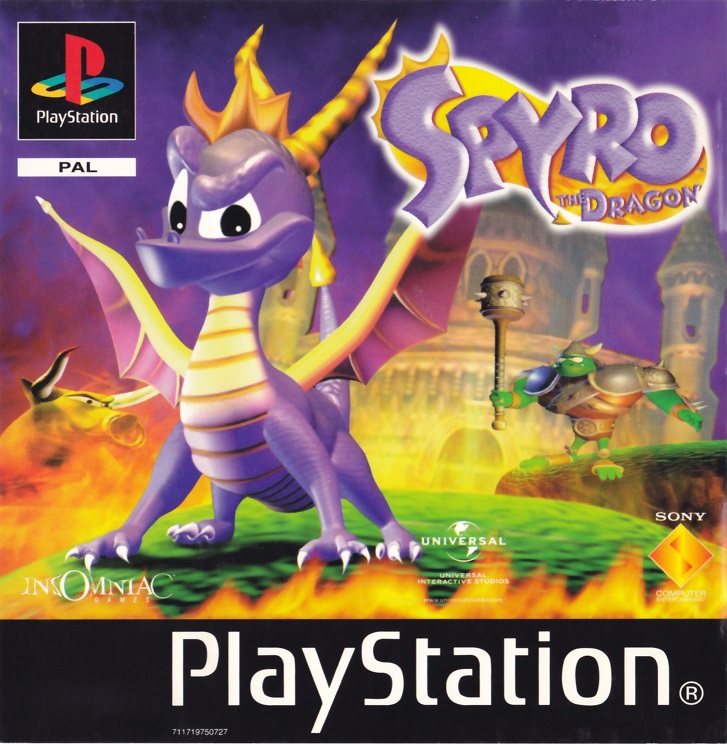
The end of this should be something light and frothy, there is nothing lighter and frothy than a good game and in light of the upcoming war, is that such a bad deal? We have seen all kinds of allegations and leaks. Now that we see a few announcements, and now that we have seen a few things that Sony will be bringing, I am now at a loss how Microsoft will get anywhere with the uphill battle they face this year. It seems to me that the upcoming Book of the dead is doing to PS4 what the initial the Last of Us did to the PS3. It was overwhelming. In addition when we see the Last of Us 2, Ghost of Tsushima, Spiderman, Death Stranding and Book of the dead, realising that at least three of these titles will be released in 2018, one is extremely unlikely to come before 2019 (Death Stranding) and one remains an unknown at present, and that is merely the exclusives. Sony has remastered the Spyro trilogy which will entice a new generation and satisfy the ones who played it on the original PlayStation. There are loads more coming, but this is at present what Nintendo and Microsoft are up against, which in light of the results of God of War is not a good thing to be up against. Now that the Sony gamers have heard that the release of Subnautica on PS4 is more and more imminent; an unknown title (to many) that is merely one of the best survival adventures I ever played and original from beginning to end. So in that view, we see that the other brand has a diminishing level of unique games left and that was never a good thing for any console. In my personal view, there is now only one reason why I still have the Xbox One. It is the one game, the game that I revered ever since I got my fingers on the demo that was added to the PC Format disc, al little over 20 years ago. Take a look at the update of the remastered and remade System Shock (at https://www.youtube.com/watch?v=lKfnTnZuC5E) where you can see the game in progress and even as it is announced to come to PS4, it is for the time being a lot earlier on Xbox One and PC.

The advantage Microsoft once had is now pretty much gone.

Even as some are all about the gifting a game hype, from my personal experience most people have never given me anything correct when it comes to gaming. Now, in some cases it is indeed nice, but most people prefer to go to shop and get a physical copy of the game. We acknowledge that backward compatibility is a nice setting; there is no denying that, yet over the next year do you want to replay a few good games, or play amazing new games? Backward compatibility is nice to have and an asset, no one denies that, yet the setting of no amazing new games is not something you want to rely on. The Verge actually almost nails it with “The Xbox One is the best console if you don’t care about exclusive new games“, I do agree with the setting, but those exclusives that Sony has is just beyond amazing and Microsoft has nothing to counter that, that is the setting that does matter. Nintendo upped the setting even more with the leak of Pokémon Switch coming this year; this will get millions of 3DS players now update to Switch much faster than initially expected. It gets to be interesting when you consider that Ultra Sun and Ultra Moon sold in excess of 7 million copies. With Pokken on Switch (originally a WiiU title) already out and now the new Pokémon’s coming (I expect at least two), we see that Nintendo is upping the score and the pressure on both Microsoft and Sony.

So even as Verge was almost correct, they missed it that the gamers love exclusive titles and the fact that the Sony players are getting the Switch on the side matters as well, apart from them not getting the XB1 on the side. With 26 titles announced by August 2018, the games list is also impacting the other two. Bethesda is giving Wolfenstein 2 a ‘switch’ over in 7 weeks, The Crash Bandicoot fans get to do it all over again on Switch as well and Capcom is breathing life to Streetfighter with a 30th anniversary edition this month on Switch, yes, my prediction that I made a mere two weeks ago is coming to pass, the worst nightmare for Microsoft is coming, Nintendo and Sony have upped their game and as it is less likely that Microsoft can equal that during the E3; by no more than late August will we see the setting whether the total Nintendo Switch sales will surpass Xbox One total sales by Christmas 2018, it is now becoming increasingly likely that Microsoft Xbox One will grace third position in the console race before December 31st 2018. Microsoft will have to produce a miracle by the end of the year and it better be a lot better than there marketing department hiding behind “All Xbox One games and Microsoft Store PC games are now eligible for digital gifting“, because when I look at AC Origin Gold (AU$145) and Shadow of War Gold (AU$158), I wonder if the people know that these games are around 40Gb to download and a 100% larger if you have 4K capabilities. So not only is it a massive download, the fact that these XB1 consoles have no more than 1TB is also a consideration. Nothing on any of this is a ‘pro’ gamer setting, merely a maximum exploitation setting from Microsoft. And that is even before you realise that a new Shadow of War Gold edition (with Steelbook) is a mere AU$99.95 at EB Games, so, do you still think I am kidding when it comes to Microsoft dropping the ball three times over? Are you kidding with downloading a game at a price that is 50% higher than a physical version in the shops?

Like Iran, Microsoft overplayed their hand way too soon and they are also in the venue of not being able to counter what comes. A setting that they should have avoided, in that light we can compare the Microsoft marketeers with the Iranian clerics, they shout from the highest peaks, but without the support of actual product you end up merely irritating people, which is how I personally see this all.

A desert that was a little less light on the bowels, but in all this we see that some games over the next month will be shown to be not up to the fight against reality and consumerism. Because both rely on smooth sailing and those who have never been hit by internet congestion have for the most never ever used the full setting of it. Until very recently, Sydney NBN users had 4 hours a week of congestion, now consider having to fetch your Sex in the city, the latest movie, download games, watch reality (kitchen) TV and focus on the big footy games. So how welcome was that digital download game to the internet welfare of the family in the end?


1 Comment

Filed under Gaming, Media, Military, movies, Politics

The politics of denial

I started this last Friday, so as I started writing this, I got to do the clumsy thing and actually kick out the power cable, losing all I had written. It led to my own denial and anger, and it fittingly fits this. Now, as I revisit the issue I have on one side the pleasure of having ‘new’ data, and the displeasure of going over this, but I will a little later in the article as it actually has bearing on all this.

So these three senators have decided to see if they can break up their entire Saudi Arabian support system, which will work out swimmingly for the UK, but about that later. The three senators Bernie Sanders, Mike Lee, Chris Murphy have started the US on a path, where the setting is that those three have introduced a resolution that will force the chamber to vote for the first time on whether the US should continue to support Saudi Arabia in the war in Yemen, a conflict that has led to the deaths of at least 10,000 civilians. In itself that is not the question, you see this is not whether what they do is ‘right’ or ‘wrong’. As we see it in the Guardian (at https://www.theguardian.com/world/2018/feb/28/yemen-saudi-arabia-war-us-support-senator-push-to-end) we get ““This is about the process,” said an aide to Lee. “What decisions do we make for a country that has been at war constantly for almost 20 years? When do we say that something is worthy of intervening in and when do we make that determination? It’s about the how“, which is fair enough. It is a political decision in all this and we can view it from one side, or from the other side. But there is actually a lot more going on.

Part is seen when we see “Yemen’s conflict began in 2014, when the Houthis, Shia rebels from the country’s north, seized the nation’s capital and ousted the Saudi-backed ruler, Abd Rabbu Mansour Hadi, who lives in exile in Riyadh. In response, a Saudi-led Arab coalition began a bombing campaign in 2015, to restore the exiled government to power”, in all this, we might see these matters as separate, but they are not, they are very connected.

The first part is seen in the NY Times (one of many sources), on April 14th 2011 we see ‘U.S. Groups Helped Nurture Arab Uprisings‘ (at http://www.nytimes.com/2011/04/15/world/15aid.html), here we see “a small core of American government-financed organizations were promoting democracy in authoritarian Arab states“, as well as “as American officials and others look back at the uprisings of the Arab Spring, they are seeing that the United States’ democracy-building campaigns played a bigger role in fomenting protests than was previously known, with key leaders of the movements having been trained by the Americans in campaigning, organizing through new media tools and monitoring elections” we see that America never learned from its mistakes in Egypt, Iran and other places. Now, I have nothing against democracy, I grew up in that environment and we should all accept that, but is it that clear? These nations had a sovereign right, they decided not to be democracies and as some filled the heads of some people with the ‘golden dream‘, and got trained into the creation of flocks and let them flock to those Arab spring groups the damage ended up getting close to complete. What started in Tunisia in 2010, moved to Libya, Egypt, Yemen, Syria, and Bahrain, where we saw the unsettling of regimes, major uprisings and social violence, riots, civil wars and/or insurgencies. Places like Morocco, Iraq, Algeria, Iranian Khuzestan, Lebanon, Jordan, Kuwait, Oman and Sudan were not impervious either to some extent. So in the age of the fucked up Obama administration we saw the start of more violence and the death of close to a million citizens, yet the Democratic Party goes into denial at that stage, because they were not involved. Now, legally speaking there is absolutely no evidence that this was done with the blessing of the Democratic Party, or parties in the White House in that time. Now, it might exist, but I have not seen it. In addition as the NY Times gives us we see references to “the International Republican Institute, the National Democratic Institute and Freedom House, a non-profit human rights organization based in Washington“, as well as “The National Endowment receives about $100 million annually from Congress. Freedom House also gets the bulk of its money from the American government, mainly from the State Department“. So here we see the crux, these three senators want to set the how and the process, but their own system caused this and now they want it to go away. The US burned them self on Syria by standing at the sideline whilst we see that they caused it indirectly. Now as they numbers in Yemen add up, we see that the US is ready to get into denial fast. The issue is even more ‘hilarious’ when we see in that same NY Times article “Ms. Qadhi, the Yemeni youth activist, attended American training sessions in Yemen. “It helped me very much because I used to think that change only takes place by force and by weapons,” she said. But now, she said, it is clear that results can be achieved with peaceful protests and other nonviolent means“, so how peaceful did things go in Yemen, and how peaceful did those 10,000 citizens die?

I am not implying that Ms. Qadhi was involved in any of that, but for aspiring autocrats the notion of destabilisation breeds opportunity, which is pretty much what we are seeing now; with splintering in Yemen the damage is actually increasing with Iran, Islamic State, Ansar Allah playing their part. As the BBC reported in February 2015 “But as the interim government of President Abdrabbuh Mansour Hadi stalled in early 2014, Ansar Allah launched an aggressive military campaign in the north, defeating key military units allied to Gen Ali Mohsen al-Ahmar and the Islah political party” so how peaceful should we see this ‘aggressive military campaign‘?

And that is not even the beginning of the issue. The NY Times give us in conclusion “we appreciated the training we received through the NGOs sponsored by the U.S. government, and it did help us in our struggles, we are also aware that the same government also trained the state security investigative service, which was responsible for the harassment and jailing of many of us, said Mr. Fathy, the Egyptian activist“, which now reads that the US government was selling short and betting on both sides of the event, like an arms dealer providing both sides with the latest creation in the effort to end the lives of those on the other side of the equation.

It gets even more disturbing when we see the Telegraph (UK) give us (at https://www.telegraph.co.uk/news/wikileaks-files/bahrain-wikileaks-cables/8334643/GUARDING-NDIS-FLANK.html) the part where there is a dis-proportionality in all this making the issue even more toxic and dangerous. That part is seen in “Al-Hamer promises to be a cooperative partner for emboffs and, we judge, will support NDI programming so long as it does not disproportionately benefit Al-Wifaq and other opposition political societies. He is somewhat favourably disposed towards the U.S. — all four of his children study in Boston or Austin, TX — and his wife, Afnan Al-Zayani, is a MEPI grantee. Al-Hamer’s chief focus will remain his job as the King’s media advisor; he will likely leave BIPD strategy and operations to other members of the new board of trustees and to Al-Khayat and his senior staff. Emboffs will engage with Al-Khayat and board members such as Al-Otaibi, and will remain alert for any signs of BIPD or GOB discomfort with NDI in an effort to avoid any repetition of the controversy NDI encountered in 2006“,

Finally the NY Times gave us: “Hosni Mubarak, then Egypt’s president, was “deeply sceptical of the U.S. role in democracy promotion,” said a diplomatic cable from the United States Embassy in Cairo dated Oct. 9, 2007“, which took roughly 3 years, 4 months and two days until that same democracy promotion scheme got rid of him and his presidency on 11th February 2011.

Now we see that the US is adding to its own misery. As it had lost any credibility it has, we see that three senators are setting the stage where the US could lose even more. We see that (at https://lawlordtobe.com/2018/03/06/the-global-economic-switch/), the issue of Saudi investments are now bubbling to the surface. Not just some need for a desalinisation plant. No this is a setting in excess of 500 billion and as the US government is trying to make a play for some parts of that, we see three senators trying to get on a high moral horse and change the setting of support to Saudi Arabia. So as they hold the high moral horse and stop any actions to take place, how would Saudi Arabia react with their “the half a trillion dollar NEOM“, the massive growth in dependency and requirements for technology will take a nice seat where these actions might result in Saudi Arabia talking to British Telecom and Verizon might end up sitting at the side of the road. What was a near equal race between the two for the graces of 5G opportunity is now a race where Verizon could in theory end dead last. Cory Booker the Democrat senator for New Jersey is just going to love all this or not?

The problem is that this should have been about the morality and not the cash, yet that is what politics in a bankrupt state has been reduced to. Now as we are seeing all that good news in regards to the US economy. Most ignore the other side as “Toys “R” Us may be planning to liquidate its bankrupt U.S. stores, according to a report by Bloomberg News. The retailer, reportedly, has not found a buyer or secured a debt restructuring deal with its lenders” (Source: CBS), in addition the LA Times gives us “The downfall of Toys R Us can be traced back to a $7.5 billion leveraged buyout in 2005, when Bain Capital, KKR & Co. and Vornado Realty Trust loaded the company with debt. For years, the retailer was able to refinance its debt and delay a reckoning. But the emergence of online competitors, such as Amazon.com Inc., weighed on results. The company’s huge interest payments also sucked up resources that could have gone toward technology and improving operations“, the interest payments, the issue that several larger players face, with Google, Amazon, and Microsoft being likely the only exceptions, we still see the growth of debt where these larger players are all fending off the inevitable. Gun maker Remington and guitar company Gibson, two iconic companies, neither made it out and are now in the bankruptcy setting, and they are not alone, so as they vanish thousands of workers will be in the need of finding new jobs and possibly even resettling in another state changing state pressures on the support systems that were in place, because those people made products that needed shipping, they had infrastructures and shops depended on these thousands, they are most likely to move and as that happens more pressure is exerted on others.

Is that all relevant?

Only indirectly! You see it is part of a pattern. The US has pushed the media to be in denial of the debts and the costs of these debts. So when we consider that Intergovernmental holdings stood at $6.3 trillion, giving a combined total gross national debt of $19.8 trillion or about 106% of the previous 12 months of GDP, with 45% that the public has is owned by foreign investors, the largest of which were Japan and China each having a little over a trillion of that debt. So even at 1% the debt is a large issue, even as it slowly decreases, two of the 32 nations should be getting $10 billion each and that is merely the interest and that is if it is only 1%, it is unlikely to be below 4%, so the US has to come up with well over 250 billion and that is beside all the normal expenses they have. It only takes one negative event to push them over the hill and more than one is coming, in addition the US desperately needs part of the economic $500 billion windfall, and that is likely to become the diplomatic debate that the State department will be confronted with. with the debt adding well over $240 billion in the last 11 months the forward momentum is not there at present (it was earlier than that though), we see that the US has issues and dilemma’s to deal with, only one of them is Yemen and several are with Saudi Arabia, a nation they need to be friends with for all the reasons they can muster.

So as we look at Al Jazeera (at https://www.aljazeera.com/news/2018/03/180310204215697.html) where we see “A military solution to the conflict in Yemen will be a disaster”, said al-Hamdi, a former member of the Yemeni parliament who was ambassador to the Czech Republic from 2009 until 2014“, we might give him the benefit of the doubt, yet is that true? You see “History is repeating itself. There is a history of Saudi intervention in Yemen, from the revolution in 1962 to the 1994 Yemeni civil war,” said al-Hamdi at the event, which was hosted by the Cordoba Foundation and titled Yemen: War, Politics and Human Tragedy event. “Yemen is being destroyed. A nation is dying,” said al-Hamdi“, yet we already know that it was the Yemeni president that was requesting assistance, there was an uprising and that started the current situation.

You see, what we do not see form any source is that when I look into Abdulrahman al-Hamdi, I find very little. I did find “Abu Salim mayor Abdulrahman al-Hamdi told Reuters that the unusually intense fighting that erupted last Thursday was triggered by members of competing armed factions capturing each other“, which is what Reuters gave us in March 2017 (might not be the same person), so the only other articles are from the last hours. Consider an ambassador that fell from all the news channels between his non-working status between 2014 and 2018, almost a death sentence. So is this ‘high morality‘ his way to get back into politics? Back in the news merely because it is convenient for some of the players, that is how I personally see it.

Back to the beginning of me

Now I get to go to the part I mentioned in the beginning. You see there was a small accident on Friday and I lost power and as a result my article was gone, I had not yet saved it. Now, I could have gone back to it all and rewrite it, but after 2,000 words (roughly) I felt a little drained and extremely agitated with myself. Kicking out the power cable is my own stupidity and it was on me and me alone. Perhaps you can relate? Consider that you leave home, you get to the train station and it is there that you recognise that your wallet is still at home. Now, this is not a biggie, we have all had that moment and it is that moment that you realise that you have to do that 15 minute walk twice more just to get back to the start. That is when your nerves hit you and I have resolved it to walk twice that much to the other station because the repetitive feeling falls away and weirdly enough the anger subsides quicker (no idea why though). I know, it is irrational but that is how my brain at works at times and we all have some kind of quirk like that. That quirk is shown in more clarity when we see the impact of the US Arab spring and the subsequent actions of the US. They are now trying to change it all because the death list that the US aided in starting the death counts in Syria, Yemen, and Libya to name three is also opening the wounds towards the Iran and the CIA-backed 1953 coup that ousted democratically elected Prime Minister Mohammad Mossadegh. Some are asking if the US will ever learn its lesson in this regard. Others are wondering how deep ‘Christian bitching fish wife fairy-tale mongering‘ goes in regards to the intervening actions in Middle Eastern rule and politics.

The end is nowhere near the end and it reflects also directly towards Syria, as we see “The UN secretary general has described the situation in eastern Ghouta as “hell on earth” and the body’s high commissioner for human rights described the military offensive as a “monstrous annihilation”“, in that it ended exactly as I expected it to play out. so as we see “The report from the UK-based human rights group, which said both Douma and the smaller nearby town of Harasta were surrounded and cut off, was disputed by locals, but such an outcome seems inevitable in any event as the regime presses its advantage, backed by both Syrian and Russian airstrikes“, so as the Syrian situation draws to a close we see that both US administrations have failed the Syrian people and as that population has been culled we see that the docile remaining part will become the sheep that the Syrian president needed them to be. In all this the profile of Russia is now further up and the US diminishes in parts of the Middle East, so alienating Saudi Arabia is likely the worst choice that America could make. Fortunately the UK still has a large opportunity there, but in all, as Saudi Arabia wants more options, the doors will open further for Russia. That was seen last week at CNBC as they gave us: “The agreement between Saudi Arabia and Russia to cut back on oil production has boosted oil prices and is now the foundation for a broader relationship“, even as Saudi Arabia is pushing for less power on oil, they still want the best price possible for what they have, a mere business approach to a commodity. In addition, less than a month ago we saw Bloomberg report that the liquefied natural gas (LNG) options, is  new field for Saudi Arabia to do in conjunction with Russia as we got “Russian gas producer Novatek PJSC and Saudi oil giant Aramco agreed to consider teaming up on Novatek’s Arctic LNG-2 project“, so we see growth on economic options for Russia as America has been closing its own doors, or to some extent, they are getting closed by Bernie Sanders, Mike Lee and Chris Murphy for whatever reasons they had.

It is now becoming a stronger imperative to find a path forward. Not merely in regards to Saudi- Us relationship, the issue of Yemen and Syria will plague us for decades to come, even if it is settled overnight (which is not ever happening), the cleaning tasks as well as finding a longer term solution for Humanitarian solutions can only become successful if the players enable Saudi Arabia to take the lead for ending the Yemeni crises. For Syria it is likely too late, as Russia is completing ‘its’ mission (at https://lawlordtobe.com/2018/02/24/losing-values-towards-insanity/), where we see in ‘Losing values towards insanity‘ the quote “With these two gentleman owning 50% (actually more than that) into LLC Megaline, with Megaline receiving a large chunk of the capital construction contracts for the Russian military we see that link. When the dust settles, Assad will need to rebuild, and they will be the front player and possibly only consideration on a nation needing to be reconstructed. So now how weird are their actions? Both Yevgeniy Prigozhin and Dmitry Utkin are now perfectly placed to rake in billions and in that regard we get back to the options for the dying in Syria; they don’t get to have any” a mere two weeks ago, now shown to be more accurate than anything else published. The media could have seen this coming with a ruler and an abacus, no high mathematical forecasting required.

So as we see the outrage on Yemen from all those seeking the limelight, I wonder if anyone will ask them the question, what exactly did you do for those Yemeni’s over the last 4 years? The list of activities might not add up to much, that is how I saw Abdulrahman al-Hamdi, because if you seek him on Google for the last year, he shows up once, just once for the Al Jazeera event 6 hours ago, that is also the next issue that both Syria and Yemen face, those who merely talk to get a seat on the table, because soon there will be money available and now they all want a seat at the table, it is the politics of denial, to only get there when the going is good.


Leave a comment

Filed under Finance, Law, Media, Military, Politics

The Global Economic Switch

There is a shift going on, now this shift is still in the planning stages, but the switch is very real and as we see the crumbling switch from enabler and entrepreneur, the US is moving towards becoming a mere consumer and dependent user. That is a switch some might have seen coming, others have not seen it at all and some are still in denial, claiming it is a short term inconvenient stage. I have no idea which is true, but the events that are a given are showing to be more than a mere short term event and the diplomatic impact will equally show to be a long term impact on what the US had and what it will become. Now there are indicators, but the image is not seen in a single view, so let’s paint this picture for you whilst adding the sources.

Saudi Arabia

The Saudi Arabian announced investment (at https://www.cnbc.com/2018/03/05/saudi-arabia-and-egypt-agree-to-a-10-billion-deal-to-build-a-new-mega-city.html), is actually a lot more than the $10 billion forecasted, because the value as I showed in over the last year is more than becoming a reality, it is now in a planned stage, and planned much larger than I foresaw it going. It starts with “Saudi Arabia and Egypt have agreed to create a $10 billion joint fund to develop a mega-city in Egypt’s southern Sinai Peninsula, with both countries committing more than 1,000 square kilometres (386 square miles) of land to the new project“, you see, depending on the distance from Sharm-El-Sheikh the infrastructure will grow much faster and even as they will rely on what Sharm-El-Sheikh has, the growth of this new Mega-city could be the start of the tech-hub that benefits both Egypt and Saudi Arabia. As the technology hubs grow, so will the economy. It is also the first part to start getting combined 4G/5G preparation in place, because as this technology becomes available Saudi Arabia now has a first advantage in both upgrading its services and that gives optional access to 23-32 million out of a 95 million population. With the tech hubs, both the Sinai one as the half a trillion dollar NEOM, there will be a massive growth in dependency and requirements for technology. There is in addition, the Barcelona World Mobile Congress where on February 26th Huawei announced its full range of end-to-end (E2E) 3GPP-compliant 5G product solutions, now the other players will be following, yet Huawei has an advantage for now. With “The featured products are also the only available options within the industry to provide 5G E2E capabilities” we see that Huawei has chosen a path that allows them to grow and they will not be alone, but for now they are ahead of the crowds, so even as we see now “Huawei partnered with Zain Saudi Arabia, signing a Memorandum of Understanding promising to develop a new network strategy in the Kingdom. The aim of the MoU is to accelerate the realization of 5G networks and assist Zain in building the most advanced end-to-end networks in the region. The two companies will work together to accelerate the deployment of 4.5 to 5G networks, make further advances towards full cloudification, and produce additional strategy and planning in the field of ICT Synergy Cloud” (at https://www.arabtimesonline.com/news/huawei-outlines-vision-5g-future-co-unveils-latest-innovative-products-solutions-mwc/) merely a day ago. I gave that indication almost two weeks earlier, so how is that for a prediction. So even as the US is setting the bar at “Chicago, Los Angeles, Dallas, Atlanta, Washington, DC and Houston” to be the first with 5G at the end of the year, what happens when you need to reach out to Wall Street and Manhattan? Will that be merely 4G, or will you suddenly experience other issues (between providers, reception issues and so on; oh, and as you go from protocol to protocol switching per cell tower on the move, watch that battery power drain as the battery percentage goes down like a timer in seconds 75, 74, 73, 72, 71 and so on. Please do not take my word on this, it is much better when your own eyes see the battery counter go down, it adds to the dramatic effect when you hear me howl with laughter (stating: ‘I told you so’). So even as the article ended with “Ken Hu, Huawei Rotating CEO, said: “The intelligent world is drawing near, filled with potential and possibilities. Ground-breaking technologies like 5G and IoT promise to solve complex business challenges and improve the lives of the population. Yet challenges remain on our path before these dreams are realized. MWC 2018 was an excellent opportunity for us to meet with other leading companies and discuss how together we can overcome these obstacles, achieve sustainable business growth, and Build a Better Connected World.”“, I will admit that I have an issue with that part, you see with ‘IoT promise to solve complex business challenges‘, we see the implied solution, but the IoT (Internet of Things) is merely the applied hype word in a solution that has not been designed yet. It is true that the application of IoT is a solution in itself towards a whole shoal of options and challenges, but as we consider that the 4G smartphone brings solutions, it requires the apps to be there and solve actual settings and that takes time, like all other needs. In that regard I see the IoT as the old sales technique of selling a concept before the product exists and I always thought that to be a broken non resolving approach to the greedy salespeople coming with a ‘pay it forward’ solution that is paid for before the product has been completed. It is a dodgy need, because in the end the (business) consumer needs and actual product to work with. Yet that might just be me imagining things.

United States of America

The view here starts with the Financial Times, who brought us ‘Currency markets send a warning on the US economy‘ (at https://www.ft.com/content/de57a6a2-1e32-11e8-a748-5da7d696ccab). So even as this is about the financial markets, there are a few points to take away from that. First there is “The pattern of higher interest rates and a weakening currency suggests that on multiple dimensions US assets now have to be put on sale to convince foreigners to hold them or induce Americans not to diversify into overseas assets. This pattern is relatively uncommon in the US though it happened in the Carter administration before Paul Volcker’s appointment as chair of the Federal Reserve and in the Clinton administration before Treasury secretary Robert Rubin’s invocation of the “strong dollar” policy. It is fairly ubiquitous in emerging markets where it reflects anxiety over a country’s policy framework“. The dangerous part here is ‘convince foreigners to hold them or induce Americans not to diversify into overseas assets’; you see it is a move of limitation, either the non-American buyer holds onto the for a much longer time, which needs convincing (usually with higher yields), as well as stopping Americans to go overseas into other markets, so it is not actually an ‘or’ situation, it is actually an ‘and’ setting where the inclusion needs to be both to remove doubt and volatility. The article ends with “The confidence of global markets is much easier to maintain than to regain. Currency markets are sending a signal that the US is not on a healthy path. Its time for the US to strengthen the strong fundamentals on which a strong dollar and healthy economy depends“, you see that view is set not merely in the war of tariffs, it is set where the global markets have been seeing a decline in US activity and more important acts that show that the US economy is feeble and the US infrastructure is not in strength, it is merely getting by and that is a dangerous place to be in. Even as I predicted that the inactions and the inability to act against Russia will be felt when Russia calls the bluff of America, it is now showing that the US on a larger scale is showing to be set towards a series of hurdles that will stagnate its economy and over the long haul (within two years) will show the danger of another recession, so when that happens and projects get halted, how will Sprint and other players pay for 5G? Entrepreneurial innovation tends to demand buckets of cash, cash that is not available, certainly not readily. Protectionism is merely the first hurdle and one of at least three in the setting of the tariff war. The Financial times gave the people the biggest fear and doubt on February 21st with “US ‘too big to fail’ regime set for Trump overhaul“, that ‘too big to fail‘ has been used before and a whole bunch of billionaire grapes got bitten rather badly in Europe. It is not merely the Chapter 14 implementation with the by-line ‘to shield the tax payers’, it is the text “Both Wall Street and overseas regulators have warned the administration over the dangers of dismantling the system but the Treasury said it wanted to narrow its use so it could serve only as a last resort“, the fact that ‘narrow’ and ‘Wall Street’ imply that the Chapter 14 will lack the teeth it needs and as such it is another parachute for the 1% bankers, banks and those making upwards of $253 million a year. So how much will this marker cost the tax payers in the end? Even as there is an abundance of recession fear articles and announcements by the media at large, that part even as it is likely to happen, it is not certain to happen and that fear needs to be removed (by other means than the Chapter 14 messages). You see, the problem is that the 1% has enough wealth to survive the next two recessions, whilst the quality of life of the other 99% has not been pushing forward towards the level it needed to be. So they will get hurt really bad if another recession happens within the next 16 months, which is close to all speculated views by the media at large. Whilst that is not much of an indication, the events in Saudi Arabia is only one element, the other elements is the one we will see next

Other players

There is more than one player in all this. The first is seen by CNBC (at https://www.cnbc.com/2018/03/05/saudi-russia-oil-deal-leads-to-bigger-russia-role-in-middle-east.html), where we are treated to “The partnership with OPEC, led by Saudi Arabia, allows Russia to strengthen its hand in the Middle East at the same time the U.S. role has been diminished“, the diminishing of the US as stated by other sources closes doors to the US on several shores, a dangerous change that comes at one of the least fortunate times. The quote “it is now the foundation for a broader relationship that has the potential to reduce already waning U.S. influence in the Middle East” is foremost set to the chilling friendships with Syria and Iran, it is not merely there. Turkey has been out of control for the longest of times and now that Turkey is smelling blood, it is trying to get much more out of the US, making them a very expensive ‘friend’, more so, the question becomes was Turkey ever a friend? In that whatever bites there could hinder the US with its access to the Middle East at large. Should Incirlik and Izmir become an issue, the economic print of the US would drastically change, because that would require the US to find a way to grow the option to get a base in Saudi Arabia and optionally in Israel. Whilst neither is a given, the costs of that will be staggering and the economic footprint of the US will equally become an issue down the road. Even if there would be an option to get one in Western India (who would like that economic windfall in their region), it would be a drastic fund pressuring move for the US.
Another option would be in Egypt and if that becomes an option it would in the longer term benefit both Egypt and Saudi Arabia, whilst Egypt gets to grow its stability in the Sinai, the US would become a much larger target in Egypt, wherever its base would be placed. So that too would come at a cost for the US in a time it needs to turn over every dollar it spends. Another is Jordan, but there is no way to tell the impact, the costs and the options in that regard as I have no clear information or sources to give at this time. You see, the memorandum of understanding was signed with Jordan with Rex Tillerson a mere 3 weeks ago, so adding a conversation of adding a US base there might not be the one that would work (pure speculation from my side). In addition, the EU News (and others) who gave us “Commissioner for Trade Cecilia Malmström added: “These US measures will have a negative impact on transatlantic relations and on global markets. In addition, they will raise costs and reduce choice for US consumers of steel and aluminium, including industries that import these commodities”” gives rise that there is a cooling of ‘friendliness’ between the EU nations and the US to some degree, so there is that impact as well. I am not talking about the tariff, I am talking to the diplomatic language where Dutch Prime Minister Mark Rutte gave us “Relations with the United States can no longer be taken for granted“, which is not a good thing as the Dutch port of Rotterdam is the gateway to Germany and its industrial heart, in addition the US pressures on France regarding the Iran nuclear deal could impact the two, but that is not a given, even better, it is unlikely to be an issue, which is a plus point, for the US for now as the Italian elections are over and the anti-EU parties made a massive gain (from 4% to 18%, whilst they surpassed the Berlusconi party) is still an issue in play. I agree with the Guardian that stated that the EU-issue is not in play, but as we see (at https://www.theguardian.com/commentisfree/2018/mar/03/italian-elections-european-union-populism), the need for Berlusconi was the man to save them from populism has now become a non-reality, the impact will grow and in that matter the US would need to play nice, very nice with Italy. You see there was always going to be an issue with Matteo Salvini, yet the fact that they became the largest party with 37% was unforeseen. There is no issue with iExit as the Italian version of Brexit is called, but its anti-immigration policies will give headaches for many EU nations and as the impact of US-EU nations is cooling, becoming an enabler for Italy might be the wiser of solution for the US. The BBC (at http://www.bbc.com/news/world-europe-43294041) gives much more, but the power is at the end with “Voter frustration here in Italy but evident and ongoing in Germany too surely shows it’s time for Brussels to sit up and really pay attention“, the shown fact that Brussels have not been doing that is the anchor around the neck for the EU and that will impact the US numbers as well. Even as Germany was the biggest friend of the US in the EU, the tariff and, the EU army and the need by America for Germany to play a larger role in the EU borders (taking some pressures from the US) are all elements that put more and more pressures on the US, even as some of the needs by the US are very valid, we need to realise that Newsweek gave us “Germany’s top diplomat has told foreign policy experts that his country’s relationship with the U.S. has suffered irreparable damage under the administration of President Donald Trump“, even as the damage began in the previous administration (to a small extent), the chosen path by the Trump administration has been adding negativity to it all. Syria must be seen as the largest of catalysts in that regard, it is merely my sense of humour that the Germans see the forced ‘friendship‘ with the French as a larger issue than the actual absence of the US in all that, but that is just my take on humour.

All these elements are part of the economic switch in all this, in support of this, there are sources that show that Saudi Arabia wants to grow its arms industry and as SAMI (Saudi Arabian Military Industries) is sitting down with the Russian who are eager to accommodate, I need to wonder why the hell Raytheon and Northrop Grumman were asleep at the wheel, or decided to remain vacant from that setting. So even as Remington (American outdoor Brands) has a product of sheer excellence, they are now not at the middle Eastern table, but in a novel mentioned in Chapter 11 and seeking a quick sale, perhaps someone can tell me how much could have been gained at the Riyadh SAMI conference table? So even as we read (at http://www.business-standard.com/article/international/saudi-arabia-wants-to-make-their-own-weapons-russia-eager-to-help-118030300622_1.html) that “likely to alarm American policy makers, who worry about losing ground to Russia and China in the Middle East“, where we see that this is understated to the largest degree. With “They’re already planning to buy the Russian S-400 air-defense system, under a deal that would let them manufacture related products at home” as well as “Half of Saudi procurement is supposed to be done locally by 2030, from about 2 per cent today” we see the extent of the market lost for both Raytheon and Northrop Grumman as two of the largest players in that field. Someone (more than one player) was asleep at the helm and by playing the card of exclusivity the ended up playing the card of exclusion, which takes them out of the game as such and that is the issue in this, because as far as I see it we have not seen such a large shift of plays optionally towards Russia and away from the US since before WW2, perhaps it might be more correct that this has never happened to this degree in history, that too is a factor that must be considered; so, suddenly the extended play changes. I mentioned part of this on Feb 24th (at https://lawlordtobe.com/2018/02/24/losing-values-towards-insanity/) in ‘Losing values towards insanity‘, yet I only had some unconfirmed parts and no idea why I had some parts, I had these parts a week ago, yet all these parts came to me over the last 24 hours with 1-2 exceptions, now we see a shifted picture. When we consider LLC Megaline (as well as Concord Management and Consulting) where Yevgeniy Prigozhin and Dmitry Utkin allegedly have been preparing to grow an ICT/Mobile infrastructure in Syria, that whilst construction fortunes would be coming their way too, the entire growth with Saudi Arabia as an optional side allows those two to split a few billions between the two of them, whilst at the same time growing the other fields they have access to and get a seat at the Saudi Arabian table at the same time. A side I never saw as I did not have the information I have read over the last 24 hours. To get any additional part in that play could set me up for life within 3 years, to get a 400% better lifestyle in 36 months than the 36 years of hard work allowed me to get is what would get any person to change their pupils to dollar signs and that is merely in their need for ICT, Data farms, Mobile facilitation, Data systems, forecasting, reporting and logistical infrastructures. In all this we see the clear evidence as given by several players that is now on route in a place where the US has a setting that is diminishing, so as those currencies go elsewhere, do you think it will not impact the US economy. That is apart from the greedy pharmaceuticals that are now pushing on India for the longest time. It is an additional place where non-US players will have options to gain market share. All that because certain players in the patent field were enablers towards the few greedy US pharmaceuticals as they increasingly ‘demanded‘ more and more outside of the patent scope that was once given (the attempted Trans Pacific Partnership was clear evidence of that), now we see hat impact and the US is at the axis of an economic switch where someone else will soon decide whether that switch will be switched on or off, no longer as the setting where the US sets the status, which is something the US has not faced before ever as far as I can tell, even the 2004 and 2008 events did not remove that option from them, but that is now a reality from sources like Bloomberg, Reuters, the Financial Times, CNBC, BBC and other players are setting the view that we are getting now. Even as none as saying it outright, the news as given provides a speculated picture where that may become a reality. I do believe that it could be prevented to some extent, but at the current course of the US ‘Kingmakers’ and ‘Wall Street regents’, that reality is slowly being removed from the US table of decision makers and once that reality hits, when they have to report that the Switch is set to ‘OFF‘, the impact will hit pretty much every market where the US is policy maker.

A world where the US player involved goes from being exclusive to excluded!

I wonder how the media will then cover it and who will they blame, because they will always be about laying the blame.


3 Comments

Filed under Finance, IT, Media, Military, Politics, Science

SW2, not WW2

Is there a Syrian War 2 brewing? That was the initial thought I had when I got exposed to the ridiculous claims from Turkey this morning. There are two parts. the first comes from the Guardian (at https://www.theguardian.com/world/2018/feb/19/turkey-warns-assad-not-intervene-kurdish-enclave-afrin), the quote is “Turkey warned the Syrian government of Bashar al-Assad that it risked a military confrontation with Ankara if it intervened in an ongoing war in the Kurdish enclave of Afrin, in a further escalation of tensions that hint at the possible widening of an already complex conflict“, now, just to make sure you get this. Turkey invaded Syria for the alleged reason of coming to aid towards Assad, or perhaps merely to ‘fight ISIS‘ in a presentation attempt to silently start the second genocide, the genocide of the Kurdish people. So Turkey goes invades Syria and now states: “Turkey warned the Syrian government of Bashar al-Assad that it risked a military confrontation with Ankara if it intervened“, so how is optionally opposing an invader ‘intervening‘?

The second part comes from the BBC (at http://www.bbc.com/news/world-middle-east-43107013), where we see basically the same with ‘Afrin offensive: Turkey warns Syria against helping Kurds‘. So when we read “Deputy Prime Minister Bekir Bozdag said Turkey’s operations were going ahead as planned and it would be a “disaster” if Syrian troops were to intervene“, should we deduce that a failed introduction to genocide is a ‘disaster‘?

Even as we see the similarities, we see that the issue is larger than merely a scuffle between the Turks and the Kurds, the way we see the quotes and the way that they are reported give rise to the fact that there are other issues below the waterline. It is not merely semantics, it is the interaction that Turkey has been having with several nations gives that rise and the optional viewing of that should make plenty of people worried at the very least and decently nervous in the nominal setting of international relationships.

The BBC article ends with “President Recep Tayyip Erdogan told Russia’s Vladimir Putin that Damascus would face “consequences” if it struck a deal with the Kurds, CNN Turk reported on Monday“. So, Erdogan, President of Turkey, a person with not much diplomatic skills or powers outside of Turkey for that matter, is telling Putin….? Oh, sorry, I nearly lost my breakfast laughing myself into several layers of bellyaches. It is almost as impactful and powerful as me calling Alexander Bortnikov, telling him to give me access to all his data, or he is going to hear ‘stuff he will not like‘ (most likely me calling him a pussy). Yes, people like the President of the Russian Federation, or the director of the Federal Security Service of the Russian Federation (Федеральная служба безопасности Российской Федерации (ФСБ)) getting told by the likes of President Erdogan (or me for that matter) is something they should take extremely serious (sorry, second laughing attack, I will be back shortly). So, after I had my second laughing attack that lasted close to 611 seconds, I got back into my seat and decided to take another gander at a few parts. You see, the nice part of such short sighted actions is that it alienates the players Turkey actually desperately needs. Which in turn is making Iran more and more nervous, which is good news for several countries in the Middle East. The interesting part in all this that he BBC reported “During the course of the Syrian war, pro-government forces have largely avoided direct conflict with the YPG, but they have had sporadic clashes“, which now gives the optional food for thought that Syria might actually set some resources that way with the optional thought that they will not be targeting the YPG, because if we agree that direct conflict was never a real necessity, the Turkish forces changing that by sticking their short stick in a hornets nest, that part would be the greater threat to Syria, which now gets them into hot water is a few places and on several ways. In addition, it will also change the conversation that is going to happen in Kazakhstan in two weeks, giving more questions if there is still going to be a summit in Istanbul on Syria. The changing pressures are by no means a way to get things talked about and smoothed over. Even as Reuters gives us: “The three countries are working together to try to push the troubled Syrian peace process forward“, we need to also consider the mandate that Tehran gave to Foreign Minister Mohammad Javad Zarif as the outbursts from President Recep Tayyip Erdoğan is pushing its own agenda whilst at the same time causing chaos towards the plans that Iran seemed to be having in all this, his self-serving hatred of Kurdistan is making the creation of coalitions next to impossible. With the Netherlands adding fuel to the fire of Turkish non-diplomacy, as they have now voted to recognise the Armenian genocide of 1915, pressures are growing there too, at a time when Turkey needed every European nation to be on his side regarding the non-realistic approach to becoming an EU nation, we see that the gap is increasing beyond the chance of that ever becoming a reality. The Turkish parties kicking every hornets nest in the Middle East is not very useful. On the other hand, Turkey could decide after Kicking both the US and Russia, to see if this level of craziness is useful in Beijing, which it is unlikely to be unless they open up all kinds of open trade paths which might actually be a lot less interesting to Turkey, especially at a time when Turkey is trying to get increased Cherry exports to China in time for the next harvest, the need to grow their export which according to some is in excess of 80,000 tons, they are now in a stage where they can no longer afford to get on anyone else’s wrong side, which must be a novel experience for the Turkish Diplomatic Corps.

All this whilst the issues in Greece and Cyprus are at present still unresolved, with the Ekathimerini making a connection between the report published on March 28, 1897 in Empros newspaper where we get: “referred to a foreign diplomat who described Greeks’ behaviour in relation to Turkey as that of a dog that barks, but does not bite. We all know what followed, but we still tend to forget how bad it is in international affairs when you bark, but no one really feels any threat“, and the escalations on gas resources at present, that whilst there is a certain logic to make the statement, especially when we consider Europe, NATO and the UN is seen in relation to: “where tensions broke out between Greece and Turkey, these organizations never really offered anything more than carefully worded statements“, that is the situation when we rely on the paper tiger to get things done. So when we read: “Athens must be very careful in weighing its next moves. It’s a balance of terror. If it shows compliancy, one can’t be certain where the other side will stop“, whilst we all know perfectly well that Ankara will not stop until forcefully halted. As the article ends with the absence of emotion in the Turkish-Greek debates, the issue is that the theatre is getting prepared to get very emotional from more than one side. Turkey almost has no options left after kicking all the wrong shins. In my view, when Syria escalates and escalates in one wrong direction we will get a flood of orchestrated news (whilst journalists have been sentenced to life in prison) and from there onwards it becomes a long winded marketing campaign, because Turkey seems to be realising that the US, the UN and Europe are all about statements and statements alone. Which is a dangerous game as it could press towards a second Syrian war where the Syrian Kurdish area could get annexed into Turkey and its population would optionally somehow mysteriously vanish.

So, how should we see the optional threat of a second Syrian war? that is hard to see, with too many high level meetings, with the latest addition being one with the Russian President Vladimir Putin, Turkish President Recep Tayyip Erdoğan and Iranian President Hassan Rouhani to meet in April in Turkey, there is no telling what it will actually be about. Even as we have seen from enough sources that it will be about Syria, there is in my personal view absolutely no way that it will just be about Syria, especially as the meetings are going to be behind closed doors. That view is made stronger when we consider the news merely a few days ago when Kirill Dmitriev, the chief executive of the Russian Direct Investment Fund (RDIF), told CNBC “We’re at the breaking point in positive territory of this relationship … We really embarked on an amazing positive journey“, that in light of Iranian issues and the fact that President Putin’s face is on the homepage of the RFID gives enough indication that nothing happens there without the explicit approval from more than one key member of the Kremlin and there lies the complication, The meeting around Syria is set in a stage where all three have separate agenda’s. Turkey has the Kurdistan region, Russia has a truckload of billions it can win with Saudi Arabia and Iran is extremely opposing anything pro-Saudi Arabia, as well as having a few additional issues regarding Yemen, who would really like Russia to become a mediator here, so the Syrian talks will come with close to half a dozen unscheduled stress points. So, when we see these issues in the lights that can be confirmed, will Syria see more or less stability?

Less stability is not a given, but the premise of it happening is actually more realistic than I would have foreseen less than a year ago.


Leave a comment

Filed under Media, Military, Politics

Enabling crime

Thursday saw the light of an unsettling situation, unsettling to some that is. You see the article ‘UK police to lose phone and web data search authorisation powers‘ is very one sided. At https://www.theguardian.com/technology/2017/nov/30/police-to-lose-phone-and-web-data-search-authorisation-powers we see “Senior police officers are to lose the power to self-authorise access to personal phone and web browsing records” and as it ends with “an attempt to comply with a European court ruling on Britain’s mass surveillance powers“, this merely fuels my setting for Brexit. Yet it is not that simple. As people are shouting, screaming and considering how they are allowed, in rights of, and needing privacy. I stopped caring and worrying. When you consider the following parts:

SS7 hack explained (at https://www.theguardian.com/technology/2016/apr/19/ss7-hack-explained-mobile-phone-vulnerability-snooping-texts-calls), in 2016.

Here we see “Hackers can read text messages, listen to phone calls and track mobile phone users’ locations with just the knowledge of their phone number using ‘a vulnerability’ in the worldwide mobile phone network infrastructure“. We hear that something was done. It is given with “Since the exposure of security holes within the SS7 system, certain bodies, including the mobile phone operators’ trade association, the GSMA, have set up a series of services that monitor the networks, looking for intrusions or abuse of the signalling system“. So guess what! It was not or ever solved. It is merely monitored, the moment that this monitoring number is tweaked; organised crime has full access to you. This is only the first piece of evidence that European Laws have been enabling criminals and organised crime.

And with the quote “Reportedly, recent security testing of SS7 by an operator in Luxembourg took Norway’s largest network operator offline for over three hours due to an “unexpected external SS7 event”.” we see clear evidence that the criminals are winning. I wonder if those extremely high paid judges are considering that. Because their claim “mass harvesting of personal communications data could only be considered lawful if accompanied by strong safeguards including judicial or independent authorisation and only with the objective of fighting serious crime including terrorism” has no hold on criminals as they are in it for the money, not terrorism.

So even as the Guardian trivialises the danger in the correct way with “given the billions of mobile phone users across the globe, is small”, yet these criminals are learning and learning really fast. The contact book shows them who is connected to important people (for example @RBS.co.uk or @natixis.fr), that list goes on for a while as the contacts are lining up, the tally shows that the value of that person goes up by a lot. And let’s not forget, this level of data mining can be done with most ordinary computers. So as they are seeking data, downloading dumps for later, 99% gets washed and 1% is kept on the computer. I reckon that 99% gets burned on discs for later use and verification. Lorenzo Franceschi-Bicchierai gave warning in an article on May 4th 2016 (at https://motherboard.vice.com/en_us/article/mg7bd4/how-a-hacker-can-take-over-your-life-by-hijacking-your-phone-number), here we see “In 2014, UK authorities warned that criminals were taking over victim’s cell phone numbers and using them to get into the victim’s bank accounts. Now, a social engineering expert is warning that taking control of someone’s phone number is easier than previously thought, thanks to a code normally made of three letters and six numbers called the Porting Authorisation Code, or PAC“, the consequence is given with “De Vere was simply testing this on numbers he owned, but if he had been a criminal taking over other people’s phone numbers, he could have done real damage. Once in control of the numbers, he said, he could’ve use it to approve bank transactions with SMS notifications, bypass two-factor authentication on online accounts such as Gmail, and do other types of fraud” and that was three years ago. So how many operators have increased their levels of security? When I designed the initial solution towards the UK NHS issues, the largest issue I had was to contemplate a new level of non-repudiation, that person and only that person could have requested the medication for a patient. It is that part that gave me an insight on just how casual the online banking security is and this has seemingly been the case for over three years now.

I do believe that security is on the mind of every bank, yet absolute security is an illusion so they resorted to the bank vault principle. They started to design time based security. When you know that burning a bank vault takes 12 hours, you merely need to walk past it every hour to keep it secure. Even with sensors and other things, bank robberies never stopped, they merely became very rare, or better stated extremely rare being successful. In this online efforts are pushed, yet the same issue stays. Now it can be attempted every Nano second by billions, the banks consider that and see the effort as working because only a few ever get through. Yet the end is not near. As given by CNBC (at https://www.cnbc.com/2017/02/01/consumers-lost-more-than-16b-to-fraud-and-identity-theft-last-year.html). Here we see “15.4 million consumers were victims of identity theft or fraud last year, according to a new report from Javelin Strategy & Research. That’s up 16 percent from 2015“, so even as the bank is not all in this, we see in equal measure “Card-not-present fraud — transactions made online or via phone where the cardholder does not need to present the physical card to complete the purchase — jumped the most, increasing 40 percent compared to 2015“, so this implies that 40% more successful actions. This gives us “In all, thieves stole $16 billion, the report found — nearly $1 billion more than in 2015“. That is just the acts of cyber criminals out for cash. The more organised peers are collecting data for other needs. Inside trading data, options to make large cash drops from intelligence, that is the game that does not bring $16 billion, that is the stuff that brings 1000% more, yes, ten times more than current. The issue of non-repudiation could solve part of that, but the banks suddenly become all about ‘customer care’ and not being a hassle. Because their flood comes from casual use with no extra effort required. Their existence is set on that and ‘non-repudiation’ is a more toxic thought for their KPI’s and bonus needs. Even the trivial: “thanks to fraud protections governing credit and debit cards. The mean cost to the consumer was just $48, down from $56, according to the report“, you see it is not the $48 that matters, it will be the fact that your data is out there that matters, when that is flagged the highly priced job you want will be forever out of your reach, because your data is out there and now we see “We warned the government from the start that the authoritarian surveillance powers in the Investigatory Powers Act were unlawful. It should be a source of deep embarrassment that, less than a year after it passed, ministers have had to launch a public consultation asking for help to make it comply with people’s basic rights.“, from an ideological point of view I would side with Silkie Carlo, Liberty’s senior advocacy officer, yet the other side in me stops this, because if the cyber world is a prison, than you gave the prisoners the keys, you made the prison staff vacate the building and these advocates are stating that they prisoners are still in that prison and the doors are watched. But these prisoners can casually go past every wall, tunnel and high rope out of the building never needing the front door and everyone is now in the dark on what is actually happening in that prison, we did not merely lost oversight, we lost sight and visibility of what is going on and that is also the most dangerous of situations, that is when the people forget that by blocking the government and openly giving this all to criminals they are merely shooting themselves in the foot, demanding that the NHS pay for all the needs, medication and staffing to keep them ‘active’, so as the ‘snooper laws’ are altered, the people are forgetting one part that the article is hiding from them. You see, there is a truth in “Restricting the use of communications data to investigations of serious crime but using an offence carrying a six-month prison sentence rather than the usual three-year threshold so that offences such as stalking and grooming are not excluded“, even as that is true, those facilitating for these criminals because they sold other items like routers and computers, those people are out of the race, they are safe and that changes things because finding those stalkers, paedophiles and groomers just became a lot harder, it will take longer to find them and collect enough evidence to make a case against them. At that point remember that the altered snooping laws just gave those roaches 3 times the span to do damage and do 300% more damage to the number of victims.

Yet that casual usage also comes with other prices. As reported in CNBC we see Paul Stephens, director of policy and advocacy for the Privacy Rights Clearinghouse stating: “Third-party budgeting apps, like Prosper Daily and Mint, also flag unusual spending and suspicious charges. Keep tabs on your credit report for new inquiries or accounts opened in your name, said Stephens. Free sites such as CreditKarma and CreditSesame offer free monitoring, and you can also pull reports from AnnualCreditReport.com. Pay attention to any changes in your credit score, too. “A significant shift in your credit score might be a heads up that there’s something wrong with your credit report,” he said“. So now we have to keep tabs on things we never needed to keep tabs on before, how is that any better? It might not be an issue for 80% of the people, but the 20% that ends up getting hit will be in deeper water, deeper than ever before.

That is a part we do not see and matters will get worse with the upholding of this European ideological agenda bullet point. It was a nice to have in an economy of plenty, but those times are forever over and the rule of land and law seems to be shifting, the question becomes in what direction do you want to see it shift into a direction where every household will be required to have some kind of cyber insurance? How much will that set you back? And when you decide not to take it, what will the cost be when you lose a lot more than the inventory of your house because you were on Barbados or St. John’s? It gets even worse, when one of your litter (I think you call them children) decides to Facebook their friends showing off their new fashion or cool item conquest. What happens when the insurance does not cover the house damage because everyone apparently knew you were out of the country?

That is less and less of a speculation, with “Posting pictures of your holiday on social media could leave you open to being burgled – and have an insurance claim invalidated” is becoming a reality. You see, the insurance companies will phrase it as ‘contents insurance limits the number of consecutive days your home can be unoccupied without invalidating your cover‘, apparently it is already in place in some places. This is an issue that has seen the limelight well over 2 years now, and many also state ‘expect you to take ‘reasonable care’ when it comes to security‘, the ambiguity of that goes beyond close windows and locks, it actually includes you bragging on Instagram that you got lucky and ended up blissfully satisfied 2,000 miles from home.

All these issues are now coming more and more to the surface and you do not get to blame the police for that, you yourself voted to give away the keys and limit the options the police had to stop cyber-crimes. It was all connected, you were merely unwilling to see that floodlight and very soon you will see the impact around you. In a world that is mere and more depending on a credit score, on online savvy actions and on knowing who you divulge information to, you decided to give it all to the criminals out there whilst stopping the police all in the same action. So in all this we watch whilst we blame the police and enable cybercrime with our thumbs as we dabble statements through a non-upgraded smartphone. That too is important, because by the end of this year (more likely Q1 2018) over 15% of the current smartphones in use (android phones) will have a phone that will no longer be patched or updated, meaning that at that point we are all open to new forms of attacks, bigger and to a much larger audience. You can read more about that in Tom’s guide (at https://www.tomsguide.com/us/old-phones-unsafe,news-24846.html). Yet, do not worry, the police will be there.

Oh, they won’t be, you stopped that from happening too. Well, good luck to you!

1 Comment

Filed under Finance, IT, Law, Media, Politics, Science