Tag Archives: Eu

Merely a week ago

It has been eight days since ‘A haircut before the guillotine‘, which can be found at https://lawlordtobe.com/2018/08/21/a-haircut-before-the-guillotine/. The article dealt like the one ABC gave us all about Greece and I think that it is nice that they finally came to the same conclusions, it only took them a week. Yet, the part that I never looked at (before now) s the part that ABC is giving. It is the setting that Italy is the most likely next country to add the fuel of life after the Euro. When we are treated to: “The warning signs are gathering: Government borrowing stands at 130 per cent of GDP, and bond yields have been rising, a sign of low confidence by financial markets which will make it more difficult for Rome to raise money by selling long-term sovereign debt“, yet unlike Greece and other players, they really do not have that much of faith in that muzzle called the EU and the ECB. The less popular and growing situation is offered with “it is also filled with ministers who are deeply distrustful of European institutions and regularly raise the possibility of pulling Italy out of the EU“, something Greece should have considered. In the setting where the Italians can float their currency during the seasons and get a much better return, lowering debt slightly faster is an option, one that is currently being discussed in Rome. What is also a setting is that Italy now has an example on when things go pear shaped, an advantage that Greece did not have. After that, ABC, of better stated Anne Bagamery gives us “many European analysts draw a straight line from the rise of Euroscepticism and nationalism generally — trends that led directly to Britain’s vote to leave the European Union next year — to the Greek bailout and other, similar rescue plans that followed the 2008 world financial crisis“. That is likely to be true, but the element that she ignores is that Mario Draghi was also a factor. What is more and more seen as a reckless, wrecking action by a second jumpstart to the economy, one that is still failing, but now the European members are well over 2.5 trillion Euro deeper in debt, so how is that playing out?

I am still of the mind that Mario Draghi and his membership into the elite 30 bank clubs enabled them to deals and advantages that are ethically an issue, perhaps even legally so. Yet there is no intervention, no investigation and in the end, the interest on 2.5 trillion dollars will have to go somewhere, does it not?

Then we get two sides, the first one is one I agree with. With: “Ms Merkel, at the time the most powerful head of government on the continent, pushed the notion that forcing the kind of budgetary discipline that had worked in Germany was the best way to bring spendthrift countries into line. A fervent European, Ms Merkel also felt austerity was the best way to preserve both the EU and the euro” we see a harsh reality, but when you look at Germany, their debt is way down (compared to what it was) and as such a few billion euros each year gets to be spend on infrastructure and not on interest payments, so that is a clear sign. In opposition we see: “Pierre Moscovici, the European commissioner for economic affairs, acknowledged in an interview last year with the Italian daily Corriere della Sera that the handling of Greece’s bailout program was “a scandal in terms of democratic processes”“.

That might optionally be the case, but how far was the democratic path used to misrepresent the numbers, cooking the books and fraudulently give rise to economic levels that never existed? How many of those Greek cooks actually were prosecuted and ended in prison? Show me that list please Pierre Moscovici, can you?

Now we get to the BS of the part and it is seen in “Economists have now had plenty of time to evaluate whether the decision to impose austerity measures was the wisest course — and, for the most part, the verdict is negative”. Is that so? You see, I stated that in 2013 and several economists stated that I did not have an economy degree (which is true) and as such, I could never comprehend the ‘complexities’ of such macroeconomics. they optionally had a point, was it not that my version and my calculations using my fingers and an abacus gave a result that was merely a year away from their results and I published mine 5 years ago, so in all that, it seems that these economical ‘experts’ are seemingly more about the preservation of the gravy train that they are on and a lot less on finding the setting of resolution that they were supposed to have and now that Italy is on the iExit path (or was that ILeave?), we see that ‘the verdict is negative‘ part, I reckon merely 5 years late in light of the degrees they have.

Finally we need to stop at the setting we see regarding Portugal. With the quote “Joao Borges de Assuncao, a professor at the Catolica Lisbon School of Business and Economics and a former economic adviser to the Portuguese government, said recently that Portugal’s recovery only really started when it ended austerity measures and invested in job creation to keep growth alive“. I cannot completely agree, even if that was a partial correct setting for Portugal. A setting when we consider that Portugal has a population of 11.2 million, about the size of Sweden, a mere 25% of Spain. In addition, Portugal got lucky with their cork. It supplies 50% of the global needs and that gives them a huge niche market and until China starts growing their cork forests in a serious way, Portugal will have an advantage there. In addition Portugal has a similar advantage with tungsten and lithium, with lithium battery needs at an all-time high, and unlikely to slow down for now, we see that 75% is in South America, meaning that Portugal cannot rely on their amounts, but it still makes for a nice additional sandwich with what they offer. All elements that they have and plenty of other European players do not, so Portugal has a small advantage, which is why I oppose the view of Joao Borges de Assuncao, not because the view is wrong, but in the current available options, with a much smaller population there is a benefit for Portugal and that is why the investments required would have been significantly lower, whilst the ROI would have been much easier to achieve. What works for Portugal is not likely to work in Spain and Italy to the degree it needs to, not whilst the Italian population is 600% of Portugal. The sales amount of Maserati’s and Ducati’s needed to offset that difference is slightly more than realistically possible.

I expected for the longest time that there was a much larger issue within Europe, no matter how ideological the setting was, the setting of a push for big business to get the exploitative advantage over small companies was too visible and now we see those same companies giving the UK such hassle. I wonder when the UK economy picks up and those players are learning that they are missing out on 68 million consumers, I wonder what marketing scheme they will try to get back into favour with those they tried to strongarm initially. We merely have to look at the Galileo satellite navigation system, and the setting that we see now to learn that the easiest option is to merely block the Galileo from accessing that part, which the UK would be allowed to do. When we see the setting of people using their car abroad (UK in EU vs EU in UK) we see that this stage will hurt the EU a lot more, and even as we see the need for a UK satnav system, the UK one will come, 68 million people implies 30 million cars in the very least and plenty of people are relying on the satnav, so the ones who have that in good order will have access to those consumers, in addition, as we might overlook the entire ‘due to be launched in 2020 with civilian and military variants, and requires 24 satellites in orbit to be operational‘, for the UK 2-3 is all that is required, so a national market whilst those satellites would also be able to provide media and other options, will benefit the UK greatly, that whilst most people are ‘kept’ in the dark regarding both “The Galileo system went live in December last year, providing initial services with a weak signal, having taken 17 years at more than triple the original budget“, as well as “The main causes of the malfunctions have been identified and measures have been put in place to reduce the possibility of further malfunctions of the satellites already in space” commission spokeswoman Lucia Caudet said.

ESA found after an investigation that its rubidium clocks had a faulty component that could cause a short circuit, according to European sources”, so even at 300% of the original costs, they still weren’t able to properly test the systems and the faulty components are an excellent piece of evidence. The fact that the EU has the larger setting of budget overrides on several grounds and when we consider the fact that when infrastructures and facilities take well over 300% of initially projected costs, we see a failing on too large a scale and no proper penalty setting is in place and is unlikely to ever get there. The UK has had its massive bungles too, but even in the national setting it would never have been to the degree that we see here. In addition, when we are treated to the setting of a project that some state costed 30 billion, for 30 satellites, the most simple of all calculations (admitting that they might be way off) is telling me that the pricing is incorrect from the very beginning. We can agree to a quote that is up in the air in several sources. When we see “It is estimated that a single satellite launch can range in cost from a low of about $50 million to a high of about $400 million“, I am willing to believe that, yet, when we see the application of 30 satellites, we see the need of a much larger scope of electronics, verification and channels, all this implies that such a setting should require multiple safeguards, and let’s not forget that all this was merely about the launch, so the hundreds of engineers, designers, programmers and testers are also part of those costs, the electronics that were designed, developed and build will take even more resources, so here I am in a setting where the lowest estimate is close to 1.3 billion each, and I am willing to accept that I lack plenty of knowledge, so even as I expected the cost to be closer to 15 billion, the fact that my estimate was 50% higher and still 100% short of the actual costs gives us the setting that the entire Galileo project was wrongly priced, wrongly designed and in the end still flawed.

Galileo satellite navigation system has a few more issues, flaws and weaknesses. That part was shown 12 years ago (at http://news.cornell.edu/stories/2006/07/cornell-sleuths-crack-secret-codes-europes-galileo-satellite) where we are treated to ““We were told that cracking the encryption of creative content, like music or a movie, is illegal, but the encryption used by a navigation signal is fair game,” said Psiaki. The upshot: The Europeans cannot copyright basic data about the physical world, even if the data are coming from a satellite that they built“, so 12 years ago basic ‘protection’ was negated by students, so in the end, this extremely expensive project, just how secure is it, and once we learn that even as it is really really hard to hack it, what happens, when we see the system being readjusted through a hack causing time clock issues? When that happens and inter satellite group messaging is no longer reliable or valid, how long until that system crashes itself from within? It might not seem to be hackable, but the satellites rely on an uplink and a downlink, once the element is there to cause clear miscommunication from the source towards the satellite, forcing a sequence of reboots might be enough to take alignment of these satellites away from one another, and in the end, the mess that this will cost? I wonder just how much the makers did not perceive from a system that had a negated security system for the better part of 12 years. I wonder what happens when they get the option to ask each satellite for a verification protocol from each of the other satellites. Do that for an hour and how many users will be confronted with the setting when they drive home and the SAT navigator tells them: “This location does not exist“.

When we get to that part, I wonder who in the EU will be suddenly on sick leave and cut all ties from a project that has already been projected as more than 300% more expensive. When we dig into that part what else will we find?

That is merely one of many settings that was shown in a whole host of EU applicable operations and in all that Italy has their options too, whether the decide to leave the EU cannot be predicted to any near decency, but in that, when we see that the Italians are equally barred from Galileo, we will see another part where the EU will have to pay back at least two nations for their part, how will that end?

I will let you decide that, just make sure you know how to drive home and do not rely on your satnav to the degree you expected it to be useful, on how far the Italian High Speed rail from Berlin to Palermo is when the ties are announced to be cut, because that too will impact the EU in a much larger part then expected. In that regard, how many people would have ever needed the train to get to Palermo anyway, is that not an interesting question? When we are confronted with “The cost of EU infrastructure development needs in order to match the demand for transport has been estimated at over €1.5 trillion for the period 2010-2030” and we realise that Palermo has 1.2 million people, so it is a sizeable city, but let’s be honest, spending 1.5 trillion to get there, what was Europe thinking?

When we take the accounts and the pulse of such investments, whilst the ROI will never ever be achieved (not even close), how much more wasteful spending is this EU throwing on people and their additional taxation?

Remember, you must repay what they have been spending and they have been spending a lot with the additional costs of all these gravy trains, so how much out of pocket will you and those around you be for the rest of your life?
 

Leave a comment

Filed under Finance, IT, Politics, Science

A haircut before the guillotine

That is how we sometimes see life. We are all dressed up, all ready, smooth shave and a decent look, all on route to the main event where we are the guest of honour at a dinner party hosted by Joseph-Ignace Guillotin. Yes, we are the person on the chopping block. When death is all you look forward to, the way getting there will mean the most to anyone.

So out comes the master of coiffure, to make sure that the shave and the haircut were done to levels of excellence that you never considered before. Master tailor Marc de Luca will come and see you to make sure that the suit is one that Versace will look at with utter envy, the people on Saville Row will look with utter amazement on just how perfect a suit can be, because you must look your best on route to that once in a life time dinner party with Joseph-Ignace Guillotin, all the elements mattered the most on this one day.

So there is the setting you see when we consider ‘EU says Greece can ‘finally turn the page’ as bailout ends‘. The article (at https://www.theguardian.com/world/2018/aug/20/eu-greece-bailout-ends-pierre-moscovici) gives us “Greece has turned the page to become “a normal” member of the single currency“. Yes in that regard it is nice to know that a mental health setting of ignorance when it comes to the economy, is still riding high with too many individuals. I mentioned it over 3 years ago in the article ‘Dress rehearsal (part 1)‘ (at https://lawlordtobe.com/2015/07/01/dress-rehearsal-part-1/), where I stated ““Greece would face an unsustainable level of debt by 2030 even if it signs up to the full package of tax and spending reforms demanded of it, according to unpublished documents compiled by its three main creditors“, the reason that I call it questionable, is because Greece is what I call a 3G nation, which means it will take three generations for this debt to become close to manageable. So, with that I imply that the debt is still a massive form of pressure in 2061, there is no escaping it“. That part we now see with “Greece has the highest government debt in the EU, 177% of gross domestic product, and is forecast to be repaying loans until 2060“. WOW! I was off by one year and that was me using my fingers and an abacus over three years ago. Now we see that it will be all done by 2060, which is actually not a certainty. I took a few setbacks in consideration that are likely to be missing here, so considering that this started 8 years ago, we see that in the end it will take another 42 years, making my ‘three generation‘ prediction spot on. Yet the good news is not yet done. When we consider that the debt is 177% of gross domestic product, the fact that youth unemployment remains at 43.6%, as well as a few setbacks, there is merely one stupid act of starting another bonds plan and it all goes south really really fast.

The first is that with “Athens will face more exacting checks than any other Eurozone member, so Brussels can monitor whether the government’s budgets are in line with EU stability and growth targets” Greece will still be bound by some factors. The setting is a given if Greece decided to try the Goldman Sachs strategy again, the future will start to look extremely dim again at that point, with little to no hope on resolving it ever. There will always be politicians that play the fast and loose card whenever they are in a pickle, which will soon thereafter become the ‘fast and lose‘ scenario, especially for the Greek population.

Even now we see the quote: “Many analysts believe it will take a decade before Greece returns to pre-crisis living standards following a slump in which its economy contracted by 25% and unemployment peaked at 28%“, I am not convinced that it will be that quick. It might be if serious investors can be found to pump up the Greek economy like a Google space, an Apple hub and an IBM data centre. Those steps will be a turn for the good for Greece, but without a really large player opening the field, Greece keeps on lagging behind and a decade will not be enough to set the economy back on track to the pre-crises degree stated. Furthermore, there is the consideration of “levels of extreme poverty jumped. The population has fallen by 3% because of emigration and a lower birth rate“, you see, the levels of extreme poverty also slows the recovery setting and the loss of population will not merely mean that there are less jobs required, it also means that a continuation of certain aspects can no longer happen. So the setting of parent to child implies that more and more businesses die over time lowering the GDP further, which in turn shoves the debt up by 5%-10% more than previous. So it is not the percentage, it is the €336,900,000,000 that is due its interest and that amount is not shifting merely due to the shifting GDP percentage. It is rising because 336 billion implies 6-9 billion euro of interest a year and with a population of less than 11 million, whilst we get the slightly over enthusiastic “By 2023 unemployment is forecast to fall to 14%“, yes, I’ll accept that when I see it. You see, last October it was 20.7 percent. This now give us that close to 2.5 million Greeks are not paying tax. So exactly how are they not merely getting the infrastructure paid for, but in addition to that pay for the 6-9 billion in annual interest? From my point of view the picture we are given is a rosy coloured setting of ‘Bull dung and grapes’, at which point the grapes are not that appetising anymore.

The final part is seen with “As a condition of getting debt relief, Athens agreed to the EU’s demand to run a budget surplus of 3.5% of GDP until 2022 and thereafter 2%. However, the International Monetary Fund, a co-funder of the bailouts, has long argued this goal is too onerous for a country that has endured years of belt-tightening“. That shows part of the imbalance, or merely the gross injustice to the Greek population. There is close to no way to live with the ‘a budget surplus of 3.5% of GDP until 2022‘, unless you cook the books that is, which is a purely personal speculated option. It merely seems more than an impossible task and agreeing towards demands that are unrealistic is just not acceptable and utterly inhumane.

Forbes is on my side in this. The article (at https://www.forbes.com/sites/francescoppola/2018/08/20/lessons-for-the-eurozone-from-the-greek-debt-crisis) gives us: “Fiscal austerity is on the menu for generations to come. Furthermore, if GDP takes a nosedive – as both business cycle theory and economic history tell us is almost certain to happen at some point during that time – further cuts will be necessary to meet primary surplus targets. In the light of this, the IMF has expressed serious reservation about the sustainability of Greek finances. If it is right, then the Greek crisis is not ended. It will be back with a vengeance in a decade or so“, I actually believe that ‘a decade or so‘, is a little optimistic. When we correct for Murphy (anything that can go wrong will go wrong), the tie line will shove the entire situation to the foreground by the year 2025.

The article is a really good read, mainly because it gives us in short the history on how it happened, which was essential in all this, because the danger of “in 2009 the Greek government lied about the true state of its finances, and that the pre-crisis boom had resulted in a fiscal deficit of 15% of GDP and debt/GDP of well over 100%” is a setting that is not unlikely to return in the 2023-2025 years, for a few reasons, especially when the Greeks are set in a stage of what is humanly called to be in a stage ‘without a pot to piss in‘. there will be overreactions and that is when things go from bad to worse and in that time, when there is still 35 years to go, a lot of people will re-enter new (read: even more harsh) levels of austerity.

So even when we think that the bailouts have ended, we also need to consider that this is academically correct, yet the truth is that we need to realise that in a little less than 16 months “the expensive debt to the International Monetary Fund, some 2.6 billion euros of which is due by the end of 2019” (source: Bloomberg), apart from the interest, posts like the maturing bonds come out to play and that is in this case well over 2.6 billion, also we need to consider ‘the interest Greece has to pay on bonds is still too high at about 4.2 percent‘, there we see that the additional pressures that Greece gets from refinancing all those bonds come at a huge cost. In addition to that part, we also need to notice ‘National Bank of Greece issued international bonds (XS1698932925) with a 2.75% coupon for EUR 750.0m maturing in 2020‘, so where will that money be coming from? We accept that seven hundred and fifty million Euros is not a lot when you say it fast, but in lieu of the outstanding debts, the budget surplus as well as bond maturities, all that whilst the economy is not on track and will not be anywhere near that in 2020, my prediction of a new stage of defaulting by 2025 might have been slightly too optimistic.

Personally I really hope that we can find a decent solution for Greece, a solution that allows for a growing economy because Greece is an awesome place and for the most Greeks are awesome (unless you’re German at that point you’re on your own). The good news is not there yet and I personally believe that some players are still stacking the cards in a way that suits them and not Greece. I am referring to the message: ‘S&P Global Ratings upgrades Foreign Currency LT credit rating of National Bank of Greece to “B-” from “CCC+”; outlook stable‘. It was given to the people on June 6th 2018. I personally do not believe it to be correct or better stated ‘justified’. Bloomberg gave us those goods an hour ago with: ‘Greek Bad Loans Are a Drag Even after Crisis Shrank Bank Sector‘. Basically an hour ago we were treated to “the problem she saw 12 years ago lingers on — Greece’s banks are still weighed down by bad loans. That’s making them cautious about new lending, which the country’s cratered economy needs to grow again after its European bailout ended on August 20th“. Basically hidden ghosts still rock the financial cadaver of Greece and there is more to come. Do you really think that ‘stable’ is the correct word? When we consider the S&P definitions we end up getting “An obligation rated ‘B’ is more vulnerable to non-payment than obligations rated ‘BB’, but the obligor currently has the capacity to meet its financial commitments on the obligation. Adverse business, financial, or economic conditions will likely impair the obligor’s capacity or willingness to meet its financial commitments on the obligation“, if the entire setting relies on ‘currently‘ I end up with the consideration that this could revert to a more negative stage by years end and then we see that the costs will increase whilst the maintenance of a budget surplus is close to a nil percent possibility at that point.

If we see that this is going on and the stage is set in several ways against Greece, who was the message ‘Greece can ‘finally turn the page’‘ for? Was it for the EU and European, was it for Greece (as an optional setting of false hope) or was this as the starting signal for Wall Street? In my mind the question becomes, who exactly was The European commissioner for economic and financial affairs, Pierre Moscovici catering for? Perhaps it is less complicated, perhaps he was merely acting as the maître des cérémonies for Joseph-Ignace Guillotin. To set the stage, where in the old days, executions by guillotine were a popular form of entertainment that attracted great crowds of spectators (their version of the Roman bread and games). Perhaps that is what is needed in Europe and for now the Greek government is unaware that their status has been elevated from underdog to the proverbial ‘guest of honour’.

Yet in all this, we need to be more then sceptical, there is much doubt and most of it based on common sense. We need to realise that the setting of Greece remains close to unacceptable, these levels of austerity will have to continue not for a decade, but for several decades, mainly because until the economy gets an actual boost, the options of budget surplus seem to be so unrealistic that whatever was signed was basically signed under duress. If the CIA and others stopped torturing a terrorist because the issue was too inhumane and the intelligence was never reliable, why would you transfer such levels of inhumane economic pressure to a European ally?

In the entire Greek economic setting that one part never ever made any sense to me.


1 Comment

Filed under Finance, Media, Politics, Science

A mined pathway

There is news out there. It is coming from several sides making it slightly more reliable, yet the path that some seem to shine on is actually a very dangerous one. Now, let’s be straight, I am no fan of Iran, they overstepped the mark again and again and as such they are a genuine danger. Yet, the steps that we see contemplated is one that is slightly too dodgy as I see it. Don’t get me wrong, there are plenty of sanctions in place, there is all kinds of pressures on Iran and the direct threat that they pose to both the state of Israel and the Kingdom of Saudi Arabia is more than enough to make us all act against Iran, yet when we look at i24 News (at https://www.i24news.tv/en/news/international/179007-180708-mossad-chief-secretly-visited-washington-to-coordinate-on-iran-report), it is not the travel plans of Yossi Cohen, the El Jefe of Mossad that is an issue, it is the quote “held meetings with senior White House officials to discuss Iran” that needs more light. You see, a man like Yossi Cohen does not leave his operational bunker unless there is something that needs to be communicated directly. There have been all kinds of water-cooler chats on active operations (as some put it) in Iran to create more destabilisation. The Middle East Eye gives us “Is it the government’s policy to pursue regime change in Iran? Do they think the MEK actually have popular legitimacy in Iran?“, “This prospect moves the US and Iran closer to a direct military confrontation” from Forbes and “some segments of the economically driven protests are likely driven by Iran’s factional infighting over the direction of Iran’s policy, particularly within the context of elite disagreement on how to manage and mitigate the impact of US sanctions” from Nazanin Soroush at IHS Jane’s Intelligence Weekly. Now, realise that these three quotes are not on the same topic, yet the word of the week regarding Iran is ‘destabilisation‘. This is actually a lot more dangerous, it has the distinct danger of setting the people optionally against its own structures and the military tends to act rather negatively on that setting. Iran lost a lot of face and options with the Nuclear deal when the US backed out of it and even as the EU seems to be driven to keep it alive at the expense of every risk, the dangers are putting pressure in the wrong places and the visit from Yossi Cohen towards the US leaves us with the thought that more is coming. In this, the news that was given yesterday with the French shipping company CMA CGM pulling out of Iran is only increasing pressures. So even as Iran says it needs more help from Europe to keep alive the 2015 deal it worked out with world powers to curb its nuclear program, we need to consider that the Nuclear deal is unlikely to be salvaged unless the EU makes very large concessions making things even harder on the US-EU front. In this the prospect of being banned in the United States appears to have been enough to persuade some European companies to keep out and several others are now reconsidering the options that they have.

In all this, the news of internal actions remains on the table, yet I feel that this is not the best move to make. Part of the drive here is likely the news that had been around, in this former CIA officer Phil Giraldi gives us “what happens when Washington tries to sanction the Central Bank of China over business dealings with Iran — utter chaos on top of the already existing trade war!” This is a dangerous development and it is the most likely of settings that the US will want to avoid it, and some of the players are eager for a swift victory (yea right!), so here we have the dangers that the US will be pushing, or asking Mossad to contemplate to act directly in Iran, optionally in conjunction with CIA teams. If destabilisation is the operative word, there will be the implied dangers to all kinds of infrastructures (highly speculated by me here), and that is not the best of ideas. You see, even as there is Iranian opposition to both the clergy and military. A direct intervention in Iran, if proven could unite the people with the military and that is a dangerous step for both Israel, the US and Saudi Arabia. As there are internal conflicts Iran cannot and will not completely commit to the open setting of actions against the three nations. If the people unite the picture changes drastically almost immediate and that will most likely impact Saudi Arabia and Israel in the first instance, in addition to that Saudi Arabia would become a more visible target for Hezbollah overnight (with all the direct actions that follow), all issues that need to be avoided.

So how wrong am I?

I could be wrong, I honestly gave to some of the parts the setting that it was speculative, yet the quotes are from a collection of newscasts and news publications, the fact that some of it is not supported on an international setting needs scrutiny, yet the direct facts of additional pressures on Iran are clearly published making it much reliable. The additional fact that Haaretz released information that the IDF made their donations to an Iranian Air Force Base Near Homs, giving it loads of rubble is also clear indications that Israel is more and more active against Iran, yet there we must still consider that their actions remain still focussed on the Iranian presence in Syria (for now). Yet in all this, the setting is still not complete, there is evidence (a slight exaggeration) is pointing that Qatar is increasing its ties with US and Iran. Even as Haaretz gives us: “Treasury Secretary Steven Mnuchin sat next to the minister, Sheikh Mohammed bin Abdulrahman al-Thani. “You have been a great friend to the United States,” Mnuchin told Thani, praising Qatar for its cooperation on counter-terrorism financing efforts“, it must be looked into who instigated the Qatar-Iran ‘warming up’ party recently. If it is Iran then it is merely a tactic to increase policy gaps all over the Middle East, if it is Qatar, the issue becomes a larger problem. You see, just over a week ago, we saw the continuation (source: Arab News) through ‘Qatar will pay a price for its financial links with Iran‘, this is not news as it was going on for close to a year, yet if the previous setting was opened by Qatar, it implies that Saudi Arabia has a larger problem and even as the initial target might not be Saudi Arabia as the quote “Traditionally reliant on Dubai as a financial bridge to the outside world, Tehran is now looking to find new safe harbors to protect its financial interests, and Qatar is in its crosshairs. If Iran succeeds in building such a relationship with Qatar, it will be in a far stronger position to endure and evade US sanctions” implies, which makes operational and tactical sense, the secondary setting is that Iran could gain a more direct path of access to Saudi Arabia. This opens up Iranian settings towards Al Hofuf, Al Kharj and from there interference directly into Riyadh becomes (even though a far-fetched one) to Riyadh, all this at a time that Saudi Arabia should be focussing on Yemen and Hezbollah. It would force itself to instigate stronger internal security measures, all costing resources.

In the end

As some of this requires better access to data that goes beyond open source we need to learn (over time) if we are confronted with Iran playing a game of Fox and Rabbit, or is there more going on? Let’s not forget that Qatar has its own issues in the game, with Turkey in the mix on that level as well, the game is becoming much harder to read, especially when the intelligence setting of data is set to a much higher level than yours truly has access to. That part is not just seen in the January setting that Al Jazeera gave with ‘Qatar’s investment in Turkey exceeds $20bn, the second highest by any country‘ (at https://www.aljazeera.com/news/2017/10/turkey-qatar-strategic-alliance-171024133518768.html), the time lines and the weighting of the official and unofficial settings, these two matter as one does not merely invest $20 billion in a nation that has no real economic investment values, and when we consider that a large chunk of that party pie is about opening paths of facilitation the considerations we need to have tends to change by a fair bit. Even as the news was given in January, the setting of such an amount of money goes into a timeline of at least two years, so there is more to take notice of, especially now. So even as Al Jazeera makes a big thing on the import of milk and beef, the amount given could feed every Syrian refugee for close to three years, the math does not add up. there is however no telling what the actual settings are as the open books and the second balance need not be the same, and might not be set in covert needs, merely in non-taxable, or 100% deductibility reasoning, the mere legal application of tax avoidance could make all the difference.

Sometimes clarity of data tends to become murky, intentionally done for the mere reason as to avoid that supervillian (taxman) to gain access to the intended funds. If you doubt that reason, feel free to ask Ruth Porat (CFO Google) and Luca Maestri (CFO Apple) on the hardships that this supervillian (taxman) gives them.


Leave a comment

Filed under Finance, Media, Military, Politics

Why would we care?

New York is all up in sixes and sevens, even as they aren’t really confused, some are not seeing the steps that are following and at this point giving $65 billion for 21st Century Fox is not seen in the proper light. You see, Comcast has figured something out, it did so a little late (an assumption), but there is no replacement for experience I reckon. Yet, they are still on time to make the changes and it seems that this is the path they will be walking on. So when we see ‘Comcast launches $65bn bid to steal Murdoch’s Fox away from Disney‘, there are actually two parties to consider. The first one is Disney. Do they realise what they are walking away from? Do they realise the value they are letting go? Perhaps they do and they have decided not to walk that path, which is perfectly valid. The second is the path that Comcast is implied to be walking on. Is it the path that they are planning to hike on, or are they merely setting the path for facilitation and selling it in 6-7 years for no less than 300% of what it is now? Both perfectly valid steps and I wonder which trajectory is planned, because the shift is going to be massive.

To get to this, I will have to admit my own weakness here, because we all have filters and ignoring them is not only folly, it tends to be an anchor that never allows us to go forward. You see, in my view the bulk of the media is a collection of prostitutes. They cater in the first to their shareholders, then there stakeholders and lastly their advertisers. After that, if there are no clashes, the audience is given consideration. That has been the cornerstone of the media for at least 15 years. Media revolves around circulation, revenue and visibility, whatever is left is ‘pro’ reader, this is why you see the public ‘appeal’ to be so emotionally smitten, because when it is about emotion, we look away, we ignore or we agree. That is the setting we all face. So when a step like this is taken, it will be about the shareholders, which grows when the proper stakeholders are found, which now leads to advertising and visibility. Yet, how is this a given and why does it matters? The bottom dollar will forever be profit. Now from a business sense that is not something to argue with, this world can only work on the foundation of profit, we get that, yet newspapers and journalism should be about proper informing the people, and when did that stop? Nearly every paper has investigative journalism, the how many part is more interesting. I personally belief that Andrew Jennings might be one of the last great investigative journalists. It is the other side of the coin that we see ignored, it is the one that matters. The BBC (at https://www.bbc.co.uk/programmes/b06tkl9d) gives us: “Reporter Andrew Jennings has been investigating corruption in world football for the past 15 years“, the question we should ask is how long and how many parties have tried to stop this from becoming public, and how long did it take Andrew Jennings to finally win and this is just ONE issue. How many do not see the light of day? We look at the Microsoft licensing corruption scandal and we think it is a small thing. It is not, it was a lot larger. Here I have a memory that I cannot prove, it was in the newspapers in the Netherlands. On one day there was a small piece regarding the Buma/Stemra and the setting of accountancy reports on the overuse of Microsoft licenses in governments and municipality buildings and something on large penalty fees (it would have been astronomical). Two days later another piece was given that the matter had been resolved. The question becomes was it really? I believe that someone at Microsoft figured out that this was the one moment where on a national level a shift to Linux would have been a logical step, something Microsoft feared very very much. Yet the papers were utterly silent on many levels and true investigation never took place and after the second part, some large emotional piece would have followed.

That is the issue that I have seen and we all have seen these events, we merely wiped it from our minds as other issues mattered more (which is valid). So I have no grate faith (pun intended) into the events of ‘exposure‘ from the media. Here it is not about that part, but the parts that are to come. Comcast has figured out a few things and 21st Century Fox is essential to that. To see that picture, we need to look at another one, so it is a little more transparent. It also shows where IBM, Google, Apple and some telecom companies are tinkering now.

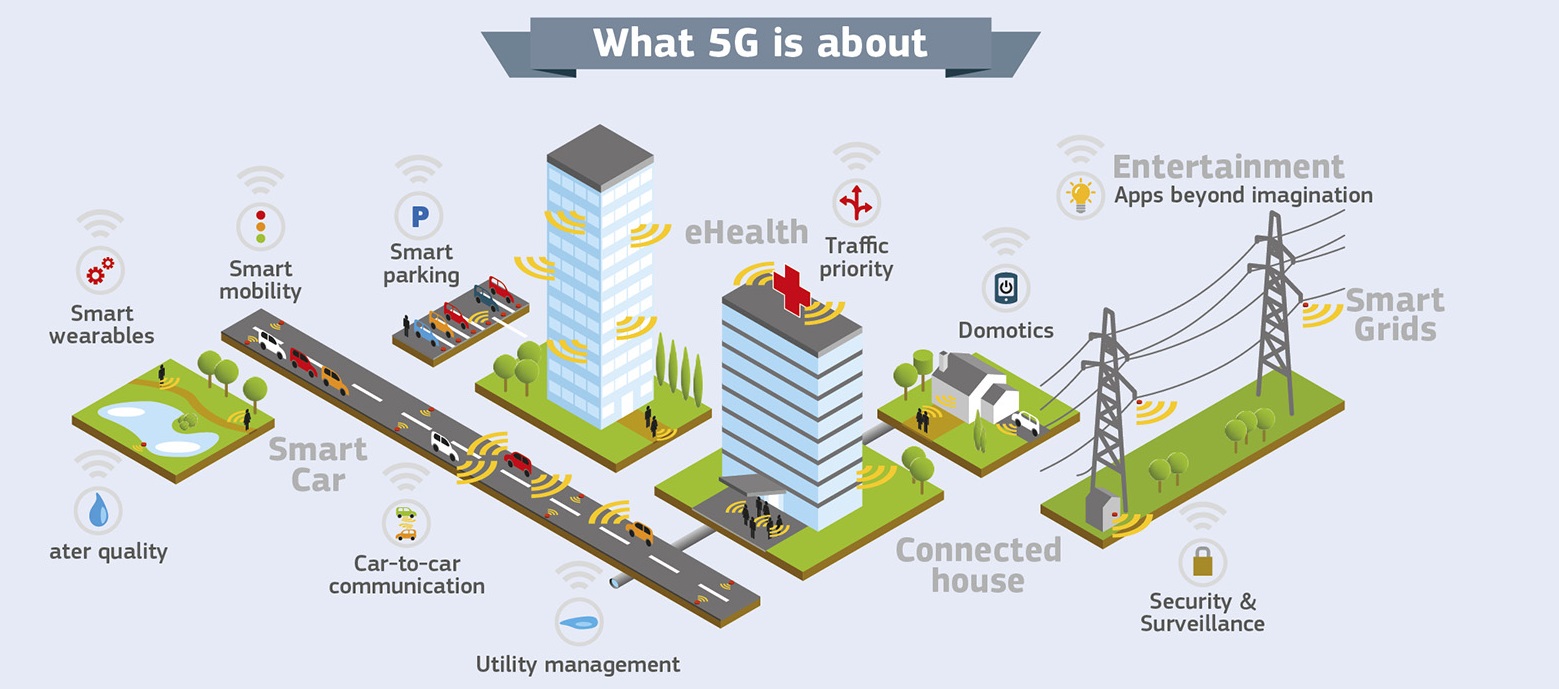
To see this we need to look at this first image and see what there is, it is all tag based, all data and all via mobile and wireless communication. Consider these elements; over 90% of car owners will have them: ‘Smart Mobility, Smart Parking and Traffic priority‘. Now consider the people who are not homeless: ‘Smart grids, Utility management, hose management like smart fridges, smart TV and data based entertainment (Netflix)‘ and all those having smart house devices running on what is currently labelled as Domotics, it adds up to Megabytes of data per household per day. There will be a run on that data from large supermarket to Netflix providers. Now consider the mix between Comcast and 21 Century Fox. Breaking news, new products and new solutions to issues you do not even realise in matters of eHealth, road (traffic) management and the EU set 5G Joint-Declarations in 2015, with Japan, China, Korea and Brazil. The entire Neom setup in Saudi Arabia gives way that they will soon want to join all this, or whoever facilitates for the Middle East and Saudi Arabia will. In all this with all this technology, America is not mentioned, is that not a little too strange? Consider that the given 5G vision is to give ‘Full commercial 5G infrastructure deployment after 2020‘ (expected 2020-2023).

With a 740 million people deployed, and all that data, do you really think the US is not wanting a slice of data that is three times the American population? This is no longer about billions, this will be about trillions, data will become the new corporate and governmental currency and all the larger players want to be on board. So is Disney on the moral high path, or are the requirements just too far from their own business scope? It is perhaps a much older setting that we see when it is about consumer versus supplier. We all want to consume milk, yet most of us are not in a setting where we can be the supplier of milk, having a cow on the 14th floor of an apartment tends to be not too realistic in the end. We might think that it is early days, yet systems like that require large funds and years to get properly set towards the right approach for deployment and implementation. In this an American multinational mass media corporation would fit nicely in getting a chunk of that infrastructure resolved. consider a news media tagging all the watchers on data that passes them by and more importantly the data that they shy away from, it is a founding setting in growing a much larger AI, as every AI is founded on the data it has and more important the evolving data as interaction changes and in this 5G will have close to 20 times the options that 4G has now and in all this we will (for the most) merely blindly accept data used, given and ignored. We saw this earlier this year when we learned that “Facebook’s daily active user base in the U.S. and Canada fell for the first time ever in the fourth quarter, dropping to 184 million from 185 million in the previous quarter“, yet the quarter that followed the usage was back to 185 million users a day. So the people ended up being ‘very’ forgiving, it could be stated that they basically did not care. Knowing this setting where the bump on the largest social media data owner was a mere 0.5405%; how is this path anything but a winning path with an optional foundation of trillions in revenue? There is no way that the US, India, Russia and the commonwealth nations are not part of this. Perhaps not in some 5G Joint-Declarations, but they are there and the one thing Facebook clearly taught them was to be first, and that is what they are all fighting for. The question is who will set the stage by being ahead of schedule with the infrastructure in place and as I see it, Comcast is making an initial open move to get into this field right and quick. Did you think that Google was merely opening 6 data centres, each one large enough to service the European population for close to 10 years? And from the Wall Street journal we got: “Google’s parent company Alphabet is eyeing up a partnership with one of the world’s largest oil companies, Aramco, to aid in the erection of several data centres across the Middle Eastern kingdom“, if one should be large enough to service 2300% of the Saudi Arabian population for a decade, the word ‘several‘ should have been a clear indication that this is about something a lot larger. Did no one catch up on that small little detail?

In that case, I have a lovely bridge for sale, going cheap at $25 million with a great view of Balmain, first come, first serve, and all responsibilities will be transferred to you the new predilector at the moment of payment. #ASuckerIsBornEachMinute

Oh, and this is not me making some ‘this evil Google‘ statement, because they are not. Microsoft, IBM, and several others are all in that race; the AI is merely the front of something a lot larger. Especially when you realise that data in evolution (read: in real-time motion) is the foundation of its optional cognitive abilities. The data that is updated in real-time, that is the missing gem and 5G is the first setting where that is the set reality where it all becomes feasible.

So why would we care? We might not, but we should care because we are the foundation of all that IP and it will no longer be us. It gives value to the users and consumes, whilst those who are not are no longer deemed of any value, that is not the future, it is the near future and the founding steps for this becoming an actual reality is less than 60 months away.

In the end we might have merely cared too late, how is that for the obituary of any individual?


Leave a comment

Filed under Finance, IT, Media, Science

Cheese Pizza with Oregano

I love Pizza, I hardly ever get it, merely because the people here tend to rely on Domino’s and Pizza Hut and neither tends to be a true pizza (as I personally see it). As I walked through Sydney over the last week, it dawned on me just the massive lack of actual decent Pizza places in Sydney. It is almost like they are no longer in a sustainable environment. People got used to the cheap solutions two chains bring and they call it Pizza. All the people in the neighbourhood accepted it as the real deal and now, we forgot what true awesome Pizza is like. Now, I am a little off the wall here. I love my Cheese Pizza, with the 5 cheeses and loads of Oregano on top. So when I think Pizza, I always think of the Bravo Trattoria Pizza’s at Crow’s Nest, they are my favourite! Yet, is it about pizza, or the place, or what Pizza actually is? You see, it does matter when we consider the Financial Review (at https://www.afr.com/personal-finance/italys-debt-barely-sustainable-ubs-chief-economist-20180601-h10uun), we see here what I said weeks ago and last week to some degree. When we see “Italy’s debt-to-GDP ratio of 130 per cent is “borderline sustainable”, the UBS top economist says. There is a level of the primary budget surplus which keeps debt stable, and above which you can begin to pay down your obligations, Kapteyn explains. For Italy this figure is a surplus of 1.3 per cent of GDP, versus the actual surplus of 2 per cent. It’s a skinny buffer of around 0.8 percentage points which at current debt levels “doesn’t inspire confidence”, Kapteyn says“. That is merely the tip of the iceberg. The issue is not that it is Italy, it matters more that it is one of the big four. UK, France, Germany and Italy are the large economic suppliers of a 27 nation bloc where they basically represent well over 50% of the EU economy, the fact that they all are in deep debt does not help and the fact that the UK is getting out, or is that ‘was trying to get out‘? So when we see add the issues of the UK and now we see how the Italian issues are growing and France is not far behind. A 27 nation failure due to the inability to set proper budgets, deal with debt levels and add to that a failed economy jump start that is now close to 3 trillion Euro printed with no real prospects to pay for any of it. That revelation is why Italy seems to be vacating the union. The action by President Sergio Mattarella by rejecting the Eurosceptic finance minister and put in his place Giovanni Tria a pro-EU professor. This is perhaps the first setting where we see that voting is no longer an issue for any government, the holier than thou setting of protecting the Euro and the EU against all odds, whilst those in the EU commissions are massively overpaid is setting the foundation of a dangerous mindset. The issue that the AFR is bringing to light is “markets are not pricing in the risk of an Italian exit, they are repricing the risk of a Italian default“. I always rated the Iexit (aka iLeave) setting very low, the two populist parties in charge was not that realistic in 2016 and when Marine Le Pen was ‘surpassed’ by a former investment funds manager we were all wondering what would come next and I thought it would lower the chances of the populists in Italy. And the news is not getting any better. We see that with “The European economy hit a wall over the final months of last year, with growth dropping from a quarterly growth rate of 0.7 per cent to more like 0.4 per cent. Economists are unclear of the reasons for the slowdown, but broadly believed the European economy would quickly rebound“, the issue I personally see is ‘broadly believed the European economy would quickly rebound‘, not the slowdown. You see there is no evidence that there is an actual quick rebound. There is every chance that there will be a rebound, but it will not be quick. The fact that these so called experts are all thumbs when it comes to their forecasting and with 0.3% unaccounted for, we can see that they are in the dark or playing the bad news cycle. I personally believe it to be the second one. And the Italian issues are increasing. Not merely the debt settings, it is a changed political landscape. Even as Paolo Savona was replaced by Giovanni Tria, there is still “Mr Di Maio will be vice-premier and minister for labour and economic development, including trade policy. Matteo Salvini, head of the League, will also be vice-premier and interior minister in charge of immigration“. This we got from the Financial Times (at https://www.ft.com/content/79cf905c-64a8-11e8-90c2-9563a0613e56). This duo is going to be a lot more important than even I initially thought. They now have a handle on labour economic development and immigration will see larger changes. There is no way to predict whether that is good or bad. If we listen to people like George Soros we are instantly rejecting liberalism, because it is easy to be a liberalist when you are a multi billionaire, yet he had no issues to short sell US$10 billion worth of Pound sterling, earning a billion in the process during the 1992 Black Wednesday UK currency crisis. He did nothing wrong, he played the system when he could and make a billion. Things like that never go away and he must regard the EU zone as a very profitable short sell opportunity, which makes whatever he is trying to do dangerous, so in that light all his settings for “Best for Britain pushes for second referendum on Theresa May’s deal with EU“, a cause he is backing is very dangerous. In this by pushing the UK away from Brexit, the pressure on Italy decreases. The dangers become that irresponsible spending in the big four can go on for several more years and there is no way to control the ECB and their puppet masters. Unelected people deciding on the descent of financial futures in 27 nations that is how I personally see it. You can agree or disagree, yet ask yourself when was the last time that any European got a decent explanation on who of how the 3 trillion euro spend was going to be dealt with? You see over a decade in an economic setting that is close to the late 90’s, whilst keeping strict austerity in play all over Europe. There is quite literally no way that this will happen, because politicians will adjust their policy towards any speculative proclaimer of ‘the European economy would quickly rebound‘ economists, whilst not prosecuting them when they get it wrong (merely because making any claim of expectation is not a crime, is it?). A setting that the people have no chance of winning, hell, they won’t ever be able to break even on this. This shows that Brexit will be a hard, but the better way to go. When billionaires start proclaiming how bad it is and how ‘we all’ can get a better deal that is when you become afraid for your life and that is what is at stake. And we see this in the Australian Financial Review with ““creeping into the market”, Kapteyn says – “a potentially dangerous one”. After the glory days of 2017 in which investors basked in a globally synchronised upswing, markets are now faced with the potential return of the two-speed world economy: the US vs the rest“, so when we get “America’s economy is growing around 3.5 per cent; some independent analysts estimate growth as fast as 4 per cent. Europe is “at best” growing by 2 per cent“, that shows the dangers, because as George Soros is getting the winnings, the other players do not, from my point of view it is a form of leeching, leeching Europe dry for the term of a generation or better. You see again it is a personal view, it is why Best for Britain is getting the support, it is about delaying Brexit at the very least for as long as possible, merely because it stops the game people like George Soros are likely to be playing and when that stops Europe can start bringing things about, hopefully for the better, especially as the ECB will be forced to print money for all kinds of dubious reasons, dubious because kick-starting the economy after you printed 3 trillion to try it twice is just ridiculous, that money has to be paid back at some point and everyone is in denial about the latter part.

Yet this is still about Italy, not the UK. You see, Italians want what is best for Italy and I am fine with that, I believe in a healthy sense of national pride. Yet with “Italy’s debt-to-GDP ratio of 130 per cent is ‘borderline sustainable’” they are facing an ugly truth, Italy needs to face 5-15 years of Austerity, yet with the ECB trying to economically equalise Europe, at the cost of the big four, so it amounts to Italy trying on top of an economy for 60 million Italians, whilst they are weighted with invoices for close to 250 million Europeans who can’t be bothered to get their house in order. it amounts to giving an addicted gambler $500 whilst they are only allowed to use $10 for gambling, you tell me how long it takes for things to go really wrong, and that is pretty much a given on this situation. It was seen in the Netherlands 2012 and 2013, and now we see, when we look at the Dutch government statements with in September 2017 we see “The economy will grow by 3.3% in 2017 and a projected 2.5% in 2018“, we see the EU commission giving the Netherlands a ‘mere’ 3.2% last month for that same timespan. Now the 0.1% is actually pretty good, but it is still dangerous when it is a 0.1% in Italy, the issue is seen when we see that the Netherlands has a 65% debt level against Italy at 130% of GDP, and the Dutch are actually in a much better position, so the 0.1% is no actual pain level. Portugal, Spain, Greece, Belgium and Italy all have debt levels well over 100% of GDP, several other nations are somewhere between 60% and 80% of GDP, whilst France is at 99.8%. It is the debt levels that are excellent for banks and not so good for the people. You see, when the big four are required to pay €254 billion in interest each year and that is just the large 4, how do you think that this gets paid for? A decade of inability to set a proper budget and all this is before we consider the €3,000 billion that the ECB printed for what they call Quantative Easing. That is what Italy needs to get away from and at 135% they have the hardest job of all. So when you see that all that money goes all to the banks, short sold loans that they never had the money for to pay for can you see just how dangerous the George Soros setting is in all this? It all impacts Italy to some degree. These are not merely the facts; there is also presentation, representation and misrepresentation. The issue is in the Australian Review, it is the view of Arend Kapteyn. Yet where is he at when he gives us “We are only now at the beginning to find out how responsible or irresponsible [the new coalition government] are going to be on the fiscal side“, you see, the setting then becomes what is irresponsible? Being not pro Eurozone, being forced to default whilst the alternatives are just too unacceptable for the Italian people? So is he the pro greed setting, or the pro solution setting, because with such debt levels we can almost unanimously accept that these two choices are mutually exclusive. The most interesting political part is that Enzo Moavero Milanesi is now Minister of Foreign Affairs. I would have thought that the populists wanted that part for themselves, the fact that this post is now with an Italian independent is an interesting choice, if the populists can work with this setting and use it to maximise their economy by setting new option and opportunities, Italy gets an optional path where minimised immigration and maximised economy could have a setting where the Italian unemployment rates could fall to a number below 10% over the next 24 months (highly speculative on my side). If they pull that off, the entire euro sceptic setting could grow a lot faster than would have been possible with Paolo Savona in the mix.

No matter how you slice the Pizza, the factual and actual quality Italian dish is under massive amounts of pressure on several sides and any Italian thinking that their life will get better in the short run is just gobbling down a [Unnamed Franchise] Pizza, bland food that look like a UFO and tastes not as great. The fact is that like Germany did earlier this decade, Italy will know 5-10 years of hardship, yet when persevered Italy could have an actual growing economy for a much longer time, something to look forward to (if you are Italian). Can this government pull it off? That is hard to say because it has been shown that the actions of the ECB are close to non-stoppable and that will still impacts the bottom line. It is good for America and George Soros in the short term, yet after that they will not care and Europe will not be going anywhere ever soon. That danger is just ignored all over the place. Just 2 days ago the Financial Times also gave us “There are still two weeks to go before Riga, but naming an end date for QE right now would be like the ECB shooting itself in the Italian boot,” said Carsten Brzeski, economist at ING-DiBa. “The Italian situation has tilted the balance towards the doves [and] clearly calls for the ECB to keep its options open and even to make clear that they will extend QE at least until December” (at https://www.ft.com/content/dd6b5d70-6413-11e8-90c2-9563a0613e56), which is already an extension of well over a year. so when we see “The ECB has pledged to reinvest an average of €15bn a month over the first four months of next year, using the proceeds of government bonds bought under QE that have now matured” in that same article, we need to consider ‘bonds that have now matured‘, so that danger is seen in the Spanish setting where we see from some sources: “Spain will have refinancing requirements that exceed €300 billion per annum before 2022. In 2018, 41.2 billion euro, in 2019, 82.4, in 2020 83.9 and in 2021 58.5 billion euro, with 60.4 billion maturing in 2022“, so this fiscal year Spain will be required to find €41 billion, or increase taxes or cut services, and it will be twice that amount next year around, so how exactly is Spain in a setting to get the economy back whilst the debts are rising beyond normal control? Italy faces “84 billion euro maturities in 2018, 161 billion in 2019, 164 billion in 2020 and 172.5 billion euro in 2021” do the Italian people know that they are in such deep and hot waters? I wonder, and when they get confronted with that part of the bad news cycle, what will the previous and opposition then proclaim? I wonder if we will see true honest coverage on that blame game. I will order a decent Pizza to watch that unfold, because there are merely the two larger players in the EU-debt zone bloc confronted with the hardships that will hit them hard. Pushing these debts forward is just not a workable solution, not when the debt exceeded 130% of GDP, if you doubt my words, just talk to the average Greek in Athens and ask him how his quality of life is nowadays.

So as you wanted that your slice of life included a slice of pizza, consider the 99% in Italy who soon face the reality that they are no longer able to afford that for a long time to come.


1 Comment

Filed under Finance, Media, Politics

It’s a kind of Euro

In Italy things are off the walls, now we see ‘New elections loom in Italy‘ (at https://www.theguardian.com/world/2018/may/27/italys-pm-designate-giuseppe-conte-fails-to-form-populist-government), where it again is about currency, this time it is Italy that as an issue with ‘country’s Eurozone future‘. In this the escalation is “the shock resignation of the country’s populist prime minister-in waiting, Giuseppe Conte, after Italy’s president refused to accept Conte’s controversial choice for finance minister“, there is a setting that is given, I have written about the folly of the EU, or better stated, the folly it became. I have been in favour of Brexit for a few reasons, yet here, in Italy the setting is not the same. “Sergio Mattarella, the Italian president who was installed by a previous pro-EU government, refused to accept the nomination for finance minister of Paolo Savona, an 81-year-old former industry minister who has called Italy’s entry into the euro a “historic mistake”“, now beside the fact that an 81 year old has no business getting elected into office for a number of reasons, the issue of anti-Euro Paolo Savona have been known for a long time. So as pro-EU Sergio Mattarella decides to refuse anyone who is anti-EU in office, we need to think critical. Is he allowed to do that? There is of course a situation where that could backfire, yet we all need to realise that Sergio Mattarella is an expert on parliamentary procedure, highly educated and highly intelligent with decades of government experience, so if he sets his mind to it, it will not happen. Basically he can delay anti-EU waves for 8 months until after the next presidential elections. If he is not re-elected, the game changes. The EU has 8 months to satisfy the hearts and minds of the Italian people, because at present those options do not look great. The fact that the populist choices are all steering towards non-EU settings is a nightmare for Brussels. They were able to calm the storm in France, but Italy was at the tail end of all the elections, we always knew that, I even pointed it out 2 years ago that this was an option. I did mention that it was an unlikely one; the escalating part is not merely the fact that this populist setting is anti-EU; it is actually much stronger anti Germany, which is a bigger issue. Whether there is an EU or not, the European nations need to find a way to work together. Having the 2 larger players in a group of 4 large players is not really a setting that works for Europe. Even if most people tend to set Italy in a stage of Pizza, Pasta and Piffle, Italy has shown to be a global player and a large one. It has its social issues and the bank and loan debts of Italy don’t help any, but Italy has had its moments throughout the ages and I feel certain that Italy is not done yet, so in that respect finding common ground with Italy is the better play to make.

In all this President Sergio Mattarella is not nearly done, we now know that Carlo Cottarelli is asked to set the stage to become the next Prime Minister for Italy. The Italian elections will not allow for an anti-EU government to proceed to leave the Euro, Sergio’s response was that: “he had rejected the candidate, 81-year-old Eurosceptic economist Paolo Savona, because he had threatened to pull Italy from the single currency “The uncertainty over our position has alarmed investors and savers both in Italy and abroad,” he said, adding: “Membership of the euro is a fundamental choice. If we want to discuss it, then we should do so in a serious fashion.”” (at http://news.trust.org//item/20180527234047-96z65/), so here we all are, the next one that wants to leave the Euro and now there is suddenly an upheaval, just like in France. Here the setting is different, because the Italian President is Pro-EU and he is doing what is legally allowed. We can go in many directions, but this was always going to be an unsettling situation. I knew that for 2 years, although at that stage Italy leaving the EU was really small at that stage. Europe has not been able to prosper its economy, it merely pumped 3 trillion euro into a situation that was never going to work and now that 750 million Europeans realise that they all need to pay 4,000 Euro just to stay where they are right now, that is angering more and more Europeans. the French were warned ahead, yet they decided to have faith in an investment banker above a member of Front Nationale, Italy was not waiting and is now in a stage of something close to civil unrest, which will not help anyone either. Yet the economic setting for Italy could take a much deeper dive and not in a good way. The bigger issue is not just that Carlo Cottarelli is a former International Monetary Fund director. It is that there are more and more issues shown that the dangers are rising, not stabilising or subsiding and that is where someone optionally told President Sergio Mattarella to stop this at all costs. Part of this was seen in April (at https://www.agoravox.fr/actualites/economie/article/a-quand-l-eclatement-de-la-203577). Now the article is in French, so there is that, but it comes down to: “Bridgewater, the largest hedge fund (investment fund – manages $ 160 billion of assets) of the world has put $ 22 billion against the euro area  : the positions down (“sellers”) of the fund prove it bet against many European (Airbus), German (Siemens, Deutsche Bank) French (Total, BNP Paribas) and Italian (Intesa Sanpaolo, Enel and Eni) companies, among others. The company is not known to tackle particular companies, but rather to bet on the health of the economy in general“. So there is a partial setting where the EU is now facing its own version that we saw in the cinema in 2015 with The Big Short. Now after we read the Intro, we need to see the real deal. It is seen with “Since 2011, € 4 billion has been injected into the euro zone (that is to say into commercial banks) by the European Central Bank (ECB), which represents more than a third of the region’s GDP. The majority of this currency is mainly in Germany and Luxembourg, which, you will agree, are not the most difficult of the area. More seriously, much of this liquidity has not financed the real economy through credit to individuals and businesses. Instead, the commercial banks have saved € 2,000bn of this fresh money on their account at the ECB until the end of 2017 (against € 300bn at the beginning of 2011) to “respect their liquidity ratio” (to have enough deposit in liquid currency crisis).As in the United States, quantitative easing allowed the central bank to bail out private banks by buying back their debts. In other words, the debts of the private sector are paid by the taxpayer without any return on investment. At the same time, François Villeroy de Galhau, governor of the Banque de France, called for less regulation and more bank mergers and acquisitions in the EU, using the US banking sector as a model.” Here we see in the article by Géopolitique Profonde that the setting of a dangerous situation is escalating, because we aren’t in it for a mere 4 billion, the Eurozone is in it for €3,000 billion. An amount that surpasses the economic value of several Euro block nations, which is almost impossible to keep with the UK moving away, if Italy does the same thing, the party ends right quick with no options and no way to keep the Euro stable or at its levels, it becomes a currency at a value that is merely half the value of the Yen, wiping out retirement funds, loan balances and credit scores overnight. The final part is seen with “The ECB also warns that the Eurozone risks squarely bursting into the next crisis if it is not strengthened. In other words, Member States have to reform their economies by then, create budget margins and integrate markets and services at the zone level to better absorb potential losses without using taxpayers. A fiscal instrument such as a euro zone budget controlled by a European finance minister, as defended by President Emmanuel Macron, would also help cope with a major economic shock that seems inevitable. Suffice to say that this is problematic given the lack of consensus on the subject and in particular a German reluctance. The European Central Bank has issued the idea late 2017, long planned by serious economists, to abolish the limit of € 100,000 guaranteed in case of rescue operation or bankruptcy bank (Facts & Document No. 443, 15/11 / 17-15 / 12/17 p.8 and 9)” (the original article has a lot more, so please read it!

It now also shows (read: implies) a second part not seen before, with ‘The European Central Bank has issued the idea late 2017, long planned by serious economists, to abolish the limit of € 100,000 guaranteed in case of rescue operation or bankruptcy bank‘, it implies that Emmanuel Macron must have been prepped on a much higher level and he did not merely come at the 11th hour, ‘the idea issued late 2017’ means that it was already in motion for consideration no later than 2016, so when Marine Le Pen was gaining and ended up as a finalist, the ECB must have really panicked, it implies that Emmanuel Macron was a contingency plan in case the entire mess went tits up and it basically did. Now they need to do it again under the eyes of scrutiny from anti-EU groups whilst Italy is in a mess that could double down on the dangers and risks that the EU is facing. That part is also a consideration when we see the quote by Hans-Werner Sinn who is currently the President of the Ifo Institute for Economic Research, gives us “I do not know if the euro will last in the long run, but its operating system is doomed“, yet that must give the EU people in Brussels the strength they need to actually fix their system (no, they won’t). The question becomes how far will the ECB go to keep the Eurozone ‘enabled’ whilst taking away the options from national political parties? that is the question that matters, because that is at play, even as Germany is now opposing reforms, mainly because Germany ended up in a good place after they enforced austerity when it would work and that worked, the Germans have Angela Merkel to thank for that, yet the other nations (like 24 of them), ignored all the signs and decided to listen to economic forecast people pretending to be native American Shamans, telling them that they can make it rain on command, a concept that did not really quite pan out did it? Now the reforms are pushed because there were stupid people ignoring the signs and not acting preventively when they could, now the Eurozone is willing to cater to two dozen demented economists, whilst pissing off the one economy that tighten the belt many years ago to avoid what is happening right now. You see, when the reform goes through Berlin gets confronted with a risk-sharing plan and ends up shouldering the largest proportion of such a machine, that mechanism will avoid the embarrassment of those two dozen Dumbo’s (aka: numnuts, or more academically stated ‘someone who regularly botches a job, event, or situation’), whilst those people are reselling their idea as ‘I have a way where you need not pay any taxes at all‘ to large corporations getting an annual 7 figure income for another 3-7 years. How is that acceptable or fair?

So we are about to see a different Euro, one losing value due to QE, due to Italian unrest and against banks that have pushed their margins in the way US banks have them, meaning that the next 2 years we will most likely see off the wall bonus levels for bankers surpassing those from Wall Street likely for the first time in history, at the end of that rainbow, those having money in Europe might not have that much left. I admit that this is pure speculation from my part, yet when you see the elements and the settings of the banks, how wrong do you think I will be in 2019-2020?

So when we go back to the Guardian article at the beginning and we take a look at two quotes, the first “As the European commission unveiled its economic advice to member states last week, the body’s finance commissioner, Pierre Moscovici, said he was hoping for “cooperation on the basis of dialogue, respect and mutual trust”“. I go with ‘What trust?‘ and in addition with ‘cooperation on the basis of dialogue merely implies that Pierre Moscovici is more likely not to answer question and bullshit his way around the issue‘ and as former French Minister of Economy he could do it, he saw Mark Zuckerberg get through a European meeting never answering any questions and he reckons he is at least as intelligent as Mark Zuckerberg. when we see “Cecilia Malmstöm, said “there are some things there that are worrying” about Italy’s incoming government“, she sees right, the current Italy is actually a lot less Euro minded than the setting was in 2016-2017, so there is a setting of decreased trust that was never properly dealt with, the EU commissions left that untended for too long and now they have an even larger issue to face. So that bright Svenska Flicka is seeing the issues rise on a nearly hourly basis and even as we see the play go nice for now, they will change. I think that in this Matteo Salvini played the game wrong, instead of altering an alternative for Paolo Savona and replace him after Sergio Mattarella is not re-elected, the game could have continued, now they are busting head to head where Matteo is nowhere near as experienced as Sergio is, so that is a fight he is unlikely to win, unless he drops Italy on a stage of civil unrest, which is not a good setting for either player.

We cannot tell what will happen next, but for the near future (June-September), it is unlikely to be a pretty setting, we will need to take another look at the Italian economic setting when the dust settles.


Leave a comment

Filed under Finance, Media, Politics

Holding pattern

It feels like the world is in a holding pattern, it is awaiting events and there is no news on a few fronts. The first is on gaming; a little over two weeks remain until the E3 starts, which is when the actual (official) news is given. Part of me is sad, because there have been so many leaks that I fear we already know what is coming to the larger extent. In this I got confronted with more issues surrounding the Xbox One, and even as they proclaim it is going good, I am of the mind that good just is not it, it will not even be close to it. If the Business Insider is to be believed, there will be a lot more bad news coming to the Xbox One owners, the article (at https://www.businessinsider.com.au/playstation-4-vs-xbox-one-e3-2018-5) gives us “‘Crackdown 3’ is an exclusive Xbox One game, meaning it will work on the One X and One S“, implying that this is the first game that no longer supports the Xbox One. Pushing people into upgrading to new hardware? I see that as one more nail in the coffin called Xbox. The information (at https://www.xbox.com/en-AU/games/crackdown) is equally sketchy, yet that game cover does not have the HDR part, implying that there might be two editions, one for the Xbox One X and one for the normal Xbox, which would be very acceptable, implying that they are soft pushing people to upgrade their console which is a fair and acceptable business practice. I wanted to be certain and no misinform you, so far there is no real mention on it, yet there seems to be a version on HDR (implying Xbox One S and Xbox One X only), in addition one source had another box art, yet Amazon did not, neither did a few other shops, so this could become a very large issue close to Christmas as the latest (unconfirmed) issue is that release is planned for later this year.

The PlayStation has similar holding patters, we know the four larger titles and that is it on the exclusive front, implying that both will be a little more dependent on the makers like Bethesda, Ubisoft and EA to hold the candles for unexpected news. I am particularly interested in what Ubisoft brings. I think it was 2 years ago, when they truly hit a home run at the E3, in that time we all got overwhelmed by Ubisoft that had cleaned up its act. AC Origin exceeded everyone’s expectations (including mine) and playing on a much higher level the second time around had been fulfilling in a way I never expected. In addition, even as I kept a distance from Far Cry 5, it shows, that for those who wanted more of the same, it did satisfy, in addition its first actual setting towards open gameplay was a true evolution, so those who wanted ‘more of the same‘ got a lot more than they bargained for and that is a good thing. So we have no real idea what Ubisoft is bringing and that is good, knowing all the things that matter beforehand is not good, it takes away the WOW factor in announcements and I think the French know that. In that same setting we also look forward to Bethesda, who apart from last year tends to make homeruns, they focused on the VR setting last year and when you are not into that you tend to feel left out a little. So here’s hoping for this year. Most are hoping for a new Elder Scrolls (non-online) game announcement, which is a stretch and unlikely. I am still proud of having made an initial setting for Elder Scrolls VI: Restoration, but it seems that Bethesda had other ideas. Fair enough, it is their IP. Yet we recognise that Skyrim was 7 years ago from initial launch, we should give the cautious setting that it is time to WOW us with a new one, especially after 7 years. Fallout 4 is getting towards its 3rd anniversary, yet with the season pass giving us so much, we still feel decently satisfied for now. I personally feel that a Fallout 5 is at least 2 years away from a clear announcement and for those overwhelmed Fallout shelter can keep your blood flowing on mobile and a few other devices, the fact that it is free and no real purchase is needed just makes it an amazing extra. And that is all for the games section at present.

Rocket Men

There is a man, a Rocket Man, it is not the man in the song, not the quote from the movie; no, as we see (at https://home.treasury.gov/news/press-releases/sm0392), we are given the US Treasury setting: “the U.S. Department of the Treasury’s Office of Foreign Assets Control (OFAC) designated five Iranian individuals who have provided ballistic missile-related technical expertise to Yemen’s Huthis, and who have transferred weapons not seen in Yemen prior to the current conflict“, the issue I have voiced for a while, again I have been proven correct, and even as the media at large was all about calling Saudi Arabia names and just blindly staring at the victims (which is not entirely wrong), we are treated to “Treasury is targeting five Iranian officials who are associated with the IRGC-QF and Iran’s ballistic missile programs. Their actions have enabled the Huthis to launch missiles at Saudi cities and oil infrastructure. They have also disrupted humanitarian aid efforts in Yemen, and threatened freedom of navigation in key regional waterways“. I agree to some extent with Treasury Secretary Steven T. Mnuchin, I do not think that he is entirely correct. To give understanding to my statement, we need to look at the 5 names.

Mahmud Bagheri Kazemabad and Mohammad Agha Ja’fari who were acting for or on behalf of the IRGC Aerospace Forces Al- Ghadir Missile Command. Javad Bordbar Shir Amin and Mehdi Azarpisheh who are members of a special forces unit of Iran’s Revolutionary Guards responsible for their extraterritorial operations, they report directly to the Supreme Leader of Iran, Ali Khamenei. In addition there is Sayyed Mohammad Ali Haddadnezhad Tehrani, who is allegedly providing, financial, material, technological or other support for, or goods or services in support of, the IRGC Research and Self-Sufficiency Jehad Organization. I use allegedly because without the clearance levels I cannot vet the final part of data there. I believe that Sayyed Mohammad Ali Haddadnezhad Tehrani has at least partially and most likely fully deployed Chinese walls to isolate him away from that, yet there are at least three names missing, these people are part of the training and deployment side of the missiles. It is my personal opinion that Javad Bordbar Shir Amin and Mehdi Azarpisheh could not have arranged that by themselves, they are without doubt involved, but on that level they had higher level help, not merely the smuggling of the missiles, the deployment, training and smuggling of the missiles is specific knowledge, it is very specialist knowledge and in that (at least) three names are missing. That mess is actually growing. It is seem in the first part in Bloomberg (at https://www.bloomberg.com/news/articles/2018-05-23/doubts-emerge-at-eu-steps-to-counter-u-s-iran-sanctions-threat), in all this we see at the end “The commission is also looking at creating special purpose vehicles to allow transactions with Iran, the people said. The effectiveness may also depend on whether the U.S. treats them as a circumventing tool, one of the people said. “If in the end jobs will be lost in Germany, one has to ask whether this is the right thing to do,” German Economy Minister Peter Altmaier said in a TV interview last week“, it is an issue! It is an issue, because mere open source intelligence and common sense gave me the inside view that have been proven correctly, the entire Iranian mess as we see now, whilst the people in the Bloomberg article are all about acting or is that not acting) because jobs are lost, whilst the entire missiles on the attacks on the Saudi civilian population is just ignored as well as the plight to the Yemeni civilian population because of the acting of Iran, the EU has a much bigger problem and it is time that the people start thinking this through. From my (an admitted optional flawed view) is that the Iranian mess started with Sayyid Ruhollah Mūsavi Khomeini and never stopped being an issue, which amounts to January 1st 1980 being the setting for the mess we are in now. I am willing to admit that if the US and UK had left Iran alone in the actions of 1953, we might not be in this mess, but that is too much water under the bridge, what is the setting is that the BBC (at http://www.bbc.com/news/world-middle-east-44230983) gives us Ayatollah Khamenei’s main conditions.

  • European powers should protect Iranian oil sales from the US sanctions and continue buying Iranian crude.
  • European banks should safeguard trade with Iran.
  • The UK, France and Germany should pledge not to seek negotiations on Iran’s ballistic missile programme and regional activities, both demanded by Washington.

The supreme leader said that if the three counties were unable to meet these demands, Iran would resume its enrichment of uranium. this translates to ‘do not interfere in Yemen‘, which is a regional activity, the fact that EU politics seems to be very willing to do that makes for more concern, in addition, when we look at the newspapers in the EU, we are left in the dark on several issues, which is also a concern. They are all focused on the Saudi attacks, the Yemen events, but not on the Iranian support setting for firing missiles into Saudi Arabia, that seems to be off limits and that is a massive issue as I personally see it.

So here to is the beginning of a holding pattern, an issue that is stretched over time, allowing for non-activity to rule the setting. Now, there is a twofold part, one is positive, because there is a partial setting where waiting the next move makes perfect sense, yet the numbers give us that thousands are getting exposed to Cholera and famine, not a combination you want to see, because at that stage, even with medical hep, the chances for surviving are not that great to begin with. Even as the people on Facebook are hiding behind “Stop the Saudi-led war on Yemen that kills civilians and destroys the country infrastructure“, the bulk of everyone remains in denial of Iran’s part in all this and the fact that Yemen is used as a stage to attack Saudi Arabia whilst Iran relies on ‘I know nothing‘ is a setting that is much worse because those are the people who the EU are trying to keep their business alive within a nuclear setting, whilst there have been clear indication that Uranium enrichment is an event that will be happening in Iran. Yes, that makes all the sense in the world (implies sarcasm).

The holding patterns cannot be fought, because acting is not always the best thing to do, yet the entire Yemeni situation started in March 2015, well over three years ago, so I think it is time for the EU to actually actively respond to the actions of Iran, they have had enough time and intelligence to act. Their non-actions at present should be regarded as beyond cowardice, cowardice to facilitate to those who need a deal, who need financial blessing (read: greed). To illustrate this, WikiLeaks gave us in 2007,

In any case, France is prepared to “go beyond” multilateral Iran sanctions. A/S O’Brien suggested that the GOF make public statements about the risks of doing business with Iran and the recent decisions of major European financial institutions to cut off Iranian business. France is currently developing new legislation to criminalize arms proliferation and proliferation finance, above and beyond its criminal penalties for violations of UNSCR 1737 and 1747. O’Brien passed GOF officials two Treasury non-papers on Iranian state-owned Bank Melli’s proliferation-related activities and the Islamic Revolutionary Guard Corps (IRGC) and IRGC-Qods Force’s extensive use of the Iranian state-owned banking network. Regarding private sector outreach, A/S O’Brien met with senior officials at Paris-based Banque Natixis to discuss the risks of doing business with Iran“, for the forgetful, that was when Mahmoud Ahmadinejad was in office, so there had been a massive drive to get more ‘revenue’ for the Natixis board of directors. I guarantee you that it goes downhill from there, the settings we see are not great, it never was, yet the need for the EU to do something and not as a 27 nation block keep on sitting on their ignoranus was not what the people were signing up for. That evidence is seen at the UN (at https://www.un.org/press/en/2018/sc13225.doc.htm), in here we see “attacks against civilian targets in Saudi Arabia were unacceptable and raised concern over the Panel’s findings that Iran had provided short‑range missiles and unmanned aerial vehicles, in breach of paragraph 14 of resolution 2216 (2015).  Urging the Council to stand firm against such violations, he said that while the United Kingdom had sought to ensure a balanced and impartial text, it also had not shied away from calling out those who had violated international agreements“, in that, Russia hid behind “The Russian Federation’s representative, also speaking before the votes, said he could not support the United Kingdom‑sponsored draft, as he did not agree with its inclusion of unverified information. Assessing the Panel of Experts’ work in the manner mentioned in that draft was misguided“, so whenever a Russian firm approaches Saudi Arabia for a Neom or Vision 2030 project, we should make sure that the Saudi officials are reminded of the SC/13225 meeting on 26th February 2018. I should see if I can get an opportunity there too, my bank balance is really really low at present. So in the end we all act on economic needs, the only difference is that I am doing it upfront (making it no longer a reality), but if I can stay honest, why not the elected officials that make well over 3000% of what I end up with?

Is that not an interesting question too?

Have a great day!


Leave a comment

Filed under Finance, Gaming, Media, Military, Politics

Price of freedom

What is exactly the price of freedom? We hear it all the time. Certain things must be done so that we can remain free. You can hear it in the US, the UK, France, the Netherlands, Australia even in New Zealand it can be heard (not just from the sheep). No, it is that currency, freedom that is the question. You see, what exactly is that price and what does every nation have to pay, so that they can be free. When was the last time you considered that part?

When was the last time you got a clear instruction on how to launch a missile so that it lands EXACTLY in what the Houthi’s call “Two ballistic missiles were fired on Saturday evening from Yemen into Saudi Arabia, allegedly targeting Khamis Mushait, a city in the south-west of the country, the coalition forces announced“, whilst in the Saudi Gazette we see: “the other failed to target any populated areas of the city after landing in a desert area“. Now consider the claims we have seen in the past weeks on how they were targeting specific places in Riyadh, which is several times the distance that we saw approached now and the Houthi’s cannot get that right 50% of the time. So when we see “Missile launched at Saudi capital, Houthis claim responsibility“, what are they actually targeting, are they targeting anything? I believe that there are two kind of teams working in Yemen, an Iranian and a Houthi; the better shots were clearly Iranian and with the quote ““This hostile act carried out by the Iranian Houthi militia proves that the Iranian regime is still providing the terrorist Houthi armed militia with qualitative capabilities…with the main objective of threatening the Saudi Arabian, regional and international security,” Al-Malki stressed in the statement.”, the statement is not wrong, but it is not correct either a I personally see it. I think that the Iranians are actively training Houthi troops, so when we realise that they are intentionally firing into dense populated civilian areas. Why is there not a much stronger response from Europe? It was only yesterday that the independent reported (at https://www.independent.co.uk/news/world/middle-east/iran-nuclear-deal-latest-eu-donald-trump-sanctions-miguel-arias-canete-a8359126.html), that ‘it remains committed to accord despite Trump’s withdrawal‘, so that is the price of freedom, a nuclear deal with a nation committed to act in terrorist ways via puppets. The question becomes, what is this so called freedom worth to you, because when you are called on the accountability of what your politicians are doing, are you ready to pay that bill?

In this regard, the Conversation (at http://theconversation.com/trumps-high-stakes-gamble-on-the-iran-nuclear-deal-could-work-96449), offered an interesting thought. With “Though Israel provided a great deal of proof that Iran had lied about its nuclear program in the past, no evidence was offered that Iran was continuing the past record of deceit. The vast majority of experts agree that there is a greater likelihood of an arms race in the Middle East without the agreement than with it“. The statement is more important than you think. You see in the first we get ‘Iran had lied in the past‘, we also get ‘with a nuclear deal there is a smaller chance of nuclear arms acceleration‘ and ‘there is currently no evidence that Iran is currently acting in falsehood‘. They are important because if they lied then, what is stopping them from lying now? There is evidence of Iran acting in falsehood when we look at Yemen, now we have a ballgame, because any evidence of any level of nuclear advancement is a signal for Saudi Arabia to do the same thing, they clearly stated that. The conversation is in the belief that a nuclear deal is better, yet they call this not on the setting it is in, they are now about: ‘There is a chance the re-imposition of sanctions could work. However, it is a high-risk gamble‘, it is set as ‘a possible defence of withdrawal’, it was not about the withdrawal, it is about the nuclear setting where Iran will do what it pleases as it has done so in the past, allowing Uranium into Iran, whilst all players agree that monitoring precise Uranium numbers is not an actual reality, and with both Saudi Arabia and Israel on the firing line, it is not a high stakes gamble that they are willing to make. And leaving the decision of such a gamble with people who are not on the firing line is folly, because they pretty much have nothing to lose, in the worst case, their ego’s get to take on for the team. Explain to me how that was ever going to be a good idea? It gets even worse when we consider that President Rouhani is only in charge as long as the clergy and military agree on his actions, how exactly is that called being in charge? We get this from the NY Times on May 9th, where we see “Iran’s supreme leader on Wednesday hinted that his country might step up its nuclear program, signalling a possible escalation in an already volatile relationship with Washington after President Trump announced he was pulling the United States out of the 2015 nuclear deal”. So that is an outcome that the clergy decided on (apart from their advanced degrees on nuclear physics)? The stated issue by Ayatollah Khamenei is a dangerous one, in light of other materials, there is an increased issue that this deal was not a good idea from the very start.

I still believe that removing the Iranian navy is a first move, not only does it hurt their morale, it sets the Iranian clergy directly in opposition against the military, merely because the clergy thought their side to be invulnerable, there is nothing as uncommunicating as a clergy that knows that they are a direct target. They become the axial in a blame game, a good place for Iran to be in internally (for us). The biggest Issue I saw was not on some Iranians, merely on that a future president could end up being another Mahmoud Ahmadinejad and as such the escalations begin again, yet now that person has nuclear options not a thought you would ever be willing to give any extreme Iranian president.

The issue is not merely the nuclear deal, it is Europe as a whole. When we see “Miguel Arias Canete, the European commissioner for energy and climate, said the 28-nation bloc, once the biggest importer of Iranian oil, also hoped to boost trade with Tehran“, they are ‘hoping‘ to boost trade. This is merely an economic necessity, the European economy is reported to be good, but now consider, it is 1941 and you are willing to deal with Nazi Germany, just to look economically better. Make sure you see the 1941 reference; this is no reflection on today’s Germany. Boosting trade with Iran comes at a price. Now consider that this has been going on for a year and now Iran states: “I would love to do this another three years, yet my good friend Turkey should be allowed in the EU“, now what will happen? A nation that should by the EU’s own standard never be admitted is now optionally a new EU nation. In that part when we consider the quote: “Mr Salehi said Iran had several options, including resuming its 20 per cent uranium enrichment if the European countries failed to keep the pact alive. He said the EU had only a few weeks to deliver on their promises“, this alone is an issue, because it is feasible that Russia has been delivering the hardware needed to an undisclosed location, now setting a different stage. In all this the EU is so willing to set the price of freedom in the basement, whilst knowingly endangering both Saudi Arabia and Israel.

The nightmare scenario

The nightmare scenario is not that Iran becomes nuclear; no it is the same issue when we look back to the era of Nazi Germany. I still personally believe that the State If Israel got created in an effort to get the blood rage that would have haunted Europe for decades off the streets, that danger was very real in 1945-1948. The Dutch NSB members, the Germans in general, we also get the quote “This was a time of often enthusiastic collaboration with the Third Reich, as French police and paramilitary organisations were among the many who rounded up ‘enemies of the state’ and sent them to Germany for extermination.” (I think that this was merely part of occupied France), or what we get from historian Jan Grabowski “‘Orgy of Murder’: The Poles Who ‘Hunted’ Jews and Turned Them Over to the Nazis“, at this point we have 4 countries where a people in utter rage could have persecuted Europeans for decades, that ugly reality alone and not even considering Belgium, Denmark, Italy and a few other places, on how long restorations would have additionally lasted. I am close to 100% certain that it would still be going on by the time I was born, so that image is part of all this.

The reason is that once this goes wrong, when we are optionally going to be a witness to a lynching unlike we have seen for 350 years. When this goes pear shaped and it is close to a certainty that it will go wrong, those who politicised this to happen, might in person feel what it was to be like Cornelis and Johan de Witt, who both got lynched and mutilated by the angry mob on August 20th 1672. These politicians will hide behind complications and mere uncertainties, but so did those who opposed the house of Orange, it did not end well for them.

When that happens, Europe will fall into anarchy, it will happen not because it is destined to do so, but because too many politicians have been trying to sell a bill of goods and there will be escalating levels of mistrust and anger. In this it will not matter whether Saudi Arabia or Israel will get hit, the hit will be enough to make every European politician a valid target for hunting and lynching. Their entire approach to keep every deal going whilst there is too much overwhelming evidence of the unacceptable acts by both Turkey and Iran will be the fuelling cause for it all.

After that I have no way to make any predictions, some politicians will take a long vacation in a nation without extradition the moment things go massively wrong, or try refugee status in America, but those who do not get out in time, will not have any options, they will, due to their own stupidity get hunted down.

Why?

That question is actually a lot more important than you might think. There has been an interaction of politics and media, that has never been a secret, yet in the past there was a level of balance, now, in the age where it is all about commerce and circulation, we see a different setting, the media at large are for the lack of a better term no more than a concubine, who splits her attention between the advertiser, the shareholder and the stakeholder. None of those three are the reader by the way; they merely get introduced to what we now call ‘stories of eventuality‘, which is different from actual news. Most papers merely use what Reuters offer and work with that foundation in any way that they can. This is not a national issue; it is a global one, so when something is not actually nationally set (apart from big events), we do not get the news we get some paraphrased context. Now consider that we have had that for 3-4 days and suddenly there is a nuclear explosion in Riyadh, Jeddah, Tel Aviv or Eilat. When that happens, do you think that the people will remain calm? No, they will be scared out of their minds and all the pretty stories that the news gave, and all the politicians who hid behind ‘we do not expect this to happen’ or ‘it could be so good for us all if it works out’ will not stop a group of people who will add up to many millions, their fear will catch on and they will hunt down anyone related to the Iran Nuclear deal and the messages that they handed out. Like Johan de Witt, they will be trying to get away, but an enraged crowd of that many people cannot be avoided, the only issue is, can those who signed it see that danger in time?

Is there real danger?

That is the part no one, especially me can predict. There is too much not known and even more at times misrepresented, so it is not likely but that merely is set to the foundation of facts, and we are often not given facts, merely speculations (even I am to some degree speculating), I am trying to stay as real as possible, but in light of what I just gave, based on the founding facts that we all have been able to see around us for a few years now. When the fears of nuclear events become reality, which person will not go into fear driven panic? All that, because the politicians of today are set in a battle arena where it is all about the economy and anything that can contribute to that economy must be embraced no matter how the political setting is. That is the setting and even as there is no real stability in that setting, as we see pressure on more than one currency, we will also see the need for intense economic growth and some will give representation that Turkey give options in this, that is the first moment where failure will translate to pressure, when that happens all bets are off and in light of those sliding values, should Iran (yes, I stated ‘should’) do one stupid move in any nuclear setting we will see a different kind of fallout, we will see the kind where the bulk of 740 million Europeans will all pretty much lose it on the spot, that is the moment where we will see on how ‘speech making’ will be a hangable offense to those people, no courts, no judges, millions of hysterically enraged (enraged through fear) who will seek people to hold accountable (the blame game), that is the wrong day to be a politicians, let me tell you that much.

Now, I do not think the danger is that big, although it is directly linked to the acts of Iran, so it is not zero. The real danger is grown with the moral setting of both Iran and Turkey, the fact that some want to keep the discussion going, whilst it should have been discontinued a long time ago will also count. We are heading into murky shallow waters and the end game cannot be predicted, merely because of the amount of players and they all have their own needs. Yet the one part that I do not fathom is that some are willing to add the ‘price of freedom‘ as a currency to calm both political and economic waters with people who have no regard for either element in that setting, a dangerous precedent I think, but that might merely be me.


Leave a comment

Filed under Finance, Media, Military, Politics

It is done!

There are a few issues today and the first one is not really an issue, unless you are a movie producer and you are up against Infinity war. I just learned that it smashed the Chinese box office on Friday with an additional $76 million, which makes it surpass both Black Panther and Harry Potter and the Deathly Hollows part 2. It is now the 8th most successful movie on the planet in the All Time Box Office and that is before the global Saturday revenues are known. I expect it to crush the first Avengers Movie and settle (during the week) on the 5th position. It is the fastest ascension of any movie ever. That is big news, so as per ‘today’ 40% of the top 10 movies ever worldwide are Marvel Productions. I think that the Legacy of Stan Lee is very safe for all time; in addition, I reckon that the Russo brothers will be walking around with that feeling of pride and accomplishment for some time to come. This will not be some DC Marvel comparing; this is a comic book victory that spans 3 generations, and perhaps the setting of an old truth that a dreamer with only $0.25 can conquer the world (small reference to Walt Disney there).

We watched for all kinds of reasons and none of us were disappointed, not even those who went to see it with the silent promise that they could see that Chris Hemsworth is merely slightly less than half the size of Peter Dinklage. We are not even at the halfway point yet! The pressure on part 2 will be overwhelming with every weekend we get towards that point of release, especially those who recognised the message in the teaser at the very end.

But our worlds do not merely revolve on Marvel Production (some need chocolates too), and if it was only so good, it is not, The independent gives us mere hours ago (updated) that in Iran the Clerics are shown to be as simple as one could expect. With the quote “Iranian senior cleric Ayatollah Ahmad Khatami said during Friday prayers that Western pressure will backfire, threatening that Israel will pay the price.” The holy system of Islamic Republic will step up its missile capabilities day by day so that Israel, this occupying regime, will become sleepless and the nightmare will constantly haunt it that if it does anything foolish, we will raze Tel Aviv and Haifa to the ground,” the hard-line cleric said. The warshippers chanted: “Death to America,” and “Death to Israel“.”, it is their invitation to War, they thought they were clever with their ‘Syrian‘ missile attack, but they now have the impeding wrath of the State of Israel, the Kingdom of Saudi Arabia who has had their fill of the Yemeni Issues, as well as Iran’s commitment to terrorism and Hezbollah and now that both parties know that the rest of the world is willing to united behind Saudi Arabia and Israel, now they need to cry and scream like little children. It is in that setting that I see the mention of “Antonio Guterres, the UN secretary-general, asked for the halt to avoid “a new conflagration” in the region following the most extensive military exchange between Israel and Iran“, Iran did not listen for the longest of times, during the entire Syrian slaughter the UN was merely a lame duck, an expensive voice that was not listened to at all. So why should anyone listen now? So when we see “we will raze Tel Aviv and Haifa to the ground,” the hard-line cleric said. The worshippers chanted: “Death to America,” and “Death to Israel”“, we see a part that they are still in denial of the Houthi situation. Yet now, after the years of their chants, many are sick of the Iranian debacle, option upon option were given, but the two players in charge of Iran, the clerics and the military are soon to be called to put their money where their mouths are and now, the game changes for them, because as far as I see it, they cannot deliver. The fact that I saw the flaw that ends their navy, they will be on an unbalanced setting, they still have plenty of air force and army, but that too falls against the naval settings of what non-Iranians remains in the Persian Gulf and in that setting they have a much larger disadvantage. Iran must rely on the puppets and tools they had and these players are no longer sure of Iran at all. Iran overplayed their hand!

Sinem Cengiz the Turkish political analyst in Arab News gives us: “Turkey will not be taking sides in the crisis as it is already dealing with the effects of the turbulence affecting its other neighbors, Syria and Iraq. So a third neighbor under sanctions will not serve Turkish interests in the region. A nuclear-armed Iran is not in the interest of Turkey either as it would challenge Ankara’s own regional-power position in the Middle East“, she is not wrong, but I personally do not completely agree. You see, Turkey moved itself into a much higher echelon for its own reasons on Kurds and Kurdistan and the setting in Syria remains provocative. Russia wants the middle mediation spot and Iran thinks that they could still push some for certain agreements. Turkey’s actions could push itself into either directly opposing Iran as it wants to soften the setting with European players, or try approach, which was to make Europe more lenient. I do not think either will work, yet with the US in play, they could be pushed into denying certain settings with Iran. Turkey might not want to take sides and for the short term (4-8 weeks) that could be possible, yet both US and the EU want commitments from the Turkish government, but one that is set against Iran (or at least withdraw completely form that setting), it might be one of the few paths remaining to avoid a direct war and in all that, the others want commitments. The path could be delayed when open hostilities against Hezbollah are chosen, because at this point, such actions need to go without any Iranian support, and in that Turkey would be willing to sacrifice Hezbollah for their own needs. Iran will at some point use them as martyrs, which is fine for some as martyrs can no longer hold guns that is the reality of war!

In this we see support from the Courier Mail, who makes mention of ‘Russia reeling in Iran’, which might prevent worse, which is partially true. The issue is not any of the outside players; the issue is that the Iranian clergy and military have been prepping for the longest time. Now they want to move in and look good, yet the starting signal was not given at the right time, so now their entire strategy is falling upon the floor with no one wanting the visibility of picking that trash up. In this CNBC has its own view (at https://www.cnbc.com/2018/05/09/trump-iran-sanctions-give-saudi-arabia-and-russia-more-clout.html). With “Saudi Arabia said it will help meet world oil demand if President Donald Trump’s Iran sanctions create shortfalls, but analysts say it will do so only in conjunction with Russia, and the world may have to get used to higher prices as a result” they are correct, that is indeed the midterm play that we all face, increasing oil prices and the energy companies will try to cash in on this as soon as possible, even as they have been enjoying cheap oil for years. This strategy works for both Saudi Arabia and Russia on several fronts, there will be no opposing party ready or able to pick up that slack. Their only way to prevent worse is the action offered by Israel, If the Syrian president tells Iran to go home, it would relieve tensions. The question becomes if Syria willing to do just that? There are still scores of Russians there and perhaps Turkey has an option to show willingness to increase troops, which works for them on all but one front, Iran will see this as an act of desertion against the Iranian settings. Iran’s actions or responses cannot be predicted as present. Even a Syria has had issues with the Turkish ties towards the Muslim Brotherhood and as such, it might be the best option, but not one President Assad is willing to consider (personal speculation). It is a Gordian knot of complications at best, cutting it might be the best, but that too might not be seen as a solution for any of those players.

So where is the option to remove the pressures? I am not certain if there are any left, the issue is the pressures are coming from Iran and they are not willing to change for the time being.

For desert

The end of this should be something light and frothy, there is nothing lighter and frothy than a good game and in light of the upcoming war, is that such a bad deal? We have seen all kinds of allegations and leaks. Now that we see a few announcements, and now that we have seen a few things that Sony will be bringing, I am now at a loss how Microsoft will get anywhere with the uphill battle they face this year. It seems to me that the upcoming Book of the dead is doing to PS4 what the initial the Last of Us did to the PS3. It was overwhelming. In addition when we see the Last of Us 2, Ghost of Tsushima, Spiderman, Death Stranding and Book of the dead, realising that at least three of these titles will be released in 2018, one is extremely unlikely to come before 2019 (Death Stranding) and one remains an unknown at present, and that is merely the exclusives. Sony has remastered the Spyro trilogy which will entice a new generation and satisfy the ones who played it on the original PlayStation. There are loads more coming, but this is at present what Nintendo and Microsoft are up against, which in light of the results of God of War is not a good thing to be up against. Now that the Sony gamers have heard that the release of Subnautica on PS4 is more and more imminent; an unknown title (to many) that is merely one of the best survival adventures I ever played and original from beginning to end. So in that view, we see that the other brand has a diminishing level of unique games left and that was never a good thing for any console. In my personal view, there is now only one reason why I still have the Xbox One. It is the one game, the game that I revered ever since I got my fingers on the demo that was added to the PC Format disc, al little over 20 years ago. Take a look at the update of the remastered and remade System Shock (at https://www.youtube.com/watch?v=lKfnTnZuC5E) where you can see the game in progress and even as it is announced to come to PS4, it is for the time being a lot earlier on Xbox One and PC.

The advantage Microsoft once had is now pretty much gone.

Even as some are all about the gifting a game hype, from my personal experience most people have never given me anything correct when it comes to gaming. Now, in some cases it is indeed nice, but most people prefer to go to shop and get a physical copy of the game. We acknowledge that backward compatibility is a nice setting; there is no denying that, yet over the next year do you want to replay a few good games, or play amazing new games? Backward compatibility is nice to have and an asset, no one denies that, yet the setting of no amazing new games is not something you want to rely on. The Verge actually almost nails it with “The Xbox One is the best console if you don’t care about exclusive new games“, I do agree with the setting, but those exclusives that Sony has is just beyond amazing and Microsoft has nothing to counter that, that is the setting that does matter. Nintendo upped the setting even more with the leak of Pokémon Switch coming this year; this will get millions of 3DS players now update to Switch much faster than initially expected. It gets to be interesting when you consider that Ultra Sun and Ultra Moon sold in excess of 7 million copies. With Pokken on Switch (originally a WiiU title) already out and now the new Pokémon’s coming (I expect at least two), we see that Nintendo is upping the score and the pressure on both Microsoft and Sony.

So even as Verge was almost correct, they missed it that the gamers love exclusive titles and the fact that the Sony players are getting the Switch on the side matters as well, apart from them not getting the XB1 on the side. With 26 titles announced by August 2018, the games list is also impacting the other two. Bethesda is giving Wolfenstein 2 a ‘switch’ over in 7 weeks, The Crash Bandicoot fans get to do it all over again on Switch as well and Capcom is breathing life to Streetfighter with a 30th anniversary edition this month on Switch, yes, my prediction that I made a mere two weeks ago is coming to pass, the worst nightmare for Microsoft is coming, Nintendo and Sony have upped their game and as it is less likely that Microsoft can equal that during the E3; by no more than late August will we see the setting whether the total Nintendo Switch sales will surpass Xbox One total sales by Christmas 2018, it is now becoming increasingly likely that Microsoft Xbox One will grace third position in the console race before December 31st 2018. Microsoft will have to produce a miracle by the end of the year and it better be a lot better than there marketing department hiding behind “All Xbox One games and Microsoft Store PC games are now eligible for digital gifting“, because when I look at AC Origin Gold (AU$145) and Shadow of War Gold (AU$158), I wonder if the people know that these games are around 40Gb to download and a 100% larger if you have 4K capabilities. So not only is it a massive download, the fact that these XB1 consoles have no more than 1TB is also a consideration. Nothing on any of this is a ‘pro’ gamer setting, merely a maximum exploitation setting from Microsoft. And that is even before you realise that a new Shadow of War Gold edition (with Steelbook) is a mere AU$99.95 at EB Games, so, do you still think I am kidding when it comes to Microsoft dropping the ball three times over? Are you kidding with downloading a game at a price that is 50% higher than a physical version in the shops?

Like Iran, Microsoft overplayed their hand way too soon and they are also in the venue of not being able to counter what comes. A setting that they should have avoided, in that light we can compare the Microsoft marketeers with the Iranian clerics, they shout from the highest peaks, but without the support of actual product you end up merely irritating people, which is how I personally see this all.

A desert that was a little less light on the bowels, but in all this we see that some games over the next month will be shown to be not up to the fight against reality and consumerism. Because both rely on smooth sailing and those who have never been hit by internet congestion have for the most never ever used the full setting of it. Until very recently, Sydney NBN users had 4 hours a week of congestion, now consider having to fetch your Sex in the city, the latest movie, download games, watch reality (kitchen) TV and focus on the big footy games. So how welcome was that digital download game to the internet welfare of the family in the end?


1 Comment

Filed under Gaming, Media, Military, movies, Politics

Iranian decisions

At 00:10 Tel Aviv Time, roughly 07:10 here, the time of waiting was over, Iran has fired its missiles on Israel making the outstanding option of an impending war a lot more realistic. In this the Guardian gives us (at https://www.theguardian.com/world/2018/may/09/iran-fires-20-rockets-syria-golan-heights-israel) “Iranian forces stationed in Syria fired approximately 20 projectiles at Israeli military positions in the Golan Heights just after midnight on Thursday, Israel’s defence forces (IDF) said“, in addition we see “Several but not all rockets were intercepted by Israeli air defences, an IDF spokesman, Lt. Col. Jonathan Conricus, told reporters“, whatever happens, will happen soon, because if sch a barrage cannot completely be stopped, we can deduce that it will not take long for Iran to take a more targeted notion, yes, my version is speculative, yet the warmongering words from the last weeks gives rise to take it all a lot more serious than it has been taken in the past. So when we see ““The IDF views this Iranian attack very severely,” Conricus said. “This event is not over”“, we better believe that more is to come. There is an additional setting, this attack could only have been done with the approval of President Bashar al-Assad, so he is feeling secure enough with Iran and Russia backing him, so the picture changes on a few fronts, this is no longer merely settling whatever Iran thought it was settling, this could have much larger repercussions. Turkey is already voicing support for Iran and siding with Russia (they are playing their hand cautiously, yet Turkey is all in with their anti-Israel views. It gets to be worse, because as the US pulled out of the nuclear Iran accord, we now see ‘EU rushes to arrange crisis meeting with Iran over nuclear deal‘ (at https://www.theguardian.com/world/2018/may/09/eu-moves-to-protect-european-firms-from-us-sanctions-on-iran), so even as we know that there are several things wrong, even as Iran meddled in other business and now is responsible for direct missile attacks on Israel, we see that Europe is still trying to make some level of a deal with Iran. It goes even further when we see “Work on the package being coordinated by the European Union is at an early stage, but the EU is being urged to warn the US it will impose countersanctions if the US attempts unjustifiably to cripple EU firms trading with Iran“, yet the foundation is that there has been more and more overwhelming evidence that Iran has not been dealing in good faith. When we consider the earlier settings that I mentioned 3 days ago in ‘Stopping Slumber, Halting Hesitation‘ (at https://lawlordtobe.com/2018/05/07/stopping-slumber-halting-hesitation/), we can just quickly decide that they were prepping for all this, which would be incorrect, yet the fact that 20 missiles got there so quickly to be fired on the Golan heights also indicates that there was Iranian willingness to go that distance in several political branches and on pretty much all military levels, which is equally unsettling. The issue is that the EU remains a lot quieter when it comes to the involvement of Turkey. It is a personal view of mine, yet I believe that there will be diminished needs soon enough and there is a Turkey EU membership play coming. The beginning of ‘compliance delay messages‘ is merely an indicator, I believe that the fear mongering will get worse and too many parties are playing that game, that whilst the denial of Turkey into the EU should have been clearly made well over a year ago.  So when we are treated to “The European Union is scrambling to arrange a crisis meeting with Iran after Donald Trump pulled out of the nuclear agreement, as the Iranian president Hassan Rouhani said Europe had a “very limited opportunity” to save the deal“, we also need to keep in mind that terms like ‘could’ connected to ‘shut down UK’ on EU laws, this level of fear mongering is just beyond acceptable and we might all be better off in a direct war and whomever survives will suddenly demand near draconian treatment of the media, even as Leveson 2 is (for now) off the rails, the next crises will not go that smooth for whomever is demanding greater accountability of the media. That is not the only part, the entire Turkish economy and the S&P decision to regard Turkey. As it junkified its currency rating from ‘BB/B’ to ‘BB-/B’, we see a larger impact and when we consider that the Turkish lira (TRY) has fallen 7.4% this year and in that setting, including the corporate debt problems that Turkey is facing, the entire blow hard whilst they are not producing any music is more than merely wind in the air, as Turkish economic growth has been fueled by cheap international credit, we still see the need to pay for all that and now as we see (actually it was last month) with “Yildiz Holding—owner of the brands Godiva chocolate and McVitie’s biscuits requires a complete restructure of $6.5bn of its total $8.5bn of debt by the end of this week“, a cookie factory having an eight billion dollar debt? What else is in such disrepair? That shows just how desperate Turkey is at present to get into bed with almost anyone, that is what we are allowing in our midst and there is no level of fear that seems to be reflecting off the sides of EU Brussels and Strasbourg, which is also unsettling, now as they are optional diplomats in a really bad case of reconsideration by merely the EU to get the nuclear deal going, now we see the rise of mentions and soft press tapping on Turkish doors.

That alone should scare us beyond measure!

There is no case against it all and whilst Turkey is at a stage what some call ‘Hostage Diplomacy‘ whilst they are now upgrading their arsenal with the Russian S-400, the game switches and none of this will end up having a happy ending. For now we can leave Russia out of this as its focus is merely the US, or intermittent board hugging to make the US look bad via the EU, yet overall the setting here is not too negative (for now), the issue merely becomes hoe friendly it needs to remain with Iran in the mix, because there is the game on a different level. From my point of view there is a certain level of polarisation, even as Europe should stand next to Israel, it seems intent on standing ‘diplomatically‘ alone so that they need not stand opposing Turkey, that is merely one view, yet in light of its financial hardships and Turkish needs to be seen positive towards becoming an EU nation is not a good combination. So when we see the EU with “As long as Iran continues to implement its nuclear related commitments, as it has been doing so far and has been confirmed by the International Atomic Energy Agency in 10 consecutive reports, the EU will remain committed to the continued full and effective implementation of the nuclear deal“, which all might be very true, yet Iran has shown different colours in Syria and against Israel, so that stance is not merely wrong it promotes polarisation. On the one hand, the EU is not doing anything wrong from that one treaty point of view, yet in light of what we have seen in Syria, there are a lot more issues in play, not all are on Iran, some are allegedly issues for Iran to answer, but I wish to not use that in the examples, merely because they are allegedly part of anything, meaning they are part of nothing until confirmed and when we consider the utter uselessness on the last chemical attack reports, certain Syrian issues cannot be labelled to anyone but Syria itself. So as things in Syria escalates and as Iran is escalating them, or at least actively part of the escalation, the EU will need to take a stance sooner rather than later, they prefer later, yet when they are forced onto a corner and they select Turkey and Iran over Israel, the game will quickly change and not only is Europe feeling that drain, the impact that will happen in the middle East, is one that Europe will suffer for a much longer time than they bargained for and there is no quick solution for the wrong decision. That will be evident pretty soon at this stage.

So as we see one side evolve, we see in similar news from the Wall Street Journal (at https://www.wsj.com/articles/missiles-fired-at-saudi-arabia-signal-support-for-iran-by-its-proxies-1525886469) the mention “Iran-backed Houthi rebels in Yemen fired a barrage of missiles into Saudi Arabia on Wednesday, an early indication that Iran’s allies in the Middle East are likely to flex their muscles in a show of support for their patron—risking a wider conflict“, I think that these events which were apart by merely a few hours had some levels of coordination. So when we see “Yemeni army forces, supported by allied fighters from Popular Committees, have fired a salvo of domestically-designed and -developed ballistic missiles at “economic targets” in the Saudi capital city of Riyadh in retaliation to the Al Saud’s devastating military aggression against their impoverished country“, we need to keep a clear mind. The missiles are said to be Yemeni (Borkan H-2 missiles), yet the information on the H2 is that it is said to be a short range ballistic missile with normally a range of about 1,000 kilometres (620 mi) or less. Even as we see it is almost capable of making the 1,036 km to Riyadh, the setting that we see with ‘economic targets‘, whilst at the maximum distance, the chance of actually hitting what is aimed for at the maximum range is a lot less likely or possible, not without and ace rocket and ballistic expert at the missile site; the Houthi’s are a little short on both, so we have, in my personal opinion, either Houthi’s that want to hit any part (mainly civilian parts) of Riyadh and they merely claim to be aiming for a bank, or the optional more likely setting is that Iran has been directly involved in training the Houthi’s or firing the missiles themselves. Now, we can opt for option one, yet the training curve would be a little devastating on all minds involved (even if you use targeting computers and software, yet they have had the time to train the Houthi’s for months, so it is possible, yet I personally see it as less likely (again merely speculation from my side), so when we consider that Iran is waging war on two fronts, so far (as far as I can recall) only Napoleon and Adolf Hitler were that stupid and how did it end for them? There is an optional thought that Iran will be hiding behind European coat tails in the end, but that is still speculation without evidence (at present), perhaps that is why Turkey is in a desperate state to become part of the EU?

I am merely asking, because the Iranian decisions we are seeing over the last 24 hours give rise not to the US, but to other players hoping to wage ‘extreme’ solutions to make things go forward for them, whilst the opposing player has no intention of playing nice, the US can’t start another war and Iran might be hoping that the EU is too unwilling to see its economic setting dissolved through armed conflict. It would be a decent tactic to play, but for now it merely remains a setting of speculation. Yet, in all this, there is more than just saber rattling. When we look at Reuters we see “Turkey will continue its trade with Iran as much as possible and will not be answerable to anyone else, Economy Minister Nihat Zeybekci said on Tuesday, as U.S. President Donald Trump said the United States was withdrawing from the 2015 Iran nuclear deal“, so we see Turkey with an utter lack of accepting accountability for the economic paths that they are trying to get on (aka the EU gravy train). How can anyone expect Turkey to have any level of civility in the setting of economic partnerships? Because in the EU setting, we have seen more than one play where such acts would not have been allowed, yet Turkey is setting the pace to do just that. It is an important setting as it gives Iran a green light they should not have had, it is merely the outspoken voice to set the colour of options, and that colour is the one of explosive red. That is shown by others as the setting that is not to be allowed. Even as we understand that there is a setting that Italy, Germany and France do not want these sanctions to happen, we see that their voice gives “Patrick Pouyanné, the chief executive of the French energy firm Total, has already called for the EU to pass a blocking statute“, which makes perfect sense, and it is likely to happen, yet when we see the Turkish response with “Turkey will continue its trade with Iran as much as possible and will not be answerable to anyone else“, it merely shows that they are nowhere near ready to be allowed into the EU as a member state, because when they do something like this after they are admitted, the game changes by a lot and from that moment onward Turkey becomes merely the liability of the EU, not a member of the EU and there is a large distinct difference, even as we see them in the current setting for now, there is absolutely no guarantee that they will not continue on the undermining path that they are on, we have seen too many instances of Turkey acting that way that way in the last few years.

When we return to Iran we seem to be in deep water, not healthy waters by the way, the Riyadh/Golan actions are debatable at the very least and the fact that they are being mixed gives light to the dangers that are upcoming. Can they be avoided is the larger question, I am unsure of an answer, the fact that Yemen and Syria happened at almost the same time is a larger issue to contemplate and I have no factual useful response. Waiting for now is pretty much all we can do. I don’t think that we have to wait for too long as Israel has already announced retaliatory strikes a mere 15 minutes ago (source: Haaretz). So this cookie will not merely escalate, it is certainly the setting where other cookies get crumbled as well, the mere question is: “What are our options as per tomorrow, or the day after?

I do not know, when it comes to Yemen, we all (mainly the EU, NATO and USA) sat on our hands for far too long and they have made it part of the package deal. So the first act (at present) might just depend on how much Saudi Arabia feels threatened.


Leave a comment

Filed under Finance, Media, Military, Politics