Category Archives: IT

Short on sight, darkness without a light

It is the Washington Post who gives (at https://www.washingtonpost.com/technology/2019/05/22/qualcomm-violated-antitrust-law-judge-rules) a stage that is now three days old, but this is one event that keeps on getting bumped to the top of the list for a long time to come. With ‘Qualcomm violated antitrust law, judge rules‘ we see a dangerous step into a murky road, a road that is all about the bottom dollar and those who are pushing for decisions have not considered the long game and how it ends a lot more. Perhaps you remember the issue with anti-trust, why it came into existence in the first place. With “protect consumers from predatory business practices“, it is the foundation that is at play, especially when we consider the quote “U.S. District Judge Lucy Koh ruled that Qualcomm had used its monopoly power to bully companies such as Apple into overpaying for royalties on Qualcomm’s wireless inventions, ordering Qualcomm to renegotiate its business deals“. I wonder who she serves in this case, because I am personally getting the feeling that it is not the law, or the case.

To understand that you need to consider a few items, the first is Intellectual Property. Qualcomm has something everyone wants and no one bothered to redesign or improve on it, and now at the start of 5G, the bottom line of Apple, who has always been eager to bleed its consumers dry, they now see the bottom line and they feel wronged. For three generations they became iterative, and as they now have a second iMac, for sale at A$22,197.00, (mainly because of the colour I reckon). That is the joke that once was Apple. A similar PC for High end gaming will remain under $10,000 (and that is with all the bells and whistles. As apple gives us that we must pay for exclusivity, than so must they.

In addition when it comes to royalties, the judge merely needed to look at iTunes to see that the stream income has settled at $0.00735. Artists on Apple Music would need around 200,272 plays to earn the US monthly minimum wage amount. And important side part is that Apple is by no means the worst there. (Google got that distinction).

From what we see, I have a few reservations whether Justice Lucy Koh has a good view on what ‘predatory business practices are. I do not think that Qualcomm is innocent here, yet to see the example “bully companies such as Apple into overpaying for royalties” voiced, whilst from more than one direction we see that this could be a case of the pot calling the kettle Space grey.

The Post also gives us “Qualcomm is the only U.S. company making 5G chips for mobile phones, the components necessary to connect smartphones to cellular networks. The new generation of cell networks might create another round of innovation and economic growth as start-ups figure out how to use it in new products and spur the development of self-driving cars, smart appliances and remote medicine, which rely on a stable Web connection“, as well as the mention of Adam Mossoff, a law professor at George Mason University who gives us: “the FTC’s case against Qualcomm the result of “self-serving arguments by some companies looking to benefit their bottom line.”” and I agree with him. Whilst the FTC was too stupid to sound the horns when iterative technology was the key in ‘their’ profits, others realised that new borders will always come and they will be ruled by the true innovators, as this happened and that firm is not an American one, but a Chinese one. We see these cases come up so that optional momentum can be gained, all whilst Apple had 10 years to find an equal solution, to reengineer technology to equal, they never did that, they merely copied old ideas and let their marketing department spout some innovation story. To their credit Apple Marketing is extremely good at their job, so when we accept: ‘They create something that is designed to improve the lives of their customers. To market that, they create experiences that are memorable and keep people coming back‘. It is brilliant in the now, but innovation is about tomorrow and the Apple board of directors forgot about that part in 2004-2017, so they can only move forward with Qualcomm and that is hitting their bottom dollar hard, especially in 5G. That is the market and the gap between US industry and Huawei is increasing, the US is falling further behind.

Yet the bigger issue is not seen and the article was not about that, so there is no blame. The issue now is that the US is a mere 325 million and they are left in the dark that the larger world with well over 2 billion have (with the exception of politicians kissing US ass) embraced Huawei, equal or better quality at half the price, which is in light with the iMac Pro and normal maximised PC’s. True innovation sells itself, the rest needs marketing to get to the base of their revenue needs. In my case I have an older Huawei, the Nova 3i, it is older than the P30 series, yet still for the most on par with the latest android phones released this year. They learned, when others refused to learn that storage is everything to consumers, so whilst Samsung and LG started jerking around the consumers with ‘sorry, we only have a 32GB model‘, or the ‘that specific model was not available to us‘, Huawei decided to give us 128 GB (Google did a similar thing early on). The rest followed much later. The mobile industry has for the most all been about ‘Iteration to facilitate for exploitation‘ as I personally see it. Both Google and Huawei were instrumental in turning that around. So whilst I can get an iPhone for A$1,299.00, the Huawei I got has the same storage and for the most an equally able phone for A$499 (6 months ago). As we see the issue of ‘bully companies such as Apple into overpaying‘, whilst Apple has been known to be the biggest bully of all (optionally a shared #1 spot with Microsoft). It seems to me that the FTC is about the bottom line and not losing more distance with true innovators like Huawei. So when we look at the FTC and we see: “Competition in America is about price, selection, and service. It benefits consumers by keeping prices low and the quality and choice of goods and services high. By enforcing antitrust laws, the FTC helps ensure that our markets are open and free“, is the Apple iMac pro not a direct violation of that directive?

In addition, as the Trump card of bullying was given regarding Huawei, we see: “Google said complying with the ban would mean future phones sold by Huawei would be without a license for its Android operating software and would have no access to its Play app store, which would render them nearly useless“, so what happens when that becomes actuality? When Huawei has its own ‘app store’ and its own system in place? When hundreds of millions are willing to switch, what would it cost Google? What happens when we demand action on taken paths and Google is seriously impacted? Will the FTC wake up and see the folly that they created?

And let’s be clear, the biggest issue is not the Trump administration. It is the collection of technology dumb fucks (to coin a phrase) that have been so eager to rely on iteration and now that these people no longer matter in their respective board rooms, what remains? Apple relies on computers that almost no one can afford, especially as hundreds of PC assembly providers can build equal powered solutions at less than half the price, that too will impact 5G, because even as we are a mobile planet now, when we are at work (over one third of our daily life), it is the workstation and not the mobile that rules our needs.

So now as we look at the impact that 4G had with: “When the United States took the lead on 4G mobile technology, for example, it gave rise to the app economy, which is still dominated by U.S. firms, according to Cisco“, Cisco is a player there, yet with the severe vulnerabilities it showed and remains showing until the end of the year, they too are in the dump. Even now as TechTarget gives us a mere 9 hours ago: “The Cisco vulnerability fix for thrangrycat could make affected hardware unusable. But the vendor said it’s ready to replace products, if needed.” At what point do you realise when you read the article (at https://searchnetworking.techtarget.com/news/252463965/Cisco-vulnerability-fix-for-thrangrycat-carries-risks) that Cisco is not merely falling behind too, the impact that they have to deal with will hinder them for some time to come. In addition, the quote “If an affected product becomes unusable and requires a hardware replacement, it will be replaced according to the terms of the customer’s support contract or warranty,” gives rise to other considerations too. How many would sue when they lack the support contract or warranty? Let’s not forget that they have advertised for the longest of times on ‘the Trust Anchor‘. It was innovation, true innovation. But there we see how iteration can diminish innovation. Once the feature is surpassed and dealt with, the issue becomes a much larger concern. So as Cisco is trying to deal with the Field Programmable Gate Array (FPGA), Huawei is moving forward another leap. Now, there is no chance that Cisco will be replaced, they are too big and they have good hardware. What do you think happened to the Samsung with their Samsung ISIS (with exploding battery), it took Samsung 2 years to recover and now they are surpassed by Apple and Huawei; that is how the cookie crumbles. Samsung is still in the race and could regain momentum (especially with the power share novelty), but it took them 2 years and now in the start of the 5G dimension, 2 years is a lifetime, it is the difference between the locomotive that drives the innovation and the caboose that gets all kinds of shit. That is the game and the US is in and not in the caboose, but on a hand trolley trying to catch up with the train that has already left the station, the US is in that deep at present.

Oh and when it comes to the FTC, as they see themselves as: ‘The FTC protects consumers by stopping unfair, deceptive or fraudulent practices in the marketplace‘, so when it comes to AT&T 5G Evolution, how much action has the FTC undertaken, whilst the media in many places have clearly stated it as deceptive conduct. Even whilst AT&T hides behind “5G Evolution is a lot more than just a name“, yet it is not 5G and the FTC remained silent on it all, which as I personally see it is all about the bottom line, as such, how much credibility does America have left? Even as Sprint and AT&T settled, Sprint was not the only player and as far as we can see the FTC did nothing, so when we see (in several sources) ‘speed tests have confirmed that AT&T’s 5GE service is no faster than LTE from Verizon and T-Mobile‘, I merely wonder how the antitrust ruling could be given whilst the market itself is in such disarray that this case should not have made it to the courts for years to come, but that is the problem with a nation that is $22,000,000,000,000 in debt, the bottom line becomes everything and the concept of the rights of any consumer will be hung out to dry until that noose has been removed from the neck of the US economy. Too bad they relied on iteration; a nation that relies on innovation might be able to move forward on its merits, an option the US seemingly no longer has at present.

So what happens when the next step is open to all non-Americans? What happens when one of the 10 competitors does come with a truly innovative step? You see that is the nice part of true innovation, what goes down, might come up, so if the setting changes and for example the Kodenshi AUK Group finds some solution in 5G that the others did not consider, how will that play out? There is a long term short sighted approach to IP and the drive to truly push it forward in a non-iterative way. The 5G players will soon and quickly learn that 5G will not have space for iteration; it would almost literally play out as: here today, gone tomorrow.

I don’t think that technological America realises that danger to the degree it needs to, that is the vibe I have been getting for a while now.
 

Leave a comment

Filed under Finance, IT, Law, Media, Politics, Science

The Scott Pilgrim of Technology

There is a moment when we have to take account of actions; we have to push into the direct limelight the ACTUAL dangers. I did some of it when the DJI issues hit the news. With ‘That’s the way the money flows‘ (at https://lawlordtobe.com/2019/05/21/thats-the-way-the-money-flows/) we see certain actions, but have you considered the actual dangers?

In this case (for a few reasons I move towards the article in the Verge. Here (at https://www.theverge.com/2019/5/22/18634401/huawei-ban-trump-case-infrastructure-fears-google-microsoft-arm-security) we see what transpired half a day ago. With the ARM announcement people are getting worried. Yet they validly ask: “halting its access to current and future chip designs and coming on the heels of similar breaks from Google and Microsoft. Huawei is in deep, deep trouble, and we still don’t have a clear picture of why“.

Yes that is seemingly an issue, if there actually was an issue, in addition we are given “There’s never been a full accounting of why the US government believes Huawei is such a threat, in large part because of national security interests, which means much of the evidence remains secret” and that is where the issue is, it is hidden. There has not been one respectable cyber engineer giving a clear account of where the actual flaws are.

So when we see: “There was never any hard evidence of backdoors in Huawei’s cell towers — but, as hawks saw it, there didn’t need to be. As a hardware provider, Huawei needs to be able to deploy software the same way Apple deploys iOS updates. But as long as there was a pipeline from Huawei’s China headquarters to cell towers in the US, there would be a strong risk of Chinese surveillance agencies using it to sneak malware into the network“. We can accept that to some degree, yet the actual issue stated with: ‘there would be a strong risk of Chinese surveillance agencies using it to sneak malware into the network‘. If it is about risk then that risk is actually zero, you see Cisco solved that problem for Russian, Chinese and North Korean intelligence months ago. The fact that all over the US and now Europe, we see the dropping of Huawei as a consideration is not merely an act of discrimination, it could also be seen as an act of customer being betrayed by their governments.

What is the evidence?

As some experts give us something like: “The vulnerability could allow an authenticated, local attacker to write a modified firmware image to that component. A successful exploit could either cause the device to become unusable (and require a hardware replacement) or allow tampering with the Secure Boot verification process, according to Cisco’s advisory” and make no mistake, routers from Parks and recreation, to the Pentagon right up to the White House are optionally affected at present, the list (at https://tools.cisco.com/security/center/content/CiscoSecurityAdvisory/cisco-sa-20190513-secureboot#vp) shows a list that is impacting vulnerabilities to MILLIONS of devices and the media remains largely silent on it.

And when we also consider: “Other routing and switching gear patches won’t roll out until July and August, with some products slated for even later fixes, in October and November.” we should all realise that Chinese equipment does not make US hardware vulnerable, Cisco (an American company no less) did it for them. The Washington Post is not really covering it, are they? Perhaps because we see (at https://www.washingtonpost.com/brand-studio/wp/tag/cisco-webex) loads of space reserved for partner content, giving us the credo that I have mentioned a few times before. The media has become a whore (or perhaps better stated a person relying on questionable ethics). They cater to their shareholders, their stake holders and their advertisers; there is the real danger and the real vulnerability.

Keeping the people knowingly in the dark from actual dangerous situations, but that is not really what big business wants is it. The dangers that Huawei grew to twice its size was just too dangerous for those on the Wall Street gravy train, and whilst we see these dangers for almost a month, the value of Cisco goes up? Whilst millions of devices are vulnerable with many of them in that state to deep into November, optionally remaining a danger until well into January 2020, for the simple reason that delays are almost inevitable in these situations?

When we realise that we can Google on reported true and false weaknesses that hit Huawei and Cisco, it is shameful to see the following list:

News source

Huawei ‘danger’ given

Cisco vulnerability mentioned

Sydney Morning Herald

Yay

Nay

the Age

Yay

Nay

the Guardian

Yay

Nay

BBC

Yay

Nay

The Times

Yay

Nay

Australian Financial Review

Yay

Nay

Financial Times

Yay

Nay

Washington Post

Yay

Nay

LA Times

Yay

Nay

NOS (Dutch)

Yay

Nay

Dagens Nyheter (Swedish)

Yay

Nay


However, in case of the Sydney Morning Herald we do get to see sponsored content for Cisco and the Washington Post gave the readers Cisco Partner content.

As far as I have been able to tell, none of them gave any light to the vulnerabilities in Cisco Routers and Firewalls. Would you agree that a flaw impacting millions of devices is news? Many of them pulled a similar stunt in 2012 regarding Sony in the month before the release of the PS4. In regards to the list, these are supposed to be the more respectable choices for news; the list of absent news giving sources is a lot larger.

Whilst the IT news magazines gave the broader setting (as well as Cisco on their own site), we see that the media is seemingly playing a game of: ‘Let’s rent a hotel room on an hourly rate‘.

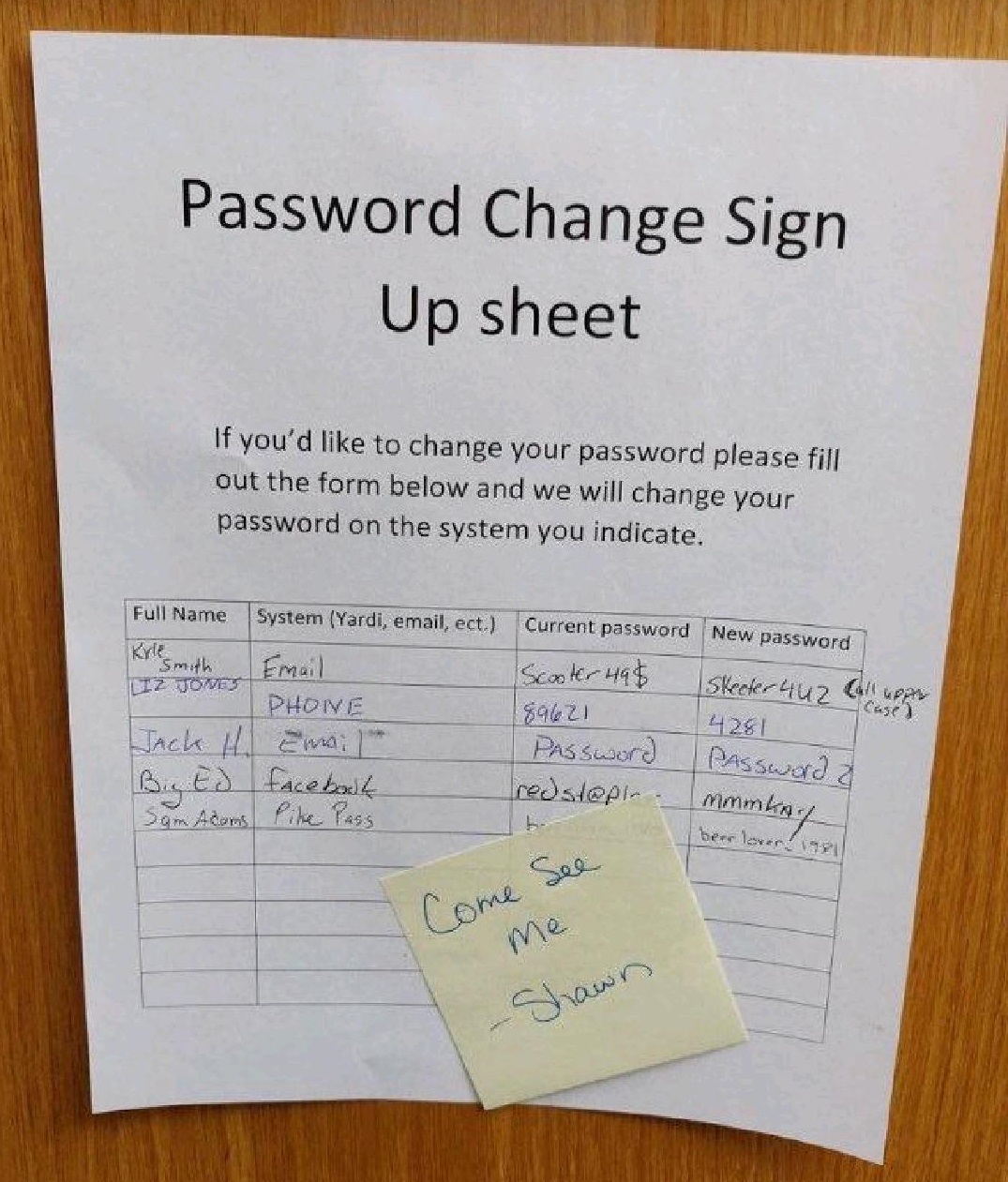
When we see Tara Seals in Threatpost giving us: “A critical vulnerability in Cisco’s software-defined networking (SDN) software could allow an unauthenticated, remote attacker to connect to a vulnerable data-center switch and take it over, with the privileges of the root user” (at https://threatpost.com/cisco-critical-nexus-9000-flaw/144290/), I suddenly realise that there is an inner demon with a pitchfork stabbing into my brain telling me that I am a pussy, I disagree! So here it is: “A message for the Pentagon IT department; Do you still have the password ‘Cisco123‘ on some of your routers? If so would it not be a great idea to change it before the Chinese Ministry of State Security and the Foreign Intelligence Service of the Russian Federation (SVR RF) decides to download your servers at their earliest convenience?

I know it is an annoyance, but with Cisco flaws the way they were it is merely a small consideration, and let’s not forget that at this stage no Huawei device was required to acquire the information on your servers. I personally believe that it is time to reward those who do not apply common cyber sense to be rewarded with limelight. I have had to clean up the mess of others for well over a decade and now it is time to give those people the exposure they deserve (my findings regarding Credit Agricole will have to wait for a few more days). When you consider that the flaw also hits the Nexus 9000 Data Centre Switch, a device that is according to their own site ‘Built for scale, industry-leading automation, programmability, and real-time visibility‘, as well as “operate in Cisco NX-OS Software or Cisco ACI modes with ground-breaking Cloud Scale ASIC technology“, and lets be fair, there will always be an issue, a device on such scale cannot be flawless, yet when such a flaw is clearly reported on a level this big and the media merely looks at accusations against Huawei and leaves actual dangers unreported, the integrity of the media has become too large an issue on a global scale.

The issue is twofold for me, the first is that Huawei was never a risk and even as I disagree with the dumb headed approach that the US had, I am very much on the side of Alex Younger (the apparent fearless leader of MI-6), he is merely stating that non-British equipment (in this case Chinese) could be an optional threat in the future. His issue is that this level of infrastructure must be British and he is not wrong, no nation is wrong to have high level infrastructure equipment (whether it is 4G or 5G) in national hands. That is the application of common sense (yet realistically speaking not always pragmatic or achievable). so when he stated last February ‘It’s more complicated than in or out,‘ he is actually spot on, no one denies that. Yet the Americans had their big boots, brainless and started accusations that cannot be proven, that is an issue! For the US it was all about the money and American technology is losing more and more headway, they are literally falling further behind on a daily basis. As I personally see it the direct consequence on iteration versus innovation technology. When the best innovative step is Samsung giving the consumer the ability to share power wireless (which is awesome), even me as an anti-Samsung person will admit that they hit the jackpot with that one. How sad have players like Apple, Microsoft, IBM, INTEL et al really become?

How much of a Scott Pilgrim must we become fighting all the tech companies in the world before we get told the direct truth by the media? How much shaming must we do to make the media make us the number one directive, not the number four option? and as I have been considering more and more to put my IP vision valued at $2 billion public domain and let them fight it out among themselves, basically I am just too tired to engage in another round of bullshit with these so called executives and VP’s who (with the exception of Huawei and Google) do not have a clue on what they are doing in technology in the first place.

The larger problem is not Cisco; it is security and identity management. Most corporations are close to 5 years late into implementing an actual non-repudiation system and that is partially because there is no real good system or good way to ensure non-repudiation, an issue that should have been addressed almost 10 years ago, but never was, I personally tend to blame complacency there. I personally believe that a drive to iteration prevented innovation to get us there, but that is merely my view on the matter and I am perfectly happy to be proven wrong on this specific part.

Dozens of options (I actually had another idea towards a new solution to applied solar technology) all having larger impacts in larger cities and pilot places like Neom City, what does it take for some of these players to wake up and smell the dangers of corporate death through marketing set towards iterative release?


2 Comments

Filed under Finance, IT, Media, Military, Politics, Science

That’s the way the money flows

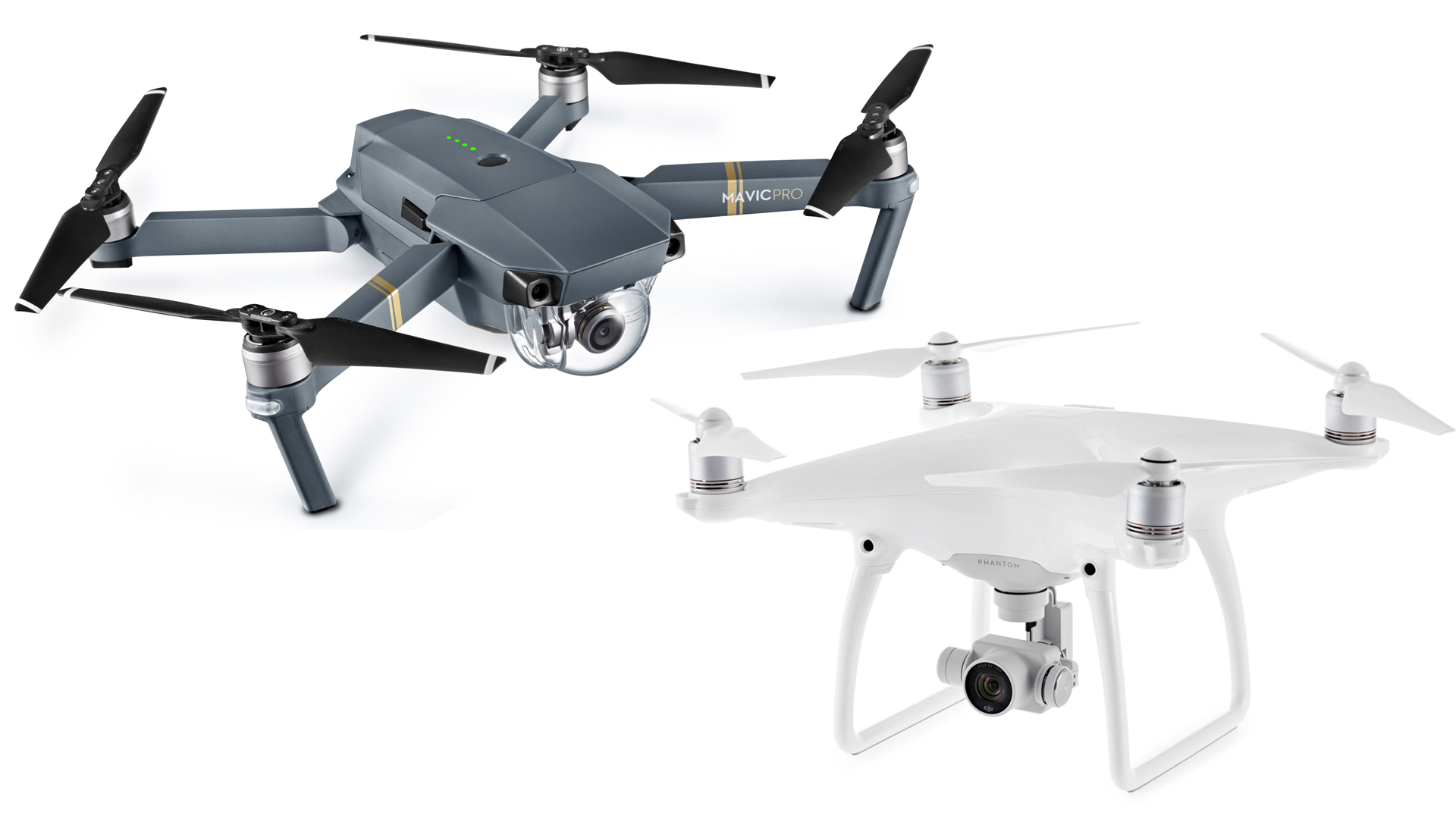
The Independent had an interesting article 2 hours ago. The article (at https://www.independent.co.uk/news/world/americas/china-drones-spy-us-dhs-security-data-alert-a8922706.html). The title leaves little to the imagination with: ‘Chinese drones may be stealing sensitive information, DHS warns‘, after the Trump google play, after his refusal to submit to subpoena’s, after the anti Huawei activities that so far has never yielded any active evidence (the 8 year old case was settled within months are done with). Now we see: “Chinese-made drones in America may be sending sensitive data to their manufacturers back home where it can be accessed by the government, the United States Department of Homeland Security (DHS) has warned“, which might be a nightmare if it was not so hilarious. You see the next quote: “CNN, which obtained the internal alert, reported that the DHS fears drones will offer Chinese intelligence unfettered access to American data“, it comes across like we have a case where a CNN reporter has been hit by a silly stick and never recovered. Consider the drones we see, there is no space to have a dedicated hack system on board. Yes some can be done with a mobile, and there is plenty of space in that device, now consider the ‘sensitive’ data that needs to be found, the data needs to be connected to (and with all these faulty Cisco routers that is relatively easy at present), then a selection needs to be downloaded and that is merely for one place, one device. All this stops when any person uses common cyber sense. It is the revelation that we see next, that is the one that matters. With: “Though the alert didn’t name specific companies, the vast majority of drones used in the US and Canada are made by the Shenzen based Company, DJI, CNN reported” we see the part that matters. As drone services are up on an almost exponential growth as we see the push that got there. The news from November 2016 gave us: “Domino’s Pizza Enterprises Limited (Domino’s) and drone delivery partner Flirtey delivered the first order, a Peri-Peri Chicken Pizza, and a Chicken and Cranberry Pizza“. Consider the option to avoid traffic in New York, Los Angeles, San Francisco, Boston, Chicago, Seattle, Pittsburgh, all places with massive congestion. Drones are the optionally the newest quick way to deliver food, Amazon needs, Walmart needs, all in growing need due to the events where retailers and shippers combine forces to avoid a few items, and with congestion set to zero, people will flock to that consideration. Now the operational part, it seems that DJI is ahead of the curve, another Chinese company decided to truly innovate and now that the push is there and America is bankrupt (as I personally see it) anything possible to avoid money going to China, America is taking a pot shot at that. So when we are also treated to: “A spokesman for DJI denied that any information was being transmitted to it from its drones, adding that the security of its technology has been independently verified by the US government.” I start wondering if DHS was able to do its job properly. Now let’s be clear, there is no doubt that ANY drone can be used for espionage, especially if it is quiet enough. Yet is that the issue for DJI, or is that an issue with the spy that utilises drone technology? Yet that is actually not the only side, on the other side we see mentioned: “Those concerns apply with equal force to certain Chinese-made (unmanned aircraft systems)-connected devices capable of collecting and transferring potentially revealing data about their operations and the individuals and entities operating them, as China imposes unusually stringent obligations on its citizens to support national intelligence activities,” Now, this part does make sense. It is the same as the Apple Fitbit, that due to its global nature started to hand out the jogging patterns of Special forces in the Middle East, so within 3 days several members of the two dozen operatives had a check on their calorie burning and health, whilst the mapping data showed the world where the CIA black site was (oh apologies, I meant to say a military specialist endeavouring location of an undetermined nature). The question becomes how was the ‘the security of its technology has been independently verified by the US government‘ achieved? Was that verification process competent, or perhaps slightly less so?

I am not stating my verdict in either direction; yet the entire Huawei mess, as well as the DJI setting implies that the growth industries are shunned from America, mainly because it is not an American industry. Yet in all this, the forget that places like the EU and India are large enough to go forward with both players and truly grow further, whilst the downturn and the economic lag that the US is creating will merely grow the loss of momentum and the recession it will fuel in other ways. I would consider that the setback that Google is trying to create will have larger repercussions down the road. As larger Data vendors will now optionally choose the Chinese side, they will grow market share. You see no matter how it is sliced, all this is data based and data can only grow if there is usage. So when people remain with Huawei as their phone keeps on working, we see that there is a larger concern soon enough. At some point people will stop trusting Samsung, Google and Apple phones, which works out nicely for several players (Microsoft actually more than most), what do you think happens when the larger share of 14.7% of a global market changes to player three and not use Google apps to some degree? Google momentum relies on non-stop data and usage, when a third of the 60% that these three cover stops, do you think that this has no impact for Google?

The same applies to drones. You see intelligence makes the drone and as it grows its market share and the collected data of drone usage is set, the innovation of DJI grows faster. It is the difference between generation now and generation 2022, DJI will grow and can grow in several directions, yet the entire the setting of ‘data theft’ we see that there is a lack of ‘what’ data. What data is collected, the flight path? Well, I think we all need to know in 2023 what flight path was taken for the delivery of 342,450 pizza’s delivered per hour, is it not? It is not that Google Map has that data, and within a building in New York, is there truly a clear sign in the drone itself who exactly the merchandise was for, or was that on the box (instead of the drone). Now, there is no denying that some of that data would optionally be accessible to the Chinese government? Yet what data, what level of data? Do you think that they have time for the hundreds of drones and the data whilst they can monitor 20,000 times that data with a spy satellite (and an additional truckload of data that the drone never had in the first place?

It is when I see ‘unfettered access to American data‘ where the questions become pressing. It is like watching Colin Powell coming into a non-disclosed location with his silver briefcase and in the end the lack of WMD’s, are we going in that direction again? when I see ‘unfettered access to American data‘, it is at that moment I see the optional comparison (an extreme lose comparison mind you) with the innocent preachers daughter who did the naughty thing to 30% of the boys coming to Sunday sermon, having attempted things I cannot even rent on adult video. It is the CNN article (at https://edition.cnn.com/2019/05/20/politics/dhs-chinese-drone-warning/index.html) that gives additional rise to concerns. When you see: “Users are warned to “be cautious when purchasing” drones from China, and to take precautionary steps like turning off the device’s internet connection and removing secure digital cards. The alert also warns users to “understand how to properly operate and limit your device’s access to networks” to avoid “theft of information.”” It seems to me that there are dozens of ways to get this data, a drone seems like an expensive long way round-trip to get to that data, whilst more can be accessed in several other ways and it is the speculation through ‘device’s internet connection‘, so when we see one of these devices (at https://www.dji.com/au/phantom-4-pro-v2/info#specs), we are treated to: “The new Phantom 4 Pro V2.0 features an OcuSync HD transmission system, which supports automatic dual-frequency band switching and connects to DJI Goggles wirelessly“, where did the internet come in? Yes there is an app, to get a live view from the drone, so what ‘unfettered access to American data‘ could there be that Google Maps at present does not have in more detail?

It is the next part that is the actual ace. When we see: “DJI, which reported $2.7 billion in revenue in 2017, is best known for its popular Phantom drone. Introduced in 2013, the drone is the top-selling commercial drone on the market“, information the Independent did not give us, that is the actual stage as I personally see it. It was $2.7 billion in 2017, there is no doubt that when drone delivery truly takes off, at that point revenue that sits between $15 and $27 billion is not unrealistic, the dire need to avoid congestion on a global scale will drive it and that is before you realise the non-US benefits in London, Amsterdam, Paris, Berlin, Munich, Madrid, Barcelona, Rome, Athens, Moscow. At that point you will see stronger growth and I haven’t even looked at the opportunities in a place like Mumbai, Tokyo, Delhi, Bangkok, Rio, Buenos Aires and Sydney yet. Everything leaves me with the impression that this is not about security, it is about money. That fact can be proven when you realise that everyone remains silent on the 29 new vulnerabilities that Cisco reported merely a month ago. How many Cisco router stories have come from that non-technologically refined White House, where they are currently optionally limited by “Cisco routers, including ones that can be found in malls, large companies or government institutions, are flawed in a way that allows hackers to steal all of the data flowing through them“, the cybersecurity company Red Baron handed out that issue to the media last week, so who picked up on that danger to ‘unfettered access to American data‘? And when you consider ‘it allows potential malicious actors to bypass the router’s security feature, Trust Anchor. This feature has been standard in Cisco’s routers since 2013‘, when we realise that Cisco is a household name on a global scale (especially when connected to the internet), the entire Cisco matter seems to be at least 15,000 times worse than any DJI drone ever could be, and the fact that DHS remains silent on that gives (again, as I personally see it) is added proof that this is merely about the money and the fact that US companies are losing markets on a global scale.

I could set the stage by singing ‘All ‘Bout the money‘ by Meja and ‘That’s the way the money goes‘ by M, but then, I realise that people would most likely pay me serious money not to sing (my voice is actually that bad).

That’s the way the money flows, specifically at present in a direction that the US is for the foreseeable future most displeased about.


1 Comment

Filed under Finance, IT, Media, Military, Science

The €0.01 pledge

Yes, we all heard it before, ‘I hereby solemnly swear‘, ‘I pledge my allegiance‘ and ‘for what we are about to receive‘. All nice sounding words, yet are they worth the value of the printed paper when people speak these words? That is where you stand when we were given ‘Leaders and tech firms pledge to tackle extremist violence online‘. And the quotes are nice to read too. First there is: “World leaders and heads of global technology companies have pledged at a Paris summit to tackle terrorist and extremist violence online in what they described as an “unprecedented agreement”“. The article (at https://www.theguardian.com/world/2019/may/15/jacinda-ardern-emmanuel-macron-christchurch-call-summit-extremist-violence-online), and President Macron, who is in all kind of non-economic states took the time to shed light on this. So when I saw: “a “plan of action” to be adopted by countries and companies to prevent extreme material from going viral on the internet” I needed well over 10 minutes to stop howling with laughter. It was funny, I agree, but in the article there is supporting evidence for my ‘howls of deriving laughter‘ (borrowed from Monty Python).

You see, the first delusion is ‘prevent extreme material from going viral on the internet‘, the internet is all about going viral, and we enabled marketing and SEO systems of doing just that for the need of creating awareness in whatever way possible. The creation of viral events is what drives Facebook and their social companions. And even as their might be some form of control on Facebook, places like 4Chan have close to 0% control and whilst people are trying to find the viral video, a dozen copies will be spread to alternative locations. If you want to understand viral video, take a look at Medium dot com (at https://medium.com/this-happened-to-me/10-ways-to-make-your-video-go-viral-d19d9b9465de), they make a nice top 10 with actually interesting issues to consider. Social media is about getting viral (or is that virile?), they need to sell advertisements and the list mentioned give at the second tip the stage where you have millions of views in just under 72 hours, and that was merely some girl dancing.

The Guardian gives another part. When we see: “The footage was picked up by some international media outlets who initially published excerpts of the video and links to the gunman’s extremist “manifesto” before quickly dropping them in the face of political and public outrage“, so until outrage became slightly too loud, the news media themselves had no issue propagating the video (partially), that is the larger failure. You want to stop social media, whilst the media themselves use the material? What was that, ‘the people have a right to know clause?

As I see it: “as a voluntary initiative it is for individual countries and companies to decide how to honour their pledge” that pledge is (as I personally see it) nothing more than another way to grease the wheels of the EU gravy train. When we add “nations to bring in laws that ban offensive material and to set guidelines on how the traditional media report acts of terrorism“, so we get non mandatory actions linked to censoring of the traditional media, and you wonder why I was laughing? All this whilst a mere two days before that we got: “The case has been appealed, and in the time since two federal Courts of Appeals have ruled in separate cases that viewpoint discrimination on government social media pages is illegal.” Even as we see that they are separate issues, the stage of ‘Courts to Government Officials: Stop Censoring on Social Media‘ sets a larger stage and sets the stage where there is a much larger issue not addressed. So as we look at the term ‘viewpoint discrimination’, we see places like Heavy.com who had extremist video (at https://lawlordtobe.com/2016/05/01/homerun-by-ukip/), in May 2016. there in the article ‘Homerun by UKIP‘ I added a link to an ISIS video that remained viewable for well over a year. And that was something that was openly searchable. So at what point will we get a true status change? These places need the clicks to get their cash and many of them will not care how they get their money, their traction, their visibility.

So as we see “The US has reportedly refused to sign up because of concerns about freedom of speech“, we will see these people move to US servers, as there is free speech, as such this entire effort is largely wasted, when the larger players on social media are not willing to play ball, when we see that shifting stories and videos can move location in seconds, we see a gravy train switching tracks again and again, never resolving anything. Yet, they mostly agree on Huawei being a national security threat (without documented evidence), all that whilst the Cisco mess is presently well over 1000% worse (and documented).

This is all about money and it is time that we wake up and realise that as soon as something can be made to currency, it gets free reign. That is the consequence of debts that go into the trillions. And the traditional media only stopped after the outrage, after the cost of publishing started to grow that is when they stopped. In this I have nothing against the actions of Jacinda Ardern, they make perfect sense, but the Intelligence community could have clearly explained the traps of lone wolves, the traps of a media stage that is out of control. It is also nice to note that the presence of Justin Trudeau and President Macron was encouraging (according to Emmanuel Macron), yet these are two politicians with the ratings that are deep into the basement, any positive news that mentions them is political currency for them, so I wonder what their attending stake is in the end.

In this Jacinda Ardern makes one mistake (unintentional). As we see: “Facebook had made a changes to its livestreaming, announced at the same time as the summit, under which the Christchurch terrorist “would not have been able to livestream his act of violence”“, might be true to some point, yet there are so many other streams (like 4Chan), so even as the wave towards a viral video goes down in the reach to maximum (see the Medium article), the moment the links get spread through all media, the race is on and the multimillion views are almost guaranteed, optionally with a few minutes delay from slaughter happening, to slaughter watched. And after the event the world en mass will likely be watching. That is the impact of viral views and the ca$h for those cashing in on the advertisement on those pages. Because as the views go over the millions, the ads will get visibility and the dollars come pouring in stacks of them per tenth of a second. When you realise those numbers, you see the first part in why this is not getting resolved, and the danger merely increases as lone wolves get to make themselves martyrs for a cause they never understood, shouting a name they were never part of giving extremism even more visibility.

Unless you take these glossy propagators of what they call news off the 0% VAT (read: GST, BTW and so on) list, this will merely continue, for the media circulation is everything. Consider that we hear 4 days ago that ISIL was using Instagram to promote jihad and what does the Telegraph do (at https://www.telegraph.co.uk/news/2019/05/11/isil-extremists-using-instagram-promote-jihad-incite-support/), they used the picture of a smiling ISIL fighter as well. I think we can agree that this is like mopping the floor whilst the tap is running at full, we merely shift the mess and never end up with a dry floor.

You merely have to look at the Google failure and search: ‘Abu Bakr Al-Baghdadi‘, he is not a terrorist; he is labelled as a ‘political leader‘. So how exactly will we end up seeing forward momentum, true forward momentum not presented momentum whilst we see that others label terrorists as political leaders. The pledge is worth a mere €0.01 and I think we are all still getting screwed on the deal at that price.


Leave a comment

Filed under IT, Law, Media, Military, Politics

The political winds

It all started nice and slow this morning. I had one task that is due in 4 hours and 34.3 minutes (roughly), so the unnatural act (for me) of sleeping in commenced and it was nice. So there I was morning ritual all shot to smithereens and it was 2 hours until zero hour. My ritual of checking breaking news gives me the BBC and the Saudi Tankers, an interesting part, but the intelligence on the events are missing, even in open source intelligence it is too much on ‘decent confidence’ and ‘statistical probability of certain parties’. One source gives an implied presence of Hezbollah in Shinas (Oman), yet there is zero reliability as well as the fact that any attack would have required different tools as well as location does not add up, as it is at that point that Israel Hayom gives me ‘Saudi Arabia retaliates hours after Houthis attack oil facilities‘, the fact that we see “Houthi rebels in Yemen, who are backed by Saudi Arabia’s arch-rival Iran, claim attack on Saudi oil pipelines“, this is indeed a different status and I will dig into this when i get more data, this event could escalate matters fast. As such the defence needs of Saudi Arabia will explode (pardon the pun) soon enough.

Yet this is about UK politics and the issues will relate soon enough. The Independent (at https://www.independent.co.uk/news/uk/politics/jeremy-hunt-conservative-party-wall-street-journal-london-a8914171.html) gives us ‘Jeremy Hunt appears to struggle for an answer when asked why people should vote Tory‘, you see as a conservative (yes, I am a Tory) I struggle too. There is no shame in this, we need to walk a tightrope and keeping balance is actually a lot harder than you might imagine. So when we see Jeremy Hunt give us: “Because we are not going to solve this problem by retreating to populist extremes” he has a point, it is clear and he is correct, yet the problem is that we are looking at the wrong extreme. Nigel Farage is not the populist extreme, the European Central Bank is the populist extreme, just not a populist extreme for the people, they are the populist solution for the IMF, Wall Street and American commerce, three that they were never supposed to cater for and the European ignorance is just amazing. Also, the view that the media remains silent on many issues involving the ECB, Mario Draghi and their acts of non-accountability have become too staggering. And as the media is in denial in one side and then bashes Nigel Farage at every opportunity gives additional light to the fact that the media botched plenty of issues.

The people have been misled to a much larger degree and now they are willing to try Farage and the Brexit party, not because they like him, but because they largely mistrust all other parties including my own conservative party. That is the realistic stage, so why vote Tory?

The problem is not easy but the biggest issue is the debt, both sides (mainly the Labor party) have pushed again and again and left the British nation with 2 trillion pounds of debt. Even in the most optimal stage it will take well over a generation, it is passed in two parts. The first is no less than £20 billion in interest payment and an optimal £20-£50 billion in annual debt decline; if this is not done soon it will be too late for everyone. The benefit is that the UK without the Euro can steer shallow and deep waters, all having their own risk (and rewards), all having options, but the drag of the Euro 27 nations and their bad choices as well as the ECB and their unacceptable acts will no longer be part of it. It will be the first clear stage of resolving the issues that politicians are too hard to solve. Still, it will take a generation, perhaps two to resolve it and when there is momentum in the first 5 years that will signal economic improvements as well as economic opportunities.

Immigration

If that was not the case, do you think that the refugees would be racing and running to make it to the UK as fast as they possibly can? No, the people in the lower tier are actually seeing the lack of progress for the people all over Europe, and for now the UK is in a similar stage, but it could improve, the UK is in a stage where it could improve faster and better than anywhere else in Europe. Do you think I would sit on billions of IP if any official in the EU27 could be trusted? The EU27 and America are all in the stage to fill their pockets as much as possible before it is too late, I would rather make all my IP public domain and watch them all fight each other on claims that they were first and not giving actual evidence. That is why Google, Huawei and optional Saudi Arabia are seemingly the few parties worth talking to at present.

Google and Huawei have shown to be pushing innovation, not iteration. In addition, the acts we see in Saudi Arabia on renewal and Neom City are showing a push for larger changes, changes that the US and the European Economic Union is no longer able to make, they are stuck with a mountain of debt making everything a discussion, and no resolutions. The fact that for the most tax laws have NEVER been properly been adjusted so that the large corporations (FAANG group) make proper payment has never been addressed, it is a failing on both sides of the Isle, both Tories and Labour have fault at that. the BBC news in March 2018 gave us ‘Google’s tax bill rises to £50m‘, and we get two parts in addition: “The technology giant’s annual accounts show that the company will pay corporation taxes of £49.3m on UK profits of £202.4m” and “The total value of Google’s sales in the UK is about £5.7bn a year“, now I have nothing against google, as a matter of fact, I love Google (platonically mind you). Yet the numbers do not add up. When we consider that google is making 202 million out of 5,700 million, it amounts to a profit margin of 3.54%, considering that the Google Pixel 3 is well over £700 makes me wonder. Yet let’s not forget that Google is not alone here, Microsoft, IBM, Oracle, SAP, Facebook, Amazon all have profits that go into the billions (well the FAANG group players at least). So the tax image is wrong and the people get to pay for the cost of commerce, not exactly fair, is it?

This is the realisation that has been sweeping through the lower tiers of the population and they have had enough, and I get it. We see all these utter BS approaches on what we can sell to the government of Saudi Arabia and we cannot even sort out proper taxation to big business? Small businesses have been driven out of shops through large corporations working from abroad, the Britons have been dealt a raw deal and it bites, the Tories did way too little to deal with it (opposing the Labour party who did nothing at all when they were in charge). So the people have gotten to the point where they will try anything, especially give Nigel Farage and his Brexit party a chance.

Yes, how would I vote? Well, I am all for Brexit, yet I remain a Conservative. The issue is not Brexit, it will happen (read: it should), the issue will be about what happens after that, it will be a mess for close to two years and issues need to be resolved and it will take time and it will take serious discussions, Nigel Farage has charisma, he has knowledge yet what about his team? The players like David Coburn, Julia Reid, Nathan Gill, or Raymond Finch? I am not sure any of those people can hold proper seats like Home office, Foreign office, Defence, or Treasury. That is the problem the UK faces. Getting a proper government in place, Labor was never trustworthy and even as Tony Blair did a lot of good, he bungled plenty too. In that regard whatever came after Harold Wilson (1976) was pretty bollocks by the view of some (a view I only partially support).

These parts matter, the failings form the past are now part of the current battlefield and the failings are important to consider with a debt of 2 trillion, that is why the Brexit party is likely to be the biggest player, yet I remain a conservative, the mess needs to be cleaned up and whilst labour will indiscriminately spend money that they do not have, the Nigel Farage side lacks the true experience that the people need to clean the overall mess up, Brexit is an essential first, but the Brexit party is in my humble opinion not ready to properly deal with the 20 steps that follow.

Was there not a Saudi side?

Yup and we are getting to that now. You see the economy is only one side. Military hardware is only one part of optional commerce, the national growth of 5G will benefit the UK, yet these parts can also be sold to Saudi Arabia, there is more than Huawei and even as the UK needs to catch up, and catch up fast, the sorted problem is not merely military hardware, that part needs services and whilst the UK can be a push forward there, they are up against American Giants and it is a fight worth fighting. The infrastructure for Neom City and even beyond that all the way to Riyadh represents an initial £350 billion, with more on the horizon. When I set the stage for my £2,000,000,000 IP, one part was that I did look beyond one side and since then found four more avenues where people merely accepted certain solutions and never looked at what else was possible. From Marketing, Awareness creation, communication, applied applications on the setting of streaming (yes, that was a pun and a puzzle all at once). And the biggest parts are not big business, it is a small business approach with global ramifications, and the nice part is that Huawei was nice enough to implement part of it in their 5G prospective and not look further, so happy, happy me (for now that is).

This is not merely one part, all the players (and the FAANG group) all want access to Saudi Arabia, so who do you think they will hand options too? These hypocrites who decided to suddenly revoke export to Saudi Arabia whilst ignoring the activities of Hezbollah and Iran, or those who stood by Saudi Arabia and their right for defence? Let’s not forget that the aid of Saudi Arabia was called on by the legitimate government of Yemen, a part most seem to ignore again and again.

Saudi Arabia is trailing in technology on several ides and they are trying to address this and those who facilitate for the progress of that will find themselves with the sweetest deals. More importantly, the UK will need proper trade partners to a larger degree. The US is all about export and the fact that export needs to exceed import, several nations are in that stage. The list that place true value to import to goods and services is small, so having the proper foreign office in place is going to be essential in the next 5 years, the Brexit party cannot deliver on that and that will make matters much worse down the Brexit trail. The Conservative need is easily shown when you look a few degrees beyond the current point of exposure. It is when you look towards the applied stage of the long game, that is where you see that the bulk of all politicians fall short. They will merely tell you: ‘We will solve it when we get there‘, or ‘We have a plan and we will present it at the proper time‘ and it is way too late to take that approach, it is well over a decade too late for that.

If they cannot clearly show you a plan, they are extremely unlikely to have one, which is not a stage the UK (and many other nations) can survive on at present. As such the political winds are blowing, top some degree those who we are willing to trust lack the power and know-how to make it work long term, most of the others are no longer trusted to the degree that they need to. I remain conservative inclined, yet they too need to realise that not only is the party over, facilitating in that direction is no longer an option, making that heard loud and clear is essential.


1 Comment

Filed under Finance, IT, Media, Military, Politics, Science

Electronic Entertainment Expo 2019

After last year there were issues, several on all fronts, and as Sony announced not to attend, we see the larger question, is there a need for E3? From my personal point of view, Microsoft will not be trustworthy (after their choices between the Xbox 360 and now), making it a Nintendo & Indie show, now, I am all for that and it could be awesome, but that is no longer an actual E3. Also, we will see the front carried by a few titles, yet they did so too last year and the blip verts show many images of what we saw last year too.

So as I use GamesRadar (at https://www.youtube.com/watch?v=xNCFmrkqQuY) as a handhold, let’s take a look at what we could optionally consider not watching in person there.

  1. Cyberpunk 2077. Yes, we saw a lot, we saw a lot before and for the most, we have blind trust in CD Project Red, they gave us the goods from the very start ‘You’ll see it when it is ready’ and with the Witcher III as evidence, we have all the confidence that it will be a smash winner when it is finished, the problem is that everyone is speculating or giving ‘I know a guy and it comes at …….‘, but the truth is CD Project RED has not giving a final date, if there is one, it will most likely be given at the E3 2019.
  2. Gears of War 5, it seems to be more of the same, it was never my cup of tea and as such, I hope people will love it, I truly do, but I see it as too much of the same, just like the next HALO which has number 3 and even as 4 player part might be nice, yet after Anthem, and every version connected to it (exception of Fortnite and Overwatch) I have seen enough to last me a lifetime, so the orchestra part was definitely overkill
  3. Another Star Wars game? Likely an absolute must for every Star Wars fan, I am not judging here, merely awaiting to see real game play.
  4. Session, a skateboarding game. It comes from Microsoft, so we will have to await the actual game footage and YouTube video to see what the actuality of that game is, personally I am kind of over all the Microsoft marketing, and we will likely see more on Crackdown 3, the game that was announced in 2014, coming in 2016, and has had delay after delay and is still not out. A game that is years too late, supposed to be AAA and gets a mere 57% from Metacritic, I think it was PC Gamer that gave us “It’s an OK game that could’ve been exciting a decade ago“, so as we were given presentation after presentation on the of Cloudgine for cloud computing support, we see the entire part blown out of the water. This now interacts with my article ‘At the end of a journey‘ (at https://lawlordtobe.com/2019/04/14/at-the-end-of-a-journey/) where we see the issue of Tim Stuart, Microsoft CFO giving us: “Xbox CFO on Google Stadia: “Cloud Won’t Match Local Experience”“, yes we said that for decades, making Crackdown 3 a joke at the very least and the years of delay a questionable side in what Microsoft regards as game design.

There are a few more games, some definitely interesting of checking out and a few to race for to the release date shop. Bethesda will be present with another Doom, for the lovers of that type of game a decent must. Ubisoft will try to wet the appetite with more ‘Beyond good and evil 2‘ yet there is no indication that there will be anything playable and GamesRadar as well as a few others have been whispering NextGen, so this might be a PS5 and whatever Microsoft puts on the market with an expected optional ‘always online‘ push by badly facilitating, and lets not forget the massive amount of space reserved for advertisement on your Xbox screen.

Nintendo will be killing the show, the next Pokémon is already making waves at present, so the impact will only increase, and that is merely the beginning, there will be an animal crossing, an exclusive Marvel Ultimate Alliance for Nintendo Switch, which must anger all the other consoles, as the previous two had quite the impact on gaming. And no matter how others slice it, the Nintendo Store with Switch version of CBM-64 golden games is only increasing the desire to own a Nintendo Switch, the idea to replay the Epyx great ‘Impossible Mission’ is just too fantastic to ignore.

We will get another call to Dying Light 2, yet at present no actual reliable release date as well as third installments of Luigi’s mansion and Borderland, both a reason to watch, both have a following and both have creatively emphasized on fun. There are more and more titles that are looking good (also on the Xbox), the makers of Fallout New Vegas and now part of Microsoft will be bringing the Outer Worlds. For those who remember Fallout New Vegas, consider an RPG, a lot larger, with more options, more challenges and more choices, there is zero chance that this game is not on the wish list of anyone who loves RPG’s, which is fair enough, Microsoft can’t get everything wrong. For Ubisoft it will be an important moment, Watchdogs 3 is on the list and according to rumours it will now be based in London. It is important because the first game became a massive letdown, yet Watchdogs repaired it to a decent degree in number two, not in the least because of the cast of Ruffin Prentiss who did an amazing job. So for Ubisoft the stakes are nothing short of monumental, they cannot afford to mess this one up. As I personally see it the Quality department better have their marbles in a row on this one. Ubisoft will have more if some of the leaks are to be believed. So their show, as well as the Bethesda one are the shows to be in the top ones both seasoned with the anticipation from viewers and gaming fanatics alike.

Gaming is more and more true mainstream, but it is also splintering gamers to a larger degree, in part we can blame people like Fortnite. It is not really their fault, they made genuine innovations, and more and more people nowadays expect that the system is no longer an issue when you are playing with your friends, which is actually no longer a given. With newbies Apple and Google, the interaction of games across platforms becomes a larger issue and no longer a given. Yet the audience is pushing and setting for a stage that remains debatable. Is it fair to expect PC’s and next generation consoles to group play?

The option that Microsoft consoles will interact with PC’s is to be expected, but is that stage equal for PS5 other solutions (Mac systems)? I am not claiming a yes or no, merely asking the question. If anything happens in the 5G stage, it will be that those interactions will find a larger footing, whether it will happen gets a TBA (to be announced) flag for now.

As I said Ubisoft has Watchdogs 3 nearly on ready is a large issue, on the plus side, if they pull it off, the value of the Watchdogs Franchise will skyrocket, mainly because the second in San Francisco was a large step forward from the first. The idea of London is appealing to many in other ways, the American population that needs to adjust to driving on the left lane is going to set the stage of many hilarious moments and the open world of London could be breathtaking. They gave us a great experience in San Francisco, so I expect nothing less than spectacular. It also implies that my idea for Watchdogs 3 could be an optional Watchdogs 4, so let’s just hope that game 3 knocks it out of the park. The only larger question will be Bethesda, they have confirmed that there will be no Elder Scrolls 6 or Starfield, which is nice to know, but Bethesda has a lot more IP so there is likely to be plenty to watch, and to be honest after all the slicing and dicing of Fallout 76, they need a win, a big win would be better.

In all this we see more of the same, the IP has stagnated to some degree, Minecraft (2009), Skyrim (2011), Grand Theft Auto V (2013), Elite Dangerous (2014), Witcher III (2015), No Mans Sky (2016), Fortnite (2017), all great moments of IP. I now distinguish between IP and a great game; they often go hand in hand, but not always. I believe that sandbox games, RPG games and tactical games will overlap more and more and will for the growing population of new gamers to be more and more important as well. We saw what could have been possible to some degree in Ghost Recon Wildlands, but not to the degree that could have been achieved. I believe that this is the IP that Google Stadia can build on.

Say What?

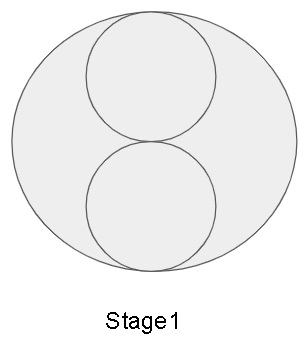
To see this, we need to look at the two stages of gaming. For the most, the games have a combined approach (the image is an analogy), so there are parts in the game that are used and in the core of the game, accessed when it is applicable. Yet another way is to take the Covert Action (an old Microprose game) approach, but now a next generation version. In this version in any sandbox, as we add a new element, the world would actually become bigger, or there would be more to do in that same world.

It was the foundation when I started the design of a game called: ‘Equilibrium, nature versus the machine‘. The biggest elements were finding a large enough play field (in my case Amsterdam), and set the stage where replayability would be more fun, so the stage required a very different approach, so that people could not chase from one point to the other to get a quickest time finale. In addition, I needed to set a stage where it would not merely be some kind of a ‘seek’ game (which is too much of a given when you finish the game more than once). In addition, there is the eye candy bit, so making sure it looks appealing and not repetitive was equally a challenge. For the most Amsterdam filled that bill. Yet, as I was contemplating the foundations for Elder Scrolls 7 and Watchdogs 4 I knew that they all had their hang-ups (not in a bad way), in every case it was what the player (in my case me) relied on, I wanted to change that concept, and in all honesty after hundreds of hours of Diablo 3 it felt an essential first to solve.

No man’s sky gave me additional idea’s. We look at it as some kind of failure, but the game is an achievement in many ways. If we accept that the worlds were set to a formula, what happens if we change this world into a formula and let the NoManSky IP recreate that world again and again? Then I considered what could one day be another Watchdog game, in this I wanted to push the envelope in another way. Hence I considered the stage where Kyoto was completely set to the game map, and I mean EVERY street. The game would now be large enough to keep a person busy for hundreds of hours and in the gender setting the game would have 4 versions two for each gender and each gender could get through the game as a criminal or a non-criminal, so the city had a light and a dark side. The interesting part about Japan is the lack of guns (and super strict gun laws) forcing stealth and forcing unarmed combat. As the monkey fist was a brilliant choice in the second Watchdogs, there was the option to keep it in, but also to make other weapons, weapons not to bleed, but to knock out. The nice part is that Japan has about 4 centuries of weapons in their history, so plenty of options. Technology (read: applied technology) is also more advanced (in many cases), so letting the game revolve not merely on the smartphone, but also Google glasses and the fact that in the hard setting there will be no English, gives light to a much bigger challenge. Having to rely on you wearing Google glasses (in the game that is) to read signs and to read instructions in the game to get your local language was appealing for a few reasons. It makes the game a much larger part of you. Adding weather and time constraints adds to the challenge and excitement. We forgot that the ‘you’ in your character was neglected more and more is also a consideration, having to eat and sleep on a regular basis could translate into a larger experience.

Finally the part where the elements come to shine; as we look at the coloured balls, we can see that mixing blue and red would create purple and between blue and dark yellow we would get a moss green. Now consider replacing the colour for a level, in normal mode hacking is one version, yet when we tweak that it is not pressing a button, we could replace the button with code segments that need to be found (and chosen), drastically increasing the challenge of the game, so what is a joy and still a challenge as well as an achievement on normal could be a mind boggling experience on hard and higher. So the smartphone could be upgraded, other versions of the (in game) app, also gives more options and buying an up scaled phone (more expensive) would give the player more destinations where he/she could strike it rich. Yet giving merely more and more is not enticing either, the added plus needs to be balanced with the drag in the negative.

It is what I envisioned in a new Elder Scrolls, adding the old limits. For example a person could not be fighter guild and mercenary (Blackwood company), a Mages Guild member could not be a member of the Thieves Guild and so on, so that at the most 3 guilds could be joined and until one guild had been completed some guilds could not be started. In this setting the game becomes more fulfilling, even in replay, as you start the second game with the Mages guild or the guild of Necromancy would impact your character to a much larger degree. To keep it appealing the setting of what used to be called the red wire challenge, a challenge that is not part of any main quest and happens over the entire stage of the game, so I came up with another challenge, to get there you needed masons, as well as special books (to be found) you could influence the look of the outcome with an Elvish, a Dwemer, the Imperial and the Ayleid version, all having distinct different looks and as the books are to be found in a different locations in every game, the hunt could be on for quite a while. With the introduction of new elements, reverting to an applied extra from Oblivion, So in the game there would be the option for Strength, Intelligence, Willpower, Agility, Speed, Endurance, Personality and Luck to be increased in other ways. Mining would result in additional strength, trading gives additional Personality, and Luck would grow with trade deals, finding mythic loot and so on, so even as the Skyrim approach of Illusion, Conjuration, Restoration, Alteration, Enchanting, Smithing and so on remains, with certain levels of Smithing and/or Mining surpassed the player would also gain additional strength, which gives added value to the carry and stamina numbers, whilst sickness and wounds have a much stronger negative impact. So a stealth master remains with attributes in the same area, any stealth master would have much higher agility giving the player an additional bonus. In addition, the stage of the game as I considered it had additional choices making for a much higher desire to replay the game in other ways and options. And as I went through it, it was the idea of changing the map in another way, As Oblivion was stated to be 40 KM2, Skyrim was stated to be 37 KM2 (this is clearly a: I thought it was bigger moment) ESVII (Restoration) would be no less than 780 KM2, adding to the game in a massive way, yet that also gave the stage where the current approach to a game map would no longer work (assumption on my side), so another approach would be essential. Optionally a two disc solution where the first disc is the install and map disc, the second one would be the actual game disc, yet in that stage the game would require a reserved space of no less than 150 GB (very loose estimate), as such the game would require other checks and balances as well. Whether it ever happens or not does not matter, the entire part is important in another way. When we consider the images I gave where the play world grows with the added segments, that approach would work very well for Google Stadia, so it opens up a new area we have almost never seen before, true open source gaming, a collective of gamers that could add to the game (with permission from the maker) not unlike some kind of a creation club, but in the foundation (the small balls), as a new enhancement is accepted by the game owner, we see that the entire gaming map and experience would grow as well, so over time, we get a largely enhanced game. Consider the merging of Elite Dangerous and No Man’s Sky, so not only do you play Elite Dangerous and travel from planet to planet, each planet could end up having an algorithm that allows to planetary exploration on every planet for the size of the planet, it would make it a game that takes a lifetime to play even in part. Yet what happens when someone created the module to add your own space station in an unexplored location? Consider the option for the gamer to have their own small station, grow it so that the station itself becomes an economic mark on the game as a larger whole. The nice part is that Google Stadia is in a much better position to bring that reality in gaming in the short term, so as the elements of IP are created and offered, we see the optional short term reality that Google Stadia could take sandbox gaming to an entirely new level and that would create the interest of millions of casual and recreational gamers overnight. That is not all, the stated lack of latency and the larger balance (implied) between latency and quality (much higher quality with less latency) only rises the level of opportunity for the Google players in the immediate future. I am not certain how active Google will be at the next E3, yet I believe that every eye will be on what Google can deliver, at that point the game changes for players on a global scale, so when I stated “we do hope that Sony is not stupid enough to follow the short-sighted path that Microsoft is on, they are now merely console number three and optionally before 2021 number 4 out of 5“, in ‘Lifting the Veil‘ (at https://lawlordtobe.com/2019/04/17/lifting-the-veil/) I did know what I was talking about and I knew what could optionally happen. Microsoft forgot what the power of true dreamers was (and optionally clueless on what they can still do), that is why Google could be the number 3 choice for a global gaming community soon thereafter, how far they rise depends on how innovative they continue to be, they are up against two titans that actively shaped the world of gaming for well over 5 console generations. So when these new technologies come, we will see a much more driven need for these players to be the best innovator in gaming, at that point it does not matter who leads, the gamer wins and that is just fine by me.


1 Comment

Filed under Gaming, IT, Media, Science

When it is with us

Larry Elliott raises an interesting question regarding Huawei, it is an issue I raised a few times over the last months, even last year. I made a reference going back to December 2018 (at https://lawlordtobe.com/2018/12/06/tic-toc-ruination/) where in ‘Tic Toc Ruination‘ I said had “In a statement, the UK telecoms group has confirmed it is in the process of removing Huawei equipment from the key parts of its 3G and 4G networks to meet an existing internal policy not to have the Chinese firm at the centre of its infrastructure“, all at the behest of spymaster incredibili Alex Younger. Yet actual evidence of Chinese activities was never given in evidence. Alex does something else and in retrospect to his French, American and Canadian peers something that is actually intelligent. He gives us: “the UK needed to decide if it was “comfortable” with Chinese ownership of the technology being used.” This is at the foundation of “We can agree with Alex Younger that any nation needs to negate technological risk, we could consider that he seemingly had the only valid opposition against Huawei, as it was not directed at Huawei, but at the fact that the tech is not British, the others did not work that path, and as we see that technology is cornered by the big 7, those in the White House with an absent person from both Apple and Huawei. We have accepted the changed stage of technology and that might not have been a good thing (especially in light of all the cyber-crimes out there), also a larger diverse supplier group might have addressed other weak spot via their own internal policies, another path optionally not averted.” The issue is that ‘the tech is not British‘, so finding a temporary solution for British technology to catch up is an essential move. Whilst Larry gives us: “why a country that emerged from the second world war with a technological edge in computers and electronics should require the assistance of what is still classified as an emerging economy to construct a crucial piece of national infrastructure” is a very correct stance. The issue is that some got lazy and others got managed by excel users, getting it somewhere else is just cheaper. The combination has now created a technology gap that spans part of 4G and pretty much the entire 5G stage, that is before my IP comes into play, I found the niche that others forgot, in commerce and cyber security, as the gap is about to increase and for me the limitation is that only Huawei and Google have the optional stage where the problem can be solved (read: properly addressed). I am certain that there is more, I have not gone deep enough with what I found, implying that my window of opportunity is not that big. Larry Elliott goes on in his article taking to bat a few issues from 1967 onwards that gives rise to the UK loss, you should read it as it is a really good article (at https://www.theguardian.com/technology/2019/may/05/the-huawei-incident-points-to-a-deeper-lesson-for-great-britain). There is one element that was missing, it was the stage of the 90’s where the computer market moved from innovative to iterative, it is perhaps the larger (read: largest) failure. The advantage that places like IBM had were equaled within 3 years by makers like ASUS, A market of Printed Circuit Boards moved from US/UK held companies went to places like ASUS pretty much overnight, the people jumped to the competitive player that produced high end main boards. A company that started in 1989 owned the gamers and PC builders within 10 years at that point ASUS was the number one choice. It was not merely the high quality, the fact that architectures that were set in motion in one year were offered in upgraded form within a year. It is seen in “Intel itself had a problem with its own 486 motherboard. Asus solved Intel’s problem and it turned out that Asus’ own motherboard worked correctly without the need for further modification. Since then, Asus was receiving Intel engineering samples ahead of its competitors” (David Llewelyn, ‘Invisible Gold in Asia: Creating Wealth Through Intellectual Property‘, p143.), by the time the people were ready Asus had its Pentium II boards with one interesting nuance, unlike IBM, the board supported more processors, so the P2-350 also supported the P2-450, by spending an additional $35 on a better board, you could start with the P2-350 and upgrade to the P2-450 a year later, a person would save $525 and extend the life of their PC by 2 years.

It was an innovation that saved the people money, an issue that IBM never cared for. The iterative market got overwhelmed by Taiwan titan ASUS and the market in the UK and US started to slide. As I personally see it, the market was handed to executives measured by revenue and they were unwilling to take the big fight and decided to settle for $100K less income and zero risk and after 2-3 years they would move on degrading the market as a whole; that is how I see it. Now that the newest market requires actual knowledge and know how, we see a lack of non-Asian players. Yet Larry focusses on the part that matters most for the UK, there is no manufacturing vision (read: a lack of vision), a vision that would be essential for 5G, it is the one exponential growing market for the next decade and as such not having a game to play will make you miss out on it all. So there are two options, one forfeit the game or find a partner to build that market with, in that we see the Huawei would be the best fit, they are the most advanced. The alternative is finding an Ericsson or Nokia alternative, they are both chasing Huawei, so finding a solution with Huawei implies that Huawei creates another competitor for Ericsson and Nokia, which would suit them best, at that point the UK solution will be fighting over the same pie as Sweden and Finland are. Sybase did that trick with the MS SQL server and it did them a lot of good (for a while), the biggest part is that the UK needs to take a long term strategic stand on manufacturing and that is where the floor tends to fall from under your feet. The UK has shown to lack that vision for too often and now it will come at a much greater cost.

In the end the problem is not merely catching up with Huawei, it will be about remaining innovative with the products, optionally surpassing them. That has been a problem for almost 20 years and fending off bad habits is a time consuming, as well as an energy consuming effort. For most the problem is not merely remaining innovative, it is identifying it when it is offered and there we see that the UK has had its own moments of Titanic proportions when it came to missing out. If we look into history, we see that British innovation was an annual event at the very least; this has been diminished to thrice a decade at present. With 5G in coming, the idea of having enthusiasts with a Raspberry Pi and adding a 5G kit would be stellar, consider 19 million enthusiasts and if only 0.1% has an innovative idea, that still adds up to 19,000 with the chance of 190 patents. That is a multi-billion market right there, and it is not a man-made world either, you merely need to look at how JK Rowling and Joy Mangano got their boots on the floor to realise that this is a stage that is up for everyone to rule. Our problem is that every money maker seems to rely on 100% success at minimum (read: zero) investment, it might seem good business, but that is exactly how we lost the markets to indie developers in Asia and India.

In the end the tools we create is what enables a person to advocate and test: ‘What if I did it this way?‘ that is the one that makes for the innovation worth an easy 7 figure number and in that field no dream is too wild, because the need of people not realising that it made their lives easier is not that hard, you only need to see that they lacked merely one element, or another part to make it a better solution. That alone is worth a bundle and that is where the UK and several nations lost out, we forgot that this element requires creative thinking and actual creativity, as the schools cut those classes in favour of science and business, that is when we saw the change of leaders into sheep, following the work of others so that perhaps we might get a new idea does not work, not without a clear link to creativity and art. We lost 50% of the equation and started to think that this part would fill itself in (automatically) is where we lost, the solution was with us, and we forgot about the us part.

In that light I always remember Jeff Minter, some laugh and make a reference to the mutant camels, but the truth is that he was all about creativity and the list of his achievements is long, very very long. He has been around from the earliest Sinclair ZX to the PS4, if some Britons have one percent of his creativity the UK economic hardship would be over, it is that simple and even as we focus on the 5G needs and how the UK needs its own 5G solution (which is true), the UK can only do that by focusing on harnessing creativity that will lead to optional solutions, whilst that part remains missing the UK can merely hope to replicate what exists, not create what others forgot, seeing that is an essential first for those trying to sell you the story of a new technology.

And there is a second part, it is not what does it innovate, it is the second part: ‘What else could it be used for?‘ that is the larger part in all this. I always go back to the example from 1991, there was a company called WordPerfect and it had an excellent word processor. There was a secretary who found herself in a place where the budgets were not there, so they were confined to cheaper non-postscript laser printers (an issue in those days) as the postscript version was often thousands more expensive. So she did what no one had considered, she used the WP Equation editor to type the company name and a few other things, and added them in the letter, now (because of WP innovation) the letters suddenly looked like they came from high end expensive laser printers. Her work looked 200% better than anyone else in the company. The mere application of ‘What else could it be used for?‘, that is exactly the stage that some walked when they forgot what 5G also enables and more important, what it will allow for and there is the innovation worth billions, that is where creativity gets us, the lack of it leaves us with too little, or with gained advantage by pure chance. The chances lost were with us, or basically with the decision makers who did not comprehend the impact and cut it too far from education, and whoever followed in their footsteps are now required to clean up that mess.

Good luck with the attempt!


Leave a comment

Filed under Finance, IT, Media, Politics, Science

The trivial and the not so

First the trivial, although $1.66 billion is no trivial matter, it is now one week that Avengers Endgame is in play (for a few countries 8 days) and it has made a staggering $1,664,151,786 so far, and it is now in 5th position on the list of biggest box office successes in the world right behind Avengers: Infinity War, It will not surpass that before the end of the weekend I reckon, yet by Sunday evening it will surpass both its older brother as well as Star Wars, the Force Awakens, less than two weeks and it will be nipping at the heels of the 20 year standing record of Titanic, the movie is going that fast and there is no stopping it, people want to see it more than once (I would really like to see the 3D version) which was not available to me on opening night. At this point 50% of the top 10 most successful box office titles are all Marvel titles. It made me think back to a conversation I had with some director on how he thought that Fantasy movies had no place to go in the 80’s at the Rotterdam ‘Lantaren Venster’ film festival. That conversation is currently making me giggle, the man was sincere in his belief and that is fine, and just like the Deer hunter is not for everyone, neither is Monster Inc.; we all have different takes on what we call entertainment and what we want to see on the big screen, yet I never forgot his view and me being the eternal diplomat remarking at that point to him on how amazing the movie Krull was (I had a mean streak in those days), and with actors like Liam Neeson (Kegan) how could it not be? He was not stricken with a sense of humour, let me assure you of that.

I never had any doubt that Endgame was going to get where it was now, yet the speed at which it did blew me away, it still does. The fact that during the week, in what is usually regarded as the lull of movie incomes, Avengers: Endgame added half a billion like it was a casual shower moment for Scrooge McDuck inside the United States Mint.

As for the not so trivial we need to take a look at Tesla. The Guardian gave us yesterday (at https://www.theguardian.com/technology/2019/may/02/tesla-elon-musk-raise-money-stocks-bonds) ‘Tesla seeks to raise $2.3bn after concerns it is running out of money‘, even as the newspaper is giving us: “Company announced last week it had lost $702m in the first three months of the year and sold 31% fewer vehicles in the first quarter“, that does not mean that we should go all negative on Tesla. Yet the part that does give rise to concern is: “Founder Elon Musk has previously dismissed the idea of raising more money but in the last earnings call said: “Tesla today is a far more efficiently operating organization than it was a year ago. We’ve made dramatic improvements across the board. And so I think there’s merit to the idea of raising capital at this point.”” When I see ‘a far more efficiently operating organization than it was a year ago‘ I wonder what that is based upon. Consider the cost of being somewhere, why is Tesla in two locations in Sydney, have Sydney sales given rise to a second store? They did the same thing for Melbourne, Amsterdam the Netherlands and we could go on, but when you realise that these are premium locations no matter where you are in the city, having an American approach to locations in Europe, your logistical cost will go through the roof and that is what is happening. The same for Sweden, yet there the cost setting might differ considerably and having part in Täby might make sense, although there are alternatives near Solna as well, perhaps it was a good deal. Now there is a second part, are these Tesla ‘owned’ places or are they independent dealers? No matter what, there are larger costs to consider like displays, parts to show and other items, and many of these places are in expensive areas, now we can agree that there might need to be one, but two?

It goes further that; it is not merely about the stores, it is about awareness to a much larger degree. You see charging the car is still an issue and yes there are solutions. Some look at the home charging solution. Yet consider the amount of energy required, your electricity bill will skyrocket. Now, there are alternatives, first there are solar panels and there we see: “This is why pairing a charging station with a solar panel system is a great solution for EV owners and solar panel owners alike“, I am less optimistic. Depending on several factors you could need up to 70 panels (low end 1kWh a day panel), and when we start looking at the options, when we go for a generic 7kWh solution, we get an annual average of anywhere between the numbers of 20 – 29 kWh daily created. Now this is merely one third of your battery, the question becomes, so you need a 100% every day? When we go commercial sized (30 kWh) we see that the production get to be between 86-133 kWh a day, so basically that takes you off the grid and give you a daily 100% charge, yet the price is also there. At prices that go up to roughly $30,000 – $40,000, now this is not to scare you. Consider that the car ‘fuel’ is free from thereon after, also your house electricity bill is reduced to almost zero, even better you can sell your excess energy to the energy provider, so there is that, but is that what you were after?

Why does this all matter?

It matters as I went to see a Tesla a few weeks ago, merely because I was curious and the Black Men’s Corp Jacket looked appealing for the upcoming winter ($120, which I did not get), and the Models looked pretty cool too (so did the Roadster), yet when I looked into charging, there was a little vagueness (unintentional mind you) they showed the charging unit, and it got me to think things through. I got from more than one source relative the same results “the average petrol car in Australia uses 11.1 litres of fuel to travel 100km (Australian Bureau of Statistics). That’s a cost of $16.65 to travel 100km at $1.50 per litre2. Even a very efficient diesel vehicle (5 litres per 100km) will cost $7.50“, most sites were all about how much cheaper the electricity was, not how much it would cost, so I got one result giving me “the average price for electricity per kilowatt hour (kWh) in Australia is about $0.25 and it takes around 18 kWh to travel 100km in an average EV. So, it will cost approximately $4.50 in electricity charges to travel 100km“, now we have something to work with. If you take the average annual driver distance (20K and divide that by 100) we now see that you are facing an optional saving of $900, not something you can ignore, but we all forget the infrastructure and now my panel viewing becomes important. If we see the brownouts that are going on all over, the switch to Tesla means that the price of electricity goes through the roof at some point, a shortage will do that for you, when everyone needs more electricity, prices go up, and that initial 30 kWh solution now becomes a more interesting money maker, but overall it is not the only path or method to rely on. You see, when the price changes we suddenly see that the $900 savings become a mere $420 savings, yet on the other side your electricity bill rises steadily and with the panels you avoid that 100%, optionally adding income to your household. I do believe that for now the 30 kWh is overkill and as we might not need a full battery every day, we could start with the 10 kWh solution, or even better if they have the plus package (double paneling). The initial $10,000 will earn itself back over 3-4 years and more important it will aid in lowering the electricity bill as the panels can do more than just reload the car battery. More important the larger issue will be the 40 panels, so apartment owners are almost directly out of the race for now, more important, when you have a solution that sets the stage for a doubling down the road with minimum extra you would be looking at reducing the bulk of your electricity bill which is not the worst idea in summer (AC’s swallow electricity like sponges) and that is where we need to look at with Tesla, as we can use Tesla battery power in other ways, the solution becomes an actual larger solution.

They are all about the car and rightfully so, but when did you look around for a battery charge point? That matters, because when there are no options and it must be done at home, you need to have the proper electricity contract, even if that is not the case now, it will be in the future. In Australia, we see Energy Australia giving us: ‘first 10.9589 kWh of peak usage per day‘, then we see ‘Next 10.9589 kWh of peak usage per day‘ and ‘Balance of Peak usage > 21.9178 kWh‘, the prices are all the same for now, but when that changes, which it always does over time? When we see that those in the highest range are charged an additional 5-15 cents per kWh? That will change the cost of living picture real fast and real direct. Now the electrical car is another matter and there is no way that these fears are not with every consumer looking at an electrical car the day after they receive their energy bill, fuel is still more expensive for now; yet when we see it against the Tesla that starts at $112,000 and the highest performance model at $137,000, the math does not work for the largest extent of people. I got here the long way round because it is not the buying of a Maserati that breaks the bank account (for those who can afford it), it is the annual insurance and fuel cost that grab you by the tender spot and makes you regret the choice. Now that we see that and we see that a new 2019 Infiniti Q70 is a mere $48,712 and that is not even close to the cheapest solution, so there is a saving of no less than $63K, if you put that in your super and use the interest to pay for the insurance and fuel you’ll end up paying the cost and growing your fortune, and that by merely banking the additional cost for a Tesla. So no matter how ‘environmentally aware’ you are, the entire saving part becomes a myth and when we see that and we consider that Musk is running out of cash in a myth based created car need that shows that there is a market, yet not with the hardworking population that makes up for a little over 65% of all workers, Elon Musk has a car that is supposed to be for those who prefer high end cars, all whilst we see that the new 2019 Jaguar XF Starts at $50,960, we see that there is a market for people, but is it with Tesla? Consider the question ‘when was the last time you could afford to handover $60K for keeping environmental principles?‘ I met two last year, one was driving a Lamborghini, the other has a black Mercedes-AMG, I reckon they will not join the Tesla community any day soon.

So as I took you on the scenic route towards the drive that Elon Musk requires us all to take and the fact that he seeks $2.3bn, implying he might pressingly need $1.5B by quarter end is a matter for concern, not because of the innovation he created, that is clear and down the track he will be the first; where would Henry Ford be if he never created the Model T? Elon Musk might be the next Henry Ford down the line, yet when we see certain steps taken, we need to see that ‘a far more efficiently operating organization‘ sounds as nice as seeing an organisation grow by 100%, yet when the reality is that they grew from 4 members to 8, we need to seriously consider where we are at and that is where I see Tesla at present. It looks great, yet it is for the bulk of all of us too unaffordable and the bulk of those who can afford it can get the luxury Nissan (Infiniti) or a new Jaguar at half the price and that is where Elon Musk is stationed, in a small niche and in all this.

I do not see the market going his way and that remains to be the sad part, because if he pulls it off and creates a large enough market it will be a historic day for him and for America, they need a win like this in the United States of America where they are in a technology drought. They currently lack of true innovation in too many fields and they show a lack of true new technologies, not amendments or mere iterative steps from the old models that exist. Elon Musk has that one true new technology and I hope that the US can stage it to an actual large enough market, I truly do.


Leave a comment

Filed under Finance, IT, Media, Politics, Science

Epee and quarterstaff

It is an old riddle that goes back to the renaissance: ‘What do the Epee and quarterstaff have in common?’ The answer is that they extent reach. The lesson is that everything has its reach and the power remains when you do not exceed the 90% of it until you are either forced, or if you have a 100% certainty of causing a fatal hit. Making the mistake in those days meant certain death. Those days were not about points, it was not about bragging on besting a person, it was kill or be killed, plain and simple. A lesson that is 500 years old and Apple apparently never learned it. So in the Guardian (at https://www.theguardian.com/technology/2019/apr/30/apple-iphone-sales-first-quarter-earnings) we see ‘Apple’s iPhone sales fall 17% in first quarter as flagship product struggles‘, what was interesting was: “The company made a profit of $11.6bn – ahead of expectations. But this quarter marked another quarterly decline in profit and revenue as the company struggled to move beyond the iPhone“, even as Apple is in a buyback phase to regain its heralded one trillion dollar company, there are still clouds in the background. It starts with the iPhone, an iPhone Xr 128GB is $1299, the not most powerful version of the iPhone Xs is $2049. Yet the competing Androids are $1499 (Google Pixel 3), $1599 (Huawei P30 pro) and $1699 (Samsung S10), those are all on the same, or in some regards on a more superior level; if we are concerned consumers and we are willing to step down a little we can get decently competitive phones for $449, that is what Apple is up against, you can shout all you want on how refined, elitist and top range your phone is, but the amount of people with that kind of cash available is dwindling down and Apple is realising that buying back stock and take control of the smacking they are about to get is indeed a wise choice, but so far my prediction remains that Apple is heading towards a 30% decline of net value is not unrealistic at all. Then there are the issues on the computer side of apple too. What Digital Trends called ‘Flexgate’ last January is still on the mind of many, and as they gave us the quote: “the stage light effect is caused by flaws with a cabling system that Apple uses to attach each MacBook display to the internals of the laptop. In MacBook models from 2016 and newer, Apple switched to a new flexible and thin ribbon cable, which over a long period of time can face fatigue and eventually tear as the lid is repeatedly opened and closed on the laptop” with additional information (at https://www.digitaltrends.com/computing/flexgate-issue-plaguing-some-macbook-pro-owners/) we see that Apple has played the ‘presentation innovation’ card slightly too visible, so now there is a backlash. Then there is bendgate (iPad Pro bending), then we get in addition the May 2018 class-action lawsuit that alleges that Apple has “failed and continues to fail to disclose” problems with its butterfly keyboard. It says Apple’s actions are violating several competition and regulatory laws, including California’s Unfair Competition Law and the Magnuson-Moss Warranty Act. The lawsuit is seeking damages for the class, as well as an acknowledgement by Apple that there’s a problem with its keyboard design. This case is not over and done with, because it will be a global problem soon enough, so the steps that Apple has to take will take a massive chunk on their value and profit reporting within the coming year. Al these actions whilst they have plenty more issues coming their way. Now in their defence, the entire Flexgate could have happened to anyone, but proper testing does give light to these dangers, it is interesting to note that IKEA might have a better quality testing department than Apple does, which shows that Scandinavians optionally have a better idea towards exceeding customer service and keeping proper tabs on quality. This all before you realise that Tech Insider reported ‘Apple is squirrelling away money to pay for lawsuits related to its iPhone ‘batterygate’ throttling scandal‘ (at https://www.businessinsider.com.au/iphone-batterygate-lawsuits-cause-apple-to-set-aside-money-2019-2) an issue that is still not done with and might not be done with until 2020. So when you see that list costing them optional billions, do you think that my view was unrealistic?

As they give us: “previous class-action suits have resulted in $US450 million judgments against the iPhone maker“, I feel certain that this will not get it done in this case and if they are really really lucky, it might only cost them $45 billion, you forget that the Euro courts are snapping at the heels of Apple as well, 27 nations all with a score of angry customers, we realise that there is always a cost to doing business and there is premium to pay when the limelight is set on what might call ‘intentional deceptive conduct’ and ‘batterygate’ fits that bill and then some. This is not the end; there is also indirect damage to come. This was given by Apple Insider with ‘Latest Facebook-related security breach finds millions of records exposed on Amazon servers‘, there we see (at https://appleinsider.com/articles/19/04/03/latest-facebook-related-security-breach-finds-millions-of-records-exposed-on-amazon-servers) that Apple was connected: “These include data sharing deals with companies like Apple, Amazon, Microsoft, and Sony, plus people being able to look up strangers based on phone numbers submitted for two-factor authentication“, so when we see data-sharing, we think it is only Facebook, but sharing goes in many directions and what did Apple share? the entire ‘people being able to look up strangers based on phone numbers submitted for two-factor authentication‘ implies that Apple optionally has a decent amount to answer for, or perhaps better stated, there is plenty of issues brought to light that the Apple legal teams need to ignore, deny or carefully phrase into another direction, there is only so many fines any company can live with before the larger population bails and if that happens before December 2019 than my prediction of 30% could end up being way too optimistic, but I keep a conservative view on the matters for now. Consider the steps that Apple has been making, their ‘new’ iMac Pro, it is a computer that starts at $7,299, whilst the normal new iMac, a computer that would satisfy 95% of all Apple users is a mere $2,799. Now, I am not opposed to an overpowered computer, but consider the cost of creating it, redesigning parts and making it look more expensive, do the amount of buyers rectify for that? Is the ROI curve not massively overstated and when we realise that, is a company where its marketing is insisting on annual innovation not out of control? What is the price tag of that you reckon? It becomes even more laughable when we consider a review (at https://www.youtube.com/watch?v=6YwYZvmYecI) where we see the MacRumors channel giving us at 5:30 that the iMac Pro (2017 model) exports 4K video in 2:44, whilst the normal iMac (2019 model) does the same thing in 2:31, it seems trivial, yet remember that there is a $7,299 versus $2,799 in play and within 2 years the value of $4,500 was lost to the user, as such the life time value of an iMac has pretty much gone into the basement taking out customer loyalty overnight. the last time I looked, looking cool for a year at the price of $4,500 was decently overrated for most people, and it makes for a business case that the iMac pro could be regarded as wasted investment for its consumers soon thereafter (in some places they refer to that as: ‘warranty until you exit the premises‘.

These are some of the issues that Apple is facing and there are a lot more issues (yet most of those are actually trivial). It is there that we return to the Guardian with: ‘the company struggled to move beyond the iPhone‘, that and the 2018 iPad Pro Bendgate issue does not help any and that is where we see that quality assessment has failed miserably. The need to look innovative, lighter and thinner means that testing becomes more and more important. So when the consumer was treated to ‘Apple releases an official statement on reports that some iPad Pros have come bent right out of the box’ on January 2019 with: “Relative to the issue you referenced regarding the new iPad Pro, its unibody design meets or exceeds all of Apple’s high quality standards of design and precision manufacturing.”, and as such the consumer feels duped to say the least. One source also gives us: “Apple claims that the bending can’t exceed more than 400 micron–“the width of fewer than four sheets of paper at most,” which is a “tighter specification for flatness than previous generations,” the note says.

The tech note further states that the antenna splits “may make subtle deviations in flatness more visible only from certain viewing angles that are imperceptible during normal use.”“, whilst the image from MacRumors (at https://www.macrumors.com/guide/ipad-pro-2018-bending-issue/) shows a bending issue close to 1,000% of what they claim, making the issue rise to the surface and also gives a much larger light of additional class actions that might be filed later this year if Apple does not change policy immediately, so is my 30% drop still off? I already gave some visibility to that (at https://lawlordtobe.com/2019/02/24/future-through-the-sub-line/) almost 3 months ago, and I have not noticed any clear loud actions by Apple Marketing to counter the damage that this issue was bringing.

It is not what Apple claims to do, it is the failing on a few levels, the marketing on several product lines and the neglect of services that shows that not only is it struggling to move beyond the iPhone, at present they have very few options left to them in any of the product lines to set any stage of ‘moving beyond’ and that too will suppress growth to a much larger degree, and optionally for a much longer time. All that whilst they should have known when they started the Pro and high priced iPhone series that they are selling to people who demand perfection and high end quality especially at the prices that they are selling it at, at that point your QA department is the most important department you have, not your marketing department.

It is the direct visibility when you extent beyond your reach, you get hammered down and you get hammered down hard, in the renaissance that apple individual would not be defeated, that person would merely be dead and forgotten, I hope that this is the lessons that apple takes to heart because the treasures of 5G are looming and Apple might be out in the cold soon enough. I reckon that the $4.5 billion payment to Qualcomm is making that obvious and clear to all, which is news that was released only hours ago with: “As pointed out by Axios, Qualcomm will record $4.5 to $4.7 billion in revenue from the Apple settlement, which includes a “cash payment from Apple and the release of related liabilities.”” (Source: MacRumors).

Apple still has a long way to go to get back on top, I wonder if they ever will.


Leave a comment

Filed under Finance, IT, Media

A little pain to Huawei

Yes, there is finally a moment where we need to ask Huawei questions. Bloomberg reported (at https://www.bloomberg.com/news/articles/2019-04-30/vodafone-found-hidden-backdoors-in-huawei-equipment) that backdoors have been found. More accurately: “Vodafone asked Huawei to remove backdoors in home internet routers in 2011 and received assurances from the supplier that the issues were fixed, but further testing revealed that the security vulnerabilities remained, the documents show“, yet knowing the track record of Vodafone, that is not the whole story. Is there an issue? Seemingly not, as the headline gives us: ‘While the carrier says the issues found in 2011 and 2012 were resolved at the time‘, so an issue found 7 years ago was resolved at the time. Is that issue there now? Bloomberg does not really give us that do they? It gets to be a larger issue of what is seemingly called reporting when we see the ZDNet report from 2017 (5 years after the Bloomberg reported issue: “Thousands of routers, many of which belong to AT&T U-verse customers, can be easily and remotely hacked through several critical security vulnerabilities“. that as well as: “Among the vulnerabilities are hardcoded credentials, which can allow “root” remote access to an affected device, giving an attacker full control over the router. An attacker can connect to an affected router and log-in with a publicly-disclosed username and password, granting access to the modem’s menu-driven shell. An attacker can view and change the Wi-Fi router name and password, and alter the network’s setup, such as rerouting internet traffic to a malicious server“, these are much larger issues and were they resolved? We would think yes, but the article did not give us that. They did give us: “The report said Arris NVG589 and NVG599 modems with the latest 9.2.2 firmware are affected, but it’s not clear who’s responsible for the bugs“. The small fact that this constituted 5 flaws as well as a reported statement of: ‘the vulnerabilities are not limited to the hard-coded credentials flaw‘ give rise to a whole range of issues. So even as we might think that this one flaw is a stitch in the high regard for Huawei, the fact that an American solution has well over 500% the amount of vulnerabilities and as stated on several levels give rise to the reliability of Huawei. Moreover, the length of the issue is also a given at times as well as the need for better 5G equipment. Yet in all this, how much actual damage has either caused, Bloomberg was willing not to disclose that either. Yet Huawei is not out of the woods yet. The article gives us ‘further testing revealed that the security vulnerabilities remained, the documents show‘ and that is indeed a larger problem, yet these documents were from 2012, when was it actually resolved? The fact that we do not see that it was never ‘not resolved’ implies that it was, in addition, the 2012 issues in Italy were resolved that year. Then there is the quote ‘it couldn’t find evidence of historical vulnerabilities in routers or broadband network gateways beyond Italy‘ making it a localised temporary issue.

In all this Huawei has an issue to deal with and even as we see the lack of comparison flaws (I added the AT&T issue so you can be aware), the unbalanced reporting, as well as the clarity that there is to some extent an issue remains. The fact that the huge AT&T disaster was never called to answer questions might be equally a consideration to make. All computers and most software have bugs and security flaws. When I looked this morning, I found a list of 845 vulnerabilities in Windows 10, some of them critical. So when we compare these issues, we should consider that your Huawei router is not the largest problem and that is merely the beginning of the issue. Historically speaking, from 1999 we see that Windows have had 113,811 vulnerabilities; 4911 vulnerabilities regarding the ability to gain privileges, 10377 on getting information and 6001 on bypassing options. So in all we need to consider that your choice of Windows is a much bigger concern than your Router is, if the Chinese government wants to get access to your data they merely need to wait for you to switch on your windows machine, there are plenty of options to get to the stuff no matter which router you buy and if you got the Arris NVG589 or NVG599 modem it would have seemingly been easy as pie to just copy whatever you had, so in the end can you see that the entire Huawei mess is merely an American mess to project the notion that you should not buy Chinese, but consider the optionally more flawed American solutions?

And whilst I got to AT&T, the news (three days ago) was ‘AT&T claims title as first U.S. carrier to hit 2Gbps on 5G network‘, yet when we consider the quote by VentureBeat: “It’s great in the abstract that some businesses in Atlanta may be able to get 2Gbps speeds on a 5G device regular consumers can’t buy. But what really matters is the actual speed normal 5G users across multiple cities will see on actual consumer devices. Verizon has provided a sub-1Gbps sense of what to expect, but AT&T hasn’t.

We see that what is regarded as reliable in America is a bit of a stretch at some point, for the most I was most disappointed with is the fact that the Bloomberg article should be regarded as an attack on Huawei whilst there is no comparison given as to how that flaw related to the flaws others had, more important the fact that there were larger flaws from others much more recent is a missed part. Still Bloomberg did raise a really valid point on a flaw that Huawei seemingly has, with the perception that the news could have been given in 450 words, the rest was a lot of smoke around an issue that dwarves against some of the other issues, issues where there is actual fire, not merely smoke.

But that is merely my $0.02 on the situation.


Leave a comment

Filed under Finance, IT, Media, Science