Tag Archives: Forbes

One to the hospital, one to the morgue

It is not a setting, not a statement; it is merely the observation of what we see happen. Yet the question becomes who is who? It is a setting of placing Interserve next to the Cardigan Integrated Care Centre that is where we see a situation evolving. And it would not be a London project that is in danger, would it?

Why the situation? It is the timing, even as everyone is still ‘working with’ and ‘LOCAL health board officials are confident that Cardigan’s new £24m health care centre will not be affected by the financial problems of outsourcing company Interserve‘, I am less certain that this will not have an almost deadly impact on the project. The article (at https://www.tivysideadvertiser.co.uk/news/17301424.interserves-problems-should-not-affect-cardigan-integrated-health-centre-project/) gives the people none of that and as far as I read the article, there is nothing there indicating the views I have, yet the setting is already staged to become worse, much more worse I might add. That is an easily given fact as the project is not due until the end of 2019.

You see, the article also gives us: “Interserve is responsible for delivering the project but there are fears over its future after it confirmed it was in rescue talks that would see retail shareholders virtually wiped out and creditors take control. Yet that is not the directive part in all of this, and the article (through no fault of it, or its writer) gives that part to the reader. You see, that part we get when we contemplate ‘Struggling Interserve may hand construction unit to lenders‘ (at https://news.sky.com/story/struggling-interserve-may-hand-construction-unit-to-lenders-11581667). the first question that rises, if there is such a debt, why would we see: “drawing up plans to hand its £250m building materials unit to its lenders as part of an ambitious plan to secure the company’s future“, which is a choice, yet when we see another article also giving us: “Outsourcing giant Interserve is preparing to spin off its lucrative building materials division in a bid to reduce its debts“, so why would a ‘lucrative’ part get sold off? Lucrative clearly implies the part that allows for a much quicker turnaround and in absence, that lucrative part used to keep the lowest bidding in place will also (optionally) drastically increase the cost of projects when it falls away and that is where the Cardigan health centre find itself optionally soon enough. We might think that ‘RMD Kwikform makes equipment used to build concrete structures‘ is no indication, yet this equipment is often merely leased per project and a new owner implies new (or additional) fees or another destination for that equipment, changing the entire setting of the project and experience, as well as history taught us that a board in trouble does not tend to care too much about their running projects.

Am I correct?

That remains to be seen, because there are several factors in this that are unknown, yet the setting that the project is a year away implies that there are plenty of stages uncompleted and they are therefor at risk. The fact that this news is 2 hours old means that there is no given setting, yet the large impacts will be seen in the next quarter and that is when the pennies drop for several projects, the question is on how the stage will be maintained.

The fact that Interserve stock has been reduced by 45% and when we consider that the Interserve board is close to a month away from revealing its plan, as well as the fact that this thunderstorm has been looming for over a month does not help matters.

From another source

The Financial times is giving us another setting here. With ‘UK government to continue awarding contracts to Interserve‘ (at https://www.ft.com/content/03f63e62-fd41-11e8-ac00-57a2a826423e), we saw that the government last week was setting the stage for Interserve to get some deals going as these projects mean money and money coming in is always a good stage to continue the work. So when I see “Government sources told the Financial Times that it does not view the company as another Carillion— the contractor that failed in January — and that it would consider Interserve for further tenders“, we should consider it as a partial truth, when you are down in a debt that soon will be pushed towards an approaching £1,000,000,000 (as I decided to round it towards the worst case scenario), we need to realise that something has gone terribly wrong, That amount approaches to the annual income of 32,000 construction workers, and their pensions, so there is another side to investigate soon enough (although we do acknowledge that the Interserve pension is high in the green).

Are we overreacting?

That remains to be seen. The fact that this large a debt is an issue on something this big needs to be scrutinised in several ways, not merely what is to come, but how come the debt is there in the first place. Improper pricing, inefficient project management, wrongful costs are all stages here that pushes additional costs through the roof and that is where it all hurts, and without proper vetting the pain remains and we will see additional projects operating at a loss. that part was given by Construction News in April this year when we got ‘Interserve suffers £244m loss for 2017‘, the quote “an “inefficient operating model” with high overheads had left the firm “exposed to weaknesses” in the support services and construction industries” by chairman Glyn Baker is clear enough, the wrongful setting and we see an amazing growth of losses and debt. the fact that we were given the implied “Interserve said the business will need a “significant de-leveraging event” to stay viable, which would likely be an asset sale, or raising further equity before December 2020“, which against ‘cut costs by £15m in 2018, and is on course to add £40m to £50m to operating profit by 2020‘ sounds almost like a joke, to with a debt over 800 million (conveniently rounded to a billion by me), we see the mention of “limiting the cost issue by 1.8%, whilst adding debt reduction by 5% in two years’ time is exactly the message in a stage how we should read it, A Joke!“, oh and that is all whilst in those 7 months £300 million was added to the debt, is anyone waking up yet?

In all this, Interserve has gone from bad to worse from 2015 onwards, all whilst some might expect that with Carillion out of play, options for Interserve should have opened up, no matter how bad the market was, one larger player was removed.

Round 2 is worse

The audience has been avoided getting exposed to certain parts of the business, we might not have realised it, yet that part is actually given the limelight by the Investors Chronicle (at https://www.investorschronicle.co.uk/alpha/2018/12/13/interserve-the-warning-signs-were-ignored/). You see, I saw certain parts a month ago, but for me, it was partial news as I never looked at Interserve before. So when we are given certain points, and I am merely leaving the ones that matter:

  • Low profit margins.
  • A reliance on acquisitions and cost cutting.
  • High debts both on and off its balance sheet.
  • A big pension fund deficit that needed large amounts of cash flow to reduce it.
  • A difficulty in converting operating profits into operating cash flow – a classic sign of poor profit quality.
  • The need to sell assets in order to maintain and grow dividend payments.

At what point did we not consider the massive danger Interserve was in? The events that I have been able to track go back to early 2016, The Financial Times in May 2016 and the Independent in August 2016 give us some of the goods, in addition there was Forbes in 2017: “Overruns lead to £70m charge for construction and services group“, as well as “The Reading company advised that a tight control of working capital across the rest of its business last year substantially offset the adverse cash impact over at EfW. Consequently net debt clocked in at between £270m and £280m as of the end of 2016“. It is the fact that we see a clear level of inaction (or bad management) that gives rise to the situation, the fact that these issues were clearly in place almost 2 years ago, gives rise that the government had a clear duty to intervene to some degree, that level might be up for debate, yet the ‘let’s leave it for now’ and the presentation (at https://www.interserve.com/docs/default-source/investors/financial-reports/presentation-results/2018/h12018-results-presentation.pdf) now give the consideration that there is every chance that shareholders might be seeking legal counsel. You see Interserve ‘presented’ the so called facts: ‘Fit for Growth initiatives delivering savings and creating a simpler, more effective Interserve‘, as well as “Overhead reduction and efficiency measures to deliver £15m savings in 2018“, gives serious contemplation that the shareholders were not properly informed of the dangerous place that they were in at that meeting in August 2018. In addition, slide 20 gives rise to another contemplation; the fact that two posts (Manufacturing and Regulated industries) are set to a marker size of £22 billion, 2 out of 7 mind you, and we see the losses incurred, we see additional worries on management and pricing. Even at a 1% margin, we should see £220 million in the plus for these two alone, the fact that the overall is set to minus £800 million, and a mere positive move of up to £50 million is a much larger debate and as such, one might argue that there is a lot more going on in the negative of Interserve that we might think.

Baskets of fruit

In opposition to my own view, I am in several ways comparing apples, pears and oranges and merely labelling the items as fruit, which in itself is not correct either. However, from my point of view, I see a tradesman dealing in 22 billion pieces of fruit and when left with a certain minus to this degree gives clear indication that the entire business model is wrong on a few levels giving additional worries on the earlier reported premise of ‘The need to sell assets in order to maintain and grow dividend payments‘, the conceded view that selling of your land year after year just to look good implies that the farm devaluates with every year and when we see that this has happened from 2016 onwards, the signs given should have been louder by many players and that (to the best of my knowledge) has not happened.

The Coroner is in the house

When we consider the elements, we can also give rise to what needs to happen. If Interserve continues on this path, there is every indication that we see sell off after sell of, with an optional class action against Interserve, implying that the damage increases, so those projects set for delivery in late 2019 and 2020 (A Wales health centre for example) will find themselves on the coroners slab whilst the media looks at the intestines coming to the conclusion that at present there was no way to save the patient, and when we see that, how will that affect the £25 million Merthyr’s Prince Charles Hospital in Merthyr Tydfil? These two are close to £ 50 million, something will have to give and where will the government spring in when they have to? Will they do that? This does not mean that this situation explodes to that degree, but the signs of patient Interserve are not that great at present. And should there be an interception to protect these two projects, does that imply that Interserve is ready to be shipped to the morgue?

That is the foundation of it, because the stage we see now implies that you can save one, but not both. The stage to the degree as I am seeing it should not allow for it in the first place; it does open up new options that as Interserve breaks down we will see new players come to life, perhaps one per construction project, yet that too has the danger of costs going overboard in a large way really fast, that is the nature of the beast, merely because the largest players implying to have the costing down to a margin is a mere 1%, smaller players can never do good on that promise, showing us that costs will overrun on all projects by a fair bit. To see that in a much more local London setting we see places like the Aecom tower and the stage where ‘overly enthusiastic‘ contemplation was set until we got: “profit was “lower than expected due to the losses taken on an underperforming project in one of the company’s core market segments”“. This matters, there is a speculative approach to construction projects and the stage is not merely on how things are pushed, it is on how pricing models are staged and presented by all and that requires a much larger oversight, or better stated, it needs additional scrutiny on a few levels. There is a stage that clearly is part of the Interserve failure. Even if the ‘new’ model implies that we might optionally see: “the tower will now house 861 apartments of which 765 were for private sale, the adjustment now allows for a private sale of 813 apartments“, screwing over even more social housing points. If that is allowed, certain councils should be overhauled and those parts of the stage allowing for that should be required to be facing the dock and optionally dismissal of the project as well as the investment amounts to be considered a total loss. There is a lot wrong in this entire stage and it all started with optional pricing models that were seemingly not realistic in the first place. Carillion clearly showed that element as I personally see it and whilst the board of Interserve is contemplating what to do over the next few months, they to require a level of scrutiny that is a lot larger than anything we considered before. The Greenland Group and Aecom, merely illustrate that what we are seeing in the Battersea Power Station debacle as well as a much larger stage of construction jobs out there (Interserve pricing anyone?).

So when the Financial Times gave us merely a day ago: “A refinancing arrangement between its Malaysian owners has been delayed for the third time; the cost of labour and materials is increasing; the developers have more than halved their expected returns and there are disputes with Transport for London over the cost of the Northern Line Underground extension to the area“, we see that the pricing stage for construction companies (as we clearly see with Interserve) is a much larger concern, we could argue that someone is dampening the cost and margin part merely to get things started and in that trend, we might need to consider other avenues. Perhaps consider nationalising projects in this stage and those shareholders and investors will have to live with their 100% losses. Why leave this level of unacceptable pressure on taxpayers and governments?

And the fake messages of keeping Britain good for investors also required those pricing goons to consider that it comes at a cost. If the players cannot do their job, then those hurt must seek legal consideration against those firms using flaccid pricing models, making matters worse for Interserve, but should we actually care at that stage?

There is every consideration that Interserve goes to the Hospital whilst the projects in wales go to the morgue, but personally I do hope that it is the other way round, as the Battersea Power Station project implies (and a few more beside that); the entire problem on construction has been around for close to 5 years, implying in my personal opinion that these problems started long before Interserve was in the deep financial problems it currently is in, giving rise to several issues that require discussion in the House of Lords at the very least, and perhaps starting the discussion of that agenda no later than week 2 of January 2019 would not be the worst idea as I personally see it.

Do you want to see an avoided discussion on how a health centre went to the morgue no matter where it was supposed to be built?


2 Comments

Filed under Uncategorized

A screen made with real silver

Forbes gave us the news on Monday. Many expected it; many saw it coming and no one is really surprised. It’s ‘Netflix’s Worst Nightmare Is Coming True‘. Stephen McBride gives us: “If you’ve been reading RiskHedge, you know I’ve been warning to keep money out of stock market darling Netflix (NFLX)“, he was of course correct, yet I would not go there for different reasons, reasons he actually mentions in part. As we are treated to: “It comes down to the lifecycle of disruptive businesses. Netflix pioneered “streaming” video where you watch shows through the Internet rather than on cable TV. For years, it was the only streaming service in town. Early investors rode this first-mover advantage to 10,000% gains from 2008 to July of this year.” Many, for the most the investors rejoiced. I saw the loaded cannon in another direction. As Forbes gives us, we are treated to: “Netflix had planned to spend $8 billion on shows and series this year… now it’ll spend roughly $12 billion. It now invests more in content than any other American TV network” that is where the danger is. You see, the cold hearted calculation is: 137 million users worldwide. This gets us on average $24 billion a year, it looks good, but it is not great. You see, this only works if this goes on in the long run, whilst it requires growth, it also requires people to stay with Netflix for a long time. Now, both are an option, but they have muddied the waters in another way. First there are the loans and the interest is due, as well as the principle of the matter (aka, the loan). It is optionally not a big thing if things were great moving forward, yet they are not. I had an idea earlier this year and I thought that handing it to Netflix is a great way to gain momentum. You see, I have written 1100 articles within the last 6 years alone and as such I do have a few ideas running around in my head.

Yet Netflix has a no-unsolicited submissions policy, so until you have an agent and such, there is no option. They only accept submissions through a licensed literary agent or from a producer, attorney, manager or entertainment executive with the players that Netflix has a pre-existing relationship. This makes total sense, yet it also gives rise to a much more expensive track, and $12 billion shows part of that. From my point of view new ideas and optionally the most profitable ones are found in what some would call ‘the geek corner’, these people can often not relate, cannot present but they tell great stories, they are most often really cheap and original. It is a much harder sell, yet the entire expense track could be down by at least 10%, saving Netflix $1.2 billion on the spot. Then there is the international concept. Some TV series became great in their own way. Sweden had Pipi Longstocking and that become a much loved character on a very global stage. Another Swedish treasure was a 70’s series called the White Stone, based on the book by Gunnel Linde, Sweden had its own share of successes down the track and we realise that some might seem less interesting nowadays. The Netherlands had the legendary series ‘Kunt U mij de weg naar Hamelen vertellen meneer?‘ It was a song story by children based on the Grimm story of the ratcatcher of Hameln. The series apart from some a few episodes is lost forever, which is a shame as this was a cultural highlight for the Dutch. The French had Thierry la Fronde, La demoiselle d’Avignon and several more, all unseen by a global audience. It is an option, but is that the case?

No it is not.

Netflix has shown that their money is well spent; series like Sabrina, The Haunting of Hill House and Altered Carbon are amazing achievements. We can clearly see that billions were well spend, yet in this donuts for dollars world, the overall stage (non-advertising space mind you), the annual setting for their audience is set to a requirement of close to 365 to 700 hours of TV entertainment a year to keep them, which that adds up to Sabrina, Star Trek Discovery, Haunting of Hill house, the Good Witch, Marvel’s The Punisher, Lost In Space, The OA, Seven Seconds, The Rain, Requiem, 3%, The Innocents, Sense 8, Grace and Frankie, Godless, The Mechanism, Dark, The Crown, Marvel’s Daredevil, A Series of Unfortunate Events, Stranger Things, Lady Dynamite, Glow, Sabrina, Altered Carbon, Mindhunter and at least 20 movies. They need to pull this off each year, and that pressure with Disney+ also increases, as the chance of switching to someone else is more and more likely.

We get that there are series that will always take the cake (Game of Thrones), and in this we see that there is some space to manoeuvre, but it is not a lot. You see, if someone loses the interest for 3 days, they will wonder what Netflix is for and optionally cancel, especially in this economy. That is the clear math I saw at the very beginning. It is not the price; $15 (the medium option) is more often than not a really acceptable price to most people. Netflix got that right, they merely need to find another additional venue for materials, because the well of creation will soon dry up, not merely because there are other players on the field, it is that Free to air TV, and other medium are vying for that same pool of viewers. Netflix as the first one has an advantage, but for how long?

Stephen McBride, a professional fund manager and the chief analyst at RiskHedge makes his financial case and that adds up to the findings I have. I am not sure on what the share price needs to be, yet his financial case and my mere view of the low average viewer gives light to a Netflix in trouble, how much is a clear unknown. Netflix has shown that with Sabrina and The Haunting of Hill House a new level of creepiness can be reached. Sabrina is a new take on what was fluffy, whilst The Haunting of Hill House had most of my friends scared beyond belief, so that series hit the mark. I saw the interesting catch on Lost in Space that after the original series and a movie can capture hearts all over the place, so Netflix is bringing the good stuff, no doubt about it. However, the entire setting is still low on hours. Even if year one for the audience is great, they will want more, or at least no less in the stage of year two and that is where I see trouble for Netflix. This business model will not work pumping billion after billion in a stage that grows ever more, and the path gets worse as more and more is borrowed.

That is the business case that is lost from the very start. This is all before we all realise that the need for Internet and 4K grows, so their infrastructure will shift within the next two years as well and their cloud will need a serious amount of cash to deal with that. I speculatively reckon that by 2021 (if Netflix makes it that long) will equal the NSA data server site at Camp Williams (Utah), so please take a moment to reflect on this. Netflix will in three years require the systems to facilitate to an audience and its hardware will be bigger than the Comprehensive National Cybersecurity Initiative (CNCI), with the ability to serve optionally a little over half a billion people. That is the path that Netflix is on and people wonder why I am overly negative. Well, overly negative is a stretch. It is the old fashioned sales pitch. A man sells his soul to the devil, the devil agrees and the deal is that he needs to grow his customer base by 20%. Those who know of the value of a chess set might know that one too. That man required as payment one grain the first tile, and double one the next one and so on, until all 64 tiles were paid for. 1,2,4,8,16,32,64,128 (totaling 255 grains) and that is merely the first row, after that it goes fast and by the last row it the tile payment equalled the total grain production of Russia. In customer base you require a customer base that surpasses the total population, or in this specific case the hardware of a former super power. Also consider that over time Netflix needs to open a similar base in Europe and Asia to maximise the streaming within the time zones. How much will that cost? Oh and before you think that this is it, how much power will it take to keep that running? It is set to be $50 million a year in energy cost and 1 million gallons of water a day (per base). That is if there are no power surges and other calamities giving hardship to all this. Now we see more and more providers handing out one year of free Netflix, they will have a deal with Netflix, yet year one is not the problem, year two is the bigger issue, content makes that a challenge and as is stated in Forbes: “Netflix has three bad choices: continue borrowing billions and bury itself deeper in debt… dramatically raise its subscription prices… or cut back on making new content“, if we see the three, we wonder what impact monthly increases does, I reckon that they could go for the option of one price (HD, 4K) at the same price of $16. Basically get rid of Normal and merely have basic and premium (for $5 more), it will give a boost and most people might not worry about the $5, knowing that they could always upgrade their hardware and get better viewing. Borrowing billions is a non-starter as I see it, it merely lowers the lifespan, yet the final option ‘cut back on making new content‘, is not set in stone. What if we go by ‘making different new content‘, are they exploring that? This is where the golden oldies might bring life to the amount of materials they get at a much lesser expense. Disney is all about the family and the younger viewers. Disney rules that land, yet in the 70’s we saw that Scandinavia had its share of series appreciated by kids all over Europe and that might lower the edge that Disney has (to a small extent).

In addition, making different new content might also increase the amount of content that can be made with $12 billion. I hope Netflix pulls through, when we are confronted with The Haunting of Hill House we see that they have amazing diamonds to offer any crown viewer and I am curious what else they can come up with, especially after Sabrina.

When we consider this, how many have taken a look for the best TV series from the 70’s? I did and I reckon that this is not where we find the answers, there will be too many people remembering those, yet the international field where a local TV series makes it into the global population will be for the most real new stuff to many, there will be a risk, you see, for every remake like Three man and a baby there is the risk of having at least two mediocre versions like ‘the Birdcage’, and with an audience of 135 million moving towards 200 million diversity will be key. I am not sure how it is to be solved and the makers will have their challenge cut out for them, but the takings for them will be huge if they pull it off. In the end, the search for originality goes on and as we go for books, movies and optional video games (Alicia Vikander or Michael Fassbender anyone?) we see options. Yet how does it go when we go dark, really dark and we take a night at the museum into a very different direction? What if we push the nightwatchman into the Night watch and he has to survive the events of The Shooting Company of Frans Banning Cocq and Willem van Ruytenburch in 1640, where he has to survive the night, not get shot for optional accusation of theft of the 100 florins that each of the 16 members had brought as payment to Rembrandt van Rijn and get back out without leaving a mark. We might think it is fun to walk in on Hortense Mancini by Jacob Fredinand Voet, yet what happens when you end up in The Wayfarer by Hieronymus Bosch (1503) and you have to get back then?

We can add twists on nearly any TV series, but will it work? It is not for us to solve, it is for Netflix to find a solution and that is where the problem starts, I might phrase it wrong, the problem did not start there. We were informed last year that Netflix cancelled 21 series, it does not really matter why, number of viewers tends to be the most likely reason, it merely adds the pressure for new content to be created, remember that they need between 365 and 700 hours per viewer for them to remain decently content. And in that picture, creating new content is a lot harder than merely creating a new season, the ante is up for the creators and so is the pressure for Netflix.

At least that is how I see it, and in this, the cinema has a silver screen, Netflix will need gold to score and they have to do it 20 times over each year making the effort unfathomable and each year that they do pull it off will add to the legend that started as Netflix.


Leave a comment

Filed under Finance, IT, Media, movies, Science

The assumption of right

This happens, it happens almost every day and we all (including me) see that happen. My view was that oil prices would go up. It is a logic set to demand and supply, a basic principle. As OPEC cut production by 1.2 million barrels a day, we would have expected a rise, maybe not directly, but overall when you get less of a product, the prices rise. It is the basic foundation of commerce; shortage tends to drive prices up. Yet a Forbes article proves me wrong (at https://www.forbes.com/sites/gauravsharma/2018/12/10/opecs-output-cut-not-enough-to-provide-short-term-70-oil-price-floor/#668312a8d58d).

This is fine, I never proclaimed to have all the answers, yet it does seem odd that less oil still drops the price from $80 to $51 in one month, and the logic is gone at my end of the table, yet I also know that oil prices are a little more complex, so I took this moment to learn a little. Gaurav Sharma gives us: “oil price is not just a story of supply; it is also a story of demand“. That part makes sense, yet this part only gives rise to changes if demand dampens and dampens by a whole lot. We see that with: “It cannot be ignored that Eurozone growth continues to disappoint, global trade is decelerating and China’s slowdown is a visible fact, and not just a forecast. We haven’t even mentioned the words “trade wars” and a prospect of further U.S. interest rate hikes“. Yes, so far I am on board, yet does that dampen the need for oil to THAT degree? This is precisely the setting when we consider: “If anything OPEC’s move provides U.S. drillers with a further incentive to pump more, and they already are, having made America the world’s largest producer of crude oil.” This implies that the need is changing; America needs less as they become self-reliant more. This explains the setting in the short term, yet it also gives rise to other dilemmas. As the US is using its own stock to keep cheap oil, we also see the change in the dynamics. Less money in the treasury through cheap oil, more costs (and optionally more jobs mind you), yet the budget and shortages of America (like $21 trillion debt) now has another not so nice tail. The interest on 21 trillion can no longer be fuelled with fuel. With a downwards economy, the debt will rise a little faster and there will not be anything left for infrastructure. Now, in this case none of this is the fault of the US Administration, or the current administration to be a little more precise. There is a lot wrong as the Clinton administration left the nation with surplus. I am not ignoring that 9/11 changed the game, yet the Obama administration had a clear directive to do something and that was not done. We can argue whether they had the options or not, we know that the war on terror has had a long-lasting impact. And the downward fuel price does not help. Yet cheap fuel is good for all the non-petrochemical industries and the people requiring cheap oil for heating.

The writer also gives us: “As things stand, a sustainable $70 oil price doesn’t look certain at all for 2019“. OK, I can only support that for as long as the US can keep up with the reductions that OPEC and Russia implement, when that stops working prices will go up, just how fast is unknown. It depends on the current storage and demand and I am not certain that this will not bite in 2019. I cannot academically argue with Gaurav Sharma and his 20 years of experience. His point might be valid, yet the Economic Times gives us: “WTI is forming Doji candlestick pattern and also near its long term Fibonacci retracement. Both are positive signs for crude oil prices“, If this happens within the next two weeks, my predicted increase of 15% comes true. Yet how is that chance? Focussing on merely my point of view tends to be delusional, which is why I liked the view by Gaurav Sharma. He gave me something to think about. It is Mike Terwilliger, portfolio manager, at Resource Liquid Alternatives, in New York who gave us (last week): “It’s a stunning market backdrop where everything from the adjectives used by the Fed chairman to whom is appointed head of trade negotiations can roil the markets. While the macro backdrop remains firm, with strong earnings and historically low unemployment, sentiment is unquestionably vulnerable. That would, in my view, fit the definition of an opportunity – a disconnect between the underlying and perception.” (at https://economictimes.indiatimes.com/markets/stocks/news/us-wall-st-tumbles-growth-trade-unnerve-investors/articleshow/66946928.cms)

I have always considered and known about ‘the underlying‘ and or versus ‘perception‘, no mystery there, yet are there factors we see to forget about? Part we get from the Guardian (May 2018) when we were given: “Demand is expected to average 99.2mb/d this year.” I am adding the part where that demand is not going to diminish over at least part of 2019. Even as we see more and more drive towards sustainable energy, most players are still all about presenting and not completely in the realm of achieving, hence oil demand remains stable (as far as stable tends to be), in addition we need to look at the oil futures. S&P global (at https://www.spglobal.com/platts/en/market-insights/latest-news/oil/121018-crude-oil-futures-stable-to-higher-on-opec-production-cuts) gives us: “risk sentiment remained heightened after US Trade Representative Robert Lighthize Sunday said that he considers March 1 to be a hard deadline for a trade deal to be reached with China and that tariffs will be imposed otherwise“. So basically the futures are rolling towards the up side making me correct, yet as long as the US can keep up with demand and as long as we see this continue, oil will remain stable and not push beyond $60 per barrel in the short term. MatketWatch is actually more optimistic towards the consumers of fuel. With: “Oil futures fell Monday to settle at their lowest in about a week on growing concerns surrounding a slowdown in energy demand“.

Why do we care?

We care because the drop in demand as projected and given by several sources is also the economic indicator that not all is well. This is seen in several sources. Goldman Sachs, via CNBC gives us: “We expect the U.S. to slow down to less than 2 percent by the end of next year and as a result of that you could see the market getting quite scared“, yet would be an overly optimistic view. We saw last week that the US Economy gained 43,000 jobs less than last year giving us a much less optimistic view on that part of the equation. Apple is falling down, tension on the Economy (specifically the US economy) is on the rise, some might say sharply on the rise. In addition, the Financial Post gives us: “Wall Street ignored trouble signs for months. Now it sees risks everywhere Markets face stomach-churning swings as economic uncertainty grows“. Even when we stick to the headlines, it was nothing really breathtaking. The US trade deal with China, the growth fears in the EU, they all link into a negative setting of the economy. Not recession, yet a negative impact due to no growth (too little growth is more accurate) and the events in France do not help either. In addition, there is now a realistic chance that Italy is entering recession territory. Even as it is possible to avert it, it will means that the Italian economy will end at a standstill (which is not a recession), yet in all this, with the Two large EU economies at 0 (France and Italy), it falls to Germany to bring home the bacon and sausages, implying that they are all eager and desperate to sink any notion of Brexit as soon as possible. As we see the jesters giving us that the UK can exit Brexit, that whilst they are seemingly unable to get a handle on the ECB and their everlasting lack of transparency, so whilst we see (at https://www.euractiv.com/section/politics/news/ecb-chief-rejects-chance-to-adopt-eus-transparency-register/) the unsettling part “The European Central Bank’s President Mario Draghi has rejected calls from European lawmakers to have financiers who give advice and feedback to the ECB register as lobbyists, saying they merely provide “information”.” I merely see an extended reason to pursue Brexit stronger. I actually am in a state of mind to demand the right for targeted killing these so called ‘informers’, which is a massive overreaction, yet the need to get these information givers listed next to the lobbyists is becoming more and more essential. If any nepotism, or if any under the table deal is found within the EU, their exposure is essential. I believe that this will flush greed out into the open rather fast, but then I am merely one voice in all this.

It connects

You see, the QE is supposed to come to an end this Thursday, or at least the formal announcement to end it at the end of this month. However, when we consider Reuters: “the economy weakening, trade tensions darkening the outlook and headwinds still on the horizon in the shape of Italy and Brexit, financial markets are looking ahead to next year and just how the ECB will protect the bloc from a severe downturn“, not only does the rejection to officially end QE have an impact, it also means that suddenly demand for things like oil will suddenly spike, that means that reserves go down, oil prices go up and there the cost of living will impact harshly on Europe in winter and as such on American soil the need for a price hike will not really be one that people will cherish, and when we add to that the part that Germany also has a depressed economy to look forward to, we see the three great economic players all in a diminished form, implying that the economy will tank on the low side not merely in this year, it will have a depressed form of growth in 2019 as well. There will be all kinds of lessened good news, whilst the good news is not that great to begin with. It gives rise to the point that I might be wrong on the oil price as I expected it to grow by 15%, it might still go up yet not that much and it will come at a really high cost this time around.

Right or Wrong?

It does not matter in this case; the issues seen are openly visible and heralded throughout the net, magazines and newspapers. The issue of ‘the underlying‘ and or versus ‘perception‘ is at the heart of the matter. Even as energy and oil prices show certain paths in all of this, it does not make it a correct view (which is neither right not wrong), what we perceive in opposition to the underlying elements connected, that is the bigger picture of impact. It is also a new stage. As the politicians are fighting over the carcasses of opportunity and bonus structures, we see that Germany has a few other elements in play. It is not merely the manufacturing part of it all, it is infrastructure as well and that is where we get my earlier statement, a statement I gave 3 days ago in ‘Behind the facade‘ (at https://lawlordtobe.com/2018/12/08/behind-the-facade/), if Huawei (minus one arrested exec) shows their value in Germany with the given quote, which came well over a day after my article (at https://foreignpolicy.com/2018/12/09/germany-is-soft-on-chinese-spying/), where we see: “In the terms of reference published last week by the German Federal Network Agency for its 5G auction, security was not even included in the conditions for awarding the contract. In October, the government announced: “A concrete legal basis for the complete or partial exclusion of particular suppliers of 5G infrastructure in Germany does not exist and is not planned.”“, as well as “For Deutsche Telekom and other network operators, the situation is clear: Huawei offers innovative and reliable products at highly competitive prices. Legally, Deutsche Telekom does not bear any liability for the security risks associated with Huawei technology. And the company does not care about the fact that Huawei’s price advantage is the result of a highly skewed playing field in China. In the world’s largest market, domestic providers control 75 percent of the market, giving them unbeatable economies of scale“, we see the hidden trap that some people related to Mr S. Tupid are now in hot waters (optionally with the exception of Alex Younger). Not only have they not given any evidence regarding the security risk that Huawei is supposed to be. Foreign Policy also gives us: “Given the massive cybersecurity and national security risks, the only responsible decision is for Berlin to follow the Australian, New Zealand, and U.S. lead and ban Chinese providers from the German 5G network“, yet there is no evidence, that was always the problem and so far there is more and more indicators (especially in Australia) that the claim “In none of these three countries will domestic suppliers be the primary beneficiaries“, which I regard to be false, on paper it does not impact ‘primary beneficiaries’, but it does harshly (in Australia at least) negatively impacts the competitors of Telstra, which amounts to the same thing (TPG, Vodafone, Vodafail et al). And when we go back to my writing in ‘Behind the facade‘, where I give the reader: “You see, Huawei can afford to wait to some degree, as we see the perpetuated non truths of devices being pushed forward, the replacements better do a whole lot better and they are unlikely to do so. When we see another failure in 5G start and we see transgressions and those screaming that ‘Huawei’ was a danger, the moment they cannot prove it and their ‘friends’ give us a device that is malicious, the blowback will be enormous. There is already cause for concern if we go by CNBC. They give us a few points that show the additional fear that America has on Huawei“, when the intrusions are not proven and Huawei shows to be a strength for consumers and businesses, heads will roll, there will be a demand for blood by the people, which means that politicians will suddenly hide and become ‘on the principle of the matter‘ and transform their perspectives into in all kinds of lethargic versions of denial.

That too is impacting the economy, because those on track to start pushing out new innovations on 5G will have a clear advantage over the other players and that pushes for success even more, will it come to pass? I cannot tell as there are too many elements in motion and the policies now in place are off course under optional revised in the future as Annegret Kramp-Karrenbauer will replace Angela Merkel if her party is re-elected as the biggest one.

We are seeing a few versions in the assumption of right, and we need to realise that the assumption of right and speculative version of what will happen overlaps one another, but they are not the same thing. States of delusion tends to be an impacting factor. Am I delusional to think that big business gives away greed? Am I delusional to consider that Huawei is not a danger? If we go by ‘the underlying‘ and or versus ‘perception‘ I am correct. You see, would China endanger the true power of economy where Huawei would become the biggest brand on internet and 5G requirement, using it for espionage when there are dozens of other methods to get that data (including Facebook policies implemented by Mr S. Tupid and Mrs M. Oronic). As this sifting of data exists on many levels in several ways, not in the least that the overly abundance of TCP/IP layer 8 transgressions happening on a daily basis and at least twice on Sunday), when we realise that, why would any Chinese governmental (namely Chen Wenqing) endanger a Chinese technological powerhouse? The logic is absent in all this. This gives us the light of Alex Younger opposing the others. He gave a policy setting of national need, whilst the others merely voiced all this ‘national security‘ banter on risks that do not even exist yet. Especially when we saw the Australian version of: ”5G will carry communications we “rely on every day, from our health systems … to self-driving cars and through to the operation of our power and water supply.”” Perhaps anyone can tell me how many self-driving cars there are at present or within the next 10 years?

And none of these клоуны (or is that Sarmenti scurrae) considered the step to start with Huawei 5G and replace them at the earliest convenience whilst you work out the bugs of your currently incomplete 5G solutions, the few that are out there for now, a simple business decision that is at the heart of any daily event, including military ones. A nice example there is the ugliest dinghy in US history (aka the Zumwalt class) where we see: “Zumwalt-class destroyers are armed with 80 missiles in vertical-launch tubes and two 155-caliber long-range guns“, which is an awesome replacement from the previous version that was regarded as a Ammo less Gun edition, in the face of continuing budget shortfalls, personnel problems and of course the fact that the previous edition was $1 million per shell, for its smart (GPS) capability. The mere elements that some sources gave out that shooting straight was an ability it naturally acquired as well as the fact that a $440 million ship was not given the budget to get its unique, 155-millimeter-diameter cannon that can shoot GPS-guided shells as far as 60 miles the 600 rounds of ammo at a total cost of $600,000,000. And that is apart from the $10 billion the Navy spent on research and development for the class. So perhaps people still have questions why I considered this monstrosity to be regarded as a ‘sink on the spot‘ project. The fact that The Drive gave us a year ago: “the Navy has steadily hacked away at various requirements, stripping planned systems from the design, in no small part to try and control any further cost overruns and delays. Close-in protection, ballistic and air defense capabilities, and various other associated systems are no longer part of the base design, something The War Zone’s own Tyler Rogoway explained in detail in a past feature, leaving it with limited utility despite its size and cost” (and apart from some minor issue regarding stability and stealthablity which we shall ignore for now) in that light the entire 5G redeployment after the fact and the ability are acquired, tested and evaluated, at that point re-engineering away the advantage that Huawei had built, did that not make sense within 10 seconds?

It is common business practice in IT, and has been for over 2 decades, that is why ASUS and not IBM rules the lay of the desktop land nowadays. so getting even would not have been the dumbest idea either, but no, we see all kinds of unfounded accusations and that is where those people are most likely to lose and out in the sunlight, when they cannot prove that claim, that is when we see on how some elements will soon be disregarded. In this Huawei has a nice advantage in Germany and Saudi Arabia. When they prove the elements there, we will see a large driven technology shift and those making the claims at recent days better have their stories straight.

Yet again, I might be wrong, my assumption of right might get sunk on false premise and nepotism, I do recognise that this has happened before and will happen again.

The assumption of right is at times hindered on delusional thoughts, as well as the need that the other players are straight shooter, and that definitely applies to all politicians, does it not?


Leave a comment

Filed under Finance, IT, Media, Military, Politics, Science

The Saint’s parcel

Today it is December 5th, in the Netherlands that means it is St Nicholas day. It is the Dutch version of Santa Claus, but with a difference. The story goes back to the Greek bishop of Myra, what is now known as Turkey (270-340 AD). Saint Nicholas is the patron Saint of children and the day preceding his birthday (6th December) it is the evening of presents and all the kids (until a certain age) will receive a present.

As you might imagine the week before all this, things can get really hectic, especially in the toy stores, on a global scale when we see Thanksgiving, St. Nicholas and Christmas, the numbers given to us by power retail ‘Cyber Monday Breaks Record, Becomes “Biggest Sales Day Ever”‘, these numbers makes sense as moments like Black Friday, Cyber Monday and other deal moments with discount sales is what people look for globally so that they can show their kids that there are happy times, even if it is just for a day or two. Variety gives us (at https://variety.com/2018/gaming/news/nintendo-switch-sales-holiday-sales-figures-1203038569/) even more. With their headline ‘Nintendo Sold $250 Million in Products from Black Friday to Cyber Monday in U.S.‘, they are showing a setting that is awesome.

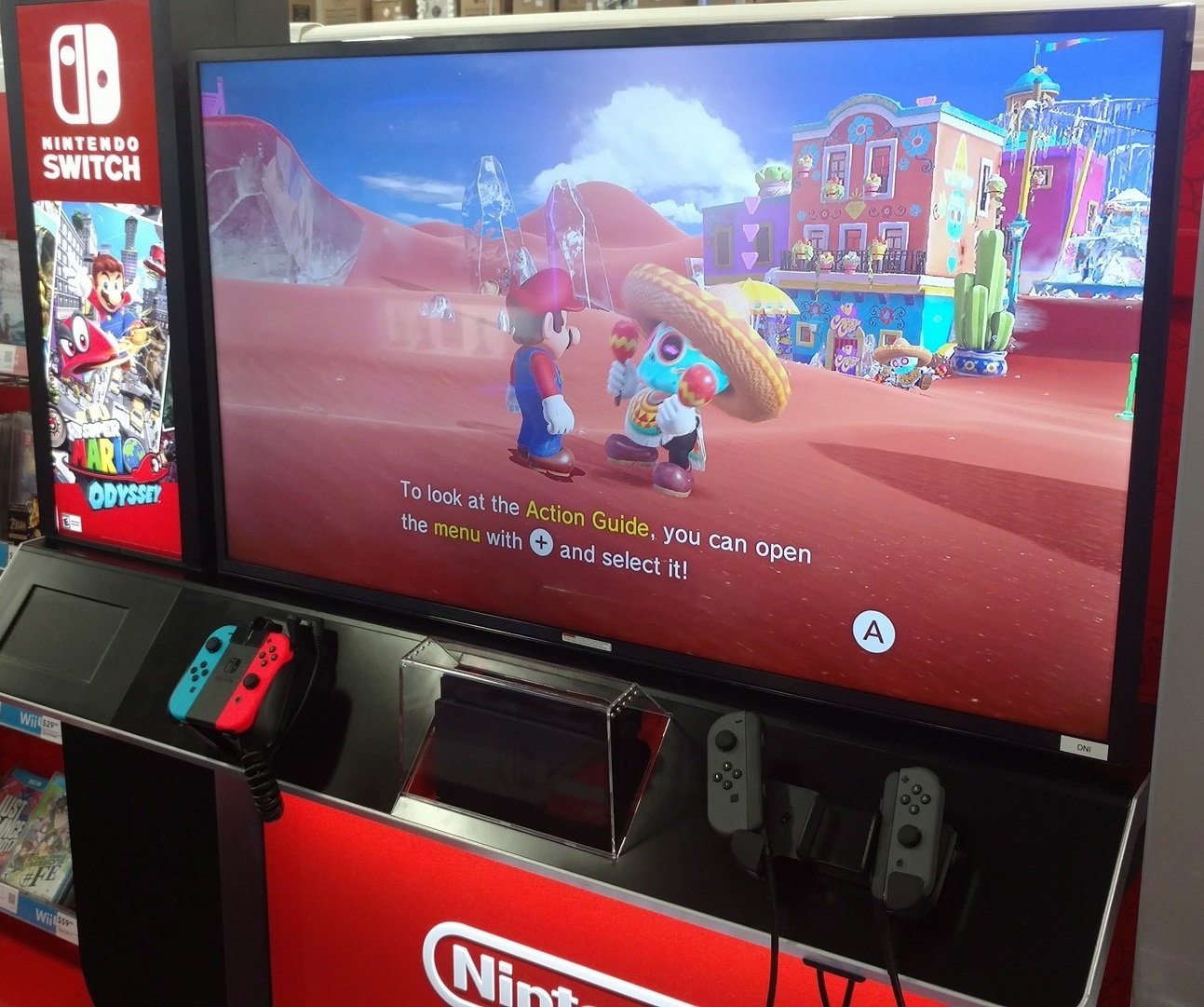
More important it is their e-commerce sales of games that is partially taking the cake with the statement: “The Nintendo Switch is now the best-selling Nintendo console in U.S. history for that five-day period, surpassing even Wii system sales, the company announced Wednesday.” Even as we see “Nintendo’s overall goal for the financial year of 38 million units sold, though analysts are still predicting it will fall just short, hitting about 35 million“, yet in all that the analysts are eager to avoid the one setting that matters, in under two years the Nintendo Switch is about to equal the lifetime sales of the Xbox One, a number that is very impressive as the Xbox One had 300% of the time frame to get to this point. And overall the entire Microsoft issue is expected to hit a few more bumps in the road. Software was the key in all this and Nintendo does comprehend quality software. The curve is changing for the better for Nintendo as their demo stations are all over game shops like EB Games. Parents can see how amazing it looks and as the kids are having a go at playing kart and playing Mario Odyssey, we see (as I saw) that the parents are getting a smile on their faces. It is a family friendly system, where violence is limited to a paint gun with a colour. And as we see the greats (Diablo 3) added to the Switch, we see an amazing list of games titles we see a system that is more and more overwhelming when it comes to quality gaming. A game setting where quality is not the silly notion of high level graphics, no! Quality gaming is the level of fun you get out of it and Nintendo is turning heads around and for the first time in history Sony is starting to get worried as the setting now is that this year Switch surpassed the Sony PlayStation. Now that does not means that Sony is number two, they have well over 250% in number of consoles in the field, yet the fact that Nintendo is closing the gap slightly and surpassing Microsoft has never been seen before in the age of gaming. I loved my GameCube (I still miss Mario Sunshine even today), I loved the games I had and when I saw that the Wii was backward compatible I did not hesitate, yet the Switch is showing to be up to the challenge of equalling this in quality gaming. In this we see that Nintendo is getting it right and even as I questioned the stupidity of analysts with their ‘predicting it will fall just short‘, I believe that their entire setting is bogus. Nintendo has the goods and is showing it has equaled the challenge gaining on the larger advantage that Sony has and surpassing what was once the great Microsoft console and the most powerful console? It might be, yet when it offers a mere 25% of the family fun, I wonder what some people choose.

Now, we do not state that the Xbox cannot deliver the goods, yet we have always known that Nintendo was a family and younger player system. Now that we can be on the road, play on TV (via dock) and have access to some of the most addictive games (Diablo 3, Mario Kart, Skyrim, Minecraft, Rocket league) and so many more titles we need to wonder what the others did wrong.

Well they didn’t!

They made a choice and they continued on that path, Microsoft thought what it had to compete with Sony and they did not end up doing that, they soured their own milk from the very beginning in policy and hardware, they refused to listen to their gamers and they are still losing traction in the process. Even as some corrections and some really good ideas have been launched (Game Pass), they have too much to catch on. Nintendo remained on the family fun and family friendly path and they merely gained speed, and within a year they pushed for a speed that would surpass Sony annual sales and they seemed to have done it in 2018 (the official numbers are not out yet). However the consoles and the quarter of a billion in online store sales in under a month is now showing to become the monster truck of revenue. So as I personally sneer at “Nintendo stock hit a five year high of $58.45 a share this year, only to shed more than 40 percent of its value this month, with a year-low of $33.90“, I see clear numbers that do not support the actions and recommendations of these analysts. The titles Super Mario Odyssey, Mario Kart 8 Deluxe, The Legend of Zelda: Breath of the Wild and Splatoon 2 represent 40 million copies sold. This implies that every Nintendo Switch has at least one of these games and that is an amazing result. Now set this against a company like Ubisoft (as a mere example) with Assassin’s Creed, 100 million copies over 11 titles on 3+ systems, Far Cry, 25 million copies over 6 titles on 3+ systems and Watch Dogs with 2 titles on 3 systems, 10 million copies sold. These are all decent games and when compared to four titles on one system, we start seeing the first part where the others seem to be getting it wrong. That is the comparison that some analysts do not seem to grasp. In addition, the close to flawless results against other titles on other consoles show and we have not even started with the millions of players playing Pokemon on Nintendo handheld systems.

On the day of Saint Nicholas we look at these kids and we see the overwhelming need and desire for gaming, consoles and handhelds. For the next 4 weeks it will be about that group and I predict that Nintendo will be looking at another half a billion if the previous record is anything to go by. It is likely that Boxing Day sales will add to that revenue surpassing my prediction. Clever grandparents adding an optional $30 gift card for their grand-kids to get several games cheap on boxing day sales, adding even more to the Nintendo profit coffer.

Even Forbes gave me the thumbs up (virtually that is). They had the top purchase mention with Nintendo as one of the titles and the PS4 as the most talked about, no mention on Microsoft. Even as Apple got a few mentions, the words ‘Microsoft’, ‘Surface’ and ‘Xbox’ were absent in that view (at https://www.forbes.com/sites/forbes-finds/2018/11/12/5-best-headphones-under-100/#47cb25aa5239), in addition the aggressive discount that the Nintendo gives with their Switch plus Mario Kart in the Netherlands is seeing its own fair share of mentions. If the feast of Saint Nicholas has one drawback then I would think it is the longer absence of board games. Playing a game like monopoly whilst unwrapping a present whenever one player passes go was heaps fun. There was the tension which name was drawn and as present by present was opened; whilst we played monopoly and had hot chocolate milk (it is cold in the Netherlands in December) was a level of fun I still miss.

Yet, we must not forget the hardship either, and there is a lot of that and a lot more coming; in the last year over 50,000 children died in Yemen from hardship, disease and famine. I expect that in 2019 we will see that the 2018 numbers will surpass the passing of 100,000 children. The children are too young to face what other children have to go through in other places, yet we adults cannot afford to do that. If I had to forego my optional Nintendo Switch for one child in Yemen to have a decent meal, I will end up not playing a Nintendo Switch for some time to come, even as the child still dies and I merely prevented it from dying on an empty stomach, I would do so. Even as the peace talks are being held, I fear for the lack of progress, as this is not in the interest of Iran. It is still progressing on arming Houthi; it is still facilitating via Hezbollah and the children are merely in the way there. From my point of view Europe is enabling it as they want their nuclear accord, an accord that is not likely to be the value of printed paper, the Iranian missile tests can be considered proof in this. In this part Prince Khalid bin Salman bin Abdulaziz Al Saud is actually in a very dangerous place. Even as he is with an ally, as the Saudi Ambassador to the United States, we see that the danger is twofold. As more and more US politicians are seemingly ‘bashing’ Saudi Arabia, yet they seem to ignore the danger that Hezbollah is there, we see the start of imbalance, and as this imbalance continues, so do the events in Yemen killing even more children. The hollow words like ‘Iran has praised Yemeni peace talks scheduled to take place soon‘, they want their version in charge in Yemen, not the elected one and they are willing to let millions of kids die to get that done. So whilst the US gives us “The United States has displayed pieces of what it says were Iranian weapons deployed to militants in Yemen and Afghanistan“, whilst at the same time US politicians are unbalancing their allied commitment to Saudi Arabia, we see that in the end it is a political stalemate with the lives of all the Yemeni children in the balance and there is no reasonable chance that the children there will get a better deal out of it.

So as we see the independent giving us the goods and the stage of truth last week with: ‘US struggles to find footing on Yemen, as Iran increases influence‘, we see (at https://www.independent.co.uk/news/world/middle-east/us-yemen-civil-war-iran-influence-saudi-arabia-bombing-trump-weapons-houthis-rebels-a8661546.html) that the US and mostly its politicians seem to have lost their perception on the larger game. the quote “The US Senate, angered in part by the White House response to the killing of journalist Jamal Khashoggi, on Wednesday voted in a surprise move to advance a bill that would cut American participation in the Yemen conflict“, the emotions towards a previously unknown journalist (and ignoring all those imprisoned and dead journalists in Turkey) is setting the stage of enabling the Iran agenda. Vetoed or not, it will up the pressure on Saudi Arabia and in all this, the populist pressure is one that historically has turned anti Saudi more often than not, increasing the larger issues towards Prince Khalid bin Salman bin Abdulaziz Al Saud in other directions as well.

In all this does America even know who their allies and enemies are? The question is more important than you think, as we see on the feast of Saint Nicholas that millions of children in Yemen are abandoned. So what did this have to do with games?

When you watch your child play some Call of Duty game and you realise that it is not Battleground 5, it is not Call of Duty, or Fortnite, but it is the game ‘Holy Defense’, created by Hezbollah to let gamers and players kill ISIS members. When we are treated to: “Hezbollah has developed a 3-D computer game to capture the minds of its youth, while showing them a good time.” When you see your children play this free downloaded game in Europe and America, how much safer was the Nintendo Switch with their family values to begin with?

I agree that this is not a fair remark for Sony and Microsoft and they are not part of this in any way, but when it comes to First Person Shooters, can parents even tell the difference anymore? And when it is getting to close to the factual truth, can they even perceive how many children are getting killed in the process whilst Yemen is facing delay after delay? Should that not be the central issue on the day of the patron saint of children?


Leave a comment

Filed under Finance, Gaming, Media, Military, Politics

Those we needlessly fear

All others pay cash! Yes, that was direct, was it not? We have seen millions of articles fly by, all given the very same announcement: ‘Fear Saudi Arabia‘, as well as ‘MBS is a monster‘. Yet, what evidence was given? What actual evidence did we get?

Turkey played its innuendo game, we can also accept that the US is playing a protective game for Saudi Arabia and that too should be highlighted, yet NO ONE has taken an academic look at those so called tapes as have given the audience the rundown, what was there, what was proven. Is there even enough evidence that Jamal Khashoggi is on the tapes? Journalists are in their own corrupt little world of satisfying the shareholders, the stake holders and the advertisers and they all want Saudi Arabia to look like they are all guilty, all to the very top. In addition we see the G20 Argentina game that France played with their ‘confrontation’, conveniently enough staged to be caught on CNN. He was not that amateur like when he had to have a few words with someone high up at Crédit Agricole, was he? Where have they got that leaked conversation?

I see it as a simple operational premise to counter the fear that they have. It gets worse, at present the vultures are circling and we get to see more fallout. News dot com dot au are giving us (at https://www.news.com.au/world/middle-east/saudi-friend-of-jamal-khashoggi-sues-israeli-surveillance-firm/news-story/b0bf9d501332df9ad31bede7de904b6c) ‘Saudi friend of Jamal Khashoggi sues Israeli surveillance firm‘ gives us ‘A Saudi dissident‘, as well as ‘Omar Abdulaziz, said he was friends with Khashoggi‘. Now people make all kinds of claims, I can make the claim that I am the lover of Scarlett Johansson; she just does not know it yet. Anyone in the media can contact frukan Johansson and verify that fact (or prove it to be wrong), we can’t in the case of Khashoggi, can we? Was there corroborating evidence that they were actual friends? If so, why was that not added? The news site makes no real effort to substantiate that friendship and that is not what this is about. You see, it is the claim ‘a lawsuit against an Israeli surveillance company, claiming its sophisticated spyware targeted him and helped lead to the killing of his friend‘. We have two problems here. In the first, is there any evidence to back that up? In the second, Jamal Khashoggi was an unknown person to 93% of the planet, yet he was a journalist for the Washington Post, and as such he was a lot more visible than most others. Also, the entire filing matter in Istanbul gave rise that plenty of people knew where he was, so the spyware seems redundant. If there was quality spyware in place he could have been killed anywhere and leave the optional involvement of Saudi Arabia almost completely out of it. Does that not make sense?

The last paragraph is the killer here: “citing news reports and other sources claiming that NSO Group sold Saudi Arabia the technology in 2017 for $US55 million ($A75 million)“. The first thing here is to look at those news reports; I wonder how much innuendo is in there. Then we get the stage that technology worth $55 million was bought when JK was very much alone, giving rise to the reason of purchase, last by not least is the investigation on the NSO group and their software and that is what I believe was the foundation, it does not matter where and how the NSO group software was used. I believe that Omar Abdulaziz got wind of a 2016 article not unlike those on Vice (at https://motherboard.vice.com/en_us/article/3da5qj/government-hackers-iphone-hacking-jailbreak-nso-group), and saw ‘Government Hackers Caught Using Unprecedented iPhone Spy Tool‘. so when we see (or saw) “Ahmed Mansoor, a 46-year-old human rights activist from the United Arab Emirates, received a strange text message from a number he did not recognize on his iPhone“, the brain of Omar Abdulaziz  optionally went ‘ka-chink‘ and his pupils turned to dollar signs, It was optionally his opportunity of a lifetime.

So who is right?

I am telling you right now that all I am writing from my opposition is pure speculation, yet is it less of more believable? Is the NSO group real? Yes they are and they have something that every nation on the planet with a decent technology level requires. Any government have people they want to keep tabs on, and that is what this solution optionally provides for. It is not a killing tool, and at $55 million it is not some tool you use for simply ending someone’s life, there are more convenient and more elegant ways to facilitate to punch out someone time clock of life. When you stage a $55 million solution when $50K in an account does it, that solution does not make sense.

Still, we cannot ignore the NSO group software and it might have been used to keep tabs on JK, that is optionally a reality we face, yet we all face that optional for a number of reasons and there we have the crux, knowing where a person is does not mean that their life has to be ended, the fact that we have tools, does not imply that we have to use other tools. The audience factor is trying to give us that idea, an emotional driven premise of events to set the stage of intentional international execution. There has been, and unlikely will be any evidence showing that. Not by some eager frog (an unnamed France governmental executive) stating to Saudi Crown Prince Mohammed bin Salman ‘I am really worried!‘ worried about what? Conversations eagerly and ‘unintentionally’ leaked right in full view of the CNN camera, are people truly stupid enough to go for that bait?

Then we get claims in papers like the Sydney Morning Herald trying to up their game, yet at present I am not certain if the Saudi government would lose if a defamation case was brought to court and that is me merely contemplating two of the JK articles that I have read in the last two days.

In addition, the article has the claim ‘and helped lead to the killing of his friend‘, which is actually very clever as in this way stated we have a problem, or do we? Is there any evidence that the solution was or was not used? If there is a way to check the usage of that software then Omar Abdulaziz opened an interesting door. You see at that point, under the US freedom of information act, close to two dozen claims can be made regarding the NSA (the San Antonio location) on how they have been keeping tabs on people. In the January case of Sherretta Shaunte Washington, her attorney might optionally (with properly applied intelligence) be able to overturn any given sentence against her. There has been the rumour that the NSA assisted in keeping tabs on a dozen burner phones. You see, it is not the sim card; it is the mobile imei number on EVERY phone that is the issue. The NSO group seemingly figured out the algorithm to take this to the races and that advantage is worth well over $55 million. That is exactly why the Mexicans wanted the solution too. Most Mexicans are still believing that without the sim it is nothing, yet one call gave away the imei number and that number is a lot more useful than most consider.

And in the end it is Forbes who gives us the missing diamond going all the way back to August 2016. Here we are treated to: “looking at the domains registered by NSO, they determined Pegasus could have been used across Turkey, Israel, Thailand, Qatar, Kenya, Uzbekistan, Mozambique, Morocco, Yemen, Hungary, Saudi Arabia, Nigeria, and Bahrain, though there was no clear evidence“, in all this the one logical step, the one thought that no one has been willing to voice for a number of reasons. Turkey is on that list. So what if this was Turkey all along from beginning to end? Turkey, who had the solution to keep tabs on thousands of journalists, reporters and bloggers, and jailing hundreds of journalists, do you actually think that they are beyond killing a journalist? I mentioned a few yesterday, so you there is evidence all over the field and so far no actual and factual evidence has been given on any involvement of the Saudi Royal family, yet everyone is playing that card as often as possible.

I am not in denial, I am not stating that they are innocent, I am merely looking and hoping to see real evidence, and so far the absence of that investigation has been astounding. There is enough evidence on the involvement of Saudi’s in all this, yet the proper vetting of Turkish evidence by the media has seemingly been lacking. The press (and the media as a whole) merely pushed that same button again and again and it makes me wonder on the premise in which other ways we are (seemingly) being deceived. That is the clear consequence of orchestration, it makes us all doubt all the other evidence, and in light of the USA playing their silver briefcase WMD game in regards to Iraq, that has made us distrust a lot of other evidence, evidence that might have been valid, but we are in a stage where we no longer trust the messengers in all that and as the media and newspapers lose more and more credibility, we have started to treat most news as fake news.

That is the price of orchestration and the players remain in denial that it is happening. That is the part we see form a source called Foreign Policy dot com. The article (at https://foreignpolicy.com/2018/12/03/how-an-internet-impostor-exposed-the-underbelly-of-the-czech-media/), gives us: ‘How an Internet Impostor Exposed the Underbelly of the Czech Media. When politicians own the press, trolls have the last laugh‘, the article by Tim Gosling gives us: “Czech Prime Minister Andrej Babis—and expose just how easily disinformation can slip into the mainstream press, especially when politicians control it.” It is a mere introduction to: “In September, the Czech broadsheet Lidove Noviny published an op-ed by Horakova expressing support for Babis’s refusal to offer asylum to 50 Syrian orphans, as was proposed by an opposition member of parliament. Playing up to his populist pledge not to allow “a single refugee” into the Czech Republic, the prime minister said the country had its own orphans to care for“. It merely gives us parts to ponder, the amount of pondering increases with: “In tapes released by unknown sources onto the internet last year, for instance, he was heard discussing stories damaging to his political rivals with a reporter from Mlada fronta Dnes, which alongside Lidove Noviny is controlled by Agrofert—the agrochemicals conglomerate that is the centerpiece of Babis’s business empire.

I have written again and again against the media facilitation for the shareholders, the stakeholders and the advertisers, here we see the impact when the media and the shareholder are one and the same. That article from a freelance reporter who seemingly contributed to Foreign Policy, The Telegraph, Politico Europe, Deutsche Welle, World Politics et al. He shows that there is a much larger issue and that the difference between those bringing the news and fake news bringers is almost indistinguishable. We might give passage to the LA Times, the Washington Post, New York Times, the Times, the Guardian and several others, yet after that the mess becomes no longer trusted, mostly because the source is too unknown to us. The media did this to themselves through facilitation and until that changes fake news will have too many options to gain traction with the people influencing a populist political nation on a near global scale.

It is one of the reasons why I refuse to merely accept the view of people blaming Saudi Crown Prince Mohammed bin Salman for it all. There are too many intelligence gaps, too many parts of merely insinuated conjecture whilst the intelligence was not properly vetted and it happened for the most in Turkey (the consulate is Saudi ground). We might never ever get the answer of what truly happened, and to a very large extent it is because of the games that the media played from the very beginning. A game staged in innuendo, unnamed sources and people talking on the promise of anonymity. It is not the fact that these elements exist, it is because to a much larger extent too many of them were used at the same time, pressing the same directional button, most of it not scrutinised to the degree that was essential, and when contra dictionary evidence was found, those issues were ignored by the largest extent by all the media, that too is the foundation of fake news, we merely chose to ignore it, it is our emotional side and that is the bigger issue. People are no longer adhering to innocent until guilty, the media has become a ‘guilty until proven innocent machine‘ and that drives the populist agenda more than anything else, so I oppose them all by stating: ‘The Saudi government is one we needlessly fear, until we have conclusive evidence of their action that is the only way we should be‘. We have become puppets in a world where tyrants (Robert Mugabe), alleged mass murderers (Slobodan Milošević), criminals (shooters who were granted indemnity from prosecution) and paedophiles (Catholic clergy) get more consideration than any Muslim ever had, how sad has our world become?


Leave a comment

Filed under Law, Media, Military, Politics

Annual medical bill $864,685

Yes, that is the price for keeping the doctor away. An Apple a day keeps the doctor away, yet at $2,369 per iPhone it will be a hefty bill, let me tell you that. And the news gets to be worse after that. Apple has been in the news and not in a good way. We all remember the big news earlier this year, when Apple announced that they had become the first trillion dollar company. It was just as the new Apple models had come to town and the impact has been seen. First we get the Financial Times 2 days ago with: ‘Apple falls into bear market territory‘ (at https://www.ft.com/content/c9dd38f0-e839-11e8-8a85-04b8afea6ea3). I thought it was merely metaphorically, yet it is not. You see, bear territory is when a company got into the state of: “The drop takes the stock’s decline from its intraday high of $233.47 on October 3 to 20.3 per cent, meeting the definition of a bear market“, the first corporation to surpass 1 trillion and lose 20% value soon thereafter. Apple did this t themselves in a few ways. It takes me to my dark Apple moment. Now do not get me wrong, I do not hate Apple, I still have the very first iPad and I will get the iPad Pro if my budget would ever allow for it, hopefully before my iPad passes away.

I bought an Mac Book Pro in 2005, I loved it and it set me back $5099, it was all I had and it after 11 months I had one line in my screen, then 3 then I went to the Apple store and I realised that my warranty had past. Two weeks later the screen was no longer usable, $5099 and nothing to show for it. When it ran it ran great, so for 11 months I never regretted buying it, and then the onslaught came. I was not happy, the $5099 was all I had, so there was nothing left for the Apple care and after 6 months I had forgotten to get it, it is my own fault, yet the longevity of Apple (lack thereof) will never be forgotten. The opposite is also true, my G5 and first iPad as well as an iPod Classic are still doing their stuff. So overall there is more good than bad. The previous parts I mentioned matter, as you are about to find out. Forbes, who also on last Thursday gives us (at https://www.forbes.com/sites/gordonkelly/2018/11/15/apple-new-iphone-xs-max-xr-upgrade-price-cost-camera-sales-face-id/#78e1e0302932): ‘Apple’s new iPhones have a Serious Problem‘. Here we see: “AMS revised its Q4 2018 revenue estimates down from highs of $610M to new lows of $480 citing “recent demand changes from a major consumer customer.” AMS is the latest in a string of iPhone suppliers to announce revenue cutbacks“. The setting here is not merely the suppliers; we see ““Many suppliers have lowered numbers because of their unnamed ‘largest customer,’ which is Apple,” Elazar Capital analyst Chaim Siegel told Reuters“. This shows that the shareholders could optionally panic before the end of the year and it will be an additional downturn for Apple, who is currently worth a mere $US886 billion, in addition the second wave might lower it to somewhere between $794-$811 billion, making Q4 2018 one of the worst moments in Apple history, lowering its value by almost 30%. So if 20% is bear territory, will passing the 30% make it the Groundhog tree stump area? #JustAsking

Yet all is not lost, there is still last moment Black Friday, Thanksgiving, Saint Nicholas (Belgium and Netherlands), and Christmas. It will mean a massive level of facilitation (by Apple mind you), but there is space for a partial turnaround and it was their own doing, this economy is not ready for upper class latest techno prices. Consider the $2365, whilst their opponent is offering a decently close solution for $1499 (Google) and $1599 (Huawei) all top end phones and the next model is 33% cheaper, in an economy where most people are turning around pennies (just look at Debenhams). It was a really bad market moment; one could argue that Apple believed their marketing whilst it was nowhere near realistic. In addition we see (at https://www.macrumors.com/2018/11/16/new-ipad-pro-bend-test/) ‘New iPad Pro Models May Be Prone to Bending‘, the image is very expressive on the curve, which might be moving towards boomerang shape over time (just guessing here). The quote “both forum complaints and a new bend test video suggest the two devices have the potential to bend without a huge amount of force“, gives us that the news is already out there, which gets us the Achilles heel of any corporation that is ruled by marketing deadlines. It is the proper testing of last minute changes. You see, if that was not done it implies that proper testing was never done and that is a lot worse at present for Apple. As the new iPad Pro could set you back $2689 that issue is a lot more important than you think. MacRumors also gives us: “Despite the video and the forum complaint, this does not appear to be a widespread issue. There are a couple of other complaints from MacRumors readers who were seeing slight curves in their devices and received replacements or sent the tablet back, but there aren’t complaints that match the complaints we saw back in 2014 with the original iPhone 6 Plus bendgate“, which should be noted too, just be certain (as it counts for me too) to keep an eye on it, and even as a prospective Apple marketeer gives us: ‘Apple released their folding display before Samsung 😉‘, we need to be certain that any gospel truth involving Apple, just in case it is still partially owned by Microsoft.

For Apple things are escalating in a few ways. First there is ‘Apple admits iPhone X ‘ghost touch’ screen issue, offers free repair‘, which we got form the Sydney Morning Herald last week (at https://www.smh.com.au/technology/apple-admits-iphone-x-ghost-touch-screen-issue-offers-free-repair-20181112-p50ffl.html), yet Apple did respond with: “Apple has announced that it has found issues affecting some of its iPhone X and 13-inch MacBook Pro products, and said the company would fix them free of charge“, which is good, but it is water under the bridge, the damage is optionally already done. The question rotates around the core of properly testing issues before the audience gets them.The issue gets worse when we see: “For the 13-inch MacBook Pro, it said an issue may result in data loss and failure of the storage drive“, no matter how repairs go, the entire matter of data loss is a nightmare for many people, the idea that a days work is lost for whatever reason is a massive push to look elsewhere for a solution and that will hurt Apple down the track as well. The battery issue has put a dent in faith in Apple with many people and the keyboard issue in the Macbook and Macbook Pro models only make matters worse, so as the list is added to the media and as the media gives more and more light to it all, Apple might be in extremely rough seas this coming January. A setting that proper testing might have avoided to a greater extent. If this was not enough, CNBC adds fuel to the fire two days ago with ‘I tested the new iPad Pro and it still can’t replace my laptop like Apple says it can‘. The article (at https://www.cnbc.com/2018/11/15/apple-ipad-pro-review.html) also gives us: “I’ve been testing the iPad for the past several days, and while it’s a very nice tablet, it’s still not capable of replacing my regular laptop. In fact, most people should probably just buy a Mac, or Apple’s cheaper $329 regular iPad“. I saw it in the store myself and the new Apple Smart Keyboard is a game changer, which is not available for the normal iPad. He might have a point to some degree, especially when we have to shell out a difference of $1200 at least. The only core issue is that the graphic part of the Pro is close to 300% faster than the not pro, so that is still a consideration to take in a graphic tablet life, but beyond that his view is harsh and optionally not wrong. I found the review of Todd Haselton extremely genuine, especially when he gives us: “The iPad Pro is great, but it isn’t for most people. Let me explain why“, he gives it the proper support, so it is a good part, yet it is also bad for Apple in another way, let’s go there together.

You see, the competition is never far behind and the device already available and several sources give it to us. In this case I selected ‘Huawei’s Matebook X Pro Is The MacBook Rival People Have Been Asking For‘ (at https://www.gizmodo.com.au/2018/11/huawei-matebook-x-pro-review/). Whilst we can look at Like Apple, Huawei starts with a solid aluminium body and then adds surprisingly powerful speakers to the sides, a big one-piece trackpad down below, and clever power button/fingerprint reader combo in the top left – and all of it is top notch. Then there’s Matebook X Pro’s backlit keyboard. While it is a bit on the shallow side, the keyboard’s relatively high actuation weight and deeper key travel feels vastly superior to the garbage you get on modern MacBooks” from more than one direction, it is the setting that gives is weight (as well as the keys I reckon). We also get two more interesting parts. The first is “the X Pro’s chin is equally thin too, resulting in a screen-to-body ratio of 91 per cent. That’s better than devices like the new XPS 13 (80.7 per cent) and the Galaxy S9 (83.6 per cent) by a fair margin“, as well as “Regardless of how shamelessly you think Huawei has copied Apple’s formula, it has absolutely improved on that template in a number of very important ways“. The second part is the most damning one. Apple had a good thing going and was willing to let marketing rule the ways, whilst improvements have been lacking (many users have made similar statements). When we see that the original has been improved upon and we see an equal in a field where they optionally did not belong, that is when the goose of Apple remains to be cooked (optionally for Christmas). With the final part “As of today we finally have Australian pricing and a release date for the Matebook X Pro, which is November 22, 2018. They start at $1,899 for the i5/8GB/256GB model and at $$2,599 for the i7/16GB/512GB model” we see the nightmare of Apple become a reality, not only is there an alternative available, as CNBC reflects on, we see that this alternative is out and it is with Huawei, which should upset Americans to no end. In addition that model comes with Windows 10 Pro Signature Edition, so you get the good stuff. Even as it is not a gaming PC, the optional Nvidia GeForce MX150 would enable you to truly enjoy places like Facebook in several ways and that is definitely an additional plus point all over the board. The battery was stated as good, not much beyond that, yet in light of the bank hey are bringing, we see that Huawei is optionally pushing into Apple territory and even as that is a really large field, the fact that Huawei moved into laptop space is something no one had really prepared for and that might be an issue over the next two months depending on how the Huawei Matebook X Pro is embraced by the audience, the fact that they are clearly on the radar should be regarded as an optional threat for Apple, they quite literally have a lot to lose at present.

There is also an IOS issue (and it goes way beyond IOS. hackers were able to exploit the JIT compiler flaw with a malicious access point, which Apple is expected to have patched in an upcoming iOS 12 update. This is always going to happen, we get that as an issue by itself it is not a biggie (or at least it is optionally not a biggie). When we see “An iOS 12 Security Flaw Allows Access to Deleted Photos on iPhone“, so OK, it is an issue and it will be fixed, in the worst case if you take photos of your wife/girlfriend you will just have to refrain from deleting them until the patch is out. It becomes a little more of an issue as the Mirror reported (at https://www.mirror.co.uk/tech/iphone-x-explodes-during-ios-13593046). The article ‘iPhone X EXPLODES during iOS 12.1 update – and Apple’s response is laughable‘. The article itself gives us: “@Apple iPhone X just got hot and exploded in the process of upgrading to 12.1 IOS. What’s going on here???“, yes it was done over twitter and the response: “That’s definitely not expected behaviour. DM us, so we can look into this with you” was indeed funny, yet not incorrect. Twitter is limited in the response usage, so it was an acceptable answer in all this. The article was not that great, but there is optionally another issue and whether this is a mere IOS 12.1 flaw, or a larger issue is unknown, leave it to the Mirror to not properly look into this and let emotions rise via responses on a mere Twitter setting and few words. The responses were exactly the ones we should expect to see and not worthy of repeating other than ‘And this deserved an article devoted to it?‘ This is acceptable and fair enough, yet the issue behind it is larger. You see if this is the update that is supposed to deal with the JIT compiler flaw; the update could optionally merely be making matters worse. The grand total is negative for Apple as a multitude of issues on devices and drop of value, as well as intensely lowered sales at present shows that Apple is in a not so good place. We cannot tell for certain because the end of year is 6 weeks away and a lot could optionally be repaired by then, yet the fact that there is a list of issues spanning the range of Apple models is not the greatest place to be in at present and proper testing could have prevented a lot of the issues involved before they happened, which leaves us to the setting: ‘Has Apple become too complacent in all this?

It is important because it only means that whatever comes out in the next 6 months could be as messy as anything they have released in the last year and it has not been a great year for Apple technologically speaking, and now that they have both Google and Huawei nipping at their heels on several fields could be a decent sign that there are more issues on the horizon making their shareholders even more nervous than in the previous 4 years altogether, so that too is likely to impact the total value of Apple over the coming quarter, they will survive, no doubt about that, yet it might be a while until they get to that 1 trillion mark again.


1 Comment

Filed under Finance, IT, Media, Science

The beat goes on

Perhaps you remember the stage. It was around the time that Sony started giving the audience both God of War 4 and Spiderman, breaking all kinds of records in the process. It is gaming at a new level and both groups of players (and many who play both games) have been satisfied well beyond amazement. Now we see that Microsoft is trying to bring the pain to Sony and they are doing it the right way (and only 5 years too late).

With the acquisition of Obsidian (Fallout New Vegas) and InXile (Wasteland 1+2) we see that they are starting to wake up, yet will it be enough? Having exclusive RPG games is the right way to go about it. You see, dedicated RPG fans tend to be long term fans. If you get the game right, there will be no chance that these players will switch consoles or PC Gaming platform. Bethesda proved that point and it gets to be better, there are people (including me) who have the game on all their consoles. There is value in doing that, but it tends to be reserved to the dedicated few and if you are not that person and you merely like it on one system, that is good too.

But it is not all roses and honey in this arranged marriage. Former Obsidian Owner Chris Avellone gave us (via Screenrant) “Chris Avellone didn’t hold back after discovering that Microsoft had just acquired Obsidian Entertainment in a blockbuster deal, beseeching the powerful tech company to gut the leadership that still worked there” that might be the case, it might not. I do not know. Yet what is a given is that the value of such a company is its IP, plain and simple and no matter how amazing Fallout New Vegas was for the Xbox360, that is still Bethesda IP, so is the Elder Scrolls. If they cannot match my ability to create the foundation of new IP within 168 hours, what value, or perhaps what costs is Microsoft looking forward to and will it even have a chance? Let’s take a leap in another direction. In 2017 Guerrilla Games released Horizon Zero Dawn, a game that when looked in depth has an amazing story behind it. It’s a little Matrix perhaps, but the intention towards greatness was there and with reviews ranging from 89%-95% shows that they had the good stuff, the right stuff and the parts that Ubisoft keeps missing out on. Now they are in not merely in the right pace, they are literally sitting on the next goldmine. How it will turn out? No way to tell. I am not in their in-crowd, but the potential is there. Can Obsidian bring that level of pain to their competitors in this field, because that will be the need? I know a lot less about InXile, yet so far they have been largely dependent on the Bards Tale and Wasteland franchise and that could be enough if they take it to new levels, because that is what the players look for. For me the Bards Tale looked awesome as I had not touched the Bards Tale Franchise since the CBM-64. I never really got into that game. Not every game is everyone’s cup of tea and that is not a bad thing; only Ubisoft has been delusional enough to think that they can make a game for everyone and they keep on making games that pleases no one (OK that was a bit of an exaggeration).

You might think that gaming is not interesting, yet it is the most interesting part in all this, merely because gaming has remained on the edges of technology for the longest of times. Its push is also a push for hardware. It is my personal belief that the new I9 processor (an Intel fabrication) would not exist without gamers. Mark Seconi (Intel) gave us in Forbes last month “Gaming has traditionally been the more lightly-threaded of applications your PC will face, but over the last couple of years we’ve seen games and gaming engines become more threaded. Nonetheless, they do still remain lightly-threaded, but we also recognize that a lot of the gaming community also do content creation to some extent. That’s both casual creation or something more demanding and a lot of those applications are beginning to use more and more threads“, you merely have to consider how this skill could propel blockchain software solutions over time and we see that partially at Digital trends with two quotes. The first one “Rather than compete directly with either the Threadripper 1900X or the Ryzen 7 1800X, the Core i9-9900K promises the best of both worlds. It has a base clock speed of 3.6GHz, matching the Ryzen 7, but boosts up to an audacious 5GHz Turbo frequency. Not even the 2nd-gen Threadripper has cracked that milestone. Its core count might be far behind, but the Core i9-9900K can hit higher per-core clock speeds at default settings“, as well as “the Core i9 is the clear winner in every benchmark and test we could put it through. Against the previous generation Core i7-8700K, the Core i9 matched its single-core performance, but flexed its eight-core muscles by upping its multi-core score by around 25 percent. That’s the kind of improvement two extra cores provides“, something that is 25% more powerful than anything else. This implies that your data mining scripts can clear up more data, aggregate as well as set the stage for more predictive analytics in a single day, well over 25% more because the solid state drive fixed a lot before, the processor had become the bottleneck and that is now changing. Consider another paraphrased quote: “It takes millennia to break the cryptographic algorithm. This cannot be done faster because of the computational limits we have (now that takes 25% faster). Quantum computers in the future might be the answer, yet we merely upgrade the algorithm. Satoshi Nakamoto, the bitcoin creator added cryptography in his system to help people authorise bitcoin transactions from their wallets“, yet it is not the hacking, it is the creation of all this that also takes time and if it is about speed, creating the cryptographic 25% faster will be everything in banking and FinTech solutions for decades to come, that is where the i9 will find itself get embraced by banks at the speed of light, and that is even before we see new solutions that will allow people to now create live video-edited streams on the air. A system that optionally censors ‘live news action’ within 7 seconds, from the battlefield straight to the TV recipient, a stage that allows almost instant filtering. Places like CBS, Fox News, SBS, BBC and many others will fly to the shops getting that solution taking away time constraints. When you consider ‘There are nine factors associated with newsworthiness: generally recognized significance, possible future impact, conflict, human interest, proximity, the number of people affected, timeliness, exceptional quality, and shock value‘, now consider that this so called ‘gaming chip’ optionally removes the time constraint for the creation of 3-4 of them, do you still think it is merely about gaming?

Is this about gaming?

It still is to some degree; it is about pushing corporate creativity, this is not merely set in a more expensive computer, it is seen in the creation of material and the creation of a video game is one of the most visible digital creation fields there is.

We can all admire the creativity of an advertisement, the clever use of innuendo and graphics. Yet this is all staged in a time frame. What happens when we remove that element? What happens when we see (as this is happening at this very moment) that data mining is done on the fly, the need of ‘on to go’ editing for dashboards and presentations are set to zero time? Don’t laugh because this is happening at this very moment all over the world. The systems are fast enough to no longer be the bottleneck. Now we see the need of a new kind of data miner. One that can see through data and who can creatively look at other ways to present the lack of 2.75% growth, or perhaps a long term impact that has to be explained to the shareholders in an acceptable way. It is a new age in Data Visualization, where the story is everything and now we see the intersection with gaming development. Adjusting the storyline of the dashboard is becoming the mainstream player here. Don’t take my word for that, Forbes gave us two weeks ago: “Any great story means visualization and detail. It takes the small additions of those details to build a picture in someone’s mind to truly make the story complete. The same goes for analytics and data“, it is a new style of adherence. a person needs to be able to focus the listener and create attachment of the shareholders to a cause, a trust and a commitment to that corporation, in this creativity is become everything and that is directly seen in the ability to create any Role Playing Game.

It is digital theater in a new way, the hardware is now ready to do it on the fly, but with the wrong presenter that view collapses as soon as it is presented and the gap between projection of data, capture of results and presentation to the shareholders is now diminishing and we see that solutions like Tableau are ready for that, if they can only find the right people to get the data from Point A to PowerPoint presentation. The corporations still have their marketeers to tell the story, yet the shareholders will no longer accept the delay of the presentation pushing a new need to a group of people that we have not seen before.

Uniting Business Intelligence and Gaming

In the first stage we see (a random choice) presentation (at https://www.youtube.com/watch?v=LntX_5qA_Aw), this two minute presentation gives what BI was, frozen moments in time presented on the screen to a group of people. Now we go to the extreme other end, it comes from a game called Counterstrike. It is 90 seconds and shows how the display dashboard is adjusted (at https://www.youtube.com/watch?v=JQO8dR8NHM4). In the second stage we need to unite the views, the issue is that no one is ready at present. A company named Profitsword is making waves in the right direction, yet they have not arrived at this destination yet (at https://www.youtube.com/watch?v=UhE6RMZYF3M), it is merely on theme and it is the themes that drive the solutions. Should you doubt me, ask yourself, have you ever gone to a car site and configured a car to your liking even though you will never be able to afford the wheel caps? Jaguar, Dodge, Maserati and there are plenty more. You see, it is actually quite simple. A thematic approach gives us identity and the identity of a company translates into value, interaction gives engagement and these two elements are becoming more crucial in keeping the shareholders (and the general audience) interest. The question is problem is how to avoid a mere ‘sprinkle’ of interest and keep it business oriented. The gaming industry had that solved close to a decade ago, people ignored it too long and those in the trenches of that world are now reaping the benefits. The game has 11 million players, in May 450,000 people were actively playing the game. In a business of 100 billion, those numbers matter and the fact that this game has been around for 18 years is even more amazing. We are halfway in the month and this morning 178,000 gamers were playing that game. These numbers matter, because if engagement and interaction is everything in this field, how long until BI graphics require a lot more than we currently see?

What happens when Hawaiian Tropics changes the game and this poster is not merely advertisement, but the Shark, and the swimmer in the water becomes elements of profit, loss, ability and availability shown in its own way? What happens, when the presentation is not merely graphics, but the water itself shown brand visibility against others? That is not a fab, that is the direction that we are going in and people will stop, they will take additional looks at that presentation and when they can choose elements like placement, and product type to see how the brand shows up against others, how much better in protection, where to get it, where the best deal is and we are there now 5G will allows that to be done on the fly, to see the ads, interact and the people will engage, and as has been shown for a few years now, engagement is quality marketing. It is not views on Facebook, it is not a display advertisement, it is the engagement with the presented product that draws people in, every single time and the quality programmers for that solution have been doing it in gaming for over a decade. As I started, the beat goes on, but the tune is shifting as are the beats per minute in that showstopper. The push for engagement will be everything over the next 5 years and that will be seen even more clearly in the boardroom and shareholder presentations. Having the ability to mainstream such levels of interaction is going to be the next gold rush and at present the amount of players on that level is disturbingly low. The moment they catch up too late we will see all these golden fires that promise a lot, yet in the end you merely see a file with scorched data results.

Whatever we will see, it is not an easy path and there will not be too many good players, ready to go that distance, yet those who do will corner that market for close to the next generation. That path is actually a different one and the golden programmers will be needed, but not high on this corporate ladder. that place will be limited to the with the creative vision to see what needs to be programmed and those programmers who see the image and comprehend how to program that will end up being the people with a job and career until their retirement.

It has been a long time from the models we had to the model where creativity was the slowest element in the digital framework, however we are there now and knowing how to deal with it will be the crux. Or to frame it in another view, the time for the cold accountant is over in the Annual stockholders meeting, now it is not merely that knowledge, it is the one who finds the novelist that gives the correct engaging story that weaves it all together in a way all shareholders can relate to, that will be the golden placement to have.

This now gets us back to Microsoft. No matter what software house they buy, yes they will always have a Minecraft audience need, yet the bulk of all the gamers require a new a most original IP to get them through the next season of gaming. Guerrilla Wars figured it out and gave the people Horizon Zero Dawn. A new IP, now Microsoft needs to do the same with two houses that have relied on the same IP for an awful long time; are they ready for what comes next? Microsoft Studios has the right stage when the connected with Bioware and unleashed Mass Effect on the people in 2007, it seems to be a lesson they have forgotten too easily, so I hope that they catch on quick as this is a stage where you are merely allowed to get it wrong only once. Mass Effect Andromeda taught them this lesson the hard way, a C$100 million dollars development failure that merely gave them a 71% rating (in gaming rating translates directly to revenue), Guerrilla Wars needed a mere 50% to get a much better result, creativity and the story were everything, pretty much quite literally and we will see that same push in Business Intelligence. Data Visualisation is getting us there, whether we want it or not. When we realise to all the ways we can engage with an audience, we will learn that a few buttons will not do the trick, it will be about the backdrop, the interaction and the choice of what we see. It is a path gaming has been on since 1993. You cannot ignore 25 years of technology evolution that would actually be really stupid.


Leave a comment

Filed under Finance, Gaming, IT, Media, Science

EA Games is waking up

We agree that EA Games has had a rough time, there is the loot box gambling part, a part I am on the side of EA games and I do not agree with the findings on a few levels. Yet there is a side where EA Games needs to wake up fast. first the good parts, like Forbes in September (at https://www.forbes.com/sites/games/2018/09/13/nhl-19-review-the-good-the-bad-and-the-bottom-line). From my point of view NHL19 is the best NHL game they ever launched. They started really good at the launch of the PS2, then there was a really good version of the game in 20903 on the GameCube and after that it started to sizzle (as I see it). They were more asleep than awake and the NHL franchise fell behind and fell behind a fair bit. EA Games had a few more good moments. Madden NFL 2002 On the Xbox was surreal and amazing, but that too fell down a bit, most state to me that NFL19 is awesome on many levels and I might find it out for myself in the Christmas sales dumps (somewhere out there). I was never a soccer fan, so FIFA is not in the cards, but the reviews are good and I accept that, but this is not about that, it is about the flaws in NHL19 and there are a few. Most of them are around the cards that you have accumulated, there is an option missing and a few details going into space, all could have been avoided. I personally believe that all 19 games have the same flaws and that is such a shame.

Then there is the use of cards, in my case I ended with a free HUT silver card and I have absolutely no clue what it does. So EA Games is not informing the users on some of the cards, which basically amounts to deceptive conduct. In a stage where EA games cannot afford to get markers of deceptive conduct against them is not a good thing. I love it that you get a free pack of 4 every 8 hours, which is awesome. Yet that does not rack up a lot in all the things I found. The option of a decent CCG album would have been great, with the cards on the right (or left) and the other side a superimposed image of that card where you could read all the details, why is it not there (not the version that is there now and it is a little laughable)? The filtering in auctions and looking at your cards is awesome, yet the lack of certain elements would have made it better. The customisable main screen of NHL 19 is awesome, and the practice part is fantastic (the final deke is a nightmare), yet overall this addition will entice more new players to NHL, especially those who have a puck instead of a heart (like me), it’s fun to have one but it freaks out the cardiologist to no amount, which is additional fun to boot. Why not expand on Franchise mode? Perhaps I did something wrong, I found the beginning awesome as I got my favourite team (Caps), arena, logo and jerseys unlocked. Why not unlock more with each game you win, other caps jerseys? I think we can accept that these will be non-tradeable cards, most gamers will not care, consider all the teams, American, Canadian, Scandinavian and other team leagues in there, the amount of jerseys and logo’s to unlock, would it have been such a shame to add them as unlockable parts? Now, I get it that this does not apply to the players, yet you still have the option to get those in the free packs (up to three players a day). It adds to the replay power of the game, adding bang to the buck and value to the game. Overall NHL is a screaming success, yet the parts that I found have a 5-10 point negative impact, whilst that should not have been the case in the first place and I reckon that I would find the same failings in both NFL19 and FIFA19, so a failing thrice over, and then there are the auctions. It is great that the game gives a free pack every 8 hours and there is always a coin card with 100 coins or more. Having won more than one 1000 coin cards made me very happy, as it allowed me to get 20 arena’s and half a dozen jerseys in a mere three weeks, so this is all good. What is less it that there seems to be an auction bug. I have been the front runner more than once and feeling happy having won a few auctions as the auction ended with me having the highest bet, only to go to the menu finding my coins returned and no card, which feels like a total sham. I actually lost my money once, but not through the auction, that daily coin card just vanished. It was a mere 200 coins, so no biggie, but it feels a little sour for a few seconds.

The graphics are awesome on the PS4, the controls are for the most outstanding and actually feel intuitive (except for some dekes) and practice mode adds to the flavour of preparation, which makes you more and more in the winning state of mind. I feel that having to select the language every time I start the game is weird, but what the hell, so first the language, then selecting the game at the main screen, a part that could have been done better I guess. Forbes has a few additional parts, all worth consideration, and the quote “The balance between offense and defense is good. Poke checks aren’t out of control as they were in a previous version, but still, an effective way to stop an offensive player’s progress. I think this year’s game forces you to use all of your defensive tools more than others. The more tools you can command, the better you’ll be at the game, and that’s the way it should be“, is one I wholeheartedly agree with. In addition there should be mention that the soundtrack adds to the game in a way that must be noticed. or me the fun was that I didn’t know any of the songs, which is always nice, especially when you feel more in the mood to play hockey because of it. In the end, the scores varying from 80%-89% is decent, yet I personally believe that adding these few parts to the interface and adding the reward unlocks might have made this a 85%-94% game. When that realisation sets in, consider what FIFA and NFL are optionally missing out on, especially when you realise that some people will not consider a launch day game for any title scoring less than 90%, that racks up to a serious amount of cash.

As stated, NHL 19 is the best NHL game I have seen in many years and that is still a great victory to behold, especially to play it again just as my team won the Stanley cup for real, which after supporting them for almost 27 years is a real good feeling. Now, I just need to get them there in the Pro Career (which might be a taller order for me), yet I remain an eternal optimist.

You see, if Colonel general Igor Valentinovich Korobov can drop the ball in Salisbury to the extent that the ball has been dropped, I definitely could be a successful NHL goalie, preferably the Western division so that I do not have to go up against my own favourite team, do you think that the San Jose Sharks could use another goalie?

Oh, and I had initially planned on writing about the media BS that we are getting from AstraZeneca and Brexit, which especially in light of certain patent pains are a hoot, but I am still gathering materials, so that will take a few days.


Leave a comment

Filed under Uncategorized

The FX slogan in action

I always loved the FX slogan, it is true, and it is at the centre of entertainment. Yet is it at the centre of viable analytics? Is a result merely presented as an anecdote more acceptable? We seem to lack the ability to take a step back and look at it in a clinical setting, because it is not always about the mere setting.

A scientist will show you how expensive progress exactly is.
A diplomat makes you look forward to the invoice attached to it.

This is a setting that we seem to laugh at. Now take this in a very different direction: ‘A person who is 30% white is still 70% guilty‘. You are not laughing now are you? Take this to the next level with KTVU naming the crew of a plane crash (at https://www.youtube.com/watch?v=gpP2S6c74Ts), still having fun? The people connected to Asiana Flight 214 are not, I am certain of that. So when we see this, where do we go? Well we need to take a short pit stop when we address something that I have seen in my surrounding. The practice is not wrong, it can be loaded and it can blow up in your face if you do it wrong.

To get this we need to look at 2009, when Google’s Chief Economist Dr. Hal R. Varian told the audience: “The ability to take data—to be able to understand it, to process it, to extract value from it, to visualize it, to communicate it—that’s going to be a hugely important skill in the next decades“, this is true, it has been true for decades. So as data becomes is found everywhere it becomes the setting of an almost opposition. To get data from almost common sense (where everyone seemingly gets it, to a stage that the presentation of numbers, with a story, almost any story that fits we get to see that companies are desperately searching for talent with data skills and they make it worse by trying to find people who can tell a story. Yet where is the story the value? Is that because it is more believable, or because it fits the moment? Yet that danger is now growing as well. You see each quarter the story needs to be amended and builds upon the previous story and investors have a much better memory than some realise. This is where Forbes gets us with “Interestingly, much of the current hiring emphasis has centered on the data preparation and analysis skills—not the “last mile” skills that help convert insights into actions. Many of the heavily-recruited individuals with advanced degrees in economics, mathematics, or statistics struggle with communicating their insights to others effectively—essentially, telling the story of their numbers.” I am not sure that this is a correct path. Instead of focussing on the communication skill, we are given data presentations by Mother Goose and Mr Grimm and in all that, will we get the story that is told correctly? I have prepared dashboards and data reports for decades. I have seen how some jumps were made on the assumption of one result, whilst the data was not supporting it, or it was, yet only after targeted weighting? In that we get the story that is a partial truth, yet it is in that same instant a partial lie too and that part will no longer get the proper scrutiny that is required.

So now we get to the good stuff. Now we get to the Guardian that treated us to: ‘China planted chips in Apple and Amazon servers, report claims‘ (at https://www.theguardian.com/technology/2018/oct/04/china-planted-chips-on-apple-and-amazon-servers-report-claims). Is it possible? Yes it is, yet the numbers and the speculative sides in all this is a larger problem, or better stated it is a large issue in a much larger universe and we are merely shown the keyhole view with the audio of two moaning people. Yet whether they are having sex or are pushing the bed around cannot be stated as we merely see a wall and part of a piece of furniture and we go by the sounds we hear. So when we consider that the corn borer can make the identical sound of a bat, so much so that the female corn borer moths cannot distinguish between the sound of a real bat and the sound of a male moth imitating a bat. Which quite literally gets her screwed, it’s merely how he gets lucky.

This now relates to the article, where we see: “A Chinese military unit has been inserting tiny microchips into computer servers used by companies including Apple and Amazon that give China unprecedented backdoor access to computers and data, according to a new Bloomberg report“, yet when we are also told “The attack was reportedly discovered in 2015 by the US intelligence services, as well as by Apple and Amazon as the companies purchased servers made by Super Micro Computer“, yet companies stay in the dark on this? So first it is Russia, now it is China? Consider the next quote “Amazon, Apple and Super Micro have all denied Bloomberg’s report. Amazon said: “It’s untrue that AWS knew about a supply chain compromise, an issue with malicious chips, or hardware modifications when acquiring Elemental.

Furthermore, we see both “As we shared with Bloomberg BusinessWeek multiple times over the last couple months, at no time, past or present, have we ever found any issues relating to modified hardware or malicious chips in SuperMicro motherboards in any Elemental or Amazon systems“, as well as “Apple said: “On this we can be very clear: Apple has never found malicious chips, ‘hardware manipulations’ or vulnerabilities purposely planted in any server.“. Is this an issue about what exactly?

This we see in the consideration of: “There have been increased concerns about foreign intelligence agencies infiltrating US and other companies via so-called “supply chain attacks”“. This is not unique. The American nagging and the nagging by its bitches (aka Australian Intelligence) is becoming a much larger setting as to the stage on where economic prosperity goes to. This is as I personally see it, the setting of a stage on where outsourcing goes to. This seems to be much more realistic and much more believable. You see, if there was truth in the Bloomberg part, if there was the real setting of “Apple had reportedly bought around 7,000 Super Micro servers when its security teams discovered the chips“, in that setting 7,000 server boards would have been shown to the world, it would have changed everything, places like Stanford, Harvard, Cambridge, Oxford and UTS (which has Apple co-founder Steve “Woz” Wozniak as a professor). They would be showing you the high and low of it all, yet that did not happen did it? So when we are seeing “Technology shares in Hong Kong fell sharply on Friday led by Lenovo, which lost 23% in morning trade. The Hong Kong-listed shares of Chinese telecommunications equipment maker ZTE Corp lost more than 14%“, which is interesting as ZTE was a thorn in the 5G side of the US and a few other players (like Telstra for example) for a much longer time, so is that a mere coincidence? What story telling sides are we not exposed to?

However, this is not the end. It is important to look at Bloomberg, because Bloomberg is not really the ‘storyteller’ of the century. We get introduced (at https://www.bloomberg.com/news/features/2018-10-04/the-big-hack-how-china-used-a-tiny-chip-to-infiltrate-america-s-top-companies) to the quotes “In late spring of 2015, Elemental’s staff boxed up several servers and sent them to Ontario, Canada, for the third-party security company to test, the person says“, as well as “Nested on the servers’ motherboards, the testers found a tiny microchip, not much bigger than a grain of rice, that wasn’t part of the boards’ original design“, which also gets us: “During the ensuing top-secret probe, which remains open more than three years later, investigators determined that the chips allowed the attackers to create a stealth doorway into any network that included the altered machines“. This is a much more frightening setting, yet why was this kept in the dark for so long? Not because of any matter that can be attributed to common sense. You see, I find “Still, to actually accomplish a seeding attack would mean developing a deep understanding of a product’s design, manipulating components at the factory, and ensuring that the doctored devices made it through the global logistics chain to the desired location—a feat akin to throwing a stick in the Yangtze River upstream from Shanghai and ensuring that it washes ashore in Seattle” an acceptable tactic, yet it opens the door on multiple places, places that are implied but not shown into the limelight. The first and perhaps the most visible one is: ‘timeline to design a chip‘. If that is so small, how can we be certain that the CIA did not do this to every Apple and IBM device ahead of fabrication? So when we get to “But that’s just what U.S. investigators found: The chips had been inserted during the manufacturing process, two officials say, by operatives from a unit of the People’s Liberation Army“, why them? Why not the Ministry of State Security? When we look in those directions, I personally find Chen Wenqing has a much more deceptive look then Xi Jinping. For either, funding would never have been the issue. And in the end Bloomberg gives us: “Three senior insiders at Apple say that in the summer of 2015, it, too, found malicious chips on Supermicro motherboards. Apple severed ties with Supermicro the following year, for what it described as unrelated reasons“. So yes, Bloomberg is raising questions, questions on where we need to consider ourselves in regards to China, an issue not properly raised by the Guardian this time around. Yet in both cases we end up with questions. We know that 5G will be a multi trillion industry and the US is desperate to melt the cogs of Chinese industry here, they have a backlog that is too large, there is at present no chance that the US, or Europe could catch up with China. The Chinese focus had been on 5G for too long, production is nowhere near it needs to be to go up against China. Yet this story, this event 3 years old and never in the limelight until now, that is impacting Lenovo and ZTE, so one of the 5G drivers is now as they call it: ‘In the shits‘, a 14% loss is nothing to get sneered at. And this optionally links back to the accusations against China in 5G, yet they are all still stories. The evidence was never handed into the limelight, and it also squarely lands the entire matter into the pond of former President Barack Obama, who still wanted to get trade deals going at that stage, so the Democratic party is going to get pushed into this mud pool sooner rather than later, because corporations at a global scale will feel betrayed in this mess. It gets fuelled more when we go back to September 2015, after this mess started and the people (via Reuters) get treated to: “President Barack Obama announced on Friday that he had reached a “common understanding” with Chinese President Xi Jinping on curbing economic cyber espionage, but threatened to impose U.S. sanctions on Chinese hackers who persist with cybercrimes.” So, did it happen? Was the story on the servers a ruse? Seems interesting that when placed in the proper timeline, against other news, we see a different setting do we not?

That is the stage we see when we add an element, any linked element to the story, it changes the preface of it and it changes the conclusions of it all. Any story with incomplete data is not a story, it degrades into a fairy tale, and both Mother Goose and Jacob Grimm both had their end of the spectrum when we watched their stories unfold. So where do the Guardian and Bloomberg stand? They go with sources that gave them news, yet when those sources cooperate in getting a particular story told, where do we get to stand, being told a story?

The server boards are evidence, yet where are they? If it is in 7000 server boards, there should be plenty to go around and show the world what was going on, but that did not happen, did it? So even as we were made aware a mere 5 hours ago of: “Huawei is trying to convince the U.S. government that Trump’s trade wars with China might slow down 5G adoption on American soil“, we now see that this is exactly what the US needed, time to catch up, or at least get a bigger slice of the 5G pie chart. You see a nation that is to be regarded as bankrupt cannot rely on importing goods; it needs US based goods to use a circle of non-cycled currency to keep its government running. And the 5G wave will go on for some time, the more time they get, the longer they can negate their official moment of being bankrupt. I am not the only one with that view, the same view is given (with a better economic handling) by Economist Laurence Kotlikoff who gives us: “While the United States’ official debt is $20 trillion, the fiscal gap is really 10 times larger — $200 trillion. That comes from adding in off-the-book liabilities, including debt that’s in the Federal Reserve’s hands, Kotlikoff said“, who also gives us: ““The evidence is in front of our eyes that we’re bankrupt,” Kotlikoff said. “It’s not bankrupt in the future. It’s bankrupt right now.”” A stage that I had mentioned three years ago, it might have been 4 years ago. I mentioned the settings and the consequences and I only needed an abacus to get there, but according to all the newspapers, I was wrong. Now we see more storytelling games and more pushes by large corporations to keep the current machine switches on, because once it is switched off, it ends for them, they will have no options and the markets will collapse soon thereafter wiping ours (and partially their) retirements away. That is the realism of our day and age and it is a story that I am telling, just like the others. I merely believe that I have seen more data, more complete data and I see the interactions on a wider scale. From that assumption my story is (seemingly) better, truer and more believable, is that the case, is it that for you?

You see, that is the danger with stories, it all hangs on the evidence that we are given and for the longest of times, the supporting evidence has been lacking, or basically completely absent on their side of the discussion. When we watch the Grimm in the TV Series Nick Burkhardt we accept it, because it is entertainment, and when the Grimm kills the Hundjägers, we know it is fabrication, entertaining fabrication mind you. Yet when we see the mention of Lenovo and ZTE, when we realise that 128,000 people are now in a state with an endangered job, families in danger of social security, as well as the impact on a larger scale, are we happy with the tale when it is the story and the non-shown evidence that is the matter. The fact that more parties are in denial is also an issue, but that could be for a whole host of reasons. It is the lack of evidence that is open for scrutiny that becomes the larger issue and that is an issue, it is an issue in every story, so whilst I embrace the FX slogan: ‘the story is everything‘ it is the lack of supported reality that makes it an issue in business intelligence and actual intelligence analyses. A setting that was 3 years in the open and we only get it partially served now, now that the need of America is becoming more and more dire.

The math does not add up and that has a much larger setting in all this than most are willing to admit to at present.


Leave a comment

Filed under Finance, IT, Media, Military, Politics, Science

Deadlock removed

Forbes gave us news in several ways. It merely flared my nostrils for 0.337 seconds (roughly) and after that I saw opportunity knock. In all this Microsoft has been short-sighted for the longest of times and initially that case could be made in this instance too. Yet, I acknowledge that there is a business case to be made. The news on Forbes with the title ‘Why Microsoft ‘Confirmed’ Windows 7 New Monthly Charges‘ (at https://www.forbes.com/sites/gordonkelly/2018/09/15/microsoft-windows-7-monthly-charge-windows-10-free-upgrade-cost-2) gives us a few parts. First there is “Using Windows 7 was meant to be free, but shortly after announcing new monthly charges for Windows 10, Microsoft confirmed it would also be introducing monthly fees for Windows 7 and “the price will increase each year”. Understandably, there has been a lot of anger“. There is also “News of the monthly fees was quietly announced near the bottom of a September 6th Microsoft blog post called “Helping customers shift to a modern desktop”“, so it is done in the hush hush style, quietly, like thieves in the night so to say. In addition there is “Jared Spataro, Corporate Vice President for Office and Windows Marketing, explained: “Today we are announcing that we will offer paid Windows 7 Extended Security Updates (ESU) through January 2023. The Windows 7 ESU will be sold on a per-device basis and the price will increase each year.” No pricing details were revealed“. This is not meant for the home users, it is the professional versions and enterprise editions, that is meant for volumes and large businesses. So they now get a new setting. Leaving pricing in the middle, in the air and unspoken will only add stress to all kinds of places, but not to fret.

It is a good thing (perhaps not for Microsoft). You see, just like the ‘always online’ folly that Microsoft pushed for with the Xbox, we now see that in the home sphere a push for change will be made and that is a good thing. We all still have laptops and we all still have our Windows editions, but we forgot that we had been lulled to sleep for many years and it is time to wake up. This is a time for praise, glory, joy and all kinds of positive parts. You see, Google had the solution well over 5 years ago, and as we are pushed for change, we get to have a new place for it all.

Introducing Google Chromebook

You might have seen it, you might have ignored it, but in the cast of it all. Why did you not consider it? Now, off the bat, it is clear if you have a specific program need, you might not have that option. In my case, I have no need for a lot of it on my laptop, yes to the desktop, but that is a different setting altogether.

So with a Chromebook, I get to directly work with Docs (Word), Sheets (Excel) and Slides (PowerPoint) and they read and export to the Microsoft formats (as well as PDF). There is Photos, Gmail, Contacts and Calendar, taking care of the Outlook part, even Keep (Notes), Video Calling and a host of other parts that Microsoft does not offer within the foundation of their Office range. More important, there is more than just the Google option. Asus has one with a card reader allowing you to keep your files on a SD card, and a battery that offers 7-10 hours, which in light of the Surface Go that in one test merely gave 5 hours a lot better and the Chromebook is there for $399, a lot cheaper as well. In this it was EndGadet that labelled it: ‘It’s not perfect, but it’s very close.

Asus has several models, so a little more expensive, but comes with added features. In the bare minimum version it does over 90% of whatever a student needs to do under normal conditions. It is a market that Microsoft could lose and in that setting lose a lot more than merely some users. These will be users looking for alternatives in the workplace, the optional setting for loss that Microsoft was unable to cope with; it will now be on the forefront of their settings. In my view the direct consequence of iterative thinking.

And in this it is not merely Asus in the race, HP has a competitive Chromebook, almost the same price, they do have a slightly larger option 14″ (instead of 11.9″) for a mere $100 more, which also comes with a stronger battery, and there is also Acer. So the market is there. I get it, for many people those with stronger database needs, those with accounting software needs, for them it is not an option and we need to recognise that too. Yet the fact that in a mobile environment I have had no need for anything Microsoft Specific and that there Surface Go is twice the price of a Chromebook, yet not offering anything I would need makes me rethink my entire Microsoft needs. In addition, I can get a much better performance out of my old laptop by switching to Linux, who has a whole range of software options. So whilst it has been my view that Microsoft merely pushed a technological armistice race for the longest time, I merely ignored them as my windows 7 did what it needed to do and did it well, getting bullied into another path was never my thing, hence I am vacating to another user realm, a book with a heart of Chrome. So whilst we look at one vendor, we also see the added ‘Microsoft Office 365 Home 1 Year Subscription‘ at $128, so what happens after that year? Another $128, that whilst Google offers it for free? You do remember that Students have really tight budgets, do you not? And after that, students, unless business related changes happen, prefer a free solution as well. So whilst Microsoft is changing its premise, it seems to have found the setting of ‘free software’ offensive. You see, I get it when we never paid for it, but I bought almost every office version since Office 95. For the longest times issues were not resolved and the amount of security patches still indicates that Windows NT version 4 was the best they ever got to. I get that security patches are needed, yet the fact that some users have gone through thousands of patches only to get charge extra now feels more like treason then customer care and that is where they will lose the war and lose a lot.

So when you see subscription, you also need to consider the dark side of Microsoft. You partially see that with: “If you choose to let your subscription expire, the Office software applications enter read-only mode, which means that you can view or print documents, but you can’t create new documents or edit existing documents.” Now we agree that they clearly stated ‘subscription’, yet they cannot give any assurances that it will still be $128 next year, it could be $199, or even $249. I do not know and they shall not tell, just like in Forbes, where we saw ‘News of the monthly fees was quietly announced‘.

When we dig deeper and see: ‘Predicting the success of premium Chromebooks‘, LapTopMag treats us to: “The million-dollar question is whether these new, more expensive Chrome OS laptops can find a foothold in a market dominated by Windows 10 and Mac OS devices. Analysts are bullish about Chromebook’s potential to make a dent in the laptop market share“, which was given to us yesterday. Yet in this, the missing element is that Windows will now come with subscriptions to some and to more down the track, or lose the security of windows, now that picture takes a larger leap and the more expensive Google Pixelbooks (much higher specs then the others mentioned) will suddenly become a very interesting option. One review stated on the Pixelbook: “the Pixelbook is an insanely overpowered machine. And, lest we forget, overpriced“, which might be true, yet the little lower Atlas Chromebook was $439. So yes, the big one might not be for all and let’s face it. A 4K screen is for some overkill. That’s like needing to watch homemade porn in an IMAX theatre. The true need for 4K is gaming and high end photography/film editing, two elements that was never really for the Chromebook. At that point a powerful MacBook or MacBook pro will be essential setting you back $2900-$11400. So, loads of options and variations, at a price mind you. As I see it, the Microsoft market is now close to officially dissolving. There is a whole host of people that cannot live without it, and that is fine. I am officially still happy with my Windows 7, always have been. Yet when I see the future and my non-gaming life, Linux will be a great replacement and when being mobile a Chromebook will allow me to do what I need to do. It is only in spreadsheets that I will miss out a little at time, I acknowledge that too, but in all this there is no comparison with the subscription form and as it comes from my own pocket is see no issues with the full on and complete switch to Google and its apps in the immediate future. I feel close to certain that my loss will minimal at the most. A path that not all will have, I see that too, but when thinking the hundreds of thousands of students that are about to start University, they for the most can make that switch with equal ease and there we see the first crux. It was the setting that Microsoft in a position of strength had for the longest time, enabling students so that they are ready for the workplace changes. They will now grow up with the Chromebooks being able to do what they need and they will transfer that to the workplace too. Giving us that the workplace will be scattered with Chromebooks and with all kinds of SaaS solutions that can connect to the Chromebook too. The Chromebook now becomes some terminal to server apps enabling more and more users towards a cloud server software solution. As these solutions are deployed, more and more niche markets will move in nibbling on the Market share that Microsoft had, diminishing that once great company to a history, to being pushed beyond that towards being forgotten and at some point being a myth, one that is no longer in the game. It is also the first step that IBM now has to bank in on that setting and push for the old mainframe settings, yet they will not call it a mainframe, they will call it the Watson cloud, performing, processing and storing, available data on any Chromebook at the mere completion of a login. It is not all there yet, but SPSS created their Client server edition a decade ago, so as the client becomes slimmer, the Chromebook could easily deal with it and become even more powerful, that is beside the optional dashboard evolutions in the SaaS market, the same could be stated for IBM Cloud and databases. That is the one part that should be embraced by third party designers. As SaaS grows the need to look in Chromebook, Android and IOS solutions will grow exponentially. All this, with the most beautiful of starting signals ever given: ‘Windows 7 New Monthly Charges‘, the one step that Microsoft did not consider in any other direction and with G5 growing in 2021-2023 that push will only increase. If only they had not stuffed up their mobile market to the degree they had (my personal view). I see the Windows Mobile as a security risk, plain and simple. I could be wrong here, but there is too much chaff on Windows and as I cannot see what the wheat is (or if there is any at all), and as Microsoft has been often enough in the ‘quietly announcing‘ stage and that is not a good thing either.

Should you doubt my vision (always a valid consideration), consider that Veolia Environnement S.A. is already on this path. Announced less than two weeks ago we see “So we propose a global migration program to Chromebooks and we propose to give [our employees] a collaborative workplace. “We want to enable new, modern ways of working”“, linked to the article: ‘Veolia to be ‘data centre-less’ within two years‘ (at https://www.itnews.com.au/news/veolia-to-be-data-centre-less-within-two-years-499453), merely one of the first of many to follow. As the SaaS for Chromebooks increases, they will end up with a powerful workforce, more secure data and a better management of resources. Add to this the Google ID-Key solution and the range of secure connections will go up by a lot, diminishing a whole host of security issues (or security patches for that matter). All options available now and have been for a few years now. So when we see the Chromebook market push forward, we should thank Microsoft for enabling exponential growth; it is my personal believe that the absence of a monthly fee would have slowed that process considerably in a whole range of markets.

So thanks Microsoft! You alienated gamers for years, and now we see that you are repeating that same silly path with both starting students and businesses that are trying to grow.

I’ll ask Sundar Pichai to send you a fruit basket, it’s the least I can do (OK, the least I can do is nothing, but that seems so mean).


Leave a comment

Filed under IT, Media, Science