There is a side in me that yearns for all the old games, the games that emphasised on fun. Don’t get me wrong I love some of the games that are new Ratchet and Clank, Aragami, Sniper Ghost warrior, AC Origins, God of War and there are several others. Yet there are moments that I am driven towards the old games. Portal (the interactive novel), Millennium 2.2, Mass Effect, Masters of Orion and lately I have been thinking back to the game Ascendancy, a game 25 years old, yet it was an amazing forward thinking game in those days and I wonder why it was never released as a remaster, or even to some degree overhauled for today’s systems. If Cloud gaming is the wave, then these players need all the fun games that they can get and so far it seems awfully quiet. In part this is to be understood, as I stated in the past, until there is a proper 5G in place Cloud gaming is optionally nice to have, but without 5G it will not go anywhere fast, if even at all. Yet to get a library of good games, you need to start now to have a decent calibre of offers when it matters. And it is important to cover the foundations, in this (with no attack on that player) to rely on Ubisoft to cover your bets is massively stupid. No matter how good the coming games are, when the next game is as glitched and as buggy as AC Valhalla, you endanger your hardware. The ages of CBM-64, Atari ST and CBM Amiga have created some of the most amazing gaming journeys, a lot of it is no longer protected IP and using that foundation to create gams will be a great start in having a larger library, moreover, these games have some limitations, and even when upgraded, they might not take that much on the download. The difference between two streamers, one with Ubisoft and one with Ubisoft and half a dozen original and optionally exclusive games will give us that the one with the exclusive games will win, when the hardware is too close together, the one with the large exclusive (providing the are good) wins. We saw this in PlayStation 2 versus Xbox, Playstation 3 versus Xbox360 and PlayStation 4 versus Xbox One and that list goes on, Playstation won every time and only in the Xbox 360 age did Microsoft catch up to a decent degree, only to lose it again in the Xbox One age. In streaming Google Stadia, Amazon Luna and Netflix it will be the games that decide on the winner, giving Google at present a distinct disadvantage over Amazon Luna. Netflix is one boasting its arrival, yet nothing is known, so they are an unknown for now.
So as we consider Ascendancy, a game I enjoyed for years, the stage has one weakness, the AI in the game was overly bad and that requires an upgrade, but that is the only large part, and even then the game scored 90%+ on several formats, A score Ubisoft had not seen since Tom Clancy’s Splinter Cell Chaos Theory (2005), Which is not entirely fair, Metacritic gave AC Origins a score of 81, I myself thought it was worth somewhere between 88%-93%. And as I replay the game, my score remains. The game has one flaw, or perhaps a wrong choice, but that is all and my view is not important. The fact that there is a massive limit to really good games is why the streamers need to open their search and they need to make sure that they have a decent library of games. Both Nintendo and Sony showed that it was essential one is number one and the other one surpassed the most powerful system in the world with the weakest system around. I believe that the evidence is clearly out there. As such games like Ascendancy can grow a larger base, especially if the game makers take care in what was and what could be. So far I have seen that option (or opportunity) with half a dozen games, a few movies and a TV series (self made), but in all this, the staggering push for ‘new and cheap IP’ by the makers, all whilst one corner away, there is a pile of good IP, all ready to be chiseled up into fabulous remasters and that is before you realise that a lot of these games come from an age before the gamers of today were born. Now, I do not know if there is IP on the following two titles, but the Dreamcast also gave us two titles that were just too much fun and great looking, they can even stand up to todays games on PSX4 and Xbox One.
The titles were Wacky Races and Fur Fighters. By the way, the PSX2 version of Fur Fighters is a joke, but the Dreamcast version was amazing, why it was forgotten we might never know but that stage could reinvent itself with cloud gaming. With 4 players in that arena, the one with the great games, great exclusive games mind you will take the cake and they will win that race, and when you consider that being number one in that race will grab you more players and more visibility from the moment you are that number one, that is how you win a race, wacky or not. So I will look and see what Amazon, Google and Netflix are up to (I am already disregarding Microsoft, as they seemingly have an Azure preference of taste), there is no way to tell how this ends, but in this the Verge gave us a few months ago ‘Google is shutting down its in-house Stadia game development studios’, which is a choice, but it is one that could serve both Amazon and Netflix to a degree that could bank them pole position. Time will tell.
That is how we sometimes see a book, a doorstop, a missile towards our partners (and sometimes really annoying elderly teens), a weight for the papers we need, when a book is not really what we wanted, it gets a secondary function. So even as some saw this specific book as ‘A beautiful defense of the common man and woman against a technological elite’, I consider a book like ‘The Tyranny of Big Tech’ as one that is not stating the issues.
Did I read it? Nope, and I do not have to, the article clearly shows a republican (who looks like he recently stopped being a teenager) who is aiming for money from both the left and the right. When we see “According to Hawley, it’s not our politicians, our lawyers, our Ivy League graduates, or our Hollywood celebrities. It’s Big Tech – those big names like Facebook, Twitter, Amazon, Apple, and Google that have embedded themselves in our lives to an almost irreversible degree”, I see the beginning of a BS string of texts that will most certainly become debatable and utterly rejectable. You see Zuckerberg attended Harvard whilst designing Facebook, Dorsey came up with the idea for Twitter at NYU, Jeff Bezos was already done with Princeton when Amazon became the idea, Apple was the child of Steve Jobs who attended part of Reed and dropped out, Sergey Brin and Larry Page came from Stanford, so what is left of “not our Ivy League graduates”? Oh and I with my 5G IP am from UTS (Sydney), so there! And when we get to “have embedded themselves in our lives to an almost irreversible degree” we get a lot more. Apple (Macintosh) offered what consumers wanted, Google did the same, Facebook did it even more and created a new digital era and they all OFFERED it to consumers, they planned long term and they won, the small minded people lost. The exception is the Amazon guy who doesn’t need to spend on Shampoo, he offered something to rural people all over the world which they never had access too. In the US this is 60,000,000 people and in the EU it is 125,000,000. One firm aimed for a little over 180 million consumers. The people shops forgot and now Amazon is the bad guy? So this is the setting from the start and the man with the teenager look (Josh Hawley) is already off to a bad start. So when we see “the robber barons reshaped the economy into a corporate monopoly to serve their own ends, in which an aristocratic elite govern above the labouring masses”, all whilst the US government stole from the native Americans whatever they could (99.655% roughly) is like the pot calling the kettle black. In this one pushed what they wanted, the other (current big tech) let the people decide on WHAT they desired and the consumers liked the free 1GB email (Google) whilst the internet providers offered 20MB for a fee. What would you do? That same grocery store (still Google) came up with additional ways to service the consumers (cookies anyone?), the offered shopping, information and choice, whilst those dabbling on the internet wee all about grabbing whatever coins they could get. When the consumers were happy players like Amazon created the Amazon Web Services offering a pay as you go approach, a cloud approach to small businesses. First web services in 2002 and cloud services in 2008, it would take IBM and Microsoft years to offer anything near that, the big tech of then were made basically redundant. And with the pay as you go there was a larger SaaS (Software as a Service) setting. The big 5 became big not because “Big Tech is a direct descendent of the Gilded Age robber barons”, but because they offered choice when the others were unwilling to do so. In this Apple stands alone. They were always the elite DTP solution (a lot more expensive than others) and in 1998 they recognised the needs of the consumer and the iMac was born, all whilst the consumer got the amazing phrase “There’s no step 3!”, an affordable solution in an age where PC’s were still running behind the facts. If you were not up to speed you were either lost or you became an Apple user. All this whilst the writer wants to push “descendent of the Gilded Age robber barons”, a stage none of them pushed for, it merely is in the statements of those who were asleep at the wheel between 1996-2006, they lost it all by not pushing the envelope and 5 companies got ahead. The fifth (Netflix) was like Facebook, it offered something never offered before and whilst we had to seek TV provider after TV provider, they offered what we wanted, movies and specifically movies not hindered by advertisements. They went from sales to rental to streaming and as the firm started in 1998, Hulu, Stan, HBO Max and Disney Plus, some well over a decade AFTER Netflix, so the statement from Josh Hawley is not just bogus, it is utter nonsense. So when we see “Washington, D.C. politicians routinely protect the interests of Big Tech over and against the freedom and well-being of the American people” we see the joke that this book seemingly is. These systems were offered to consumers, you can walk away! I kept my Yahoo account for years later, until the information offered was too outdated or too much adjusted for localisation (against my will), so when we see ‘well-being of the American people’ I wonder what data he can actually produce (raw data, not aggregated and weighted data) and in the grand scheme of things, the US has 320 million people, Europe has 750 million and India has 1.3 billion. All enjoying what the five players are offering. In all that, the US is a mere 15% and on the global scale they do not add up to much, and the US is actually part of that failing. In the era of 1990-2010 American firms remained largely absent on the international scale, relying on someone to pick up the ball and none of them did and the American needs were swallowed by the voice of the consumers, no barons, no lawyers and no politicians. The people wanted what Google offered and Youtube now has over 2,000,000,000 viewers (I am one of them), so far none of the offerers were able to meet this and more important by 2005 both IBM and Microsoft were merely relying on Adobe Flash, these two players had nothing to offer. In 15 years they never really woke up and here I get to use Microsoft against itself with “Microsoft Stream is a corporate video-sharing service which was released on June 20, 2017 that will gradually replace the existing Office 365 Video”, so 12 years of inactivity, in comparison, the Chinese (the makers of Won Ton soup) gave us TikTok one year earlier and now has 100,000,000 active users. Players like IBM and Microsoft have been that much asleep at the wheel. As I personally see it, American BigTech is the only player (all 5 of them) that stops the USA from becoming utterly irrelevant, if they were not there China would be superpower number one and they are close of becoming that anyway, any issues with BigTech and every BS article in every newspaper with some ‘alleged’ and ‘watchdog’ is merely another delay and it will help China to become the greatest tech power, US politicians (EU politicians as well) are helping China meet that goal.
BigTech, the virgin BigTech is not holy, it is not innocent and it is no virgin (they got screwed by global politicians again and again, so they are definitely not virgins), BigTech are merely the innovators we always needed and the rest is merely a wannabe player, even Microsoft and IBM have fallen that much from grace. Microsoft had the most powerful console in the world and within 2 years they were surpassed by the weakest console of all (Nintendo Switch), IBM has its own stream of non-successes, and they are all crying to their politicians as to the bad bad tech companies. Most of them had no idea what the digital era was until they were surpassed by a lot of other players (some of them Asian). So when we consider the stage, we need to see the whole stage, not some setting of “Ending Big Tech’s sovereignty is about taking back our own, and we can begin to do that in the lives we live together. Big Tech works relentlessly to force individuals into its ecosystem of addiction, exhibitionism, and fear of missing out. It seeks to create its own social universe and draw all of life into its orbit. But the real social world, the life of family and neighbourhood – the authentic communities that sustain authentic togetherness – can act as a counterweight to Big Tech’s ambitions”, in this phrases like ‘force individuals’ is massively wrong, people have choices. I do not have Facebook on my mobile, I have no need for it there, I do not order from Amazon (I am a support your local hooker kind of guy) and I have currently no Netflix or Disney Plus subscription. That is 3 out of 5, I have an Apple because Microsoft dropped the ball 4 times in the last 5 years and IBM is too expensive for what it offers. I chose! We can all choose and that is where we realise that ‘The Tyranny of Big Tech’ is like a Chicago politician, all hot air and not too much on substance (judging from the article (at https://mindmatters.ai/2021/06/a-book-review-the-tyranny-of-big-tech/). He might at some point present a few parts that are relevant, I am certain that he will, but as a former Missouri’s Attorney General he will tread on places where he knows the answers, so as I see “holding Big Tech accountable where others don’t dare tread. In investigations, in legislation”, I merely wonder how much legislation against BigTech made it through? It matters because it is what you can prove that matters, not what you claim. I made no claims, it is all timeline stuff, including the Chinese parts.
Consider the choices YOU have, and make choices, it is your right. You need not be on Google, you can select Microsoft Bing. You will lose out on a lot but that is the choice you make. For well over 20 years Google offered choices, YOU were the consumer that selected WHERE you wanted to go and you went there. All whilst Microsoft could not be bothered, it seems to me that the Netscape Victory made them lazy and now they are no longer the relevant company, they are merely the Column B (or C) company. And consider being in a place like Antigo Wisconsin. Now try to buy a game, a DVD, a bluray, a 4K movie, a CD and a book. How many of these items will require Amazon? It was the foundation of 4G (Wherever I am) and it will be the stage of 5G (wheneverI want it), so when will 5G be available in Antigo Wisconsin? Consider these points and consider whatever Josh Hawley is trying to imprint on you and consider what you can find out for yourself. BigTech is not evil, BigTech is because the others became lazy, BigTech merely is and governments do not like the self sufficient organisations, the ones that do not make large contributions to them. In the end if you look into the shareholders and stakeholders of some of these players you get a very different picture, one you need to be wary of.
I got a few messages on the previous article named ‘Perception is merely the start’, several readers had a hard time comprehending this, and off course it is my fault. Well, OK, I will accept that, yet I also assumed a few people being ahead of me in a few regards, so the fact I had to explain this was a little weird, but OK, fair enough. It seems that those in several industries were in the dark of a few items there, so here goes.
Perception The perception circles are a stage where we go from what we perceive to what is unknown, in middle is what we are aware off. Some put that in a different order, yet perception is the larger circle. We perceive and within what we perceive (complete awareness), there is hat we are merely aware off (partial awareness) and the inner circle is what we do not know. People expect it is the other way round, but this is from niche to speciality. For example, we perceive a firearm, we are partially aware of the calibre, we are partially aware of ammunition, spare parts and cleaning kits of a firearm, yet the parts and specific spare parts of firearm is unknown to us. The same is applicable to games. We are aware of a type of game, we are partially aware of objects, scripting, optionally programming, yet we are in the dark of programming itself. And this repeats itself when we look at the larger approach of cloud gaming and optional other tools of gaming (like Google Glasses). We see the elements, but we do not see how they interact, not precisely.
Assessment Then at some point I mention “In a simple form it is about Awareness, Perception, Recognition, Identification, Assessment and Proper response.” In the second graph, we see how identification and assessment goes, now we see that it does not go from the outside inwards, it goes from the unknown to the perceived. This might seem weird, but the brain goes the other direction, we auto label what we know until we are left with the unknown, but the assessment setting goes the other way, the brain merely discards all the steps according to what is known, that is the first issues we see in AI, I left it to linguistic sides, but the AI has a larger problem to identify, because it never learned to learn. Our brains got that from creation (and childhood), we learned to learn and that is our benefit, yet AI (what sales people call AI) relies on deeper learning and AI, when it crosses the unknown it is lost (until the programmer adds options as wide as possible), there is the larger setting where games fail. So we need to set a larger data pool and when we add additional signals we get a level of immersion, it is a data overload and the brain now takes over, it will use what it comprehends and relates to, we enter the game on a deeper level and it seemingly overtakes our sense of reality, because we are vested in THAT game, as the brain has less time for what is around it, we seemingly forget about it until we are yanked out of the game. An example is to see ourselves as a horse in traffic, we are aware of traffic as we have a wide perception, but now )as a horse) we are given blinkers. Their function is to limit vision “a piece of horse tack that prevent the horse seeing to the rear and, in some cases, to the side”, we can get that same effect with other means (like the Google Glasses), as the brain gets more info, it drops what is not relevant, as such the real world falls away. Now, it is important to realise that my model is imprecise (or incomplete). In the assessment stage there are levels of verification that we do automatically. Consider that you are walking and you see a sign stating a time (3:30), yet when you are closing in, you suddenly realise that it was 3:38, the brain verified what it saw again and again until there was clarity, we forget about these automated processes and that is where AI also fails, when it has the data, it is assumed to be correct and on point of what we require, yet when we grapple back the ‘Yo mama’ expression, the AI cannot tell when it is about your mother, a formal declaration of defeat, or a joke. It never comprehended what was real, the programmer never taught the AI and there are waves of missing data pointers. The part we are often given is linked to deeper learning and there we see a lot of good (really a lot). In this Saga Brigs wrote “You can’t search for something you’ve already found, can you? In the case of deeper learning, it appears we’ve been doing just that: aiming in the dark at a concept that’s right under our noses” and that is the problem, an actual AI has the wisdom as a situation approaches, our brain does that, it has that ability, the computer does not. As such it leaves a lot blank (optionally a lot to be desired), yet our brains pick up on a lot of that, hence my anger at Ubisoft and their embrace of mediocrity. Yet as I see it, if we give the brain MORE to deal with, like an HUD in Google Glasses, or something similar, that game changes, the blanks (as our brains see it) fall away, we get a lot more and the brain is now fully engaged, the effect, or immediate effect becomes that the game is seemingly a lot more immersive. So what we perceive increases by factor N, as such the game becomes (seemingly) a lot more rewarding to the player.
Validation This now gets us to a model you will have seen in all kinds of versions before, it is validation and verification. Yet in this setting we see Verification (A), where we control what we see and we either confirm what we see or we let the brain think it is doing so (through a second display like the Google Glasses), as it does this it involves a larger stage to immersion, yet this alone will not do this, the other side it gives us Validation (B), it is a bird? (Superman), is it an enemy? (AC Origin), and that list goes on. On the other side it is where we are, where we go and the consideration that we are on the right track, in the middle is the neat stuff. It is the system, the deeper learning, or perhaps a better stage is the data we are given, yet there is an upside and a downside. The upside that if there is data, it will always be correct. Yet our brains have always been in a stage of checks and balances and if the test and the data is always 100% correct, the brain becomes less and less convinced and the model fails in a game. Checks and balances are missing too often and that is where it goes wrong, so if we give the brain more to do it takes longer for it to catch on, the immersion os more and more complete. And these three models are always active and always relating to one another in some form, so as the brain is given the specific item of some table, it shuts down in disbelieve, nature is never perfect and that is where the game goes wrong, the brain was no longer convinced. That is the setting where cloud gaming could become the next thing. We had the provide stage, we knew nothing (Atari 2600), we moved towards seek where we learned what was out there (Atari ST), we entered connect to what we were playing (Playstation 2+3) and now we enter the imprint stage where the game imprints its brand on our needs and desires (Playstation 4+5, Cloud) and this is where the cloud becomes (optionally) more.
All this was part of yesterday and the developers and IP people should have been on this page long before I put it out here today, so that is where we are now and that is where gaming can go in 2022-2023, will it? It depends on the stage of immersion they are banking on, I reckon that consoles will take longer because of the model of software, but cloud gaming (like Amazon and possibly Netflix) can go further, it will be about a lot more than merely the graphics and the story, I wonder if they are ready for that.
This is an article that is a little different. To be clear, it consist of an article (from Reuters) and a really weird dream I had, a dream I do not seem to understand at present, but when I think of one, the other one hammers down on me. In the dream I am in a small cubicle, a cubicle with a sliding door, the cubicle is small, barely enough space for 3 people to stand in. I a wearing some kind of hood, not unlike flame proof hood you see Formula one people wear. The hood restricts views to the side, and I kept on hearing ‘Ghost mode deactivating’ and ‘Ghost mode deactivated’, there was a man there, mid or end 30’s, yet I keep on not seeing the face. And the light, there is a small light there, but I seem to be weirdly overreactive to light, almost shunning light. Not sure why. That is all the parts I remember, there is more but every time it is within reach, it slips away. It was decently unsettling.
The article is quite different, it I found at https://www.reuters.com/technology/exclusive-facebook-rejects-talks-with-australia-publisher-testing-worlds-2021-06-25/ and the headline ‘Facebook rejects talks with Australia publisher, testing world’s toughest online law’ should speak volumes. As I read “Australia’s competition watchdog is looking into a claim that Facebook Inc refused a publisher’s request to negotiate a licensing deal, the regulator told Reuters, setting the stage for the first test of the world’s toughest online content law”, so when we see this some will react. Yet questions keep on forming in my mind. So when I see “Facebook declined without giving a reason, The Conversation said, even though the publisher was among the first in Australia to secure a similar deal with Google in the lead-up to the law in 2020” I wonder what is actually in play. You see, they are putting too much faith in social media, it is the old and ever returning discussion of perception and awareness, yet without engagement it almost means nothing and being on social media the way they do is not engagement, it is almost a fake form of representation. They are all vying for the wrong pile of nothing. It is almost like the Conversation is setting itself up to be someone else’s tool. The conversation has internet, it has a website (at https://theconversation.com), so why does it need social media? The article does give the answer one paragraph later with “The knock-back could present the first test of a controversial mechanism unique to Australia’s effort to claw back advertising dollars from Google and Facebook: if they refuse to negotiate licence fees with publishers, a government-appointed arbitrator may step in”, with ‘claw back advertising dollars’, it is seemingly about the money, it is always about the money.
Yes, I agree that this is a method that seemingly works, seemingly is the operative word. Yet the mission (of greed) in light of what we see is not to push for borders that everyone pushes, it is about creating engagement, a part many marketeers and market researchers are eager to avoid, those numbers are not that impressive in too many of cases. So whilst we ponder the words of Andrew Hunter, we look at “Hunter did not answer specific questions concerning The Conversation, but said Facebook was planning a separate initiative “to support regional, rural and digital Australian newsrooms and public-interest journalism in the coming months”, without giving details”, yet when we consider that it first launched in Australia in March 2011, and has expanded into editions in the United Kingdom in 2013, United States in 2014, Africa and France in 2015, Canada in 2017, Indonesia in 2017, and Spain in 2018. In September 2019, The Conversation reported a monthly online audience of 10.7 million users onsite, and a combined reach of 40 million people including republications, it is also available in English, French, Spanish, and Indonesian, so the entire ‘regional, rural and digital Australian newsrooms’ becomes debatable. One could optionally argue that Facebook has a circle of stakeholders that is looking out for their own media friends. I agree that my view is personal and optionally debatable as well, yet the issues in play overlap in a weir way, a view with a limited view forward, not to the sides, just like the F1 hood I was wearing in my dream, I could not see the sides other then to turn my head.
Facebook could be playing a real dangerous game, but it is not one I can see at present. They are slick and hiding behind party lines, giving us ambiguous “journalism in the coming months”, especially when the details are missing, and the media doesn’t rely on day to day, do they? And it is then, at the end of the article where Rod Sims gives the game away with “If Google’s done a deal with them, I can’t see how Facebook should argue that they shouldn’t” with the added “using the term for assigning an arbitrator”, this is about drawing borderlines and the Australian ACCC allowed for this new stage of media war, the sad part is that the ones with money will get their share, they are or will become stakeholders, the small players like the Conversation do not. It seems to be (at least in my mind) a stage that politicians never understood in the first place, or they did and they were fending for themselves, not the people. The pie of revenue is shrinking and the current players want their same share (plus 10%), the fallout will be growing over time, I feel certain of that. I merely wonder what the others will do whilst the larger players ignore engagement (for now), in the old station of a program like AnswerTree, the setting was clear, you can either mail more to keep the revenue, growing cost again and again, and you have the option to mail more efficient, growing engagement is mailing more efficient and in the end better rewarding. Yet in all this, it is not about Facebook, Google or the Conversation. It is about the political players, they are about themselves and it will cost the media a lot more than they are willing to accept soon enough.
It is merely my view, it is speculative but I think it is more on point then even I can admit to.
Consider the next setting, I am in the Harrods foodcourt, I feel the meat-pie as my right hand caresses the side pf the pie, I see two small basins of ketchup, I grab the knife in my left hand as I slowly use the sharp knife to cut a part of the left side of the pie. I cut through the pastry and the what I think is minced meat. It looks a little dry, but the overwhelming scent of fresh and warm meat enters my nostrils. I add a small bit of ketchup to the pie. The slice is cut in half and I slowly eat the part on my fork. My senses overwhelm with the spices in the meat, the pastry and it does not taste dry, it is an amazing experience and this is merely the first bite.
All what you saw before is true, all came from my imagination. You see I have had meat pie in the past and I envision what might be the perfect meat pie. I have been to harrods twice, but I never set foot in the food courts. Not for any particulate reason, I just never got around to it. I hope to do so in the future, but that will be part of the future that I see, or it might never happen. This is life. So what was this about?
The train of thoughts started a little while ago and that train entered the station again when I stumbled upon same article today ‘Netflix reportedly plans push into video games market’ by the Guardian (at https://www.theguardian.com/media/2021/jun/02/netflix-reportedly-plans-push-video-games-market). The thing that got to me was “Streaming company said to have approached game industry executives with project at early stage”, one could argue that they kill their own project by approaching Ubisoft, Ubisoft has another setting of needs and their product is what I personally would call ‘faulty at best’. Yet it is not all bad news “Netflix has been approaching senior game industry executives about joining it to lead the creation of a subscription games service, according to reports from the tech news site the Information and Reuters”, is the right sentiment, but as I see it, the safest route is to take the route Apple is seemingly taking. Games absent of in app purchases and absent of advertisements. These two elements will spell a much larger stage of doom on the industry than you know. Places like Android and iOS are now filled with phrases like “These ads are driving me insane, every level again”, and it will not be long until people have had enough. Then there is the stage of deceptive conduct in advertisements, a decently new approach to getting people to install your software. But these two elements will have a disastrous impact on gaming soon enough, and it will hit Apple as much as it will hit Google. Then there is the competition, Amazon did a lot better than I expected it would. I (personally minded) thought that it would be an easy win for Google, a tech maker if ever these was one. And it is ahead of Amazon, but I never expected Amazon to be this close to Google in the first place, as such the Amazon Luna remains in the race and there is an element that might not make Google the winner in the end. Google’s approach to exclusive games is not that impressive (as far as I can tell, they have none), Amazon Luna has acquired the knowledge it needs to make that difference. And the article repeats my thoughts towards gaming, with “However, the new offering is at a very early stage, with executives focusing on Apple Arcade as the potential competition. Users of that service, exclusive to Apple’s iPhones, iPads, Macs and AppleTV, pay a flat monthly fee of £4.99 for access to a library of downloadable games, spanning genres and target audiences. Apple sets strict rules on developers, banning them from monetising their games through in-app purchases or advertising, in order to try to keep Arcade a premium service” is the right move, but they made one mistake, a big one, there is no mention of the Amazon Luna and the Luna is in a primed spot to become the number three system behind Sony and Nintendo (yes, I have written off Microsoft to remain a competitor), so even as Netflix has the advantage of a subscription group that makes the head spin of all streaming gaming solutions, good games is where it is at, innovators and makers of original creators that is the winning combo and Netflix (might or might not) move into a field where it is not certain it will become the third position player, or what they classify in the Tour de France, the polka dot player. On the plus side (from my point of view) it will soon thereafter reduce Microsoft to the 6th position, behind Sony, Nintendo, Amazon, Netflix and Google. So as I see it, their investment $7,500,000,000 investment in Bethesda goes tits up and Bethesda is not to blame, the board of directors at Microsoft is.
I remain a Sony person, hence my Playstation remains on its pedestal, I would say right next of the shrine of Panigale, a Ducati shrine where the executives of Ferrari, Lamborghini and Maserati come to pray for inspiration, OK, there is no Panigale there, because I could never afford one and I am not a racer, but engineering perfection can be recognised by plenty of people, so there! Yet the stage is given, inspiration comes from excellence in creativity and that is what a good gaming provider offers. I wonder if Netflix is considering what they need to do to get there. Microsoft merely bought the IP out there hoping it would thrust them there, but they had too much against them, like the most powerful console in the world that has nothing to offer (at present). They might in the future, but with all the bad decisions haunting them, all whilst Amazon is already on the run towards an upcoming third position, they might not be in time to make a real difference anymore. All this whilst they are trying to bash xCloud streaming everywhere. They become their own worst enemy and when it happens, the people will not trust Microsoft, I see elements of that everywhere and they, what I personal regard as a push towards whatever influencer they can muster is more than a bad call.
Microsoft (as I personally see it) forgot that good games come from the mix of imagination and creation, they used to know that, yet it seems that they forgot, I have no idea why, the wrong board member, the sentiment of revenue over substance, it could be a boatload of things, but there you have it. And Netflix?
Well the article gives us the important stage “One key decision that has not yet been finalised is whether a game subscription service would also require Netflix to develop games itself. Apple Arcade is filled entirely by third-party developers, but other gaming subscriptions rely on first-party exclusives to drive signups.” They are hitting the nail on the head, it is the exclusives, Microsoft forgot, Google never embraced and that is the stage why Amazon Luna is in a good place, Netflix could be too. One of these two needs to get these 2-3 exclusives that no one thought about that they are locked into third position and in an industry that is about to have a relevance of 90.7 billion, with a stage that has an annual increase of 24%, it matters, the difference between third and fourth position implies the stage representing several billions, when you consider that good AAA games cost (according to some) $500,000,000 to make, but that result in a God of War with a 97% rating, it is the price of an original masterpiece and it sold over 10,000,000 copies, implying that the game close to a billion. In streaming land, that setting will be a nail driver, 2-3 games like that and people will jump on that bandwagon a lot faster than you think. So as Microsoft gave us (via sources) that they will build native games for the cloud, why would anyone buy one of those overly stated powerful Xbox’s? And in that stage, would you trust a provider who dropped the ball three times in a row to provide you with original games, all whilst they bought the talents and are trying to grow through that premise? So far Netflix might make it, but as far as I can tell, Amazon Luna is most likely primed to get there at present.
And that too will set the indie developers off into a direction, where they end up I cannot tell (it will be their choice), but there are a few indicators that it will not be in a direction Microsoft will like. As I see it, outsourcing gets you a labour force, hiring creation and imagination grants you a universe of opportunity. I will let you work out the rest.
Yes, we see and look at at harmony and we take turns into getting it and optionally capturing it, but harmony based on greed, on sales margins is not harmony, it is one sided lust. When we get that part we can get to the second part, it is a setting in a few parts. First there is ‘UK Huawei 5G ban hammers top line’ a week ago (at https://au.news.yahoo.com/huawei-profit-revenue-5-g-uk-rollout-151601892.html) there we see (yet again) “Dowden admitted the move would set back efforts to establish 5G in Britain by up to three years and cost the telecoms industry billions. However, he defended the move by citing national security concerns”, which is what I had already established in 2019 (the three year delay that is), in addition we see with: ‘Huawei’s HarmonyOS already has 134,000 apps, over 4 million developers have signed on’ (at https://www.gsmarena.com/huaweis_harmonyos_already_has_134000_apps_over_4_million_developers_have_signed_on-news-49552.php), which gets you to an earlier story I had on August 16th 2019 with ‘The slammer got slammed’ where I gave the reader (at https://lawlordtobe.com/2019/08/16/the-slammer-got-slammed/) “the message is not that there are 565 players, it is that they are all looking in a similar direction whilst the none excavated the gold mine that was right behind them, a first lesson that the classics can inspire towards a new direction. Now that I see their direction I found two other fields that had not been considered to the degree it needed. Saudi Arabia is giving us Neom City, but there is a lack in one direction and now that this can be exploited we see even more options. You only had to be willing to get your hands dirty in the most literal of ways. And all this is pushed even more through the impact of the European economy”, These sides all impact on what I wrote yesterday, as well as “Huawei announced that over 4 million developers have signed on to build on the Harmony platform and that there are already 134,000 apps using HMS Core. HMS Core itself keeps evolving and yesterday’s event saw the launch of version 6.0 with extended support for Huawei’s cloud services”, now we can set the elements together when you realise that (also shown yesterday) that Saudi Arabia has a 5G that is the fastest 5G, Saudi Arabis has a setting that will allow development of all kinds of apps, all kinds of 5G solutions that most places cannot equal with. This setting was seen 2 weeks ago with ‘Saudi Arabia witnesses expansion of 5G services’ in the Arab News (at https://www.arabnews.com/node/1873006/saudi-arabia) where we see “5G services have been extended to 53 governorates of the Kingdom as compared to 51 in the fourth quarter of 2020” what the article doesn’t say or winks at is the fact that in the setting they have now, they have a speed and a 3 year advantage in creating a lot more software solutions that require 5G, in this Saudi Arabia is not alone, South Korea and they are both twice as fast as Canada and well over 60% faster than Australia (in third position). But that setting opens up a lot of options for two nations, all whilst the US is nowhere near ready, as are most of the EU nations. But the danger of the EU and US losing more ground to others is now a direct danger because of HarmonyOS. There is no way to proof this, yet consider “Developers from China, Europe, Latin America, the Asia Pacific, the Middle East and Africa can participate. The monetary prize pool is $1 million, but Huawei will offer practical awards too, including marketing support, cloud resources, incentives for using HMS Core’s payment system and more”, a setting that puts the US in a non contender field and when we consider the applications, and the fields where dozens of apps are reengineered, Huawei now has the ability to become a mobile power broker within two years, all whilst you now get to mull over “the move would set back efforts to establish 5G in Britain by up to three years”, all whilst someone will wake up realise that the rest of Europe is largely falling behind too. Even as I gave warnings 3 years ago, others laughed at me and told me I was insane, now we see that the moment has come and I was a lot more correct that even I expected to be, I actually thought it would take longer, and to be honest Saudi Arabia was not part of the equation, but with the 5G they now have they are part of the power play that is most likely to hit us over the next 2 years, and before mot of Europe is ready for 5G.
The second part is seen in ‘Zain KSA is the fastest in 5G and data performance in Riyadh’ (at http://www.tradearabia.com/news/IT_383015.html) where we see “Zain KSA was also recognised for having the fastest YouTube video start time and browsing websites, which supports customers with surfing the website, music (song downloads) and social media trends and photo uploads”, which implies that the KSA could become a large streaming hub for a lot of the Middle East and for Europe as well. Clouds and cloud solutions in a place where the network and internet is well over 700% faster than anything the US has and almost twice as fast for 3-5 years than Canada and Australia, so as we see the impact of the economic dangers that the US and the EU faces at present, do you really think that the political views on BigTech makes any sense? BigTech is required to lessen the lag that could end the economic situation that the US and the EU faces. And that lag is increasing with every new less intelligent (read: stupid) decision the current administrations are making. A setting of greed is about the strangle a lot of nations and we are all letting that happen, a setting of everyone wants a share, a slice of the action, all whilst they had no part in creating any of it. I set that tone yesterday and whilst we give court time to people lacking imagination and innovation, TikTok (at $250B) surpassed all others but YouTube, now HarmonyOS is about to become the direct competitor of Android giving a setting where one third of mobile OS solutions is no longer American, it will be Chinese. All because some people made decisions absent of evidence. To them Harmony is overrated, I wonder how they see that closer to December 2022. A setting that is nearing faster as 4 million developers are using HarmonyOS to create a new economic wave for themselves, a stage that benefits China and it benefits the US a lot less so.
This partially reflect on what I stated yesterday in ‘The stage of what is’ (at https://lawlordtobe.com/2021/06/20/the-stage-of-what-is/), it is however now that I take notice of news that Reuters gave us on the 18th. There we see ‘China must develop unified, open-source smart car OS -ex-minister’, now for the most it comes to be in the ‘bla bla bla’ shape. I never much cared about cars, but for some reason I took notice of ‘China must develop’ (at https://www.reuters.com/business/autos-transportation/china-should-develop-unified-open-source-smart-car-operating-system-says-ex-2021-06-18/), for the most, I do not care, but the notion of that part of the sentence made me stop and read the article. There we see “the world’s biggest auto market, should develop its own unified, open-source operating system (OS) for smart vehicles, as well as auto chips, to maintain its advantage in the electric vehicle (EV) industry” there was nothing to disagree with, it is in any national interest to further its goals whether it is China, the US, India, the United Kingdom or Australia, we all have national interests. Yet when I took notice of “China should learn from the United States’ curbs on Chinese technology companies and boost its independence in vehicle-related technology” the cogs in my skull started to spin, which took more alarm to “U.S. President Joe Biden in April said the United States must ramp up production of electric vehicles to catch and surpass China”, which was interesting as I thought that the US (with all its marketing) was ahead of China in that field. So we have a different setting, one wants to catch up (and Democrats do not do that too well, all talk and no achievements tends to do that), China wants to make more headway optionally unbalancing the automotive industry even further. Yet it is the end that gives us “The Harmony operating system of Chinese telecommunications firm Huawei Technologies Co Ltd (HWT.UL) can be used in vehicles as well as smartphones” and that is the killer. I talked about that yesterday, I stated that HarmonyOS was a much larger problem and now we see the direct impact in a second industry, all whilst the Democrats (Republicans too) want to wage war on BigTech, yes, when was that EVER a good idea? So you are gearing up for the marathon and the first think you do is shoot yourself in the foot, now we see that the idiot athlete is shooting itself in both feet, so where do you think that athlete will end? Wanna buy a wooden spoon for the awards?
Yesterday I also referred to an earlier story from 2020, where I mentioned “if HarmonyOS catches on, Google will have a much larger problem for a much longer time. If it is about data Google will lose a lot, if it is about branding Google will lose a little, yet Huawei will gain a lot on the global stage and Apple? Apple can only lose to some extent, there is no way that they break even”, now it seems that this was less accurate, and ‘if HarmonyOS catches on’ should be replaced with ‘as HarmonyOS is catching on’, you see if China gets the advantage there, it can offer that solution to Germany, France, Spain, Italy and the UK all fighting to gain the upper hand in Europe. Do you think that they will ignore the HarmonyOS solution whilst the US is marketing itself ahead without evidence of actually being ahead? The damage to Google and Amazon will add up a lot more in this way and as HarmonyOS gains momentum, it will also gain momentum in 5G domotics and smart-wear. Yes, the Americans will say no, no, no, we already have something, so buy OUR solution. Yet the numbers from Tom’s guide (less than a month ago) give us:
And now compare that to Statista from September 2020, yes there is momentum but when you are trailing by 80% to number one, you have a massive problem.
Consider that Australia is wielding a 5G solution 300% faster than the US, do you think it does not matter? Think again, the US is desperately behind nations it used to look down on and China is ahead, by a lot and with the HarmonyOS trump card (also a card Donald Trump handed them) the headway that China is making in 5G will change the setting of who Europe aligns with, they have no choice, their debts are crushing them and China would be a way out, so at what point will the US dump the BigTech BS that is largely its own fault and was created and grew as the other players became complacent? We can now use the line the US tended to use against all of us against them
Winners talk, bullshitters walk
A stage they set in motion and fuelled by relying on buying IP (and viagra) and not working hard to keep innovative ahead of the game, now they get to see the other side of the equation, one where they are in line to lose industry after industry because the shots were called by stupid people. How is that working out for them? So as President Biden is trying to create a united front against Huawei (China) he will be noticing that the armour used is less and less effective, as HarmonyOS matures (towards version 2), America’s only way is to find a solution with players like Google, Amazon, Apple, IBM and Microsoft and their BigTech front will have to collapse, or they need to accept that China takes all in the end. That is the setting and when politicians from both sides of the aisle are crying ‘regulate BigTech’ its own enemies within will delay matters more and more, which works out nicely for Huawei, so when France or Germany allows HarmonyOS (Germany is more likely), HarmonyOS will sweep the landscape from automotive to 5G domotics and that is just the start, the backset for Google will grow. The issue is that Google still has options and the lag is not that large, but in that setting US politics need to grow up and wake up, the latter part is more important at present. So whilst we needed to take more notice of earlier news, the news that was earlier and needed to be properly addressed was in 2020 and that was not done, and now the US has a massive problem in multiple fields, so how is that coming across? And as the Daily Telegraph apparently gave its readers two days ago that Trump admitted defeat, we see that the former American El Jefe was almost 6 months late in learning simple top-line statistics, so what happens when this president is unable to learn from those blunders and make matters worse? Lina Khan is merely a first step (which I am not blaming her for), but not the only step. When we see losers crying foul (at https://lawstreetmedia.com/tech/google-asks-court-to-narrow-scope-of-rumbles-antitrust-case-in-mtd/) on the setting of ‘monopolisation of the online video-sharing platform market’, all whilst Tik-Tok (a Chinese invention no less), grew by well over 110%, in addition to the stage that YouTube was bought in 2006 by Google and they made something real from it (they bought it for less then $2B) and it made them $20B in 2020, so a decent invention, all whilst Rumble came 7 years after YouTube and is a Canadian solution almost no one has heard of, so they seemingly try to make their money in court (as I personally see it), and this wave of crybabies is stopping US innovations, you see if these players had true innovation they would be in the game, Tik Tok came three years after Rumble and surpassed them (almost overnight), and is now valued at $250,000,000,000, which is the impact of innovation. It is time for the US and its FTC to stop whinging with BS court cases and have a larger look at the industry and the impact that others have, especially when they should not need to waste time in courts.
The US wants to be number one, but in the process has no issues tying the hands of people who can make that happen behind their backs, how will that ever result in any option to win?
Yes, we all have that and I am no exclusion, ‘what is’ is the first part of a question that is dangerous. The answer that follows tends to be subjective and personal, as such it is loaded with bias, not that all bias is bad, but it defers from what actually is. This was the first stage when I saw ‘Lina Khan: The 32-year-old taking on Big Tech’. Then we get “when it comes to unfair competition, there is one sector that has been singled out by Democrats and Republicans alike: Big Tech”, this is the beginning of a discriminatory setting. There are two sides in this and let me begin that Big Tech is not innocent, so what is this about? Lets add ““What became clear is there had been a systemic trend across the US… markets had come to be controlled by a very small number of companies,” she said”, now we need to realise that there are two parts here too, in the first she is not lying and for the most, she is correct.
So why do I oppose?
The US, most of the Commonwealth and the EU all have a massive failing, they have no clue what they are doing. I have seen that side for over 30 years and it is the beginning of a larger stage. You see the big tech part needs to be split in two elements big tech and those who ‘use’ (or abuse) the elements of big tech. Big tech was more than the FAANG group (Facebook, Apple, Amazon, Netflix, Google), in the beginning there was Microsoft, IBM and Sun as well (there were a few more players but they were gobbled up or ended up being forgotten. When we see charts of technology and market capitalisation we see Microsoft in second place, so why is Microsoft left outside of the targeting of these people? Microsoft is many things, but it was never innocent or some goody two shoes, the same can be argued for IBM, IBM have been gobbling up all kinds of corporations in the last 20 years, so why is IBM disregarded so often? It it nice to target the companies with visibility towards consumers, but that puts Microsoft with more than one issue in the crosshairs, but they are ignored, why is that?
Then we get back to the BBC article (at https://www.bbc.com/news/technology-57501579) where we see “Her general criticism is that Big Tech is simply too big – that a handful of large US tech firms dominate the sector, at the expense of competition”, she is not incorrect, but there are more sides to that story. In 1997 I gave an idea to bosses (in a software firm) on consumers messaging each other and for a firm to be in the middle of that. Being a gateway and a director of messages and giving visibility to people of other matters (I never used the word advertising). It was founded on a missing part when Warner Brothers created (in partnership with Angelfire) a website hub. So fans of Babylon 5, Gilmore Girls and a few other series could Create their own webpage, they got 20MB for free and an address, like in Babylon 5 I was something like Section Red number 23 (I forgot, it was 25 years ago), the bosses stated that there would never be a use for that, it was not their business and there was no business need for something like that and 4 years later someone else created Facebook. Now I am no Facebook creator, what I had was in no way anywhere near that, but that is a side a lot of people forget, the IT people had no clue on what the digital era was bringing and what it looked like, so as they were unaware, politicians had even less of a clue. So when Google had its day (search and email) no one knew what was going on, they merely saw a free email account with 1GB of storage and everyone got on the freebee train, that is all well and good, but nothing is for free, it never ever is.
As such a lot of companies remained inactive for close to half a decade, Google had created something unique and they are one of the founding fathers of the Digital age. Consider that Microsoft was clueless for close to a decade and when they started they were behind by a lot and there inaccurate overreaction of Bing, is merely laughable. Microsoft makes all these claims yet it was the creators of Google who came up with the search system and they got Stanford to make this for them, just look it up, a patent that is the foundation of Google and Microsoft was in the wind and blind to what would be coming. By the time they figured it out they were merely second tier junkyard vendors. And (as I personally see it) the bigger players in that time (IBM and Microsoft) were all ready to get rich whilst sleeping, they were looking into the SaaS world (diminishing cost to the larger degree), outsourcing as a cost saving and so on, as I see it players like Microsoft and IBM were about reducing cost and pocketing that difference, so as Google grew these players were close to a no-show and do not take my word for that, look at the history line of what was out there. In retrospect Apple saw what would be possible and got on the digital channel as fast as possible. Yet IBM and Microsoft were Big Tech, yet they are ignored in a lot of cases, why is that? When you ignore 2 out of 6 (I am not making Netflix part of this) we get the 2 out of part and that comes down to more than 30%, this is discrimination, it grows as Adobe has its own (well deserved) niche market, yet are they not big tech too? One source gives us “As of June 2021 Adobe has a market cap of $263.55 B. This makes Adobe the world’s 32th most valuable company by market cap according to our data”, which in theory makes them larger than IBM, really? Consider that part, for some reason Adobe is according to some a lot larger than IBM (they are 112th), so when we consider that, can we optionally argue that the setting is tainted? In a stage where there are multiple issues with the numbers and the descriptions we are given, the entire setting of Big Tech is needing a massive amount of scrutiny, and when I see Lina Khan giving us “markets had come to be controlled by a very small number of companies” I start to get issues. Especially when we see “there is one sector that has been singled out by Democrats and Republicans alike: Big Tech”. You see singling out is a form of discrimination, it is bias and that is where we are, a setting of bias and to some extent, we are all to blame, most of us are to blame because of what we were told and what was presented to us, yet no one is looking to close to the presenters themselves and it is there that I see the problem, This is about large firms being too large and the people who do not like these large firms are the people who for the most do not understand the markets they are facing. Just like the stage of media crying like little bitches because they lose revenue to Google (whilst ignoring Bing as it has less than 3% marketshare).
The who? The what? Why?
This part is a little more complex, to try to give my point, I need to go back to some Google page that gives me “What is Google’s position on this new law? We are not against being regulated by a Code and we are willing to pay to support journalism—we are doing that around the world through News Showcase. But several aspects of the current version of this law are just unworkable for the services you use and our business in Australia. The Code, as it’s written, would break the way Google Search works and the fundamental principle of the internet, by forcing us to pay to provide links to news businesses’ sites. There are two other serious problems remaining with the law, but at the heart of it, it comes down to this: the Code’s rules would undermine a free and open service that’s been built to serve everyone, and replace it with one where a law would give a handful of news businesses an advantage over everybody else.”
This is about that News bargaining setting. Here we get ‘by forcing us to pay to provide links to news businesses’ sites’, and I go ‘Why?’ A lot of them do not give us news, they give us filtered information, on addition to this is that if I am unwilling to buy a newspaper, why should I pay for their information? If they want to put it online it is up to them, they can just decide not to put it online, that I their right. In addition some sources for years pretty much EVERY article by the Courier Mail get me a sales page (see below), this is their choice and they are entitled to do so.
Yet this sales pitch is brought to us in the form of a link to a news article. It still happens today and it is not merely the Courier Mail, there are who list of newspapers that use the digital highway to connect to optional new customers. So why should they get paid to be online? In the digital stage the media has become second best, the stage that the politicians are eager to ignore is that a lot of the ‘news bringers’ are degraded to filtered information bringers. In the first why should I ever pay for that and in the second, why would I care whether they live or die? Do not think this is a harsh position, Consider the Daily Mail giving us two days ago ‘Police station is branded the ‘most sexist in Britain’ after investigations find officers moonlighted as prostitutes, shared pornography with the public and conducted affairs with each other on duty’, so how did they get to ‘most sexist in Britain’? What data do they have and hw many police stations did they investigate? There is nothing of that anywhere in the article, then we get to ‘after a series of scandals’, how many is a series of scandals? Over what time frame? Then we get to ‘Whatsapp and Facebook groups used to exchange explicit sexual messages and images have been shut down’, as such were the identities of the people there confirmed? How many were there? What evidence was there? All issues that the Daily Mail seems to skate around and ‘In the latest scandal, PC Steve Lodge, 39’ completes the picture. Who else was hauled to court and is ‘hauled’ a procedural setting in an arrest? When one rites to emphasise to capture the interest of the audience it becomes filtered information, it becomes inaccurate and therefor a lot of it becomes debatable. Well over a dozen additional questions come to mind of a half baked article on the internet, and they get paid for that? And as we consider ‘He was alleged to have’ we get the ‘alleged’ part so that the newspaper cannot be held liable, but how accurate was the article? That same setting transfers to Lina Khan.
The article gives us ‘or rather a perceived lack of competition’ as well as ‘markets had come to be controlled by a very small number of companies’, they are generalising statements, statements lacking direct focal point and specifications. In the first ‘perceived’ is a form of perception, biased and personal, ones perception is not another ones view of the matter. It is not wrong to state it like that, but when you go after people it is all about the specifics and all about data and evidence, as I see it evidence has been lacking all over the board. And when we consider ‘markets had come to be controlled by a very small number of companies’ I could add “PetSmart has 1650 shops in the US, they could set the price for tabby’s on a national level, is that not a cartel foundation?” Yet these politicians are not interested in a price agreement of pets are they, it is about limiting the stage of certain people, but by doing so they will hurt themselves a lot more than they think. On November 14th 2020 I wrote the article ‘Tik..Tik..Tik..’ (at https://lawlordtobe.com/2020/11/14/tik-tik-tik/), where I wrote “if HarmonyOS catches on, Google will have a much larger problem for a much longer time. If it is about data Google will lose a lot, if it is about branding Google will lose a little, yet Huawei will gain a lot on the global stage and Apple? Apple can only lose to some extent, there is no way that they break even”, and a lot ignored the premise, but now as HarmonyOS has launched (a little late), the stage is here. When it is accepted as a real solution, Google stands to lose the Asian market to a much larger degree and all because a few utterly stupid politicians did not know what they were doing, more important Huawei still has options in the Middle East and in Europe. So the damage will add and add and increase to a much larger degree, especially if India goes that way, for Google a market that could shrink up to 20%, close to 2,000,000,000 consumers are per July 1st ill have an alternative that is not Apple or Google, that is what stupidity gets them. My IP will connect to HarmonyOS, so I am not worried, yet as I see it the Federal Trade Commission (FTC) better start getting its ships properly aligned, because if HarmonyOS is indeed a decent version from version 2 onwards the US tech market could shrink by a little over 22.4%, the US economy is in no way ready for such a hit, all because politicians decided to shout without evidence and knowhow of what they were doing, a nice mess, isn’t it?
The stage of ‘What is’ depends on reflection and comprehension and both were lacking in the US, I wonder what they will lose next.
So is a person eager to be vindictive, or does that person seek vindication through eagerness, they are not the same but at times we cannot tell the difference within ourselves. Yes, there are a lot of people who are angry because Bethesda games are not coming to Sony Playstation, it is the consequence of Microsoft paying $8,500,000,000 for Bethesda and all that is around it. I get it and even though we find it a dick move, if I owned Bethesda I would have done the same. Strategically speaking it was a pretty brilliant move. So as we took notice of quotes like “Bethesda’s SVP of global marketing and communications Pete Hines offered an apology to PS5 owners, claiming that he understands the frustration, but there’s also very little that he can do about the situation. At the end of the day, it seems that the exclusivity is just part of game publisher politics!” And the man is right, it is the trump card of a system, we feel stricken because millions of gamers embraced Bethesda on their console and that got me thinking even more. I had already handed out free IP to any Sony exclusive game, but what if I add Amazon Luna to that list? You see, the idea came when I saw “Microsoft outlined the future of the Xbox platform. It was a quick focus on how we’ll be playing games rather than what we’ll be playing. Part of this new design strategy was outlined in a Q&A with Xbox head Phil Spencer and Microsoft CEO Satya Nadella” in the PC Magazine that was headed by ‘Microsoft Expands Xbox Cloud Gaming, But Streaming Won’t Replace Consoles’ and PC Magazine is right, but if we give IP to Amazon Luna (Google Stadia made a few wrong decisions), which was seen 3 days ago with ‘Ubisoft keeps Google’s ship afloat as exclusives dominate the show’, yes, if Google wants to embrace gaming mediocrity it is their choice, and even as they see it as a valid one, I do not think that relying on Ubisoft will help them that much, as I personally see it Ubisoft dropped the ball too often and has become slightly too unreliable. So it seems that the Number three spot after Nintendo might in the near future become Amazon Luna. Microsoft will remain around in gaming ranking, but it will be 4th, or 5th (more likely) position. So as I have a bit of free time, I will try to make the $8,500,000,000 invoice to seem like it was a $28,500,000,000 one, and by handing out free IP to Sony and Amazon exclusive games is one way of doing it and as I am creating novel and never seen before gaming IP, Microsoft will have to counter and that is the funny part of a vendor that buys ideas, they more usually than not are utterly incapable of creating their own (Nyuk, nyuk, nyuk).
So as I was pondering a few ideas I suddenly realised that cloud gaming comes with another benefit, games can take new directions in a much larger field. It is like handing an artist who grew its art through drawing on A4 pieces of paper, an A1 sheet. In the beginning, he might think of how much bigger his art is, then he will see that he can place 15 additional pieces of art on one sheet, yet when you combine the two thoughts, you get a very different stage and that is where cloud gaming can take you.
I created in the past a game IP (situated in Amsterdam post apocalyptic) that had a wink towards Mercenary (a very old Atari ST game), but what if we change the premise, what if the sandbox is not merely one we create, but what if we can move from sandbox to sandbox? So what if we create the algorithm that can give us Europe around 400BC, 500AD and 2700AD and 3500AD? The same for a sandbox in China, India, South America and America? Not the people, but the lay of the land. So you end up with 20 sandboxes and the gamer can try and master them all. As we set the stage to a larger frame of mind (and a larger sandbox) we now can use that same sandbox in a few stages and in several games. So far none have offered that option, because it was not part of their setting, but they never considered the advantage of a much larger piece of paper, yes you can use it for larger art, but how many considered the ability to change that one piece of A1 and turn that into 16 pieces of A4?
Yet that was merely the land, so what next? Well that is where it takes a shine to other fields and for that I need t remind people of something called Zoids, but with caution. I never saw the manga, I only saw the toys in a shop, but it was presented to me in a different fashion, two pieces make a larger third piece and even though I thought it was novel and nice for the kids, I never gave it much thought after that, but the idea stuck in the back of my mind somewhere. So what happens when the gamer is such a Zoid and by exploration the gamer can find and salvage more and more parts evolving over time and adding abilities, requirements and staging a much larger area. There was seemingly (never seen by me) something called ‘Zoids Saga DS’, it had the right idea, but like so many other things it was seemingly a really nice idea, but it was ultimately limited by gaming and that was 25 years ago, in this stage something like the Amazon Luna or the Sony PS5 can turn that idea into something serious and as we detach area from gaming premise we can add game after game in the same sandbox, the gamer can select which sandbox he plays this on, like an adaptive RPG, the stage will no longer be depending or limited on where you are, but what you become. Gaming as far as I could tell never took that sideway towards a larger highway, so as we are dumped in what would become Madrid, Paris or Oslo, the adaption takes a different turn and we will not have seen that part before, cloud gaming allows for that and if we can bitchslap Microsoft marketing around on what they present to be innovation compared to actual innovation we might wake up whole scores of gamers as well. In this there is an old saying: “The analyst will show you what the best direction is, the politician makes you look forward to the invoice that follows”, yet the business world has more and more adapted from actual analysts to storytellers and now they have a problem, the politician adjusted to the storyteller, yet as I offer materials and foundations to others, the storyteller can adjust for what they have, not what others get. They can merely watch it happen and that puts the politician that the company relies on in a precarious situation.
Now this is no indication that all is bad for Microsoft, they will have home-runs and they will have plenty of good days, and they are entitled to those too, yet within the next year Microsoft and their Azure work desk will add limitations and they will set the need for gamer data and as gamers will realise that always online means something different for Microsoft as it does for a cloud game, people will catch on, they are to some degree merely a revenue asset and that is where Sony, Nintendo and Amazon can shine and win. They always treated the gamer as a gamer and they gained the revenue, Microsoft and Ubisoft saw the gamer as a revenue piggybank and as I personally see it approached them as such, the moment the larger group of gamers catch on these two will take a dive and that is why my view of Google Stadia relying on Ubisoft gets hurt in the process. As I see it, should Amazon Luna embrace the qualities of Sony and Nintendo, they will end up in third position of the gamers list, with Google and Microsoft trying to catch up. I wonder if that is what Microsoft aimed for the whole time, spend $8,500,000,000 to end up in fifth position. I do not know, I am merely speculating and created a few ideas in the process. So as I left an (intentional) gap in the thoughts I offered, have you figured out what I am seeing all whilst Google Stadia and Microsoft Xcloud rely on Ubisoft+ titles? When Ubisoft+ becomes a separate vendor, something we have seen in streaming more than once, what will become of Microsoft, Google and its gamers? Amazon Luna has an advantage and over the next year it could evolve into an impressive amount of forward momentum, a stage that could degrade Microsoft in 4th position, so the maker of the strongest console in the world is basically a year away from moving from 3rd position to 4th position in gaming. I wonder if they consider that part when they handed over $8,500,000,000. I would not be surprised if they offer PS5 gamers Xcloud and Microsoft software on PS5 in some near future. I doubt Sony gamers will trust Microsoft, but you never know.
So as we accept that we see “Xbox has roared to life at E3 announcing 30 new games for Series X|S”, we think it is a lot, and when we see “it laid out two years of exclusives including Halo Infinite, Forza Horizon 5 and Starfield from Bethesda”, yes over two years, implying 15 a year and more important, the big guns relying on a Bethesda game now need to create a hype that is staged for November 11th 2022. 11 years after Skyrim and it is still 511 days away and a lot can happen in that time, more important, their big guns are presented a year early and we saw that happen when Bioware did that with Mass Effect Andromeda, how exactly did that end?
The old expression: “You never know how the cow catches the hare” (answer: with a fishing rod)
We all have all kinds of wisdom, what we learned in school and that what as further tempered by work and eduction. Then there is the wisdom we get over time, from the things we have enjoyed doing, or loved doing for decades. No this is not some weird way to tell others that we are all well grown gynaecologists (without a medical education we really are not), yet some events, like photography, music, filming, gaming, reading. These are skills that develop over time. Some will never be great writers, but they grow a knowledge that allows them to recognise good and great pieces of writing, some will see great movies and TV series from the early beginnings, some will recognise a really great game. We all grow such skills, some faster and more complete than others. And here is where I am now. With Keno Diastima I am now at an impasse. I completed the thoughts on the cliffhanger on season 3, and as I see it, it will be one that will make jaws drop all over the field, yet what next? Try to get into season 4? Or end the story with a wide open ending? For some reason the second one is appealing to me. I haven’t thought of where to go in season 4, that is true enough, but in all that the setting of an open ending is appealing. It lets the viewer imagine what would be next. I personally never liked the American approach to finalise everything. The setting is that in the first finalisation is overrated, in the second it is that life is never complete, if we finalise we cannot perfect, if we cannot perfect we can grow, we can become better, the finalised people are mediocre or will never know the perfection they could have been headed to. It is like a lot of Ubisoft games, they are below par.
Am I correct? Well, the balance of probability states me to be correct, yet in opposition, we see God of War 4, Ratchet and Clank Rifts apart, Miles Morales. The PS5 is showing a whole host of games that ended up close to perfect, all whilst Ubisoft showed us games that were mediocre between 70% and 80%. So we have two stations, one showing me that I am right, one making it debatable and I am in the middle trying to make a choice. In all this I am wondering what to do. Even as I saw another side of some of the settings that I designed, as I see more and more evolutions in the IP I created, I also see that anything can be improved on, Keno Diastima is no exception. And in this yes, there is more to explore, but the appeal of finishing a story on a high is weirdly appealing. I wonder if J. Michael Straczynski faced this at the end of season 4 of Babylon 5?
So how should I go about it? I am asking this of myself. Perhaps in a few days I see the light and a larger idea opens up, but it is not a guarantee. And within me the struggle continues shall I move forward, or not? It is a stage of wondering, not a stage of fear. Not a stage where we see ‘US lawmakers have introduced five bills aimed at limiting the power held by Big Tech companies’, bills that were designed out of fear, because overhauling the tax laws to fit all was too dangerous, powerful friends would be out in the cold and demonising a few is preferable, not unlike the Nazi’s who demonised the gypsies, the jews and a few others, remember that? How did that end? So when you see “The bills were drafted after a 16-month investigation into the powers of Amazon, Apple, Google and Facebook” consider that a law on 4 is discrimination, an overhauled tax law including the 4 is the right direction. I have said that for the better part of 2 decades, yet we see an investigation of 16 months. How is there any level of equilibrium? How is there balance on al fronts when 4 are demonised? So when will they limit Netflix and Disney plus to give ‘equal’ way to the others? It is the beginning of dead people trying to live a little longer. Soon America will see a larger setting, soon they will claim the union of patents and IP into the economy, because it will be best for all the people, a limitation of 5 is preferable over the denying to nearly all, and the US still has no plan to avoid overspending by trillions on an annual basis. So whilst I look at the optional ending of a great ride, they are merely looking at the continuation of a mediocre ride and there is the rub, there is the flaw. We see it in movies, TV, games, books and software, yet we do not catch on, life is unpredictable. Those who wield choices to their end are all about staying in power, even though they do not contribute and they are scared, China is on their heels to surpass them technological and economical, a twofold loss. So whilst CNBC gives us ‘U.S.-China relations are ‘still deteriorating,’ says former U.S. ambassador’, we need to consider that the US overplayed itself economically in well over a decade and whilst they needed to strap expenses, they refused to do so, they entered a road of iteration, all whilst a nation without true innovation has no place to go, but to become a following sheep and the innovations by Huawei are proof of that, Apple, IBM, Microsoft all iterative, all whilst I designed more original IP by myself then all of them together. And that is separate from the ideas on movies, TV series and games I came up with, and that is besides the additions to existing games.
I feel happy in some way and sad that several government are so scared and so dependent on the US that it is almost scary that the media (from a multitude of sources) are merely copy and pasting some news. Consider ‘Romanian president signs bill into law to ban Huawei from 5G’, as well as ‘‘No concrete proof’ of espionage: Malaysia on verge of Huawei 5G deal’. For me the issue is that the US and others have NEVER EVER shown evidence that Huawei equipment was used for espionage. In opposition the equipment in use (Cisco for example) allows for example allows for all kinds of sneaky acquisition of data. The sources via Solarwinds are proof of other larger flaws, Huawei equipment is not needed. When you consider that and we see the US accusations, as well as copied accusations by others, all whilst no evidence was ever produced. The Verge gave us “There is no hard evidence to support this notion, and some of the reasons put forward for this notion are weak. For example, the background of the chairmen of Huawei. Huawei founder Mr. Ren Zhengfei once served in the People’s Liberation Army. As we know, serving in the army was one way of getting out of poverty for people in the countryside, which is where Mr. Ren is from. His time in the army was a short one and he was not in any important position”, as well as “Any supposedly safe Chinese product is one firmware update away from being an insecure Chinese product”. The second one is optional, but that applies to all American hardware as well, but the media is not giving us that part, are they? The media did (to the largest extent) avoid for the longest time to look into the Cisco flaw(s), even as Cisco informed their customers close to immediately. So what is wisdom? I am not sure if I am the right person to state that, but I do feel that limiting 5 players whilst they were not illegally acting is wrong on several levels and all whilst the IP and patent stage remains open, as such I will make a case for my IP to be placed in either the UK or Canada. They seem the safest place and when other figure out what I have figured out and the IP and patents of the Fortune 500 end up being registered in these two locations over the US, you will see that I am correct and the US will find them self in something close to a Wall Street free fall soon thereafter.


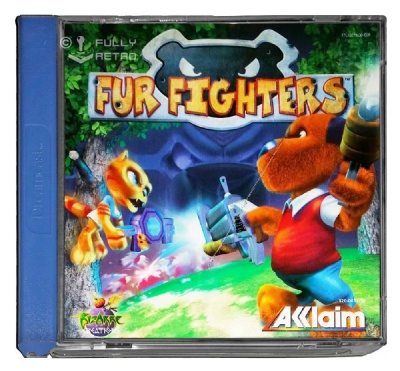

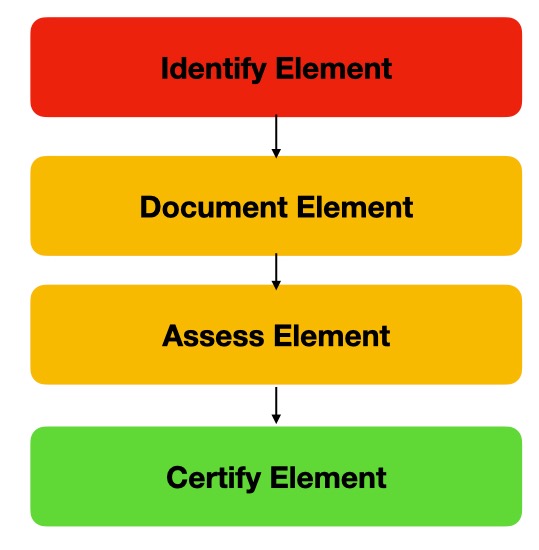

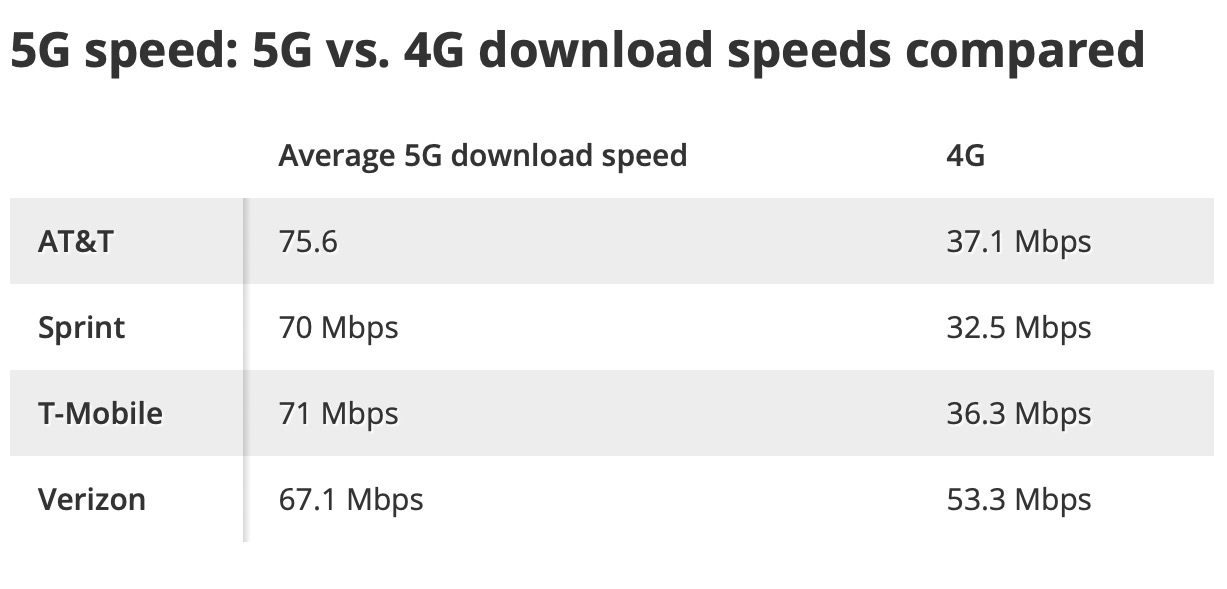
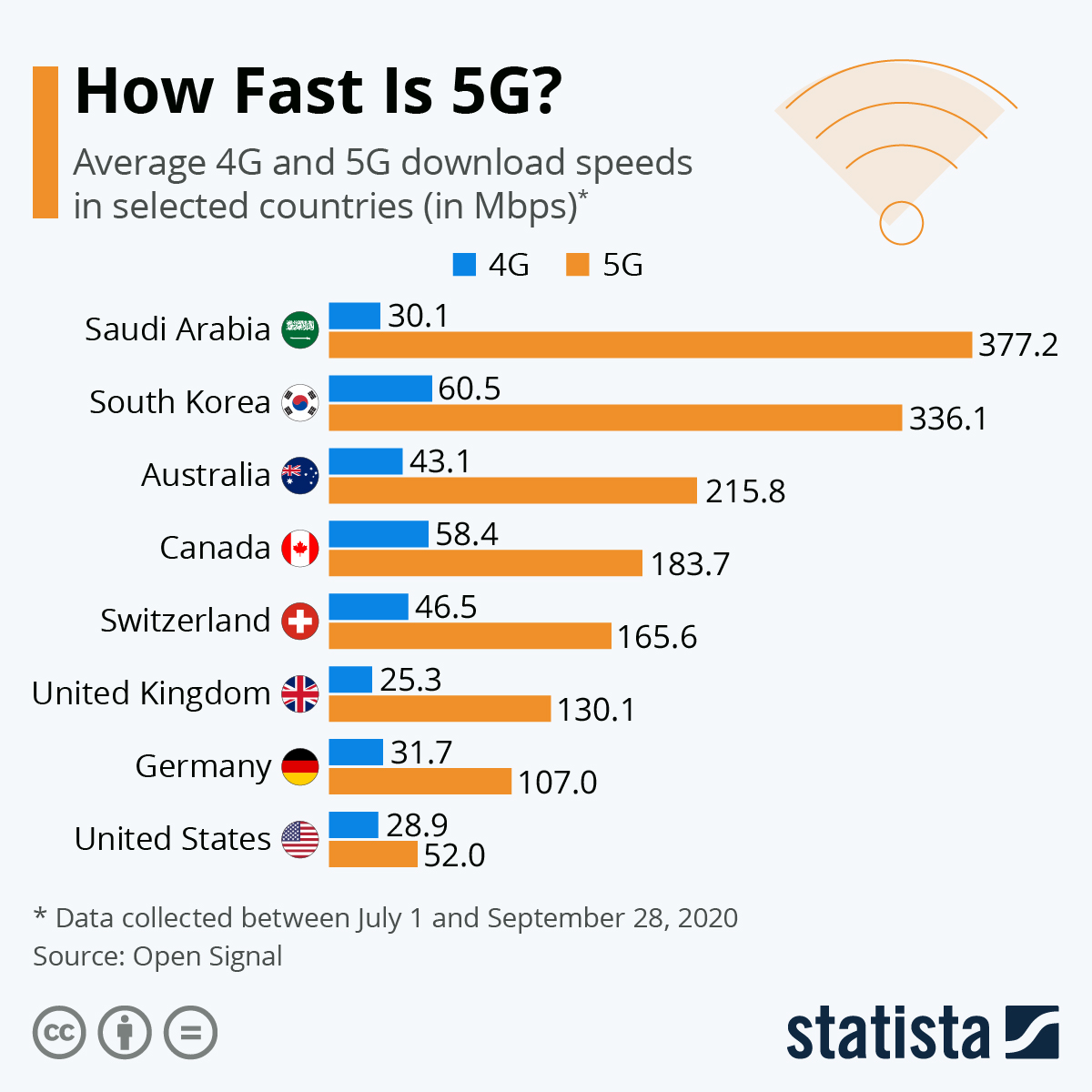

 Lawrence van Rijn - Law Lord to be