Tag Archives: google

The academic colour

This goes back to me having a very young age and in those days we had a saying in chess: ‘white begins and black wins‘. It had nothing to do with race, it was that those in reaction have a benefit; we can play whilst considering in response what the opponent is doing. It is a mere tactic, some you win, some you lose, yet overall, I still believe that the one moving first is out on a limb until the game unfolds and as long as the player using black comprehends the moves that are set, that player has an advantage, the size of that advantage is how quickly white picks up on the countermoves by black.

Yet, I made the race connection and here it is: ‘Trump administration moves to rescind Obama-era guidance on race in admissions‘, the Washington Post headline (at https://www.washingtonpost.com/local/education/trump-administration-moves-to-rescind-obama-era-guidance-on-race-in-admissions/2018/07/03/78210e9e-7ed8-11e8-bb6b-c1cb691f1402_story.html) gives us a dangerous setting. The issue is the reasoning behind it is what matters. The quote starts us with: “rescind Obama-era guidance to colleges and universities on how they can use race in admissions decisions to promote diversity, according to an administration official“, yet I am not certain whether that is a good setting. You see I have had my share of tertiary education. I was lucky to some extent and I finished with three post graduate degrees, one a Master. I have lived in many places where diversity was the cornerstone of education and I expected that to be the norm, yet we all know that it is not.

If we look at the Pre-Obama era and take the sport players out of the consideration (Football and Basketball), the racial diversity is pretty much non-existent as I see it. Even now, if we look at American education and we take the top 30% we get a really skewed view of ‘educated Americans‘ it is seen even better when we look at the census. We see (at https://www.census.gov/prod/99pubs/99statab/sec04.pdf), the fact of educated people, and even if we realise that the percentages are all going up, the setting that in 1998 that 80% of those with high school were white and merely 50% was black, that is a number that matters, in a diversity given setting, they should be a lot closer together, not 30% apart. The Hispanic community is much closer to the white one, yet still trailing. When we look at the next step, those with 4 years (or more) of college, we see that Caucasians lead with 25%, that against Hispanics at roughly 12% and blacks at 10%, that is a problem, there is no level of equality. Any civilisation that truly embraces diversity and equality can see that these numbers are just wrong, and as such changes, many large changes are essential. Now, we can argue with the Obama setting, or find a way to improve it, not rescind it.

There is another setting that we see (at https://www.census.gov/content/dam/Census/library/publications/2016/demo/p20-578.pdf). It makes no sense to completely chew the report and mull over the entire spectre of data, yet the one that lighted up were those with advanced degrees. 8.2% Black and 12.1 were Caucasian, what was interesting that the Asian group is 21.4% surpassing all others. There is a change and we need to earn what that is, because here we have a shift in success. The numbers seem to add up more evenly (after 20 years) between black and white, yet the shift starts from Associate degree and later, that is where we see the numbers drop. Yet in all, how was this weighted? You see, the counts give us White with 168,420, Black with 25,420, and Asian with 12,331, so a setting so uneven is unsettling, because this implies that if there is weighting that it is too unbalanced. That issues grows even further when we see (at https://www.census.gov/prod/cen2010/briefs/c2010br-02.pdf), the setting “This report looks at our nation’s changing racial and ethnic diversity. It is part of a series that analyses population and housing data collected from the 2010 Census, and it provides a snapshot of race and Hispanic origin in the United States. Racial and ethnic population group distributions and growth at the national level and at lower levels of geography are presented” is one that I cannot agree with. We see in 2010 223,553,265 (72.4%) white, 38,929,319 (12.6%) black or African American and 14,674,252 (4.8%) is Asian. If we go from the (I admit a wrongful set assumption) that there is equality to some degree, that if we take the black population as part of the white population as comparison, there should be some equality between the educated and the ‘actual’ population (yes, it is shallow, I know), they should be close together, yet they are not, they are 2% apart and when you consider it reflects a total of 200,000 students (roughly rounded), the African Americans lose out on a few thousand completed education seats and that is actually a much larger issues than anyone realises.

I will not tell you what the reason is for the difference, because it takes someone a lot more clever than me to do that, but the data (even when not optimally used) should not add up to this. In equal measure I feel that I need to disagree with Roger Clegg, president of the Center for Equal Opportunity. We see: “He said it was appropriate for the administration to ditch policies that had encouraged schools to weigh race and ethnicity in deciding where students would be assigned or admitted. “Students should be able to go to a school without regard to their skin color or what country their ancestors came from,”“, I agree with the premise he states, yet we already see that the African American population are getting short changed for a few thousand higher education seats and we need to find out why that is happening, because if diversity can lead to academic salvation of a nation, we need to change the books and values most held for granted. This is seen in the Teacher Education Quarterly, Fall 2008 in the article by Rita Kohli called: ‘Breaking the Cycle of Racism in the Classroom: Critical Race Reflections from Future Teachers of Color‘, we see on page 178: “Eddie came up to us and asked, “Ms. Wright, I don’t got no lunch money, can I sit in your room and use the computer?” Ms. Wright was a seventh year White teacher who received a lot of respect for the high academic standards that she held students to at this underperforming school. Ms. Wright immediately responded, “I am not going to answer that question until you speak correctly. How can we say that in proper English?” We both looked at Eddie, waiting for him to rephrase his words, but instead he calmly replied, “Maybe not in your house, but in my house that is how we speak correctly.” Ms. Wright and I were both caught off guard and a little speechless, and Eddie just stood there un-phased, waiting for us to let him use the computer“, it is there that we see the reflection on “what I was not conscious of, until Eddie so confidently pointed it out, was that although differences exist in the structure of African American Language (AAL) and Standard American English (SAE), at this school, we were actually teaching a hierarchy of those differences (FairesConklin& Lourie, 1983)“. The article goes on regarding racial issues that are beyond my comprehension, as my life has been very different, yet this one setting where we see that the cards are already set against the African American population in a mere AAL versus SAE setting, these kids have not even made it to high school and they are already at an advantage, I cannot even perceive the disadvantages that the Native Americans face in such a setting. But that small setting can already impact thousands, thousands of students who could be the prospering African American minds that America desperately needs. Let me state it in a simplified way, the mere setting of AAL versus SAE would not prevent any African American becoming the next Mary Frances Berry, Stephen L. Carter, Patricia Hill Collins, Roland G. Fryer, Jr., or Rhonda Vonshay Sharpe. Hell, I’d be happy just to get another James Earl Jones so we get to enjoy a really good movie that is relying on zero special effects.

The issue is that in a true society, race is not the deciding factor. Or as I see it, when we look at the average year of a university we should get a racial setting that approaches the national population. That will never be true, because some are more driven to be successful than others. You merely need to see the Asian graduation numbers to see that some drives are inherent to family values and history. Yet, they should not be as unequal as we currently see them and that is why I am not on the side of Roger Clegg, even as he might be completely correct.

I also need to raise the issue that we see with: “Harvard University’s use of race in admissions has come under scrutiny in a federal lawsuit that alleges the school has discriminated against Asian Americans. Separately, the Justice Department is conducting its own civil rights investigation of Harvard admissions. The university denies wrongdoing and says its methods — weighing race and ethnicity as one factor among many in a review of an applicant’s background and credentials — conform to decades of settled law“. I do not think that there is anything that Harvard is likely to have done wrong, I merely think that the system has stopped working correctly and we need to see if another mould might do the trick in getting it right, yet the setting of ‘weighing race and ethnicity ‘ might be the wrong path. You see, weighing is dangerous, even if we use it to set towards a path of minimum inclusion, which is a good thing, most tend to see it as a reference line to exclusion, which is a lot more dangerous. The old setting that has been going around for the longest time is ‘will that person succeed’, ‘will that person contribute’, ‘will this not be a failure’. The third is important, as it highlights my issue with a place like Ubisoft for the longest of time. To set the stage of something not being a failure is also the stage of creating mediocrity, for those who are not willing to put it all out, they will never create something truly exceptional. In gaming those are the games that are that are scoring 97% or higher. You merely have to look at the track record of Ubisoft to see that I am correct. The next group of upcoming billionaires are not created in Wall Street, they come from the streets and high schools; they figured out on how the next generation of technology (5G) can be harnessed in productive ways, the will start something new, whilst those around them will try to copy and mimic that creativity. We forgot all about the creative arts, the one side that does not rely on AAL versus SAE, it relies on vision and that matters, because vision allows to create that what does not yet exist and growing that group with academic skills is all that matters, giving them the comprehension of tools and concepts is what allows them to link one to the other and that is where trillions are created. I came up with three systems not by pushing the boundaries further, but by inverting the process. We do not need someone who solves the next small clever iteration, we have thousands of that, we optionally need the one solving the puzzle of CELL(150) (or is that CELL(182)?), it cannot be created here, but when you figure out where it could be found, you solve two other puzzles and that is where we need to look.

We don’t need another John Paulson; we need another James Edward Allchin. As data speeds go up, the systems that need to store are becoming the bottle neck in all this, and whilst everyone smiles and points at the cloud, we will see some people losing the plot, and some sales figures will point at the Cisco QoS: Congestion Management Configuration Guide. We will see clever articles on “control congestion by determining the order in which packets are sent out an interface based on priorities assigned to those packets. Congestion management entails the creation of queues“, it all sounds so easy and so logical. Yet the truth is that most have no clue. You see, 3 billion people using the peak of 5G (2024-2027) will impose  levies of congestion on nearly all systems; some cannot even keep up now (a jab at Australia’s NBN). It is very serious matter and even as all the players are in the dark. So, someone, who was into painting night skies would optionally get into astrology and whilst that person decided to paint a starry night outside Lambert Montana, the thought: ‘What if I stored it that way?‘ came to that persons mind and then considered the storage that mother had in the kitchen and things start falling together. It would never have worked in any other way, sometimes the biggest fluke is actually the brainwave that solves a lot more than we ever considered.

Exceptional solutions are not grown or trained, they come from people with vision and growing those people into levels of comprehension towards analytical and critical thinking is what gets the golden eggs that change everything. True wealth is not following or being better, true wealth is being first and pushing the boundaries for everyone else. Mark Zuckerberg might be the clearest example, but he is not the only one. And when we consider that some of the solutions were seen as early as the 70’s with the benefits of VAX/VMS whilst the connection of one with the setting 5D optical data storage and now replace that ‘contact lens’ for a hollow cylinder where the inside writes and the outside reads and you’ll end up with a storage system that offers no less than 250 Petabyte, has a half-life of well over  an eon and is 75,000 times faster than anything found in the Pentagon (at present or in the next decade). You merely need to reset the mind to not adhere to the current rules of any proclaimed captain of industry (especially the self-proclaimed ones). And whilst you laugh on the CP/M part, consider that it was equal to anything else and was merely surpassed by IBM because they relied on business sense and marketing, not on technological advantage. Oh, and whilst you giggle on VAX/VMS, it had full 64-bit addressing around 21 years before Microsoft, it also had version control and decent security at least a decade before Microsoft or their Windows 95 version had a decent setting towards security, so looking back at what the ‘old guys’ offered is never the worst idea.

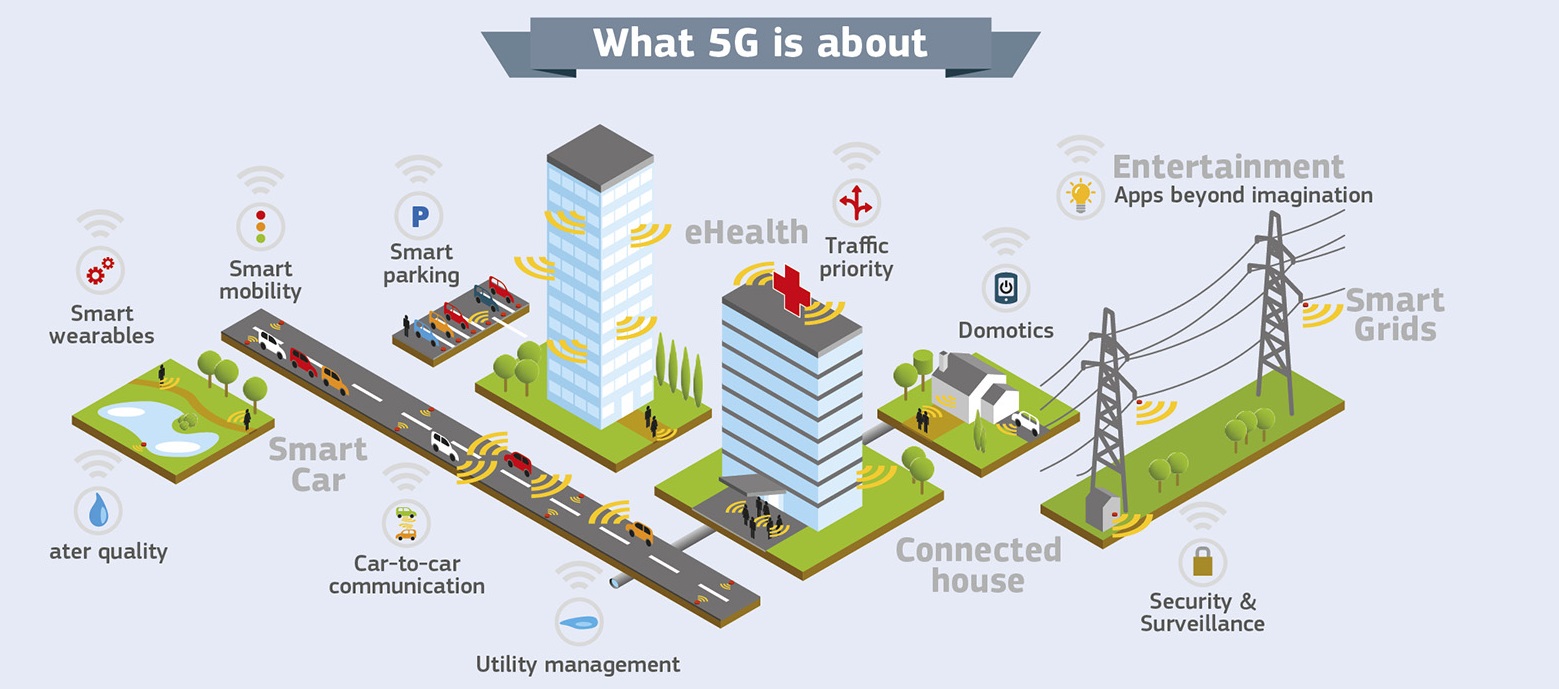
So when we change the given and make 5G the weakest link in speed, we will finally get to the hardware that will give us a true advantage, although I merely want it so that I can call Sundar Pichai, telling him that the Bristlecone processor is the slowest link in my computer system and I need a quicker chip so that I can enjoy a nice game of Pong, because that is how weirdly warped my sense of humour is at times.

#RealtimeIsJustTooSlow


Leave a comment

Filed under IT, Military, Science

The non-knowing speak loudest

There is an old saying that goes back to the original circus, the days of Sir Alec Guiness, John Le Carre and the circus (MI6). Those who do not know speak and those who do will not. There is however a valid issue with that mindset. When it is merely intelligence and what some regard as spyshit, we tend to not care. It is their world and they tend to live by other rules even as they have the same lack of common cyber sense as some US generals, it is their choice to make. Yet when we see labour people like Michael Danby need to present evidence in regards to “an opposition Labor party MP, called on the Liberal-National coalition to block Huawei and fellow Chinese telecoms company ZTE from supplying equipment for the 5G network. “Both Huawei and ZTE must report to the Communist party cell at the top of their organisations,” he told parliament. “Let me issue a clarion call to this parliament: Australia’s 5G network must not be sold to these telcos.”” I am actually in the mindset that his seat should be put up for auction if he does not disclose a proper setting and give evidence as to the reasoning of all this. It becomes more pressing when we see “Mr Lord, a former rear admiral in the Royal Australian Navy, told Australia’s state broadcaster on Monday that these claims were “wrong”, adding that Huawei was not owned by any committee of government and posed no risk to Australia’s security“. It is not just because Mr Lord is a former rear admiral, more that the average naval midshipman tends to be more reliable than any politician. We get this from the Financial Times (at https://www.ft.com/content/1a2d19ba-67b1-11e8-8cf3-0c230fa67aec). In addition, when we get politicians start the scare tactics of ‘critical infrastructure pose a risk to national security’, there is a clear need for both Duncan Lewis and Paul Symon AO to get hauled in a chair in Canberra and ask them to openly answer the questions regarding any evidence that Huawei is a security threat. To blatantly accept the US on their ‘china fears’ is all well and good for Telstra, yet the setting is not a given and the fact that Telstra is nowhere near the technological levels of Huawei is not something that we blame them from, but they basically lost the 5G war before it started through their own actions and inactions.

Now if there is an actual national security concern, we should be open about that and when that happens, and evidence is presented, at that point we can all relax and state to Huawei that we feel sorry for the inconvenience caused, but such concerns are just too big to ignore. I think we have had quite enough of these presentations that reek of Colin Powell and his silver suitcase with evidence that no one ever saw in 2001. We cannot go in that direction ever again. We will not be the play toy of greedy telecom companies and their internal needs for stupidity and inactions; we can no longer afford such a nepotism environment.

That same issue can be said regarding Nationals MP George Christensen. Apart from him trying to undo a business deal of a 99 year lease, no matter how silly that deal was, Australia cannot be perceived as a nation that cannot be trusted at the business table. My second issue is why a maroon (Queenslander) is involving himself with NT politics. In that regard, why do we not see the responses form Vicki O’Halloran is she has any, is she not the appointed administrator? In this, the game is not over. The Australian Financial Review gives us: “Huawei faces the likelihood that Cabinet’s national security committee will veto it supplying equipment for the 5G network, based on the recommendations of security agencies, over concerns about the potential for cyber espionage at the behest of China’s leaders“. In this the question becomes, is there an actual security concern, or is it that the national concern is the devaluation of Telstra? In additional support we need to see the Sydney Morning Herald two weeks ago when they gave us (at https://www.smh.com.au/business/companies/how-a-huawei-5g-ban-is-about-more-than-espionage-20180614-p4zlhf.html): “The Sydney Morning Herald and The Age reported in March that there were serious concerns within the Turnbull government about Huawei’s potential role in 5G – a new wireless standard that could be up to 10 times as powerful as existing mobile services, and used to power internet connections for a range of consumer devices beyond phones“, as well as “the decision will have an impact on Australia’s $40 billion a year telecoms market – potentially hurting Telstra’s rivals“. the first part is something I wrote about for well over a year, the second one is important as we see ‘potentially hurting Telstra’s rivals‘, from my personal point of view it reads like the one lobotomised idiot in telecom country gets to decide through arm-twisting on how we need to remain backwards as they set the standard that they could not deliver for the longest of times (a little sarcasm regarding Telstra’s 2011 3.7G), I wrote about that recently.

ABC gave us yesterday: “it continues to be the target of criticism over its connections to the Chinese Government, including allegations it is involved in state-sponsored espionage“, yet the people have never been shown actual evidence, so where is that at? There might have been doubts to some degree for a while, but the Powell stunt is too clear in our minds and the USA does not have the credibility (or credit rating for that matter) it once had. The fact that the opposing former rear admiral of the Australian navy trumps two half bit politicians seeking the limelight any day of the week and some stay silent, the reason for that is only speculation, but we might not need to seek far and a few words ion Google Search might help find that answer (like ‘Telstra’ and ‘8000’). When we see some giving us: ‘Telstra Corporation Ltd (ASX:TLS) is betting it all on 5G‘ and we see the Telstra strategy briefing (at https://www.telstra.com.au/content/dam/tcom/about-us/investors/pdf-e/2018-Strategy-Update.pdf), we see on page 6, Leading with 5G, that would never be an option with Huawei in play as they are ahead by a lot, so the presentation given a week ago, whilst we realise that the presentation was prepared way before that is giving the setting that Huawei is no longer considered to be competition, that is what we now face! What some might call a backward organisation proclaiming to be leading whilst 8000 men will be missing through inaction. That page is even more fun when you consider the quote ‘new technologies like IoT‘, which is funny when you consider that the Internet of Things (IoT) is a system of interrelated computing devices. It is not a technology; it is a network that enables technology. In addition, when you start nit-picking in that 34 page event, we see all the bells and whistles we need to see, yet when you consider consumers and small business (the millions of people that Telstra charges) starts at page 9 and gives us 5 slides. We see ‘cutting edge 5G capability’ (by whose standards?), we see location devices (with the image of a dog), Access to rewards an tickets, a fully-digital relationship with Telstra (an implied no more personal interaction after the sales, merely a chatbot) and value added services, yet the value of a service like customer service and customer care are absent in that part of the equation, so how does this push the people forward, because I doubt that it actually will achieve anything in the long run and one flaw will anger the actual consumers without limits.

You see, personally I believe in the IoT, I believe in 5G, they are tools to enhance experiences and interactions, not make them obsolete and that is what  feel when I saw the Telstra strategy update. These two elements can enhance customer care, customer service and customer support, not replace them with ‘AI’ enhanced chatbots. So the moment we get a 2.0 version of ‘Telstra’s new chatbot, Codi, is making so many mistakes customers are furious’ (at https://www.businessinsider.com.au/telstra-codi-bot-backlash-2018-3), chatbots can be a great asset to get the information and channel the call to the right person, yet that again is merely enhancing and that can work fine. The presentation implies the loss of actual customer values and ignoring their need for interactions. That in an aging population might be the least intelligent stance to make ever.

Yet this does not give way to the issue on Telstra versus Huawei, as the Sydney Morning Herald states “Telstra has refused to exclude Huawei from its 5G tender, but that is seen more as a way of keeping its existing supplier Ericsson on its toes“, as well as “In other words, a ban could be bad news for TPG, Vodafone and Optus. Whether it is necessarily good news for Telstra – which has its own issues at the moment – is less clear“. In finality we get “Intelligence agencies tend to get their way on matters like these“, this beckons the question what are they actually after? The US seems to be in bed with Samsung and their 5G routers, so it makes sense that this will be the path that Telstra walks as well, time will tell how it ends.

So why is this such a big deal?

We are currently in danger of actually falling behind Saudi Arabia, yes, that place in a large sandbox is about to surpass us in 5G and other technologies. They had the audacity to reserve half a trillion dollars toward Vision 2030 and Neom. So when we got “Al-Khobar in the Eastern Province, of Saudi Arabia, has become the first city in the region to benefit from the fifth-generation wireless network or 5G network, according to a press statement issued by the Center of International Communication“, last month. There was not a surprise in my bone. You see, this will drive their Vision 2030 plans even further. So as Saudi Arabia is now the new pond to grow speciality in 5G, app designers can promote, test and deliver on knowledge that will be available whilst Telstra is trying to figure out how to get 5G installed. with “All the necessary national 5G policies and supporting administrative provisions are planned to be in place before the end of 2019, along with the award of initial batches of the spectrum to support the full commercial deployment of 5G technologies“, we see that Saudi Arabia had been taking this serious for a much longer time. This goes a little further when we see ‘the Middle East and Africa 5G Technology market (Egypt, Saudi Arabia, UAE, Nigeria, and South Africa)‘, so at this point, Saudi Arabia has a head start to not just push Saudi Arabia forward, they have quite literally first dibs on gaining a chunk of the 98 million Egyptians. Not all can afford 5G, we get that, but those who do are confronted with only Saudi Arabia as a Muslim player, you did not actually believe that they would run to Vodafone, did you?

So back to the 5G local ‘market’! For this we need to take a look at the Australian Financial review 2 weeks ago. Here we see (at https://www.afr.com/opinion/columnists/the-technical-reasons-why-huawei-too-great-a-5g-risk-20180614-h11e3o), with the title ‘The technical reasons why Huawei is too great a 5G risk‘, the start is good, this is what we wanted. Yet we are treated to paragraphs of emotion and alleged settings. So when we see: “Huawei presents unique additional risk beyond the “normal” risk of buying complex equipment. China has demonstrated a long-standing intent to conduct cyber-espionage“, so is ‘intent’ shown in evidence? How did the CIA and NSA acquire our data or Cambridge Analytica for that matter? ‘China is thought to be behind data breaches‘ is merely a statement ‘thought‘ is speculation, not evidence. Then we get: “The US Trade Representative’s Section 301 report from March this year details the very close cooperation between the Third Department of China’s People’s Liberation Army (3PLA is a military hacking unit, also known as Unit 61398) and Chinese enterprises“, I have to get back to this. We are treated to ‘At one extreme, Huawei could be asked‘, is a case of fear mongering and not evidence. In addition we get ‘it is certainly a possibility‘ which came after ‘Vulnerabilities may already exist. This may not be the most likely possibility‘ as well as ‘very likely‘ all emotional responses, none of them evidence in any way, so the article with included in the title ‘The technical reasons’, has pretty much zero technology and close to 90% ‘allegedly’, speculations and emotional twists, whilst we cannot deny the optional existence of vulnerabilities, yet these are found regularly in Cisco hardware and Microsoft software, so have those two been banned in Australia?

Now to get back to the Section 301 report (at https://ustr.gov/sites/default/files/Section%20301%20FINAL.PDF). It is 215 pages and I did not read that complete political US marketing behemoth. There is one that actually carries weight. On page 153 we see: “evidence from U.S. law enforcement and private sources indicates that the Chinese government has used cyber intrusions to serve its strategic economic objectives. Documented incidents of China’s cyber intrusions against U.S. commercial entities align closely with China’s industrial policy objectives. As the global economy has increased its dependence on information systems in recent years, cyber theft became one of China’s preferred methods of collecting commercial information because of its logistical advantages and plausible deniability“, which is basically good application of intelligence gathering. Please do not take my word for it, feel free to call the NSA (at +1-301-6886311, all their calls are recorded for training and quality purposes). Oh, and before I forget, the text came with footnote 970, which gave us “A number of public submissions provided to USTR state that the Chinese government has no reason to conduct cyber intrusions or commit cyber theft for commercial purposes, see CHINA GENERAL CHAMBER OF COMMERCE [hereinafter “CGCC”], Submission, Section 301 Hearing 16 (Sept. 28, 2017); that the US has not provided evidence of such actions by China, that China is also a target of cyber-attacks, and that the two countries should work together“, there is that to deal with and is that not a rare instance where we are treated to ‘the US has not provided evidence of such actions‘, how many times have we seen claims like that since 2001? Would that number be a 4 or 5 digit number?

The point is not whether it can or could happen, the question becomes did it happen here? let’s not forget that in most settings the section 301 report is about US interests and their technological advancement (which they lost by becoming iteratively stupid). Here we have a different setting. In the setting we face Huawei has a technological advance over all we have in Australia and most of Europe as well. Huawei was one of the first to realise the power of data and 5G and they are close to a market leader, the US is basically relying on Samsung to get them there. BT (British Telecom) is on the ball, but still not on par. They are in bed with Finland “BT has teamed with Nokia to collaborate on the creation of 5G proof of concept trials, the development of emerging technology standards and equipment, and potential 5G use cases“, so this sets the larger players in a field where Nokia and Huawei are now active. The SAMENA Telecom Leaders Summit 2018 and Saudi Telecom Company (STC) announced today that it is working with Nokia to launch a 5G network in 2018 within Saudi Arabia, yet the technology agreements show that it does include Huawei and Cisco, so they aren’t already active, the setting for the initial bumps in the road that Cisco, Nokia and Huawei will surely overcome is knowledge that we will not have in Australia long after someone was able to connect the 5G router to a power point (very presentable, yet the online green light seems to be broken).

So whilst politicians are considering who to be buddies with, Saudi Arabia joins the US and they will be the first 5G providers, which means that the UK and Australia are lagging behind and optionally not for the short term either.

So am I not knowing or am I all knowing? I actually prefer the first, because it is more relaxing; yet the need to speak out loud is becoming increasingly important even if it was only to place the loud mouth limelight seeking politicians like Michael Danby and George Christensen in their slightly too arrogant place. They are of course welcome to present ACTUAL evidence proving me wrong. #WishingForAMiracleHere


Leave a comment

Filed under Finance, IT, Media, Military, Politics, Science

Way of the Dodo

Tariffs are nothing new, these things have existed for the longest time. I grew up where that was a given, so in my youth, only the rich bought a Harley, a Chrysler or a Chevy. I still remember walking to the shop in Rotterdam and look at all those awesome vehicles through the windows (I was too young to drive in those days), many grew their passion that way. It seems odd that living next to the country that made Volkswagen and Mercedes, we wanted a Blazer, a Harley or another American car. Nowadays, the petrol guzzlers they used to be wouldn’t make it today in Europe. So when we see: ‘EU tariffs force Harley-Davidson to move some production out of US‘, I merely see a stage setting to the old ways. The Guardian gives us loads of information as the market slides, as the shift of production and the changing of the US stock market. That is the direct visible impact of the Trade wars. Australia had this setting a few years earlier as the car industry packed up and left Australia for more exploitative settings in Asia. In the booming market that is stated to exist, we see ‘Harley: EU tariffs will cost $100m/year in short term‘ (source: the Guardian). this is a war the US president started and he forgot that companies, especially US ones, have one focus, short term ROI and a trade war changes the hats of many corporations overnight. This is seen to some degree as Bloomberg treated us to ‘Bigger Booby Trap for U.S. Economy‘. We get introduced to “Federal Reserve Chairman Jerome Powell said on June 20 that officials are beginning to hear that companies are postponing investment and hiring due to uncertainty about what comes next” (at https://www.bloomberg.com/news/articles/2018-06-24/trump-s-trade-war-sets-bigger-booby-trap-for-strong-u-s-economy). It is what is sometimes referred to as the corporate mindset, the consideration that tomorrow is not going to be any better for now. In all this the US hides behind “tax cuts power both consumer and company spending. That would be the strongest in almost four years and twice as fast as the first quarter’s annualized advance of 2.2 percent“, yet the US seems to forget that tax cuts also means that infrastructures are falling apart, the US has a debt it cannot seem to pay and the debt keeps on rising. This in a nation where the national debt has surpassed $21 trillion (103% of GDP), whilst in addition the statistics show that the US faces a setting where the debt per taxpayers is $175K opposing a revenue per taxpayer is merely $27K, a $148K per taxpayer shortfall, that is not the moment when tax cuts have any clear momentum, because the moment the infrastructures start failing, at that point their momentum seizes. Even as Nariman Behravesh the IHS Markit’s Macroeconomic Adviser give us “If they keep down this path, all the positive effects of the tax cut will be gone“, it is worse than that. This gives the indirect implication that unemployment rates will go up giving additional ‘attack’ against the US infrastructure. All this seems to become a direct result of the tug of war between tariffs and protectionism. The BBC gives the best light (at https://www.bbc.com/news/world-43512098), when we consider ‘Five reasons why trade wars aren’t easy to win‘. In this we see (not all five added):

  1. Tariffs may not actually boost steel and aluminium jobs much. The question becomes, how much of a boost would be possible, and is this proven or still merely speculation?
  2. Tariffs are likely to raise costs in the US, so the cost of the product will be increased as these CEO’s do not want to take it out of their margins, so it will be bookkept in another place, the consumer has to pay for all these charges in the end.
  3. Tariffs could hurt allies and prompt retaliation, which is already the case and when you consider that the two largest deliverers of steel are Canada and the EU, the move does not make that much sense. So we see a tariff war that will be about exemptions. In that regard, the tariff war is a bust where the companies hit will be facing a rock and a hard stand on tariffs, this is shown by a few clever people to move part of their operation to Europe, and Harley Davidson is merely the first of several to make that move.
  4. China has options, this is the big one. The US blames China for flooding the market with cheap steel and aluminium and has already stepped up protective measures against Chinese steel products. In opposition, US businesses, including those in the car, tech and agriculture industries, are eager to get into the Chinese market, giving leaders there some leverage. So in the end, the tariff war is not strangling US businesses to fan out to the Chinese market, as exemptions are gained here, the tariff war becomes close to pointless and it merely drove down the economy. This last part is not a given and cannot be proven until 2019, which could null and void any chance of President Trump getting a second term, in addition, if this is not going to be a slam dunk win for the Democrats, the Republicans better have a strong case, because 2020 is the one election where the chances for winning by Jeb Bush (Florida) and Ann Coulter (Florida) seems to be a better option than re-electing the current president. Who would have thought that in 2016? It becomes hilarious when you consider that 2020 is the year that Marco Rubio declined to run, only to give the presidency to Ann Coulter. My sense of humour needs to point that out, whether it becomes reality or not.

The previous part is important to consider, not for the matter of who becomes president, but the setting that the economy is in such a state where we all see the proclamation ““Anyone who thinks the economy is being wrecked doesn’t know what they’re talking about,” Commerce Secretary Wilbur Ross said in a June 21 Bloomberg Television interview“. We accept the fact that he states that, yet everyone seems to overlook that the debt also gives an annual interest that is close to $100 per taxpayer, now consider that 80% of the population is in the 15% or 10% bracket. So from their taxation we see a maximum of $755 where 13% goes straight to the paying of the interest, when you are in the higher bracket 3% is lost. So before anything else is done up to 16% is lost and that accounts for 80% of the population, merely because no budgets were properly kept, the US infrastructure lost up to 16% straight from the start, that is the undermining of an infrastructure that also fuels the economy which it can no longer do. You see behind this is the IP, or as the US calls it the IP theft by China. I am uncertain if we can agree. I am not stating that it does not happen, I merely look at the Dutch examples from Buma/Stemra in the 90’s and their numbers were flawed, perhaps even cooked. They never made sense and after that we have seen ‘political weighting‘ of numbers that were debatable from the start.

So when we look back to 2017, we see the NY Times giving us: “Intellectual-property theft covers a wide spectrum: counterfeiting American fashion designs, pirating movies and video games, patent infringement and stealing proprietary technology and software“, yet I have seen these accusations in Europe and the numbers never added up. So when we see: “Central to Chinese cybersecurity law is the “secure and controllable” standard, which, in the name of protecting software and data, forces companies operating in China to disclose critical intellectual property to the government and requires that they store data locally. Even before this Chinese legislation, some three-quarters of Chinese imported software was pirated. Now, despite the law, American companies may be even more vulnerable“. It will happen, yet to what degree does it happen? What evidence is there? Consider the setting when we think of students. Students tend to have one of the harshest budgets to live on. Let’s take 100 students and they all decided to duplicate (read: borrow) the latest album from Taylor Swift ‘Reputation’ (it is easier to imagine it when the victim is a beautiful blonde who only recently stopped being a teenager). Now, basically she lost $2390 in revenue, yet is that true? How many would have actually bought the album? Let’s say 10% of all students are real fans and they would have bought the album (when not confronted with the choice of food versus entertainment), so the actual loss is $239. Now, this is still a loss and she is entitled to take action here. Yet the people making a living in the facilitation industry will demand the loss be set to $2390 that is where the numbers do not add up! There is the setting of eagerness to hear an album versus the need to have the album. We are all driven with the need to hear the album and some will buy it. This opposes several views and whilst the implied copied work allegedly is done so in the hundreds of thousands, the evidence is not there to support it. That is where weighted forecasts are the setting and it is an inaccurate one. So in all this, from the IP point of view, do we have 23,675,129 C# programmers, or merely 24 million people who wanted to take a look at C# only to install it and never use it because they could not figure out what they were looking at?

Now we get to 2018, where we see (at http://money.cnn.com/2018/03/23/technology/china-us-trump-tariffs-ip-theft/index.html) the projected issues with “The United States Trade Representative, which led the seven-month investigation into China’s intellectual property theft and made recommendations to the Trump administration, found that “Chinese theft of American IP currently costs between $225 billion and $600 billion annually“, I wonder what numbers they are set on. Now we can agree that the likelihood of “”China has sought to acquire US technology by any means, licit or illicit,” James Andrew Lewis, senior vice president at the Center for Strategic and International Studies in Washington, wrote in a blog post Thursday” being true in regard to defence projects would be high. Yet in all this, where is the data supporting these views? Without proper data we are faced with US companies setting expected revenue that is many millions too high and that part remains unanswered on many fronts. Now in defence, we get it! That is the game, so as we consider the news last year from breaking defense with the news that: “compassion for the Army, which is trying to standardize its computer systems across more than 400 units in the next 28 months. The objective is a “single software baseline,” where every unit has the same set of information technologies. Such standardization should simplify everything from training, maintenance, operations and future upgrades“, this is fun to read as I had to set up something like that for a company much smaller. There we learned that Dell was kind enough to have within two shipments the same model computer yet both had different patches because one chip had been changed. Now consider that this ‘unsettling dream of standardisation‘ was for a company with hardware usage merely a rough 0.13% of what the US Army has. So, that is something that will bite them soon enough. This doesn’t make the setting smaller, but a lot larger, the wrong patches tend to open up networks for all kinds of flaws not correctly set. So the cyber intrusion setting would be an optional 300% larger, giving a much larger success rate, all people willing to sell data to the Chinese (or the Chinese merely enticing the American people to embrace marketing capitalism for their own gains).

To explain the previous part in its proper light we need to realise. It is not merely about IP theft and rights; it is also about common cyber sense. In both the military and corporate setting there is a need for levels of standardisation, whilst IP that tends to rely on standardisation to be more successful, the IP theft setting is actually opposite to that. The Conversation (at http://theconversation.com/three-reasons-why-pacemakers-are-vulnerable-to-hacking-83362) gives us when they look at the medical dangers. As they give us Power versus security as well as Convenience versus security we see the first dangers. So consider the following. First there is “according to Carnegie Mellon researchers, can increase the energy consumption of some mobile phones by up to 30% because of the loss of proxies“, then we get “Most embedded medical devices don’t currently have the memory, processing power or battery life to support proper cryptographic security, encryption or access control“, giving us that hacking into someone’s pacemaker is actually not as hard as one might think. Now consider that encryption, or a lack thereof can be found on a large variety of IoT devices, and any army has their own devices that need to be more accessible at all times. In the second consideration we get “The prospect of having to keep usernames, passwords and encryption keys handy and safe is contrary to how they plan to use them“, as well as “When your pacemaker fails and the ambulance arrives, however, will you really have the time (or ability) to find the device serial number and authentication details to give to the paramedics“, it is the age old setting of convenience for the safety of all. So as we realise this, how much IP theft was already available before anyone realised its need? It is almost like the gun laws in the US, everyone wants gun laws whilst there are millions available for unmonitored purchasing defeating the purpose altogether. In that same setting we ignore common Cyber Sense too often allowing for IP theft on a much larger scale. The issue is that it does not mean that this is actually happening, or that others have interest to steal that particular IP. So we can optionally agree that the Chinese government that they definitely want all the IP on that front, even as some sources state that there is still a problem. So when we consider to an example, we need to look at that part of the information came from a research report by LtCol B. L. Ream, USAF, which gives us “There are two types of guidance systems available, the AGM-65A/B is optical guided and the AGM-65D model Is Infrared guided“, as well as “Once launched, the missile maintains a lock on to the target and guides autonomously, providing a standoff launch and leave capability. The aircraft can then egress the target area or set up to fire again in a target rich environment“, yet the other undisclosed source gives us that a programming issue on the locking when it is set through a buddy system. The: “data link control of the weapon can be provided from two different sources. Either the launch aircraft can guide the weapon or a buddy aircraft can control the weapon after launch. In either case, data link line of sight must be maintained between the data link aircraft and the weapon. Thus, on a standoff control scenario, the further away from the target the control aircraft is the higher altitude it must maintain. Even though this may not appear to be tactically sound, the standoff range is impressive“, so the undisclosed source that gives that the Data Link has a match issue and there is a chance that the speculated offset of 35 metres is ‘accidently implemented on targeting‘, will there be an issue of IP theft? When materials are openly available on the internet, as I was able to read the report on the Defense Technical Information Center site. When is there a case of IP theft? In this I love the reference that WIPO uses. Here we see: “Copyright protection extends only to expressions, and not to ideas, procedures, methods of operation or mathematical concepts as such“, considering that ballistic software is 90% math (read: the application of mathematical concepts), copyright as an option goes straight out of the window, in addition, the data link adjustment makes it in theory a new product that was not covered in the first place. So standardisation makes it easier to get to the lollies, and by adjusting the wrapper it ends up not being IP theft, as long as no trademarks reside on the wrapper (a ‘it is more alike than not‘ issue in IP law).

And now for the main meal

This is seen in the CNN article I raised earlier. The headline ‘President Donald Trump has slapped tariffs on $50 billion worth of Chinese goods, taking aim at China’s theft of US intellectual property‘. It was and has always been about IP protectionism. Business Insider gives us “Two former senior Defence Department officials said Chinese intellectual property theft cost the US as much as $US600 billion a year, calling it possibly the “greatest transfer of wealth in history.”“, the Financial Times (at https://www.ft.com/content/995063be-1e0a-11e8-956a-43db76e69936) gives us: “as Chrystia Freeland, Canada’s foreign minister, suggests: “It is entirely inappropriate to view any trade with Canada as a national security threat to the United States.” Yet once this loophole is used so irresponsibly by the US, of all countries, where might it stop?” The Financial Times takes it a lot further giving raise to the question how did it in the end serve IP? Where we saw more than once the terms ‘as much as $US600 billion a year‘, yet no evidence is presented. There is no setting that ‘Two former senior Defence Department officials‘ can present a list adding the numbers up and with $600 billion in the balance (as opposed to the commercial industry) we see that if proper evidence was presented a better case could have been made. Where we see in opposition to China: a lucrative market in designer knockoff goods in places like Amsterdam and London. London getting its share of 17 million tourists, all happy to get the latest Gucci bag for a special discount price of £19.95 as well as in Amsterdam where the 14 million visitors can get them for a mere €25. So did Gucci report a €812 million in IP theft losses? What about the other brands? I was the proud owner of an Australian Polo for $12, I merely needed a polo shirt (many years ago) as some drunk blonde thought it was perfectly normal to dance in high heels in the middle of the road holding a glass of red wine, so as she jumped to get away from a car (who had an actual reason to be on the road), I ended up with her wine on my shirt. So I got to the first place that sold a polo shirt and got a new one so I would not arrive at a diner red stained before it even began. Did I initiate IP theft? I had no idea what ‘Australian’ was in those days. There is the setting, what we know, what was real damage and how it is presented by those needing inflated IP theft numbers?

It is in this setting that we need to see the stage for reported IP theft. We agree that the smallest fraction is indeed set to the covert acquisition of military IP, yet the bulk (well over 95%) is all about a misrepresenting economy, the brands want their losses to seem as large as possible, the US is setting that stage to prospective economic health, yet that evidence cannot be validated and the tariff war is likely to become a much more detrimental factor in the US economy that is currently presented as a revenue bubble that will impact sooner rather than later. The independent gave us last December (at https://www.independent.co.uk/voices/economy-signs-interest-rates-donald-trump-market-bubble-burst-next-year-a8102356.html) that ‘Five economic signs that can tell us if the bubble will burst next year‘. Here we see “The good news is that the world is at last experiencing a coordinated expansion, with all major regions growing reasonably swiftly“, as well as “the policies that have led to this expansion, especially ultra-easy money conditions, have created a boom in asset prices that at some stage will come to an end“. There are a few views in all direction, yet the one that no one seems to focus on is the quality of life. Earlier this year USA Today reported that “California has the worst quality of life in America“, the sunny state is where people can no longer afford to live to any decent degree. That part is forgotten, the QoL in New York is in 25th position, not a great place to be. The Quality of Life in the US has decreased to the degree where it is the lowest in the developed world. That and the fact that the US is at minus 21 trillion does not help. It is shown in the US Social Progress Index where none of the five largest state economies (California, New York, Illinois, Florida and Texas) are in the top ten states on social progress. This is important and reflects back to the student example I gave earlier. So as these people will all ‘borrow’ the latest Taylor Swift album and none of those will buy it, because they cannot afford to do so. That part becomes even more visible when you consider the Wired setting on pre-owned games in 2016. At some point Microsoft made the terminal choice as given by Wired through “You may remember that Microsoft attempted to do away with “used games” with the launch of the Xbox One. (Yeah, they made some hand-wavy claims of players being able to trade games at “participating retailers,” but the DRM scheme meant you couldn’t borrow, lend, sell them on eBay“, that setting is merely exploding in an economy that is not moving forward. That with 80% of the people on merely a 15% tax bracket or lower and the cost of living there is still going up. Even as Microsoft is pushing to “buy at the Microsoft store“, a digital copy cannot be handed out to friends, so there is little push for that move when you can only afford 4 games a year. However, Microsoft is in equal measure pushing for the Game Pass which balances one for the other. EA is making a similar move and it is actually an intelligent move to make. The few that would buy the latest NHL version no matter what gives is nothing compared to the overwhelming group that will happily buy the previous year version when it is part of a package deal at $40 a year. So I might wield the latest NHL version, at $40 a year getting the previous season of FIFA, NBA and NFL is just smart thinking. Yet these people are equally part of the claimants of IP theft. The question becomes (even as we accept that it will happen), how large is the actual IP theft? So when the US adds a 10% tariff on video games, does that merely make the download 10% more expensive? I do not think that from $40 to $44 for EA games is an increase we lose sleep about, yet the ‘cost’ of downloading remains as well, and in the flawed Microsoft design, how does the tariff apply over time, on DLC and other elements in gaming? All these changes and increases, where the consumer sees no upside, all based on projected and presented numbers without its proper representation and scrutiny.

This is how an economy goes the way of the Dodo, so when you think (source: Sydney Morning Herald) that the start of ‘US plans to curb Chinese tech investments, citing security‘ is a good idea and it is waxed with “the White House would use one of the most significant legal measures available to declare China’s investment in US companies involved in technologies such as new-energy vehicles, robotics and aerospace a threat to economic and national security, according to eight people familiar with the plans“, we need to see in equal setting the fact that 750 million Europeans might find the escalation of events important and threatening enough to take a 180 degree position on tech operators like Huawei when we are treated to “Huawei, China’s biggest maker of handsets and networking equipment, which has been flagged numerous times by US lawmakers as a possible security threat to Americans. Upon the New York Times’ publication of a piece (paywall) highlighting Facebook’s data sharing with Huawei, as well as with three other Chinese companies, the social network told the paper it would wind down (paywall) its partnership with the Shenzhen-based phone brand“. One side tries to stop and filter, whilst the other side turned open the tap and let the room flood. Even now, after a congressional hearing and the Cambridge Analytica events, we see alleged transgressions and the sharing of data on a stage where we see only growth. With “Due to the importance of highlighting the natural and heritage landmarks in the Kingdom, “Huawei Saudi” joined together with Qumra’s community of photographers to organize a workshop around “photography through smartphones” by using the latest “Huawei P20 Pro” phone” and the setting that offers the latest in mobile technology far below the prices that Google, Apple and Samsung have. It does not matter on how the tariff war is to become a disaster, it is the mere realisation that it fails because those implementing changes do not seem to comprehend that the economy consists of well over a billion consumers and they cannot afford the 10% more or the 28% more expensive mobile phone alternatives. In all this the people confronted with the dilemma merely went directly to the consumers, as such Harley Davidson is moving to Europe to circumvent a few barricades, a tariff war that was short sighted to a lot of people more intelligent than me and the country that considers naked short selling to not be illegal seems to be doing just that to its own economy, how is that the setting of morality of capitalism?

We consider the way of the Dodo and realise that in the end it merely tasted like chicken.

#HowSmartWereWe or is that #HowSmartHuawei

Leave a comment

Filed under Finance, Law, Media, Military, Politics, Science

Ghost in the Deus Ex Machina

James Bridle is treating the readers of the Guardian to a spotlight event. It is a fantastic article that you must read (at https://www.theguardian.com/books/2018/jun/15/rise-of-the-machines-has-technology-evolved-beyond-our-control-?). Even as it starts with “Technology is starting to behave in intelligent and unpredictable ways that even its creators don’t understand. As machines increasingly shape global events, how can we regain control?” I am not certain that it is correct; it is merely a very valid point of view. This setting is being pushed even further by places like Microsoft Azure, Google Cloud and AWS we are moving into new territories and the experts required have not been schooled yet. It is (as I personally see it) the consequence of next generation programming, on the framework of cloud systems that have thousands of additional unused, or un-monitored parameters (read: some of them mere properties) and the scope of these systems are growing. Each developer is making their own app-box and they are working together, yet in many cases hundreds of properties are ignored, giving us weird results. There is actually (from the description James Bridle gives) an early 90’s example, which is not the same, but it illustrates the event.

A program had windows settings and sometimes there would be a ghost window. There was no explanation, and no one could figure it out why it happened, because it did not always happen, but it could be replicated. In the end, the programmer was lazy and had created a global variable that had the identical name as a visibility property and due to a glitch that setting got copied. When the system did a reset on the window, all but very specific properties were reset. You see, those elements were not ‘true’, they should be either ‘true’ or ‘false’ and that was not the case, those elements had the initial value of ‘null’ yet the reset would not allow for that, so once given a reset they would not return to the ‘null’ setting but remain to hold the value it last had. It was fixed at some point, but the logic remains, a value could not return to ‘null’ unless specifically programmed. Over time these systems got to be more intelligent and that issue had not returned, so is the evolution of systems. Now it becomes a larger issue, now we have systems that are better, larger and in some cases isolated. Yet, is that always the issue? What happens when an error level surpasses two systems? Is that even possible? Now, moist people will state that I do not know what I am talking about. Yet, they forgot that any system is merely as stupid as the maker allows it to be, so in 2010 Sha Li and Xiaoming Li from the Dept. of Electrical and Computer Engineering at the University of Delaware gave us ‘Soft error propagation in floating-point programs‘ which gives us exactly that. You see, the abstract gives us “Recent studies have tried to address soft errors with error detection and correction techniques such as error correcting codes and redundant execution. However, these techniques come at a cost of additional storage or lower performance. In this paper, we present a different approach to address soft errors. We start from building a quantitative understanding of the error propagation in software and propose a systematic evaluation of the impact of bit flip caused by soft errors on floating-point operations“, we can translate this into ‘A option to deal with shoddy programming‘, which is not entirely wrong, but the essential truth is that hardware makers, OS designers and Application makers all have their own error system, each of them has a much larger system than any requires and some overlap and some do not. The issue is optionally speculatively seen in ‘these techniques come at a cost of additional storage or lower performance‘, now consider the greed driven makers that do not want to sacrifice storage and will not handover performance, not one way, not the other way, but a system that tolerates either way. Yet this still has a level one setting (Cisco joke) that hardware is ruler, so the settings will remain and it merely takes one third party developer to use some specific uncontrolled error hit with automated assumption driven slicing and dicing to avoid storage as well as performance, yet once given to the hardware, it will not forget, so now we have some speculative ‘ghost in the machine’, a mere collection of error settings and properties waiting to be interacted with. Don’t think that this is not in existence, the paper gives a light on this in part with: “some soft errors can be tolerated if the error in results is smaller than the intrinsic inaccuracy of floating-point representations or within a predefined range. We focus on analysing error propagation for floating-point arithmetic operations. Our approach is motivated by interval analysis. We model the rounding effect of floating-point numbers, which enable us to simulate and predict the error propagation for single floating-point arithmetic operations for specific soft errors. In other words, we model and simulate the relation between the bit flip rate, which is determined by soft errors in hardware, and the error of floating-point arithmetic operations“. That I can illustrate with my earliest errors in programming (decades ago). With Borland C++ I got my first taste of programming and I was in assumption mode to make my first calculation, which gave in the end: 8/4=2.0000000000000003, at that point (1991) I had no clue about floating point issues. I did not realise that this was merely the machine and me not giving it the right setting. So now we all learned that part, we forgot that all these new systems all have their own quirks and they have hidden settings that we basically do not comprehend as the systems are too new. This now all interacts with an article in the Verge from January (at https://www.theverge.com/2018/1/17/16901126/google-cloud-ai-services-automl), the title ‘Google’s new cloud service lets you train your own AI tools, no coding knowledge required‘ is a bit of a giveaway. Even when we see: “Currently, only a handful of businesses in the world have access to the talent and budgets needed to fully appreciate the advancements of ML and AI. There’s a very limited number of people that can create advanced machine learning models”, it is not merely that part, behind it were makers of the systems and the apps that allow you to interface, that is where we see the hidden parts that will not be uncovered for perhaps years or decades. That is not a flaw from Google, or an error in their thinking. The mere realisation of ‘a long road ahead if we want to bring AI to everyone‘, that in light of the better programmers, the clever people and the mere wildcards who turn 180 degrees in a one way street cannot be predicted and there always will be one that does so, because they figured out a shortcut. Consider a sidestep

A small sidestep

When we consider risk based thinking and development, we tend to think in opposition, because it is not the issue of Risk, or the given of opportunity. We start in the flaw that we see differently on what constitutes risk. Even as the makers all think the same, the users do not always behave that way. For this I need to go back to the late 80’s when I discovered that certain books in the Port of Rotterdam were cooked. No one had figured it out, but I recognised one part through my Merchant Naval education. The one rule no one looked at in those days, programmers just were not given that element. In a port there is one rule that computers could not comprehend in those days. The concept of ‘Idle Time’ cannot ever be a linear one. Once I saw that, I knew where to look. So when we get back to risk management issues, we see ‘An opportunity is a possible action that can be taken, we need to decide. So this opportunity requires we decide on taking action and that risk is something that actions enable to become an actual event to occur but is ultimately outside of your direct control‘. Now consider that risk changes by the tide at a seaport, but we forgot that in opposition of a Kings tide, there is also at times a Neap tide. A ‘supermoon’ is an event that makes the low tide even lower. So now we see the risk of betting beached for up to 6 hours, because the element was forgotten. the fact that it can happen once every 18 months makes the risk low and it does not impact everyone everywhere, but that setting shows that once someone takes a shortcut, we see that the dangers (read: risks) of events are intensified when a clever person takes a shortcut. So when NASA gives us “The farthest point in this ellipse is called the apogee. Its closest point is the perigee. During every 27-day orbit around Earth, the Moon reaches both its apogee and perigee. Full moons can occur at any point along the Moon’s elliptical path, but when a full moon occurs at or near the perigee, it looks slightly larger and brighter than a typical full moon. That’s what the term “supermoon” refers to“. So now the programmer needed a space monkey (or tables) and when we consider the shortcut, he merely needed them for once every 18 months, in the life cycle of a program that means he merely had a risk 2-3 times during the lifespan of the application. So tell me, how many programmers would have taken the shortcut? Now this is the settings we see in optional Machine Learning. With that part accepted and pragmatic ‘Let’s keep it simple for now‘, which we all could have accepted in this. But the issue comes when we combine error flags with shortcuts.

So we get to the guardian with two parts. The first: Something deeply weird is occurring within these massively accelerated, opaque markets. On 6 May 2010, the Dow Jones opened lower than the previous day, falling slowly over the next few hours in response to the debt crisis in Greece. But at 2.42pm, the index started to fall rapidly. In less than five minutes, more than 600 points were wiped off the market. At its lowest point, the index was nearly 1,000 points below the previous day’s average“, the second being “In the chaos of those 25 minutes, 2bn shares, worth $56bn, changed hands. Even more worryingly, many orders were executed at what the Securities Exchange Commission called “irrational prices”: as low as a penny, or as high as $100,000. The event became known as the “flash crash”, and it is still being investigated and argued over years later“. In 8 years the algorithm and the systems have advanced and the original settings no longer exist. Yet the entire setting of error flagging and the use of elements and properties are still on the board, even as they evolved and the systems became stronger, new systems interacted with much faster and stronger hardware changing the calculating events. So when we see “While traders might have played a longer game, the machines, faced with uncertainty, got out as quickly as possible“, they were uncaught elements in a system that was truly clever (read: had more data to work with) and as we are introduced to “Among the various HFT programs, many had hard-coded sell points: prices at which they were programmed to sell their stocks immediately. As prices started to fall, groups of programs were triggered to sell at the same time. As each waypoint was passed, the subsequent price fall triggered another set of algorithms to automatically sell their stocks, producing a feedback effect“, the mere realisation that machine wins every time in a man versus machine way, but only toward the calculations. The initial part I mentioned regarding really low tides was ignored, so as the person realises that at some point the tide goes back up, no matter what, the machine never learned that part, because the ‘supermoon cycle’ was avoided due to pragmatism and we see that in the Guardian article with: ‘Flash crashes are now a recognised feature of augmented markets, but are still poorly understood‘. That reason remains speculative, but what if it is not the software? What if there is merely one set of definitions missing because the human factor auto corrects for that through insight and common sense? I can relate to that by setting the ‘insight’ that a supermoon happens perhaps once every 18 months and the common sense that it returns to normal within a day. Now, are we missing out on the opportunity of using a Neap Tide as an opportunity? It is merely an opportunity if another person fails to act on such a Neap tide. Yet in finance it is not merely a neap tide, it is an optional artificial wave that can change the waves when one system triggers another, and in nano seconds we have no way of predicting it, merely over time the option to recognise it at best (speculatively speaking).

We see a variation of this in the Go-game part of the article. When we see “AlphaGo played a move that stunned Sedol, placing one of its stones on the far side of the board. “That’s a very strange move,” said one commentator“, you see it opened us up to something else. So when we see “AlphaGo’s engineers developed its software by feeding a neural network millions of moves by expert Go players, and then getting it to play itself millions of times more, developing strategies that outstripped those of human players. But its own representation of those strategies is illegible: we can see the moves it made, but not how it decided to make them“. That is where I personally see the flaw. You see, it did not decide, it merely played every variation possible, the once a person will never consider, because it played millions of games , which at 2 games a day represents 1,370 years the computer ‘learned’ that the human never countered ‘a weird move’ before, some can be corrected for, but that one offers opportunity, whilst at the same time exposing its opponent to additional risks. Now it is merely a simple calculation and the human loses. And as every human player lacks the ability to play for a millennium, the hardware wins, always after that. The computer never learned desire, or human time constraints, as long as it has energy it never stops.

The article is amazing and showed me a few things I only partially knew, and one I never knew. It is an eye opener in many ways, because we are at the dawn of what is advanced machine learning and as soon as quantum computing is an actual reality we will get systems with the setting that we see in the Upsilon meson (Y). Leon Lederman discovered it in 1977, so now we have a particle that is not merely off or on, it can be: null, off, on or both. An essential setting for something that will be close to true AI, a new way of computers to truly surpass their makers and an optional tool to unlock the universe, or perhaps merely a clever way to integrate hardware and software on the same layer?

What I got from the article is the realisation that the entire IT industry is moving faster and faster and most people have no chance to stay up to date with it. Even when we look at publications from 2 years ago. These systems have already been surpassed by players like Google, reducing storage to a mere cent per gigabyte and that is not all, the media and entertainment are offered great leaps too, when we consider the partnership between Google and Teradici we see another path. When we see “By moving graphics workloads away from traditional workstations, many companies are beginning to realize that the cloud provides the security and flexibility that they’re looking for“, we might not see the scope of all this. So the article (at https://connect.teradici.com/blog/evolution-in-the-media-entertainment-industry-is-underway) gives us “Cloud Access Software allows Media and Entertainment companies to securely visualize and interact with media workloads from anywhere“, which might be the ‘big load’ but it actually is not. This approach gives light to something not seen before. When we consider makers from software like Q Research Software and Tableau Software: Business Intelligence and Analytics we see an optional shift, under these conditions, there is now a setting where a clever analyst with merely a netbook and a decent connection can set up the work frame of producing dashboards and result presentations from that will allow the analyst to produce the results and presentations for the bulk of all Fortune 500 companies in a mere day, making 62% of that workforce obsolete. In addition we see: “As demonstrated at the event, the benefits of moving to the cloud for Media & Entertainment companies are endless (enhanced security, superior remote user experience, etc.). And with today’s ever-changing landscape, it’s imperative to keep up. Google and Teradici are offering solutions that will not only help companies keep up with the evolution, but to excel and reap the benefits that cloud computing has to offer“. I take it one step further, as the presentation to stakeholders and shareholders is about telling ‘a story’, the ability to do so and adjust the story on the go allows for a lot more, the question is no longer the setting of such systems, it is not reduced to correctly vetting the data used, the moment that falls away we will get a machine driven presentation of settings the machine need no longer comprehend, and as long as the story is accepted and swallowed, we will not question the data. A mere presented grey scale with filtered out extremes. In the end we all signed up for this and the status quo of big business remains stable and unchanging no matter what the economy does in the short run.

Cognitive thinking from the AI thought the use of data, merely because we can no longer catch up and in that we lose the reasoning and comprehension of data at the high levels we should have.

I wonder as a technocrat how many victims we will create in this way.


Leave a comment

Filed under Finance, IT, Media, Science

Commerce inverted

A decently intelligent salesperson educated me (some time ago) in the concept of think global, act local. it is something to live by for several reasons. It made perfect business sense, yet what I did not know at the time that it came from the consideration towards the health of the entire planet; to take action in communities and cities. It comes from that ‘sane’ period of time when individuals were coming together to protect habitats and the organisms that live within them. It is what founds the event we now call grassroots efforts, occurring on a local level and are primarily run by volunteers and helpers. So when we consider this and in the business sense we see that It asks that employees to consider the global impact of their actions. It can be applied on a near universal scale and it is a setting of common sense as I see it. So why exactly is Microsoft doing the opposite of it by acting global on a local way of thinking?

Now, they are not alone, but they are the most visible one, because that is how they played the game themselves. When you want to consider an eCommerce move, you need to consider what you are up against and adjust your model accordingly. So why exactly do they advertise the new game Shadow of the Tombraider for AU$144 and the Digital download for AU$114, whilst the shops in Sydney are already offering it for AU$79 and a special edition for AU$89? How does a 42GB download (speculated size) become 44% more expensive, whilst getting an actual physical copy in Sydney is stated to be up to 61% more expensive to download from the Microsoft store? So here we saw (all over the E3) ‘pre-order it on the Microsoft store‘ to be slightly too none lucrative for anyone to ever consider it. Another (weaker) example is FIFA19, where the download is a whole AU$2 cheaper than the physical copy. Yes, it seems to make perfect sense that 4-11 hours download to get that game AU$2 cheaper, does it not?

Now, in itself, I have no issues with the Microsoft store, there are several perfect examples where the store comes with awesome deals, absolutely a given, but now, just after the E3, the new games are what counts and that is where we tend to look. OK, not everyone, I saw ‘games coming soon‘ and the entry was the anticipated game ‘We happy few‘, so I wanted to take a look at what it would cost (and when it is released), and guess what, it wasn’t even in there at all. It is just as deceptive as ‘Play FIFA World Cup Free‘, whilst you are taken to the FIFA18 game of AU$24 (which is a good deal) and in the text is somewhere that it is an addition, a free DLC for anyone who has FIFA18, so why not state ‘Free FIFA 18 World cup DLC‘? It would clearly indicate that it is part of FIFA18 and gives out that it comes with a DLC. None of that is seen and Microsoft is not learning how to properly play the game, not to treating gamers like kids, but like the savant controller users most of them are (and many of them are adults). Microsoft needs to up their game by a fair bit at present.

Oh, and before you think that this is all me, that this is merely an error. I first mentioned it in regards to Shadows of War on May 13th in the article ‘It is done!‘ (at https://lawlordtobe.com/2018/05/13/it-is-done/). There the difference was 50%. Microsoft made no adjustments of any kind. Now, let’s be clear, they are not required to do that, yet in light of the evidence we see where buying from the Microsoft Store will regularly be well over 30% more expensive than a physical copy, why would we consider getting new games there unless we needed that title desperately? This gets us to the entire ‘think local, act global‘. When the question becomes: ‘we need x% margin‘, and when it comes from an overpriced place, the equation changes and logic goes out the window (as I personally see it).

So when we tally the issues that Phil Spencer has on his desk, we also feel sorry for the man. Not, pity mind you, I do not give a hoot about giving him pity, his income is likely in line with a fortune 500 CEO, so he is laughing to the bank on payday (every month), yet he does have an awful mess to clean up from the previous sceptre wielding bosses, not a job I envy.

You see, these small matters are important. The gap with Nintendo is getting smaller and when you consider that Fortnite was downloaded 2 million times in the last 24 hours, you get to see the issue. These players will play on route to somewhere, it merely takes a view for others not having a Switch to consider one getting one at the earliest option, the Fortnite clans are also growing the Nintendo Switch population and cross play gives these people options to get the Switch. The bad side for Microsoft is that they buy additional games, non-Xbox games and that is where the hurt begins, because any gamer will initially get 3-4 games, so that takes an additional $300 away from both Sony and Microsoft. And that is not all, what kind of an impact do you think 120 million Fallout shelter users can make? You see part of this is that the top 10 of downloaded games has 5-7 titles with well over a million downloads, those numbers rack up. Anyone with a passion for multiplayer gaming will not ignore millions of gamers, especially when it comes to half a dozen games of multi-player capable titles. The numbers start to add up at that point, so when we see such shifts Microsoft really cannot afford the issues seen in the Microsoft store as they are at present and it has been an issue for a long time. Their only positive side is that Sony made pretty much the same mistake from day one, so there is no competitive issue on that side for them.

That brings us to another side, which to some regard shows Microsoft marketing dropping the ball. To be honest, it took me by surprise as well. We got to see a filmclip at the Bethesda show with a very special edition of Skyrim. We all laughed, yet the joke is on us, so as Business Insider (at https://www.businessinsider.com.au/skyrim-very-special-edition-amazon-echo-alexa-bethesda-video-2018-6) gives us you can actually download the game for your Echo‘, and with Keegan-Michael Key on the sofa, why would you not think it was comedy? Yet when you look at Amazon (at https://www.amazon.com/dp/B07D6STSX8), you get the goods. So there is an actual Skyrim Very Special Edition on Amazon. The movie you can watch again (at https://www.youtube.com/watch?time_continue=1&v=FnEW6dX_BmU). When we read: “Fans have since uploaded videos of themselves playing “Skyrim: Very Special Edition.”“, we see that Bethesda marketing is creating waves in several fields on several places and in places where we never thought to look before. So as we keep on seeing ‘the most powerful console in the world‘, there is a much larger need to adjust view and vision. Even as the hardware is slightly too flawed, the Game Pass, which I tend to call: ‘GamerPass’ is something to work with. Anyone who has the intent of buying more than 2 games a year would be crazy not to get it. No matter the congestion, the hardware flaws and other matters. Game Pass is an almost certain game changer for Microsoft, it will give them time to clean up other matters and it will set the stage for more. So why am I not seeing Game Pass on YouTube and on web pages at least once a day? In the last 3 days I have seen nothing from Microsoft. Anthem, Fallout 76, Summerset, Fortnite and a few others, they all got their advertisement minute in (more than once I might add), not Game Pass though. The digital visibility is everything and Microsoft seems to be blindly staring at some surface (pun intended), how will that help Phil Spencer? I might not be pro Microsoft, yet I remain pro-gaming no matter what format it is on. There lies the setting from both EA Access and Game Pass, to give but a simple example.

None existing example

When printing these ‘credit card funds‘ to buy and enter a code on your console, why do places like Gamestop, JB Hifi, EB Games not have the Game Pass out in front? There seems to be an English version. Why can’t we get a load-n-go Microsoft debit card to use for the Xbox for gamers? All simple implementations of systems that are already in the field, with additional account linking as well as additional download bonuses with every purchase (over a specific amount). If visibility is the essential need of any console, I am confronted with a personal belief that Microsoft Marketing is looking at the wrong surface, the surface of some tablet, not the surface of a 130 billion dollar a year industry. Does Microsoft want to matter or not, that should become the thought on the front of anyone’s mind that has one. I am getting pissed off and angry for the same reason I have been pissed off with Yves Guillemot (he apparently owns Ubisoft) for half a decade. He had an amazing IP and let it go to waste for years. We are starting to see the same thing here and it becomes a much larger field of where Microsoft needs to look. We can agree that to some extent Ubisoft is adjusting its trajectory (last 2 years already), now we see Microsoft starting a similar spiraling downfall (from the gamers point of view). Some things cannot be prevented, but a lot of them can be fixed and change the path for the future. It needs a visionary! The presentation showed that Phil Spencer has vision, but is it enough and will is he fast enough to correct all the previous mistakes (not done by him), that is the part I cannot tell at present. It is also unfair to confront him this strong a mere two days after the E3, but he needs to recognise that the third period is starting and he has 2 goals against him, so he needs to get his star players on the ice and against the teams that are slowing him down, even if it is his own Azure team dragging issues along (a 2014 issue). Now as the game changes, or better stated as Microsoft wants to change the game, they need to be on the ball all the time and that does not seem to be the case (a personal observation). You cannot do this with a static shop 11% the size of an Apple store down the road (less than 100 metres down the road), you do it be creating engagement. You set the stage where everyone can game for an hour and feel the goods, to get the parents involved and show why the Game Pass is the solution, get to the mothers, seeing how AU$120 per year gets them 100 games (valued at an average total of AU$ 7500), and how that value increases year after year, especially on money saved from not buying games.

Get the ‘Consider Game Pass‘ on every digital download card you buy in store, post office and supermarket. Because parents see the ones in the post office and supermarket, these places can start engagement, a path that gives long term visibility. In all honesty, I haven’t seen any of that. Is it merely placement of product? If it is that important, I should see something like that twice a day and not on my console, when I am there, I merely want to start the game I felt like playing.

Oh, and that is not merely my thought, Google has all these free advertising classes on learning to use their products, pretty much stating the same thing. The foundation of digital marketing seems to be missing. So when I get to the start page of a place like JB Hifi (everyone in Australia knows that one), I would care less on seeing ‘Surface Pro‘ every time I get there, There is no mention at all of Game Pass. I can actually search ‘Game Pass’ and I get all kinds of passes and the 19 linked to the Xbox One, not one is about the Game Pass. That is the game! That is how you lose it, by merely not having visibility. Oh, and they are not alone, seeking it on Amazon gives you one option in the ‘Currency & Subscription Cards, Subscription Cards‘ department. It is the 12 months Gold Live subscription. A mere example on how visibility is the key to forward momentum. Sony knows it, Nintendo definitely knows it, and it is time for Microsoft to wake up to the proper digital age. For these examples are all clear pieces of evidence of inverted commerce in the digital age. I’ll let you decide on how many of those corporations stay afloat whilst making a living through applying inverted commerce, if you find one, ask them to send me a postcard.

Was that over the top?


Leave a comment

Filed under Finance, Gaming, Media, Science

Why would we care?

New York is all up in sixes and sevens, even as they aren’t really confused, some are not seeing the steps that are following and at this point giving $65 billion for 21st Century Fox is not seen in the proper light. You see, Comcast has figured something out, it did so a little late (an assumption), but there is no replacement for experience I reckon. Yet, they are still on time to make the changes and it seems that this is the path they will be walking on. So when we see ‘Comcast launches $65bn bid to steal Murdoch’s Fox away from Disney‘, there are actually two parties to consider. The first one is Disney. Do they realise what they are walking away from? Do they realise the value they are letting go? Perhaps they do and they have decided not to walk that path, which is perfectly valid. The second is the path that Comcast is implied to be walking on. Is it the path that they are planning to hike on, or are they merely setting the path for facilitation and selling it in 6-7 years for no less than 300% of what it is now? Both perfectly valid steps and I wonder which trajectory is planned, because the shift is going to be massive.

To get to this, I will have to admit my own weakness here, because we all have filters and ignoring them is not only folly, it tends to be an anchor that never allows us to go forward. You see, in my view the bulk of the media is a collection of prostitutes. They cater in the first to their shareholders, then there stakeholders and lastly their advertisers. After that, if there are no clashes, the audience is given consideration. That has been the cornerstone of the media for at least 15 years. Media revolves around circulation, revenue and visibility, whatever is left is ‘pro’ reader, this is why you see the public ‘appeal’ to be so emotionally smitten, because when it is about emotion, we look away, we ignore or we agree. That is the setting we all face. So when a step like this is taken, it will be about the shareholders, which grows when the proper stakeholders are found, which now leads to advertising and visibility. Yet, how is this a given and why does it matters? The bottom dollar will forever be profit. Now from a business sense that is not something to argue with, this world can only work on the foundation of profit, we get that, yet newspapers and journalism should be about proper informing the people, and when did that stop? Nearly every paper has investigative journalism, the how many part is more interesting. I personally belief that Andrew Jennings might be one of the last great investigative journalists. It is the other side of the coin that we see ignored, it is the one that matters. The BBC (at https://www.bbc.co.uk/programmes/b06tkl9d) gives us: “Reporter Andrew Jennings has been investigating corruption in world football for the past 15 years“, the question we should ask is how long and how many parties have tried to stop this from becoming public, and how long did it take Andrew Jennings to finally win and this is just ONE issue. How many do not see the light of day? We look at the Microsoft licensing corruption scandal and we think it is a small thing. It is not, it was a lot larger. Here I have a memory that I cannot prove, it was in the newspapers in the Netherlands. On one day there was a small piece regarding the Buma/Stemra and the setting of accountancy reports on the overuse of Microsoft licenses in governments and municipality buildings and something on large penalty fees (it would have been astronomical). Two days later another piece was given that the matter had been resolved. The question becomes was it really? I believe that someone at Microsoft figured out that this was the one moment where on a national level a shift to Linux would have been a logical step, something Microsoft feared very very much. Yet the papers were utterly silent on many levels and true investigation never took place and after the second part, some large emotional piece would have followed.

That is the issue that I have seen and we all have seen these events, we merely wiped it from our minds as other issues mattered more (which is valid). So I have no grate faith (pun intended) into the events of ‘exposure‘ from the media. Here it is not about that part, but the parts that are to come. Comcast has figured out a few things and 21st Century Fox is essential to that. To see that picture, we need to look at another one, so it is a little more transparent. It also shows where IBM, Google, Apple and some telecom companies are tinkering now.

To see this we need to look at this first image and see what there is, it is all tag based, all data and all via mobile and wireless communication. Consider these elements; over 90% of car owners will have them: ‘Smart Mobility, Smart Parking and Traffic priority‘. Now consider the people who are not homeless: ‘Smart grids, Utility management, hose management like smart fridges, smart TV and data based entertainment (Netflix)‘ and all those having smart house devices running on what is currently labelled as Domotics, it adds up to Megabytes of data per household per day. There will be a run on that data from large supermarket to Netflix providers. Now consider the mix between Comcast and 21 Century Fox. Breaking news, new products and new solutions to issues you do not even realise in matters of eHealth, road (traffic) management and the EU set 5G Joint-Declarations in 2015, with Japan, China, Korea and Brazil. The entire Neom setup in Saudi Arabia gives way that they will soon want to join all this, or whoever facilitates for the Middle East and Saudi Arabia will. In all this with all this technology, America is not mentioned, is that not a little too strange? Consider that the given 5G vision is to give ‘Full commercial 5G infrastructure deployment after 2020‘ (expected 2020-2023).

With a 740 million people deployed, and all that data, do you really think the US is not wanting a slice of data that is three times the American population? This is no longer about billions, this will be about trillions, data will become the new corporate and governmental currency and all the larger players want to be on board. So is Disney on the moral high path, or are the requirements just too far from their own business scope? It is perhaps a much older setting that we see when it is about consumer versus supplier. We all want to consume milk, yet most of us are not in a setting where we can be the supplier of milk, having a cow on the 14th floor of an apartment tends to be not too realistic in the end. We might think that it is early days, yet systems like that require large funds and years to get properly set towards the right approach for deployment and implementation. In this an American multinational mass media corporation would fit nicely in getting a chunk of that infrastructure resolved. consider a news media tagging all the watchers on data that passes them by and more importantly the data that they shy away from, it is a founding setting in growing a much larger AI, as every AI is founded on the data it has and more important the evolving data as interaction changes and in this 5G will have close to 20 times the options that 4G has now and in all this we will (for the most) merely blindly accept data used, given and ignored. We saw this earlier this year when we learned that “Facebook’s daily active user base in the U.S. and Canada fell for the first time ever in the fourth quarter, dropping to 184 million from 185 million in the previous quarter“, yet the quarter that followed the usage was back to 185 million users a day. So the people ended up being ‘very’ forgiving, it could be stated that they basically did not care. Knowing this setting where the bump on the largest social media data owner was a mere 0.5405%; how is this path anything but a winning path with an optional foundation of trillions in revenue? There is no way that the US, India, Russia and the commonwealth nations are not part of this. Perhaps not in some 5G Joint-Declarations, but they are there and the one thing Facebook clearly taught them was to be first, and that is what they are all fighting for. The question is who will set the stage by being ahead of schedule with the infrastructure in place and as I see it, Comcast is making an initial open move to get into this field right and quick. Did you think that Google was merely opening 6 data centres, each one large enough to service the European population for close to 10 years? And from the Wall Street journal we got: “Google’s parent company Alphabet is eyeing up a partnership with one of the world’s largest oil companies, Aramco, to aid in the erection of several data centres across the Middle Eastern kingdom“, if one should be large enough to service 2300% of the Saudi Arabian population for a decade, the word ‘several‘ should have been a clear indication that this is about something a lot larger. Did no one catch up on that small little detail?

In that case, I have a lovely bridge for sale, going cheap at $25 million with a great view of Balmain, first come, first serve, and all responsibilities will be transferred to you the new predilector at the moment of payment. #ASuckerIsBornEachMinute

Oh, and this is not me making some ‘this evil Google‘ statement, because they are not. Microsoft, IBM, and several others are all in that race; the AI is merely the front of something a lot larger. Especially when you realise that data in evolution (read: in real-time motion) is the foundation of its optional cognitive abilities. The data that is updated in real-time, that is the missing gem and 5G is the first setting where that is the set reality where it all becomes feasible.

So why would we care? We might not, but we should care because we are the foundation of all that IP and it will no longer be us. It gives value to the users and consumes, whilst those who are not are no longer deemed of any value, that is not the future, it is the near future and the founding steps for this becoming an actual reality is less than 60 months away.

In the end we might have merely cared too late, how is that for the obituary of any individual?


Leave a comment

Filed under Finance, IT, Media, Science

Data illusions

Yesterday was an interesting day for a few reasons; one of the primary reasons was an opinion piece in the Guardian by Jay Watts (@Shrink_at_Large). Like many article I considered to be in opposition, yet when I reread it, this piece has all kinds of hidden gems and I had to ponder a few items for an hour or so. I love that! Any piece, article or opinion that makes me rethink my position is a piece well worth reading. So this piece called ‘Supermarkets spy on them now‘ (at https://www.theguardian.com/commentisfree/2018/may/31/benefits-claimants-fear-supermarkets-spy-poor-disabled) has several sides that require us to think and rethink issues. As we see a quote like “some are happy to brush this off as no big deal” we identify with too many parts; to me and to many it is just that, no big deal, but behind the issues are secondary issues that are ignored by the masses (en mass as we might giggle), yet the truth is far from nice.

So what do we see in the first as primary and what is behind it as secondary? In the first we see the premise “if a patient with a diagnosis of paranoid schizophrenia told you that they were being watched by the Department for Work and Pensions (DWP), most mental health practitioners would presume this to be a sign of illness. This is not the case today.” It is not whether this is true or not, it is not a case of watching, being a watcher or even watching the watcher. It is what happens behind it all. So, when we recollect that dead dropped donkey called Cambridge Analytics, which was all based on interacting and engaging on fear. Consider what IBM and Google are able to do now through machine learning. This we see in an addition to a book from O’Reilly called ‘The Evolution of Analytics‘ by Patrick Hall, Wen Phan, and Katie Whitson. Here we see the direct impact of programs like SAS (Statistical Analysis System) in the application of machine learning, we see this on page 3 of Machine Learning in the Analytic Landscape (not a page 3 of the Sun by the way). Here we see for the government “Pattern recognition in images and videos enhance security and threat detection while the examination of transactions can spot healthcare fraud“, you might think it is no big deal. Yet you are forgetting that it is more than the so called implied ‘healthcare fraud‘. It is the abused setting of fraud in general and the eagerly awaited setting for ‘miscommunication’ whilst the people en mass are now set in a wrongly categorised world, a world where assumption takes control and scores of people are now pushed into the defence of their actions, an optional change towards ‘guilty until proven innocent’ whilst those making assumptions are clueless on many occasions, now are in an additional setting where they believe that they know exactly what they are doing. We have seen these kinds of bungles that impacted thousands of people in the UK and Australia. It seems that Canada has a better system where every letter with the content: ‘I am sorry to inform you, but it seems that your system made an error‘ tends to overthrow such assumptions (Yay for Canada today). So when we are confronted with: “The level of scrutiny all benefits claimants feel under is so brutal that it is no surprise that supermarket giant Sainsbury’s has a policy to share CCTV “where we are asked to do so by a public or regulatory authority such as the police or the Department for Work and Pensions”“, it is not merely the policy of Sainsbury, it is what places like the Department for Work and Pensions are going to do with machine learning and their version of classifications, whilst the foundation of true fraud is often not clear to them, so you want to set a system without clarity and hope that the machine will constitute learning through machine learning? It can never work, that evidence is seen as the initial classification of any person in a fluidic setting is altering on the best of conditions. Such systems are not able to deal with the chaotic life of any person not in a clear lifestyle cycle and people on pensions (trying to merely get by) as well as those who are physically or mentally unhealthy. These are merely three categories where all kind of cycles of chaos tend to intervene with their daily life. Those are now shown to be optionally targeted with not just a flawed system, but with a system where the transient workforce using those methods are unclear on what needs to be done as the need changes with every political administration. A system under such levels of basic change is too dangerous to get linked to any kind of machine learning. I believe that Jay Watts is not misinforming us; I feel that even the writer here has not yet touched on many unspoken dangers. There is no fault here by the one who gave us the opinion piece, I personally believe that the quote “they become imprisoned in their homes or in a mental state wherein they feel they are constantly being accused of being fraudulent or worthless” is incomplete, yet the setting I refer to is mentioned at the very end. You see, I believe that such systems will push suicide rates to an all-time high. I do not agree with “be too kind a phrase to describe what the Tories have done and are doing to claimants. It is worse than that: it is the post-apocalyptic bleakness of poverty combined with the persecution and terror of constantly feeling watched and accused“. I believe it to be wrong because this is a flaw on both sides of the political aisle. Their state of inaction for decades forced the issue out and as the NHS is out of money and is not getting any money the current administration is trying to find cash in any way that they can, because the coffers are empty, which now gets us to a BBC article from last year.

At http://www.bbc.com/news/election-2017-39980793, we saw “A survey in 2013 by Ipsos Mori suggested people believed that £24 out of every £100 spent on benefits was fraudulently claimed. What do you think – too high, too low?
Want to know the real answer? It is £1.10 for every £100
“. That is the dangerous political setting as we should see it; the assumption and believe that 24% is set to fraud when it is more realistic that 1% might be the actual figure. Let’s not be coy about it, because out of £172.3bn a 1% amount still remains a serious amount of cash, yet when you set it against the percentage of the UK population the amount becomes a mere £25 per person, it merely takes one prescription to get to that amount, one missed on the government side and one wrongly entered on the patients side and we are there. Yet in all that, how many prescriptions did you the reader require in the last year alone? When we get to that nitty gritty level we are confronted with the task where machine learning will not offer anything but additional resources to double check every claimant and offense. Now, we should all agree that machine learning and analyses will help in many ways, yet when it comes to ‘Claimants often feel unable to go out, attempt voluntary work or enjoy time with family for fear this will be used against them‘ we are confronted with a new level of data and when we merely look at the fear of voluntary work or being with family we need to consider what we have become. So in all this we see a rightful investment into a system that in the long run will help automate all kinds of things and help us to see where governments failed their social systems, we see a system that costs hundreds of millions, to look into an optional 1% loss, which at 10% of the losses might make perfect sense. Yet these systems are flawed from the very moment they are implemented because the setting is not rational, not realistic and in the end will bring more costs than any have considered from day one. So in the setting of finding ways to justify a 2015 ‘The Tories’ £12bn of welfare cuts could come back to haunt them‘, will not merely fail, it will add a £1 billion in costs of hardware, software and resources, whilst not getting the £12 billion in workable cutbacks, where exactly was the logic in that?

So when we are looking at the George Orwell edition of edition of ‘Twenty Eighteen‘, we all laugh and think it is no great deal, but the danger is actually two fold. The first I used and taught to students which gets us the loss of choice.

The setting is that a supermarket needs to satisfy the need of the customers and the survey they have they will keep items in a category (lollies for example) that are rated ‘fantastic value for money‘ and ‘great value for money‘, or the top 25th percentile of the products, whatever is the largest. So in the setting with 5,000 responses, the issue was that the 25th percentile now also included ‘decent value for money‘. So we get a setting where an additional 35 articles were kept in stock for the lollies category. This was the setting where I showed the value of what is known as User Missing Values. There were 423 people who had no opinion on lollies, who for whatever reason never bought those articles, This led to removing them from consideration, a choice merely based on actual responses; now the same situation gave us the 4,577 people gave us that the top 25th percentile only had ‘fantastic value for money‘ and ‘great value for money‘ and within that setting 35 articles were removed from that supermarket. Here we see the danger! What about those people who really loved one of those 35 articles, yet were not interviewed? The average supermarket does not have 5,000 visitors, it has depending on the location up to a thousand a day, more important, when we add a few elements and it is no longer about supermarkets, but government institutions and in addition it is not about lollies but Fraud classification? When we are set in a category of ‘Most likely to commit Fraud‘ and ‘Very likely to commit Fraud‘, whilst those people with a job and bankers are not included into the equation? So we get a diminished setting of Fraud from the very beginning.

Hold Stop!

What did I just say? Well, there is method to my madness. Two sources, the first called Slashdot.org (no idea who they were), gave us a reference to a 2009 book called ‘Insidious: How Trusted Employees Steal Millions and Why It’s So Hard for Banks to Stop Them‘ by B. C. Krishna and Shirley Inscoe (ISBN-13: 978-0982527207). Here we see “The financial crisis appears to be exacerbating fraud by bank employees: a new survey found that 72 percent of financial institutions say that in the last 12 months they have experienced a case of data theft by one of their workers“. Now, it is important to realise that I have no idea how reliable these numbers are, yet the book was published, so there will be a political player using this at some stage. This already tumbles to academic reliability of Fraud in general, now for an actual reliable source we see KPMG, who gave us last year “KPMG survey reveals surge in fraud in Australia“, with “For the period April 2016 to September 2016, the total value of frauds rose by 16 percent to a total of $442m, from $381m in the previous six month period” we see number, yet it is based on a survey and how reliable were those giving their view? How much was assumption, unrecognised numbers and based on ‘forecasted increases‘ that were not met? That issue was clearly brought to light by the Sydney Morning Herald in 2011 (at https://www.smh.com.au/technology/piracy-are-we-being-conned-20110322-1c4cs.html), where we see: “the Australian Content Industry Group (ACIG), released new statistics to The Age, which claimed piracy was costing Australian content industries $900 million a year and 8000 jobs“, yet the issue is not merely the numbers given, the larger issue is “the report, which is just 12 pages long, is fundamentally flawed. It takes a model provided by an earlier European piracy study (which itself has been thoroughly debunked) and attempts to shoe-horn in extrapolated Australian figures that are at best highly questionable and at worst just made up“, so the claim “4.7 million Australian internet users engaged in illegal downloading and this was set to increase to 8 million by 2016. By that time, the claimed losses to piracy would jump to $5.2 billion a year and 40,000 jobs” was a joke to say the least. There we see the issue of Fraud in another light, based on a different setting, the same model was used, and that is whilst I am more and more convinced that the European model was likely to be flawed as well (a small reference to the Dutch Buma/Stemra setting of 2007-2010). So not only are the models wrong, the entire exercise gives us something that was never going to be reliable in any way shape or form (personal speculation), so in this we now have the entire Machine learning, the political setting of Fraud as well as the speculated numbers involved, and what is ‘disregarded’ as Fraud. We will end up with a scenario where we get 70% false positives (a pure rough assumption on my side) in a collective where checking those numbers will never be realistic, and the moment the parameters are ‘leaked’ the actual fraudulent people will change their settings making detection of Fraud less and less likely.

How will this fix anything other than the revenue need of those selling machine learning? So when we look back at the chapter of Modern Applications of Machine Learning we see “Deploying machine learning models in real-time opens up opportunities to tackle safety issues, security threats, and financial risk immediately. Making these decisions usually involves embedding trained machine learning models into a streaming engine“, that is actually true, yet when we also consider “review some of the key organizational, data, infrastructure, modelling, and operational and production challenges that organizations must address to successfully incorporate machine learning into their analytic strategy“, the element of data and data quality is overlooked on several levels, making the entire setting, especially in light of the piece by Jay Watts a very dangerous one. So the full title, which is intentionally did not use in the beginning ‘No wonder people on benefits live in fear. Supermarkets spy on them now‘, is set wholly on the known and almost guaranteed premise that data quality and knowing that the players in this field are slightly too happy to generalise and trivialise the issue of data quality. The moment that comes to light and the implementers are held accountable for data quality is when all those now hyping machine learning, will change their tune instantly and give us all kinds of ‘party line‘ issues that they are not responsible for. Issues that I personally expect they did not really highlight when they were all about selling that system.

Until data cleaning and data vetting gets a much higher position in the analyses ladder, we are confronted with aggregated, weighted and ‘expected likelihood‘ generalisations and those who are ‘flagged’ via such systems will live in constant fear that their shallow way of life stops because a too high paid analyst stuffed up a weighting factor, condemning a few thousand people set to be tagged for all kind of reasons, not merely because they could be optionally part of a 1% that the government is trying to clamp down on, or was that 24%? We can believe the BBC, but can we believe their sources?

And if there is even a partial doubt on the BBC data, how unreliable are the aggregated government numbers?

Did I oversimplify the issue a little?


Leave a comment

Filed under Finance, IT, Media, Politics, Science

Grand Determination to Public Relation

It was given yesterday, but it started earlier, it has been going on for a little while now and some people are just not happy about it all. We see this (at https://www.theguardian.com/technology/2018/may/25/facebook-google-gdpr-complaints-eu-consumer-rights), with the setting ‘Facebook and Google targeted as first GDPR complaints filed‘, they would be the one of the initial companies. It is a surprise that Microsoft didn’t make the first two in all this, so they will likely get a legal awakening coming Monday. When we see “Users have been forced into agreeing new terms of service, says EU consumer rights body”, under such a setting it is even more surprising that Microsoft did not make the cut (for now). So when we see: “the companies have forced users into agreeing to new terms of service; in breach of the requirement in the law that such consent should be freely given. Max Schrems, the chair of Noyb, said: “Facebook has even blocked accounts of users who have not given consent. In the end users only had the choice to delete the account or hit the agree button – that’s not a free choice, it more reminds of a North Korean election process.”“, which is one way of putting it. The GDPR isd a monster comprised of well over 55,000 words, roughly 90 pages. The New York Times (at https://www.nytimes.com/2018/05/15/opinion/gdpr-europe-data-protection.html) stated it best almost two weeks ago when they gave us “The G.D.P.R. will give Europeans the right to data portability (allowing people, for example, to take their data from one social network to another) and the right not to be subject to decisions based on automated data processing (prohibiting, for example, the use of an algorithm to reject applicants for jobs or loans). Advocates seem to believe that the new law could replace a corporate-controlled internet with a digital democracy. There’s just one problem: No one understands the G.D.P.R.

That is not a good setting, it tends to allow for ambiguity on a much higher level and in light of privacy that has never been a good thing. So when we see “I learned that many scientists and data managers who will be subject to the law find it incomprehensible. They doubted that absolute compliance was even possible” we are introduced to the notion that our goose is truly cooked. The info is at https://www.eugdpr.org/key-changes.html, and when we dig deeper we get small issues like “GDPR makes its applicability very clear – it will apply to the processing of personal data by controllers and processors in the EU, regardless of whether the processing takes place in the EU or not“, and when we see “Consent must be clear and distinguishable from other matters and provided in an intelligible and easily accessible form, using clear and plain language. It must be as easy to withdraw consent as it is to give it” we tend to expect progress and a positive wave, so when we consider Article 21 paragraph 6, where we see: “Where personal data are processed for scientific or historical research purposes or statistical purposes pursuant to Article 89(1), the data subject, on grounds relating to his or her particular situation, shall have the right to object to processing of personal data concerning him or her, unless the processing is necessary for the performance of a task carried out for reasons of public interest“, it reflects on Article 89 paragraph 1, now we have ourselves a ballgame. You see, there is plenty of media that fall in that category, there is plenty of ‘Public Interest‘, yet when we take a look at that article 89, we see: “Processing for archiving purposes in the public interest, scientific or historical research purposes or statistical purposes, shall be subject to appropriate safeguards, in accordance with this Regulation, for the rights and freedoms of the data subject.“, so what exactly are ‘appropriate safeguards‘ and who monitors them, or who decided on what is an appropriate safeguard? We also see “those safeguards shall ensure that technical and organisational measures are in place in particular in order to ensure respect for the principle of data minimisation“, you merely have to look at market research and data manipulation to see that not happening any day soon. Merely setting out demographics and their statistics makes minimisation an issue often enough. We get a partial answer in the final setting “Those measures may include pseudonymisation provided that those purposes can be fulfilled in that manner. Where those purposes can be fulfilled by further processing which does not permit or no longer permits the identification of data subjects, those purposes shall be fulfilled in that manner.” Yet pseudonymisation is not all it is cracked up to be, When we consider the image (at http://theconversation.com/gdpr-ground-zero-for-a-more-trusted-secure-internet-95951), Consider the simple example of the NHS, as a patient is admitted to more than one hospital over a time period, that research is no longer reliable as the same person would end up with multiple Pseudonym numbers, making the process a lot less accurate, OK, I admit ‘a lot less‘ is overstated in this case, yet is that still the case when it is on another subject, like office home travel analyses? What happens when we see royalty cards, membership cards and student card issues? At that point, their anonymity is a lot less guaranteed, more important, we can accept that those firms will bend over backward to do the right thing, yet at what state is anonymisation expected and what is the minimum degree here? Certainly not before the final reports are done, at that point, what happens when the computer gets hacked? What was exactly an adequate safeguard at that point?

Article 22 is even more fun to consider in light of banks. So when we see: “The data subject shall have the right not to be subject to a decision based solely on automated processing, including profiling, which produces legal effects concerning him or her or similarly significantly affects him or her“, when a person applies for a bank loan, a person interacts and enters the data, when that banker gets the results and we no longer see a approved/denied, but a scale and the banker states ‘Under these conditions I do not see a loan to be a viable option for you, I am so sorry to give you this bad news‘, so at what point was it a solely automated decision? Telling the story, or given the story based on a credit score, where is it automated and can that be proven?

But fear not, paragraph 2 gives us “is necessary for entering into, or performance of, a contract between the data subject and a data controller;” like applying for a bank loan for example. So when is it an issue, when you are being profiled for a job? When exactly can that be proven that this is done to yourself? And at what point will we see all companies reverting to the Apple approach? You no longer get a rejection, no! You merely are not the best fit at present time.

Paragraph 2c of that article is even funnier. So when I see the exception “is based on the data subject’s explicit consent“, We cannot offer you the job until you passed certain requirements that forces us to make a few checks, to proceed in the job application, you will have to give your explicit consent. Are you willing to do that at this time? When it is about a job, how many people will say no? I reckon the one extreme case is dopey the dwarf not explicitly consenting to drug testing for all the imaginable reasons.

And in all this, the NY Times is on my side, as we see “the regulation is intentionally ambiguous, representing a series of compromises. It promises to ease restrictions on data flows while allowing citizens to control their personal data, and to spur European economic growth while protecting the right to privacy. It skirts over possible differences between current and future technologies by using broad principles“, I do see a positive point, when this collapses (read: falls over might be a better term), when we see the EU having more and more issues trying to get a global growth the data restrictions could potentially set a level of discrimination for those inside and outside the EU, making it no longer an issue. What do you think happens when EU people get a massive boost of options under LinkedIn and this setting is not allowed on a global scale, how long until we see another channel that remains open and non-ambiguous? I do not know the answer; I am merely posing the question. I don’t think that the GDPR is a bad thing; I merely think that clarity should have been at the core of it all and that is the part that is missing. In the end the NY Times gives us a golden setting, with “we need more research that looks carefully at how personal data is collected and by whom, and how those people make decisions about data protection. Policymakers should use such studies as a basis for developing empirically grounded, practical rules“, that makes perfect sense and in that, we could see the start, there is every chance that we will see a GDPRv2 no later than early 2019, before 5G hits the ground, at that point the GDPR could end up being a charter that is globally accepted, which makes up for all the flaws we see, or the flaws we think we see, at present.

The final part we see in Fortune (at http://fortune.com/2018/05/25/ai-machine-learning-privacy-gdpr/), you see, even as we think we have cornered it with ‘AI Has a Big Privacy Problem and Europe’s New Data Protection Law Is About to Expose It‘, we need to take one step back, it is not about the AI, it is about machine learning, which is not the same thing. With Machine learning it is about big data, see when we realise that “Big data challenges purpose limitation, data minimization and data retention–most people never get rid of it with big data,” said Edwards. “It challenges transparency and the notion of consent, since you can’t consent lawfully without knowing to what purposes you’re consenting… Algorithmic transparency means you can see how the decision is reached, but you can’t with [machine-learning] systems because it’s not rule-based software“, we get the first whiff of “When they collect personal data, companies have to say what it will be used for, and not use it for anything else“, so the criminal will not allow us to keep their personal data, to the system cannot act to create a profile to trap the fraud driven individual as there is no data to learn when fraud is being committed, a real win for organised crime, even if I say so myself. In addition, the statement “If personal data is used to make automated decisions about people, companies must be able to explain the logic behind the decision-making process“, which comes close to a near impossibility. In the age where development of AI and using machine learning to get there, the EU just pushed themselves out of the race as they will not have any data to progress with, how is that for a Monday morning wakeup call?


Leave a comment

Filed under IT, Law, Media, Politics, Science

Waking up 5 years late

I have had something like this, I swear it’s true. It was after I came back from the Middle East, I was more of a ‘party person’ in those days and I would party all weekend non-stop. It would start on Friday evening and I would get home Sunday afternoon. So one weekend, I had gone through the nightclub, day club, bars and Shoarma pit stops after which I went home. I went to bed and I get woken up by the telephone. It is my boss, asking me whether I would be coming to work that day. I noticed it was 09:30, I had overslept. I apologised and rushed to the office. I told him I was sorry that I had overslept and I did not expect too much nose as it was the first time that I had overslept. So the follow up question became “and where were you yesterday?” My puzzled look from my eyes told him something was wrong. It was Tuesday! I had actually slept from Sunday afternoon until Tuesday morning. It would be the weirdest week in a lifetime. I had lost an entire day and I had no idea how I lost a day. I still think back to that moment every now and then, the sensation of the perception of a week being different, I never got over it, now 31 years ago, and it still gets to me every now and then.

A similar sensation is optionally hitting Christine Lagarde I reckon, although if she is still hitting the party scene, my initial response will be “You go girl!

You see with “Market power wielded by US tech giants concerns IMF chief” (at https://www.theguardian.com/business/2018/apr/19/market-power-wielded-by-us-tech-giants-concerns-imf-chief-christine-lagarde) we see the issues on a very different level. So even as we all accept “Christine Lagarde, has expressed concern about the market power wielded by the US technology giants and called for more competition to protect economies and individuals”, we see not the message, but the exclusion. So as we consider “Pressure has been building in the US for antitrust laws to be used to break up some of the biggest companies, with Google, Facebook and Amazon all targeted by critics“, I see a very different landscape. You see as we see Microsoft, IBM and Apple missing in that group, it is my personal consideration that this is about something else. You see Microsoft, IBM and Apple have one thing in common. They are Patent Powerhouses and no one messes with those. This is about power consolidation and the fact that Christine Lagarde is speaking out in such a way is an absolute hypocrite setting for the IMF to have.

You see, to get that you need to be aware of two elements. The first is the American economy. Now in my personal (highly opposed) vision, the US has been bankrupt; it has been for some time and just like the entire Moody debacle in 2008. People might have seen in in ‘the Big Short‘, a movie that showed part of it and whilst the Guardian reported ““Moody’s failed to adhere to its own credit-rating standards and fell short on its pledge of transparency in the run-up to the ‘great recession’,” principal deputy associate attorney general Bill Baer said in the statement“, it is merely one version of betrayal to the people of the US by giving protection to special people in excess of billions and they merely had to pay a $864m penalty. I am certain that those billionaires have split that penalty amongst them. So, as I stated, the US should be seen as bankrupt. It is not the only part in this. The Sydney Morning Herald (at https://www.smh.com.au/business/the-economy/how-trump-s-hair-raising-level-of-debt-could-bring-us-all-crashing-down-20180420-p4zank.html) gives us “Twin reports by the International Monetary Fund sketch a chain reaction of dangerous consequences for world finance. The policy – if you can call it that – puts the US on an untenable debt trajectory. It smacks of Latin American caudillo populism, a Peronist contagion that threatens to destroy the moral foundations of the Great Republic. The IMF’s Fiscal Monitor estimates that the US budget deficit will spike to 5.3 per cent of GDP this year and 5.9 per cent in 2019. This is happening at a stage of the economic cycle when swelling tax revenues should be reducing net borrowing to zero“. I am actually decently certain that this will happen. Now we need to look back to my earlier statement.

You see, if the US borrowing power is nullified, the US is left without any options, unless (you saw that coming didn’t you). The underwriting power of debt becomes patent power. Patents have been set to IP support. I attended a few of those events (being a Master of Intellectual Property Law) and even as my heart is in Trademarks, I do have a fine appreciation of Patents. In this the econometrics of the world are seeing the national values and the value of any GDP supported by the economic value of patents.

In this, in 2016 we got “Innovation and creative endeavors are indispensable elements that drive economic growth and sustain the competitive edge of the U.S. economy. The last century recorded unprecedented improvements in the health, economic well-being, and overall quality of life for the entire U.S. population. As the world leader in innovation, U.S. companies have relied on intellectual property (IP) as one of the leading tools with which such advances were promoted and realized. Patents, trademarks, and copyrights are the principal means for establishing ownership rights to the creations, inventions, and brands that can be used to generate tangible economic benefits to their owner“, as such the cookie has crumbled into where the value is set (see attached), one of the key findings is “IP-intensive industries continue to be a major, integral and growing part of the U.S. economy“, as such we see the tech giants that I mentioned as missing and not being mentioned by Christine Lagarde. It is merely one setting and there are optionally a lot more, but in light of certain elements I believe that patents are a driving force and those three have a bundle, Apple has so many that it can use those patents too buy several European nations. IBM with their (what I personally believe to be) an overvalued Watson, we have seen the entire mess moving forward, presenting itself and pushing ‘boundaries’ as we are set into a stage of ‘look what’s coming’! It is all about research, MIT and Think 2018. It is almost like Think 2018 is about the point of concept, the moment of awareness and the professional use of AI. In that IBM, in its own blog accidently gave away the goods as I see it with: “As we get closer to Think, we’re looking forward to unveiling more sessions, speakers and demos“, I think they are close, they are getting to certain levels, but they are not there yet. In my personal view they need to keep the momentum going, even if they need to throw in three more high exposed events, free plane tickets and all kinds of swag to flim flam the audience. I think that they are prepping for the events that will not be complete in an alpha stage until 2020. Yet that momentum is growing, and it needs to remain growing. Two quotes give us that essential ‘need’.

  1. The US Army signed a 33-month, $135 million contract with IBM for cloud services including Watson IoT, predictive analytics and AI for better visibility into equipment readiness.
  2. In 2017, IBM inventors received more than 1,900 patents for new cloud technologies to help solve critical business challenges.

The second is the money shot. An early estimate is outside of the realm of most, you see the IP Watchdog gave us: “IBM Inventors received a record 9043 US patents in 2017, patenting in such areas as AI, Cloud, Blockchain, Cybersecurity and Quantum Computing technology“, the low estimate is a value of $11.8 trillion dollars. That is what IBM is sitting on. That is the power of just ONE tech giant, and how come that Christine Lagarde missed out on mentioning IBM? I’ll let you decide, or perhaps it was Larry Elliott from the Guardian who missed out? I doubt it, because Larry Elliott is many things, stupid ain’t one. I might not agree with him, or at times with his point of view, but he is the clever one and his views are valid ones.

So in all this we see that there is a push, but is it the one the IMF is giving or is there another play? The fact that banks have a much larger influence in what happens is not mentioned, yet that is not the play and I accept that, it is not what is at stake. There is a push on many levels and even as we agree that some tech giants have a larger piece of the cake (Facebook, Google and Amazon), a lot could have been prevented by proper corporate taxation, but that gets to most of the EU and the American Donald Duck, or was that Trump are all about not walking that road? The fact that Christine has failed (one amongst many) to introduce proper tax accountability on tech giants is a much larger issue and it is not all on her plate in all honesty, so there are a few issues with all this and the supporting views on all this is not given with “Lagarde expressed concern at the growing threat of a trade war between the US and China, saying that protectionism posed a threat to the upswing in the global economy and to an international system that had served countries well“, it is seen in several fields, one field, was given by The Hill, in an opinion piece. The information is accurate it is merely important to see that it has the views of the writer (just like any blog).

So with “Last December, the United States and 76 other WTO members agreed at the Buenos Aires WTO Ministerial to start exploring WTO negotiations on trade-related aspects of e-commerce. Those WTO members are now beginning their work by identifying the objectives of such an agreement. The U.S. paper is an important contribution because it comprehensively addresses the digital trade barriers faced by many companies“, which now underlines “A recent United States paper submitted to the World Trade Organization (WTO) is a notable step toward establishing rules to remove digital trade barriers. The paper is significant for identifying the objectives of an international agreement on digital trade“. This now directly gives rise to “the American Bar Association Section of Intellectual Property Law also requested that the new NAFTA require increased protections in trade secrets, trademarks, copyrights, and patents“, which we get from ‘Ambassador Lighthizer Urged to Include Intellectual Property Protections in New NAFTA‘ (at https://www.jdsupra.com/legalnews/ambassador-lighthizer-urged-to-include-52674/) less than 10 hours ago. So when we link that to the quote “The proposals included: that Canada and Mexico establish criminal penalties for trade secrets violations similar to those in the U.S. Economic Espionage Act, an agreement that Mexico eliminate its requirement that trademarks be visible, a prohibition on the lowering of minimum standards of patent protection“. So when we now look back towards the statement of Christine Lagarde and her exclusion of IBM, Microsoft and Apple, how is she not directly being a protectionist of some tech giants?

I think that the IMF is also feeling the waters what happens when the US economy takes a dip, because at the current debt levels that impact is a hell of a lot more intense and the games like Moody’s have been played and cannot be played again. Getting caught on that level means that the US would have to be removed from several world economic executive decisions, not a place anyone in Wall Street is willing to accept, so that that point Pandora’s Box gets opened and no one will be able to close it at that point. So after waking up 5 years late we see that the plays have been again and again about keeping the status quo and as such the digital rights is the one card left to play, which gives the three tech giants an amount of power they have never had before, so as everyone’s favourite slapping donkey (Facebook) is mentioned next to a few others, it is the issue of those not mentioned that will be having the cake and quality venison that we all desire. In this we are in a dangerous place, even more the small developers who come up with the interesting IP’s they envisioned. As their value becomes overstated from day one, they will be pushed to sell their IP way too early, more important, that point comes before their value comes to fruition and as such those tech giants (Apple, IBM, and Microsoft) will get an even more overbearing value. Let’s be clear they are not alone, the larger players like Samsung, Canon, Qualcomm, LG Electronics, Sony and Fujitsu are also on that list. The list of top players has around 300 members, including 6 universities (all American). So that part of the entire economy is massively in American hands and we see no clear second place, not for a long time. Even as the singled out tech giants are on that list, it is the value that they have that sets them a little more apart. Perhaps when you consider having a go at three of them, whilst one is already under heavy emotional scrutiny is perhaps a small price to pay.

How nice for them to wake up, I merely lost one day once, they have been playing the sleeping game for years and we will get that invoice at the expense of the futures we were not allowed to have, if you wonder how weird that statement is, then take a look at the current retirees, the devaluation they face, the amount they are still about to lose and wonder what you will be left with when you consider that the social jar will be empty long before you retire. The one part we hoped to have at the very least is the one we will never have because governments decided that budgeting was just too hard a task, so they preferred to squander it all away. The gap of those who have and those who have not will become a lot wider over the next 5 years, so those who retire before 2028 will see hardships they never bargained for. So how exactly are you served with addressing “‘too much concentration in hands of the few’ does not help economy“, they aren’t and you weren’t. It is merely the setting for what comes next, because in all this it was never about that. It is the first fear of America that counts. With ‘US ponders how it can stem China’s technology march‘ (at http://www.afr.com/news/world/us-ponders-how-it-can-stem-chinas-technology-march-20180418-h0yyaw), we start seeing that shift, so as we see “The New York Times reported on April 7 that “at the heart” of the trade dispute is a contest over which country plays “a leading role in high-tech industries”. The Wall Street Journal reported on April 12 that the US was preparing rules to block Chinese technology investment in the US, while continuing to negotiate over trade penalties“, we see the shifted theatre of trade war. It will be about the national economic value with the weight of patents smack in the middle. In that regard, the more you depreciate other parts, the more important the value of patents becomes. It is not a simple or easy picture, but we will see loads of econometrics giving their view on all that within the next 2-3 weeks.

Have a great weekend and please do not bother to wake up, it seems that Christine Lagarde didn’t bother waking up for years.


Leave a comment

Filed under Finance, IT, Law, Media, Politics, Science

Media rigging

We have had issues, massive issues for the longest of times. Now we can focus on the blatant transgressors, we can focus on the exclusion examples of good journalism like the guardian, the Independent, the NY Times, the Washington Post, the Times and the Financial Times (the Australian and non-Australian editions), yet the founding flaw is actually larger.

You see, journalism has become an issue in itself. Whatever people and participators thought it was in the 70’s is no longer the case. Perhaps it never was. In my view, journalism is no longer merely about ‘exposing’, it is about partially revealing, whilst mediating the needs of the shareholder, the stake holders and the advertisers making it a very different issue. It is there where I did not just have my issue with Microsoft, in that same setting the hands of Sony are equally tainted. They are the two visible ones; but that list is distinguished and very long. So as we see overcompensation we see it on both sides of the equation, not giving it a level of equilibrium, but an exaggerated level of grossly unsettling.

In this we have two articles. The first is directly linked to what I have been writing about so let’s start with that. The Washington Post (at https://www.washingtonpost.com/news/the-switch/wp/2018/04/16/thousands-of-android-apps-may-be-illegally-tracking-children-study-finds) gives us ‘Thousands of Android apps may be illegally tracking children, study finds’. Now, I am not convinced that this is all limited to Android, but that is a personal feeling that has not been met with in-depth investigation, so I could most certainly be wrong on that count. What is the issue is seen with “Seven researchers analyzed nearly 6,000 apps for children and found that the majority of them may be in violation of the Children’s Online Privacy Protection Act (COPPA). Thousands of the tested apps collected the personal data of children under age 13 without a parent’s permission, the study found“,as this had been going on for years and i reported on it years ago, I am not at all surprised, yet the way that this now reaches the limelight is an issue to some degree. I am unaware what Serge Egelman has been doing with their life, but “The rampant potential violations that we have uncovered points out basic enforcement work that needs to be done” was not a consideration in 2010, or 2009, so why is it an issue now? Is it because Osama Bin Laden is dead now (intentionally utterly unrelated)? There has been a freedom of actions, a blatant setting of non-investigation for close to a decade and even as it is now more and more clear that the issue was never ‘not there’. In February 2016 we saw (unfortunately through the Telegraph) “The security flaw in Fisher-Price’s Smart Toy Bear meant access to a child’s name, date of birth and gender could have been easily accessed. The researchers at Rapid7, a Boston-based security company that spotted the defect, said the toy could also be hijacked to give a malicious actor control over account data and in-built functions“, so this is not new. The fact that it was the Telegraph who brought it does not make it false. And yes, I did bite my tongue to prevent the addition of ‘in this case‘ to the previous line. In addition we see (at http://www.dickinson-wright.com/news-alerts/legal-and-privacy-issues-with-connected-toys) that law firm Dickinson Wright has been on the ball since 2015, so how come that the media is lagging to such an extent? Like me, they saw the rain come and in their case it is profitable to be aware of the issues. So with “Since 2015 the technology and legal implications regarding these types of toys has only grown as the market now includes smart toys, such as Talk-to-Me Mikey, SmartToy Monkey, and Kidizoon Smartwatch DX; connected toys, such as SelfieMic and Grush; and other connected smart toys such as Cognitoys’ DINO, and My Friend Cayla“, they again show to be ahead of the curve and most of the media lagging to a much larger degree. Did you think that this was going to go away by keeping quiet? I think that the answer is clearly shown in the Post article. The most powerful statement is seen with “The researchers note that Google has worked to enforce COPPA by requiring child app developers to certify that they comply with the law. “However, as our results show, there appears to not be any (or only limited) enforcement,” the researchers said. They added that it would not be difficult for Google to augment their research to detect the apps and the developers that may be violating child privacy laws“, in this we see two parts, and the first is that the call of data value tends to nullify ethics to a much larger degree. The second is that I do not disagree with ‘it would not be difficult for Google to augment their research‘, I merely think that the people have not given Google the rights to police systems. Can we hold Microsoft responsible for every NBA gave that collects the abilities of users on that game? Should Microsoft police Electronic Arts, or 2K for that matter? The ability does not imply ‘to have the right’. Although it is a hard stance to make, we cannot go from the fact that all software developers are guilty by default, it is counterproductive. Yet in that same light, those transgressors should face multi-million dollar fines to say the least.

The final quote is a good one, but also a loaded one. With “Critics of Google’s app platform say the company and other players in the digital-advertising business, such as Facebook, have profited greatly from advances in data-tracking technology, even as regulators have failed to keep up with the resulting privacy intrusions” there is a hidden truth that also applies to Facebook. You see, they merely facilitate to give the advertiser the best value of their advertisement (like AdWords), yet the agency of advertiser only benefits from using the system. Their ad does get exposed to the best possible audience, yet the results they get back in AdWords is totally devoid of any personal data. So the advertiser sees Gender, age group location and other data, but nothing that personally identifies a person. In addition, if the ad is shown to an anonymous browser, there will be no data at all for that case.

So yes, data-tracking gives the advantage, but the privacy intrusions were not instigated by either Google or Facebook and as far as I know AdWords does not allow for such intrusions, should I be wrong than I will correct this at the earliest opportunity. Yet in all this, whilst everyone is having a go at Facebook, the media is very much avoiding Cambridge Analytica (minus one whistle-blower), other than to include them in speculations like ‘Cambridge Analytica appears to have an open contract‘, ‘Was it Cambridge Analytica that carried the day for Kenyatta‘ and ‘could have been shared with Cambridge Analytica‘. It almost reads like ‘Daily Mail reporter Sarah Vine might possibly have a vagina‘, which brings us to the second part in all this.

Invisibly linked

For the first time (I think ever) did I feel for a reporter! It was not what she said or how she said it, it was ‘Daily Mail fires reporter who inadvertently published obscenity‘ (at https://www.theguardian.com/media/2018/apr/16/daily-mail-removes-obscene-language-attack-on-reality-tv-stars). Now it is important that we consider two parts. the first is the blatant abuse of ‘political correctness‘ which has been putting the people at large on their rear hooves for way too long, which might also be the reason why comedians like Jimmy Carr are rising in popularity in a way we have not seen since Aristophanes wrote The Frogs in 435BC. My issue starts with “Daily Mail Australia has fired a reporter who accidentally uploaded her own “musings” about reality television contestants being “vapid cunts” on to the news website on Sunday“, so the Daily Mail does not have a draft setting that needs to be approved by the editor, no, it gets uploaded directly and even as that might be commendable. The fact that we also see “Sources at the Daily Mail earlier said the young reporter was “mortified” by the mistake“, whilst the lovers of the TV-Series Newsroom saw a similar event happen in 2014, so the fact that reality catches up with comedy and TV-Series is not merely fun, the fact that this happened in the heralded ‘Newsroom‘ should be seen as a signal. As we see “The Daily Mail reporter was writing in a Google document because of problems with the content management system and she inadvertently cut and pasted a paragraph about Bachelor in Paradise contestant Florence Alexandra which she says was written for her own eyes only, Guardian Australia understands” it is not merely about the fact on who wrote it, the mere part that the content manager part was flawed, we also see “The reporter had filed no fewer than five stories on Sunday and four on Monday, which is a normal workload for a Daily Mail journalist. It is customary for Mail reporters to upload their own copy into the system unless the story is legally contentious“. So even as we accept that the pressure is on, the system was flawed and that there was a lot of truth in her writing, and all this about a Dutch model whose fame seems to be limited to being ‘not ugly‘. So as the Daily Mail was happy to get her bum-shot and label it ‘wardrobe malfunction’ (9th September 2017), whilst in addition there has been no other transgressions, she was quite literally thrown to the wolves and out of a job. So when we do see the term ‘vapid cunts‘ (with the clever application of ‘vapid’, did the editorial consider that the term might have meant ‘a bland covering of the green envious setting of finding love and overcoming rejection‘, which we get from ‘vapid=bland‘ and ‘vagina = a sheath formed round a stem by the base of a leaf‘.

You see, in the end, this is a paper covering a reality show, a fake event created to entice an audience from living a life and wasting an hour on seeing something fake whilst they could have sought it out for real. In all this the overworked journalist gets the axe. So even if I feel a little for the journalist in this case and whilst we see that the audience replied with ‘Refreshing honesty from the Daily Mail this morning‘, which should be a real signal for the editor in change, no he threw it all out to hopefully avoid whatever would come next.

You see, even if it is not now, there are enough issues around which means that Leveson 2 might be delayed, but will still most likely happen. So even as the Telegraph is already on the ‘would be a threat to a free press‘, whilst trying to drown the reader with ‘The first Leveson inquiry cost taxpayers £5.4 million, yet the legal bill for the newspaper industry to comply with the process was far more than that‘, some journalists were up to their old tricks even before the Leveson ink dried. So in this the moment that Leveson 2 does happen, their clean desks will not be because some journalists tried to keep it clean, it will be because they were told to leave. The fact that some see Leveson 2 in relation to ‘undermining high quality journalism‘ seems to forget that high quality journalism is a thing of the past. It perhaps ended long before John Simm decided to portray a journalist in the excellent ‘State of Play‘. In all this there will be a massive blowback for the media at large, the moment it does happen, I will have every intention to get part of it set as an investigation of news that would have been considered as ‘mishandled’. There is at large enough evidence that the Sony event of 2012, the Microsoft events of 2012, 2013, 2014, 2017, as well as IBM 2015 and 2017. There have been too many of events that were somehow ‘filtered’. In addition to that there are not merely the data breaches, the fact that there are strong indications that the media at times, merely reported through the act of copy and paste, whilst not looking deeper into the matter. Tesco, the North Korean Sony ‘Hack’ and a few other matters that should be dug into as there are enough indications that events had faltered and faltered might be seen as the most positive way to define an event that should be seen as utterly negative.

In my view, as some editors and shareholders will try to navigate the term journalist, I would be on the horse of removing that word altogether and have those papers be subject to the full 20% VAT. I wonder how they will suddenly offer to (again) monitor themselves. Like that was a raging success the first time around. It is as I see it the price of not being held to any standards, apart from the overreacting from two unintended words, which is in my view a massive overreaction on several levels. I wonder why that was and who made the call to the editor on that, because I don’t think it was merely an overreacting Dutch model. In that I am decently convinced that she has been called a hell of a lot worse, the side effect of trying to be a ‘social media selfie darling’. Yet that is merely my point of view and I have not always been correct.


Leave a comment

Filed under Finance, Law, Media, Politics