Tag Archives: IP

Holding pattern

It feels like the world is in a holding pattern, it is awaiting events and there is no news on a few fronts. The first is on gaming; a little over two weeks remain until the E3 starts, which is when the actual (official) news is given. Part of me is sad, because there have been so many leaks that I fear we already know what is coming to the larger extent. In this I got confronted with more issues surrounding the Xbox One, and even as they proclaim it is going good, I am of the mind that good just is not it, it will not even be close to it. If the Business Insider is to be believed, there will be a lot more bad news coming to the Xbox One owners, the article (at https://www.businessinsider.com.au/playstation-4-vs-xbox-one-e3-2018-5) gives us “‘Crackdown 3’ is an exclusive Xbox One game, meaning it will work on the One X and One S“, implying that this is the first game that no longer supports the Xbox One. Pushing people into upgrading to new hardware? I see that as one more nail in the coffin called Xbox. The information (at https://www.xbox.com/en-AU/games/crackdown) is equally sketchy, yet that game cover does not have the HDR part, implying that there might be two editions, one for the Xbox One X and one for the normal Xbox, which would be very acceptable, implying that they are soft pushing people to upgrade their console which is a fair and acceptable business practice. I wanted to be certain and no misinform you, so far there is no real mention on it, yet there seems to be a version on HDR (implying Xbox One S and Xbox One X only), in addition one source had another box art, yet Amazon did not, neither did a few other shops, so this could become a very large issue close to Christmas as the latest (unconfirmed) issue is that release is planned for later this year.

The PlayStation has similar holding patters, we know the four larger titles and that is it on the exclusive front, implying that both will be a little more dependent on the makers like Bethesda, Ubisoft and EA to hold the candles for unexpected news. I am particularly interested in what Ubisoft brings. I think it was 2 years ago, when they truly hit a home run at the E3, in that time we all got overwhelmed by Ubisoft that had cleaned up its act. AC Origin exceeded everyone’s expectations (including mine) and playing on a much higher level the second time around had been fulfilling in a way I never expected. In addition, even as I kept a distance from Far Cry 5, it shows, that for those who wanted more of the same, it did satisfy, in addition its first actual setting towards open gameplay was a true evolution, so those who wanted ‘more of the same‘ got a lot more than they bargained for and that is a good thing. So we have no real idea what Ubisoft is bringing and that is good, knowing all the things that matter beforehand is not good, it takes away the WOW factor in announcements and I think the French know that. In that same setting we also look forward to Bethesda, who apart from last year tends to make homeruns, they focused on the VR setting last year and when you are not into that you tend to feel left out a little. So here’s hoping for this year. Most are hoping for a new Elder Scrolls (non-online) game announcement, which is a stretch and unlikely. I am still proud of having made an initial setting for Elder Scrolls VI: Restoration, but it seems that Bethesda had other ideas. Fair enough, it is their IP. Yet we recognise that Skyrim was 7 years ago from initial launch, we should give the cautious setting that it is time to WOW us with a new one, especially after 7 years. Fallout 4 is getting towards its 3rd anniversary, yet with the season pass giving us so much, we still feel decently satisfied for now. I personally feel that a Fallout 5 is at least 2 years away from a clear announcement and for those overwhelmed Fallout shelter can keep your blood flowing on mobile and a few other devices, the fact that it is free and no real purchase is needed just makes it an amazing extra. And that is all for the games section at present.

Rocket Men

There is a man, a Rocket Man, it is not the man in the song, not the quote from the movie; no, as we see (at https://home.treasury.gov/news/press-releases/sm0392), we are given the US Treasury setting: “the U.S. Department of the Treasury’s Office of Foreign Assets Control (OFAC) designated five Iranian individuals who have provided ballistic missile-related technical expertise to Yemen’s Huthis, and who have transferred weapons not seen in Yemen prior to the current conflict“, the issue I have voiced for a while, again I have been proven correct, and even as the media at large was all about calling Saudi Arabia names and just blindly staring at the victims (which is not entirely wrong), we are treated to “Treasury is targeting five Iranian officials who are associated with the IRGC-QF and Iran’s ballistic missile programs. Their actions have enabled the Huthis to launch missiles at Saudi cities and oil infrastructure. They have also disrupted humanitarian aid efforts in Yemen, and threatened freedom of navigation in key regional waterways“. I agree to some extent with Treasury Secretary Steven T. Mnuchin, I do not think that he is entirely correct. To give understanding to my statement, we need to look at the 5 names.

Mahmud Bagheri Kazemabad and Mohammad Agha Ja’fari who were acting for or on behalf of the IRGC Aerospace Forces Al- Ghadir Missile Command. Javad Bordbar Shir Amin and Mehdi Azarpisheh who are members of a special forces unit of Iran’s Revolutionary Guards responsible for their extraterritorial operations, they report directly to the Supreme Leader of Iran, Ali Khamenei. In addition there is Sayyed Mohammad Ali Haddadnezhad Tehrani, who is allegedly providing, financial, material, technological or other support for, or goods or services in support of, the IRGC Research and Self-Sufficiency Jehad Organization. I use allegedly because without the clearance levels I cannot vet the final part of data there. I believe that Sayyed Mohammad Ali Haddadnezhad Tehrani has at least partially and most likely fully deployed Chinese walls to isolate him away from that, yet there are at least three names missing, these people are part of the training and deployment side of the missiles. It is my personal opinion that Javad Bordbar Shir Amin and Mehdi Azarpisheh could not have arranged that by themselves, they are without doubt involved, but on that level they had higher level help, not merely the smuggling of the missiles, the deployment, training and smuggling of the missiles is specific knowledge, it is very specialist knowledge and in that (at least) three names are missing. That mess is actually growing. It is seem in the first part in Bloomberg (at https://www.bloomberg.com/news/articles/2018-05-23/doubts-emerge-at-eu-steps-to-counter-u-s-iran-sanctions-threat), in all this we see at the end “The commission is also looking at creating special purpose vehicles to allow transactions with Iran, the people said. The effectiveness may also depend on whether the U.S. treats them as a circumventing tool, one of the people said. “If in the end jobs will be lost in Germany, one has to ask whether this is the right thing to do,” German Economy Minister Peter Altmaier said in a TV interview last week“, it is an issue! It is an issue, because mere open source intelligence and common sense gave me the inside view that have been proven correctly, the entire Iranian mess as we see now, whilst the people in the Bloomberg article are all about acting or is that not acting) because jobs are lost, whilst the entire missiles on the attacks on the Saudi civilian population is just ignored as well as the plight to the Yemeni civilian population because of the acting of Iran, the EU has a much bigger problem and it is time that the people start thinking this through. From my (an admitted optional flawed view) is that the Iranian mess started with Sayyid Ruhollah Mūsavi Khomeini and never stopped being an issue, which amounts to January 1st 1980 being the setting for the mess we are in now. I am willing to admit that if the US and UK had left Iran alone in the actions of 1953, we might not be in this mess, but that is too much water under the bridge, what is the setting is that the BBC (at http://www.bbc.com/news/world-middle-east-44230983) gives us Ayatollah Khamenei’s main conditions.

  • European powers should protect Iranian oil sales from the US sanctions and continue buying Iranian crude.
  • European banks should safeguard trade with Iran.
  • The UK, France and Germany should pledge not to seek negotiations on Iran’s ballistic missile programme and regional activities, both demanded by Washington.

The supreme leader said that if the three counties were unable to meet these demands, Iran would resume its enrichment of uranium. this translates to ‘do not interfere in Yemen‘, which is a regional activity, the fact that EU politics seems to be very willing to do that makes for more concern, in addition, when we look at the newspapers in the EU, we are left in the dark on several issues, which is also a concern. They are all focused on the Saudi attacks, the Yemen events, but not on the Iranian support setting for firing missiles into Saudi Arabia, that seems to be off limits and that is a massive issue as I personally see it.

So here to is the beginning of a holding pattern, an issue that is stretched over time, allowing for non-activity to rule the setting. Now, there is a twofold part, one is positive, because there is a partial setting where waiting the next move makes perfect sense, yet the numbers give us that thousands are getting exposed to Cholera and famine, not a combination you want to see, because at that stage, even with medical hep, the chances for surviving are not that great to begin with. Even as the people on Facebook are hiding behind “Stop the Saudi-led war on Yemen that kills civilians and destroys the country infrastructure“, the bulk of everyone remains in denial of Iran’s part in all this and the fact that Yemen is used as a stage to attack Saudi Arabia whilst Iran relies on ‘I know nothing‘ is a setting that is much worse because those are the people who the EU are trying to keep their business alive within a nuclear setting, whilst there have been clear indication that Uranium enrichment is an event that will be happening in Iran. Yes, that makes all the sense in the world (implies sarcasm).

The holding patterns cannot be fought, because acting is not always the best thing to do, yet the entire Yemeni situation started in March 2015, well over three years ago, so I think it is time for the EU to actually actively respond to the actions of Iran, they have had enough time and intelligence to act. Their non-actions at present should be regarded as beyond cowardice, cowardice to facilitate to those who need a deal, who need financial blessing (read: greed). To illustrate this, WikiLeaks gave us in 2007,

In any case, France is prepared to “go beyond” multilateral Iran sanctions. A/S O’Brien suggested that the GOF make public statements about the risks of doing business with Iran and the recent decisions of major European financial institutions to cut off Iranian business. France is currently developing new legislation to criminalize arms proliferation and proliferation finance, above and beyond its criminal penalties for violations of UNSCR 1737 and 1747. O’Brien passed GOF officials two Treasury non-papers on Iranian state-owned Bank Melli’s proliferation-related activities and the Islamic Revolutionary Guard Corps (IRGC) and IRGC-Qods Force’s extensive use of the Iranian state-owned banking network. Regarding private sector outreach, A/S O’Brien met with senior officials at Paris-based Banque Natixis to discuss the risks of doing business with Iran“, for the forgetful, that was when Mahmoud Ahmadinejad was in office, so there had been a massive drive to get more ‘revenue’ for the Natixis board of directors. I guarantee you that it goes downhill from there, the settings we see are not great, it never was, yet the need for the EU to do something and not as a 27 nation block keep on sitting on their ignoranus was not what the people were signing up for. That evidence is seen at the UN (at https://www.un.org/press/en/2018/sc13225.doc.htm), in here we see “attacks against civilian targets in Saudi Arabia were unacceptable and raised concern over the Panel’s findings that Iran had provided short‑range missiles and unmanned aerial vehicles, in breach of paragraph 14 of resolution 2216 (2015).  Urging the Council to stand firm against such violations, he said that while the United Kingdom had sought to ensure a balanced and impartial text, it also had not shied away from calling out those who had violated international agreements“, in that, Russia hid behind “The Russian Federation’s representative, also speaking before the votes, said he could not support the United Kingdom‑sponsored draft, as he did not agree with its inclusion of unverified information. Assessing the Panel of Experts’ work in the manner mentioned in that draft was misguided“, so whenever a Russian firm approaches Saudi Arabia for a Neom or Vision 2030 project, we should make sure that the Saudi officials are reminded of the SC/13225 meeting on 26th February 2018. I should see if I can get an opportunity there too, my bank balance is really really low at present. So in the end we all act on economic needs, the only difference is that I am doing it upfront (making it no longer a reality), but if I can stay honest, why not the elected officials that make well over 3000% of what I end up with?

Is that not an interesting question too?

Have a great day!
 

Leave a comment

Filed under Finance, Gaming, Media, Military, Politics

To emphasize ‘flawed’

There are all kinds of issues playing. Murdoch who admits that they benefitted from hacked emails (so what else is new), the call for the leadership of the Tories or even more annoying the battering ram of North Korean rants and counter rants and the nauseating gossip train of the Las Vegas shooter. All of that is worth a few dozen words, yet in my mind, in light of yesterday’s view of IP and gaming IP, I think it is clear that a few more words need to be spend on the category, but now on a different field.

IP is at the heart of the matter, but now we will look at another side. For those who have had a view of games and gaming, many will remember the awesome trilogy called Mass Effect. Those who went through the growth of the Xbox 360 brand will have been aware of the Mass effect trilogy, there is no way escaping it. The first one gave us something new and exciting. When we consider the Elder Scrolls and the Fallout games, we were clearly introduced to a competitor in this field and Mass Effect delivered something new, 2007 became an almost magical year. Then something new happened, in 2010 we saw the sequel, a sequel that is still regarded as one of the best RPG games that the Xbox 360 ever received. I will skip the final part in all this. So in this history, you might understand that the expectations were so high (perhaps too high) for Mass Effect Andromeda. The people at Bioware had 5 years to get it right and they failed. The game was flawed on several levels and even as we need to accept that it is not a bad game, the utter quality of Mass Effect 2 was not equalled, not by a long shot. I am not alone, many reviewers saw the game as one that does not equal the initial trilogy and even now, the interest of a remastered original trilogy is desired a lot more than Andromeda is. I finally played the game, I was unwilling to pay the full amount after being shown the most basic of glitches and issues, but when offered as a new (not pre-owned) game for $25, I gave it a go. So as I have finished the game in a week, I concur, the game is flawed on several levels. I am not going into the animation and graphic glitches, too many did this. The game from the beginning shows a flawed approach to several sides. Now, it is shown in the initial level, a level which I usually ignore as it tends to be an intro level as to train the gamer how to play the game. So after the intro movie (which is actually quite brilliant) we get to go to the first place. Here we see the impact of flaws. So after 650 years in travel we get to a planet and whatever they have we can use to reload our own weapons. We see a new opposing player and that is fine, yet the battle strategy, the weapons, the resources show us a flaw from the very core onwards. Ammunition is the clearest part, but it goes beyond that. The Nexus, the entire evolution that we play through, we can go two ways here. Either the game should have been a lot bigger with a lot more to do to grow us into the nexus and locations, or live with the assumption jumps that were made, jumps that were wrong on a few levels (as I personally see it). Now, we need to accept that things like this happen in action games and shooters, because the focus of such a game is different. Yet in RPG you can’t get away with it. The plot does not thicken, but the elements get to be a lot more questionable. The Salarian ark and the Turian ark are just on the surface of that. When we get confronted with those elements in the story we see the flaws grow. Patched stories for the sake of whatever they thought it was going to be. So when we see (from Wiki) “Mass Effect: Andromeda required a team of over 200 developers and, according to Aaryn Flynn, was given a total budget of C$100 million, which included marketing and research costs.” we get the first realisation on the bungled level of a game. My initial personal design (concept) of the sequel to Skyrim took less than an hour to construct in my mind and an additional 4-5 hours to type. So I got to be in a much better place from the get go. Now, do not take my word for it, because you never should. So instead I am going to introduce you to a group of 20 people, not having anywhere near such a budget. The team is Unknown Worlds Entertainment and their take on RPG with Subnautica is one of the best, one of the most refreshing (all that water helps) and amazing trips I have had in my lifetime of gaming. I hope that this game makes it to the PS4 and if it is still available on Xbox live in early release do it because it will be the best $30 you are likely to spend this year. The comparison is important because even in its non-final stage Mass Effect does not get close to what Subnautica has already delivered. OK, granted that if shooting is your need in Mass Effect, Subnautica might not be for you, but overall Subnautica kicks Mass Effects ass on several fronts. Three programmers outshine the dozens that Mass Effect had and that is just embarrassing. If you want to learn more take a look at IGP (the Indie Game Promoter) who (at https://www.youtube.com/user/TheIndieGamePromoter) has all kinds of videos. So take a look at https://www.youtube.com/watch?v=KgyCiWXPZzE&index=76&list=PLVxH6E2fftrfbnmjYAXXiCJJwleb-HZvB for a first view of the game which gives a view almost two years before the final release. You want to skip to 1:45 and skip to the start of the game. The game is very much the truest view of RPG as they can get. So the intro is not as flash as Andromeda is, but that is the only time Mass Effect wins. Now, as stated, this is not a shooter, so be aware of that. The part that should amaze you is that this game is more about survival and the basic survivalist edge is often ignored by many RPG’s.

So as I am giving you a parallel on the skips of Mass Effect and also ‘story lining‘ of Mass Effect, we need to dig a little further. Now in their defence at times we cannot prevent that in the case of Mass Effect, but consider that after a trip for over 600 years, we get to aid certain players (Salarians) ‘just’ in the nick of time. This is an issue on a few levels.

Also even as we accept that many bought it soon and the game had sales close to three quarter of a billion, which is a financial success, it comes at the realisation that the game scores 72% which at the budget given is a massive flaw, yet here I will admit that the shooting side of the game is as some stated it: “The core shooting mechanics feel stronger here than anywhere else in the series“, which was made by Scott Butterworth of Gamespot and he is right, this part they did do very well and it is likely the one reason why the game remained the financial success it has turned out to be.

Yet the QA was far below par, the delivery was wrong and in the end I personally profited by getting a decent game for $25, a mere 6 months after release. So consider how this game could have gotten closer to the $1 billion mark by getting things right? An additional twice the investment by thinking things through and properly testing it from the start, and not even requiring to think too intelligent; the basic story line debated on the flaws that they needed to avoid from after the intro level onwards. Consider that the ‘Salarian Ark’ event became a basic shooting mission, whilst it optionally represented dozens of hours of additional gameplay on several levels. So apart from the timing as a ‘just in the nick of times‘ mission that is underused and oversold, we see that the other Arks become mere wasted moments in the game. In a place that has so many shortages, leaving behind an ark that has thousands of tonnes of resources seems weird, even if it does not have any lives left. It is not as the Nexus had an abundance of resources, did it? So there we see more, just after a setting that had a revolt, shortages and deviant issues, we see every time the Tempest comes and go’s (too often because of other flaws) we see that the docking level shows an environment that equals the embassy level of the citadel itself, all missed options and opportunities. There we see the option of an additional 10% score if it was done and properly tested. So now we get from 72% to 82%. Then there is the premise that this is a game with only 5 worlds to fix?

There could have been a few more, and more important, changing the way the vaults were accessed on at least one world might have made the game a little less obvious (to some extent). So here we have another 5% in the making, making the game approaching a 90% game, which is a given need when you waste 5 years and a hundred million. Subnautica, when you like that part of RPG gaming is giving you at 25% of the full price of the Mass Effect game. A game that was already awesome when I decided to get it and whilst playing the early release, the game added at least 4 more expansions to the main game and they are now part of the main game. In one part Mass Effect wins. The graphics, there is no denying that the graphics of Mass Effect were really good, but we might see that an additional 80 staff members (and 90 million more) should guarantee that part. All this and as we know that RPG’s are set over time, so we can accept that growing the impact over time as we play might have given a few more options and a few more changes to the way that the game was played, giving the gamer a better game (and optionally a much larger game).

So as I have enlightened you on some of the flawed parts, there is now the link to the previous article to set. The longevity of a game as well as the IP is the sellable part of any developed game and in that part Subnautica is all about original IP and they got the IP to grow value, loads of value. Even as we see that Mass Effect is to some extent more of the same, they did grow their IP range, but only to a fraction of Subnautica. This now gets us to the setting that is the link. In the digital age the value of the service purchased is the money we invest in the product we thought we bought. You see, as gaming progresses, we see a dependency and as such we no longer buy the property, but we lease it in some ways and rent it in other ways. The gaming industry has no choice but to set the multiplayer sides into a renting foundation (buying with an open point or termination), whilst the single playing part (the missions) will be leased for the term of the console. Now consider the satisfaction you get from leasing a game that is rated at 72%. Are you willing to go on paying the amounts we see? At this point I have now shown you the essential need to properly test a game before release. You see, it is shown in the quote that several sources gave. With: “Following Mass Effect: Andromeda’s poor critical reception and lacklustre sales, BioWare put the Mass Effect series “on ice”“. So even as we saw some sources state a sales numbers surpassing $500 million whilst there was $100 million invested, so either the numbers given were wrong, or we see the impact of greed as others walk away from a $400 million milk cow. In that part, what were the true costs and why would any company walk away from a possible $100-$250 million in season pass revenue. This part and the issues had shown from several sources that the detrimental financial health of IP and IP value is shown to be at least to a larger part to be due to the flawed quality of proper testing. Ubisoft has been though it (Assassins Creed Unity) and as we see Bioware and Electronic Arts walking away from half a billion dollars, we need to consider beyond games and the value of a gamer, we need to see that the impact of IP is not set in stone and the quality of the product (or service) is at the foundation of what we think we purchase and what we expect to receive. In this there is the clear evidence of the flawed product that is Mass Effect Andromeda and the weird part is that I saw the flaw in the first hour of the game. This now sets the premise of the wrong players (read: business parties) that were in charge within Bioware and Electronic Arts. It is my personal believe that their marketing division has either too large a vote and they looked at the wrong sides of the game. This in a setting of a 100 million invested, how weird is that?

So now we get the treasure that the Cullens, Patent and Trade Mark Attorneys give us on their web site. With “Whether buying or selling a business one of the most overlooked aspects of the transaction is the intellectual property of the business. Proper identification, scrutiny and valuation of intellectual property will have benefits for both the purchaser and vendor“. It is the issue that is really the bread and butter of growing game developers. In this the word business can mean either that or it can be set to ‘product’ or ‘service’ and the realisation of this quote which is not new, shows just how flawed (or sloppy) Mass Effect Andromeda turned out to be. Now, we look at the bad sides here, but the game has loads of good sides too. Yet it missed the boat by at least 20% (72%, instead of 92%) and I lighted up 15% in the easiest of ways. The last part we see when we dig into the world of the game testers. Now I can relate here, because I reviewed and tested games for the better part of a decade. My knowledge and skills showed me the parts I illuminated and I truly believe that there are better testers than me, so that implies that none of them work for either Electronic Arts or Bioware which is statistically near impossible, so that means that the large investment was made on a flawed infrastructure, or at least that is as I personally see it. You see, the old joke (from when I was young) has been that it takes 90% of the time to fix the last 10% of a project. At some point highly educated graduates were hired in places where the foundation of art is the core of the business and they introduced the setting of ‘linearity’ of art based projects. So that a project is done at 10% a month and the last two months of the year were for testing, which is not how it works and not how it will ever work. Now, I simplified the idea for illustration, so it is not an exact given, but the clarity of flaws that Mass Effect Andromeda shows on day one of release gives the validity of my view and shows just how breached the concept of design linearity is (perhaps you remember the Ubisoft statement of ‘every year a new Assassins Creed game’). As such, I believe that the game lost out on massive revenues.

Now consider the two headlines:

Bringing Mass Effect to a new galaxy isn’t quite the shot in the arm the series needed” or “Blown away in another universe 640 years later“. The first is IGN and the second one is one I came up with, if they had done a proper job. So would you buy the game if you read ‘isn’t quite the shot‘? Gamespot had “After the first few hours of Mass Effect: Andromeda, I was discouraged“, whilst Forbes gave us “I don’t think anyone will claim it outclasses the original trilogy, outside of maybe the very first game“, so a new game merely on par with a game released a decade ago. This is the setting of a flawed product and the fact that this was not seen in the beta stage of the game is questionable. So in an age of digital rights that are moving more and more from the permanent availability into a stage of temporary usage, where we no longer get to own the product, yet merely lease (read: rent) a product also requires others to realise that the game of gaming is shifting, and these players can only continue if they ‘up the quality’ of the product or service they make available. This shows in one way just how amazing a game like Skyrim is proving to be, the fact that the game still embraces gamers 6 years later whilst Electronic Arts loses the bulk of value of a product within 26 weeks. That is the evidence that shows that flaws are becoming a much larger issue for all in these fields and it shows that the players like Ubisoft, Electronic Arts and others as well, need to take a harsh look at what they offer and not merely listen to their own marketeers as the value of what they bring forth is now shifting whilst a product is in development, which is the third nail in the coffin for Electronic Arts as it took 5 years to get to a very much less than perfect place they ended up. I believe that the flawed setting can be improved upon, yet the people at Bioware better realise that the stakes are raised and they are raised by a lot, in that we need to ask whether they can match the needs of a shifted market.

I cannot answer for them, and like Nintendo Electronic Arts and Bioware are not out of the game. You see, even as Nintendo bungled the WiiU, they hit back with the Nintendo Switch, which is becoming a game changer in gaming. I believe that both Electronic Arts and Bioware can do the same, the question is whether they will, time (read: the next release) will tell. Should that fail, they could always move forward by charging their fans an additional $10 for a steel box of a game. Oh wait, they are already doing that with FIFA18, ahhh how the world turns!


Leave a comment

Filed under Gaming, IT, Media, Science

Want to bet on that?

The Guardian released a story last night, it released something a lot more important than you and I initially considered. You see, it intersects with articles I wrote in 2014, yet until today, and as we recently saw the issues that the Bank of England reported on, I now see a part I never considered, because, unless you are a banker it would not make sense. I admit that from the mere consumer point of view it seems like dodgy, even counterproductive to good business. So, I did not consider it, I did not inform you and for that I apologise. The writer of this story did not inform you either, but it was not the focus of her story so Mattha needs not apologise at all. Yet what is happening is a lot more important than you and I think and if I grasp back at what I found in 2014, there is every indication that GCHQ is actually aware of the situation, yet they decided to do nothing, endangering the sanity and social security of thousands of Britons, so should they apologise? Should Robert Hannigan, director of GCHQ apologise? I believe so, he should also get grilled in both houses (Lords and Commons), but that is not for me to decide (life would be so much fun if it was).

So as we are set in this path, let me explain what happened as per last night. Mattha gave us (at https://www.theguardian.com/society/2017/aug/31/gambling-industry-third-party-companies-online-casinos) the issue ‘how gambling industry targets poor people and ex-gamblers‘ the start is already an explosion of question by themselves. With: “The gambling industry is using third-party companies to harvest people’s data, helping bookmakers and online casinos target people on low incomes and those who have stopped gambling, the Guardian can reveal” we need to ask questions, but let me continue and give you a few more parts on these goods. the next items are “The revelations will add to calls for tighter regulation of the gambling industry more action to address problem gambling after the news on Thursday that online betting firm 888 had been penalised a record £7.8m because more than 7,000 people who had voluntarily banned themselves from gambling were still able to access their accounts“, as well as “The data is often gathered from raffle sites that offer cash prizes and gifts in weekly giveaways, he said. To apply for the prize draws, users must usually provide their name, date of birth, email and address. He claimed raffle companies would then sell the data, something customers have sometimes unwittingly consented to in lengthy terms and conditions agreements. One such site states: “The following sectors [including gambling] are the industry types you can expect to receive products, information, services or special offers from.”“. With these three quotes we have the first part of the equation filled. The article gives a lot more, but for now, here, that is what we need. So we see that people sign up for things they do not understand (we all do that), and for the most the initial thought was harmless enough. I have signed up for free premiere movie tickets, some of us for fashion items or even something as innocuous as a free bottle of perfume or after shave. It seems so harmless and when it comes to products it usually tends to be. Yet when it comes to free trips to certain destinations, for some of us, red flags go up, but at that point it is usually too late, we have already given out our details.

Now, we go back to January 2014. In my blog ‘Diary for a wimpy President‘ (at https://lawlordtobe.com/2014/01/18/diary-for-a-wimpy-president/) I set the stage that includes GCHQ. The setting was theft of IP on a massive scale, yet it was on equal terms the issue we see more common, the theft of personal data. The questions I posed were:

  • Have you identified your organisation’s key information assets and the impact it would have on your organisation if they were compromised or your online services were disrupted? [Alternative: what data is bankable?]
  • Have you clearly identified the key threats to your organisation’s information assets and set an appetite for the associated risks? [Alternative: what data is accessible?]
  • Are you confident that your organisation’s most important information is being properly managed and is safe from cyber threats? [Alternative: the value management of data you think you own]

it came with the footnote: “The alternative are not just views I opt for, consider that the data collection field goes into open commercial hands as it could be presented by March 31st, what are your options to purchase certain buckets of data?

We are now on par in the two sides, my blog three years ago and the new iteration that the Guardian shows. I admit, the Guardian shows a side I never considered before last night. You see, with the quotes we saw mentioned by me, we need to add the third side to what is not a pyramid, but optionally the specific view on a cube, or even more disturbing a buried dipyramid. Now, we cannot expect people to realise that this is happening, but GCHQ knew, there is no way it did not know, and missing that is a career breaker plain and simple. You see, to give you that part, we need to add the following items. The first was seen on August 21st with ‘UK credit and debit card spending ​growing​ at fastest rate since 2008‘. We need to keep a check on the quote “The number of card transactions increased by 12.3% over the year to the end of June, according to the banking trade body UK Finance, coming amid a boom in consumer debt that has been raising alarm bells at the Bank of England. The pace of growth in card payments was 10.6% in the 12 months to the end of December“, the second quote comes from two days ago in the Guardian. Here in the article ‘Credit card lenders ‘targeting people struggling with debt’‘ we see the two parts “Citizens Advice finds almost one in five people struggling with debts have had their card limit raised without request” as well as “Unsecured lending is returning to levels unseen since the 2008 financial crisis, raising alarm bells at the Bank of England that consumers may struggle to repay loans in another economic downturn, thus putting financial stability at risk“. I believed this to be a bad business practise, yet until last night I did not give it the merit it should have had. You see commercial bankers are for the most without a moral compass at best, what if they are joining hands with gambling places that do not care how they get the money? The banker gets the bonus because business was booming and his (or her) moral compass is limited to the cash leaving the door without the use of criminal activity, beyond that they will not care. Yet with hundreds of thousands getting into this scrap. How many gambled the gained credit? How many pushed a chance for instant wealth into a decade of depression without options? The weird part is that GCHQ had to be aware, they are our (mainly the UK) watchdogs and they let this just go on. The questions I asked three years ago show that GCHQ should have been aware and monitoring. If they did not do that, then we have a case of negligence that surpasses the age of MI5 and the Cambridge 5. the funny part in this is that those 5 “were contemporaries at Cambridge University in the 1930s, and were attracted to communism mainly because of the Wall Street crash” and now we see that the same thing is happening for merely the same bloody reason (but those tend to be on the other side of the exploitative equation nowadays), yet now every gambling capitalist gets to enjoy the fallout, or is that out falling?

The evidence?

Yes, some elements will demand the evidence. In my view we merely have to compare the two lists, one showing the unrequested credit rises and the second list are those on the gambling marketing list, with any surpass of 5% being enough to be seen as significant evidence. This now gives two issues, the one is speculative when we go with ‘Is this a shady move for banks to push Brexit out of the way?’ You might think this is conspiracy theory, but is it? How many setbacks can the UK deal with before the banks cry foul and beg for Brexit to be delayed because they are too big to fail? Is it that farfetched? I don’t believe so. The second part is on the location of the location of the gathered online betting location and how these ‘marketing lists‘ all made it out of the UK and in several cases out of the European Union, which now puts the actions (read: non actions) of GCHQ on the firing line of enquiries and inquisitive questions on how they are keeping the people of the UK safe. We might argue (and I would) that people who gamble only have themselves to blame, yet when we see ‘more than 7,000 people who had voluntarily banned themselves from gambling were still able to access their accounts‘, we see that the odds are intentionally stacked against them and I believe that ‘Gambling firm 888 penalised record £7.8m for failing vulnerable customers‘ is a joke, I consider that giving them a £78 million penalty would have been too soft for them, especially as their growth surpassed 63% in 2016. And that is merely ONE gambling holding. The issue is growing at an alarming rate, even as we see how in Australia councils are drawing lines on ‘out of bounds areas‘ whilst with such amazement that the new casino that is currently being built on the order of bad boy jimmy Packard is (with surprising amazement) to be exactly outside certain zoning issues, just like Star Casino, giving him all the freedom he needs and get to play without any level of limitation. Let’s just mark that one up to ‘coincidence‘ shall we?

That example shows a certain complacency between councils and certain playing players and we now see that such levels are apparently happening in the UK for online gambling and we see that there is no way that GCHQ was unaware, we merely need to wonder why there was no political intervention, because that question is becoming more and more important.

Issues, shown from 2014 onwards give rise to non-protectionism of an unacceptable shady character. The act that the Guardian now shows that certain players are given a wide berth of that gives them degrees of freedom that no company in the UK ever gets is also giving questions to the status of banks and lenders and whether we should allow them to operate in the UK. If you wonder about this statement you only have to consider the triggers of bankruptcy, personal insolvency and how it is that these lenders will get paid either way, through either collection or write offs. What happens when they are no longer allowed to write off these bad business actions? What happens when it needs to come from their own ‘profits’ and ‘bonus schemes’? How long until suddenly the online casino’s and lenders walk away and continue that in places where they can exploit all they like?

Can you now see that you are placed in an increasingly difficult place to grow the stability of your family? If not, consider that you might not be the gambler, but you are a member of that bank or lending corporation. If they cannot write off, they will charge you through the services you receive, either through administration fees or interest percentages. You would (and rightly so) complain about these fees, so you want no change, which is what they are banking on and that should not be allowed. The final statement in the article is also important. With “In a longer statement to its investors, the company said it had taken action to fix its self-exclusion systems, which it said arose when customers who self-excluded from some of its brands were able to gamble with others” we are confronted with the question that seeing ‘fix its self-exclusion systems‘. You see, I believe that they never properly worked in the first place; leaving us with the intent that they had too much to lose enforcing ‘self-exclusion‘ which in my book makes them guilty of intentional and reckless corporate negligence.

You see when we consider that courts are less willing to cut off liability due to intent, the scope of Liability in Intentional Torts is now a given. The plaintiff would be entitled to see the entire engineering part of the ‘self-exclusion system’ and with the failing it holds whoever goes after house 888 might have a legal setting to regain all their losses. Yet that is merely one online gambling house. The fact that none of them want to truly cooperate gives rise to the notion that too many players don’t want the broken system to be fixed, not until after they got out of it whatever they could and such a knowledge tends to give consideration that the burden on GCHQ will be higher and needs to be higher. Yet will the burden be unjustly set too high? Because that is the clear direction we seem to be going to and that is equally unjust. In the end it will turn out to be a counterproductive situation.

Are you willing to place a bet on any outcome here?


Leave a comment

Filed under Finance, Gaming, Law, Media, Politics

Tuesday Evening Quarterback

Well, good afternoon to today’s match, playing on infield, with a home advantage is Australia’s very own Honourable BS, leader of the Labor party. In the outfield is his ego.

Let the game begin! So, when you read the article ‘Labor promises to keep medication cheaper at cost of $3.6bn over 10 years’ (at http://www.theguardian.com/australia-news/2016/may/22/election-2016-labor-promises-medication-cheaper-cost-over-10-years), we see an emotionally charged article that is about…. Yes, what is it about?

The by-line reads: “Bill Shorten pledges to axe 2014 budget cut to pharmaceutical benefits scheme, which has been booked as saving $1.3bn but is blocked by the Senate“, so we seem to get all huffy and puffy regarding pharmaceutical schemes and we seem to be all about stopping big Business, but the Senate will not hear about it. Yet, is that actually true?

You see, the quote “Patients will pay less for taxpayer-subsidised medication if federal Labor wins the election, but the move will cost $3.6bn over a decade” gives us some of the goods, it boils down to the next government spending another 3.6 billion. You see the Government is in debt, in debt for almost 750 billion and that move will add to that debt. We got into that debt as Labor decided to all these nice and seemingly mighty things and then left a massive invoice with the liberals. Perhaps we should take a look at the spin doctoring Bill Shorten did in February 2014 (at http://www.abc.net.au/news/2014-02-10/shorten-says-car-manufacturing-shutdown-was-not-inevitable/5250834). Or consider in equal measure the fact that we see Julia Gillard smiling in a car in the Adelaide plant, whilst the people read on how GM Holden received well over 2 billion in subsidies. The response by GM Holden executive Matt Hobbs is “the subsidies underwrite tens of billions of dollars in local investment“, this sounds interesting as the timeline is off. The Hobbs statement came in April 2013 (at http://www.abc.net.au/news/2013-04-02/holden-reveals-billions-in-subsidies/4604558), now consider the January 2015 news (at http://www.news.com.au/technology/innovation/motoring/holden-shutdown-general-motors-international-boss-stefan-jacoby-says-australia-is-better-without-car-manufacturing/news-story/af4de2d0090baa6c2a0ce24aa0e28729), 20 months later. So how was 2 billion pushed back into Australia? It gets even worse when we consider Toyota. You see, the Honourable BS is forgetting the timeline. Billions in subsidies under labor and miraculously 3 weeks after the elections the parties pull out. I remember watching Bill Shorten, boasting and stating whilst there was a really silent Kim Carr in the background. If we were to investigate the total amount of subsidies here and how much came back, will that equation be a positive one for the Australian people? Me thinks not!

This now equates to the current game being played. You see, even though the guilt of all issues should be shared (between Liberals and Labor, as both parties were around with them subsidies), the issue is that whilst Labor was in ‘attendance’ of government, they did nothing, absolutely nothing to secure cheaper medication. The first step was to stop the TPP, that paper (a document to some, a farce to others) is giving too much power to pharmaceuticals and is a first stopper for the evolution and continuation of generic medication. That part is not in view. At least that small island South East of here (New Zealand) had several people pushing back asking the hard questions. In that regard team Gillard-Rudd did too little and they did not think beyond their governing time here in parliament. If Bill Shorten really wanted cheaper medication the TPP would not be here and we would be trying to hold serious talks with India and UK to unite in a healthcare solution with the aim to provide for affordable medication.

That has not been the case and Bill Shorten knows this, making the article even more of a farce than it already was. This all aligns when we see the article (at http://www.theguardian.com/australia-news/2016/may/19/labor-to-end-freeze-on-medicare-rebates-with-122bn-funding-pledge) and we consider the quote “It is Labor’s biggest announcement of the election so far, and will cost $2.4bn over the next four years, and $12.2bn over the decade“, you see, I am siding with the medical side as much as possible. I believe that doctors, especially junior doctors have a raw deal, but making promises with funds you do not have is why we got into the mess we are in in the first place. It is essential for voters to realise that Labor does not have these funds and when it blows back we will be in even deeper waters. So as we realise that the Shorten-sighted approach to governing is giving away 6 billion (over 10 years) on these two elements alone, the clear dangers are that labor is soon to make the Australian people the bitch of the banks, as they want the interest owed. This is why Labor is too dangerous to be allowed to govern.

You see, when we look at the budgets and balances, Labor has no solution at all, they will blow the total debt, possibly even surpassing a trillion dollars. Now to get back to the other side in all this and that is seen when we look at the Medical Journal of Australia (at https://www.mja.com.au/journal/2015/202/6/costs-australian-taxpayers-pharmaceutical-monopolies-and-proposals-extend-them), an article from 2015. ‘Costs to Australian taxpayers of pharmaceutical monopolies and proposals to extend them in the Trans-Pacific Partnership Agreement‘,

The following summary points matter:

– Intellectual property (IP) protections proposed by the United States for the Trans-Pacific Partnership Agreement (TPPA) have sparked widespread alarm about the potential negative impact on access to affordable medicines.
– Three of the greatest concerns for Australia in the recent draft include provisions that would further entrench secondary patenting and evergreening.
– Pharmaceutical monopoly protections already cost Australian taxpayers hundreds of millions of dollars each year (2013).
– Provisions still being considered for the TPPA would further entrench and extend costly monopolies, with serious implications for the budget bottom line and the sustainability of the Pharmaceutical Benefits Scheme.

So not only were these elements known for some time, previous labor did almost nothing to stop this from becoming a reality (the liberals are in this, as I see it, equally guilty).

So Bill Shorten is even worse than a Monday morning quarterback. After the match is done, after the results are in, he is trying to talk you into a new match, leaving you with more debt and an even smaller piece of life to work with, all whilst being pushed into servitude to those holding the Australian debt markers.

The part that I do not get is that Bill should know better, when we get another politician hiding behind forecasters stating that next year will be better, then those politicians need to be held criminally liable if that upturn does not happen. It is time for politicians to be held accountable to the massive overspending as I see it. I reckon it is the only option left to prevent us to leave the next three generations with debts that we were unable to pay off, especially when they hide behind healthcare claims that were never realistic to begin with.

That’s just my view on the situation!

Before you decide to vote labor, ask your MP how Labor expects to pay for the total of 12 billion in changes over the next 10 years, which makes it 1.2 billion a year. Consider that total taxation collected in 2015 was $445B, you think that this would be enough, but now also consider that the total debt is 168% of the collected taxation, other services will still need to be paid, so if the debt goes down by $20B (which would be an amazing achievement), it will still take a little over 20 years to pay for our debt. Now consider, should labor be squandering this level of tax money, knowing that it will only make our lives harder down the track?

I am merely asking, because in my humble opinion, when a clear answer is not given, when the answer becomes, ‘It is really complex, even for me, but we have a solution ready!‘; at that time, do not walk away from that politician, you should run away! By the way, as a Liberal, running away from the coalition when they cannot answer these questions is equally essential. We need to focus on making Australia great. Also realise that neither side have successfully made any strong improvements regarding taxation loopholes. So, it might be very valid to read that ‘Politicians ‘double-dipping’ on property claims aren’t breaking rules – Cormann‘, yet in that regard, when tax loopholes are not set and at the same time, these politicians are spending money on ‘solutions’ that will not work and in even greater measure will land Australia in deeper debt down the line, those politicians are the ones you need to take distance from and fast, so as I personally see this, Bill Shorten should have known better!


1 Comment

Filed under Finance, Media, Politics

In continuation

Perhaps you noticed it, perhaps not. The last article was left a little unfinished. I had to do this because we are faced with two separate parts and I needed to isolate a few things, leaving you with the idea that this was it, alas (or fortunately) it is not!

In the past we saw that software required to pass “a manner of manufacture”, the linked issue of physicality, which is one I do believe in. It is for that reason I still consider the article by Ben McIniery ‘Physicality in Australian Patent Law‘ (at Deakin law review) to be the article that everyone in IP should read. It is an absolute must in the field. The article opened my eyes to a few parts of IP. On page 465 He goes into National Research Development Corporation v Commissioner of Patents (1959) 102 CLR 252, where we see “the High Court explained that the patentable subject matter inquiry is a broad test that recognises all new and useful innovation as patent eligible, irrespective of whether it involves a physical embodiment or a transformation of physical matter“.

This is where we are now. The gaming industry is only one side of it, the mobile data and mobile device market is the big one. No matter how much you see how mobile markets are worth hundred, two, three or even four hundred billion. As I see it, the mobile device market has now passed the 1 trillion dollar mark. As the people involved are looking at ‘their’ corners, the overall interaction market, including apps, data and hardware has exceeded a trillion dollars. So why does this now matter?

This is at the core of it all. The new games are only one side, the other side connected to all this is the value of data. There was a reason that Microsoft paid 2.2 billion for a videogame. The massive connection here is not just the data, it is the collection technology that you can link to it that matters.

Software was taken to satisfy the requirement for patentable subject matter; that is, it was “a manner of manufacture”. As articulated in the watershed NRDC decision, it is a mistake to ask if an invention (in the present context, software) is a kind of manufacture because it tends to limit one’s thinking by reference to the idea of making tangible goods by hand or by machine. Rather, the correct emphasis is that the application of a manner of manufacture results in an artificially created state of affairs, and that a manner of manufacture has an industrial, commercial or trading character in that it belongs to a useful art, as distinct from a fine art, and consequently its value to the country is in a field of economic endeavour. Software would appear to satisfy that requirement. Apple found that out the hard way, when it ‘learned’ that Smartflash owned the patent (at http://www.reuters.com/article/2015/02/25/us-ip-apple-verdict-idUSKBN0LT0E720150225), the bandage for that pain has been set at half a billion dollars. Here we see the link to both gaming and mobile devices.

The hottest ticket in the gaming industry is not just the game, it is the one who gets the race horse right on cross platform workings. So, a person on an Xbox One meets a person on a PlayStation 4 and they both fight it out ‘Doom’ style, who is the baddest, deadliest and most determined player on his console? That is currently not an option to the extent it should be. If you think it is easy, than think again, Bethesda with its Elder Scrolls online has not been able to bring that baby to life (Neither has Diablo 3 for that matter, who has a lot more experience in this field).

The jackpot value goes up even more when we consider the Android and IOS devices. Cross platform is the one ticket (read: patent) that once solved will hold the trump card to instant super wealth. Leave it to greed to properly motivate innovation, but that is usually the case.

So as we see the E3 to the largest extent about gaming. I am looking at it from the additional view of Intellectual property. If you have read yesterday’s article called ‘As the heart thumps‘ (at https://lawlordtobe.com/2015/06/15/as-the-heart-thumps/), you might wonder if there is a reason behind my focus on the navigational view of Elite: Dangerous. Now consider the design patents that Microsoft holds and consider the Elite HUD in a car window as a heads up display. It is the next step. You see, several players (read: car manufacturers) have been looking at implementing something like this, but the costs were scary. Now consider Corning’s Gorilla Glass technology solutions, not just to be a stronger screen, but a screen ‘film’ solution on the inside of the glass linked to a device that feeds the screen, whoever holds the quality design patent here will make a killing. The ‘technology’ that we saw in games for HUD, is technically already possible, now it only needs one clear implementation with the right patent and that person is sitting on the platinum patent. That same train is linked to interactive data transfer and consolidation cross platforms. Not what you think already exists (like feeds to every device), no, I am talking about true bi-directional interaction of the mobile world. We are getting closer, but we are not there yet.

In gaming terms, we are talking interactive intelligence versus scripted moments. The bulk of all games still rely on scripted moments. When you walk into a door, a new house, or meeting that ‘special’ character in the game. Games are full of that, no it is the intelligent design, regardless of moment, character or location that decides the interaction. That will be the upcoming frontier. Yes, you might think that this is about gaming, which is partially true. Yet that part is one step away from intuitive marketing; to reach any person regardless of device, location or state of travel, the holy grails of Direct Marketing and the Business Intelligence field is pursuing. You see, when we travel we tend to be decently idle. That is the moment marketing could hit us square in the face, possible resulting in us pressing the ‘buy’ button. That is as I say the platinum patent that allows for almost instant wealth beyond measure. Most of the technologies exist in generic form, whoever delivers the focus narrow enough to get set into patent will be holding onto the Chalice of Avarice.

In all this, the IP market remains in development, in addition, these events with added complication of what the TPP will offer large corporations is centre as to why I had an issue with the TPP. It gives unbalanced strength to large corporations, whilst diminishing the efforts of small innovators and it is the latter part that is most likely to come up with the golden idea, which was always my issue against the TPP.

So, when you take another look at what the E3 offers in gaming, consider how much bigger the net is that could catch options in other parts and other business segments.


Leave a comment

Filed under Uncategorized

As the heart thumps

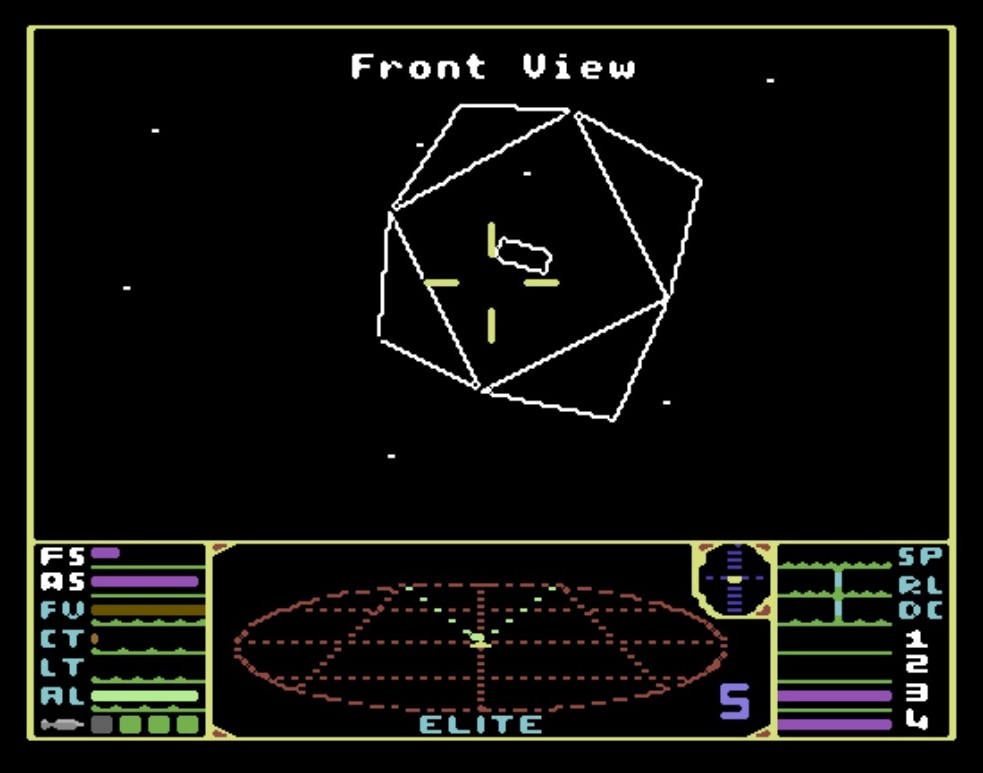
We are only two days away from the E3, those who are into gaming will wonder ‘what will we see next?’ We all feel that way, yet lately, the more I see of Elite: Dangerous, the more I await its arrival on PS4. For now it is a Microsoft exclusive. I remember the day I became ‘dangerous’ I had been playing it for quite some time. Consider the screen below. This was the screen we drooled about. It was on a C-64 and it was ‘da bomb’ in those days!

Lave

So many hours, at first jumping short distances, hoping no one would attack me, but after my first pulse laser, I got to be cocky (and got killed in the process). Now we see the next gen pics, one is the PC, the other is as I was told the Xbox One edition (this is not a cut scene, this is actual game view). If you think that ‘it is all about the resolution’ then you are quite frankly a nob (or a dweeb). I have been and will remain a Sony fan (I still love my Xbox 360), there is no denying that this game is beyond amazing!

XB1_1

Most information on the XB1 edition so far, I got from YouTube. As I played the original and have had decades of gaming experience (which is why I knew the flaws Microsoft is fixing now, were a solid known issue for me 6 months before the system was released, and not all have been fixed by the way). Now, most gamers will be the Mario kind, or the Grand Theft Auto kind. This game might not appeal to either, yet, I feel that the flight simulator and Role Playing Game kind will truly love this game, and we are in for a lot more heart elevation than just this game!

To get a good initial look of the game then watch this: https://www.youtube.com/watch?v=grIGMs3Kj4k. The man talks clear but waffles a little in the beginning. He is going through it all clearly, so bear with his explanation, because it is worth it! If need be, skip the movie to 4:45, now you see the first glimpse on how a mere idea in 1984, becomes something truly amazing when the computers catch up to the imagination of an individual, in this case the imagination of David Braben and Ian Bell.

This is not a 30 hour game, this is a game that will keep you busy for many months, if not years to get it all to a worthy level, but let that not stop you, because as you evolve from one ship to the next one, you will be able to transport more goods, have better protection and go hunt criminals. The openness of the game that was, was already impressive, the size of the new edition is beyond anything you can imagine. We are talking a few million times larger than the original. For those who like the idea of space exploration, this is one of two games to get.

What is amazing is not just what it looks like now, it is the fact on how the navigation systems from 1984 are still at the core of what is now, it was the most innovative look and now, this view is the centre of aligning your ship and weapons systems towards your enemies. And it does not just ‘seem’ to be the best, as you watch the game on YouTube you can see how fluent the controls seem to be, especially as we consider the response from Blitz ‘Oops! We’re going the wrong way’ moments later it is all back to normal.

The other game to get is ‘No Man’s sky’, but that one I will leave alone, because, too many people are hyping this game, based on the same materials most saw (YouTube and so on). So we will wait for actual release date information.

What is interesting is that leaking information is not just limited to the political branch of the media, it seems that Dishonored 2 information has leaked. Dishonored was the stealth game on 360/PS3/PC, which had open levels and had a steampunk look to it all. The interesting part is that there was no set way to do the game, stealth or kill everyone, you got to choose. Another interesting part was hat when I replayed it on the 360 a while after I completed it, I found in more than one level another way to get the game done, which is awesome, because that gives a clean ‘open level’ approach, something that I am a big fan of. There is still question whether it comes and whether it is a leak or a ‘miscommunication’ but gamers live for these moments, because Dishonored 2 was not in the open pipeline and a fan will get overly enthusiastic when a sequel arrives of a game he is a fan of.

At this point, the Bethesda conference is only 12 hours away! 12 hours until the Fallout 4 trailer will get additional support and information to those who love that game (that would be me). 12 hours after that the show takes off for thousands of gaming fans! There will be joy, there will be tears and there will be outrage. The latter part might be a bit much for Ubisoft, but there is no way to tell how they will fix previous blunders and how they will appease the deserting population they have experienced. Time will tell and on that part I will not speculate at present! I still feel that they could turn it around and rebuild what they had lost, it just takes one truly visionary person (often not found in a board of directors).

Ubisoft does its presentation 20 hours after Bethesda, Bethesda has a 12 hour leap on Microsoft too, so whatever news they bring will get unadulterated limelight for the better part of a day. The rumours are ripe and some state there will be more than just Fallout 4 and Doom, but again, they are just rumours and Fallout 4 is pretty massive sized news, especially as it comes out this year, so that means within the next 6 months.

So why more on games? You see, games are getting to be a much more important part in the lives of people, many of them not into gaming at all. Gaming is now a major player for Trademarks and let’s take a look at patents!

You see, IP Australia tells us “Software inventions must be industrially applied. Software that is merely a procedure for solving a given type of mathematical problem is not patentable”, yet when we look at the The Copyright Act 1968 (Cth) we see the following “Under the Act an article is industrially applied when, with the consent of the copyright owner, fifty or more items are made from it, which we see in section 77, 17. If the design is not able to be registered, for example because it is not new and original, it will still lose copyright protection once it is commercialised section 77“, now we get to the part that matters: “By registering a design under the Designs Act 2003 (Cth), for example a design for a kettle, the owner obtains a monopoly in that design but, unlike with copyright, the protection is only for a maximum of ten years and not for the life of the owner. With copyright the owner does not obtain a monopoly. If two people independently prepare a drawing of a kettle neither infringes copyright in the other’s drawing. The registration of a design gives the owner a monopoly in that design and the owner can prevent another applying the design, or any fraudulent or obvious imitation of it, to any article in respect of which the design is registered [see s 71(1)]

This jewel comes from the Legal Commission of South Australia (at http://www.lawhandbook.sa.gov.au/ch11s12.php).

New we get back to the gem, the jewel of gaming, Elite. I mentioned that navigational part of the game, which is the kettle. Was it registered, is it protected? Let’s not forget that ‘it will still lose copyright protection once it is commercialised [s 77]’, which gets us to the need for protection for these games and the growing powers of trademarks and Patents. Yet, trying to get a Trade Mark or Patent after you gone public is another matter, so what legal protection did these new makers prepare?

Consider the uniqueness of the Elite navigation display, how protected is it? You might think that this is a joke, but it is not. A new game will cost between 20-150 million dollars, so you need to get it right and make sure you have your protection in place. Even though larger productions are less likely to fear Trade Marks or Patent infringement (usually they fear industrial espionage), but having the protection just makes your case stronger. So here is the Crux for some of the new Law firms. If you take time to visit the E3, how many products are in need for protection? Who has actually done the full scope of this? IP is an evolving market, the protection required will increase with every iteration of the game. You see, the gaming industry has arrived in the location, the hardware industry was in 1998. Now that makers will return to an annual release of a game, an iteration of the original, the game will also face the danger of a ‘white’ version. A look that is similar (but not ‘looks alike’) that provides the gameplay the gamer would like. You see, no matter how their marketing division brings it, Assassins Creed 2, AC Brotherhood, AC Revelations, AC3 and AC Black Flag are in many parts similar, as such, game makers have had 5-7 years to catch up, 3-5 years for those who waited for the second one to become a hit. As such, in light of the fact that re-engineering can usually be done in 40% of the timeframe, the need for legal protection will increase almost exponentially. Do you think that no one else is now thinking of a ‘new’ GTA5? The game brought in a billion dollars, so YES! There is someone trying to flog of a new game offering a similar game. It only takes one innovative part for the original to feel the pain of losing a market share. There is however a change, you see, some still feel the following description: “Obtaining a patent is a long, tedious, and expensive process, that it can be challenged by the examiners and later by others in court“. Yet the Patent Cooperation Treaty (PCT), which is internationally accepted, has an international patent, which does not have the same threshold patents used to have, which means filing is easier and most important cheaper!

If we look at the definitions in section 39.1 of the PCT treaty, we see :”(vi) computer programs to the extent that the International Searching Authority is not equipped to search prior art concerning such programs“, yet is that not a failing of the organisation? The fact that a billion in revenue cannot be protected, is perhaps slightly ludicrous. Again, in Robert Bosch v Siemens we see: “However, it is not to be inferred from these rules that searches or examinations in the software field are to be ruled out in international authorities. On the contrary, it seems to the board that according to the PCT searches and, if applicable, examinations of this type can and may very well (perhaps even should) be carried out if the competent authority is appropriately equipped“.

So, the victims remain as international authorities are ‘trying’ to get equipped? There is enough here to see a needed evolution that not unlike Torts will go on a case to case bases. The case on Sega v Fox Interactive, Electronic Arts, and Radical Entertainment regarding a US Patent, which was settled for an undisclosed amount. There the core of the infringement was the navigation system, the copied one was ‘too’ similar.

The core of gaming is expected to exceed 80 billion in 2015, that target is already likely to be exceeded, so as we see that gaming is now expected to overtake BI Intelligence market revenue by 1300% (yes thirteen hundred), we can surely see the short path we have in view as the need for software patents are required to strengthen an iterative market. Even though there will be some protection in Trade Marks as the branding of a game is too similar, consider the quote “if the novel elements are functional, the item cannot be copyrighted: although it might be eligible for patent protection“, which takes us back to Elite as a first example. Its navigation is quite unique, I have not ever seen it anywhere else to that extend and now as the larger masses go to play, such protection is more and more an issue. Take into consideration that the affordability of patents are now a fact, giving an option to patent, until opposed (which still needs to be decided), we have enough to see the change in the gaming industry, IP is taking a foothold, so when you follow the E3, see how often you hear the term, ‘our new IP’, because that part will take centre stage as per last year. So where are you now in all this?

More interesting, which law firms are considering evolving their portfolio with the gaming industry, which is only an $80 billion market for now!


1 Comment

Filed under Gaming, Law, Media, Politics

Last Clooney of the year

My idea of stopping my writing until the new year has truly been bombarded into a sense of that what is not meant to be, so back to the keyboard I go. One reason is the article ‘‘Nobody stood up’: George Clooney attacks media and Hollywood over Sony hack fallout’ (at http://www.theguardian.com/film/2014/dec/19/george-clooney-sony-pictures-hack-the-interview), which I missed until this morning. So has the actor from ER become this outspoken because of his marriage to Human rights lawyer Amal Alamuddin? Nah! That would be incorrect, he has been the champion of major causes for a long time, outspoken, thinking through and definitely a clever cookie with a passion for Nespresso!

The article kicks off with a massive strike towards to goal of any opponent “George Clooney has spoken of his frustrations with the press and his Hollywood peers at failing to contain the scandal around The Interview, which Sony has pulled from cinema release as well as home-video formats“. It goes a lot deeper then he spoke it does, perhaps he fathomed the same issues I have had for some time now, some mentioned in my previous blog ‘When movies fall short‘ (at https://lawlordtobe.com/2014/12/15/when-movies-fall-short/), two weeks ago.

I will take it one-step further, several players (not just Sony) have been skating at the edge of competence for some time now, as I see it, they preferred contribution (revenue minus costs) regarding issues of security. It remains debatable whether this was intentional or just plain short-sightedness, that call requires levels of evidence I have no access to.

By the way, Mr. Clooney, you do realise that this topic has the making of an excellent movie, not unlike the largely unnoticed gem ‘Margin Call‘ with Kevin Spacey, Paul Bettany and Zachary Quinto.

The one quote I object to (to some extent) is “With just a little bit of work, you could have found out that it wasn’t just probably North Korea; it was North Korea … It’s a serious moment in time that needs to be addressed seriously, as opposed to frivolously”. You see, the inside job is a much more likely part. Yes, perhaps it was North Korea (requiring evidence), yet this would still not be the success they proclaim it to be without the inside information from disgruntled (or greedy) employees. In addition to the faltering security Sony has needed to ‘apologise’ for twice now (the Sony PSN hack of 2011), none of which was correctly covered by the press regarding this instance either. There was the press gap of November 2013, so we have at least two events where the press catered with silence, but at the price (read: reward) of….?

Yet the part: “He joins others who voiced their dismay at Sony’s decision, including Stephen King, Judd Apatow and Aaron Sorkin. Rob Lowe, who has a small role in The Interview, compared Sony to British prime minister Neville Chamberlain and his capitulation to Nazi Germany before the second world war“, is more than just a simple truth, it shows a fear of venue, cater to the profit. Chamberlain was from the old era and he failed to perceive the evil that Adolf Hitler always was. That view was partially shown by Maggie Smith in ‘Tea with Mussolini‘ too, yet the opposite was strongly shown in Remains of the Day, when Christopher Reeve as Jack Lewis states: “You are, all of you, amateurs. And international affairs should never be run by gentlemen amateurs. Do you have any idea of what sort of place the world is becoming all around you? The days when you could just act out of your noble instincts, are over. Europe has become the arena of realpolitik, the politics of reality. If you like: real politics. What you need is not gentlemen politicians, but real ones. You need professionals to run your affairs, or you’re headed for disaster!

This hits the Sony issue straight on the head. Not that the Gigabytes of data are gone, but that they got access to this data at all. IT requires a new level of professionals and innovator, a lesson that is yet to be learned by those having collected Exabyte’s of data. It is a currency that is up for the taking with the current wave of executives that seem to lack comprehension of this currency. Almost like the 75-year-old banker who is introduced to a bitcoin, wondering where the gold equivalent is kept. The new order will be about IP, Data and keeping both safe. So, it is very much like the old Chamberlain and Hitler equation, we can see Chamberlain, but we cannot identify the new Hitler because he/she is a virtual presentation of an identity somewhere else. Likely, a person in multiple locations, a new concept not yet defined in Criminal Law either, so these people will get away with it for some time to come.

Yet the final part also has bearing “Clooney was one of the Hollywood stars embarrassed by emails being leaked as part of the hack. Conversations between him and Sony executives showed his anxiety over the middling reception for his film The Monuments Men, with Clooney writing: “I fear I’ve let you all down. Not my intention. I apologize. I’ve just lost touch … Who knew? Sorry. I won’t do it again.”“, personally he had no reason to be embarrassed, when your boss spills the beans (unable to prevent security), do you blame the man or the system that is this flawed?

Why has it bearing? Simple, he shows to be a man who fights and sometimes fails. He states to do better, just as any real sincere person would be, a real man! By the way, since 2011 Sony still has to show such levels of improvement. A lacking view from the people George Clooney served in a project, so we should not ignore the need to look at those behind the screens and the press should take a real hard look at what they report and on where their sources are, that same press that has not scrutinised its sources for some time. When was the last time we asked the press to vouch for ‘sources told us‘?

Consider the quote “We cannot be told we can’t see something by Kim Jong-un, of all fucking people … we have allowed North Korea to dictate content, and that is just insane“. As I mentioned in the previous blog, with the bulk of the intelligence community keeping their eyes on North Korea, why is there no clear evidence that North Korea did this? Not just the US both United Kingdom and France have access to an impressive digital arsenal, none have revealed any evidence. Consider that the École polytechnique under supervision of French defence is rumoured to be as savvy as GCHQ, can anyone explain how those three cannot see clearly how North Korea did this? So, either, North Korea is innocent and just surfing the waves of visibility, or the quote by George Clooney in the Guardian “the world just changed on your watch, and you weren’t even paying attention” would be incorrect. The quote would be “the world just changed on your watch, and those in charge do not comprehend the change“. In my view of Occam’s razor, the insider part is much more apt, the other option is just way to scary, especially as the IT field is one field where North Korea should be lacking on several fronts.

I will let you decide, have a wonderful New Year’s eve!

Leave a comment

Filed under Finance, IT, Law, Media, Military, Politics

Where we disagree

There is another article in the Guardian; it was published almost 12 hours ago (at http://www.theguardian.com/business/2014/dec/14/deficit-problem-crisis-productivity-george-osborne). It is a good story, it gives a decent view, but I feel that I cannot agree. It must be said that this is all in the eyes of the beholder. The article is good and sound and many will adhere to this idea. Yet, I do not completely agree. Yes, all the facts are right, the view is not incorrect, but it feels incomplete. The first quote “The most important issue is the poor performance of the nation’s productivity, which, far from being improved, has almost certainly been exacerbated by the constant emphasis on the putative need for austerity”, now this is a decent view to have, it is an optional view, yet in my view the following com up:

  1. Productivity relies on orders; the UK is competing with its baby brother India where daily labour rates are decently below the hourly rate of a UK worker. That in itself is not enough, the EEC overall is pretty broke, no less than one in 10 has no job, it is driven up by Spain and Greece, yet after a long term most Europeans are very careful about where money is spend on. So which manufacturing industry is getting the few coins that do get spend?
  2. There is no reputed need to austerity; there is an overspending in excess of 1 trillion that needs to be addressed. We can bark high and low on the reasoning for it, but that water passed the bridge a long time ago, now the debt needs to be taken care of. The US, Japan and UK have a combined debt of 30 trillion of national debt, the UK is a little over 3% of all this, let’s make sure that when the two behemoths stumble into nothingness, the UK does not end up being the biggest debt of all (again just my view), yet I feel certain that the banks will be in charge of a nation with such debts.

Yes, productivity will take care of all it, but I believe that the debt needs more then productivity. It needs innovation and IP. They will drive true productivity. People forget about the innovators. Alan Turing is still regarded as the man behind the concept of Artificial intelligence. What was a fab in the 40’s became the driving power for the planet from the 90’s onward; let’s not forget the foundations for the computer. We seem to herald IBM and others, yet Professor Sir F.C. Williams was at the foundation of the driving force that became the behemoth for almost half a century and this wave is still going strong.

The new currency will be IP; innovation will drive the places of work, the places of sales and the filling of coffers (the empty bags currently in a corner of George Osborne’s office).

People keep on ignoring the need for innovation; I tried it twice in a previous job. The response remained almost the same ‘it works as it is, so leave it‘, that is the drive stopper that ends a future, although the early 1900’s did not have the need for IP, consider the history of the paperclip and Gem Manufacturing Ltd, a British company. They had the better design, but never registered the patent, which is why Johan Vaaler is often seen as the inventor. I am not debating the validity, yet he registered his patent. In those days the rights were approached a lot more liberal then now. Nowadays our lives are all about IP, patents and who it is registered to. Haven’t we learned anything in 115 years? No matter that we now enjoy an article that is not patented, in nice contrast to people who enjoy a life because the man behind finding a cure (read vaccine) for polio did intentionally decide not to patent it (Dr Jonas Salk, who deserves a sainthood for that act), our future for certain, our survival to some exaggerated extent is depending on IP. Need drives production, but who owns the article that is needed? That part I see ignored again and again.

William Keegan does not look at the IP side, because he focuses on the steps following it, yet those in this real rat race seems to silence the need to look at it as they talk about productivity and manufacturing, but the innovator behind it, the one designing the IP, that person is worth gold. Consider Microsoft paying 2 billion for a piece of IP called Minecraft. A simple game, looking the way Minecraft does, is worth the revenue the high end looking GTA-5 made. It is all about IP in gaming; it should be the same in nearly any industry, not just the one that got kicked off by Alan Turing and Professor Sir F.C. Williams. IP drives every computer industry, it became the centre piece in the jewel that is now called ‘Business Intelligence‘ and ‘Predictive Analytics‘, but we broke the system after that.

Why was the system broken?

It is a broken system that is now illuminated in its flaws by people like Sir Kenneth Robinson and Brian Blessed. We ignored for too long that IP and innovation requires creativity. As Universities have been pushing logic and business, they forgot that the future tends to be created in the arts. Creativity is the driving force for any future, whatever is produced after this required a need for IP. It is a chicken and the egg issue, will the thought create the idea or is the idea the drive for creation? As I see it, this drive needs an artistic side, a side I was never any good in, but the best futures will need an artistic hand. It is shown into the massive amounts of IP the gaming industry manages. People might wonder why I keep on coming back to the gaming industry.

The answer is simple Games have driven a trillion dollar industry (totalled). Commodore Business Machines (C-64, Amiga) Atari (2600,800, ST), Creative Labs (soundcard), The consoles that followed by Nintendo, Sony, SEGA and Microsoft and the list goes on and on, all from creativity. Even the military sees the essential need of creativity. Consider the text “Space-based Missile Defense: Advancing Creativity“, it is at the heart of everything, so many forgot about that, those in charge forgot about that part. It is why my vote for Cambridge chancellor would not have been for Lord Sainsbury of Turville, but for Brian Blessed. Lord Sainsbury is not a wrong person, or a bad choice. As I see it, all our futures require a much stronger drive towards the arts and creativity. In my crazy creative view photography was invented in 1642 by a Dutchman named Rembrandt van Rijn; his visionary view came 200 years before the chemicals were invented, if you want evidence? It is in the Rijksmuseum and they call it ‘the Nightwatch’.


Leave a comment

Filed under Finance, Gaming, IT, Science

You might not like it

This morning I got confronted with an article so in my face it literally made me stagger. This article came from the brilliance of a YouTube element called ‘Veritasium’, it was all about the dangers of Facebook, moreover, the dangers of actual investing in Facebook. Of course the hilarious part that I read this on Facebook, so we see a slightly additional view when we consider winking at social media. Yet, before I start we must not forget to show divine humour by emulating the platypus. If Pig Latin is a reconstructed language and we see the Dutch expression of Fisherman’s Latin as ‘catching that really big fish’, is Veritasium a new elemental truth or a truth in mere reconstructed elemental words?

The article is about the concept of buying ‘likes’. The link is here (at https://www.youtube.com/watch?v=oVfHeWTKjag) and I can tell you now that it is worth seeing from beginning to end. The movie takes 9 minutes and it gives you the low down on buying likes and more important the dangers of pushing your visibility.

Now it is best for the reader to see the video, because the speaker does so in a very eloquent way and the only way to get his point across is to quote his entire article, which no longer makes this MY article.

I have seen these issues before, why do we need to ‘like’ things? I do, there are a few likes on my list, I see some advertisement on Facebook and as such, I have no real issue with the advertisement part. It is the price for a free Facebook. Yet, why would you want to pay for more likes? It seems that apart from it costing you money, the video shows that paying for likes is ultimately bad for business. This is only the top of the equation.

The video is calling into question other issues too. The fact that one issue made them shed 83,000,000 fake accounts, one might wonder how many fakes there really are on Facebook. The second is that the linked algorithm is also in question. If we consider the data linked here, then we see a different issue, which links them all.

  1. How are bought likes regarded, especially in the approach towards a percentage of linked advertisements through connected friends?
  2. How can we get actual advertisement pushing flagged towards an engaging audience (which shows growth and possible commitment), while we know that bought likes will never be engaging likes.
  3. How is the data cleaned to show a better mapping of audience versus engagement as well as geography versus interest?

The last point is not just linked over the two issues, we see in the video that there are profiles in the system that are there to like ‘everything’, not in a Zen way, but in a way to mask fake accounts, which gives another matter regarding the algorithms and how they could likely be fooled by those who understand the system.

Yet this is not just about Facebook, we should now also look at the medium that gave us this treasure, namely YouTube. You see, YouTube is all about creating hypes, vibes and types. It is the last of these three that have been a worry for some time and there is no indication that this will stop anytime soon. So, what happened? It started a few months ago, I was looking for a game trailer and there it was right in front of me, the movie Silent Hill. Now, as I am between apartments, I have no access to my DVD collection, so watching this one was heaps fun. I was just a little upset that a Blu-ray was never released of this movie. So, as the month progressed I started to dig into this phenomenon as this seems to be a copyright violation. As I started to dig deeper into this, I noticed a league of movies, some extremely recent all watchable. Even 2014 movies like Godzilla and the new X-Men movies were on YouTube. Now, there is at times a massive drop in quality and 1-2 were clearly filmed in a cinema, but the movies are there. But it is not all that clear. In some cases there are hundreds of copies yet none of them have a movie, they just have a link to click on, or the weird text ‘this movie was deleted by YouTube’ (if that is so, why is the file and the entry still there), so YouTube is used in a growing league of non-trusting reasons. Yet, is the approach for marketing or criminal reasons? That is also the issue, because it tends to skew the people who go there and the reason why they went there. I can very much understand that there are scores of Bollywood movies there, but are they any less a case of copyright infringements?

How does the YouTube issue relate to the Facebook issue? It seems to me that the second is an automated form of getting people to do for the click farm so that they go undetected for a lot longer. Consider the effort it takes to add 100 copies of a film, people might want to see and they all go to a link (for implied free download), we now have a person losing possibly up to 15 seconds, whilst they at that point are facilitating the work of a click farm. The farm remains less detected, whilst the farm gets 100% of the revenue from the click. Now consider that when these movies come out over tens of millions will try a few links, so these farms get all those attempts for a mere 100 uploads, it seems like this is easy money. So as we consider that Google, Yahoo, MSN and others are now trying to battle these farms more and more, yet the fact that YouTube (a Google child) seems to have kept the backdoor open, should be a massive issue, because this puppy tends to go straight to Facebook and Google+, which leaves the impression that people were mopping the floor whilst the tap remains running. So nobody is going anywhere fast.

As such my question now becomes, how anyone can proclaim that keeping the status quo in these matters is nothing less than running backwards on a highway patrolled by blind drivers. So, here is the kicker, how come Google has been unsuccessful to stop such levels of copyright infringement? In my view there are two options, they either are unwilling or unable to do so, unable means that they are not clever enough and that their system of facilitation is there to keep them non-accountable, if it is unwilling, then we see another version where their lives (Facebook and Google) revolves around bandwidth, which gives us the old Telco revenue issue. It is all about the money!

You might not like that reality, but it is a reality we all helped create. What a difference an algorithm makes!

Leave a comment

Filed under IT, Law, Media

The Toothless tiger

It is roughly 1,544,400 minutes since we saw this message “The newspaper and magazine industry today takes the first steps towards setting up the Independent Press Standards Organisation, the new regulator for the press called for by Lord Justice Leveson” (at http://www.newspapersoc.org.uk/08/jul/13/independent-press-standards-organisation, in July 2013).

So when I saw the words ‘press’, ‘regulator’ and ‘sham’ together in one sentence (at http://www.theguardian.com/media/2014/sep/07/victims-press-regulator-ipso-leveson ) I was not that overly surprised. Let’s not forget that the implied innuendo in regards to the press cleaning up its act was never a reality.

You see, after all that visibility, on March 25th we see the report from the Daily Telegraph with the headline “Flight MHG370 ‘suicide mission’“, was anyone even surprised that the press regards themselves ‘beyond the law’?

Yet, if we are to properly assess the situation, we must therefore also allow matters of defence. So what is the issue that bites us so much? The letters from the 30 victims of press intrusion stated to Sir Alan Moses the following (as stated in the article of the Guardian):

By rejecting the majority of Lord Justice Leveson’s recommendations, the paymasters and controllers of Ipso are rejecting due process

In its current form, Ipso retains no credibility with us or with the wider British public.

It furthermore states: “it was not truly independent, breaches of the industry code of practice would go unreported and unpunished, and there would be no effective and transparent investigation of serious or systematic wrongdoing“.

Now, after what happened in the hacking scandal, I am all for bashing the press, but let us all be honest, if we are to convict a group, let us do it for valid and preferably legal reasons.

About these pictures!

This all links to several issues that I wrote about in the past few days, Jennifer Lawrence and Kate Upton might be the most famous ones, but they are by no means to most important ones (I feel for these victims, but reality shows us bigger problems). Yes, there is an issue that links to Zoe Quinn and Anita Sarkeesian. If we go by the words of Reddit, we should use the quote “The site, which had an online forum named ‘The Fappening’, was one of the main places the hacked nudes were being posted and the website has now banned the page, six days after the photographs of the Hunger Games star first surfaced. It is thought the main reason bosses have finally pulled down the forum is NOT because of the J-Law snaps, but because photographs of Olympian McKayla Maroney which were also posted on the site are believed to show her underage.” which came from the Mirror. These places have been hiding behind the ‘innocent disseminator‘ flag for far too long. Their income is real and based upon bandwidth. If we want change, then perhaps forcing a tax bracket on bandwidth, especially with a bankrupt America, might be a novel way for debtors to get their coin back. Yet this is not about that. The fact that Jennifer Lawrence is now partially safe is only because another victim was a minor when the pictures were taken. This makes for a massively inhumane disaster and one that also affects the press. It is interesting that when we look at the name McKayla Maroney we see two events, both the hacked ‘under-dressed’ images as well as the Gamergate reference to Zoe Quinn and Anita Sarkeesian.

Vox Media stood alone

It is Vox (at http://www.vox.com) who seems to be on top of it, so we see one place, which might be regarded as ‘trivial’ by some covers the real issues that many ‘major’ papers have been ignoring all over the US and in places far beyond the US. You can read their words in depth at http://www.vox.com/2014/9/6/6111065/gamergate-explained-everybody-fighting. It is well worth reading; however, there are a few parts I do not agree with. Let’s go over those, for they are all linked.

Here is the first part: “If it was just to bring attention to Quinn’s personal life, that’s, as stated, already happened. And if it was to create better ethical disclosures in online journalism, that’s happening, too. The Escapist is drafting new guidelines, while Kotaku is now forbidding its writers from financially supporting independent designers on Patreon, a popular method for backing independent artists, unless the site’s writers need to donate to Patreon for coverage purposes (since many developers release material first to their Patreon backers). And Vox sister site Polygon requires disclosures of this sort of support“.

I do not agree for the following reasons:

  1. If we look at the press at large, Quinn’s plight is less than a hot drop on a plate. “Jennifer Lawrence”, “Nude” and “shoot” gives us 41 MILLION hits when we use all the keywords. “Zoe Quinn” gives us 70,000 hits with less than a dozen reputable sources (including Vox Media). So, I think we can safely say that visibility is not even close to being a factor there.
  2. Better ethical disclosures in online journalism? Sorry, but are they for real? Most of these writers have never seen a class in ethics, it is also likely that some of them cannot ever write ‘ethics’ correctly. That being said, many of them write for mere passion on games, their transgression of alleged ‘corruption’ usually goes no further then receiving the free game. How corrupt is that? In all this, my issue with Gamespot has almost forever been with the open sponsor Ubi-Soft. They are not hiding it, so that is good, but I seem to colour my faith to any Ubi-soft review. Overall the writers and makers like Carolyn Petit, Jess McDonell, Danny O’Dwyer, Justin Haywald, Chris Watters, Cam Robinson and Kevin VanOrd do an interesting job. Depending on their ‘preference’ of gaming we tend to favour a certain person, whilst not ‘liking’ another one. The sad news that some of these writers are leaving as Gamespot is changing should be sad news to all gamers.

Scoops

This all goes towards “forbidding its writers from financially supporting independent designers on Patreon“, why? Is the likely fact that reviewers would have the inside track on a game and by personally backing a developer they will have a scoop? Is that not what pretty much every newspaper does? If not, how about cancelling ALL advertisements from Microsoft, Sony, Nintendo and Adobe? How long until they are missing out on scoops? I think support should not hidden, but if I was still in the business I would be funding No Man’s Sky or Ultima Forever: Quest for the Avatar (I have been a lifelong Ultima fan), if it gives me a scoop days in advance of others, than so much the better. The question becomes is this truly about implied corruption or about mainstreaming a 100 billion dollar plus business? You see, the gaming groups was for a long time ignored (especially in the time I was involved)

True Scenario: “I went to the ‘Efficiency Beurs’ (a Dutch IT/Technology trade show) in the RAI in Amsterdam in the early 90’s (1991/1994), I forgot the exact time. Anyway, I was already deep into the gaming world and sound would be the next big issue. PS speakers were no good, Adlib was an option, SoundBlaster was the new kid and those with real money (read wealthy parents) there was the Roland card, which costed a fortune. This is the age when the PC was a wild market, CBM-64 and Atari were on a high and the PC was relying on blips and bleeps. So, I walk to the IBM representative and asked him on the new PS/2 PC’s and whether the soundcards in the growing gaming market was a field that IBM was looking at, as well as, whether IBM had considered adding a sound card to the PC-Private projects (which was a tax deductable PC scheme in the Netherlands). I was ‘walked off’ the stand with the response that IBM was for ‘professional’ use only. This same IBM is now advertising ‘Smarter Serious Games’ (at http://www-935.ibm.com/services/us/gbs/gaming/)“.

So, these ‘losers’ (just to coin a phrase), who would not consider this industry for a long time are now trying to leech of a 100 billion dollar industry by ‘Simming’ (Sims joke) it on, so nice of IBM to join the party almost two decades late (they did however join the party decently before 2013). So now we get this escalation on several fields and interestingly enough all at the same time. Several approaches of wild growth is seen, personally I reckon this all truly took off in high gear in September 2013 when one game made one billion in only three days and passed the 2 billion mark this June making a videogame more successful then the most successful Hollywood production in history. Now nearly everyone wants to jump on board and it also seems to allow for a ‘wild growth’ of certain ‘elements’. IBM is not a party to this (they move in different circles), yet, those growing wildly on our shores hoping for their billion are learning hard and fast that gamers can easily spot the quality from the chaff and as such we see escalations. Whether we take Forbes article (at http://www.forbes.com/sites/erikkain/2012/03/21/gaming-the-system-how-a-gaming-journalist-lost-his-job-over-a-negative-review/) for granted or not, it seems that the name Sony and the possibility of pulling away advertisements apply in several corners (like the PS4 release and Terms of Service issues). So, to avoid ‘ethical’ issues, it seems to me that newspapers at large just ignored the plight of over 60 million customers and any link to ‘changes to the terms of service’. So how does this all link to ‘corruption’?

That is the part that seems to elude many, it is not ‘just’ about corruption, it is about alleged corruption with the writers (emphasis on alleged), implied corruption with their bosses in what they publish but more importantly what they DO NOT publish. The last part is on streamlining it all. If anything, GTA-V shows us that a billion plus revenue takes more than just a good game, it is about marketing and advertising, which shows now exactly the issue on visibility.

I am not alone with these views; some of them were discussed by Ashton Liu in her blog at http://rpgfanashton.tumblr.com/. She has an interesting view I had not considered. She writers “It has been no secret to the gaming community that many video game news sites have been employing increasingly extremist and reprehensible tactics to gain site hits and forward their ideology“. In that regard she seems on top of it all, I saw the harassment of Quinn and Sarkeesian as idiots who should go the way of the Dodo yesterday, if at all possible. Yet in her view, we are dealing with more than just blatant ‘ranters’, it is entirely possible that there is a corporate push behind it all. If we consider the actions by Sony and the market they need to ‘rule’ is that such a far-fetched statement? If people are willing to sell their souls for a niche market, what is Sony willing to do to remain the number one on the market, especially if you can motivate non-journalists (read non-accountable people) to speak out loudly?

What makes a Journalist?

It is a side, that until the article of Ashton Liu I had ignored. Ashton is like me, an ideologist, we seem to share a passion for RPG games and we are willing to put some time into sending the message of the Role Playing Game, hoping to introduce it to others. Yet, part of the view she offers seems incorrect, is this all about true gaming journalists? Many of them are not journalists at all, they do not have a degree in journalism, so let’s all agree that unless the person has a degree in Journalism that this person is just a games reviewer (I myself am a games reviewer), I have degrees in Law and IT, but not in Journalism, which makes me a non-journalist!

This is where the issues become (slightly) clear. Many are not journalists at all, so journalists are compared to ranters and outspoken ideologists, whilst not getting painted on grounds of evidence, which is almost slander (I said almost). We are all in need of more clarity, clarity I am asking for, whilst trying to remain clear, clarity Ashton is trying to give the readers and there are the additional thousands online, ranting all over the place. So what is a reader to believe?

Corporations

Perhaps that is the part we all forgot about? We seem to ignore the corporate site. Is that the background of those who remained with Gamespot? Is CBS changing the gaming area by starting to cut away the ‘non-professional’ staff? I do not know, I am asking this. I have no issue with any writer at Gamespot (even if they cater to games I never play), their passion has for a long time been without question, yet, if this streamlining requires the presence of education, not just knowledge, then those without Journalistic skills to be ‘relocated’ and not all end up within the CBS structure.

So as Ashton made the statement I disagreed with “These journalists behave terribly and browbeat anyone whose opinions don’t fall lock step with their own“, the question “which are the real journalists” come to mind. This is where we return to Leveson, the issues that IPSO is accused of and how this relates to Journalism.

IPSO is regarded as a toothless tiger (perhaps correctly so), yet as papers are more and more online and as we see more and more ‘contributions’ from critics and reviewers, we will see that their painting of a group ‘as ignored’ as stated by the phone hacking scandal victims, we see a corporate move by many newspapers that employ reviewers and critics who are likely non-members of the official Journalistic core, but in the online mash no one can really tell anymore. This is at the heart of several issues, next to the editors relying on people whose family name tends to be “well-placed sources within”; I wish I had a relative like that.

This all gets me to the only part of the Vox article that I have an issue with. It is not really an issue, it is more a disagreement. They stated “Because what #GamerGate is all about isn’t who is or isn’t a gamer, or what role the press should play. It’s about what games should be and who they should be for. And that’s worth a real discussion, not just a hash tag“. I think that anyone enjoying a game is in the smallest extent a gamer, and as his or her passion grows, so will the Gamer part of that person. I think it is MASSIVELY important the part the press plays and to some extent they need to be judged on what they publish and to some extent even more on what they ignore, not unlikely for favours from the advertisers. You see, what happens when it is no longer them, but also the stakeholders? Consider the stakeholders for projects of Ubi-Soft and Electronic Arts. The moment they start ruffling feathers on ‘their’ dividend and the press ‘obliges’ that is the true moment when we will no longer see whatever ails a gaming community. When it goes through a journalist we do end up with the smallest protection, but ‘small’ beats ‘none’ every time.

It is ‘what games are and who they are for‘ is as I agree an important discussion, yet the implied evidence at present gives little support that that true vision will come from #Gamergate, because anyone willing to develop a game, no matter what gender, what topic and what ethnicity of graphics we are presented with should be a reason for bias and/or discrimination. These are parts #Gamersgate seems to be ignoring.

Streamlining is also all about who owns the IP, that is the one part they all seem to ignore, if the future is about IP (Intellectual Property), then it is the novel idea that has the future of gaming fortune, which is all about streamlining in the eyes of EA, Ubi-soft and Sony (to name a few big companies in this field), you see, who owns the IP will continue and not unlike the flaccid economists of Wall Street, larger companies have been all about continuing a brand and less about the new idea, which makes indie developers the future (consider the massive success of Mojang with Minecraft), that is the streamline part all ignored. This is why I think it is important to protect them! This is seen in the slightly dangerous statement by Vox Media in the article as they state “Some argue that the focus on harassment distracts from the real issue, which is that indie game developers and the online gaming press have gotten too cozy“, is that true, or are the larger players realising that they passed the buck for too long and driving a wedge between the press and the Indie developer is essential to their survival as they try to ‘rekindle’ the press and push indie developers towards the ‘cheap’ deals where they can take over the IP. That part is at large ignored by most. If we look at 2014 we see a massive host of new versions of the same brand, whilst none of the truly new games are coming out in 2014. Splatoon, ignored by many is the new kid and so far it seems that it might largely drive sales for Nintendo. You see these larger houses have forgotten to cater to THEIR audience (not just bring a cool presentation about something not due for 15 months) and as such are under scrutiny facing an endangered future. When we see a headline like this ‘Battlefield 4 – It’s so bad, its actually funny!‘, they know that they are in trouble, no matter how much you pay marketing to focus on the small stuff and micro transactions, which some call ‘Blood Money‘. In my view this is partially the result of letting ‘Excel users’ anywhere near the gaming market and when these investments do not pan out panic will be the natural consequence.

Back to IPSO

Yet, this also reflects on IPSO, because is the story ignored not as irresponsible as calling a tragedy a suicide mission? I wonder if the two elements would have been anywhere near as extreme if IPSO had not been toothless. I cannot state this for America, but I am certain that many gaming issues would have been a lot more visible, which might have reduced the risk and abuse of both Quinn and Sarkeesian. If you do not believe the press to have any influence, then consider the Art ‘expose’ called “Fear Google“, which is exactly the method of News the Sun used to rely on for at least one page (a page 3 joke only the British understand), or as we could call it, how Rupert Murdoch got through his early years. So here we see the beginning of the future, as Jennifer will end up getting shown to the world in states of non-dressing, her stolen pictures are less likely to be stopped as they are not getting sold, even if sold, the chance of enough people getting convicted becomes a serious question.

We can safely say that there is a group of toothless tigers, law partially became toothless as it catered to business enterprise and as we see more and more ‘free’ services we see an abundance of innocent dissemination that no one seems to be able to stop, ‘oh yes’, for some reason many were ‘suddenly’, within hours, able to stop the film where a Journalist ‘suddenly’ lost his head. It seems that ‘sudden’ acts are at times possible, so why this entire system is not better regulated is to be perfectly honest beyond me, but you better realise that someone is making loads of money, not just the hacker (read: thief) that got a hold of the pictures.


Leave a comment

Filed under Finance, Gaming, IT, Law, Media, Politics