Tag Archives: Netflix

Removing the floor

OK, I have made predictions in the past and most were close to spot on, some were just a little off, yet I had not ever for the life of me gotten it wrong by half a billion before. In ‘First the Soft‘ at (https://lawlordtobe.com/2019/04/27/first-the-soft/), I made the prediction: “we now see that Avengers: Endgame is heading towards a 700 million opening weekend (globally) is no stretch, it would make it the largest opening weekend in history“. Some claimed I was being too optimistic, perhaps I was at that a little; I now see from several sources that the estimate was off by a lot. The sources mostly re-quote Variety and when we realise that the reality of “According to Variety, ‘Avengers: Endgame’ pulled in $350 million in the US and an incredible $1.2 billion worldwide in its first weekend. This smashes the ‘Avengers: Infinity War’ take by over $500 million“, we can agree that my thoughts on it being the best Marvel movie ever is not even close to the mark. The movie is now listed on 18th position of the best money making movies ever on a global scale, from naught to 18 in one weekend. This now implies that the movie could shoot to 3rd position in a week, optionally replacing Titanic in 2nd place, it is a record that James Cameron held for 21 years, and he also held the number one spot for 10 years which is now in equal danger of getting surpassed by Avengers: Endgame soon thereafter. I believe that will happen, yet the speed at which this could be happening at has never been seen before.

This news is actually more important than you might think. You see Hollywood is nothing if not revenue driven, so there is every chance that my beloved comic books form the 70’s and 80’s will find themselves to the big screen or some Netflix streaming channel. This is both awesome and optionally sad. When the money makers see the amount of money Marvel just grossed, it will make them step into the fairway and claim their own billions. The sad part is that there is every chance that people will concentrate on their dollar shaped pupils and forget that Avengers: Endgame is the result of 11 years and 22 movies, so whatever they do they need to be careful not to squander the option they would acquire.

One of the front runners in this would be the work of Don Lawrence. He became famous with the works of the Trigan Empire as well as Storm. The Trigan Empire has everything to become stellar, it is placed in what would be a ‘Nova Roma’ A roman empire but in the 21st century, so we get decadence, martial impact (for references see the Spartacus series), direct encounters (read: sex, combat and confrontational resolutions) as well as other elements making it highly desirable to the watchful eyes of millions. Getting it right would be an essential part in all this. Remember, that I Claudius failed in the first attempt until it was done right in the 70’s.

In second place there is the Spanish artist Segrelles who gave us ‘El Mercenario‘, a little more fantasy, but most pleasing to the eye in more than one way. It is utterly lacking realism (the dragons are a dead giveaway) but the stories have been intriguing since the beginning and the art has a certain flair that does go with the need for excellent story telling.

I am not giving you a top three. There are so many considerations. There is the Flash Gordon from the 70’s, there is Diabolik, although in this case it seems that Murdoch’s European pay-tv operation are already on that case, so I reckon that if they make that one dark enough, they might have an instant hit. This all has one additional benefit for me, there is every chance that someone will consider reprinting the comics by Angela and Luciana Giussani, a win-win for all. I believe that technology was the greatest push here. Now that special effects can set the stage more closely to what the comic book makers envisioned and gave to their audience, the sky has become the limit and as we see more and more revenue towards streaming, there is every chance that the biggest delays will be finding the actors committing to a series and finding the right actors, manpower will become the largest obstacle for moviemakers in the foreseeable future. I will happily volunteer there, but I know I am no Inspector Ginko (or inspector Gadget for that matter).

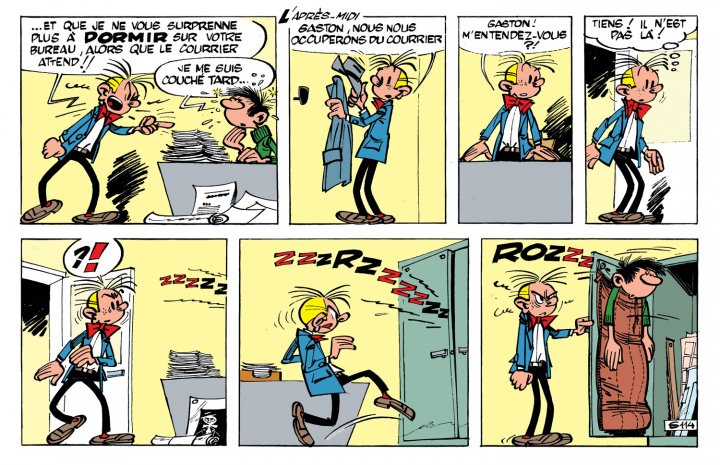
Yet we can also look into the other direction, for that we merely need to seek out André Franquin and his office boy Gaston, every company seemingly has one and therefor would bring instant joy, laughter and entertainment on a global scale, all mostly untapped ideas as American Netflix has been too localised in their searches (as well as the method of finding new stuff). Yet with Disney Plus on the horizon and other players like Stan making more and more waves, we might see a bidding war for the IP rights of these works soon enough.


Leave a comment

Filed under Media, movies

The TV as a weapon

There is an old saying and there are alternatives to it. In Australia we say:

Q: Do you know the difference between ABC and Channel 7?
A: ABC shows you how bad things are in the world, Channel 7 shows you how screwed up your TV life is.

In the Netherlands it used to be NOS versus SBS6, and every nation has its own version. So what happens, when we see the millions of smart TV’s and Apple enters the race opposing Netflix? The New Daily gives the quote: “Spielberg who appeared live, touted the revival of his Amazing Stories anthology, while Reese Witherspoon, Jennifer Aniston, and Steve Carrell then took the stage to discuss another Apple original, The Morning Show” with the added: “a range of new streaming entertainment services, as well as financial products, at a star-studded event Tuesday morning“. the message was apparently clearly brought and when we get to see: “Apple is expected to spend US$2 billion this year on original content to challenge established steaming players Netflix, Hulu, Amazon and the forthcoming Disney+ service“, we need to realise that Apple has an optional goldmine in the making. In addition we see: “Hot on the heels of the Google game streaming service, Stadia, Apple launched Apple Arcade in a bid to grab a slice of the multi-billion dollar gaming market“, which will be fun to watch as Apple has shown a keen interest in negating the need of gamers (which is not all their fault in all honesty), will they figure it out this time? At least with the established Android gaming platform size, Google does have a huge advantage for now. OK, apple does have a gaming community on IOS and I was not short selling that (yes, I was). Yet the overall view I have seen in the past gives a better light of gaming to gamers on the android, than the Apple (a mere personal view on the matter).

So here we are watching two streams being created. First is the Netflix drain by Apple and as soon as they realise that 2 billion is a mere stack of money, to get the TV series that get the people to sign up, even besides Netflix will requires series that surpass The Chilling Adventures of Sabrina, The Haunting of Hill House, Bird Box and a few other gems, Netflix has the writers, will Apple have them? We all know that Game of Thrones will enter their final season, so there are plenty of needy watchers to pick up after that conclusion, yet if Apple does not have the IP, they are not going anywhere. Even with the added Spielberg Amazing Stories anthology, which was actually quite decent when it was initially released on VHS, they will still have quite the task at hand. More important, even if they have all the ducks in a row, they will still having to deal with the market shares of Hulu, Stan, Amazon and the forthcoming Disney + service as well (and a few local others). Do they have the IP when that goes online? I can see half a dozen series that could be hits, and I am not the only one. Plenty of dedicated story tellers will have a list. Yet, does the Apple executive (whomever Tim Cook handed this hot potato to), does that person have a clue? The difference between a good presentation and an actual good idea comes with a gap that can fit the Grand Canyon and many Apple executives are a little lost when they face that gap.

It goes further, having a great idea is not enough and most visionaries have that in mind. to see that part we need to reflect on: “Apple, which became the world’s first trillion-dollar company in August last year, had been dropping cryptic hints about the launch event for weeks, sending the internet rumour-mill into overdrive“, yet since then Apple lost well over 20% of its value and the next few ‘slam bam’ misers will dent that even further. The next part is interesting as it impacts gaming and TV.

To get a great product you need at the very least (before marketing gets to have a go):

  1. A script, a story that will compel the reader to go on. Loading it with sex and graphics will only hold a small percentage for some time. A great example of a near perfect script was I Claudius by Robert Graves.
  2. A cast that works well together, each good actors, but together they become ambrosia, wine and nitro-glycerine, all at the same time. Again I Claudius became the golden standard. With Derek Jacobi, George Baker, Siân Phillips, Brian Blessed, James Faulkner, John Hurt, Patrick Steward, Ian Ogilvy, John Castle, and John Rhys-Davies we got something unheard of. They were already good actors, yet together they created greatness, they are now globally celebrities, but in 1976 that was not a given, they were iron rods and the director shaped them into high tempered steel increasing their mark close to tenfold.
  3. The director. Not merely the man implying 3, 2, 1, action! No, he is the person that becomes the visual visionary and Herbert Wise delivered. The evidence is seen in his work. As a director he has 91 marks on his career rod and when we look at it all, it is all decent work, insightful work, yet I Claudius is a 180 cm person walking in Indonesia (where the average height is 152cm), it stood out tall above all others. So, even as we accept that I Claudius could not have been done without the cast, it equally required the right director to make it work.
  4. The Producer (in this case the BBC), who had to put up the dough with a need of blind faith and no idea how much they were going to lose. These four required to be completely in sync and they were as such I Claudius is still seen as the best BBC drama ever produced, even now, 43 years later we see that new TV series merely hope to equal this achievement, thinking that it can be surpassed is mere folly (yet optionally not impossible).

This is the setting that Apple is trying to get into and throwing 2 billion at it thinking that it will be easy by presenting a few famous people is as reliable as getting rich by spending what you have on blow and hookers. It looks pretty, yet it is an absolute non-winner 100% of the time. Finding the right people will be the task for Apple and as they are all competing for the same pig through increasing the value of good scriptwriters, yet they too are starting to look critical at the offers, because they lose value with every failure and often enough, they do not get to blame the director of the production company, they get to be the scapegoat. So they will require their optional bosses to set an income and levels of freedom and commitment to a much higher degree.

As for gaming

Gaming has a similar setting. It will be about getting the gamers on board and that requires a great product, in an age where Apple has been all about marketed iteration, they are vying for innovation? In a market they do not seem to really comprehend? I am slightly puzzled.

There the director is the project director; the cast are the graphic designers and the scripters and coders. The art and stage might have similar issues, but finding these parts to intertwine and interconnect is where good coders are required. Then there is the learning curve of the game. And it gets to be worse fast when it becomes a product relying on micro transactions. Ubisoft, Bethesda too never quite worked it out and the first screw up will diminish the value of the event overnight. Apple will have to steer clear of micro transactions in the first year by a certainty of 100% and in the subsequent 2-3 years for 90%. Can they afford that game? Their essential path will be the RPG games that call the horn of attendance for gamers on a global scale, if not, than this becomes a long term project that will not end up becoming a winner. In that they have additional competition form makers like Nintendo, their Switch is still gaining momentum and the games I have seen lined up for that system shows that Nintendo is taking this momentum extremely serious. I wonder if Apple has thought this through beyond their return on investment expectations from executives who rely in spreadsheets and lack essential data skills other than identifying their ROI and bonus column. Once that goes south Apple will take a few hits in short succession and they will be painful. If it goes wrong (I am not stating or indication that this is the case), they could face the hits where their total value is a mere 50% of what it was on September 16th 2018.

Yes, Apple could rise high with streaming on TV and consoles, but in the end they require the golden eggs to get there and I am not convinced that they have what it takes to get there. For the most it is an art, I have been involved in gaming since 1984 and I still miss elements in all it. It is both science and an art, the moment you separate the two is the moment you lose. That has been an essential given for close to two decades. Ubisoft got it wrong more than once, Bethesda took massive hits with miscalculations and they are dedicated experts in that field, I doubt Apple has seen that shortfall at present.

To illustrate that we need to look at a game called the Division 2, an Ubisoft product. Important fact, it is seen as a really good game, better than the first version and steps forward, at times leaps forward, some reviewers have stated that is sets a new bar of online gaming and that is awesome to learn. Now add the two headlines: ‘Ubisoft Patches Annoying ‘The Division 2’ Skills Bug‘, as well as ‘The Division 2 PC players report a 100% CPU usage issue, Ubisoft is investigating‘, on games this size this will always happen and the fact that it is looked at and fixed this early is really good, so this is not about pulling Division 2 down. This is what happens on games this big depending on online elements, which is besides server down times. A consequence of online gaming and in this Apple is as I expect it not ready to see gaming to the higher levels it needs to see it.

If they see these two elements as a method to use the TV as a weapon, a data weapon for additional wealth, we see a company that is about to get hit really hard. That is in the foundation of it all. I believe that they are making the same mistake that Microsoft made. Microsoft is talking a good talk, yet the people all over the world are seeing the impact, the most powerful console in the world is being surpassed by the weakest of the three. Their setting of always online, their bullying tactics, their essential inability to listen to gamers (or ignoring what they are being told) is what is dragging down Microsoft and Apple will experience that lesson in a very hard way soon enough if they walk that same silly line.

Just like Microsoft, we see a company that more likely than not does not comprehend gamers and will falter because of corporate ROI needs soon enough. They see the two as connected to grow better, but these are two separate entities (TV and Gaming) representing 6 dimensions that can go in any direction, when these executives learn that lesson the hard way and they are looking what to do next, I will offer Tim Cook my last $99 for the company (Apple, a fruit of the loom division).

Could I be massively wrong?

Absolutely, yet the Apple marketing need of the hype and their viral needs seem to be on my side, as the gaming industry as a whole tends to be as gossipy as any old tea lady, so word would have circulated into my inner core of contacts much earlier, as such I think that Apple is not ready, nowhere near ready, personally I do hope to be proven wrong. I would love to see more contenders in the gaming world, more choice, more innovation and better games is the consequence from that war, and I do love playing good games.

I will keep you all posted on what happens next.


Leave a comment

Filed under Finance, IT, Media, movies, Science

With Netflix in mind

I was getting my zone on this morning (through caffeine) and as I saw something pass by last night (way too late) I decided to try and revisit what I shoved on the side something that was regarding Netflix. It was the only bold word I remembered from the 03:12 moment, and as such I did a search. I was not successful (at present); I did get a whole range of other items. Titles like ‘Terrace House on Netflix is an antidote to a world gone insane‘, ‘Netflix’s New Mini-Seasons Steal an Old Trick from Broadcast TV‘, as well as ‘Why Ben Affleck’s ‘Triple Frontier’ is your new macho Netflix guilty pleasure‘, the title or whatever passed me by was not there. It got me to thinking about certain series. You see, in a sea of options people get to drown because they cannot decide. Most (like me) want more than just a little 42 minute hype and that got me to one of the best BBC Drama’s around in decades (besides I, Claudius that is). Waking the dead was brilliant for several reasons. Not only because of the cast Trevor Eve (Eddie Shoestring), Sue Johnston, Wil Johnson and Claire Goose (Jane Kennedy) all awesome as a team! The issue is that the story was deeply overwhelming as every case was a two episode one hour each. The series were not a collected short stage of items; it was an actual story, complete with events to connect to. The makers were brilliant in a few ways as the stories were amazing, but that 2 part one hour approach was the pusher to set the stage much higher than ever before. So when we see these Marvel series, these crime series and other elements. I am surprised that places like Stan and Netflix have not pondered a much larger bet, one that could pay off for a much longer time. Not some vanilla series with happy endings. But based on the stories like Constantine, Elektra, Moon Knight, and optionally some series in the 90’s and 80’s that flopped. Everyone is looking at a new Buffy, Buffy was a huge success, but in that drive we forget to look at series because they failed. Some failed not because they were bad (well they were in that shape), but because we were not willing to make them dark enough and people have taken a real shine to dark TV series. By making them so dark that it makes black the new vanilla, that is the path some need to be on and it should not be some 42 minute series. It should be more like Waking the Dead, 2 episodes of a full hour. You can actually give the people a real story. This is not a new idea, others have voiced it and even as Hollywood is too scared to make that leap, for places like Stan and Netflix it could be the game changer. Netflix learned that when they gave the people ‘the Chilling Adventures Of Sabrina‘, the totally vanilla (and family friendly series) with Melissa Joan Hart has been rewritten into something that people teenagers and those who passed that age limit decades earlier go bonkers over; the mention of a new teaser poster auto evolves into a new viral wave of messages on a global stage. We should be more like Leonard Cohen in You want it Darker? And as we remember “You want it darker, we kill the flame“, we see the stage that several ideas should push towards. It gives light to the 1973 movie ‘The Legend of Hell House‘ which seems to have been the inspiration at least in part for ‘The Haunting of Hill House‘, Netflix blew the roof of their maximum ability to entice an audience and they are not done, not by a long shot.

So how do you think the audience will react, not to some 45 minute chase, but a 2 hour hunt for some truly bad person, raw, bloody and unforgiving by someone like Elektra Natchios, not some sexy looking Jennifer Garner (there will be minimal opposition against that element), but a well-trained, decently muscled and super agile version of a comic book assassin making short work of the bodyguards. Not some 1:43 scene, but a close to a realistic invasion of a well-protected house, taking our guards, optionally avoiding staff and brutally slaughtering the target in one quick sweep, a Jane Wick without all the noise-making, to coin a phrase.

And the people will love that story; we saw that in the original Day of the Jackal with Edward Fox (not the Willis version). There are several series out there that have parts of it, but not all of it and making a double one hour episodes on that would optionally give us all, it would give a totally new appreciation of quality writing and it would show the need for actual stories, it seems that all these marvel series will soon come to a grinding halt. Too much is the same, too much are transferred idea’s from series to series. Waking the dead was never that, it was unique. The BBC writers had a golden equation. It cannot be improved upon, but it can be the mould for something entirely new. and believe me, places like Stan and Netflix are looking for new, they have billions riding on that and they cannot get it wrong, not even once, not in this day and age when they are confronted with an additional $2 billion totaling their debt presently at around $12 billion. Even as they have 139 million subscribers giving them close to $1.6 billion each month, a lot of it is infrastructure and technology. Netflix needs to find new niches to give rise to new and fresh blood that can see series and movies no one else offers and for the most others do not offer dark. Do you expect to see that happen at Disney any day soon? That is the one handicap that Marvel, now part of Disney would face, series that are slightly too vanilla for most, it gives Netflix (Stan also) an opportunity, but it is merely one window and it will not be open for too long, in the end Disney needs to find the proper valves to keep it all afloat making profit, their optional delay in making the call, that is the one brief window that places like Netflix and Stan have for now, for now that is.

They are not the only ones vying for more viewers, in that regard Season One of American Gods hit the spot right on and with the pilot of season 2 hitting just four days ago, noise is rising from so many people on needing to see it, it shows not just how right I am, it might show that what I consider dark is just not dark enough. The numbers will show soon enough if this is what will drive Amazon Prime Video faster and larger soon enough. Even as some are less positive, I believe that it is merely the story taking a moment to adjust to what comes next and that is just my personal take on it, I reckon that in 4 weeks I will be proven correct (or wrong), it is in all that we need to ask, is it about pushing the envelope, is it about something truly novel? Not unlike the Japanese movie ‘the Audition‘. I believe it to be a blend of factors; the entire 43 minute mess to write it all in is no longer holding our attention well enough. There is plenty of short, there are enough movie, but in between there is a whole range of nothing. Waking the Dead had us covered and they were pretty much the only ones. It is time to see that and adjust form something like that. My money is on series of a much darker nature, most people are truly fed up with vanilla, it there is something to be learned from Bird Box that would be pretty much it. We cannot get a decent stress in a total frame of 42 minutes, yet in a double one hour episode we can get more than one and without it interfering with the quality of the story. It is not about the scare moment, it is about binding us to the scene and get us captured for the entirety of the episode, BBC solved it in the most brilliant way possible and we need to use that wisdom to create something the audience has not seen before. Novelty gets us there and having the best quality story keeps them there. From that part I believe that there is space very deep space for a new totally awesome Star Trek Movie. People were not happy about Star Trek Beyond; I do not believe it was about the acting or the directing. It was the story and there is enough evidence that they could have a two part cash cow if they hire the right writer to head that team. The nice part that if he is willing to make that jump you will get to see 125 million star Trek fans (globally) to go utterly nuts with joy, but to get that done, J.J. Abrams and Quentin Tarantino must be willing to make quite the jump into a direction neither had taken before. If they do they end up with two movies each passing the one billion revenue mark with ease. The classics can get you there, if you know the right classical writer who can give to you what wasn’t shown before.

Innovation is not merely seeing new, it is about the need and ability to adapt into another frame not making it merely novel, but giving a classical pressure to what still is, that is the field where all the leprechauns bury their pot of gold. There are plenty of plots to draw from; you merely need one man and a decent shovel to get you there.


Leave a comment

Filed under Finance, Media, movies

Bread and games

We seem to ignore the past, yet a lot of our lives revolve around the bread and games of the matter at hand. Yesterday, the LA Times (at https://www.latimes.com/entertainment/herocomplex/la-et-hc-star-wars-episode-9-wrap-photo-20190215-story.html) gave us the first image of Star Wars IX, part nine, the final part of the entire saga. Principle filming and photography finished yesterday, the cast is done. They are all in a state of upper excitement, perhaps some anxiety too. JJ Abrams is all over the place (in joy) and why should he not be? A trip that started in 1977 propelling Carrie Fisher, Mark Hamill and Harrison Ford to heights never imagines before, that trip that started so long ago has been completed. For good measure we saw the added Rogue One and Solo added to the fold. And there is much to celebrate, a whole score of actors added the fold down the line and even if some were not immediately recognised in America, it is people like Peter Cushing, who was the Hammer House of Horror prodigal son, as well as one of the Dr Who players who added to the shine of the Star Wars making an epic story truly epic. Now we need to wait until Christmas to see the finalised version on the big screen, dozens of special effects experts will be wielding their mouses and pens to make magic reality and make the impression of special effects fade away and show us something that DARPA might have actually created, we can no longer tell the difference, the effects have been that stunning for a little while now.

Yet it is not just Star Wars, even if that is the most visible one. We are weeks away from Captain Marvel, soon to be followed by the conclusion of infinity wars (Endgame) and that s just for starters. When Jon Favreau started the Jungle Book in 2016, he might not have had a clue on what he started, but he did start something. In that same trend we will see in 2019 Lion King, Dumbo and Aladdin. Disney just woke up from slumber and is watching billions come their way. We should have reservations on Aladdin, not because of Will Smith, merely because of the shoes he has to fill, the role Robin Williams played was more than legendary, they broke the mould when he was done and it is one hell of a shadow to live up to, I do not envy Will Smith for doing so, yet I applaud his approach to the challenge.

The movies of 2019 will be comic book driven, Joker, New Mutants, X-men, Hellboy, they will all make an appearance, as will Frozen 2, It part 2 and many more. Many of us are planning our calendar one film at a time, trying to see as many as we can, this is how many changed the approach to their lives.

Even as some give us: “the Cost of living in Australia is 3.40% higher than in United States“, than we get “Rent in Australia is 10.04% lower than in United States“, which is massively bogus (as I personally see it). I found more than a dozen 160 square meter apartments in inner city places (not in LA, SF or NY mind you) that are close to 50% cheaper than in Sydney or London. And yes, when you add those (as well as Malibu, the Hamptons and a few other places, the rental prices tumble in the other direction), in addition, the rent in Australia merely seemed lower, the numbers are a little to skewed for my liking, the truth is simple. The cost of living is up all over the place, even now, yesterday I noticed that beef was up 10% that is the way the impact goes when food is thoroughly looked at. We might see the price of beer and think that it is not that expensive, but when the price is based on the need to buy 24 instead of a singular bottle, the scale shifts and not for merely one article, too many articles have speculatively been ‘loaded’ that way. It is not merely in Australia, the UK, many places in Europe, they all have an increased cost of living whilst the incomes have been frozen, in some cases for more than two years. When we see a source give us Levis 501 Or Similar at $98,24 (AU) whilst shops at the same time have prices that vary from $119 to $249, you know that there is a selective weighting in place, or merely some aggregated average that included ‘myworstonlineshopdotwhereever‘, one item already changed the cost between 21% and 154% (if we included the most expensive solution). That is where we are at least 21% more out of pocket for one item. There are a lot of prices that are on the mark and some might even have a seasonal nice discount. So when we are confronted in that stage of live, the bread and games we face matter, they matter a great deal. A list that includes a cinema ticket for less than $20, which is often enough wrong by at least $5, so how does your cost of living add up? How do the small items like popcorn and lemonade add to the pressure of your budget?

This month seems to be all about news on how places have a cost of living that is lower than their national average. Initially it sounds great for those living there, until you realise the other news (not really given to the reader) where we see: “Columbia area named 25th most dangerous in America“, yes there is a drawback to everything. So in one of the places where I was looking, I got treated to: 3 crimes in this area. What? Are you flipping kidding me? Three crimes over the last 4 weeks and one was the disturbance involving an unwanted person. How is that for pristine living? It is not actually that rosy for the entire city there were reported 135 thefts, 106 assaults and 138 arrests, which when you consider it includes Fraud, Forgery, threat complaints, and loads of drug incidents (which mostly includes having a joint) we see a place that Sandra Dee would happily call home.

These are all elements that impact out cost of living, the paths we take to get safely from work to home, the places where we buy stuff, where we get medication and groceries. It is all too some degree connected and the bread and games we have to escape it all is very much part of our lives. For a while we had true escapism via Netflix, and even as that part is not as shiny as it was, the financial geeks still see Netflix as the escape mechanism for most of the players. In that we need to recognise that Netflix over the last year has risen 45.63% since February 14, 2018 and is up trending, we need to see that St. Valentine is definitely in play in all this. You might not find live there, but many watchers are losing their hearts on the feeling of momentary bliss. This feeling relates to the big screen as well. As we seek more ways to escape the stagnating lives we lead, we see that the cinema and the home screen are the two reliable paths to follow (apart from gaming that is).

The question is how will this go on? As the movies come, we see consistent continuation, yet there is another problem. You see even as we see that 300,000 jobs were added, the direct impact is not seen, not in the workflow and not in the US reduction of debt. Others have stated this before me, and it is an important part. The workforce in the US is changing, yet I am not convinced that this is limited to the US, it is a global change. We see more and more that there is a high tier and a low tier of workers, yet the middle tier of workers seem to have been gone. The low tier is all there is in many places and that is where the problem resides. The low tier is definitely growing and more jobs, but they are often minimum wage jobs, there is no room for quality of life, merely contending with the cost of living and whilst most parents both work to make ends meet, we see a family break in place and the only glue left are the bread and games. The view that Reuters gives with ‘the economy was running out of workers‘ is not wrong yet it is not accurate either. Most companies are focussing on cheap labour where possible and that part is now running low. I personally believe that this shifting trend will push itself into the commonwealth and Europe as well. The middle group is either reduced to the lower group or merely pushed into retirement (for as long as that exists). I predict that there will be a rude awakening when we see that the low groups have little tax to pay, but the government have been overspending for too long being in the wrongful believe that the middle tier comes back (any day now they think), the moment that they realise that this will not happen, we will see a collective 68 thousand billion dollar debt that has no place to go, because adjustments that had to be made 4 years ago were never made. They had to be made before that but I reckon the point of no return was passed 4 years ago and now we see the essential need for bread and games. The governments do not want to people to wake up and see that there are no options left, the corporations want the bread and games so that people will not realise that they ended up with a really shitty deal in the end and the rest is looking forward to finding any kind of a solution where they end up in the high tier and they are willing to sell their soul to get there, the lower tier is just a road to nowhere and nothing.

This is exactly why politics is shifting in the US, with Alexandria Ocasio-Cortez and her social agenda, we get to see the direct impact of the size of the lower tier, everyone wants her impact and the true stage where people like Alexandria Ocasio-Cortez never has a chance in politics is now gone, greed driven America pushed the middle tier, the buffer of reason away, now we see the high tier (a few thousand) versus the low tier of millions and now Alexandria Ocasio-Cortez has the platform she needed. So as we see Alexandria Ocasio-Cortez versus Bill Gates who actually made a really good case (not a console case mind you) and his correct vision gets to be blasted away by the millions who have had no quality of life for the longest of times. Now that the middle tier dissipates they have no future to look forward to either and now we see that Alexandria Ocasio-Cortez has a growing platform. And it is in that light where we see that Dutch Historian Rutger Bregman in Davos (at https://www.news.com.au/finance/money/wealth/dutch-historian-who-called-out-billionaires-at-davos-goes-viral-becomes-social-media-star/news-story/45d75de96d5161ed3bf9205d79a0c063) makes not one but three points. He mentions at 0:53 ‘What must Industry do to prevent a broad social backlash?‘, and now we see happen exactly that, Alexandria Ocasio-Cortez is the upcoming broad social backlash that none of the industrials wanted, and they did this to themselves.

If she comes with Eisenhower methods (read: solutions), she will be the bane of industrials and the darling of the working class for 2 presidential elections and generations to come. The danger of bread and games, when the games become less rewarding and the bread turns stale, people start considering the bad place they were in. That setting was shown and basically proven by the Roman poet Decimus Iunius Iuvenalis well over 1900 years ago. Interesting that the industry forgot their history lessons, it might not lead to profit, but they could have avoided monumental losses, a harsh lesson that they might get to learn in the two years ahead.

Change is valuable; it lets the oppressed be tyrants!


Leave a comment

Filed under Finance, Media, Politics, Science

Facebook Folly and 5G

There was an article in the Guardian last Thursday. I had initially ignored it for all the usual reasons, yet when I sat down this morning, there was something that made me take another look and the article is actually a lot more important than most people would think. The article (at https://www.theguardian.com/technology/2019/jan/31/apple-facebook-campus-permissions-revoked-teens-access-data-iphone-app) named ‘Apple leaves Facebook offices in disarray after revoking app permissions‘ shows a different side that goes a lot further than merely Facebook. We see this with: “We designed our Enterprise Developer Program solely for the internal distribution of apps within an organisation. Facebook has been using their membership to distribute a data-collecting app to consumers, which is a clear breach of their agreement with Apple”, this statement alone shows the failing of their legal department, as well as their senior board that works under the strict sense of assumptions. We see this not merely with ‘Facebook had allegedly exploited a loophole in Apple’s approval system to bypass rules that banned the harvesting of data about what apps are installed on a user’s phone.‘ We see another level when we reconsider “Facebook Research, an app the company paid users as young as 13 to install that routed their iPhone traffic through the company’s own servers“. This is not merely about hijacking data; it is about the fact that both the IOS and Android paths are a little too transparent. Academically speaking it would be possible for Apple to distribute a similar app guiding Android people to the IOS data path.

The fact that we now see that others are affected through: “According to an internal memo, obtained by Business Insider, apps including Ride, which lets employees take shuttles between buildings on the company’s sprawling campus, and Mobile Home, an employee information portal, were down“. And it is not merely the Guardian, the Apple Insider gives us: “A report from December claimed Facebook had made special data sharing arrangements with other tech companies, enabling Facebook to collect more data on its users generated on Apple devices, without either Apple or the users’ permission or knowledge.” This now gives the setting that Facebook is getting desperate, when any company needs to rely on Data snooping to keep their momentum up that is the moment we see that any tower, data based or not will fall over.

Part of that came from an article last December giving us: “A damning report on Tuesday provides further details on Facebook’s shady data sharing practices, already under intense scrutiny for the Cambridge Analytica fiasco, suggesting the social media giant enabled Apple devices to surreptitiously collect information about users without their — or apparently Apple’s — knowledge” and the nightmare scenario is not merely that Facebook is gathering data, it is the ‘data sharing‘ part and more important, who it is shared with. This has over the last two months changed my position from waiting what is actually afoot into investigation into actively prosecute Facebook for their actions.

I am certain that the prosecution goes nowhere, mainly because the legal departments allowed for the loopholes to get into position in the first place. It enables the train of thought on how involved Apple was in all that. That train of thought continues when we revisit the Apple Insider quote: “It was revealed yesterday Facebook paid users $20 to sideload a VPN onto their devices, allowing the social network to monitor what participants aged 17 to 35 did online. Claimed to be a “social media research study,” the Facebook Research iOS app took advantage of Apple’s Enterprise Developer Certificates to allow the apps to be distributed separately from the main App Store, as well as effectively providing root access to a user’s device.” In all this the legal teams did not consider the usage and installation of linked VPN applications? Is that not weird?

Bloomberg is trying to water down the event with “Facebook seems clearly to have earned its latest privacy black eye, but it’s important not to overstate what’s going on here. This is essentially a contract dispute“, is it? It seems that the users are victims of deceptive conduct; it seems to me that root access clearly implies that all data and content of the mobile device was made available to Facebook, was that ever clearly communicated to the users installing that?

It is my sincere belief that this was never ever done. So as Bloomberg in trying to add more water to the wine with “Apple’s concern about it’s “users and their data” might well be sincere, but this particular dispute isn’t about the fact that Facebook collected user data; it’s about the way that Facebook collected user data.” Here we see more than merely deceptive conduct, or to use the quote: “I’m not suggesting that what Facebook has done isn’t serious. But neither is it the end of user privacy as we know it“. You see, when you had over root access it means that you had over everything and at that point you have revoked your own right to privacy. And at the top of the watering down of wine, making it impossible to distinguish between the taste of either we see: “But users seemed to know what they were getting into — and were also paid for the privilege“, likely to be Bloomberg foulest statement of the day. Not only do they knowingly hide behind ‘seemingly’ they know for certain that no one will ever knowingly and willingly hand over root access to an unknown third party. It also tends to introduce security flaws to any phone it was installed to, when exactly were the users informed of that part?

So whilst we get another version of: “Twenty dollars per month might not sound like a lot to, say, the typical Bloomberg reader. So imagine Facebook instead had promised one free local Uber ride per month” you all seemingly forget about the international community, who like all others will never get to cash in on those events, or paid responses or alleged dollars for donuts deals. That becomes for the most direct profit for Facebook, access without a fee, how many of those people were part of that event?

Cnet phrases it a lot better with: “I think it’s highly unlikely that the vast majority of the people who went through this whole process really knew the kind of power they were giving Facebook when they clicked OK to install this (app),“, which we see (at https://www.cnet.com/news/facebook-shuts-down-ios-research-app-it-used-to-access-user-data/) by Bennett Cyphers, a staff technologist for the Electronic Frontier Foundation.

And that is not the only part, not when we enlarge the circle. Two days ago, my predictions become fact after the Sydney Morning Herald gives us: ‘Optus concedes 5G service without best technology after Huawei ban‘, which is awesome, as the IP I came up with does not affect either and allows for Global Huawei (or Google) continued growth. So as we are treated to: “”From a pure technology perspective, Huawei is probably ahead of the other three “Mr Lew said after Optus unveiled plans for a $70-a-month unlimited service with guaranteed minimum speeds of 50Mbps. “But what we’ve got from the other suppliers will enable us to provide a globally competitive service.”” This is actually a lot more important than you think, when mobile app users seek the fastest solution, the more bang per gigabyte, the Huawei solution was essential in all this. So as Optus chief executive Allen Lew now concedes that those not using Huawei technology will be second best in the game at best, my solution will set a new level of e-commerce and information on a global scale and all I asked for was $25M upfront and 10% of the patents, the rest was for Google (or Huawei). It is a great deal for them and a really nice deal for me to, a win-win-win, because the consumer and SMB communities will equally profit. I merely circumvented paths that were not strictly legally required; merely a second tier to equal the first tier and when the speed map drives us forward, the players using second rate materials will end up losing customers like nothing they have ever seen. It’s good to use political short sighted policies against them. So whilst the world is listening on how Apple and Facebook values are affected, no one is properly looking on how Huawei and Google have a much clearer playing field on how 5G can be innovated for the consumers and small businesses. It will be on them to restart economies and they will. They are moving from ‘Wherever the consumer is‘ to ‘Whenever the consumer wants it‘, the systems are there and ready to be switched on, which will be disastrous for many wannabe 5G players. I am giving a speculative part now. I predict that Huawei holding players will be able to gain speed over all others by 0.01% a day when they go life. This implies that within 6 months after going life they can facilitate 2% better than the others and within a year is double that. These are numbers that matter, because that means that the businesses depending on speed will vacate to the better provider a hell of a lot faster than with other players. This effect will be seen especially in the Middle East and Europe. And before you start screaming ‘Huawei’ and ‘security threat’ consider that the entire Facebook mess was happening under the noses of that so called cyber aware place America. It happened under their noses and they were seemingly unaware (for the longest of time), so as security threats go, they are more clueless than most others at present. It boils down to the boy howling Huawei, whilst his sheep are getting eaten by fellow shepherds, that is what is at stake and it shows just how delusional the Huawei accusations have been form many nations. How many of them were aware of the Facebook data syphoning actions?

This gives us the final part where we see the growth of Huawei as we see ‘Saudi-based Telco opens joint ICT Academy with Huawei‘, you might not find it distinct and that is fine, yet this is the same path Cisco took a decade ago to grow the size it has now and it was an excellent example for Huawei to adopt. The middle East is the global 5G growth center and with Qatar 2022 introducing maximised 5G events, we will see that Huawei took the better path, feel free to disagree and rely on AT&T and their 5G Evolution, yet when you learn the hard way that it is merely 4G LTE and now that we also see that ‘Verizon likely halting its ‘5G Home’ service roll-out after test cities, waiting for 5G hardware to actually exist‘, we see the events come into play as I have said it would, America is lagging and it is now likely to lag between 12 and 18 months at the very least, so whilst the world is starting their 5G solutions, America gets to watch from the sidelines, how sad it all is, but then they could still intervene into the Facebook events. They are not likely to do so as they do not see that as a ‘security threat‘. So as we are given: “As reported by VentureBeat, Verizon has detailed that it won’t have true 5G hardware for its 5G Home service ready until later this year. That means expansion to more markets beyond Indianapolis, Los Angeles, Sacramento, and Houston won’t be likely until the second half of 2019“, how many people have figured out that ‘expansion to more markets beyond Indianapolis, Los Angeles, Sacramento, and Houston‘ implies the largest part of the USA and they are not up for anything before 2020 (and that is me being optimistic).

It is he direct impact of a stupid policy, which in the end was not policy at all, it was merely stupid and we all get to witness the impact and the carefully phrased political denials linked to all that; funny how evidence can be used to sink a politician.

This reminds me of my blog of August 2018 (at https://lawlordtobe.com/2018/08/23/liberalism-overboard/) where I opened the premise of “the topic would be ‘How to assassinate a politician‘“, I should sell it to Alibaba Pictures or Netflix, it could be my Oscar moment (and cash in the wallet). So, it is true, political folly is good for the wallet, who would have thunk it?


1 Comment

Filed under Finance, Law, Media, Politics, Science

That Lion cliché

Do you remember the time when art was about art? Perhaps you remember the studio that had the lion in their logo? I think that the very same lion was also very active in an old TV series called Daktari (1966, CBS). They had on their logo ‘Ars Gratia Artis‘, although some refer to it as: Arse for the sake of the artists, which is not the same thing.

It means art for art’s sake and that ideology came under assault by the Business Insider through Netflix last year (2 days ago), or did it? The article (at https://amp.businessinsider.com/netflix-bird-box-sparks-debate-over-data-in-hollywood-2018-12) gives a very different light on Hollywood. We initially get: “Netflix said its original movie “Bird Box,” starring Sandra Bullock, was viewed by 45 million accounts in its first seven days on the streaming service, a record for the company“, which is a good achievement, considering that there are 137 million subscribers, we get the setting that 30% watched it, something that should be regarded as a huge success. Yet Business Insider does not think so, it goes on with the quote: “Though Netflix revealed the huge number, it didn’t give specifics. How many of those 45 million watched the movie from beginning to end? What were the demographics of the viewers? Those are the types of stats that movie studios and TV networks release about their content“. Here we have a larger issue; those in the cinema, with rare exceptions will sit out the movie in the cinema, in the digital world we get to consider a new stage: how many watch it completely? Just like Google ads on YouTube where the first 5 seconds is ‘free’, or better stated might not be a viewer, and after 5 seconds the person can skip, so that is not a viewer either, these metrics now count towards the greater need to understand the Netflix viewer, because those who start the movie are optionally not actual viewers, so setting the purchase stage towards those metrics will be the downfall of Netflix soon enough, yet in all this, the viewer, including me, we are all new to the Netflix, Stan and other parts, so we get to switch products, like we switch channels and as such, finding what we like is going to be important to Netflix et al. Also, multiple watching might imply that, or another person at the house was watching, or perhaps I merely nodded off after 24.3 minutes only to realise that a comfy chair and warm weather implies that watching is a lot more challenging? In all this metrics, especially top line metrics with demographics will be increasingly important to all these digital providers. Even as we see: “That 45 million number has not been verified by a third-party measurement company in the way TV ratings and box-office results generally are“, we do not realise that for the most, cinemas have an utter lack of these metrics (other than amount of tickets sold, tickets per purchase and date of purchase), so even as Digital channels have more granularity (a lot more), we can debate and even question these metrics on a few levels. I once heard that a friend has his father drop by every weekend to use his Netflix account and keep up on TV series whilst the sunshine lad was at the beach entertaining his tan and swimming ability, so when he got home, he shared a meal with dad and they talk and watched a little more Netflix. So that implies that for that day the metrics are no longer matching the demographics, merely the member graphics, which again is not the same, not even close.

So when we look back at bird box, we see the interesting quote: “she believes that the latest Netflix news is nothing but a publicity stunt and that Netflix’s lack of transparency about data hurts filmmakers“, which is when the wheels leave the carriage in every direction. If movies are about art, why would data transparency be important? How is a vision or art an indication of data requirement? I get the statement, I get the implied stage where the TV industry is now mimicking Ubisoft when they started claiming another Assassins Creed every year. The implied part is forgotten as soon as you read it, but the danger is there. Those makers who rely on data to form the next hit will never ever get one. You see, the lesson that Ubisoft has been learning the hard way is that a game that appeals to everyone is a game that appeals to no one. The sales figures show that flaw, the ratings of games that at $50 million should have been 90% or better get nowhere beyond the 65%-85%, so basically a products that gets a little more than break even, it is a business model that theoretically works, but it will never produce any diamonds. The 78%-81% for Far Cry 5 is a direct indicator of that, some gave it as little as a 60% rating, a total change from the 90% that AC Origin deserved and that supports my thoughts there.

Yet in TV and movies on digital format we see another shift, we see the lack of materials making the makers a little desperate for choices. Even as we see Bird Box as a massive win, we see that choices are now coming at a much steeper investment curve, making the game a lot more dangerous, and it is pushing these analysts towards the metrics of watchers and optional watchers giving them a dangerous step towards anticipated interest versus real interest. Netflix is the most visible player here, but they are not alone. Stan, Foxtel, Canal Plus and a few others will face their own demons. Disney is the safest player for now as they have the best established brand on any medium, yet over time they too need to face the choices of data use available.

For me this data war is important in other ways too, as we see Bird Box and a title like the Blair Witch project in one box of choices, we see the link of mass media towards creating an inflated hype, yet when we look in another direction we realise that gems like Chilling Adventures of Sabrina would lose their footing into getting a place in creating and release. Sabrina is as I personally see it the true approach to ‘Ars Gratia Artis‘, the moment that data takes over, things will fall apart. It is not the data itself, it is the fact that in the first the data is mostly non-confirmed (member versus actual viewer), anticipated issues on re-watching versus actual reason of re-watching and that list goes on, the inability to properly vet data for a whole league of reasons will diminish the playfield and the Ubisoft stage takes over from the actual artistic stage, it could optionally kill a series like Sabrina overnight and will kill a whole range of other series in the same way in their first seasons too. There is other evidence too, the series Lucifer that got canned in one place, got taken up by Netflix and the fans win, in this case Netflix wins too and they deserve to win, but we need to realise that Lucifer is not unlike Star Trek, a series that initially got canned because the executives did not comprehend their fans (the watchers). We can add Firefly, Dollhouse and several other series to that list. I believe that Dollhouse was going towards the place that Westworld is moving on to and that is great, the stories are still accepted and they evolve for the viewing acceptance and appreciation levels and rightfully so, yet how many TV series were lost to us for the same reason? You see, I believe that the wrong approach to data and the non-comprehension (or wrongful use in dashboards) will make this a much larger issue soon enough, and guess what?

This will not be contained to the Hollywood world, the shift of data and dashboards will push into every realm that uses data soon thereafter. You might not think it now, but you all are part of this, it will affect you all soon enough. 5G is not merely a mobile platform, it is a data platform and we will personally see, feel and experience the impact of data. That impact is not theoretical, it is an actual impact. At Cornell University we saw the creation of a paper in March 2018 called ‘Load Balancing for 5G Ultra-Dense Networks using Device-to-Device Communications‘ by Hongliang Zhang, Lingyang Song, Ying Jun Zhang that gives us that to some degree directly. When we consider: “data traffic can be effectively offloaded from a congested small cell to other underutilized small cells by D2D communications. The problem is naturally formulated as a joint resource allocation and D2D routing problem that maximizes the system sum-rate. To efficiently solve the problem, we decouple the problem into a resource allocation subproblem and a D2D routing subproblem. The two subproblems are solved iteratively as a monotonic optimization problem and a complementary geometric programming problem, respectively. Simulation results show that the data sum-rate in the neighbouring small cells increases 20% on average by offloading the data traffic in the congested small cell to the neighbouring small cell base stations

Say What?

I am geting there the long way round, stick with me, it will soon make sense, as such, let’s look at this from another angle so that it makes a little more sense. Here I use a quote “We also know that the capacity (density) of current macrocellular 4G networks will continue to increase in the foreseeable future since there’s still spectrum available around the world that could be used or reused for mobile broadband“, this is a given, actually more than a given as both Cisco and Alcatel passed through the average barrier by 100%, as well over half a dozen carriers are on the average expectation, the other two crushed it by almost 100%, and that was 4G, the game changes in 5G (yes this is still about art).

Now consider that we are not set in metrics, my viewing pleasure never was, even as early as the late 70’s; that means that the metrics never fitted me and more importantly these metrics are failing a larger population to a much larger degree and it will increasingly fail those relying on them, no matter how good the story sounds. This part is important in a few ways. You see, from my point of view (always debatable whether it is correct), we see the flawed Ubisoft formula and consider that the choice fits 80% of all, this might be seen as a good thing. Yet in art the change is slow learned and even as with a video game the initial payment is done, we see a much larger stack of players going towards pre-owned games (for financial reasons). Now consider that in the Netflix et al world, it is not set into a $99 purchase, it is a $15 per month and everyone bailing after a few months will increase the financial dangers for players like Netflix (and others) as they have amassed a multi-billion dollar debt, whilst the people can leave at any time; even as leaving in the first year (or after the first free month) is not likely, especially at $15 a month, that same given part is not guaranteed after year one, so getting the right series up and running is a lot more important. Now that Netflix is no longer the one option and now that Disney Plus is gaining a global insertion, having the right data is increasingly important, we do get that, yet the Netflix data is lot more debatable than some think and this is where the problem starts. There are several indicators that the data is not that great or that complete. Unless Netflix is gathering data incorrectly (read: ethically immoral), which is not a given and there is no indication that this is happening, we have the direct issue with valid data versus non validated data and there is a much larger hiatus in play.

And now we get to the producer Rebecca Green, now we get to look at the part that is important. (apart from her ludicrous believe that Netflix data needs to be more transparent), we need to look at: “My goal is to create original content for wide audiences, but how do I cater to an audience if I do not know what they are turning in to watch?” she said. “‘It Follows’ has been on Netflix for two years, and I have no idea how many people have viewed the film. ‘I’ll See You in My Dreams’ has been on Amazon Prime for two years as well, and I have no idea how many people have viewed the film on that platform. Why share the stats for one film but not the others, aside from wanting to create buzz?“, right next to “Netflix needs to be more transparent about the performance of its titles so that people can better contextualize the data and to help more of these types of movies get made. I Personally believe that an adaptation from Forest Gump is needed: “Stupid is as Ubisoft does!“.

She is implying that she is out to make sure that she will not create a failure, and as such, she is unlikely to ever help create a true blockbuster. That is how I personally see it and so far my view has been supported with the results by Ubisoft several times over, so I feel decently confident on my view. She needs the right dreamers, the ones that dream the new stuff, not data driven, but vision driven. I dreamt the sequel to Mass Effect Andromeda two nights ago and it is still unsettling me today, I hope I never dream in that direction again, this does not imply a success, but it could potentially show to be a blockbuster to a lot of people, enough to take the Nexus for another spin if the investors are willing to take a (likely huge) risk. It is not merely the risk, the state that if they go all in that they are looking at optional sales of 6-8 million copies. That would be the stage where the game gets to approach the billion dollar mark and I am trying to remain conservative there. You see, it is not about the game, it is about offering something not done in gaming ever before, especially in console gaming. So there is the space to truly shift the field onto another track, a high speed track, but to get vested in that, it will cost the makers to get the right software engineers hat can give view to vision and that is a much larger call than some might think. I did a similar exercise with Elder Scrolls VI (not the one that is being made). It was not about a new story, it was about where can we push the story to and more important, how can we instill additional value, for me that has always been the ability to replay a game, not merely watch an interactive story with a few variables. What if we could evolve the game not merely in size, but in the ability to give a game 100+ hours of challenge and fun? In my mind, I gave that setting a whirl with Elder Scrolls VI: Resurrection by changing the nature of the challenge and by adding the openness of the game. Oblivion had done a terrific job initially, but I learned that in the 4th play through that I went for the anticipated goals too fast, I wanted a change that gave the challenge , but removed grinding to a larger degree (removing grinding 100% in an RPG is pretty much impossible). It is done not by adding more repetitive challenges, but by limiting options. You see, in my view a person cannot join all guilds, they can be members of some (until completed), so mages will auto decline Necromancers, thieves will reject assassins and fighters will not allow for thieves or assassins to enter the guild, so you can do all, but not all at the same time giving an additional layer to the gameplay, because at a later stage one guild will be a lot more challenging than before. Having a long term quest, one that goes on over time, even as you are working other challenges is also a path to set the stage and a third one is seen in choice. In my view The shrines were no more, the [main quest challenge] had undone something and we get to choose whether we fix that, and also having to decide what goes where, or continue on the path Tamriel was on, in that stage I have set 5 main quest lines in a different path, optionally giving a severe different view to how Tamriel continues as a nation, whether the initial main quest is resolved one way or another, that is the shape of close to 50-100 hours of additional playtime, will people like that? What happens when you really give the option of choice a new dimension?

I do not think that those bragging on how they cleared Skyrim in 2 hours will like it, but I am not making it for those few, I thought up ES-Resurrection for those who loved travelling in Skyrim (and beyond), those who create additional content and loved the time they had in Skyrim, the true RPG players that want to see it all. That same situation exists on any RPG (read: Mass Effect) and those value art and the creation of art by software engineers and graphical artists, gamers will bend over backwards buying such a game the very moment it arrives.

This is the same for movies and TV series, You merely have to watch fans going nuts on social media regarding Chilling Adventures of Sabrina to see my point proven; in addition, we saw a mere 3 weeks ago: “‘Firefly’ Fans Are Upset That Trending Hashtag Isn’t About the Show Being Revived“, when we see such impacts, we know that something is missed and some of these metrics will merely increase the amount missed by series makers (read: initial funders) and producers (read: investors). In this it is important to see the view of Robert Bianco (USA Today) with: “that Joss Whedon’s most devoted fans will debate and embrace, and a mass audience just won’t get“, that view is fair enough and the makers invest in the series, so as we see that there was a drop of 50% in viewers, it made sense to them not continue, yet a lot of the story was lost in the end. Could this have been prevented if data drove the choices of writing? I do not believe that to be the case, if anything, when we look at the Netflix setting, data would have made it worse; the series might have fallen over quicker. That is the setting for Rebecca Green (as I personally saw it). She might adhere to data transparency, yet there we see the most likely failure to be a choice made on non-validated data making matters worse, shying actual fans away because of adherence to the masses, which in my personal view makes matters worse, not better. Consider that 5 series with an 80% score, what are the chances that overlapping groups of people that end up no liking 2+ series released? How many members will that cost them in the months 13 and onward? In a stage where they invest $8 billion, how many losses will that ensue?

In all this (a very personal view) when we stop adhering to art for the sake of art, we see the path of data driven art and it will be nothing more than mere marketing of brand, viewers created through awareness, a dangerous setting in any form of art, video games have proven that; how long do you think it will take for people to switch away from 45 minute branding shows? How quickly will we switch to another provider? I believe that this stage will be reached sooner than we think. We might still adore and worship Game of Thrones, yet what will happen in season 8? Will it keep us on the edge? I am not handing the same values to GoT as we have had 7 seasons of GoT already, and a following will continue the story for now; more important at what point will see that there is a stage for season 10? Even if season 8 flops, there will be a drive to end the story lines at this point handing the need for a season 9 at the beginning of season 8, yet for new series that premise does not exist, so how can a series survive when it becomes data driven in a stage where the quality of data is debatable to a much larger degree at the very least.

This is not in the same range as the TV series were, it seems that the new digital series are effectively marketing driven and that might depend on data, but in all that, how many people would have given the Chilling Adventures of Sabrina a proper vetting in the initial hours? As the choice of streaming digital TV companies’ increases the timespan given to vet series changes as well. That is where my reference of that 4G paper comes into play. The stage of “Using higher modulations is a proven, reliable, and well-understood method to increase capacity in a given communication channel, but it has clear limits“, you see for people it is not bandwidth, it is time, yet the equation is basically the same, we have a finite 24 hours, minus 6-8 hours of sleep, minus time for food, hygiene, travel and work. Time is an absolute here and many forget that part; it is equally an issue in gaming. That part is even more so an issue as the digital age is trying to get attention from gamers (and vice versa) in the same way, more than you think. Marketing, TV marketeers and investors are trying to create hype’s anyway that they can and it gives an additional increase, but the personal impact is spread all over the board, so these people are trying to get towards data driven solutions forgetting about art to the larger degree and in that way losing an audience to a much larger degree than they could fathom. that is hard to prove in any direction, yet I feel that (when we translate this to movies), my part is proven by Joe Morgenstern in the Wall Street Journal with: “Spider-Man: Into the Spider-Verse; It’s as if everyone had set out to make the best Spider-Man movie ever, which is exactly what they’ve done“, the mere stage of a movie, an animated movie that is showing to be a comic book that has been close to truly been brought to life, I personally hope that Stan Lee had been able to see the final result whilst he was still alive (he might have done that), the fact that his visionary view on comic books took on a life of its own, data would never have gotten us there, it required art to get there, the fact that Channel 18 gave the people: “This may be the first Spider-Man feature to qualify as a great New York movie, drawn from the life of the city rather than outdated stereotypes“, I personally believe that this was achieved with art, not through data, or data as a mere assistant, not a driver.

We might think of the MGM lion as a cliché, but their slogan is still a driving force in entertainment and arts, it will most likely survive the data farmers for at least two generation, it is only when AI evolves through insight leading to wisdom that we will see a 90% appreciation level through data on arts, I doubt I will live that long, but part of me hopes to see that day where the quantum computer is asked what the state of the cloud is and it answers with an image of a Cumulus or a Cirrostratus with a defined point of arrival. It is my personal believe that people like producer Rebecca Green will always have a place in Hollywood, yet they will never become the Whedon’s, the Howard’s or the Russo’s, they got there by artistic vision, yet that too remains the issue of debate, how will the producers and directors see eye to eye on art versus data? It is something we will see a lot more in 2019, as it will drive the digital providers, as well as their content makers to a much larger degree than ever before.


Leave a comment

Filed under Finance, IT, Media, movies, Science

A screen made with real silver

Forbes gave us the news on Monday. Many expected it; many saw it coming and no one is really surprised. It’s ‘Netflix’s Worst Nightmare Is Coming True‘. Stephen McBride gives us: “If you’ve been reading RiskHedge, you know I’ve been warning to keep money out of stock market darling Netflix (NFLX)“, he was of course correct, yet I would not go there for different reasons, reasons he actually mentions in part. As we are treated to: “It comes down to the lifecycle of disruptive businesses. Netflix pioneered “streaming” video where you watch shows through the Internet rather than on cable TV. For years, it was the only streaming service in town. Early investors rode this first-mover advantage to 10,000% gains from 2008 to July of this year.” Many, for the most the investors rejoiced. I saw the loaded cannon in another direction. As Forbes gives us, we are treated to: “Netflix had planned to spend $8 billion on shows and series this year… now it’ll spend roughly $12 billion. It now invests more in content than any other American TV network” that is where the danger is. You see, the cold hearted calculation is: 137 million users worldwide. This gets us on average $24 billion a year, it looks good, but it is not great. You see, this only works if this goes on in the long run, whilst it requires growth, it also requires people to stay with Netflix for a long time. Now, both are an option, but they have muddied the waters in another way. First there are the loans and the interest is due, as well as the principle of the matter (aka, the loan). It is optionally not a big thing if things were great moving forward, yet they are not. I had an idea earlier this year and I thought that handing it to Netflix is a great way to gain momentum. You see, I have written 1100 articles within the last 6 years alone and as such I do have a few ideas running around in my head.

Yet Netflix has a no-unsolicited submissions policy, so until you have an agent and such, there is no option. They only accept submissions through a licensed literary agent or from a producer, attorney, manager or entertainment executive with the players that Netflix has a pre-existing relationship. This makes total sense, yet it also gives rise to a much more expensive track, and $12 billion shows part of that. From my point of view new ideas and optionally the most profitable ones are found in what some would call ‘the geek corner’, these people can often not relate, cannot present but they tell great stories, they are most often really cheap and original. It is a much harder sell, yet the entire expense track could be down by at least 10%, saving Netflix $1.2 billion on the spot. Then there is the international concept. Some TV series became great in their own way. Sweden had Pipi Longstocking and that become a much loved character on a very global stage. Another Swedish treasure was a 70’s series called the White Stone, based on the book by Gunnel Linde, Sweden had its own share of successes down the track and we realise that some might seem less interesting nowadays. The Netherlands had the legendary series ‘Kunt U mij de weg naar Hamelen vertellen meneer?‘ It was a song story by children based on the Grimm story of the ratcatcher of Hameln. The series apart from some a few episodes is lost forever, which is a shame as this was a cultural highlight for the Dutch. The French had Thierry la Fronde, La demoiselle d’Avignon and several more, all unseen by a global audience. It is an option, but is that the case?

No it is not.

Netflix has shown that their money is well spent; series like Sabrina, The Haunting of Hill House and Altered Carbon are amazing achievements. We can clearly see that billions were well spend, yet in this donuts for dollars world, the overall stage (non-advertising space mind you), the annual setting for their audience is set to a requirement of close to 365 to 700 hours of TV entertainment a year to keep them, which that adds up to Sabrina, Star Trek Discovery, Haunting of Hill house, the Good Witch, Marvel’s The Punisher, Lost In Space, The OA, Seven Seconds, The Rain, Requiem, 3%, The Innocents, Sense 8, Grace and Frankie, Godless, The Mechanism, Dark, The Crown, Marvel’s Daredevil, A Series of Unfortunate Events, Stranger Things, Lady Dynamite, Glow, Sabrina, Altered Carbon, Mindhunter and at least 20 movies. They need to pull this off each year, and that pressure with Disney+ also increases, as the chance of switching to someone else is more and more likely.

We get that there are series that will always take the cake (Game of Thrones), and in this we see that there is some space to manoeuvre, but it is not a lot. You see, if someone loses the interest for 3 days, they will wonder what Netflix is for and optionally cancel, especially in this economy. That is the clear math I saw at the very beginning. It is not the price; $15 (the medium option) is more often than not a really acceptable price to most people. Netflix got that right, they merely need to find another additional venue for materials, because the well of creation will soon dry up, not merely because there are other players on the field, it is that Free to air TV, and other medium are vying for that same pool of viewers. Netflix as the first one has an advantage, but for how long?

Stephen McBride, a professional fund manager and the chief analyst at RiskHedge makes his financial case and that adds up to the findings I have. I am not sure on what the share price needs to be, yet his financial case and my mere view of the low average viewer gives light to a Netflix in trouble, how much is a clear unknown. Netflix has shown that with Sabrina and The Haunting of Hill House a new level of creepiness can be reached. Sabrina is a new take on what was fluffy, whilst The Haunting of Hill House had most of my friends scared beyond belief, so that series hit the mark. I saw the interesting catch on Lost in Space that after the original series and a movie can capture hearts all over the place, so Netflix is bringing the good stuff, no doubt about it. However, the entire setting is still low on hours. Even if year one for the audience is great, they will want more, or at least no less in the stage of year two and that is where I see trouble for Netflix. This business model will not work pumping billion after billion in a stage that grows ever more, and the path gets worse as more and more is borrowed.

That is the business case that is lost from the very start. This is all before we all realise that the need for Internet and 4K grows, so their infrastructure will shift within the next two years as well and their cloud will need a serious amount of cash to deal with that. I speculatively reckon that by 2021 (if Netflix makes it that long) will equal the NSA data server site at Camp Williams (Utah), so please take a moment to reflect on this. Netflix will in three years require the systems to facilitate to an audience and its hardware will be bigger than the Comprehensive National Cybersecurity Initiative (CNCI), with the ability to serve optionally a little over half a billion people. That is the path that Netflix is on and people wonder why I am overly negative. Well, overly negative is a stretch. It is the old fashioned sales pitch. A man sells his soul to the devil, the devil agrees and the deal is that he needs to grow his customer base by 20%. Those who know of the value of a chess set might know that one too. That man required as payment one grain the first tile, and double one the next one and so on, until all 64 tiles were paid for. 1,2,4,8,16,32,64,128 (totaling 255 grains) and that is merely the first row, after that it goes fast and by the last row it the tile payment equalled the total grain production of Russia. In customer base you require a customer base that surpasses the total population, or in this specific case the hardware of a former super power. Also consider that over time Netflix needs to open a similar base in Europe and Asia to maximise the streaming within the time zones. How much will that cost? Oh and before you think that this is it, how much power will it take to keep that running? It is set to be $50 million a year in energy cost and 1 million gallons of water a day (per base). That is if there are no power surges and other calamities giving hardship to all this. Now we see more and more providers handing out one year of free Netflix, they will have a deal with Netflix, yet year one is not the problem, year two is the bigger issue, content makes that a challenge and as is stated in Forbes: “Netflix has three bad choices: continue borrowing billions and bury itself deeper in debt… dramatically raise its subscription prices… or cut back on making new content“, if we see the three, we wonder what impact monthly increases does, I reckon that they could go for the option of one price (HD, 4K) at the same price of $16. Basically get rid of Normal and merely have basic and premium (for $5 more), it will give a boost and most people might not worry about the $5, knowing that they could always upgrade their hardware and get better viewing. Borrowing billions is a non-starter as I see it, it merely lowers the lifespan, yet the final option ‘cut back on making new content‘, is not set in stone. What if we go by ‘making different new content‘, are they exploring that? This is where the golden oldies might bring life to the amount of materials they get at a much lesser expense. Disney is all about the family and the younger viewers. Disney rules that land, yet in the 70’s we saw that Scandinavia had its share of series appreciated by kids all over Europe and that might lower the edge that Disney has (to a small extent).

In addition, making different new content might also increase the amount of content that can be made with $12 billion. I hope Netflix pulls through, when we are confronted with The Haunting of Hill House we see that they have amazing diamonds to offer any crown viewer and I am curious what else they can come up with, especially after Sabrina.

When we consider this, how many have taken a look for the best TV series from the 70’s? I did and I reckon that this is not where we find the answers, there will be too many people remembering those, yet the international field where a local TV series makes it into the global population will be for the most real new stuff to many, there will be a risk, you see, for every remake like Three man and a baby there is the risk of having at least two mediocre versions like ‘the Birdcage’, and with an audience of 135 million moving towards 200 million diversity will be key. I am not sure how it is to be solved and the makers will have their challenge cut out for them, but the takings for them will be huge if they pull it off. In the end, the search for originality goes on and as we go for books, movies and optional video games (Alicia Vikander or Michael Fassbender anyone?) we see options. Yet how does it go when we go dark, really dark and we take a night at the museum into a very different direction? What if we push the nightwatchman into the Night watch and he has to survive the events of The Shooting Company of Frans Banning Cocq and Willem van Ruytenburch in 1640, where he has to survive the night, not get shot for optional accusation of theft of the 100 florins that each of the 16 members had brought as payment to Rembrandt van Rijn and get back out without leaving a mark. We might think it is fun to walk in on Hortense Mancini by Jacob Fredinand Voet, yet what happens when you end up in The Wayfarer by Hieronymus Bosch (1503) and you have to get back then?

We can add twists on nearly any TV series, but will it work? It is not for us to solve, it is for Netflix to find a solution and that is where the problem starts, I might phrase it wrong, the problem did not start there. We were informed last year that Netflix cancelled 21 series, it does not really matter why, number of viewers tends to be the most likely reason, it merely adds the pressure for new content to be created, remember that they need between 365 and 700 hours per viewer for them to remain decently content. And in that picture, creating new content is a lot harder than merely creating a new season, the ante is up for the creators and so is the pressure for Netflix.

At least that is how I see it, and in this, the cinema has a silver screen, Netflix will need gold to score and they have to do it 20 times over each year making the effort unfathomable and each year that they do pull it off will add to the legend that started as Netflix.


Leave a comment

Filed under Finance, IT, Media, movies, Science

That Grrrrrrr moment

I have had my issues with the large corporations for the longest of times. I am not against their existence, I have nothing against corporations making wealth and having a great run of revenue, being against that is just lame and idiotic. Yet corporations should be held to account, properly taxed. So whilst politicians hide behind the coattails of economists like Thomas Piketty for all the most idiotic and self centrered reasons, how about we change a few other things first?

The article ‘Group led by Thomas Piketty presents plan for ‘a fairer Europe’‘ (at https://www.theguardian.com/world/2018/dec/09/eu-brexit-piketty-tax-google-facebook-apple-manifesto), needs to get a clue, and fast. In addition buying a few vowels from Susie Dent is not the worst idea either. this is a personal joke towards Chrononhotonthologos (a Scrabble hit) and the mention of “As you both behave to Night, You shall be paid to Morrow“, a different stroke towards consultancy for shaping ones economy. As I see: “A group of progressive Europeans led by the economist and author Thomas Piketty has drawn up a bold new blueprint for a fairer Europe to address the division, disenchantment, inequality and right-wing populism sweeping the continent“, my blood goes slightly on the boil. How about properly taxing the members of the FAANG group? (Facebook, Amazon, Apple, Netflix and Google), or How about stopping the EU gravy train by at least 85%?

Two elements optionally bringing in billions and you know this! These people are given leeway in ways most people cannot fathom. ‘The Rotten Apple: Tax Avoidance in Ireland‘ gives us: “The European Commission found that Ireland gave Apple preferential tax treatment which amounted to $14.5 billion in unpaid taxes between 2003 and 2014. Due to Apple’s tax havens in Ireland, they have taken advantage of U.S. and Irish tax regulations” and that is merely the top of the iceberg. When we see the angering part with: “In fact, this selective treatment allowed Apple to pay an effective corporate tax rate of 1 per cent on its European profits in 2003 down to 0.005 per cent in 2014” (source: http://europa.eu/rapid/press-release_IP-16-2923_en.htm), we see that the EU has failed itself and now we see the unacceptable quote: ‘€800bn of levies‘, whilst we get it set into some ‘tax the rich’ status, we need to be weary of the delusional setting of these “more than 50 economists, historians and former politicians from half a dozen countries“. So when we see: “by taxing corporate profits more effectively, as well as income and wealth“. In the foundation that step is not wrong, I am all for properly taxing corporations, yet the EU is part of the problem, it has given away the keys to banks and corporations to so as they like. I do believe that ‘0.005 per cent of profit‘ is ample evidence of that. It is the ‘tax the wealth that is an issue’, because that is where the problem starts. The wealth tax is 5000 times higher than Apple apparently pays. the first sign where we see: “an extra 15% levy on corporate profits, tax increases on individuals earning more than €100,000, a wealth tax on personal fortunes above €1m, and a tax on carbon emissions“, is the problem. These high paid wankers (pardon my French) is not about getting to the corporations, it is the ‘personal fortune‘ that they seem to be after. Now, before you think that you are safe, think again. Your house is part of that making many people considered to be multimillionaires; they now all get a levy on what these gravy train wannabes call ‘fairness’. How about holding all the economic advisors of all governments to account, for any wrongful advice that impacted the government and European coffers negatively for over €250,000, we fine these advisors with €25,000 euro, all of them. This is likely to impact all those economists that hid behind ‘it was a complex situation‘, or ‘carefully phrased denial of corporate facilitation‘. This is the easiest to see with the Dutch fiasco called Fyra (a high speed train) that impacted tax payers by €11 billion. When we see “The Fyra-story also demonstrates that powerful corporate interests (in this case Dutch Railways’ desire to remain the sole rail service provider in The Netherlands) can abuse their position and waste an unbelievable amount of taxpayers’ money“, on a short sighted and narrow-minded view of what the ego wants, whilst the coffers cannot ever afford a scheme that will never be cost effective, we see: “Dutch daily NRC Handelsblad reported in January that the HSA never had the intention to operate a “true” high speed rail service; a strong piece of investigative journalism stated that a speed of 220 kilometers per hour had been deemed sufficient for the Dutch portion of the route from the git-go by the HSA executives (by comparison, high speed rail service in Germany and France exceeds 300 kilometers per hour)“, the setting of simple definitions where the different nations in the EU could not agree on that mere setting. So how about giving a fine to all decision makers costing the Dutch government 11 billion? How about making the bulk of tax deductibles no longer applicable? Any corporation can make a profit when corporate tax is one percent or less, it is time to set the proper stage of corporation tax and that part they imply to get right, but they cannot, so these individuals add ‘a wealth tax on personal fortunes above €1m‘. You see, they do not set it on personal fortunes over €15 million, and hit the truly wealthy, no they need a lot more, because properly taxing the FAANG group (and several others) is just too dangerous. I would in my least diplomatic setting offer that the entire economic fiasco could have been avoided. If their fathers had jerked off over the radiator, instead of impregnating their wives, the entire economic danger to all of us would have died with a sizzle, how wrong am I now? (OK, admitted I am totally lacking diplomacy here)

So when we see: “From a tax on personal wealth and assets: an additional 1% on estates valued at above €1m and 2% on those above €5m” accounting for over 25%, we see a dang3er to too many people all over the EU. Try to find ANY apartment or house for less than €700K in most European metropolitan area’s; it will hit too many people, whilst the truly rich will avoid disaster. This entire matter is as I personally see it a joke.

I suggest:

Any government not being able to hold its budget within 2% over budget, its elected politicians will have to return 25% of their income, those who are unable to do so are removed from office and in addition will have to be incarcerated for no less than the full term +2 years of that government. Regardless, of this, in addition, the entire Gravy train comes to a standstill (and right quick). For these people travel and housing expenses are reduced by 60%, they should be ab le to find a cheaper solution. The Guardian gave us in 2016: “According to a European Union financial transparency system, commission staff spent €22,193 (£17,610) staying at the five-star Shangri-La hotel in Singapore and €54,677 at the five-star Stamford hotel in Brisbane in 2014. Other expenses listed that year include €439,341 on Abelag/Luxaviation, a luxury private jet provider, and €23,696 on chauffeur taxi services“, that needs to stop as well. It is my personal view that Thomas Piketty and his 50 economists (an optional new version of Ali Baba and the 40 thieves) should have stayed in their cave, and not come out at all. Now we have the setting to go over these 50 economists and seek all the things that they helped hide from their senior peers and that is essential now. You see as we are introduced to “a bold new blueprint for a fairer Europe“, is also the optional setting to hold these people who cased all of this by facilitating to corporations and banks to account through prosecution. I find it tasteless and unacceptable that just like Greece, those who caused the mess get to walk away with a pretty penny in their pocket as well.

And this mess is not nearly over. When we look at a few parts, we get to start with: ‘The 1999 Santer Commission Scandal‘, you would think that in 1999, when we get “a devastating report on fraud and nepotism attacked the EU’s executive body for serious management failings. All 20 members of the Commission stepped down, in what was described at the time as the biggest crisis in the European Commission’s history” (source: Brussels Times), you would think that this is the end of it. No no, (at https://uk.reuters.com/article/uk-eu-santer-idUKTRE80N1UG20120124) Reuters reported in 2012 ‘EU draws fire over Santer return to EU post‘ “Prompted to defend Santer at a late night press conference on Monday, Olli Rehn, the European commissioner in charge of economic and monetary affairs, tried to make light of it, saying journalists only became critical of Santer after Commission officials beat them in a football match in late 1998“, politicians making light of the situation in a farce involving nepotism, and as such we can make certain levels of claim towards corruption. Forms of corruption vary, yet they do include: bribery, extortion, cronyism, nepotism, parochialism, patronage, influence peddling, graft, and embezzlement. So as such, the fact that we allow European politicians to re-enter the EU commission after being found guilty here is just too unacceptable. That by itself could also be a cost saving exercise, so does our Thomas Rickety Piketty warlock have a spell on all of us, by merely setting a facade to make thing better for all of us, or merely not worse for some of them? I think that the escalations in France are making people, people in power worried; they are facing the straw that is breaking the camel’s back. This is not something that they are making on the spot. This has been coming for the longest of times and even as I am not against taxing the rich a little more, we need to realise that the entire exercise is merely seen (by me) as a way to paste labels to mere traffic diversions for opening avenues of collecting others.

The primary objective of this survey is to understand the level of corruption perceived by businesses employing one or more persons‘ (at http://ec.europa.eu/commfrontoffice/publicopinion/flash/fl_374_sum_en.pdf), there we see that 38% does not regard nepotism a problem, 40% think that tax rates are a problem (in all fairness, that is a valid point of view to have for any business), and 45% considers corruption not to be a problem. In that setting, changes are not easy, correct changes are near impossible, as we see the setting where corporations and politicians can work together on a ‘compromise’ that will hit the lowly paid taxpayers a lot more than anyone else.

I actually presented a taxed solution in 2015, there I wrote in regards to the UK budget: “So, helping those on low pay is fine, but only if we change Basic rate to 21% and higher rate to 42%, which means that above the £10,600, the basic income goes up by a maximum of £318 and in addition, high income get an additional maximum of £836. This allows us a balanced budget, and if you wonder why not the highest toll bracket? Well, they also get the 1% of the base and the 2% of high anyway, that group is dwindling down and to seek even more to that smaller group seems a little unfair (the non-bankers that is). The second premise here is that this extra collected fee can ONLY be used to balance out the lost revenue from the basic rate group that had their annual income between £10,000 and £13,000 per annum“. The premise was to give the lowest incomes a little extra cash, so we raise the 0% tax maximum point a little; in that case these people will have a little more and we all profit there. As the non-taxable part goes up by a rough £100 a month, the second bracket gets an additional 1%, so they pay £318 more each year, and the second group (the much larger group) pays an additional £836 above that. It leaves the extra £100 without impact on the treasury, giving them extra and still having a stage to reduce debt (as long as Labour is kept out of the treasury coffers). In this case there was no additional impact of the wealthy, their houses not at risk and we would all be a little more social, no, not according to Thomas, the Rickety Piketty warlock. He wants an additional €800 billion, from what I can tell, because they cannot get their tax rules in order, getting the proper taxation in place and with the FAANG group paying as reported a mere 0.005 per cent of profit taxed, how can we ever get a staged setting of corporations in a fair playing field?

In ‘In fear of the future‘ (at https://lawlordtobe.com/2015/03/16/in-fear-of-the-future/) I addressed the stage of the annual £43 billion interest bill, interest is cash lost and the economy that has to pay that much every years is running to keep in the same place, so adding the minimal hardship to reduce that amount, hopefully by reducing the debt to the degree that the interest goes down £1-£3 billion a year would be great, yet not entirely realistic. focussing on reducing the interest by £1 billion a year for the first 10 years is possible, yet it comes at a price and properly taxing corporations at a level that allows them continuance and growth (yet optionally not at opening a new super shop every year) is an option to seek. And even as we see ‘taxing the rich’ in the UK, the true rich is a group of no more than 6000 people, how are they coming up with these billions? So as I stated (in 2015): “If we can believe the 2014 article by the Guardian, this will hit 6000 people, which means that it only raise a few millions, so taxing the rich has always seemed like and always remains a hilarious act of pointlessness. It is the 1% from the basic rate that will truly make a difference. It will drive the debt down faster, it will lower the interest bill which will help lower the debt even more.” It is perfectly valid to disagree with me on this one. Yet Rickety Pickety hedges his bets by giving us: “a tax on personal wealth and assets“, this includes your house and car. Now consider the amount of houses and apartments close to €1 million, in addition, we cannot see if retirement funds are seen as ‘wealth’, in that case, of that happens, the entire calculation will change drastically. Whatever we are trying to create for a rainy day will be overly taxed because politicians and economists could not do their job properly in the first place. In that economists have been tools for politicians for the longest of times as I personally see it and they need to be taxed (read: fined) for all their failures between 2003 and 2017. Let’s make those losses part of the requirement to address, shall we?

I wonder how many of these 50 autographs will suddenly vanish (read: get retracted) when we see them held to account for certain projects in real estate, energy and transportation endeavours, I am merely speculating here.

A ‘hidden’ statement at the top!

In the current setting of budget and taxation, please explain to me how ‘Quadrupling the current EU budget to 4% of GDP would raise about €800bn‘, how does upping the budget 4 times over (including the gravy train I reckon) help raising cash? Is he hiding behind ‘spend a little to get a lot‘? Is the $3 trillion QE bond buying fiasco not enough of a train wreck at present?

In the article we are also given a gem. It is Guntram Wolff who questioned the need for a continent-wide project. “If the cross-border transfer element is only 0.1%, why do the whole thing at EU level?” he asked. That is indeed a very good question. I personally see this as some EU fuelled stage where we suddenly see the report being used as a QE prolongation project. We can see part of this point of view in the Economist where we see (at https://www.economist.com/finance-and-economics/2018/12/08/quantitative-easing-draws-to-a-close-despite-a-faltering-economy): “an extension to its targeted long-term repo operations, which offer banks cheap funding in return for lending to households and firms. That would benefit Italian banks most. They are heavy users of the scheme and the stand-off with Brussels has pushed up their borrowing costs. But to help them would be to ease the market pressure on Italy that might otherwise encourage fiscal rectitude. The agony of setting monetary policy only gets worse when politics comes into play.” In addition there was Seeking Alpha, who gave us last week: “Forward Guidance and Reinvestment Policy will then take QE’s place“, you say potato, and I say tomato. From my point of view it is not merely the application to move coins from the trouser pocket to the vest pocket, it is (as I personally see it), to move coins on their suits, in whatever pocket the can to present some level of status quo, a status that has been non-realistic for the longest of times.

So my simple solution, to merely add 1% and 2% to the middle class (and thus the upper class getting both as well optionally with a mere 1% added, gives us the option on national levels to finally do something about these crushing debts. the entire Thomas Piketty and his 50 abacus users report is not merely over the top, it is (as I personally see it) some under the waterline agenda to make certain changes that will facilitate for corporations to a larger degree in the end, because if they pay 15% on one end, you better believe that they get 20% from somewhere else (it is the trouser and vest pocket strategy). In all this, the people having a decent house merely get an invoice with the ‘Pay within the next 30 days’ routine in the end which I find offensive here. In the same manner where I stated a decade ago (it could have been 15 years) that from the very beginning, making ecommerce businesses tax accountable at the place of delivery (the buying consumer) would have been fair to all shops and merchants, none of that happened and in the end shops can no longer compete and close down. Crushed between cheap online competition and ego tripping landlords (the second most of all), we see that continuance is not an option and this links to the EU, as it is trying to prolong a system that is not merely unfair, it cannot be maintained in its current form. More taxation is not the option, it never was, holding politicians accountable to the expenditure and unbalanced tax laws that they allow for is a much larger weight on one side of the seesaw and that is drowning the economic status of all.

And consider merely one side, a mere example from the recent past. Bloomberg gave us “Apple is leasing about 500,000 square feet (46,451 square meters) of office space at the new headquarters, and plans to move 1,400 employees there. Bloomberg News reported last year that the building’s developers were on course to achieve less than half of their original return target as costs rose and wider economic uncertainty damps demand for the most expensive homes.” I do not mind that Apple moves, that they look good and prestigious, it is their right. Yet now consider the part: “Apple’s new UK headquarters will be part of a £14 billion redevelopment at Battersea Power Station“, as well as “it will take up around 40% of the office space in the old power station“. So 40% of the office space of a £14 billion project? How much tax exemption will they get there? Looking good through non taxability is nice, but that is all it is, nice, it should not allow for tax exemption. And if that makes them decide to move somewhere else, that is fine too. Consider that social housing got cut in that building so in 2017 we went from: “Battersea Power Station is determined to deliver 15% affordable homes, equating to 636 homes“, to “they slashed the number of affordable flats to just 386, a 40% reduction from original plans“, by taxing these options, we will ensure in many places that these so called milking investors take a step back and consider what should be allowed. This example is in the UK, yet there are examples all over Europe, interesting how that part is not highlighted, even as it is optionally part of the ‘taxing corporations’ event, what they lose on one side, they gain in the other. It is seemingly in opposition with Germany where we see ‘Hamburg to seize commercial property to house migrants‘, I use the word seemingly as I have not seen enough data to see whether I merely saw one side of the coin, that part is important too, yet I have seen in Sweden that there are tensions as well as a much better situation than the UK had, so there is space for improvement all over the EU (and the UK mind you), this all adds to the tensions as housing is the number one requirement and keeping that cost down, as well as that value down gives rise to the decrease of hogging and hoarding rental apartments, giving a playing field that is much more level and gives a release of economic tension to the largest European population and as that tension goes down, it will decrease other tensions as well. It does not solve the entire non-budgeting ability to 27 EU nations and as such it is not really part of this, but it is a strong covariant towards economic living of the entire EU population, that is very much a factor here. It does take care of division, disenchantment, and inequality to some degree. That we consider right-wing populism is pushed though the vision of an unfair and unacceptable gravy train and can be addressed by taking that train out of commission (well at least 85% that is). In the end I think that the mention of ‘the EU’s so-called democratic deficit‘, we could consider making nepotism prosecutable with an added lifelong ban on ever returning to any political post, EU or national. Did I oversimplify the problem for Thomas Piketty?

You tell me, and when you think I am wrong, that is perfectly fine, consider Alain Juppé, and Jacques Santer. Consider how people have been made redundant and end up not having any options, yet these people have a shielding umbrella that allows for the return to high yielding governmental incomes.

There is a lot wrong in several ways in all this and it makes me growl (in a rabid way mind you), even as we realise when we try to tackle inequality, we need to take heed from the entire FIFA matter in more than one way and these failings have been ignored (as far as I can tell) by this so called ‘bold new blueprint‘, the stage of mismanagement issues, non-transparency (especially in the ECB) and a whole range of options not cleared before they all start looking for ways to tax more and keep one of the most inefficient logistic systems in the history of the world (as I personally see it) in place. You cannot win more by charging more, not until you fixed your internal accountancy department, should you doubt that, look at Tesco and the Danske Bank and Deutsche Bank, with the acclaimed €200bn dirty money scandal, especially as this is commented on with: “it remains to be seen if any individuals will face justice for the biggest money-laundering scandal in EU history” by the EU Observer (November 29th).

Taxing the rich? Rickety Pickety, you have much larger issues to address before you should be allowed to make a play for those who worked hard towards their homes and retirement, as in the end, that is wwhere this invoice ends up as I personally see it.

Have a great Monday!


Leave a comment

Filed under Finance, Law, Media, Politics

When the old is new again

Finally the news is there; on December 3rd people from the later generation can finally see what the first PlayStation was like. You might think that there is no value in that, especially as the machine is there just before Christmas for $159. What is remarkable is the amount of games I had hoped to see and we will only get 20 games. But not to fret, the 20 games include Final Fantasy VII (not my favourite game), Metal Gear Solid, Oddworld: Abe’s Odyssey, Rayman, Resident Evil Director’s Cut, Syphon Filter and Tekken 3. Each of these titles would have been worthy of the full price, so to get them all is so worth it, every penny of it. There are other titles, but this is the cream of the crop and even as I was never an FFVII fan, it is for that generation the pinnacle of Final Fantasy, a claim made by many.

Some will state that the very first GTA is also a classic, for me it is merely to see how far the game evolved over 5 cycles. It goes further, even as there has been rustling in the weeds, there is still no official confirmation for the N-64 mini; you might think that this would push Nintendo across and even as we have seen certain patents to optionally revamped N-64 hardware, there is still no official confirmation.

For me it is more than merely a sentimental journey. It should be the momentum to open the eyes of any optional game designer on how far games had gotten three cycles ago. In this stage that we were merely stopped by resources and in the end we get to see that the lack of resources made the game designers a lot more creative in adapting technology to the max. Even as I irritatingly got confronted last night with the Far Cry failure and taking into account “Far Cry 5 is a game that takes excess as ethos, yet, in pursuing that goal of more-more-more, stretches itself so thin as to offer up nothing at all” (source: Vice), we need to contemplate when is more actually less in the end? In my case it is the stage of adding more and more in Far Cry 4 that got to me (trying to get a few more achievements by replaying the game). It is my personal believe that Ubisoft should give both devices to the game developers and see if they learn something from it. The demonic precision and challenge that is known as Oddworld: Abe’s Odyssey is perhaps the most visible one. As puzzles go, I have never met anyone who without cheating and hacking got all 100. And even as I do not oppose people seeking the internet solutions, I have never met anyone who got all 100 in one play through; it might not even be possible. To get this on a system with 2 MB RAM and 1 MB VRAM, with a disc that stores 650MB that is the lesson right there. Now we do not want a copy of that game, but the ability to give something that is still revered 21 years later, that does count. I don’t expect Ubisoft, or many others to ever pull it off, yet does not also show our growing common lack of creativity?

Personally I thought Tenchu Z, not the greatest game, was still an awesome stealth game to play. The Xbox360 gave us a cool version of a 1998 game. Even as the score was a mere 56%, the fact that no one took that to the next level is a surprise. Even as the game had issues, it also had clear promise and direction towards a much better game. There are several reviews that have given since that Tenchu Z was underrated and I support that. It reflects back to the PS mini as we see (for all valid reasons) that Soul Edge and the Tombraider games might be missing, we do see an amazing classic Resident Evil Director’s Cut, that whilst the remake of Resident Evil 2 is about to launch, showing us what a dedicated fan can do when he gets his hands on a true classic. No matter how we view this, the first two set the bar high enough making it impossible to equal for several years and that took some doing. The remake is not merely a remaster; it gives new light to hardware what it can achieve when it is kicked to a higher level. Its application of torches (what the original did not do) as well as the challenge of limitation and choice pretty much made me shit my pants and for a video game to achieve that takes effort and dedication.

The danger is that someone merely makes a new version. I did not mind that, especially in the case of Loderunner (CBM64), or The Sentinel that when it got converted to PC, with music by John Carpenter himself, I was delighted to still feel the buzz of playing that game. Yet is it not time to add 20 years of games evolution and max out games that can be taken to the next stage? Even as we eagerly await the remake of System Shock (and hopefully System shock 2), we need to see that the older systems do have gems that still await their turn in getting a polishing and technological upgrades. I believe that Seven Cities of Gold (Amiga) could have all kinds of educational insights, not unlike the original SimCity did. The same could be said for Richard Garriott and a trilogy of his achievements (Ultima 3, 4 and 5), Ultima (6) and Ultima 7+7b in the third part. The power of one island with all games over time, a place 9 times the size of Skyrim with 6 main stories and close to a hundred side stories, it could optionally equal AC Odyssey in time to complete. We are already seeing an upcoming version of the Bards Tale, so the idea is not that novel, yet I see that the main players are still not looking into that direction, which is a shame. When a reviewer from PC Gamers gives you: “Three hours into the beta of The Bard’s Tale 4, I realized how late I’d stayed up puzzling my way through the labyrinth beneath a wizard’s castle“, you should be able to consider that these remasters and remakes are a clear golden path to good gaming and we all want good gaming. I personally believe that whilst we admire all the things Bethesda has done, I believe that it was The Witcher 3 that truly gave the RPG bar a nudge into a much higher direction and those who played it want a lot more than we had in the past. I believe that this is driving the players (and perhaps their desire to get Cyberpunk 2077 as soon as possible). I loved every moment of Bethesda RPG gaming and still do (after playing those games for well over 5000 hours), yet it missed a part (unintentionally), even as Bethesda was all about you shaping your character and the world around you, Project Red gave us Geralt of Rivia to play and the person that he is a pure blend of light and dark that we found overwhelmingly addictive. Project Red got the jackpot with that character and pretty much all the gamers want more of him, or perhaps better stated a taste of someone else like him.

So how can we evolve gaming? I do not believe it is better hardware; it never was about the hardware. When you consider the GameCube, it had 24MB RAM, 16MB of DRAM a 1.5GB RAM optical disc (30% of a DVD) and even today finding something that equals Metroid Prime (one and two) is pretty impossible. It is about the quality game and we need a new generation of game developers to open that gaming superhighway, and this is where the PS mini can open doors. You see Creativity is within a person, you can polish it, you can teach that person skills to tap into that creativity, yet when that person cannot tap into creativity, the best thing we can hope for is a new version of a spreadsheet program.

Limitations drives creativity, but it needs to be within that person. Here again we need to go to Ubisoft, because the game ‘With Honor‘ shows that Jason Vandenberghe has creativity and loads of it. It was not my game because I prefer to play alone, I am not a multiplayer gamer, and With Honor was all about multiplayer, which is fair enough. It might not have been the game for me, but I was pretty amazed with the game. We can Monday morning quarterback that game all we like, yet in the end it was a well-made game. Here too I believe that the 80% score was underrated (by close to 12%), and that is whilst I am no fan of multiplayer games.

I believe that Ubisoft is sitting on a hundred million dollars of underestimated or neglected potential and even as we accept that making games costs a lot of money, sitting on a chest worthy of funding a dozen games, a chest that is collecting dust seems like such a waste. Consider that Far Cry 5 81% could have easily added 10%, how much sales was lost because of that? In this I add parts of a list called ‘14 Ubisoft Video Games – Ranked From Worst to Best‘ and see what could have been done better.

Assassin’s Creed: Unity. There is no avoiding that title, the QA, the testing and the AI bugs were a joke. This game should not have been released before proper testing would have been done, but we have been here a few dozen times, so let’s move on.

Zombi (PS4 Edition). A game that was actually better on the WiiU, can we get any clearer, a decent idea was not properly set forward making it a joke. This went beyond testing, I can only speculate that it was never properly programmed and the original had loads of potential, for the limitations of the WiiU, the makers actually got a whole lot further, even as the random spawning had a few knockbacks of their own the end result on the PS4 was pretty much completely unacceptable.

Watch Dogs. I had this as a day one order (with the PS4 launch), so I was miffed. It went further in the game with programmed settings and a few other quirks (a lot of them) the game fell short in many ways (that is even beside the delay that outstretched any pregnancy), yet the concept was pretty good, I made the AC1 comparison that as an original it had potential and just like AC2, the game would make or break. Watchdogs two was weird in some way, but it was so much better, the second game made the franchise, so that was good. The first game had a good story, we all could relate to it, yet some parts were too awkward and it never got fixed or improved.

The Division. Again a multiplayer game, which was not my thing, yet the story line, was immersive and people around me really went for the game. So as we passed a few quirks and bugs (blocking the door being the most visible one), we see a game that in its first premiere has loads of potential, potential brought to light, yet these flaws were not deadly and that too is important to recognise. the two parts that Forbes gives us is “As excited as I am that The Division has matchmaking for every single activity, for daily missions, it’s a complete and utter disaster“, as well as “I mean it is literally bugged to all hell where you are lucky if you can even start a game, much less finish one”. They are both indicatory of larger failings and beta playtesting to a much larger extent might have shown the weakness, yet the biggest issue in these games will be hackers and cheaters. I do not mind that they are around, but when I get fleeced for everything I have, it becomes annoying really fast. Still it is a franchise with optional forward momentum, that too much be recognised.

Far Cry 3. We need to look at this, as it is quintessential the best Far Cry ever, the main adversary Vaas Montenegro (brilliantly voiced by Michael Mando) is amazing, the graphics are good, the stealth is stellar and the challenges are equally from out of this world. Chasing all these objects are well overboard (not in a good way) and the stage of cell towers and outposts are pretty amazing. the ballistics are a problem as I have never seen any tiger walk away from a .50 headshot let alone 2, but if that is as bad as it gets we have a winner here and that is exactly what it was, a winner. From this it was downhill, 4, Primal and 5 are nowhere the third puppy (neither were one and two for that matter) and even as 5 is a step forward in many directions, the game in the end was not a better end product. This ended as Vice gave us: “Far Cry 5 is a game that takes excess as ethos, yet, in pursuing that goal of more-more-more, stretches itself so thin as to offer up nothing at all” and they are right.

Assassin’s Creed II. The game that should be regarded as the franchise starter of the AC range is brilliant, even as there are a few issues; the game was so far forward from AC1 that we eagerly forgot about the flaws we saw. The game in every respect shows that it is the fortune maker for Yves Guillemot and his two baby brothers (Michael and Gerard). Even as AC Brotherhood was more of the same, it was still forward momentum in a few ways. These two games were the start of an addiction but also the end of the original push forward, in the end what came after was more of the same with too little forward momentum, It actually reflects TombRaider, which after the second one was trying to be too clever and ‘deceptive’ with twists, yet we never got something really new, just more and that would not change until the definitive version was released.

In the end we could also look at Splinter Cell and how that went not forward, but more and if you love stealth, you will love more, yet in blacklist the ball was dropped by too far and that is what hampered Ubisoft. This is seen when you consider that the ratings went from 94%, to 89%, to 85% and 84%. I would have thought that after the second rating alarms would have been raised, they might have been, but they did not work. It is this path that needs to be reflective in all this, because if we consider Watchdogs 3, Whatever AC comes next, the Division 2, Far Cry 6 and Hopefully another Splinter Cell, Ubisoft needs to consider on how to make the games actually better, not merely bigger, or give us more of the same. the story will be everything, yet the playability with have a massive weight on the vision handed to the players that is where a few dozen million Euros are hidden and Ubisoft might lose out on that; the amount of missed money represents well over 50 of my life time earnings, so I think that some of the people behind the players need to take a serious look on how to secure said optionally lost funds. I see it in another direction, if my mind can construct a virtual foundation of (an imaginative) Elder Scrolls VII within eight hours, how many opportunities did some designers lose by not truly investigate the projects they were working on? I might have been in games since 1984, but I know I am not the best, I have met the best (Peter Molyneux, Richard Garriott and Sid Meier) and I know they surpass me by a lot, yet I have the drop on some developers today and that saddens me. They should be running loops around me without breaking a sweat.

The gaming world is ready for new unique games and new franchises, even as some of the older games might point the way, we see that finding a new game, and actual new original game is a hard thing to do, it can only be done by a dreamer, a dreamer that others will listen too, an artist to give view to the dream, a programmer to set the stage and a writer to translate the dreams into stories, even as the writer and the dreamer are likely the same person, the place where the two acts are done is likely to be different and until that part is recognised, the making of any new 90%+ franchise will remain out of reach for all developers like Ubisoft. If you doubt that part, merely look at the history of a game called Lemmings. I tested it initially and I remember on how Psygnosis got to the game in the first place, so when you think that all good games are a calculated results of proper investigation, think again. A game released in 1991, whilst we still see today: “The best Amiga game of all time (2011)“, you better believe that artsy has everything to do with it. This is quite literally the shit that gamers live for, how else can you explain the desire after decades for a game like System Shock (or the remake of FFVII for that matter)?

If there is one part that must be told, than it would be the part that I never saw coming. For that we need to look at the Xbox360. I never knew the game, so I got caught off guard. I initially did not buy it as I was playing Bioshock 2 and awaiting both Fable 3 and New Vegas. So when I heard the score, I got curious. One gave it 90% the other 83%, this piqued my curiosity and it was not disappointed. They say that 97% liked this game and that should have been the rating. Mikael Kasurinen, Sam Lake, Mikko Rautalahti and Petri Järvilehto surpassed themselves and many game designers with Alan Wake. The game was everything we hope for and more, the setting of a mere danger by being in the dark was a direct original approach to our primal fear (even in games) and Alan Wake did use that to the max. It was an amazing stage of open world and level challenge all into one and your life does depend on the power of a battery here, so there was that to get worried about. Alan Wake also shown that the creative dreamer will always have the advantage over the stage of calculated new versions of a franchise. Even as Alan Wake might have that fear to deal with, the original was more challenging than many other developers were able to give us and Microsoft Studios actually created an instant classic on launch day, something not many game developers have ever achieved.

I never saw it coming, so I do not hold all the wisdoms, I will not even make such a claim even as the article might imply it. The fact that a game like Alan Wake could surprise me to such a degree is also the reason why I am still a gamer, just like a junkie hoping for its next fix of amazement. The nice thing here is that it is a lot cheaper than either Heroin or Cocaine, so there is that benefit for any gamer too.

We seem to chase the old to get a new version because of that feeling of amazement, which is good in one way (especially the owners of the IP), yet the lack of true new IP is also a worry for the gamers and getting the right developers and creating the right programmers is not about giving them all the resources, but to teach them how to overcome shortcomings in current architecture. It is not the programmes that maximises a system we need, it is the one who gets it done on a 75% system that is the one we need to get. Merely because that game will be lean, it will be mean and it will still transgress the borders that a seasoned programmer did not consider. to be able not to merely to make a stronger game, but to set a proper stage where replaying that game is just as rewarding as playing it the first time, that is the classic of tomorrow going home with a 95%+ rating and taking home the coffers of gold. This is what all the game developers need and some are in the process of getting there; it would be a shame if players like Ubisoft and EA games miss out because they were not willing, or able to go that distance.

And as a gamer as well as a dreamer, consider the game when you add AI in the mix, not the AI of the enemy, but the AI that you as the gamer get to shape. In this we need to consider an oldie like Sundog, Frozen Legacy by FTL Games (the maker of the legendary Dungeon Master and Oids). Now consider that the game starts with only you, but as you shape the AI, you can hand your navigation skills to an android and grow your crew. The game will only be as good as you are. As you grow the positions on the ship upgrade the ship and get a larger one. You will need to get more knowledge and only when you have one placement over a certain percentage an android can take over. You have to be the navigator, helmsman, the tactician and the engineer. You need to master one role after another, downloading your skill enhancements into the android and growing a crew, not programmed intelligence, but your game interactions that are transferred to the android. What game thought of that? Actually Epyx had a game called Chip Bits, yet I don’t think it ever made the light of day.

If such an addition is added to a game like Elite Dangerous when you upgrade from a 31 meter Eagle fighter to an 88 meter Python (see Image), how many hundreds of hours of gameplay would that get you? Elite Dangerous now has 30 playable ships and you have the option of ‘merely’ flying the ship, yet what extra will you get when you are adding functions and you have to repair the ship under combat conditions? A side that Sundog had to the minimum degree and with 1MB RAM the Atari ST did not get far, yet it gave us more than some games currently do, is that not weird either?

There have been so many games between 1984 (CBM-64) and 2005 (Xbox360), a timeline filled with gems, many of these gems could be the foundation of jewelry that is multifaceted, colourful and challenging in so many ways. Many of these are not merely remasters; they could be the foundation of new and optionally uniquely new IP.

In this, the CEO of Ubisoft might have stated it the best when he said: “There will be one more console generation and then after that, we will be streaming, all of us“, that might be true, so getting to new IP now makes perfect sense, in many ways. to do that in the streaming age is a dangerous move for a few reasons, mainly because the streaming power will not be with the gaming side of things, it will be with the telecom providers and there have been more than just a few indicators that this will start in the most rocky of ways, especially outside of metropolitan areas. I have had this issue a few times to a smaller degree, yet as we consider that this is 2 weeks old “Optus say it is congestion but can’t explain how you can get 100 mbs and then the next minute you have a dropout. They appear to be doing nothing as they can’t say how long it will take to fix or what they are doing to address the issue. Have been a customer for over 25 years but the last 6 months the service has been substandard“, I believe that this goes (a lot) further than just one provider, congestion is increasing all over the global field and until some telecom providers (multiple providers) get their house in order and up their game, streaming games will become more and more hazardous over time, it will take years to get this environment a lot better and 5G is not making it any easier. So the next generation of consoles is the best time to maximise IP, because the IP after that will end up not having as much value as the blame game between telecom providers and game developers are likely to flare and they will flare up all over the planet (or is that this planet).

It goes beyond mere gaming. You see The Network Congestion 2030 project, launched in 2009 (for airports), was designed as a two phased approach towards solving congestion issues, yet when we see that approach in the Netherlands we see “Unlike the Telecommunications Act, the Regulation furthermore allows Internet Service Providers to take reasonable traffic management measures, e.g. to avoid imminent network congestion. Such measures must be transparent, non-discriminatory and proportionate, and may not be based on commercial considerations. The Telecommunications Acts allows Internet Service Providers to intervene in the Internet data flows only if a data accumulation must be controlled. A frequent criticism of the Regulation is that it is difficult to monitor traffic management measures aimed at avoiding imminent congestion, which may give rise to abuse. An example in the Netherlands related to network congestion is the ACM’s decision of 2013 to put an end to its investigation of the restriction of free Internet in trains by T-Mobile. ACM concluded that the blocking of certain internet services by T-Mobile was permissible to prevent “traffic jams” on the network“, with the mention of ‘may not be based on commercial considerations‘ we see the optional impact on gamers, because these systems have not been tested with millions of gamers streaming, in European terms even tens of millions. Netflix had a dramatic growth (after this entire issue started) and as gamers do the same added to that same construction devoid of much larger expansions the impact will be there and it will be there very visible; throttling streams will make them collapse and that is where we see that down the track the impact on gamers will be much larger and they are for now, not even considered.

So as the old becomes new, we see new challenges and other obstacles that are now not in the hands of non-gamers, but they will be the moment that streaming congestion becomes the daily reality of every gamer.

So the need of being able to be creative and set the stage for a 75% resource solution would at that point become crystal clear at the moment the situation emerges. Merely a new iteration of complications to solve in addition of all the other corrections needed. At that point to have a much better QA will be essential for the IP holder not to go bust almost overnight. You merely have to consider the Division launch day crash and the idea that this could happen once a month at the very least in that new setting. It will be something that is not the fault of Ubisoft, not the fault of the designers, it will merely be the impact of congestion and the telecom provider will mention that they are sorry, but it is out of their hands and they cannot explain to you why it happened.

Oh and this issue is as stated a global one, in the end you cannot blame the game makers when the issue is that your gaming evening depends on something like the Comcast outage map. When you see: “Comcast/Xfinity is reporting a widespread outage in the south suburbs” and you miss out on the season challenges of whichever game you are playing because of: “An aerial pole in Harvey was reportedly struck, damaging 288 cables, according to Comcast officials. The outage is expected to last until approximately 3:30 pm” and you can forget about gaming that day, that is when you get the first moment of irritation with streaming. In single play you can still get your gaming on, games like Elite Dangerous fall away that day and starting Fortnite becomes a foregone illusion. When all games become a streaming experience you might in the end only end up having Minecraft in offline mode available, a great game, yet when it is the only game it is more likely than not the evening you never banked on, or hoped for.


 

Leave a comment

Filed under Gaming, IT, Science

Taxation solved the old way

Yes, that is a nice weird way is it not? It all started yesterday when I was confronted in the Guardian with: ‘‘McMafia’ law: woman who spent £16m at Harrods is jailed banker’s wife‘ (at https://www.theguardian.com/uk-news/2018/oct/10/wife-of-mcmafia-banker-with-16m-harrods-spending-habit-named). The article by itself was not the issue; it woke up a spark in me. Now, I have nothing against wealth, I do not have any and that is fine (for the most mind you). Yet we all have ‘duties’ that we should be bound to and that is fine for the most as well. So as we understand that the UK is close to two thousand billion in debt, does it not seem fair that we all pay our share? From the HRMC point of view, especially those who should be regarded (to its wielding commander Jon Thompson, formerly Permanent Secretary of the Ministry of Defence) as an HRMC positive and subjects of interest. So as such, it was interesting to read that Zamira Hajiyeva, wife of Azerbaijani banker jailed for defrauding his state-owned bank out of as much as £2.2bn gets to live her life with a monthly spending spree of well over £100,000 a month at Harrods alone. So as we are introduced to: “The court of appeal has lifted a veil of secrecy to allow the publication of details of the UK’s first unexplained wealth order (UWO), in which the National Crime Agency alleges that stolen funds were used to buy a £11.5m, five-bedroom property in Knightsbridge, 100 yards from the doors of Harrods“. How is this even possible? And when you consider “The NCA also claims suspect cash funded the £10.5m purchase of Mill Ride golf and country club in Ascot via a company based in Guernsey. The Knightsbridge home was allegedly bought via a firm in the British Virgin Islands, which the NCA alleges is controlled by Hajiyeva“, which for me implies that she will optionally be my neighbour (or nearby neighbour) in the future (nudge, nudge, wink, wink). So when we are casually told that “Hajiyeva’s lawyers had convinced a judge to impose reporting restrictions that prevented the woman, her husband, his bank or their nationality from being reported“, I merely contemplate on how the HRMC has been wasting the time of too many people. When we see that a court ruling gives us: “Hajiyeva could only be referred to as “Mrs A”“. How does any of that make sense? So after well over ten years we see: “The court also heard that Hajiyeva had access to a $42m Gulfstream G550 jet and had a wine cellar stocked with some of the world’s most expensive bottles. Mr Justice Supperstone has ordered that Hajiyeva must comply with the UWO and explain how she amassed the money used to fund the property purchases. If she is unable to prove the legitimate source of the funds, the properties could be seized“. You would think that I care, but I do not, because it all dwarves against ‘Facebook’s UK tax bill rises to £15.8m – but it is still just 1% of sales‘, which implies that the HRMC did more damage to the UK treasury in one year then the labour party could have achieved in a decade of ambitious overspending. OK, that was an exaggeration, but the message is clear. This is an amazing amount of wrong issues regarding corporate taxation and it is time that it is addressed. The mere fact that certain political players have been paying a fast and loose game whilst we all facilitate to keep the treasury coffers in deep debt is just too large an issue. So when we see: “Margaret Hodge, a Labour MP and former chairman of the public accounts committee, said it was “absolutely outrageous that Facebook’s UK tax bill is 0.62% of their revenue here; on an income of £1.2bn they really should be paying much more than £7.4m”“, we can agree that Margaret Hodge is not whistling Dixie, yet her own party did their share of damage between 1997 and 2010, if they had ACTUALLY stepped up to the task, this situation might not have as dire as it seemingly is at present. So both isles are in the wrong here and have been so since close to 1995. When I see: “The chancellor, Philip Hammond, has pledged to push ahead with a new “digital services tax” to force the US firms to pay more tax. He said the UK would introduce its own levy if other countries fail to follow through with a globally coordinated tax plan” I would optionally refer to him as a pussy and a whimp. You see, this could have been solved by taxing at the moment of sales, in the country of the purchasing customer from the get go. Sales tax on anything sold, online through ITunes, Google Play, Facebook and all parts. It would have been so simple, but we see: ‘the UK would introduce its own levy if other countries fail to follow through with a globally coordinated tax plan‘ sounds nice, but that takes years and by the time it is implemented there is a new administration and we see delays and other objections; politicians (mostly) with the spine of a paperback, not one solid spine among them. It has gone on for way too long.

So how does one compare to the other?

Consider: “Hajiyeva is the wife of Jahangir Hajiyev, 57, the former chairman of the state-owned International Bank of Azerbaijan. In 2016 he was sentenced to 15 years in jail for defrauding the bank out of up to 5bn manat (£2.2bn)“, so someone walks into the UK, her husband in jail for allegedly stealing over £2,000,000,000, his wife is  spending well over £100,000 a month for over a decade in one shop alone and no one acts? You tell me! Who has been on social services in the UK and got a sly look for spending an additional £200 on a birthday? And it gets better! That we get from Out-Law (at https://www.out-law.com/en/articles/2018/october/new-uk-offshore-tax-evasion-and-avoidance-measures-/). Here we are ‘treated’ to: “longer time limits for assessment are being introduced for those who do not voluntarily settle past non-compliance. Criminal prosecutions will also be easier. A register of people with significant control over non-UK companies owning UK real estate is to be introduced in 2021. It will also become mandatory to disclose cross border tax planning“, so the wealthy and the creative with access to accountant and tax lawyers will get three years to plan additional barricades and avoidance discussions, as well as contemplate life outside of the UK.

So how long until we get the news that delays and bad investment timing rears its ugly head from some MP who is required to keep the wealthy just where they are? After all how can we ever afford: “£65 per person including a glass of Harrods Premier Cru Brut, NV Champagne“, well the answer is simple merely because a rough 78.4% of the British tax paying audience will never really be able comfortably be able to afford that unless they give in on essential needs, optionally for months.

In all this there is a wave of not mere injustice, it is seemingly a wave of facilitation towards the overly wealthy, criminal or not. The fact that we are seemingly lulled to sleep by too many is an additional worry. So even as we thought that the police was on top of things with the August article of the Daily Mail (not the greatest source, mind you) giving us: ‘Roll up, roll up for the criminal auction! More than £2.4million worth of crooks’ ill-gotten gains to go under the hammer including a house, diamonds, emeralds, a luxury‘ and we see: “Luxury ill-gotten goods with an estimated value of £2.4 million that were once owned by criminals are set to go under the hammer this month. The expensive items that were seized by police include Rolex watches, gold jewellery, Cartier and Hermes belts and a diamond worth £22,000“, yet this optionally alleged spender of ill-gotten gains (Zamira Hajiyeva) got to spend 15 times the confiscated auctioned amount all by herself, which includes the five-bedroom property in Knightsbridge, and a lot more that is not part of the amount I mentioned here. So, even as we are introduced to a banker who has the wealth levels of a Rothschild, we are seemingly in the dark how this is achieved. You see, I do not care about her or her husband and how they got to do it, I truly do not. The fact that for well over a decade this level of facilitation is possible in the UK and Europe is just insane. And the issue is not that there is an optional solution from 2021 onwards. Italy did something ‘innovative’ years ago. There we see: “For at least a decade, the European Parliament has approved documents that specifically ask to extend the offence of mafia association to all member states – a law that is known as 416 bis in the Italian penal code. The parliament also calls to allow unexplained assets to be confiscated, even without a criminal conviction, which is another cutting-edge “innovation” of Italian legislation to combat organised crime. But these documents, despite being approved by the parliament, have all remained dead in the water due to the opposition of several member states, and despite constant requests from Europol and Eurojust – the EU’s police and judicial cooperation agencies.” Let’s call this: ‘all shout and no progress, welcome to the EU‘, or as we saw it in the US in the 70’s with their mafia cowboy senate events, all air and no prosecution. That is what we face and before we consider going after Zamira Hajiyeva, consider that politicians are enabling Facebook, Apple, Amazon, Netflix and Google to get away with hundreds times more then we could ever collect from the Hajiyeva family. Are you still wondering why government treasury coffers are so empty? So as we were treated in March to ‘The European Union will propose a 3% tax on digital revenue this week‘, the fact that it is below 10% should be hanging offense, a hanging offense for the majority of ALL EU politicians mind you. It is time to get serious, but we are shouting against a group of people who need that FAANG group for juicy connections down the road, so I do not believe that something actually will be achieved before 2030, and as the head of Facebook northern Europe, Steve Hatch gives us: ““By the end of 2018 we will employ 2,300 people in the UK and we are doubling our office space in London’s King’s Cross, with capacity for more than 6,000 workstations by 2022. “We have also changed the way we report tax so that revenue from customers supported by our UK teams is recorded in the UK and any taxable profit is subject to UK corporation tax.”“, we are already seemingly informed of an optional one year delay regarding cross border tax planning for Facebook. Funny how that would work out, is it not?

so when you read another headline like: ‘Fury as Starbucks pays just £4.5m tax on £162m profits‘, you might feel that there is a need for fury, also realise that there will be no results, not any day soon and that should anger you a lot more and the Labour side is just as guilty as the Conservatives are, I would claim that Labour is more guilty because at the dawn of the digital age they had the option to set up a fence from the very beginning and they decided not to do that, or claim to do and fail to do, whatever seems more correct to you.

So as you were contemplating how naughty some bankers are, consider how weak politicians have been for the longest times as billions that should have been collected got facilitated for and pushed to the board of directors of corporations in America (read: their ‘fat cat’ bonus).

In the end, we could use statistics and get creative, when we consider that between 1620 and 1725, women without brothers or sons to share their inheritance comprised 89 percent of the women executed for witchcraft in New England. When you consider that, do you still think that those witch trials in Salem were stupid and narrow minded? Perhaps they were in the end really creative in legislatively through allowed legal means, acquiring large shares of wealth, who was going to stop them? Perhaps Facebook with a: ‘share if you care’ option?

Nowadays we see that ‘criminal’ has become for the most a person who got convicted, because they did not have the right tax lawyer & barrister in his/her arsenal, how the times have changed. In this we merely have to hold a candle to the thoughts of Oscar Wilde who stated: “Morality is simply the attitude we adopt towards people we personally dislike“. So as our acceptance of wealth and money takes over, morality becomes a mere obstruction towards further gains.

I should have applied to Mossack Fonseca with my Law degree when I had the chance.


1 Comment

Filed under Finance, Law, Media, Politics