
Yes, for me that was the setting. In the previous articles (several) I set the boundaries for a new RPG game, freeware for all Amazon Luna and Sony developers (just to piss off Microsoft). And if we are going to take a chunk of the marketshare of Bethesda, we need to offer more and we need to offer different. In this I set the player as merely one of many people. Making sure that the world does not revolve around him (or her). So the towns need an economy, It needs a stage to grow and it needs to be in a trend that causes the need for replayability. I always believed in replayability. It is lovely that we all have a house in EVERY town, but reality is not like that. So even if we are going into that stage, I needed to set a larger premise towards WHAT the stage was. The tavern sets productivity in villages and towns. So does the Blacksmith and so does the general store, bookshop, butcher and grocer. Yet in this we see internal economy, the parts that feed the town (Butcher, baker, grocer, tavern) there are the shops that feed an external economy (Blacksmith) and there are the shops that feed both (herbalist, general store) and there is the luxury shop (bookshop). So as these shops are doing better, they could upgrade, they could grow the town. The external shops call in adventurers and more money into a town. And if a town grows to lets state 3 stars, the infrastructure upgrades (lights, guards) This cannot be merely tables that ‘satisfy’ the needs of the game. Each town gets his stage of cogs, one gear feeding another and that need is there. You cannot get a dynamic town in place merely letting the adventurer set the speed of growth. There also needs a risk setting. For example if you fed the tavern too much, and it gets to 5 stars, whilst the town is a 3 star place, the tavern gets sold, and you get to start anew there. Luxury shops (bookshop, tailor) are there when the town reaches its 4th star. This upgrade the overall look of the town, wealthier people come into town and that calls more adventurers and more charlatan’s. To set this all in cogs is nearly impossible, but such an attempt is required to create a dynamic playing world. Consider Bethesda’s Oblivion (2006), we see Chorrel, Cheydenhal, Bravil and Skingrad. They all stay the same, but what happens when you set the game where we see Chorrel doing better and Cheydenhal recedes towards another Bravil? To set such a gaming stage was not possible in 2006, but now with streaming servers and the PS5, that setting becomes achievable. And when you return to a town after weeks, it might look very different. And that is what we are trying to aim for, because the $200,000,000,000 gaming revenue (expected 2023 numbers) does not go to those doing the same again and again. It goes to the people who offers what others do not, or cannot. I do hope that Horizons: Forbidden West showed you that much (as did Elden ring). To give the world a new a really new creation will be rewarding beyond expectations. So here you go and you are welcome. Oh and none of this links to my optional additional stage of selling 50,000,000 Amazon Luna consoles, so there is that too (it sucks to be Microsoft in 2022).
Tag Archives: Oblivion
To serve the gamer
Yup, that is a topic that is open for debate, but in my case it comes from a different angle. I need to explain how I got here. You have read my ‘displeasure’ with Ubisoft, they bungled (again and again), yet I also clearly stated that AC Origins is one game they got right. I actually disagree with the high 80’s scores the game had been receiving, I believe it to be low 90’s, but that is my view. The topic rose as I (due to lockdown time) decided to play it again and get some of the achievements I missed out on, I got half a dozen so far and I finally got to the Curse of the Pharaohs. I had the DLC, but my PS4 crashed to death somewhere in 2019 and as I had a little manoeuvring (covid retirement savings) I ended up with a PS4pro in 2020. And until a month ago I had no time for it, but in the last three weeks with being locked down I decided the play it again. So whilst gunning for ‘Old Habits’, I stumbled on ‘Where’s my Black Flag’ and a few others. But it was the Curse of the Pharaoh that made the difference. The first time I entered Aaru my jaw dropped. It was amazing, the field of reeds, the places, it was amazing and the boats made it all slightly surreal. The makers outdid themselves here. But this is also the place that gave me an idea. It was the side mission ‘Love or Duty’, the mission does not matter, the interaction does not either, but the mission clicked something in place. I had some similar ideas for Elder Scrolls VII: Restoration, but as it was not considered, it could be set to other RPG’s and even the one I designed.
Your home is your castle
In nearly all RPG games, we are confronted with a house, unless you had Oblivion and you completed the Battlehorn Castle mission, in that case you have a castle. And there is the crux. In the light of Magic Carpet I want a castle with archers protecting what is mine. I had a few idea’s like the Magical armoury (a very different mission). And now the idea comes to add servants and more important make them a lot more useful. Consider that a person (a he or a she) is driven by needs, so if you can make one person happy (really happy), the others will pick up on it, and increase the power of your place.
Happy Happy, Joy Joy
To get to this stage consider that you have servants, some through concern and protection, some bought (yes in fantasy games slaves are real) and the proper treatment of them makes them more useful, yet if we can give one of them real happiness, an elated feeling of achievement or recognition they will become a sort of Uber-servant, a person that infects the people around them to be better and more productive. When we take the Battlehorn location, we see the Forge, the kitchens, the walls, the stables, we see a person in charge, but if we can fulfil the personal needs of one servant in that area, we get an area that is twice as productive. The house is cleaner, thee is more food, the weapons are better and the list goes on, it changes a 100% castle in a castle with 150% resources and optionally 150% defence (250% defence after the magical armoury mission).
In RPG games it is all about us doing the missions, but a setting where we influence another to be the better person and set a non directive, a automated directive is almost never seen and that is a pity, because a game can become a lot more rewarding that way. Consider the old classic Dungeon Keeper, the monster we had fought for themselves, we could train them, we offer options, but we cannot set the marker on them, merely on the area. That element is often missing in RPG, it is not a fault, it is not a flaw, it is a choice and it is not used often enough, too many are about giving ALL the power to the player, but the world never goes that way, we forgot about the fact that we are not the deciding power, we tend to be merely influential. There is the thought that the reward is not 100% plus, but it is a random number between 150% and 200%, making it optionally a stage where we please a second person in that area, but the game also denies a red line approach, so the missions are not given directly, they need to be found and they depend on the persons we have, implying that we might never get more than one option, or even one setting. It is the second flaw on RPG. The ‘we always have an option’ clause. At times we should not have one, it is the hand dealt to us, and optionally it is a hand that sucks. That is the RPG we need to see but were never given. In an age where consoles will in be surpassed by streaming systems, the need to evolve gaming in general and RPG games specifically will become more and more pressing. To be another version of a game we have known for 20 years will soon come to an end and then? That will be the cruncher and streamers with one central game hub will have a lot more manoeuvrability than any of the consoles, the consoles will not phase out, not for the next decade, but when we do get to 2031, the field is highly debatable who will be in there. Because of stupid decisions in the 5G field, there will always be a need for consoles, as such there will be a Nintendo and there will be a Sony PS6/PS7, but streamers at that point will be a much larger field and optionally there will be a streamer next to a console in well over 50% of the cases.
And in that light the need to evolve RPG’s (and a few other game forms) will become essential, it will show for the streamers, yet those who evolve gaming will survive (Nintendo and Sony for sure), the rest will be close to forgotten when we get to 2031.
Doubt me? Fair enough, just remember I said it first, I was the one stating it a decade earlier.
Then the bite
In support of the previous article, I add a little more. We were talking about the creation (on Sony) of new RPG games, I gave part of that setting in that article but the largest station is not merely the game, it will be the story. A stage where we game away generations, we need the setting of a larger stage, a larger story. The story needs to be bigger than us, or bigger than any person could fit. Not exactly Disney’s ‘Once upon a time’ but you get the idea. It is there that we need to set the storyline.
- The drive. Bethesda was pretty good in starting with the prisoner part (Oblivion, Skyrim) and even as that seems appealing, I needed a larger stage (and avoid copying Bethesda). I wanted more than a steeplechase of serving (or servicing) others. In this upcoming poverty tends to be a decent stage, we all avoid that and we tend to van more or less ethical constraints. In addition there is the need to be more than one’s expected self, I tried it, it is mesmerising. In the age when too many people stated that I would never amount to anything, I ended up with a Master degree, the first in my entire family tree, so trust me, it is mesmerising, and that is also the push. If you can relate to a push, the story becomes a lot easier to write.
- The Narration. On some early Monday in my youth I actually worked (freelance) for Playboy for a short time and the editor gave me the biggest wisdom in writing that any person had given me in decades. ‘Write like you are talking to a friend’, I have taken that to heart for training manuals, for articles and for other writings and I believe I became a better writer because of it. The narration is more important then the dialogue, the narration sets the foundation, the atmosphere and the chase.
- Bullet Points. Yes, I do hate them when they are in some memo, but to get the story train rolling setting up 1-2 dozen bullet points of what you need to cover in a chapter tends to be a decent golden rule, it keeps you on track, it keeps you focussed. For me, whilst pondering the concept TV series ‘keno diastima’, it helped me focus on what was important (at that moment and that part of the story), and if it works there, it will work in a RPG game as well.
- Realistic. Yes it is an odd word to find in an RPG, but the realistic approach still matters, sometimes when the bridge is out, it ends, swimming across the stream seems nice, but the rules of thermodynamic are no joke and that is before you get introduced to Mr. Salty, he tends to be where you do not expect him and you never expect him in the first place. In other news, realism also applies when you try to kill an enemy the size of a main battle tank with a dagger, Daniel Boone is the only one who actually pulled it off, if the stories are true. That is one in thousands over the last 200 years, the odds are not good my friends, they are not good indeed.

In previous stories I gave something towards that storyline, but in the end, you are the best storyteller, you need to be, because you are making an RPG, and that is one play-style that cannot survive without narration. In this there are two ways, keep the stories separate (always good) and try not make them intertwining too soon, when you have enough of a narration, you can start to see if they can be combined or intertwined. It is a lot easier to have 12 small stories (300-400 words each) and after that see if and how they can connect, than trying to be clever and make one story of 5000 words that goes nowhere (i tried this earlier in life and failed dismally).
And there you have a decent winning combination into the storyline for an RPG. Have fun Playstation programmers!
The set stage
It started a week ago, not directly, but the thought was born at that point, it was the realisation that the stage is set to the player, the stage is empty, especially we set the stage as we are playing an RPG game, it is perhaps the largest issue that a game can have. The danger of repetition. To get there we need to return to 1985. I was a happy chappy. I had my CBM-64 and the whole world was in front of me. That year two games came to my attention, well, not completely, the first game I had already seen as a friend had a BBC Micro B. Yet getting the games was an issue, but there it was on a Friday I was made aware that a shop in Breda (90 minutes by train) had both games. It was odd as I was living in Rotterdam, but there it was a dealer in Breda had both Ultima-3 and Elite, both for the CBM-64 and I was off to the races (the train) and a little less than 2 hours later I was in Breda having bought 1 copy of each game. My love for these two games continues to this day. Of course Elite is now Elite Dangerous (and a few thousand times bigger) and Ultima no longer exists, but the stage is there. Yet as I remember my days in Elder Scrolls Oblivion, we tend to set course for the most beneficial route, but what happens when that is not an option? In case of Ultima, what happens when 3,4,5, and 6 are played, but in this, what happens when we influence the development of the game for others? Ultima is an excellent example as the map remained close to the same in 4,5,6, and 7. But those who have played Oblivion, perhaps you remember the Rockmilk Cave north of Leyawin. Because there are two fighting parties, you get to have the drop n those who survive and get a lot more loot, early in the game that matters, and it is close to a city, so it is a ka-ching moment. But what happens, when everyone does that? We get away with it the first time, but what happens when the people in that cave become a lot more adapt? What happens when the second time around the people are suddenly 1 or 2 levels higher and that happens in EVERY subsequent visit? This takes me back to Ultima 5, near Empath Abbey there is a good source of Spider Silk, so what happens when everyone does that? What happens when we suddenly have to ACTUALLY explore to find what we need? I have been thinking of a first person approach (an Oblivion approach) to the Ultima games. You see, that game had everything from the get go and it would take plenty of designers 10 years to get close there, so what happens when we get the stage like Oblivion, but with the entire land of Britannia mapped? The 4th game would b a great start, but even as we start, we set our mark on the land. As such roads will develop different. We will end up having much better roads between Britain and Paws. There was some form of an economy in Ultima 7, but that can evolve from the 4th game onward. This sets for a very different game, as such when we start Ultima 5, we are set in a land that evolved from OUR actions in Ultima 4, not just that, as markers of thousands of players are aggregated, the map might evolve differently, We could see that New Magincia and Buccaneers Den would be much larger cities the the places we had (and reset) from 4 up to 7. It is a set shape of RPG that we have not seen before, and that makes it exciting. Even as I was (initially) designing Elder Scrolls VII: Restoration, I had something similar in mind. Not merely a stage for a quest, but a stage where we set in motion the action, but beyond managing resources, we get to have no say in the matter.
It is stage that is enabled and disabled by us. We tend to forget about the latter part, but it is an equally important stage, because it sets for a different stage of replaying a game. Consider Oblivion and Skyrim, what happens when we set the new Dark Brotherhood? What if we choose not to place the new sanctuary not in Dawnstar? What if there had been an option to place it near Whiterun? The choice is then set for re-playability, which was a focal point for me in TES7: Restoration.
In addition, I had set more than one red line in the design, a red line the follows markers as you play the game, but markers that cannot be influenced after voices are made. Basically, you get to sleep in the bed you make, you do not get to design the bed. Makers of RPG’s have been so involved in getting everything there that we drown in options, but at times, the gamer can merely inhabit the stage, he/she does not design the stage, it is the cornerstone of something we want to replay and when you consider that Skyrim is still going strong since 11.11.11, what do you think happens when we take away some f the training wheels and give the player the fun of playing and the consequence of choice? It is something that had been lacking in RPG’s for the longest time. I set that in motion in my design, but in the end, it is what the owners of the IP decide to do.
It was the only issue I had with Skyrim, the grinding to get to the legendary dragon, and I know there are part I missed (not many), yet it gets me back to the avoidance of grinding. What if levels are not the only way of measuring? Why if the player class needs to have at least 1,2 or 3 skills at 100? The thief might have bow, lockpick and sneak at 100, but what would the Mage have? What would the fighter or assassin have? We forgot to set the stage to a larger field, I cannot tell whether that was intentional or not, I reckon that the PS4 already had the power to take care of these matters, but that is me. What if every skill will give the player an ability at 100? Not skill point driven, but automatically, it could be something trivial. For Sneak it might be pussyfoot for 60 seconds, for the Bow it might be the arrow dagger, for Restoration it might be paralyse soul, for illusion it might be daylight, and so on. We seemingly have forgotten that there are any rods to a solution, but some of the makers (due to no fault of their own) have made most missions a linear stage and we have to evolve from that. Limitations is one way to do that. When you were playing Oblivion (or Skyrim), how many benefits did you get by going to White River Watch on the second play (Skyrim) as soon as possible or Crumbling Mine (Oblivion)? We can up the NPC level on subsequent plays, but what can we gain by limiting what. Person COULD find at the first few levels? What happens when we set a randomiser to some loot not on whether it is there, but where it is? In Skyrim some books are always in the same place, what if that changes? Consider that we have 4 levels of loot, what if those levels (when it is not a quest item) are 4 mixed piles? As such, we could run to the Milkrun Cave, but what we get there would not be a guarantee, in addition, some loot can only be found ONCE! As such certain loot will not be there to spike our personal coffers, just a thought.
In this day and age, we are not merely on one system, as such we should see what benefits the games could get, it is my personal belief that this is not done enough. I get it, makers like Ubisoft (merely an example) like to be on ALL systems, but what if we set another premise? What if we use the power of Sony and for example Google Stadia to the max what that system can give? Will the gamer not end up with a much better experience? If you doubt that, consider Metroid Prime 1 and 2 on GameCube, a game that is still mostly unsurpassed on Xbox One and PS4 11 years later, an entire generation later, the is the premise we need to return to a field that is maximised, not equalised by the lowest system around.
Just my point of view, have a great weekend.
Multiple rulers
We have a ruler at times. A ruler so we can see whether the size measures up to the setting we held ourselves to, and a size to what we hold others. We are all like that, and sometimes we use more than one, it is almost like we set a standard metrical and then another one to get the inch setting. There is one stage we avoid; not on purpose, but the stage we set because we did not think of it. That is the stage that I found myself in this weekend. Anyone who has a Playstation 4 (or better) has either been playing the Last of us part 2, or has been contemplating playing it. There might be the smallest group that did not (and that is fair) but that group is really really small. It started in 2013, a (small) player named naughty dog, famous for Crash Bandicoot and a few other titles, had an idea and made that game, that game was titled The last of us, we might not have realised it at the time but gaming history was written that very moment. They made the game that heralded the end of the Playstation 3 on a high. The game was graphically, musically and technically at the very top of gaming, do not take my word for it, the game got over 200 game of the year awards, which is a record by itself, so when it was remastered for the Playstation 4, I did not hesitate to get it, now there is the second part and what I have seen so far is blowing my mind (again). It als gave me the idea to come up with the two ruler rule. So far the only three passing that standard are Naughty Dog, CD Project Red and Bethesda. This does not mean that others are not good, some are great. Yet to fit this measurement you need to be better than the best. I believe that those makers could have turned their game into a movie and it would be as groundbreaking and as appreciated as the game. As I see it CD Project Red did that by getting the Netflix the Witcher made. OK, they cheated by getting Superman to play the lead, but still they got it done and it is every bit as amazing as the game was. Excellence is transcendental (or so I believe) and I feel certain that the Last of US (both 1 and 2) would make amazing movies/mini series. I played part 2 to some extent and then I remembered (I thought back to the first one) and I decided to play it again. Even now, 7 years later, the first game is as overwhelming as any new game is, yes, the second one surpasseds the first one by a fair bit, but both of them leave most others in their wake, the games are that good. This is not bad for the others, there will always be rocksteady, there will always be rockstar and they will endear the gamers in their own way, there is no doubt about it, yet when we see the bullet point memo people at EA and Ubisoft, they are done for. The few franchises they hide behind will not help them, even now, their games at 70%-80% reduced rate are a debatable buy and that is not a good place to be in. When a two billion company like Ubisoft gets passed over by what some regards as small studios, we need to realise that gaming has been on the fringe of technology since the 80’s. Some people decided to give the thought that gaming too is iteration (like every year an Assassins Creed game), some exploited other means, some good and some bad, and before some think that Ubisoft is all bad, they did bring us Assassins Creed 2 (and brotherhood), Far Cry 3, AC Origins, Watchdog 2, The Division and a few others, when we look past the iteration, we see that they make good games, if only they were properly tested and vetted before release, it is the largest flaw that Ubisoft brings us today. And it is getting noticed more and more as we take notice of games like The Witcher and The Last of Us. Wecan add games like Elite Dangerous and Subnautica and the remastered edition of System Shock (hopefully 2020), we see that the original ideas are still there and they are wiping the floor with the iterative wannabe’s. You see the stage is changing and gamers are not completely aware.
We see the created hypes and we see how Microsoft is hiding behind the marketing cry ‘the most powerful system in the world’, yet they got defeated by the weakest system of them all (Nintendo Switch) and as Microsoft hides behind the hype screen we are all missing the larger point. As 4K gaming hits the front yard of many gamers this holiday season, they tend to forget that the games will be twice the size and so will the patches. In this situation consider that in places like Greece and Turkey a Ubisoft patch will take up to a day (estimated), a day per game downloading a patch. The UK, Ireland, Germany, Belgium, Italy and a few others have better connections, yet in these places in Rural areas their internet is not great, so the long term view of the approach that they are currently holding is that they will not be in a great place. Yes, France, Spain and Scandinavia the connection is well above decent, yet is that the same in rural areas? In France it is not and I just set the pulse point on millions of gamers who will be in an extremely agitated state soon enough, yet not if Ubisoft continues as it currently is. And we need to review that too. A game might seem amazing, yet in the 4K life, patches will be increasingly larger and larger. So what do you think will happen when a patch is not 38 GB, but 70 GB? How long until gamers lose their shit over this, because the second time it happens might already be enough for the gamer to demand a refund, and with some places having the 7 day purchase option in place, that cooldown will be enough to end the lifespan of places like Ubisoft, Electronic Arts and Activision. Yes, I get it, others will be in a similar place, but consider keeping a list of all your games and all the patches that come through, who will win the patch race agitation list?
Yes, we get it Bethesda will also be in a bad place, yet RPG games like Skyrim are too great and will always have patches coming their way, yet overall when I look back at the games like Oblivion, Skyrim, Fallout 3, Fallout 4 the amount of patches have not been overwhelming. As I see it one breakpoint patch has had more to download then the sum of nearly all Bethesda games, that is the station we see, yet we forget that the station we face is nothing more than a small way station, the stations we are about to hit are proper terminals with larger needs. We need to measure what was and what will be to a much larger extent and use two rulers, the size of the game and the size of the patches, whilst we tally the number of patches. Breakpoint was regarded by gamers as the most disappointing game of 2019, 38GB of patches later and it is still up for debate, as I see it, they no longer have any freedom of movement, gaming will change but not in their direction, the games will need to be better and their infrastructure is not ready, the patch notes give a clear indication of that. So yes, we will see a console war, but we will see a lot more than that. Santa Monica Studios, Naughty Dog and a few others are ready and they make Playstation games. The people at Microsoft are not ready for the issues that sme games bring and their Azure cloud is useless at this stage, it is about innovative gaming, the iterative clowns have no place being here. We are about to see a console war and Microsoft could soon end up in 4th position, so when we consider the big three, who else will surpass them? Their marketing hype of the most powerful console for sale, and they forgot that they still needed good games to stay in that place, with less than half a dozen exclusive games, the pickings are slim for Microsoft, to see that you needed an additional ruler, a different stage of measuring. Just like the measurement of power, there are two ways of measuring it, all whilst the elements for both formulas were readily available, too many players were looking at one formula and forgot about the other one, and that is what the limelight will show at the end of the year and when that limelight shows bright, we will see that some players are done for, one ruler would not have shown it, they all focussed on the revenue and they forgot that revenue is hindered by the resistance that patches bring, these players forgot or basically ignored the danger of large patches and now that they are 26 weeks away from a new standard these players will panic, they will panic more and more and let marketing do the fight of the public arena all whilst it will merely stop activities for a few days and some patches required months. Now, we accept that both Sony and Microsoft have that house of Pox looming, but as I see it, Sony has more alternatives and in this fight, the one with alternatives is the most likely to win. In all this there is strength to any marketing endeavour, but its flaws are there too and once your board of directors start to earnestly believe the stories they tell, they have already painted themselves into a corner.
Parallels
I started playing a new video game. Well, it is not new, I have played it 7 times (I think), I played it on the Xbox 360, the PS3,the Xbox One and the PS4. The game was released on 11/11/11 and it is called Skyrim. I have loved this game since its release and it all started with the predecessor Oblivion. So how does a game become this amazing? There is a parallel with the series I Claudius made in the 70’s. You see there are two distinct differences, this game is great, not great through marketing (Microsoft never learned that lesson). In I Claudius its greatness came from 4 elements.
- The Script
- The Cast
- The Director
- The Environment
I believe that games have a similar side to it, and we can see the difference between a good game and a great game. Even as there is no real cast in Skyrim, the makers have to define the characters, on TV they are played but the impact is similar. It is the environment that has the greater pull, whilst it was Roman times for Claudius, the medieval era that the Elder Scrolls exhibit have a similar pull on people.
It drove me to make the first design for TES: Restoration, yet in all this, I do recognise that another Skyrim was not going to make it, gamers are innovative driven not iterative and we have seen this going back to Tomb Raider 2 (1997) and even before that.
The first question becomes ‘How can we continue a franchise and remain innovative?’, the second one is ‘How can gaming be pushed towards future greatness?’ In the first case we need to investigate, the second one is for the visionaries. The first question is important because what was released between Assassin Creed 2 and Assassins Creed Origin was less and less and almost destroyed the franchise, it is nice that Ubisoft remains in denial and after that makes a ‘Looking towards the future comment’, yet the issue is much more important than you think.
Great gaming does not happen overnight and places like CD Project Red are really rare. A lot of game designers tend to be one trick ponies when it comes to great games and so far they pulled it off more than once, as did Bethesda as did a few others. Yet the ones that do are a minority and in the light of console wars investigating what is possible matters, good gaming is good for all, the era where Microsoft and Sony keeping each other one their toes driving gaming is almost a thing of the past and we need to see better games to resolve that issue. It does not matter how it goes, but at present only Sony and Nintendo remain great, Microsoft a lot less so and as such it will impact great gaming for Sony players down the line.
As to how to fix this, I have no idea. Yet the thought does propel me forward and I Claudius is still a prime example of what makes a product great. The fact that it can stand against any drama produced almost 50 years later is proof of that, yet in that regard looking at the elements help us. The two elements that are the strong drivers here are the Script (the game story) and the environment. In that regard Bethesda is sitting pretty for now. Evenas there is no finality towards Hammerfell (2021), the signs are good and as I personally see it, it would also benefit my idea of TES: Restoration. It doesn’t change the premise, it merely makes it larger and the new consoles are ready for that, the fact that PC’s need to reserve 150GB for the new flight simulator confirms that and gamers do not care about that space, they will do a lot more to their budget to get the best out of games. Thousands of Elite Dangerous fans are evidence of that, they beat flight simulators fans almost two to one on hardware. Andforthese fans storage is an important element (another thing Microsoft never learned in 8 years). And the setting is not PS5 against Microsoft, it is old, stale and Microsoft lost. It is getting The Apple and Google Solution to par off beyond Nintendo. It is not an easy trip but it can be done and a few good games is all that is needed. Not games already released (Diablo 3 and Skyrim), but actual new IP that the others do not have, that makes any new great game 5 times the challenge for the existing consoles. And it can be done, in all this I refuse to discard Apple, when it comes to TV Shows, they are showing to give Netflix a run for their money, and if they can do it on TV, they can do it on gaming too.
It is a wild west of digital format and both Google and Apple are on equal footing for now, yet the stage in 2022 is not known and cannot be set until the IP comes out for comparison. So all the junkies that are hardware driven will learn a very interesting lesson, the lesson that it was never about the hardware. The CBM64 people saw it, the PS1 and N64 people lived it and no one seems to catch on. It has always been about great games and as we see copies of great amiga games arrive on Android the decision makers are starting to wake up, yet they lost dozens of opportune IP that is now in the hands of those making a few dollars from microtransactions. It is the loss that we have seen over a year and the larger players are apparently not catching on, so where do the gamers stand?
Well, that remains to be seen. I Claudius was almost never a reality and so far has never been remade. The chance of equalling I Claudius is rare to say the least and surpassing it will be almost impossible. It is the impact of a near perfect TV series and games have had that same impact. On TV we saw other series making it good, even great and games can do that too. Will we see it? I have no idea, but if I can come up with 4 golden idea’s in a year there is no way that there is no one else doing that same thing. My biggest issue is that it is unlikely to be Ubisoft, it is more and more likely that several indie developers are sitting on that great idea and finding them by the right people is what counts towards the next console battle. As I personally (and speculatively) see it, someone (high up) at Microsoft will open their mouth making a needed jump to their precious Azure solution, making the game a no go, as such I am more and more curious on what Apple and Google pull off. They might have what it takes to become a member of the big 4, the question at this point will be, does Microsoft have what it takes to remain one of the big four in 2023. The game is open for a lot of players, yet will they have the software to make it count?
The thought counts
I am still in some level of debate on this, Alex Hearn published an article last August (at https://www.theguardian.com/games/2019/aug/20/from-cyberpunk-2077-to-the-outer-worlds-are-role-playing-games-getting-too-predictable) and I happened to re-read the story this morning. The main hitter was ‘are role-playing games getting too predictable?‘ I believe it is a valid train of thought to have, yet in this situation is it the game, or the gamer that bears the guilt? As we see the first paragraph we are confronted with: “Not only is it directed by Fallout creators Tim Cain and Leonard Boyarsky, it shares a lot of DNA with Obsidian’s Fallout: New Vegas – a spin-off with a reputation as the best in the series“, you see there are two trains of thought, the first (not the most embraced one) is that the game was designed by a ‘one pump chump‘, you see a one trick pony is too harsh here. The second is the one I embrace, it is set on two principles.
- Relation
- Online cheat guides
 The relation factor is how you relate to it all, It is easy in the Elder Scrolls, or Fallout, these are plain drives concepts and for the longest time, we go along with it. Even as we are offered options, Fallout 3 and Fallout 4 still try to guide you, yet the reality is that you can go wherever you want ignoring the first stage altogether. The Elder Scrolls 4 (Oblivion) gave you a clear option after you get out of the sewers, The Elder scrolls 5 (Skyrim) did so a lot less, but left the door open to explore. In that beginning we get the option to grow and either you start staging the story, or the game leaves you a little in the dark. In a lot of cases you are a little in the dark, this is seen in Witcher 3, you can go in any direction, yet if you avoid all the missions in the first stage, your character tends to be too feeble to get around, and you die a lot. Until you grow skills you tend to be on your own, now we can see that the first village is an introduction (like the sewers of Oblivion), and yes after that you can explore and decide the way you want and that makes Witcher 3 an amazing game. In that same setting we see Horizon Zero Dawn, it is storydriven, but you can explore your heart out, merely consider that too far away, without proper upgrades your life does not tend to make it for a long time. Still, the origin story that Guerilla Games released is as awesome as any RPG that was EVER released.
It is in that stage we need to see a game like the Outer Worlds, there is a larger stage of introduction and it tends to make the gamer fumble a bit, that is the foundation of RPG, you have to feel your way into any RPG game. Yes, New Vegas was amazing and the stage is still among the very best, but there we get it, when we start exploring, we need to realise that the enemies a little further ahead can make short work of you really fast if the beginning is absent of exploring. Still, New Vegas did one thing better than all others, you have a good and a bad you and some cases can only begotten when you decide on the bad you. It gets to be even better as the third option (Caesar’s Legion) comes into play. It was an RPG founded on replayability, making it one of the very best.
The second stage is another matter, those who rely on online hint/cheat guides. They all go the same direction and it is clear that there are thousands of them (all claiming to have done the path without help), as such the foundation of ‘are role-playing games getting too predictable?‘ becomes slightly less reliable. And for the most, the story is partially that simple and partially not so simple. That part is revealed in Horizon Zero Dawn, the story is so overwhelming that it pushes you from stage to stage, it really was one hell of a trip. The cut movies over the entire game add up to almost 6 hours, almost 6 hours of story and information and some parts are not that small, the story truly is everything and it pushes the player in a direction and not on a path, Guerilla games really outdid most designers. In opposition we see Fallout 3, which had moment, not a story that pushes you and it pushes you more towards places. The article then gives you the Cyberpunk 2077 line with “But the fundamental skeleton the games are built on is so constricting that, given an hour to show off everything they could be, both developers independently converged on a near-identical script“, I personally am not convinced that this is so, in the first there was a quote “open world feature to their upcoming RPG. Players are given the freedom to explore the fictional Night City, take on the side quests that they want to, and be a part of the world that CD Projekt Red has developed“, in the second there is the option to be a Netrunner (hacker), techie (a badgetteer) or Solo (Assassin and direct action). The class you select will influence to some degree the way you play, or the way you play will push you into a class. It changes the way you overcome missions and locations and this changes the game (not the main story). As such did the game become too predictable?
Well that is still out in the open, yet predictability is often depending on lack of choice, CD Projekt Red (Witcher series, Cyberpunk 2077) has never had that, and overall neither did Bethesda (Oblivion, Skyrim, Fallout). Yet it is the way WE play that gives the impression of lack of choice. In the Verge we are given “Obsidian Entertainment’s new role-playing shooter The Outer Worlds, I met a man miserably playing a corporate mascot, his head semi-permanently enclosed in a large, ghoulish moon mask. I spoke to him for several turns, hoping there was something I could do to help. But if there was a way to improve his life, he never suggested it, and I never found it“, as such I never met the man (or played the game) but if we consider that we can help, ignore or optionally kill him, is that a lack of the game, or a lack of the player? You see that is the foundation of RPG, the gamer decides and that is where I oppose Alex Hearn’s statement (not his point of view) ‘are role-playing games getting too predictable?‘
I believe that the statement is a little out in the open. The makers of New Vegas had an amazing setting (especially after Fallout 3), from one mission you decide whether you go to ‘The House Always Wins 1‘, ‘Render Unto Caesar‘, or ‘Wild Card: Change in Management‘, Obsidian created a phase where we are confronted with a level of brilliance and definitely an opposition of predictability. But Alex is not entirely incorrect, we might agree that there is a good and a bad choice (each with their options) but not much more. the Fable series tend to have them too, as did Mass Effect, but the last one is less RPG set. Yet how many genuinely found the 4th option in Mass Effect 3? I see all the people nod ‘yes’ but in the end, they learned of that options like me, in a YouTube video. Only a few actually found them by their own choices, it tends to oppose ‘too predictable’. And then we get to a beautiful line in The Verge: “by the end of the game, you’re still one of the most important people in the world“, it shows the largest flaw in RPG, the truth of the matter is that you never mattered, that truth is often pushed out of the RPG, you are merely flock people, you either suck up to the needy as a newcomer, or you decide on what someone larger and more powerful needed and you are the fixer, you are almost never yourself, the person you want to become, the RPG left that out of the equation as it is close to impossible to program too and it does not make an RPG ‘Too Predictable’, it merely makes an RPG ‘less unpredictable’ those two are not the same, not by a long shot.
However, the words of Alex Hearn are still in me and we see that view emphasized in Forbes (at https://www.forbes.com/sites/erikkain/2019/10/23/the-outer-worlds-review-roundup-heres-what-critics-are-saying-about-obsidians-new-space-rpg/#2350c4927d34) where we see: “The Outer Worlds, we were promised the kind of RPG we know and love. And that’s exactly what we’re getting, a familiar experience in a new setting” it is the stage of ‘the kind of RPG we know and love‘, and ‘a familiar experience‘, which basically gives Alex the power of his words, an RPG might be many things, but when it is a new title, those two are the foundation of predictability, the question becomes, if that is what the gamer wants and searches, is it the game maker adjusting its view on commerce that is wrong? Is predictability a dangerous part? I believe it is, but is it any less an RPG? That part was not in debate, yet from my side, when I play a different RPG, I need a different stance. Put Elder Scrolls against Witcher and you get that, in either direction, put Elder Scrolls next to fallout and we see it less. Even as the story and the graphics change, we are not the in the stage of countering predictability, we are in a stage of gaming in a different hall, yet doing the same dance and that is where RPG’s tend to fall short (a little) and that is why I loved Horizon Zero Dawn. Even in my own design, as I drew up Elder Scrolls: Restoration and Watchdogs: Refuge, I continued on the franchise as they already had it, new elements, yes, but the setting remained in part the same, so as such am I enabling repetition and as such predictability? I believe that if we move away from “by the end of the game, you’re still one of the most important people in the world“, we can start that the premise, and predictability (to a certain extent) goes out the window.
He also gives us “every now and again, a game comes along which shows that innovation can happen without putting people off and revives a genre in the process“, yes that is the part I can agree and align with, there were parts in Skyrim that went beyond Oblivion and id just that. Yet what is also a consideration is that both opened the field by allowing everything to be done and it took the replayability away to some extent, as such in Elder Scrolls: Restoration I went back (allegedly) to Morrowind (which I never played) and left a barricade in place, as such not all classes could be done at the same time, a student of one could not join another path. In addition, the end of the mission often would result in the loss of location and a transfer to other places. One cannot be in University all the time, you are replaced as you are merely a student in one. that path lowers predictability to certain levels, even more so as I set the stage where choices were abundant, but limits choices later on. Without going towards a Red wings match in a Blackhawks Jersey (which tends to get you killed). Yet these settings give a much larger joy towards replayability.
RPGs forgot about the stage of limitation. As we are set in a game, we want to do it all, we ourselves become predictable, not the game (although the game did allow for it).
 In Watch Dogs: Refuge I decided to set gender and language as barriers, the stage of pushing for time to drink and eat (in Watch Dogs one and two) I merely did weeks of actions on one fruit drink, so how is it I survived? An RPG should take that into account and make food and sleep an essential. You could try to get through a week on red bull without sleep, but you end to look like the zombies in university (in the 3 weeks before final exam). We took options away as debilitating factors, yet when you consider that Okinawa is a cuisine haven (as is most of Japan) making that a factor as overlooked. I reintroduced the option with an optional achievement or two, considering that one should never go for the stressful places loaded on Cheesecake, you get the idea that a lack of food and sleep can be a debilitating factor, we merely programmed that part away, but is an RPG not about the stage of a whole day, not merely the part you crave for (battle and mayhem)?
So why Japan? Well most gamers of Watch Dogs are non-Japanese, so pushing you into a place where you cannot read or comprehend anything sets you in a much larger stage, when we get everything in english, we see what we need to, yet what happens when language becomes an actual hurdle? We forget that, did we not? for those who are still in the dark, try watching Passion of the Christ without subtitles. When Aramaic and Latin are your only companions, you either get smart (real fast) or you tend to forfeit your life. Italians (Romans) were really not to be too discriminating to people who did not speak their language (they were all considered slaves).
To set the stage where we counter the RPG in ways we forgot, I still wonder if that is because of the hand holding that the RPG maker is willing to make, or the side where we are just too shabby a player of RPG. I am not certain where it goes, but there are plenty of indicators that both are factors, as such we might consider that RPG games are too predictable, yet I remain in a stage where the makers became too enabling.
It is merely a point of view and whether it is gaming limitation or predictability, it is a setting that are two faces of the same coin. I am still unwilling to say that Alex Hearn right, but he makes a fair point, even though he seemingly forgets that part of the predictability is the gamer him or her self.
An Intellectual Property example, Part 2
Yesterday I gave you part of the introduction in story form, yet an RPG is far too large for story form (outside of the main quest), and when you consider that the Elder Scrolls V: Skyrim Special Edition: Prima Collector’s Guide Hardcover is well over 1100 pages, you see the impact. I wanted to double that (at the very least) not merely through missions, but by adding additional forms of gameplay.
Premise
As the game’s introduction ends, we get the call to go home, or to just wander. The nice part of an RPG is that it is up to the player. No matter which call you make, there is now an added incentive to sleep. It was not there in Skyrim to the degree Oblivion had it and I called that back. In addition, too long without sleep gives the fatigue icon, yellow means 10% orange 15% and red 20% loss on power delay to regain magic, longer to hit with strength, diminished strength, speed, become slower and so forth. Fatigue is diminished 25% per hour of sleep, allowing for small naps until you get home, and when sleeping for over 8 hours fatigue goes to -10% (instead of 0%), in addition to that, when fatigue is red fast travel deactivates (just like when you are emcumbered).
Part 1
Part one towards the main quest happens when you sleep. In the dark, the black the void, your dreamless sleep is the introduction by Sithis himself. The Daedric lords are all gone, the oblivion plane is no longer connected which is due to the followers of Stendarr. Stendarr and its hatred of Daedra and all magic were able to almost completely sever the link with Oblivion, but Sithis is not of Oblivion, Sithis is of the void and there the choices start. He still sees in Valenwood where magic has links, but the rest is dark.
Your kills made him aware of you and now he reaches out. It is your choice to let the new world be, or to restore the old connections, but to do that you must recreate all the shrines to all the Daedric princes, balance can only be maintained when they are all there and one had been missing for too long [spoiler]. To regain the first shrine a new night mother needs to be sanctified, a new dark brotherhood chapter must be opened and the power of Stendarr must be diminished.
A this junction you can ignore that quest, you will not be contacted again, it was the last offer by Sithis. You will learn more, but it is up to you.
Lay of the land
Restoration is a lot larger than ever before. To make this work I needed to look on a larger scale. The Oblivion map was close to 6 by 6 miles giving us 36 square miles. To make this work we need to change Cyrodiil. Basically I changed the parameters to be 300%, making the map 18 by 18 miles, giving us 324 sqm. This is important as the map of Skyrim needs to become twice the size. The cities change partially accordingly, the imperial city due to placement becomes 900% larger, Skingrad 400% larger, Cheydenhal, Leyawiin and Anvil 200% larger, Bravil remains a village, a mere 50% larger. The lay of the land is important for the story as the quests will besides Valenwood and Elsweijr include the previous lands. There are larger changes and smaller changes.
In darkness we prevail
The Dark Brotherhood has a lot of quests, the story is that the brotherhood was no more when the night mother was destroyed, Sithis will give signs to find the knowledge to create a new one. Yet before that can be done, you need to find people. The first quest is the ring of souls, a person can only wear two rings and a necklace, which is important as magic is directly linked to imbued magical objects in the game and the danger of having no magic at all, is a disadvantage (or a challenge) on a few levels. People are more susceptible to magic (until more oblivion links return), and you are more protected against magic, yet you can still be killed. The ring of souls resides with Olava the Feeble in Whiterun (your first trip to Skyrim), the ring needs to be retrieved from her grave in Falkreath. It will also give rise to visit the old brotherhood sanctum where a dark brotherhood outfit awaits (her grave gives the information). With the ring of souls we can see the darkness of a person and only the true dark will help us find those people. In this case the people are randomly distributed (8 in total), because of population the best option is the imperial city to find at least one, but that is the new stage, I want to prevent people of merely making a run to completion, not everything is set in stone making the fun to replay the game again interesting. It also opens up more venues to track down.
When a person is contacted and found, the ring will trigger the conversation that person has seen it in his dreams and we see the first connection. The dark brotherhood needs a new home and none of the places will be available, the sanctum in Falkreath collapses when you leave and the others are no longer there. Your new disciple had always been a mason in the past, and can turn a house into the entrance to a sanctum, providing the right house is owned.
[Venture part] The venture part is there to do other things (essential to progress in a few ways).
Once we have enough serfs, enough cash and a place the serfs will start creating the sanctum with the mason.
The sanctum once, properly sanctified in blood (I had to go there) will open the new chapter, recreating a night mother Ocheeva (from Oblivion) will become the new Night Mother to serve Sithis again. The body needs to be found (a Blackwood mission) and that is merely the beginning.
Locations
The game is set in many locations and the stage is that if you choose the Daedric restoration path, you will learn that the guilds need to return to keep balance, there is also another part. Cyrodiil can have two guilds, the other places only one, and the mages guild will ALWAYS be in the Imperial city, the other guilds however are open to choice, One in Skyrim, One in Valenwood, one in Elsweijr and another one in Cyrodiil. The fact that you decide where also influences the games economy system. So we have the Mages, the Thieves Guild, the Dark Brotherhood, the Fighters Guild and the Guild of Necromancy (destroyed by Arch Mage Traven before Oblivion) [has spoiler links].
Each area has at least three options and more important, the stage of creating a den also has options (see later in this story). I set that stage so that people could find joy in playing this game again and again. As the games progress you will also learn that you have choices towards where a Daedric shrine is placed, there are however exceptions, the shrine of Azure is ALWAYS in Skyrim (it was a lovely statue), the shrine to Nocturnal is always underground and in the same area as the Thieves guild. Some shrines must be above ground, some underground and some are uip to the player. The stage is that 17 shrines need to be created/completed: Azura, Boethiah, Clavicus Vile, Hermaeus Mora, Hircine, Malacath, Mehrunes Dagon, Mephala, Meridia, Molag Bal, Namira, Nocturnal, Peryite, Sanguine, Sheogorath/Jyggalag, Vaermina and Mannimarco.
Mannimarco was not a Daedric Prince, but he gets ascended to the Oblivion plane in the Necromancer quest, the former actual prince was destroyed by Traven, and the Colossal Black Soul Gem contains both souls, but can only function with one. Another choice whether you want to clean Mannimarco and destroy the Necromancers, or clean Traven and create the Guild of Necromancy. The stage is also tiled in another direction. There are connections that do not work, for example you cannot be in the Mages guild and the Guild of Necromancy, or the Thieves guild. A dark Brotherhood member will not be accepted by the Thieves guild or the Mages guild, the fighters guild will not allow thieves either. It created the stage where you at best can be in three guilds at one time; it also sets a stage where some guilds are created much later, so the opponents you face will be stronger (optionally much stronger). At the end you are removed as a member and like Oleeva you become a revered elder or a similar title in any of the guilds you complete with an added bonus and in some cases a new place to live.
Home is where you can afford a mason
As you progress you can again buy places, but there is also a small hitch [unrevealed spoiler], so be careful of the choices you make, some houses can connect to a guild, some guilds are on their own and some places can be vacated. More importantly depending on the mason you have (there are 8-12) and the upgrade books you find you will be able to add look to a place you upgrade. And this is where the large red quest starts, it is like a red line through the game and even as you are only involved at the very beginning, you will be introduced to the term serfs. Serfs or slaves are a bounty in this game, as you complete quests you are optionally rewarded a servant. A servant is also a financial responsibility, so you can only get it when you have a bank mark, some can be made house servants, most are workers, some can become an assistant mason (roll of the dice) and masons in your service can become Grand Maesters. That requires upgrade books. The large quest is the creation of New Kvatch and you need to lay the foundation for the gate with your bare hands (and pick and shovel). The creation of that place will take up to 600 days and cannot be started until you have 10 work serfs. The mission is offered through the commerce chapter, or if you walk to where Kvatch was, there is a notice that preambles the quest.
Upgrade books are like skill books, but the text is in another colour and has images. There are several, one is always with the Kvatch gate (Iron portcullis and stone wall), there are the gates, Iron and Steel portcullis, Iron gates, reinforced wood gates, Steel gates, Dwemer gates, Elven gates Moonstone/Silver, Silver/steel portcullis, Malachite Silver gate and the Ultra Rare Aylied gate. They are required to complete works and get a much nicer and more imposing city, two books are required to create a Grand Maester and becomes unavailable for the rest of the game unless you find another mason to head your workforce (or train one that has a minimum skill level).
The books are dispersed in places, whilst the easier ones could end up in a book store, the higher ones are in heavy boss chests, or in undefined locations with a 1% chance. The impact is that as you get a different gate, New Kvatch will also look different, more importantly its economic value will increase by a lot, when the gate is completed there can be no change, so the choice is almost final, you can change your mind if the gate has not been completed, however change also means a restart of the gate and all used resources are lost.
As the economic stage of time played and money earned impacts you get a more stretched value of the game and there will be rewards too, in New Kvatch you always get a house and a statue, there are optionally additional rewards [unrevealed spoilers].
The Powers that be (in you)
There was a liking in Skyrim, but also a linear flaw and I tried to address this. Your power needs to be retained in new ways and additional ways (like in Oblivion), Strength is in Melee, in travelling (not fast travel) and mining. Mining is a new skill, as we need a lot of resources and this you get to do in your own time (literally so), to get stone you need to bash proper rock 20 times, when you increase a skill it will be 19 and so on. whenever you level up, you have the option to put a point into Mining, Mining will go from 20-19, yet you also get a Strength point, you can gain in total 20 points this way, which also translates to 200 health as well, whilst normally you merely gain 5 health. In addition, a serf needs twice the time of your skill, so as you upgrade they all upgrade as well.
Physical
Block, Heavy Armor, One-handed, Mining, Smithing, Two-handed improve Strength, only 20 points and only if at least four skills have one skill increase, except Mining and Smithing, which always results in a strength point of two skill levels were gained, endurance will auto level by one if Block or Smithing increased by +2 in total (one each suffices) and no more than one point.
Magical
The beginning has a lack of Magic and optionally the gamer is almost without magic. Yet here too we see: Alteration, Conjuration, Destruction, Enchanting, Illusion, and Restoration. Magica always increases as Destruction or Conjuration increases, or 4 others do. Magica is linked to Intelligence; however illusion and alteration will increase willpower +2 in will be required to get +1 willpower (automatic)
Stealth
Stealth gives us Archery, Alchemy, Light Armour, Lock picking, Pickpocket, Sneak, Speech. Here we increase both Stamina and Agility Light armour and Archery leads to Stamina, auto upgrades are Agility and Speed (Archery, lock picking, pickpocket and Sneak +5). Here too is a little snag, Agility and Speed, Archery is for both, lock picking and sneak only add to Agility and pickpocket is only towards Speed. You must have +4 in either one to get one, and +6 in both to get one additional point in both.
Generic
Stamina auto upgrades through walking, swimming, Archery and Light armour, it is harder to increase Stamina, yet the influence is stronger at is adds a truckload of options to Endurance
Speech is the only one that influences personality and is linked to successful conversations, in addition if at least three auto upgrades are a fact (from either: Endurance, Willpower, Agility, and Speed) luck goes up by one as well, still with a limit of +30 in total over the game.
This means that he gameplay results in a much more fluid person. You can try to manage the perfect person, but as levelling up becomes harder, the auto levelling also becomes more challenging.
This change was essential as I saw that over time the Skyrim increases became slightly less rewarding. This keeps the chase towards excelling skills much more intact.
I made no changes to the skills as such, merely added Mining with the added option that when your mining skills are above level 10, you can teach (for a price) the skills to your staff members (read: servants) and as such more resources are gained, and the rule from half speed is overcome to some degree. So as your skill is plus 10, serves will be at plus 5 and in addition any additional skill you bought them, additional new serfs down the game will still start at level 0, however whenever you add a skill, they add 2 per level until they are at par with all the other serfs.
New locations
To facilitate to the new set, another location is needed, there are Stone and ore quarries. The mining for gold, silver, moonstone malachite and so on still exists, but they are more rare to find and every location will yield a lot more (up to 2500 per location). Buying a quarry will be very expensive, findin one and not acquiring it (with guards) imply that it will be taken over and the bosses there tend to have a much higher threat and skill level.
Main Quest
There is little on the main quest, I do not want to hand out too much information. Yet the beginning is a given, there is only magic remaining in Valenwood, and the system also differs from the beginning, magic people are distrusted (speech -40, with 10 as minimum value) anywhere but in Valenwood and non-magical characters get -40 speech in Valenwood, again with 10 as a minimum value. The correction is that you need to resolve the mistrust and solve the actual main puzzle and as you progress in the game, each mission will remove one distrust point per complete quest. The mistrust also mean that guards and others watch you more closely (sneak skills gets reduced) and any wrongful action is punished more strongly, discounts fall away and so on. As certain situations are resolved, you will be regarded better and travel becomes easier, also there is a chance to increase in one way and decrease in another. Serving Stendarr will get you less trusted in Valenwood and additionally trusted everywhere else. There is a need to find balance which also influences gameplay, going all out being good or bad has benefits, but also gets punished in other places.
All this was devised in mere hours, it took 500% more time to type it all out and create tables and so on. I wanted to give a much larger option to halls (artisan halls) so that not going into the Daedric restoration would still have a much larger impact on gaming and give you a real truckload of challenges. That choice would not affect the New Kvatch or a range of other choices. The fact that the larger story is designed to be independent of other choices grants a player with much more exploration. Even though all the locations (cities) are there, the game was designed not to have EVERY location in place. For example there would only be 10 of each Ayleid Ruin (Cyrodiil and Valenwood only), Cave, Fort, Mine and so on and via the Season pass there would be a truckload more in Skyrim and Oblivion, it also would enable to get more created matter to be acquired (or offered). I also considered that Battlehorn Castle comes back with the added option that every guild completion also adds a bonus to that place as well as the option to overhaul the castle in other ways. So as you find enough better rated bows, the defending archers would be more powerful, swords and shields for guards and so on. As you gain more in one way, you also lose in other ways; less money means more hunting for goods to afford the workers. A system that includes more checks and balances makes the entire RPG game more rewarding as well as more challenging.
The Intellectual Property example
The example is not merely about how I devised IP; the power of real IP is a stage where you are able to give the reigns of your mind to your imagination. All the BS you read on discipline and excel based bullet points sound nice when you work for someone else, but your IP comes from the stage where they never had a clue to let creativity reign. When I gave my bosses in the late 90’s the idea of a website server where people can get their space and talk to one another with us in the middle was laughed away as it had no business function and it was not part of the mission statement. Interesting how Facebook did exactly THAT 4 years later (and more). Your imagination can get you the rewards you wished for as long as you are willing to let that part of you take control of you when you can guide it (usually out of office hours). It is that part that too many people lost, or never gained and that stops innovation a lot more than you realise. It is not a coincidence that I came up with close to a dozen markers on new IP, I merely learned not to trust those around me to give me a fair deal, most often by those with a ‘what if’ setting. Those people are merely selling what they have or acquiring at zero cost (a lesson I learned too late twice over).
Premise towards boredom
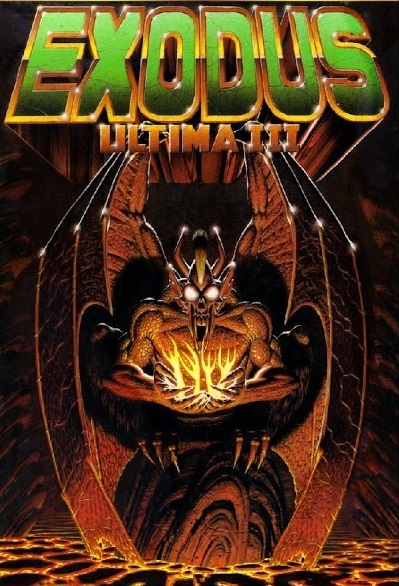 Yesterday’s article in the Guardian by Alex Hern is a bit of a wakeup call. When I re-read the article I start to agree with him more and more. As a gamer, RPG’s have been my life. This started in the old days with the Ultima series by Richard Garriott on CBM-64. The first full game experience was the third installment. On the CBM-64, the quality was a little less then you see now, but the entire experience was amazing. This game made me addicted to RPG’s for life and Ultima 4 made matters worse for me. I was lucky; some RPG’s will never have the amazing depth that the Ultima series offered, not for at least a decade.
Yet Alex asks the important question: ‘are role-playing games getting too predictable?‘ When I sat down I did exactly that, try to avoid predictability. In my version of TESVI I was at all times considering replayability. As such the creation required sidesteps, not to be reflectively repetitive, but to set the stage of 100 missions at least twice over, so you did not play two versions of a mission, but two very different missions. It allowed for the market value of a game to remain high, whilst at the same time give other players something to think about. I had been there. I must have played Oblivion 3-4 times all the way through the end. Yet at heart it remained repetitive, so my design was the thwart that nuisance. Skyrim was a little the same in many ways, and Skyrim even as it outperformed Oblivion by a large amount had a few issues, some slightly terminal, but with a game that large it is almost unavoidable (I did say almost). So if we open The Elder Scrolls to number 6 a lot more was required, and as I set the model in play (not the one Bethesda is releasing) I remained dedicated to what Bethesda will offer, because so far they have not disappointed me (this is NOT about Fallout 76). So as we see the push towards the outer Worlds, we are given: “In this world, where mega corporations are starting to take over alien planets, you can act like a hero, an opportunistic mercenary, or a total idiot. The writing is sharp, snappy and funny, the world exciting and vibrant, and there’s a classic New Vegas interplay between factions of characters, any of whom the player can help or hinder“, I am not questioning, not judging, and not placing a verdict. I await the final result that is open for review and purchase. The writer (at https://www.theguardian.com/games/2019/aug/20/from-cyberpunk-2077-to-the-outer-worlds-are-role-playing-games-getting-too-predictable) is giving us a lot more. So when the article ends with: “But their genre needs its Breath of the Wild moment: an outsider to toss out the conventions, and build something beautiful from what is left. Surely choosing between shooting, stealthing or sweet talking can’t be the only options that the next generation of virtual worlds have to offer“, I find myself agreeing with him to the part that games (at times) need more. Yet is that in part the limitation of an RPG? What if we take another look at the Ultima range? Ultima 7, the Black Gate is one of the few games that EVER received a 100% rating from me (on PC). In that time (1992) that game surpassed anything else, and others never came close to what The Black Gate offered. So when we see the part ‘shooting, stealthing or sweet talking‘, we need to consider alternatives. There was the option of getting a job (so not shooting and killing), stealing (stealthily not working), and Retail industry (not sweet talking). In part we saw the retail on Skyrim by selling (just like in Oblivion), in Fable 2 and 3 we see the option of doing jobs and gaining money that way, even buying the place and getting the revenue, so we have seen it (almost) all. Yet what happens, when the world is truly a lot larger? What happens when your impact is seen as one of thousands creating commerce and in that way create price fluctuations? What if the game needs to be set to the larger premise? To get one part right, and through the linked limitations create a new system of balances to get the whole environment correct? Make the game impact seen through the changes that not just you create. As a member of the thieves guild you can never be a companion, or with the fighter guild or the Mages guild. So what happens when we take a much larger bite out of the apple of gaming and actually set the apple to be an actual much larger play of impact? The apple of knowledge (Eden), the golden apple (Olympus) and the apple of immortality (Asgard), set the stage where you can merely choose one of them, creating a tripod where one leg is rigid and the other two vary to create some form of balance.
What if one choice demolishes the others and through that path offer 300% more? There is still the challenge of making all missions decently unique and challenging, and if you realise that the Skyrim guide is over 1100 pages, we are facing a serious clambake, not a mere picnic. It was the largest stage setting, so whatever I considered to be the design of TESVI, needed to be able to surpass that, and I mean by no less than 20%.
Now, this does not mean that boredom will not set in, the biggest issue with any RPG is the danger of grinding, and preventing that is a first. Most games have become decently adept in minimising that risk, yet it is not zero, even my version would not have zero grinding, so the need to remain long term appealing is essential. The game does not stop there. Now that the gamers soon get Google and Apple with streaming gaming, the game changes even more and finding original content in any RPG game is the essential search for every gaming junk (I am proudly part of that family), so basically the ante is upped by a fair bit. It becomes even more impressing as I look to more challenge and the Skyrim guide has 350 quests, which implies that in my book, I will need close to 800 missions to keep head of the curve and in all this, anyone getting the range of 800 quests is less interactive in what we see and the mountain of work we look up to. It also requires very different IP to continue on a higher level of gaming.
The second level of grinding is often the places where things are found. In many situations we needed to get to the same places (shouts) and we needed to find essential hardware, however if the word wall did not contain Kyne’s Peace, but a random shout? In addition, what happens when you influence the entire game by making another choice as to where the Fighters Guild, the Thieves Guild, the Dark Brotherhood and the clan of Minimarco is placed (Necromancers), more important when you shape the game as you play and the impact is seen on a larger scale. A stage where the trade route from Skingrad, via Arenthia, to Riverhold, Orcrest, Rimmen and Bravil takes another step as the Fighters guild is placed in Riverhold and not in Rimmen, these are all choices that shape a world you live in. Consider the real (non-virtual) world if not Brussels, but Paris had become the centre of the EU, it would massively impact Belgium economy negatively and France’s economy positively, the direct aftermath is that living in Paris would be almost impossible, cause and effect in play. That same setting might be applied to gaming. Where the aggregation of the lowest and highest 1,000 gamers sets the parameters of your RPG game. a game not set in stone, but in motion as 2,000 players are not set to the average, but on the outliers of the high and the low players, a game that is shaped by all as the economic footprint changes. Yet to prevent deal seekers, we make time a much more definite in any RPG game.
As the measure evolves over time, other players become part of the low and the lower high end. A game now in flux, no longer rigid and confined. Add to that that they all might have issues on some of the resurrection choices and we get an entirely new path towards gaming. Boredom can only start to set in when the game is fixed, so we start by setting change to the game itself. A second choice is to add a management part, not just overall, but a specific super large quest, where you cannot complete the quest, but you provide the options for the quest. I can no longer sneak in like William Tell grasping apples, now we create a workforce working the field and still we are involved to maximise what is possible. Yes, we need virtual worlds that have more and differences to offer, but the best option is allowing evolution in ways that we cannot set, we might be able to influence them towards 6%, impacting but not overwhelming. That too allows for a game to be enjoyed again and again. That is the kind of RPG all RPG players want and yet up to now, no one delivered that option, it is surprising and perhaps it will be the cornerstone of any RPG, the amount that cannot be predicted, for all those coming from the very bottom of the maze and interesting challenge to face.
For now we await The Outer Worlds and Cyberpunk 2077 to make it into the family of RPG fanatics, yet we too await the next Elder Scrolls, and who know, perhaps my idea makes it into The Elder Scrolls VII, as a gamer I can only hope to be given the chance to change the game for thousands of RPG lovers in a new never seen before direction. Even as I accept that this is almost not possible and I would settle for a ‘novel’ place in new original gaming, we need to see that it all has been done before, well, it almost all has been done before. Yet so far, the idea’s I had have not popped up anywhere, so I am sitting pretty for now.
I actually do not care whether someone else finds them and implements them; it means new and original gaming, the ultimate rush for an RPG gamer, preferably additions done to a game that the gamer loves. So Alex Hern is correct and the first step in avoiding all this is to make sure that we take a non Ubisoft approach to gaming, I have faith that Bethesda can do that, they might have missed the ball with Fallout 76, but still, they took it in a direction that had not been done before. Let’s not forget that before Nintendo gave us the Switch, we were given the WiiU. Everyone gets to have a bad day and when we realise that Bethesda have given us winners from 2002 onwards, over a dozen clear winners in 16 years, the existence of one less popular title (Fallout 76) with so many winners is not an issue at all, in Bethesda we trust, the rest can take a number and await their turn with the global RPG population.
Filed under Gaming

