Category Archives: IT

The presentation will begin in one line

Yes, here we are one line further. In the recent past I gave rise to an innovation in presentation software that could bring a whole lot of trouble to Microsoft. They will be in denial, making all kinds of claims. Yet the foundation of worry (for Microsoft) remains. Even as I wanted to keep it exclusively for Adobe, I am not in contact with them and then it hit me. The solution could work with Google Slides as well. They are not yet as sophisticated as anything Adobe has, but to outstrip Microsoft might be a nice alternative. The idea that a free program could be enhanced so that Microsoft could lose up to 24% of their foundational corner is appealing (to me). If I get to pull it off, the station of Google Slides and optionally Apple Keynote could see a much larger pull and people will move away from Microsoft. We see Unionisation issues. We are given ‘Microsoft Issues Emergency Windows 10, 11 & Server Security Update’, as well as “Since March, however, if you run the RDgateway broker service on Server 2022 (and only that version), the monthly cumulative updates have removed that service. This behaviour is not normal; this is a bug.” Yes, we get it, Microsoft has bugs and it is having too many of those, all whilst other settings are equally problematic and that is where Microsoft finds itself. Losing with software and hardware to Sony and Apple. Losing web and cloud settings to Amazon and what do you think will happen when the foundational use of Microsoft Office loses the Powerpoint population to Google Slides? Yes, we know it, PowerPoint has so much to offer, but it merely added iterative settings over the last 10 years. You see between THEIR claim of what innovation is and what real innovation is comes with a gap and in the case of Microsoft it is the size of the Gran Canyon. So if I offer this one part, this one innovative part to Google and it shows to change the game, what will YOU do? Keep on believing that Microsoft will fix it? It was less than a week ago when we were given “Security researchers have identified a new MS Office vulnerability that could seriously affect Microsoft Word users”, and the Verge reported ‘China-linked hackers are exploiting a new vulnerability in Microsoft Office’ (at https://www.theverge.com/2022/6/1/23150318/microsoft-office-china-hackers-exploiting-follina-vulnerability-tibet), so how much longer will you take chances? I get it, there is very little that can compete with Microsoft Excel, but when I can create something so innovative, something that Microsoft should have fixed a DECADE AGO and I give it to Google (sell it, I meant). I could add it to my IP bundle 1. When I can pull that off, do you think that the 17%-29% that does not rely on Microsoft Excel will stay in that dangerous spot? I admire loyalty, but that does require the software firm to be entitled to that loyalty and they dropped the ball way too often. 

As such the game is on and this all started less than 2 months ago when I saw something in a presentation that made me shiver. In two decades Microsoft had not come up with a solution and I saw it in minutes, I adjusted that simple view, added a few elements and It could easily be added to the Google suite. Changing the game is easy when you know where to look. A setting that could cost up to 29% of a core business. I wonder what happens to the Microsoft stock when I pull this off. Perhaps someone in that company will finally figure out that what they market is not representative of the truth. I just wonder if they even realise how far of course they have gone through the presentation of spin. The fact that I can pose that much of a danger is enabling in so many ways.

I preferred to have handed it to Adobe, nothing bad about Google, but it coincides with a weird dream, one I described in ‘The hardware perimeter’ (at https://lawlordtobe.com/2022/02/25/the-hardware-perimeter/) and ‘Pristine and weird’ (at https://lawlordtobe.com/2022/02/24/pristine-and-weird/) on the 24th and 25th of February 2022. There I saw an Adobe future becoming the larger player of high end office solutions. And even as I was a dream, I saw things and applications that I have never seen before, The application of blockchain to documents and data projects. Adobe had solved certain parts that could set a Lifestage to any document, who made it, who changed it, where it was changed and so on and the legal industry as well as large corporations were going gaga (not the singer) for that solution. As such giving them the presentation edge made sense, but in this Google is just as much a player as Adobe, not as refined, but for the bulk of the users good enough. 

A simple presentation that shows where the big boys are and where they could end up if they do not fix their game. #Justsaying
Leave a comment

Filed under Finance, IT, Media, Stories

The mind, it continues regardless

That is my setting for today, or it was my setting for today. It started yesterday when I wrote ‘Presentation and awareness creation’ and in the mean time, my mind has come up with 7 pieces of IP. This IP is different, it is based on stuff that exists. So at best I could get some innovation Patents out of them. Both Google and Amazon have some of the goods, some of the other IP is set to a setting neither have, but it links to stuff they do have. Beyond that I created a stage that is not new, but has never been set to this stage, so I got 7 pieces of IP, pieces that a player like Google should have, and for the best of me I cannot imagine why they do not have it.

You see, it started with the Eaton Centre Mall in Toronto. Yet Canada has more than 3700 malls. The US has over 110,000 malls, yet the top three states are California, Texas and Florida and together they have a little over 39,000 malls. And the news we see is not good, so soon there will be a free fight on which mall survives. Europe has over 9000 malls. So we have a setting where Google or Amazon could have had the stage of Augmented reality in over 50,000 malls and you merely need to get 5%-10% over the bough and the rest will follow, more important, too many malls are alike. So players like Gap, Apple, Zara, Lindt and several others are nearly everywhere, so there one solution would fit all those shops, unless the shop wants to distinct itself. I even came up with an idea for Victoria’s Secret (as any guy would), all out there and no one is seeing the essential need to create a stage of engagement with its audience. Especially in the US where some claim that over the next 2-3 years 50% of all malls will perish, the essential need to create interactions with your audience becomes very important and that is where I was lat night tossing, turning, reshaping, reshaping and reshaping what was. After that I deployed, redeployed and redeployed and with every iteration the systems was upgraded, updated and improved. I cannot (and will not) claim that I fixed everything, but I got a lot done and now the mind is looking to change the stage of the people, beyond the mobile phone. I even saw another venue and whilst writing this IP number 8 was created and this is IP none have. 

So why are these two players not out there creating new markets? I set the stage of several new markets in the last three months alone. So will they all work? I cannot say and at least one IP has risks, but how much risk are you willing to take when the reward is close to $3,000,000,000? Does it warrant an investment of $50M-$75M? Then there is the stage I pose here, how long until these parties stop iterating and start true retail innovation through presented awareness? We are now in a stage where we can make the views from Blade Runner a reality, yet no one is going there. Why not? Is it the money? Yes, consider H&M, Gap, Zara, Fashion Nova and Sephora, all competitors. Do you think that when H&M starts their Augmented Reality displays that Zara, Fashion Nova and Sephora stay at home printing leaflets? One entices the other and there are over 50,000 malls. A stage where a few hundred retail brands can decide the new wave of audience engagement through Augmented Reality. It was not rocket science and I am not the first player to see this. Players like Omnicom have a decade of preaching the essential power of engagement. And now that the markets dry up, these players better take the dollars for donuts track, before the bobkis settlement comes in. 

A simple view gave me the idea of 8 IP, so what is keeping Google or Amazon from waking up? I wonder what excuse they will bring to any table.

2 Comments

Filed under Finance, IT, Science

Presentation and awareness creation

That is the setting I was considering today. It goes beyond my 5G IP, that is pretty much done for. There are more avenues to consider, but perhaps a a later day. I initially thought of adding to this, but when I was looking at the Eaton Centre Mall, my mind wandered in another direction. You see, these places are making themselves obsolete to some degree. I know that we are in the post Pandemic stage, yet when I see the massive lack of people, the stage of such a mall with its rental needs will find itself short of tenants sooner than expected. The Lindt, Apple, Abercrombie and Victoria Secret will remain, but it is the stage of the rest that sets the tone of the mall and no matter how much space H&M gets, this mall in Toronto needs more people, like 2500 more at least. As I see corridor after corridor, the same solution that applies to Monte Carlo and Riyadh also applies to malls like these. They need more the other two might not need more, but the creation of traction is everything. Nearly any mall manager can tell you that. It is presentation that sets the stage for awareness creation and some malls need it a lot faster. So other venues are needed, funny enough, the technology is there, the options are there, but the coin is not dropping with either Google or the Mall manager. You see a place like that needs augmented reality. When you see the queues, the foodcourt lines and the people waiting in a place THAT big, augmented reality will create awareness with the visitor and presents the people with sides of the Mall and it’s shops that are currently not happening. More important, places like TRO and Omnicom taught me the important of engagement and these malls are not engaging, they are not inviting engagement. Having a Tim Horton app that takes and records your data just doesn’t cut it, in this I reckon that augmented reality will, especially in a wide open space like the Eaton Centre Mall. I watch the dozens of people stride their mindless walk, so see or be seen, and it is no longer about being seen, dozens of people all wearing the same blue mask, like one large family. And all that empty pace remains unused. So how log until someone in one of these shops wakes up considering there is more to simple awareness creation? There is more to the presentation of self? Three places that could benefit and dozens of other places equally not waking up. In all this I wonder why Google hasn’t offered those services already, they had two years to get there act together and I reported on this option as early as July 28, 2016 in ‘What we waste away’. More clearer on February 1st 2022 when I wrote ‘The opportunity for 2022’ (at https://lawlordtobe.com/2022/02/01/the-opportunity-for-2022/) well over 90 days ago. As such I feel that Google and places like that are asleep at the wheel. One augmented reality for Lindt and it sets the stage that 500 shops would be seen to and lets not start on how Apple hasn’t seen the light of that. With well over 500 retail locations? I stated it before, someone is asleep at the wheel at these places and there is a reason that I have all this IP (close to a dozen). Those who doubted me just look at what augmented reality offers and wonder why it is not everywhere. I rest my case.

2 Comments

Filed under IT, Media, Science

Two populations, both disregarded

This was on the forethought of my mind. I was aware of one group, but until last night I was unaware of the second one. I never disregarded them, I merely never looked that way, I never considered this group in any way. It was not malice, it was not intent. It was merely the stage I found myself on. Just like some will never listen to some radio stations. Some are unaware, some merely do not care about radio, as such is the second group malicious? Is there intent? No, there is not and there I find myself. My third IP bundle was worth a penny or two, but I never considered that its valuation would surpass $2,000,000,000 optionally approaching way too close to $3,000,000,000. Now this sounds fine in many eyes. Yet the setting is that the first payment for Amazon is a mere $50,000,000 (post taxation). And that is where it stays. You see the second payment gets me 10% of sales and IP value. I set it to that degree so that I et a fair share, yet I never considered that the first and third bundle would go towards the 5B mark. That gets me way more than I ever considered or hoped for. I was merely looking for a (very comfortable) retirement setting, owning that much was not planned and now I find myself in a bit of a quandary.

You see, I believe in the axiom of overestimation, its dangers and optional the delusional side of it (on me), and it made me remember a sales term “Commission-based structures can lead to problems with motivation. While the possibility of extra compensation might excite employees temporarily, it may not motivate them over the long term.” The same can be said for service minded staff, but it is not exactly the same. There we get “Income-based structures can lead to problems with creative motivation over time. While the possibility of a bonus might excite employees temporarily, it may not motivate them over the long term. More important, the promise of a golden calf tends to make service people anxious, distrustful and optionally delusional” that’s where I find myself. The anxious side is there because the parts that mattered the least are now valued well above what I imagined it ever would. Distrustfulness is there, because I do not trust myself. I presently question every number I have, all the calculations add up and I have done them  half a dozen times in the last 24 hours. And lastly the delusional side is that I fail to believe in me. I am good, but to be shown that I am THAT good is folly. It is believing that I can walk on fire, even though I know that the fire would burn me to a crisp. This is not some setting of mind over matter, which is basically the setting that I do not mind, as I do not matter. It also gets me the setting that I cannot believe that Amazon and Google are seemingly on that page yet. A station that seems too crazy to seriously consider. So I go back t the drawing board. Where did I make the calculation error? And every time I do, I get the same results and I see additional supporting sides to it all. 

At times we need to believe in ourselves and we must above all believe that we can fail, at times failure propels us, that I can agree with, but to see that I got ahead by players like Amazon and Google 4 times in a row is just weird, but here you have it, a setting of contemplated failure on one side and the idea that I am due 10% of several billions is a weird station, and I get there by enabling two populations, so how come I am sitting here alone contemplating why others cannot see what I do?

I am at a loss of words and thoughts at present.

Leave a comment

Filed under Finance, IT, Science

IP that might be useless

Yes, that happens too. We all think we have the idea of a lifetime (and I have had a few), but there are the ideas that are subject to reality, or better stated, they offer an idea to question reality. That does not make the idea worth anything, beside the option to consider new IP in ways that the writer (me) did not consider for a few obvious reasons. 

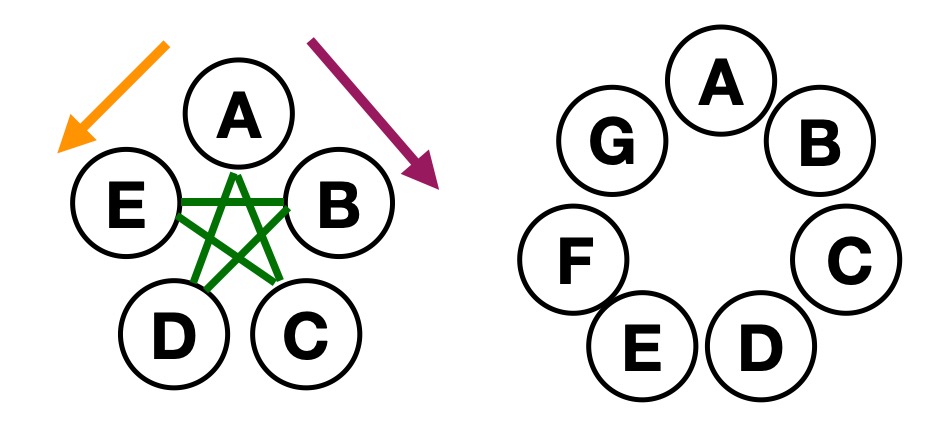
One such idea I discussed earlier, I had it as an idea (not IP) but the setting to use it to ask questions is actually stronger. You see, the NSO group called a few things into question. One of these questions is the lack of security from most Android and iOS devices. The NSO group created a solution that both are not able to counter and even as they both point fingers, no one is seemingly able to ask the question “Why is this not more secure?” As such I came up with a new kind of mobile, a new approach to communication. It is not actually new, it is decades old. In the old days the police walkie talkie had crystals, and as the system went over these crystals, the conversation went over a few frequencies. Now this is old technology, we get that. But consider the image below

A setting where we have a mobile with three frequencies (not shown), one with 5 and one with 7. The 5 has four options, a-e, e-a, a,c,e,b,d and d,b,e,c,a. That phone would use 5 channels, all 5 transmitting, one real, the rest alternating kinds of noise. And as the phone changes (in call) between the four options the call is close to unbreakable. At this point, only state players would be able to get to the call (with a lot of hassle and loads of conversation loss). The setting becomes a lot more complex if the mobile provider adds its own hassles to the phone. I would delusionally call it ‘True Security’ it has two factors and only if both factors are known one has a chance of hacking the conversation and the 7 channel one has at least 4 more options, as such it is a no-go for most players. And this matters, how much would you pay for secure calls? Me? Not that much, I have nothing that require that level of security, but tech companies, lawyers, accountants, Wall Street, the list goes on and they will pay loads for true security. Big Tech are all about getting more out of a cheap solution (Google, Apple, Samsung) but the times are changing. At present a player like Blackberry could get a decent share in todays market. In a stage where all say it isn’t possible, the innovator will get the last laugh and there is every chance that such solutions will be required. Generic mobile IP is running its last course to some degree. The people they want will demand real change and preferable with hundreds less zero day defects. So is my solution the bang for buck? I doubt it, but there is a setting that is evolving and these people will seek cheap solutions first and when they agains get hacked by students and organised crime someone in a place like Wall Street will shout “Get me a real solution or you are done for!” And at that point big-tech wakes up realising that there setting of cheap and easy profit is over. Will I be proven correct? That depends if the Ukraine issue resolves itself I doubt that changes will be made, but if that escalates, it will be about resources and know how and that is when someone takes my idea and innovates the mobile phone. There is no other way that will play as I presently see it. 

It is just my view on the matter. 

Leave a comment

Filed under IT, Science

9 options were lining up

Wow! I got some feedback from yesterday, mostly from people who want a free ride and had no idea what they were watching. The sudoku part is a handlebar, an optional shortcut to a much larger stage that was a puzzle and I turned it into an almost simple exercise. But for the Microsoft minded (the non thinkers) lets go over it.

Story
No matter what the story is, there are plenty of elements that can be generated. It’s like creating 180 unique chapters and you only need 9 of them, basically you might create 81 at launch time and get the others created whilst the program is running. Yet getting the 180 (or so) done beforehand makes lighter work afterwards. You see, any story is set to chapters, each chapter is set to paragraphs. So why this many? In case you want a never ending start of quests, you need the ammunition. 

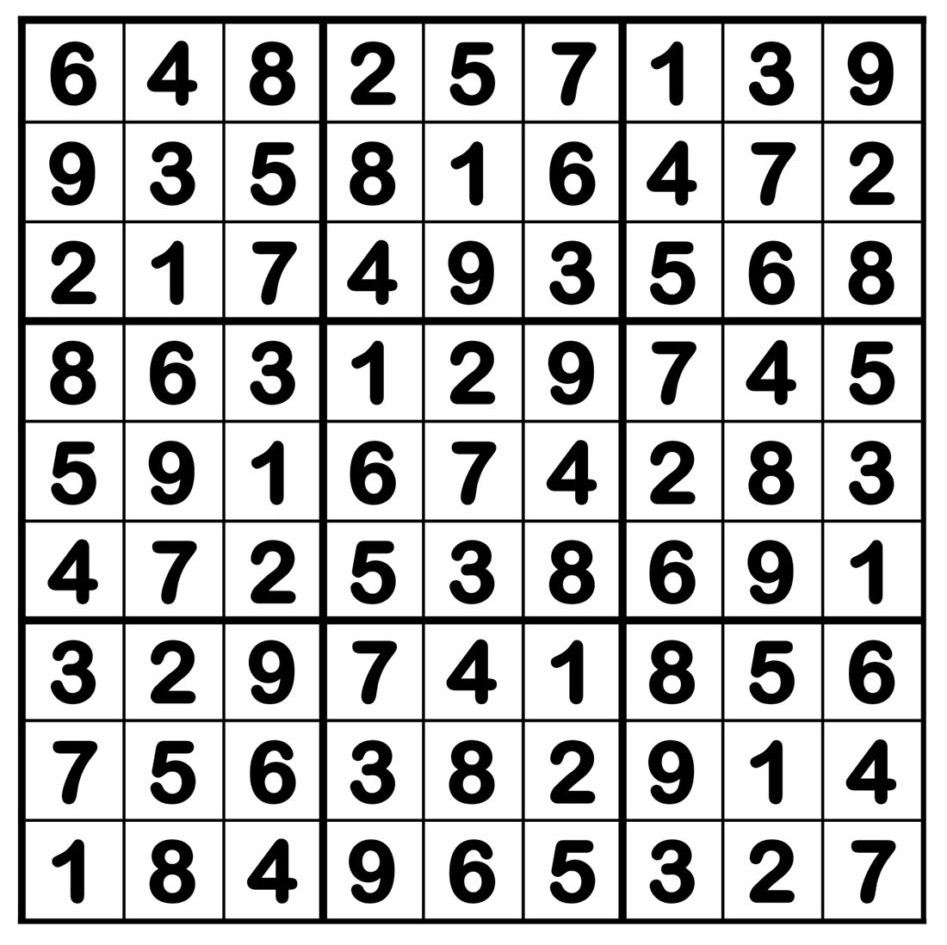
No matter how clever you are, there is always another way and I merely presented one. In the previous image you saw the stage of what story to run, it HAS to start with ‘1’, so whether you take the row or the column, you will have one of each. In my example the blue one is less appealing as the second number is an ‘8’, so it will be a lot less in line. The green one (a coincidence, I swear) gives us 1,4,5,7,2,6,8,9,3 so there is more line and per location you will get one part of the story (via interactions) and the story will shape for the player. So after the third world the player will have parts 1,4 and 5. This is one of the effects of anachronism and linearity is utterly pointless in that setting. And as we realise that we have 150 chapters, we merely randomise the chapters, we sort them and select the 9 highest (or lowest) and as such you would have to play the game 20 times to see EVERY story at the earliest. 

Items
This is a different setting. Let’s state that all the items are the numbers (another use of the SAME numbers). So all the items for world 1 are all the ones in play, but not every world needs to have 9 items. And you might want to focus on what numbers are in play, but remember, each number is only used once, so the Sudoku method HELPS us to shape what we want, but it is not a solution for everything, and every sudoku is different. 

We have Items, people, the story, the location puzzles and the whole comes to a point when we unite them. A new version and a unique version of a game that started in 1988, and with the Forgotten city we are optionally breathing it new life. The Sudoku part is just a handlebar to create a station of almost never ending originality. Especially when you realise that there are “6,670,903,752,021,072,936,960 possible solvable Sudoku grids”. I used a simple way to create in simplicity what too many will try to complicate. Not a bad hour, was it? 

And this can be done on the streamers, it can be done on a PS5. I reckon that this is also possible on the Nintendo Switch. All this and all done in the limit of a TV show. Can life get any simpler? Well yes, but that is up to Adobe (for a price) and I think I have a nice idea for them to really screw up the margins of profit for Microsoft (because that is how I roll). And now it is time for a healthy meal (chicken rolls). 

Leave a comment

Filed under Gaming, IT, Stories

Three IP’s to make a fourth

That is what I contemplated today. I got a little bit lucky. 2 PS5 titles for $30. A good deal to say the least. The first one was the Forbidden city.

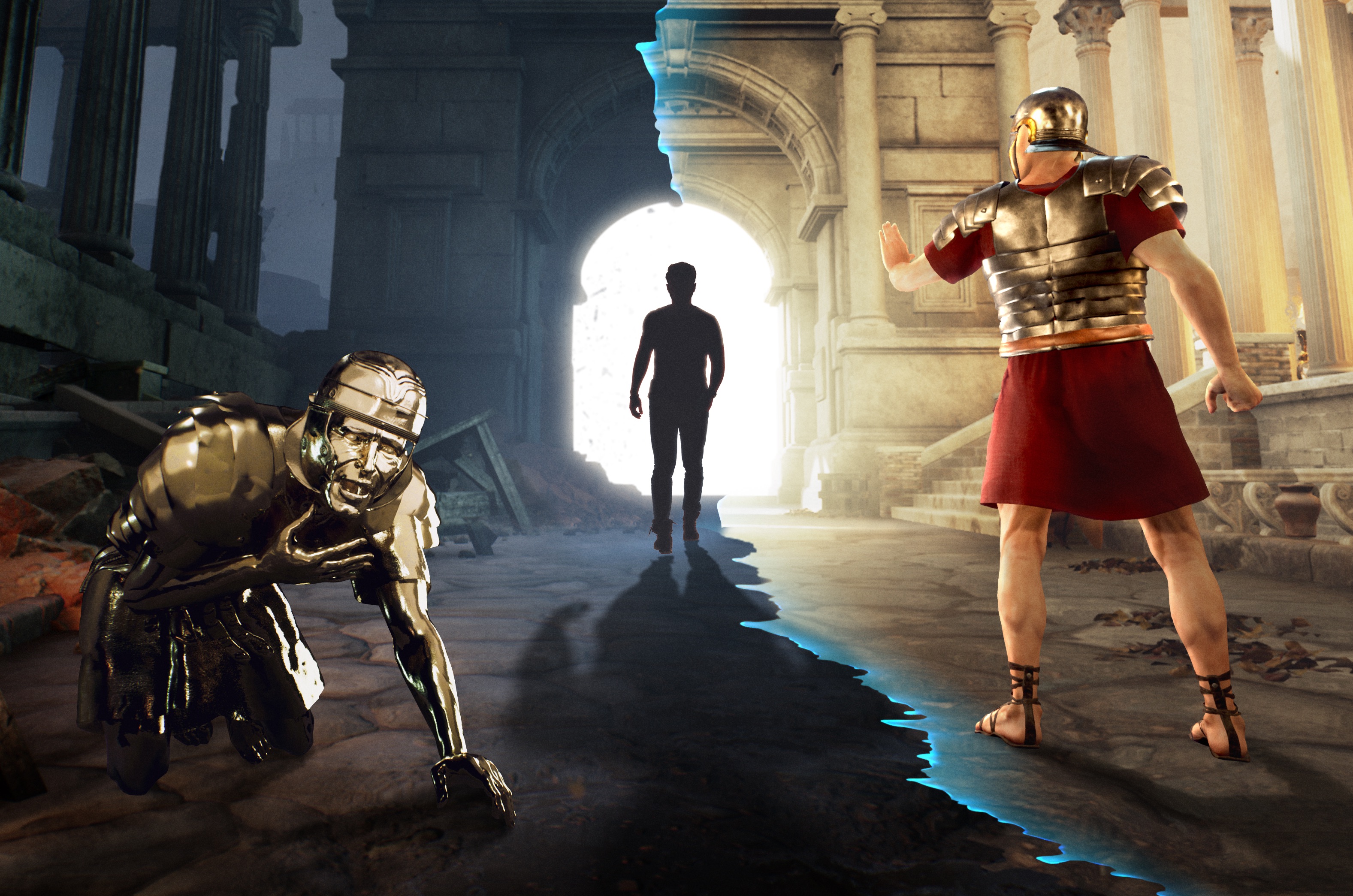
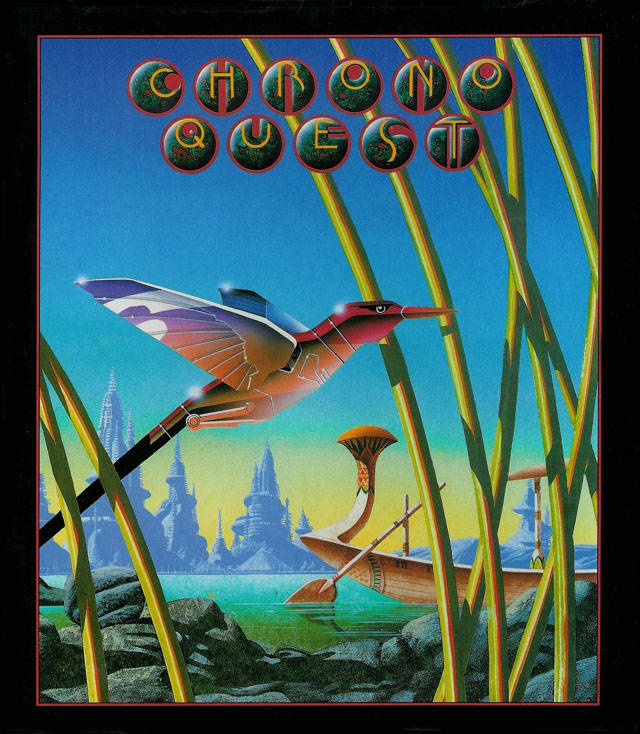
When it was released I was on a budget (a tight one) I had seen some parts on YouTube, saw some reviews all positive. The story is (as far as I got) captivating, but something was nagging at me, nothing negative. Merely the setting that once played, that is it. That is how most games go and there is nothing wrong with that. But what if it was not the end? It reminded me of a game I had on the Amiga. It was a Psygnosis title named Chronoquest.

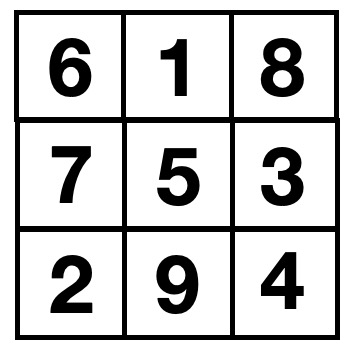
I’ve forgotten most of the game, but this one got me back to those days. Travelling through time, finding clues to the real killer of your father. It made me think. That kind of game is now outdated, but the idea might not be. So when we think of Sudoku, we might remember the simple grid of nine, making horizontal, vertical and diagonal add up to 15. 

Most people learned quickly that the centre needs to be the ‘5’, then it becomes a simple setting of making the other 2 squares add to 10. Yet Sudoku gives us 9 grids of 9 and now it becomes a challenge, even more so when you realise that there are more options than most people can throw their hat at.

So what happens when we take the first game as an engine and create 9 levels. There are so many options. Greek, Roman, Goth, Spanish, Japanese, Scandinavia, Aztec, Mayan, Native American, and that list can go on for a while. Now we create the objects that are required, the stage is set, but this is not merely a whodunnit, this is a larger stage, but with a Chronoquest setting, we merely added steroids to the equation. Then we add an omnibus of storylines and we connect them. Like the Sudoku, we have 9 levels, but the numbers can be anything, and it is that seeding that gives us the options. Consider Chronoquest, places in time, that also implies anachronism, objects in the WRONG tine. It opts for dialogues, it opts for puzzles and if done correctly there will always be the chance that something has been seen before, but if every time has dozens of objects, we end up with 200+ objects The storylines need to be generic, like a dozen stories per time, yet the names can alter, the objects alter and the puzzles will alter. 

Time to fly
Now consider the larger sudoku. We could set the sequence of where we go by the centre square (as an example) so we now get 1,1,3,5,7,7,8,8,9 Now we get the tricky side, how do we enable area 2,4, and 6? Simple, the first double up (1,1) will open all 3, so now we get a puzzle that is slightly more challenging and not linear. The nice part is that 1 through 9 can mean anything and there are dozens of Sudoku creator scripts out there, all ready to be used for the eager maker of puzzles. I merely wonder whether anyone considered this application. Now do not let the style of writing fool you, this will still be a challenge making it and it will be subject to redraws, redesigns and back to the drawing board moments. But when solved, the maker will have a new style of game, a new IP and one that streamers will fight over to get, because replayability will be the streamer scream of 2024. When they learn and find out what the power of ACTUAL long term gaming is, they will get on board fast. So that took less than an hour and even now my mind is trying to implement a new side to using the Sudoku routine without making the game flat or predictable. And it needs to be able to redesign the new game with every matrix created, because that is the foundation of Sudoku, a unique number matrix. 

So look out for what is next and look to what YOU could make to become the next game maker all the others want. 

Leave a comment

Filed under Gaming, IT, Science

Creating economic sides

Yes, we saw the optional impact of inns and sustenance. We were given the impact of the smith, and some sides. But how to control them? 

Well that is the first part, we do not control them, the cogs set some form of balance, like tables but with cogs we have less issues. We have slightly more control (or seemingly so), but the setting is an adjusted form of tables. We need no tables, we need the cogs to adjust seesaws and create a foundation of balance. This is hard to put into words and even as the foundation is set to credits, we need second seesaw creator that turns the credit value for each store into goods. This needs to apply for the jeweller, the bookstore, the smith, the general store and so on. I believe that it is like some form of chess assessor. Low value goods, medium value goods and high value goods. There is a side that we learned in school. For example 237 is 2*3*7(33), 28 is 2(2)*7, so how could we translate that into goods? I am still working on it and when we have that, we know what was left, we also know what the location has as revenue, this translates into town welfare. This welfare needs to translate into a balance for the town and a residual that translates into a positive or a negative. The negative pushes the location down, the positive lifts it up. The trick it to stay close to the seesaw balance. Too much into either direction turns places into ghost tows, or over lively places of expansion. I reckon it takes a real mathematician to set the stage for it to work, but the benefits are decently overwhelming so I need to create a way for this to work and it needs to work before we unleash the stories. The stories need to test the seesaw balance, it can flip a little, but it cannot take control, that is the challenge at present. 

1 Comment

Filed under Gaming, IT, Science

Music and sustenance

In continuation of the previous two articles. It is time to set a larger scene. In the first we talk about sustenance. You see there are always food places in RPG games, yet until Monster Hunter, I never saw any of these games take advantage of the sustenance factor. In this I got to thinking.

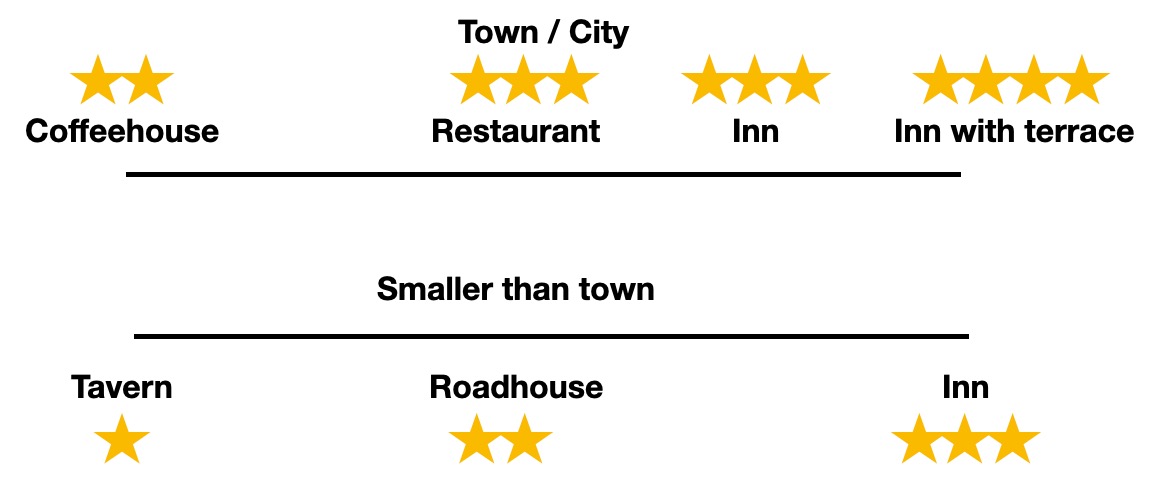
In the first, the levels of that. As I see it there are coffeehouses, taverns, Inn’s, restaurants, and as such we get to the basic setting we see below. As you might understand, you cannot have a village with a 4 star (or larger) sustenance place. And some places could get an upgrade. The upgradable settings are furniture, sustenance, and lodgings. Taverns can only upgrade sustenance and furniture. Sustenance are upgraded by getting that place a cook, it gets you a 20% discount for the rest of the game. Cooks can be upgraded by getting them a cookbook. Furniture can be upgraded by getting them better furniture and it gets you a +20% discount for the rest of the game. And the setting for the upgraded places is what I wrote earlier. In towns the production goes up, happiness goes up. It has all kinds of long time benefits for the gamer and the gaming area. Then we get another benefit, its benefit is temporary, but larger. You see in the old days the minstrel (bard) could invigorate the area. But the bard can only be in certain places. Restaurant/inn with terrace (as such it would have a podium), and there is an upside in that area. 

It is one of the benefits of the cog system. It showed me the ideas and the benefits of a larger stage, it brings the larger stage to the player and stops the person from being the centre of attention. The player still gets to set the tone in places, set the upgrades. But the larger stage will become the populous and the economy, stages where the player is a simple small factor, not the staging agent. And as we consider that the minstrel can be upgraded (2-3 upgrades in total) we need to make choices. A setting most RPG games tend to avoid, we can do it all, but it takes away replayability and sets the stage for blanket actions and grinding. That are things we can avoid to some degree and we get aa better game because of it. 

Consider that the minstrel can be upgraded 2-3 times. The clothing, the instrument and the music. Then we see that these are extremely limiting items. Like 2 outfits, 1 instrument and three pieces of music at the most. Who will you upgrade? One minstrel completely, or three minstrels partly? All choices we have to make. We could even adjust the music to the max of the highest minstrel, or the level of the minstrel in your home town. All parts that shape a game, all parts that make a game more desirable to the gamer, because a game that shapes in different ways, a game that gives more than one option and makes it replayable, that I a game that will be cherished for a long time and streamers will need long term interest in a game, it is their margin of profit on a large scale. And in this article I am merely scratching the surface of what is possible.

Leave a comment

Filed under Gaming, IT

First tally of thoughts

After yesterday’s article, I started to make a tally of what the game ‘has’. In the first there was the article ‘Recap to the intro’ (at https://lawlordtobe.com/2021/09/25/recap-to-the-intro/) which had a run down of a lot. But that rundown was not enough. There was the search ‘Lawlordtobe + RPG’ which gave me a lot more of what I wrote (and weirdly enough at least one story I forgot about). The basics are covered. In the basics there is the map, the character and the story. In the deeper run, the map is also covering the environment, the economy and the map itself (which is an environment, challenges and spiking of the map).

Spiking
Spiking is an early term I had. Like in places like Skyrim and Oblivion, there is a lack of caves, ruins and other places. So we spike the map to have these places. Yet the maps to some degree have an approach to caves (and some look really good) but as I personally see them unnatural. There are two problems with my train of thought. Caves are set in stone (literally so), as such they are part of the permanent map. Some places have way too many ruins and these ruins are a weird  form of small. But the idea of some ruins are a good thing, yet how to employ them? 

Brush and thickets, Fallen trees, Hollow trees, Evergreen trees, Rock formations, Rock overhangs, Caves, Low landforms and high landforms. Some are for single opponents, some are for groups. Ruins are a side here. They tend to be a good place for groups. But the setting needs to be natural (or as close as natural as possible). If there is a ruin, there was a reason that the building was there before it was a ruin. And not always is it a castle or a keep. But spiking is a dangerous setting. There is a danger of making it a place of convenience, and that is dangerous for the game. 

As we look into the economy I saw the dangers of ‘loot’ in the game. In some game we enter an old (really old) place, but it has the most modern of ‘loot’. So we redefine what loot is. broken swords, daggers, broken shields, old coins, chains. Elements that can be reforged into metals, old coins (copper, silver, gold) that can be set into metals. Yes there will be chests with actual new(er) stuff. Like groups of brigands, they have bounty, they have conquered stuff (that needs liberating). It will not be about wealth. In one RPG I had 300K, so in what living form of delusional would an adventurer have this much money? Too many RPG seem to value credits as an indication of achievement. That too needs to change. 

I took examples from classical masters, from stories (the non-Robin Hood kind) and from historical events, but they need to evolve in RPG gaming. In the economy that side is merely a cog, but a cog that could evolve. Yet the station of evolution is a larger problem that I have not solved yet. I did like the nemesis system that we see in the Shadow of Mordor, but that was THEIR system, I need a similar but different system. This is to stop grinding, the stage where there will be spawning (one man’s ruin) is the next persons envy. But if the previous group was defeated, the next group will have better defences, and optionally one or two more brigands. There are shelters for singular people and those people are sly a lot more like cutthroats, so no warning. All sides we see very little of in current RPG’s. All sides that are new in the RPG.

Stories
I gave more than one story start and that is central in any RPG, yet there is also the additional stage. You see there is no stage where we can do it all, play it all, live it all (the latter is a matter of debate). But the stories cannot be around you, around the player. The main quests yes, but the side quests need a larger setting than we are used to. There is a side that takes me back to Robert Ludlum’s Scarlatti Inheritance (I think), a local village event and a burial that is part of the story. So to set a side quest needs the seeding of a story all by itself that has several connections. There needs to be an intelligent part in this, so that stories can be written en mass and spread in the game, so that some side quests are not part of every game (another way to prevent grinding) and there we see that we need 50-150 side quests. That can intervene to a larger degree to the character that you play at that time. So far we see the foundation of an RPG that can be played on console or streamer. 

Then we get to the cogs of the economy, I spoke about them but I considered one additional set of cogs for each part. About that in the next story which will happen during my weekend.

Leave a comment

Filed under Gaming, IT, Stories