Tag Archives: Microsoft

Value of original gaming IP

When my mind designed the sequels to a new Elder Scrolls game, Far Cry and Watchdogs I did not care about the revenue, I did not care about the revenue factors in gaming franchise, I was merely one creative mind devising new ways and new stories, because the story is everything, it really is. 

Consider the intro and staging of Far Cry 3 against Far Cry 5, the stage of Assassin’s Creed 2 versus AC Unity, or AC Origins versus AC Odyssey and you might get a glimpse of that setting. In all honesty, I never considered revenue in any of it, but I realise that it is a driving force of the houses that publish them. Lets face it, would Mario exist if we did not consider the value of the $650 million it represents? In that same light Call of Duty, GTA, FIFA and Zelda, they all represent a serious level of coins. As such I see the need to continue some franchises, yet  wonder when we test their push for the storyline, how far will some get?

Consider in all this that the Elder Scrolls represent less than a billion, Skyrim alone represents half a billion dollars and has sold over 20,000,000 copies. And let’s face it, we always want to do better than the previous one, which is what drove me to set the story design of Elder Scrolls: Restoration.

Yet even as we see more versions of a game, Apple and Google are driving the need for original IP, it is the larger drive in gaming, not because it is Apple and google, but because the makers see that the original IP can be the beginning of a massive drive towards a system. There is also the fact that when we get a new system we do not want to play the same game over again on that system. 

Yet there are exceptions and they tend to be System driven. The Last of us on PS3 and PS4. Skyrim xbox360 – Xbox one and PS3 – PS4. Pretty much anything involving Mario, and the list goes on, yet Google and Apple do not have that yet and they need to rely on original IP to get the people in. That part was shown all the way back to the Nintendo 64 and the first PlayStation. 

IP that is owed is easier to evolve and more important, when the first game is a hit, it tends to be easier on revenue expectations as well. However, as we look at Apple, we see the need and the logic to have the subscriptions, yet when we see a game like Pilgrims with a mere 14,000 subscribers, the path for Apple is still less than stellar. Now we can push franchises like No Man’s Sky (Hello Games) there, however if Apple is to make a name for itself, it needs original IP, an original RPG, and original racing game and so on. that will drive sales, that will drive longevity in gaming and in a $120 billion industry last year alone, it makes sense to carve a name for yourself.

Yet there is also the stage where the expected and the non-considered walk. When I started to first design an original IP, was it truly original? It was (for the most) and I even added a new game mode that none had considered. Arcade is the way we consider, yet who has considered ‘historically accurate’ as a game mode? 

In this I wanted a more original RPG were the stage is Scandinavia (Norway and Sweden mapped), where you start in the land and get a choice of three places to start, from there you grow your village, grow your interest on the terrain and grow, after which you need to plunder, need to destroy your neighbours and add to your place (and take it from there), an RPG where you can set the rune tone to one god and receive the back handed prayers in success. Yet how can we link ‘Arcade’ and ‘historically accurate’? Well there we get the test of how good a person can play and basically they play two games. Even as a person buys provisions (with real cash) to get an advantage, they buy more, because the purchase in an arcade also comes with a ‘boon coin’ in the ‘historically accurate’. So if a person buys a load of fish in Arcade, they also get a boon coin with a fish in the historically accurate, which sets the chance to find a fish shoal to 100% there. Get two for the price of one. The same for weapons where a kart is bought for one side and the other side gets the smithing coin, giving them a 100% chance of a quality forged weapon. I even set out the stage that an actual player in one village would influence the growth in the virtual version where another player is a neighbour (like choice of stone, location and direction of growth)

I also wanted to make sure that ‘historically accurate’ was there to show that life is not a game and when we slice and dice like in Viking: Battle for Asgard, yet I thought that the game was too small, it was too easily defeated (except the boss at the end) and even as the game had good points, I wanted to see this game in a much larger setting. I wanted compelling to translate to addictive and I wanted a lot more to stand out, I also wanted to make sure that the choice of a god rune had a much larger impact, so over time as people played the game, they would have a new experience if the village rune stone was not set to Odin, but to Loki, Thor, Balder, Frigg, Vidar, or Tyr. What benefit do you want to see? And when chosen in Arcade it will be the set stone for ‘historically accurate’ as well. As such as the history of your village evolves we see that people realise that the impact one would hope for in Arcade would have a different term in the ‘historically accurate’ (HA), we forget in playing that famine was a real think in those days, as was disease and that could go from village to village. We could push it to Greece on the same premise and see where this leads, yet Scandinavia where the weather would have a much larger impact seems to be a more preferred personal feeling in this. So how many games take that into consideration? 

Yes, games like Fallout have a survival mode and there we see “The only means of physically saving the game is to sleep in a bed, on a mattress or in a sleeping bag. The exit save function is still available, but is a temporary save that is deleted automatically upon loading“, it is almost like hardocre mode in Diablo, how many times did you have to die before you figured out that running into batle is as stupid as it could be? As such the HA mode will give the player a much larger consideration to what he’s doing, it is not intend to drive microtransactions, which is why you can optionally only buy stuff in the arcade mode and only the real gamers and winners will get through the game without ever buying anything, that is why I would add an achievement named ‘no purchase required’, how many games heralded the need to not embrace microtransactions? 

It was a stage that my mind evolved over a few days and that is the easy part of the creative element in a game, I wonder how many creative minds are out there in the gaming industry, because I feel personally that people like Sean Murray and David Braben are as rare as it gets in this industry (no insult to other game makers intended), for me it is a stage where I see where places like Apple Arcade (and Google Stadia) are and where they go, so far I am actually not that impressed, not when it comes to companies this big.


Leave a comment

Filed under Gaming

The time is now

Yesterday, an article in the BBC made me aware of a few items. Now, I was aware to a larger degree of most items, yet I kept it in the second drawer of the third desk of my brain, it was something I took for accepted and then shrug it off, so what changed? Nothing actually changed, but the article seems good enough to take a few items on view.

The article (at https://www.bbc.com/news/technology-51115315) gives us “Google has announced a timeline for implementing new privacy standards that will limit third-party use of a digital tool known as cookies“, now this is nothing new, it was always going to happen, yet we also see: “analysts say the move gives Google more control over the digital ad market where it is already a major player.  To make advertising more personal web browsers collect small bits of information that allow them to create a profile of the users likes and online habits“, the question becomes, is that actually true? And when we see “This presents a core problem from a competition perspective. It is yet another example of Google diminishing ad rivals’ access to data for the stated purpose of protecting users’ privacy“, a quote from Dina Srinivasan, a lawyer focused on competition issues is not really that truthful, is it? Apple made a similar move in 2017 and when we go back in time, we see Google Chrome, Mozilla Firefox, Internet Explorer, Safari, Microsoft Edge, and Opera. Most will have forgotten Netscape who became defunct in 2003, and basically stopped making a blip 2 years before that. We seemingly forgot about the exploitative market that Microsoft had in those days with Internet Explorer and all the crap it added to our HTML files (as did Word when we saved as an HTML file), in those days data in files was still an issue because there was a limit to what we could safe when we were not rich. Chrome was the first to keep our files clean, or at least lacking a lot of rubbish. Netscape was however on a different route, an employee of Netscape Communications, which was developing an e-commerce application for MCI. MCI did not want its servers to have to retain partial transaction states which was a killer for storage, as such they asked the people at Netscape to find a way to store partial options and methods of transactions where it mattered the most, at the side of the buyer, Cookies provided a solution to the problem of reliably implementing a virtual shopping cart, Google found a new way of using that idea and used cookies in the far reaching solution it currently has, they innovated, others merely took on board someone else’s solution and not they are all crying foul. Perhaps when these people had taken the time to innovate, they would have the choice, and the option of two years seems decent, so when I read “advertisers had hoped to have more time before it was implemented” is as I personally see a larger BS issue on timeframes and exploitation, if advertisers are in the now, they would be all about advanced implementation, yet they like their bonus and they seemingly do not like to spend money on investments to counter the timeline (an assumption from my side). 

Google’s director of Chrome engineering, Justin Schuh gives us “Users are demanding greater privacy – including transparency, choice and control over how their data is used – and it’s clear the web ecosystem needs to evolve to meet these increasing demands“, which seems slightly too political to my liking, but there we have it. Business Day gives us “But GDPR also made life harder for a cohort of second-tier adtech players trying to compete with the likes of Google and Facebook. The regulation’s provision to prevent data being shared wantonly with third parties seemed to give the tech giants an opportunity to tighten their control over user data” where we see that this was one of the foundations that led to the end of SizMek, some state that it was DSP Rocket Fuel that ended the heartbeat of SizMek, yet everyone ignores a simple truth, ‘an overcrowded ad tech market with independent vendors with an inability to face serious cost pressures to their pricing structures‘, they all arrogantly believed that THEIR solution was the real one and they all basically read cookies like the ones Google had distributed. You can all claim to have the magic potion that Asterix drinks, but when the truth comes out that he drinks Darjeeling tea from India, the playing field gets overcrowded and when the customer figures out what they get priced for the end is pretty much around the corner of the next door you face.

So as we are told “third-party ad sellers will need to go through Google to get information about internet users. But critics say that is an advantage that makes the market less fair and safe“, in my view my question becomes: ‘Which critics, names please!‘, the problem is that third party ad sellers have no rights, none at all, the rights should be with the owner of the computer, Google (Apple also) are setting (not by their own accord) that stage, Microsoft is using their Azure Cloud to counter the Cookie option on PC and Microsoft Console, but the hard sight is already there, the people who are unable, unwilling and cannot afford to set the stage still want their freebee and they are now starting to complain as they are made aware that their time has ended, even though this was the direction we saw in US politics and EU politics well over three years ago. The EU had their General Data Protection Regulation (GDPR) and everyone shrugged their shoulders stating that it would not happen that fast, yet that was three years ago and now the time has been set back to merely two years to go and the ad sellers are feeling the pinch of the cost they will actually face. Moreover, they are seeing the red lights of career ends. The Verge gave us “an industry that’s used to collecting and sharing data with little to no restriction, that means rewriting the rules of how ads are targeted online“, they gave us that on May 25th 2018, so 1.5 years ago, why is this now a problem? The people wanted this, ad soon it will be here, Google has not been sitting still updating their systems accordingly, and as such we see that the flaccid and non-concerned rest is now looking at a deadline a mere two years away. When we look to the larger field we see Criteo, LiveRamp, Trade Desk, Rubicon, and Telaria, all losing value as ad-tech providers, yet the opposite could also be true when they offer to the customer a value, a value where most ad-tech companies never bothered going. Yet the power of any ad-tech was never the cookie, that was for the most merely the revenue. They had 5 years to consider the power of ad-tech and they didn’t. The power of this is basically engagement. Facebook showed this year after year and now it is out on the larger field, those who engage will survive, the rest will end up on a dog eat dog football field and a few will survive but only as long as they push to the next hurdle and make it, if not they will end up on the obituary page (just like Netscape, however Netscape ended there for other reasons). 

I wonder if that is why Google is so adamant about its stadia? It would get a massive tier of small time developers creating engagement content to be released on mobiles. That i me merely speculating. 

Still the words of Dina Srinivasan are not entirely without merit, she gives the Facebook issue (at https://www.wsj.com/articles/yale-law-grads-hipster-antitrust-argument-against-facebook-findsmainstream-support-11575987274), and she makes a good case, yet the history of certain players need to be taken into account. Even as she was her own misgivings about the evolution of the digital advertising market, history had been clear, some of them basically did not bother, they wanted it handed to them for free and in the beginning they got away with it. And she made a point with “How could a company with Facebook Inc.’s checkered privacy record have obtained so much of its users’ personal data?“, yet equally we need to weigh this with the words of U.S. Attorney General William Barr. He gives us “he is “open to that argument” that consumer harm can exist through the use of personal data, even if a service is free. “I am inclined to think there is no free lunch. Something that is free is actually getting paid for one way or the other”“, which is what I have been saying on my blog for around 4 years, so happy to see people wake up in January 2020. So when I see “Ms. Srinivasan would prefer that Facebook be forced to change certain business practices, including how it tracks users when they are off the company’s platforms“, I wonder when they give account to the small truth that Facebook is a free service for a reason and they are no longer alone in this, you are going after the large players when they are in the largest danger by losing slices of that revenue pie to contenders elsewhere in the world (EU and China). 

Whatever you want to do is fine, but realise that it will put a large group of people in the streets without a job, I am not against them losing their job, but that revenue and that data will also flow in other directions and that is the one part that all players (with political support) are trying to counter as much as possible. I wonder if they will succeed. The weird part is that if this group had been properly taxed 3 out of the 5 major issues would also fall away and in that view a workable solution could be pivoted to.


Leave a comment

Filed under Finance, IT, Media, Politics

Needs of the public

This started last Friday for me, I had taken notice before and I even wrote about it earlier, yet the shift of the view also implied and made it a shift of priorities. In this age and the age of needing to matter, we see a shift in priorities of all the players. Keri Paul the writer has a clear view and that view matters and is on point, yet the dangers are not his view, it is the other side of the coin. Weirdly enough it is a card game that is similar to this, it is Androids: Netrunner that gives us the view that we can explore and dig into the depths we need to. It is Hacker (user) versus Corporations and Government.

When we consider “Servers are created, net security is hooked into place and agendas are advanced, with the runner having to take a blind guess at what these cards might be. Does that server contain the game-winning agenda, or is it a “cerebral overwriter”, which will leave them damaged if they touch it?” (source: the Guardian) And that is the setting in real life too, we cannot rely on an actual whistleblower at the Google Board of directors (I also oppose such actions) we need to consider what the priorities of Google are. In my view its priorities are set around data and China has endangered their market to the largest degree, it does not matter why it happened, because the value of data has always been without question, the entire Trump-China matter merely advanced the time-line, this was however always going to happen and it is Apple (Microsoft too) and Google that are rich enough to counter it to some degree. I myself would have thrown myself onto the growth sector in the Middle East as it is will be the new powerhouse for China (and particularly Huawei), a fact too many are ignoring. This gets us to the first quote in the Guardian article (at https://www.theguardian.com/technology/2020/jan/03/google-executive-human-rights-activism) “Ross LaJeunesse, the former head of international relations at Google and now a Democratic candidate for US Senate in Maine, said he was forced to leave the company after reporting discriminatory practices, and that his work to combat censorship was at odds with Google’s desires to expand into a growing market in China“, it is not the wildcard ‘reporting discriminatory practices‘ that matters here, it is ‘desires to expand into a growing market in China‘, Huawei is merely the most visible path, and their new Operating System Harmony is merely the start of a much larger concern for the US. China has 1.3 billion people, let’s say that only 700 million users, that is still well over twice the amount of US people, as Harmony gets traction in China for certain, it will be able to grow in other regions too, the Middle East is a first where the threshold is the lowest with close to 160 million optional users, Egypt really makes a hit there, and as China applies its customer service to the Middle East we will see that within 5 years parts of Europe will consider switching, this is the 90’s in reverse. As the 90’s saw marketing of Microsoft push people to another level (Windows 95 did help), we see the roles reverse, now we see the exploitative tactics of Microsoft and Apple backfire as those tactics come under fire, there will be too much documentation showing these actions. 

Now that data comes into view, we see another economy, this economy that is set around data and IP, more important WHAT ELSE can be done and this is where quote two comes into play ““In reality, I don’t think we can trust Google,” he told the Guardian. “It has been shown time and time again, whether in how it handles personal data to when it’s asked to address violent content online, that we cannot take Google at its word any more.”“, in China it leaves data concern to the Chinese governments, as long as they can come in. Democrats and Human rights are all about the rights of the people and their personal data, yet governments do not care about those rights, they never did (if you think they did, you are nuts). Yes that hurts, but it is the truth. If America embraced Human Rights so profoundly, insurance and other players would not have the data they do and Cambridge Analytica would merely be a nightmare of the paranoid brain, but it is not, is it? within the law the setting of data is too large a sif and both China and the Middle East have their own settings for what data is and what rights are and like in the 80’s companies tried to accommodate whatever they need to to turn a dollar, that path is more profound now than it ever was. We see this path in “LaJeunesse spearheaded a 2010 decision to stop censoring Google search results in China and worked to establish a company-wide human rights program – efforts that were challenged when Google returned to the Chinese market with a censored search product code-named Dragonfly in 2017” it is a reality that many face and now that there is a larger concern for wat is affordable, players like Apple will see their profits shortened. 

It is the last quote ““When I started at Google, there was a sense that we really believed in the power of technology to make the world a better place,” LaJeunesse said. “It’s not like that any more”” that hits home, you see, the world changed, the needs for margins increased and the need to get more sold at the Google margins than ever before, that is the game we all see played when stockholders and shareholders are involved. I remember a conversation with a commercial manager in the 90’s who stated that this is not true, I was proven correct within 14 months after that, and that is the other path, even as margins are low the profits need to come from someplace and data is the next hurdle, a large economic hurdle, you can own it all, but that path is not economically viable, yet accommodating government needs is and they will pay through the nose to get a good handle on it and stream that data to their analytics. The Chinese know this and the people in the Middle East are figuring it out, in that setting Google has two options, be a player in that field or leave it to others. What do you think they will choose? Did you really think that Page and Brin departing was such a big deal? I reckon that it sped things up, they needed other people to voice needs and I personally think that they got that done by changing their board of Directors (merely my personal view). 

The entire setting changes a little when we look at places like CES2020, when you think of it it is a lot about data and that makes sense, but the handling of data is now a larger issue than ever before, even as we consider the impact, we overlook it. The quote “interpreter mode allows an Assistant-powered smart display to translate a conversation between two people, each speaking a different language. Google says more businesses have committed to using it this year, including American Airlines, HSBC banks and a handful of hotels around Vegas, San Francisco, LA, Japan and Qatar“, we see the technology on the spoken word and that has a much larger impact than you thought it would. Even though we get “Google Assistant isn’t supposed to record anything you say unless you start the sentence with “Hey Google”“, we also get “that doesn’t always work. Sometimes things on TV will cause Assistant to perk up its ears; other times you might be mid-conversation and only realize you somehow caught Assistant’s attention when it responds “Sorry, I can’t help with that.” With that in mind, you’ll now be able to say “Hey Google, that wasn’t for you” to have it wipe its history of the last thing you said“, yet how many considered the leap from when it started until you stated the correction and it “wipes its history of the last thing you said“, here we see it, what is ‘the last thing you said‘, there is your margin and it will affect its use nation by nation, they all have to file for corrections and of course, some nations like the margins they have and optionally want to widen it. An automated secret police, right in your very own home.

This is not some paranoid consideration, it is reality and it is coming this year, all whilst Harmony is on the heels of Google being in the same setting of life and data. It is the setting where it changes, the IP and who owns it makes the larger strides in two areas where it matters and at present Huawei has more IP, they merely have an advantage and that is the area where it matters, because whoever has the IP has the battle turned to their favour. Did you think there was no hindsight from me when I offered my IP to China? The entire setting of the US changing its mind like bad second hand car dealers is the controlling stage, a stage where the people in the American Administration cannot make up their minds leaving the inventor in the air whilst the corporation make headway. There is a larger issue especially when we look at the US, UK and China in jointly owning IP, it is becoming a lot more murky in recent years and that stage is almost literally fraught with dangers for the maker of the IP, in that stage trusting your company to be fair to you is now open to discussion. 

This is not nearly the end, especially when we consider the IP side, this part was given to all by Sophos when we are treated to “Google has temporarily disconnected Xiaomi’s IP cameras from its Home Hub service after a user reported that he was seeing images from other people’s devices” a mere 10 hours ago. Did you think that this was only happening 10 hours ago? This has clearly been going on for a longer time and we are merely informed on it now, as we see that part and consider that other phones have optional weaknesses on this side and we add the consideration of user rights from one to another and the ‘excuse’ “The Chinese manufacturer admitted the mistake and explained that it was down to a caching issue on its server“, did you think it was that easy? Why was it even cached on a server? What other data is cached? A lot more questions become open to interpretation when one mistake merely opens the can of worms that was there and the issues are only increasing, global marketing is making sure of that path. Oh and this is not just Google, there are a number of questions that rise when you consider the weird choices that Microsoft made with their Azure cloud, that part becomes visible when you switch on any Xbox made after 2014, yet it is buried by them by stating that this is the responsibility of your telecom provider, even when you are trying to explain to them that it is about the upload, not download. it is a global problem and that is a bad thing, but that is quite literally the game we are signing up for.

Google is only one of many and they are not evil, they are trying to stay afloat in a world of providers and data capture solutions. When (not if) data becomes a viable currency those who are in charge of the data will decide what comes next and that is a game that is now being played between governments and corporations, and where are we? If we are the Android: Netrunner players we are the hackers and we need to set the hardware up for what leaves our hands and we get to say less and less in that regard. The problem becomes, there are 4 billion people (read users) and a lot of them do not have the skills to install any backdrop and the information on the internet is not to be trusted in many cases (they always want you to install THEIR solution) which negates the entire issue as data is siphoned. And as you realise that someone owns your data, the question becomes: ‘Who will you trust?‘ all whilst they merely want the same thing, my personal idea is not to trust anyone and for the most I do not care where the information ends up being, it merely ends up somewhere and it is for that reason that I NEVER link any social media. It is merely a good idea to hand over as little as possible.

In the end this is coming, Harmony will be available to smartphones this year, so the battle will soon intensify and we will start to get weird fear mongering stories from the US on how Harmony will crash your mobile and other things, yet in the end JHarmony will merely start at the Huawei users and as they get no issues (other than US blocks) we will see a technology polarisation in mobiles, it is the stage that Google is desperate to avoid at all cost. And as Harmony gets rolled out beyond China Google will get more and more willing to be flexible, no matter what the US government states, that is the part the US administrations are intentionally blind to, the US has 325 million people, in a world with 8,700 million people, the US does not add up to much on population numbers, corporations see that.

All whilst Google needs to content against numbers like “the company’s inability to work with companies like Google, Huawei’s business has been thriving. The company’s fiscal third-quarter revenue increased by 24.4% year-over-year, and smartphone sales jumped 26% year-over-year in the first three quarters of 2019” (source: Business Insider), all whilst Apple phone sales went down and by a scary amount, and at present it seems that the 5G market is decided out of US hands, making Google even less happy, as mobile markets are their eggs and bacon, they need to do whatever they can to be part of that and for Google this is decently easy, for players like Microsoft less so. The issue is harder for the US, we see all the news and information on heralding 5G in New York giving the user 36Mbps (in one 5G movie), yet when we look at the 5G specs we see: “5G speeds will range from ~50 Mbit/s to over 2 gigabit at the start“, so we see 5G marketing and 5G pricing at below 5G speeds and the people are not catching on, you might see this as a separate issue, but the net runs on speed (quote literally) and the US hiding behind marketing is not catching on, that is the stage where Google wants to get ahead of the curve and therefore it needs to be in a Huawei environment, it needs to be in China for several reasons, the US and its administration is all about misdirecting the people whilst corporations know better and the ardware people want to get ahead of that curve so that they do not fall behind, Google has too much to lose. We might see it as the need of the public, but that need is fuelled by corporations and Huawei is at the top of that chain (at present) so other players like Google need to set a larger stage where they are players and no longer mere service facilitators. 

In all this China and the Middle East are surpassing the US and that is a stage we have never seen before. Wired Magazine gave us “AT&T launches its new next-generation wireless network, but breadth of 5G coverage in the US still lags South Korea and China“, which is the issue, at present the US is in third position in a market they used to rule, and they are in danger of reverting to fifth place by the end of 2020, for the first time in history the US will be trailing others, Google wants to get out of that cursed position as fast as it can. The US (via Wired) gives us “so far, the fastest 5G download speeds in the US top out at around 1.8 Gbps, according to tests conducted by data analysis firm OpenSignal. Those are the fastest speeds in the world, but they’re rare“, I myself did not see any video or evidence showing anything over 200Mbps, making the statement more debatable (like testing setup versus actual connection), yet that is my personal view whilst I am not in the US. The Verizon options are in 24 cities (the US apparently has a lot more places), so that is lacking, it also gives for New York that ‘5G Ultra Wideband near these city landmarks‘ in Midtown, Hell’s Kitchen, Harlem and Downtown Brooklyn, so there is a lot missing and you need to check this for all the regions you plan to be in in 2020, even as you ‘scale back’ to 4G LTE, did you pay for that? Well apparently you did at Verizon, and they are one of a small amount of providers and none of them are national, that is the back push that you see in the US. I am not stating that China is better, they are not, but they have the advantage of Huawei and so will other regions in the world soon enough. 

This setting is important, because Google needs itself to be heading that wave, not following it and in that regard it needs to be in China (and the Middle East), as such the second statement I gave (from the Guardian) is the most important one and Google is all over it, plenty are not (read: most cannot afford the cost) and in this stage where Data is currency, we see that this war may leave the US crippled because of the limitations it pushes onto itself, even whilst the claims were never supported by any evidence and that is not merely my view, it is also the view by a large amount of cyber specialists that are a lot more knowledgeable in that field.

All these issues are linked to the movement of Google and from there the needs of the public are addressed, from an American perspective it will be Google or nothing, yet the non US part is looking at another setting where it is Google versus Harmony and at present I cannot tell whether Harmony will be a bad choice. That is the scary part for Google, as the public tries Harmony and nothing sets them back in the use of their mobiles, we will see a larger and a quicker curve towards other solutions (or away from Google). 
That is the fight that will be in the up and coming this year, as Harmony gets released we will get governments making huffs and puffs away from Harmony, yet let there be no mistake, it will not be towards your data privacy, it will be the currency that pushes them and data is the current they need. We will be ‘lied to’ whilst they will stop at giving out evidence as much as possible. That is what we get to look forward to in 2020, the needs of the public, our needs are what governments and corporations make it to be, not what we decide and that is for a lot of people the largest issue at present, even as it is about data, is it not interesting how they all circumvent that part of the equation?


 

Leave a comment

Filed under IT, Media, Politics, Science

Can you figure it out?

Let’s play a game, let’s play the game called ‘Can you Figure it out?‘ In this case a very numbers worthy game has been called to attention twice before, so let’s have a look especially with Black Friday coming up (in about 4 weeks). Let’s play it shall we?

Breakpoint, normal PS4 edition is $37.88

Breakpoint, Steelbox Gold edition XB1 $95.68

Breakpoint, Gold edition PS4 $59.56

Breakpoint, normal edition XB1 $62.77

Breakpoint, XB1 digital code $59.99


Can you figure out the 5 prices? And they all come from the same vendor, Amazon! This is a game that had the enormous flaws, the design weaknesses and the discussion issues, Having two bare prices would have been enough, one for XB1, one for PS4, although they too should have been driven across the fold, and what is that about a code for downloading? Why is it priced differently? OK, that latter part is fair enough I think, yet it shows just how unremarkable the Microsoft download is. A game that should be 100% prices until the end of the year no longer is and it will be getting worse up to Black Friday, now 4 weeks away.

I expect Breakpoint to go down a few notches in price, the initial price setting has become that much of a debate, with Ubisoft it has become a buyers’ market, they decided not to learn. Then there are the lightning errors, to see through the window of a bunker has a better light differential, then to just be outside. There are a few more that I noticed, but there could be an alternative approach to events, so I keep my cool.

However, one of the posters on YouTube gave an interesting view (for PC) that he had to lower the resolution to 1080p to deal with the performance of the game, so this game might not be actually playable (on any decent resolution) on anything but a PS Pro, or a Xbox X version (mere speculation by yours truly).

And still, beyond all the facades, beyond all the versions and mapping issues, this as well as the later far cry versions are as close as a playable version of Midwinter as this is going to be. Yes, for some that title is a revelation, but it is what it amounts too, a version that is as close to as the original in a version that is as crazy as possible. Yet in all its shape and all its flaws it is what the player is willing to pay for it, that is the game that Ubisoft invited, that is what ‘failed to complete‘ enticed. An AI that is esteeming below what an AI should offer, and that is merely in game vision, apart from that the colliding parts of one person against simple events like a barricade, or a wall.

In the end, the game that should have been a whopping 75%-90% was merely a 56% by metacritic; PC Gamer (probably because of the resolution issue) gave it a mere 40%, that is the consequence of not properly testing a game before release, if the entire Call of Duty path is part of their decision, the entire matter becomes a larger hoax. And that is not even the largest issue, the larger issue is that we stopped anticipating a 85%-95% game from Ubisoft, so any Ubisoft game will have a lower expectation, from the lower starts of -10% to a maximum of -15% away from the 100% of a near perfect game should be regarded as. That is what they are now fighting for, with Watchdogs: Legion being a game with a rating no more than 70%-85%, the revenue that it should promise will abstain, people will wait for the 50% discount, that is what Ubisoft will be fighting. The eternal fight against average, in case of Ubisoft it will be most likely a rage against average and avarice. For a lot of ‘fans’ it is a rather large problem, I was looking forward to Legion, so the anticipation of that game being within certain levels (an 80%+ game) is rather important and I am considering that Ubisoft will try to make it a game that is over 75%, the problem is that to understand this slide of quality is to expect us to figure out what Yves Guillemot will do.

No matter what their decision will be, it will be out of our hands and in the hands of a reacting population of gamers that have had enough and that is the part that is still willing to consider Ubisoft and do not go directly to Activision’s Call of Duty.

From this point until the end of the year will be intense for Ubisoft, but they did this to themselves, no one can tell us any different on that.


Leave a comment

Filed under Finance, Gaming, IT, Military

What I experience versus how it is seen

That is a fair issue in gaming, we experience gaming in a different set of parameters and that is how is has been like forever, yet I believe that the constraints of this tug of war has met its end. Gaming is now experienced in a whole range of different slots (online gaming, mobile gaming, console gaming, pc gaming) that people are seeking a red line, there are those who were there before and those who are here now and they both what to get a finality in gaming.

It makes sense, but not to all the gamers in the land. I came from the very beginning. The CBM VIC-20 and the Kempston controllers; there had been a gradual increase to all our controllers and until the first console era (Xbox/PSX2/GC) the stage was set, now we get a whole range of controllers, all set to a stage of someone, and the controllers have been used to gain the upper hand. Luckily the difference between Xbox and PS4 is not huge, so overall we keep abreast of any ‘new’ developments. Now we are getting haptic controllers, which will be a new sensation for some, but the issue is that we need to experience gaming in a real news sense and there the plot fumbles and dies.

Now that we are facing 6 iterations of gaming, it becomes more and more essential to embrace a form of gaming, as gaming is going to enhance our lives and how we interact with the systems we play. Let’s take a look at the options:

  1. Forza Horizon
  2. Tombraider
  3. Minecraft

3 games, three very different games and just these three will benefit differently from whatever controller is out there. Forza the car simulator will need haptic for counter steering, but in the end is is still a controller, Tombraider needs haptic for its bow, yet it is still a person going through mazes, and in Minecraft we get to chop and bow enemies. Yet these games can be played on an of the 6 systems, so how can those systems endure next to one another?

It is a setting what we are getting confronted with when we get headlines like ‘Here’s Why PS 5 With Haptic Feedback Tech Will Change Gaming‘, there is no setting that will get the same on a Microsoft Xbox, and it is not expected to be. Even if Microsoft gives it a different name, they will be around and we get an entire market streak that is befuddled and stated towards misrepresenting what people face. To give you already the go ahead, ASUS gives us “Oh, and the haptics are fantastic. The phone has two vibration motors that deliver excellent feedback during gaming and everyday tasks“, so we get haptics with our mobile gaming as well!

Beyond that Microsoft and Sony give the talk like we expect them to, yet in an age that now include Apple, Google, both streaming and dedicated gaming, as well as Nintendo, what should be there, is not. Instead of finding the differences that make gamers play on different systems, we see a push to make the systems all compatible, so that they all can give us Fallout shelter and Gems of War so it can be equaled on all 6 consoles, with no difference.

Why?

In the next games like Cyberpunk, System Shock, we could get the entire division in another way, when we ADD HARDWARE. When we do not the system takes over, but to set the stage in a field where our mobiles become our virtual keeper, or have an upgraded model that has such a feature, that is not in the plans, and it is so directly essential to create a new awareness of hardware and options.

And the past has been facilitating towards these boundaries, yet neither Sony, nor Microsoft has been considering this jump ever. How weird is that?

Console gaming

Console gaming has not met any changes since the beginning, when we consider the games on the PSX2 versus PSX4, Xbox VS Xbox One X we see a range of software but that is it, where has been the upgraded gameplay? Merely games that merely needed more resources? That has been the setting for al video games at present, and that is now the one element that will stop the next wave. Yet we all want the new powerful console, and for the most we will not care if we go from PS4 to PS5 or from Xbox One X to Xbox Two Ultimate. I merely believe that the one increasing game play to set to PS4/Xbox One X to or PS5/Xbox Two AND install a direct setting to the mobile (depending on game) had an advantage.

And it is not new! Going back to the GameCube, those with a GameCube had the option to link both their GameCube and their Gameboy advance with a cable, in certain games the Gameboy became the mini map, and it is interesting that in an age with apps and blue toots this connection has not been explored more. It goes on beyond the game itself, the gaming center has not been evolved and considered in some social media foundation, it is like they all were waiting for Facebook to take the lead in a world where they wanted to be the only player. A gaming center could be the surrounding world were people would look for like-minded fans, we see that in Google YouTube every day, I wonder if the new consoles set the world in gaming experts, gaming explainers and players. This need is essential for the next gaming world, merely for the reason that gaming is a stage of evolution, at present it stopped evolving and that is a bad sign.

We still have a year ahead of ourselves, I wonder if this year will show a new year of gaming, a new beginning of gaming. I hope it will be so and I hope that the larger players will up the ante towards gaming; it is the only way to up the game.


Leave a comment

Filed under Gaming

The first changes

We have arrived at the point of the first changes; the next 12 months will give a much larger view of the consumers and the changes that they are willing to accept. The Huawei P30 Pro is the beginning of this; at $1249 this choice is a lot cheaper than its competitor Samsung $1849 (a difference of 32.5%, whilst the Apple at $1999 will set you back an additional 37.5%, this adds up to a lot! Yet the price is not the issue, the fact that the Huawei now comes without YouTube, Google Maps and Gmail among other software, it also does not feature Google’s Play Store. It is an Android game changer; Huawei has pre-loaded new alternative apps of its own. It was the step we expected, the trade wars with China and the persecution of Huawei and the discrimination against Huawei was actually THAT stupid. Now that we are confronted with the changes we will see a new optional change. When an equal mobile is well over $500 cheaper we see the changes that matter. As the people get accustomed to other apps, apps that replace social media solutions we see a shift of consumers, I personally believe it will be a lager change. I do recommend that there will be an upgraded LinkedIn and a new Facebook available, yet there is a situation where the Asian population in Australia will embrace the Chinese solutions, there is in addition a larger need for affordable phones, so there will be a larger shift. Yes, most will hate being without Facebook, yet the credibility Facebook has lost in the past, the people might just keep these solutions on their laptop/Desktop. Yet there is already word that Facebook, Instagram and WhatsApp would all be available via Huawei’s own store, called the Huawei App Gallery, so all is not lost, but the fact that Google will lose millions of people who will now go via the Huawei App Gallery is almost a given. The BBC (at https://www.bbc.com/news/technology-49754376) also gave us: “He added that the firm had set aside $1bn (£801m) to encourage developers to make their apps compatible, and said more than 45,000 apps had already integrated the firm’s technology. But he did not name any of them“, so $1,000,000,000 to corner a market and get a handle into the Chinese app user market. It will be found and it will create momentum. I changed my mobile less than a year ago, so I have no need to change for now, yet there is every indication that the upgrade to a new Android version will see me change as well and why would I not do that? Perhaps I am part of the population that thinks “Maybe they’re just trying to ride it out in the hope that they eventually get access to those Google services later“, I am most likely on that fence, however when I check the amount of options that I desperately want on my Mobile, I am limited to WordPress and LinkedIn, and they are not essential, merely a nice to have on my mobile. I can do either on a desktop. I am not alone, as thousands will shift from one side to the other month by month, Google will feel the pinch. Consider that there will be a close to immediate shift on YouTube metrics, implying that the Google Ads department will start requiring new metrics to keep their push going, we see a larger impact on Google, it will not be immediate, but it will be there and growing from the beginning, even as Google and the US will debate on how wrong the metrics are, they too realise that the American corporations will see the impact on their business, it will be visible and direct, merely because a war on greed by flaccid politicians and surpassed technologists was stated to be in denial.

The US did not to its homework, it neglected the choirs they have and are now pushing their losses on other markets. Even as we contemplate what the impact of “side-loading” Google’s apps onto the handsets and that phone store staff would advise customers how to do that. They are wondering how it would limit its impact as long as the usage impact remains close to 100%, when that falters a few times the consumers will be offered alternatives that are 100% and that is where we see the shift towards Chinese commerce.

Now that Huawei has been informed on my 5 parts of IP (hopefully bringing me decent funds too), there might be a larger shift as the issues in 5G cybersecurity and propagating 5G commerce is still lacking at least 3 elements, I feel that I will win in the long run. All the players that are behind ‘T-Mobile gets closer to launching nationwide 5G on low-band spectrum‘, I have seen that Sprint, T-Mobile, Vodafone, Telstra, as well as BT have not implemented certain parts and even what they designed lacks certain small business needs, as such I feel a lot more confident on my IP. They had 3 years to look at it and they have the same short minded and shallow approach to business ignoring the Small businesses (a little over 400 million of them) to the larger degree. All elements that were clearly visible moved from the 4G premise of ‘Wherever I am‘, to 5G ‘Whenever I want it‘, that failure alone gives Huawei an additional push. As the numbers rack up towards Huawei and Chinese innovation, we will see a larger change towards the business needs and so far none of the non-Chinese solutions have addressed these changes.

As the Chinese app user market explodes in activities between now and December 2020 we will see a larger shift. With Huawei market share at 19% and Oppo at 9.5%, we see a larger growth towards 5G, as Apple is now declining to 37%, we see that Apple in 5G will lose close to 15% all these parts matter, because it does more than increase the market share for Huawei, it actually gives China a larger option to grow in a few directions that it had no real option to grow in previously, the anti-Huawei steps were THAT stupid and now we start seeing the impact. The only way to stop this is for American brands to start offering their phones at the same price as Huawei is. And that is how we see it, Google took that step and offered the Pixel 3XL at a mere 16% extra and that might be a reason to switch to Google, but in the end the others are now pushing themselves out of the race quicker and quicker.

There is a larger need to consider, as the US is getting its thanksgiving and as we are all facing Christmas (and the Dutch will get Saint Nicholas as well) the consumers will have a limited option, yet an essential need to tickle themselves, when you consider that place, would you accept the $1249 that gives you what you need, or would you spend 37.5% for what others market you towards your needs? When you realise that the essentials can be done on the smaller budget, in a time when budgets are still tight and the dangers of recession remains, can you really afford to spend those hundreds of dollars more?

The bulk of the people I know cannot afford them, they often will accept a more expensive contract, yet in the stage when 5G is about to come, would you really want to tie yourself down? And when all the small business owners realise that the current stage will hurt their business for 2-3 years, would they really want to take that chance when the commerce slice is the one everyone wants, at that point can they tie themselves down?

The first changes are here, but they also signal larger changes towards a stage where commerce will be the deciding factor and the bulk of them merely looked at their needs to sell, they to a much larger degree forget to consider what their consumers needed in the 5G environment, that failure will rear its ugly head soon enough, as I see it, Huawei is finding themselves ready for that shift. In the end that is the third stage of innovation that lazy Americans ignored, I wonder how much that will cost them this time around. As I personally see it, 400 million small business owners was too large a group to leave in the cauldron of non-decisions, yet that is exactly what they did in Europe and the US.

Forbes

So as Forbes gives us ‘Shock New Google Warning For Anyone Buying Huawei Mate 30‘, we see how the writer Zak Doffman gives us (at https://www.forbes.com/sites/zakdoffman/2019/09/20/shock-new-google-warning-for-anyone-buying-huawei-mate-30) “Despite impressive hardware innovation, the media write-ups went straight to the lack of full-fat Android, the lack of YouTube and Gmail and Google Maps, the lack of the Play Store” which opposes the BBC, who did give clear mention and as implied so did Huawei. So there we are, already we see issues with the media bringers. After that we see the barricade “24-hours post launch, the reality of the Mate 30 is firming up. It seems highly unlikely there is any Google workaround” yet the reality is that these users get a first glimpse that it is possible to be without Google on their mobile, we do not have to get bothered every minute on news we did not need. In addition with a functional browser we still get what we need, we just will not get it via an app (for now), and believe me when the numbers start slashing into the Google needs, they will want a workaround as desperately as possible. The writer even ends with: “And so for any of you enamoured with the Mate 30 hardware who can live without Google for an unknown amount of time, maybe this is a risk worth taking” which is at the heart of the matter, not the heart we choose and not the one Google choice, because when the numbers start proving that there is real life after google, those numbers will give growth to an exponential growth of people accepting Chinese apps and accepting non-Google solutions. I feel certain that it will happen, merely because the browser is still going to be there and it will show that there is a larger need in people, even if it is to show that the want to prove that dependency on Facebook and Google is a solution, even if it is a mere point of ego, they want to prove that they are not the slave of their mobile. That alone will be a driving factor as well.

No matter how we slice it, within the next 12 months we will see an almost polarised population, those who want the best and fastest and those who need some Google solution, both will have their own validity and merits, yet in the end as small business owners see that Huawei 5G solutions can cater to both, they get to win and that is the real victory, soon thereafter the US will change the blacklist, the moment that there is a clear invoice to the losses and Google will hold the US government accountable to these tax deductible losses, at that point will we see a strong push to find some middle ground, the US will have to give is with every additional billion dollar loss and market shift towards China. They basically have no options left, their inability to deal with Iran is one view, their inability to deal with Syria is a second stage of evidence, and within the next 12 months we will get several other pieces of evidence get released to the larger audience. And that is not the end of it, as the cases regarding Pacific Gas and Electric Company, Purdue Pharma, OrbCare, Insys Therapeutics Inc and their bankruptcy issues are rising, they matter to the regard that the US government is seeing the pinch from 3 directions at present, and that is only whilst California is able to keep its head above the waterline. All these impact are also the impact on 5G propagation, installation and implementation. When you doubt that, consider the Government tech source hat gave us “5G won’t roll out to much of Southern California for a few more years, but companies such as Verizon and AT&T are beginning to install the necessary infrastructure, including those small cells pole by pole, across the region” last April, the fires and other calamities only made things harder, so whilst we see the FCC stepping in, we only see more hindrance for these people, not less and that is the impacting issue from Pasadena to Huntington Beach, and that is only the most visible one. The infrastructure is getting a second hit as we are shown that “the Federal Communications Commission is now restricting how much cities can charge the companies to install equipment: $500 for up to five cells, $100 a cell after that and a $270 annual access fee for each cell“, it is a loaded issue no matter how you slice it and whilst they are trying to figure out how to resolve it, the truth of the matter is that Huawei had this issue solved already and that is how California (and other states) end up getting limited 5G for 2-3 years, all whilst the Huawei case is growing more and more outside of the USA. It is a situation where the technology is not up to scrap and the diminished amount of funds available allows for no alternatives either; now add to this the consumers shifting to some degree away from Google who relies on Google Ads more and more and a near perfect storm is created, a storm that slams the US and gives growth upon growth to China and Chinese interests.

As the EU is accepting Huawei and as Huawei is now embracing a shift towards cloud systems, and as it grows the needs, and sets the growing stage towards 21Vianet, we see a much larger shift and in all this, the first changes brought a push in directions we never considered before. It was only a day ago when Microsoft President Brad Smith requested that the United States should end its blacklisting of Chinese giant Huawei Technologies, we might not realise it, yet the changes allowed for Huawei to look into a partnership with 21Vianet, which will directly impede Microsoft Azure business that is not in Chinese hands (outside of China), in this stage 21Vianet will have a direct option to offer services to European players, as it will not be their solution, but a Huawei solutions and the group of small businesses that are in Europe (a nice slice of 400 million companies) they too will select ‘the other’ Chinese solution. All instigated by a Huawei war that was not based on facts or on reality, it was to address the need of greed and now that it bites back, the US will find itself at the dinner table where only humble pie is to be served. When they buckle (and they will) the shift becomes larger and faster, because at that point the consumers will have the additional questions that will be met with denial on every level conceivable.

Huawei would need to do one additional thing to make that wave a lot larger, I wonder if they will do just that before the end of this year.


Leave a comment

Filed under Finance, Media, Politics, Science

From trade war to losses

Huawei remains in the news on an international level. Australia gives us ‘Huawei sheds 100 Australian jobs in the face of 5G ban‘ (ZDNet), ‘Huawei Australia says over half of jobs at threat due to 5G ban‘ (ITnews), and ‘Greece opens up to Huawei’s 5G ambitions‘ (ZDNet). For the most there is some level of balance that is going on. We see messages of reprieve given to the US on Huawei, yet the clear part is that there is no way around Huawei. Just like the 80’s when there was no way around IBM. I still remember those arrogant sales people. Whenever they could not answer a question with any clarity (which was more often than I was ever comfortable with), the response became: ‘Sir, we are IBM‘.

It is not limited to one company, CNN reports (at https://edition.cnn.com/2019/08/23/business/china-tariffs-trade-war/index.html) “The US-China trade war ratcheted up yet again on Friday, with Beijing unveiling a new round of retaliatory tariffs on about $75 billion worth of US goods“, this round will hit “25% for vehicles or 5% on parts, and would take effect on December 15th. The new tariffs will target 5,078 products, including soybeans, coffee, whiskey, seafood and crude oil“, this war was a bad idea for America the moment they started it. Yes, there is an impact on China and there is an impact on Huawei. Yet the world cannot go around Huawei. The non-Chinese players were complacent for well over half a decade and the invoice is due, it is an invoice that a bankrupt America cannot afford at present. Moreover, the stage is now sliding away from the American market more and more. As Europe is seeking Huawei to instigate growth, America grows lag time losing momentum more and more. In Europe the issue is larger because it is not one EU; we are looking at 27 member states. The UK with BT gives us: “The investment bank also noted that the Conservatives have outlined an ambition for the roll out of super-fast fibre broadband across the whole of the UK by 2025 but it is not clear how it will be funded or what the returns will be for BT“, a technology years out of date, too much delays, politicising and now BT, a company that was once regarded as a company at the height of technology (some might remember the 80’s advertisement with Tom Baker, the 4th Doctor Who showing us a piece of fibre optics, transmitting the entire bible in one second), the message of advanced progress was clear. Yet in 2018 we see other messages ‘Why most of the UK doesn’t have True Fibre Optic Broadband‘, the setting is a disappointing one and there is a really nice explanation (at https://www.youtube.com/watch?v=DDp9-tSYpU0). The Dutch have KPN, an advantage here is that they managed to put 30% of the British population on 14% of the UK, so they have less distance issues. So even as Reuters gave us last April “Dutch telecom firm Royal KPN NV said on Friday it would select a Western supplier to build its core 5G mobile“, they will be digging a large hole for themselves. No matter who gets chosen, they all lag to a much larger degree the abilities that Huawei offers and that impact will only increase over time.

To see this we need to take you to a little math equation. An innovative technology gives you 10 years. Huawei has at present two innovations and three iterations lined up, which gives them 26 years (iterations gives one a mere 2 year advantage), which almost aligns as reengineering catches up three years annually. This gives us the number that others need to catch up to Huawei, who could in 2020 be technologically already at 2047. At present none of them have any TRUE innovations. As such the iterators will truly catch up in 2028 whilst that stage will be met in 2020 by Huawei. This is the largest danger for all the other players. In 2028 the 5G market will settle and they are all still catching up whilst Huawei rules the 5G on a global scale.

The math was important, because it also meant that I have until 2023 to sell my IP, at that point iterators will have found part of my IP and they can equal it to me by 2025. The math was everything and the math is not looking good for America or Europe. Those who embrace Huawei to some degree will get a much larger advantage. My IP was about pushing momentum and if that goes as I hope, the others will face a much larger setback, in all this a much larger part of cybersecurity will not work, or will merely delay the commerce. When was the last time you saw commerce seeking safety over revenue?

The fact that the Guardian gives us: ‘Apple warns new credit card users over risks of it touching wallets and pockets‘ (at https://www.theguardian.com/technology/2019/aug/22/apple-card-wallet-pocket-warning) gives a much larger issue. Even as we laugh on: ““Apple Card completely rethinks everything about the credit card. It represents all the things Apple stands for. Like simplicity, transparency, and privacy,” as the company said when the card was launched. Just don’t put it in your pocket.

So when was the last time you went on vacation and you had to take care of all that for a mere Credit Card? What happens when there is damage to the card whilst on a business trip? Oh, and more interesting, what Forbes told us (at https://www.forbes.com/sites/daveywinder/2019/08/10/apples-iphone-faceid-hacked-in-less-than-120-seconds/#1c136a2421bc) with the title ‘Apple’s iPhone FaceID Hacked In Less Than 120 Seconds‘, it is the issue of greed versus Common Cyber Sense and CCS never gets to win, greed dies!

That will show in 5G within the first year and as such there is a lot less taken care of, and it was exactly why I am rubbing my hands, the more desperate they become, the more valued my IP becomes and in the end, my IP pushes commerce and safety in the same IP line. As an android solution I get to thumb my nose against Apple and iOS, it is too iterative to consider. I hope that Google wakes up, so far Huawei might be the only tender and that is just fine by me.

How do these relate?

The pressures that we saw when thatcher decided to stop Fibre, as she saw that BT got an unfair advantage (which is fair enough) too many players try to get part of the cookie for their minimalist services and it directly relates to the US. Their stage of Status Quo as dictated by Wall Street has stopped innovation. The boat that was not rocked was giving Wall Street the managed expected returns they vowed to get. Yet the other side is also a given. We see this as the senior people stayed where they were, stopping innovation too often because they were scared to make the jump, it is the principle that gave Google the growth they had, yet the linked headline (to the smallest degree mind you) ‘Americans Owe $1.6 Trillion In Student Debt – What Will It Take To Solve This Crisis?‘ close to an entire generation was topped to innovate, I grant you that not all are innovators, but the entire innovation cycle was missed. As such highly educated people got menial jobs and went in other directions, a decent amount of them disillusioned. There is a part that gives the concern of affordable higher education, yet there is also the path that those educated and ready were stopped their innovation; each of them stopping 3-7 fellow students to tag along in that innovation path. It is what I call, a non-proven given. It is hard to set a number to this and there are of course other elements (like the economic crash) all set through and connected to the actions of a few on Wall Street, that much we all agree on and whilst that path was set to non-motion, innovation was lost in almost a dozen industries, IT and telecommunication being the most visible ones. Patents are the most visible marker here, but not the only one. That part is making the US scared, not nervous but scared. Over the next 5 years 43 drugs will become generic, the patents expire, 28 of them this year. the world looks at the pharmaceutical patents because of the aging population, yet technology patents expire too and all of those not linked to renewed innovation patents will be collapsing, consider all that was patented from 1985 and 1999, all coming to a close some were just forgotten and not renewed because the technology was surpassed, yet there we forget that original ideas can be reengineered solutions, all up for patenting and that market is well over $100 billion. One consideration is shown (at https://www.dnj.com/story/news/2019/08/22/rutherford-county-jail-hit-lawsuit-over-patent-infringement-stealing-technology-smart-communications/2064500001/) where we get: “Smart Communications accused them infringing upon their patented technology that transformed written mail into an electronic version sent directly to inmates“, I merely wonder how we see that setting when we look at players like Perceptive software, Readsoft and a few other players. Readsoft became part of Lexmark and then Lexmark, the printing and Software Company, agreed Wednesday to be sold to a consortium led by Apex Technology of China and PAG Asia Capital, a private equity firm. Consider the placement of digital transfer, on an international level in the hands of a Chinese consortium. The NY Times took notice (at https://www.nytimes.com/2016/04/21/business/dealbook/lexmark-apex-pag-asia.html), for the most no one else did. They had no grasp of the power that the innovations were that Readsoft had. I worked with the materials; it was next gen software in 2003. Now consider that we think digital almost every moment nowadays, but there are decades of legacy materials out there and not everyone has the budget of the America alphabet group. In 5G that material needs to be digital or it will be lost. All these patents give advantage to the owner and stop others, having to re-engineer their idea again and again, that is direct currency and China has a much larger truckload of them with a later end date, even as Huawei is all innovation, they still need their patents and whatever innovation they launch next, they will need to have the patent in place. It stops all the other making the case that their advantage grows as the others forgot to get a workforce that is innovative in nature (Google is excluded from those losers). The innovator drivers are gaining momentum and over the next three years their advantage gets to grow.

That was always the advantage the innovators have and the iterators are starting to feel the pain. IBM, Microsoft and Apple might market their ‘innovation’ yet marketing it doesn’t make it actual innovation. Perhaps you remember the Verge last March giving us ‘Study confirms AT&T’s fake 5G E network is no faster than Verizon, T-Mobile or Sprint 4G‘, marketing versus reality is often disappointing and the iterative technology firms are finding out the hard way that there is no such thing as marketing the reality of shareholders expectations.

We see that part ibn another field as Microsoft Phil Spencer gets to be quoted: “There’s only one new Xbox coming in 2020: ‘We are not working on a streaming-only console,’ says Xbox chief“, yet the end of the article gives us: “given the iterative nature of game consoles and the history of the business, we wouldn’t be surprised to see new versions of Project Scarlett in the coming years – it just sounds like we’ll only see one in 2020“, that is where Business Insider made the massive flaw one week ago. It is a flaw because if that was actually true the Nintendo Switch would exist, iteration would never have led to the Nintendo Switch, and not only is it beating all the records, it is also reducing the Microsoft Xbox One to the number three console. Projections are that Nintendo Switch will get to 50 million consoles sold before the end of the tax year, a lofty promise, yet that too shows the impact of innovation. In 2 years it equaled what Microsoft calls the most powerful console in the world and it took Microsoft 6 years to get there. Clearly power is not all it is cracked up to be. In addition, for the first time in history Sony is worried about how far Nintendo can get. Nintendo never wavered, they never lost their core groups, they merely added to them.

Innovation does that and innovation will push 5G in the same way, it seems that Huawei with its innovation has support all over the world on the impact of innovation and the funny part is that IBM and Microsoft used to be actually innovative, they merely forgot the sweetness of innovation victory, which is sad really. I gave mention to the Wall Street part in the Status Quo, yet they are not the only ones in that game and those who embraced that game held technology and innovation back to a much larger degree than you realise and that loss of momentum is a much larger issue in this trade war than anyone has considered.


Leave a comment

Filed under Finance, IT, Media, Politics, Science

Another Brick in the growing Wall

The wall of profit is going nicely in France, even as I would like to take another gander on how the western media is all about ignoring the Houthi attacks with drones on Saudi Arabia, it seems that we will get more on that soon enough. As I see it, we have a situation where at present 5 attacks have been ignored by the western media, like they are all about calling Saudi Arabia the big nasty, even though there is no factual evidence, merely biased opinion on several fronts. Today is not about that. Today is about France (the land of Wine, Cheese and Citroen). This place is pushing a few boundaries and even as we think that things are still open to discussion, it seems that the mighty bosses of banks (one particularly) have made their choice, I mentioned it a little over a week ago, yet all were easily persuaded to ignore it. Now that we are given: ‘French parliament passes “Huawei Law” to govern 5G security‘ (at http://telecoms.com/498728/french-parliament-passes-Huawei-law-to-govern-5g-security/), we see an optionally much larger change. This might be the first step in changing the landscape on a much larger scale and as far as I can tell it is just the beginning. There is an important notice to all this and it opposes the UK point of view to almost 180 degrees. In the UK, Alex Younger (big boss of MI-6), aka El Capitano de observadores furtivos is off the mind that important infrastructure should never be in foreign hands. This is a policy issue and I do not oppose this choice. It is the short minded and stupid American view of being shouting anti-Huawei accusations without proof that I object to. Now we see on the other side (France) where Mathieu Duchatel gives us “the French government is creating a regulatory environment that helps reduce its vulnerability to foreign intelligence collection“, which is another policy approach. I tend to like this more than the one Alex Younger gives, but both are valid points. Yet the one Duchatel gives us leaves the players with more options.

To see this, we need to go back to 1993, when Sybase and Microsoft dissolve the partnership they had and Microsoft receives a copy of the SQL Server code base, this was the best approach and after this we see that Microsoft sets their own designers to make evolve their SQL servers, a choice that ends up making them a direct competitor of the code Larry Ellison pushed for (the solution we know as Oracle), and whilst he went sailing across the oceans, MS SQL Server got the be lean and mean. Even as we see flaws, we see that Microsoft created a much larger market than we thought possible. It is that path Europe and America needed for 5G. So as the Yanks decided to screw themselves 6 ways from Sunday, Europe has a much better approach and now we see the path where France has opened up a dialogue to enable that solution down the track. It is a solution that would assist Huawei as well, as we see a solution that uses the Huawei 5G path as a benchmark, France et al could deploy a non-Chinese 5G solution that is set to the Chinese standards and that would suit China (read: Huawei) in a few ways. It all goes from bad to worse for America. What everyone seems to forget is that Azure in China is Shanghai Blue Cloud Technology Co., Ltd., a wholly (or is that holy) owned subsidiary of Beijing 21Vianet Broadband Data Center Co., Ltd. and it now implies that the accelerated evolution of 5G via Huawei has the stage where the best upgrades to implementation and facilitation to 5G will come from 21Vianet and not from Microsoft. Just as Sybase gave the keys to Microsoft in the 90’s, we now see the opposite where the business advantage will be with the Blue Cloud bosses, together with Huawei they now have a much larger advantage than anyone realises. Even as there is a shift in china through the players like BitTitan, I believe that Huawei is still preparing for a much larger innovation giving 21Vianet when that kicks off an overnight advantage that Microsoft cannot equal, not for a much longer time, leaving Microsoft losing momentum to a much larger.

If you want proof, then I have to admit that I cannot give it, the market seems to facilitate to a larger shift and it is not some hidden gem that no one else found. I believe that the Sybase example is what we face today, as Mathieu Duchatel is setting the new policy, we see policy that is accepted over most of the EU, so as Germany, Spain and Italy accept this push, most of the EU nations will follow, they are willing to drop America like a bad habit ion all this. The US overplayed its hand and now they will face the consequences of choice. In this the UK must soon make up its own mind. The path Alex Younger opted for was not wrong, but it is a larger choice that could impede economic growth to a much longer degree for a much longer time, two elements the UK does not really have at present.

The SCMP article (at https://www.scmp.com/news/china/diplomacy/article/3020354/while-weighing-5g-security-risks-france-predicts-it-can-manage) we see another solution for France and somehow I believe Credit Agricole had been preparing for this step a little longer than most others. France needs to be on top of this as 2024 Paris is coming near soon enough, implying that a multi-billion euro scheme for 5G will be announced before years end to get anywhere near ready and it seems that the Credit Agricole dividend is about to push upwards to a much larger degree. And when we get to the end of the article where we see: “5G infrastructure poses more complex problems. The distinction between core and edge is no longer as relevant, as many software operations will operate in the cloud“, we get to be introduced to the benefit and advantage that Beijing 21Vianet Broadband Data Center Co. now gets to have; Microsoft forgot that most cannot get to China (for simple linguistic considerations) that limitation does not exist in the other direction. And now as the cogs connect we see how the market takes a shift. Remember when I made the joke (and connection) to the cloud; it is merely someone else’s computer. Everyone so needy to muddy the water claiming it is so much more complex. OK, to the smallest degree it is.

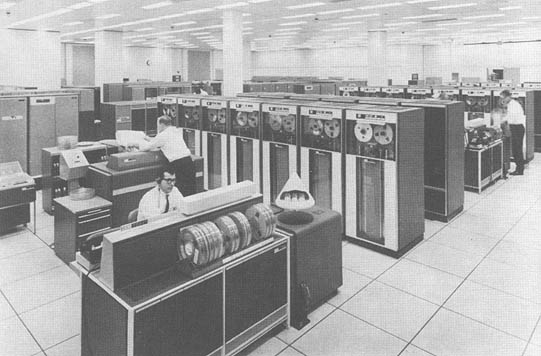
To see my point of view consider the NASA Mainframe that was there for the moon landing (and perhaps a little more), now consider my old Mobile, this 2011 mobile needs 5% of available processing power to do what that entire NASA room did. The mobile that followed 4 years later was 400% more powerful with 1600% more storage and the one that followed was close to 300% more powerful than the previous one with an additional 1600% more storage, the market shifted THAT fast.

So when we see a data center now, and consider that a dozen racks with terabyte storage can be replaced by ONE drive, yes there is an Exabyte drive now, one drive with well over 1,000,000 terabytes. We are nowhere near replacing the entire data center, yet in 10 years, that center could be replaced by one large tower in that time, it might look a little different (I always loved the Cray systems, it comes with a place to sit and heating, but that so called ‘cloud’ will be in one clear specific location (just as it is now) and that is the issue;

it is the location of someone else’s computer that is the issue, soon it will no longer be in America, China is now in a position to offer the same, optionally cheaper and when the America BS starts with ‘It needs some vague quality seal of approval‘ (a SAS marketing trick we saw 20 years ago).

It will be at that point that the entire mess becomes ugly real fast and we are already pushing in that direction. The problem is not China, or America. It will be the policy considerations on where data is allowed to be; a lot of cloud issues on data locations are still open to discussion. The problem is not the hardware, it will be the place with the most logical policy in place, that will be the main player for the next stage and it seems that France has been keeping busy on becoming that European location. I reckon that China does not care, as long as they get the business and that is when we see the American failure on getting the business. They planned on greed when pragmatism was the only solution to push the market forward. Now as most nations start waking up on the loss of pragmatism, we see the consideration, to be a player or a tool and some are realising that they banked on the wrong horse and the American horse is about to become a ‘horse no show!

Whether it was merely some bank, some policy, or a larger linked consideration, this time the French have played a good long term game and they have every chance to reap the benefits of that game. We have yet to see how it all plays out and Paris 2024 will be the big test, but as the issue stands, the French are pushing forward, it is there that I found some references to Credit Agricole, DGSE, and a very large billion dollar option. Even as 21Vianet and its subsidiaries are not mentions, neither is Azure in any way, it all falls to the one mention of ‘Microsoft Corporation‘. This might all be true, but I still seek confirmation, on a stage this large 21Vianet could not have been unmentioned, the same for the entire Azure part. the line “the proliferation of real-time data from sources such as mobile devices, web, social media, sensors, log files, and transactional applications, Big Data has found a host of vertical market applications, ranging from fraud detection to scientific R&D“, makes its absence of certain players either short sighted or the elements of that article were unreliable. I believe it to be a little of both.

I wonder how the game unfolds; I reckon we will know a lot more by the end of the year.


Leave a comment

Filed under Finance, IT, Law, Media, Politics, Science

The slammer got slammed

There is nothing so rewarding as the moment you realise that you get to slam the door on those slamming the door on you. It is an innate feeling that is in the core of all of us. It is more powerful than getting the drop on your boss or CEO with an overwhelming amount of narcissism and the overbearing feeling towards the need of being some dominant / dominatrix figure (at that point they become merely a figurine).

I made several references over the course of 2018 that this was coming, the stronger one in May 2018 (at https://lawlordtobe.com/2018/05/05/milestones/) where I made the reference: “the EU was never about everyone agreeing on everything and the economic setting that requires that to happen at present is also making the dangers of waves that sinks the barge called EU. Now, that seems like an exaggeration, but when you realise that the German anchor is the only one giving stability, you can see the dangers the EU faces and more important, the dangers of no reserves and an utter lack to keep proper budgets in place, a setting now in more danger for the reasons that I gave supported by the economic views of many others. I believe some are downplaying the impact, yet when we realise that EVERY European Union government is downplaying the economic impact (as every nation always wants to look as good as possible, which is a PowerPoint setting of the human ago) we get a much more dangerous setting“. The article ‘Milestones‘ has more, it also has references to the AfD (Alternative for Germany), and even as we see in the Financial Times (at https://www.ft.com/content/d695fff8-b838-11e9-96bd-8e884d3ea203) “It is a happy hunting-ground for the AfD: if polls are accurate, it could emerge as the most popular party in regional elections on September 1, even beating the left-of-centre Social Democrats which have governed this corner of East Germany since reunification in 1990. Two other eastern regions, Saxony and Thuringia, are also choosing new parliaments this autumn and, as in Brandenburg, the AfD is set to make big gains. That is a major problem for the eastern political elite“, I believe that this powerful eastern political elite is part of causing the headline ‘Germany: AfD surge threatened by party disunity‘, they are that scared at present. The gains cannot be stopped not to the degree some elitists are vouching for; the best that they can hope for is derailing them from becoming the majority, which is actually a political war that is allowed. The question becomes will it work?

We are 2-3 weeks away from finding out.

CNN gave us less than 2 days ago: ‘5 of the world’s biggest economies are at risk of recession‘ (at https://edition.cnn.com/2019/08/14/economy/recession-risk-economies/index.html), it is a huge part because the impact matters. Under Mario Draghi and his bond buying program, there are no reserves left, so the impact towards recession is about to get real. The shift in quality of life makes the consumer spending tactic an instant non option.

Yet, it all comes down to the Washington Post who (at https://www.washingtonpost.com/business/2019/08/14/stocks-tank-another-recession-warning-surfaces) gives us: ‘Stocks losses deepen as a key recession warning surfaces‘. It is here that we get: “after a reliable predictor of looming recessions flashed for the first time since the run-up to the 2008 financial crisis. The Dow Jones industrial average fell 800 points, or about 3 percent, and has lost close to 7 percent over the past three weeks. Two of the world’s largest economies, Germany and the United Kingdom, appear to be contracting even as the latter forges ahead with plans to leave the European Union. Growth also has slowed in China, which is in a bitter trade feud with the United States. Meanwhile, Argentina’s stock market fell nearly 50 percent earlier this week after its incumbent president was defeated by a left-wing opponent“. First of all, ‘reliable predictor‘ is not the term I would use, the dangers were clear for well over a year, it was the wrong stage of a trade war, with the Huawei 5G setting that pushed the inevitable date forward by a lot. The entire Huawei stage was a stage of stupidity, and a more dangerous post-recession part than anyone was willing to consider. We might find clarity in the footnote: “But with so many losing confidence in the near-term prospects of the economy and rushing to buy longer-term bonds, the U.S. government now is paying more to attract buyers to its 2-year bond than its 10-year note“, is looking in the wrong direction. It is merely a small symptom at present and direct consequence on risk and not the one that bites. The US is losing its footing on the global mobile market faster and faster. And even as we accept the ‘marketing’ that Huawei gives via Cnet towards 6G, the direct truth is outstanding for a longer time. It links to my own IP that is currently available to Huawei and I want my share of that market, I believe that my part after the fact will be enough to truly make me independent on several fronts. One party found my claim a $ billion market through the investment on $25m post taxation too good to be true, but it is the second wave that takes care of my needs and you gotta give a little to get a little. It is was the ‘denied’ parts of Credit Agricole and the Paris games of 2024 that gave me the final straw I needed to see that I was right all along. In all this verification that I was correct was always the biggest issue for me to deal with, and the recession is making those big business daddies of greed close to desperate, giving me a small push forward. Those people are not willing to walk away from a one billion market at the investment of 2.5%, no bank has ever offered those margins and with the Credit Agricole parts exposed to the smallest extent, I know it will work. It is there that I saw that the IP I designed was never considered by either Google or Huawei, all set to iterative paths to innovation, and the economy shows that nearly all of the other players were looking at the next quarter, whilst the quarter+3 was the game changer. The Olympics gave the option to look at inverted innovation and make it a new innovation, Paris was not the first, but certainly the clearest indicator and whilst we see through Channel News “Huawei Technologies has joined 564 other entities in the Paris Call“, the message is not that there are 565 players, it is that they are all looking in a similar direction whilst the none excavated the gold mine that was right behind them, a first lesson that the classics can inspire towards a new direction. Now that I see their direction I found two other fields that had not been considered to the degree it needed. Saudi Arabia is giving us Neom City, but there is a lack in one direction and now that this can be exploited we see even more options. You only had to be willing to get your hands dirty in the most literal of ways. And all this is pushed even more through the impact of the European economy. A French invention gets a new life after almost 2 centuries and we can see that there is more to be found.

Sergey Brin on Sat. morning

It is what else Harmony OS can do that will push the benefits away from the US and it will hurt Google to the smallest degree (almost inevitable), Google is just too big, but now that the equation changes, it is Google who will be chasing Huawei, so well done Trump dude, you merely made everything worse for America and I will sell to the quickest bidder and the 2.5% approach gives me the edge; the two known entities Ren Zhengfei and Papa Smurf Sergey Brin can make the investment from the small change they have in their pockets and the bait would be just too appealing for them.

Al this was confirmed and accentuated through the US Senate with: “In February, the US Senate Commerce Committee held a hearing titled “Winning the Race to 5G and the Era of Technology Innovation in the United States”, to discuss what policies are required to accelerate the deployment of 5G to keep America “competitive on the international stage”” and whilst we accept the American point of view, they forgot about two elements in the 5G field and the upper echelons of decision makers showed at that point that they were working in a dimmed room without lights, giving additional evidence that they never saw the writing on the wall and now I get to make a new voice and whilst I only am willing to trust Google or Huawei in all this, there can only be one winner and the others are merely a chaser at best, it is the price of iteration over innovation. Even as Microsoft and IBM are in denial of what they are about to lose, they do know and accept their choice. Microsoft is banking on Azure and there the hindrance of Harmony will cause a void, they were ready for Android, yet HarmonyOS is another matter and China is seeing that as another opportunity. It is there where we see the talks of Huawei with the Shanghai Blue Cloud Technology taking an additional turn, and how many players in the Paris games are banking on Azure? How many lose out when they are not ready for the 5G version 2 under HarmonyOS, it will work with Android and Azure, but suddenly we will see some accidental 10% gap (latency) and that is how the game was played and all this before my elements come into play, and they will!

The big business slammers all relying on PowerPoint presentation they are given the elements and when we see the 2023 acceleration and people cannot answer the differences because they never considered looking behind them as well as looking at the corners of their eyes, the blind corners they ignored; now they no longer have one blind spot, they suddenly have three and we get all kinds of concept promises in presentation form, all whilst the data was never that unclear from the very beginning. An issue they claimed that it was being looked at.

So here I am, having to take their shit with the option to sit at the sidelines watching them fight over options because they anticipated without comprehension, sometimes the universe gets to be nice and smile at those having to take their shit. A direct zero day exploit of the applied intent of narcissism on how good a presentation looks, whilst their data never clearly supported it.

My case of exceeding expectations towards customer satisfaction trumped some short sighted ‘Ca$h is king‘ setting, because it works at the grocer, but that part has no bearing when their minimum needs exceed he budget of 80%, it was a simple equation from the very beginning. So when we are now considering the new ‘truth’ where the Washington Post gives us less than an hour ago: ‘Weak global growth likely to mean US slowdown, not recession‘, we merely see wishful thinking in the quote “Yet most analysts expect the U.S. economy to power through the rough patch, at least in the coming months, on the strength of solid consumer spending and a resilient job market. The U.S. stock market plummeted earlier this week when the bond market, spooked by the global turmoil, sent a possible early warning sign of a recession ahead: The yield on the benchmark 10-year Treasury note slipped briefly below 2-year Treasury yields“, the article (at https://www.washingtonpost.com/business/weak-global-growth-likely-to-mean-us-slowdown-not-recession/2019/08/15/1cb8d81a-bfba-11e9-a8b0-7ed8a0d5dc5d_story.html),all whilst we see the clarity of next quarter believes linked to the next Thanksgiving and Christmas, all whilst it is Q2 2020 that makes the tequila slammer which gives the drinker the sledgehammer headache stated it was one that they never saw coming. The entire trade war is taking a new turn and when the people realise on all that the US is missing out on and therefor anyone taking that path will also learn that there is a long term price to pay and it is the markets that Google and Huawei are now staging for that brings the next stage. China has too much to gain, whilst Google will try to retain losses that they will optionally get (reduced growth is clearly a loss). Even as the impact for Google is small, losing one percent is still big news and there one percent adds to a billion plus, whilst their risk to hedge will cost them a mere 1.8% of the optional loss, it is a non-issue.

Guarantee?

There is none, but the option of a new 2% market is worth so much more than that, and it is not open to the iterative industries, innovators only, because it will be about the momentum and there is too much to gain. Consider what the 565 are looking at, whilst I focused on the group that represents up to 445,000,000 SME companies in a new 5G setting. The Olympics are merely the icing on the cake. 2020 Tokyo opens the doors more clearly but the impact is abundantly seen in Qatar 20222 and Paris 2024. And at present I see that they never looked in the places where they could be, merely where they want to be.

In the end it is one of Warren Buffett’s quotes that got me there: “the great moves are usually greeted by yawns“, thanks Warren; you were absolutely right on that part!


1 Comment

Filed under Finance, Media, Politics, Science